

Decentralized finance used to be promising but super confusing, with complicated language and tools only a few could use. Lately, that’s been changing. More people want steady, dependable systems that still keep things decentralized. And that’s where @Injective and the growing concept of iAssets enter the picture quietly, steadily, and with a sense of intention that the industry has often lacked.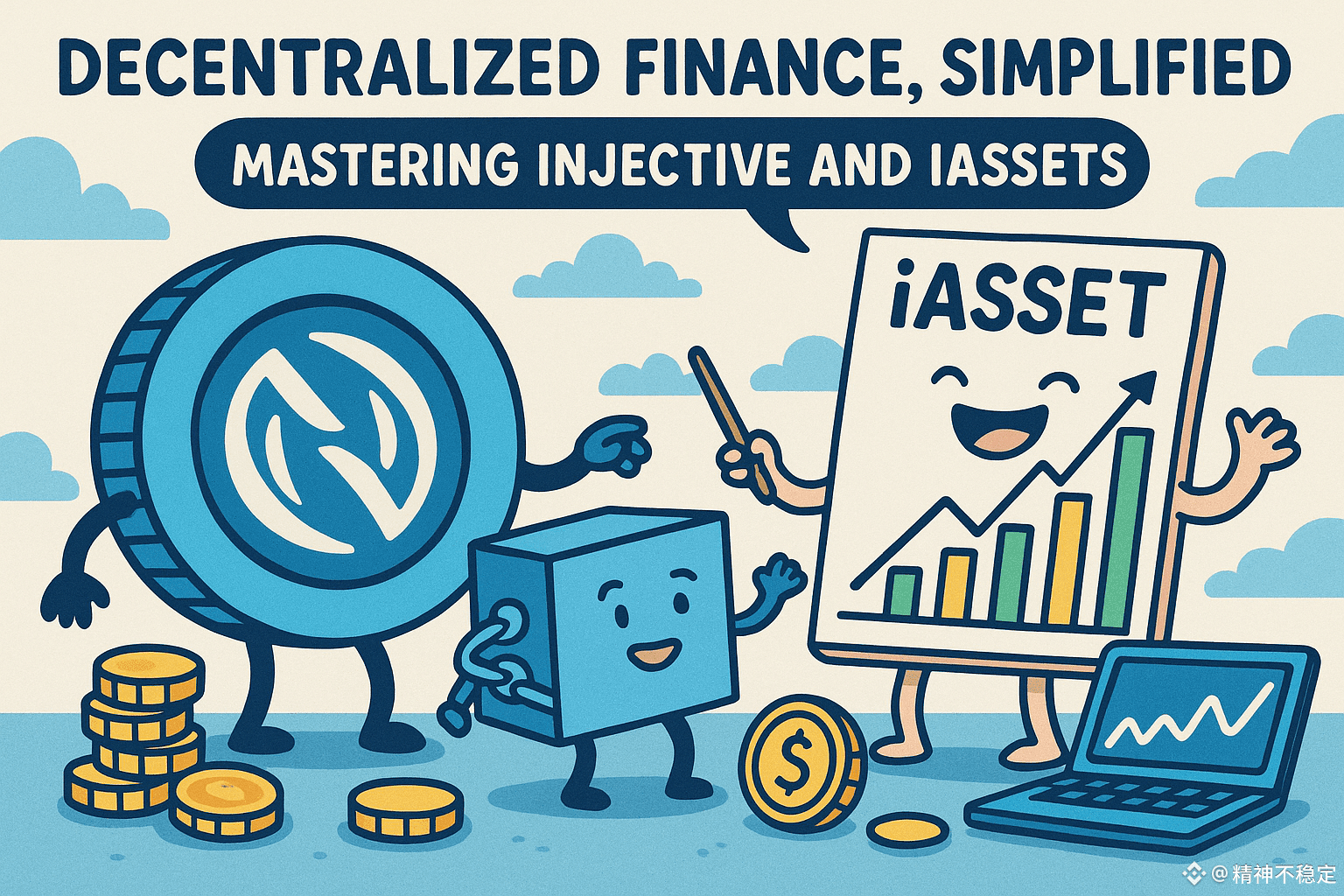
I came across Injective and didn’t get why all the DeFi pros were so into it. It didn’t stand out much at first glance.It didn’t have the loud marketing or the constant feature drops. Instead, it had a certain sturdiness to it. Injective’s structure makes it unusually efficient for a blockchain that supports real financial applications. Transactions move quickly. Costs stay low. Developers don’t have to hack together workarounds just to get a product functioning. And something about that simplicity feels almost radical in a space that often confuses complexity with progress.
But the piece that really caught my attention wasn’t just Injective itself—it was what people were doing on top of it. iAssets, these synthetic representations of both crypto and real-world assets, have become a new experiment in how financial access might look if you stripped away the noise. Plenty of blockchains have tried to create synthetic assets, but few have managed to do it in a way that feels genuinely usable. On Injective, the process feels a bit closer to something you can imagine ordinary people adopting, even if we’re still early.
There’s something oddly refreshing about an asset class built not to dazzle but to work. iAssets aren’t treated like speculative toys. Their purpose is clearer: give people a way to get exposure to assets they might not otherwise reach, while keeping everything on-chain and transparent. Maybe the world doesn’t need another derivative wrapped in layers of complexity. Maybe it just needs a tool that behaves the way people expect a financial instrument to behave, without hiding the details that matter.
This shift toward grounded utility is part of a larger mood change happening across the industry. After several cycles of hype, people seem exhausted by promises. The projects gaining traction now feel more deliberate, almost calmer in their approach.
@Injective is becoming popular because it focuses on improving the tricky parts of DeFi instead of changing the whole system. Developers just want an easier, smoother way to build things. Users want platforms where actions don’t feel like mini research projects. And iAssets form a bridge between these needs, giving both sides a clear sense of what they’re working with.
What fascinates me most is how this model also invites a different relationship with risk. Traditional DeFi often nudges users into a game-like mindset where the appeal is tied to rapid movement, high yield, and constant strategy adjustments. iAssets encourage a slower, more measured rhythm. You can hold exposure to an index, a currency, or a commodity without the platform pushing you toward high-stakes decisions. That feels healthier. It feels like a version of DeFi that could actually coexist with everyday financial habits rather than demanding a separate mental universe.
Of course, none of this means the technology is perfect or complete. We’re still early in understanding how synthetic assets behave across different market cycles. Collateralization models can evolve. Liquidity needs to deepen. And real-world regulation will always be a variable hovering in the background, shaping what’s possible.
What’s being built right now matters more than many people realize. This isn’t trend-chasing; it’s steady work toward long-lasting systems.
There’s also an interesting cultural shift happening around Injective. The builders who gravitate toward it aren’t usually the loudest voices in the room. They tend to be the ones who obsess over efficiency, who appreciate clean architecture, who prefer reliability over spectacle. In a way, that’s exactly the kind of group you want working on financial infrastructure. It brings a sense of maturity that’s been missing from many earlier DeFi waves. And maybe that’s why discussions around Injective and iAssets feel a bit more grounded—it’s not just tech speculation, but a shared sense that the industry is finally settling into its next form.
When I think about why this topic is trending now, I realize it’s because people are craving financial tools that make sense again. The world feels unstable. Markets swing unpredictably. There’s a hunger for systems that give individuals more control without overcomplicating their lives. Injective and iAssets offer a glimpse of that, not as a final solution but as a meaningful step forward.
What excites me isn’t the technology alone, but the feeling that DeFi is rediscovering its original purpose: to build open, accessible systems that empower people rather than overwhelm them. If Injective continues refining its foundation and iAssets keep growing in thoughtful, responsible ways, we might finally see decentralized finance move from a niche experiment into something more familiar and sustainable. And maybe, in time, it becomes less about chasing innovation and more about delivering trust in new forms.
That, to me, is where the real opportunity lives.
@Injective #injective #Injective $INJ

