
The hottest topic these days should be: fake donations, a crazy French kiss with a KOL at an offline event in Dubai, and more hotel activity videos.
The scene is even more passionate than a 20-year-old couple in love, but she seems to have forgotten one thing: she is in Dubai, not in the village, nor in the beautiful country and romantic France.
In Dubai, passionate kissing in public places can lead to imprisonment. Fake donation!

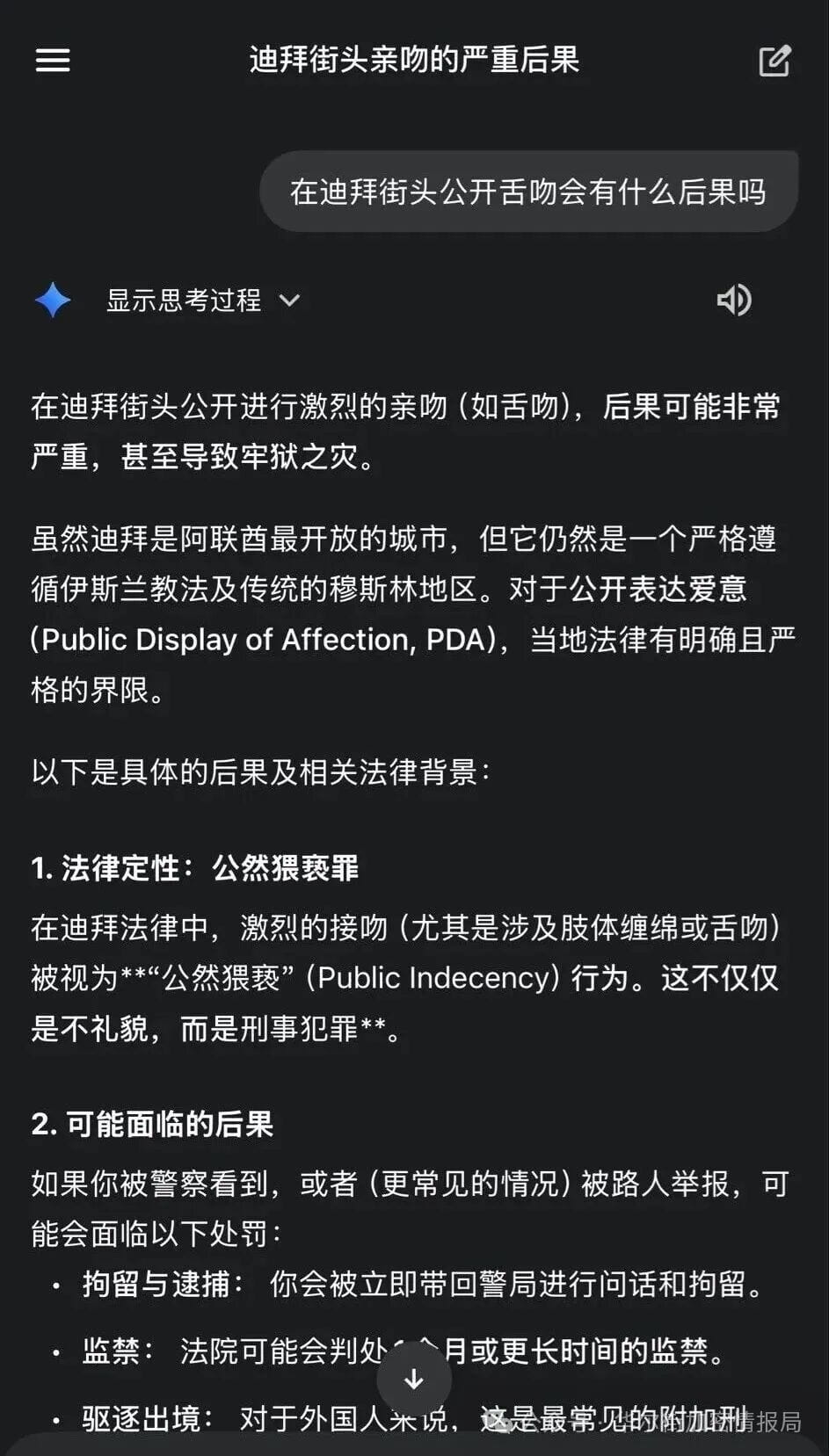
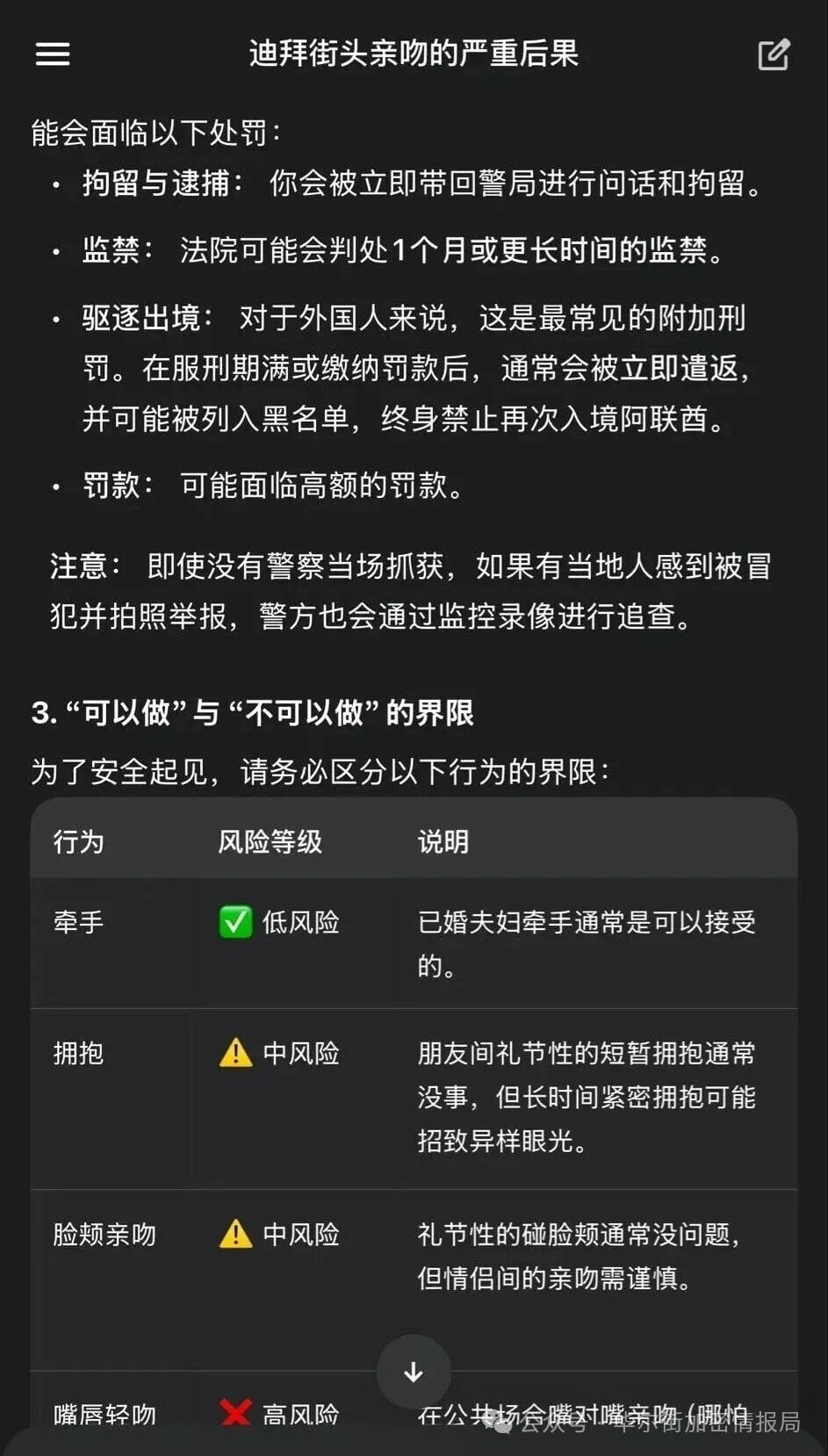
So, this matter is too risky, and ordinary people can't do it; either your figure is not good enough, or you don't have enough guts!
You might as well study the Ethereum upgrades that you have forgotten; they can help you make good money. That's the real big deal!!!
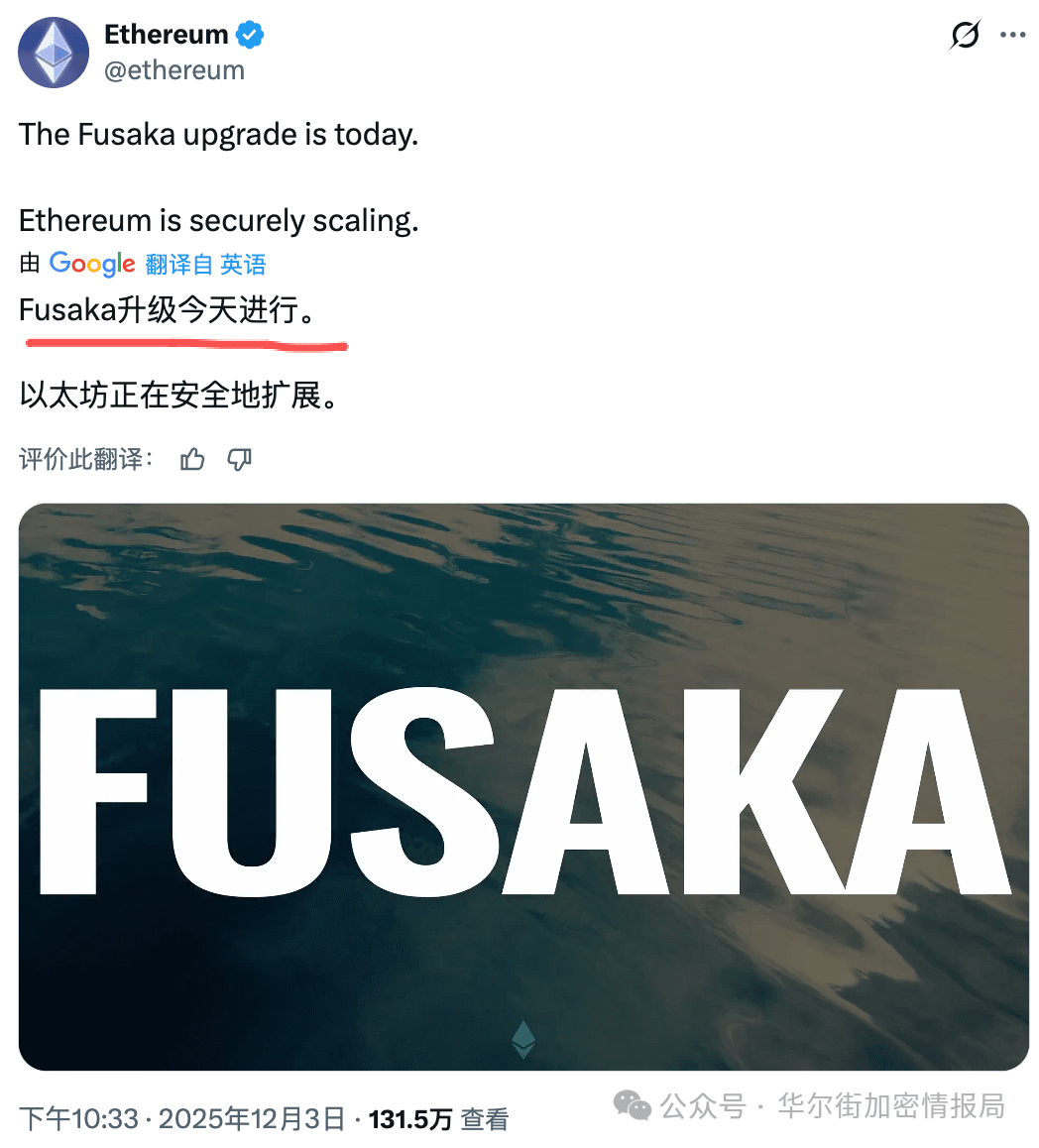
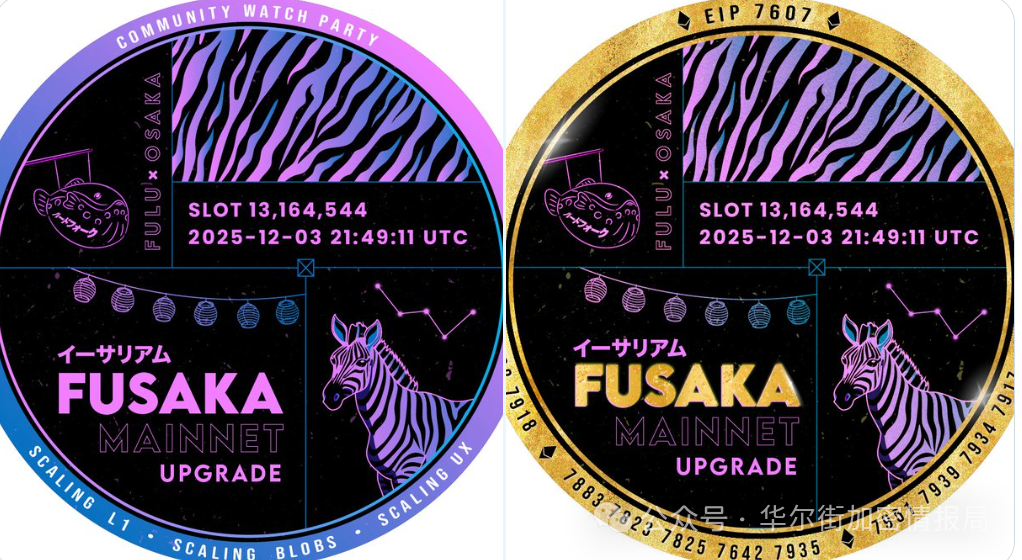
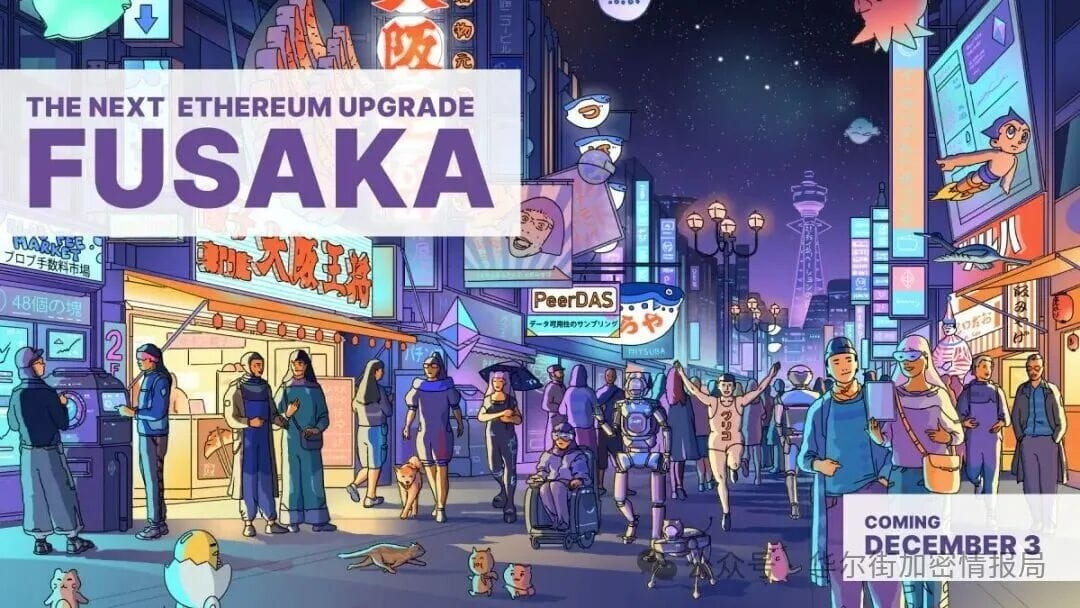
Ethereum Fusaka upgrade has been activated: why will this 'covert major upgrade' determine the prologue of the next bull market?
Recently, the market has been quiet, and many people are not very interested in the technological upgrades of the underlying layer. However, in fact, Fusaka is not an ordinary network maintenance – it is a systematic preparation by Ethereum to welcome the L2 explosion.
Technology leads, prices follow; understanding Fusaka equals understanding the key path to whether Ethereum's ecosystem can truly scale in the next 12 months. Below, Yongqi will clarify, operationalize, and quantify your ETH faith.
1) What is Fusaka?
Fusaka is the code name for a key network upgrade of Ethereum in 2025, focusing on enhancing data availability, accelerating transaction confirmations, and rebuilding ETH's value capture model. It is not a fork, nor a change of consensus algorithm, but a core foundational upgrade in Ethereum's expansion roadmap for the next decade.
What key contents does the Fusaka upgrade include?
1) PeerDAS: significantly enhances data throughput capacity.
Rollups' data publishing efficiency improved by about 8 times.
L2 costs are lower, and capacity is larger → This is the 'engine' of Ethereum's expansion roadmap (Modular Roadmap).
2) Pre-confirmation and R1 Curve.
Bringing user experience closer to Web2: faster transaction confirmations; significantly reduced queuing and lagging perceptions → solving the problem of 'why is Ethereum still so slow.'
3) Increase Gas Limit to ~60 million.
L1 throughput has doubled, accommodating more transactions and settlement demands. → Preparing for Ethereum's long-term role as the 'global settlement layer.'
4) EIP-7918: mandating L2 to pay real costs for Ethereum and burn ETH.
This is the most revolutionary part of this time:
In the past, the more prosperous L2 was, the more severe the ETH inflation; now, the more prosperous L2 is, the more ETH is burned, and the scarcer ETH becomes. → Ethereum has established a true value flywheel for the first time.
Fusaka is a focused upgrade: a systematic upgrade along three main lines: data availability, user experience, and mainnet capacity. Summarized into three core achievements:
PeerDAS launch → Rollups' data throughput capacity ×8;
User experience improvement (R1 curve + pre-confirmation) → Interactive confirmations are faster and closer to Web2 experience;
Preparing to increase Gas Limit (from ~30M → 60M) → Mainnet bandwidth and settlement capacity doubled.
In other words: Fusaka upgrades Ethereum from 'L2 outpost' to 'full-stack settlement layer capable of supporting large-scale L2 economy.'
Two, why are the three major improvements important?
First, PeerDAS: solving the 'data availability' bottleneck.
Problem scenario: Rollup moves computation off-chain and submits data to L1 for availability proof, but when the cost of data on-chain is high or throughput is insufficient, the scaling ability of Rollup is limited.
Contribution of PeerDAS: Significantly enhances L1's throughput handling capacity for Rollup data (the official or community estimate of 8× is a key quantitative expectation).
Result: More rollups (especially high-frequency scenarios like Base / Blast / zkSync) can support more users, more microtransactions, and on-chain social/game logic; as on-chain actions increase, the data availability consumption of ETH rises.
Second, R1 curve and pre-confirmation: freeing users from 'waiting.'
Problem scenario: The biggest experience pain point of Web3 is 'slow, laggy, expensive.' Users' waiting time for confirmations directly makes many applications irreplaceable by Web2.
Upgrade effect: R1 curve optimizes gas price performance and gas usage curve, pre-confirmation significantly shortens interactive confirmation time.
Result: Experience is close to Web2, users are more willing to conduct their daily consumption, in-game operations, and social interactions on-chain, thus truly bringing 'traffic—transactions—value' back on-chain.
Third, increase Gas Limit: Mainnet bandwidth and economic carrying capacity doubled.
Technical meaning: Increasing the gas capacity that a single block can hold to about 60 million (indicative), means a significant increase in the instantaneous throughput capacity of the mainnet.
Economic meaning: L2's settlement capacity has improved, allowing the mainnet to handle L2's settlement data with higher capacity, reducing congestion probability, making Ethereum L1's 'capacity limit' no longer a bottleneck for L2 expansion.
Direct consequence: More L2 economic activities can be safely settled to L1, and the data availability consumption of ETH rises in sync with the demand for its built-in burning mechanism.
Three, from technology to value:
Why will this drive ETH's value capture?
Link the three points above into a value chain:
L2 activity ↑ → L1 (data availability) consumption ↑ → Demand for ETH as a settlement and burning vehicle ↑ → ETH supply and demand improve (long-term potential deflation) → Price has structural upward momentum.
The key logic is: Ethereum's value no longer depends solely on L1's transaction volume but more on how L2's economic activities achieve secure settlements and data availability verification through L1. Fusaka is precisely the one that opens and amplifies this 'L2 → L1 → ETH value' pathway.
The Fusaka upgrade is the foundation and cornerstone of Ethereum's real long-cycle upgrade and an inevitable path:
ETH's value capture model: L2 activity ↑ → L1 data availability consumption ↑ → ETH demand ↑ → Long-term deflation ↑ PeerDAS + 8x throughput,
This means that in the coming year: the volume of on-chain activities will increase exponentially, ETH's inflation pressure will continue to decline, and institutions will be more willing to hold ETH;
So it feels like Ethereum is actually ready after the upgrade, just waiting for the market explosion! If the value return brought by Ethereum L2 explosion and the global settlement layer narrative solidifies, new highs are just a matter of time.
Four, direct beneficiaries of the ecosystem.
The core is: after the upgrade, who will become more valuable?
High-frequency L2 projects: Base, Blast, zkSync, StarkNet, etc. These projects rely heavily on data throughput and low-latency confirmations.
On-chain games and social interactions: applications that require a large number of small, high-frequency transactions will be the first to scale up.
RWA and on-chain settlement: Once data availability and settlement costs are controllable, more traditional financial assets can be tokenized and used in on-chain clearing.
Infrastructure providers: Rollup-related indexing nodes, DAS providers, batch submission service providers, etc., will gain greater income and valuation premiums.
ETH: as the primary settlement and burning asset, will benefit in the long term.
Five, after the Fusaka upgrade: How will the market respond?
The relationship from technology to price is not linear and immediate, but there are clear and traceable signals. You can use the following indicators to judge whether the 'true value return' has begun:
L2 daily active users (DAU) and L2 transaction volume (Tx/day): If there is exponential growth (not just a single week drop) within 1–3 months after Fusaka activation, it indicates user migration.
L1 data availability consumption (on-chain calldata / data gas burned): Continuous increase is direct evidence of rising ETH demand.
Settlement fees from L2 to L1 / basis changes: If settlement demand increases, we will see changes in L1 gas usage patterns and increased frequency of rollup data submissions.
Changes in ETH net supply (burn vs mining/issuance): If increased on-chain activity significantly boosts burn, it will gradually improve inflation or even lead to structural deflation.
Institutional holding indicators: ETF inflows, decline in exchange deposits, increase in institutional buying on custodial platforms.
Changes in Rollup fees: A decrease in perceived costs for users indicates that the upgrade is actually reducing experience costs.
Six, the true core of Ethereum Fusaka upgrade.
It's not about scaling; rather, the value capture model has been completely rewritten.
The most critical part is EIP-7918: mandating all L2s to pay the real costs to Ethereum and directly counting this minimal fee into ETH burn. This means: in the past, only L1 burned ETH; now all economic activities of L2 begin to contribute to the reduction of ETH supply, marking the biggest leap in value since EIP-1559.
Currently, ETH has a slight inflation rate each year (around 620,000 issued, about 350,000 burned), but after Fusaka, conservative models predict:
L2 annual burn +200,000–400,000 ETH.
Total burns are expected to exceed the annual issuance → Ethereum is returning to a more aggressive deflationary model, indicating that as L2 activity and blob demand rise, up to 900,000–1,200,000 ETH can be burned annually, leading to a net decrease of 200,000–300,000 ETH per year. This is almost equivalent to a 'chain-level stock buyback.'
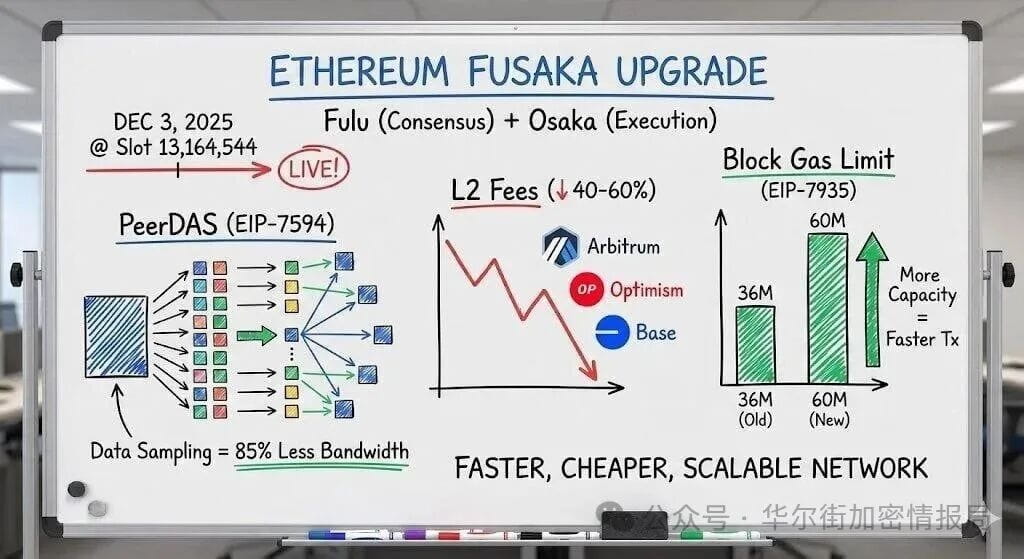
PeerDAS significantly reduces the data publishing costs for L2, allowing rollups to grow faster; while more blobs & more transactions → more ETH is burned. The block Gas Limit increase to 60M also synchronizes the burn volume of L1.
In simple terms: in the past, the more prosperous L2 was, the less ETH was burned; now, the more prosperous L2 is, the scarcer ETH becomes.
Fusaka allows Ethereum to establish a true value flywheel for the first time: L2 growth → Blob increase → ETH burn rise → Supply tightening → Value returning.
Ethereum has finally shifted from 'expansion' to 'expansion equals revenue.'
Seven, conclusion: the technical upgrade is already in place.
The next step is 'market acceptance.'
Fusaka has elevated the three key elements of Ethereum's 'capacity, experience, and data availability' to a new level.
On the technical level, Ethereum is already ready to undertake large-scale L2 economies—but the real cycle requires L2 applications to bring users, transactions, and time stickiness; developers to improve their products, and institutions to verify the asset allocation story.
If the volume of on-chain activities due to L2 explosion returns, then the value capture logic of ETH will be reactivated: L2 adoption → L1 value capture → ETH scarcity.
This is a complete closed loop from technology to economy; once closed, prices will follow structural value upward—but this is usually not an 'instant' miracle, but an 'explosion after gradual verification.'
In summary: Fusaka has set the stage; now we need to see if the actors (L2 projects, applications, users) can bring the performance to life.
Technology leads, prices follow; patience and on-chain data will tell you when the right time to enter is.
In-depth observation · Independent thinking · Value beyond price.
Bookmark #WallStreetCryptoIntelligence, great content not to miss ⭐
Finally: Many views in this article represent my personal understanding of the market and do not constitute investment advice.

