
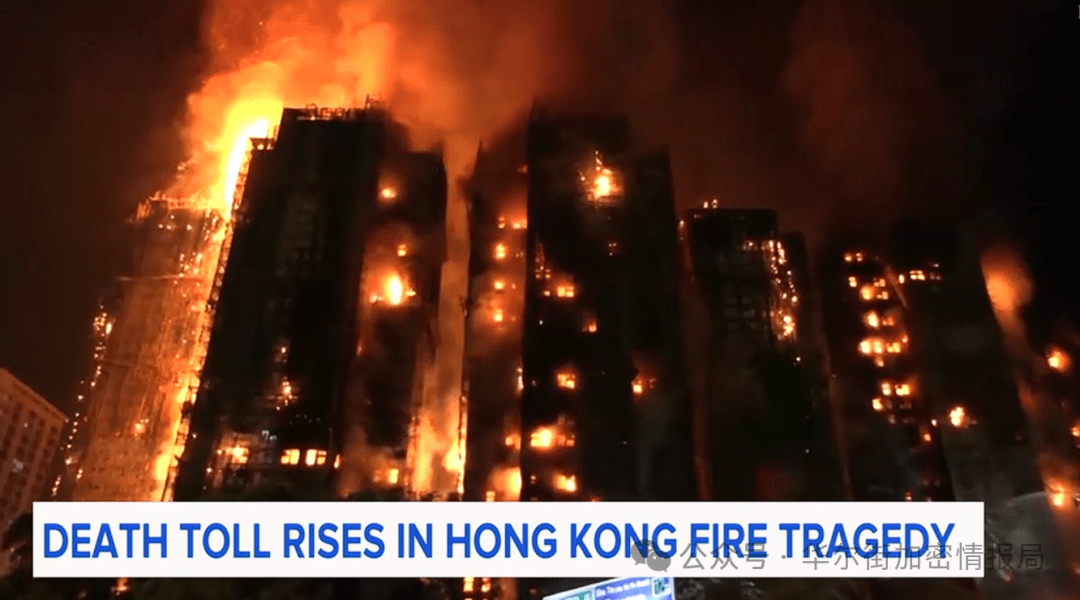
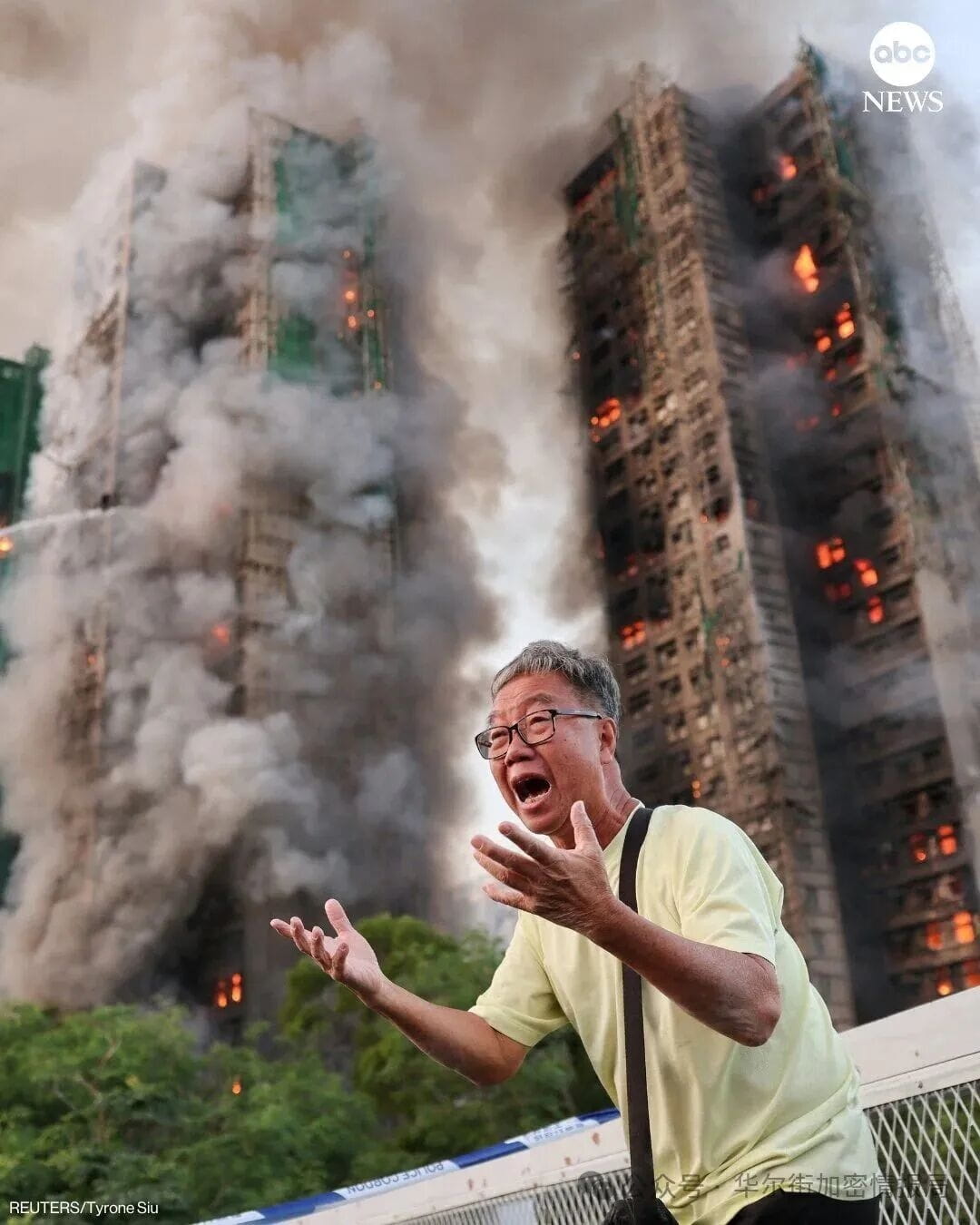
On the night of November 26, 2025, a fire tore through Wang Fuk Court in Tai Po, Hong Kong—several high-rise buildings engulfed in flames, dozens perished, hundreds of families displaced.
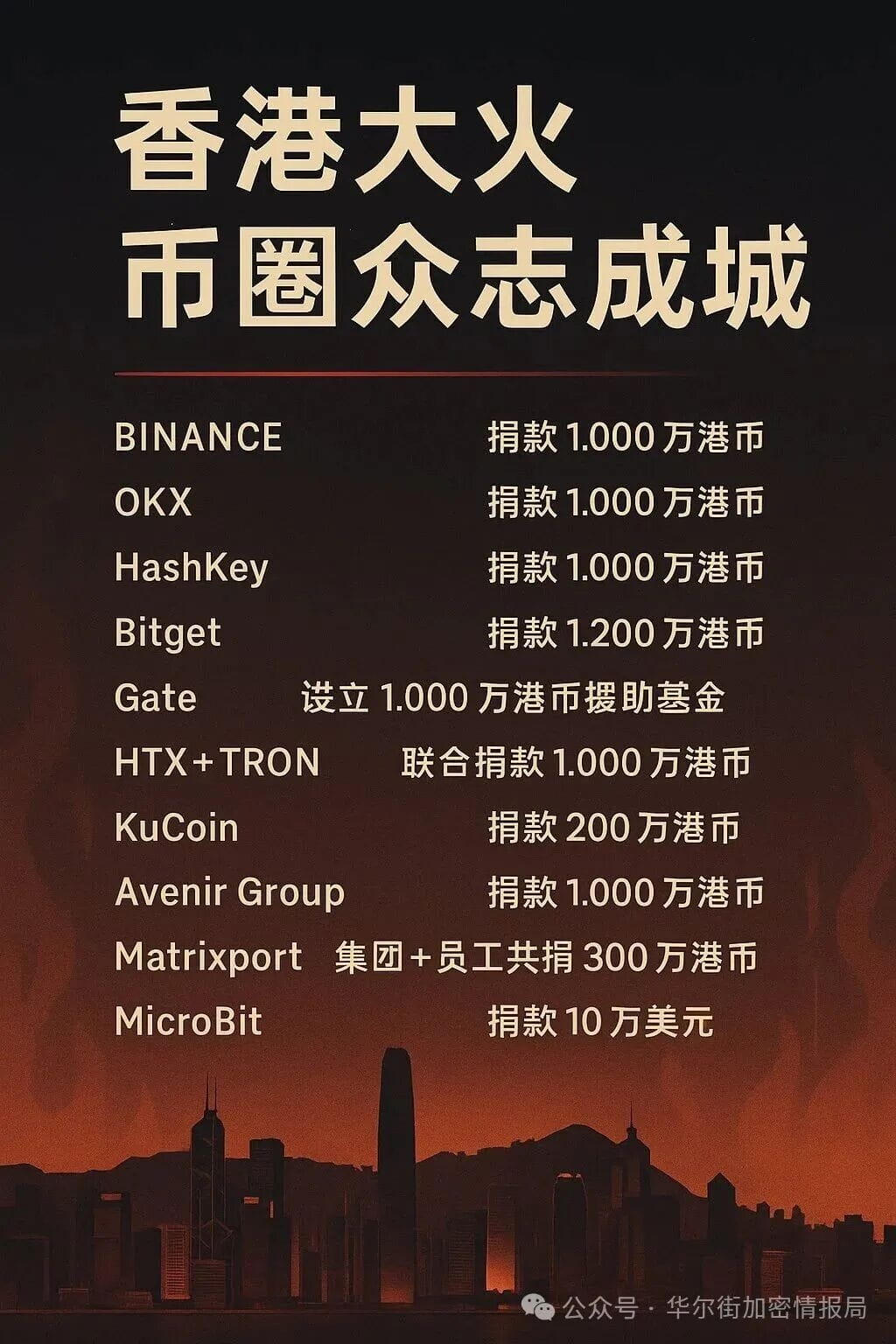
Once the news broke, both online and offline exploded: financial institutions, tech giants, crypto exchanges, ordinary citizens... all rushed to 'donate' and 'initiate rescue,' seemingly a storm of love.
But in this overwhelming 'aid wave,' I can't help but ask: after the October 11th crypto bloodbath, who sent a donation for 'bankrupt you' and 'liquidated me'?
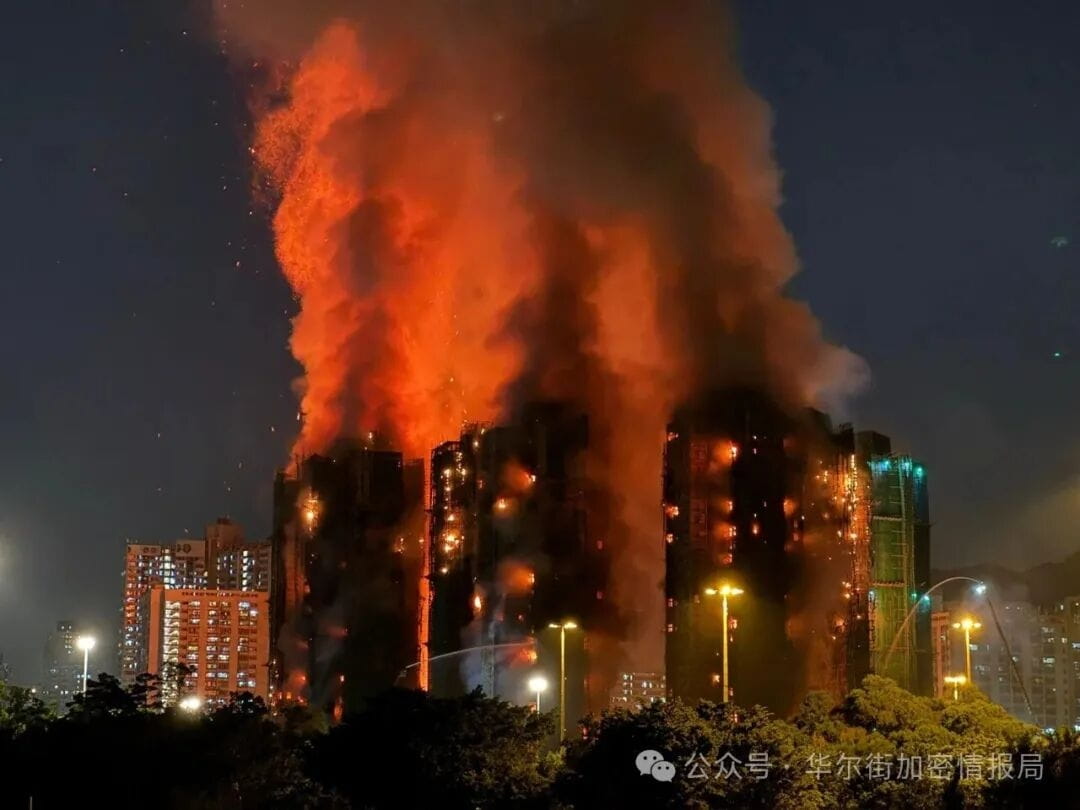
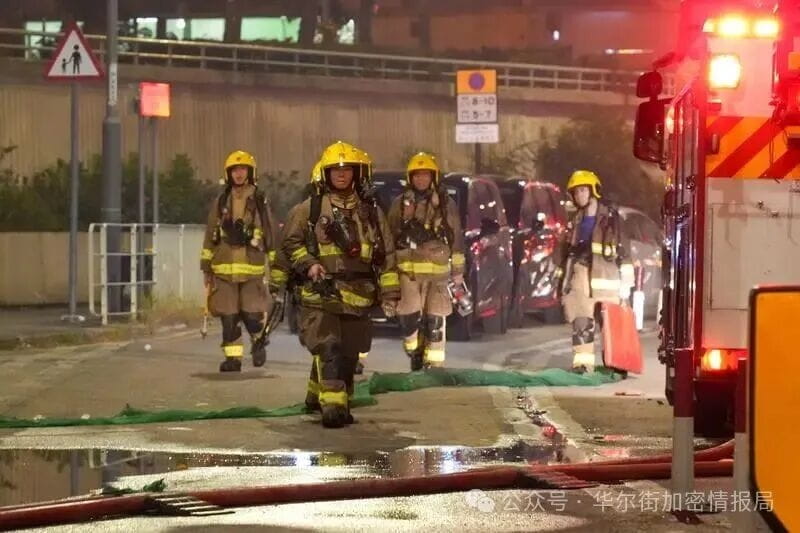
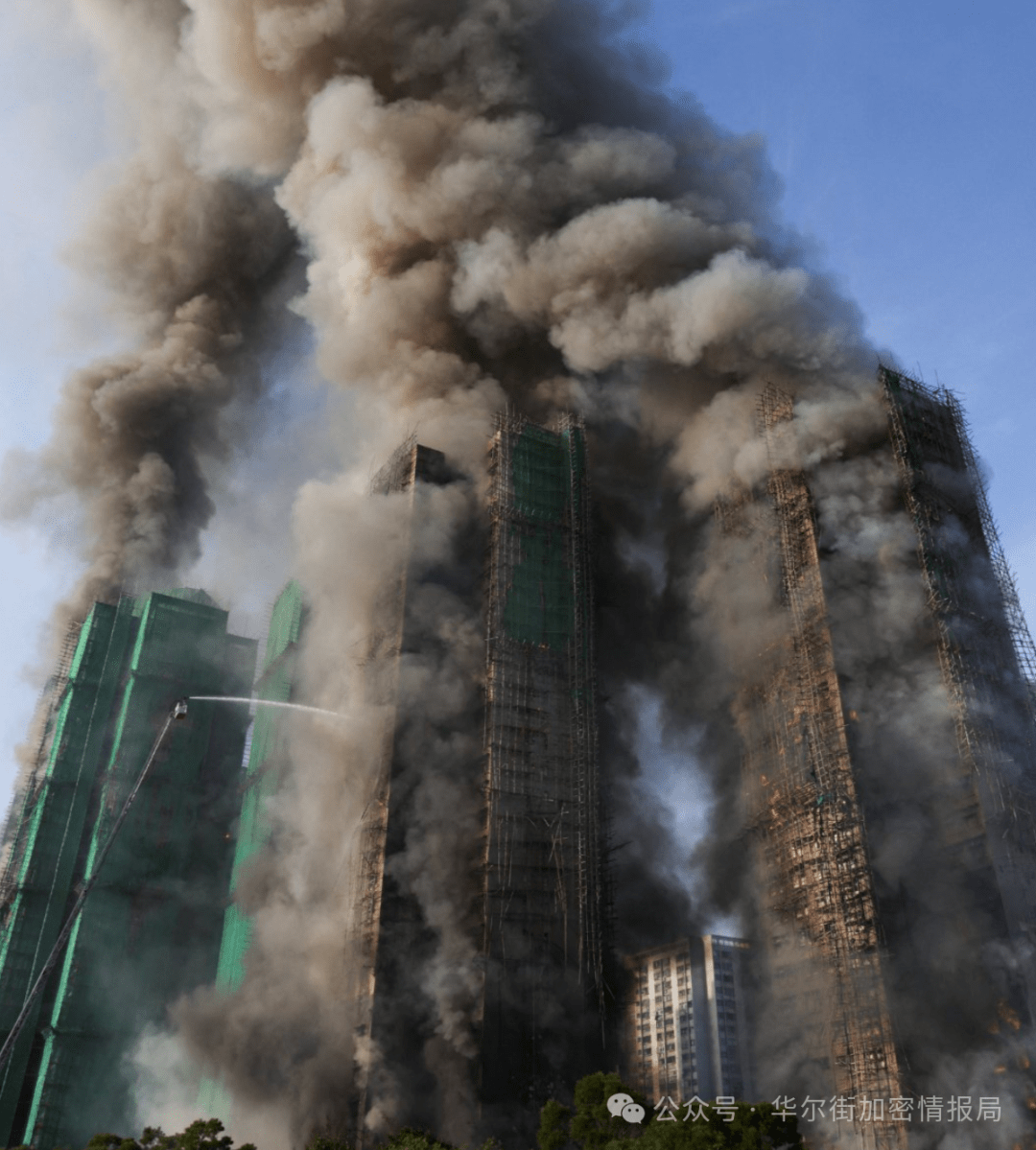
A bamboo pole triggered the fire in Hong Kong.
128 people lost their lives, the absurd truth behind Hong Kong's most devastating fire, ignited in November by an 'unimaginable' disaster.
When the flames crazily climbed up the exterior walls of the residential buildings, no one would have thought that this one of the most severe fires in Hong Kong's history, causing at least 128 deaths, 83 injuries, and 150 missing with identities yet to be confirmed, actually originated from a—bamboo pole.
Yes, you read that right.
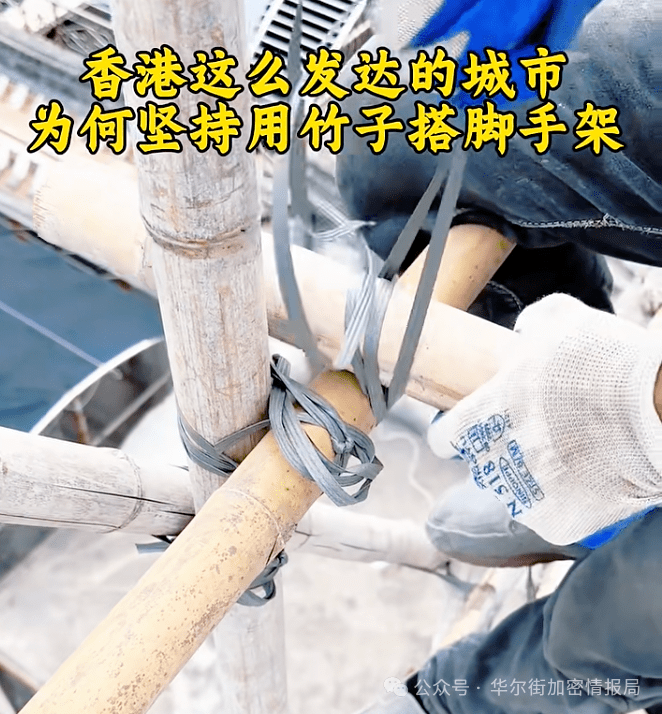
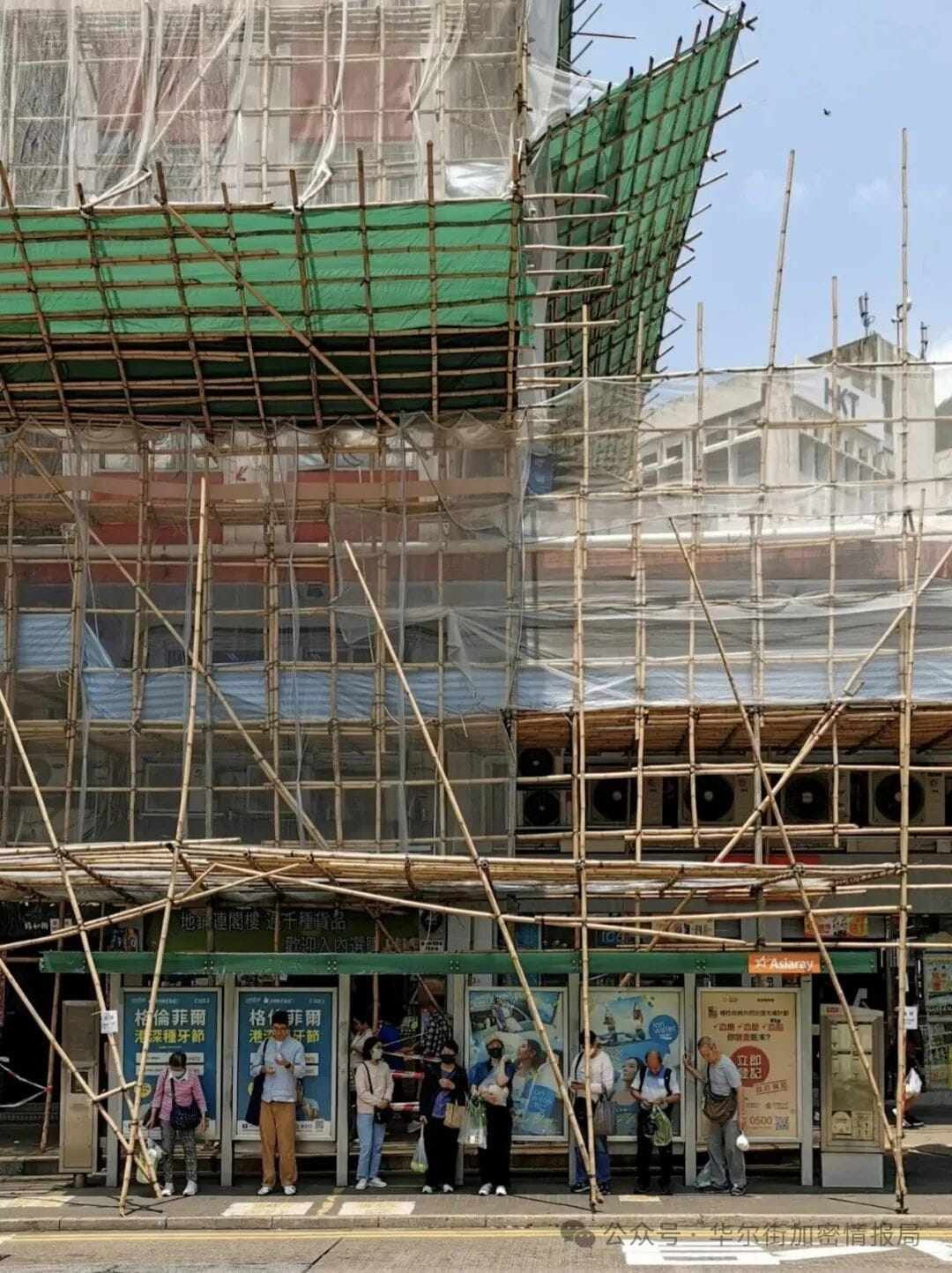
Today in 2025, as an international financial center, Hong Kong still heavily uses—bamboo scaffolding in exterior wall construction.
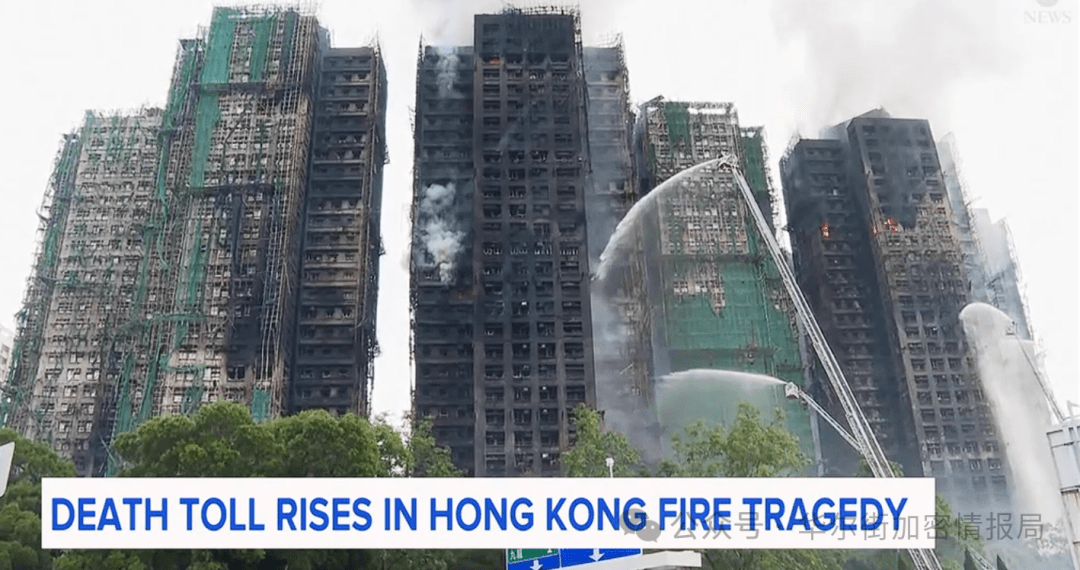
And this time, it became the fuse for an urban-level disaster.
A bamboo pole, how does it turn a building into a torch?
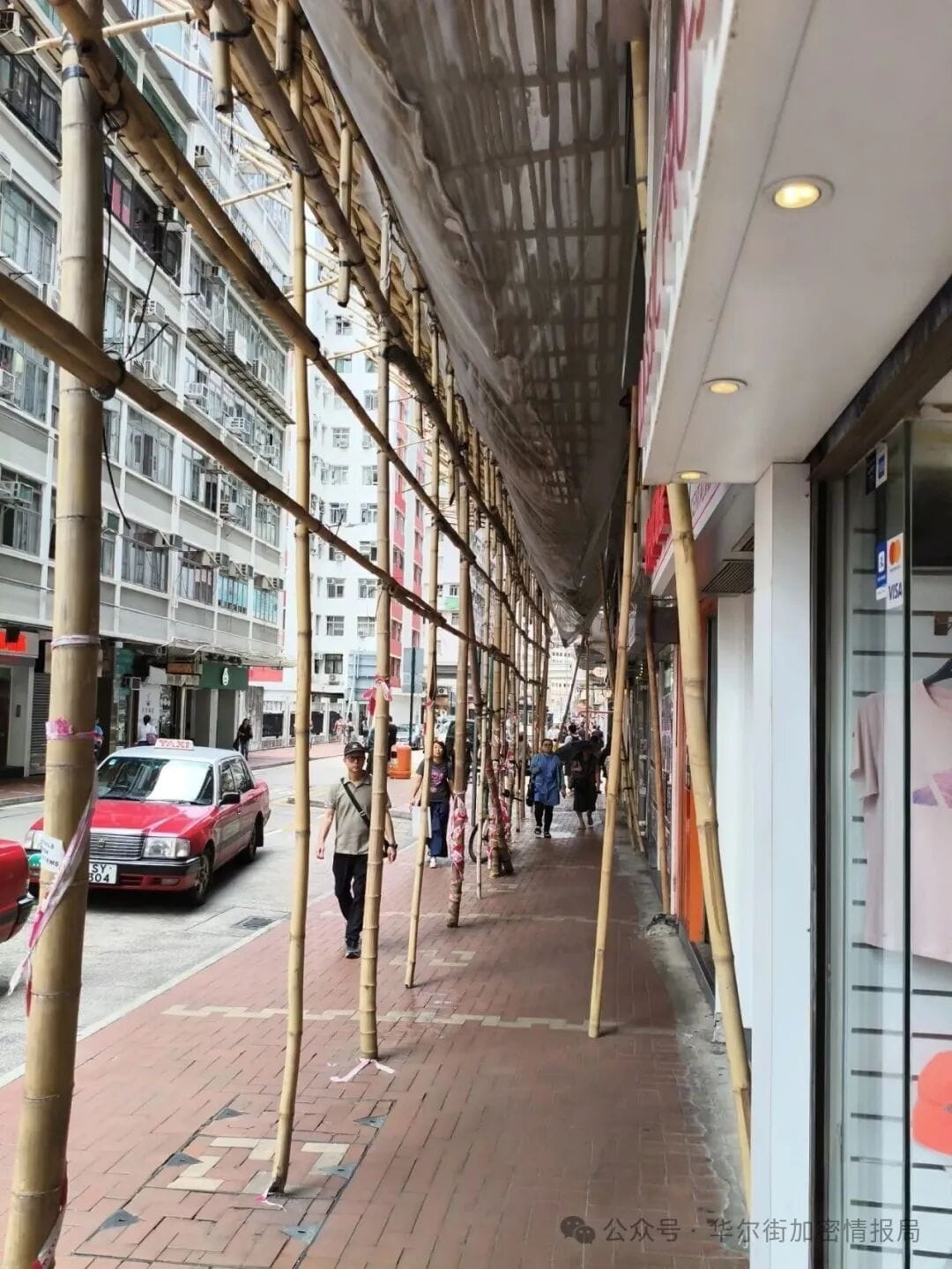
In fact, Hong Kong's scaffolding construction (commonly known as 'setting up a shed') still mainly relies on bamboo.
In the Hong Kong construction industry, this is referred to as a type of 'traditional craft.' But this material has two fatal characteristics: it is highly flammable and spreads fire rapidly.
And all of this, simply because: bamboo is cheap and easy to use. Labor has gotten used to it. Regulation did not keep an eye on it.
The 'cheapness' of costs ultimately comes at the expensive price of 128 lives.
This is not just a fire, but a systemic failure, you might ask:
'Why is bamboo still used for scaffolding in Hong Kong in 2025?'
'Why are there no mandatory fireproof materials?'
'Why is there no national unified safety standard for building renovations?'
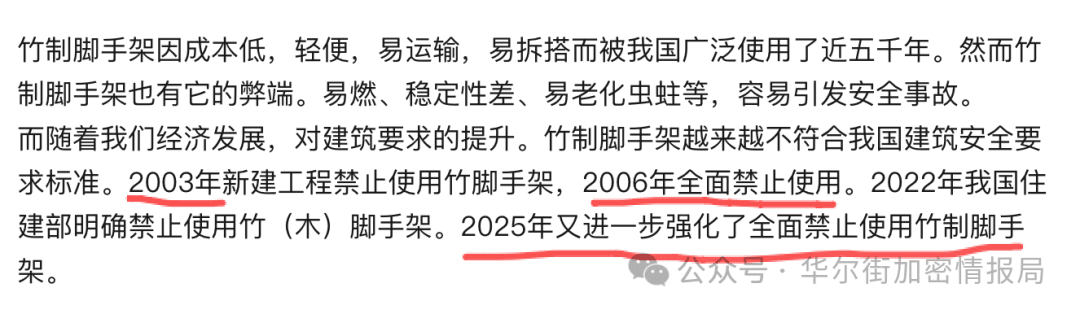
The answer is silent. Hong Kong still heavily uses bamboo scaffolding in construction because: low storage costs, traditional skills are easy to find, plastic nets are cheap, construction speed is fast, and regulation is lax.
But behind the low costs lies a huge safety void.
Invisible groups: The most affected are ordinary families, many were 'awoken' by fire in their sleep. Many did not even have time to escape. Some families could not get out at all.
The fire not only destroyed lives but also shattered the future of hundreds of families. This is not just a disaster for Hong Kong, but a warning for all cities.
The disaster that happened in Hong Kong today may occur in any prosperous city tomorrow: if the safety system for a city's construction is stuck in the old era, then the city's disasters will only be stuck in the old era.
Has donating really healed the pain?
'The emotional and structural vacuum behind the wave of charitable deeds.'
Donating money is a good deed, it is warmth. But donations do not necessarily bring a sense of belonging and safety; it may also be—
1. Temporary heat ≠ Long-term guarantee.
After the fire, people donated amid pain, anger, and regret. But we have seen too many plots of post-disaster donations + short-term rescue—months later, victims are still homeless and rootless; hundreds of millions of Hong Kong dollars in donations may be dispersed and poorly managed; reconstruction is slow, and few are asking for accountability.
So-called 'reconstruction' is not just a hot meal or a warm blanket, but guarantees, housing, community structure, and institutional mechanisms.
I do not deny the importance of donations, but what I am more worried about is— is this just another 'fire + love fund = public sentiment appeasement'?
2. Lack of structural safety, the essential problem is that no one donates or reflects in bulk.
The fire was not an accident, but the long-term absence of systems/regulations/safety standards, placing residents' lives in an extremely vulnerable position.
When disaster strikes, people donate; but before the disaster occurs, who really speaks for building codes, safety standards, and the housing conditions of vulnerable groups to 'pay the bill' for them?
While we are all donating for disaster relief, how many are calling for 'rebuilding the safety system from the root'?
3. The surge of charitable donations often obscures the lack of social responsibility and institutional inaction.
Some companies and institutions publicly declare donations and rescue efforts on social media, which is certainly commendable; but at the same time, it may also be a form of 'get out of jail free card':
'We donate X million, we have fulfilled our social responsibility, we have done our best.'
This phrase easily becomes a shield—temporarily covering up structural issues, regulatory loopholes, and institutional deficiencies, rather than promoting real change.
When donation figures are widely discussed by the public and extensively reported by the media, the space for criticism often shrinks.
If donations are a temporary demining effort, we need a system: mine verification.
I am not saying that we should not donate. I say: donations should not be the end, but the beginning.
What we need is:
Truly implement building safety and public housing standards.
Inspect, renovate, and mitigate risks in all high-risk residential areas/old districts.
Provide a guaranteed housing system for renters, low-income, and vulnerable groups.
Implement stricter regulations on financial markets and provide a protection mechanism for ordinary investors.
Establish a mechanism for 'bankruptcy relief + financial damage compensation + psychological assistance + risk education.'
Donating is a manifestation of social conscience, but institutional construction and structural reshaping are the real ways to be responsible to everyone.
What angers me is: after the October 11th bankruptcy, who has ever reached out to help me?
When I saw this post online: you take my hard-earned money to donate, when did you ask me after I went bankrupt?
Looking at the donation amounts in crypto Web3, I can't help but think, this is a sickle cutting the leeks, then using the leeks' blood and tears to stylishly donate to themselves.
In October 2025, that shocking market crash severely impacted countless ordinary holders, leveraged traders, and retail investors.
How many 'bankruptcy relief funds' have you seen?
How many 'exchange compensation' have you seen?
How many 'tragic stories of ordinary people + donations + rescue' have you seen reported on a large scale?
Almost none.
Money has indeed been put out, but most went to 'residents of sweat equity buildings, fire victims, and vulnerable groups.' But when 'we'—those who went bankrupt, were liquidated, or were wiped out—sought comfort, compensation, or aid, how many institutions were truly willing to step up?
I am not saying that bankruptcy is a disaster, but that experience of 'faith + leverage + breakage,' even at a mental level, is equally painful.
But the reality is— even with a bloodbath, there are no funds, no help, no sympathy, and more often, being mercilessly blacklisted and cast aside.
So I question: when you donated for the Tai Po fire, did you remember that October 11th bankruptcy, the retail investors who cried for you, and leveraged for you?
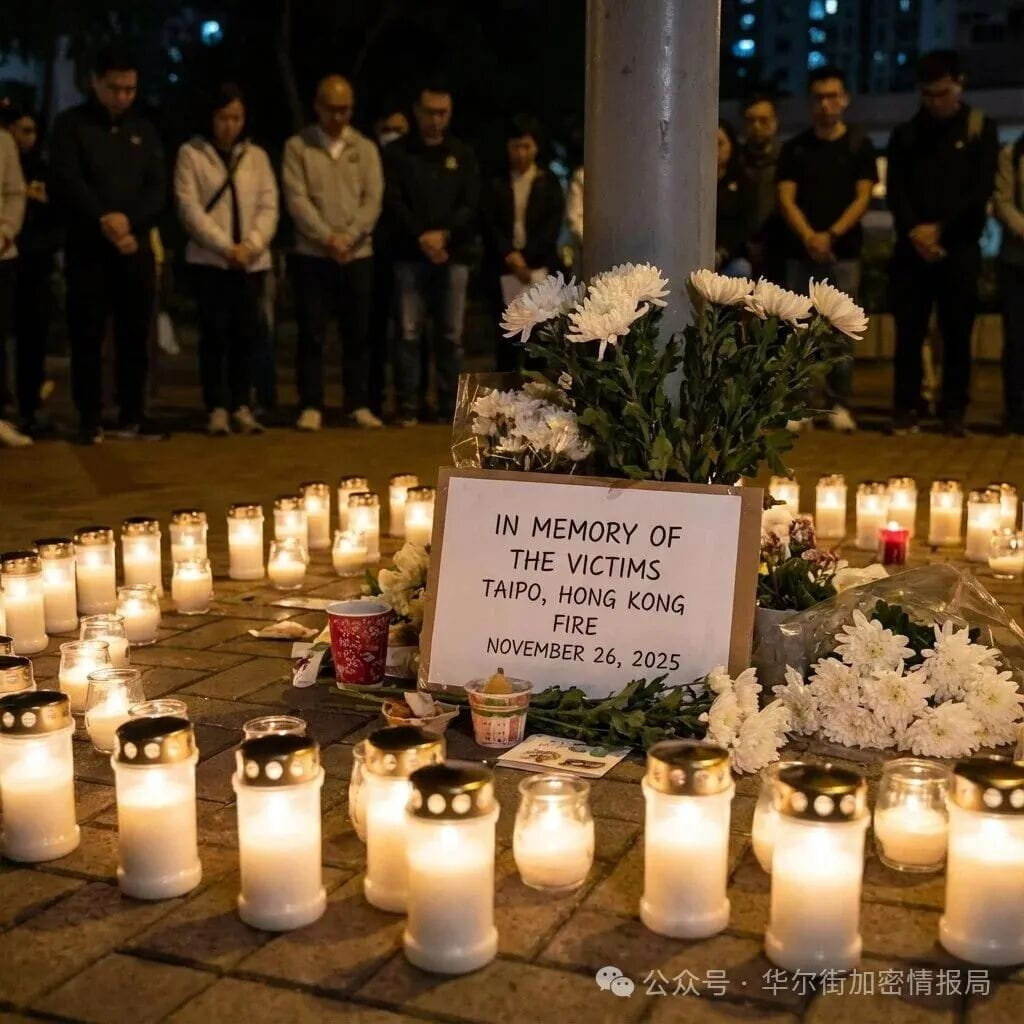
Written at the end: May the deceased rest in peace, may the tragedy not be repeated.
128 lives lost, 150 families waiting for news, 83 injured still receiving treatment, countless Hong Kong citizens still waking up in the middle of the night.
We must face this fact: this is not an 'accidental fire,' but a tragedy that should not have happened.
May the deceased rest in peace, may the living be strong, may the city wake up from pain, and may this bamboo pole that sparked the great fire forever become history.
When you click the 'donate' button, please don't forget—you are giving a bit of warmth to the disaster area, and it actually also leaves you with a social contract.
But having only contracts is not enough; we need more:
Let every disaster become an opportunity for institutional reconstruction;
Let every donation become the starting point for social transparency and a sense of responsibility;
Let every ordinary person gain safety, dignity, and respect within the systems and rules.
The city is fragile not because there are no donations, but because too often, we use donations to cover up the inaction of institutions.
In-depth observation · Independent thinking · Value is more than price.
Star #Wall Street Crypto Intelligence Bureau, good content not to be missed ⭐
Finally: Many of the views in this article represent my personal understanding of the market and do not constitute advice for your investments.