

The future of money movement has always felt like one of those topics that sits in the background of modern life—quiet, mostly invisible, yet constantly determining whether things work or fall apart. Lately, though, it’s moving from backstage to center stage. Part of that comes from companies like @Plasma stepping into the conversation with clearer visions of how payments could evolve across invoicing, payouts, and e-commerce. But the larger shift is cultural. Businesses are feeling the friction of old systems more acutely, and people have grown less tolerant of delays and uncertainty when moving their own money.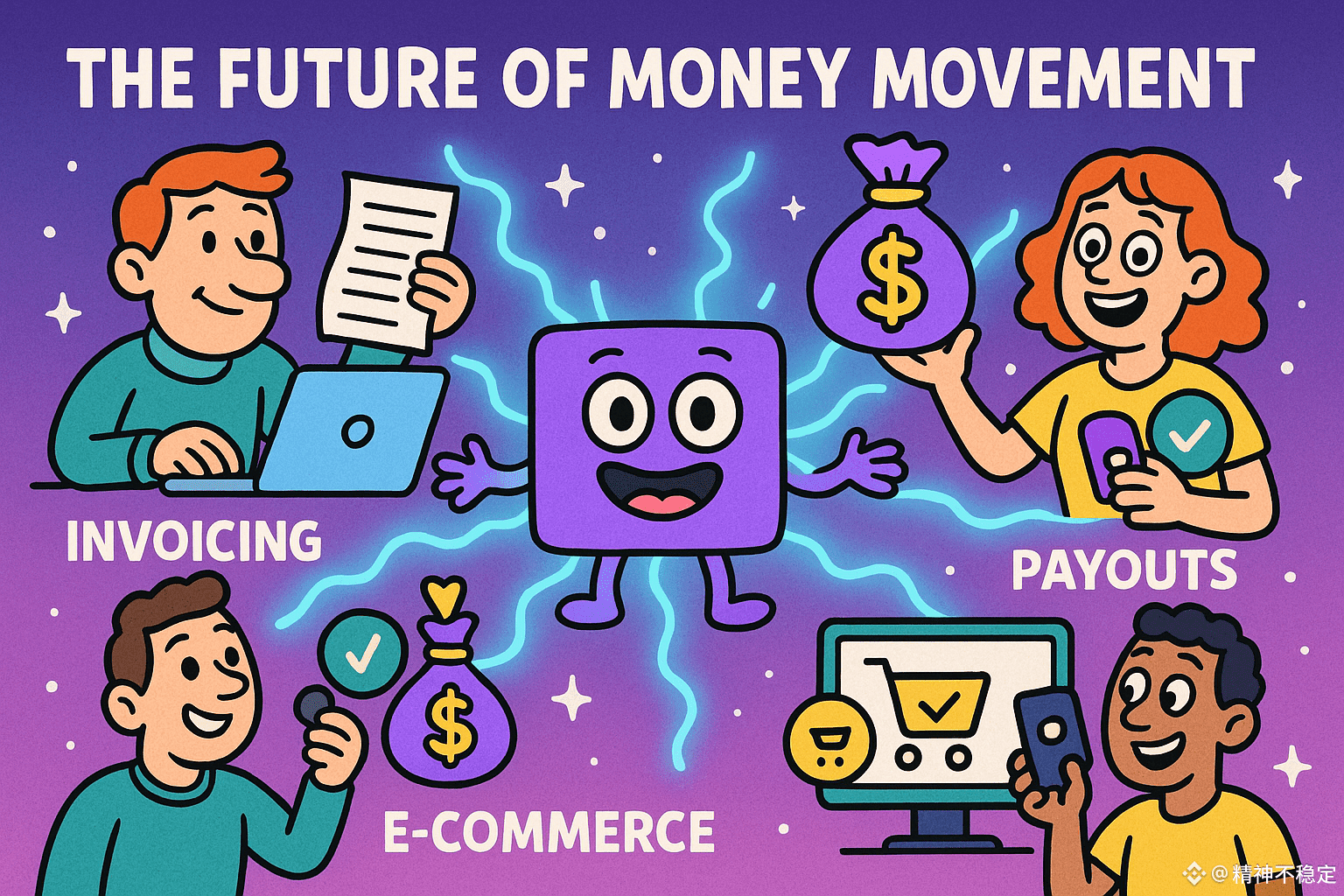
Every time I look at this space, I think back to helping a small studio match payments from some clients abroad. It sounded simple—send an invoice and get paid. But the reality involved late wires, lost references, mismatched currencies, and emails that sounded increasingly apologetic. Nothing about it felt modern. And it certainly didn’t feel fair that a design team could pull off magic on a tight timeline, only to wait weeks for funds to clear systems built decades ago.
That tension is part of why platforms like Plasma are getting so much attention. They’re stepping into a moment when businesses want smoother pipes, not more complicated tools.
The promise isn’t exciting gadgets — it’s steady, dependable money movement across borders and systems. But everyone keeps asking: does it really solve anything, or is it just old problems dressed up differently?
Invoicing is usually where the pain starts. Many companies still rely on emails, PDFs, or stitched-together workflows powered by habit rather than design. What makes the new generation of invoicing tools interesting—Plasma included—is how they shrink the gap between the invoice and the payout. Instead of treating these as two separate stages, the idea is to merge them into one continuous flow.
You invoice, the buyer pays, both people can track the funds, and the money flows without the normal mess of confirmations. It’s not flashy, but the clarity is surprisingly powerful. Anyone who has ever refreshed a bank portal waiting for a payment knows how much emotional weight there is in not knowing.
Payouts sit on the other side of that relationship, and this is where the biggest transformation seems to be happening. It’s not just gig platforms or marketplaces anymore. Traditional companies are now handling global contractors, micro-partners, community contributors, and creators. The payout experience has become part of the brand, whether businesses realize it or not. A late payment used to be a back-office issue. Today it’s a public complaint waiting to happen. Plasma and similar systems try to tackle this by making payouts feel as consistent as sending a message: fast, trackable, and built with guardrails that reduce mishaps. And when it works, it changes expectations
Once a payment arrives in minutes, the old slow timelines feel like they belong in the past. .
E-commerce, meanwhile, has its own rhythm. The shift toward faster checkouts and multi-currency experiences speaks to how global online shopping has become. Customers don’t think about borders; they think about whether the product will show up and the transaction will be smooth. Merchants, however, deal with the messy backend: settlement delays, chargebacks, compliance requirements, currency swaps. Plasma’s approach here feels rooted in the idea that a simpler flow benefits everyone. If merchants can onboard quickly, accept payments confidently, and know when they’ll actually receive the money, they make better decisions. Some of the most interesting progress I’ve seen in this area isn’t about cutting-edge technology but about rethinking where friction is allowed to exist at all.
Why is all of this trending now? Because the cracks in the traditional system have become highly visible. Global workforces aren’t a novelty anymore. Marketplaces aren’t fringe. Cross-border commerce isn’t a special case. We’ve hit a point where old tools can’t scale with the way people actually earn and spend. And honestly, I think many businesses are simply tired—tired of patching, tired of waiting, tired of explaining to clients why something as basic as moving money requires so much interpretation. That frustration creates appetite for real change, not just better dashboards.
The interesting part is that this shift doesn’t feel like an industry sprinting toward some utopian vision. It feels more grounded, almost humble.
Plasma isn’t about reinventing money. It’s about fixing the extra friction in invoicing, payouts, and e-commerce so those processes work the way they should: smoothly.It reminds me of conversations I’ve had with founders who say, almost sheepishly, that they don’t want to “disrupt” anything—they just want the basics to work the way people assume they already do.
Of course, there are still big questions. Will regulatory frameworks adapt quickly enough? Can platforms maintain trust as they scale? How do you balance speed with security, or simplicity with flexibility? Yet the direction feels right. Money movement is shifting from a back-office afterthought to a core part of the business experience. And companies like Plasma aren’t leading with noise; they’re focusing on reliability, transparency, and the everyday reality of how transactions actually unfold.
If the past decade was about building online businesses, the next one might be about smoothing the rails those businesses run on. And maybe—finally—money movement can start feeling less like an obstacle and more like the quiet, dependable infrastructure it was always meant to be.

