
#binance
binance
536.9M views
1.3M Discussing
Hot
Latest

·
--
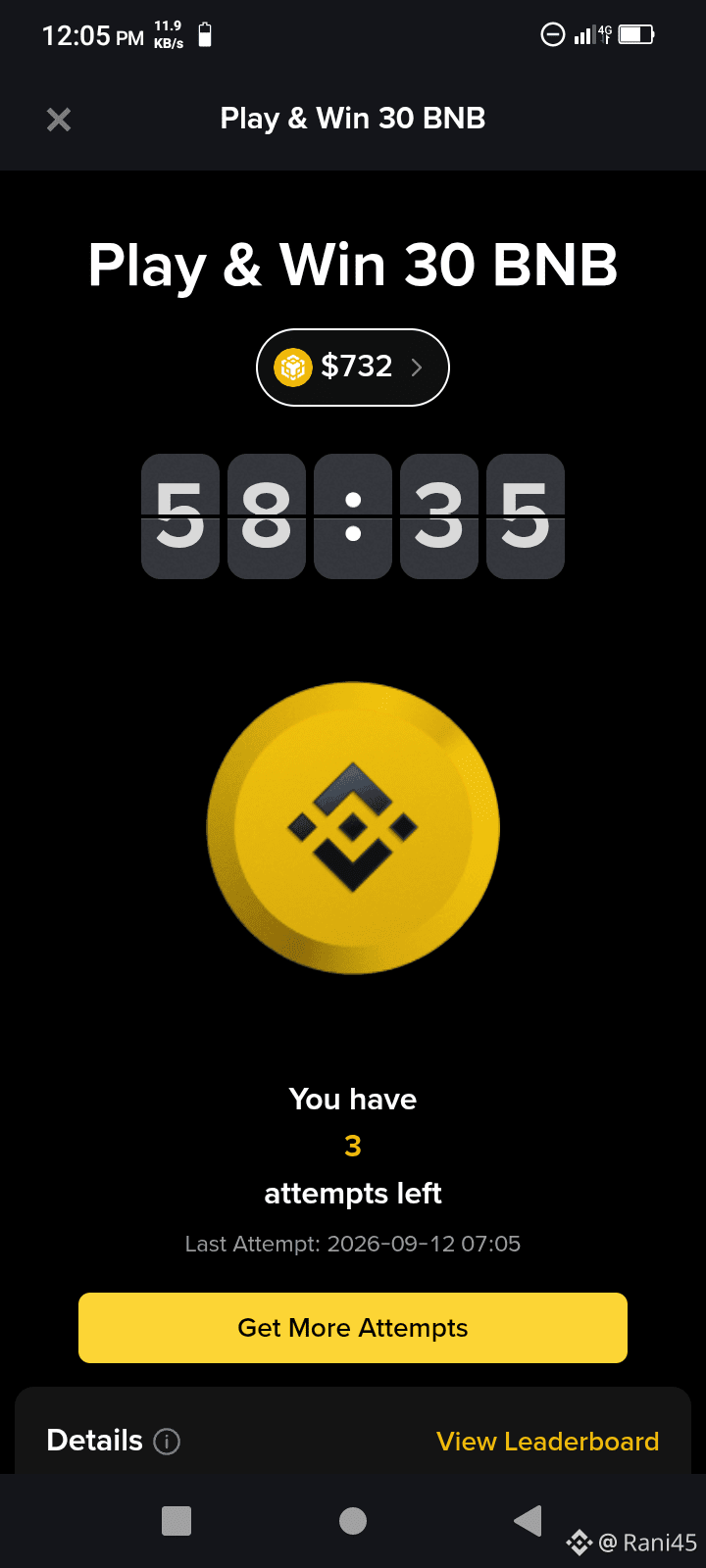
🎮 Play & Win 30 BNB! 🟡🔥
The challenge is live! I’m taking my chance to win from the 30 BNB prize pool. 💰🚀 With 3 attempts left, the excitement is real! Let’s see if luck is on my side today. 🍀💛
#Binance #BNB #PlayAndWin #crypto #BinanceCommunity
🎮 Play & Win 30 BNB! 🟡🔥
The challenge is live! I’m taking my chance to win from the 30 BNB prize pool. 💰🚀 With 3 attempts left, the excitement is real! Let’s see if luck is on my side today. 🍀💛
#Binance #BNB #PlayAndWin #crypto #BinanceCommunity
The challenge is live! I’m taking my chance to win from the 30 BNB prize pool. 💰🚀 With 3 attempts left, the excitement is real! Let’s see if luck is on my side today. 🍀💛
#Binance #BNB #PlayAndWin #crypto #BinanceCommunity
SADIA88:
how?
1
3
617

Just earned my first *0.000010 BTC* on Binance by learning! 📚💰
Completed the *"Bitcoin Basics"* course on #BinanceEarn and got rewarded in BTC directly.
Learn crypto, earn crypto. It’s that easy 🚀
Who else is doing Learn & Earn? 👇
#Binance #LearnAndEarnQuiz #BinanceAcademy
$BTC
Just earned my first *0.000010 BTC* on Binance by learning! 📚💰
Completed the *"Bitcoin Basics"* course on #BinanceEarn and got rewarded in BTC directly.
Learn crypto, earn crypto. It’s that easy 🚀
Who else is doing Learn & Earn? 👇
#Binance #LearnAndEarnQuiz #BinanceAcademy
$BTC
Completed the *"Bitcoin Basics"* course on #BinanceEarn and got rewarded in BTC directly.
Learn crypto, earn crypto. It’s that easy 🚀
Who else is doing Learn & Earn? 👇
#Binance #LearnAndEarnQuiz #BinanceAcademy
$BTC
2
855

·
--
Bullish
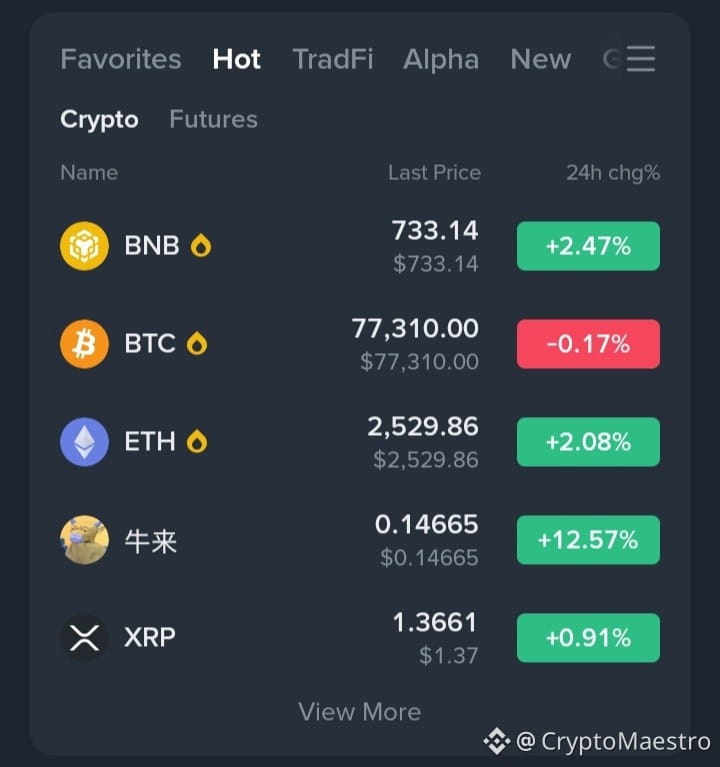
📊 3 Key Crypto Assets to Watch on Binance Today
If you’re looking for the most important coins for short-term trading today, keep an eye on:
$SOL
{spot}(SOLUSDT)
🥇 SOL/USDT — Stronger short-term momentum and higher volatility.
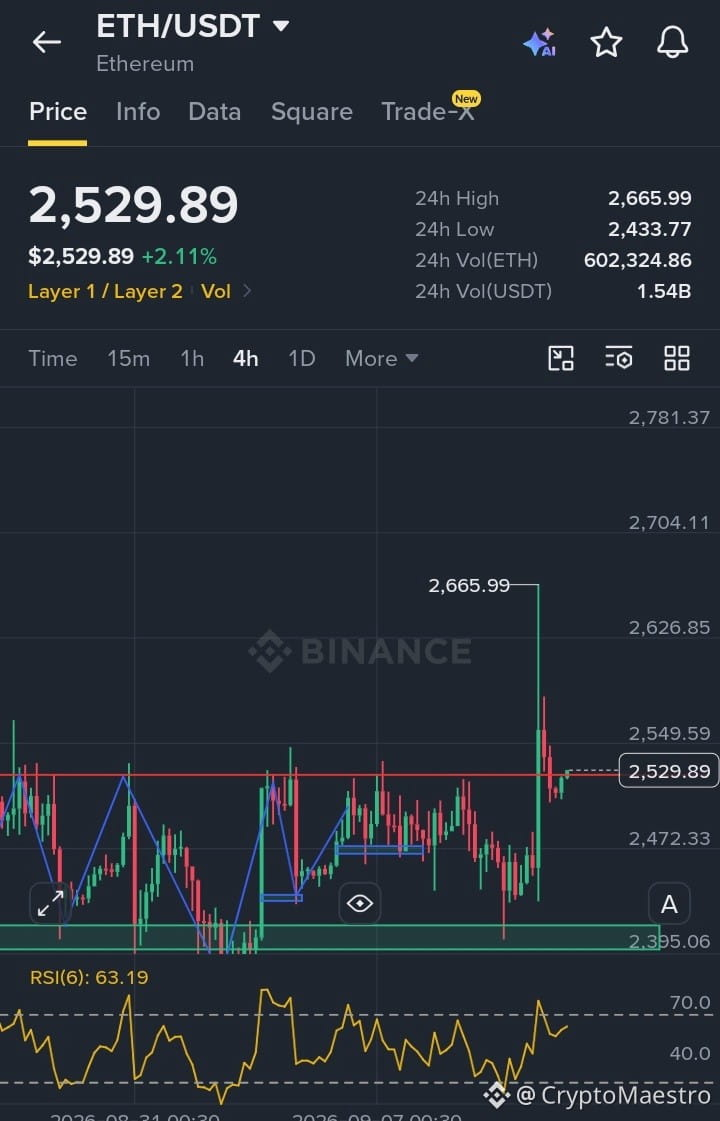
$ETH
{spot}(ETHUSDT)
🥈 ETH/USDT — Showing relative strength and worth watching for a breakout.
$BTC
{spot}(BTCUSDT)
🥉 BTC/USDT — The key market leader and the best indicator of overall market direction.
🎯 Trader’s Focus: Watch support & resistance levels carefully and wait for confirmation before entering a trade.
⚠️ Risk Management First: Crypto markets are highly volatile. Always use a stop-loss and avoid overleveraging.
#Binance #BTC #ETH #SOL #CryptoTrading
📊 3 Key Crypto Assets to Watch on Binance Today
If you’re looking for the most important coins for short-term trading today, keep an eye on:
$SOL
🥇 SOL/USDT — Stronger short-term momentum and higher volatility.
$ETH
🥈 ETH/USDT — Showing relative strength and worth watching for a breakout.
$BTC
🥉 BTC/USDT — The key market leader and the best indicator of overall market direction.
🎯 Trader’s Focus: Watch support & resistance levels carefully and wait for confirmation before entering a trade.
⚠️ Risk Management First: Crypto markets are highly volatile. Always use a stop-loss and avoid overleveraging.
#Binance #BTC #ETH #SOL #CryptoTrading
If you’re looking for the most important coins for short-term trading today, keep an eye on:
$SOL
🥇 SOL/USDT — Stronger short-term momentum and higher volatility.
$ETH
🥈 ETH/USDT — Showing relative strength and worth watching for a breakout.
$BTC
🥉 BTC/USDT — The key market leader and the best indicator of overall market direction.
🎯 Trader’s Focus: Watch support & resistance levels carefully and wait for confirmation before entering a trade.
⚠️ Risk Management First: Crypto markets are highly volatile. Always use a stop-loss and avoid overleveraging.
#Binance #BTC #ETH #SOL #CryptoTrading
1
107


#Binance Square Skill, explained
Set up a posting API key, connect it to a supported agent, and publish Square posts in a few steps.
Read more 👇
[Here](https://www.binance.com/en/academy/articles/binance-square-skill-what-it-is-and-how-to-use-it)
$AAPLB
{spot}(AAPLBUSDT)
#Binance Square Skill, explained
Set up a posting API key, connect it to a supported agent, and publish Square posts in a few steps.
Read more 👇
Here
$AAPLB
Set up a posting API key, connect it to a supported agent, and publish Square posts in a few steps.
Read more 👇
Here
$AAPLB

5
242

·
--
Binance update — 11 Sep 2026
Platform: operational.
Wallet routes: majority of networks open; check STX and AXL (selected chains) before deposits/withdrawals.
Recent:
• USDP spot pairs scheduled for delisting 24 Sep 2026.
• Kazakhstan MoUs signed on digital assets, payments infrastructure, and investment use cases.
• Continued expansion of tokenized equities / TradFi rails and BNB Chain capacity work.
Always confirm the exact network, memo/tag, and current status in the app. DYOR. Not financial advice.
#Binance #Crypto
Binance update — 11 Sep 2026
Platform: operational.
Wallet routes: majority of networks open; check STX and AXL (selected chains) before deposits/withdrawals.
Recent:
• USDP spot pairs scheduled for delisting 24 Sep 2026.
• Kazakhstan MoUs signed on digital assets, payments infrastructure, and investment use cases.
• Continued expansion of tokenized equities / TradFi rails and BNB Chain capacity work.
Always confirm the exact network, memo/tag, and current status in the app. DYOR. Not financial advice.
#Binance #Crypto
Platform: operational.
Wallet routes: majority of networks open; check STX and AXL (selected chains) before deposits/withdrawals.
Recent:
• USDP spot pairs scheduled for delisting 24 Sep 2026.
• Kazakhstan MoUs signed on digital assets, payments infrastructure, and investment use cases.
• Continued expansion of tokenized equities / TradFi rails and BNB Chain capacity work.
Always confirm the exact network, memo/tag, and current status in the app. DYOR. Not financial advice.
#Binance #Crypto
69

$BNB Market Update: Testing $750 Resistance After Strong Rebound
$BNB is trading around $731**, recovering sharply from its late-August base after briefly touching **$770 earlier this month . The token is now facing a critical test at the $750–$770 supply zone, where the summer rally previously stalled .
Bullish Signs: $BNB Chain fundamentals are strengthening. DeFi TVL hit **$5.66 billion**, up 15.6% in 30 days, while 24-hour DEX volume surged **65.5%** to $2.25 billion . Network fees also spiked to $4.55 million, signaling real on-chain demand .
Key Levels: A daily close above $750** would confirm buyer control, opening the path to **$800. Failure to hold could send BNB back to $700–$720, with deeper support at $680–$690 .
Binance Trade View: Consider a cautious long only if BNB breaks and holds $750 with volume. A rejection here favors patience. DYOR — leverage cuts both ways.
#bnb #binance
{spot}(BNBUSDT)
$BNB Market Update: Testing $750 Resistance After Strong Rebound
$BNB is trading around $731**, recovering sharply from its late-August base after briefly touching **$770 earlier this month . The token is now facing a critical test at the $750–$770 supply zone, where the summer rally previously stalled .
Bullish Signs: $BNB Chain fundamentals are strengthening. DeFi TVL hit **$5.66 billion**, up 15.6% in 30 days, while 24-hour DEX volume surged **65.5%** to $2.25 billion . Network fees also spiked to $4.55 million, signaling real on-chain demand .
Key Levels: A daily close above $750** would confirm buyer control, opening the path to **$800. Failure to hold could send BNB back to $700–$720, with deeper support at $680–$690 .
Binance Trade View: Consider a cautious long only if BNB breaks and holds $750 with volume. A rejection here favors patience. DYOR — leverage cuts both ways.
#bnb #binance
$BNB is trading around $731**, recovering sharply from its late-August base after briefly touching **$770 earlier this month . The token is now facing a critical test at the $750–$770 supply zone, where the summer rally previously stalled .
Bullish Signs: $BNB Chain fundamentals are strengthening. DeFi TVL hit **$5.66 billion**, up 15.6% in 30 days, while 24-hour DEX volume surged **65.5%** to $2.25 billion . Network fees also spiked to $4.55 million, signaling real on-chain demand .
Key Levels: A daily close above $750** would confirm buyer control, opening the path to **$800. Failure to hold could send BNB back to $700–$720, with deeper support at $680–$690 .
Binance Trade View: Consider a cautious long only if BNB breaks and holds $750 with volume. A rejection here favors patience. DYOR — leverage cuts both ways.
#bnb #binance
33

·
--
Verified
**Upcoming Crypto Arrivals & Trade Ideas**
Binance rarely announces full Spot listings far in advance. Current signals come from:
- **Recent/New**: MARSCOIN (Spot + Seed Tag), PONSUSDT & 哈基米USDT Perpetuals, new bStocks (tokenized stocks).
- **Watchlist**: Tokens graduating from Binance Alpha, active Launchpool/Megadrop projects, and high-volume Alpha coins often move to Futures or Spot next.
- **TradFi Expansion**: More stock/commodity perpetuals and bStocks expected.
**Future Trade Approach**:
- New listings (especially Seed Tag) → Short-term momentum trades on listing pump, take quick profits.
- Alpha → Spot graduates → Watch for volume surge and early support holds.
- High-risk strategy: Small size + tight stops due to extreme volatility.
Always check official Binance announcements for exact timing. DYOR and manage risk carefully.
#Binance
#NewListing
#CryptoTrading
#BNB
#ALPHA
**Upcoming Crypto Arrivals & Trade Ideas**
Binance rarely announces full Spot listings far in advance. Current signals come from:
- **Recent/New**: MARSCOIN (Spot + Seed Tag), PONSUSDT & 哈基米USDT Perpetuals, new bStocks (tokenized stocks).
- **Watchlist**: Tokens graduating from Binance Alpha, active Launchpool/Megadrop projects, and high-volume Alpha coins often move to Futures or Spot next.
- **TradFi Expansion**: More stock/commodity perpetuals and bStocks expected.
**Future Trade Approach**:
- New listings (especially Seed Tag) → Short-term momentum trades on listing pump, take quick profits.
- Alpha → Spot graduates → Watch for volume surge and early support holds.
- High-risk strategy: Small size + tight stops due to extreme volatility.
Always check official Binance announcements for exact timing. DYOR and manage risk carefully.
#Binance
#NewListing
#CryptoTrading
#BNB
#ALPHA
Binance rarely announces full Spot listings far in advance. Current signals come from:
- **Recent/New**: MARSCOIN (Spot + Seed Tag), PONSUSDT & 哈基米USDT Perpetuals, new bStocks (tokenized stocks).
- **Watchlist**: Tokens graduating from Binance Alpha, active Launchpool/Megadrop projects, and high-volume Alpha coins often move to Futures or Spot next.
- **TradFi Expansion**: More stock/commodity perpetuals and bStocks expected.
**Future Trade Approach**:
- New listings (especially Seed Tag) → Short-term momentum trades on listing pump, take quick profits.
- Alpha → Spot graduates → Watch for volume surge and early support holds.
- High-risk strategy: Small size + tight stops due to extreme volatility.
Always check official Binance announcements for exact timing. DYOR and manage risk carefully.
#Binance
#NewListing
#CryptoTrading
#BNB
#ALPHA
33
📰 BINANCE EARN OFFERS UP TO 14% APR ON KGST
$KGST $LSK $VTHO
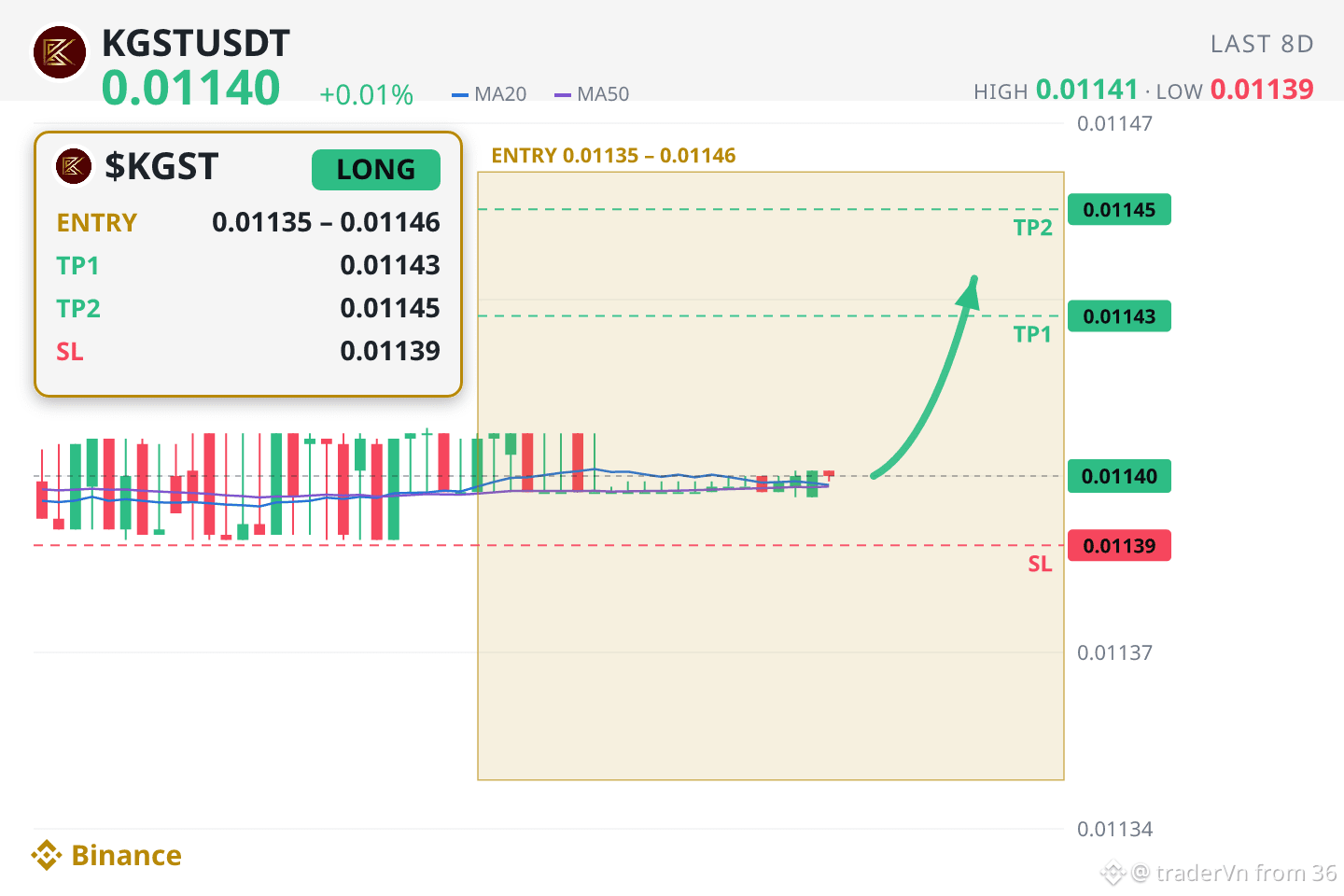
💹 KGST is at 0.011402 USDT · 🟢 +0.02% over 24h
📌 Event type: Earn Promo · published by Binance on 11/09/2026
Binance announced a flexible Earn product for KGST with up to 14% APR and a 100,000 KGST limit. The key point is the attractive APR combined with the limited allocation.
📊 Live data — 📈 TRENDING UP
• KGST 0.011402 · 🟢 +0.02% · Vol 0M
• LSK · 🟢 +49.1% · Vol 7M
• VTHO · 🟢 +13.3% · Vol 11M
💡 Exchange announcements pull attention onto the named asset, and attention arrives fast and leaves just as fast.
#KGST #Binance
⚠️ For reference only, not financial advice (DYOR).
🔗 Source: https://www.binance.com/vi/support/announcement/f6ff30454a124269bcf185891d11aaa5
📰 BINANCE EARN OFFERS UP TO 14% APR ON KGST
$KGST $LSK $VTHO
💹 KGST is at 0.011402 USDT · 🟢 +0.02% over 24h
📌 Event type: Earn Promo · published by Binance on 11/09/2026
Binance announced a flexible Earn product for KGST with up to 14% APR and a 100,000 KGST limit. The key point is the attractive APR combined with the limited allocation.
📊 Live data — 📈 TRENDING UP
• KGST 0.011402 · 🟢 +0.02% · Vol 0M
• LSK · 🟢 +49.1% · Vol 7M
• VTHO · 🟢 +13.3% · Vol 11M
💡 Exchange announcements pull attention onto the named asset, and attention arrives fast and leaves just as fast.
#KGST #Binance
⚠️ For reference only, not financial advice (DYOR).
🔗 Source: https://www.binance.com/vi/support/announcement/f6ff30454a124269bcf185891d11aaa5
$KGST $LSK $VTHO
💹 KGST is at 0.011402 USDT · 🟢 +0.02% over 24h
📌 Event type: Earn Promo · published by Binance on 11/09/2026
Binance announced a flexible Earn product for KGST with up to 14% APR and a 100,000 KGST limit. The key point is the attractive APR combined with the limited allocation.
📊 Live data — 📈 TRENDING UP
• KGST 0.011402 · 🟢 +0.02% · Vol 0M
• LSK · 🟢 +49.1% · Vol 7M
• VTHO · 🟢 +13.3% · Vol 11M
💡 Exchange announcements pull attention onto the named asset, and attention arrives fast and leaves just as fast.
#KGST #Binance
⚠️ For reference only, not financial advice (DYOR).
🔗 Source: https://www.binance.com/vi/support/announcement/f6ff30454a124269bcf185891d11aaa5
87

·
--
🚨 BINANCE FUTURES ALERT — TRADERS, WATCH THIS! ⚡
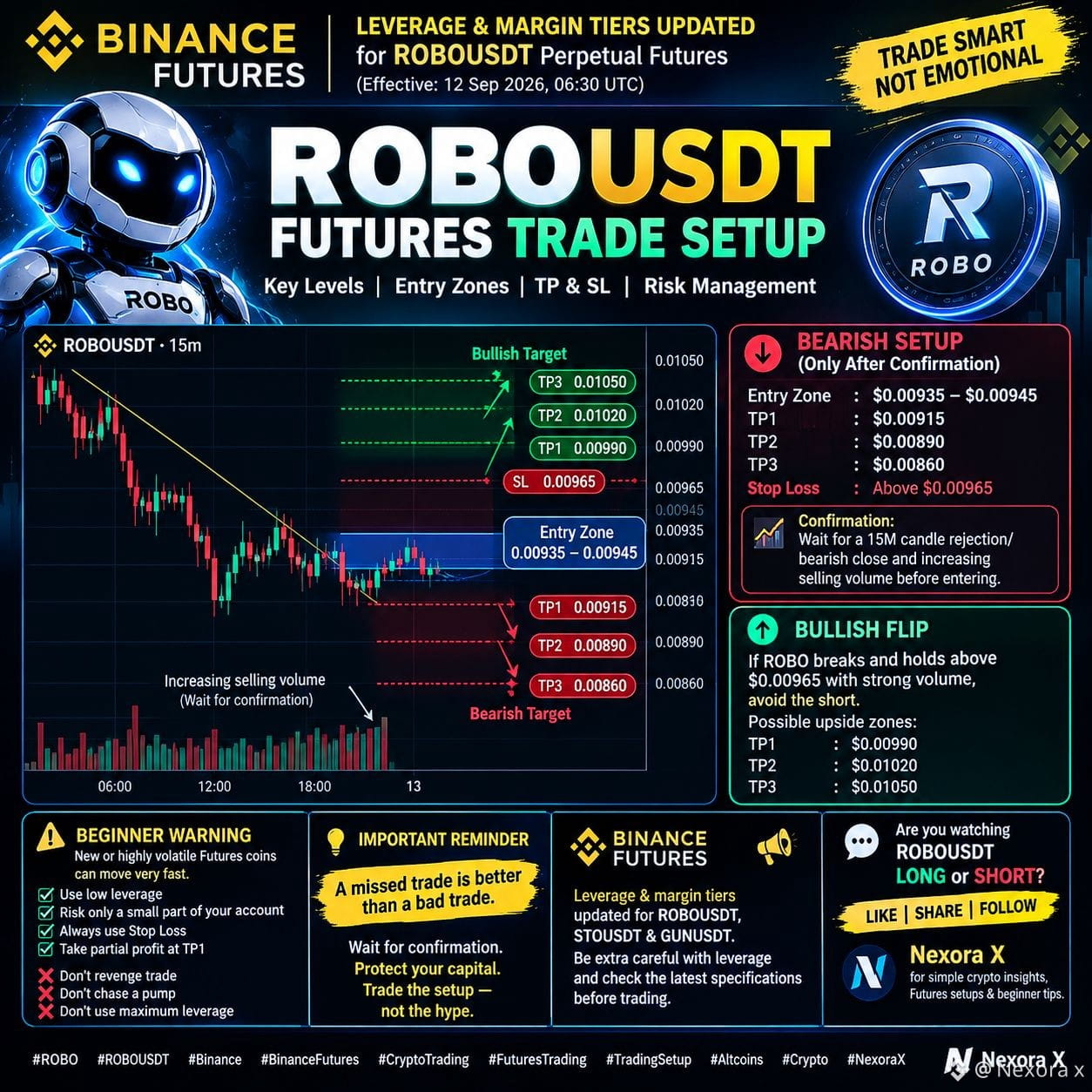
Binance has updated the leverage & margin tiers for:
🔹 $ROBOUSDT
🔹 $STOUSDT
🔹 $GUNUSDT
The update took effect on September 12, 2026 at 06:30 UTC.
⚠️ WHY DOES IT MATTER?
Changes in leverage and margin tiers can affect your Futures position requirements and liquidation risk.
📌 For Beginners:
✅ Use low leverage
✅ Keep your position size small
✅ Always set a Stop Loss
✅ Check the updated margin requirements before trading
✅ Wait for a clear setup and confirmation
❌ Don't use maximum leverage
❌ Don't chase sudden pumps
❌ Don't enter just because a coin is trending
❌ Never risk your full account on one trade
🔥 SMART TRADING RULE: You don't need to catch every move.
Protect your capital first. Profit comes second.
Before trading $ROBO, $STO or $GUN, check the latest Binance Futures specifications and understand the liquidation risk.
💬 Which one are you watching — ROBO, STO or GUN?
👍 Like | 🔄 Share | ➕ Follow Nexora X for simple crypto insights, trading setups & beginner-friendly market updates.
#Binance #BinanceFutures #ROBO #STO #GUN
{spot}(ROBOUSDT)
{spot}(STOUSDT)
{spot}(GUNUSDT)
🚨 BINANCE FUTURES ALERT — TRADERS, WATCH THIS! ⚡
Binance has updated the leverage & margin tiers for:
🔹 $ROBOUSDT
🔹 $STOUSDT
🔹 $GUNUSDT
The update took effect on September 12, 2026 at 06:30 UTC.
⚠️ WHY DOES IT MATTER?
Changes in leverage and margin tiers can affect your Futures position requirements and liquidation risk.
📌 For Beginners:
✅ Use low leverage
✅ Keep your position size small
✅ Always set a Stop Loss
✅ Check the updated margin requirements before trading
✅ Wait for a clear setup and confirmation
❌ Don't use maximum leverage
❌ Don't chase sudden pumps
❌ Don't enter just because a coin is trending
❌ Never risk your full account on one trade
🔥 SMART TRADING RULE: You don't need to catch every move.
Protect your capital first. Profit comes second.
Before trading $ROBO, $STO or $GUN, check the latest Binance Futures specifications and understand the liquidation risk.
💬 Which one are you watching — ROBO, STO or GUN?
👍 Like | 🔄 Share | ➕ Follow Nexora X for simple crypto insights, trading setups & beginner-friendly market updates.
#Binance #BinanceFutures #ROBO #STO #GUN
Binance has updated the leverage & margin tiers for:
🔹 $ROBOUSDT
🔹 $STOUSDT
🔹 $GUNUSDT
The update took effect on September 12, 2026 at 06:30 UTC.
⚠️ WHY DOES IT MATTER?
Changes in leverage and margin tiers can affect your Futures position requirements and liquidation risk.
📌 For Beginners:
✅ Use low leverage
✅ Keep your position size small
✅ Always set a Stop Loss
✅ Check the updated margin requirements before trading
✅ Wait for a clear setup and confirmation
❌ Don't use maximum leverage
❌ Don't chase sudden pumps
❌ Don't enter just because a coin is trending
❌ Never risk your full account on one trade
🔥 SMART TRADING RULE: You don't need to catch every move.
Protect your capital first. Profit comes second.
Before trading $ROBO, $STO or $GUN, check the latest Binance Futures specifications and understand the liquidation risk.
💬 Which one are you watching — ROBO, STO or GUN?
👍 Like | 🔄 Share | ➕ Follow Nexora X for simple crypto insights, trading setups & beginner-friendly market updates.
#Binance #BinanceFutures #ROBO #STO #GUN
153

·
--
Bullish
🔥 $BNB is back in focus as market participants watch for continued momentum.
The next major price move could depend on overall crypto sentiment and trading volume.
👀 Watching closely!
#BNB #CryptoMarket #Binance
{spot}(BNBUSDT)
🔥 $BNB is back in focus as market participants watch for continued momentum.
The next major price move could depend on overall crypto sentiment and trading volume.
👀 Watching closely!
#BNB #CryptoMarket #Binance
The next major price move could depend on overall crypto sentiment and trading volume.
👀 Watching closely!
#BNB #CryptoMarket #Binance
40

·
--
Bullish
🚨 $BNB : The Large-Cap Relative Strength Play! ( LONG Setup 🎯)
$BNB is showing the cleanest higher-timeframe recovery and relative strength among major caps right now. While the broader market chops, BNB is behaving like a true large-cap leader. The setup offers a controlled risk entry with clear liquidity targets above and a tight, objective invalidation.
Don't chase the candle—wait for the minor pullback into the EMA cluster or a retest of recent structure.
📍 Entry: $728 - $732 (Limit / on minor pullback)
🎯 Target 1: $741 - $743 (Prior high / liquidity)
🚀 Target 2: $752 - $755
🚀 Target 3: $765 - $770 (Extended only if momentum continues)
🛑 Stop Loss: $717.5 - $719 (Below recent swing / Supertrend / Bollinger mid support)
{future}(BNBUSDT)
⚠️ Key Notes:
· Do not chase above $735.
· Risk: Controlled (structure-based SL, not arbitrary)
· R:R: ≈ 1.8–2.5 to TP1 / higher to TP2 (after fees/slippage)
· Probability: Medium-High (structure + relative strength edge)
· Confidence: Medium-High
Will BNB hit $741 or retest $717.5 first? comment below! 👇
#BNB #Binance #Crypto #BinanceSquare
(If you found this setup helpful, smash the 👍 LIKE button and consider leaving a 💡 TIP to support my work!)
🚨 $BNB : The Large-Cap Relative Strength Play! ( LONG Setup 🎯)
$BNB is showing the cleanest higher-timeframe recovery and relative strength among major caps right now. While the broader market chops, BNB is behaving like a true large-cap leader. The setup offers a controlled risk entry with clear liquidity targets above and a tight, objective invalidation.
Don't chase the candle—wait for the minor pullback into the EMA cluster or a retest of recent structure.
📍 Entry: $728 - $732 (Limit / on minor pullback)
🎯 Target 1: $741 - $743 (Prior high / liquidity)
🚀 Target 2: $752 - $755
🚀 Target 3: $765 - $770 (Extended only if momentum continues)
🛑 Stop Loss: $717.5 - $719 (Below recent swing / Supertrend / Bollinger mid support)
⚠️ Key Notes:
· Do not chase above $735.
· Risk: Controlled (structure-based SL, not arbitrary)
· R:R: ≈ 1.8–2.5 to TP1 / higher to TP2 (after fees/slippage)
· Probability: Medium-High (structure + relative strength edge)
· Confidence: Medium-High
Will BNB hit $741 or retest $717.5 first? comment below! 👇
#BNB #Binance #Crypto #BinanceSquare
(If you found this setup helpful, smash the 👍 LIKE button and consider leaving a 💡 TIP to support my work!)
$BNB is showing the cleanest higher-timeframe recovery and relative strength among major caps right now. While the broader market chops, BNB is behaving like a true large-cap leader. The setup offers a controlled risk entry with clear liquidity targets above and a tight, objective invalidation.
Don't chase the candle—wait for the minor pullback into the EMA cluster or a retest of recent structure.
📍 Entry: $728 - $732 (Limit / on minor pullback)
🎯 Target 1: $741 - $743 (Prior high / liquidity)
🚀 Target 2: $752 - $755
🚀 Target 3: $765 - $770 (Extended only if momentum continues)
🛑 Stop Loss: $717.5 - $719 (Below recent swing / Supertrend / Bollinger mid support)
⚠️ Key Notes:
· Do not chase above $735.
· Risk: Controlled (structure-based SL, not arbitrary)
· R:R: ≈ 1.8–2.5 to TP1 / higher to TP2 (after fees/slippage)
· Probability: Medium-High (structure + relative strength edge)
· Confidence: Medium-High
Will BNB hit $741 or retest $717.5 first? comment below! 👇
#BNB #Binance #Crypto #BinanceSquare
(If you found this setup helpful, smash the 👍 LIKE button and consider leaving a 💡 TIP to support my work!)
Crypto_Town_JS:
You're welcome, bro!
3
1
80

🚀 $BNB Market Update & Key Levels to Watch
$BNB is currently trading around $725 – $735, holding up well after a brief pullback from the $780 resistance level.
🔹 Key Highlights:
• Key Support Zone: Crucial support sits around $690–$700. Holding this range keeps the broader structure intact.
• On-Chain Surge: $BNB Chain protocol revenue recently hit $3.2M, driven by consistent DEX activity and ecosystem interactions.
• Market Cap Strength: Holds strong as a top altcoin with a market cap near ~$95B.
📊 What’s your next price target for BNB?Bullish breakout or more consolidation?
Share your analysis below! 👇
#BNB #Binance #Crypto #TechnicalAnalysis
{spot}(BNBUSDT)
🚀 $BNB Market Update & Key Levels to Watch
$BNB is currently trading around $725 – $735, holding up well after a brief pullback from the $780 resistance level.
🔹 Key Highlights:
• Key Support Zone: Crucial support sits around $690–$700. Holding this range keeps the broader structure intact.
• On-Chain Surge: $BNB Chain protocol revenue recently hit $3.2M, driven by consistent DEX activity and ecosystem interactions.
• Market Cap Strength: Holds strong as a top altcoin with a market cap near ~$95B.
📊 What’s your next price target for BNB?Bullish breakout or more consolidation?
Share your analysis below! 👇
#BNB #Binance #Crypto #TechnicalAnalysis
$BNB is currently trading around $725 – $735, holding up well after a brief pullback from the $780 resistance level.
🔹 Key Highlights:
• Key Support Zone: Crucial support sits around $690–$700. Holding this range keeps the broader structure intact.
• On-Chain Surge: $BNB Chain protocol revenue recently hit $3.2M, driven by consistent DEX activity and ecosystem interactions.
• Market Cap Strength: Holds strong as a top altcoin with a market cap near ~$95B.
📊 What’s your next price target for BNB?Bullish breakout or more consolidation?
Share your analysis below! 👇
#BNB #Binance #Crypto #TechnicalAnalysis
1
72

·
--
Bullish
🚀 $BNB showing strong momentum today.
Price action remains bullish — keep an eye on the next breakout move. 📈
{spot}(BNBUSDT)
#BNB #Binance #Crypto #Altcoins!
🚀 $BNB showing strong momentum today.
Price action remains bullish — keep an eye on the next breakout move. 📈
#BNB #Binance #Crypto #Altcoins!
Price action remains bullish — keep an eye on the next breakout move. 📈
#BNB #Binance #Crypto #Altcoins!

67
📰 BINANCE LAUNCHES VENEZUELA CASHBACK CAMPAIGN
$MINA $SOPH
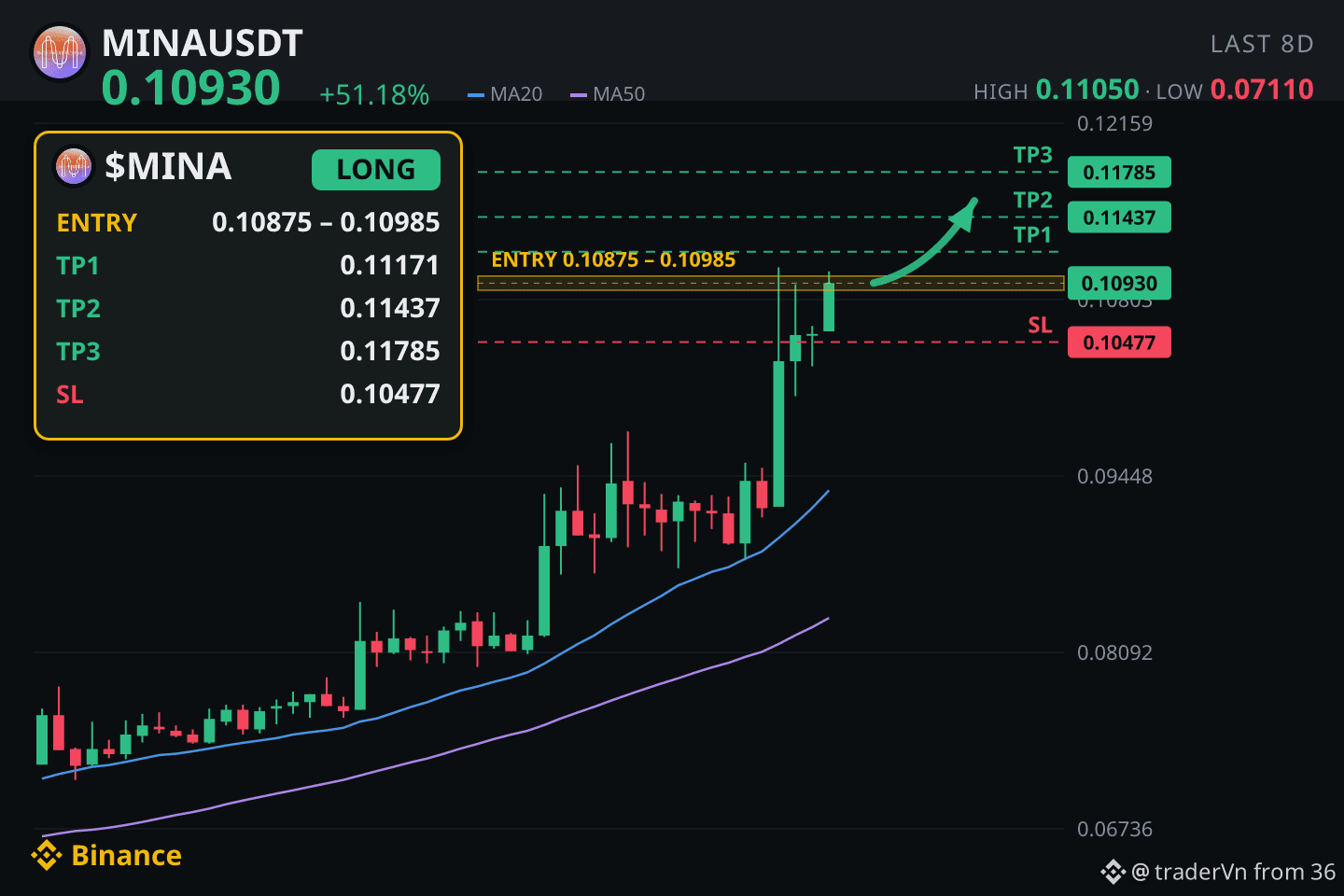
💹 Hottest right now: MINA 🟢 +19.6% over 24h · Vol 6M
📌 Event type: Cashback Campaign · published by Binance on 11/09/2026
Binance announced a lifestyle cashback promotion in Venezuela, offering 2 USDT back for every 10 USDT spent. The key takeaway is the incentive aims to boost user activity on the platform.
📊 Live data — 📈 TRENDING UP
• MINA · 🟢 +19.6% · Vol 6M
• SOPH · 🟢 +14.3% · Vol 10M
💡 Exchange announcements pull attention onto the named asset, and attention arrives fast and leaves just as fast.
#Binance
⚠️ For reference only, not financial advice (DYOR).
🔗 Source: https://www.binance.com/vi/support/announcement/c495d1c59c014c53a7dcb5a21fc25993
📰 BINANCE LAUNCHES VENEZUELA CASHBACK CAMPAIGN
$MINA $SOPH
💹 Hottest right now: MINA 🟢 +19.6% over 24h · Vol 6M
📌 Event type: Cashback Campaign · published by Binance on 11/09/2026
Binance announced a lifestyle cashback promotion in Venezuela, offering 2 USDT back for every 10 USDT spent. The key takeaway is the incentive aims to boost user activity on the platform.
📊 Live data — 📈 TRENDING UP
• MINA · 🟢 +19.6% · Vol 6M
• SOPH · 🟢 +14.3% · Vol 10M
💡 Exchange announcements pull attention onto the named asset, and attention arrives fast and leaves just as fast.
#Binance
⚠️ For reference only, not financial advice (DYOR).
🔗 Source: https://www.binance.com/vi/support/announcement/c495d1c59c014c53a7dcb5a21fc25993
$MINA $SOPH
💹 Hottest right now: MINA 🟢 +19.6% over 24h · Vol 6M
📌 Event type: Cashback Campaign · published by Binance on 11/09/2026
Binance announced a lifestyle cashback promotion in Venezuela, offering 2 USDT back for every 10 USDT spent. The key takeaway is the incentive aims to boost user activity on the platform.
📊 Live data — 📈 TRENDING UP
• MINA · 🟢 +19.6% · Vol 6M
• SOPH · 🟢 +14.3% · Vol 10M
💡 Exchange announcements pull attention onto the named asset, and attention arrives fast and leaves just as fast.
#Binance
⚠️ For reference only, not financial advice (DYOR).
🔗 Source: https://www.binance.com/vi/support/announcement/c495d1c59c014c53a7dcb5a21fc25993
1
75

·
--
$BNB is currently showing solid momentum, with buyers keeping the price in positive territory. A move like this puts BNB back on the watchlist for a potential continuation if momentum stays strong.
I’m watching for follow-through above the recent range before expecting another leg higher. For now, the key is simple: momentum + confirmation, not FOMO.
BNB +2.44%
#BNB #BNBUSDT #Binance #CryptoTrading
{spot}(BNBUSDT)
$BNB is currently showing solid momentum, with buyers keeping the price in positive territory. A move like this puts BNB back on the watchlist for a potential continuation if momentum stays strong.
I’m watching for follow-through above the recent range before expecting another leg higher. For now, the key is simple: momentum + confirmation, not FOMO.
BNB +2.44%
#BNB #BNBUSDT #Binance #CryptoTrading
I’m watching for follow-through above the recent range before expecting another leg higher. For now, the key is simple: momentum + confirmation, not FOMO.
BNB +2.44%
#BNB #BNBUSDT #Binance #CryptoTrading
58

💥 $BNB — Strong Coins Deserve Attention! 🔥
BNB remains one of the major coins in the crypto ecosystem.
With continued market interest, $BNB could stay on many traders’ watchlists. 🚀
📈 Patience
💎 Conviction
🔥 Positive mindset
Bullish on $BNB ? 🐂👇
#bnb #Crypto #BinanceSquare uare #Binance #bullish
{spot}(BNBUSDT)
💥 $BNB — Strong Coins Deserve Attention! 🔥
BNB remains one of the major coins in the crypto ecosystem.
With continued market interest, $BNB could stay on many traders’ watchlists. 🚀
📈 Patience
💎 Conviction
🔥 Positive mindset
Bullish on $BNB ? 🐂👇
#bnb #Crypto #BinanceSquare uare #Binance #bullish
BNB remains one of the major coins in the crypto ecosystem.
With continued market interest, $BNB could stay on many traders’ watchlists. 🚀
📈 Patience
💎 Conviction
🔥 Positive mindset
Bullish on $BNB ? 🐂👇
#bnb #Crypto #BinanceSquare uare #Binance #bullish

72


how to earn from BinanceBinance provides multiple methods to generate returns, ranging from low-risk passive income to active trading strategies.
Step 1: Core Setup & Onboardin
Before initiating any earning strategy, complete the initial setup steps
Account Registration: Register on the platform via email or mobile number.KYC Verification: Complete Level 1 Identity Verification (CNIC/Passport/ID upload and facial scan) to enable deposits and trading limits. Security Setup: Enable Two-Factor Authentication (2FA) via Authenticator App or SMS.Fund Account: Deposit funds via P2P express, credit/debit card, or direct crypto deposit
Step 2: Binance Earning Methods Matrix
Method
Risk Level
Primary Mechanism
Required Capital
Ideal For
Simple Earn (Flexible)
Very Low
Deposit assets to earn daily APR; redeem anytime.
Any amount
Beginners, emergency reserves
Simple Earn (Locked)
Low
Lock assets for fixed terms (30/60/120 days) for higher APR.
Any amount
Long-term holders
Binance Launchpool
Low–Medium
Stake BNB, FDUSD, or ETH to farm new project tokens.
Flexible ($10+)
Passive farming on stable/core assets
Spot / Swing Trading
Medium–High
Buy low / sell high using Technical Analysis (RSI, Support/Resistance).
$50+
Active market participants
P2P Merchant Arbitrage
Low–Medium
Capitalize on buy/sell spreads on the Peer-to-Peer market.
$200+
Local liquidity providers
Binance Square (Write-to-Earn)
Zero Capital
Publish original market content; earn up to 50% commission
Step 3: Step-by-Step Execution Pathways
1-Low-Risk Passive Path: Binance Simple Earn
Prerequisite: USDT, BNB, or BTC in Spot Wallet
2-Zero-Capital Path: Launchpool & Write-to-Earn
Prerequisite: Verified Binance Account
3-Active Trading Path: Spot Market Execution
Prerequisite: Technical
Step 4: Technical Analysis Setup (Chart Workflow
When executing active Spot or Swing trades, structure entry and exit points using standard technical parameters
[Chart Framework Setup]
│
├── 1. Identify Trend (1D Timeframe)
│ ├── Uptrend → Look for Buy/Long entries on pullbacks
│ └── Downtrend → Capitalize on Bounce Shorts or hold Cash
│
├── 2. Map Key Levels (4H Timeframe)
│ ├── Support → Historical price floor (Entry Zone)
│ └── Resistance → Historical price ceiling (Take Profit Zone)
│
└── 3. Confirm Indicators (1H / 4H Timeframe)
├── RSI < 30 → Oversold condition (Bullish confluence)
└── RSI > 70 → Overbought condition (Take Profit signal)
Step 5: Essential Risk Management Rules
Position Sizing: Never allocate more than 2–5% of total capital to a single active Spot trade.Stop-Loss Discipline: Always set order stop-losses prior to entering market trades to prevent liquidation or extended drawdown.Diversification: Split funds across passive yield mechanisms (Simple Earn), core long-term holdings (BTC/ETH), and operational trading balance#Binance #square #bignnersguide #Crypto
Method
Risk Level
Primary Mechanism
Required Capital
Ideal For
Simple Earn (Flexible)
Very Low
Deposit assets to earn daily APR; redeem anytime.
Any amount
Beginners, emergency reserves
Simple Earn (Locked)
Low
Lock assets for fixed terms (30/60/120 days) for higher APR.
Any amount
Long-term holders
Binance Launchpool
Low–Medium
Stake BNB, FDUSD, or ETH to farm new project tokens.
Flexible ($10+)
Passive farming on stable/core assets
Spot / Swing Trading
Medium–High
Buy low / sell high using Technical Analysis (RSI, Support/Resistance).
$50+
Active market participants
P2P Merchant Arbitrage
Low–Medium
Capitalize on buy/sell spreads on the Peer-to-Peer market.
$200+
Local liquidity providers
Binance Square (Write-to-Earn)
Zero Capital
Publish original market content; earn up to 50% commission. 2: Earning Methods Matrix
how to earn from Binance
Binance provides multiple methods to generate returns, ranging from low-risk passive income to active trading strategies.
Step 1: Core Setup & Onboardin
Before initiating any earning strategy, complete the initial setup steps
Account Registration: Register on the platform via email or mobile number.KYC Verification: Complete Level 1 Identity Verification (CNIC/Passport/ID upload and facial scan) to enable deposits and trading limits. Security Setup: Enable Two-Factor Authentication (2FA) via Authenticator App or SMS.Fund Account: Deposit funds via P2P express, credit/debit card, or direct crypto deposit
Step 2: Binance Earning Methods Matrix
Method
Risk Level
Primary Mechanism
Required Capital
Ideal For
Simple Earn (Flexible)
Very Low
Deposit assets to earn daily APR; redeem anytime.
Any amount
Beginners, emergency reserves
Simple Earn (Locked)
Low
Lock assets for fixed terms (30/60/120 days) for higher APR.
Any amount
Long-term holders
Binance Launchpool
Low–Medium
Stake BNB, FDUSD, or ETH to farm new project tokens.
Flexible ($10+)
Passive farming on stable/core assets
Spot / Swing Trading
Medium–High
Buy low / sell high using Technical Analysis (RSI, Support/Resistance).
$50+
Active market participants
P2P Merchant Arbitrage
Low–Medium
Capitalize on buy/sell spreads on the Peer-to-Peer market.
$200+
Local liquidity providers
Binance Square (Write-to-Earn)
Zero Capital
Publish original market content; earn up to 50% commission
Step 3: Step-by-Step Execution Pathways
1-Low-Risk Passive Path: Binance Simple Earn
Prerequisite: USDT, BNB, or BTC in Spot Wallet
2-Zero-Capital Path: Launchpool & Write-to-Earn
Prerequisite: Verified Binance Account
3-Active Trading Path: Spot Market Execution
Prerequisite: Technical
Step 4: Technical Analysis Setup (Chart Workflow
When executing active Spot or Swing trades, structure entry and exit points using standard technical parameters
[Chart Framework Setup]
│
├── 1. Identify Trend (1D Timeframe)
│ ├── Uptrend → Look for Buy/Long entries on pullbacks
│ └── Downtrend → Capitalize on Bounce Shorts or hold Cash
│
├── 2. Map Key Levels (4H Timeframe)
│ ├── Support → Historical price floor (Entry Zone)
│ └── Resistance → Historical price ceiling (Take Profit Zone)
│
└── 3. Confirm Indicators (1H / 4H Timeframe)
├── RSI < 30 → Oversold condition (Bullish confluence)
└── RSI > 70 → Overbought condition (Take Profit signal)
Step 5: Essential Risk Management Rules
Position Sizing: Never allocate more than 2–5% of total capital to a single active Spot trade.Stop-Loss Discipline: Always set order stop-losses prior to entering market trades to prevent liquidation or extended drawdown.Diversification: Split funds across passive yield mechanisms (Simple Earn), core long-term holdings (BTC/ETH), and operational trading balance#Binance #square #bignnersguide #Crypto
Method
Risk Level
Primary Mechanism
Required Capital
Ideal For
Simple Earn (Flexible)
Very Low
Deposit assets to earn daily APR; redeem anytime.
Any amount
Beginners, emergency reserves
Simple Earn (Locked)
Low
Lock assets for fixed terms (30/60/120 days) for higher APR.
Any amount
Long-term holders
Binance Launchpool
Low–Medium
Stake BNB, FDUSD, or ETH to farm new project tokens.
Flexible ($10+)
Passive farming on stable/core assets
Spot / Swing Trading
Medium–High
Buy low / sell high using Technical Analysis (RSI, Support/Resistance).
$50+
Active market participants
P2P Merchant Arbitrage
Low–Medium
Capitalize on buy/sell spreads on the Peer-to-Peer market.
$200+
Local liquidity providers
Binance Square (Write-to-Earn)
Zero Capital
Publish original market content; earn up to 50% commission. 2: Earning Methods Matrix
Step 1: Core Setup & Onboardin
Before initiating any earning strategy, complete the initial setup steps
Account Registration: Register on the platform via email or mobile number.KYC Verification: Complete Level 1 Identity Verification (CNIC/Passport/ID upload and facial scan) to enable deposits and trading limits. Security Setup: Enable Two-Factor Authentication (2FA) via Authenticator App or SMS.Fund Account: Deposit funds via P2P express, credit/debit card, or direct crypto deposit
Step 2: Binance Earning Methods Matrix
Method
Risk Level
Primary Mechanism
Required Capital
Ideal For
Simple Earn (Flexible)
Very Low
Deposit assets to earn daily APR; redeem anytime.
Any amount
Beginners, emergency reserves
Simple Earn (Locked)
Low
Lock assets for fixed terms (30/60/120 days) for higher APR.
Any amount
Long-term holders
Binance Launchpool
Low–Medium
Stake BNB, FDUSD, or ETH to farm new project tokens.
Flexible ($10+)
Passive farming on stable/core assets
Spot / Swing Trading
Medium–High
Buy low / sell high using Technical Analysis (RSI, Support/Resistance).
$50+
Active market participants
P2P Merchant Arbitrage
Low–Medium
Capitalize on buy/sell spreads on the Peer-to-Peer market.
$200+
Local liquidity providers
Binance Square (Write-to-Earn)
Zero Capital
Publish original market content; earn up to 50% commission
Step 3: Step-by-Step Execution Pathways
1-Low-Risk Passive Path: Binance Simple Earn
Prerequisite: USDT, BNB, or BTC in Spot Wallet
2-Zero-Capital Path: Launchpool & Write-to-Earn
Prerequisite: Verified Binance Account
3-Active Trading Path: Spot Market Execution
Prerequisite: Technical
Step 4: Technical Analysis Setup (Chart Workflow
When executing active Spot or Swing trades, structure entry and exit points using standard technical parameters
[Chart Framework Setup]
│
├── 1. Identify Trend (1D Timeframe)
│ ├── Uptrend → Look for Buy/Long entries on pullbacks
│ └── Downtrend → Capitalize on Bounce Shorts or hold Cash
│
├── 2. Map Key Levels (4H Timeframe)
│ ├── Support → Historical price floor (Entry Zone)
│ └── Resistance → Historical price ceiling (Take Profit Zone)
│
└── 3. Confirm Indicators (1H / 4H Timeframe)
├── RSI < 30 → Oversold condition (Bullish confluence)
└── RSI > 70 → Overbought condition (Take Profit signal)
Step 5: Essential Risk Management Rules
Position Sizing: Never allocate more than 2–5% of total capital to a single active Spot trade.Stop-Loss Discipline: Always set order stop-losses prior to entering market trades to prevent liquidation or extended drawdown.Diversification: Split funds across passive yield mechanisms (Simple Earn), core long-term holdings (BTC/ETH), and operational trading balance#Binance #square #bignnersguide #Crypto
Method
Risk Level
Primary Mechanism
Required Capital
Ideal For
Simple Earn (Flexible)
Very Low
Deposit assets to earn daily APR; redeem anytime.
Any amount
Beginners, emergency reserves
Simple Earn (Locked)
Low
Lock assets for fixed terms (30/60/120 days) for higher APR.
Any amount
Long-term holders
Binance Launchpool
Low–Medium
Stake BNB, FDUSD, or ETH to farm new project tokens.
Flexible ($10+)
Passive farming on stable/core assets
Spot / Swing Trading
Medium–High
Buy low / sell high using Technical Analysis (RSI, Support/Resistance).
$50+
Active market participants
P2P Merchant Arbitrage
Low–Medium
Capitalize on buy/sell spreads on the Peer-to-Peer market.
$200+
Local liquidity providers
Binance Square (Write-to-Earn)
Zero Capital
Publish original market content; earn up to 50% commission. 2: Earning Methods Matrix
18
Log in to explore more content
Join global crypto users on Binance Square
⚡️ Get latest and useful information about crypto.
💬 Trusted by the world’s largest crypto exchange.
👍 Discover real insights from verified creators.
Email / Phone number
Trending Topics
1
#CryptoLiquidations$674MIn24H
0 views
3 Discussing
2
#RevolutConfirmsFakeGovEmailDataBreach
1,029 views
82 Discussing
3
#CanadaOSFISaysTokenizedDepositsEqualTraditionalDeposits
311 views
22 Discussing
4
#USBankCompletesCrossBorderPaymentPilotOnStellar
13,599 views
410 Discussing
5
#NvidiaInTalksToInvestUpTo$10BInAnthropicIPO
1,139 views
47 Discussing
6
#EtherRalliesAsBearishBetsLiquidate
24,773 views
600 Discussing
7
#EthereumHits$2600FirstTimeInSevenMonths
3,299 views
76 Discussing
8
#OpticalCommsStocksRallyOver3%
27,639 views
374 Discussing
9
#USInflationHoldsAt3.4%InAugust
33,631 views
388 Discussing
10
#CircleProposes$400MTazapayAcquisition
1,954 views
41 Discussing