
#icp
icp
16.9M views
26,333 Discussing
Hot
Latest

·
--
Verified
🍁 $ICP : 319 BILLION TRANSACTIONS — IS ICP UNDERVALUED?
Internet Computer is drawing attention with fresh network data:
- 319B+ transactions: ICP crossed this reported cumulative milestone.
- 5,236 TPS: Average throughput reported over the previous week.
- Cloud Engines: DFINITY has started sending early-access coupons to waitlisted users.
- Real test ahead: Sustained usage and customer adoption will matter more than transaction counts alone.
Can ICP turn impressive network activity into real-world demand?
$ICP
{future}(ICPUSDT)
.
.
.
#ICP #InternetComputer #Crypto
Not financial advice. DYOR.
🍁 $ICP : 319 BILLION TRANSACTIONS — IS ICP UNDERVALUED?
Internet Computer is drawing attention with fresh network data:
- 319B+ transactions: ICP crossed this reported cumulative milestone.
- 5,236 TPS: Average throughput reported over the previous week.
- Cloud Engines: DFINITY has started sending early-access coupons to waitlisted users.
- Real test ahead: Sustained usage and customer adoption will matter more than transaction counts alone.
Can ICP turn impressive network activity into real-world demand?
$ICP
.
.
.
#ICP #InternetComputer #Crypto
Not financial advice. DYOR.
Internet Computer is drawing attention with fresh network data:
- 319B+ transactions: ICP crossed this reported cumulative milestone.
- 5,236 TPS: Average throughput reported over the previous week.
- Cloud Engines: DFINITY has started sending early-access coupons to waitlisted users.
- Real test ahead: Sustained usage and customer adoption will matter more than transaction counts alone.
Can ICP turn impressive network activity into real-world demand?
$ICP
.
.
.
#ICP #InternetComputer #Crypto
Not financial advice. DYOR.

2
1.5k

Article
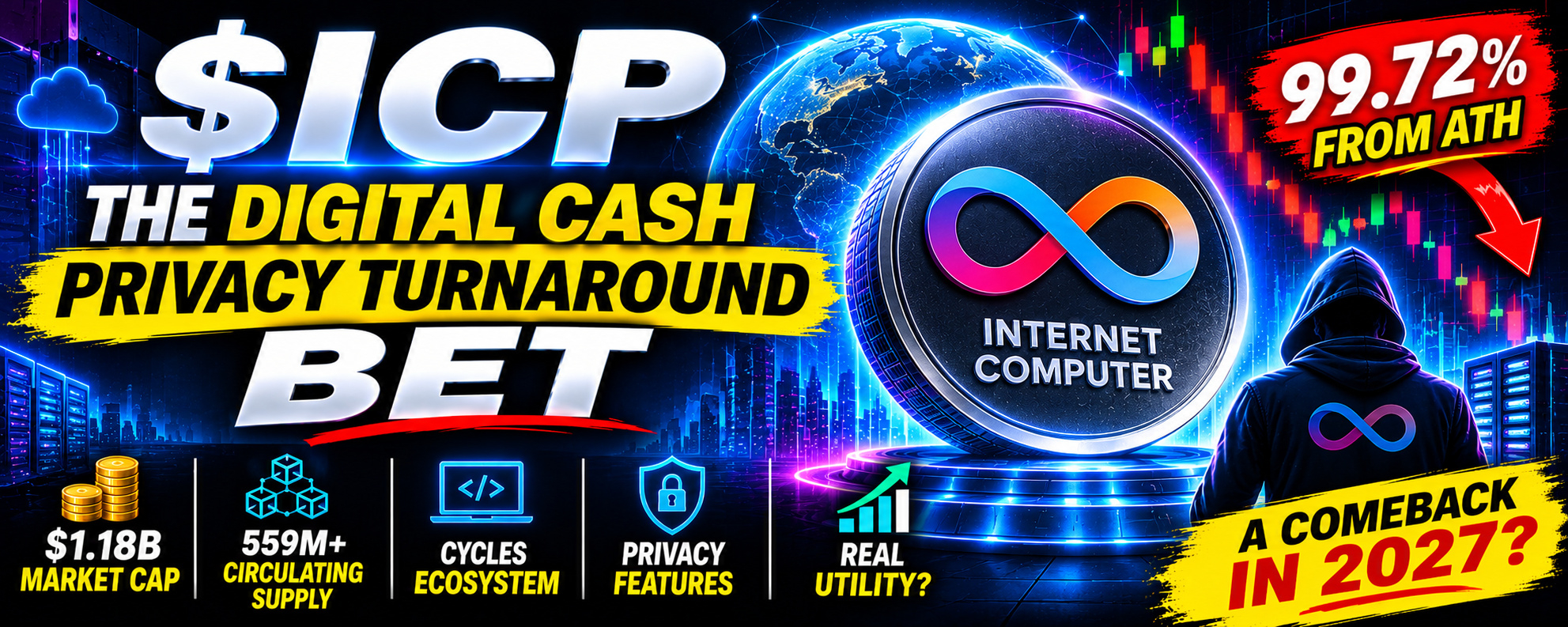
$ICP — THE PAID COMPUTE AND SUPPLY BALANCE BETA roughly $1.18 BILLION cryptocurrency.
More than 559 MILLION tokens circulating.
⠀A network where applications purchase computing resources by converting ICP into cycles.
⠀And a token trading approximately 99.7% below its recorded all-time high.
⠀But here's the contradiction.
⠀ICP has a direct connection between computing expenditure and token destruction.
⠀
That does not automatically mean the network destroys more tokens than it issues.
⠀
Is $ICP an overlooked bet on decentralized application hosting?
{future}(ICPUSDT)
⠀
Or does its computing infrastructure still need much greater paid demand?
⠀
Let's examine the numbers.
⠀
01 | WHAT IS THE INTERNET COMPUTER?
⠀
The Internet Computer is a blockchain-based computing network.
⠀
Its canister smart contracts combine application code with persistent data.
⠀
The ambition extends beyond transferring assets.
⠀
Applications can use the network for hosting, storage, and computation.
⠀
ICP supports governance and is converted into cycles to fund those resources.
⠀
The investment thesis is that developers will pay for capabilities they cannot obtain as effectively elsewhere.
⠀
But a broad technical ambition is not a customer base.
⠀
The relevant evidence is useful software that remains active and funded.
⠀
Infrastructure creates capacity.
⠀
Customers establish its commercial value.
⠀
02 | THE NUMBERS THAT MATTER
⠀
November 20, 2026 retrieved snapshot:
⠀
ICP Price: ~$2.11
Market Cap: ~$1.18B
Reported FDV: ~$1.18B
Circulating Supply: ~559.05M ICP
Reported Current Total Supply: ~559.05M ICP
Maximum Supply: No fixed cap
Circulating / Reported Current Total: ~100%
24H ICP Trading Volume: ~$39.72M
Recorded All-Time High: ~$750.73
Decline From Recorded ATH: ~99.72%
⠀
Similar market capitalization and reported FDV do not mean future issuance has ended.
⠀
The current total is a measurement, not a lifetime supply ceiling.
⠀
The recorded ATH is also not a fair-value benchmark.
⠀
The stronger operating comparison is tokens issued against tokens destroyed over the same period.
⠀
That comparison requires consistent definitions and complete data.
⠀
03 | THE CYCLE CONVERSION MECHANISM
⠀
Applications need cycles to purchase network resources.
⠀
Converting ICP into cycles destroys ICP.
⠀
Those cycles are then consumed as applications operate.
⠀
The token conversion and later cycle consumption are different stages of the same funding process.
⠀
They should not be counted as two separate ICP burns.
⠀
Timing matters too.
⠀
An application can spend a previously funded cycle balance without purchasing an identical amount of new cycles that day.
⠀
Therefore, computing activity and fresh token destruction need not move together in every short window.
⠀
The useful analysis follows both balances and flows.
⠀
04 | THE REVERSE-GAS OPPORTUNITY
⠀
Applications can fund their own operating resources rather than requiring every visitor to acquire tokens.
⠀
That can reduce onboarding friction.
⠀
A user may interact with a service without first managing a crypto balance.
⠀
For investors, that creates a different demand model.
⠀
The application operator becomes the resource purchaser.
⠀
The important question is whether operators continue funding useful services.
⠀
A large number of visits can produce modest spending if each interaction is inexpensive.
⠀
A smaller number of resource-intensive workloads can produce more.
⠀
User count alone does not establish computing revenue.
⠀
05 | STABLE PRICING CHANGES THE BURN MATH
⠀
Cycle pricing is anchored to the IMF's SDR.
⠀
That helps keep resource costs from moving directly with ICP's market price.
⠀
It also means token quantity and real spending can diverge.
⠀
At unchanged spending, a lower ICP price generally requires more tokens for the same cycle budget.
⠀
A higher price generally requires fewer.
⠀
Therefore, an increase in ICP destroyed does not automatically prove an equivalent increase in customer expenditure.
⠀
Investors should examine both the token amount and its value at conversion.
⠀
The customer buys computing resources.
⠀
The holder needs to understand how that purchase affects supply.
⠀
06 | THE ISSUANCE SIDE OF THE EQUATION
⠀
The network compensates node providers and governance participants.
⠀
These mechanisms can create new ICP.
⠀
Conversion into cycles and transaction-fee burns reduce supply.
⠀
The net result depends on the relationship between those flows.
⠀
A network can report growing burns while supply continues expanding.
⠀
Likewise, lower issuance can improve supply dynamics without establishing stronger customer demand.
⠀
Both are relevant.
⠀
They answer different questions.
⠀
A simplified framework:
⠀
New tokens issued minus tokens destroyed equals the net change from those mechanisms.
⠀
“ICP burns” describes a feature.
⠀
“ICP is net deflationary” requires measured evidence.
⠀
07 | NODE ECONOMICS NEED UTILIZATION
⠀
Node providers operate the hardware supporting applications.
⠀
Compensating them supports network availability.
⠀
But hardware availability alone does not establish economic efficiency.
⠀
The commercial question is how much useful demand that infrastructure serves.
⠀
Adding capacity can improve resilience and room for growth.
⠀
It can also increase the resources the network must support.
⠀
My assessment:
⠀
Expansion becomes more compelling when retained workloads and external spending justify it.
⠀
The useful measurements include utilization, resource consumption, and the cost of maintaining service.
⠀
Infrastructure scale is an input.
⠀
Productive demand determines the return on that input.
⠀
08 | CAFFEINE EXPANDS THE BUILDER FUNNEL
⠀
Caffeine allows users to create applications through conversation.
⠀
That can reduce the effort required to move from an idea to deployed software.
⠀
But application creation is not the same as application retention.
⠀
A generated project can remain unused.
⠀
A popular project can consume relatively little compute.
⠀
And a subsidized project may stop when support ends.
⠀
The stronger evidence is software that people continue using and someone continues paying to operate.
⠀
AI can increase the number of builders.
⠀
It cannot guarantee that their output becomes commercially useful.
⠀
The funding and retention data matter more than creation counts alone.
⠀
09 | MISSION 70 REQUIRES AN OUTCOME CHECK
⠀
DFINITY's Mission 70 paper targets at least a 70% reduction in ICP inflation by the end of 2026.
⠀
The framework combines supply-side adjustments with demand growth.
⠀
That is an important objective.
⠀
It should not be presented as a completed result without corresponding measurements.
⠀
Governance approval, implementation, and observed supply effects are separate checkpoints.
⠀
The baseline also matters.
⠀
Gross issuance and net supply growth can produce different reduction percentages.
⠀
A useful assessment compares the same measure over consistent periods.
⠀
A target explains the intended direction.
⠀
Onchain outcomes establish how much was delivered.
⠀
10 | THE VALUATION QUESTION
⠀
Using approximately 559.05 million current tokens:
⠀
$5 ICP implies ~$2.80B current-supply valuation.
$10 implies ~$5.59B.
$20 implies ~$11.18B.
$50 implies ~$27.95B.
$100 implies ~$55.91B.
⠀
Applying the recorded $750.73 ATH to today's supply implies approximately $419.7 billion.
⠀
These are valuation illustrations, not price targets.
⠀
Future net issuance or destruction changes the denominator.
⠀
The arithmetic shows why a historical peak is not a simple recovery destination.
⠀
At roughly $1.18 billion, the thesis depends on future utility, demand, and monetary value.
⠀
The drawdown alone cannot establish those expectations.
⠀
11 | THE BULL AND BEAR CASE
⠀
THE BULL CASE:
⠀
Developers maintain applications with retained users.
⠀
AI tools create more useful deployed software.
⠀
Organizations purchase recurring computing resources.
⠀
Infrastructure costs become more efficient.
⠀
And economic reforms improve the balance between issuance and destruction.
⠀
THE BEAR CASE:
⠀
Application creation produces limited repeat usage.
⠀
Customer expenditure remains modest.
⠀
Network compensation exceeds the supply effect of paid demand.
⠀
Competing infrastructure offers a better operating experience.
⠀
And token economics improve less than investors expect.
⠀
Technical differentiation can attract experimentation.
⠀
Sustained paid workloads provide stronger commercial evidence.
⠀
12 | THE FINAL VERDICT
⠀
ICP has an identifiable token-demand mechanism.
⠀
Applications require cycles.
⠀
ICP conversion funds those cycles and destroys tokens.
⠀
The network also provides a broader application-hosting environment.
⠀
But the investment case remains conditional.
⠀
A roughly $1.18 billion market capitalization.
⠀
No fixed maximum supply.
⠀
Continuing network compensation.
⠀
And a need for verified evidence that paid demand is improving the overall economics.
⠀
My assessment:
⠀
ICP is a computing commercialization thesis with a measurable supply-balance test.
⠀
The strongest evidence combines retained workloads, recurring external spending, and efficient participant compensation.
⠀
More applications create possibilities.
⠀
Retained users demonstrate usefulness.
⠀
Funded computing creates expenditure.
⠀
The balance between token destruction and issuance determines the supply outcome.
⠀
A 99.72% drawdown does not prove that balance is favorable.
⠀
Neither does a high transaction count.
⠀
Bookmark this analysis before the next decentralized computing rotation.
⠀
Which would change your view first?
⠀
Stronger recurring compute expenditure or verified improvement in net issuance?
⠀
And can ICP turn useful software into sustainable token demand?
⠀
Drop your view below.
#icp #BTC
$ICP — THE PAID COMPUTE AND SUPPLY BALANCE BET
A roughly $1.18 BILLION cryptocurrency.
More than 559 MILLION tokens circulating.
⠀A network where applications purchase computing resources by converting ICP into cycles.
⠀And a token trading approximately 99.7% below its recorded all-time high.
⠀But here's the contradiction.
⠀ICP has a direct connection between computing expenditure and token destruction.
⠀
That does not automatically mean the network destroys more tokens than it issues.
⠀
Is $ICP an overlooked bet on decentralized application hosting?
⠀
Or does its computing infrastructure still need much greater paid demand?
⠀
Let's examine the numbers.
⠀
01 | WHAT IS THE INTERNET COMPUTER?
⠀
The Internet Computer is a blockchain-based computing network.
⠀
Its canister smart contracts combine application code with persistent data.
⠀
The ambition extends beyond transferring assets.
⠀
Applications can use the network for hosting, storage, and computation.
⠀
ICP supports governance and is converted into cycles to fund those resources.
⠀
The investment thesis is that developers will pay for capabilities they cannot obtain as effectively elsewhere.
⠀
But a broad technical ambition is not a customer base.
⠀
The relevant evidence is useful software that remains active and funded.
⠀
Infrastructure creates capacity.
⠀
Customers establish its commercial value.
⠀
02 | THE NUMBERS THAT MATTER
⠀
November 20, 2026 retrieved snapshot:
⠀
ICP Price: ~$2.11
Market Cap: ~$1.18B
Reported FDV: ~$1.18B
Circulating Supply: ~559.05M ICP
Reported Current Total Supply: ~559.05M ICP
Maximum Supply: No fixed cap
Circulating / Reported Current Total: ~100%
24H ICP Trading Volume: ~$39.72M
Recorded All-Time High: ~$750.73
Decline From Recorded ATH: ~99.72%
⠀
Similar market capitalization and reported FDV do not mean future issuance has ended.
⠀
The current total is a measurement, not a lifetime supply ceiling.
⠀
The recorded ATH is also not a fair-value benchmark.
⠀
The stronger operating comparison is tokens issued against tokens destroyed over the same period.
⠀
That comparison requires consistent definitions and complete data.
⠀
03 | THE CYCLE CONVERSION MECHANISM
⠀
Applications need cycles to purchase network resources.
⠀
Converting ICP into cycles destroys ICP.
⠀
Those cycles are then consumed as applications operate.
⠀
The token conversion and later cycle consumption are different stages of the same funding process.
⠀
They should not be counted as two separate ICP burns.
⠀
Timing matters too.
⠀
An application can spend a previously funded cycle balance without purchasing an identical amount of new cycles that day.
⠀
Therefore, computing activity and fresh token destruction need not move together in every short window.
⠀
The useful analysis follows both balances and flows.
⠀
04 | THE REVERSE-GAS OPPORTUNITY
⠀
Applications can fund their own operating resources rather than requiring every visitor to acquire tokens.
⠀
That can reduce onboarding friction.
⠀
A user may interact with a service without first managing a crypto balance.
⠀
For investors, that creates a different demand model.
⠀
The application operator becomes the resource purchaser.
⠀
The important question is whether operators continue funding useful services.
⠀
A large number of visits can produce modest spending if each interaction is inexpensive.
⠀
A smaller number of resource-intensive workloads can produce more.
⠀
User count alone does not establish computing revenue.
⠀
05 | STABLE PRICING CHANGES THE BURN MATH
⠀
Cycle pricing is anchored to the IMF's SDR.
⠀
That helps keep resource costs from moving directly with ICP's market price.
⠀
It also means token quantity and real spending can diverge.
⠀
At unchanged spending, a lower ICP price generally requires more tokens for the same cycle budget.
⠀
A higher price generally requires fewer.
⠀
Therefore, an increase in ICP destroyed does not automatically prove an equivalent increase in customer expenditure.
⠀
Investors should examine both the token amount and its value at conversion.
⠀
The customer buys computing resources.
⠀
The holder needs to understand how that purchase affects supply.
⠀
06 | THE ISSUANCE SIDE OF THE EQUATION
⠀
The network compensates node providers and governance participants.
⠀
These mechanisms can create new ICP.
⠀
Conversion into cycles and transaction-fee burns reduce supply.
⠀
The net result depends on the relationship between those flows.
⠀
A network can report growing burns while supply continues expanding.
⠀
Likewise, lower issuance can improve supply dynamics without establishing stronger customer demand.
⠀
Both are relevant.
⠀
They answer different questions.
⠀
A simplified framework:
⠀
New tokens issued minus tokens destroyed equals the net change from those mechanisms.
⠀
“ICP burns” describes a feature.
⠀
“ICP is net deflationary” requires measured evidence.
⠀
07 | NODE ECONOMICS NEED UTILIZATION
⠀
Node providers operate the hardware supporting applications.
⠀
Compensating them supports network availability.
⠀
But hardware availability alone does not establish economic efficiency.
⠀
The commercial question is how much useful demand that infrastructure serves.
⠀
Adding capacity can improve resilience and room for growth.
⠀
It can also increase the resources the network must support.
⠀
My assessment:
⠀
Expansion becomes more compelling when retained workloads and external spending justify it.
⠀
The useful measurements include utilization, resource consumption, and the cost of maintaining service.
⠀
Infrastructure scale is an input.
⠀
Productive demand determines the return on that input.
⠀
08 | CAFFEINE EXPANDS THE BUILDER FUNNEL
⠀
Caffeine allows users to create applications through conversation.
⠀
That can reduce the effort required to move from an idea to deployed software.
⠀
But application creation is not the same as application retention.
⠀
A generated project can remain unused.
⠀
A popular project can consume relatively little compute.
⠀
And a subsidized project may stop when support ends.
⠀
The stronger evidence is software that people continue using and someone continues paying to operate.
⠀
AI can increase the number of builders.
⠀
It cannot guarantee that their output becomes commercially useful.
⠀
The funding and retention data matter more than creation counts alone.
⠀
09 | MISSION 70 REQUIRES AN OUTCOME CHECK
⠀
DFINITY's Mission 70 paper targets at least a 70% reduction in ICP inflation by the end of 2026.
⠀
The framework combines supply-side adjustments with demand growth.
⠀
That is an important objective.
⠀
It should not be presented as a completed result without corresponding measurements.
⠀
Governance approval, implementation, and observed supply effects are separate checkpoints.
⠀
The baseline also matters.
⠀
Gross issuance and net supply growth can produce different reduction percentages.
⠀
A useful assessment compares the same measure over consistent periods.
⠀
A target explains the intended direction.
⠀
Onchain outcomes establish how much was delivered.
⠀
10 | THE VALUATION QUESTION
⠀
Using approximately 559.05 million current tokens:
⠀
$5 ICP implies ~$2.80B current-supply valuation.
$10 implies ~$5.59B.
$20 implies ~$11.18B.
$50 implies ~$27.95B.
$100 implies ~$55.91B.
⠀
Applying the recorded $750.73 ATH to today's supply implies approximately $419.7 billion.
⠀
These are valuation illustrations, not price targets.
⠀
Future net issuance or destruction changes the denominator.
⠀
The arithmetic shows why a historical peak is not a simple recovery destination.
⠀
At roughly $1.18 billion, the thesis depends on future utility, demand, and monetary value.
⠀
The drawdown alone cannot establish those expectations.
⠀
11 | THE BULL AND BEAR CASE
⠀
THE BULL CASE:
⠀
Developers maintain applications with retained users.
⠀
AI tools create more useful deployed software.
⠀
Organizations purchase recurring computing resources.
⠀
Infrastructure costs become more efficient.
⠀
And economic reforms improve the balance between issuance and destruction.
⠀
THE BEAR CASE:
⠀
Application creation produces limited repeat usage.
⠀
Customer expenditure remains modest.
⠀
Network compensation exceeds the supply effect of paid demand.
⠀
Competing infrastructure offers a better operating experience.
⠀
And token economics improve less than investors expect.
⠀
Technical differentiation can attract experimentation.
⠀
Sustained paid workloads provide stronger commercial evidence.
⠀
12 | THE FINAL VERDICT
⠀
ICP has an identifiable token-demand mechanism.
⠀
Applications require cycles.
⠀
ICP conversion funds those cycles and destroys tokens.
⠀
The network also provides a broader application-hosting environment.
⠀
But the investment case remains conditional.
⠀
A roughly $1.18 billion market capitalization.
⠀
No fixed maximum supply.
⠀
Continuing network compensation.
⠀
And a need for verified evidence that paid demand is improving the overall economics.
⠀
My assessment:
⠀
ICP is a computing commercialization thesis with a measurable supply-balance test.
⠀
The strongest evidence combines retained workloads, recurring external spending, and efficient participant compensation.
⠀
More applications create possibilities.
⠀
Retained users demonstrate usefulness.
⠀
Funded computing creates expenditure.
⠀
The balance between token destruction and issuance determines the supply outcome.
⠀
A 99.72% drawdown does not prove that balance is favorable.
⠀
Neither does a high transaction count.
⠀
Bookmark this analysis before the next decentralized computing rotation.
⠀
Which would change your view first?
⠀
Stronger recurring compute expenditure or verified improvement in net issuance?
⠀
And can ICP turn useful software into sustainable token demand?
⠀
Drop your view below.
#icp #BTC
More than 559 MILLION tokens circulating.
⠀A network where applications purchase computing resources by converting ICP into cycles.
⠀And a token trading approximately 99.7% below its recorded all-time high.
⠀But here's the contradiction.
⠀ICP has a direct connection between computing expenditure and token destruction.
⠀
That does not automatically mean the network destroys more tokens than it issues.
⠀
Is $ICP an overlooked bet on decentralized application hosting?
⠀
Or does its computing infrastructure still need much greater paid demand?
⠀
Let's examine the numbers.
⠀
01 | WHAT IS THE INTERNET COMPUTER?
⠀
The Internet Computer is a blockchain-based computing network.
⠀
Its canister smart contracts combine application code with persistent data.
⠀
The ambition extends beyond transferring assets.
⠀
Applications can use the network for hosting, storage, and computation.
⠀
ICP supports governance and is converted into cycles to fund those resources.
⠀
The investment thesis is that developers will pay for capabilities they cannot obtain as effectively elsewhere.
⠀
But a broad technical ambition is not a customer base.
⠀
The relevant evidence is useful software that remains active and funded.
⠀
Infrastructure creates capacity.
⠀
Customers establish its commercial value.
⠀
02 | THE NUMBERS THAT MATTER
⠀
November 20, 2026 retrieved snapshot:
⠀
ICP Price: ~$2.11
Market Cap: ~$1.18B
Reported FDV: ~$1.18B
Circulating Supply: ~559.05M ICP
Reported Current Total Supply: ~559.05M ICP
Maximum Supply: No fixed cap
Circulating / Reported Current Total: ~100%
24H ICP Trading Volume: ~$39.72M
Recorded All-Time High: ~$750.73
Decline From Recorded ATH: ~99.72%
⠀
Similar market capitalization and reported FDV do not mean future issuance has ended.
⠀
The current total is a measurement, not a lifetime supply ceiling.
⠀
The recorded ATH is also not a fair-value benchmark.
⠀
The stronger operating comparison is tokens issued against tokens destroyed over the same period.
⠀
That comparison requires consistent definitions and complete data.
⠀
03 | THE CYCLE CONVERSION MECHANISM
⠀
Applications need cycles to purchase network resources.
⠀
Converting ICP into cycles destroys ICP.
⠀
Those cycles are then consumed as applications operate.
⠀
The token conversion and later cycle consumption are different stages of the same funding process.
⠀
They should not be counted as two separate ICP burns.
⠀
Timing matters too.
⠀
An application can spend a previously funded cycle balance without purchasing an identical amount of new cycles that day.
⠀
Therefore, computing activity and fresh token destruction need not move together in every short window.
⠀
The useful analysis follows both balances and flows.
⠀
04 | THE REVERSE-GAS OPPORTUNITY
⠀
Applications can fund their own operating resources rather than requiring every visitor to acquire tokens.
⠀
That can reduce onboarding friction.
⠀
A user may interact with a service without first managing a crypto balance.
⠀
For investors, that creates a different demand model.
⠀
The application operator becomes the resource purchaser.
⠀
The important question is whether operators continue funding useful services.
⠀
A large number of visits can produce modest spending if each interaction is inexpensive.
⠀
A smaller number of resource-intensive workloads can produce more.
⠀
User count alone does not establish computing revenue.
⠀
05 | STABLE PRICING CHANGES THE BURN MATH
⠀
Cycle pricing is anchored to the IMF's SDR.
⠀
That helps keep resource costs from moving directly with ICP's market price.
⠀
It also means token quantity and real spending can diverge.
⠀
At unchanged spending, a lower ICP price generally requires more tokens for the same cycle budget.
⠀
A higher price generally requires fewer.
⠀
Therefore, an increase in ICP destroyed does not automatically prove an equivalent increase in customer expenditure.
⠀
Investors should examine both the token amount and its value at conversion.
⠀
The customer buys computing resources.
⠀
The holder needs to understand how that purchase affects supply.
⠀
06 | THE ISSUANCE SIDE OF THE EQUATION
⠀
The network compensates node providers and governance participants.
⠀
These mechanisms can create new ICP.
⠀
Conversion into cycles and transaction-fee burns reduce supply.
⠀
The net result depends on the relationship between those flows.
⠀
A network can report growing burns while supply continues expanding.
⠀
Likewise, lower issuance can improve supply dynamics without establishing stronger customer demand.
⠀
Both are relevant.
⠀
They answer different questions.
⠀
A simplified framework:
⠀
New tokens issued minus tokens destroyed equals the net change from those mechanisms.
⠀
“ICP burns” describes a feature.
⠀
“ICP is net deflationary” requires measured evidence.
⠀
07 | NODE ECONOMICS NEED UTILIZATION
⠀
Node providers operate the hardware supporting applications.
⠀
Compensating them supports network availability.
⠀
But hardware availability alone does not establish economic efficiency.
⠀
The commercial question is how much useful demand that infrastructure serves.
⠀
Adding capacity can improve resilience and room for growth.
⠀
It can also increase the resources the network must support.
⠀
My assessment:
⠀
Expansion becomes more compelling when retained workloads and external spending justify it.
⠀
The useful measurements include utilization, resource consumption, and the cost of maintaining service.
⠀
Infrastructure scale is an input.
⠀
Productive demand determines the return on that input.
⠀
08 | CAFFEINE EXPANDS THE BUILDER FUNNEL
⠀
Caffeine allows users to create applications through conversation.
⠀
That can reduce the effort required to move from an idea to deployed software.
⠀
But application creation is not the same as application retention.
⠀
A generated project can remain unused.
⠀
A popular project can consume relatively little compute.
⠀
And a subsidized project may stop when support ends.
⠀
The stronger evidence is software that people continue using and someone continues paying to operate.
⠀
AI can increase the number of builders.
⠀
It cannot guarantee that their output becomes commercially useful.
⠀
The funding and retention data matter more than creation counts alone.
⠀
09 | MISSION 70 REQUIRES AN OUTCOME CHECK
⠀
DFINITY's Mission 70 paper targets at least a 70% reduction in ICP inflation by the end of 2026.
⠀
The framework combines supply-side adjustments with demand growth.
⠀
That is an important objective.
⠀
It should not be presented as a completed result without corresponding measurements.
⠀
Governance approval, implementation, and observed supply effects are separate checkpoints.
⠀
The baseline also matters.
⠀
Gross issuance and net supply growth can produce different reduction percentages.
⠀
A useful assessment compares the same measure over consistent periods.
⠀
A target explains the intended direction.
⠀
Onchain outcomes establish how much was delivered.
⠀
10 | THE VALUATION QUESTION
⠀
Using approximately 559.05 million current tokens:
⠀
$5 ICP implies ~$2.80B current-supply valuation.
$10 implies ~$5.59B.
$20 implies ~$11.18B.
$50 implies ~$27.95B.
$100 implies ~$55.91B.
⠀
Applying the recorded $750.73 ATH to today's supply implies approximately $419.7 billion.
⠀
These are valuation illustrations, not price targets.
⠀
Future net issuance or destruction changes the denominator.
⠀
The arithmetic shows why a historical peak is not a simple recovery destination.
⠀
At roughly $1.18 billion, the thesis depends on future utility, demand, and monetary value.
⠀
The drawdown alone cannot establish those expectations.
⠀
11 | THE BULL AND BEAR CASE
⠀
THE BULL CASE:
⠀
Developers maintain applications with retained users.
⠀
AI tools create more useful deployed software.
⠀
Organizations purchase recurring computing resources.
⠀
Infrastructure costs become more efficient.
⠀
And economic reforms improve the balance between issuance and destruction.
⠀
THE BEAR CASE:
⠀
Application creation produces limited repeat usage.
⠀
Customer expenditure remains modest.
⠀
Network compensation exceeds the supply effect of paid demand.
⠀
Competing infrastructure offers a better operating experience.
⠀
And token economics improve less than investors expect.
⠀
Technical differentiation can attract experimentation.
⠀
Sustained paid workloads provide stronger commercial evidence.
⠀
12 | THE FINAL VERDICT
⠀
ICP has an identifiable token-demand mechanism.
⠀
Applications require cycles.
⠀
ICP conversion funds those cycles and destroys tokens.
⠀
The network also provides a broader application-hosting environment.
⠀
But the investment case remains conditional.
⠀
A roughly $1.18 billion market capitalization.
⠀
No fixed maximum supply.
⠀
Continuing network compensation.
⠀
And a need for verified evidence that paid demand is improving the overall economics.
⠀
My assessment:
⠀
ICP is a computing commercialization thesis with a measurable supply-balance test.
⠀
The strongest evidence combines retained workloads, recurring external spending, and efficient participant compensation.
⠀
More applications create possibilities.
⠀
Retained users demonstrate usefulness.
⠀
Funded computing creates expenditure.
⠀
The balance between token destruction and issuance determines the supply outcome.
⠀
A 99.72% drawdown does not prove that balance is favorable.
⠀
Neither does a high transaction count.
⠀
Bookmark this analysis before the next decentralized computing rotation.
⠀
Which would change your view first?
⠀
Stronger recurring compute expenditure or verified improvement in net issuance?
⠀
And can ICP turn useful software into sustainable token demand?
⠀
Drop your view below.
#icp #BTC
2
1.1k
·
--
Bullish
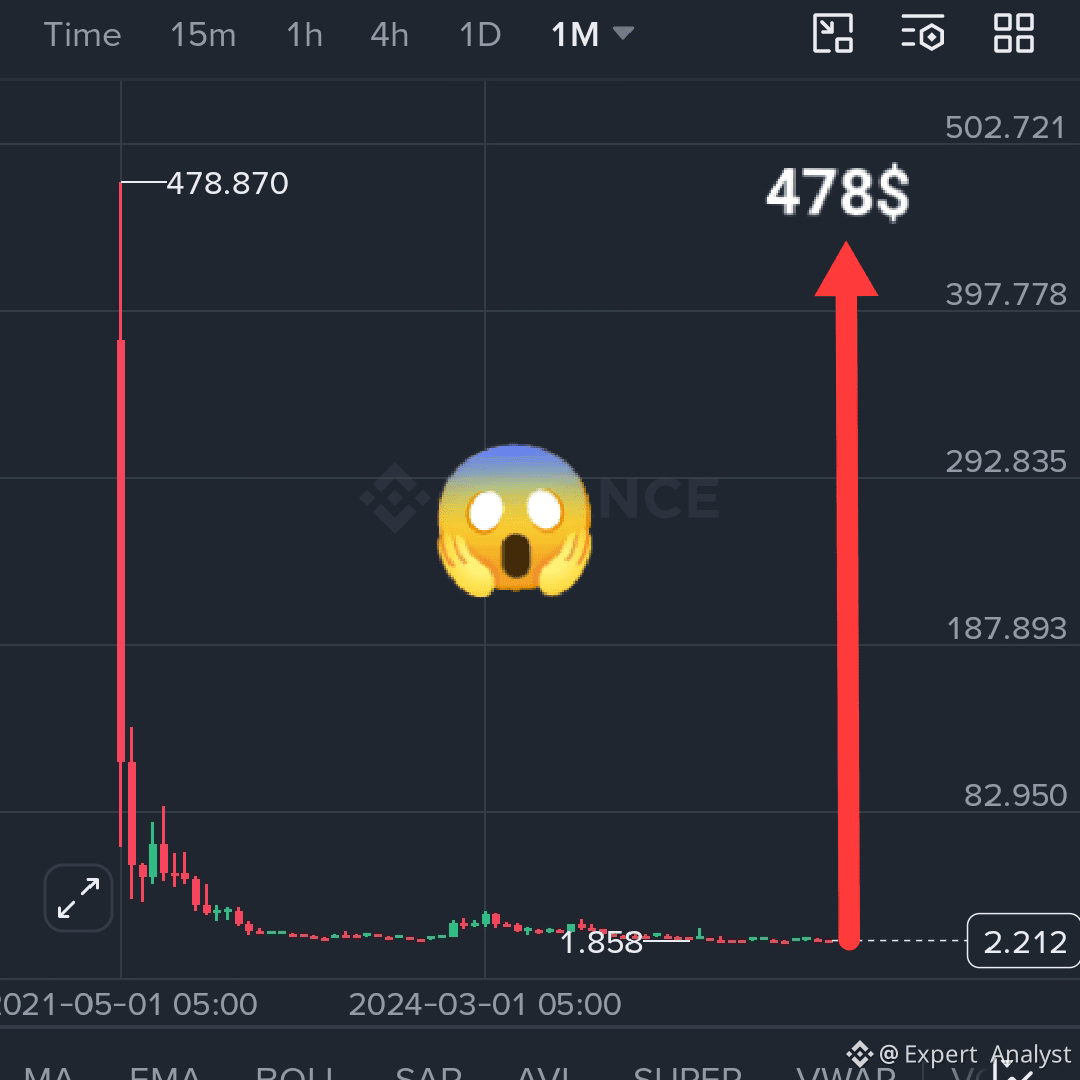
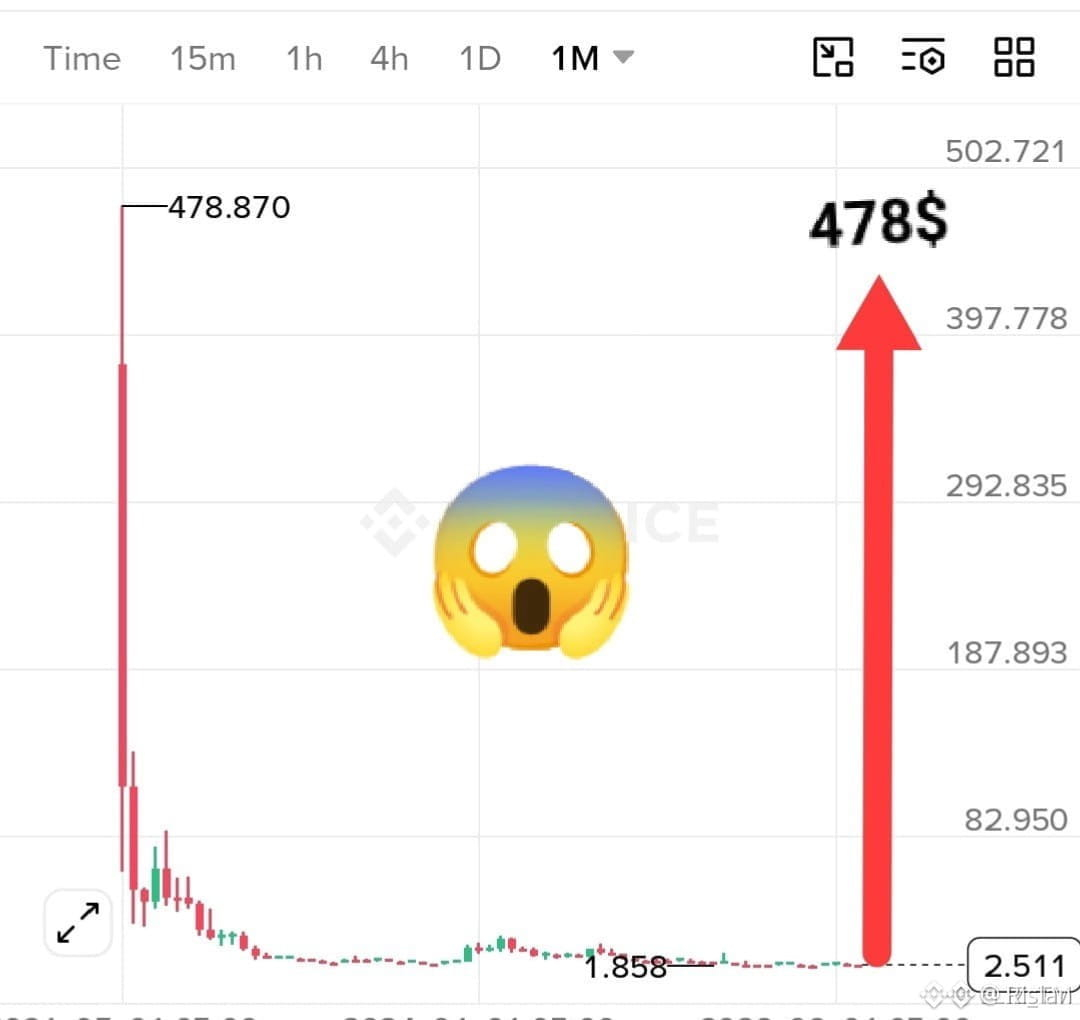
$ICP — From $478 To Just $2.21… Is A Massive Comeback Loading? 💥
Potential Recovery Milestones: 🎯
- $5
- $10
- $20
😱Speculative Target: $100–$478!
Are you accumulating ICP at these levels? 👀
#ICP #BinanceSquareTalks #InternetComputer #altcoins #BinanceSquare
{future}(ICPUSDT)
$ICP — From $478 To Just $2.21… Is A Massive Comeback Loading? 💥
Potential Recovery Milestones: 🎯
- $5
- $10
- $20
😱Speculative Target: $100–$478!
Are you accumulating ICP at these levels? 👀
#ICP #BinanceSquareTalks #InternetComputer #altcoins #BinanceSquare
Potential Recovery Milestones: 🎯
- $5
- $10
- $20
😱Speculative Target: $100–$478!
Are you accumulating ICP at these levels? 👀
#ICP #BinanceSquareTalks #InternetComputer #altcoins #BinanceSquare
1
391

$ICP UPDATE 🔥
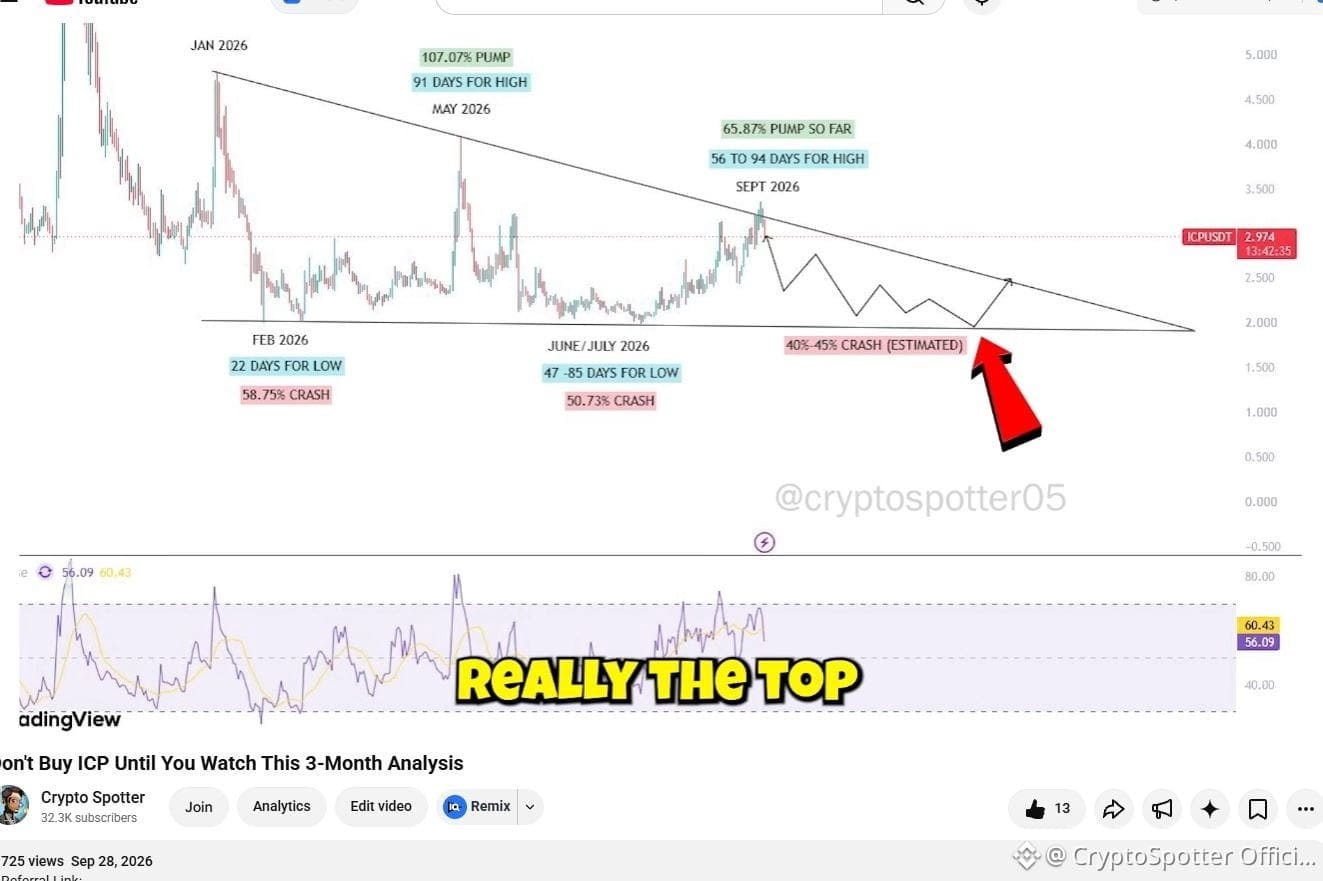
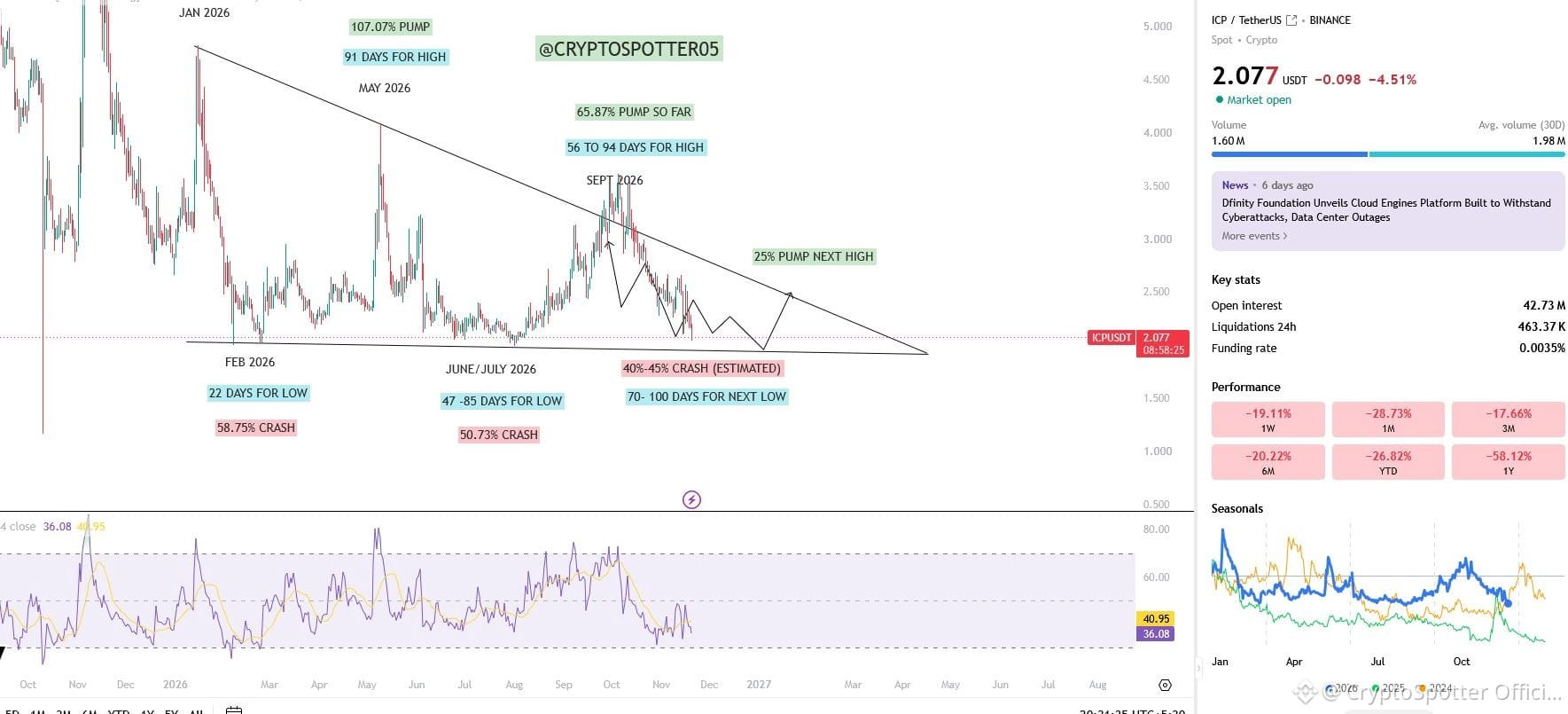
The First image is from Sept 28TH WHEN I First shared my Charts,
And the second image shows you the current Scenario,
As you can see we are very close to our Final Target,
And in the last update i had told you i am confident that we will hit our Target zone, And today you are seeing the results.
if you find any value in my free content,
Please give me a follow @Cryptospotter1505
#icp #ICP. #ICPCoin
$ICP UPDATE 🔥
The First image is from Sept 28TH WHEN I First shared my Charts,
And the second image shows you the current Scenario,
As you can see we are very close to our Final Target,
And in the last update i had told you i am confident that we will hit our Target zone, And today you are seeing the results.
if you find any value in my free content,
Please give me a follow @CryptoSpotter Official
#icp #ICP. #ICPCoin
The First image is from Sept 28TH WHEN I First shared my Charts,
And the second image shows you the current Scenario,
As you can see we are very close to our Final Target,
And in the last update i had told you i am confident that we will hit our Target zone, And today you are seeing the results.
if you find any value in my free content,
Please give me a follow @CryptoSpotter Official
#icp #ICP. #ICPCoin
CryptoSpotter Official
·
--
The First image is from my $ICP Video
which i had shared on Sept 28th,
The Second image is our latest charts - 3rd Nov.
As you can see $ICP is getting
Closer to our Target zone,
And i am confident that within 1-2 months we will hit our Target zone, But it looks like there will be a short term pump, Before it goes down further.
Unfortunately, like many of my other videos, this one didn't even cross 1,000 views.
Because let's be honest, platforms and viewers tend to prefer moonboy content over realistic, data-driven analysis. 🥲
Follow @CryptoSpotter Official
#icp #ICP. #ICPCoin
which i had shared on Sept 28th,
The Second image is our latest charts - 3rd Nov.
As you can see $ICP is getting
Closer to our Target zone,
And i am confident that within 1-2 months we will hit our Target zone, But it looks like there will be a short term pump, Before it goes down further.
Unfortunately, like many of my other videos, this one didn't even cross 1,000 views.
Because let's be honest, platforms and viewers tend to prefer moonboy content over realistic, data-driven analysis. 🥲
Follow @CryptoSpotter Official
#icp #ICP. #ICPCoin
volcano:
انتظرها نص دولار
1
1
2.6k

·
--
Verified
🌐 $ICP : IS THE INTERNET COMPUTER READY FOR ITS NEXT PHASE?
Here’s the latest verified update:
- Network status: All major ICP systems are operational.
- No outages: No incidents reported on November 19.
- Roadmap focus: AI, cross-chain apps, privacy and decentralized computing remain key development areas.
- On-chain governance: ICP holders can vote on network proposals through the NNS.
Can ICP turn its technology roadmap into wider adoption?
$ICP
{future}(ICPUSDT)
.
.
.
#ICP #InternetComputer #Crypto
Not financial advice. DYOR.
🌐 $ICP : IS THE INTERNET COMPUTER READY FOR ITS NEXT PHASE?
Here’s the latest verified update:
- Network status: All major ICP systems are operational.
- No outages: No incidents reported on November 19.
- Roadmap focus: AI, cross-chain apps, privacy and decentralized computing remain key development areas.
- On-chain governance: ICP holders can vote on network proposals through the NNS.
Can ICP turn its technology roadmap into wider adoption?
$ICP
.
.
.
#ICP #InternetComputer #Crypto
Not financial advice. DYOR.
Here’s the latest verified update:
- Network status: All major ICP systems are operational.
- No outages: No incidents reported on November 19.
- Roadmap focus: AI, cross-chain apps, privacy and decentralized computing remain key development areas.
- On-chain governance: ICP holders can vote on network proposals through the NNS.
Can ICP turn its technology roadmap into wider adoption?
$ICP
.
.
.
#ICP #InternetComputer #Crypto
Not financial advice. DYOR.
Abu Fahadأ:
💛
2
2
1k

·
--
Bullish
Verified
Option 1: Clean & Engaging (Best for X / Twitter or Threads)
$ICP
{future}(ICPUSDT)
: From $478 down to ~$2.25. 📉➡️📈
Most people wrote off Internet Computer after its 2021 launch crash, but the tech never stopped shipping. With on-chain AI, Chain Fusion, and Mission 70 tokenomics reforms underway, is icp/isdt setting up for one of crypto's biggest redemption arcs? 👀
Dream target: $478 🚀 | Realistic eyes on the next cycle. What's your price target for $ICP? 👇
Option 2: High-Energy & Hype (Best for Telegram, TikTok, or Instagram)
Imagine buying a $478 coin for under $3... 🤯🔥
Everyone remembers $ICP’s legendary all-time high of $478.87—and its brutal 99% drop. Now sitting around $2.25–$2.50, Internet Computer is quietly building full-stack on-chain AI while cutting inflation.
Could $ICP shock the entire market with a massive comeback this cycle? 🚀👀
🎯 Long-term moonshot: $478 💥
Drop a 🔥 if you're holding $ICP!
Option 3: Analytical & Credible (Best for LinkedIn, Substack, or a longer X post)
Can $ICP Pull Off Crypto’s Ultimate Comeback? 🧠📊
Few tokens have had a wilder ride than Internet Computer ($ICP)—peaking at $478.87 in 2021 before falling over 99% to the $2.25–$2.50 range.
While returning to $478 would require a massive surge in market cap due to expanded supply, the fundamentals look completely different today:
✅ Mission 70 targeting a ~70% cut in annual token inflation
✅ On-chain AI & Cloud infrastructure (no AWS required)
✅ Native Chain Fusion connecting BTC, ETH & SOL
#ICP #BinanceSquareTalks #InternetComputer #BinanceSquare
Option 1: Clean & Engaging (Best for X / Twitter or Threads)
$ICP
: From $478 down to ~$2.25. 📉➡️📈
Most people wrote off Internet Computer after its 2021 launch crash, but the tech never stopped shipping. With on-chain AI, Chain Fusion, and Mission 70 tokenomics reforms underway, is icp/isdt setting up for one of crypto's biggest redemption arcs? 👀
Dream target: $478 🚀 | Realistic eyes on the next cycle. What's your price target for $ICP ? 👇
Option 2: High-Energy & Hype (Best for Telegram, TikTok, or Instagram)
Imagine buying a $478 coin for under $3... 🤯🔥
Everyone remembers $ICP ’s legendary all-time high of $478.87—and its brutal 99% drop. Now sitting around $2.25–$2.50, Internet Computer is quietly building full-stack on-chain AI while cutting inflation.
Could $ICP shock the entire market with a massive comeback this cycle? 🚀👀
🎯 Long-term moonshot: $478 💥
Drop a 🔥 if you're holding $ICP !
Option 3: Analytical & Credible (Best for LinkedIn, Substack, or a longer X post)
Can $ICP Pull Off Crypto’s Ultimate Comeback? 🧠📊
Few tokens have had a wilder ride than Internet Computer ($ICP )—peaking at $478.87 in 2021 before falling over 99% to the $2.25–$2.50 range.
While returning to $478 would require a massive surge in market cap due to expanded supply, the fundamentals look completely different today:
✅ Mission 70 targeting a ~70% cut in annual token inflation
✅ On-chain AI & Cloud infrastructure (no AWS required)
✅ Native Chain Fusion connecting BTC, ETH & SOL
#ICP #BinanceSquareTalks #InternetComputer #BinanceSquare
$ICP
: From $478 down to ~$2.25. 📉➡️📈
Most people wrote off Internet Computer after its 2021 launch crash, but the tech never stopped shipping. With on-chain AI, Chain Fusion, and Mission 70 tokenomics reforms underway, is icp/isdt setting up for one of crypto's biggest redemption arcs? 👀
Dream target: $478 🚀 | Realistic eyes on the next cycle. What's your price target for $ICP ? 👇
Option 2: High-Energy & Hype (Best for Telegram, TikTok, or Instagram)
Imagine buying a $478 coin for under $3... 🤯🔥
Everyone remembers $ICP ’s legendary all-time high of $478.87—and its brutal 99% drop. Now sitting around $2.25–$2.50, Internet Computer is quietly building full-stack on-chain AI while cutting inflation.
Could $ICP shock the entire market with a massive comeback this cycle? 🚀👀
🎯 Long-term moonshot: $478 💥
Drop a 🔥 if you're holding $ICP !
Option 3: Analytical & Credible (Best for LinkedIn, Substack, or a longer X post)
Can $ICP Pull Off Crypto’s Ultimate Comeback? 🧠📊
Few tokens have had a wilder ride than Internet Computer ($ICP )—peaking at $478.87 in 2021 before falling over 99% to the $2.25–$2.50 range.
While returning to $478 would require a massive surge in market cap due to expanded supply, the fundamentals look completely different today:
✅ Mission 70 targeting a ~70% cut in annual token inflation
✅ On-chain AI & Cloud infrastructure (no AWS required)
✅ Native Chain Fusion connecting BTC, ETH & SOL
#ICP #BinanceSquareTalks #InternetComputer #BinanceSquare
Waldo Camp q8gy:
Icp xuóng 0.5-0.8u moi tang dc
1
1
792

$ICP Current Price ~$2.12 – $2.23
Market Cap ~$1.19B – $1.24B
24h Trading Volume ~$38M (down ~21%–27% vs. prior day)
7-Day / 30-Day Change ~ -12% to -18% (7d) / ~ -20% to -25% (30d)
2026 Low / All-Time Low ~$1.98 – $2.02 (August 2026)
Mission 70 Tokenomics: Passed earlier in 2026, DFINITY's Mission 70 initiative targets a 70% reduction in annual token inflation (cutting issuance from ~9.7% in Jan 2026 toward ~2.9% by early 2027) while routing 20% of Cloud Engine revenues toward buying and burning ICP.
AI & Sovereign Cloud Adoption: ICP is heavily leaning into the decentralized AI and sovereign cloud narrative—highlighted by official ICP connectors for ChatGPT and Claude AI (Oct 2026), the commercial rollout of Cloud Engines, and major public-sector initiatives such as Pakistan's sovereign AI Factory and national messenger infrastructure built on a dedicated ICP subnet.
Cross-Chain & DeFi Expansion: The launch of ckSOL (1:1 Solana integration on ICP) and on-chain order-book simulations (MULTI/DEX) continue expanding cross-chain utility.
Bearish Risks:
Macro Crypto Fear: Broader market risk-off sentiment (with the Crypto Fear & Greed Index hovering in extreme fear) is dragging down altcoins regardless of project-specific announcements.
Thinning Volume & Supply Overhang: Daily trading volume (~$38M) has cooled considerably compared to September highs (~$154M). Additionally, until cycle-burning scales significantly, ongoing node/staking rewards and unclaimed staking maturity (~96M ICP) remain potential dilution headwinds.
#InternetComputer #icp
$ICP Current Price ~$2.12 – $2.23
Market Cap ~$1.19B – $1.24B
24h Trading Volume ~$38M (down ~21%–27% vs. prior day)
7-Day / 30-Day Change ~ -12% to -18% (7d) / ~ -20% to -25% (30d)
2026 Low / All-Time Low ~$1.98 – $2.02 (August 2026)
Mission 70 Tokenomics: Passed earlier in 2026, DFINITY's Mission 70 initiative targets a 70% reduction in annual token inflation (cutting issuance from ~9.7% in Jan 2026 toward ~2.9% by early 2027) while routing 20% of Cloud Engine revenues toward buying and burning ICP.
AI & Sovereign Cloud Adoption: ICP is heavily leaning into the decentralized AI and sovereign cloud narrative—highlighted by official ICP connectors for ChatGPT and Claude AI (Oct 2026), the commercial rollout of Cloud Engines, and major public-sector initiatives such as Pakistan's sovereign AI Factory and national messenger infrastructure built on a dedicated ICP subnet.
Cross-Chain & DeFi Expansion: The launch of ckSOL (1:1 Solana integration on ICP) and on-chain order-book simulations (MULTI/DEX) continue expanding cross-chain utility.
Bearish Risks:
Macro Crypto Fear: Broader market risk-off sentiment (with the Crypto Fear & Greed Index hovering in extreme fear) is dragging down altcoins regardless of project-specific announcements.
Thinning Volume & Supply Overhang: Daily trading volume (~$38M) has cooled considerably compared to September highs (~$154M). Additionally, until cycle-burning scales significantly, ongoing node/staking rewards and unclaimed staking maturity (~96M ICP) remain potential dilution headwinds.
#InternetComputer #icp
Market Cap ~$1.19B – $1.24B
24h Trading Volume ~$38M (down ~21%–27% vs. prior day)
7-Day / 30-Day Change ~ -12% to -18% (7d) / ~ -20% to -25% (30d)
2026 Low / All-Time Low ~$1.98 – $2.02 (August 2026)
Mission 70 Tokenomics: Passed earlier in 2026, DFINITY's Mission 70 initiative targets a 70% reduction in annual token inflation (cutting issuance from ~9.7% in Jan 2026 toward ~2.9% by early 2027) while routing 20% of Cloud Engine revenues toward buying and burning ICP.
AI & Sovereign Cloud Adoption: ICP is heavily leaning into the decentralized AI and sovereign cloud narrative—highlighted by official ICP connectors for ChatGPT and Claude AI (Oct 2026), the commercial rollout of Cloud Engines, and major public-sector initiatives such as Pakistan's sovereign AI Factory and national messenger infrastructure built on a dedicated ICP subnet.
Cross-Chain & DeFi Expansion: The launch of ckSOL (1:1 Solana integration on ICP) and on-chain order-book simulations (MULTI/DEX) continue expanding cross-chain utility.
Bearish Risks:
Macro Crypto Fear: Broader market risk-off sentiment (with the Crypto Fear & Greed Index hovering in extreme fear) is dragging down altcoins regardless of project-specific announcements.
Thinning Volume & Supply Overhang: Daily trading volume (~$38M) has cooled considerably compared to September highs (~$154M). Additionally, until cycle-burning scales significantly, ongoing node/staking rewards and unclaimed staking maturity (~96M ICP) remain potential dilution headwinds.
#InternetComputer #icp

296


·
--
☁️ $ICP CLOUD ENGINES ARE NOW MOVING INTO EARLY ACCESS!
DFINITY's latest update brings a new development for Internet Computer:
- Cloud Engines launched: The new service combines network computing power into platforms for AI applications.
- Early access started: DFINITY began sending access coupons to waitlisted users.
- Gradual rollout: More users are expected to receive access in the coming weeks.
- Still early: Wider adoption and real customer usage remain key milestones to watch.
Can Cloud Engines turn ICP into a serious decentralized cloud platform?
$ICP
{future}(ICPUSDT)
.
.
.
.
#ICP #InternetComputer #crypto
Not financial advice. DYOR.
☁️ $ICP CLOUD ENGINES ARE NOW MOVING INTO EARLY ACCESS!
DFINITY's latest update brings a new development for Internet Computer:
- Cloud Engines launched: The new service combines network computing power into platforms for AI applications.
- Early access started: DFINITY began sending access coupons to waitlisted users.
- Gradual rollout: More users are expected to receive access in the coming weeks.
- Still early: Wider adoption and real customer usage remain key milestones to watch.
Can Cloud Engines turn ICP into a serious decentralized cloud platform?
$ICP
.
.
.
.
#ICP #InternetComputer #crypto
Not financial advice. DYOR.
DFINITY's latest update brings a new development for Internet Computer:
- Cloud Engines launched: The new service combines network computing power into platforms for AI applications.
- Early access started: DFINITY began sending access coupons to waitlisted users.
- Gradual rollout: More users are expected to receive access in the coming weeks.
- Still early: Wider adoption and real customer usage remain key milestones to watch.
Can Cloud Engines turn ICP into a serious decentralized cloud platform?
$ICP
.
.
.
.
#ICP #InternetComputer #crypto
Not financial advice. DYOR.

365

·
--
The Reverse Gas Architecture: Eliminating User Friction in Decentralized SoftwareThe adoption curve of consumer software is fundamentally governed by user friction. In contemporary application design, friction-free onboarding represents an industry baseline: end users authenticate biometrically and initiate interactions within seconds.
However, the user experience of conventional decentralized applications remains burdened by mandatory gas fee models. Requiring first-time users to acquire volatile native Layer-1 cryptocurrency tokens simply to pay micro-cents in computational gas creates prohibitive onboarding drop-off rates across mainstream consumer demographics.
1. The Economic Limitations of User-Pays Gas
In legacy blockchain architectures, every state transition requires the initiating wallet to submit network gas fees:
- Users are forced through external cryptocurrency exchanges, compliance onboarding, and multi-day clearing delays prior to basic product testing.
- Network congestion introduces unpredictable gas fee surges that disrupt sustainable software business models.
- Applications cannot offer freemium, trial, or onboarding workflows without forcing users to fund independent crypto accounts.
2. The Reverse Gas Model on the Internet Computer
Smart contract canisters deployed on the Internet Computer Protocol ($ICP) invert this paradigm through developer-funded execution:
- Developer-Funded Canister Execution: Smart contracts are provisioned with computational cycles. Incoming user requests burn cycles directly from the canister rather than the user wallet, enabling seamless interaction for users holding zero crypto.
- Stable Computation Accounting: Cycles are permanently pegged to the International Monetary Fund Special Drawing Right (one trillion cycles equals one XDR, approximately one dollar and thirty cents), guaranteeing stable, fiat-predictable hosting and execution costs.
- Zero Egress Bandwidth Liabilities: Data streaming and file downloads delivered across boundary node gateways incur zero gas fees for end users and zero bandwidth penalties for developers.
3. Biometric Passkeys and Consumer Parity
By pairing the reverse gas model with hardware-backed WebAuthn authentication (Touch ID, Face ID, and security keys), decentralized architectures match the speed and simplicity of modern mobile applications while preserving trustless cryptographic custody.
As digital applications scale throughout 2026, transitioning to reverse gas infrastructure represents a foundational shift toward universal software accessibility and mainstream adoption.
$ICP #ICP #BinanceSquare #Web3 #UX #Fintech
The Reverse Gas Architecture: Eliminating User Friction in Decentralized Software
The adoption curve of consumer software is fundamentally governed by user friction. In contemporary application design, friction-free onboarding represents an industry baseline: end users authenticate biometrically and initiate interactions within seconds.
However, the user experience of conventional decentralized applications remains burdened by mandatory gas fee models. Requiring first-time users to acquire volatile native Layer-1 cryptocurrency tokens simply to pay micro-cents in computational gas creates prohibitive onboarding drop-off rates across mainstream consumer demographics.
1. The Economic Limitations of User-Pays Gas
In legacy blockchain architectures, every state transition requires the initiating wallet to submit network gas fees:
- Users are forced through external cryptocurrency exchanges, compliance onboarding, and multi-day clearing delays prior to basic product testing.
- Network congestion introduces unpredictable gas fee surges that disrupt sustainable software business models.
- Applications cannot offer freemium, trial, or onboarding workflows without forcing users to fund independent crypto accounts.
2. The Reverse Gas Model on the Internet Computer
Smart contract canisters deployed on the Internet Computer Protocol ($ICP ) invert this paradigm through developer-funded execution:
- Developer-Funded Canister Execution: Smart contracts are provisioned with computational cycles. Incoming user requests burn cycles directly from the canister rather than the user wallet, enabling seamless interaction for users holding zero crypto.
- Stable Computation Accounting: Cycles are permanently pegged to the International Monetary Fund Special Drawing Right (one trillion cycles equals one XDR, approximately one dollar and thirty cents), guaranteeing stable, fiat-predictable hosting and execution costs.
- Zero Egress Bandwidth Liabilities: Data streaming and file downloads delivered across boundary node gateways incur zero gas fees for end users and zero bandwidth penalties for developers.
3. Biometric Passkeys and Consumer Parity
By pairing the reverse gas model with hardware-backed WebAuthn authentication (Touch ID, Face ID, and security keys), decentralized architectures match the speed and simplicity of modern mobile applications while preserving trustless cryptographic custody.
As digital applications scale throughout 2026, transitioning to reverse gas infrastructure represents a foundational shift toward universal software accessibility and mainstream adoption.
$ICP #ICP #BinanceSquare #Web3 #UX #Fintech
However, the user experience of conventional decentralized applications remains burdened by mandatory gas fee models. Requiring first-time users to acquire volatile native Layer-1 cryptocurrency tokens simply to pay micro-cents in computational gas creates prohibitive onboarding drop-off rates across mainstream consumer demographics.
1. The Economic Limitations of User-Pays Gas
In legacy blockchain architectures, every state transition requires the initiating wallet to submit network gas fees:
- Users are forced through external cryptocurrency exchanges, compliance onboarding, and multi-day clearing delays prior to basic product testing.
- Network congestion introduces unpredictable gas fee surges that disrupt sustainable software business models.
- Applications cannot offer freemium, trial, or onboarding workflows without forcing users to fund independent crypto accounts.
2. The Reverse Gas Model on the Internet Computer
Smart contract canisters deployed on the Internet Computer Protocol ($ICP ) invert this paradigm through developer-funded execution:
- Developer-Funded Canister Execution: Smart contracts are provisioned with computational cycles. Incoming user requests burn cycles directly from the canister rather than the user wallet, enabling seamless interaction for users holding zero crypto.
- Stable Computation Accounting: Cycles are permanently pegged to the International Monetary Fund Special Drawing Right (one trillion cycles equals one XDR, approximately one dollar and thirty cents), guaranteeing stable, fiat-predictable hosting and execution costs.
- Zero Egress Bandwidth Liabilities: Data streaming and file downloads delivered across boundary node gateways incur zero gas fees for end users and zero bandwidth penalties for developers.
3. Biometric Passkeys and Consumer Parity
By pairing the reverse gas model with hardware-backed WebAuthn authentication (Touch ID, Face ID, and security keys), decentralized architectures match the speed and simplicity of modern mobile applications while preserving trustless cryptographic custody.
As digital applications scale throughout 2026, transitioning to reverse gas infrastructure represents a foundational shift toward universal software accessibility and mainstream adoption.
$ICP #ICP #BinanceSquare #Web3 #UX #Fintech
386

·
--
$ICP sits 9.9 percent below $2.2130 right now
An hourly close above that resistance flips the short term momentum
Rejection keeps the pressure on and $1.9780 waits underneath
Break or reject?
Do not take my word for it, tap $ICP and look at the candles
#ICP #PriceAction
$ICP sits 9.9 percent below $2.2130 right now
An hourly close above that resistance flips the short term momentum
Rejection keeps the pressure on and $1.9780 waits underneath
Break or reject?
Do not take my word for it, tap $ICP and look at the candles
#ICP #PriceAction
An hourly close above that resistance flips the short term momentum
Rejection keeps the pressure on and $1.9780 waits underneath
Break or reject?
Do not take my word for it, tap $ICP and look at the candles
#ICP #PriceAction
·
--
☁️ $ICP : DFINITY STARTS ROLLING OUT CLOUD ENGINE ACCESS!
Internet Computer is moving its decentralized cloud project closer to wider use:
- November 14: DFINITY began sending Cloud Engine access coupons to people on its waitlist.
- Early access: Invitations are being distributed gradually, with more expected in the coming weeks.
- Network update: ICP's dashboard now provides a dedicated view of Cloud Engine infrastructure.
- Latest activity: A November 17 report highlighted an average of 4,200 TPS, including software-to-software messages.
- Important: High message counts do not automatically represent user growth or payment activity.
Can Cloud Engines become a major real-world use case for ICP?
$ICP
{future}(ICPUSDT)
.
.
.
#ICP #DFINITY #InternetComputer
Not financial advice. DYOR.
☁️ $ICP : DFINITY STARTS ROLLING OUT CLOUD ENGINE ACCESS!
Internet Computer is moving its decentralized cloud project closer to wider use:
- November 14: DFINITY began sending Cloud Engine access coupons to people on its waitlist.
- Early access: Invitations are being distributed gradually, with more expected in the coming weeks.
- Network update: ICP's dashboard now provides a dedicated view of Cloud Engine infrastructure.
- Latest activity: A November 17 report highlighted an average of 4,200 TPS, including software-to-software messages.
- Important: High message counts do not automatically represent user growth or payment activity.
Can Cloud Engines become a major real-world use case for ICP?
$ICP
.
.
.
#ICP #DFINITY #InternetComputer
Not financial advice. DYOR.
Internet Computer is moving its decentralized cloud project closer to wider use:
- November 14: DFINITY began sending Cloud Engine access coupons to people on its waitlist.
- Early access: Invitations are being distributed gradually, with more expected in the coming weeks.
- Network update: ICP's dashboard now provides a dedicated view of Cloud Engine infrastructure.
- Latest activity: A November 17 report highlighted an average of 4,200 TPS, including software-to-software messages.
- Important: High message counts do not automatically represent user growth or payment activity.
Can Cloud Engines become a major real-world use case for ICP?
$ICP
.
.
.
#ICP #DFINITY #InternetComputer
Not financial advice. DYOR.
17
·
--
☁️ $ICP : DFINITY STARTS ROLLING OUT CLOUD ENGINE ACCESS!
Internet Computer is moving closer to real-world cloud adoption:
- November 14: DFINITY began sending access coupons to users on the Cloud Engines waitlist.
- Early access: Selected users can start testing decentralized cloud infrastructure.
- Payment model: Customers pay in fiat, which is converted into ICP and then cycles to power their Cloud Engines.
- Important: This is a gradual rollout, not a full public launch.
- AI development: ICP's ecosystem is also exploring ways for AI agents to interact with on-chain applications.
Could Cloud Engines become a major use case for ICP?
$ICP
{future}(ICPUSDT)
.
.
.
#ICP #InternetComputer #Web3
Not financial advice. DYOR.
☁️ $ICP : DFINITY STARTS ROLLING OUT CLOUD ENGINE ACCESS!
Internet Computer is moving closer to real-world cloud adoption:
- November 14: DFINITY began sending access coupons to users on the Cloud Engines waitlist.
- Early access: Selected users can start testing decentralized cloud infrastructure.
- Payment model: Customers pay in fiat, which is converted into ICP and then cycles to power their Cloud Engines.
- Important: This is a gradual rollout, not a full public launch.
- AI development: ICP's ecosystem is also exploring ways for AI agents to interact with on-chain applications.
Could Cloud Engines become a major use case for ICP?
$ICP
.
.
.
#ICP #InternetComputer #Web3
Not financial advice. DYOR.
Internet Computer is moving closer to real-world cloud adoption:
- November 14: DFINITY began sending access coupons to users on the Cloud Engines waitlist.
- Early access: Selected users can start testing decentralized cloud infrastructure.
- Payment model: Customers pay in fiat, which is converted into ICP and then cycles to power their Cloud Engines.
- Important: This is a gradual rollout, not a full public launch.
- AI development: ICP's ecosystem is also exploring ways for AI agents to interact with on-chain applications.
Could Cloud Engines become a major use case for ICP?
$ICP
.
.
.
#ICP #InternetComputer #Web3
Not financial advice. DYOR.

26

·
--
Article
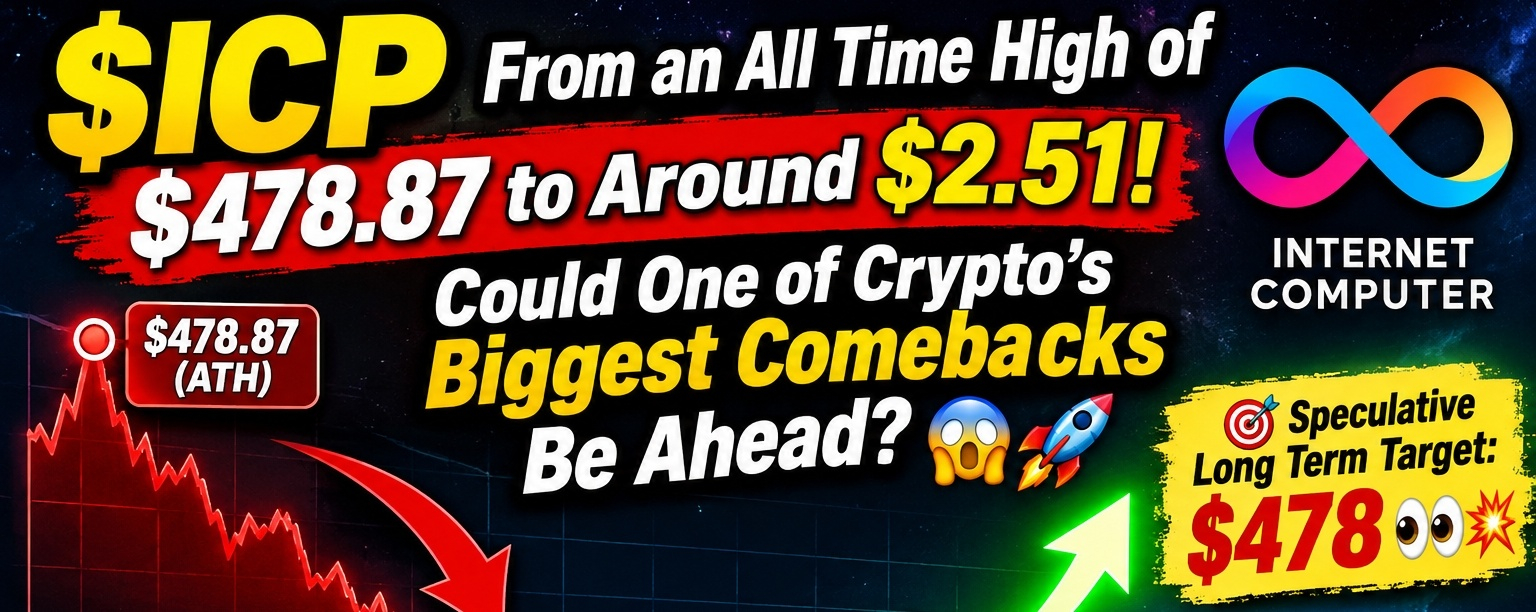
$ICP: FROM $478 ATH TO $2.51 — CAN INTERNET COMPUTER MAKE A HISTORIC COMEBACK? 😱🚀Internet Computer ($ICP) has experienced a massive fall from its All-Time High of $478.87 to around $2.51. That's a huge decline, but could this be one of crypto's most surprising comeback stories? 👀
The Internet Computer project aims to bring decentralized computing, smart contracts, and Web3 infrastructure to a new level. Its long-term vision remains ambitious, but the market still needs to prove whether ICP can regain strong momentum.
🔥 What Could Be Ahead?
Can ICP attract new investors and developers?
Could growing adoption strengthen its ecosystem?
Will a new bull market bring renewed attention to ICP?
Can long-term holders finally see a major recovery?
🎯 Speculative Long-Term Target: $478
A return to its previous ATH would be an extraordinary move, not a guaranteed outcome. It would require significant adoption, strong demand, and favorable market conditions.
Could $ICP surprise the entire crypto market again? Or is this just another risky recovery dream?
What's your opinion? Are you bullish or bearish on ICP? 👇
#ICP #InternetComputer #CryptoComeback #BullRun
$ICP: FROM $478 ATH TO $2.51 — CAN INTERNET COMPUTER MAKE A HISTORIC COMEBACK? 😱
🚀Internet Computer ($ICP ) has experienced a massive fall from its All-Time High of $478.87 to around $2.51. That's a huge decline, but could this be one of crypto's most surprising comeback stories? 👀
The Internet Computer project aims to bring decentralized computing, smart contracts, and Web3 infrastructure to a new level. Its long-term vision remains ambitious, but the market still needs to prove whether ICP can regain strong momentum.
🔥 What Could Be Ahead?
Can ICP attract new investors and developers?
Could growing adoption strengthen its ecosystem?
Will a new bull market bring renewed attention to ICP?
Can long-term holders finally see a major recovery?
🎯 Speculative Long-Term Target: $478
A return to its previous ATH would be an extraordinary move, not a guaranteed outcome. It would require significant adoption, strong demand, and favorable market conditions.
Could $ICP surprise the entire crypto market again? Or is this just another risky recovery dream?
What's your opinion? Are you bullish or bearish on ICP? 👇
#ICP #InternetComputer #CryptoComeback #BullRun
The Internet Computer project aims to bring decentralized computing, smart contracts, and Web3 infrastructure to a new level. Its long-term vision remains ambitious, but the market still needs to prove whether ICP can regain strong momentum.
🔥 What Could Be Ahead?
Can ICP attract new investors and developers?
Could growing adoption strengthen its ecosystem?
Will a new bull market bring renewed attention to ICP?
Can long-term holders finally see a major recovery?
🎯 Speculative Long-Term Target: $478
A return to its previous ATH would be an extraordinary move, not a guaranteed outcome. It would require significant adoption, strong demand, and favorable market conditions.
Could $ICP surprise the entire crypto market again? Or is this just another risky recovery dream?
What's your opinion? Are you bullish or bearish on ICP? 👇
#ICP #InternetComputer #CryptoComeback #BullRun
4
926

·
--
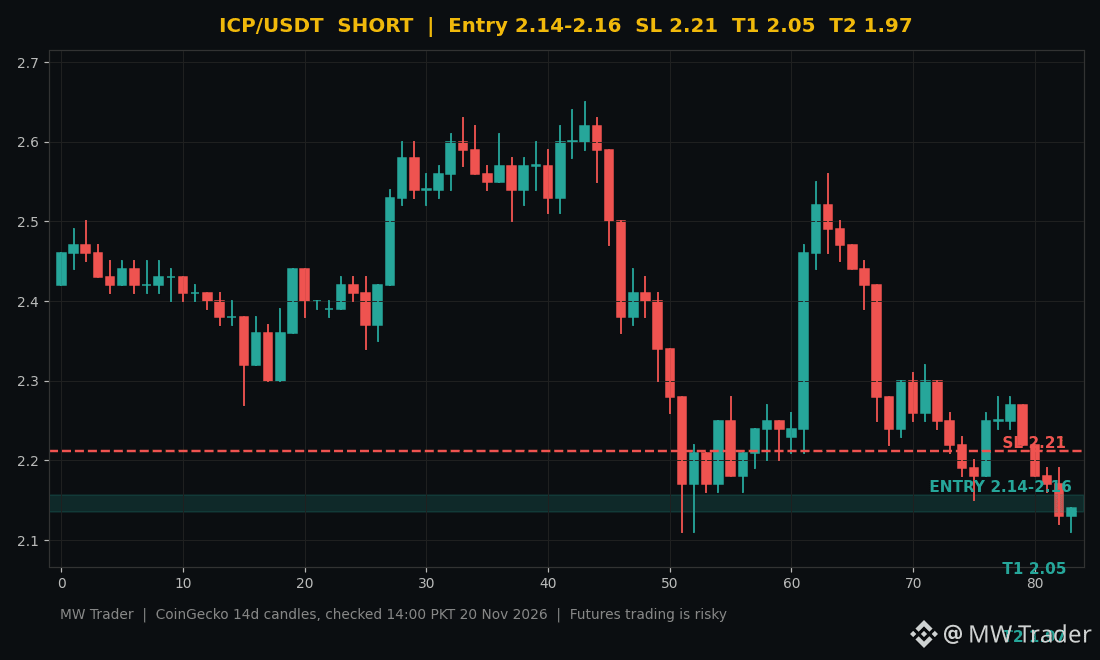
$ICP #ICP 📉 Internet Computer is down 4.45 percent today, and I am shorting it.
Direction: SHORT 🔴
Entry zone: 2.14 to 2.16
Stop loss: 2.21
Target 1: 2.05
Target 2: 1.97
Internet Computer is trading near $2.14 after losing 4.45 percent in 24 hours, according to CoinGecko, and the live price sits right inside my entry zone of 2.14 to 2.16. I last posted ICP on November 18, and the setup has genuinely changed, the coin has broken lower with the whole market and is now pressing toward its recent lows. My plan is short the zone, stop above $2.21, take the first profit at $2.05, with $1.97 as the second target. 📉
Would you short ICP here, or wait for a reclaim of $2.21 first? 🤔
Futures trading is risky, trade small, manage risk, do your own research. ⚠️
Follow for more trades.
#InternetComputer #Crypto #FuturesTrading #TradingSignals
$ICP #ICP 📉 Internet Computer is down 4.45 percent today, and I am shorting it.
Direction: SHORT 🔴
Entry zone: 2.14 to 2.16
Stop loss: 2.21
Target 1: 2.05
Target 2: 1.97
Internet Computer is trading near $2.14 after losing 4.45 percent in 24 hours, according to CoinGecko, and the live price sits right inside my entry zone of 2.14 to 2.16. I last posted ICP on November 18, and the setup has genuinely changed, the coin has broken lower with the whole market and is now pressing toward its recent lows. My plan is short the zone, stop above $2.21, take the first profit at $2.05, with $1.97 as the second target. 📉
Would you short ICP here, or wait for a reclaim of $2.21 first? 🤔
Futures trading is risky, trade small, manage risk, do your own research. ⚠️
Follow for more trades.
#InternetComputer #Crypto #FuturesTrading #TradingSignals
Direction: SHORT 🔴
Entry zone: 2.14 to 2.16
Stop loss: 2.21
Target 1: 2.05
Target 2: 1.97
Internet Computer is trading near $2.14 after losing 4.45 percent in 24 hours, according to CoinGecko, and the live price sits right inside my entry zone of 2.14 to 2.16. I last posted ICP on November 18, and the setup has genuinely changed, the coin has broken lower with the whole market and is now pressing toward its recent lows. My plan is short the zone, stop above $2.21, take the first profit at $2.05, with $1.97 as the second target. 📉
Would you short ICP here, or wait for a reclaim of $2.21 first? 🤔
Futures trading is risky, trade small, manage risk, do your own research. ⚠️
Follow for more trades.
#InternetComputer #Crypto #FuturesTrading #TradingSignals
17

·
--
⚡ $ICP is the fastest chain on the board 👀
🥇 Chainspect has Internet Computer at the top for real-time TPS, at 5,400 transactions per second
🕐 18.1 MILLION transactions in a single hour
📅 Held over 5,000 TPS for 13 straight days, which is over 5.6 BILLION transactions
💵 $ICP sits near $2.19
The numbers are big and the streak is the strongest part. Peaks are easy to hit once, but 13 days above 5,000 TPS shows sustained throughput, not a single spike.
The catch is that chains count transactions differently. Some count every internal call or message, others count only user-level actions, so TPS rankings are never apples to apples. Speed also isn’t demand for the token. Our earlier ICP posts covered the same gap: Cloud Engines and the 80/20 revenue split are the path to value capture, and the token was down over 28% in 30 days when we last checked.
❓ Does throughput like this eventually show up in ICP’s price, or is TPS just a leaderboard stat?
👇 Bullish, bearish, or just noise? Drop your take below!
📌 Follow for daily on-chain updates.
Not financial advice. DYOR.
#ICP #InternetComputer #Crypto #TPS #Binance #BinanceSquare
⚡ $ICP is the fastest chain on the board 👀
🥇 Chainspect has Internet Computer at the top for real-time TPS, at 5,400 transactions per second
🕐 18.1 MILLION transactions in a single hour
📅 Held over 5,000 TPS for 13 straight days, which is over 5.6 BILLION transactions
💵 $ICP sits near $2.19
The numbers are big and the streak is the strongest part. Peaks are easy to hit once, but 13 days above 5,000 TPS shows sustained throughput, not a single spike.
The catch is that chains count transactions differently. Some count every internal call or message, others count only user-level actions, so TPS rankings are never apples to apples. Speed also isn’t demand for the token. Our earlier ICP posts covered the same gap: Cloud Engines and the 80/20 revenue split are the path to value capture, and the token was down over 28% in 30 days when we last checked.
❓ Does throughput like this eventually show up in ICP’s price, or is TPS just a leaderboard stat?
👇 Bullish, bearish, or just noise? Drop your take below!
📌 Follow for daily on-chain updates.
Not financial advice. DYOR.
#ICP #InternetComputer #Crypto #TPS #Binance #BinanceSquare
🥇 Chainspect has Internet Computer at the top for real-time TPS, at 5,400 transactions per second
🕐 18.1 MILLION transactions in a single hour
📅 Held over 5,000 TPS for 13 straight days, which is over 5.6 BILLION transactions
💵 $ICP sits near $2.19
The numbers are big and the streak is the strongest part. Peaks are easy to hit once, but 13 days above 5,000 TPS shows sustained throughput, not a single spike.
The catch is that chains count transactions differently. Some count every internal call or message, others count only user-level actions, so TPS rankings are never apples to apples. Speed also isn’t demand for the token. Our earlier ICP posts covered the same gap: Cloud Engines and the 80/20 revenue split are the path to value capture, and the token was down over 28% in 30 days when we last checked.
❓ Does throughput like this eventually show up in ICP’s price, or is TPS just a leaderboard stat?
👇 Bullish, bearish, or just noise? Drop your take below!
📌 Follow for daily on-chain updates.
Not financial advice. DYOR.
#ICP #InternetComputer #Crypto #TPS #Binance #BinanceSquare

248

·
--
🚀 $ICP : THE COMEBACK STORY OF THE CYCLE?
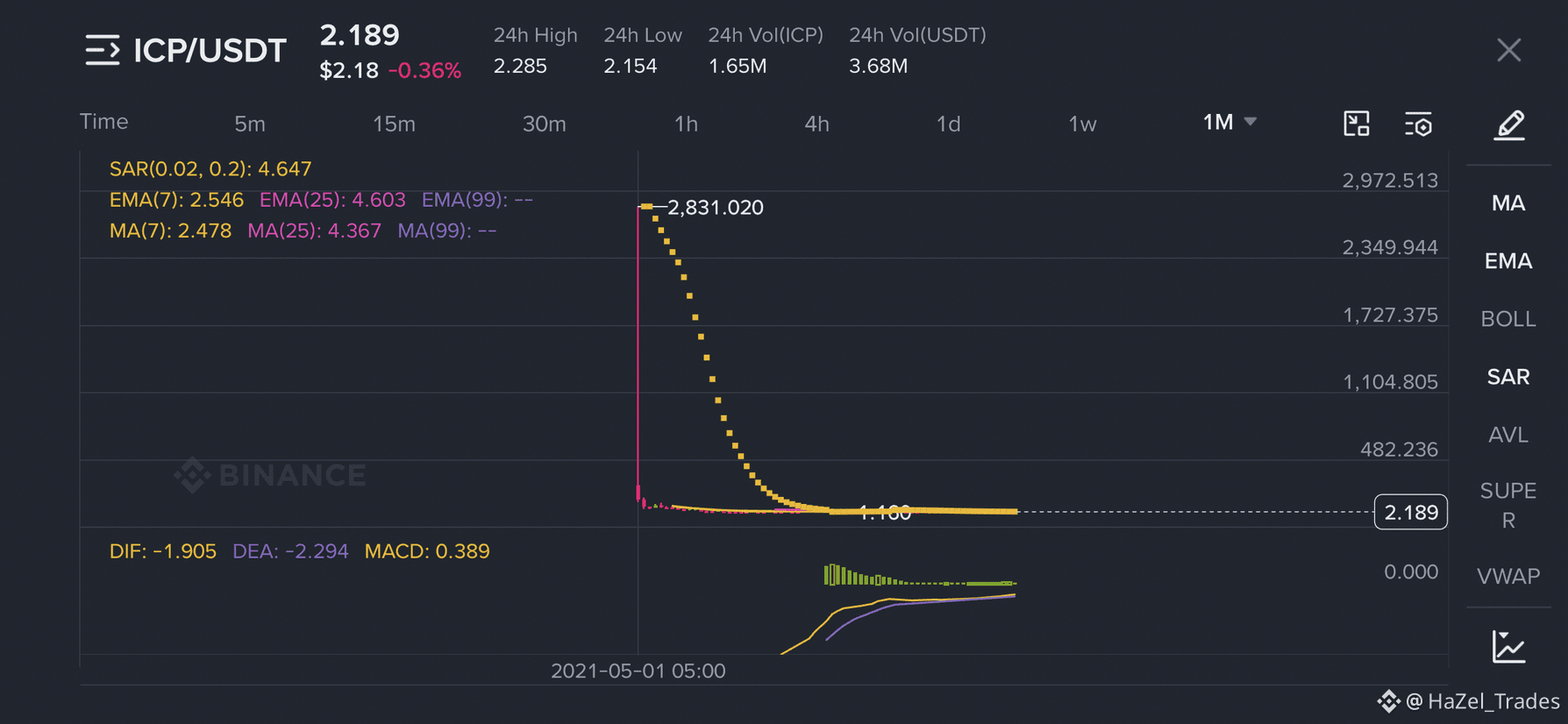
ICP once reached an All-Time High of approximately $2831.. Today, it’s trading around $2.25.
That’s a massive fall from its peak.
Could $ICP become one of crypto’s biggest comeback stories?
What do you think? 👀
#icp #BinanceSquare #BTCRemainsUnderPressureAfterHawkishFOMCMinutes #IsAnthropic’s$1.5TMarketCapJustified?
{spot}(ICPUSDT)
🚀 $ICP : THE COMEBACK STORY OF THE CYCLE?
ICP once reached an All-Time High of approximately $2831.. Today, it’s trading around $2.25.
That’s a massive fall from its peak.
Could $ICP become one of crypto’s biggest comeback stories?
What do you think? 👀
#icp #BinanceSquare #BTCRemainsUnderPressureAfterHawkishFOMCMinutes #IsAnthropic’s$1.5TMarketCapJustified?
ICP once reached an All-Time High of approximately $2831.. Today, it’s trading around $2.25.
That’s a massive fall from its peak.
Could $ICP become one of crypto’s biggest comeback stories?
What do you think? 👀
#icp #BinanceSquare #BTCRemainsUnderPressureAfterHawkishFOMCMinutes #IsAnthropic’s$1.5TMarketCapJustified?
100

·
--
Bearish
{spot}(ICPUSDT)
{future}(ICPUSDT)
$ICP SHORT · entry 2.221 · stop 2.28146 · target 2.10112 (before swing low 2.101) · R:R 1.98 · score 3.42
Take 50% $ICP partial profit and move the stop to breakeven at 2.17868. Add the second half on a pullback to 2.24518. Risk 0.5%
Level touch ✅
Funding 0.0056% · OI 24h −7.8% · top-trader long share 71% · correlation with BTC 0.6
Pattern: engulfing · figure: falling wedge
Follow @CryptoBriefFirst for moar signals and setups!
Not financial advice, just ideas and free signals to think about it. Mistakes are always inc. Manage ur risk's!
#icp #InternetComputer #setup #short #signals
$ICP SHORT · entry 2.221 · stop 2.28146 · target 2.10112 (before swing low 2.101) · R:R 1.98 · score 3.42
Take 50% $ICP partial profit and move the stop to breakeven at 2.17868. Add the second half on a pullback to 2.24518. Risk 0.5%
Level touch ✅
Funding 0.0056% · OI 24h −7.8% · top-trader long share 71% · correlation with BTC 0.6
Pattern: engulfing · figure: falling wedge
Follow @Zlata - Crypto Brief for moar signals and setups!
Not financial advice, just ideas and free signals to think about it. Mistakes are always inc. Manage ur risk's!
#icp #InternetComputer #setup #short #signals
Take 50% $ICP partial profit and move the stop to breakeven at 2.17868. Add the second half on a pullback to 2.24518. Risk 0.5%
Level touch ✅
Funding 0.0056% · OI 24h −7.8% · top-trader long share 71% · correlation with BTC 0.6
Pattern: engulfing · figure: falling wedge
Follow @Zlata - Crypto Brief for moar signals and setups!
Not financial advice, just ideas and free signals to think about it. Mistakes are always inc. Manage ur risk's!
#icp #InternetComputer #setup #short #signals
353

·
--
Just one month ago, $ICP
{spot}(ICPUSDT)
reached an incredible price of $478. Looking at its historical chart, it feels like we could witness another massive rally someday, potentially taking ICP back toward $478. 🚀
Could history repeat itself? 👀
#NvidiaBoardReportedlySplitOverHuang’sReturn #CanGTA6'sLaunchLiftTTWOShares?
#ICP #Crypto #Binance
Just one month ago, $ICP
reached an incredible price of $478. Looking at its historical chart, it feels like we could witness another massive rally someday, potentially taking ICP back toward $478. 🚀
Could history repeat itself? 👀
#NvidiaBoardReportedlySplitOverHuang’sReturn #CanGTA6'sLaunchLiftTTWOShares?
#ICP #Crypto #Binance
reached an incredible price of $478. Looking at its historical chart, it feels like we could witness another massive rally someday, potentially taking ICP back toward $478. 🚀
Could history repeat itself? 👀
#NvidiaBoardReportedlySplitOverHuang’sReturn #CanGTA6'sLaunchLiftTTWOShares?
#ICP #Crypto #Binance
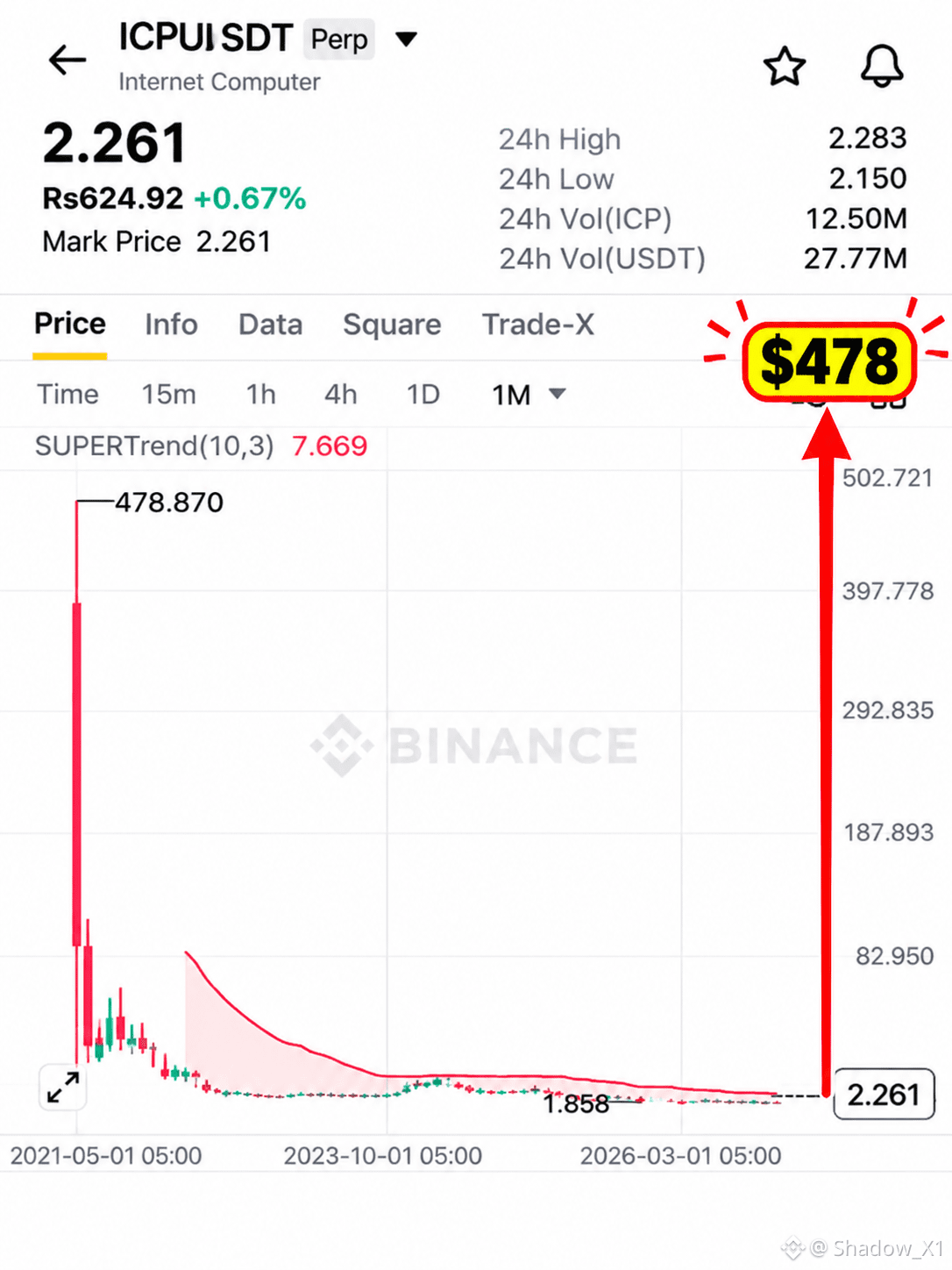
clasnic:
hıh
1
2
479
·
--
$ICP sits 1.4 percent below $2.2850 right now
A close past that ceiling opens room to run
Reject here and $2.1540 is the floor underneath
Tap $ICP and check the hourly chart yourself
Break or reject 👀
#ICP #PriceAction
$ICP sits 1.4 percent below $2.2850 right now
A close past that ceiling opens room to run
Reject here and $2.1540 is the floor underneath
Tap $ICP and check the hourly chart yourself
Break or reject 👀
#ICP #PriceAction
A close past that ceiling opens room to run
Reject here and $2.1540 is the floor underneath
Tap $ICP and check the hourly chart yourself
Break or reject 👀
#ICP #PriceAction
13
Log in to explore more content
Join global crypto users on Binance Square
⚡️ Get latest and useful information about crypto.
💬 Trusted by the world’s largest crypto exchange.
👍 Discover real insights from verified creators.
Email / Phone number
Trending Topics
1
#CanBTCReboundAfterFallingBelow60K?
0 views
186 Discussing
2
#GlobalStocksFaceLongestLosingStreakSince2023
0 views
297 Discussing
3
#AnthropicPlungesTowardIPOPriceonDay2
0 views
57 Discussing
4
#GaoTengBitcoinETFListsOnHKEX
0 views
278 Discussing
5
#TradFiForBeginners
946,825 views
5,572 Discussing
6
#NvidiaBoardReportedlySplitOverHuang’sReturn
258,674 views
2,437 Discussing
7
#TetherBurns8BillionUSDTInPast20Days
0 views
111 Discussing
8
#BitcoinWalletSignatureFlawExploitableWithinSeconds
0 views
47 Discussing
9
#CanGTA6'sLaunchLiftTTWOShares?
207,868 views
1,732 Discussing
10
#HongKongProposesSFCLicensingForFourVirtualAssetServices
404 views
32 Discussing