

Ward Nasser
153 Posts
Ward Nasser
Report
Block User
Binance Angel | Years Market Experience
📊 Market Analysis & Insights
🎓 Educational Content
💡 No Financial Advice - But Knowledge
🚀 Let's Learn Together
Open Trade
Frequent Trader
3.6 Years
25 Following
312 Followers
612 Liked
Posts
Portfolio
All
Videos
Live
PINNED
·
--
🚀 مرحباً بكم في رحلة التحليل والمعرفة
✨ أنا ورد ناصر
📊 Binance Angel منذ سنتين
🎓 سنوات خبرة في أسواق العملات المشفرة
💡 هنا لنتعلم معاً، لا لنعطي نصائح استثمارية
في هذا الفضاء ستجد:
✅ تحليلات سوقية عميقة
✅ شرح مفاهيم العملات المشفرة
✅ رؤى من تجاربي الشخصية
✅ دروس مستفادة من سنوات طويلة بالسوق
❌ لن تجد: نصائح استثمارية مباشرة
(كل ما هنا هو تحليل وتعليم يساعدك لاتخاذ قراراتك بنفسك)
🔔 فعّل التنبيهات لتابع معي
📈 دعنا نتعلم ونتطور معاً!
🚀 مرحباً بكم في رحلة التحليل والمعرفة
✨ أنا ورد ناصر
📊 Binance Angel منذ سنتين
🎓 سنوات خبرة في أسواق العملات المشفرة
💡 هنا لنتعلم معاً، لا لنعطي نصائح استثمارية
في هذا الفضاء ستجد:
✅ تحليلات سوقية عميقة
✅ شرح مفاهيم العملات المشفرة
✅ رؤى من تجاربي الشخصية
✅ دروس مستفادة من سنوات طويلة بالسوق
❌ لن تجد: نصائح استثمارية مباشرة
(كل ما هنا هو تحليل وتعليم يساعدك لاتخاذ قراراتك بنفسك)
🔔 فعّل التنبيهات لتابع معي
📈 دعنا نتعلم ونتطور معاً!
✨ أنا ورد ناصر
📊 Binance Angel منذ سنتين
🎓 سنوات خبرة في أسواق العملات المشفرة
💡 هنا لنتعلم معاً، لا لنعطي نصائح استثمارية
في هذا الفضاء ستجد:
✅ تحليلات سوقية عميقة
✅ شرح مفاهيم العملات المشفرة
✅ رؤى من تجاربي الشخصية
✅ دروس مستفادة من سنوات طويلة بالسوق
❌ لن تجد: نصائح استثمارية مباشرة
(كل ما هنا هو تحليل وتعليم يساعدك لاتخاذ قراراتك بنفسك)
🔔 فعّل التنبيهات لتابع معي
📈 دعنا نتعلم ونتطور معاً!
1
7
193
·
--
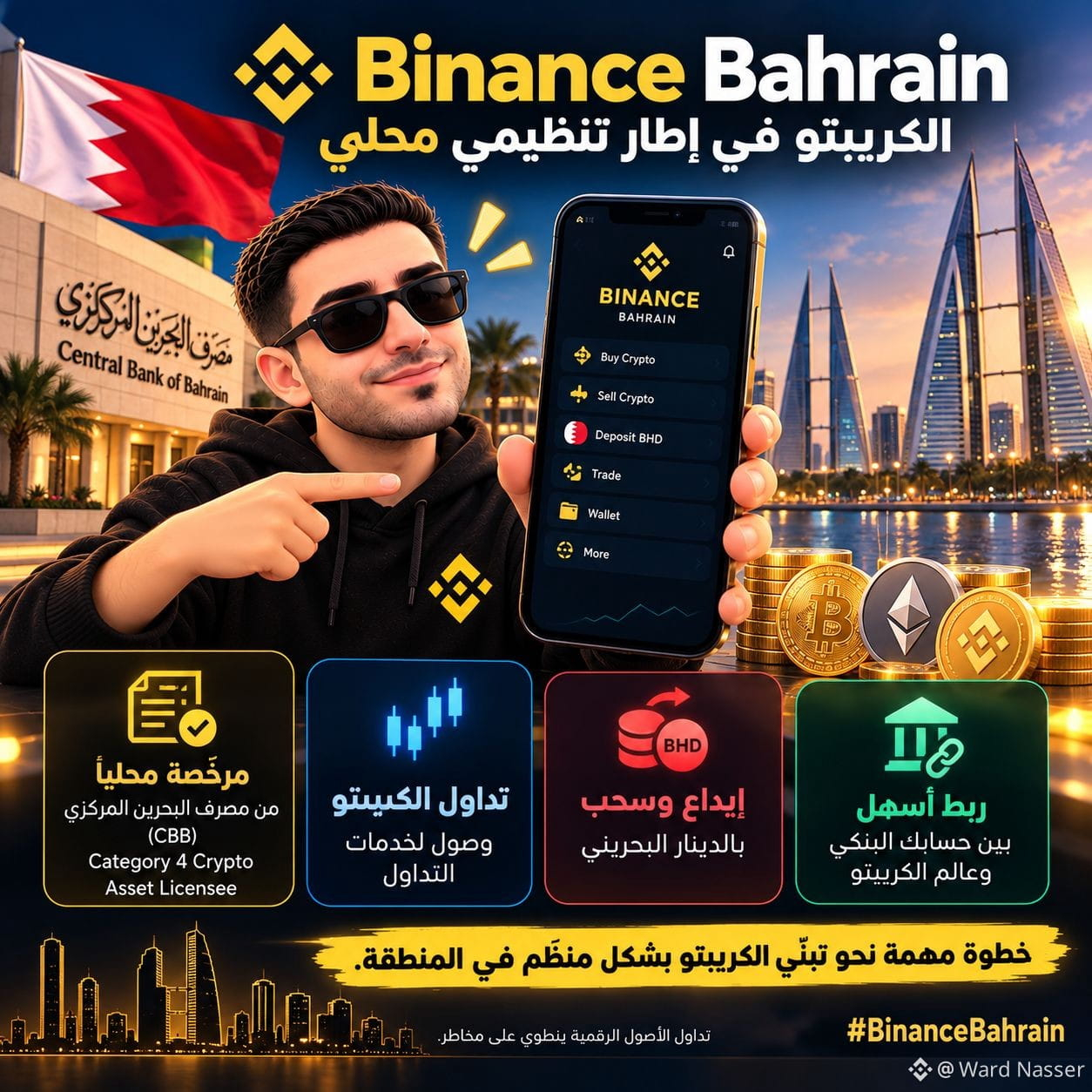
🇧🇭 الكريبتو بالبحرين ما عاد بس تطبيق بتنزله وبتتداول عليه.
في فرق لما المنصة اللي تستخدمها تكون شغّالة بترخيص محلي وتحت إشراف مصرف البحرين المركزي.
وهون بيجي دور Binance Bahrain 👇
🏦 كيان مرخّص محليًا
💱 وصول لخدمات تداول الكريبتو
🇧🇭 إيداع وسحب بالدينار البحريني
🔗 ربط أسهل بين حسابك البنكي وعالم الكريبتو
بالنسبة إلي، هاي واحدة من أهم التحولات اللي عم نشوفها بالمنطقة:
الكريبتو عم ينتقل من عالم منفصل عن النظام المالي… لشي عم يدخل فيه تدريجيًا.
والسؤال إلكم 👀
لما تختاروا منصة كريبتو، قديش بيفرق معكم إنها تكون مرخّصة محليًا؟
⚠️ تداول الأصول الرقمية ينطوي على مخاطر.
#BinanceBahrain #بينانس_البحرين $BNB
🇧🇭 الكريبتو بالبحرين ما عاد بس تطبيق بتنزله وبتتداول عليه.
في فرق لما المنصة اللي تستخدمها تكون شغّالة بترخيص محلي وتحت إشراف مصرف البحرين المركزي.
وهون بيجي دور Binance Bahrain 👇
🏦 كيان مرخّص محليًا
💱 وصول لخدمات تداول الكريبتو
🇧🇭 إيداع وسحب بالدينار البحريني
🔗 ربط أسهل بين حسابك البنكي وعالم الكريبتو
بالنسبة إلي، هاي واحدة من أهم التحولات اللي عم نشوفها بالمنطقة:
الكريبتو عم ينتقل من عالم منفصل عن النظام المالي… لشي عم يدخل فيه تدريجيًا.
والسؤال إلكم 👀
لما تختاروا منصة كريبتو، قديش بيفرق معكم إنها تكون مرخّصة محليًا؟
⚠️ تداول الأصول الرقمية ينطوي على مخاطر.
#BinanceBahrain #بينانس_البحرين $BNB
في فرق لما المنصة اللي تستخدمها تكون شغّالة بترخيص محلي وتحت إشراف مصرف البحرين المركزي.
وهون بيجي دور Binance Bahrain 👇
🏦 كيان مرخّص محليًا
💱 وصول لخدمات تداول الكريبتو
🇧🇭 إيداع وسحب بالدينار البحريني
🔗 ربط أسهل بين حسابك البنكي وعالم الكريبتو
بالنسبة إلي، هاي واحدة من أهم التحولات اللي عم نشوفها بالمنطقة:
الكريبتو عم ينتقل من عالم منفصل عن النظام المالي… لشي عم يدخل فيه تدريجيًا.
والسؤال إلكم 👀
لما تختاروا منصة كريبتو، قديش بيفرق معكم إنها تكون مرخّصة محليًا؟
⚠️ تداول الأصول الرقمية ينطوي على مخاطر.
#BinanceBahrain #بينانس_البحرين $BNB
2
98
·
--
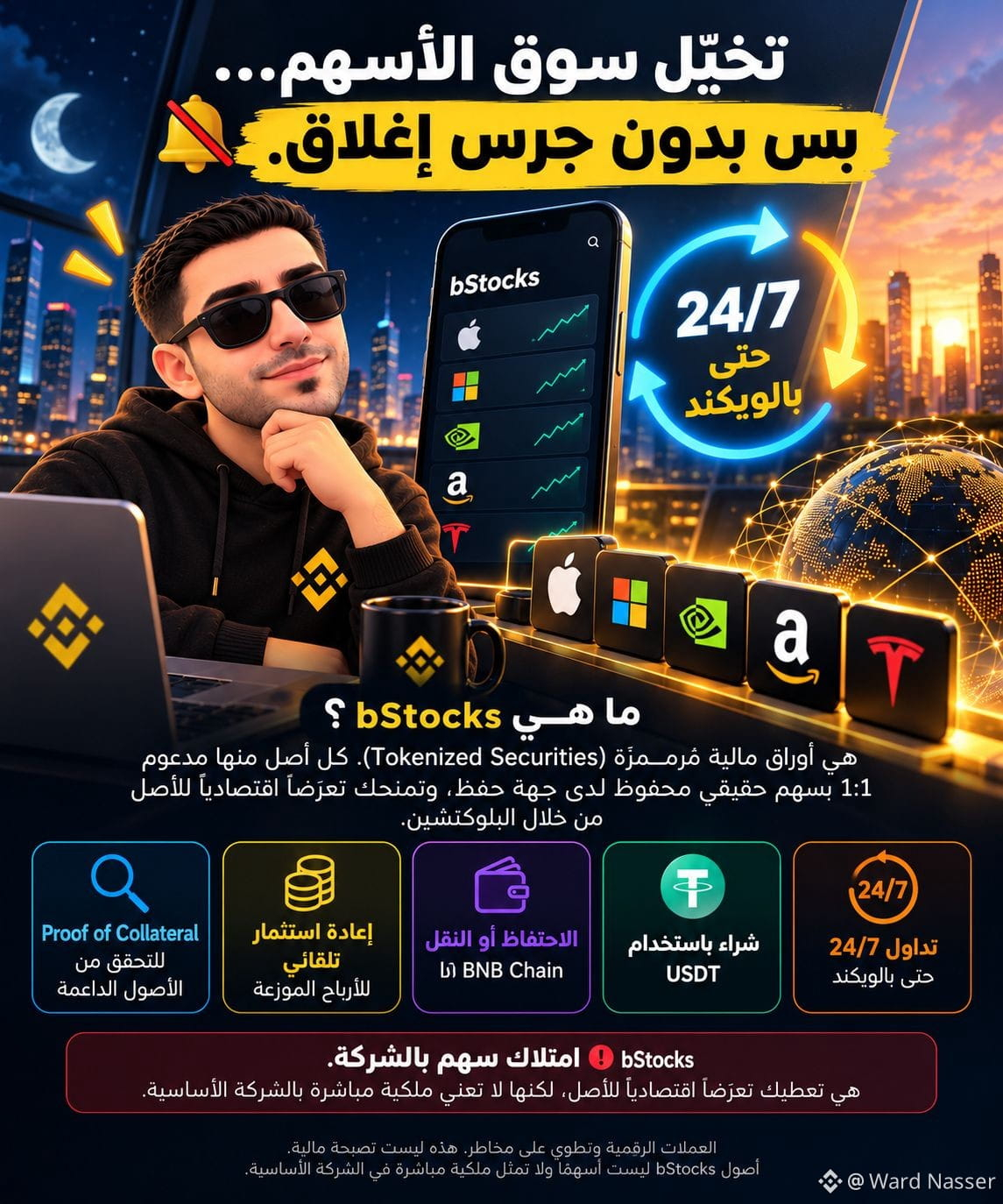
📈 تخيّل سوق الأسهم… بس بدون جرس إغلاق. 🔔❌
هون بتصير فكرة bStocks مثيرة للاهتمام.
بدل ما تكون عم تشتري سهم تقليدي، bStocks هي أوراق مالية مُمَرمزة (Tokenized Securities)، وكل وحدة منها مدعومة 1:1 بسهم حقيقي محفوظ في العهدة.
طيب شو اللي بتغير؟ 👇
🌙 السوق التقليدي سكّر؟ التداول ممكن يستمر 24/7 حتى بالويكند.
💵 عندك USDT؟ ممكن تستخدمه لشراء bStocks.
🔗 بدك تستخدم البلوكتشين؟ ممكن تحتفظ فيها على المنصة أو تنقلها لمحفظتك على BNB Chain.
💰 في توزيعات أرباح؟ يتم إعادة استثمارها تلقائيًا.
🔍 وموضوع الـ1:1 مو مجرد كلام، في Proof of Collateral للتحقق من الأصول الداعمة.
بس في نقطة مهمة جدًا:
bStocks ≠ امتلاك سهم بالشركة.
هي بتعطيك تعرّض اقتصادي للأصل، لكنها لا تعني ملكية مباشرة بالشركة الأساسية.
وهون برأيي الجزء المثير :
البلوكتشين ما عاد بس عم يخلق أصول جديدة… صار كمان عم يغيّر طريقة الوصول للأصول التقليدية واستخدامها.
هل برأيكم الـ Tokenized Securities ممكن تكون الخطوة الكبيرة القادمة للـRWA؟ 👀
⚠️ العملات الرقمية تنطوي على مخاطر. هذه ليست نصيحة مالية. أصول bStocks ليست أسهماً ولا تمثل ملكية مباشرة في الشركة الأساسية.
#bStocks #RWA #TokenizedSecurities #Web3
📈 تخيّل سوق الأسهم… بس بدون جرس إغلاق. 🔔❌
هون بتصير فكرة bStocks مثيرة للاهتمام.
بدل ما تكون عم تشتري سهم تقليدي، bStocks هي أوراق مالية مُمَرمزة (Tokenized Securities)، وكل وحدة منها مدعومة 1:1 بسهم حقيقي محفوظ في العهدة.
طيب شو اللي بتغير؟ 👇
🌙 السوق التقليدي سكّر؟ التداول ممكن يستمر 24/7 حتى بالويكند.
💵 عندك USDT؟ ممكن تستخدمه لشراء bStocks.
🔗 بدك تستخدم البلوكتشين؟ ممكن تحتفظ فيها على المنصة أو تنقلها لمحفظتك على BNB Chain.
💰 في توزيعات أرباح؟ يتم إعادة استثمارها تلقائيًا.
🔍 وموضوع الـ1:1 مو مجرد كلام، في Proof of Collateral للتحقق من الأصول الداعمة.
بس في نقطة مهمة جدًا:
bStocks ≠ امتلاك سهم بالشركة.
هي بتعطيك تعرّض اقتصادي للأصل، لكنها لا تعني ملكية مباشرة بالشركة الأساسية.
وهون برأيي الجزء المثير :
البلوكتشين ما عاد بس عم يخلق أصول جديدة… صار كمان عم يغيّر طريقة الوصول للأصول التقليدية واستخدامها.
هل برأيكم الـ Tokenized Securities ممكن تكون الخطوة الكبيرة القادمة للـRWA؟ 👀
⚠️ العملات الرقمية تنطوي على مخاطر. هذه ليست نصيحة مالية. أصول bStocks ليست أسهماً ولا تمثل ملكية مباشرة في الشركة الأساسية.
#bStocks #RWA #TokenizedSecurities #Web3
هون بتصير فكرة bStocks مثيرة للاهتمام.
بدل ما تكون عم تشتري سهم تقليدي، bStocks هي أوراق مالية مُمَرمزة (Tokenized Securities)، وكل وحدة منها مدعومة 1:1 بسهم حقيقي محفوظ في العهدة.
طيب شو اللي بتغير؟ 👇
🌙 السوق التقليدي سكّر؟ التداول ممكن يستمر 24/7 حتى بالويكند.
💵 عندك USDT؟ ممكن تستخدمه لشراء bStocks.
🔗 بدك تستخدم البلوكتشين؟ ممكن تحتفظ فيها على المنصة أو تنقلها لمحفظتك على BNB Chain.
💰 في توزيعات أرباح؟ يتم إعادة استثمارها تلقائيًا.
🔍 وموضوع الـ1:1 مو مجرد كلام، في Proof of Collateral للتحقق من الأصول الداعمة.
بس في نقطة مهمة جدًا:
bStocks ≠ امتلاك سهم بالشركة.
هي بتعطيك تعرّض اقتصادي للأصل، لكنها لا تعني ملكية مباشرة بالشركة الأساسية.
وهون برأيي الجزء المثير :
البلوكتشين ما عاد بس عم يخلق أصول جديدة… صار كمان عم يغيّر طريقة الوصول للأصول التقليدية واستخدامها.
هل برأيكم الـ Tokenized Securities ممكن تكون الخطوة الكبيرة القادمة للـRWA؟ 👀
⚠️ العملات الرقمية تنطوي على مخاطر. هذه ليست نصيحة مالية. أصول bStocks ليست أسهماً ولا تمثل ملكية مباشرة في الشركة الأساسية.
#bStocks #RWA #TokenizedSecurities #Web3
3
242
·
--
Article
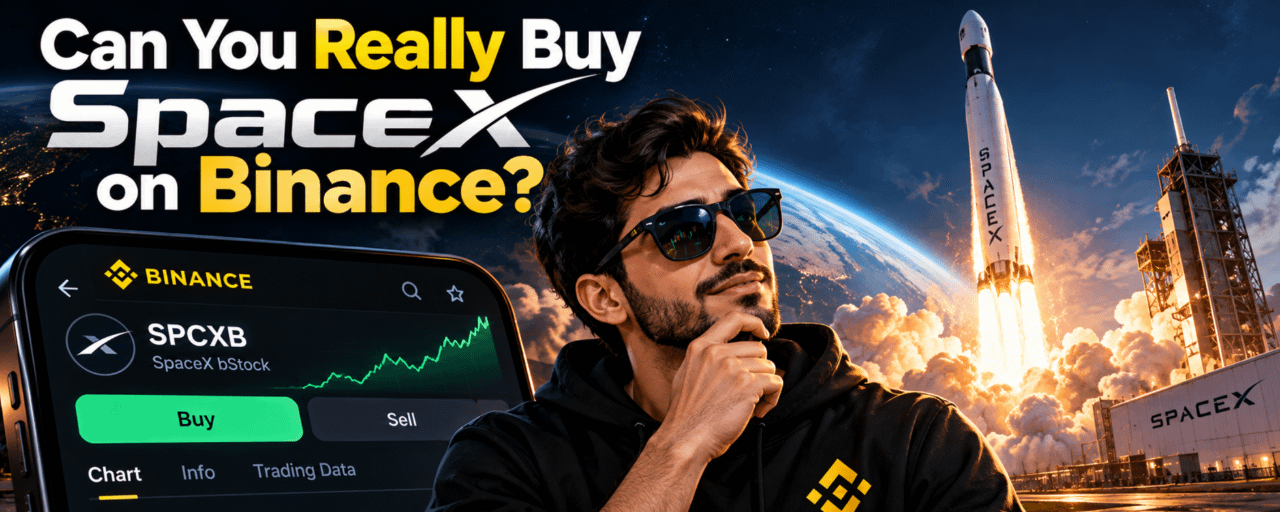
Can You Really Buy SpaceX on Binance?I bought SpaceX on Binance.
Or at least, that's what it felt like when I searched for SPCXB, placed the order and saw it sitting in my Spot wallet.
But SPCXB isn't the same thing as owning SpaceX shares directly, so I wanted to understand exactly what I had bought.
Here's the simple version.
SPCXB is a bStock: a tokenized security backed 1:1 by real SpaceX shares held by a regulated custodian.
So there are real SpaceX shares behind the product, but buying SPCXB doesn't make me a direct SpaceX shareholder.
According to Binance, bStocks represent an interest in the underlying securities held by the issuer, BTech Holdings Limited. They don't give holders direct ownership of the underlying shares, or shareholder, voting or dividend rights.
That distinction is important.
So why did I buy it?
Honestly, because I wanted to try bStocks for myself.
I've been following tokenization and RWA for a while, but reading about tokenized assets is one thing. Opening the same Binance account I use for crypto, searching SPCXB/USDT and actually buying exposure to SpaceX is another.
That's what made the product interesting to me.
There's another difference I like: bStocks trade 24/7.
But that comes with a catch. bStocks can experience significant price volatility, particularly outside traditional market hours, and their market price can differ from the value of the underlying asset.
And for UAE users, there's one more detail worth knowing.
Binance FZE clients can access eligible bStocks on the secondary market, but minting and redemption are not currently available to Binance FZE clients.
So, did I buy SpaceX?
In everyday language, that's how I described it.
Technically, what I bought was SPCXB: a tokenized security backed 1:1 by SpaceX shares, not direct ownership of SpaceX stock.
And that's actually what I find interesting about it.
I already use Binance for crypto. Now I'm using the same Spot interface to get exposure to a private company like SpaceX through a tokenized security.
For me, that's a much better example of RWA than another explanation of what “tokenization” might look like someday.
I just tried it.
Disclosure: I volunteer as a Binance Angel and personally purchased SPCXB. This is my own experience, not a recommendation to buy it.
For educational purposes only. bStocks involve market, liquidity, issuer, custody, regulatory and other risks and are available only to eligible users in permitted jurisdictions. Not financial advice.
#Binance #bStocks #SpaceX #RWA #Tokenization
Can You Really Buy SpaceX on Binance?
I bought SpaceX on Binance.
Or at least, that's what it felt like when I searched for SPCXB, placed the order and saw it sitting in my Spot wallet.
But SPCXB isn't the same thing as owning SpaceX shares directly, so I wanted to understand exactly what I had bought.
Here's the simple version.
SPCXB is a bStock: a tokenized security backed 1:1 by real SpaceX shares held by a regulated custodian.
So there are real SpaceX shares behind the product, but buying SPCXB doesn't make me a direct SpaceX shareholder.
According to Binance, bStocks represent an interest in the underlying securities held by the issuer, BTech Holdings Limited. They don't give holders direct ownership of the underlying shares, or shareholder, voting or dividend rights.
That distinction is important.
So why did I buy it?
Honestly, because I wanted to try bStocks for myself.
I've been following tokenization and RWA for a while, but reading about tokenized assets is one thing. Opening the same Binance account I use for crypto, searching SPCXB/USDT and actually buying exposure to SpaceX is another.
That's what made the product interesting to me.
There's another difference I like: bStocks trade 24/7.
But that comes with a catch. bStocks can experience significant price volatility, particularly outside traditional market hours, and their market price can differ from the value of the underlying asset.
And for UAE users, there's one more detail worth knowing.
Binance FZE clients can access eligible bStocks on the secondary market, but minting and redemption are not currently available to Binance FZE clients.
So, did I buy SpaceX?
In everyday language, that's how I described it.
Technically, what I bought was SPCXB: a tokenized security backed 1:1 by SpaceX shares, not direct ownership of SpaceX stock.
And that's actually what I find interesting about it.
I already use Binance for crypto. Now I'm using the same Spot interface to get exposure to a private company like SpaceX through a tokenized security.
For me, that's a much better example of RWA than another explanation of what “tokenization” might look like someday.
I just tried it.
Disclosure: I volunteer as a Binance Angel and personally purchased SPCXB. This is my own experience, not a recommendation to buy it.
For educational purposes only. bStocks involve market, liquidity, issuer, custody, regulatory and other risks and are available only to eligible users in permitted jurisdictions. Not financial advice.
#Binance #bStocks #SpaceX #RWA #Tokenization
Or at least, that's what it felt like when I searched for SPCXB, placed the order and saw it sitting in my Spot wallet.
But SPCXB isn't the same thing as owning SpaceX shares directly, so I wanted to understand exactly what I had bought.
Here's the simple version.
SPCXB is a bStock: a tokenized security backed 1:1 by real SpaceX shares held by a regulated custodian.
So there are real SpaceX shares behind the product, but buying SPCXB doesn't make me a direct SpaceX shareholder.
According to Binance, bStocks represent an interest in the underlying securities held by the issuer, BTech Holdings Limited. They don't give holders direct ownership of the underlying shares, or shareholder, voting or dividend rights.
That distinction is important.
So why did I buy it?
Honestly, because I wanted to try bStocks for myself.
I've been following tokenization and RWA for a while, but reading about tokenized assets is one thing. Opening the same Binance account I use for crypto, searching SPCXB/USDT and actually buying exposure to SpaceX is another.
That's what made the product interesting to me.
There's another difference I like: bStocks trade 24/7.
But that comes with a catch. bStocks can experience significant price volatility, particularly outside traditional market hours, and their market price can differ from the value of the underlying asset.
And for UAE users, there's one more detail worth knowing.
Binance FZE clients can access eligible bStocks on the secondary market, but minting and redemption are not currently available to Binance FZE clients.
So, did I buy SpaceX?
In everyday language, that's how I described it.
Technically, what I bought was SPCXB: a tokenized security backed 1:1 by SpaceX shares, not direct ownership of SpaceX stock.
And that's actually what I find interesting about it.
I already use Binance for crypto. Now I'm using the same Spot interface to get exposure to a private company like SpaceX through a tokenized security.
For me, that's a much better example of RWA than another explanation of what “tokenization” might look like someday.
I just tried it.
Disclosure: I volunteer as a Binance Angel and personally purchased SPCXB. This is my own experience, not a recommendation to buy it.
For educational purposes only. bStocks involve market, liquidity, issuer, custody, regulatory and other risks and are available only to eligible users in permitted jurisdictions. Not financial advice.
#Binance #bStocks #SpaceX #RWA #Tokenization
3
399
·
--
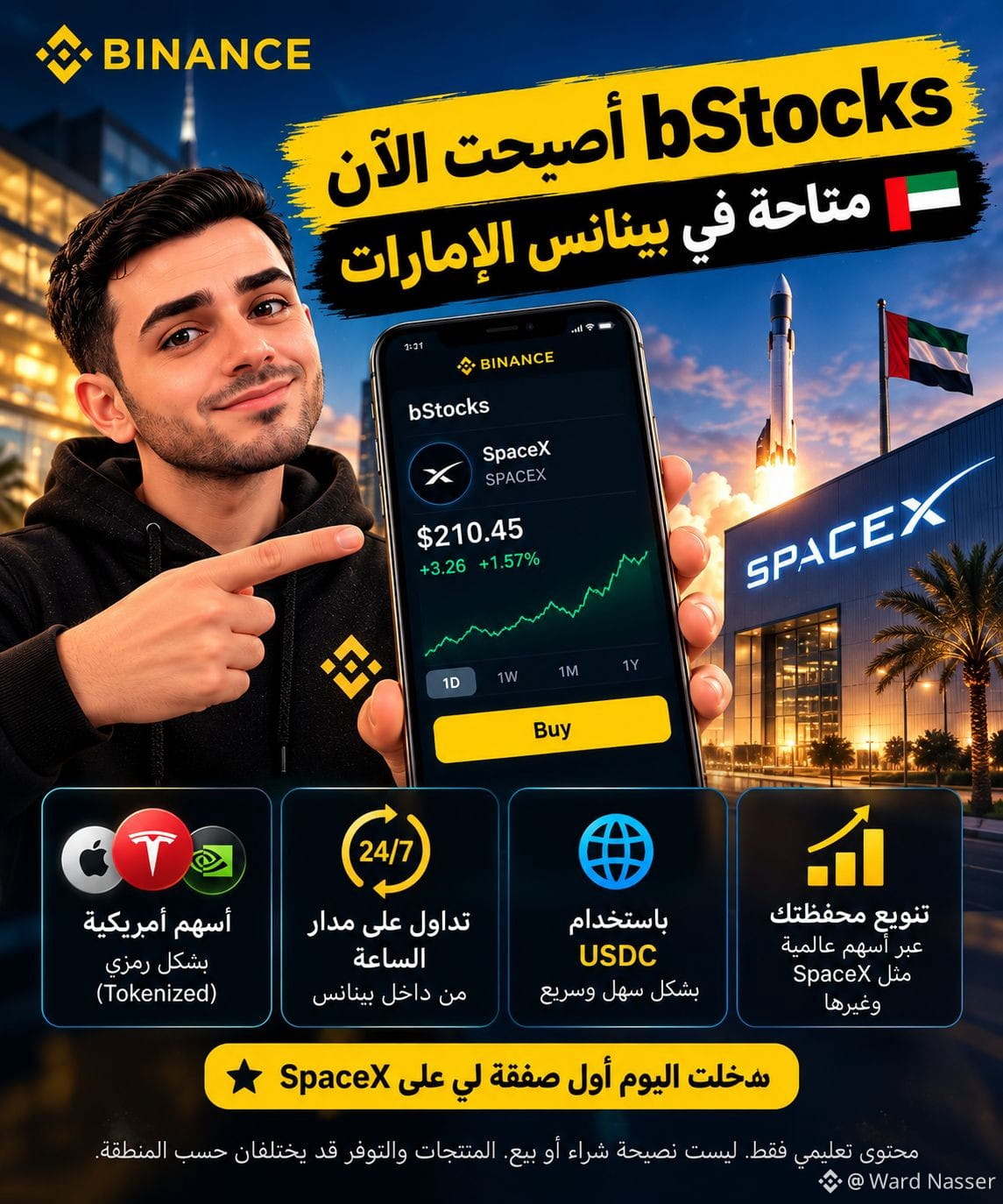
🚀 اليوم دخلت أول صفقة إلي على SpaceX عبر bStocks بعد ما صارت متاحة عندي على بينانس الإمارات. 🇦🇪
بس شو هي bStocks أصلًا؟
ببساطة، هي أوراق مالية مُرمّزة (Tokenized Securities)، وكل bStock مدعومة بنسبة 1:1 بسهم أمريكي حقيقي محفوظ لدى جهة حفظ منظمة. وهي بتعطيك تعرّض اقتصادي للسهم، لكن ما بتعني إنك مالك مباشر للسهم بالشركة.
والشي المميز بالنسبة إلي؟ 👀
بتقدر تتداول bStocks على سوق Spot في بينانس 24/7، حتى بالويكند. ولما السوق الأمريكي يكون مغلق، سعر bStock ممكن يتحرك بشكل مختلف عن آخر سعر للسهم الأساسي لأنه بيتحدد حسب العرض والطلب على بينانس.
اخترت SpaceX كأول تجربة إلي مع المنتج، ورح شارككم أكتر عن تجربتي وكيف عم استخدم bStocks.
🧠 مشاركتي للصفقة مو توصية بشراء أو بيع SpaceX أو أي أصل. بشارككم شرح المنتج وتجربتي معه فقط، والقرار الاستثماري إلكم.
⚠️ محتوى تعليمي فقط. bStocks تنطوي على مخاطر، والتوفر يعتمد على الأهلية والمنطقة.
#Binance #bStocks #SpaceX #TradFi
🚀 اليوم دخلت أول صفقة إلي على SpaceX عبر bStocks بعد ما صارت متاحة عندي على بينانس الإمارات. 🇦🇪
بس شو هي bStocks أصلًا؟
ببساطة، هي أوراق مالية مُرمّزة (Tokenized Securities)، وكل bStock مدعومة بنسبة 1:1 بسهم أمريكي حقيقي محفوظ لدى جهة حفظ منظمة. وهي بتعطيك تعرّض اقتصادي للسهم، لكن ما بتعني إنك مالك مباشر للسهم بالشركة.
والشي المميز بالنسبة إلي؟ 👀
بتقدر تتداول bStocks على سوق Spot في بينانس 24/7، حتى بالويكند. ولما السوق الأمريكي يكون مغلق، سعر bStock ممكن يتحرك بشكل مختلف عن آخر سعر للسهم الأساسي لأنه بيتحدد حسب العرض والطلب على بينانس.
اخترت SpaceX كأول تجربة إلي مع المنتج، ورح شارككم أكتر عن تجربتي وكيف عم استخدم bStocks.
🧠 مشاركتي للصفقة مو توصية بشراء أو بيع SpaceX أو أي أصل. بشارككم شرح المنتج وتجربتي معه فقط، والقرار الاستثماري إلكم.
⚠️ محتوى تعليمي فقط. bStocks تنطوي على مخاطر، والتوفر يعتمد على الأهلية والمنطقة.
#Binance #bStocks #SpaceX #TradFi
بس شو هي bStocks أصلًا؟
ببساطة، هي أوراق مالية مُرمّزة (Tokenized Securities)، وكل bStock مدعومة بنسبة 1:1 بسهم أمريكي حقيقي محفوظ لدى جهة حفظ منظمة. وهي بتعطيك تعرّض اقتصادي للسهم، لكن ما بتعني إنك مالك مباشر للسهم بالشركة.
والشي المميز بالنسبة إلي؟ 👀
بتقدر تتداول bStocks على سوق Spot في بينانس 24/7، حتى بالويكند. ولما السوق الأمريكي يكون مغلق، سعر bStock ممكن يتحرك بشكل مختلف عن آخر سعر للسهم الأساسي لأنه بيتحدد حسب العرض والطلب على بينانس.
اخترت SpaceX كأول تجربة إلي مع المنتج، ورح شارككم أكتر عن تجربتي وكيف عم استخدم bStocks.
🧠 مشاركتي للصفقة مو توصية بشراء أو بيع SpaceX أو أي أصل. بشارككم شرح المنتج وتجربتي معه فقط، والقرار الاستثماري إلكم.
⚠️ محتوى تعليمي فقط. bStocks تنطوي على مخاطر، والتوفر يعتمد على الأهلية والمنطقة.
#Binance #bStocks #SpaceX #TradFi
2
1
5
363
·
--
Verified
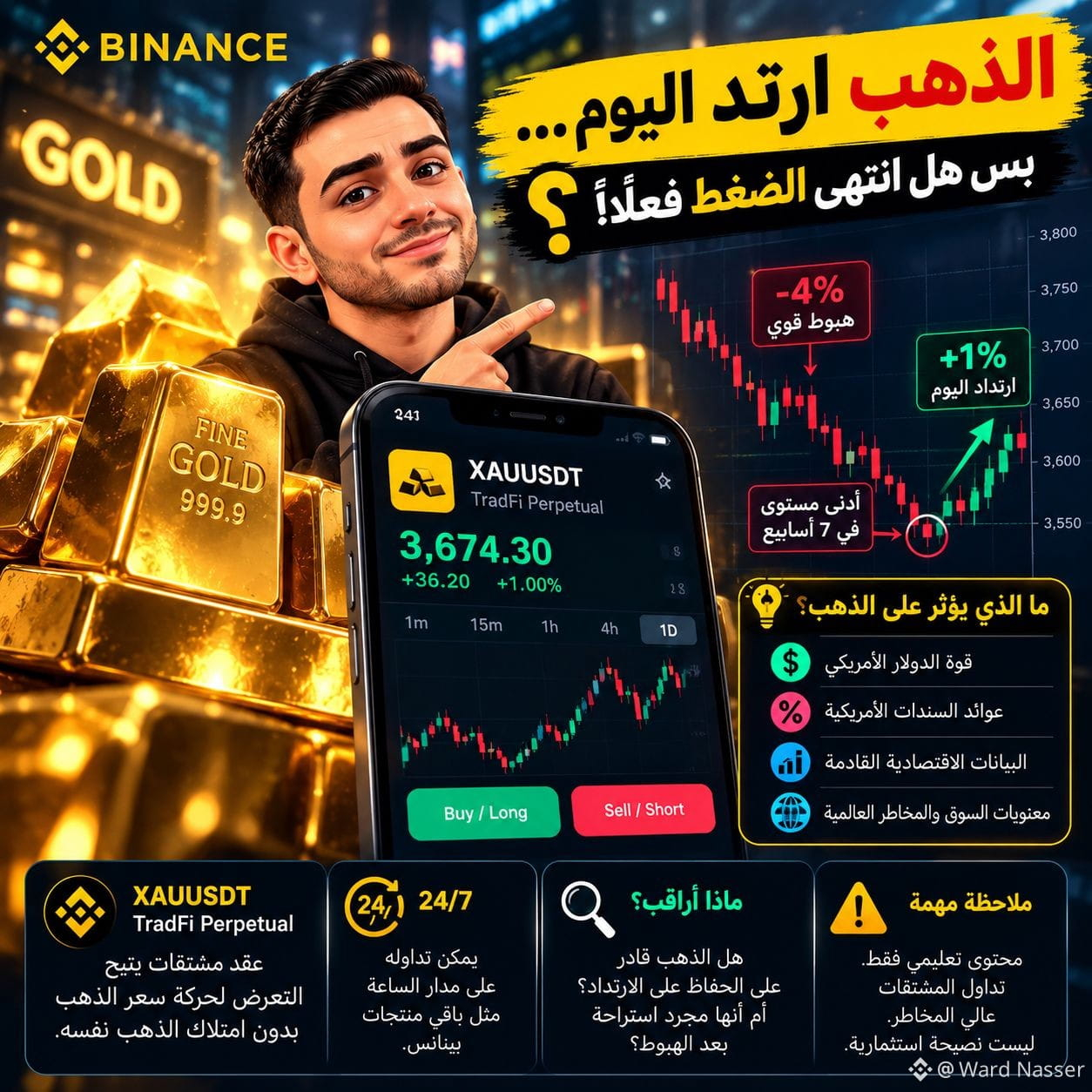
🥇 الذهب ارتد اليوم… بس هل انتهى الضغط فعلًا؟ 👀
بعد هبوط قوي قرابة 4% ووصول الذهب لأدنى مستوى في 7 أسابيع، رجع اليوم وارتفع بنحو 1%.
وعلى بينانس، فينا نتابع حركة الذهب عبر XAUUSDT TradFi Perpetual، وهو عقد مشتقات بيعطي تعرّض لحركة سعر الذهب بدون امتلاك الذهب نفسه.
🧠 اللي عم راقبه مو الارتداد لحاله:
هل الذهب قادر يحافظ على الارتداد؟
ولا هي مجرد استراحة بعد الهبوط؟
قوة الدولار + عوائد السندات + البيانات الاقتصادية الأمريكية القادمة… كلها عوامل ممكن تأثر على الحركة القادمة.
🧠 بشارككم شرح المنتج وكيف بفكر بالصفقة، مو شو الصفقة اللي لازم تاخدوها.
⚠️ محتوى تعليمي فقط. تداول المشتقات عالي المخاطر.
#Binance #Gold #TradFi
🥇 الذهب ارتد اليوم… بس هل انتهى الضغط فعلًا؟ 👀
بعد هبوط قوي قرابة 4% ووصول الذهب لأدنى مستوى في 7 أسابيع، رجع اليوم وارتفع بنحو 1%.
وعلى بينانس، فينا نتابع حركة الذهب عبر XAUUSDT TradFi Perpetual، وهو عقد مشتقات بيعطي تعرّض لحركة سعر الذهب بدون امتلاك الذهب نفسه.
🧠 اللي عم راقبه مو الارتداد لحاله:
هل الذهب قادر يحافظ على الارتداد؟
ولا هي مجرد استراحة بعد الهبوط؟
قوة الدولار + عوائد السندات + البيانات الاقتصادية الأمريكية القادمة… كلها عوامل ممكن تأثر على الحركة القادمة.
🧠 بشارككم شرح المنتج وكيف بفكر بالصفقة، مو شو الصفقة اللي لازم تاخدوها.
⚠️ محتوى تعليمي فقط. تداول المشتقات عالي المخاطر.
#Binance #Gold #TradFi
بعد هبوط قوي قرابة 4% ووصول الذهب لأدنى مستوى في 7 أسابيع، رجع اليوم وارتفع بنحو 1%.
وعلى بينانس، فينا نتابع حركة الذهب عبر XAUUSDT TradFi Perpetual، وهو عقد مشتقات بيعطي تعرّض لحركة سعر الذهب بدون امتلاك الذهب نفسه.
🧠 اللي عم راقبه مو الارتداد لحاله:
هل الذهب قادر يحافظ على الارتداد؟
ولا هي مجرد استراحة بعد الهبوط؟
قوة الدولار + عوائد السندات + البيانات الاقتصادية الأمريكية القادمة… كلها عوامل ممكن تأثر على الحركة القادمة.
🧠 بشارككم شرح المنتج وكيف بفكر بالصفقة، مو شو الصفقة اللي لازم تاخدوها.
⚠️ محتوى تعليمي فقط. تداول المشتقات عالي المخاطر.
#Binance #Gold #TradFi
2
178
·
--
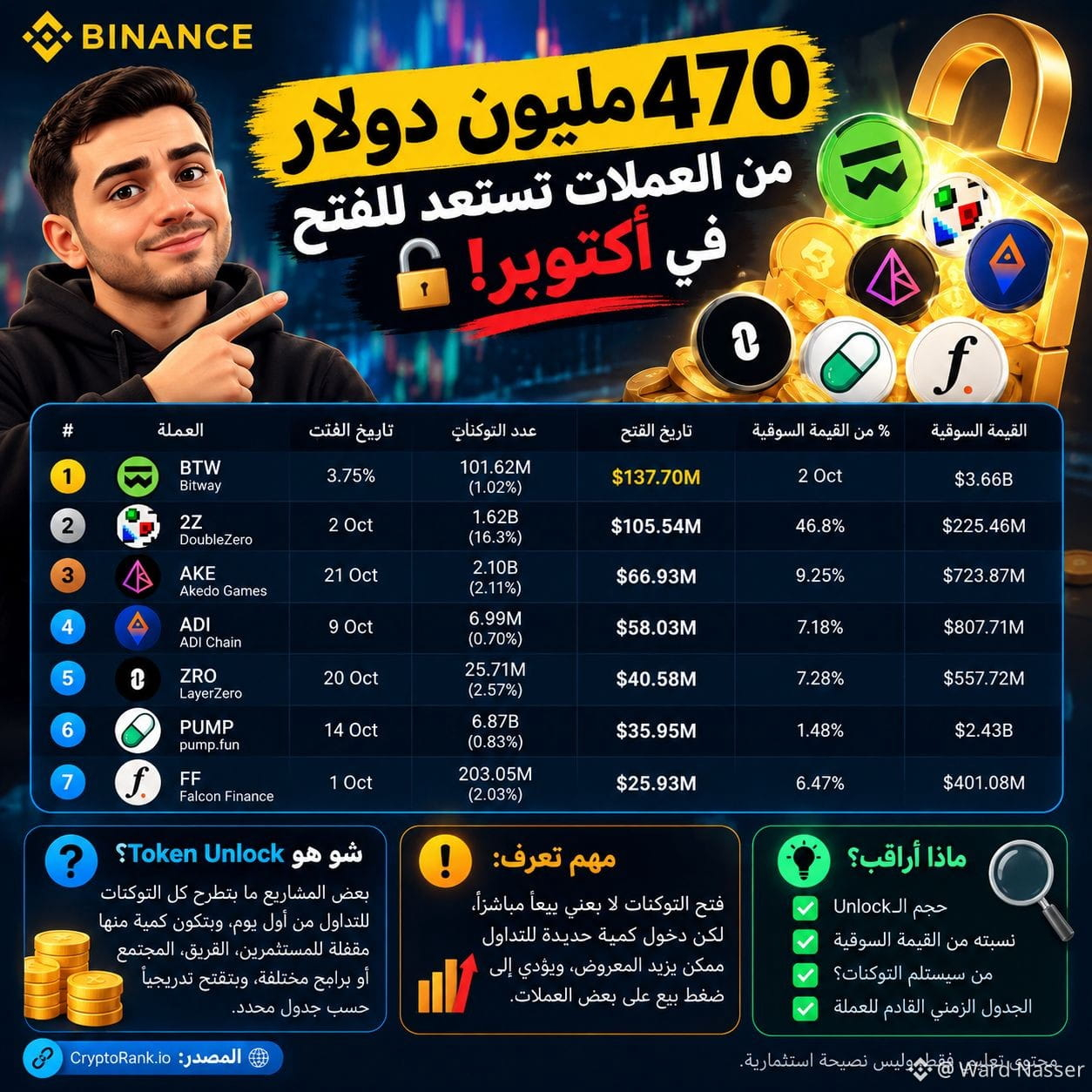
> 🚨 470 مليون دولار من العملات رح تنفتح خلال أكتوبر… بس شو يعني Token Unlock أصلًا؟ 🔓
ببساطة: بعض المشاريع ما بتطرح كل التوكنات للتداول من أول يوم، وبتكون كمية منها مقفلة للمستثمرين، الفريق، المجتمع أو برامج مختلفة، وبتنفتح تدريجيًا حسب جدول محدد.
خلال أكتوبر، أكبر 7 عمليات Unlock بالصورة قيمتها حوالي 470.66 مليون دولار، وتتصدرها BTW بقيمة $137.7M.
⚠️ المهم: فتح التوكنات ≠ بيعها مباشرة.
لكن دخول كمية جديدة للتداول ممكن يزيد المعروض، ولهيك المتداول الذكي بيراقب: حجم الـUnlock + نسبته من القيمة السوقية + مين رح يستلم التوكنات.
يعني مو بس تسأل: كم مليون دولار رح ينفتح؟
اسأل: قديش هالكمية كبيرة مقارنة بحجم المشروع؟ 👀
📊 المصدر: CryptoRank
#Crypto #TokenUnlock #Altcoins
> 🚨 470 مليون دولار من العملات رح تنفتح خلال أكتوبر… بس شو يعني Token Unlock أصلًا؟ 🔓
ببساطة: بعض المشاريع ما بتطرح كل التوكنات للتداول من أول يوم، وبتكون كمية منها مقفلة للمستثمرين، الفريق، المجتمع أو برامج مختلفة، وبتنفتح تدريجيًا حسب جدول محدد.
خلال أكتوبر، أكبر 7 عمليات Unlock بالصورة قيمتها حوالي 470.66 مليون دولار، وتتصدرها BTW بقيمة $137.7M.
⚠️ المهم: فتح التوكنات ≠ بيعها مباشرة.
لكن دخول كمية جديدة للتداول ممكن يزيد المعروض، ولهيك المتداول الذكي بيراقب: حجم الـUnlock + نسبته من القيمة السوقية + مين رح يستلم التوكنات.
يعني مو بس تسأل: كم مليون دولار رح ينفتح؟
اسأل: قديش هالكمية كبيرة مقارنة بحجم المشروع؟ 👀
📊 المصدر: CryptoRank
#Crypto #TokenUnlock #Altcoins
ببساطة: بعض المشاريع ما بتطرح كل التوكنات للتداول من أول يوم، وبتكون كمية منها مقفلة للمستثمرين، الفريق، المجتمع أو برامج مختلفة، وبتنفتح تدريجيًا حسب جدول محدد.
خلال أكتوبر، أكبر 7 عمليات Unlock بالصورة قيمتها حوالي 470.66 مليون دولار، وتتصدرها BTW بقيمة $137.7M.
⚠️ المهم: فتح التوكنات ≠ بيعها مباشرة.
لكن دخول كمية جديدة للتداول ممكن يزيد المعروض، ولهيك المتداول الذكي بيراقب: حجم الـUnlock + نسبته من القيمة السوقية + مين رح يستلم التوكنات.
يعني مو بس تسأل: كم مليون دولار رح ينفتح؟
اسأل: قديش هالكمية كبيرة مقارنة بحجم المشروع؟ 👀
📊 المصدر: CryptoRank
#Crypto #TokenUnlock #Altcoins
2
416
·
--
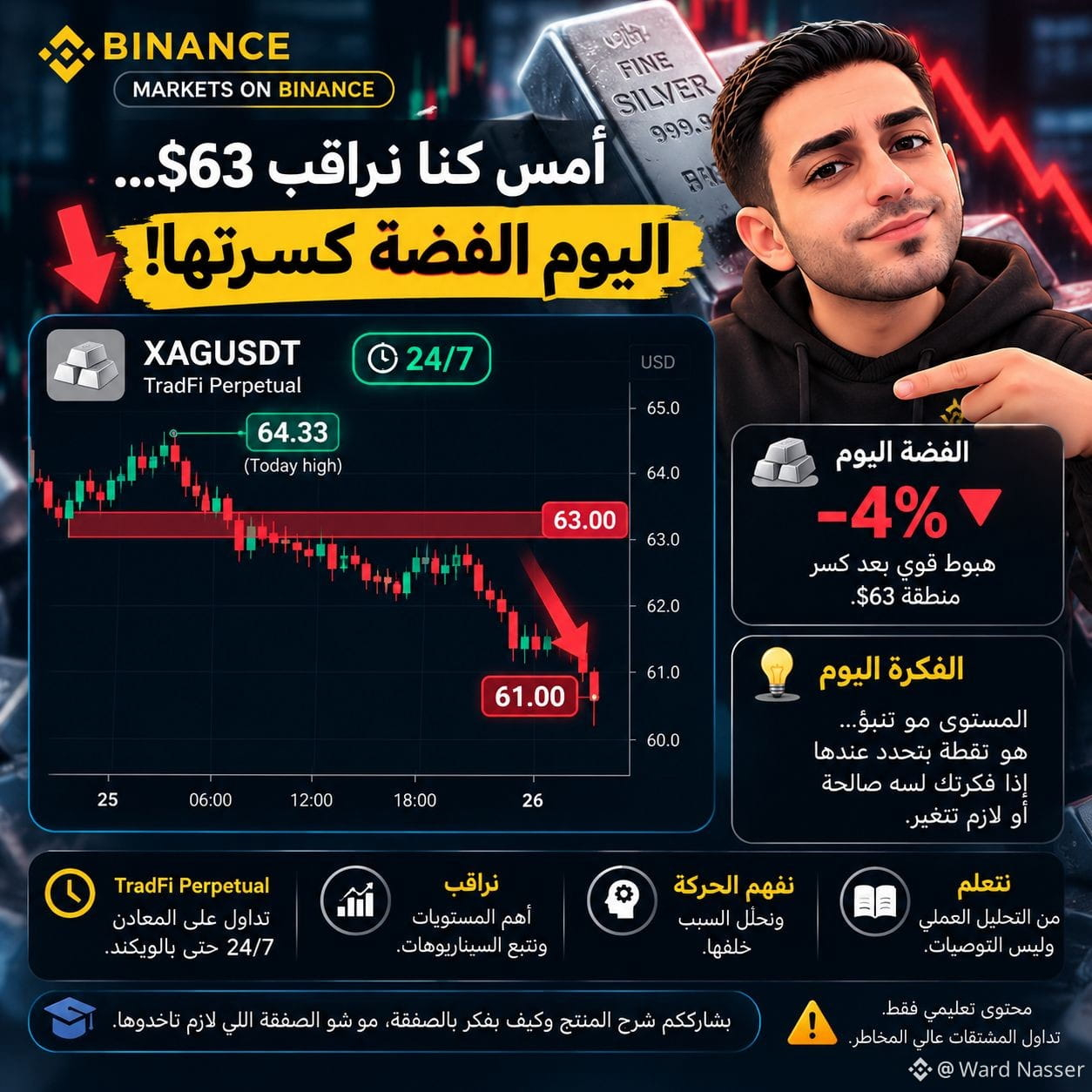
🥈 أمس كنا نراقب $63… اليوم الفضة كسرتها. 👀
عم راقب XAGUSDT TradFi Perpetual على Binance بعد هبوط الفضة بأكثر من 4%.
شو هو المنتج؟
هو عقد مشتقات بيعطيك تعرّض لحركة سعر الفضة بدون ما تمتلك الفضة نفسها، وميزة TradFi Perpetuals إنها بتتداول 24/7 حتى بالويكند.
🎯 أمس كان السيناريو واضح: كسر $63 يغيّر الصورة.
واليوم هذا بالضبط اللي صار.
وهون الدرس: المستوى مو تنبؤ… هو نقطة بتحدد عندها إذا فكرتك لسه صالحة أو لازم تتغير.
🧠 بشارككم شرح المنتج وكيف بفكر بالصفقة، مو شو الصفقة اللي لازم تاخدوها.
⚠️ محتوى تعليمي فقط. تداول المشتقات عالي المخاطر.
#Binance $XAG
{future}(XAGUSDT)
#TradFi #trading
🥈 أمس كنا نراقب $63… اليوم الفضة كسرتها. 👀
عم راقب XAGUSDT TradFi Perpetual على Binance بعد هبوط الفضة بأكثر من 4%.
شو هو المنتج؟
هو عقد مشتقات بيعطيك تعرّض لحركة سعر الفضة بدون ما تمتلك الفضة نفسها، وميزة TradFi Perpetuals إنها بتتداول 24/7 حتى بالويكند.
🎯 أمس كان السيناريو واضح: كسر $63 يغيّر الصورة.
واليوم هذا بالضبط اللي صار.
وهون الدرس: المستوى مو تنبؤ… هو نقطة بتحدد عندها إذا فكرتك لسه صالحة أو لازم تتغير.
🧠 بشارككم شرح المنتج وكيف بفكر بالصفقة، مو شو الصفقة اللي لازم تاخدوها.
⚠️ محتوى تعليمي فقط. تداول المشتقات عالي المخاطر.
#Binance $XAG
#TradFi #trading
عم راقب XAGUSDT TradFi Perpetual على Binance بعد هبوط الفضة بأكثر من 4%.
شو هو المنتج؟
هو عقد مشتقات بيعطيك تعرّض لحركة سعر الفضة بدون ما تمتلك الفضة نفسها، وميزة TradFi Perpetuals إنها بتتداول 24/7 حتى بالويكند.
🎯 أمس كان السيناريو واضح: كسر $63 يغيّر الصورة.
واليوم هذا بالضبط اللي صار.
وهون الدرس: المستوى مو تنبؤ… هو نقطة بتحدد عندها إذا فكرتك لسه صالحة أو لازم تتغير.
🧠 بشارككم شرح المنتج وكيف بفكر بالصفقة، مو شو الصفقة اللي لازم تاخدوها.
⚠️ محتوى تعليمي فقط. تداول المشتقات عالي المخاطر.
#Binance $XAG
#TradFi #trading
4
1.4k
·
--
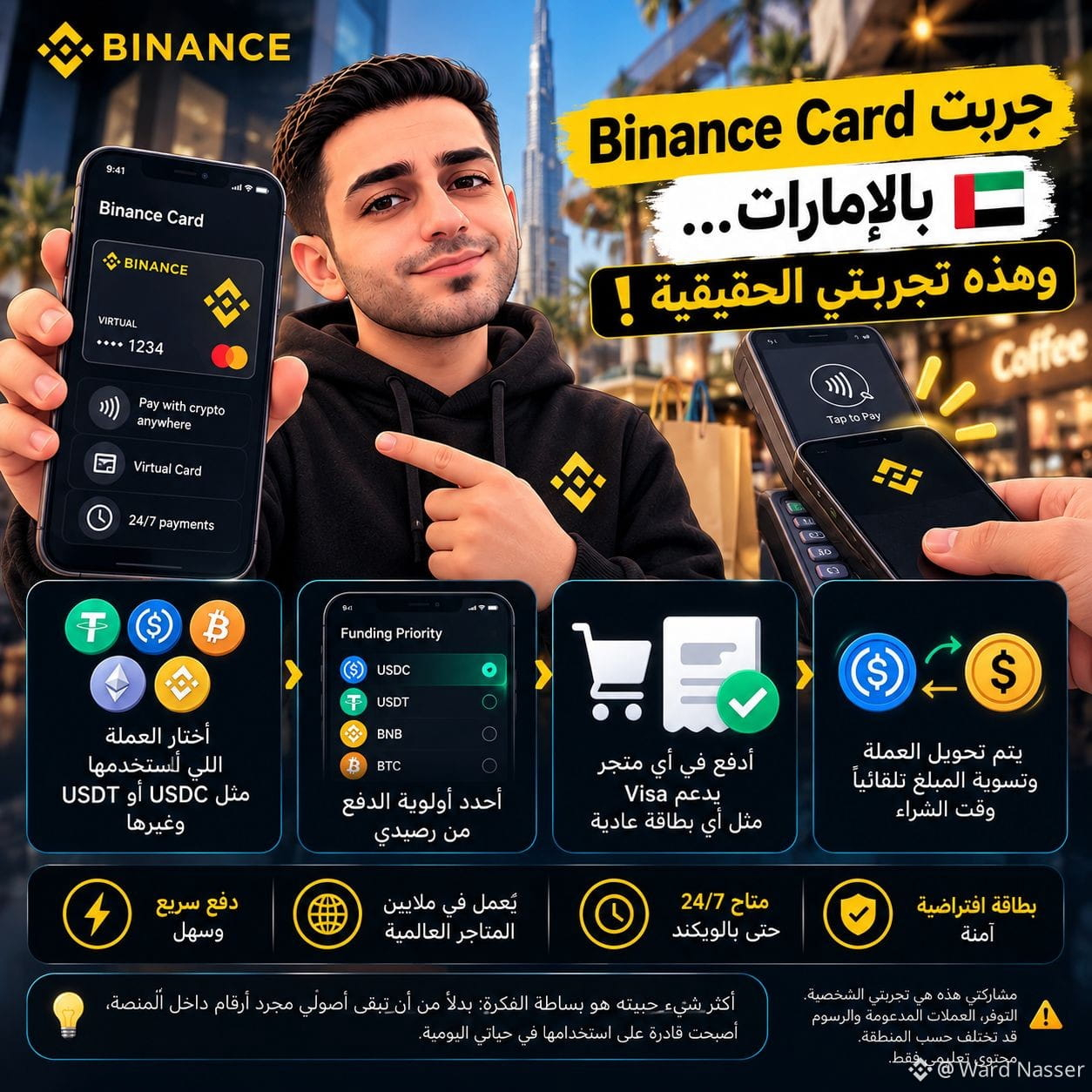
💳 دفعت بالكريبتو بالإمارات… والمتجر ما كان لازم يقبل كريبتو أصلًا.
جربت Binance Card الافتراضية بمشترياتي اليومية، وأكتر شي عجبني هو بساطة الفكرة:
أنا بحدد العملة اللي بدي استخدمها وأولوية الدفع — مثل USDC أو USDT — والبطاقة بتعمل التسوية تلقائيًا وقت الشراء.
بالنسبة للمتجر؟ عملية دفع بالبطاقة كالمعتاد.
بالنسبة إلي؟ صارت الأصول الموجودة بحسابي قابلة للاستخدام بالحياة اليومية بدون خطوات تحويل منفصلة كل مرة.
هاي واحدة من تجاربي الفعلية مع منتجات Binance، ورح شارككم أكتر منها. 👀
⚠️ التوفر والعملات المدعومة والرسوم تختلف حسب المنطقة.
#Binance #BinanceCard #Crypto
💳 دفعت بالكريبتو بالإمارات… والمتجر ما كان لازم يقبل كريبتو أصلًا.
جربت Binance Card الافتراضية بمشترياتي اليومية، وأكتر شي عجبني هو بساطة الفكرة:
أنا بحدد العملة اللي بدي استخدمها وأولوية الدفع — مثل USDC أو USDT — والبطاقة بتعمل التسوية تلقائيًا وقت الشراء.
بالنسبة للمتجر؟ عملية دفع بالبطاقة كالمعتاد.
بالنسبة إلي؟ صارت الأصول الموجودة بحسابي قابلة للاستخدام بالحياة اليومية بدون خطوات تحويل منفصلة كل مرة.
هاي واحدة من تجاربي الفعلية مع منتجات Binance، ورح شارككم أكتر منها. 👀
⚠️ التوفر والعملات المدعومة والرسوم تختلف حسب المنطقة.
#Binance #BinanceCard #Crypto
جربت Binance Card الافتراضية بمشترياتي اليومية، وأكتر شي عجبني هو بساطة الفكرة:
أنا بحدد العملة اللي بدي استخدمها وأولوية الدفع — مثل USDC أو USDT — والبطاقة بتعمل التسوية تلقائيًا وقت الشراء.
بالنسبة للمتجر؟ عملية دفع بالبطاقة كالمعتاد.
بالنسبة إلي؟ صارت الأصول الموجودة بحسابي قابلة للاستخدام بالحياة اليومية بدون خطوات تحويل منفصلة كل مرة.
هاي واحدة من تجاربي الفعلية مع منتجات Binance، ورح شارككم أكتر منها. 👀
⚠️ التوفر والعملات المدعومة والرسوم تختلف حسب المنطقة.
#Binance #BinanceCard #Crypto
3
199
·
--
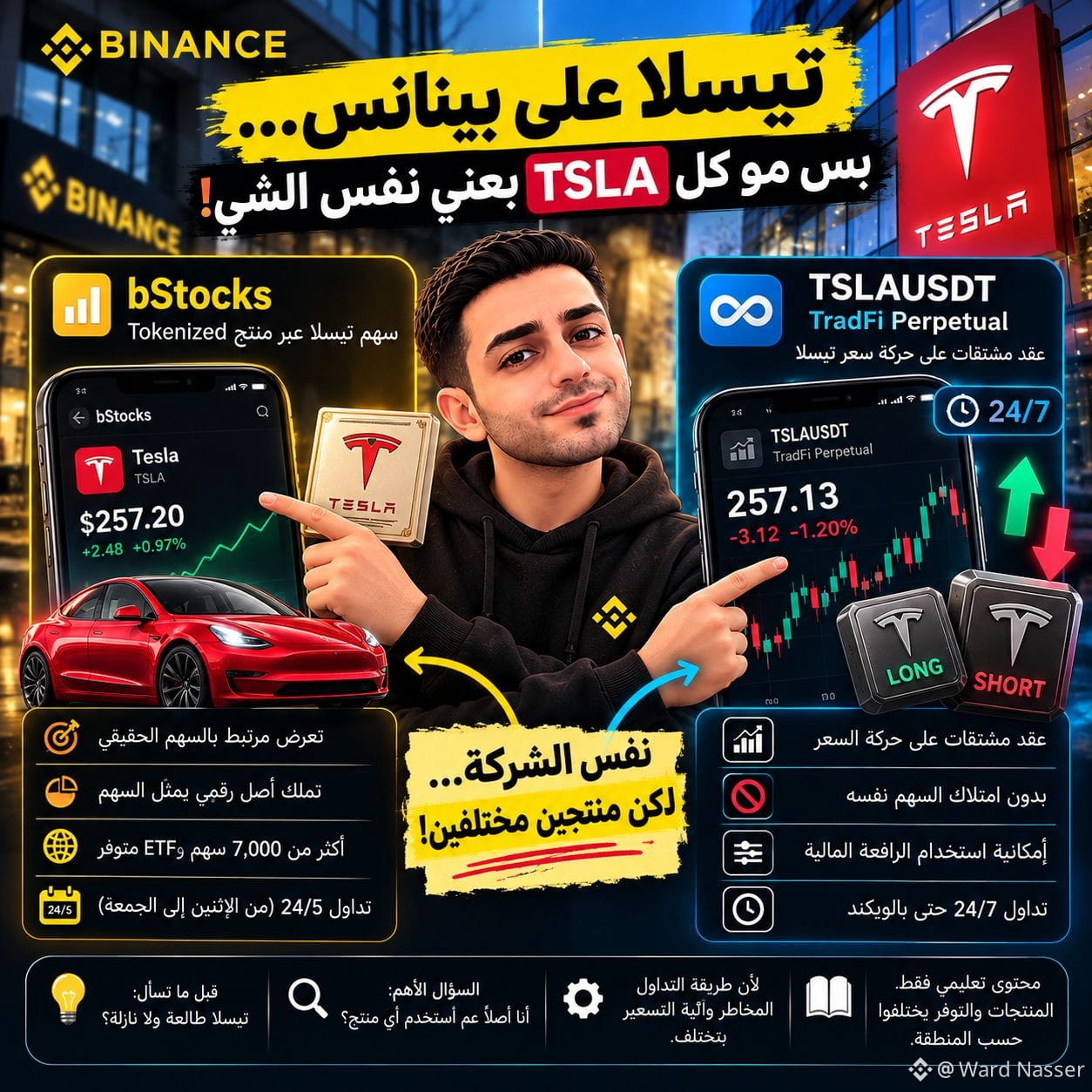
> 📈 تيسلا على بينانس… بس مو كل تيسلا يعني نفس الشي. 👀
على بينانس ممكن تتعرض لحركة سهم تيسلا بأكثر من منتج، لكن طريقة عملهم مختلفة.
🟡 bStocks: تعرض مرتبط بالسهم عبر منتج Tokenized.
🔵 TSLAUSDT TradFi Perpetual: عقد مشتقات على حركة السعر، بدون امتلاك السهم نفسه.
يعني قبل ما تسأل: تيسلا طالعة ولا نازلة؟
في سؤال أهم: أنا أصلًا عم استخدم أي منتج؟ 🤔
لأن طريقة التداول، المخاطر، وآلية التسعير بتختلف.
🧠 بشارككم شرح المنتجات وكيف بفكر باستخدامها، مو شو الصفقة اللي لازم تاخدوها.
⚠️ محتوى تعليمي فقط. المنتجات والتوفر يختلفوا حسب المنطقة.
#Binance #bStocks #TradFi #Tesla
> 📈 تيسلا على بينانس… بس مو كل تيسلا يعني نفس الشي. 👀
على بينانس ممكن تتعرض لحركة سهم تيسلا بأكثر من منتج، لكن طريقة عملهم مختلفة.
🟡 bStocks: تعرض مرتبط بالسهم عبر منتج Tokenized.
🔵 TSLAUSDT TradFi Perpetual: عقد مشتقات على حركة السعر، بدون امتلاك السهم نفسه.
يعني قبل ما تسأل: تيسلا طالعة ولا نازلة؟
في سؤال أهم: أنا أصلًا عم استخدم أي منتج؟ 🤔
لأن طريقة التداول، المخاطر، وآلية التسعير بتختلف.
🧠 بشارككم شرح المنتجات وكيف بفكر باستخدامها، مو شو الصفقة اللي لازم تاخدوها.
⚠️ محتوى تعليمي فقط. المنتجات والتوفر يختلفوا حسب المنطقة.
#Binance #bStocks #TradFi #Tesla
على بينانس ممكن تتعرض لحركة سهم تيسلا بأكثر من منتج، لكن طريقة عملهم مختلفة.
🟡 bStocks: تعرض مرتبط بالسهم عبر منتج Tokenized.
🔵 TSLAUSDT TradFi Perpetual: عقد مشتقات على حركة السعر، بدون امتلاك السهم نفسه.
يعني قبل ما تسأل: تيسلا طالعة ولا نازلة؟
في سؤال أهم: أنا أصلًا عم استخدم أي منتج؟ 🤔
لأن طريقة التداول، المخاطر، وآلية التسعير بتختلف.
🧠 بشارككم شرح المنتجات وكيف بفكر باستخدامها، مو شو الصفقة اللي لازم تاخدوها.
⚠️ محتوى تعليمي فقط. المنتجات والتوفر يختلفوا حسب المنطقة.
#Binance #bStocks #TradFi #Tesla
3
116
·
--
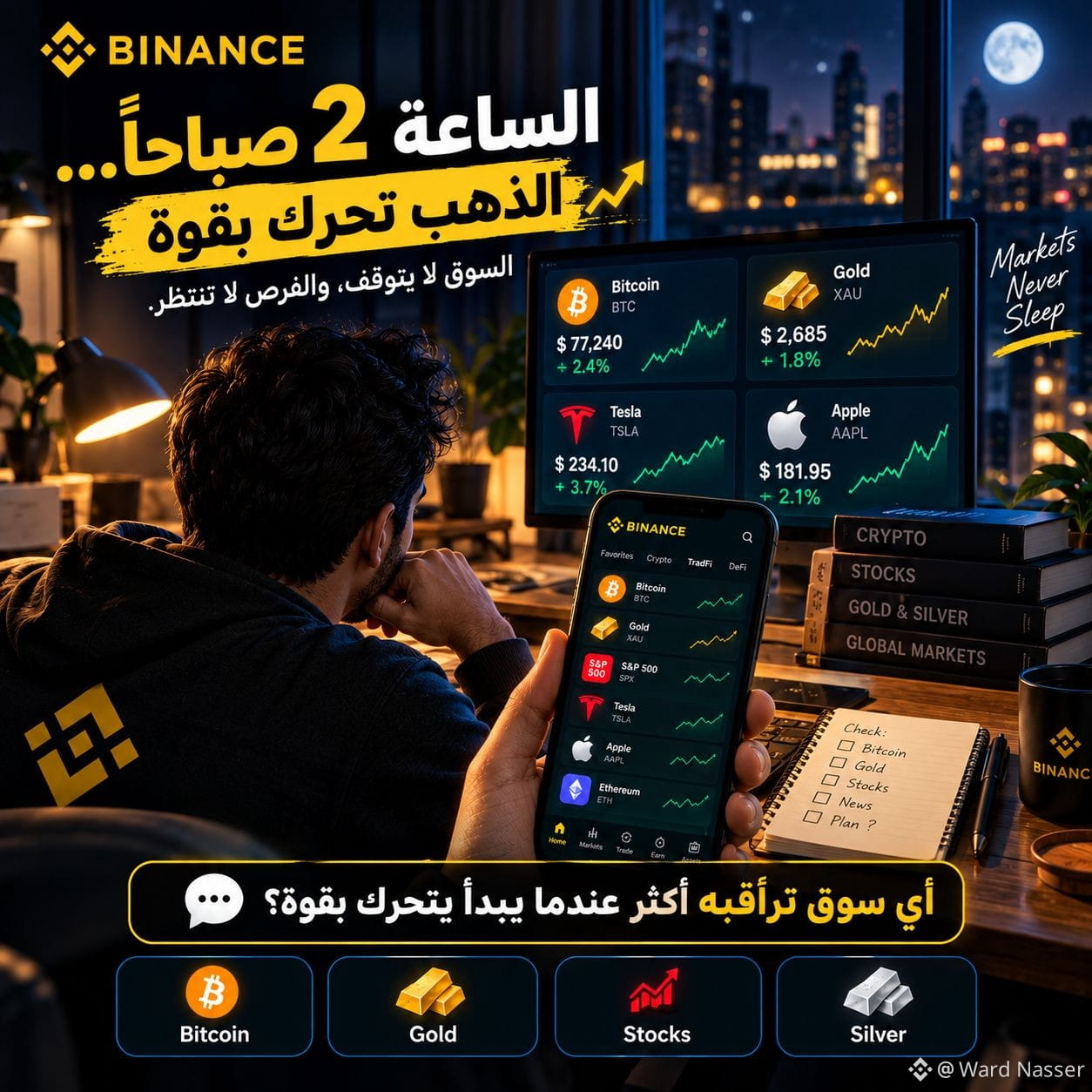
⏰ الساعة 2 صباحًا… الذهب تحرك بقوة.
قديمًا، بالنسبة لكثير من الناس كان الرد:
«نشوف السوق بكرا.» 😴
لكن عالم التداول تغيّر.
على Binance، لم يعد الأمر متعلقًا بالكريبتو فقط؛ منتجات TradFi تتيح التعرض لحركة أسعار أسواق مثل الذهب والفضة والأسهم من نفس البيئة التي تستخدمها للكريبتو. 📱
وهذا يطرح سؤالًا مثيرًا 👇
أي سوق تراقبه أكثر عندما يبدأ يتحرك بقوة؟
₿ Bitcoin
🥇 الذهب
📈 الأسهم
🥈 الفضة
⚠️ محتوى تعليمي وليس نصيحة مالية. منتجات TradFi هي مشتقات تمنح تعرضًا لحركة السعر ولا تعني امتلاك الأصل. توفر المنتجات يعتمد على بلد الإقامة والأهلية، والمشتقات تنطوي على مخاطر.
#Binance #TradFi #Bitcoin #Crypto #goldtrading
⏰ الساعة 2 صباحًا… الذهب تحرك بقوة.
قديمًا، بالنسبة لكثير من الناس كان الرد:
«نشوف السوق بكرا.» 😴
لكن عالم التداول تغيّر.
على Binance، لم يعد الأمر متعلقًا بالكريبتو فقط؛ منتجات TradFi تتيح التعرض لحركة أسعار أسواق مثل الذهب والفضة والأسهم من نفس البيئة التي تستخدمها للكريبتو. 📱
وهذا يطرح سؤالًا مثيرًا 👇
أي سوق تراقبه أكثر عندما يبدأ يتحرك بقوة؟
₿ Bitcoin
🥇 الذهب
📈 الأسهم
🥈 الفضة
⚠️ محتوى تعليمي وليس نصيحة مالية. منتجات TradFi هي مشتقات تمنح تعرضًا لحركة السعر ولا تعني امتلاك الأصل. توفر المنتجات يعتمد على بلد الإقامة والأهلية، والمشتقات تنطوي على مخاطر.
#Binance #TradFi #Bitcoin #Crypto #goldtrading
قديمًا، بالنسبة لكثير من الناس كان الرد:
«نشوف السوق بكرا.» 😴
لكن عالم التداول تغيّر.
على Binance، لم يعد الأمر متعلقًا بالكريبتو فقط؛ منتجات TradFi تتيح التعرض لحركة أسعار أسواق مثل الذهب والفضة والأسهم من نفس البيئة التي تستخدمها للكريبتو. 📱
وهذا يطرح سؤالًا مثيرًا 👇
أي سوق تراقبه أكثر عندما يبدأ يتحرك بقوة؟
₿ Bitcoin
🥇 الذهب
📈 الأسهم
🥈 الفضة
⚠️ محتوى تعليمي وليس نصيحة مالية. منتجات TradFi هي مشتقات تمنح تعرضًا لحركة السعر ولا تعني امتلاك الأصل. توفر المنتجات يعتمد على بلد الإقامة والأهلية، والمشتقات تنطوي على مخاطر.
#Binance #TradFi #Bitcoin #Crypto #goldtrading
4
226
·
--
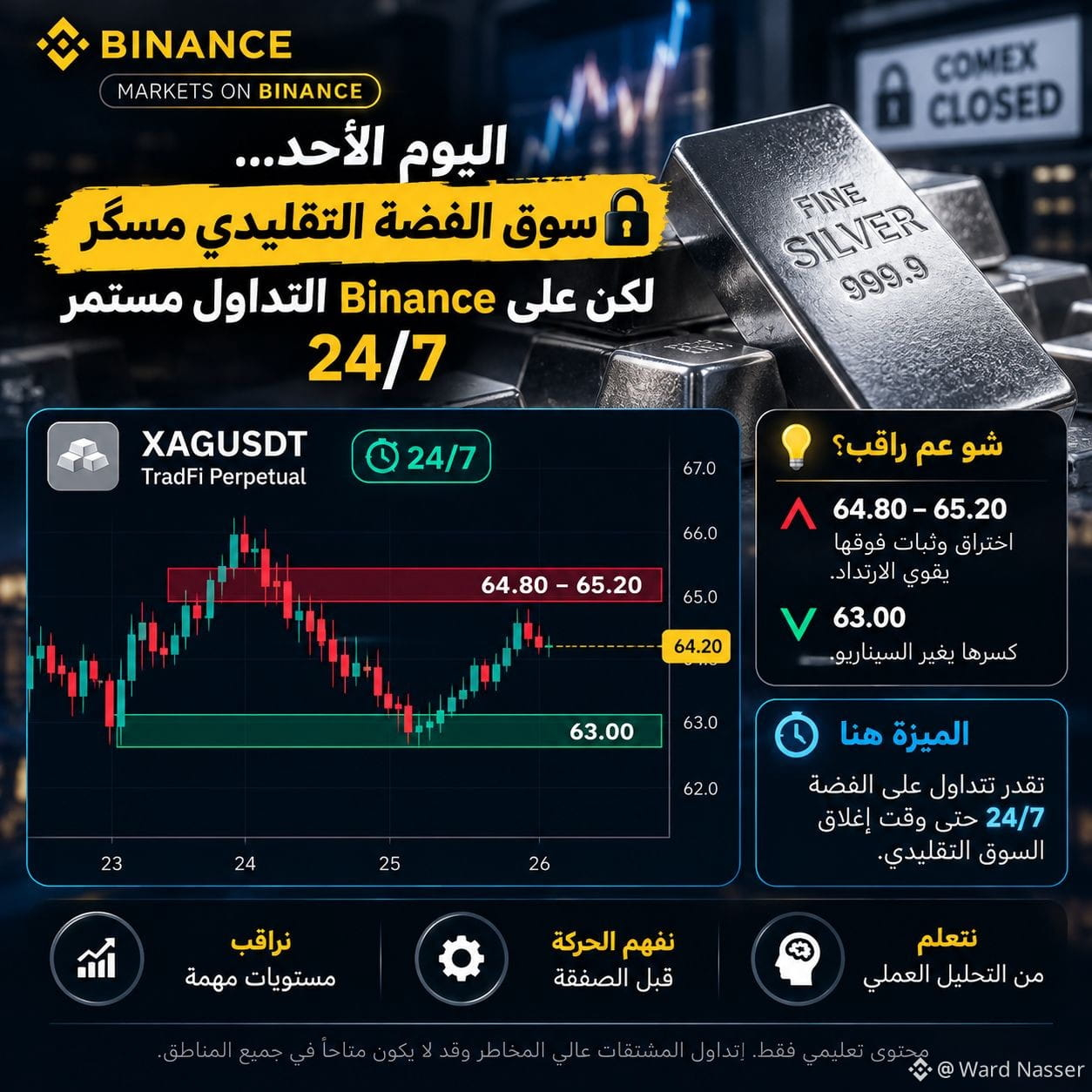
🥈 اليوم الأحد… سوق الفضة التقليدي مسكّر، بس على Binance التداول مستمر. 👀
عم راقب XAGUSDT TradFi Perpetual بعد ارتداد الفضة من منطقة $63.
🎯 منطقتين على راداري:
🔼 $64.80–65.20 — اختراق وثبات يقوّي الارتداد.
🔽 $63 — كسرها يغيّر السيناريو.
وهون ميزة TradFi Perps: تقدر تتداول على حركة أصول تقليدية 24/7، حتى بالويكند.
🧠 بشارككم شرح المنتج و كيف بفكر بالصفقة، مو شو الصفقة اللي لازم تاخدوها.
⚠️ محتوى تعليمي فقط. تداول المشتقات عالي المخاطر.
#Binance #Silver #TradFi
🥈 اليوم الأحد… سوق الفضة التقليدي مسكّر، بس على Binance التداول مستمر. 👀
عم راقب XAGUSDT TradFi Perpetual بعد ارتداد الفضة من منطقة $63.
🎯 منطقتين على راداري:
🔼 $64.80–65.20 — اختراق وثبات يقوّي الارتداد.
🔽 $63 — كسرها يغيّر السيناريو.
وهون ميزة TradFi Perps: تقدر تتداول على حركة أصول تقليدية 24/7، حتى بالويكند.
🧠 بشارككم شرح المنتج و كيف بفكر بالصفقة، مو شو الصفقة اللي لازم تاخدوها.
⚠️ محتوى تعليمي فقط. تداول المشتقات عالي المخاطر.
#Binance #Silver #TradFi
عم راقب XAGUSDT TradFi Perpetual بعد ارتداد الفضة من منطقة $63.
🎯 منطقتين على راداري:
🔼 $64.80–65.20 — اختراق وثبات يقوّي الارتداد.
🔽 $63 — كسرها يغيّر السيناريو.
وهون ميزة TradFi Perps: تقدر تتداول على حركة أصول تقليدية 24/7، حتى بالويكند.
🧠 بشارككم شرح المنتج و كيف بفكر بالصفقة، مو شو الصفقة اللي لازم تاخدوها.
⚠️ محتوى تعليمي فقط. تداول المشتقات عالي المخاطر.
#Binance #Silver #TradFi
3
233
·
--
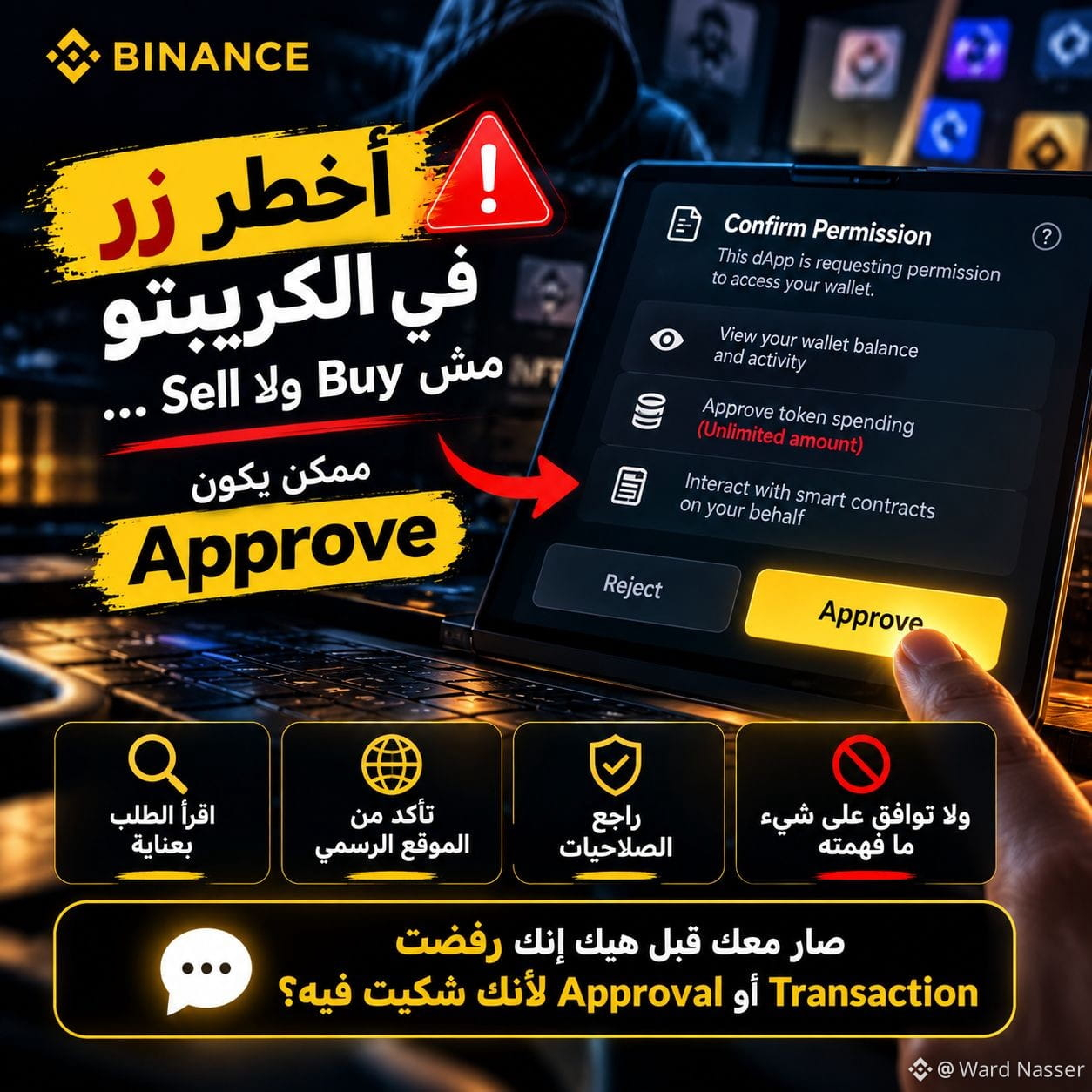
🚨 أخطر زر في الكريبتو مش Buy ولا Sell…
ممكن يكون Approve.
تدخل على موقع، تربط محفظتك، وتضغط موافقة بسرعة… بدون ما تعرف بالضبط شو الصلاحية اللي أعطيتها. 👀
قبل أي توقيع أو Approval:
🔍 اقرأ الطلب
🌐 تأكد من الموقع
🔐 راجع الصلاحيات
❌ ولا توافق على شيء ما فهمته
بالكريبتو، حماية المحفظة تبدأ قبل الضغط على الزر.
صار معكم قبل هيك إنكم رفضتوا Transaction أو Approval لأنكم شكيتوا فيه؟ 👇
#Crypto #Blockchain #Web3 #Binance
🚨 أخطر زر في الكريبتو مش Buy ولا Sell…
ممكن يكون Approve.
تدخل على موقع، تربط محفظتك، وتضغط موافقة بسرعة… بدون ما تعرف بالضبط شو الصلاحية اللي أعطيتها. 👀
قبل أي توقيع أو Approval:
🔍 اقرأ الطلب
🌐 تأكد من الموقع
🔐 راجع الصلاحيات
❌ ولا توافق على شيء ما فهمته
بالكريبتو، حماية المحفظة تبدأ قبل الضغط على الزر.
صار معكم قبل هيك إنكم رفضتوا Transaction أو Approval لأنكم شكيتوا فيه؟ 👇
#Crypto #Blockchain #Web3 #Binance
ممكن يكون Approve.
تدخل على موقع، تربط محفظتك، وتضغط موافقة بسرعة… بدون ما تعرف بالضبط شو الصلاحية اللي أعطيتها. 👀
قبل أي توقيع أو Approval:
🔍 اقرأ الطلب
🌐 تأكد من الموقع
🔐 راجع الصلاحيات
❌ ولا توافق على شيء ما فهمته
بالكريبتو، حماية المحفظة تبدأ قبل الضغط على الزر.
صار معكم قبل هيك إنكم رفضتوا Transaction أو Approval لأنكم شكيتوا فيه؟ 👇
#Crypto #Blockchain #Web3 #Binance
3
92
·
--
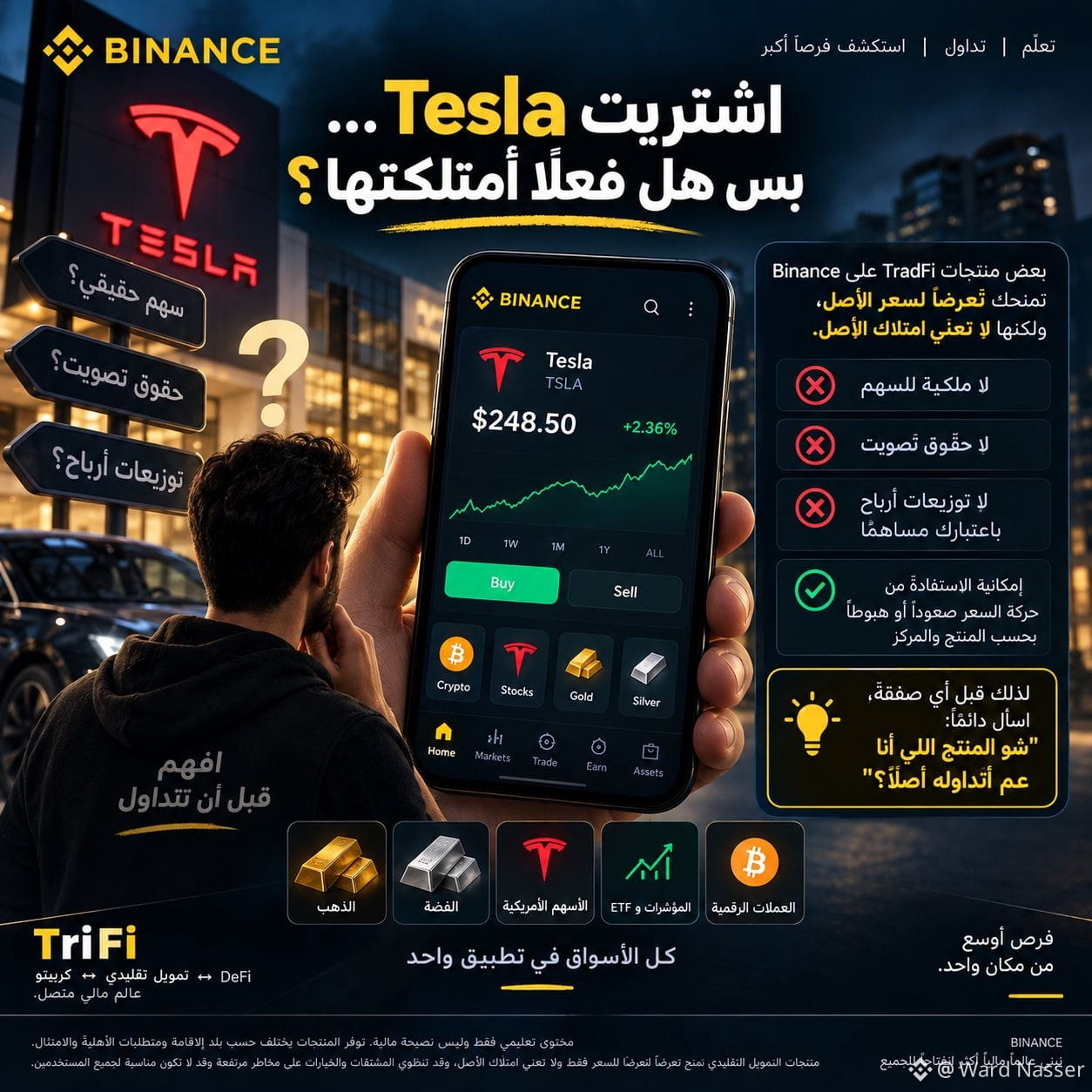
🚨 اشتريت Tesla على منصة تداول… هذا لا يعني بالضرورة أنك أصبحت مساهمًا في Tesla.
وهنا تفصيل كثير ناس ممكن يفوتها 👇
بعض منتجات TradFi على Binance تعطياي يعني للأصل.
يعني تستطيع الاستفادة من حركة السعر صعودًا أو هبوطًا بحسب المنتج والمركز…
لكن هذا مختلف عن امتلاك السهم الحقيقي.
❌ لا ملكية للسهم
❌ لا حقوق تصويت
❌ لا توزيعات أرباح باعتبارك مساهمًا
ونفس الفكرة مهمة جدًا عند الحديث عن الذهب والفضة وغيرها.
📌 لذلك قبل أي صفقة، لا تسأل فقط:
«شو سعر الأصل؟»
اسأل أولًا:
«شو المنتج اللي أنا عم أتداوله أصلًا؟»
فهم الأداة أهم من توقع اتجاه الشارت. 🎯
⚠️ محتوى تعليمي وليس نصيحة مالية. منتجات TradFi والمشتقات قد تحمل مخاطر مرتفعة، وتوفرها يعتمد على بلد الإقامة ومتطلبات الأهلية والامتثال.
#Binance #TradFi #Crypto #goldtrading #blockchain
🚨 اشتريت Tesla على منصة تداول… هذا لا يعني بالضرورة أنك أصبحت مساهمًا في Tesla.
وهنا تفصيل كثير ناس ممكن يفوتها 👇
بعض منتجات TradFi على Binance تعطياي يعني للأصل.
يعني تستطيع الاستفادة من حركة السعر صعودًا أو هبوطًا بحسب المنتج والمركز…
لكن هذا مختلف عن امتلاك السهم الحقيقي.
❌ لا ملكية للسهم
❌ لا حقوق تصويت
❌ لا توزيعات أرباح باعتبارك مساهمًا
ونفس الفكرة مهمة جدًا عند الحديث عن الذهب والفضة وغيرها.
📌 لذلك قبل أي صفقة، لا تسأل فقط:
«شو سعر الأصل؟»
اسأل أولًا:
«شو المنتج اللي أنا عم أتداوله أصلًا؟»
فهم الأداة أهم من توقع اتجاه الشارت. 🎯
⚠️ محتوى تعليمي وليس نصيحة مالية. منتجات TradFi والمشتقات قد تحمل مخاطر مرتفعة، وتوفرها يعتمد على بلد الإقامة ومتطلبات الأهلية والامتثال.
#Binance #TradFi #Crypto #goldtrading #blockchain
وهنا تفصيل كثير ناس ممكن يفوتها 👇
بعض منتجات TradFi على Binance تعطياي يعني للأصل.
يعني تستطيع الاستفادة من حركة السعر صعودًا أو هبوطًا بحسب المنتج والمركز…
لكن هذا مختلف عن امتلاك السهم الحقيقي.
❌ لا ملكية للسهم
❌ لا حقوق تصويت
❌ لا توزيعات أرباح باعتبارك مساهمًا
ونفس الفكرة مهمة جدًا عند الحديث عن الذهب والفضة وغيرها.
📌 لذلك قبل أي صفقة، لا تسأل فقط:
«شو سعر الأصل؟»
اسأل أولًا:
«شو المنتج اللي أنا عم أتداوله أصلًا؟»
فهم الأداة أهم من توقع اتجاه الشارت. 🎯
⚠️ محتوى تعليمي وليس نصيحة مالية. منتجات TradFi والمشتقات قد تحمل مخاطر مرتفعة، وتوفرها يعتمد على بلد الإقامة ومتطلبات الأهلية والامتثال.
#Binance #TradFi #Crypto #goldtrading #blockchain
4
1.1k
·
--
Article
A Crypto Platform Looks Great… Until You Try to LeaveAfter a few years in crypto, I've stopped caring much about the trading screen. Nearly every big platform looks polished, deposits are easy, and they all say they take security seriously.
The real differences show up later, when you ask harder questions: who regulates the company holding my assets, what actually backs my balance, what happens if something breaks, and how painful is it to get my money out?
I learned that last one the hard way.
On one platform, I tried to withdraw my Bitcoin and couldn't. The option just wasn't available to me. The only way out was to sell the BTC inside the platform for USDT and withdraw that instead.
I got my money out, but at a price I didn't choose, at a moment I didn't choose. Nothing in the marketing had mentioned that possibility.
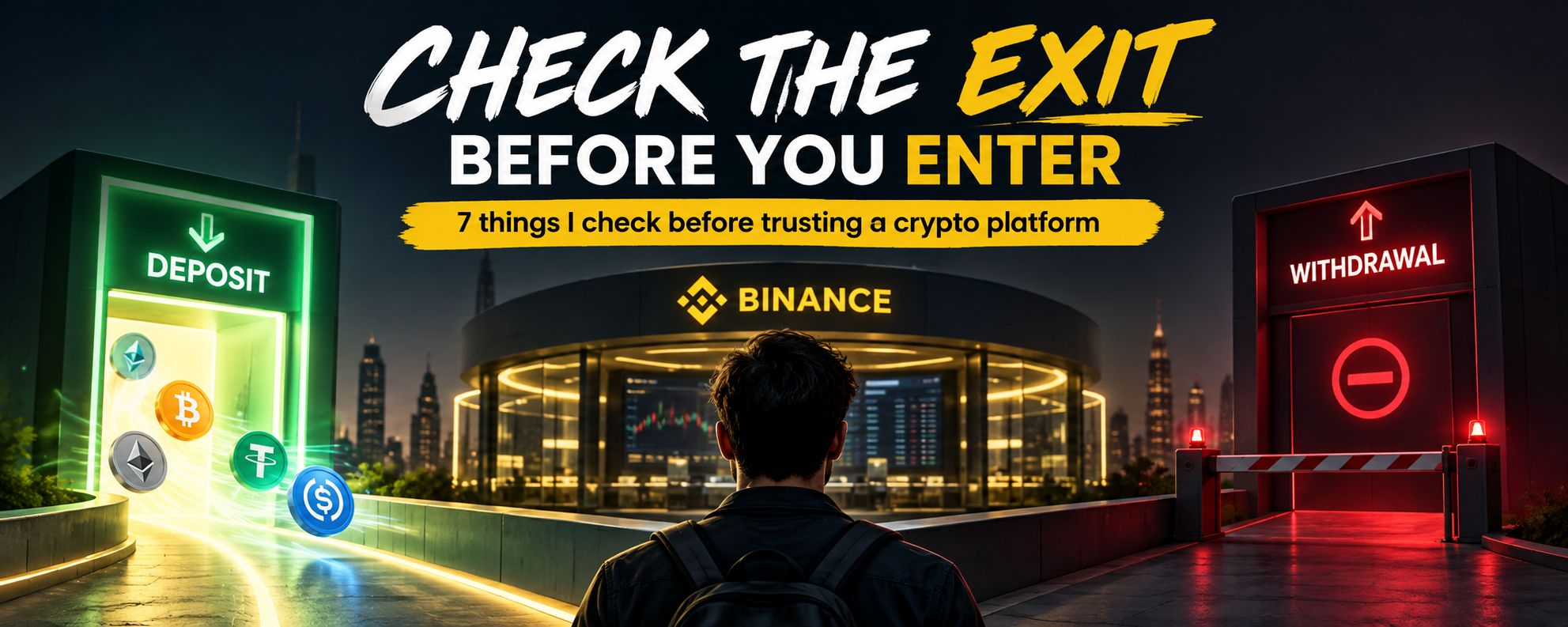
Since then, I check the exit before I look at anything else.
Here's the checklist I use.
1. "We're regulated." Where, exactly?
The word alone doesn't tell me much.
I want to find the legal entity serving me, the regulator behind it, and what it's actually authorized to do.
For UAE users, Binance FZE is licensed in Dubai by the Virtual Assets Regulatory Authority (VARA) as a Virtual Asset Service Provider under license VL/24/04/001, covering Exchange Services, Broker-Dealer Services, Lending and Borrowing Services, and VA Management and Investment Services.
I'd rather find that before depositing than after a problem.
2. What backs my balance?
Less exciting than new listings, but far more important.
Binance says assets covered by its Proof of Reserves are backed 1:1, with additional reserves on top.
That's a good start, but I wouldn't stop there.
3. Can I check it myself?
This is the part I find more useful.
Binance lets you verify that your own balance was included in a given Proof of Reserves snapshot, using Merkle Trees and zero-knowledge proofs without exposing individual account details.
There is a limitation: Proof of Reserves is a snapshot in time. It doesn't tell you everything about every other financial or operational risk a company carries.
Still, I prefer something I can verify over a page simply telling me my funds are safe.
4. And if something goes wrong?
Reserves answer one question. An emergency fund answers another.
Binance maintains the Secure Asset Fund for Users (SAFU) for emergency situations. Its current stated value is approximately $1 billion.
It isn't unlimited insurance, but when I'm looking at a platform, I want to know whether an emergency fund exists and whether I can easily find information about it.
5. Security beyond the password
Even the best infrastructure can't save you if you type your password and verification code into a phishing site.
Binance offers Passkeys, two-factor authentication (2FA), Anti-Phishing Codes and withdrawal address allowlisting.
They're useful protections.
But there's an obvious catch: they only help if you actually switch them on.
6. Ignore the "0%" banner, read the fee page
I want to see trading fees, spreads, deposit costs, withdrawal charges, and whether the advertised rate depends on volume or membership tier.
A fee isn't a red flag.
A fee that's hard to find before you sign up is.
7. Check the exit before the entrance
This is my simplest rule.
Before depositing, look at how withdrawals actually work: which methods are available, what the limits are, what they cost, how long they can take, what happens if one is delayed, and who you can contact.
It's also why I now look at which assets can actually be withdrawn, not just which ones can be traded.
Binance UAE provides support options for crypto and fiat withdrawal issues, account security and payment problems.
I hope you never need them.
But I want to know where they are.
So, is Binance safe?
I don't think "safe" is a yes-or-no label for any centralized platform.
What I can do is check things.
Binance FZE holds a VARA license in the UAE. Binance publishes Proof of Reserves that users can verify against their own accounts. It maintains the approximately $1 billion SAFU emergency fund and offers multiple account-level security protections.
None of that removes risk.
It just gives me more to verify before deciding how much risk I'm comfortable with.
And after several years in crypto, I've come to prefer things I can verify over things I'm asked to trust.
Quick FAQ
Is Binance regulated in the UAE?
Yes. Binance FZE is licensed by Dubai's Virtual Assets Regulatory Authority (VARA) as a Virtual Asset Service Provider under license VL/24/04/001 for specified virtual-asset activities.
How do I know if a platform is safe?
No single test does it. Check its regulatory status, reserves, security controls, withdrawal policies and emergency protections separately.
How does Binance protect customer assets?
Binance combines 1:1 asset backing and Proof of Reserves with the SAFU emergency fund and account-level protections such as 2FA, Passkeys, Anti-Phishing Codes and withdrawal address allowlisting.
What is Binance Proof of Reserves?
It's a system designed to show that reserves cover user balances for the assets included in its Proof of Reserves. Users can also verify that their own balances were included in a particular snapshot.
Disclosure: I volunteer as a Binance Angel.
Information checked in September 2026. Products, regulations and features may change. For educational purposes only, not financial advice.
#Binance #CryptoSecurity #UAE #ProofOfReserves #safu
A Crypto Platform Looks Great… Until You Try to Leave
After a few years in crypto, I've stopped caring much about the trading screen. Nearly every big platform looks polished, deposits are easy, and they all say they take security seriously.
The real differences show up later, when you ask harder questions: who regulates the company holding my assets, what actually backs my balance, what happens if something breaks, and how painful is it to get my money out?
I learned that last one the hard way.
On one platform, I tried to withdraw my Bitcoin and couldn't. The option just wasn't available to me. The only way out was to sell the BTC inside the platform for USDT and withdraw that instead.
I got my money out, but at a price I didn't choose, at a moment I didn't choose. Nothing in the marketing had mentioned that possibility.
Since then, I check the exit before I look at anything else.
Here's the checklist I use.
1. "We're regulated." Where, exactly?
The word alone doesn't tell me much.
I want to find the legal entity serving me, the regulator behind it, and what it's actually authorized to do.
For UAE users, Binance FZE is licensed in Dubai by the Virtual Assets Regulatory Authority (VARA) as a Virtual Asset Service Provider under license VL/24/04/001, covering Exchange Services, Broker-Dealer Services, Lending and Borrowing Services, and VA Management and Investment Services.
I'd rather find that before depositing than after a problem.
2. What backs my balance?
Less exciting than new listings, but far more important.
Binance says assets covered by its Proof of Reserves are backed 1:1, with additional reserves on top.
That's a good start, but I wouldn't stop there.
3. Can I check it myself?
This is the part I find more useful.
Binance lets you verify that your own balance was included in a given Proof of Reserves snapshot, using Merkle Trees and zero-knowledge proofs without exposing individual account details.
There is a limitation: Proof of Reserves is a snapshot in time. It doesn't tell you everything about every other financial or operational risk a company carries.
Still, I prefer something I can verify over a page simply telling me my funds are safe.
4. And if something goes wrong?
Reserves answer one question. An emergency fund answers another.
Binance maintains the Secure Asset Fund for Users (SAFU) for emergency situations. Its current stated value is approximately $1 billion.
It isn't unlimited insurance, but when I'm looking at a platform, I want to know whether an emergency fund exists and whether I can easily find information about it.
5. Security beyond the password
Even the best infrastructure can't save you if you type your password and verification code into a phishing site.
Binance offers Passkeys, two-factor authentication (2FA), Anti-Phishing Codes and withdrawal address allowlisting.
They're useful protections.
But there's an obvious catch: they only help if you actually switch them on.
6. Ignore the "0%" banner, read the fee page
I want to see trading fees, spreads, deposit costs, withdrawal charges, and whether the advertised rate depends on volume or membership tier.
A fee isn't a red flag.
A fee that's hard to find before you sign up is.
7. Check the exit before the entrance
This is my simplest rule.
Before depositing, look at how withdrawals actually work: which methods are available, what the limits are, what they cost, how long they can take, what happens if one is delayed, and who you can contact.
It's also why I now look at which assets can actually be withdrawn, not just which ones can be traded.
Binance UAE provides support options for crypto and fiat withdrawal issues, account security and payment problems.
I hope you never need them.
But I want to know where they are.
So, is Binance safe?
I don't think "safe" is a yes-or-no label for any centralized platform.
What I can do is check things.
Binance FZE holds a VARA license in the UAE. Binance publishes Proof of Reserves that users can verify against their own accounts. It maintains the approximately $1 billion SAFU emergency fund and offers multiple account-level security protections.
None of that removes risk.
It just gives me more to verify before deciding how much risk I'm comfortable with.
And after several years in crypto, I've come to prefer things I can verify over things I'm asked to trust.
Quick FAQ
Is Binance regulated in the UAE?
Yes. Binance FZE is licensed by Dubai's Virtual Assets Regulatory Authority (VARA) as a Virtual Asset Service Provider under license VL/24/04/001 for specified virtual-asset activities.
How do I know if a platform is safe?
No single test does it. Check its regulatory status, reserves, security controls, withdrawal policies and emergency protections separately.
How does Binance protect customer assets?
Binance combines 1:1 asset backing and Proof of Reserves with the SAFU emergency fund and account-level protections such as 2FA, Passkeys, Anti-Phishing Codes and withdrawal address allowlisting.
What is Binance Proof of Reserves?
It's a system designed to show that reserves cover user balances for the assets included in its Proof of Reserves. Users can also verify that their own balances were included in a particular snapshot.
Disclosure: I volunteer as a Binance Angel.
Information checked in September 2026. Products, regulations and features may change. For educational purposes only, not financial advice.
#Binance #CryptoSecurity #UAE #ProofOfReserves #safu
The real differences show up later, when you ask harder questions: who regulates the company holding my assets, what actually backs my balance, what happens if something breaks, and how painful is it to get my money out?
I learned that last one the hard way.
On one platform, I tried to withdraw my Bitcoin and couldn't. The option just wasn't available to me. The only way out was to sell the BTC inside the platform for USDT and withdraw that instead.
I got my money out, but at a price I didn't choose, at a moment I didn't choose. Nothing in the marketing had mentioned that possibility.
Since then, I check the exit before I look at anything else.
Here's the checklist I use.
1. "We're regulated." Where, exactly?
The word alone doesn't tell me much.
I want to find the legal entity serving me, the regulator behind it, and what it's actually authorized to do.
For UAE users, Binance FZE is licensed in Dubai by the Virtual Assets Regulatory Authority (VARA) as a Virtual Asset Service Provider under license VL/24/04/001, covering Exchange Services, Broker-Dealer Services, Lending and Borrowing Services, and VA Management and Investment Services.
I'd rather find that before depositing than after a problem.
2. What backs my balance?
Less exciting than new listings, but far more important.
Binance says assets covered by its Proof of Reserves are backed 1:1, with additional reserves on top.
That's a good start, but I wouldn't stop there.
3. Can I check it myself?
This is the part I find more useful.
Binance lets you verify that your own balance was included in a given Proof of Reserves snapshot, using Merkle Trees and zero-knowledge proofs without exposing individual account details.
There is a limitation: Proof of Reserves is a snapshot in time. It doesn't tell you everything about every other financial or operational risk a company carries.
Still, I prefer something I can verify over a page simply telling me my funds are safe.
4. And if something goes wrong?
Reserves answer one question. An emergency fund answers another.
Binance maintains the Secure Asset Fund for Users (SAFU) for emergency situations. Its current stated value is approximately $1 billion.
It isn't unlimited insurance, but when I'm looking at a platform, I want to know whether an emergency fund exists and whether I can easily find information about it.
5. Security beyond the password
Even the best infrastructure can't save you if you type your password and verification code into a phishing site.
Binance offers Passkeys, two-factor authentication (2FA), Anti-Phishing Codes and withdrawal address allowlisting.
They're useful protections.
But there's an obvious catch: they only help if you actually switch them on.
6. Ignore the "0%" banner, read the fee page
I want to see trading fees, spreads, deposit costs, withdrawal charges, and whether the advertised rate depends on volume or membership tier.
A fee isn't a red flag.
A fee that's hard to find before you sign up is.
7. Check the exit before the entrance
This is my simplest rule.
Before depositing, look at how withdrawals actually work: which methods are available, what the limits are, what they cost, how long they can take, what happens if one is delayed, and who you can contact.
It's also why I now look at which assets can actually be withdrawn, not just which ones can be traded.
Binance UAE provides support options for crypto and fiat withdrawal issues, account security and payment problems.
I hope you never need them.
But I want to know where they are.
So, is Binance safe?
I don't think "safe" is a yes-or-no label for any centralized platform.
What I can do is check things.
Binance FZE holds a VARA license in the UAE. Binance publishes Proof of Reserves that users can verify against their own accounts. It maintains the approximately $1 billion SAFU emergency fund and offers multiple account-level security protections.
None of that removes risk.
It just gives me more to verify before deciding how much risk I'm comfortable with.
And after several years in crypto, I've come to prefer things I can verify over things I'm asked to trust.
Quick FAQ
Is Binance regulated in the UAE?
Yes. Binance FZE is licensed by Dubai's Virtual Assets Regulatory Authority (VARA) as a Virtual Asset Service Provider under license VL/24/04/001 for specified virtual-asset activities.
How do I know if a platform is safe?
No single test does it. Check its regulatory status, reserves, security controls, withdrawal policies and emergency protections separately.
How does Binance protect customer assets?
Binance combines 1:1 asset backing and Proof of Reserves with the SAFU emergency fund and account-level protections such as 2FA, Passkeys, Anti-Phishing Codes and withdrawal address allowlisting.
What is Binance Proof of Reserves?
It's a system designed to show that reserves cover user balances for the assets included in its Proof of Reserves. Users can also verify that their own balances were included in a particular snapshot.
Disclosure: I volunteer as a Binance Angel.
Information checked in September 2026. Products, regulations and features may change. For educational purposes only, not financial advice.
#Binance #CryptoSecurity #UAE #ProofOfReserves #safu
6
2.4k
·
--
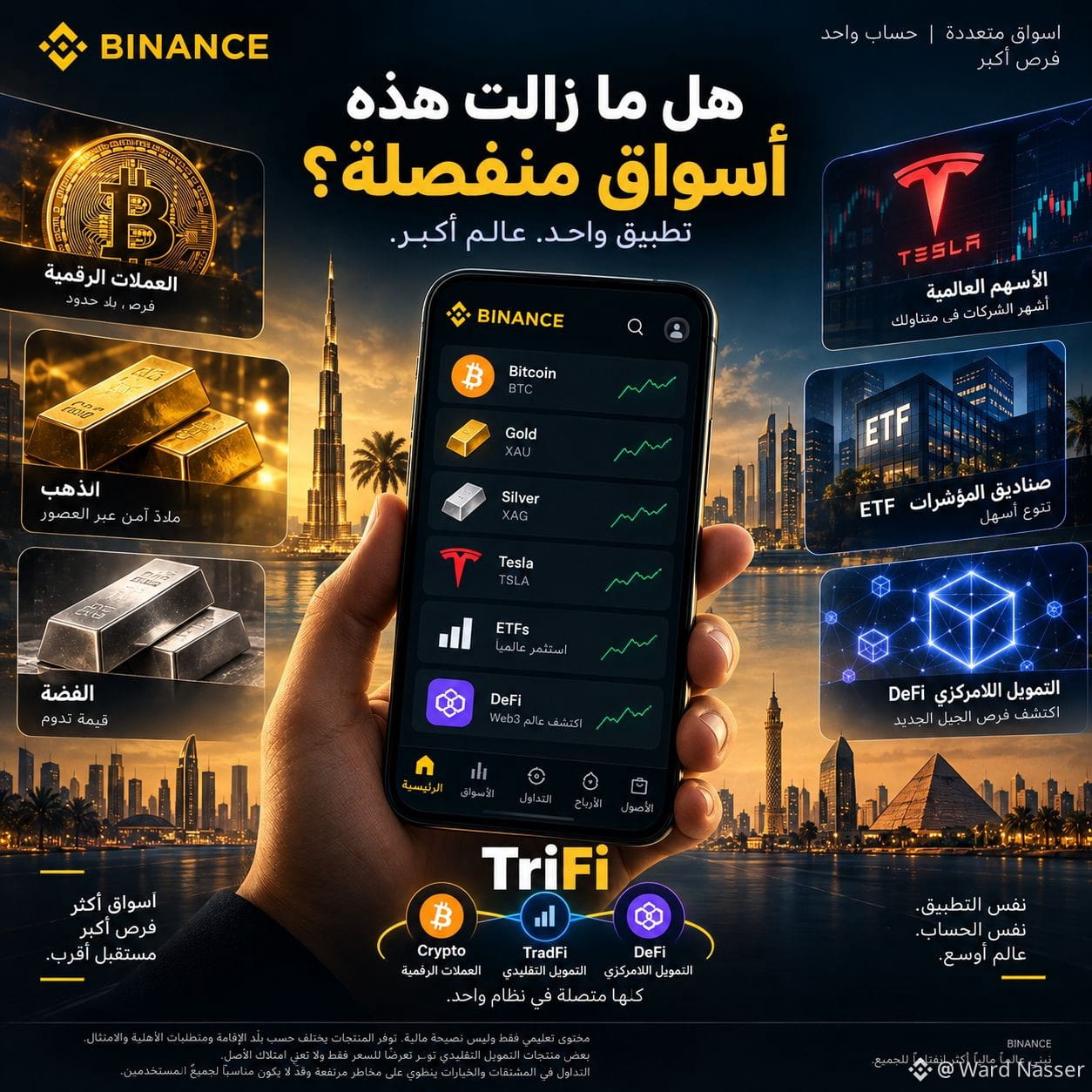
تخيّل فتحت التطبيق وشفت أمامك:
₿ Bitcoin
🥇 Gold
🥈 Silver
📈 Tesla
🏦 ETFs
🔗 DeFi
السؤال المثير للاهتمام هنا مش: شو أشتري؟
السؤال هو: هل ما زال منطقيًا أصلًا نفكر فيهم كأسواق منفصلة؟
لفترة طويلة، كان لكل عالم بابه:
الكريبتو بمنصة.
الأسهم عند وسيط.
الذهب بمكان آخر.
والـDeFi بمحفظة مختلفة تمامًا.
اليوم Binance تحاول تجمع Crypto + TradFi + DeFi ضمن Ecosystem واحد.
وهنا بتظهر فكرة TriFi:
Crypto ↔️ TradFi ↔️ DeFi 🔗
برأيي، الشيء المثير مش إضافة أصل جديد للتداول…
بل اختفاء الحدود تدريجيًا بين الأسواق نفسها.
بعد 5 سنوات، هل سنظل نقول:
«أنا متداول كريبتو» و«أنا متداول أسهم»؟
ولا سنقول ببساطة: أنا متداول؟ 👀
⚠️ محتوى تعليمي فقط. توفر المنتجات يختلف حسب الدولة والأهلية. بعض منتجات TradFi تمنح تعرضًا للسعر فقط ولا تعني امتلاك الأصل، وقد تنطوي المشتقات والخيارات على مخاطر مرتفعة.
#Binance $BTC #TradFi #Blockchain
تخيّل فتحت التطبيق وشفت أمامك:
₿ Bitcoin
🥇 Gold
🥈 Silver
📈 Tesla
🏦 ETFs
🔗 DeFi
السؤال المثير للاهتمام هنا مش: شو أشتري؟
السؤال هو: هل ما زال منطقيًا أصلًا نفكر فيهم كأسواق منفصلة؟
لفترة طويلة، كان لكل عالم بابه:
الكريبتو بمنصة.
الأسهم عند وسيط.
الذهب بمكان آخر.
والـDeFi بمحفظة مختلفة تمامًا.
اليوم Binance تحاول تجمع Crypto + TradFi + DeFi ضمن Ecosystem واحد.
وهنا بتظهر فكرة TriFi:
Crypto ↔️ TradFi ↔️ DeFi 🔗
برأيي، الشيء المثير مش إضافة أصل جديد للتداول…
بل اختفاء الحدود تدريجيًا بين الأسواق نفسها.
بعد 5 سنوات، هل سنظل نقول:
«أنا متداول كريبتو» و«أنا متداول أسهم»؟
ولا سنقول ببساطة: أنا متداول؟ 👀
⚠️ محتوى تعليمي فقط. توفر المنتجات يختلف حسب الدولة والأهلية. بعض منتجات TradFi تمنح تعرضًا للسعر فقط ولا تعني امتلاك الأصل، وقد تنطوي المشتقات والخيارات على مخاطر مرتفعة.
#Binance $BTC #TradFi #Blockchain
₿ Bitcoin
🥇 Gold
🥈 Silver
📈 Tesla
🏦 ETFs
🔗 DeFi
السؤال المثير للاهتمام هنا مش: شو أشتري؟
السؤال هو: هل ما زال منطقيًا أصلًا نفكر فيهم كأسواق منفصلة؟
لفترة طويلة، كان لكل عالم بابه:
الكريبتو بمنصة.
الأسهم عند وسيط.
الذهب بمكان آخر.
والـDeFi بمحفظة مختلفة تمامًا.
اليوم Binance تحاول تجمع Crypto + TradFi + DeFi ضمن Ecosystem واحد.
وهنا بتظهر فكرة TriFi:
Crypto ↔️ TradFi ↔️ DeFi 🔗
برأيي، الشيء المثير مش إضافة أصل جديد للتداول…
بل اختفاء الحدود تدريجيًا بين الأسواق نفسها.
بعد 5 سنوات، هل سنظل نقول:
«أنا متداول كريبتو» و«أنا متداول أسهم»؟
ولا سنقول ببساطة: أنا متداول؟ 👀
⚠️ محتوى تعليمي فقط. توفر المنتجات يختلف حسب الدولة والأهلية. بعض منتجات TradFi تمنح تعرضًا للسعر فقط ولا تعني امتلاك الأصل، وقد تنطوي المشتقات والخيارات على مخاطر مرتفعة.
#Binance $BTC #TradFi #Blockchain
3
483
·
--
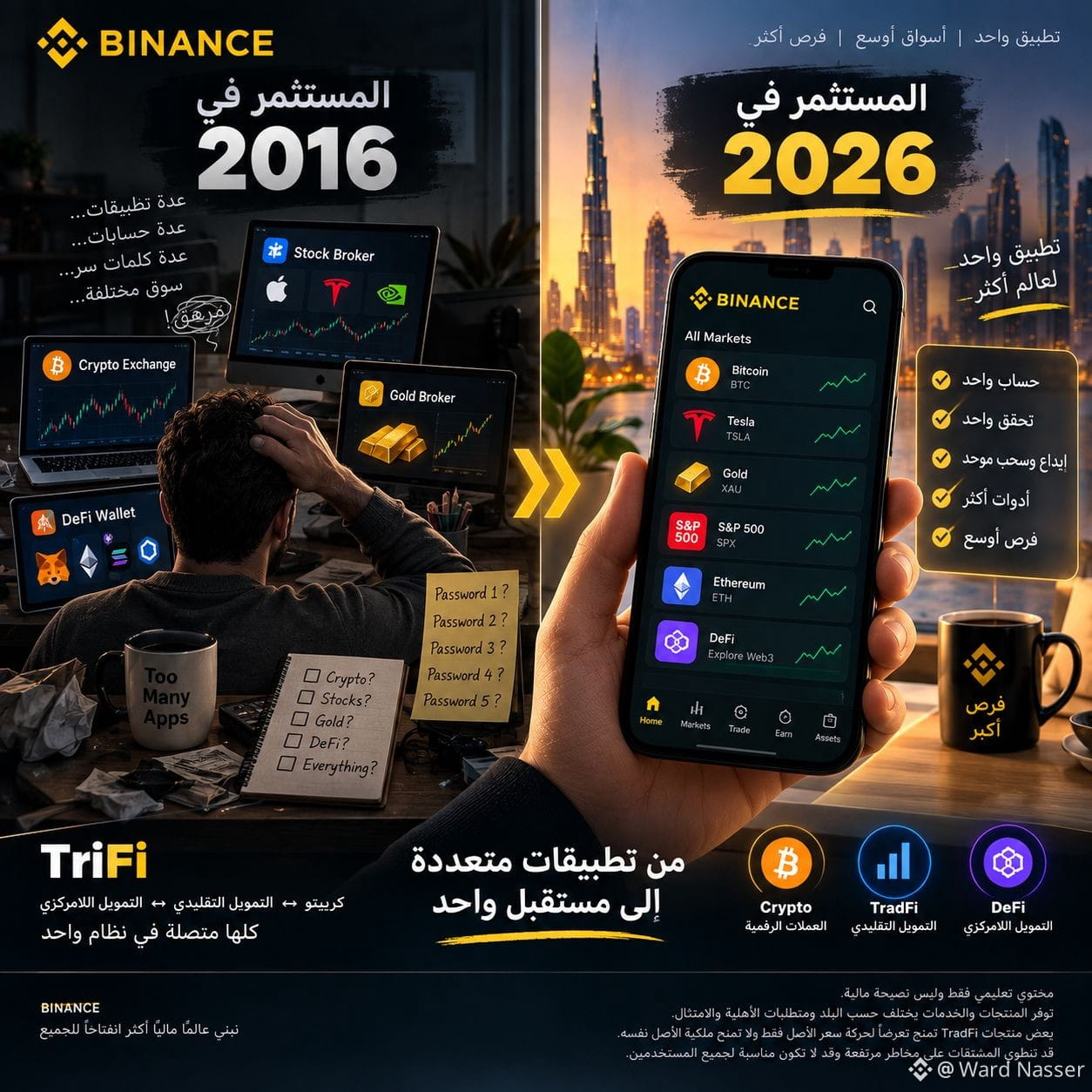
المستثمر في 2016:
📱 تطبيق للأسهم
💻 منصة للكريبتو
🥇 وسيط للذهب
👛 Wallet للـDeFi
🔐 و5 كلمات سر ناسي 3 منهم 😂
المستثمر في 2026:
يفتح تطبيق واحد.
وهنا بالضبط نفهم لماذا Binance تتحدث عن مفهوم TriFi.
Crypto ₿
↕️
TradFi 📈
↕️
DeFi 🔗
الفكرة لم تعد فقط أن تضيف Binance منتجات أكثر…
الفكرة أن الحساب نفسه يتحول تدريجيًا إلى بوابة لأسواق مالية مختلفة بدل التنقل بين عوالم منفصلة.
وهذا بالنسبة لي أحد أكبر التحولات في تجربة المستخدم:
من Crypto Exchange
إلى Financial Super App.
السؤال لكم 👇
لو اضطررت تستخدم منصة واحدة فقط، شو أهم شيء لازم تجمعه لك؟
⚠️ محتوى تعليمي فقط وليس نصيحة مالية. توفر المنتجات والخدمات يختلف حسب الدولة والأهلية، وبعض منتجات TradFi تمنح تعرضًا للسعر فقط ولا تمنح ملكية الأصل.
#Binance #SuperFinancialApp #TradFi #blockchain
المستثمر في 2016:
📱 تطبيق للأسهم
💻 منصة للكريبتو
🥇 وسيط للذهب
👛 Wallet للـDeFi
🔐 و5 كلمات سر ناسي 3 منهم 😂
المستثمر في 2026:
يفتح تطبيق واحد.
وهنا بالضبط نفهم لماذا Binance تتحدث عن مفهوم TriFi.
Crypto ₿
↕️
TradFi 📈
↕️
DeFi 🔗
الفكرة لم تعد فقط أن تضيف Binance منتجات أكثر…
الفكرة أن الحساب نفسه يتحول تدريجيًا إلى بوابة لأسواق مالية مختلفة بدل التنقل بين عوالم منفصلة.
وهذا بالنسبة لي أحد أكبر التحولات في تجربة المستخدم:
من Crypto Exchange
إلى Financial Super App.
السؤال لكم 👇
لو اضطررت تستخدم منصة واحدة فقط، شو أهم شيء لازم تجمعه لك؟
⚠️ محتوى تعليمي فقط وليس نصيحة مالية. توفر المنتجات والخدمات يختلف حسب الدولة والأهلية، وبعض منتجات TradFi تمنح تعرضًا للسعر فقط ولا تمنح ملكية الأصل.
#Binance #SuperFinancialApp #TradFi #blockchain
📱 تطبيق للأسهم
💻 منصة للكريبتو
🥇 وسيط للذهب
👛 Wallet للـDeFi
🔐 و5 كلمات سر ناسي 3 منهم 😂
المستثمر في 2026:
يفتح تطبيق واحد.
وهنا بالضبط نفهم لماذا Binance تتحدث عن مفهوم TriFi.
Crypto ₿
↕️
TradFi 📈
↕️
DeFi 🔗
الفكرة لم تعد فقط أن تضيف Binance منتجات أكثر…
الفكرة أن الحساب نفسه يتحول تدريجيًا إلى بوابة لأسواق مالية مختلفة بدل التنقل بين عوالم منفصلة.
وهذا بالنسبة لي أحد أكبر التحولات في تجربة المستخدم:
من Crypto Exchange
إلى Financial Super App.
السؤال لكم 👇
لو اضطررت تستخدم منصة واحدة فقط، شو أهم شيء لازم تجمعه لك؟
⚠️ محتوى تعليمي فقط وليس نصيحة مالية. توفر المنتجات والخدمات يختلف حسب الدولة والأهلية، وبعض منتجات TradFi تمنح تعرضًا للسعر فقط ولا تمنح ملكية الأصل.
#Binance #SuperFinancialApp #TradFi #blockchain
6
848
·
--
🪙 «سعرها سنت واحد فقط… تخيّل لو وصلت إلى دولار!»
هذه الجملة أوقعت كثيرًا من المبتدئين في أحد أشهر أفخاخ الكريبتو: الاعتقاد أن العملة ذات السعر المنخفض رخيصة فعلًا.
الحقيقة؟ سعر الوحدة وحده لا يخبرك بقيمة المشروع.
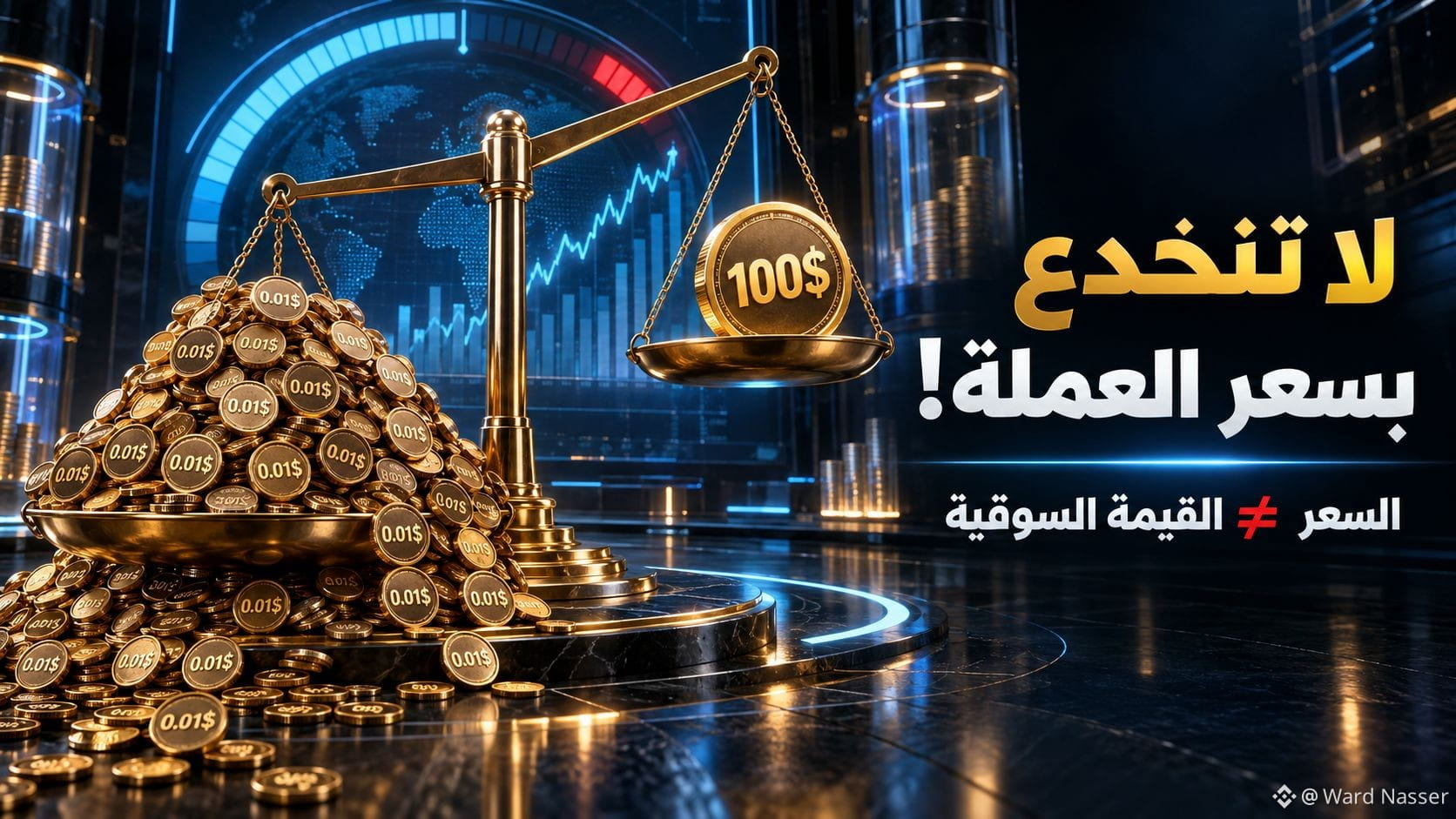
القيمة السوقية = سعر العملة × عدد العملات المتداولة
مثال بسيط:
🔹 العملة A سعرها 0.01$ وعددها 100 مليار
قيمتها السوقية = مليار دولار
🔸 العملة B سعرها 100$ وعددها مليون فقط
قيمتها السوقية = 100 مليون دولار
رغم أن سعر العملة B أعلى بـ10,000 مرة، فإن المشروع A أكبر منها بعشرة أضعاف! 🤯
قبل شراء أي عملة، لا تسأل فقط: «كم سعرها؟»
اسأل أيضًا:
🔍 كم عدد العملات المتداولة؟
🔓 هل توجد كميات كبيرة ستُفتح لاحقًا؟
📊 ما القيمة السوقية الحالية؟
💰 ما القيمة السوقية عند صدور كامل المعروض؟
🎯 هل يحتاج المشروع مليارات جديدة ليصل إلى هدفك؟
القاعدة الذهبية: كثرة الأصفار بعد الفاصلة لا تعني أن العملة رخيصة… وربما تعني فقط أن المعروض ضخم.
هل سبق أن اشتريت عملة لأن سعرها كان أقل من دولار؟ 👀
محتوى تعليمي وليس نصيحة مالية.
#CryptoEducation #MarketCap #Tokenomics #dyor
🪙 «سعرها سنت واحد فقط… تخيّل لو وصلت إلى دولار!»
هذه الجملة أوقعت كثيرًا من المبتدئين في أحد أشهر أفخاخ الكريبتو: الاعتقاد أن العملة ذات السعر المنخفض رخيصة فعلًا.
الحقيقة؟ سعر الوحدة وحده لا يخبرك بقيمة المشروع.
القيمة السوقية = سعر العملة × عدد العملات المتداولة
مثال بسيط:
🔹 العملة A سعرها 0.01$ وعددها 100 مليار
قيمتها السوقية = مليار دولار
🔸 العملة B سعرها 100$ وعددها مليون فقط
قيمتها السوقية = 100 مليون دولار
رغم أن سعر العملة B أعلى بـ10,000 مرة، فإن المشروع A أكبر منها بعشرة أضعاف! 🤯
قبل شراء أي عملة، لا تسأل فقط: «كم سعرها؟»
اسأل أيضًا:
🔍 كم عدد العملات المتداولة؟
🔓 هل توجد كميات كبيرة ستُفتح لاحقًا؟
📊 ما القيمة السوقية الحالية؟
💰 ما القيمة السوقية عند صدور كامل المعروض؟
🎯 هل يحتاج المشروع مليارات جديدة ليصل إلى هدفك؟
القاعدة الذهبية: كثرة الأصفار بعد الفاصلة لا تعني أن العملة رخيصة… وربما تعني فقط أن المعروض ضخم.
هل سبق أن اشتريت عملة لأن سعرها كان أقل من دولار؟ 👀
محتوى تعليمي وليس نصيحة مالية.
#CryptoEducation #MarketCap #Tokenomics #dyor
هذه الجملة أوقعت كثيرًا من المبتدئين في أحد أشهر أفخاخ الكريبتو: الاعتقاد أن العملة ذات السعر المنخفض رخيصة فعلًا.
الحقيقة؟ سعر الوحدة وحده لا يخبرك بقيمة المشروع.
القيمة السوقية = سعر العملة × عدد العملات المتداولة
مثال بسيط:
🔹 العملة A سعرها 0.01$ وعددها 100 مليار
قيمتها السوقية = مليار دولار
🔸 العملة B سعرها 100$ وعددها مليون فقط
قيمتها السوقية = 100 مليون دولار
رغم أن سعر العملة B أعلى بـ10,000 مرة، فإن المشروع A أكبر منها بعشرة أضعاف! 🤯
قبل شراء أي عملة، لا تسأل فقط: «كم سعرها؟»
اسأل أيضًا:
🔍 كم عدد العملات المتداولة؟
🔓 هل توجد كميات كبيرة ستُفتح لاحقًا؟
📊 ما القيمة السوقية الحالية؟
💰 ما القيمة السوقية عند صدور كامل المعروض؟
🎯 هل يحتاج المشروع مليارات جديدة ليصل إلى هدفك؟
القاعدة الذهبية: كثرة الأصفار بعد الفاصلة لا تعني أن العملة رخيصة… وربما تعني فقط أن المعروض ضخم.
هل سبق أن اشتريت عملة لأن سعرها كان أقل من دولار؟ 👀
محتوى تعليمي وليس نصيحة مالية.
#CryptoEducation #MarketCap #Tokenomics #dyor
4
923
·
--
#BTCBreaks80K
🚪 عندما يكسر البيتكوين الباب… لا تدخل قبل أن تتأكد أنه لم يكن فخًا!
تجاوز $BTC مستوى 80 ألف دولار، لكن هل كل اختراق يعني بداية صعود جديد؟ بالتأكيد لا.
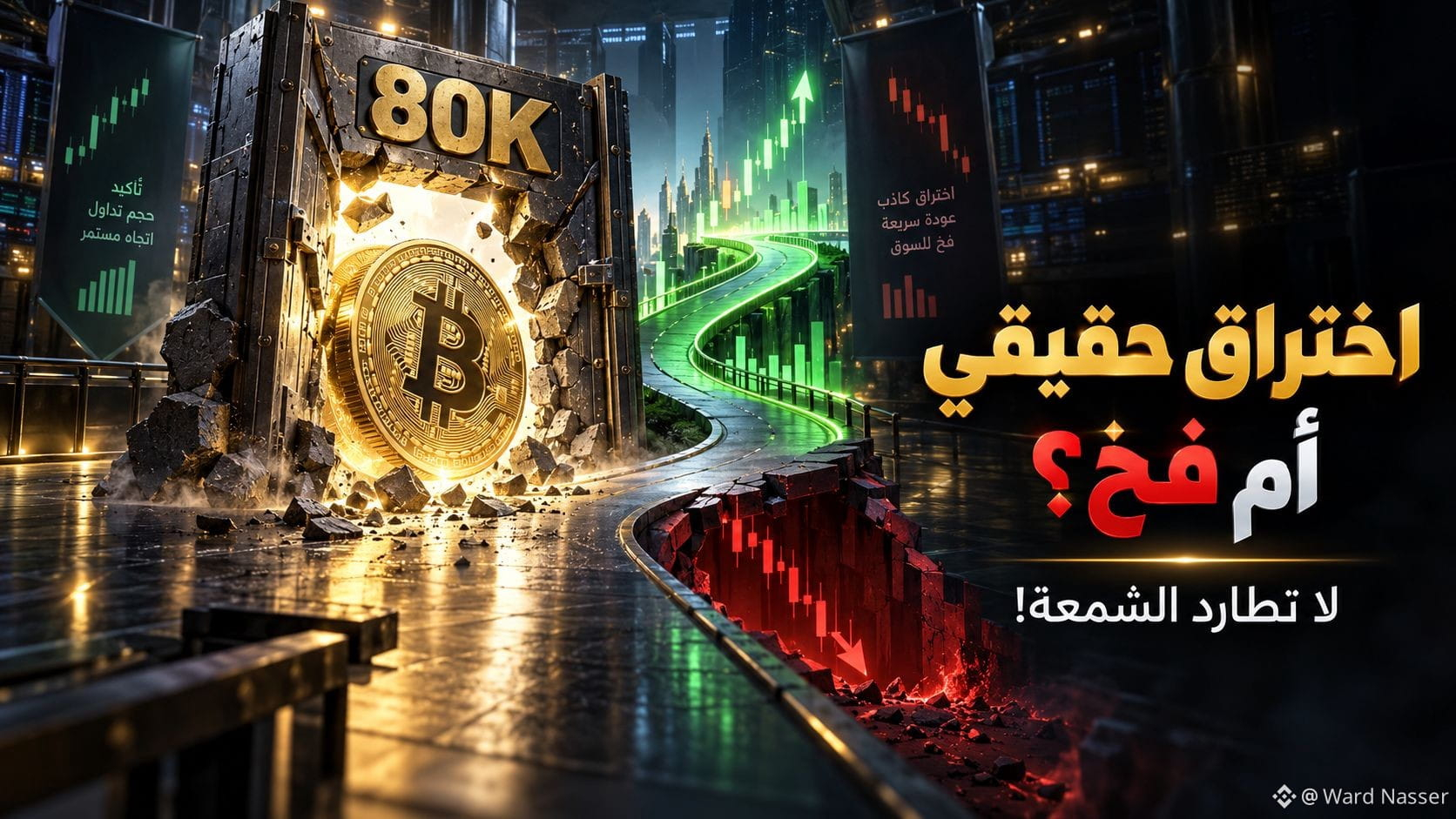
تخيّل مستوى المقاومة كأنه باب مغلق:
⚡ لمس السعر للمستوى ثم تجاوزه للحظات = طرقٌ على الباب
🕯️ إغلاق شمعة واضحة فوقه = فتح الباب
📊 ارتفاع حجم التداول = دخول المشترين بقوة
🔄 العودة لاختبار المستوى والثبات فوقه = تحوّل الباب إلى أرضية دعم
أما إذا اخترق السعر المستوى ثم عاد سريعًا تحته، فهذا يسمى «اختراقًا وهميًا» وقد يتحول المشترون المتأخرون إلى سيولة خروج للآخرين.
قبل أن تعتبر أي اختراق حقيقيًا، راقب:
1️⃣ الإغلاق وليس مجرد ذيل الشمعة
2️⃣ حجم التداول المصاحب للحركة
3️⃣ إعادة اختبار المستوى
4️⃣ حركة السوق والسيولة عمومًا
الخلاصة: المتداول المحترف لا يطارد الشمعة الخضراء… بل ينتظر من السوق أن يثبت قصته.
برأيكم: هل يتحول مستوى 80K إلى دعم جديد، أم نشاهد فخًا جديدًا للثيران؟ 👀
محتوى تعليمي وليس نصيحة مالية.
#BTC #CryptoEducation
#BTCBreaks80K
🚪 عندما يكسر البيتكوين الباب… لا تدخل قبل أن تتأكد أنه لم يكن فخًا!
تجاوز $BTC مستوى 80 ألف دولار، لكن هل كل اختراق يعني بداية صعود جديد؟ بالتأكيد لا.
تخيّل مستوى المقاومة كأنه باب مغلق:
⚡ لمس السعر للمستوى ثم تجاوزه للحظات = طرقٌ على الباب
🕯️ إغلاق شمعة واضحة فوقه = فتح الباب
📊 ارتفاع حجم التداول = دخول المشترين بقوة
🔄 العودة لاختبار المستوى والثبات فوقه = تحوّل الباب إلى أرضية دعم
أما إذا اخترق السعر المستوى ثم عاد سريعًا تحته، فهذا يسمى «اختراقًا وهميًا» وقد يتحول المشترون المتأخرون إلى سيولة خروج للآخرين.
قبل أن تعتبر أي اختراق حقيقيًا، راقب:
1️⃣ الإغلاق وليس مجرد ذيل الشمعة
2️⃣ حجم التداول المصاحب للحركة
3️⃣ إعادة اختبار المستوى
4️⃣ حركة السوق والسيولة عمومًا
الخلاصة: المتداول المحترف لا يطارد الشمعة الخضراء… بل ينتظر من السوق أن يثبت قصته.
برأيكم: هل يتحول مستوى 80K إلى دعم جديد، أم نشاهد فخًا جديدًا للثيران؟ 👀
محتوى تعليمي وليس نصيحة مالية.
#BTC #CryptoEducation
🚪 عندما يكسر البيتكوين الباب… لا تدخل قبل أن تتأكد أنه لم يكن فخًا!
تجاوز $BTC مستوى 80 ألف دولار، لكن هل كل اختراق يعني بداية صعود جديد؟ بالتأكيد لا.
تخيّل مستوى المقاومة كأنه باب مغلق:
⚡ لمس السعر للمستوى ثم تجاوزه للحظات = طرقٌ على الباب
🕯️ إغلاق شمعة واضحة فوقه = فتح الباب
📊 ارتفاع حجم التداول = دخول المشترين بقوة
🔄 العودة لاختبار المستوى والثبات فوقه = تحوّل الباب إلى أرضية دعم
أما إذا اخترق السعر المستوى ثم عاد سريعًا تحته، فهذا يسمى «اختراقًا وهميًا» وقد يتحول المشترون المتأخرون إلى سيولة خروج للآخرين.
قبل أن تعتبر أي اختراق حقيقيًا، راقب:
1️⃣ الإغلاق وليس مجرد ذيل الشمعة
2️⃣ حجم التداول المصاحب للحركة
3️⃣ إعادة اختبار المستوى
4️⃣ حركة السوق والسيولة عمومًا
الخلاصة: المتداول المحترف لا يطارد الشمعة الخضراء… بل ينتظر من السوق أن يثبت قصته.
برأيكم: هل يتحول مستوى 80K إلى دعم جديد، أم نشاهد فخًا جديدًا للثيران؟ 👀
محتوى تعليمي وليس نصيحة مالية.
#BTC #CryptoEducation
1
1
4
699
·
--
#BTCBreaks80K
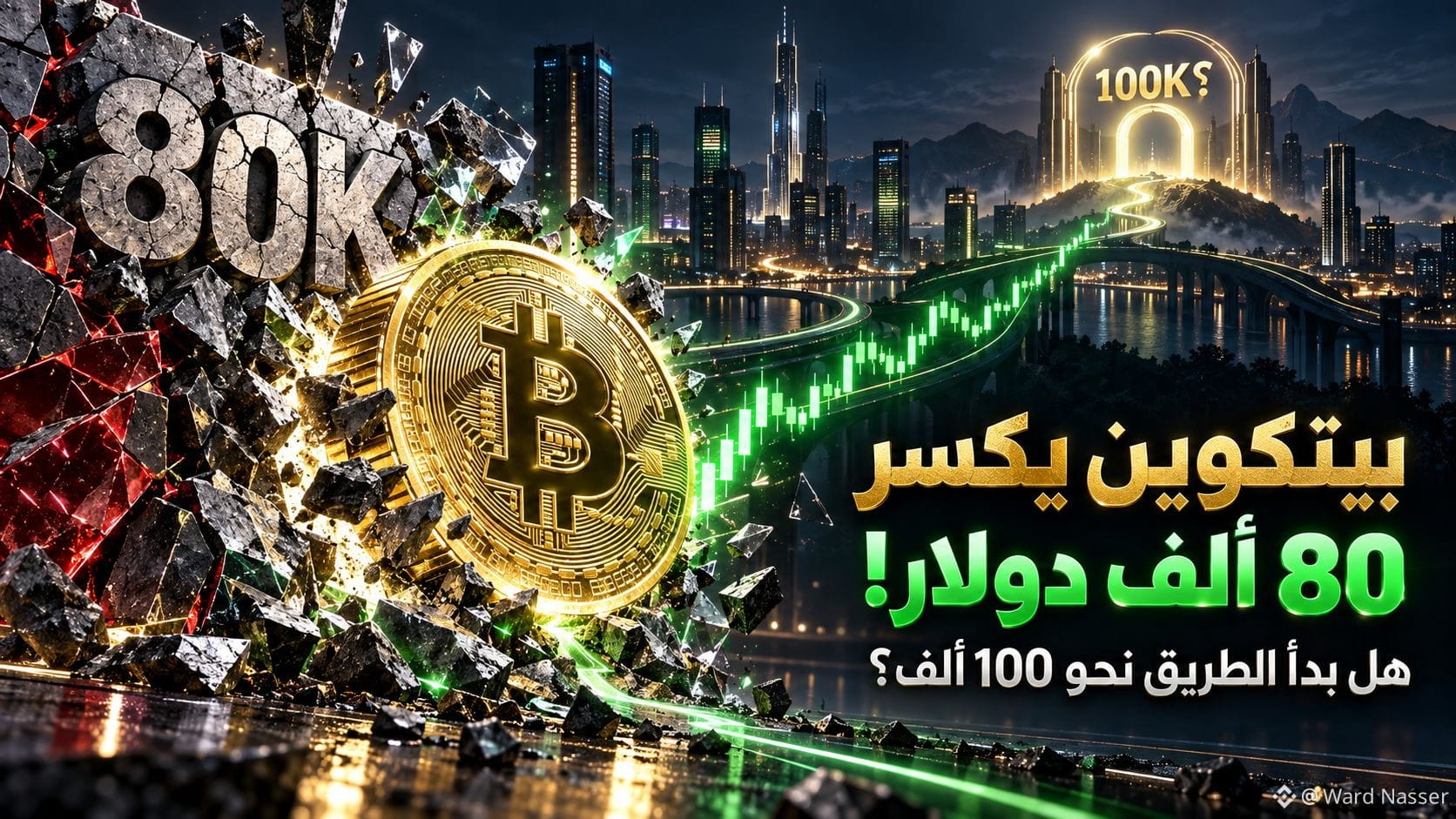
🚨 بيتكوين يكسر حاجز 80 ألف دولار… ولا يتوقف! ₿🔥
قفز $BTC إلى أكثر من 81 ألف دولار، مسجلًا ارتفاعًا يتجاوز 4% خلال 24 ساعة، بعد فترة من الخوف والضغط على السوق.
لكن الاختراق وحده لا يكفي… الاختبار الحقيقي هو: هل يستطيع البيتكوين الثبات فوق 80K وتحويلها إلى منطقة دعم؟ 👀
🟢 الثبات فوق 80K يدعم استمرار الزخم
🎯 اختراق 81.7K يفتح الأنظار نحو 82K وما بعدها
🔴 العودة تحت 80K قد تعني أن الاختراق كان مؤقتًا
برأيكم: هل بدأت رحلة العودة نحو 100 ألف دولار… أم ما زال الطريق طويلًا؟ 👇
ليست نصيحة مالية.
#BTCBreaks80K #BTC
#BTCBreaks80K
🚨 بيتكوين يكسر حاجز 80 ألف دولار… ولا يتوقف! ₿🔥
قفز $BTC إلى أكثر من 81 ألف دولار، مسجلًا ارتفاعًا يتجاوز 4% خلال 24 ساعة، بعد فترة من الخوف والضغط على السوق.
لكن الاختراق وحده لا يكفي… الاختبار الحقيقي هو: هل يستطيع البيتكوين الثبات فوق 80K وتحويلها إلى منطقة دعم؟ 👀
🟢 الثبات فوق 80K يدعم استمرار الزخم
🎯 اختراق 81.7K يفتح الأنظار نحو 82K وما بعدها
🔴 العودة تحت 80K قد تعني أن الاختراق كان مؤقتًا
برأيكم: هل بدأت رحلة العودة نحو 100 ألف دولار… أم ما زال الطريق طويلًا؟ 👇
ليست نصيحة مالية.
#BTCBreaks80K #BTC
🚨 بيتكوين يكسر حاجز 80 ألف دولار… ولا يتوقف! ₿🔥
قفز $BTC إلى أكثر من 81 ألف دولار، مسجلًا ارتفاعًا يتجاوز 4% خلال 24 ساعة، بعد فترة من الخوف والضغط على السوق.
لكن الاختراق وحده لا يكفي… الاختبار الحقيقي هو: هل يستطيع البيتكوين الثبات فوق 80K وتحويلها إلى منطقة دعم؟ 👀
🟢 الثبات فوق 80K يدعم استمرار الزخم
🎯 اختراق 81.7K يفتح الأنظار نحو 82K وما بعدها
🔴 العودة تحت 80K قد تعني أن الاختراق كان مؤقتًا
برأيكم: هل بدأت رحلة العودة نحو 100 ألف دولار… أم ما زال الطريق طويلًا؟ 👇
ليست نصيحة مالية.
#BTCBreaks80K #BTC
4
515
Log in to explore more content
Join global crypto users on Binance Square
⚡️ Get latest and useful information about crypto.
💬 Trusted by the world’s largest crypto exchange.
👍 Discover real insights from verified creators.
Email / Phone number
Trending Topics
EtherGains70.9%InQ3
179,390 views
1,206 Discussing
One of the best third quarters in history 💰
September closed out last night, and with it, the quarter. For the quarter, BTC is up 42%—the second-best Q3 on record. ETH had a record-breaking Q3 overall, up 70%.
Looking at the chart, things are still looking good: we’re holding support, but we’re testing it more and more often. Plus, ETF momentum is weakening — inflows are gradually declining, and yesterday saw outflows for the first time in a long while.
Yes, historically, October has been a good month for crypto — it’s not called “Uptober” for nothing. But it’s also one of the most volatile months. Last year, for example, we managed to hit a new all-time high (ATH) and experience a flash crash.
🚀 High Accuracy Trades.
$BTC
$ETH
$SOL
#EtherGains70.9%InQ3 #DollarIndexHitsHighestSinceMay2025 #CFTCSubmitsTwoEventContractRulesToWhiteHouse #MicronBeatsEarningsLiftsGuidance
Knowledge is Power
·0 Likes
·259 views
TreasuryLetsStatesFileStablecoinCertificationsEarly
11,889 views
93 Discussing
US10YearYieldNears5.3%
161,402 views
1,176 Discussing