
Crypto With Ali Education
1k Beiträge

Crypto With Ali Education
Melden
Nutzer blockieren
Crypto Education | BTC • ETH • Web3
Market structure, liquidity & crypto concepts.
Educational content only. Not financial advice
1.0K+ Following
365 Follower
454 Like gegeben
Beiträge
Alle
Zitierungen
Videos
PINNED

Artikel
KI + Web3: Wer wird die nächste digitale Wirtschaft kontrollieren?KI-Agenten, Blockchain-Infrastruktur, digitale Eigentumsverhältnisse & die Zukunft von Online-Systemen
Künstliche Intelligenz wird immer leistungsfähiger darin, Informationen zu erzeugen, zu analysieren und auf sie zu reagieren. Gleichzeitig entwickelt sich Web3 weiter und schafft neue Möglichkeiten, um Eigentum nachzuweisen, digitale Systeme zu koordinieren und Aktivitäten aufzuzeichnen, ohne sich vollständig auf eine einzelne zentrale Autorität verlassen zu müssen.
Für sich genommen sind KI und Blockchain leistungsstarke Technologien. Zusammen könnten sie grundlegend verändern, wie die digitale Wirtschaft funktioniert.
Aber eine Frage wird zunehmend wichtiger:
KI + Web3: Wer wird die nächste digitale Wirtschaft kontrollieren?
KI-Agenten, Blockchain-Infrastruktur, digitale Eigentumsverhältnisse & die Zukunft von Online-Systemen
Künstliche Intelligenz wird immer leistungsfähiger darin, Informationen zu erzeugen, zu analysieren und auf sie zu reagieren. Gleichzeitig entwickelt sich Web3 weiter und schafft neue Möglichkeiten, um Eigentum nachzuweisen, digitale Systeme zu koordinieren und Aktivitäten aufzuzeichnen, ohne sich vollständig auf eine einzelne zentrale Autorität verlassen zu müssen.
Für sich genommen sind KI und Blockchain leistungsstarke Technologien. Zusammen könnten sie grundlegend verändern, wie die digitale Wirtschaft funktioniert.
Aber eine Frage wird zunehmend wichtiger:
Künstliche Intelligenz wird immer leistungsfähiger darin, Informationen zu erzeugen, zu analysieren und auf sie zu reagieren. Gleichzeitig entwickelt sich Web3 weiter und schafft neue Möglichkeiten, um Eigentum nachzuweisen, digitale Systeme zu koordinieren und Aktivitäten aufzuzeichnen, ohne sich vollständig auf eine einzelne zentrale Autorität verlassen zu müssen.
Für sich genommen sind KI und Blockchain leistungsstarke Technologien. Zusammen könnten sie grundlegend verändern, wie die digitale Wirtschaft funktioniert.
Aber eine Frage wird zunehmend wichtiger:
1
43
PINNED
👋 Hallo Binance Square Community!
Ich teile täglich Krypto-Nachrichten, Marktanalysen und einfache Erklärungen für Anfänger.
📊 Fokus: BTC • ETH • BNB • Altcoins
🧠 Ziel: Lernen + informierte Entscheidungen (keine Hype)
🔔 Folge mir, um auf dem Laufenden zu bleiben und gemeinsam zu lernen!
👋 Hallo Binance Square Community!
Ich teile täglich Krypto-Nachrichten, Marktanalysen und einfache Erklärungen für Anfänger.
📊 Fokus: BTC • ETH • BNB • Altcoins
🧠 Ziel: Lernen + informierte Entscheidungen (keine Hype)
🔔 Folge mir, um auf dem Laufenden zu bleiben und gemeinsam zu lernen!
Ich teile täglich Krypto-Nachrichten, Marktanalysen und einfache Erklärungen für Anfänger.
📊 Fokus: BTC • ETH • BNB • Altcoins
🧠 Ziel: Lernen + informierte Entscheidungen (keine Hype)
🔔 Folge mir, um auf dem Laufenden zu bleiben und gemeinsam zu lernen!
4
14
64
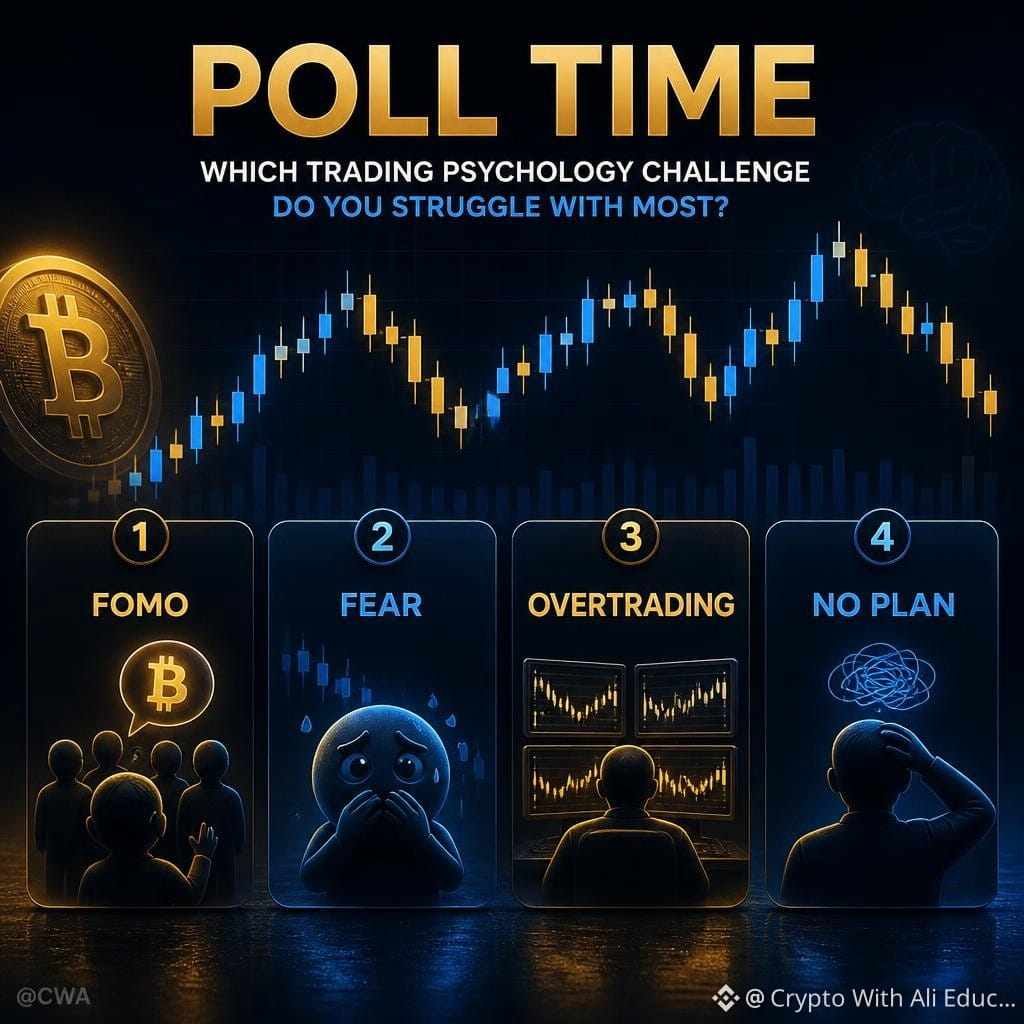
📊 Schnelle Trading-Psychologie-Umfrage
Größtes Trading-Problem?
🔘 FOMO
🔘 Angst
🔘 Overtrading
🔘 Kein Plan
Welche davon verursacht deiner Meinung nach die meisten Probleme für Trader?
💬 Sag uns im Kommentar, warum.
Das Verstehen deines eigenen Entscheidungsprozesses ist ein wichtiger Teil des Lernens.
Wenn dir das geholfen hat, folge für mehr 👍
#BTC #TradingPsychology #FOMO #cryptoeducation #CryptoWithAli
📊 Schnelle Trading-Psychologie-Umfrage
Größtes Trading-Problem?
🔘 FOMO
🔘 Angst
🔘 Overtrading
🔘 Kein Plan
Welche davon verursacht deiner Meinung nach die meisten Probleme für Trader?
💬 Sag uns im Kommentar, warum.
Das Verstehen deines eigenen Entscheidungsprozesses ist ein wichtiger Teil des Lernens.
Wenn dir das geholfen hat, folge für mehr 👍
#BTC #TradingPsychology #FOMO #cryptoeducation #CryptoWithAli
Größtes Trading-Problem?
🔘 FOMO
🔘 Angst
🔘 Overtrading
🔘 Kein Plan
Welche davon verursacht deiner Meinung nach die meisten Probleme für Trader?
💬 Sag uns im Kommentar, warum.
Das Verstehen deines eigenen Entscheidungsprozesses ist ein wichtiger Teil des Lernens.
Wenn dir das geholfen hat, folge für mehr 👍
#BTC #TradingPsychology #FOMO #cryptoeducation #CryptoWithAli
55
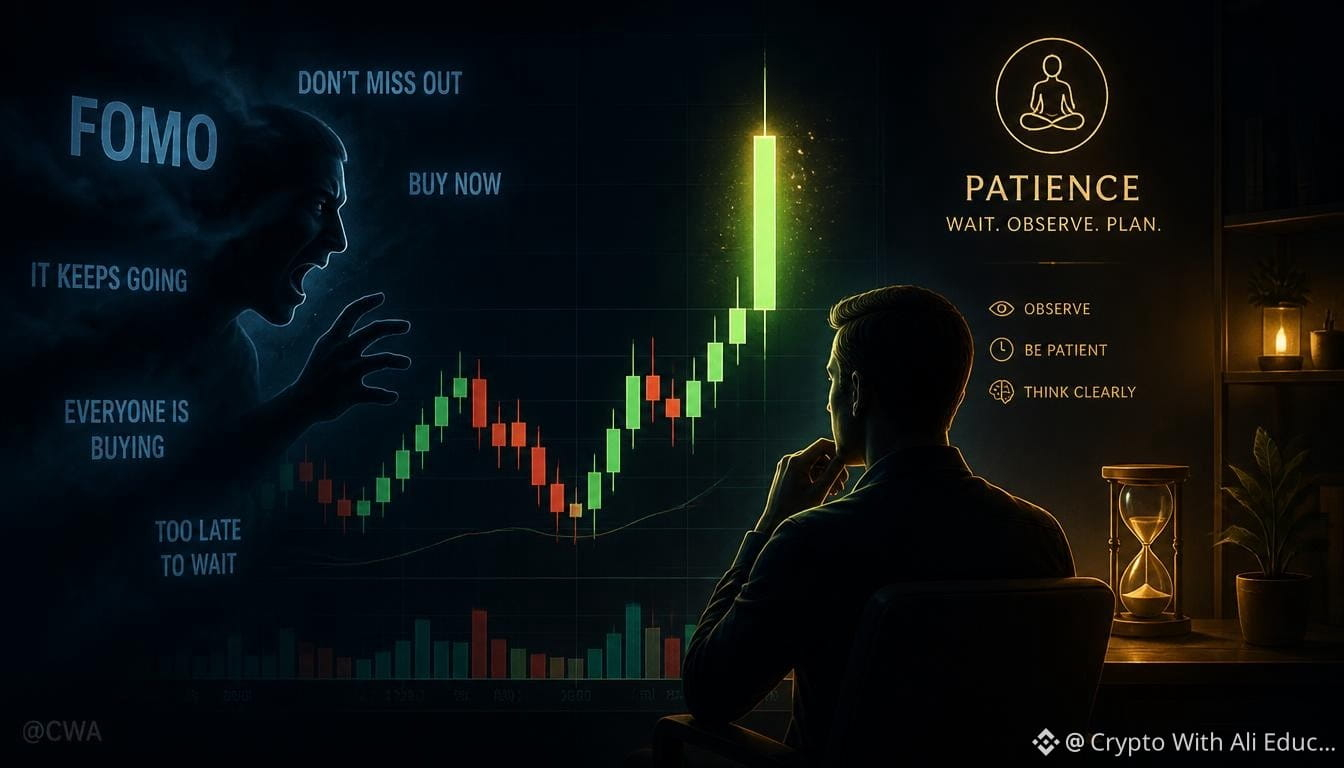
Warum Trader grünen Kerzen hinterherjagen — und warum Geduld wichtig ist
Eine Kerze wird grün.
Der Kurs beginnt sich schnell zu bewegen.
Andere Trader fangen an, darüber zu sprechen.
Und plötzlich taucht der Gedanke auf:
„Wenn ich jetzt nicht einsteige, verpasse ich das.“
Das ist FOMO — Fear of Missing Out (Angst, etwas zu verpassen).
🔹 Warum jagen Trader?
Wenn sich der Kurs stark bewegt, können Emotionen stärker werden als der ursprüngliche Plan.
Trader könnten:
• Nach einem großen Move einsteigen
• Ihre geplante Set-up-Idee ignorieren
• Kaufen, nur weil andere kaufen
• Entscheidungen aufgrund von Social-Media-Hype treffen
• Eine einzelne grüne Kerze als Beweis für einen Trend ansehen
Aber eine Kerze erzählt nicht die ganze Geschichte.
🔹 Was kann Geduld verändern?
Reagiere nicht sofort, sondern mache einen Schritt zurück und frage:
Was ist die Marktstruktur?
Wo liegen die wichtigen Levels?
Unterstützt das Volumen die Bewegung?
Auf welchen Zeithorizont schaue ich eigentlich?
Ist der Move schon passiert?
Diese Fragen helfen dabei, Beobachtung von Emotionen zu trennen.
🔹 Grün heißt nicht immer „Los“
Eine starke grüne Kerze kann Kaufdruck zeigen.
Aber ohne Kontext sagt sie dir nicht, ob die Bewegung weitergeht.
Das gilt auch für rote Kerzen.
Gutes Chart-Reading geht nicht darum, auf jede einzelne Kerze zu reagieren.
Es geht darum, den Kontext hinter der Bewegung zu verstehen.
🧠 Die wichtigste Erkenntnis
Geduld bedeutet nicht, den Markt zu ignorieren.
Sie bedeutet, dir genug Zeit zu geben, um zu verstehen, was der Markt zeigt, bevor du eine Entscheidung triffst.
💬 Was ist das größte Problem für Trader: FOMO, Angst, Overtrading oder kein Plan?
Nur Bildungsinhalte — keine finanzielle Beratung.
Folge für tägliche Crypto-Insights 📊
#BTC #FOMO #TradingPsychology #CryptoPsychology #BinanceSquare
Warum Trader grünen Kerzen hinterherjagen — und warum Geduld wichtig ist
Eine Kerze wird grün.
Der Kurs beginnt sich schnell zu bewegen.
Andere Trader fangen an, darüber zu sprechen.
Und plötzlich taucht der Gedanke auf:
„Wenn ich jetzt nicht einsteige, verpasse ich das.“
Das ist FOMO — Fear of Missing Out (Angst, etwas zu verpassen).
🔹 Warum jagen Trader?
Wenn sich der Kurs stark bewegt, können Emotionen stärker werden als der ursprüngliche Plan.
Trader könnten:
• Nach einem großen Move einsteigen
• Ihre geplante Set-up-Idee ignorieren
• Kaufen, nur weil andere kaufen
• Entscheidungen aufgrund von Social-Media-Hype treffen
• Eine einzelne grüne Kerze als Beweis für einen Trend ansehen
Aber eine Kerze erzählt nicht die ganze Geschichte.
🔹 Was kann Geduld verändern?
Reagiere nicht sofort, sondern mache einen Schritt zurück und frage:
Was ist die Marktstruktur?
Wo liegen die wichtigen Levels?
Unterstützt das Volumen die Bewegung?
Auf welchen Zeithorizont schaue ich eigentlich?
Ist der Move schon passiert?
Diese Fragen helfen dabei, Beobachtung von Emotionen zu trennen.
🔹 Grün heißt nicht immer „Los“
Eine starke grüne Kerze kann Kaufdruck zeigen.
Aber ohne Kontext sagt sie dir nicht, ob die Bewegung weitergeht.
Das gilt auch für rote Kerzen.
Gutes Chart-Reading geht nicht darum, auf jede einzelne Kerze zu reagieren.
Es geht darum, den Kontext hinter der Bewegung zu verstehen.
🧠 Die wichtigste Erkenntnis
Geduld bedeutet nicht, den Markt zu ignorieren.
Sie bedeutet, dir genug Zeit zu geben, um zu verstehen, was der Markt zeigt, bevor du eine Entscheidung triffst.
💬 Was ist das größte Problem für Trader: FOMO, Angst, Overtrading oder kein Plan?
Nur Bildungsinhalte — keine finanzielle Beratung.
Folge für tägliche Crypto-Insights 📊
#BTC #FOMO #TradingPsychology #CryptoPsychology #BinanceSquare
Eine Kerze wird grün.
Der Kurs beginnt sich schnell zu bewegen.
Andere Trader fangen an, darüber zu sprechen.
Und plötzlich taucht der Gedanke auf:
„Wenn ich jetzt nicht einsteige, verpasse ich das.“
Das ist FOMO — Fear of Missing Out (Angst, etwas zu verpassen).
🔹 Warum jagen Trader?
Wenn sich der Kurs stark bewegt, können Emotionen stärker werden als der ursprüngliche Plan.
Trader könnten:
• Nach einem großen Move einsteigen
• Ihre geplante Set-up-Idee ignorieren
• Kaufen, nur weil andere kaufen
• Entscheidungen aufgrund von Social-Media-Hype treffen
• Eine einzelne grüne Kerze als Beweis für einen Trend ansehen
Aber eine Kerze erzählt nicht die ganze Geschichte.
🔹 Was kann Geduld verändern?
Reagiere nicht sofort, sondern mache einen Schritt zurück und frage:
Was ist die Marktstruktur?
Wo liegen die wichtigen Levels?
Unterstützt das Volumen die Bewegung?
Auf welchen Zeithorizont schaue ich eigentlich?
Ist der Move schon passiert?
Diese Fragen helfen dabei, Beobachtung von Emotionen zu trennen.
🔹 Grün heißt nicht immer „Los“
Eine starke grüne Kerze kann Kaufdruck zeigen.
Aber ohne Kontext sagt sie dir nicht, ob die Bewegung weitergeht.
Das gilt auch für rote Kerzen.
Gutes Chart-Reading geht nicht darum, auf jede einzelne Kerze zu reagieren.
Es geht darum, den Kontext hinter der Bewegung zu verstehen.
🧠 Die wichtigste Erkenntnis
Geduld bedeutet nicht, den Markt zu ignorieren.
Sie bedeutet, dir genug Zeit zu geben, um zu verstehen, was der Markt zeigt, bevor du eine Entscheidung triffst.
💬 Was ist das größte Problem für Trader: FOMO, Angst, Overtrading oder kein Plan?
Nur Bildungsinhalte — keine finanzielle Beratung.
Folge für tägliche Crypto-Insights 📊
#BTC #FOMO #TradingPsychology #CryptoPsychology #BinanceSquare
74
🤖🌐 KI kann Intelligenz und Automatisierung bringen. Web3 kann Verifizierung, digitales Eigentum und neue Formen der Koordination ermöglichen.
Aber die große Frage ist: Wer kontrolliert die Infrastruktur und die Regeln der nächsten digitalen Wirtschaft?
Entdecke die ganze Idee im Artikel.
#Aİ #Web3 #blockchain #AIAgents #FutureOfTechnology
🤖🌐 KI kann Intelligenz und Automatisierung bringen. Web3 kann Verifizierung, digitales Eigentum und neue Formen der Koordination ermöglichen.
Aber die große Frage ist: Wer kontrolliert die Infrastruktur und die Regeln der nächsten digitalen Wirtschaft?
Entdecke die ganze Idee im Artikel.
#Aİ #Web3 #blockchain #AIAgents #FutureOfTechnology
Aber die große Frage ist: Wer kontrolliert die Infrastruktur und die Regeln der nächsten digitalen Wirtschaft?
Entdecke die ganze Idee im Artikel.
#Aİ #Web3 #blockchain #AIAgents #FutureOfTechnology
2
345
Die Zukunft von KI + Web3 geht nicht nur darum, was die Technologie leisten kann.
Es geht auch darum, wer die Infrastruktur, Daten, Identität,
Eigentum und Regeln dahinter kontrolliert.
KI kann Intelligenz bereitstellen.
Blockchain kann Verifizierung ermöglichen.
Menschen stellen weiterhin Governance und Verantwortlichkeit sicher.
Lies den vollständigen Artikel und teile deine Meinung.
#AI #Web3 #AIAgents
Die Zukunft von KI + Web3 geht nicht nur darum, was die Technologie leisten kann.
Es geht auch darum, wer die Infrastruktur, Daten, Identität,
Eigentum und Regeln dahinter kontrolliert.
KI kann Intelligenz bereitstellen.
Blockchain kann Verifizierung ermöglichen.
Menschen stellen weiterhin Governance und Verantwortlichkeit sicher.
Lies den vollständigen Artikel und teile deine Meinung.
#AI #Web3 #AIAgents
Es geht auch darum, wer die Infrastruktur, Daten, Identität,
Eigentum und Regeln dahinter kontrolliert.
KI kann Intelligenz bereitstellen.
Blockchain kann Verifizierung ermöglichen.
Menschen stellen weiterhin Governance und Verantwortlichkeit sicher.
Lies den vollständigen Artikel und teile deine Meinung.
#AI #Web3 #AIAgents

44
🤖 KI wird zunehmend autonomer.
🌐 Web3 entwickelt neue Modelle für Eigentum, Verifizierung und digitale Koordination.
Aber wenn KI-Agenten, Blockchain-Infrastruktur und digitales Eigentum zusammenkommen, wird eine Frage immer wichtiger:
Wer wird die nächste digitale Wirtschaft kontrollieren?
Heute kommt ein neuer Artikel. 👀
#Aİ #Web3 #blockchain
🤖 KI wird zunehmend autonomer.
🌐 Web3 entwickelt neue Modelle für Eigentum, Verifizierung und digitale Koordination.
Aber wenn KI-Agenten, Blockchain-Infrastruktur und digitales Eigentum zusammenkommen, wird eine Frage immer wichtiger:
Wer wird die nächste digitale Wirtschaft kontrollieren?
Heute kommt ein neuer Artikel. 👀
#Aİ #Web3 #blockchain
🌐 Web3 entwickelt neue Modelle für Eigentum, Verifizierung und digitale Koordination.
Aber wenn KI-Agenten, Blockchain-Infrastruktur und digitales Eigentum zusammenkommen, wird eine Frage immer wichtiger:
Wer wird die nächste digitale Wirtschaft kontrollieren?
Heute kommt ein neuer Artikel. 👀
#Aİ #Web3 #blockchain

63
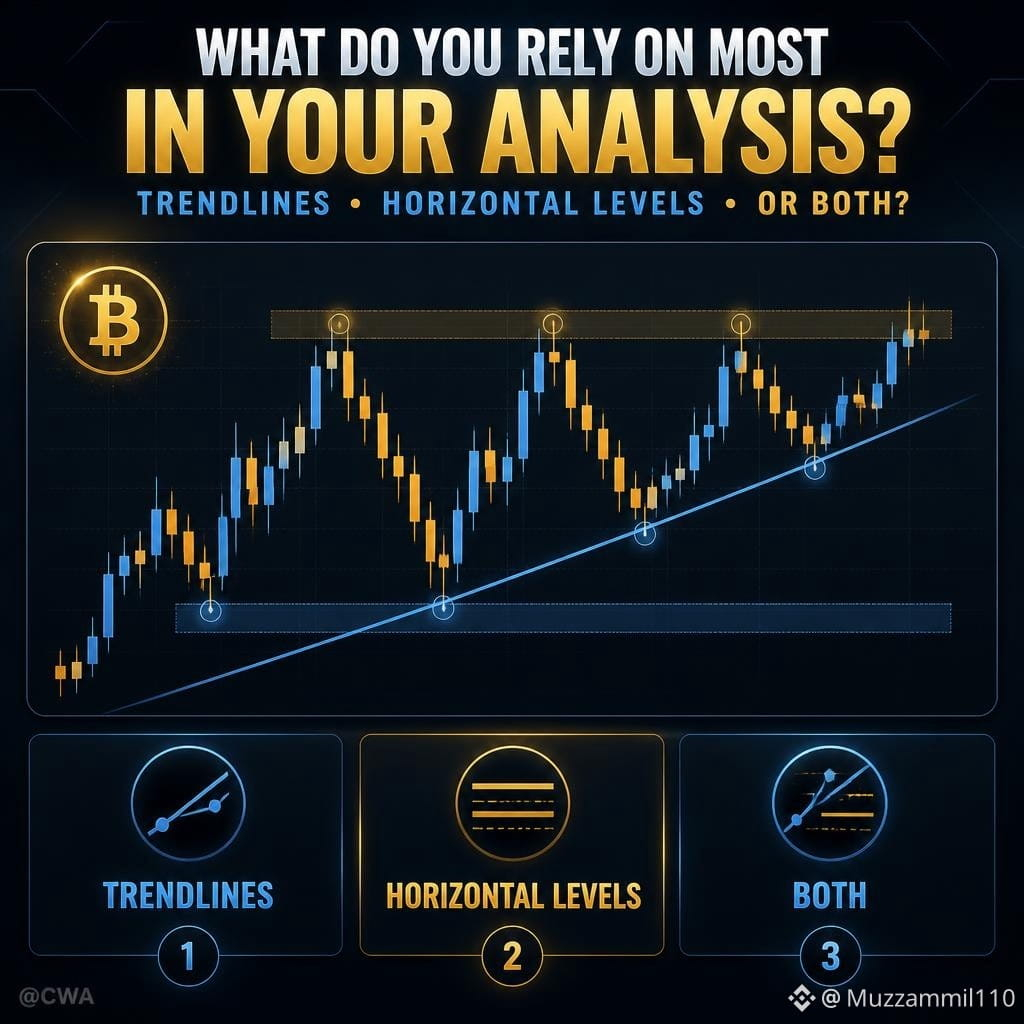
📊 Schnelle technische Analyse-Umfrage
Deine Präferenz →
🔘 Trendlinien
🔘 Horizontale Levels
🔘 Beides
Was findest du beim Studieren eines Crypto-Charts am einfachsten zu nutzen?
💬 Sag uns, warum in den Kommentaren.
Verschiedene Tools können unterschiedliche Perspektiven liefern — Kontext ist wichtig.
Crypto ist eine Reise — folge, um Schritt für Schritt zu lernen
#BTC #TechnicalAnalysis #Trendlines #cryptoeducation #BinanceSquare
📊 Schnelle technische Analyse-Umfrage
Deine Präferenz →
🔘 Trendlinien
🔘 Horizontale Levels
🔘 Beides
Was findest du beim Studieren eines Crypto-Charts am einfachsten zu nutzen?
💬 Sag uns, warum in den Kommentaren.
Verschiedene Tools können unterschiedliche Perspektiven liefern — Kontext ist wichtig.
Crypto ist eine Reise — folge, um Schritt für Schritt zu lernen
#BTC #TechnicalAnalysis #Trendlines #cryptoeducation #BinanceSquare
Deine Präferenz →
🔘 Trendlinien
🔘 Horizontale Levels
🔘 Beides
Was findest du beim Studieren eines Crypto-Charts am einfachsten zu nutzen?
💬 Sag uns, warum in den Kommentaren.
Verschiedene Tools können unterschiedliche Perspektiven liefern — Kontext ist wichtig.
Crypto ist eine Reise — folge, um Schritt für Schritt zu lernen
#BTC #TechnicalAnalysis #Trendlines #cryptoeducation #BinanceSquare
73
Trendlinien vs. horizontale Kursniveaus: Was sollten Anfänger mehr vertrauen?
Wenn Anfänger technische Analyse lernen, tauchen sofort zwei Tools auf:
📈 Trendlinien
📏 Horizontale Unterstützung & Widerstand
Doch welches verdient mehr Vertrauen?
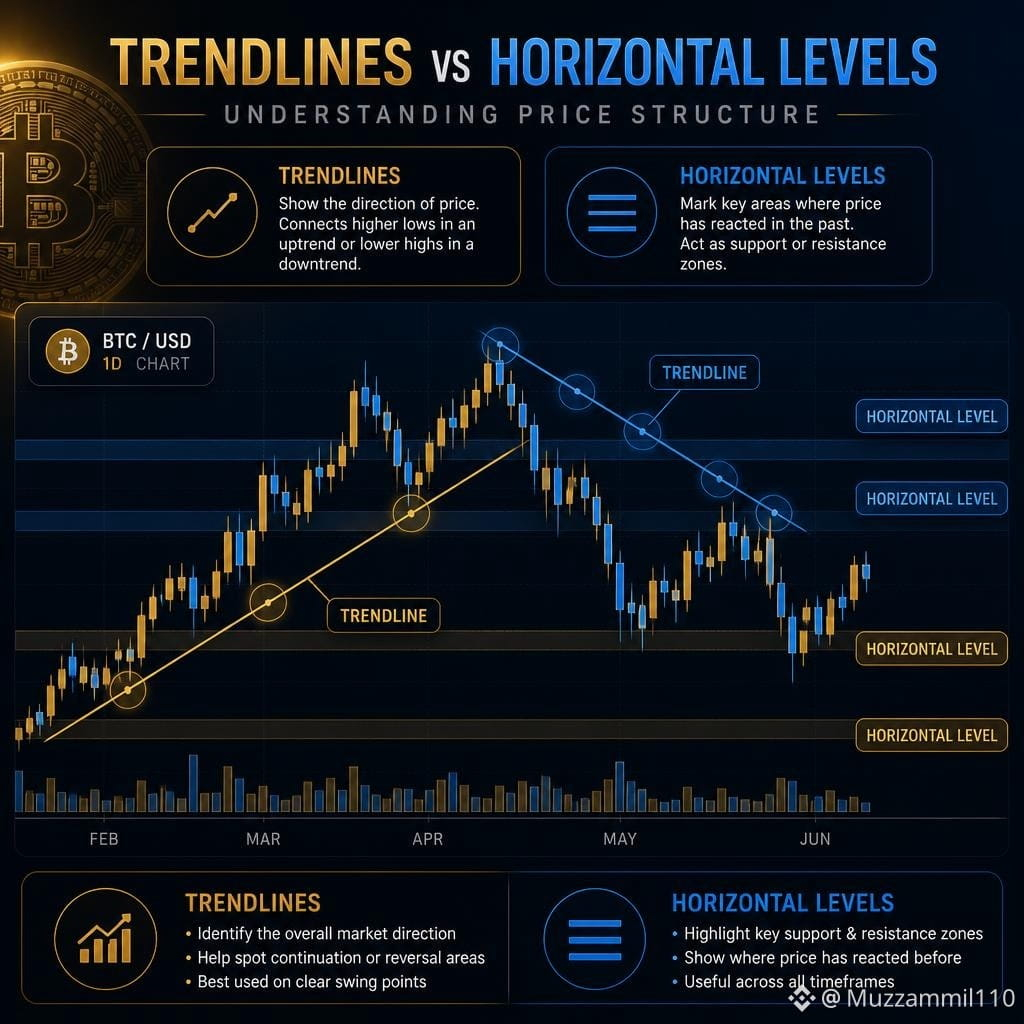
🔹 Trendlinien
Trendlinien verbinden wichtige Swing-Highs oder Swing-Lows, um die Richtung des Preises besser sichtbar zu machen.
Sie können hilfreich sein, um zu erkennen:
• Aufwärtstrends
• Abwärtstrends
• Sich veränderndes Momentum
• Dynamische Bereiche von Interesse
Die Einschränkung?
Verschiedene Trader können Trendlinien leicht unterschiedlich zeichnen.
🔹 Horizontale Niveaus
Horizontale Niveaus markieren Bereiche, auf die der Kurs zuvor bereits reagiert hat.
Sie helfen dabei, zu identifizieren:
• Unterstützung
• Widerstand
• Frühere Reaktionszonen
• Wichtige Preisbereiche
Ihr großer Vorteil besteht darin, dass sie sich leichter über verschiedene Charts und Zeitrahmen hinweg vergleichen lassen.
Was ist also besser?
Für Anfänger können horizontale Niveaus oft einen klareren Einstieg bieten, weil sie weniger subjektiv sind.
Aber das macht Trendlinien nicht nutzlos.
Eine stärkere Analyse kann beides kombinieren.
Zum Beispiel:
Horizontales Niveau + Trendlinie + Volumen + Marktstruktur
kann mehr Kontext liefern, als sich nur auf ein einziges Tool zu verlassen.
Die wichtigste Lektion
Frag nicht:
„Welches Tool ist immer richtig?“
Stattdessen frag:
„Welche Aussage trifft die Preisstruktur, und unterstützt das Tool diese Beobachtung?“
Technische Analyse funktioniert besser als Rahmen, um das Verhalten des Marktes zu verstehen – nicht als Garantie dafür, was als Nächstes passiert.
💬 Was bevorzugst du: Trendlinien, horizontale Niveaus oder beides?
Nur Bildungsinhalte — keine Finanzberatung.
#Bitcoin #BTC #Trendlines #SupportAndResistance #TechnicalAnalysis #CryptoEducation #PriceAction #MarketStructure #TradingEducation #CryptoTrading #CryptoWithAli #BinanceSquare
🕧 Beitrag 2 — 12:30 AM PKT
📊 Schnelle Umfrage zur technischen Analyse
Deine Präferenz →
🔘 Trendlinien
🔘 Horizontale Niveaus
🔘 Beides
Welches findest du einfacher zu nutzen, wenn du einen Krypto-Chart studierst?
💬 Sag uns im Kommentar, warum.
Trendlinien vs. horizontale Kursniveaus: Was sollten Anfänger mehr vertrauen?
Wenn Anfänger technische Analyse lernen, tauchen sofort zwei Tools auf:
📈 Trendlinien
📏 Horizontale Unterstützung & Widerstand
Doch welches verdient mehr Vertrauen?
🔹 Trendlinien
Trendlinien verbinden wichtige Swing-Highs oder Swing-Lows, um die Richtung des Preises besser sichtbar zu machen.
Sie können hilfreich sein, um zu erkennen:
• Aufwärtstrends
• Abwärtstrends
• Sich veränderndes Momentum
• Dynamische Bereiche von Interesse
Die Einschränkung?
Verschiedene Trader können Trendlinien leicht unterschiedlich zeichnen.
🔹 Horizontale Niveaus
Horizontale Niveaus markieren Bereiche, auf die der Kurs zuvor bereits reagiert hat.
Sie helfen dabei, zu identifizieren:
• Unterstützung
• Widerstand
• Frühere Reaktionszonen
• Wichtige Preisbereiche
Ihr großer Vorteil besteht darin, dass sie sich leichter über verschiedene Charts und Zeitrahmen hinweg vergleichen lassen.
Was ist also besser?
Für Anfänger können horizontale Niveaus oft einen klareren Einstieg bieten, weil sie weniger subjektiv sind.
Aber das macht Trendlinien nicht nutzlos.
Eine stärkere Analyse kann beides kombinieren.
Zum Beispiel:
Horizontales Niveau + Trendlinie + Volumen + Marktstruktur
kann mehr Kontext liefern, als sich nur auf ein einziges Tool zu verlassen.
Die wichtigste Lektion
Frag nicht:
„Welches Tool ist immer richtig?“
Stattdessen frag:
„Welche Aussage trifft die Preisstruktur, und unterstützt das Tool diese Beobachtung?“
Technische Analyse funktioniert besser als Rahmen, um das Verhalten des Marktes zu verstehen – nicht als Garantie dafür, was als Nächstes passiert.
💬 Was bevorzugst du: Trendlinien, horizontale Niveaus oder beides?
Nur Bildungsinhalte — keine Finanzberatung.
#Bitcoin #BTC #Trendlines #SupportAndResistance #TechnicalAnalysis #CryptoEducation #PriceAction #MarketStructure #TradingEducation #CryptoTrading #CryptoWithAli #BinanceSquare
🕧 Beitrag 2 — 12:30 AM PKT
📊 Schnelle Umfrage zur technischen Analyse
Deine Präferenz →
🔘 Trendlinien
🔘 Horizontale Niveaus
🔘 Beides
Welches findest du einfacher zu nutzen, wenn du einen Krypto-Chart studierst?
💬 Sag uns im Kommentar, warum.
Wenn Anfänger technische Analyse lernen, tauchen sofort zwei Tools auf:
📈 Trendlinien
📏 Horizontale Unterstützung & Widerstand
Doch welches verdient mehr Vertrauen?
🔹 Trendlinien
Trendlinien verbinden wichtige Swing-Highs oder Swing-Lows, um die Richtung des Preises besser sichtbar zu machen.
Sie können hilfreich sein, um zu erkennen:
• Aufwärtstrends
• Abwärtstrends
• Sich veränderndes Momentum
• Dynamische Bereiche von Interesse
Die Einschränkung?
Verschiedene Trader können Trendlinien leicht unterschiedlich zeichnen.
🔹 Horizontale Niveaus
Horizontale Niveaus markieren Bereiche, auf die der Kurs zuvor bereits reagiert hat.
Sie helfen dabei, zu identifizieren:
• Unterstützung
• Widerstand
• Frühere Reaktionszonen
• Wichtige Preisbereiche
Ihr großer Vorteil besteht darin, dass sie sich leichter über verschiedene Charts und Zeitrahmen hinweg vergleichen lassen.
Was ist also besser?
Für Anfänger können horizontale Niveaus oft einen klareren Einstieg bieten, weil sie weniger subjektiv sind.
Aber das macht Trendlinien nicht nutzlos.
Eine stärkere Analyse kann beides kombinieren.
Zum Beispiel:
Horizontales Niveau + Trendlinie + Volumen + Marktstruktur
kann mehr Kontext liefern, als sich nur auf ein einziges Tool zu verlassen.
Die wichtigste Lektion
Frag nicht:
„Welches Tool ist immer richtig?“
Stattdessen frag:
„Welche Aussage trifft die Preisstruktur, und unterstützt das Tool diese Beobachtung?“
Technische Analyse funktioniert besser als Rahmen, um das Verhalten des Marktes zu verstehen – nicht als Garantie dafür, was als Nächstes passiert.
💬 Was bevorzugst du: Trendlinien, horizontale Niveaus oder beides?
Nur Bildungsinhalte — keine Finanzberatung.
#Bitcoin #BTC #Trendlines #SupportAndResistance #TechnicalAnalysis #CryptoEducation #PriceAction #MarketStructure #TradingEducation #CryptoTrading #CryptoWithAli #BinanceSquare
🕧 Beitrag 2 — 12:30 AM PKT
📊 Schnelle Umfrage zur technischen Analyse
Deine Präferenz →
🔘 Trendlinien
🔘 Horizontale Niveaus
🔘 Beides
Welches findest du einfacher zu nutzen, wenn du einen Krypto-Chart studierst?
💬 Sag uns im Kommentar, warum.
78
Schneller Kerzencheck 📊
Das nützlichste Kerzensignal?
🔘 Abweisung
🔘 Engulfing (Verschlingung)
🔘 Doji
Was findest du am nützlichsten, wenn du ein Krypto-Chart untersuchst?
💬 Erzähl uns warum in den Kommentaren.
Denk daran: Ein Kerzenmuster sollte immer im Kontext von Preisstruktur, Volumen und Zeitrahmen betrachtet werden.
Folge für einfache Krypto-Bildung ohne Drama
#bitcoin #candlestick #TechnicalAnalysis #cryptoeducation #priceaction
Schneller Kerzencheck 📊
Das nützlichste Kerzensignal?
🔘 Abweisung
🔘 Engulfing (Verschlingung)
🔘 Doji
Was findest du am nützlichsten, wenn du ein Krypto-Chart untersuchst?
💬 Erzähl uns warum in den Kommentaren.
Denk daran: Ein Kerzenmuster sollte immer im Kontext von Preisstruktur, Volumen und Zeitrahmen betrachtet werden.
Folge für einfache Krypto-Bildung ohne Drama
#bitcoin #candlestick #TechnicalAnalysis #cryptoeducation #priceaction
Das nützlichste Kerzensignal?
🔘 Abweisung
🔘 Engulfing (Verschlingung)
🔘 Doji
Was findest du am nützlichsten, wenn du ein Krypto-Chart untersuchst?
💬 Erzähl uns warum in den Kommentaren.
Denk daran: Ein Kerzenmuster sollte immer im Kontext von Preisstruktur, Volumen und Zeitrahmen betrachtet werden.
Folge für einfache Krypto-Bildung ohne Drama
#bitcoin #candlestick #TechnicalAnalysis #cryptoeducation #priceaction

34
Kerzenpsychologie: Was Käufer und Verkäufer wirklich zeigen
Candlesticks sind mehr als nur rote und grüne Balken.
Sie erzählen eine einfache Geschichte vom Wettbewerb zwischen Käufern und Verkäufern um die Kontrolle.
🔹 Lange obere Lunte
Der Preis stieg zwar an, aber Verkäufer drückten ihn wieder nach unten.
Das kann eine Ablehnung von höheren Kursbereichen zeigen.
🔹 Lange untere Lunte
Verkäufer drückten den Preis nach unten, aber Käufer griffen ein und holten einen Teil der Bewegung zurück.
Das kann eine Ablehnung von tieferen Kursbereichen zeigen.
🔹 Umschließende Kerze
Ein umschließendes Muster entsteht, wenn eine Kerze den Körper der vorherigen Kerze stark überdeckt.
Es kann eine Veränderung der kurzfristigen Dynamik anzeigen — aber der Kontext ist entscheidend.
🔹 Doji
Ein Doji zeigt meistens, dass Eröffnungs- und Schlusskurse nahe beieinander lagen.
Er kann Unentschlossenheit darstellen, besonders nach einer starken Bewegung.
Die wichtigste Lektion
Keine einzelne Kerze sollte als garantiertes Signal betrachtet werden.
Berücksichtige immer:
• Marktstruktur
• Unterstützung & Widerstand
• Volumen
• Zeithorizont
• Vorherige Kursbewegungen
Eine Kerze zeigt dir, was in einem Zeitraum passiert ist.
Der umgebende Kontext hilft zu erklären, warum es passiert ist.
💬 Welches Kerzensignal findest du am nützlichsten: Ablehnung, Umschließung oder Doji?
Nur Bildungsinhalte — keine finanzielle Beratung.
Krypto ist kein Sprint — folge für das langfristige Spiel
#BTC #candlestick #CandlestickPatterns #CryptoWithAli #BinanceSquare
Kerzenpsychologie: Was Käufer und Verkäufer wirklich zeigen
Candlesticks sind mehr als nur rote und grüne Balken.
Sie erzählen eine einfache Geschichte vom Wettbewerb zwischen Käufern und Verkäufern um die Kontrolle.
🔹 Lange obere Lunte
Der Preis stieg zwar an, aber Verkäufer drückten ihn wieder nach unten.
Das kann eine Ablehnung von höheren Kursbereichen zeigen.
🔹 Lange untere Lunte
Verkäufer drückten den Preis nach unten, aber Käufer griffen ein und holten einen Teil der Bewegung zurück.
Das kann eine Ablehnung von tieferen Kursbereichen zeigen.
🔹 Umschließende Kerze
Ein umschließendes Muster entsteht, wenn eine Kerze den Körper der vorherigen Kerze stark überdeckt.
Es kann eine Veränderung der kurzfristigen Dynamik anzeigen — aber der Kontext ist entscheidend.
🔹 Doji
Ein Doji zeigt meistens, dass Eröffnungs- und Schlusskurse nahe beieinander lagen.
Er kann Unentschlossenheit darstellen, besonders nach einer starken Bewegung.
Die wichtigste Lektion
Keine einzelne Kerze sollte als garantiertes Signal betrachtet werden.
Berücksichtige immer:
• Marktstruktur
• Unterstützung & Widerstand
• Volumen
• Zeithorizont
• Vorherige Kursbewegungen
Eine Kerze zeigt dir, was in einem Zeitraum passiert ist.
Der umgebende Kontext hilft zu erklären, warum es passiert ist.
💬 Welches Kerzensignal findest du am nützlichsten: Ablehnung, Umschließung oder Doji?
Nur Bildungsinhalte — keine finanzielle Beratung.
Krypto ist kein Sprint — folge für das langfristige Spiel
#BTC #candlestick #CandlestickPatterns #CryptoWithAli #BinanceSquare
Candlesticks sind mehr als nur rote und grüne Balken.
Sie erzählen eine einfache Geschichte vom Wettbewerb zwischen Käufern und Verkäufern um die Kontrolle.
🔹 Lange obere Lunte
Der Preis stieg zwar an, aber Verkäufer drückten ihn wieder nach unten.
Das kann eine Ablehnung von höheren Kursbereichen zeigen.
🔹 Lange untere Lunte
Verkäufer drückten den Preis nach unten, aber Käufer griffen ein und holten einen Teil der Bewegung zurück.
Das kann eine Ablehnung von tieferen Kursbereichen zeigen.
🔹 Umschließende Kerze
Ein umschließendes Muster entsteht, wenn eine Kerze den Körper der vorherigen Kerze stark überdeckt.
Es kann eine Veränderung der kurzfristigen Dynamik anzeigen — aber der Kontext ist entscheidend.
🔹 Doji
Ein Doji zeigt meistens, dass Eröffnungs- und Schlusskurse nahe beieinander lagen.
Er kann Unentschlossenheit darstellen, besonders nach einer starken Bewegung.
Die wichtigste Lektion
Keine einzelne Kerze sollte als garantiertes Signal betrachtet werden.
Berücksichtige immer:
• Marktstruktur
• Unterstützung & Widerstand
• Volumen
• Zeithorizont
• Vorherige Kursbewegungen
Eine Kerze zeigt dir, was in einem Zeitraum passiert ist.
Der umgebende Kontext hilft zu erklären, warum es passiert ist.
💬 Welches Kerzensignal findest du am nützlichsten: Ablehnung, Umschließung oder Doji?
Nur Bildungsinhalte — keine finanzielle Beratung.
Krypto ist kein Sprint — folge für das langfristige Spiel
#BTC #candlestick #CandlestickPatterns #CryptoWithAli #BinanceSquare

84
💧 Was ist Krypto-Liquidität?
Liquidität beschreibt, wie leicht ein Vermögenswert gekauft oder verkauft werden kann, ohne eine starke Preisänderung zu verursachen.
Bei der Untersuchung von Krypto-Märkten kann Liquidität einen Kontext liefern für die Marktaktivität, das Volumen und die Preisstruktur.
🧠 Liquidität ist Kontext — keine Gewissheit.
📚 Nur zu Bildungszwecken — keine Finanzberatung.
#Marketstructure #tradingvolume #TechnicalAnalysis #learncrypto #BinanceSquare
💧 Was ist Krypto-Liquidität?
Liquidität beschreibt, wie leicht ein Vermögenswert gekauft oder verkauft werden kann, ohne eine starke Preisänderung zu verursachen.
Bei der Untersuchung von Krypto-Märkten kann Liquidität einen Kontext liefern für die Marktaktivität, das Volumen und die Preisstruktur.
🧠 Liquidität ist Kontext — keine Gewissheit.
📚 Nur zu Bildungszwecken — keine Finanzberatung.
#Marketstructure #tradingvolume #TechnicalAnalysis #learncrypto #BinanceSquare
Liquidität beschreibt, wie leicht ein Vermögenswert gekauft oder verkauft werden kann, ohne eine starke Preisänderung zu verursachen.
Bei der Untersuchung von Krypto-Märkten kann Liquidität einen Kontext liefern für die Marktaktivität, das Volumen und die Preisstruktur.
🧠 Liquidität ist Kontext — keine Gewissheit.
📚 Nur zu Bildungszwecken — keine Finanzberatung.
#Marketstructure #tradingvolume #TechnicalAnalysis #learncrypto #BinanceSquare
1
1
253
📊 Schneller Volumen-Check
Preis steigt + Volumen sinkt → Starker oder schwacher Move?
🔘 Starker Move
🔘 Schwacher Move
Was denkst du? 👇
💬 Teile deine Begründung in den Kommentaren.
Denk daran: Das Volumen sollte mit der Preisstruktur und dem Marktumfeld betrachtet werden – nicht isoliert.
#BTC #VolumeAnalysis #TechnicalAnalysis #priceaction #BinanceSquare
📊 Schneller Volumen-Check
Preis steigt + Volumen sinkt → Starker oder schwacher Move?
🔘 Starker Move
🔘 Schwacher Move
Was denkst du? 👇
💬 Teile deine Begründung in den Kommentaren.
Denk daran: Das Volumen sollte mit der Preisstruktur und dem Marktumfeld betrachtet werden – nicht isoliert.
#BTC #VolumeAnalysis #TechnicalAnalysis #priceaction #BinanceSquare
Preis steigt + Volumen sinkt → Starker oder schwacher Move?
🔘 Starker Move
🔘 Schwacher Move
Was denkst du? 👇
💬 Teile deine Begründung in den Kommentaren.
Denk daran: Das Volumen sollte mit der Preisstruktur und dem Marktumfeld betrachtet werden – nicht isoliert.
#BTC #VolumeAnalysis #TechnicalAnalysis #priceaction #BinanceSquare
50
📊 Volumen erklärt: So erkennst du, ob ein Kursanstieg auf Teilnahme beruht
Der Kurs sagt dir, was passiert ist.
Das Volumen kann dir helfen zu verstehen, wie viel Beteiligung dahintersteckte.
Wenn du einen Krypto-Chart untersuchst, betrachte die Kursbewegung nicht isoliert.
🔹 Was zeigt das Volumen?
Das Volumen steht für die Menge an Handelsaktivität in einem bestimmten Zeitraum.
Ein Kursanstieg, der von steigendem Volumen begleitet wird, kann auf eine stärkere Marktteilnahme hindeuten.
Aber hier kommt der wichtige Punkt:
Hohes Volumen bedeutet nicht automatisch bullisch.
Es kann während Käufen, Verkäufen, Ausbrüchen, Trendwechseln oder Phasen intensiver Marktaktivität auftreten.
🔹 Was, wenn der Kurs steigt, aber das Volumen fällt?
Hier springen Trader oft zu voreiligen Schlussfolgerungen.
Steigt der Kurs, während das Volumen abnimmt, kann das darauf hindeuten, dass die Bewegung weniger Beteiligung hat als die vorherige Kursphase.
Aber das heißt NICHT automatisch, dass der Kurs sich drehen muss.
Der Kontext ist entscheidend.
Beachte:
• Marktstruktur
• Unterstützung & Widerstand
• Vorherige Volumenstände
• Zeiteinordnung (Timeframe)
• Momentum
• das gesamte Marktumfeld
🔹 Die wichtigste Erkenntnis
Frag nicht nur:
„Ist der Kurs gestiegen?“
Frag auch:
„Gab es genug Beteiligung hinter der Bewegung?“
Wenn du das Zusammenspiel zwischen Kurs + Volumen verstehst, bekommst du einen viel klareren Blick darauf, wie sich der Markt verhält.
💬 Was meinst du: Kurs rauf + Volumen runter = starke oder schwache Bewegung?
Teile deine Überlegung unten. 👇
Nur zu Bildungszwecken – keine Finanzberatung.
Wenn du in Krypto geduldig aufbaust, folge
#BTC #Volume #VolumeAnalysis #CryptoWithAli #BinanceSquare
📊 Volumen erklärt: So erkennst du, ob ein Kursanstieg auf Teilnahme beruht
Der Kurs sagt dir, was passiert ist.
Das Volumen kann dir helfen zu verstehen, wie viel Beteiligung dahintersteckte.
Wenn du einen Krypto-Chart untersuchst, betrachte die Kursbewegung nicht isoliert.
🔹 Was zeigt das Volumen?
Das Volumen steht für die Menge an Handelsaktivität in einem bestimmten Zeitraum.
Ein Kursanstieg, der von steigendem Volumen begleitet wird, kann auf eine stärkere Marktteilnahme hindeuten.
Aber hier kommt der wichtige Punkt:
Hohes Volumen bedeutet nicht automatisch bullisch.
Es kann während Käufen, Verkäufen, Ausbrüchen, Trendwechseln oder Phasen intensiver Marktaktivität auftreten.
🔹 Was, wenn der Kurs steigt, aber das Volumen fällt?
Hier springen Trader oft zu voreiligen Schlussfolgerungen.
Steigt der Kurs, während das Volumen abnimmt, kann das darauf hindeuten, dass die Bewegung weniger Beteiligung hat als die vorherige Kursphase.
Aber das heißt NICHT automatisch, dass der Kurs sich drehen muss.
Der Kontext ist entscheidend.
Beachte:
• Marktstruktur
• Unterstützung & Widerstand
• Vorherige Volumenstände
• Zeiteinordnung (Timeframe)
• Momentum
• das gesamte Marktumfeld
🔹 Die wichtigste Erkenntnis
Frag nicht nur:
„Ist der Kurs gestiegen?“
Frag auch:
„Gab es genug Beteiligung hinter der Bewegung?“
Wenn du das Zusammenspiel zwischen Kurs + Volumen verstehst, bekommst du einen viel klareren Blick darauf, wie sich der Markt verhält.
💬 Was meinst du: Kurs rauf + Volumen runter = starke oder schwache Bewegung?
Teile deine Überlegung unten. 👇
Nur zu Bildungszwecken – keine Finanzberatung.
Wenn du in Krypto geduldig aufbaust, folge
#BTC #Volume #VolumeAnalysis #CryptoWithAli #BinanceSquare
Der Kurs sagt dir, was passiert ist.
Das Volumen kann dir helfen zu verstehen, wie viel Beteiligung dahintersteckte.
Wenn du einen Krypto-Chart untersuchst, betrachte die Kursbewegung nicht isoliert.
🔹 Was zeigt das Volumen?
Das Volumen steht für die Menge an Handelsaktivität in einem bestimmten Zeitraum.
Ein Kursanstieg, der von steigendem Volumen begleitet wird, kann auf eine stärkere Marktteilnahme hindeuten.
Aber hier kommt der wichtige Punkt:
Hohes Volumen bedeutet nicht automatisch bullisch.
Es kann während Käufen, Verkäufen, Ausbrüchen, Trendwechseln oder Phasen intensiver Marktaktivität auftreten.
🔹 Was, wenn der Kurs steigt, aber das Volumen fällt?
Hier springen Trader oft zu voreiligen Schlussfolgerungen.
Steigt der Kurs, während das Volumen abnimmt, kann das darauf hindeuten, dass die Bewegung weniger Beteiligung hat als die vorherige Kursphase.
Aber das heißt NICHT automatisch, dass der Kurs sich drehen muss.
Der Kontext ist entscheidend.
Beachte:
• Marktstruktur
• Unterstützung & Widerstand
• Vorherige Volumenstände
• Zeiteinordnung (Timeframe)
• Momentum
• das gesamte Marktumfeld
🔹 Die wichtigste Erkenntnis
Frag nicht nur:
„Ist der Kurs gestiegen?“
Frag auch:
„Gab es genug Beteiligung hinter der Bewegung?“
Wenn du das Zusammenspiel zwischen Kurs + Volumen verstehst, bekommst du einen viel klareren Blick darauf, wie sich der Markt verhält.
💬 Was meinst du: Kurs rauf + Volumen runter = starke oder schwache Bewegung?
Teile deine Überlegung unten. 👇
Nur zu Bildungszwecken – keine Finanzberatung.
Wenn du in Krypto geduldig aufbaust, folge
#BTC #Volume #VolumeAnalysis #CryptoWithAli #BinanceSquare
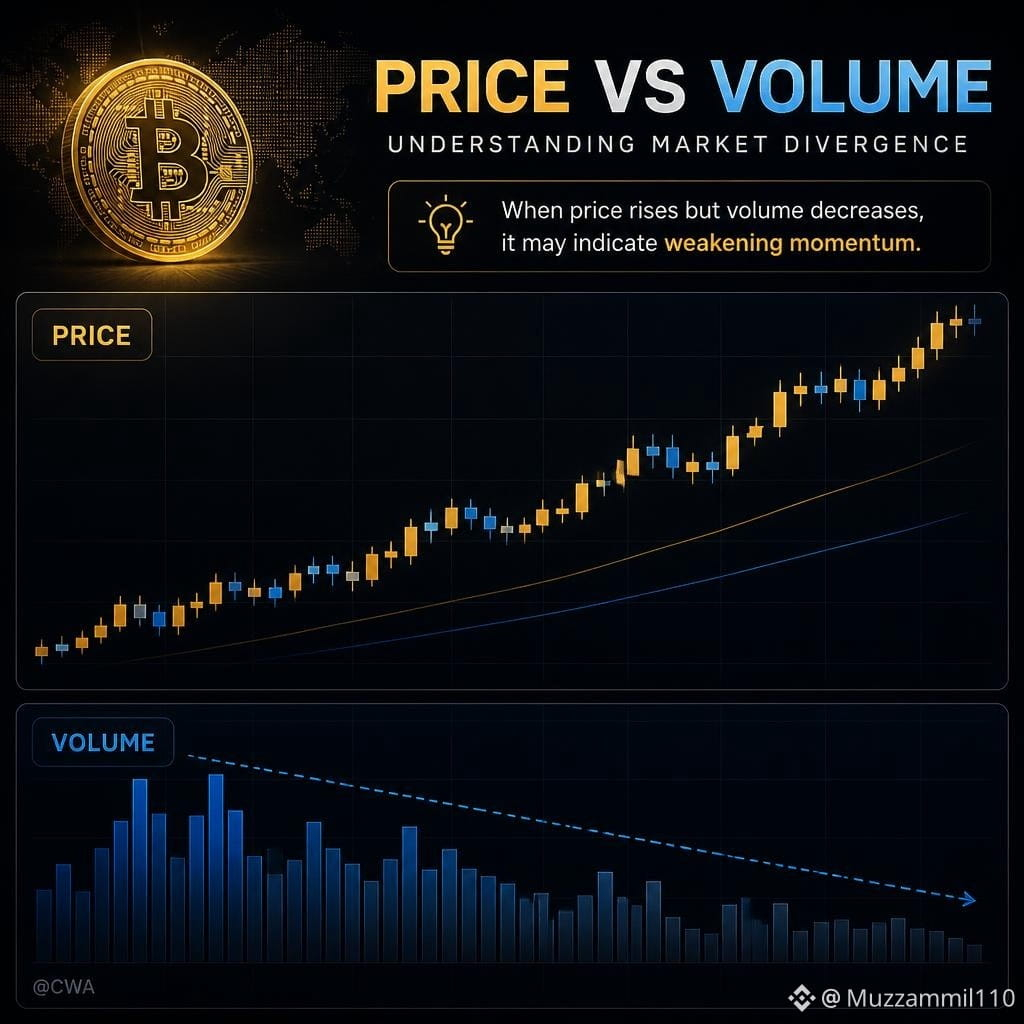
57
Der Preis zeigt Bewegung, während das Volumen zusätzlichen Kontext zur Handelsaktivität hinter dieser Bewegung liefert.
Wenn du Krypto-Charts untersuchst, berücksichtige Preis, Volumen, Marktstruktur und Liquidität.
Das Volumen liefert Kontext — keine Gewissheit.
📚 Nur zu Bildungszwecken — keine Finanzberatung.
#tradingvolume #VolumeAnalysis #bitcoin #Ethereum #cryptoeducation
Der Preis zeigt Bewegung, während das Volumen zusätzlichen Kontext zur Handelsaktivität hinter dieser Bewegung liefert.
Wenn du Krypto-Charts untersuchst, berücksichtige Preis, Volumen, Marktstruktur und Liquidität.
Das Volumen liefert Kontext — keine Gewissheit.
📚 Nur zu Bildungszwecken — keine Finanzberatung.
#tradingvolume #VolumeAnalysis #bitcoin #Ethereum #cryptoeducation
Wenn du Krypto-Charts untersuchst, berücksichtige Preis, Volumen, Marktstruktur und Liquidität.
Das Volumen liefert Kontext — keine Gewissheit.
📚 Nur zu Bildungszwecken — keine Finanzberatung.
#tradingvolume #VolumeAnalysis #bitcoin #Ethereum #cryptoeducation
109
📊 Schneller technischer Analyse-Check
MACD ist vor allem nützlich für →
🔘 Momentum
🔘 Volumen
🔘 Unterstützung
Was ist deine Antwort? 👇
#MACD #TechnicalAnalysis #cryptoeducation #cryptotrading #BinanceSquare
📊 Schneller technischer Analyse-Check
MACD ist vor allem nützlich für →
🔘 Momentum
🔘 Volumen
🔘 Unterstützung
Was ist deine Antwort? 👇
#MACD #TechnicalAnalysis #cryptoeducation #cryptotrading #BinanceSquare
MACD ist vor allem nützlich für →
🔘 Momentum
🔘 Volumen
🔘 Unterstützung
Was ist deine Antwort? 👇
#MACD #TechnicalAnalysis #cryptoeducation #cryptotrading #BinanceSquare
47
MACD erklärt: Momentum, Crossover & was Trader oft falsch machen
Der MACD ist einer der am häufigsten verwendeten Momentum-Indikatoren in der technischen Analyse.
Aber viele Einsteiger verstehen nicht richtig, was ein MACD-Crossover eigentlich bedeutet.
🔹 Was ist MACD?
MACD steht für Moving Average Convergence Divergence.
Er vergleicht zwei exponentielle gleitende Durchschnitte, um Änderungen im Momentum sichtbar zu machen.
Die wichtigsten Bestandteile sind:
• MACD-Linie — zeigt die Beziehung zwischen zwei EMAs
• Signallinie — ein geglätteter Durchschnitt der MACD-Linie
• Histogramm — zeigt die Entfernung zwischen den beiden Linien
🔹 Was sagt ein Crossover über dich?
Wenn die MACD-Linie die Signallinie kreuzt, nutzen Trader das oft, um eine mögliche Änderung im Momentum zu erkennen.
Aber ein Crossover allein bestätigt NICHT automatisch eine Trendwende.
Beispielsweise kann in einem seitwärts verlaufenden Markt der MACD mehrere Crossover erzeugen, die nicht zu einer nachhaltigen Bewegung führen.
🔹 Häufige Fehler
❌ Jeder Crossover als Kauf-/Verkaufssignal behandeln
❌ Die gesamte Marktstruktur ignorieren
❌ MACD verwenden, ohne den Zeithorizont (Timeframe) zu berücksichtigen
❌ Annehmen, dass Momentum automatisch die Richtung des Trends bedeutet
Ein besserer Ansatz ist es, den MACD mit der Kursstruktur, dem Volumen,
Support/Resistance und dem größeren Zeithorizont zu vergleichen.
Denk an den MACD als Werkzeug zum Verständnis von Momentum — nicht als Glaskugel, um den Kurs vorherzusagen.
Nur zu Bildungszwecken — keine finanzielle Beratung.
💬 Was denkst du, ist MACD hauptsächlich hilfreich für: Momentum, Volumen oder Support?
#BTC #MACD #TechnicalAnalysis #cryptoeducation #momentum
MACD erklärt: Momentum, Crossover & was Trader oft falsch machen
Der MACD ist einer der am häufigsten verwendeten Momentum-Indikatoren in der technischen Analyse.
Aber viele Einsteiger verstehen nicht richtig, was ein MACD-Crossover eigentlich bedeutet.
🔹 Was ist MACD?
MACD steht für Moving Average Convergence Divergence.
Er vergleicht zwei exponentielle gleitende Durchschnitte, um Änderungen im Momentum sichtbar zu machen.
Die wichtigsten Bestandteile sind:
• MACD-Linie — zeigt die Beziehung zwischen zwei EMAs
• Signallinie — ein geglätteter Durchschnitt der MACD-Linie
• Histogramm — zeigt die Entfernung zwischen den beiden Linien
🔹 Was sagt ein Crossover über dich?
Wenn die MACD-Linie die Signallinie kreuzt, nutzen Trader das oft, um eine mögliche Änderung im Momentum zu erkennen.
Aber ein Crossover allein bestätigt NICHT automatisch eine Trendwende.
Beispielsweise kann in einem seitwärts verlaufenden Markt der MACD mehrere Crossover erzeugen, die nicht zu einer nachhaltigen Bewegung führen.
🔹 Häufige Fehler
❌ Jeder Crossover als Kauf-/Verkaufssignal behandeln
❌ Die gesamte Marktstruktur ignorieren
❌ MACD verwenden, ohne den Zeithorizont (Timeframe) zu berücksichtigen
❌ Annehmen, dass Momentum automatisch die Richtung des Trends bedeutet
Ein besserer Ansatz ist es, den MACD mit der Kursstruktur, dem Volumen,
Support/Resistance und dem größeren Zeithorizont zu vergleichen.
Denk an den MACD als Werkzeug zum Verständnis von Momentum — nicht als Glaskugel, um den Kurs vorherzusagen.
Nur zu Bildungszwecken — keine finanzielle Beratung.
💬 Was denkst du, ist MACD hauptsächlich hilfreich für: Momentum, Volumen oder Support?
#BTC #MACD #TechnicalAnalysis #cryptoeducation #momentum
Der MACD ist einer der am häufigsten verwendeten Momentum-Indikatoren in der technischen Analyse.
Aber viele Einsteiger verstehen nicht richtig, was ein MACD-Crossover eigentlich bedeutet.
🔹 Was ist MACD?
MACD steht für Moving Average Convergence Divergence.
Er vergleicht zwei exponentielle gleitende Durchschnitte, um Änderungen im Momentum sichtbar zu machen.
Die wichtigsten Bestandteile sind:
• MACD-Linie — zeigt die Beziehung zwischen zwei EMAs
• Signallinie — ein geglätteter Durchschnitt der MACD-Linie
• Histogramm — zeigt die Entfernung zwischen den beiden Linien
🔹 Was sagt ein Crossover über dich?
Wenn die MACD-Linie die Signallinie kreuzt, nutzen Trader das oft, um eine mögliche Änderung im Momentum zu erkennen.
Aber ein Crossover allein bestätigt NICHT automatisch eine Trendwende.
Beispielsweise kann in einem seitwärts verlaufenden Markt der MACD mehrere Crossover erzeugen, die nicht zu einer nachhaltigen Bewegung führen.
🔹 Häufige Fehler
❌ Jeder Crossover als Kauf-/Verkaufssignal behandeln
❌ Die gesamte Marktstruktur ignorieren
❌ MACD verwenden, ohne den Zeithorizont (Timeframe) zu berücksichtigen
❌ Annehmen, dass Momentum automatisch die Richtung des Trends bedeutet
Ein besserer Ansatz ist es, den MACD mit der Kursstruktur, dem Volumen,
Support/Resistance und dem größeren Zeithorizont zu vergleichen.
Denk an den MACD als Werkzeug zum Verständnis von Momentum — nicht als Glaskugel, um den Kurs vorherzusagen.
Nur zu Bildungszwecken — keine finanzielle Beratung.
💬 Was denkst du, ist MACD hauptsächlich hilfreich für: Momentum, Volumen oder Support?
#BTC #MACD #TechnicalAnalysis #cryptoeducation #momentum
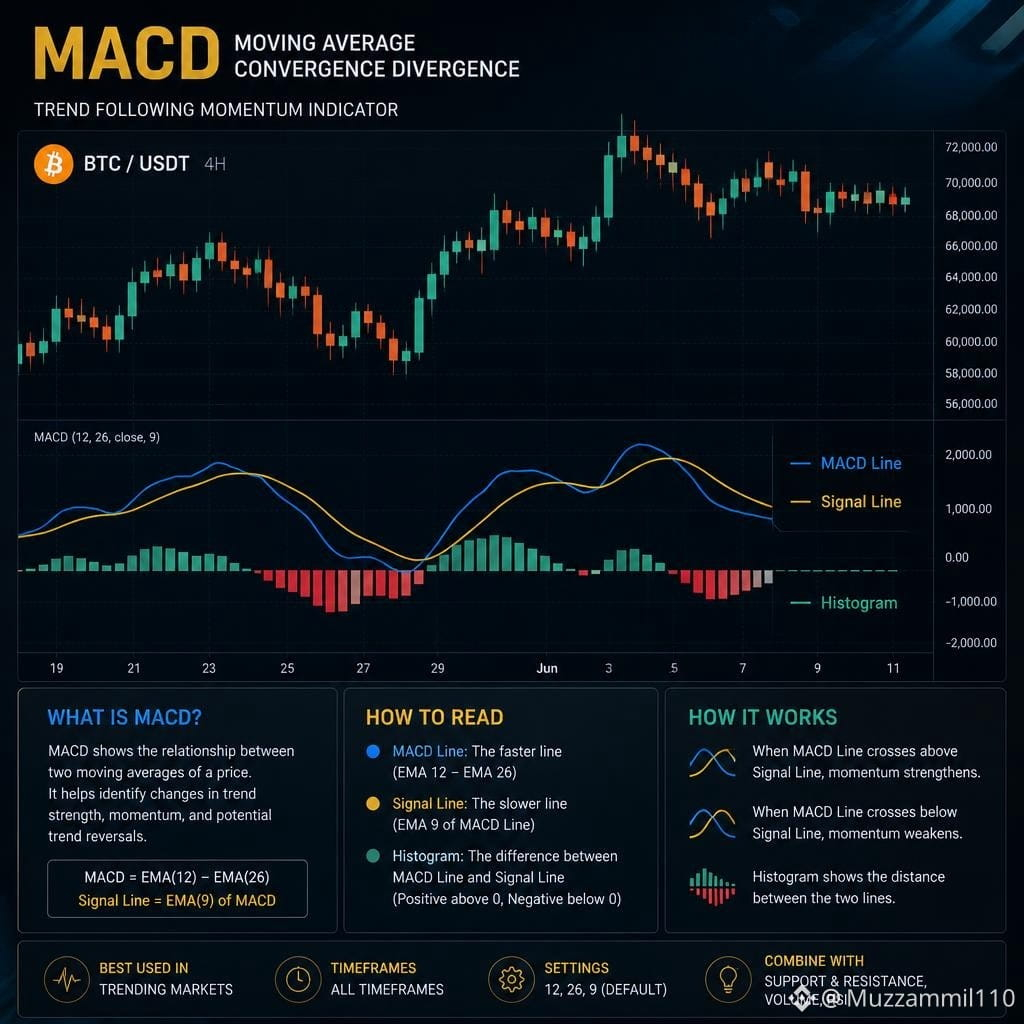
57
📊 RSI für Einsteiger: Was „Overbought“ und „Oversold“ wirklich bedeuten
Wenn du jemals RSI über 70 gesehen und sofort „SELL“ gedacht hast,
gibt es einen wichtigen Begriff zu verstehen.
RSI ist ein Momentum-Indikator. Er hilft dabei zu zeigen, wie stark sich der Preis in letzter Zeit bewegt hat.
🔹 RSI über 70 — „Overbought“?
Traditionell wird ein RSI über 70 als „overbought“ (überkauft) beschrieben.
Aber „overbought“ bedeutet nicht automatisch:
❌ Der Preis muss fallen
❌ Sofort verkaufen
❌ Der Trend hat sich umgekehrt
Während eines starken Aufwärtstrends kann der RSI für eine längere Zeit über 70 bleiben, weil das Momentum stark ist.
🔹 RSI unter 30 — „Oversold“?
Ein RSI unter 30 wird traditionell als „oversold“ (überverkauft) beschrieben.
Aber „oversold“ bedeutet nicht automatisch:
❌ Der Preis muss steigen
❌ Sofort kaufen
❌ Der Abwärtstrend ist vorbei
Starke bärische Trends können dazu führen, dass der RSI nahe am „oversold“-Bereich bleibt.
🔹 Also: Was sagt RSI dir wirklich?
Stell dir RSI wie ein Thermometer für das Momentum vor, nicht wie eine Vorhersagemaschine.
Nutze ihn zusammen mit:
• Marktstruktur
• Support & Widerstand
• Volumen
• Trend
• Höheren und niedrigeren Timeframes
Zum Beispiel bedeutet ein RSI-Wert über 70, dass das Momentum stark war—er sagt dir nicht allein, was als Nächstes passiert.
📌 Fazit für Einsteiger:
Overbought ≠ automatisches Verkaufen.
Oversold ≠ automatisches Kaufen.
Der Indikator liefert Kontext. Deine Aufgabe ist es, diesen Kontext zu verstehen.
$BTC
Dies ist Bildungsinhalte, kein Trading-Signal und keine finanzielle Beratung.
💬 Wenn sich der RSI über 70 bewegt, was denkst du, zeigt er: Verkaufschance, starkes Momentum oder gar nichts allein?
Teile, was ich jeden Tag in Crypto lerne — folge mir
#priceaction #cryptotrading #Marketstructure #CryptoWithAli #BinanceSquare
📊 RSI für Einsteiger: Was „Overbought“ und „Oversold“ wirklich bedeuten
Wenn du jemals RSI über 70 gesehen und sofort „SELL“ gedacht hast,
gibt es einen wichtigen Begriff zu verstehen.
RSI ist ein Momentum-Indikator. Er hilft dabei zu zeigen, wie stark sich der Preis in letzter Zeit bewegt hat.
🔹 RSI über 70 — „Overbought“?
Traditionell wird ein RSI über 70 als „overbought“ (überkauft) beschrieben.
Aber „overbought“ bedeutet nicht automatisch:
❌ Der Preis muss fallen
❌ Sofort verkaufen
❌ Der Trend hat sich umgekehrt
Während eines starken Aufwärtstrends kann der RSI für eine längere Zeit über 70 bleiben, weil das Momentum stark ist.
🔹 RSI unter 30 — „Oversold“?
Ein RSI unter 30 wird traditionell als „oversold“ (überverkauft) beschrieben.
Aber „oversold“ bedeutet nicht automatisch:
❌ Der Preis muss steigen
❌ Sofort kaufen
❌ Der Abwärtstrend ist vorbei
Starke bärische Trends können dazu führen, dass der RSI nahe am „oversold“-Bereich bleibt.
🔹 Also: Was sagt RSI dir wirklich?
Stell dir RSI wie ein Thermometer für das Momentum vor, nicht wie eine Vorhersagemaschine.
Nutze ihn zusammen mit:
• Marktstruktur
• Support & Widerstand
• Volumen
• Trend
• Höheren und niedrigeren Timeframes
Zum Beispiel bedeutet ein RSI-Wert über 70, dass das Momentum stark war—er sagt dir nicht allein, was als Nächstes passiert.
📌 Fazit für Einsteiger:
Overbought ≠ automatisches Verkaufen.
Oversold ≠ automatisches Kaufen.
Der Indikator liefert Kontext. Deine Aufgabe ist es, diesen Kontext zu verstehen.
$BTC
Dies ist Bildungsinhalte, kein Trading-Signal und keine finanzielle Beratung.
💬 Wenn sich der RSI über 70 bewegt, was denkst du, zeigt er: Verkaufschance, starkes Momentum oder gar nichts allein?
Teile, was ich jeden Tag in Crypto lerne — folge mir
#priceaction #cryptotrading #Marketstructure #CryptoWithAli #BinanceSquare
Wenn du jemals RSI über 70 gesehen und sofort „SELL“ gedacht hast,
gibt es einen wichtigen Begriff zu verstehen.
RSI ist ein Momentum-Indikator. Er hilft dabei zu zeigen, wie stark sich der Preis in letzter Zeit bewegt hat.
🔹 RSI über 70 — „Overbought“?
Traditionell wird ein RSI über 70 als „overbought“ (überkauft) beschrieben.
Aber „overbought“ bedeutet nicht automatisch:
❌ Der Preis muss fallen
❌ Sofort verkaufen
❌ Der Trend hat sich umgekehrt
Während eines starken Aufwärtstrends kann der RSI für eine längere Zeit über 70 bleiben, weil das Momentum stark ist.
🔹 RSI unter 30 — „Oversold“?
Ein RSI unter 30 wird traditionell als „oversold“ (überverkauft) beschrieben.
Aber „oversold“ bedeutet nicht automatisch:
❌ Der Preis muss steigen
❌ Sofort kaufen
❌ Der Abwärtstrend ist vorbei
Starke bärische Trends können dazu führen, dass der RSI nahe am „oversold“-Bereich bleibt.
🔹 Also: Was sagt RSI dir wirklich?
Stell dir RSI wie ein Thermometer für das Momentum vor, nicht wie eine Vorhersagemaschine.
Nutze ihn zusammen mit:
• Marktstruktur
• Support & Widerstand
• Volumen
• Trend
• Höheren und niedrigeren Timeframes
Zum Beispiel bedeutet ein RSI-Wert über 70, dass das Momentum stark war—er sagt dir nicht allein, was als Nächstes passiert.
📌 Fazit für Einsteiger:
Overbought ≠ automatisches Verkaufen.
Oversold ≠ automatisches Kaufen.
Der Indikator liefert Kontext. Deine Aufgabe ist es, diesen Kontext zu verstehen.
$BTC
Dies ist Bildungsinhalte, kein Trading-Signal und keine finanzielle Beratung.
💬 Wenn sich der RSI über 70 bewegt, was denkst du, zeigt er: Verkaufschance, starkes Momentum oder gar nichts allein?
Teile, was ich jeden Tag in Crypto lerne — folge mir
#priceaction #cryptotrading #Marketstructure #CryptoWithAli #BinanceSquare
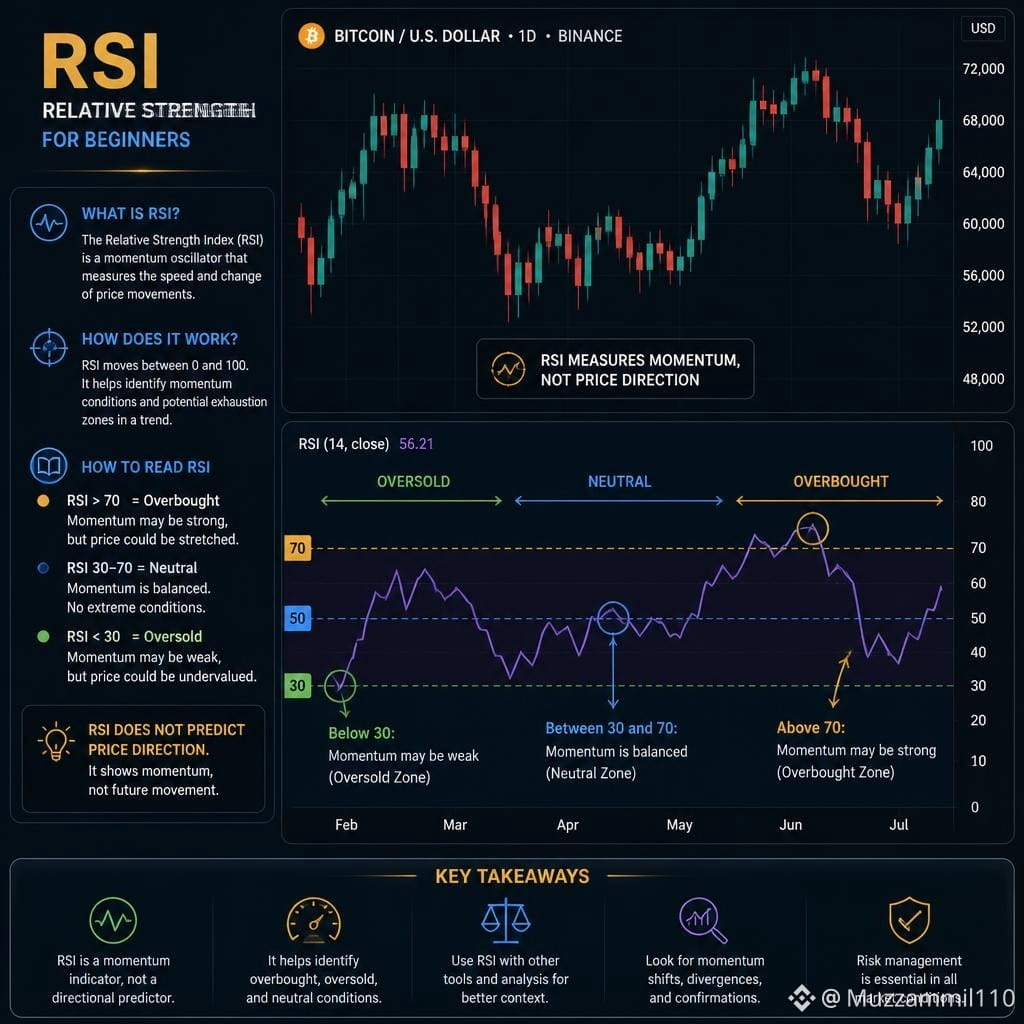
56
📊 Was ist stärker, wenn man einen Krypto-Chart analysiert?
🔹 Unterstützung
🔹 Widerstand
🔹 Beides
💡 Es gibt nicht unbedingt eine universelle Antwort.
Die Stärke eines Niveaus hängt von Faktoren wie früheren Reaktionen, dem Zeithorizont, dem Volumen und der gesamten Marktstruktur ab.
👇 Worauf achtest du mehr?
#CryptoPoll #BinanceSquare
📊 Was ist stärker, wenn man einen Krypto-Chart analysiert?
🔹 Unterstützung
🔹 Widerstand
🔹 Beides
💡 Es gibt nicht unbedingt eine universelle Antwort.
Die Stärke eines Niveaus hängt von Faktoren wie früheren Reaktionen, dem Zeithorizont, dem Volumen und der gesamten Marktstruktur ab.
👇 Worauf achtest du mehr?
#CryptoPoll #BinanceSquare
🔹 Unterstützung
🔹 Widerstand
🔹 Beides
💡 Es gibt nicht unbedingt eine universelle Antwort.
Die Stärke eines Niveaus hängt von Faktoren wie früheren Reaktionen, dem Zeithorizont, dem Volumen und der gesamten Marktstruktur ab.
👇 Worauf achtest du mehr?
#CryptoPoll #BinanceSquare
29
📊 Support & Widerstand: Warum diese Levels wichtiger sind als zufällige Kursziele
Beim Studium eines Krypto-Charts ist es leicht, sich auf ein bestimmtes Kursziel zu konzentrieren.
Doch bevor man darüber nachdenkt, wohin der Kurs als Nächstes gehen könnte, ist es oft hilfreicher zu verstehen, wo der Kurs zuvor reagiert hat.
Genau hier kommen Support und Resistance ins Spiel.
🔹 Support
Ein Kursbereich, in dem die Kaufnachfrage zuvor geholfen hat, einen Abwärtstrend zu verlangsamen oder zu stoppen.
🔹 Resistance
Ein Kursbereich, in dem der Verkaufsdruck zuvor geholfen hat, einen Aufwärtstrend zu verlangsamen oder zu stoppen.
🔹 Warum sind sie wichtig?
Das sind keine magischen Zahlen.
Es sind Bereiche, in denen Trader und Marktteilnehmer bereits zuvor Interesse gezeigt haben. Je klarer ein Level respektiert wurde, desto nützlicher kann es als Teil deiner Chart-Analyse sein.
🔹 Levels vs. exakte Linien
Anfänger zeichnen oft eine perfekte Linie.
In der Realität sind Support und Resistance jedoch häufig besser als Zonen zu betrachten, denn der Kurs kann sich leicht oberhalb oder unterhalb eines Bereichs bewegen, bevor er reagiert.
🔹 Kontext ist entscheidend
Ein Level sollte nicht isoliert betrachtet werden.
Beachte:
• Marktstruktur
• Volumen
• Vorherige Reaktionen
• Zeithorizont (Timeframe)
• Gesamtmarktlage
📌 Merksatz für Anfänger:
Statt zu fragen:
„Was ist das nächste zufällige Kursziel?“
Starte mit der Frage:
„Wo hat der Markt zuvor starkes Interesse gezeigt?“
Diese einfache Änderung kann die Chart-Analyse deutlich strukturierter machen.
$BTC
Dies ist Bildungsinhalte, keine Trading-Signale oder Finanzberatung.
💬 Wenn du einen Chart analysierst: Fokusierst du mehr auf Support, Resistance oder auf beides?
Tägliche Krypto-Gedanken für ruhige Entscheider — folge
#Marketstructure #tradingeducation #CryptoTrading #CryptoWithAli #BinanceSquare
📊 Support & Widerstand: Warum diese Levels wichtiger sind als zufällige Kursziele
Beim Studium eines Krypto-Charts ist es leicht, sich auf ein bestimmtes Kursziel zu konzentrieren.
Doch bevor man darüber nachdenkt, wohin der Kurs als Nächstes gehen könnte, ist es oft hilfreicher zu verstehen, wo der Kurs zuvor reagiert hat.
Genau hier kommen Support und Resistance ins Spiel.
🔹 Support
Ein Kursbereich, in dem die Kaufnachfrage zuvor geholfen hat, einen Abwärtstrend zu verlangsamen oder zu stoppen.
🔹 Resistance
Ein Kursbereich, in dem der Verkaufsdruck zuvor geholfen hat, einen Aufwärtstrend zu verlangsamen oder zu stoppen.
🔹 Warum sind sie wichtig?
Das sind keine magischen Zahlen.
Es sind Bereiche, in denen Trader und Marktteilnehmer bereits zuvor Interesse gezeigt haben. Je klarer ein Level respektiert wurde, desto nützlicher kann es als Teil deiner Chart-Analyse sein.
🔹 Levels vs. exakte Linien
Anfänger zeichnen oft eine perfekte Linie.
In der Realität sind Support und Resistance jedoch häufig besser als Zonen zu betrachten, denn der Kurs kann sich leicht oberhalb oder unterhalb eines Bereichs bewegen, bevor er reagiert.
🔹 Kontext ist entscheidend
Ein Level sollte nicht isoliert betrachtet werden.
Beachte:
• Marktstruktur
• Volumen
• Vorherige Reaktionen
• Zeithorizont (Timeframe)
• Gesamtmarktlage
📌 Merksatz für Anfänger:
Statt zu fragen:
„Was ist das nächste zufällige Kursziel?“
Starte mit der Frage:
„Wo hat der Markt zuvor starkes Interesse gezeigt?“
Diese einfache Änderung kann die Chart-Analyse deutlich strukturierter machen.
$BTC
Dies ist Bildungsinhalte, keine Trading-Signale oder Finanzberatung.
💬 Wenn du einen Chart analysierst: Fokusierst du mehr auf Support, Resistance oder auf beides?
Tägliche Krypto-Gedanken für ruhige Entscheider — folge
#Marketstructure #tradingeducation #CryptoTrading #CryptoWithAli #BinanceSquare
Beim Studium eines Krypto-Charts ist es leicht, sich auf ein bestimmtes Kursziel zu konzentrieren.
Doch bevor man darüber nachdenkt, wohin der Kurs als Nächstes gehen könnte, ist es oft hilfreicher zu verstehen, wo der Kurs zuvor reagiert hat.
Genau hier kommen Support und Resistance ins Spiel.
🔹 Support
Ein Kursbereich, in dem die Kaufnachfrage zuvor geholfen hat, einen Abwärtstrend zu verlangsamen oder zu stoppen.
🔹 Resistance
Ein Kursbereich, in dem der Verkaufsdruck zuvor geholfen hat, einen Aufwärtstrend zu verlangsamen oder zu stoppen.
🔹 Warum sind sie wichtig?
Das sind keine magischen Zahlen.
Es sind Bereiche, in denen Trader und Marktteilnehmer bereits zuvor Interesse gezeigt haben. Je klarer ein Level respektiert wurde, desto nützlicher kann es als Teil deiner Chart-Analyse sein.
🔹 Levels vs. exakte Linien
Anfänger zeichnen oft eine perfekte Linie.
In der Realität sind Support und Resistance jedoch häufig besser als Zonen zu betrachten, denn der Kurs kann sich leicht oberhalb oder unterhalb eines Bereichs bewegen, bevor er reagiert.
🔹 Kontext ist entscheidend
Ein Level sollte nicht isoliert betrachtet werden.
Beachte:
• Marktstruktur
• Volumen
• Vorherige Reaktionen
• Zeithorizont (Timeframe)
• Gesamtmarktlage
📌 Merksatz für Anfänger:
Statt zu fragen:
„Was ist das nächste zufällige Kursziel?“
Starte mit der Frage:
„Wo hat der Markt zuvor starkes Interesse gezeigt?“
Diese einfache Änderung kann die Chart-Analyse deutlich strukturierter machen.
$BTC
Dies ist Bildungsinhalte, keine Trading-Signale oder Finanzberatung.
💬 Wenn du einen Chart analysierst: Fokusierst du mehr auf Support, Resistance oder auf beides?
Tägliche Krypto-Gedanken für ruhige Entscheider — folge
#Marketstructure #tradingeducation #CryptoTrading #CryptoWithAli #BinanceSquare
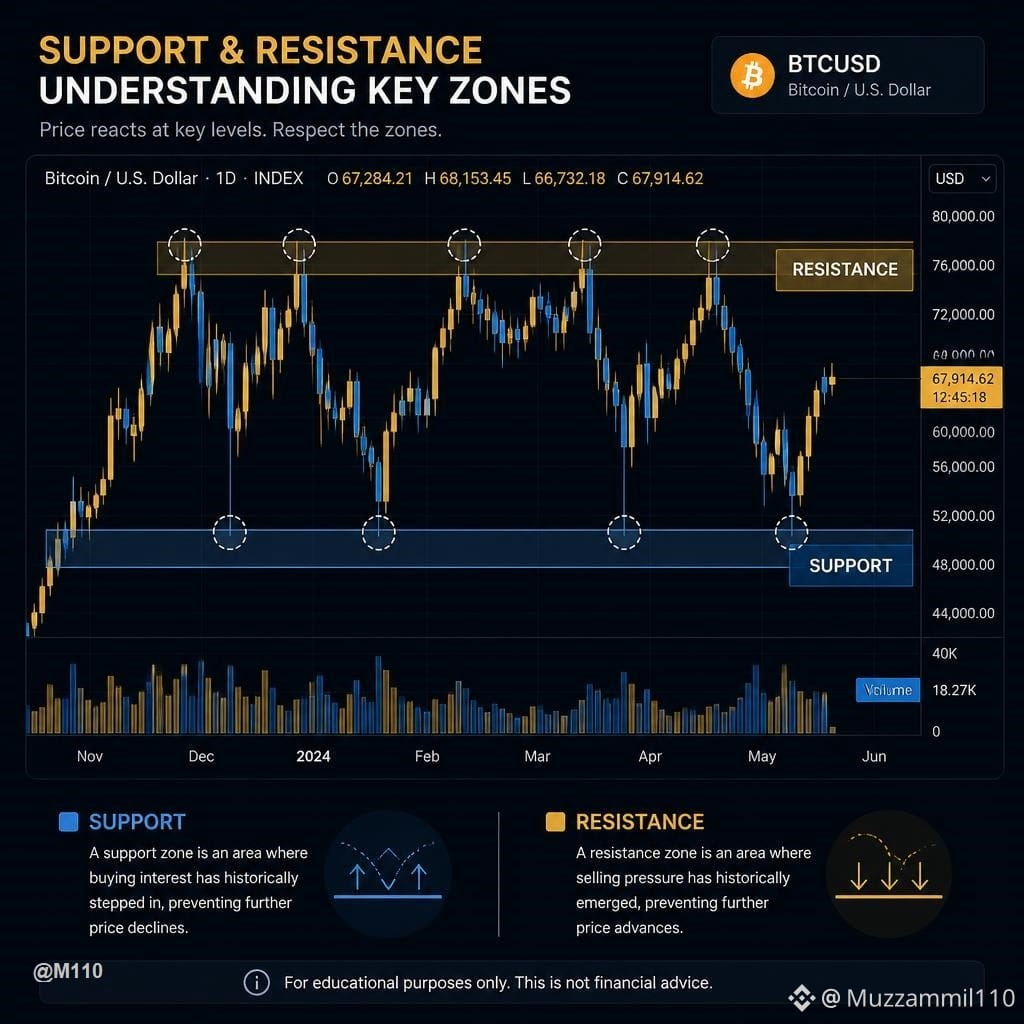
65
Anmelden und weiter Inhalte entdecken
Krypto-Nutzer weltweit auf Binance Square kennenlernen
⚡️ Bleib in Sachen Krypto stets am Puls.
💬 Die weltgrößte Kryptobörse vertraut darauf.
👍 Erhalte verlässliche Einblicke von verifizierten Creators.
E-Mail-Adresse/Telefonnummer
Trendthemen
FedRateWatch
4,914 Aufrufe
26 Kommentare
Teile & gewinne Traffic-Belohnungen in unserer Kampagne mit angesagtem Hashtag
✨Thema: FOMC September, Was ist der nächste Schritt der Fed?
👉So nimmst du teil:
Veröffentliche einen kurzen Beitrag oder Artikel mit dem Hashtag #FedRateWatch
Erstelle Inhalte basierend auf den folgenden Blickwinkeln:
- Der August-Core-CPI stieg um 0,3% im Monatsvergleich, und die Wahrscheinlichkeit für eine 25bp-Erhöhung diese Woche liegt nun bei fast 90%. Erwartest du diese Woche eine Zinserhöhung? Handelt es sich um einen einmaligen Schritt oder den Beginn eines längeren Zinserhöhungszyklus?
- Wenn die Erhöhung erfolgt: Wie entwickelt sich das für BTC, Tech-Aktien und Gold? Aufwärts- oder abwärtsgerichtet?
- Wie planst du als Nächstes zu handeln? Teile deinen BTC-, Aktien- oder Gold-Trade/Bestände mit unserem Trade-Sharing-Widget.
⏰Kampagnenzeitraum:
- 2026-09-15 11:00 - 2026-09-17 3:00 UTC
🎁Belohnung:
- Qualifizierte Beiträge, die die oben genannten Richtlinien erfüllen und mehr als 100 Wörter enthalten, werden überprüft und erhalten möglicherweise einen zufälligen Traffic-Boost von 500 bis 3.000 Aufrufen. Du erhältst eine Benachrichtigung von deiner Feed-Secretary, wenn dein Beitrag ausgewählt wird.
- Erhalte die Chance, dass dein Artikel auf Binance Square Official vorgestellt wird
Du brauchst Ideen für deinen Beitrag? Besuche die Themenseite #FedRateWatch oder die Square Guide on How to Post for Better Reach.
Binance Square Official
·30 Likes
·34.5k Aufrufe
BitcoinReboundsTo$79K
32,794 Aufrufe
261 Kommentare
BessentEndorsesFinalClarityActDraft
610 Aufrufe
65 Kommentare