
#stablecoin
stablecoin
3.9M Aufrufe
17,371 Kommentare
Hot
Zuletzt


Artikel
Übersetzung ansehen
: US Bank Just Took Payments On Chain🚨 A major bank just made a move into crypto. 🇺🇸
US Bank completed its first live cross border payment using its own stablecoin, USBDC. 💰
The message is clear:
Banking is slowly moving on chain. 🔗🌍
Could stablecoins reshape global payments? 👀🔥
$XLM $IOST $KAT
#Stablecoin
{spot}(IOSTUSDT)
{spot}(KATUSDT)
{spot}(XLMUSDT)
#Crypto #Blockchain
: US Bank Just Took Payments On Chain
🚨 A major bank just made a move into crypto. 🇺🇸
US Bank completed its first live cross border payment using its own stablecoin, USBDC. 💰
The message is clear:
Banking is slowly moving on chain. 🔗🌍
Could stablecoins reshape global payments? 👀🔥
$XLM $IOST $KAT
#Stablecoin
#Crypto #Blockchain
US Bank completed its first live cross border payment using its own stablecoin, USBDC. 💰
The message is clear:
Banking is slowly moving on chain. 🔗🌍
Could stablecoins reshape global payments? 👀🔥
$XLM $IOST $KAT
#Stablecoin
#Crypto #Blockchain
385

·
--
Übersetzung ansehen
🚨 21家金融机构计划美元稳定币可获DEFI收益 🧠
📊 | $BTC | $ETH | $BNB |
- 关注、点赞、评论,了解更多加密市场动态 📈
- Katana CEO Matt Fisher 表示,21家金融机构计划在2027年上半年推出美元稳定币,可通过DeFi协议产生收益。
- 但持有者需自行承担发行银行不覆盖的风险。
- 该方案强调收益与风险并存。
- 市场对此持谨慎看法。 🔥
- 由于收益与风险并存,机构持仓可能趋向谨慎,短期内可能出现回调。
- 机构鲸鱼可能在低点加仓,导致抛售压力短暂释放。
- 若DeFi收益实现,市场预期收益率可能提升,短期内或将出现波动加剧。
- 预计未来几周市场将继续呈现下行压力,波动性加大。
- 您认为美元稳定币的DeFi收益是否值得承担额外风险?
- 关注我们,获取实时加密市场分析与见解
#Stablecoin #DeFi #Whales #CryptoMarkets #Yield
🚨 21家金融机构计划美元稳定币可获DEFI收益 🧠
📊 | $BTC | $ETH | $BNB |
- 关注、点赞、评论,了解更多加密市场动态 📈
- Katana CEO Matt Fisher 表示,21家金融机构计划在2027年上半年推出美元稳定币,可通过DeFi协议产生收益。
- 但持有者需自行承担发行银行不覆盖的风险。
- 该方案强调收益与风险并存。
- 市场对此持谨慎看法。 🔥
- 由于收益与风险并存,机构持仓可能趋向谨慎,短期内可能出现回调。
- 机构鲸鱼可能在低点加仓,导致抛售压力短暂释放。
- 若DeFi收益实现,市场预期收益率可能提升,短期内或将出现波动加剧。
- 预计未来几周市场将继续呈现下行压力,波动性加大。
- 您认为美元稳定币的DeFi收益是否值得承担额外风险?
- 关注我们,获取实时加密市场分析与见解
#Stablecoin #DeFi #Whales #CryptoMarkets #Yield
📊 | $BTC | $ETH | $BNB |
- 关注、点赞、评论,了解更多加密市场动态 📈
- Katana CEO Matt Fisher 表示,21家金融机构计划在2027年上半年推出美元稳定币,可通过DeFi协议产生收益。
- 但持有者需自行承担发行银行不覆盖的风险。
- 该方案强调收益与风险并存。
- 市场对此持谨慎看法。 🔥
- 由于收益与风险并存,机构持仓可能趋向谨慎,短期内可能出现回调。
- 机构鲸鱼可能在低点加仓,导致抛售压力短暂释放。
- 若DeFi收益实现,市场预期收益率可能提升,短期内或将出现波动加剧。
- 预计未来几周市场将继续呈现下行压力,波动性加大。
- 您认为美元稳定币的DeFi收益是否值得承担额外风险?
- 关注我们,获取实时加密市场分析与见解
#Stablecoin #DeFi #Whales #CryptoMarkets #Yield
7

Übersetzung ansehen
🚨 泰国SEC拟定每日稳定币转账上限151千美元 🧠
📊 | $BTC | $ETH | $BNB |
- 请关注、点赞并留言,分享您的看法 📈
- 泰国证券监管局(SEC)拟对使用私有钱包的稳定币转账设定每日最高151,000美元的上限。
- 该提案旨在防范洗钱及系统性风险,提升监管透明度。
- 公共意见征集截止日期为9月25日,届时将决定是否正式实施。 🔥
- 如上限获批,可能抑制大额稳定币流动,短期内交易量或将趋于平稳。
- 对于持有大量稳定币的鲸鱼账户,预计其转账行为将受限,导致持仓调整。
- 若市场对监管加强持积极反应,可能提振泰国数字资产的整体信心。
- 短期内,受限额影响,相关交易对价格波动预计有限,整体行情将保持横盘。
- 您认为该上限会对泰国稳定币生态系统产生何种长期影响?
- 欢迎关注我们获取更多加密市场深度分析并留下您的见解。
#Crypto #Stablecoin #Regulation #Whales #Trading
🚨 泰国SEC拟定每日稳定币转账上限151千美元 🧠
📊 | $BTC | $ETH | $BNB |
- 请关注、点赞并留言,分享您的看法 📈
- 泰国证券监管局(SEC)拟对使用私有钱包的稳定币转账设定每日最高151,000美元的上限。
- 该提案旨在防范洗钱及系统性风险,提升监管透明度。
- 公共意见征集截止日期为9月25日,届时将决定是否正式实施。 🔥
- 如上限获批,可能抑制大额稳定币流动,短期内交易量或将趋于平稳。
- 对于持有大量稳定币的鲸鱼账户,预计其转账行为将受限,导致持仓调整。
- 若市场对监管加强持积极反应,可能提振泰国数字资产的整体信心。
- 短期内,受限额影响,相关交易对价格波动预计有限,整体行情将保持横盘。
- 您认为该上限会对泰国稳定币生态系统产生何种长期影响?
- 欢迎关注我们获取更多加密市场深度分析并留下您的见解。
#Crypto #Stablecoin #Regulation #Whales #Trading
📊 | $BTC | $ETH | $BNB |
- 请关注、点赞并留言,分享您的看法 📈
- 泰国证券监管局(SEC)拟对使用私有钱包的稳定币转账设定每日最高151,000美元的上限。
- 该提案旨在防范洗钱及系统性风险,提升监管透明度。
- 公共意见征集截止日期为9月25日,届时将决定是否正式实施。 🔥
- 如上限获批,可能抑制大额稳定币流动,短期内交易量或将趋于平稳。
- 对于持有大量稳定币的鲸鱼账户,预计其转账行为将受限,导致持仓调整。
- 若市场对监管加强持积极反应,可能提振泰国数字资产的整体信心。
- 短期内,受限额影响,相关交易对价格波动预计有限,整体行情将保持横盘。
- 您认为该上限会对泰国稳定币生态系统产生何种长期影响?
- 欢迎关注我们获取更多加密市场深度分析并留下您的见解。
#Crypto #Stablecoin #Regulation #Whales #Trading
233

·
--
Usbekistan hat einen großen Coup gelandet! Die Regierung unterstützt direkt die Stablecoin HUMO, bereits mit über 20 Händlern wird die Bezahlung getestet, die Notenbank überwacht persönlich! Das ist eine Stablecoin mit staatlicher Bürgschaft – das bedeutet, dass Kryptowährungen auf staatlicher Ebene ausprobiert und anerkannt werden. Der Stablecoin-Markt dürfte durchstarten, $HUMO profitiert direkt, und auch andere Stablecoins wie $USDT könnten mit nach oben gehen. Immer mehr digital unterstützte Währungen der Regierung kommen hinzu, und wie schnell Kryptowährungen in den Mainstream vordringen, geht schneller als wir dachten! #stablecoin #CBDC
Usbekistan hat einen großen Coup gelandet! Die Regierung unterstützt direkt die Stablecoin HUMO, bereits mit über 20 Händlern wird die Bezahlung getestet, die Notenbank überwacht persönlich! Das ist eine Stablecoin mit staatlicher Bürgschaft – das bedeutet, dass Kryptowährungen auf staatlicher Ebene ausprobiert und anerkannt werden. Der Stablecoin-Markt dürfte durchstarten, $HUMO profitiert direkt, und auch andere Stablecoins wie $USDT könnten mit nach oben gehen. Immer mehr digital unterstützte Währungen der Regierung kommen hinzu, und wie schnell Kryptowährungen in den Mainstream vordringen, geht schneller als wir dachten! #stablecoin #CBDC
1
·
--
Schockierend! Auf der Kette gibt es offenbar eine Kluft von 300:1 zwischen dem US-Dollar- und dem Euro-Ökosystem, während es im Offline-Bereich nur 3:1 sind! Der Anteil von Euro-Stablecoins liegt bei unter 1%, und dieses Missverhältnis ist wirklich krass. Zum Glück gewinnt die Regulierung durch die europäische MiCA-Verordnung an Fahrt, und die DeFi-Infrastruktur für den Euro wird schrittweise weiter ausgebaut. Die Zukunft des Euro-Stablecoin-Markts ist vielversprechend und könnte ein regelrechtes Wachstumsexplosionspotenzial haben – womöglich wird die Vorherrschaft des US-Dollars herausgefordert. Eine Diversifizierung der Stablecoin-Kombinationen wird zum Trend, also behaltet die Chancen für DeFi-Projekte im Euroraum im Blick!
#DeFi #Stablecoin $EURS $USDC
Schockierend! Auf der Kette gibt es offenbar eine Kluft von 300:1 zwischen dem US-Dollar- und dem Euro-Ökosystem, während es im Offline-Bereich nur 3:1 sind! Der Anteil von Euro-Stablecoins liegt bei unter 1%, und dieses Missverhältnis ist wirklich krass. Zum Glück gewinnt die Regulierung durch die europäische MiCA-Verordnung an Fahrt, und die DeFi-Infrastruktur für den Euro wird schrittweise weiter ausgebaut. Die Zukunft des Euro-Stablecoin-Markts ist vielversprechend und könnte ein regelrechtes Wachstumsexplosionspotenzial haben – womöglich wird die Vorherrschaft des US-Dollars herausgefordert. Eine Diversifizierung der Stablecoin-Kombinationen wird zum Trend, also behaltet die Chancen für DeFi-Projekte im Euroraum im Blick!
#DeFi #Stablecoin $EURS $USDC
#DeFi #Stablecoin $EURS $USDC
7
🚨 Thailands Stablecoin-Vorschlag würde Überweisungen an andere Wallets einschränken 🧠
📊 | $BTC | $ETH | $BNB |
- Bitte achten Sie darauf, liken Sie und kommentieren Sie, und teilen Sie Ihre Meinung 📈
- Die thailändischen Aufsichtsbehörden haben Stablecoin-Regeln ausgearbeitet: Lizenzierte Krypto-Unternehmen dürfen Gelder nur zwischen Konten ein- und auszahlen, die von dem jeweiligen Kunden selbst verifiziert wurden.
- Der Vorschlag verbietet es Nutzern, Gelder an die Wallet einer anderen Person zu überweisen. Ziel ist es, Geldwäsche und das Umgehen von Aufsichtsmaßnahmen zu verhindern.
- Die Regeln gelten für alle Krypto-Asset-Dienstleister, die in Thailand eine Lizenz erhalten.
- Bei Umsetzung könnte dies grenzüberschreitende Zahlungen und lokale Stablecoin-Anwendungsfälle beeinflussen. 🔥
- Kurzfristig könnte die Marktreaktion auf den Vorschlag abwartend bleiben; für den Kursverlauf wird eine Seitwärtsbewegung erwartet.
- Wenn die Regulierung strikt durchgesetzt wird, könnte es dazu führen, dass Teile der Gelder zu Plattformen im Ausland verlagert werden oder anonyme Wallets genutzt werden.
- Große Wal-Transfers bleiben derzeit neutral; es sind keine nennenswerten Schwankungen zu beobachten.
- Wenn der Vorschlag verzögert oder geändert wird, könnte sich die Markstimmung wieder aufhellen und die betreffenden Tokens könnten leicht steigen.
- Glauben Sie, dass diese Regulierungsmaßnahme die Krypto-Innovation in Thailand bremsen wird? Diskutieren Sie gern.
- Folgen Sie uns für weitere vertiefte Analysen zum Krypto-Markt, wir freuen uns auf Ihren Kommentar.
- #Crypto #Stablecoin #Regulation #Whales #Market
🚨 Thailands Stablecoin-Vorschlag würde Überweisungen an andere Wallets einschränken 🧠
📊 | $BTC | $ETH | $BNB |
- Bitte achten Sie darauf, liken Sie und kommentieren Sie, und teilen Sie Ihre Meinung 📈
- Die thailändischen Aufsichtsbehörden haben Stablecoin-Regeln ausgearbeitet: Lizenzierte Krypto-Unternehmen dürfen Gelder nur zwischen Konten ein- und auszahlen, die von dem jeweiligen Kunden selbst verifiziert wurden.
- Der Vorschlag verbietet es Nutzern, Gelder an die Wallet einer anderen Person zu überweisen. Ziel ist es, Geldwäsche und das Umgehen von Aufsichtsmaßnahmen zu verhindern.
- Die Regeln gelten für alle Krypto-Asset-Dienstleister, die in Thailand eine Lizenz erhalten.
- Bei Umsetzung könnte dies grenzüberschreitende Zahlungen und lokale Stablecoin-Anwendungsfälle beeinflussen. 🔥
- Kurzfristig könnte die Marktreaktion auf den Vorschlag abwartend bleiben; für den Kursverlauf wird eine Seitwärtsbewegung erwartet.
- Wenn die Regulierung strikt durchgesetzt wird, könnte es dazu führen, dass Teile der Gelder zu Plattformen im Ausland verlagert werden oder anonyme Wallets genutzt werden.
- Große Wal-Transfers bleiben derzeit neutral; es sind keine nennenswerten Schwankungen zu beobachten.
- Wenn der Vorschlag verzögert oder geändert wird, könnte sich die Markstimmung wieder aufhellen und die betreffenden Tokens könnten leicht steigen.
- Glauben Sie, dass diese Regulierungsmaßnahme die Krypto-Innovation in Thailand bremsen wird? Diskutieren Sie gern.
- Folgen Sie uns für weitere vertiefte Analysen zum Krypto-Markt, wir freuen uns auf Ihren Kommentar.
- #Crypto #Stablecoin #Regulation #Whales #Market
📊 | $BTC | $ETH | $BNB |
- Bitte achten Sie darauf, liken Sie und kommentieren Sie, und teilen Sie Ihre Meinung 📈
- Die thailändischen Aufsichtsbehörden haben Stablecoin-Regeln ausgearbeitet: Lizenzierte Krypto-Unternehmen dürfen Gelder nur zwischen Konten ein- und auszahlen, die von dem jeweiligen Kunden selbst verifiziert wurden.
- Der Vorschlag verbietet es Nutzern, Gelder an die Wallet einer anderen Person zu überweisen. Ziel ist es, Geldwäsche und das Umgehen von Aufsichtsmaßnahmen zu verhindern.
- Die Regeln gelten für alle Krypto-Asset-Dienstleister, die in Thailand eine Lizenz erhalten.
- Bei Umsetzung könnte dies grenzüberschreitende Zahlungen und lokale Stablecoin-Anwendungsfälle beeinflussen. 🔥
- Kurzfristig könnte die Marktreaktion auf den Vorschlag abwartend bleiben; für den Kursverlauf wird eine Seitwärtsbewegung erwartet.
- Wenn die Regulierung strikt durchgesetzt wird, könnte es dazu führen, dass Teile der Gelder zu Plattformen im Ausland verlagert werden oder anonyme Wallets genutzt werden.
- Große Wal-Transfers bleiben derzeit neutral; es sind keine nennenswerten Schwankungen zu beobachten.
- Wenn der Vorschlag verzögert oder geändert wird, könnte sich die Markstimmung wieder aufhellen und die betreffenden Tokens könnten leicht steigen.
- Glauben Sie, dass diese Regulierungsmaßnahme die Krypto-Innovation in Thailand bremsen wird? Diskutieren Sie gern.
- Folgen Sie uns für weitere vertiefte Analysen zum Krypto-Markt, wir freuen uns auf Ihren Kommentar.
- #Crypto #Stablecoin #Regulation #Whales #Market
1
80

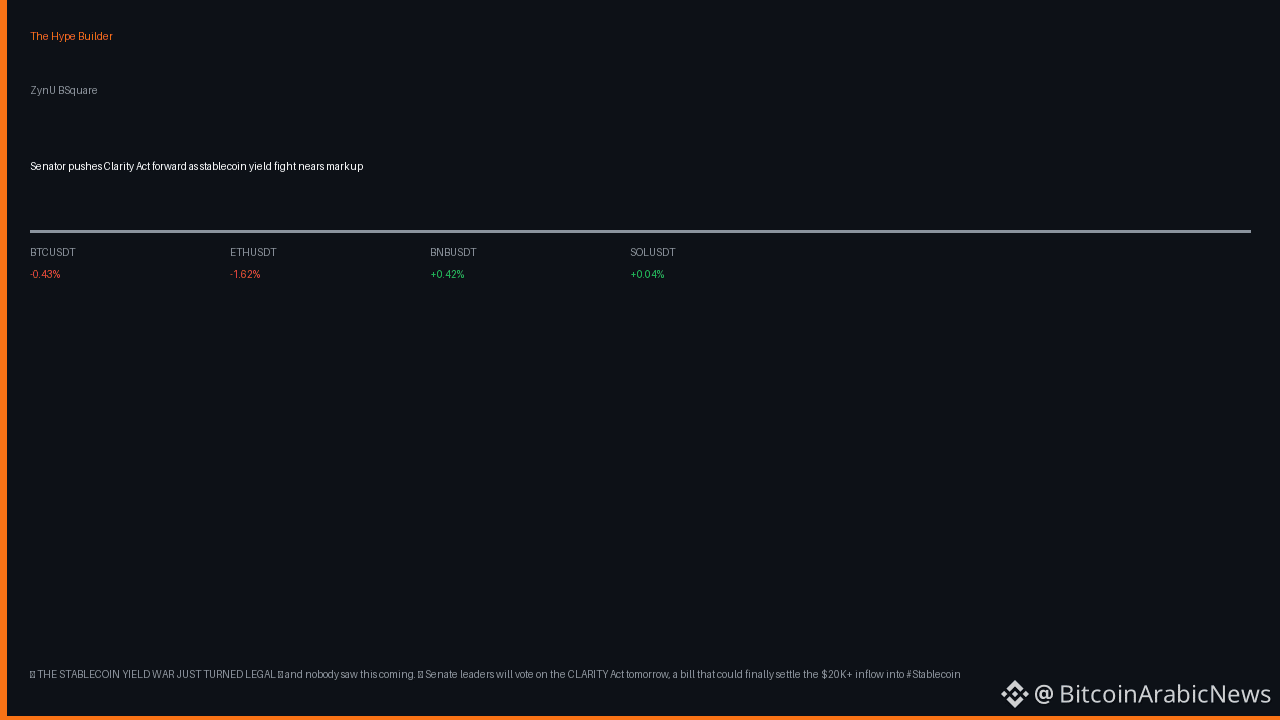
🔥 DER STABLECOIN-RENDITEKRIEG IST SOEBEN „LEGAL“ GEWORDEN – und niemand hat das kommen sehen.
📊 Morgen werden die Vorsitzenden des Senats über den CLARITY Act abstimmen – einen Gesetzentwurf, der endlich die $20K+ Zuflüsse in #Stablecoin narratives klären könnte, während der Krypto-Markt mit einem Gier-Index von 63 tobt. In der Zwischenzeit pendelt BTC bei $77.211 mit $738M 24‑h-Volumen und einem bullischen MACD-Überschneidungssignal, und ETH liegt bei $2.526, RSI 56.9 – ebenfalls bullisch. Smart Money schichtet bereits in #SOL um: Drei Wallets haben zusammen +5,44% on-chain zugelegt und signalisieren die nächste große Migration.
💡 Wenn das Gesetz Stablecoin-Renditen einschränkt, werden Trader nach höher rentierlichen Assets suchen – erwarte, dass #BNB at $731 und #SOL at $102 stark zulegen, während die Liquidität anderswo nach Rendite jagt. Das könnte möglicherweise eine neue Rally über die Altcoins auslösen.
❓ Positionierst du dich für den Post-CLARITY-Ausbruch oder wartest du, bis der Markt sich müdeläuft?
🔥 DER STABLECOIN-RENDITEKRIEG IST SOEBEN „LEGAL“ GEWORDEN – und niemand hat das kommen sehen.
📊 Morgen werden die Vorsitzenden des Senats über den CLARITY Act abstimmen – einen Gesetzentwurf, der endlich die $20K+ Zuflüsse in #Stablecoin narratives klären könnte, während der Krypto-Markt mit einem Gier-Index von 63 tobt. In der Zwischenzeit pendelt BTC bei $77.211 mit $738M 24‑h-Volumen und einem bullischen MACD-Überschneidungssignal, und ETH liegt bei $2.526, RSI 56.9 – ebenfalls bullisch. Smart Money schichtet bereits in #SOL um: Drei Wallets haben zusammen +5,44% on-chain zugelegt und signalisieren die nächste große Migration.
💡 Wenn das Gesetz Stablecoin-Renditen einschränkt, werden Trader nach höher rentierlichen Assets suchen – erwarte, dass #BNB at $731 und #SOL at $102 stark zulegen, während die Liquidität anderswo nach Rendite jagt. Das könnte möglicherweise eine neue Rally über die Altcoins auslösen.
❓ Positionierst du dich für den Post-CLARITY-Ausbruch oder wartest du, bis der Markt sich müdeläuft?
📊 Morgen werden die Vorsitzenden des Senats über den CLARITY Act abstimmen – einen Gesetzentwurf, der endlich die $20K+ Zuflüsse in #Stablecoin narratives klären könnte, während der Krypto-Markt mit einem Gier-Index von 63 tobt. In der Zwischenzeit pendelt BTC bei $77.211 mit $738M 24‑h-Volumen und einem bullischen MACD-Überschneidungssignal, und ETH liegt bei $2.526, RSI 56.9 – ebenfalls bullisch. Smart Money schichtet bereits in #SOL um: Drei Wallets haben zusammen +5,44% on-chain zugelegt und signalisieren die nächste große Migration.
💡 Wenn das Gesetz Stablecoin-Renditen einschränkt, werden Trader nach höher rentierlichen Assets suchen – erwarte, dass #BNB at $731 und #SOL at $102 stark zulegen, während die Liquidität anderswo nach Rendite jagt. Das könnte möglicherweise eine neue Rally über die Altcoins auslösen.
❓ Positionierst du dich für den Post-CLARITY-Ausbruch oder wartest du, bis der Markt sich müdeläuft?
27

🚀 $PYUSDx ERREICHT $100M AUM, PAYPAL-GETRIEBENE STARTBAHN AUF MOONPAY 🟢
🦈 Das PayPal-gekoppelte Launchpad ist jetzt live auf MoonPay und zieht institutionelles Interesse an wie eine Flut. 📊 $100 Millionen in Stablecoin-Assets unter Management signalisieren, dass „smart money“ Liquidität in ein USD-gebundenes Vehikel verschiebt und sich auf die nächste Welle an On-Ramp-Nachfrage vorbereitet. ⚡ Während die Bridge des Ökosystems jetzt läuft, dürften sich die Spreads verengen und der grenzüberschreitende Cashflow ansteigen, während Trader nach dem frischen Angebot suchen.
🌊 Diese Zuführung schafft einen neuen Order-Block, der als Magnet für zukünftigen bullishen Druck wirken könnte. Positionierst du dich, um die Liquiditäts-Woge zu reiten, oder wartest du auf den nächsten Katalysator, der das Drehbuch umschreibt? 💬👇
⚠️ Keine Finanzberatung. Das Risiko stets verantwortungsvoll managen. 🛡️
🏷️ #PYUSD #Stablecoin #Liquidity #Crypto
🔥 💎
🚀 $PYUSDx ERREICHT $100M AUM, PAYPAL-GETRIEBENE STARTBAHN AUF MOONPAY 🟢
🦈 Das PayPal-gekoppelte Launchpad ist jetzt live auf MoonPay und zieht institutionelles Interesse an wie eine Flut. 📊 $100 Millionen in Stablecoin-Assets unter Management signalisieren, dass „smart money“ Liquidität in ein USD-gebundenes Vehikel verschiebt und sich auf die nächste Welle an On-Ramp-Nachfrage vorbereitet. ⚡ Während die Bridge des Ökosystems jetzt läuft, dürften sich die Spreads verengen und der grenzüberschreitende Cashflow ansteigen, während Trader nach dem frischen Angebot suchen.
🌊 Diese Zuführung schafft einen neuen Order-Block, der als Magnet für zukünftigen bullishen Druck wirken könnte. Positionierst du dich, um die Liquiditäts-Woge zu reiten, oder wartest du auf den nächsten Katalysator, der das Drehbuch umschreibt? 💬👇
⚠️ Keine Finanzberatung. Das Risiko stets verantwortungsvoll managen. 🛡️
🏷️ #PYUSD #Stablecoin #Liquidity #Crypto
🔥 💎
🦈 Das PayPal-gekoppelte Launchpad ist jetzt live auf MoonPay und zieht institutionelles Interesse an wie eine Flut. 📊 $100 Millionen in Stablecoin-Assets unter Management signalisieren, dass „smart money“ Liquidität in ein USD-gebundenes Vehikel verschiebt und sich auf die nächste Welle an On-Ramp-Nachfrage vorbereitet. ⚡ Während die Bridge des Ökosystems jetzt läuft, dürften sich die Spreads verengen und der grenzüberschreitende Cashflow ansteigen, während Trader nach dem frischen Angebot suchen.
🌊 Diese Zuführung schafft einen neuen Order-Block, der als Magnet für zukünftigen bullishen Druck wirken könnte. Positionierst du dich, um die Liquiditäts-Woge zu reiten, oder wartest du auf den nächsten Katalysator, der das Drehbuch umschreibt? 💬👇
⚠️ Keine Finanzberatung. Das Risiko stets verantwortungsvoll managen. 🛡️
🏷️ #PYUSD #Stablecoin #Liquidity #Crypto
🔥 💎


32
🚨 MONEYGRAM bringt 📈 VISA Stablecoin-Karten heraus und beschleunigt den Wettbewerb bei grenzüberschreitenden Überweisungen 🧠
📊 | $BTC | $ETH | $BNB |
- Bitte behaltet uns im Blick, liked und kommentiert, um darüber zu diskutieren. 📈
- MoneyGram kündigte die Einführung einer Stablecoin-Debitkarte an, die auf dem Visa-Netzwerk basiert, und dringt damit in den Bereich der Blockchain-Zahlungen vor.
- Damit folgt man dem Vorgehen von Western Union und treibt die Umstellung klassischer Überweisungsunternehmen auf Krypto-Zahlungen voran.
- Die Karte unterstützt mehrere gängige Stablecoins und ermöglicht direkte Bezahlung bei stationären Händlern sowie auf Online-Plattformen. 🔥
- Die Karte könnte MoneyGrams Wettbewerbsfähigkeit im Markt für grenzüberschreitende Überweisungen erhöhen und möglicherweise mehr Nutzer anziehen, die Stablecoins nachfragen.
- Kurzfristig wird—sofern das regulatorische Umfeld weiterhin vergleichsweise locker bleibt—erwartet, dass die Nutzung der Stablecoin-Karten schrittweise zunimmt und so die Aktivität der entsprechenden On-Chain-Transaktionen fördert.
- Derzeit bleiben die Aktivitäten der Wale neutral; es gab keine großen Käufe oder Verkäufe, sodass der Kurs kurzfristig möglicherweise in einer Seitwärtsphase verharren dürfte.
- Wie groß wird eurer Meinung nach die Auswirkung der Einführung von Stablecoin-Karten auf das Geschäft klassischer Überweisungen sein? Teilt eure Sicht gern mit.
- Schaut auch weiterhin unsere ausführlichen Analysen an und hinterlasst in den Kommentaren eure Meinung.
- #Crypto #Stablecoin #Payments #Blockchain #Whales
🚨 MONEYGRAM bringt 📈 VISA Stablecoin-Karten heraus und beschleunigt den Wettbewerb bei grenzüberschreitenden Überweisungen 🧠
📊 | $BTC | $ETH | $BNB |
- Bitte behaltet uns im Blick, liked und kommentiert, um darüber zu diskutieren. 📈
- MoneyGram kündigte die Einführung einer Stablecoin-Debitkarte an, die auf dem Visa-Netzwerk basiert, und dringt damit in den Bereich der Blockchain-Zahlungen vor.
- Damit folgt man dem Vorgehen von Western Union und treibt die Umstellung klassischer Überweisungsunternehmen auf Krypto-Zahlungen voran.
- Die Karte unterstützt mehrere gängige Stablecoins und ermöglicht direkte Bezahlung bei stationären Händlern sowie auf Online-Plattformen. 🔥
- Die Karte könnte MoneyGrams Wettbewerbsfähigkeit im Markt für grenzüberschreitende Überweisungen erhöhen und möglicherweise mehr Nutzer anziehen, die Stablecoins nachfragen.
- Kurzfristig wird—sofern das regulatorische Umfeld weiterhin vergleichsweise locker bleibt—erwartet, dass die Nutzung der Stablecoin-Karten schrittweise zunimmt und so die Aktivität der entsprechenden On-Chain-Transaktionen fördert.
- Derzeit bleiben die Aktivitäten der Wale neutral; es gab keine großen Käufe oder Verkäufe, sodass der Kurs kurzfristig möglicherweise in einer Seitwärtsphase verharren dürfte.
- Wie groß wird eurer Meinung nach die Auswirkung der Einführung von Stablecoin-Karten auf das Geschäft klassischer Überweisungen sein? Teilt eure Sicht gern mit.
- Schaut auch weiterhin unsere ausführlichen Analysen an und hinterlasst in den Kommentaren eure Meinung.
- #Crypto #Stablecoin #Payments #Blockchain #Whales
📊 | $BTC | $ETH | $BNB |
- Bitte behaltet uns im Blick, liked und kommentiert, um darüber zu diskutieren. 📈
- MoneyGram kündigte die Einführung einer Stablecoin-Debitkarte an, die auf dem Visa-Netzwerk basiert, und dringt damit in den Bereich der Blockchain-Zahlungen vor.
- Damit folgt man dem Vorgehen von Western Union und treibt die Umstellung klassischer Überweisungsunternehmen auf Krypto-Zahlungen voran.
- Die Karte unterstützt mehrere gängige Stablecoins und ermöglicht direkte Bezahlung bei stationären Händlern sowie auf Online-Plattformen. 🔥
- Die Karte könnte MoneyGrams Wettbewerbsfähigkeit im Markt für grenzüberschreitende Überweisungen erhöhen und möglicherweise mehr Nutzer anziehen, die Stablecoins nachfragen.
- Kurzfristig wird—sofern das regulatorische Umfeld weiterhin vergleichsweise locker bleibt—erwartet, dass die Nutzung der Stablecoin-Karten schrittweise zunimmt und so die Aktivität der entsprechenden On-Chain-Transaktionen fördert.
- Derzeit bleiben die Aktivitäten der Wale neutral; es gab keine großen Käufe oder Verkäufe, sodass der Kurs kurzfristig möglicherweise in einer Seitwärtsphase verharren dürfte.
- Wie groß wird eurer Meinung nach die Auswirkung der Einführung von Stablecoin-Karten auf das Geschäft klassischer Überweisungen sein? Teilt eure Sicht gern mit.
- Schaut auch weiterhin unsere ausführlichen Analysen an und hinterlasst in den Kommentaren eure Meinung.
- #Crypto #Stablecoin #Payments #Blockchain #Whales
132

🔴 $USDP STEHT EINE UNMITTELBARE LISTING-STREICHUNG BEVOR – MARKTREAKTION IN VOLLER FAHRT! 🚨
Die führende Börse hat angekündigt, den Handel mit $USDP um 11:00 Uhr am 24. Sep 2026 einzustellen und damit effektiv den Stecker für den Stablecoin zu ziehen.
Liquiditätssucher sind bereits dabei, das Orderbuch leerzufegen, und die plötzliche Angebotslücke könnte einen kräftigen Abverkauf über die gepaarten Märkte hinweg auslösen. 📊 Volumen-Spikes und eine sich verengende Spanne deuten darauf hin, dass sich kluges Geld 🦈 schnell aus dem Markt zurückzieht. ⚡ Rechne mit erhöhter Volatilität bei den zugehörigen Paaren, während Trader hektisch den fehlenden Peg neu bepreisen.
💬 Wie reallokierst du dein Exposure jetzt, wo $USDP auf dem Prüfstand steht?
⚠️ Keine Finanzberatung. Immer dein Risiko managen. 🛡️
🏷️ #USDP #Delist #Stablecoin #Crypto
🚀 🔥
🔴 $USDP STEHT EINE UNMITTELBARE LISTING-STREICHUNG BEVOR – MARKTREAKTION IN VOLLER FAHRT! 🚨
Die führende Börse hat angekündigt, den Handel mit $USDP um 11:00 Uhr am 24. Sep 2026 einzustellen und damit effektiv den Stecker für den Stablecoin zu ziehen.
Liquiditätssucher sind bereits dabei, das Orderbuch leerzufegen, und die plötzliche Angebotslücke könnte einen kräftigen Abverkauf über die gepaarten Märkte hinweg auslösen. 📊 Volumen-Spikes und eine sich verengende Spanne deuten darauf hin, dass sich kluges Geld 🦈 schnell aus dem Markt zurückzieht. ⚡ Rechne mit erhöhter Volatilität bei den zugehörigen Paaren, während Trader hektisch den fehlenden Peg neu bepreisen.
💬 Wie reallokierst du dein Exposure jetzt, wo $USDP auf dem Prüfstand steht?
⚠️ Keine Finanzberatung. Immer dein Risiko managen. 🛡️
🏷️ #USDP #Delist #Stablecoin #Crypto
🚀 🔥
Die führende Börse hat angekündigt, den Handel mit $USDP um 11:00 Uhr am 24. Sep 2026 einzustellen und damit effektiv den Stecker für den Stablecoin zu ziehen.
Liquiditätssucher sind bereits dabei, das Orderbuch leerzufegen, und die plötzliche Angebotslücke könnte einen kräftigen Abverkauf über die gepaarten Märkte hinweg auslösen. 📊 Volumen-Spikes und eine sich verengende Spanne deuten darauf hin, dass sich kluges Geld 🦈 schnell aus dem Markt zurückzieht. ⚡ Rechne mit erhöhter Volatilität bei den zugehörigen Paaren, während Trader hektisch den fehlenden Peg neu bepreisen.
💬 Wie reallokierst du dein Exposure jetzt, wo $USDP auf dem Prüfstand steht?
⚠️ Keine Finanzberatung. Immer dein Risiko managen. 🛡️
🏷️ #USDP #Delist #Stablecoin #Crypto
🚀 🔥
66

Die 8 besten Stablecoin-APIs im Jahr 2026 für Zahlungen und Infrastruktur
- Die Stablecoin-API ist ein Tool für Entwickler und ermöglicht es Unternehmen, Stablecoins per Programmierung zu senden, zu empfangen, umzutauschen, zu halten, auszugeben oder zu bezahlen.
- Zu den Anwendungsfällen zählen: Zahlungen empfangen, Zahlungen ausführen, Wallets, Fiat-Ramps, Überweisungen aus dem Schatzamt, Zahlungen an Händler, Geldtransfers (Remittances), Gehaltszahlungen und eingebettete Finanzen.
- Die Auswahl der passenden Stablecoin-API hängt von den konkreten Anforderungen jedes Unternehmens ab.
- Die RSS-Quelle liefert noch keine weiteren Details zur Liste der 8 konkreten APIs.
#Stablecoin #API #CryptoNews #BinanceSquare
$btc $eth
#vlikevn Titanbot
Quelle: CoinGape
Die 8 besten Stablecoin-APIs im Jahr 2026 für Zahlungen und Infrastruktur
- Die Stablecoin-API ist ein Tool für Entwickler und ermöglicht es Unternehmen, Stablecoins per Programmierung zu senden, zu empfangen, umzutauschen, zu halten, auszugeben oder zu bezahlen.
- Zu den Anwendungsfällen zählen: Zahlungen empfangen, Zahlungen ausführen, Wallets, Fiat-Ramps, Überweisungen aus dem Schatzamt, Zahlungen an Händler, Geldtransfers (Remittances), Gehaltszahlungen und eingebettete Finanzen.
- Die Auswahl der passenden Stablecoin-API hängt von den konkreten Anforderungen jedes Unternehmens ab.
- Die RSS-Quelle liefert noch keine weiteren Details zur Liste der 8 konkreten APIs.
#Stablecoin #API #CryptoNews #BinanceSquare
$btc $eth
#vlikevn Titanbot
Quelle: CoinGape
- Die Stablecoin-API ist ein Tool für Entwickler und ermöglicht es Unternehmen, Stablecoins per Programmierung zu senden, zu empfangen, umzutauschen, zu halten, auszugeben oder zu bezahlen.
- Zu den Anwendungsfällen zählen: Zahlungen empfangen, Zahlungen ausführen, Wallets, Fiat-Ramps, Überweisungen aus dem Schatzamt, Zahlungen an Händler, Geldtransfers (Remittances), Gehaltszahlungen und eingebettete Finanzen.
- Die Auswahl der passenden Stablecoin-API hängt von den konkreten Anforderungen jedes Unternehmens ab.
- Die RSS-Quelle liefert noch keine weiteren Details zur Liste der 8 konkreten APIs.
#Stablecoin #API #CryptoNews #BinanceSquare
$btc $eth
#vlikevn Titanbot
Quelle: CoinGape
62
Anchorage Digital bietet institutionellen Zugang zu dem Stablecoin fUSD
- Die in den USA bundesweit zugelassene Digital-Bank Anchorage Digital wird es institutionellen Kunden ermöglichen, über eine Custody-Plattform mit dem Stablecoin fUSD von Frgmnt zu interagieren.
- Zu den unterstützten Funktionen gehören: Halten (hold), Prägen (mint), Einlösen (redeem) und Staken für den fUSD.
- Dieser Schritt trägt dazu bei, die Nutzung von Stablecoins in großvolumigen institutionellen Finanzdienstleistungen weiter auszubauen.
#BinanceSquare #CryptoNews #Stablecoin #FUSD
$fusd
#vlikevn Titanbot
Quelle: CoinTelegraph
Anchorage Digital bietet institutionellen Zugang zu dem Stablecoin fUSD
- Die in den USA bundesweit zugelassene Digital-Bank Anchorage Digital wird es institutionellen Kunden ermöglichen, über eine Custody-Plattform mit dem Stablecoin fUSD von Frgmnt zu interagieren.
- Zu den unterstützten Funktionen gehören: Halten (hold), Prägen (mint), Einlösen (redeem) und Staken für den fUSD.
- Dieser Schritt trägt dazu bei, die Nutzung von Stablecoins in großvolumigen institutionellen Finanzdienstleistungen weiter auszubauen.
#BinanceSquare #CryptoNews #Stablecoin #FUSD
$fusd
#vlikevn Titanbot
Quelle: CoinTelegraph
- Die in den USA bundesweit zugelassene Digital-Bank Anchorage Digital wird es institutionellen Kunden ermöglichen, über eine Custody-Plattform mit dem Stablecoin fUSD von Frgmnt zu interagieren.
- Zu den unterstützten Funktionen gehören: Halten (hold), Prägen (mint), Einlösen (redeem) und Staken für den fUSD.
- Dieser Schritt trägt dazu bei, die Nutzung von Stablecoins in großvolumigen institutionellen Finanzdienstleistungen weiter auszubauen.
#BinanceSquare #CryptoNews #Stablecoin #FUSD
$fusd
#vlikevn Titanbot
Quelle: CoinTelegraph

·
--
USDT+USDC schlucken den Großteil des Stablecoin-Markts direkt (94%), andere Teilnehmer können im Grunde nur noch am Rand mittrinken. Je strenger die Regulierung wird, desto mehr drängt das Kapital in den Kopfbereich, und kleinere Stablecoins haben nicht einmal mehr das Recht, sich überhaupt noch zu wehren. Diese beiden sind die Fed und das Finanzministerium der Krypto-Welt – die gesamten Schlüssel zur Liquidität liegen in ihrer Hand.
$BTC #Stablecoin
USDT+USDC schlucken den Großteil des Stablecoin-Markts direkt (94%), andere Teilnehmer können im Grunde nur noch am Rand mittrinken. Je strenger die Regulierung wird, desto mehr drängt das Kapital in den Kopfbereich, und kleinere Stablecoins haben nicht einmal mehr das Recht, sich überhaupt noch zu wehren. Diese beiden sind die Fed und das Finanzministerium der Krypto-Welt – die gesamten Schlüssel zur Liquidität liegen in ihrer Hand.
$BTC #Stablecoin
$BTC #Stablecoin

97
🚨 Anchorage verbindet FRGMNT 📈 FUSD, SFUSD 🧠
📊 | $BTC | $ETH | $BNB |
- Bitte beachten, liken und kommentieren Sie und teilen Sie Ihre Meinung 📈
- Frgmnt hat eine Partnerschaft mit Anchorage Digital vereinbart und bietet institutionellen Kunden fUSD-Stablecoin-Dienste an.
- Institutionen können über die Verwahrplattform von Anchorage sfUSD halten, prägen und staken, um Rendite zu erzielen.
- Diese Anbindung nutzt die bereits vorhandene Verwahr-Infrastruktur von Anchorage, um einen schnellen und sicheren Zugriff auf Vermögenswerte zu ermöglichen. 🔥
- Der Markt steht der Anbindung von Stablecoins auf institutionellem Niveau optimistisch gegenüber; die Nachfrage nach fUSD könnte nach oben tendieren.
- Mit dem Start von sfUSD-Staking-Produkten könnte die Liquidität steigen; kurzfristig kann es zu einer verstärkten Kaufnachfrage kommen.
- Große „Wal“-Konten haben bereits begonnen, die entsprechenden Vermögenswerte zu akkumulieren; dies dürfte die Preise weiter nach oben treiben.
- Kurzfristig gilt: Wenn die Akzeptanz bei Institutionen steigt, könnte die Volatilität zunehmen und der Liquiditätszufluss dürfte anhalten.
- Welche Auswirkungen wird Ihrer Meinung nach die institutionelle Anbindung an Stablecoins auf die Liquidität des gesamten Kryptomarkts haben?
- Bitte bleiben Sie dran und kommentieren Sie weiter, teilen Sie Ihre Ansichten und Prognosen.
#Crypto #Stablecoin #Whales #DeFi #Trading
🚨 Anchorage verbindet FRGMNT 📈 FUSD, SFUSD 🧠
📊 | $BTC | $ETH | $BNB |
- Bitte beachten, liken und kommentieren Sie und teilen Sie Ihre Meinung 📈
- Frgmnt hat eine Partnerschaft mit Anchorage Digital vereinbart und bietet institutionellen Kunden fUSD-Stablecoin-Dienste an.
- Institutionen können über die Verwahrplattform von Anchorage sfUSD halten, prägen und staken, um Rendite zu erzielen.
- Diese Anbindung nutzt die bereits vorhandene Verwahr-Infrastruktur von Anchorage, um einen schnellen und sicheren Zugriff auf Vermögenswerte zu ermöglichen. 🔥
- Der Markt steht der Anbindung von Stablecoins auf institutionellem Niveau optimistisch gegenüber; die Nachfrage nach fUSD könnte nach oben tendieren.
- Mit dem Start von sfUSD-Staking-Produkten könnte die Liquidität steigen; kurzfristig kann es zu einer verstärkten Kaufnachfrage kommen.
- Große „Wal“-Konten haben bereits begonnen, die entsprechenden Vermögenswerte zu akkumulieren; dies dürfte die Preise weiter nach oben treiben.
- Kurzfristig gilt: Wenn die Akzeptanz bei Institutionen steigt, könnte die Volatilität zunehmen und der Liquiditätszufluss dürfte anhalten.
- Welche Auswirkungen wird Ihrer Meinung nach die institutionelle Anbindung an Stablecoins auf die Liquidität des gesamten Kryptomarkts haben?
- Bitte bleiben Sie dran und kommentieren Sie weiter, teilen Sie Ihre Ansichten und Prognosen.
#Crypto #Stablecoin #Whales #DeFi #Trading
📊 | $BTC | $ETH | $BNB |
- Bitte beachten, liken und kommentieren Sie und teilen Sie Ihre Meinung 📈
- Frgmnt hat eine Partnerschaft mit Anchorage Digital vereinbart und bietet institutionellen Kunden fUSD-Stablecoin-Dienste an.
- Institutionen können über die Verwahrplattform von Anchorage sfUSD halten, prägen und staken, um Rendite zu erzielen.
- Diese Anbindung nutzt die bereits vorhandene Verwahr-Infrastruktur von Anchorage, um einen schnellen und sicheren Zugriff auf Vermögenswerte zu ermöglichen. 🔥
- Der Markt steht der Anbindung von Stablecoins auf institutionellem Niveau optimistisch gegenüber; die Nachfrage nach fUSD könnte nach oben tendieren.
- Mit dem Start von sfUSD-Staking-Produkten könnte die Liquidität steigen; kurzfristig kann es zu einer verstärkten Kaufnachfrage kommen.
- Große „Wal“-Konten haben bereits begonnen, die entsprechenden Vermögenswerte zu akkumulieren; dies dürfte die Preise weiter nach oben treiben.
- Kurzfristig gilt: Wenn die Akzeptanz bei Institutionen steigt, könnte die Volatilität zunehmen und der Liquiditätszufluss dürfte anhalten.
- Welche Auswirkungen wird Ihrer Meinung nach die institutionelle Anbindung an Stablecoins auf die Liquidität des gesamten Kryptomarkts haben?
- Bitte bleiben Sie dran und kommentieren Sie weiter, teilen Sie Ihre Ansichten und Prognosen.
#Crypto #Stablecoin #Whales #DeFi #Trading
406

$USDC bleibt eine wichtige Stablecoin für Trader, die in volatilen Märkten Stabilität suchen. Durch ihre starke Liquidität und das dollar-gepegelte Design ist sie nützlich, um Gelder zu bewegen und dabei weiterhin on-chain zu bleiben.
#USDC" #crypto #stablecoin
{spot}(USDCUSDT)
$USDC bleibt eine wichtige Stablecoin für Trader, die in volatilen Märkten Stabilität suchen. Durch ihre starke Liquidität und das dollar-gepegelte Design ist sie nützlich, um Gelder zu bewegen und dabei weiterhin on-chain zu bleiben.
#USDC" #crypto #stablecoin
#USDC" #crypto #stablecoin

39

·
--

Artikel
Enthüllt: Ein Stablecoin mit 21 Institutionen könnte DeFi-Gewinne abwerfen – aber zu welchem Preis?Die meisten Trader konzentrieren sich auf Kurscharts. Das „Smart Money“ beobachtet stattdessen die *Zinsstrukturkurve* institutioneller Stablecoins.
Das Signal: Ein Konsortium aus 21 globalen Banken plant, im H1 2027 einen dollar-stabilen Coin auf den Markt zu bringen, der ungenutzte Reserven automatisch in geprüfte DeFi-Protokolle weiterleitet. On-Chain-Daten zeigen, dass die prognostizierte annualisierte Rendite 4–6 % APY erreichen könnte – weit über den aktuellen 0,05 % aus dem traditionellen Bankwesen. #DeFiYield #Stablecoin #BankingRevolution
Interpretation: Wenn das Ertragsmechanismus eines Stablecoins durchstartet, schafft das eine neue, hochvolumige Liquiditätsquelle für DeFi und verengt das Angebot von $USDC und $USDT, was ihre Preise potenziell leicht nach oben treiben kann. Gleichzeitig bietet die staatliche bzw. bankseitige Absicherung zwar eine Sicherheits-„Fassade“, aber die Risikotransfer-Klausel bedeutet, dass bei einem Ausfall eines Smart Contracts oder einem Protokoll-Hack die Halter die Folgen tragen – nicht die Emittenten. Diese Dualität könnte risikobereite Investoren anziehen, während sie konservative abschreckt, und so eine Volatilitäts-Lücke schaffen, die versierte Trader ausnutzen können.
Enthüllt: Ein Stablecoin mit 21 Institutionen könnte DeFi-Gewinne abwerfen – aber zu welchem Preis?
Die meisten Trader konzentrieren sich auf Kurscharts. Das „Smart Money“ beobachtet stattdessen die *Zinsstrukturkurve* institutioneller Stablecoins.
Das Signal: Ein Konsortium aus 21 globalen Banken plant, im H1 2027 einen dollar-stabilen Coin auf den Markt zu bringen, der ungenutzte Reserven automatisch in geprüfte DeFi-Protokolle weiterleitet. On-Chain-Daten zeigen, dass die prognostizierte annualisierte Rendite 4–6 % APY erreichen könnte – weit über den aktuellen 0,05 % aus dem traditionellen Bankwesen. #DeFiYield #Stablecoin #BankingRevolution
Interpretation: Wenn das Ertragsmechanismus eines Stablecoins durchstartet, schafft das eine neue, hochvolumige Liquiditätsquelle für DeFi und verengt das Angebot von $USDC und $USDT, was ihre Preise potenziell leicht nach oben treiben kann. Gleichzeitig bietet die staatliche bzw. bankseitige Absicherung zwar eine Sicherheits-„Fassade“, aber die Risikotransfer-Klausel bedeutet, dass bei einem Ausfall eines Smart Contracts oder einem Protokoll-Hack die Halter die Folgen tragen – nicht die Emittenten. Diese Dualität könnte risikobereite Investoren anziehen, während sie konservative abschreckt, und so eine Volatilitäts-Lücke schaffen, die versierte Trader ausnutzen können.
Das Signal: Ein Konsortium aus 21 globalen Banken plant, im H1 2027 einen dollar-stabilen Coin auf den Markt zu bringen, der ungenutzte Reserven automatisch in geprüfte DeFi-Protokolle weiterleitet. On-Chain-Daten zeigen, dass die prognostizierte annualisierte Rendite 4–6 % APY erreichen könnte – weit über den aktuellen 0,05 % aus dem traditionellen Bankwesen. #DeFiYield #Stablecoin #BankingRevolution
Interpretation: Wenn das Ertragsmechanismus eines Stablecoins durchstartet, schafft das eine neue, hochvolumige Liquiditätsquelle für DeFi und verengt das Angebot von $USDC und $USDT, was ihre Preise potenziell leicht nach oben treiben kann. Gleichzeitig bietet die staatliche bzw. bankseitige Absicherung zwar eine Sicherheits-„Fassade“, aber die Risikotransfer-Klausel bedeutet, dass bei einem Ausfall eines Smart Contracts oder einem Protokoll-Hack die Halter die Folgen tragen – nicht die Emittenten. Diese Dualität könnte risikobereite Investoren anziehen, während sie konservative abschreckt, und so eine Volatilitäts-Lücke schaffen, die versierte Trader ausnutzen können.
3
Circle kauft die Tazapay-Infrastruktur, erweitert Stablecoin-Zahlungsnetzwerke
- Circle stimmt dem Kauf der grenzüberschreitenden Zahlungsplattform Tazapay zu, die in Singapur angesiedelt ist.
- Transaktionen im Wert von 400 Millionen USD, bezahlt mit Aktien.
- Das Geschäft ergänzt über 25 Mrd. USD zusätzliches Zahlungsvolumen pro Jahr, mit mehr als 60 Bank-/Fintech-Partnern und deckt Zahlungsdienste in über 100 Märkten ab.
- Irfan Ganchi betont, dass das Wachstum von Stablecoins von der lokalen Zahlungsinfrastruktur abhängt.
#Stablecoin #Payments #Web3 #BinanceSquare
$btc $eth
#vlikevn Titanbot
Quelle: CoinGape
Circle kauft die Tazapay-Infrastruktur, erweitert Stablecoin-Zahlungsnetzwerke
- Circle stimmt dem Kauf der grenzüberschreitenden Zahlungsplattform Tazapay zu, die in Singapur angesiedelt ist.
- Transaktionen im Wert von 400 Millionen USD, bezahlt mit Aktien.
- Das Geschäft ergänzt über 25 Mrd. USD zusätzliches Zahlungsvolumen pro Jahr, mit mehr als 60 Bank-/Fintech-Partnern und deckt Zahlungsdienste in über 100 Märkten ab.
- Irfan Ganchi betont, dass das Wachstum von Stablecoins von der lokalen Zahlungsinfrastruktur abhängt.
#Stablecoin #Payments #Web3 #BinanceSquare
$btc $eth
#vlikevn Titanbot
Quelle: CoinGape
- Circle stimmt dem Kauf der grenzüberschreitenden Zahlungsplattform Tazapay zu, die in Singapur angesiedelt ist.
- Transaktionen im Wert von 400 Millionen USD, bezahlt mit Aktien.
- Das Geschäft ergänzt über 25 Mrd. USD zusätzliches Zahlungsvolumen pro Jahr, mit mehr als 60 Bank-/Fintech-Partnern und deckt Zahlungsdienste in über 100 Märkten ab.
- Irfan Ganchi betont, dass das Wachstum von Stablecoins von der lokalen Zahlungsinfrastruktur abhängt.
#Stablecoin #Payments #Web3 #BinanceSquare
$btc $eth
#vlikevn Titanbot
Quelle: CoinGape
5

$USDC 📈 Was ist USDC? Eine einfache Erklärung für Einsteiger
USDC ist ein Stablecoin, dessen Wert in der Regel nahe bei 1 US-Dollar gehalten werden soll. 💰
🔹 Warum wird USDC im Krypto-Markt verwendet?
• Als Stablecoin beim Trading
• Um Preise zwischen verschiedenen Krypto-Assets zu berechnen
• Als vergleichsweise stabiles Asset, wenn der Markt schwankt
⚠️ Denken Sie daran: Es gibt Risiken im Krypto-Markt. Recherchieren Sie selbst, bevor Sie einen Coin kaufen, und treffen Sie Entscheidungen entsprechend Ihrem eigenen Risiko.
#USDC #Binance #Crypto #Stablecoin #CryptoEducation #BinanceSquare
$USDC 📈 Was ist USDC? Eine einfache Erklärung für Einsteiger
USDC ist ein Stablecoin, dessen Wert in der Regel nahe bei 1 US-Dollar gehalten werden soll. 💰
🔹 Warum wird USDC im Krypto-Markt verwendet?
• Als Stablecoin beim Trading
• Um Preise zwischen verschiedenen Krypto-Assets zu berechnen
• Als vergleichsweise stabiles Asset, wenn der Markt schwankt
⚠️ Denken Sie daran: Es gibt Risiken im Krypto-Markt. Recherchieren Sie selbst, bevor Sie einen Coin kaufen, und treffen Sie Entscheidungen entsprechend Ihrem eigenen Risiko.
#USDC #Binance #Crypto #Stablecoin #CryptoEducation #BinanceSquare
USDC ist ein Stablecoin, dessen Wert in der Regel nahe bei 1 US-Dollar gehalten werden soll. 💰
🔹 Warum wird USDC im Krypto-Markt verwendet?
• Als Stablecoin beim Trading
• Um Preise zwischen verschiedenen Krypto-Assets zu berechnen
• Als vergleichsweise stabiles Asset, wenn der Markt schwankt
⚠️ Denken Sie daran: Es gibt Risiken im Krypto-Markt. Recherchieren Sie selbst, bevor Sie einen Coin kaufen, und treffen Sie Entscheidungen entsprechend Ihrem eigenen Risiko.
#USDC #Binance #Crypto #Stablecoin #CryptoEducation #BinanceSquare
1
51
🚨 NU erhält OCC-Zulassung und startet in den USA sowie globale Stablecoin-Konten 🧠
📊 | $BTC | $ETH | $BNB |
- Bitte folgen Sie uns, liken Sie und diskutieren Sie diese Nachricht. 📈
- Nu erhielt die Genehmigung der US-OCC und bietet offiziell Konten, Debitkarten und grenzüberschreitende Überweisungsdienste in den USA an.
- Gleichzeitig wird ein globales, auf Stablecoins basierendes Konto eingeführt, das in 35 Ländern verfügbar ist und Überweisungen in mehreren Währungen unterstützt. 🔥
- Die Meldung könnte die Marktstimmung ankurbeln; kurzfristig wird mit nach oben gerichteten Schwankungen gerechnet und es dürften Liquiditätszuflüsse einsetzen.
- Smart-Money könnte sich beschleunigt ansammeln; das Verhalten der Wale deutet auf eine frühe Positionierung hin.
- Wenn die Regulierung weiter gelockert wird, könnte NUs globales Konto die Nutzung von Stablecoins weiter erhöhen.
- Sollte es kurzfristig zu Rücksetzern kommen, besteht dennoch die Möglichkeit, dass die relative Stärke erhalten bleibt.
- Wie glauben Sie, wird die Expansion von Nus US-Geschäft die Gesamtlage des Krypto-Marktes beeinflussen?
- Bitte bleiben Sie dran und wir freuen uns auf Ihre Kommentare und Ihr Engagement.
#Crypto #Stablecoin #Whales #Trading #Blockchain
🚨 NU erhält OCC-Zulassung und startet in den USA sowie globale Stablecoin-Konten 🧠
📊 | $BTC | $ETH | $BNB |
- Bitte folgen Sie uns, liken Sie und diskutieren Sie diese Nachricht. 📈
- Nu erhielt die Genehmigung der US-OCC und bietet offiziell Konten, Debitkarten und grenzüberschreitende Überweisungsdienste in den USA an.
- Gleichzeitig wird ein globales, auf Stablecoins basierendes Konto eingeführt, das in 35 Ländern verfügbar ist und Überweisungen in mehreren Währungen unterstützt. 🔥
- Die Meldung könnte die Marktstimmung ankurbeln; kurzfristig wird mit nach oben gerichteten Schwankungen gerechnet und es dürften Liquiditätszuflüsse einsetzen.
- Smart-Money könnte sich beschleunigt ansammeln; das Verhalten der Wale deutet auf eine frühe Positionierung hin.
- Wenn die Regulierung weiter gelockert wird, könnte NUs globales Konto die Nutzung von Stablecoins weiter erhöhen.
- Sollte es kurzfristig zu Rücksetzern kommen, besteht dennoch die Möglichkeit, dass die relative Stärke erhalten bleibt.
- Wie glauben Sie, wird die Expansion von Nus US-Geschäft die Gesamtlage des Krypto-Marktes beeinflussen?
- Bitte bleiben Sie dran und wir freuen uns auf Ihre Kommentare und Ihr Engagement.
#Crypto #Stablecoin #Whales #Trading #Blockchain
📊 | $BTC | $ETH | $BNB |
- Bitte folgen Sie uns, liken Sie und diskutieren Sie diese Nachricht. 📈
- Nu erhielt die Genehmigung der US-OCC und bietet offiziell Konten, Debitkarten und grenzüberschreitende Überweisungsdienste in den USA an.
- Gleichzeitig wird ein globales, auf Stablecoins basierendes Konto eingeführt, das in 35 Ländern verfügbar ist und Überweisungen in mehreren Währungen unterstützt. 🔥
- Die Meldung könnte die Marktstimmung ankurbeln; kurzfristig wird mit nach oben gerichteten Schwankungen gerechnet und es dürften Liquiditätszuflüsse einsetzen.
- Smart-Money könnte sich beschleunigt ansammeln; das Verhalten der Wale deutet auf eine frühe Positionierung hin.
- Wenn die Regulierung weiter gelockert wird, könnte NUs globales Konto die Nutzung von Stablecoins weiter erhöhen.
- Sollte es kurzfristig zu Rücksetzern kommen, besteht dennoch die Möglichkeit, dass die relative Stärke erhalten bleibt.
- Wie glauben Sie, wird die Expansion von Nus US-Geschäft die Gesamtlage des Krypto-Marktes beeinflussen?
- Bitte bleiben Sie dran und wir freuen uns auf Ihre Kommentare und Ihr Engagement.
#Crypto #Stablecoin #Whales #Trading #Blockchain
173
·
--

Artikel
MoneyGrams Visa-Stablecoin-Karte in Kolumbien kündigt eine neue Ära für grenzüberschreitende Remittances anDie meisten Händler konzentrieren sich auf das Handelsvolumen. Smart Money beobachtet den Zufluss von Remittance-Geldern in Stablecoins.
Das Signal: MoneyGram hat gerade in Kolumbien eine Visa-gestützte Stablecoin-Karte auf den Markt gebracht und dabei Stellars XLM, Rains grenzüberschreitende Infrastruktur sowie die NFT‑zu‑Fiat‑Brücke von Crossmint integriert. On-Chain-Daten zeigen einen Anstieg der XLM-Einzahlungen auf kolumbianische Wallets um 15% in der vergangenen Woche, während die Aktivierungsrate der neuen Karte bereits bei 3.200 Nutzern liegt – doppelt so hoch wie der Durchschnitt für jedes neue Stablecoin-Produkt in LATAM. #XLM #Stablecoin #Remittance
MoneyGrams Visa-Stablecoin-Karte in Kolumbien kündigt eine neue Ära für grenzüberschreitende Remittances an
Die meisten Händler konzentrieren sich auf das Handelsvolumen. Smart Money beobachtet den Zufluss von Remittance-Geldern in Stablecoins.
Das Signal: MoneyGram hat gerade in Kolumbien eine Visa-gestützte Stablecoin-Karte auf den Markt gebracht und dabei Stellars XLM, Rains grenzüberschreitende Infrastruktur sowie die NFT‑zu‑Fiat‑Brücke von Crossmint integriert. On-Chain-Daten zeigen einen Anstieg der XLM-Einzahlungen auf kolumbianische Wallets um 15% in der vergangenen Woche, während die Aktivierungsrate der neuen Karte bereits bei 3.200 Nutzern liegt – doppelt so hoch wie der Durchschnitt für jedes neue Stablecoin-Produkt in LATAM. #XLM #Stablecoin #Remittance
Das Signal: MoneyGram hat gerade in Kolumbien eine Visa-gestützte Stablecoin-Karte auf den Markt gebracht und dabei Stellars XLM, Rains grenzüberschreitende Infrastruktur sowie die NFT‑zu‑Fiat‑Brücke von Crossmint integriert. On-Chain-Daten zeigen einen Anstieg der XLM-Einzahlungen auf kolumbianische Wallets um 15% in der vergangenen Woche, während die Aktivierungsrate der neuen Karte bereits bei 3.200 Nutzern liegt – doppelt so hoch wie der Durchschnitt für jedes neue Stablecoin-Produkt in LATAM. #XLM #Stablecoin #Remittance
20
Anmelden und weiter Inhalte entdecken
Krypto-Nutzer weltweit auf Binance Square kennenlernen
⚡️ Bleib in Sachen Krypto stets am Puls.
💬 Die weltgrößte Kryptobörse vertraut darauf.
👍 Erhalte verlässliche Einblicke von verifizierten Creators.
E-Mail-Adresse/Telefonnummer
Trendthemen
1
#AnthropicCEOCallsForAISlowdown
60,761 Aufrufe
813 Kommentare
2
#BitcoinThirdSingleBlockReorgInFourWeeks
808 Aufrufe
59 Kommentare
3
#LSKSurgesOver515%In24Hours
965 Aufrufe
43 Kommentare
4
#EURequiresWalletMakersReportFlawsIn24Hours
75 Aufrufe
15 Kommentare
5
#ZcashNU7VoteEndsSeptember14
553 Aufrufe
32 Kommentare
6
#AnthropicChoosesNasdaqForPotentialIPO
29,708 Aufrufe
345 Kommentare
7
#SECReceivesGrayscaleLitecoinTrustETFFiling
191,414 Aufrufe
2,108 Kommentare
8
#ClarityActFacesProceduralVoteSept15
361,556 Aufrufe
2,993 Kommentare
9
#US10YearTreasuryYieldNears5%
135,624 Aufrufe
1,686 Kommentare
10
#CryptoLiquidations$674MIn24H
32,262 Aufrufe
241 Kommentare