Binance Square
#newton

newton

110,243 lượt xem
1,172 đang thảo luận
bd treaders
·
--
Xem bản dịch
Excited to see the progress of @NewtonProtocol and the launch of the Newton Mainnet Beta. A secure,Excited to see the progress of @NewtonProtocol and the launch of the Newton Mainnet Beta. A secure, decentralized infrastructure with real utility is what the Web3 ecosystem needs. Looking forward to more builders, users, and innovations joining the network. $NEWT #newton

Excited to see the progress of @NewtonProtocol and the launch of the Newton Mainnet Beta. A secure,

Excited to see the progress of @NewtonProtocol and the launch of the Newton Mainnet Beta. A secure, decentralized infrastructure with real utility is what the Web3 ecosystem needs. Looking forward to more builders, users, and innovations joining the network. $NEWT #newton
Bài viết
Xem bản dịch
Trust is Not a Strategy: Newton Protocol Builds the Authorization Layer for Autonomous AgentsWe keep talking about AI agents taking over onchain execution, but here's the uncomfortable question nobody's asking: who verifies the agent? Not the code — the decision. Because code can be audited. A model's reasoning at runtime? That's a black box wrapped in a transaction. And if you're delegating a seven-figure cross-chain arbitrage to an autonomous agent, "trust me bro" isn't exactly a risk management strategy. This is precisely the void @NewtonProtocol is filling — and the market hasn't fully clocked it yet. #newton isn't another AI agent framework. It's the authorization layer for the agent economy. Think of it as the difference between giving someone your car keys versus installing a breathalyzer, speed limiter, and GPS geofence that all have to clear before the engine even turns over. The protocol sits between your intent and execution, running every proposed action through programmable policies before anything hits the chain. It's "pre-clearance" for autonomous finance — and that changes everything about how we think about trust in Web3. The architecture is what makes this real. Newton combines trusted execution environments (TEEs) with zero-knowledge proofs to create what they call zkPermissions — cryptographic circuits that encode exactly what an agent can and cannot do. Want your agent to trade only when volatility stays below a certain threshold? That's encoded as a zkPermission. Want it to never touch more than 5% of your portfolio in a single transaction? Encoded. The agent executes offchain, generates a ZKP proving it followed every rule, and the chain verifies the proof. No blind trust. No post-mortems. Just cryptographic guarantees that your agent stayed in its lane. And here's where it gets strategically interesting. Newton has already launched Mainnet Beta alongside VaultKit, bringing programmable compliance rules directly onchain. They're not waiting for the agent economy to mature — they're building the infrastructure for it. Integration partners include Chainalysis, Hexagate, RedStone, and Credora. The team behind it, Magic Labs, has already helped over 200,000 developers create more than 50 million embedded wallets for clients like Polymarket, Forbes, and Helium. With roughly $90 million in funding from PayPal Ventures, Polygon, and Placeholder, they're not some anonymous team shipping speculation — they're builders who've been solving Web3 UX at scale since 2018. The market is still pricing Newton like just another AI narrative token. It's missing the infrastructure play. Because the agent economy isn't coming — it's here. Every day, more autonomous agents are being deployed to trade, farm, and manage portfolios across chains. And every one of them needs a permissioning system that doesn't require blind faith. Newton is building the layer between decision and execution — the infrastructure that turns autonomous agents from experiments into institutional-grade tools. That's not a narrative. That's the next logical layer of the stack. @NewtonProtocol #Newt $NEWT {future}(NEWTUSDT)

Trust is Not a Strategy: Newton Protocol Builds the Authorization Layer for Autonomous Agents

We keep talking about AI agents taking over onchain execution, but here's the uncomfortable question nobody's asking: who verifies the agent? Not the code — the decision. Because code can be audited. A model's reasoning at runtime? That's a black box wrapped in a transaction. And if you're delegating a seven-figure cross-chain arbitrage to an autonomous agent, "trust me bro" isn't exactly a risk management strategy.
This is precisely the void @NewtonProtocol is filling — and the market hasn't fully clocked it yet.
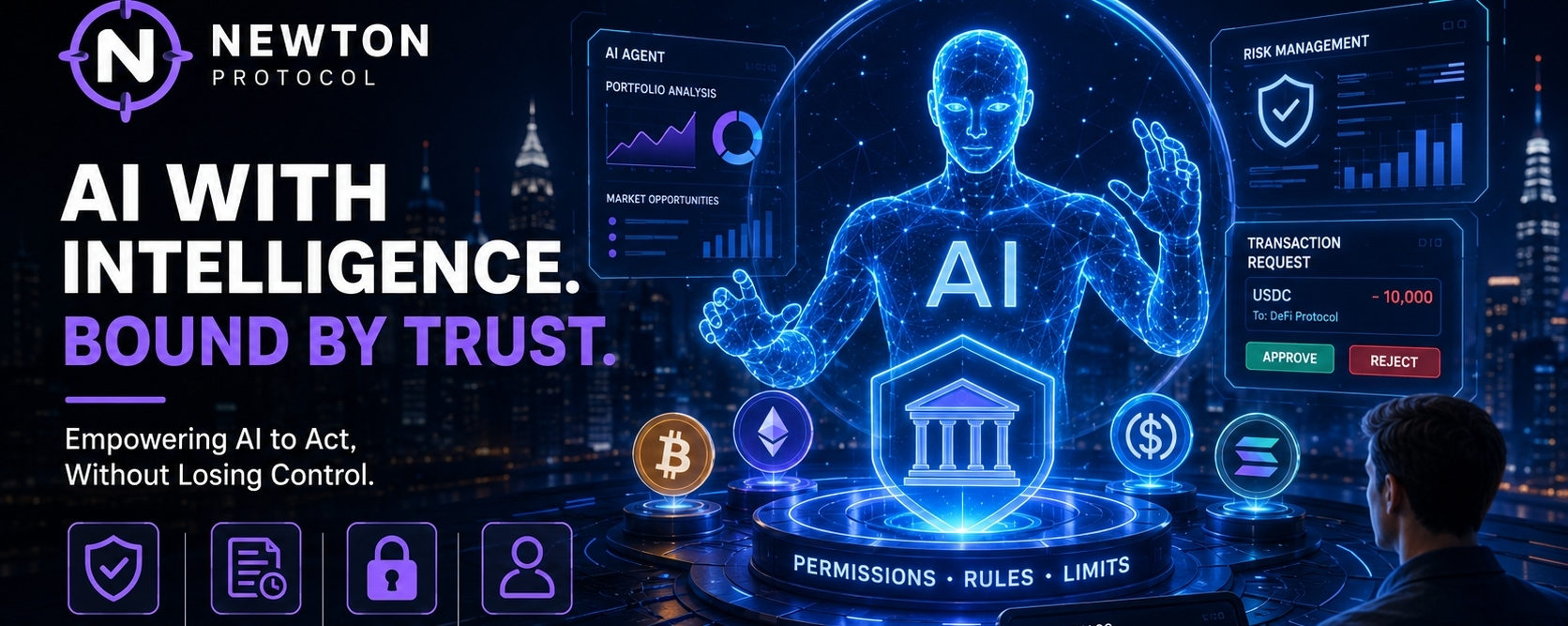
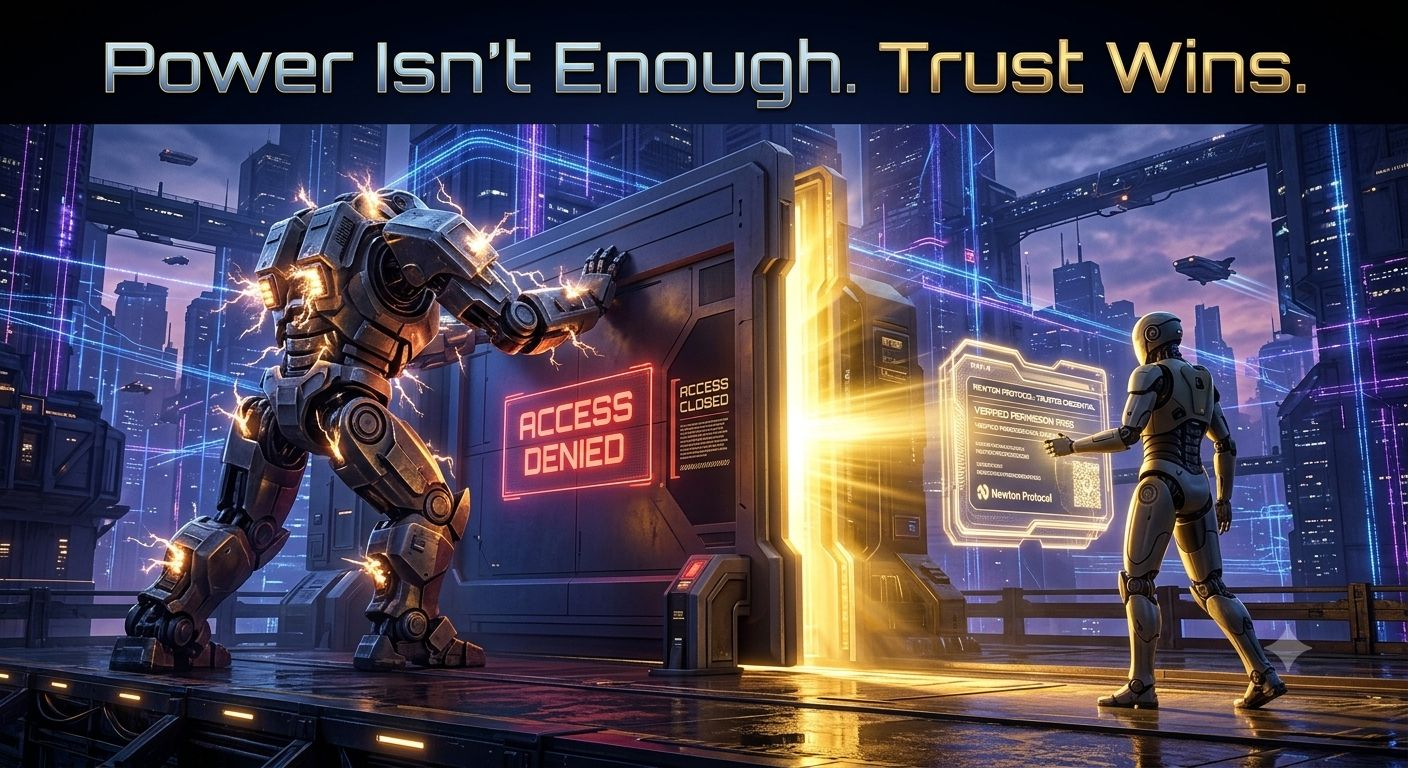
#newton isn't another AI agent framework. It's the authorization layer for the agent economy. Think of it as the difference between giving someone your car keys versus installing a breathalyzer, speed limiter, and GPS geofence that all have to clear before the engine even turns over. The protocol sits between your intent and execution, running every proposed action through programmable policies before anything hits the chain. It's "pre-clearance" for autonomous finance — and that changes everything about how we think about trust in Web3.
The architecture is what makes this real. Newton combines trusted execution environments (TEEs) with zero-knowledge proofs to create what they call zkPermissions — cryptographic circuits that encode exactly what an agent can and cannot do. Want your agent to trade only when volatility stays below a certain threshold? That's encoded as a zkPermission. Want it to never touch more than 5% of your portfolio in a single transaction? Encoded. The agent executes offchain, generates a ZKP proving it followed every rule, and the chain verifies the proof. No blind trust. No post-mortems. Just cryptographic guarantees that your agent stayed in its lane.
And here's where it gets strategically interesting. Newton has already launched Mainnet Beta alongside VaultKit, bringing programmable compliance rules directly onchain. They're not waiting for the agent economy to mature — they're building the infrastructure for it. Integration partners include Chainalysis, Hexagate, RedStone, and Credora. The team behind it, Magic Labs, has already helped over 200,000 developers create more than 50 million embedded wallets for clients like Polymarket, Forbes, and Helium. With roughly $90 million in funding from PayPal Ventures, Polygon, and Placeholder, they're not some anonymous team shipping speculation — they're builders who've been solving Web3 UX at scale since 2018.
The market is still pricing Newton like just another AI narrative token. It's missing the infrastructure play. Because the agent economy isn't coming — it's here. Every day, more autonomous agents are being deployed to trade, farm, and manage portfolios across chains. And every one of them needs a permissioning system that doesn't require blind faith.
Newton is building the layer between decision and execution — the infrastructure that turns autonomous agents from experiments into institutional-grade tools. That's not a narrative. That's the next logical layer of the stack.
@NewtonProtocol
#Newt
$NEWT
Gourav-S:
Great perspective, the real differentiator may be verifiable authorization, turning autonomous agents into systems institutions can actually trust.
Bài viết
Xem bản dịch
Exploring the Next Frontier of Web3 Infrastructure: Newton Mainnet BetaMy Experience with #Newton #Protocol #Mainnet #Beta 🚀 I just tried @NewtonProtocol(https://www.binance.com/en/square/profile/newtonprotocol) and the Newton Mainnet Beta is insane. The AI agents in $NEWT ecosystem actually automate tasks for you 24/7 without coding. Instead of doing everything manually, Newton Protocol lets you set up agents for trading, farming and asset management. #MainnetBeta feels super smooth and the goal is to make #Web3 easy for everyone. This is the future of decentralized automation. If you want AI to work for you on-chain, check Newton. Excited for what’s next! #Newt

Exploring the Next Frontier of Web3 Infrastructure: Newton Mainnet Beta

My Experience with #Newton #Protocol #Mainnet #Beta 🚀
I just tried @NewtonProtocol(https://www.binance.com/en/square/profile/newtonprotocol) and the Newton Mainnet Beta is insane. The AI agents in $NEWT ecosystem actually automate tasks for you 24/7 without coding.
Instead of doing everything manually, Newton Protocol lets you set up agents for trading, farming and asset management. #MainnetBeta feels super smooth and the goal is to make #Web3 easy for everyone.
This is the future of decentralized automation. If you want AI to work for you on-chain, check Newton. Excited for what’s next! #Newt
Bài viết
Xem bản dịch
拆解 Newton 的 Rollup 桥合约:为什么说它把“跨链安全”重新定义了一遍链桥出事的新闻,多到你可以拿它们做一本桌游,每一页都是十亿美金级别的损失。Wormhole、Ronin、Nomad、Poly Network……受害名单长到让机构用户一听到“桥”这个词就下意识皱眉。然而 Newton 的 Rollup 桥合约上线后在 CertiK 的链上监测分数悄悄爬到了 92,这让我忍不住花了一整周去读它的桥合约源码,读完后终于明白分数从哪里来,也终于敢在深夜写下这篇长分析。 传统的跨链桥之所以脆弱,根本原因在于它们大多数依赖一个中心化的验证者集合或一个多签委员会。攻击者只要突破那几名验证者的机器,或者拿到多签门槛的私钥,几乎就可以无限制地在一端锁定假消息,在另一端铸造未授权的资产。这个攻击面的宽度,取决于验证者人数,而通常这个人数不会超过 21。 Newton 的 Rollup 桥选择了一条截然不同的路:它让 ZK Validium 直接成为桥的“最高法官”。具体来说,当你在以太坊主网锁定一笔资产并希望在 Newton 链上获得对应映射代币时,锁仓交易会被打包进一个批处理中,由排序器生成一个有效性证明。这个证明包含的状态根变化,会直接在主网上的验证者合约里被校验。校验通过后,Newton 链才释放映射资产。反之,从 Newton 链提款回主网,牛顿链上的销毁证明同样需要接受主网合约的 ZK 电路校验,在通过之前,资金无法从主网的托管合约中取出。 这样一来,桥的安全模型就从“信任一个委员会”变成了“信任数学电路”。任何试图篡改的恶意排序器,即便完全控制 Newton 的链下撮合引擎,也无法伪造一个在主网验证通过的 ZK 证明。因为证明生成过程本身会暴露所有的输入状态,一旦出现双花或凭空铸造,证明立即失效。这等同于把攻击面从 21 个人压缩到一个需要破解底层 ZK 密码学假设的数学问题——至少到目前为止,这比攻破几个服务器难数个数量级。 但这还不是 Newton 桥最让我拍案的部分。真正让我起鸡皮疙瘩的,是它对“紧急情况”的处理机制。很多项目会在桥合约里留一个超级管理员后门,声称“用于紧急冻结以保护资金”。问题在于,这个后门本身常常变成黑客的目标,或者内部作恶的工具。Newton 的桥合约没有无条件的紧急冻结按钮。取而代之的是“时延爆发舱”(我起的名字):当链上监测到异常的大额提款行为时,合约会自动延长该笔提款的最终结算时间到 24 小时以上,并用这 24 小时内收集的全网欺诈证明来决定是否熔断。整个过程不需要任何人手动按按钮,监控者可以是任何运行轻节点的第三方,任何人都能提交欺诈证明并获得罚没奖励。 这个机制的精妙之处在于,它把“盯盘者”角色去中心化了。你只要运行一个桥监控节点,盯着跨链事件队列,一旦发现异常证明,就可以提交挑战,并从被罚没的保证金中分到一块蛋糕。这形成了一个自发的外部安全市场,无数双眼睛在无许可地守着桥的两端。任何一个黑客想要盗取资产,必须同时瞒过所有潜在的挑战者,在 24 小时内不让任何一份欺诈证明被提交——而这几乎是不可能的,因为提交成本很低,收益却极高。 此外,Newton 桥合约在代码层面上做的模块化隔离也值得称道。质押模块、验证者逻辑、通证映射模块、罚没分发模块被拆分成四个独立合约,通过严格限制的接口交互。任何一个模块的单点漏洞,都最多影响自身的资产池,而无法溯源到整个桥的总锁仓。比如质押模块如果出现重入攻击,攻击者只能提取质押节点的保证金,而不能直接触达托管池。这种“损失隔离”的设计,将保险赔付的复杂度也大大降低了。 我个人判断,未来 12 个月内,机构资金对跨链桥的安全评级权重会超过对收益率的考量。Newton 这套以 ZK 证明为轴心、外部挑战者为监督层、时延熔断为最后防线的架构,很可能成为下一代桥的基准样板。对于早期参与者和主动监控者来说,这不仅仅是一个低滑点的转账通道,更是一个可以从中获取安全监测收益的基础设施。-Anton 当然,桥的考验永远在长期运行中。理论完美不等于不可破,但这至少是我们目前能看到的最接近“无需信任”的跨链交互形态。当你的资金在桥两边移动时,你不需要再像以前那样祈祷多签人不被攻击,你只需要相信数学——恰恰是区块链被发明出来的最初意义because {spot}(MSFTBUSDT) 以上不构成投资建议,仅代表个人技术观察。你觉得这样的桥能终结跨链黑洞吗? #newton $NEWT @NewtonProtocol

拆解 Newton 的 Rollup 桥合约:为什么说它把“跨链安全”重新定义了一遍

链桥出事的新闻,多到你可以拿它们做一本桌游,每一页都是十亿美金级别的损失。Wormhole、Ronin、Nomad、Poly Network……受害名单长到让机构用户一听到“桥”这个词就下意识皱眉。然而 Newton 的 Rollup 桥合约上线后在 CertiK 的链上监测分数悄悄爬到了 92,这让我忍不住花了一整周去读它的桥合约源码,读完后终于明白分数从哪里来,也终于敢在深夜写下这篇长分析。
传统的跨链桥之所以脆弱,根本原因在于它们大多数依赖一个中心化的验证者集合或一个多签委员会。攻击者只要突破那几名验证者的机器,或者拿到多签门槛的私钥,几乎就可以无限制地在一端锁定假消息,在另一端铸造未授权的资产。这个攻击面的宽度,取决于验证者人数,而通常这个人数不会超过 21。
Newton 的 Rollup 桥选择了一条截然不同的路:它让 ZK Validium 直接成为桥的“最高法官”。具体来说,当你在以太坊主网锁定一笔资产并希望在 Newton 链上获得对应映射代币时,锁仓交易会被打包进一个批处理中,由排序器生成一个有效性证明。这个证明包含的状态根变化,会直接在主网上的验证者合约里被校验。校验通过后,Newton 链才释放映射资产。反之,从 Newton 链提款回主网,牛顿链上的销毁证明同样需要接受主网合约的 ZK 电路校验,在通过之前,资金无法从主网的托管合约中取出。
这样一来,桥的安全模型就从“信任一个委员会”变成了“信任数学电路”。任何试图篡改的恶意排序器,即便完全控制 Newton 的链下撮合引擎,也无法伪造一个在主网验证通过的 ZK 证明。因为证明生成过程本身会暴露所有的输入状态,一旦出现双花或凭空铸造,证明立即失效。这等同于把攻击面从 21 个人压缩到一个需要破解底层 ZK 密码学假设的数学问题——至少到目前为止,这比攻破几个服务器难数个数量级。
但这还不是 Newton 桥最让我拍案的部分。真正让我起鸡皮疙瘩的,是它对“紧急情况”的处理机制。很多项目会在桥合约里留一个超级管理员后门,声称“用于紧急冻结以保护资金”。问题在于,这个后门本身常常变成黑客的目标,或者内部作恶的工具。Newton 的桥合约没有无条件的紧急冻结按钮。取而代之的是“时延爆发舱”(我起的名字):当链上监测到异常的大额提款行为时,合约会自动延长该笔提款的最终结算时间到 24 小时以上,并用这 24 小时内收集的全网欺诈证明来决定是否熔断。整个过程不需要任何人手动按按钮,监控者可以是任何运行轻节点的第三方,任何人都能提交欺诈证明并获得罚没奖励。
这个机制的精妙之处在于,它把“盯盘者”角色去中心化了。你只要运行一个桥监控节点,盯着跨链事件队列,一旦发现异常证明,就可以提交挑战,并从被罚没的保证金中分到一块蛋糕。这形成了一个自发的外部安全市场,无数双眼睛在无许可地守着桥的两端。任何一个黑客想要盗取资产,必须同时瞒过所有潜在的挑战者,在 24 小时内不让任何一份欺诈证明被提交——而这几乎是不可能的,因为提交成本很低,收益却极高。
此外,Newton 桥合约在代码层面上做的模块化隔离也值得称道。质押模块、验证者逻辑、通证映射模块、罚没分发模块被拆分成四个独立合约,通过严格限制的接口交互。任何一个模块的单点漏洞,都最多影响自身的资产池,而无法溯源到整个桥的总锁仓。比如质押模块如果出现重入攻击,攻击者只能提取质押节点的保证金,而不能直接触达托管池。这种“损失隔离”的设计,将保险赔付的复杂度也大大降低了。
我个人判断,未来 12 个月内,机构资金对跨链桥的安全评级权重会超过对收益率的考量。Newton 这套以 ZK 证明为轴心、外部挑战者为监督层、时延熔断为最后防线的架构,很可能成为下一代桥的基准样板。对于早期参与者和主动监控者来说,这不仅仅是一个低滑点的转账通道,更是一个可以从中获取安全监测收益的基础设施。-Anton
当然,桥的考验永远在长期运行中。理论完美不等于不可破,但这至少是我们目前能看到的最接近“无需信任”的跨链交互形态。当你的资金在桥两边移动时,你不需要再像以前那样祈祷多签人不被攻击,你只需要相信数学——恰恰是区块链被发明出来的最初意义because
以上不构成投资建议,仅代表个人技术观察。你觉得这样的桥能终结跨链黑洞吗? #newton $NEWT @NewtonProtocol
Xem bản dịch
#newt $NEWT The coffee machine was acting up again this morning, just clicking and stalling—a tiny, mechanical refusal to do exactly what it’s programmed to do. It’s funny how much we rely on silent, invisible execution, yet we freak out the moment that chain breaks. I’ve been thinking about that while watching the noise around Newton Protocol. We talk about AI agents like they’re magic, but the real hurdle is the gap between an agent making a move and us actually trusting that it didn't just hallucinate a trade. Newton’s architecture is interesting here because it separates the actual model inference from the verification. You get that speed—that immediate, snappy response—while the heavy, mathematical proofs settle in the background later. It changes the rhythm of the trade. Is it overkill? Maybe. I’m leaning into the idea that this could actually solve the "trust-at-scale" problem for decentralized execution, but there’s a real risk that the overhead of that verification layer might introduce latency we just haven't accounted for in high-volatility environments. I’m watching the collateral parameters closely; if they tighten, the cost to run these agents could swing hard, and I’m curious if the market is pricing that in or just chasing the AI narrative. If we have to choose between instantaneous execution and absolute, verified certainty, which one do we actually value more in a chaotic market? #newton $NEWT @Square-Creator-0f7971990 #Labs $EVAA #Labs #EVAA
#newt $NEWT The coffee machine was acting up again this morning, just clicking and stalling—a tiny, mechanical refusal to do exactly what it’s programmed to do. It’s funny how much we rely on silent, invisible execution, yet we freak out the moment that chain breaks.
I’ve been thinking about that while watching the noise around Newton Protocol. We talk about AI agents like they’re magic, but the real hurdle is the gap between an agent making a move and us actually trusting that it didn't just hallucinate a trade.
Newton’s architecture is interesting here because it separates the actual model inference from the verification. You get that speed—that immediate, snappy response—while the heavy, mathematical proofs settle in the background later. It changes the rhythm of the trade.
Is it overkill? Maybe. I’m leaning into the idea that this could actually solve the "trust-at-scale" problem for decentralized execution, but there’s a real risk that the overhead of that verification layer might introduce latency we just haven't accounted for in high-volatility environments.
I’m watching the collateral parameters closely; if they tighten, the cost to run these agents could swing hard, and I’m curious if the market is pricing that in or just chasing the AI narrative.
If we have to choose between instantaneous execution and absolute, verified certainty, which one do we actually value more in a chaotic market?
#newton $NEWT @Newt
#Labs $EVAA #Labs #EVAA
MIND_TRUST:
Newton’s architecture is interesting here because it separates the actual model inference from the verification
Xem bản dịch
NEWTON PROTOCOL (NEWT): AI DOESN'T NEED MORE HYPE. IT NEEDS SOMETHING THAT ACTUALLY WORKS.@NewtonProtocol Everyone keeps talking about how AI is going to change everything. Maybe it will. But right now there's a bigger problem nobody seems to care about. You can't really trust most of it. An AI gives you an answer. Cool. How did it get there? Did it use the data you expected? Did it follow the rules? Did someone change something behind the scenes? Most of the time you have no clue. You're just supposed to believe it worked. That gets a lot harder when money is involved. People are already building AI agents that trade crypto, move funds, write code, manage wallets, and make decisions without asking you every five minutes. Sounds great until something goes wrong. Then everyone starts asking the same questions they should have asked from the beginning. What exactly happened? Who checks the AI? Can anyone prove what it actually did? Most projects don't really answer those questions. They just show another demo and hope nobody asks. That's why Newton Protocol caught my attention. Not because it's another AI token. There are already too many of those. Every week another project says it's building the future of AI. After a while it all sounds the same. #Newton is trying to solve something that's actually boring. And boring is good. It wants to build a secure rollup for AI-driven strategies, automated trading, and a marketplace where developers can build and share AI tools. That doesn't sound exciting at first. But that's kind of the point. Everybody wants smarter AI. Almost nobody talks about trustworthy AI. Those aren't the same thing. A model can be incredibly smart and still make terrible decisions. It can misunderstand a situation. It can follow the wrong goal. It can give different answers to nearly the same question. If you're asking it to summarize an article, who cares. If it's moving your money around, that's a different story. That's where infrastructure starts to matter. People love talking about apps because they're easy to show off. Nobody gets excited about the stuff underneath. But the boring parts are usually the reason everything else works. Think about the internet. Nobody wakes up thinking about network protocols. People just expect websites to load. Same thing with cloud services. Nobody cares where the servers are until everything goes offline. AI isn't any different. We're spending all this time making models faster and bigger while pretending trust will somehow figure itself out later. It won't. If AI is going to manage trades, interact with smart contracts, or handle digital assets, people need more than promises. They need proof that the system actually did what it said it was going to do. That's where Newton is aiming. The secure rollup isn't just there because every crypto project needs the word "rollup" somewhere in its pitch. The idea is pretty simple. Let AI do heavy computation without dumping everything onto the main blockchain. Keep it efficient. Keep it secure. Make the results something people can actually trust. Simple idea. Very hard to build. Then there's the marketplace. This part actually makes sense. There are AI tools everywhere now. Coding assistants. Research agents. Trading bots. Data analyzers. Every week another one launches. Finding a good one is becoming harder than building one. A marketplace gives developers somewhere to publish their work and gives users somewhere to find it. At least in theory. The real problem is quality. Anyone can upload software. Anyone can make big claims. That doesn't mean the tool is good. Or safe. Or reliable. If there's no trust layer underneath, the marketplace just becomes another place full of marketing. Crypto already has enough of those. Security is another thing people love pretending is solved. It isn't. The smarter AI becomes, the bigger the target on its back. If someone can manipulate an AI agent that's controlling funds or making trades, the damage can happen fast. That's why secure execution matters. Not because it's flashy. Because eventually someone is going to try breaking it. Scalability matters too. AI isn't getting smaller. Models need more computing power, not less. More users. More requests. More automation. If the infrastructure can't keep up, none of the cool demos matter. Developers also need systems that don't fight them every step of the way. This gets ignored a lot. You can build the most advanced protocol in crypto history, but if developers hate using it, they'll leave. Good documentation matters. Simple tools matter. Clear APIs matter. People don't want another weekend spent trying to figure out why something won't compile. The token itself isn't really the interesting part to me. People spend way too much time staring at charts anyway. Price goes up. Price goes down. The bigger question is whether anyone is actually using the network for something useful. If developers build on it, users stick around, and AI applications keep growing, then the token has a reason to exist. If not, it's just another ticker. Governance gets mentioned a lot in crypto, and honestly most people stop reading when they hear the word. Fair enough. But if AI infrastructure is going to last for years, somebody has to decide how it changes over time. Bugs get fixed. Security improves. New features get added. Having a process is better than waking up one morning and finding out one company changed everything overnight. AI is moving way too fast for people to keep treating trust like an optional feature. Every month the models get better. Every month people give them more responsibility. Soon they'll be handling things that actually matter. Money. Businesses. Entire workflows. At that point, "just trust the AI" isn't going to cut it. Maybe Newton Protocol becomes a major piece of decentralized AI. Maybe it doesn't. Nobody knows. Crypto is terrible at predicting winners. What I do know is this. The next wave probably isn't about building another chatbot. It isn't about making another token with AI in the name. It's about building systems people don't have to blindly trust. Because that's the part we're missing. The hype showed up years ago. The infrastructure is still catching up. And honestly, that's the part worth paying attention to. #newt #NEWT $NEWT {future}(NEWTUSDT)

NEWTON PROTOCOL (NEWT): AI DOESN'T NEED MORE HYPE. IT NEEDS SOMETHING THAT ACTUALLY WORKS.

@NewtonProtocol Everyone keeps talking about how AI is going to change everything. Maybe it will. But right now there's a bigger problem nobody seems to care about. You can't really trust most of it.
An AI gives you an answer. Cool. How did it get there? Did it use the data you expected? Did it follow the rules? Did someone change something behind the scenes? Most of the time you have no clue. You're just supposed to believe it worked.
That gets a lot harder when money is involved.
People are already building AI agents that trade crypto, move funds, write code, manage wallets, and make decisions without asking you every five minutes. Sounds great until something goes wrong. Then everyone starts asking the same questions they should have asked from the beginning.
What exactly happened?
Who checks the AI?
Can anyone prove what it actually did?
Most projects don't really answer those questions. They just show another demo and hope nobody asks.
That's why Newton Protocol caught my attention.
Not because it's another AI token. There are already too many of those. Every week another project says it's building the future of AI. After a while it all sounds the same.
#Newton is trying to solve something that's actually boring.
And boring is good.
It wants to build a secure rollup for AI-driven strategies, automated trading, and a marketplace where developers can build and share AI tools. That doesn't sound exciting at first. But that's kind of the point.
Everybody wants smarter AI.
Almost nobody talks about trustworthy AI.
Those aren't the same thing.
A model can be incredibly smart and still make terrible decisions. It can misunderstand a situation. It can follow the wrong goal. It can give different answers to nearly the same question. If you're asking it to summarize an article, who cares. If it's moving your money around, that's a different story.
That's where infrastructure starts to matter.
People love talking about apps because they're easy to show off. Nobody gets excited about the stuff underneath. But the boring parts are usually the reason everything else works.
Think about the internet.
Nobody wakes up thinking about network protocols.
People just expect websites to load.
Same thing with cloud services.
Nobody cares where the servers are until everything goes offline.
AI isn't any different.
We're spending all this time making models faster and bigger while pretending trust will somehow figure itself out later.
It won't.
If AI is going to manage trades, interact with smart contracts, or handle digital assets, people need more than promises. They need proof that the system actually did what it said it was going to do.
That's where Newton is aiming.
The secure rollup isn't just there because every crypto project needs the word "rollup" somewhere in its pitch. The idea is pretty simple. Let AI do heavy computation without dumping everything onto the main blockchain. Keep it efficient. Keep it secure. Make the results something people can actually trust.
Simple idea.
Very hard to build.
Then there's the marketplace.
This part actually makes sense.
There are AI tools everywhere now. Coding assistants. Research agents. Trading bots. Data analyzers. Every week another one launches.
Finding a good one is becoming harder than building one.
A marketplace gives developers somewhere to publish their work and gives users somewhere to find it.
At least in theory.
The real problem is quality.
Anyone can upload software.
Anyone can make big claims.
That doesn't mean the tool is good.
Or safe.
Or reliable.
If there's no trust layer underneath, the marketplace just becomes another place full of marketing.
Crypto already has enough of those.
Security is another thing people love pretending is solved.
It isn't.
The smarter AI becomes, the bigger the target on its back. If someone can manipulate an AI agent that's controlling funds or making trades, the damage can happen fast.
That's why secure execution matters.
Not because it's flashy.
Because eventually someone is going to try breaking it.
Scalability matters too.
AI isn't getting smaller.
Models need more computing power, not less. More users. More requests. More automation.
If the infrastructure can't keep up, none of the cool demos matter.
Developers also need systems that don't fight them every step of the way.
This gets ignored a lot.
You can build the most advanced protocol in crypto history, but if developers hate using it, they'll leave.
Good documentation matters.
Simple tools matter.
Clear APIs matter.
People don't want another weekend spent trying to figure out why something won't compile.
The token itself isn't really the interesting part to me.
People spend way too much time staring at charts anyway.
Price goes up.
Price goes down.
The bigger question is whether anyone is actually using the network for something useful.
If developers build on it, users stick around, and AI applications keep growing, then the token has a reason to exist.
If not, it's just another ticker.
Governance gets mentioned a lot in crypto, and honestly most people stop reading when they hear the word.
Fair enough.
But if AI infrastructure is going to last for years, somebody has to decide how it changes over time. Bugs get fixed. Security improves. New features get added. Having a process is better than waking up one morning and finding out one company changed everything overnight.
AI is moving way too fast for people to keep treating trust like an optional feature.
Every month the models get better.
Every month people give them more responsibility.
Soon they'll be handling things that actually matter.
Money.
Businesses.
Entire workflows.
At that point, "just trust the AI" isn't going to cut it.
Maybe Newton Protocol becomes a major piece of decentralized AI.
Maybe it doesn't.
Nobody knows.
Crypto is terrible at predicting winners.
What I do know is this.
The next wave probably isn't about building another chatbot.
It isn't about making another token with AI in the name.
It's about building systems people don't have to blindly trust.
Because that's the part we're missing.
The hype showed up years ago.
The infrastructure is still catching up.
And honestly, that's the part worth paying attention to.
#newt #NEWT $NEWT
Coin Coach Signals:
The conversation changes when authorization happens before settlement, this is where $NEWT stands out 🛡️
Xem bản dịch
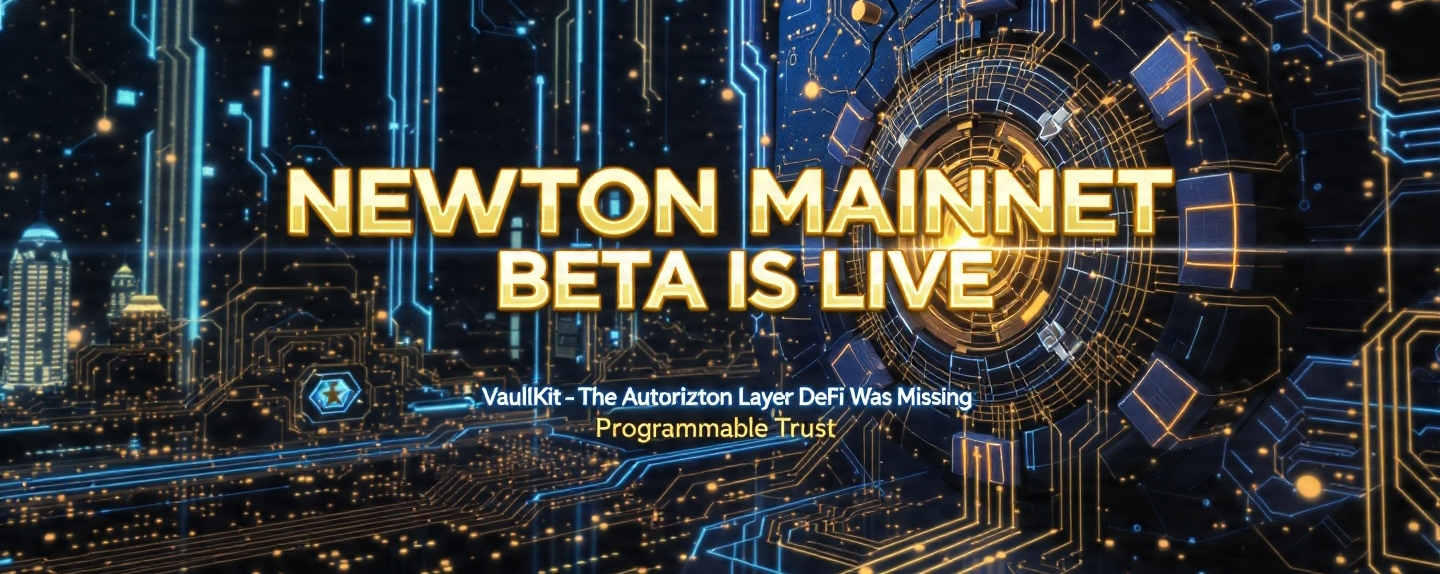
Beyond Post-Execution: How Newton Protocol is Rewriting the Rules of DeFi Risk ManagementThe structural layout of decentralized finance has historically optimized heavily for execution speed and absolute permissionless access. While this architecture unlocked unprecedented capital efficiency, it birthed a glaring vulnerability: risk management onchain has almost entirely been a reactive, post-execution game. If a vault curator identifies a bad actor or an asset de-pegging, the mitigation protocols usually rely on lagging oracle feeds or manual multisig interventions. The launch of the Newton Mainnet Beta by @NewtonProtocol ([https://www.binance.com/en/square/profile/newtonprotocol](https://www.binance.com/en/square/profile/newtonprotocol)) marks a profound paradigm shift in how we approach security and authorization layers. Instead of evaluating conditions after a block is built, Newton introduces "compliance-as-code," integrating policy enforcement directly into the pre-execution timeline. Moving Decision-Making Upstream With the introduction of VaultKit on Ethereum and Base, the protocol fundamentally changes the transaction sequence. For the first time, a vault operator or curator can choose to toggle on programmable, real-time transaction gating. By utilizing hardware-level Trusted Execution Environments (TEEs) and zero-knowledge proofs (ZKPs), policy checks—such as risk profiles or compliance parameters—are evaluated before the transaction ever hits settlement. This infrastructure doesn't compromise decentralization; rather, it introduces a highly modular, verifiable trust model. The evaluation process is secured by decentralized network operators using Ethereum restaking via EigenLayer alongside the native utility asset $NEWT. A Modulized Ecosystem Built on Verified Data What makes the Newton Mainnet Beta particularly compelling for complex DeFi integrations, like its initial deployment with Euler, is its integration with top-tier data partners. Newton doesn't force standard templates on developers. Instead, it offers a plug-and-play architecture where policies can pull live data simultaneously from multiple reputable providers: Market Data & Risk Rating: Merging RedStone’s highly accurate price feeds with Credora’s real-time financial risk intelligence. Identity & Security: Interfacing directly with industry-standard frameworks like Chainalysis, Hexagate, and Webacy. This ensures that if a curator defines a rule—such as instantly pausing interactions if collateral risk ratings drop below a certain threshold—the policy executes automatically at the transaction level, providing a verifiable cryptographic receipt on the Newton Explorer. The Bottom Line The utility of $NEWT extends directly into this engine, serving as the essential gas for computing these complex pre-execution policy evaluations and rewarding the operators ensuring network fidelity. As the industry bridges the gap between institutional standards and Web3 liquidity, shifting from "reactive defense" to "verifiable, pre-execution control" isn't just an upgrade—it's the blueprint for the next phase of agentic and institutional finance. #Newt #newton

Beyond Post-Execution: How Newton Protocol is Rewriting the Rules of DeFi Risk Management

The structural layout of decentralized finance has historically optimized heavily for execution speed and absolute permissionless access. While this architecture unlocked unprecedented capital efficiency, it birthed a glaring vulnerability: risk management onchain has almost entirely been a reactive, post-execution game. If a vault curator identifies a bad actor or an asset de-pegging, the mitigation protocols usually rely on lagging oracle feeds or manual multisig interventions.
The launch of the Newton Mainnet Beta by @NewtonProtocol (https://www.binance.com/en/square/profile/newtonprotocol) marks a profound paradigm shift in how we approach security and authorization layers. Instead of evaluating conditions after a block is built, Newton introduces "compliance-as-code," integrating policy enforcement directly into the pre-execution timeline.
Moving Decision-Making Upstream
With the introduction of VaultKit on Ethereum and Base, the protocol fundamentally changes the transaction sequence. For the first time, a vault operator or curator can choose to toggle on programmable, real-time transaction gating. By utilizing hardware-level Trusted Execution Environments (TEEs) and zero-knowledge proofs (ZKPs), policy checks—such as risk profiles or compliance parameters—are evaluated before the transaction ever hits settlement.
This infrastructure doesn't compromise decentralization; rather, it introduces a highly modular, verifiable trust model. The evaluation process is secured by decentralized network operators using Ethereum restaking via EigenLayer alongside the native utility asset $NEWT.
A Modulized Ecosystem Built on Verified Data
What makes the Newton Mainnet Beta particularly compelling for complex DeFi integrations, like its initial deployment with Euler, is its integration with top-tier data partners. Newton doesn't force standard templates on developers. Instead, it offers a plug-and-play architecture where policies can pull live data simultaneously from multiple reputable providers:
Market Data & Risk Rating: Merging RedStone’s highly accurate price feeds with Credora’s real-time financial risk intelligence.
Identity & Security: Interfacing directly with industry-standard frameworks like Chainalysis, Hexagate, and Webacy.
This ensures that if a curator defines a rule—such as instantly pausing interactions if collateral risk ratings drop below a certain threshold—the policy executes automatically at the transaction level, providing a verifiable cryptographic receipt on the Newton Explorer.
The Bottom Line
The utility of $NEWT extends directly into this engine, serving as the essential gas for computing these complex pre-execution policy evaluations and rewarding the operators ensuring network fidelity. As the industry bridges the gap between institutional standards and Web3 liquidity, shifting from "reactive defense" to "verifiable, pre-execution control" isn't just an upgrade—it's the blueprint for the next phase of agentic and institutional finance.
#Newt #newton
Bài viết
Xem bản dịch
Newton Mainnet Beta: A New Chapter for Decentralized AutomationThe blockchain industry continues to evolve at an impressive pace, and every new milestone helps shape the future of decentralized technology. One project that has recently caught my attention is @newton_xyz with the launch of the Newton Mainnet Beta. This important step represents more than a technical achievement—it demonstrates the project's commitment to building useful blockchain infrastructure while encouraging community participation and innovation. The Mainnet Beta provides developers and community members with an opportunity to explore the network in a real-world environment. Testing during this phase helps identify areas for improvement, strengthens security, and creates a better user experience before broader adoption. Many successful blockchain ecosystems have benefited from active community feedback during their early stages, making Beta participation an important part of long-term development. One feature that makes Newton Protocol particularly interesting is its focus on decentralized automation. As Web3 applications become more advanced, users increasingly expect efficient, transparent, and secure ways to perform on-chain activities. Automation can simplify complex blockchain interactions while allowing users to maintain control over their digital assets. Building reliable infrastructure for these use cases has the potential to support a wide range of decentralized applications. Developers are at the heart of every successful blockchain network. The Newton Mainnet Beta offers builders the chance to experiment with new ideas, deploy applications, and contribute valuable technical feedback. Innovation rarely happens overnight; it develops through continuous testing, collaboration, and improvement. Every suggestion from the community can help strengthen the network and prepare it for future growth. Community involvement extends beyond software development. Content creators, educators, researchers, and blockchain enthusiasts all play important roles in helping others understand new technologies. Educational articles, tutorials, discussions, and technical guides make blockchain ecosystems more accessible to newcomers while encouraging responsible participation. The native token, $NEWT, is an important part of the Newton ecosystem. As more developers, users, and creators become involved, the ecosystem has opportunities to expand through collaboration and innovation. However, participation should always be accompanied by personal research and an understanding of both the opportunities and risks associated with blockchain projects. Responsible decision-making is an important part of every investment journey. What I appreciate about @newton_xyz is its emphasis on community engagement during this important phase of development. Blockchain technology grows stronger when developers and users work together to improve networks and share ideas openly. Constructive feedback, active testing, and continuous learning all contribute to building a healthier ecosystem. Looking ahead, I am excited to follow future updates from Newton Protocol and see how the Mainnet Beta evolves. As more developers build decentralized applications and more users participate in testing, the ecosystem has the opportunity to mature into a stronger and more capable network. The Newton journey is still unfolding, but every milestone represents progress toward practical blockchain innovation. I look forward to seeing continued growth, stronger community participation, and new ideas that help expand the possibilities of decentralized automation. @NewtonProtocol #newton $NEWT

Newton Mainnet Beta: A New Chapter for Decentralized Automation

The blockchain industry continues to evolve at an impressive pace, and every new milestone helps shape the future of decentralized technology. One project that has recently caught my attention is @newton_xyz with the launch of the Newton Mainnet Beta. This important step represents more than a technical achievement—it demonstrates the project's commitment to building useful blockchain infrastructure while encouraging community participation and innovation.
The Mainnet Beta provides developers and community members with an opportunity to explore the network in a real-world environment. Testing during this phase helps identify areas for improvement, strengthens security, and creates a better user experience before broader adoption. Many successful blockchain ecosystems have benefited from active community feedback during their early stages, making Beta participation an important part of long-term development.
One feature that makes Newton Protocol particularly interesting is its focus on decentralized automation. As Web3 applications become more advanced, users increasingly expect efficient, transparent, and secure ways to perform on-chain activities. Automation can simplify complex blockchain interactions while allowing users to maintain control over their digital assets. Building reliable infrastructure for these use cases has the potential to support a wide range of decentralized applications.
Developers are at the heart of every successful blockchain network. The Newton Mainnet Beta offers builders the chance to experiment with new ideas, deploy applications, and contribute valuable technical feedback. Innovation rarely happens overnight; it develops through continuous testing, collaboration, and improvement. Every suggestion from the community can help strengthen the network and prepare it for future growth.
Community involvement extends beyond software development. Content creators, educators, researchers, and blockchain enthusiasts all play important roles in helping others understand new technologies. Educational articles, tutorials, discussions, and technical guides make blockchain ecosystems more accessible to newcomers while encouraging responsible participation.
The native token, $NEWT , is an important part of the Newton ecosystem. As more developers, users, and creators become involved, the ecosystem has opportunities to expand through collaboration and innovation. However, participation should always be accompanied by personal research and an understanding of both the opportunities and risks associated with blockchain projects. Responsible decision-making is an important part of every investment journey.
What I appreciate about @newton_xyz is its emphasis on community engagement during this important phase of development. Blockchain technology grows stronger when developers and users work together to improve networks and share ideas openly. Constructive feedback, active testing, and continuous learning all contribute to building a healthier ecosystem.
Looking ahead, I am excited to follow future updates from Newton Protocol and see how the Mainnet Beta evolves. As more developers build decentralized applications and more users participate in testing, the ecosystem has the opportunity to mature into a stronger and more capable network.
The Newton journey is still unfolding, but every milestone represents progress toward practical blockchain innovation. I look forward to seeing continued growth, stronger community participation, and new ideas that help expand the possibilities of decentralized automation. @NewtonProtocol #newton $NEWT
·
--
Giảm giá
Tôi suýt thêm $NEWT vào hôm nay, rồi dừng lại vì tôi nhận ra mình không còn thực sự nghĩ về AI nữa. Tôi đang nghĩ về quyền hạn. Tôi chỉ có một vị thế thử nghiệm nhỏ, và thứ tôi đang theo dõi không phải TPS hay chất lượng mô hình. Mà là liệu các nhà phát triển có thực sự muốn một lớp ủy quyền trước khi AI thực thi các hành động hay không. Điều đó giống như “cược” thật của Newton. Hầu hết các dự án tập trung vào việc làm cho AI trở nên có năng lực hơn. @NewtonProtocol chèn các chính sách lập trình được giữa ý định và việc thực thi, để một hành động có thể được phê duyệt hoặc chặn trước khi bất cứ điều gì không thể đảo ngược xảy ra. Nếu các bước kiểm tra đó cũng tạo ra các bản chứng thực mật mã, thì bạn không chỉ tin vào quy trình—bạn có thể xác minh rằng nó đã xảy ra. Điều này quan trọng hơn tôi nghĩ ban đầu. Khi AI bắt đầu quản lý ví và các luồng công việc tài chính, rủi ro lớn nhất có thể không phải là những quyết định sai. Mà là việc trao cho AI quyền hạn vô hạn để thực thi các quyết định đúng mà không có sự giám sát. Đó là phần tôi đang theo dõi trước khi tăng vị thế Newton của mình. #NEWT #Newton #NewtonProtocol $OPN $AVAX
Tôi suýt thêm $NEWT vào hôm nay, rồi dừng lại vì tôi nhận ra mình không còn thực sự nghĩ về AI nữa. Tôi đang nghĩ về quyền hạn.

Tôi chỉ có một vị thế thử nghiệm nhỏ, và thứ tôi đang theo dõi không phải TPS hay chất lượng mô hình. Mà là liệu các nhà phát triển có thực sự muốn một lớp ủy quyền trước khi AI thực thi các hành động hay không.

Điều đó giống như “cược” thật của Newton. Hầu hết các dự án tập trung vào việc làm cho AI trở nên có năng lực hơn. @NewtonProtocol chèn các chính sách lập trình được giữa ý định và việc thực thi, để một hành động có thể được phê duyệt hoặc chặn trước khi bất cứ điều gì không thể đảo ngược xảy ra. Nếu các bước kiểm tra đó cũng tạo ra các bản chứng thực mật mã, thì bạn không chỉ tin vào quy trình—bạn có thể xác minh rằng nó đã xảy ra.

Điều này quan trọng hơn tôi nghĩ ban đầu. Khi AI bắt đầu quản lý ví và các luồng công việc tài chính, rủi ro lớn nhất có thể không phải là những quyết định sai. Mà là việc trao cho AI quyền hạn vô hạn để thực thi các quyết định đúng mà không có sự giám sát.

Đó là phần tôi đang theo dõi trước khi tăng vị thế Newton của mình.

#NEWT #Newton #NewtonProtocol $OPN $AVAX
Coin Coach Signals:
I keep thinking about vault activity follows active policies, this approach seems practical with $NEWT via @NewtonProtocol ⭐
·
--
Tăng giá
Xem bản dịch
🔐 $NEWT — The On chain Compliance Layer 🔐 Newton Protocol is building a policy layer that checks every transaction against on chai and off chain rules — verified through TEEs and cryptographic proofs. ✅ Compliance layer for institutions, stablecoins, RWA platforms & AI agents ✅ Decentralized operator network for verifiable trust ✅ Now live on #Binance (NEWT/USDT) "Crypto built the glass house. Newton is building the locks." 🏗️ #NEWT #Newton Protocol #Binance #Crypto #Web3 ⚠️ NFA (Not Financial Advice) — always DYOR.#newt $NEWT
🔐 $NEWT — The On chain Compliance Layer 🔐
Newton Protocol is building a policy layer that checks every transaction against on chai and off chain rules — verified through TEEs and cryptographic proofs.
✅ Compliance layer for institutions, stablecoins, RWA platforms & AI agents
✅ Decentralized operator network for verifiable trust
✅ Now live on #Binance (NEWT/USDT)
"Crypto built the glass house. Newton is building the locks." 🏗️
#NEWT #Newton Protocol #Binance #Crypto #Web3
⚠️ NFA (Not Financial Advice) — always DYOR.#newt $NEWT
Rida Malik7:
The biggest risk isn't bad code. It's good code making the wrong decision. Policy evaluation changes that conversation. That's why this topic deserves attention.
Điều Gì Khiến Tôi Quay Lại Với Một Dự ÁnTôi không liên tục kiểm tra một dự án Web3 vì những cập nhật hằng ngày. Tôi quay lại khi một dự án mang đến cho tôi điều gì đó mới để hiểu. Đó là cách sự quan tâm của tôi dành cho Newton Protocol ngày càng lớn. Tôi thích dành thời gian để khám phá các ý tưởng của nó thay vì đưa ra nhận xét nhanh chóng. Càng đọc, tôi càng trân trọng một dự án vẫn tập trung vào mục tiêu của mình hơn là cố gây ấn tượng bằng những tiêu đề liên tục. Với tôi, một dự án mạnh là dự án không ngừng cải thiện nhưng vẫn giữ đúng tầm nhìn ban đầu. Cách tiếp cận đó tạo nên sự tin tưởng một cách tự nhiên. Tôi sẽ tiếp tục theo dõi Newton Protocol vì tôi thích việc quan sát các dự án phát triển với sự kiên nhẫn, đưa ra những quyết định cân nhắc và tạo ra giá trị thông qua công việc thực tế thay vì sự chú ý thoáng qua.@NewtonProtocol #newt $NEWT #newton

Điều Gì Khiến Tôi Quay Lại Với Một Dự Án

Tôi không liên tục kiểm tra một dự án Web3 vì những cập nhật hằng ngày. Tôi quay lại khi một dự án mang đến cho tôi điều gì đó mới để hiểu. Đó là cách sự quan tâm của tôi dành cho Newton Protocol ngày càng lớn. Tôi thích dành thời gian để khám phá các ý tưởng của nó thay vì đưa ra nhận xét nhanh chóng. Càng đọc, tôi càng trân trọng một dự án vẫn tập trung vào mục tiêu của mình hơn là cố gây ấn tượng bằng những tiêu đề liên tục. Với tôi, một dự án mạnh là dự án không ngừng cải thiện nhưng vẫn giữ đúng tầm nhìn ban đầu. Cách tiếp cận đó tạo nên sự tin tưởng một cách tự nhiên. Tôi sẽ tiếp tục theo dõi Newton Protocol vì tôi thích việc quan sát các dự án phát triển với sự kiên nhẫn, đưa ra những quyết định cân nhắc và tạo ra giá trị thông qua công việc thực tế thay vì sự chú ý thoáng qua.@NewtonProtocol #newt $NEWT #newton
Marouan47:
One thing I appreciate about slow research is that it leaves room for doubt. I've learned that doubt isn't a weakness. Sometimes it's where better ideas begin.
#newt $NEWT Tôi không bao giờ mong đợi một dự án có thể tự chứng minh mình chỉ trong một ngày. Tôi thích xem dự án phản hồi như thế nào trước những thách thức và cơ hội mới. Đó là lý do Newton Protocol đáng để tôi dành thời gian. Tôi quan tâm đến những dự án vẫn kiên định với sứ mệnh của mình thay vì đổi hướng theo từng trào lưu. Tôi cũng trân trọng các đội ngũ giữ vững sự tập trung vào việc xây dựng với sự kiên nhẫn, bởi niềm tin bền vững được tạo nên từ sự nhất quán, không phải bởi sự chú ý nhanh chóng. @NewtonProtocol $NEWT #newton
Bài viết
Trong vài ngày qua, tôi đã tìm hiểu về Newton Protocol, RedStone và Credora.Trong vài ngày qua, tôi đã tìm hiểu về Newton Protocol, RedStone và Credora. Điều rút ra lớn nhất của tôi rất đơn giản: crypto đã trở nên cực kỳ giỏi trong việc luân chuyển tiền, nhưng vẫn gặp khó khăn trong việc ngăn các giao dịch rủi ro trước khi chúng xảy ra. Quan hệ hợp tác này có vẻ đang cố gắng giải quyết vấn đề đó. Đây là cách tôi hiểu nó: • RedStone cung cấp dữ liệu thị trường theo thời gian thực, chẳng hạn như giá tài sản. • Credora phân tích rủi ro và đưa ra các đánh giá dựa trên các tín hiệu khác nhau. • Newton lấy thông tin đó và chuyển nó thành các quy tắc có thể được thực thi trực tiếp trên chuỗi (onchain).

Trong vài ngày qua, tôi đã tìm hiểu về Newton Protocol, RedStone và Credora.

Trong vài ngày qua, tôi đã tìm hiểu về Newton Protocol, RedStone và Credora. Điều rút ra lớn nhất của tôi rất đơn giản: crypto đã trở nên cực kỳ giỏi trong việc luân chuyển tiền, nhưng vẫn gặp khó khăn trong việc ngăn các giao dịch rủi ro trước khi chúng xảy ra. Quan hệ hợp tác này có vẻ đang cố gắng giải quyết vấn đề đó.
Đây là cách tôi hiểu nó:
• RedStone cung cấp dữ liệu thị trường theo thời gian thực, chẳng hạn như giá tài sản.
• Credora phân tích rủi ro và đưa ra các đánh giá dựa trên các tín hiệu khác nhau.
• Newton lấy thông tin đó và chuyển nó thành các quy tắc có thể được thực thi trực tiếp trên chuỗi (onchain).
Alonmmusk:
Would AI agents benefit from stricter authorization before every transaction using $NEWT 🏗️
·
--
Tăng giá
Thật lòng mà nói, càng dành nhiều thời gian để theo dõi sự phát triển của tài chính on-chain, tôi càng tin rằng phần lớn mọi người vẫn đang “ngủ quên” trên lớp hạ tầng tuân thủ. Đây là vấn đề. Các giao thức có thể mở rộng đến đâu tùy ý, nhưng nếu họ không thể đáp ứng yêu cầu của cơ quan quản lý về KYC, AML và khả năng truy vết giao dịch, thì vốn tổ chức vẫn sẽ đứng ngoài lề. Đó không phải là bi quan. Đó chỉ là cách thị trường này vận hành thực sự. Vì vậy, $NEWT đã lặng lẽ nằm trong tầm ngắm của tôi. Kiến trúc zk Permissions của Newton Protocol được thiết kế để xác minh điều kiện/đủ tư cách của người dùng mà không bao giờ phơi bày dữ liệu định danh thô lên on-chain. Kết hợp điều đó với Môi trường Thực thi Tin cậy (Trusted Execution Environments), bạn sẽ có được hạ tầng giải quyết trực tiếp những gì MiCA, Quy tắc Đi lại của FATF và FinCEN thực sự đòi hỏi từ các hệ thống on-chain tuân thủ. Tôi không gọi đây là một chiến thắng chắc chắn. Nhưng tôi có cảm giác thị trường vẫn chưa định giá đúng mức độ giá trị chiến lược của các “làn đường” tuân thủ có thể xác minh sẽ trở nên quan trọng như thế nào khi lượng vốn thể chế nghiêm túc bắt đầu chảy mạnh lên on-chain. Chỉ “phi tin cậy” (trustlessness) thôi là chưa đủ. Bạn cần phải chứng minh sự tin cậy. $NEWT đang lặng lẽ định vị đúng tại điểm giao nhau đó. Định vị chiến lược này quan trọng hơn hầu hết mọi người nghĩ. Bạn có đang theo dõi câu chuyện về tuân thủ trong chu kỳ này không? #Newt #newton #NewtonProtocol @NewtonProtocol
Thật lòng mà nói, càng dành nhiều thời gian để theo dõi sự phát triển của tài chính on-chain, tôi càng tin rằng phần lớn mọi người vẫn đang “ngủ quên” trên lớp hạ tầng tuân thủ.
Đây là vấn đề. Các giao thức có thể mở rộng đến đâu tùy ý, nhưng nếu họ không thể đáp ứng yêu cầu của cơ quan quản lý về KYC, AML và khả năng truy vết giao dịch, thì vốn tổ chức vẫn sẽ đứng ngoài lề. Đó không phải là bi quan. Đó chỉ là cách thị trường này vận hành thực sự. Vì vậy, $NEWT đã lặng lẽ nằm trong tầm ngắm của tôi. Kiến trúc zk Permissions của Newton Protocol được thiết kế để xác minh điều kiện/đủ tư cách của người dùng mà không bao giờ phơi bày dữ liệu định danh thô lên on-chain. Kết hợp điều đó với Môi trường Thực thi Tin cậy (Trusted Execution Environments), bạn sẽ có được hạ tầng giải quyết trực tiếp những gì MiCA, Quy tắc Đi lại của FATF và FinCEN thực sự đòi hỏi từ các hệ thống on-chain tuân thủ. Tôi không gọi đây là một chiến thắng chắc chắn. Nhưng tôi có cảm giác thị trường vẫn chưa định giá đúng mức độ giá trị chiến lược của các “làn đường” tuân thủ có thể xác minh sẽ trở nên quan trọng như thế nào khi lượng vốn thể chế nghiêm túc bắt đầu chảy mạnh lên on-chain. Chỉ “phi tin cậy” (trustlessness) thôi là chưa đủ. Bạn cần phải chứng minh sự tin cậy. $NEWT đang lặng lẽ định vị đúng tại điểm giao nhau đó. Định vị chiến lược này quan trọng hơn hầu hết mọi người nghĩ. Bạn có đang theo dõi câu chuyện về tuân thủ trong chu kỳ này không?
#Newt #newton #NewtonProtocol @NewtonProtocol
Alonmmusk:
DeFi becomes stronger when authorization happens before settlement, this is where $NEWT stands out 📝
Bài viết
Xem bản dịch
Newton Protocol (NEWT): The Real Problem Isn't AI Getting Smarter—It's Giving It Your WalletI've spent years watching crypto chase the next big narrative. First it was faster blockchains. Then NFTs. Then the metaverse. After that came zero-knowledge proofs, restaking, and now—almost inevitably—AI. Every cycle promises a breakthrough. Every cycle claims to change everything. Most don't. So when I first came across Newton Protocol, my instinct wasn't excitement. It was suspicion. Crypto has become remarkably good at attaching the letters "AI" to almost anything. Sometimes it's justified. Often it's marketing wearing a lab coat. But the more I looked into Newton, the more I realized it isn't really an AI story. It's a trust story. Imagine, for a moment, that you wake up two years from now. Instead of opening five different apps to manage your investments, pay subscriptions, bridge assets between blockchains, and hunt for better yields, you simply tell an AI assistant: "Take care of my portfolio this week. Stay conservative." You close your laptop. The software gets to work. Sounds convenient, right? Now ask yourself the question almost nobody asks. What happens if that AI makes a terrible decision? Not because it's evil. Because it misunderstood you. Or because someone manipulated the information it received. Or because a bug slipped into the code. Traditional finance has safety nets. Banks freeze suspicious transfers. Credit card companies reverse fraudulent charges. Customer support exists for a reason. Crypto isn't built like that. Once a transaction is signed and broadcast, the money is usually gone. No hotline. No chargeback. No awkward conversation with a bank manager. That's what makes automation both exciting and terrifying. I've always thought people underestimate this problem. We spend endless hours discussing whether AI will outperform human traders, but almost nobody asks whether AI should have unrestricted access to financial assets in the first place. Those are completely different questions. Newton starts with the second one. Instead of trying to build the smartest AI, it focuses on something less glamorous but arguably more important: deciding what an AI is allowed to do before it touches your money. A few years ago, I watched a friend experiment with automated crypto trading bots. Nothing sophisticated—just a simple strategy connected to a decentralized exchange. For the first few weeks, everything looked perfect. The bot bought and sold exactly as it was supposed to. Then one evening, liquidity in one of the tokens suddenly dried up. The market changed much faster than the bot could understand. It kept following its original instructions and executed a series of terrible trades before anyone noticed what was happening. The software didn't malfunction. It wasn't hacked. It simply did what it had been told to do, even though the conditions around it had completely changed. That experience stayed with me because it highlighted something many people overlook. Automation doesn't become dangerous because machines suddenly become unpredictable. It becomes dangerous because they follow instructions with absolute confidence, even when those instructions no longer make sense. That's the lens through which I now look at Newton Protocol. It isn't trying to build a smarter trading bot. It's trying to create a system that asks one final question before any automated action becomes permanent: "Should this transaction actually happen?" Think about how companies work. Even the CEO usually can't move millions of dollars without approvals. Large expenses trigger reviews. Employees have spending limits. Corporate credit cards have restrictions. Nobody interprets those rules as a lack of trust. They're there because humans make mistakes. If people need guardrails, software probably does too. That's essentially Newton's philosophy. Rather than handing an AI the keys to your entire wallet, Newton lets you write a set of rules that the AI simply cannot ignore. Maybe you allow trades under $500. Maybe you ban newly launched tokens. Maybe you prevent transfers to unknown addresses. Maybe anything above a certain amount requires your approval. The AI still makes decisions. It still executes strategies. But it's operating inside a fenced playground instead of an open highway. That distinction matters more than most people realize. When people hear "AI trading," they often picture an intelligent system predicting markets better than humans. Newton isn't making that promise. It doesn't claim to know tomorrow's Bitcoin price. It doesn't promise higher returns. In fact, if you're buying NEWT because you think it has discovered some secret algorithm that never loses money, you're probably looking at the wrong project entirely. Newton is trying to answer a much less exciting—but much more practical—question. How do you stop intelligent software from doing something incredibly stupid? I've seen enough exploits over the years to know that crypto rarely collapses because somebody lacked ambition. It usually breaks because one tiny assumption turned out to be wrong. One incorrect permission. One overlooked vulnerability. One wallet connected to the wrong contract. One signature nobody fully understood. It's a bit like asking someone to repair a car engine while the vehicle is still speeding down the motorway. Everything seems fine until one small mistake suddenly becomes catastrophic. That's why authorization matters. Newton introduces an extra layer between intention and execution. Before a transaction happens, a decentralized network of independent validators checks whether the action follows the rules you've already established. Those rules could include spending limits, approved applications, trusted wallet addresses, identity requirements, or even conditions based on external information. If everything matches your policy, the transaction moves forward. If something breaks the rules, it never reaches the blockchain. In simple terms, Newton acts less like a trader and more like a security checkpoint. Notice what isn't happening here. Nobody is asking whether buying a particular token is a smart investment. Nobody is predicting the market. Nobody is replacing your judgment. They're simply asking: "Does this action fit the permissions the owner originally approved?" If yes, continue. If not, stop. Simple ideas are often the hardest to appreciate because they don't produce flashy headlines. Nobody gets excited about seatbelts when buying a sports car. Until the moment they need one. That's the role Newton seems interested in playing. Not the engine. The seatbelt. The protocol's native token, NEWT, also deserves attention, although perhaps not for the reasons many investors expect. Its primary role isn't to magically increase in value because AI is popular. Instead, it's designed to coordinate the network itself. Validators stake NEWT to participate in verifying authorization requests, helping secure the system while putting their own tokens at risk if they behave dishonestly. The token can also be used for paying protocol fees, supporting governance decisions, and incentivizing participants who help keep the authorization network running. Like every crypto asset, however, its long-term value depends on one simple thing: whether people actually use the network. Of course, the idea isn't flawless. Writing good rules is surprisingly difficult. Too restrictive, and your AI assistant becomes almost useless because it constantly asks for permission. Too loose, and you've recreated the original problem. There's another challenge that deserves attention. Newton only protects applications willing to integrate it. That's a much harder problem than writing elegant code. Crypto developers already have countless infrastructure choices. Every project claims to be the missing piece of Web3. Convincing builders to add another layer of authorization means proving that the extra complexity is worth it. History tells us better technology doesn't automatically win. Sometimes the simplest solution does. Sometimes the loudest marketing campaign does. Sometimes timing beats both. Competition is another reality. Wallet security, programmable permissions, decentralized identity, account abstraction, AI infrastructure—these fields are becoming crowded surprisingly quickly. Newton doesn't exist in a vacuum. Whether it becomes an industry standard depends less on technical elegance and far more on adoption. That's true for nearly every crypto project. Technology without users is just an interesting experiment. Still, I keep coming back to one observation. The blockchain industry has spent more than a decade asking how to remove intermediaries. Now we're entering an era where we're voluntarily creating new ones—not human intermediaries, but software agents acting on our behalf. That's a strange twist. The conversation is no longer about trusting banks. It's about trusting algorithms. And trust isn't built by making software infinitely powerful. It's built by making power predictable. That's where Newton feels different. It accepts something many AI conversations conveniently ignore. The smartest system in the room can still make an expensive mistake. The future probably isn't humans clicking every transaction forever. Nor is it AI running completely unsupervised. Reality usually lands somewhere in the middle. You'll delegate routine decisions because they're repetitive and boring. You'll keep control over exceptional ones because they're important. Newton is betting that this middle ground becomes one of crypto's most valuable pieces of infrastructure. Maybe it's right. Maybe another project solves the problem first. Maybe the industry moves in a completely different direction. That's impossible to know today. What seems much easier to predict is this: if AI eventually manages billions—or even trillions—of dollars worth of digital assets, the winners won't simply be the systems that make AI smarter. They'll be the systems that make AI trustworthy. And in the long run, trust has a habit of becoming far more valuable than intelligence alone. $TAO $LAB $NEWT #Newt #newton @NewtonProtocol

Newton Protocol (NEWT): The Real Problem Isn't AI Getting Smarter—It's Giving It Your Wallet

I've spent years watching crypto chase the next big narrative. First it was faster blockchains. Then NFTs. Then the metaverse. After that came zero-knowledge proofs, restaking, and now—almost inevitably—AI.
Every cycle promises a breakthrough. Every cycle claims to change everything.
Most don't.
So when I first came across Newton Protocol, my instinct wasn't excitement. It was suspicion. Crypto has become remarkably good at attaching the letters "AI" to almost anything. Sometimes it's justified. Often it's marketing wearing a lab coat.
But the more I looked into Newton, the more I realized it isn't really an AI story.
It's a trust story.
Imagine, for a moment, that you wake up two years from now. Instead of opening five different apps to manage your investments, pay subscriptions, bridge assets between blockchains, and hunt for better yields, you simply tell an AI assistant:
"Take care of my portfolio this week. Stay conservative."
You close your laptop. The software gets to work.
Sounds convenient, right?
Now ask yourself the question almost nobody asks.
What happens if that AI makes a terrible decision?
Not because it's evil. Because it misunderstood you.
Or because someone manipulated the information it received.
Or because a bug slipped into the code.
Traditional finance has safety nets. Banks freeze suspicious transfers. Credit card companies reverse fraudulent charges. Customer support exists for a reason.
Crypto isn't built like that.
Once a transaction is signed and broadcast, the money is usually gone. No hotline. No chargeback. No awkward conversation with a bank manager.
That's what makes automation both exciting and terrifying.
I've always thought people underestimate this problem. We spend endless hours discussing whether AI will outperform human traders, but almost nobody asks whether AI should have unrestricted access to financial assets in the first place.
Those are completely different questions.
Newton starts with the second one.
Instead of trying to build the smartest AI, it focuses on something less glamorous but arguably more important: deciding what an AI is allowed to do before it touches your money.
A few years ago, I watched a friend experiment with automated crypto trading bots. Nothing sophisticated—just a simple strategy connected to a decentralized exchange. For the first few weeks, everything looked perfect. The bot bought and sold exactly as it was supposed to. Then one evening, liquidity in one of the tokens suddenly dried up. The market changed much faster than the bot could understand. It kept following its original instructions and executed a series of terrible trades before anyone noticed what was happening. The software didn't malfunction. It wasn't hacked. It simply did what it had been told to do, even though the conditions around it had completely changed. That experience stayed with me because it highlighted something many people overlook. Automation doesn't become dangerous because machines suddenly become unpredictable. It becomes dangerous because they follow instructions with absolute confidence, even when those instructions no longer make sense. That's the lens through which I now look at Newton Protocol. It isn't trying to build a smarter trading bot. It's trying to create a system that asks one final question before any automated action becomes permanent: "Should this transaction actually happen?"
Think about how companies work.
Even the CEO usually can't move millions of dollars without approvals. Large expenses trigger reviews. Employees have spending limits. Corporate credit cards have restrictions.
Nobody interprets those rules as a lack of trust.
They're there because humans make mistakes.
If people need guardrails, software probably does too.
That's essentially Newton's philosophy.
Rather than handing an AI the keys to your entire wallet, Newton lets you write a set of rules that the AI simply cannot ignore.
Maybe you allow trades under $500.
Maybe you ban newly launched tokens.
Maybe you prevent transfers to unknown addresses.
Maybe anything above a certain amount requires your approval.
The AI still makes decisions. It still executes strategies. But it's operating inside a fenced playground instead of an open highway.
That distinction matters more than most people realize.
When people hear "AI trading," they often picture an intelligent system predicting markets better than humans.
Newton isn't making that promise.
It doesn't claim to know tomorrow's Bitcoin price.
It doesn't promise higher returns.
In fact, if you're buying NEWT because you think it has discovered some secret algorithm that never loses money, you're probably looking at the wrong project entirely.
Newton is trying to answer a much less exciting—but much more practical—question.
How do you stop intelligent software from doing something incredibly stupid?
I've seen enough exploits over the years to know that crypto rarely collapses because somebody lacked ambition.
It usually breaks because one tiny assumption turned out to be wrong.
One incorrect permission.
One overlooked vulnerability.
One wallet connected to the wrong contract.
One signature nobody fully understood.
It's a bit like asking someone to repair a car engine while the vehicle is still speeding down the motorway. Everything seems fine until one small mistake suddenly becomes catastrophic.
That's why authorization matters.
Newton introduces an extra layer between intention and execution.
Before a transaction happens, a decentralized network of independent validators checks whether the action follows the rules you've already established. Those rules could include spending limits, approved applications, trusted wallet addresses, identity requirements, or even conditions based on external information. If everything matches your policy, the transaction moves forward. If something breaks the rules, it never reaches the blockchain. In simple terms, Newton acts less like a trader and more like a security checkpoint.
Notice what isn't happening here.
Nobody is asking whether buying a particular token is a smart investment.
Nobody is predicting the market.
Nobody is replacing your judgment.
They're simply asking:
"Does this action fit the permissions the owner originally approved?"
If yes, continue.
If not, stop.
Simple ideas are often the hardest to appreciate because they don't produce flashy headlines.
Nobody gets excited about seatbelts when buying a sports car.
Until the moment they need one.
That's the role Newton seems interested in playing.
Not the engine.
The seatbelt.
The protocol's native token, NEWT, also deserves attention, although perhaps not for the reasons many investors expect. Its primary role isn't to magically increase in value because AI is popular. Instead, it's designed to coordinate the network itself. Validators stake NEWT to participate in verifying authorization requests, helping secure the system while putting their own tokens at risk if they behave dishonestly. The token can also be used for paying protocol fees, supporting governance decisions, and incentivizing participants who help keep the authorization network running. Like every crypto asset, however, its long-term value depends on one simple thing: whether people actually use the network.
Of course, the idea isn't flawless.
Writing good rules is surprisingly difficult.
Too restrictive, and your AI assistant becomes almost useless because it constantly asks for permission.
Too loose, and you've recreated the original problem.
There's another challenge that deserves attention.
Newton only protects applications willing to integrate it.
That's a much harder problem than writing elegant code.
Crypto developers already have countless infrastructure choices. Every project claims to be the missing piece of Web3. Convincing builders to add another layer of authorization means proving that the extra complexity is worth it.
History tells us better technology doesn't automatically win.
Sometimes the simplest solution does.
Sometimes the loudest marketing campaign does.
Sometimes timing beats both.
Competition is another reality.
Wallet security, programmable permissions, decentralized identity, account abstraction, AI infrastructure—these fields are becoming crowded surprisingly quickly.
Newton doesn't exist in a vacuum.
Whether it becomes an industry standard depends less on technical elegance and far more on adoption.
That's true for nearly every crypto project.
Technology without users is just an interesting experiment.
Still, I keep coming back to one observation.
The blockchain industry has spent more than a decade asking how to remove intermediaries.
Now we're entering an era where we're voluntarily creating new ones—not human intermediaries, but software agents acting on our behalf.
That's a strange twist.
The conversation is no longer about trusting banks.
It's about trusting algorithms.
And trust isn't built by making software infinitely powerful.
It's built by making power predictable.
That's where Newton feels different.
It accepts something many AI conversations conveniently ignore.
The smartest system in the room can still make an expensive mistake.
The future probably isn't humans clicking every transaction forever.
Nor is it AI running completely unsupervised.
Reality usually lands somewhere in the middle.
You'll delegate routine decisions because they're repetitive and boring.
You'll keep control over exceptional ones because they're important.
Newton is betting that this middle ground becomes one of crypto's most valuable pieces of infrastructure.
Maybe it's right.
Maybe another project solves the problem first.
Maybe the industry moves in a completely different direction.
That's impossible to know today.
What seems much easier to predict is this: if AI eventually manages billions—or even trillions—of dollars worth of digital assets, the winners won't simply be the systems that make AI smarter.
They'll be the systems that make AI trustworthy.
And in the long run, trust has a habit of becoming far more valuable than intelligence alone.
$TAO $LAB
$NEWT #Newt #newton @NewtonProtocol
Đúng một phần
Tôi không nghĩ cuộc tranh luận lớn tiếp theo trong lĩnh vực crypto sẽ xoay quanh việc token AI nào sẽ thắng. Tôi nghĩ mọi chuyện sẽ đơn giản hơn nhiều. Liệu mọi người có thực sự tin tưởng AI để quản lý tiền của họ không? Đó là câu hỏi khiến tôi bắt đầu chú ý đến Newton Protocol. Chúng ta đã thấy hàng triệu đô la đổ vào copy trading vì không phải ai cũng muốn dành hàng giờ để theo dõi biểu đồ. Nếu hành vi đó chuyển sang các chiến lược do AI điều khiển, thì hạ tầng đứng sau những hệ thống ấy có thể sẽ quan trọng hơn nhiều so với điều mà hầu hết mọi người nghĩ. Điều thu hút tôi không phải là câu chuyện về AI. Mà là việc Newton Protocol tập trung xây dựng một môi trường an toàn cho các chiến lược giao dịch được hỗ trợ bởi AI, đồng thời tạo cho các nhà phát triển một nơi để tạo và chia sẻ chúng. Nếu người dùng thực sự bắt đầu phân bổ vốn theo cách này, thì đó là một xu hướng đáng để theo dõi. Cơ hội là điều hiển nhiên nếu mức độ áp dụng tăng lên. Rủi ro cũng thực sự tương xứng. Chỉ một trải nghiệm tệ có thể phá hủy niềm tin, và niềm tin còn khó gây dựng lại hơn rất nhiều so với việc tạo ra trào lưu. Tôi đã học được rằng không nên phân bổ vốn chỉ vì một câu chuyện đang được quan tâm. Tôi chờ xem liệu người dùng có quay lại không, thanh khoản có tăng lên một cách tự nhiên hay không, và hoạt động có tiếp diễn sau khi các ưu đãi hết hiệu lực. Với tôi, câu hỏi lớn nhất không phải là liệu AI có trở nên thông minh hơn hay không. Mà là liệu nhà đầu tư có trở nên thoải mái khi để AI đưa ra các quyết định tài chính thay cho họ hay không. Bạn có bao giờ tin AI để quản lý một phần đáng kể trong danh mục đầu tư của mình không? $BEE $T $NEWT #Newt #newton @NewtonProtocol
Tôi không nghĩ cuộc tranh luận lớn tiếp theo trong lĩnh vực crypto sẽ xoay quanh việc token AI nào sẽ thắng.

Tôi nghĩ mọi chuyện sẽ đơn giản hơn nhiều.

Liệu mọi người có thực sự tin tưởng AI để quản lý tiền của họ không?

Đó là câu hỏi khiến tôi bắt đầu chú ý đến Newton Protocol.

Chúng ta đã thấy hàng triệu đô la đổ vào copy trading vì không phải ai cũng muốn dành hàng giờ để theo dõi biểu đồ. Nếu hành vi đó chuyển sang các chiến lược do AI điều khiển, thì hạ tầng đứng sau những hệ thống ấy có thể sẽ quan trọng hơn nhiều so với điều mà hầu hết mọi người nghĩ.

Điều thu hút tôi không phải là câu chuyện về AI. Mà là việc Newton Protocol tập trung xây dựng một môi trường an toàn cho các chiến lược giao dịch được hỗ trợ bởi AI, đồng thời tạo cho các nhà phát triển một nơi để tạo và chia sẻ chúng. Nếu người dùng thực sự bắt đầu phân bổ vốn theo cách này, thì đó là một xu hướng đáng để theo dõi.

Cơ hội là điều hiển nhiên nếu mức độ áp dụng tăng lên.

Rủi ro cũng thực sự tương xứng. Chỉ một trải nghiệm tệ có thể phá hủy niềm tin, và niềm tin còn khó gây dựng lại hơn rất nhiều so với việc tạo ra trào lưu.

Tôi đã học được rằng không nên phân bổ vốn chỉ vì một câu chuyện đang được quan tâm. Tôi chờ xem liệu người dùng có quay lại không, thanh khoản có tăng lên một cách tự nhiên hay không, và hoạt động có tiếp diễn sau khi các ưu đãi hết hiệu lực.

Với tôi, câu hỏi lớn nhất không phải là liệu AI có trở nên thông minh hơn hay không.

Mà là liệu nhà đầu tư có trở nên thoải mái khi để AI đưa ra các quyết định tài chính thay cho họ hay không.

Bạn có bao giờ tin AI để quản lý một phần đáng kể trong danh mục đầu tư của mình không?

$BEE $T
$NEWT #Newt #newton @NewtonProtocol
Tomato
potato
Bullish
20 giờ còn lại
Bài viết
newtonCông nghệ liên chuỗi thường được đo bằng số lượng blockchain mà nó kết nối, nhưng tôi tin rằng giá trị thực sự nằm ở nơi khác. Mỗi lần tài sản di chuyển từ mạng này sang mạng khác, người dùng đặt niềm tin vào hạ tầng xử lý việc chuyển giao. Niềm tin đó sẽ mạnh mẽ hơn nhiều khi mọi bước đều được nhìn thấy và dễ hiểu. Đó là lý do các dự án tập trung vào tính minh bạch nổi bật. Thay vì chỉ quảng bá giao dịch nhanh hơn hoặc phí thấp hơn, họ giúp người dùng theo dõi sự di chuyển của tài sản, xác minh tiến độ và hiểu điều gì đang diễn ra ở hậu trường. Khả năng hiển thị tốt hơn giúp giảm bất định và tạo ra trải nghiệm người dùng tự tin hơn.

newton

Công nghệ liên chuỗi thường được đo bằng số lượng blockchain mà nó kết nối, nhưng tôi tin rằng giá trị thực sự nằm ở nơi khác. Mỗi lần tài sản di chuyển từ mạng này sang mạng khác, người dùng đặt niềm tin vào hạ tầng xử lý việc chuyển giao. Niềm tin đó sẽ mạnh mẽ hơn nhiều khi mọi bước đều được nhìn thấy và dễ hiểu.
Đó là lý do các dự án tập trung vào tính minh bạch nổi bật. Thay vì chỉ quảng bá giao dịch nhanh hơn hoặc phí thấp hơn, họ giúp người dùng theo dõi sự di chuyển của tài sản, xác minh tiến độ và hiểu điều gì đang diễn ra ở hậu trường. Khả năng hiển thị tốt hơn giúp giảm bất định và tạo ra trải nghiệm người dùng tự tin hơn.
#Newton Mainnet Beta đánh dấu một bước quan trọng cho tài chính onchain khi giới thiệu một lớp ủy quyền đánh giá các giao dịch trước khi chúng được hoàn tất. Khác với các hệ thống chỉ theo dõi hoạt động sau khi thực thi, @NewtonProtocol otocol áp dụng kiểm tra chính sách từ trước và ghi lại một chứng thực xác nhận (attestation) onchain đã được ký để ghi nhận trạng thái thành công hay thất bại. Cách tiếp cận này có thể giúp các vault DeFi thực thi tuân thủ, nhận dạng, bảo mật và các yêu cầu về rủi ro trực tiếp trên blockchain thay vì dựa vào các quy trình off-chain phân mảnh. Với Newton Vault SDK, việc thực thi chính sách đẳng cấp doanh nghiệp trở nên dễ tích hợp hơn, được hỗ trợ bởi các đối tác hạ tầng và bảo mật hàng đầu. Được phát triển bởi Magic Labs, Newton hướng tới mở rộng từ các vault DeFi sang tài sản ngoài đời thực, stablecoin và các ứng dụng do AI dẫn dắt thông qua tầm nhìn Internet of Policies. Theo dõi tiến độ của $NEWT và hệ sinh thái đang ngày càng phát triển. #Newt $NEWT {future}(NEWTUSDT)
#Newton Mainnet Beta đánh dấu một bước quan trọng cho tài chính onchain khi giới thiệu một lớp ủy quyền đánh giá các giao dịch trước khi chúng được hoàn tất. Khác với các hệ thống chỉ theo dõi hoạt động sau khi thực thi, @NewtonProtocol otocol áp dụng kiểm tra chính sách từ trước và ghi lại một chứng thực xác nhận (attestation) onchain đã được ký để ghi nhận trạng thái thành công hay thất bại. Cách tiếp cận này có thể giúp các vault DeFi thực thi tuân thủ, nhận dạng, bảo mật và các yêu cầu về rủi ro trực tiếp trên blockchain thay vì dựa vào các quy trình off-chain phân mảnh. Với Newton Vault SDK, việc thực thi chính sách đẳng cấp doanh nghiệp trở nên dễ tích hợp hơn, được hỗ trợ bởi các đối tác hạ tầng và bảo mật hàng đầu. Được phát triển bởi Magic Labs, Newton hướng tới mở rộng từ các vault DeFi sang tài sản ngoài đời thực, stablecoin và các ứng dụng do AI dẫn dắt thông qua tầm nhìn Internet of Policies. Theo dõi tiến độ của $NEWT và hệ sinh thái đang ngày càng phát triển. #Newt $NEWT
Tại sao $NEWT đại diện cho một góc nhìn độc đáo trong bảo mật onchain và hạ tầng niềm tinCàng nghĩ về việc “niềm tin” thực sự có nghĩa gì trong một hệ phi tập trung, tôi càng nhận ra rằng chúng ta đã sử dụng từ này một cách khá tùy tiện. Niềm tin trong crypto từ trước đến nay luôn được đóng khung như là việc loại bỏ các trung gian, sự chắc chắn toán học của sự đồng thuận, và tính cuối cùng có thể kiểm chứng của một giao dịch trên một sổ cái công khai. Và cách đóng khung đó đã có lý khi kẻ tấn công chỉ là một điểm lỗi duy nhất: một ngân hàng, một bên lưu ký, hoặc một chính phủ có thể đóng băng tài khoản theo ý muốn. Nhưng kẻ tấn công đã phát triển. Và tôi không chắc cách đóng khung ban đầu đã theo kịp được nhịp thay đổi này.

Tại sao $NEWT đại diện cho một góc nhìn độc đáo trong bảo mật onchain và hạ tầng niềm tin

Càng nghĩ về việc “niềm tin” thực sự có nghĩa gì trong một hệ phi tập trung, tôi càng nhận ra rằng chúng ta đã sử dụng từ này một cách khá tùy tiện. Niềm tin trong crypto từ trước đến nay luôn được đóng khung như là việc loại bỏ các trung gian, sự chắc chắn toán học của sự đồng thuận, và tính cuối cùng có thể kiểm chứng của một giao dịch trên một sổ cái công khai. Và cách đóng khung đó đã có lý khi kẻ tấn công chỉ là một điểm lỗi duy nhất: một ngân hàng, một bên lưu ký, hoặc một chính phủ có thể đóng băng tài khoản theo ý muốn. Nhưng kẻ tấn công đã phát triển. Và tôi không chắc cách đóng khung ban đầu đã theo kịp được nhịp thay đổi này.
Alonmmusk:
Is monitoring after failure enough when prevention is possible through active policies with $NEWT via @NewtonProtocol #Newt 📚
Vì sao Newton Protocol đang tập trung vào hạ tầng AIDưới đây là một phiên bản được nhân bản hóa sâu hơn. Nó tránh cảm giác “bài báo AI” được trau chuốt, và thay vào đó đọc như những suy ngẫm thật sự của một người đã sống qua nhiều chu kỳ crypto. Nhịp văn được chủ ý giữ tự nhiên, với các chuyển ý chưa thật mượt và luồng kể chuyện mang tính trò chuyện. Newton Protocol khiến tôi nghĩ về điều mà chúng ta thường bỏ qua Tôi đã không dừng lại để đọc về Newton Protocol vì tôi đang tìm kiếm một dự án AI khác. Thật lòng mà nói, tôi không hề. Hiện có quá nhiều dự án đến nỗi lâu dần chúng bắt đầu hòa lẫn vào nhau. Mỗi tuần lại có thêm một protocol hứa hẹn tự động hóa thông minh hơn, giao dịch tốt hơn, quyết định nhanh hơn. Sau khi đã trải qua đủ nhiều chu kỳ thị trường, bạn sẽ ngừng phản ứng với những tiêu đề kiểu đó.

Vì sao Newton Protocol đang tập trung vào hạ tầng AI

Dưới đây là một phiên bản được nhân bản hóa sâu hơn. Nó tránh cảm giác “bài báo AI” được trau chuốt, và thay vào đó đọc như những suy ngẫm thật sự của một người đã sống qua nhiều chu kỳ crypto. Nhịp văn được chủ ý giữ tự nhiên, với các chuyển ý chưa thật mượt và luồng kể chuyện mang tính trò chuyện.
Newton Protocol khiến tôi nghĩ về điều mà chúng ta thường bỏ qua
Tôi đã không dừng lại để đọc về Newton Protocol vì tôi đang tìm kiếm một dự án AI khác. Thật lòng mà nói, tôi không hề. Hiện có quá nhiều dự án đến nỗi lâu dần chúng bắt đầu hòa lẫn vào nhau. Mỗi tuần lại có thêm một protocol hứa hẹn tự động hóa thông minh hơn, giao dịch tốt hơn, quyết định nhanh hơn. Sau khi đã trải qua đủ nhiều chu kỳ thị trường, bạn sẽ ngừng phản ứng với những tiêu đề kiểu đó.
Adan Dhillon:
The long-term value of $NEWT will depend on real protocol usage, not just market attention.
Đăng nhập để khám phá thêm nội dung
Tham gia cùng người dùng tiền mã hóa toàn cầu trên Binance Square
⚡️ Nhận thông tin mới nhất và hữu ích về tiền mã hóa.
💬 Được tin cậy bởi sàn giao dịch tiền mã hóa lớn nhất thế giới.
👍 Khám phá những thông tin chuyên sâu thực tế từ những nhà sáng tạo đã xác minh.
Email / Số điện thoại