
#futurestrading
futurestrading
5.1M views
20,787 Discussing
Hot
Latest


·
--
Bullish
🌅 Good morning, Rabbit traders! 🐇
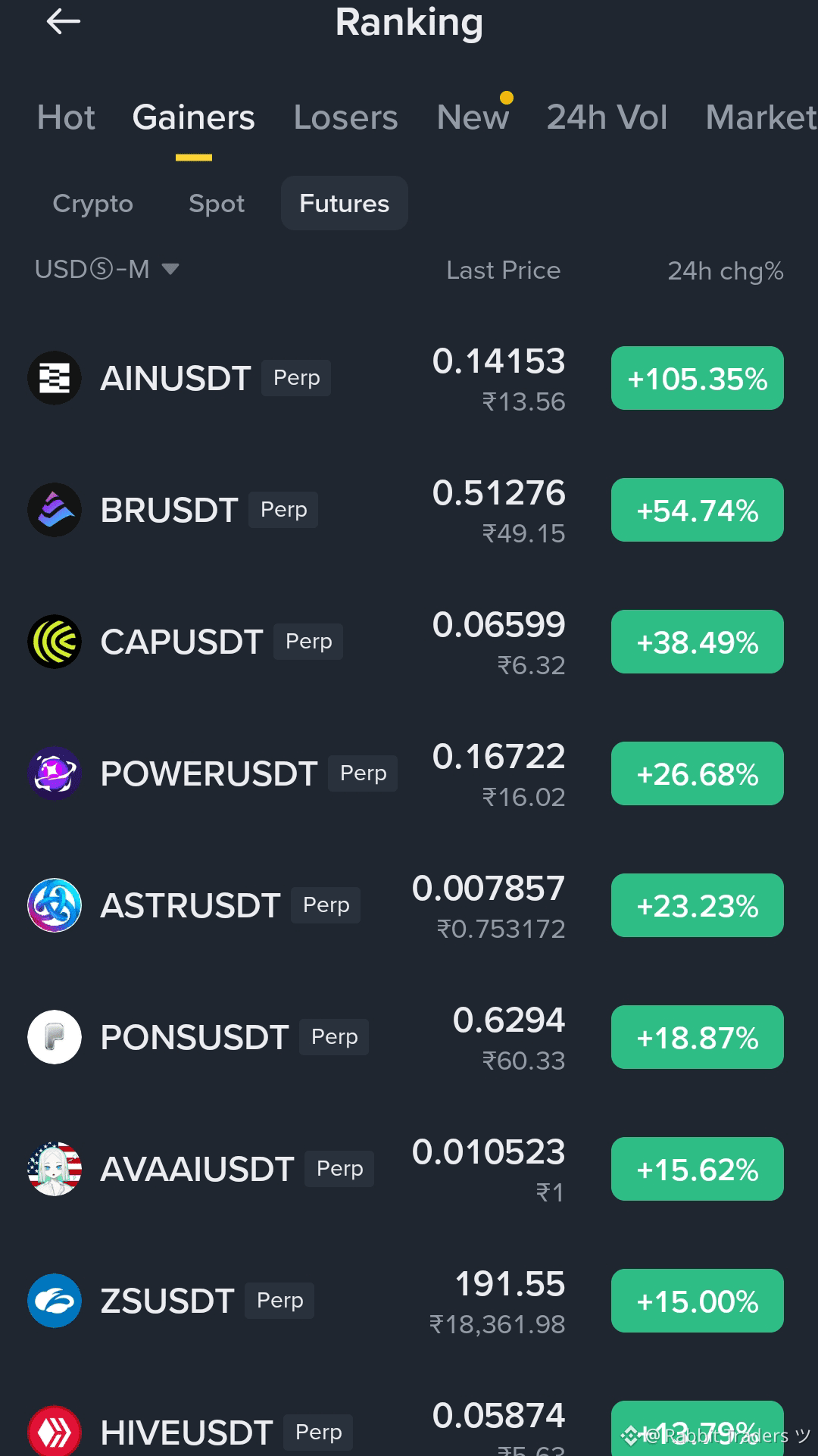
AIN printed +105% while you were sleeping! 🚀🚀🚀
🔥 Today's top gainers:
🥇 $AIN — +105.35% (DOUBLED!)
🥈 $BR — +54.74%
🥉 $CAP — +38.49%
Also climbing:
• POWER +26%
• ASTR +23%
• PONS +18%
• AVAAI +15%
• ZS +15%
• HIVE +13%
• AIO +13%
Morning question:
Did you wake up rich or watching from the sidelines? 😅👇
{future}(AINUSDT)
{future}(BRUSDT)
{future}(CAPUSDT)
#Binance #GoodMorning #TopGainers #AIN #BR #CAP #POWER #crypto #FuturesTrading
🌅 Good morning, Rabbit traders! 🐇
AIN printed +105% while you were sleeping! 🚀🚀🚀
🔥 Today's top gainers:
🥇 $AIN — +105.35% (DOUBLED!)
🥈 $BR — +54.74%
🥉 $CAP — +38.49%
Also climbing:
• POWER +26%
• ASTR +23%
• PONS +18%
• AVAAI +15%
• ZS +15%
• HIVE +13%
• AIO +13%
Morning question:
Did you wake up rich or watching from the sidelines? 😅👇
#Binance #GoodMorning #TopGainers #AIN #BR #CAP #POWER #crypto #FuturesTrading
AIN printed +105% while you were sleeping! 🚀🚀🚀
🔥 Today's top gainers:
🥇 $AIN — +105.35% (DOUBLED!)
🥈 $BR — +54.74%
🥉 $CAP — +38.49%
Also climbing:
• POWER +26%
• ASTR +23%
• PONS +18%
• AVAAI +15%
• ZS +15%
• HIVE +13%
• AIO +13%
Morning question:
Did you wake up rich or watching from the sidelines? 😅👇
#Binance #GoodMorning #TopGainers #AIN #BR #CAP #POWER #crypto #FuturesTrading
222

🟢 GREEN MARKET VIBE IS ON! 🚀🔥
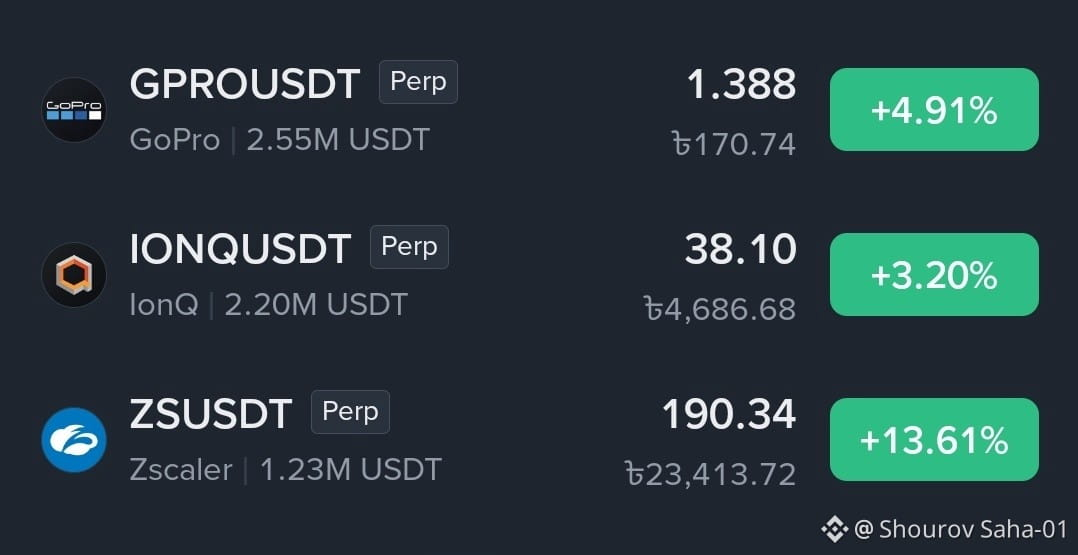
The market is showing some serious positive momentum today, and $GPRO , $IONQ & $ZS are catching attention. 👀
🔥 #ZS is leading the move with 13%+ momentum, while GPRO and IONQ are also showing strong buying interest.
📊 My Trade Radar: GPRO
{future}(GPROUSDT)
IONQ
{future}(IONQUSDT)
ZS
{future}(ZSUSDT)
Don’t chase the candle — wait for confirmation, volume & a clean setup before entering. 🎯
Which one do you think moves next? 👇
#CryptoTrading #FuturesTrading #CryptoGainers
🟢 GREEN MARKET VIBE IS ON! 🚀🔥
The market is showing some serious positive momentum today, and $GPRO , $IONQ & $ZS are catching attention. 👀
🔥 #ZS is leading the move with 13%+ momentum, while GPRO and IONQ are also showing strong buying interest.
📊 My Trade Radar: GPRO
IONQ
ZS
Don’t chase the candle — wait for confirmation, volume & a clean setup before entering. 🎯
Which one do you think moves next? 👇
#CryptoTrading #FuturesTrading #CryptoGainers
The market is showing some serious positive momentum today, and $GPRO , $IONQ & $ZS are catching attention. 👀
🔥 #ZS is leading the move with 13%+ momentum, while GPRO and IONQ are also showing strong buying interest.
📊 My Trade Radar: GPRO
IONQ
ZS
Don’t chase the candle — wait for confirmation, volume & a clean setup before entering. 🎯
Which one do you think moves next? 👇
#CryptoTrading #FuturesTrading #CryptoGainers
1
112

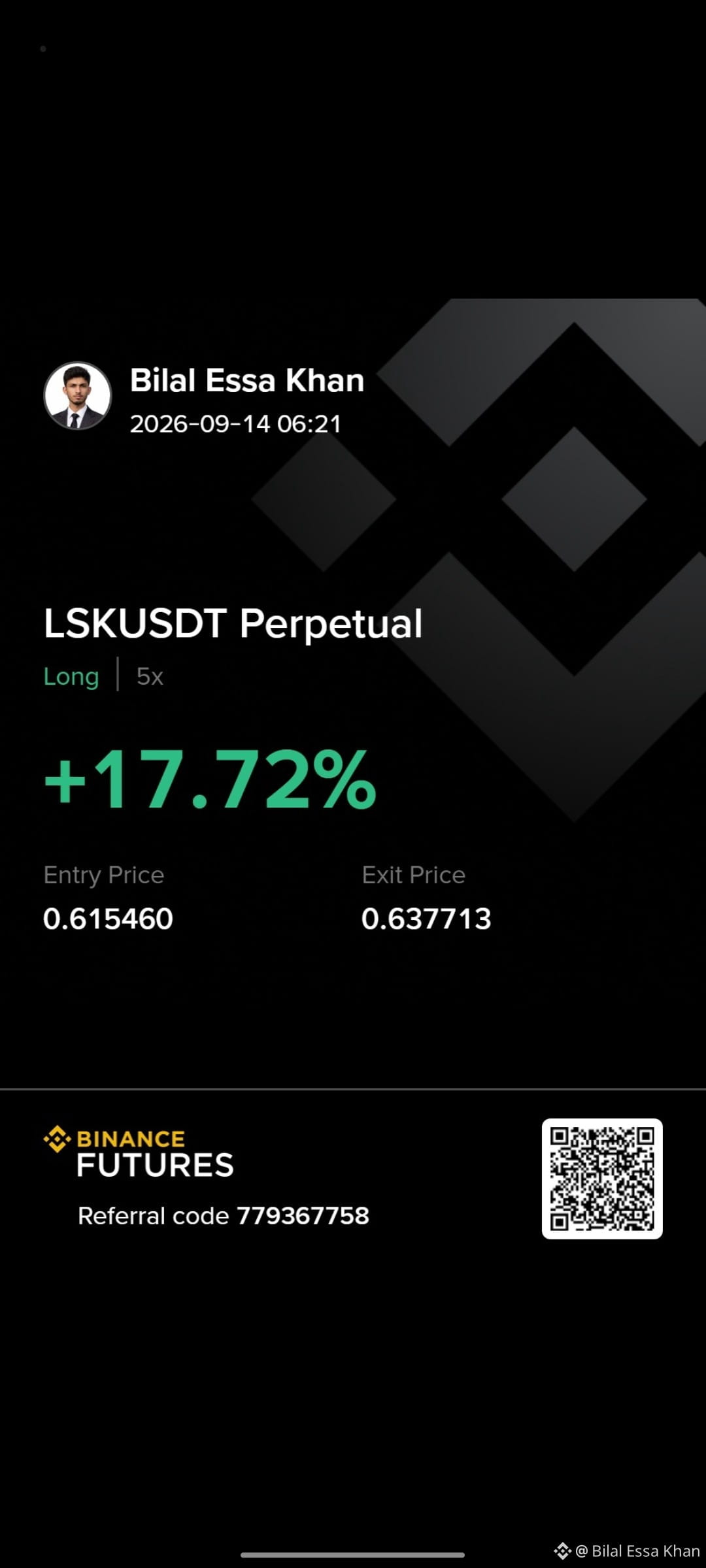
🚀 LSKUSDT Long - Target Hit!
• Profit: +17.72% (5x) 💸
• Entry: 0.615460
• Exit: 0.637713
Clean execution with strict risk management! 📈
what is your best trade? below Mention! 👇
⚠️ NFA / DYOR - Educational Purpose Only.
#LSK #BinanceSquare #CryptoTradingInsights #FuturesTrading
🚀 LSKUSDT Long - Target Hit!
• Profit: +17.72% (5x) 💸
• Entry: 0.615460
• Exit: 0.637713
Clean execution with strict risk management! 📈
what is your best trade? below Mention! 👇
⚠️ NFA / DYOR - Educational Purpose Only.
#LSK #BinanceSquare #CryptoTradingInsights #FuturesTrading
• Profit: +17.72% (5x) 💸
• Entry: 0.615460
• Exit: 0.637713
Clean execution with strict risk management! 📈
what is your best trade? below Mention! 👇
⚠️ NFA / DYOR - Educational Purpose Only.
#LSK #BinanceSquare #CryptoTradingInsights #FuturesTrading
287

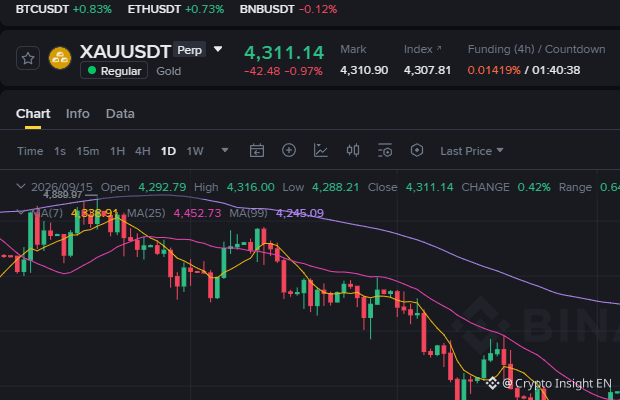
Binance Futures has updated commodity-based TradFi perpetual contracts like $XAUUSDT and $CLUSDT to trade 24/5 without daily breaks. 🚀 #Binance #FuturesTrading
Binance Futures has updated commodity-based TradFi perpetual contracts like $XAUUSDT and $CLUSDT to trade 24/5 without daily breaks. 🚀 #Binance #FuturesTrading
下一个就轮到你:
。。。
1
99

·
--
Picture this: a trader sitting in the top 7 of 30-day live futures PnL publicly stakes their entire reputation on a macro sweep, predicting the Clarity Act passes, interest rates hold steady, and the next expansion leg begins immediately.
Most retail traders see a leaderboard ranking like that and immediately treat it as gospel. They blindly follow the bias, size up on leverage, and ignore how quickly macro events can liquidate even the best short-term track records.
Here is what most people miss in these scenarios. High-conviction calls based on policy shifts often create an echo chamber where downside protection gets completely forgotten. While steady rates can offer short-term relief for $BTC, legislative timelines rarely move in straight lines, and market makers thrive on liquidity pockets created by overconfident positioning.
When top-tier PnL accounts broadcast certainty right before major economic releases, it usually triggers aggressive margin build-ups across $ETH and altcoin futures. A 30-day winning streak does not make anyone immune to volatility spikes. Risk management is always the first casualty when traders mistake a short winning run for market control.
Where do you think leverage gets punished first if the macro narrative fails to deliver?
#CryptoTrading #RiskManagement #FuturesTrading
Picture this: a trader sitting in the top 7 of 30-day live futures PnL publicly stakes their entire reputation on a macro sweep, predicting the Clarity Act passes, interest rates hold steady, and the next expansion leg begins immediately.
Most retail traders see a leaderboard ranking like that and immediately treat it as gospel. They blindly follow the bias, size up on leverage, and ignore how quickly macro events can liquidate even the best short-term track records.
Here is what most people miss in these scenarios. High-conviction calls based on policy shifts often create an echo chamber where downside protection gets completely forgotten. While steady rates can offer short-term relief for $BTC , legislative timelines rarely move in straight lines, and market makers thrive on liquidity pockets created by overconfident positioning.
When top-tier PnL accounts broadcast certainty right before major economic releases, it usually triggers aggressive margin build-ups across $ETH and altcoin futures. A 30-day winning streak does not make anyone immune to volatility spikes. Risk management is always the first casualty when traders mistake a short winning run for market control.
Where do you think leverage gets punished first if the macro narrative fails to deliver?
#CryptoTrading #RiskManagement #FuturesTrading
Most retail traders see a leaderboard ranking like that and immediately treat it as gospel. They blindly follow the bias, size up on leverage, and ignore how quickly macro events can liquidate even the best short-term track records.
Here is what most people miss in these scenarios. High-conviction calls based on policy shifts often create an echo chamber where downside protection gets completely forgotten. While steady rates can offer short-term relief for $BTC , legislative timelines rarely move in straight lines, and market makers thrive on liquidity pockets created by overconfident positioning.
When top-tier PnL accounts broadcast certainty right before major economic releases, it usually triggers aggressive margin build-ups across $ETH and altcoin futures. A 30-day winning streak does not make anyone immune to volatility spikes. Risk management is always the first casualty when traders mistake a short winning run for market control.
Where do you think leverage gets punished first if the macro narrative fails to deliver?
#CryptoTrading #RiskManagement #FuturesTrading

32

Picture this: you are sitting near the top of the 30-day profit leaderboard, yet a single token systematically bleeds your balance dry.
Most traders believe a strict stop-loss guarantees safety, but watching your exits get hunted repeatedly before the market reverses creates a brutal psychological trap.
That exact scenario played out recently when a top-performing trader racked up a 68,604 $USDT loss on a single closed $ZEC perpetual position, pushing daily drawdowns toward six figures. The issue was not reckless trading without stops, but rather entering counter-trend positions during a sharp 6.7% volatility spike where liquidity sweeps routinely cleared out standard invalidation levels.
When high-leverage positions clash with erratic order books, mechanical stops often serve as exit liquidity for larger participants rather than genuine capital protection. Even disciplined execution fails if position sizing and slippage buffers fail to match current market conditions.
How do you adjust your invalidation zones when chop starts hunting standard stop placements?
#CryptoTrading #RiskManagement #FuturesTrading
Picture this: you are sitting near the top of the 30-day profit leaderboard, yet a single token systematically bleeds your balance dry.
Most traders believe a strict stop-loss guarantees safety, but watching your exits get hunted repeatedly before the market reverses creates a brutal psychological trap.
That exact scenario played out recently when a top-performing trader racked up a 68,604 $USDT loss on a single closed $ZEC perpetual position, pushing daily drawdowns toward six figures. The issue was not reckless trading without stops, but rather entering counter-trend positions during a sharp 6.7% volatility spike where liquidity sweeps routinely cleared out standard invalidation levels.
When high-leverage positions clash with erratic order books, mechanical stops often serve as exit liquidity for larger participants rather than genuine capital protection. Even disciplined execution fails if position sizing and slippage buffers fail to match current market conditions.
How do you adjust your invalidation zones when chop starts hunting standard stop placements?
#CryptoTrading #RiskManagement #FuturesTrading
Most traders believe a strict stop-loss guarantees safety, but watching your exits get hunted repeatedly before the market reverses creates a brutal psychological trap.
That exact scenario played out recently when a top-performing trader racked up a 68,604 $USDT loss on a single closed $ZEC perpetual position, pushing daily drawdowns toward six figures. The issue was not reckless trading without stops, but rather entering counter-trend positions during a sharp 6.7% volatility spike where liquidity sweeps routinely cleared out standard invalidation levels.
When high-leverage positions clash with erratic order books, mechanical stops often serve as exit liquidity for larger participants rather than genuine capital protection. Even disciplined execution fails if position sizing and slippage buffers fail to match current market conditions.
How do you adjust your invalidation zones when chop starts hunting standard stop placements?
#CryptoTrading #RiskManagement #FuturesTrading

84

·
--
🚨 $LSK — BIG MOVE, NOW THE REAL TRADE STARTS 📉
$LSK has already delivered a crazy move. Now I’m watching the reaction around $0.40 — this is where traders need discipline, not FOMO.
🔻 SHORT ZONE: $0.38 – $0.43
{future}(LSKUSDT)
🎯 TP1: $0.36
🎯 TP2: $0.32
🎯 TP3: $0.28
🛑 SL: $0.46
If $LSK gets rejected from the $0.40–0.43 area, the pullback can extend quickly.
Don't chase the candle — wait for confirmation and then trade the move.
🔥 High volatility = high opportunity, but only with controlled risk.
Would you take the SHORT here or wait for a stronger rejection? 👇
#LSK #LSKUSDT #FuturesTrading #CryptoTrading #BinanceSquare #Altcoins #ShortSetup
🚨 $LSK — BIG MOVE, NOW THE REAL TRADE STARTS 📉
$LSK has already delivered a crazy move. Now I’m watching the reaction around $0.40 — this is where traders need discipline, not FOMO.
🔻 SHORT ZONE: $0.38 – $0.43
🎯 TP1: $0.36
🎯 TP2: $0.32
🎯 TP3: $0.28
🛑 SL: $0.46
If $LSK gets rejected from the $0.40–0.43 area, the pullback can extend quickly.
Don't chase the candle — wait for confirmation and then trade the move.
🔥 High volatility = high opportunity, but only with controlled risk.
Would you take the SHORT here or wait for a stronger rejection? 👇
#LSK #LSKUSDT #FuturesTrading #CryptoTrading #BinanceSquare #Altcoins #ShortSetup
$LSK has already delivered a crazy move. Now I’m watching the reaction around $0.40 — this is where traders need discipline, not FOMO.
🔻 SHORT ZONE: $0.38 – $0.43
🎯 TP1: $0.36
🎯 TP2: $0.32
🎯 TP3: $0.28
🛑 SL: $0.46
If $LSK gets rejected from the $0.40–0.43 area, the pullback can extend quickly.
Don't chase the candle — wait for confirmation and then trade the move.
🔥 High volatility = high opportunity, but only with controlled risk.
Would you take the SHORT here or wait for a stronger rejection? 👇
#LSK #LSKUSDT #FuturesTrading #CryptoTrading #BinanceSquare #Altcoins #ShortSetup
403

·
--
everyone thinks counter-trend shorting privacy coins is free money during a chop, but actually it is the fastest way to nuke your margin balance.
most traders keep blindly shorting local pumps without invalidation levels, only to watch a single low-liquidity squeeze wipe out weeks of clean scalping profits.
saw a bro today take a nasty hit trying to fade $ZEC on perp. coin was only up +6.73% on the session, but that modest push was enough to trigger a brutal -4,494.86 USDT realized loss on a closed position. ngl ser, fighting mid-cap privacy momentum when open interest starts stacking will humble your account real quick.
you cannot treat assets like $ZEC or $XMR the same way you trade high-float majors like $BTC. when these dinosaurs get a bid, thin order books turn small percentage expansions into instant margin liquidation traps.
how do you usually manage stop losses when fading these sudden mid-cap pumps?
#CryptoTrading #RiskManagement #FuturesTrading
everyone thinks counter-trend shorting privacy coins is free money during a chop, but actually it is the fastest way to nuke your margin balance.
most traders keep blindly shorting local pumps without invalidation levels, only to watch a single low-liquidity squeeze wipe out weeks of clean scalping profits.
saw a bro today take a nasty hit trying to fade $ZEC on perp. coin was only up +6.73% on the session, but that modest push was enough to trigger a brutal -4,494.86 USDT realized loss on a closed position. ngl ser, fighting mid-cap privacy momentum when open interest starts stacking will humble your account real quick.
you cannot treat assets like $ZEC or $XMR the same way you trade high-float majors like $BTC . when these dinosaurs get a bid, thin order books turn small percentage expansions into instant margin liquidation traps.
how do you usually manage stop losses when fading these sudden mid-cap pumps?
#CryptoTrading #RiskManagement #FuturesTrading
most traders keep blindly shorting local pumps without invalidation levels, only to watch a single low-liquidity squeeze wipe out weeks of clean scalping profits.
saw a bro today take a nasty hit trying to fade $ZEC on perp. coin was only up +6.73% on the session, but that modest push was enough to trigger a brutal -4,494.86 USDT realized loss on a closed position. ngl ser, fighting mid-cap privacy momentum when open interest starts stacking will humble your account real quick.
you cannot treat assets like $ZEC or $XMR the same way you trade high-float majors like $BTC . when these dinosaurs get a bid, thin order books turn small percentage expansions into instant margin liquidation traps.
how do you usually manage stop losses when fading these sudden mid-cap pumps?
#CryptoTrading #RiskManagement #FuturesTrading
113

·
--
Bearish
#Binance #LSKUSDT #Crypto #CryptoTrading #FuturesTrading #ShortTrade #Trading #CryptoFutures #RiskManagement#BinanceSquare
📉 LSKUSDT | Short Setup
Strong selling pressure ke baad market ne bearish momentum show kiya. Short position currently in profit ✅
Trading mein sirf entry nahi, proper risk management & patience bhi zaroori hai.
Let’s see whether the bearish trend continues or buyers step in. 👀📊
#Binance #LSKUSDT #Crypto #CryptoTrading #FuturesTrading #ShortTrade #Trading #CryptoFutures #RiskManagement#BinanceSquare
📉 LSKUSDT | Short Setup
Strong selling pressure ke baad market ne bearish momentum show kiya. Short position currently in profit ✅
Trading mein sirf entry nahi, proper risk management & patience bhi zaroori hai.
Let’s see whether the bearish trend continues or buyers step in. 👀📊
📉 LSKUSDT | Short Setup
Strong selling pressure ke baad market ne bearish momentum show kiya. Short position currently in profit ✅
Trading mein sirf entry nahi, proper risk management & patience bhi zaroori hai.
Let’s see whether the bearish trend continues or buyers step in. 👀📊
92

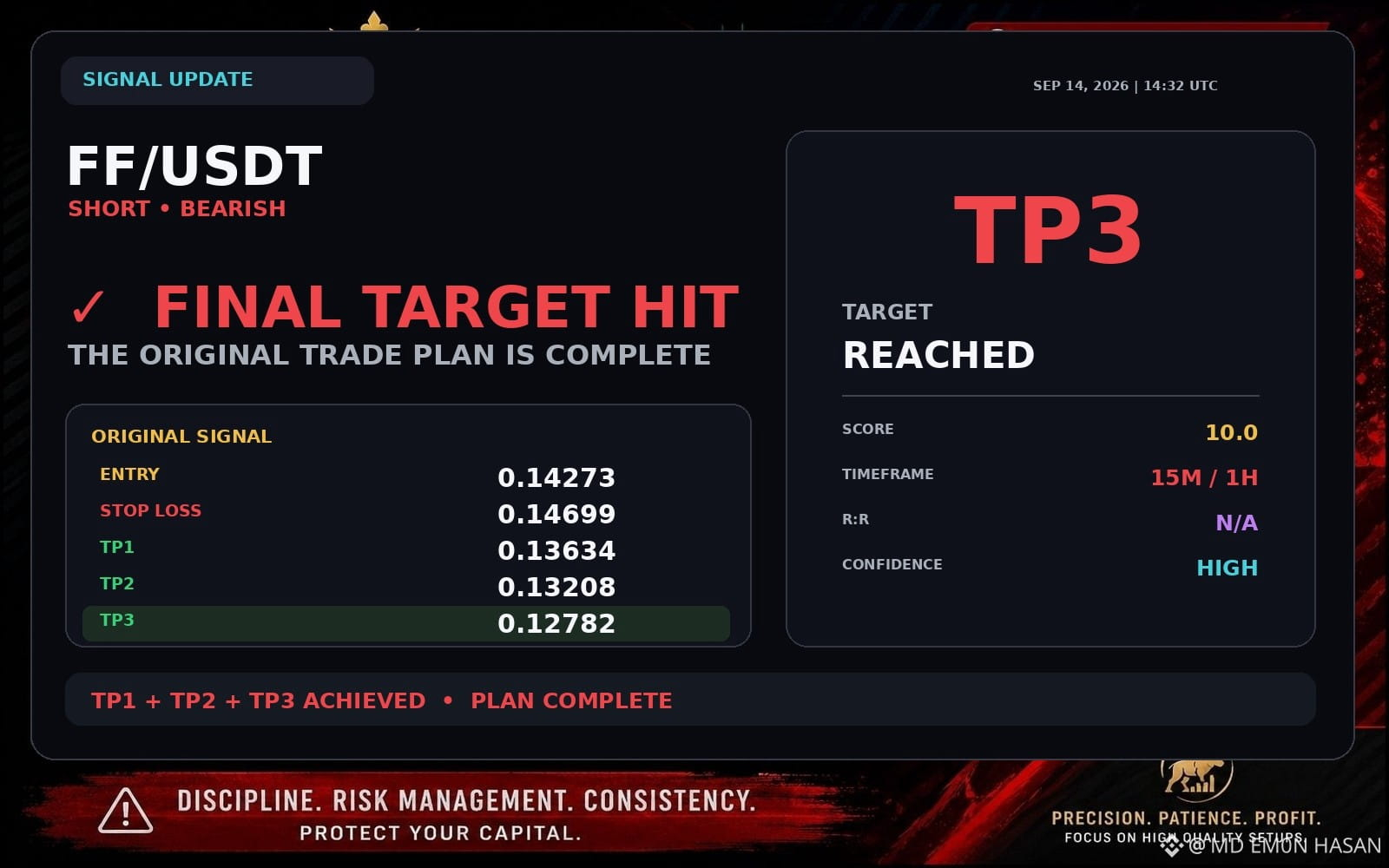
🚀 FINAL TARGET HIT
🔥 $FF — SHORT UPDATE
⭐ Setup Score: 10.0/10
🧠 Confidence: HIGH
Congratulations to everyone who caught $FF early and managed the setup according to plan! 🎉
TP3 — the final planned target — has been reached.
🎯 TP1: 0.1363 ✅
🎯 TP2: 0.1321 ✅
🎯 TP3: 0.1278 ✅
Trade plan completed.
🔗 Original Signal:
https://app.binance.com/uni-qr/cpos/366362764761764?r=K1DFHR7U&l=en
#CryptoTrading #FuturesTrading #TechnicalAnalysis #FF
⚠️ Research/validation update — not financial advice.
🚀 FINAL TARGET HIT
🔥 $FF — SHORT UPDATE
⭐ Setup Score: 10.0/10
🧠 Confidence: HIGH
Congratulations to everyone who caught $FF early and managed the setup according to plan! 🎉
TP3 — the final planned target — has been reached.
🎯 TP1: 0.1363 ✅
🎯 TP2: 0.1321 ✅
🎯 TP3: 0.1278 ✅
Trade plan completed.
🔗 Original Signal:
https://app.binance.com/uni-qr/cpos/366362764761764?r=K1DFHR7U&l=en
#CryptoTrading #FuturesTrading #TechnicalAnalysis #FF
⚠️ Research/validation update — not financial advice.
🔥 $FF — SHORT UPDATE
⭐ Setup Score: 10.0/10
🧠 Confidence: HIGH
Congratulations to everyone who caught $FF early and managed the setup according to plan! 🎉
TP3 — the final planned target — has been reached.
🎯 TP1: 0.1363 ✅
🎯 TP2: 0.1321 ✅
🎯 TP3: 0.1278 ✅
Trade plan completed.
🔗 Original Signal:
https://app.binance.com/uni-qr/cpos/366362764761764?r=K1DFHR7U&l=en
#CryptoTrading #FuturesTrading #TechnicalAnalysis #FF
⚠️ Research/validation update — not financial advice.
31
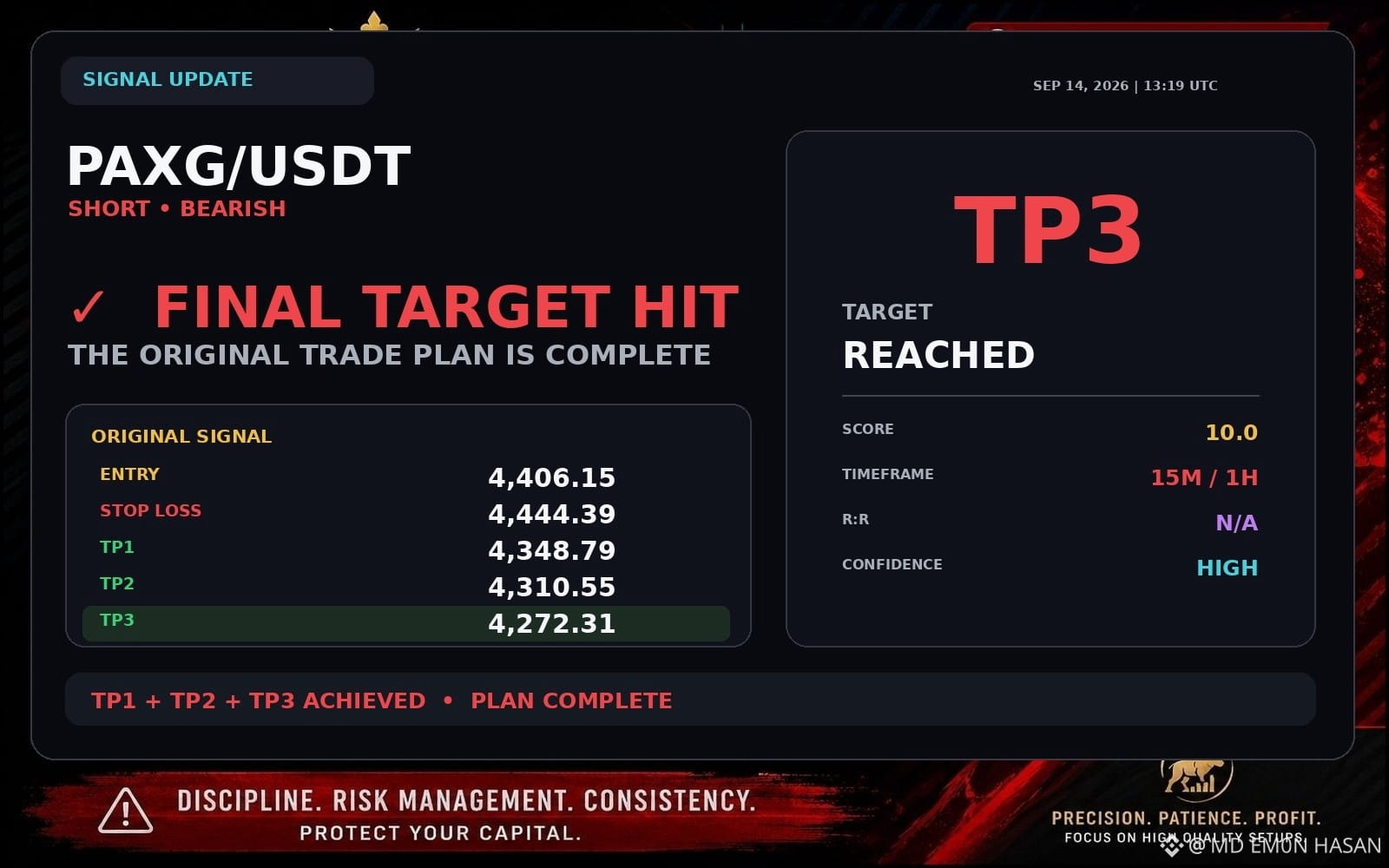
🚀 FINAL TARGET HIT
🔥 $PAXG — SHORT UPDATE
⭐ Setup Score: 10.0/10
🧠 Confidence: HIGH
Congratulations to everyone who caught $PAXG early and managed the setup according to plan! 🎉
TP3 — the final planned target — has been reached.
🎯 TP1: 4348.7883 ✅
🎯 TP2: 4310.5472 ✅
🎯 TP3: 4272.3061 ✅
Trade plan completed.
🔗 Original Signal:
https://app.binance.com/uni-qr/cpos/363937782549206?r=K1DFHR7U&l=en
#CryptoTrading #FuturesTrading #TechnicalAnalysis #PAXG
⚠️ Research/validation update — not financial advice.
🚀 FINAL TARGET HIT
🔥 $PAXG — SHORT UPDATE
⭐ Setup Score: 10.0/10
🧠 Confidence: HIGH
Congratulations to everyone who caught $PAXG early and managed the setup according to plan! 🎉
TP3 — the final planned target — has been reached.
🎯 TP1: 4348.7883 ✅
🎯 TP2: 4310.5472 ✅
🎯 TP3: 4272.3061 ✅
Trade plan completed.
🔗 Original Signal:
https://app.binance.com/uni-qr/cpos/363937782549206?r=K1DFHR7U&l=en
#CryptoTrading #FuturesTrading #TechnicalAnalysis #PAXG
⚠️ Research/validation update — not financial advice.
🔥 $PAXG — SHORT UPDATE
⭐ Setup Score: 10.0/10
🧠 Confidence: HIGH
Congratulations to everyone who caught $PAXG early and managed the setup according to plan! 🎉
TP3 — the final planned target — has been reached.
🎯 TP1: 4348.7883 ✅
🎯 TP2: 4310.5472 ✅
🎯 TP3: 4272.3061 ✅
Trade plan completed.
🔗 Original Signal:
https://app.binance.com/uni-qr/cpos/363937782549206?r=K1DFHR7U&l=en
#CryptoTrading #FuturesTrading #TechnicalAnalysis #PAXG
⚠️ Research/validation update — not financial advice.
59

·
--
📉 $VIRTUAL Bearish Rejection at Key Resistance
Rating: 77/100 [A] • Strategy: EMATrend
📊 Trade Thesis:
Price encountered strong overhead rejection at the 50 EMA on the 1-hour chart, fully aligning with the broader 4-hour downtrend. The inability to reclaim higher levels signals persistent distribution by sellers.
🎯 Entry: 0.61540
🛑 Stop-Loss: 0.62642 (-1.79%)
✅ Take-Profit: 0.59335 (+3.58%)
⚖️ Risk/Reward: 1:2.0
🚫 Invalidation Rule: If a 1-hour candle closes above $0.62642 (+1.79%), this bearish thesis is invalidated. Cut position immediately.
💡 Trade Management: Secure 50% profit at Take-Profit target ($0.59335 +3.58%) and move Stop-Loss to Breakeven to eliminate downside risk.
⚖️ Risk Note: Moderate leverage recommended (3x–5x on Futures). Never risk more than 1–2% of total portfolio capital on a single setup.
📈 Binance Market Data:
• Funding: -0.0046% (Neutral) • Next: 3h 07m
• Open Interest (OI): $13.76M
• 24h Volume: $14.60M
• 24h Range: 0.6002 — 0.6264 (-0.3%)
📈 Strategy Track Record: WR 53% over 101 trades
#VIRTUAL #PriceAction #FuturesTrading #BinanceSquare
⚠️ Not financial advice. Always manage your risk.
📉 $VIRTUAL Bearish Rejection at Key Resistance
Rating: 77/100 [A] • Strategy: EMATrend
📊 Trade Thesis:
Price encountered strong overhead rejection at the 50 EMA on the 1-hour chart, fully aligning with the broader 4-hour downtrend. The inability to reclaim higher levels signals persistent distribution by sellers.
🎯 Entry: 0.61540
🛑 Stop-Loss: 0.62642 (-1.79%)
✅ Take-Profit: 0.59335 (+3.58%)
⚖️ Risk/Reward: 1:2.0
🚫 Invalidation Rule: If a 1-hour candle closes above $0.62642 (+1.79%), this bearish thesis is invalidated. Cut position immediately.
💡 Trade Management: Secure 50% profit at Take-Profit target ($0.59335 +3.58%) and move Stop-Loss to Breakeven to eliminate downside risk.
⚖️ Risk Note: Moderate leverage recommended (3x–5x on Futures). Never risk more than 1–2% of total portfolio capital on a single setup.
📈 Binance Market Data:
• Funding: -0.0046% (Neutral) • Next: 3h 07m
• Open Interest (OI): $13.76M
• 24h Volume: $14.60M
• 24h Range: 0.6002 — 0.6264 (-0.3%)
📈 Strategy Track Record: WR 53% over 101 trades
#VIRTUAL #PriceAction #FuturesTrading #BinanceSquare
⚠️ Not financial advice. Always manage your risk.
Rating: 77/100 [A] • Strategy: EMATrend
📊 Trade Thesis:
Price encountered strong overhead rejection at the 50 EMA on the 1-hour chart, fully aligning with the broader 4-hour downtrend. The inability to reclaim higher levels signals persistent distribution by sellers.
🎯 Entry: 0.61540
🛑 Stop-Loss: 0.62642 (-1.79%)
✅ Take-Profit: 0.59335 (+3.58%)
⚖️ Risk/Reward: 1:2.0
🚫 Invalidation Rule: If a 1-hour candle closes above $0.62642 (+1.79%), this bearish thesis is invalidated. Cut position immediately.
💡 Trade Management: Secure 50% profit at Take-Profit target ($0.59335 +3.58%) and move Stop-Loss to Breakeven to eliminate downside risk.
⚖️ Risk Note: Moderate leverage recommended (3x–5x on Futures). Never risk more than 1–2% of total portfolio capital on a single setup.
📈 Binance Market Data:
• Funding: -0.0046% (Neutral) • Next: 3h 07m
• Open Interest (OI): $13.76M
• 24h Volume: $14.60M
• 24h Range: 0.6002 — 0.6264 (-0.3%)
📈 Strategy Track Record: WR 53% over 101 trades
#VIRTUAL #PriceAction #FuturesTrading #BinanceSquare
⚠️ Not financial advice. Always manage your risk.
1
55

Market isn't green every day 📉
ETHUSDT | 20X Short | Opening Short
Entry: 2,511.16 | Mark: 2,515.95
Unrealized PNL: -0.05 USDT (-4.00%)
Loss is also part of the game. No panic, just patience. Let's see where ETH goes from here.
Not financial advice.
#ETHUSDT #cryptotrading #FuturesTrading #Binance
Market isn't green every day 📉
ETHUSDT | 20X Short | Opening Short
Entry: 2,511.16 | Mark: 2,515.95
Unrealized PNL: -0.05 USDT (-4.00%)
Loss is also part of the game. No panic, just patience. Let's see where ETH goes from here.
Not financial advice.
#ETHUSDT #cryptotrading #FuturesTrading #Binance
ETHUSDT | 20X Short | Opening Short
Entry: 2,511.16 | Mark: 2,515.95
Unrealized PNL: -0.05 USDT (-4.00%)
Loss is also part of the game. No panic, just patience. Let's see where ETH goes from here.
Not financial advice.
#ETHUSDT #cryptotrading #FuturesTrading #Binance
1
63

·
--
THE LEVERAGE TRAP: WHY PROS MANAGE RISK WHILE RETAIL CHASES 10X IN $BTC ⚠️ 🦈
Smart money views leverage strictly as a tool for capital efficiency, whereas retail traders treat high margin like a lottery ticket. 📊 A 5% adverse move on a 10x position wipes half your margin before funding rates and slippage even clear the order book. 🔍
Institutional survival requires calculating risk per trade, stop-loss distance, and position sizing before touching the execution button. ⚡ Market structure will always hunt over-leveraged liquidity pools regardless of directional conviction. 📌
Have you ever over-leveraged a futures position and paid the price to market liquidity? 💬
⚠️ Not financial advice. Always manage your risk. 🛡️
🏷️ #BTC #RiskManagement #FuturesTrading #Crypto
🎯 🦈
THE LEVERAGE TRAP: WHY PROS MANAGE RISK WHILE RETAIL CHASES 10X IN $BTC ⚠️ 🦈
Smart money views leverage strictly as a tool for capital efficiency, whereas retail traders treat high margin like a lottery ticket. 📊 A 5% adverse move on a 10x position wipes half your margin before funding rates and slippage even clear the order book. 🔍
Institutional survival requires calculating risk per trade, stop-loss distance, and position sizing before touching the execution button. ⚡ Market structure will always hunt over-leveraged liquidity pools regardless of directional conviction. 📌
Have you ever over-leveraged a futures position and paid the price to market liquidity? 💬
⚠️ Not financial advice. Always manage your risk. 🛡️
🏷️ #BTC #RiskManagement #FuturesTrading #Crypto
🎯 🦈
Smart money views leverage strictly as a tool for capital efficiency, whereas retail traders treat high margin like a lottery ticket. 📊 A 5% adverse move on a 10x position wipes half your margin before funding rates and slippage even clear the order book. 🔍
Institutional survival requires calculating risk per trade, stop-loss distance, and position sizing before touching the execution button. ⚡ Market structure will always hunt over-leveraged liquidity pools regardless of directional conviction. 📌
Have you ever over-leveraged a futures position and paid the price to market liquidity? 💬
⚠️ Not financial advice. Always manage your risk. 🛡️
🏷️ #BTC #RiskManagement #FuturesTrading #Crypto
🎯 🦈
4
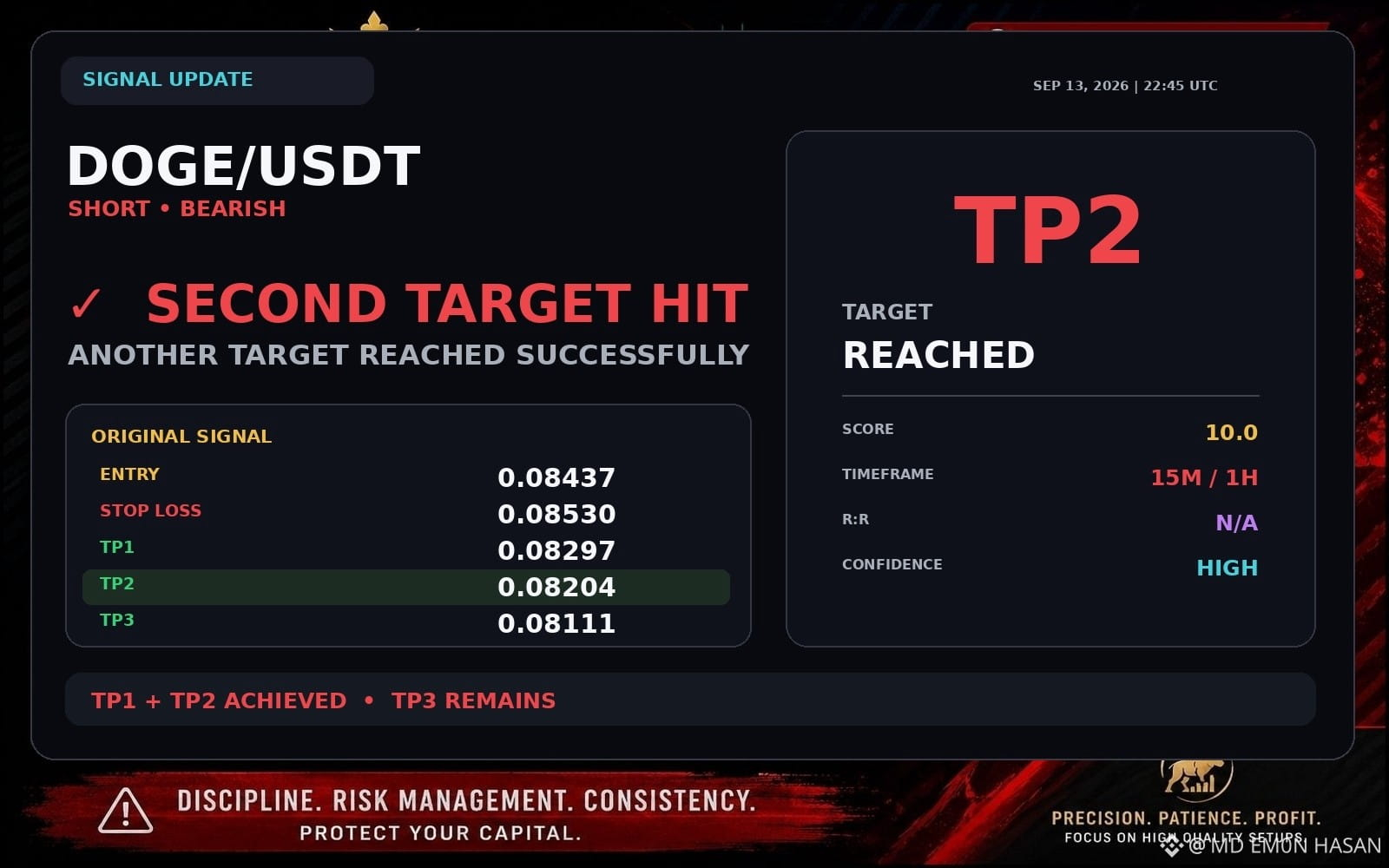
🏆 SECOND TARGET HIT
🔥 $DOGE — SHORT UPDATE
⭐ Setup Score: 10.0/10
🧠 Confidence: HIGH
Another target reached on $DOGE! 🔥
TP2 has been reached successfully while the setup remains active toward the final target.
🎯 TP1: 0.0830 ✅
🎯 TP2: 0.0820 ✅
🎯 TP3: 0.0811
🔗 Original Signal:
https://app.binance.com/uni-qr/cpos/366159413014077?r=K1DFHR7U&l=en
#CryptoTrading #FuturesTrading #TechnicalAnalysis #DOGE
⚠️ Research/validation update — not financial advice.
🏆 SECOND TARGET HIT
🔥 $DOGE — SHORT UPDATE
⭐ Setup Score: 10.0/10
🧠 Confidence: HIGH
Another target reached on $DOGE ! 🔥
TP2 has been reached successfully while the setup remains active toward the final target.
🎯 TP1: 0.0830 ✅
🎯 TP2: 0.0820 ✅
🎯 TP3: 0.0811
🔗 Original Signal:
https://app.binance.com/uni-qr/cpos/366159413014077?r=K1DFHR7U&l=en
#CryptoTrading #FuturesTrading #TechnicalAnalysis #DOGE
⚠️ Research/validation update — not financial advice.
🔥 $DOGE — SHORT UPDATE
⭐ Setup Score: 10.0/10
🧠 Confidence: HIGH
Another target reached on $DOGE ! 🔥
TP2 has been reached successfully while the setup remains active toward the final target.
🎯 TP1: 0.0830 ✅
🎯 TP2: 0.0820 ✅
🎯 TP3: 0.0811
🔗 Original Signal:
https://app.binance.com/uni-qr/cpos/366159413014077?r=K1DFHR7U&l=en
#CryptoTrading #FuturesTrading #TechnicalAnalysis #DOGE
⚠️ Research/validation update — not financial advice.
5
everyone thinks high leverage perp traders just throw darts in the dark, but actually the biggest wins come from catching violent trend reversals when everyone else is panic selling.
most retail traders end up round-tripping their entire bag or getting liquidated trying to chase green candles. watching someone else print massive gains while your balance bleeds out is the worst feeling in crypto, ngl.
take a look at this daily leaderboard setup where a trader hit top 16 live futures pnl by pocketing +40,122.67 $USDT on a single trade. they rode a massive +267.22% move on $LSK perp, completely catching the crowd off guard while most folks were fading the breakout.
people love to call these guys reckless gamblers who bleed capital every other day. but ser, surviving these wild swings usually comes down to strict risk sizing and waiting for clear momentum, whereas blindly overtrading $BTC chop will drain your account every single time.
do you think hitting a runner like this is pure degenerate luck or actual market edge?
#CryptoTrading #FuturesTrading #Altcoins
everyone thinks high leverage perp traders just throw darts in the dark, but actually the biggest wins come from catching violent trend reversals when everyone else is panic selling.
most retail traders end up round-tripping their entire bag or getting liquidated trying to chase green candles. watching someone else print massive gains while your balance bleeds out is the worst feeling in crypto, ngl.
take a look at this daily leaderboard setup where a trader hit top 16 live futures pnl by pocketing +40,122.67 $USDT on a single trade. they rode a massive +267.22% move on $LSK perp, completely catching the crowd off guard while most folks were fading the breakout.
people love to call these guys reckless gamblers who bleed capital every other day. but ser, surviving these wild swings usually comes down to strict risk sizing and waiting for clear momentum, whereas blindly overtrading $BTC chop will drain your account every single time.
do you think hitting a runner like this is pure degenerate luck or actual market edge?
#CryptoTrading #FuturesTrading #Altcoins
most retail traders end up round-tripping their entire bag or getting liquidated trying to chase green candles. watching someone else print massive gains while your balance bleeds out is the worst feeling in crypto, ngl.
take a look at this daily leaderboard setup where a trader hit top 16 live futures pnl by pocketing +40,122.67 $USDT on a single trade. they rode a massive +267.22% move on $LSK perp, completely catching the crowd off guard while most folks were fading the breakout.
people love to call these guys reckless gamblers who bleed capital every other day. but ser, surviving these wild swings usually comes down to strict risk sizing and waiting for clear momentum, whereas blindly overtrading $BTC chop will drain your account every single time.
do you think hitting a runner like this is pure degenerate luck or actual market edge?
#CryptoTrading #FuturesTrading #Altcoins

93

·
--
If you are still shorting every sudden pump thinking it has to dump, stop now.
Most futures traders wipe out their entire accounts trying to catch the exact top of a violent move, stubbornly fighting momentum until liquidation hits.
Looking at the daily leaderboard, a trader just locked in a top 16 futures rank by securing +40,122.67 $USDT with a +267.22% gain on $LSK perpetual contracts. The immediate reaction across social feeds was calling it reckless gambling that usually ends in disaster.
While blindly chasing green candles is indeed suicidal, writing off every high-PnL runner as dumb luck is equally naive. Riding clear breakout strength with calculated risk management often yields significantly better asymmetric upside than trying to stand in front of a moving train.
Do you view single-trade returns like this as pure gambling, or just aggressive momentum execution?
#FuturesTrading #CryptoAnalysis #TradingStrategy
If you are still shorting every sudden pump thinking it has to dump, stop now.
Most futures traders wipe out their entire accounts trying to catch the exact top of a violent move, stubbornly fighting momentum until liquidation hits.
Looking at the daily leaderboard, a trader just locked in a top 16 futures rank by securing +40,122.67 $USDT with a +267.22% gain on $LSK perpetual contracts. The immediate reaction across social feeds was calling it reckless gambling that usually ends in disaster.
While blindly chasing green candles is indeed suicidal, writing off every high-PnL runner as dumb luck is equally naive. Riding clear breakout strength with calculated risk management often yields significantly better asymmetric upside than trying to stand in front of a moving train.
Do you view single-trade returns like this as pure gambling, or just aggressive momentum execution?
#FuturesTrading #CryptoAnalysis #TradingStrategy
Most futures traders wipe out their entire accounts trying to catch the exact top of a violent move, stubbornly fighting momentum until liquidation hits.
Looking at the daily leaderboard, a trader just locked in a top 16 futures rank by securing +40,122.67 $USDT with a +267.22% gain on $LSK perpetual contracts. The immediate reaction across social feeds was calling it reckless gambling that usually ends in disaster.
While blindly chasing green candles is indeed suicidal, writing off every high-PnL runner as dumb luck is equally naive. Riding clear breakout strength with calculated risk management often yields significantly better asymmetric upside than trying to stand in front of a moving train.
Do you view single-trade returns like this as pure gambling, or just aggressive momentum execution?
#FuturesTrading #CryptoAnalysis #TradingStrategy

91
·
--
Bullish
🌙 Good night, Rabbit traders! 🐇
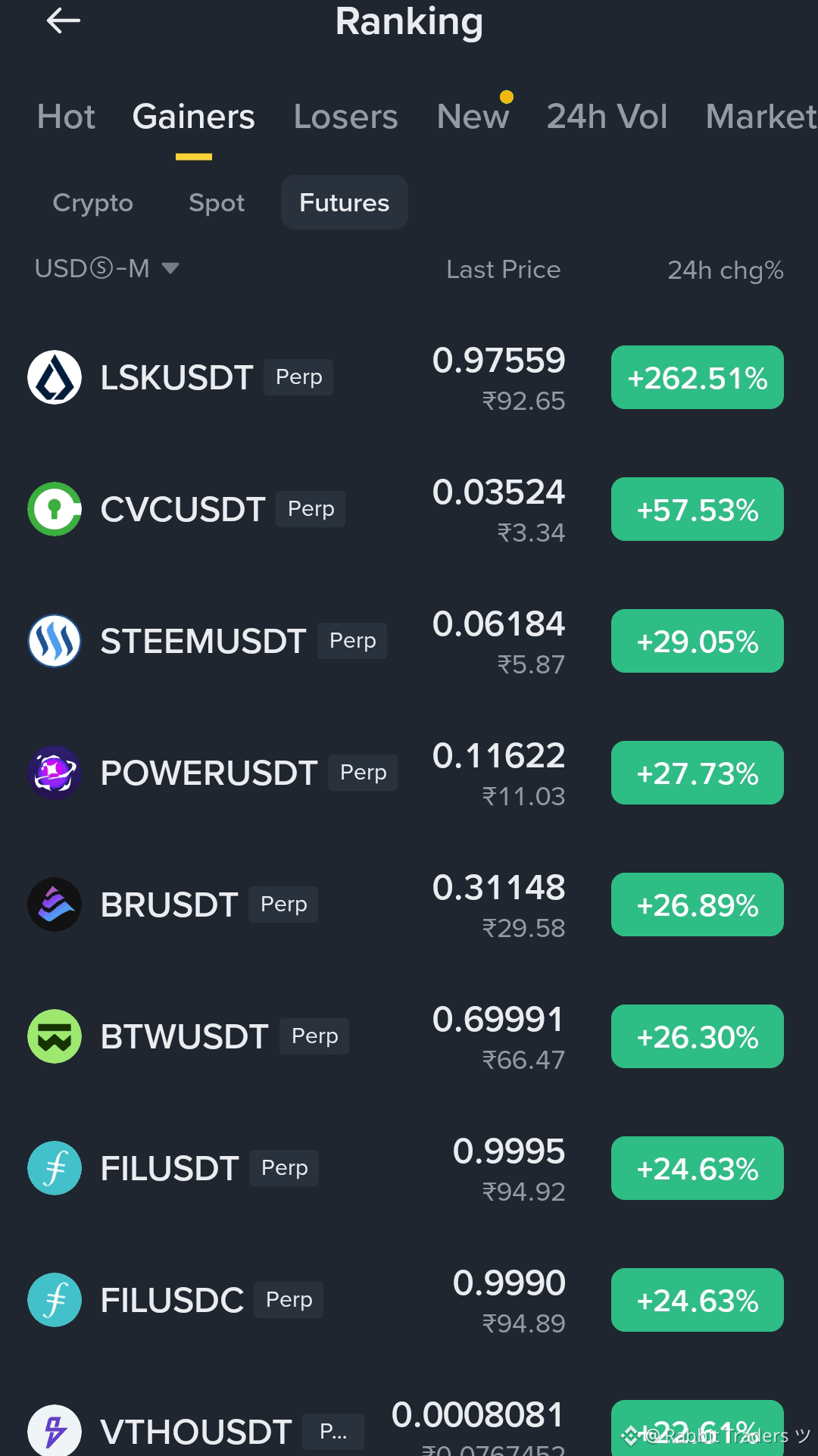
LSK went absolutely nuclear — +262% ! 🚀🚀🚀
🔥 Today's top gainers:
🥇 $LSK — +262.51% (INSANE!)
🥈 $CVC — +57.53%
🥉 $STEEM — +29.05%
Also climbing:
• POWER +27%
• BR +26%
• BTW +26%
• FIL +24% (both USDT & USDC!)
• VTHO +22%
• REZ +21%
Night owl or calling it early? 🦉😴
Drop your night play 👇
{future}(STEEMUSDT)
{future}(CVCUSDT)
{future}(LSKUSDT)
#Binance #GoodNight #TopGainers #LSK #CVC #STEEM #FIL #crypto #FuturesTrading
🌙 Good night, Rabbit traders! 🐇
LSK went absolutely nuclear — +262% ! 🚀🚀🚀
🔥 Today's top gainers:
🥇 $LSK — +262.51% (INSANE!)
🥈 $CVC — +57.53%
🥉 $STEEM — +29.05%
Also climbing:
• POWER +27%
• BR +26%
• BTW +26%
• FIL +24% (both USDT & USDC!)
• VTHO +22%
• REZ +21%
Night owl or calling it early? 🦉😴
Drop your night play 👇
#Binance #GoodNight #TopGainers #LSK #CVC #STEEM #FIL #crypto #FuturesTrading
LSK went absolutely nuclear — +262% ! 🚀🚀🚀
🔥 Today's top gainers:
🥇 $LSK — +262.51% (INSANE!)
🥈 $CVC — +57.53%
🥉 $STEEM — +29.05%
Also climbing:
• POWER +27%
• BR +26%
• BTW +26%
• FIL +24% (both USDT & USDC!)
• VTHO +22%
• REZ +21%
Night owl or calling it early? 🦉😴
Drop your night play 👇
#Binance #GoodNight #TopGainers #LSK #CVC #STEEM #FIL #crypto #FuturesTrading
SHAFAYETULLAH1:
bkk plz..
1
1
96
$CVC Sunday Lucky Day for me...
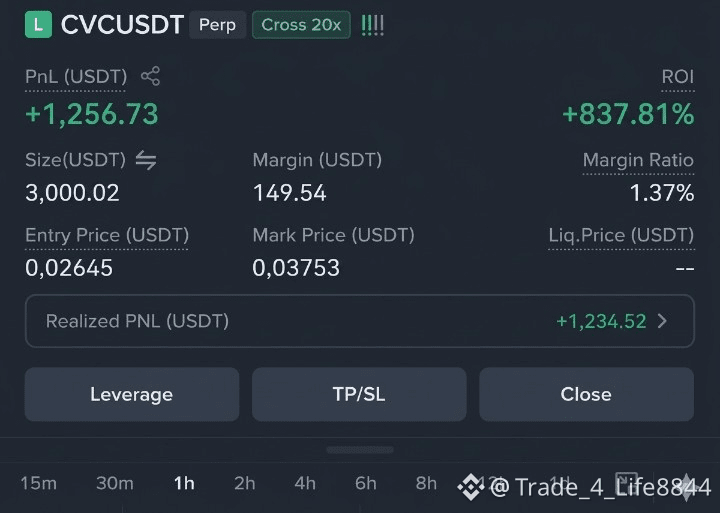
🚀 $CVC / USDT Long Position Delivering +837% ROI!
⚡Patience and precise entry strategy always pay off in futures trading. Entered the $CVC Perpetual contract at 0.02645, and with solid momentum, the mark price has broken up to 0.03753.
⚡By managing risk effectively using Cross 20x leverage, this position has locked in over 💸+$1,256 in unrealized gains / alongside a strong +1,234.52 USDT in realized P&L..!
#CryptoTrading. #FuturesTrading #CVCUSDT #TechnicalAnalysisCrypto #SquareBinance
$CVC Sunday Lucky Day for me...
🚀 $CVC / USDT Long Position Delivering +837% ROI!
⚡Patience and precise entry strategy always pay off in futures trading. Entered the $CVC Perpetual contract at 0.02645, and with solid momentum, the mark price has broken up to 0.03753.
⚡By managing risk effectively using Cross 20x leverage, this position has locked in over 💸+$1,256 in unrealized gains / alongside a strong +1,234.52 USDT in realized P&L..!
#CryptoTrading. #FuturesTrading #CVCUSDT #TechnicalAnalysisCrypto #SquareBinance
🚀 $CVC / USDT Long Position Delivering +837% ROI!
⚡Patience and precise entry strategy always pay off in futures trading. Entered the $CVC Perpetual contract at 0.02645, and with solid momentum, the mark price has broken up to 0.03753.
⚡By managing risk effectively using Cross 20x leverage, this position has locked in over 💸+$1,256 in unrealized gains / alongside a strong +1,234.52 USDT in realized P&L..!
#CryptoTrading. #FuturesTrading #CVCUSDT #TechnicalAnalysisCrypto #SquareBinance
120
·
--
Bearish
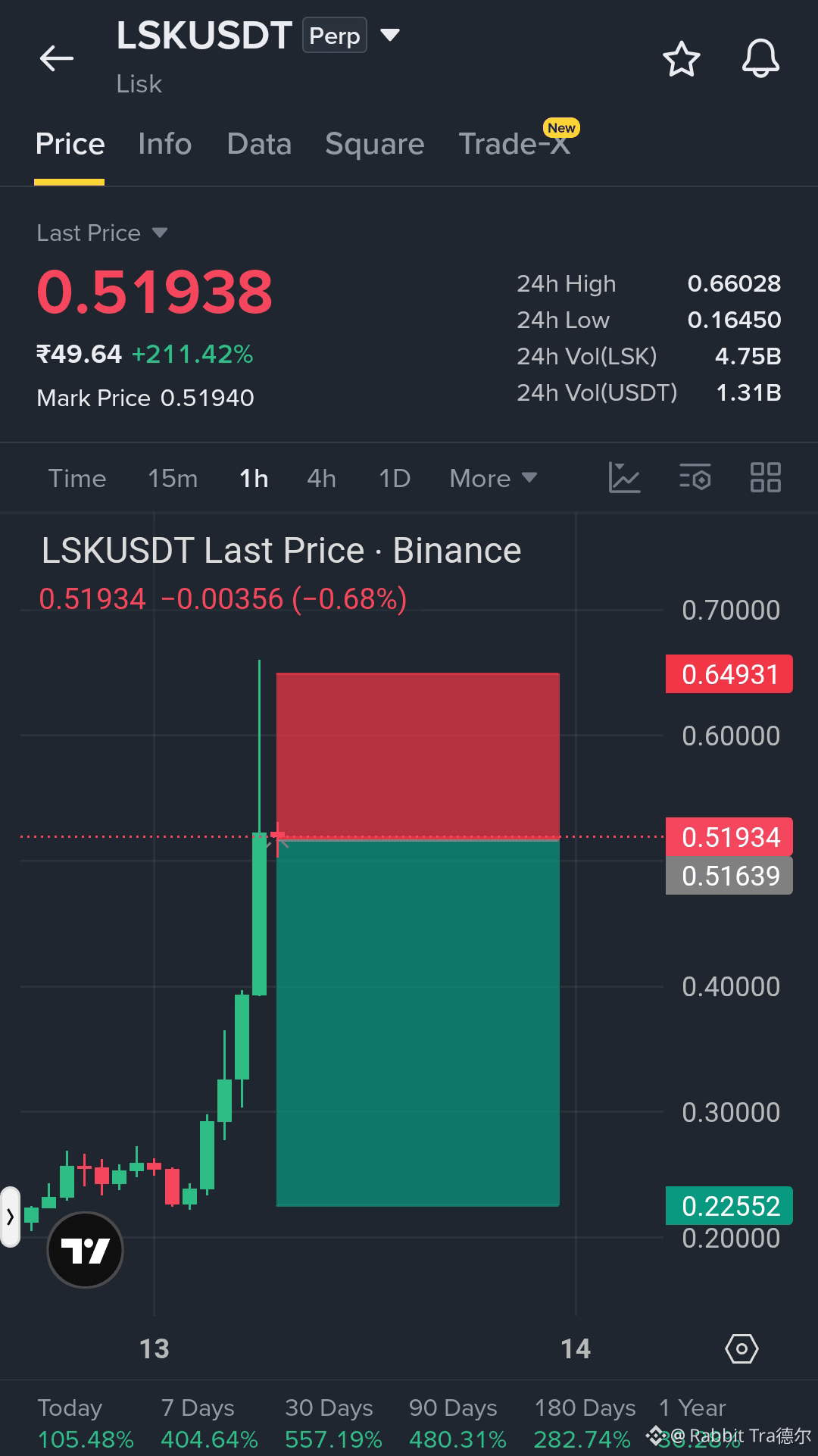
#LSK SHORT ALERT 🤯 I’m taking a SHORT setup here 👇
LSK just went vertical… now let’s see if gravity finally clocks in 😂📉
Entry: 0.51639
Stop-loss: 0.64931
TP1: 0.41943
TP2: 0.32248
TP3: 0.22552
Click here to Trade with me 👇⬇️ $LSK
{future}(LSKUSDT)
#Binance #TopGainers #crypto #FuturesTrading
#LSK SHORT ALERT 🤯 I’m taking a SHORT setup here 👇
LSK just went vertical… now let’s see if gravity finally clocks in 😂📉
Entry: 0.51639
Stop-loss: 0.64931
TP1: 0.41943
TP2: 0.32248
TP3: 0.22552
Click here to Trade with me 👇⬇️ $LSK
#Binance #TopGainers #crypto #FuturesTrading
LSK just went vertical… now let’s see if gravity finally clocks in 😂📉
Entry: 0.51639
Stop-loss: 0.64931
TP1: 0.41943
TP2: 0.32248
TP3: 0.22552
Click here to Trade with me 👇⬇️ $LSK
#Binance #TopGainers #crypto #FuturesTrading
AngelOfCrypto_-:
nice
1
623
Log in to explore more content
Join global crypto users on Binance Square
⚡️ Get latest and useful information about crypto.
💬 Trusted by the world’s largest crypto exchange.
👍 Discover real insights from verified creators.
Email / Phone number
Trending Topics
1
#BitcoinReboundsTo$79K
14,786 views
141 Discussing
2
#SouthKoreaCryptoTaxDelayPetitionTops50000
1,216 views
68 Discussing
3
#SolanaTransactionV1GoesLiveOnMainnet
675 views
43 Discussing
4
#RussianCentralBankFlagsCryptoAsFinancialRisk
2,402 views
103 Discussing
5
#GrayscalePutsXRPAt26.11%InAdvisorPortfolio
7,275 views
189 Discussing
6
#PhiladelphiaSemiconductorIndexFalls5.9%
3,178 views
116 Discussing
7
#SECChairUrgesCongressToAdvanceClarityAct
7,381 views
114 Discussing
8
#FedHikeOddsRiseTo89%
91,510 views
1,122 Discussing
9
#RLUSDSupplyHitsRecord$2.442B
6,909 views
66 Discussing
10
#AvalancheIntegratesIntoUAEPassDigitalVault
81,137 views
1,044 Discussing