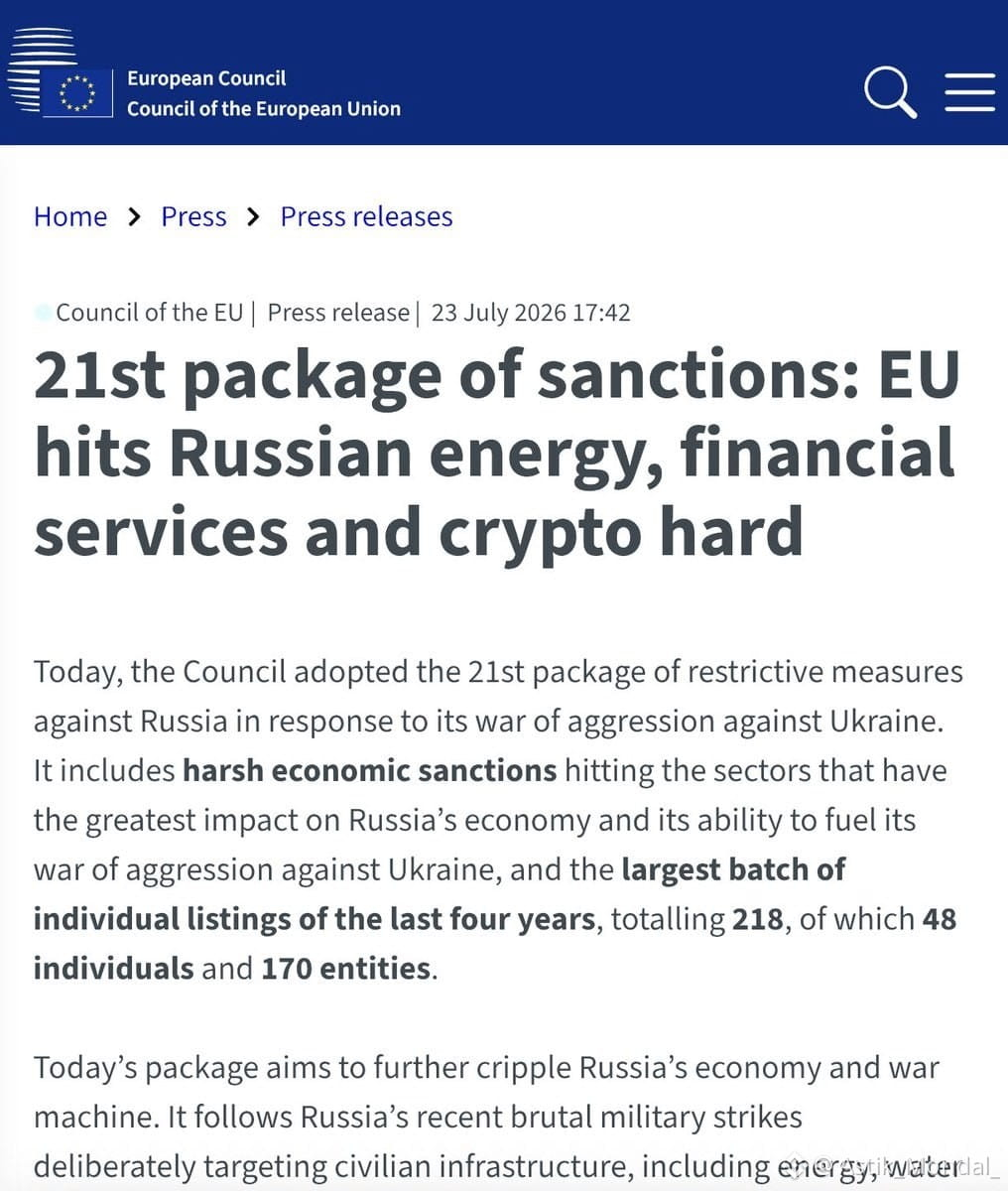
Binance Square
#eu

eu

969,235 views
1,108 Discussing
Trade Assets
ยท
--
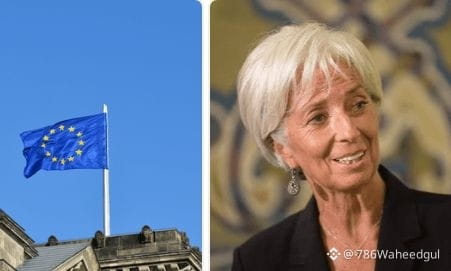
#Eu ๐ŸŸ The European Commission has introduced new rules aimed at strengthening the EU's own semiconductor, AI, and cloud sectors, as the region seeks to reduce its dependence on U.S. and Chinese technology. These proposals, which require approval from all 27 EU countries, focus on boosting advanced chip production and supporting local cloud computing initiatives.
#Eu
๐ŸŸ The European Commission has introduced new rules aimed at strengthening the EU's own semiconductor, AI, and cloud sectors, as the region seeks to reduce its dependence on U.S. and Chinese technology. These proposals, which require approval from all 27 EU countries, focus on boosting advanced chip production and supporting local cloud computing initiatives.
๐Ÿšจ๐Ÿ’ถ Not many crypto traders are paying attention to this yet... The European Union is reportedly discussing a new tax framework that could place a 0.1% levy on crypto transactions across member states ๐Ÿ‘€ At first glance, 0.1% sounds tiny. But what stands out here is the scale. ๐Ÿ“Š Millions of daily transactions ๐Ÿ’ฐ Billions in trading volume ๐Ÿฆ Potentially โ‚ฌ3โ€“4 billion in annual revenue The interesting part is that regulators are no longer debating whether crypto exists. They're debating how to integrate it into the broader financial and tax system. Markets tend to view these developments in two ways: ๐ŸŸข Positive: More regulatory clarity could encourage institutional participation and long-term adoption. ๐Ÿ”ด Negative: Additional trading costs may reduce activity, especially for active traders and high-frequency strategies. There's also a second proposal on the tableโ€”a capital gains tax modelโ€”which would reportedly generate less revenue but target profits rather than transaction volume. Honestly, this feels like another sign that crypto is moving deeper into the mainstream financial world. โš ๏ธ However, nothing is final yet. Any proposal would still require approval from all 27 EU member states before becoming reality. For now, traders should focus on facts rather than reactions. Because when regulation enters the conversation, narratives move fastโ€”but policy usually moves much slower. Do you think a 0.1% transaction tax would have a meaningful impact on crypto markets, or is it too small to change behavior? ๐Ÿ‘€ #Crypto #Bitcoin #EU #Regulation #Blockchain $BTC {spot}(BTCUSDT) $ETH $XRP {spot}(XRPUSDT)
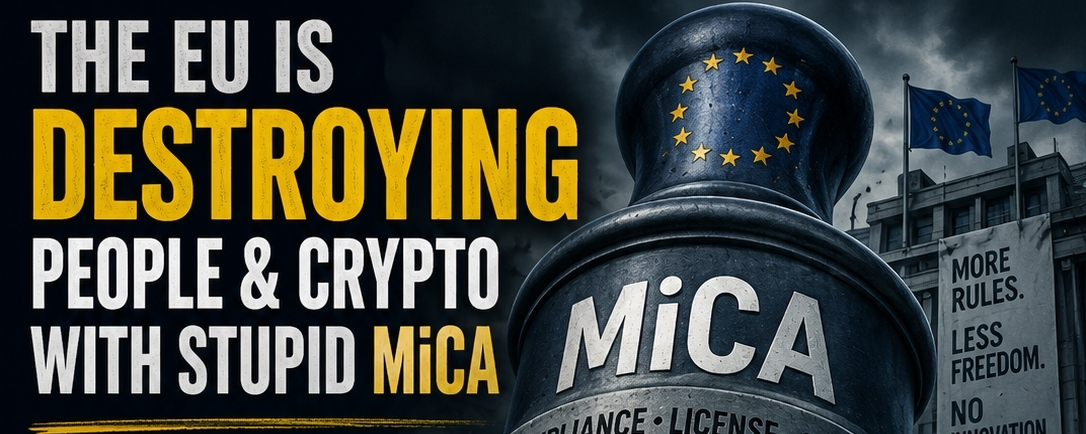
๐Ÿšจ๐Ÿ’ถ Not many crypto traders are paying attention to this yet...

The European Union is reportedly discussing a new tax framework that could place a 0.1% levy on crypto transactions across member states ๐Ÿ‘€

At first glance, 0.1% sounds tiny.

But what stands out here is the scale.

๐Ÿ“Š Millions of daily transactions ๐Ÿ’ฐ Billions in trading volume ๐Ÿฆ Potentially โ‚ฌ3โ€“4 billion in annual revenue

The interesting part is that regulators are no longer debating whether crypto exists.

They're debating how to integrate it into the broader financial and tax system.

Markets tend to view these developments in two ways:

๐ŸŸข Positive: More regulatory clarity could encourage institutional participation and long-term adoption.

๐Ÿ”ด Negative: Additional trading costs may reduce activity, especially for active traders and high-frequency strategies.

There's also a second proposal on the tableโ€”a capital gains tax modelโ€”which would reportedly generate less revenue but target profits rather than transaction volume.

Honestly, this feels like another sign that crypto is moving deeper into the mainstream financial world.

โš ๏ธ However, nothing is final yet.

Any proposal would still require approval from all 27 EU member states before becoming reality.

For now, traders should focus on facts rather than reactions.

Because when regulation enters the conversation, narratives move fastโ€”but policy usually moves much slower.

Do you think a 0.1% transaction tax would have a meaningful impact on crypto markets, or is it too small to change behavior? ๐Ÿ‘€

#Crypto #Bitcoin #EU #Regulation #Blockchain $BTC
$ETH $XRP
Binance BiBi:
Working on it. Your reply is on the way.
๐Ÿšจ NEW: The EU is reportedly considering a 0.1% tax on crypto transactions. According to reports, the proposal could generate โ‚ฌ3โ€“4 billion per year and would apply a small levy to crypto trades across the European Union. Supporters may see it as a way to raise revenue. Critics argue it could increase trading costs and slow innovation. The proposal still requires approval from all 27 EU member states. ๐Ÿ‘‡ Would a 0.1% crypto transaction tax change how you trade? #Crypto #bitcoin #Eu $BTC $ETH
๐Ÿšจ NEW: The EU is reportedly considering a 0.1% tax on crypto transactions.

According to reports, the proposal could generate โ‚ฌ3โ€“4 billion per year and would apply a small levy to crypto trades across the European Union.

Supporters may see it as a way to raise revenue.

Critics argue it could increase trading costs and slow innovation.

The proposal still requires approval from all 27 EU member states.

๐Ÿ‘‡ Would a 0.1% crypto transaction tax change how you trade?

#Crypto #bitcoin #Eu $BTC $ETH
Article
EU Wants a Cut of Every Crypto Trade in EuropeThe EU is drafting unified taxes on crypto and online gambling to fund its next budget. Getting all 27 members to agree is a different problem entirely. Key Takeaways: 0.1% transaction tax on crypto could generate โ‚ฌ3-4B annually.Unified crypto capital gains tax projected at โ‚ฌ1-2.4B per year.Combined crypto taxes could reach โ‚ฌ20B across the 2028-2034 budget.3% gambling levy on operator margins estimated at โ‚ฌ1.9B per year.All 27 member states must unanimously approve for any of this to pass. The European Commission is buildingย its case for the 2028-2034 long-term budget, and the numbers it needs are large. The current proposal package targets roughly โ‚ฌ11 billion in new annual revenue, combining taxes on Big Tech digital services, online gambling, and cryptocurrency. Across the full seven-year cycle that approaches โ‚ฌ77 billion in additional spending capacity. The Commission needs new sources, and two industries it has historically undertaxed at the EU level are now squarely in frame. The crypto and gambling proposals are still internal drafts being reviewed by member states. Nothing has been voted on. But the mechanics being evaluated are specific enough to signal where Brussels is heading. How the Crypto Tax Would Work The Commission is looking at two separate layers. The first is a transaction tax of 0.1% applied to cryptocurrency trading volumes across the bloc. That rate sounds modest, but applied to the scale of Europeanย crypto activityย the Commission estimates it could generate between โ‚ฌ3 billion and โ‚ฌ4 billion per year. The second layer targets capital gains directly, with a unified rate projected to add another โ‚ฌ1 billion to โ‚ฌ2.4 billion annually. Together, the two streams could bring in around โ‚ฌ20 billion over the full budget cycle. The logic behind unifying these at EU level rather than leaving them to individual member states is fragmentation. Right now, a trader in Germany faces different tax obligations than one in Portugal or Estonia. A unified framework would close those gaps and, in theory, make avoidance through jurisdiction shopping harder. What makes the estimates shaky is the Commission's own acknowledgment that crypto figures carry high uncertainty. Market volatility makes projections difficult, and tracking decentralized users who may hold assets across multiple wallets and protocols is an unsolved problem. The โ‚ฌ3-4 billion figure assumes a level of compliance and traceability that does not yet fully exist. The Gambling Side The online gambling proposal is structurally simpler. A 3% levy on the net margins of online gambling operators, meaning the revenue they keep after paying out winnings, is projected to generate approximately โ‚ฌ1.9 billion per year. Over the 2028-2034 window that adds up to around โ‚ฌ13.3 billion. The rationale here is also fragmentation. Online gambling regulation varies dramatically across member states, and some countries have become registration hubs for operators who then serve customers across the entire bloc. A centralized levy would cut through that structure. Malta has already signaled opposition. The island nation hosts a disproportionate share of internationally licensed betting operators and stands to lose significant economic activity if those operators face new EU-level costs on top of existing national frameworks. The third stream in the package targets Big Tech directly. The Commission calculated that a 3% tax on net revenues from digital advertising, data monetization and online intermediation could generate approximately โ‚ฌ5 billion per year, based on 2024 revenue data from Spain, France and Italy, all of which already run similar national levies. The threshold would apply to companies exceeding โ‚ฌ750 million in global group turnover. That โ‚ฌ5 billion, combined with the crypto and gambling projections, is how the Commission arrives at the โ‚ฌ11 billion annual figure Where It Could Break Down The biggest obstacle is not technical, it is procedural. Under EU law, tax matters require unanimous approval from all 27 member states. A single holdout can block the entire package. Malta's position on gambling is one pressure point. The broader question of how crypto taxes get applied to decentralized protocols is another. Industry observers have pointed out that a 0.1% transaction tax, if applied broadly, could push significant trading volume toward self-custody wallets and non-EU decentralized finance platforms that operate outside any jurisdiction's reach. The tax would then collect less than projected while accelerating the migration of activity away from regulated European venues, which is the opposite of what the DAC8 directive, the EU's recently implemented framework requiring crypto platforms to automatically share user transaction data with tax authorities, was designed to prevent. DAC8 created the reporting infrastructure. These new proposals are the attempt to build a revenue layer on top of it. Whether the architecture holds together depends on how member states weigh the projected revenue against the compliance costs, the political opposition, and the very real possibility that parts of the crypto industry simply move beyond their reach. #EU #crypto

EU Wants a Cut of Every Crypto Trade in Europe

The EU is drafting unified taxes on crypto and online gambling to fund its next budget. Getting all 27 members to agree is a different problem entirely.
Key Takeaways:
0.1% transaction tax on crypto could generate โ‚ฌ3-4B annually.Unified crypto capital gains tax projected at โ‚ฌ1-2.4B per year.Combined crypto taxes could reach โ‚ฌ20B across the 2028-2034 budget.3% gambling levy on operator margins estimated at โ‚ฌ1.9B per year.All 27 member states must unanimously approve for any of this to pass.
The European Commission is building its case for the 2028-2034 long-term budget, and the numbers it needs are large. The current proposal package targets roughly โ‚ฌ11 billion in new annual revenue, combining taxes on Big Tech digital services, online gambling, and cryptocurrency. Across the full seven-year cycle that approaches โ‚ฌ77 billion in additional spending capacity. The Commission needs new sources, and two industries it has historically undertaxed at the EU level are now squarely in frame.
The crypto and gambling proposals are still internal drafts being reviewed by member states. Nothing has been voted on. But the mechanics being evaluated are specific enough to signal where Brussels is heading.
How the Crypto Tax Would Work
The Commission is looking at two separate layers. The first is a transaction tax of 0.1% applied to cryptocurrency trading volumes across the bloc. That rate sounds modest, but applied to the scale of European crypto activity the Commission estimates it could generate between โ‚ฌ3 billion and โ‚ฌ4 billion per year. The second layer targets capital gains directly, with a unified rate projected to add another โ‚ฌ1 billion to โ‚ฌ2.4 billion annually. Together, the two streams could bring in around โ‚ฌ20 billion over the full budget cycle.
The logic behind unifying these at EU level rather than leaving them to individual member states is fragmentation. Right now, a trader in Germany faces different tax obligations than one in Portugal or Estonia. A unified framework would close those gaps and, in theory, make avoidance through jurisdiction shopping harder.
What makes the estimates shaky is the Commission's own acknowledgment that crypto figures carry high uncertainty. Market volatility makes projections difficult, and tracking decentralized users who may hold assets across multiple wallets and protocols is an unsolved problem. The โ‚ฌ3-4 billion figure assumes a level of compliance and traceability that does not yet fully exist.
The Gambling Side
The online gambling proposal is structurally simpler. A 3% levy on the net margins of online gambling operators, meaning the revenue they keep after paying out winnings, is projected to generate approximately โ‚ฌ1.9 billion per year. Over the 2028-2034 window that adds up to around โ‚ฌ13.3 billion.
The rationale here is also fragmentation. Online gambling regulation varies dramatically across member states, and some countries have become registration hubs for operators who then serve customers across the entire bloc. A centralized levy would cut through that structure.
Malta has already signaled opposition. The island nation hosts a disproportionate share of internationally licensed betting operators and stands to lose significant economic activity if those operators face new EU-level costs on top of existing national frameworks.
The third stream in the package targets Big Tech directly. The Commission calculated that a 3% tax on net revenues from digital advertising, data monetization and online intermediation could generate approximately โ‚ฌ5 billion per year, based on 2024 revenue data from Spain, France and Italy, all of which already run similar national levies. The threshold would apply to companies exceeding โ‚ฌ750 million in global group turnover. That โ‚ฌ5 billion, combined with the crypto and gambling projections, is how the Commission arrives at the โ‚ฌ11 billion annual figure
Where It Could Break Down
The biggest obstacle is not technical, it is procedural. Under EU law, tax matters require unanimous approval from all 27 member states. A single holdout can block the entire package. Malta's position on gambling is one pressure point. The broader question of how crypto taxes get applied to decentralized protocols is another.
Industry observers have pointed out that a 0.1% transaction tax, if applied broadly, could push significant trading volume toward self-custody wallets and non-EU decentralized finance platforms that operate outside any jurisdiction's reach. The tax would then collect less than projected while accelerating the migration of activity away from regulated European venues, which is the opposite of what the DAC8 directive, the EU's recently implemented framework requiring crypto platforms to automatically share user transaction data with tax authorities, was designed to prevent.
DAC8 created the reporting infrastructure. These new proposals are the attempt to build a revenue layer on top of it. Whether the architecture holds together depends on how member states weigh the projected revenue against the compliance costs, the political opposition, and the very real possibility that parts of the crypto industry simply move beyond their reach.
#EU #crypto
ยท
--
Bullish
๐Ÿšจ EU ABOUT TO TAX CRYPTO?! ๐Ÿ‡ช๐Ÿ‡บ๐Ÿ”ฅ Big move incoming ๐Ÿ‘€ The EU is discussing a new crypto tax that could generate up to โ‚ฌ20 BILLION between 2028โ€“2034 ๐Ÿ’ฐ โšก Whatโ€™s cooking? โ€ข Taxes on crypto transactions โ€ข Massive revenue target โ€ข Could shake the entire EU crypto market ๐Ÿ“‰๐Ÿ“ˆ Impact? Higher costs for traders? Stricter rules for exchanges? Orโ€ฆ more legitimacy for crypto? ๐Ÿค” ๐Ÿ’ฑ Watch These Pairs: $BTC /USDT | $ETH /USDT | $BNB /USDT {future}(BTCUSDT) {future}(ETHUSDT) {future}(BNBUSDT) ๐Ÿ’ฌ Bullish for adoption or bearish for freedom? Follow @Square-Creator-2c790b869bb2 & turn on notifications ๐Ÿ”” for live updates #CryptoNews #EU #CryptoTax #cryptotrading #BinanceSquare ๐Ÿ”ฅ
๐Ÿšจ EU ABOUT TO TAX CRYPTO?! ๐Ÿ‡ช๐Ÿ‡บ๐Ÿ”ฅ

Big move incoming ๐Ÿ‘€
The EU is discussing a new crypto tax that could generate up to โ‚ฌ20 BILLION between 2028โ€“2034 ๐Ÿ’ฐ

โšก Whatโ€™s cooking?
โ€ข Taxes on crypto transactions
โ€ข Massive revenue target
โ€ข Could shake the entire EU crypto market

๐Ÿ“‰๐Ÿ“ˆ Impact?
Higher costs for traders?
Stricter rules for exchanges?
Orโ€ฆ more legitimacy for crypto? ๐Ÿค”

๐Ÿ’ฑ Watch These Pairs:
$BTC /USDT | $ETH /USDT | $BNB /USDT
๐Ÿ’ฌ Bullish for adoption or bearish for freedom?
Follow @Anup142 & turn on notifications ๐Ÿ”” for live updates
#CryptoNews #EU #CryptoTax #cryptotrading #BinanceSquare ๐Ÿ”ฅ
Jon Matarese HRGp:
๐Ÿ”ฅ Regulations donโ€™t kill crypto โ€” they validate it. Smart money knows the difference ๐Ÿ‘€๐Ÿš€๐Ÿ’ฐ
๐Ÿ‡ช๐Ÿ‡บ For the people who build Europe โ€” through courage, vision, unity, and dedication to democratic values. The European Order of Merit honors those whose work and commitment continue to shape a stronger and more united Europe for future generations. ๐Ÿ‘ Reference: European Parliament initiative recognizing the first laureates of the European Order of Merit 2026. #EuropeanOrderOfMerit #Europe #EuropeanParliament #EU $BNB $ETH $XRP
๐Ÿ‡ช๐Ÿ‡บ For the people who build Europe โ€” through courage, vision, unity, and dedication to democratic values.

The European Order of Merit honors those whose work and commitment continue to shape a stronger and more united Europe for future generations. ๐Ÿ‘

Reference: European Parliament initiative recognizing the first laureates of the European Order of Merit 2026.

#EuropeanOrderOfMerit #Europe #EuropeanParliament #EU
$BNB $ETH $XRP
#ECBOpposesEuroStablecoinExpansion The ECB opposing the expansion of Euro stablecoins could become a major topic for the crypto market ๐Ÿ‘€ Governments want control. Crypto wants decentralization. This battle between regulation and innovation is only getting started. Some believe tighter rules could slow adoption in Europeโ€ฆ while others think it may actually push demand for decentralized alternatives even higher ๐Ÿš€ One thing is clear: stablecoins are becoming too important for regulators to ignore. What do you think โ€” protection or control? #Crypto #Stablecoins #Bitcoin #Eu #Web3
#ECBOpposesEuroStablecoinExpansion The ECB opposing the expansion of Euro stablecoins could become a major topic for the crypto market ๐Ÿ‘€

Governments want control.
Crypto wants decentralization.

This battle between regulation and innovation is only getting started.

Some believe tighter rules could slow adoption in Europeโ€ฆ
while others think it may actually push demand for decentralized alternatives even higher ๐Ÿš€

One thing is clear:
stablecoins are becoming too important for regulators to ignore.

What do you think โ€” protection or control?
#Crypto #Stablecoins #Bitcoin #Eu #Web3
๐Ÿšจ BREAKING: The European Union is preparing to call for the withdrawal of Russian troops from Transnistria (Moldova) and the regions of Abkhazia and South Ossetia (Georgia), according to EU High Representative for Foreign Affairs and Security Policy, Kaja Kallas. The move reflects the EU's continued support for the sovereignty and territorial integrity of Moldova and Georgia, while increasing diplomatic pressure on Moscow over its military presence in these disputed territories. As discussions with Russia move forward, the outcome could have significant implications for regional stability and the future of European security. #EU #Russia #Georgia #EuropeanSecurity #KajaKallas $XAG $XAU $XAN
๐Ÿšจ BREAKING: The European Union is preparing to call for the withdrawal of Russian troops from Transnistria (Moldova) and the regions of Abkhazia and South Ossetia (Georgia), according to EU High Representative for Foreign Affairs and Security Policy, Kaja Kallas.

The move reflects the EU's continued support for the sovereignty and territorial integrity of Moldova and Georgia, while increasing diplomatic pressure on Moscow over its military presence in these disputed territories.

As discussions with Russia move forward, the outcome could have significant implications for regional stability and the future of European security.

#EU #Russia #Georgia #EuropeanSecurity #KajaKallas
$XAG $XAU $XAN
Verified
Article
BREAKING: EUROPE SIGNALS TIGHTER CRYPTO REGULATION AS GLOBAL POLICY DIVERGENCE GROWSReports circulating across the crypto space suggest that the European Union is preparing stricter compliance rules, including lower cash usage limits, tighter KYC requirements for crypto transactions, and increased pressure on privacy-focused coins. Some discussions also claim that certain privacy assets like Monero, Zcash, and Dash could face restrictions or delistings on regulated EU platforms over time, with implementation timelines extending into 2027. At the same time, contrasting global approaches are emerging. The United States continues to explore more investor-friendly frameworks such as tax clarity and potential capital gains reforms, while regions like the UAE are actively expanding crypto banking licenses and institutional adoption. This growing regulatory divergence highlights a key narrative in global markets: capital tends to move toward jurisdictions offering clearer rules and more favorable conditions for innovation. Whether Europeโ€™s approach becomes a long-term restriction or a compliance-driven restructuring remains to be seen, but the policy gap between regions is becoming increasingly visible.$ZEC #Crypto #Regulation #EU #Bitcoin #Web3 $XMR $DASH

BREAKING: EUROPE SIGNALS TIGHTER CRYPTO REGULATION AS GLOBAL POLICY DIVERGENCE GROWS

Reports circulating across the crypto space suggest that the European Union is preparing stricter compliance rules, including lower cash usage limits, tighter KYC requirements for crypto transactions, and increased pressure on privacy-focused coins. Some discussions also claim that certain privacy assets like Monero, Zcash, and Dash could face restrictions or delistings on regulated EU platforms over time, with implementation timelines extending into 2027.
At the same time, contrasting global approaches are emerging. The United States continues to explore more investor-friendly frameworks such as tax clarity and potential capital gains reforms, while regions like the UAE are actively expanding crypto banking licenses and institutional adoption.
This growing regulatory divergence highlights a key narrative in global markets: capital tends to move toward jurisdictions offering clearer rules and more favorable conditions for innovation.
Whether Europeโ€™s approach becomes a long-term restriction or a compliance-driven restructuring remains to be seen, but the policy gap between regions is becoming increasingly visible.$ZEC
#Crypto #Regulation #EU #Bitcoin #Web3 $XMR $DASH
ยท
--
#CryptoRegulation #EU #MiCA #Bitcoin #BinanceSquare $XMR {future}(XMRUSDT) $ZEC {spot}(ZECUSDT) The News: The European Union is introducing strict Anti-Money Laundering Regulations (AMLR) set to take full effect on July 1, 2027. ๐Ÿ—“๏ธ The EU Rules: A โ‚ฌ10,000 limit on commercial cash payments, a strict โ‚ฌ1,000 KYC/identity verification threshold for crypto transactions interacting with hosted service providers, and a complete ban on privacy coins (like Monero and Zcash) on EU-regulated platforms. ๐Ÿ›‘ The Global Contrast: While Europe tightens control, other regions are opening their doors wideโ€”the U.S. is pushing for highly favorable crypto tax laws, and the UAE is actively issuing full crypto banking licenses. ๐ŸŒ The Takeaway: Capital flows to where it feels welcome. The strict European rules might accidentally push investors and web3 innovation straight into the arms of friendlier regions. โœˆ๏ธ๐Ÿ’ผ
#CryptoRegulation #EU #MiCA #Bitcoin #BinanceSquare

$XMR
$ZEC

The News: The European Union is introducing strict Anti-Money Laundering Regulations (AMLR) set to take full effect on July 1, 2027. ๐Ÿ—“๏ธ

The EU Rules: A โ‚ฌ10,000 limit on commercial cash payments, a strict โ‚ฌ1,000 KYC/identity verification threshold for crypto transactions interacting with hosted service providers, and a complete ban on privacy coins (like Monero and Zcash) on EU-regulated platforms. ๐Ÿ›‘

The Global Contrast: While Europe tightens control, other regions are opening their doors wideโ€”the U.S. is pushing for highly favorable crypto tax laws, and the UAE is actively issuing full crypto banking licenses. ๐ŸŒ

The Takeaway: Capital flows to where it feels welcome. The strict European rules might accidentally push investors and web3 innovation straight into the arms of friendlier regions. โœˆ๏ธ๐Ÿ’ผ
ยท
--
The Great Crypto Divide: EU Triggers Massive Regulation Crackdown! ๐Ÿ‡ช๐Ÿ‡บ Is Capital Fleeing to the US & UAE? โœˆ๏ธ๐Ÿ’ผ ๐Ÿ‘‹ A massive regulatory wave is officially heading toward Europe, and it is going to completely reshape the digital asset landscape across the continent. The EUโ€™s new Anti-Money Laundering package is locked in for July 1, 2027, and the rules are tighter than ever. ๐Ÿ”’ Here is a breakdown of what is changing on European soil: ๐Ÿ›‘ The New EU Playbook Privacy Coins Banned: Major privacy-focused assets like Monero ($XMR) and Zcash ($ZEC) are being completely pushed out of EU-regulated crypto exchanges. โŒ The โ‚ฌ1,000 KYC Wall: Any crypto transaction over โ‚ฌ1,000 moving between a regulated exchange and a private wallet will trigger strict identity checks. ๐Ÿ” Cash Limits: Commercial cash transactions are getting capped at a maximum of โ‚ฌ10,000 to close up financial loopholes. ๐Ÿ’ถ ๐ŸŒ Capital Flows to Where It Is Welcomed While Europe leans heavily into strict oversight and tracking, the rest of the world is taking a completely different approach. The U.S. is pushing heavily toward zero capital gains on certain crypto assets, and the UAE is rolling out full crypto banking licenses to build a global web3 capital! โšก Historically, money and innovation always migrate to the regions that treat them best. By building a heavy regulatory wall, Europe might just be handing a massive competitive advantage to North America and the Middle East. ๐Ÿ—บ๏ธ๐Ÿ’ธ ๐Ÿ’ฌ What Is Your Take? Will these strict laws hurt crypto adoption in Europe, or will they actually make the ecosystem safer for institutional money in the long run? Are we going to see a massive migration of web3 startups? Drop your thoughts and predictions in the comments below! ๐Ÿ‘‡๐Ÿ”ฅ #CryptoRegulation #EU #MiCA #Bitcoin #BinanceSquare $XMR {future}(XMRUSDT) $ZEC {spot}(ZECUSDT)
The Great Crypto Divide: EU Triggers Massive Regulation Crackdown! ๐Ÿ‡ช๐Ÿ‡บ Is Capital Fleeing to the US & UAE? โœˆ๏ธ๐Ÿ’ผ

๐Ÿ‘‹ A massive regulatory wave is officially heading toward Europe, and it is going to completely reshape the digital asset landscape across the continent. The EUโ€™s new Anti-Money Laundering package is locked in for July 1, 2027, and the rules are tighter than ever. ๐Ÿ”’

Here is a breakdown of what is changing on European soil:
๐Ÿ›‘ The New EU Playbook
Privacy Coins Banned: Major privacy-focused assets like Monero ($XMR) and Zcash ($ZEC ) are being completely pushed out of EU-regulated crypto exchanges. โŒ

The โ‚ฌ1,000 KYC Wall: Any crypto transaction over โ‚ฌ1,000 moving between a regulated exchange and a private wallet will trigger strict identity checks. ๐Ÿ”

Cash Limits: Commercial cash transactions are getting capped at a maximum of โ‚ฌ10,000 to close up financial loopholes. ๐Ÿ’ถ

๐ŸŒ Capital Flows to Where It Is Welcomed
While Europe leans heavily into strict oversight and tracking, the rest of the world is taking a completely different approach. The U.S. is pushing heavily toward zero capital gains on certain crypto assets, and the UAE is rolling out full crypto banking licenses to build a global web3 capital! โšก

Historically, money and innovation always migrate to the regions that treat them best. By building a heavy regulatory wall, Europe might just be handing a massive competitive advantage to North America and the Middle East. ๐Ÿ—บ๏ธ๐Ÿ’ธ

๐Ÿ’ฌ What Is Your Take?
Will these strict laws hurt crypto adoption in Europe, or will they actually make the ecosystem safer for institutional money in the long run? Are we going to see a massive migration of web3 startups?
Drop your thoughts and predictions in the comments below! ๐Ÿ‘‡๐Ÿ”ฅ

#CryptoRegulation #EU #MiCA #Bitcoin #BinanceSquare

$XMR
$ZEC
ยท
--
๐Ÿšจ THE EU WANTS TO TAX EVERY CRYPTO TRADE ๐Ÿ‡ช๐Ÿ‡บ $ETH The European Union is reportedly discussing a 0.1% tax on crypto transactions as part of its next long-term budget plan. ๐Ÿ‘€ And thatโ€™s not all. $BTC Proposals also include a unified crypto capital gains framework that could generate billions more in tax revenue. The numbers are massive: ๐Ÿ’ฐ โ‚ฌ3-4 BILLION per year from transaction taxes ๐Ÿ’ฐ Up to โ‚ฌ2.4 BILLION annually from crypto gains taxes ๐Ÿ’ฐ Nearly โ‚ฌ20 BILLION collected between 2028 and 2034 Read between the lines. Governments donโ€™t spend years building tax frameworks for industries they think are disappearing. They do it for industries they expect to keep growing. ๐Ÿ”ฅ The irony? A decade ago, many regulators dismissed crypto. Today, theyโ€™re calculating how many billions it could contribute to government budgets. Thatโ€™s a huge shift. ๐Ÿ‘€ The catch: All 27 EU member states would need to agree before anything becomes reality. And thatโ€™s where things get complicated. One thing is clear: $BNB Crypto has become too big for governments to ignore. ๐Ÿš€ #Bitcoin #Crypto #EU #Regulation #Markets {future}(ETHUSDT) {future}(BNBUSDT) {future}(BTCUSDT)
๐Ÿšจ THE EU WANTS TO TAX EVERY CRYPTO TRADE ๐Ÿ‡ช๐Ÿ‡บ $ETH

The European Union is reportedly discussing a 0.1% tax on crypto transactions as part of its next long-term budget plan. ๐Ÿ‘€

And thatโ€™s not all. $BTC

Proposals also include a unified crypto capital gains framework that could generate billions more in tax revenue.

The numbers are massive:

๐Ÿ’ฐ โ‚ฌ3-4 BILLION per year from transaction taxes
๐Ÿ’ฐ Up to โ‚ฌ2.4 BILLION annually from crypto gains taxes
๐Ÿ’ฐ Nearly โ‚ฌ20 BILLION collected between 2028 and 2034

Read between the lines.

Governments donโ€™t spend years building tax frameworks for industries they think are disappearing.

They do it for industries they expect to keep growing. ๐Ÿ”ฅ

The irony?

A decade ago, many regulators dismissed crypto.

Today, theyโ€™re calculating how many billions it could contribute to government budgets.

Thatโ€™s a huge shift. ๐Ÿ‘€

The catch:

All 27 EU member states would need to agree before anything becomes reality.

And thatโ€™s where things get complicated.

One thing is clear: $BNB

Crypto has become too big for governments to ignore. ๐Ÿš€

#Bitcoin #Crypto #EU #Regulation #Markets
๐Ÿšจ THE EU IS COMING FOR CRYPTO TAX REVENUE The European Union is drafting plans for a 0.1% tax on crypto transactions as part of its next long-term budget. The goal? Turn the crypto economy into a multi-billion euro revenue stream. Current proposals include: โ€ข A 0.1% tax on crypto trades that could generate โ‚ฌ3-4 billion annually. โ€ข A unified crypto capital gains tax worth up to โ‚ฌ2.4 billion per year. Across 2028-2034, total crypto tax revenue could approach โ‚ฌ20 billion. This isn't just about taxes. It's another step toward bringing crypto deeper into the traditional financial system. The catch? All 27 EU member states must agree. And in Europe, unanimous agreement is often the hardest trade of all. Crypto was built to escape borders. Now governments are racing to monetize it. #Crypto #Bitcoin #EU #CryptoTax #Blockchain
๐Ÿšจ THE EU IS COMING FOR CRYPTO TAX REVENUE

The European Union is drafting plans for a 0.1% tax on crypto transactions as part of its next long-term budget.

The goal?

Turn the crypto economy into a multi-billion euro revenue stream.

Current proposals include:

โ€ข A 0.1% tax on crypto trades that could generate โ‚ฌ3-4 billion annually.

โ€ข A unified crypto capital gains tax worth up to โ‚ฌ2.4 billion per year.

Across 2028-2034, total crypto tax revenue could approach โ‚ฌ20 billion.

This isn't just about taxes.

It's another step toward bringing crypto deeper into the traditional financial system.

The catch?

All 27 EU member states must agree.

And in Europe, unanimous agreement is often the hardest trade of all.

Crypto was built to escape borders.

Now governments are racing to monetize it.

#Crypto #Bitcoin #EU #CryptoTax #Blockchain
$EUL LONG SETUP JUST WENT LIVE ๐Ÿ”ฅ 1.36 โ€“ 1.38 ๐Ÿšฅ 1.42 / 1.48 / 1.55 ๐Ÿš€ 1.30 ๐Ÿ›‘ $EUL is moving into the action zone with 10x max leverage in play. This is a fast setup, not a slow grind. Entry range is tight, targets are stacked, and the invalidation is clear. Respect the stop. No chasing outside the plan. Not financial advice. Manage your risk. #Crypto #Altcoins #BinanceSquare #Trading #Eu โšก {future}(EULUSDT)
$EUL LONG SETUP JUST WENT LIVE ๐Ÿ”ฅ

1.36 โ€“ 1.38 ๐Ÿšฅ
1.42 / 1.48 / 1.55 ๐Ÿš€
1.30 ๐Ÿ›‘

$EUL is moving into the action zone with 10x max leverage in play. This is a fast setup, not a slow grind. Entry range is tight, targets are stacked, and the invalidation is clear. Respect the stop. No chasing outside the plan.

Not financial advice. Manage your risk.

#Crypto #Altcoins #BinanceSquare #Trading #Eu

โšก
ยท
--
Article
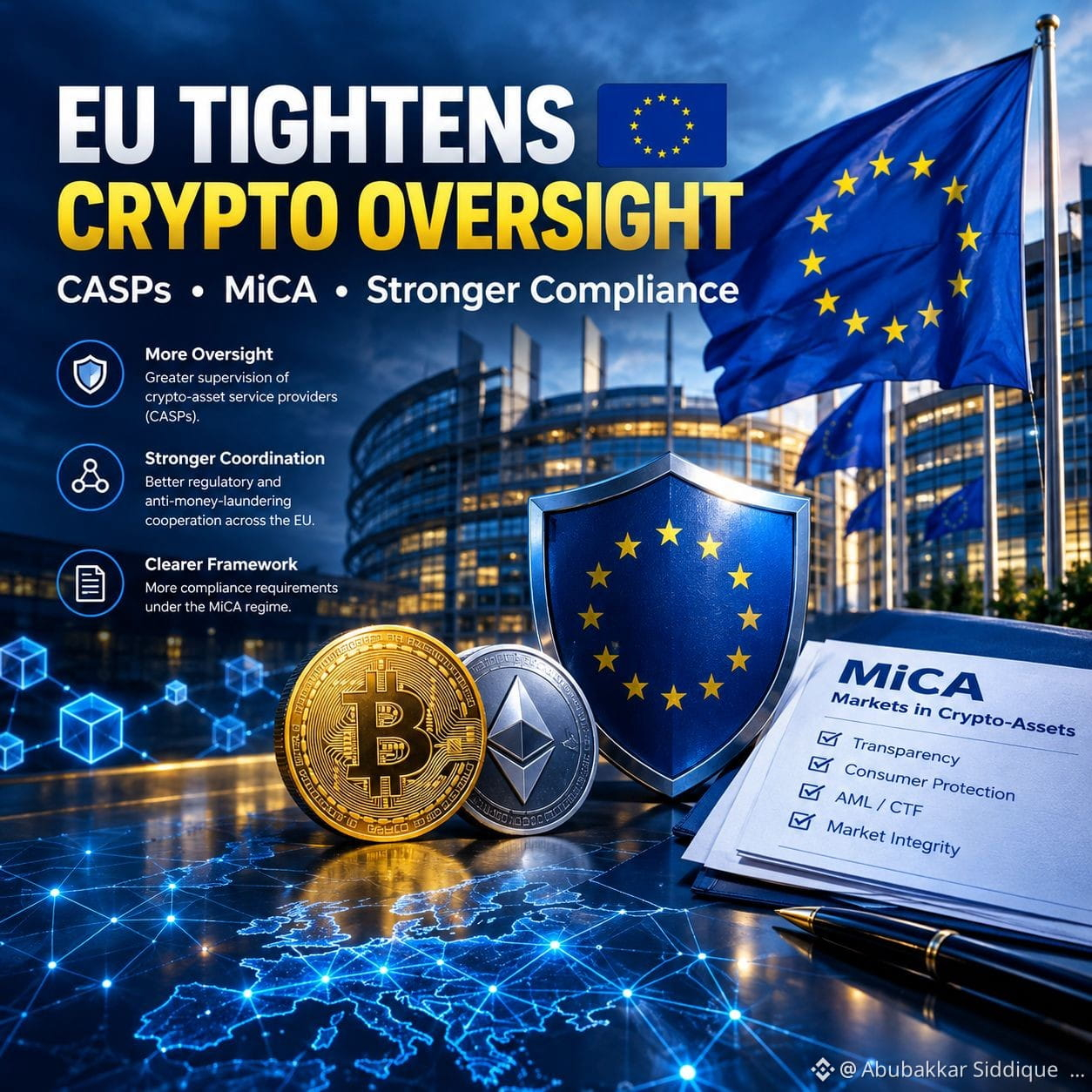
France tightens rules: Crypto firms face deadline to secure MiCA licensesThe French regulator Autoritรฉ des marchรฉs financiers is stepping up pressure on cryptocurrency companies. Firms operating in the country without a license now have until June 30 to comply with the European MiCA framework or exit the French market. AMF President Marie-Anne Barbat-Layani made it clear that companies failing to obtain authorization must prepare an orderly shutdown. This includes not only ceasing operations, but also properly handling client relationships and closing all activities in a controlled manner. MiCA reshapes the European crypto landscape The Markets in Crypto-Assets (MiCA) regulation is fundamentally transforming how the crypto sector operates across the European Union. Service providers are now required to hold a license, which allows them to legally operate throughout all EU member states. A key feature of MiCA is the โ€œpassportingโ€ mechanism, enabling firms licensed in one country to expand across the entire bloc. However, this system is beginning to create tensions, as differences in national regulatory approaches may lead companies to relocate to more favorable jurisdictions. Debate over regulatory control intensifies The European Securities and Markets Authority is also entering the discussion, with proposals suggesting it could take on a stronger supervisory role over crypto markets in the EU. Critics warn that such centralization could weaken national regulators and disrupt the current licensing model. Representatives from Maltaโ€™s financial authority have argued that any structural changes would be premature, emphasizing the need to first assess the real-world impact of MiCA, which only recently came into force. Regulation likely to evolve further The European Commission has already indicated that MiCA may not be the final version of crypto regulation. As the market continues to evolve, further updates are expected to address emerging technologies and increasing security demands. Any revisions would likely involve public consultation, suggesting that changes will be gradual rather than abrupt. Franceโ€™s ultimatum signals a broader shift across Europe: the era of loosely regulated crypto markets is ending, and companies will need to adapt to a stricter, more structured framework. #CryptoRegulation , #MiCA , #Eu , #blockchain , #CryptoCommunity Stay one step ahead โ€“ follow our profile and stay informed about everything important in the world of cryptocurrencies. Disclaimer: The information and opinions presented in this article are for informational and educational purposes only and should not be considered financial or investment advice. Nothing on this page constitutes a recommendation to buy or sell any assets. Cryptocurrency investments are inherently risky and may result in financial loss. Always do your own research before making any investment decisions.

France tightens rules: Crypto firms face deadline to secure MiCA licenses

The French regulator Autoritรฉ des marchรฉs financiers is stepping up pressure on cryptocurrency companies. Firms operating in the country without a license now have until June 30 to comply with the European MiCA framework or exit the French market.
AMF President Marie-Anne Barbat-Layani made it clear that companies failing to obtain authorization must prepare an orderly shutdown. This includes not only ceasing operations, but also properly handling client relationships and closing all activities in a controlled manner.
MiCA reshapes the European crypto landscape
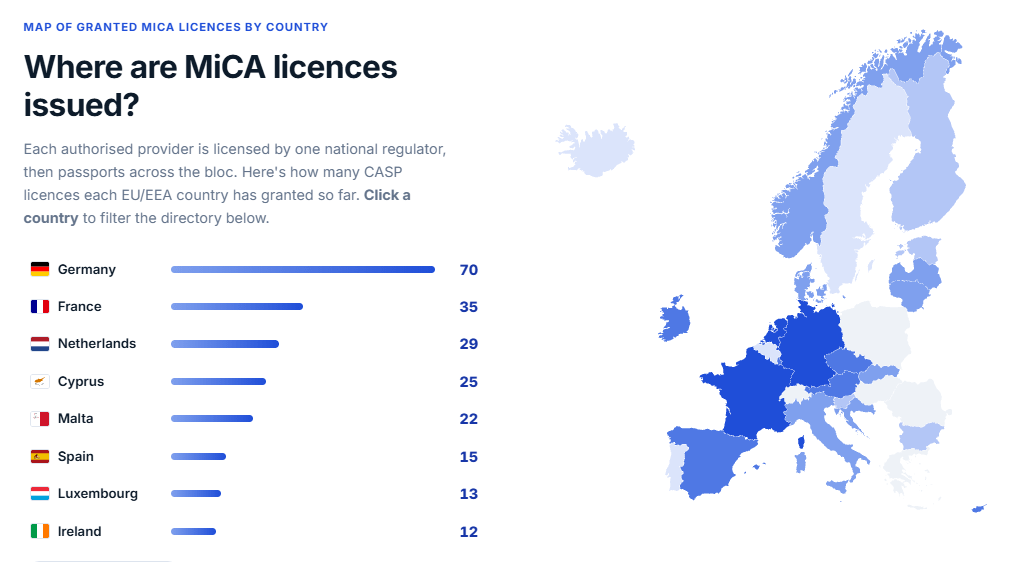
The Markets in Crypto-Assets (MiCA) regulation is fundamentally transforming how the crypto sector operates across the European Union. Service providers are now required to hold a license, which allows them to legally operate throughout all EU member states.
A key feature of MiCA is the โ€œpassportingโ€ mechanism, enabling firms licensed in one country to expand across the entire bloc. However, this system is beginning to create tensions, as differences in national regulatory approaches may lead companies to relocate to more favorable jurisdictions.
Debate over regulatory control intensifies
The European Securities and Markets Authority is also entering the discussion, with proposals suggesting it could take on a stronger supervisory role over crypto markets in the EU. Critics warn that such centralization could weaken national regulators and disrupt the current licensing model.
Representatives from Maltaโ€™s financial authority have argued that any structural changes would be premature, emphasizing the need to first assess the real-world impact of MiCA, which only recently came into force.
Regulation likely to evolve further
The European Commission has already indicated that MiCA may not be the final version of crypto regulation. As the market continues to evolve, further updates are expected to address emerging technologies and increasing security demands.
Any revisions would likely involve public consultation, suggesting that changes will be gradual rather than abrupt.
Franceโ€™s ultimatum signals a broader shift across Europe: the era of loosely regulated crypto markets is ending, and companies will need to adapt to a stricter, more structured framework.
#CryptoRegulation , #MiCA , #Eu , #blockchain , #CryptoCommunity
Stay one step ahead โ€“ follow our profile and stay informed about everything important in the world of cryptocurrencies.
Disclaimer:
The information and opinions presented in this article are for informational and educational purposes only and should not be considered financial or investment advice. Nothing on this page constitutes a recommendation to buy or sell any assets. Cryptocurrency investments are inherently risky and may result in financial loss. Always do your own research before making any investment decisions.
ยท
--
Bullish
Verified
ยท
--
Bullish
๐Ÿšจ GEOPOLITICAL TENSION! China has spoken out today advocating for "non-interference" in the internal affairs of other countries ๐Ÿ‡จ๐Ÿ‡ณ This stance comes after the US officially labeled Brazilian factions PCC and Comando Vermelho as global terrorist organizations ๐Ÿ‡บ๐Ÿ‡ธ๐Ÿ‡ง๐Ÿ‡ท ๐Ÿ’ฅ According to Beijing, the Asian nation consistently upholds respect for international sovereignty and rejects unilateral external actions. Meanwhile, Washington justifies this move by claiming that organized crime crosses borders, impacting national security and triggering new defense strategies in the Western Hemisphere ๐Ÿ›ก๏ธ ๐Ÿ‘‰ Stay updated on everything that shakes the global scene! ๐Ÿ“ˆ๐ŸŒ #geopolitica #news #china #Eu #seguranca #binancesquare $LUNC
๐Ÿšจ GEOPOLITICAL TENSION! China has spoken out today advocating for "non-interference" in the internal affairs of other countries ๐Ÿ‡จ๐Ÿ‡ณ This stance comes after the US officially labeled Brazilian factions PCC and Comando Vermelho as global terrorist organizations ๐Ÿ‡บ๐Ÿ‡ธ๐Ÿ‡ง๐Ÿ‡ท
๐Ÿ’ฅ According to Beijing, the Asian nation consistently upholds respect for international sovereignty and rejects unilateral external actions. Meanwhile, Washington justifies this move by claiming that organized crime crosses borders, impacting national security and triggering new defense strategies in the Western Hemisphere ๐Ÿ›ก๏ธ
๐Ÿ‘‰ Stay updated on everything that shakes the global scene! ๐Ÿ“ˆ๐ŸŒ
#geopolitica #news #china #Eu #seguranca #binancesquare
$LUNC
ยท
--
Bearish
๐Ÿ‡ฆ๐Ÿ‡ฒ๐Ÿ‡ท๐Ÿ‡บ Armeniaโ€™s growing ties with the European Union are triggering sharp warnings from Moscow. Russian Foreign Ministry spokesperson Maria Zakharova stated that if Yerevan continues moving toward EU integration, Russia could reconsider preferential agreements covering gas, petroleum products, and diamond trade. Armenia currently relies heavily on discounted Russian energy supplies and trade links through the Eurasian Economic Union (EAEU). Russian officials warn that deeper EU alignment could significantly impact Armeniaโ€™s trade turnover and economic stability. Source: Russian Foreign Ministry statements reported by Reuters, TASS, and regional media outlets. #Armenia #Russia #EU #Geopolitics #Europe $XAG $XAU {future}(XAUUSDT)
๐Ÿ‡ฆ๐Ÿ‡ฒ๐Ÿ‡ท๐Ÿ‡บ Armeniaโ€™s growing ties with the European Union are triggering sharp warnings from Moscow.

Russian Foreign Ministry spokesperson Maria Zakharova stated that if Yerevan continues moving toward EU integration, Russia could reconsider preferential agreements covering gas, petroleum products, and diamond trade.

Armenia currently relies heavily on discounted Russian energy supplies and trade links through the Eurasian Economic Union (EAEU). Russian officials warn that deeper EU alignment could significantly impact Armeniaโ€™s trade turnover and economic stability.

Source: Russian Foreign Ministry statements reported by Reuters, TASS, and regional media outlets.

#Armenia #Russia #EU #Geopolitics #Europe
$XAG $XAU
ยท
--
$EUL BREAKOUT TESTS LIQUIDITY ABOVE RESISTANCE โšก 1.3443 ๐Ÿ”ฅ 1.3800 / 1.4200 / 1.4600 โœ… 1.2800 ๐Ÿ›ก๏ธ $EUL is showing strong upside momentum after a sharp hourly breakout through resistance. The setup favors continuation while price holds above the breakout structure, but vertical moves can retrace quickly if liquidity thins. Traders should watch execution quality, leverage exposure, and whether buyers defend higher lows. Not financial advice. Manage your risk. #Crypto #BinanceSquare #Altcoins #Trading #Eu โšก {future}(EULUSDT)
$EUL BREAKOUT TESTS LIQUIDITY ABOVE RESISTANCE โšก

1.3443 ๐Ÿ”ฅ
1.3800 / 1.4200 / 1.4600 โœ…
1.2800 ๐Ÿ›ก๏ธ

$EUL is showing strong upside momentum after a sharp hourly breakout through resistance. The setup favors continuation while price holds above the breakout structure, but vertical moves can retrace quickly if liquidity thins. Traders should watch execution quality, leverage exposure, and whether buyers defend higher lows.

Not financial advice. Manage your risk.

#Crypto #BinanceSquare #Altcoins #Trading #Eu

โšก
Log in to explore more content
Join global crypto users on Binance Square
โšก๏ธ Get latest and useful information about crypto.
๐Ÿ’ฌ Trusted by the worldโ€™s largest crypto exchange.
๐Ÿ‘ Discover real insights from verified creators.
Email / Phone number