

#anhbacong
anhbacong
3M views
2,794 Discussing
Hot
Latest

BITCOIN ETFs ATTRACT NEARLY USD 1 BILLION IN ONE DAY
On Sept. 21, U.S. spot Bitcoin ETFs recorded USD 999 million in net inflows. IBIT led with USD 381 million, while ARKB attracted USD 289 million. Total ETF net assets reached USD 110.135 billion.
My take: the key point is not only the USD 999 million figure, but that institutional capital is returning as BTC recovers. One large session is not enough to confirm a durable flow reversal. But if inflows continue over the next sessions, spot supply pressure could ease and liquidity may help BTC hold higher levels.
I would not chase price simply because of one strong ETF session. I’m watching consecutive inflows, fund flows relative to market volume and BTC’s reaction around resistance. If flows continue expanding, I would consider adding exposure gradually; if they reverse quickly, I would stay defensive.
Do you see USD 999 million as the start of a new capital-flow cycle or simply one strong buying session? If this logic makes sense, drop a follow for more market breakdowns.
Please do your own research carefully before making any transactions (DYOR). $BTC $ETH $BNB #anhbacong #anh_ba_cong
{future}(BNBUSDT)
{future}(ETHUSDT)
{future}(BTCUSDT)
BITCOIN ETFs ATTRACT NEARLY USD 1 BILLION IN ONE DAY
On Sept. 21, U.S. spot Bitcoin ETFs recorded USD 999 million in net inflows. IBIT led with USD 381 million, while ARKB attracted USD 289 million. Total ETF net assets reached USD 110.135 billion.
My take: the key point is not only the USD 999 million figure, but that institutional capital is returning as BTC recovers. One large session is not enough to confirm a durable flow reversal. But if inflows continue over the next sessions, spot supply pressure could ease and liquidity may help BTC hold higher levels.
I would not chase price simply because of one strong ETF session. I’m watching consecutive inflows, fund flows relative to market volume and BTC’s reaction around resistance. If flows continue expanding, I would consider adding exposure gradually; if they reverse quickly, I would stay defensive.
Do you see USD 999 million as the start of a new capital-flow cycle or simply one strong buying session? If this logic makes sense, drop a follow for more market breakdowns.
Please do your own research carefully before making any transactions (DYOR). $BTC $ETH $BNB #anhbacong #anh_ba_cong
On Sept. 21, U.S. spot Bitcoin ETFs recorded USD 999 million in net inflows. IBIT led with USD 381 million, while ARKB attracted USD 289 million. Total ETF net assets reached USD 110.135 billion.
My take: the key point is not only the USD 999 million figure, but that institutional capital is returning as BTC recovers. One large session is not enough to confirm a durable flow reversal. But if inflows continue over the next sessions, spot supply pressure could ease and liquidity may help BTC hold higher levels.
I would not chase price simply because of one strong ETF session. I’m watching consecutive inflows, fund flows relative to market volume and BTC’s reaction around resistance. If flows continue expanding, I would consider adding exposure gradually; if they reverse quickly, I would stay defensive.
Do you see USD 999 million as the start of a new capital-flow cycle or simply one strong buying session? If this logic makes sense, drop a follow for more market breakdowns.
Please do your own research carefully before making any transactions (DYOR). $BTC $ETH $BNB #anhbacong #anh_ba_cong
206 Atlas:
One day of inflows does not confirm a cycle. I would wait for consecutive days to validate sustained demand before adding exposure.
1
365
·
--
Bullish
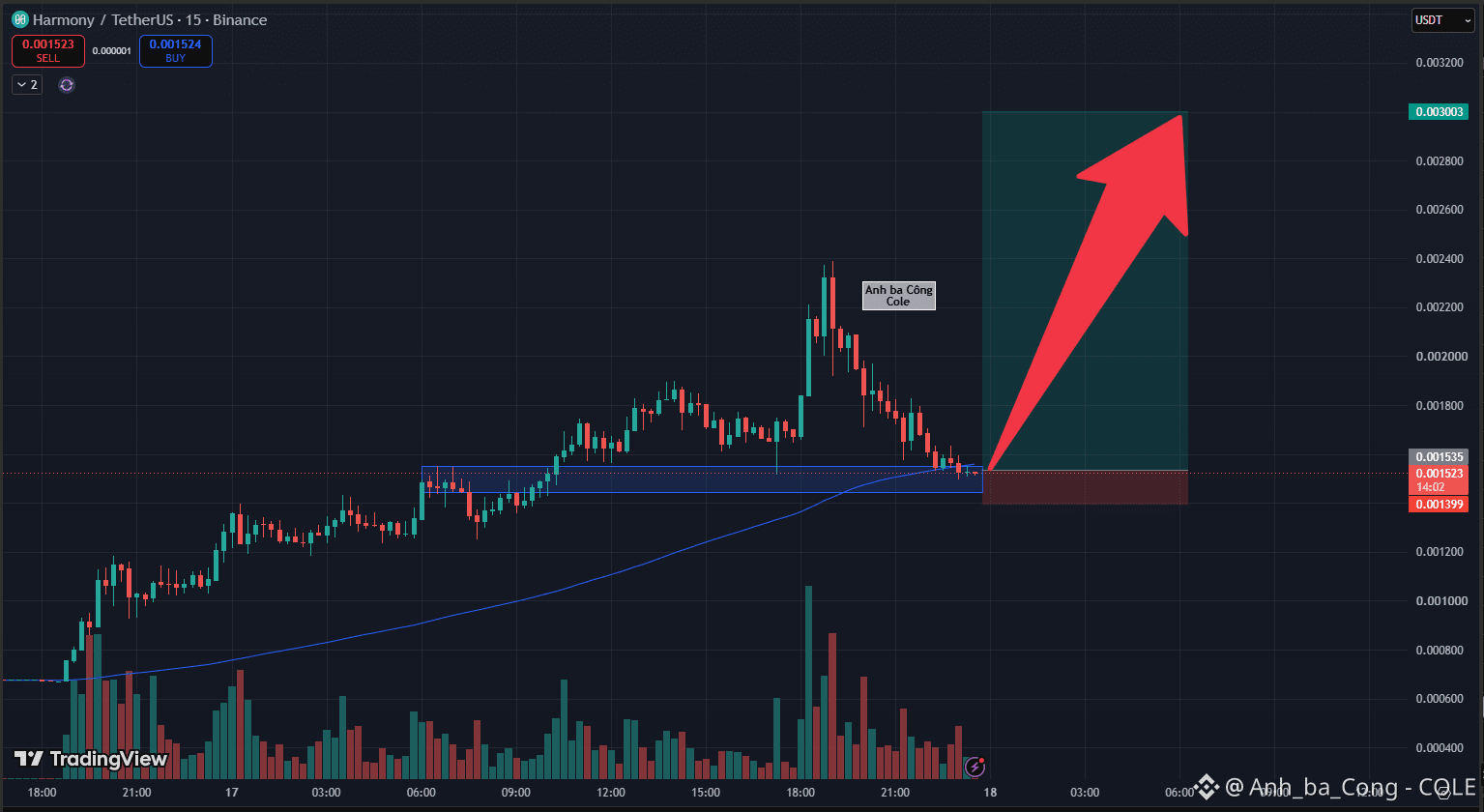
The ONE 15m chart confirms a constructive retracement following an aggressive markup, successfully retesting strong confluence support at $0.0015 alongside the rising dynamic MA100. Drying sell volume and clear lower-wick absorption near $0.001523 confirm that buyers have neutralized short-term profit-taking to maintain trend dominance. The optimal approach is to enter a Long position near $0.00152 with a tight stop-loss parameter below $0.001399, targeting the $0.003003 ceiling for an asymmetric risk-to-reward setup. $ONE #anhbacong $AVA $NEAR
{future}(NEARUSDT)
{future}(AVAUSDT)
{future}(ONEUSDT)
The ONE 15m chart confirms a constructive retracement following an aggressive markup, successfully retesting strong confluence support at $0.0015 alongside the rising dynamic MA100. Drying sell volume and clear lower-wick absorption near $0.001523 confirm that buyers have neutralized short-term profit-taking to maintain trend dominance. The optimal approach is to enter a Long position near $0.00152 with a tight stop-loss parameter below $0.001399, targeting the $0.003003 ceiling for an asymmetric risk-to-reward setup. $ONE #anhbacong $AVA $NEAR
1
1
277
FCA CONSIDERS A SEPARATE REGULATORY FRAMEWORK FOR TOKENIZED GOLD
According to the Financial Times, the FCA is expected to publish reform proposals on Monday, potentially including exemptions for certain tokenized gold products from fund rules currently applied in the UK.
The FCA is working with the UK Treasury and Bank of England to consider a separate framework for tokenized gold and, more broadly, tokenized commodities. The goal is to assess whether the current framework remains appropriate as gold moves onto blockchain infrastructure.
One option under consideration is a targeted exemption for certain tokenized gold products or gold-market infrastructure. If approved, eligible products could fall outside the regulatory perimeter covering collective investment schemes and alternative investment funds.
However, no final decision has been made. Jon Relleen, the FCA’s head of infrastructure and exchanges, said regulators want to determine whether the existing rules remain appropriate for the gold market.
The notable point is that the UK is considering tokenization based on the characteristics of the underlying asset rather than simply applying traditional financial rules unchanged. This could create a dedicated regulatory path for blockchain-based products while maintaining necessary oversight.
The proposal also matters beyond gold. If established, such a framework could help the UK classify real-world assets on blockchain according to their risks and structure rather than simply their tokenized form.
If the FCA moves toward targeted exemptions, the bigger impact may be how tokenized gold is classified and brought into the UK financial market, rather than any direct move in gold prices.
Would a dedicated framework for tokenized gold make more sense than applying existing fund rules unchanged?
Please do your own research carefully before making any transactions (DYOR). $BTC $XAUT $PAXG #anhbacong #anh_ba_cong
{future}(PAXGUSDT)
{future}(XAUTUSDT)
{future}(BTCUSDT)
FCA CONSIDERS A SEPARATE REGULATORY FRAMEWORK FOR TOKENIZED GOLD
According to the Financial Times, the FCA is expected to publish reform proposals on Monday, potentially including exemptions for certain tokenized gold products from fund rules currently applied in the UK.
The FCA is working with the UK Treasury and Bank of England to consider a separate framework for tokenized gold and, more broadly, tokenized commodities. The goal is to assess whether the current framework remains appropriate as gold moves onto blockchain infrastructure.
One option under consideration is a targeted exemption for certain tokenized gold products or gold-market infrastructure. If approved, eligible products could fall outside the regulatory perimeter covering collective investment schemes and alternative investment funds.
However, no final decision has been made. Jon Relleen, the FCA’s head of infrastructure and exchanges, said regulators want to determine whether the existing rules remain appropriate for the gold market.
The notable point is that the UK is considering tokenization based on the characteristics of the underlying asset rather than simply applying traditional financial rules unchanged. This could create a dedicated regulatory path for blockchain-based products while maintaining necessary oversight.
The proposal also matters beyond gold. If established, such a framework could help the UK classify real-world assets on blockchain according to their risks and structure rather than simply their tokenized form.
If the FCA moves toward targeted exemptions, the bigger impact may be how tokenized gold is classified and brought into the UK financial market, rather than any direct move in gold prices.
Would a dedicated framework for tokenized gold make more sense than applying existing fund rules unchanged?
Please do your own research carefully before making any transactions (DYOR). $BTC $XAUT $PAXG #anhbacong #anh_ba_cong
According to the Financial Times, the FCA is expected to publish reform proposals on Monday, potentially including exemptions for certain tokenized gold products from fund rules currently applied in the UK.
The FCA is working with the UK Treasury and Bank of England to consider a separate framework for tokenized gold and, more broadly, tokenized commodities. The goal is to assess whether the current framework remains appropriate as gold moves onto blockchain infrastructure.
One option under consideration is a targeted exemption for certain tokenized gold products or gold-market infrastructure. If approved, eligible products could fall outside the regulatory perimeter covering collective investment schemes and alternative investment funds.
However, no final decision has been made. Jon Relleen, the FCA’s head of infrastructure and exchanges, said regulators want to determine whether the existing rules remain appropriate for the gold market.
The notable point is that the UK is considering tokenization based on the characteristics of the underlying asset rather than simply applying traditional financial rules unchanged. This could create a dedicated regulatory path for blockchain-based products while maintaining necessary oversight.
The proposal also matters beyond gold. If established, such a framework could help the UK classify real-world assets on blockchain according to their risks and structure rather than simply their tokenized form.
If the FCA moves toward targeted exemptions, the bigger impact may be how tokenized gold is classified and brought into the UK financial market, rather than any direct move in gold prices.
Would a dedicated framework for tokenized gold make more sense than applying existing fund rules unchanged?
Please do your own research carefully before making any transactions (DYOR). $BTC $XAUT $PAXG #anhbacong #anh_ba_cong

1
158
SOLANA MINTED OVER 263,000 SPL TOKENS IN A SINGLE DAY
On Sept. 10, Solana set a new record with more than 263,000 SPL tokens issued within 24 hours, according to Solscan. That was over five times the previous peak of roughly 40,000–50,000 tokens per day seen during the December 2024 memecoin frenzy.
Of the total, 40,360 tokens, or about 15%, were created through launchpads — services that let users launch memecoins quickly with little or no coding required.
Pump.fun accounted for about 85% of launchpad-issued tokens, equal to 34,184 tokens. On the same day, the platform generated 1.8 million USD in 24-hour revenue, making it the highest-revenue protocol across the Solana network.
The record shows how sharply the barrier to token issuance on Solana has fallen, allowing new asset supply to expand at an unprecedented pace.
But issuance volume does not equal quality. Hundreds of thousands of new tokens in one day also point to extreme fragmentation and intense competition among emerging assets. The 263,000 figure is therefore a clear indicator of activity, but it does not by itself prove ecosystem value or durability.
Pump.fun creating 34,184 tokens and generating 1.8 million USD in revenue that day shows the growing economic impact of launchpads on Solana.
The record therefore sends two signals at once: Solana can absorb an enormous volume of new asset issuance, while its market is becoming increasingly crowded. The key question is how many of these tokens can maintain liquidity and real activity after the initial hype fades.
Do you see 263,000 tokens as evidence of strong Solana expansion, or mainly as another memecoin issuance boom?
Please do your own research carefully before making any transactions (DYOR). $SOL $LSK $STEEM #anhbacong #anh_ba_cong
{future}(STEEMUSDT)
{future}(LSKUSDT)
{future}(SOLUSDT)
SOLANA MINTED OVER 263,000 SPL TOKENS IN A SINGLE DAY
On Sept. 10, Solana set a new record with more than 263,000 SPL tokens issued within 24 hours, according to Solscan. That was over five times the previous peak of roughly 40,000–50,000 tokens per day seen during the December 2024 memecoin frenzy.
Of the total, 40,360 tokens, or about 15%, were created through launchpads — services that let users launch memecoins quickly with little or no coding required.
Pump.fun accounted for about 85% of launchpad-issued tokens, equal to 34,184 tokens. On the same day, the platform generated 1.8 million USD in 24-hour revenue, making it the highest-revenue protocol across the Solana network.
The record shows how sharply the barrier to token issuance on Solana has fallen, allowing new asset supply to expand at an unprecedented pace.
But issuance volume does not equal quality. Hundreds of thousands of new tokens in one day also point to extreme fragmentation and intense competition among emerging assets. The 263,000 figure is therefore a clear indicator of activity, but it does not by itself prove ecosystem value or durability.
Pump.fun creating 34,184 tokens and generating 1.8 million USD in revenue that day shows the growing economic impact of launchpads on Solana.
The record therefore sends two signals at once: Solana can absorb an enormous volume of new asset issuance, while its market is becoming increasingly crowded. The key question is how many of these tokens can maintain liquidity and real activity after the initial hype fades.
Do you see 263,000 tokens as evidence of strong Solana expansion, or mainly as another memecoin issuance boom?
Please do your own research carefully before making any transactions (DYOR). $SOL $LSK $STEEM #anhbacong #anh_ba_cong
On Sept. 10, Solana set a new record with more than 263,000 SPL tokens issued within 24 hours, according to Solscan. That was over five times the previous peak of roughly 40,000–50,000 tokens per day seen during the December 2024 memecoin frenzy.
Of the total, 40,360 tokens, or about 15%, were created through launchpads — services that let users launch memecoins quickly with little or no coding required.
Pump.fun accounted for about 85% of launchpad-issued tokens, equal to 34,184 tokens. On the same day, the platform generated 1.8 million USD in 24-hour revenue, making it the highest-revenue protocol across the Solana network.
The record shows how sharply the barrier to token issuance on Solana has fallen, allowing new asset supply to expand at an unprecedented pace.
But issuance volume does not equal quality. Hundreds of thousands of new tokens in one day also point to extreme fragmentation and intense competition among emerging assets. The 263,000 figure is therefore a clear indicator of activity, but it does not by itself prove ecosystem value or durability.
Pump.fun creating 34,184 tokens and generating 1.8 million USD in revenue that day shows the growing economic impact of launchpads on Solana.
The record therefore sends two signals at once: Solana can absorb an enormous volume of new asset issuance, while its market is becoming increasingly crowded. The key question is how many of these tokens can maintain liquidity and real activity after the initial hype fades.
Do you see 263,000 tokens as evidence of strong Solana expansion, or mainly as another memecoin issuance boom?
Please do your own research carefully before making any transactions (DYOR). $SOL $LSK $STEEM #anhbacong #anh_ba_cong

209
·
--
Bullish
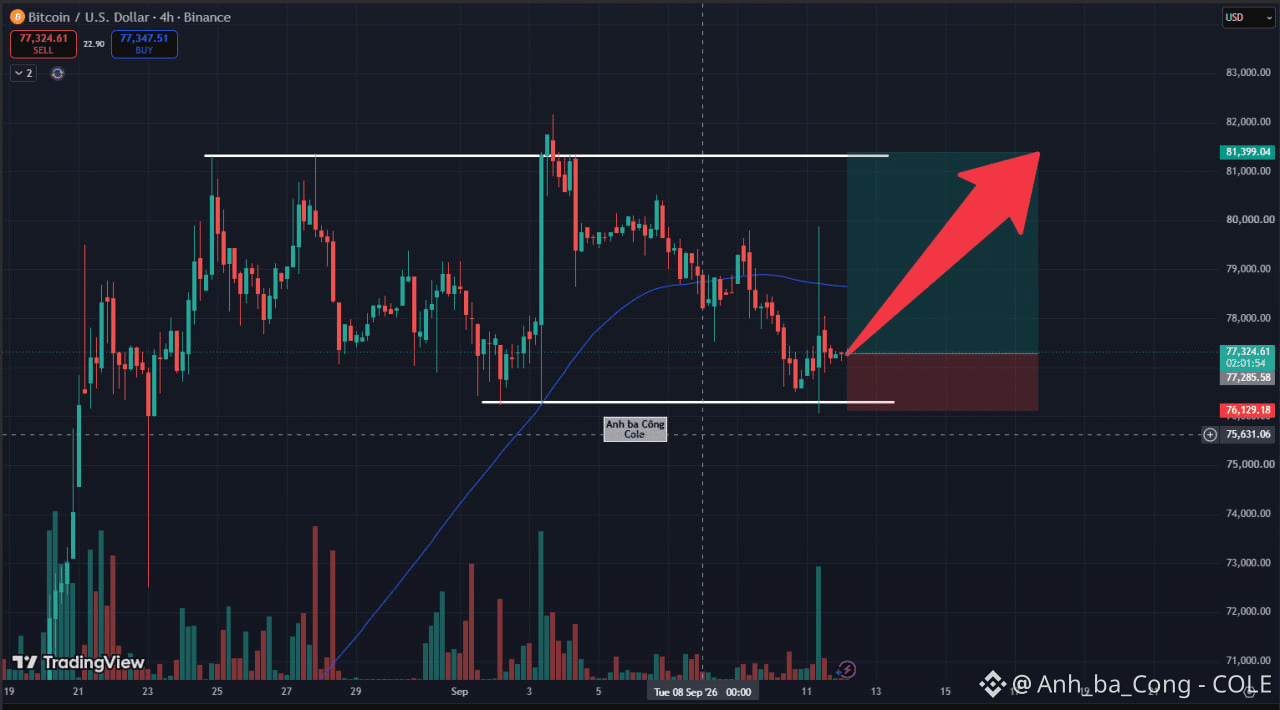
The BTC 4H chart on confirms price action testing the lower boundary of a $5,000 horizontal consolidation rectangle across the $76,500–$77,300 zone. Aggressive lower-wick absorption following a liquidity sweep proves that buyers have successfully defended the structural floor against sell-side pressure. The optimal approach is to execute a range-bound Long near $77,285–$77,325 with a tight protective stop-loss parameter beneath $76,129, targeting the range ceiling at $81,399 for an RR exceeding 3:1. $BTC $LSK $TREE #anhbacong #anh_ba_cong
{future}(TREEUSDT)
{future}(LSKUSDT)
{future}(BTCUSDT)
The BTC 4H chart on confirms price action testing the lower boundary of a $5,000 horizontal consolidation rectangle across the $76,500–$77,300 zone. Aggressive lower-wick absorption following a liquidity sweep proves that buyers have successfully defended the structural floor against sell-side pressure. The optimal approach is to execute a range-bound Long near $77,285–$77,325 with a tight protective stop-loss parameter beneath $76,129, targeting the range ceiling at $81,399 for an RR exceeding 3:1. $BTC $LSK $TREE #anhbacong #anh_ba_cong
142
CLARITY ACT REVISES DEFI RULES JUST BEFORE THE VOTE, BUT 60 VOTES REMAIN A CHALLENGE
On Sept. 10, Republicans circulated a new 630-page version of the CLARITY Act ahead of the Sept. 15 cloture vote. The bill still aims to establish a digital asset framework and define the roles of the SEC and CFTC.
The main update focuses on DeFi, clarifying when a project would need to register with the CFTC and comply with Bank Secrecy Act requirements.
Cynthia Lummis said more than 114 proposals from Democratic lawmakers were incorporated into the new version.
However, the 60-vote hurdle remains unresolved. Republicans hold 53 Senate seats, meaning the bill needs Democratic support to reach the cloture threshold and open the path to debate.
A major dispute centers on ethics provisions involving President Donald Trump and his family. Some Democrats want tighter limits on senior officials issuing tokens or benefiting from crypto businesses; Republican Senator Thom Tillis warned the bill could fail if the White House does not help narrow the gap.
Stablecoins are another flashpoint. Nearly 80 banking associations, together with ABA and ICBA, called for changes addressing crypto platforms offering yield or rewards similar to interest on stablecoins.
Banks fear yield-bearing stablecoins could pull deposits away from the banking system. The dispute places CLARITY between traditional banking interests and the crypto industry’s push for clear competition rules.
Even if the Senate advances the bill, the revised version would still need approval from the House before reaching the President. If CLARITY stalls, the SEC and CFTC have signaled they could continue developing crypto rules under existing authority.
Sept. 15 is therefore a key test for the U.S. digital asset regulatory framework.
Will DeFi, stablecoins, or ethics disputes ultimately decide CLARITY Act’s fate?
Please do your own research carefully before making any transactions (DYOR). $BTC $TRUMP $TAG #anhbacong #anh_ba_cong
{future}(TAGUSDT)
{future}(TRUMPUSDT)
{future}(BTCUSDT)
CLARITY ACT REVISES DEFI RULES JUST BEFORE THE VOTE, BUT 60 VOTES REMAIN A CHALLENGE
On Sept. 10, Republicans circulated a new 630-page version of the CLARITY Act ahead of the Sept. 15 cloture vote. The bill still aims to establish a digital asset framework and define the roles of the SEC and CFTC.
The main update focuses on DeFi, clarifying when a project would need to register with the CFTC and comply with Bank Secrecy Act requirements.
Cynthia Lummis said more than 114 proposals from Democratic lawmakers were incorporated into the new version.
However, the 60-vote hurdle remains unresolved. Republicans hold 53 Senate seats, meaning the bill needs Democratic support to reach the cloture threshold and open the path to debate.
A major dispute centers on ethics provisions involving President Donald Trump and his family. Some Democrats want tighter limits on senior officials issuing tokens or benefiting from crypto businesses; Republican Senator Thom Tillis warned the bill could fail if the White House does not help narrow the gap.
Stablecoins are another flashpoint. Nearly 80 banking associations, together with ABA and ICBA, called for changes addressing crypto platforms offering yield or rewards similar to interest on stablecoins.
Banks fear yield-bearing stablecoins could pull deposits away from the banking system. The dispute places CLARITY between traditional banking interests and the crypto industry’s push for clear competition rules.
Even if the Senate advances the bill, the revised version would still need approval from the House before reaching the President. If CLARITY stalls, the SEC and CFTC have signaled they could continue developing crypto rules under existing authority.
Sept. 15 is therefore a key test for the U.S. digital asset regulatory framework.
Will DeFi, stablecoins, or ethics disputes ultimately decide CLARITY Act’s fate?
Please do your own research carefully before making any transactions (DYOR). $BTC $TRUMP $TAG #anhbacong #anh_ba_cong
On Sept. 10, Republicans circulated a new 630-page version of the CLARITY Act ahead of the Sept. 15 cloture vote. The bill still aims to establish a digital asset framework and define the roles of the SEC and CFTC.
The main update focuses on DeFi, clarifying when a project would need to register with the CFTC and comply with Bank Secrecy Act requirements.
Cynthia Lummis said more than 114 proposals from Democratic lawmakers were incorporated into the new version.
However, the 60-vote hurdle remains unresolved. Republicans hold 53 Senate seats, meaning the bill needs Democratic support to reach the cloture threshold and open the path to debate.
A major dispute centers on ethics provisions involving President Donald Trump and his family. Some Democrats want tighter limits on senior officials issuing tokens or benefiting from crypto businesses; Republican Senator Thom Tillis warned the bill could fail if the White House does not help narrow the gap.
Stablecoins are another flashpoint. Nearly 80 banking associations, together with ABA and ICBA, called for changes addressing crypto platforms offering yield or rewards similar to interest on stablecoins.
Banks fear yield-bearing stablecoins could pull deposits away from the banking system. The dispute places CLARITY between traditional banking interests and the crypto industry’s push for clear competition rules.
Even if the Senate advances the bill, the revised version would still need approval from the House before reaching the President. If CLARITY stalls, the SEC and CFTC have signaled they could continue developing crypto rules under existing authority.
Sept. 15 is therefore a key test for the U.S. digital asset regulatory framework.
Will DeFi, stablecoins, or ethics disputes ultimately decide CLARITY Act’s fate?
Please do your own research carefully before making any transactions (DYOR). $BTC $TRUMP $TAG #anhbacong #anh_ba_cong

1
1
3
412
METAMASK SPINS OUT FROM CONSENSYS AFTER 10+ YEARS
Consensys Software Inc. will split into two independent operating companies, separating MetaMask from its institutional Ethereum infrastructure business.
The existing entity will be renamed MetaMask, with Ethereum co-founder Joe Lubin as Chairman and CEO. Linea, along with protocol and institutional infrastructure operations, will move to a new legal entity retaining the Consensys name. Mike Kriak will become Consensys CEO.
MetaMask’s app, assets, keys and access will not change.
Lubin said MetaMask has been accumulating value faster than the rest of the group. MetaMask now goes far beyond an Ethereum wallet, with over 100M downloads, trillions of USD in cumulative transaction volume and support for hundreds of networks.
MetaMask is also expanding into financial services. Its U.S. Mastercard supports crypto spending and mUSD rewards, while Money Account combines saving, payments and trading. Money Account offers up to 4% base yield, with up to 6% promotional yield through September.
Consensys will focus on institutional Ethereum infrastructure through Linea, Besu and Teku, targeting banks, asset managers, tokenization, stablecoins and blockchain payments.
The move comes as Consensys’ IPO plan still has no new timeline. A planned U.S. listing involving JPMorgan and Goldman Sachs was delayed, with no entity identified for a future listing.
No new update on MASK, although Lubin previously confirmed that MetaMask planned to launch its own token.
Will separating MetaMask give each business more room to grow, or make Consensys’ structure more fragmented?
Please do your own research carefully before making any transactions (DYOR). $META $ETH $RAY #anhbacong #anh_ba_cong
{spot}(RAYUSDT)
{future}(ETHUSDT)
{future}(METAUSDT)
METAMASK SPINS OUT FROM CONSENSYS AFTER 10+ YEARS
Consensys Software Inc. will split into two independent operating companies, separating MetaMask from its institutional Ethereum infrastructure business.
The existing entity will be renamed MetaMask, with Ethereum co-founder Joe Lubin as Chairman and CEO. Linea, along with protocol and institutional infrastructure operations, will move to a new legal entity retaining the Consensys name. Mike Kriak will become Consensys CEO.
MetaMask’s app, assets, keys and access will not change.
Lubin said MetaMask has been accumulating value faster than the rest of the group. MetaMask now goes far beyond an Ethereum wallet, with over 100M downloads, trillions of USD in cumulative transaction volume and support for hundreds of networks.
MetaMask is also expanding into financial services. Its U.S. Mastercard supports crypto spending and mUSD rewards, while Money Account combines saving, payments and trading. Money Account offers up to 4% base yield, with up to 6% promotional yield through September.
Consensys will focus on institutional Ethereum infrastructure through Linea, Besu and Teku, targeting banks, asset managers, tokenization, stablecoins and blockchain payments.
The move comes as Consensys’ IPO plan still has no new timeline. A planned U.S. listing involving JPMorgan and Goldman Sachs was delayed, with no entity identified for a future listing.
No new update on MASK, although Lubin previously confirmed that MetaMask planned to launch its own token.
Will separating MetaMask give each business more room to grow, or make Consensys’ structure more fragmented?
Please do your own research carefully before making any transactions (DYOR). $META $ETH $RAY #anhbacong #anh_ba_cong
Consensys Software Inc. will split into two independent operating companies, separating MetaMask from its institutional Ethereum infrastructure business.
The existing entity will be renamed MetaMask, with Ethereum co-founder Joe Lubin as Chairman and CEO. Linea, along with protocol and institutional infrastructure operations, will move to a new legal entity retaining the Consensys name. Mike Kriak will become Consensys CEO.
MetaMask’s app, assets, keys and access will not change.
Lubin said MetaMask has been accumulating value faster than the rest of the group. MetaMask now goes far beyond an Ethereum wallet, with over 100M downloads, trillions of USD in cumulative transaction volume and support for hundreds of networks.
MetaMask is also expanding into financial services. Its U.S. Mastercard supports crypto spending and mUSD rewards, while Money Account combines saving, payments and trading. Money Account offers up to 4% base yield, with up to 6% promotional yield through September.
Consensys will focus on institutional Ethereum infrastructure through Linea, Besu and Teku, targeting banks, asset managers, tokenization, stablecoins and blockchain payments.
The move comes as Consensys’ IPO plan still has no new timeline. A planned U.S. listing involving JPMorgan and Goldman Sachs was delayed, with no entity identified for a future listing.
No new update on MASK, although Lubin previously confirmed that MetaMask planned to launch its own token.
Will separating MetaMask give each business more room to grow, or make Consensys’ structure more fragmented?
Please do your own research carefully before making any transactions (DYOR). $META $ETH $RAY #anhbacong #anh_ba_cong

164

Article
The Falcon Fortress and the Quantum Resistance RaceImagine a morning when every modern encryption algorithm protecting trillions of dollars in digital assets is shattered in seconds by the power of a true quantum computer. This is not a sci-fi movie script, but a looming threat that Google and researchers warn could arrive sooner than expected. At this threshold, the integration of the Falcon algorithm—a Post-Quantum Cryptography (PQC) solution—by Solana's two largest validator clients, Anza and Firedancer, is a vital strategic move. It demonstrates that Solana is not only focused on maintaining its market-leading transaction speed but is also silently building a "steel armor" for the future, ensuring that the trust of users and financial institutions remains intact when quantum computing matures. $SOL
{future}(SOLUSDT)
The choice of Falcon over other post-quantum algorithms reveals a highly sophisticated technical mindset that prioritizes performance. One of the greatest challenges in upgrading blockchain security is signature size; if signatures are too large, they clog the network and sacrifice transaction throughput (TPS). However, Falcon is designed with a compact signature structure, allowing it to operate smoothly on Solana's infrastructure without any negative impact on network throughput. The combination of quantum-level protection and high performance is the key to Solana maintaining its competitive edge against new technological waves. Accompanying advanced open-source solutions like Falcon confirms the project's seriousness in protecting long-term decentralized financial infrastructure. $BROCCOLI714
{future}(BROCCOLI714USDT)
A notable point in Solana’s deployment roadmap is the "conditional activation" mechanism. The current Falcon solution acts as a latent defensive layer, only fully activated when quantum computers become a direct threat to network security. This approach helps the network avoid wasting unnecessary computational resources today while remaining in the highest state of combat readiness. It reflects a professional risk management strategy, similar to how major exchanges like Binance maintain insurance funds and redundant infrastructure to counter worst-case scenarios. This preparation protects not only assets but also the integrity of the ledger, which is the core value of the entire cryptocurrency ecosystem. $BIO
{future}(BIOUSDT)
Broadly speaking, Solana’s move is setting a new standard for Layer 1 blockchains. When a long-standing and large-scale network proactively upgrades its quantum resistance, it forces other projects to reconsider their own security levels. In an era where digital assets are increasingly integrated into the global financial system through ETF and RWA structures, post-quantum security is no longer an optional feature but a mandatory requirement. The collaboration between Anza and Firedancer in this trial shows the high consensus among Solana developers in protecting the project's future. This is a testament to the fact that blockchain is truly maturing, where technological innovation always goes hand-in-hand with the responsibility to protect users from the unprecedented risks of the digital future. #Colecolen #anhbacong #anh_ba_cong
The Falcon Fortress and the Quantum Resistance Race
Imagine a morning when every modern encryption algorithm protecting trillions of dollars in digital assets is shattered in seconds by the power of a true quantum computer. This is not a sci-fi movie script, but a looming threat that Google and researchers warn could arrive sooner than expected. At this threshold, the integration of the Falcon algorithm—a Post-Quantum Cryptography (PQC) solution—by Solana's two largest validator clients, Anza and Firedancer, is a vital strategic move. It demonstrates that Solana is not only focused on maintaining its market-leading transaction speed but is also silently building a "steel armor" for the future, ensuring that the trust of users and financial institutions remains intact when quantum computing matures. $SOL
The choice of Falcon over other post-quantum algorithms reveals a highly sophisticated technical mindset that prioritizes performance. One of the greatest challenges in upgrading blockchain security is signature size; if signatures are too large, they clog the network and sacrifice transaction throughput (TPS). However, Falcon is designed with a compact signature structure, allowing it to operate smoothly on Solana's infrastructure without any negative impact on network throughput. The combination of quantum-level protection and high performance is the key to Solana maintaining its competitive edge against new technological waves. Accompanying advanced open-source solutions like Falcon confirms the project's seriousness in protecting long-term decentralized financial infrastructure. $BROCCOLI714
A notable point in Solana’s deployment roadmap is the "conditional activation" mechanism. The current Falcon solution acts as a latent defensive layer, only fully activated when quantum computers become a direct threat to network security. This approach helps the network avoid wasting unnecessary computational resources today while remaining in the highest state of combat readiness. It reflects a professional risk management strategy, similar to how major exchanges like Binance maintain insurance funds and redundant infrastructure to counter worst-case scenarios. This preparation protects not only assets but also the integrity of the ledger, which is the core value of the entire cryptocurrency ecosystem. $BIO
Broadly speaking, Solana’s move is setting a new standard for Layer 1 blockchains. When a long-standing and large-scale network proactively upgrades its quantum resistance, it forces other projects to reconsider their own security levels. In an era where digital assets are increasingly integrated into the global financial system through ETF and RWA structures, post-quantum security is no longer an optional feature but a mandatory requirement. The collaboration between Anza and Firedancer in this trial shows the high consensus among Solana developers in protecting the project's future. This is a testament to the fact that blockchain is truly maturing, where technological innovation always goes hand-in-hand with the responsibility to protect users from the unprecedented risks of the digital future. #Colecolen #anhbacong #anh_ba_cong
The choice of Falcon over other post-quantum algorithms reveals a highly sophisticated technical mindset that prioritizes performance. One of the greatest challenges in upgrading blockchain security is signature size; if signatures are too large, they clog the network and sacrifice transaction throughput (TPS). However, Falcon is designed with a compact signature structure, allowing it to operate smoothly on Solana's infrastructure without any negative impact on network throughput. The combination of quantum-level protection and high performance is the key to Solana maintaining its competitive edge against new technological waves. Accompanying advanced open-source solutions like Falcon confirms the project's seriousness in protecting long-term decentralized financial infrastructure. $BROCCOLI714
A notable point in Solana’s deployment roadmap is the "conditional activation" mechanism. The current Falcon solution acts as a latent defensive layer, only fully activated when quantum computers become a direct threat to network security. This approach helps the network avoid wasting unnecessary computational resources today while remaining in the highest state of combat readiness. It reflects a professional risk management strategy, similar to how major exchanges like Binance maintain insurance funds and redundant infrastructure to counter worst-case scenarios. This preparation protects not only assets but also the integrity of the ledger, which is the core value of the entire cryptocurrency ecosystem. $BIO
Broadly speaking, Solana’s move is setting a new standard for Layer 1 blockchains. When a long-standing and large-scale network proactively upgrades its quantum resistance, it forces other projects to reconsider their own security levels. In an era where digital assets are increasingly integrated into the global financial system through ETF and RWA structures, post-quantum security is no longer an optional feature but a mandatory requirement. The collaboration between Anza and Firedancer in this trial shows the high consensus among Solana developers in protecting the project's future. This is a testament to the fact that blockchain is truly maturing, where technological innovation always goes hand-in-hand with the responsibility to protect users from the unprecedented risks of the digital future. #Colecolen #anhbacong #anh_ba_cong
2.7k

Article
The Quantum Test and Satoshi's Ultimatum: When the World's Greatest Mystery Faces its SolutionThe cryptocurrency world is about to enter a historic migration, where the boarding pass is the transition to post-quantum cryptographic standards. However, behind this security effort lies a dramatic consequence: the truth about Satoshi Nakamoto’s wealth—a figure that has remained speculative for 15 years—could be fully exposed. As Bitcoin is forced to upgrade to survive, the identities of these dormant "giants" must speak up or accept being permanently erased. $BTC
{future}(BTCUSDT)
A Mandatory Cryptographic "Roll Call"
Adam Back, CEO of Blockstream, pointed out a fascinating truth: the upgrade process to future quantum-resistant standards will act as a large-scale asset inventory. When the network deploys new quantum-resistant address formats, every owner—including Satoshi—must actively sign a transaction to move their Bitcoin. $SOL
{future}(SOLUSDT)
If the wallets containing millions of BTC associated with Satoshi suddenly show movement, it confirms that the founder (or an heir) is still quietly observing. Conversely, silence would mean that over 1.1 million BTC (roughly $80 billion) will be officially regarded as "dead coins"—a legacy with no guardian. For the first time, on-chain data will replace estimation algorithms to give us the most accurate figure of Satoshi's actual holdings. $HIGH
{future}(HIGHUSDT)
Vulnerabilities from the Pre-BIP39 Era
However, this migration is not for everyone. Cardano founder Charles Hoskinson issued a chilling warning about approximately 1.7 million BTC that fall outside the protection of the BIP-361 proposal. The weakness lies in history: before 2013, the seed phrase (BIP-39) standard did not exist. #anhbacong
These early wallets cannot be recovered with a convenient 12-24 word sequence. They require direct access to the wallet file or raw private keys. With Satoshi’s wallets created in 2009, the lack of a seed phrase mechanism makes the possibility of moving assets extremely fragile if stored information is lost over time. If the quantum computer scenario becomes powerful enough to break the current ECDSA algorithm, Satoshi's $80 billion could become "easy prey" left on the cryptographic battlefield because it couldn't be evacuated to safety. #anh_ba_cong
Conservatism and the Price of Survival
The debate between Adam Back and Charles Hoskinson is not just technical; it is about governance philosophy. While the Bitcoin community maintains a cautious conservatism, other blockchains are accelerating experimentation. Stagnation in reaching consensus on solutions like BIP-361 could cost Bitcoin the "golden moment" to protect 34% of the supply currently in vulnerable legacy addresses. #Colecolen
Conclusion
The post-quantum upgrade is not just a security puzzle; it is a historical purification. It forces mysteries to be unveiled and forgotten assets to self-verify. Satoshi’s treasure could be saved, frozen, or stolen—that outcome will redefine the world's trust in Bitcoin's immutability. Investors must understand that future safety depends on today's adaptability. (DYOR)
The Quantum Test and Satoshi's Ultimatum: When the World's Greatest Mystery Faces its Solution
The cryptocurrency world is about to enter a historic migration, where the boarding pass is the transition to post-quantum cryptographic standards. However, behind this security effort lies a dramatic consequence: the truth about Satoshi Nakamoto’s wealth—a figure that has remained speculative for 15 years—could be fully exposed. As Bitcoin is forced to upgrade to survive, the identities of these dormant "giants" must speak up or accept being permanently erased. $BTC
A Mandatory Cryptographic "Roll Call"
Adam Back, CEO of Blockstream, pointed out a fascinating truth: the upgrade process to future quantum-resistant standards will act as a large-scale asset inventory. When the network deploys new quantum-resistant address formats, every owner—including Satoshi—must actively sign a transaction to move their Bitcoin. $SOL
If the wallets containing millions of BTC associated with Satoshi suddenly show movement, it confirms that the founder (or an heir) is still quietly observing. Conversely, silence would mean that over 1.1 million BTC (roughly $80 billion) will be officially regarded as "dead coins"—a legacy with no guardian. For the first time, on-chain data will replace estimation algorithms to give us the most accurate figure of Satoshi's actual holdings. $HIGH
Vulnerabilities from the Pre-BIP39 Era
However, this migration is not for everyone. Cardano founder Charles Hoskinson issued a chilling warning about approximately 1.7 million BTC that fall outside the protection of the BIP-361 proposal. The weakness lies in history: before 2013, the seed phrase (BIP-39) standard did not exist. #anhbacong
These early wallets cannot be recovered with a convenient 12-24 word sequence. They require direct access to the wallet file or raw private keys. With Satoshi’s wallets created in 2009, the lack of a seed phrase mechanism makes the possibility of moving assets extremely fragile if stored information is lost over time. If the quantum computer scenario becomes powerful enough to break the current ECDSA algorithm, Satoshi's $80 billion could become "easy prey" left on the cryptographic battlefield because it couldn't be evacuated to safety. #anh_ba_cong
Conservatism and the Price of Survival
The debate between Adam Back and Charles Hoskinson is not just technical; it is about governance philosophy. While the Bitcoin community maintains a cautious conservatism, other blockchains are accelerating experimentation. Stagnation in reaching consensus on solutions like BIP-361 could cost Bitcoin the "golden moment" to protect 34% of the supply currently in vulnerable legacy addresses. #Colecolen
Conclusion
The post-quantum upgrade is not just a security puzzle; it is a historical purification. It forces mysteries to be unveiled and forgotten assets to self-verify. Satoshi’s treasure could be saved, frozen, or stolen—that outcome will redefine the world's trust in Bitcoin's immutability. Investors must understand that future safety depends on today's adaptability. (DYOR)
A Mandatory Cryptographic "Roll Call"
Adam Back, CEO of Blockstream, pointed out a fascinating truth: the upgrade process to future quantum-resistant standards will act as a large-scale asset inventory. When the network deploys new quantum-resistant address formats, every owner—including Satoshi—must actively sign a transaction to move their Bitcoin. $SOL
If the wallets containing millions of BTC associated with Satoshi suddenly show movement, it confirms that the founder (or an heir) is still quietly observing. Conversely, silence would mean that over 1.1 million BTC (roughly $80 billion) will be officially regarded as "dead coins"—a legacy with no guardian. For the first time, on-chain data will replace estimation algorithms to give us the most accurate figure of Satoshi's actual holdings. $HIGH
Vulnerabilities from the Pre-BIP39 Era
However, this migration is not for everyone. Cardano founder Charles Hoskinson issued a chilling warning about approximately 1.7 million BTC that fall outside the protection of the BIP-361 proposal. The weakness lies in history: before 2013, the seed phrase (BIP-39) standard did not exist. #anhbacong
These early wallets cannot be recovered with a convenient 12-24 word sequence. They require direct access to the wallet file or raw private keys. With Satoshi’s wallets created in 2009, the lack of a seed phrase mechanism makes the possibility of moving assets extremely fragile if stored information is lost over time. If the quantum computer scenario becomes powerful enough to break the current ECDSA algorithm, Satoshi's $80 billion could become "easy prey" left on the cryptographic battlefield because it couldn't be evacuated to safety. #anh_ba_cong
Conservatism and the Price of Survival
The debate between Adam Back and Charles Hoskinson is not just technical; it is about governance philosophy. While the Bitcoin community maintains a cautious conservatism, other blockchains are accelerating experimentation. Stagnation in reaching consensus on solutions like BIP-361 could cost Bitcoin the "golden moment" to protect 34% of the supply currently in vulnerable legacy addresses. #Colecolen
Conclusion
The post-quantum upgrade is not just a security puzzle; it is a historical purification. It forces mysteries to be unveiled and forgotten assets to self-verify. Satoshi’s treasure could be saved, frozen, or stolen—that outcome will redefine the world's trust in Bitcoin's immutability. Investors must understand that future safety depends on today's adaptability. (DYOR)
4
3.3k

Article
The Rise of "Digital Dollars" in the Creator Economy: Decoding Meta’s Strategic PivotLooking back at 2022, when Meta was forced to abandon its Diem project following intense regulatory scrutiny, few would have expected the tech giant to make such a pragmatic and spectacular return to the space. Instead of attempting to create a controversial proprietary currency, Meta has chosen the path of interoperability by integrating USDC—the world’s second-largest stablecoin—into the payout system for creators on Facebook and Instagram. This is not merely a change in payment methods; it is an admission that Web3 open financial infrastructure is sufficiently mature to serve Web2 platforms with billions of users. By utilizing the Solana and Polygon networks, Meta is leveraging superior processing speeds and ultra-low costs to solve the cross-border payment friction that has long been the greatest barrier in the global creator economy. $USDC
{future}(USDCUSDT)
The selection of testing markets like Colombia and the Philippines is a clear testament to the strategy of financial "leapfrogging" in developing regions. In these countries, access to traditional banking systems remains a challenge, yet the adoption of digital wallets and cryptocurrencies is growing at an exponential pace. Allowing creators to receive earnings directly into popular wallets such as MetaMask, Phantom, or Binance via Stripe’s technical infrastructure represents a shift from "closed" to "open" models. Meta is no longer trying to keep users within a proprietary financial silo but is instead working to connect them to the global liquidity of digital dollars, where money moves at the speed of a message. $SOL
{future}(SOLUSDT)
Another key factor driving this change is the maturation of the regulatory landscape, specifically the signing of the GENIUS Act in the U.S., which has created a clearer management framework for dollar-pegged stablecoins. This explains why Meta is no longer concerned about facing the same regulatory backlash seen during the Libra or Diem eras. With transparent rules of the game, stablecoins are no longer viewed as threats to monetary sovereignty but as more efficient, next-generation payment rails. Chainalysis’s projection that stablecoin trading volume could reach $1.5 quadrillion by 2035 suggests that Meta is betting on an irreversible trend where digital dollars become the lifeblood of the global digital economy. $POL
{future}(POLUSDT)
Ultimately, the partnership with Stripe as the technical infrastructure provider is the final piece completing this puzzle. It signifies that the convergence between traditional finance (TradFi) and Web3 is happening more vigorously than ever. For content creators, receiving USDC is not just about getting paid; it is about owning a highly liquid, easily convertible asset that is not restricted by geographical borders. This move by Meta is likely to create a domino effect, forcing other social media platforms to consider integrating on-chain payment solutions to maintain a competitive edge in attracting and retaining the individuals who create value for their platforms. #Colecolen #anhbacong #anh_ba_cong
The Rise of "Digital Dollars" in the Creator Economy: Decoding Meta’s Strategic Pivot
Looking back at 2022, when Meta was forced to abandon its Diem project following intense regulatory scrutiny, few would have expected the tech giant to make such a pragmatic and spectacular return to the space. Instead of attempting to create a controversial proprietary currency, Meta has chosen the path of interoperability by integrating USDC—the world’s second-largest stablecoin—into the payout system for creators on Facebook and Instagram. This is not merely a change in payment methods; it is an admission that Web3 open financial infrastructure is sufficiently mature to serve Web2 platforms with billions of users. By utilizing the Solana and Polygon networks, Meta is leveraging superior processing speeds and ultra-low costs to solve the cross-border payment friction that has long been the greatest barrier in the global creator economy. $USDC
The selection of testing markets like Colombia and the Philippines is a clear testament to the strategy of financial "leapfrogging" in developing regions. In these countries, access to traditional banking systems remains a challenge, yet the adoption of digital wallets and cryptocurrencies is growing at an exponential pace. Allowing creators to receive earnings directly into popular wallets such as MetaMask, Phantom, or Binance via Stripe’s technical infrastructure represents a shift from "closed" to "open" models. Meta is no longer trying to keep users within a proprietary financial silo but is instead working to connect them to the global liquidity of digital dollars, where money moves at the speed of a message. $SOL
Another key factor driving this change is the maturation of the regulatory landscape, specifically the signing of the GENIUS Act in the U.S., which has created a clearer management framework for dollar-pegged stablecoins. This explains why Meta is no longer concerned about facing the same regulatory backlash seen during the Libra or Diem eras. With transparent rules of the game, stablecoins are no longer viewed as threats to monetary sovereignty but as more efficient, next-generation payment rails. Chainalysis’s projection that stablecoin trading volume could reach $1.5 quadrillion by 2035 suggests that Meta is betting on an irreversible trend where digital dollars become the lifeblood of the global digital economy. $POL
Ultimately, the partnership with Stripe as the technical infrastructure provider is the final piece completing this puzzle. It signifies that the convergence between traditional finance (TradFi) and Web3 is happening more vigorously than ever. For content creators, receiving USDC is not just about getting paid; it is about owning a highly liquid, easily convertible asset that is not restricted by geographical borders. This move by Meta is likely to create a domino effect, forcing other social media platforms to consider integrating on-chain payment solutions to maintain a competitive edge in attracting and retaining the individuals who create value for their platforms. #Colecolen #anhbacong #anh_ba_cong
The selection of testing markets like Colombia and the Philippines is a clear testament to the strategy of financial "leapfrogging" in developing regions. In these countries, access to traditional banking systems remains a challenge, yet the adoption of digital wallets and cryptocurrencies is growing at an exponential pace. Allowing creators to receive earnings directly into popular wallets such as MetaMask, Phantom, or Binance via Stripe’s technical infrastructure represents a shift from "closed" to "open" models. Meta is no longer trying to keep users within a proprietary financial silo but is instead working to connect them to the global liquidity of digital dollars, where money moves at the speed of a message. $SOL
Another key factor driving this change is the maturation of the regulatory landscape, specifically the signing of the GENIUS Act in the U.S., which has created a clearer management framework for dollar-pegged stablecoins. This explains why Meta is no longer concerned about facing the same regulatory backlash seen during the Libra or Diem eras. With transparent rules of the game, stablecoins are no longer viewed as threats to monetary sovereignty but as more efficient, next-generation payment rails. Chainalysis’s projection that stablecoin trading volume could reach $1.5 quadrillion by 2035 suggests that Meta is betting on an irreversible trend where digital dollars become the lifeblood of the global digital economy. $POL
Ultimately, the partnership with Stripe as the technical infrastructure provider is the final piece completing this puzzle. It signifies that the convergence between traditional finance (TradFi) and Web3 is happening more vigorously than ever. For content creators, receiving USDC is not just about getting paid; it is about owning a highly liquid, easily convertible asset that is not restricted by geographical borders. This move by Meta is likely to create a domino effect, forcing other social media platforms to consider integrating on-chain payment solutions to maintain a competitive edge in attracting and retaining the individuals who create value for their platforms. #Colecolen #anhbacong #anh_ba_cong
1
296

Article
When Top Institutions Embrace Bitcoin: Decoding the Move from the Czech Central BankThe financial world is witnessing a historic shift at the Bitcoin 2026 Conference, where the final barriers between traditional finance and digital assets are gradually being dismantled. The fact that the Governor of the Czech Central Bank is publicly accompanying the idea of allocating Bitcoin into national investment portfolios is not just a shocking news item, but a testament to the maturation of an asset class once dismissed as pure speculation. Research findings shared by the Governor indicated that introducing just 1% of Bitcoin into a model portfolio has the potential to significantly enhance expected returns while maintaining the overall risk level within a safe threshold. This is a powerful, data-driven affirmation that challenges old prejudices about volatility and opens a new chapter for the treasury management strategies of global central banks. $BTC
{future}(BTCUSDT)
This shift in mindset reflects a process of "normalizing" Bitcoin within the mainstream financial system. The focus of current discussions has moved away from debating intrinsic value, instead centering on Bitcoin's role as a sustainable portfolio diversification tool. As central banks begin to consider holding digital assets, they are viewing Bitcoin through the lens of Modern Portfolio Theory, where its low correlation with traditional asset classes becomes a macro defensive advantage. This transformation indicates that Bitcoin is steadily moving away from its label as an "extremely volatile speculative asset" to become a strategic component on the balance sheets of major monetary management institutions. $QI
{spot}(QIUSDT)
To illustrate the record appreciation and real-world value of this asset, the Governor shared a fascinating personal anecdote from ten years ago in Prague. A coffee purchased with Bitcoin at that time would now be worth approximately $350, reflecting an extraordinary growth in purchasing power over time. This story not only highlights Bitcoin's scarcity but also poses a profound question about the nature of money in the digital era: Should an asset with such a strong upward trajectory be used as a daily medium of exchange or as a long-term store of value? For a central bank, the answer seems to lean heavily toward the latter, where Bitcoin acts as a "digital gold" helping to protect national reserve values against global inflationary fluctuations. $NFP
{future}(NFPUSDT)
Ultimately, the companionship of central bank leadership at a specialized Bitcoin conference suggests a future where nations will have to compete to optimize their reserve portfolios. The deep participation of traditional financial institutions in discussing digital asset allocation strategies is a signal that a wave of broader acceptance is approaching. When a pioneer nation establishes a corridor for Bitcoin in investment portfolios, it will create a domino effect forcing other jurisdictions to reconsider their positions. We stand on the threshold of a new financial era, where the combination of traditional monetary discipline and blockchain technology will create a more resilient store-of-value infrastructure for humanity. #Colecolen #anhbacong #anh_ba_cong
When Top Institutions Embrace Bitcoin: Decoding the Move from the Czech Central Bank
The financial world is witnessing a historic shift at the Bitcoin 2026 Conference, where the final barriers between traditional finance and digital assets are gradually being dismantled. The fact that the Governor of the Czech Central Bank is publicly accompanying the idea of allocating Bitcoin into national investment portfolios is not just a shocking news item, but a testament to the maturation of an asset class once dismissed as pure speculation. Research findings shared by the Governor indicated that introducing just 1% of Bitcoin into a model portfolio has the potential to significantly enhance expected returns while maintaining the overall risk level within a safe threshold. This is a powerful, data-driven affirmation that challenges old prejudices about volatility and opens a new chapter for the treasury management strategies of global central banks. $BTC
This shift in mindset reflects a process of "normalizing" Bitcoin within the mainstream financial system. The focus of current discussions has moved away from debating intrinsic value, instead centering on Bitcoin's role as a sustainable portfolio diversification tool. As central banks begin to consider holding digital assets, they are viewing Bitcoin through the lens of Modern Portfolio Theory, where its low correlation with traditional asset classes becomes a macro defensive advantage. This transformation indicates that Bitcoin is steadily moving away from its label as an "extremely volatile speculative asset" to become a strategic component on the balance sheets of major monetary management institutions. $QI
To illustrate the record appreciation and real-world value of this asset, the Governor shared a fascinating personal anecdote from ten years ago in Prague. A coffee purchased with Bitcoin at that time would now be worth approximately $350, reflecting an extraordinary growth in purchasing power over time. This story not only highlights Bitcoin's scarcity but also poses a profound question about the nature of money in the digital era: Should an asset with such a strong upward trajectory be used as a daily medium of exchange or as a long-term store of value? For a central bank, the answer seems to lean heavily toward the latter, where Bitcoin acts as a "digital gold" helping to protect national reserve values against global inflationary fluctuations. $NFP
Ultimately, the companionship of central bank leadership at a specialized Bitcoin conference suggests a future where nations will have to compete to optimize their reserve portfolios. The deep participation of traditional financial institutions in discussing digital asset allocation strategies is a signal that a wave of broader acceptance is approaching. When a pioneer nation establishes a corridor for Bitcoin in investment portfolios, it will create a domino effect forcing other jurisdictions to reconsider their positions. We stand on the threshold of a new financial era, where the combination of traditional monetary discipline and blockchain technology will create a more resilient store-of-value infrastructure for humanity. #Colecolen #anhbacong #anh_ba_cong
This shift in mindset reflects a process of "normalizing" Bitcoin within the mainstream financial system. The focus of current discussions has moved away from debating intrinsic value, instead centering on Bitcoin's role as a sustainable portfolio diversification tool. As central banks begin to consider holding digital assets, they are viewing Bitcoin through the lens of Modern Portfolio Theory, where its low correlation with traditional asset classes becomes a macro defensive advantage. This transformation indicates that Bitcoin is steadily moving away from its label as an "extremely volatile speculative asset" to become a strategic component on the balance sheets of major monetary management institutions. $QI
To illustrate the record appreciation and real-world value of this asset, the Governor shared a fascinating personal anecdote from ten years ago in Prague. A coffee purchased with Bitcoin at that time would now be worth approximately $350, reflecting an extraordinary growth in purchasing power over time. This story not only highlights Bitcoin's scarcity but also poses a profound question about the nature of money in the digital era: Should an asset with such a strong upward trajectory be used as a daily medium of exchange or as a long-term store of value? For a central bank, the answer seems to lean heavily toward the latter, where Bitcoin acts as a "digital gold" helping to protect national reserve values against global inflationary fluctuations. $NFP
Ultimately, the companionship of central bank leadership at a specialized Bitcoin conference suggests a future where nations will have to compete to optimize their reserve portfolios. The deep participation of traditional financial institutions in discussing digital asset allocation strategies is a signal that a wave of broader acceptance is approaching. When a pioneer nation establishes a corridor for Bitcoin in investment portfolios, it will create a domino effect forcing other jurisdictions to reconsider their positions. We stand on the threshold of a new financial era, where the combination of traditional monetary discipline and blockchain technology will create a more resilient store-of-value infrastructure for humanity. #Colecolen #anhbacong #anh_ba_cong
219

Article
Red Lines and Treasury Shifts: Decoding Global Digital Finance PolarizationThe global financial landscape in mid-2026 is emerging with fascinatingly contrasting hues, where the boundary between recognizing crypto as an investment asset and integrating it into payment infrastructure has become the focal point of all policy discussions. On one hand, we are witnessing a powerful surge of mainstream institutional capital flowing into Bitcoin, regarding it as an indispensable component of modern balance sheets. Notable is the case of the Alberta Investment Management Corporation (AIMCo), a prestigious Canadian investment fund, which recently announced a $219 million investment in MicroStrategy (MSTR) shares, equivalent to holding 1.38 million shares. This event occurred as MSTR shares recorded an impressive 33% growth in April alone, reinforcing the belief that accessing Bitcoin through traditional financial instruments is becoming the preferred roadmap for large fund management organizations. $BTC
{future}(BTCUSDT)
In parallel with the wave of indirect investment, native entities of the crypto industry are also taking decisive steps to strengthen their treasuries. Tether, the world's largest stablecoin issuer, recently announced the purchase of 63 more Bitcoins since its Q1 report, bringing its total holdings to 97,204 BTC. The importance lies not in this minor additional purchase, but in Tether's strategic commitment to using a portion of its quarterly revenue to convert into Bitcoin. This is a mindset shift from viewing Bitcoin as a volatile asset to a sustainable reserve standard, creating a stable and systematic buying pressure on the market. When entities with the market's greatest financial power begin to engage in "central bank behavior" by reserving Bitcoin, we are seeing a convergence between old and new financial standards. #Colecolen
However, the bright picture of asset accumulation faces practical hurdles regarding payment applications in some major jurisdictions. The Central Bank of Brazil recently made a game-defining decision by banning the use of stablecoins and cryptocurrencies for cross-border payments for fintech companies and payment institutions. This move draws a very clear red line: Brazil may walk alongside crypto as an investment asset for individuals, but it resolutely refuses to allow this asset class to replace or interfere with the national payment infrastructure for businesses. This is a self-defense reaction against the risk of losing control over cross-border capital flows, which stablecoins like USDT perform very effectively but remain outside the control of monetary authorities. #anhbacong $TST
{future}(TSTUSDT)
This polarization indicates an important market trend in its maturation stage: Bitcoin and stablecoins are being widely accepted as "digital gold" or value storage tools but are being held back when trying to enter the mainstream corporate payment territory. While individual investors in Brazil are still permitted to hold and trade digital assets, blocking fintech companies from using them as cross-border payment infrastructure will force the industry to seek more stringent compliance solutions. The struggle between the need for corporate efficiency optimization and the need to protect national monetary sovereignty will continue to shape the market structure in the years to come, creating an environment where an increase in capitalization does not necessarily go hand-in-hand with a loosening of usage rules. $PARTI #anh_ba_cong
{future}(PARTIUSDT)
Red Lines and Treasury Shifts: Decoding Global Digital Finance Polarization
The global financial landscape in mid-2026 is emerging with fascinatingly contrasting hues, where the boundary between recognizing crypto as an investment asset and integrating it into payment infrastructure has become the focal point of all policy discussions. On one hand, we are witnessing a powerful surge of mainstream institutional capital flowing into Bitcoin, regarding it as an indispensable component of modern balance sheets. Notable is the case of the Alberta Investment Management Corporation (AIMCo), a prestigious Canadian investment fund, which recently announced a $219 million investment in MicroStrategy (MSTR) shares, equivalent to holding 1.38 million shares. This event occurred as MSTR shares recorded an impressive 33% growth in April alone, reinforcing the belief that accessing Bitcoin through traditional financial instruments is becoming the preferred roadmap for large fund management organizations. $BTC
In parallel with the wave of indirect investment, native entities of the crypto industry are also taking decisive steps to strengthen their treasuries. Tether, the world's largest stablecoin issuer, recently announced the purchase of 63 more Bitcoins since its Q1 report, bringing its total holdings to 97,204 BTC. The importance lies not in this minor additional purchase, but in Tether's strategic commitment to using a portion of its quarterly revenue to convert into Bitcoin. This is a mindset shift from viewing Bitcoin as a volatile asset to a sustainable reserve standard, creating a stable and systematic buying pressure on the market. When entities with the market's greatest financial power begin to engage in "central bank behavior" by reserving Bitcoin, we are seeing a convergence between old and new financial standards. #Colecolen
However, the bright picture of asset accumulation faces practical hurdles regarding payment applications in some major jurisdictions. The Central Bank of Brazil recently made a game-defining decision by banning the use of stablecoins and cryptocurrencies for cross-border payments for fintech companies and payment institutions. This move draws a very clear red line: Brazil may walk alongside crypto as an investment asset for individuals, but it resolutely refuses to allow this asset class to replace or interfere with the national payment infrastructure for businesses. This is a self-defense reaction against the risk of losing control over cross-border capital flows, which stablecoins like USDT perform very effectively but remain outside the control of monetary authorities. #anhbacong $TST
This polarization indicates an important market trend in its maturation stage: Bitcoin and stablecoins are being widely accepted as "digital gold" or value storage tools but are being held back when trying to enter the mainstream corporate payment territory. While individual investors in Brazil are still permitted to hold and trade digital assets, blocking fintech companies from using them as cross-border payment infrastructure will force the industry to seek more stringent compliance solutions. The struggle between the need for corporate efficiency optimization and the need to protect national monetary sovereignty will continue to shape the market structure in the years to come, creating an environment where an increase in capitalization does not necessarily go hand-in-hand with a loosening of usage rules. $PARTI #anh_ba_cong
In parallel with the wave of indirect investment, native entities of the crypto industry are also taking decisive steps to strengthen their treasuries. Tether, the world's largest stablecoin issuer, recently announced the purchase of 63 more Bitcoins since its Q1 report, bringing its total holdings to 97,204 BTC. The importance lies not in this minor additional purchase, but in Tether's strategic commitment to using a portion of its quarterly revenue to convert into Bitcoin. This is a mindset shift from viewing Bitcoin as a volatile asset to a sustainable reserve standard, creating a stable and systematic buying pressure on the market. When entities with the market's greatest financial power begin to engage in "central bank behavior" by reserving Bitcoin, we are seeing a convergence between old and new financial standards. #Colecolen
However, the bright picture of asset accumulation faces practical hurdles regarding payment applications in some major jurisdictions. The Central Bank of Brazil recently made a game-defining decision by banning the use of stablecoins and cryptocurrencies for cross-border payments for fintech companies and payment institutions. This move draws a very clear red line: Brazil may walk alongside crypto as an investment asset for individuals, but it resolutely refuses to allow this asset class to replace or interfere with the national payment infrastructure for businesses. This is a self-defense reaction against the risk of losing control over cross-border capital flows, which stablecoins like USDT perform very effectively but remain outside the control of monetary authorities. #anhbacong $TST
This polarization indicates an important market trend in its maturation stage: Bitcoin and stablecoins are being widely accepted as "digital gold" or value storage tools but are being held back when trying to enter the mainstream corporate payment territory. While individual investors in Brazil are still permitted to hold and trade digital assets, blocking fintech companies from using them as cross-border payment infrastructure will force the industry to seek more stringent compliance solutions. The struggle between the need for corporate efficiency optimization and the need to protect national monetary sovereignty will continue to shape the market structure in the years to come, creating an environment where an increase in capitalization does not necessarily go hand-in-hand with a loosening of usage rules. $PARTI #anh_ba_cong
1
188
Verified
115,000 new jobs – nearly double the forecast of 62,000. A paradox is unfolding: the U.S. economy is stronger than expected, yet Bitcoin's reaction was oddly "flat" at $80,200. 📈
In fact, the market is in a state of "calculated waiting." The job numbers beating expectations help dissipate immediate recession fears, accompanying a Risk-on sentiment. However, few notice that this figure is still lower than March's 185,000, suggesting a subtle cooling is underway.
Looking at the big picture, the focus is not on the employment number, but on the name Kevin Warsh. The Senate's move to confirm the new Fed Chair to replace Jerome Powell later this month is the largest variable.
Smart Money Flow: While the crowd is excited by the strong economy, smart money is watching the 10-year Treasury yield drop to 4.37%. They are asking: Will Warsh be a true "hawk" or continue the easing path to protect growth? 🦅
The question is: Can Bitcoin hold this psychological level when the new Fed Chair's interest rate roadmap remains an unknown?
Do Your Own Research (DYOR). $BTC $ONDO $ICP #Colecolen #anhbacong #anh_ba_cong
{future}(ICPUSDT)
{future}(ONDOUSDT)
{future}(BTCUSDT)
115,000 new jobs – nearly double the forecast of 62,000. A paradox is unfolding: the U.S. economy is stronger than expected, yet Bitcoin's reaction was oddly "flat" at $80,200. 📈
In fact, the market is in a state of "calculated waiting." The job numbers beating expectations help dissipate immediate recession fears, accompanying a Risk-on sentiment. However, few notice that this figure is still lower than March's 185,000, suggesting a subtle cooling is underway.
Looking at the big picture, the focus is not on the employment number, but on the name Kevin Warsh. The Senate's move to confirm the new Fed Chair to replace Jerome Powell later this month is the largest variable.
Smart Money Flow: While the crowd is excited by the strong economy, smart money is watching the 10-year Treasury yield drop to 4.37%. They are asking: Will Warsh be a true "hawk" or continue the easing path to protect growth? 🦅
The question is: Can Bitcoin hold this psychological level when the new Fed Chair's interest rate roadmap remains an unknown?
Do Your Own Research (DYOR). $BTC $ONDO $ICP #Colecolen #anhbacong #anh_ba_cong
In fact, the market is in a state of "calculated waiting." The job numbers beating expectations help dissipate immediate recession fears, accompanying a Risk-on sentiment. However, few notice that this figure is still lower than March's 185,000, suggesting a subtle cooling is underway.
Looking at the big picture, the focus is not on the employment number, but on the name Kevin Warsh. The Senate's move to confirm the new Fed Chair to replace Jerome Powell later this month is the largest variable.
Smart Money Flow: While the crowd is excited by the strong economy, smart money is watching the 10-year Treasury yield drop to 4.37%. They are asking: Will Warsh be a true "hawk" or continue the easing path to protect growth? 🦅
The question is: Can Bitcoin hold this psychological level when the new Fed Chair's interest rate roadmap remains an unknown?
Do Your Own Research (DYOR). $BTC $ONDO $ICP #Colecolen #anhbacong #anh_ba_cong
4
2
2.4k

Article
The BIP-110 Controversy and Bitcoin Trends in 2026: What is the real bottom for retail investors?The global Bitcoin community has just witnessed a fierce clash of opinions surrounding the latest Bitcoin improvement proposal named BIP-110. This proposal is not only a purely technical issue but also touches on the core values of the network: decentralization, trust in value storage, and actual transaction efficiency. #Colecolen
BIP-110: Efforts to clean up the blockchain or excessive intervention?
The BIP-110 Controversy and Bitcoin Trends in 2026: What is the real bottom for retail investors?
The global Bitcoin community has just witnessed a fierce clash of opinions surrounding the latest Bitcoin improvement proposal named BIP-110. This proposal is not only a purely technical issue but also touches on the core values of the network: decentralization, trust in value storage, and actual transaction efficiency. #Colecolen
BIP-110: Efforts to clean up the blockchain or excessive intervention?
BIP-110: Efforts to clean up the blockchain or excessive intervention?
1
2.7k
Verified
Article
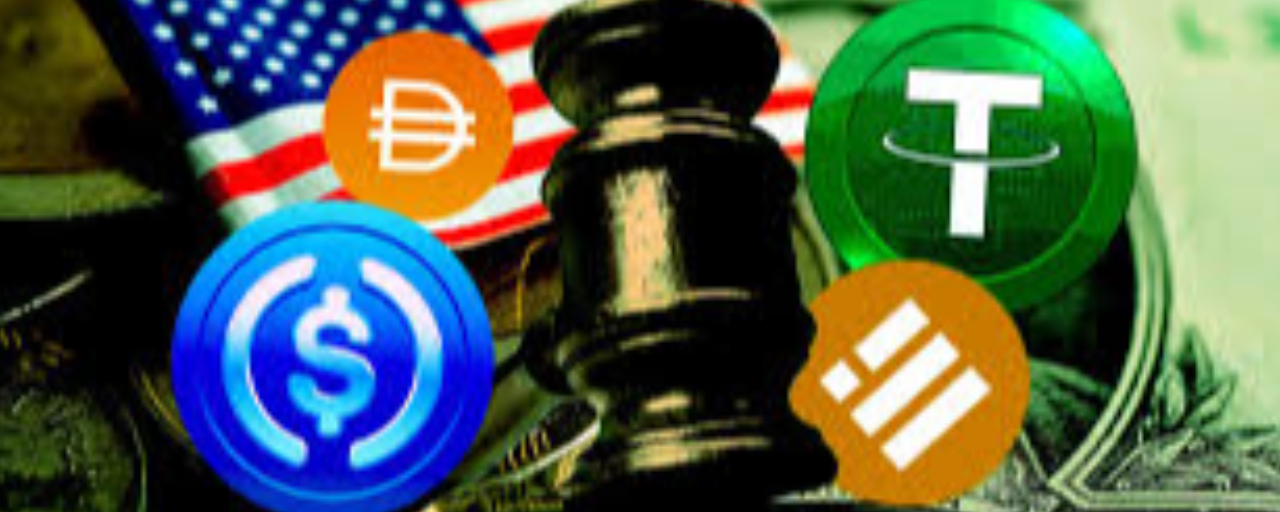
WILL US BANK SOFI LAUNCHING A PUBLIC CHAIN STABLECOIN RESHAPE THE ENTIRE MONETARY PLAY?Financial giant SoFi has just triggered a massive shockwave across the market by officially launching its stablecoin, SoFiUSD, natively on the public Ethereum and Solana networks. This milestone execution crowns SoFi as the pioneer national bank in the United States to issue a stablecoin directly to retail clients, enabling its nearly 15 million users to buy, transact, and hold SoFiUSD seamlessly inside their mobile app. Anchored by a 1:1 redemption rail to fiat USD through SoFi Bank, the institution is clear about its ambition to capture cross-border 24/7 payments, corporate B2B settlements, and tokenized deposits shored up by FDIC insurance covers. 🚀
But looking deeper into the data and the underlying structural architecture, we discern a hyper-calculative market-share capture aimed straight at legacy stablecoin issuers. SoFi is actively decoupling itself from standard crypto platforms by weaponizing the supreme advantages of a fully chartered national bank subject to strict federal regulatory oversight. When mainstream capital is backed by an FDIC insurance shield and routed through the high-velocity technical rails of Solana, it will generate a massive vacuum pulling retail funds away from un-insulated assets back to a regulated entity, paving the way for institutional rails to sweep the payment landscape. 🏦
Even so, let's not forget that hosting a banking asset natively on public blockchains is consistently a double-edged sword loaded with systemic risks. The dark side of the matter is the immediate structural conflict between the permissionless nature of Ethereum/Solana and the rigid anti-money laundering (AML) compliance mandates forced upon a national bank. Should any network congestion or smart contract vulnerability materialize outside the bank's operational perimeter, SoFiUSD conversions and settlements across major exchanges could be instantly frozen to satisfy federal audit demands, turning user assets into regulatory hostages.
Will this national-bank-issued stablecoin model pioneer a seamless era of retail digital asset adoption, or will it inadvertently hand federal regulators the perfect precedent to tighten control and suffocate the inherent freedom of public blockchains? Please do your own research carefully before making any transactions (DYOR). $USDC $XLM $GENIUS #Colecolen #anhbacong #anh_ba_cong
{future}(GENIUSUSDT)
{future}(XLMUSDT)
{future}(USDCUSDT)
WILL US BANK SOFI LAUNCHING A PUBLIC CHAIN STABLECOIN RESHAPE THE ENTIRE MONETARY PLAY?
Financial giant SoFi has just triggered a massive shockwave across the market by officially launching its stablecoin, SoFiUSD, natively on the public Ethereum and Solana networks. This milestone execution crowns SoFi as the pioneer national bank in the United States to issue a stablecoin directly to retail clients, enabling its nearly 15 million users to buy, transact, and hold SoFiUSD seamlessly inside their mobile app. Anchored by a 1:1 redemption rail to fiat USD through SoFi Bank, the institution is clear about its ambition to capture cross-border 24/7 payments, corporate B2B settlements, and tokenized deposits shored up by FDIC insurance covers. 🚀
But looking deeper into the data and the underlying structural architecture, we discern a hyper-calculative market-share capture aimed straight at legacy stablecoin issuers. SoFi is actively decoupling itself from standard crypto platforms by weaponizing the supreme advantages of a fully chartered national bank subject to strict federal regulatory oversight. When mainstream capital is backed by an FDIC insurance shield and routed through the high-velocity technical rails of Solana, it will generate a massive vacuum pulling retail funds away from un-insulated assets back to a regulated entity, paving the way for institutional rails to sweep the payment landscape. 🏦
Even so, let's not forget that hosting a banking asset natively on public blockchains is consistently a double-edged sword loaded with systemic risks. The dark side of the matter is the immediate structural conflict between the permissionless nature of Ethereum/Solana and the rigid anti-money laundering (AML) compliance mandates forced upon a national bank. Should any network congestion or smart contract vulnerability materialize outside the bank's operational perimeter, SoFiUSD conversions and settlements across major exchanges could be instantly frozen to satisfy federal audit demands, turning user assets into regulatory hostages.
Will this national-bank-issued stablecoin model pioneer a seamless era of retail digital asset adoption, or will it inadvertently hand federal regulators the perfect precedent to tighten control and suffocate the inherent freedom of public blockchains? Please do your own research carefully before making any transactions (DYOR). $USDC $XLM $GENIUS #Colecolen #anhbacong #anh_ba_cong
But looking deeper into the data and the underlying structural architecture, we discern a hyper-calculative market-share capture aimed straight at legacy stablecoin issuers. SoFi is actively decoupling itself from standard crypto platforms by weaponizing the supreme advantages of a fully chartered national bank subject to strict federal regulatory oversight. When mainstream capital is backed by an FDIC insurance shield and routed through the high-velocity technical rails of Solana, it will generate a massive vacuum pulling retail funds away from un-insulated assets back to a regulated entity, paving the way for institutional rails to sweep the payment landscape. 🏦
Even so, let's not forget that hosting a banking asset natively on public blockchains is consistently a double-edged sword loaded with systemic risks. The dark side of the matter is the immediate structural conflict between the permissionless nature of Ethereum/Solana and the rigid anti-money laundering (AML) compliance mandates forced upon a national bank. Should any network congestion or smart contract vulnerability materialize outside the bank's operational perimeter, SoFiUSD conversions and settlements across major exchanges could be instantly frozen to satisfy federal audit demands, turning user assets into regulatory hostages.
Will this national-bank-issued stablecoin model pioneer a seamless era of retail digital asset adoption, or will it inadvertently hand federal regulators the perfect precedent to tighten control and suffocate the inherent freedom of public blockchains? Please do your own research carefully before making any transactions (DYOR). $USDC $XLM $GENIUS #Colecolen #anhbacong #anh_ba_cong
1
706
Understanding China and Crypto Correctly: Ownership is Still Legal, Great Underground Potential
There is a major misunderstanding that China has completely banned cryptocurrencies. In reality, although public trading activities and Bitcoin mining are strictly restricted, owning Bitcoin and other cryptocurrencies is still entirely legal and protected by law. This indicates the immense and sustainable potential of the crypto market in this country. #china
Legal Ownership, Recognized by Courts
Important rulings from various Chinese courts have affirmed that Bitcoin is a "virtual asset" that is valuable, scarce, and transferable. This means that if you own #crypto in a personal wallet, Chinese law still recognizes it as your property. Courts have even ruled in favor of returning Bitcoin in theft cases, viewing it as other types of legal property. This provides peace of mind for millions of crypto users in this country.
Underground Potential and Discreet Development
Although public trading is not possible, the people of China still find ways to access crypto through various methods, demonstrating a strong demand and belief in the market. Chinese companies can also hold crypto through entities abroad or in Hong Kong. This indicates that an underground crypto economy is still developing robustly. With the protection of the law, the future of crypto in China is not "off-limits" but rather a parallel existence, harboring explosive opportunities in the future. #anhbacong
{future}(BTCUSDT)
{spot}(BNBUSDT)
{future}(WLFIUSDT)
Understanding China and Crypto Correctly: Ownership is Still Legal, Great Underground Potential
There is a major misunderstanding that China has completely banned cryptocurrencies. In reality, although public trading activities and Bitcoin mining are strictly restricted, owning Bitcoin and other cryptocurrencies is still entirely legal and protected by law. This indicates the immense and sustainable potential of the crypto market in this country. #china
Legal Ownership, Recognized by Courts
Important rulings from various Chinese courts have affirmed that Bitcoin is a "virtual asset" that is valuable, scarce, and transferable. This means that if you own #crypto in a personal wallet, Chinese law still recognizes it as your property. Courts have even ruled in favor of returning Bitcoin in theft cases, viewing it as other types of legal property. This provides peace of mind for millions of crypto users in this country.
Underground Potential and Discreet Development
Although public trading is not possible, the people of China still find ways to access crypto through various methods, demonstrating a strong demand and belief in the market. Chinese companies can also hold crypto through entities abroad or in Hong Kong. This indicates that an underground crypto economy is still developing robustly. With the protection of the law, the future of crypto in China is not "off-limits" but rather a parallel existence, harboring explosive opportunities in the future. #anhbacong
There is a major misunderstanding that China has completely banned cryptocurrencies. In reality, although public trading activities and Bitcoin mining are strictly restricted, owning Bitcoin and other cryptocurrencies is still entirely legal and protected by law. This indicates the immense and sustainable potential of the crypto market in this country. #china
Legal Ownership, Recognized by Courts
Important rulings from various Chinese courts have affirmed that Bitcoin is a "virtual asset" that is valuable, scarce, and transferable. This means that if you own #crypto in a personal wallet, Chinese law still recognizes it as your property. Courts have even ruled in favor of returning Bitcoin in theft cases, viewing it as other types of legal property. This provides peace of mind for millions of crypto users in this country.
Underground Potential and Discreet Development
Although public trading is not possible, the people of China still find ways to access crypto through various methods, demonstrating a strong demand and belief in the market. Chinese companies can also hold crypto through entities abroad or in Hong Kong. This indicates that an underground crypto economy is still developing robustly. With the protection of the law, the future of crypto in China is not "off-limits" but rather a parallel existence, harboring explosive opportunities in the future. #anhbacong
3
2
8.6k

Verified

Article
Quantum Threat: Why Bitcoin is at Risk Against EthereumThe latest reports from Citi analysts just dropped a bombshell for Bitcoin maxis: the timeline for "Q-Day" (the day quantum computers will beat current encryptions) has accelerated, now targeting the 2030-2032 window.
The real issue with BTC? Its very structure. Nearly 6.7 to 7 million BTC (including the infamous million of Satoshi Nakamoto) are sitting on old "legacy addresses" with exposed public keys. A quantum machine with 500,000 qubits could crack their private keys in minutes. We're talking about an $82 billion jackpot within reach for attackers. This isn't sci-fi anymore; it's a massive and imminent liquidity risk.
Quantum Threat: Why Bitcoin is at Risk Against Ethereum
The latest reports from Citi analysts just dropped a bombshell for Bitcoin maxis: the timeline for "Q-Day" (the day quantum computers will beat current encryptions) has accelerated, now targeting the 2030-2032 window.
The real issue with BTC? Its very structure. Nearly 6.7 to 7 million BTC (including the infamous million of Satoshi Nakamoto) are sitting on old "legacy addresses" with exposed public keys. A quantum machine with 500,000 qubits could crack their private keys in minutes. We're talking about an $82 billion jackpot within reach for attackers. This isn't sci-fi anymore; it's a massive and imminent liquidity risk.
The real issue with BTC? Its very structure. Nearly 6.7 to 7 million BTC (including the infamous million of Satoshi Nakamoto) are sitting on old "legacy addresses" with exposed public keys. A quantum machine with 500,000 qubits could crack their private keys in minutes. We're talking about an $82 billion jackpot within reach for attackers. This isn't sci-fi anymore; it's a massive and imminent liquidity risk.
2
1
910
Verified

Article
THE NARRATIVE SHIFT: FROM A SPECULATIVE VEHICLE TO A GEOPOLITICAL ENERGY WEAPONThe financial landscape has just witnessed an audacious maneuver from the Middle East as the Iranian Ministry of Economy announced the rollout of Hormuz Safe—a sovereign digital marine insurance platform enabling cargo vessels traversing the Persian Gulf to settle premiums in Bitcoin. This national infrastructure leverages blockchain technology to directly process maritime insurance contracts, completely bypassing the SWIFT network and Western financial institutions. The Strait of Hormuz functions as a critical global energy artery, with approximately 20% of the world’s petroleum supply navigating its waters daily, where all commercial vessels strictly require maritime insurance to operate internationally. By erecting a non-USD infrastructure that facilitates near-instantaneous on-chain settlements and targeting $10 billion in structural revenue, Tehran has officially dragged digital assets into the epicenter of macro power struggles.
But looking deeper into the data and the operational framework of this deployment, we recognize that this is by no means a positive milestone indicating mainstream mass adoption, despite the crowd’s immediate misinterpretation. The reality is that institutional Smart Money perceives that Bitcoin’s primary narrative has inverted, transitioning from a static store of value into a strategic geopolitical tool utilized by sanctioned sovereign states. Tehran teasing the additional capability to collect transit tolls in Bitcoin and stablecoins proves they are attempting to transform crypto into a sovereign financial shield to blunt the impact of Washington’s economic embargoes. This strategic play hits the wires precisely as US-Iran tensions escalate to a boiling point following rigid social media warnings from President Donald Trump, forcing Brent crude past $111/barrel and directly compressing Bitcoin’s price below the vital $77,000 floor due to acute macro inflationary anxieties.
However, let us not forget that the dark side of the Hormuz Safe gambit is a ruthless secondary sanctions trap engineered by Washington, ready to crush any global maritime participant attempting to interact with this rail. Any international shipowner, logistics conglomerate, or commercial port accepting insurance certificates from Hormuz Safe faces the existential risk of being completely severed from the US financial system and USD clearing networks. This compliance barrier effectively restricts the platform’s viable user base to entities already operating within the murky "gray zone" of Middle Eastern commerce, rendering these blockchain-backed certificates functionally useless when vessels dock at international hubs like Rotterdam or Singapore. Worse still, the information asymmetry surrounding this unvetted infrastructure allowed malicious cyber groups to impersonate Iranian officials, demanding Bitcoin and USDT for transit passage—trapping at least one oil tanker that was subsequently fired upon by military vessels in April. Weaponizing crypto to evade international embargoes will only compel Western regulators to enforce heavy, sweeping crackdowns, suffocating the legitimate expansion of the asset class across major exchanges.
In your view, does the aggressive push by financially isolated nations to turn Bitcoin into an international settlement rail elevate the asset's strategic importance, or is it merely transforming digital assets into a prime target for destruction by macro regulators?
Please do your own research carefully before making any transactions (DYOR). $BTC $EDEN $RONIN #Colecolen #anhbacong #anh_ba_cong
{future}(RONINUSDT)
{future}(EDENUSDT)
{future}(BTCUSDT)
THE NARRATIVE SHIFT: FROM A SPECULATIVE VEHICLE TO A GEOPOLITICAL ENERGY WEAPON
The financial landscape has just witnessed an audacious maneuver from the Middle East as the Iranian Ministry of Economy announced the rollout of Hormuz Safe—a sovereign digital marine insurance platform enabling cargo vessels traversing the Persian Gulf to settle premiums in Bitcoin. This national infrastructure leverages blockchain technology to directly process maritime insurance contracts, completely bypassing the SWIFT network and Western financial institutions. The Strait of Hormuz functions as a critical global energy artery, with approximately 20% of the world’s petroleum supply navigating its waters daily, where all commercial vessels strictly require maritime insurance to operate internationally. By erecting a non-USD infrastructure that facilitates near-instantaneous on-chain settlements and targeting $10 billion in structural revenue, Tehran has officially dragged digital assets into the epicenter of macro power struggles.
But looking deeper into the data and the operational framework of this deployment, we recognize that this is by no means a positive milestone indicating mainstream mass adoption, despite the crowd’s immediate misinterpretation. The reality is that institutional Smart Money perceives that Bitcoin’s primary narrative has inverted, transitioning from a static store of value into a strategic geopolitical tool utilized by sanctioned sovereign states. Tehran teasing the additional capability to collect transit tolls in Bitcoin and stablecoins proves they are attempting to transform crypto into a sovereign financial shield to blunt the impact of Washington’s economic embargoes. This strategic play hits the wires precisely as US-Iran tensions escalate to a boiling point following rigid social media warnings from President Donald Trump, forcing Brent crude past $111/barrel and directly compressing Bitcoin’s price below the vital $77,000 floor due to acute macro inflationary anxieties.
However, let us not forget that the dark side of the Hormuz Safe gambit is a ruthless secondary sanctions trap engineered by Washington, ready to crush any global maritime participant attempting to interact with this rail. Any international shipowner, logistics conglomerate, or commercial port accepting insurance certificates from Hormuz Safe faces the existential risk of being completely severed from the US financial system and USD clearing networks. This compliance barrier effectively restricts the platform’s viable user base to entities already operating within the murky "gray zone" of Middle Eastern commerce, rendering these blockchain-backed certificates functionally useless when vessels dock at international hubs like Rotterdam or Singapore. Worse still, the information asymmetry surrounding this unvetted infrastructure allowed malicious cyber groups to impersonate Iranian officials, demanding Bitcoin and USDT for transit passage—trapping at least one oil tanker that was subsequently fired upon by military vessels in April. Weaponizing crypto to evade international embargoes will only compel Western regulators to enforce heavy, sweeping crackdowns, suffocating the legitimate expansion of the asset class across major exchanges.
In your view, does the aggressive push by financially isolated nations to turn Bitcoin into an international settlement rail elevate the asset's strategic importance, or is it merely transforming digital assets into a prime target for destruction by macro regulators?
Please do your own research carefully before making any transactions (DYOR). $BTC $EDEN $RONIN #Colecolen #anhbacong #anh_ba_cong
But looking deeper into the data and the operational framework of this deployment, we recognize that this is by no means a positive milestone indicating mainstream mass adoption, despite the crowd’s immediate misinterpretation. The reality is that institutional Smart Money perceives that Bitcoin’s primary narrative has inverted, transitioning from a static store of value into a strategic geopolitical tool utilized by sanctioned sovereign states. Tehran teasing the additional capability to collect transit tolls in Bitcoin and stablecoins proves they are attempting to transform crypto into a sovereign financial shield to blunt the impact of Washington’s economic embargoes. This strategic play hits the wires precisely as US-Iran tensions escalate to a boiling point following rigid social media warnings from President Donald Trump, forcing Brent crude past $111/barrel and directly compressing Bitcoin’s price below the vital $77,000 floor due to acute macro inflationary anxieties.
However, let us not forget that the dark side of the Hormuz Safe gambit is a ruthless secondary sanctions trap engineered by Washington, ready to crush any global maritime participant attempting to interact with this rail. Any international shipowner, logistics conglomerate, or commercial port accepting insurance certificates from Hormuz Safe faces the existential risk of being completely severed from the US financial system and USD clearing networks. This compliance barrier effectively restricts the platform’s viable user base to entities already operating within the murky "gray zone" of Middle Eastern commerce, rendering these blockchain-backed certificates functionally useless when vessels dock at international hubs like Rotterdam or Singapore. Worse still, the information asymmetry surrounding this unvetted infrastructure allowed malicious cyber groups to impersonate Iranian officials, demanding Bitcoin and USDT for transit passage—trapping at least one oil tanker that was subsequently fired upon by military vessels in April. Weaponizing crypto to evade international embargoes will only compel Western regulators to enforce heavy, sweeping crackdowns, suffocating the legitimate expansion of the asset class across major exchanges.
In your view, does the aggressive push by financially isolated nations to turn Bitcoin into an international settlement rail elevate the asset's strategic importance, or is it merely transforming digital assets into a prime target for destruction by macro regulators?
Please do your own research carefully before making any transactions (DYOR). $BTC $EDEN $RONIN #Colecolen #anhbacong #anh_ba_cong
3
2.5k
THE 99% PURGE – WHEN CRYPTO ENTERS THE "STANDARDIZATION" PHASE
99% of Altcoins will go to zero. This statement by Arthur Hayes at Consensus Miami 2026 acted like a bucket of ice water dumped on retail euphoria. But from a "Smart Money" perspective, this isn't a disaster—it’s a necessary natural selection for the market to mature. 🌪️
The reality is we are witnessing a paradox: the number of new tokens created daily increases exponentially, but actual utility does not follow suit. Hayes compares Altcoins to software startups. To be honest, among thousands of tech startups, only about 1% truly survive and become "Unicorns." Crypto is no exception.
The Game of Survivors
Looking at the bigger picture, the market is shifting from "speculating on everything" to "selective value." Projects living only on hype without real revenue or a sustainable ecosystem will soon be eliminated when VC capital stops assisting and accompanying them.
The Contrast: Retail Hype vs. Smart Money Flow
Retail Hype: Often attracted by regulatory headlines or short-term news. They pour money into any project with a massive "pump" chart. 📈
Smart Money: Looks at global liquidity and fiat creation. They understand that Bitcoin’s value is tied to central banks printing money rather than SEC or CFTC filings. 🏦💸
The Liquidity Paradox
Arthur Hayes emphasizes a crucial point: Bitcoin is a different entity. When global liquidity increases to offset fiat debasement, Bitcoin acts as a "sponge" absorbing that liquidity. Meanwhile, 99% of Altcoins will fail because they lack the "blood" (liquidity) to sustain operations once retail interest shifts. 🩸
Instead of panicking at the 99% figure, professional traders should view this as an opportunity to restructure their portfolios. Transferring out of "junk" assets to focus on "nuclei" with high utility and liquidity is a survival tactic. 🛡️
Do Your Own Research (DYOR). $BTC $LAYER $XEC #Colecolen #anhbacong #anh_ba_cong
{spot}(XECUSDT)
{future}(LAYERUSDT)
{future}(BTCUSDT)
THE 99% PURGE – WHEN CRYPTO ENTERS THE "STANDARDIZATION" PHASE
99% of Altcoins will go to zero. This statement by Arthur Hayes at Consensus Miami 2026 acted like a bucket of ice water dumped on retail euphoria. But from a "Smart Money" perspective, this isn't a disaster—it’s a necessary natural selection for the market to mature. 🌪️
The reality is we are witnessing a paradox: the number of new tokens created daily increases exponentially, but actual utility does not follow suit. Hayes compares Altcoins to software startups. To be honest, among thousands of tech startups, only about 1% truly survive and become "Unicorns." Crypto is no exception.
The Game of Survivors
Looking at the bigger picture, the market is shifting from "speculating on everything" to "selective value." Projects living only on hype without real revenue or a sustainable ecosystem will soon be eliminated when VC capital stops assisting and accompanying them.
The Contrast: Retail Hype vs. Smart Money Flow
Retail Hype: Often attracted by regulatory headlines or short-term news. They pour money into any project with a massive "pump" chart. 📈
Smart Money: Looks at global liquidity and fiat creation. They understand that Bitcoin’s value is tied to central banks printing money rather than SEC or CFTC filings. 🏦💸
The Liquidity Paradox
Arthur Hayes emphasizes a crucial point: Bitcoin is a different entity. When global liquidity increases to offset fiat debasement, Bitcoin acts as a "sponge" absorbing that liquidity. Meanwhile, 99% of Altcoins will fail because they lack the "blood" (liquidity) to sustain operations once retail interest shifts. 🩸
Instead of panicking at the 99% figure, professional traders should view this as an opportunity to restructure their portfolios. Transferring out of "junk" assets to focus on "nuclei" with high utility and liquidity is a survival tactic. 🛡️
Do Your Own Research (DYOR). $BTC $LAYER $XEC #Colecolen #anhbacong #anh_ba_cong
99% of Altcoins will go to zero. This statement by Arthur Hayes at Consensus Miami 2026 acted like a bucket of ice water dumped on retail euphoria. But from a "Smart Money" perspective, this isn't a disaster—it’s a necessary natural selection for the market to mature. 🌪️
The reality is we are witnessing a paradox: the number of new tokens created daily increases exponentially, but actual utility does not follow suit. Hayes compares Altcoins to software startups. To be honest, among thousands of tech startups, only about 1% truly survive and become "Unicorns." Crypto is no exception.
The Game of Survivors
Looking at the bigger picture, the market is shifting from "speculating on everything" to "selective value." Projects living only on hype without real revenue or a sustainable ecosystem will soon be eliminated when VC capital stops assisting and accompanying them.
The Contrast: Retail Hype vs. Smart Money Flow
Retail Hype: Often attracted by regulatory headlines or short-term news. They pour money into any project with a massive "pump" chart. 📈
Smart Money: Looks at global liquidity and fiat creation. They understand that Bitcoin’s value is tied to central banks printing money rather than SEC or CFTC filings. 🏦💸
The Liquidity Paradox
Arthur Hayes emphasizes a crucial point: Bitcoin is a different entity. When global liquidity increases to offset fiat debasement, Bitcoin acts as a "sponge" absorbing that liquidity. Meanwhile, 99% of Altcoins will fail because they lack the "blood" (liquidity) to sustain operations once retail interest shifts. 🩸
Instead of panicking at the 99% figure, professional traders should view this as an opportunity to restructure their portfolios. Transferring out of "junk" assets to focus on "nuclei" with high utility and liquidity is a survival tactic. 🛡️
Do Your Own Research (DYOR). $BTC $LAYER $XEC #Colecolen #anhbacong #anh_ba_cong

1
1
2.1k
Solana considers removing Block limit, boosting network performance
The development team #solana is considering a proposal to remove the compute limit per block, allowing flexible block size expansion based on the hardware power of each validator. This move aims to accelerate the processing speed of the network, bringing Solana closer to high-speed Internet infrastructure.
Block Expansion Mechanism and Alpenglow
The new model is likened to removing speed limits on highways, allowing strong validators to process more transactions and collect more fees. Conversely, #Validator weak validators can use the skip-vote feature (temporarily abstaining from validating overly heavy blocks) to maintain consensus without slowing down the network.
This change will be implemented after the upcoming Alpenglow upgrade, which promises to significantly reduce block finality time from 12.8 seconds to just 150 milliseconds.
Risks of Centralization and Security
Despite the significant performance benefits, this proposal faces concerns regarding centralization risks. Experts warn that the new system could create a substantial advantage for wealthy validators who own powerful hardware, skewing rewards in their favor and risking the elimination of smaller validators.
Additionally, excessively large blocks could lead to network overload or reduced security. Solana is striving to balance enhancing performance while maintaining the decentralization of the network. #anhbacong
{future}(BTCUSDT)
{spot}(BNBUSDT)
{future}(SOLUSDT)
Solana considers removing Block limit, boosting network performance
The development team #solana is considering a proposal to remove the compute limit per block, allowing flexible block size expansion based on the hardware power of each validator. This move aims to accelerate the processing speed of the network, bringing Solana closer to high-speed Internet infrastructure.
Block Expansion Mechanism and Alpenglow
The new model is likened to removing speed limits on highways, allowing strong validators to process more transactions and collect more fees. Conversely, #Validator weak validators can use the skip-vote feature (temporarily abstaining from validating overly heavy blocks) to maintain consensus without slowing down the network.
This change will be implemented after the upcoming Alpenglow upgrade, which promises to significantly reduce block finality time from 12.8 seconds to just 150 milliseconds.
Risks of Centralization and Security
Despite the significant performance benefits, this proposal faces concerns regarding centralization risks. Experts warn that the new system could create a substantial advantage for wealthy validators who own powerful hardware, skewing rewards in their favor and risking the elimination of smaller validators.
Additionally, excessively large blocks could lead to network overload or reduced security. Solana is striving to balance enhancing performance while maintaining the decentralization of the network. #anhbacong
The development team #solana is considering a proposal to remove the compute limit per block, allowing flexible block size expansion based on the hardware power of each validator. This move aims to accelerate the processing speed of the network, bringing Solana closer to high-speed Internet infrastructure.
Block Expansion Mechanism and Alpenglow
The new model is likened to removing speed limits on highways, allowing strong validators to process more transactions and collect more fees. Conversely, #Validator weak validators can use the skip-vote feature (temporarily abstaining from validating overly heavy blocks) to maintain consensus without slowing down the network.
This change will be implemented after the upcoming Alpenglow upgrade, which promises to significantly reduce block finality time from 12.8 seconds to just 150 milliseconds.
Risks of Centralization and Security
Despite the significant performance benefits, this proposal faces concerns regarding centralization risks. Experts warn that the new system could create a substantial advantage for wealthy validators who own powerful hardware, skewing rewards in their favor and risking the elimination of smaller validators.
Additionally, excessively large blocks could lead to network overload or reduced security. Solana is striving to balance enhancing performance while maintaining the decentralization of the network. #anhbacong

1
9.6k
Log in to explore more content
Join global crypto users on Binance Square
⚡️ Get latest and useful information about crypto.
💬 Trusted by the world’s largest crypto exchange.
👍 Discover real insights from verified creators.
Email / Phone number
Trending Topics
1
#FedProposesPaymentStablecoinRules
1,090 views
62 Discussing
2
#ChinaMayLetAlibabaByteDanceBuyNvidiaChips
3,356 views
166 Discussing
3
#USChinaRelease$30BTariffCutProductLists
294 views
21 Discussing
4
#SKoreaFSCConsidersVirtualAssetMarketMaker
4,024 views
157 Discussing
5
#ChinaIndustrialProfitGrowthSlowsFourthMonth
4,955 views
176 Discussing
6
#BitwiseFilesFinalNEARSpotETFProspectus
115,620 views
1,695 Discussing
7
#BitgetHackerMoves$83MStolenXRP
39,388 views
177 Discussing
8
#SOLSpotETFWeeklyInflow$188M
24,868 views
139 Discussing
9
#DogecoinETFsPostBiggestWeekSinceLaunch
67,353 views
1,105 Discussing
10
#StrategyStriveAdd2305BitcoinThisWeek
166,025 views
2,372 Discussing