

#zil
zil
614,586 views
4,157 Discussing
Hot
Latest

·
--
$ZIL +3.97% | $ZAMA +3.46% | $COCOS +3.44%
#ZIL nudged up to $0.00201500, gaining +3.97% on $1.3 M of volume. The 2017‑launched token is seeing modest buying pressure that could signal renewed interest.
#ZAMA rose to $0.0718, up +3.46% with $5.0 M changing hands. The volume surge outpaces its peers, hinting at stronger market participation.
#COCOS climbed to $1.75, +3.44% on $1.5 M of volume. Its steady rise keeps it in the spotlight among the day’s gainers.
👀 Watch if ZAMA’s higher volume can sustain its edge over the more modest flows in ZIL and COCOS.
#Write2Earn #Binance
8

The ZIL saga these past few days is enough to make even seasoned crypto veterans laugh.
First, Upbit posted a delisting notice. Someone counted: Upbit has issued 25 delisting notices this year, compared with just 12 for all of last year. And last Monday, it announced three at once: Blast, Sophon, and Zilliqa.
Then what? On October 23, several V3 pools on PlunderSwap were drained overnight. Kalijo put it plainly: the problem was how Zilliqa’s node software handled ZRC2 transfer submissions. The attacker used “ghost tokens” that vanished out of thin air at final confirmation, while real assets were swapped out. The SEED/kUSD pool lost around 157,000 SEED and 1,820 kUSD. The price across the remaining SEED pools plunged from 3.378 ZIL to 0.263, a drop of roughly 92%. And this is the second time they’ve been hit because of an old issue deep in the chain’s infrastructure.
To be clear, this wasn’t some poorly written shitcoin DEX contract. It was a bug in the chain itself. Yet the small ecosystem projects are the ones taking the hit. PlunderSwap plastered warnings everywhere, telling people not to trade or add liquidity. They traced 12.3 million ZIL to the hot wallet of a centralized exchange and asked the exchange to freeze it. And the official team? At least I haven’t seen any meaningful public explanation. The comments are full of “So any answers??”
The wildest part is that, during the same week, people were hyping ZIL as taking off on Upbit. Someone recapped the coins Upbit pumped this week, and ZIL was on the list too. Korean trading volume always seems to spike first, then the price gets pumped.
Delisting notice + chain-level exploit + no official explanation. Rushing in now isn’t buying the dip; it’s providing liquidity for people trying to get out. No matter how hard a delisting-bound coin pumps, the destination is already spelled out in the notice.
#ZIL #Upbit
Juliana Toudle obOR:
意思Zil 暂时不会好起来了呗
1
463

·
--
A new $ZIL 24-hour high: current price 0.002004, previous high 0.001976.
After reaching a new high, there are generally three possible scenarios:
① Pull back to the previous high, hold above it, then climb another step: strongest
② Chop around the previous high: consolidation; watch for direction
③ Fall straight back below the previous high and fail to reclaim it: false breakout
Price is still above the previous high for now. Let's see whether it follows ① or ②.
#ZIL
5

·
--
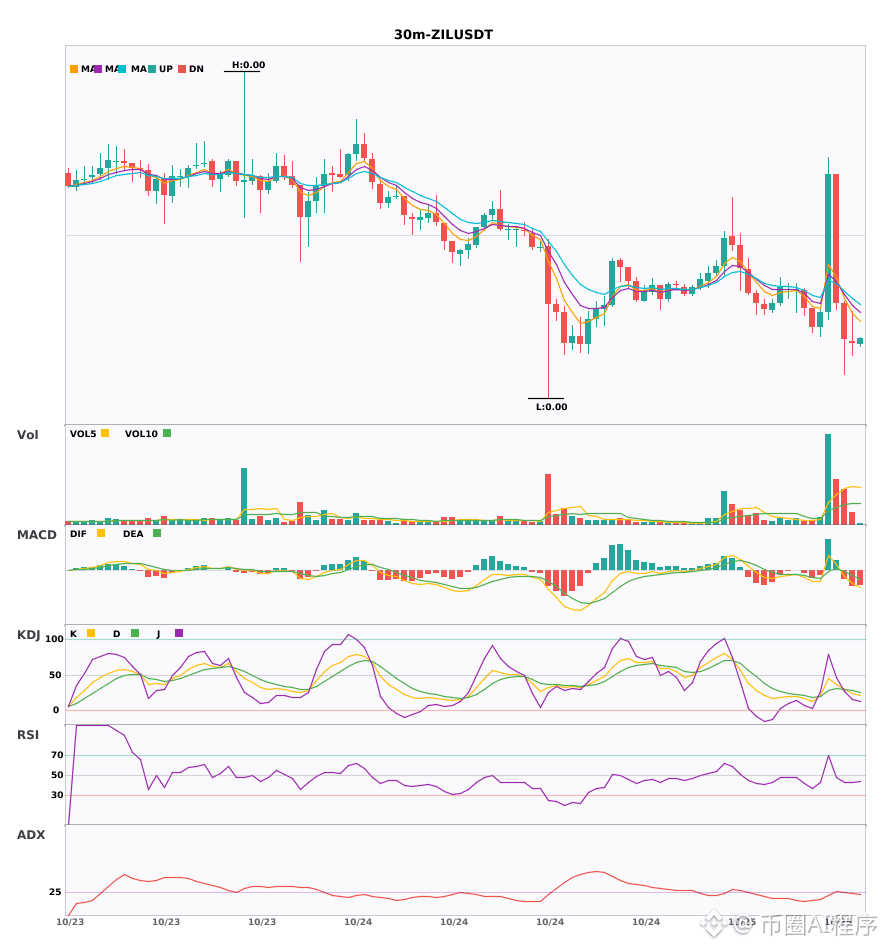
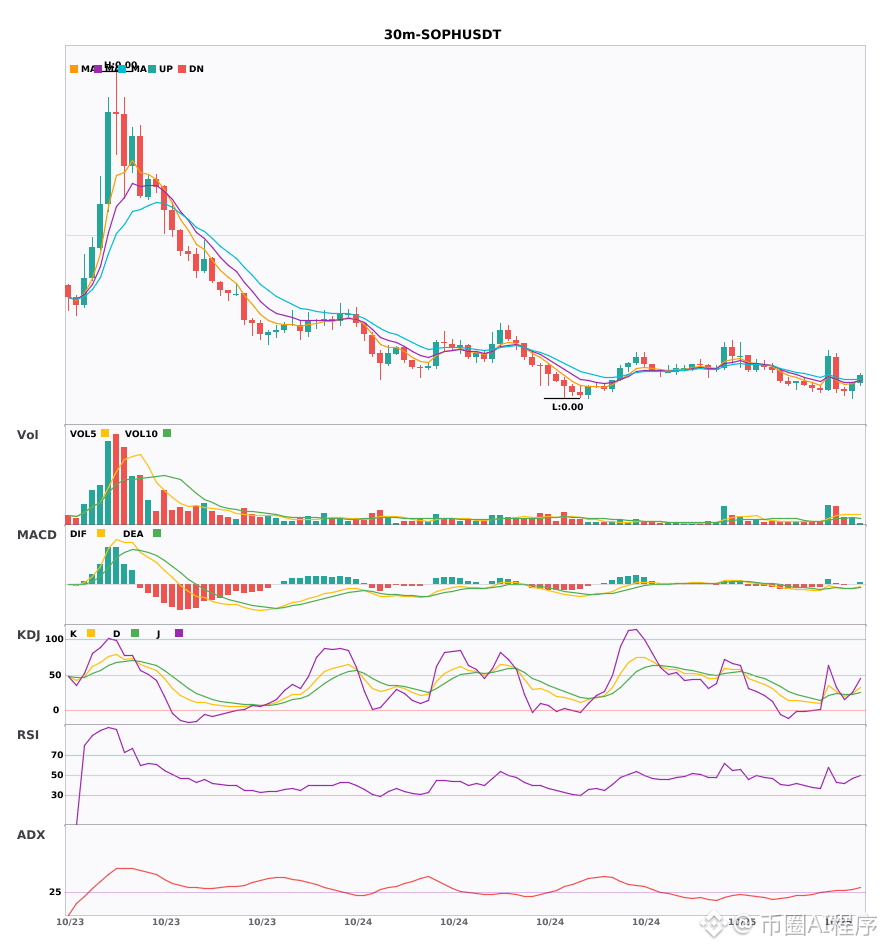
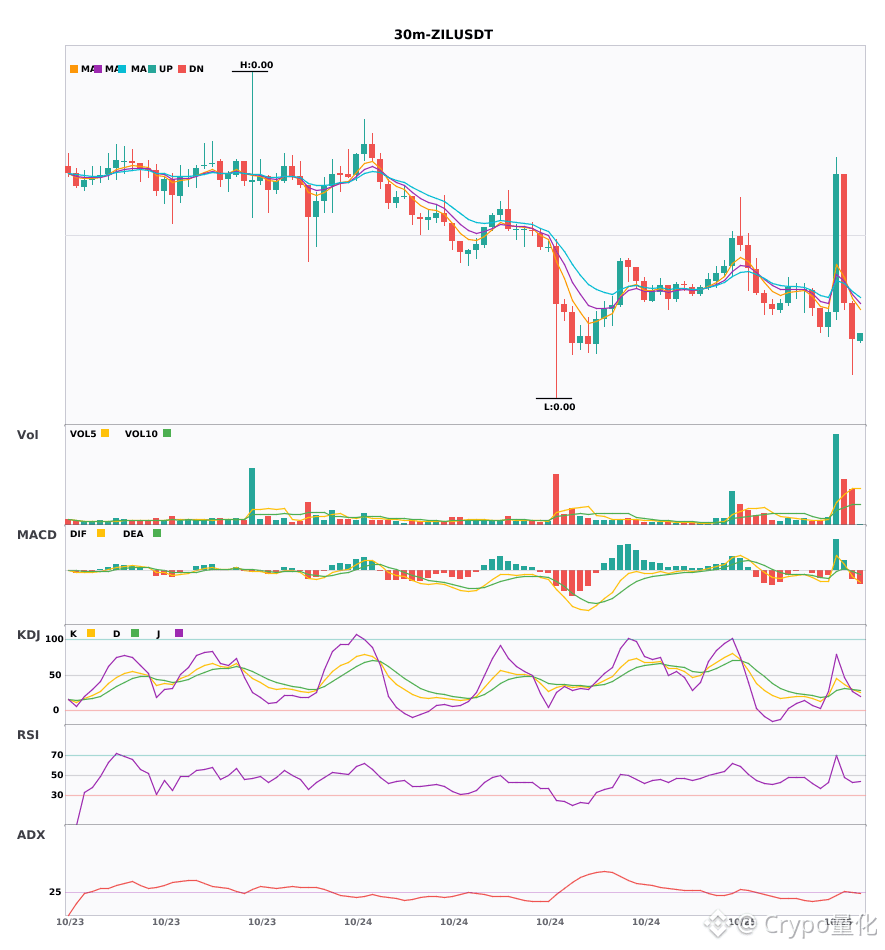
Multi-timeframe confluence: 2 assets showing 30-minute bearish signals + 4-hour bearish trend confirmation 🔥
════════════════════
🟢 $ZIL 30-minute bearish signal
⚠️Technical analysis: 4-hour bearish confluence confirmed | 30-minute entry: MACD bearish crossover below zero, bearish momentum accelerating | EMA5 crossed below EMA8, short-term trend turned bearish | KDJ bearish crossover, short-term outlook bearish (K: 29.3, D: 30.2) | Volume surge (2.6x)
════════════════════
🟢 $SOPH 30-minute bearish signal
⚠️Technical analysis: 4-hour bearish confluence confirmed | 30-minute entry: MACD bearish crossover below zero, bearish momentum accelerating | EMA5 < EMA8 < EMA13, bearish alignment | KDJ bearish crossover, short-term outlook bearish (K: 20.2, D: 22.3) | Volume surge (3.0x)
════════════════════
🔔 Follow for real-time market movement alerts 🔔
#多周期共振 #ZIL #SOPH
📌 When trading, check whether the candlestick pattern aligns
════════════════════
🟢 $ZIL 30-minute bearish signal
⚠️Technical analysis: 4-hour bearish confluence confirmed | 30-minute entry: MACD bearish crossover below zero, bearish momentum accelerating | EMA5 crossed below EMA8, short-term trend turned bearish | KDJ bearish crossover, short-term outlook bearish (K: 29.3, D: 30.2) | Volume surge (2.6x)
════════════════════
🟢 $SOPH 30-minute bearish signal
⚠️Technical analysis: 4-hour bearish confluence confirmed | 30-minute entry: MACD bearish crossover below zero, bearish momentum accelerating | EMA5 < EMA8 < EMA13, bearish alignment | KDJ bearish crossover, short-term outlook bearish (K: 20.2, D: 22.3) | Volume surge (3.0x)
════════════════════
🔔 Follow for real-time market movement alerts 🔔
#多周期共振 #ZIL #SOPH
📌 When trading, check whether the candlestick pattern aligns
5

·
--
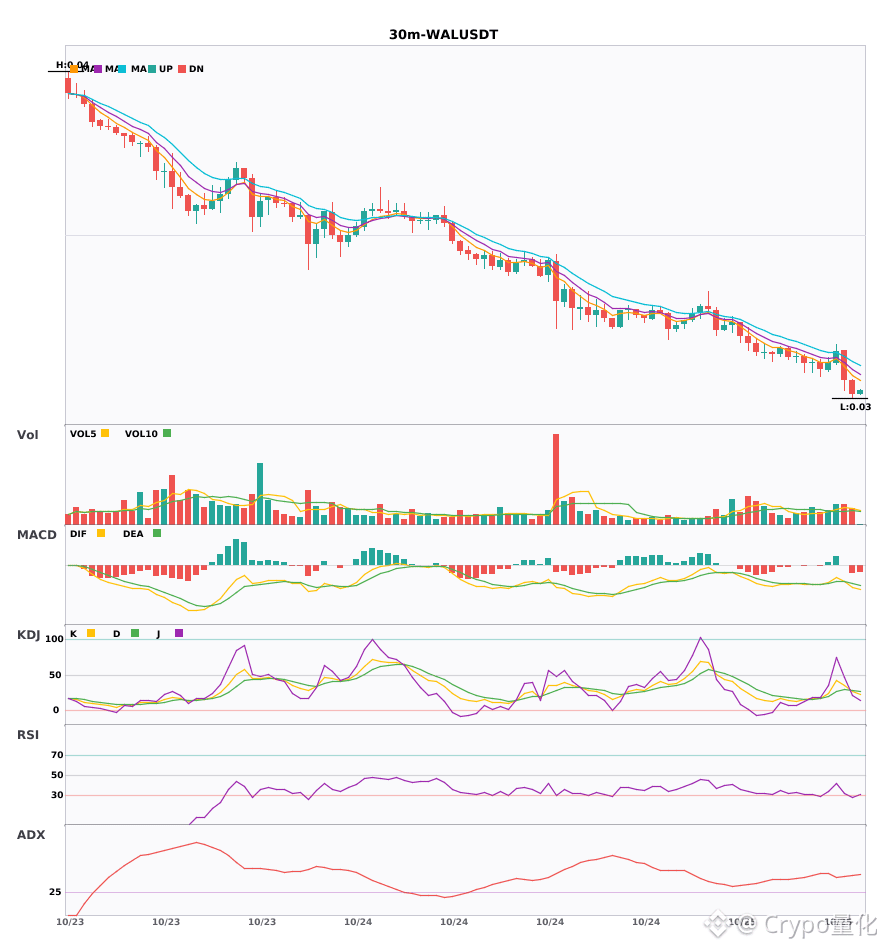
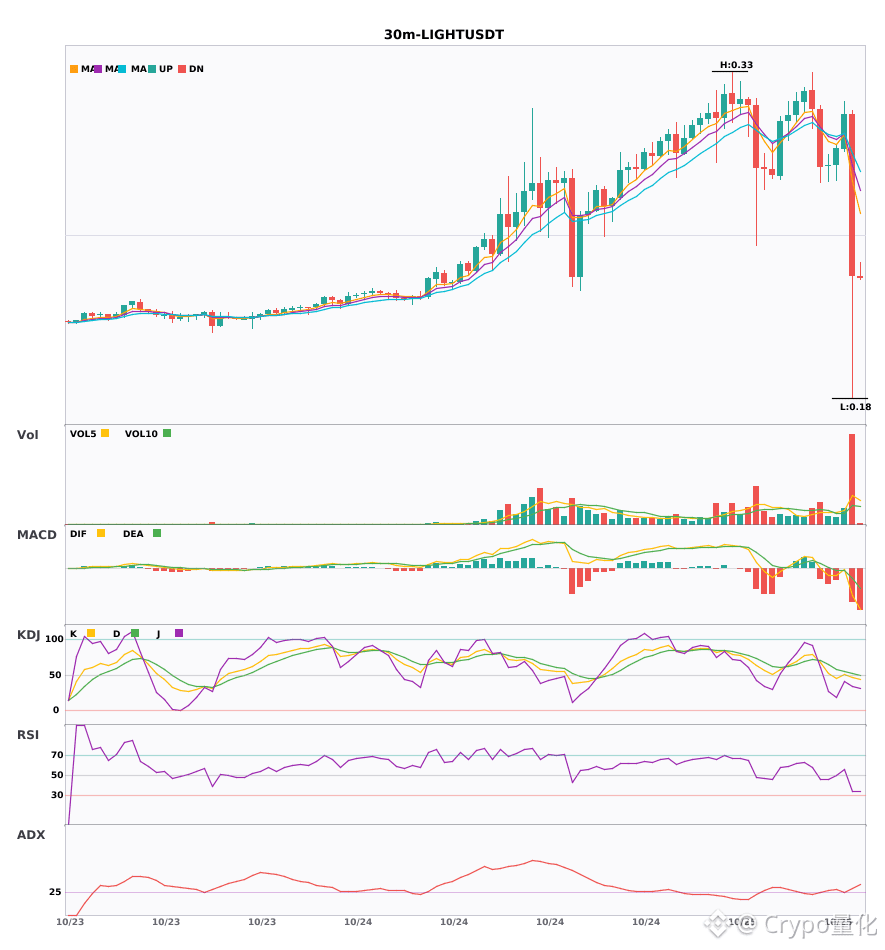
$WAL / $LIGHT / $ZIL 30-minute timeframe bearish, facing short-term pressure 🔥
════════════════════
🟢 $WAL 30-minute bearish signal
⚠️Technical analysis: ADX(42) indicates a clear trending market | MACD bearish crossover below zero, bearish momentum accelerating | EMA5 < EMA8 < EMA13, bearish alignment | KDJ moving in weak territory, bears in control (K: 35.6, D: 30.0) | Volume increased (1.5x)
════════════════════
🟢 $LIGHT 30-minute bearish signal
⚠️Technical analysis: ADX(31) indicates a clear trending market | MACD bearish crossover below zero, bearish momentum accelerating | EMA5 < EMA8 < EMA13, bearish alignment | Volume surged (4.6x)
════════════════════
🟢 $ZIL 30-minute bearish signal
⚠️Technical analysis: ADX(27) trend is forming; opportunity to participate | MACD bearish crossover below zero, bearish momentum accelerating | EMA5 crossed below EMA8, short-term trend has turned bearish | KDJ bearish crossover, short-term outlook is bearish (K: 29.3, D: 30.2) | Volume surged (2.6x)
════════════════════
🔔 Follow for real-time market updates 🔔
#技术分析 #WAL #LIGHT #ZIL
📌 When trading, watch for whether the candlestick patterns confirm
════════════════════
🟢 $WAL 30-minute bearish signal
⚠️Technical analysis: ADX(42) indicates a clear trending market | MACD bearish crossover below zero, bearish momentum accelerating | EMA5 < EMA8 < EMA13, bearish alignment | KDJ moving in weak territory, bears in control (K: 35.6, D: 30.0) | Volume increased (1.5x)
════════════════════
🟢 $LIGHT 30-minute bearish signal
⚠️Technical analysis: ADX(31) indicates a clear trending market | MACD bearish crossover below zero, bearish momentum accelerating | EMA5 < EMA8 < EMA13, bearish alignment | Volume surged (4.6x)
════════════════════
🟢 $ZIL 30-minute bearish signal
⚠️Technical analysis: ADX(27) trend is forming; opportunity to participate | MACD bearish crossover below zero, bearish momentum accelerating | EMA5 crossed below EMA8, short-term trend has turned bearish | KDJ bearish crossover, short-term outlook is bearish (K: 29.3, D: 30.2) | Volume surged (2.6x)
════════════════════
🔔 Follow for real-time market updates 🔔
#技术分析 #WAL #LIGHT #ZIL
📌 When trading, watch for whether the candlestick patterns confirm
4

·
--

Article
ZIL fell about 2.4%—why did long liquidations outnumber short liquidations by more than 3,000x?ZIL pulled back only about 2.4%, yet roughly $88,000 in longs were liquidated over 24 hours, compared with just about $27 in shorts—a liquidation gap of roughly 3,247x. The drop was modest, but nearly all the liquidation pressure fell on longs.
Binance: about $0.001996 (-2.3960%); OKX: about $0.002005 (-2.5280%). Over 24 hours, about $88,000 in longs and $0.0027万 in shorts were liquidated, totaling about $88,000 across 85 liquidations. Open interest: about 3.4 million on Binance and 810,000 on OKX; the composite funding rate was negative at about 0.035%.
Funding rates are already putting pressure on longs, yet even a slight pullback wiped out one-way long positions—this looks more like highly leveraged longs getting liquidated en masse during a gradual decline than major short positions deleveraging.
ZIL fell about 2.4%—why did long liquidations outnumber short liquidations by more than 3,000x?
ZIL pulled back only about 2.4%, yet roughly $88,000 in longs were liquidated over 24 hours, compared with just about $27 in shorts—a liquidation gap of roughly 3,247x. The drop was modest, but nearly all the liquidation pressure fell on longs.
Binance: about $0.001996 (-2.3960%); OKX: about $0.002005 (-2.5280%). Over 24 hours, about $88,000 in longs and $0.0027万 in shorts were liquidated, totaling about $88,000 across 85 liquidations. Open interest: about 3.4 million on Binance and 810,000 on OKX; the composite funding rate was negative at about 0.035%.
Funding rates are already putting pressure on longs, yet even a slight pullback wiped out one-way long positions—this looks more like highly leveraged longs getting liquidated en masse during a gradual decline than major short positions deleveraging.
20

·
--
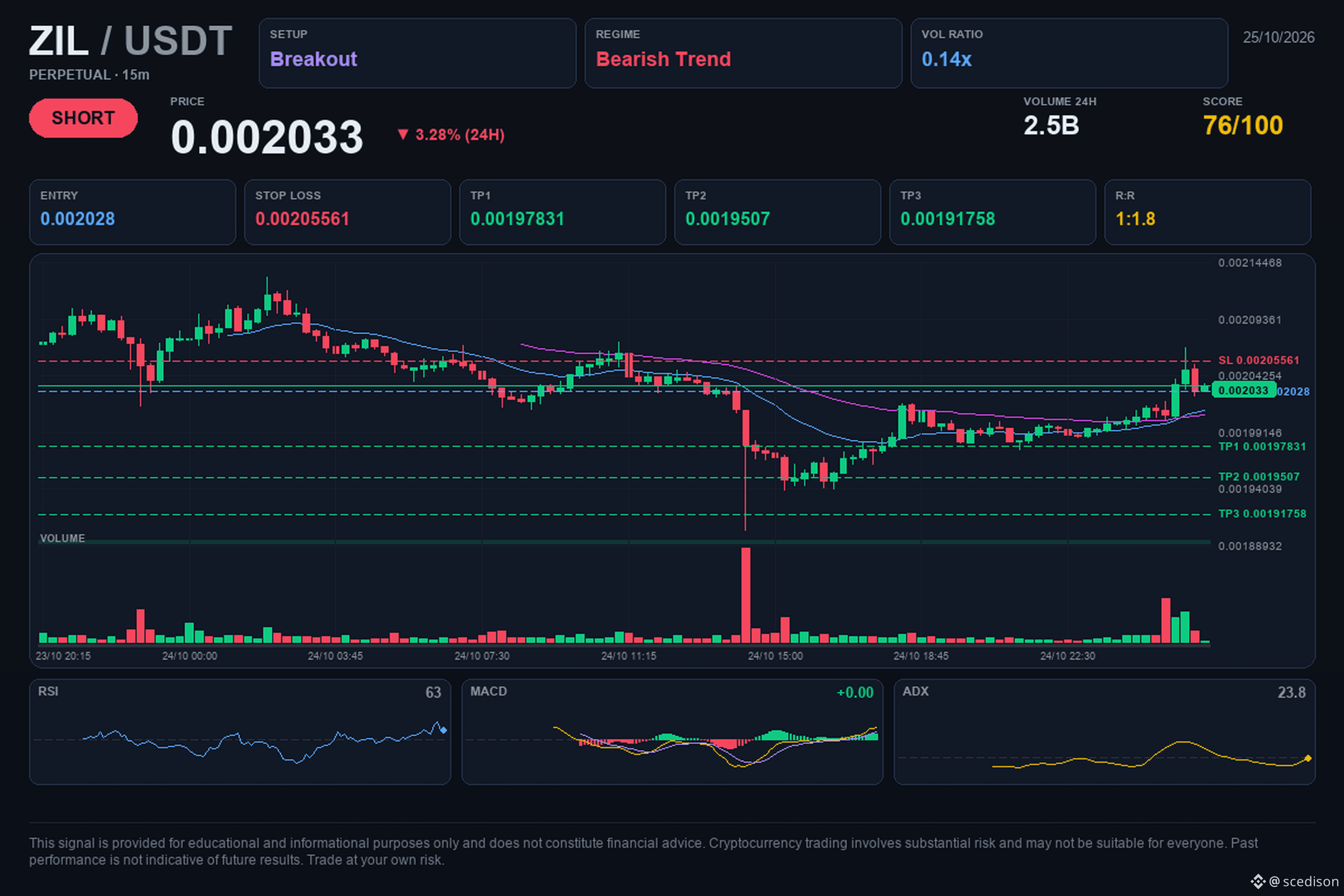
📢 $ZIL / USDT | 🔴 SHORT | ⭐ 77%
🎯 Target: $0.00197831. Will it get there?
🎯 Trade levels:
🔴 Entry: $0.002028
🛑 Stop Loss: $0.00205561
🏁 TP1: $0.00197831
🏁 TP2: $0.0019507
🏁 TP3: $0.00191758
📈 Analysis:
The asset shows a clear bearish structure with lower highs and a confirmed breakout on the 4-hour timeframe. Trading volume has increased significantly, exceeding the average, which reinforces selling pressure in the market. With a consolidated downtrend across multiple timeframes, sellers remain in control of the current move.
⚖️ Risk/Reward: 1:1.8
⏱️ Timeframe: 15M
💭 A breakout occurs when the price forcefully crosses a support or resistance level, indicating a possible continuation of the trend.
#crypto #ZIL #trading #Bearish
💡 This analysis is for educational purposes and does not constitute financial advice. Do your own research and make your decision carefully.
12
·
--
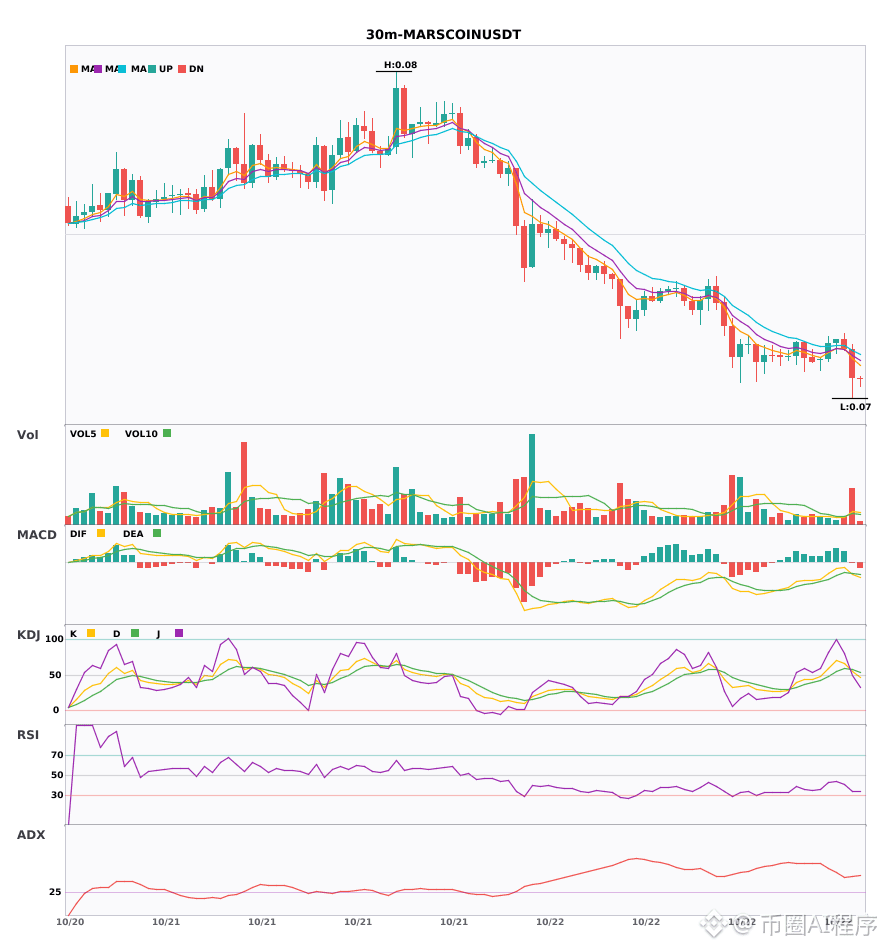
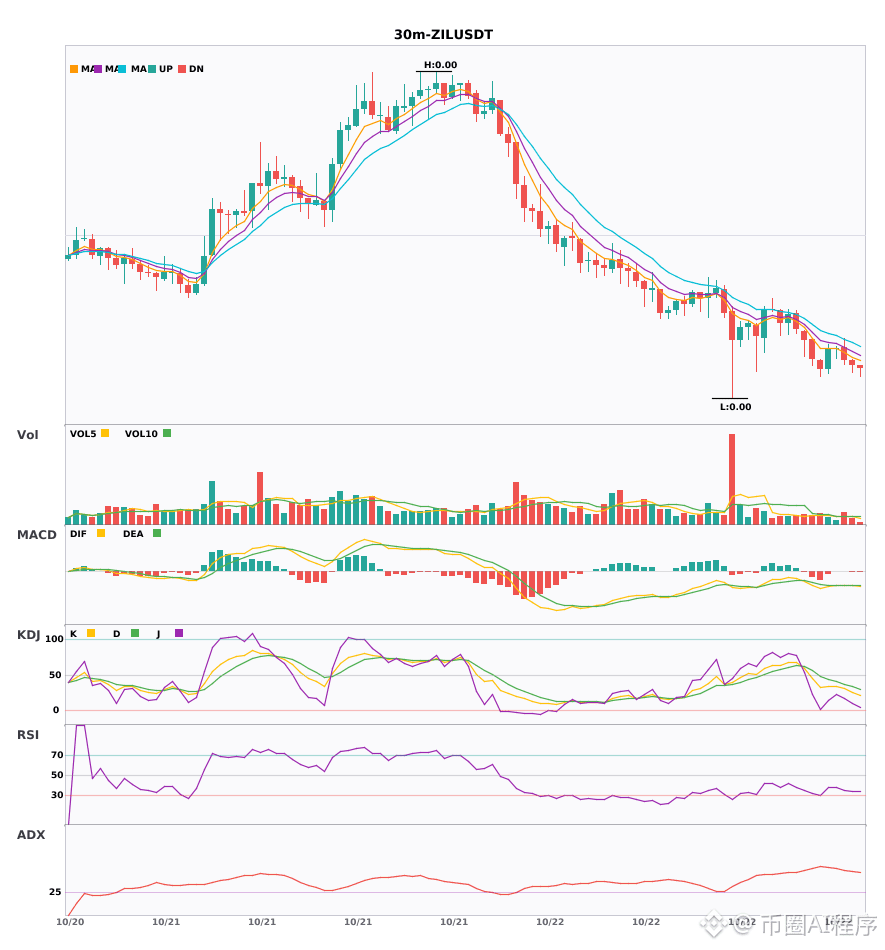
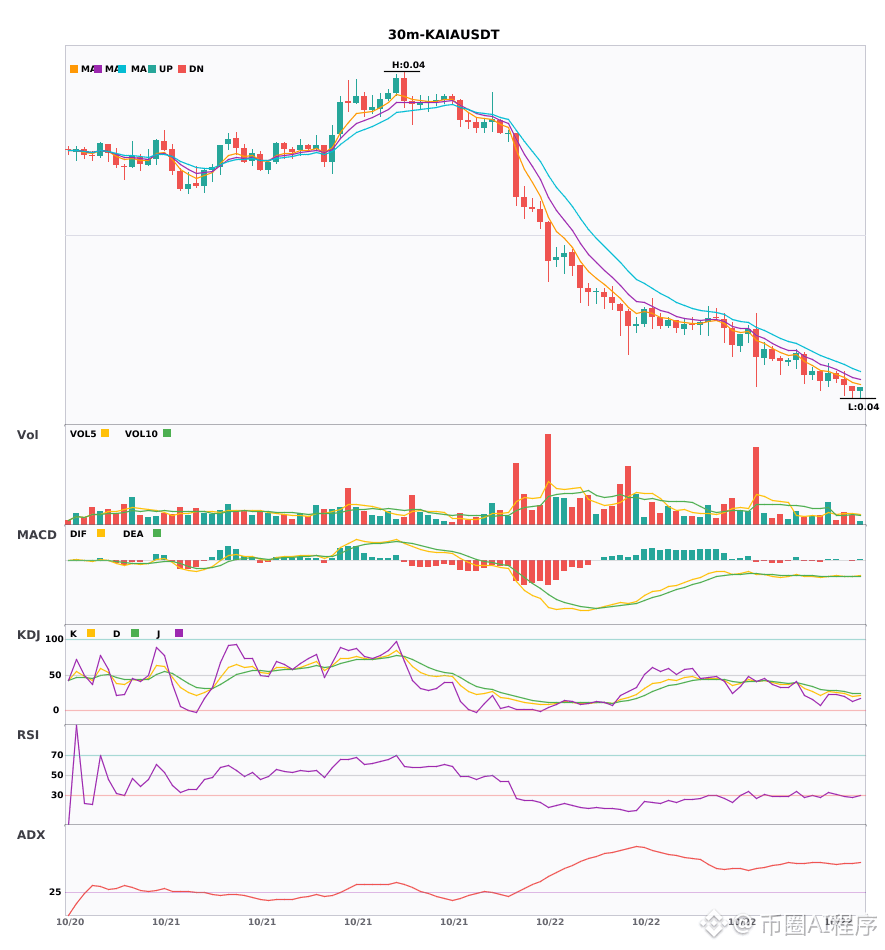
Multi-timeframe confluence: $MARSCOIN / $ZIL / $KAIA weakening on the 30-minute chart; 4-hour bearish trend confirmed 🔥
════════════════════
🟢 $MARSCOIN 30-minute bearish signal
⚠️ Technical analysis: 4-hour bearish confluence confirmed | 30-minute entry: MACD bearish cross below zero, bearish momentum accelerating | EMA5 crosses below EMA8, short-term trend turns bearish | KDJ bearish cross, bearish short-term outlook (K = 54.3, D = 57.1) | Volume surge (3.4x)
════════════════════
🟢 $ZIL 30-minute bearish signal
⚠️ Technical analysis: 4-hour bearish confluence confirmed | 30-minute entry: MACD bearish cross below zero, bearish momentum accelerating | EMA5 < EMA8 < EMA13, bearish alignment | KDJ trending weakly, bears in control (K = 30.7, D = 37.2) | Volume normal (1.4x)
════════════════════
🟢 $KAIA 30-minute bearish signal
⚠️ Technical analysis: 4-hour bearish confluence confirmed | 30-minute entry: MACD bearish cross below zero, bearish momentum accelerating | EMA5 < EMA8 < EMA13, bearish alignment | KDJ trending weakly, bears in control (K = 20.5, D = 24.6) | Volume normal (1.2x)
════════════════════
🔔 Follow for real-time market updates 🔔
#多周期共振 #MARSCOIN #ZIL #KAIA
📌 When trading, watch for candlestick patterns that confirm the setup
════════════════════
🟢 $MARSCOIN 30-minute bearish signal
⚠️ Technical analysis: 4-hour bearish confluence confirmed | 30-minute entry: MACD bearish cross below zero, bearish momentum accelerating | EMA5 crosses below EMA8, short-term trend turns bearish | KDJ bearish cross, bearish short-term outlook (K = 54.3, D = 57.1) | Volume surge (3.4x)
════════════════════
🟢 $ZIL 30-minute bearish signal
⚠️ Technical analysis: 4-hour bearish confluence confirmed | 30-minute entry: MACD bearish cross below zero, bearish momentum accelerating | EMA5 < EMA8 < EMA13, bearish alignment | KDJ trending weakly, bears in control (K = 30.7, D = 37.2) | Volume normal (1.4x)
════════════════════
🟢 $KAIA 30-minute bearish signal
⚠️ Technical analysis: 4-hour bearish confluence confirmed | 30-minute entry: MACD bearish cross below zero, bearish momentum accelerating | EMA5 < EMA8 < EMA13, bearish alignment | KDJ trending weakly, bears in control (K = 20.5, D = 24.6) | Volume normal (1.2x)
════════════════════
🔔 Follow for real-time market updates 🔔
#多周期共振 #MARSCOIN #ZIL #KAIA
📌 When trading, watch for candlestick patterns that confirm the setup
37

·
--
Bullish
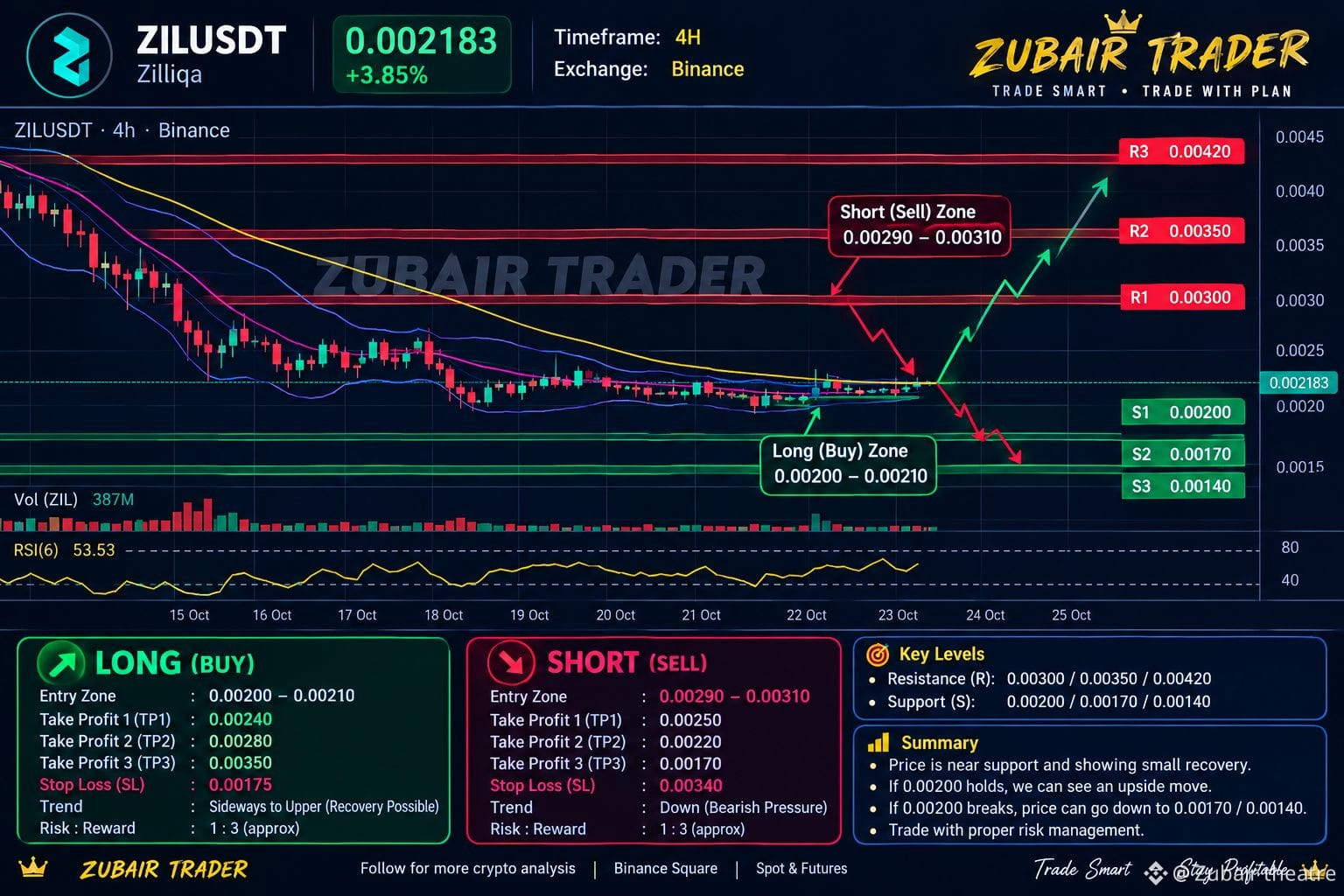
#zil 🚀 ZIL/USDT VIP Analysis 📊
🟢 LONG 📈 Entry: 0.00200–0.00210 🎯 TP: 0.00240 / 0.00280 / 0.00350 🛑 SL: 0.00175
🔴 SHORT 📉 Entry: 0.00290–0.00310 🎯 TP: 0.00250 / 0.00220 / 0.00170 🛑 SL: 0.00340
💎 Support & Resistance + Candlestick Chart 👑 Watermark: ZUBAIR TRADER
🔥 Premium TradingView Style | Binance Square
🟢 LONG 📈 Entry: 0.00200–0.00210 🎯 TP: 0.00240 / 0.00280 / 0.00350 🛑 SL: 0.00175
🔴 SHORT 📉 Entry: 0.00290–0.00310 🎯 TP: 0.00250 / 0.00220 / 0.00170 🛑 SL: 0.00340
💎 Support & Resistance + Candlestick Chart 👑 Watermark: ZUBAIR TRADER
🔥 Premium TradingView Style | Binance Square
2
592
·
--
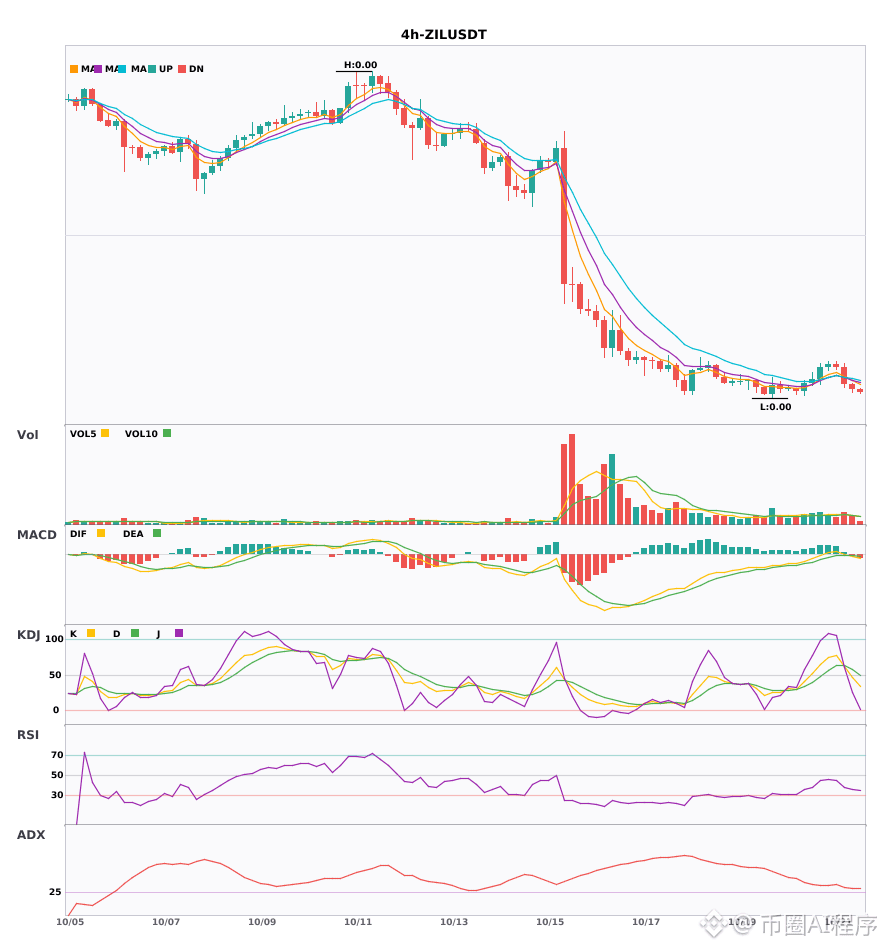
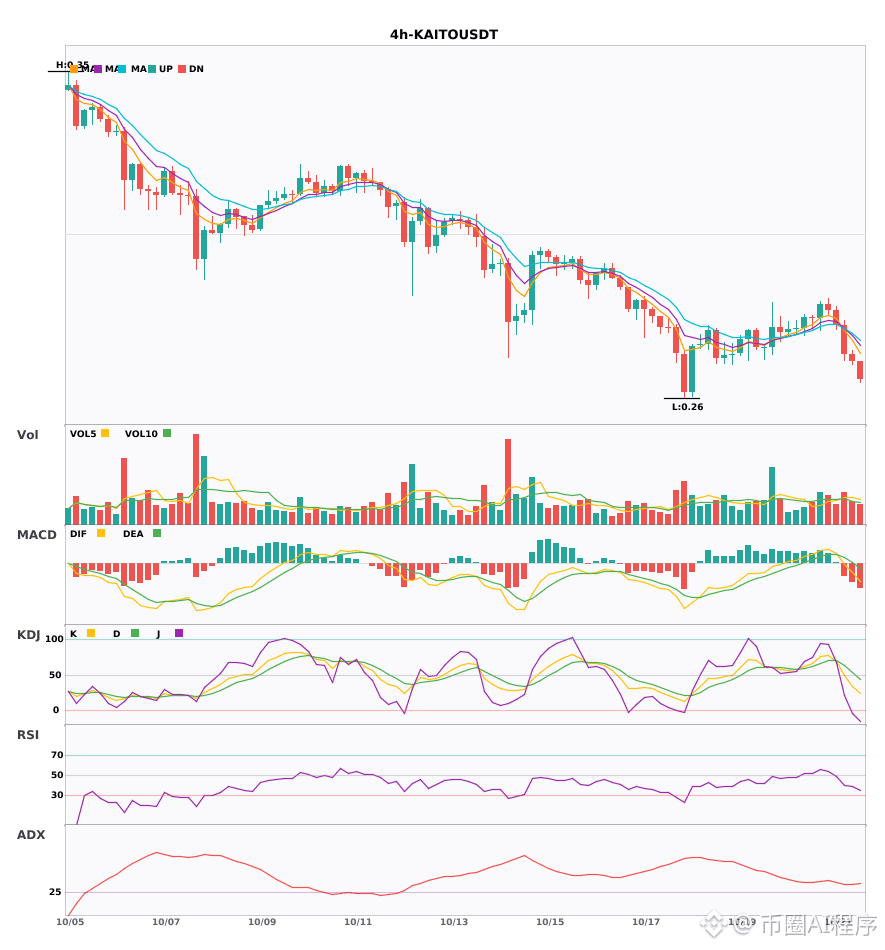
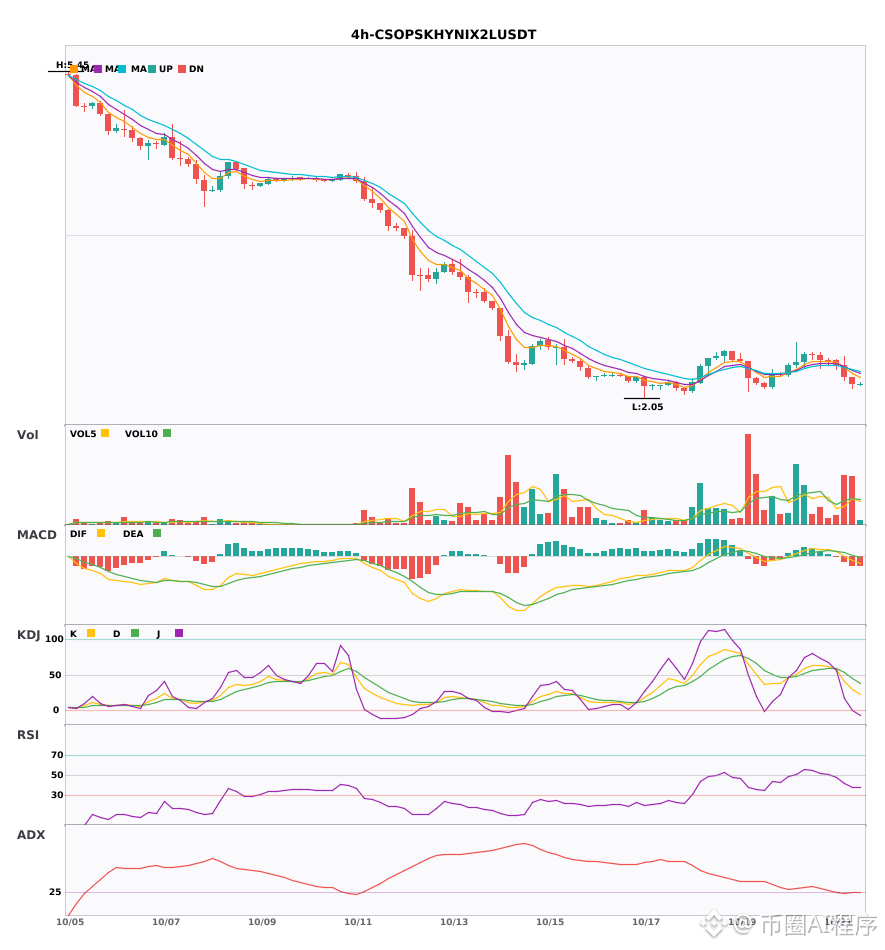
$ZIL / $KAITO / $CSOPSKHYNIX2L 4-hour short signals, daily bearish trend confirmed 🔥
════════════════════
🟢 $ZIL 4-hour short signal
⚠️Technical analysis: Daily bearish confluence confirmed | 4-hour entry: MACD bearish crossover below zero, bearish momentum accelerating | EMA5 crossed below EMA8, short-term bearish | Volume normal (1.2x)
════════════════════
🟢 $KAITO 4-hour short signal
⚠️Technical analysis: Daily bearish confluence confirmed | 4-hour entry: MACD bearish, trend weak, momentum strengthening | EMA5 < EMA8 < EMA13, bearish alignment | Volume normal (1.2x)
════════════════════
🟢 $CSOPSKHYNIX2L 4-hour short signal
⚠️Technical analysis: Daily bearish confluence confirmed | 4-hour entry: MACD bearish, trend weak, momentum strengthening | EMA5 < EMA8 < EMA13, bearish alignment | KDJ moving weakly, bears have the advantage (K: 30.1, D: 45.3) | Trading volume increased (2.0x)
════════════════════
🔔 Follow for first-hand market updates 🔔
#多周期共振 #ZIL #KAITO #CSOPSKHYNIX2L
📌 When trading, pay attention to whether the candlestick pattern confirms the signal
════════════════════
🟢 $ZIL 4-hour short signal
⚠️Technical analysis: Daily bearish confluence confirmed | 4-hour entry: MACD bearish crossover below zero, bearish momentum accelerating | EMA5 crossed below EMA8, short-term bearish | Volume normal (1.2x)
════════════════════
🟢 $KAITO 4-hour short signal
⚠️Technical analysis: Daily bearish confluence confirmed | 4-hour entry: MACD bearish, trend weak, momentum strengthening | EMA5 < EMA8 < EMA13, bearish alignment | Volume normal (1.2x)
════════════════════
🟢 $CSOPSKHYNIX2L 4-hour short signal
⚠️Technical analysis: Daily bearish confluence confirmed | 4-hour entry: MACD bearish, trend weak, momentum strengthening | EMA5 < EMA8 < EMA13, bearish alignment | KDJ moving weakly, bears have the advantage (K: 30.1, D: 45.3) | Trading volume increased (2.0x)
════════════════════
🔔 Follow for first-hand market updates 🔔
#多周期共振 #ZIL #KAITO #CSOPSKHYNIX2L
📌 When trading, pay attention to whether the candlestick pattern confirms the signal
22

·
--
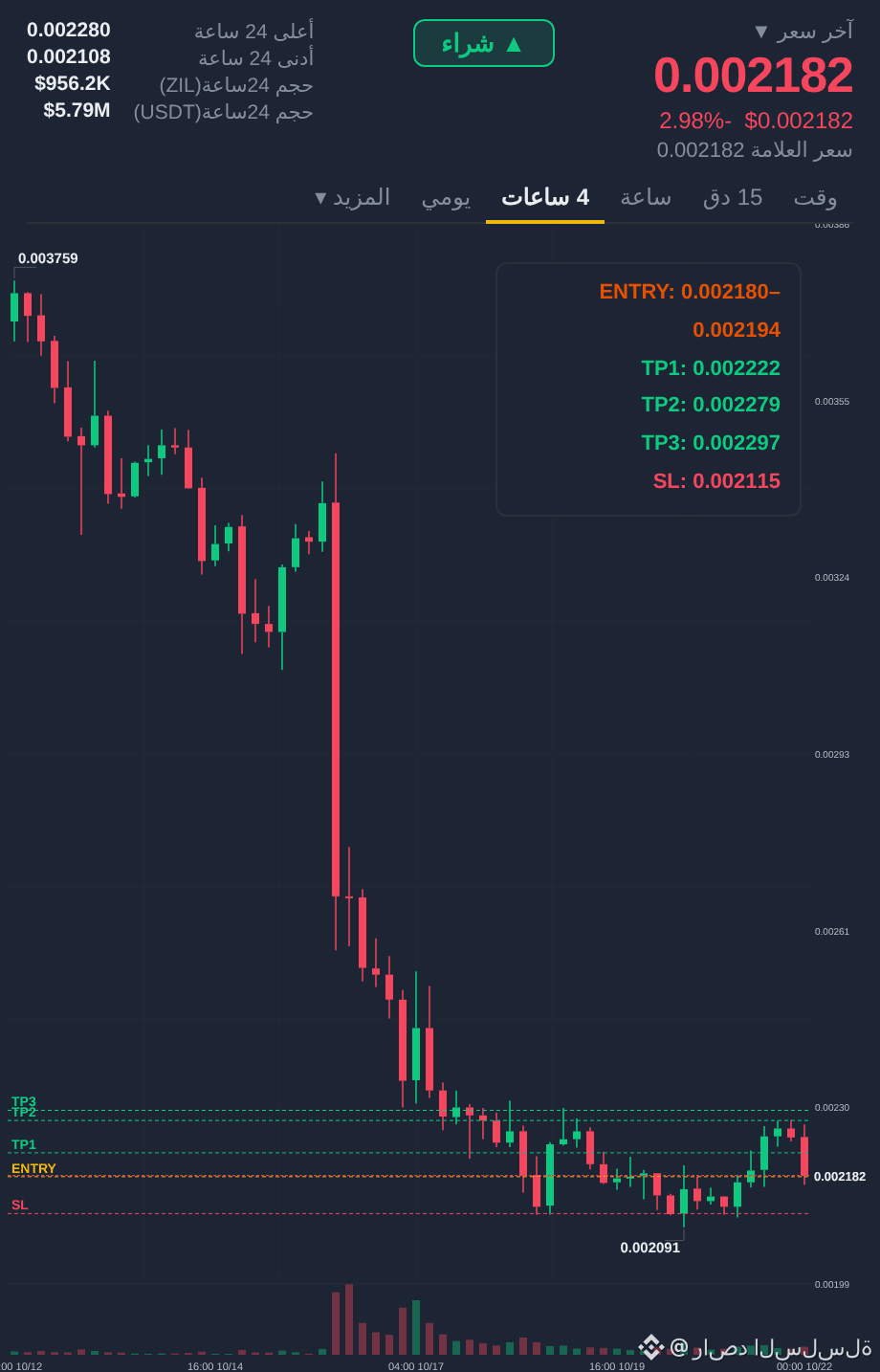
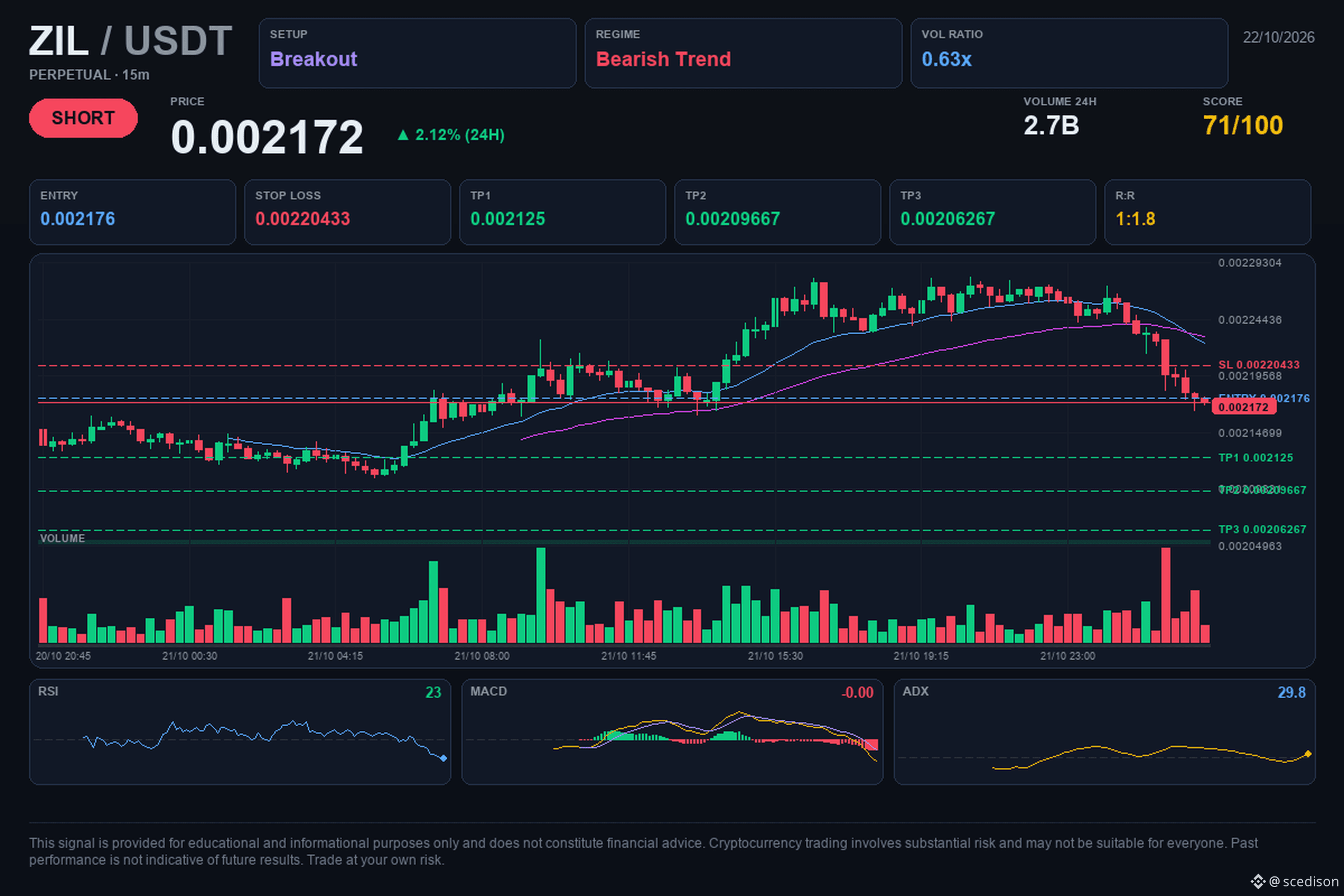
📢 $ZIL / USDT | 🔴 SHORT | ⭐ 71%
🎯 Target: $0.002125. Will it get there?
🎯 Trading levels:
🔴 Entry: $0.002176
🛑 Stop Loss: $0.00220433
🏁 TP1: $0.002125
🏁 TP2: $0.00209667
🏁 TP3: $0.00206267
📈 Analysis:
The asset shows a clear bearish structure, with lower highs and lower lows on the 4-hour timeframes, confirming a seller-driven trend. We are seeing a significant increase in trading volume, suggesting greater selling pressure in the market. In addition, the negative funding rate and declining open interest reinforce the current bearish sentiment.
⚖️ Risk/Reward: 1:1.8
⏱️ Timeframe: 15M
💭 Open interest represents the total number of outstanding derivatives contracts; when it declines along with price, it often indicates that participants are closing their positions.
#crypto #ZIL #trading #Bearish
💡 This analysis is for educational purposes and does not constitute financial advice. Do your own research and make your decision carefully.
47
·
--
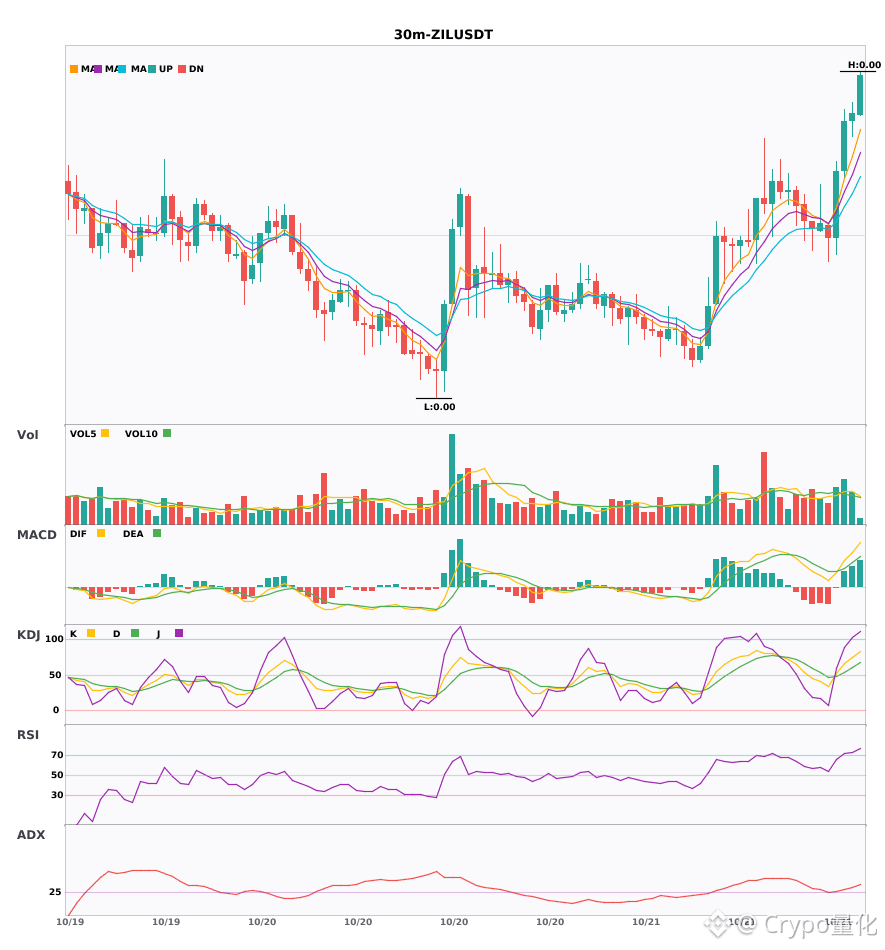
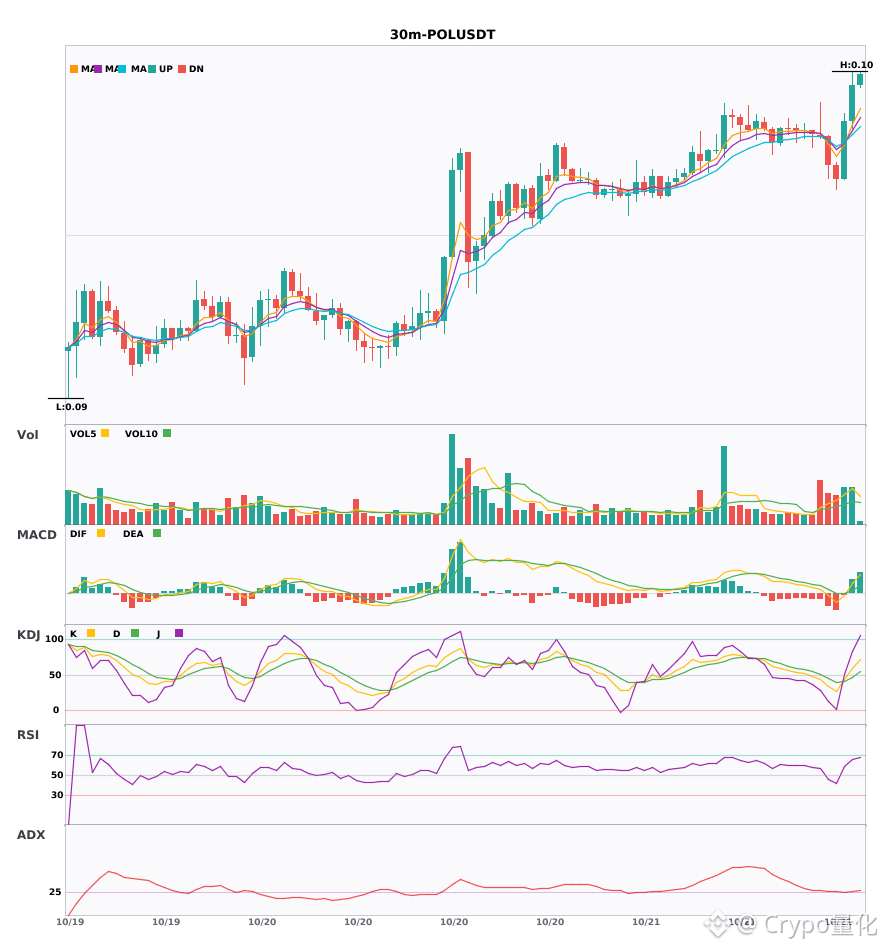
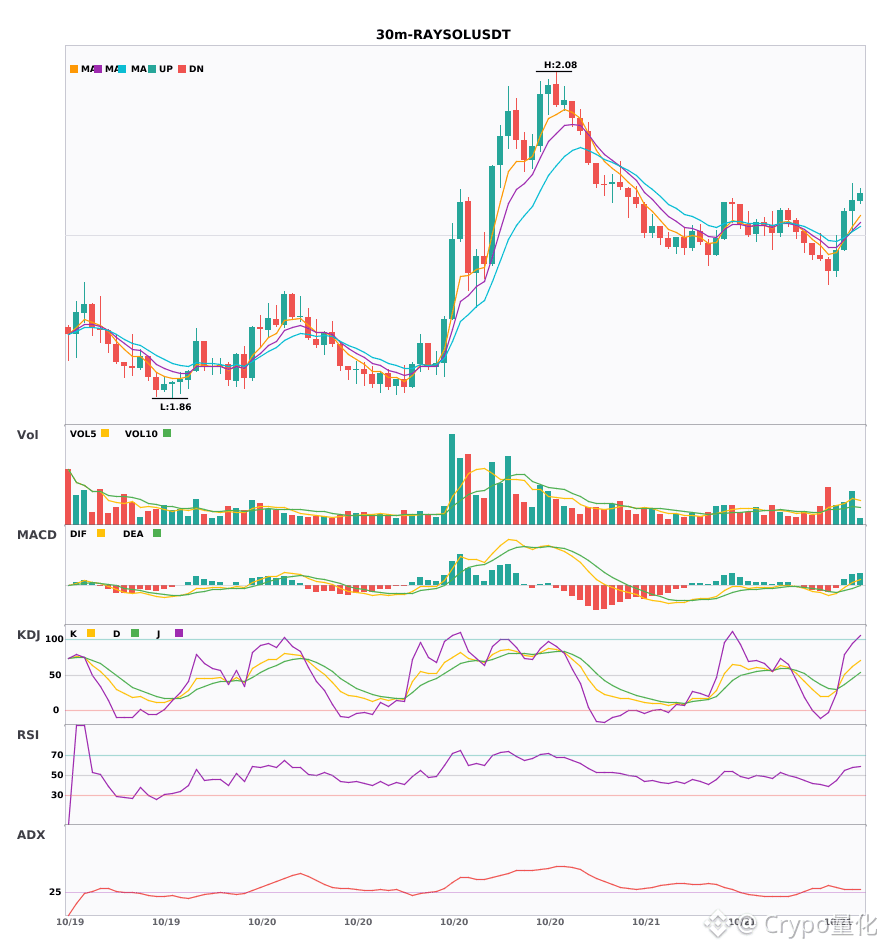
3 simultaneous bullish signals on the 30-minute timeframe: $ZIL / $POL / $RAYSOL🔥
════════════════════
🔴 $ZIL 30-minute bullish signal
⚠️Technical analysis: ADX (29): trend forming, potential entry | MACD golden cross above zero, bullish momentum emerging | EMA5 > EMA8 > EMA13, bullish alignment | KDJ showing strength, bulls in control (K = 65.4, D = 54.0) | Volume increased (1.5x)
════════════════════
🔴 $POL 30-minute bullish signal
⚠️Technical analysis: ADX (26): trend forming, potential entry | MACD golden cross above zero, bullish momentum emerging | EMA5 crossed above EMA8, short-term outlook turning bullish | Volume increased (1.8x)
════════════════════
🔴 $RAYSOL 30-minute bullish signal
⚠️Technical analysis: ADX (31): clear trending market | MACD DIF broke above the zero line, trend turning bullish | EMA5 > EMA8 > EMA13, bullish alignment | Volume increased (1.8x)
════════════════════
🔔 Follow for the latest market-moving updates 🔔
#技术分析 #ZIL #POL #RAYSOL
📌 When trading, watch for whether the candlestick pattern confirms the signal
3 simultaneous bullish signals on the 30-minute timeframe: $ZIL / $POL / $RAYSOL 🔥
════════════════════
🔴 $ZIL 30-minute bullish signal
⚠️Technical analysis: ADX (29): trend forming, potential entry | MACD golden cross above zero, bullish momentum emerging | EMA5 > EMA8 > EMA13, bullish alignment | KDJ showing strength, bulls in control (K = 65.4, D = 54.0) | Volume increased (1.5x)
════════════════════
🔴 $POL 30-minute bullish signal
⚠️Technical analysis: ADX (26): trend forming, potential entry | MACD golden cross above zero, bullish momentum emerging | EMA5 crossed above EMA8, short-term outlook turning bullish | Volume increased (1.8x)
════════════════════
🔴 $RAYSOL 30-minute bullish signal
⚠️Technical analysis: ADX (31): clear trending market | MACD DIF broke above the zero line, trend turning bullish | EMA5 > EMA8 > EMA13, bullish alignment | Volume increased (1.8x)
════════════════════
🔔 Follow for the latest market-moving updates 🔔
#技术分析 #ZIL #POL #RAYSOL
📌 When trading, watch for whether the candlestick pattern confirms the signal
════════════════════
🔴 $ZIL 30-minute bullish signal
⚠️Technical analysis: ADX (29): trend forming, potential entry | MACD golden cross above zero, bullish momentum emerging | EMA5 > EMA8 > EMA13, bullish alignment | KDJ showing strength, bulls in control (K = 65.4, D = 54.0) | Volume increased (1.5x)
════════════════════
🔴 $POL 30-minute bullish signal
⚠️Technical analysis: ADX (26): trend forming, potential entry | MACD golden cross above zero, bullish momentum emerging | EMA5 crossed above EMA8, short-term outlook turning bullish | Volume increased (1.8x)
════════════════════
🔴 $RAYSOL 30-minute bullish signal
⚠️Technical analysis: ADX (31): clear trending market | MACD DIF broke above the zero line, trend turning bullish | EMA5 > EMA8 > EMA13, bullish alignment | Volume increased (1.8x)
════════════════════
🔔 Follow for the latest market-moving updates 🔔
#技术分析 #ZIL #POL #RAYSOL
📌 When trading, watch for whether the candlestick pattern confirms the signal
10

·
--
Is $ZIL at $0.002176 a real bounce setup, or just dead-cat noise?
I’m leaning noise for now.
Down 3.63% today, with the 4h move at -4.0%. RSI is buried at 28, but volume is only 0.1x its 20-day average. Oversold means nothing without buyers showing up. 🥶
Funding is -0.002%, so shorts are paying, while the moving averages keep chopping. That’s not strength. $SOL can catch a bid and still leave $ZIL behind.
At $0.002, I’d wait for a clean reclaim before getting interested. Until then, this looks like a coin sitting 45% below its 30d high for a reason. 📉
#ZIL #Altcoin #Crypto
67

·
--
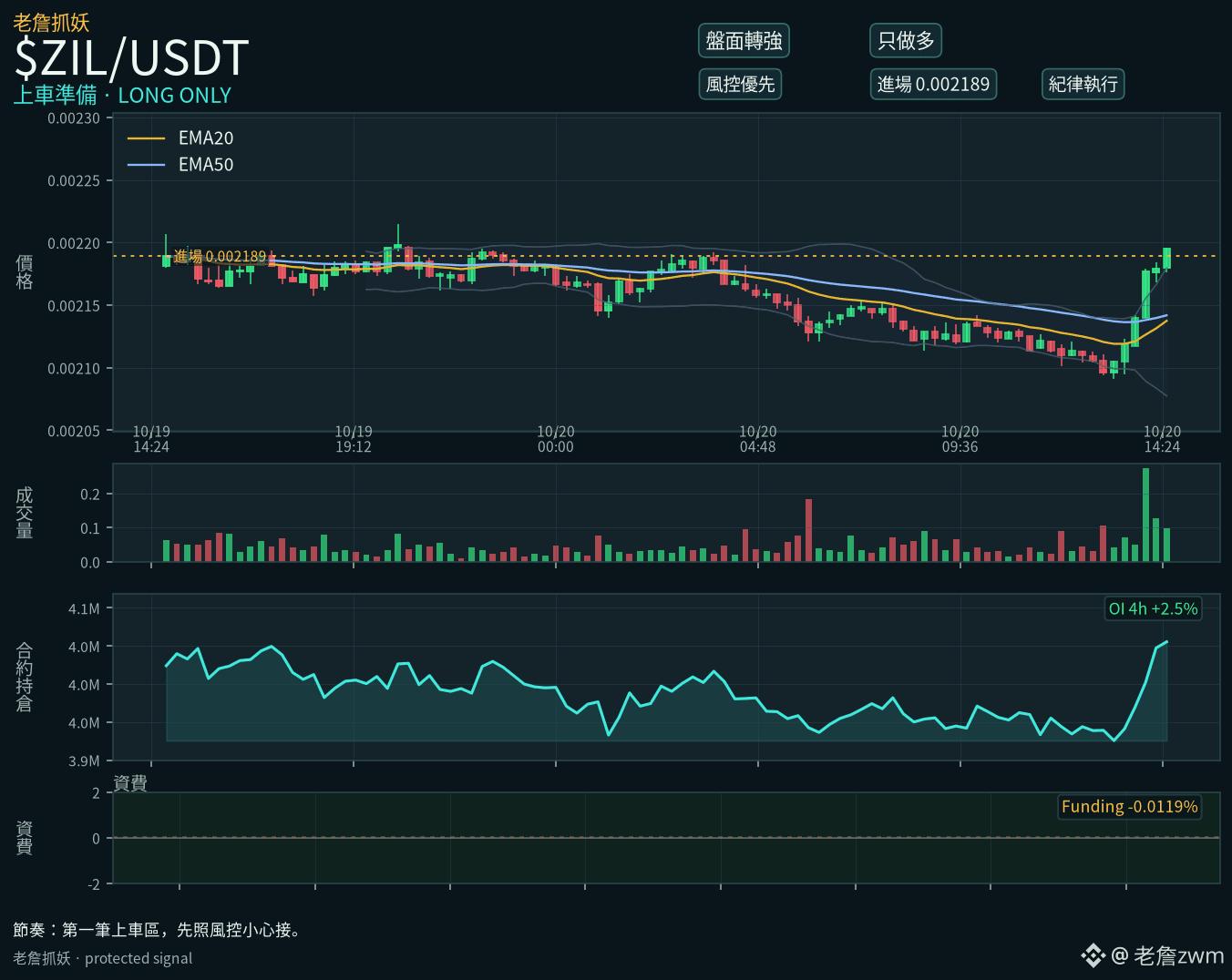
I've been watching $ZIL for a while. It's starting to move up from the lows, and I'm getting ready to get in. But futures capital hasn't followed through.
My approach: start with a small position, then add once volume picks up. Stop-loss at 0.001861; first target at 0.002408. I'll take 30% off when it gets there.
#ZIL #妖幣 #Futures
Sharing my perspective only; please make your own judgment.
My approach: start with a small position, then add once volume picks up. Stop-loss at 0.001861; first target at 0.002408. I'll take 30% off when it gets there.
#ZIL #妖幣 #Futures
Sharing my perspective only; please make your own judgment.
5
·
--
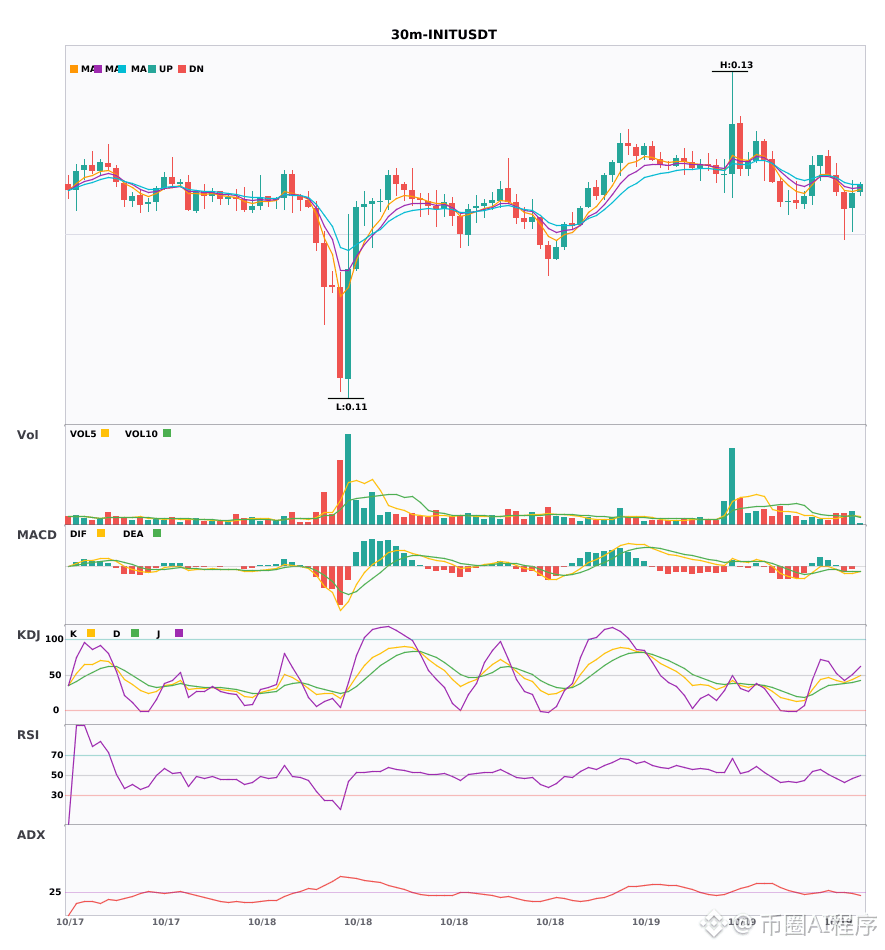
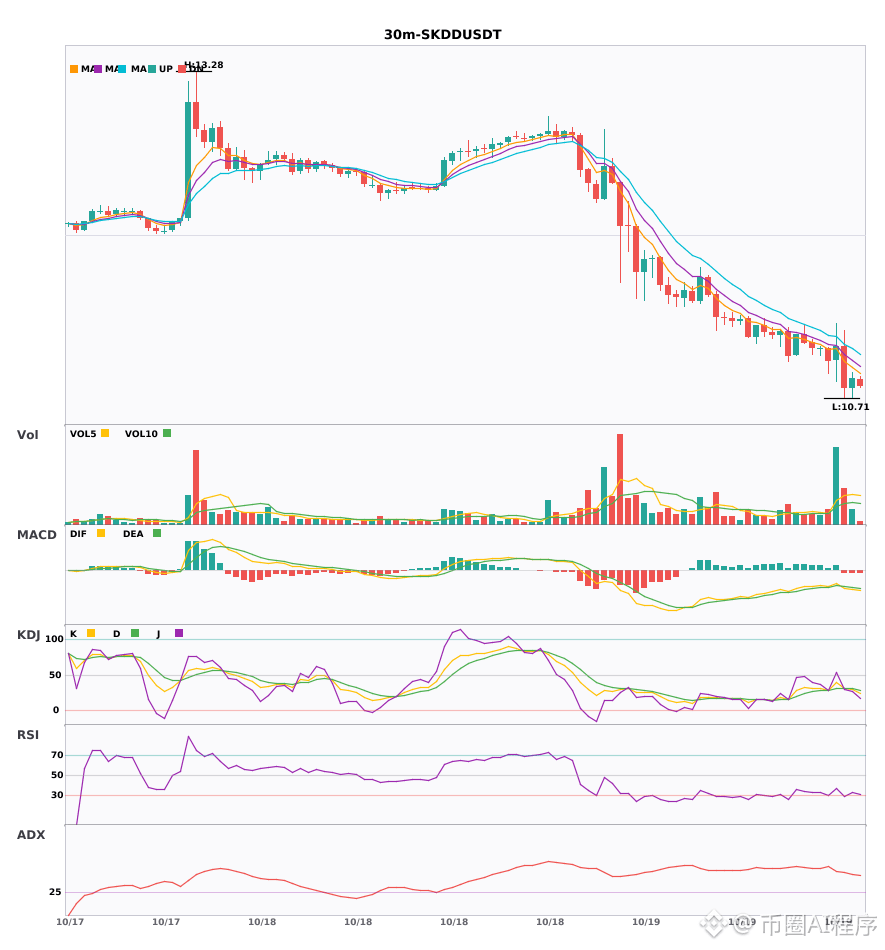
$INIT / $ZIL / $SKDD 30-minute short + 4-hour short aligned; multi-timeframe resonance turns bearish 🔥
════════════════════
🟢 $INIT 30-minute short signal
⚠️ Technical analysis: 4-hour bearish resonance confirmed | 30-minute entry: MACD bearish crossover below zero, bearish momentum accelerating | EMA5 < EMA8 < EMA13, bearish alignment | KDJ trending weakly, bears in control (K: 39.2, D: 38.0) | Normal volume (1.2x)
════════════════════
🟢 $ZIL 30-minute short signal
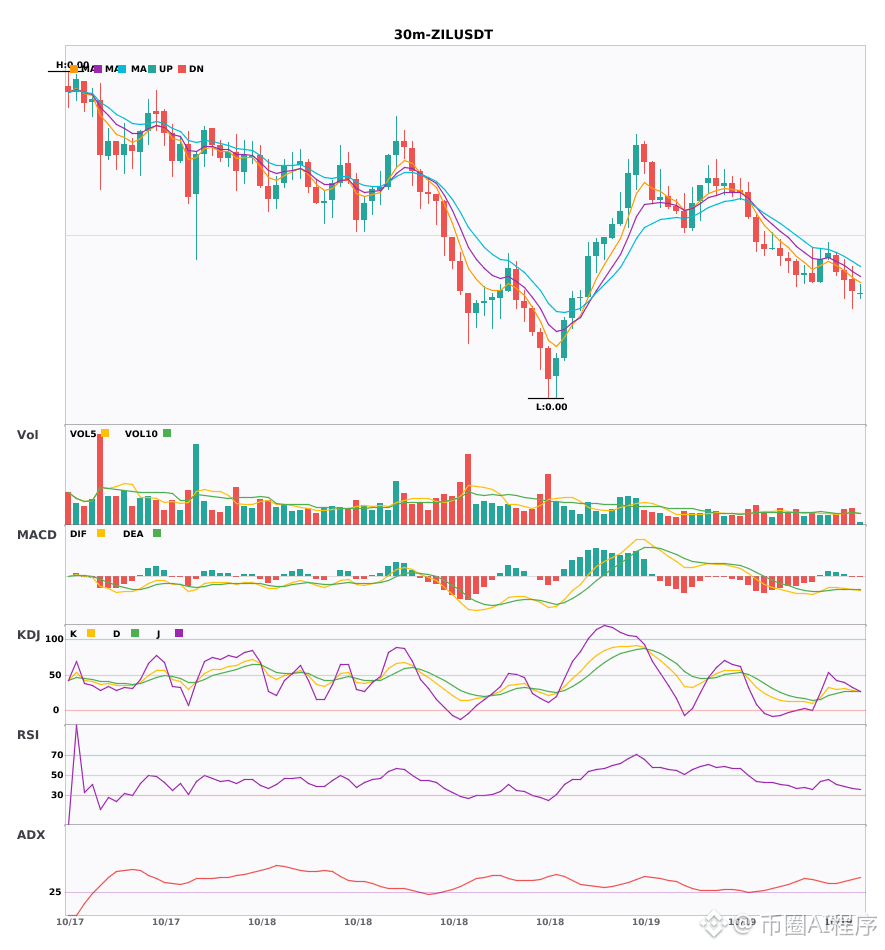
⚠️ Technical analysis: 4-hour bearish resonance confirmed | 30-minute entry: MACD bearish crossover below zero, bearish momentum accelerating | EMA5 < EMA8 < EMA13, bearish alignment | KDJ trending weakly, bears in control (K: 28.8, D: 27.1) | Normal volume (1.3x)
════════════════════
🟢 $SKDD 30-minute short signal
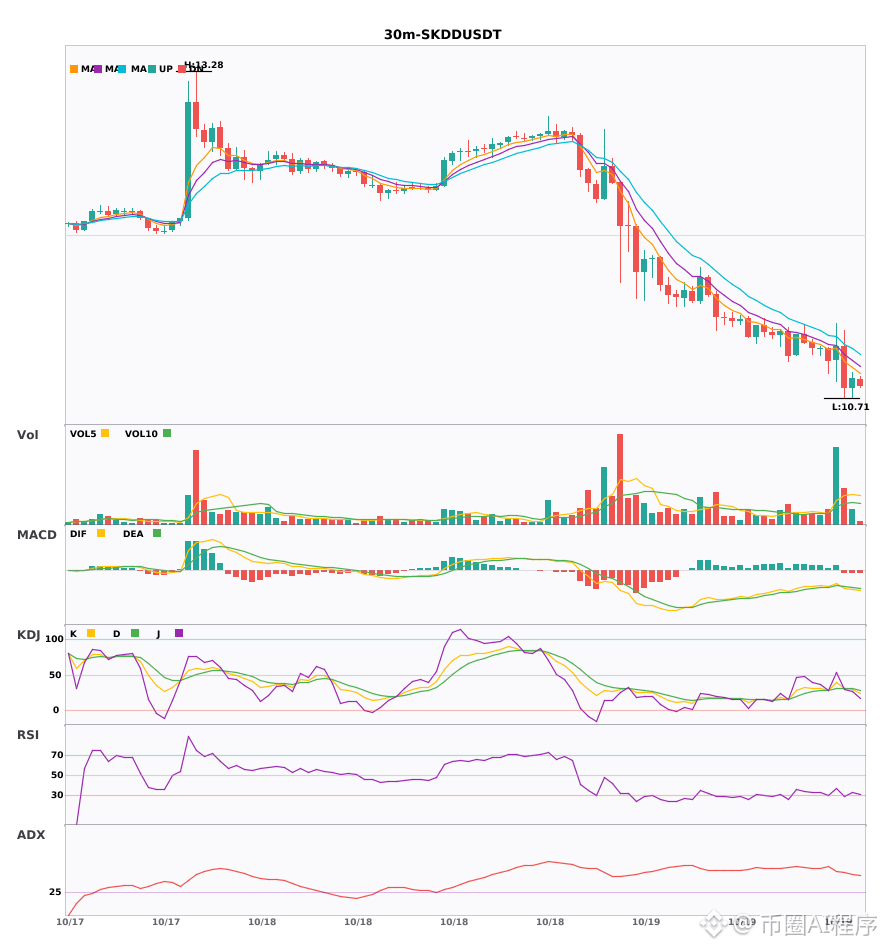
⚠️ Technical analysis: 4-hour bearish resonance confirmed | 30-minute entry: MACD bearish crossover below zero, bearish momentum accelerating | EMA5 < EMA8 < EMA13, bearish alignment | KDJ bearish crossover, short-term outlook bearish (K: 30.5, D: 31.2) | Volume surge (4.2x)
════════════════════
🔔 Follow for first-hand market updates 🔔
#多周期共振 #INIT #ZIL #SKDD
📌 When trading, pay attention to whether the candlestick patterns align
════════════════════
🟢 $INIT 30-minute short signal
⚠️ Technical analysis: 4-hour bearish resonance confirmed | 30-minute entry: MACD bearish crossover below zero, bearish momentum accelerating | EMA5 < EMA8 < EMA13, bearish alignment | KDJ trending weakly, bears in control (K: 39.2, D: 38.0) | Normal volume (1.2x)
════════════════════
🟢 $ZIL 30-minute short signal
⚠️ Technical analysis: 4-hour bearish resonance confirmed | 30-minute entry: MACD bearish crossover below zero, bearish momentum accelerating | EMA5 < EMA8 < EMA13, bearish alignment | KDJ trending weakly, bears in control (K: 28.8, D: 27.1) | Normal volume (1.3x)
════════════════════
🟢 $SKDD 30-minute short signal
⚠️ Technical analysis: 4-hour bearish resonance confirmed | 30-minute entry: MACD bearish crossover below zero, bearish momentum accelerating | EMA5 < EMA8 < EMA13, bearish alignment | KDJ bearish crossover, short-term outlook bearish (K: 30.5, D: 31.2) | Volume surge (4.2x)
════════════════════
🔔 Follow for first-hand market updates 🔔
#多周期共振 #INIT #ZIL #SKDD
📌 When trading, pay attention to whether the candlestick patterns align
21
·
--
$INIT / $ZIL / $SKDD 30-minute bearish signals, with the 4-hour bearish trend confirmed 🔥
════════════════════
🟢 $INIT 30-minute bearish signal
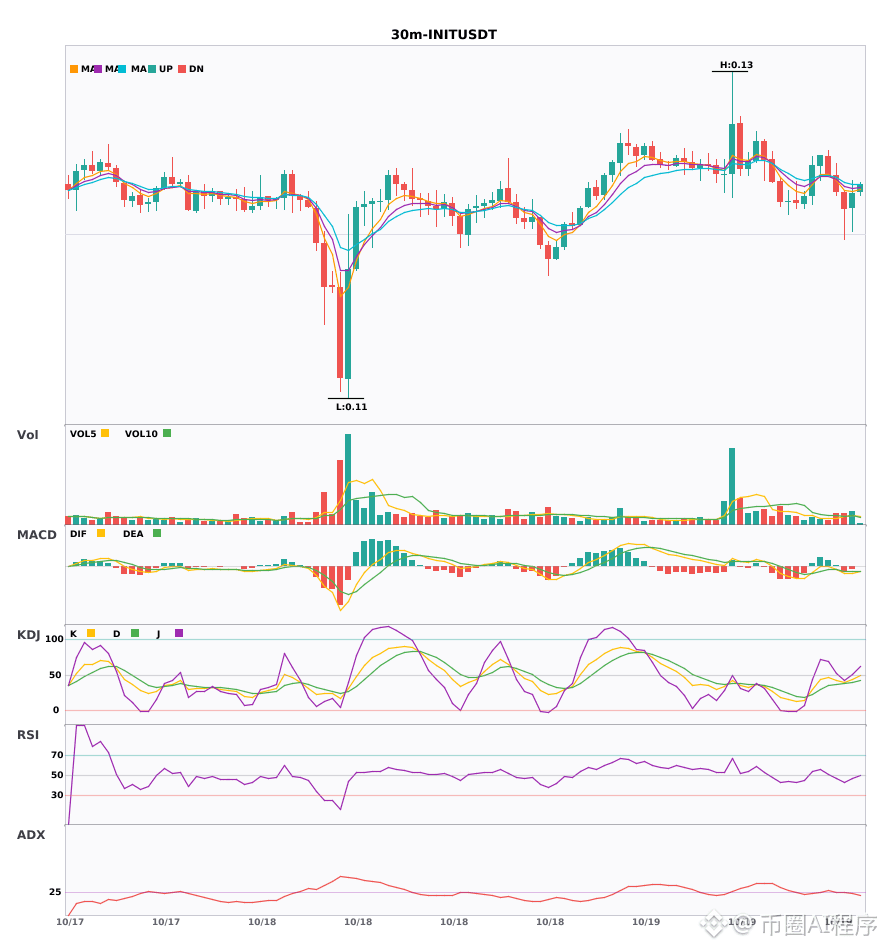
⚠️ Technical analysis: 4-hour bearish confluence confirmed | 30-minute entry: MACD bearish crossover below zero, bearish momentum accelerating | EMA5 < EMA8 < EMA13, bearish alignment | KDJ moving weakly, bears in control (K: 39.2, D: 38.0) | Normal volume (1.2x)
════════════════════
🟢 $ZIL 30-minute bearish signal
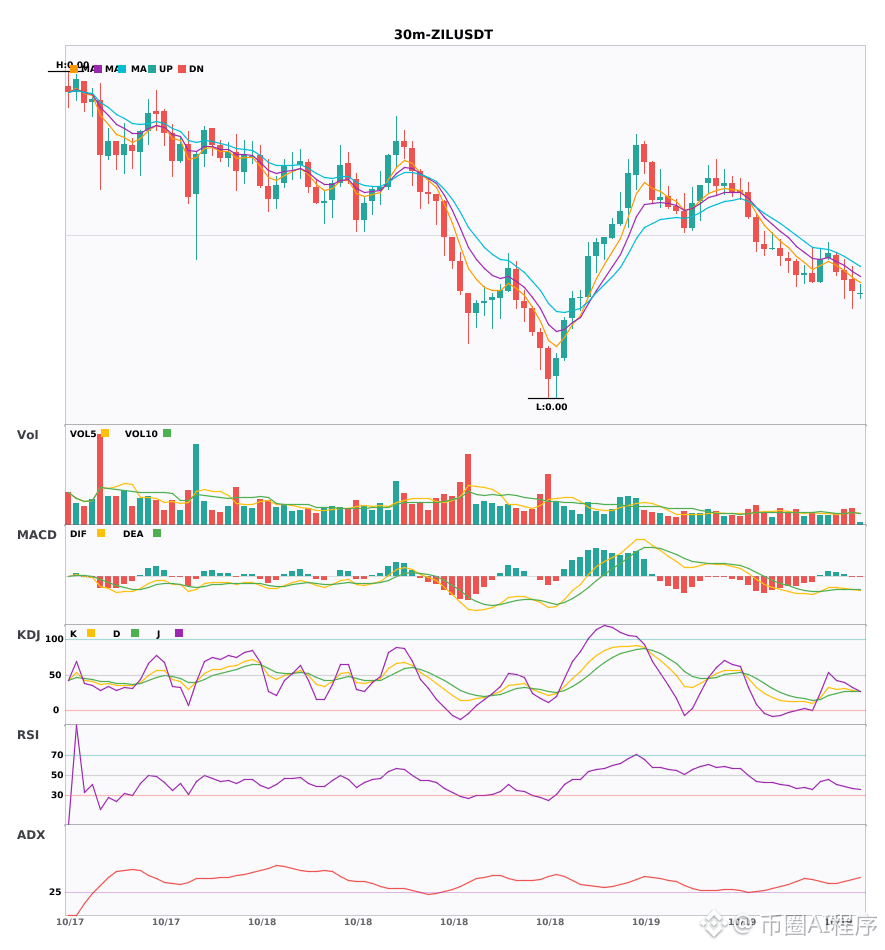
⚠️ Technical analysis: 4-hour bearish confluence confirmed | 30-minute entry: MACD bearish crossover below zero, bearish momentum accelerating | EMA5 < EMA8 < EMA13, bearish alignment | KDJ moving weakly, bears in control (K: 28.8, D: 27.1) | Normal volume (1.3x)
════════════════════
🟢 $SKDD 30-minute bearish signal
⚠️ Technical analysis: 4-hour bearish confluence confirmed | 30-minute entry: MACD bearish crossover below zero, bearish momentum accelerating | EMA5 < EMA8 < EMA13, bearish alignment | KDJ bearish crossover, bearish short-term outlook (K: 30.5, D: 31.2) | Volume surge (4.2x)
════════════════════
🔔 Follow for real-time market updates 🔔
#多周期共振 #INIT #ZIL #SKDD
📌 When trading, check whether the candlestick pattern confirms the signal
════════════════════
🟢 $INIT 30-minute bearish signal
⚠️ Technical analysis: 4-hour bearish confluence confirmed | 30-minute entry: MACD bearish crossover below zero, bearish momentum accelerating | EMA5 < EMA8 < EMA13, bearish alignment | KDJ moving weakly, bears in control (K: 39.2, D: 38.0) | Normal volume (1.2x)
════════════════════
🟢 $ZIL 30-minute bearish signal
⚠️ Technical analysis: 4-hour bearish confluence confirmed | 30-minute entry: MACD bearish crossover below zero, bearish momentum accelerating | EMA5 < EMA8 < EMA13, bearish alignment | KDJ moving weakly, bears in control (K: 28.8, D: 27.1) | Normal volume (1.3x)
════════════════════
🟢 $SKDD 30-minute bearish signal
⚠️ Technical analysis: 4-hour bearish confluence confirmed | 30-minute entry: MACD bearish crossover below zero, bearish momentum accelerating | EMA5 < EMA8 < EMA13, bearish alignment | KDJ bearish crossover, bearish short-term outlook (K: 30.5, D: 31.2) | Volume surge (4.2x)
════════════════════
🔔 Follow for real-time market updates 🔔
#多周期共振 #INIT #ZIL #SKDD
📌 When trading, check whether the candlestick pattern confirms the signal
4


$ZIL RECLAIMS KEY LEVEL WITH FRESH BUYING MOMENTUM ON explosive BREAKOUT! ⚡ 🟢
Entry: 0.00302 – 0.00308 ⚡
Target: 0.00312 / 0.00318 / 0.00325 🚀
Stop Loss: 0.00294 ⚠️
$ZIL is slicing through overhead supply with aggressive market buys, turning previous resistance into a solid launchpad. 📊 Fresh momentum is driving order flow as spot volume surges, confirming real institutional interest behind this push.
📌 Retesting the demand block offers a sharp risk-to-reward setup before expansion toward upper liquidity targets. ⚡ Aggressive bids are absorbing sell-side liquidity cleanly above support. 💬 Are you bidding this breakout early or waiting for a shallow retest? 👇
⚠️ Not financial advice. Always manage your risk. 🛡️
🏷️ #ZIL #LongSetup #Breakout #CryptoMomentum #Altcoins
🔥 💎
41

·
--
🟢 $ZIL RECLAIMS CRITICAL LEVEL WITH EXPLOSIVE BUYER MOMENTUM! 💥
Entry: 0.00310–0.00316 ⚡
Target: 0.00328 / 0.00340 / 0.00360 🚀
Stop Loss: 0.00288 ⚠️
📌 Smart money absorbed seller exhaustion right at the 0.00280 floor, setting up a decisive shift in market structure. 📊 With 0.00300 flipped back into active support, buyers are stepping up velocity to target overhead supply.
💡 Momentum is building rapidly as short positions get caught off-guard. 🌊 As long as price holds above this fresh pivot, the runway toward previous local highs remains clean. 💬 Are you bidding this momentum continuation or waiting on the sidelines? 👇
⚠️ Not financial advice. Always manage your risk. 🛡️
🏷️ #ZIL #LongSetup #Breakout #Crypto
🔥 ⚡
21
Log in to explore more content
Join global crypto users on Binance Square
⚡️ Get latest and useful information about crypto.
💬 Trusted by the world’s largest crypto exchange.
👍 Discover real insights from verified creators.
Email / Phone number
Trending Topics
1
#BinancePick
3.4M views
165,392 Discussing
2
#EarningsSeason
5.5M views
26,967 Discussing
3
#StrategySkipsBitcoinPurchasesSpends$205MOnSTRCBuybacks
970 views
30 Discussing
4
#BitmineAdds10452ETH
11,202 views
281 Discussing
5
#SouthKoreaConsidersEducationTaxOnCryptoExchanges
9,177 views
241 Discussing
6
#OCCUrgesCommunityBanksToEnterStablecoinPayments
8,695 views
154 Discussing
7
#RippleWinsFullApprovalAsNationalTrustBank
7,617 views
155 Discussing
8
#AkashSelectsSolanaAsMigrationTarget
5,450 views
78 Discussing
9
#OndoToOpenSubscriptionsForOpenAIPreIPOTokenizedNotes
361 views
19 Discussing
10
#AnthropicTTMRevenueGrewAbout1200%
61,180 views
610 Discussing