

#xle
xle
4,969 views
93 Discussing
Hot
Latest

·
--
$XLE finished September down 3.85%, in a month where November $CL WTI gained 7.57% and November diesel futures 10.26%... the stocks fell while the barrels and products they're levered to rallied.
I think the reason sits further out the curve, since a producer is worth years of future barrels and the market prices those well below today's oil. At Wednesday's close January 2028 WTI was 17.23% under November, and I doubt equity investors want to capitalise a front-month premium that size for long. That gap has narrowed over the last five sessions, though.
I'd read the crude rally and the equity weakness as two different bets on how long the supply squeeze lasts. If the back of the curve starts to lift, $XLE could follow it. Sunday's OPEC+ call is expected to hold November quotas steady, so I'll be watching the deferred contracts into next week.
#Oil #Energy #XLE #Macro
$XLE finished September down 3.85%, in a month where November $CL WTI gained 7.57% and November diesel futures 10.26%... the stocks fell while the barrels and products they're levered to rallied.
I think the reason sits further out the curve, since a producer is worth years of future barrels and the market prices those well below today's oil. At Wednesday's close January 2028 WTI was 17.23% under November, and I doubt equity investors want to capitalise a front-month premium that size for long. That gap has narrowed over the last five sessions, though.
I'd read the crude rally and the equity weakness as two different bets on how long the supply squeeze lasts. If the back of the curve starts to lift, $XLE could follow it. Sunday's OPEC+ call is expected to hold November quotas steady, so I'll be watching the deferred contracts into next week.
#Oil #Energy #XLE #Macro
I think the reason sits further out the curve, since a producer is worth years of future barrels and the market prices those well below today's oil. At Wednesday's close January 2028 WTI was 17.23% under November, and I doubt equity investors want to capitalise a front-month premium that size for long. That gap has narrowed over the last five sessions, though.
I'd read the crude rally and the equity weakness as two different bets on how long the supply squeeze lasts. If the back of the curve starts to lift, $XLE could follow it. Sunday's OPEC+ call is expected to hold November quotas steady, so I'll be watching the deferred contracts into next week.
#Oil #Energy #XLE #Macro
255

·
--
Bullish
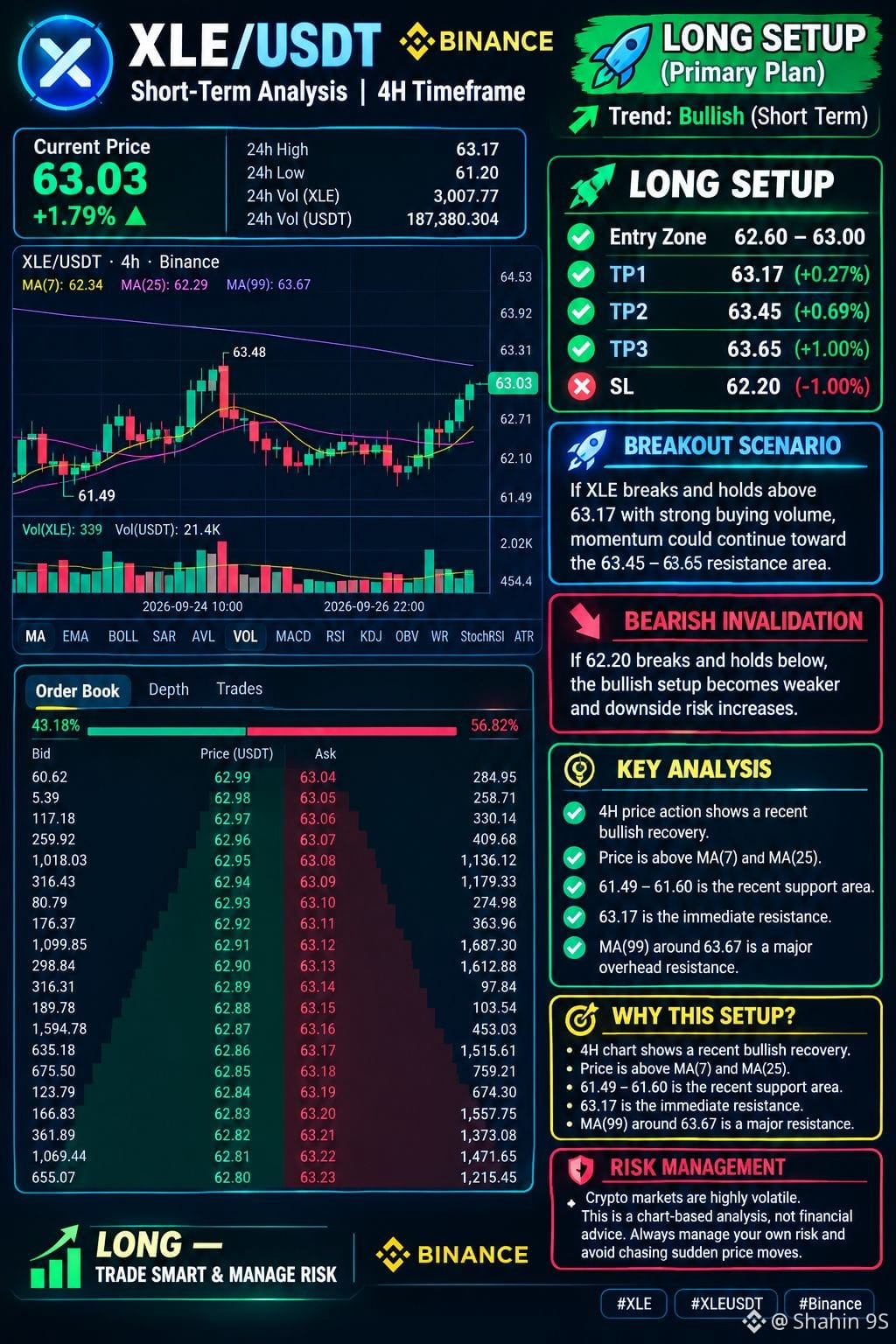
🚀 #XLE /USDT — Short-Term Analysis 📊
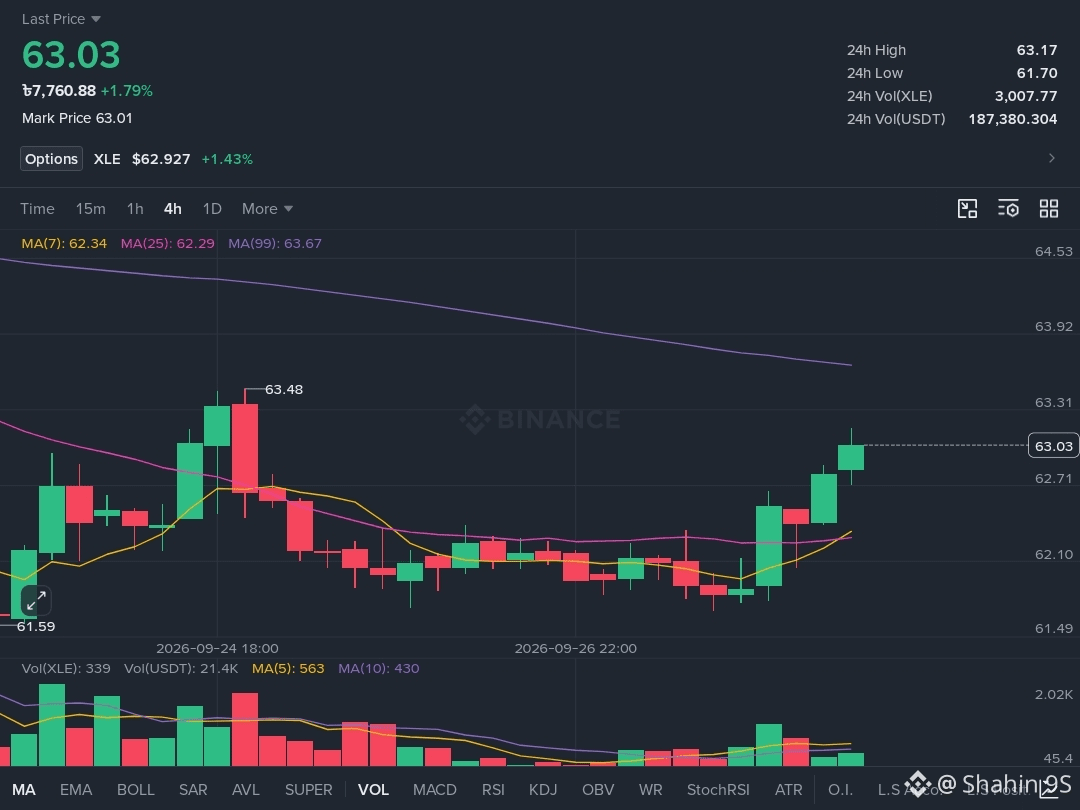
#XLE is showing a short-term recovery on the 4H chart. Price is currently around 63.03 after bouncing from the 61.49–61.60 support area.
Price has moved back above MA(7) and MA(25), but MA(99) near 63.67 remains an important resistance level. Because price is already close to the 24H high at 63.17, a pullback or confirmed breakout is preferable to chasing the move.
🟢 LONG SETUP
Entry Zone: 62.60 – 63.00
TP1: 63.17
TP2: 63.45
TP3: 63.65
SL: 62.20
🚀 BREAKOUT SCENARIO
If XLE breaks and holds above 63.17 with strong buying volume, momentum could continue toward the 63.45–63.65 resistance area.
🔴 BEARISH INVALIDATION
If 62.20 breaks and holds below, the bullish setup becomes weaker and downside risk increases.
💡 WHY THIS SETUP?
• 4H price action shows a recent bullish recovery.
• Price is above MA(7) and MA(25).
• 61.49–61.60 is the recent support area.
• 63.17 is the immediate resistance.
• MA(99) around 63.67 is a major overhead resistance.
⚠️ RISK MANAGEMENT
Crypto markets are highly volatile. This is a chart-based analysis, not financial advice. Always manage your own risk and avoid chasing sudden price moves.
🚀 LONG — TRADE SMART & MANAGE RISK
$XLE
{future}(XLEUSDT)
#XLE #XLEUSDT #Binance
🚀 #XLE /USDT — Short-Term Analysis 📊
#XLE is showing a short-term recovery on the 4H chart. Price is currently around 63.03 after bouncing from the 61.49–61.60 support area.
Price has moved back above MA(7) and MA(25), but MA(99) near 63.67 remains an important resistance level. Because price is already close to the 24H high at 63.17, a pullback or confirmed breakout is preferable to chasing the move.
🟢 LONG SETUP
Entry Zone: 62.60 – 63.00
TP1: 63.17
TP2: 63.45
TP3: 63.65
SL: 62.20
🚀 BREAKOUT SCENARIO
If XLE breaks and holds above 63.17 with strong buying volume, momentum could continue toward the 63.45–63.65 resistance area.
🔴 BEARISH INVALIDATION
If 62.20 breaks and holds below, the bullish setup becomes weaker and downside risk increases.
💡 WHY THIS SETUP?
• 4H price action shows a recent bullish recovery.
• Price is above MA(7) and MA(25).
• 61.49–61.60 is the recent support area.
• 63.17 is the immediate resistance.
• MA(99) around 63.67 is a major overhead resistance.
⚠️ RISK MANAGEMENT
Crypto markets are highly volatile. This is a chart-based analysis, not financial advice. Always manage your own risk and avoid chasing sudden price moves.
🚀 LONG — TRADE SMART & MANAGE RISK
$XLE
#XLE #XLEUSDT #Binance
#XLE is showing a short-term recovery on the 4H chart. Price is currently around 63.03 after bouncing from the 61.49–61.60 support area.
Price has moved back above MA(7) and MA(25), but MA(99) near 63.67 remains an important resistance level. Because price is already close to the 24H high at 63.17, a pullback or confirmed breakout is preferable to chasing the move.
🟢 LONG SETUP
Entry Zone: 62.60 – 63.00
TP1: 63.17
TP2: 63.45
TP3: 63.65
SL: 62.20
🚀 BREAKOUT SCENARIO
If XLE breaks and holds above 63.17 with strong buying volume, momentum could continue toward the 63.45–63.65 resistance area.
🔴 BEARISH INVALIDATION
If 62.20 breaks and holds below, the bullish setup becomes weaker and downside risk increases.
💡 WHY THIS SETUP?
• 4H price action shows a recent bullish recovery.
• Price is above MA(7) and MA(25).
• 61.49–61.60 is the recent support area.
• 63.17 is the immediate resistance.
• MA(99) around 63.67 is a major overhead resistance.
⚠️ RISK MANAGEMENT
Crypto markets are highly volatile. This is a chart-based analysis, not financial advice. Always manage your own risk and avoid chasing sudden price moves.
🚀 LONG — TRADE SMART & MANAGE RISK
$XLE
#XLE #XLEUSDT #Binance
1
29

·
--
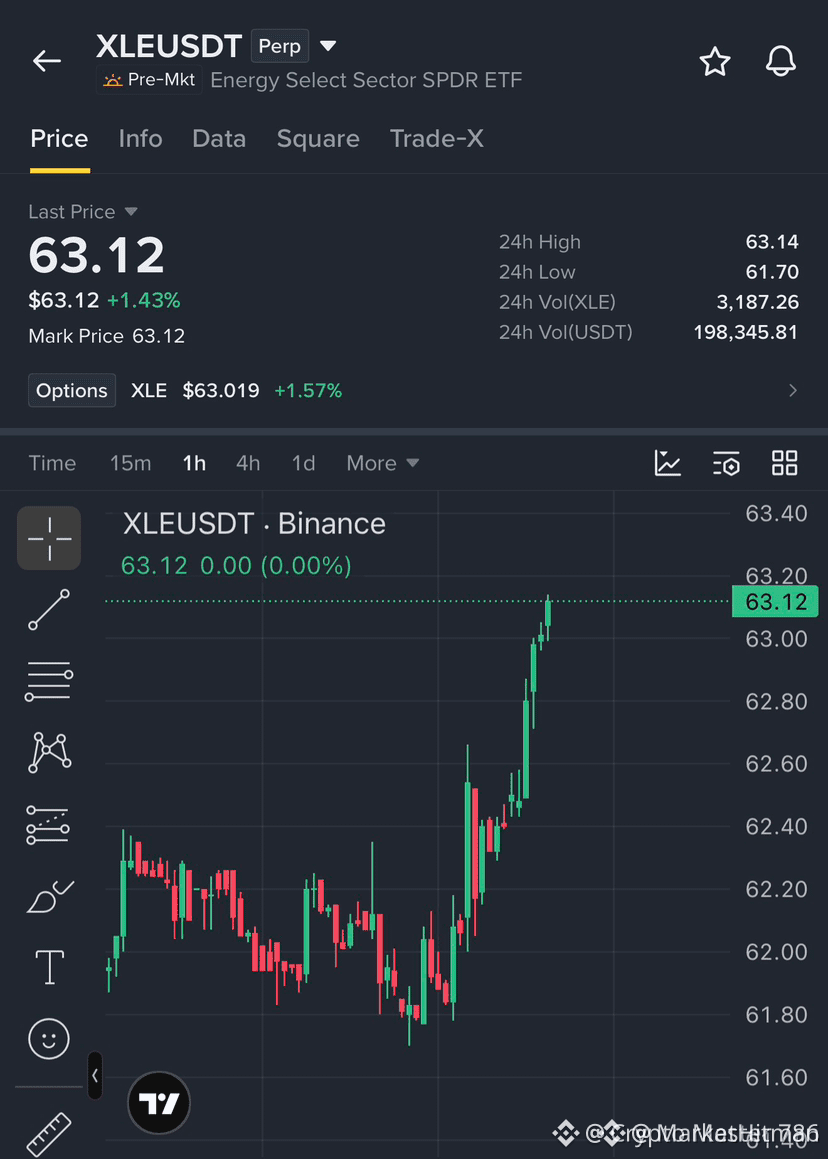
🚨 $XLE IS DEMOLISHING RESISTANCE WITH AGGRESSIVE BULLISH MOMENTUM TOWARD NEW HIGHS! ⚡
Entry: $62.95 – $63.12 ⚡
Target: $63.40 / $63.70 / $64.00 🚀
Stop Loss: $62.55 ⚠️
$XLE is carving out a textbook continuation structure, driving price aggressively through short-term seller walls. 📊 Buyers are firmly steering the wheel here, though managing position size is critical following such a sharp vertical expansion.
📌 We are targeting incremental liquidity clusters up to $64.00 while maintaining a disciplined invalidate line just below $62.55. 💡 With momentum accelerating, watching how order flow absorbs overhead supply will determine if this move extends further. 👇 Are you riding this trend continuation or waiting for a pullback to key demand?
⚠️ Not financial advice. Always manage your risk. 🛡️
🏷️ #XLE #LongSetup #Breakout #Trading #Crypto
🔥 ⚡
🚨 $XLE IS DEMOLISHING RESISTANCE WITH AGGRESSIVE BULLISH MOMENTUM TOWARD NEW HIGHS! ⚡
Entry: $62.95 – $63.12 ⚡
Target: $63.40 / $63.70 / $64.00 🚀
Stop Loss: $62.55 ⚠️
$XLE is carving out a textbook continuation structure, driving price aggressively through short-term seller walls. 📊 Buyers are firmly steering the wheel here, though managing position size is critical following such a sharp vertical expansion.
📌 We are targeting incremental liquidity clusters up to $64.00 while maintaining a disciplined invalidate line just below $62.55. 💡 With momentum accelerating, watching how order flow absorbs overhead supply will determine if this move extends further. 👇 Are you riding this trend continuation or waiting for a pullback to key demand?
⚠️ Not financial advice. Always manage your risk. 🛡️
🏷️ #XLE #LongSetup #Breakout #Trading #Crypto
🔥 ⚡
Entry: $62.95 – $63.12 ⚡
Target: $63.40 / $63.70 / $64.00 🚀
Stop Loss: $62.55 ⚠️
$XLE is carving out a textbook continuation structure, driving price aggressively through short-term seller walls. 📊 Buyers are firmly steering the wheel here, though managing position size is critical following such a sharp vertical expansion.
📌 We are targeting incremental liquidity clusters up to $64.00 while maintaining a disciplined invalidate line just below $62.55. 💡 With momentum accelerating, watching how order flow absorbs overhead supply will determine if this move extends further. 👇 Are you riding this trend continuation or waiting for a pullback to key demand?
⚠️ Not financial advice. Always manage your risk. 🛡️
🏷️ #XLE #LongSetup #Breakout #Trading #Crypto
🔥 ⚡
8

·
--
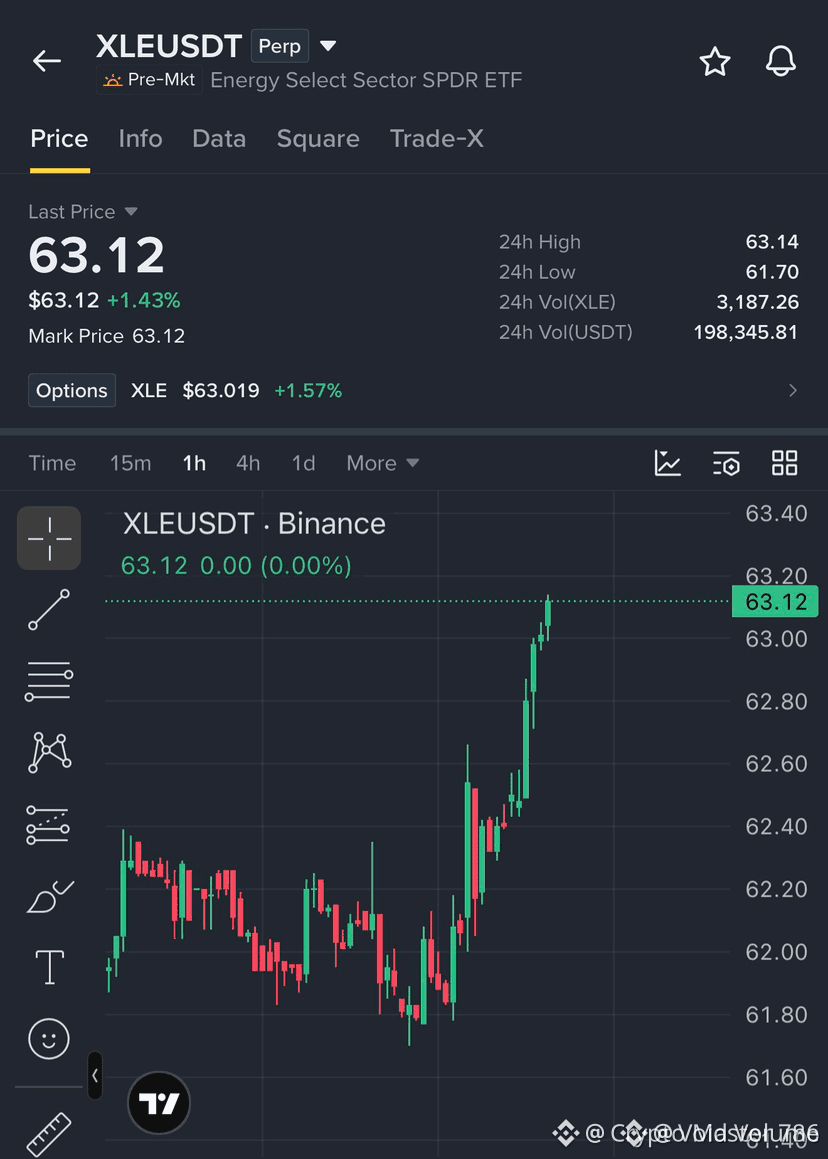
🚨 $XLE EXPANDS HIGHER AS BULLISH CONTINUATION SWEEPS OVERHEAD LIQUIDITY! 🟢
Entry: 62.95 - 63.12 🟢
Target: 63.40 / 63.70 / 64.00 🚀
Stop Loss: 62.55 ⚠️
📌 $XLE demonstrates strong structural continuation, breaking local resistance with institutional order flow backing the upside push. 📊 Momentum remains firmly in favor of buyers as supply gets systematically absorbed at lower inefficiency nodes.
💡 While the trend shows clear strength, disciplined position sizing is critical here after the initial impulsive leg to avoid chasing localized overextension. 💬 Are you riding this momentum wave higher or waiting for a deeper retest? 👇
⚠️ Not financial advice. Always manage your risk. 🛡️
🏷️ #XLE #LongSetup #MarketStructure #Breakout #Trading
🎯 🦈
🚨 $XLE EXPANDS HIGHER AS BULLISH CONTINUATION SWEEPS OVERHEAD LIQUIDITY! 🟢
Entry: 62.95 - 63.12 🟢
Target: 63.40 / 63.70 / 64.00 🚀
Stop Loss: 62.55 ⚠️
📌 $XLE demonstrates strong structural continuation, breaking local resistance with institutional order flow backing the upside push. 📊 Momentum remains firmly in favor of buyers as supply gets systematically absorbed at lower inefficiency nodes.
💡 While the trend shows clear strength, disciplined position sizing is critical here after the initial impulsive leg to avoid chasing localized overextension. 💬 Are you riding this momentum wave higher or waiting for a deeper retest? 👇
⚠️ Not financial advice. Always manage your risk. 🛡️
🏷️ #XLE #LongSetup #MarketStructure #Breakout #Trading
🎯 🦈
Entry: 62.95 - 63.12 🟢
Target: 63.40 / 63.70 / 64.00 🚀
Stop Loss: 62.55 ⚠️
📌 $XLE demonstrates strong structural continuation, breaking local resistance with institutional order flow backing the upside push. 📊 Momentum remains firmly in favor of buyers as supply gets systematically absorbed at lower inefficiency nodes.
💡 While the trend shows clear strength, disciplined position sizing is critical here after the initial impulsive leg to avoid chasing localized overextension. 💬 Are you riding this momentum wave higher or waiting for a deeper retest? 👇
⚠️ Not financial advice. Always manage your risk. 🛡️
🏷️ #XLE #LongSetup #MarketStructure #Breakout #Trading
🎯 🦈
7


·
--
Bullish
$XLE Rallies Into Resistance – Breakout Watch
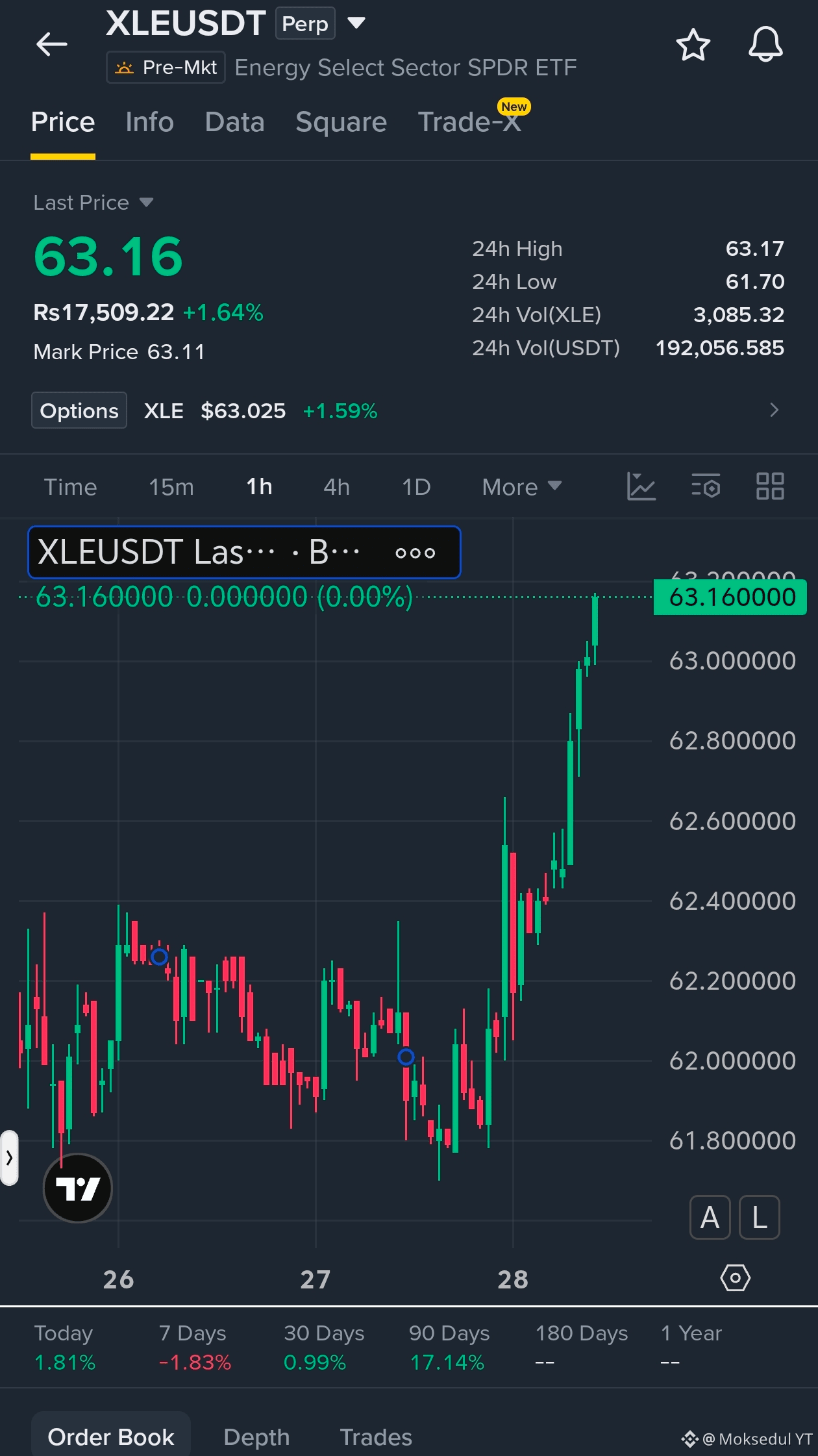
#XLE has rallied into the $63.17 resistance zone on the 1H chart after bouncing from $61.70. Price is now consolidating near $63.16, with the $62.80 level acting as immediate support.
A breakout above $63.17 could fuel a move to $63.60+. If sellers step in, $62.40 may be tested.
Entry: $63.10–$63.20
TP1: $63.70
TP2: $64.20
TP3: $64.80
SL: $62.70
LONG AND TRADE
{future}(XLEUSDT)
$QNT
{future}(QNTUSDT)
$BTW
{future}(BTWUSDT)
$XLE Rallies Into Resistance – Breakout Watch
#XLE has rallied into the $63.17 resistance zone on the 1H chart after bouncing from $61.70. Price is now consolidating near $63.16, with the $62.80 level acting as immediate support.
A breakout above $63.17 could fuel a move to $63.60+. If sellers step in, $62.40 may be tested.
Entry: $63.10–$63.20
TP1: $63.70
TP2: $64.20
TP3: $64.80
SL: $62.70
LONG AND TRADE
$QNT
$BTW
#XLE has rallied into the $63.17 resistance zone on the 1H chart after bouncing from $61.70. Price is now consolidating near $63.16, with the $62.80 level acting as immediate support.
A breakout above $63.17 could fuel a move to $63.60+. If sellers step in, $62.40 may be tested.
Entry: $63.10–$63.20
TP1: $63.70
TP2: $64.20
TP3: $64.80
SL: $62.70
LONG AND TRADE
$QNT
$BTW
2
676

·
--
🕒 FUNDING TIME CHANGED ! HTX $XLE
Next funding time moved: was in 3h51m, now in 51m (schedule shifted, not a normal rollover)
• HTX: +0.000% (next: 51m)
• KuCoin: +0.010% (next: 3h51m)
• Bybit: +0.000% (next: 3h51m)
• Binance: +0.000% (next: 51m)
• OKX: +0.000% (next: 3h51m)
• Bitget: +0.000% (next: 3h51m)
• MEXC: +0.000% (next: 3h51m)
• Gate: +0.000% (next: 3h51m)
#XLE #trading #derivatives
🕒 FUNDING TIME CHANGED ! HTX $XLE
Next funding time moved: was in 3h51m, now in 51m (schedule shifted, not a normal rollover)
• HTX: +0.000% (next: 51m)
• KuCoin: +0.010% (next: 3h51m)
• Bybit: +0.000% (next: 3h51m)
• Binance: +0.000% (next: 51m)
• OKX: +0.000% (next: 3h51m)
• Bitget: +0.000% (next: 3h51m)
• MEXC: +0.000% (next: 3h51m)
• Gate: +0.000% (next: 3h51m)
#XLE #trading #derivatives
Next funding time moved: was in 3h51m, now in 51m (schedule shifted, not a normal rollover)
• HTX: +0.000% (next: 51m)
• KuCoin: +0.010% (next: 3h51m)
• Bybit: +0.000% (next: 3h51m)
• Binance: +0.000% (next: 51m)
• OKX: +0.000% (next: 3h51m)
• Bitget: +0.000% (next: 3h51m)
• MEXC: +0.000% (next: 3h51m)
• Gate: +0.000% (next: 3h51m)
#XLE #trading #derivatives
122
·
--
⚡ MOSCOW OIL REFINERY FIRE SPARKING HUGE GEOPOLITICAL PREMIUM ON $XLE AHEAD OF OPEN! 💥
Over 1,600 drones just struck Moscow's primary refinery, putting a facility that supplies a third of the region's fuel directly up in flames. 📊 With energy infrastructure back in the crosshairs despite recent ceasefire rhetoric, crude markets are preparing for an explosive volatility spike when trading opens in 10 hours.
Smart capital is already positioning for supply squeeze risks across global macro desks. ⚡ Keep your eyes locked on $XLE and European energy flows as geopolitical risk premiums reprice rapidly across the board. 💡
🤔 Will crude gap up aggressively at the market bell or will paper traders fade the initial panic? 👇
⚠️ Not financial advice. Always manage your risk. 🛡️
🏷️ #XLE #Macro #Energy #Oil #Trading
🔥 ⚡
⚡ MOSCOW OIL REFINERY FIRE SPARKING HUGE GEOPOLITICAL PREMIUM ON $XLE AHEAD OF OPEN! 💥
Over 1,600 drones just struck Moscow's primary refinery, putting a facility that supplies a third of the region's fuel directly up in flames. 📊 With energy infrastructure back in the crosshairs despite recent ceasefire rhetoric, crude markets are preparing for an explosive volatility spike when trading opens in 10 hours.
Smart capital is already positioning for supply squeeze risks across global macro desks. ⚡ Keep your eyes locked on $XLE and European energy flows as geopolitical risk premiums reprice rapidly across the board. 💡
🤔 Will crude gap up aggressively at the market bell or will paper traders fade the initial panic? 👇
⚠️ Not financial advice. Always manage your risk. 🛡️
🏷️ #XLE #Macro #Energy #Oil #Trading
🔥 ⚡
Over 1,600 drones just struck Moscow's primary refinery, putting a facility that supplies a third of the region's fuel directly up in flames. 📊 With energy infrastructure back in the crosshairs despite recent ceasefire rhetoric, crude markets are preparing for an explosive volatility spike when trading opens in 10 hours.
Smart capital is already positioning for supply squeeze risks across global macro desks. ⚡ Keep your eyes locked on $XLE and European energy flows as geopolitical risk premiums reprice rapidly across the board. 💡
🤔 Will crude gap up aggressively at the market bell or will paper traders fade the initial panic? 👇
⚠️ Not financial advice. Always manage your risk. 🛡️
🏷️ #XLE #Macro #Energy #Oil #Trading
🔥 ⚡
44

·
--
🚨 MAJOR ENERGY SUPPLY DISRUPTION TARGETS MOSCOW REFINERY AS $XLE FACES GEOPOLITICAL REPRICING! 💥
A massive overnight drone strike on Moscow main fuel supply hub has shattered brief geopolitical calm, directly threatening European energy flows. Institutional energy desks are now recalibrating supply-side risk models ahead of the upcoming market open. 📊
With over a third of regional refining capacity compromised, we expect immediate volatility across $XLE and energy sector benchmarks. 🔍 Smart money will likely hunt liquidity around key macro resistance levels as order flow shifts heavily into supply disruption hedging. 💡
How are you positioning your portfolio ahead of the commodity market open in 10 hours? 👇
⚠️ Not financial advice. Always manage your risk. 🛡️
🏷️ #XLE #Energy #Macro #CrudeOil #Geopolitics
⚡ 🎯
🚨 MAJOR ENERGY SUPPLY DISRUPTION TARGETS MOSCOW REFINERY AS $XLE FACES GEOPOLITICAL REPRICING! 💥
A massive overnight drone strike on Moscow main fuel supply hub has shattered brief geopolitical calm, directly threatening European energy flows. Institutional energy desks are now recalibrating supply-side risk models ahead of the upcoming market open. 📊
With over a third of regional refining capacity compromised, we expect immediate volatility across $XLE and energy sector benchmarks. 🔍 Smart money will likely hunt liquidity around key macro resistance levels as order flow shifts heavily into supply disruption hedging. 💡
How are you positioning your portfolio ahead of the commodity market open in 10 hours? 👇
⚠️ Not financial advice. Always manage your risk. 🛡️
🏷️ #XLE #Energy #Macro #CrudeOil #Geopolitics
⚡ 🎯
A massive overnight drone strike on Moscow main fuel supply hub has shattered brief geopolitical calm, directly threatening European energy flows. Institutional energy desks are now recalibrating supply-side risk models ahead of the upcoming market open. 📊
With over a third of regional refining capacity compromised, we expect immediate volatility across $XLE and energy sector benchmarks. 🔍 Smart money will likely hunt liquidity around key macro resistance levels as order flow shifts heavily into supply disruption hedging. 💡
How are you positioning your portfolio ahead of the commodity market open in 10 hours? 👇
⚠️ Not financial advice. Always manage your risk. 🛡️
🏷️ #XLE #Energy #Macro #CrudeOil #Geopolitics
⚡ 🎯
38

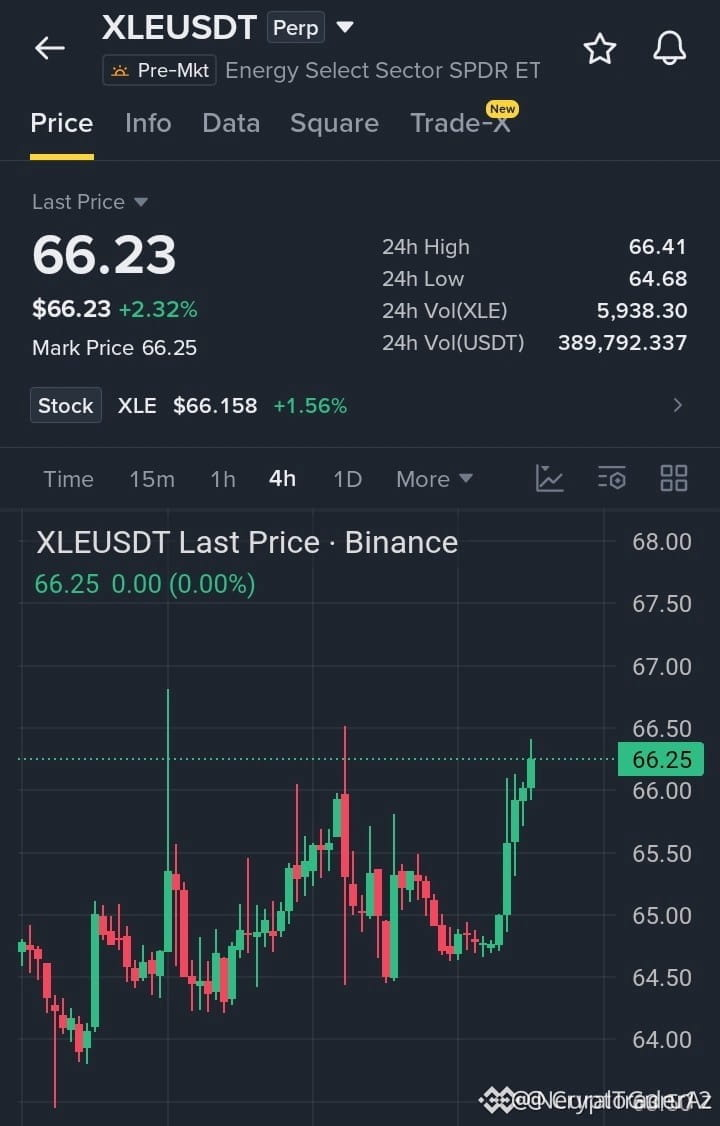
💥 $XLE RECLAIMS $66 CRITICAL LEVEL WITH POWERFUL 4H BREAKOUT EXPANSION! 📈
Entry: 65.90 - 66.30 ⚡
Target: 67.35 🎯
Stop Loss: 65.45 ⚠️
Smart money has decisively reclaimed the $65.00 key demand pivot, driving $XLE above $66.00 through consecutive institutional expansion candles. 📊 This market structure shift confirms strong order flow absorption and buyer dominance on the 4H timeframe.
Sustaining acceptance above $66.00 keeps the structural momentum firmly bullish, setting up an inefficiency fill toward upper liquidity targets. 💡 A clean push past $66.50 will likely trigger the next wave of buy-side acceleration. 💬 Are you trading this structural breakout or waiting for a key level retest? 👇
⚠️ Not financial advice. Always manage your risk. 🛡️
🏷️ #XLE #LongSetup #Breakout #Crypto
⚡ 🎯
💥 $XLE RECLAIMS $66 CRITICAL LEVEL WITH POWERFUL 4H BREAKOUT EXPANSION! 📈
Entry: 65.90 - 66.30 ⚡
Target: 67.35 🎯
Stop Loss: 65.45 ⚠️
Smart money has decisively reclaimed the $65.00 key demand pivot, driving $XLE above $66.00 through consecutive institutional expansion candles. 📊 This market structure shift confirms strong order flow absorption and buyer dominance on the 4H timeframe.
Sustaining acceptance above $66.00 keeps the structural momentum firmly bullish, setting up an inefficiency fill toward upper liquidity targets. 💡 A clean push past $66.50 will likely trigger the next wave of buy-side acceleration. 💬 Are you trading this structural breakout or waiting for a key level retest? 👇
⚠️ Not financial advice. Always manage your risk. 🛡️
🏷️ #XLE #LongSetup #Breakout #Crypto
⚡ 🎯
Entry: 65.90 - 66.30 ⚡
Target: 67.35 🎯
Stop Loss: 65.45 ⚠️
Smart money has decisively reclaimed the $65.00 key demand pivot, driving $XLE above $66.00 through consecutive institutional expansion candles. 📊 This market structure shift confirms strong order flow absorption and buyer dominance on the 4H timeframe.
Sustaining acceptance above $66.00 keeps the structural momentum firmly bullish, setting up an inefficiency fill toward upper liquidity targets. 💡 A clean push past $66.50 will likely trigger the next wave of buy-side acceleration. 💬 Are you trading this structural breakout or waiting for a key level retest? 👇
⚠️ Not financial advice. Always manage your risk. 🛡️
🏷️ #XLE #LongSetup #Breakout #Crypto
⚡ 🎯
9

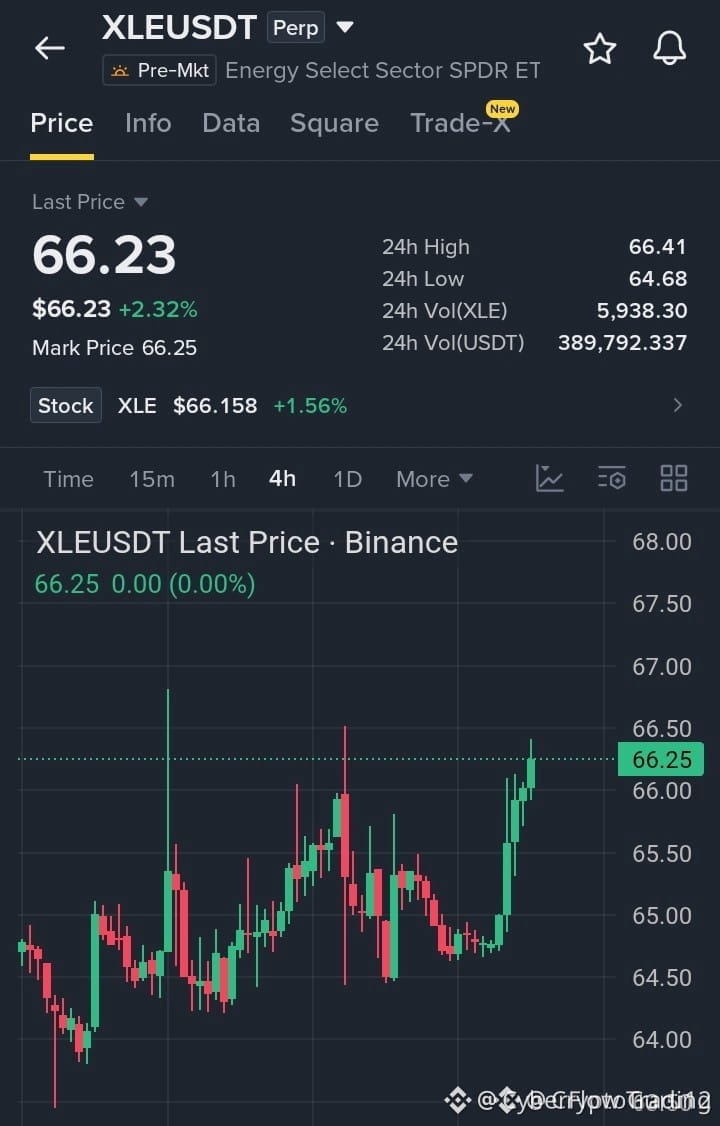
🟢 $XLE RECLAIMS THE $66 HANDLE AS BULK BUYERS TRIGGER AN EXPLOSIVE 4H BREAKOUT! 🚀
Entry: 65.90 - 66.30 ⚡
Target: 67.35 🚀
Stop Loss: 65.45 ⚠️
The 4H structure on $XLE just flipped aggressive upside momentum after reclaiming the pivotal $65.00 base. 📊 Consecutive high-volume candles pushed price cleanly past $66.00, signaling buyers are firmly driving order flow toward higher resistance blocks.
📌 As long as price holds above the $66.00 line, structure stays primed for a rapid expansion phase. ⚡ A sustained hold above $66.50 will likely trigger the next wave of momentum right into our main target zone. 💬 Are you riding this breakout trend or waiting for a quick retest of the entry range? 👇
⚠️ Not financial advice. Always manage your risk. 🛡️
🏷️ #XLE #LongSetup #Breakout #Crypto
🔥 ⚡
🟢 $XLE RECLAIMS THE $66 HANDLE AS BULK BUYERS TRIGGER AN EXPLOSIVE 4H BREAKOUT! 🚀
Entry: 65.90 - 66.30 ⚡
Target: 67.35 🚀
Stop Loss: 65.45 ⚠️
The 4H structure on $XLE just flipped aggressive upside momentum after reclaiming the pivotal $65.00 base. 📊 Consecutive high-volume candles pushed price cleanly past $66.00, signaling buyers are firmly driving order flow toward higher resistance blocks.
📌 As long as price holds above the $66.00 line, structure stays primed for a rapid expansion phase. ⚡ A sustained hold above $66.50 will likely trigger the next wave of momentum right into our main target zone. 💬 Are you riding this breakout trend or waiting for a quick retest of the entry range? 👇
⚠️ Not financial advice. Always manage your risk. 🛡️
🏷️ #XLE #LongSetup #Breakout #Crypto
🔥 ⚡
Entry: 65.90 - 66.30 ⚡
Target: 67.35 🚀
Stop Loss: 65.45 ⚠️
The 4H structure on $XLE just flipped aggressive upside momentum after reclaiming the pivotal $65.00 base. 📊 Consecutive high-volume candles pushed price cleanly past $66.00, signaling buyers are firmly driving order flow toward higher resistance blocks.
📌 As long as price holds above the $66.00 line, structure stays primed for a rapid expansion phase. ⚡ A sustained hold above $66.50 will likely trigger the next wave of momentum right into our main target zone. 💬 Are you riding this breakout trend or waiting for a quick retest of the entry range? 👇
⚠️ Not financial advice. Always manage your risk. 🛡️
🏷️ #XLE #LongSetup #Breakout #Crypto
🔥 ⚡
29

XLE volume shrink 20.0%, still bearish
If it’s up too much, it should fall—it's simple logic.
🔥 $XLE #XLE 【main】
Entry timing: $78.2880 place a sell (short) order to prepare to short, set stop loss at 10% ($86.1168)
Current price $65.2400, 24h change +0.76%
24h trading volume is only $0.543M, bottom of the whole market
→ Volume shrank 20.0%. Nobody wants to buy at the high, keep holding the short until it hits 0
If it just goes sideways and doesn’t rise, that’s weakness
These are also good times to short:
---
$CVC
Current $0.032800, 24h change -5.86%
Entry timing: $0.039360 place a sell (short) order, set stop loss at 10% ($0.043296)
---
$MUBARAK
Current $0.030180, 24h change +2.34%
Entry timing: $0.036216 place a sell (short) order, set stop loss at 10% ($0.039838)
---
⚠️ Small-capital trial and error—strictly use stop loss. Don’t trade without risk control
#量能分析 #crypto
XLE volume shrink 20.0%, still bearish
If it’s up too much, it should fall—it's simple logic.
🔥 $XLE #XLE 【main】
Entry timing: $78.2880 place a sell (short) order to prepare to short, set stop loss at 10% ($86.1168)
Current price $65.2400, 24h change +0.76%
24h trading volume is only $0.543M, bottom of the whole market
→ Volume shrank 20.0%. Nobody wants to buy at the high, keep holding the short until it hits 0
If it just goes sideways and doesn’t rise, that’s weakness
These are also good times to short:
---
$CVC
Current $0.032800, 24h change -5.86%
Entry timing: $0.039360 place a sell (short) order, set stop loss at 10% ($0.043296)
---
$MUBARAK
Current $0.030180, 24h change +2.34%
Entry timing: $0.036216 place a sell (short) order, set stop loss at 10% ($0.039838)
---
⚠️ Small-capital trial and error—strictly use stop loss. Don’t trade without risk control
#量能分析 #crypto
If it’s up too much, it should fall—it's simple logic.
🔥 $XLE #XLE 【main】
Entry timing: $78.2880 place a sell (short) order to prepare to short, set stop loss at 10% ($86.1168)
Current price $65.2400, 24h change +0.76%
24h trading volume is only $0.543M, bottom of the whole market
→ Volume shrank 20.0%. Nobody wants to buy at the high, keep holding the short until it hits 0
If it just goes sideways and doesn’t rise, that’s weakness
These are also good times to short:
---
$CVC
Current $0.032800, 24h change -5.86%
Entry timing: $0.039360 place a sell (short) order, set stop loss at 10% ($0.043296)
---
$MUBARAK
Current $0.030180, 24h change +2.34%
Entry timing: $0.036216 place a sell (short) order, set stop loss at 10% ($0.039838)
---
⚠️ Small-capital trial and error—strictly use stop loss. Don’t trade without risk control
#量能分析 #crypto
XLE saw a 48.5% decline in volume, still expecting downside
The top coins on the gainers list are often the most dangerous.
🔥 XLE #XLE 【main】
Look for a short entry at 79.2960; once it breaks through 87.2256, exit immediately
Current price 66.0800, 24h change +2.10%
24h trading volume is only $395k, the worst in the entire market
→ Trading volume shrank by 48.5%, buy-side momentum is exhausted—keep shorting until it reaches 0
If it can’t go up while moving sideways, it’s weak
These are also good opportunities to short:
---
USELESS
Current 0.200020, 24h change -3.86%
Entry timing: place a short order at 0.240024; set stop loss at 10% (0.264026)
---
EGLD
Current 4.1360, 24h change -0.48%
Entry timing: place a short order at 4.9632; set stop loss at 10% (5.4595)
---
⚠️ Small capital—test cautiously, use strict stop losses, and don’t trade without risk control
#量能分析 #shorting strategy
XLE saw a 48.5% decline in volume, still expecting downside
The top coins on the gainers list are often the most dangerous.
🔥 XLE #XLE 【main】
Look for a short entry at 79.2960; once it breaks through 87.2256, exit immediately
Current price 66.0800, 24h change +2.10%
24h trading volume is only $395k, the worst in the entire market
→ Trading volume shrank by 48.5%, buy-side momentum is exhausted—keep shorting until it reaches 0
If it can’t go up while moving sideways, it’s weak
These are also good opportunities to short:
---
USELESS
Current 0.200020, 24h change -3.86%
Entry timing: place a short order at 0.240024; set stop loss at 10% (0.264026)
---
EGLD
Current 4.1360, 24h change -0.48%
Entry timing: place a short order at 4.9632; set stop loss at 10% (5.4595)
---
⚠️ Small capital—test cautiously, use strict stop losses, and don’t trade without risk control
#量能分析 #shorting strategy
The top coins on the gainers list are often the most dangerous.
🔥 XLE #XLE 【main】
Look for a short entry at 79.2960; once it breaks through 87.2256, exit immediately
Current price 66.0800, 24h change +2.10%
24h trading volume is only $395k, the worst in the entire market
→ Trading volume shrank by 48.5%, buy-side momentum is exhausted—keep shorting until it reaches 0
If it can’t go up while moving sideways, it’s weak
These are also good opportunities to short:
---
USELESS
Current 0.200020, 24h change -3.86%
Entry timing: place a short order at 0.240024; set stop loss at 10% (0.264026)
---
EGLD
Current 4.1360, 24h change -0.48%
Entry timing: place a short order at 4.9632; set stop loss at 10% (5.4595)
---
⚠️ Small capital—test cautiously, use strict stop losses, and don’t trade without risk control
#量能分析 #shorting strategy
203

🚨 CRUDE SUPPLY SHOCK AS SAUDI PIPELINE OFFLINE—WATCH $XLE FOR MACRO VOLATILITY! 💥
Four million barrels per day just vanished from global supply after the Saudi East-West pipeline shut down, with repairs potentially taking six weeks. ⚡ With Houthi forces closing in on the Bab el-Mandab chokepoint, energy desks are bracing for a major supply disruption when markets open.
Capital is already positioning to front-run the bell, placing assets heavily leveraged to crude like $OXY and $CVX directly in the crosshairs. 📊 When systemic macro tailwinds hit, energy sector plays often reprice with explosive momentum as traders price in sustained geopolitical risk premiums.
💬 Are you hedging your portfolio into energy plays before the open, or waiting to trade the initial volatility wave? 👇
⚠️ Not financial advice. Always manage your risk. 🛡️
🏷️ #XLE #OXY #CVX #Macro #Energy
🔥 ⚡
🚨 CRUDE SUPPLY SHOCK AS SAUDI PIPELINE OFFLINE—WATCH $XLE FOR MACRO VOLATILITY! 💥
Four million barrels per day just vanished from global supply after the Saudi East-West pipeline shut down, with repairs potentially taking six weeks. ⚡ With Houthi forces closing in on the Bab el-Mandab chokepoint, energy desks are bracing for a major supply disruption when markets open.
Capital is already positioning to front-run the bell, placing assets heavily leveraged to crude like $OXY and $CVX directly in the crosshairs. 📊 When systemic macro tailwinds hit, energy sector plays often reprice with explosive momentum as traders price in sustained geopolitical risk premiums.
💬 Are you hedging your portfolio into energy plays before the open, or waiting to trade the initial volatility wave? 👇
⚠️ Not financial advice. Always manage your risk. 🛡️
🏷️ #XLE #OXY #CVX #Macro #Energy
🔥 ⚡
Four million barrels per day just vanished from global supply after the Saudi East-West pipeline shut down, with repairs potentially taking six weeks. ⚡ With Houthi forces closing in on the Bab el-Mandab chokepoint, energy desks are bracing for a major supply disruption when markets open.
Capital is already positioning to front-run the bell, placing assets heavily leveraged to crude like $OXY and $CVX directly in the crosshairs. 📊 When systemic macro tailwinds hit, energy sector plays often reprice with explosive momentum as traders price in sustained geopolitical risk premiums.
💬 Are you hedging your portfolio into energy plays before the open, or waiting to trade the initial volatility wave? 👇
⚠️ Not financial advice. Always manage your risk. 🛡️
🏷️ #XLE #OXY #CVX #Macro #Energy
🔥 ⚡
60

·
--
🚨 MAJOR SUPPLY SHOCK: $XLE PREPARES FOR AN INSTANT INSTITUTIONAL REPRICING! 💥
Institutional order flow is about to react to a severe structural supply disruption as Saudi Arabia's East-West pipeline abruptly goes offline. 🔍 With 4 million barrels per day removed from global circulation and critical maritime chokepoints threatened, market makers are forced to instantly re-estimate crude risk premiums. 🌊
Smart money positioning will likely drive aggressive open-market momentum across key sector drivers like $XLE , $OXY , and $CVX . 📊 Expect elevated volatility as smart money sweeps liquidity across energy assets ahead of the bell. ⚡
💬 Are you hunting long exposures ahead of the open, or waiting for initial volatility to settle? 👇
⚠️ Not financial advice. Always manage your risk. 🛡️
🏷️ #XLE #Energy #SupplyShock #MarketStructure #CrudeOil
🎯 🦈
🚨 MAJOR SUPPLY SHOCK: $XLE PREPARES FOR AN INSTANT INSTITUTIONAL REPRICING! 💥
Institutional order flow is about to react to a severe structural supply disruption as Saudi Arabia's East-West pipeline abruptly goes offline. 🔍 With 4 million barrels per day removed from global circulation and critical maritime chokepoints threatened, market makers are forced to instantly re-estimate crude risk premiums. 🌊
Smart money positioning will likely drive aggressive open-market momentum across key sector drivers like $XLE , $OXY , and $CVX . 📊 Expect elevated volatility as smart money sweeps liquidity across energy assets ahead of the bell. ⚡
💬 Are you hunting long exposures ahead of the open, or waiting for initial volatility to settle? 👇
⚠️ Not financial advice. Always manage your risk. 🛡️
🏷️ #XLE #Energy #SupplyShock #MarketStructure #CrudeOil
🎯 🦈
Institutional order flow is about to react to a severe structural supply disruption as Saudi Arabia's East-West pipeline abruptly goes offline. 🔍 With 4 million barrels per day removed from global circulation and critical maritime chokepoints threatened, market makers are forced to instantly re-estimate crude risk premiums. 🌊
Smart money positioning will likely drive aggressive open-market momentum across key sector drivers like $XLE , $OXY , and $CVX . 📊 Expect elevated volatility as smart money sweeps liquidity across energy assets ahead of the bell. ⚡
💬 Are you hunting long exposures ahead of the open, or waiting for initial volatility to settle? 👇
⚠️ Not financial advice. Always manage your risk. 🛡️
🏷️ #XLE #Energy #SupplyShock #MarketStructure #CrudeOil
🎯 🦈
44
🚨 $XLE READY FOR A BULLISH SURGE IF TENSION EASES! 🟢
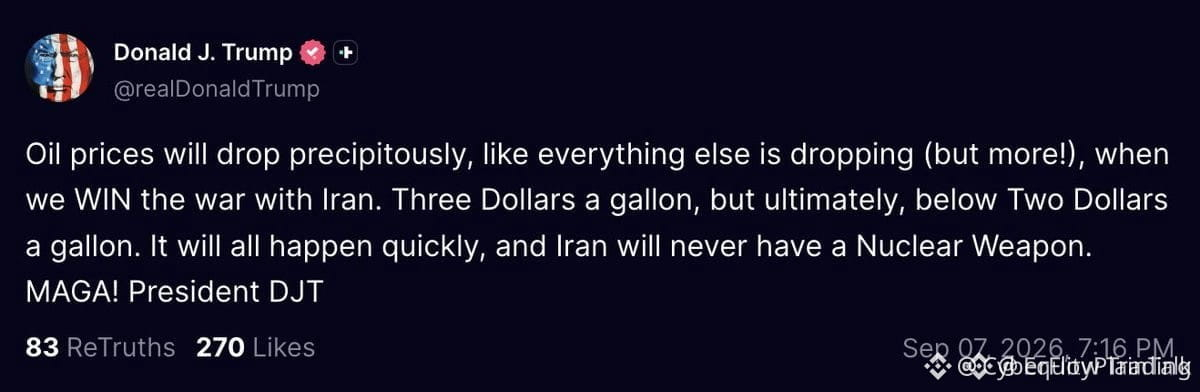
📊 The market’s pulse is humming: any de‑escalation in the Middle East could flood supply, slashing crude and lifting consumer‑grade energy stocks. 🌊 A swift production surge from the U.S. would crank the lever on $XLE , feeding a short‑term rally while the broader oil narrative still wrestles with geopolitical risk.
⚡ Yet every escalation spikes $WTI , turning $XLE into a quick‑play for traders chasing the upside. The dance between supply shocks and demand softness makes the chart a live battlefield. 💬 Are you loading up on $XLE now or waiting for the dip? 👇
⚠️ Not financial advice. Always manage your risk. 🛡️
🏷️ #XLE #EnergyPlay #OilDynamics #Crypto
🔥 💎
🚨 $XLE READY FOR A BULLISH SURGE IF TENSION EASES! 🟢
📊 The market’s pulse is humming: any de‑escalation in the Middle East could flood supply, slashing crude and lifting consumer‑grade energy stocks. 🌊 A swift production surge from the U.S. would crank the lever on $XLE , feeding a short‑term rally while the broader oil narrative still wrestles with geopolitical risk.
⚡ Yet every escalation spikes $WTI , turning $XLE into a quick‑play for traders chasing the upside. The dance between supply shocks and demand softness makes the chart a live battlefield. 💬 Are you loading up on $XLE now or waiting for the dip? 👇
⚠️ Not financial advice. Always manage your risk. 🛡️
🏷️ #XLE #EnergyPlay #OilDynamics #Crypto
🔥 💎
📊 The market’s pulse is humming: any de‑escalation in the Middle East could flood supply, slashing crude and lifting consumer‑grade energy stocks. 🌊 A swift production surge from the U.S. would crank the lever on $XLE , feeding a short‑term rally while the broader oil narrative still wrestles with geopolitical risk.
⚡ Yet every escalation spikes $WTI , turning $XLE into a quick‑play for traders chasing the upside. The dance between supply shocks and demand softness makes the chart a live battlefield. 💬 Are you loading up on $XLE now or waiting for the dip? 👇
⚠️ Not financial advice. Always manage your risk. 🛡️
🏷️ #XLE #EnergyPlay #OilDynamics #Crypto
🔥 💎
83

·
--
XLE spot is at 64.8, up 1% on the day, funding rate has returned to zero, and open interest is 8,228. In this policy vacuum, neither bulls nor bears dare to make a move. The energy sector is sensitive to tariffs and geopolitical policy; the current zero funding rate indicates the market is waiting for the other shoe to drop, with no one-sided crowding. If midterm election polling in the U.S. or trade policy shows a clear direction, the funding rate could quickly turn positive or negative, driving the trend. The counter-risk is that policy implementation turns out to be unexpectedly bullish, causing the funding rate to quickly turn positive and push prices higher. If policy signals turn bearish, funds may flow out of energy stocks into defensive sectors. Place a limit order below 64.5 to test a 2% position and wait for policy signals.
Trading tag: #TradFi #链上美股 #XLE
Where do you think this whole judgment is most likely to be wrong?
XLE spot is at 64.8, up 1% on the day, funding rate has returned to zero, and open interest is 8,228. In this policy vacuum, neither bulls nor bears dare to make a move. The energy sector is sensitive to tariffs and geopolitical policy; the current zero funding rate indicates the market is waiting for the other shoe to drop, with no one-sided crowding. If midterm election polling in the U.S. or trade policy shows a clear direction, the funding rate could quickly turn positive or negative, driving the trend. The counter-risk is that policy implementation turns out to be unexpectedly bullish, causing the funding rate to quickly turn positive and push prices higher. If policy signals turn bearish, funds may flow out of energy stocks into defensive sectors. Place a limit order below 64.5 to test a 2% position and wait for policy signals.
Trading tag: #TradFi #链上美股 #XLE
Where do you think this whole judgment is most likely to be wrong?
Trading tag: #TradFi #链上美股 #XLE
Where do you think this whole judgment is most likely to be wrong?
41
·
--
$XLE has only risen 1.01% over the past 24 hours, with the price stuck at 64.8. This energy ETF is moving with volatility as small as a Treasury bond.
From a political perspective, fiscal discipline and the debt ceiling negotiations remain unresolved, suppressing the risk premium in the energy sector. Funding rates have gone to zero, open interest is 8,228.11 contracts, and neither bulls nor bears are making a big bet. The market is waiting for a clear fiscal signal.
If Congress really passes an agreement to raise the debt ceiling, I would wait for the daily chart to move above 66 before considering adding to the position. For now, I’m only using a small position to test the waters; if it falls below 63, I’ll exit.
Trading tag: #TradFi #链上美股 #XLE
Where do you think this line of reasoning is most likely to be wrong?
$XLE has only risen 1.01% over the past 24 hours, with the price stuck at 64.8. This energy ETF is moving with volatility as small as a Treasury bond.
From a political perspective, fiscal discipline and the debt ceiling negotiations remain unresolved, suppressing the risk premium in the energy sector. Funding rates have gone to zero, open interest is 8,228.11 contracts, and neither bulls nor bears are making a big bet. The market is waiting for a clear fiscal signal.
If Congress really passes an agreement to raise the debt ceiling, I would wait for the daily chart to move above 66 before considering adding to the position. For now, I’m only using a small position to test the waters; if it falls below 63, I’ll exit.
Trading tag: #TradFi #链上美股 #XLE
Where do you think this line of reasoning is most likely to be wrong?
From a political perspective, fiscal discipline and the debt ceiling negotiations remain unresolved, suppressing the risk premium in the energy sector. Funding rates have gone to zero, open interest is 8,228.11 contracts, and neither bulls nor bears are making a big bet. The market is waiting for a clear fiscal signal.
If Congress really passes an agreement to raise the debt ceiling, I would wait for the daily chart to move above 66 before considering adding to the position. For now, I’m only using a small position to test the waters; if it falls below 63, I’ll exit.
Trading tag: #TradFi #链上美股 #XLE
Where do you think this line of reasoning is most likely to be wrong?
43
·
--
$XLE reported 64.8, up 1.013% in 24 hours, funding rate back to zero, open interest 8228. The political and regulatory signal is unclear, and long/short positioning in the energy sector is balanced. A funding rate of 0 means there is no overheated one-sided sentiment. Energy stocks are maintaining a narrow-range consolidation amid policy swings; trial position size should be kept within 5% of total holdings, and stop loss should be set if it falls below 63.5. If an unexpected tariff boost pushes it above 66, this view becomes invalid and position size should be increased in the direction of the trend.
Trading tag: #TradFi #链上美股 #XLE
Where do you think this set of judgments is most likely to be wrong?
$XLE reported 64.8, up 1.013% in 24 hours, funding rate back to zero, open interest 8228. The political and regulatory signal is unclear, and long/short positioning in the energy sector is balanced. A funding rate of 0 means there is no overheated one-sided sentiment. Energy stocks are maintaining a narrow-range consolidation amid policy swings; trial position size should be kept within 5% of total holdings, and stop loss should be set if it falls below 63.5. If an unexpected tariff boost pushes it above 66, this view becomes invalid and position size should be increased in the direction of the trend.
Trading tag: #TradFi #链上美股 #XLE
Where do you think this set of judgments is most likely to be wrong?
Trading tag: #TradFi #链上美股 #XLE
Where do you think this set of judgments is most likely to be wrong?
46
·
--
$XLE rose 1.013% over the past 24 hours to 64.8, but the funding rate remained at 0, meaning neither longs nor shorts are paying carrying costs. This does not look like a one-way move driven by a clear direction; it looks more like a cautious consolidation ahead of a political event.
Energy stocks are extremely sensitive to policy news. The current neutral funding rate suggests the market is waiting for a signal, and neither side’s bet has yet gained traction. Any political development, such as comments on tariffs or adjustments to fiscal spending, could instantly break this balance.
Trading tag: #TradFi #链上美股 #XLE
Where do you think this line of reasoning is most likely to be wrong?
$XLE rose 1.013% over the past 24 hours to 64.8, but the funding rate remained at 0, meaning neither longs nor shorts are paying carrying costs. This does not look like a one-way move driven by a clear direction; it looks more like a cautious consolidation ahead of a political event.
Energy stocks are extremely sensitive to policy news. The current neutral funding rate suggests the market is waiting for a signal, and neither side’s bet has yet gained traction. Any political development, such as comments on tariffs or adjustments to fiscal spending, could instantly break this balance.
Trading tag: #TradFi #链上美股 #XLE
Where do you think this line of reasoning is most likely to be wrong?
Energy stocks are extremely sensitive to policy news. The current neutral funding rate suggests the market is waiting for a signal, and neither side’s bet has yet gained traction. Any political development, such as comments on tariffs or adjustments to fiscal spending, could instantly break this balance.
Trading tag: #TradFi #链上美股 #XLE
Where do you think this line of reasoning is most likely to be wrong?
57
·
--
XLE is holding at 64.8, up more than 1% in 24 hours. Funding rates are flat, and the tug-of-war between longs and shorts has not produced a clear winner. Energy stocks are far more politically sensitive than tech stocks, and the current Middle East situation plus the game theory around the U.S. election is creating hidden support below prices. If there is no sudden escalation in geopolitical conflict, this balance is fragile. Once oil loses momentum, $XLE could easily lose 64. Below 64, I would consider a small short position, with a stop loss at the previous high of 65.2, and add if it breaks 63.5.
Trading tag: #TradFi #链上美股 #XLE
Where do you think this judgment is most likely wrong?
XLE is holding at 64.8, up more than 1% in 24 hours. Funding rates are flat, and the tug-of-war between longs and shorts has not produced a clear winner. Energy stocks are far more politically sensitive than tech stocks, and the current Middle East situation plus the game theory around the U.S. election is creating hidden support below prices. If there is no sudden escalation in geopolitical conflict, this balance is fragile. Once oil loses momentum, $XLE could easily lose 64. Below 64, I would consider a small short position, with a stop loss at the previous high of 65.2, and add if it breaks 63.5.
Trading tag: #TradFi #链上美股 #XLE
Where do you think this judgment is most likely wrong?
Trading tag: #TradFi #链上美股 #XLE
Where do you think this judgment is most likely wrong?
78
Log in to explore more content
Join global crypto users on Binance Square
⚡️ Get latest and useful information about crypto.
💬 Trusted by the world’s largest crypto exchange.
👍 Discover real insights from verified creators.
Email / Phone number
Trending Topics
1
#NFPWatch
10.5M views
17,247 Discussing
2
#XRPPostsFirstThreeGreenMonthsInQ3
2,335 views
85 Discussing
3
#BitcoinRisesToward$85K
31,308 views
87 Discussing
4
#AmazonPlansToSell$8BNvidiaChips
3,130 views
63 Discussing
5
#NEARFallsToAround$4.70Down14%
34,183 views
89 Discussing
6
#EthereumFoundationLaunchesZkAPIOnMainnet
50,266 views
756 Discussing
7
#EvernorthPlansNasdaqListingOct8
73,764 views
639 Discussing
8
#SECProposesCryptoCustodyFramework
64,289 views
579 Discussing
9
#IMFApproves$139MDisbursementToElSalvador
31,235 views
31 Discussing
10
#AnthropicTargetsIPOAsSoonAsMidNovember
47,693 views
476 Discussing