
#usoil
usoil
25,166 views
170 Discussing
Hot
Latest


Article
WTI clings to gains near mid-$99.00s, eyes multi-month top amid supply concerns.#USOIL
.WTI sticks to its bullish undertone as intensifying Middle East tensions fuel supply concerns. Saudi Arabia shuts down the East-West oil pipeline following drone attacks last Thursday.Iran rejects peace talks, saying that there will be no negotiations until its conditions are met. West Texas Intermediate (WTI) - the benchmark US Crude Oil price -catches fresh bids following the previous day's two-way price swings and sticks to its strong intraday gains through the first half of the European session on Tuesday. The black liquid currently trades near the $99.30-$99.35 region, up around 1.30% for the day, and remains within striking distance of the highest level since May 21, touched last Friday.A widening conflict between Houthis and Saudi Arabia fuels concerns over supply disruptions in the Middle East, which, in turn, continues to support crude oil prices. In fact, Saudi Arabia was forced to temporarily shut down the East-West oil pipeline after drone attacks launched from the territory of Iraq close to the Iranian border last Thursday. Moreover, Iran-backed Houthi forces carried out a large-scale attack on a Saudi air base in Khamis Mushait on Monday. This comes after Houthis in Yemen seized control of Yemen's Red Sea coast and the Bab al-Mandab Strait last week. Adding to this, the US-Iran standoff over the Strait of Hormuz backs the case for a further near-term appreciating move for crude oil prices. Meanwhile, Iranian Supreme National Security Council Secretary Mohsen Rezaei rejected the prospect of immediate negotiations with the US, saying that Tehran will not return to talks until its conditions are met. This dampens hopes for a diplomatic solution to end the war and keeps the geopolitical risk premium in play, validating the near-term positive outlook for crude oil prices. Traders, however, opt to wait for the key FOMC decision on Wednesday, which will drive the Greenback and US Dollar-denominated commodities, including crude oil prices. Nevertheless, the fundamental backdrop suggests that the path of least resistance for the commodity is to the upside. WTI daily chartTechnical Analysis The near-term bias stays bullish as WTI holds well above the 100-day Simple Moving Average (SMA) at $85.39 and has reclaimed the 78.6% Fibonacci retracement at $98.57. The Relative Strength Index (14) hovers in positive territory near 70, suggesting strong but stretched upside momentum, while the Moving Average Convergence Divergence (MACD) remains in positive territory with a firm histogram, reinforcing persistent buying pressure. On the downside, initial support emerges at the 78.6% Fibo. retracement at $98.57, with further demand expected around the 61.8% retracement at $91.78. Below that, the 50.0% retracement at $87.01 aligns with the 100-day SMA at $85.39 to form a broader support band ahead of deeper Fibonacci levels at $82.24 and $76.33, where buyers could attempt to stem any corrective pullback. (The technical analysis of this story was written with the help of an Al tool. Know more.) WTI Oil FAQs What is WTI Oil? WTI Oil is a type of Crude Oil sold on international markets. The WTI stands for
West Texas Intermediate, one of three major types including Brent and Dubai Crude. WTI is also referred to as "light" and "sweet" because of its relatively low gravity and sulfur content respectively. It is considered a high quality Oil that is easily refined. It is sourced in the United States and distributed via the Cushing hub, which is considered "The Pipeline Crossroads of the World". It is a benchmark for the Oil market and WTI price is frequently quoted in the media. What factors drive the price of WTI Oil? Like all assets, supply and demand are the key drivers of WTI Oil price. As such, global growth can be a driver of increased demand and vice versa for weak global growth. Political instability, wars, and sanctions can disrupt supply and impact prices. The decisions of OPEC, a group of major Oil-producing countries, is another key driver of price. The value of the US Dollar influences the price of WTI Crude Oil, since Oil is predominantly traded in US Dollars, thus a weaker US Dollar can make Oil more affordable and vice versa. How does inventory data impact the price of WTI Oil The weekly Oil inventory reports published by the American Petroleum Institute (API) and the Energy Information Agency (EIA) impact the price of WTI Oil. Changes in inventories reflect fluctuating supply and demand. If the data shows a drop in inventories it can indicate increased demand, pushing up Oil price. Higher inventories can reflect increased supply, pushing down prices. API's report is published every Tuesday and EIA's the day after. Their results are usually similar, falling within 1% of each other 75% of the time. The EIA data is considered more reliable, since it is a government agency. How does OPEC influence the price of WTI Oil? OPEC (Organization of the Petroleum Exporting Countries) is a group of 12 Oil-producing nations who collectively decide production quotas for member countries at twice-yearly meetings. Their decisions often impact WTI Oil prices. When OPEC decides to lower quotas, it can tighten supply, pushing up Oil prices. When OPEC increases production, it has the opposite effect. OPEC+ refers to an expanded group that includes ten extra non-OPEC members, the most notable of which is Russia.
WTI clings to gains near mid-$99.00s, eyes multi-month top amid supply concerns.
#USOIL
.WTI sticks to its bullish undertone as intensifying Middle East tensions fuel supply concerns. Saudi Arabia shuts down the East-West oil pipeline following drone attacks last Thursday.Iran rejects peace talks, saying that there will be no negotiations until its conditions are met. West Texas Intermediate (WTI) - the benchmark US Crude Oil price -catches fresh bids following the previous day's two-way price swings and sticks to its strong intraday gains through the first half of the European session on Tuesday. The black liquid currently trades near the $99.30-$99.35 region, up around 1.30% for the day, and remains within striking distance of the highest level since May 21, touched last Friday.A widening conflict between Houthis and Saudi Arabia fuels concerns over supply disruptions in the Middle East, which, in turn, continues to support crude oil prices. In fact, Saudi Arabia was forced to temporarily shut down the East-West oil pipeline after drone attacks launched from the territory of Iraq close to the Iranian border last Thursday. Moreover, Iran-backed Houthi forces carried out a large-scale attack on a Saudi air base in Khamis Mushait on Monday. This comes after Houthis in Yemen seized control of Yemen's Red Sea coast and the Bab al-Mandab Strait last week. Adding to this, the US-Iran standoff over the Strait of Hormuz backs the case for a further near-term appreciating move for crude oil prices. Meanwhile, Iranian Supreme National Security Council Secretary Mohsen Rezaei rejected the prospect of immediate negotiations with the US, saying that Tehran will not return to talks until its conditions are met. This dampens hopes for a diplomatic solution to end the war and keeps the geopolitical risk premium in play, validating the near-term positive outlook for crude oil prices. Traders, however, opt to wait for the key FOMC decision on Wednesday, which will drive the Greenback and US Dollar-denominated commodities, including crude oil prices. Nevertheless, the fundamental backdrop suggests that the path of least resistance for the commodity is to the upside. WTI daily chartTechnical Analysis The near-term bias stays bullish as WTI holds well above the 100-day Simple Moving Average (SMA) at $85.39 and has reclaimed the 78.6% Fibonacci retracement at $98.57. The Relative Strength Index (14) hovers in positive territory near 70, suggesting strong but stretched upside momentum, while the Moving Average Convergence Divergence (MACD) remains in positive territory with a firm histogram, reinforcing persistent buying pressure. On the downside, initial support emerges at the 78.6% Fibo. retracement at $98.57, with further demand expected around the 61.8% retracement at $91.78. Below that, the 50.0% retracement at $87.01 aligns with the 100-day SMA at $85.39 to form a broader support band ahead of deeper Fibonacci levels at $82.24 and $76.33, where buyers could attempt to stem any corrective pullback. (The technical analysis of this story was written with the help of an Al tool. Know more.) WTI Oil FAQs What is WTI Oil? WTI Oil is a type of Crude Oil sold on international markets. The WTI stands for
West Texas Intermediate, one of three major types including Brent and Dubai Crude. WTI is also referred to as "light" and "sweet" because of its relatively low gravity and sulfur content respectively. It is considered a high quality Oil that is easily refined. It is sourced in the United States and distributed via the Cushing hub, which is considered "The Pipeline Crossroads of the World". It is a benchmark for the Oil market and WTI price is frequently quoted in the media. What factors drive the price of WTI Oil? Like all assets, supply and demand are the key drivers of WTI Oil price. As such, global growth can be a driver of increased demand and vice versa for weak global growth. Political instability, wars, and sanctions can disrupt supply and impact prices. The decisions of OPEC, a group of major Oil-producing countries, is another key driver of price. The value of the US Dollar influences the price of WTI Crude Oil, since Oil is predominantly traded in US Dollars, thus a weaker US Dollar can make Oil more affordable and vice versa. How does inventory data impact the price of WTI Oil The weekly Oil inventory reports published by the American Petroleum Institute (API) and the Energy Information Agency (EIA) impact the price of WTI Oil. Changes in inventories reflect fluctuating supply and demand. If the data shows a drop in inventories it can indicate increased demand, pushing up Oil price. Higher inventories can reflect increased supply, pushing down prices. API's report is published every Tuesday and EIA's the day after. Their results are usually similar, falling within 1% of each other 75% of the time. The EIA data is considered more reliable, since it is a government agency. How does OPEC influence the price of WTI Oil? OPEC (Organization of the Petroleum Exporting Countries) is a group of 12 Oil-producing nations who collectively decide production quotas for member countries at twice-yearly meetings. Their decisions often impact WTI Oil prices. When OPEC decides to lower quotas, it can tighten supply, pushing up Oil prices. When OPEC increases production, it has the opposite effect. OPEC+ refers to an expanded group that includes ten extra non-OPEC members, the most notable of which is Russia.
.WTI sticks to its bullish undertone as intensifying Middle East tensions fuel supply concerns. Saudi Arabia shuts down the East-West oil pipeline following drone attacks last Thursday.Iran rejects peace talks, saying that there will be no negotiations until its conditions are met. West Texas Intermediate (WTI) - the benchmark US Crude Oil price -catches fresh bids following the previous day's two-way price swings and sticks to its strong intraday gains through the first half of the European session on Tuesday. The black liquid currently trades near the $99.30-$99.35 region, up around 1.30% for the day, and remains within striking distance of the highest level since May 21, touched last Friday.A widening conflict between Houthis and Saudi Arabia fuels concerns over supply disruptions in the Middle East, which, in turn, continues to support crude oil prices. In fact, Saudi Arabia was forced to temporarily shut down the East-West oil pipeline after drone attacks launched from the territory of Iraq close to the Iranian border last Thursday. Moreover, Iran-backed Houthi forces carried out a large-scale attack on a Saudi air base in Khamis Mushait on Monday. This comes after Houthis in Yemen seized control of Yemen's Red Sea coast and the Bab al-Mandab Strait last week. Adding to this, the US-Iran standoff over the Strait of Hormuz backs the case for a further near-term appreciating move for crude oil prices. Meanwhile, Iranian Supreme National Security Council Secretary Mohsen Rezaei rejected the prospect of immediate negotiations with the US, saying that Tehran will not return to talks until its conditions are met. This dampens hopes for a diplomatic solution to end the war and keeps the geopolitical risk premium in play, validating the near-term positive outlook for crude oil prices. Traders, however, opt to wait for the key FOMC decision on Wednesday, which will drive the Greenback and US Dollar-denominated commodities, including crude oil prices. Nevertheless, the fundamental backdrop suggests that the path of least resistance for the commodity is to the upside. WTI daily chartTechnical Analysis The near-term bias stays bullish as WTI holds well above the 100-day Simple Moving Average (SMA) at $85.39 and has reclaimed the 78.6% Fibonacci retracement at $98.57. The Relative Strength Index (14) hovers in positive territory near 70, suggesting strong but stretched upside momentum, while the Moving Average Convergence Divergence (MACD) remains in positive territory with a firm histogram, reinforcing persistent buying pressure. On the downside, initial support emerges at the 78.6% Fibo. retracement at $98.57, with further demand expected around the 61.8% retracement at $91.78. Below that, the 50.0% retracement at $87.01 aligns with the 100-day SMA at $85.39 to form a broader support band ahead of deeper Fibonacci levels at $82.24 and $76.33, where buyers could attempt to stem any corrective pullback. (The technical analysis of this story was written with the help of an Al tool. Know more.) WTI Oil FAQs What is WTI Oil? WTI Oil is a type of Crude Oil sold on international markets. The WTI stands for
West Texas Intermediate, one of three major types including Brent and Dubai Crude. WTI is also referred to as "light" and "sweet" because of its relatively low gravity and sulfur content respectively. It is considered a high quality Oil that is easily refined. It is sourced in the United States and distributed via the Cushing hub, which is considered "The Pipeline Crossroads of the World". It is a benchmark for the Oil market and WTI price is frequently quoted in the media. What factors drive the price of WTI Oil? Like all assets, supply and demand are the key drivers of WTI Oil price. As such, global growth can be a driver of increased demand and vice versa for weak global growth. Political instability, wars, and sanctions can disrupt supply and impact prices. The decisions of OPEC, a group of major Oil-producing countries, is another key driver of price. The value of the US Dollar influences the price of WTI Crude Oil, since Oil is predominantly traded in US Dollars, thus a weaker US Dollar can make Oil more affordable and vice versa. How does inventory data impact the price of WTI Oil The weekly Oil inventory reports published by the American Petroleum Institute (API) and the Energy Information Agency (EIA) impact the price of WTI Oil. Changes in inventories reflect fluctuating supply and demand. If the data shows a drop in inventories it can indicate increased demand, pushing up Oil price. Higher inventories can reflect increased supply, pushing down prices. API's report is published every Tuesday and EIA's the day after. Their results are usually similar, falling within 1% of each other 75% of the time. The EIA data is considered more reliable, since it is a government agency. How does OPEC influence the price of WTI Oil? OPEC (Organization of the Petroleum Exporting Countries) is a group of 12 Oil-producing nations who collectively decide production quotas for member countries at twice-yearly meetings. Their decisions often impact WTI Oil prices. When OPEC decides to lower quotas, it can tighten supply, pushing up Oil prices. When OPEC increases production, it has the opposite effect. OPEC+ refers to an expanded group that includes ten extra non-OPEC members, the most notable of which is Russia.
78

·
--
Bullish
#usoil
Saudi east-west pipeline will be out of service for 3-5 weeks - report
AP report cites unnamed officials
The big question in energy markets this week is how long it will take to restore flows through the Saudi east-west pipeline. For background, this was the pipeline that was put into use at the start of the war and it directs oil across the country and to the Red Sea.
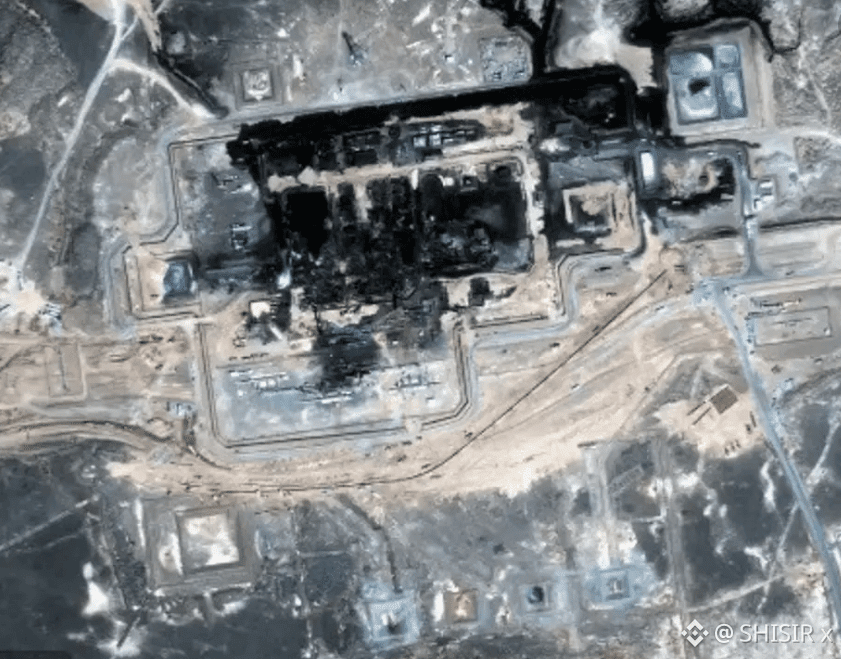
However on Thursday morning, attacks -- purportedly from Iraq -- damaged a 100km long section of the pipe in several places. The image above is a pumping station that appears to be completely destroyed and there's some talk there were eight separate hits.
#usoil
Saudi east-west pipeline will be out of service for 3-5 weeks - report
AP report cites unnamed officials
The big question in energy markets this week is how long it will take to restore flows through the Saudi east-west pipeline. For background, this was the pipeline that was put into use at the start of the war and it directs oil across the country and to the Red Sea.
However on Thursday morning, attacks -- purportedly from Iraq -- damaged a 100km long section of the pipe in several places. The image above is a pumping station that appears to be completely destroyed and there's some talk there were eight separate hits.
Saudi east-west pipeline will be out of service for 3-5 weeks - report
AP report cites unnamed officials
The big question in energy markets this week is how long it will take to restore flows through the Saudi east-west pipeline. For background, this was the pipeline that was put into use at the start of the war and it directs oil across the country and to the Red Sea.
However on Thursday morning, attacks -- purportedly from Iraq -- damaged a 100km long section of the pipe in several places. The image above is a pumping station that appears to be completely destroyed and there's some talk there were eight separate hits.
90

Article
WTI extend opening gains amid fears of further energy supply risks.$BTC
$ETH
#USOIL
..Oil prices gain significantly above $99.50 as the closure of Saudi's major pipeline prompts fears of energy supply risks.Saudi closes its major pipeline after drone attack from Iran-aligned Houthis. The scheduled meeting between Tehran and Gulf states to secure buy-in for a temporary deal to manage Hormuz has been postponed. West Texas Intermediate (WTI), futures on NYMEX, extends its opening gains in the European trading session on Monday, trading almost 3% higher slightly above $99.50.Oil prices have gained significantly as the precautionary shutdown of a major Saudi pipeline late on Friday following recent attacks, and the postponement of today's planned meeting between Iran and other Gulf states to discuss the creation of a temporary shipping corridor through the Strait of Hormuz, analysts at Deutsche Bank reported. According to CNN, Saudi Arabia's Ministry of Energy said in a statement posted to its website Friday that the pipeline had been attacked and "was shut down as a precautionary measure." On Thursday, Iran-backed Houthis launched various drones in an attempt to capture strategic points along the Red Sea. Meanwhile, the cancellation of scheduled meeting between Iran and Gulf states aimed at securing buy-in for a temporary deal to manage shipping through the Strait of Hormuz has also prompted the rally in oil prices. Regarding the meeting, Iran's Foreign Ministry spokesperson said, "Saudi Arabia insisted for meeting between Tehran and Gulf powers in Oman not to take place."Deutsche Bank noted that these developments have reinforced "market concerns around regional supply security and key shipping routes". WTI Technical Analysisin the daily chart, WTI US Oil trades at $99.45, extending a strong bullish phase with price holding well above the 20-day exponential moving average (EMA) at $89.92. The positioning of spot comfortably over this key trend indicator suggests underlying demand remains firm, while the Relative Strength Index (14) at 69.63 hovers near overbought territory, hinting that the latest rally could be entering a more mature stage even as upside momentum stays intact. On the downside, initial support is seen at the 20-day EMA at $89.92, which underpins the broader uptrend and would be watched on any corrective pullback. (The technical analysis of this story was written with the help of an Al tool. Know more.) WTI Oil FAQs What is WTI Oil? WTI Oil is a type of Crude Oil sold on international markets. The WTI stands for West Texas Intermediate, one of three major types including Brent and Dubai Crude. WTI is also referred to as "light" and "sweet" because of its relatively low gravity and sulfur content respectively. It is considered a high quality Oil that is easily refined. It is sourced in the United States and distributed via the Cushing hub, which is considered "The Pipeline Crossroads of the World". It is a benchmark for the Oil market and WTI price is frequently quoted in the media. What factors drive the price of WTI Oil? Like all assets, supply and demand are the key drivers of WTI Oil price. As such, global growth can be a driver of increased demand and vice versa for weak global
growth. Political instability, wars, and sanctions can disrupt supply and impact prices. The decisions of OPEC, a group of major Oil-producing countries, is another key driver of price. The value of the US Dollar influences the price of WTI Crude Oil, since Oil is predominantly traded in US Dollars, thus a weaker US Dollar can make Oil more affordable and vice versa. How does inventory data impact the price of WTI Oil The weekly Oil inventory reports published by the American Petroleum Institute (API) and the Energy Information Agency (EIA) impact the price of WTI Oil. Changes in inventories reflect fluctuating supply and demand. If the data shows a drop in inventories it can indicate increased demand, pushing up Oil price. Higher inventories can reflect increased supply, pushing down prices. API's report is published every Tuesday and EIA's the day after. Their results are usually similar, falling within 1% of each other 75% of the time. The EIA data is considered more reliable, since it is a government agency. How does OPEC influence the price of WTI Oil? OPEC (Organization of the Petroleum Exporting Countries) is a group of 12 Oil-producing nations who collectively decide production quotas for member countries at twice-yearly meetings. Their decisions often impact WTI Oil prices. When OPEC decides to lower quotas, it can tighten supply, pushing up Oil prices. When OPEC increases production, it has the opposite effect. OPEC+ refers to an expanded group that includes ten extra non-OPEC members, the most notable of which is Russia.
#USOIL
WTI extend opening gains amid fears of further energy supply risks.
$BTC
$ETH
#USOIL
..Oil prices gain significantly above $99.50 as the closure of Saudi's major pipeline prompts fears of energy supply risks.Saudi closes its major pipeline after drone attack from Iran-aligned Houthis. The scheduled meeting between Tehran and Gulf states to secure buy-in for a temporary deal to manage Hormuz has been postponed. West Texas Intermediate (WTI), futures on NYMEX, extends its opening gains in the European trading session on Monday, trading almost 3% higher slightly above $99.50.Oil prices have gained significantly as the precautionary shutdown of a major Saudi pipeline late on Friday following recent attacks, and the postponement of today's planned meeting between Iran and other Gulf states to discuss the creation of a temporary shipping corridor through the Strait of Hormuz, analysts at Deutsche Bank reported. According to CNN, Saudi Arabia's Ministry of Energy said in a statement posted to its website Friday that the pipeline had been attacked and "was shut down as a precautionary measure." On Thursday, Iran-backed Houthis launched various drones in an attempt to capture strategic points along the Red Sea. Meanwhile, the cancellation of scheduled meeting between Iran and Gulf states aimed at securing buy-in for a temporary deal to manage shipping through the Strait of Hormuz has also prompted the rally in oil prices. Regarding the meeting, Iran's Foreign Ministry spokesperson said, "Saudi Arabia insisted for meeting between Tehran and Gulf powers in Oman not to take place."Deutsche Bank noted that these developments have reinforced "market concerns around regional supply security and key shipping routes". WTI Technical Analysisin the daily chart, WTI US Oil trades at $99.45, extending a strong bullish phase with price holding well above the 20-day exponential moving average (EMA) at $89.92. The positioning of spot comfortably over this key trend indicator suggests underlying demand remains firm, while the Relative Strength Index (14) at 69.63 hovers near overbought territory, hinting that the latest rally could be entering a more mature stage even as upside momentum stays intact. On the downside, initial support is seen at the 20-day EMA at $89.92, which underpins the broader uptrend and would be watched on any corrective pullback. (The technical analysis of this story was written with the help of an Al tool. Know more.) WTI Oil FAQs What is WTI Oil? WTI Oil is a type of Crude Oil sold on international markets. The WTI stands for West Texas Intermediate, one of three major types including Brent and Dubai Crude. WTI is also referred to as "light" and "sweet" because of its relatively low gravity and sulfur content respectively. It is considered a high quality Oil that is easily refined. It is sourced in the United States and distributed via the Cushing hub, which is considered "The Pipeline Crossroads of the World". It is a benchmark for the Oil market and WTI price is frequently quoted in the media. What factors drive the price of WTI Oil? Like all assets, supply and demand are the key drivers of WTI Oil price. As such, global growth can be a driver of increased demand and vice versa for weak global
growth. Political instability, wars, and sanctions can disrupt supply and impact prices. The decisions of OPEC, a group of major Oil-producing countries, is another key driver of price. The value of the US Dollar influences the price of WTI Crude Oil, since Oil is predominantly traded in US Dollars, thus a weaker US Dollar can make Oil more affordable and vice versa. How does inventory data impact the price of WTI Oil The weekly Oil inventory reports published by the American Petroleum Institute (API) and the Energy Information Agency (EIA) impact the price of WTI Oil. Changes in inventories reflect fluctuating supply and demand. If the data shows a drop in inventories it can indicate increased demand, pushing up Oil price. Higher inventories can reflect increased supply, pushing down prices. API's report is published every Tuesday and EIA's the day after. Their results are usually similar, falling within 1% of each other 75% of the time. The EIA data is considered more reliable, since it is a government agency. How does OPEC influence the price of WTI Oil? OPEC (Organization of the Petroleum Exporting Countries) is a group of 12 Oil-producing nations who collectively decide production quotas for member countries at twice-yearly meetings. Their decisions often impact WTI Oil prices. When OPEC decides to lower quotas, it can tighten supply, pushing up Oil prices. When OPEC increases production, it has the opposite effect. OPEC+ refers to an expanded group that includes ten extra non-OPEC members, the most notable of which is Russia.
#USOIL
$ETH
#USOIL
..Oil prices gain significantly above $99.50 as the closure of Saudi's major pipeline prompts fears of energy supply risks.Saudi closes its major pipeline after drone attack from Iran-aligned Houthis. The scheduled meeting between Tehran and Gulf states to secure buy-in for a temporary deal to manage Hormuz has been postponed. West Texas Intermediate (WTI), futures on NYMEX, extends its opening gains in the European trading session on Monday, trading almost 3% higher slightly above $99.50.Oil prices have gained significantly as the precautionary shutdown of a major Saudi pipeline late on Friday following recent attacks, and the postponement of today's planned meeting between Iran and other Gulf states to discuss the creation of a temporary shipping corridor through the Strait of Hormuz, analysts at Deutsche Bank reported. According to CNN, Saudi Arabia's Ministry of Energy said in a statement posted to its website Friday that the pipeline had been attacked and "was shut down as a precautionary measure." On Thursday, Iran-backed Houthis launched various drones in an attempt to capture strategic points along the Red Sea. Meanwhile, the cancellation of scheduled meeting between Iran and Gulf states aimed at securing buy-in for a temporary deal to manage shipping through the Strait of Hormuz has also prompted the rally in oil prices. Regarding the meeting, Iran's Foreign Ministry spokesperson said, "Saudi Arabia insisted for meeting between Tehran and Gulf powers in Oman not to take place."Deutsche Bank noted that these developments have reinforced "market concerns around regional supply security and key shipping routes". WTI Technical Analysisin the daily chart, WTI US Oil trades at $99.45, extending a strong bullish phase with price holding well above the 20-day exponential moving average (EMA) at $89.92. The positioning of spot comfortably over this key trend indicator suggests underlying demand remains firm, while the Relative Strength Index (14) at 69.63 hovers near overbought territory, hinting that the latest rally could be entering a more mature stage even as upside momentum stays intact. On the downside, initial support is seen at the 20-day EMA at $89.92, which underpins the broader uptrend and would be watched on any corrective pullback. (The technical analysis of this story was written with the help of an Al tool. Know more.) WTI Oil FAQs What is WTI Oil? WTI Oil is a type of Crude Oil sold on international markets. The WTI stands for West Texas Intermediate, one of three major types including Brent and Dubai Crude. WTI is also referred to as "light" and "sweet" because of its relatively low gravity and sulfur content respectively. It is considered a high quality Oil that is easily refined. It is sourced in the United States and distributed via the Cushing hub, which is considered "The Pipeline Crossroads of the World". It is a benchmark for the Oil market and WTI price is frequently quoted in the media. What factors drive the price of WTI Oil? Like all assets, supply and demand are the key drivers of WTI Oil price. As such, global growth can be a driver of increased demand and vice versa for weak global
growth. Political instability, wars, and sanctions can disrupt supply and impact prices. The decisions of OPEC, a group of major Oil-producing countries, is another key driver of price. The value of the US Dollar influences the price of WTI Crude Oil, since Oil is predominantly traded in US Dollars, thus a weaker US Dollar can make Oil more affordable and vice versa. How does inventory data impact the price of WTI Oil The weekly Oil inventory reports published by the American Petroleum Institute (API) and the Energy Information Agency (EIA) impact the price of WTI Oil. Changes in inventories reflect fluctuating supply and demand. If the data shows a drop in inventories it can indicate increased demand, pushing up Oil price. Higher inventories can reflect increased supply, pushing down prices. API's report is published every Tuesday and EIA's the day after. Their results are usually similar, falling within 1% of each other 75% of the time. The EIA data is considered more reliable, since it is a government agency. How does OPEC influence the price of WTI Oil? OPEC (Organization of the Petroleum Exporting Countries) is a group of 12 Oil-producing nations who collectively decide production quotas for member countries at twice-yearly meetings. Their decisions often impact WTI Oil prices. When OPEC decides to lower quotas, it can tighten supply, pushing up Oil prices. When OPEC increases production, it has the opposite effect. OPEC+ refers to an expanded group that includes ten extra non-OPEC members, the most notable of which is Russia.
#USOIL
145

Article
WTI rebounds toward nearly four-month highs after Saudi pipeline shutdown.#USOIL
Saudi Arabia halted the East-West pipeline following drone attacks, disrupting a vital route avoiding the Strait of Hormuz. Regional diplomatic talks to establish a temporary shipping corridor through the Strait of Hormuz were postponed. The closed pipeline, boasting a seven million barrel daily capacity, highlights ongoing Middle East energy security risks. West Texas Intermediate (WTI) oil price rebounds after falling nearly 4% in the previous trading day, hovering around $99.40 per barrel during Asian hours on Monday. Crude oil prices are rising toward nearly four-month highs following a drone attack that forced Saudi Arabia to shut down a major crude pipeline. This disruption has heavily impacted a critical route traditionally used to bypass the Strait of Hormuz. As a precautionary measure, Saudi operations on the East-West pipeline were suspended immediately following Thursday's attacks, and officials have not yet indicated when normal operations will resume.Concurrently, diplomatic efforts have stalled in the region. According to Oman's Foreign Minister Badr Albusaidi, talks between Iran and several Gulf nations aimed at establishing a temporary shipping corridor through Hormuz have been postponed. Reports indicate that Saudi Arabia harbored concerns regarding the proposal, while Bahrain officially stated it would not participate. The unexpected closure of the East-West pipeline underscores its vital role in maintaining steady energy flows across the Middle East, particularly while the US and Iran remain at an impasse over the control of Hormuz. Stretching across Saudi Arabia to deliver oil directly to Red Sea ports, the pipeline boasts a massive capacity of around 7 million barrels per day.Brown Brothers Harriman's Elias Haddad cautions that, despite the recent easing in Brent after its latest surge, geopolitical risk remains a key constraint on any sustained downside. BBH argues that "Iran has every incentive to keep the heat on ahead of the November 3 midterms and hurt Republicans," suggesting that any relief-driven pullback in Oil prices is likely to be shallow and short-lived. WTI Oil FAQs What is WTI Oil? WTI Oil is a type of Crude Oil sold on international markets. The WTI stands for West Texas Intermediate, one of three major types including Brent and Dubai Crude. WTI is also referred to as "light" and "sweet" because of its relatively low gravity and sulfur content respectively. It is considered a high quality Oil that is easily refined. It is sourced in the United States and distributed via the Cushing hub, which is considered "The Pipeline Crossroads of the World". It is a benchmark for the Oil market and WTI price is frequently quoted in the media. What factors drive the price of WTI Oil? Like all assets, supply and demand are the key drivers of WTI Oil price. As such, global growth can be a driver of increased demand and vice versa for weak global growth. Political instability, wars, and sanctions can disrupt supply and impact prices. The decisions of OPEC, a group of major Oil-producing countries, is another key driver of price. The value of the US Dollar influences the price of WTI Crude Oil, since Oil is predominantly traded in US Dollars, thus a
weaker US Dollar can make Oil more affordable and vice versa. How does inventory data impact the price of WTI Oil The weekly Oil inventory reports published by the American Petroleum Institute (API) and the Energy Information Agency (EIA) impact the price of WTI Oil. Changes in inventories reflect fluctuating supply and demand. If the data shows a drop in inventories it can indicate increased demand, pushing up Oil price. Higher inventories can reflect increased supply, pushing down prices. API's report is published every Tuesday and EIA's the day after. Their results are usually similar, falling within 1% of each other 75% of the time. The EIA data is considered more reliable, since it is a government agency. How does OPEC influence the price of WTI Oil? OPEC (Organization of the Petroleum Exporting Countries) is a group of 12 Oil-producing nations who collectively decide production quotas for member countries at twice-yearly meetings. Their decisions often impact WTI Oil prices. When OPEC decides to lower quotas, it can tighten supply, pushing up Oil prices. When OPEC increases production, it has the opposite effect. OPEC+ refers to an expanded group that includes ten extra non-OPEC members, the most notable of which is Russia.
WTI rebounds toward nearly four-month highs after Saudi pipeline shutdown.
#USOIL
Saudi Arabia halted the East-West pipeline following drone attacks, disrupting a vital route avoiding the Strait of Hormuz. Regional diplomatic talks to establish a temporary shipping corridor through the Strait of Hormuz were postponed. The closed pipeline, boasting a seven million barrel daily capacity, highlights ongoing Middle East energy security risks. West Texas Intermediate (WTI) oil price rebounds after falling nearly 4% in the previous trading day, hovering around $99.40 per barrel during Asian hours on Monday. Crude oil prices are rising toward nearly four-month highs following a drone attack that forced Saudi Arabia to shut down a major crude pipeline. This disruption has heavily impacted a critical route traditionally used to bypass the Strait of Hormuz. As a precautionary measure, Saudi operations on the East-West pipeline were suspended immediately following Thursday's attacks, and officials have not yet indicated when normal operations will resume.Concurrently, diplomatic efforts have stalled in the region. According to Oman's Foreign Minister Badr Albusaidi, talks between Iran and several Gulf nations aimed at establishing a temporary shipping corridor through Hormuz have been postponed. Reports indicate that Saudi Arabia harbored concerns regarding the proposal, while Bahrain officially stated it would not participate. The unexpected closure of the East-West pipeline underscores its vital role in maintaining steady energy flows across the Middle East, particularly while the US and Iran remain at an impasse over the control of Hormuz. Stretching across Saudi Arabia to deliver oil directly to Red Sea ports, the pipeline boasts a massive capacity of around 7 million barrels per day.Brown Brothers Harriman's Elias Haddad cautions that, despite the recent easing in Brent after its latest surge, geopolitical risk remains a key constraint on any sustained downside. BBH argues that "Iran has every incentive to keep the heat on ahead of the November 3 midterms and hurt Republicans," suggesting that any relief-driven pullback in Oil prices is likely to be shallow and short-lived. WTI Oil FAQs What is WTI Oil? WTI Oil is a type of Crude Oil sold on international markets. The WTI stands for West Texas Intermediate, one of three major types including Brent and Dubai Crude. WTI is also referred to as "light" and "sweet" because of its relatively low gravity and sulfur content respectively. It is considered a high quality Oil that is easily refined. It is sourced in the United States and distributed via the Cushing hub, which is considered "The Pipeline Crossroads of the World". It is a benchmark for the Oil market and WTI price is frequently quoted in the media. What factors drive the price of WTI Oil? Like all assets, supply and demand are the key drivers of WTI Oil price. As such, global growth can be a driver of increased demand and vice versa for weak global growth. Political instability, wars, and sanctions can disrupt supply and impact prices. The decisions of OPEC, a group of major Oil-producing countries, is another key driver of price. The value of the US Dollar influences the price of WTI Crude Oil, since Oil is predominantly traded in US Dollars, thus a
weaker US Dollar can make Oil more affordable and vice versa. How does inventory data impact the price of WTI Oil The weekly Oil inventory reports published by the American Petroleum Institute (API) and the Energy Information Agency (EIA) impact the price of WTI Oil. Changes in inventories reflect fluctuating supply and demand. If the data shows a drop in inventories it can indicate increased demand, pushing up Oil price. Higher inventories can reflect increased supply, pushing down prices. API's report is published every Tuesday and EIA's the day after. Their results are usually similar, falling within 1% of each other 75% of the time. The EIA data is considered more reliable, since it is a government agency. How does OPEC influence the price of WTI Oil? OPEC (Organization of the Petroleum Exporting Countries) is a group of 12 Oil-producing nations who collectively decide production quotas for member countries at twice-yearly meetings. Their decisions often impact WTI Oil prices. When OPEC decides to lower quotas, it can tighten supply, pushing up Oil prices. When OPEC increases production, it has the opposite effect. OPEC+ refers to an expanded group that includes ten extra non-OPEC members, the most notable of which is Russia.
Saudi Arabia halted the East-West pipeline following drone attacks, disrupting a vital route avoiding the Strait of Hormuz. Regional diplomatic talks to establish a temporary shipping corridor through the Strait of Hormuz were postponed. The closed pipeline, boasting a seven million barrel daily capacity, highlights ongoing Middle East energy security risks. West Texas Intermediate (WTI) oil price rebounds after falling nearly 4% in the previous trading day, hovering around $99.40 per barrel during Asian hours on Monday. Crude oil prices are rising toward nearly four-month highs following a drone attack that forced Saudi Arabia to shut down a major crude pipeline. This disruption has heavily impacted a critical route traditionally used to bypass the Strait of Hormuz. As a precautionary measure, Saudi operations on the East-West pipeline were suspended immediately following Thursday's attacks, and officials have not yet indicated when normal operations will resume.Concurrently, diplomatic efforts have stalled in the region. According to Oman's Foreign Minister Badr Albusaidi, talks between Iran and several Gulf nations aimed at establishing a temporary shipping corridor through Hormuz have been postponed. Reports indicate that Saudi Arabia harbored concerns regarding the proposal, while Bahrain officially stated it would not participate. The unexpected closure of the East-West pipeline underscores its vital role in maintaining steady energy flows across the Middle East, particularly while the US and Iran remain at an impasse over the control of Hormuz. Stretching across Saudi Arabia to deliver oil directly to Red Sea ports, the pipeline boasts a massive capacity of around 7 million barrels per day.Brown Brothers Harriman's Elias Haddad cautions that, despite the recent easing in Brent after its latest surge, geopolitical risk remains a key constraint on any sustained downside. BBH argues that "Iran has every incentive to keep the heat on ahead of the November 3 midterms and hurt Republicans," suggesting that any relief-driven pullback in Oil prices is likely to be shallow and short-lived. WTI Oil FAQs What is WTI Oil? WTI Oil is a type of Crude Oil sold on international markets. The WTI stands for West Texas Intermediate, one of three major types including Brent and Dubai Crude. WTI is also referred to as "light" and "sweet" because of its relatively low gravity and sulfur content respectively. It is considered a high quality Oil that is easily refined. It is sourced in the United States and distributed via the Cushing hub, which is considered "The Pipeline Crossroads of the World". It is a benchmark for the Oil market and WTI price is frequently quoted in the media. What factors drive the price of WTI Oil? Like all assets, supply and demand are the key drivers of WTI Oil price. As such, global growth can be a driver of increased demand and vice versa for weak global growth. Political instability, wars, and sanctions can disrupt supply and impact prices. The decisions of OPEC, a group of major Oil-producing countries, is another key driver of price. The value of the US Dollar influences the price of WTI Crude Oil, since Oil is predominantly traded in US Dollars, thus a
weaker US Dollar can make Oil more affordable and vice versa. How does inventory data impact the price of WTI Oil The weekly Oil inventory reports published by the American Petroleum Institute (API) and the Energy Information Agency (EIA) impact the price of WTI Oil. Changes in inventories reflect fluctuating supply and demand. If the data shows a drop in inventories it can indicate increased demand, pushing up Oil price. Higher inventories can reflect increased supply, pushing down prices. API's report is published every Tuesday and EIA's the day after. Their results are usually similar, falling within 1% of each other 75% of the time. The EIA data is considered more reliable, since it is a government agency. How does OPEC influence the price of WTI Oil? OPEC (Organization of the Petroleum Exporting Countries) is a group of 12 Oil-producing nations who collectively decide production quotas for member countries at twice-yearly meetings. Their decisions often impact WTI Oil prices. When OPEC decides to lower quotas, it can tighten supply, pushing up Oil prices. When OPEC increases production, it has the opposite effect. OPEC+ refers to an expanded group that includes ten extra non-OPEC members, the most notable of which is Russia.
146

Article
Oman meeting between Gulf states and Iran delayed - Reuters.#USOIL
#USOilProduction
..Omani Foreign Minister Badr Albusaidi said that a meeting in Oman between Gulf countries and Iran to discuss possible agreements on the Strait of Hormuz, which had been scheduled for Monday, has been postponed, Reuters reported on Sunday. Albusaidi said in a post on X that the meeting is being delayed "in the interests of consensus," without offering any details about next steps. Oman's Foreign Ministry added a planned meeting was put off to ensure "appropriate conditions for a constructive dialogue that contributes to achieving sustainable understandings supporting the region's security and stability." WTI Oil FAQs What is WTI Oil? WTI Oil is a type of Crude Oil sold on international markets. The WTI stands for West Texas Intermediate, one of three major types including Brent and Dubai Crude. WTI is also referred to as "light" and "sweet" because of its relatively low gravity and sulfur content respectively. It is considered a high quality Oil that is easily refined. It is sourced in the United States and distributed via the Cushing hub, which is considered "The Pipeline Crossroads of the World". It is a benchmark for the Oil market and WTI price is frequently quoted in the media. What factors drive the price of WTI Oil? Like all assets, supply and demand are the key drivers of WTI Oil price. As such, global growth can be a driver of increased demand and vice versa for weak global growth. Political instability, wars, and sanctions can disrupt supply and impact prices. The decisions of OPEC, a group of major Oil-producing countries, is another key driver of price. The value of the US Dollar influences the price of WTI Crude Oil, since Oil is predominantly traded in US Dollars, thus a weaker US Dollar can make Oil more affordable and vice versa. How does inventory data impact the price of WTI Oil The weekly Oil inventory reports published by the American Petroleum Institute (API) and the Energy Information Agency (EIA) impact the price of WTI Oil. Changes in inventories reflect fluctuating supply and demand. If the data shows a drop in inventories it can indicate increased demand, pushing up Oil price. Higher inventories can reflect increased supply, pushing down prices. API's report is published every Tuesday and EIA's the day after. Their results are usually similar, falling within 1% of each other 75% of the time. The EIA data is considered more reliable, since it is a government agency. How does OPEC influence the price of WTI Oil? OPEC (Organization of the Petroleum Exporting Countries) is a group of 12 Oil-producing nations who collectively decide production quotas for member countries at twice-yearly meetings. Their decisions often impact WTI Oil prices. When OPEC decides to lower quotas, it can tighten supply, pushing up Oil prices. When OPEC increases production, it has the opposite effect. OPEC+ refers to an expanded group that includes ten extra non-OPEC members, the most notable of which is Russia.
Oman meeting between Gulf states and Iran delayed - Reuters.
#USOIL
#USOilProduction
..Omani Foreign Minister Badr Albusaidi said that a meeting in Oman between Gulf countries and Iran to discuss possible agreements on the Strait of Hormuz, which had been scheduled for Monday, has been postponed, Reuters reported on Sunday. Albusaidi said in a post on X that the meeting is being delayed "in the interests of consensus," without offering any details about next steps. Oman's Foreign Ministry added a planned meeting was put off to ensure "appropriate conditions for a constructive dialogue that contributes to achieving sustainable understandings supporting the region's security and stability." WTI Oil FAQs What is WTI Oil? WTI Oil is a type of Crude Oil sold on international markets. The WTI stands for West Texas Intermediate, one of three major types including Brent and Dubai Crude. WTI is also referred to as "light" and "sweet" because of its relatively low gravity and sulfur content respectively. It is considered a high quality Oil that is easily refined. It is sourced in the United States and distributed via the Cushing hub, which is considered "The Pipeline Crossroads of the World". It is a benchmark for the Oil market and WTI price is frequently quoted in the media. What factors drive the price of WTI Oil? Like all assets, supply and demand are the key drivers of WTI Oil price. As such, global growth can be a driver of increased demand and vice versa for weak global growth. Political instability, wars, and sanctions can disrupt supply and impact prices. The decisions of OPEC, a group of major Oil-producing countries, is another key driver of price. The value of the US Dollar influences the price of WTI Crude Oil, since Oil is predominantly traded in US Dollars, thus a weaker US Dollar can make Oil more affordable and vice versa. How does inventory data impact the price of WTI Oil The weekly Oil inventory reports published by the American Petroleum Institute (API) and the Energy Information Agency (EIA) impact the price of WTI Oil. Changes in inventories reflect fluctuating supply and demand. If the data shows a drop in inventories it can indicate increased demand, pushing up Oil price. Higher inventories can reflect increased supply, pushing down prices. API's report is published every Tuesday and EIA's the day after. Their results are usually similar, falling within 1% of each other 75% of the time. The EIA data is considered more reliable, since it is a government agency. How does OPEC influence the price of WTI Oil? OPEC (Organization of the Petroleum Exporting Countries) is a group of 12 Oil-producing nations who collectively decide production quotas for member countries at twice-yearly meetings. Their decisions often impact WTI Oil prices. When OPEC decides to lower quotas, it can tighten supply, pushing up Oil prices. When OPEC increases production, it has the opposite effect. OPEC+ refers to an expanded group that includes ten extra non-OPEC members, the most notable of which is Russia.
#USOilProduction
..Omani Foreign Minister Badr Albusaidi said that a meeting in Oman between Gulf countries and Iran to discuss possible agreements on the Strait of Hormuz, which had been scheduled for Monday, has been postponed, Reuters reported on Sunday. Albusaidi said in a post on X that the meeting is being delayed "in the interests of consensus," without offering any details about next steps. Oman's Foreign Ministry added a planned meeting was put off to ensure "appropriate conditions for a constructive dialogue that contributes to achieving sustainable understandings supporting the region's security and stability." WTI Oil FAQs What is WTI Oil? WTI Oil is a type of Crude Oil sold on international markets. The WTI stands for West Texas Intermediate, one of three major types including Brent and Dubai Crude. WTI is also referred to as "light" and "sweet" because of its relatively low gravity and sulfur content respectively. It is considered a high quality Oil that is easily refined. It is sourced in the United States and distributed via the Cushing hub, which is considered "The Pipeline Crossroads of the World". It is a benchmark for the Oil market and WTI price is frequently quoted in the media. What factors drive the price of WTI Oil? Like all assets, supply and demand are the key drivers of WTI Oil price. As such, global growth can be a driver of increased demand and vice versa for weak global growth. Political instability, wars, and sanctions can disrupt supply and impact prices. The decisions of OPEC, a group of major Oil-producing countries, is another key driver of price. The value of the US Dollar influences the price of WTI Crude Oil, since Oil is predominantly traded in US Dollars, thus a weaker US Dollar can make Oil more affordable and vice versa. How does inventory data impact the price of WTI Oil The weekly Oil inventory reports published by the American Petroleum Institute (API) and the Energy Information Agency (EIA) impact the price of WTI Oil. Changes in inventories reflect fluctuating supply and demand. If the data shows a drop in inventories it can indicate increased demand, pushing up Oil price. Higher inventories can reflect increased supply, pushing down prices. API's report is published every Tuesday and EIA's the day after. Their results are usually similar, falling within 1% of each other 75% of the time. The EIA data is considered more reliable, since it is a government agency. How does OPEC influence the price of WTI Oil? OPEC (Organization of the Petroleum Exporting Countries) is a group of 12 Oil-producing nations who collectively decide production quotas for member countries at twice-yearly meetings. Their decisions often impact WTI Oil prices. When OPEC decides to lower quotas, it can tighten supply, pushing up Oil prices. When OPEC increases production, it has the opposite effect. OPEC+ refers to an expanded group that includes ten extra non-OPEC members, the most notable of which is Russia.
149
Crude Oil buckles early and grinds back on talk of a Hormuz arrangement.#USOIL
WTI Crude Oil buckles early and grinds back, down about 3.4% on Hormuz talks. Gasoline supplied more than a third of the August CPI monthly increase. Global inventories are down 507 million barrels since the war began in February. West Texas Intermediate (WTI) trades near $97.00, about 3.4% lower and on track for its first down session in five. The Financial Times reported on Friday that Gulf foreign ministers will meet their Iranian counterpart in the Omani city of Salalah, in a push to win backing for a temporary arrangement covering shipping through the Strait of Hormuz. The meeting is on Monday. The price moved on Friday. Nothing moved through the strait, and the price moved anyway Preliminary vessel tracking counted seven ships through the Strait of Hormuz on September 10, against eleven the day before. Before the war began on February 28, the waterway handled roughly 125 cargo vessels a day and about one-fifth of the world's seaborne Crude Oil and liquefied natural gas (LNG). The waterway is not congested.Gulf producers have kept barrels moving by shuttling cargoes out to waiting tankers rather than sailing loaded ships through the strait, so exports have held up better than transit counts suggest. The cost of that workaround sits on top of every cargo, and tanker earnings are at records because of it. Friday's discount was applied to the freight, not to a barrel that has started moving again. Saudi Arabia's August output fell by around 1.9 million barrels a day, and Houthi strikes hit Saudi energy sites this week. American inventories drew a further 300K barrels in the week to September 4. The barrel now sets the inflation rate it gets punished for The August Consumer Price Index (CPI) rose 0.4% on the month and held at 3.4% YoY, both in line with consensus. Gasoline rose 3.9% and supplied more than a third of the monthly increase on its own. Fuel costs ran 28% higher YoY and diesel 52%, which reads as a report on the Gulf rather than on the American consumer. Diesel is the number that travels, because it prices trucking and delivery into every shelf in the country, which is how an energy shock stops being an energy shock. It was the last inflation print before the rate decision. Core CPI rose 0.3% against a 0.2% consensus and eased to 2.4% YoY, so the part of the index that excludes energy also firmed in the month energy did the damage. Rate futures now price a quarter-point increase on September 16 at roughly 70%, which would be the first move of the year out of a target range unchanged since January at 3.50% to 3.75%. A quarter point on the funds rate does not reopen a strait. The demand downgrade was the smaller number in its own reportThe International Energy Agency (IEA) published its monthly report on Friday and cut 2026 demand by a further 940K barrels a day, taking the full-year decline to 2.5 million. The same document has supply falling 5.7 million barrels a day this year to 100.7 million, with more than 10 million barrels a day of Gulf output still shut in through August. Production is put at 100.1 million barrels a day in August, down 1.6 million on the month. Output is forecast to rebound 8 million barrels a day next year, a recovery that
difference. Observed global stocks have fallen 507 million barrels since the war began, an average draw of 2.8 million barrels a day, and August alone took out 95 million. The agency puts the Gulf recovery in 2027. The balance has been paid for out of tanks, and tanks only empty once. One meeting has a published time and the other has a draftThe Federal Open Market Committee (FOMC) convenes on September 15 and 16, with the statement, the press conference and an updated Summary of Economic Projections (SEP) landing on the second day. Gulf ministers meet in Salalah the day before that. Rate futures put the quarter point near 70%, an events exchange nearer 57% and a prediction market nearer 49%. One European bank raised its year-end Brent forecast by $10.00 this week. Brent trades above $100.00. The June memorandum between Washington and Tehran produced a corridor hugging the Omani coast. Iran called that southern route a breach of the memorandum and attacked ships using it, and the interim deal collapsed. It is possible Monday produces a corridor that ships actually use. Two have been announced since June. Levels to watchResistance: The session high just above $100.50 is the first mark, with the $101.00 handle above it. Beyond that sits the May 18 to May 20 shelf just above $103.00, and the late-April peak short of $107.50 behind that. Support: The session low just beneath $95.50 held the whole pullback. Thursday's low just beneath $93.00 is the next mark, and the $90.00 handle below it carries the September advance. Bias: Higher while the $95.50 area holds, with $100.50 the first objective and $103.00 behind it. Friday's low gave back not quite half of the four-day advance, and the session has since recovered a third of that drop. The daily Stochastic Relative Strength Index (Stoch RSI) near 80 has dipped and turned back up rather than rolling over. Invalidation is a daily close beneath $93.00, which erases Thursday. A Salalah arrangement that insurers will price does it faster than any chart level, and so does a rate path that reaches demand. WTI spot daily chart WTI Oil FAQs What is WTI Oil? WTI Oil is a type of Crude Oil sold on international markets. The WTI stands for West Texas Intermediate, one of three major types including Brent and Dubai Crude. WTI is also referred to as "light" and "sweet" because of its relatively low gravity and sulfur content respectively. It is considered a high quality Oil that is easily refined. It is sourced in the United States and distributed via the Cushing hub, which is considered "The Pipeline Crossroads of the World". It is a benchmark for the Oil market and WTI price is frequently quoted in the media. What factors drive the price of WTI Oil? Like all assets, supply and demand are the key drivers of WTI Oil price. As such, global growth can be a driver of increased demand and vice versa for weak global growth. Political instability, wars, and sanctions can disrupt supply and impact prices. The decisions of OPEC, a group of major Oil-producing countries, is another key driver of price. The value of the US Dollar influences the price of WTI Crude Oil, since Oil is predominantly traded in US Dollars, thus
a weaker US Dollar can make Oil more affordable and vice versa. How does inventory data impact the price of WTI Oil The weekly Oil inventory reports published by the American Petroleum Institute (API) and the Energy Information Agency (EIA) impact the price of WTI Oil. Changes in inventories reflect fluctuating supply and demand. If the data shows a drop in inventories it can indicate increased demand, pushing up Oil price. Higher inventories can reflect increased supply, pushing down prices. API's report is published every Tuesday and EIA's the day after. Their results are usually similar, falling within 1% of each other 75% of the time. The EIA data is considered more reliable, since it is a government agency. How does OPEC influence the price of WTI Oil? OPEC (Organization of the Petroleum Exporting Countries) is a group of 12 Oil-producing nations who collectively decide production
quotas for member countries at twice-yearly meetings. Their decisions often impact WTI Oil prices. When OPEC decides to lower quotas, it can tighten supply, pushing up Oil prices. When OPEC increases production, it has the opposite effect. OPEC+ refers to an expanded group that includes ten extra non-OPEC members, the most notable of which is Russia.
#USOIL
#ETH(二饼)
#BTC走势分析
Crude Oil buckles early and grinds back on talk of a Hormuz arrangement.
#USOIL
WTI Crude Oil buckles early and grinds back, down about 3.4% on Hormuz talks. Gasoline supplied more than a third of the August CPI monthly increase. Global inventories are down 507 million barrels since the war began in February. West Texas Intermediate (WTI) trades near $97.00, about 3.4% lower and on track for its first down session in five. The Financial Times reported on Friday that Gulf foreign ministers will meet their Iranian counterpart in the Omani city of Salalah, in a push to win backing for a temporary arrangement covering shipping through the Strait of Hormuz. The meeting is on Monday. The price moved on Friday. Nothing moved through the strait, and the price moved anyway Preliminary vessel tracking counted seven ships through the Strait of Hormuz on September 10, against eleven the day before. Before the war began on February 28, the waterway handled roughly 125 cargo vessels a day and about one-fifth of the world's seaborne Crude Oil and liquefied natural gas (LNG). The waterway is not congested.Gulf producers have kept barrels moving by shuttling cargoes out to waiting tankers rather than sailing loaded ships through the strait, so exports have held up better than transit counts suggest. The cost of that workaround sits on top of every cargo, and tanker earnings are at records because of it. Friday's discount was applied to the freight, not to a barrel that has started moving again. Saudi Arabia's August output fell by around 1.9 million barrels a day, and Houthi strikes hit Saudi energy sites this week. American inventories drew a further 300K barrels in the week to September 4. The barrel now sets the inflation rate it gets punished for The August Consumer Price Index (CPI) rose 0.4% on the month and held at 3.4% YoY, both in line with consensus. Gasoline rose 3.9% and supplied more than a third of the monthly increase on its own. Fuel costs ran 28% higher YoY and diesel 52%, which reads as a report on the Gulf rather than on the American consumer. Diesel is the number that travels, because it prices trucking and delivery into every shelf in the country, which is how an energy shock stops being an energy shock. It was the last inflation print before the rate decision. Core CPI rose 0.3% against a 0.2% consensus and eased to 2.4% YoY, so the part of the index that excludes energy also firmed in the month energy did the damage. Rate futures now price a quarter-point increase on September 16 at roughly 70%, which would be the first move of the year out of a target range unchanged since January at 3.50% to 3.75%. A quarter point on the funds rate does not reopen a strait. The demand downgrade was the smaller number in its own reportThe International Energy Agency (IEA) published its monthly report on Friday and cut 2026 demand by a further 940K barrels a day, taking the full-year decline to 2.5 million. The same document has supply falling 5.7 million barrels a day this year to 100.7 million, with more than 10 million barrels a day of Gulf output still shut in through August. Production is put at 100.1 million barrels a day in August, down 1.6 million on the month. Output is forecast to rebound 8 million barrels a day next year, a recovery that
difference. Observed global stocks have fallen 507 million barrels since the war began, an average draw of 2.8 million barrels a day, and August alone took out 95 million. The agency puts the Gulf recovery in 2027. The balance has been paid for out of tanks, and tanks only empty once. One meeting has a published time and the other has a draftThe Federal Open Market Committee (FOMC) convenes on September 15 and 16, with the statement, the press conference and an updated Summary of Economic Projections (SEP) landing on the second day. Gulf ministers meet in Salalah the day before that. Rate futures put the quarter point near 70%, an events exchange nearer 57% and a prediction market nearer 49%. One European bank raised its year-end Brent forecast by $10.00 this week. Brent trades above $100.00. The June memorandum between Washington and Tehran produced a corridor hugging the Omani coast. Iran called that southern route a breach of the memorandum and attacked ships using it, and the interim deal collapsed. It is possible Monday produces a corridor that ships actually use. Two have been announced since June. Levels to watchResistance: The session high just above $100.50 is the first mark, with the $101.00 handle above it. Beyond that sits the May 18 to May 20 shelf just above $103.00, and the late-April peak short of $107.50 behind that. Support: The session low just beneath $95.50 held the whole pullback. Thursday's low just beneath $93.00 is the next mark, and the $90.00 handle below it carries the September advance. Bias: Higher while the $95.50 area holds, with $100.50 the first objective and $103.00 behind it. Friday's low gave back not quite half of the four-day advance, and the session has since recovered a third of that drop. The daily Stochastic Relative Strength Index (Stoch RSI) near 80 has dipped and turned back up rather than rolling over. Invalidation is a daily close beneath $93.00, which erases Thursday. A Salalah arrangement that insurers will price does it faster than any chart level, and so does a rate path that reaches demand. WTI spot daily chart WTI Oil FAQs What is WTI Oil? WTI Oil is a type of Crude Oil sold on international markets. The WTI stands for West Texas Intermediate, one of three major types including Brent and Dubai Crude. WTI is also referred to as "light" and "sweet" because of its relatively low gravity and sulfur content respectively. It is considered a high quality Oil that is easily refined. It is sourced in the United States and distributed via the Cushing hub, which is considered "The Pipeline Crossroads of the World". It is a benchmark for the Oil market and WTI price is frequently quoted in the media. What factors drive the price of WTI Oil? Like all assets, supply and demand are the key drivers of WTI Oil price. As such, global growth can be a driver of increased demand and vice versa for weak global growth. Political instability, wars, and sanctions can disrupt supply and impact prices. The decisions of OPEC, a group of major Oil-producing countries, is another key driver of price. The value of the US Dollar influences the price of WTI Crude Oil, since Oil is predominantly traded in US Dollars, thus
a weaker US Dollar can make Oil more affordable and vice versa. How does inventory data impact the price of WTI Oil The weekly Oil inventory reports published by the American Petroleum Institute (API) and the Energy Information Agency (EIA) impact the price of WTI Oil. Changes in inventories reflect fluctuating supply and demand. If the data shows a drop in inventories it can indicate increased demand, pushing up Oil price. Higher inventories can reflect increased supply, pushing down prices. API's report is published every Tuesday and EIA's the day after. Their results are usually similar, falling within 1% of each other 75% of the time. The EIA data is considered more reliable, since it is a government agency. How does OPEC influence the price of WTI Oil? OPEC (Organization of the Petroleum Exporting Countries) is a group of 12 Oil-producing nations who collectively decide production
quotas for member countries at twice-yearly meetings. Their decisions often impact WTI Oil prices. When OPEC decides to lower quotas, it can tighten supply, pushing up Oil prices. When OPEC increases production, it has the opposite effect. OPEC+ refers to an expanded group that includes ten extra non-OPEC members, the most notable of which is Russia.
#USOIL
#ETH(二饼)
#BTC走势分析
WTI Crude Oil buckles early and grinds back, down about 3.4% on Hormuz talks. Gasoline supplied more than a third of the August CPI monthly increase. Global inventories are down 507 million barrels since the war began in February. West Texas Intermediate (WTI) trades near $97.00, about 3.4% lower and on track for its first down session in five. The Financial Times reported on Friday that Gulf foreign ministers will meet their Iranian counterpart in the Omani city of Salalah, in a push to win backing for a temporary arrangement covering shipping through the Strait of Hormuz. The meeting is on Monday. The price moved on Friday. Nothing moved through the strait, and the price moved anyway Preliminary vessel tracking counted seven ships through the Strait of Hormuz on September 10, against eleven the day before. Before the war began on February 28, the waterway handled roughly 125 cargo vessels a day and about one-fifth of the world's seaborne Crude Oil and liquefied natural gas (LNG). The waterway is not congested.Gulf producers have kept barrels moving by shuttling cargoes out to waiting tankers rather than sailing loaded ships through the strait, so exports have held up better than transit counts suggest. The cost of that workaround sits on top of every cargo, and tanker earnings are at records because of it. Friday's discount was applied to the freight, not to a barrel that has started moving again. Saudi Arabia's August output fell by around 1.9 million barrels a day, and Houthi strikes hit Saudi energy sites this week. American inventories drew a further 300K barrels in the week to September 4. The barrel now sets the inflation rate it gets punished for The August Consumer Price Index (CPI) rose 0.4% on the month and held at 3.4% YoY, both in line with consensus. Gasoline rose 3.9% and supplied more than a third of the monthly increase on its own. Fuel costs ran 28% higher YoY and diesel 52%, which reads as a report on the Gulf rather than on the American consumer. Diesel is the number that travels, because it prices trucking and delivery into every shelf in the country, which is how an energy shock stops being an energy shock. It was the last inflation print before the rate decision. Core CPI rose 0.3% against a 0.2% consensus and eased to 2.4% YoY, so the part of the index that excludes energy also firmed in the month energy did the damage. Rate futures now price a quarter-point increase on September 16 at roughly 70%, which would be the first move of the year out of a target range unchanged since January at 3.50% to 3.75%. A quarter point on the funds rate does not reopen a strait. The demand downgrade was the smaller number in its own reportThe International Energy Agency (IEA) published its monthly report on Friday and cut 2026 demand by a further 940K barrels a day, taking the full-year decline to 2.5 million. The same document has supply falling 5.7 million barrels a day this year to 100.7 million, with more than 10 million barrels a day of Gulf output still shut in through August. Production is put at 100.1 million barrels a day in August, down 1.6 million on the month. Output is forecast to rebound 8 million barrels a day next year, a recovery that
difference. Observed global stocks have fallen 507 million barrels since the war began, an average draw of 2.8 million barrels a day, and August alone took out 95 million. The agency puts the Gulf recovery in 2027. The balance has been paid for out of tanks, and tanks only empty once. One meeting has a published time and the other has a draftThe Federal Open Market Committee (FOMC) convenes on September 15 and 16, with the statement, the press conference and an updated Summary of Economic Projections (SEP) landing on the second day. Gulf ministers meet in Salalah the day before that. Rate futures put the quarter point near 70%, an events exchange nearer 57% and a prediction market nearer 49%. One European bank raised its year-end Brent forecast by $10.00 this week. Brent trades above $100.00. The June memorandum between Washington and Tehran produced a corridor hugging the Omani coast. Iran called that southern route a breach of the memorandum and attacked ships using it, and the interim deal collapsed. It is possible Monday produces a corridor that ships actually use. Two have been announced since June. Levels to watchResistance: The session high just above $100.50 is the first mark, with the $101.00 handle above it. Beyond that sits the May 18 to May 20 shelf just above $103.00, and the late-April peak short of $107.50 behind that. Support: The session low just beneath $95.50 held the whole pullback. Thursday's low just beneath $93.00 is the next mark, and the $90.00 handle below it carries the September advance. Bias: Higher while the $95.50 area holds, with $100.50 the first objective and $103.00 behind it. Friday's low gave back not quite half of the four-day advance, and the session has since recovered a third of that drop. The daily Stochastic Relative Strength Index (Stoch RSI) near 80 has dipped and turned back up rather than rolling over. Invalidation is a daily close beneath $93.00, which erases Thursday. A Salalah arrangement that insurers will price does it faster than any chart level, and so does a rate path that reaches demand. WTI spot daily chart WTI Oil FAQs What is WTI Oil? WTI Oil is a type of Crude Oil sold on international markets. The WTI stands for West Texas Intermediate, one of three major types including Brent and Dubai Crude. WTI is also referred to as "light" and "sweet" because of its relatively low gravity and sulfur content respectively. It is considered a high quality Oil that is easily refined. It is sourced in the United States and distributed via the Cushing hub, which is considered "The Pipeline Crossroads of the World". It is a benchmark for the Oil market and WTI price is frequently quoted in the media. What factors drive the price of WTI Oil? Like all assets, supply and demand are the key drivers of WTI Oil price. As such, global growth can be a driver of increased demand and vice versa for weak global growth. Political instability, wars, and sanctions can disrupt supply and impact prices. The decisions of OPEC, a group of major Oil-producing countries, is another key driver of price. The value of the US Dollar influences the price of WTI Crude Oil, since Oil is predominantly traded in US Dollars, thus
a weaker US Dollar can make Oil more affordable and vice versa. How does inventory data impact the price of WTI Oil The weekly Oil inventory reports published by the American Petroleum Institute (API) and the Energy Information Agency (EIA) impact the price of WTI Oil. Changes in inventories reflect fluctuating supply and demand. If the data shows a drop in inventories it can indicate increased demand, pushing up Oil price. Higher inventories can reflect increased supply, pushing down prices. API's report is published every Tuesday and EIA's the day after. Their results are usually similar, falling within 1% of each other 75% of the time. The EIA data is considered more reliable, since it is a government agency. How does OPEC influence the price of WTI Oil? OPEC (Organization of the Petroleum Exporting Countries) is a group of 12 Oil-producing nations who collectively decide production
quotas for member countries at twice-yearly meetings. Their decisions often impact WTI Oil prices. When OPEC decides to lower quotas, it can tighten supply, pushing up Oil prices. When OPEC increases production, it has the opposite effect. OPEC+ refers to an expanded group that includes ten extra non-OPEC members, the most notable of which is Russia.
#USOIL
#ETH(二饼)
#BTC走势分析
305

·
--
🚨 $USOIL RECLAIMS $100 AS SUPPLY DISRUPTIONS RESTRUCTURE GLOBAL ENERGY LIQUIDITY! 💥
Institutional bids immediately stepped into $USOIL as critical pipeline closures redefined energy order flow. The sudden shutdown of Saudi Arabia's East-West bypass repriced systemic supply risk in real time, driving prices back above the psychological $100 mark. 🔍
Smart money is actively recalibrating exposure across refiners, drillers, and energy-dependent equities. While brief disruptions get absorbed quickly, an extended outage will trigger broader institutional repositioning as inflation pressure ripples into consumer margins. 📊
💬 Do you see this price spike as a temporary volatility surge, or the beginning of a sustained structural trend? 👇
⚠️ Not financial advice. Always manage your risk. 🛡️
🏷️ #USOIL #Macro #Oil #Inflation #Commodities
🎯 🔍
🚨 $USOIL RECLAIMS $100 AS SUPPLY DISRUPTIONS RESTRUCTURE GLOBAL ENERGY LIQUIDITY! 💥
Institutional bids immediately stepped into $USOIL as critical pipeline closures redefined energy order flow. The sudden shutdown of Saudi Arabia's East-West bypass repriced systemic supply risk in real time, driving prices back above the psychological $100 mark. 🔍
Smart money is actively recalibrating exposure across refiners, drillers, and energy-dependent equities. While brief disruptions get absorbed quickly, an extended outage will trigger broader institutional repositioning as inflation pressure ripples into consumer margins. 📊
💬 Do you see this price spike as a temporary volatility surge, or the beginning of a sustained structural trend? 👇
⚠️ Not financial advice. Always manage your risk. 🛡️
🏷️ #USOIL #Macro #Oil #Inflation #Commodities
🎯 🔍
Institutional bids immediately stepped into $USOIL as critical pipeline closures redefined energy order flow. The sudden shutdown of Saudi Arabia's East-West bypass repriced systemic supply risk in real time, driving prices back above the psychological $100 mark. 🔍
Smart money is actively recalibrating exposure across refiners, drillers, and energy-dependent equities. While brief disruptions get absorbed quickly, an extended outage will trigger broader institutional repositioning as inflation pressure ripples into consumer margins. 📊
💬 Do you see this price spike as a temporary volatility surge, or the beginning of a sustained structural trend? 👇
⚠️ Not financial advice. Always manage your risk. 🛡️
🏷️ #USOIL #Macro #Oil #Inflation #Commodities
🎯 🔍
62

·
--
SAUDI PIPELINE SHUTDOWN PUSHES $USOIL PAST $100 AS GLOBAL SUPPLY RISKS SPIKE! 🚨 💥
Saudi Arabia locking down its seven-million-barrel daily East-West artery sent immediate shockwaves through energy desks, driving physical crude straight back over triple digits. 📊 With the primary Red Sea bypass route compromised, institutional algorithms are aggressively repricing geopolitical risk across global commodity markets.
If this critical shutdown extends past a quick fix, the secondary squeeze will rapidly bleed into transport margins and reignite sticky inflation pressures. ⚡ Smart money is actively positioning for elevated volatility while high-input supply chains brace for impact. 💬 Do you expect this supply shock to resolve quickly, or are we staring at a prolonged macro reset for energy assets? 👇
⚠️ Not financial advice. Always manage your risk. 🛡️
🏷️ #USOIL #CrudeOil #Macro #Energy #Breakout
🔥 ⚡
SAUDI PIPELINE SHUTDOWN PUSHES $USOIL PAST $100 AS GLOBAL SUPPLY RISKS SPIKE! 🚨 💥
Saudi Arabia locking down its seven-million-barrel daily East-West artery sent immediate shockwaves through energy desks, driving physical crude straight back over triple digits. 📊 With the primary Red Sea bypass route compromised, institutional algorithms are aggressively repricing geopolitical risk across global commodity markets.
If this critical shutdown extends past a quick fix, the secondary squeeze will rapidly bleed into transport margins and reignite sticky inflation pressures. ⚡ Smart money is actively positioning for elevated volatility while high-input supply chains brace for impact. 💬 Do you expect this supply shock to resolve quickly, or are we staring at a prolonged macro reset for energy assets? 👇
⚠️ Not financial advice. Always manage your risk. 🛡️
🏷️ #USOIL #CrudeOil #Macro #Energy #Breakout
🔥 ⚡
Saudi Arabia locking down its seven-million-barrel daily East-West artery sent immediate shockwaves through energy desks, driving physical crude straight back over triple digits. 📊 With the primary Red Sea bypass route compromised, institutional algorithms are aggressively repricing geopolitical risk across global commodity markets.
If this critical shutdown extends past a quick fix, the secondary squeeze will rapidly bleed into transport margins and reignite sticky inflation pressures. ⚡ Smart money is actively positioning for elevated volatility while high-input supply chains brace for impact. 💬 Do you expect this supply shock to resolve quickly, or are we staring at a prolonged macro reset for energy assets? 👇
⚠️ Not financial advice. Always manage your risk. 🛡️
🏷️ #USOIL #CrudeOil #Macro #Energy #Breakout
🔥 ⚡
9
WTI drops more than 4% below $97 as profit-taking kicks in, Iran tensions limit l osses ....#USOIL
WTI Oil falls more than 4% on Friday as traders take profits following a strong rally earlier this week.US crude Oil inventories decline less than expected, adding further downward pressure on prices. Fresh attacks around the Strait of Hormuz keep global supply concerns alive and could limit the downside in Oil prices. West Texas Intermediate (WTI) US Oil drops 4.54% on Friday and trades around $96.00 at the time of writing. The crude Oil comes under heavy profit-taking pressure following its strong advance earlier this week, while a smaller-than-expected decline in United States (US) crude inventories adds further pressure on prices. WTI nevertheless remains sharply higher for the week after benefiting from an increase in the geopolitical risk premium linked to the conflict between the United States and Iran. Friday's decline therefore primarily reflects profit-taking as investors also assess the latest US inventory data. The Energy Information Administration (EIA) reports that US crude Oil inventories fell by 391K barrels in the week ending September 4, following a 4.45M decline in the previous week. Markets had expected a larger draw of 1.6M barrels. The modest decline suggests that the balance between supply and demand in the US market remains less tight than anticipated. Geopolitical tensions in the Middle East, however, remain likely to limit WTI's correction. US President Donald Trump said on Thursday that he was not seeking a deal with Iran and suggested that Oil prices could remain elevated until after the US midterm elections in
November.Risks surrounding the region's key shipping routes also remain in focus. The Islamic Revolutionary Guard Corps (IRGC) said its navy struck a US Saildrone-type unmanned vessel in the Strait of Hormuz. Any further disruption in this strategic waterway could fuel concerns over global Oil supplies. Meanwhile, Yemen's Houthis have seized the port city of Mocha, strengthening their presence near the Bab al-Mandeb Strait. Escalating tensions around two crucial routes for global energy shipments therefore keep a geopolitical risk premium embedded in Oil prices, even though it is not enough on Friday to offset profit-taking. WTI Oil FAQs What is WTI Oil? WTI Oil is a type of Crude Oil sold on international markets. The WTI stands for West Texas Intermediate, one of three major types including Brent and Dubai Crude. WTI is also referred to as "light" and "sweet" because of its relatively low gravity and sulfur content respectively. It is considered a high quality Oil that is easily refined. It is sourced in the United States and distributed via the Cushing hub, which is considered "The Pipeline Crossroads of the World". It is a benchmark for the Oil market and WTI price is frequently quoted in the media. What factors drive the price of WTI Oil? Like all assets, supply and demand are the key drivers of WTI Oil price. As such, global growth can be a driver of increased demand and vice versa for weak global growth. Political instability, wars, and sanctions can disrupt supply and impact prices. The decisions of OPЕС, a group of major Oil-producing countries, is another key driver of price. The value of the US Dollar influences the price of WTI Crude Oil, since Oil is predominantly traded in US Dollars, thus a weaker US Dollar can make Oil more affordable and vice versa. How does inventory data impact the price of WTI Oil The weekly Oil inventory reports published by the American Petroleum Institute (API) and the Energy Information Agency (EIA) impact the price of WTI Oil. Changes in inventories reflect fluctuating supply and demand. If the data shows a drop in inventories it can indicate increased demand, pushing up Oil price. Higher inventories can reflect increased supply, pushing down prices. API's report is published every Tuesday and EIA's the day after. Their results are usually similar, falling within 1% of each other 75% of the time. The EIA data is considered more reliable, since it is a government agency. How does OPEC influence the price of WTI Oil? OPEC (Organization of the Petroleum Exporting Countries) is a group of 12 Oil-producing nations who collectively decide production quotas for member countries at twice-yearly meetings. Their decisions often impact WTI Oil prices. When OPEC decides to lower quotas, it can tighten supply, pushing up Oil prices. When OPEC increases production, it has the opposite effect. OPEC+ refers to an expanded group that includes ten extra non-OPEC members, the most notable of which is Russia.
WTI drops more than 4% below $97 as profit-taking kicks in, Iran tensions limit l osses ....
#USOIL
WTI Oil falls more than 4% on Friday as traders take profits following a strong rally earlier this week.US crude Oil inventories decline less than expected, adding further downward pressure on prices. Fresh attacks around the Strait of Hormuz keep global supply concerns alive and could limit the downside in Oil prices. West Texas Intermediate (WTI) US Oil drops 4.54% on Friday and trades around $96.00 at the time of writing. The crude Oil comes under heavy profit-taking pressure following its strong advance earlier this week, while a smaller-than-expected decline in United States (US) crude inventories adds further pressure on prices. WTI nevertheless remains sharply higher for the week after benefiting from an increase in the geopolitical risk premium linked to the conflict between the United States and Iran. Friday's decline therefore primarily reflects profit-taking as investors also assess the latest US inventory data. The Energy Information Administration (EIA) reports that US crude Oil inventories fell by 391K barrels in the week ending September 4, following a 4.45M decline in the previous week. Markets had expected a larger draw of 1.6M barrels. The modest decline suggests that the balance between supply and demand in the US market remains less tight than anticipated. Geopolitical tensions in the Middle East, however, remain likely to limit WTI's correction. US President Donald Trump said on Thursday that he was not seeking a deal with Iran and suggested that Oil prices could remain elevated until after the US midterm elections in
November.Risks surrounding the region's key shipping routes also remain in focus. The Islamic Revolutionary Guard Corps (IRGC) said its navy struck a US Saildrone-type unmanned vessel in the Strait of Hormuz. Any further disruption in this strategic waterway could fuel concerns over global Oil supplies. Meanwhile, Yemen's Houthis have seized the port city of Mocha, strengthening their presence near the Bab al-Mandeb Strait. Escalating tensions around two crucial routes for global energy shipments therefore keep a geopolitical risk premium embedded in Oil prices, even though it is not enough on Friday to offset profit-taking. WTI Oil FAQs What is WTI Oil? WTI Oil is a type of Crude Oil sold on international markets. The WTI stands for West Texas Intermediate, one of three major types including Brent and Dubai Crude. WTI is also referred to as "light" and "sweet" because of its relatively low gravity and sulfur content respectively. It is considered a high quality Oil that is easily refined. It is sourced in the United States and distributed via the Cushing hub, which is considered "The Pipeline Crossroads of the World". It is a benchmark for the Oil market and WTI price is frequently quoted in the media. What factors drive the price of WTI Oil? Like all assets, supply and demand are the key drivers of WTI Oil price. As such, global growth can be a driver of increased demand and vice versa for weak global growth. Political instability, wars, and sanctions can disrupt supply and impact prices. The decisions of OPЕС, a group of major Oil-producing countries, is another key driver of price. The value of the US Dollar influences the price of WTI Crude Oil, since Oil is predominantly traded in US Dollars, thus a weaker US Dollar can make Oil more affordable and vice versa. How does inventory data impact the price of WTI Oil The weekly Oil inventory reports published by the American Petroleum Institute (API) and the Energy Information Agency (EIA) impact the price of WTI Oil. Changes in inventories reflect fluctuating supply and demand. If the data shows a drop in inventories it can indicate increased demand, pushing up Oil price. Higher inventories can reflect increased supply, pushing down prices. API's report is published every Tuesday and EIA's the day after. Their results are usually similar, falling within 1% of each other 75% of the time. The EIA data is considered more reliable, since it is a government agency. How does OPEC influence the price of WTI Oil? OPEC (Organization of the Petroleum Exporting Countries) is a group of 12 Oil-producing nations who collectively decide production quotas for member countries at twice-yearly meetings. Their decisions often impact WTI Oil prices. When OPEC decides to lower quotas, it can tighten supply, pushing up Oil prices. When OPEC increases production, it has the opposite effect. OPEC+ refers to an expanded group that includes ten extra non-OPEC members, the most notable of which is Russia.
WTI Oil falls more than 4% on Friday as traders take profits following a strong rally earlier this week.US crude Oil inventories decline less than expected, adding further downward pressure on prices. Fresh attacks around the Strait of Hormuz keep global supply concerns alive and could limit the downside in Oil prices. West Texas Intermediate (WTI) US Oil drops 4.54% on Friday and trades around $96.00 at the time of writing. The crude Oil comes under heavy profit-taking pressure following its strong advance earlier this week, while a smaller-than-expected decline in United States (US) crude inventories adds further pressure on prices. WTI nevertheless remains sharply higher for the week after benefiting from an increase in the geopolitical risk premium linked to the conflict between the United States and Iran. Friday's decline therefore primarily reflects profit-taking as investors also assess the latest US inventory data. The Energy Information Administration (EIA) reports that US crude Oil inventories fell by 391K barrels in the week ending September 4, following a 4.45M decline in the previous week. Markets had expected a larger draw of 1.6M barrels. The modest decline suggests that the balance between supply and demand in the US market remains less tight than anticipated. Geopolitical tensions in the Middle East, however, remain likely to limit WTI's correction. US President Donald Trump said on Thursday that he was not seeking a deal with Iran and suggested that Oil prices could remain elevated until after the US midterm elections in
November.Risks surrounding the region's key shipping routes also remain in focus. The Islamic Revolutionary Guard Corps (IRGC) said its navy struck a US Saildrone-type unmanned vessel in the Strait of Hormuz. Any further disruption in this strategic waterway could fuel concerns over global Oil supplies. Meanwhile, Yemen's Houthis have seized the port city of Mocha, strengthening their presence near the Bab al-Mandeb Strait. Escalating tensions around two crucial routes for global energy shipments therefore keep a geopolitical risk premium embedded in Oil prices, even though it is not enough on Friday to offset profit-taking. WTI Oil FAQs What is WTI Oil? WTI Oil is a type of Crude Oil sold on international markets. The WTI stands for West Texas Intermediate, one of three major types including Brent and Dubai Crude. WTI is also referred to as "light" and "sweet" because of its relatively low gravity and sulfur content respectively. It is considered a high quality Oil that is easily refined. It is sourced in the United States and distributed via the Cushing hub, which is considered "The Pipeline Crossroads of the World". It is a benchmark for the Oil market and WTI price is frequently quoted in the media. What factors drive the price of WTI Oil? Like all assets, supply and demand are the key drivers of WTI Oil price. As such, global growth can be a driver of increased demand and vice versa for weak global growth. Political instability, wars, and sanctions can disrupt supply and impact prices. The decisions of OPЕС, a group of major Oil-producing countries, is another key driver of price. The value of the US Dollar influences the price of WTI Crude Oil, since Oil is predominantly traded in US Dollars, thus a weaker US Dollar can make Oil more affordable and vice versa. How does inventory data impact the price of WTI Oil The weekly Oil inventory reports published by the American Petroleum Institute (API) and the Energy Information Agency (EIA) impact the price of WTI Oil. Changes in inventories reflect fluctuating supply and demand. If the data shows a drop in inventories it can indicate increased demand, pushing up Oil price. Higher inventories can reflect increased supply, pushing down prices. API's report is published every Tuesday and EIA's the day after. Their results are usually similar, falling within 1% of each other 75% of the time. The EIA data is considered more reliable, since it is a government agency. How does OPEC influence the price of WTI Oil? OPEC (Organization of the Petroleum Exporting Countries) is a group of 12 Oil-producing nations who collectively decide production quotas for member countries at twice-yearly meetings. Their decisions often impact WTI Oil prices. When OPEC decides to lower quotas, it can tighten supply, pushing up Oil prices. When OPEC increases production, it has the opposite effect. OPEC+ refers to an expanded group that includes ten extra non-OPEC members, the most notable of which is Russia.
134

🛢️ US Oil (WTI) Market Insight: What's Next for Crude Oil?
Macroeconomic shifts and supply-demand dynamics are keeping the global oil market highly volatile right now! 📈📉
💡 Key Factors to Watch:
🔹 Inflation & Interest Rates: Crude oil price fluctuations directly impact inflation metrics globally.
🔹 Dollar Strength: As oil is priced in USD, index swings directly alter commodity momentum.
🔹 Hedging Portfolios: Smart investors closely monitor commodities alongside crypto to manage broader macro risk.
Are you bullish or bearish on Crude Oil for the rest of this month? Drop your targets below! 👇
#USOil #crudeoil #WTIUp6.17%BrentUp7.04% #CommodityTrading #BinanceSquareFamily
🛢️ US Oil (WTI) Market Insight: What's Next for Crude Oil?
Macroeconomic shifts and supply-demand dynamics are keeping the global oil market highly volatile right now! 📈📉
💡 Key Factors to Watch:
🔹 Inflation & Interest Rates: Crude oil price fluctuations directly impact inflation metrics globally.
🔹 Dollar Strength: As oil is priced in USD, index swings directly alter commodity momentum.
🔹 Hedging Portfolios: Smart investors closely monitor commodities alongside crypto to manage broader macro risk.
Are you bullish or bearish on Crude Oil for the rest of this month? Drop your targets below! 👇
#USOil #crudeoil #WTIUp6.17%BrentUp7.04% #CommodityTrading #BinanceSquareFamily
Macroeconomic shifts and supply-demand dynamics are keeping the global oil market highly volatile right now! 📈📉
💡 Key Factors to Watch:
🔹 Inflation & Interest Rates: Crude oil price fluctuations directly impact inflation metrics globally.
🔹 Dollar Strength: As oil is priced in USD, index swings directly alter commodity momentum.
🔹 Hedging Portfolios: Smart investors closely monitor commodities alongside crypto to manage broader macro risk.
Are you bullish or bearish on Crude Oil for the rest of this month? Drop your targets below! 👇
#USOil #crudeoil #WTIUp6.17%BrentUp7.04% #CommodityTrading #BinanceSquareFamily

156

$CL #USOIL Forex Guys Today Only USOIL Buy Day Big Because Hormuz intention again Rise today ✅💯 83.00 soon buy big Oil not $XAU today Only Oil Buy
{future}(CLUSDT)
$NVDAB
$CL #USOIL Forex Guys Today Only USOIL Buy Day Big Because Hormuz intention again Rise today ✅💯 83.00 soon buy big Oil not $XAU today Only Oil Buy
$NVDAB
$NVDAB
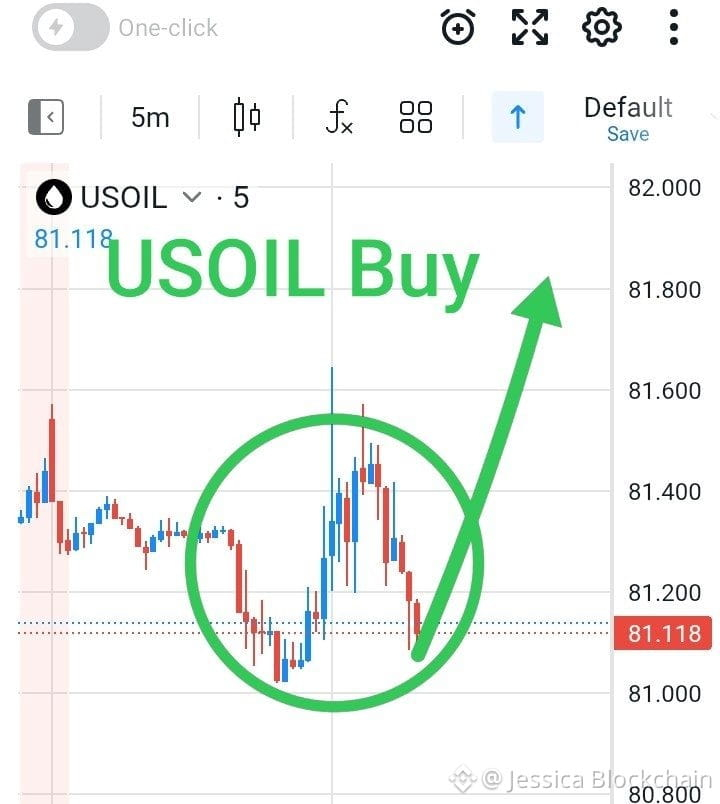
100

🚨 $USOIL INVENTORY CRUNCH AT 50-YEAR LOWS SIGNALS SEVERE LIQUIDITY IMBALANCE! 💥
U.S. crude supply reserves have collapsed to just 41 days, marking a 50-year structural deficit. Institutional capital is acutely aware that when buffer depth vanishes, any geopolitical friction or operational failure triggers violent upward re-pricing. 📊
Historical order flow precedents from the 1970s confirm that thin supply cushions compress refiner margins while expanding upstream producer yield. 🔍 As energy volatility leaks into consumer discretionary markets, broader risk assets will feel the squeeze. ⚡
Smart money is already mapping out this supply-side inefficiency before the full volatility premium gets priced in. 💬 Will energy outperformance hedge your portfolio, or are you expecting consumer liquidity to absorb the shock? 👇
⚠️ Not financial advice. Always manage your risk. 🛡️
🏷️ #USOIL #Macro #Commodities #Energy #MarketStructure
🎯 🦈
🚨 $USOIL INVENTORY CRUNCH AT 50-YEAR LOWS SIGNALS SEVERE LIQUIDITY IMBALANCE! 💥
U.S. crude supply reserves have collapsed to just 41 days, marking a 50-year structural deficit. Institutional capital is acutely aware that when buffer depth vanishes, any geopolitical friction or operational failure triggers violent upward re-pricing. 📊
Historical order flow precedents from the 1970s confirm that thin supply cushions compress refiner margins while expanding upstream producer yield. 🔍 As energy volatility leaks into consumer discretionary markets, broader risk assets will feel the squeeze. ⚡
Smart money is already mapping out this supply-side inefficiency before the full volatility premium gets priced in. 💬 Will energy outperformance hedge your portfolio, or are you expecting consumer liquidity to absorb the shock? 👇
⚠️ Not financial advice. Always manage your risk. 🛡️
🏷️ #USOIL #Macro #Commodities #Energy #MarketStructure
🎯 🦈
U.S. crude supply reserves have collapsed to just 41 days, marking a 50-year structural deficit. Institutional capital is acutely aware that when buffer depth vanishes, any geopolitical friction or operational failure triggers violent upward re-pricing. 📊
Historical order flow precedents from the 1970s confirm that thin supply cushions compress refiner margins while expanding upstream producer yield. 🔍 As energy volatility leaks into consumer discretionary markets, broader risk assets will feel the squeeze. ⚡
Smart money is already mapping out this supply-side inefficiency before the full volatility premium gets priced in. 💬 Will energy outperformance hedge your portfolio, or are you expecting consumer liquidity to absorb the shock? 👇
⚠️ Not financial advice. Always manage your risk. 🛡️
🏷️ #USOIL #Macro #Commodities #Energy #MarketStructure
🎯 🦈
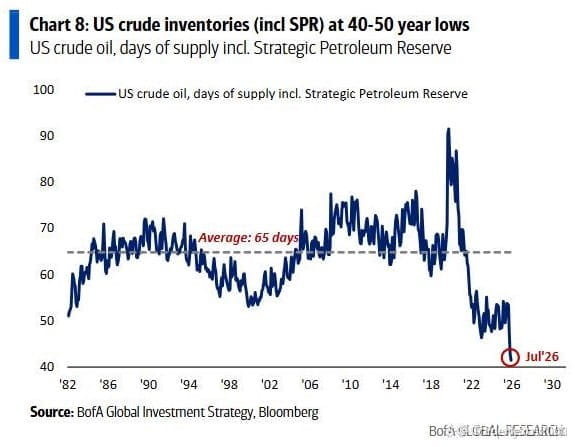
24
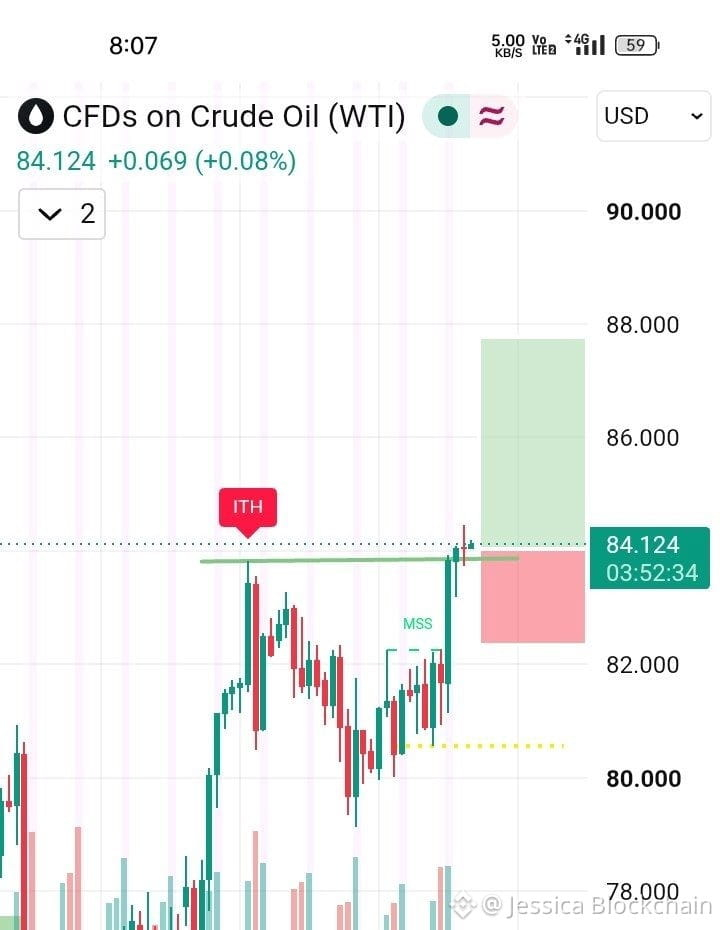
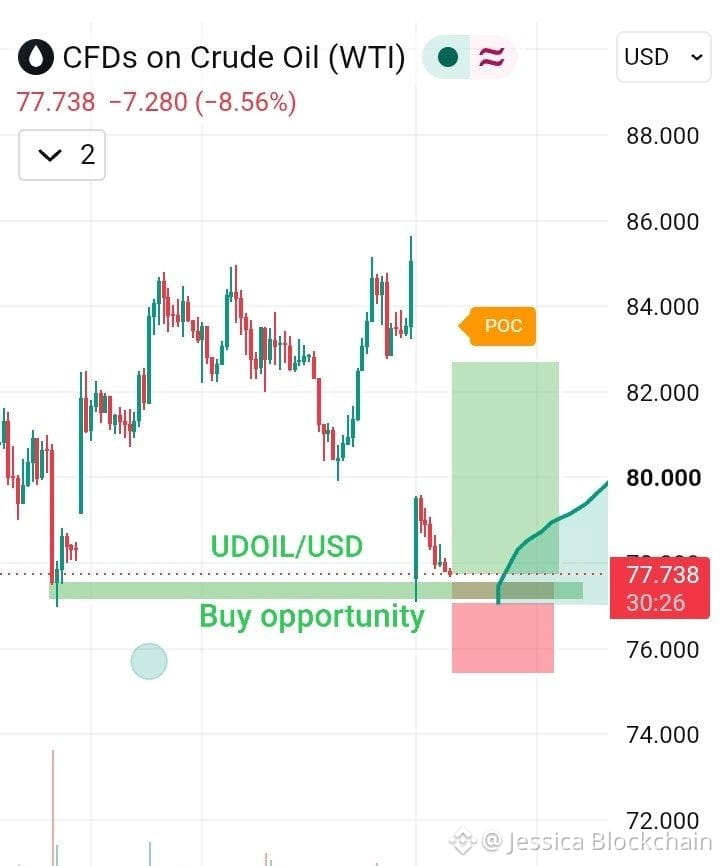
$XAU and $CL #USOIL 15m timeframe and 30m timeframe Analysis given see and decided what you do war soon end today or tomorrow secret news already leak
{future}(XAUUSDT)
$NVDA.US
$XAU and $CL #USOIL 15m timeframe and 30m timeframe Analysis given see and decided what you do war soon end today or tomorrow secret news already leak
$NVDA.US
$NVDA.US
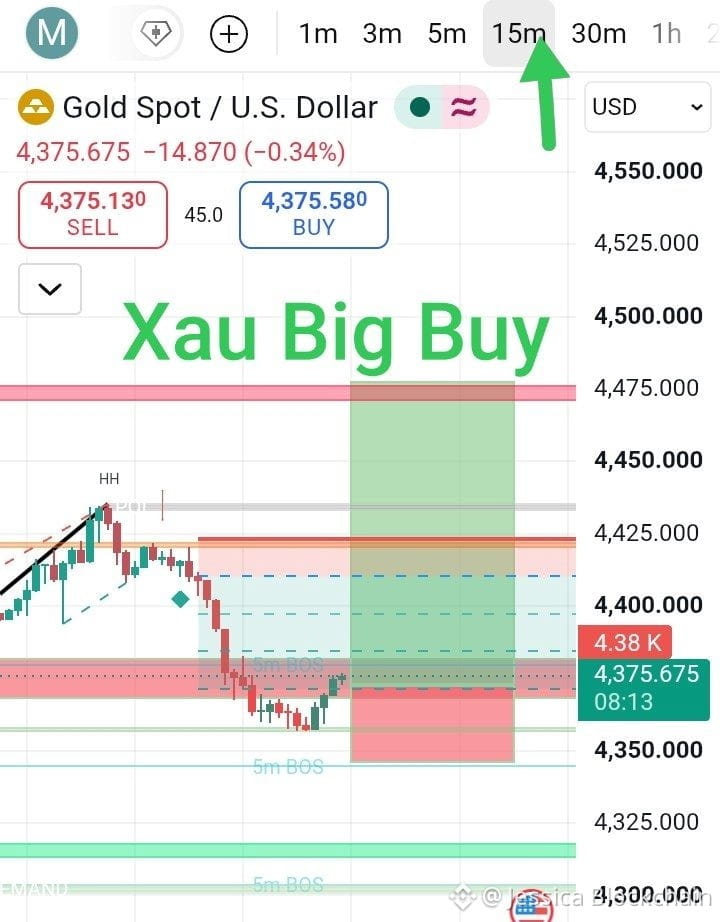
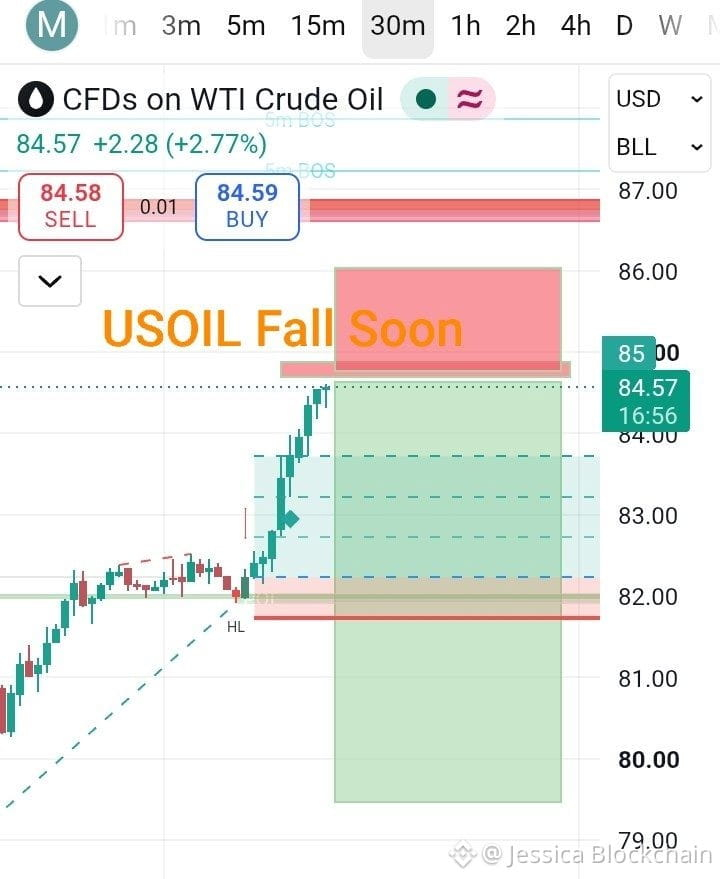
123
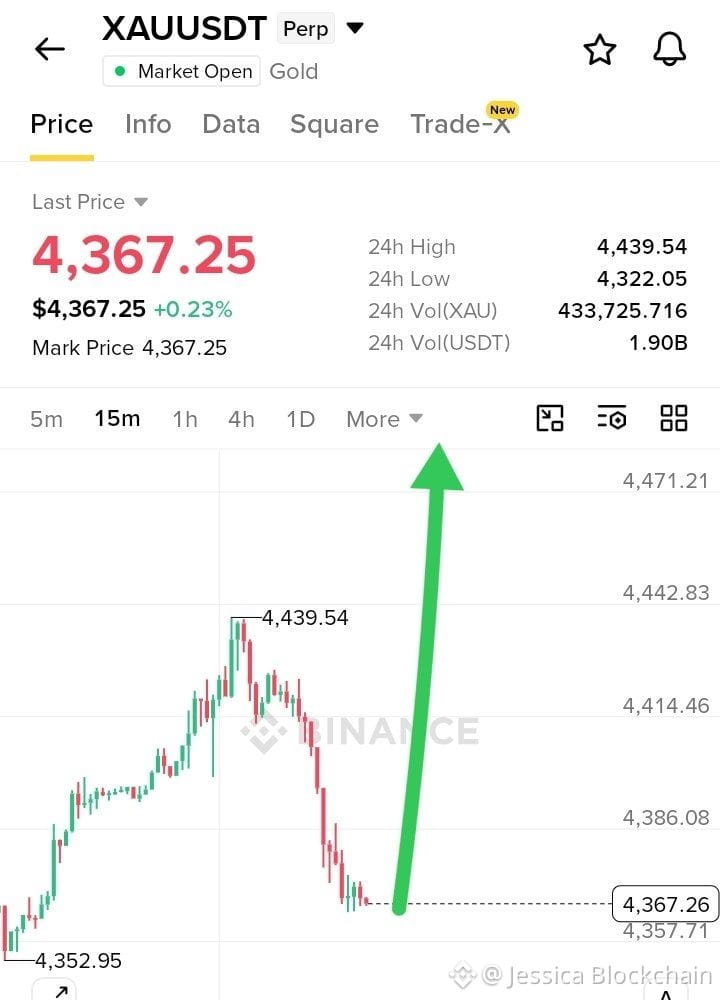
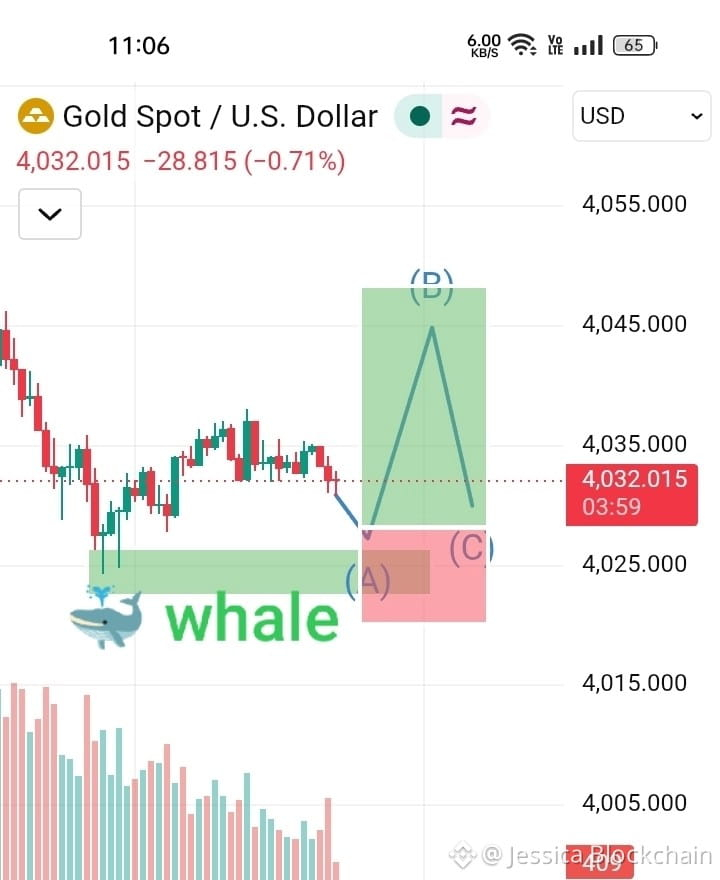
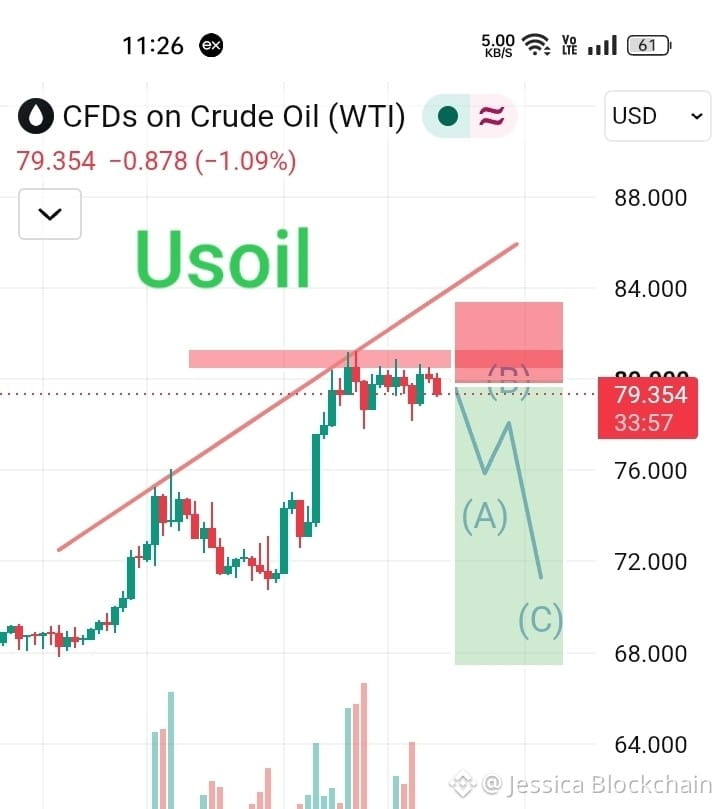
·
--
Bullish
$CL #USOIL USD buy Big Lots 87 Soon no confusion guys big lots middle east intention Increase Oil Supply Reduced more 🎯💯✅
{future}(CLUSDT)
$AKE nn
$$XAU
$CL #USOIL USD buy Big Lots 87 Soon no confusion guys big lots middle east intention Increase Oil Supply Reduced more 🎯💯✅
$AKE nn
$$XAU
$AKE nn
$$XAU
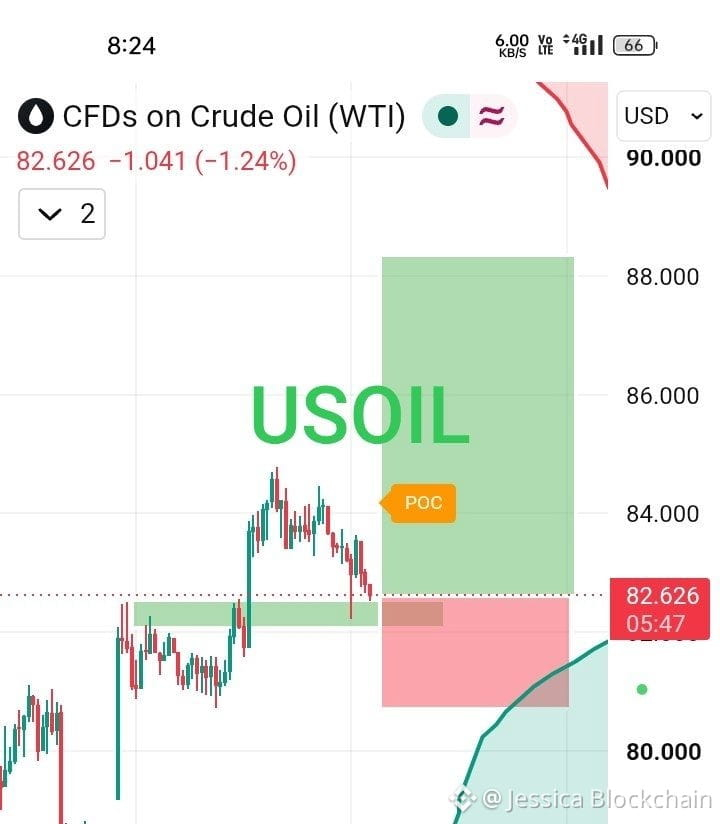
277
·
--
Bullish
$CL #USOIL Forex Buyer Whale Big Lots Buy Opportunity You Missing Maybe because USOIL Soon Again Go For 80/83 thanks me later 💯✅
{future}(CLUSDT)
$XAU Close Only Buy Oil
$NVDA.US
#Whale.Alert
$CL #USOIL Forex Buyer Whale Big Lots Buy Opportunity You Missing Maybe because USOIL Soon Again Go For 80/83 thanks me later 💯✅
$XAU Close Only Buy Oil
$NVDA.US
#Whale.Alert
$XAU Close Only Buy Oil
$NVDA.US
#Whale.Alert
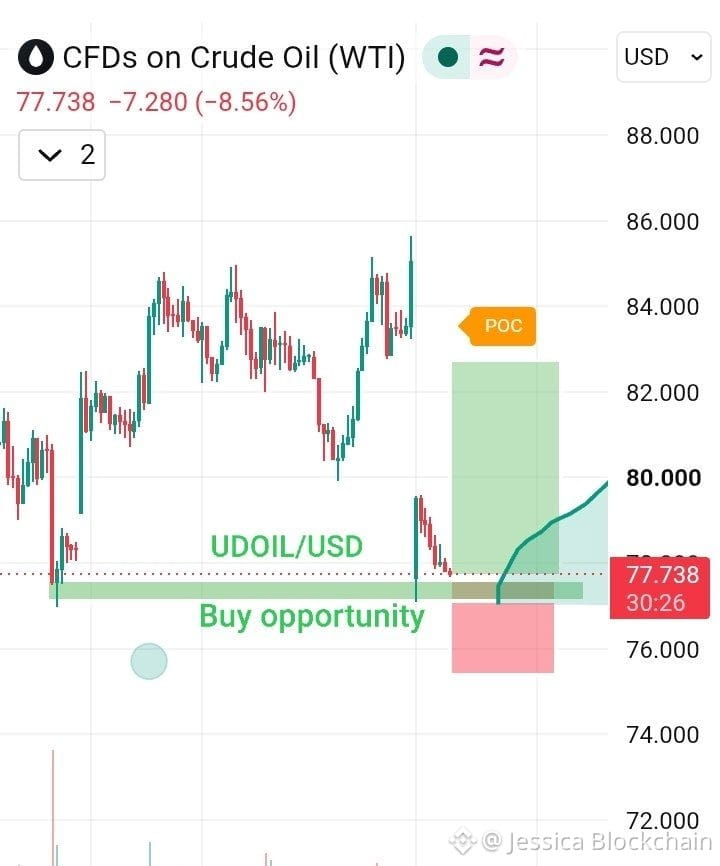
157

·
--
📊 $USOIL As Expected- rejection from 83-84$.
Now next expecting a projection back 72$ or even little lower, then continue to surge higher > 120$
#USOIL / $USDT
📊 $USOIL As Expected- rejection from 83-84$.
Now next expecting a projection back 72$ or even little lower, then continue to surge higher > 120$
#USOIL / $USDT
Now next expecting a projection back 72$ or even little lower, then continue to surge higher > 120$
#USOIL / $USDT
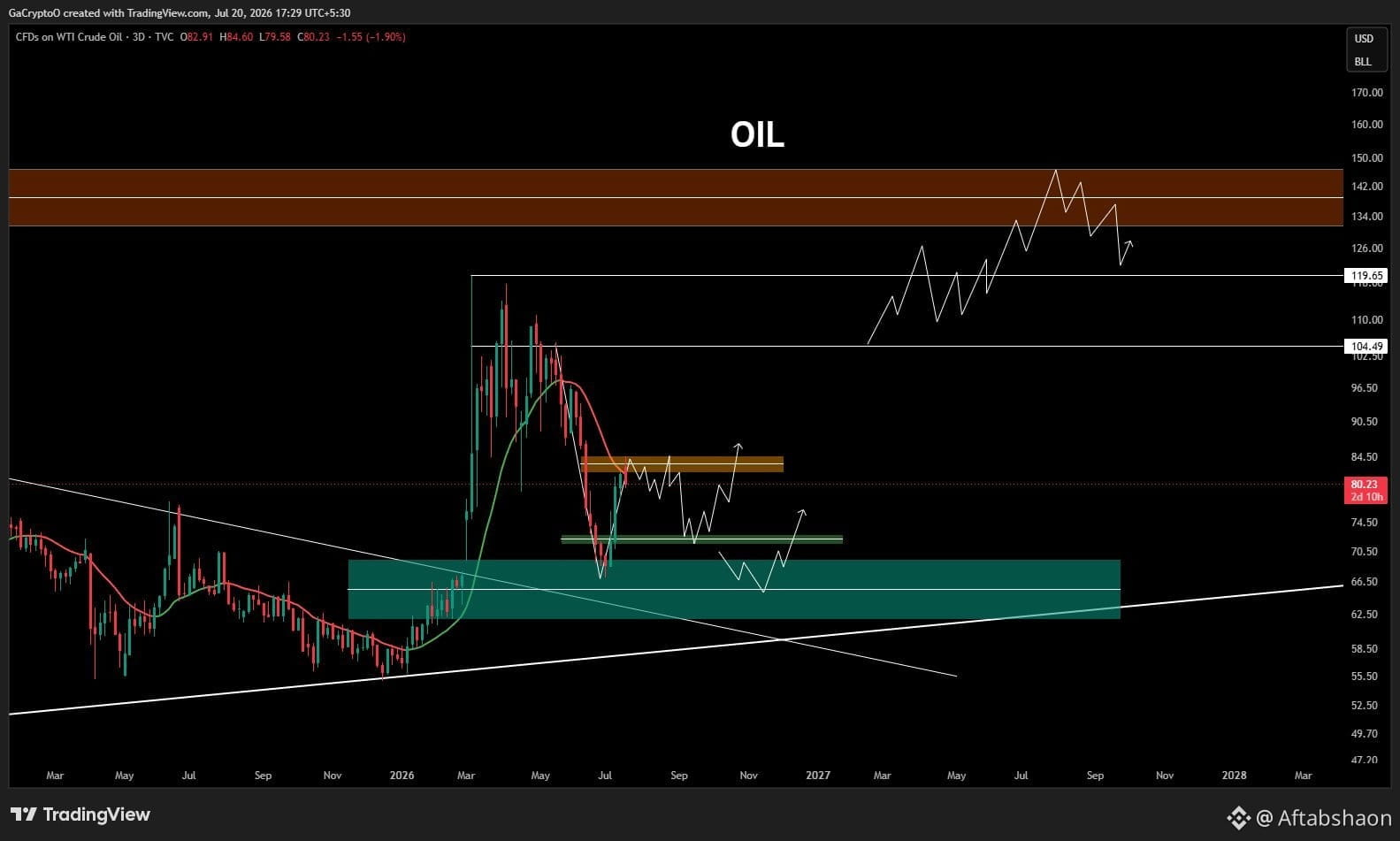
101
Log in to explore more content
Join global crypto users on Binance Square
⚡️ Get latest and useful information about crypto.
💬 Trusted by the world’s largest crypto exchange.
👍 Discover real insights from verified creators.
Email / Phone number
Trending Topics
1
#BitcoinReboundsTo$79K
27,179 views
241 Discussing
2
#USDCOnChainVolumeTops$100Trillion
23 views
9 Discussing
3
#BitcoinSpotETFsNetInflow$160M
955 views
59 Discussing
4
#SouthKoreaCryptoTaxDelayPetitionTops50000
19,271 views
592 Discussing
5
#SolanaTransactionV1GoesLiveOnMainnet
13,332 views
388 Discussing
6
#RussianCentralBankFlagsCryptoAsFinancialRisk
10,304 views
338 Discussing
7
#GrayscalePutsXRPAt26.11%InAdvisorPortfolio
25,976 views
467 Discussing
8
#PhiladelphiaSemiconductorIndexFalls5.9%
10,437 views
289 Discussing
9
#SECChairUrgesCongressToAdvanceClarityAct
24,670 views
314 Discussing
10
#FedHikeOddsRiseTo89%
125,970 views
1,351 Discussing