Binance Square
#usjoblessclaimsneartwo-yearlow

usjoblessclaimsneartwo-yearlow

2.9M views
17,259 Discussing
Vansh Rana
·
--
Why I use Binance every day 👇 Binance offers a simple, fast, and secure platform for crypto trading. What I especially appreciate: ✔️ The diversity of cryptocurrencies ✔️ Competitive fees ✔️ The missions and rewards that motivate users Binance Square is also a great space to share ideas and learn from others. And you, what is your experience with Binance $BTC #USJoblessClaimsNearTwo-YearLow

Why I use Binance every day 👇

Binance offers a simple, fast, and secure platform for crypto trading.

What I especially appreciate:
✔️ The diversity of cryptocurrencies
✔️ Competitive fees
✔️ The missions and rewards that motivate users

Binance Square is also a great space to share ideas and learn from others.

And you, what is your experience with Binance
$BTC #USJoblessClaimsNearTwo-YearLow
Article
When layoffs refuse to rise: what jobless claims near two-year lows really mean for the US economyA quiet signal that speaks louder than headlines There is something unusually calm about the latest jobless claims data, and that calm is exactly what makes it so important, because at a time when many expected cracks to appear in the labor market, the numbers are instead holding near their lowest levels in almost two years, suggesting that the foundation of employment remains far stronger than the broader economic narrative might imply. Why this data matters more than it seems Jobless claims are often overlooked compared to monthly employment reports, yet they offer one of the most immediate glimpses into how businesses are reacting to economic pressure, and when these claims stay low, it typically means that companies are not rushing to cut jobs, which in turn reflects a level of confidence that is not always visible in other indicators. What makes the current trend particularly striking is the timing, because it comes after an extended period of high interest rates, tighter financial conditions, and constant predictions that the labor market would eventually weaken, and yet that expected shift has not meaningfully materialized. The mindset shift inside companies To understand why layoffs remain limited, it helps to look at how businesses have changed their behavior over the past few years, especially after experiencing severe labor shortages during the recovery phase, when rehiring proved far more difficult than expected, forcing companies to rethink how quickly they let workers go during uncertain times. This experience appears to have created a more cautious approach, where employers are willing to tolerate slower growth or higher costs rather than risk losing employees they may struggle to replace later, and this subtle shift in mindset is playing a major role in keeping jobless claims suppressed. A labor market supported by shifting demand Another important factor is that demand has not disappeared, it has simply evolved, as spending patterns continue to move away from goods and toward services, which has helped sustain employment across sectors such as healthcare, travel, and hospitality, even while other areas experience a slowdown. This rotation in demand creates a balancing effect, where weakness in one part of the economy is partially offset by strength in another, allowing the overall labor market to remain stable rather than deteriorate sharply. The Federal Reserve’s complicated position While a strong labor market is generally seen as positive, it introduces a layer of complexity for policymakers, because low jobless claims often go hand in hand with steady wage growth, and that can slow the pace at which inflation comes down, making it more difficult for the Federal Reserve to justify easing monetary policy too quickly. As a result, the central bank finds itself in a delicate position, where the absence of labor market weakness removes urgency for rate cuts, yet maintaining higher rates for longer carries its own risks for future economic growth, creating a situation where patience becomes both necessary and uncertain. How markets are processing the mixed message Financial markets are reacting to this data with a sense of hesitation rather than clarity, because while low jobless claims support the idea that the economy is not heading toward an immediate downturn, they also reduce expectations for near-term rate cuts, which can limit liquidity and weigh on certain asset classes. This creates a push and pull dynamic, where optimism about economic resilience exists alongside caution about prolonged tight financial conditions, leaving investors without a clear directional narrative. Looking beyond the surface strength Despite the encouraging headline numbers, there are underlying signals that suggest the labor market is not entirely immune to pressure, as hiring activity has slowed compared to previous years and job openings have gradually declined, indicating that while layoffs are limited, expansion is also becoming more restrained. There are also specific sectors, particularly those sensitive to borrowing costs, where early signs of softness are beginning to appear, and these pockets of weakness could eventually spread if broader economic conditions shift. What the coming months could reveal The real test for the labor market lies ahead, because current resilience does not guarantee long-term stability, especially in an environment where the full effects of monetary tightening often take time to emerge, meaning that the present strength in jobless claims could either signal a soft landing or simply delay an eventual adjustment. If claims continue to remain low, it would reinforce the idea that the economy is gradually cooling without breaking, but if they begin to rise more noticeably, it could mark the point where underlying pressures finally surface. A labor market that continues to surprise What stands out most in this moment is not just the data itself, but the way it challenges expectations, because in a cycle where many assumed weakness would arrive quickly, the labor market has instead shown a quiet resilience that is reshaping how the broader economy is understood. For now, jobless claims near two-year lows are telling a simple but powerful story, that even in the face of uncertainty, the foundation of employment remains intact, and that stability may ultimately determine how this economic cycle unfolds. #USJoblessClaimsNearTwo-YearLow

When layoffs refuse to rise: what jobless claims near two-year lows really mean for the US economy

A quiet signal that speaks louder than headlines
There is something unusually calm about the latest jobless claims data, and that calm is exactly what makes it so important, because at a time when many expected cracks to appear in the labor market, the numbers are instead holding near their lowest levels in almost two years, suggesting that the foundation of employment remains far stronger than the broader economic narrative might imply.
Why this data matters more than it seems
Jobless claims are often overlooked compared to monthly employment reports, yet they offer one of the most immediate glimpses into how businesses are reacting to economic pressure, and when these claims stay low, it typically means that companies are not rushing to cut jobs, which in turn reflects a level of confidence that is not always visible in other indicators.
What makes the current trend particularly striking is the timing, because it comes after an extended period of high interest rates, tighter financial conditions, and constant predictions that the labor market would eventually weaken, and yet that expected shift has not meaningfully materialized.
The mindset shift inside companies
To understand why layoffs remain limited, it helps to look at how businesses have changed their behavior over the past few years, especially after experiencing severe labor shortages during the recovery phase, when rehiring proved far more difficult than expected, forcing companies to rethink how quickly they let workers go during uncertain times.
This experience appears to have created a more cautious approach, where employers are willing to tolerate slower growth or higher costs rather than risk losing employees they may struggle to replace later, and this subtle shift in mindset is playing a major role in keeping jobless claims suppressed.
A labor market supported by shifting demand
Another important factor is that demand has not disappeared, it has simply evolved, as spending patterns continue to move away from goods and toward services, which has helped sustain employment across sectors such as healthcare, travel, and hospitality, even while other areas experience a slowdown.
This rotation in demand creates a balancing effect, where weakness in one part of the economy is partially offset by strength in another, allowing the overall labor market to remain stable rather than deteriorate sharply.
The Federal Reserve’s complicated position
While a strong labor market is generally seen as positive, it introduces a layer of complexity for policymakers, because low jobless claims often go hand in hand with steady wage growth, and that can slow the pace at which inflation comes down, making it more difficult for the Federal Reserve to justify easing monetary policy too quickly.
As a result, the central bank finds itself in a delicate position, where the absence of labor market weakness removes urgency for rate cuts, yet maintaining higher rates for longer carries its own risks for future economic growth, creating a situation where patience becomes both necessary and uncertain.
How markets are processing the mixed message
Financial markets are reacting to this data with a sense of hesitation rather than clarity, because while low jobless claims support the idea that the economy is not heading toward an immediate downturn, they also reduce expectations for near-term rate cuts, which can limit liquidity and weigh on certain asset classes.
This creates a push and pull dynamic, where optimism about economic resilience exists alongside caution about prolonged tight financial conditions, leaving investors without a clear directional narrative.
Looking beyond the surface strength
Despite the encouraging headline numbers, there are underlying signals that suggest the labor market is not entirely immune to pressure, as hiring activity has slowed compared to previous years and job openings have gradually declined, indicating that while layoffs are limited, expansion is also becoming more restrained.
There are also specific sectors, particularly those sensitive to borrowing costs, where early signs of softness are beginning to appear, and these pockets of weakness could eventually spread if broader economic conditions shift.
What the coming months could reveal
The real test for the labor market lies ahead, because current resilience does not guarantee long-term stability, especially in an environment where the full effects of monetary tightening often take time to emerge, meaning that the present strength in jobless claims could either signal a soft landing or simply delay an eventual adjustment.
If claims continue to remain low, it would reinforce the idea that the economy is gradually cooling without breaking, but if they begin to rise more noticeably, it could mark the point where underlying pressures finally surface.
A labor market that continues to surprise
What stands out most in this moment is not just the data itself, but the way it challenges expectations, because in a cycle where many assumed weakness would arrive quickly, the labor market has instead shown a quiet resilience that is reshaping how the broader economy is understood.
For now, jobless claims near two-year lows are telling a simple but powerful story, that even in the face of uncertainty, the foundation of employment remains intact, and that stability may ultimately determine how this economic cycle unfolds.
#USJoblessClaimsNearTwo-YearLow
·
--
Bullish
Article
🇺🇸 US Jobless Claims Just Dropped… and Markets Are Watching 👀Fresh data just came in — and it’s hard to ignore. Initial Jobless Claims printed at 202K (vs 212K expected)… pushing close to a 2-year low 📉 The labor market? Still holding strong. No cracks yet. Now here’s where it gets interesting for crypto 👇 {spot}(BTCUSDT) {spot}(ETHUSDT) A strong economy usually means a strong dollar. And when the dollar stays strong, it quietly puts pressure on $BTC. Not always instantly… but it’s there in the background. At the same time… Less recession fear = more confidence. And when confidence is high, people don’t just sit in cash — they take risk. That’s where Bitcoin and altcoins start getting attention 🚀 But there’s a catch. Strong jobs → more spending → possible inflation staying sticky. And if inflation doesn’t cool off… rate cuts get pushed further away. That’s where things can get a bit messy short term. Right now, the market isn’t rushing. It’s thinking. Processing. Moving sideways. “Good news” for the economy… but not exactly “easy money” for markets. Keep a close eye on $BTC Cand $ETH levels here. This is the kind of zone where direction gets decided. So what’s your take? 🐂 Bullish — economy strong, risk stays alive 🐻 Bearish — rate cuts delayed, pressure builds Let’s hear it 👇 #USJoblessClaimsNearTwo-YearLow #BTC #ETH

🇺🇸 US Jobless Claims Just Dropped… and Markets Are Watching 👀

Fresh data just came in — and it’s hard to ignore.
Initial Jobless Claims printed at 202K (vs 212K expected)… pushing close to a 2-year low 📉
The labor market? Still holding strong. No cracks yet.
Now here’s where it gets interesting for crypto 👇
A strong economy usually means a strong dollar.
And when the dollar stays strong, it quietly puts pressure on $BTC . Not always instantly… but it’s there in the background.
At the same time…
Less recession fear = more confidence.
And when confidence is high, people don’t just sit in cash — they take risk. That’s where Bitcoin and altcoins start getting attention 🚀
But there’s a catch.
Strong jobs → more spending → possible inflation staying sticky.
And if inflation doesn’t cool off… rate cuts get pushed further away.
That’s where things can get a bit messy short term.
Right now, the market isn’t rushing.
It’s thinking. Processing. Moving sideways.
“Good news” for the economy…
but not exactly “easy money” for markets.
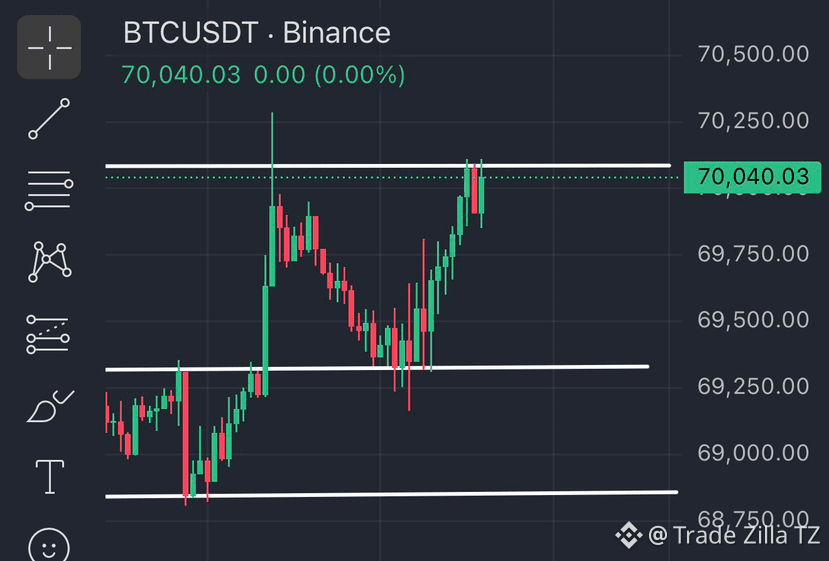
Keep a close eye on $BTC Cand $ETH levels here.
This is the kind of zone where direction gets decided.
So what’s your take?
🐂 Bullish — economy strong, risk stays alive
🐻 Bearish — rate cuts delayed, pressure builds
Let’s hear it 👇

#USJoblessClaimsNearTwo-YearLow #BTC #ETH
·
--
Bullish
Article
ADA has dropped more than 90% from its peak – point of no return?,✨✨The price of ADA is deep in macro correction, and now it is testing a key demand zone that could define its next cycle. * The structure of the higher time frame shows potential for accumulation, but the lower time frames remain bearish for now. * Holding above critical support could open the door for a significant recovery, while a breakdown keeps the downside risk in play.

ADA has dropped more than 90% from its peak – point of no return?,✨✨

The price of ADA is deep in macro correction, and now it is testing a key demand zone that could define its next cycle.
* The structure of the higher time frame shows potential for accumulation, but the lower time frames remain bearish for now.
* Holding above critical support could open the door for a significant recovery, while a breakdown keeps the downside risk in play.
·
--
Bullish
$BNB {spot}(BNBUSDT) Intraday Movement: The price dipped slightly in the early morning hours to a low of 2,157 AED but has since recovered, consistently holding above the 2,160 AED support level. ​Today's Technical Prediction ​The outlook for the remainder of the day is cautiously bullish, provided it can maintain its current momentum: ​Support Levels: The immediate support sits at 2,160 AED ($588 USD). If it stays above this, the intraday bullish structure remains intact. ​Resistance Levels: The next major hurdle is the 2,185 – 2,200 AED range. A break above this could trigger a faster rally toward the $600 USD psychological barrier. ​Market Context: Bitcoin is currently showing signs of "bottoming out" near $66,600, according to recent institutional reports. Since BNB often follows the "High-Beta" recovery of major assets, a Bitcoin bounce would likely push BNB significantly higher by the daily close.#USJoblessClaimsNearTwo-YearLow
$BNB
Intraday Movement: The price dipped slightly in the early morning hours to a low of 2,157 AED but has since recovered, consistently holding above the 2,160 AED support level.
​Today's Technical Prediction
​The outlook for the remainder of the day is cautiously bullish, provided it can maintain its current momentum:
​Support Levels: The immediate support sits at 2,160 AED ($588 USD). If it stays above this, the intraday bullish structure remains intact.
​Resistance Levels: The next major hurdle is the 2,185 – 2,200 AED range. A break above this could trigger a faster rally toward the $600 USD psychological barrier.
​Market Context: Bitcoin is currently showing signs of "bottoming out" near $66,600, according to recent institutional reports. Since BNB often follows the "High-Beta" recovery of major assets, a Bitcoin bounce would likely push BNB significantly higher by the daily close.#USJoblessClaimsNearTwo-YearLow
Shai Rekson
·
--
#GrayscaleBNBETFFiling $BNB $BNB $BNB
{future}(BNBUSDT)
​📉 The "Technical Analysis" Title (Best for Traders)
​"BNB Price Dip or Buy Opportunity? 📊 Analyzing the Grayscale ETF Impact! $BNB"
·
--
Bearish
·
--
Bullish
🇺🇸 Riot Platforms, a leading company in Bitcoin mining in the United States, sold 500 $BTC today, bringing in approximately 34.13 million dollars. At the same time, Morgan Stanley made another adjustment to its application for the proposed Bitcoin exchange-traded fund. #USJoblessClaimsNearTwo-YearLow
🇺🇸 Riot Platforms, a leading company in Bitcoin mining in the United States, sold 500 $BTC today, bringing in approximately 34.13 million dollars.
At the same time, Morgan Stanley made another adjustment to its application for the proposed Bitcoin exchange-traded fund.
#USJoblessClaimsNearTwo-YearLow
🐸 $PEPE Coin Outlook 2026–2029: Hype vs Reality #PEPE‏ has captured massive attention, and projections like turning $1,000 into strong profits sound exciting. But before getting carried away, it’s important to understand what’s realistic and what’s pure speculation. The idea of a 177% ROI in under a year is possible in crypto, especially with meme coins. However, these moves are usually driven by hype cycles, not consistent growth. Coins like PEPE don’t follow traditional fundamentals they move based on liquidity, community momentum, and market sentiment. Looking at the shared price predictions, there are clear inconsistencies. For example, in 2026 the “maximum price” is listed lower than the minimum, and later years jump to extremely high valuations that would require unrealistic market caps. For PEPE to reach prices like $0.004 or higher, it would need a market size larger than many top global assets which is highly unlikely. That doesn’t mean PEPE can’t perform well. In strong bull cycles, meme coins often outperform because they attract retail attention quickly. Short-term pumps of 2x–10x are possible under the right conditions. But long-term exponential growth into extreme price levels is much harder to sustain. The key thing to understand is this: meme coins are momentum plays, not long-term certainty bets. Timing matters more than holding blindly. Many traders make profits during hype phases but many also lose when momentum fades. If you’re considering PEPE, focus on: Market trend (bull vs bear phase) Volume and hype cycles Entry timing, not just long-term hope In the end, PEPE can offer opportunity but it comes with high risk. Always question predictions that look too perfect, and never rely on one scenario. Stay smart. Stay realistic. #USNFPExceededExpectations #USJoblessClaimsNearTwo-YearLow #DriftProtocolExploited #ADPJobsSurge
🐸 $PEPE Coin Outlook 2026–2029: Hype vs Reality

#PEPE‏ has captured massive attention, and projections like turning $1,000 into strong profits sound exciting. But before getting carried away, it’s important to understand what’s realistic and what’s pure speculation.

The idea of a 177% ROI in under a year is possible in crypto, especially with meme coins. However, these moves are usually driven by hype cycles, not consistent growth. Coins like PEPE don’t follow traditional fundamentals they move based on liquidity, community momentum, and market sentiment.

Looking at the shared price predictions, there are clear inconsistencies. For example, in 2026 the “maximum price” is listed lower than the minimum, and later years jump to extremely high valuations that would require unrealistic market caps. For PEPE to reach prices like $0.004 or higher, it would need a market size larger than many top global assets which is highly unlikely.

That doesn’t mean PEPE can’t perform well. In strong bull cycles, meme coins often outperform because they attract retail attention quickly. Short-term pumps of 2x–10x are possible under the right conditions. But long-term exponential growth into extreme price levels is much harder to sustain.

The key thing to understand is this: meme coins are momentum plays, not long-term certainty bets. Timing matters more than holding blindly. Many traders make profits during hype phases but many also lose when momentum fades.

If you’re considering PEPE, focus on:

Market trend (bull vs bear phase)

Volume and hype cycles

Entry timing, not just long-term hope

In the end, PEPE can offer opportunity but it comes with high risk. Always question predictions that look too perfect, and never rely on one scenario.

Stay smart. Stay realistic.

#USNFPExceededExpectations #USJoblessClaimsNearTwo-YearLow #DriftProtocolExploited #ADPJobsSurge

Log in to explore more content
Join global crypto users on Binance Square
⚡️ Get latest and useful information about crypto.
💬 Trusted by the world’s largest crypto exchange.
👍 Discover real insights from verified creators.
Email / Phone number