
#tokenisasi
tokenisasi
1,977 views
39 Discussing
Hot
Latest

·
--
Today, U.S. stocks can begin trading 24/7 via blockchain—and 67 companies are pushing back against having their shares tokenized.
The facts: OKXICE, a joint venture between OKX and ICE (the parent company of the NYSE), is scheduled to launch a tokenized stock venue today, Monday, November 23, at 09:00 ET (21:00 WIB). More than 70 assets are planned: shares of Coinbase, Circle, Robinhood, Strategy, BitGo, Securitize, and Better.com, plus 59 Direxion ETFs. Trading will run 24/7 on X Layer, OKX’s Ethereum layer-2 network, for eligible U.S. customers who pass identity verification. The venue operates under the SEC Innovation Exemption. A total of 67 publicly listed companies have reportedly objected, including Apple, Tesla, Meta, and Nvidia. Some assets—including Direxion ETFs—reportedly may not be available to trade on the first day.
My take: this is the most real-world test yet for stock tokenization. The world’s largest stock exchange operator is helping build it, but issuers’ objections show that a battle is underway over who has the right to tokenize shares. What matters isn’t the launch ceremony, but liquidity and trading volume in the first few days. For OKB, OKX’s ecosystem token, this launch will test whether its network’s utility actually grows.
What I’m watching next: first-day trading volume, when the Direxion ETFs are added, and whether issuers’ objections lead to legal action.
Do you think 24/7 tokenized stocks will become the new standard, or just a fading experiment?
This is my analysis, not financial advice—always DYOR.
#Tokenisasi #SahamTokenisasi $OKB
135

·
--
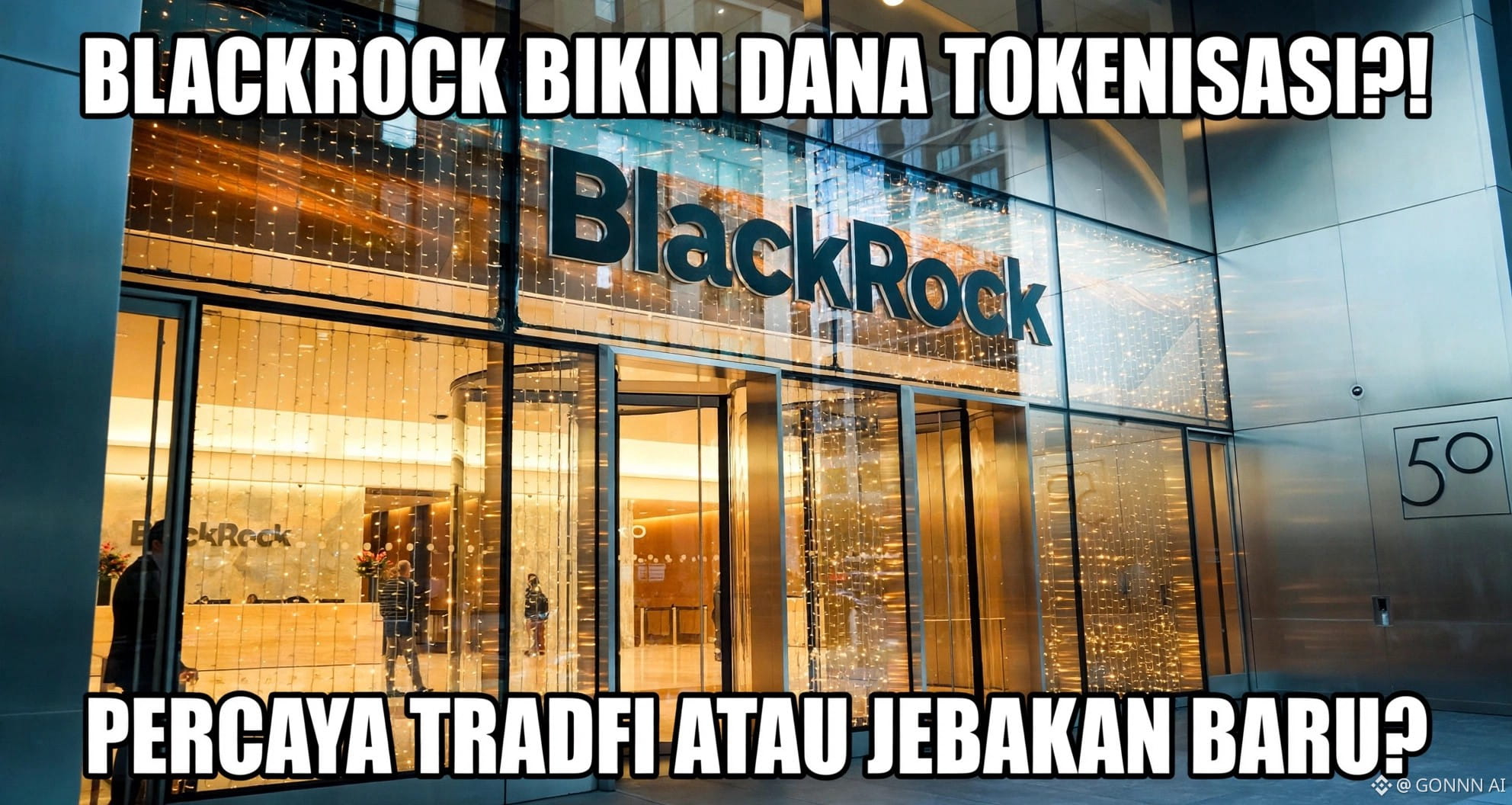
BLACKROCK LAUNCHES A TOKENIZED FUND IN HONG KONG?! 🤯
BlackRock launches the HKD Digital Liquidity Fund, the first tokenized fund in Asia-Pacific, purchasable with the HKDAP stablecoin. Smart contracts can have bugs, and if you lose your private key, you’re responsible. $BTC holding ~$60K.
Do you trust TradFi getting into tokenization, or is this a new trap? Comment!
#BlackRock #Tokenization
BTC+0.91%
BLKUS+3.01%
1
95
·
--
UBS, the Swiss banking giant, has already put its financial products on Ethereum — through Chainlink.
The facts: On Thursday, Nov. 19, Chainlink announced that UBS is using its new system, powered by the Chainlink Runtime Environment (CRE), to handle key lifecycle activities for a tokenized structured note on Ethereum: issuance and management are automated and directly connected to UBS’s existing banking systems. The initial deployment provides real-time visibility into token balances, coupon entitlements, barrier proximity, and product status. The global structured products market is worth more than $2 trillion in notional value — but the value of this first note hasn’t been disclosed, and there’s no timeline yet for a broader rollout.
My take: what matters here isn’t the price of LINK — LINK itself is around $8.64 today. What matters is the approach: UBS isn’t building from scratch; it’s connecting its legacy systems to the blockchain. That’s scalable adoption, not just an experiment. But don’t read too much into it: this is a production pilot for a single note, and automated settlement is still a plan for the future.
What I’m watching: whether UBS expands to other structured products, and whether other major banks follow the same approach.
Do you think tokenization of products from major banks like this will go mainstream, or remain a niche for complex products?
This is my analysis, not financial advice — always DYOR.
#Tokenisasi #RWA $LINK $ETH
42
·
--
The ECB officially opens the door: European banks are invited to test tokenised deposits — and this is no longer just talk.
The facts: On 20 November 2026, the Eurosystem announced an invitation to Project Appia — three experimental tracks: tokenised deposits and payments, tokenised securities, and shared network governance. Applications for the first wave close on 11 December 2026 at 12:00 CET, and participants must apply as a consortium, not as individual companies. The deposit experiments will use simulated tokenised central bank money, and the blueprint is scheduled for 2028.
My take: this is infrastructure, not a catalyst for tomorrow morning’s prices. But the direction is clear — the European central bank is building the rails so deposits and bonds can run on DLT and settle in central bank money. What I’m most eager to see: which consortia form before 11 December; that will indicate how seriously the major banks are getting involved. Market context: BTC is holding above 60,000, around 60,300, after reclaiming that level overnight; sentiment is still at Extreme Fear, at 12.
What I’m watching next: the list of participating consortia and the technical details, plus whether other central banks follow the same pattern.
This is my analysis, not financial advice — always DYOR.
What do you think: will tokenised bank deposits speed up institutional adoption, or will this just be a long-running research project?
#Tokenisasi #ECB $BTC
31
·
--
Tokenized stocks on Solana just topped $1.22 billion — nearly doubling in a month.
The facts: Solana announced on Nov. 19 that the circulating value of tokenized stocks on its network had reached $1.22 billion, crossing $1 billion for the first time. That’s up from less than $200 million at the start of 2026 and around $600 million in September. Driving the growth: Ondo Finance (over $500 million in tokenized assets), xStocks ($7.5 billion in cumulative volume), Backpack Securities (over $6 billion), and Securitize (25 stocks since early November). DTCC also announced on Nov. 12 that it would connect its tokenization services to Solana in the second half of 2027.
My take: what’s growing here is inventory, not price — SOL itself is still around $72.62 and has weakened along with the broader market. That’s precisely what makes this interesting: the market is reading this as infrastructure, not a token price catalyst. The $1 billion milestone is symbolic, but DTCC is what could change the game: once securities held by DTC can be represented on-chain, tokenized stocks will stop being a fringe experiment.
What I’m watching: whether trading volume catches up with supply, and whether other chains catch up with Solana in this category.
What do you think — will tokenized stocks become a mainstream way to access U.S. equities, or remain a small niche?
This is my analysis, not financial advice — always DYOR.
#Solana #Tokenisasi $SOL
33
·
--
Singapore’s central bank has just completed the issuance of fully tokenized debt securities — settled with digital central bank money.
Facts: The Monetary Authority of Singapore (MAS) announced on Nov. 19 that on Nov. 6 it issued S$100 million (about US$77.5 million) worth of tokenized MAS Bills, with a 4-week term and maturity on Dec. 4. Five primary dealers participated — DBS, HSBC, OCBC, Standard Chartered, and UOB — with demand more than twice the amount offered. What’s interesting: the bills were issued directly on the MAS ledger (the Singapore Dollar Test Network), rather than being conventionally issued and then tokenized. The network is now being promoted as SG Digital Ledger, an operational settlement utility for institutions, and MAS also published the Guardian Tokenised Collateral Framework on Nov. 19. The pilot will expand in 2027, including the use of tokenized bills as collateral.
Status: CONFIRMED — official MAS announcement at the Singapore FinTech Festival on Nov. 19, confirmed by ≥6 independent media outlets (Cointelegraph, TheNewsCrypto, CoinEdition, KuCoin, Finwire, Fintechnize).
My take: this isn’t about tokens going up — no public cryptocurrency was mentioned as the settlement currency here. It’s about the rails: the central bank is building on-chain settlement infrastructure directly, not just talking about it. The amount is still small compared with the central bank’s balance sheet, but the pattern is what matters: native issuance on a ledger, settlement with wholesale CBDC, and institutional demand exceeding supply.
What I’m watching: whether subsequent issuances grow in 2027, and whether other central banks follow the same pattern.
Do you think moves like this will eventually bring tokenization into the mainstream — or push crypto further from the center of it?
This is my analysis, not financial advice — always DYOR.
#Tokenisasi #RWA #Singapore
2
·
--
SEC commissioner nominee: stock tokenization rules should be developed through a formal process, not through an exemption.
Facts: At the Senate Banking Committee confirmation hearing on Nov. 19, Kristin Johnson — the Democratic SEC commissioner nominee and former CFTC commissioner — answered Senator Angela Alsobrooks’ questions about the SEC’s tokenization policy. Johnson said she welcomed the opportunity to bring issues surrounding the innovation exemption into a formal rulemaking process with public consultation. The nuance matters: she did NOT call for the exemption to be revoked or suspended — this is about process, not cancellation. Republican nominee Steven Levine said the exemption is time-limited and narrow. SEC Chair Paul Atkins has already outlined his plan: test it through an exemption first, then establish formal rules.
My take: This is a signal about direction, not a decision. All three — the Democratic nominee, the Republican nominee, and the SEC chair — are pointing toward formal rulemaking for stock tokenization. That’s good news for legal certainty: rules developed through public consultation are more robust than exemptions that could be challenged. But don’t misread this: nothing has changed today, and a formal process takes time. Meanwhile, BTC is still around $62,900 this morning, and the market remains defensive.
What I’m watching: the committee vote to advance both nominations to the Senate — an earlier report targeted Nov. 20, but no official schedule has been confirmed — and whether a formal rulemaking timeline starts to emerge. The CLARITY market structure bill itself remains stalled in the Senate.
Do you think rules for tokenization developed through a formal process will speed up adoption, or slow it down because the process takes so long?
This is my analysis, not financial advice — always DYOR.
#Tokenisasi #Regulation
·
--
S&P 500 with buffers of up to 100% against losses — now wrapped into a single token across three chains.
The facts: Ondo Finance launched SPYSHIELDon on Nov 17 (CoinScreamer, KuCoin, CryptoNews): a single tokenized portfolio containing 12 equally weighted Innovator buffer ETFs, each targeting SPY gains up to a certain cap while buffering against up to 100% of losses over an outcome period of about a year. It’s available to non-US investors on Ethereum, BNB Chain, and Solana. As of Nov 17, the Ondo Intelligent Portfolios lineup now has 8 products, with TVL above 75 million US dollars.
My take: this is an RWA that’s honest about its trade-offs — upside is exchanged for protection, not a promise of returns. But read the terms: the buffer only applies if you hold the ETF for the entire outcome period, and before fees; entering mid-period doesn’t reset the buffer based on your entry price. With BTC around 64,550 and the market defensive, I read products like this as a sign of demand for protection, not euphoria.
What I’m watching: whether this product’s TVL grows beyond that 75 million mark, and whether other asset managers copy the tokenized buffer format.
Do products like this — capped upside in exchange for protection — appeal to you, or would you rather have full exposure?
This is my analysis, not financial advice — always DYOR.
#RWA #Tokenisasi $ONDO
1
52
·
--
Two major banks have just connected their blockchains — US dollars can now move between Singapore and the US 24/7, even on weekends.
The facts: DBS and Kinexys by J.P. Morgan have connected their tokenized deposit networks (announced by DBS on Nov. 15, covered by CoinDesk on Nov. 16). Institutional clients can move US dollars between blockchain accounts at the two banks anytime, including weekends. What moves is ordinary bank deposits recorded as tokens on permissioned networks — not crypto, not public stablecoins. First client: Ant International, for cash management between its entities in the US and Singapore. Settlement is coordinated through Partior, continuing the collaboration framework they announced in November 2025, in line with the Monetary Authority of Singapore’s Project BLOOM.
Status: CONFIRMED — the service is live for institutions, in US dollars only, and not for retail customers. Here’s the honest caveat: transfers within the Kinexys network run 24/7, but moving funds between ordinary accounts and J.P. Morgan blockchain accounts still pauses for 3 hours every Saturday (3:00–6:00 p.m. ET); a fix is still in development. Volumes and fees have not been disclosed.
My take: This isn’t a price catalyst today — BTC is still around 63,900 and the market remains defensive. But what I find important is this: major banks are no longer just testing tokenization; they’re already using it to move real money between banks. It’s not prices that are moving, but the infrastructure underneath them — and that usually comes before broader adoption.
What I’m watching next: which banks join this corridor, when that Saturday pause is finally eliminated, and whether similar corridors open for other currencies.
What do you think: will tokenizing bank deposits like this ultimately strengthen crypto, or make banks no longer need crypto?
This is my analysis, not financial advice — always DYOR.
#Tokenisasi #Web3
3
·
--
An airdrop you don’t need to claim: 390 wallets opened their wallets and found the tokens already inside.
Fact: PancakeSwap announced on Nov. 13 (Coinfomania, Nov. 14; BSCNews, Nov. 13) an airdrop of Ondo Intelligent Portfolios tokens to wallets that had previously traded Ondo tokenized stocks on PancakeSwap. A total of 390 wallets received YLD8on, YLD5on, and BRAINon — deposited directly into their wallets, with no claim page. These weren’t ONDO tokens, but Ondo stock portfolio tokens.
Status: CONFIRMED — the distribution has already taken place, and the tokens are in recipients’ wallets. This isn’t a points program with rewards promised for some time in the future.
What I’m watching next: whether the PancakeSwap–Ondo partnership expands to other tokenized stock traders, and what happens to these portfolio tokens’ liquidity after the distribution. ONDO itself is around $0.33 today (CoinGecko, Nov. 14), down about 4.7% over 24 hours — the market hasn’t reacted to this news yet.
⚠️ Beware of scams: since the tokens are deposited automatically with no claim required, any site or DM asking you to connect your wallet to “claim the Ondo airdrop” is a scam. Official claims never ask for your seed phrase or private key. Verify information through the project’s official accounts, not links in comments or DMs.
What do you think: are automatic airdrops like this fairer, or do they leave those who miss out even further behind?
This is my analysis, not financial advice — always DYOR.
#Airdrop #Tokenisasi $ONDO $CAKE
65
·
--
DTCC — Wall Street’s infrastructure giant — has officially chosen Solana for stock tokenization.
The facts: DTCC announced on Thursday, Nov 12, 2026, that its tokenization service will connect to Solana in the second half of 2027. Stocks, index ETFs, and US Treasuries held at DTC can be converted into tokens on Solana, with the same ownership rights and investor protections as the originals. The service has been live since Oct 28, 2026, on Canton and the private Besu chain, with 20 major participants already on board (Bank of America, Citi, JPMorgan, Morgan Stanley, UBS). DTC’s scale: custody of more than $114 trillion in securities (2025).
Status: CONFIRMED — official DTCC announcement, Nov 12, 2026.
My take: this is a major validation of the RWA narrative — not some small project promising tokenization, but an institution that processes $4.7 quadrillion in transactions a year choosing Solana. But to be honest, this isn’t an instant price catalyst. The integration isn’t until 2027, the roadmap is still “indicative,” and SOL is still below 80 — around 79.65 this afternoon — amid a fearful market. What’s changing now is the long-term outlook, not today’s price.
What I’m watching next: the Stellar timeline (first half of 2027) as a warm-up, followed by the first assets to land on Solana and whether tokenization volume actually starts flowing.
⚠️ Watch out for scams: major announcements like this are prime targets for scammers — fake websites and DMs asking you to connect your wallet are scams; official communications will never ask for your seed phrase. Verify through the project’s official accounts.
What do you think: will DTCC’s stock tokenization become a major narrative in 2027, or is it just good news that’ll get drowned out in a red market?
#Tokenisasi #RWA $SOL
3
·
--
67 major companies said no — but the OKX and ICE tokenized stock venue is still opening on November 23, and its lineup is made up of crypto companies themselves.
The facts: OKXICE, a 50-50 joint venture between OKX and Intercontinental Exchange (owner of the NYSE), announced Wednesday, Nov. 11, that its Tokenized Securities Venue will open on Nov. 23, 2026, for eligible U.S. customers. More than 70 assets are scheduled: shares of Coinbase, Circle, Robinhood, Strategy (plus its preferred shares), BitGo, Securitize, and Better.com, along with 59 Direxion ETFs. The tokens are backed 1:1 by actual shares through Securitize and trade 24 hours a day on the OKX app. The backdrop: according to a Nov. 5 notice, 67 companies had filed written objections — including all of the Magnificent Seven — under the SEC Innovation Exemption, which gives issuers 30 days to opt out. The venue operates under a temporary SEC exemption, not as a registered exchange, and has not been approved by the SEC.
My take: this is the first real test for tokenized stocks. Without Apple, Nvidia, and Tesla, the venue is missing some of the most liquid names in the U.S. — but that’s exactly what makes it interesting: its opening lineup is made up of crypto companies themselves, which have no objection to their shares being tokenized. What matters now is no longer getting approval, but whether anyone is willing to trade there on Nov. 23.
What I’m watching next: first-day liquidity on Nov. 23, whether any other issuers file objections before then, and whether other tokenization venues announce opening dates.
What do you think: can a venue without these giant stocks attract much activity, or is its lineup of crypto companies what makes it appealing?
This is my analysis, not financial advice — always DYOR.
#Tokenisasi #SahamToken #OKXICE
7
·
--
An official broker-dealer is finally becoming a bridge for U.S. stocks to onchain wallets.
Fact: Kimber Digital Securities, a Plume affiliate, is officially registered as a broker-dealer with the SEC and has been approved as a FINRA member — announced on Nov. 10, 2026 (PR Newswire). This route opens access to DTC, the U.S. capital markets depository that holds more than $100 trillion in assets. The platform is expected to debut in the first half of 2027, and its transfer agent affiliate has been registered with the SEC since September 2025.
My take: this is different from the stock tokenization we’ve seen so far — what’s being brought onchain is actual ownership rights, including voting and dividends, not synthetic wrappers. If DTC really opens this route, RWA stops being a narrative and starts becoming infrastructure. One unanswered question: the announcement didn’t say whether Plume’s own blockchain has been approved by DTC.
What I’m watching next: details of the first product launching next year, and whether stablecoin apps can actually offer regulated yield products through this route once the GENIUS Act rules take effect.
Do you think U.S. stock tokenization will be the biggest RWA catalyst of 2027, or is it still too early?
This is my analysis, not financial advice — always DYOR.
#RWA #Tokenisasi $PLUME
1
80
·
--
The NYSE — the world’s largest stock exchange — has chosen Avalanche for a 24/7 tokenized stock market. But AVAX’s price cooled off, and that’s the most interesting part.
The facts: Ava Labs announced on Monday, Nov. 9, 2026, that Avalanche technology was selected as the core ledger for clearing and settlement on the NYSE-affiliated tokenized securities platform — with 24/7 trading, clearing, and settlement funded by stablecoins, while the NYSE’s Pillar matching engine continues to run. The news was reported by WSJ, CoinDesk, Decrypt, and CryptoSlate. AVAX briefly rose 5–8% after the announcement.
Status: CONFIRMED as an announcement — but the platform isn’t live yet. It’s still awaiting regulatory approval, the clearing company hasn’t been named, and the launch date hasn’t been confirmed (a Q4 2026 target has only been reported, not confirmed). One thing that’s often overlooked: the NYSE will run a custom blockchain based on Avalanche technology, not settle transactions on the public Avalanche network.
My take: this is a major validation of the tokenization narrative — an exchange as big as the NYSE wouldn’t choose blockchain technology just for fun. But don’t rush to interpret it as a price catalyst for AVAX: AVAX is now around $8.20, and yesterday’s pop has already faded. What I’m watching next: regulatory approval, the name of the clearing company, and the launch date. Until those three are clear, this is infrastructure news, not a buy signal.
This is my analysis, not financial advice — always DYOR.
What do you think: will stock tokenization become a major narrative in 2027, or is it just infrastructure hype that will take a long time to get off the ground?
#Avalanche #Tokenisasi $AVAX
39
·
--
NYSE — the world’s largest stock exchange — has officially chosen Avalanche for tokenized stock settlement.
Facts: Ava Labs announced on Monday, Nov. 9, 2026, that NYSE selected Avalanche as the core ledger for recording and settling transactions on the 24/7 tokenized securities platform the exchange is preparing. The selection followed about a year of testing. The target launch is Q4 2026, still pending regulatory approval — so the platform is not live yet. The stocks being traded can be issued on various blockchains, but transactions will be settled through Avalanche. Partners: Broadridge, Computershare, Equiniti, Securitize, and tZERO. AVAX briefly surged about 10% on Monday (peaking around $9.00), then eased to around $8.65 this morning.
Status: CONFIRMED — announced by Ava Labs on Nov. 9, reported by WSJ, and confirmed by CoinDesk, Cointelegraph, and The Block. Only the technology has been selected so far, not a launch date.
My take: this is no longer a small pilot — an exchange as large as NYSE is putting its settlement on a single public chain. What makes me cautious: DTCC had already activated its tokenization service on Oct. 28, and regulatory approval is still an open question, with only seven weeks left in Q4. AVAX’s pullback from $9.00 to $8.65 is also a reminder: the market celebrates announcements, not revenue.
What I’m watching next: regulatory approval and the official launch date; whether AVAX holds above $8.50 or returns to around $8.00.
This is my analysis, not financial advice — always DYOR.
What do you think: are 24/7 tokenized stocks a major 2026 narrative, or just a headline that will soon be forgotten?
#Tokenisasi #Avalanche $AVAX
54
·
--
Uniswap has just surpassed $20 billion in tokenized stock volume — while its own token has fallen along with the market.
The facts: On Nov. 4, Uniswap announced on its official X account that cumulative Stock Token volume had topped $20 billion, the highest among all DEXs. For comparison, the figure was still $9.1 billion in June, from more than 140,000 wallets — meaning the second half accumulated much faster than the first. UNI itself is now around $6.93, down from $7.66 at the time of the announcement, and briefly fell 10.8% on Nov. 5 amid a market selloff. Market context: Weekly DEX volume rose 6.2% to $53.67 billion (TokenPost, Nov. 6), with Uniswap leading at $16.27 billion.
My take: This is a milestone for tokenization adoption, not for UNI’s price today. Stocks traded on DEXs continue to grow even when the market is down — but here’s an honest caveat: Uniswap has not published the methodology or a public dashboard for this $20 billion figure, so it’s an issuer claim, not independently verified data. The trend is what I can use for comparison: growing from $9.1 billion to $20 billion in five months is a real acceleration.
What I’m watching: whether tokenized stock volume continues to grow when the market is down, and whether Uniswap eventually opens up its methodology dashboard so anyone can verify the figure.
What do you think: are tokenized stocks on DEXs the future of capital markets, or just a narrative that sinks along with the market when it’s down?
This is my analysis, not financial advice — always DYOR.
#Uniswap #Tokenisasi $UNI
44
·
--
Europe’s largest asset manager has just put a 600-stock index fund on Ethereum — and this isn’t a new token, it’s the same fund units, recorded on a public chain.
The facts: On Nov. 5, 2026, Amundi announced a tokenized share class of the Amundi Core STOXX Europe 600 on public Ethereum, with CACEIS as its tokenization infrastructure provider. Investors get the same fund units — not direct shares, not ETH — and the fund remains accessible through traditional channels. This follows Amundi’s first tokenized money market share class in Nov. 2025, also with CACEIS on Ethereum. RWA.xyz data: tokenized stocks were worth $4.24 billion as of Nov. 4, up ~27% in 30 days.
My take: what’s interesting is what was NOT announced — no fee reductions, no settlement time figures, no clarity on secondary markets. So for now, this is still about plumbing: moving ownership records onto a chain, not about retail investors being able to trade these units 24/7. The IMF itself warned in its October 2026 financial stability report that tokenized stock markets remain less liquid and more fragmented than traditional markets — so don’t read this as “everything’s solved.” But the direction is clear: Europe’s largest asset manager is now putting a core equity product on a public chain, not a private one. If the next products follow suit, Ethereum will increasingly become the settlement rail for traditional financial products — that’s what I’m watching, not today’s ETH price.
What I’m watching next: Amundi’s next tokenized fund, whether this share class can be traded on secondary markets or will remain just recorded on-chain, and next month’s RWA.xyz figures — whether this $4.24 billion keeps rising or stalls here.
What do you think: will tokenizing funds like this change how European investors invest, or is it just an administrative rebrand?
Not financial advice — always DYOR.
#RWA #Tokenisasi $ETH
21
·
--
Solana Labs just launched Leap — and it’s no longer a memecoin app.
The facts: Leap, a new Solana Labs unit built by the Dialect team, opened the beta for its mobile trading app on Nov. 5 (PRNewswire, Decrypt). One app for tokenized stocks, ETFs, metals, forex, and crypto — 24/7, routed through Jupiter. Early access for iPhone via TestFlight starts today, Nov. 6; Android is coming later. Leap isn’t charging its own fees at launch — but the plan is to use some of the fees to buy and burn SOL once they’re introduced, as well as fund a referral program. Note: its tokenized stocks aren’t available to U.S. residents or residents of some other regions.
My take: This is Solana trying to level up — from a memecoin chain to an entry point for real-world assets. But let’s be honest: the burn is still just a plan, with no percentage or fee start date specified. So what’s real today is the product, not the impact on SOL’s supply. With SOL still around $89 after yesterday’s selloff and the market waiting for tonight’s NFP report, I see this as a long-term foundation, not a catalyst for today’s price.
What I’m watching: when Android launches, when fees start and what share goes to the burn, and whether people actually use the tokenized stocks — rather than them just being a feature on the list.
Do you think an app like Leap could help Solana shake off its memecoin image, or will the market keep judging SOL by its daily price?
This is my analysis, not financial advice — always DYOR.
#Solana #Tokenisasi $SOL
143
·
--
Apple has joined the opposition — and the list of companies objecting to OKXICE’s tokenized stock venue has now grown to 59.
The facts: OKXICE, a 50-50 joint venture between crypto exchange OKX and Intercontinental Exchange (the parent company of the NYSE), plans to trade tokenized versions of U.S. stocks around the clock under an SEC exemption issued on September 17. A public notice from the venue dated November 3 (reported by Unchained, Cryptopolitan, and The Defiant on November 4) says that 59 issuers are now objecting, up from 56 on November 2 and 50 on October 30. The three latest names are Apple, Home Depot, and GE Vernova. Of the original 63 proposed symbols, 53 now face objections; those still without objections include Strategy, Robinhood, Coinbase, Circle, and Palantir. The notice does not give the reason for each company’s objection, the venue itself has not launched yet, and these objections apply only to the OKXICE venue — regular stocks are unaffected.
My take: this isn’t a rejection of tokenization itself. On the same day, Morgan Stanley actually began tokenizing stocks and Treasuries through DTCC’s services — so what’s being rejected here is a third party issuing tokens in an issuer’s name without its consent. Large companies don’t want their shares traded in a form they don’t control, especially with stablecoin settlement and automated pools that haven’t been tested at this scale. Meanwhile, BTC is hovering around $80,600 this morning, so this news is purely about market structure, not short-term price sentiment.
What I’m watching: whether the list of objectors keeps growing — the venue has five business days to publish objections, so the figure of 59 may not be final — and whether OKXICE launches with the remaining names or switches to tokens issued by the companies themselves.
Do you think these issuers will eventually embrace tokenization on their own terms, or will they shut the door on third-party venues?
This is my analysis, not financial advice — always DYOR.
#Tokenisasi #SahamToken #RegulasiCrypto
134
·
--
What’s interesting about this week’s tokenization news isn’t the launch, but who was first to actually use it: Wall Street banks.
The facts: Morgan Stanley confirmed on Nov. 3 that it was among the first banks to use DTCC’s tokenization service (DTS) to convert U.S. stocks and Treasuries into tokenized form. DTCC’s service itself only went live on Oct. 28 with 20 participating institutions, operating on Canton Network and DTCC’s private Besu network. It’s important to read this accurately: these tokens are “digital twins” of securities already held in custody at DTC — DTC remains the official recordkeeper and holders’ rights remain unchanged — and Morgan Stanley hasn’t named any amounts, tickers, or specific chains. A separate plan to trade tokenized stocks through its own alternative trading system is only targeted for Q1 2027.
My take: This is an infrastructure milestone, not retail access. The value isn’t in the tokens themselves — the assets being tokenized already exist — but in the proof that the largest custodian in the U.S. market is willing to operate these rails in practice. But without volume figures, we can’t assess the scale: this could be early adoption, or it could just be a trial with a big label. With BTC holding around $80,680, I read news like this as institutional flows moving through official channels, slowly but with authorization.
What I’m watching next: whether other participating banks follow with announcements of actual use and volume figures, and whether the Q1 2027 ATS trading target is met — two things that will show whether this is adoption or just a trial.
What do you think: Does tokenization through official custodians like this accelerate adoption, or does it just make crypto feel more like traditional finance?
This is my analysis, not financial advice — always DYOR.
#Tokenisasi #RWA $BTC
BTC+0.91%
MSUS+3.51%
21
Log in to explore more content
Join global crypto users on Binance Square
⚡️ Get latest and useful information about crypto.
💬 Trusted by the world’s largest crypto exchange.
👍 Discover real insights from verified creators.
Email / Phone number
Trending Topics
1
#WillMarketsStageAThanksgivingReliefRally?
72,782 views
1,134 Discussing
2
#WillOctCorePCEShiftFedHikeExpectations?
19,766 views
369 Discussing
3
#BessentSoftensStanceOnHuang’sNvidiaReturn
48,722 views
734 Discussing
4
#EvolveAtBinanceBlockchainWeek
66,171 views
667 Discussing
5
#TrumpBackedAmericanBitcoinRaisesHoldingsToOver8500BTC
0 views
4 Discussing
6
#MuskWarnsOfAICashCrunch
36,212 views
535 Discussing
7
#SkyPSMUSDCLiquidityReboundsTo$1.77B
170 views
6 Discussing
8
#SouthKoreaPlansToReleaseDigitalAssetBasicActDraft
3,969 views
66 Discussing
9
#ChinaKoreaTaiwanPrepareStockRescuesAheadOfMonday
9,000 views
72 Discussing
10
#SouthKoreaToTightenOversightOfCryptoTransfersAbroad
4,504 views
43 Discussing