
#satoshinakamoto
satoshinakamoto
2.6M views
1,539 Discussing
Hot
Latest

·
--
🚨 WHO CREATED BITCOIN? ₿
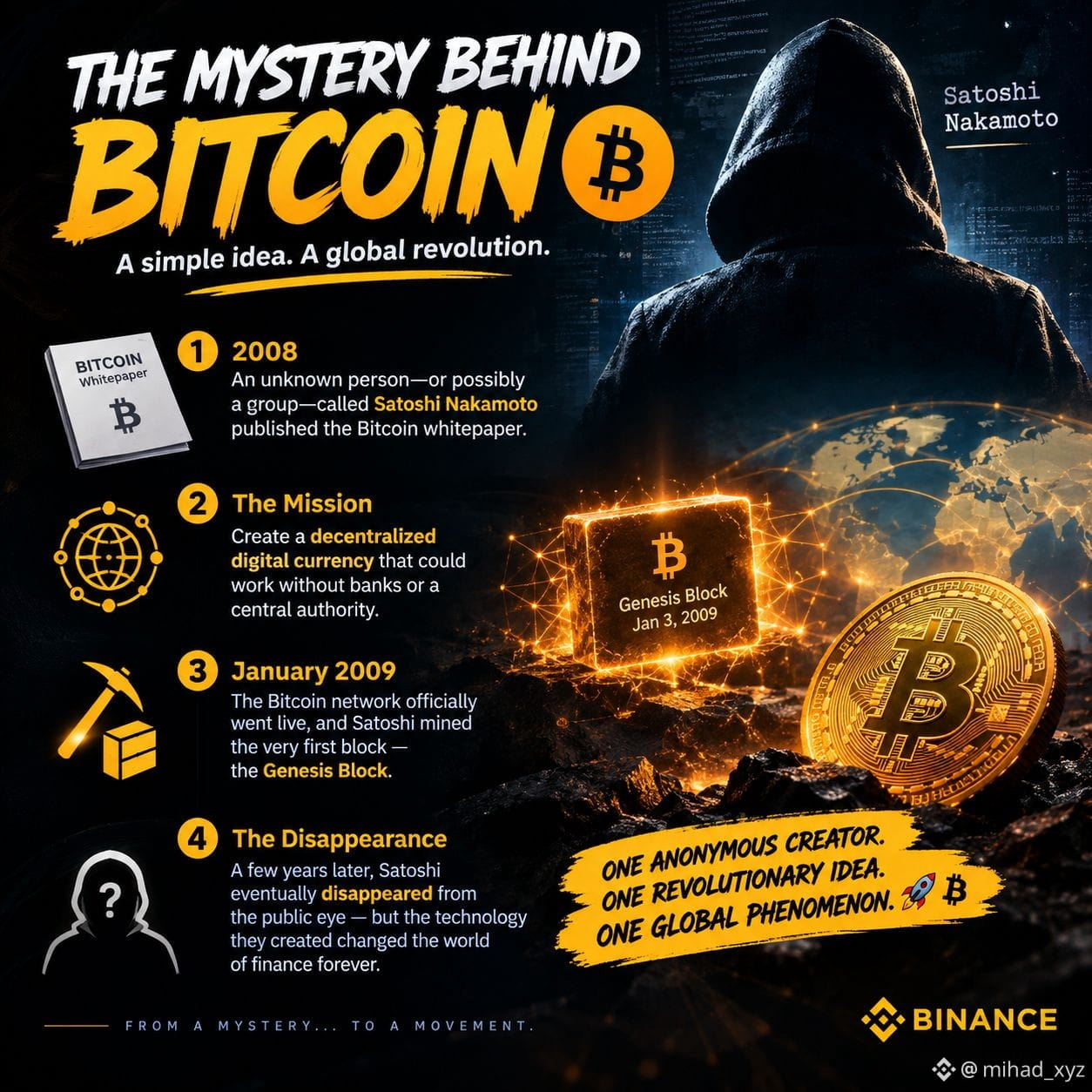
In 2008, an unknown person—or possibly a group—called Satoshi Nakamoto published the Bitcoin whitepaper. 📜
The mission? Create a decentralized digital currency that could work without banks or a central authority. 🌐💰
Then, in January 2009, Bitcoin officially went live, and Satoshi mined the very first block—the Genesis Block. ⛏️🧱
But here’s the mystery… 👀
Satoshi eventually disappeared, leaving the world with Bitcoin—but no confirmed identity. 🕵️♂️
One anonymous creator. One revolutionary idea. One global phenomenon. 🚀₿
$BTC
{spot}(BTCUSDT)
#bitcoin #BTC #crypto #SatoshiNakamoto #BinanceSquare
🚨 WHO CREATED BITCOIN? ₿
In 2008, an unknown person—or possibly a group—called Satoshi Nakamoto published the Bitcoin whitepaper. 📜
The mission? Create a decentralized digital currency that could work without banks or a central authority. 🌐💰
Then, in January 2009, Bitcoin officially went live, and Satoshi mined the very first block—the Genesis Block. ⛏️🧱
But here’s the mystery… 👀
Satoshi eventually disappeared, leaving the world with Bitcoin—but no confirmed identity. 🕵️♂️
One anonymous creator. One revolutionary idea. One global phenomenon. 🚀₿
$BTC
#bitcoin #BTC #crypto #SatoshiNakamoto #BinanceSquare
In 2008, an unknown person—or possibly a group—called Satoshi Nakamoto published the Bitcoin whitepaper. 📜
The mission? Create a decentralized digital currency that could work without banks or a central authority. 🌐💰
Then, in January 2009, Bitcoin officially went live, and Satoshi mined the very first block—the Genesis Block. ⛏️🧱
But here’s the mystery… 👀
Satoshi eventually disappeared, leaving the world with Bitcoin—but no confirmed identity. 🕵️♂️
One anonymous creator. One revolutionary idea. One global phenomenon. 🚀₿
$BTC
#bitcoin #BTC #crypto #SatoshiNakamoto #BinanceSquare
71


·
--
Verified
Article
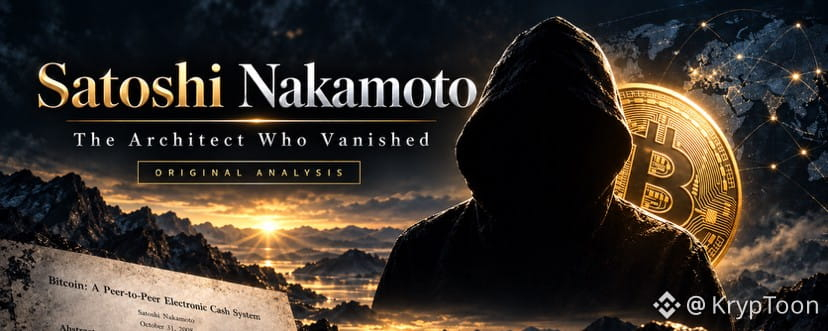
Satoshi Nakamoto: The Architect Who Vanished, the Network That StayedBitcoin has produced fortunes, political debates, regulatory battles, technological revolutions and thousands of competing digital assets.
Yet the person, or perhaps group, who started it remains unknown.
That creator used the name Satoshi Nakamoto.
The mystery has lasted for nearly eighteen years because two very different questions are usually mixed together.
The first question is historical:
Who created Bitcoin?
The second is technological:
Why can Bitcoin continue functioning even though nobody knows who created it?
The second question may ultimately be more important.
Bitcoin was designed so that users would not need to trust a founder, company, government or financial institution to determine the validity of transactions.
Ironically, the system built around verification rather than personal trust has left its own creator surrounded by speculation.
This article separates four different categories:
• documented historical facts
• technically supported conclusions
• credible but unproven theories
• rumors with little or no verifiable evidence
The distinction matters.
A candidate can resemble Satoshi.
A writing style can resemble Satoshi.
A programmer can possess all the necessary skills.
None of those facts alone proves identity.
In cryptography, extraordinary claims deserve verifiable evidence.
🧭 Before Bitcoin: The Problem Satoshi Inherited
Bitcoin did not appear suddenly from nowhere.
Its foundations were built over decades of research into digital money, cryptography, distributed computing and online privacy.
Long before Bitcoin existed, researchers had already explored pieces of the puzzle.
David Chaum developed groundbreaking concepts involving cryptographic electronic cash and blind signatures.
Stuart Haber and W. Scott Stornetta worked on cryptographically secured timestamping.
Adam Back developed Hashcash, a proof-of-work system originally intended to make spam economically expensive.
Wei Dai proposed b-money, describing a distributed electronic cash system.
Nick Szabo designed the concept of Bit Gold, which explored digital scarcity created through computational work.
Hal Finney later developed Reusable Proof of Work, or RPOW.
Bitcoin's original white paper referenced several of these technologies and researchers.
Satoshi's breakthrough was therefore not that every individual ingredient was completely new.
The breakthrough was the architecture.
Bitcoin combined cryptographic signatures, peer-to-peer networking, proof-of-work, timestamping, economic incentives and decentralized consensus into one operational system.
The central challenge was called the double-spending problem.
Digital information can be copied.
If digital money is merely a file, someone could theoretically duplicate it and attempt to spend the same value twice.
Traditional finance solves this problem through trusted intermediaries.
Banks maintain account balances.
Card networks approve payments.
Clearing systems maintain authoritative transaction records.
Satoshi proposed something radically different.
Instead of trusting one institution to maintain the official ledger, thousands of independent participants could verify a shared transaction history.
That idea became Bitcoin.
📜 The Beginning of Bitcoin
August 2008: Bitcoin.org Appears
The domain bitcoin.org was registered on August 18, 2008.
That happened months before the Bitcoin network became operational.
It suggests that the project was already reasonably developed before Satoshi revealed it publicly.
October 31, 2008: The White Paper
Satoshi Nakamoto distributed a document titled:
Bitcoin: A Peer-to-Peer Electronic Cash System
The paper was only nine pages long.
Yet its opening idea was enormous.
It proposed electronic payments that could move directly between participants without depending on a financial institution to validate every transaction.
Satoshi described an electronic payment system based on cryptographic proof rather than reliance on a trusted third party.
The timing became historically significant.
The global financial system was experiencing one of its most severe crises in decades.
However, it would be misleading to claim that Bitcoin was created entirely because of the 2008 financial crisis.
Many of Bitcoin's technical predecessors had existed for years.
The intellectual development behind Bitcoin clearly predates the collapse of major financial institutions in 2008.
The crisis nevertheless gave Bitcoin's philosophy powerful historical context.
⛏️ January 3, 2009: The Genesis Block
Bitcoin officially began with what is now called the Genesis Block, or Block 0.
Embedded inside it was a newspaper headline:
“The Times 03/Jan/2009 Chancellor on brink of second bailout for banks.”
The headline came from the British newspaper The Times.
At the most basic level, it functioned as evidence that the block could not have been created before January 3.
But many Bitcoin historians also interpret it as commentary on the traditional banking system.
Whether Satoshi intended it primarily as a timestamp, political statement, or both remains open to interpretation.
The block contained a 50 BTC reward.
Because of how Bitcoin's original software treats the Genesis Block, those particular coins cannot be spent through the normal transaction process.
💻 Bitcoin Software Goes Public
A few days later, Satoshi released the first Bitcoin software.
Early participants could:
• run Bitcoin nodes
• validate transactions
• mine blocks
• send BTC directly to other participants
There were no institutional custodians.
No Bitcoin ETFs.
No industrial-scale mining farms.
No global exchange industry.
No established market price.
It began as an experimental peer-to-peer network operated by a handful of technically curious participants.
🤝 Hal Finney and Bitcoin's First Famous Transfer
One of the earliest people to recognize Bitcoin's potential was cryptographer and developer Hal Finney.
Finney downloaded the software almost immediately.
His famous January 2009 post simply said:
“Running bitcoin.”
On January 12, Satoshi sent Finney 10 BTC.
It is generally recognized as the first recorded Bitcoin transaction between Satoshi and another individual.
That transaction later became crucial in discussions about Satoshi's identity.
If Finney himself were Satoshi, he would have effectively been transferring bitcoin between identities while simultaneously maintaining correspondence in which he appeared to be independently testing Satoshi's software.
That is possible in theory.
But it makes the hypothesis more complicated.
⚙️ How Bitcoin's Blockchain Actually Works
“Blockchain” is frequently treated as though the chain itself were Satoshi's entire invention.
That misses the most important point.
Bitcoin is not simply a database containing blocks.
It is a system for allowing independent participants to agree on a transaction history even when they do not necessarily trust one another.
🔐 1. Private Keys Control Bitcoin
Bitcoin ownership is based on cryptography.
Users control private keys that can authorize transactions.
When someone spends bitcoin, the network verifies whether the required cryptographic authorization is valid.
Bitcoin does not need to know the user's legal name to validate the transaction.
This is why Bitcoin is generally described as pseudonymous, not completely anonymous.
Transactions remain visible publicly.
Blockchain analytics can sometimes connect addresses, exchanges and behavioral patterns to real people.
🧩 2. Bitcoin Uses UTXOs
Bitcoin does not operate exactly like a traditional bank account.
It uses something called the Unspent Transaction Output, or UTXO, model.
A transaction consumes previously unspent outputs and creates new ones.
Your wallet calculates the outputs you can spend and displays their combined value as your balance.
This architecture makes double-spending a verifiable question.
Has a particular output already been spent?
If yes, nodes reject attempts to spend it again.
🌐 3. Transactions Move Across a Peer-to-Peer Network
Bitcoin nodes communicate directly with other nodes.
When a transaction is broadcast, participating nodes independently verify whether it follows Bitcoin's consensus rules.
Invalid transactions can be rejected without needing authorization from Satoshi, a company or a central administrator.
⛏️ 4. Miners Perform Proof-of-Work
Miners gather valid transactions into candidate blocks.
They then perform enormous numbers of SHA-256 calculations.
Their objective is to discover a block hash that satisfies Bitcoin's current difficulty requirement.
Finding that solution requires computation.
Checking that the solution is correct is comparatively easy.
This imbalance is essential.
Creating proof is expensive.
Verifying proof is inexpensive.
🔗 5. Blocks Create a Historical Chain
Each new block references information from the previous block.
Changing an old transaction would alter the affected block.
That alteration would also change subsequent cryptographic relationships.
An attacker attempting to rewrite Bitcoin's history would therefore need to recreate the required proof-of-work and catch up with or overtake the legitimate chain's accumulated work.
The deeper a transaction becomes in Bitcoin's history, the more computational work protects it.
💰 6. Economics Secures the System
Mining is not charitable.
Bitcoin provides incentives.
A miner that discovers a valid block can receive:
• the block subsidy
• transaction fees
Bitcoin's original block subsidy was 50 BTC.
Approximately every 210,000 blocks, the subsidy halves.
It became:
50 BTC
25 BTC
12.5 BTC
6.25 BTC
3.125 BTC
This declining issuance is the mechanism behind Bitcoin's supply ceiling approaching 21 million BTC.
Cryptography, game theory, networking and monetary incentives work together.
That combination is the real architecture.
🕵️ Who Is Satoshi Nakamoto?
This is where documented history ends and investigation begins.
Satoshi's writings provide clues.
They do not provide proof of identity.
Researchers have studied:
• vocabulary
• spelling
• punctuation
• coding style
• email timestamps
• cryptographic knowledge
• economic views
• geographic hints
• forum activity
• historical relationships
But profile matching has a fundamental weakness.
The early cypherpunk community contained many technically sophisticated people who shared similar terminology, ideas and philosophical interests.
Similarity does not establish identity.
🧩 Adam Back
Adam Back is one of the most technically plausible and, as of 2026, one of the most discussed candidates.
He created Hashcash.
Bitcoin's white paper explicitly references Hashcash.
Back also participated extensively in the cypherpunk community and was researching digital cash, privacy and proof-of-work years before Bitcoin existed.
In April 2026, an extensive New York Times investigation led by journalist John Carreyrou renewed speculation that Back might have been Satoshi.
The investigation examined a large body of historical cryptography mailing-list material and focused partly on unusual similarities between Back's writing and Satoshi's.
The reported comparisons included spelling patterns, phrase construction and nonstandard hyphenation.
However, this remains circumstantial evidence.
Back has repeatedly denied being Satoshi.
There is another important counterpoint.
Back has previously produced correspondence showing someone using the Satoshi identity contacting him about Bitcoin before the white paper's publication.
A Back-is-Satoshi theory therefore requires explaining those communications as deliberate compartmentalization or identity management.
Possible?
Yes.
Proven?
No.
No publicly verified cryptographic evidence currently establishes Adam Back as Satoshi Nakamoto.
🧩 Hal Finney
Few candidates fit the technical profile better than Hal Finney.
Finney was:
• an accomplished cryptographer
• an early cypherpunk
• creator of RPOW
• one of Bitcoin's earliest users
• recipient of Satoshi's first famous BTC transfer
He also lived surprisingly close to a man whose legal surname was Nakamoto, another coincidence that later attracted attention.
But Finney denied being Satoshi.
More importantly, archived correspondence shows Finney apparently communicating with Satoshi while testing Bitcoin.
To accept the Finney theory, one must assume that he created an elaborate parallel identity and correspondence trail.
That cannot be completely ruled out.
But no decisive evidence establishes it.
🧩 Nick Szabo
Nick Szabo remains another major candidate.
Years before Bitcoin, Szabo conceptualized Bit Gold.
Bit Gold contained ideas that appear strikingly similar to elements later found in Bitcoin:
• computational scarcity
• cryptographic proofs
• distributed validation concepts
• digital value without conventional banking
Szabo also wrote extensively about money, law and trusted institutions.
Stylometric studies have periodically found similarities between his writing and Satoshi's.
Still, intellectual influence does not equal authorship.
Satoshi clearly studied previous digital-money systems.
A creator influenced by Szabo could naturally produce similar ideas.
Szabo has denied being Satoshi.
No cryptographic proof establishes otherwise.
🧩 Peter Todd
In 2024, the HBO documentary Money Electric: The Bitcoin Mystery proposed longtime Bitcoin developer Peter Todd as Satoshi.
The documentary relied on interpretations of early forum interactions, technical history and circumstantial behavioral evidence.
Todd rejected the conclusion.
No Satoshi-associated private-key signature was produced.
The documentary therefore created a major theory, not a verified identification.
🧩 Len Sassaman
Len Sassaman was a cryptographer, privacy advocate and active participant in the cypherpunk world.
His technical background, social connections and knowledge made him a plausible candidate.
Another frequently mentioned coincidence is timing.
Sassaman died in 2011, the same year Satoshi disappeared from public communication.
That coincidence has powered years of speculation.
Yet timeline alignment is not identity proof.
No known Satoshi key has been publicly demonstrated to belong to Sassaman.
🧩 Dorian Nakamoto
Perhaps the most famous mistaken identification involved Dorian Prentice Satoshi Nakamoto.
Newsweek identified him as the Bitcoin creator in 2014.
The case relied partly on:
• his name
• engineering background
• privacy
• an ambiguous statement
Dorian later said he had not known about Bitcoin before journalists approached him.
The episode became an important warning about Satoshi investigations.
Speculation can affect real people.
A compelling coincidence does not justify presenting identity as fact.
🧩 Paul Le Roux
Programmer Paul Le Roux has also appeared in Satoshi theories.
He possessed formidable programming and encryption skills and had extensive experience maintaining secrecy.
Journalists have explored parallels between his capabilities and Bitcoin.
However, no hard evidence has connected him to Satoshi's cryptographic identity.
His story remains one of the more dramatic hypotheses, but not one of the strongest proofs.
🧩 Could Satoshi Have Been Multiple People?
Another theory proposes that Satoshi Nakamoto was a team.
Supporters of this idea point to the breadth of expertise visible in Bitcoin:
cryptography
economics
C++ development
peer-to-peer networking
security
game theory
monetary design
The project certainly required knowledge across several disciplines.
But multidisciplinary competence does not automatically imply multiple authors.
Exceptional generalists exist.
A small team could maintain one writing identity.
A single programmer could also spend years developing expertise while seeking informal feedback from others.
Current evidence cannot conclusively distinguish these possibilities.
⚖️ Craig Wright: A Very Different Case
Craig Wright publicly claimed for years that he was Satoshi Nakamoto.
Unlike most candidate theories, his claim eventually received extensive judicial scrutiny.
In 2024, the High Court of England and Wales ruled in the Crypto Open Patent Alliance case that Wright was not:
• the author of the Bitcoin white paper
• the person operating under the Satoshi Nakamoto pseudonym
• the creator of Bitcoin
• the author of Bitcoin's original software
That ruling did not identify the real Satoshi.
But it created an unusually strong legal conclusion concerning one prominent claimant.
🌫️ The Biggest Satoshi Rumors
“Satoshi was an intelligence agency.”
This theory frequently points to Bitcoin's use of SHA-256.
SHA-256 was designed by the U.S. National Security Agency and standardized publicly.
But using a publicly available cryptographic standard does not prove that the organization that designed the algorithm also created every system using it.
No authenticated evidence currently proves that the NSA, CIA or another intelligence agency created Bitcoin.
“Satoshi disappeared because the CIA discovered him.”
This theory partly originates from Bitcoin developer Gavin Andresen's contact with U.S. intelligence-related organizations during Bitcoin's early history.
The chronology is less dramatic than many online versions suggest.
Satoshi had already been reducing participation and communicated that he had moved on.
The CIA theory remains speculation.
“Every old Bitcoin wallet belongs to Satoshi.”
Incorrect.
Many people mined Bitcoin during its earliest years.
Movement from a wallet created in 2009 or 2010 does not automatically mean Satoshi has returned.
Early-chain activity must be analyzed carefully.
₿ Did Satoshi Mine 1.1 Million BTC?
One of Bitcoin's most repeated claims is that Satoshi owns approximately 1.1 million BTC.
That figure should be treated as an estimate, not a confirmed account balance.
Researcher Sergio Demian Lerner studied patterns in Bitcoin's early mining history.
He identified characteristics suggesting that one dominant early miner produced a large number of blocks.
That inferred miner became known as Patoshi.
Some estimates based on the pattern approach approximately 1.1 million BTC.
Other researchers have produced lower estimates.
The important distinction is this:
Bitcoin's blockchain does not contain a label stating:
“These coins belong to Satoshi Nakamoto.”
Researchers are inferring ownership from mining patterns.
It is therefore more accurate to say:
A dominant early miner widely suspected to be Satoshi appears to have mined a very large quantity of BTC, much of which has apparently remained dormant.
That is evidence-based.
Declaring an exact Satoshi balance is not.
🔑 What Would Actually Prove Satoshi's Identity?
Cryptography offers a much stronger test than documentaries, writing comparisons or personality analysis.
A serious claimant could sign a new message using a private key independently established as belonging to Satoshi's earliest Bitcoin activity.
The test should involve a newly chosen public message so an old signature cannot simply be recycled.
Even then, precision matters.
A valid signature would prove control of the private key.
It would not automatically prove the claimant was the original human owner.
Keys can theoretically be:
stolen
transferred
inherited
shared
recovered
A truly compelling identification would ideally combine:
1. Cryptographic evidence
Control of historically credible Satoshi-associated keys.
2. Contemporaneous documentation
Records created before Bitcoin became famous.
3. Technical continuity
Knowledge consistent with Bitcoin's earliest implementation.
4. Independent verification
Publicly reproducible evidence rather than private demonstrations.
5. Provenance
Documents and metadata whose authenticity can be independently established.
Until evidence approaches that standard, every candidate should remain a candidate.
🧠 Why Satoshi's Disappearance May Have Helped Bitcoin
Bitcoin began with an unavoidable contradiction.
It was designed to decentralize monetary verification.
Yet its earliest development depended heavily on one creator.
Satoshi initially:
wrote the software
explained the protocol
fixed bugs
communicated with developers
managed infrastructure
guided development
That is significant centralized influence.
But decentralization can develop progressively.
Other developers learned the software.
More miners joined.
Independent nodes expanded.
Infrastructure moved beyond Satoshi's direct control.
By 2011, Bitcoin faced its biggest governance test:
Could the network survive without its creator?
It did.
That may be one of Bitcoin's most historically important achievements.
Today, no founder can simply announce a new Bitcoin rule and force everyone to accept it.
Developers can propose changes.
Miners can choose strategies.
Companies can support software.
Governments can regulate services.
Investors can influence markets.
But independent Bitcoin nodes ultimately enforce the consensus rules implemented in the software they choose to run.
There is no verified “Satoshi administrator account.”
No founder password controls the network.
🔍 Where the Mystery Stands in 2026
The Satoshi investigation is still open.
The 2026 Adam Back investigation brought sophisticated new historical and linguistic analysis into the debate.
Back denies being Satoshi.
The 2024 Peter Todd theory remains disputed.
Hal Finney remains one of the strongest historical candidates but denied being Satoshi.
Nick Szabo continues to attract attention because of Bit Gold and his intellectual background.
Len Sassaman remains part of the discussion.
The theory that Satoshi was a group remains possible.
Craig Wright's personal claim was rejected by the English High Court.
No theory has produced universally accepted cryptographic proof.
We also do not know with certainty whether Satoshi:
is alive
has died
lost the relevant keys
still controls early BTC
was one person
was several people
Anyone claiming certainty should therefore be asked for evidence.
🏁 Final Analysis
The most fascinating aspect of Satoshi Nakamoto may ultimately not be who disappeared.
It may be what remained.
The white paper survived.
The source code survived.
The blockchain survived.
The network survived.
The monetary policy survived.
And Bitcoin continued operating without verified communication from its creator.
That is unusual in technology.
Major technology platforms usually retain visible founders, executives, companies or foundations.
Bitcoin's creator became almost entirely absent from the system's later operation.
That absence transformed Satoshi from a leader into a historical mystery.
It also reinforced one of Bitcoin's deepest principles:
Verify. Do not simply trust.
That principle should apply to Satoshi investigations too.
A writing similarity is evidence.
It is not proof.
A technical background is evidence.
It is not proof.
A documentary theory is evidence.
It is not proof.
A journalist's investigation can strengthen a case.
It still does not replace cryptographic verification.
A person's own claim is not enough either.
Until decisive evidence appears, the most responsible conclusion remains simple:
Satoshi Nakamoto created Bitcoin.
Satoshi Nakamoto's verified real-world identity remains unknown.
And perhaps that unresolved identity is no longer a weakness in Bitcoin's story.
Perhaps it is the ultimate demonstration that the network became larger than its founder.
Disclaimer: This article is for educational, historical and informational purposes only. Identity theories discussed above remain unverified unless explicitly stated otherwise. Nothing in this article constitutes financial, investment, trading, legal or tax advice.
$BTC
Bitcoin • Satoshi Nakamoto • Blockchain • Crypto History
#Bitcoin #SatoshiNakamoto #Blockchain
Satoshi Nakamoto: The Architect Who Vanished, the Network That Stayed
Bitcoin has produced fortunes, political debates, regulatory battles, technological revolutions and thousands of competing digital assets.
Yet the person, or perhaps group, who started it remains unknown.
That creator used the name Satoshi Nakamoto.
The mystery has lasted for nearly eighteen years because two very different questions are usually mixed together.
The first question is historical:
Who created Bitcoin?
The second is technological:
Why can Bitcoin continue functioning even though nobody knows who created it?
The second question may ultimately be more important.
Bitcoin was designed so that users would not need to trust a founder, company, government or financial institution to determine the validity of transactions.
Ironically, the system built around verification rather than personal trust has left its own creator surrounded by speculation.
This article separates four different categories:
• documented historical facts
• technically supported conclusions
• credible but unproven theories
• rumors with little or no verifiable evidence
The distinction matters.
A candidate can resemble Satoshi.
A writing style can resemble Satoshi.
A programmer can possess all the necessary skills.
None of those facts alone proves identity.
In cryptography, extraordinary claims deserve verifiable evidence.
🧭 Before Bitcoin: The Problem Satoshi Inherited
Bitcoin did not appear suddenly from nowhere.
Its foundations were built over decades of research into digital money, cryptography, distributed computing and online privacy.
Long before Bitcoin existed, researchers had already explored pieces of the puzzle.
David Chaum developed groundbreaking concepts involving cryptographic electronic cash and blind signatures.
Stuart Haber and W. Scott Stornetta worked on cryptographically secured timestamping.
Adam Back developed Hashcash, a proof-of-work system originally intended to make spam economically expensive.
Wei Dai proposed b-money, describing a distributed electronic cash system.
Nick Szabo designed the concept of Bit Gold, which explored digital scarcity created through computational work.
Hal Finney later developed Reusable Proof of Work, or RPOW.
Bitcoin's original white paper referenced several of these technologies and researchers.
Satoshi's breakthrough was therefore not that every individual ingredient was completely new.
The breakthrough was the architecture.
Bitcoin combined cryptographic signatures, peer-to-peer networking, proof-of-work, timestamping, economic incentives and decentralized consensus into one operational system.
The central challenge was called the double-spending problem.
Digital information can be copied.
If digital money is merely a file, someone could theoretically duplicate it and attempt to spend the same value twice.
Traditional finance solves this problem through trusted intermediaries.
Banks maintain account balances.
Card networks approve payments.
Clearing systems maintain authoritative transaction records.
Satoshi proposed something radically different.
Instead of trusting one institution to maintain the official ledger, thousands of independent participants could verify a shared transaction history.
That idea became Bitcoin.
📜 The Beginning of Bitcoin
August 2008: Bitcoin.org Appears
The domain bitcoin.org was registered on August 18, 2008.
That happened months before the Bitcoin network became operational.
It suggests that the project was already reasonably developed before Satoshi revealed it publicly.
October 31, 2008: The White Paper
Satoshi Nakamoto distributed a document titled:
Bitcoin: A Peer-to-Peer Electronic Cash System
The paper was only nine pages long.
Yet its opening idea was enormous.
It proposed electronic payments that could move directly between participants without depending on a financial institution to validate every transaction.
Satoshi described an electronic payment system based on cryptographic proof rather than reliance on a trusted third party.
The timing became historically significant.
The global financial system was experiencing one of its most severe crises in decades.
However, it would be misleading to claim that Bitcoin was created entirely because of the 2008 financial crisis.
Many of Bitcoin's technical predecessors had existed for years.
The intellectual development behind Bitcoin clearly predates the collapse of major financial institutions in 2008.
The crisis nevertheless gave Bitcoin's philosophy powerful historical context.
⛏️ January 3, 2009: The Genesis Block
Bitcoin officially began with what is now called the Genesis Block, or Block 0.
Embedded inside it was a newspaper headline:
“The Times 03/Jan/2009 Chancellor on brink of second bailout for banks.”
The headline came from the British newspaper The Times.
At the most basic level, it functioned as evidence that the block could not have been created before January 3.
But many Bitcoin historians also interpret it as commentary on the traditional banking system.
Whether Satoshi intended it primarily as a timestamp, political statement, or both remains open to interpretation.
The block contained a 50 BTC reward.
Because of how Bitcoin's original software treats the Genesis Block, those particular coins cannot be spent through the normal transaction process.
💻 Bitcoin Software Goes Public
A few days later, Satoshi released the first Bitcoin software.
Early participants could:
• run Bitcoin nodes
• validate transactions
• mine blocks
• send BTC directly to other participants
There were no institutional custodians.
No Bitcoin ETFs.
No industrial-scale mining farms.
No global exchange industry.
No established market price.
It began as an experimental peer-to-peer network operated by a handful of technically curious participants.
🤝 Hal Finney and Bitcoin's First Famous Transfer
One of the earliest people to recognize Bitcoin's potential was cryptographer and developer Hal Finney.
Finney downloaded the software almost immediately.
His famous January 2009 post simply said:
“Running bitcoin.”
On January 12, Satoshi sent Finney 10 BTC.
It is generally recognized as the first recorded Bitcoin transaction between Satoshi and another individual.
That transaction later became crucial in discussions about Satoshi's identity.
If Finney himself were Satoshi, he would have effectively been transferring bitcoin between identities while simultaneously maintaining correspondence in which he appeared to be independently testing Satoshi's software.
That is possible in theory.
But it makes the hypothesis more complicated.
⚙️ How Bitcoin's Blockchain Actually Works
“Blockchain” is frequently treated as though the chain itself were Satoshi's entire invention.
That misses the most important point.
Bitcoin is not simply a database containing blocks.
It is a system for allowing independent participants to agree on a transaction history even when they do not necessarily trust one another.
🔐 1. Private Keys Control Bitcoin
Bitcoin ownership is based on cryptography.
Users control private keys that can authorize transactions.
When someone spends bitcoin, the network verifies whether the required cryptographic authorization is valid.
Bitcoin does not need to know the user's legal name to validate the transaction.
This is why Bitcoin is generally described as pseudonymous, not completely anonymous.
Transactions remain visible publicly.
Blockchain analytics can sometimes connect addresses, exchanges and behavioral patterns to real people.
🧩 2. Bitcoin Uses UTXOs
Bitcoin does not operate exactly like a traditional bank account.
It uses something called the Unspent Transaction Output, or UTXO, model.
A transaction consumes previously unspent outputs and creates new ones.
Your wallet calculates the outputs you can spend and displays their combined value as your balance.
This architecture makes double-spending a verifiable question.
Has a particular output already been spent?
If yes, nodes reject attempts to spend it again.
🌐 3. Transactions Move Across a Peer-to-Peer Network
Bitcoin nodes communicate directly with other nodes.
When a transaction is broadcast, participating nodes independently verify whether it follows Bitcoin's consensus rules.
Invalid transactions can be rejected without needing authorization from Satoshi, a company or a central administrator.
⛏️ 4. Miners Perform Proof-of-Work
Miners gather valid transactions into candidate blocks.
They then perform enormous numbers of SHA-256 calculations.
Their objective is to discover a block hash that satisfies Bitcoin's current difficulty requirement.
Finding that solution requires computation.
Checking that the solution is correct is comparatively easy.
This imbalance is essential.
Creating proof is expensive.
Verifying proof is inexpensive.
🔗 5. Blocks Create a Historical Chain
Each new block references information from the previous block.
Changing an old transaction would alter the affected block.
That alteration would also change subsequent cryptographic relationships.
An attacker attempting to rewrite Bitcoin's history would therefore need to recreate the required proof-of-work and catch up with or overtake the legitimate chain's accumulated work.
The deeper a transaction becomes in Bitcoin's history, the more computational work protects it.
💰 6. Economics Secures the System
Mining is not charitable.
Bitcoin provides incentives.
A miner that discovers a valid block can receive:
• the block subsidy
• transaction fees
Bitcoin's original block subsidy was 50 BTC.
Approximately every 210,000 blocks, the subsidy halves.
It became:
50 BTC
25 BTC
12.5 BTC
6.25 BTC
3.125 BTC
This declining issuance is the mechanism behind Bitcoin's supply ceiling approaching 21 million BTC.
Cryptography, game theory, networking and monetary incentives work together.
That combination is the real architecture.
🕵️ Who Is Satoshi Nakamoto?
This is where documented history ends and investigation begins.
Satoshi's writings provide clues.
They do not provide proof of identity.
Researchers have studied:
• vocabulary
• spelling
• punctuation
• coding style
• email timestamps
• cryptographic knowledge
• economic views
• geographic hints
• forum activity
• historical relationships
But profile matching has a fundamental weakness.
The early cypherpunk community contained many technically sophisticated people who shared similar terminology, ideas and philosophical interests.
Similarity does not establish identity.
🧩 Adam Back
Adam Back is one of the most technically plausible and, as of 2026, one of the most discussed candidates.
He created Hashcash.
Bitcoin's white paper explicitly references Hashcash.
Back also participated extensively in the cypherpunk community and was researching digital cash, privacy and proof-of-work years before Bitcoin existed.
In April 2026, an extensive New York Times investigation led by journalist John Carreyrou renewed speculation that Back might have been Satoshi.
The investigation examined a large body of historical cryptography mailing-list material and focused partly on unusual similarities between Back's writing and Satoshi's.
The reported comparisons included spelling patterns, phrase construction and nonstandard hyphenation.
However, this remains circumstantial evidence.
Back has repeatedly denied being Satoshi.
There is another important counterpoint.
Back has previously produced correspondence showing someone using the Satoshi identity contacting him about Bitcoin before the white paper's publication.
A Back-is-Satoshi theory therefore requires explaining those communications as deliberate compartmentalization or identity management.
Possible?
Yes.
Proven?
No.
No publicly verified cryptographic evidence currently establishes Adam Back as Satoshi Nakamoto.
🧩 Hal Finney
Few candidates fit the technical profile better than Hal Finney.
Finney was:
• an accomplished cryptographer
• an early cypherpunk
• creator of RPOW
• one of Bitcoin's earliest users
• recipient of Satoshi's first famous BTC transfer
He also lived surprisingly close to a man whose legal surname was Nakamoto, another coincidence that later attracted attention.
But Finney denied being Satoshi.
More importantly, archived correspondence shows Finney apparently communicating with Satoshi while testing Bitcoin.
To accept the Finney theory, one must assume that he created an elaborate parallel identity and correspondence trail.
That cannot be completely ruled out.
But no decisive evidence establishes it.
🧩 Nick Szabo
Nick Szabo remains another major candidate.
Years before Bitcoin, Szabo conceptualized Bit Gold.
Bit Gold contained ideas that appear strikingly similar to elements later found in Bitcoin:
• computational scarcity
• cryptographic proofs
• distributed validation concepts
• digital value without conventional banking
Szabo also wrote extensively about money, law and trusted institutions.
Stylometric studies have periodically found similarities between his writing and Satoshi's.
Still, intellectual influence does not equal authorship.
Satoshi clearly studied previous digital-money systems.
A creator influenced by Szabo could naturally produce similar ideas.
Szabo has denied being Satoshi.
No cryptographic proof establishes otherwise.
🧩 Peter Todd
In 2024, the HBO documentary Money Electric: The Bitcoin Mystery proposed longtime Bitcoin developer Peter Todd as Satoshi.
The documentary relied on interpretations of early forum interactions, technical history and circumstantial behavioral evidence.
Todd rejected the conclusion.
No Satoshi-associated private-key signature was produced.
The documentary therefore created a major theory, not a verified identification.
🧩 Len Sassaman
Len Sassaman was a cryptographer, privacy advocate and active participant in the cypherpunk world.
His technical background, social connections and knowledge made him a plausible candidate.
Another frequently mentioned coincidence is timing.
Sassaman died in 2011, the same year Satoshi disappeared from public communication.
That coincidence has powered years of speculation.
Yet timeline alignment is not identity proof.
No known Satoshi key has been publicly demonstrated to belong to Sassaman.
🧩 Dorian Nakamoto
Perhaps the most famous mistaken identification involved Dorian Prentice Satoshi Nakamoto.
Newsweek identified him as the Bitcoin creator in 2014.
The case relied partly on:
• his name
• engineering background
• privacy
• an ambiguous statement
Dorian later said he had not known about Bitcoin before journalists approached him.
The episode became an important warning about Satoshi investigations.
Speculation can affect real people.
A compelling coincidence does not justify presenting identity as fact.
🧩 Paul Le Roux
Programmer Paul Le Roux has also appeared in Satoshi theories.
He possessed formidable programming and encryption skills and had extensive experience maintaining secrecy.
Journalists have explored parallels between his capabilities and Bitcoin.
However, no hard evidence has connected him to Satoshi's cryptographic identity.
His story remains one of the more dramatic hypotheses, but not one of the strongest proofs.
🧩 Could Satoshi Have Been Multiple People?
Another theory proposes that Satoshi Nakamoto was a team.
Supporters of this idea point to the breadth of expertise visible in Bitcoin:
cryptography
economics
C++ development
peer-to-peer networking
security
game theory
monetary design
The project certainly required knowledge across several disciplines.
But multidisciplinary competence does not automatically imply multiple authors.
Exceptional generalists exist.
A small team could maintain one writing identity.
A single programmer could also spend years developing expertise while seeking informal feedback from others.
Current evidence cannot conclusively distinguish these possibilities.
⚖️ Craig Wright: A Very Different Case
Craig Wright publicly claimed for years that he was Satoshi Nakamoto.
Unlike most candidate theories, his claim eventually received extensive judicial scrutiny.
In 2024, the High Court of England and Wales ruled in the Crypto Open Patent Alliance case that Wright was not:
• the author of the Bitcoin white paper
• the person operating under the Satoshi Nakamoto pseudonym
• the creator of Bitcoin
• the author of Bitcoin's original software
That ruling did not identify the real Satoshi.
But it created an unusually strong legal conclusion concerning one prominent claimant.
🌫️ The Biggest Satoshi Rumors
“Satoshi was an intelligence agency.”
This theory frequently points to Bitcoin's use of SHA-256.
SHA-256 was designed by the U.S. National Security Agency and standardized publicly.
But using a publicly available cryptographic standard does not prove that the organization that designed the algorithm also created every system using it.
No authenticated evidence currently proves that the NSA, CIA or another intelligence agency created Bitcoin.
“Satoshi disappeared because the CIA discovered him.”
This theory partly originates from Bitcoin developer Gavin Andresen's contact with U.S. intelligence-related organizations during Bitcoin's early history.
The chronology is less dramatic than many online versions suggest.
Satoshi had already been reducing participation and communicated that he had moved on.
The CIA theory remains speculation.
“Every old Bitcoin wallet belongs to Satoshi.”
Incorrect.
Many people mined Bitcoin during its earliest years.
Movement from a wallet created in 2009 or 2010 does not automatically mean Satoshi has returned.
Early-chain activity must be analyzed carefully.
₿ Did Satoshi Mine 1.1 Million BTC?
One of Bitcoin's most repeated claims is that Satoshi owns approximately 1.1 million BTC.
That figure should be treated as an estimate, not a confirmed account balance.
Researcher Sergio Demian Lerner studied patterns in Bitcoin's early mining history.
He identified characteristics suggesting that one dominant early miner produced a large number of blocks.
That inferred miner became known as Patoshi.
Some estimates based on the pattern approach approximately 1.1 million BTC.
Other researchers have produced lower estimates.
The important distinction is this:
Bitcoin's blockchain does not contain a label stating:
“These coins belong to Satoshi Nakamoto.”
Researchers are inferring ownership from mining patterns.
It is therefore more accurate to say:
A dominant early miner widely suspected to be Satoshi appears to have mined a very large quantity of BTC, much of which has apparently remained dormant.
That is evidence-based.
Declaring an exact Satoshi balance is not.
🔑 What Would Actually Prove Satoshi's Identity?
Cryptography offers a much stronger test than documentaries, writing comparisons or personality analysis.
A serious claimant could sign a new message using a private key independently established as belonging to Satoshi's earliest Bitcoin activity.
The test should involve a newly chosen public message so an old signature cannot simply be recycled.
Even then, precision matters.
A valid signature would prove control of the private key.
It would not automatically prove the claimant was the original human owner.
Keys can theoretically be:
stolen
transferred
inherited
shared
recovered
A truly compelling identification would ideally combine:
1. Cryptographic evidence
Control of historically credible Satoshi-associated keys.
2. Contemporaneous documentation
Records created before Bitcoin became famous.
3. Technical continuity
Knowledge consistent with Bitcoin's earliest implementation.
4. Independent verification
Publicly reproducible evidence rather than private demonstrations.
5. Provenance
Documents and metadata whose authenticity can be independently established.
Until evidence approaches that standard, every candidate should remain a candidate.
🧠 Why Satoshi's Disappearance May Have Helped Bitcoin
Bitcoin began with an unavoidable contradiction.
It was designed to decentralize monetary verification.
Yet its earliest development depended heavily on one creator.
Satoshi initially:
wrote the software
explained the protocol
fixed bugs
communicated with developers
managed infrastructure
guided development
That is significant centralized influence.
But decentralization can develop progressively.
Other developers learned the software.
More miners joined.
Independent nodes expanded.
Infrastructure moved beyond Satoshi's direct control.
By 2011, Bitcoin faced its biggest governance test:
Could the network survive without its creator?
It did.
That may be one of Bitcoin's most historically important achievements.
Today, no founder can simply announce a new Bitcoin rule and force everyone to accept it.
Developers can propose changes.
Miners can choose strategies.
Companies can support software.
Governments can regulate services.
Investors can influence markets.
But independent Bitcoin nodes ultimately enforce the consensus rules implemented in the software they choose to run.
There is no verified “Satoshi administrator account.”
No founder password controls the network.
🔍 Where the Mystery Stands in 2026
The Satoshi investigation is still open.
The 2026 Adam Back investigation brought sophisticated new historical and linguistic analysis into the debate.
Back denies being Satoshi.
The 2024 Peter Todd theory remains disputed.
Hal Finney remains one of the strongest historical candidates but denied being Satoshi.
Nick Szabo continues to attract attention because of Bit Gold and his intellectual background.
Len Sassaman remains part of the discussion.
The theory that Satoshi was a group remains possible.
Craig Wright's personal claim was rejected by the English High Court.
No theory has produced universally accepted cryptographic proof.
We also do not know with certainty whether Satoshi:
is alive
has died
lost the relevant keys
still controls early BTC
was one person
was several people
Anyone claiming certainty should therefore be asked for evidence.
🏁 Final Analysis
The most fascinating aspect of Satoshi Nakamoto may ultimately not be who disappeared.
It may be what remained.
The white paper survived.
The source code survived.
The blockchain survived.
The network survived.
The monetary policy survived.
And Bitcoin continued operating without verified communication from its creator.
That is unusual in technology.
Major technology platforms usually retain visible founders, executives, companies or foundations.
Bitcoin's creator became almost entirely absent from the system's later operation.
That absence transformed Satoshi from a leader into a historical mystery.
It also reinforced one of Bitcoin's deepest principles:
Verify. Do not simply trust.
That principle should apply to Satoshi investigations too.
A writing similarity is evidence.
It is not proof.
A technical background is evidence.
It is not proof.
A documentary theory is evidence.
It is not proof.
A journalist's investigation can strengthen a case.
It still does not replace cryptographic verification.
A person's own claim is not enough either.
Until decisive evidence appears, the most responsible conclusion remains simple:
Satoshi Nakamoto created Bitcoin.
Satoshi Nakamoto's verified real-world identity remains unknown.
And perhaps that unresolved identity is no longer a weakness in Bitcoin's story.
Perhaps it is the ultimate demonstration that the network became larger than its founder.
Disclaimer: This article is for educational, historical and informational purposes only. Identity theories discussed above remain unverified unless explicitly stated otherwise. Nothing in this article constitutes financial, investment, trading, legal or tax advice.
$BTC
Bitcoin • Satoshi Nakamoto • Blockchain • Crypto History
#Bitcoin #SatoshiNakamoto #Blockchain
Yet the person, or perhaps group, who started it remains unknown.
That creator used the name Satoshi Nakamoto.
The mystery has lasted for nearly eighteen years because two very different questions are usually mixed together.
The first question is historical:
Who created Bitcoin?
The second is technological:
Why can Bitcoin continue functioning even though nobody knows who created it?
The second question may ultimately be more important.
Bitcoin was designed so that users would not need to trust a founder, company, government or financial institution to determine the validity of transactions.
Ironically, the system built around verification rather than personal trust has left its own creator surrounded by speculation.
This article separates four different categories:
• documented historical facts
• technically supported conclusions
• credible but unproven theories
• rumors with little or no verifiable evidence
The distinction matters.
A candidate can resemble Satoshi.
A writing style can resemble Satoshi.
A programmer can possess all the necessary skills.
None of those facts alone proves identity.
In cryptography, extraordinary claims deserve verifiable evidence.
🧭 Before Bitcoin: The Problem Satoshi Inherited
Bitcoin did not appear suddenly from nowhere.
Its foundations were built over decades of research into digital money, cryptography, distributed computing and online privacy.
Long before Bitcoin existed, researchers had already explored pieces of the puzzle.
David Chaum developed groundbreaking concepts involving cryptographic electronic cash and blind signatures.
Stuart Haber and W. Scott Stornetta worked on cryptographically secured timestamping.
Adam Back developed Hashcash, a proof-of-work system originally intended to make spam economically expensive.
Wei Dai proposed b-money, describing a distributed electronic cash system.
Nick Szabo designed the concept of Bit Gold, which explored digital scarcity created through computational work.
Hal Finney later developed Reusable Proof of Work, or RPOW.
Bitcoin's original white paper referenced several of these technologies and researchers.
Satoshi's breakthrough was therefore not that every individual ingredient was completely new.
The breakthrough was the architecture.
Bitcoin combined cryptographic signatures, peer-to-peer networking, proof-of-work, timestamping, economic incentives and decentralized consensus into one operational system.
The central challenge was called the double-spending problem.
Digital information can be copied.
If digital money is merely a file, someone could theoretically duplicate it and attempt to spend the same value twice.
Traditional finance solves this problem through trusted intermediaries.
Banks maintain account balances.
Card networks approve payments.
Clearing systems maintain authoritative transaction records.
Satoshi proposed something radically different.
Instead of trusting one institution to maintain the official ledger, thousands of independent participants could verify a shared transaction history.
That idea became Bitcoin.
📜 The Beginning of Bitcoin
August 2008: Bitcoin.org Appears
The domain bitcoin.org was registered on August 18, 2008.
That happened months before the Bitcoin network became operational.
It suggests that the project was already reasonably developed before Satoshi revealed it publicly.
October 31, 2008: The White Paper
Satoshi Nakamoto distributed a document titled:
Bitcoin: A Peer-to-Peer Electronic Cash System
The paper was only nine pages long.
Yet its opening idea was enormous.
It proposed electronic payments that could move directly between participants without depending on a financial institution to validate every transaction.
Satoshi described an electronic payment system based on cryptographic proof rather than reliance on a trusted third party.
The timing became historically significant.
The global financial system was experiencing one of its most severe crises in decades.
However, it would be misleading to claim that Bitcoin was created entirely because of the 2008 financial crisis.
Many of Bitcoin's technical predecessors had existed for years.
The intellectual development behind Bitcoin clearly predates the collapse of major financial institutions in 2008.
The crisis nevertheless gave Bitcoin's philosophy powerful historical context.
⛏️ January 3, 2009: The Genesis Block
Bitcoin officially began with what is now called the Genesis Block, or Block 0.
Embedded inside it was a newspaper headline:
“The Times 03/Jan/2009 Chancellor on brink of second bailout for banks.”
The headline came from the British newspaper The Times.
At the most basic level, it functioned as evidence that the block could not have been created before January 3.
But many Bitcoin historians also interpret it as commentary on the traditional banking system.
Whether Satoshi intended it primarily as a timestamp, political statement, or both remains open to interpretation.
The block contained a 50 BTC reward.
Because of how Bitcoin's original software treats the Genesis Block, those particular coins cannot be spent through the normal transaction process.
💻 Bitcoin Software Goes Public
A few days later, Satoshi released the first Bitcoin software.
Early participants could:
• run Bitcoin nodes
• validate transactions
• mine blocks
• send BTC directly to other participants
There were no institutional custodians.
No Bitcoin ETFs.
No industrial-scale mining farms.
No global exchange industry.
No established market price.
It began as an experimental peer-to-peer network operated by a handful of technically curious participants.
🤝 Hal Finney and Bitcoin's First Famous Transfer
One of the earliest people to recognize Bitcoin's potential was cryptographer and developer Hal Finney.
Finney downloaded the software almost immediately.
His famous January 2009 post simply said:
“Running bitcoin.”
On January 12, Satoshi sent Finney 10 BTC.
It is generally recognized as the first recorded Bitcoin transaction between Satoshi and another individual.
That transaction later became crucial in discussions about Satoshi's identity.
If Finney himself were Satoshi, he would have effectively been transferring bitcoin between identities while simultaneously maintaining correspondence in which he appeared to be independently testing Satoshi's software.
That is possible in theory.
But it makes the hypothesis more complicated.
⚙️ How Bitcoin's Blockchain Actually Works
“Blockchain” is frequently treated as though the chain itself were Satoshi's entire invention.
That misses the most important point.
Bitcoin is not simply a database containing blocks.
It is a system for allowing independent participants to agree on a transaction history even when they do not necessarily trust one another.
🔐 1. Private Keys Control Bitcoin
Bitcoin ownership is based on cryptography.
Users control private keys that can authorize transactions.
When someone spends bitcoin, the network verifies whether the required cryptographic authorization is valid.
Bitcoin does not need to know the user's legal name to validate the transaction.
This is why Bitcoin is generally described as pseudonymous, not completely anonymous.
Transactions remain visible publicly.
Blockchain analytics can sometimes connect addresses, exchanges and behavioral patterns to real people.
🧩 2. Bitcoin Uses UTXOs
Bitcoin does not operate exactly like a traditional bank account.
It uses something called the Unspent Transaction Output, or UTXO, model.
A transaction consumes previously unspent outputs and creates new ones.
Your wallet calculates the outputs you can spend and displays their combined value as your balance.
This architecture makes double-spending a verifiable question.
Has a particular output already been spent?
If yes, nodes reject attempts to spend it again.
🌐 3. Transactions Move Across a Peer-to-Peer Network
Bitcoin nodes communicate directly with other nodes.
When a transaction is broadcast, participating nodes independently verify whether it follows Bitcoin's consensus rules.
Invalid transactions can be rejected without needing authorization from Satoshi, a company or a central administrator.
⛏️ 4. Miners Perform Proof-of-Work
Miners gather valid transactions into candidate blocks.
They then perform enormous numbers of SHA-256 calculations.
Their objective is to discover a block hash that satisfies Bitcoin's current difficulty requirement.
Finding that solution requires computation.
Checking that the solution is correct is comparatively easy.
This imbalance is essential.
Creating proof is expensive.
Verifying proof is inexpensive.
🔗 5. Blocks Create a Historical Chain
Each new block references information from the previous block.
Changing an old transaction would alter the affected block.
That alteration would also change subsequent cryptographic relationships.
An attacker attempting to rewrite Bitcoin's history would therefore need to recreate the required proof-of-work and catch up with or overtake the legitimate chain's accumulated work.
The deeper a transaction becomes in Bitcoin's history, the more computational work protects it.
💰 6. Economics Secures the System
Mining is not charitable.
Bitcoin provides incentives.
A miner that discovers a valid block can receive:
• the block subsidy
• transaction fees
Bitcoin's original block subsidy was 50 BTC.
Approximately every 210,000 blocks, the subsidy halves.
It became:
50 BTC
25 BTC
12.5 BTC
6.25 BTC
3.125 BTC
This declining issuance is the mechanism behind Bitcoin's supply ceiling approaching 21 million BTC.
Cryptography, game theory, networking and monetary incentives work together.
That combination is the real architecture.
🕵️ Who Is Satoshi Nakamoto?
This is where documented history ends and investigation begins.
Satoshi's writings provide clues.
They do not provide proof of identity.
Researchers have studied:
• vocabulary
• spelling
• punctuation
• coding style
• email timestamps
• cryptographic knowledge
• economic views
• geographic hints
• forum activity
• historical relationships
But profile matching has a fundamental weakness.
The early cypherpunk community contained many technically sophisticated people who shared similar terminology, ideas and philosophical interests.
Similarity does not establish identity.
🧩 Adam Back
Adam Back is one of the most technically plausible and, as of 2026, one of the most discussed candidates.
He created Hashcash.
Bitcoin's white paper explicitly references Hashcash.
Back also participated extensively in the cypherpunk community and was researching digital cash, privacy and proof-of-work years before Bitcoin existed.
In April 2026, an extensive New York Times investigation led by journalist John Carreyrou renewed speculation that Back might have been Satoshi.
The investigation examined a large body of historical cryptography mailing-list material and focused partly on unusual similarities between Back's writing and Satoshi's.
The reported comparisons included spelling patterns, phrase construction and nonstandard hyphenation.
However, this remains circumstantial evidence.
Back has repeatedly denied being Satoshi.
There is another important counterpoint.
Back has previously produced correspondence showing someone using the Satoshi identity contacting him about Bitcoin before the white paper's publication.
A Back-is-Satoshi theory therefore requires explaining those communications as deliberate compartmentalization or identity management.
Possible?
Yes.
Proven?
No.
No publicly verified cryptographic evidence currently establishes Adam Back as Satoshi Nakamoto.
🧩 Hal Finney
Few candidates fit the technical profile better than Hal Finney.
Finney was:
• an accomplished cryptographer
• an early cypherpunk
• creator of RPOW
• one of Bitcoin's earliest users
• recipient of Satoshi's first famous BTC transfer
He also lived surprisingly close to a man whose legal surname was Nakamoto, another coincidence that later attracted attention.
But Finney denied being Satoshi.
More importantly, archived correspondence shows Finney apparently communicating with Satoshi while testing Bitcoin.
To accept the Finney theory, one must assume that he created an elaborate parallel identity and correspondence trail.
That cannot be completely ruled out.
But no decisive evidence establishes it.
🧩 Nick Szabo
Nick Szabo remains another major candidate.
Years before Bitcoin, Szabo conceptualized Bit Gold.
Bit Gold contained ideas that appear strikingly similar to elements later found in Bitcoin:
• computational scarcity
• cryptographic proofs
• distributed validation concepts
• digital value without conventional banking
Szabo also wrote extensively about money, law and trusted institutions.
Stylometric studies have periodically found similarities between his writing and Satoshi's.
Still, intellectual influence does not equal authorship.
Satoshi clearly studied previous digital-money systems.
A creator influenced by Szabo could naturally produce similar ideas.
Szabo has denied being Satoshi.
No cryptographic proof establishes otherwise.
🧩 Peter Todd
In 2024, the HBO documentary Money Electric: The Bitcoin Mystery proposed longtime Bitcoin developer Peter Todd as Satoshi.
The documentary relied on interpretations of early forum interactions, technical history and circumstantial behavioral evidence.
Todd rejected the conclusion.
No Satoshi-associated private-key signature was produced.
The documentary therefore created a major theory, not a verified identification.
🧩 Len Sassaman
Len Sassaman was a cryptographer, privacy advocate and active participant in the cypherpunk world.
His technical background, social connections and knowledge made him a plausible candidate.
Another frequently mentioned coincidence is timing.
Sassaman died in 2011, the same year Satoshi disappeared from public communication.
That coincidence has powered years of speculation.
Yet timeline alignment is not identity proof.
No known Satoshi key has been publicly demonstrated to belong to Sassaman.
🧩 Dorian Nakamoto
Perhaps the most famous mistaken identification involved Dorian Prentice Satoshi Nakamoto.
Newsweek identified him as the Bitcoin creator in 2014.
The case relied partly on:
• his name
• engineering background
• privacy
• an ambiguous statement
Dorian later said he had not known about Bitcoin before journalists approached him.
The episode became an important warning about Satoshi investigations.
Speculation can affect real people.
A compelling coincidence does not justify presenting identity as fact.
🧩 Paul Le Roux
Programmer Paul Le Roux has also appeared in Satoshi theories.
He possessed formidable programming and encryption skills and had extensive experience maintaining secrecy.
Journalists have explored parallels between his capabilities and Bitcoin.
However, no hard evidence has connected him to Satoshi's cryptographic identity.
His story remains one of the more dramatic hypotheses, but not one of the strongest proofs.
🧩 Could Satoshi Have Been Multiple People?
Another theory proposes that Satoshi Nakamoto was a team.
Supporters of this idea point to the breadth of expertise visible in Bitcoin:
cryptography
economics
C++ development
peer-to-peer networking
security
game theory
monetary design
The project certainly required knowledge across several disciplines.
But multidisciplinary competence does not automatically imply multiple authors.
Exceptional generalists exist.
A small team could maintain one writing identity.
A single programmer could also spend years developing expertise while seeking informal feedback from others.
Current evidence cannot conclusively distinguish these possibilities.
⚖️ Craig Wright: A Very Different Case
Craig Wright publicly claimed for years that he was Satoshi Nakamoto.
Unlike most candidate theories, his claim eventually received extensive judicial scrutiny.
In 2024, the High Court of England and Wales ruled in the Crypto Open Patent Alliance case that Wright was not:
• the author of the Bitcoin white paper
• the person operating under the Satoshi Nakamoto pseudonym
• the creator of Bitcoin
• the author of Bitcoin's original software
That ruling did not identify the real Satoshi.
But it created an unusually strong legal conclusion concerning one prominent claimant.
🌫️ The Biggest Satoshi Rumors
“Satoshi was an intelligence agency.”
This theory frequently points to Bitcoin's use of SHA-256.
SHA-256 was designed by the U.S. National Security Agency and standardized publicly.
But using a publicly available cryptographic standard does not prove that the organization that designed the algorithm also created every system using it.
No authenticated evidence currently proves that the NSA, CIA or another intelligence agency created Bitcoin.
“Satoshi disappeared because the CIA discovered him.”
This theory partly originates from Bitcoin developer Gavin Andresen's contact with U.S. intelligence-related organizations during Bitcoin's early history.
The chronology is less dramatic than many online versions suggest.
Satoshi had already been reducing participation and communicated that he had moved on.
The CIA theory remains speculation.
“Every old Bitcoin wallet belongs to Satoshi.”
Incorrect.
Many people mined Bitcoin during its earliest years.
Movement from a wallet created in 2009 or 2010 does not automatically mean Satoshi has returned.
Early-chain activity must be analyzed carefully.
₿ Did Satoshi Mine 1.1 Million BTC?
One of Bitcoin's most repeated claims is that Satoshi owns approximately 1.1 million BTC.
That figure should be treated as an estimate, not a confirmed account balance.
Researcher Sergio Demian Lerner studied patterns in Bitcoin's early mining history.
He identified characteristics suggesting that one dominant early miner produced a large number of blocks.
That inferred miner became known as Patoshi.
Some estimates based on the pattern approach approximately 1.1 million BTC.
Other researchers have produced lower estimates.
The important distinction is this:
Bitcoin's blockchain does not contain a label stating:
“These coins belong to Satoshi Nakamoto.”
Researchers are inferring ownership from mining patterns.
It is therefore more accurate to say:
A dominant early miner widely suspected to be Satoshi appears to have mined a very large quantity of BTC, much of which has apparently remained dormant.
That is evidence-based.
Declaring an exact Satoshi balance is not.
🔑 What Would Actually Prove Satoshi's Identity?
Cryptography offers a much stronger test than documentaries, writing comparisons or personality analysis.
A serious claimant could sign a new message using a private key independently established as belonging to Satoshi's earliest Bitcoin activity.
The test should involve a newly chosen public message so an old signature cannot simply be recycled.
Even then, precision matters.
A valid signature would prove control of the private key.
It would not automatically prove the claimant was the original human owner.
Keys can theoretically be:
stolen
transferred
inherited
shared
recovered
A truly compelling identification would ideally combine:
1. Cryptographic evidence
Control of historically credible Satoshi-associated keys.
2. Contemporaneous documentation
Records created before Bitcoin became famous.
3. Technical continuity
Knowledge consistent with Bitcoin's earliest implementation.
4. Independent verification
Publicly reproducible evidence rather than private demonstrations.
5. Provenance
Documents and metadata whose authenticity can be independently established.
Until evidence approaches that standard, every candidate should remain a candidate.
🧠 Why Satoshi's Disappearance May Have Helped Bitcoin
Bitcoin began with an unavoidable contradiction.
It was designed to decentralize monetary verification.
Yet its earliest development depended heavily on one creator.
Satoshi initially:
wrote the software
explained the protocol
fixed bugs
communicated with developers
managed infrastructure
guided development
That is significant centralized influence.
But decentralization can develop progressively.
Other developers learned the software.
More miners joined.
Independent nodes expanded.
Infrastructure moved beyond Satoshi's direct control.
By 2011, Bitcoin faced its biggest governance test:
Could the network survive without its creator?
It did.
That may be one of Bitcoin's most historically important achievements.
Today, no founder can simply announce a new Bitcoin rule and force everyone to accept it.
Developers can propose changes.
Miners can choose strategies.
Companies can support software.
Governments can regulate services.
Investors can influence markets.
But independent Bitcoin nodes ultimately enforce the consensus rules implemented in the software they choose to run.
There is no verified “Satoshi administrator account.”
No founder password controls the network.
🔍 Where the Mystery Stands in 2026
The Satoshi investigation is still open.
The 2026 Adam Back investigation brought sophisticated new historical and linguistic analysis into the debate.
Back denies being Satoshi.
The 2024 Peter Todd theory remains disputed.
Hal Finney remains one of the strongest historical candidates but denied being Satoshi.
Nick Szabo continues to attract attention because of Bit Gold and his intellectual background.
Len Sassaman remains part of the discussion.
The theory that Satoshi was a group remains possible.
Craig Wright's personal claim was rejected by the English High Court.
No theory has produced universally accepted cryptographic proof.
We also do not know with certainty whether Satoshi:
is alive
has died
lost the relevant keys
still controls early BTC
was one person
was several people
Anyone claiming certainty should therefore be asked for evidence.
🏁 Final Analysis
The most fascinating aspect of Satoshi Nakamoto may ultimately not be who disappeared.
It may be what remained.
The white paper survived.
The source code survived.
The blockchain survived.
The network survived.
The monetary policy survived.
And Bitcoin continued operating without verified communication from its creator.
That is unusual in technology.
Major technology platforms usually retain visible founders, executives, companies or foundations.
Bitcoin's creator became almost entirely absent from the system's later operation.
That absence transformed Satoshi from a leader into a historical mystery.
It also reinforced one of Bitcoin's deepest principles:
Verify. Do not simply trust.
That principle should apply to Satoshi investigations too.
A writing similarity is evidence.
It is not proof.
A technical background is evidence.
It is not proof.
A documentary theory is evidence.
It is not proof.
A journalist's investigation can strengthen a case.
It still does not replace cryptographic verification.
A person's own claim is not enough either.
Until decisive evidence appears, the most responsible conclusion remains simple:
Satoshi Nakamoto created Bitcoin.
Satoshi Nakamoto's verified real-world identity remains unknown.
And perhaps that unresolved identity is no longer a weakness in Bitcoin's story.
Perhaps it is the ultimate demonstration that the network became larger than its founder.
Disclaimer: This article is for educational, historical and informational purposes only. Identity theories discussed above remain unverified unless explicitly stated otherwise. Nothing in this article constitutes financial, investment, trading, legal or tax advice.
$BTC
Bitcoin • Satoshi Nakamoto • Blockchain • Crypto History
#Bitcoin #SatoshiNakamoto #Blockchain
2
124

·
--
Awakening of the “Satoshi Era”: Ancient Bitcoin wallets stir after 16 years of hibernation
The crypto community has recorded a large-scale movement of cryptocurrency dating back to the very beginnings of the industry: on Saturday, September 5, 2026, a series of 2010 wallets transferred a total of 600 BTC to new addresses. At the time of the transaction, the total value of the moved assets exceeded $48 million, even though the coins were originally received as mining rewards when the first cryptocurrency was practically worthless.
📉 Market impact and motives
Transferring coins to new addresses does not necessarily mean selling them. Analysts believe it is a routine consolidation of assets or an update for security: older address cryptographic formats are being moved to modern wallet types (e.g., SegWit/Taproot) to protect against hacks.
Since the coins were sent to new cold wallets rather than to cryptocurrency exchanges, the effect on the Bitcoin price, which trades around $80,000, proved to be minimal
#CryptoNews #bitcoin #SatoshiNakamoto #CryptoWhaleTales #blockchain
Awakening of the “Satoshi Era”: Ancient Bitcoin wallets stir after 16 years of hibernation
The crypto community has recorded a large-scale movement of cryptocurrency dating back to the very beginnings of the industry: on Saturday, September 5, 2026, a series of 2010 wallets transferred a total of 600 BTC to new addresses. At the time of the transaction, the total value of the moved assets exceeded $48 million, even though the coins were originally received as mining rewards when the first cryptocurrency was practically worthless.
📉 Market impact and motives
Transferring coins to new addresses does not necessarily mean selling them. Analysts believe it is a routine consolidation of assets or an update for security: older address cryptographic formats are being moved to modern wallet types (e.g., SegWit/Taproot) to protect against hacks.
Since the coins were sent to new cold wallets rather than to cryptocurrency exchanges, the effect on the Bitcoin price, which trades around $80,000, proved to be minimal
#CryptoNews #bitcoin #SatoshiNakamoto #CryptoWhaleTales #blockchain
The crypto community has recorded a large-scale movement of cryptocurrency dating back to the very beginnings of the industry: on Saturday, September 5, 2026, a series of 2010 wallets transferred a total of 600 BTC to new addresses. At the time of the transaction, the total value of the moved assets exceeded $48 million, even though the coins were originally received as mining rewards when the first cryptocurrency was practically worthless.
📉 Market impact and motives
Transferring coins to new addresses does not necessarily mean selling them. Analysts believe it is a routine consolidation of assets or an update for security: older address cryptographic formats are being moved to modern wallet types (e.g., SegWit/Taproot) to protect against hacks.
Since the coins were sent to new cold wallets rather than to cryptocurrency exchanges, the effect on the Bitcoin price, which trades around $80,000, proved to be minimal
#CryptoNews #bitcoin #SatoshiNakamoto #CryptoWhaleTales #blockchain
1
51

·
--
Bullish
{future}(BTCUSDT)
🚀 Could Satoshi Nakamoto be the richest person in the world? 🤔💡
The identity of Bitcoin's creator remains a mystery, but his traces on the blockchain network say everything! According to blockchain analysts' calculations, Satoshi has 1.1 million BTC untouched in his wallets. 💎
Where does this enormous fortune place him today among the world's billionaires? 📊
💸 With numbers: Satoshi’s Wealth:
📍 When BTC = $80,000: His wealth is about ~$88 Billion. With this figure, he lands between positions 20-22 on the Forbes list.
📈 When BTC = $100,000: His wealth reaches $110 Billion and moves into the Top-15, surpassing names like Bill Gates.
🌕 When $BTC = $150,000: His wealth becomes $165 Billion (Top-10 level!).
👑 For #1 in the world: If the price of Bitcoin exceeds approximately $760,000, Satoshi will surpass Elon Musk and officially earn the title of the Richest Person on the Planet!
⚠️ Interesting Detail: Since 2010, not even a single Bitcoin has been moved from these wallets. This is the biggest "HODL" story in the crypto world! 🔥
Do you think Satoshi might activate these wallets one day, or are these keys lost forever? 🧐👇 Share your thoughts in the comments!
#Bitcoin #SatoshiNakamoto #CryptoNewss #BinanceSquare #BTC
🚀 Could Satoshi Nakamoto be the richest person in the world? 🤔💡
The identity of Bitcoin's creator remains a mystery, but his traces on the blockchain network say everything! According to blockchain analysts' calculations, Satoshi has 1.1 million BTC untouched in his wallets. 💎
Where does this enormous fortune place him today among the world's billionaires? 📊
💸 With numbers: Satoshi’s Wealth:
📍 When BTC = $80,000: His wealth is about ~$88 Billion. With this figure, he lands between positions 20-22 on the Forbes list.
📈 When BTC = $100,000: His wealth reaches $110 Billion and moves into the Top-15, surpassing names like Bill Gates.
🌕 When $BTC = $150,000: His wealth becomes $165 Billion (Top-10 level!).
👑 For #1 in the world: If the price of Bitcoin exceeds approximately $760,000, Satoshi will surpass Elon Musk and officially earn the title of the Richest Person on the Planet!
⚠️ Interesting Detail: Since 2010, not even a single Bitcoin has been moved from these wallets. This is the biggest "HODL" story in the crypto world! 🔥
Do you think Satoshi might activate these wallets one day, or are these keys lost forever? 🧐👇 Share your thoughts in the comments!
#Bitcoin #SatoshiNakamoto #CryptoNewss #BinanceSquare #BTC
🚀 Could Satoshi Nakamoto be the richest person in the world? 🤔💡
The identity of Bitcoin's creator remains a mystery, but his traces on the blockchain network say everything! According to blockchain analysts' calculations, Satoshi has 1.1 million BTC untouched in his wallets. 💎
Where does this enormous fortune place him today among the world's billionaires? 📊
💸 With numbers: Satoshi’s Wealth:
📍 When BTC = $80,000: His wealth is about ~$88 Billion. With this figure, he lands between positions 20-22 on the Forbes list.
📈 When BTC = $100,000: His wealth reaches $110 Billion and moves into the Top-15, surpassing names like Bill Gates.
🌕 When $BTC = $150,000: His wealth becomes $165 Billion (Top-10 level!).
👑 For #1 in the world: If the price of Bitcoin exceeds approximately $760,000, Satoshi will surpass Elon Musk and officially earn the title of the Richest Person on the Planet!
⚠️ Interesting Detail: Since 2010, not even a single Bitcoin has been moved from these wallets. This is the biggest "HODL" story in the crypto world! 🔥
Do you think Satoshi might activate these wallets one day, or are these keys lost forever? 🧐👇 Share your thoughts in the comments!
#Bitcoin #SatoshiNakamoto #CryptoNewss #BinanceSquare #BTC
4
304

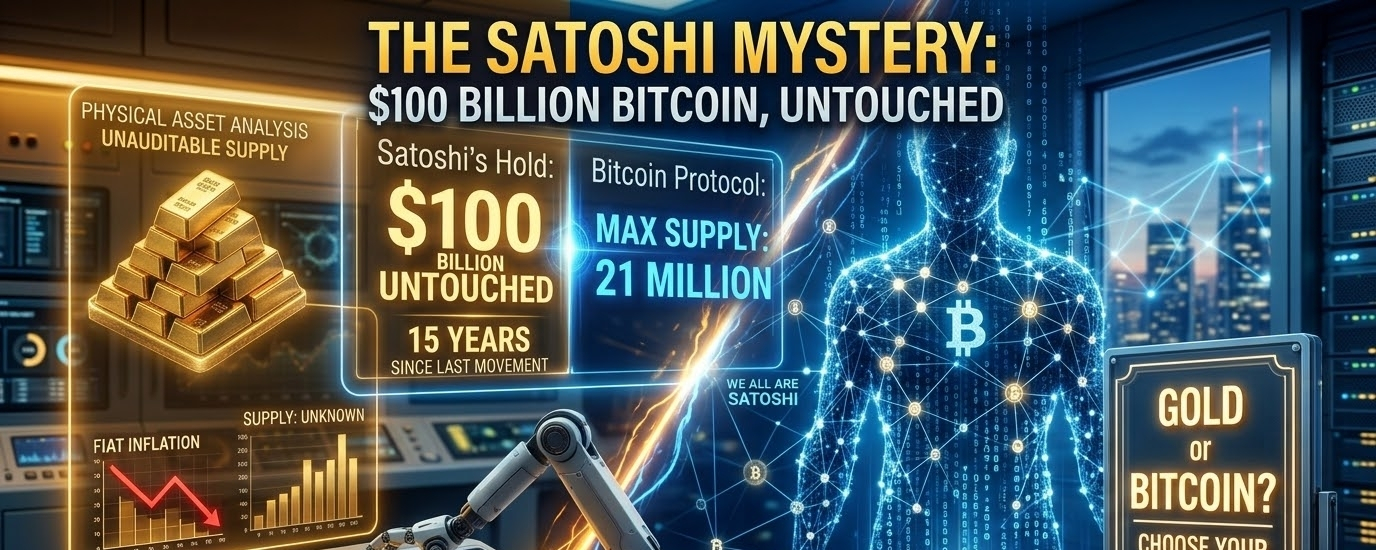
Article
🕵️♂️ 9 Hidden Facts About Satoshi Nakamoto Most Crypto Investors Don't KnowSatoshi Nakamoto controls an estimated 1.1 million Bitcoin worth over $100 Billion—making him one of the top 20 richest people on Earth. Yet, not a single Satoshi from his primary holdings has been moved or spent in over 15 years.
Here are 9 mind-bending facts about the ultimate crypto mystery:
1️⃣ Spread Across 22,000+ Wallets
Satoshi’s estimated 1.1M BTC is not sitting in a single mega-wallet. It was mined across over 22,000 separate wallets during Bitcoin’s genesis era (50 BTC block reward per wallet).
2️⃣ The Hidden Code in His "Fake" Birthday
Satoshi listed his birthdate as April 5, 1975. This was a deliberate historical message:
April 5, 1933: US President Roosevelt signed Executive Order 6102, making private gold ownership illegal.
1975: The year the US re-legalized gold ownership for individuals.
3️⃣ Genesis Block Coins Are Locked Forever
The initial 50 BTC block reward from Bitcoin’s Genesis Block (Block 0) was coded so it can never be spent. It remains permanently burned into the blockchain architecture.
4️⃣ He Intentionally Slowed Down His Mining
In the early days, Satoshi deliberately throttled his own mining rigs to give other early adopters a chance to mine blocks and earn rewards—a founder actively reducing his own share to decentralize the network.
5️⃣ 80,000 Words Without a Single Slip-Up
Over two years, Satoshi published over 80,000 words across forums and emails—equivalent to an entire book—without ever accidentally leaking a photo, location tag, or identifiable personal detail.
6️⃣ The CIA Connection & Final Words
Shortly after the CIA invited key Bitcoin developers to a conference in 2011, Satoshi sent his final famous message: "I've moved on to other things," and vanished forever.
7️⃣ The Cryonics Suspect
One of the primary Satoshi suspects (Hal Finney) was cryonically frozen upon his passing. If future medical technology allows reanimation, the world might finally learn the truth.
8️⃣ Why Hold $100 Billion Without Spending a Cent?
If Satoshi is alive, he watches $100 Billion sit completely untouched. Spending even a single coin would crash global markets and compromise Bitcoin’s decentralized ethos.
9️⃣ "Satoshi Could Be AI"
When asked about Satoshi's identity, Binance co-founder CZ famously quipped about the possibility of AI or collective intelligence—emphasizing that Satoshi's anonymity is Bitcoin's greatest feature, not a bug.
💡 The True Takeaway: We Are All Satoshi
Bitcoin was built so that no single individual, government, or entity could control or ruin it. By disappearing, Satoshi gave the world true financial sovereignty.
💬 What do you believe?
Is Satoshi alive, deceased, or was it a group of cryptographers? Drop your theories below! 👇
#Bitcoin #SatoshiNakamoto #BTC #CryptoHistory #Blockchain
🕵️♂️ 9 Hidden Facts About Satoshi Nakamoto Most Crypto Investors Don't Know
Satoshi Nakamoto controls an estimated 1.1 million Bitcoin worth over $100 Billion—making him one of the top 20 richest people on Earth. Yet, not a single Satoshi from his primary holdings has been moved or spent in over 15 years.
Here are 9 mind-bending facts about the ultimate crypto mystery:
1️⃣ Spread Across 22,000+ Wallets
Satoshi’s estimated 1.1M BTC is not sitting in a single mega-wallet. It was mined across over 22,000 separate wallets during Bitcoin’s genesis era (50 BTC block reward per wallet).
2️⃣ The Hidden Code in His "Fake" Birthday
Satoshi listed his birthdate as April 5, 1975. This was a deliberate historical message:
April 5, 1933: US President Roosevelt signed Executive Order 6102, making private gold ownership illegal.
1975: The year the US re-legalized gold ownership for individuals.
3️⃣ Genesis Block Coins Are Locked Forever
The initial 50 BTC block reward from Bitcoin’s Genesis Block (Block 0) was coded so it can never be spent. It remains permanently burned into the blockchain architecture.
4️⃣ He Intentionally Slowed Down His Mining
In the early days, Satoshi deliberately throttled his own mining rigs to give other early adopters a chance to mine blocks and earn rewards—a founder actively reducing his own share to decentralize the network.
5️⃣ 80,000 Words Without a Single Slip-Up
Over two years, Satoshi published over 80,000 words across forums and emails—equivalent to an entire book—without ever accidentally leaking a photo, location tag, or identifiable personal detail.
6️⃣ The CIA Connection & Final Words
Shortly after the CIA invited key Bitcoin developers to a conference in 2011, Satoshi sent his final famous message: "I've moved on to other things," and vanished forever.
7️⃣ The Cryonics Suspect
One of the primary Satoshi suspects (Hal Finney) was cryonically frozen upon his passing. If future medical technology allows reanimation, the world might finally learn the truth.
8️⃣ Why Hold $100 Billion Without Spending a Cent?
If Satoshi is alive, he watches $100 Billion sit completely untouched. Spending even a single coin would crash global markets and compromise Bitcoin’s decentralized ethos.
9️⃣ "Satoshi Could Be AI"
When asked about Satoshi's identity, Binance co-founder CZ famously quipped about the possibility of AI or collective intelligence—emphasizing that Satoshi's anonymity is Bitcoin's greatest feature, not a bug.
💡 The True Takeaway: We Are All Satoshi
Bitcoin was built so that no single individual, government, or entity could control or ruin it. By disappearing, Satoshi gave the world true financial sovereignty.
💬 What do you believe?
Is Satoshi alive, deceased, or was it a group of cryptographers? Drop your theories below! 👇
#Bitcoin #SatoshiNakamoto #BTC #CryptoHistory #Blockchain
Here are 9 mind-bending facts about the ultimate crypto mystery:
1️⃣ Spread Across 22,000+ Wallets
Satoshi’s estimated 1.1M BTC is not sitting in a single mega-wallet. It was mined across over 22,000 separate wallets during Bitcoin’s genesis era (50 BTC block reward per wallet).
2️⃣ The Hidden Code in His "Fake" Birthday
Satoshi listed his birthdate as April 5, 1975. This was a deliberate historical message:
April 5, 1933: US President Roosevelt signed Executive Order 6102, making private gold ownership illegal.
1975: The year the US re-legalized gold ownership for individuals.
3️⃣ Genesis Block Coins Are Locked Forever
The initial 50 BTC block reward from Bitcoin’s Genesis Block (Block 0) was coded so it can never be spent. It remains permanently burned into the blockchain architecture.
4️⃣ He Intentionally Slowed Down His Mining
In the early days, Satoshi deliberately throttled his own mining rigs to give other early adopters a chance to mine blocks and earn rewards—a founder actively reducing his own share to decentralize the network.
5️⃣ 80,000 Words Without a Single Slip-Up
Over two years, Satoshi published over 80,000 words across forums and emails—equivalent to an entire book—without ever accidentally leaking a photo, location tag, or identifiable personal detail.
6️⃣ The CIA Connection & Final Words
Shortly after the CIA invited key Bitcoin developers to a conference in 2011, Satoshi sent his final famous message: "I've moved on to other things," and vanished forever.
7️⃣ The Cryonics Suspect
One of the primary Satoshi suspects (Hal Finney) was cryonically frozen upon his passing. If future medical technology allows reanimation, the world might finally learn the truth.
8️⃣ Why Hold $100 Billion Without Spending a Cent?
If Satoshi is alive, he watches $100 Billion sit completely untouched. Spending even a single coin would crash global markets and compromise Bitcoin’s decentralized ethos.
9️⃣ "Satoshi Could Be AI"
When asked about Satoshi's identity, Binance co-founder CZ famously quipped about the possibility of AI or collective intelligence—emphasizing that Satoshi's anonymity is Bitcoin's greatest feature, not a bug.
💡 The True Takeaway: We Are All Satoshi
Bitcoin was built so that no single individual, government, or entity could control or ruin it. By disappearing, Satoshi gave the world true financial sovereignty.
💬 What do you believe?
Is Satoshi alive, deceased, or was it a group of cryptographers? Drop your theories below! 👇
#Bitcoin #SatoshiNakamoto #BTC #CryptoHistory #Blockchain
87

·
--
🚨 SATOSHI NAKAMOTO SURGES INTO FORBES TOP 25 AS $BTC STACK GAINS 12.5B! 📈
A $12.5 billion unrealized expansion in just seven days elevates Satoshi Nakamoto into the top 25 Forbes billionaire rankings. 🏦 Beyond the media narrative, this rapid valuation surge highlights the aggressive velocity currently driving the $BTC macro market structure.
From an institutional order flow perspective, these untouched holdings represent the ultimate immutable supply sink. 🔍 As institutional liquidity continuously absorbs spot market depth, this pristine genesis positioning reinforces the foundational scarcity thesis of the asset.
💬 Do you view Satoshi's unspent stack as a permanent supply sink or a structural tail risk? 👇
⚠️ Not financial advice. Always manage your risk. 🛡️
🏷️ #BTC #SatoshiNakamoto #Crypto #MarketStructure
🎯 🦈
🚨 SATOSHI NAKAMOTO SURGES INTO FORBES TOP 25 AS $BTC STACK GAINS 12.5B! 📈
A $12.5 billion unrealized expansion in just seven days elevates Satoshi Nakamoto into the top 25 Forbes billionaire rankings. 🏦 Beyond the media narrative, this rapid valuation surge highlights the aggressive velocity currently driving the $BTC macro market structure.
From an institutional order flow perspective, these untouched holdings represent the ultimate immutable supply sink. 🔍 As institutional liquidity continuously absorbs spot market depth, this pristine genesis positioning reinforces the foundational scarcity thesis of the asset.
💬 Do you view Satoshi's unspent stack as a permanent supply sink or a structural tail risk? 👇
⚠️ Not financial advice. Always manage your risk. 🛡️
🏷️ #BTC #SatoshiNakamoto #Crypto #MarketStructure
🎯 🦈
A $12.5 billion unrealized expansion in just seven days elevates Satoshi Nakamoto into the top 25 Forbes billionaire rankings. 🏦 Beyond the media narrative, this rapid valuation surge highlights the aggressive velocity currently driving the $BTC macro market structure.
From an institutional order flow perspective, these untouched holdings represent the ultimate immutable supply sink. 🔍 As institutional liquidity continuously absorbs spot market depth, this pristine genesis positioning reinforces the foundational scarcity thesis of the asset.
💬 Do you view Satoshi's unspent stack as a permanent supply sink or a structural tail risk? 👇
⚠️ Not financial advice. Always manage your risk. 🛡️
🏷️ #BTC #SatoshiNakamoto #Crypto #MarketStructure
🎯 🦈
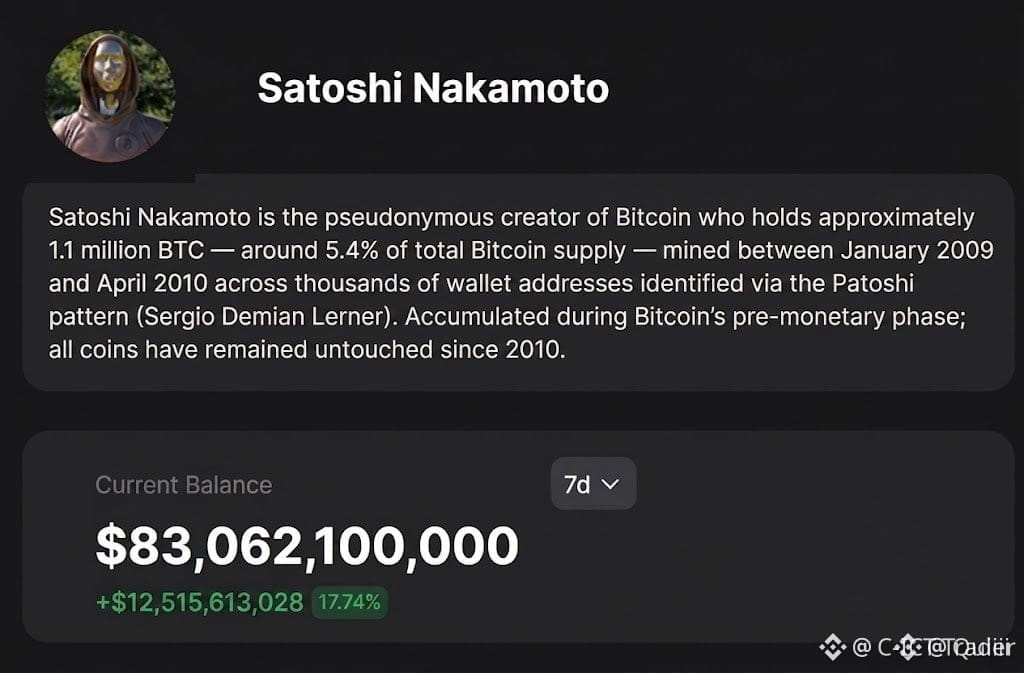
31
·
--
⚡ WHO IS SATOSHI? THE ARCHITECT BEHIND $BTC DECENTRALIZED MARKET STRUCTURE! 🔍
Satoshi Nakamoto remains crypto's ultimate enigma, yet the masterwork left behind speaks louder than any identity. 📊 $BTC was engineered to eliminate trusted intermediaries, leaving behind a pure, algorithmic ledger where order flow and institutional liquidity tell the entire story.
Smart money does not trade developer narrative or identity speculation; we trade price action and structural footprints. 🔍 Whether Satoshi is an individual, a collective, or a ghost, the protocol continues processing massive daily order flow seamlessly.
💡 The real question is not who built the framework, but how institutional capital adapts to its sovereign design. 💭 Does Satoshi's anonymity strengthen $BTC long-term structural edge, or does the market need visible figures? 👇
⚠️ Not financial advice. Always manage your risk. 🛡️
🏷️ #BTC #SatoshiNakamoto #MarketStructure #Crypto
🎯 🦈
⚡ WHO IS SATOSHI? THE ARCHITECT BEHIND $BTC DECENTRALIZED MARKET STRUCTURE! 🔍
Satoshi Nakamoto remains crypto's ultimate enigma, yet the masterwork left behind speaks louder than any identity. 📊 $BTC was engineered to eliminate trusted intermediaries, leaving behind a pure, algorithmic ledger where order flow and institutional liquidity tell the entire story.
Smart money does not trade developer narrative or identity speculation; we trade price action and structural footprints. 🔍 Whether Satoshi is an individual, a collective, or a ghost, the protocol continues processing massive daily order flow seamlessly.
💡 The real question is not who built the framework, but how institutional capital adapts to its sovereign design. 💭 Does Satoshi's anonymity strengthen $BTC long-term structural edge, or does the market need visible figures? 👇
⚠️ Not financial advice. Always manage your risk. 🛡️
🏷️ #BTC #SatoshiNakamoto #MarketStructure #Crypto
🎯 🦈
Satoshi Nakamoto remains crypto's ultimate enigma, yet the masterwork left behind speaks louder than any identity. 📊 $BTC was engineered to eliminate trusted intermediaries, leaving behind a pure, algorithmic ledger where order flow and institutional liquidity tell the entire story.
Smart money does not trade developer narrative or identity speculation; we trade price action and structural footprints. 🔍 Whether Satoshi is an individual, a collective, or a ghost, the protocol continues processing massive daily order flow seamlessly.
💡 The real question is not who built the framework, but how institutional capital adapts to its sovereign design. 💭 Does Satoshi's anonymity strengthen $BTC long-term structural edge, or does the market need visible figures? 👇
⚠️ Not financial advice. Always manage your risk. 🛡️
🏷️ #BTC #SatoshiNakamoto #MarketStructure #Crypto
🎯 🦈
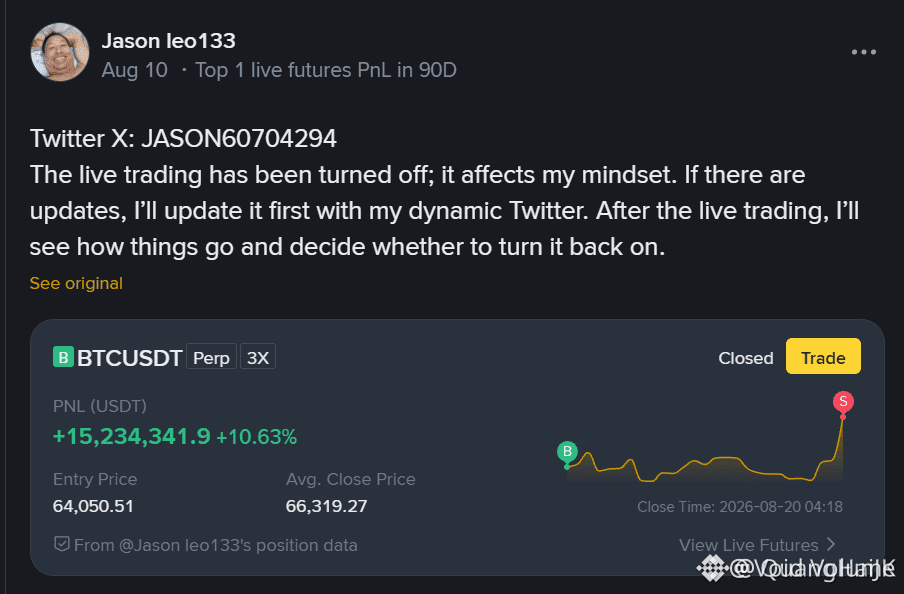
17

·
--
🔥 BITCOIN HISTORY:
18 years ago today, Satoshi Nakamoto registered Bitcoin.org.
Back then, almost nobody knew what Bitcoin would become.
Today, that simple idea has grown into a global financial movement and one of the biggest stories in crypto. 🟠
Crazy how much can change in 18 years. 👀
#Bitcoin #BTC #Crypto #SatoshiNakamoto #Binance
🔥 BITCOIN HISTORY:
18 years ago today, Satoshi Nakamoto registered Bitcoin.org.
Back then, almost nobody knew what Bitcoin would become.
Today, that simple idea has grown into a global financial movement and one of the biggest stories in crypto. 🟠
Crazy how much can change in 18 years. 👀
#Bitcoin #BTC #Crypto #SatoshiNakamoto #Binance
18 years ago today, Satoshi Nakamoto registered Bitcoin.org.
Back then, almost nobody knew what Bitcoin would become.
Today, that simple idea has grown into a global financial movement and one of the biggest stories in crypto. 🟠
Crazy how much can change in 18 years. 👀
#Bitcoin #BTC #Crypto #SatoshiNakamoto #Binance
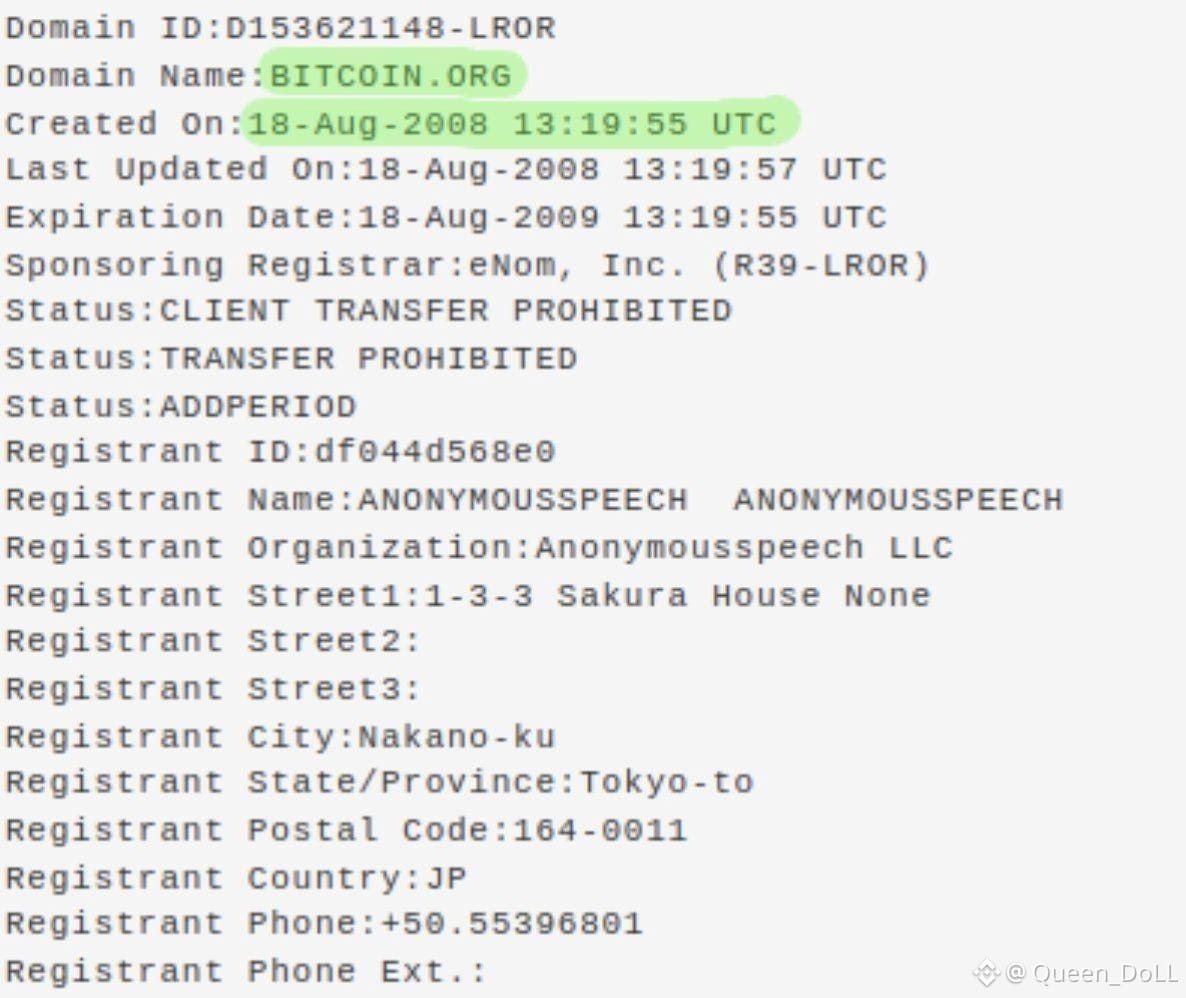
1
126

THE MYSTERY OF ITS CREATOR In 2008, someone under the name of Satoshi Nakamoto published the manifesto of $BTC . To this day, no one knows who he is, ensuring that the project does not depend on a human leader.
{future}(BTCUSDT)
#BitcoinHistory #SatoshiNakamoto
THE MYSTERY OF ITS CREATOR In 2008, someone under the name of Satoshi Nakamoto published the manifesto of $BTC . To this day, no one knows who he is, ensuring that the project does not depend on a human leader.
#BitcoinHistory #SatoshiNakamoto
#BitcoinHistory #SatoshiNakamoto
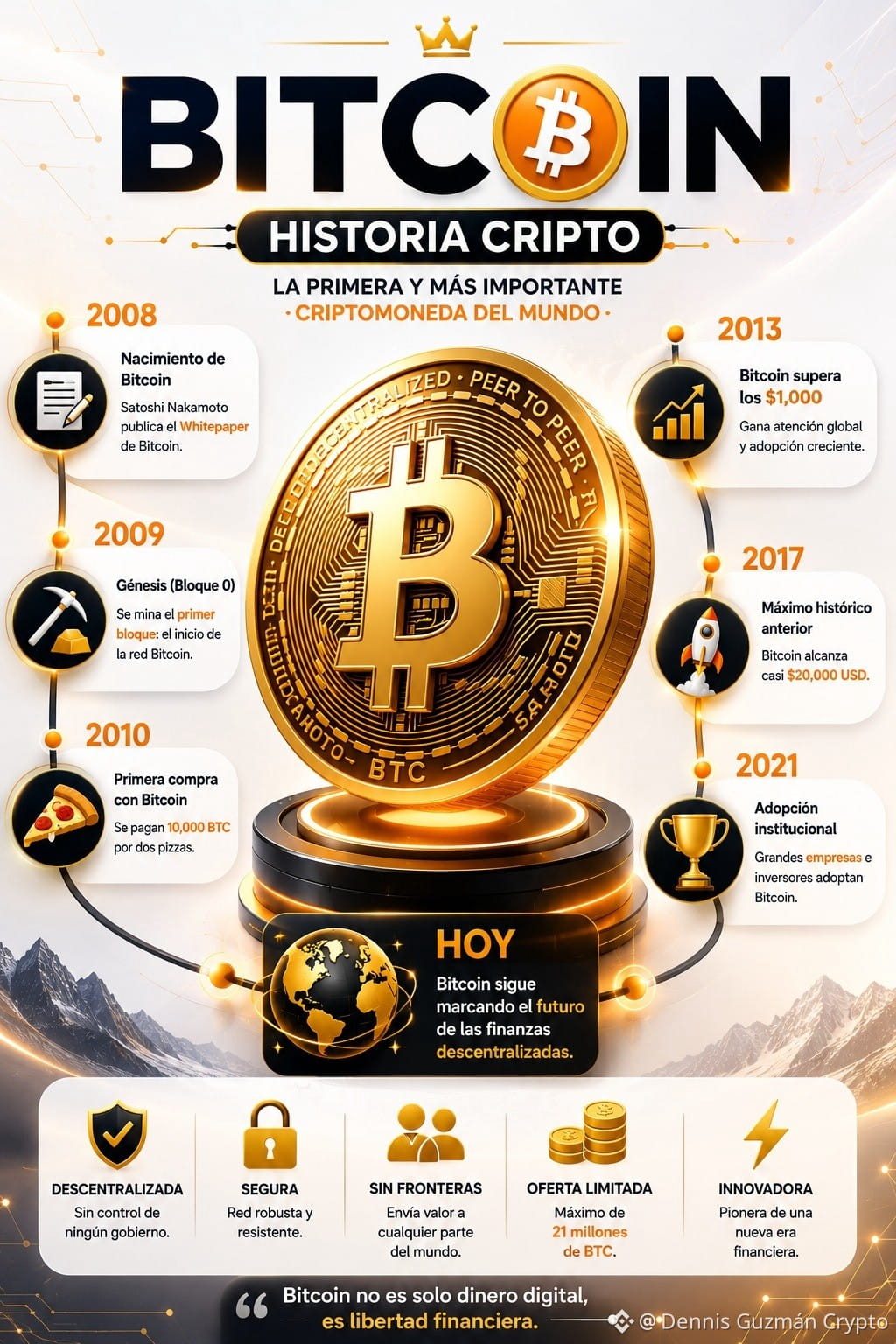
1
58

·
--
BITCOIN: A Masterpiece Created Once in a Century!$BTC
{spot}(BTCUSDT)
Have you ever wondered how big of a genius Bitcoin’s creator, Satoshi Nakamoto, actually was? In 2008, an anonymous mind gifted the world a form of "Digital Gold" that no supercomputer or government has been able to crack or shut down to this day! 🧠🔥
Here are the 3 features that make Bitcoin End-Level and the most powerful asset on Earth:
1️⃣ The Auto-Pilot Code ⚙️
Global banks and massive corporations fail, yet Bitcoin has been running flawlessly for over 17 years without a single owner, CEO, or headquarters. Its Difficulty Adjustment mechanism is so smart that no matter how powerful or fast miners' computers get, a new block will always take about 10 minutes to form. It can neither be hacked nor artificially accelerated!
2️⃣ The 21 Million Cap 💎
Governments print fiat currency out of thin air whenever they want, causing massive inflation. Bitcoin, however, has a mathematically fixed supply—only 21 million Bitcoins can ever exist. Over 19.7 million have already been mined, and because of the Halving protocol (the law that cuts the mining reward in half every 4 years), it will take another 114 years (until the year 2140) to mine the remaining fraction! It is the definition of absolute scarcity.
3️⃣ What Happens After the Year 2140? 🛑
People often ask: once all Bitcoins are mined, what will keep the miners going? Look at the sheer brilliance of Satoshi's design: while miners will no longer receive newly minted Bitcoins, they will collect the Transaction Fees from billions of dollars flowing through the network. They will essentially become the highest-paid digital security guards in history, ensuring the network never stops!
💡 The Ultimate Masterstroke
After writing the code and launching Bitcoin, Satoshi Nakamoto left his stash of over a million coins untouched and disappeared from the internet forever. Why? So that no government could ever arrest him or force changes to the code. By stepping away, he ensured Bitcoin belongs to the entire human race as a truly Decentralized asset, rather than the property of a single person or company.
Bitcoin isn't just a cryptocurrency—it is the ultimate fusion of Mathematics and Economics that has permanently rewritten the history of money! 🪙✨
#Bitcoin #SatoshiNakamoto #CryptoMining #BitcoinHalving #Blockchain #FinanceFuture #SmartDeals #HaseebTechFinds
BITCOIN: A Masterpiece Created Once in a Century!
$BTC
Have you ever wondered how big of a genius Bitcoin’s creator, Satoshi Nakamoto, actually was? In 2008, an anonymous mind gifted the world a form of "Digital Gold" that no supercomputer or government has been able to crack or shut down to this day! 🧠🔥
Here are the 3 features that make Bitcoin End-Level and the most powerful asset on Earth:
1️⃣ The Auto-Pilot Code ⚙️
Global banks and massive corporations fail, yet Bitcoin has been running flawlessly for over 17 years without a single owner, CEO, or headquarters. Its Difficulty Adjustment mechanism is so smart that no matter how powerful or fast miners' computers get, a new block will always take about 10 minutes to form. It can neither be hacked nor artificially accelerated!
2️⃣ The 21 Million Cap 💎
Governments print fiat currency out of thin air whenever they want, causing massive inflation. Bitcoin, however, has a mathematically fixed supply—only 21 million Bitcoins can ever exist. Over 19.7 million have already been mined, and because of the Halving protocol (the law that cuts the mining reward in half every 4 years), it will take another 114 years (until the year 2140) to mine the remaining fraction! It is the definition of absolute scarcity.
3️⃣ What Happens After the Year 2140? 🛑
People often ask: once all Bitcoins are mined, what will keep the miners going? Look at the sheer brilliance of Satoshi's design: while miners will no longer receive newly minted Bitcoins, they will collect the Transaction Fees from billions of dollars flowing through the network. They will essentially become the highest-paid digital security guards in history, ensuring the network never stops!
💡 The Ultimate Masterstroke
After writing the code and launching Bitcoin, Satoshi Nakamoto left his stash of over a million coins untouched and disappeared from the internet forever. Why? So that no government could ever arrest him or force changes to the code. By stepping away, he ensured Bitcoin belongs to the entire human race as a truly Decentralized asset, rather than the property of a single person or company.
Bitcoin isn't just a cryptocurrency—it is the ultimate fusion of Mathematics and Economics that has permanently rewritten the history of money! 🪙✨
#Bitcoin #SatoshiNakamoto #CryptoMining #BitcoinHalving #Blockchain #FinanceFuture #SmartDeals #HaseebTechFinds
Have you ever wondered how big of a genius Bitcoin’s creator, Satoshi Nakamoto, actually was? In 2008, an anonymous mind gifted the world a form of "Digital Gold" that no supercomputer or government has been able to crack or shut down to this day! 🧠🔥
Here are the 3 features that make Bitcoin End-Level and the most powerful asset on Earth:
1️⃣ The Auto-Pilot Code ⚙️
Global banks and massive corporations fail, yet Bitcoin has been running flawlessly for over 17 years without a single owner, CEO, or headquarters. Its Difficulty Adjustment mechanism is so smart that no matter how powerful or fast miners' computers get, a new block will always take about 10 minutes to form. It can neither be hacked nor artificially accelerated!
2️⃣ The 21 Million Cap 💎
Governments print fiat currency out of thin air whenever they want, causing massive inflation. Bitcoin, however, has a mathematically fixed supply—only 21 million Bitcoins can ever exist. Over 19.7 million have already been mined, and because of the Halving protocol (the law that cuts the mining reward in half every 4 years), it will take another 114 years (until the year 2140) to mine the remaining fraction! It is the definition of absolute scarcity.
3️⃣ What Happens After the Year 2140? 🛑
People often ask: once all Bitcoins are mined, what will keep the miners going? Look at the sheer brilliance of Satoshi's design: while miners will no longer receive newly minted Bitcoins, they will collect the Transaction Fees from billions of dollars flowing through the network. They will essentially become the highest-paid digital security guards in history, ensuring the network never stops!
💡 The Ultimate Masterstroke
After writing the code and launching Bitcoin, Satoshi Nakamoto left his stash of over a million coins untouched and disappeared from the internet forever. Why? So that no government could ever arrest him or force changes to the code. By stepping away, he ensured Bitcoin belongs to the entire human race as a truly Decentralized asset, rather than the property of a single person or company.
Bitcoin isn't just a cryptocurrency—it is the ultimate fusion of Mathematics and Economics that has permanently rewritten the history of money! 🪙✨
#Bitcoin #SatoshiNakamoto #CryptoMining #BitcoinHalving #Blockchain #FinanceFuture #SmartDeals #HaseebTechFinds
81

·
--
Satoshi mystery deepens.
British cryptographer Adam Back denies NYT report that he is Bitcoin creator Satoshi Nakamoto
British cryptographer Adam Back denies allegations of being Bitcoin creator Satoshi Nakamoto, leaving the true identity of Satoshi still unknown. This denial sparks further speculation among crypto enthusiasts. The search for Satoshi continues, with many possible candidates still in the running. Traders should watch for potential market reactions to future Satoshi revelations.
#Crypto #Bitcoin #SatoshiNakamoto #Blockchain
Satoshi mystery deepens.
British cryptographer Adam Back denies NYT report that he is Bitcoin creator Satoshi Nakamoto
British cryptographer Adam Back denies allegations of being Bitcoin creator Satoshi Nakamoto, leaving the true identity of Satoshi still unknown. This denial sparks further speculation among crypto enthusiasts. The search for Satoshi continues, with many possible candidates still in the running. Traders should watch for potential market reactions to future Satoshi revelations.
#Crypto #Bitcoin #SatoshiNakamoto #Blockchain
British cryptographer Adam Back denies NYT report that he is Bitcoin creator Satoshi Nakamoto
British cryptographer Adam Back denies allegations of being Bitcoin creator Satoshi Nakamoto, leaving the true identity of Satoshi still unknown. This denial sparks further speculation among crypto enthusiasts. The search for Satoshi continues, with many possible candidates still in the running. Traders should watch for potential market reactions to future Satoshi revelations.
#Crypto #Bitcoin #SatoshiNakamoto #Blockchain
31

·
--
Bullish
🚨!!! Should we freeze the Bitcoin of #SatoshiNakamoto ? The controversy that's raising alarms! 🖥️💥 Is quantum computing a real threat to $BTC or are we just falling into absurd panic?
A tough debate has just come to light, led by tax lawyer García Prieto in CriptoNoticias. The proposal on the table has left the community in shock: some suggest preemptively freezing the original wallets of Satoshi Nakamoto out of fear that future quantum computers will break their security and someone will steal that million coins, which would destroy the $BTC market.
García Prieto didn’t hold back and labeled this idea as a true "aberration." Why?
1️⃣ It breaks the rules of the game: The foundation of #BTC is immutability and decentralization. If an entity or the developers can decide to "freeze" funds just like that, #BTC would lose its essence and become the same traditional banking system we fled from.
2️⃣ The real danger: The risk isn’t that quantum computing will destroy the network tomorrow, but how international legislation and regulators will react to this technological advance, trying to meddle with decentralized protocols.
3️⃣ Technical evolution: The #BTC network isn’t static; developers are already working on forks and post-quantum cryptography updates to protect funds before that technology becomes a real threat.
Many investors jumping from volatile coins like $ETH or stablecoins like $USDT seeking maximum security in digital gold ask the same question: Is our future safe?
Freezing Satoshi's legacy to "protect it" would be admitting that the system has failed. The solution should always be technological, never political or authoritarian.
💬 I want to hear from you in the comments! Do you think quantum computing is a real long-term danger to #BTC or is it just pure FOMO? If you could vote, would you approve freezing Satoshi's funds for "security"? {spot}(BTCUSDT)
🚨!!! Should we freeze the Bitcoin of #SatoshiNakamoto ? The controversy that's raising alarms! 🖥️💥 Is quantum computing a real threat to $BTC or are we just falling into absurd panic?
A tough debate has just come to light, led by tax lawyer García Prieto in CriptoNoticias. The proposal on the table has left the community in shock: some suggest preemptively freezing the original wallets of Satoshi Nakamoto out of fear that future quantum computers will break their security and someone will steal that million coins, which would destroy the $BTC market.
García Prieto didn’t hold back and labeled this idea as a true "aberration." Why?
1️⃣ It breaks the rules of the game: The foundation of #BTC is immutability and decentralization. If an entity or the developers can decide to "freeze" funds just like that, #BTC would lose its essence and become the same traditional banking system we fled from.
2️⃣ The real danger: The risk isn’t that quantum computing will destroy the network tomorrow, but how international legislation and regulators will react to this technological advance, trying to meddle with decentralized protocols.
3️⃣ Technical evolution: The #BTC network isn’t static; developers are already working on forks and post-quantum cryptography updates to protect funds before that technology becomes a real threat.
Many investors jumping from volatile coins like $ETH or stablecoins like $USDT seeking maximum security in digital gold ask the same question: Is our future safe?
Freezing Satoshi's legacy to "protect it" would be admitting that the system has failed. The solution should always be technological, never political or authoritarian.
💬 I want to hear from you in the comments! Do you think quantum computing is a real long-term danger to #BTC or is it just pure FOMO? If you could vote, would you approve freezing Satoshi's funds for "security"?
A tough debate has just come to light, led by tax lawyer García Prieto in CriptoNoticias. The proposal on the table has left the community in shock: some suggest preemptively freezing the original wallets of Satoshi Nakamoto out of fear that future quantum computers will break their security and someone will steal that million coins, which would destroy the $BTC market.
García Prieto didn’t hold back and labeled this idea as a true "aberration." Why?
1️⃣ It breaks the rules of the game: The foundation of #BTC is immutability and decentralization. If an entity or the developers can decide to "freeze" funds just like that, #BTC would lose its essence and become the same traditional banking system we fled from.
2️⃣ The real danger: The risk isn’t that quantum computing will destroy the network tomorrow, but how international legislation and regulators will react to this technological advance, trying to meddle with decentralized protocols.
3️⃣ Technical evolution: The #BTC network isn’t static; developers are already working on forks and post-quantum cryptography updates to protect funds before that technology becomes a real threat.
Many investors jumping from volatile coins like $ETH or stablecoins like $USDT seeking maximum security in digital gold ask the same question: Is our future safe?
Freezing Satoshi's legacy to "protect it" would be admitting that the system has failed. The solution should always be technological, never political or authoritarian.
💬 I want to hear from you in the comments! Do you think quantum computing is a real long-term danger to #BTC or is it just pure FOMO? If you could vote, would you approve freezing Satoshi's funds for "security"?
1
170

The person who created a $1.3 trillion monetary network walked away from it in 2010 — and has neverThe person who created a $1.3 trillion monetary network walked away from it in 2010 — and has never been seen or heard from since.
In April 2026, the New York Times published its most ambitious investigation in crypto history — and still could not answer the only question that matters.
Here is the complete story of the greatest unsolved mystery in financial history:
✦ In April 2026, NYT investigative journalist John Carreyrou — the reporter who exposed the Theranos fraud — published a 10,000-word investigation identifying British cryptographer Adam Back, CEO of Blockstream, as the strongest Satoshi Nakamoto candidate — citing stylometric analysis, overlapping timelines, writing quirks, and behavioral patterns (Crowdfund Insider)
✦ Adam Back denied the identification — as have every other Satoshi candidate before him including Dorian Nakamoto, Nick Szabo, and Craig Wright — leaving the mystery officially unsolved as of June 2026 despite 15 years of investigation by journalists, cryptographers, and government researchers worldwide (Crowdfund Insider)
✦ Satoshi's estimated 1.1 million Bitcoin — representing approximately 5.25% of the entire Bitcoin supply ever mined — has never moved a single coin from its original wallet addresses since the last transaction in 2010 — making it the most watched set of wallet addresses in all of financial history (FinanceFeeds)
✦ At June 2026 prices those 1.1 million Bitcoin are worth approximately $74 to $84 billion — at the 2025 all-time high of $126,000 they were worth approximately $139 billion — yet not one satoshi has ever been spent, transferred, or moved (FinanceFeeds)
✦ Forbes excludes Satoshi from their official billionaires list due to the unverified identity — on-chain data confirms the wealth exists in those wallets — but who controls the private keys that could access it remains completely unknown (FinanceFeeds)
✦ FOIA requests were filed demanding government agencies disclose any files identifying Satoshi Nakamoto — as of June 2026 the government has neither confirmed nor denied the existence of such files — reflecting how seriously researchers believe intelligence agencies may have identified the creator years ago (FinanceFeeds)
✦ When just 50 Bitcoin from a 2009-era wallet moved in 2020 — a wallet many incorrectly attributed to Satoshi — Bitcoin's price dropped and global crypto media entered a frenzy within hours — demonstrating that any movement from Satoshi's wallets would be one of the most significant events in the history of financial markets (FinanceFeeds)
The person who built the most revolutionary monetary system in human history — chose never to profit from it, never claimed credit for it, and disappeared completely. No company founder. No CEO. No chairman. No face. No name. Just the code — running perfectly, without them, for 17 years.
Do you think Satoshi Nakamoto is still alive and watching what Bitcoin has become — and if those wallets ever move, what do you think it would mean for the market?
#Bitcoin #blockchain #crypto #Web3 #SatoshiNakamoto
The person who created a $1.3 trillion monetary network walked away from it in 2010 — and has never
The person who created a $1.3 trillion monetary network walked away from it in 2010 — and has never been seen or heard from since.
In April 2026, the New York Times published its most ambitious investigation in crypto history — and still could not answer the only question that matters.
Here is the complete story of the greatest unsolved mystery in financial history:
✦ In April 2026, NYT investigative journalist John Carreyrou — the reporter who exposed the Theranos fraud — published a 10,000-word investigation identifying British cryptographer Adam Back, CEO of Blockstream, as the strongest Satoshi Nakamoto candidate — citing stylometric analysis, overlapping timelines, writing quirks, and behavioral patterns (Crowdfund Insider)
✦ Adam Back denied the identification — as have every other Satoshi candidate before him including Dorian Nakamoto, Nick Szabo, and Craig Wright — leaving the mystery officially unsolved as of June 2026 despite 15 years of investigation by journalists, cryptographers, and government researchers worldwide (Crowdfund Insider)
✦ Satoshi's estimated 1.1 million Bitcoin — representing approximately 5.25% of the entire Bitcoin supply ever mined — has never moved a single coin from its original wallet addresses since the last transaction in 2010 — making it the most watched set of wallet addresses in all of financial history (FinanceFeeds)
✦ At June 2026 prices those 1.1 million Bitcoin are worth approximately $74 to $84 billion — at the 2025 all-time high of $126,000 they were worth approximately $139 billion — yet not one satoshi has ever been spent, transferred, or moved (FinanceFeeds)
✦ Forbes excludes Satoshi from their official billionaires list due to the unverified identity — on-chain data confirms the wealth exists in those wallets — but who controls the private keys that could access it remains completely unknown (FinanceFeeds)
✦ FOIA requests were filed demanding government agencies disclose any files identifying Satoshi Nakamoto — as of June 2026 the government has neither confirmed nor denied the existence of such files — reflecting how seriously researchers believe intelligence agencies may have identified the creator years ago (FinanceFeeds)
✦ When just 50 Bitcoin from a 2009-era wallet moved in 2020 — a wallet many incorrectly attributed to Satoshi — Bitcoin's price dropped and global crypto media entered a frenzy within hours — demonstrating that any movement from Satoshi's wallets would be one of the most significant events in the history of financial markets (FinanceFeeds)
The person who built the most revolutionary monetary system in human history — chose never to profit from it, never claimed credit for it, and disappeared completely. No company founder. No CEO. No chairman. No face. No name. Just the code — running perfectly, without them, for 17 years.
Do you think Satoshi Nakamoto is still alive and watching what Bitcoin has become — and if those wallets ever move, what do you think it would mean for the market?
#Bitcoin #blockchain #crypto #Web3 #SatoshiNakamoto
In April 2026, the New York Times published its most ambitious investigation in crypto history — and still could not answer the only question that matters.
Here is the complete story of the greatest unsolved mystery in financial history:
✦ In April 2026, NYT investigative journalist John Carreyrou — the reporter who exposed the Theranos fraud — published a 10,000-word investigation identifying British cryptographer Adam Back, CEO of Blockstream, as the strongest Satoshi Nakamoto candidate — citing stylometric analysis, overlapping timelines, writing quirks, and behavioral patterns (Crowdfund Insider)
✦ Adam Back denied the identification — as have every other Satoshi candidate before him including Dorian Nakamoto, Nick Szabo, and Craig Wright — leaving the mystery officially unsolved as of June 2026 despite 15 years of investigation by journalists, cryptographers, and government researchers worldwide (Crowdfund Insider)
✦ Satoshi's estimated 1.1 million Bitcoin — representing approximately 5.25% of the entire Bitcoin supply ever mined — has never moved a single coin from its original wallet addresses since the last transaction in 2010 — making it the most watched set of wallet addresses in all of financial history (FinanceFeeds)
✦ At June 2026 prices those 1.1 million Bitcoin are worth approximately $74 to $84 billion — at the 2025 all-time high of $126,000 they were worth approximately $139 billion — yet not one satoshi has ever been spent, transferred, or moved (FinanceFeeds)
✦ Forbes excludes Satoshi from their official billionaires list due to the unverified identity — on-chain data confirms the wealth exists in those wallets — but who controls the private keys that could access it remains completely unknown (FinanceFeeds)
✦ FOIA requests were filed demanding government agencies disclose any files identifying Satoshi Nakamoto — as of June 2026 the government has neither confirmed nor denied the existence of such files — reflecting how seriously researchers believe intelligence agencies may have identified the creator years ago (FinanceFeeds)
✦ When just 50 Bitcoin from a 2009-era wallet moved in 2020 — a wallet many incorrectly attributed to Satoshi — Bitcoin's price dropped and global crypto media entered a frenzy within hours — demonstrating that any movement from Satoshi's wallets would be one of the most significant events in the history of financial markets (FinanceFeeds)
The person who built the most revolutionary monetary system in human history — chose never to profit from it, never claimed credit for it, and disappeared completely. No company founder. No CEO. No chairman. No face. No name. Just the code — running perfectly, without them, for 17 years.
Do you think Satoshi Nakamoto is still alive and watching what Bitcoin has become — and if those wallets ever move, what do you think it would mean for the market?
#Bitcoin #blockchain #crypto #Web3 #SatoshiNakamoto
47

·
--
🐳 ON-CHAIN SENSATION: BITCOINS FROM THE SATOSHI ERA ARE MOVING DURING A MULTI-BILLION DOLLAR LAWSUIT
Bitcoin wallets inactive for 14 years have suddenly come to life in June. This movement occurs amidst a massive $285 billion lawsuit in New York aiming to declare those old BTC as "abandoned assets".
The most shocking:
⚖️ Legal Challenge: Two of the addresses listed in the lawsuit executed on-chain transactions, proving they have owners and dismantling the legal argument that they were deserted.
🛡️ Institutional Sturdiness: Glassnode data estimates Bitcoin's ultimate floor between $46,000 and $54,000 following the latest macro correction triggered by Wall Street.
#Bitcoin #SatoshiNakamoto #Glassnode #CryptoNews #Binance
👁️ POWER PSYCHOLOGY: THE AWAKENING OF THE TITANS
When early investors (the true creators of the ecosystem) move their coins, they send a message of absolute control. Institutional money knows these wallets are not selling to liquidate, but signing transactions to protect their holdings in court. Those who panic sell their BTC to corporations; those who operate with information align with the strategy of the original whales.
👇 Check the charts down below NOW to measure the live impact of this historic flow 👇
$BTC $ETH
{spot}(ETHUSDT)
{spot}(BTCUSDT)
🐳 ON-CHAIN SENSATION: BITCOINS FROM THE SATOSHI ERA ARE MOVING DURING A MULTI-BILLION DOLLAR LAWSUIT
Bitcoin wallets inactive for 14 years have suddenly come to life in June. This movement occurs amidst a massive $285 billion lawsuit in New York aiming to declare those old BTC as "abandoned assets".
The most shocking:
⚖️ Legal Challenge: Two of the addresses listed in the lawsuit executed on-chain transactions, proving they have owners and dismantling the legal argument that they were deserted.
🛡️ Institutional Sturdiness: Glassnode data estimates Bitcoin's ultimate floor between $46,000 and $54,000 following the latest macro correction triggered by Wall Street.
#Bitcoin #SatoshiNakamoto #Glassnode #CryptoNews #Binance
👁️ POWER PSYCHOLOGY: THE AWAKENING OF THE TITANS
When early investors (the true creators of the ecosystem) move their coins, they send a message of absolute control. Institutional money knows these wallets are not selling to liquidate, but signing transactions to protect their holdings in court. Those who panic sell their BTC to corporations; those who operate with information align with the strategy of the original whales.
👇 Check the charts down below NOW to measure the live impact of this historic flow 👇
$BTC $ETH
Bitcoin wallets inactive for 14 years have suddenly come to life in June. This movement occurs amidst a massive $285 billion lawsuit in New York aiming to declare those old BTC as "abandoned assets".
The most shocking:
⚖️ Legal Challenge: Two of the addresses listed in the lawsuit executed on-chain transactions, proving they have owners and dismantling the legal argument that they were deserted.
🛡️ Institutional Sturdiness: Glassnode data estimates Bitcoin's ultimate floor between $46,000 and $54,000 following the latest macro correction triggered by Wall Street.
#Bitcoin #SatoshiNakamoto #Glassnode #CryptoNews #Binance
👁️ POWER PSYCHOLOGY: THE AWAKENING OF THE TITANS
When early investors (the true creators of the ecosystem) move their coins, they send a message of absolute control. Institutional money knows these wallets are not selling to liquidate, but signing transactions to protect their holdings in court. Those who panic sell their BTC to corporations; those who operate with information align with the strategy of the original whales.
👇 Check the charts down below NOW to measure the live impact of this historic flow 👇
$BTC $ETH
1
119

·
--
Bullish
$BTC In 2008, Satoshi Nakamoto proposed a simple but revolutionary idea:
A peer-to-peer electronic cash system that lets people send value directly to each other—without banks or trusted intermediaries.
Bitcoin solved the double-spending problem using cryptography, proof-of-work, and a decentralized network.
17+ years later, the experiment is still running. 🚀₿
#Bitcoin #Blockchain #Crypto #SatoshiNakamoto
{spot}(BTCUSDT)
$BTC In 2008, Satoshi Nakamoto proposed a simple but revolutionary idea:
A peer-to-peer electronic cash system that lets people send value directly to each other—without banks or trusted intermediaries.
Bitcoin solved the double-spending problem using cryptography, proof-of-work, and a decentralized network.
17+ years later, the experiment is still running. 🚀₿
#Bitcoin #Blockchain #Crypto #SatoshiNakamoto
A peer-to-peer electronic cash system that lets people send value directly to each other—without banks or trusted intermediaries.
Bitcoin solved the double-spending problem using cryptography, proof-of-work, and a decentralized network.
17+ years later, the experiment is still running. 🚀₿
#Bitcoin #Blockchain #Crypto #SatoshiNakamoto
134
·
--
🚨 Will Satoshi’s Bitcoin Be FROZEN? 🚨
Binance founder Changpeng Zhao (CZ) just dropped a massive talking point regarding the future of Bitcoin and the threat of Quantum Computing!
On a recent episode of the Galaxy Brains podcast, CZ shared his thoughts on how BTC can protect itself once quantum computers become powerful enough to crack traditional cryptography (like ECDSA and Schnorr).
💡 The Proposal:
6–12 Month Migration: Bitcoin would undergo a network-wide upgrade. Users would have up to a year to move their funds to new, quantum-resistant addresses.
The Freeze: Any dormant coins left unmoved after the deadline—including the estimated 1.1 million BTC linked to Satoshi Nakamoto—would be locked or retired to prevent hackers from stealing them.
"If these dormant wallets remain unprotected, the first party to break into them could take their coins... rewarding technical capability rather than the rightful owner." — CZ
⚖️ The Big Debate: Security vs. Immutability
While the proposal aims to protect the market from a massive supply shock, it has sparked intense debate in the crypto community:
The Pro-Freeze Argument: If a quantum hacker cracks Satoshi’s wallet, they could dump over $100 Billion+ worth of BTC on the market, crashing the entire ecosystem. Locking them protects everyone.
The Anti-Freeze Argument: Critics like Alex Thorn argue that Bitcoin’s core principles are immutability and absolute ownership. Touching Satoshi's coins—for any reason—sets a dangerous precedent of censorship.
🛑 Important Note:
This is currently just a theoretical discussion. No changes can be made to Bitcoin without an absolute consensus from developers, miners, and node operators globally.
💬 What do you think, Binancians?
Should dormant Bitcoin be frozen to save the network from quantum hackers, or should Satoshi's coins remain untouched forever, no matter the risk?
👇 Drop your thoughts in the comments below!
#Bitcoin #SatoshiNakamoto #CZBİNANCE #quantumcomputing #CryptoNews
$BTC $BNB
{spot}(BNBUSDT)
{spot}(BTCUSDT)
🚨 Will Satoshi’s Bitcoin Be FROZEN? 🚨
Binance founder Changpeng Zhao (CZ) just dropped a massive talking point regarding the future of Bitcoin and the threat of Quantum Computing!
On a recent episode of the Galaxy Brains podcast, CZ shared his thoughts on how BTC can protect itself once quantum computers become powerful enough to crack traditional cryptography (like ECDSA and Schnorr).
💡 The Proposal:
6–12 Month Migration: Bitcoin would undergo a network-wide upgrade. Users would have up to a year to move their funds to new, quantum-resistant addresses.
The Freeze: Any dormant coins left unmoved after the deadline—including the estimated 1.1 million BTC linked to Satoshi Nakamoto—would be locked or retired to prevent hackers from stealing them.
"If these dormant wallets remain unprotected, the first party to break into them could take their coins... rewarding technical capability rather than the rightful owner." — CZ
⚖️ The Big Debate: Security vs. Immutability
While the proposal aims to protect the market from a massive supply shock, it has sparked intense debate in the crypto community:
The Pro-Freeze Argument: If a quantum hacker cracks Satoshi’s wallet, they could dump over $100 Billion+ worth of BTC on the market, crashing the entire ecosystem. Locking them protects everyone.
The Anti-Freeze Argument: Critics like Alex Thorn argue that Bitcoin’s core principles are immutability and absolute ownership. Touching Satoshi's coins—for any reason—sets a dangerous precedent of censorship.
🛑 Important Note:
This is currently just a theoretical discussion. No changes can be made to Bitcoin without an absolute consensus from developers, miners, and node operators globally.
💬 What do you think, Binancians?
Should dormant Bitcoin be frozen to save the network from quantum hackers, or should Satoshi's coins remain untouched forever, no matter the risk?
👇 Drop your thoughts in the comments below!
#Bitcoin #SatoshiNakamoto #CZBİNANCE #quantumcomputing #CryptoNews
$BTC $BNB
Binance founder Changpeng Zhao (CZ) just dropped a massive talking point regarding the future of Bitcoin and the threat of Quantum Computing!
On a recent episode of the Galaxy Brains podcast, CZ shared his thoughts on how BTC can protect itself once quantum computers become powerful enough to crack traditional cryptography (like ECDSA and Schnorr).
💡 The Proposal:
6–12 Month Migration: Bitcoin would undergo a network-wide upgrade. Users would have up to a year to move their funds to new, quantum-resistant addresses.
The Freeze: Any dormant coins left unmoved after the deadline—including the estimated 1.1 million BTC linked to Satoshi Nakamoto—would be locked or retired to prevent hackers from stealing them.
"If these dormant wallets remain unprotected, the first party to break into them could take their coins... rewarding technical capability rather than the rightful owner." — CZ
⚖️ The Big Debate: Security vs. Immutability
While the proposal aims to protect the market from a massive supply shock, it has sparked intense debate in the crypto community:
The Pro-Freeze Argument: If a quantum hacker cracks Satoshi’s wallet, they could dump over $100 Billion+ worth of BTC on the market, crashing the entire ecosystem. Locking them protects everyone.
The Anti-Freeze Argument: Critics like Alex Thorn argue that Bitcoin’s core principles are immutability and absolute ownership. Touching Satoshi's coins—for any reason—sets a dangerous precedent of censorship.
🛑 Important Note:
This is currently just a theoretical discussion. No changes can be made to Bitcoin without an absolute consensus from developers, miners, and node operators globally.
💬 What do you think, Binancians?
Should dormant Bitcoin be frozen to save the network from quantum hackers, or should Satoshi's coins remain untouched forever, no matter the risk?
👇 Drop your thoughts in the comments below!
#Bitcoin #SatoshiNakamoto #CZBİNANCE #quantumcomputing #CryptoNews
$BTC $BNB
46

·
--
Bullish
🚨 Can Quantum Computers Destroy Bitcoin? Satoshi Has Already Thought About It 16 Years Ago.
Many people worry that one day quantum computers will be able to break Bitcoin cryptography. However, Satoshi Nakamoto apparently had already prepared an anticipation scenario from the start.
💡 If the SHA-256 algorithm is truly compromised, the Bitcoin community can: ✅ Determine the valid blockchain before the attack. ✅ Hard fork to a more secure hashing algorithm. ✅ Continue the network without starting from scratch.
That means the quantum computing threat doesn’t automatically spell the end for Bitcoin. As long as the community agrees and performs an upgrade, the network can still survive.
🔥 In your opinion, will Bitcoin be able to face the era of quantum computers?
#Bitcoin #BTC #Crypto #Blockchain #QuantumComputing #SatoshiNakamoto $BTC
{spot}(BTCUSDT)
🚨 Can Quantum Computers Destroy Bitcoin? Satoshi Has Already Thought About It 16 Years Ago.
Many people worry that one day quantum computers will be able to break Bitcoin cryptography. However, Satoshi Nakamoto apparently had already prepared an anticipation scenario from the start.
💡 If the SHA-256 algorithm is truly compromised, the Bitcoin community can: ✅ Determine the valid blockchain before the attack. ✅ Hard fork to a more secure hashing algorithm. ✅ Continue the network without starting from scratch.
That means the quantum computing threat doesn’t automatically spell the end for Bitcoin. As long as the community agrees and performs an upgrade, the network can still survive.
🔥 In your opinion, will Bitcoin be able to face the era of quantum computers?
#Bitcoin #BTC #Crypto #Blockchain #QuantumComputing #SatoshiNakamoto $BTC
Many people worry that one day quantum computers will be able to break Bitcoin cryptography. However, Satoshi Nakamoto apparently had already prepared an anticipation scenario from the start.
💡 If the SHA-256 algorithm is truly compromised, the Bitcoin community can: ✅ Determine the valid blockchain before the attack. ✅ Hard fork to a more secure hashing algorithm. ✅ Continue the network without starting from scratch.
That means the quantum computing threat doesn’t automatically spell the end for Bitcoin. As long as the community agrees and performs an upgrade, the network can still survive.
🔥 In your opinion, will Bitcoin be able to face the era of quantum computers?
#Bitcoin #BTC #Crypto #Blockchain #QuantumComputing #SatoshiNakamoto $BTC
128

·
--
🚨 **The Greatest Mystery in Crypto History: Who is Satoshi Nakamoto?**
Imagine changing the entire financial world... then disappearing forever.
No interviews.
No selfies.
No public appearances.
No proof of identity.
Just a name:
Satoshi Nakamoto.
In October 2008, while the world was suffering from one of the worst financial crises in history, an unknown person—or perhaps a group—published a simple 9-page document titled:
Bitcoin: A Peer-to-Peer Electronic Cash System."
Most people ignored it.
But a few programmers saw something revolutionary.
The idea was simple yet powerful:
💡 What if money didn't need banks?
On January 3, 2009, Satoshi mined the first Bitcoin block—the Genesis Block.
Hidden inside that block was a message from a newspaper:
The Times 03/Jan/2009 Chancellor on brink of second bailout for banks.
It wasn't just a timestamp.
Many believe it was a statement against the traditional financial system.
For the next two years, Satoshi worked with developers, improved Bitcoin's code, answered emails, and quietly built the foundation of decentralized finance.
Then. In 2011...
Satoshi sent one final message.
> "I've moved on to other things."
And vanished.
Never logged in again.
Never spent the estimated 1 million BTC believed to belong to Satoshi.
Never revealed who they were.
Today, those coins are worth tens of billions of dollars, yet they remain untouched.
The identity of Satoshi Nakamoto remains one of the biggest unsolved mysteries in modern history.
Was Satoshi one genius?
A group of cryptographers?
Someone we already know?
No one has proven it.
But one thing is certain...
Bitcoin changed finance forever.
Without Bitcoin, there might have been no modern crypto industry as we know it.
Projects, blockchain innovation, DeFi, NFTs, Web3—and global exchanges like Binance all grew in an ecosystem that Bitcoin helped create.
The legend isn't about becoming rich.
#bitcoin #SatoshiNakamoto #Binance #BinanceFeed #Crypto #Blockchain #Web3 #BTC #CryptoHistory #Decentralization #HODL #DigitalGold #FutureOfFinance
🚨 **The Greatest Mystery in Crypto History: Who is Satoshi Nakamoto?**
Imagine changing the entire financial world... then disappearing forever.
No interviews.
No selfies.
No public appearances.
No proof of identity.
Just a name:
Satoshi Nakamoto.
In October 2008, while the world was suffering from one of the worst financial crises in history, an unknown person—or perhaps a group—published a simple 9-page document titled:
Bitcoin: A Peer-to-Peer Electronic Cash System."
Most people ignored it.
But a few programmers saw something revolutionary.
The idea was simple yet powerful:
💡 What if money didn't need banks?
On January 3, 2009, Satoshi mined the first Bitcoin block—the Genesis Block.
Hidden inside that block was a message from a newspaper:
The Times 03/Jan/2009 Chancellor on brink of second bailout for banks.
It wasn't just a timestamp.
Many believe it was a statement against the traditional financial system.
For the next two years, Satoshi worked with developers, improved Bitcoin's code, answered emails, and quietly built the foundation of decentralized finance.
Then. In 2011...
Satoshi sent one final message.
> "I've moved on to other things."
And vanished.
Never logged in again.
Never spent the estimated 1 million BTC believed to belong to Satoshi.
Never revealed who they were.
Today, those coins are worth tens of billions of dollars, yet they remain untouched.
The identity of Satoshi Nakamoto remains one of the biggest unsolved mysteries in modern history.
Was Satoshi one genius?
A group of cryptographers?
Someone we already know?
No one has proven it.
But one thing is certain...
Bitcoin changed finance forever.
Without Bitcoin, there might have been no modern crypto industry as we know it.
Projects, blockchain innovation, DeFi, NFTs, Web3—and global exchanges like Binance all grew in an ecosystem that Bitcoin helped create.
The legend isn't about becoming rich.
#bitcoin #SatoshiNakamoto #Binance #BinanceFeed #Crypto #Blockchain #Web3 #BTC #CryptoHistory #Decentralization #HODL #DigitalGold #FutureOfFinance
Imagine changing the entire financial world... then disappearing forever.
No interviews.
No selfies.
No public appearances.
No proof of identity.
Just a name:
Satoshi Nakamoto.
In October 2008, while the world was suffering from one of the worst financial crises in history, an unknown person—or perhaps a group—published a simple 9-page document titled:
Bitcoin: A Peer-to-Peer Electronic Cash System."
Most people ignored it.
But a few programmers saw something revolutionary.
The idea was simple yet powerful:
💡 What if money didn't need banks?
On January 3, 2009, Satoshi mined the first Bitcoin block—the Genesis Block.
Hidden inside that block was a message from a newspaper:
The Times 03/Jan/2009 Chancellor on brink of second bailout for banks.
It wasn't just a timestamp.
Many believe it was a statement against the traditional financial system.
For the next two years, Satoshi worked with developers, improved Bitcoin's code, answered emails, and quietly built the foundation of decentralized finance.
Then. In 2011...
Satoshi sent one final message.
> "I've moved on to other things."
And vanished.
Never logged in again.
Never spent the estimated 1 million BTC believed to belong to Satoshi.
Never revealed who they were.
Today, those coins are worth tens of billions of dollars, yet they remain untouched.
The identity of Satoshi Nakamoto remains one of the biggest unsolved mysteries in modern history.
Was Satoshi one genius?
A group of cryptographers?
Someone we already know?
No one has proven it.
But one thing is certain...
Bitcoin changed finance forever.
Without Bitcoin, there might have been no modern crypto industry as we know it.
Projects, blockchain innovation, DeFi, NFTs, Web3—and global exchanges like Binance all grew in an ecosystem that Bitcoin helped create.
The legend isn't about becoming rich.
#bitcoin #SatoshiNakamoto #Binance #BinanceFeed #Crypto #Blockchain #Web3 #BTC #CryptoHistory #Decentralization #HODL #DigitalGold #FutureOfFinance
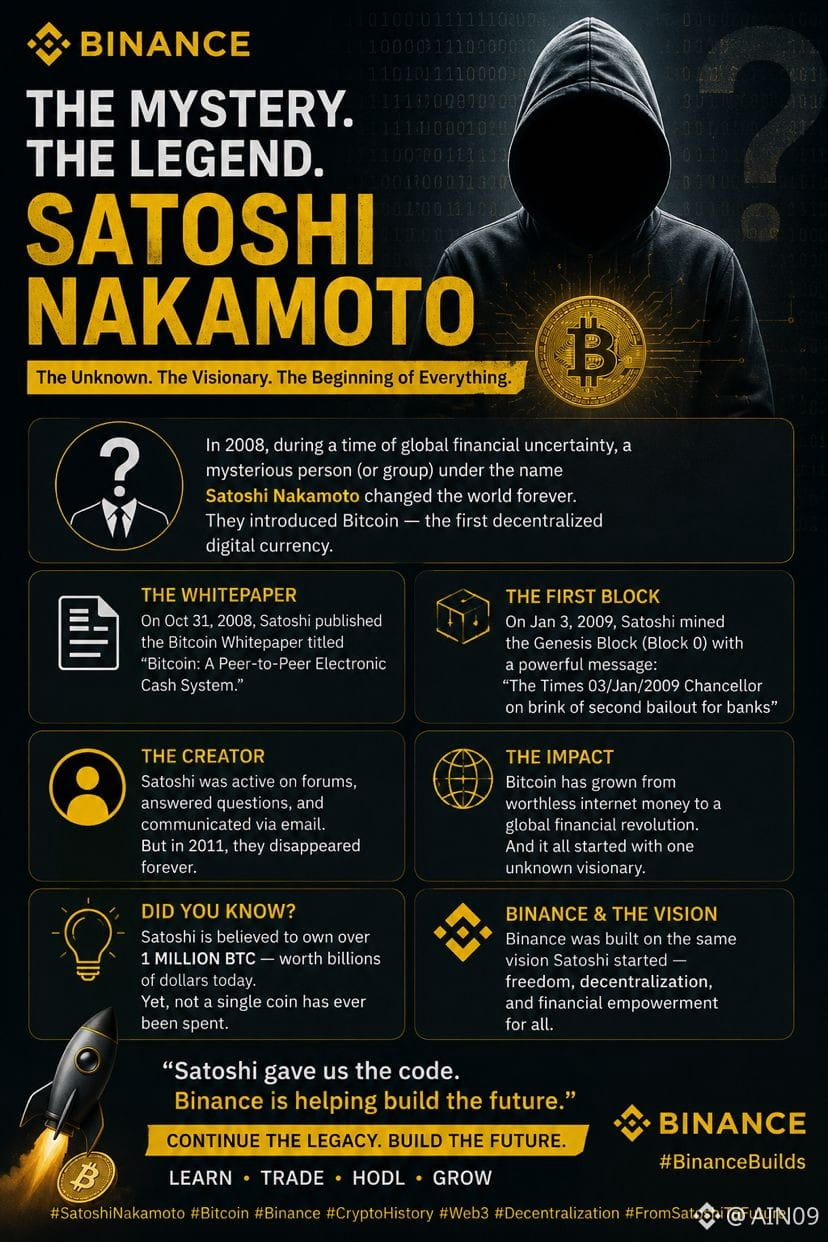
94
🤔 What happens if Satoshi Nakamoto suddenly moves his Bitcoin?
For over 15 years, roughly 1.1 million BTC linked to Satoshi have remained untouched.
No sales.
No transfers.
No signs of life.
Then one day...
A transaction appears.
Within minutes, crypto Twitter explodes.
News outlets rush to cover it.
Traders panic.
Some fear a massive sell-off.
Others believe Bitcoin's creator has finally returned.
The market wouldn't just react to the Bitcoin.
It would react to the mystery.
One wallet move could become the biggest event in crypto history.
👀 Would Bitcoin crash... or would the return of Satoshi make it even stronger?
#Bitcoin
#SatoshiNakamoto
#CryptoNews
#BTC
{spot}(BTCUSDT)
🤔 What happens if Satoshi Nakamoto suddenly moves his Bitcoin?
For over 15 years, roughly 1.1 million BTC linked to Satoshi have remained untouched.
No sales.
No transfers.
No signs of life.
Then one day...
A transaction appears.
Within minutes, crypto Twitter explodes.
News outlets rush to cover it.
Traders panic.
Some fear a massive sell-off.
Others believe Bitcoin's creator has finally returned.
The market wouldn't just react to the Bitcoin.
It would react to the mystery.
One wallet move could become the biggest event in crypto history.
👀 Would Bitcoin crash... or would the return of Satoshi make it even stronger?
#Bitcoin
#SatoshiNakamoto
#CryptoNews
#BTC
For over 15 years, roughly 1.1 million BTC linked to Satoshi have remained untouched.
No sales.
No transfers.
No signs of life.
Then one day...
A transaction appears.
Within minutes, crypto Twitter explodes.
News outlets rush to cover it.
Traders panic.
Some fear a massive sell-off.
Others believe Bitcoin's creator has finally returned.
The market wouldn't just react to the Bitcoin.
It would react to the mystery.
One wallet move could become the biggest event in crypto history.
👀 Would Bitcoin crash... or would the return of Satoshi make it even stronger?
#Bitcoin
#SatoshiNakamoto
#CryptoNews
#BTC
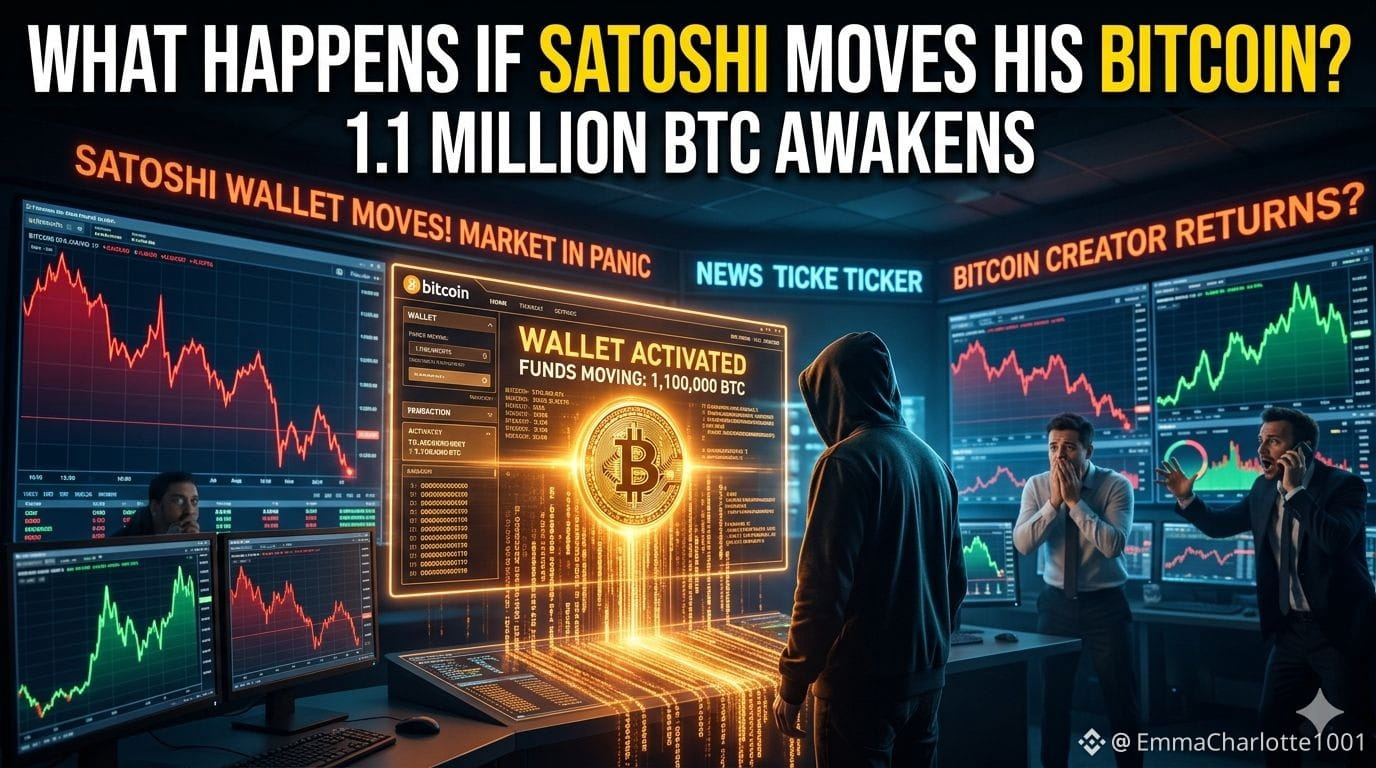
154

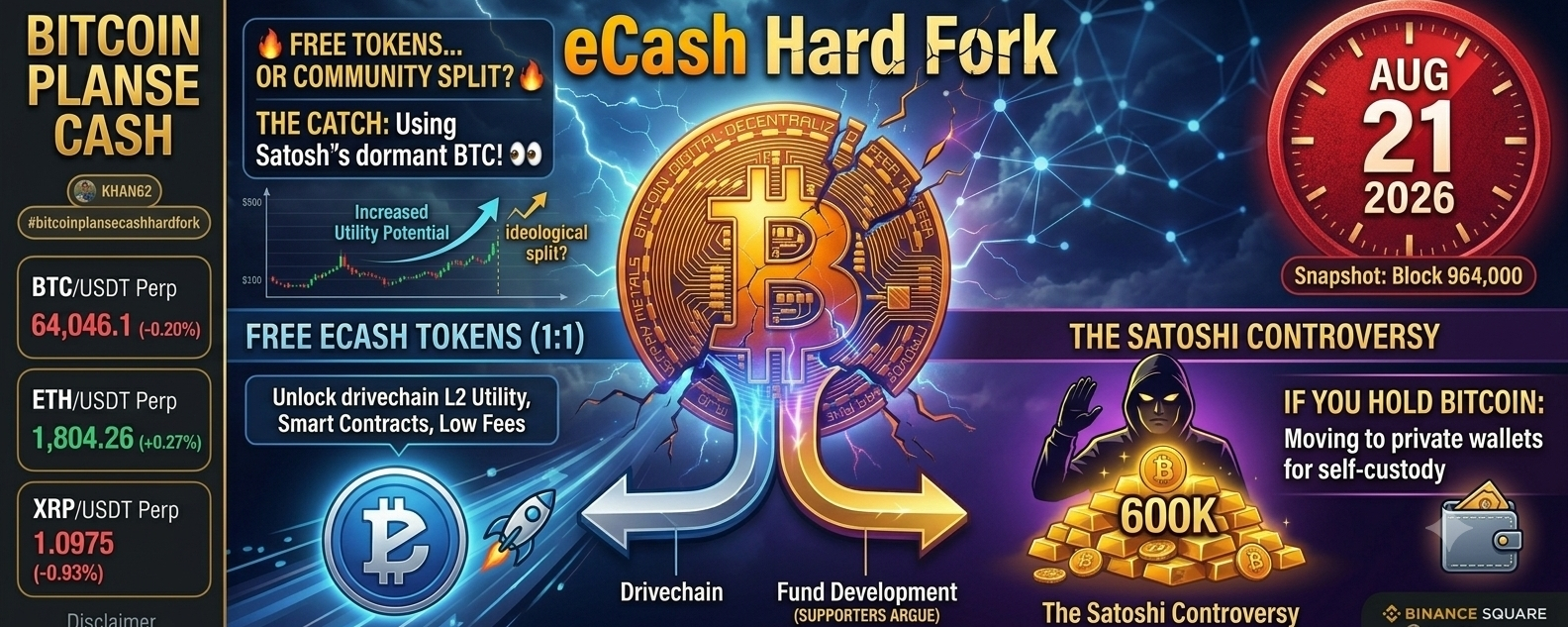
Article
🚨 FREE TOKENS FOR BITCOIN HOLDERS IN AUGUST?! 🚨 (But Wait... There is a Massive Catch! 👀)What if simply holding $BTC in your wallet could land you free tokens next month? Sounds like the ultimate crypto dream, right?
A major eCash hard fork proposal is heading our way around August 21, 2026 (at Bitcoin block 964,000), and it has completely split the crypto community into a wild debate! Here is what you need to know right now:
🔥 What’s the Big Deal?
✅ The Snapshot: If this goes through, Bitcoin holders could receive 1 new eCash token for every 1 BTC they hold.
✅ The Goal: The project wants to implement "Drivechain" technology directly into Bitcoin—aiming to bring native Layer-2 networks, fast smart contracts, and ultra-low fees.
⚙️ How Does Drivechain Work? (In Simple Terms):
1️⃣ You lock your BTC securely on the main Bitcoin network.
2️⃣ An equivalent amount is mirrored on a Layer-2 sidechain for high-speed dApps and contracts.
3️⃣ When you want to return, the L2 tokens are burned, and your original BTC is safely unlocked on the main chain.
⚠️ The Massive Controversy (The Catch! 🧨):
Here is why the crypto world is losing its mind: The proposal suggests utilizing roughly 500,000 to 600,000 Bitcoins—the legendary dormant stash believed to belong to Satoshi Nakamoto—to fund development!
• Supporters argue: It unlocks "dead supply" to accelerate world-changing BTC tech.
• Purists argue: Touching Satoshi’s coins violates the absolute core ethos of Bitcoin’s immutability! It’s a dangerous precedent.
🛡️ Critical Warning for Bitcoin Holders:
• If your BTC is sitting on centralized exchanges, you are at their mercy. You will only get the free fork tokens IF the exchange explicitly decides to support it.
• Pro Strategy: Smart money is already preparing to move their BTC into self-custody private wallets before the block snapshot to ensure they fully control their private keys.
👀 The Verdict: Will This Shake the Market?
This could either supercharge Bitcoin’s Layer-2 utility or cause a massive ideological split in the community. One thing is guaranteed: August is going to be an explosive month for Bitcoin!
💬 Drop your strategy below! If you hold BTC at the snapshot, will you claim the free tokens, or will you completely boycutt/ignore the fork due to the Satoshi controversy? Let’s talk in the comments! 👇🚀
#BitcoinHardFork #SatoshiNakamoto #CryptoNews #Layer2 #BinanceSquare #Write2Earn #BTC
🚨 FREE TOKENS FOR BITCOIN HOLDERS IN AUGUST?! 🚨 (But Wait... There is a Massive Catch! 👀)
What if simply holding $BTC in your wallet could land you free tokens next month? Sounds like the ultimate crypto dream, right?
A major eCash hard fork proposal is heading our way around August 21, 2026 (at Bitcoin block 964,000), and it has completely split the crypto community into a wild debate! Here is what you need to know right now:
🔥 What’s the Big Deal?
✅ The Snapshot: If this goes through, Bitcoin holders could receive 1 new eCash token for every 1 BTC they hold.
✅ The Goal: The project wants to implement "Drivechain" technology directly into Bitcoin—aiming to bring native Layer-2 networks, fast smart contracts, and ultra-low fees.
⚙️ How Does Drivechain Work? (In Simple Terms):
1️⃣ You lock your BTC securely on the main Bitcoin network.
2️⃣ An equivalent amount is mirrored on a Layer-2 sidechain for high-speed dApps and contracts.
3️⃣ When you want to return, the L2 tokens are burned, and your original BTC is safely unlocked on the main chain.
⚠️ The Massive Controversy (The Catch! 🧨):
Here is why the crypto world is losing its mind: The proposal suggests utilizing roughly 500,000 to 600,000 Bitcoins—the legendary dormant stash believed to belong to Satoshi Nakamoto—to fund development!
• Supporters argue: It unlocks "dead supply" to accelerate world-changing BTC tech.
• Purists argue: Touching Satoshi’s coins violates the absolute core ethos of Bitcoin’s immutability! It’s a dangerous precedent.
🛡️ Critical Warning for Bitcoin Holders:
• If your BTC is sitting on centralized exchanges, you are at their mercy. You will only get the free fork tokens IF the exchange explicitly decides to support it.
• Pro Strategy: Smart money is already preparing to move their BTC into self-custody private wallets before the block snapshot to ensure they fully control their private keys.
👀 The Verdict: Will This Shake the Market?
This could either supercharge Bitcoin’s Layer-2 utility or cause a massive ideological split in the community. One thing is guaranteed: August is going to be an explosive month for Bitcoin!
💬 Drop your strategy below! If you hold BTC at the snapshot, will you claim the free tokens, or will you completely boycutt/ignore the fork due to the Satoshi controversy? Let’s talk in the comments! 👇🚀
#BitcoinHardFork #SatoshiNakamoto #CryptoNews #Layer2 #BinanceSquare #Write2Earn #BTC
A major eCash hard fork proposal is heading our way around August 21, 2026 (at Bitcoin block 964,000), and it has completely split the crypto community into a wild debate! Here is what you need to know right now:
🔥 What’s the Big Deal?
✅ The Snapshot: If this goes through, Bitcoin holders could receive 1 new eCash token for every 1 BTC they hold.
✅ The Goal: The project wants to implement "Drivechain" technology directly into Bitcoin—aiming to bring native Layer-2 networks, fast smart contracts, and ultra-low fees.
⚙️ How Does Drivechain Work? (In Simple Terms):
1️⃣ You lock your BTC securely on the main Bitcoin network.
2️⃣ An equivalent amount is mirrored on a Layer-2 sidechain for high-speed dApps and contracts.
3️⃣ When you want to return, the L2 tokens are burned, and your original BTC is safely unlocked on the main chain.
⚠️ The Massive Controversy (The Catch! 🧨):
Here is why the crypto world is losing its mind: The proposal suggests utilizing roughly 500,000 to 600,000 Bitcoins—the legendary dormant stash believed to belong to Satoshi Nakamoto—to fund development!
• Supporters argue: It unlocks "dead supply" to accelerate world-changing BTC tech.
• Purists argue: Touching Satoshi’s coins violates the absolute core ethos of Bitcoin’s immutability! It’s a dangerous precedent.
🛡️ Critical Warning for Bitcoin Holders:
• If your BTC is sitting on centralized exchanges, you are at their mercy. You will only get the free fork tokens IF the exchange explicitly decides to support it.
• Pro Strategy: Smart money is already preparing to move their BTC into self-custody private wallets before the block snapshot to ensure they fully control their private keys.
👀 The Verdict: Will This Shake the Market?
This could either supercharge Bitcoin’s Layer-2 utility or cause a massive ideological split in the community. One thing is guaranteed: August is going to be an explosive month for Bitcoin!
💬 Drop your strategy below! If you hold BTC at the snapshot, will you claim the free tokens, or will you completely boycutt/ignore the fork due to the Satoshi controversy? Let’s talk in the comments! 👇🚀
#BitcoinHardFork #SatoshiNakamoto #CryptoNews #Layer2 #BinanceSquare #Write2Earn #BTC
118
Log in to explore more content
Join global crypto users on Binance Square
⚡️ Get latest and useful information about crypto.
💬 Trusted by the world’s largest crypto exchange.
👍 Discover real insights from verified creators.
Email / Phone number
Trending Topics
1
#SECReceivesGrayscaleLitecoinTrustETFFiling
99,302 views
1,539 Discussing
2
#ClarityActFacesProceduralVoteSept15
224,352 views
2,448 Discussing
3
#US10YearTreasuryYieldNears5%
82,156 views
1,348 Discussing
4
#CryptoLiquidations$674MIn24H
20,663 views
196 Discussing
5
#TokenizedStockHoldersUp619.1%
69,367 views
1,106 Discussing
6
#RevolutConfirmsFakeGovEmailDataBreach
103,525 views
1,393 Discussing
7
#CanadaOSFISaysTokenizedDepositsEqualTraditionalDeposits
5,619 views
102 Discussing
8
#USBankCompletesCrossBorderPaymentPilotOnStellar
83,656 views
1,259 Discussing
9
#NvidiaInTalksToInvestUpTo$10BInAnthropicIPO
5,821 views
94 Discussing
10
#EtherRalliesAsBearishBetsLiquidate
134,080 views
1,616 Discussing