
#omniston
omniston
25,912 views
343 Discussing
Hot
Latest


·
--
The Builder Side of DeFi
What happens when DeFi infrastructure becomes something developers can build on?
STON.fi isn't only a place where users swap tokens.
Its SDK and Omniston infrastructure give builders tools to integrate swapping and liquidity into wallets, launchpads, Telegram applications, and other TON products.
That changes the user experience.
Instead of sending users to a separate DEX every time they need a swap, a project can build the swap experience directly into its own product.
Think about the possibilities:
🔹 Wallets with built-in swaps
🔹 Telegram-native trading experiences
🔹 Apps accessing multiple liquidity sources
🔹 Cross-chain swap functionality
🔹 Launchpads with easier token access
The important part is what happens under the hood.
Users may see a simple swap interface, while infrastructure handles the complicated routing and execution behind it.
This is why DeFi infrastructure matters.
The next stage of adoption may not come from users learning how to navigate more protocols.
It may come from DeFi becoming invisible inside the applications people already use.
And that's where infrastructure like STON.fi and Omniston becomes interesting for the TON ecosystem.
The best DeFi infrastructure may be the infrastructure users don't even notice.
#STONfi i #Omniston #TonChain #DeFiDominance #Web3 @stonfi $TON
The Builder Side of DeFi
What happens when DeFi infrastructure becomes something developers can build on?
STON.fi isn't only a place where users swap tokens.
Its SDK and Omniston infrastructure give builders tools to integrate swapping and liquidity into wallets, launchpads, Telegram applications, and other TON products.
That changes the user experience.
Instead of sending users to a separate DEX every time they need a swap, a project can build the swap experience directly into its own product.
Think about the possibilities:
🔹 Wallets with built-in swaps
🔹 Telegram-native trading experiences
🔹 Apps accessing multiple liquidity sources
🔹 Cross-chain swap functionality
🔹 Launchpads with easier token access
The important part is what happens under the hood.
Users may see a simple swap interface, while infrastructure handles the complicated routing and execution behind it.
This is why DeFi infrastructure matters.
The next stage of adoption may not come from users learning how to navigate more protocols.
It may come from DeFi becoming invisible inside the applications people already use.
And that's where infrastructure like STON.fi and Omniston becomes interesting for the TON ecosystem.
The best DeFi infrastructure may be the infrastructure users don't even notice.
#STONfi i #Omniston #TonChain #DeFiDominance #Web3 @STONfi DEX $TON
What happens when DeFi infrastructure becomes something developers can build on?
STON.fi isn't only a place where users swap tokens.
Its SDK and Omniston infrastructure give builders tools to integrate swapping and liquidity into wallets, launchpads, Telegram applications, and other TON products.
That changes the user experience.
Instead of sending users to a separate DEX every time they need a swap, a project can build the swap experience directly into its own product.
Think about the possibilities:
🔹 Wallets with built-in swaps
🔹 Telegram-native trading experiences
🔹 Apps accessing multiple liquidity sources
🔹 Cross-chain swap functionality
🔹 Launchpads with easier token access
The important part is what happens under the hood.
Users may see a simple swap interface, while infrastructure handles the complicated routing and execution behind it.
This is why DeFi infrastructure matters.
The next stage of adoption may not come from users learning how to navigate more protocols.
It may come from DeFi becoming invisible inside the applications people already use.
And that's where infrastructure like STON.fi and Omniston becomes interesting for the TON ecosystem.
The best DeFi infrastructure may be the infrastructure users don't even notice.
#STONfi i #Omniston #TonChain #DeFiDominance #Web3 @STONfi DEX $TON

75

·
--
$3M+ and Rising: Omniston Cross-Chain Hits New Heights
Omniston has now surpassed $3 million in cumulative cross-chain swap volume since launching its cross-chain feature in June.
For me, the interesting part isn't simply the $3M. It is what the number says about how users are starting to think about liquidity.
Cross-chain DeFi has always had a major weakness: liquidity is everywhere, but access to it is fragmented.
You may have USDT on TON, while the liquidity or opportunity you want exists on another network. Traditionally, that can mean bridges, multiple transactions, network switching, different wallets, extra fees, and more chances for something to go wrong. $GRAM
As a user, I don't really care which chain handles the transaction. I care about how much I receive, how much I pay, how quickly it settles, and whether the route works reliably. And that's where Omniston proves its importance .
$3M doesn't make Omniston the biggest cross-chain player in DeFi.
But it does provide something more important at this stage: evidence of real usage.
Every cross-chain swap is effectively a user making a decision:
• "This route is good enough for me to trust with my assets."
That matters because cross-chain infrastructure is ultimately built around confidence.
If users repeatedly get competitive execution without having to manually understand bridges, liquidity pools, and different networks, the technology starts becoming less important than the experience.
If Omniston can combine deeper liquidity, better routing, reliable settlement, competitive pricing, and a simpler user experience, then today's $3M could eventually look very small compared with what comes next.
$BTC $ETH #Omniston #MilestoneUnlocked #TrendingTopic #STONfi
$3M+ and Rising: Omniston Cross-Chain Hits New Heights
Omniston has now surpassed $3 million in cumulative cross-chain swap volume since launching its cross-chain feature in June.
For me, the interesting part isn't simply the $3M. It is what the number says about how users are starting to think about liquidity.
Cross-chain DeFi has always had a major weakness: liquidity is everywhere, but access to it is fragmented.
You may have USDT on TON, while the liquidity or opportunity you want exists on another network. Traditionally, that can mean bridges, multiple transactions, network switching, different wallets, extra fees, and more chances for something to go wrong. $GRAM
As a user, I don't really care which chain handles the transaction. I care about how much I receive, how much I pay, how quickly it settles, and whether the route works reliably. And that's where Omniston proves its importance .
$3M doesn't make Omniston the biggest cross-chain player in DeFi.
But it does provide something more important at this stage: evidence of real usage.
Every cross-chain swap is effectively a user making a decision:
• "This route is good enough for me to trust with my assets."
That matters because cross-chain infrastructure is ultimately built around confidence.
If users repeatedly get competitive execution without having to manually understand bridges, liquidity pools, and different networks, the technology starts becoming less important than the experience.
If Omniston can combine deeper liquidity, better routing, reliable settlement, competitive pricing, and a simpler user experience, then today's $3M could eventually look very small compared with what comes next.
$BTC $ETH #Omniston #MilestoneUnlocked #TrendingTopic #STONfi
Omniston has now surpassed $3 million in cumulative cross-chain swap volume since launching its cross-chain feature in June.
For me, the interesting part isn't simply the $3M. It is what the number says about how users are starting to think about liquidity.
Cross-chain DeFi has always had a major weakness: liquidity is everywhere, but access to it is fragmented.
You may have USDT on TON, while the liquidity or opportunity you want exists on another network. Traditionally, that can mean bridges, multiple transactions, network switching, different wallets, extra fees, and more chances for something to go wrong. $GRAM
As a user, I don't really care which chain handles the transaction. I care about how much I receive, how much I pay, how quickly it settles, and whether the route works reliably. And that's where Omniston proves its importance .
$3M doesn't make Omniston the biggest cross-chain player in DeFi.
But it does provide something more important at this stage: evidence of real usage.
Every cross-chain swap is effectively a user making a decision:
• "This route is good enough for me to trust with my assets."
That matters because cross-chain infrastructure is ultimately built around confidence.
If users repeatedly get competitive execution without having to manually understand bridges, liquidity pools, and different networks, the technology starts becoming less important than the experience.
If Omniston can combine deeper liquidity, better routing, reliable settlement, competitive pricing, and a simpler user experience, then today's $3M could eventually look very small compared with what comes next.
$BTC $ETH #Omniston #MilestoneUnlocked #TrendingTopic #STONfi

1
224
·
--
Why Liquidity Routing Matters
Finding liquidity is only half the challenge. Getting there efficiently is the other half.
In DeFi, the same asset can have liquidity spread across different pools and networks. This creates multiple possible routes for a single swap.
A smart routing system can evaluate available options and coordinate a route based on factors such as:
🔹 Available liquidity
🔹 Expected execution
🔹 Price impact
🔹 Trading conditions
🔹 Network requirements
This is where infrastructure like Omniston becomes interesting.
Instead of making users manually search through different routes, the infrastructure works behind the scenes to connect available liquidity and simplify the swap experience.
But routing doesn't remove risk. Users should still review the final amount, fees, slippage, and price impact before confirming a transaction.
The bigger lesson:
As DeFi grows, liquidity becomes increasingly fragmented.
The challenge isn't only creating more liquidity.
It's building better infrastructure to connect users with the liquidity that already exists.
Better routing can turn a complicated multi-chain journey into a simpler swap experience.
#STONfi #Omniston #TON #Liquidity #DEX @stonfi $TON
Why Liquidity Routing Matters
Finding liquidity is only half the challenge. Getting there efficiently is the other half.
In DeFi, the same asset can have liquidity spread across different pools and networks. This creates multiple possible routes for a single swap.
A smart routing system can evaluate available options and coordinate a route based on factors such as:
🔹 Available liquidity
🔹 Expected execution
🔹 Price impact
🔹 Trading conditions
🔹 Network requirements
This is where infrastructure like Omniston becomes interesting.
Instead of making users manually search through different routes, the infrastructure works behind the scenes to connect available liquidity and simplify the swap experience.
But routing doesn't remove risk. Users should still review the final amount, fees, slippage, and price impact before confirming a transaction.
The bigger lesson:
As DeFi grows, liquidity becomes increasingly fragmented.
The challenge isn't only creating more liquidity.
It's building better infrastructure to connect users with the liquidity that already exists.
Better routing can turn a complicated multi-chain journey into a simpler swap experience.
#STONfi #Omniston #TON #Liquidity #DEX @STONfi DEX $TON
Finding liquidity is only half the challenge. Getting there efficiently is the other half.
In DeFi, the same asset can have liquidity spread across different pools and networks. This creates multiple possible routes for a single swap.
A smart routing system can evaluate available options and coordinate a route based on factors such as:
🔹 Available liquidity
🔹 Expected execution
🔹 Price impact
🔹 Trading conditions
🔹 Network requirements
This is where infrastructure like Omniston becomes interesting.
Instead of making users manually search through different routes, the infrastructure works behind the scenes to connect available liquidity and simplify the swap experience.
But routing doesn't remove risk. Users should still review the final amount, fees, slippage, and price impact before confirming a transaction.
The bigger lesson:
As DeFi grows, liquidity becomes increasingly fragmented.
The challenge isn't only creating more liquidity.
It's building better infrastructure to connect users with the liquidity that already exists.
Better routing can turn a complicated multi-chain journey into a simpler swap experience.
#STONfi #Omniston #TON #Liquidity #DEX @STONfi DEX $TON

79

·
--
Bullish
Verified
🔥 $150,000 in 24 hours: Omniston is changing the cross-chain game
The volume of cross-chain swaps on STON.fi has hit a new milestone. Why are users moving away from traditional bridges in droves?
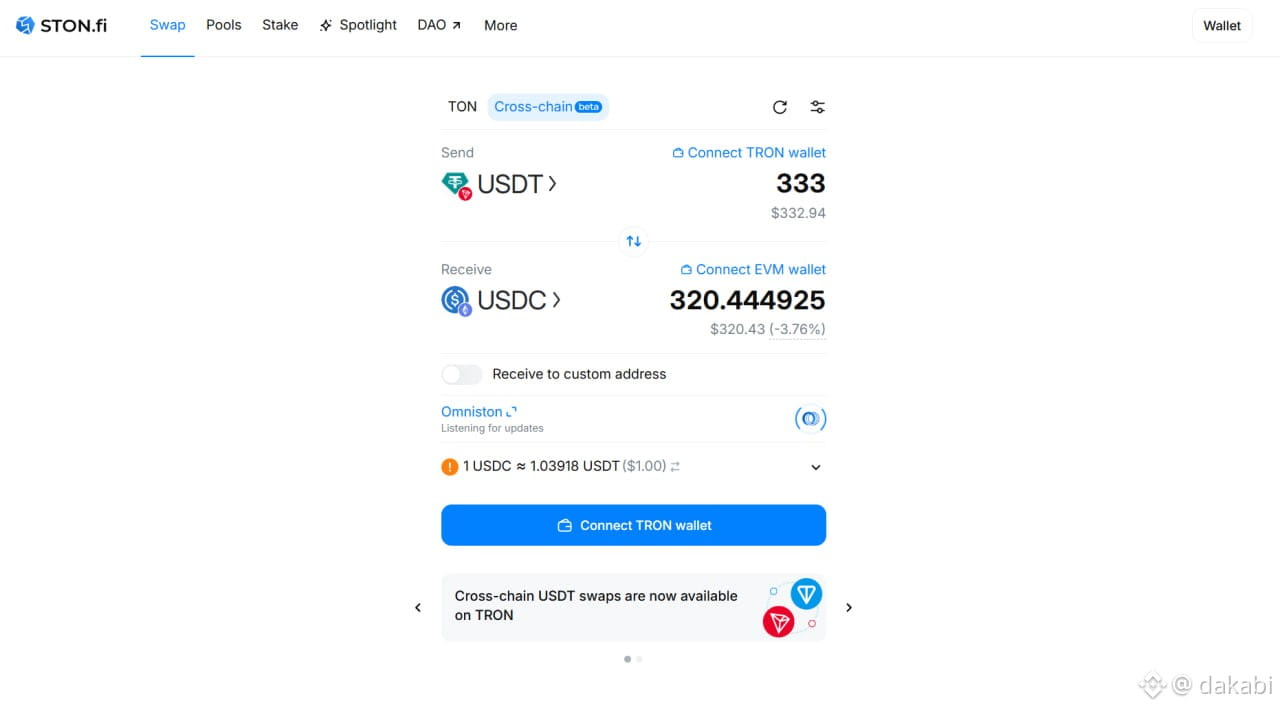
✈️ Cross-chain to someone else’s wallet (Custom Address)
No more sending assets to your own address first and then forwarding them. Now you pay directly from your wallet, and the tokens arrive straight to the recipient’s address on another network. No double fees and no extra transactions.
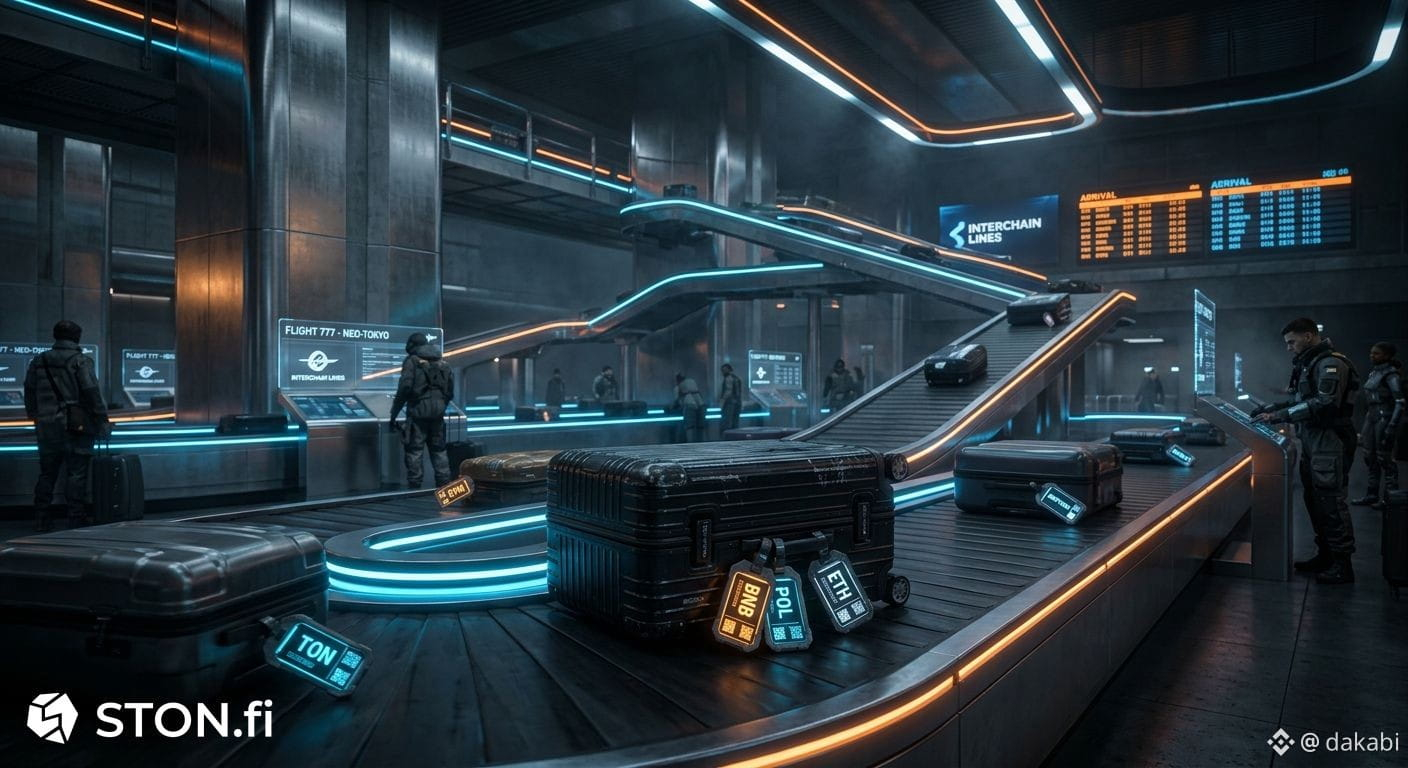
It’s like a direct flight with no stops and no lost luggage. You just choose the direction, and the protocol handles all the technical work in 15–40 seconds.
🎁 Bonus for early users:
The team is hinting that rewards are coming for the “first passengers” of this cross-chain route. Now is the time to test the feature while the initial limit of $1,000 per transaction is still in effect.
Under the hood: seamless routing between TON, TRON, Ethereum, Base, Arbitrum, Polygon, and the new Robinhood Chain.
While others are waiting, the infrastructure is already live.
🔗 Try the direct cross-chain:
app.ston.fi/swap?mode=cross-chain&referral_address=UQBDMz8eAC1_CVxEn6JjNOdWEvppQXXybxIdKm-GiXEL4yiQ
Where would you send assets over cross-chain right now? Comment below 👇
$TON $GRAM $USDT
#DeFi #CrossChain #Omniston #TONBlockchain
🔥 $150,000 in 24 hours: Omniston is changing the cross-chain game
The volume of cross-chain swaps on STON.fi has hit a new milestone. Why are users moving away from traditional bridges in droves?
✈️ Cross-chain to someone else’s wallet (Custom Address)
No more sending assets to your own address first and then forwarding them. Now you pay directly from your wallet, and the tokens arrive straight to the recipient’s address on another network. No double fees and no extra transactions.
It’s like a direct flight with no stops and no lost luggage. You just choose the direction, and the protocol handles all the technical work in 15–40 seconds.
🎁 Bonus for early users:
The team is hinting that rewards are coming for the “first passengers” of this cross-chain route. Now is the time to test the feature while the initial limit of $1,000 per transaction is still in effect.
Under the hood: seamless routing between TON, TRON, Ethereum, Base, Arbitrum, Polygon, and the new Robinhood Chain.
While others are waiting, the infrastructure is already live.
🔗 Try the direct cross-chain:
app.ston.fi/swap?mode=cross-chain&referral_address=UQBDMz8eAC1_CVxEn6JjNOdWEvppQXXybxIdKm-GiXEL4yiQ
Where would you send assets over cross-chain right now? Comment below 👇
$TON $GRAM $USDT
#DeFi #CrossChain #Omniston #TONBlockchain
The volume of cross-chain swaps on STON.fi has hit a new milestone. Why are users moving away from traditional bridges in droves?
✈️ Cross-chain to someone else’s wallet (Custom Address)
No more sending assets to your own address first and then forwarding them. Now you pay directly from your wallet, and the tokens arrive straight to the recipient’s address on another network. No double fees and no extra transactions.
It’s like a direct flight with no stops and no lost luggage. You just choose the direction, and the protocol handles all the technical work in 15–40 seconds.
🎁 Bonus for early users:
The team is hinting that rewards are coming for the “first passengers” of this cross-chain route. Now is the time to test the feature while the initial limit of $1,000 per transaction is still in effect.
Under the hood: seamless routing between TON, TRON, Ethereum, Base, Arbitrum, Polygon, and the new Robinhood Chain.
While others are waiting, the infrastructure is already live.
🔗 Try the direct cross-chain:
app.ston.fi/swap?mode=cross-chain&referral_address=UQBDMz8eAC1_CVxEn6JjNOdWEvppQXXybxIdKm-GiXEL4yiQ
Where would you send assets over cross-chain right now? Comment below 👇
$TON $GRAM $USDT
#DeFi #CrossChain #Omniston #TONBlockchain
2
732

Why builders should care about Omniston
Imagine you're building a wallet.
You want users to swap assets across different ecosystems.
Now you need to think about liquidity, routing, quotes, cross chain execution and settlement.
That's a lot to build and maintain.
Infrastructure like Omniston can reduce that burden by giving builders access to an existing execution layer.
This changes the equation.
Instead of every wallet or dApp reinventing the same infrastructure, builders can focus more of their time on the product itself.
That's how ecosystems mature.
Not every team needs to rebuild the same piece of plumbing.
#Omniston #STON.fi
Why builders should care about Omniston
Imagine you're building a wallet.
You want users to swap assets across different ecosystems.
Now you need to think about liquidity, routing, quotes, cross chain execution and settlement.
That's a lot to build and maintain.
Infrastructure like Omniston can reduce that burden by giving builders access to an existing execution layer.
This changes the equation.
Instead of every wallet or dApp reinventing the same infrastructure, builders can focus more of their time on the product itself.
That's how ecosystems mature.
Not every team needs to rebuild the same piece of plumbing.
#Omniston #STON.fi
Imagine you're building a wallet.
You want users to swap assets across different ecosystems.
Now you need to think about liquidity, routing, quotes, cross chain execution and settlement.
That's a lot to build and maintain.
Infrastructure like Omniston can reduce that burden by giving builders access to an existing execution layer.
This changes the equation.
Instead of every wallet or dApp reinventing the same infrastructure, builders can focus more of their time on the product itself.
That's how ecosystems mature.
Not every team needs to rebuild the same piece of plumbing.
#Omniston #STON.fi
10

$150K in Cross-Chain Swap Volume in One Day. Here’s Why It Matters.
Cross-chain liquidity is no longer just a narrative.
On August 25, Omniston, the cross-chain liquidity protocol in the STON.fi ecosystem, processed approximately $150,000 in swap volume in a single day.
That volume came from real users swapping assets, testing routes, and putting cross-chain infrastructure to work.
And while $150K may look like just another number, the bigger story is what happens behind it.
Cross-chain DeFi has a fragmentation problem.
Liquidity is spread across different networks.
Users often have to deal with multiple steps just to move assets and access opportunities.
Protocols like Omniston are built around a different vision:
Make liquidity more accessible across ecosystems.
Every swap helps test execution.
Every route adds activity.
Every user pushes the infrastructure closer to becoming more efficient and widely adopted.
For the STON.fi ecosystem, this milestone represents growing engagement with its cross-chain liquidity infrastructure.
From $150K in volume to the next milestone, the real question is:
How fast can cross-chain liquidity grow when users no longer have to think about the chains behind the transaction?
The future of DeFi won't be built around isolated ecosystems.
It will be built around liquidity that can move.
And on August 25, Omniston moved approximately $150K worth in a single day.
#TON #DeFi #Web3 #STONfi #Omniston
$150K in Cross-Chain Swap Volume in One Day. Here’s Why It Matters.
Cross-chain liquidity is no longer just a narrative.
On August 25, Omniston, the cross-chain liquidity protocol in the STON.fi ecosystem, processed approximately $150,000 in swap volume in a single day.
That volume came from real users swapping assets, testing routes, and putting cross-chain infrastructure to work.
And while $150K may look like just another number, the bigger story is what happens behind it.
Cross-chain DeFi has a fragmentation problem.
Liquidity is spread across different networks.
Users often have to deal with multiple steps just to move assets and access opportunities.
Protocols like Omniston are built around a different vision:
Make liquidity more accessible across ecosystems.
Every swap helps test execution.
Every route adds activity.
Every user pushes the infrastructure closer to becoming more efficient and widely adopted.
For the STON.fi ecosystem, this milestone represents growing engagement with its cross-chain liquidity infrastructure.
From $150K in volume to the next milestone, the real question is:
How fast can cross-chain liquidity grow when users no longer have to think about the chains behind the transaction?
The future of DeFi won't be built around isolated ecosystems.
It will be built around liquidity that can move.
And on August 25, Omniston moved approximately $150K worth in a single day.
#TON #DeFi #Web3 #STONfi #Omniston
Cross-chain liquidity is no longer just a narrative.
On August 25, Omniston, the cross-chain liquidity protocol in the STON.fi ecosystem, processed approximately $150,000 in swap volume in a single day.
That volume came from real users swapping assets, testing routes, and putting cross-chain infrastructure to work.
And while $150K may look like just another number, the bigger story is what happens behind it.
Cross-chain DeFi has a fragmentation problem.
Liquidity is spread across different networks.
Users often have to deal with multiple steps just to move assets and access opportunities.
Protocols like Omniston are built around a different vision:
Make liquidity more accessible across ecosystems.
Every swap helps test execution.
Every route adds activity.
Every user pushes the infrastructure closer to becoming more efficient and widely adopted.
For the STON.fi ecosystem, this milestone represents growing engagement with its cross-chain liquidity infrastructure.
From $150K in volume to the next milestone, the real question is:
How fast can cross-chain liquidity grow when users no longer have to think about the chains behind the transaction?
The future of DeFi won't be built around isolated ecosystems.
It will be built around liquidity that can move.
And on August 25, Omniston moved approximately $150K worth in a single day.
#TON #DeFi #Web3 #STONfi #Omniston
92

𝗢𝗺𝗻𝗶𝘀𝘁𝗼𝗻 𝗛𝗶𝘁𝘀 ~$𝟭𝟱𝟬𝗞 𝗶𝗻 𝗖𝗿𝗼𝘀𝘀-𝗖𝗵𝗮𝗶𝗻 𝗦𝘄𝗮𝗽 𝗩𝗼𝗹𝘂𝗺𝗲 — 𝗜𝗻 𝗢𝗻𝗲 𝗗𝗮𝘆
Stonfiers, let's put this number in perspective.
150,000 kilometers is roughly 3.5 trips around the entire Earth. That's the same scale of distance our community helped Omniston cover in swap volume on a single day
August 25.
In just 24 hours, our cross-chain protocol Omniston processed approximately $150,000 in swap volume, a milestone that reflects growing trust and increasing activity across the routes we support.
this isn't just a number on a dashboard
its proof that the infrastructure we've built is being used, tested, and stress-tested by a real, engaged community, and it's holding up.
Every swap that contributed to this total came from someone in this community:
swapping between chains, testing new routes, exploring liquidity paths, and helping us understand where Omniston performs best and where we can keep improving.
that kind of organic, hands on engagement is exactly what drives a protocol forward, and it's exactly what we saw on August 25.
To everyone who swapped, tested, shared feedback, or simply kept an eye on the numbers: thank you.
Growth like this doesn't happen in a vacuum. It happens because people believe in what we're building and choose to be part of it early.
This is just one data point on a longer trajectory.
We're continuing to expand Omniston's capabilities, deepen liquidity across supported chains, and make cross-chain swaps faster and more reliable for everyone using the protocol.
More volume, more routes, and more milestones are ahead.
Stay tuned, this is only the beginning at ston.fi
#STONfi #Omniston
𝗢𝗺𝗻𝗶𝘀𝘁𝗼𝗻 𝗛𝗶𝘁𝘀 ~$𝟭𝟱𝟬𝗞 𝗶𝗻 𝗖𝗿𝗼𝘀𝘀-𝗖𝗵𝗮𝗶𝗻 𝗦𝘄𝗮𝗽 𝗩𝗼𝗹𝘂𝗺𝗲 — 𝗜𝗻 𝗢𝗻𝗲 𝗗𝗮𝘆
Stonfiers, let's put this number in perspective.
150,000 kilometers is roughly 3.5 trips around the entire Earth. That's the same scale of distance our community helped Omniston cover in swap volume on a single day
August 25.
In just 24 hours, our cross-chain protocol Omniston processed approximately $150,000 in swap volume, a milestone that reflects growing trust and increasing activity across the routes we support.
this isn't just a number on a dashboard
its proof that the infrastructure we've built is being used, tested, and stress-tested by a real, engaged community, and it's holding up.
Every swap that contributed to this total came from someone in this community:
swapping between chains, testing new routes, exploring liquidity paths, and helping us understand where Omniston performs best and where we can keep improving.
that kind of organic, hands on engagement is exactly what drives a protocol forward, and it's exactly what we saw on August 25.
To everyone who swapped, tested, shared feedback, or simply kept an eye on the numbers: thank you.
Growth like this doesn't happen in a vacuum. It happens because people believe in what we're building and choose to be part of it early.
This is just one data point on a longer trajectory.
We're continuing to expand Omniston's capabilities, deepen liquidity across supported chains, and make cross-chain swaps faster and more reliable for everyone using the protocol.
More volume, more routes, and more milestones are ahead.
Stay tuned, this is only the beginning at ston.fi
#STONfi #Omniston
Stonfiers, let's put this number in perspective.
150,000 kilometers is roughly 3.5 trips around the entire Earth. That's the same scale of distance our community helped Omniston cover in swap volume on a single day
August 25.
In just 24 hours, our cross-chain protocol Omniston processed approximately $150,000 in swap volume, a milestone that reflects growing trust and increasing activity across the routes we support.
this isn't just a number on a dashboard
its proof that the infrastructure we've built is being used, tested, and stress-tested by a real, engaged community, and it's holding up.
Every swap that contributed to this total came from someone in this community:
swapping between chains, testing new routes, exploring liquidity paths, and helping us understand where Omniston performs best and where we can keep improving.
that kind of organic, hands on engagement is exactly what drives a protocol forward, and it's exactly what we saw on August 25.
To everyone who swapped, tested, shared feedback, or simply kept an eye on the numbers: thank you.
Growth like this doesn't happen in a vacuum. It happens because people believe in what we're building and choose to be part of it early.
This is just one data point on a longer trajectory.
We're continuing to expand Omniston's capabilities, deepen liquidity across supported chains, and make cross-chain swaps faster and more reliable for everyone using the protocol.
More volume, more routes, and more milestones are ahead.
Stay tuned, this is only the beginning at ston.fi
#STONfi #Omniston
80
·
--
Omniston Hits $150K
Omniston processed roughly $150K in cross-chain swap volume in a single day on August 25.
Yes I know, $150K may not look huge compared with the billions moving across DeFi every day. But I think the more interesting story is what the volume represents.
Cross-chain DeFi has always had a friction problem.
As a user, moving assets between networks can mean dealing with bridges, wrapped tokens, destination-chain gas, multiple swaps, liquidity differences, and several transactions just to reach the asset I actually want. $GRAM
That is where Omniston comes in.
Instead of making users think primarily about which bridge or chain to use, the experience can move toward a simpler question:
“What asset do I want, and what is the most efficient way to get it?”
The chain becomes part of the infrastructure rather than the center of the user experience.
And aggregation matters because liquidity is fragmented. The best route isn't necessarily the closest DEX or the most popular chain. It depends on liquidity, fees, execution quality, slippage, and how reliably the transaction can settle.
So I don't see the $150K milestone as proof that cross-chain DeFi is already solved.
I see it as an early signal of user behavior.
The real milestones will be whether this volume keeps growing, whether users return, whether execution remains reliable during volatile markets, and whether larger transactions can move efficiently across networks.
If that happens, Omniston could become more than another swap tool.
It could become part of the infrastructure that makes different blockchain ecosystems feel like one connected liquidity market.
$BTC $ETH #Omniston #STONfi #CrossChainInteroperability #TrendingTopic #LiquidityAggregator
Omniston Hits $150K
Omniston processed roughly $150K in cross-chain swap volume in a single day on August 25.
Yes I know, $150K may not look huge compared with the billions moving across DeFi every day. But I think the more interesting story is what the volume represents.
Cross-chain DeFi has always had a friction problem.
As a user, moving assets between networks can mean dealing with bridges, wrapped tokens, destination-chain gas, multiple swaps, liquidity differences, and several transactions just to reach the asset I actually want. $GRAM
That is where Omniston comes in.
Instead of making users think primarily about which bridge or chain to use, the experience can move toward a simpler question:
“What asset do I want, and what is the most efficient way to get it?”
The chain becomes part of the infrastructure rather than the center of the user experience.
And aggregation matters because liquidity is fragmented. The best route isn't necessarily the closest DEX or the most popular chain. It depends on liquidity, fees, execution quality, slippage, and how reliably the transaction can settle.
So I don't see the $150K milestone as proof that cross-chain DeFi is already solved.
I see it as an early signal of user behavior.
The real milestones will be whether this volume keeps growing, whether users return, whether execution remains reliable during volatile markets, and whether larger transactions can move efficiently across networks.
If that happens, Omniston could become more than another swap tool.
It could become part of the infrastructure that makes different blockchain ecosystems feel like one connected liquidity market.
$BTC $ETH #Omniston #STONfi #CrossChainInteroperability #TrendingTopic #LiquidityAggregator
Omniston processed roughly $150K in cross-chain swap volume in a single day on August 25.
Yes I know, $150K may not look huge compared with the billions moving across DeFi every day. But I think the more interesting story is what the volume represents.
Cross-chain DeFi has always had a friction problem.
As a user, moving assets between networks can mean dealing with bridges, wrapped tokens, destination-chain gas, multiple swaps, liquidity differences, and several transactions just to reach the asset I actually want. $GRAM
That is where Omniston comes in.
Instead of making users think primarily about which bridge or chain to use, the experience can move toward a simpler question:
“What asset do I want, and what is the most efficient way to get it?”
The chain becomes part of the infrastructure rather than the center of the user experience.
And aggregation matters because liquidity is fragmented. The best route isn't necessarily the closest DEX or the most popular chain. It depends on liquidity, fees, execution quality, slippage, and how reliably the transaction can settle.
So I don't see the $150K milestone as proof that cross-chain DeFi is already solved.
I see it as an early signal of user behavior.
The real milestones will be whether this volume keeps growing, whether users return, whether execution remains reliable during volatile markets, and whether larger transactions can move efficiently across networks.
If that happens, Omniston could become more than another swap tool.
It could become part of the infrastructure that makes different blockchain ecosystems feel like one connected liquidity market.
$BTC $ETH #Omniston #STONfi #CrossChainInteroperability #TrendingTopic #LiquidityAggregator
1
110
·
--
Omniston Is Making Wallet Swaps Smarter
A wallet swap may look simple: choose a token, enter an amount, and confirm.
But the real challenge happens behind the button.
My Wallet, a non-custodial Web3 wallet supporting TON and other blockchains, has integrated Omniston into its swap aggregator. Instead of users manually searching for liquidity across different decentralized exchanges, Omniston helps scan available routes and find competitive execution in real time. $GRAM
From a user's perspective, this removes one of DeFi's biggest hidden problems: liquidity fragmentation.
That matters because the best-looking price is not always the best final outcome.
Liquidity depth, trade size, price impact, and available routes can all affect how much a user actually receives.
The integration also expands access to tokenized assets on TON, including AAPLx, NVDAx, AMZNx, COINx, HOODx, TSLAx, and more.
For me, the bigger story is what this says about the future of wallets.
The wallet is no longer just a place to store assets. It is becoming the interface through which users access liquidity, trading, and an expanding range of on-chain assets.
And the best infrastructure may be the infrastructure users barely notice.
You open your wallet. You choose what you want to swap. The routing happens in the background.
That is where Omniston becomes compelling.
As TON's ecosystem grows and liquidity becomes more fragmented, aggregation could become increasingly important. Users should not have to understand every DEX or manually hunt for the best route. Good infrastructure should handle that complexity while keeping the experience simple.
The swap looks simple. The infrastructure behind it isn’t.
That may be the real value of bringing Omniston directly into wallets like My Wallet.
$BTC $ETH #Omniston #Mywallet #STONfi #TrendingTopic #CrossChainInteroperability
Omniston Is Making Wallet Swaps Smarter
A wallet swap may look simple: choose a token, enter an amount, and confirm.
But the real challenge happens behind the button.
My Wallet, a non-custodial Web3 wallet supporting TON and other blockchains, has integrated Omniston into its swap aggregator. Instead of users manually searching for liquidity across different decentralized exchanges, Omniston helps scan available routes and find competitive execution in real time. $GRAM
From a user's perspective, this removes one of DeFi's biggest hidden problems: liquidity fragmentation.
That matters because the best-looking price is not always the best final outcome.
Liquidity depth, trade size, price impact, and available routes can all affect how much a user actually receives.
The integration also expands access to tokenized assets on TON, including AAPLx, NVDAx, AMZNx, COINx, HOODx, TSLAx, and more.
For me, the bigger story is what this says about the future of wallets.
The wallet is no longer just a place to store assets. It is becoming the interface through which users access liquidity, trading, and an expanding range of on-chain assets.
And the best infrastructure may be the infrastructure users barely notice.
You open your wallet. You choose what you want to swap. The routing happens in the background.
That is where Omniston becomes compelling.
As TON's ecosystem grows and liquidity becomes more fragmented, aggregation could become increasingly important. Users should not have to understand every DEX or manually hunt for the best route. Good infrastructure should handle that complexity while keeping the experience simple.
The swap looks simple. The infrastructure behind it isn’t.
That may be the real value of bringing Omniston directly into wallets like My Wallet.
$BTC $ETH #Omniston #Mywallet #STONfi #TrendingTopic #CrossChainInteroperability
A wallet swap may look simple: choose a token, enter an amount, and confirm.
But the real challenge happens behind the button.
My Wallet, a non-custodial Web3 wallet supporting TON and other blockchains, has integrated Omniston into its swap aggregator. Instead of users manually searching for liquidity across different decentralized exchanges, Omniston helps scan available routes and find competitive execution in real time. $GRAM
From a user's perspective, this removes one of DeFi's biggest hidden problems: liquidity fragmentation.
That matters because the best-looking price is not always the best final outcome.
Liquidity depth, trade size, price impact, and available routes can all affect how much a user actually receives.
The integration also expands access to tokenized assets on TON, including AAPLx, NVDAx, AMZNx, COINx, HOODx, TSLAx, and more.
For me, the bigger story is what this says about the future of wallets.
The wallet is no longer just a place to store assets. It is becoming the interface through which users access liquidity, trading, and an expanding range of on-chain assets.
And the best infrastructure may be the infrastructure users barely notice.
You open your wallet. You choose what you want to swap. The routing happens in the background.
That is where Omniston becomes compelling.
As TON's ecosystem grows and liquidity becomes more fragmented, aggregation could become increasingly important. Users should not have to understand every DEX or manually hunt for the best route. Good infrastructure should handle that complexity while keeping the experience simple.
The swap looks simple. The infrastructure behind it isn’t.
That may be the real value of bringing Omniston directly into wallets like My Wallet.
$BTC $ETH #Omniston #Mywallet #STONfi #TrendingTopic #CrossChainInteroperability
1
268

·
--
Bullish
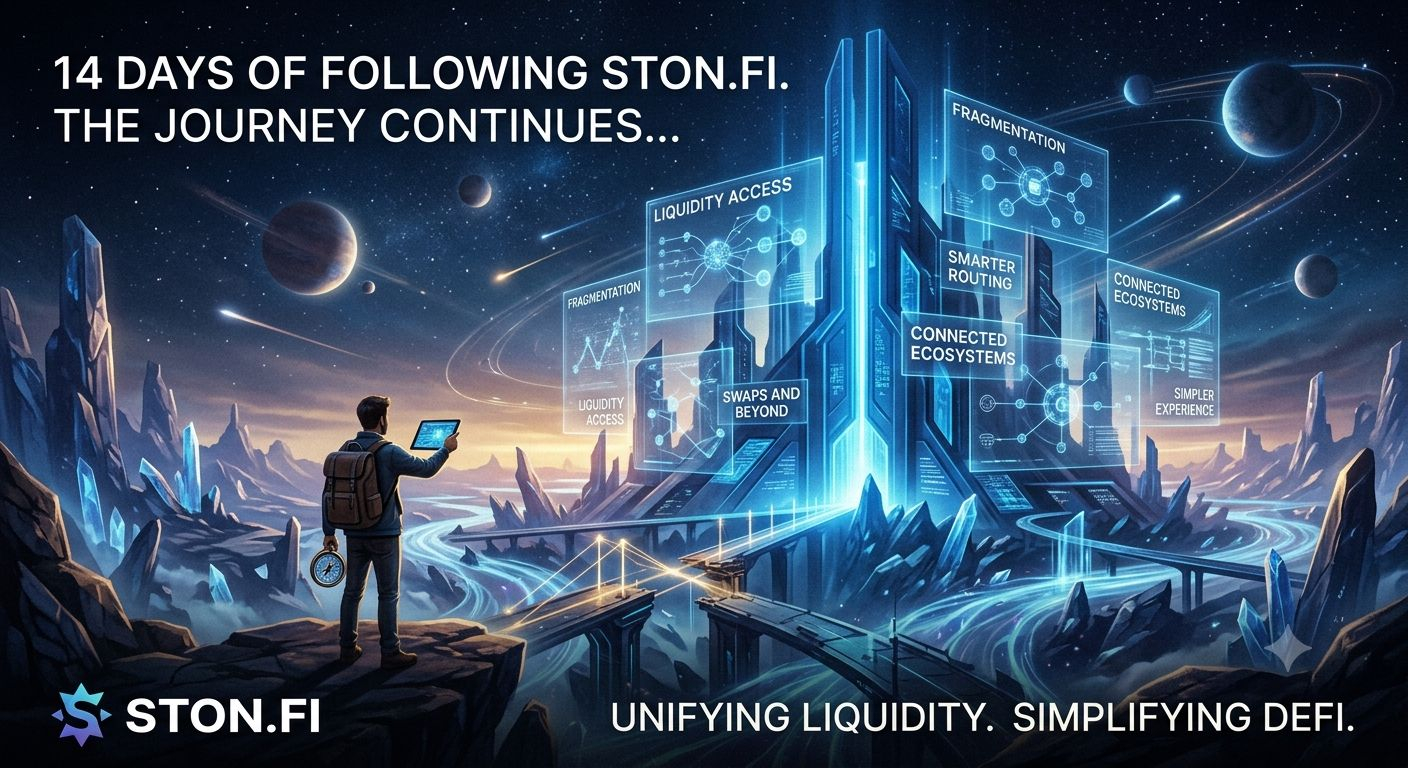
14 DAYS OF FOLLOWING WHAT STON.FI IS BUILDING.
And one thing is becoming clear.
The story is bigger than swaps.
The deeper problem is fragmentation.
Liquidity is everywhere.
But accessing it efficiently is still difficult.
Different chains.
Different pools.
Different routes.
Different experiences.
Over the past two weeks, I’ve been looking closely at how STON.fi and Omniston fit into this picture.
The thesis is simple:
DeFi doesn’t necessarily need more complexity.
It needs better infrastructure to manage the complexity that already exists.
That means:
Better liquidity access.
Smarter routing.
More connected ecosystems.
And a simpler experience for users.
Week 1 was about understanding the problem.
Week 2 was about understanding the infrastructure.
Next, I’m going deeper into what makes the STON.fi ecosystem work.
The journey continues.
#STON.fi #OMNISTON #Defi #swap
$ETH
14 DAYS OF FOLLOWING WHAT STON.FI IS BUILDING.
And one thing is becoming clear.
The story is bigger than swaps.
The deeper problem is fragmentation.
Liquidity is everywhere.
But accessing it efficiently is still difficult.
Different chains.
Different pools.
Different routes.
Different experiences.
Over the past two weeks, I’ve been looking closely at how STON.fi and Omniston fit into this picture.
The thesis is simple:
DeFi doesn’t necessarily need more complexity.
It needs better infrastructure to manage the complexity that already exists.
That means:
Better liquidity access.
Smarter routing.
More connected ecosystems.
And a simpler experience for users.
Week 1 was about understanding the problem.
Week 2 was about understanding the infrastructure.
Next, I’m going deeper into what makes the STON.fi ecosystem work.
The journey continues.
#STON.fi #OMNISTON #Defi #swap
$ETH
And one thing is becoming clear.
The story is bigger than swaps.
The deeper problem is fragmentation.
Liquidity is everywhere.
But accessing it efficiently is still difficult.
Different chains.
Different pools.
Different routes.
Different experiences.
Over the past two weeks, I’ve been looking closely at how STON.fi and Omniston fit into this picture.
The thesis is simple:
DeFi doesn’t necessarily need more complexity.
It needs better infrastructure to manage the complexity that already exists.
That means:
Better liquidity access.
Smarter routing.
More connected ecosystems.
And a simpler experience for users.
Week 1 was about understanding the problem.
Week 2 was about understanding the infrastructure.
Next, I’m going deeper into what makes the STON.fi ecosystem work.
The journey continues.
#STON.fi #OMNISTON #Defi #swap
$ETH
99
·
--
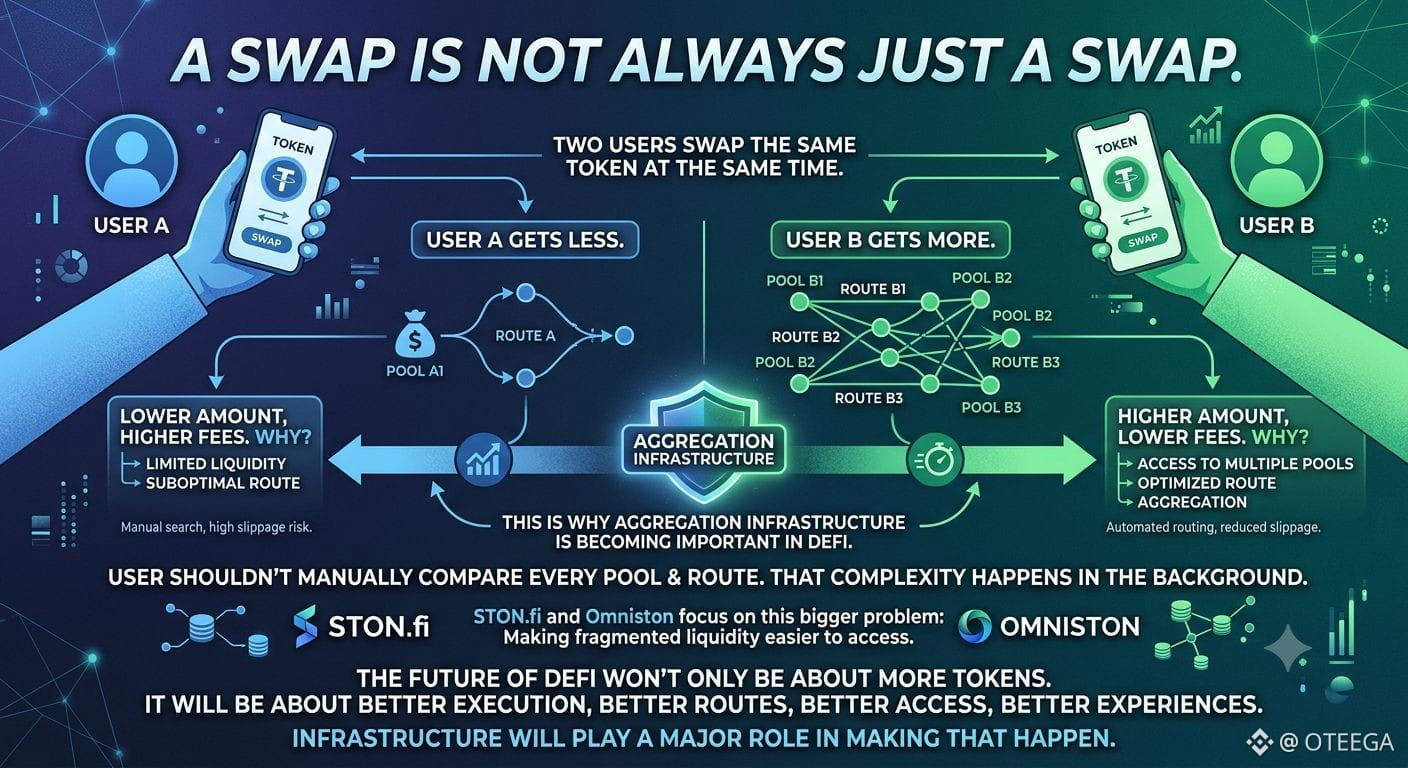
A SWAP IS NOT ALWAYS JUST A SWAP.
Two users can swap the same token.
At the same time.
But get different results.
Why?
Because liquidity matters.
The route matters.
The pool matters.
And the way liquidity is accessed can affect the final execution.
This is why aggregation infrastructure is becoming important in DeFi.
The user shouldn't have to manually compare every pool and every possible route.
That complexity should happen in the background.
STON.fi and Omniston are interesting because they are focused on this bigger problem:
How do we make fragmented liquidity easier to access?
The future of DeFi won't only be about more tokens.
It will be about better execution.
Better routes.
Better access.
Better experiences.
And infrastructure will play a major role in making that happen.
$PROS $SOL $ZEC
#STONfi #DeFi #Omniston
A SWAP IS NOT ALWAYS JUST A SWAP.
Two users can swap the same token.
At the same time.
But get different results.
Why?
Because liquidity matters.
The route matters.
The pool matters.
And the way liquidity is accessed can affect the final execution.
This is why aggregation infrastructure is becoming important in DeFi.
The user shouldn't have to manually compare every pool and every possible route.
That complexity should happen in the background.
STON.fi and Omniston are interesting because they are focused on this bigger problem:
How do we make fragmented liquidity easier to access?
The future of DeFi won't only be about more tokens.
It will be about better execution.
Better routes.
Better access.
Better experiences.
And infrastructure will play a major role in making that happen.
$PROS $SOL $ZEC
#STONfi #DeFi #Omniston
Two users can swap the same token.
At the same time.
But get different results.
Why?
Because liquidity matters.
The route matters.
The pool matters.
And the way liquidity is accessed can affect the final execution.
This is why aggregation infrastructure is becoming important in DeFi.
The user shouldn't have to manually compare every pool and every possible route.
That complexity should happen in the background.
STON.fi and Omniston are interesting because they are focused on this bigger problem:
How do we make fragmented liquidity easier to access?
The future of DeFi won't only be about more tokens.
It will be about better execution.
Better routes.
Better access.
Better experiences.
And infrastructure will play a major role in making that happen.
$PROS $SOL $ZEC
#STONfi #DeFi #Omniston
130

·
--
Cross-chain works best when you barely notice it.
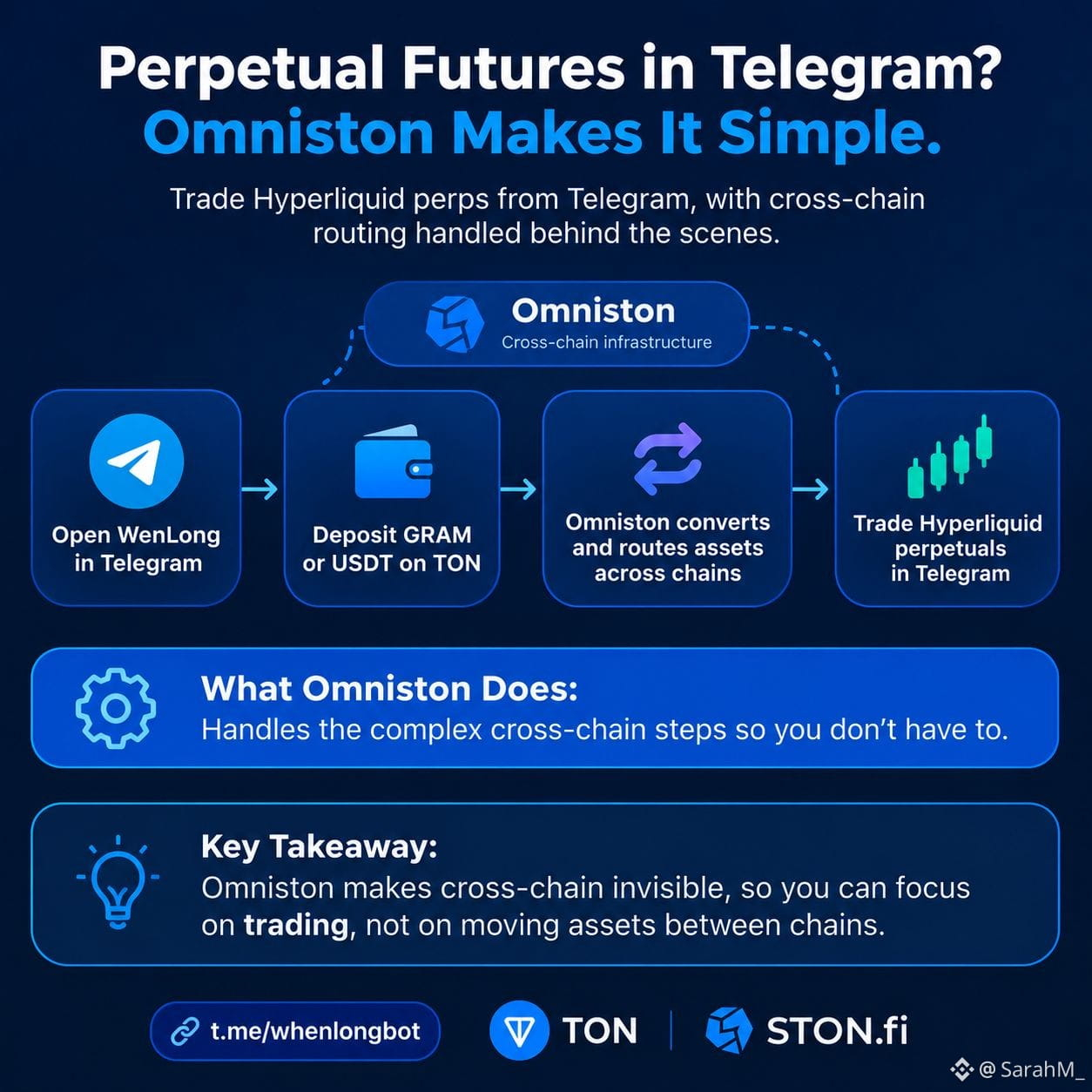
Without cross-chain infrastructure, trading across ecosystems often means bridging assets, swapping tokens, and funding accounts manually before placing a trade.
With Omniston, the process is simplified:
• Deposit assets from your TON wallet.
• Omniston routes them to the required chain.
• Your trading account is funded.
• You're ready to trade.
The goal isn't to make cross-chain more visible—it's to make it seamless.
One important note: WenLong is an independent app that integrates STON.fi's infrastructure; it isn't operated by STON.fi.
And while onboarding is simpler, perpetual futures still carry significant risk. Better UX removes friction, not trading risk.
The best infrastructure is the one users don't have to think about.
➡️Explore: ston.fi
➡️Omniston: omniston.ston.fi
➡️Join Wenlong and trade Hyperliquid perpetuals: t.me/whenlongbot?st…
@ton_blockchain @ston_fi #Omniston
#TON #STONfi #Omniston #DeFi
Cross-chain works best when you barely notice it.
Without cross-chain infrastructure, trading across ecosystems often means bridging assets, swapping tokens, and funding accounts manually before placing a trade.
With Omniston, the process is simplified:
• Deposit assets from your TON wallet.
• Omniston routes them to the required chain.
• Your trading account is funded.
• You're ready to trade.
The goal isn't to make cross-chain more visible—it's to make it seamless.
One important note: WenLong is an independent app that integrates STON.fi's infrastructure; it isn't operated by STON.fi.
And while onboarding is simpler, perpetual futures still carry significant risk. Better UX removes friction, not trading risk.
The best infrastructure is the one users don't have to think about.
➡️Explore: ston.fi
➡️Omniston: omniston.ston.fi
➡️Join Wenlong and trade Hyperliquid perpetuals: t.me/whenlongbot?st…
@ton_blockchain @ston_fi #Omniston
#TON #STONfi #Omniston #DeFi
Without cross-chain infrastructure, trading across ecosystems often means bridging assets, swapping tokens, and funding accounts manually before placing a trade.
With Omniston, the process is simplified:
• Deposit assets from your TON wallet.
• Omniston routes them to the required chain.
• Your trading account is funded.
• You're ready to trade.
The goal isn't to make cross-chain more visible—it's to make it seamless.
One important note: WenLong is an independent app that integrates STON.fi's infrastructure; it isn't operated by STON.fi.
And while onboarding is simpler, perpetual futures still carry significant risk. Better UX removes friction, not trading risk.
The best infrastructure is the one users don't have to think about.
➡️Explore: ston.fi
➡️Omniston: omniston.ston.fi
➡️Join Wenlong and trade Hyperliquid perpetuals: t.me/whenlongbot?st…
@ton_blockchain @ston_fi #Omniston
#TON #STONfi #Omniston #DeFi
145

·
--
Article
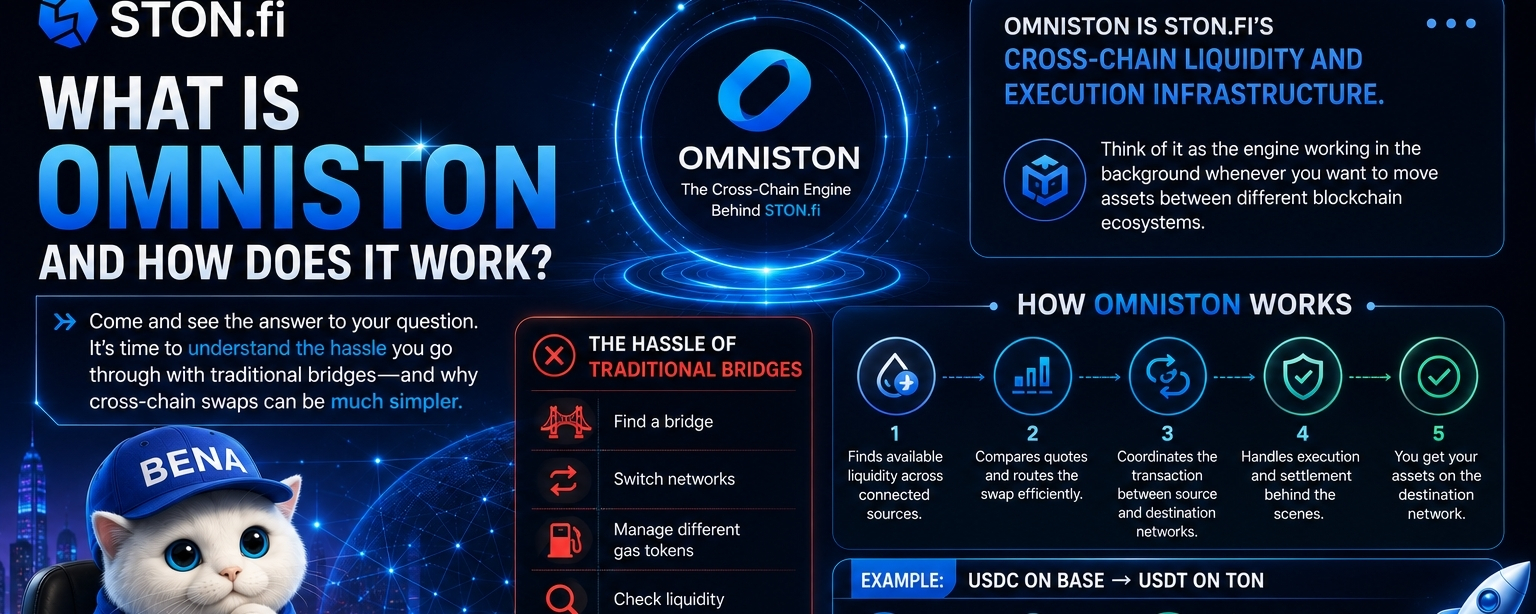
What Is Omniston on STON.fi and How Does It Actually Work?Come and see the answer to your question. It’s time to understand the hassle you go through with traditional bridges—and why cross-chain swaps can be much simpler.
The simplest way to explain it is this:
Omniston is the cross-chain liquidity and execution infrastructure behind STON.fi.
Think of it as the engine working in the background whenever you want to move assets between different blockchain ecosystems.
Normally, a cross-chain swap can get messy. You might need to find a bridge, switch networks, manage different gas tokens, check liquidity, and make several transactions.
Omniston is designed to take much of that complexity away.
✓ It finds available liquidity across connected sources.
✓ It helps compare quotes and route the swap efficiently.
✓ It coordinates the transaction between the source and destination networks.
✓ It handles execution and settlement behind the scenes.
For example, imagine you have USDSC on Base but need USDT on $TON .
Instead of manually bridging your $USDC, switching networks, finding liquidity, and making another swap, you can simply choose what you're sending, choose what you want to receive, review the quote, and confirm.
Omniston handles the complicated part in the background.
That's what I find most interesting about it.
Good infrastructure shouldn't make users feel like they're operating blockchain infrastructure. It should make the experience feel simple.
You choose where your assets are going. Omniston handles the rails connecting them.
That's the bigger idea behind Omniston.
$BNB $NVDAB
@stonfi #Omniston #CrossChain #STONfi
What Is Omniston on STON.fi and How Does It Actually Work?
Come and see the answer to your question. It’s time to understand the hassle you go through with traditional bridges—and why cross-chain swaps can be much simpler.
The simplest way to explain it is this:
Omniston is the cross-chain liquidity and execution infrastructure behind STON.fi.
Think of it as the engine working in the background whenever you want to move assets between different blockchain ecosystems.
Normally, a cross-chain swap can get messy. You might need to find a bridge, switch networks, manage different gas tokens, check liquidity, and make several transactions.
Omniston is designed to take much of that complexity away.
✓ It finds available liquidity across connected sources.
✓ It helps compare quotes and route the swap efficiently.
✓ It coordinates the transaction between the source and destination networks.
✓ It handles execution and settlement behind the scenes.
For example, imagine you have USDSC on Base but need USDT on $TON .
Instead of manually bridging your $USDC, switching networks, finding liquidity, and making another swap, you can simply choose what you're sending, choose what you want to receive, review the quote, and confirm.
Omniston handles the complicated part in the background.
That's what I find most interesting about it.
Good infrastructure shouldn't make users feel like they're operating blockchain infrastructure. It should make the experience feel simple.
You choose where your assets are going. Omniston handles the rails connecting them.
That's the bigger idea behind Omniston.
$BNB $NVDAB
@STONfi DEX #Omniston #CrossChain #STONfi
The simplest way to explain it is this:
Omniston is the cross-chain liquidity and execution infrastructure behind STON.fi.
Think of it as the engine working in the background whenever you want to move assets between different blockchain ecosystems.
Normally, a cross-chain swap can get messy. You might need to find a bridge, switch networks, manage different gas tokens, check liquidity, and make several transactions.
Omniston is designed to take much of that complexity away.
✓ It finds available liquidity across connected sources.
✓ It helps compare quotes and route the swap efficiently.
✓ It coordinates the transaction between the source and destination networks.
✓ It handles execution and settlement behind the scenes.
For example, imagine you have USDSC on Base but need USDT on $TON .
Instead of manually bridging your $USDC, switching networks, finding liquidity, and making another swap, you can simply choose what you're sending, choose what you want to receive, review the quote, and confirm.
Omniston handles the complicated part in the background.
That's what I find most interesting about it.
Good infrastructure shouldn't make users feel like they're operating blockchain infrastructure. It should make the experience feel simple.
You choose where your assets are going. Omniston handles the rails connecting them.
That's the bigger idea behind Omniston.
$BNB $NVDAB
@STONfi DEX #Omniston #CrossChain #STONfi
81
·
--
Bullish
DEFI SHOULD FEEL SIMPLE.
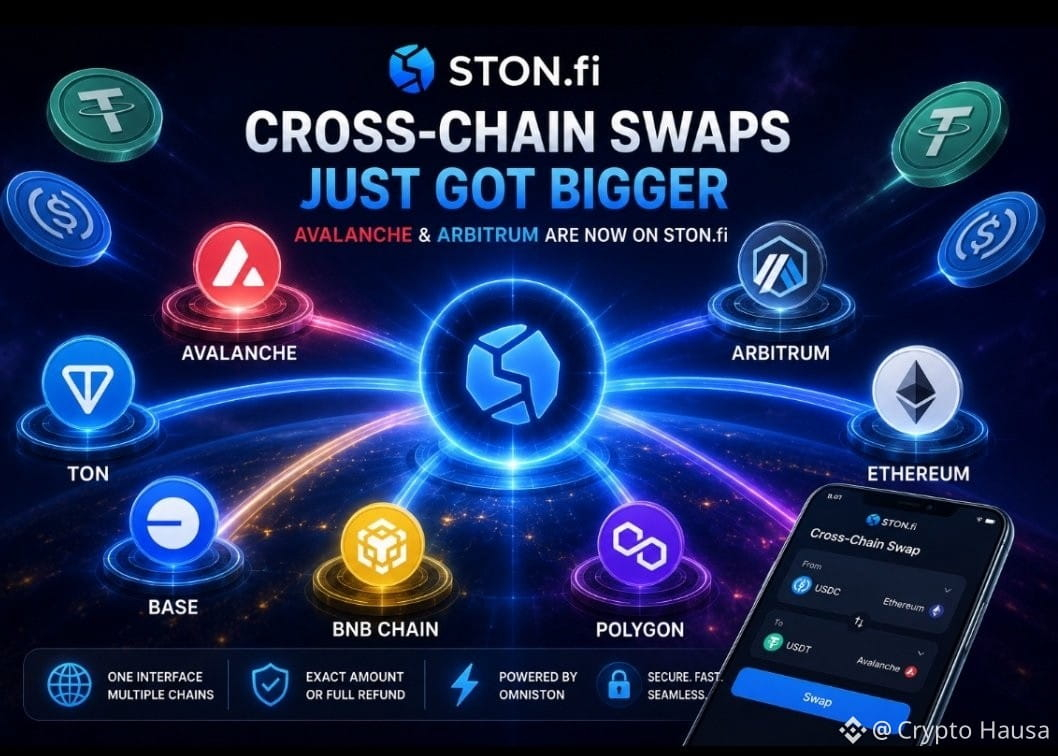
But moving assets between ecosystems can still involve multiple steps.
Find a route.
Choose a bridge.
Move assets.
Wait for confirmation.
Then swap.
For everyday users, that complexity can become a barrier.
This is why STON.fi’s cross-chain direction is interesting.
Through infrastructure like Omniston, STON.fi is working toward a more seamless way to access liquidity across ecosystems.
The goal isn’t to make users understand every piece of infrastructure.
The goal is to hide the complexity underneath the experience.
One request.
One simple flow.
Connected liquidity behind the scenes.
That’s the kind of infrastructure that could make multi-chain DeFi feel less fragmented.
#STONfi #DEX #Omniston #DeFi
$BTC $ETH
{future}(ETHUSDT)
DEFI SHOULD FEEL SIMPLE.
But moving assets between ecosystems can still involve multiple steps.
Find a route.
Choose a bridge.
Move assets.
Wait for confirmation.
Then swap.
For everyday users, that complexity can become a barrier.
This is why STON.fi’s cross-chain direction is interesting.
Through infrastructure like Omniston, STON.fi is working toward a more seamless way to access liquidity across ecosystems.
The goal isn’t to make users understand every piece of infrastructure.
The goal is to hide the complexity underneath the experience.
One request.
One simple flow.
Connected liquidity behind the scenes.
That’s the kind of infrastructure that could make multi-chain DeFi feel less fragmented.
#STONfi #DEX #Omniston #DeFi
$BTC $ETH
But moving assets between ecosystems can still involve multiple steps.
Find a route.
Choose a bridge.
Move assets.
Wait for confirmation.
Then swap.
For everyday users, that complexity can become a barrier.
This is why STON.fi’s cross-chain direction is interesting.
Through infrastructure like Omniston, STON.fi is working toward a more seamless way to access liquidity across ecosystems.
The goal isn’t to make users understand every piece of infrastructure.
The goal is to hide the complexity underneath the experience.
One request.
One simple flow.
Connected liquidity behind the scenes.
That’s the kind of infrastructure that could make multi-chain DeFi feel less fragmented.
#STONfi #DEX #Omniston #DeFi
$BTC $ETH
1
92


·
--
Bullish
#DEFİ just got better.
Recently, i tried my wallet app with @stonfi #Omniston under the hood and I liked the simplicity.
Omniston checks different #DEX routes to help find better swap execution, without making users compare everything manually.
#DEFİ just got better.
Recently, i tried my wallet app with @STONfi DEX #Omniston under the hood and I liked the simplicity.
Omniston checks different #DEX routes to help find better swap execution, without making users compare everything manually.
Recently, i tried my wallet app with @STONfi DEX #Omniston under the hood and I liked the simplicity.
Omniston checks different #DEX routes to help find better swap execution, without making users compare everything manually.

1
71
·
--
Bullish
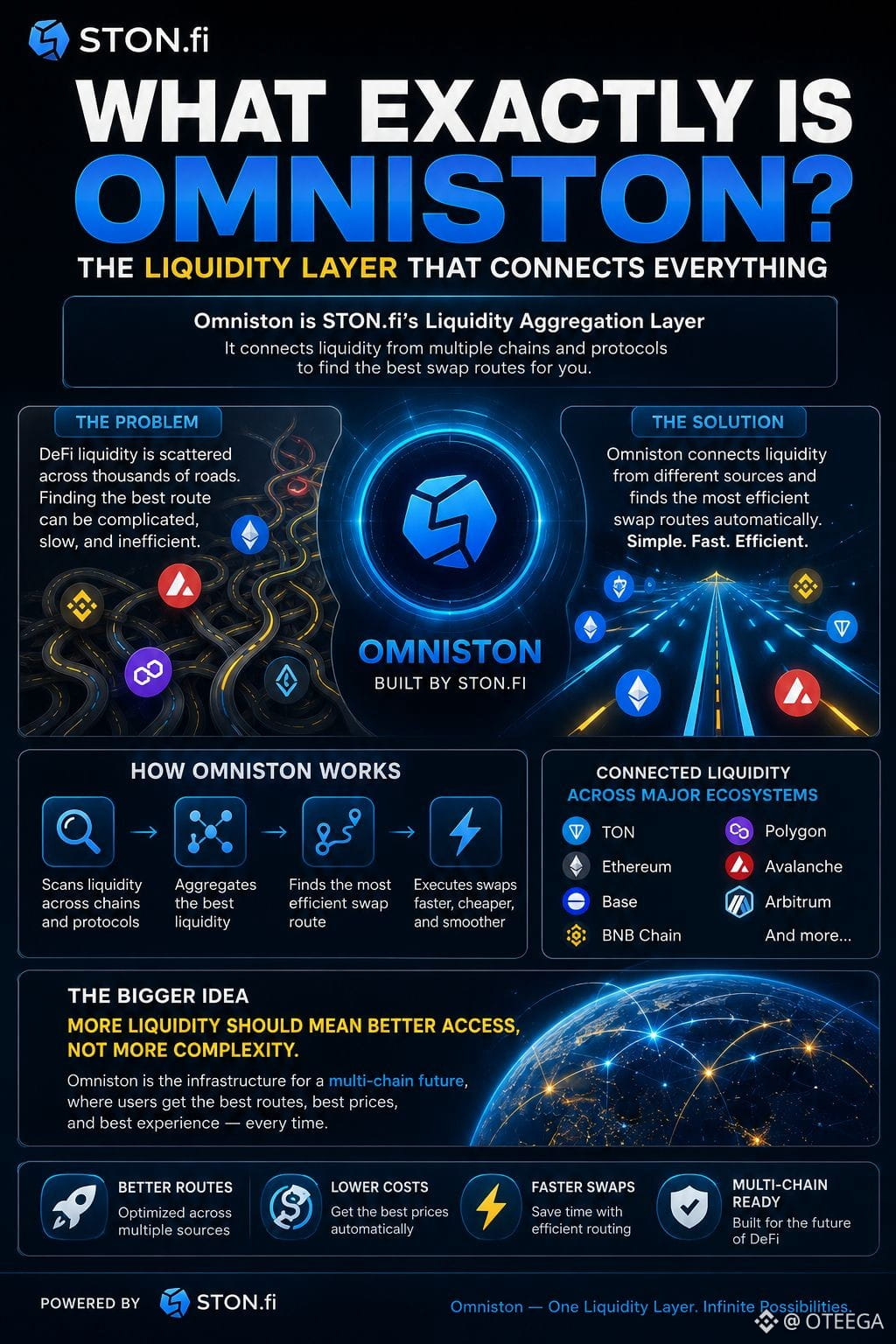
WHAT EXACTLY IS OMNISTON?
This is one of the most interesting parts of what STON.fi is building.
Think about DeFi liquidity like thousands of roads.
Some roads are on TON.
Others are on Ethereum, Base, BNB Chain, and other ecosystems.
The problem?
Finding the best route can become complicated.
Omniston is designed as a liquidity aggregation layer.
Instead of forcing users to search through fragmented liquidity themselves, it helps connect liquidity from different sources and find efficient swap routes.
The bigger idea is simple:
More liquidity should mean better access, not more complexity.
That’s why Omniston matters.
It is infrastructure built around a multi-chain future.
#Omniston #DeFi #STONfi #swap #DEX
WHAT EXACTLY IS OMNISTON?
This is one of the most interesting parts of what STON.fi is building.
Think about DeFi liquidity like thousands of roads.
Some roads are on TON.
Others are on Ethereum, Base, BNB Chain, and other ecosystems.
The problem?
Finding the best route can become complicated.
Omniston is designed as a liquidity aggregation layer.
Instead of forcing users to search through fragmented liquidity themselves, it helps connect liquidity from different sources and find efficient swap routes.
The bigger idea is simple:
More liquidity should mean better access, not more complexity.
That’s why Omniston matters.
It is infrastructure built around a multi-chain future.
#Omniston #DeFi #STONfi #swap #DEX
This is one of the most interesting parts of what STON.fi is building.
Think about DeFi liquidity like thousands of roads.
Some roads are on TON.
Others are on Ethereum, Base, BNB Chain, and other ecosystems.
The problem?
Finding the best route can become complicated.
Omniston is designed as a liquidity aggregation layer.
Instead of forcing users to search through fragmented liquidity themselves, it helps connect liquidity from different sources and find efficient swap routes.
The bigger idea is simple:
More liquidity should mean better access, not more complexity.
That’s why Omniston matters.
It is infrastructure built around a multi-chain future.
#Omniston #DeFi #STONfi #swap #DEX
96
·
--
Who Controls Your Crypto Between Chains? The Real Meaning of Non-Custodial
When I think about a “non-custodial” cross-chain swap, I don't just ask whether I control my wallet.
I ask a more important question:
Who controls my assets while they are moving?
A cross-chain transaction can feel completely self-custodial from the user interface while still depending on reserves, multisigs, validators, relayers, or wrapped tokens behind the scenes. $GRAM
Not Every Bridge Is Using the Same Security Model
Many bridges work by locking an asset on one chain and issuing a representation of it on another.That can be useful, but it creates dependencies.
If I receive a wrapped asset, I need to understand who holds the underlying asset, who controls minting and redemption, and what happens if the reserve system fails.
The same applies to validator-controlled bridges. If a small group of keys can authorize the movement of large amounts of capital, then those keys become a critical security point.
The system may still be decentralized to some degree, but the risk has not disappeared. It has simply moved into another layer.
There is a catch.
Traditional atomic swaps can be technically powerful but inconvenient. Users need to find a suitable counterparty, agree on terms, and have enough liquidity available at the right time.
That is not how most people want to use DeFi.
This is where resolver-based systems come in to save the day. A resolver network can allow professional liquidity providers to compete for the user's order, providing quotes and execution without requiring the user to manually search for a counterparty.
In the case of Omniston, the model combines RFQ-based liquidity discovery with HTLC-based cross-chain settlement.
From a user's perspective, that potentially creates a better balance:
competitive liquidity + automated execution + conditional settlement.
The important point is that resolvers provide liquidity; they don't necessarily need to become custodians of the user's assets.
$BTC $ETH #Omniston #TrendingTopic
Who Controls Your Crypto Between Chains? The Real Meaning of Non-Custodial
When I think about a “non-custodial” cross-chain swap, I don't just ask whether I control my wallet.
I ask a more important question:
Who controls my assets while they are moving?
A cross-chain transaction can feel completely self-custodial from the user interface while still depending on reserves, multisigs, validators, relayers, or wrapped tokens behind the scenes. $GRAM
Not Every Bridge Is Using the Same Security Model
Many bridges work by locking an asset on one chain and issuing a representation of it on another.That can be useful, but it creates dependencies.
If I receive a wrapped asset, I need to understand who holds the underlying asset, who controls minting and redemption, and what happens if the reserve system fails.
The same applies to validator-controlled bridges. If a small group of keys can authorize the movement of large amounts of capital, then those keys become a critical security point.
The system may still be decentralized to some degree, but the risk has not disappeared. It has simply moved into another layer.
There is a catch.
Traditional atomic swaps can be technically powerful but inconvenient. Users need to find a suitable counterparty, agree on terms, and have enough liquidity available at the right time.
That is not how most people want to use DeFi.
This is where resolver-based systems come in to save the day. A resolver network can allow professional liquidity providers to compete for the user's order, providing quotes and execution without requiring the user to manually search for a counterparty.
In the case of Omniston, the model combines RFQ-based liquidity discovery with HTLC-based cross-chain settlement.
From a user's perspective, that potentially creates a better balance:
competitive liquidity + automated execution + conditional settlement.
The important point is that resolvers provide liquidity; they don't necessarily need to become custodians of the user's assets.
$BTC $ETH #Omniston #TrendingTopic
When I think about a “non-custodial” cross-chain swap, I don't just ask whether I control my wallet.
I ask a more important question:
Who controls my assets while they are moving?
A cross-chain transaction can feel completely self-custodial from the user interface while still depending on reserves, multisigs, validators, relayers, or wrapped tokens behind the scenes. $GRAM
Not Every Bridge Is Using the Same Security Model
Many bridges work by locking an asset on one chain and issuing a representation of it on another.That can be useful, but it creates dependencies.
If I receive a wrapped asset, I need to understand who holds the underlying asset, who controls minting and redemption, and what happens if the reserve system fails.
The same applies to validator-controlled bridges. If a small group of keys can authorize the movement of large amounts of capital, then those keys become a critical security point.
The system may still be decentralized to some degree, but the risk has not disappeared. It has simply moved into another layer.
There is a catch.
Traditional atomic swaps can be technically powerful but inconvenient. Users need to find a suitable counterparty, agree on terms, and have enough liquidity available at the right time.
That is not how most people want to use DeFi.
This is where resolver-based systems come in to save the day. A resolver network can allow professional liquidity providers to compete for the user's order, providing quotes and execution without requiring the user to manually search for a counterparty.
In the case of Omniston, the model combines RFQ-based liquidity discovery with HTLC-based cross-chain settlement.
From a user's perspective, that potentially creates a better balance:
competitive liquidity + automated execution + conditional settlement.
The important point is that resolvers provide liquidity; they don't necessarily need to become custodians of the user's assets.
$BTC $ETH #Omniston #TrendingTopic
1
208
·
--
TON DeFi Is Expanding Faster Than Ever
Omniston is pushing the $TON ecosystem forward with its latest integration into Gramstox, bringing tokenized stock swaps directly into Telegram.
Users can now gain exposure to tokenized stocks with optimized execution, all without leaving the Telegram app. No extra platforms, no complicated onboarding, just seamless on-chain trading.
This integration strengthens Omniston's position as a key liquidity engine powering the next generation of TON-based financial applications.
As more Mini Apps build on $STON and Omniston infrastructure, $GRAM is evolving into a complete financial ecosystem where DeFi becomes accessible to millions through familiar consumer platforms.
The future of on-chain finance isn't being built elsewhere, it's being built inside Telegram.
#TON #STONfi #Omniston
TON DeFi Is Expanding Faster Than Ever
Omniston is pushing the $TON ecosystem forward with its latest integration into Gramstox, bringing tokenized stock swaps directly into Telegram.
Users can now gain exposure to tokenized stocks with optimized execution, all without leaving the Telegram app. No extra platforms, no complicated onboarding, just seamless on-chain trading.
This integration strengthens Omniston's position as a key liquidity engine powering the next generation of TON-based financial applications.
As more Mini Apps build on $STON and Omniston infrastructure, $GRAM is evolving into a complete financial ecosystem where DeFi becomes accessible to millions through familiar consumer platforms.
The future of on-chain finance isn't being built elsewhere, it's being built inside Telegram.
#TON #STONfi #Omniston
Omniston is pushing the $TON ecosystem forward with its latest integration into Gramstox, bringing tokenized stock swaps directly into Telegram.
Users can now gain exposure to tokenized stocks with optimized execution, all without leaving the Telegram app. No extra platforms, no complicated onboarding, just seamless on-chain trading.
This integration strengthens Omniston's position as a key liquidity engine powering the next generation of TON-based financial applications.
As more Mini Apps build on $STON and Omniston infrastructure, $GRAM is evolving into a complete financial ecosystem where DeFi becomes accessible to millions through familiar consumer platforms.
The future of on-chain finance isn't being built elsewhere, it's being built inside Telegram.
#TON #STONfi #Omniston
1
70

·
--
Article
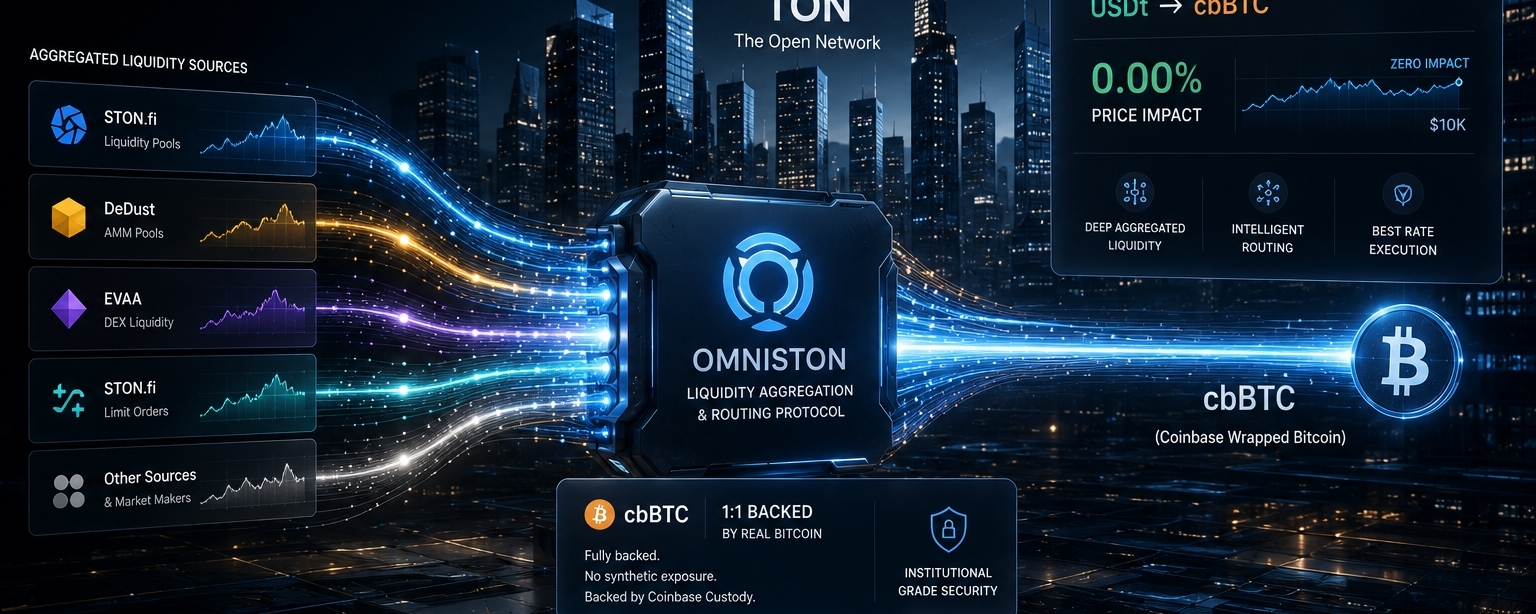
Omniston Just Proved Something Important This Week.Hook: 💭 "Omniston Just Proved Something Important This Week. Not With An Announcement With A $10K Zero Price Impact cbBTC Swap."
You No Longer Have To Leave TON To Access Bitcoin. That Sentence Would Have Sounded Impossible 12 Months Ago. Today It Is Just How STON.fi Works.
How Omniston and cbBTC just changed the conversation about what TON DeFi can actually offer.
"The best infrastructure is the kind you stop noticing because it just works every single time."
The Problem That Followed Bitcoin Into DeFi
Bitcoin is the asset everyone wants. It is the first thing most people buy when they enter crypto. It is the store of value the entire industry anchors itself to in moments of uncertainty.
But for years accessing Bitcoin inside DeFi has been unnecessarily complicate.
Bridges with trust assumptions. Wrapped tokens with custodial risk. Fragmented liquidity spread across multiple protocols forcing traders to manually hunt for the best rate on every single swap.
Most ecosystems accepted that friction as the cost of doing business with BTC in DeFi. TON just decided not to.
What Omniston And cbBTC Actually Deliver Together
cbBTC is Coinbase Wrapped Bitcoin. Real Bitcoin. Backed 1:1. No bridge risk. No trust assumptions beyond Coinbase custody. Just genuine BTC exposure accessible directly inside the TON ecosystem without ever leaving it.
And Omniston is the routing layer that makes accessing it seamless.
STON.fi's liquidity aggregation protocol now supports cbBTC swaps with zero price impact on orders up to $10K USDt to cbBTC. Every swap routes automatically through the best available liquidity across TON's entire ecosystem. No manual pool hunting. No splitting orders across multiple interfaces. Just clean execution at the best available rate every single time.
You swap. Omniston finds the best path. cbBTC lands in your wallet. Done.
"Access is not enough. The quality of that access is what separates infrastructure from everything else."
What This Means For Every TON User
Before this integration accessing Bitcoin on TON meant leaving the ecosystem entirely. Going to another chain. Dealing with bridge mechanics. Paying fees on multiple networks. Hoping nothing went wrong in transit.
Now it means opening STON.fi and swapping.
That is not a small change in user experience. That is the difference between DeFi that works for serious participants and DeFi that works only for people willing to tolerate unnecessary complexity.
And for developers building wallets, mini-apps or any user-facing product on TON integrating Omniston once gives your users access to this entire swap experience without building routing logic from scratch. Best rate execution, cbBTC support and every future asset Omniston adds all come through a single integration.
The Bigger Picture Worth Understanding
Omniston is not finished expanding. More assets are coming. More liquidity sources are being added. The routing infrastructure being built here is designed to grow more powerful as the TON ecosystem grows around it.
Bitcoin access today. More major assets tomorrow. All routed seamlessly through STON.fi's infrastructure at the best available rate with zero unnecessary friction.
TON is not building toward mass adoption anymore. It is building the infrastructure that makes mass adoption inevitable.
And STON.fi is where that infrastructure lives.
"The ecosystems that win are never the loudest ones. They are the ones that quietly remove every reason not to use them."
DYOR always, And not financial advice. Always research before making any financial decisions.
#TON #defi #Omniston
Omniston Just Proved Something Important This Week.
Hook: 💭 "Omniston Just Proved Something Important This Week. Not With An Announcement With A $10K Zero Price Impact cbBTC Swap."
You No Longer Have To Leave TON To Access Bitcoin. That Sentence Would Have Sounded Impossible 12 Months Ago. Today It Is Just How STON.fi Works.
How Omniston and cbBTC just changed the conversation about what TON DeFi can actually offer.
"The best infrastructure is the kind you stop noticing because it just works every single time."
The Problem That Followed Bitcoin Into DeFi
Bitcoin is the asset everyone wants. It is the first thing most people buy when they enter crypto. It is the store of value the entire industry anchors itself to in moments of uncertainty.
But for years accessing Bitcoin inside DeFi has been unnecessarily complicate.
Bridges with trust assumptions. Wrapped tokens with custodial risk. Fragmented liquidity spread across multiple protocols forcing traders to manually hunt for the best rate on every single swap.
Most ecosystems accepted that friction as the cost of doing business with BTC in DeFi. TON just decided not to.
What Omniston And cbBTC Actually Deliver Together
cbBTC is Coinbase Wrapped Bitcoin. Real Bitcoin. Backed 1:1. No bridge risk. No trust assumptions beyond Coinbase custody. Just genuine BTC exposure accessible directly inside the TON ecosystem without ever leaving it.
And Omniston is the routing layer that makes accessing it seamless.
STON.fi's liquidity aggregation protocol now supports cbBTC swaps with zero price impact on orders up to $10K USDt to cbBTC. Every swap routes automatically through the best available liquidity across TON's entire ecosystem. No manual pool hunting. No splitting orders across multiple interfaces. Just clean execution at the best available rate every single time.
You swap. Omniston finds the best path. cbBTC lands in your wallet. Done.
"Access is not enough. The quality of that access is what separates infrastructure from everything else."
What This Means For Every TON User
Before this integration accessing Bitcoin on TON meant leaving the ecosystem entirely. Going to another chain. Dealing with bridge mechanics. Paying fees on multiple networks. Hoping nothing went wrong in transit.
Now it means opening STON.fi and swapping.
That is not a small change in user experience. That is the difference between DeFi that works for serious participants and DeFi that works only for people willing to tolerate unnecessary complexity.
And for developers building wallets, mini-apps or any user-facing product on TON integrating Omniston once gives your users access to this entire swap experience without building routing logic from scratch. Best rate execution, cbBTC support and every future asset Omniston adds all come through a single integration.
The Bigger Picture Worth Understanding
Omniston is not finished expanding. More assets are coming. More liquidity sources are being added. The routing infrastructure being built here is designed to grow more powerful as the TON ecosystem grows around it.
Bitcoin access today. More major assets tomorrow. All routed seamlessly through STON.fi's infrastructure at the best available rate with zero unnecessary friction.
TON is not building toward mass adoption anymore. It is building the infrastructure that makes mass adoption inevitable.
And STON.fi is where that infrastructure lives.
"The ecosystems that win are never the loudest ones. They are the ones that quietly remove every reason not to use them."
DYOR always, And not financial advice. Always research before making any financial decisions.
#TON #defi #Omniston
You No Longer Have To Leave TON To Access Bitcoin. That Sentence Would Have Sounded Impossible 12 Months Ago. Today It Is Just How STON.fi Works.
How Omniston and cbBTC just changed the conversation about what TON DeFi can actually offer.
"The best infrastructure is the kind you stop noticing because it just works every single time."
The Problem That Followed Bitcoin Into DeFi
Bitcoin is the asset everyone wants. It is the first thing most people buy when they enter crypto. It is the store of value the entire industry anchors itself to in moments of uncertainty.
But for years accessing Bitcoin inside DeFi has been unnecessarily complicate.
Bridges with trust assumptions. Wrapped tokens with custodial risk. Fragmented liquidity spread across multiple protocols forcing traders to manually hunt for the best rate on every single swap.
Most ecosystems accepted that friction as the cost of doing business with BTC in DeFi. TON just decided not to.
What Omniston And cbBTC Actually Deliver Together
cbBTC is Coinbase Wrapped Bitcoin. Real Bitcoin. Backed 1:1. No bridge risk. No trust assumptions beyond Coinbase custody. Just genuine BTC exposure accessible directly inside the TON ecosystem without ever leaving it.
And Omniston is the routing layer that makes accessing it seamless.
STON.fi's liquidity aggregation protocol now supports cbBTC swaps with zero price impact on orders up to $10K USDt to cbBTC. Every swap routes automatically through the best available liquidity across TON's entire ecosystem. No manual pool hunting. No splitting orders across multiple interfaces. Just clean execution at the best available rate every single time.
You swap. Omniston finds the best path. cbBTC lands in your wallet. Done.
"Access is not enough. The quality of that access is what separates infrastructure from everything else."
What This Means For Every TON User
Before this integration accessing Bitcoin on TON meant leaving the ecosystem entirely. Going to another chain. Dealing with bridge mechanics. Paying fees on multiple networks. Hoping nothing went wrong in transit.
Now it means opening STON.fi and swapping.
That is not a small change in user experience. That is the difference between DeFi that works for serious participants and DeFi that works only for people willing to tolerate unnecessary complexity.
And for developers building wallets, mini-apps or any user-facing product on TON integrating Omniston once gives your users access to this entire swap experience without building routing logic from scratch. Best rate execution, cbBTC support and every future asset Omniston adds all come through a single integration.
The Bigger Picture Worth Understanding
Omniston is not finished expanding. More assets are coming. More liquidity sources are being added. The routing infrastructure being built here is designed to grow more powerful as the TON ecosystem grows around it.
Bitcoin access today. More major assets tomorrow. All routed seamlessly through STON.fi's infrastructure at the best available rate with zero unnecessary friction.
TON is not building toward mass adoption anymore. It is building the infrastructure that makes mass adoption inevitable.
And STON.fi is where that infrastructure lives.
"The ecosystems that win are never the loudest ones. They are the ones that quietly remove every reason not to use them."
DYOR always, And not financial advice. Always research before making any financial decisions.
#TON #defi #Omniston
117
Log in to explore more content
Join global crypto users on Binance Square
⚡️ Get latest and useful information about crypto.
💬 Trusted by the world’s largest crypto exchange.
👍 Discover real insights from verified creators.
Email / Phone number
Trending Topics
1
#FedRateWatch
654,634 views
3,095 Discussing
2
#EthereumFallsBelow$2400
167 views
31 Discussing
3
#USSenateBlocksClarityAct
1,145 views
94 Discussing
4
#BitcoinSlidesTo$76000
27,331 views
136 Discussing
5
#BitcoinReboundsTo$79K
63,998 views
411 Discussing
6
#StrategyMarketCapPassesFord
47,162 views
752 Discussing
7
#ClarityActOddsHalveOnPolymarket
77,197 views
644 Discussing
8
#US30YTreasuryYieldTops5.40%
40,628 views
423 Discussing
9
#BessentEndorsesFinalClarityActDraft
63,004 views
796 Discussing
10
#ZamaOpens16ConfidentialMorphoVaults
22,162 views
387 Discussing