

#moneybasics
moneybasics
379 views
3 Discussing
Hot
Latest


The emergency fund is the least exciting thing in personal finance. It is also the reason some people survive a crash and others do not.
Rules I follow:
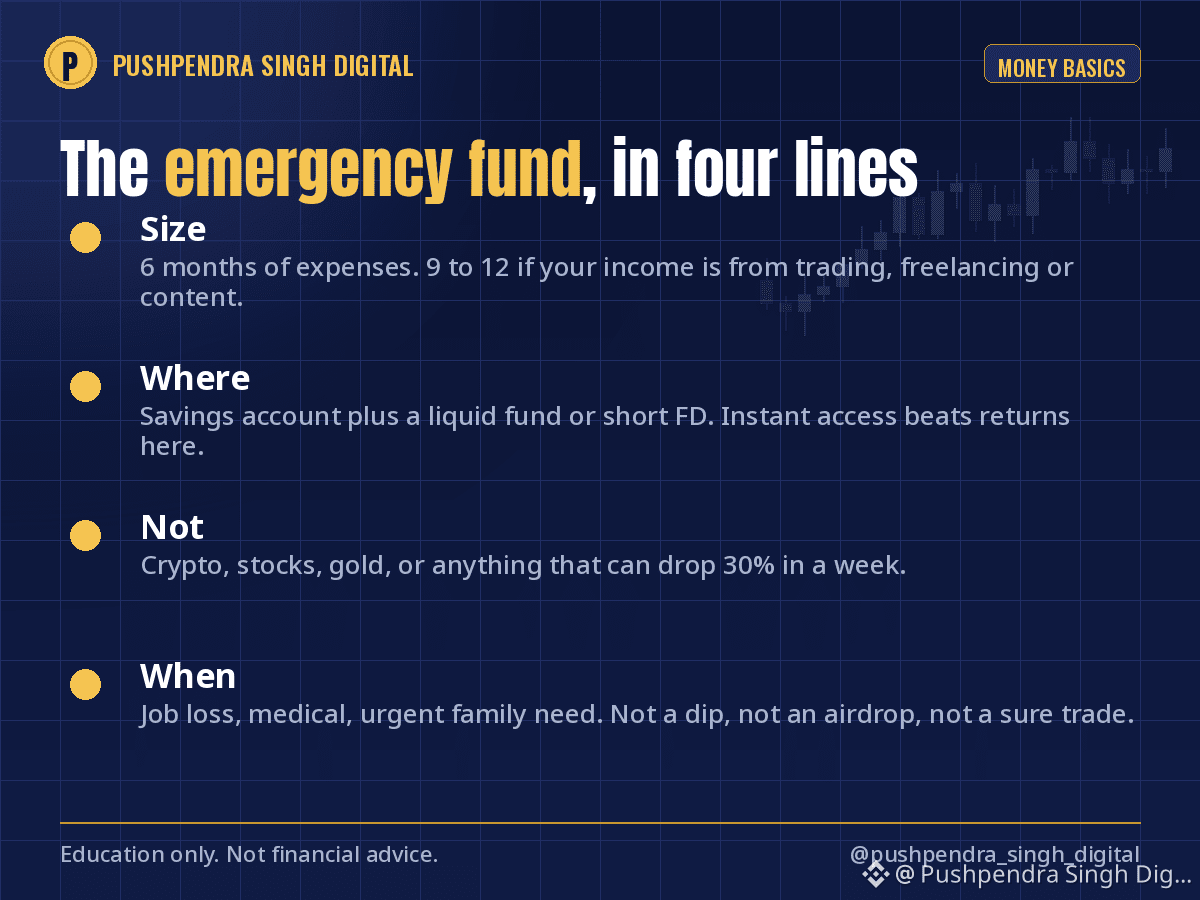
Size: 6 months of expenses. If your income comes from trading, freelancing or content, make it 9 to 12.
Where: split between a savings account and a liquid fund or short FD. Instant access matters more than returns.
Not: crypto, stocks, gold, or anything that can drop 30% in a week.
When to use: job loss, medical, urgent family need. Not a dip, not an airdrop, not a "sure" trade.
When the emergency fund is full, you stop making fear based decisions in the market. You can hold through a red month because rent is not depending on it.
How many months of expenses do you have set aside today? Be honest, no judgement here.
#EmergencyFund #PersonalFinance #MoneyBasics
The emergency fund is the least exciting thing in personal finance. It is also the reason some people survive a crash and others do not.
Rules I follow:
Size: 6 months of expenses. If your income comes from trading, freelancing or content, make it 9 to 12.
Where: split between a savings account and a liquid fund or short FD. Instant access matters more than returns.
Not: crypto, stocks, gold, or anything that can drop 30% in a week.
When to use: job loss, medical, urgent family need. Not a dip, not an airdrop, not a "sure" trade.
When the emergency fund is full, you stop making fear based decisions in the market. You can hold through a red month because rent is not depending on it.
How many months of expenses do you have set aside today? Be honest, no judgement here.
#EmergencyFund #PersonalFinance #MoneyBasics
Rules I follow:
Size: 6 months of expenses. If your income comes from trading, freelancing or content, make it 9 to 12.
Where: split between a savings account and a liquid fund or short FD. Instant access matters more than returns.
Not: crypto, stocks, gold, or anything that can drop 30% in a week.
When to use: job loss, medical, urgent family need. Not a dip, not an airdrop, not a "sure" trade.
When the emergency fund is full, you stop making fear based decisions in the market. You can hold through a red month because rent is not depending on it.
How many months of expenses do you have set aside today? Be honest, no judgement here.
#EmergencyFund #PersonalFinance #MoneyBasics
1
Before you buy your next coin or stock, check if your money has a home.
Here is the simple structure I share with every beginner:
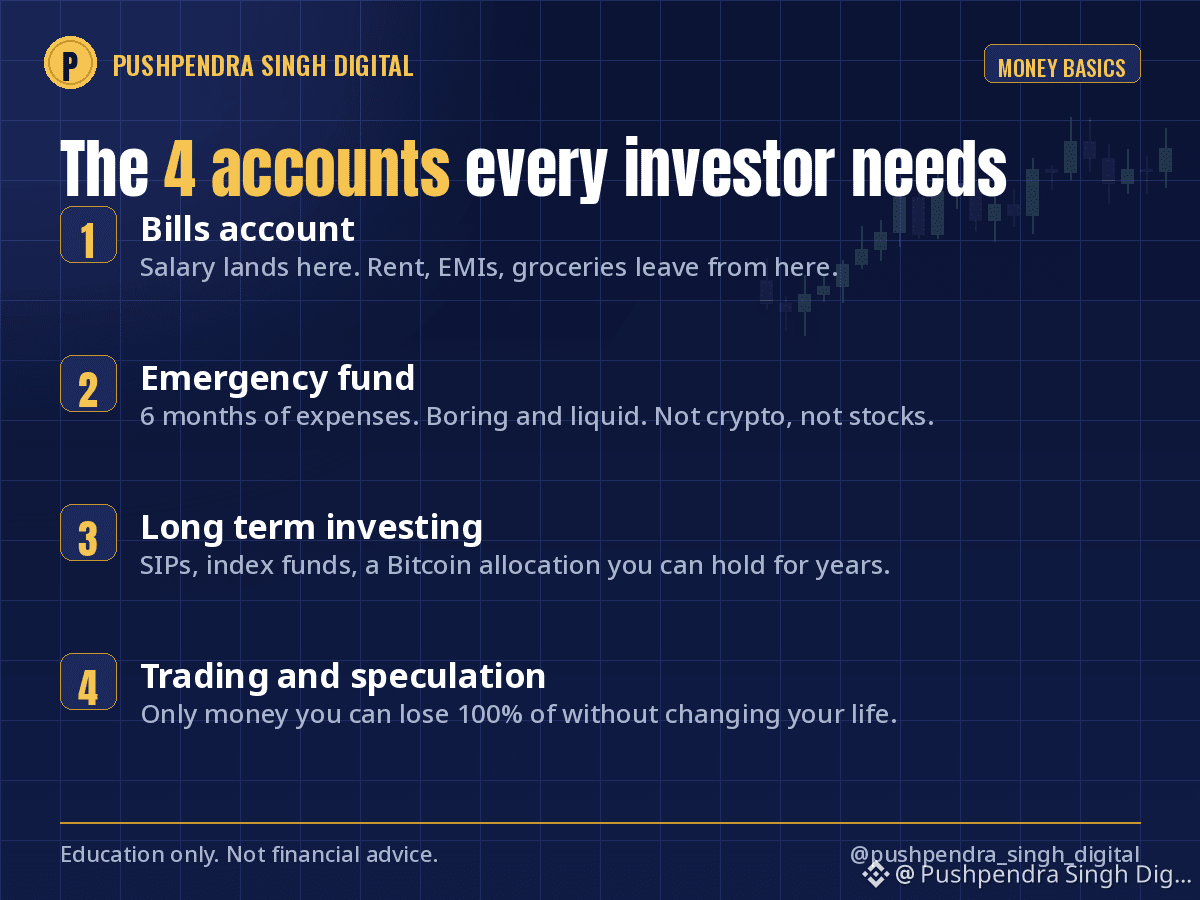
1. Bills account: rent, EMIs, groceries. Salary lands here, fixed costs leave from here.
2. Emergency fund: 6 months of expenses, kept boring and liquid. Not in crypto, not in stocks.
3. Long term investing: SIPs, index funds, and a Bitcoin allocation you can hold for years.
4. Trading and speculation: money you can lose 100% of without changing your life.
Most people skip step 2 and jump straight to step 4. Then one bad month forces them to sell good positions at the worst possible time.
Which of these four is missing in your setup right now? Reply honestly, I read every comment.
Education only, not financial advice.
$BTC #PersonalFinance #CryptoEducation #MoneyBasics
Before you buy your next coin or stock, check if your money has a home.
Here is the simple structure I share with every beginner:
1. Bills account: rent, EMIs, groceries. Salary lands here, fixed costs leave from here.
2. Emergency fund: 6 months of expenses, kept boring and liquid. Not in crypto, not in stocks.
3. Long term investing: SIPs, index funds, and a Bitcoin allocation you can hold for years.
4. Trading and speculation: money you can lose 100% of without changing your life.
Most people skip step 2 and jump straight to step 4. Then one bad month forces them to sell good positions at the worst possible time.
Which of these four is missing in your setup right now? Reply honestly, I read every comment.
Education only, not financial advice.
$BTC #PersonalFinance #CryptoEducation #MoneyBasics
Here is the simple structure I share with every beginner:
1. Bills account: rent, EMIs, groceries. Salary lands here, fixed costs leave from here.
2. Emergency fund: 6 months of expenses, kept boring and liquid. Not in crypto, not in stocks.
3. Long term investing: SIPs, index funds, and a Bitcoin allocation you can hold for years.
4. Trading and speculation: money you can lose 100% of without changing your life.
Most people skip step 2 and jump straight to step 4. Then one bad month forces them to sell good positions at the worst possible time.
Which of these four is missing in your setup right now? Reply honestly, I read every comment.
Education only, not financial advice.
$BTC #PersonalFinance #CryptoEducation #MoneyBasics
AngelOfCrypto_-:
nice
2
2
811
Log in to explore more content
Join global crypto users on Binance Square
⚡️ Get latest and useful information about crypto.
💬 Trusted by the world’s largest crypto exchange.
👍 Discover real insights from verified creators.
Email / Phone number
Trending Topics
1
#SECProposesCryptoCustodyRules
2 views
20 Discussing
2
#SECApproves3xLongCryptoCommodityETPs
658 views
68 Discussing
3
#G7PlansToReleaseUpTo100MBarrelsOilDiesel
2,006 views
118 Discussing
4
#ICBASuesOCCOverCryptoBankCharters
1,309 views
81 Discussing
5
#USStocksCloseHigherOnWeakJobsData
1,029 views
67 Discussing
6
#NFPWatch
10.9M views
19,518 Discussing
7
#BlastToGraduallyShutDownItsL2Network
318 views
32 Discussing
8
#BitcoinFundingRateTriplesTo10%
205,988 views
1,350 Discussing
9
#BitcoinSurpasses$86KUp2.99%
67,640 views
122 Discussing
10
#ZcashFalls21%FromSeptemberPeak
108,434 views
930 Discussing