
#kstrusdt
kstrusdt
349 views
11 Discussing
Hot
Latest

$KSTR is trading around the $30.04 level after a relatively stable session, showing signs of consolidation near short-term support. A sustained hold above this zone could attract fresh buying interest and open the door for a move toward higher resistance levels. Traders should watch for increasing volume to confirm the next directional breakout.
Target 1: $30.30
Target 2: $30.65
Target 3: $31.00
#KSTR #KSTRUSDT #Binance
Target 1: $30.30
Target 2: $30.65
Target 3: $31.00
#KSTR #KSTRUSDT #Binance
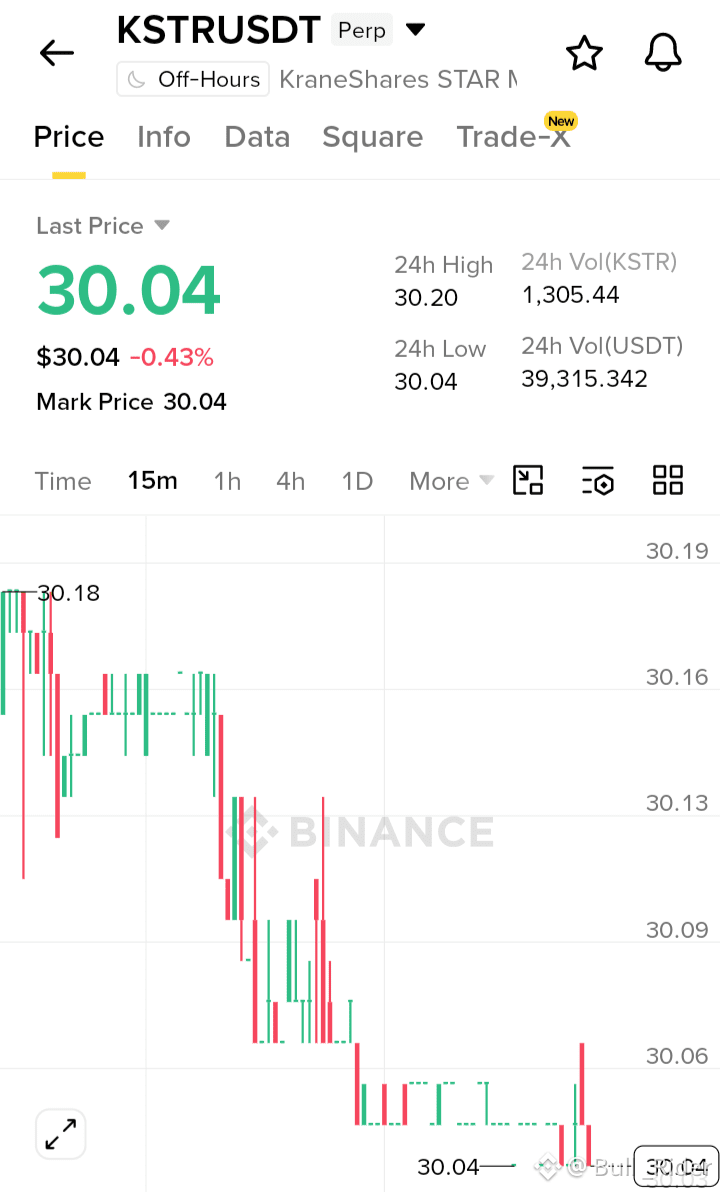

$KSTR 🟢 Quick analysis | KSTR/USDT
The funding rate has fallen to -0.1002%, which indicates a clear dominance of short positions. This situation may increase the likelihood of a short squeeze if buyers step in strongly.
📊 Expected scenario: 🔹 Continued negative funding along with strong buy volume could push the price upward in a rebound. 🔹 If selling pressure persists and support levels are broken, the price may continue to decline.
✅ Recommendation: The bias is currently toward long (Long), but only after the rebound is confirmed—do not enter before a clear technical signal appears.
⚠️ Capital management and stop-loss are essential.
#KSTR #KSTRUSDT #Binance #Crypto
The funding rate has fallen to -0.1002%, which indicates a clear dominance of short positions. This situation may increase the likelihood of a short squeeze if buyers step in strongly.
📊 Expected scenario: 🔹 Continued negative funding along with strong buy volume could push the price upward in a rebound. 🔹 If selling pressure persists and support levels are broken, the price may continue to decline.
✅ Recommendation: The bias is currently toward long (Long), but only after the rebound is confirmed—do not enter before a clear technical signal appears.
⚠️ Capital management and stop-loss are essential.
#KSTR #KSTRUSDT #Binance #Crypto

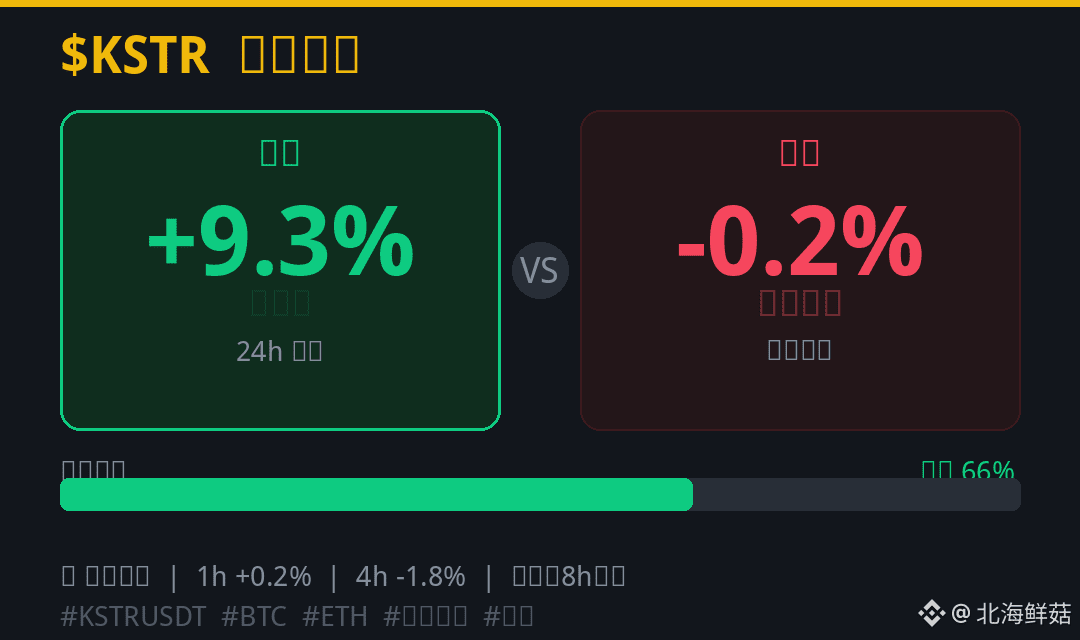
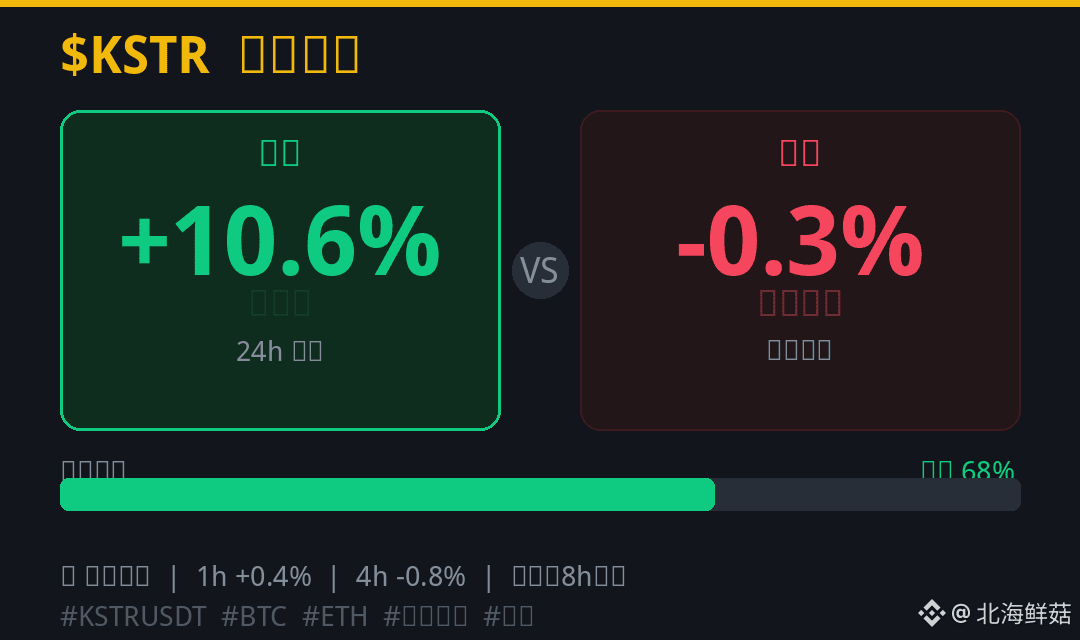

🍳 Starting a new day full of pressure brings great despair when looking at the red that has covered everything.
💹 SHORT $KSTR
Entry: 27.47
TP: 26.0965 | SL: 30.217
🔧 The flexibility of smart contracts allows the creation of any financial applications.
📉 The slight adjustment phase recently has helped the market eliminate leverage.
🧘 Live a balanced life so you have enough strength to conquer the market.
💎 Wishing you always be a pioneer, leading the way to the biggest waves on the exchange.
#KSTRUSDT $KSTRUSDT
💹 SHORT $KSTR
Entry: 27.47
TP: 26.0965 | SL: 30.217
🔧 The flexibility of smart contracts allows the creation of any financial applications.
📉 The slight adjustment phase recently has helped the market eliminate leverage.
🧘 Live a balanced life so you have enough strength to conquer the market.
💎 Wishing you always be a pioneer, leading the way to the biggest waves on the exchange.
#KSTRUSDT $KSTRUSDT
$KSTR The heaven and earth are a single finger; all things are a single horse.
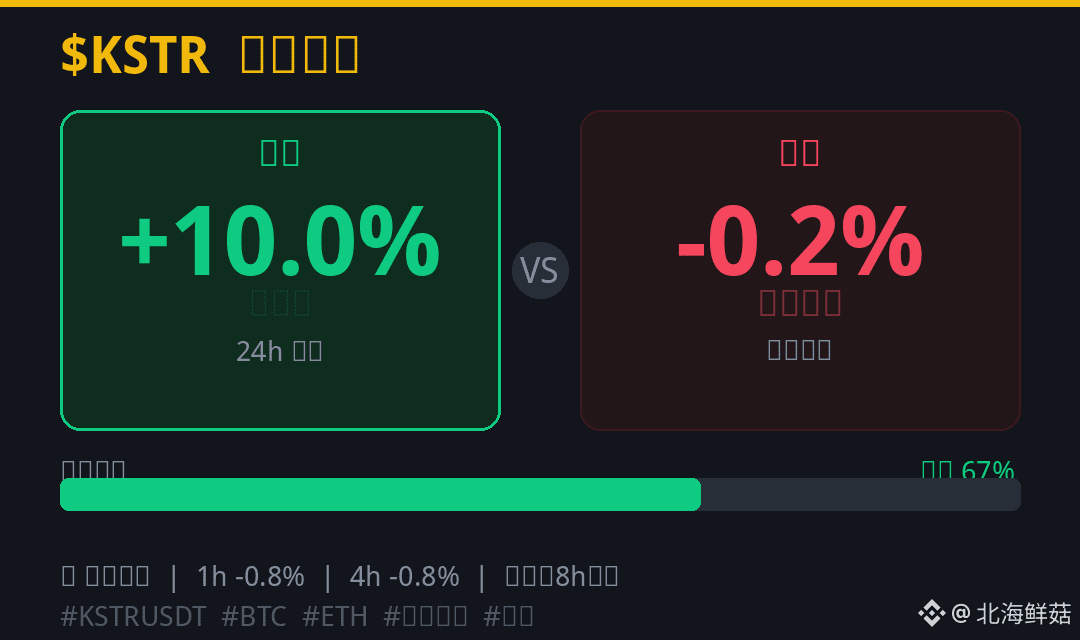
In the end, long and short are one; with a fee of -0.2% and a rise of +10.0%, this is the Way.
#KSTRUSDT #永续合约 #Observe things as one, and consider them together
$KSTR Click to trade
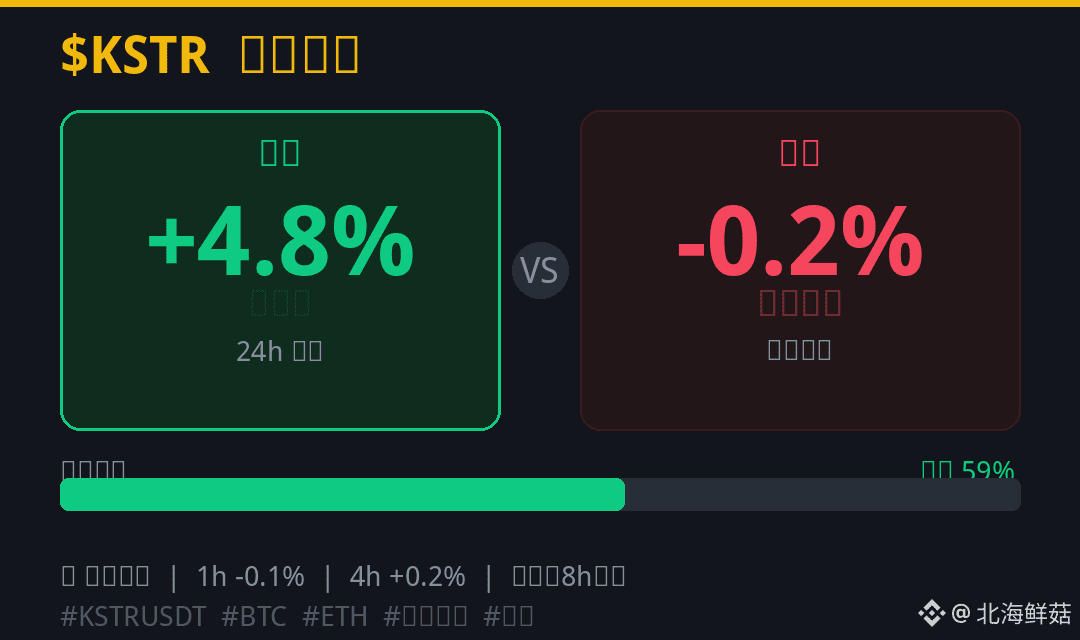
➡️ 1h -0.8% | 4h -0.8% | Fees settled every 8h
#BTC #ETH
In the end, long and short are one; with a fee of -0.2% and a rise of +10.0%, this is the Way.
#KSTRUSDT #永续合约 #Observe things as one, and consider them together
$KSTR Click to trade
➡️ 1h -0.8% | 4h -0.8% | Fees settled every 8h
#BTC #ETH

The old dog glanced at KSTR’s order book: over the past 24 hours it’s down 1.816%, with the price sitting at 23.25. What’s interesting isn’t the drawdown itself, but its funding rate: 0.00035515—still positive. The price is falling, yet people holding long positions are paying the shorts. In this semiconductor/AI segment, a space where funding is highly coveted, this combination is rather unusual.
Usually, within the sector, correlation follows the leader’s face. But KSTR, being a perp derivative, is more like leverage tooling prepared for the crowd that wants to get in on the semiconductor narrative but doesn’t want to directly trade spot or stock/stock futures. A positive funding rate directly means one thing: in the current market, the long positions are more crowded than the shorts. The longs are paying the shorts in exchange for holding positions. Yet the price couldn’t hold up and instead keeps dropping. This structure—longs paying while the price falls—is something the old dog hasn’t seen very often. It typically suggests that among the long positions, quite a few are trapped longs built at higher levels, now carrying both the mark-to-market loss and the double cost from the funding rate. They haven’t cut yet because they haven’t hit their stop-loss point, or they’re still betting that after a pullback the sector will pull price back up.
But if the price continues to slide lower, those levered long positions holding on will face double pressure: the unrealized loss expands, and they’re continuously being drained by funding payments.
My take is that KSTR’s current order book is in a fragile balance. Falling price coexists with a positive funding rate, suggesting internal disagreement and stress within the long camp. In this kind of setup, any downward price movement can trigger a batch of stop-loss orders, and the knock-on effect can amplify the drop, especially if the bid side isn’t very thick. This isn’t a window suitable for holding longs; instead, you should watch out for the risk of long liquidation/“long stampede.” The clearest short signal is seeing the funding rate staying high even as the price drifts down slowly—this shows longs’ resolve to hold is still there, but the “ammunition” is continuously being consumed.
From a non-consensus perspective: many people see the positive funding rate and assume longs are strong, but the old dog cares more about how funding rate and price trend work together. If price is rising and funding is positive, that’s true long strength. If price is falling and funding is positive, it looks more like the longs are digging a pit for themselves. Right now, KSTR’s long thesis is based on the long-term narrative for the semiconductor/AI sector, but in the short term, liquidity price action and funding costs have already diverged from that logic.
Trading tag: #BinanceFutures #TradFi #USDⓈM #KSTR #KSTRUSDT $KSTR
Usually, within the sector, correlation follows the leader’s face. But KSTR, being a perp derivative, is more like leverage tooling prepared for the crowd that wants to get in on the semiconductor narrative but doesn’t want to directly trade spot or stock/stock futures. A positive funding rate directly means one thing: in the current market, the long positions are more crowded than the shorts. The longs are paying the shorts in exchange for holding positions. Yet the price couldn’t hold up and instead keeps dropping. This structure—longs paying while the price falls—is something the old dog hasn’t seen very often. It typically suggests that among the long positions, quite a few are trapped longs built at higher levels, now carrying both the mark-to-market loss and the double cost from the funding rate. They haven’t cut yet because they haven’t hit their stop-loss point, or they’re still betting that after a pullback the sector will pull price back up.
But if the price continues to slide lower, those levered long positions holding on will face double pressure: the unrealized loss expands, and they’re continuously being drained by funding payments.
My take is that KSTR’s current order book is in a fragile balance. Falling price coexists with a positive funding rate, suggesting internal disagreement and stress within the long camp. In this kind of setup, any downward price movement can trigger a batch of stop-loss orders, and the knock-on effect can amplify the drop, especially if the bid side isn’t very thick. This isn’t a window suitable for holding longs; instead, you should watch out for the risk of long liquidation/“long stampede.” The clearest short signal is seeing the funding rate staying high even as the price drifts down slowly—this shows longs’ resolve to hold is still there, but the “ammunition” is continuously being consumed.
From a non-consensus perspective: many people see the positive funding rate and assume longs are strong, but the old dog cares more about how funding rate and price trend work together. If price is rising and funding is positive, that’s true long strength. If price is falling and funding is positive, it looks more like the longs are digging a pit for themselves. Right now, KSTR’s long thesis is based on the long-term narrative for the semiconductor/AI sector, but in the short term, liquidity price action and funding costs have already diverged from that logic.
Trading tag: #BinanceFutures #TradFi #USDⓈM #KSTR #KSTRUSDT $KSTR
$KSTR current price 24.43, up 1.243% in the past 24h. Funding rate 0.00016862, position size 64283. Old dog first look at this setup: yes, it is up, but the longs are paying positive funding. That means every extra moment the longs hold is like paying interest. On the US stock side for the semiconductor/AI chain, there are still funds willing to pay for going long—sentiment isn’t cold—but the upside only reached 1.243%, which suggests the paid longs haven’t yet gotten to the acceleration.
My take is very straightforward: positive funding plus a small bullish candle isn’t worth chasing long. Positive funding means the long side is more crowded than the short side. Afterwards, as long as price goes sideways, the longs will be worn down by cost erosion first—let alone a small pullback. For cross-checking against peers in the sector, the input here didn’t provide verifiable data. Old dog won’t make up other coins to fill the gap; using the signal from $KSTR alone is enough.
The strongest counter-evidence is that the absolute value of funding (0.00016862) is very low, and the position size (64283) isn’t extremely crowded either. If price then follows up with renewed volume and moves upward again, it would indicate that the paid long is effective—I’ll immediately give up on expecting a drawdown. The second-order effect is that if this area keeps pushing higher, it will attract more funds into the long side, and since costs are on the funding-fee side, once price goes flat, the liquidations/pressure on the long side are likely to appear earlier than those on the short side, with liquidity potentially first testing downward.
Trading tag: #BinanceFutures #TradFi #USDⓈM #KSTR #KSTRUSDT $KSTR
My take is very straightforward: positive funding plus a small bullish candle isn’t worth chasing long. Positive funding means the long side is more crowded than the short side. Afterwards, as long as price goes sideways, the longs will be worn down by cost erosion first—let alone a small pullback. For cross-checking against peers in the sector, the input here didn’t provide verifiable data. Old dog won’t make up other coins to fill the gap; using the signal from $KSTR alone is enough.
The strongest counter-evidence is that the absolute value of funding (0.00016862) is very low, and the position size (64283) isn’t extremely crowded either. If price then follows up with renewed volume and moves upward again, it would indicate that the paid long is effective—I’ll immediately give up on expecting a drawdown. The second-order effect is that if this area keeps pushing higher, it will attract more funds into the long side, and since costs are on the funding-fee side, once price goes flat, the liquidations/pressure on the long side are likely to appear earlier than those on the short side, with liquidity potentially first testing downward.
Trading tag: #BinanceFutures #TradFi #USDⓈM #KSTR #KSTRUSDT $KSTR
Log in to explore more content