

#goldmansachsfilesforbitcoinincome
goldmansachsfilesforbitcoinincome
1,249 views
18 Discussing
Hot
Latest

·
--
Goldman Sachs: No need to wait for the midterm elections—“Goldilocks” scenario may trigger a rallyGoldman Sachs said the market may be volatile due to stagflation pricing and the risk of rising yields on U.S. government bonds. However, weaker tariff impacts, lower energy prices, and cost reductions driven by AI will ease inflation. Economic growth may slow, but companies’ earnings resilience is expected to remain strong. If the market enters a “Goldilocks” scenario, enthusiasm for AI investment may pick up again, and U.S. stocks could rise earlier ahead of the end of the year. The analysis also indicates that AI-related assets are recovering, the risk of higher-than-expected growth is declining, and core earnings remain strong—suggesting the market could shift from stagflation to Goldilocks.
In a note from BlockBeats dated September 27, Goldman Sachs said the market may have already priced in too much risk of stagflation and rising yields on U.S. Treasuries. As tariff effects fade, energy prices could fall, and AI-driven cost reductions are expected to reduce pressure, inflation in the U.S. is likely to cool. Meanwhile, although economic growth may slow, companies’ core earnings are still expected to be resilient. Under this “Goldilocks” scenario, optimism about AI investment may return, and the U.S. stock market rally later this year may not need to wait until after the U.S. midterm elections to begin.
Goldman Sachs partner Mark Wilson said recent market movements show related signs: AI-related assets have once again attracted investor interest after consolidating for several months. Goldman Sachs economist Jan Hatzius believes the risk of higher-than-expected U.S. economic growth is moderating. As the effects of fiscal stimulus wane and gasoline prices and mortgage rates rise, the pace of economic growth is likely to slow further, which would also limit central banks’ room to keep raising interest rates.
Ben Snider, head of Goldman Sachs’ U.S. strategy team, argued that although some industries experience “excess earnings” temporarily, companies’ core earnings may still maintain strong growth at least through the end of 2027. Based on this, Goldman Sachs believes that if inflation continues to fall, economic growth slows moderately, and company earnings remain resilient, the market may gradually shift from its prior stagflation trade toward a “Goldilocks” scenario.
Goldman Sachs: No need to wait for the midterm elections—“Goldilocks” scenario may trigger a rally
Goldman Sachs said the market may be volatile due to stagflation pricing and the risk of rising yields on U.S. government bonds. However, weaker tariff impacts, lower energy prices, and cost reductions driven by AI will ease inflation. Economic growth may slow, but companies’ earnings resilience is expected to remain strong. If the market enters a “Goldilocks” scenario, enthusiasm for AI investment may pick up again, and U.S. stocks could rise earlier ahead of the end of the year. The analysis also indicates that AI-related assets are recovering, the risk of higher-than-expected growth is declining, and core earnings remain strong—suggesting the market could shift from stagflation to Goldilocks.
In a note from BlockBeats dated September 27, Goldman Sachs said the market may have already priced in too much risk of stagflation and rising yields on U.S. Treasuries. As tariff effects fade, energy prices could fall, and AI-driven cost reductions are expected to reduce pressure, inflation in the U.S. is likely to cool. Meanwhile, although economic growth may slow, companies’ core earnings are still expected to be resilient. Under this “Goldilocks” scenario, optimism about AI investment may return, and the U.S. stock market rally later this year may not need to wait until after the U.S. midterm elections to begin.
Goldman Sachs partner Mark Wilson said recent market movements show related signs: AI-related assets have once again attracted investor interest after consolidating for several months. Goldman Sachs economist Jan Hatzius believes the risk of higher-than-expected U.S. economic growth is moderating. As the effects of fiscal stimulus wane and gasoline prices and mortgage rates rise, the pace of economic growth is likely to slow further, which would also limit central banks’ room to keep raising interest rates.
Ben Snider, head of Goldman Sachs’ U.S. strategy team, argued that although some industries experience “excess earnings” temporarily, companies’ core earnings may still maintain strong growth at least through the end of 2027. Based on this, Goldman Sachs believes that if inflation continues to fall, economic growth slows moderately, and company earnings remain resilient, the market may gradually shift from its prior stagflation trade toward a “Goldilocks” scenario.
In a note from BlockBeats dated September 27, Goldman Sachs said the market may have already priced in too much risk of stagflation and rising yields on U.S. Treasuries. As tariff effects fade, energy prices could fall, and AI-driven cost reductions are expected to reduce pressure, inflation in the U.S. is likely to cool. Meanwhile, although economic growth may slow, companies’ core earnings are still expected to be resilient. Under this “Goldilocks” scenario, optimism about AI investment may return, and the U.S. stock market rally later this year may not need to wait until after the U.S. midterm elections to begin.
Goldman Sachs partner Mark Wilson said recent market movements show related signs: AI-related assets have once again attracted investor interest after consolidating for several months. Goldman Sachs economist Jan Hatzius believes the risk of higher-than-expected U.S. economic growth is moderating. As the effects of fiscal stimulus wane and gasoline prices and mortgage rates rise, the pace of economic growth is likely to slow further, which would also limit central banks’ room to keep raising interest rates.
Ben Snider, head of Goldman Sachs’ U.S. strategy team, argued that although some industries experience “excess earnings” temporarily, companies’ core earnings may still maintain strong growth at least through the end of 2027. Based on this, Goldman Sachs believes that if inflation continues to fall, economic growth slows moderately, and company earnings remain resilient, the market may gradually shift from its prior stagflation trade toward a “Goldilocks” scenario.
241

·
--
Goldman Sachs earned about $200 million in fees from Situational Awareness
According to the Financial Times, Goldman Sachs earned about $200 million in fees this year from Situational Awareness, the hedge fund founded by Leopold Aschenbrenner. The fund grew rapidly through leveraged bets on AI stocks, with assets peaking at around $30 billion.
A sell-off in AI stocks in mid-July forced a major unwind, including a large sale to Citadel. The fund subsequently shrank and reduced its leverage.
#GoldmanSachsFilesforBitcoinIncome $GSB
{spot}(GSBUSDT)
{stock_us}(GSBD.US)
Goldman Sachs earned about $200 million in fees from Situational Awareness
According to the Financial Times, Goldman Sachs earned about $200 million in fees this year from Situational Awareness, the hedge fund founded by Leopold Aschenbrenner. The fund grew rapidly through leveraged bets on AI stocks, with assets peaking at around $30 billion.
A sell-off in AI stocks in mid-July forced a major unwind, including a large sale to Citadel. The fund subsequently shrank and reduced its leverage.
#GoldmanSachsFilesforBitcoinIncome $GSB
According to the Financial Times, Goldman Sachs earned about $200 million in fees this year from Situational Awareness, the hedge fund founded by Leopold Aschenbrenner. The fund grew rapidly through leveraged bets on AI stocks, with assets peaking at around $30 billion.
A sell-off in AI stocks in mid-July forced a major unwind, including a large sale to Citadel. The fund subsequently shrank and reduced its leverage.
#GoldmanSachsFilesforBitcoinIncome $GSB
82

Article
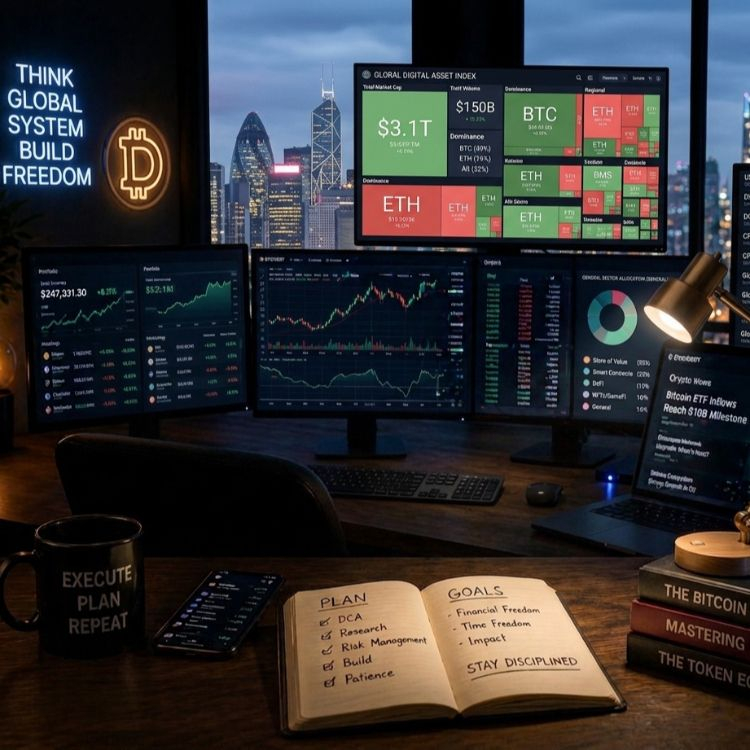
2026: The year Bitcoin became a global reserve asset?With Goldman Sachs joining BlackRock and Fidelity as issuers, there is no longer any doubt. Bitcoin is being integrated into the heart of the global financial system.
Smart Money: Banks do not file ETFs for the short term. They are looking at 10 years.
Liquidity: The more ETFs there are, the more liquidity increases, which reduces long-term wild volatility.
Conclusion: We are living in the moment where "traditional finance" and "Web3" finally merge.
Stay informed, stay disciplined. The cycle is just beginning. 🐂
2026: The year Bitcoin became a global reserve asset?
With Goldman Sachs joining BlackRock and Fidelity as issuers, there is no longer any doubt. Bitcoin is being integrated into the heart of the global financial system.
Smart Money: Banks do not file ETFs for the short term. They are looking at 10 years.
Liquidity: The more ETFs there are, the more liquidity increases, which reduces long-term wild volatility.
Conclusion: We are living in the moment where "traditional finance" and "Web3" finally merge.
Stay informed, stay disciplined. The cycle is just beginning. 🐂
Smart Money: Banks do not file ETFs for the short term. They are looking at 10 years.
Liquidity: The more ETFs there are, the more liquidity increases, which reduces long-term wild volatility.
Conclusion: We are living in the moment where "traditional finance" and "Web3" finally merge.
Stay informed, stay disciplined. The cycle is just beginning. 🐂
1
1
206
Log in to explore more content
Join global crypto users on Binance Square
⚡️ Get latest and useful information about crypto.
💬 Trusted by the world’s largest crypto exchange.
👍 Discover real insights from verified creators.
Email / Phone number
Trending Topics
1
#MetaMaskExitsLidoValidatorsAfterSecurityIncident
18,653 views
451 Discussing
2
#MicronBeatsEarningsLiftsGuidance
15,649 views
403 Discussing
3
#CFTCSubmitsTwoEventContractRulesToWhiteHouse
13,523 views
366 Discussing
4
#BitcoinClears$85200
29,058 views
315 Discussing
5
#AltcoinSeasonIndexHoldsAbove60For5Days
143,099 views
1,864 Discussing
6
#USADPAdds90000JobsInSeptember
66,381 views
1,062 Discussing
7
#USCorePCEEasesTo3%InAugust
45,260 views
720 Discussing
8
#KospiPostsWorstQuarterSince2020
25,584 views
600 Discussing
9
#SECToClarifyOnChainFundraisingRules
63,667 views
799 Discussing
10
#UKFCAOpensCryptoFirmAuthorization
59,412 views
664 Discussing