Binance Square
#franberlin

franberlin

25,303 views
28 Discussing
Fran Berlin - Instituto Blockchain
·
--
Verified
🌐 In 12 days, the Fed is meeting for the first time under new leadership. And what they decide could steer the crypto market for the remainder of 2026. On June 17 and 18, Kevin Warsh will chair his first meeting as the new Federal Reserve president. He replaced Jerome Powell just weeks ago and has inherited one of the most challenging boards in decades. Let me break down why this matters to you even if you don't have a single dollar in the American stock market. The Fed controls the interest rates in the United States, and these rates dictate how much money flows globally. When rates rise, capital hides in bonds and dollars. Crypto takes a hit. When rates drop, capital seeks riskier assets. Crypto rallies. So, what’s expected on June 18? Futures markets assign a 90% probability that rates will remain unchanged. Not just in June, but also in September. Some analysts don’t anticipate a cut until late 2027. Why the delay? Two words: Strait of Hormuz. The conflict in Iran has shot oil prices up. High oil prices mean inflation, and the Fed can't lower rates with inflation without controlling it—that would be like throwing gasoline on the fire. Warsh arrives with a reputation for “hard money” and strict monetary discipline, a reduced balance sheet, and no political concessions. Trump chose him expecting quick rate cuts, but the Fed members Warsh inherited not only resist cuts; some are even open to raising rates. No one is saying it out loud. For crypto, this has a direct reading: high rates for longer mean less global liquidity, more attractiveness of bonds over risk assets, and reduced institutional capital inflow to Bitcoin. This isn't the scenario the market wants. But it's the scenario the data shows. As a lawyer specializing in digital assets, I’ll tell you what I always say: trading without reading the macro context isn’t bravery. It’s trading with your eyes closed. 👇 Do you have June 18 marked on your calendar? #Fed #bitcoin #InstitutoBlockchain #FranBerlin #Warsh {spot}(BTCUSDT)
🌐 In 12 days, the Fed is meeting for the first time under new leadership.

And what they decide could steer the crypto market for the remainder of 2026.

On June 17 and 18, Kevin Warsh will chair his first meeting as the new Federal Reserve president. He replaced Jerome Powell just weeks ago and has inherited one of the most challenging boards in decades.

Let me break down why this matters to you even if you don't have a single dollar in the American stock market.

The Fed controls the interest rates in the United States, and these rates dictate how much money flows globally. When rates rise, capital hides in bonds and dollars. Crypto takes a hit. When rates drop, capital seeks riskier assets. Crypto rallies.

So, what’s expected on June 18?

Futures markets assign a 90% probability that rates will remain unchanged. Not just in June, but also in September. Some analysts don’t anticipate a cut until late 2027.

Why the delay?

Two words: Strait of Hormuz.

The conflict in Iran has shot oil prices up. High oil prices mean inflation, and the Fed can't lower rates with inflation without controlling it—that would be like throwing gasoline on the fire.

Warsh arrives with a reputation for “hard money” and strict monetary discipline, a reduced balance sheet, and no political concessions. Trump chose him expecting quick rate cuts, but the Fed members Warsh inherited not only resist cuts; some are even open to raising rates.

No one is saying it out loud.

For crypto, this has a direct reading: high rates for longer mean less global liquidity, more attractiveness of bonds over risk assets, and reduced institutional capital inflow to Bitcoin.

This isn't the scenario the market wants. But it's the scenario the data shows.

As a lawyer specializing in digital assets, I’ll tell you what I always say: trading without reading the macro context isn’t bravery. It’s trading with your eyes closed.

👇 Do you have June 18 marked on your calendar?

#Fed #bitcoin #InstitutoBlockchain #FranBerlin #Warsh
🚨 Last week they woke up. They hadn't moved in 13 years. Two Bitcoin wallets created in 2011 and 2012 — when $BTC was worth less than $15 — suddenly moved 2,000 BTC. Over $150 million dollars. $USDT No warning. No explanation. No known identity. They just… woke up. And they weren't the only ones. In May 2026, several silent wallets for over 12 years moved millions in just a few days. A wave nobody saw coming. The most disturbing part: they woke up just when Bitcoin was trading 50% below its all-time high. When the market is weak. When a massive sell-off hurts the most. Coincidence? The market doesn’t think so. In December 2025, something similar happened: hundreds of wallets linked to Silk Road — the most famous dark web marketplace — reactivated after more than a decade of silence. Illegal operation money from 2012 moving in 2025. No official explanation. Every time this happens, the market trembles. And there's a very concrete reason. More than 1,000 wallets have been inactive for ten or more years without sending a single coin. A dormant supply large enough to shake prices if it were to hit the market suddenly. The owner might have died. They could have lost the password. They might just be waiting. Nobody knows. And that uncertainty has a technical name: latent supply shock. An offer bomb that can activate at any moment without any technical analysis predicting it. A single transfer of 12,000 BTC in November 2025 pushed the price down by 2% within hours. One wallet. Two percent. In hours. Nobody controls Bitcoin. That’s its greatest virtue. And also its greatest mystery. 👇 Do you think those wallets belong to living people… or is Bitcoin lost forever? #bitcoin #CryptoHistory #InstitutoBlockchain #FranBerlin #crypto {spot}(BTCUSDT)
🚨 Last week they woke up.

They hadn't moved in 13 years.

Two Bitcoin wallets created in 2011 and 2012 — when $BTC was worth less than $15 — suddenly moved 2,000 BTC. Over $150 million dollars. $USDT

No warning. No explanation. No known identity.

They just… woke up.

And they weren't the only ones. In May 2026, several silent wallets for over 12 years moved millions in just a few days. A wave nobody saw coming.

The most disturbing part: they woke up just when Bitcoin was trading 50% below its all-time high. When the market is weak. When a massive sell-off hurts the most.

Coincidence? The market doesn’t think so.

In December 2025, something similar happened: hundreds of wallets linked to Silk Road — the most famous dark web marketplace — reactivated after more than a decade of silence. Illegal operation money from 2012 moving in 2025. No official explanation.

Every time this happens, the market trembles. And there's a very concrete reason.

More than 1,000 wallets have been inactive for ten or more years without sending a single coin. A dormant supply large enough to shake prices if it were to hit the market suddenly.

The owner might have died. They could have lost the password. They might just be waiting.

Nobody knows.

And that uncertainty has a technical name: latent supply shock. An offer bomb that can activate at any moment without any technical analysis predicting it.

A single transfer of 12,000 BTC in November 2025 pushed the price down by 2% within hours.

One wallet. Two percent. In hours.

Nobody controls Bitcoin. That’s its greatest virtue.

And also its greatest mystery.

👇 Do you think those wallets belong to living people… or is Bitcoin lost forever?

#bitcoin #CryptoHistory #InstitutoBlockchain #FranBerlin #crypto
🔍 Every time you connect your wallet to a crypto app, you’re signing a contract. Most folks don’t read it. Some end up losing everything because of that. In 2025, vulnerabilities in smart contracts caused over $1.42 billion in losses. It wasn’t movie hackers. It was people who signed without knowing what they were signing. Today, I’m sharing the protocol I use before approving any contract. Alert Signal #1: SetApprovalForAll The most commonly used in crypto scams. When you sign it, you give an external contract permission to move ALL the tokens from your wallet. When is it legit? Only when listing an NFT on a marketplace or interacting with a well-known DEX. Outside of those situations, red flag. Alert Signal #2: Unverified Contract on Etherscan Copy the contract address and search it on Etherscan. If it doesn’t have verified source code — just bytecode — stop. A serious project always verifies publicly. Alert Signal #3: Contract Deployed Less Than 48 Hours Ago Etherscan shows when it was created. A contract that's only hours old pushing you to sign is almost always a trap. Alert Signal #4: Permissions That Don’t Expire That permission can be unlimited and permanent. Revoke.cash lets you see all contracts with access to your wallet and revoke them with one click. Alert Signal #5: Reentrancy — Contracts Calling Themselves The malicious contract executes an operation, and before your wallet registers the change, it executes another — emptying your balance in seconds. If you don’t understand the chained logic, don’t sign. As a digital assets lawyer, I tell you: the bytecode of any contract on the blockchain is public. The tools to analyze it are free. Ignoring this isn’t bad luck. It’s a choice. 👇 Have you checked which contracts currently have access to your wallet? #SmartContracts #defi #InstitutoBlockchain #FranBerlin #Ethereum {spot}(ETHUSDT) {spot}(UNIUSDT) {spot}(TRXUSDT)
🔍 Every time you connect your wallet to a crypto app, you’re signing a contract.

Most folks don’t read it. Some end up losing everything because of that.

In 2025, vulnerabilities in smart contracts caused over $1.42 billion in losses. It wasn’t movie hackers. It was people who signed without knowing what they were signing.

Today, I’m sharing the protocol I use before approving any contract.

Alert Signal #1: SetApprovalForAll

The most commonly used in crypto scams. When you sign it, you give an external contract permission to move ALL the tokens from your wallet.

When is it legit? Only when listing an NFT on a marketplace or interacting with a well-known DEX. Outside of those situations, red flag.

Alert Signal #2: Unverified Contract on Etherscan

Copy the contract address and search it on Etherscan. If it doesn’t have verified source code — just bytecode — stop. A serious project always verifies publicly.

Alert Signal #3: Contract Deployed Less Than 48 Hours Ago

Etherscan shows when it was created. A contract that's only hours old pushing you to sign is almost always a trap.

Alert Signal #4: Permissions That Don’t Expire

That permission can be unlimited and permanent. Revoke.cash lets you see all contracts with access to your wallet and revoke them with one click.

Alert Signal #5: Reentrancy — Contracts Calling Themselves

The malicious contract executes an operation, and before your wallet registers the change, it executes another — emptying your balance in seconds. If you don’t understand the chained logic, don’t sign.

As a digital assets lawyer, I tell you: the bytecode of any contract on the blockchain is public. The tools to analyze it are free.

Ignoring this isn’t bad luck. It’s a choice.

👇 Have you checked which contracts currently have access to your wallet?

#SmartContracts #defi #InstitutoBlockchain #FranBerlin #Ethereum


💎 There's a token that shot up +59% in 90 days while the overall market was tanking. It's not hype. It's not a meme. It has a real product behind it. It's called $ONDO. And what it does is something that banks have been trying to avoid for decades. It tokenizes U.S. Treasury bonds 🇺🇸 Simple translation: it takes one of the safest financial assets in the world — the U.S. government debt — and turns it into a token that anyone in any country can buy from their wallet, without a bank, without intermediaries, and without institutional minimum investment. Until recently, that was impossible for someone in Mexico, Colombia, or Spain without an account at an American bank and thousands of dollars as a minimum. $ONDO broke that barrier. And I'm not just saying that. The names behind the product say it: BlackRock, Franklin Templeton, Fidelity, and WisdomTree. Four of the largest asset managers in the world already have tokenized products running on ONDO infrastructure. The TVL exceeds $680 million in real Treasury bonds. This week saw some turbulence. It dropped to $0.35 intraday, swept some stops, and bounced back with volume 74% higher than its average. That pattern has a name: leverage washout. The weak hands got shaken out. The institutions bought the dip. But there's a risk I won’t gloss over because my job is to give you the full picture: $ONDO has a token unlock schedule that releases new coins until 2029. Each unlock generates selling pressure. It has happened before and can happen again. The fundamentals are solid. The risk is real too. That's exactly what distinguishes an honest analysis from a pump disguised as educational content. As a lawyer specialized in digital assets, I always tell you: analyze, diversify, and never put in more than you can afford to lose. 👇 Did you know that BlackRock already has products running on blockchain? Or do you still think institutions are far from crypto? #ONDO #RWA #blackRock #FranBerlin #crypto {spot}(ONDOUSDT) {spot}(BTCUSDT) {spot}(USDCUSDT)
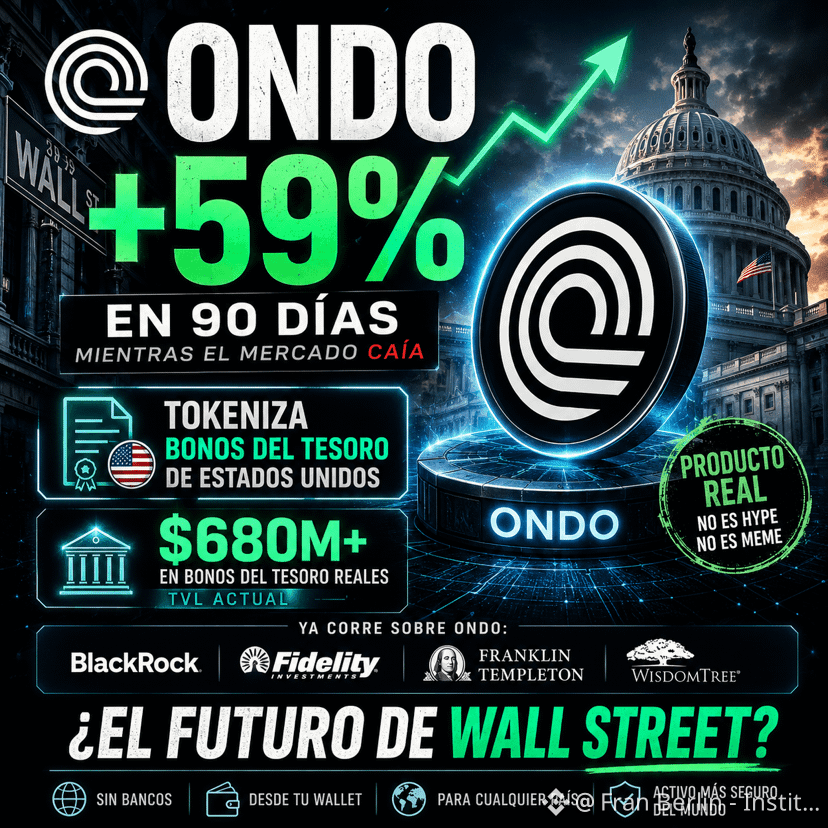
💎 There's a token that shot up +59% in 90 days while the overall market was tanking.

It's not hype. It's not a meme. It has a real product behind it.

It's called $ONDO . And what it does is something that banks have been trying to avoid for decades.

It tokenizes U.S. Treasury bonds 🇺🇸

Simple translation: it takes one of the safest financial assets in the world — the U.S. government debt — and turns it into a token that anyone in any country can buy from their wallet, without a bank, without intermediaries, and without institutional minimum investment.

Until recently, that was impossible for someone in Mexico, Colombia, or Spain without an account at an American bank and thousands of dollars as a minimum.

$ONDO broke that barrier.

And I'm not just saying that. The names behind the product say it: BlackRock, Franklin Templeton, Fidelity, and WisdomTree. Four of the largest asset managers in the world already have tokenized products running on ONDO infrastructure. The TVL exceeds $680 million in real Treasury bonds.

This week saw some turbulence. It dropped to $0.35 intraday, swept some stops, and bounced back with volume 74% higher than its average. That pattern has a name: leverage washout. The weak hands got shaken out. The institutions bought the dip.

But there's a risk I won’t gloss over because my job is to give you the full picture:

$ONDO has a token unlock schedule that releases new coins until 2029. Each unlock generates selling pressure. It has happened before and can happen again.

The fundamentals are solid. The risk is real too.

That's exactly what distinguishes an honest analysis from a pump disguised as educational content.

As a lawyer specialized in digital assets, I always tell you: analyze, diversify, and never put in more than you can afford to lose.

👇 Did you know that BlackRock already has products running on blockchain? Or do you still think institutions are far from crypto?

#ONDO #RWA #blackRock #FranBerlin
#crypto

🌐 China is building an alternative to the dollar. 🇨🇳 And it’s doing it with blockchain. It’s called e-CNY — the digital yuan. This isn’t a future project. It’s a live operation: 230 million users, 19 million businesses, and over 3.4 billion transactions processed. In January 2026, it took a leap that almost no one reported: it stopped being 'digital cash' to become 'digital deposit currency' — now it pays interest. It operates like a global state bank account. Here’s what very few are connecting. When Trump imposed tariffs of 46% on Vietnam, 36% on Thailand, and 49% on Cambodia — those countries didn’t just sit back. China offered them an exit: pay without going through SWIFT, without touching dollars, without American intermediaries. Almost 38% of global trade could shift to that lane. And what does $BTC Bitcoin have to do with this? Everything. The DXY index fell 9.6% in 2025, its worst year since 2017. Kenneth Rogoff from Harvard bluntly said: the euro, the yuan, and cryptocurrencies will be the big beneficiaries as the dollar loses global dominance. And this week, the yuan has appreciated 5.5% over 12 months. It’s no coincidence — it’s the market repositioning. When the dollar structurally weakens, capital seeks alternatives. Gold. Bitcoin. Assets outside the system. But there’s an irony that no one mentions. The digital yuan is exactly the opposite of Bitcoin. Centralized, traceable, controlled by the State. Every transaction visible to Beijing. Bitcoin was born precisely so that no government would have that power. The trade war is redefining what money means. 💴 And on that board, crypto is not a spectator — it’s one of the pieces. The question is, which side of the board do you want to be on? 👇 Do you think the digital yuan is a real threat to the dollar, or is it more noise than reality? #YuanDigital #bitcoin #dolar #InstitutoBlockchain #FranBerlin {spot}(BTCUSDT) {spot}(USDCUSDT) {spot}(USD1USDT)
🌐 China is building an alternative to the dollar. 🇨🇳

And it’s doing it with blockchain.

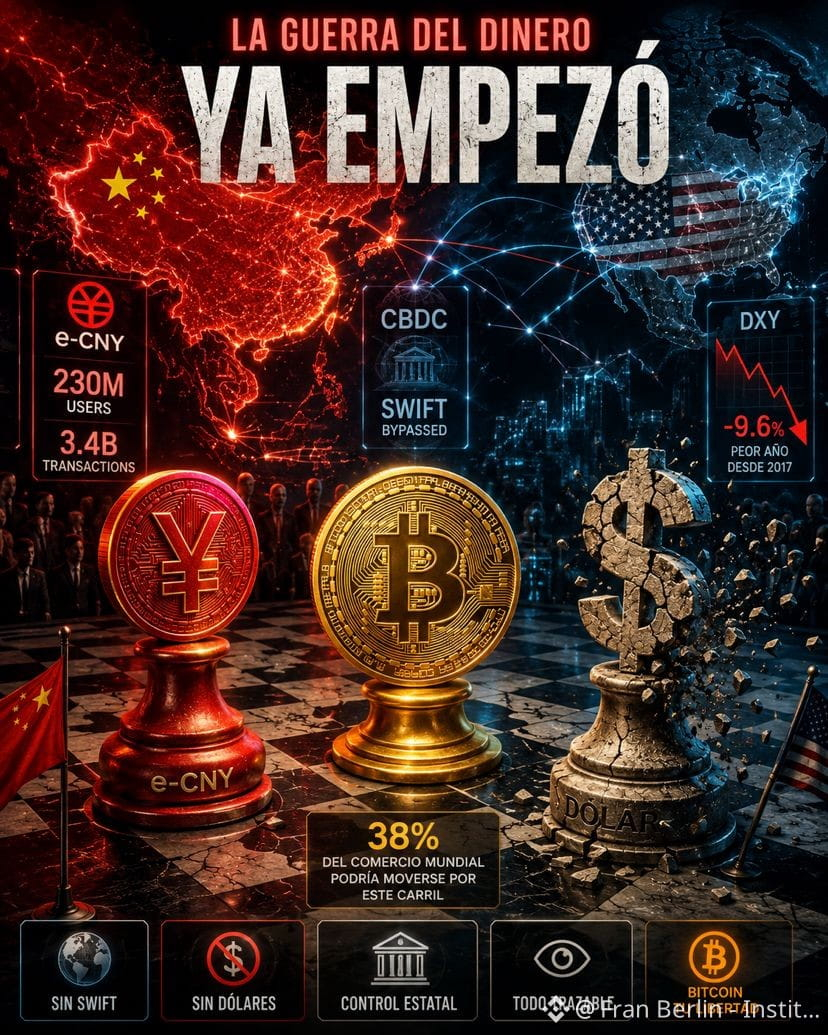
It’s called e-CNY — the digital yuan. This isn’t a future project. It’s a live operation: 230 million users, 19 million businesses, and over 3.4 billion transactions processed.

In January 2026, it took a leap that almost no one reported: it stopped being 'digital cash' to become 'digital deposit currency' — now it pays interest. It operates like a global state bank account.

Here’s what very few are connecting.

When Trump imposed tariffs of 46% on Vietnam, 36% on Thailand, and 49% on Cambodia — those countries didn’t just sit back. China offered them an exit: pay without going through SWIFT, without touching dollars, without American intermediaries.

Almost 38% of global trade could shift to that lane.

And what does $BTC Bitcoin have to do with this?

Everything.

The DXY index fell 9.6% in 2025, its worst year since 2017. Kenneth Rogoff from Harvard bluntly said: the euro, the yuan, and cryptocurrencies will be the big beneficiaries as the dollar loses global dominance.

And this week, the yuan has appreciated 5.5% over 12 months. It’s no coincidence — it’s the market repositioning.

When the dollar structurally weakens, capital seeks alternatives. Gold. Bitcoin. Assets outside the system.

But there’s an irony that no one mentions.

The digital yuan is exactly the opposite of Bitcoin. Centralized, traceable, controlled by the State. Every transaction visible to Beijing.

Bitcoin was born precisely so that no government would have that power.

The trade war is redefining what money means. 💴 And on that board, crypto is not a spectator — it’s one of the pieces.

The question is, which side of the board do you want to be on?

👇 Do you think the digital yuan is a real threat to the dollar, or is it more noise than reality?

#YuanDigital #bitcoin #dolar #InstitutoBlockchain #FranBerlin


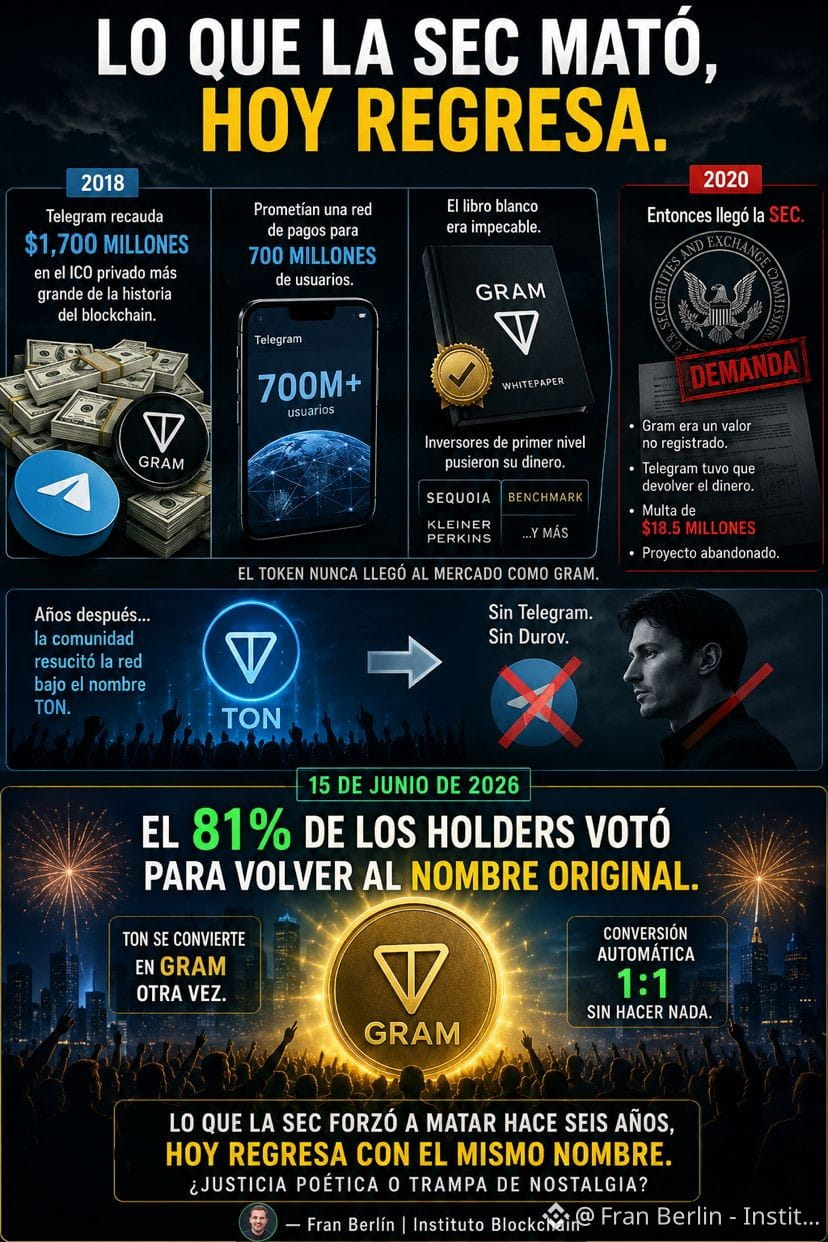
💎 There's a token that has direct access to 950 million users. And most of the Latin crypto community isn't even looking at it yet. It's called $TON. And its story is weirder than it seems. It was born inside Telegram. It got shut down by the SEC in 2020 before it even launched. It was left abandoned. A group of independent developers rescued it from oblivion and relaunched it. For years, it was ignored. Until Telegram decided to integrate it as their native financial layer. Payments within the app. Wallets. Mini Apps. Everything running on TON. Think of it this way: every time someone uses a mini app on Telegram, every time someone pays with $USDT within the chat, every time a developer launches a game on Telegram… they're using TON infrastructure. And in May 2026, something happened that changed everything. Pavel Durov announced the "Make TON Great Again" plan: Telegram takes direct control as the largest validator on the network. It's no longer a blockchain tied to Telegram. Now it is Telegram. The technical numbers back up the narrative: transactions in under a second, fees of a fraction of a cent, and a bridge with Bitcoin in development. Is the market reflecting this yet? Not fully. Some analysts point out that the current price doesn't reflect what it means to have almost a billion users as a gateway to a blockchain. In 2020, nobody wanted TON. By 2026, Telegram has nearly a billion active users. The narrative hasn’t changed — the world has caught up to the narrative. As a lawyer specializing in digital assets, let me tell you something that not many say openly: no fundamental analysis guarantees returns. But ignoring the fundamentals guarantees blind decisions. 👇 Do you already have $TON on your radar, or is this the first time you're seriously analyzing it? #TON #Crypto #InstitutoBlockchain #FranBerlin #Crypto {spot}(TONUSDT) {spot}(BNBUSDT) {spot}(BTCUSDT)
💎 There's a token that has direct access to 950 million users.

And most of the Latin crypto community isn't even looking at it yet.

It's called $TON . And its story is weirder than it seems.

It was born inside Telegram. It got shut down by the SEC in 2020 before it even launched. It was left abandoned. A group of independent developers rescued it from oblivion and relaunched it.

For years, it was ignored.

Until Telegram decided to integrate it as their native financial layer. Payments within the app. Wallets. Mini Apps. Everything running on TON.

Think of it this way: every time someone uses a mini app on Telegram, every time someone pays with $USDT within the chat, every time a developer launches a game on Telegram… they're using TON infrastructure.

And in May 2026, something happened that changed everything.

Pavel Durov announced the "Make TON Great Again" plan: Telegram takes direct control as the largest validator on the network. It's no longer a blockchain tied to Telegram. Now it is Telegram.

The technical numbers back up the narrative: transactions in under a second, fees of a fraction of a cent, and a bridge with Bitcoin in development.

Is the market reflecting this yet? Not fully.

Some analysts point out that the current price doesn't reflect what it means to have almost a billion users as a gateway to a blockchain.

In 2020, nobody wanted TON. By 2026, Telegram has nearly a billion active users. The narrative hasn’t changed — the world has caught up to the narrative.

As a lawyer specializing in digital assets, let me tell you something that not many say openly: no fundamental analysis guarantees returns. But ignoring the fundamentals guarantees blind decisions.

👇 Do you already have $TON on your radar, or is this the first time you're seriously analyzing it?

#TON #Crypto #InstitutoBlockchain #FranBerlin #Crypto


·
--
Bearish
Verified
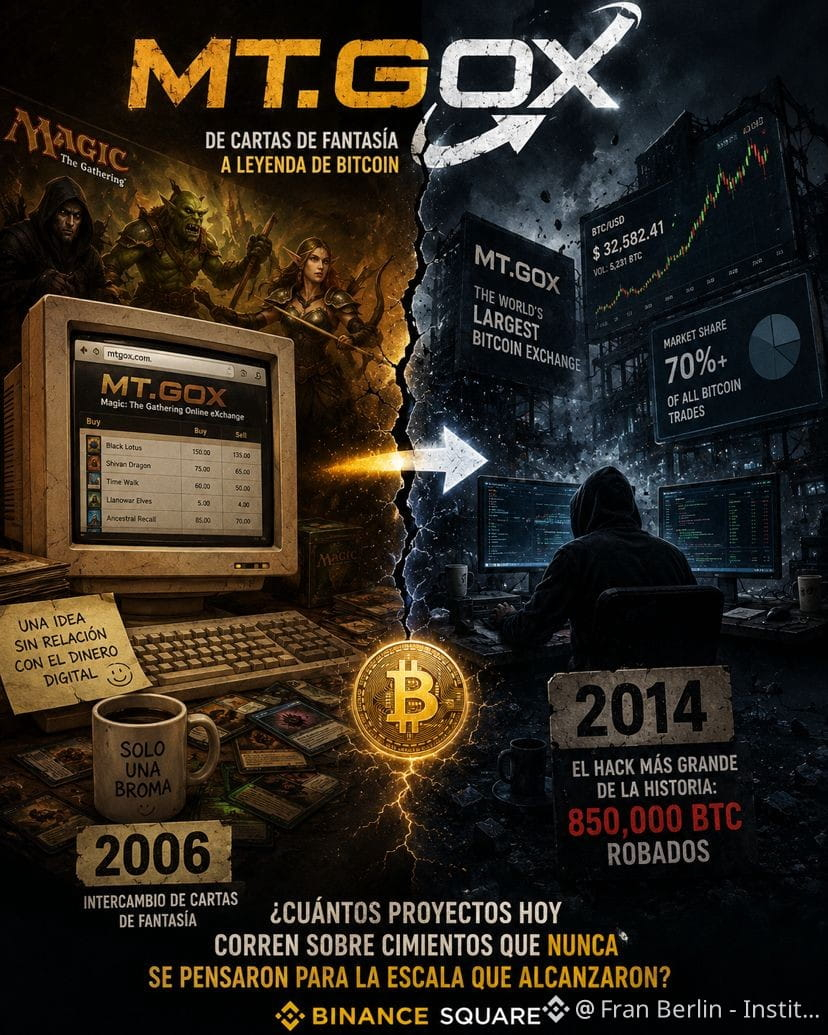
💥 850,000 BTC DISAPPEARED Twelve years later, much of it is still missing. And nobody knows who has the keys. 👀 In 2014, a man cried in front of the cameras. 📷 He said he had lost 850,000 Bitcoin. $BTC The world 🌏 believed him. No one knew that the heist had been happening for three years without him noticing. Mark Karpelès was a 28-year-old French programmer living in Tokyo. 🇯🇵 Introverted. Brilliant with code. Terrible with people. He had bought Mt. Gox in 2011 for six months of income — nearly nothing. Three years later, that exchange processed 70% of all Bitcoin transactions on the planet. He was the most powerful player in crypto without anyone having elected him. On February 24, 2014, the Mt. Gox site went blank. No warning. No explanation. Hours later, an internal document leaked online. What it said froze the blood of 24,000 users: 850,000 BTC had vanished. 750,000 belonged to real customers. People like you. What no one told in the news: The hackers didn’t break in in 2014. Subsequent investigations revealed they had been stealing Bitcoin since 2011 — quietly, gradually, invisibly. Three years looting the vault while the exchange remained open, operating, raking in fees. Mark was arrested in 2015. Acquitted of fraud. Convicted of falsifying records. The 850,000 BTC: never fully recovered. Only 200,000 surfaced — stored in an old wallet that no one remembered. The rest remains somewhere in the blockchain.⛓️ Still. Unmoving. Waiting. Today those Bitcoins are worth over 80 billion dollars. And nobody knows if the thief has them. If he lost them. Or if he’s waiting for the exact moment to move them. What would you do if you had access to a wallet with billions… and moving it meant the entire world would know instantly? Fran Berlín | Blockchain Institute #MtGox #bitcoin #CryptoHistory #FranBerlin #InstitutoBlockchain {spot}(BNBUSDT)
💥 850,000 BTC DISAPPEARED

Twelve years later, much of it is still missing. And nobody knows who has the keys. 👀

In 2014, a man cried in front of the cameras. 📷

He said he had lost 850,000 Bitcoin. $BTC

The world 🌏 believed him.

No one knew that the heist had been happening for three years without him noticing.

Mark Karpelès was a 28-year-old French programmer living in Tokyo. 🇯🇵

Introverted. Brilliant with code. Terrible with people.

He had bought Mt. Gox in 2011 for six months of income — nearly nothing.

Three years later, that exchange processed 70% of all Bitcoin transactions on the planet.

He was the most powerful player in crypto without anyone having elected him.

On February 24, 2014, the Mt. Gox site went blank.

No warning. No explanation.

Hours later, an internal document leaked online.

What it said froze the blood of 24,000 users:

850,000 BTC had vanished.

750,000 belonged to real customers. People like you.

What no one told in the news:

The hackers didn’t break in in 2014.

Subsequent investigations revealed they had been stealing Bitcoin since 2011 — quietly, gradually, invisibly.

Three years looting the vault while the exchange remained open, operating, raking in fees.

Mark was arrested in 2015.

Acquitted of fraud. Convicted of falsifying records.

The 850,000 BTC: never fully recovered.

Only 200,000 surfaced — stored in an old wallet that no one remembered.

The rest remains somewhere in the blockchain.⛓️

Still. Unmoving. Waiting.

Today those Bitcoins are worth over 80 billion dollars.

And nobody knows if the thief has them.

If he lost them.

Or if he’s waiting for the exact moment to move them.

What would you do if you had access to a wallet with billions… and moving it meant the entire world would know instantly?

Fran Berlín | Blockchain Institute
#MtGox #bitcoin #CryptoHistory #FranBerlin #InstitutoBlockchain
Suit_Synthetic:
Fácil, pago mi Netflix para seguir viendo mi novela.
🔍 Are you losing money on every trade and probably don't know why? It's not the exchange. It's not a hidden fee. It's not bad luck. It's called slippage. And it works silently. When you see the price of a token and hit "buy", that price no longer exists. The market moved in the microsecond it took you to confirm. What you paid was different from what you expected. That difference is called slippage. In high liquidity tokens like $BTC o or $ETH , it's minimal. Almost imperceptible. But in low cap tokens, on DEX with low volume, or during high volatility, slippage can eat up between 1% and 15% of your trade without any alerts to warn you. Imagine buying $1,000 worth of a token and receiving the equivalent of $870. Nobody robbed you. Nobody failed. The market moved while your transaction was being processed. There are two types you should know: Price slippage — the difference between the expected price and the executed price. Tolerance slippage — the maximum percentage you authorize before the transaction is automatically canceled. That second type is your defense. And also your weak point. MEV bots scan the mempool — the public waiting room of transactions — specifically looking for this. They execute a sandwich attack: they buy before you to jack up the price, let your transaction execute inflated, and sell immediately. You pay more. They pocket the difference. And the detail that hurts the most: they specifically target traders with slippage above 5%. Knowing this changes how you trade: — Keep your tolerance between 0.5% and 1% on liquid pairs — In volatile tokens, don't go above 3% unless absolutely necessary — Use Flashbots Protect or private RPCs to stay off the mempool radar It's not invulnerability. It's reducing the target. 👇 Did you know your transactions on DEX are public before they confirm? #Slippage #MEV #InstitutoBlockchain #FranBerlin #Crypto {spot}(ETHUSDT) {spot}(BTCUSDT)
🔍 Are you losing money on every trade and probably don't know why?

It's not the exchange. It's not a hidden fee. It's not bad luck.

It's called slippage. And it works silently.

When you see the price of a token and hit "buy", that price no longer exists.

The market moved in the microsecond it took you to confirm. What you paid was different from what you expected. That difference is called slippage.

In high liquidity tokens like $BTC o or $ETH , it's minimal. Almost imperceptible.

But in low cap tokens, on DEX with low volume, or during high volatility, slippage can eat up between 1% and 15% of your trade without any alerts to warn you.

Imagine buying $1,000 worth of a token and receiving the equivalent of $870. Nobody robbed you. Nobody failed. The market moved while your transaction was being processed.

There are two types you should know:

Price slippage — the difference between the expected price and the executed price.

Tolerance slippage — the maximum percentage you authorize before the transaction is automatically canceled.

That second type is your defense. And also your weak point.

MEV bots scan the mempool — the public waiting room of transactions — specifically looking for this. They execute a sandwich attack: they buy before you to jack up the price, let your transaction execute inflated, and sell immediately. You pay more. They pocket the difference.

And the detail that hurts the most: they specifically target traders with slippage above 5%.

Knowing this changes how you trade:

— Keep your tolerance between 0.5% and 1% on liquid pairs
— In volatile tokens, don't go above 3% unless absolutely necessary
— Use Flashbots Protect or private RPCs to stay off the mempool radar

It's not invulnerability. It's reducing the target.

👇 Did you know your transactions on DEX are public before they confirm?

#Slippage #MEV #InstitutoBlockchain #FranBerlin #Crypto
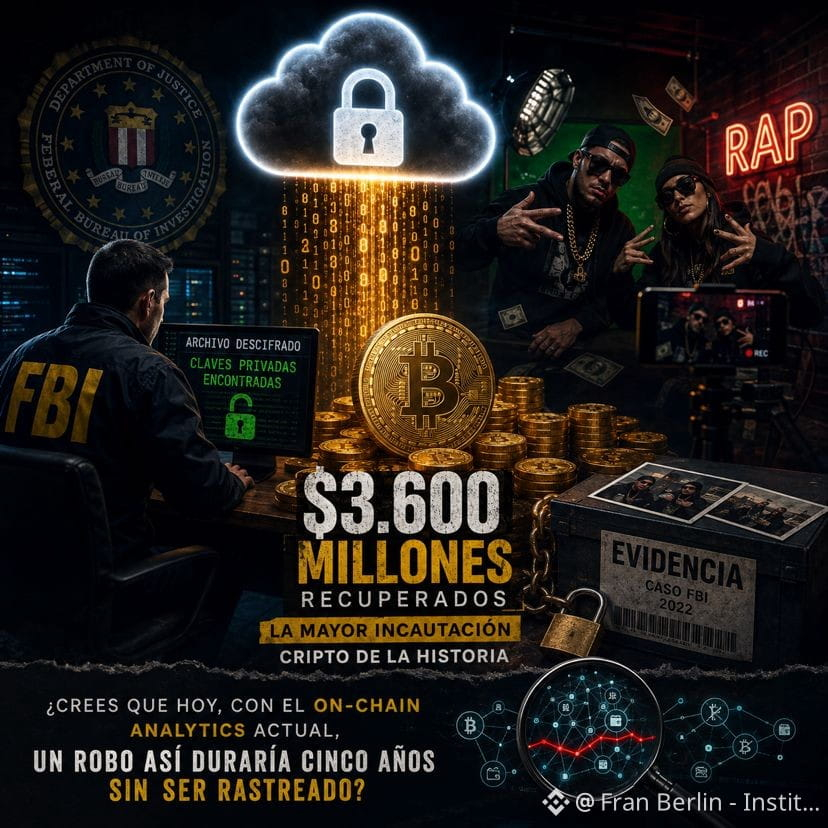
🚨 The FBI has created its own crypto token. They listed it on Uniswap. Built a website, a whitepaper, real tokenomics. And then they waited. It was 2024. The operation was called “Operation Token Mirrors” and the token was named #NexFundAI . This wasn't a warning. It wasn't an educational campaign. It was real-time evidence. The manipulation signatures came in hot, unaware that every move was being recorded. One of them documented in their internal files the difference between “wash trading” and “real market volume.” They incriminated themselves. 👁️ Outcome: 18 individuals and entities arrested, over $25 million confiscated, and bots disabled across 60 different tokens. ⚖️ The first time in history that a financial services firm faced criminal charges for market manipulation in crypto. But the case didn’t end there. On the same day as the DOJ announcement, someone cloned the token's contract. In 24 hours, they replicated the scheme and made $127,000 before vanishing. 👻 And there's a detail that almost no one reported: the FBI had to open a restitution portal because when they pulled liquidity, regular investors lost money. The trap also caught the innocent. 🎯 Does this say anything about the state of crypto regulation… or how deep the manipulation runs in this market? 👇 Do you think the FBI should conduct more operations like this, or is it playing with fire? #InstitutoBlockchain #FranBerlin #bitcoin #Crypto {spot}(UNIUSDT) {spot}(BTCUSDT)
🚨 The FBI has created its own crypto token.

They listed it on Uniswap. Built a website, a whitepaper, real tokenomics.

And then they waited.

It was 2024. The operation was called “Operation Token Mirrors” and the token was named #NexFundAI .

This wasn't a warning. It wasn't an educational campaign. It was real-time evidence. The manipulation signatures came in hot, unaware that every move was being recorded. One of them documented in their internal files the difference between “wash trading” and “real market volume.” They incriminated themselves. 👁️

Outcome: 18 individuals and entities arrested, over $25 million confiscated, and bots disabled across 60 different tokens. ⚖️

The first time in history that a financial services firm faced criminal charges for market manipulation in crypto.

But the case didn’t end there.

On the same day as the DOJ announcement, someone cloned the token's contract. In 24 hours, they replicated the scheme and made $127,000 before vanishing. 👻

And there's a detail that almost no one reported: the FBI had to open a restitution portal because when they pulled liquidity, regular investors lost money. The trap also caught the innocent. 🎯

Does this say anything about the state of crypto regulation… or how deep the manipulation runs in this market?

👇 Do you think the FBI should conduct more operations like this, or is it playing with fire?

#InstitutoBlockchain #FranBerlin #bitcoin #Crypto

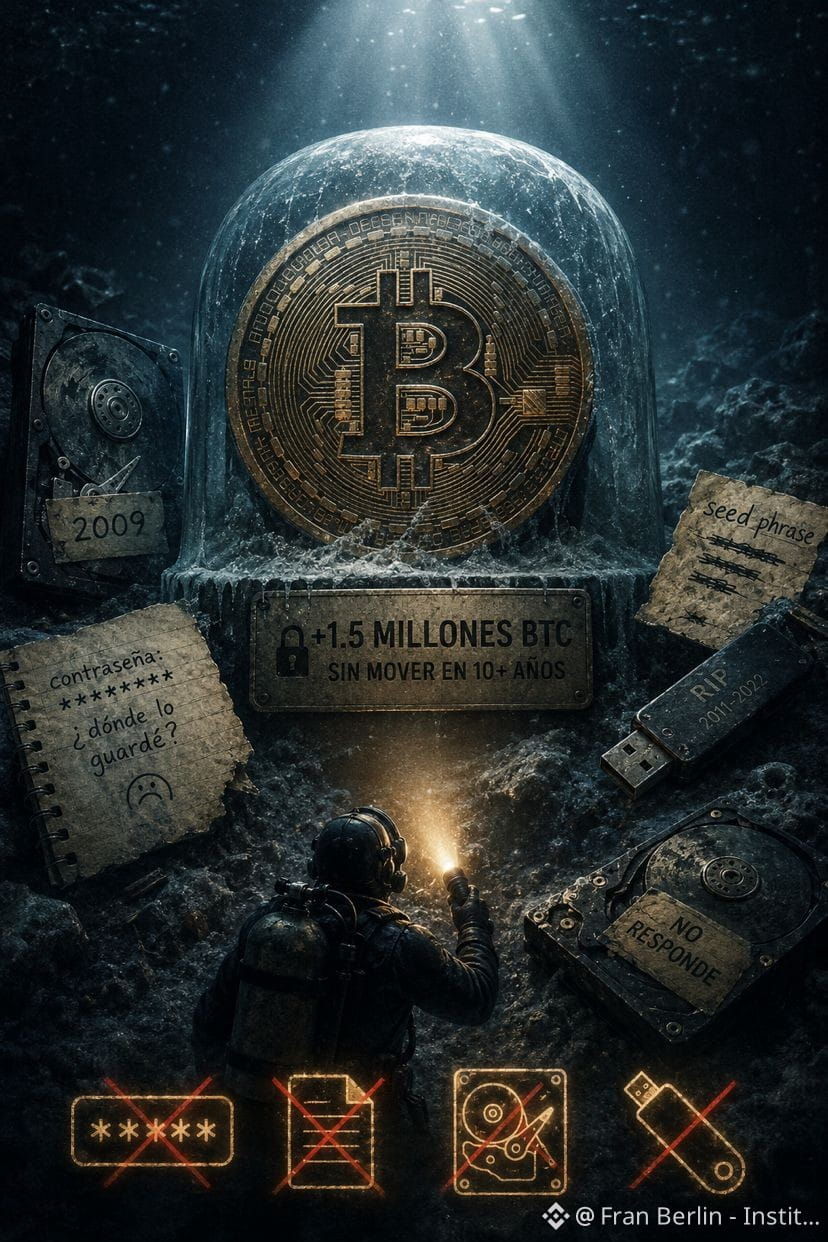
😮 Back in 2013, a 26-year-old engineer lost his life in a motorcycle accident in Vancouver. 🇨🇦 He had 438 $BTC Bitcoin stashed in an Electrum wallet. His wife knew they existed. She knew the software name. She knew they were worth something. But she didn’t know the password. There was no seed phrase written down anywhere. No instructions to follow. They spent 4 years trying to recover them with digital forensic experts. They failed. Today, those 438 BTC are worth over 40 million dollars. $USDT They remain there. Intact. Inaccessible. Forever. This isn’t an isolated case. It’s estimated that between 17% and 23% of all circulating Bitcoin is permanently locked — wallets of people who passed away without leaving instructions. It wasn’t lost to a hacker. It wasn’t lost to the market. It was lost to silence. Do you have a legacy access plan for your digital assets? If it takes longer than 3 seconds to answer… you know what you need to do today. #bitcoin #HerenciaDigital #SeguridadCrypto #FranBerlin #InstitutoBlockchain Fran Berlín | Blockchain Institute {spot}(BTCUSDT)
😮 Back in 2013, a 26-year-old engineer lost his life in a motorcycle accident in Vancouver. 🇨🇦

He had 438 $BTC Bitcoin stashed in an Electrum wallet.

His wife knew they existed. She knew the software name. She knew they were worth something.

But she didn’t know the password.
There was no seed phrase written down anywhere.
No instructions to follow.

They spent 4 years trying to recover them with digital forensic experts.

They failed.

Today, those 438 BTC are worth over 40 million dollars. $USDT

They remain there. Intact. Inaccessible. Forever.

This isn’t an isolated case. It’s estimated that between 17% and 23% of all circulating Bitcoin is permanently locked — wallets of people who passed away without leaving instructions.

It wasn’t lost to a hacker.
It wasn’t lost to the market.
It was lost to silence.

Do you have a legacy access plan for your digital assets?

If it takes longer than 3 seconds to answer… you know what you need to do today.

#bitcoin #HerenciaDigital #SeguridadCrypto #FranBerlin #InstitutoBlockchain

Fran Berlín | Blockchain Institute
Kathryn Bosch:
y eso que más da?
🕯️ Back in 2017, around the 25th anniversary of the massacre… …someone inscribed the photo of the “Tank Man” 🚜 —the guy who stood alone in front of a column of tanks— onto the Bitcoin blockchain along with documents detailing what went down that night. Not on a server. Not in the cloud. Inside every Bitcoin block. That means every node downloading the Bitcoin blockchain in China… has that image on their computer. Immutable. Uncensorable. Forever. No government can erase it. No firewall can block it. No court order can delete it. That’s what no politician explains when they talk about “regulating Bitcoin.” Bitcoin isn’t just money. It’s the first technology in human history capable of preserving information that no power on Earth can destroy. Not because it’s “technology.” But because it’s distributed across thousands of computers around the globe simultaneously. Today, 37 years after Tiananmen, that man still stands against the tanks. This time in every node of the network. Did you know Bitcoin has been used to preserve censored history? Do you think governments truly understand what Bitcoin represents? Fran Berlín | Blockchain Institute Since 2017 in crypto. Lawyer specializing in digital assets. #bitcoin #blockchain #LibertadFinanciera #InstitutoBlockchain #FranBerlin {spot}(BTCUSDT) {spot}(BNBUSDT) {spot}(ETHUSDT)
🕯️ Back in 2017, around the 25th anniversary of the massacre…

…someone inscribed the photo of the “Tank Man” 🚜 —the guy who stood alone in front of a column of tanks— onto the Bitcoin blockchain along with documents detailing what went down that night.

Not on a server.
Not in the cloud.
Inside every Bitcoin block.

That means every node downloading the Bitcoin blockchain in China… has that image on their computer.

Immutable. Uncensorable. Forever.

No government can erase it.
No firewall can block it.
No court order can delete it.

That’s what no politician explains when they talk about “regulating Bitcoin.”

Bitcoin isn’t just money.

It’s the first technology in human history capable of preserving information that no power on Earth can destroy.

Not because it’s “technology.”

But because it’s distributed across thousands of computers around the globe simultaneously.

Today, 37 years after Tiananmen, that man still stands against the tanks.

This time in every node of the network.

Did you know Bitcoin has been used to preserve censored history?

Do you think governments truly understand what Bitcoin represents?

Fran Berlín | Blockchain Institute
Since 2017 in crypto. Lawyer specializing in digital assets.

#bitcoin #blockchain #LibertadFinanciera #InstitutoBlockchain #FranBerlin


🤷🏻‍♂️ Back in 2017, a guy named Didi Taihuttu gathered his family. And he said: “We're going to liquidate everything.” The 2,500 square foot pad 🏡. The three rides. The kids' toys. Even the clothes they didn’t wear anymore. Bitcoin was at $5,000. 😮 His wife didn’t stop him. Neither did their three daughters. They moved to a communal farm in the Netherlands 🇳🇱. Then to a tent in the Swiss Alps 🇨🇭. No TV. No comforts. No safety net. Just Bitcoin. $BTC When BTC dropped to $3,000 in 2018, the media called him “the craziest man in the world.” When BTC hit $69,000 in 2021… nobody called him crazy. Today, the Taihuttu family remains 100% Bitcoin. No house. No car. No traditional assets. And no regrets. Madness or the strongest conviction you’ve seen in crypto? How much $BTC would you need to do something similar? 👇 Hit me up in the comments. #bitcoin #BTC☀ #Cryptohistorias #FranBerlin #InstitutoBlockchain {spot}(BTCUSDT)
🤷🏻‍♂️ Back in 2017, a guy named Didi Taihuttu gathered his family.

And he said: “We're going to liquidate everything.”

The 2,500 square foot pad 🏡. The three rides. The kids' toys. Even the clothes they didn’t wear anymore.

Bitcoin was at $5,000. 😮

His wife didn’t stop him. Neither did their three daughters.

They moved to a communal farm in the Netherlands 🇳🇱. Then to a tent in the Swiss Alps 🇨🇭. No TV. No comforts. No safety net.

Just Bitcoin. $BTC

When BTC dropped to $3,000 in 2018, the media called him “the craziest man in the world.”

When BTC hit $69,000 in 2021… nobody called him crazy.

Today, the Taihuttu family remains 100% Bitcoin. No house. No car. No traditional assets.

And no regrets.

Madness or the strongest conviction you’ve seen in crypto?

How much $BTC would you need to do something similar?

👇 Hit me up in the comments.

#bitcoin #BTC☀ #Cryptohistorias #FranBerlin #InstitutoBlockchain
💥 $1,230,000,000. $USDT That's what the market wiped out in less than 24 hours. 📈 Yesterday, Bitcoin $BTC dropped below $68,000. Over $1.23 billion in liquidations. And the craziest part: 89% of that cash was long positions — folks betting that Bitcoin was going to pump. But there’s something the headlines aren’t telling you. Bitcoin ETFs have seen 10 consecutive days of net outflows. 10 days straight. This hasn’t happened since these products launched in January 2024. More than $2.9 billion has exited the market in just two weeks. Who’s selling? 🤷🏻‍♂️ It’s not retail. Retail already panic sold weeks ago. It’s the same institutions that came into the market in 2024 with suits and press releases talking about "historic adoption." The same ones that filled conferences promising Bitcoin was the asset of the century. Now they’re quietly bailing. Meanwhile, Bitcoin is still trading over 45% below its all-time high of $128,000 reached in October 2025. The question I’m pondering this morning isn’t whether Bitcoin will bounce back. The question is: what’s gonna happen when those same institutions want to re-enter… and there’s no one left to sell to them? 👇 Are you buying this dip or waiting for lower prices? #bitcoin #BTC #FranBerlin #ETFbitcoin #InstitutoBlockchain {spot}(BTCUSDT) {spot}(USDCUSDT)
💥 $1,230,000,000. $USDT

That's what the market wiped out in less than 24 hours. 📈

Yesterday, Bitcoin $BTC dropped below $68,000. Over $1.23 billion in liquidations. And the craziest part: 89% of that cash was long positions — folks betting that Bitcoin was going to pump.

But there’s something the headlines aren’t telling you.

Bitcoin ETFs have seen 10 consecutive days of net outflows. 10 days straight. This hasn’t happened since these products launched in January 2024. More than $2.9 billion has exited the market in just two weeks.

Who’s selling? 🤷🏻‍♂️

It’s not retail. Retail already panic sold weeks ago.

It’s the same institutions that came into the market in 2024 with suits and press releases talking about "historic adoption." The same ones that filled conferences promising Bitcoin was the asset of the century.

Now they’re quietly bailing.

Meanwhile, Bitcoin is still trading over 45% below its all-time high of $128,000 reached in October 2025.

The question I’m pondering this morning isn’t whether Bitcoin will bounce back.

The question is: what’s gonna happen when those same institutions want to re-enter… and there’s no one left to sell to them?

👇 Are you buying this dip or waiting for lower prices?

#bitcoin #BTC #FranBerlin #ETFbitcoin #InstitutoBlockchain

The man who swore he would never sell Bitcoin… just sold some Bitcoin. $BTC For years, Michael Saylor kept saying the same thing in every interview, every conference, every tweet: "We will never sell a single satoshi." It was his mantra. His identity. The reason thousands of investors followed MicroStrategy like it was a religion. Then May 2026 rolled around. Between May 26 and May 31, MicroStrategy sold 32 BTC. Quietly. Without any announcement. The market found out on June 1, when the company disclosed it in a regulatory report. 32 BTC at an average of $77,135 each. Just over $2.5 million. $USDT For a company that hoards over 500,000 Bitcoin on its balance sheet, it's a drop in the ocean. But the market didn’t react to the numbers. It reacted to the symbol. MSTR dropped 4.72% that day. Bitcoin also lost ground. Not because the sale mattered mathematically, but because it broke something many believed was untouchable: the narrative. This is the man who mortgaged personal properties to buy BTC. The one who said Bitcoin was “the only asset worth holding.” The number one evangelist of the largest institutional bet in crypto history. And here’s the question no one has answered yet: Was it an emergency sale? A quiet liquidity test? Or the start of something Saylor still doesn’t want to admit publicly? 👇 What do you really think is going on? #bitcoin #MicroStrategy #BTC #FranBerlin #InstitutoBlockchain {spot}(BTCUSDT)
The man who swore he would never sell Bitcoin…
just sold some Bitcoin. $BTC

For years, Michael Saylor kept saying the same thing in every interview, every conference, every tweet:

"We will never sell a single satoshi."

It was his mantra. His identity. The reason thousands of investors followed MicroStrategy like it was a religion.

Then May 2026 rolled around.

Between May 26 and May 31, MicroStrategy sold 32 BTC. Quietly. Without any announcement. The market found out on June 1, when the company disclosed it in a regulatory report.

32 BTC at an average of $77,135 each. Just over $2.5 million. $USDT

For a company that hoards over 500,000 Bitcoin on its balance sheet, it's a drop in the ocean.

But the market didn’t react to the numbers. It reacted to the symbol.

MSTR dropped 4.72% that day. Bitcoin also lost ground. Not because the sale mattered mathematically, but because it broke something many believed was untouchable: the narrative.

This is the man who mortgaged personal properties to buy BTC. The one who said Bitcoin was “the only asset worth holding.” The number one evangelist of the largest institutional bet in crypto history.

And here’s the question no one has answered yet:

Was it an emergency sale? A quiet liquidity test? Or the start of something Saylor still doesn’t want to admit publicly?

👇 What do you really think is going on?

#bitcoin #MicroStrategy #BTC #FranBerlin #InstitutoBlockchain
Duddusito :
$BTC se va 0. a fin e año menos 30.000 vendan todo ahora!
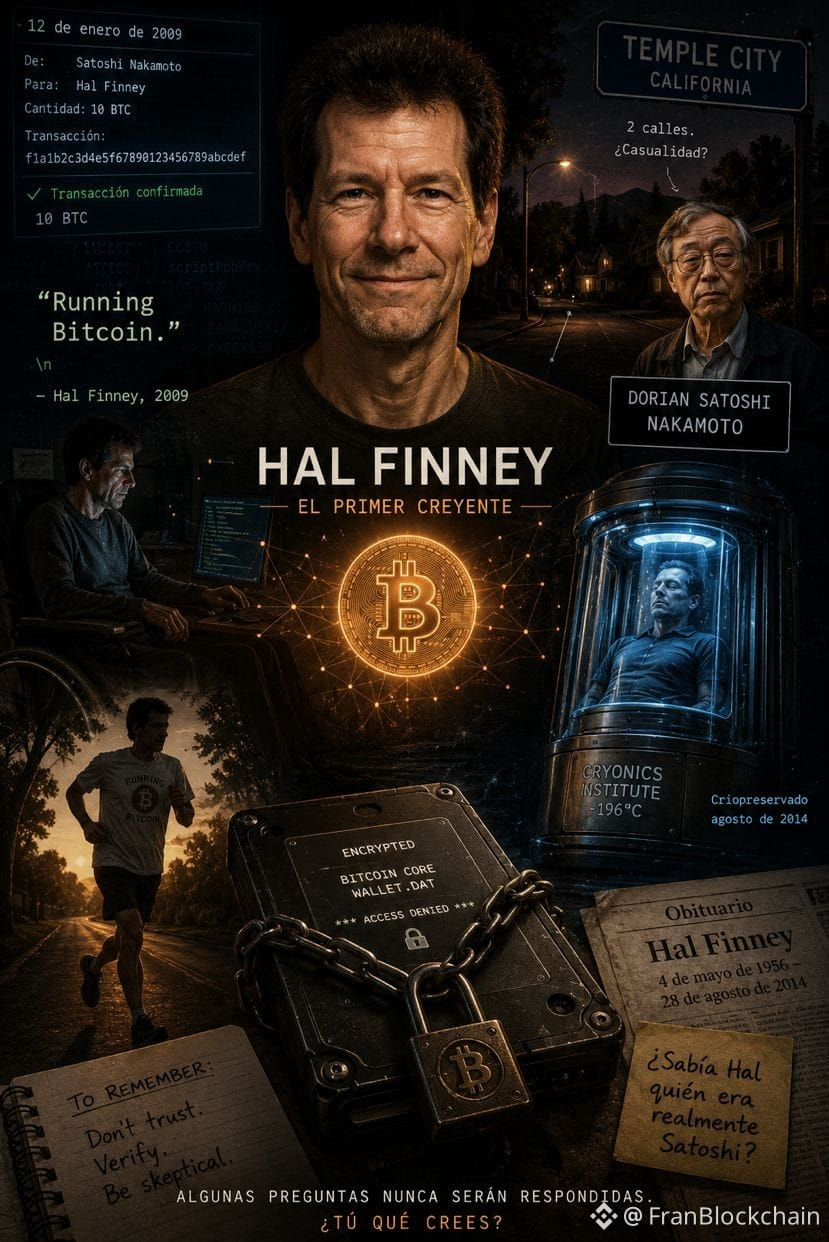
₿ 💥 Received the first Bitcoin transaction $BTC in history. Lived two blocks away from someone named Satoshi Nakamoto. And passed away with his encrypted hard drives. His name was Hal Finney. Cryptographer. Marathon runner. Employee at a video game company in California. On January 12, 2009, Satoshi Nakamoto sent him 10 BTC. The first Bitcoin transaction in the history of the world. Hal was the first believer. The first to run a node. The first to tell Satoshi: "this works." In 2009, he tweeted something that today seems prophetic: "Running Bitcoin." Two words. No context. No fanfare. In 2013, he was diagnosed with ALS — amyotrophic lateral sclerosis. He kept coding from his wheelchair. Dictating code with his eyes when he could no longer move his fingers. He passed away in August 2014. His body was cryopreserved. It remains frozen today. But here comes what almost nobody knows. Hal Finney lived in Temple City, California. Two blocks from his house lived an elderly, retired Japanese-American man. His name: Dorian Satoshi Nakamoto. Coincidence, say the investigators. Too much coincidence, say others. Hal Finney's hard drives were never decrypted. Nobody knows what's inside. Did Hal know who Satoshi really was? Did he take it to the cryo chamber? There are questions in crypto that the market will never answer. This is one of them. What do you think? Fran Berlín | Blockchain Institute. #bitcoin #CryptoHistory #halfinney #FranBerlin #InstitutoBlockchain {spot}(BTCUSDT)
₿ 💥 Received the first Bitcoin transaction $BTC in history.
Lived two blocks away from someone named Satoshi Nakamoto.
And passed away with his encrypted hard drives.

His name was Hal Finney.

Cryptographer. Marathon runner. Employee at a video game company in California.
On January 12, 2009, Satoshi Nakamoto sent him 10 BTC.
The first Bitcoin transaction in the history of the world.

Hal was the first believer. The first to run a node.
The first to tell Satoshi: "this works."

In 2009, he tweeted something that today seems prophetic:
"Running Bitcoin."
Two words. No context. No fanfare.

In 2013, he was diagnosed with ALS — amyotrophic lateral sclerosis.
He kept coding from his wheelchair.
Dictating code with his eyes when he could no longer move his fingers.

He passed away in August 2014.
His body was cryopreserved. It remains frozen today.

But here comes what almost nobody knows.

Hal Finney lived in Temple City, California.
Two blocks from his house lived an elderly, retired Japanese-American man.

His name: Dorian Satoshi Nakamoto.

Coincidence, say the investigators.
Too much coincidence, say others.

Hal Finney's hard drives were never decrypted.
Nobody knows what's inside.

Did Hal know who Satoshi really was?
Did he take it to the cryo chamber?

There are questions in crypto that the market will never answer.
This is one of them.

What do you think?

Fran Berlín | Blockchain Institute.

#bitcoin #CryptoHistory #halfinney #FranBerlin #InstitutoBlockchain
Utah78:
Ni el mercado ni la criocámara responderán esas preguntas ...
🍕 Received 10,000 $BTC Bitcoin for two pizzas. And he probably sold them the next day. On May 22, 2010, Laszlo Hanyecz posted on Bitcointalk: "I will pay 10,000 BTC for a couple of pizzas." The story everyone knows ends there. Laszlo. The pizzas. The legendary number. But there's a second character who vanished from the story. A 19-year-old kid in Florida named Jeremy Sturdivant. Bitcointalk user: jercos. He was the one who accepted the deal, ordered the pizzas, and delivered them. He received 10,000 BTC. Today they are worth over 900 million dollars. $USDT What did he do with them? He spent them. All of them. On trips. On small purchases. On living. In 2019, he was asked in an interview if he regretted it. He replied with something very few expected: "No. It was a time of adventure. We had no way of knowing." And he was right. In 2010, Bitcoin had no real price. There were no formal exchanges. There was no narrative of "store of value." It was code among enthusiasts playing with an idea. Jeremy didn't lose a fortune. He lived the exact moment when an idea he didn't yet know would change the world. The question no one asks is not "why did he spend it?" The question is: How many Jeremy Sturdivants are sitting on the next 900 million asset right now without knowing it? Do you have anything in your wallet that you haven't checked again? Fran Berlín | Blockchain Institute. #bitcoin #bitcoinpizzaday #CryptoHistory #FranBerlin #InstitutoBlockchain {spot}(BTCUSDT)
🍕 Received 10,000 $BTC Bitcoin for two pizzas.
And he probably sold them the next day.

On May 22, 2010, Laszlo Hanyecz posted on Bitcointalk:
"I will pay 10,000 BTC for a couple of pizzas."

The story everyone knows ends there.
Laszlo. The pizzas. The legendary number.

But there's a second character who vanished from the story.

A 19-year-old kid in Florida named Jeremy Sturdivant.
Bitcointalk user: jercos.
He was the one who accepted the deal, ordered the pizzas, and delivered them.

He received 10,000 BTC.
Today they are worth over 900 million dollars. $USDT

What did he do with them?

He spent them.
All of them.
On trips. On small purchases. On living.

In 2019, he was asked in an interview if he regretted it.
He replied with something very few expected:

"No. It was a time of adventure. We had no way of knowing."

And he was right.

In 2010, Bitcoin had no real price.
There were no formal exchanges.
There was no narrative of "store of value."
It was code among enthusiasts playing with an idea.

Jeremy didn't lose a fortune.
He lived the exact moment when an idea
he didn't yet know would change the world.

The question no one asks is not
"why did he spend it?"

The question is:
How many Jeremy Sturdivants are sitting on the next 900 million asset right now without knowing it?

Do you have anything in your wallet that you haven't checked again?

Fran Berlín | Blockchain Institute.

#bitcoin #bitcoinpizzaday #CryptoHistory #FranBerlin #InstitutoBlockchain
💥The guy who threw away 10,000 $BTC . And he knows it. And he lives with that. In 2010, Laszlo Hanyecz paid for two pizzas with 10,000 Bitcoin. Everyone knows him. That's already the tourist anecdote. But there's a story that almost nobody tells. James Howells, a British engineer, mined 8,000 BTC in 2009. He stored it on a hard drive. In 2013, while cleaning his office, he accidentally threw it away. The drive ended up in a landfill in Newport, Wales. Today that drive is worth over 700 million dollars. It's buried under tons of trash. And the local government has denied him the permit to dig for years. Howells has offered the municipality 25% of the find. They've said no. Three times. But here comes what almost nobody knows: Before any exchange existed, before Coinbase, before Binance, the only place you could 'buy' Bitcoin was a forum called Bitcointalk. On that forum, in 2010, a user sold 10,000 BTC for $41 dollars. $USDT It wasn't Laszlo. It was a silent transaction, unnamed, with no public history. The buyer never posted again. Nobody knows who it was. Nobody knows if they still hold those coins. In its early years, Crypto wasn't Wall Street. It was a forum of cypherpunks, idealists, and the curious who believed money could exist without banks. Some became millionaires without knowing it. Others lost fortunes for not securely storing 12 words. The technology didn't fail. The human context failed, as it wasn't ready to understand it yet. And you? When did you enter this world? Did you arrive late or just in time for the next chapter? Fran Berlín | Blockchain Institute. #bitcoin #CryptoHistory #FranBerlin #Web3 #InstitutoBlockchain {spot}(BTCUSDT)
💥The guy who threw away 10,000 $BTC .
And he knows it. And he lives with that.

In 2010, Laszlo Hanyecz paid for two pizzas with 10,000 Bitcoin.
Everyone knows him. That's already the tourist anecdote.

But there's a story that almost nobody tells.

James Howells, a British engineer, mined 8,000 BTC in 2009.
He stored it on a hard drive.
In 2013, while cleaning his office, he accidentally threw it away.
The drive ended up in a landfill in Newport, Wales.

Today that drive is worth over 700 million dollars.
It's buried under tons of trash.
And the local government has denied him the permit to dig for years.

Howells has offered the municipality 25% of the find.
They've said no. Three times.

But here comes what almost nobody knows:

Before any exchange existed,
before Coinbase, before Binance,
the only place you could 'buy' Bitcoin was a forum called Bitcointalk.

On that forum, in 2010, a user sold 10,000 BTC for $41 dollars. $USDT
It wasn't Laszlo.
It was a silent transaction, unnamed, with no public history.
The buyer never posted again.
Nobody knows who it was.
Nobody knows if they still hold those coins.

In its early years, Crypto wasn't Wall Street.
It was a forum of cypherpunks, idealists, and the curious
who believed money could exist without banks.

Some became millionaires without knowing it.
Others lost fortunes for not securely storing 12 words.

The technology didn't fail.
The human context failed, as it wasn't ready to understand it yet.

And you? When did you enter this world?
Did you arrive late or just in time for the next chapter?

Fran Berlín | Blockchain Institute.

#bitcoin #CryptoHistory #FranBerlin #Web3 #InstitutoBlockchain
Is the market scaring you today? The institutions are rubbing their hands together. Friday, May 29. Bitcoin opens at $73,381 and Ethereum dips below $2,000. The lowest prices of the week. Retail is panicking. Headlines scream "crash." Meanwhile, quietly, VanEck has just launched the first spot BNB ETF on Nasdaq in the U.S. The institutional infrastructure keeps being built, dip or no dip. And what’s the catalyst that no one is watching? A 60-day U.S.-Iran truce agreement is on Trump's desk waiting for a signature. If the Strait of Hormuz reopens, risk appetite returns in a matter of hours. Crypto is always the first to react. Bitcoin's all-time high was $126,198 in October 2025. Today it’s trading 42% below that level. That’s not a wreck. For many funds, that’s a buy-in. Retail sees the price. Institutions see the moment. The question isn’t if it goes up. The question is: are you going to be in when it happens? What are you doing with this correction: buying, waiting, or getting out? 👇$BTC $ETH #bitcoin #Ethereum #FranBerlin #crypto #InstitutoBlockchain $USDC {spot}(BTCUSDT)
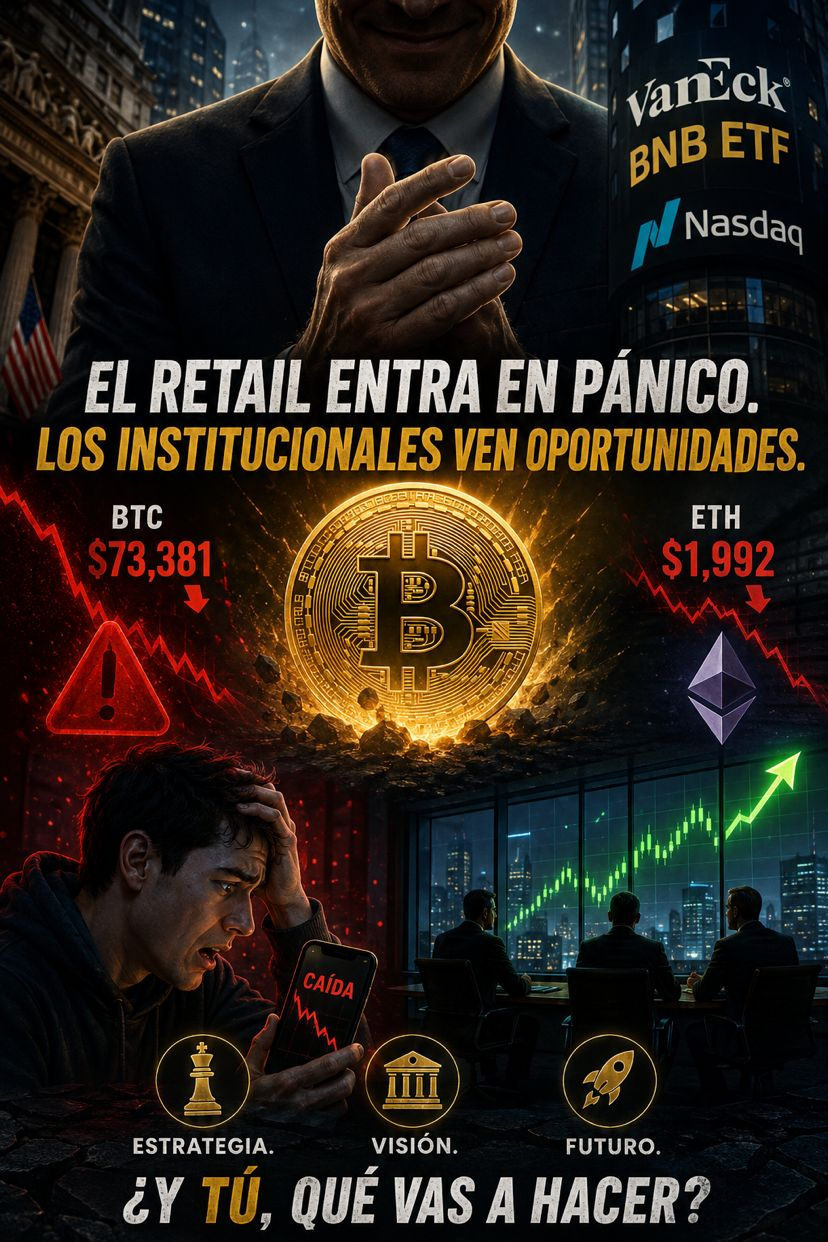
Is the market scaring you today? The institutions are rubbing their hands together.

Friday, May 29. Bitcoin opens at $73,381 and Ethereum dips below $2,000. The lowest prices of the week. Retail is panicking. Headlines scream "crash."

Meanwhile, quietly, VanEck has just launched the first spot BNB ETF on Nasdaq in the U.S. The institutional infrastructure keeps being built, dip or no dip.

And what’s the catalyst that no one is watching? A 60-day U.S.-Iran truce agreement is on Trump's desk waiting for a signature. If the Strait of Hormuz reopens, risk appetite returns in a matter of hours. Crypto is always the first to react.

Bitcoin's all-time high was $126,198 in October 2025. Today it’s trading 42% below that level. That’s not a wreck. For many funds, that’s a buy-in.

Retail sees the price. Institutions see the moment.

The question isn’t if it goes up. The question is: are you going to be in when it happens?

What are you doing with this correction: buying, waiting, or getting out? 👇$BTC $ETH

#bitcoin #Ethereum #FranBerlin #crypto #InstitutoBlockchain
$USDC
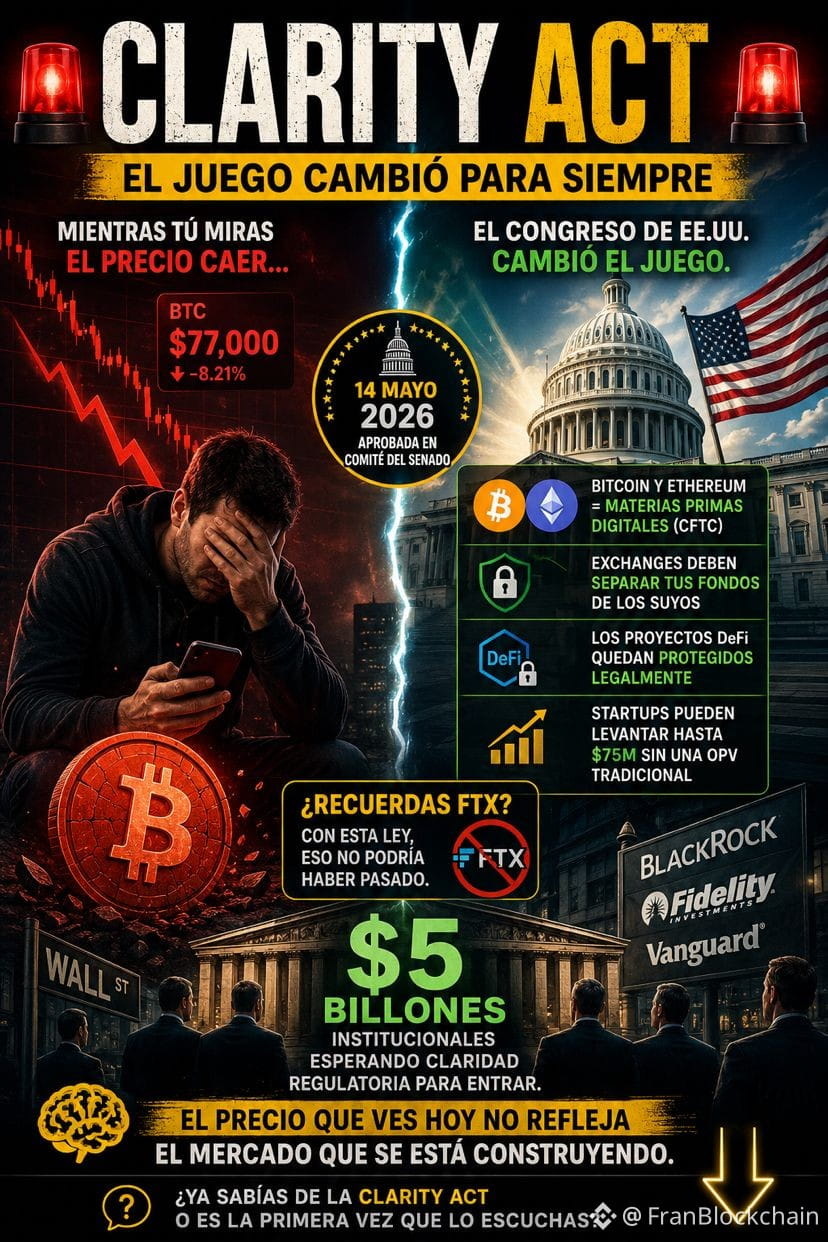
🚨 BITCOIN DROPS 2% AND RETAIL IS PANICKING. $BTC Institutions are cheering. BTC is trading today at $75,969 📉 It fell -1.98% in the last 24 hours. Total market cap: $2.54 TRILLION. BTC dominance: 59.87% While small investors see red and start to sell… Bitcoin spot ETFs have accumulated over $56 billion in net inflows. $USDT Do you understand what that means? Blackrock, Fidelity, and the Wall Street giants ARE NOT selling. They are buying what you are dumping out of fear. 📌 Bitcoin hit $126,073 in October 2025. Today, it’s in correction. Is this a crisis… or a disguised opportunity? The crypto story is always the same: 🔴 Retail sells in fear. 🟢 Whales buy in silence. The question isn’t if Bitcoin will recover. The question is: what side of the trade will you be on when it does? Comment below 👇 Are you accumulating or waiting? $USDC #bitcoin #Criptomonedas #InstitucionalVsRetail #FranBerlin #InstitutoBlockchain {spot}(BTCUSDT)
🚨 BITCOIN DROPS 2% AND RETAIL IS PANICKING. $BTC
Institutions are cheering.

BTC is trading today at $75,969 📉
It fell -1.98% in the last 24 hours.
Total market cap: $2.54 TRILLION.
BTC dominance: 59.87%

While small investors see red and start to sell…

Bitcoin spot ETFs have accumulated over $56 billion in net inflows. $USDT

Do you understand what that means?

Blackrock, Fidelity, and the Wall Street giants ARE NOT selling.
They are buying what you are dumping out of fear.

📌 Bitcoin hit $126,073 in October 2025.
Today, it’s in correction.
Is this a crisis… or a disguised opportunity?

The crypto story is always the same:
🔴 Retail sells in fear.
🟢 Whales buy in silence.

The question isn’t if Bitcoin will recover.
The question is: what side of the trade will you be on when it does?

Comment below 👇 Are you accumulating or waiting? $USDC

#bitcoin #Criptomonedas #InstitucionalVsRetail #FranBerlin #InstitutoBlockchain
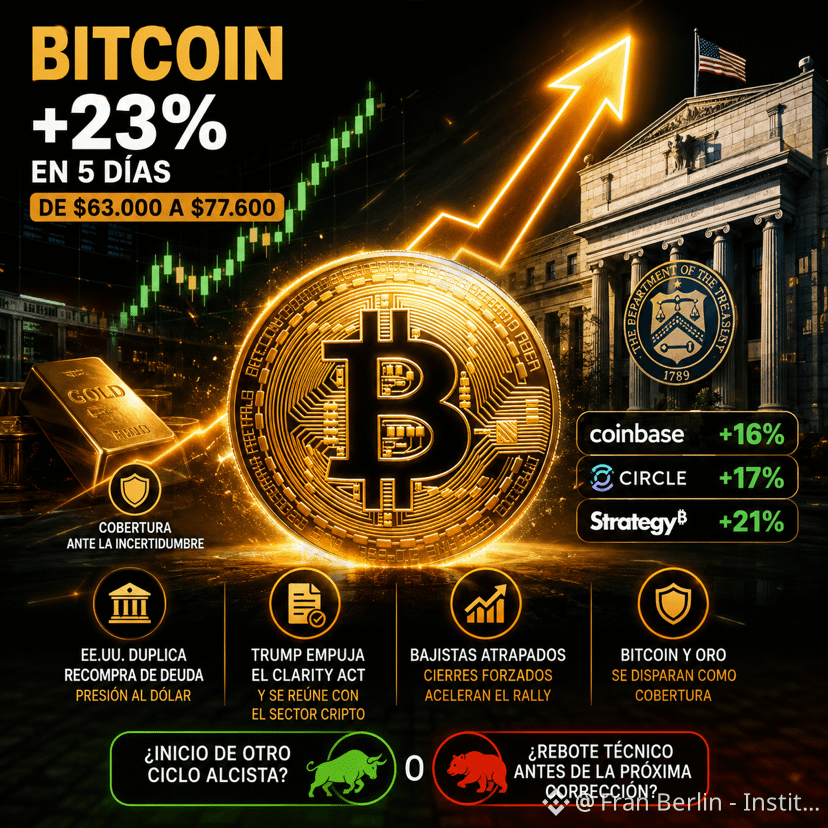
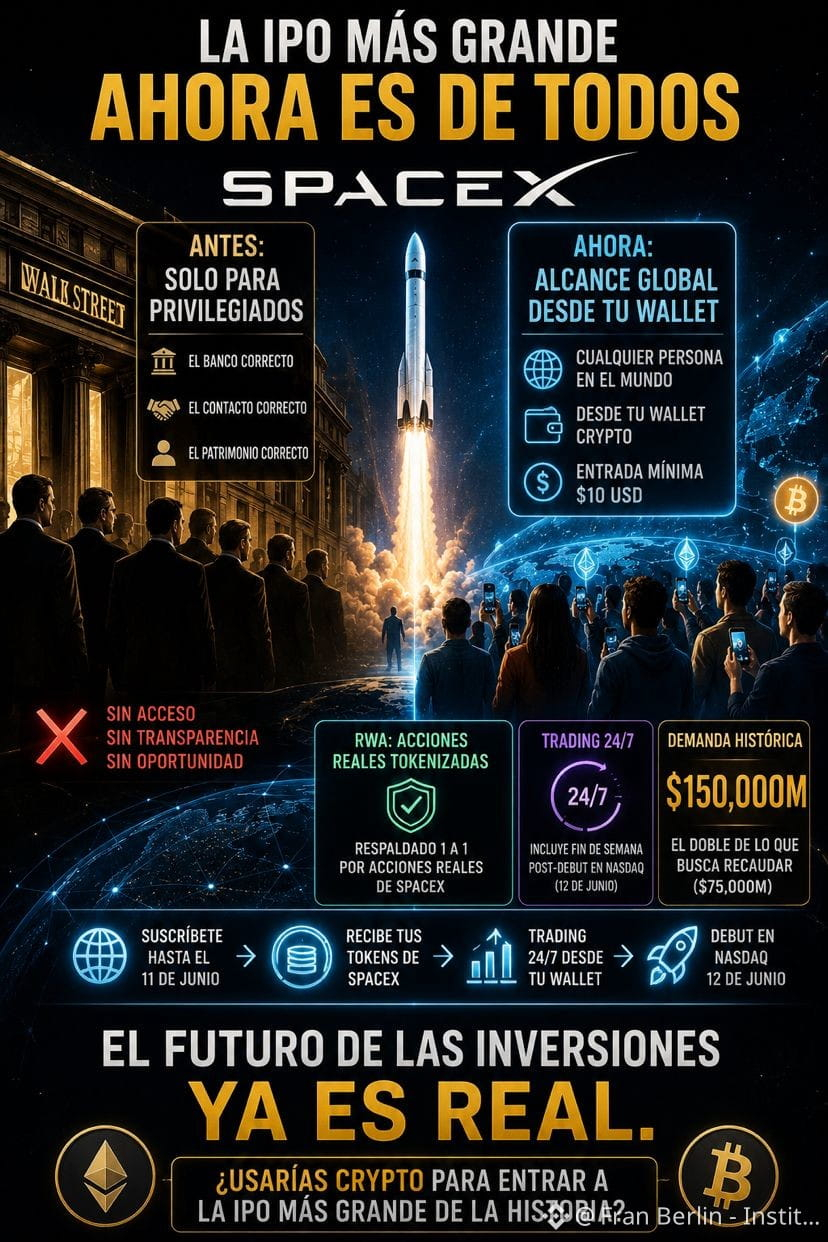
🚀 SpaceX just revealed that it has $1,450,000,000 in #Bitcoin. $BTC Yes. One billion four hundred fifty million dollars. $USDT It's not an investment fund. It's not a bank. It's Elon Musk's rocket company… gearing up to go public with BTC on its balance sheet. And while that’s happening, retail is panicking because BTC touched the 200-day moving average and "bounced down." 🤔 Ask yourself this: Who has more information — you watching candlesticks on TikTok or SpaceX with its team of institutional analysts? 📊 What the market ISN'T telling you today: ▸ BTC is trading at ~$77,333 — consolidating, not falling ▸ Longs on Bitfinex reached 80,636 BTC 🐋 (whales accumulating) ▸ Nvidia exceeded expectations → crypto miners linked to AI are on the rise ▸ Binance Research confirms: institutional flows into BTC are structural, not speculative Retail sells when it dips. Institutions buy when retail sells. That’s not conspiracy theory. It’s the same cycle… and it’s happening right now. 💬 Where are you in this cycle — accumulating or waiting for "the perfect signal"? Let me know below 👇 $USDC #CryptoLatino #crypto #InstitutoBlockchain #FranBerlin {spot}(BTCUSDT)
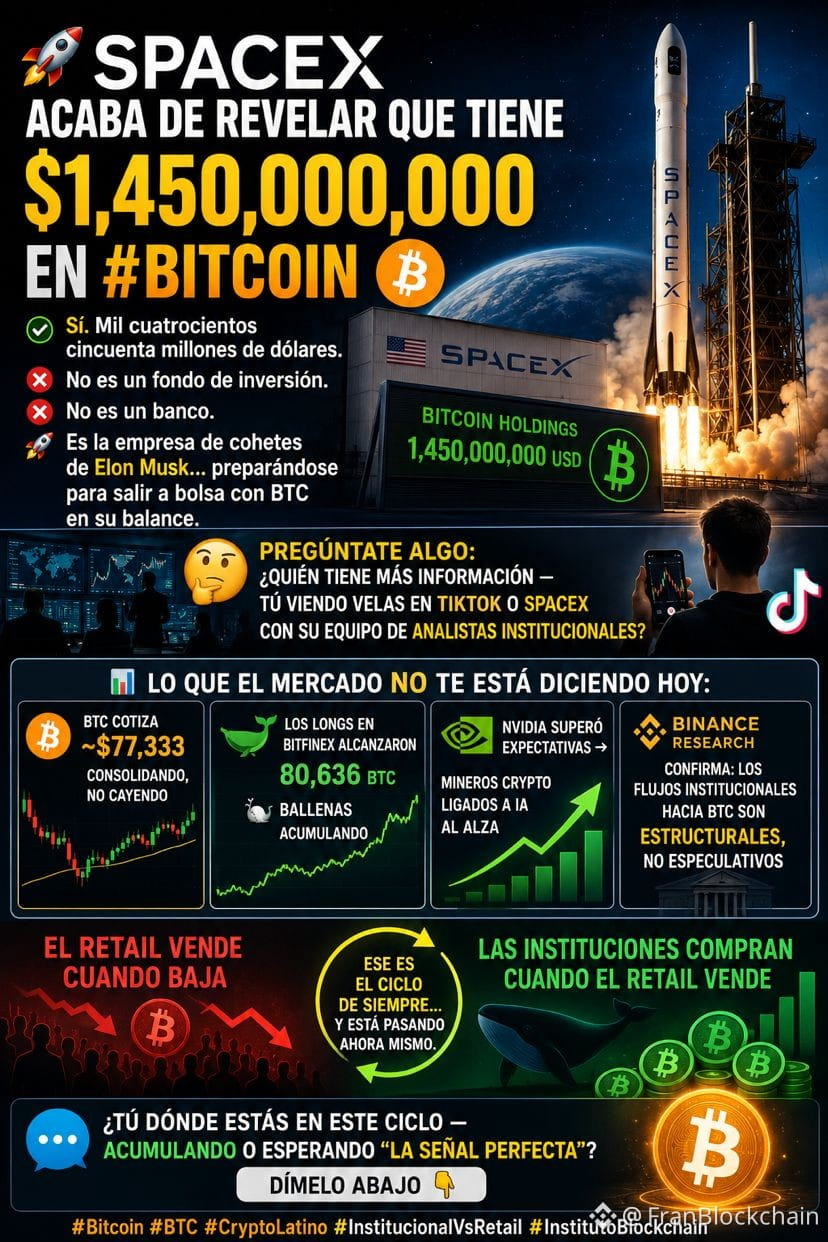
🚀 SpaceX just revealed that it has $1,450,000,000 in #Bitcoin. $BTC

Yes. One billion four hundred fifty million dollars. $USDT

It's not an investment fund.
It's not a bank.
It's Elon Musk's rocket company… gearing up to go public with BTC on its balance sheet.

And while that’s happening, retail is panicking because BTC touched the 200-day moving average and "bounced down."

🤔 Ask yourself this:

Who has more information — you watching candlesticks on TikTok or SpaceX with its team of institutional analysts?

📊 What the market ISN'T telling you today:

▸ BTC is trading at ~$77,333 — consolidating, not falling
▸ Longs on Bitfinex reached 80,636 BTC 🐋 (whales accumulating)
▸ Nvidia exceeded expectations → crypto miners linked to AI are on the rise
▸ Binance Research confirms: institutional flows into BTC are structural, not speculative

Retail sells when it dips.
Institutions buy when retail sells.

That’s not conspiracy theory.
It’s the same cycle… and it’s happening right now.

💬 Where are you in this cycle — accumulating or waiting for "the perfect signal"?

Let me know below 👇
$USDC
#CryptoLatino #crypto #InstitutoBlockchain #FranBerlin
Log in to explore more content
Join global crypto users on Binance Square
⚡️ Get latest and useful information about crypto.
💬 Trusted by the world’s largest crypto exchange.
👍 Discover real insights from verified creators.
Email / Phone number