
#falconinsights
falconinsights
222,746 views
463 Discussing
Hot
Latest

·
--
Bullish
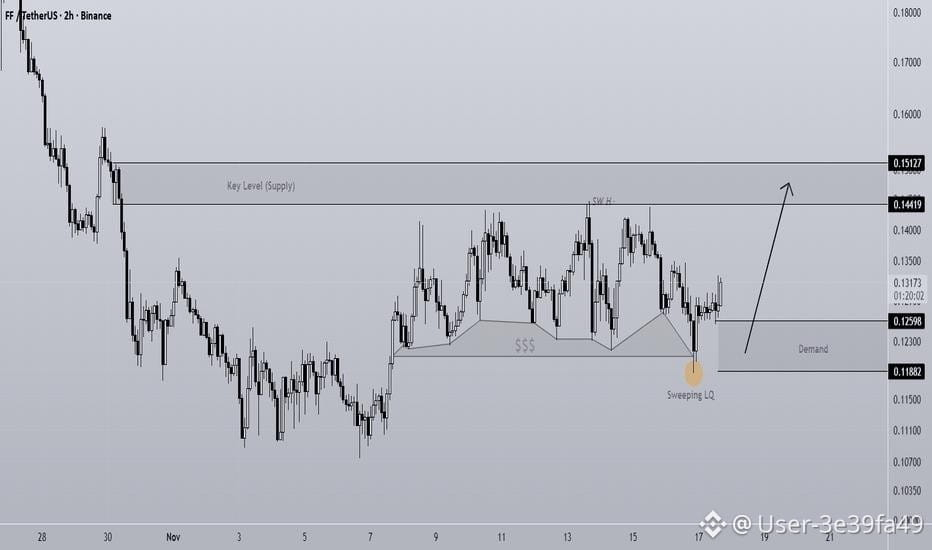
Falcon Finance is currently showing high volatility with bullish short-term momentum. As of 15 September 2026, $FF
{future}(FFUSDT)
is around $0.14, with 24-hour trading volume near $89M, indicating strong market activity.
Latest update: FF recently rallied strongly, but the move has also seen profit-taking and pullbacks. Today’s market commentary suggests the latest short-term price jump was mainly a liquidity/speculative move rather than a major new fundamental announcement. (CoinMarketCap)
Technical view:
🟢 Support: around $0.11–$0.12
🟡 Current zone: around $0.14
🔴 Resistance: around $0.16–$0.17, with stronger resistance near $0.19
A break above $0.17 with strong volume could improve the bullish setup.
Losing $0.11 would make the short-term structure considerably weaker.
Overall: FF looks bullish but highly volatile. After the recent rally, chasing the price is risky; confirmation of a breakout or a controlled pullback toward support would be safer to watch. This is market analysis, not financial advice.
#FedRateWatch #FalconInsights #StrategyMarketCapPassesFord #BessentEndorsesFinalClarityActDraft
Falcon Finance is currently showing high volatility with bullish short-term momentum. As of 15 September 2026, $FF
is around $0.14, with 24-hour trading volume near $89M, indicating strong market activity.
Latest update: FF recently rallied strongly, but the move has also seen profit-taking and pullbacks. Today’s market commentary suggests the latest short-term price jump was mainly a liquidity/speculative move rather than a major new fundamental announcement. (CoinMarketCap)
Technical view:
🟢 Support: around $0.11–$0.12
🟡 Current zone: around $0.14
🔴 Resistance: around $0.16–$0.17, with stronger resistance near $0.19
A break above $0.17 with strong volume could improve the bullish setup.
Losing $0.11 would make the short-term structure considerably weaker.
Overall: FF looks bullish but highly volatile. After the recent rally, chasing the price is risky; confirmation of a breakout or a controlled pullback toward support would be safer to watch. This is market analysis, not financial advice.
#FedRateWatch #FalconInsights #StrategyMarketCapPassesFord #BessentEndorsesFinalClarityActDraft
is around $0.14, with 24-hour trading volume near $89M, indicating strong market activity.
Latest update: FF recently rallied strongly, but the move has also seen profit-taking and pullbacks. Today’s market commentary suggests the latest short-term price jump was mainly a liquidity/speculative move rather than a major new fundamental announcement. (CoinMarketCap)
Technical view:
🟢 Support: around $0.11–$0.12
🟡 Current zone: around $0.14
🔴 Resistance: around $0.16–$0.17, with stronger resistance near $0.19
A break above $0.17 with strong volume could improve the bullish setup.
Losing $0.11 would make the short-term structure considerably weaker.
Overall: FF looks bullish but highly volatile. After the recent rally, chasing the price is risky; confirmation of a breakout or a controlled pullback toward support would be safer to watch. This is market analysis, not financial advice.
#FedRateWatch #FalconInsights #StrategyMarketCapPassesFord #BessentEndorsesFinalClarityActDraft
85

·
--
Article
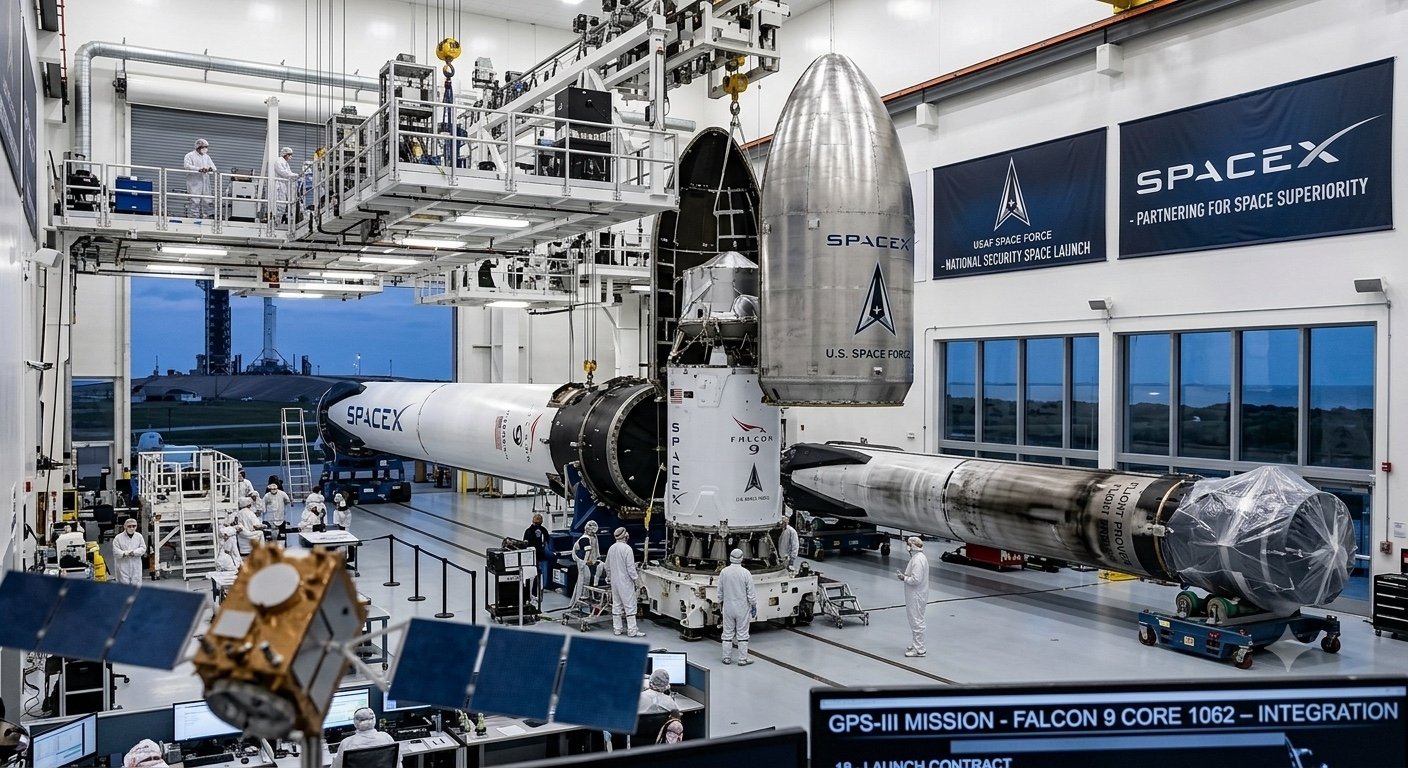
Technical Analysis: SpaceX ,Falcon 9 vs. Competitors in the NSSL FleetTo understand why Falcon 9 remains a core asset for the U.S. Space Force, it is helpful to evaluate its technical profile against alternative platforms serving the National Security Space Launch (NSSL) framework, such as United Launch Alliance's (ULA) Vulcan Centaur and Blue Origin's New Glenn.
1. Propellant Architecture and High-Energy Orbits
RP-1 vs. Cryogenic Hydrogen: Falcon 9 utilizes RP-1 (refined kerosene) and Liquid Oxygen (LOX) across both stages. While RP-1 offers high density and ease of handling, it has a lower specific impulse (I_{sp}) compared to Liquid Hydrogen (LH2) or Liquefied Natural Gas (LNG).
Upper Stage Efficiency: For high-energy direct insertion missions (such as Direct-to-GEO or deep-space orbits), upper stages utilizing cryogenic hydrogen (like ULA's Centaur V with RL10 engines) offer superior vacuum performance. To compensate for high-energy missions exceeding Falcon 9's performance envelope, the Space Force leverages the Falcon Heavy configuration (three tied Falcon 9 cores).
2. Reusability and Cadence vs. Payload Fraction
Turnaround Speed: Falcon 9’s grid-fin control system, cold-gas thrusters, and landing legs enable rapid booster turnaround, allowing SpaceX to execute frequent launch manifests.
Payload Penalty: Propulsive landing requires reserving ~20–30% of total propellant for reentry burns and touchdown, lowering maximum payload performance compared to full expendability. However, for standard LEO and MEO navigation constellations, Falcon 9's reusable performance margin comfortably exceeds mission mass requirements.
3. Dual-Coast Pad Availability
SpaceX operates two operational East Coast pads (SLC-40 at Cape Canaveral and LC-39A at Kennedy Space Center) alongside West Coast infrastructure (SLC-4E at Vandenberg). This multi-pad redundancy gives the Space Force scheduling flexibility and guarantees launch capability even during pad maintenance or surge deployments.
Industry Outlook
While ULA's Vulcan Centaur and Blue Origin's New Glenn are architected to handle high-mass, high-energy payloads in NSSL Phase 3 allocations, Falcon 9 remains the workhorse for low-to-medium orbit satellite deployment. The $1.6 billion award reflects a balanced defense procurement strategy: leveraging high-energy launch systems where required, while capitalizing on Falcon 9's unmatched flight rate and proven reliability for core operational constellations.
#NSSL #FalconInsights #NasdaqRebounds2.8%EndingSixDaySlide #Write2Earn
$SPACE
{future}(SPACEUSDT)
$AAPLB
{spot}(AAPLBUSDT)
$GOOG.US
{stock_us}(GOOG.US)
Technical Analysis: SpaceX ,Falcon 9 vs. Competitors in the NSSL Fleet
To understand why Falcon 9 remains a core asset for the U.S. Space Force, it is helpful to evaluate its technical profile against alternative platforms serving the National Security Space Launch (NSSL) framework, such as United Launch Alliance's (ULA) Vulcan Centaur and Blue Origin's New Glenn.
1. Propellant Architecture and High-Energy Orbits
RP-1 vs. Cryogenic Hydrogen: Falcon 9 utilizes RP-1 (refined kerosene) and Liquid Oxygen (LOX) across both stages. While RP-1 offers high density and ease of handling, it has a lower specific impulse (I_{sp}) compared to Liquid Hydrogen (LH2) or Liquefied Natural Gas (LNG).
Upper Stage Efficiency: For high-energy direct insertion missions (such as Direct-to-GEO or deep-space orbits), upper stages utilizing cryogenic hydrogen (like ULA's Centaur V with RL10 engines) offer superior vacuum performance. To compensate for high-energy missions exceeding Falcon 9's performance envelope, the Space Force leverages the Falcon Heavy configuration (three tied Falcon 9 cores).
2. Reusability and Cadence vs. Payload Fraction
Turnaround Speed: Falcon 9’s grid-fin control system, cold-gas thrusters, and landing legs enable rapid booster turnaround, allowing SpaceX to execute frequent launch manifests.
Payload Penalty: Propulsive landing requires reserving ~20–30% of total propellant for reentry burns and touchdown, lowering maximum payload performance compared to full expendability. However, for standard LEO and MEO navigation constellations, Falcon 9's reusable performance margin comfortably exceeds mission mass requirements.
3. Dual-Coast Pad Availability
SpaceX operates two operational East Coast pads (SLC-40 at Cape Canaveral and LC-39A at Kennedy Space Center) alongside West Coast infrastructure (SLC-4E at Vandenberg). This multi-pad redundancy gives the Space Force scheduling flexibility and guarantees launch capability even during pad maintenance or surge deployments.
Industry Outlook
While ULA's Vulcan Centaur and Blue Origin's New Glenn are architected to handle high-mass, high-energy payloads in NSSL Phase 3 allocations, Falcon 9 remains the workhorse for low-to-medium orbit satellite deployment. The $1.6 billion award reflects a balanced defense procurement strategy: leveraging high-energy launch systems where required, while capitalizing on Falcon 9's unmatched flight rate and proven reliability for core operational constellations.
#NSSL #FalconInsights #NasdaqRebounds2.8%EndingSixDaySlide #Write2Earn
$SPACE
$AAPLB
$GOOG.US
1. Propellant Architecture and High-Energy Orbits
RP-1 vs. Cryogenic Hydrogen: Falcon 9 utilizes RP-1 (refined kerosene) and Liquid Oxygen (LOX) across both stages. While RP-1 offers high density and ease of handling, it has a lower specific impulse (I_{sp}) compared to Liquid Hydrogen (LH2) or Liquefied Natural Gas (LNG).
Upper Stage Efficiency: For high-energy direct insertion missions (such as Direct-to-GEO or deep-space orbits), upper stages utilizing cryogenic hydrogen (like ULA's Centaur V with RL10 engines) offer superior vacuum performance. To compensate for high-energy missions exceeding Falcon 9's performance envelope, the Space Force leverages the Falcon Heavy configuration (three tied Falcon 9 cores).
2. Reusability and Cadence vs. Payload Fraction
Turnaround Speed: Falcon 9’s grid-fin control system, cold-gas thrusters, and landing legs enable rapid booster turnaround, allowing SpaceX to execute frequent launch manifests.
Payload Penalty: Propulsive landing requires reserving ~20–30% of total propellant for reentry burns and touchdown, lowering maximum payload performance compared to full expendability. However, for standard LEO and MEO navigation constellations, Falcon 9's reusable performance margin comfortably exceeds mission mass requirements.
3. Dual-Coast Pad Availability
SpaceX operates two operational East Coast pads (SLC-40 at Cape Canaveral and LC-39A at Kennedy Space Center) alongside West Coast infrastructure (SLC-4E at Vandenberg). This multi-pad redundancy gives the Space Force scheduling flexibility and guarantees launch capability even during pad maintenance or surge deployments.
Industry Outlook
While ULA's Vulcan Centaur and Blue Origin's New Glenn are architected to handle high-mass, high-energy payloads in NSSL Phase 3 allocations, Falcon 9 remains the workhorse for low-to-medium orbit satellite deployment. The $1.6 billion award reflects a balanced defense procurement strategy: leveraging high-energy launch systems where required, while capitalizing on Falcon 9's unmatched flight rate and proven reliability for core operational constellations.
#NSSL #FalconInsights #NasdaqRebounds2.8%EndingSixDaySlide #Write2Earn
$SPACE
$AAPLB
$GOOG.US
2
408


·
--
Bullish
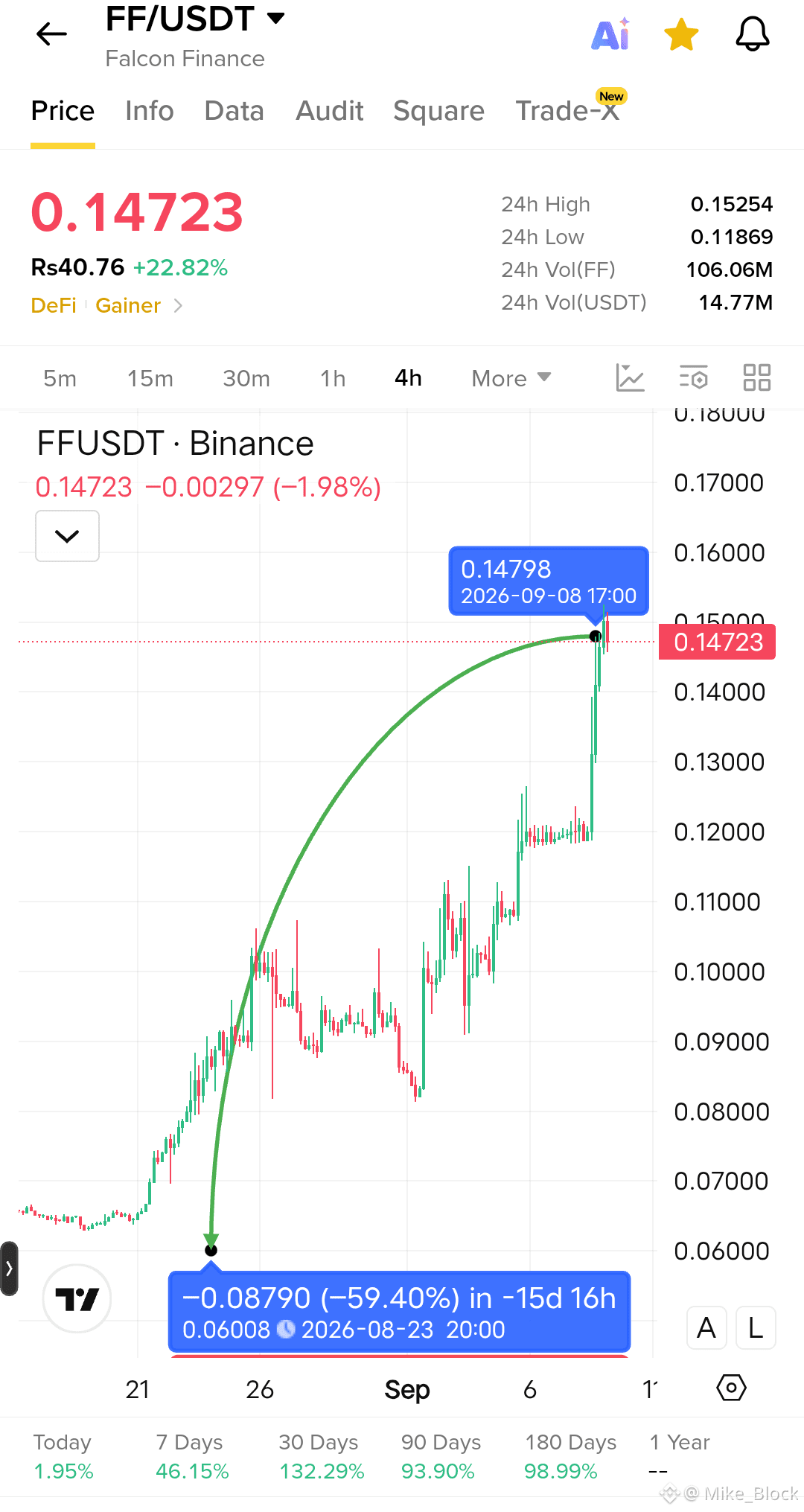
I’m watching $FF /USDT closely after this sharp upside move. Price has pushed into the 0.148–0.1525 resistance area, so I’m looking for a rejection rather than blindly shorting into momentum.
FF/USDT SHORT SETUP
Entry Zone: 0.1480 – 0.1525
TP1: 0.1420
TP2: 0.1360
TP3: 0.1300
TP4: 0.1240
TP5: 0.1185
TP6: 0.1120
Stop Loss: 0.1565
The idea is simple: after such a strong run, if price fails to hold the 0.148–0.1525 area and starts printing lower highs on the lower timeframes, the correction could accelerate toward the previous consolidation zones.
I’m not calling this a guaranteed dump. If FF breaks above resistance and holds there with strong volume, I would stay away from the short. Risk management comes first.
This is a technical setup based on the chart, not financial advice. Trade only with proper risk management and never risk more than you can afford to lose.
$FF
{future}(FFUSDT)
#ff #FalconInsights #SaudiHaltsSouthernEnergySitesAfterAttacks #YenBreaks155NearingYearHigh
I’m watching $FF /USDT closely after this sharp upside move. Price has pushed into the 0.148–0.1525 resistance area, so I’m looking for a rejection rather than blindly shorting into momentum.
FF/USDT SHORT SETUP
Entry Zone: 0.1480 – 0.1525
TP1: 0.1420
TP2: 0.1360
TP3: 0.1300
TP4: 0.1240
TP5: 0.1185
TP6: 0.1120
Stop Loss: 0.1565
The idea is simple: after such a strong run, if price fails to hold the 0.148–0.1525 area and starts printing lower highs on the lower timeframes, the correction could accelerate toward the previous consolidation zones.
I’m not calling this a guaranteed dump. If FF breaks above resistance and holds there with strong volume, I would stay away from the short. Risk management comes first.
This is a technical setup based on the chart, not financial advice. Trade only with proper risk management and never risk more than you can afford to lose.
$FF
#ff #FalconInsights #SaudiHaltsSouthernEnergySitesAfterAttacks #YenBreaks155NearingYearHigh
FF/USDT SHORT SETUP
Entry Zone: 0.1480 – 0.1525
TP1: 0.1420
TP2: 0.1360
TP3: 0.1300
TP4: 0.1240
TP5: 0.1185
TP6: 0.1120
Stop Loss: 0.1565
The idea is simple: after such a strong run, if price fails to hold the 0.148–0.1525 area and starts printing lower highs on the lower timeframes, the correction could accelerate toward the previous consolidation zones.
I’m not calling this a guaranteed dump. If FF breaks above resistance and holds there with strong volume, I would stay away from the short. Risk management comes first.
This is a technical setup based on the chart, not financial advice. Trade only with proper risk management and never risk more than you can afford to lose.
$FF
#ff #FalconInsights #SaudiHaltsSouthernEnergySitesAfterAttacks #YenBreaks155NearingYearHigh
317

·
--
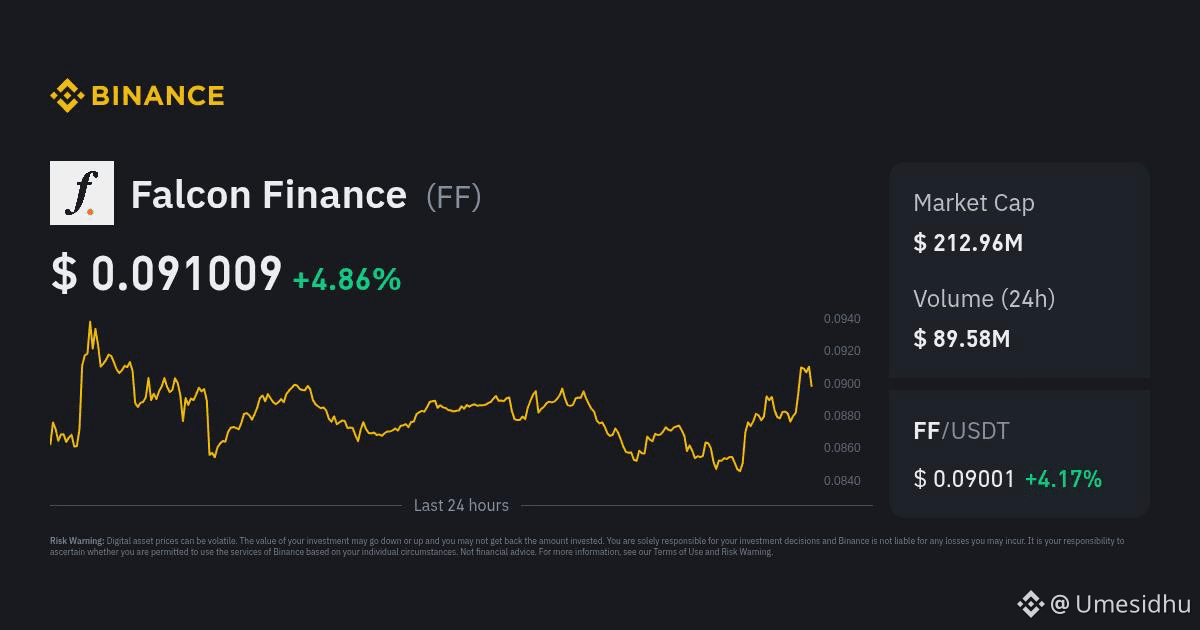
Falcon Finance (FF): Trading around $0.10, with strong recent momentum and price above key moving averages. 
📈 Outlook: Bullish above $0.097; a break above $0.103 could push toward $0.11–$0.12.
#FalconInsights #BinanceSquareTalks #BitcoinETFBuyersReturn #ExplosionsAtUSBasesInKuwait #falcontalking
{future}(FFUSDT)
Falcon Finance (FF): Trading around $0.10, with strong recent momentum and price above key moving averages. 
📈 Outlook: Bullish above $0.097; a break above $0.103 could push toward $0.11–$0.12.
#FalconInsights #BinanceSquareTalks #BitcoinETFBuyersReturn #ExplosionsAtUSBasesInKuwait #falcontalking
📈 Outlook: Bullish above $0.097; a break above $0.103 could push toward $0.11–$0.12.
#FalconInsights #BinanceSquareTalks #BitcoinETFBuyersReturn #ExplosionsAtUSBasesInKuwait #falcontalking
40

·
--
Bullish
#FinalTake
This is bigger than just headlines.
This is macro shift + liquidity war
📊 Crypto will react — but also evolve
👉 Question is not: “Will market fall?”
👉 Question is: “Are you positioned correctly?”#FinancialWisdom #FalconInsights $BNB $
{spot}(BNBUSDT)
{spot}(XRPUSDT)
#FinalTake
This is bigger than just headlines.
This is macro shift + liquidity war
📊 Crypto will react — but also evolve
👉 Question is not: “Will market fall?”
👉 Question is: “Are you positioned correctly?”#FinancialWisdom #FalconInsights $BNB $
This is bigger than just headlines.
This is macro shift + liquidity war
📊 Crypto will react — but also evolve
👉 Question is not: “Will market fall?”
👉 Question is: “Are you positioned correctly?”#FinancialWisdom #FalconInsights $BNB $


278
Log in to explore more content
Join global crypto users on Binance Square
⚡️ Get latest and useful information about crypto.
💬 Trusted by the world’s largest crypto exchange.
👍 Discover real insights from verified creators.
Email / Phone number
Trending Topics
1
#SaylorHintsStrategyBitcoinBuy
2.2M views
11,532 Discussing
2
#BOJRaisesRatesTo31YearHigh
187,365 views
2,751 Discussing
3
#BuffettStepsDownAsBerkshireChairman
90,925 views
1,423 Discussing
4
#XRPExchangeReservesHitSevenYearLow
97,307 views
1,261 Discussing
5
#HKCompletesFirstHKDStablecoinUseCase
128,515 views
1,660 Discussing
6
#VietnamPlansFirstCryptoLicensesIn2026
80,460 views
1,145 Discussing
7
#BTCBreaks80K
471,194 views
5,405 Discussing
8
#BitcoinMarketCapTopsTesla
112,503 views
1,307 Discussing
9
#SOLJumpsAbout10%
114,297 views
1,189 Discussing
10
#EthereumReclaims$2600
10,027 views
133 Discussing