Binance Square
#ethereum(eth)

ethereum(eth)

5.9M views
3,315 Discussing
mrsilentt
·
--
Bullish
$ETH $BTC $BNB Primed for an Explosive Breakout? 🚀 Behind the gentle curve of **Ethereum ($ETH)** lies a massive macro trend waiting to unleash. The tedious sideways tug-of-war is exhausting the bears, and the shift from short-term noise to long-term accumulation is officially underway. Driven by rising institutional allocation, surging on-chain activity, and relentless technological upgrades, Ethereum's value ceiling remains limitless. When the real trend begins, the only thing left behind will be the hesitant. ### 📊 ETH Technical Blueprint (1H Chart) * **Current Price:** $1,923.95 (+2.62%) 🟢 * **Key Support Range:** $1,863.32 – $1,863.57 *(Crucial cushion)* * **Immediate Resistance:** $1,946.75 *(The make-or-break level)* ### 💡 Tactical Trading Strategy > **The Play:** As price approaches the **$1,946.75 resistance**, watch the volume closely. > * **The Range Trade:** Look for rejection candles near resistance to position a tight short, keeping a strict stop-loss just above $1,947. > * **The Breakout Trade:** A clean, high-volume hourly close above resistance invalidates the short bias and opens the gates for massive upward momentum. > Are you loading up on spot for the long haul, or trading the leverage ranges? Let’s hear your targets in the comments below! 👇 #ETFvsBTC #Ethereum(ETH) #TechnicalAnalysis #CryptoTrading {future}(ETHUSDT)
$ETH $BTC $BNB
Primed for an Explosive Breakout? 🚀
Behind the gentle curve of **Ethereum ($ETH )** lies a massive macro trend waiting to unleash. The tedious sideways tug-of-war is exhausting the bears, and the shift from short-term noise to long-term accumulation is officially underway.
Driven by rising institutional allocation, surging on-chain activity, and relentless technological upgrades, Ethereum's value ceiling remains limitless. When the real trend begins, the only thing left behind will be the hesitant.
### 📊 ETH Technical Blueprint (1H Chart)
* **Current Price:** $1,923.95 (+2.62%) 🟢
* **Key Support Range:** $1,863.32 – $1,863.57 *(Crucial cushion)*
* **Immediate Resistance:** $1,946.75 *(The make-or-break level)*
### 💡 Tactical Trading Strategy
> **The Play:** As price approaches the **$1,946.75 resistance**, watch the volume closely.
> * **The Range Trade:** Look for rejection candles near resistance to position a tight short, keeping a strict stop-loss just above $1,947.
> * **The Breakout Trade:** A clean, high-volume hourly close above resistance invalidates the short bias and opens the gates for massive upward momentum.
>
Are you loading up on spot for the long haul, or trading the leverage ranges? Let’s hear your targets in the comments below! 👇
#ETFvsBTC #Ethereum(ETH) #TechnicalAnalysis #CryptoTrading
·
--
BTC, ETH & SOL: A Critical Moment For The Crypto Market The market has entered a key phase, with Bitcoin, Ethereum, and Solana all trading around important support levels. While short-term sentiment remains cautious, these are often the periods where the next major trend begins to form. Bitcoin continues to act as the market's macro benchmark. Its ability to defend current support will likely determine overall risk appetite across the crypto sector. A strong reaction from these levels could restore confidence and attract sidelined capital back into the market. Ethereum remains at the center of smart contract activity, DeFi innovation, and the rapidly growing tokenized asset sector. Despite recent volatility, institutional interest in Ethereum's ecosystem continues to expand, making it one of the most closely watched assets during market pullbacks. Solana, on the other hand, remains one of the strongest ecosystems for retail participation and high-frequency on-chain activity. Historically, SOL has shown the ability to recover quickly once broader market conditions improve, making it a key asset to monitor during periods of uncertainty. The biggest question now is whether current support levels can hold and provide a foundation for recovery, or if the market needs another wave of selling before establishing a stronger base. Either way, the coming days could play a significant role in shaping the next major move across crypto. Which asset are you most confident in at current prices: BTC, ETH, or SOL? 👇 #Bitcoin #Ethereum(ETH) #Solana⁩ #CryptoNewss #BinanceSquareFamily
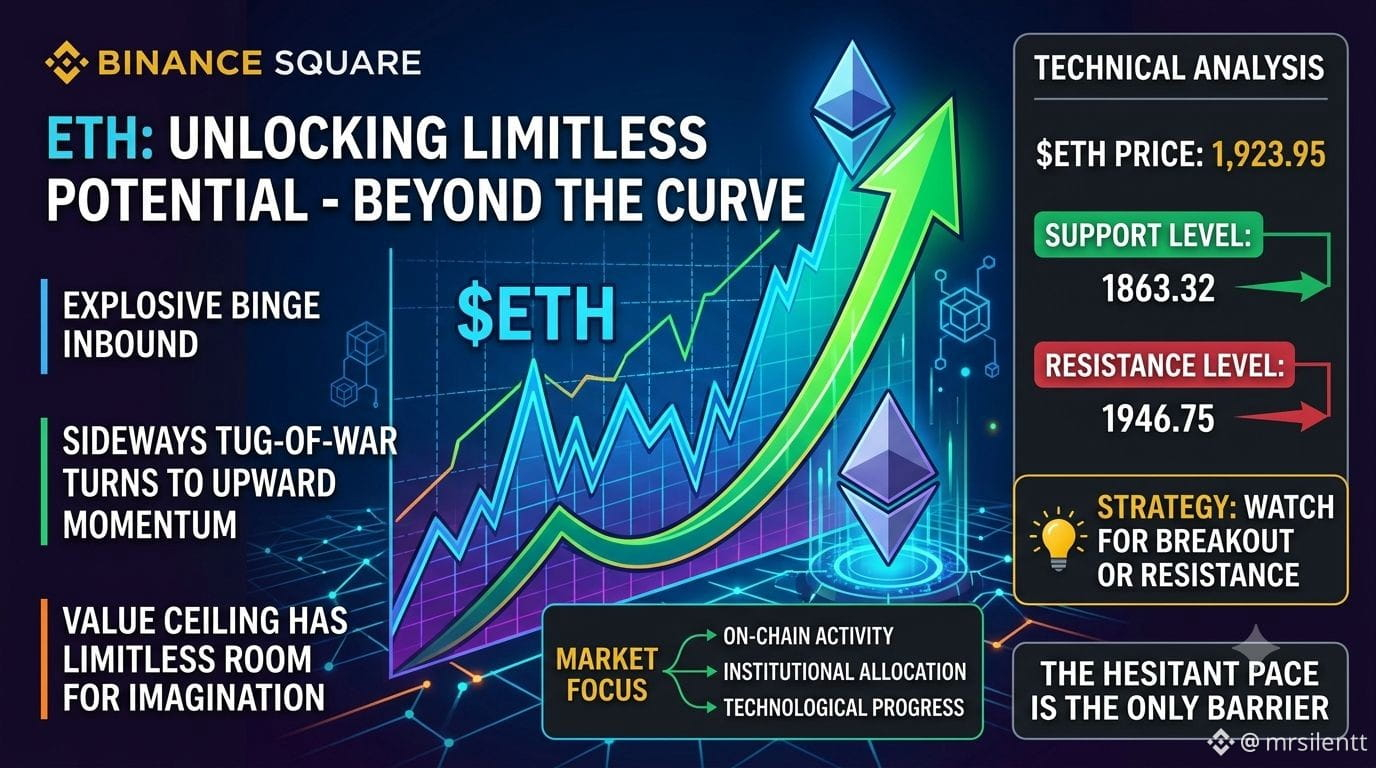
BTC, ETH & SOL: A Critical Moment For The Crypto Market

The market has entered a key phase, with Bitcoin, Ethereum, and Solana all trading around important support levels. While short-term sentiment remains cautious, these are often the periods where the next major trend begins to form.

Bitcoin continues to act as the market's macro benchmark. Its ability to defend current support will likely determine overall risk appetite across the crypto sector. A strong reaction from these levels could restore confidence and attract sidelined capital back into the market.

Ethereum remains at the center of smart contract activity, DeFi innovation, and the rapidly growing tokenized asset sector. Despite recent volatility, institutional interest in Ethereum's ecosystem continues to expand, making it one of the most closely watched assets during market pullbacks.

Solana, on the other hand, remains one of the strongest ecosystems for retail participation and high-frequency on-chain activity. Historically, SOL has shown the ability to recover quickly once broader market conditions improve, making it a key asset to monitor during periods of uncertainty.

The biggest question now is whether current support levels can hold and provide a foundation for recovery, or if the market needs another wave of selling before establishing a stronger base. Either way, the coming days could play a significant role in shaping the next major move across crypto.

Which asset are you most confident in at current prices: BTC, ETH, or SOL? 👇

#Bitcoin #Ethereum(ETH) #Solana⁩ #CryptoNewss #BinanceSquareFamily
Ethereum Is Losing This Cycle and the Community Needs to Stop Pretending OtherwiseI know this is going to upset people. But I'd rather say something true that makes you uncomfortable than something comfortable that leaves you holding a bad bag. So here it is: $ETH is losing this cycle. Not crashing. Not dead. Just losing. Look at the numbers. Ethereum is down more than 43% year-to-date on its ETF NAV return — the worst of any major crypto ETF category. While $SOL surged and $HYPE hit all-time highs, $ETH has done almost nothing. Its current price sits around $1,727 — against an all-time high of $4,953 hit in August 2025. That's a 65% drawdown from peak. Meanwhile, Solana's DEX volume has been eclipsing Ethereum's since mid-2024. Developers are migrating. Users are migrating. Capital is migrating. The Layer 2 narrative was supposed to be Ethereum's saving grace. And yes — Arbitrum, Base, Optimism are doing real volume. But here's the problem nobody wants to say out loud: Layer 2 activity doesn't directly accrue value to $ETH anymore the way on-chain activity used to. The deflationary fee burn that made $ETH exciting post-Merge has largely been diluted by the very scaling solutions supposed to save it. The Ethereum Foundation just disclosed a $30 million annual funding gap. The roadmap — Pectra upgrade, Verkle trees, full danksharding — keeps getting pushed. Meanwhile Solana ships Alpenglow with 150ms finality and just crossed $1 billion in ETF inflows in under a month. I'm not saying sell everything. Ethereum still has the deepest institutional infrastructure, the most DeFi TVL, and a legitimate shot at a massive catch-up rally if CLARITY passes and ETF staking wrappers get approved. But right now, in this specific market window? $ETH is the most disappointing major asset of 2026. I expect the comments to be spicy on this one. Tell me I'm wrong — with data. Please subscribe, like, and share this article. It genuinely helps. #Ethereum(ETH) m #ETH #HotTake e #CryptoOpinio n #Altcoin s #Binance
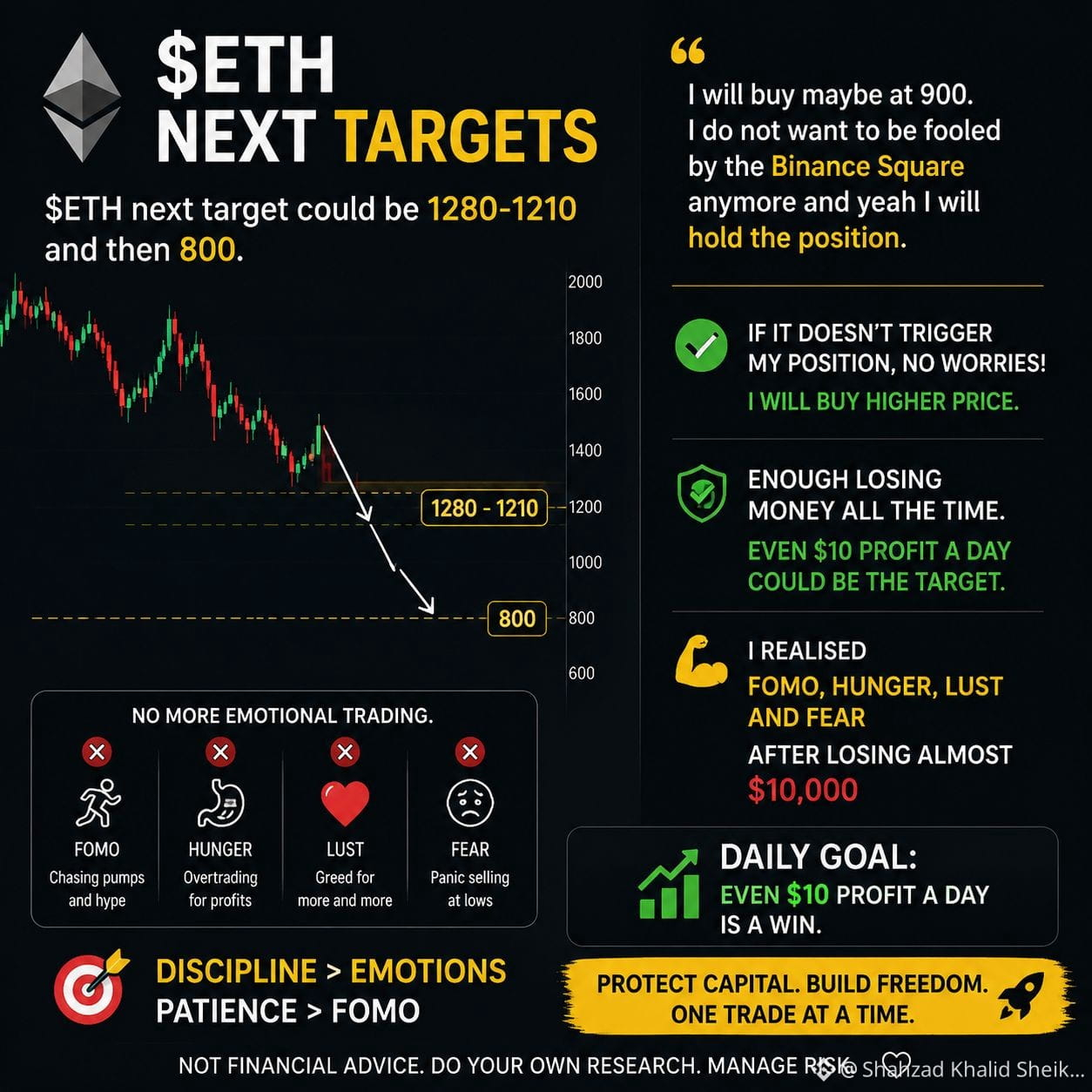
🚨 $ETH Update & Mindset Shift 🚨 $ETH next target: 1280–1210, and then maybe 800. I might enter around 900, but no rush. I’m done being fooled by Binance Square tricks. ✅ Strategy: Hold the position. If my entry isn’t triggered, no worries—I’ll buy at a higher price. 💡 Lesson Learned: After losing nearly $10,000, I realized it’s not just the market—it’s FOMO, greed, and fear that kill profits. Now? Even $10 profit a day is a WIN. Slow, steady, disciplined. 📈 Trading isn’t about chasing—it’s about patience. {future}(ETHUSDT) #CryptoTrading #ETH #Ethereum(ETH) #Binance #Cryptomindset
🚨 $ETH Update & Mindset Shift 🚨
$ETH next target: 1280–1210, and then maybe 800.
I might enter around 900, but no rush. I’m done being fooled by Binance Square tricks.
✅ Strategy: Hold the position. If my entry isn’t triggered, no worries—I’ll buy at a higher price.

💡 Lesson Learned: After losing nearly $10,000, I realized it’s not just the market—it’s FOMO, greed, and fear that kill profits.

Now? Even $10 profit a day is a WIN. Slow, steady, disciplined.

📈 Trading isn’t about chasing—it’s about patience.
#CryptoTrading #ETH #Ethereum(ETH) #Binance #Cryptomindset
$ETH Is currently trading around the $2,100–$2,200 zone, showing mixed momentum after recent market volatility. Analysts are closely watching the $2,300 resistance level — a breakout above it could trigger a stronger bullish rally toward $2,500. However, failure to hold support near $2,100 may push ETH lower in the short term. Key Market Signals Bullish Factors: • Whale accumulation is increasing • Ethereum ETF inflows are improving • Upcoming network upgrades could boost investor confidence Bearish Risks: • Weak macroeconomic sentiment • Selling pressure below major moving averages • ETF outflows and low momentum trading Short-Term Outlook Market sentiment remains cautious but optimistic. If ETH breaks above resistance, momentum traders may re-enter aggressively. Otherwise, consolidation between $2,000–$2,300 is likely over the coming days {spot}(ETHUSDT) #ETHETFS #EthereumETFApprovalExpectations #Ethereum(ETH) #SaylorConsidersBTCYearEndSale
$ETH Is currently trading around the $2,100–$2,200 zone, showing mixed momentum after recent market volatility. Analysts are closely watching the $2,300 resistance level — a breakout above it could trigger a stronger bullish rally toward $2,500. However, failure to hold support near $2,100 may push ETH lower in the short term.

Key Market Signals
Bullish Factors:
• Whale accumulation is increasing
• Ethereum ETF inflows are improving
• Upcoming network upgrades could boost investor confidence
Bearish Risks:
• Weak macroeconomic sentiment
• Selling pressure below major moving averages
• ETF outflows and low momentum trading
Short-Term Outlook

Market sentiment remains cautious but optimistic. If ETH breaks above resistance, momentum traders may re-enter aggressively. Otherwise, consolidation between $2,000–$2,300 is likely over the coming days

#ETHETFS #EthereumETFApprovalExpectations #Ethereum(ETH) #SaylorConsidersBTCYearEndSale
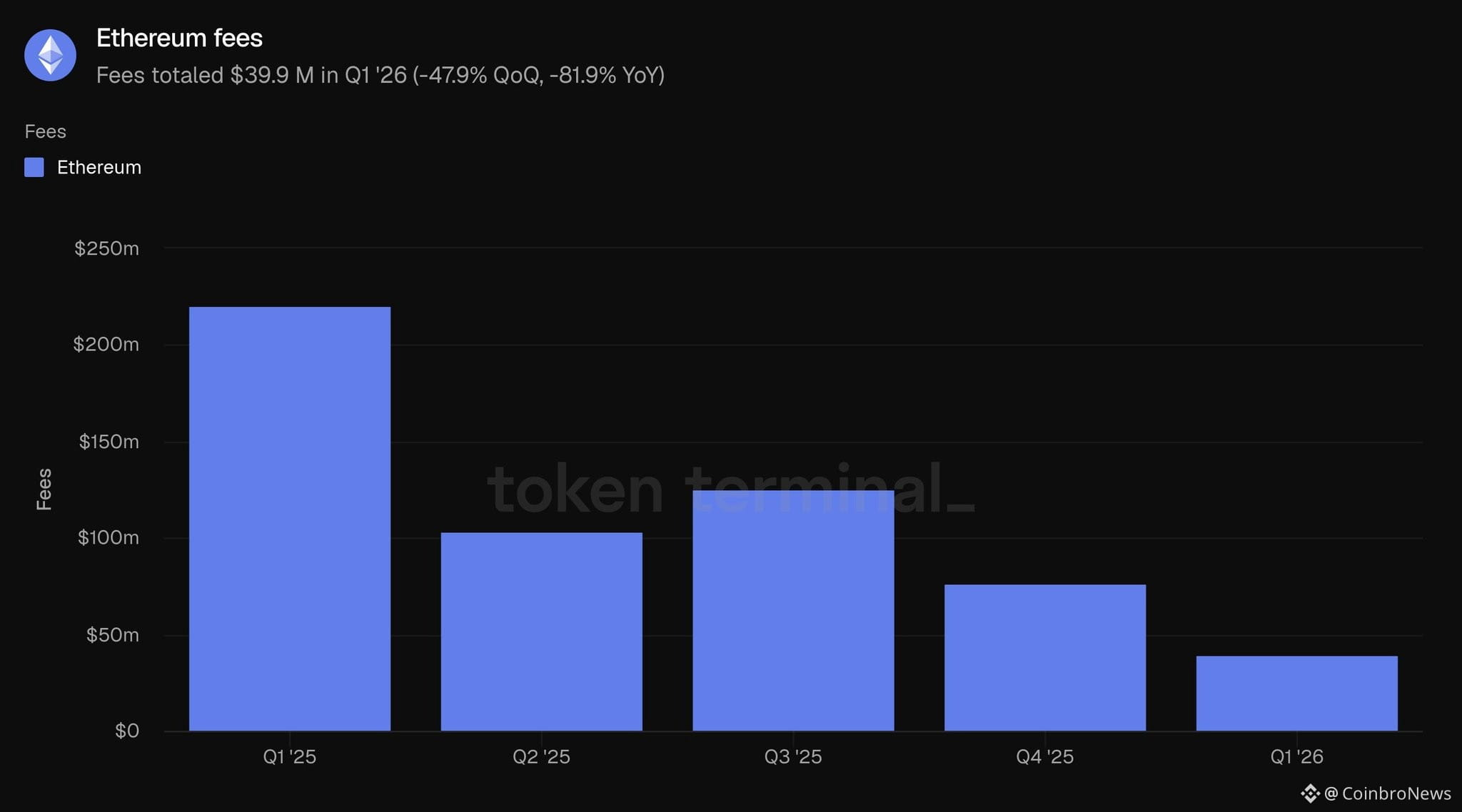
🚨 ETHEREUM UPDATE Ethereum posted strong network growth in Q1 2026. Monthly active users hit a record 13.2M, transactions reached 200.4M, and ecosystem TVL climbed to $316.2B. At the same time, L1 fees dropped nearly 82% year-over-year. #Ethereum(ETH) #ETH #CoinbroNwes $ETH
🚨 ETHEREUM UPDATE
Ethereum posted strong network growth in Q1 2026.
Monthly active users hit a record 13.2M, transactions reached 200.4M, and ecosystem TVL climbed to $316.2B.

At the same time, L1 fees dropped nearly 82% year-over-year.

#Ethereum(ETH) #ETH #CoinbroNwes $ETH
·
--
Bearish
*Headline: Restaking Boom: Security Goldmine or Risk Stack?* #restaking #Ethereum(ETH) #DeFi: EigenLayer TVL just crossed $15B, letting ETH secure AVS like rollups and oracles. More yield for stakers, more security for new chains. But slashing risk now cascades across protocols. One bug could impact billions. *Visual idea*: Infographic showing ETH flowing from LSTs → EigenLayer → multiple AVS with risk arrows. Building the future means weighing tradeoffs together. @sreeramkannan @liam_east what’s your take: is restaking net positive for Ethereum security? $BTC {spot}(BTCUSDT) $ETH {spot}(ETHUSDT) $BNB {spot}(BNBUSDT)
*Headline: Restaking Boom: Security Goldmine or Risk Stack?*
#restaking #Ethereum(ETH) #DeFi:

EigenLayer TVL just crossed $15B, letting ETH secure AVS like rollups and oracles. More yield for stakers, more security for new chains. But slashing risk now cascades across protocols. One bug could impact billions.

*Visual idea*: Infographic showing ETH flowing from LSTs → EigenLayer → multiple AVS with risk arrows.

Building the future means weighing tradeoffs together. @sreeramkannan @liam_east what’s your take: is restaking net positive for Ethereum security?

$BTC
$ETH
$BNB
$ETH Scalping / Short-Term 📊 Quick scalp on $ETH today using 15-min candles. Caught the bounce off $1,750 support with RSI divergence. Strategy: Fibonacci retracement entries + 1:2 risk-reward. Out with 4% in under 2 hours. {spot}(ETHUSDT) Linked my actual spot trade for transparency. Great for volatile days! Scalpers, what's your favorite timeframe? Always manage risk. #Ethereum(ETH) #DayTradingStrateg
$ETH Scalping / Short-Term

📊 Quick scalp on $ETH today using 15-min candles. Caught the bounce off $1,750 support with RSI divergence. Strategy: Fibonacci retracement entries + 1:2 risk-reward. Out with 4% in under 2 hours.


Linked my actual spot trade for transparency. Great for volatile days! Scalpers, what's your favorite timeframe? Always manage risk. #Ethereum(ETH) #DayTradingStrateg
Article
🇸🇬 Singapore Crypto Market Update 📈Singapore's crypto market remains strong as #Bitcoin (BTC) and #Ethereum(ETH) continue to trade with positive momentum, reflecting the global market recovery. With clear regulations and no capital gains tax on crypto profits, Singapore continues to strengthen its position as one of the world's leading crypto-friendly hubs. 🚀💰 #Notcoin👀🔥 #GOLD_UPDATE #launchercoin

🇸🇬 Singapore Crypto Market Update 📈

Singapore's crypto market remains strong as #Bitcoin (BTC) and #Ethereum(ETH) continue to trade with positive momentum, reflecting the global market recovery. With clear regulations and no capital gains tax on crypto profits, Singapore continues to strengthen its position as one of the world's leading crypto-friendly hubs. 🚀💰
#Notcoin👀🔥 #GOLD_UPDATE #launchercoin
📈 Watching the $BTC chart closely today. The candlestick pattern suggests buyers are regaining momentum, while $ETH and $BNB continue to show strength. My strategy is to wait for confirmation before entering a trade, manage risk with a stop-loss, and avoid emotional decisions. AI tools can help analyze market trends, but risk management always comes first. What's your strategy for today's market? #bitcoin #Ethereum(ETH) #bnb #CryptoNewss #trading
·
--
​📊 The Poll Post ​What is the biggest factor holding people back from liquid restaking right now? 🤔 ​I’m looking closely at how the @Bedrock multi-asset liquid restaking protocol is scaling, especially with the roll-out of #Bedrock2_0 .The concept of earning yields on #bitcoin and #Ethereum(ETH) while keeping your liquidity fully active is a massive step forward for capital efficiency. ​But I want to know what the community thinks. Vote below and drop your reasoning in the comments! 👇 ​#Bedrock $BR
​📊 The Poll Post
​What is the biggest factor holding people back from liquid restaking right now? 🤔
​I’m looking closely at how the @Bedrock multi-asset liquid restaking protocol is scaling, especially with the roll-out of #Bedrock2_0 .The concept of earning yields on #bitcoin and #Ethereum(ETH) while keeping your liquidity fully active is a massive step forward for capital efficiency.
​But I want to know what the community thinks. Vote below and drop your reasoning in the comments! 👇

#Bedrock $BR
Locked liquidity fears
0%
Smart contract risk
0%
Complexity of DeFi layers
0%
New to Bedrock $BR
0%
0 votes • Voting closed
Article
SEC Set for Historic Overhaul: "Regulation Crypto" Agenda Slated for July ReleaseThe digital asset industry is on the verge of its most significant regulatory shift in years. The Securities and Exchange Commission (SEC) is preparing to unveil its highly anticipated "Regulation Crypto" agenda. Under the leadership of Chair Paul Atkins, this regulatory framework aims to replace years of enforcement-led regulation with clear, structured guidelines to foster innovation while protecting investors. For years, Web3 startups and decentralized protocols have operated in a gray area, facing litigation and regulatory uncertainty. The upcoming July proposal seeks to change that by introducing exemptions and safe harbors tailored specifically to the unique architecture of digital assets. Key Pillars of the "Regulation Crypto" Proposal According to reports, the SEC's overhaul centers around three transformative pillars designed to give blockchain projects breathing room to build: The Four-Year Grace Period: Startups will be allowed to bypass the standard, intensive securities registration process for up to four years while actively developing their decentralized networks. During this time, projects must still provide essential financial statements and disclosures to maintain transparency for investors.The $75 Million Fundraising Exemption: Championed by Chair Paul Atkins, the agency is considering an exemption that allows crypto startups to raise up to $75 million within any 12-month period without undergoing full, traditional SEC registration.The DeFi Safe Harbor: Perhaps the most radical shift is a proposed safe harbor for decentralized finance (DeFi) networks and token issuers. Once a network achieves full decentralization and the original developers are no longer the primary managerial force, the native token will officially no longer be treated as a security. Market Reaction and Cautionary Tones The digital asset market has reacted with cautious optimism. While the prospect of clear regulatory guardrails is viewed as a massive long-term positive, Bitcoin (BTC) and broader risk assets remain sensitive to macroeconomic pressures. BTC recently experienced a relief rally back toward $65,000 before pulling back. Market analysts warn that while the SEC’s policy shift is encouraging, investors should distinguish between short-term price relief and a sustained bull cycle. Trading volumes remain relatively subdued during the summer months, leaving the market sensitive to external geopolitical developments. Why It Matters for Crypto Investors The introduction of "Regulation Crypto" represents a structural turning point for the industry. For retail and institutional investors alike, this framework brings unprecedented clarity. Startups will have a legitimate, compliant pathway to launch tokens in the United States, reducing the risk of sudden regulatory crackdowns that have historically wiped out project valuations overnight. Furthermore, the $75 million fundraising exemption and the clear definition of "sufficient decentralization" provide a compliant roadmap for DeFi protocols to scale safely, potentially unlocking a new wave of capital and innovation. Conclusion The SEC’s upcoming "Regulation Crypto" agenda could mark the end of the "regulation by enforcement" era in the United States. By offering clear safe harbors and fundraising exemptions, the regulatory body is attempting to balance investor protection with the natural evolution of financial technology. While the market continues to navigate macroeconomic headwinds, the establishment of clear rules of the road is the ultimate foundation needed for sustained, mature industry growth. #Bitcoin #CryptoMarket #FinanceNews #BinanceSquare #Ethereum(ETH) {spot}(BTCUSDT)

SEC Set for Historic Overhaul: "Regulation Crypto" Agenda Slated for July Release

The digital asset industry is on the verge of its most significant regulatory shift in years. The Securities and Exchange Commission (SEC) is preparing to unveil its highly anticipated "Regulation Crypto" agenda. Under the leadership of Chair Paul Atkins, this regulatory framework aims to replace years of enforcement-led regulation with clear, structured guidelines to foster innovation while protecting investors.
For years, Web3 startups and decentralized protocols have operated in a gray area, facing litigation and regulatory uncertainty. The upcoming July proposal seeks to change that by introducing exemptions and safe harbors tailored specifically to the unique architecture of digital assets.
Key Pillars of the "Regulation Crypto" Proposal
According to reports, the SEC's overhaul centers around three transformative pillars designed to give blockchain projects breathing room to build:
The Four-Year Grace Period: Startups will be allowed to bypass the standard, intensive securities registration process for up to four years while actively developing their decentralized networks. During this time, projects must still provide essential financial statements and disclosures to maintain transparency for investors.The $75 Million Fundraising Exemption: Championed by Chair Paul Atkins, the agency is considering an exemption that allows crypto startups to raise up to $75 million within any 12-month period without undergoing full, traditional SEC registration.The DeFi Safe Harbor: Perhaps the most radical shift is a proposed safe harbor for decentralized finance (DeFi) networks and token issuers. Once a network achieves full decentralization and the original developers are no longer the primary managerial force, the native token will officially no longer be treated as a security.
Market Reaction and Cautionary Tones
The digital asset market has reacted with cautious optimism. While the prospect of clear regulatory guardrails is viewed as a massive long-term positive, Bitcoin (BTC) and broader risk assets remain sensitive to macroeconomic pressures.
BTC recently experienced a relief rally back toward $65,000 before pulling back. Market analysts warn that while the SEC’s policy shift is encouraging, investors should distinguish between short-term price relief and a sustained bull cycle. Trading volumes remain relatively subdued during the summer months, leaving the market sensitive to external geopolitical developments.
Why It Matters for Crypto Investors
The introduction of "Regulation Crypto" represents a structural turning point for the industry.
For retail and institutional investors alike, this framework brings unprecedented clarity. Startups will have a legitimate, compliant pathway to launch tokens in the United States, reducing the risk of sudden regulatory crackdowns that have historically wiped out project valuations overnight. Furthermore, the $75 million fundraising exemption and the clear definition of "sufficient decentralization" provide a compliant roadmap for DeFi protocols to scale safely, potentially unlocking a new wave of capital and innovation.
Conclusion
The SEC’s upcoming "Regulation Crypto" agenda could mark the end of the "regulation by enforcement" era in the United States. By offering clear safe harbors and fundraising exemptions, the regulatory body is attempting to balance investor protection with the natural evolution of financial technology. While the market continues to navigate macroeconomic headwinds, the establishment of clear rules of the road is the ultimate foundation needed for sustained, mature industry growth.
#Bitcoin #CryptoMarket #FinanceNews #BinanceSquare #Ethereum(ETH)
🔥 Not Only $BTC Is Moving—Market Sentiment Is Also Changing The US inflation (CPI) data coming in lower than expected is making the market more optimistic. The hope is that upward pressure on the Fed’s interest rates could ease, so risk assets like crypto are again getting the attention of investors. However, I still choose to focus on facts, not hype. One economic data point doesn’t necessarily determine the market’s direction in the long run. 💬 What do you think— is this the start of a crypto market recovery or just a temporary rebound? 👇 Share your thoughts. ⚠️ DYOR. Not financial advice. #Crypto #Bitcoin #Ethereum(ETH) #BinanceSquare
🔥 Not Only $BTC Is Moving—Market Sentiment Is Also Changing

The US inflation (CPI) data coming in lower than expected is making the market more optimistic. The hope is that upward pressure on the Fed’s interest rates could ease, so risk assets like crypto are again getting the attention of investors.

However, I still choose to focus on facts, not hype. One economic data point doesn’t necessarily determine the market’s direction in the long run.

💬 What do you think— is this the start of a crypto market recovery or just a temporary rebound?

👇 Share your thoughts.

⚠️ DYOR. Not financial advice.

#Crypto #Bitcoin #Ethereum(ETH) #BinanceSquare
🚀 The Future of Crypto: How Blockchain Technology is Changing the World? In today’s era, Blockchain Techno🚀 The Future of Crypto: How Blockchain Technology is Changing the World? In today’s era, Blockchain Technology is not limited to cryptocurrency anymore; it has become a technology that can transform future financial systems, digital identity, and online transactions. 🔹 What is Blockchain? Blockchain is a digital system in which information is recorded securely and transparently. Its special feature is that it is very difficult to alter the data, which increases trust.

🚀 The Future of Crypto: How Blockchain Technology is Changing the World? In today’s era, Blockchain Techno

🚀 The Future of Crypto: How Blockchain Technology is Changing the World?
In today’s era, Blockchain Technology is not limited to cryptocurrency anymore; it has become a technology that can transform future financial systems, digital identity, and online transactions.
🔹 What is Blockchain?
Blockchain is a digital system in which information is recorded securely and transparently. Its special feature is that it is very difficult to alter the data, which increases trust.
·
--
Bullish
🚨 $ETH LONG LIQUIDATION ALERT! 🔴 A $79.5K long position on $ETH has just been liquidated at $1,601.15, showing that bearish pressure has forced bullish traders out of the market. As Ethereum moved lower, leveraged long positions were automatically closed, adding extra selling pressure and increasing volatility. If the downside continues, more long liquidations could follow, leading to a deeper pullback. The market is at a key point. Will sellers stay in control, or will buyers step in for a rebound? 👀📉 #ETH #Ethereum(ETH) #AAVERises8.9% #SOLRises9% #SpaceXToJoinNasdaq100
🚨 $ETH LONG LIQUIDATION ALERT! 🔴

A $79.5K long position on $ETH has just been liquidated at $1,601.15, showing that bearish pressure has forced bullish traders out of the market.

As Ethereum moved lower, leveraged long positions were automatically closed, adding extra selling pressure and increasing volatility. If the downside continues, more long liquidations could follow, leading to a deeper pullback.

The market is at a key point. Will sellers stay in control, or will buyers step in for a rebound? 👀📉

#ETH #Ethereum(ETH)
#AAVERises8.9%
#SOLRises9%
#SpaceXToJoinNasdaq100
Ethereum ($ETH ) Market Update Ethereum continues to be one of the leading blockchain networks in the crypto industry. Recent network improvements have focused on scalability, staking efficiency, and user experience. Key points: • Strong developer activity across the ecosystem. • Growing adoption of Layer-2 solutions. • Staking remains an important part of Ethereum's security model. • Institutional interest in Ethereum continues to be monitored by investors. From a technical perspective, ETH traders are watching major support and resistance levels closely. As always, market conditions can change quickly, so proper risk management is essential. What are your expectations for Ethereum in the coming months? {spot}(ETHUSDT) #Ethereum #ETH #ETHETFsApproved #EmergingMarketStocksHitRecordHigh #Ethereum(ETH)
Ethereum ($ETH ) Market Update

Ethereum continues to be one of the leading blockchain networks in the crypto industry. Recent network improvements have focused on scalability, staking efficiency, and user experience.

Key points:
• Strong developer activity across the ecosystem.
• Growing adoption of Layer-2 solutions.
• Staking remains an important part of Ethereum's security model.
• Institutional interest in Ethereum continues to be monitored by investors.

From a technical perspective, ETH traders are watching major support and resistance levels closely. As always, market conditions can change quickly, so proper risk management is essential.

What are your expectations for Ethereum in the coming months?


#Ethereum #ETH #ETHETFsApproved #EmergingMarketStocksHitRecordHigh #Ethereum(ETH)
Article
Japan Crypto Tax Guide 2024 Are you a Japanese Crypto Investor struggling with crypto taxes? Don’t worry you’re not alone. A majority of crypto investors in Japan struggle with crypto taxes given the complexity of the guidelines governing the taxation of such assets and the inherent complexity of crypto as an asset. Japan is among the strictest nations in the world when it comes to crypto taxes having one of the highest tax rates on crypto transactions which may go up to 55% in some instances.  We realise that navigating crypto taxes can be an intimidating task for most investors, that’s why we have curated a detailed tax guide covering all the aspects of crypto taxation in Japan. In this guide, we will cover everything from crypto gains and income to DeFi and NFT taxes. We will also answer pivotal questions like “How is crypto taxed in Japan?”, “How to file crypto taxes?”, “Can the tax authority track crypto?”, “How to calculate crypto gains and losses?” and more.  So let’s hop in. How is Crypto Taxed in Japan The Japanese National Tax Authority views crypto as property and any gains incurred from their sale attract income tax. Moreover, crypto received through airdrops, staking, and mining is also subject to income tax. So if the total gain or income from crypto assets exceeds 2,00,000 JPY in a tax year, you need to report your gains/income to the NTA and pay taxes on them in compliance with the Payment Services Act (PSA) and the Financial Instruments and Exchanges Act (FIEA). You can access the detailed guidelines here. Any income/gain reported by an individual or business is categorized as “Miscellaneous Income” and the tax rates may go up to 55%, that’s pretty steep because gains from securities are taxed at a flat rate of 20% in Japan.  Japan has a progressive tax on miscellaneous income, ranging from 5% to 45% on profits. Moreover, Japanese taxpayers are obligated to pay an inhabitant tax of 10% on their profits, which includes a prefectural rate of 4% and a municipal rate of 6%. Consequently, the effective crypto tax rate varies between 15% and 55%. For non-permanent residents of Japan, a flat 20% tax applies to all income earned within the country. How to Calculate Crypto Gains and Losses Even though there is no capital gains tax in Japan, you still need to calculate the gains incurred from disposing of crypto assets to be able to report them alongside your income and pay taxes on them. Calculating crypto gains is a pretty straightforward process. All you need to do is to deduct your cost basis from the disposal amount. You can use the following formula to calculate your capital gains: ‍ However, most investors find cost basis intimidating as a concept. The cost basis is simply the amount your pay to acquire a particular asset inclusive of any additional fees paid in the process.  Here’s an example: Let’s say Toshiro san acquired 1 $ETH for 2,00,000 JPY And he paid 2,500 JPY in transaction fees in the process. Then the cost basis would simply be (2,00,000 + 2,500) JPY  Let’s say Toshiro san finally decides to dispose of the #Ethereum(ETH) token for 2,50,000 JPY In that case, Capital Gain/Loss = Disposal Amount - Cost Basis = 2,50,000 - 2,02,500 = 47,500 JPY derstanding of how lost or stolen crypto is treated by the tax authorities. Crypto Tax Breaks Japan The way Japan taxes crypto transactions, there’s not much you can do to lower your tax bill. As mentioned earlier, you cannot offset your losses against gains in Japan and beyond there’s barely any way to lower your taxes strategically. One thing you can consciously decide to do is to dispose of your assets in a low-income year to keep the overall gains under 200,000 JPY, which is the regular income tax exemption limit in Japan. Japan also has an employment income deduction that allows employees from a corporate background to deduct a certain amount from their taxable income. Given below are the income brackets and the deductions allowed in each bracket. ‍ ‍ Although it’s not clear whether these deductions are permissible for income from crypto transactions. We suggest seeking guidance from an experienced tax professional to gain clarity on the subject. Crypto Cost Basis Method Japan Japan allows two accounting methods, the total average accounting method and the moving average accounting method or the ACB (Average Cost Basis Method).  ‍ ‍ The total average accounting method is what the investors/traders are supposed to use by default. However, if you choose to use the moving average accounting method, make sure you use it for all your cost-basis calculations to avoid discrepancies in your tax report.  The moving average method also known as the Average Cost Base (ACB) method, assumes the average cost of the assets of the same kind you currently possess as the cost basis for a subsequent disposal. The total average method is quite similar with just one exception, it considers the average cost of all the assets (of a particular kind let’s say ETH) that you’ve bought in a financial year.  In simpler terms, the cost basis might change for every disposal depending upon the disposal. However, when you use the total average accounting method, you have a constant cost basis regardless of time, place, or the sequence of your disposal.  Here’s an example to understand how the Moving average accounting method works: 2022/02/21 - Ishida san bought 1 ETH for 2,00,000 JPY 2022/03/17 - Ishida san bought 3 ETH for 1,90,000 JPY each 2022/05/23 - Ishida san sold 1 ETH for 2,10,000 JPY 2022/06/04 - Ishida san bought 2 ETH for 1,70,000 JPY each 2022/08/27 - Ishisa san sold 1 ETH for 2,40,000 JPY As evident from the above ledger of transactions, Ishida san made two disposals. Let’s use the Moving Average Accounting Method to calculate the cost basis for both disposals. Now, before the first disposal was made, ETH tokens were acquired on two separate occasions. So we have to calculate the average acquisition price: Average Acquisition Price = (1*2,00,000 + 3*1,90,000)/4 = 1,92,500 JPY So the cost basis now becomes 1,92,500 JPY for the disposal Capital Gain on the first disposal = Disposal Amount - Cost Basis = 2,10,000 - 1,92,500 JPY = 17,500 JPY But now since 1 ETH token is disposed, the total number of ETH tokens in possession goes down to three. And on top of that Ishida san bought 2 more ETH tokens at an average price of 1,70,000 JPY each. So now the average acquisition price changes. Value of 3 ETH tokens in possession = 1,92,500 * 3 = 5,77,500 JPY Value of 2 ETH tokens acquired after 1st disposal = 1,70,000 * 2 = 3,40,000 JPY Average Acquisition Price = (5,77,500 + 3,40,000)/5 = 9,17,500/5 = 1,83,500 JPY Now the cost basis changes to 1,83,500 JPY So, for the second disposal Capital Gain = Disposal Amount - Cost Basis = 2,40,000 - 1,83,500 = 56,500 JPY Total Gain from both Disposals = 74,000 JPY Let’s now consider the same ledger of transactions and use the total average method for calculating the capital gains for both disposals. Using the total average method is a lot simpler as it considers the average cost of all acquisitions made in a financial year divided by the total number of assets. So, the average acquisition price = (1*2,00,000 + 3*1,90,000 + 2*1,70,000)/6 = 1,85,000 JPY Which imputes a cost basis of 1,85,000 JPY Now for the 1st Disposal Capital Gain = Disposal Amount - Cost Basis = 2,10,000 - 1,85,000 = 25,000 JPY And for the 2nd Disposal  Capital Gain = Disposal Amount - Cost Basis = 2,40,000 - 1,85,000 = 55,000 JPY Total Gain from both disposals = 80,000 JPY Notice that the capital gain is 6,000 JPY higher when you use the total average accounting method. Crypto Income Tax Japan As mentioned earlier, any gains or income from crypto transactions is taxed as miscellaneous income by the NTA. You are viewed to be making miscellaneous income in Japan if you participate in the following transactions: Disposing of crypto for fiatSwapping one crypto asset for anotherBuying goods or services with cryptoReceiving compensation in crypto Rewards from mining, staking and liquidity poolsRewards from DeFi transactionsConverting NFTs to crypto or fiatArdops or interest income Any income or gain incurred from such transactions is to be added and reported in your tax return. The tax rate on such income can go up to 55% depending on the nature of transactions and where you reside in Japan.  Crypto Income Tax Rate The crypto tax rate in Japan can go up to 45% depending on which tax bracket you fall into. You will also have to pay a local inhabitant tax of 10% on top of the income tax. The following are the income tax rates in Japan: ‍ ‍ How to Calculate Crypto Income Calculating your crypto income is pretty straightforward. You just need to add the gains/income from all transactions. We’ve discussed in the above sections how you can calculate your gains from crypto transactions, any tokens that you’ve received from airdrops, staking, mining, or liquidity pools shall be perceived as income and you must track the fair market value of the tokens on receipt, to later add it to your gains and report your actual taxable income base. Tax-Free Crypto Transactions Following are some tax-free crypto transactions in Crypto: Buying crypto with fiatTransferring crypto between wallets Taxed Crypto Transactions Following are some taxed crypto transactions in Crypto: Selling crypto for fiatSwapping crypto Staking cryptoMining cryptoLiquidity MiningYield FarmingSpending cryptoReceiving crypto as compensation When to Report Crypto Taxes in Japan The Japanese tax year runs from January 1st to December 31st, and you can file your taxes between February 16 and March 15 every year. How to File Crypto Taxes in Japan There are two ways you can file your tax return in Japan. Using Paper FormsUsing NTA’s Online Portal If you wish to file your crypto taxes using paper forms, you should use Form A to declare your employment and miscellaneous income. However, note that if the miscellaneous income from other sources does not exceed 2,00,000 JPY, you’re not eligible to file a tax return. Here’s a stepwise tutorial on how you can file your crypto taxes using NTA’s online portal: The first step is to log in on the NTA’s website using your registered credentials. If you’re not registered with the NTA, you can do that here.Once you’ve done that, navigate the options and go to “Salary” under “Relevant Income”.From here, go to “Miscellaneous Income” Once you do this, you will be asked the following question “Do you wish to receive deductions for your home?”. Answer with a Yes/No and move aheadIn this step, you need to enter your e-tax number or connect your account to the My Number Portal WebsiteNow you need to enter the total miscellaneous income you’ve earned during a tax year and the profit or lossNow select “Crypto” from the drop-down list to specify the categoryNow enter the name of the exchanges you’ve used and their legal addresses What Records Will the NTA Want There is no official guidance on crypto record keeping by the NTA. However, it would be prudent to maintain detailed records for all your transactions dating back to at least 3 years to ensure a hassle-free tax filing experience. Following is the list of documents you should maintain: Date and time of transactionsNature of transactions and intent of the parties involvedA detailed record of FMV of assets received through staking, mining, airdrops, or as compensationWallet addresses that you have private keys toDetails of the type of assets ownedReceipts of purchase and disposals How to File Crypto Taxes Using Kryptos? Now that you’re aware of how your crypto transactions are taxed and what forms you need to fill out to complete your tax report, here’s a step-wise breakdown of how Kryptos can make this task easier for you: Visit Kryptos and sign up using your email or Google/Apple AccountChoose your country, currency, time zone, and accounting method Import all your transactions from wallets and crypto exchangesChoose your preferred report and click on generate report option on the left side of your screen and let Kryptos do all the accounting.Once your Tax report is ready, you can download it in PDF format. $BTC $BOME #Japan #HotTrends #trendingnews #ICP

Japan Crypto Tax Guide 2024

Are you a Japanese Crypto Investor struggling with crypto taxes? Don’t worry you’re not alone. A majority of crypto investors in Japan struggle with crypto taxes given the complexity of the guidelines governing the taxation of such assets and the inherent complexity of crypto as an asset. Japan is among the strictest nations in the world when it comes to crypto taxes having one of the highest tax rates on crypto transactions which may go up to 55% in some instances.
We realise that navigating crypto taxes can be an intimidating task for most investors, that’s why we have curated a detailed tax guide covering all the aspects of crypto taxation in Japan. In this guide, we will cover everything from crypto gains and income to DeFi and NFT taxes. We will also answer pivotal questions like “How is crypto taxed in Japan?”, “How to file crypto taxes?”, “Can the tax authority track crypto?”, “How to calculate crypto gains and losses?” and more.
So let’s hop in.
How is Crypto Taxed in Japan
The Japanese National Tax Authority views crypto as property and any gains incurred from their sale attract income tax. Moreover, crypto received through airdrops, staking, and mining is also subject to income tax. So if the total gain or income from crypto assets exceeds 2,00,000 JPY in a tax year, you need to report your gains/income to the NTA and pay taxes on them in compliance with the Payment Services Act (PSA) and the Financial Instruments and Exchanges Act (FIEA). You can access the detailed guidelines here.
Any income/gain reported by an individual or business is categorized as “Miscellaneous Income” and the tax rates may go up to 55%, that’s pretty steep because gains from securities are taxed at a flat rate of 20% in Japan.
Japan has a progressive tax on miscellaneous income, ranging from 5% to 45% on profits. Moreover, Japanese taxpayers are obligated to pay an inhabitant tax of 10% on their profits, which includes a prefectural rate of 4% and a municipal rate of 6%. Consequently, the effective crypto tax rate varies between 15% and 55%. For non-permanent residents of Japan, a flat 20% tax applies to all income earned within the country.
How to Calculate Crypto Gains and Losses
Even though there is no capital gains tax in Japan, you still need to calculate the gains incurred from disposing of crypto assets to be able to report them alongside your income and pay taxes on them.
Calculating crypto gains is a pretty straightforward process. All you need to do is to deduct your cost basis from the disposal amount. You can use the following formula to calculate your capital gains:

However, most investors find cost basis intimidating as a concept. The cost basis is simply the amount your pay to acquire a particular asset inclusive of any additional fees paid in the process.
Here’s an example:
Let’s say Toshiro san acquired 1 $ETH for 2,00,000 JPY
And he paid 2,500 JPY in transaction fees in the process.
Then the cost basis would simply be (2,00,000 + 2,500) JPY
Let’s say Toshiro san finally decides to dispose of the #Ethereum(ETH) token for 2,50,000 JPY
In that case,
Capital Gain/Loss = Disposal Amount - Cost Basis = 2,50,000 - 2,02,500 = 47,500 JPY
derstanding of how lost or stolen crypto is treated by the tax authorities.
Crypto Tax Breaks Japan
The way Japan taxes crypto transactions, there’s not much you can do to lower your tax bill. As mentioned earlier, you cannot offset your losses against gains in Japan and beyond there’s barely any way to lower your taxes strategically.
One thing you can consciously decide to do is to dispose of your assets in a low-income year to keep the overall gains under 200,000 JPY, which is the regular income tax exemption limit in Japan. Japan also has an employment income deduction that allows employees from a corporate background to deduct a certain amount from their taxable income. Given below are the income brackets and the deductions allowed in each bracket.


Although it’s not clear whether these deductions are permissible for income from crypto transactions. We suggest seeking guidance from an experienced tax professional to gain clarity on the subject.
Crypto Cost Basis Method Japan
Japan allows two accounting methods, the total average accounting method and the moving average accounting method or the ACB (Average Cost Basis Method).


The total average accounting method is what the investors/traders are supposed to use by default. However, if you choose to use the moving average accounting method, make sure you use it for all your cost-basis calculations to avoid discrepancies in your tax report.
The moving average method also known as the Average Cost Base (ACB) method, assumes the average cost of the assets of the same kind you currently possess as the cost basis for a subsequent disposal. The total average method is quite similar with just one exception, it considers the average cost of all the assets (of a particular kind let’s say ETH) that you’ve bought in a financial year.
In simpler terms, the cost basis might change for every disposal depending upon the disposal. However, when you use the total average accounting method, you have a constant cost basis regardless of time, place, or the sequence of your disposal.
Here’s an example to understand how the Moving average accounting method works:
2022/02/21 - Ishida san bought 1 ETH for 2,00,000 JPY
2022/03/17 - Ishida san bought 3 ETH for 1,90,000 JPY each
2022/05/23 - Ishida san sold 1 ETH for 2,10,000 JPY
2022/06/04 - Ishida san bought 2 ETH for 1,70,000 JPY each
2022/08/27 - Ishisa san sold 1 ETH for 2,40,000 JPY
As evident from the above ledger of transactions, Ishida san made two disposals.
Let’s use the Moving Average Accounting Method to calculate the cost basis for both disposals.
Now, before the first disposal was made, ETH tokens were acquired on two separate occasions. So we have to calculate the average acquisition price:
Average Acquisition Price = (1*2,00,000 + 3*1,90,000)/4 = 1,92,500 JPY
So the cost basis now becomes 1,92,500 JPY for the disposal
Capital Gain on the first disposal = Disposal Amount - Cost Basis = 2,10,000 - 1,92,500 JPY = 17,500 JPY
But now since 1 ETH token is disposed, the total number of ETH tokens in possession goes down to three. And on top of that Ishida san bought 2 more ETH tokens at an average price of 1,70,000 JPY each.
So now the average acquisition price changes.
Value of 3 ETH tokens in possession = 1,92,500 * 3 = 5,77,500 JPY
Value of 2 ETH tokens acquired after 1st disposal = 1,70,000 * 2 = 3,40,000 JPY
Average Acquisition Price = (5,77,500 + 3,40,000)/5 = 9,17,500/5 = 1,83,500 JPY
Now the cost basis changes to 1,83,500 JPY
So, for the second disposal
Capital Gain = Disposal Amount - Cost Basis = 2,40,000 - 1,83,500 = 56,500 JPY
Total Gain from both Disposals = 74,000 JPY
Let’s now consider the same ledger of transactions and use the total average method for calculating the capital gains for both disposals.
Using the total average method is a lot simpler as it considers the average cost of all acquisitions made in a financial year divided by the total number of assets.
So, the average acquisition price = (1*2,00,000 + 3*1,90,000 + 2*1,70,000)/6 = 1,85,000 JPY
Which imputes a cost basis of 1,85,000 JPY
Now for the 1st Disposal
Capital Gain = Disposal Amount - Cost Basis = 2,10,000 - 1,85,000 = 25,000 JPY
And for the 2nd Disposal
Capital Gain = Disposal Amount - Cost Basis = 2,40,000 - 1,85,000 = 55,000 JPY
Total Gain from both disposals = 80,000 JPY
Notice that the capital gain is 6,000 JPY higher when you use the total average accounting method.
Crypto Income Tax Japan
As mentioned earlier, any gains or income from crypto transactions is taxed as miscellaneous income by the NTA. You are viewed to be making miscellaneous income in Japan if you participate in the following transactions:
Disposing of crypto for fiatSwapping one crypto asset for anotherBuying goods or services with cryptoReceiving compensation in crypto Rewards from mining, staking and liquidity poolsRewards from DeFi transactionsConverting NFTs to crypto or fiatArdops or interest income
Any income or gain incurred from such transactions is to be added and reported in your tax return. The tax rate on such income can go up to 55% depending on the nature of transactions and where you reside in Japan.
Crypto Income Tax Rate
The crypto tax rate in Japan can go up to 45% depending on which tax bracket you fall into. You will also have to pay a local inhabitant tax of 10% on top of the income tax. The following are the income tax rates in Japan:


How to Calculate Crypto Income
Calculating your crypto income is pretty straightforward. You just need to add the gains/income from all transactions. We’ve discussed in the above sections how you can calculate your gains from crypto transactions, any tokens that you’ve received from airdrops, staking, mining, or liquidity pools shall be perceived as income and you must track the fair market value of the tokens on receipt, to later add it to your gains and report your actual taxable income base.
Tax-Free Crypto Transactions
Following are some tax-free crypto transactions in Crypto:
Buying crypto with fiatTransferring crypto between wallets
Taxed Crypto Transactions
Following are some taxed crypto transactions in Crypto:
Selling crypto for fiatSwapping crypto Staking cryptoMining cryptoLiquidity MiningYield FarmingSpending cryptoReceiving crypto as compensation
When to Report Crypto Taxes in Japan
The Japanese tax year runs from January 1st to December 31st, and you can file your taxes between February 16 and March 15 every year.
How to File Crypto Taxes in Japan
There are two ways you can file your tax return in Japan.
Using Paper FormsUsing NTA’s Online Portal
If you wish to file your crypto taxes using paper forms, you should use Form A to declare your employment and miscellaneous income. However, note that if the miscellaneous income from other sources does not exceed 2,00,000 JPY, you’re not eligible to file a tax return.
Here’s a stepwise tutorial on how you can file your crypto taxes using NTA’s online portal:
The first step is to log in on the NTA’s website using your registered credentials. If you’re not registered with the NTA, you can do that here.Once you’ve done that, navigate the options and go to “Salary” under “Relevant Income”.From here, go to “Miscellaneous Income” Once you do this, you will be asked the following question “Do you wish to receive deductions for your home?”. Answer with a Yes/No and move aheadIn this step, you need to enter your e-tax number or connect your account to the My Number Portal WebsiteNow you need to enter the total miscellaneous income you’ve earned during a tax year and the profit or lossNow select “Crypto” from the drop-down list to specify the categoryNow enter the name of the exchanges you’ve used and their legal addresses
What Records Will the NTA Want
There is no official guidance on crypto record keeping by the NTA. However, it would be prudent to maintain detailed records for all your transactions dating back to at least 3 years to ensure a hassle-free tax filing experience. Following is the list of documents you should maintain:
Date and time of transactionsNature of transactions and intent of the parties involvedA detailed record of FMV of assets received through staking, mining, airdrops, or as compensationWallet addresses that you have private keys toDetails of the type of assets ownedReceipts of purchase and disposals
How to File Crypto Taxes Using Kryptos?
Now that you’re aware of how your crypto transactions are taxed and what forms you need to fill out to complete your tax report, here’s a step-wise breakdown of how Kryptos can make this task easier for you:
Visit Kryptos and sign up using your email or Google/Apple AccountChoose your country, currency, time zone, and accounting method Import all your transactions from wallets and crypto exchangesChoose your preferred report and click on generate report option on the left side of your screen and let Kryptos do all the accounting.Once your Tax report is ready, you can download it in PDF format.
$BTC $BOME
#Japan #HotTrends #trendingnews
#ICP
Log in to explore more content
Join global crypto users on Binance Square
⚡️ Get latest and useful information about crypto.
💬 Trusted by the world’s largest crypto exchange.
👍 Discover real insights from verified creators.
Email / Phone number