
#denim
denim
55 views
3 Discussing
Hot
Latest

Base is about to go 10x faster—what happens to blocks and apps?
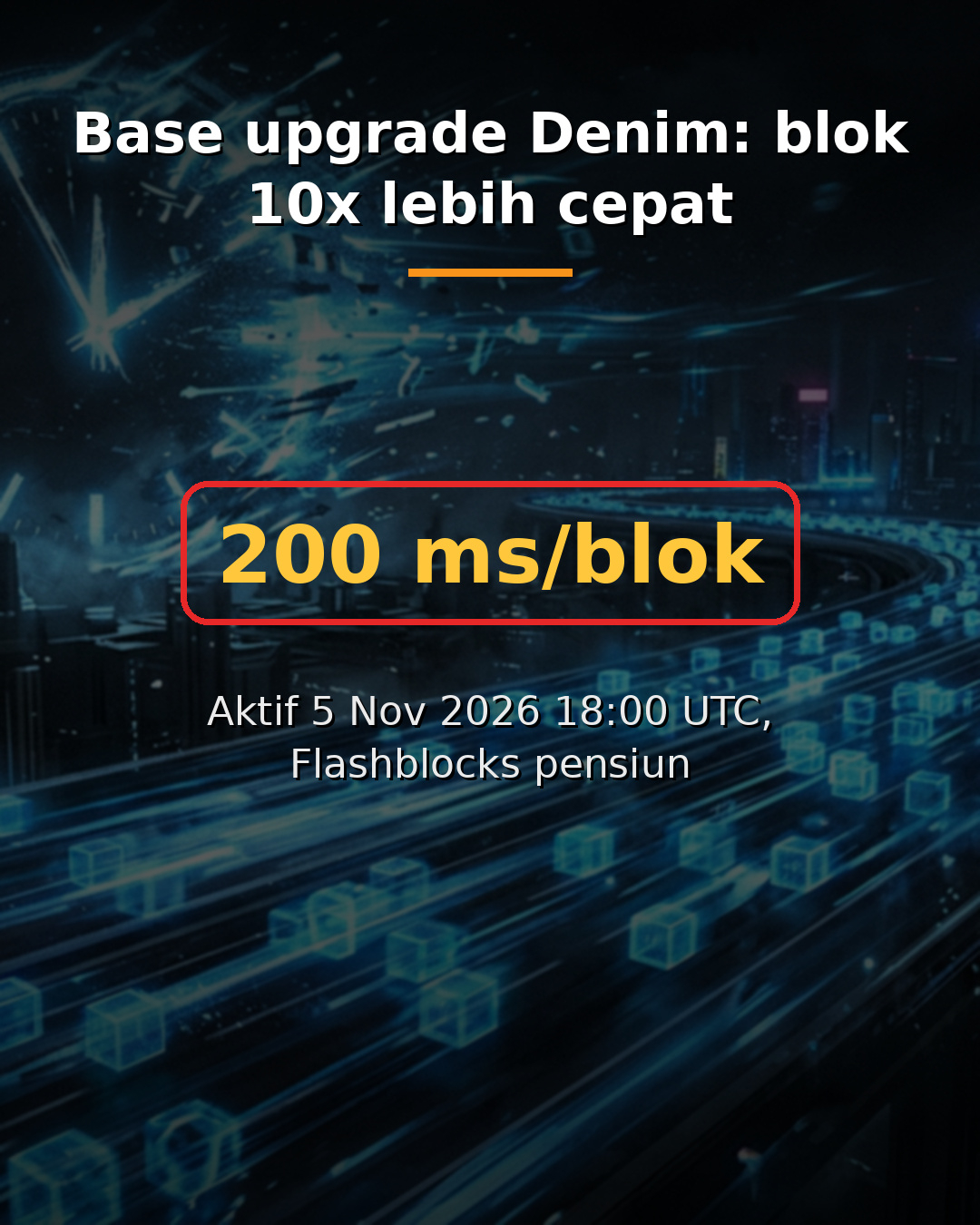
200 ms per block | Goes live Nov 5, 2026, 18:00 UTC (Nov 6, 01:00 WIB)
Coinbase’s incubated Layer 2, Base, will activate the Denim hard fork. Block times will drop from 2 seconds to 200 milliseconds—that’s 5 full blocks every second.
1. Real blocks, not previews — Each 200 ms slot becomes a complete block with its own number, hash, and receipt. Flashblocks, the 200 ms pre-confirmation layer in use since July 2025, will be turned off.
2. Watch out if you measure time in blocks — Timelocks, vesting, or block-count-based voting windows will run 10x faster. A 1-hour cooldown set to 1,800 blocks could expire in 6 minutes. Base’s advice: use block.timestamp.
3. There’s a casualty — Horizen’s L3, which settles to Base, will stop working entirely once Denim goes live. The bridge back to Base will close on Nov 4 at 13:00 UTC (20:00 WIB).
For everyday users, the difference will feel small, since Flashblocks are already fast. What to check: apps and contracts that still use block numbers as a clock. DYOR!
#Base #Layer2 #Denim #Kripto #BinanceSquare
45

·
--
Base testnet hits 200ms blocks: Flashblocks first to be retiredBase, the Coinbase-backed network, has tightened its block-production cadence by a notch on testnet first.
On October 21, Jesse Pollak posted a short message: “200ms blocks live on testnet, mainnet soon.” According to the official docs, this is the Denim upgrade: Base Sepolia is scheduled to switch to native 200-millisecond block production at 18:00 UTC—going from one block every 2 seconds to five full canonical blocks per second. The old Flashblocks preconfirmation stream is being retired, and apps will need to migrate to subscriptions such as canonical newHeads.
The key caveat: each 200ms block has its own hash, state root, and receipt lifecycle. EVM's block.timestamp still advances in seconds, with milliseconds supplied by BaseTime metadata. But block.number advances about 10 times faster—once mainnet catches up, any contract that uses a number of blocks as a cooldown will see that period shrink to one-tenth its original length. Mainnet is targeted for November, but the docs warn that months without a firm date are only tentative plans and may change.
Base testnet hits 200ms blocks: Flashblocks first to be retired
Base, the Coinbase-backed network, has tightened its block-production cadence by a notch on testnet first.
On October 21, Jesse Pollak posted a short message: “200ms blocks live on testnet, mainnet soon.” According to the official docs, this is the Denim upgrade: Base Sepolia is scheduled to switch to native 200-millisecond block production at 18:00 UTC—going from one block every 2 seconds to five full canonical blocks per second. The old Flashblocks preconfirmation stream is being retired, and apps will need to migrate to subscriptions such as canonical newHeads.
The key caveat: each 200ms block has its own hash, state root, and receipt lifecycle. EVM's block.timestamp still advances in seconds, with milliseconds supplied by BaseTime metadata. But block.number advances about 10 times faster—once mainnet catches up, any contract that uses a number of blocks as a cooldown will see that period shrink to one-tenth its original length. Mainnet is targeted for November, but the docs warn that months without a firm date are only tentative plans and may change.
242
Log in to explore more content
Join global crypto users on Binance Square
⚡️ Get latest and useful information about crypto.
💬 Trusted by the world’s largest crypto exchange.
👍 Discover real insights from verified creators.
Email / Phone number
Trending Topics
1
#BTCRebounds80K
36,523 views
576 Discussing
2
#Binance98PercentReplenished
29,640 views
495 Discussing
3
#USMidterms-WhatAreMarketsExpecting?
311,504 views
1,995 Discussing
4
#USOctoberNFP-AreRateCutsStillPossible
381,167 views
2,790 Discussing
5
#AMDBeatsExpectations-AINarrativeContinues
89,667 views
764 Discussing
6
#CircleQ3Revenue865M
24,623 views
424 Discussing
7
#BinanceIncidentReport
518,259 views
2,108 Discussing
8
#USStocksOpenHigherAsDowGains1.9%
4,539 views
70 Discussing
9
#ADPUSPrivateEmployersAdd86000JobsInOctober
3,261 views
47 Discussing
10
#FrenchAssemblyPassesSelfCustodiedCryptoReportingAmendment
868 views
23 Discussing