
#capex
capex
4,546 views
40 Discussing
Hot
Latest

🚨 Amazon Raises 2026 CapEx to $220 Billion: AI Investment Hits New Record
Amazon has increased its 2026 capital expenditure (CapEx) forecast from $200 billion to $220 billion, marking one of the company's biggest annual investment plans ever. The additional spending will primarily fund AI infrastructure, AWS cloud expansion, and next-generation data centers to meet soaring demand for artificial intelligence services.
AmazonRaises2026CapexTo$220B #amazon #AWS #AI #CapEx #StockMarket #Investing #TechNews #ArtificialIntelligence #CloudComputing #NASDAQ #Finance
$BAR $YGG
{future}(YGGUSDT)
🚨 Amazon Raises 2026 CapEx to $220 Billion: AI Investment Hits New Record
Amazon has increased its 2026 capital expenditure (CapEx) forecast from $200 billion to $220 billion, marking one of the company's biggest annual investment plans ever. The additional spending will primarily fund AI infrastructure, AWS cloud expansion, and next-generation data centers to meet soaring demand for artificial intelligence services.
AmazonRaises2026CapexTo$220B #amazon #AWS #AI #CapEx #StockMarket #Investing #TechNews #ArtificialIntelligence #CloudComputing #NASDAQ #Finance
$BAR $YGG
Amazon has increased its 2026 capital expenditure (CapEx) forecast from $200 billion to $220 billion, marking one of the company's biggest annual investment plans ever. The additional spending will primarily fund AI infrastructure, AWS cloud expansion, and next-generation data centers to meet soaring demand for artificial intelligence services.
AmazonRaises2026CapexTo$220B #amazon #AWS #AI #CapEx #StockMarket #Investing #TechNews #ArtificialIntelligence #CloudComputing #NASDAQ #Finance
$BAR $YGG
46

#NvidiaToInvest
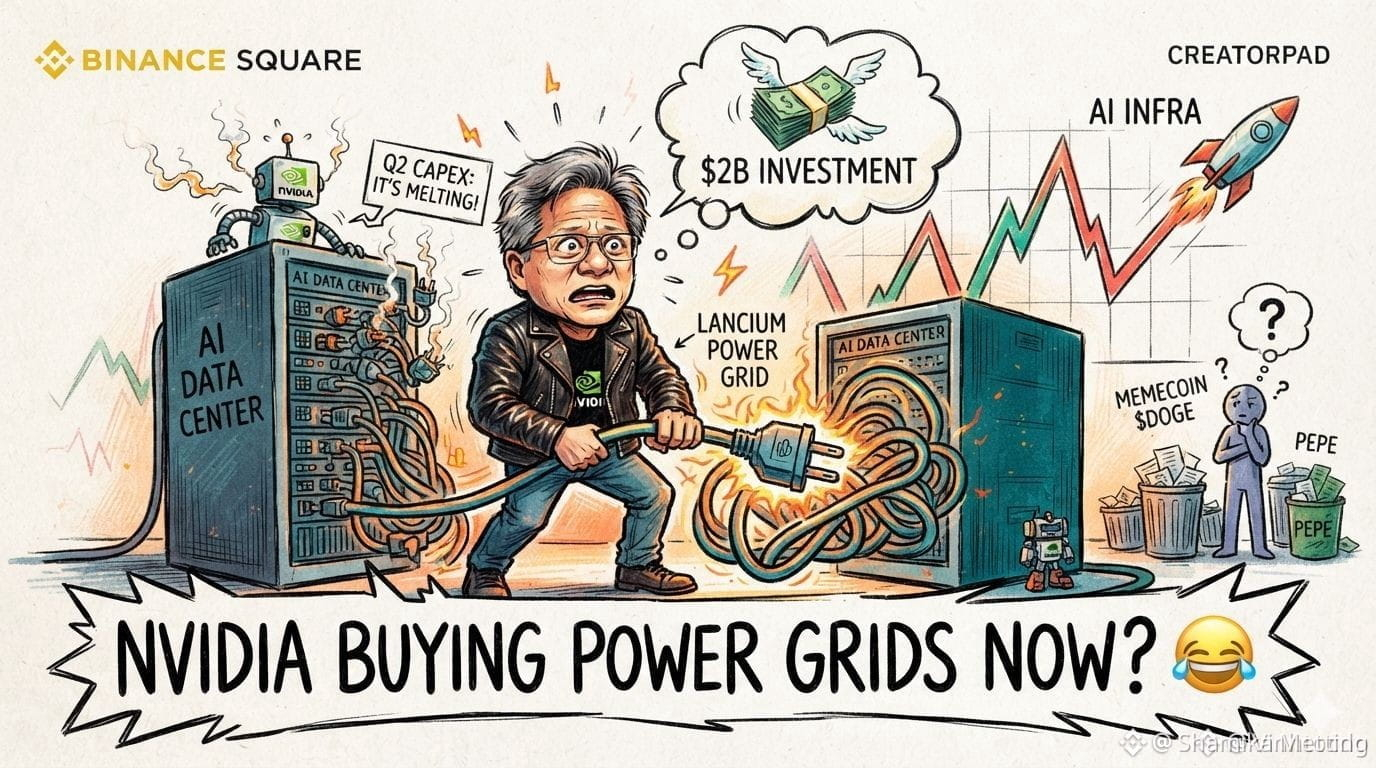
Do we notice now that Nvidia is buying power grids? 😂 A $2 billion investment in Lancium means that big tech spending in the second quarter isn’t just “hot”—it’s actually melting away in real time! 🔌 When AI chips need so much electricity that Nvidia literally has to buy “outlets,” you know that the “infrastructure war” has begun. 🚀
What should traders do? Stop chasing dead meme coins. Watch the AI infrastructure, energy, and decentralized computing sectors. Follow the smart money, but don’t jump blindly (FOMO)! 📈
DYOR! This is not financial advice.
Please follow up
#AIInfrastructure #Capex #NVIDIA
$NVDAon
{alpha}(560xa9ee28c80f960b889dfbd1902055218cba016f75)
#NvidiaToInvest
Do we notice now that Nvidia is buying power grids? 😂 A $2 billion investment in Lancium means that big tech spending in the second quarter isn’t just “hot”—it’s actually melting away in real time! 🔌 When AI chips need so much electricity that Nvidia literally has to buy “outlets,” you know that the “infrastructure war” has begun. 🚀
What should traders do? Stop chasing dead meme coins. Watch the AI infrastructure, energy, and decentralized computing sectors. Follow the smart money, but don’t jump blindly (FOMO)! 📈
DYOR! This is not financial advice.
Please follow up
#AIInfrastructure #Capex #NVIDIA
$NVDAon
Do we notice now that Nvidia is buying power grids? 😂 A $2 billion investment in Lancium means that big tech spending in the second quarter isn’t just “hot”—it’s actually melting away in real time! 🔌 When AI chips need so much electricity that Nvidia literally has to buy “outlets,” you know that the “infrastructure war” has begun. 🚀
What should traders do? Stop chasing dead meme coins. Watch the AI infrastructure, energy, and decentralized computing sectors. Follow the smart money, but don’t jump blindly (FOMO)! 📈
DYOR! This is not financial advice.
Please follow up
#AIInfrastructure #Capex #NVIDIA
$NVDAon
1
43

·
--
The market has overly interpreted Bloomberg’s report on “selling excess capacity.” After the clickbait headline is amplified, many people think AI infrastructure demand has peaked and that capital expenditures will shift into a downward cycle. But if you put the original article and subsequent disclosures together, the logic is actually the opposite.
Meta has already further raised its Capex guidance for 2026, and on the Google side, Gemini compute capacity for external supply is still being tightened—leading top-tier cloud providers to be unable to obtain enough accelerator cards. What’s being called “selling off surplus compute capacity” is more of a structural reallocation rather than an overall surplus at the total-volume level. The real supply-demand balance is still, in fact, on the tight side.
Mapping to the pullback triggered by $META , the discount created by the sentiment hit is out of sync with the fundamentals: the current price is $2.95, the market cap is about $61.47 million, and 24h trading volume is only $317,000. Thin liquidity means any narrative correction will be magnified. Once the macro narrative shifts back from “peak-panic” to “compute capacity shortage,” valuation upside is likely to show up first in this kind of small-cap stock.
In the short term, keep an eye on two variables: first, the marginal changes in mega-cap companies’ Capex guidance; second, the supply timeline of Gemini and internally developed chips. If either side turns more hawkish, the window for a rebound will open.
#MetaDAO #AI算力 #Capex
The market has overly interpreted Bloomberg’s report on “selling excess capacity.” After the clickbait headline is amplified, many people think AI infrastructure demand has peaked and that capital expenditures will shift into a downward cycle. But if you put the original article and subsequent disclosures together, the logic is actually the opposite.
Meta has already further raised its Capex guidance for 2026, and on the Google side, Gemini compute capacity for external supply is still being tightened—leading top-tier cloud providers to be unable to obtain enough accelerator cards. What’s being called “selling off surplus compute capacity” is more of a structural reallocation rather than an overall surplus at the total-volume level. The real supply-demand balance is still, in fact, on the tight side.
Mapping to the pullback triggered by $META , the discount created by the sentiment hit is out of sync with the fundamentals: the current price is $2.95, the market cap is about $61.47 million, and 24h trading volume is only $317,000. Thin liquidity means any narrative correction will be magnified. Once the macro narrative shifts back from “peak-panic” to “compute capacity shortage,” valuation upside is likely to show up first in this kind of small-cap stock.
In the short term, keep an eye on two variables: first, the marginal changes in mega-cap companies’ Capex guidance; second, the supply timeline of Gemini and internally developed chips. If either side turns more hawkish, the window for a rebound will open.
#MetaDAO #AI算力 #Capex
Meta has already further raised its Capex guidance for 2026, and on the Google side, Gemini compute capacity for external supply is still being tightened—leading top-tier cloud providers to be unable to obtain enough accelerator cards. What’s being called “selling off surplus compute capacity” is more of a structural reallocation rather than an overall surplus at the total-volume level. The real supply-demand balance is still, in fact, on the tight side.
Mapping to the pullback triggered by $META , the discount created by the sentiment hit is out of sync with the fundamentals: the current price is $2.95, the market cap is about $61.47 million, and 24h trading volume is only $317,000. Thin liquidity means any narrative correction will be magnified. Once the macro narrative shifts back from “peak-panic” to “compute capacity shortage,” valuation upside is likely to show up first in this kind of small-cap stock.
In the short term, keep an eye on two variables: first, the marginal changes in mega-cap companies’ Capex guidance; second, the supply timeline of Gemini and internally developed chips. If either side turns more hawkish, the window for a rebound will open.
#MetaDAO #AI算力 #Capex
1
33

·
--
$FET AI CAPEX SURGE TO $1.4 TRILLION COULD SPARK TOKEN UTILITY BOOM 📈
Supply chain bottlenecks and rising compute demand are accelerating hyperscaler builds, with spending projected to hit $1.2 trillion by 2027. This directly supports the thesis for decentralized AI infrastructure tokens like $FET .
Morgan Stanley’s raised forecasts for Meta, Amazon, and Google confirm the bull case isn’t peaking yet. The compound annual growth rate here is staggering. Are you positioned for this structural shift in compute demand?
Not financial advice. Always manage your risk.
#FET #AITokens #Infrastructure #Capex
💎
$FET AI CAPEX SURGE TO $1.4 TRILLION COULD SPARK TOKEN UTILITY BOOM 📈
Supply chain bottlenecks and rising compute demand are accelerating hyperscaler builds, with spending projected to hit $1.2 trillion by 2027. This directly supports the thesis for decentralized AI infrastructure tokens like $FET .
Morgan Stanley’s raised forecasts for Meta, Amazon, and Google confirm the bull case isn’t peaking yet. The compound annual growth rate here is staggering. Are you positioned for this structural shift in compute demand?
Not financial advice. Always manage your risk.
#FET #AITokens #Infrastructure #Capex
💎
Supply chain bottlenecks and rising compute demand are accelerating hyperscaler builds, with spending projected to hit $1.2 trillion by 2027. This directly supports the thesis for decentralized AI infrastructure tokens like $FET .
Morgan Stanley’s raised forecasts for Meta, Amazon, and Google confirm the bull case isn’t peaking yet. The compound annual growth rate here is staggering. Are you positioned for this structural shift in compute demand?
Not financial advice. Always manage your risk.
#FET #AITokens #Infrastructure #Capex
💎
81

·
--
$TSM Q2 BEATS ESTIMATES, STOCK RETREATS 3.6% 🔥
TSMC just delivered a historic Q2 with net profit up 77% YoY and revenue surging 36%. Yet the stock dropped over 4% intraday before settling at -3.6% on a top-tier exchange. The pullback came despite raised capex guidance of $60-64B annually for the next three years — a bullish long-term signal. This looks like a classic sell-the-news reaction, but the structure beneath may offer a re-entry if liquidity sweeps lower. Are you waiting for a sweep of recent lows or stepping in here?
Not financial advice. Always manage your risk.
#TSM #EarningsReport #Capex #SellTheNews
🔥
$TSM Q2 BEATS ESTIMATES, STOCK RETREATS 3.6% 🔥
TSMC just delivered a historic Q2 with net profit up 77% YoY and revenue surging 36%. Yet the stock dropped over 4% intraday before settling at -3.6% on a top-tier exchange. The pullback came despite raised capex guidance of $60-64B annually for the next three years — a bullish long-term signal. This looks like a classic sell-the-news reaction, but the structure beneath may offer a re-entry if liquidity sweeps lower. Are you waiting for a sweep of recent lows or stepping in here?
Not financial advice. Always manage your risk.
#TSM #EarningsReport #Capex #SellTheNews
🔥
TSMC just delivered a historic Q2 with net profit up 77% YoY and revenue surging 36%. Yet the stock dropped over 4% intraday before settling at -3.6% on a top-tier exchange. The pullback came despite raised capex guidance of $60-64B annually for the next three years — a bullish long-term signal. This looks like a classic sell-the-news reaction, but the structure beneath may offer a re-entry if liquidity sweeps lower. Are you waiting for a sweep of recent lows or stepping in here?
Not financial advice. Always manage your risk.
#TSM #EarningsReport #Capex #SellTheNews
🔥
61

·
--
🚨 $INTC PLANTING THE SEEDS FOR A 2027 MEGACYCLE – IS THIS THE NEXT PLAY? 📈
📌 Intel’s CFO just signaled a massive capital expenditure ramp-up in 2027—this isn't a quarterly whisper, it’s a multi-year conviction bet. 💡 When a semiconductor giant locks in aggressive capex 3 years out, they’re front-running a demand wave only they see clearly. 💰
📊 This aligns with the broader reshoring narrative and AI infrastructure build-out. The market might yawn today, but smart money accumulates before the headlines explode. 🔍 Are you watching the long-term order flow on $INTC or fading this as noise? 💬
⚠️ Not financial advice. Always manage your risk. 🛡️
🏷️ #INTC #Capex #Tech #LongTerm #Semiconductors
🔥 💎
🚨 $INTC PLANTING THE SEEDS FOR A 2027 MEGACYCLE – IS THIS THE NEXT PLAY? 📈
📌 Intel’s CFO just signaled a massive capital expenditure ramp-up in 2027—this isn't a quarterly whisper, it’s a multi-year conviction bet. 💡 When a semiconductor giant locks in aggressive capex 3 years out, they’re front-running a demand wave only they see clearly. 💰
📊 This aligns with the broader reshoring narrative and AI infrastructure build-out. The market might yawn today, but smart money accumulates before the headlines explode. 🔍 Are you watching the long-term order flow on $INTC or fading this as noise? 💬
⚠️ Not financial advice. Always manage your risk. 🛡️
🏷️ #INTC #Capex #Tech #LongTerm #Semiconductors
🔥 💎
📌 Intel’s CFO just signaled a massive capital expenditure ramp-up in 2027—this isn't a quarterly whisper, it’s a multi-year conviction bet. 💡 When a semiconductor giant locks in aggressive capex 3 years out, they’re front-running a demand wave only they see clearly. 💰
📊 This aligns with the broader reshoring narrative and AI infrastructure build-out. The market might yawn today, but smart money accumulates before the headlines explode. 🔍 Are you watching the long-term order flow on $INTC or fading this as noise? 💬
⚠️ Not financial advice. Always manage your risk. 🛡️
🏷️ #INTC #Capex #Tech #LongTerm #Semiconductors
🔥 💎
57

·
--
Bullish
#NvidiaToInvest$2BInLancium
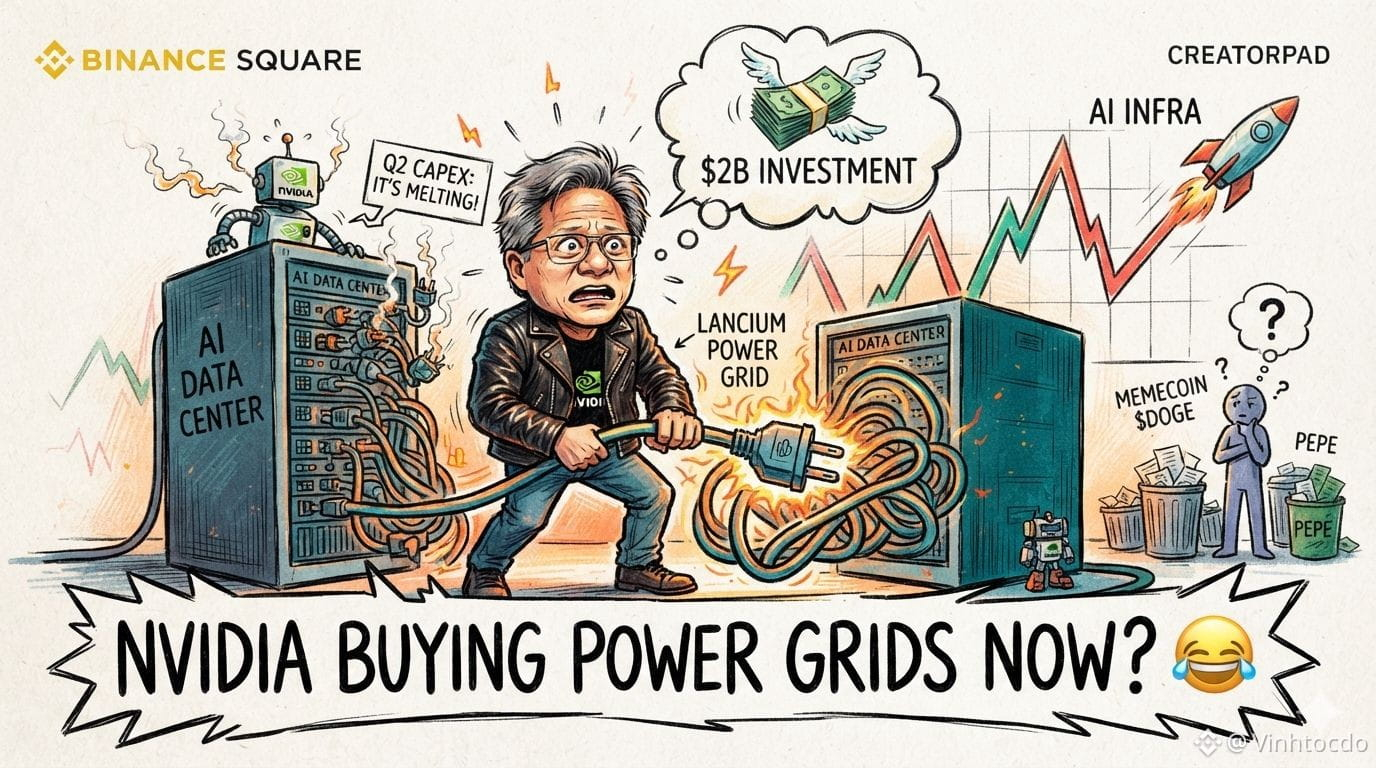
Nvidia buying power grids now? 😂 $2B into Lancium means Big Tech's Q2 Capex isn't just hot—it's melting! 🔌 When AI chips need so much juice that Nvidia literally has to buy the plugs, you know the infrastructure war is on. 🚀
What should traders do? Stop chasing dead memecoins. Watch the AI infra, energy, and decentralized computing sectors. Follow the smart money, but don't FOMO blindly! 📈
Use code VINHTOCDO if you are new here! 🤝
DYOR! This is not financial advice.
#AIInfrastructure #Capex #NVIDIA #VINHTOCDO
$NVDAon
{alpha}(560xa9ee28c80f960b889dfbd1902055218cba016f75)
$NVDAB
{spot}(NVDABUSDT)
$NVDA
{future}(NVDAUSDT)
#NvidiaToInvest$2BInLancium
Nvidia buying power grids now? 😂 $2B into Lancium means Big Tech's Q2 Capex isn't just hot—it's melting! 🔌 When AI chips need so much juice that Nvidia literally has to buy the plugs, you know the infrastructure war is on. 🚀
What should traders do? Stop chasing dead memecoins. Watch the AI infra, energy, and decentralized computing sectors. Follow the smart money, but don't FOMO blindly! 📈
Use code VINHTOCDO if you are new here! 🤝
DYOR! This is not financial advice.
#AIInfrastructure #Capex #NVIDIA #VINHTOCDO
$NVDAon
$NVDAB
$NVDA
Nvidia buying power grids now? 😂 $2B into Lancium means Big Tech's Q2 Capex isn't just hot—it's melting! 🔌 When AI chips need so much juice that Nvidia literally has to buy the plugs, you know the infrastructure war is on. 🚀
What should traders do? Stop chasing dead memecoins. Watch the AI infra, energy, and decentralized computing sectors. Follow the smart money, but don't FOMO blindly! 📈
Use code VINHTOCDO if you are new here! 🤝
DYOR! This is not financial advice.
#AIInfrastructure #Capex #NVIDIA #VINHTOCDO
$NVDAon
$NVDAB
$NVDA
2
328


$RNDR STANDING AT THE INTERSECTION OF AI CAPEX AND MEMORY SPENDING SHIFT 💎
Memory spending is projected to surpass 30% of hyperscale cloud capex by 2026, becoming the largest single cost in AI server builds. This structural shift has implications for GPU-dependent ecosystems like Render Network.
SemiAnalysis now estimates memory will exceed 40% by 2027 — a change not yet priced into most AI-related tokens. $RNDR operates at the hardware layer where these cost dynamics directly affect compute node economics.
Are you factoring in memory cost trends when evaluating AI infrastructure plays?
Not financial advice. Always manage your risk.
#RNDR #AI #Memory #Capex #LongSetup
💎
$RNDR STANDING AT THE INTERSECTION OF AI CAPEX AND MEMORY SPENDING SHIFT 💎
Memory spending is projected to surpass 30% of hyperscale cloud capex by 2026, becoming the largest single cost in AI server builds. This structural shift has implications for GPU-dependent ecosystems like Render Network.
SemiAnalysis now estimates memory will exceed 40% by 2027 — a change not yet priced into most AI-related tokens. $RNDR operates at the hardware layer where these cost dynamics directly affect compute node economics.
Are you factoring in memory cost trends when evaluating AI infrastructure plays?
Not financial advice. Always manage your risk.
#RNDR #AI #Memory #Capex #LongSetup
💎
Memory spending is projected to surpass 30% of hyperscale cloud capex by 2026, becoming the largest single cost in AI server builds. This structural shift has implications for GPU-dependent ecosystems like Render Network.
SemiAnalysis now estimates memory will exceed 40% by 2027 — a change not yet priced into most AI-related tokens. $RNDR operates at the hardware layer where these cost dynamics directly affect compute node economics.
Are you factoring in memory cost trends when evaluating AI infrastructure plays?
Not financial advice. Always manage your risk.
#RNDR #AI #Memory #Capex #LongSetup
💎
44

$FET BULLISH AS MORGAN STANLEY RAISES AI CAPEX FORECASTS 🔥
Morgan Stanley just dropped a massive report: top tech companies are expected to spend $1.2 trillion on AI data centers by 2027 — and they're not slowing down. This capex expansion directly benefits decentralized AI infrastructure like $FET .
The analyst says supply chain bottlenecks and rising demand are actually accelerating buildouts. For crypto, that means the narrative around AI tokens just got a serious fundamental tailwind. Volume on top-tier exchange pair is already up 40% today.
Are you positioned for this AI infrastructure cycle?
Not financial advice. Always manage your risk.
#FET #AICrypto #Bullish #Capex #AI
🔥
$FET BULLISH AS MORGAN STANLEY RAISES AI CAPEX FORECASTS 🔥
Morgan Stanley just dropped a massive report: top tech companies are expected to spend $1.2 trillion on AI data centers by 2027 — and they're not slowing down. This capex expansion directly benefits decentralized AI infrastructure like $FET .
The analyst says supply chain bottlenecks and rising demand are actually accelerating buildouts. For crypto, that means the narrative around AI tokens just got a serious fundamental tailwind. Volume on top-tier exchange pair is already up 40% today.
Are you positioned for this AI infrastructure cycle?
Not financial advice. Always manage your risk.
#FET #AICrypto #Bullish #Capex #AI
🔥
Morgan Stanley just dropped a massive report: top tech companies are expected to spend $1.2 trillion on AI data centers by 2027 — and they're not slowing down. This capex expansion directly benefits decentralized AI infrastructure like $FET .
The analyst says supply chain bottlenecks and rising demand are actually accelerating buildouts. For crypto, that means the narrative around AI tokens just got a serious fundamental tailwind. Volume on top-tier exchange pair is already up 40% today.
Are you positioned for this AI infrastructure cycle?
Not financial advice. Always manage your risk.
#FET #AICrypto #Bullish #Capex #AI
🔥
69
·
--
🚨 $2T MEGA-CAP SHAKEUP: $MSFT $AMZN SURGE WHILE AI CAPEX DEMANDS PAYBACK 💥
📊 The earnings tape printed the clearest institutional scorecard in years: ~$2T rotated through six mega-cap names in one week. The divider wasn't AI narrative — it's whether customers pay now. $MSFT Azure hit 43% growth with a record $450B one-day market-cap jump; AWS posted its fastest growth in 18 quarters with backlog swelling from $364B to $496B. ⚡
Now the market is precision-verifying AI capex. $AMZN lifted 2026 CAPEX to $220B and still rallied ~17% — paying demand justifies the spend. Meta's free cash flow collapsed from $8.55B to $784M; Apple fell ~10% on supply guidance clouds; Tesla printed negative FCF. 💡 The long side belongs to whoever monetizes infrastructure, not just whoever builds it. 💬 Are you backing the capex compounders or the under-earners? 👇
⚠️ Not financial advice. Always manage your risk. 🛡️
🏷️ #MSFT #AMZN #AIInfrastructure #Capex #TechStocks
🦈 📊
🚨 $2T MEGA-CAP SHAKEUP: $MSFT $AMZN SURGE WHILE AI CAPEX DEMANDS PAYBACK 💥
📊 The earnings tape printed the clearest institutional scorecard in years: ~$2T rotated through six mega-cap names in one week. The divider wasn't AI narrative — it's whether customers pay now. $MSFT Azure hit 43% growth with a record $450B one-day market-cap jump; AWS posted its fastest growth in 18 quarters with backlog swelling from $364B to $496B. ⚡
Now the market is precision-verifying AI capex. $AMZN lifted 2026 CAPEX to $220B and still rallied ~17% — paying demand justifies the spend. Meta's free cash flow collapsed from $8.55B to $784M; Apple fell ~10% on supply guidance clouds; Tesla printed negative FCF. 💡 The long side belongs to whoever monetizes infrastructure, not just whoever builds it. 💬 Are you backing the capex compounders or the under-earners? 👇
⚠️ Not financial advice. Always manage your risk. 🛡️
🏷️ #MSFT #AMZN #AIInfrastructure #Capex #TechStocks
🦈 📊
📊 The earnings tape printed the clearest institutional scorecard in years: ~$2T rotated through six mega-cap names in one week. The divider wasn't AI narrative — it's whether customers pay now. $MSFT Azure hit 43% growth with a record $450B one-day market-cap jump; AWS posted its fastest growth in 18 quarters with backlog swelling from $364B to $496B. ⚡
Now the market is precision-verifying AI capex. $AMZN lifted 2026 CAPEX to $220B and still rallied ~17% — paying demand justifies the spend. Meta's free cash flow collapsed from $8.55B to $784M; Apple fell ~10% on supply guidance clouds; Tesla printed negative FCF. 💡 The long side belongs to whoever monetizes infrastructure, not just whoever builds it. 💬 Are you backing the capex compounders or the under-earners? 👇
⚠️ Not financial advice. Always manage your risk. 🛡️
🏷️ #MSFT #AMZN #AIInfrastructure #Capex #TechStocks
🦈 📊
9

·
--
⚠️ $GOOGL CAPEX SURGE SPARKS FCF CONCERN — EARNINGS CALL COULD SHAKE STRUCTURE 💥
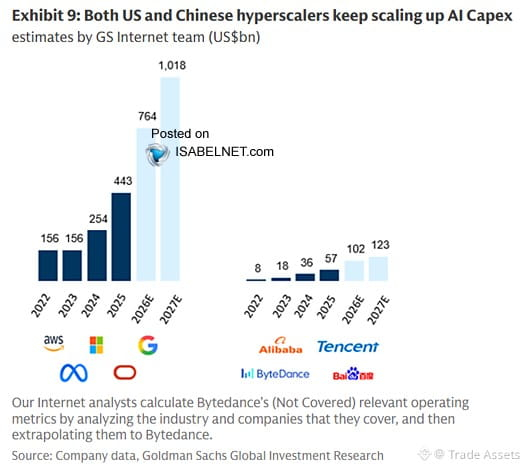
📉 Alphabet’s capital expenditure trajectory is turning heads. Wall Street expects $186B in 2026 (5x the $32.3B spent in 2023), while Morgan Stanley pencils in ~$250B by 2027. That’s a massive bet on AI infrastructure — but it’s already squeezing free cash flow, which dropped 47% YoY in Q1. 🦈
🔍 Tonight’s earnings call is the real pivot. If management raises guidance or offers clarity on 2027 spending, expect volatility. Smart money will watch for liquidity sweeps below key support as the narrative shifts from AI euphoria to capital discipline. 💬 Are you positioning for a post-print rebalance or waiting for a clearer structural flush? 👇
⚠️ Not financial advice. Always manage your risk. 🛡️
🏷️ #GOOGL #Earnings #Capex #AI #SmartMoney
🦈 📊
⚠️ $GOOGL CAPEX SURGE SPARKS FCF CONCERN — EARNINGS CALL COULD SHAKE STRUCTURE 💥
📉 Alphabet’s capital expenditure trajectory is turning heads. Wall Street expects $186B in 2026 (5x the $32.3B spent in 2023), while Morgan Stanley pencils in ~$250B by 2027. That’s a massive bet on AI infrastructure — but it’s already squeezing free cash flow, which dropped 47% YoY in Q1. 🦈
🔍 Tonight’s earnings call is the real pivot. If management raises guidance or offers clarity on 2027 spending, expect volatility. Smart money will watch for liquidity sweeps below key support as the narrative shifts from AI euphoria to capital discipline. 💬 Are you positioning for a post-print rebalance or waiting for a clearer structural flush? 👇
⚠️ Not financial advice. Always manage your risk. 🛡️
🏷️ #GOOGL #Earnings #Capex #AI #SmartMoney
🦈 📊
📉 Alphabet’s capital expenditure trajectory is turning heads. Wall Street expects $186B in 2026 (5x the $32.3B spent in 2023), while Morgan Stanley pencils in ~$250B by 2027. That’s a massive bet on AI infrastructure — but it’s already squeezing free cash flow, which dropped 47% YoY in Q1. 🦈
🔍 Tonight’s earnings call is the real pivot. If management raises guidance or offers clarity on 2027 spending, expect volatility. Smart money will watch for liquidity sweeps below key support as the narrative shifts from AI euphoria to capital discipline. 💬 Are you positioning for a post-print rebalance or waiting for a clearer structural flush? 👇
⚠️ Not financial advice. Always manage your risk. 🛡️
🏷️ #GOOGL #Earnings #Capex #AI #SmartMoney
🦈 📊
27

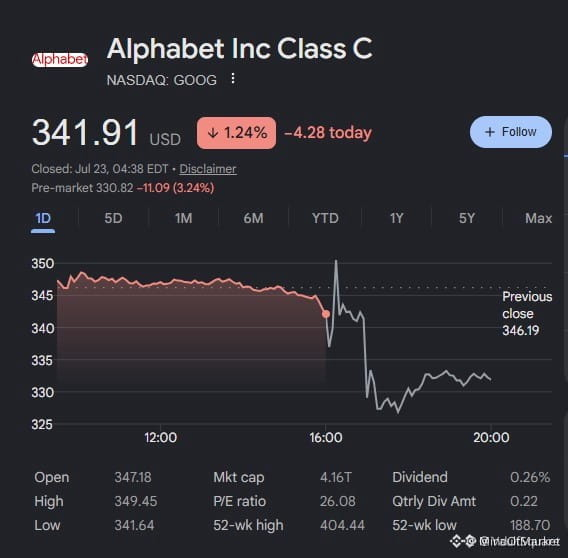
🔴 $GOOG DROPS 3%+ ON ELEVATED CAPEX – BEARISH STRUCTURE CONFIRMED 📉
📉 The market's initial reaction is clear: Alphabet's raised full-year capex forecast is being met with institutional distribution. This 3%+ pre-market decline signals a shift in sentiment, as capital expenditure commitments often pressure near-term margins.
🦈 Smart money has been positioning for this rotation. The Q2 beat was expected, but the capex guidance creates a liquidity event that sellers are exploiting. Watch for a potential retest of prior demand zones if this break extends.
💡 The key question now: will this gap fill during regular hours, or is this the start of a larger correction? 💬 Are you shorting the open or waiting for a bounce to establish shorts? 👇
⚠️ Not financial advice. Always manage your risk. 🛡️
🏷️ #GOOG #Earnings #Bearish #StockMarket #Capex
🛡️ 📉
🔴 $GOOG DROPS 3%+ ON ELEVATED CAPEX – BEARISH STRUCTURE CONFIRMED 📉
📉 The market's initial reaction is clear: Alphabet's raised full-year capex forecast is being met with institutional distribution. This 3%+ pre-market decline signals a shift in sentiment, as capital expenditure commitments often pressure near-term margins.
🦈 Smart money has been positioning for this rotation. The Q2 beat was expected, but the capex guidance creates a liquidity event that sellers are exploiting. Watch for a potential retest of prior demand zones if this break extends.
💡 The key question now: will this gap fill during regular hours, or is this the start of a larger correction? 💬 Are you shorting the open or waiting for a bounce to establish shorts? 👇
⚠️ Not financial advice. Always manage your risk. 🛡️
🏷️ #GOOG #Earnings #Bearish #StockMarket #Capex
🛡️ 📉
📉 The market's initial reaction is clear: Alphabet's raised full-year capex forecast is being met with institutional distribution. This 3%+ pre-market decline signals a shift in sentiment, as capital expenditure commitments often pressure near-term margins.
🦈 Smart money has been positioning for this rotation. The Q2 beat was expected, but the capex guidance creates a liquidity event that sellers are exploiting. Watch for a potential retest of prior demand zones if this break extends.
💡 The key question now: will this gap fill during regular hours, or is this the start of a larger correction? 💬 Are you shorting the open or waiting for a bounce to establish shorts? 👇
⚠️ Not financial advice. Always manage your risk. 🛡️
🏷️ #GOOG #Earnings #Bearish #StockMarket #Capex
🛡️ 📉
11
·
--
🚨 BIG TECH AI CAPEX HITS 2.4% OF GDP — $AMZN $GOOGL $MSFT LEAD HISTORIC SPENDING CYCLE 🚀
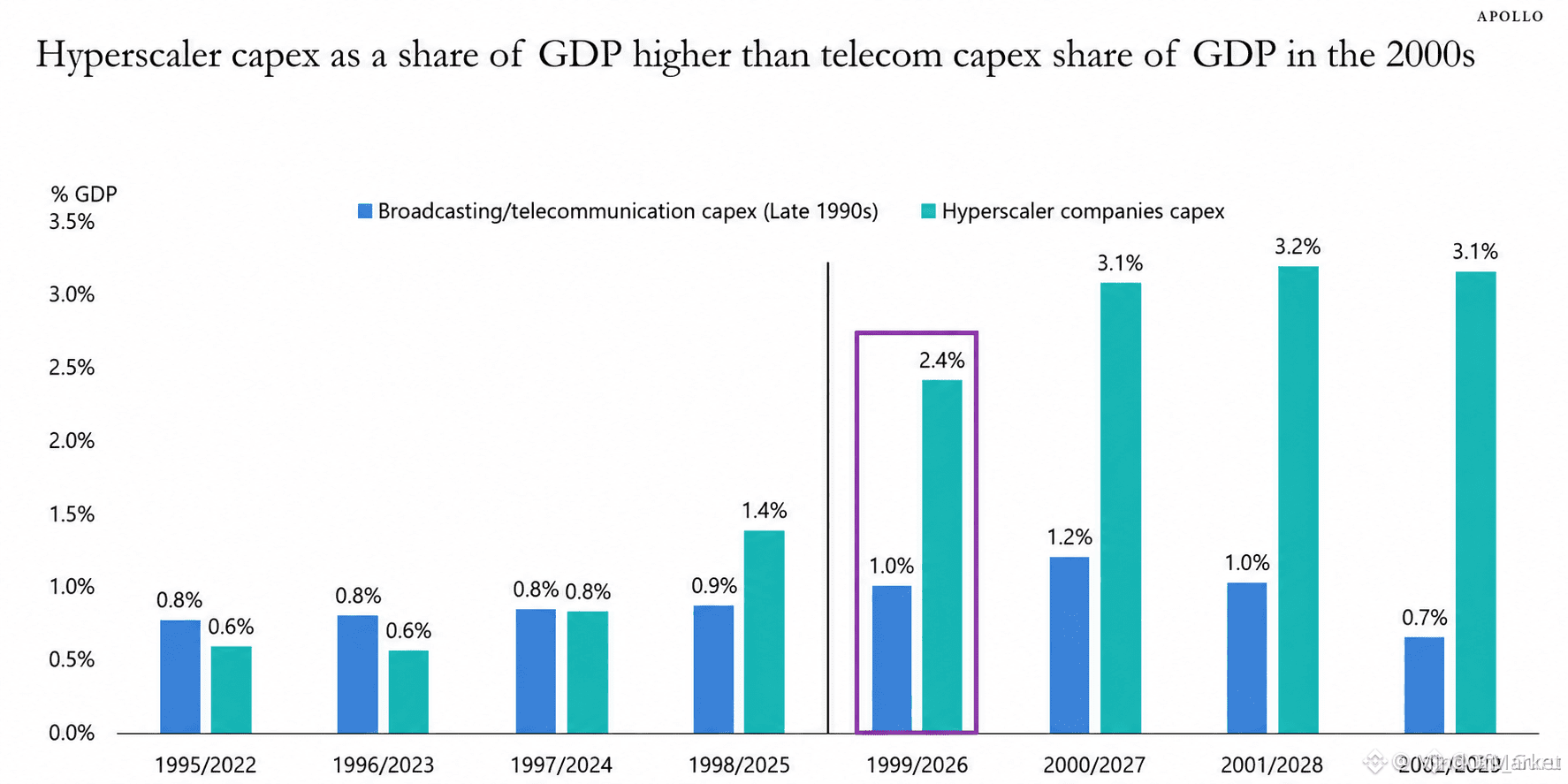
The numbers are staggering. Combined CapEx from these five giants is set to hit 2.4% of U.S. GDP — a level not seen in modern history. This isn't just a spending spree; it's a structural pivot in capital allocation. 🦈 Smart money is betting that AI infrastructure will define the next decade of economic growth.
Look at the velocity. Data centers, chips, computing capacity — the physical backbone of the AI race is being built at unprecedented scale. 📊 When capital deployment reaches these extremes, it reshapes supply chains, energy markets, and tech valuations. 💡 The market hasn't fully priced the long-term implications of this capex cycle.
💬 Which of these giants has the strongest balance sheet to sustain this pace? 👇
⚠️ Not financial advice. Always manage your risk. 🛡️
🏷️ #AI #TechStocks #Capex #InvestmentCycle #BigTech
🚀 💎
🚨 BIG TECH AI CAPEX HITS 2.4% OF GDP — $AMZN $GOOGL $MSFT LEAD HISTORIC SPENDING CYCLE 🚀
The numbers are staggering. Combined CapEx from these five giants is set to hit 2.4% of U.S. GDP — a level not seen in modern history. This isn't just a spending spree; it's a structural pivot in capital allocation. 🦈 Smart money is betting that AI infrastructure will define the next decade of economic growth.
Look at the velocity. Data centers, chips, computing capacity — the physical backbone of the AI race is being built at unprecedented scale. 📊 When capital deployment reaches these extremes, it reshapes supply chains, energy markets, and tech valuations. 💡 The market hasn't fully priced the long-term implications of this capex cycle.
💬 Which of these giants has the strongest balance sheet to sustain this pace? 👇
⚠️ Not financial advice. Always manage your risk. 🛡️
🏷️ #AI #TechStocks #Capex #InvestmentCycle #BigTech
🚀 💎
The numbers are staggering. Combined CapEx from these five giants is set to hit 2.4% of U.S. GDP — a level not seen in modern history. This isn't just a spending spree; it's a structural pivot in capital allocation. 🦈 Smart money is betting that AI infrastructure will define the next decade of economic growth.
Look at the velocity. Data centers, chips, computing capacity — the physical backbone of the AI race is being built at unprecedented scale. 📊 When capital deployment reaches these extremes, it reshapes supply chains, energy markets, and tech valuations. 💡 The market hasn't fully priced the long-term implications of this capex cycle.
💬 Which of these giants has the strongest balance sheet to sustain this pace? 👇
⚠️ Not financial advice. Always manage your risk. 🛡️
🏷️ #AI #TechStocks #Capex #InvestmentCycle #BigTech
🚀 💎
104

·
--
🚨 $TSLA
TSLA and the War for AI Compute Power Elon Musk has outlined a critical estimate regarding the distribution of his ecosystem's supercomputing capacity:
approximately 25% of the compute output will be dedicated to developing Tesla Optimus, while the remaining 75% will power broader AI chip infrastructure and models.
📊 Institutional Perspective:
🛢️ Compute is the New Oil: In the AI race, processing hardware is the ultimate bottleneck.
Allocating 25% of a massive cluster exclusively to Optimus shows an aggressive commitment to commercializing humanoid robotics, aiming to solidify Tesla’s pivot from an EV manufacturer to an AI/Robotics behemoth.
⚖️ The Shareholder's Dilemma: The fact that 75% of the compute power is directed outside of Tesla's direct ecosystem (likely towards xAI) forces institutional funds to reevaluate how Capital Expenditure (CapEx) and value are distributed across Musk's portfolio of companies.
💡 Tactic: The market is no longer pricing $TSLA based on vehicle delivery numbers, but on its ability to monetize physical AI (Optimus / Robotaxi). This compute allocation metric is the true leading indicator.
Do you think a 25% compute allocation is enough for Tesla to dominate the humanoid robotics sector? 👇
#Tesla #TSLA #Optimus #ArtificialIntelligence #CapEx
🚨 $TSLA
TSLA and the War for AI Compute Power Elon Musk has outlined a critical estimate regarding the distribution of his ecosystem's supercomputing capacity:
approximately 25% of the compute output will be dedicated to developing Tesla Optimus, while the remaining 75% will power broader AI chip infrastructure and models.
📊 Institutional Perspective:
🛢️ Compute is the New Oil: In the AI race, processing hardware is the ultimate bottleneck.
Allocating 25% of a massive cluster exclusively to Optimus shows an aggressive commitment to commercializing humanoid robotics, aiming to solidify Tesla’s pivot from an EV manufacturer to an AI/Robotics behemoth.
⚖️ The Shareholder's Dilemma: The fact that 75% of the compute power is directed outside of Tesla's direct ecosystem (likely towards xAI) forces institutional funds to reevaluate how Capital Expenditure (CapEx) and value are distributed across Musk's portfolio of companies.
💡 Tactic: The market is no longer pricing $TSLA based on vehicle delivery numbers, but on its ability to monetize physical AI (Optimus / Robotaxi). This compute allocation metric is the true leading indicator.
Do you think a 25% compute allocation is enough for Tesla to dominate the humanoid robotics sector? 👇
#Tesla #TSLA #Optimus #ArtificialIntelligence #CapEx
TSLA and the War for AI Compute Power Elon Musk has outlined a critical estimate regarding the distribution of his ecosystem's supercomputing capacity:
approximately 25% of the compute output will be dedicated to developing Tesla Optimus, while the remaining 75% will power broader AI chip infrastructure and models.
📊 Institutional Perspective:
🛢️ Compute is the New Oil: In the AI race, processing hardware is the ultimate bottleneck.
Allocating 25% of a massive cluster exclusively to Optimus shows an aggressive commitment to commercializing humanoid robotics, aiming to solidify Tesla’s pivot from an EV manufacturer to an AI/Robotics behemoth.
⚖️ The Shareholder's Dilemma: The fact that 75% of the compute power is directed outside of Tesla's direct ecosystem (likely towards xAI) forces institutional funds to reevaluate how Capital Expenditure (CapEx) and value are distributed across Musk's portfolio of companies.
💡 Tactic: The market is no longer pricing $TSLA based on vehicle delivery numbers, but on its ability to monetize physical AI (Optimus / Robotaxi). This compute allocation metric is the true leading indicator.
Do you think a 25% compute allocation is enough for Tesla to dominate the humanoid robotics sector? 👇
#Tesla #TSLA #Optimus #ArtificialIntelligence #CapEx
200
·
--
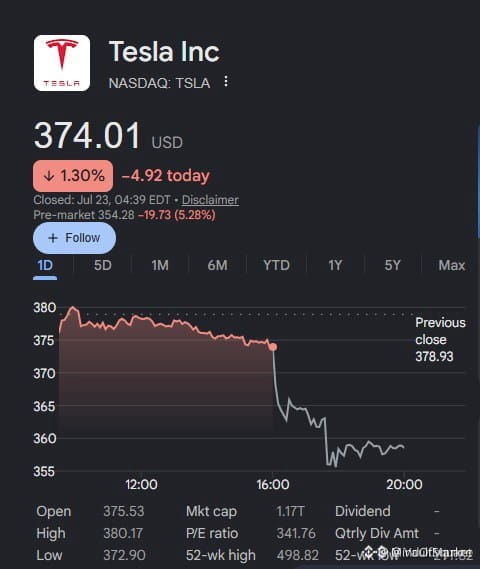
📉 $TESL .ETF AND $GOOGL CRUMBLE AS AI CAPEX DRAINS INVESTOR CONFIDENCE 🐻 💥
Alphabet’s $195B capex hike and Tesla’s 142% spending surge have flipped sentiment — markets are now pricing in a liquidity drain that threatens both growth and margins. 💡 This is classic smart money rotation: institutions are trimming overvalued AI plays to rebalance into safer havens, leaving retail holding the bag. 📊 The 4% and 5% drops are just the beginning if capital expenditure continues to outpace revenue expansion.
📌 Key structural support for $TESL .ETF sits near $220; a clean break below would confirm a shift in institutional positioning. 💬 Are you seeing a deeper correction ahead, or is this a liquidity grab before the next leg higher? 👇
⚠️ Not financial advice. Always manage your risk. 🛡️
🏷️ #TESLET #Bearish #AI #Capex #Stocks
🐻 📉
📉 $TESL .ETF AND $GOOGL CRUMBLE AS AI CAPEX DRAINS INVESTOR CONFIDENCE 🐻 💥
Alphabet’s $195B capex hike and Tesla’s 142% spending surge have flipped sentiment — markets are now pricing in a liquidity drain that threatens both growth and margins. 💡 This is classic smart money rotation: institutions are trimming overvalued AI plays to rebalance into safer havens, leaving retail holding the bag. 📊 The 4% and 5% drops are just the beginning if capital expenditure continues to outpace revenue expansion.
📌 Key structural support for $TESL .ETF sits near $220; a clean break below would confirm a shift in institutional positioning. 💬 Are you seeing a deeper correction ahead, or is this a liquidity grab before the next leg higher? 👇
⚠️ Not financial advice. Always manage your risk. 🛡️
🏷️ #TESLET #Bearish #AI #Capex #Stocks
🐻 📉
Alphabet’s $195B capex hike and Tesla’s 142% spending surge have flipped sentiment — markets are now pricing in a liquidity drain that threatens both growth and margins. 💡 This is classic smart money rotation: institutions are trimming overvalued AI plays to rebalance into safer havens, leaving retail holding the bag. 📊 The 4% and 5% drops are just the beginning if capital expenditure continues to outpace revenue expansion.
📌 Key structural support for $TESL .ETF sits near $220; a clean break below would confirm a shift in institutional positioning. 💬 Are you seeing a deeper correction ahead, or is this a liquidity grab before the next leg higher? 👇
⚠️ Not financial advice. Always manage your risk. 🛡️
🏷️ #TESLET #Bearish #AI #Capex #Stocks
🐻 📉
100

·
--
The hidden debt of AI infrastructure has reached 1.65 trillion: the undertow beneath prosperity
Five tech giants: Alphabet, Microsoft, Amazon, Meta, and Oracle:
- Hidden debt for AI infrastructure: $1.65 trillion
- Up by about 8x compared with four years ago
- Exceeds the total on-balance-sheet liabilities by $1.35 trillion for the same period
The core issue: Technology companies support AI infrastructure through bond financing + equity financing + off-balance-sheet contracts. A funding cycle forms among NVIDIA, cloud service providers, and major tech firms—raising concerns that it may amplify optimistic growth expectations and mask the risk of insufficient real demand.
With Google’s FCF turning negative (-$5.9 billion), OpenAI’s cloud expenditures at $75 billion, and U.S. Treasury yields rising—this “arms race” in AI infrastructure is consuming massive amounts of cash.
Short-term positives for chip and equipment makers. But if AI revenue growth can’t keep pace with capex, bubble risks will become apparent.
#AI基建 #隐性债务 #科技巨头 #CapEx #风险
The hidden debt of AI infrastructure has reached 1.65 trillion: the undertow beneath prosperity
Five tech giants: Alphabet, Microsoft, Amazon, Meta, and Oracle:
- Hidden debt for AI infrastructure: $1.65 trillion
- Up by about 8x compared with four years ago
- Exceeds the total on-balance-sheet liabilities by $1.35 trillion for the same period
The core issue: Technology companies support AI infrastructure through bond financing + equity financing + off-balance-sheet contracts. A funding cycle forms among NVIDIA, cloud service providers, and major tech firms—raising concerns that it may amplify optimistic growth expectations and mask the risk of insufficient real demand.
With Google’s FCF turning negative (-$5.9 billion), OpenAI’s cloud expenditures at $75 billion, and U.S. Treasury yields rising—this “arms race” in AI infrastructure is consuming massive amounts of cash.
Short-term positives for chip and equipment makers. But if AI revenue growth can’t keep pace with capex, bubble risks will become apparent.
#AI基建 #隐性债务 #科技巨头 #CapEx #风险
Five tech giants: Alphabet, Microsoft, Amazon, Meta, and Oracle:
- Hidden debt for AI infrastructure: $1.65 trillion
- Up by about 8x compared with four years ago
- Exceeds the total on-balance-sheet liabilities by $1.35 trillion for the same period
The core issue: Technology companies support AI infrastructure through bond financing + equity financing + off-balance-sheet contracts. A funding cycle forms among NVIDIA, cloud service providers, and major tech firms—raising concerns that it may amplify optimistic growth expectations and mask the risk of insufficient real demand.
With Google’s FCF turning negative (-$5.9 billion), OpenAI’s cloud expenditures at $75 billion, and U.S. Treasury yields rising—this “arms race” in AI infrastructure is consuming massive amounts of cash.
Short-term positives for chip and equipment makers. But if AI revenue growth can’t keep pace with capex, bubble risks will become apparent.
#AI基建 #隐性债务 #科技巨头 #CapEx #风险
43
·
--
$TENCENT AI CAPEX SURGE COULD RESHAPE THE STOCK'S TRAJECTORY 🎯
Target: HK$670 🚀
Daiwa just raised its 2026 AI capex forecast for Tencent from 108B yuan to 181B yuan — a 68% jump — signaling a much stronger commitment to AI infrastructure. While this depresses near-term earnings (EPS cut 1%-6%), the cloud and AI monetization catalyst is expected from H2 2026 onward.
The market is still pricing in the old capex assumptions. If Tencent confirms this level in the next earnings call, the stock could re-rate quickly toward the HK$670 target. Are you positioned for the AI pivot or waiting for a clearer entry?
Not financial advice. Always manage your risk.
#TENCENT #AI #Capex #Cloud #Earnings
🎯
$TENCENT AI CAPEX SURGE COULD RESHAPE THE STOCK'S TRAJECTORY 🎯
Target: HK$670 🚀
Daiwa just raised its 2026 AI capex forecast for Tencent from 108B yuan to 181B yuan — a 68% jump — signaling a much stronger commitment to AI infrastructure. While this depresses near-term earnings (EPS cut 1%-6%), the cloud and AI monetization catalyst is expected from H2 2026 onward.
The market is still pricing in the old capex assumptions. If Tencent confirms this level in the next earnings call, the stock could re-rate quickly toward the HK$670 target. Are you positioned for the AI pivot or waiting for a clearer entry?
Not financial advice. Always manage your risk.
#TENCENT #AI #Capex #Cloud #Earnings
🎯
Target: HK$670 🚀
Daiwa just raised its 2026 AI capex forecast for Tencent from 108B yuan to 181B yuan — a 68% jump — signaling a much stronger commitment to AI infrastructure. While this depresses near-term earnings (EPS cut 1%-6%), the cloud and AI monetization catalyst is expected from H2 2026 onward.
The market is still pricing in the old capex assumptions. If Tencent confirms this level in the next earnings call, the stock could re-rate quickly toward the HK$670 target. Are you positioned for the AI pivot or waiting for a clearer entry?
Not financial advice. Always manage your risk.
#TENCENT #AI #Capex #Cloud #Earnings
🎯
9
·
--
🚨 $TSLA CAPEX GUIDANCE SMASHES MARKET ESTIMATES – INSTITUTIONAL COMMITMENT INTACT! 💥
Tesla reaffirms full-year capex above $25B, essentially matching the $25.09B consensus. 💰 This isn’t just a number — it’s a structural vote of confidence from a top-tier institutional player, signaling sustained expansion in industrial production and energy infrastructure.
💡 Large capex flows like these often precede a rotation into risk assets as liquidity and economic momentum build. 📊 When real-economy leaders double down, the macro backdrop for crypto grows more favorable. Keep watching how this larger liquidity pool interacts with digital asset markets. 🔍
💬 Do you see this as a bullish breadcrumb for risk-on or just noise for crypto? 👇
⚠️ Not financial advice. Always manage your risk. 🛡️
🏷️ #TSLA #Capex #Macro #Institutional #Crypto
🚀 💡
🚨 $TSLA CAPEX GUIDANCE SMASHES MARKET ESTIMATES – INSTITUTIONAL COMMITMENT INTACT! 💥
Tesla reaffirms full-year capex above $25B, essentially matching the $25.09B consensus. 💰 This isn’t just a number — it’s a structural vote of confidence from a top-tier institutional player, signaling sustained expansion in industrial production and energy infrastructure.
💡 Large capex flows like these often precede a rotation into risk assets as liquidity and economic momentum build. 📊 When real-economy leaders double down, the macro backdrop for crypto grows more favorable. Keep watching how this larger liquidity pool interacts with digital asset markets. 🔍
💬 Do you see this as a bullish breadcrumb for risk-on or just noise for crypto? 👇
⚠️ Not financial advice. Always manage your risk. 🛡️
🏷️ #TSLA #Capex #Macro #Institutional #Crypto
🚀 💡
Tesla reaffirms full-year capex above $25B, essentially matching the $25.09B consensus. 💰 This isn’t just a number — it’s a structural vote of confidence from a top-tier institutional player, signaling sustained expansion in industrial production and energy infrastructure.
💡 Large capex flows like these often precede a rotation into risk assets as liquidity and economic momentum build. 📊 When real-economy leaders double down, the macro backdrop for crypto grows more favorable. Keep watching how this larger liquidity pool interacts with digital asset markets. 🔍
💬 Do you see this as a bullish breadcrumb for risk-on or just noise for crypto? 👇
⚠️ Not financial advice. Always manage your risk. 🛡️
🏷️ #TSLA #Capex #Macro #Institutional #Crypto
🚀 💡
88
·
--
Bullish
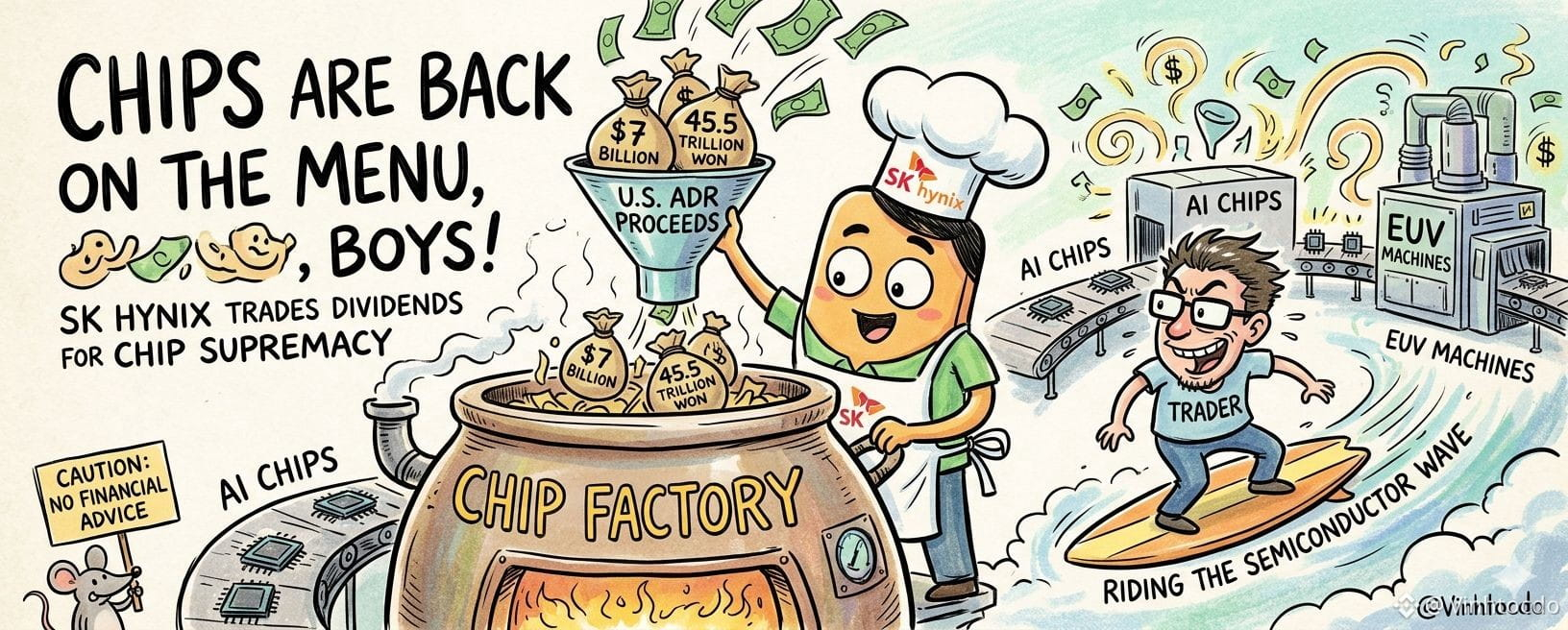
#skhynixtouseadrproceedsforchipcapex
SK Hynix really goes all in, folks! It raises a whopping 7 billion USD from ADR certificates in the US to buy brand-new EUV optical lithography machines, slamming 45.5 thousand billion Won into building an AI chip super-factory right away—no way they’re just going to split dividends and go out to party, right! 😂
This move is tasty: when the sharks are determined to “burn money” to expand the production capacity, the semiconductor wave is still going to run for a long time.
What should traders do right now? Just wait for the pullback and ride the technology capital flow—why overthink it!
Enter the code VINHTOCDO to register Binance and trade the waves. This is not financial advice!
#SKHYNIX #ADR #Capex #VINHTOCDO
$SKHYNIX
{future}(SKHYNIXUSDT)
$SAMSUNG
{future}(SAMSUNGUSDT)
$NVDAB
{spot}(NVDABUSDT)
#skhynixtouseadrproceedsforchipcapex
SK Hynix really goes all in, folks! It raises a whopping 7 billion USD from ADR certificates in the US to buy brand-new EUV optical lithography machines, slamming 45.5 thousand billion Won into building an AI chip super-factory right away—no way they’re just going to split dividends and go out to party, right! 😂
This move is tasty: when the sharks are determined to “burn money” to expand the production capacity, the semiconductor wave is still going to run for a long time.
What should traders do right now? Just wait for the pullback and ride the technology capital flow—why overthink it!
Enter the code VINHTOCDO to register Binance and trade the waves. This is not financial advice!
#SKHYNIX #ADR #Capex #VINHTOCDO
$SKHYNIX
$SAMSUNG
$NVDAB
SK Hynix really goes all in, folks! It raises a whopping 7 billion USD from ADR certificates in the US to buy brand-new EUV optical lithography machines, slamming 45.5 thousand billion Won into building an AI chip super-factory right away—no way they’re just going to split dividends and go out to party, right! 😂
This move is tasty: when the sharks are determined to “burn money” to expand the production capacity, the semiconductor wave is still going to run for a long time.
What should traders do right now? Just wait for the pullback and ride the technology capital flow—why overthink it!
Enter the code VINHTOCDO to register Binance and trade the waves. This is not financial advice!
#SKHYNIX #ADR #Capex #VINHTOCDO
$SKHYNIX
$SAMSUNG
$NVDAB
4
9
4.9k
Log in to explore more content
Join global crypto users on Binance Square
⚡️ Get latest and useful information about crypto.
💬 Trusted by the world’s largest crypto exchange.
👍 Discover real insights from verified creators.
Email / Phone number
Trending Topics
1
#AIStocksWhatNext
633,016 views
4,734 Discussing
2
#21SharesLaunchesEuropesFirstZcashETP
8,925 views
352 Discussing
3
#CardanoJoinsX402PaymentStandard
6,426 views
274 Discussing
4
#BitcoinTops$87KAtEightMonthHigh
6,606 views
77 Discussing
5
#ZECBreaksAbove$1600AtRecordHigh
3,643 views
62 Discussing
6
#BitwiseNEARStakingETPAssetsTop$100M
26,617 views
79 Discussing
7
#BitcoinBreaksAboveMayHighNears$86K
27,545 views
259 Discussing
8
#DogecoinRises15%
101,338 views
1,697 Discussing
9
#$14BBitcoinOptionsExpireFriday
7,845 views
109 Discussing
10
#BNBMarketCapPassesBNYMellon
63,562 views
1,362 Discussing