

#bitcoinetfaumreaches
bitcoinetfaumreaches
406 views
27 Discussing
Hot
Latest

·
--
Why is nobody talking about the fact that Bitcoin ETF AUM rising is not automatically a “buy now” signal?
A lot of traders see big ETF numbers and instantly FOMO into $BTC, then get shaken out on the first pullback. The pain is not being wrong on the trend, it’s entering at the worst possible spot.
Here’s my take: ETF AUM growth confirms institutional demand, but it does not remove volatility. In fact, it can make the market more deceptive because everyone starts assuming dips are “guaranteed buys” while leverage quietly builds up.
The smarter move is to use ETF momentum as a filter, not a trigger. If $BTC dominance keeps rising and fear stays around the market, I’d rather wait for clean retests, watch whether $USDT liquidity rotates back into risk, and compare how $ETH behaves against BTC before chasing green candles.
My guide is simple: define your entry before the move, set the level that proves you wrong, and don’t confuse institutional accumulation with instant upside. Strong flows matter, but price still punishes impatience.
Are you treating ETF AUM as a buy signal, or as a liquidity map for your next $BTC entry? #BitcoinETFAUMReaches #BitcoinDominanceRisesTo59
Why is nobody talking about the fact that Bitcoin ETF AUM rising is not automatically a “buy now” signal?
A lot of traders see big ETF numbers and instantly FOMO into $BTC , then get shaken out on the first pullback. The pain is not being wrong on the trend, it’s entering at the worst possible spot.
Here’s my take: ETF AUM growth confirms institutional demand, but it does not remove volatility. In fact, it can make the market more deceptive because everyone starts assuming dips are “guaranteed buys” while leverage quietly builds up.
The smarter move is to use ETF momentum as a filter, not a trigger. If $BTC dominance keeps rising and fear stays around the market, I’d rather wait for clean retests, watch whether $USDT liquidity rotates back into risk, and compare how $ETH behaves against BTC before chasing green candles.
My guide is simple: define your entry before the move, set the level that proves you wrong, and don’t confuse institutional accumulation with instant upside. Strong flows matter, but price still punishes impatience.
Are you treating ETF AUM as a buy signal, or as a liquidity map for your next $BTC entry? #BitcoinETFAUMReaches #BitcoinDominanceRisesTo59
A lot of traders see big ETF numbers and instantly FOMO into $BTC , then get shaken out on the first pullback. The pain is not being wrong on the trend, it’s entering at the worst possible spot.
Here’s my take: ETF AUM growth confirms institutional demand, but it does not remove volatility. In fact, it can make the market more deceptive because everyone starts assuming dips are “guaranteed buys” while leverage quietly builds up.
The smarter move is to use ETF momentum as a filter, not a trigger. If $BTC dominance keeps rising and fear stays around the market, I’d rather wait for clean retests, watch whether $USDT liquidity rotates back into risk, and compare how $ETH behaves against BTC before chasing green candles.
My guide is simple: define your entry before the move, set the level that proves you wrong, and don’t confuse institutional accumulation with instant upside. Strong flows matter, but price still punishes impatience.
Are you treating ETF AUM as a buy signal, or as a liquidity map for your next $BTC entry? #BitcoinETFAUMReaches #BitcoinDominanceRisesTo59
15

·
--
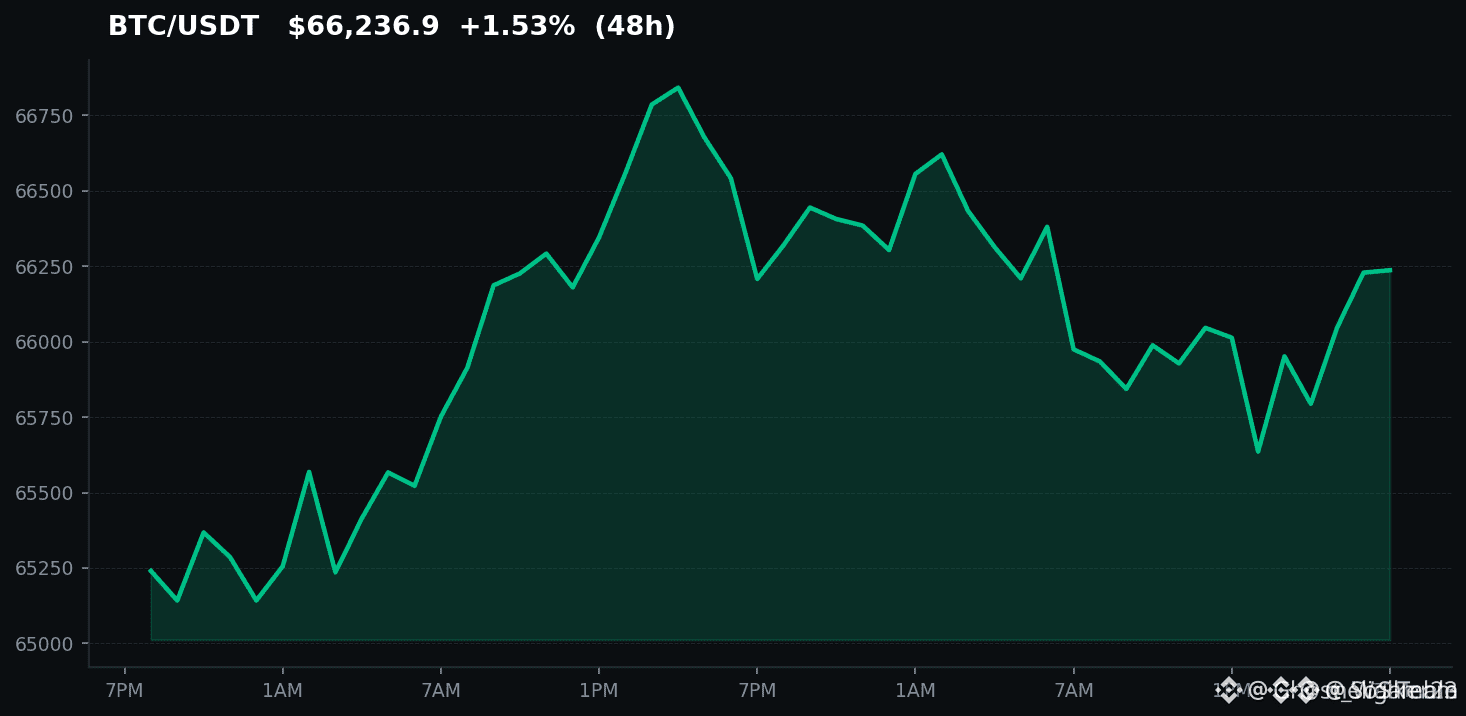
Three tests show whether ETF demand is reaching the spot chart$BTC ETF inflows are nearing $1 billion across seven sessions, yet BTC is -0.522% at $65,626. Flows matter, but the price response tells me whether supply is absorbing them.
My three-test checklist:
1. Acceptance - can BTC hold above the prior 24-hour open at $65,970.53?
2. Expansion - does price clear the $66,384 session high?
3. Leadership - does BTC dominance strengthen while BTC advances, rather than while altcoins weaken?
Rule: bullish flow headlines become useful only when price confirms them.
#BitcoinETFAUMReaches$80.9B #BitcoinDominanceRisesTo59% #SenateReleasesUpdatedCLARITYActText
Three tests show whether ETF demand is reaching the spot chart
$BTC ETF inflows are nearing $1 billion across seven sessions, yet BTC is -0.522% at $65,626. Flows matter, but the price response tells me whether supply is absorbing them.
My three-test checklist:
1. Acceptance - can BTC hold above the prior 24-hour open at $65,970.53?
2. Expansion - does price clear the $66,384 session high?
3. Leadership - does BTC dominance strengthen while BTC advances, rather than while altcoins weaken?
Rule: bullish flow headlines become useful only when price confirms them.
#BitcoinETFAUMReaches$80.9B #BitcoinDominanceRisesTo59% #SenateReleasesUpdatedCLARITYActText
My three-test checklist:
1. Acceptance - can BTC hold above the prior 24-hour open at $65,970.53?
2. Expansion - does price clear the $66,384 session high?
3. Leadership - does BTC dominance strengthen while BTC advances, rather than while altcoins weaken?
Rule: bullish flow headlines become useful only when price confirms them.
#BitcoinETFAUMReaches$80.9B #BitcoinDominanceRisesTo59% #SenateReleasesUpdatedCLARITYActText
53
·
--
$BTC Day 25 grade: miss - yesterday's highest completed 1H close was $66,620.97, below the $67,000 call.
The lesson: a one-month-high headline is not confirmation when hourly closes keep stepping lower. BTC is now $65,593.46, down 1.162% in 24 hours. I want the next call to test whether sellers can force a deeper acceptance break.
#BitcoinDominanceRisesTo59% #BitcoinETFAUMReaches$80.9B #SenateReleasesUpdatedCLARITYActText
Today's call: $BTC records at least one completed 1H close below $65,500 before tomorrow's morning grade.
$BTC Day 25 grade: miss - yesterday's highest completed 1H close was $66,620.97, below the $67,000 call.
The lesson: a one-month-high headline is not confirmation when hourly closes keep stepping lower. BTC is now $65,593.46, down 1.162% in 24 hours. I want the next call to test whether sellers can force a deeper acceptance break.
#BitcoinDominanceRisesTo59% #BitcoinETFAUMReaches$80.9B #SenateReleasesUpdatedCLARITYActText
Today's call: $BTC records at least one completed 1H close below $65,500 before tomorrow's morning grade.
The lesson: a one-month-high headline is not confirmation when hourly closes keep stepping lower. BTC is now $65,593.46, down 1.162% in 24 hours. I want the next call to test whether sellers can force a deeper acceptance break.
#BitcoinDominanceRisesTo59% #BitcoinETFAUMReaches$80.9B #SenateReleasesUpdatedCLARITYActText
Today's call: $BTC records at least one completed 1H close below $65,500 before tomorrow's morning grade.
46

🔥 As institutional money flows into bitcoin, with the likes of BlackRock and Morgan Stanley joining the party, the question on everyone's mind is: can this influx of capital push #Bitcoin past its current price of $64,872 and into a new bull run, fueled by the growing #BitcoinDominanceRisesTo59 and #BitcoinETFAUMReaches$80.9B trends?
📊 The numbers are telling - with a market sentiment of 31/100, indicating fear, and a 24-hour volume of $888M, it's clear that investors are cautious, but still eager to get in on the action, as evidenced by the #BTC and #ETH price movements, with BTC down 1.87% and ETH down 2.84% in the last 24 hours. Meanwhile, smart money is buying, with Babybara and NORMIE accumulating Solana, and fefer and Jimothy making significant inflows.
💡 But here's the twist: according to Blockstream CEO Adam Back, institutional adoption takes time, and we shouldn't expect a sudden surge in prices just yet, despite the promising signs from the futures market, with an Open Interest of $6.78B and a funding rate of +0.0090%, indicating bullish sentiment. The real question is, will you be patient enough to ride out the waves and come out on top, or will you get left behind in the crypto frenzy?
🔥 As institutional money flows into bitcoin, with the likes of BlackRock and Morgan Stanley joining the party, the question on everyone's mind is: can this influx of capital push #Bitcoin past its current price of $64,872 and into a new bull run, fueled by the growing #BitcoinDominanceRisesTo59 and #BitcoinETFAUMReaches$80.9B trends?
📊 The numbers are telling - with a market sentiment of 31/100, indicating fear, and a 24-hour volume of $888M, it's clear that investors are cautious, but still eager to get in on the action, as evidenced by the #BTC and #ETH price movements, with BTC down 1.87% and ETH down 2.84% in the last 24 hours. Meanwhile, smart money is buying, with Babybara and NORMIE accumulating Solana, and fefer and Jimothy making significant inflows.
💡 But here's the twist: according to Blockstream CEO Adam Back, institutional adoption takes time, and we shouldn't expect a sudden surge in prices just yet, despite the promising signs from the futures market, with an Open Interest of $6.78B and a funding rate of +0.0090%, indicating bullish sentiment. The real question is, will you be patient enough to ride out the waves and come out on top, or will you get left behind in the crypto frenzy?
📊 The numbers are telling - with a market sentiment of 31/100, indicating fear, and a 24-hour volume of $888M, it's clear that investors are cautious, but still eager to get in on the action, as evidenced by the #BTC and #ETH price movements, with BTC down 1.87% and ETH down 2.84% in the last 24 hours. Meanwhile, smart money is buying, with Babybara and NORMIE accumulating Solana, and fefer and Jimothy making significant inflows.
💡 But here's the twist: according to Blockstream CEO Adam Back, institutional adoption takes time, and we shouldn't expect a sudden surge in prices just yet, despite the promising signs from the futures market, with an Open Interest of $6.78B and a funding rate of +0.0090%, indicating bullish sentiment. The real question is, will you be patient enough to ride out the waves and come out on top, or will you get left behind in the crypto frenzy?
76
·
--
Four questions reveal whether a Bitcoin pullback is rotation or broad risk-off$BTC is down 0.883% at $66,054.66, but every other major on my screen is falling less. That changes how I classify the pullback.
My four-question rotation checklist:
1. Is BTC lagging ETH? Yes - $ETH is down 0.366%.
2. Is BTC lagging SOL? Yes - $SOL is down 0.280%.
3. Are BNB and XRP also holding up better? Yes - BNB is down 0.599% and XRP 0.410%.
4. Is BTC still above its $65,553.67 daily low? Yes.
Four yes answers suggest rotation, not broad capitulation. If majors begin underperforming BTC and BTC loses the daily low, the read changes.
Rule: compare relative losses before calling a red session risk-off.
#BitcoinDominanceRisesTo59% #BitcoinETFAUMReaches$80.9B #BitcoinHits$66500OneMonthHigh
Four questions reveal whether a Bitcoin pullback is rotation or broad risk-off
$BTC is down 0.883% at $66,054.66, but every other major on my screen is falling less. That changes how I classify the pullback.
My four-question rotation checklist:
1. Is BTC lagging ETH? Yes - $ETH is down 0.366%.
2. Is BTC lagging SOL? Yes - $SOL is down 0.280%.
3. Are BNB and XRP also holding up better? Yes - BNB is down 0.599% and XRP 0.410%.
4. Is BTC still above its $65,553.67 daily low? Yes.
Four yes answers suggest rotation, not broad capitulation. If majors begin underperforming BTC and BTC loses the daily low, the read changes.
Rule: compare relative losses before calling a red session risk-off.
#BitcoinDominanceRisesTo59% #BitcoinETFAUMReaches$80.9B #BitcoinHits$66500OneMonthHigh
My four-question rotation checklist:
1. Is BTC lagging ETH? Yes - $ETH is down 0.366%.
2. Is BTC lagging SOL? Yes - $SOL is down 0.280%.
3. Are BNB and XRP also holding up better? Yes - BNB is down 0.599% and XRP 0.410%.
4. Is BTC still above its $65,553.67 daily low? Yes.
Four yes answers suggest rotation, not broad capitulation. If majors begin underperforming BTC and BTC loses the daily low, the read changes.
Rule: compare relative losses before calling a red session risk-off.
#BitcoinDominanceRisesTo59% #BitcoinETFAUMReaches$80.9B #BitcoinHits$66500OneMonthHigh
105
·
--
$BTC at $65,919.68 is where trader memory gets selective. The mind remembers the $66,739.89 high and quietly deletes the $65,553.67 low, then calls a -0.664% day dramatic. My late-session reset is simple: compare the full range before assigning a story to the final candle. A close near neither extreme is often unresolved tape, not betrayal.
The market does not owe the last headline a clean ending.
#BitcoinHits$66500OneMonthHigh #BitcoinDominanceRisesTo59% #BitcoinETFAUMReaches$80.9B
$BTC at $65,919.68 is where trader memory gets selective. The mind remembers the $66,739.89 high and quietly deletes the $65,553.67 low, then calls a -0.664% day dramatic. My late-session reset is simple: compare the full range before assigning a story to the final candle. A close near neither extreme is often unresolved tape, not betrayal.
The market does not owe the last headline a clean ending.
#BitcoinHits$66500OneMonthHigh #BitcoinDominanceRisesTo59% #BitcoinETFAUMReaches$80.9B
The market does not owe the last headline a clean ending.
#BitcoinHits$66500OneMonthHigh #BitcoinDominanceRisesTo59% #BitcoinETFAUMReaches$80.9B
19
·
--
Everyone thinks a project shutting down is only a problem for “degen” tokens, but actually it can hit anyone holding funds in the wrong place at the wrong time.
The common mistake is treating every crypto platform like a bank account. Then one shutdown notice later, people are rushing to withdraw $USDT, bridge assets, or unwind positions while liquidity is already thin.
Here’s the simple checklist: 1) If a protocol or app announces closure, your first job is not to “wait and see.” It’s to understand the withdrawal window, supported networks, and whether any assets are locked. Think of it like a store closing down: you don’t leave your wallet at the counter and come back next month.
2) Check where your exposure really is. Maybe you only hold $ETH in a wallet, but maybe you also have funds staked, lent, bridged, or sitting in a yield vault connected to that platform. That’s where people get caught, because the risk is not always the token price. Sometimes the risk is access.
3) In a Fear market, small operational risks become bigger. With Bitcoin dominance rising and traders rotating toward safer liquidity, weaker platforms can struggle faster than expected. Keep a clean map of where your $BTC, stablecoins, and alt positions are parked before the market forces you to do it under pressure.
What’s your rule for keeping funds safe when a crypto service announces it is shutting down? #SecondFiToShutDownAfter16 #BitcoinDominanceRisesTo59 #BitcoinETFAUMReaches
Everyone thinks a project shutting down is only a problem for “degen” tokens, but actually it can hit anyone holding funds in the wrong place at the wrong time.
The common mistake is treating every crypto platform like a bank account. Then one shutdown notice later, people are rushing to withdraw $USDT, bridge assets, or unwind positions while liquidity is already thin.
Here’s the simple checklist: 1) If a protocol or app announces closure, your first job is not to “wait and see.” It’s to understand the withdrawal window, supported networks, and whether any assets are locked. Think of it like a store closing down: you don’t leave your wallet at the counter and come back next month.
2) Check where your exposure really is. Maybe you only hold $ETH in a wallet, but maybe you also have funds staked, lent, bridged, or sitting in a yield vault connected to that platform. That’s where people get caught, because the risk is not always the token price. Sometimes the risk is access.
3) In a Fear market, small operational risks become bigger. With Bitcoin dominance rising and traders rotating toward safer liquidity, weaker platforms can struggle faster than expected. Keep a clean map of where your $BTC , stablecoins, and alt positions are parked before the market forces you to do it under pressure.
What’s your rule for keeping funds safe when a crypto service announces it is shutting down? #SecondFiToShutDownAfter16 #BitcoinDominanceRisesTo59 #BitcoinETFAUMReaches
The common mistake is treating every crypto platform like a bank account. Then one shutdown notice later, people are rushing to withdraw $USDT, bridge assets, or unwind positions while liquidity is already thin.
Here’s the simple checklist: 1) If a protocol or app announces closure, your first job is not to “wait and see.” It’s to understand the withdrawal window, supported networks, and whether any assets are locked. Think of it like a store closing down: you don’t leave your wallet at the counter and come back next month.
2) Check where your exposure really is. Maybe you only hold $ETH in a wallet, but maybe you also have funds staked, lent, bridged, or sitting in a yield vault connected to that platform. That’s where people get caught, because the risk is not always the token price. Sometimes the risk is access.
3) In a Fear market, small operational risks become bigger. With Bitcoin dominance rising and traders rotating toward safer liquidity, weaker platforms can struggle faster than expected. Keep a clean map of where your $BTC , stablecoins, and alt positions are parked before the market forces you to do it under pressure.
What’s your rule for keeping funds safe when a crypto service announces it is shutting down? #SecondFiToShutDownAfter16 #BitcoinDominanceRisesTo59 #BitcoinETFAUMReaches

29
🔥 The CLARITY Act surviving bank pushback is not a surprise — it's a testament to crypto's growing influence, with #BitcoinDominanceRisesTo59% and the market sentiment at Fear (33/100), a level that has historically preceded significant rallies.
📊 As the bill moves forward, it's essential to consider the current market landscape, where BTC is trading at $65,955 with a bullish RSI of 57.4, and ETH is at $1,934 with a bullish RSI of 61.1, amidst a sea of bearish MACD crossovers, including those of BNB, SOL, and XRP, which may indicate a potential reversal.
💡 The bigger picture here is that the CLARITY Act's progress could lead to increased institutional investment, as evidenced by the $4.63B Open Interest in ETH futures and the $6.75B Open Interest in BTC futures, with top traders net long (57.9% for ETH and 60.8% for BTC), which could drive the market cycle forward, potentially leading to a price discovery phase, with #BitcoinETFAUMReaches$80.9B and the overall crypto market benefiting from the inflows.
📈 The practical lesson is to stay informed and adapt to the changing regulatory landscape, which could lead to increased adoption and investment in crypto, with smart money already buying, as seen in the Solana ecosystem with Jimothy and PVE, and the viral narrative around the Alleged Meme Party Campaign, which has seen an inflow of $20K (+$21K/1h), indicating a potential shift in market sentiment.
❓ What's your strategy for navigating the crypto market as regulatory clarity increases and institutional investment grows — will you be buying, holding, or waiting for confirmation?
🔥 The CLARITY Act surviving bank pushback is not a surprise — it's a testament to crypto's growing influence, with #BitcoinDominanceRisesTo59% and the market sentiment at Fear (33/100), a level that has historically preceded significant rallies.
📊 As the bill moves forward, it's essential to consider the current market landscape, where BTC is trading at $65,955 with a bullish RSI of 57.4, and ETH is at $1,934 with a bullish RSI of 61.1, amidst a sea of bearish MACD crossovers, including those of BNB, SOL, and XRP, which may indicate a potential reversal.
💡 The bigger picture here is that the CLARITY Act's progress could lead to increased institutional investment, as evidenced by the $4.63B Open Interest in ETH futures and the $6.75B Open Interest in BTC futures, with top traders net long (57.9% for ETH and 60.8% for BTC), which could drive the market cycle forward, potentially leading to a price discovery phase, with #BitcoinETFAUMReaches$80.9B and the overall crypto market benefiting from the inflows.
📈 The practical lesson is to stay informed and adapt to the changing regulatory landscape, which could lead to increased adoption and investment in crypto, with smart money already buying, as seen in the Solana ecosystem with Jimothy and PVE, and the viral narrative around the Alleged Meme Party Campaign, which has seen an inflow of $20K (+$21K/1h), indicating a potential shift in market sentiment.
❓ What's your strategy for navigating the crypto market as regulatory clarity increases and institutional investment grows — will you be buying, holding, or waiting for confirmation?
📊 As the bill moves forward, it's essential to consider the current market landscape, where BTC is trading at $65,955 with a bullish RSI of 57.4, and ETH is at $1,934 with a bullish RSI of 61.1, amidst a sea of bearish MACD crossovers, including those of BNB, SOL, and XRP, which may indicate a potential reversal.
💡 The bigger picture here is that the CLARITY Act's progress could lead to increased institutional investment, as evidenced by the $4.63B Open Interest in ETH futures and the $6.75B Open Interest in BTC futures, with top traders net long (57.9% for ETH and 60.8% for BTC), which could drive the market cycle forward, potentially leading to a price discovery phase, with #BitcoinETFAUMReaches$80.9B and the overall crypto market benefiting from the inflows.
📈 The practical lesson is to stay informed and adapt to the changing regulatory landscape, which could lead to increased adoption and investment in crypto, with smart money already buying, as seen in the Solana ecosystem with Jimothy and PVE, and the viral narrative around the Alleged Meme Party Campaign, which has seen an inflow of $20K (+$21K/1h), indicating a potential shift in market sentiment.
❓ What's your strategy for navigating the crypto market as regulatory clarity increases and institutional investment grows — will you be buying, holding, or waiting for confirmation?
38
·
--
Last week, a trader I know rotated from $BTC into alts right before Bitcoin dominance pushed toward 59%, and his portfolio started bleeding even while the market looked “stable.”
That is the part many people miss. When dominance rises, it does not always mean crypto is healthy across the board. It often means capital is hiding in $BTC while smaller assets lose liquidity, narratives fade, and late altcoin entries get punished.
Here’s the case study: Bitcoin dominance climbing to 59% tells us money is concentrating, not spreading. In a fear-driven market, with traders searching $USDT and $ETH more than chasing deep risk, the crowd is quietly prioritizing safety and liquidity. That usually creates a trap for anyone assuming “alts are cheap” just because they are down.
The risk is timing. If $BTC keeps leading and dominance stays strong, many altcoins can underperform even during green Bitcoin candles. Then when Bitcoin pulls back, those same alts often drop harder because they never had real bid support in the first place.
The lesson is simple: dominance is not just a chart, it is a capital flow warning. Before rotating into alts, watch whether $ETH is gaining relative strength and whether stablecoin liquidity is actually moving back into risk. Otherwise, the “discount” might just be the market telling you there is no buyer yet.
Are you treating this dominance move as a Bitcoin strength signal or an altcoin risk warning? #BitcoinDominanceRisesTo59 #BitcoinETFAUMReaches #BitcoinHits
Last week, a trader I know rotated from $BTC into alts right before Bitcoin dominance pushed toward 59%, and his portfolio started bleeding even while the market looked “stable.”
That is the part many people miss. When dominance rises, it does not always mean crypto is healthy across the board. It often means capital is hiding in $BTC while smaller assets lose liquidity, narratives fade, and late altcoin entries get punished.
Here’s the case study: Bitcoin dominance climbing to 59% tells us money is concentrating, not spreading. In a fear-driven market, with traders searching $USDT and $ETH more than chasing deep risk, the crowd is quietly prioritizing safety and liquidity. That usually creates a trap for anyone assuming “alts are cheap” just because they are down.
The risk is timing. If $BTC keeps leading and dominance stays strong, many altcoins can underperform even during green Bitcoin candles. Then when Bitcoin pulls back, those same alts often drop harder because they never had real bid support in the first place.
The lesson is simple: dominance is not just a chart, it is a capital flow warning. Before rotating into alts, watch whether $ETH is gaining relative strength and whether stablecoin liquidity is actually moving back into risk. Otherwise, the “discount” might just be the market telling you there is no buyer yet.
Are you treating this dominance move as a Bitcoin strength signal or an altcoin risk warning? #BitcoinDominanceRisesTo59 #BitcoinETFAUMReaches #BitcoinHits
That is the part many people miss. When dominance rises, it does not always mean crypto is healthy across the board. It often means capital is hiding in $BTC while smaller assets lose liquidity, narratives fade, and late altcoin entries get punished.
Here’s the case study: Bitcoin dominance climbing to 59% tells us money is concentrating, not spreading. In a fear-driven market, with traders searching $USDT and $ETH more than chasing deep risk, the crowd is quietly prioritizing safety and liquidity. That usually creates a trap for anyone assuming “alts are cheap” just because they are down.
The risk is timing. If $BTC keeps leading and dominance stays strong, many altcoins can underperform even during green Bitcoin candles. Then when Bitcoin pulls back, those same alts often drop harder because they never had real bid support in the first place.
The lesson is simple: dominance is not just a chart, it is a capital flow warning. Before rotating into alts, watch whether $ETH is gaining relative strength and whether stablecoin liquidity is actually moving back into risk. Otherwise, the “discount” might just be the market telling you there is no buyer yet.
Are you treating this dominance move as a Bitcoin strength signal or an altcoin risk warning? #BitcoinDominanceRisesTo59 #BitcoinETFAUMReaches #BitcoinHits

20
·
--
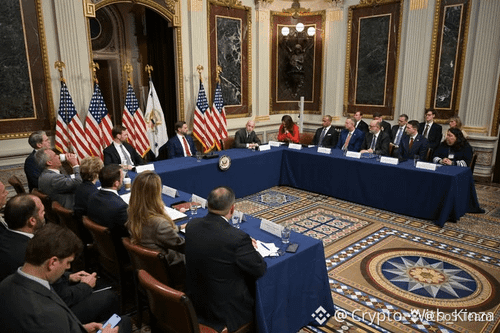
If you're still buying every regulation headline as if it guarantees an instant pump, stop now.
That mistake traps traders at the top, especially when fear is already sitting in the market and everyone is desperate for a “clarity” narrative. The updated CLARITY Act text matters, but it does not mean every token suddenly becomes safer.
One side says this is bullish: clearer rules could reduce the SEC/CFTC guessing game, give institutions more confidence, and support deeper liquidity for majors like $BTC and $ETH. If the market can finally price regulation instead of fearing random enforcement, that’s a real long-term positive.
The other side is less comfortable. Clear rules also mean clear losers. Smaller projects, vague token models, and anything relying on regulatory gray zones could face pressure, while capital rotates into assets that look more “acceptable.” My take: this is net bullish for crypto, but not equally bullish for every coin. $USDT and major assets may benefit first; the long tail has to prove it belongs.
Do you think the CLARITY Act will bring real adoption, or just a cleaner way to separate winners from weak projects? #SenateReleasesUpdatedCLARITYActText #BitcoinDominanceRisesTo59 #BitcoinETFAUMReaches
If you're still buying every regulation headline as if it guarantees an instant pump, stop now.
That mistake traps traders at the top, especially when fear is already sitting in the market and everyone is desperate for a “clarity” narrative. The updated CLARITY Act text matters, but it does not mean every token suddenly becomes safer.
One side says this is bullish: clearer rules could reduce the SEC/CFTC guessing game, give institutions more confidence, and support deeper liquidity for majors like $BTC and $ETH . If the market can finally price regulation instead of fearing random enforcement, that’s a real long-term positive.
The other side is less comfortable. Clear rules also mean clear losers. Smaller projects, vague token models, and anything relying on regulatory gray zones could face pressure, while capital rotates into assets that look more “acceptable.” My take: this is net bullish for crypto, but not equally bullish for every coin. $USDT and major assets may benefit first; the long tail has to prove it belongs.
Do you think the CLARITY Act will bring real adoption, or just a cleaner way to separate winners from weak projects? #SenateReleasesUpdatedCLARITYActText #BitcoinDominanceRisesTo59 #BitcoinETFAUMReaches
That mistake traps traders at the top, especially when fear is already sitting in the market and everyone is desperate for a “clarity” narrative. The updated CLARITY Act text matters, but it does not mean every token suddenly becomes safer.
One side says this is bullish: clearer rules could reduce the SEC/CFTC guessing game, give institutions more confidence, and support deeper liquidity for majors like $BTC and $ETH . If the market can finally price regulation instead of fearing random enforcement, that’s a real long-term positive.
The other side is less comfortable. Clear rules also mean clear losers. Smaller projects, vague token models, and anything relying on regulatory gray zones could face pressure, while capital rotates into assets that look more “acceptable.” My take: this is net bullish for crypto, but not equally bullish for every coin. $USDT and major assets may benefit first; the long tail has to prove it belongs.
Do you think the CLARITY Act will bring real adoption, or just a cleaner way to separate winners from weak projects? #SenateReleasesUpdatedCLARITYActText #BitcoinDominanceRisesTo59 #BitcoinETFAUMReaches
65
🔥 THE FLOOD has started: while you slept, the CFTC filed a lawsuit against Wisconsin, blocking their action against federally regulated prediction markets, and this move is set to OBLITERATE state-level regulations #PredictionMarkets #CFTC #Regulation.
📊 The stakes are high, with the CFTC's lawsuit responding directly to Wisconsin's recent actions, and this historic move signals a GAME OVER for state-level attempts to regulate federally overseen platforms, as Open Interest in BTC futures reaches $6.76B and funding rates turn bullish at +0.0040% #BitcoinDominanceRisesTo59%.
💡 This development has significant implications for the market, particularly with Bitcoin's price at $65,925 and Ethereum's at $1,928, as top traders turn net long, with 60.9% of them betting on BTC and 58.0% on ETH, and the #BitcoinETFAUMReaches$80.9B, making it a crucial moment for traders to reassess their strategies.
❓ Will you be prepared when the regulatory landscape shifts, and which coin will you bet on for the next 90 days?
🔥 THE FLOOD has started: while you slept, the CFTC filed a lawsuit against Wisconsin, blocking their action against federally regulated prediction markets, and this move is set to OBLITERATE state-level regulations #PredictionMarkets #CFTC #Regulation.
📊 The stakes are high, with the CFTC's lawsuit responding directly to Wisconsin's recent actions, and this historic move signals a GAME OVER for state-level attempts to regulate federally overseen platforms, as Open Interest in BTC futures reaches $6.76B and funding rates turn bullish at +0.0040% #BitcoinDominanceRisesTo59%.
💡 This development has significant implications for the market, particularly with Bitcoin's price at $65,925 and Ethereum's at $1,928, as top traders turn net long, with 60.9% of them betting on BTC and 58.0% on ETH, and the #BitcoinETFAUMReaches$80.9B, making it a crucial moment for traders to reassess their strategies.
❓ Will you be prepared when the regulatory landscape shifts, and which coin will you bet on for the next 90 days?
📊 The stakes are high, with the CFTC's lawsuit responding directly to Wisconsin's recent actions, and this historic move signals a GAME OVER for state-level attempts to regulate federally overseen platforms, as Open Interest in BTC futures reaches $6.76B and funding rates turn bullish at +0.0040% #BitcoinDominanceRisesTo59%.
💡 This development has significant implications for the market, particularly with Bitcoin's price at $65,925 and Ethereum's at $1,928, as top traders turn net long, with 60.9% of them betting on BTC and 58.0% on ETH, and the #BitcoinETFAUMReaches$80.9B, making it a crucial moment for traders to reassess their strategies.
❓ Will you be prepared when the regulatory landscape shifts, and which coin will you bet on for the next 90 days?
41
🔥 At a time when market sentiment is at a fear level of 33, and Bitcoin's price is hovering at $65,971, a new player is set to disrupt the fragmented global payment system with the launch of Grid Global Accounts.
📊 The announcement, made by David Marcus, CEO of Lightspark, at the Bitcoin 2026 Conference, has sent shockwaves through the crypto community, with many speculating about the potential impact on the #BitcoinDominanceRisesTo59% and #BitcoinETFAUMReaches$80.9B. As the market awaits the rollout of Grid Global Accounts, smart money is already on the move, with BOP and Jimothy accumulating Solana, and top traders maintaining a net long position of 60.9% in the #BTC market.
💡 But here's the twist: the launch of Grid Global Accounts comes at a time when the global payment system is more fragile than ever, with $1.3B in Bitcoin volume and $493M in Ethereum volume being traded in the last 24 hours. As the stakes grow higher, the question on everyone's mind is: will Grid Global Accounts be the catalyst that sets off a chain reaction, changing the face of the payment system forever, or will it succumb to the same fate as Movement Labs, which recently filed for Chapter 11 bankruptcy?
🔥 At a time when market sentiment is at a fear level of 33, and Bitcoin's price is hovering at $65,971, a new player is set to disrupt the fragmented global payment system with the launch of Grid Global Accounts.
📊 The announcement, made by David Marcus, CEO of Lightspark, at the Bitcoin 2026 Conference, has sent shockwaves through the crypto community, with many speculating about the potential impact on the #BitcoinDominanceRisesTo59% and #BitcoinETFAUMReaches$80.9B. As the market awaits the rollout of Grid Global Accounts, smart money is already on the move, with BOP and Jimothy accumulating Solana, and top traders maintaining a net long position of 60.9% in the #BTC market.
💡 But here's the twist: the launch of Grid Global Accounts comes at a time when the global payment system is more fragile than ever, with $1.3B in Bitcoin volume and $493M in Ethereum volume being traded in the last 24 hours. As the stakes grow higher, the question on everyone's mind is: will Grid Global Accounts be the catalyst that sets off a chain reaction, changing the face of the payment system forever, or will it succumb to the same fate as Movement Labs, which recently filed for Chapter 11 bankruptcy?
📊 The announcement, made by David Marcus, CEO of Lightspark, at the Bitcoin 2026 Conference, has sent shockwaves through the crypto community, with many speculating about the potential impact on the #BitcoinDominanceRisesTo59% and #BitcoinETFAUMReaches$80.9B. As the market awaits the rollout of Grid Global Accounts, smart money is already on the move, with BOP and Jimothy accumulating Solana, and top traders maintaining a net long position of 60.9% in the #BTC market.
💡 But here's the twist: the launch of Grid Global Accounts comes at a time when the global payment system is more fragile than ever, with $1.3B in Bitcoin volume and $493M in Ethereum volume being traded in the last 24 hours. As the stakes grow higher, the question on everyone's mind is: will Grid Global Accounts be the catalyst that sets off a chain reaction, changing the face of the payment system forever, or will it succumb to the same fate as Movement Labs, which recently filed for Chapter 11 bankruptcy?
25
🔥 Bitcoin's market capitalization has surged by 12% in the last week, with $1.2B in 24-hour volume, as the Bitcoin 2026 Conference sparks a heated debate about the role of institutional investors in the space.
📊 This development matters because it highlights the growing rift between Wall Street and early adopters, with 54.6% of futures open interest held by longs and a funding rate of +0.0036%, indicating bullish sentiment #BitcoinDominanceRisesTo59% #BitcoinETFAUMReaches$80.9B #BTC.
💡 As smart money watches this unfold, 5 smart wallets have increased their Solana holdings by up to 22.8491%, while top traders remain net long at 60.8% #Solana #SmartMoney.
📈 The key level to watch is $72K, where a close above could trigger the next leg up for Bitcoin, fueled by the $4.62B in Ethereum open interest and $6.76B in Bitcoin open interest.
❓ Will this influx of institutional capital ultimately legitimatize Bitcoin, or will it lead to a loss of its decentralized ethos, sparking a new wave of adoption or a sharp correction?
🔥 Bitcoin's market capitalization has surged by 12% in the last week, with $1.2B in 24-hour volume, as the Bitcoin 2026 Conference sparks a heated debate about the role of institutional investors in the space.
📊 This development matters because it highlights the growing rift between Wall Street and early adopters, with 54.6% of futures open interest held by longs and a funding rate of +0.0036%, indicating bullish sentiment #BitcoinDominanceRisesTo59% #BitcoinETFAUMReaches$80.9B #BTC.
💡 As smart money watches this unfold, 5 smart wallets have increased their Solana holdings by up to 22.8491%, while top traders remain net long at 60.8% #Solana #SmartMoney.
📈 The key level to watch is $72K, where a close above could trigger the next leg up for Bitcoin, fueled by the $4.62B in Ethereum open interest and $6.76B in Bitcoin open interest.
❓ Will this influx of institutional capital ultimately legitimatize Bitcoin, or will it lead to a loss of its decentralized ethos, sparking a new wave of adoption or a sharp correction?
📊 This development matters because it highlights the growing rift between Wall Street and early adopters, with 54.6% of futures open interest held by longs and a funding rate of +0.0036%, indicating bullish sentiment #BitcoinDominanceRisesTo59% #BitcoinETFAUMReaches$80.9B #BTC.
💡 As smart money watches this unfold, 5 smart wallets have increased their Solana holdings by up to 22.8491%, while top traders remain net long at 60.8% #Solana #SmartMoney.
📈 The key level to watch is $72K, where a close above could trigger the next leg up for Bitcoin, fueled by the $4.62B in Ethereum open interest and $6.76B in Bitcoin open interest.
❓ Will this influx of institutional capital ultimately legitimatize Bitcoin, or will it lead to a loss of its decentralized ethos, sparking a new wave of adoption or a sharp correction?
31
🔥 While crypto Twitter panics, on-chain data tells a very different story. The recent breakdown of XRP below $1.40 has many calling for further declines, but #XRP #BitcoinDominanceRisesTo59 and # CircleDrives$330MStablecoinInflowsToSolana indicate a more nuanced narrative.
📊 With XRP currently trading at $1.11, a 2.79% drop, and Bitcoin dominance pushing toward 60%, it's essential to analyze the smart money moves. #Solana based smart wallets, such as Babybara and NORMIE, are buying, with inflows reaching +0.039% and +0.5597%, respectively.
💡 This means that despite the bearish price action, there's a structural shift in market sentiment, driven by institutional players and smart money. As the #BitcoinETFAUMReaches$80.9B, we can expect a further rotation into Bitcoin and other large-cap assets.
👀 Watch the #stablecoin inflow ratio this week, as it will be a key indicator of market direction. If stablecoin inflows continue to rise, it could signal a broader market recovery.
❓ As the market struggles to find direction, what does the interplay between Bitcoin dominance, stablecoin inflows, and smart money activity tell us about the next phase of this cycle?
🔥 While crypto Twitter panics, on-chain data tells a very different story. The recent breakdown of XRP below $1.40 has many calling for further declines, but #XRP #BitcoinDominanceRisesTo59 and # CircleDrives$330MStablecoinInflowsToSolana indicate a more nuanced narrative.
📊 With XRP currently trading at $1.11, a 2.79% drop, and Bitcoin dominance pushing toward 60%, it's essential to analyze the smart money moves. #Solana based smart wallets, such as Babybara and NORMIE, are buying, with inflows reaching +0.039% and +0.5597%, respectively.
💡 This means that despite the bearish price action, there's a structural shift in market sentiment, driven by institutional players and smart money. As the #BitcoinETFAUMReaches$80.9B, we can expect a further rotation into Bitcoin and other large-cap assets.
👀 Watch the #stablecoin inflow ratio this week, as it will be a key indicator of market direction. If stablecoin inflows continue to rise, it could signal a broader market recovery.
❓ As the market struggles to find direction, what does the interplay between Bitcoin dominance, stablecoin inflows, and smart money activity tell us about the next phase of this cycle?
📊 With XRP currently trading at $1.11, a 2.79% drop, and Bitcoin dominance pushing toward 60%, it's essential to analyze the smart money moves. #Solana based smart wallets, such as Babybara and NORMIE, are buying, with inflows reaching +0.039% and +0.5597%, respectively.
💡 This means that despite the bearish price action, there's a structural shift in market sentiment, driven by institutional players and smart money. As the #BitcoinETFAUMReaches$80.9B, we can expect a further rotation into Bitcoin and other large-cap assets.
👀 Watch the #stablecoin inflow ratio this week, as it will be a key indicator of market direction. If stablecoin inflows continue to rise, it could signal a broader market recovery.
❓ As the market struggles to find direction, what does the interplay between Bitcoin dominance, stablecoin inflows, and smart money activity tell us about the next phase of this cycle?
153
·
--
A stock like Super Micro jumping nearly 20% can move crypto sentiment faster than a dozen altcoin rumors.
I’ve seen traders ignore these “TradFi” signals, then wonder why their $ETH entry got chased or their AI token pumped before they could react. In fear markets, like now with sentiment sitting cold, people hesitate until the move is obvious.
Here’s the lesson: AI hardware names are not just stock-market stories anymore. When a company tied to AI infrastructure rips, the market starts repricing the whole AI trade again, and crypto often follows through narratives before fundamentals catch up.
Back in past cycles, we saw the same pattern with liquidity themes. First the big names move, then capital rotates into higher-beta assets. That doesn’t mean every AI coin deserves a bid, but it does mean watching strength in names like Super Micro can help you understand why $BTC dominance, $ETH risk appetite, and even stablecoin positioning in $USDT may shift.
The trap is buying the final candle because hope comes back. The edge is recognizing the narrative early, then waiting for clean structure instead of emotional confirmation.
Are you treating AI stock strength as a crypto signal, or just noise? #SuperMicroRisesNearly20 #BitcoinDominanceRisesTo59 #BitcoinETFAUMReaches
A stock like Super Micro jumping nearly 20% can move crypto sentiment faster than a dozen altcoin rumors.
I’ve seen traders ignore these “TradFi” signals, then wonder why their $ETH entry got chased or their AI token pumped before they could react. In fear markets, like now with sentiment sitting cold, people hesitate until the move is obvious.
Here’s the lesson: AI hardware names are not just stock-market stories anymore. When a company tied to AI infrastructure rips, the market starts repricing the whole AI trade again, and crypto often follows through narratives before fundamentals catch up.
Back in past cycles, we saw the same pattern with liquidity themes. First the big names move, then capital rotates into higher-beta assets. That doesn’t mean every AI coin deserves a bid, but it does mean watching strength in names like Super Micro can help you understand why $BTC dominance, $ETH risk appetite, and even stablecoin positioning in $USDT may shift.
The trap is buying the final candle because hope comes back. The edge is recognizing the narrative early, then waiting for clean structure instead of emotional confirmation.
Are you treating AI stock strength as a crypto signal, or just noise? #SuperMicroRisesNearly20 #BitcoinDominanceRisesTo59 #BitcoinETFAUMReaches
I’ve seen traders ignore these “TradFi” signals, then wonder why their $ETH entry got chased or their AI token pumped before they could react. In fear markets, like now with sentiment sitting cold, people hesitate until the move is obvious.
Here’s the lesson: AI hardware names are not just stock-market stories anymore. When a company tied to AI infrastructure rips, the market starts repricing the whole AI trade again, and crypto often follows through narratives before fundamentals catch up.
Back in past cycles, we saw the same pattern with liquidity themes. First the big names move, then capital rotates into higher-beta assets. That doesn’t mean every AI coin deserves a bid, but it does mean watching strength in names like Super Micro can help you understand why $BTC dominance, $ETH risk appetite, and even stablecoin positioning in $USDT may shift.
The trap is buying the final candle because hope comes back. The edge is recognizing the narrative early, then waiting for clean structure instead of emotional confirmation.
Are you treating AI stock strength as a crypto signal, or just noise? #SuperMicroRisesNearly20 #BitcoinDominanceRisesTo59 #BitcoinETFAUMReaches

186
Log in to explore more content
Join global crypto users on Binance Square
⚡️ Get latest and useful information about crypto.
💬 Trusted by the world’s largest crypto exchange.
👍 Discover real insights from verified creators.
Email / Phone number
Trending Topics
1
#BinancePick
2.6M views
139,744 Discussing
2
#EarningsSeason
5M views
24,126 Discussing
3
#StrategyMSTRSurpassesNasdaqInMarketCap
115 views
22 Discussing
4
#CanadaProposesStablecoinRedemptionWithin3BusinessDays
0 views
2 Discussing
5
#ElectrumWalletBugLetRogueServersStealFunds
5,672 views
189 Discussing
6
#ArgentineCourtDismissesLIBRACaseAgainstMilei
14,085 views
262 Discussing
7
#SKHynixReportedlyPlansSpecialDividendFromKioxiaStakeSale
2,716 views
42 Discussing
8
#KeystoneWebsiteBreachExposesBuyersShippingAddresses
1,502 views
35 Discussing
9
#USQ3GDPAndSeptemberPCEDueNextWeek
89,002 views
1,073 Discussing
10
#SouthKoreaDelaysCryptoIncomeTax
162,197 views
1,121 Discussing