
#bankofjapan
bankofjapan
368,139 views
631 Discussing
Hot
Latest

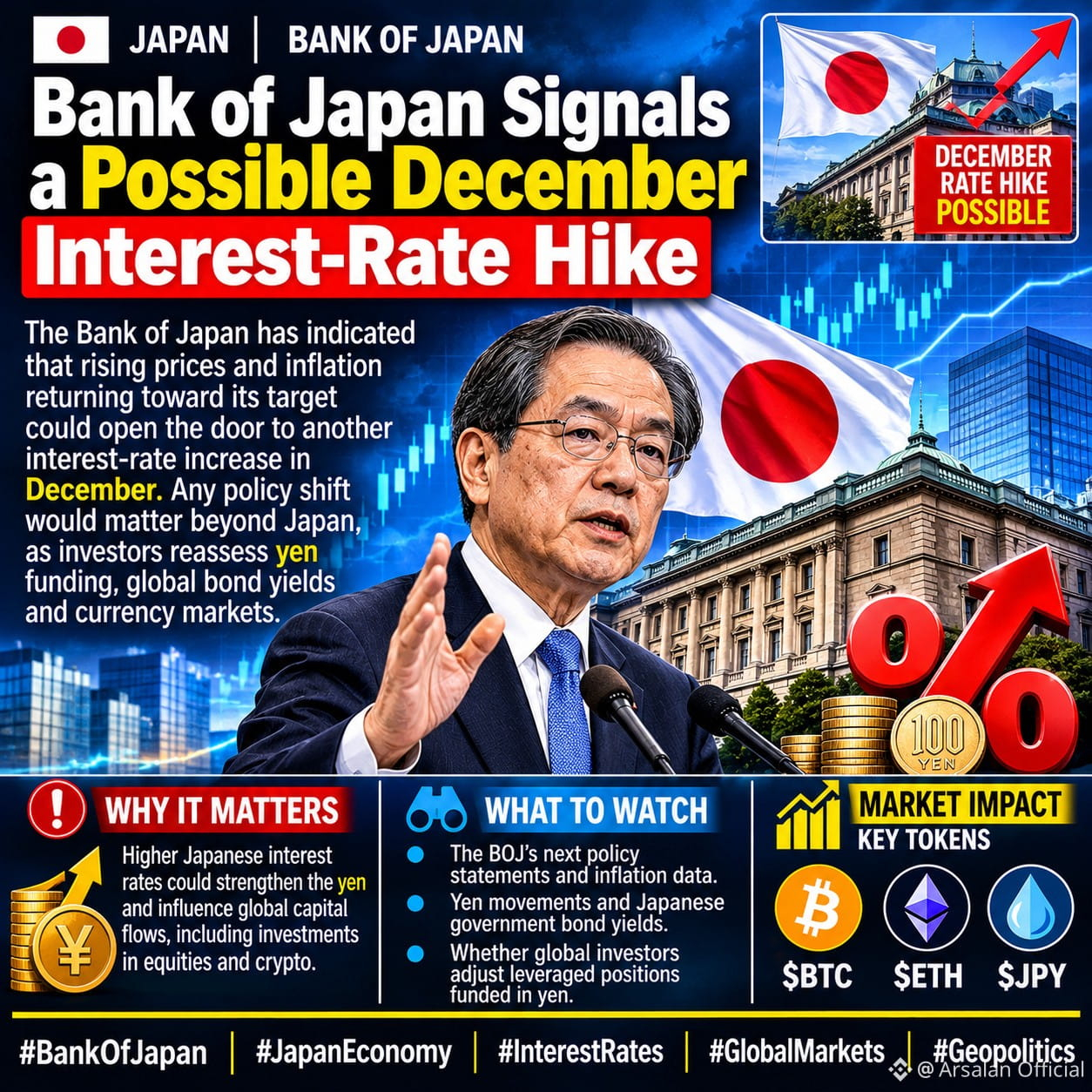
🇯🇵 Bank of Japan Signals a Possible December Interest-Rate Hike The Bank of Japan has indicated that rising prices and inflation returning toward its target could open the door to another interest-rate increase in December. Any policy shift would matter beyond Japan, as investors reassess yen funding, global bond yields and currency markets. Why it matters: Higher Japanese interest rates could strengthen the yen and influence global capital flows, including investments in equities and crypto. What to watch: - The BOJ’s next policy statements and inflation data. - Yen movements and Japanese government bond yields. - Whether global investors adjust leveraged positions funded in yen. #BankOfJapan #JapanEconomy #InterestRates #GlobalMarkets #Geopolitics Tokens: $JPY.ETF · $BTC · $ETH
🇯🇵 Bank of Japan Signals a Possible December Interest-Rate Hike The Bank of Japan has indicated that rising prices and inflation returning toward its target could open the door to another interest-rate increase in December. Any policy shift would matter beyond Japan, as investors reassess yen funding, global bond yields and currency markets. Why it matters: Higher Japanese interest rates could strengthen the yen and influence global capital flows, including investments in equities and crypto. What to watch: - The BOJ’s next policy statements and inflation data. - Yen movements and Japanese government bond yields. - Whether global investors adjust leveraged positions funded in yen. #BankOfJapan #JapanEconomy #InterestRates #GlobalMarkets #Geopolitics Tokens: $JPY.ETF · $BTC · $ETH
1
86

🚨 BREAKING: JAPAN JUST MADE HISTORY AFTER 30 YEARS! 🚨
🇯🇵 BANK OF JAPAN SHOCKS THE MARKET
The Bank of Japan just kept rates at 1.25% - STILL the highest since 1995!
But that's not even the big news...
🔥 FOR THE FIRST TIME SINCE 2013 - JAPAN HITS ITS 2% INFLATION TARGET!
After fighting for almost 14 YEARS, Japan has finally declared victory. They said inflation has now met its target.
💥 WHAT DOES THIS MEAN FOR CRYPTO?
This is HUGE for us:
1️⃣ Stronger JPY = Weaker USD = Expect MASSIVE volatility in Bitcoin
2️⃣ The vote was 8-1 - one member wanted 1.50% already. A December hike is coming?
3️⃣ When Japan moves, the whole world moves. This is how BTC pumps or dumps $5k in minutes.
Smart money is already taking positions. Are you ready?
👇 YOUR TURN - UP OR DOWN?
Do you think BTC will PUMP or DUMP after this news?
Drop your prediction in the comments!
#Bitcoin #BankofJapan #CryptoNews #BTC #Breaking


3
64

·
--
The Bank of Japan held interest rates at 1.25% — but its message was more hawkish than just “holding.”
The facts: The BoJ announced this morning, Oct. 30, that the short-term interest rate would remain at 1.25%, with an 8–1 vote. One board member, Hajime Takata, voted to raise it to 1.50%, judging that underlying inflation had already reached the 2% target. The Outlook Report raised its core inflation forecast for FY2027 from 2.4% to 2.6%, and the BoJ will accelerate its ETF sales from around ¥330 billion to ¥860 billion per year starting in January 2027.
My take: This is a “hawkish hold” — the BoJ isn’t rushing to act today, but its direction toward further rate hikes is clear, and markets are already pricing in a strong chance of a December hike. For crypto, this is about global liquidity: a stronger yen and expectations of tighter policy in Japan add pressure to risk assets, just as the market is still digesting the Binance shock. BTC itself edged back up to around $77,600 this morning after briefly touching $76,527.
What I’m watching: Governor Ueda’s press conference at 12:30 p.m. WIB — his tone on December will determine whether the yen continues to strengthen.
Do you think a December hike is already priced in, or could it put even more pressure on risk assets?
This is my analysis, not financial advice — always DYOR.
#BankOfJapan #Makro $BTC
56

During Thursday’s Asian trading session, the US dollar against the Japanese yen (USD/JPY) rebounded in choppy trading to around 158.00, recovering some of the previous session’s losses. Safe-haven outflows pushed the pair higher, while market focus shifted entirely to Friday’s Bank of Japan monetary policy meeting.
Technically, easing risk aversion was mainly fueled by better-than-expected results from the AI technology sector. Strong third-quarter earnings from chip giant SK Hynix helped revive appetite for global risk assets. Although markets broadly expect the Bank of Japan to stand pat this time, Governor Kazuo Ueda could fundamentally reshape the yen’s medium-term floor if he signals a rate hike in December amid persistent inflationary pressure.
In terms of cross-asset moves, funds flowed out of the yen and safe-haven government bonds, lifting US Treasury yields and helping the dollar stabilize. However, the yen has shown significantly greater resilience among G10 currencies in the second half of the year. As risk appetite for carry trades improves, investors are actively rotating into undervalued, high-beta assets.
For the crypto market, the easing of risk aversion has directly reignited risk-on sentiment, with $BTC showing exceptionally strong buying support at a key support level. As long as the Bank of Japan does not deliver an unexpectedly aggressive tightening, the recovery in the global technology and liquidity environment could create technical room for a new upward breakout in crypto assets.📈
#USDJPY #BankOfJapan #CryptoMacro
242

Japan's Statistics Bureau released the September Consumer Price Index today, showing core CPI accelerated to 2.1% year-on-year. This marks a sharp rise from 1.70% in August, bringing core inflation back above the Bank of Japan's 2% target for the first time since December 2025.
This data is crucial as nationwide headline CPI also climbed to 2.1% while core-core CPI hit its highest level since March. Persistent inflationary pressure above target intensifies market speculation that Governor Kazuo Ueda and the BOJ may face growing pressure to normalize monetary policy sooner than expected.
A hawkish tilt from the BOJ could drive further strength in the Japanese Yen and push domestic bond yields higher. Global markets remain sensitive to Japanese monetary tightening, as unwinding yen carry trades often triggers volatility across broader risk assets and sovereign debt yields.
For crypto markets, rapid shifts in yen liquidity have historically sparked short-term risk aversion across major assets like $BTC. If tighter Japanese monetary conditions restrict global leverage, speculative capital may adopt a more defensive stance until macro volatility settles. #JapanInflation #BankOfJapan #MacroEconomics
Japan's Statistics Bureau released the September Consumer Price Index today, showing core CPI accelerated to 2.1% year-on-year. This marks a sharp rise from 1.70% in August, bringing core inflation back above the Bank of Japan's 2% target for the first time since December 2025.
This data is crucial as nationwide headline CPI also climbed to 2.1% while core-core CPI hit its highest level since March. Persistent inflationary pressure above target intensifies market speculation that Governor Kazuo Ueda and the BOJ may face growing pressure to normalize monetary policy sooner than expected.
A hawkish tilt from the BOJ could drive further strength in the Japanese Yen and push domestic bond yields higher. Global markets remain sensitive to Japanese monetary tightening, as unwinding yen carry trades often triggers volatility across broader risk assets and sovereign debt yields.
For crypto markets, rapid shifts in yen liquidity have historically sparked short-term risk aversion across major assets like $BTC . If tighter Japanese monetary conditions restrict global leverage, speculative capital may adopt a more defensive stance until macro volatility settles. #JapanInflation #BankOfJapan #MacroEconomics
42

·
--
According to the latest data released by Japan’s Ministry of Internal Affairs and Communications, Japan’s core CPI rose 2.1% year over year in September, rebounding significantly from the previous reading of 1.70%. This also marked the first time this core inflation measure had risen above the 2% threshold since the end of last year. Headline CPI likewise recorded an annual rate of 2.1%.
The rebound in inflation is an important policy indicator. Inflation has once again moved above the policy target range, signaling that price pressures remain resilient and directly strengthening market expectations that the Bank of Japan will continue normalizing monetary policy and raise interest rates further.
In macro financial markets, strong inflation has provided underlying support for the yen while also prompting a corresponding reaction in Japanese government bond yields. Markets are widely watching whether a faster pace of tightening by the Bank of Japan could once again put global yen carry trades under pressure to unwind, thereby affecting cross-market liquidity.
For crypto markets, marginal changes in yen liquidity have long been a key focus in assessing macro funding conditions. Some leveraged funds may stay on the sidelines during periods of shifting macro expectations like this, but overall market liquidity remains constrained by multiple factors. Price action is therefore likely to remain structurally range-bound amid a tug-of-war between bullish and bearish expectations. The actual evolution of global liquidity conditions will need to be monitored going forward. $BTC
#JapanCPI #BankOfJapan #MacroEconomics
114

The latest inflation data for September released by Japan’s Ministry of Internal Affairs and Communications showed that Japan’s core CPI rose 2.1% year over year, significantly higher than the previous reading of 1.70% and in line with market expectations. Japan’s nationwide CPI also rose 2.1% year over year in September, taking core inflation back above the key 2% policy target for the first time since the end of last year. By category, core-core CPI, which excludes food and energy, also broke above 2%, reaching its highest level since March this year.
These figures further reinforce the macroeconomic narrative that inflation in Japan is proving stickier than expected. Inflation indicators remain above the Bank of Japan’s target, greatly weakening market hopes that accommodative policy will continue. This also means the BOJ faces mounting pressure to raise interest rates at upcoming monetary policy meetings, and the process of policy normalization could accelerate significantly.
For traditional financial markets, rising inflation has directly increased upward pressure on Japanese government bond yields and delivered a fundamental shock to the carry trade mechanism. Expectations of a potential strengthening of the yen will force global cross-market arbitrage positions funded by low-interest yen to unwind more rapidly, draining global liquidity and weighing on the valuations of global risk assets, including U.S. Treasuries and high-valued stocks.
Against the macroeconomic backdrop of tightening liquidity, crypto markets are among the first to face the test of deleveraging. A potential reversal of yen carry trades is often accompanied by a return of capital to risk-free assets, prompting institutional investors to rapidly cut their exposure to highly volatile assets such as Bitcoin. Investors should be alert to the downside risk that $BTC could face short-term pressure and a liquidity pullback.
#Inflation #BankOfJapan #MacroEconomics
11
The Bank of Japan released its Corporate Goods Price Index on Tuesday, showing Japanese wholesale prices surged 6.8% year-on-year through September. Simultaneously, import prices denominated in yen jumped 24.5%, signaling persistent upstream cost pressures from currency weakness.
While the 6.8% print slowed slightly from August's 7.6% and missed expectations, sustained cost pass-through keeps pressure on the central bank to tighten policy. Markets are increasingly pricing in an upcoming interest rate hike as imported inflation refuses to cool.
This hawkish outlook weighed heavily on regional risk assets, dragging South Korea's KOSPI index down by 4.00% during intraday trading. A stronger yen trajectory typically triggers carry-trade unwinds, reducing global liquidity across equities and sovereign bonds.
For digital assets, tight monetary signals from Asia could suppress risk-on momentum and elevate near-term volatility. $BTC and broader altcoins may experience liquidity pullbacks if global rate differentials continue narrowing.
#BankOfJapan #Inflation #GlobalMacro
122
Japan’s Ministry of Internal Affairs and Communications released the latest economic data on October 9. In August, household spending adjusted for inflation fell 3.1% year over year, marking a streak of 9 consecutive months of decline, with only a marginal month-on-month increase of 0.1%. Meanwhile, Japan’s 10-year government bond yield promptly dropped by 4.5 basis points to 3.035%, and the Nikkei 225 index pulled back 1% intraday, indicating that the market is quickly absorbing the reality of weakness on the consumer side.
Although real wages continue to rise, the squeeze on residents’ purchasing power from high inflation has exceeded expectations. Structural issues behind soft domestic demand remain prominent. From both a technical perspective and the macro policy tug-of-war, this data places strong dovish constraints on the Bank of Japan (BOJ). Market pricing for aggressive rate hikes before year-end is likely to cool significantly. Since domestic demand and inflation have not formed a virtuous cycle, BOJ Governor Kazuo Ueda faces clear constraints in tightening policy.
For global risk assets, this is undoubtedly a favorable liquidity tailwind in the near term. The decline in Japanese bond yields directly eases the global liquidity tightening pressure caused by the unwinding of carry trades. The pullback in traditional equities is only a technical correction as profit-taking recedes, and the delay in expectations for yen rate hikes provides longs with a more comfortable macro liquidity buffer.
As a result, the crypto market’s liquidity environment is likely to benefit as well. The technical structure of $BTC may stabilize at the support level and extend the rebound pattern. With the marginal risk of external tightening easing, risk-on sentiment within the market may recover quickly, and capital could accelerate back into high-volatility assets.
#BankOfJapan #MacroEconomics #CryptoLiquidity
173
The Japanese Ministry of Labor released August employment data today, revealing that Japan's real wages rose 1.5% year-on-year, marking an eighth consecutive month of sustained growth. Nominal wages increased by 3.8% alongside steady 3.8% base pay gains, while overtime compensation climbed by 5.2%.
This continuous expansion in wage growth demonstrates solid underlying labor momentum despite a minor moderation from July's revised 2.0% figure. Paired with Tokyo's core inflation hitting a 10-month peak in September, the robust wage-price cycle reinforces the macroeconomic foundation for further monetary policy tightening.
For traditional markets, these figures firmly bolster expectations that the Bank of Japan will pursue additional interest rate hikes in upcoming quarters. Higher Japanese yields typically strengthen the yen, potentially prompting international capital flows to rotate back into domestic assets and putting mild pressure on global bond markets.
A tightening BoJ stance presents a critical macro variable for crypto markets due to the risks of unwinding global yen carry trades. While tighter yen liquidity could induce short-term volatility across risk assets like $BTC, solid global economic fundamentals help mitigate sharp downside risks over the medium term. #BankOfJapan #JapanEconomy #MacroEconomics
The Japanese Ministry of Labor released August employment data today, revealing that Japan's real wages rose 1.5% year-on-year, marking an eighth consecutive month of sustained growth. Nominal wages increased by 3.8% alongside steady 3.8% base pay gains, while overtime compensation climbed by 5.2%.
This continuous expansion in wage growth demonstrates solid underlying labor momentum despite a minor moderation from July's revised 2.0% figure. Paired with Tokyo's core inflation hitting a 10-month peak in September, the robust wage-price cycle reinforces the macroeconomic foundation for further monetary policy tightening.
For traditional markets, these figures firmly bolster expectations that the Bank of Japan will pursue additional interest rate hikes in upcoming quarters. Higher Japanese yields typically strengthen the yen, potentially prompting international capital flows to rotate back into domestic assets and putting mild pressure on global bond markets.
A tightening BoJ stance presents a critical macro variable for crypto markets due to the risks of unwinding global yen carry trades. While tighter yen liquidity could induce short-term volatility across risk assets like $BTC , solid global economic fundamentals help mitigate sharp downside risks over the medium term. #BankOfJapan #JapanEconomy #MacroEconomics
105

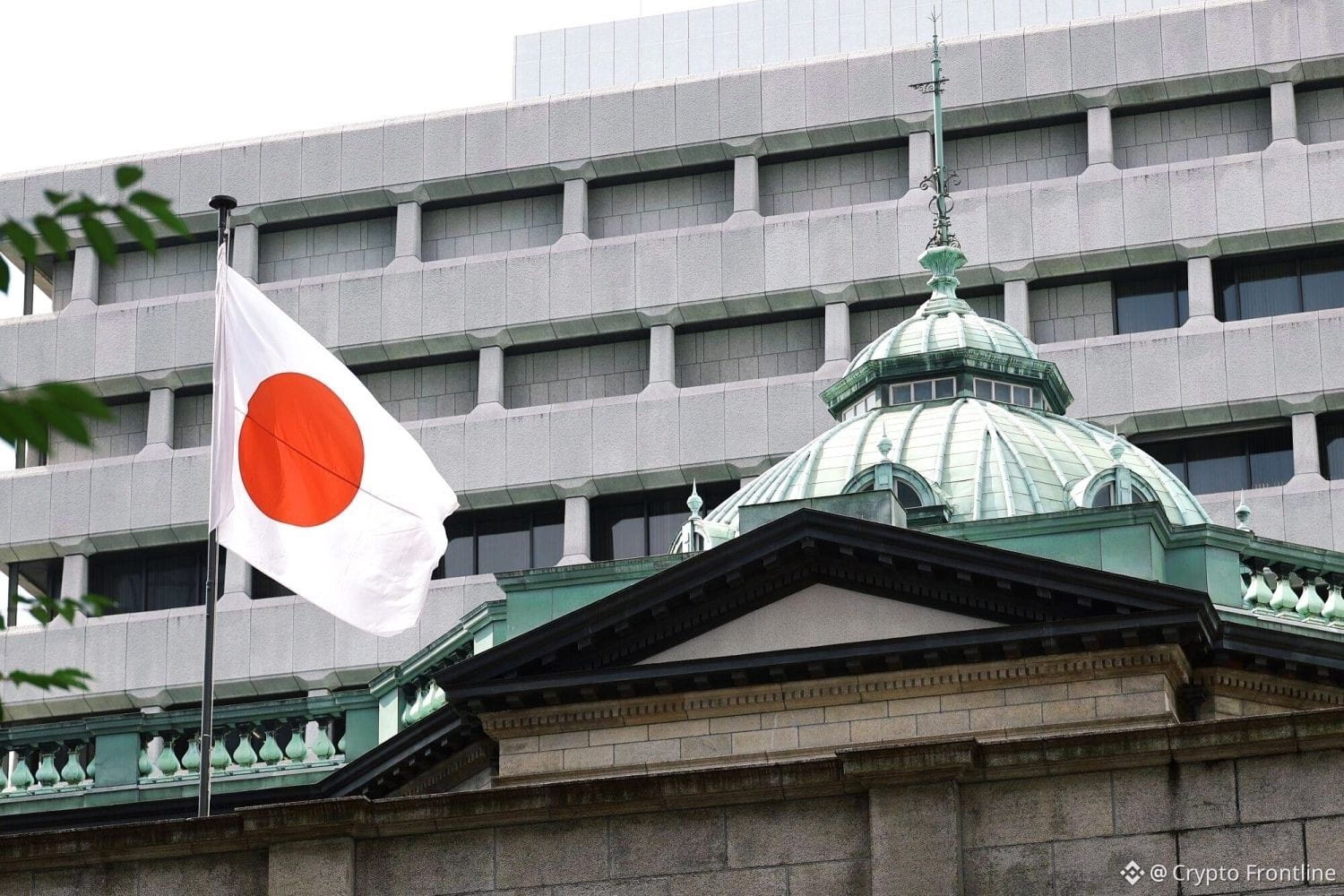
🇯🇵 Is It Time for the Bank of Japan to Hike Rates?
📉 The Japanese yen has fallen to a 40-year low, fueling calls for the BOJ to raise interest rates.
💡 Economist Koichi Hamada—once a strong supporter of ultra-loose policy under Abenomics—now argues Japan's economic conditions have changed.
📌 Key takeaway:
🔹 A stronger yen could reduce imported inflation and stabilize the currency.
🔹 Higher BOJ rates may also weaken the popular yen carry trade, with global implications for stocks, bonds, and crypto.
👀 Markets are now watching whether the Bank of Japan will finally accelerate policy tightening.
Trade Here 👉 $BILL | $RIVER | $DODOX
{future}(DODOXUSDT)
{future}(RIVERUSDT)
{future}(BILLUSDT)
#BankOfJapan #BinanceTurns9 #JuneCPIWarshTestimonyBankEarningsSameWeek #StreamerClub #Write2Earn
🇯🇵 Is It Time for the Bank of Japan to Hike Rates?
📉 The Japanese yen has fallen to a 40-year low, fueling calls for the BOJ to raise interest rates.
💡 Economist Koichi Hamada—once a strong supporter of ultra-loose policy under Abenomics—now argues Japan's economic conditions have changed.
📌 Key takeaway:
🔹 A stronger yen could reduce imported inflation and stabilize the currency.
🔹 Higher BOJ rates may also weaken the popular yen carry trade, with global implications for stocks, bonds, and crypto.
👀 Markets are now watching whether the Bank of Japan will finally accelerate policy tightening.
Trade Here 👉 $BILL | $RIVER | $DODOX
#BankOfJapan #BinanceTurns9 #JuneCPIWarshTestimonyBankEarningsSameWeek #StreamerClub #Write2Earn
335
Verified
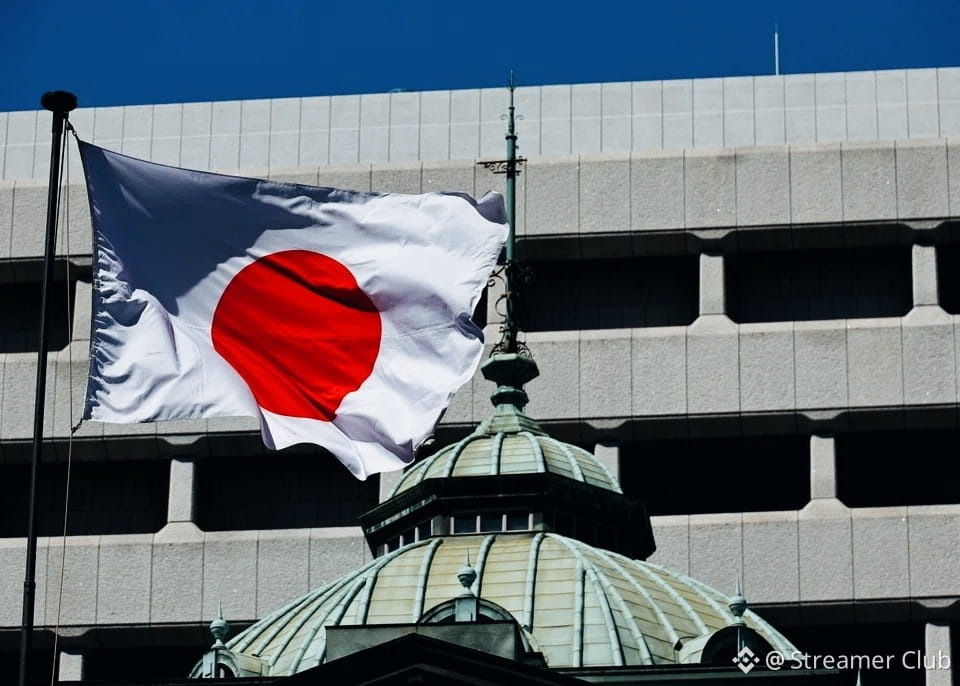
🚨 BOJ MAY PAUSE BOND TAPERING WHILE STILL HIKING RATES 🚨
The Bank of Japan is reportedly considering pausing its bond-buying reductions after fiscal 2027, signaling a more cautious approach to quantitative tightening (QT).
🏦 BOJ expected to raise rates from 0.75% to 1.00%
📊 Bond purchases may remain at ¥2.1T per month
💴 Markets are pricing in a 90% chance of a June rate hike
📉 BOJ still holds nearly 49% of Japan's government bond market
Why it matters:
✅ Could support stability in Japan's bond market
✅ Impacts global bond yields and liquidity
✅ Important for USD/JPY, gold, stocks, and crypto
✅ Signals BOJ remains cautious despite rising inflation
Investors are now watching whether the BOJ prioritizes market stability or accelerates policy normalization as inflation pressures build.
$NFLX | $COST | $NMR
{future}(NMRUSDT)
{future}(COSTUSDT)
{future}(NFLXUSDT)
#BankOfJapan #SaharaAIDrops55PercentIn15Minutes #SBFSeeksPresidentialPardonFTTJumpsOver50Percent #StreamerClub #Write2Earn
🚨 BOJ MAY PAUSE BOND TAPERING WHILE STILL HIKING RATES 🚨
The Bank of Japan is reportedly considering pausing its bond-buying reductions after fiscal 2027, signaling a more cautious approach to quantitative tightening (QT).
🏦 BOJ expected to raise rates from 0.75% to 1.00%
📊 Bond purchases may remain at ¥2.1T per month
💴 Markets are pricing in a 90% chance of a June rate hike
📉 BOJ still holds nearly 49% of Japan's government bond market
Why it matters:
✅ Could support stability in Japan's bond market
✅ Impacts global bond yields and liquidity
✅ Important for USD/JPY, gold, stocks, and crypto
✅ Signals BOJ remains cautious despite rising inflation
Investors are now watching whether the BOJ prioritizes market stability or accelerates policy normalization as inflation pressures build.
$NFLX | $COST | $NMR
#BankOfJapan #SaharaAIDrops55PercentIn15Minutes #SBFSeeksPresidentialPardonFTTJumpsOver50Percent #StreamerClub #Write2Earn
695
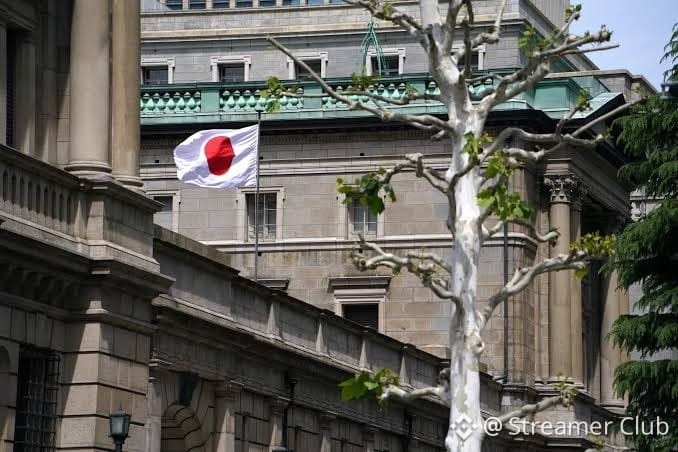
🚨 BOJ Rate Hike Incoming?
The Bank of Japan is reportedly considering a 25bps rate hike this month, potentially lifting rates to 1%, with officials also signaling room for more hikes ahead.
📈 Why it matters:
• Higher Japanese rates could strengthen the yen
• Global liquidity may tighten
• Increased volatility for stocks, crypto, and risk assets
• Markets may reprice expectations for central bank policy
With inflation risks persisting, the BOJ appears ready to continue its shift away from ultra-loose monetary policy.
👀 June 16 could become a major market-moving event.
$CC | $MEME | $quq
{alpha}(560x4fa7c69a7b69f8bc48233024d546bc299d6b03bf)
{future}(MEMEUSDT)
{future}(CCUSDT)
#BankOfJapan #USIranTensionsTriggerCryptoLiquidations #BitcoinETFPremiumTwoYearLow #StreamerClub #Write2Earn
🚨 BOJ Rate Hike Incoming?
The Bank of Japan is reportedly considering a 25bps rate hike this month, potentially lifting rates to 1%, with officials also signaling room for more hikes ahead.
📈 Why it matters:
• Higher Japanese rates could strengthen the yen
• Global liquidity may tighten
• Increased volatility for stocks, crypto, and risk assets
• Markets may reprice expectations for central bank policy
With inflation risks persisting, the BOJ appears ready to continue its shift away from ultra-loose monetary policy.
👀 June 16 could become a major market-moving event.
$CC | $MEME | $quq
#BankOfJapan #USIranTensionsTriggerCryptoLiquidations #BitcoinETFPremiumTwoYearLow #StreamerClub #Write2Earn
136
🚨 USD/JPY ALERT: Is the BOJ About to Hike Again? 🇯🇵💴
The U.S. Treasury has issued a strong warning over the Japanese yen's sharp weakness, urging the Bank of Japan (BOJ) to continue raising interest rates to stabilize the currency.
📌 Key Highlights:
🔹 🇺🇸 U.S. says excessive yen volatility is undesirable
🔹 📉 Yen hits a 40-year low against the U.S. dollar
🔹 📈 Treasury urges the BOJ to raise rates further
🔹 💴 Yen has fallen 51% since 2011 despite narrowing U.S.-Japan rate differentials
🔹 ⚠️ Markets are watching for possible Japanese currency intervention
🎯 Why This Matters
• Higher BOJ rates could strengthen the Japanese yen.
• A stronger yen may pressure the U.S. dollar, influencing Bitcoin, Gold, and global risk assets.
• Rising market volatility could create major trading opportunities across crypto.
💡 Macro moves often trigger the biggest crypto trends. Position yourself before the market reacts.
Trade Here 👉 $BTW | $CL | $LAB
{future}(LABUSDT)
{future}(CLUSDT)
{future}(BTWUSDT)
#BankOfJapan #KazakhstanApprovesStrategicDigitalMiningProgram #USJoblessClaimsFallTo187KLowestSince1969 #StreamerClub #Write2Earn
🚨 USD/JPY ALERT: Is the BOJ About to Hike Again? 🇯🇵💴
The U.S. Treasury has issued a strong warning over the Japanese yen's sharp weakness, urging the Bank of Japan (BOJ) to continue raising interest rates to stabilize the currency.
📌 Key Highlights:
🔹 🇺🇸 U.S. says excessive yen volatility is undesirable
🔹 📉 Yen hits a 40-year low against the U.S. dollar
🔹 📈 Treasury urges the BOJ to raise rates further
🔹 💴 Yen has fallen 51% since 2011 despite narrowing U.S.-Japan rate differentials
🔹 ⚠️ Markets are watching for possible Japanese currency intervention
🎯 Why This Matters
• Higher BOJ rates could strengthen the Japanese yen.
• A stronger yen may pressure the U.S. dollar, influencing Bitcoin, Gold, and global risk assets.
• Rising market volatility could create major trading opportunities across crypto.
💡 Macro moves often trigger the biggest crypto trends. Position yourself before the market reacts.
Trade Here 👉 $BTW | $CL | $LAB
#BankOfJapan #KazakhstanApprovesStrategicDigitalMiningProgram #USJoblessClaimsFallTo187KLowestSince1969 #StreamerClub #Write2Earn

238
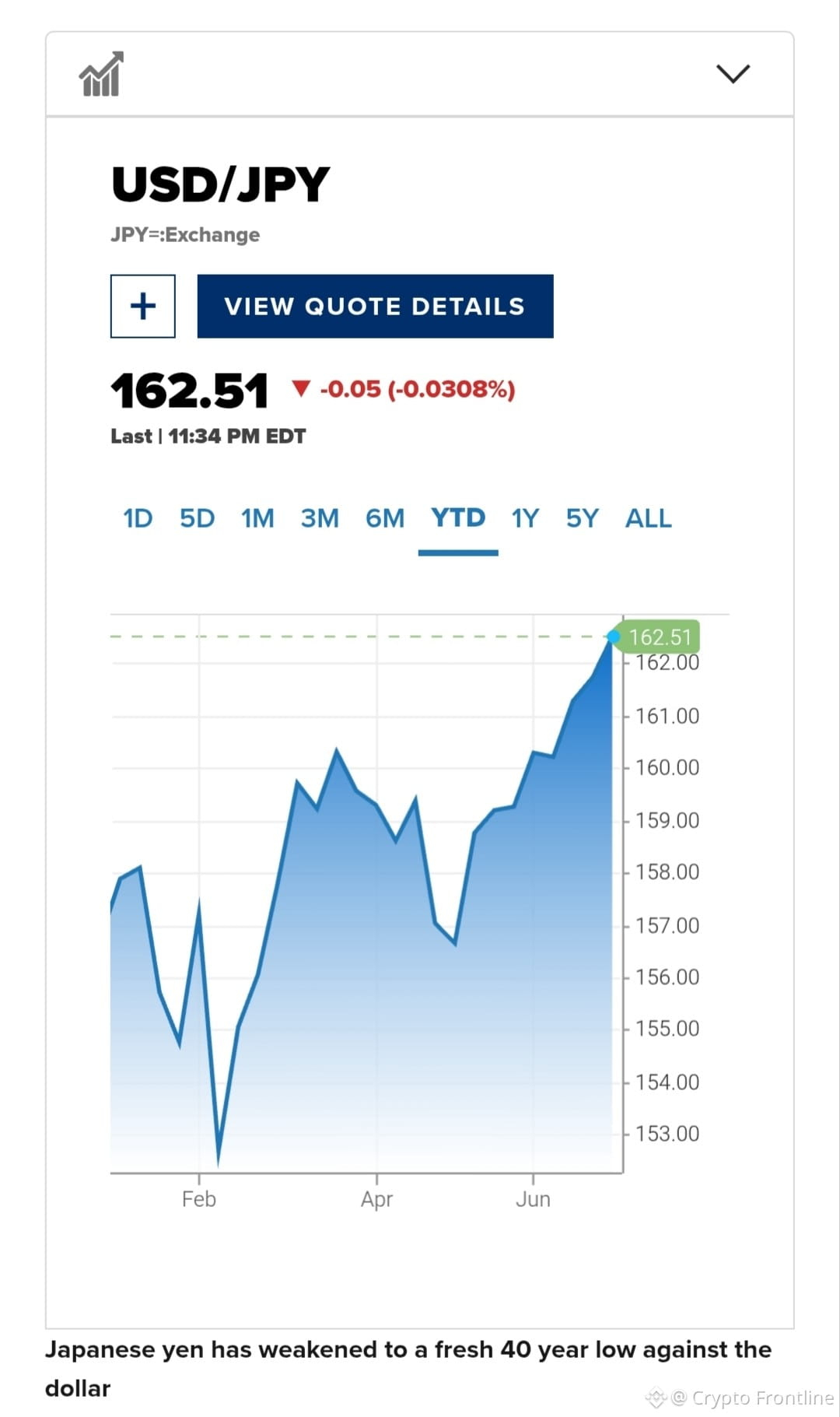
🚨 Japan Spent $74B Defending the Yen—But the Real Battle Is the Fed
🇯🇵 The Japanese yen has fallen to a 40-year low, despite Japan spending a record $74 billion to support its currency.
📊 Why isn't intervention working?
✅ Wide U.S.-Japan interest rate gap
✅ Strong U.S. dollar
✅ Higher-for-longer Federal Reserve policy
✅ Markets see unilateral intervention as only temporary
Analysts believe currency intervention alone cannot reverse the trend unless the Fed begins cutting rates or the U.S.-Japan yield gap narrows.
👀 Some strategists say coordinated U.S.-Japan intervention would have a much stronger impact than Tokyo acting alone.
📉 For now, the dollar remains in control.
$ENA | $BNB | $NFP
{future}(NFPUSDT)
{future}(BNBUSDT)
{future}(ENAUSDT)
#USADP98KMiss #GoldHoldsGains #BankOfJapan #StreamerClub #Write2Earn
🚨 Japan Spent $74B Defending the Yen—But the Real Battle Is the Fed
🇯🇵 The Japanese yen has fallen to a 40-year low, despite Japan spending a record $74 billion to support its currency.
📊 Why isn't intervention working?
✅ Wide U.S.-Japan interest rate gap
✅ Strong U.S. dollar
✅ Higher-for-longer Federal Reserve policy
✅ Markets see unilateral intervention as only temporary
Analysts believe currency intervention alone cannot reverse the trend unless the Fed begins cutting rates or the U.S.-Japan yield gap narrows.
👀 Some strategists say coordinated U.S.-Japan intervention would have a much stronger impact than Tokyo acting alone.
📉 For now, the dollar remains in control.
$ENA | $BNB | $NFP
#USADP98KMiss #GoldHoldsGains #BankOfJapan #StreamerClub #Write2Earn
311
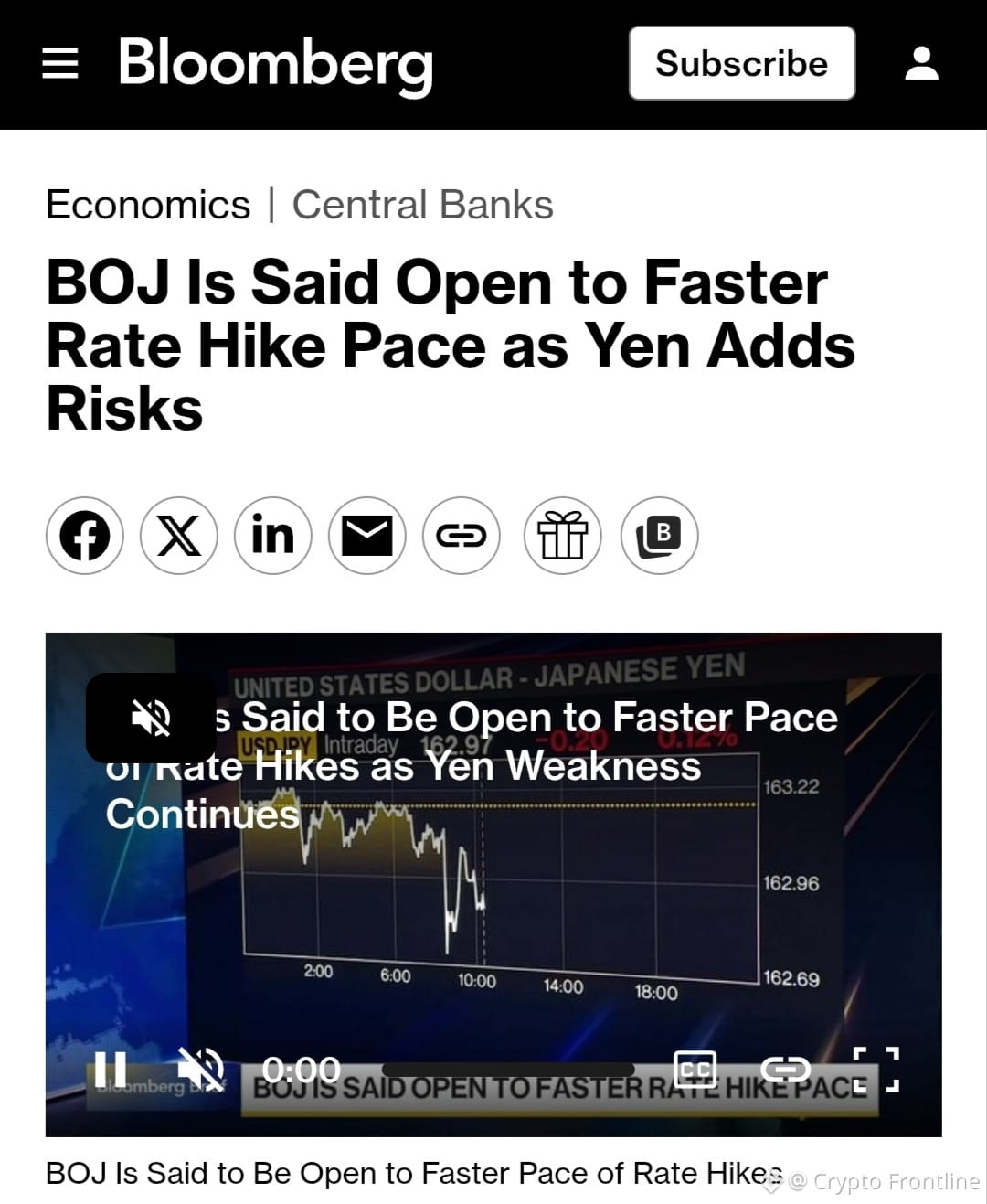
🚨 BOJ Signals Faster Rate Hikes as Yen Weakens! 🇯🇵💴
🔹 🏦 Bank of Japan is reportedly open to faster interest rate hikes.
🔹 📉 The yen's sharp decline is increasing inflation risks.
🔹 ⏸️ Markets expect the BOJ to hold rates steady on July 31, but a faster tightening path is now in focus.
🔹 🌍 A more hawkish BOJ could impact forex, global bonds, stocks, gold, and crypto markets.
👀 Watch: The July 31 BOJ meeting could become a major catalyst for USD/JPY and global financial markets.
Trade Here 👉 $BEAT | $MUB | $NVDA
{future}(NVDAUSDT)
{spot}(MUBUSDT)
{future}(BEATUSDT)
#BankOfJapan #HongKongStorageStocksStrengthen #Nasdaq100RisesOnChipRebound #StreamerClub #Write2Earn
🚨 BOJ Signals Faster Rate Hikes as Yen Weakens! 🇯🇵💴
🔹 🏦 Bank of Japan is reportedly open to faster interest rate hikes.
🔹 📉 The yen's sharp decline is increasing inflation risks.
🔹 ⏸️ Markets expect the BOJ to hold rates steady on July 31, but a faster tightening path is now in focus.
🔹 🌍 A more hawkish BOJ could impact forex, global bonds, stocks, gold, and crypto markets.
👀 Watch: The July 31 BOJ meeting could become a major catalyst for USD/JPY and global financial markets.
Trade Here 👉 $BEAT | $MUB | $NVDA
#BankOfJapan #HongKongStorageStocksStrengthen #Nasdaq100RisesOnChipRebound #StreamerClub #Write2Earn
124
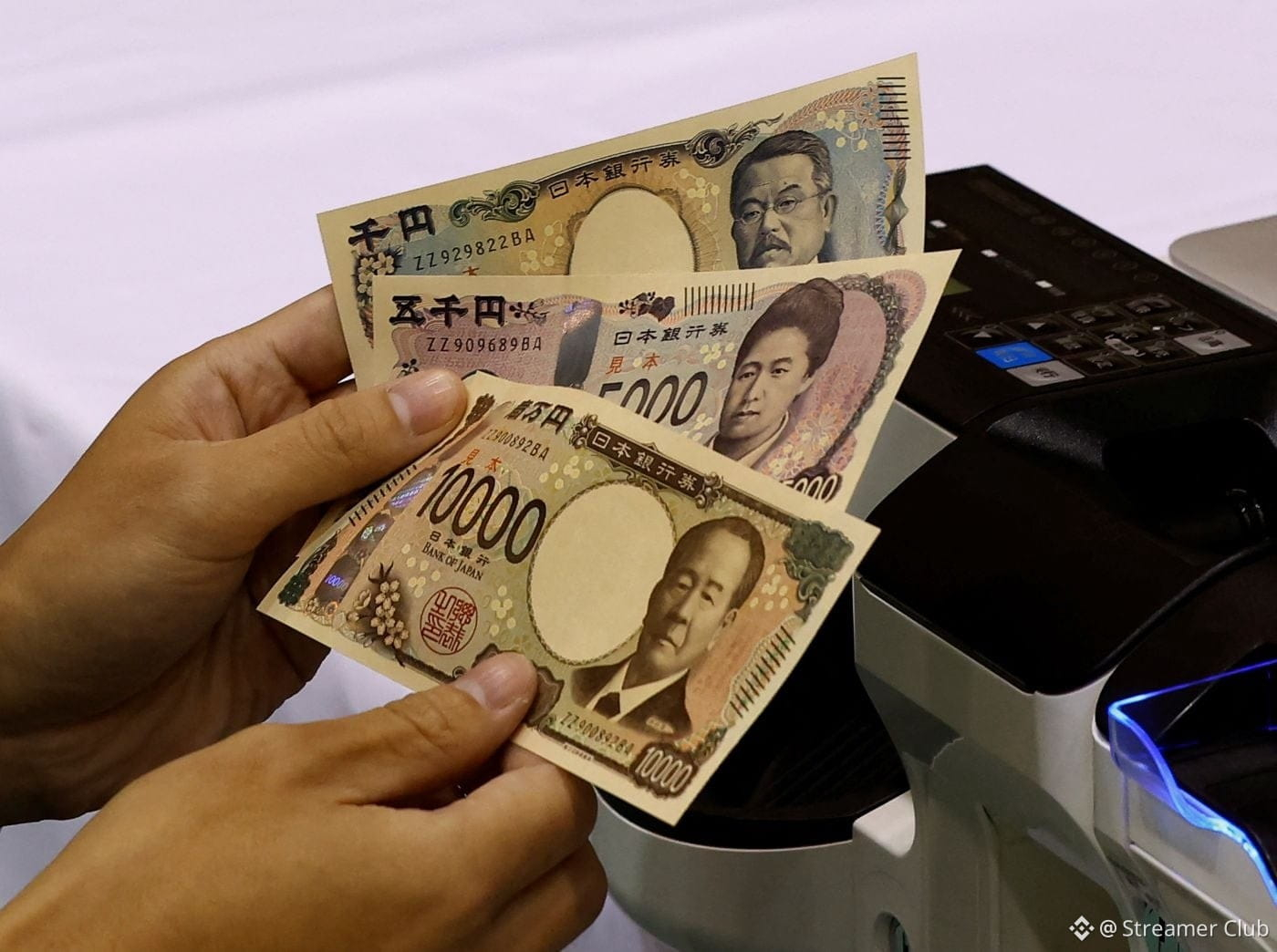
🇯🇵 Yen Remains Weak Despite Expected BOJ Rate Hikes
The Japanese yen is under pressure as USD/JPY continues climbing, with traders eyeing a potential move toward 162.
⚡ Key Market Drivers:
🏦 Markets fully price a 25bps BOJ rate hike next week
📈 Another 25bps hike expected by December
💵 Strong U.S. dollar continues to dominate
📊 Japan's PPI rose 6.3% YoY, reinforcing hawkish BOJ expectations
🎯 Technical Outlook:
🚀 USD/JPY remains in a bullish trend
📈 RSI is approaching overbought territory
👀 Limited resistance seen before the 162 level
Will BOJ tightening finally support the yen, or will dollar strength push USD/JPY even higher?
$FOLKS | $STG | $KAT
{future}(KATUSDT)
{future}(STGUSDT)
{future}(FOLKSUSDT)
#BankOfJapan #USCPISurgesToThreeYearHighOf4.2% #BoJGovernorUedaHospitalized #StreamerClub #Write2Earn
🇯🇵 Yen Remains Weak Despite Expected BOJ Rate Hikes
The Japanese yen is under pressure as USD/JPY continues climbing, with traders eyeing a potential move toward 162.
⚡ Key Market Drivers:
🏦 Markets fully price a 25bps BOJ rate hike next week
📈 Another 25bps hike expected by December
💵 Strong U.S. dollar continues to dominate
📊 Japan's PPI rose 6.3% YoY, reinforcing hawkish BOJ expectations
🎯 Technical Outlook:
🚀 USD/JPY remains in a bullish trend
📈 RSI is approaching overbought territory
👀 Limited resistance seen before the 162 level
Will BOJ tightening finally support the yen, or will dollar strength push USD/JPY even higher?
$FOLKS | $STG | $KAT
#BankOfJapan #USCPISurgesToThreeYearHighOf4.2% #BoJGovernorUedaHospitalized #StreamerClub #Write2Earn
2
69

·
--
The global financial landscape is reacting quickly to breaking monetary news as reports indicate that Bank of Japan Governor Ueda has been officially discharged from his position. This sudden leadership transition at one of the world's most influential central banks introduces a wave of immediate policy uncertainty across international currency corridors and global carry trades. Traditional stock indices and foreign exchange desks are bracing for heightened volatility as market participants anticipate the next administrative direction. For digital asset markets, these major institutional shifts often prompt a rapid re-evaluation of systemic risk and capital rotation. How do you foresee this historic central bank transition affecting short-term Bitcoin price action? 🇯🇵📉 #BOJGovernorUedaDischarged #BankOfJapan #CryptoTrading
{spot}(BTCUSDT)
{spot}(ETHUSDT)
The global financial landscape is reacting quickly to breaking monetary news as reports indicate that Bank of Japan Governor Ueda has been officially discharged from his position. This sudden leadership transition at one of the world's most influential central banks introduces a wave of immediate policy uncertainty across international currency corridors and global carry trades. Traditional stock indices and foreign exchange desks are bracing for heightened volatility as market participants anticipate the next administrative direction. For digital asset markets, these major institutional shifts often prompt a rapid re-evaluation of systemic risk and capital rotation. How do you foresee this historic central bank transition affecting short-term Bitcoin price action? 🇯🇵📉 #BOJGovernorUedaDischarged #BankOfJapan #CryptoTrading

135
·
--
The Bank of Japan officially announced a 25-basis-point rate hike at its just-concluded monetary policy meeting. Unexpectedly, however, after the decision was released, the yen failed to strengthen—instead, it suffered a broad-based plunge across the FX market. The USD/JPY surged by more than 70 points in the short term; EUR/JPY and GBP/JPY rose by more than 80 and 90 points respectively; AUD and CAD climbed by over 50 points; and the Swiss franc against the yen also rose by more than 80 points.
In principle, a rate hike should boost the home currency. This time, though, the market clearly moved in a typical “good news already priced in, then becomes bad news” pattern. Ahead of the decision, investors had already built in sufficient expectations for the hike and positioned accordingly. After the resolution was implemented, the lack of stronger follow-up tightening guidance led to rapid liquidation of profit-taking positions, causing the yen to fall sharply.
From a macro-asset perspective, the yen’s failure to rise—and its decline instead—directly eased near-term pressure on global non-USD currencies. As a result, the U.S. Dollar Index received some support. Risks of cross-asset carry-trade unwind did not spiral out of control for the moment, and concerns over liquidity tightness in major European and U.S. equity index and bond markets were briefly relieved.
For the crypto market, $BTC is currently highly sensitive to changes in global liquidity. Yen depreciation means that, in the near term, the passive selling pressure triggered by a “large-scale unwind of carry trades” has weakened somewhat, and liquidity conditions remain stable for now. Still, subsequent developments will need to be monitored—particularly the pace at which the Bank of Japan normalizes its policy. The market’s ongoing long-vs-short game continues, and overall it remains in a choppy, wait-and-see stance.
#BankOfJapan #InterestRates #CryptoMarket
149

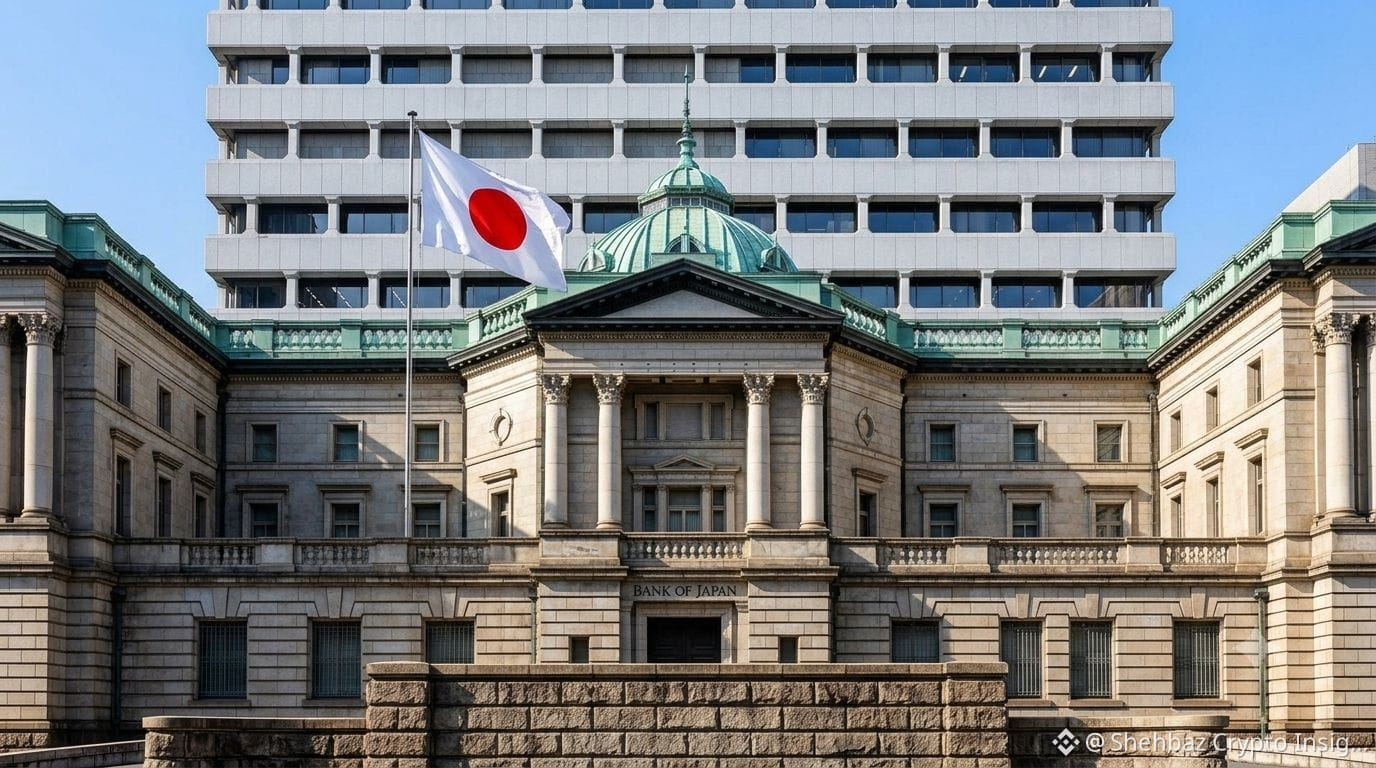
Bank of Japan (BOJ) HIKES TO 1.25% — 31-YEAR HIGH!
The Bank of Japan (BOJ) has raised interest rates by 25 BPS, taking the policy rate to 1.25% — the highest level in 31 years.
#BOJHikesRatesTo31YearHigh #BOJPolicy #BankOfJapan
Bank of Japan (BOJ) HIKES TO 1.25% — 31-YEAR HIGH!
The Bank of Japan (BOJ) has raised interest rates by 25 BPS, taking the policy rate to 1.25% — the highest level in 31 years.
#BOJHikesRatesTo31YearHigh #BOJPolicy #BankOfJapan
The Bank of Japan (BOJ) has raised interest rates by 25 BPS, taking the policy rate to 1.25% — the highest level in 31 years.
#BOJHikesRatesTo31YearHigh #BOJPolicy #BankOfJapan
1
48
Log in to explore more content
Join global crypto users on Binance Square
⚡️ Get latest and useful information about crypto.
💬 Trusted by the world’s largest crypto exchange.
👍 Discover real insights from verified creators.
Email / Phone number
Trending Topics
1
#BitcoinRebounds$75KAsChipsLead
6,388 views
107 Discussing
2
#JobsReportRaisesHikeOdds
90,765 views
881 Discussing
3
#US Data Center Rules May Constrain AI Expansion
11,825 views
94 Discussing
4
#$2TWipedOutHedgeFundsFaceLiquidation
14,581 views
98 Discussing
5
#WillAnthropicListOnTime
12,996 views
255 Discussing
6
#USNovemberMichiganExpectationsIndexPrelimAt50.9
21,011 views
346 Discussing
7
#OilPlungesBelow$100
21,301 views
38 Discussing
8
#TradFiForBeginners
13,098 views
224 Discussing
9
#USMidtermsCouldShakeUpUS-IranTies
40,888 views
519 Discussing
10
#RussianCentralBankNamesBTCETHUSDTForNonQualifiedInvestors
775 views
11 Discussing