

#aiverification
aiverification
990 views
42 Discussing
Hot
Latest
·
--
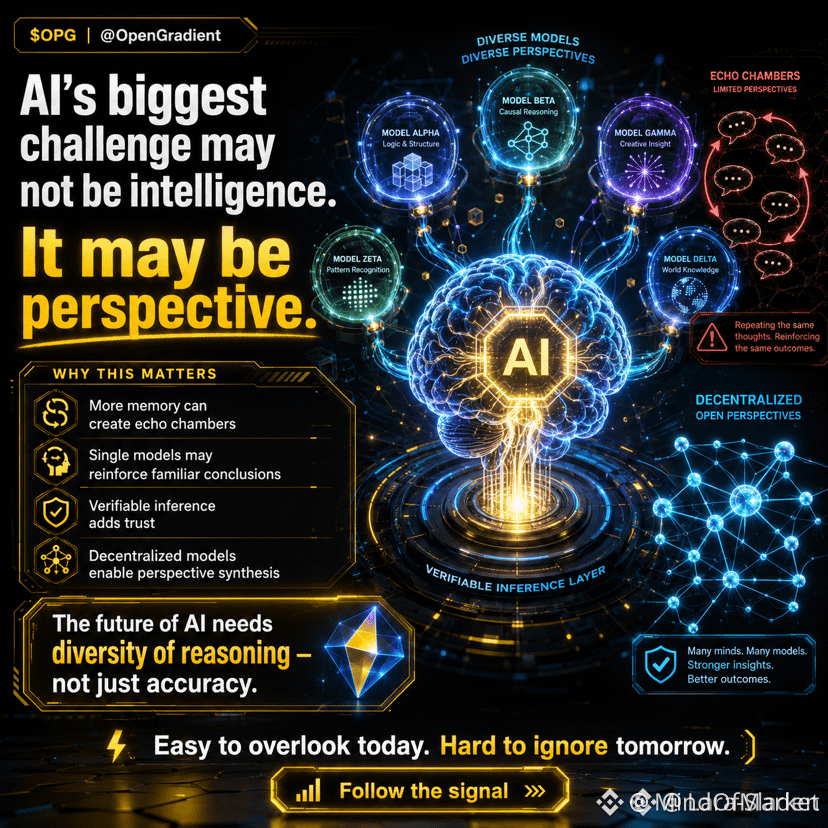
$OPG AND THE NEXT FRONTIER OF AI TRUST 🔥
The real bottleneck in AI isn't intelligence—it's verifiability. As models absorb more data, echo chambers of agreement become the silent risk. OpenGradient's approach to decentralized model execution and verifiable inference addresses this directly by enabling auditable, multi-perspective reasoning.
Attention is shifting toward infrastructure that can prove how conclusions are formed. The market hasn't fully priced in the demand for transparency at the inference layer yet.
Are you watching the narrative change before the liquidity follows?
Not financial advice. Always manage your risk.
#OPG #AIVerification #CryptoAI #DecentralizedInference
🎯
$OPG AND THE NEXT FRONTIER OF AI TRUST 🔥
The real bottleneck in AI isn't intelligence—it's verifiability. As models absorb more data, echo chambers of agreement become the silent risk. OpenGradient's approach to decentralized model execution and verifiable inference addresses this directly by enabling auditable, multi-perspective reasoning.
Attention is shifting toward infrastructure that can prove how conclusions are formed. The market hasn't fully priced in the demand for transparency at the inference layer yet.
Are you watching the narrative change before the liquidity follows?
Not financial advice. Always manage your risk.
#OPG #AIVerification #CryptoAI #DecentralizedInference
🎯
The real bottleneck in AI isn't intelligence—it's verifiability. As models absorb more data, echo chambers of agreement become the silent risk. OpenGradient's approach to decentralized model execution and verifiable inference addresses this directly by enabling auditable, multi-perspective reasoning.
Attention is shifting toward infrastructure that can prove how conclusions are formed. The market hasn't fully priced in the demand for transparency at the inference layer yet.
Are you watching the narrative change before the liquidity follows?
Not financial advice. Always manage your risk.
#OPG #AIVerification #CryptoAI #DecentralizedInference
🎯
233
·
--
$OPG IS EXPERIENCING A CRUCIAL TEST OF ITS MODEL VERIFICATION CAPABILITIES 🔥
Entry: 1.20
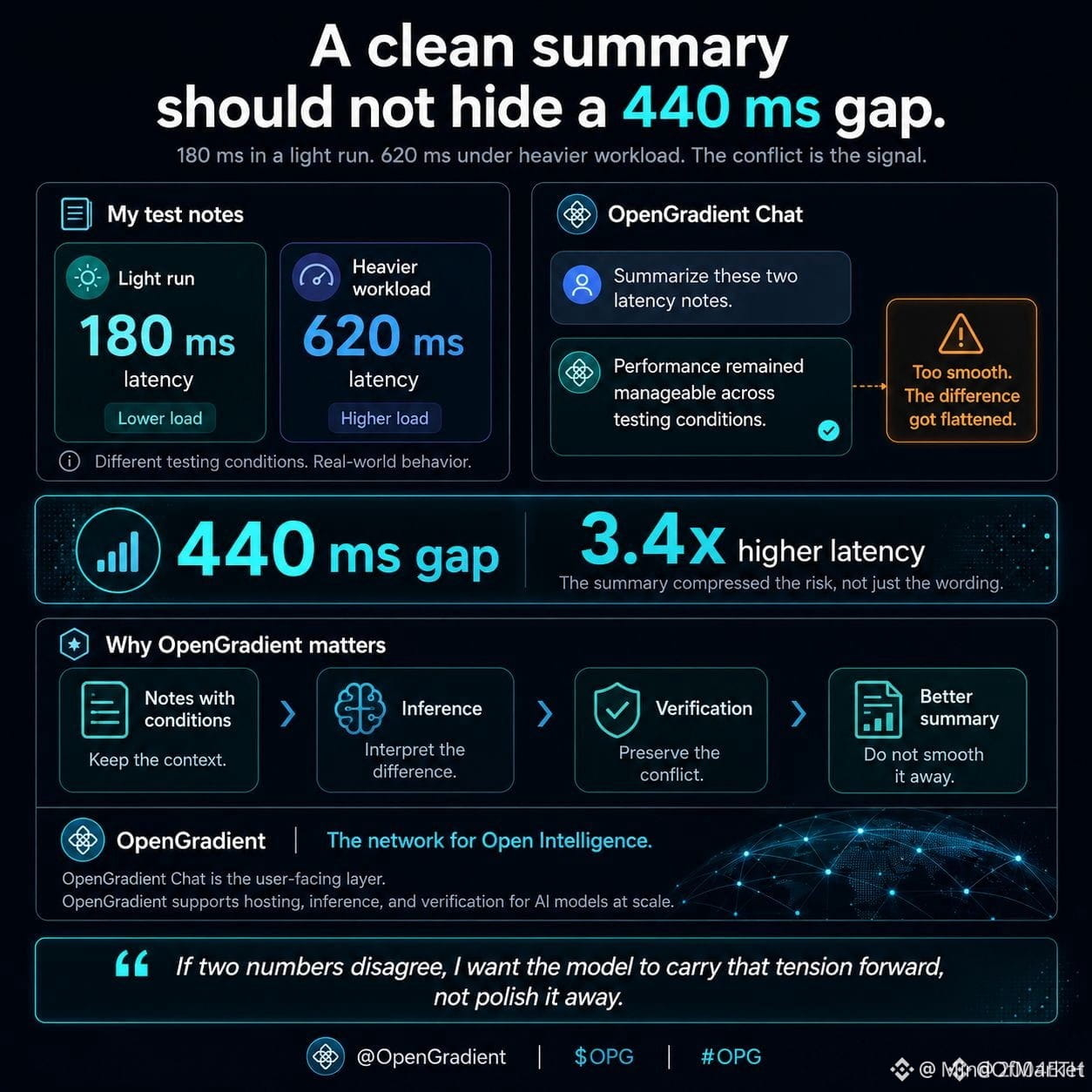
The ability of OpenGradient to preserve the signal and convey the true meaning of the data is being put to the test, with a significant gap in latency between different testing conditions, will this verification capability give $OPG an edge in the market, can it maintain its value in the face of intense scrutiny?
Not financial advice. Manage your risk.
#OPG #AIVerification #ModelTesting
⚡️
$OPG IS EXPERIENCING A CRUCIAL TEST OF ITS MODEL VERIFICATION CAPABILITIES 🔥
Entry: 1.20
The ability of OpenGradient to preserve the signal and convey the true meaning of the data is being put to the test, with a significant gap in latency between different testing conditions, will this verification capability give $OPG an edge in the market, can it maintain its value in the face of intense scrutiny?
Not financial advice. Manage your risk.
#OPG #AIVerification #ModelTesting
⚡️
Entry: 1.20
The ability of OpenGradient to preserve the signal and convey the true meaning of the data is being put to the test, with a significant gap in latency between different testing conditions, will this verification capability give $OPG an edge in the market, can it maintain its value in the face of intense scrutiny?
Not financial advice. Manage your risk.
#OPG #AIVerification #ModelTesting
⚡️
2
76

·
--
Bullish
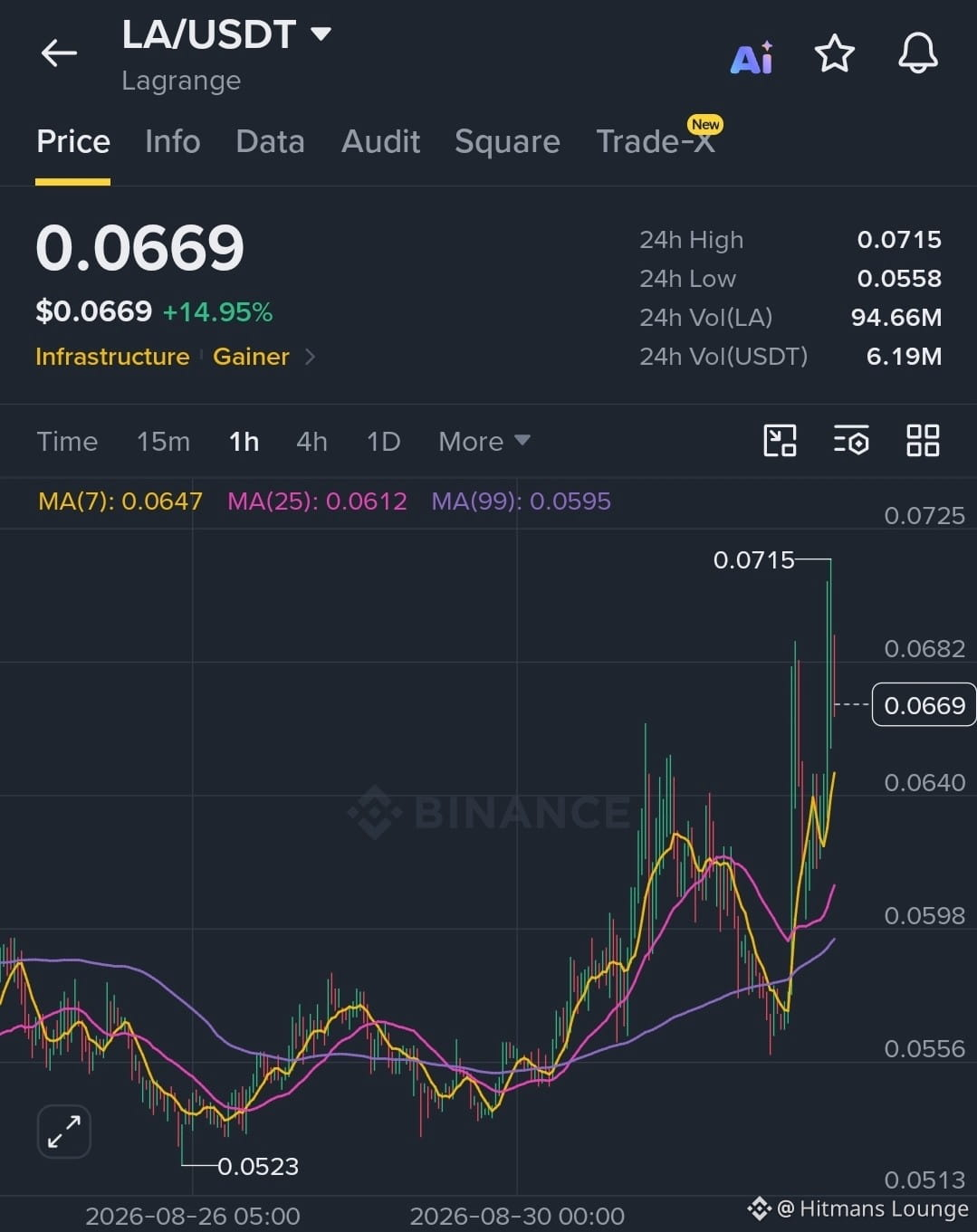
$LA /USDT — 🟢 LONG · Conf 87%
📍 Entry: 0.0667 – 0.0671
🛑 SL: 0.0599
🎯 TP1: 0.0702
✅ TP2: 0.0729
🏆 TP3: 0.0769
Price broke cleanly above MA(7/25/99) after a multi-day base at 0.0523, with the 1H candle closing well above all moving averages — the structure is bullish but the 0.0715 wick needs to be flipped into support before conviction increases.
@lagrangedev is a ZK prover network and hyper-parallel ZK coprocessor enabling verifiable AI computation through its DeepProve zkML system — recently partnered with Crystal Intelligence for on-chain AI agent compliance — key risk is that ZK proving infrastructure is a deep infrastructure play with a long adoption runway and real revenue generation remains unproven at scale.
If ZK proofs for AI verification become standard infrastructure, does a purpose-built prover network like Lagrange have a durable moat, or does it get commoditized the moment major L1s integrate native ZK coprocessors directly into their stack?
#LA #Lagrange #ZKProof #AIVerification
{future}(LAUSDT)
$LA /USDT — 🟢 LONG · Conf 87%
📍 Entry: 0.0667 – 0.0671
🛑 SL: 0.0599
🎯 TP1: 0.0702
✅ TP2: 0.0729
🏆 TP3: 0.0769
Price broke cleanly above MA(7/25/99) after a multi-day base at 0.0523, with the 1H candle closing well above all moving averages — the structure is bullish but the 0.0715 wick needs to be flipped into support before conviction increases.
@Lagrange Official is a ZK prover network and hyper-parallel ZK coprocessor enabling verifiable AI computation through its DeepProve zkML system — recently partnered with Crystal Intelligence for on-chain AI agent compliance — key risk is that ZK proving infrastructure is a deep infrastructure play with a long adoption runway and real revenue generation remains unproven at scale.
If ZK proofs for AI verification become standard infrastructure, does a purpose-built prover network like Lagrange have a durable moat, or does it get commoditized the moment major L1s integrate native ZK coprocessors directly into their stack?
#LA #Lagrange #ZKProof #AIVerification
📍 Entry: 0.0667 – 0.0671
🛑 SL: 0.0599
🎯 TP1: 0.0702
✅ TP2: 0.0729
🏆 TP3: 0.0769
Price broke cleanly above MA(7/25/99) after a multi-day base at 0.0523, with the 1H candle closing well above all moving averages — the structure is bullish but the 0.0715 wick needs to be flipped into support before conviction increases.
@Lagrange Official is a ZK prover network and hyper-parallel ZK coprocessor enabling verifiable AI computation through its DeepProve zkML system — recently partnered with Crystal Intelligence for on-chain AI agent compliance — key risk is that ZK proving infrastructure is a deep infrastructure play with a long adoption runway and real revenue generation remains unproven at scale.
If ZK proofs for AI verification become standard infrastructure, does a purpose-built prover network like Lagrange have a durable moat, or does it get commoditized the moment major L1s integrate native ZK coprocessors directly into their stack?
#LA #Lagrange #ZKProof #AIVerification

2
172

Mira Network Verifying the Future of AI
AI is powerful.
But power without verification is risk.
Mira Network is building the trust layer for AI.
1️⃣ What It Solves
AI hallucinations and unverified outputs in high-stakes environments like finance, research, and automation.
2️⃣ How It Works
AI outputs are broken into structured claims.
Each claim is independently verified through decentralized validator consensus.
3️⃣ Why It Matters
No blind trust.
No centralized gatekeeper.
Transparent, cryptographic proof of correctness.
4️⃣ Incentive Model
Validators stake MIRA tokens.
Accurate verification earns rewards.
Dishonest behavior risks slashing.
5️⃣ MIRA Token Utility
• Staking
• Verification rewards
• Governance
• Network security
Smarter AI isn’t enough.
Verifiable AI is the future.
Always do your own research.
#MiraNetwork #AIVerification #CryptoInfrastructure #Mira $MIRA
Mira Network Verifying the Future of AI
AI is powerful.
But power without verification is risk.
Mira Network is building the trust layer for AI.
1️⃣ What It Solves
AI hallucinations and unverified outputs in high-stakes environments like finance, research, and automation.
2️⃣ How It Works
AI outputs are broken into structured claims.
Each claim is independently verified through decentralized validator consensus.
3️⃣ Why It Matters
No blind trust.
No centralized gatekeeper.
Transparent, cryptographic proof of correctness.
4️⃣ Incentive Model
Validators stake MIRA tokens.
Accurate verification earns rewards.
Dishonest behavior risks slashing.
5️⃣ MIRA Token Utility
• Staking
• Verification rewards
• Governance
• Network security
Smarter AI isn’t enough.
Verifiable AI is the future.
Always do your own research.
#MiraNetwork #AIVerification #CryptoInfrastructure #Mira $MIRA
AI is powerful.
But power without verification is risk.
Mira Network is building the trust layer for AI.
1️⃣ What It Solves
AI hallucinations and unverified outputs in high-stakes environments like finance, research, and automation.
2️⃣ How It Works
AI outputs are broken into structured claims.
Each claim is independently verified through decentralized validator consensus.
3️⃣ Why It Matters
No blind trust.
No centralized gatekeeper.
Transparent, cryptographic proof of correctness.
4️⃣ Incentive Model
Validators stake MIRA tokens.
Accurate verification earns rewards.
Dishonest behavior risks slashing.
5️⃣ MIRA Token Utility
• Staking
• Verification rewards
• Governance
• Network security
Smarter AI isn’t enough.
Verifiable AI is the future.
Always do your own research.
#MiraNetwork #AIVerification #CryptoInfrastructure #Mira $MIRA
1
1
8
113
$ACT VERIFICATION GAP COULD BE THE NEXT HIDDEN NARRATIVE 💡
I keep circling back to this gap in multimodal AI. The assumption that one signature makes both text and image trustworthy is wishful thinking — in crypto we know the flaws only show up when the system gets real usage. Compliance, audits, settlements… that’s where the cracks appear.
$ACT sits at the intersection of AI and proof-of-trust. If the market wakes up to this before it’s patched, the ones already watching could get the first move. Volume tends to spike when the narrative finally clicks. Are you watching the verification layer or just the output?
Not financial advice. Always manage your risk.
#ACT #AIVerification #CryptoNarrative #HiddenOpportunity #Multimodal
💎
$ACT VERIFICATION GAP COULD BE THE NEXT HIDDEN NARRATIVE 💡
I keep circling back to this gap in multimodal AI. The assumption that one signature makes both text and image trustworthy is wishful thinking — in crypto we know the flaws only show up when the system gets real usage. Compliance, audits, settlements… that’s where the cracks appear.
$ACT sits at the intersection of AI and proof-of-trust. If the market wakes up to this before it’s patched, the ones already watching could get the first move. Volume tends to spike when the narrative finally clicks. Are you watching the verification layer or just the output?
Not financial advice. Always manage your risk.
#ACT #AIVerification #CryptoNarrative #HiddenOpportunity #Multimodal
💎
I keep circling back to this gap in multimodal AI. The assumption that one signature makes both text and image trustworthy is wishful thinking — in crypto we know the flaws only show up when the system gets real usage. Compliance, audits, settlements… that’s where the cracks appear.
$ACT sits at the intersection of AI and proof-of-trust. If the market wakes up to this before it’s patched, the ones already watching could get the first move. Volume tends to spike when the narrative finally clicks. Are you watching the verification layer or just the output?
Not financial advice. Always manage your risk.
#ACT #AIVerification #CryptoNarrative #HiddenOpportunity #Multimodal
💎
111

Article
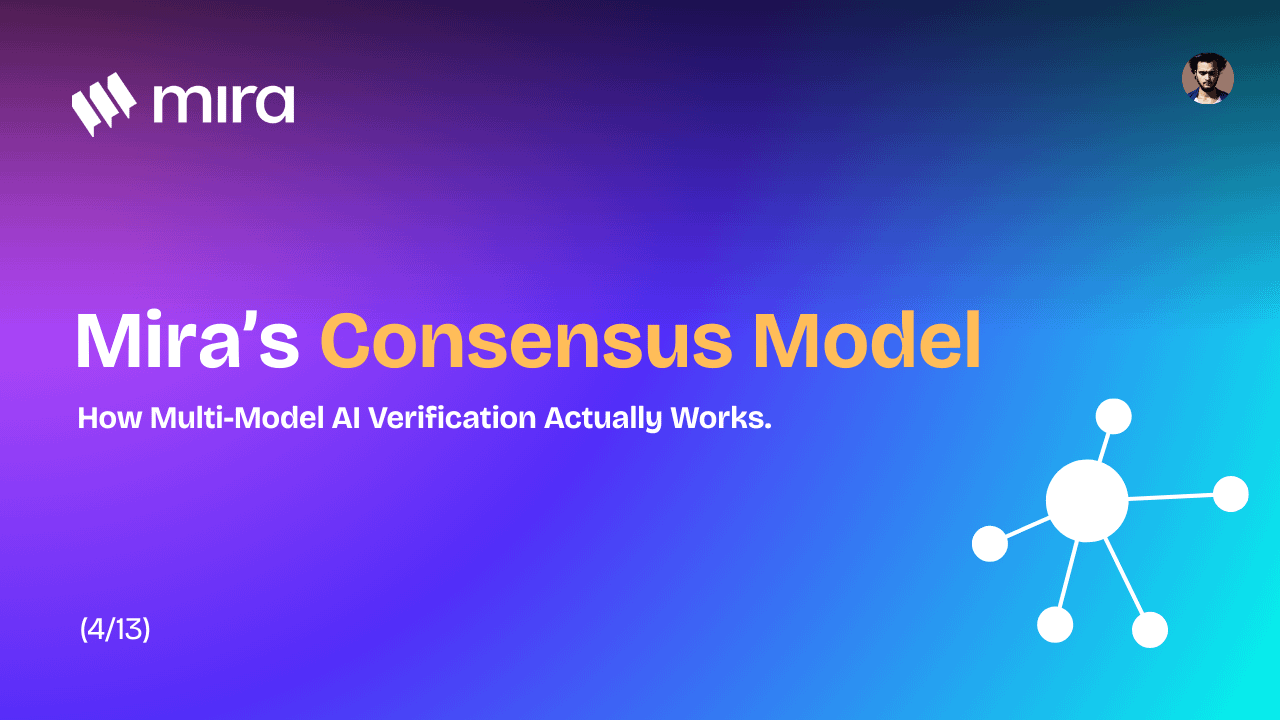
Inside Mira’s Consensus Model: How Multi-Model AI Verification Actually Works.@mira_network 's main goal is to verify AI outputs. The real question is how this verification works in practice.
To understand this, it helps to break the process into simple steps.
Most AI systems today work in isolation. You ask a question. One model generates a response, and that response is delivered directly to you. There is no independent review step built into the process.
Mira introduces a second layer, a verification layer that sits between AI generation and final acceptance.
When an AI produces an answer, Mira Network does not simply approve or reject the full response as one block. Instead, it separates the output into smaller, structured claims. These claims might include factual statements, logical steps, or specific assertions made within the answer.
Each of these claims is then distributed across a network of validators.
Validators in the network run independently. They evaluate claims using predefined verification methods. This may involve checking consistency, cross-referencing information, or running more model evaluations. The key point is that no single validator controls the outcome.
Once validators send their evaluations, the system aggregates the results. If a sufficient level of agreement is reached, the claim is considered verified. If disagreement is too high, the claim may be flagged or rejected.
This is where consensus comes in.
Consensus in Mira works similarly to decentralized blockchain systems; however, it is essential to understand how it differs from a simple majority vote. In a blockchain, transactions are not confirmed by one authority. Instead, multiple participants confirm validity based on shared rules. Agreement across the network decides acceptance. Mira’s consensus does not rely on just 51 percent of validators agreeing. Instead, a higher threshold, such as two-thirds or more, must confirm a claim before it is accepted as verified.
This stricter standard reduces the chances that a small group can manipulate results. Disagreement is quantified by analyzing the distribution of validator responses. If excessive divergence is detected among validators, the system can flag claims for further review or reject them. By requiring broad agreement rather than a simple majority, Mira's consensus model is more resistant to collusion and helps ensure that only claims with strong, widespread support are verified.
Mira applies this same principle to AI outputs.
The term “multi-model verification” refers to the fact that verification does not depend on a single AI model. Different models, nodes, or validation strategies can take part in the checking process. This reduces the risk that one model’s bias or mistake decides the result.
Economic incentives are also part of the design.
Validators must stake $MIRA tokens to take part. By staking, they commit value to the network. If they behave honestly and follow protocol rules, they can earn rewards. If they try to manipulate outcomes or repeatedly approve incorrect claims, they risk penalties.
This structure encourages careful participation rather than careless validation.
It is important to note that consensus does not mean perfection. Disagreement can still occur. The system is designed to reduce the likelihood of unchecked errors, not drop all mistakes.
The strength of the model lies in distributed evaluation. Instead of trusting one source of intelligence, trust appears from a structured agreement among multiple independent participants.
In simple terms, Mira’s consensus model works by breaking AI outputs into pieces, having multiple validators check those pieces, and relying on network agreement before marking them as verified.
It is a process built around shared validation rather than a single point of authority.
#Mira #miranetwork #AIVerification #AI
{future}(MIRAUSDT)
Inside Mira’s Consensus Model: How Multi-Model AI Verification Actually Works.
@Mira - Trust Layer of AI 's main goal is to verify AI outputs. The real question is how this verification works in practice.
To understand this, it helps to break the process into simple steps.
Most AI systems today work in isolation. You ask a question. One model generates a response, and that response is delivered directly to you. There is no independent review step built into the process.
Mira introduces a second layer, a verification layer that sits between AI generation and final acceptance.
When an AI produces an answer, Mira Network does not simply approve or reject the full response as one block. Instead, it separates the output into smaller, structured claims. These claims might include factual statements, logical steps, or specific assertions made within the answer.
Each of these claims is then distributed across a network of validators.
Validators in the network run independently. They evaluate claims using predefined verification methods. This may involve checking consistency, cross-referencing information, or running more model evaluations. The key point is that no single validator controls the outcome.
Once validators send their evaluations, the system aggregates the results. If a sufficient level of agreement is reached, the claim is considered verified. If disagreement is too high, the claim may be flagged or rejected.
This is where consensus comes in.
Consensus in Mira works similarly to decentralized blockchain systems; however, it is essential to understand how it differs from a simple majority vote. In a blockchain, transactions are not confirmed by one authority. Instead, multiple participants confirm validity based on shared rules. Agreement across the network decides acceptance. Mira’s consensus does not rely on just 51 percent of validators agreeing. Instead, a higher threshold, such as two-thirds or more, must confirm a claim before it is accepted as verified.
This stricter standard reduces the chances that a small group can manipulate results. Disagreement is quantified by analyzing the distribution of validator responses. If excessive divergence is detected among validators, the system can flag claims for further review or reject them. By requiring broad agreement rather than a simple majority, Mira's consensus model is more resistant to collusion and helps ensure that only claims with strong, widespread support are verified.
Mira applies this same principle to AI outputs.
The term “multi-model verification” refers to the fact that verification does not depend on a single AI model. Different models, nodes, or validation strategies can take part in the checking process. This reduces the risk that one model’s bias or mistake decides the result.
Economic incentives are also part of the design.
Validators must stake $MIRA tokens to take part. By staking, they commit value to the network. If they behave honestly and follow protocol rules, they can earn rewards. If they try to manipulate outcomes or repeatedly approve incorrect claims, they risk penalties.
This structure encourages careful participation rather than careless validation.
It is important to note that consensus does not mean perfection. Disagreement can still occur. The system is designed to reduce the likelihood of unchecked errors, not drop all mistakes.
The strength of the model lies in distributed evaluation. Instead of trusting one source of intelligence, trust appears from a structured agreement among multiple independent participants.
In simple terms, Mira’s consensus model works by breaking AI outputs into pieces, having multiple validators check those pieces, and relying on network agreement before marking them as verified.
It is a process built around shared validation rather than a single point of authority.
#Mira #miranetwork #AIVerification #AI
To understand this, it helps to break the process into simple steps.
Most AI systems today work in isolation. You ask a question. One model generates a response, and that response is delivered directly to you. There is no independent review step built into the process.
Mira introduces a second layer, a verification layer that sits between AI generation and final acceptance.
When an AI produces an answer, Mira Network does not simply approve or reject the full response as one block. Instead, it separates the output into smaller, structured claims. These claims might include factual statements, logical steps, or specific assertions made within the answer.
Each of these claims is then distributed across a network of validators.
Validators in the network run independently. They evaluate claims using predefined verification methods. This may involve checking consistency, cross-referencing information, or running more model evaluations. The key point is that no single validator controls the outcome.
Once validators send their evaluations, the system aggregates the results. If a sufficient level of agreement is reached, the claim is considered verified. If disagreement is too high, the claim may be flagged or rejected.
This is where consensus comes in.
Consensus in Mira works similarly to decentralized blockchain systems; however, it is essential to understand how it differs from a simple majority vote. In a blockchain, transactions are not confirmed by one authority. Instead, multiple participants confirm validity based on shared rules. Agreement across the network decides acceptance. Mira’s consensus does not rely on just 51 percent of validators agreeing. Instead, a higher threshold, such as two-thirds or more, must confirm a claim before it is accepted as verified.
This stricter standard reduces the chances that a small group can manipulate results. Disagreement is quantified by analyzing the distribution of validator responses. If excessive divergence is detected among validators, the system can flag claims for further review or reject them. By requiring broad agreement rather than a simple majority, Mira's consensus model is more resistant to collusion and helps ensure that only claims with strong, widespread support are verified.
Mira applies this same principle to AI outputs.
The term “multi-model verification” refers to the fact that verification does not depend on a single AI model. Different models, nodes, or validation strategies can take part in the checking process. This reduces the risk that one model’s bias or mistake decides the result.
Economic incentives are also part of the design.
Validators must stake $MIRA tokens to take part. By staking, they commit value to the network. If they behave honestly and follow protocol rules, they can earn rewards. If they try to manipulate outcomes or repeatedly approve incorrect claims, they risk penalties.
This structure encourages careful participation rather than careless validation.
It is important to note that consensus does not mean perfection. Disagreement can still occur. The system is designed to reduce the likelihood of unchecked errors, not drop all mistakes.
The strength of the model lies in distributed evaluation. Instead of trusting one source of intelligence, trust appears from a structured agreement among multiple independent participants.
In simple terms, Mira’s consensus model works by breaking AI outputs into pieces, having multiple validators check those pieces, and relying on network agreement before marking them as verified.
It is a process built around shared validation rather than a single point of authority.
#Mira #miranetwork #AIVerification #AI
3
210
Log in to explore more content
Join global crypto users on Binance Square
⚡️ Get latest and useful information about crypto.
💬 Trusted by the world’s largest crypto exchange.
👍 Discover real insights from verified creators.
Email / Phone number
Trending Topics
1
#BinancePick
3M views
151,907 Discussing
2
#EarningsSeason
5.2M views
25,816 Discussing
3
#AnthropicTTMRevenueGrewAbout1200%
20,994 views
341 Discussing
4
#AnthropicS1ExpectedToday
21,779 views
299 Discussing
5
#SouthKoreaReportedlyWeighsFourthCryptoTaxDelay
26,637 views
420 Discussing
6
#FranklinTempletonFilesForTwoDividendToBitcoinETFs
34,504 views
515 Discussing
7
#StrategyMSTRSurpassesNasdaqInMarketCap
26,460 views
373 Discussing
8
#CanadaProposesStablecoinRedemptionWithin3BusinessDays
1,201 views
34 Discussing
9
#ElectrumWalletBugLetRogueServersStealFunds
28,078 views
449 Discussing
10
#ArgentineCourtDismissesLIBRACaseAgainstMilei
42,596 views
556 Discussing