

#chainlinklaunchesccip2withenterpriseverification
chainlinklaunchesccip2withenterpriseverification
137,144 views
1,542 Discussing
ရေပန်းစားသော
နောက်ဆုံး


·
--
တက်ရိပ်ရှိသည်
စိစစ်အတည်ပြုထားသည်
#chainlinklaunchesccip2withenterpriseverification
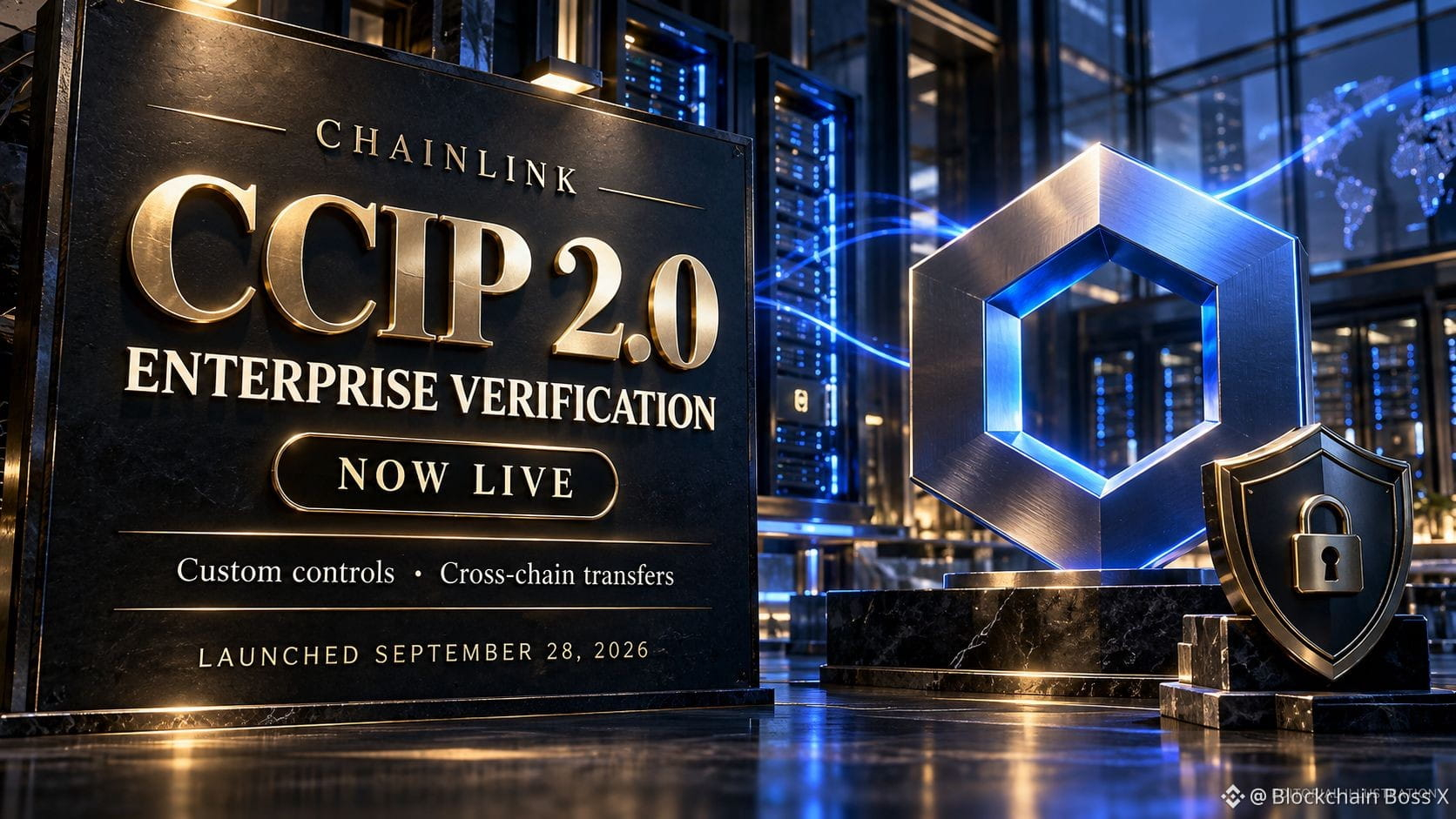
🔗 Chainlink CCIP 2.0 Goes Live: More Control Over Cross-Chain Transfers
Moving tokenized assets between blockchains also means deciding who can approve each transfer and which rules must follow it.
Chainlink launched CCIP 2.0 on September 28, 2026, introducing additional verification and policy controls for institutions and asset issuers.
The key addition is Cross-Chain Verifiers (CCVs). Organizations can operate their own or use third-party providers, adding required checks on top of Chainlink’s default verification.
The upgrade also supports configurable compliance checks, approval workflows and transaction limits, alongside options for faster execution or waiting for full source-chain finality.
My take: For tokenized funds and other regulated assets, distribution becomes useful when institutions can preserve their approval processes across networks. These controls could reduce integration work and help issuers expand to additional markets.
The next test is sustained production use: actual transfers, repeat institutional activity and evidence that policies work consistently across chains. Additional verifiers also introduce operational dependencies, making availability and clear responsibility worth watching.
For LINK, I would assess service usage and fee economics separately from the launch announcement. A stronger product offering still needs measurable adoption to support a lasting market narrative.
Which would convince you most: more institutional integrations or sustained growth in actual cross-chain activity? 👇
#ChainlinkLaunchesCCIP2WithEnterpriseVerification #Chainlink #Tokenization
$NMR $CRV $HBAR
{future}(HBARUSDT)
{future}(CRVUSDT)
{future}(NMRUSDT)
#chainlinklaunchesccip2withenterpriseverification
🔗 Chainlink CCIP 2.0 Goes Live: More Control Over Cross-Chain Transfers
Moving tokenized assets between blockchains also means deciding who can approve each transfer and which rules must follow it.
Chainlink launched CCIP 2.0 on September 28, 2026, introducing additional verification and policy controls for institutions and asset issuers.
The key addition is Cross-Chain Verifiers (CCVs). Organizations can operate their own or use third-party providers, adding required checks on top of Chainlink’s default verification.
The upgrade also supports configurable compliance checks, approval workflows and transaction limits, alongside options for faster execution or waiting for full source-chain finality.
My take: For tokenized funds and other regulated assets, distribution becomes useful when institutions can preserve their approval processes across networks. These controls could reduce integration work and help issuers expand to additional markets.
The next test is sustained production use: actual transfers, repeat institutional activity and evidence that policies work consistently across chains. Additional verifiers also introduce operational dependencies, making availability and clear responsibility worth watching.
For LINK, I would assess service usage and fee economics separately from the launch announcement. A stronger product offering still needs measurable adoption to support a lasting market narrative.
Which would convince you most: more institutional integrations or sustained growth in actual cross-chain activity? 👇
#ChainlinkLaunchesCCIP2WithEnterpriseVerification #Chainlink #Tokenization
$NMR $CRV $HBAR
🔗 Chainlink CCIP 2.0 Goes Live: More Control Over Cross-Chain Transfers
Moving tokenized assets between blockchains also means deciding who can approve each transfer and which rules must follow it.
Chainlink launched CCIP 2.0 on September 28, 2026, introducing additional verification and policy controls for institutions and asset issuers.
The key addition is Cross-Chain Verifiers (CCVs). Organizations can operate their own or use third-party providers, adding required checks on top of Chainlink’s default verification.
The upgrade also supports configurable compliance checks, approval workflows and transaction limits, alongside options for faster execution or waiting for full source-chain finality.
My take: For tokenized funds and other regulated assets, distribution becomes useful when institutions can preserve their approval processes across networks. These controls could reduce integration work and help issuers expand to additional markets.
The next test is sustained production use: actual transfers, repeat institutional activity and evidence that policies work consistently across chains. Additional verifiers also introduce operational dependencies, making availability and clear responsibility worth watching.
For LINK, I would assess service usage and fee economics separately from the launch announcement. A stronger product offering still needs measurable adoption to support a lasting market narrative.
Which would convince you most: more institutional integrations or sustained growth in actual cross-chain activity? 👇
#ChainlinkLaunchesCCIP2WithEnterpriseVerification #Chainlink #Tokenization
$NMR $CRV $HBAR
1.4k

·
--
#chainlinklaunchesccip2withenterpriseverification 🚨 CHAINLINK-DƏ YENİ ADDIM! 🔥
#ChainlinkLaunchesCCIP2WithEnterpriseVerification
🔗 Chainlink CCIP 2.0 ilə enterprise səviyyəli doğrulama imkanlarını ön plana çıxarır.
Bu, müxtəlif blockchainlər və ənənəvi maliyyə infrastrukturu arasında daha təhlükəsiz və yoxlanıla bilən məlumat/aktiv transferi üçün vacib addım ola bilər.
📌 LINK izləmə zonasında!
Əgər xəbərlə birlikdə həcm artırsa, LINK-də momentum güclənə bilər.
Sizcə LINK-in növbəti hədəfi haradır? 👇
⚠️ Risk xəbərdarlığı: Kripto bazarı yüksək volatildir. Bu paylaşım investisiya məsləhəti deyil.
#LINK
#chainlinklaunchesccip2withenterpriseverification 🚨 CHAINLINK-DƏ YENİ ADDIM! 🔥
#ChainlinkLaunchesCCIP2WithEnterpriseVerification
🔗 Chainlink CCIP 2.0 ilə enterprise səviyyəli doğrulama imkanlarını ön plana çıxarır.
Bu, müxtəlif blockchainlər və ənənəvi maliyyə infrastrukturu arasında daha təhlükəsiz və yoxlanıla bilən məlumat/aktiv transferi üçün vacib addım ola bilər.
📌 LINK izləmə zonasında!
Əgər xəbərlə birlikdə həcm artırsa, LINK-də momentum güclənə bilər.
Sizcə LINK-in növbəti hədəfi haradır? 👇
⚠️ Risk xəbərdarlığı: Kripto bazarı yüksək volatildir. Bu paylaşım investisiya məsləhəti deyil.
#LINK
#ChainlinkLaunchesCCIP2WithEnterpriseVerification
🔗 Chainlink CCIP 2.0 ilə enterprise səviyyəli doğrulama imkanlarını ön plana çıxarır.
Bu, müxtəlif blockchainlər və ənənəvi maliyyə infrastrukturu arasında daha təhlükəsiz və yoxlanıla bilən məlumat/aktiv transferi üçün vacib addım ola bilər.
📌 LINK izləmə zonasında!
Əgər xəbərlə birlikdə həcm artırsa, LINK-də momentum güclənə bilər.
Sizcə LINK-in növbəti hədəfi haradır? 👇
⚠️ Risk xəbərdarlığı: Kripto bazarı yüksək volatildir. Bu paylaşım investisiya məsləhəti deyil.
#LINK
1
139

·
--
Article
Chainlink Just Rebuilt Cross-Chain Security After a $292 Million Wake-Up Call#chainlinklaunchesccip2withenterpriseverification
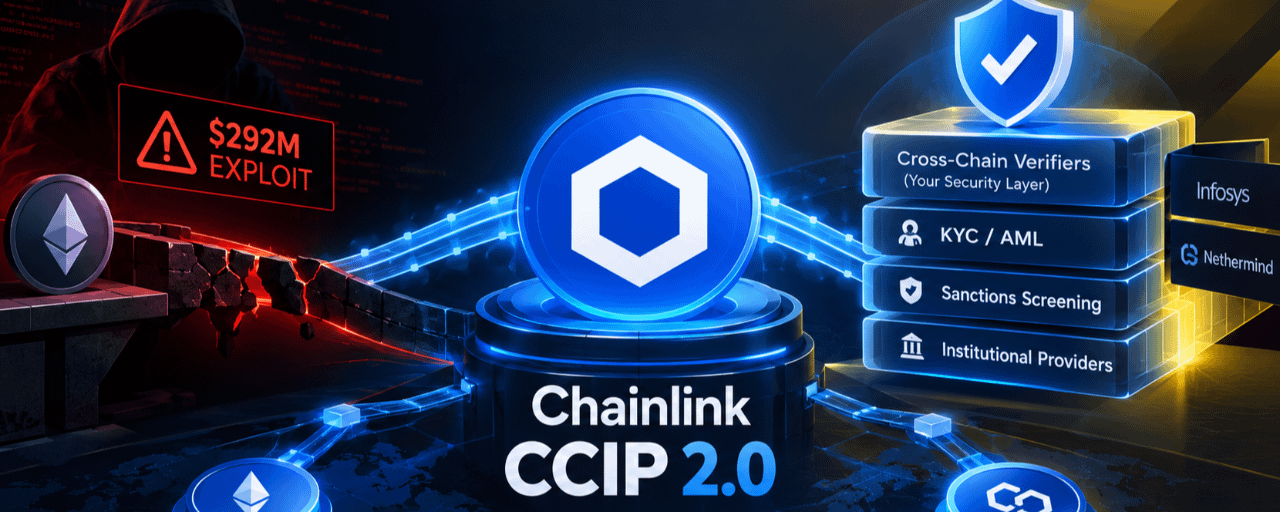
Chainlink launched a major upgrade to its cross-chain infrastructure this week — and the timing isn't coincidental. It follows one of the largest bridge exploits of the year, and directly addresses the exact weakness attackers used.
Here's what shipped: on September 28, Chainlink released CCIP 2.0, the next generation of its Cross-Chain Interoperability Protocol, which already secures more than $84 billion in total cross-chain token value. The headline feature is what Chainlink calls Cross-Chain Verifiers (CCVs) — institutions can now layer their own independent security checks on top of Chainlink's existing 16-node verification network, either running the infrastructure themselves or hiring third-party providers like Infosys or Nethermind. It also adds built-in compliance tooling for KYC, AML, and sanctions screening. The upgrade arrives roughly five months after attackers, reportedly linked to North Korea's Lazarus Group, exploited a single validator relied on by the Kelp DAO cross-chain bridge, draining approximately $292 million in rsETH — Kelp has since said it will migrate to Chainlink's infrastructure. Existing Chainlink users were automatically migrated to the new version, and platforms including Aave and Maple are already using pieces of the upgrade, though Chainlink hasn't disclosed which institutions are adopting the new verification layer specifically. One structural change worth noting: Chainlink's previously independent risk-management network no longer functions as a separate default check — that kind of independent verification is now optional rather than built in by default.
Why does this matter? Bridge exploits remain one of crypto's most costly attack vectors, largely because many cross-chain systems have historically relied on a single point of verification — exactly the weakness the Kelp DAO hack exposed. Letting institutions add their own independent verification layers, rather than depending solely on one network's default security, is a meaningful architectural shift toward defense-in-depth. At the same time, the removal of a previously mandatory independent check as a default layer is a trade-off worth watching — added flexibility can mean added security, but only if institutions actually choose to implement it.
Whether this modular approach measurably reduces future bridge exploits, or whether adoption of the optional verifiers ends up inconsistent across the ecosystem, will likely only become clear as real-world usage data comes in.
Does giving institutions the option to add their own security layers make cross-chain infrastructure genuinely safer, or does it just shift responsibility onto whoever chooses not to use it? 🤔
#Chainlink #CCIP #CrossChain #CryptoSecurity
$HBAR $NMR $CRV
{future}(CRVUSDT)
{future}(NMRUSDT)
{future}(HBARUSDT)
Chainlink Just Rebuilt Cross-Chain Security After a $292 Million Wake-Up Call
#chainlinklaunchesccip2withenterpriseverification
Chainlink launched a major upgrade to its cross-chain infrastructure this week — and the timing isn't coincidental. It follows one of the largest bridge exploits of the year, and directly addresses the exact weakness attackers used.
Here's what shipped: on September 28, Chainlink released CCIP 2.0, the next generation of its Cross-Chain Interoperability Protocol, which already secures more than $84 billion in total cross-chain token value. The headline feature is what Chainlink calls Cross-Chain Verifiers (CCVs) — institutions can now layer their own independent security checks on top of Chainlink's existing 16-node verification network, either running the infrastructure themselves or hiring third-party providers like Infosys or Nethermind. It also adds built-in compliance tooling for KYC, AML, and sanctions screening. The upgrade arrives roughly five months after attackers, reportedly linked to North Korea's Lazarus Group, exploited a single validator relied on by the Kelp DAO cross-chain bridge, draining approximately $292 million in rsETH — Kelp has since said it will migrate to Chainlink's infrastructure. Existing Chainlink users were automatically migrated to the new version, and platforms including Aave and Maple are already using pieces of the upgrade, though Chainlink hasn't disclosed which institutions are adopting the new verification layer specifically. One structural change worth noting: Chainlink's previously independent risk-management network no longer functions as a separate default check — that kind of independent verification is now optional rather than built in by default.
Why does this matter? Bridge exploits remain one of crypto's most costly attack vectors, largely because many cross-chain systems have historically relied on a single point of verification — exactly the weakness the Kelp DAO hack exposed. Letting institutions add their own independent verification layers, rather than depending solely on one network's default security, is a meaningful architectural shift toward defense-in-depth. At the same time, the removal of a previously mandatory independent check as a default layer is a trade-off worth watching — added flexibility can mean added security, but only if institutions actually choose to implement it.
Whether this modular approach measurably reduces future bridge exploits, or whether adoption of the optional verifiers ends up inconsistent across the ecosystem, will likely only become clear as real-world usage data comes in.
Does giving institutions the option to add their own security layers make cross-chain infrastructure genuinely safer, or does it just shift responsibility onto whoever chooses not to use it? 🤔
#Chainlink #CCIP #CrossChain #CryptoSecurity
$HBAR $NMR $CRV
Chainlink launched a major upgrade to its cross-chain infrastructure this week — and the timing isn't coincidental. It follows one of the largest bridge exploits of the year, and directly addresses the exact weakness attackers used.
Here's what shipped: on September 28, Chainlink released CCIP 2.0, the next generation of its Cross-Chain Interoperability Protocol, which already secures more than $84 billion in total cross-chain token value. The headline feature is what Chainlink calls Cross-Chain Verifiers (CCVs) — institutions can now layer their own independent security checks on top of Chainlink's existing 16-node verification network, either running the infrastructure themselves or hiring third-party providers like Infosys or Nethermind. It also adds built-in compliance tooling for KYC, AML, and sanctions screening. The upgrade arrives roughly five months after attackers, reportedly linked to North Korea's Lazarus Group, exploited a single validator relied on by the Kelp DAO cross-chain bridge, draining approximately $292 million in rsETH — Kelp has since said it will migrate to Chainlink's infrastructure. Existing Chainlink users were automatically migrated to the new version, and platforms including Aave and Maple are already using pieces of the upgrade, though Chainlink hasn't disclosed which institutions are adopting the new verification layer specifically. One structural change worth noting: Chainlink's previously independent risk-management network no longer functions as a separate default check — that kind of independent verification is now optional rather than built in by default.
Why does this matter? Bridge exploits remain one of crypto's most costly attack vectors, largely because many cross-chain systems have historically relied on a single point of verification — exactly the weakness the Kelp DAO hack exposed. Letting institutions add their own independent verification layers, rather than depending solely on one network's default security, is a meaningful architectural shift toward defense-in-depth. At the same time, the removal of a previously mandatory independent check as a default layer is a trade-off worth watching — added flexibility can mean added security, but only if institutions actually choose to implement it.
Whether this modular approach measurably reduces future bridge exploits, or whether adoption of the optional verifiers ends up inconsistent across the ecosystem, will likely only become clear as real-world usage data comes in.
Does giving institutions the option to add their own security layers make cross-chain infrastructure genuinely safer, or does it just shift responsibility onto whoever chooses not to use it? 🤔
#Chainlink #CCIP #CrossChain #CryptoSecurity
$HBAR $NMR $CRV
206 Atlas:
Fixing the bridge after a hack is reactive, not bullish. Security upgrades don't justify buying the asset at current premiums.
1
1.8k

စိစစ်အတည်ပြုထားသည်
#chainlinklaunchesccip2withenterpriseverification 🚨 سلاسل CHAINLINK CCIP 2.0 تغيّر اللعبة بين السلاسل! 🔗🔥
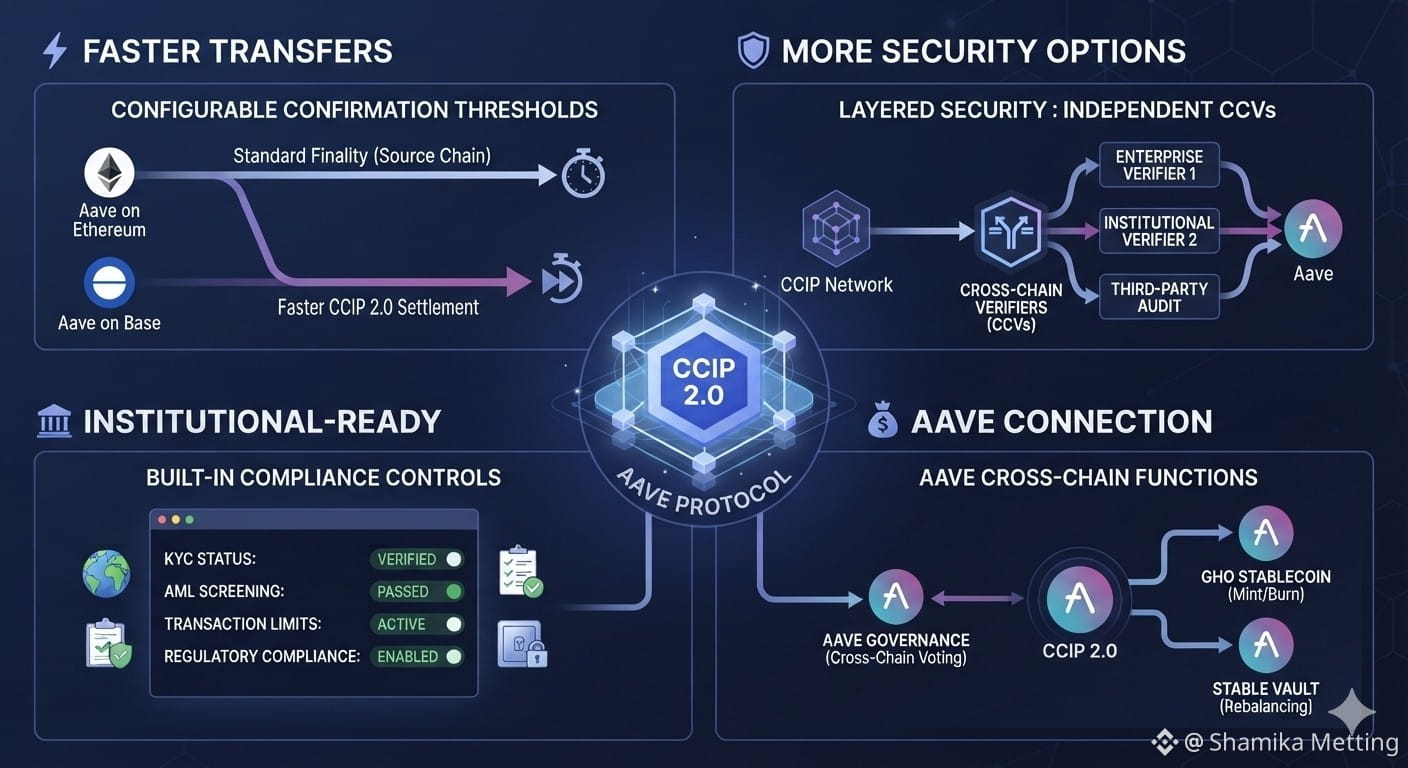
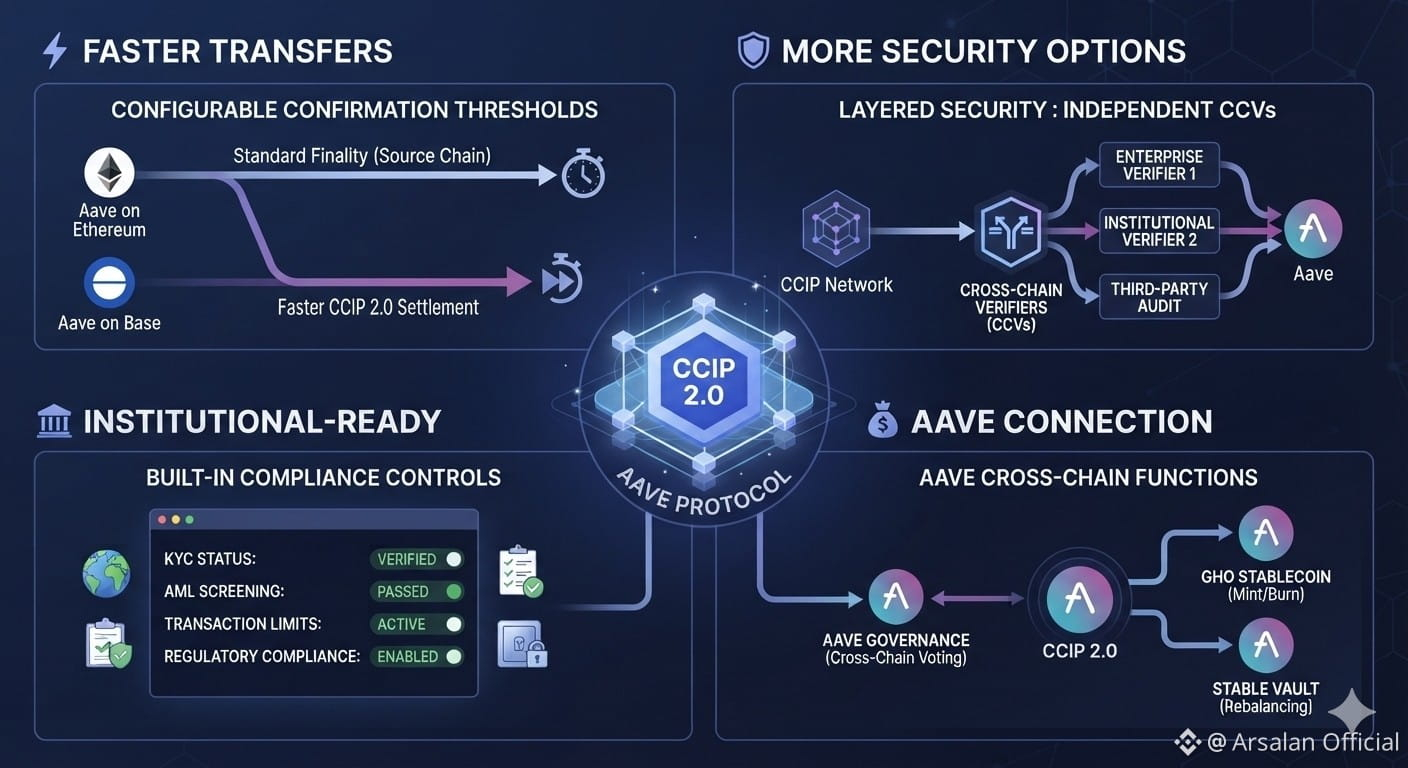
هذا ليس تحديثًا آخر. يمنح CCIP 2.0 مشاريع التمويل اللامركزي مثل Aave تحكمًا أكبر بكثير في مدى سرعة سلاسة تنفيذ المعاملات عبر السلاسل.
إليك ما يجب على المتداولين مراقبته 👇
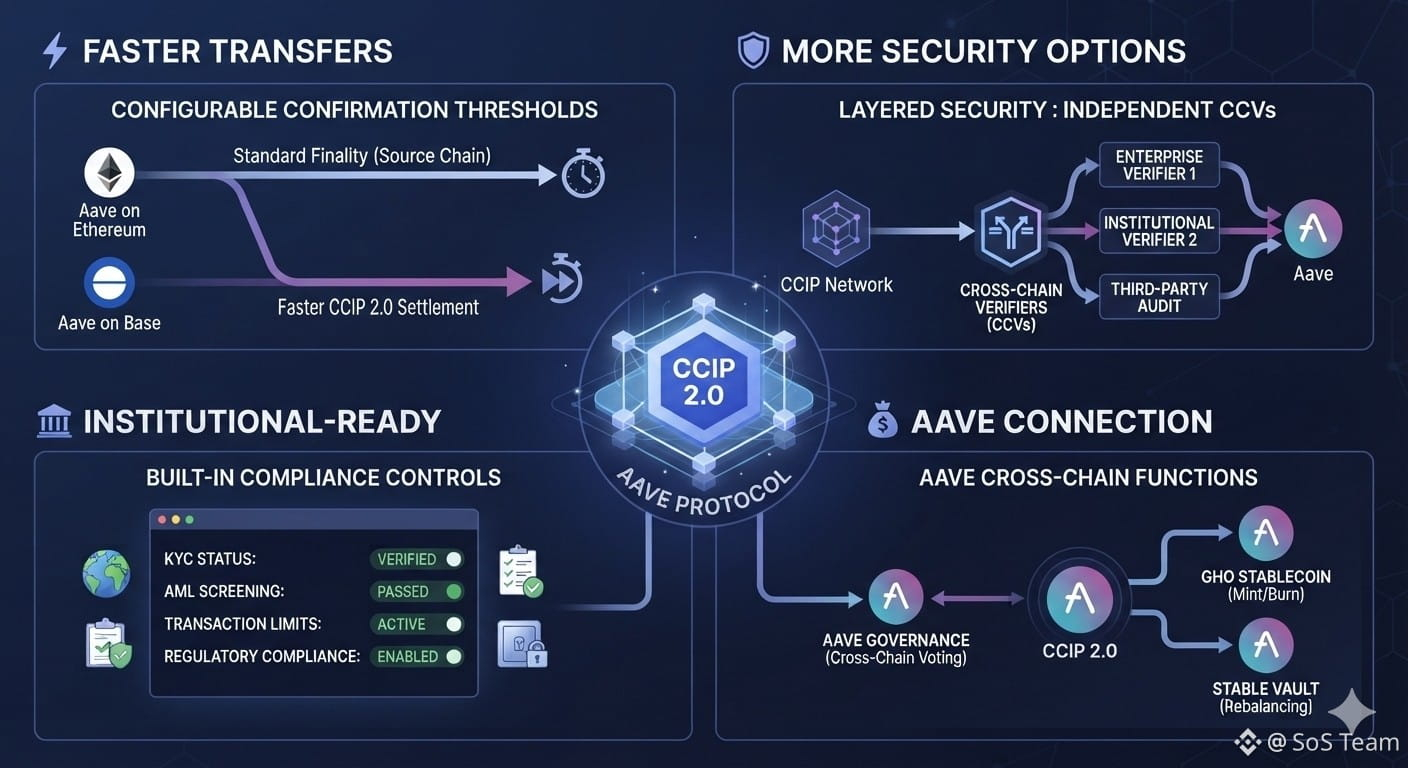
⚡ التحويلات: يمكن لـ Aave الآن اختيار عدد التأكيدات التي يحتاجها كل انتقال عبر السلسلة. هذا يعني اتخاذ إجراء دون التضحية كثيرًا بالأمان.
🛡️ خيارات الأمان: يمكن للمشاريع إدخال Cross-Chain Verifiers الخاصة بها (CCVs). تعمل هذه كفحوصات للتأكد من أن كل معاملة شرعية.
🏦 جاهز للمؤسسات: يحتوي CCIP 2.0 على أدوات مدمجة للامتثال. هذا يعني أن KYC و AML وحدود المعاملات وقواعد المُصدر يمكن أن تكون جزءًا من العملية. البنوك الكبيرة وصناديق الاستثمار ستهتم بهذا.
💰 ارتباط Aave: يعمل CCIP بالفعل مع ميزات Aave مثل -chain GHO وأدوات الحوكمة وميزات Stable Vault. هذه خطوة للأمام، للاستخدام في العالم الحقيقي.
هل هذا هو الجوهر الحقيقي؟ لم يعد تقنيّات ما بين السلاسل خيارًا اختياريًا. بل أصبحت ضرورية للأصول والأموال المؤسسية التي تتدفق أونتشين.
👀 هل يمكن أن يكون CCIP 2.0 هو الدفع الذي يحتاجه LINK وAAVE للارتفاع إلى أعلى؟
متابعة من فضلكم
#LINK #AAVE #altcoins
$LINK · $AAVE $ETH
{future}(ETHUSDT)
#chainlinklaunchesccip2withenterpriseverification 🚨 سلاسل CHAINLINK CCIP 2.0 تغيّر اللعبة بين السلاسل! 🔗🔥
هذا ليس تحديثًا آخر. يمنح CCIP 2.0 مشاريع التمويل اللامركزي مثل Aave تحكمًا أكبر بكثير في مدى سرعة سلاسة تنفيذ المعاملات عبر السلاسل.
إليك ما يجب على المتداولين مراقبته 👇
⚡ التحويلات: يمكن لـ Aave الآن اختيار عدد التأكيدات التي يحتاجها كل انتقال عبر السلسلة. هذا يعني اتخاذ إجراء دون التضحية كثيرًا بالأمان.
🛡️ خيارات الأمان: يمكن للمشاريع إدخال Cross-Chain Verifiers الخاصة بها (CCVs). تعمل هذه كفحوصات للتأكد من أن كل معاملة شرعية.
🏦 جاهز للمؤسسات: يحتوي CCIP 2.0 على أدوات مدمجة للامتثال. هذا يعني أن KYC و AML وحدود المعاملات وقواعد المُصدر يمكن أن تكون جزءًا من العملية. البنوك الكبيرة وصناديق الاستثمار ستهتم بهذا.
💰 ارتباط Aave: يعمل CCIP بالفعل مع ميزات Aave مثل -chain GHO وأدوات الحوكمة وميزات Stable Vault. هذه خطوة للأمام، للاستخدام في العالم الحقيقي.
هل هذا هو الجوهر الحقيقي؟ لم يعد تقنيّات ما بين السلاسل خيارًا اختياريًا. بل أصبحت ضرورية للأصول والأموال المؤسسية التي تتدفق أونتشين.
👀 هل يمكن أن يكون CCIP 2.0 هو الدفع الذي يحتاجه LINK وAAVE للارتفاع إلى أعلى؟
متابعة من فضلكم
#LINK #AAVE #altcoins
$LINK · $AAVE $ETH
هذا ليس تحديثًا آخر. يمنح CCIP 2.0 مشاريع التمويل اللامركزي مثل Aave تحكمًا أكبر بكثير في مدى سرعة سلاسة تنفيذ المعاملات عبر السلاسل.
إليك ما يجب على المتداولين مراقبته 👇
⚡ التحويلات: يمكن لـ Aave الآن اختيار عدد التأكيدات التي يحتاجها كل انتقال عبر السلسلة. هذا يعني اتخاذ إجراء دون التضحية كثيرًا بالأمان.
🛡️ خيارات الأمان: يمكن للمشاريع إدخال Cross-Chain Verifiers الخاصة بها (CCVs). تعمل هذه كفحوصات للتأكد من أن كل معاملة شرعية.
🏦 جاهز للمؤسسات: يحتوي CCIP 2.0 على أدوات مدمجة للامتثال. هذا يعني أن KYC و AML وحدود المعاملات وقواعد المُصدر يمكن أن تكون جزءًا من العملية. البنوك الكبيرة وصناديق الاستثمار ستهتم بهذا.
💰 ارتباط Aave: يعمل CCIP بالفعل مع ميزات Aave مثل -chain GHO وأدوات الحوكمة وميزات Stable Vault. هذه خطوة للأمام، للاستخدام في العالم الحقيقي.
هل هذا هو الجوهر الحقيقي؟ لم يعد تقنيّات ما بين السلاسل خيارًا اختياريًا. بل أصبحت ضرورية للأصول والأموال المؤسسية التي تتدفق أونتشين.
👀 هل يمكن أن يكون CCIP 2.0 هو الدفع الذي يحتاجه LINK وAAVE للارتفاع إلى أعلى؟
متابعة من فضلكم
#LINK #AAVE #altcoins
$LINK · $AAVE $ETH
1
1.9k

·
--
တက်ရိပ်ရှိသည်
စိစစ်အတည်ပြုထားသည်
#chainlinklaunchesccip2withenterpriseverification
Chainlink Unveils CCIP v2.0 with Enterprise Verification! Institutional Interoperability Unlocked 🔗
Chainlink has officially launched CCIP 2.0, introducing institutional-grade upgrades designed to solve the security, compliance, and speed bottlenecks preventing major banks and asset managers from moving capital on-chain.
By allowing institutions to deploy their own Cross-Chain Verifiers (CCV) directly via cloud environments like AWS and Google Cloud or through enterprise partners, Chainlink gives regulated entities full control over cross-chain asset flows.
📰 Key Headlines & Market Breakdown
Custom Security & Verification Keys: Token issuers and financial institutions can now set additive approval rules—such as requiring custom internal verification signatures for high-value transfers (e.g., transactions exceeding $1 Million).
Enterprise IT Infrastructure: Major global service providers, including Infosys, Nethermind, and Further Asset Management, are operating CCV infrastructure on behalf of corporate clients.
Embedded Compliance Framework: Through the Chainlink ACE (Automated Compliance Engine) partner ecosystem, institutions can embed automated KYC/AML policy checks directly into cross-chain token pools before transactions execute.
Early DeFi & Institutional Adoption: Early adopters integrating CCIP 2.0's faster settlement features include major protocols like Aave, Maple Finance, and SBI Digital Markets.
📊 Related Crypto Trade Signal: LINK/USDT
Trade Bias: Bullish
Entry Zone: $11.20 – $11.80
Target 1 (TP1): $13.50
Target 2 (TP2): $15.20
Stop Loss (SL): $10.40
Leverage (Futures): 3x – 5x (Isolated)
Chainlink is breaking above a multi-week horizontal consolidation level backed by an uptick in spot accumulation volume following the CCIP 2.0 mainnet release. Holding support above the $11.00 psychological level favors bullish continuation toward higher multi-month resistance targets.
#HackersDrainOver12.4MXRPFromDCENTWallets #OpenAIDelaysGPT6.1OverSafetyIssues
#chainlinklaunchesccip2withenterpriseverification
Chainlink Unveils CCIP v2.0 with Enterprise Verification! Institutional Interoperability Unlocked 🔗
Chainlink has officially launched CCIP 2.0, introducing institutional-grade upgrades designed to solve the security, compliance, and speed bottlenecks preventing major banks and asset managers from moving capital on-chain.
By allowing institutions to deploy their own Cross-Chain Verifiers (CCV) directly via cloud environments like AWS and Google Cloud or through enterprise partners, Chainlink gives regulated entities full control over cross-chain asset flows.
📰 Key Headlines & Market Breakdown
Custom Security & Verification Keys: Token issuers and financial institutions can now set additive approval rules—such as requiring custom internal verification signatures for high-value transfers (e.g., transactions exceeding $1 Million).
Enterprise IT Infrastructure: Major global service providers, including Infosys, Nethermind, and Further Asset Management, are operating CCV infrastructure on behalf of corporate clients.
Embedded Compliance Framework: Through the Chainlink ACE (Automated Compliance Engine) partner ecosystem, institutions can embed automated KYC/AML policy checks directly into cross-chain token pools before transactions execute.
Early DeFi & Institutional Adoption: Early adopters integrating CCIP 2.0's faster settlement features include major protocols like Aave, Maple Finance, and SBI Digital Markets.
📊 Related Crypto Trade Signal: LINK/USDT
Trade Bias: Bullish
Entry Zone: $11.20 – $11.80
Target 1 (TP1): $13.50
Target 2 (TP2): $15.20
Stop Loss (SL): $10.40
Leverage (Futures): 3x – 5x (Isolated)
Chainlink is breaking above a multi-week horizontal consolidation level backed by an uptick in spot accumulation volume following the CCIP 2.0 mainnet release. Holding support above the $11.00 psychological level favors bullish continuation toward higher multi-month resistance targets.
#HackersDrainOver12.4MXRPFromDCENTWallets #OpenAIDelaysGPT6.1OverSafetyIssues
Chainlink Unveils CCIP v2.0 with Enterprise Verification! Institutional Interoperability Unlocked 🔗
Chainlink has officially launched CCIP 2.0, introducing institutional-grade upgrades designed to solve the security, compliance, and speed bottlenecks preventing major banks and asset managers from moving capital on-chain.
By allowing institutions to deploy their own Cross-Chain Verifiers (CCV) directly via cloud environments like AWS and Google Cloud or through enterprise partners, Chainlink gives regulated entities full control over cross-chain asset flows.
📰 Key Headlines & Market Breakdown
Custom Security & Verification Keys: Token issuers and financial institutions can now set additive approval rules—such as requiring custom internal verification signatures for high-value transfers (e.g., transactions exceeding $1 Million).
Enterprise IT Infrastructure: Major global service providers, including Infosys, Nethermind, and Further Asset Management, are operating CCV infrastructure on behalf of corporate clients.
Embedded Compliance Framework: Through the Chainlink ACE (Automated Compliance Engine) partner ecosystem, institutions can embed automated KYC/AML policy checks directly into cross-chain token pools before transactions execute.
Early DeFi & Institutional Adoption: Early adopters integrating CCIP 2.0's faster settlement features include major protocols like Aave, Maple Finance, and SBI Digital Markets.
📊 Related Crypto Trade Signal: LINK/USDT
Trade Bias: Bullish
Entry Zone: $11.20 – $11.80
Target 1 (TP1): $13.50
Target 2 (TP2): $15.20
Stop Loss (SL): $10.40
Leverage (Futures): 3x – 5x (Isolated)
Chainlink is breaking above a multi-week horizontal consolidation level backed by an uptick in spot accumulation volume following the CCIP 2.0 mainnet release. Holding support above the $11.00 psychological level favors bullish continuation toward higher multi-month resistance targets.
#HackersDrainOver12.4MXRPFromDCENTWallets #OpenAIDelaysGPT6.1OverSafetyIssues

2
67

#ChainlinkLaunchesCCIP2WithEnterpriseVerification
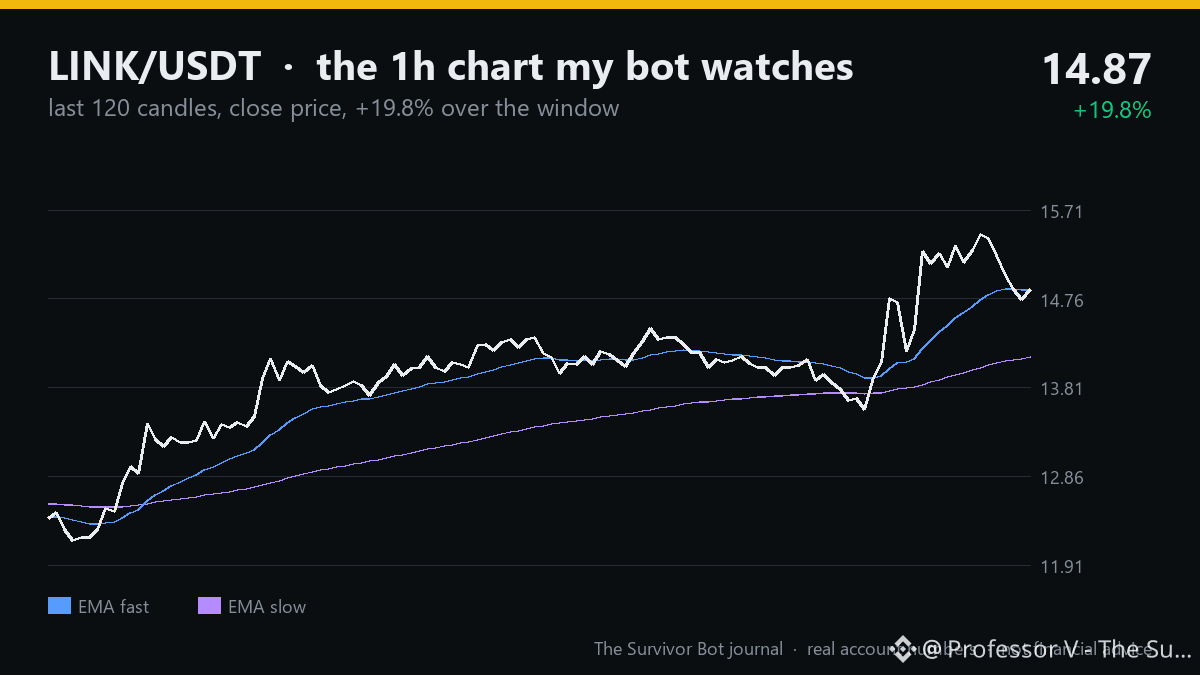
$LINK 0% and $NEAR -3.3% on my bot today
Chainlink just launched CCIP 2 with enterprise verification, adding programmable compliance to cross-chain bridges.
The upgrade lets institutions add their own verification step before a transaction executes.
My bot holds a long NEAR position entry 4.903 now 4.741 stop 3.839, a long $ARB entry 0.2221 now 0.2009 stop 0.1596, a long PHA entry 0.0821 now 0.065 stop 0.0548, and a long HBAR entry 0.1149 now 0.1177 stop 0.1137.
BTC is in a weak uptrend with a daily bias up, and the news mood is neutral, so the bot follows its rule to keep existing longs and will not add new positions today.
Levels I'm watching on NEAR: stop 3.839, entry 4.903.
Follow to watch a real bot account (started with 100 USDT) survive in public, one rule at a time.
#ChainlinkLaunchesCCIP2WithEnterpriseVerification #TheSurvivorBot
#ChainlinkLaunchesCCIP2WithEnterpriseVerification
$LINK 0% and $NEAR -3.3% on my bot today
Chainlink just launched CCIP 2 with enterprise verification, adding programmable compliance to cross-chain bridges.
The upgrade lets institutions add their own verification step before a transaction executes.
My bot holds a long NEAR position entry 4.903 now 4.741 stop 3.839, a long $ARB entry 0.2221 now 0.2009 stop 0.1596, a long PHA entry 0.0821 now 0.065 stop 0.0548, and a long HBAR entry 0.1149 now 0.1177 stop 0.1137.
BTC is in a weak uptrend with a daily bias up, and the news mood is neutral, so the bot follows its rule to keep existing longs and will not add new positions today.
Levels I'm watching on NEAR: stop 3.839, entry 4.903.
Follow to watch a real bot account (started with 100 USDT) survive in public, one rule at a time.
#ChainlinkLaunchesCCIP2WithEnterpriseVerification #TheSurvivorBot
$LINK 0% and $NEAR -3.3% on my bot today
Chainlink just launched CCIP 2 with enterprise verification, adding programmable compliance to cross-chain bridges.
The upgrade lets institutions add their own verification step before a transaction executes.
My bot holds a long NEAR position entry 4.903 now 4.741 stop 3.839, a long $ARB entry 0.2221 now 0.2009 stop 0.1596, a long PHA entry 0.0821 now 0.065 stop 0.0548, and a long HBAR entry 0.1149 now 0.1177 stop 0.1137.
BTC is in a weak uptrend with a daily bias up, and the news mood is neutral, so the bot follows its rule to keep existing longs and will not add new positions today.
Levels I'm watching on NEAR: stop 3.839, entry 4.903.
Follow to watch a real bot account (started with 100 USDT) survive in public, one rule at a time.
#ChainlinkLaunchesCCIP2WithEnterpriseVerification #TheSurvivorBot
87

#ChainlinkLaunchesCCIP2WithEnterpriseVerification Chainlink has launched CCIP 2.0, adding optional Cross-Chain Verifiers (CCVs) that let institutions and asset issuers add their own or third-party verification layer on top of CCIP’s default security infrastructure. The upgrade also introduces configurable transfer finality, modular fees, and built-in compliance capabilities.
#Chainlink #CCIP #CCIP2 #Crypto $LINK
{spot}(LINKUSDT)
$RWA
{alpha}(560x9c8b5ca345247396bdfac0395638ca9045c6586e)
#ChainlinkLaunchesCCIP2WithEnterpriseVerification Chainlink has launched CCIP 2.0, adding optional Cross-Chain Verifiers (CCVs) that let institutions and asset issuers add their own or third-party verification layer on top of CCIP’s default security infrastructure. The upgrade also introduces configurable transfer finality, modular fees, and built-in compliance capabilities.
#Chainlink #CCIP #CCIP2 #Crypto $LINK
$RWA
#Chainlink #CCIP #CCIP2 #Crypto $LINK
$RWA
1
34

·
--
တစ်စိတ်တစ်ပိုင်း မှန်ကန်
#chainlinklaunchesccip2withenterpriseverification
🚨 Infrastructure Milestone: Chainlink Launches CCIP 2.0 with Enterprise Verification!
The Market Update: Interoperability just received a major institutional upgrade as Chainlink officially launches CCIP 2.0, now featuring critical Enterprise Verification capabilities[cite: 9]. By combining decentralized messaging security with auditable, compliant verification layers, this launch significantly accelerates the integration of traditional financial infrastructure with high-throughput blockchain networks. The protocol is already tracking over $7.45 trillion in value, solidifying its role as the industry's standard cross-chain liquidity bridge.
What This Means for Traders: Enterprise-grade verification unlocks substantial institutional capital that was previously hesitant to bridge assets due to compliance risks. As CCIP 2.0 becomes the default rail for RWA (Real-World Asset) tokenization and institutional DeFi, market participants are closely monitoring for increased volume, cross-chain value velocity, and fee generation across the network.
Highlighted Tradeable Coins to Watch:
$LINK (Chainlink): The primary asset; tracking network usage, node operator revenue, and staking metrics following the enterprise launch.
$BTC (Bitcoin): The macro baseline; observing how secure cross-chain infrastructure facilitates the movement of large-scale BTC liquidity into DeFi ecosystems.
$ETH (Ethereum): The leading smart contract settlement layer; monitoring the inflow of wrapped assets and RWAs bridged via CCIP.
How do you see enterprise verification features impacting the adoption of hybrid finance (HyFi) models this quarter? Let's discuss your strategy in the comments below! 👇
{spot}(LINKUSDT)
{spot}(BTCUSDT)
{spot}(ETHUSDT)
#Chainlink #CCIP #CryptoNews #interoperability
#chainlinklaunchesccip2withenterpriseverification
🚨 Infrastructure Milestone: Chainlink Launches CCIP 2.0 with Enterprise Verification!
The Market Update: Interoperability just received a major institutional upgrade as Chainlink officially launches CCIP 2.0, now featuring critical Enterprise Verification capabilities[cite: 9]. By combining decentralized messaging security with auditable, compliant verification layers, this launch significantly accelerates the integration of traditional financial infrastructure with high-throughput blockchain networks. The protocol is already tracking over $7.45 trillion in value, solidifying its role as the industry's standard cross-chain liquidity bridge.
What This Means for Traders: Enterprise-grade verification unlocks substantial institutional capital that was previously hesitant to bridge assets due to compliance risks. As CCIP 2.0 becomes the default rail for RWA (Real-World Asset) tokenization and institutional DeFi, market participants are closely monitoring for increased volume, cross-chain value velocity, and fee generation across the network.
Highlighted Tradeable Coins to Watch:
$LINK (Chainlink): The primary asset; tracking network usage, node operator revenue, and staking metrics following the enterprise launch.
$BTC (Bitcoin): The macro baseline; observing how secure cross-chain infrastructure facilitates the movement of large-scale BTC liquidity into DeFi ecosystems.
$ETH (Ethereum): The leading smart contract settlement layer; monitoring the inflow of wrapped assets and RWAs bridged via CCIP.
How do you see enterprise verification features impacting the adoption of hybrid finance (HyFi) models this quarter? Let's discuss your strategy in the comments below! 👇
#Chainlink #CCIP #CryptoNews #interoperability
🚨 Infrastructure Milestone: Chainlink Launches CCIP 2.0 with Enterprise Verification!
The Market Update: Interoperability just received a major institutional upgrade as Chainlink officially launches CCIP 2.0, now featuring critical Enterprise Verification capabilities[cite: 9]. By combining decentralized messaging security with auditable, compliant verification layers, this launch significantly accelerates the integration of traditional financial infrastructure with high-throughput blockchain networks. The protocol is already tracking over $7.45 trillion in value, solidifying its role as the industry's standard cross-chain liquidity bridge.
What This Means for Traders: Enterprise-grade verification unlocks substantial institutional capital that was previously hesitant to bridge assets due to compliance risks. As CCIP 2.0 becomes the default rail for RWA (Real-World Asset) tokenization and institutional DeFi, market participants are closely monitoring for increased volume, cross-chain value velocity, and fee generation across the network.
Highlighted Tradeable Coins to Watch:
$LINK (Chainlink): The primary asset; tracking network usage, node operator revenue, and staking metrics following the enterprise launch.
$BTC (Bitcoin): The macro baseline; observing how secure cross-chain infrastructure facilitates the movement of large-scale BTC liquidity into DeFi ecosystems.
$ETH (Ethereum): The leading smart contract settlement layer; monitoring the inflow of wrapped assets and RWAs bridged via CCIP.
How do you see enterprise verification features impacting the adoption of hybrid finance (HyFi) models this quarter? Let's discuss your strategy in the comments below! 👇
#Chainlink #CCIP #CryptoNews #interoperability

moses619-00567288f:
Bnb square future scripte
2
1
3
5.2k

·
--
#ChainlinkLaunchesCCIP2WithEnterpriseVerification #chainlinklaunchesccip2withenterpriseverification
🔗 يوفّر CCIP 2.0 من Chainlink للمؤسسات تحكمًا أكبر في عمليات التحويل عبر السلاسل.
يتيح التحديث للمؤسسات إضافة خطوة تحقق خاصة بها قبل تنفيذ المعاملة.
يمكنهم تشغيل Cross-Chain Verifier بأنفسهم أو إضافة التحقق عبر مزودين مؤسسيين مثل Infosys وNethermind.
وهذا مهم للمؤسسات التي تحتاج إلى فحوصات الأمان والامتثال الخاصة بها عند نقل الأصول بين سلاسل الكتل.
بالنسبة لـ $LINK
{spot}(LINKUSDT)
المتابعين، يتمثل الإنجاز التالي الذي يجب رصده في التبنّي: من يضع فعلًا هذه الإمكانيات في الإنتاج؟
#Chainlink #CCIP #LINK #Tokenization
#ChainlinkLaunchesCCIP2WithEnterpriseVerification #chainlinklaunchesccip2withenterpriseverification
🔗 يوفّر CCIP 2.0 من Chainlink للمؤسسات تحكمًا أكبر في عمليات التحويل عبر السلاسل.
يتيح التحديث للمؤسسات إضافة خطوة تحقق خاصة بها قبل تنفيذ المعاملة.
يمكنهم تشغيل Cross-Chain Verifier بأنفسهم أو إضافة التحقق عبر مزودين مؤسسيين مثل Infosys وNethermind.
وهذا مهم للمؤسسات التي تحتاج إلى فحوصات الأمان والامتثال الخاصة بها عند نقل الأصول بين سلاسل الكتل.
بالنسبة لـ $LINK
المتابعين، يتمثل الإنجاز التالي الذي يجب رصده في التبنّي: من يضع فعلًا هذه الإمكانيات في الإنتاج؟
#Chainlink #CCIP #LINK #Tokenization
🔗 يوفّر CCIP 2.0 من Chainlink للمؤسسات تحكمًا أكبر في عمليات التحويل عبر السلاسل.
يتيح التحديث للمؤسسات إضافة خطوة تحقق خاصة بها قبل تنفيذ المعاملة.
يمكنهم تشغيل Cross-Chain Verifier بأنفسهم أو إضافة التحقق عبر مزودين مؤسسيين مثل Infosys وNethermind.
وهذا مهم للمؤسسات التي تحتاج إلى فحوصات الأمان والامتثال الخاصة بها عند نقل الأصول بين سلاسل الكتل.
بالنسبة لـ $LINK
المتابعين، يتمثل الإنجاز التالي الذي يجب رصده في التبنّي: من يضع فعلًا هذه الإمكانيات في الإنتاج؟
#Chainlink #CCIP #LINK #Tokenization
101

·
--
တက်ရိပ်ရှိသည်
စိစစ်အတည်ပြုထားသည်
#chainlinklaunchesccip2withenterpriseverification
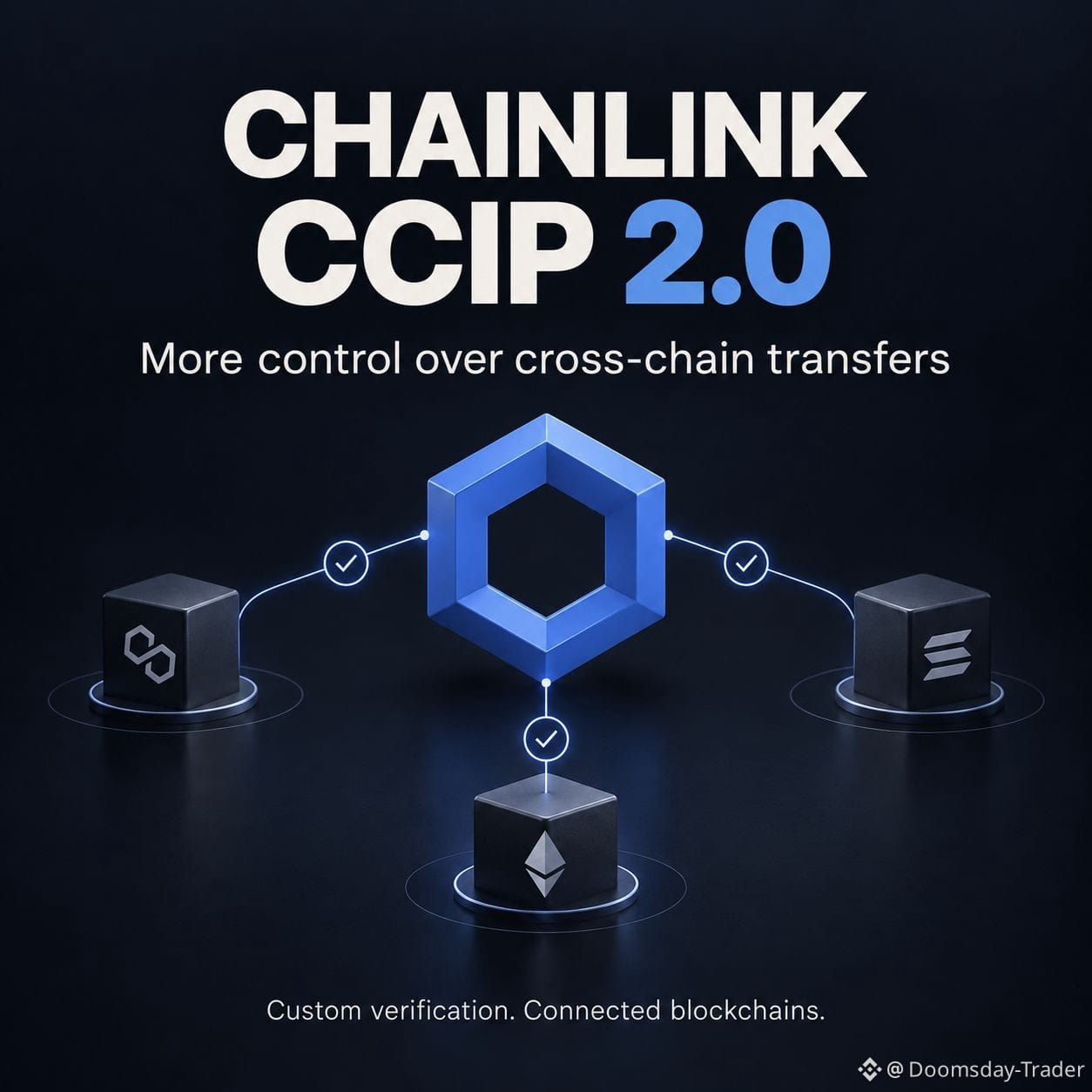
🔗 Chainlink’s CCIP 2.0 gives institutions more control over cross-chain transfers.
The upgrade lets organizations add their own verification step before a transaction executes.
They can operate a Cross-Chain Verifier themselves or add verification through enterprise providers such as Infosys and Nethermind.
That matters for institutions that need their own security and compliance checks when moving assets between blockchains.
For $LINK
{spot}(LINKUSDT)
watchers, the next milestone to track is adoption: who actually puts these capabilities into production?
#Chainlink #CCIP #LINK #Tokenization
#chainlinklaunchesccip2withenterpriseverification
🔗 Chainlink’s CCIP 2.0 gives institutions more control over cross-chain transfers.
The upgrade lets organizations add their own verification step before a transaction executes.
They can operate a Cross-Chain Verifier themselves or add verification through enterprise providers such as Infosys and Nethermind.
That matters for institutions that need their own security and compliance checks when moving assets between blockchains.
For $LINK
watchers, the next milestone to track is adoption: who actually puts these capabilities into production?
#Chainlink #CCIP #LINK #Tokenization
🔗 Chainlink’s CCIP 2.0 gives institutions more control over cross-chain transfers.
The upgrade lets organizations add their own verification step before a transaction executes.
They can operate a Cross-Chain Verifier themselves or add verification through enterprise providers such as Infosys and Nethermind.
That matters for institutions that need their own security and compliance checks when moving assets between blockchains.
For $LINK
watchers, the next milestone to track is adoption: who actually puts these capabilities into production?
#Chainlink #CCIP #LINK #Tokenization
206 Atlas:
Enterprise verification is a feature, not a price catalyst. The market cares about volume and liquidity, not corporate compliance steps.
1
1
4
7.5k
စိစစ်အတည်ပြုထားသည်
#chainlinklaunchesccip2withenterpriseverification
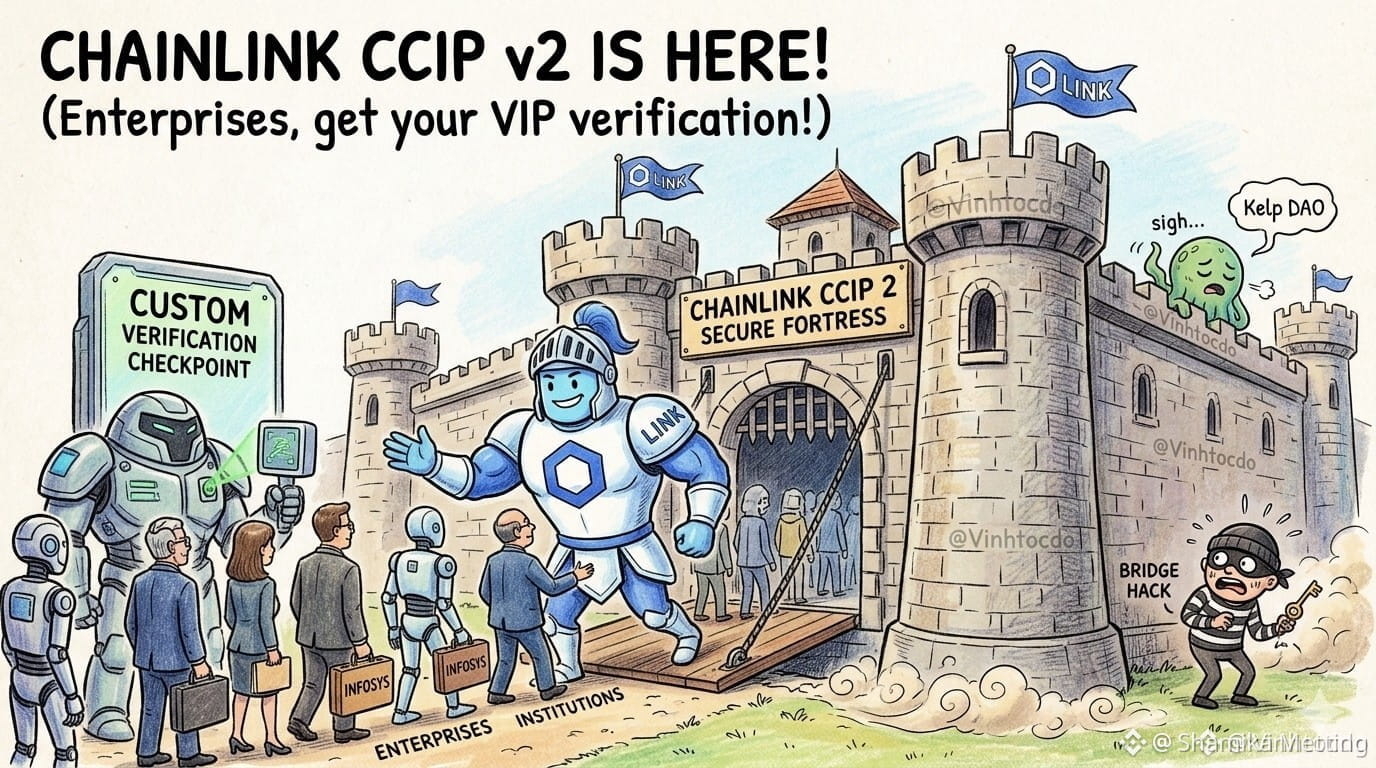
أطلقت Chainlink للتو CCIP 2، وهذه ترقية ضخمة للاعبين المؤسسيين الثقيلين! 🚀 يمكن للشركات الآن إضافة عمليات تحقق مخصصة. فاتك الإعلان؟ بعد اختراق جسر Kelp DAO بقيمة 292 مليون دولار، الجميع يريد حماية بمستوى التحصينات، وLINK تقدم ذلك.
هل نرى أخيرًا اعتمادًا مؤسسيًا حقيقيًا يا جماعة؟ بالتأكيد. مع عمالقة التكنولوجيا مثل Infosys وNethermind في الصورة، المؤسسات تتحرك الآن.
ماذا يجب أن يفعل المتداولون؟ اجمع، اركب موجات الحيتان، وراقب كيف يفوز بناة البنية التحتية. 📈
ليس نصيحة مالية. قم بإجراء بحثك بنفسك (DYOR)!
متابعة من فضلكم
$LINK
$BTC
$BNB
#Chainlink #LINK #CryptoNews #Web3 #blockchain
#chainlinklaunchesccip2withenterpriseverification
أطلقت Chainlink للتو CCIP 2، وهذه ترقية ضخمة للاعبين المؤسسيين الثقيلين! 🚀 يمكن للشركات الآن إضافة عمليات تحقق مخصصة. فاتك الإعلان؟ بعد اختراق جسر Kelp DAO بقيمة 292 مليون دولار، الجميع يريد حماية بمستوى التحصينات، وLINK تقدم ذلك.
هل نرى أخيرًا اعتمادًا مؤسسيًا حقيقيًا يا جماعة؟ بالتأكيد. مع عمالقة التكنولوجيا مثل Infosys وNethermind في الصورة، المؤسسات تتحرك الآن.
ماذا يجب أن يفعل المتداولون؟ اجمع، اركب موجات الحيتان، وراقب كيف يفوز بناة البنية التحتية. 📈
ليس نصيحة مالية. قم بإجراء بحثك بنفسك (DYOR)!
متابعة من فضلكم
$LINK
$BTC
$BNB
#Chainlink #LINK #CryptoNews #Web3 #blockchain
أطلقت Chainlink للتو CCIP 2، وهذه ترقية ضخمة للاعبين المؤسسيين الثقيلين! 🚀 يمكن للشركات الآن إضافة عمليات تحقق مخصصة. فاتك الإعلان؟ بعد اختراق جسر Kelp DAO بقيمة 292 مليون دولار، الجميع يريد حماية بمستوى التحصينات، وLINK تقدم ذلك.
هل نرى أخيرًا اعتمادًا مؤسسيًا حقيقيًا يا جماعة؟ بالتأكيد. مع عمالقة التكنولوجيا مثل Infosys وNethermind في الصورة، المؤسسات تتحرك الآن.
ماذا يجب أن يفعل المتداولون؟ اجمع، اركب موجات الحيتان، وراقب كيف يفوز بناة البنية التحتية. 📈
ليس نصيحة مالية. قم بإجراء بحثك بنفسك (DYOR)!
متابعة من فضلكم
$LINK
$BTC
$BNB
#Chainlink #LINK #CryptoNews #Web3 #blockchain
4
5.9k

·
--
တက်ရိပ်ရှိသည်
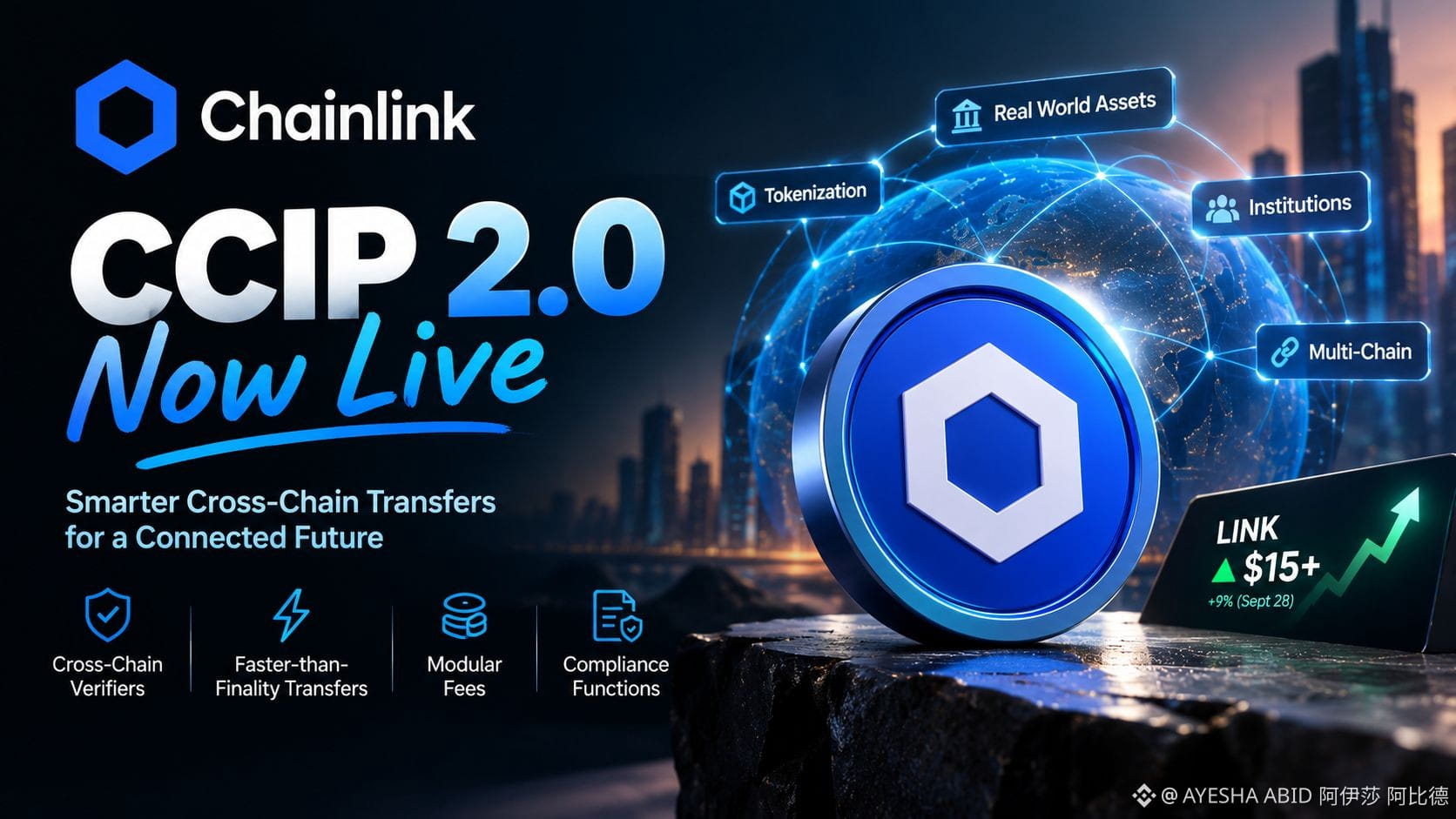
#ChainlinkLaunchesCCIP2WithEnterpriseVerification The latest update is significant because CCIP 2.0 is now live, while LINK has also seen a sharp move with strong volume. Chainlink says CCIP 2.0 adds optional Cross Chain Verifiers, faster than finality transfers, modular fees and compliance functions.
🚨 Chainlink just upgraded the infrastructure behind institutional cross-chain transfers and LINK is already reacting.
CCIP 2.0 is now live, allowing institutions to add their own Cross Chain Verifiers on top of Chainlink’s default verification network. It also adds compliance tools, customizable fees and faster-than-finality transfer options.
LINK pushed above $15 after gaining around 9% on Sept. 28, with Binance linked data showing about 8M LINK in daily volume. That makes the move worth watching rather than treating the upgrade as just another headline.
My Take: The bigger story is institutional infrastructure. If tokenized funds, securities and other real-world assets keep moving onchain, secure cross chain connectivity becomes increasingly important.
$LINK
{future}(LINKUSDT)
For LINK, I’m watching whether the recent volume can support a hold above the $15 area or whether traders take profit after the sharp move.
Do you think CCIP 2.0 can become a major catalyst for LINK adoption? #Chainlink #LINK #CCIP #RWA
#ChainlinkLaunchesCCIP2WithEnterpriseVerification The latest update is significant because CCIP 2.0 is now live, while LINK has also seen a sharp move with strong volume. Chainlink says CCIP 2.0 adds optional Cross Chain Verifiers, faster than finality transfers, modular fees and compliance functions.
🚨 Chainlink just upgraded the infrastructure behind institutional cross-chain transfers and LINK is already reacting.
CCIP 2.0 is now live, allowing institutions to add their own Cross Chain Verifiers on top of Chainlink’s default verification network. It also adds compliance tools, customizable fees and faster-than-finality transfer options.
LINK pushed above $15 after gaining around 9% on Sept. 28, with Binance linked data showing about 8M LINK in daily volume. That makes the move worth watching rather than treating the upgrade as just another headline.
My Take: The bigger story is institutional infrastructure. If tokenized funds, securities and other real-world assets keep moving onchain, secure cross chain connectivity becomes increasingly important.
$LINK
For LINK, I’m watching whether the recent volume can support a hold above the $15 area or whether traders take profit after the sharp move.
Do you think CCIP 2.0 can become a major catalyst for LINK adoption? #Chainlink #LINK #CCIP #RWA
🚨 Chainlink just upgraded the infrastructure behind institutional cross-chain transfers and LINK is already reacting.
CCIP 2.0 is now live, allowing institutions to add their own Cross Chain Verifiers on top of Chainlink’s default verification network. It also adds compliance tools, customizable fees and faster-than-finality transfer options.
LINK pushed above $15 after gaining around 9% on Sept. 28, with Binance linked data showing about 8M LINK in daily volume. That makes the move worth watching rather than treating the upgrade as just another headline.
My Take: The bigger story is institutional infrastructure. If tokenized funds, securities and other real-world assets keep moving onchain, secure cross chain connectivity becomes increasingly important.
$LINK
For LINK, I’m watching whether the recent volume can support a hold above the $15 area or whether traders take profit after the sharp move.
Do you think CCIP 2.0 can become a major catalyst for LINK adoption? #Chainlink #LINK #CCIP #RWA
3
190

#ChainlinkLaunchesCCIP2WithEnterpriseVerification
🚨 CHAINLINK LAUNCHES CCIP 2.0 — A NEW SECURITY LAYER FOR CROSS-CHAIN TRANSFERS
Chainlink has officially launched CCIP 2.0, bringing a major upgrade to cross-chain infrastructure with stronger security controls designed for institutions and digital-asset issuers.
The key innovation is Additive Verification. Companies can now operate their own Cross-Chain Verifier (CCV) or use an independent third-party verifier, adding another verification step before a cross-chain transaction is executed.
This comes after the $292 million Kelp DAO bridge exploit in April 2026, which highlighted the risks associated with relying on a single verifier. CCIP 2.0 is designed to reduce such single-verifier dependency by allowing additional independent verification layers.
🔥 CCIP 2.0 also introduces: • Enterprise-grade security controls
• Built-in KYC, AML and compliance options
• Configurable transaction finality
• Custom approval and risk-management rules
• Support for institutional tokenized assets across multiple blockchains
Chainlink says CCIP already secures more than $84 billion in total cross-chain token value, with CCIP 2.0 now available to institutions and developers.
The race for secure cross-chain infrastructure is getting more serious — and $LINK is at the center of this evolving ecosystem.
#Chainlink #LINK #CCIP #CCIP2 #Crypto #CryptoNews #DeFi #Blockchain #Web3 #RWA #Tokenization #CrossChain #Ethereum #BinanceSquare
#ChainlinkLaunchesCCIP2WithEnterpriseVerification
🚨 CHAINLINK LAUNCHES CCIP 2.0 — A NEW SECURITY LAYER FOR CROSS-CHAIN TRANSFERS
Chainlink has officially launched CCIP 2.0, bringing a major upgrade to cross-chain infrastructure with stronger security controls designed for institutions and digital-asset issuers.
The key innovation is Additive Verification. Companies can now operate their own Cross-Chain Verifier (CCV) or use an independent third-party verifier, adding another verification step before a cross-chain transaction is executed.
This comes after the $292 million Kelp DAO bridge exploit in April 2026, which highlighted the risks associated with relying on a single verifier. CCIP 2.0 is designed to reduce such single-verifier dependency by allowing additional independent verification layers.
🔥 CCIP 2.0 also introduces: • Enterprise-grade security controls
• Built-in KYC, AML and compliance options
• Configurable transaction finality
• Custom approval and risk-management rules
• Support for institutional tokenized assets across multiple blockchains
Chainlink says CCIP already secures more than $84 billion in total cross-chain token value, with CCIP 2.0 now available to institutions and developers.
The race for secure cross-chain infrastructure is getting more serious — and $LINK is at the center of this evolving ecosystem.
#Chainlink #LINK #CCIP #CCIP2 #Crypto #CryptoNews #DeFi #Blockchain #Web3 #RWA #Tokenization #CrossChain #Ethereum #BinanceSquare
🚨 CHAINLINK LAUNCHES CCIP 2.0 — A NEW SECURITY LAYER FOR CROSS-CHAIN TRANSFERS
Chainlink has officially launched CCIP 2.0, bringing a major upgrade to cross-chain infrastructure with stronger security controls designed for institutions and digital-asset issuers.
The key innovation is Additive Verification. Companies can now operate their own Cross-Chain Verifier (CCV) or use an independent third-party verifier, adding another verification step before a cross-chain transaction is executed.
This comes after the $292 million Kelp DAO bridge exploit in April 2026, which highlighted the risks associated with relying on a single verifier. CCIP 2.0 is designed to reduce such single-verifier dependency by allowing additional independent verification layers.
🔥 CCIP 2.0 also introduces: • Enterprise-grade security controls
• Built-in KYC, AML and compliance options
• Configurable transaction finality
• Custom approval and risk-management rules
• Support for institutional tokenized assets across multiple blockchains
Chainlink says CCIP already secures more than $84 billion in total cross-chain token value, with CCIP 2.0 now available to institutions and developers.
The race for secure cross-chain infrastructure is getting more serious — and $LINK is at the center of this evolving ecosystem.
#Chainlink #LINK #CCIP #CCIP2 #Crypto #CryptoNews #DeFi #Blockchain #Web3 #RWA #Tokenization #CrossChain #Ethereum #BinanceSquare
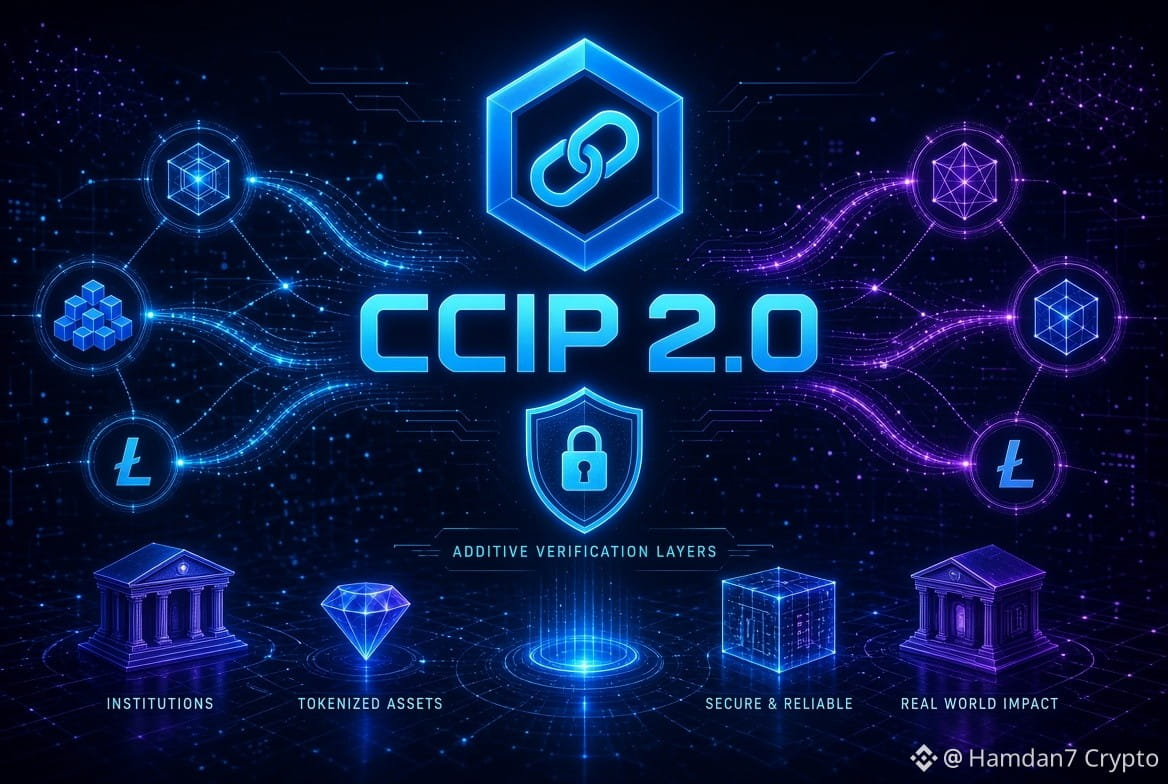
45

·
--
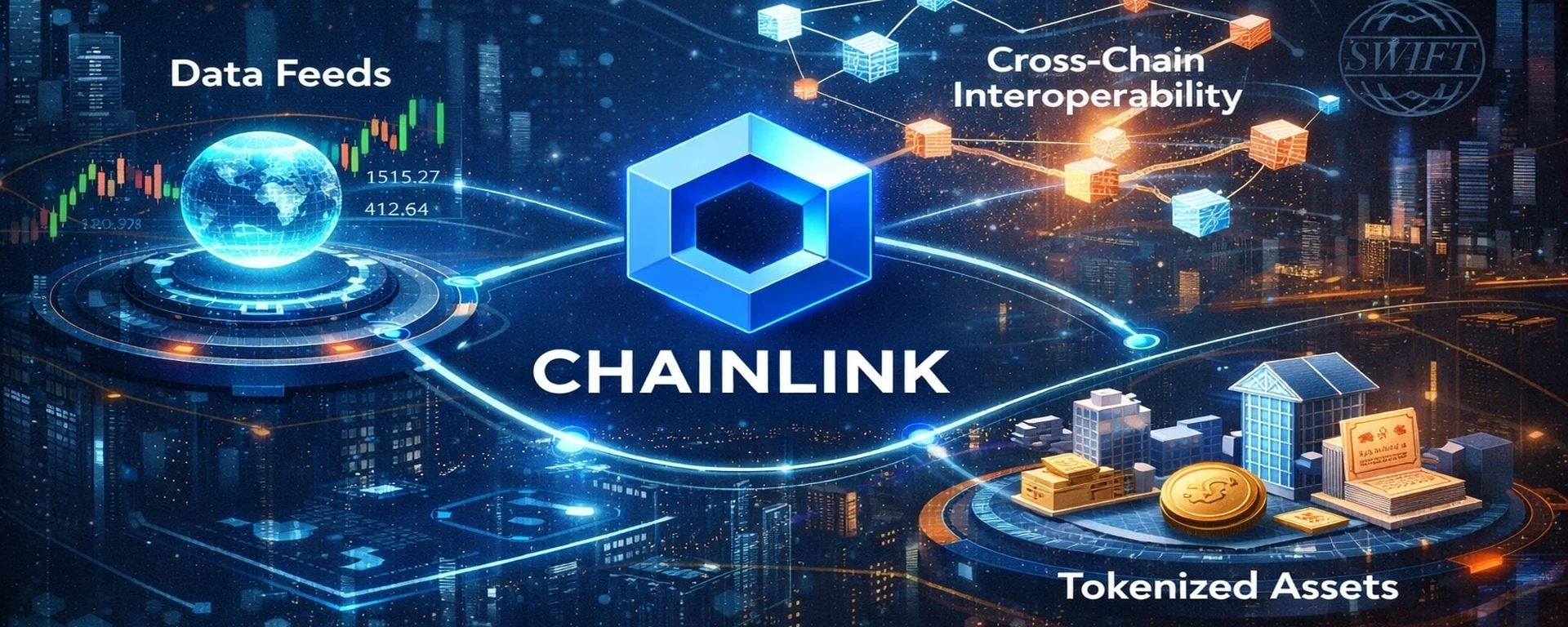
Article
**Chainlink Launches CCIP 2.0 for Institutional Cross-Chain Asset Distribution****Chainlink Launches CCIP 2.0 for Institutional Cross-Chain Asset Distribution**
Chainlink launched CCIP 2.0 on September 28, giving financial institutions a neutral layer to move tokenized assets across public and private blockchains as banks and asset managers increasingly issue equities, funds, and currencies onchain.
**Key features:**
- A new Cross-Chain Verifier (CCV) system lets institutions run their own attestation checks on top of Chainlink's existing verification layer, deployable via starter kits for AWS and Google Cloud, plus support from third-party verifiers like Infosys and Nethermind.
- Built-in compliance tools handle KYC, AML, and sanctions screening automatically, with adjustable settings for near-instant transfers versus full finality.
- Chainlink says CCIP now secures over $84 billion in cross-chain token value and holds ISO 27001 and SOC 2 Type 2 certifications.
- Backers and partners named include AWS, ANZ Bank, Archax, Deutsche Börse's Crypto Finance, Fidelity International, Google Cloud, SBI Digital Markets, Sygnum, Taurus, plus DeFi platforms Aave, Lido, and Maple.
- The upgrade follows the $292 million Kelp DAO exploit, where attackers drained funds through a LayerZero bridge relying on a single verifier. Chainlink's Johann Eid said institutions need "a neutral standard" for cross-chain asset movement, contrasting it with insecure legacy bridges and costly in-house builds.
*(المقال الأصلي منشور عبر BlockchainReporter، بقلم Ogwu Emmanuel)*
**Chainlink Launches CCIP 2.0 for Institutional Cross-Chain Asset Distribution**
Chainlink launched CCIP 2.0 on September 28, giving financial institutions a neutral layer to move tokenized assets across public and private blockchains as banks and asset managers increasingly issue equities, funds, and currencies onchain.
**Key features:**
- A new Cross-Chain Verifier (CCV) system lets institutions run their own attestation checks on top of Chainlink's existing verification layer, deployable via starter kits for AWS and Google Cloud, plus support from third-party verifiers like Infosys and Nethermind.
- Built-in compliance tools handle KYC, AML, and sanctions screening automatically, with adjustable settings for near-instant transfers versus full finality.
- Chainlink says CCIP now secures over $84 billion in cross-chain token value and holds ISO 27001 and SOC 2 Type 2 certifications.
- Backers and partners named include AWS, ANZ Bank, Archax, Deutsche Börse's Crypto Finance, Fidelity International, Google Cloud, SBI Digital Markets, Sygnum, Taurus, plus DeFi platforms Aave, Lido, and Maple.
- The upgrade follows the $292 million Kelp DAO exploit, where attackers drained funds through a LayerZero bridge relying on a single verifier. Chainlink's Johann Eid said institutions need "a neutral standard" for cross-chain asset movement, contrasting it with insecure legacy bridges and costly in-house builds.
@Binance_Square_Official
#ChainlinkLaunchesCCIP2WithEnterpriseVerification
**Chainlink Launches CCIP 2.0 for Institutional Cross-Chain Asset Distribution**
**Chainlink Launches CCIP 2.0 for Institutional Cross-Chain Asset Distribution**
Chainlink launched CCIP 2.0 on September 28, giving financial institutions a neutral layer to move tokenized assets across public and private blockchains as banks and asset managers increasingly issue equities, funds, and currencies onchain.
**Key features:**
- A new Cross-Chain Verifier (CCV) system lets institutions run their own attestation checks on top of Chainlink's existing verification layer, deployable via starter kits for AWS and Google Cloud, plus support from third-party verifiers like Infosys and Nethermind.
- Built-in compliance tools handle KYC, AML, and sanctions screening automatically, with adjustable settings for near-instant transfers versus full finality.
- Chainlink says CCIP now secures over $84 billion in cross-chain token value and holds ISO 27001 and SOC 2 Type 2 certifications.
- Backers and partners named include AWS, ANZ Bank, Archax, Deutsche Börse's Crypto Finance, Fidelity International, Google Cloud, SBI Digital Markets, Sygnum, Taurus, plus DeFi platforms Aave, Lido, and Maple.
- The upgrade follows the $292 million Kelp DAO exploit, where attackers drained funds through a LayerZero bridge relying on a single verifier. Chainlink's Johann Eid said institutions need "a neutral standard" for cross-chain asset movement, contrasting it with insecure legacy bridges and costly in-house builds.
*(المقال الأصلي منشور عبر BlockchainReporter، بقلم Ogwu Emmanuel)*
**Chainlink Launches CCIP 2.0 for Institutional Cross-Chain Asset Distribution**
Chainlink launched CCIP 2.0 on September 28, giving financial institutions a neutral layer to move tokenized assets across public and private blockchains as banks and asset managers increasingly issue equities, funds, and currencies onchain.
**Key features:**
- A new Cross-Chain Verifier (CCV) system lets institutions run their own attestation checks on top of Chainlink's existing verification layer, deployable via starter kits for AWS and Google Cloud, plus support from third-party verifiers like Infosys and Nethermind.
- Built-in compliance tools handle KYC, AML, and sanctions screening automatically, with adjustable settings for near-instant transfers versus full finality.
- Chainlink says CCIP now secures over $84 billion in cross-chain token value and holds ISO 27001 and SOC 2 Type 2 certifications.
- Backers and partners named include AWS, ANZ Bank, Archax, Deutsche Börse's Crypto Finance, Fidelity International, Google Cloud, SBI Digital Markets, Sygnum, Taurus, plus DeFi platforms Aave, Lido, and Maple.
- The upgrade follows the $292 million Kelp DAO exploit, where attackers drained funds through a LayerZero bridge relying on a single verifier. Chainlink's Johann Eid said institutions need "a neutral standard" for cross-chain asset movement, contrasting it with insecure legacy bridges and costly in-house builds.
@Binance Square Official
#ChainlinkLaunchesCCIP2WithEnterpriseVerification
Chainlink launched CCIP 2.0 on September 28, giving financial institutions a neutral layer to move tokenized assets across public and private blockchains as banks and asset managers increasingly issue equities, funds, and currencies onchain.
**Key features:**
- A new Cross-Chain Verifier (CCV) system lets institutions run their own attestation checks on top of Chainlink's existing verification layer, deployable via starter kits for AWS and Google Cloud, plus support from third-party verifiers like Infosys and Nethermind.
- Built-in compliance tools handle KYC, AML, and sanctions screening automatically, with adjustable settings for near-instant transfers versus full finality.
- Chainlink says CCIP now secures over $84 billion in cross-chain token value and holds ISO 27001 and SOC 2 Type 2 certifications.
- Backers and partners named include AWS, ANZ Bank, Archax, Deutsche Börse's Crypto Finance, Fidelity International, Google Cloud, SBI Digital Markets, Sygnum, Taurus, plus DeFi platforms Aave, Lido, and Maple.
- The upgrade follows the $292 million Kelp DAO exploit, where attackers drained funds through a LayerZero bridge relying on a single verifier. Chainlink's Johann Eid said institutions need "a neutral standard" for cross-chain asset movement, contrasting it with insecure legacy bridges and costly in-house builds.
*(المقال الأصلي منشور عبر BlockchainReporter، بقلم Ogwu Emmanuel)*
**Chainlink Launches CCIP 2.0 for Institutional Cross-Chain Asset Distribution**
Chainlink launched CCIP 2.0 on September 28, giving financial institutions a neutral layer to move tokenized assets across public and private blockchains as banks and asset managers increasingly issue equities, funds, and currencies onchain.
**Key features:**
- A new Cross-Chain Verifier (CCV) system lets institutions run their own attestation checks on top of Chainlink's existing verification layer, deployable via starter kits for AWS and Google Cloud, plus support from third-party verifiers like Infosys and Nethermind.
- Built-in compliance tools handle KYC, AML, and sanctions screening automatically, with adjustable settings for near-instant transfers versus full finality.
- Chainlink says CCIP now secures over $84 billion in cross-chain token value and holds ISO 27001 and SOC 2 Type 2 certifications.
- Backers and partners named include AWS, ANZ Bank, Archax, Deutsche Börse's Crypto Finance, Fidelity International, Google Cloud, SBI Digital Markets, Sygnum, Taurus, plus DeFi platforms Aave, Lido, and Maple.
- The upgrade follows the $292 million Kelp DAO exploit, where attackers drained funds through a LayerZero bridge relying on a single verifier. Chainlink's Johann Eid said institutions need "a neutral standard" for cross-chain asset movement, contrasting it with insecure legacy bridges and costly in-house builds.
@Binance Square Official
#ChainlinkLaunchesCCIP2WithEnterpriseVerification
35

·
--
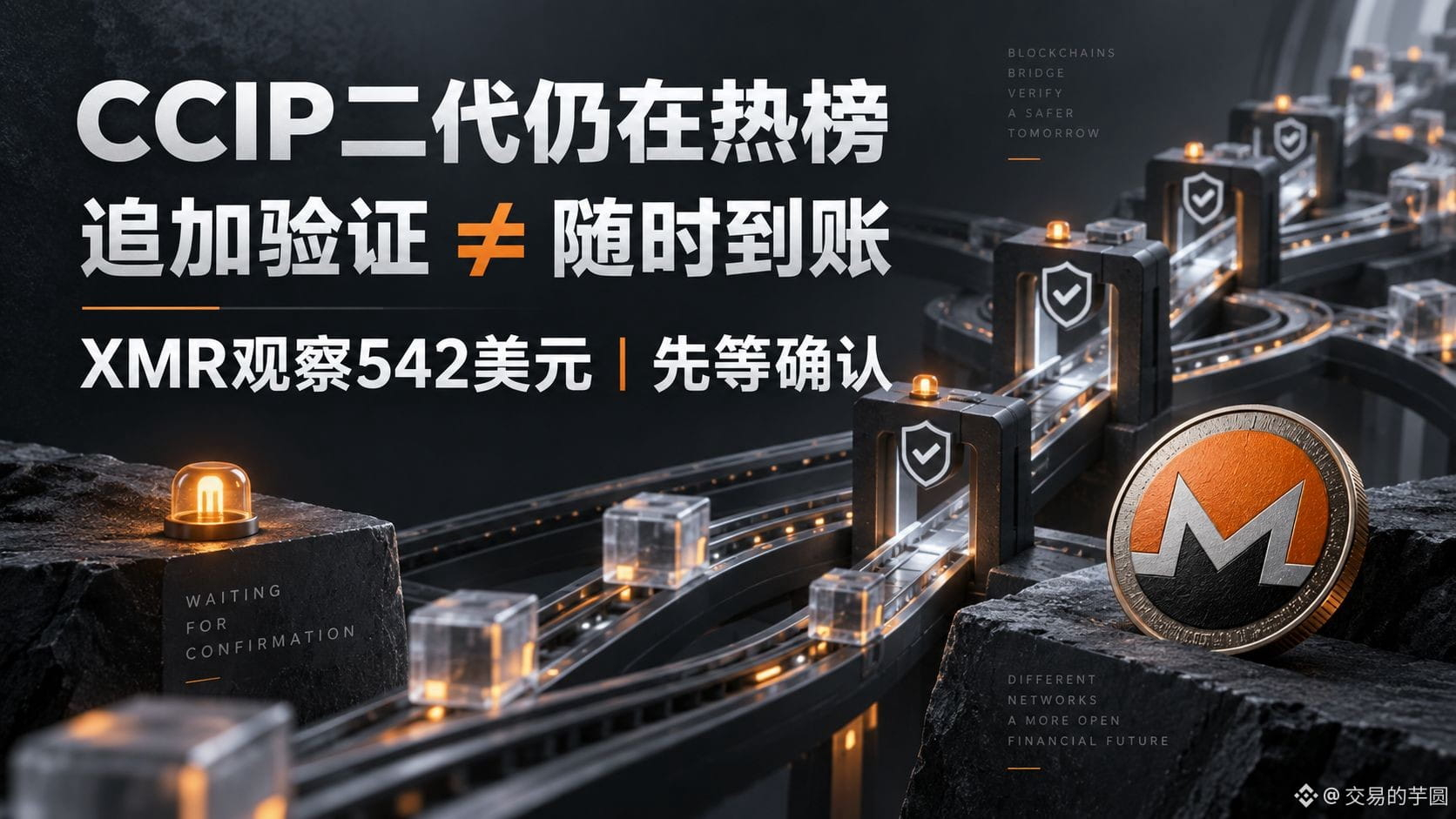
CCIP二代仍在广场热榜|多一道验证也多一道可用性门槛|XMR在540美元附近我先等
我的态度:认可跨链风控升级,但增加验证者不是资金随时退出的保证。安全性与可用性须一起检查,隐私币不能只靠跨链热度交易。
Chainlink九月二十八日正式宣布CCIP二代可用,机构和资产发行方可以增加自己或第三方运行的跨链验证者。官方说明,在追加验证模式中,默认委员会与独立验证方都要提供相应签名,交易才能执行。广场该话题当前显示约五点五八万次浏览、一千零四十二条讨论,这是讨论规模,不是新增资金或机构净买入。
我交叉核对官方责任模型与工具文档:外部验证方负责自身维护与接口可靠性;没有响应的验证者,会拖住必须取得其证明的消息。工具文档区分必需验证者与可选门槛,不是任意一家通过就都能通行。这是设计边界,不是声称当前已发生故障。
为什么影响加密市场?我的判断是,增加验证有助于限制错误消息,但退出速度还取决于服务持续响应。资金已发出与目的链执行完成不是同一步。延迟可能占用资金、放大结算压力,不能只看手续费。我会先核对消息状态、必需验证方和恢复安排,不盲目追加同类转账。
对XMR,这不是宣布原生Monero已接入CCIP,也不是确认有新的机构买盘。讨论跨链包装资产时,我仍分开检查原生链、托管或映射方式,以及最后能否兑回原资产。官方责任模型还提醒,第三方验证者不一定具备与默认委员会相同的链重组隔离逻辑;多一个名称,不等于自动继承所有保护。若实际集成和退出条件没有一手证明,我就不提高仓位。
价格并没有替叙事完成确认。北京时间十一点五十五分,Kraken的XMR/USD最近成交539.85美元,滚动二十四小时范围525.00至546.17。这是美元现货,不是USDT;价格仍在区间中部,不能归因于CCIP公告。我的观察位是542的回收,以及525附近的支撑。
如果是我自己交易,目前不参与,新增仓位为零,不做空、不加杠杆。仅当一小时收盘站上542美元,随后回踩540.5至542守住,且本人可用平台深度与充提正常,才考虑总资金0.3%的现货多单。546先减半,551全部平仓;成交后535硬止损,或连续两小时回到540.5下方全部退出。入场前跌破524.5取消计划,直接冲到目标不追。通道不明或突破失败,都推翻参与条件;未触发不是成交或盈利。
来源:Chainlink公告与责任模型、工具文档;Kraken行情。
https://chain.link/blog/introducing-ccip-2-0
https://docs.chain.link/ccip/concepts/ccvs/trust-responsibility-model
#ChainlinkLaunchesCCIP2WithEnterpriseVerification #XMR #LINK
以上仅为个人市场观察,不构成投资建议。
CCIP二代仍在广场热榜|多一道验证也多一道可用性门槛|XMR在540美元附近我先等
我的态度:认可跨链风控升级,但增加验证者不是资金随时退出的保证。安全性与可用性须一起检查,隐私币不能只靠跨链热度交易。
Chainlink九月二十八日正式宣布CCIP二代可用,机构和资产发行方可以增加自己或第三方运行的跨链验证者。官方说明,在追加验证模式中,默认委员会与独立验证方都要提供相应签名,交易才能执行。广场该话题当前显示约五点五八万次浏览、一千零四十二条讨论,这是讨论规模,不是新增资金或机构净买入。
我交叉核对官方责任模型与工具文档:外部验证方负责自身维护与接口可靠性;没有响应的验证者,会拖住必须取得其证明的消息。工具文档区分必需验证者与可选门槛,不是任意一家通过就都能通行。这是设计边界,不是声称当前已发生故障。
为什么影响加密市场?我的判断是,增加验证有助于限制错误消息,但退出速度还取决于服务持续响应。资金已发出与目的链执行完成不是同一步。延迟可能占用资金、放大结算压力,不能只看手续费。我会先核对消息状态、必需验证方和恢复安排,不盲目追加同类转账。
对XMR,这不是宣布原生Monero已接入CCIP,也不是确认有新的机构买盘。讨论跨链包装资产时,我仍分开检查原生链、托管或映射方式,以及最后能否兑回原资产。官方责任模型还提醒,第三方验证者不一定具备与默认委员会相同的链重组隔离逻辑;多一个名称,不等于自动继承所有保护。若实际集成和退出条件没有一手证明,我就不提高仓位。
价格并没有替叙事完成确认。北京时间十一点五十五分,Kraken的XMR/USD最近成交539.85美元,滚动二十四小时范围525.00至546.17。这是美元现货,不是USDT;价格仍在区间中部,不能归因于CCIP公告。我的观察位是542的回收,以及525附近的支撑。
如果是我自己交易,目前不参与,新增仓位为零,不做空、不加杠杆。仅当一小时收盘站上542美元,随后回踩540.5至542守住,且本人可用平台深度与充提正常,才考虑总资金0.3%的现货多单。546先减半,551全部平仓;成交后535硬止损,或连续两小时回到540.5下方全部退出。入场前跌破524.5取消计划,直接冲到目标不追。通道不明或突破失败,都推翻参与条件;未触发不是成交或盈利。
来源:Chainlink公告与责任模型、工具文档;Kraken行情。
https://chain.link/blog/introducing-ccip-2-0
https://docs.chain.link/ccip/concepts/ccvs/trust-responsibility-model
#ChainlinkLaunchesCCIP2WithEnterpriseVerification #XMR #LINK
以上仅为个人市场观察,不构成投资建议。
我的态度:认可跨链风控升级,但增加验证者不是资金随时退出的保证。安全性与可用性须一起检查,隐私币不能只靠跨链热度交易。
Chainlink九月二十八日正式宣布CCIP二代可用,机构和资产发行方可以增加自己或第三方运行的跨链验证者。官方说明,在追加验证模式中,默认委员会与独立验证方都要提供相应签名,交易才能执行。广场该话题当前显示约五点五八万次浏览、一千零四十二条讨论,这是讨论规模,不是新增资金或机构净买入。
我交叉核对官方责任模型与工具文档:外部验证方负责自身维护与接口可靠性;没有响应的验证者,会拖住必须取得其证明的消息。工具文档区分必需验证者与可选门槛,不是任意一家通过就都能通行。这是设计边界,不是声称当前已发生故障。
为什么影响加密市场?我的判断是,增加验证有助于限制错误消息,但退出速度还取决于服务持续响应。资金已发出与目的链执行完成不是同一步。延迟可能占用资金、放大结算压力,不能只看手续费。我会先核对消息状态、必需验证方和恢复安排,不盲目追加同类转账。
对XMR,这不是宣布原生Monero已接入CCIP,也不是确认有新的机构买盘。讨论跨链包装资产时,我仍分开检查原生链、托管或映射方式,以及最后能否兑回原资产。官方责任模型还提醒,第三方验证者不一定具备与默认委员会相同的链重组隔离逻辑;多一个名称,不等于自动继承所有保护。若实际集成和退出条件没有一手证明,我就不提高仓位。
价格并没有替叙事完成确认。北京时间十一点五十五分,Kraken的XMR/USD最近成交539.85美元,滚动二十四小时范围525.00至546.17。这是美元现货,不是USDT;价格仍在区间中部,不能归因于CCIP公告。我的观察位是542的回收,以及525附近的支撑。
如果是我自己交易,目前不参与,新增仓位为零,不做空、不加杠杆。仅当一小时收盘站上542美元,随后回踩540.5至542守住,且本人可用平台深度与充提正常,才考虑总资金0.3%的现货多单。546先减半,551全部平仓;成交后535硬止损,或连续两小时回到540.5下方全部退出。入场前跌破524.5取消计划,直接冲到目标不追。通道不明或突破失败,都推翻参与条件;未触发不是成交或盈利。
来源:Chainlink公告与责任模型、工具文档;Kraken行情。
https://chain.link/blog/introducing-ccip-2-0
https://docs.chain.link/ccip/concepts/ccvs/trust-responsibility-model
#ChainlinkLaunchesCCIP2WithEnterpriseVerification #XMR #LINK
以上仅为个人市场观察,不构成投资建议。
48

စိစစ်အတည်ပြုထားသည်
Article
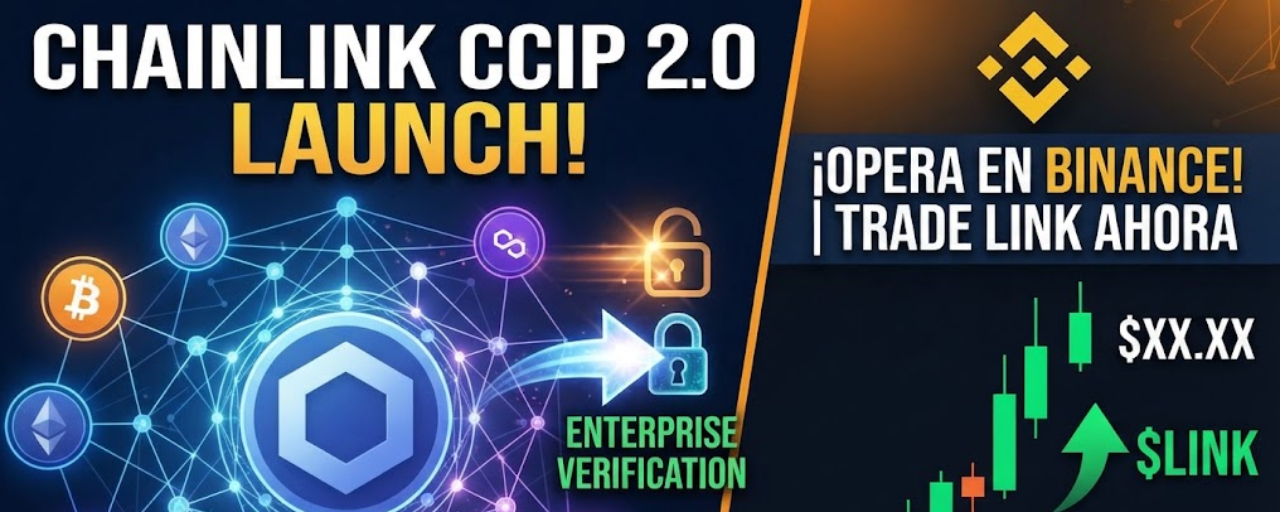
Chainlink Launches CCIP 2.0: A New Era for Enterprise Cross-Chain Verification!#chainlinklaunchesccip2withenterpriseverification
🌐 Chainlink Launches CCIP 2.0: A New Era for Enterprise Cross-Chain Verification! 🚀
The cross-chain landscape is evolving faster than ever. Chainlink has officially rolled out CCIP 2.0, introducing advanced institutional-grade capabilities, including Enterprise Verification and custom compliance controls.
Here is why this upgrade is a massive milestone for Web3 and institutional adoption:
🔍 What’s New in CCIP 2.0?
Institution-Owned Sign-Offs: Financial institutions and token issuers can now run or hire their own verifiers through the new Cross-Chain Verifier (CCV) framework. These verifiers must sign off on transactions alongside Chainlink’s decentralized committee, adding an extra layer of tailored security.Built-In Compliance (KYC & Sanctions): Issuers can seamlessly integrate automated compliance checks, sanctions screening, and allowlisted token pools directly into cross-chain token flows.Open CCV Marketplace: A thriving marketplace where third-party verification providers can offer specialized services, giving projects unmatched flexibility and security choices.
📈 Why It Matters for the Market
Interoperability has often been cited as the biggest hurdle for traditional finance (TradFi) entering the blockchain space. By bridging the gap between stringent regulatory compliance and decentralized speed, CCIP 2.0 positions itself as the ultimate standard for connecting enterprise assets securely across multiple chains.
💡 Ready to ride the Web3 wave? Stay ahead of the curve, keep track of major infrastructure breakthroughs, and manage your portfolio with professional tools. Trade and explore top digital assets on Binance today! 📊🔥
#BinanceSquare #Chainlink #LINK #CCIP #Web3 #CryptoNews #DeFi #SmartContracts
{spot}(BNBUSDT)
$BTC $BNB $ETH
Chainlink Launches CCIP 2.0: A New Era for Enterprise Cross-Chain Verification!
#chainlinklaunchesccip2withenterpriseverification
🌐 Chainlink Launches CCIP 2.0: A New Era for Enterprise Cross-Chain Verification! 🚀
The cross-chain landscape is evolving faster than ever. Chainlink has officially rolled out CCIP 2.0, introducing advanced institutional-grade capabilities, including Enterprise Verification and custom compliance controls.
Here is why this upgrade is a massive milestone for Web3 and institutional adoption:
🔍 What’s New in CCIP 2.0?
Institution-Owned Sign-Offs: Financial institutions and token issuers can now run or hire their own verifiers through the new Cross-Chain Verifier (CCV) framework. These verifiers must sign off on transactions alongside Chainlink’s decentralized committee, adding an extra layer of tailored security.Built-In Compliance (KYC & Sanctions): Issuers can seamlessly integrate automated compliance checks, sanctions screening, and allowlisted token pools directly into cross-chain token flows.Open CCV Marketplace: A thriving marketplace where third-party verification providers can offer specialized services, giving projects unmatched flexibility and security choices.
📈 Why It Matters for the Market
Interoperability has often been cited as the biggest hurdle for traditional finance (TradFi) entering the blockchain space. By bridging the gap between stringent regulatory compliance and decentralized speed, CCIP 2.0 positions itself as the ultimate standard for connecting enterprise assets securely across multiple chains.
💡 Ready to ride the Web3 wave? Stay ahead of the curve, keep track of major infrastructure breakthroughs, and manage your portfolio with professional tools. Trade and explore top digital assets on Binance today! 📊🔥
#BinanceSquare #Chainlink #LINK #CCIP #Web3 #CryptoNews #DeFi #SmartContracts
$BTC $BNB $ETH
🌐 Chainlink Launches CCIP 2.0: A New Era for Enterprise Cross-Chain Verification! 🚀
The cross-chain landscape is evolving faster than ever. Chainlink has officially rolled out CCIP 2.0, introducing advanced institutional-grade capabilities, including Enterprise Verification and custom compliance controls.
Here is why this upgrade is a massive milestone for Web3 and institutional adoption:
🔍 What’s New in CCIP 2.0?
Institution-Owned Sign-Offs: Financial institutions and token issuers can now run or hire their own verifiers through the new Cross-Chain Verifier (CCV) framework. These verifiers must sign off on transactions alongside Chainlink’s decentralized committee, adding an extra layer of tailored security.Built-In Compliance (KYC & Sanctions): Issuers can seamlessly integrate automated compliance checks, sanctions screening, and allowlisted token pools directly into cross-chain token flows.Open CCV Marketplace: A thriving marketplace where third-party verification providers can offer specialized services, giving projects unmatched flexibility and security choices.
📈 Why It Matters for the Market
Interoperability has often been cited as the biggest hurdle for traditional finance (TradFi) entering the blockchain space. By bridging the gap between stringent regulatory compliance and decentralized speed, CCIP 2.0 positions itself as the ultimate standard for connecting enterprise assets securely across multiple chains.
💡 Ready to ride the Web3 wave? Stay ahead of the curve, keep track of major infrastructure breakthroughs, and manage your portfolio with professional tools. Trade and explore top digital assets on Binance today! 📊🔥
#BinanceSquare #Chainlink #LINK #CCIP #Web3 #CryptoNews #DeFi #SmartContracts
$BTC $BNB $ETH
ابوالعز1123:
. CCIP 2.0 finally answers the question institutions kept asking: how do we get on-chain without giving up compliance and custom security. Letting enterprises run their own verifiers on top of the default network is a smart design, it adds trust without sacrificing decentralization. After the Kelp incident, this kind of infrastructure is exactly what the industry needed
2
727

·
--
Everyone thinks a Chainlink upgrade means $LINK is about to run, but actually the bigger risk is treating CCIP 2 like a finished product instead of a slow-build highway.
Too many traders still lose money the same way. They FOMO the headline, skip the details, then sit on bags while real usage takes months to show up.
Think of CCIP 2 as a new highway with extra inspection booths. Enterprise verification is the extra cop checking IDs at the on-ramp. That does not make every car crash-proof. The same people who got wrecked sending tokens across random bridges last cycle are now treating this announcement as a free pass.
$QNT holders already lived this story. Interoperability sounds exciting until price spends months doing nothing. Fear and Greed is sitting at 70, which is usually when people confuse an infrastructure update with a reason to oversize. If you are moving $USDT across chains because a verification badge dropped, you still have to confirm which lanes are actually live, not just announced. The three mistakes that keep costing people here are buying the ticker instead of watching actual CCIP volume, assuming enterprise-grade means retail-proof, and ignoring that greed is already in the market while the rollout is still early.
Where do you think this goes once the verification actually gets used, not just tweeted?
#ChainlinkLaunchesCCIP2WithEnterpriseVerification #QNTFallsOver40 #USDTAdds845900HoldersInPast7Days
Everyone thinks a Chainlink upgrade means $LINK is about to run, but actually the bigger risk is treating CCIP 2 like a finished product instead of a slow-build highway.
Too many traders still lose money the same way. They FOMO the headline, skip the details, then sit on bags while real usage takes months to show up.
Think of CCIP 2 as a new highway with extra inspection booths. Enterprise verification is the extra cop checking IDs at the on-ramp. That does not make every car crash-proof. The same people who got wrecked sending tokens across random bridges last cycle are now treating this announcement as a free pass.
$QNT holders already lived this story. Interoperability sounds exciting until price spends months doing nothing. Fear and Greed is sitting at 70, which is usually when people confuse an infrastructure update with a reason to oversize. If you are moving $USDT across chains because a verification badge dropped, you still have to confirm which lanes are actually live, not just announced. The three mistakes that keep costing people here are buying the ticker instead of watching actual CCIP volume, assuming enterprise-grade means retail-proof, and ignoring that greed is already in the market while the rollout is still early.
Where do you think this goes once the verification actually gets used, not just tweeted?
#ChainlinkLaunchesCCIP2WithEnterpriseVerification #QNTFallsOver40 #USDTAdds845900HoldersInPast7Days
Too many traders still lose money the same way. They FOMO the headline, skip the details, then sit on bags while real usage takes months to show up.
Think of CCIP 2 as a new highway with extra inspection booths. Enterprise verification is the extra cop checking IDs at the on-ramp. That does not make every car crash-proof. The same people who got wrecked sending tokens across random bridges last cycle are now treating this announcement as a free pass.
$QNT holders already lived this story. Interoperability sounds exciting until price spends months doing nothing. Fear and Greed is sitting at 70, which is usually when people confuse an infrastructure update with a reason to oversize. If you are moving $USDT across chains because a verification badge dropped, you still have to confirm which lanes are actually live, not just announced. The three mistakes that keep costing people here are buying the ticker instead of watching actual CCIP volume, assuming enterprise-grade means retail-proof, and ignoring that greed is already in the market while the rollout is still early.
Where do you think this goes once the verification actually gets used, not just tweeted?
#ChainlinkLaunchesCCIP2WithEnterpriseVerification #QNTFallsOver40 #USDTAdds845900HoldersInPast7Days
297
·
--
CCIP二代仍在广场热榜|入口地址不变不等于通道配置冻结|BNB在756USDT附近我先等
我的态度:认可跨链迭代,但不把熟悉地址当安全通行证。广场企业验证话题仍列热榜,约五点二万浏览,与上轮相同;我不据此追买BNB。
我核对Chainlink二代架构与EVM升级文档,事实是:Router作为用户入口,其地址保持稳定,代码被设计为不可变;但它登记的源链与目标链通道合约地址,可以由其所有者更新。需要新版本时,相关合约可以重新部署,再把引用指向新地址。这是官方公开的升级机制,不是发现了今天的攻击,也不是宣布BNB链已经统一换成同一套新合约。
还有一个边界要保留。文档说明,CCIP自有合约的配置变更经过角色权限时间锁;代币池由资产发行方拥有并直接配置。公开可查的治理流程值得认可,却不能把协议治理与发行人资产池权限混成一回事。入口代码不可变,不等于其后每一层参数、管理者和风险都永远不变。以上是机制说明,不是对某个项目的安全评级。
为什么影响加密市场?BNB链在官方CCIP主网目录中,支付、兑换和资产应用需要可靠的跨链通道。我的判断是,稳定入口减少集成迁移成本,持续检查实际通道与资产身份,则关系到资金是否按预期进入接收端。更便捷的基础设施可能改善使用体验,但还须验证真实需求和稳定执行,不能直接折算成BNB现货买盘。
对我而言,地址核对不是只看开头和末尾几个字符。操作前从官方目录确认网络、完整入口地址和资产池,核对钱包实际授权对象、额度与目标网络;换界面或提示新授权时重新检查。既不因为“二代升级”字样批准陌生支出权限,也不把官方地址保持不变理解成无限授权必然安全。这些是我的风控要求,不是鼓励现在转币试桥。
市场已经如何反应?北京时间九月二十九日10:09,币安BNB/USDT约756.11,滚动二十四小时跌约2.37%,范围753.90至776.37。价格靠近区间下沿,热榜关注并未证明承接改善;没有证据把下跌归因于上述文档,更不把尚未完整更新的机构统计当作抛售结论。
如果是我自己交易,目前不参与,假设仓位为零,只做条件现货多,不做空、不用杠杆。小时收盘站上760,再回踩758.5至760守住,且交易与充提正常,才以总资金最多0.3%试仓;765减半,771平余仓。756硬止损全平,或连续两小时收在758.5下方退出。触发前跌破752取消,没有回踩不追,不摊平。突破失败、官方机制修订或确认通道异常都会推翻参与判断,未触发不写成成交或盈利。
来源:[EVM升级文档](https://docs.chain.link/ccip/evm/concepts/upgradability)、Chainlink架构与主网目录;币安行情及广场。
#ChainlinkLaunchesCCIP2WithEnterpriseVerification #BNB #LINK
以上仅为个人市场观察,不构成投资建议。
CCIP二代仍在广场热榜|入口地址不变不等于通道配置冻结|BNB在756USDT附近我先等
我的态度:认可跨链迭代,但不把熟悉地址当安全通行证。广场企业验证话题仍列热榜,约五点二万浏览,与上轮相同;我不据此追买BNB。
我核对Chainlink二代架构与EVM升级文档,事实是:Router作为用户入口,其地址保持稳定,代码被设计为不可变;但它登记的源链与目标链通道合约地址,可以由其所有者更新。需要新版本时,相关合约可以重新部署,再把引用指向新地址。这是官方公开的升级机制,不是发现了今天的攻击,也不是宣布BNB链已经统一换成同一套新合约。
还有一个边界要保留。文档说明,CCIP自有合约的配置变更经过角色权限时间锁;代币池由资产发行方拥有并直接配置。公开可查的治理流程值得认可,却不能把协议治理与发行人资产池权限混成一回事。入口代码不可变,不等于其后每一层参数、管理者和风险都永远不变。以上是机制说明,不是对某个项目的安全评级。
为什么影响加密市场?BNB链在官方CCIP主网目录中,支付、兑换和资产应用需要可靠的跨链通道。我的判断是,稳定入口减少集成迁移成本,持续检查实际通道与资产身份,则关系到资金是否按预期进入接收端。更便捷的基础设施可能改善使用体验,但还须验证真实需求和稳定执行,不能直接折算成BNB现货买盘。
对我而言,地址核对不是只看开头和末尾几个字符。操作前从官方目录确认网络、完整入口地址和资产池,核对钱包实际授权对象、额度与目标网络;换界面或提示新授权时重新检查。既不因为“二代升级”字样批准陌生支出权限,也不把官方地址保持不变理解成无限授权必然安全。这些是我的风控要求,不是鼓励现在转币试桥。
市场已经如何反应?北京时间九月二十九日10:09,币安BNB/USDT约756.11,滚动二十四小时跌约2.37%,范围753.90至776.37。价格靠近区间下沿,热榜关注并未证明承接改善;没有证据把下跌归因于上述文档,更不把尚未完整更新的机构统计当作抛售结论。
如果是我自己交易,目前不参与,假设仓位为零,只做条件现货多,不做空、不用杠杆。小时收盘站上760,再回踩758.5至760守住,且交易与充提正常,才以总资金最多0.3%试仓;765减半,771平余仓。756硬止损全平,或连续两小时收在758.5下方退出。触发前跌破752取消,没有回踩不追,不摊平。突破失败、官方机制修订或确认通道异常都会推翻参与判断,未触发不写成成交或盈利。
来源:[EVM升级文档](https://docs.chain.link/ccip/evm/concepts/upgradability)、Chainlink架构与主网目录;币安行情及广场。
#ChainlinkLaunchesCCIP2WithEnterpriseVerification #BNB #LINK
以上仅为个人市场观察,不构成投资建议。
我的态度:认可跨链迭代,但不把熟悉地址当安全通行证。广场企业验证话题仍列热榜,约五点二万浏览,与上轮相同;我不据此追买BNB。
我核对Chainlink二代架构与EVM升级文档,事实是:Router作为用户入口,其地址保持稳定,代码被设计为不可变;但它登记的源链与目标链通道合约地址,可以由其所有者更新。需要新版本时,相关合约可以重新部署,再把引用指向新地址。这是官方公开的升级机制,不是发现了今天的攻击,也不是宣布BNB链已经统一换成同一套新合约。
还有一个边界要保留。文档说明,CCIP自有合约的配置变更经过角色权限时间锁;代币池由资产发行方拥有并直接配置。公开可查的治理流程值得认可,却不能把协议治理与发行人资产池权限混成一回事。入口代码不可变,不等于其后每一层参数、管理者和风险都永远不变。以上是机制说明,不是对某个项目的安全评级。
为什么影响加密市场?BNB链在官方CCIP主网目录中,支付、兑换和资产应用需要可靠的跨链通道。我的判断是,稳定入口减少集成迁移成本,持续检查实际通道与资产身份,则关系到资金是否按预期进入接收端。更便捷的基础设施可能改善使用体验,但还须验证真实需求和稳定执行,不能直接折算成BNB现货买盘。
对我而言,地址核对不是只看开头和末尾几个字符。操作前从官方目录确认网络、完整入口地址和资产池,核对钱包实际授权对象、额度与目标网络;换界面或提示新授权时重新检查。既不因为“二代升级”字样批准陌生支出权限,也不把官方地址保持不变理解成无限授权必然安全。这些是我的风控要求,不是鼓励现在转币试桥。
市场已经如何反应?北京时间九月二十九日10:09,币安BNB/USDT约756.11,滚动二十四小时跌约2.37%,范围753.90至776.37。价格靠近区间下沿,热榜关注并未证明承接改善;没有证据把下跌归因于上述文档,更不把尚未完整更新的机构统计当作抛售结论。
如果是我自己交易,目前不参与,假设仓位为零,只做条件现货多,不做空、不用杠杆。小时收盘站上760,再回踩758.5至760守住,且交易与充提正常,才以总资金最多0.3%试仓;765减半,771平余仓。756硬止损全平,或连续两小时收在758.5下方退出。触发前跌破752取消,没有回踩不追,不摊平。突破失败、官方机制修订或确认通道异常都会推翻参与判断,未触发不写成成交或盈利。
来源:[EVM升级文档](https://docs.chain.link/ccip/evm/concepts/upgradability)、Chainlink架构与主网目录;币安行情及广场。
#ChainlinkLaunchesCCIP2WithEnterpriseVerification #BNB #LINK
以上仅为个人市场观察,不构成投资建议。

46

·
--
တက်ရိပ်ရှိသည်
🏦 CHAINLINK JUST CHANGED CROSS-CHAIN VERIFICATION.
CCIP 2 brings enterprise-grade verification to cross-chain transactions.
The bigger story?
Not just moving assets — proving what happened across networks.
As institutions enter tokenized assets and on-chain finance, cross-chain verification could become critical infrastructure.
👀 $LINK is worth watching.
#Chainlink #LINK #CCIP #cryptouniverseofficial #RWA #ChainlinkLaunchesCCIP2WithEnterpriseVerification #defi
{spot}(LINKUSDT)
🏦 CHAINLINK JUST CHANGED CROSS-CHAIN VERIFICATION.
CCIP 2 brings enterprise-grade verification to cross-chain transactions.
The bigger story?
Not just moving assets — proving what happened across networks.
As institutions enter tokenized assets and on-chain finance, cross-chain verification could become critical infrastructure.
👀 $LINK is worth watching.
#Chainlink #LINK #CCIP #cryptouniverseofficial #RWA #ChainlinkLaunchesCCIP2WithEnterpriseVerification #defi
CCIP 2 brings enterprise-grade verification to cross-chain transactions.
The bigger story?
Not just moving assets — proving what happened across networks.
As institutions enter tokenized assets and on-chain finance, cross-chain verification could become critical infrastructure.
👀 $LINK is worth watching.
#Chainlink #LINK #CCIP #cryptouniverseofficial #RWA #ChainlinkLaunchesCCIP2WithEnterpriseVerification #defi
17

#ChainlinkLaunchesCCIP2WithEnterpriseVerification
🔗 Chainlink CCIP 2.0 Is Now Live — A Major Upgrade for Cross-Chain Transfers
Chainlink has officially launched CCIP 2.0, the latest version of its Cross-Chain Interoperability Protocol. The upgrade is designed to give institutions and digital-asset issuers more control over security, compliance, verification, and transaction speed.
One of the biggest additions is Cross-Chain Verifiers (CCVs). Institutions can operate their own verifier or use independent enterprise providers, adding another verification layer before a cross-chain transaction is executed.
CCIP 2.0 also introduces:
🛡️ Additional security verification
⚡ Configurable transaction settlement speeds
✅ Built-in compliance controls such as KYC/AML policies
🏦 Infrastructure designed for institutional and tokenized-asset use
🔗 A redesigned API, SDK and developer tools
Chainlink says CCIP 2.0 is now available to institutions and digital-asset issuers, with launch support from companies and financial institutions including AWS, Google Cloud, ANZ Bank, Fidelity International, SBI Digital Markets and others.
📈 Why it matters: If more financial institutions move tokenized assets across multiple blockchains, interoperability and transaction verification could become increasingly important infrastructure.
What do you think about Chainlink CCIP 2.0? Is this a major step for institutional crypto adoption?
#Chainlink #LINK #CCIP #CCIP20 #Crypto #CryptoNews #Blockchain #DeFi #RWA #Tokenization #Bitcoin #Ethereum #Binance #Web3
#ChainlinkLaunchesCCIP2WithEnterpriseVerification
🔗 Chainlink CCIP 2.0 Is Now Live — A Major Upgrade for Cross-Chain Transfers
Chainlink has officially launched CCIP 2.0, the latest version of its Cross-Chain Interoperability Protocol. The upgrade is designed to give institutions and digital-asset issuers more control over security, compliance, verification, and transaction speed.
One of the biggest additions is Cross-Chain Verifiers (CCVs). Institutions can operate their own verifier or use independent enterprise providers, adding another verification layer before a cross-chain transaction is executed.
CCIP 2.0 also introduces:
🛡️ Additional security verification
⚡ Configurable transaction settlement speeds
✅ Built-in compliance controls such as KYC/AML policies
🏦 Infrastructure designed for institutional and tokenized-asset use
🔗 A redesigned API, SDK and developer tools
Chainlink says CCIP 2.0 is now available to institutions and digital-asset issuers, with launch support from companies and financial institutions including AWS, Google Cloud, ANZ Bank, Fidelity International, SBI Digital Markets and others.
📈 Why it matters: If more financial institutions move tokenized assets across multiple blockchains, interoperability and transaction verification could become increasingly important infrastructure.
What do you think about Chainlink CCIP 2.0? Is this a major step for institutional crypto adoption?
#Chainlink #LINK #CCIP #CCIP20 #Crypto #CryptoNews #Blockchain #DeFi #RWA #Tokenization #Bitcoin #Ethereum #Binance #Web3
🔗 Chainlink CCIP 2.0 Is Now Live — A Major Upgrade for Cross-Chain Transfers
Chainlink has officially launched CCIP 2.0, the latest version of its Cross-Chain Interoperability Protocol. The upgrade is designed to give institutions and digital-asset issuers more control over security, compliance, verification, and transaction speed.
One of the biggest additions is Cross-Chain Verifiers (CCVs). Institutions can operate their own verifier or use independent enterprise providers, adding another verification layer before a cross-chain transaction is executed.
CCIP 2.0 also introduces:
🛡️ Additional security verification
⚡ Configurable transaction settlement speeds
✅ Built-in compliance controls such as KYC/AML policies
🏦 Infrastructure designed for institutional and tokenized-asset use
🔗 A redesigned API, SDK and developer tools
Chainlink says CCIP 2.0 is now available to institutions and digital-asset issuers, with launch support from companies and financial institutions including AWS, Google Cloud, ANZ Bank, Fidelity International, SBI Digital Markets and others.
📈 Why it matters: If more financial institutions move tokenized assets across multiple blockchains, interoperability and transaction verification could become increasingly important infrastructure.
What do you think about Chainlink CCIP 2.0? Is this a major step for institutional crypto adoption?
#Chainlink #LINK #CCIP #CCIP20 #Crypto #CryptoNews #Blockchain #DeFi #RWA #Tokenization #Bitcoin #Ethereum #Binance #Web3
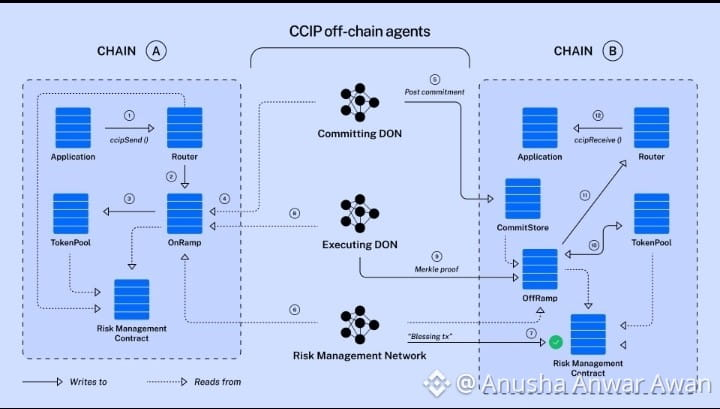
50
Log in to explore more content
Join global crypto users on Binance Square
⚡️ Get latest and useful information about crypto.
💬 Trusted by the world’s largest crypto exchange.
👍 Discover real insights from verified creators.
အီးမေးလ် / ဖုန်းနံပါတ်
ရေပန်းစားနေသော ခေါင်းစဉ်များ
1
#BitcoinClears$85200
3,358 views
120 Discussing
2
#AltcoinSeasonIndexHoldsAbove60For5Days
21,771 views
767 Discussing
3
#USADPAdds90000JobsInSeptember
8,136 views
426 Discussing
4
#USCorePCEEasesTo3%InAugust
6,879 views
357 Discussing
5
#KospiPostsWorstQuarterSince2020
5,893 views
378 Discussing
6
#SECToClarifyOnChainFundraisingRules
14,801 views
547 Discussing
7
#UKFCAOpensCryptoFirmAuthorization
17,314 views
482 Discussing
8
#JapanMOFStudyGroupOnTokenizedGovtBonds
14,925 views
387 Discussing
9
#QNTRises287%
66,135 views
812 Discussing
10
#TrumpRejectsAIRulesForVoluntaryAudits
40,669 views
721 Discussing