

x_Rex
3.1k Publications

x_Rex
Signaler
Bloquer l’utilisateur
X @x_Rex_yhy |Social Butterfly🌸😋😸| Gold Trader😎✨🌼|
Ouvert au trading
Trade fréquemment
1.5 an(s)
340 Suivis
19.4K+ Abonnés
10.0K+ J’aime
Publications
Portefeuille
Tous
Citations
Vidéos
Direct

·
--
Let me tell you something about $QNT that most people still don't understand 👀
Everyone saw the 70% pump. Most people asked "why did it pump?" and moved on.
Nobody's asking the deeper question — why The Clearing House chose Quant specifically.
The Clearing House isn't a startup. It's not a VC firm. It's the oldest banking association in America. Founded in 1853. It processes more money annually than the entire global crypto market cap — combined — multiple times over.
When an institution like that evaluates blockchain technology they don't move fast. They audit. They stress test. They legal review. They pilot. The process takes years.
The fact that Quant won that process tells you something about Overledger that no price chart can show you.
Overledger doesn't pick sides between blockchains. It sits above all of them — Ethereum, Solana, BNB Chain, private permissioned chains — and lets institutions interact with all of them through one API. That's exactly what a 173-year-old banking association needs. Not a bet on one chain. Compatibility with all of them.
$QNT was sitting around $100 before this announcement. Now testing $170 resistance.
If $170 breaks with volume — $200 is the next conversation.
If it gets rejected here — patient money waits for the $140-$150 retest.
Either way — this isn't a meme pump. This is a pipeline pump. And those tend to be stickier 👁️
Still watching or already in? 👇
Not financial advice. DYOR 🙏
$QNT
#QNT #BinanceSquare #BinanceSquareTalks
{future}(QNTUSDT)
Let me tell you something about $QNT that most people still don't understand 👀
Everyone saw the 70% pump. Most people asked "why did it pump?" and moved on.
Nobody's asking the deeper question — why The Clearing House chose Quant specifically.
The Clearing House isn't a startup. It's not a VC firm. It's the oldest banking association in America. Founded in 1853. It processes more money annually than the entire global crypto market cap — combined — multiple times over.
When an institution like that evaluates blockchain technology they don't move fast. They audit. They stress test. They legal review. They pilot. The process takes years.
The fact that Quant won that process tells you something about Overledger that no price chart can show you.
Overledger doesn't pick sides between blockchains. It sits above all of them — Ethereum, Solana, BNB Chain, private permissioned chains — and lets institutions interact with all of them through one API. That's exactly what a 173-year-old banking association needs. Not a bet on one chain. Compatibility with all of them.
$QNT was sitting around $100 before this announcement. Now testing $170 resistance.
If $170 breaks with volume — $200 is the next conversation.
If it gets rejected here — patient money waits for the $140-$150 retest.
Either way — this isn't a meme pump. This is a pipeline pump. And those tend to be stickier 👁️
Still watching or already in? 👇
Not financial advice. DYOR 🙏
$QNT
#QNT #BinanceSquare #BinanceSquareTalks
Everyone saw the 70% pump. Most people asked "why did it pump?" and moved on.
Nobody's asking the deeper question — why The Clearing House chose Quant specifically.
The Clearing House isn't a startup. It's not a VC firm. It's the oldest banking association in America. Founded in 1853. It processes more money annually than the entire global crypto market cap — combined — multiple times over.
When an institution like that evaluates blockchain technology they don't move fast. They audit. They stress test. They legal review. They pilot. The process takes years.
The fact that Quant won that process tells you something about Overledger that no price chart can show you.
Overledger doesn't pick sides between blockchains. It sits above all of them — Ethereum, Solana, BNB Chain, private permissioned chains — and lets institutions interact with all of them through one API. That's exactly what a 173-year-old banking association needs. Not a bet on one chain. Compatibility with all of them.
$QNT was sitting around $100 before this announcement. Now testing $170 resistance.
If $170 breaks with volume — $200 is the next conversation.
If it gets rejected here — patient money waits for the $140-$150 retest.
Either way — this isn't a meme pump. This is a pipeline pump. And those tend to be stickier 👁️
Still watching or already in? 👇
Not financial advice. DYOR 🙏
$QNT
#QNT #BinanceSquare #BinanceSquareTalks
2
427
·
--
🧧Raiffeisen BANK just handed CRYPTO to 18 million people 👀🧧
Raiffeisen Bank will let its 18 million customers buy crypto, per Bloomberg.
The rollout is across 11 markets.
18 million bank customers.
Buying crypto through their existing bank app.
No new wallet.
No seed phrase. No KYC. They're already verified customers.
When PayPal opened crypto buying in October 2020, Bitcoin more than doubled by year end.
That's not a price prediction.
That's historical context.
Raiffeisen is one of Europe's largest banking groups.
Austria, Germany, Czech Republic, Poland, Hungary — all covered.
These are traditional savers who've never touched crypto.
Now it's one tap away inside their banking app.
Meanwhile Binance and Circle announced a five-year $100 million arrangement to expand USDC distribution.
NYSE and Blockchain.com are exploring 24/7 tokenized trading of US stocks.
$
The Clearing House selected Quant for its On-Chain Money Initiative.
Every week another piece of traditional finance plugs into crypto infrastructure.
The adoption story isn't coming. It's already happening quietly 👁️
Does traditional bank access to crypto change how you see the next cycle? 👇
$BTC
{future}(BTCUSDT)
$XRP
{future}(XRPUSDT)
#BinanceSquare #BinanceSquareTalks #crypto
🧧Raiffeisen BANK just handed CRYPTO to 18 million people 👀🧧
Raiffeisen Bank will let its 18 million customers buy crypto, per Bloomberg.
The rollout is across 11 markets.
18 million bank customers.
Buying crypto through their existing bank app.
No new wallet.
No seed phrase. No KYC. They're already verified customers.
When PayPal opened crypto buying in October 2020, Bitcoin more than doubled by year end.
That's not a price prediction.
That's historical context.
Raiffeisen is one of Europe's largest banking groups.
Austria, Germany, Czech Republic, Poland, Hungary — all covered.
These are traditional savers who've never touched crypto.
Now it's one tap away inside their banking app.
Meanwhile Binance and Circle announced a five-year $100 million arrangement to expand USDC distribution.
NYSE and Blockchain.com are exploring 24/7 tokenized trading of US stocks.
$
The Clearing House selected Quant for its On-Chain Money Initiative.
Every week another piece of traditional finance plugs into crypto infrastructure.
The adoption story isn't coming. It's already happening quietly 👁️
Does traditional bank access to crypto change how you see the next cycle? 👇
$BTC
$XRP
#BinanceSquare #BinanceSquareTalks #crypto
Raiffeisen Bank will let its 18 million customers buy crypto, per Bloomberg.
The rollout is across 11 markets.
18 million bank customers.
Buying crypto through their existing bank app.
No new wallet.
No seed phrase. No KYC. They're already verified customers.
When PayPal opened crypto buying in October 2020, Bitcoin more than doubled by year end.
That's not a price prediction.
That's historical context.
Raiffeisen is one of Europe's largest banking groups.
Austria, Germany, Czech Republic, Poland, Hungary — all covered.
These are traditional savers who've never touched crypto.
Now it's one tap away inside their banking app.
Meanwhile Binance and Circle announced a five-year $100 million arrangement to expand USDC distribution.
NYSE and Blockchain.com are exploring 24/7 tokenized trading of US stocks.
$
The Clearing House selected Quant for its On-Chain Money Initiative.
Every week another piece of traditional finance plugs into crypto infrastructure.
The adoption story isn't coming. It's already happening quietly 👁️
Does traditional bank access to crypto change how you see the next cycle? 👇
$BTC
$XRP
#BinanceSquare #BinanceSquareTalks #crypto

939
12
75
939
·
--
Partiellement vrai
$QNT jumped 70% and most people don't know why 😅
QNT jumped 70.40% with $468.72M in volume. The $170 level is the immediate technical test. (CoinStats)
70% in one day. From a token most people had forgotten about.
Here's what actually happened —
The Clearing House selected Quant for its On-Chain Money Initiative, targeting availability in the first half of 2027. (CoinStats)
The Clearing House processes $2 quadrillion in transactions annually. That's not a typo. $2,000,000,000,000,000. Every year.
And they just chose Quant's Overledger technology to build their on-chain money initiative.
This is the same pattern we keep seeing in 2026. A quiet, technical, institutional partnership announcement. Then a token goes vertical. Not because of hype. Because someone who processes $2 quadrillion a year chose your protocol.
QNTwas sitting at around $100 before this. Now testing $170.
The question as always — is this a new floor or a temporary spike?
Unlike most pumps we've seen this year — this one has a named institutional partner with a real deployment timeline. That's different from vibes 👁️
Did you hold QNT or did you miss this one? 👇
Not financial advice. DYOR 🙏
$QNT
{future}(QNTUSDT)
#QNT #BinanceSquare #BinanceSquareTalks
$QNT next move
$QNT jumped 70% and most people don't know why 😅
QNT jumped 70.40% with $468.72M in volume. The $170 level is the immediate technical test. (CoinStats)
70% in one day. From a token most people had forgotten about.
Here's what actually happened —
The Clearing House selected Quant for its On-Chain Money Initiative, targeting availability in the first half of 2027. (CoinStats)
The Clearing House processes $2 quadrillion in transactions annually. That's not a typo. $2,000,000,000,000,000. Every year.
And they just chose Quant's Overledger technology to build their on-chain money initiative.
This is the same pattern we keep seeing in 2026. A quiet, technical, institutional partnership announcement. Then a token goes vertical. Not because of hype. Because someone who processes $2 quadrillion a year chose your protocol.
QNTwas sitting at around $100 before this. Now testing $170.
The question as always — is this a new floor or a temporary spike?
Unlike most pumps we've seen this year — this one has a named institutional partner with a real deployment timeline. That's different from vibes 👁️
Did you hold QNT or did you miss this one? 👇
Not financial advice. DYOR 🙏
$QNT
#QNT #BinanceSquare #BinanceSquareTalks
$QNT next move
QNT jumped 70.40% with $468.72M in volume. The $170 level is the immediate technical test. (CoinStats)
70% in one day. From a token most people had forgotten about.
Here's what actually happened —
The Clearing House selected Quant for its On-Chain Money Initiative, targeting availability in the first half of 2027. (CoinStats)
The Clearing House processes $2 quadrillion in transactions annually. That's not a typo. $2,000,000,000,000,000. Every year.
And they just chose Quant's Overledger technology to build their on-chain money initiative.
This is the same pattern we keep seeing in 2026. A quiet, technical, institutional partnership announcement. Then a token goes vertical. Not because of hype. Because someone who processes $2 quadrillion a year chose your protocol.
QNTwas sitting at around $100 before this. Now testing $170.
The question as always — is this a new floor or a temporary spike?
Unlike most pumps we've seen this year — this one has a named institutional partner with a real deployment timeline. That's different from vibes 👁️
Did you hold QNT or did you miss this one? 👇
Not financial advice. DYOR 🙏
$QNT
#QNT #BinanceSquare #BinanceSquareTalks
$QNT next move
Up📈
down📉
3 jour(s) restant(s)
2
2
7
3.1k
·
--
Binance is moving FAST 👀🧧
Let me summarize everything happening right now because there's a lot :
NEAR
just triggered $8.88M in short liquidations after launching limit orders across 30+ chains on September 21. From $0.84 in February to $4.29 today. The protocol is becoming net deflationary above $177M daily volume. That threshold is getting close 👁️
PROVE
if you staked BNB between July 9-12 you got a piece of 15 million PROVE tokens for free. ZK proof generation is quietly becoming the backbone of every major blockchain scaling solution. Most people missed this entirely 😅
USDBRLUSDT — Binance just launched 24/7 forex perpetuals with 100x leverage. USD vs Brazilian Real. Trading at 3am on a Sunday. The $7.5 trillion daily forex market just got crypto market hours.
Binance Pre-IPO Access — launched September 20 via PancakeSwap. Indirect exposure to private companies before they go public. BNB Chain already leads the $3.5B tokenized stock market above both Ethereum and Solana.
Here's the pattern I'm seeing across ALL of this —
Binance isn't just a crypto exchange anymore. Tokenized stocks. FX perpetuals. Pre-IPO access. ZK airdrops. AI-integrated protocols.
The line between traditional finance and crypto is disappearing in real time. And most people are still debating whether BTC goes to $90K or $75K 😂
Which of these are you most interested in? 👇
Not financial advice. DYOR 🙏
$NEAR $PROVE $BNB
{future}(BNBUSDT)
{future}(PROVEUSDT)
{future}(NEARUSDT)
#BinanceSquare #BinanceSquareTalks #crypto
What's the biggest Binance move right now?
Binance is moving FAST 👀🧧
Let me summarize everything happening right now because there's a lot :
NEAR
just triggered $8.88M in short liquidations after launching limit orders across 30+ chains on September 21. From $0.84 in February to $4.29 today. The protocol is becoming net deflationary above $177M daily volume. That threshold is getting close 👁️
PROVE
if you staked BNB between July 9-12 you got a piece of 15 million PROVE tokens for free. ZK proof generation is quietly becoming the backbone of every major blockchain scaling solution. Most people missed this entirely 😅
USDBRLUSDT — Binance just launched 24/7 forex perpetuals with 100x leverage. USD vs Brazilian Real. Trading at 3am on a Sunday. The $7.5 trillion daily forex market just got crypto market hours.
Binance Pre-IPO Access — launched September 20 via PancakeSwap. Indirect exposure to private companies before they go public. BNB Chain already leads the $3.5B tokenized stock market above both Ethereum and Solana.
Here's the pattern I'm seeing across ALL of this —
Binance isn't just a crypto exchange anymore. Tokenized stocks. FX perpetuals. Pre-IPO access. ZK airdrops. AI-integrated protocols.
The line between traditional finance and crypto is disappearing in real time. And most people are still debating whether BTC goes to $90K or $75K 😂
Which of these are you most interested in? 👇
Not financial advice. DYOR 🙏
$NEAR $PROVE $BNB
#BinanceSquare #BinanceSquareTalks #crypto
What's the biggest Binance move right now?
Let me summarize everything happening right now because there's a lot :
NEAR
just triggered $8.88M in short liquidations after launching limit orders across 30+ chains on September 21. From $0.84 in February to $4.29 today. The protocol is becoming net deflationary above $177M daily volume. That threshold is getting close 👁️
PROVE
if you staked BNB between July 9-12 you got a piece of 15 million PROVE tokens for free. ZK proof generation is quietly becoming the backbone of every major blockchain scaling solution. Most people missed this entirely 😅
USDBRLUSDT — Binance just launched 24/7 forex perpetuals with 100x leverage. USD vs Brazilian Real. Trading at 3am on a Sunday. The $7.5 trillion daily forex market just got crypto market hours.
Binance Pre-IPO Access — launched September 20 via PancakeSwap. Indirect exposure to private companies before they go public. BNB Chain already leads the $3.5B tokenized stock market above both Ethereum and Solana.
Here's the pattern I'm seeing across ALL of this —
Binance isn't just a crypto exchange anymore. Tokenized stocks. FX perpetuals. Pre-IPO access. ZK airdrops. AI-integrated protocols.
The line between traditional finance and crypto is disappearing in real time. And most people are still debating whether BTC goes to $90K or $75K 😂
Which of these are you most interested in? 👇
Not financial advice. DYOR 🙏
$NEAR $PROVE $BNB
#BinanceSquare #BinanceSquareTalks #crypto
What's the biggest Binance move right now?
🔵 NEAR short squeeze
47%
🔐 PROVE ZK network
26%
🤯 BTC is Insane
24%
📈 Pre-IPO access
3%
38 Votes • Vote fermé
1.9k
13
102
1.9k
·
--
Trading sur 30 j de 19.2K USDT en $BTC
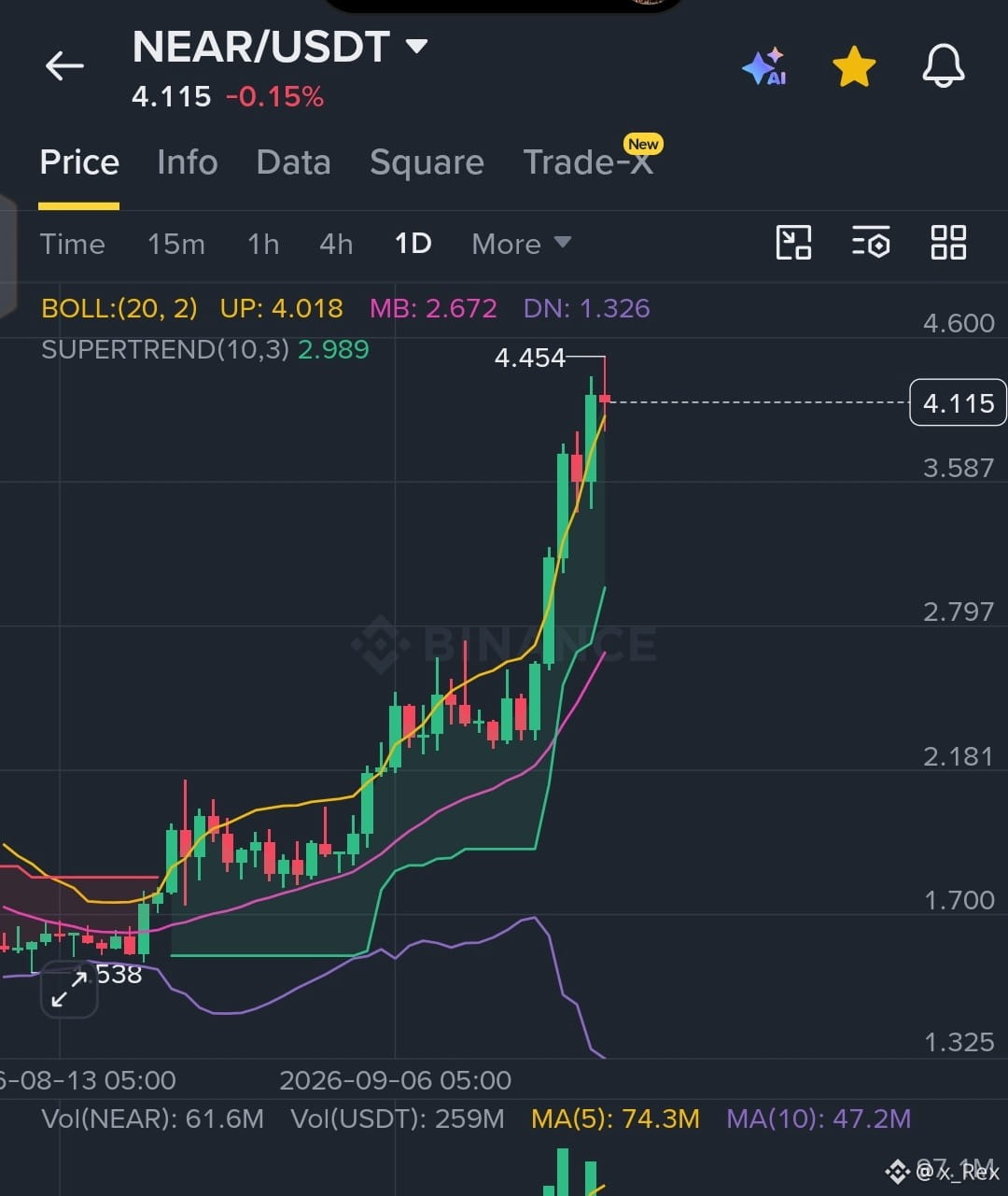
$NEAR 's rally looks crazy on the chart.
But the more interesting part is what's happening underneath it.
NEAR was trading around $4.29 on Sept. 21 after gaining roughly 80% in a week.
At the same time, NEAR Intents has reached about $29.3B in cumulative volume.
And there's another development that caught my attention:
NEAR announced confidential-by-default deposits and withdrawals for perpetual futures trading through near.com.
So the current NEAR narrative isn't simply “L1 goes up.”
It's becoming a combination of:
cross-chain execution + Intents + privacy + derivatives.
That makes the current rally easier to understand.
It also makes the next part harder.
After an ~80% weekly move, the market needs to prove that users and volume are growing alongside the token.
If NEAR cools down without losing the underlying activity, that could be healthier than another vertical candle.
$NEAR
{future}(NEARUSDT)
$NEAR 's rally looks crazy on the chart.
But the more interesting part is what's happening underneath it.
NEAR was trading around $4.29 on Sept. 21 after gaining roughly 80% in a week.
At the same time, NEAR Intents has reached about $29.3B in cumulative volume.
And there's another development that caught my attention:
NEAR announced confidential-by-default deposits and withdrawals for perpetual futures trading through near.com.
So the current NEAR narrative isn't simply “L1 goes up.”
It's becoming a combination of:
cross-chain execution + Intents + privacy + derivatives.
That makes the current rally easier to understand.
It also makes the next part harder.
After an ~80% weekly move, the market needs to prove that users and volume are growing alongside the token.
If NEAR cools down without losing the underlying activity, that could be healthier than another vertical candle.
$NEAR
But the more interesting part is what's happening underneath it.
NEAR was trading around $4.29 on Sept. 21 after gaining roughly 80% in a week.
At the same time, NEAR Intents has reached about $29.3B in cumulative volume.
And there's another development that caught my attention:
NEAR announced confidential-by-default deposits and withdrawals for perpetual futures trading through near.com.
So the current NEAR narrative isn't simply “L1 goes up.”
It's becoming a combination of:
cross-chain execution + Intents + privacy + derivatives.
That makes the current rally easier to understand.
It also makes the next part harder.
After an ~80% weekly move, the market needs to prove that users and volume are growing alongside the token.
If NEAR cools down without losing the underlying activity, that could be healthier than another vertical candle.
$NEAR
1
347
·
--
Vérifié
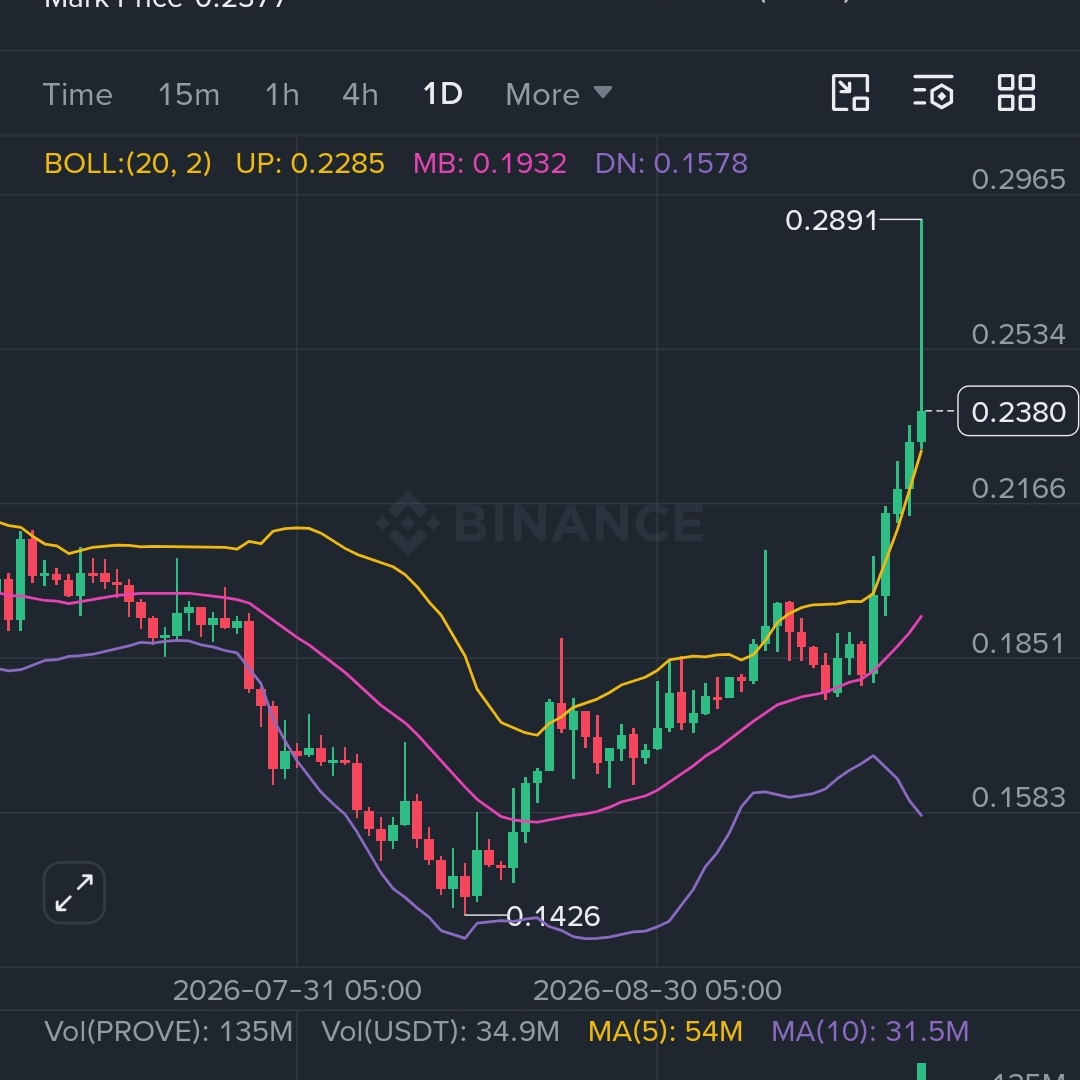
Everyone is watching PROVE's candle.
I'm watching what happens when the Binance campaign ends.
PROVE has climbed from roughly $0.18 in the middle of September to around the $0.23–$0.27 zone, while Binance is running a 1.5 million PROVE trading tournament through Sept. 24.
That's important context.
A trading campaign can bring liquidity, attention and short-term momentum.
But it can also make the chart look stronger than the underlying organic demand actually is.
The interesting part about Succinct is the infrastructure underneath the token.
Succinct is building zero-knowledge proving infrastructure, essentially trying to make cryptographic proofs easier to generate and verify at scale.
So there are two stories happening simultaneously:
PROVE the asset being traded aggressively
and
Succinct the protocol trying to make ZK proving infrastructure more usable.
The next few sessions could tell us which story the market actually cares about.
If PROVE keeps its gains after the Binance tournament winds down, that would be a much more interesting signal than another campaign-driven volume spike.
$PROVE
Everyone is watching PROVE's candle.
I'm watching what happens when the Binance campaign ends.
PROVE has climbed from roughly $0.18 in the middle of September to around the $0.23–$0.27 zone, while Binance is running a 1.5 million PROVE trading tournament through Sept. 24.
That's important context.
A trading campaign can bring liquidity, attention and short-term momentum.
But it can also make the chart look stronger than the underlying organic demand actually is.
The interesting part about Succinct is the infrastructure underneath the token.
Succinct is building zero-knowledge proving infrastructure, essentially trying to make cryptographic proofs easier to generate and verify at scale.
So there are two stories happening simultaneously:
PROVE the asset being traded aggressively
and
Succinct the protocol trying to make ZK proving infrastructure more usable.
The next few sessions could tell us which story the market actually cares about.
If PROVE keeps its gains after the Binance tournament winds down, that would be a much more interesting signal than another campaign-driven volume spike.
$PROVE
I'm watching what happens when the Binance campaign ends.
PROVE has climbed from roughly $0.18 in the middle of September to around the $0.23–$0.27 zone, while Binance is running a 1.5 million PROVE trading tournament through Sept. 24.
That's important context.
A trading campaign can bring liquidity, attention and short-term momentum.
But it can also make the chart look stronger than the underlying organic demand actually is.
The interesting part about Succinct is the infrastructure underneath the token.
Succinct is building zero-knowledge proving infrastructure, essentially trying to make cryptographic proofs easier to generate and verify at scale.
So there are two stories happening simultaneously:
PROVE the asset being traded aggressively
and
Succinct the protocol trying to make ZK proving infrastructure more usable.
The next few sessions could tell us which story the market actually cares about.
If PROVE keeps its gains after the Binance tournament winds down, that would be a much more interesting signal than another campaign-driven volume spike.
$PROVE
2
880
·
--
$BANK has had a very strange few days.
Lorenzo Protocol's BANK was around $0.027 on Sept. 17.
Then:
$0.0284 → $0.0299 → $0.0387 → intraday highs above $0.04 → sharp pullback → around $0.034 today.
That isn't a smooth trend. It's a market fighting over price discovery.
And Binance has added another variable.
The BANK/USDT trading tournament is running until Sept. 25, with 400 BNB in token-voucher rewards plus limited-time sprint rewards.
So there are now two separate forces interacting:
real demand for BANK and campaign-driven trading volume.
That distinction matters.
If volume stays elevated after the tournament pressure fades, the move becomes more interesting.
If volume disappears with the incentives, we may have learned that traders were chasing the event rather than the protocol.
$BANK is currently one of those coins where volume may tell the story better than the candle.
DYOR.
{future}(BANKUSDT)
Would you rather see $BANK hold $0.03 with healthy volume or spike above $0.04 again?
$BANK has had a very strange few days.
Lorenzo Protocol's BANK was around $0.027 on Sept. 17.
Then:
$0.0284 → $0.0299 → $0.0387 → intraday highs above $0.04 → sharp pullback → around $0.034 today.
That isn't a smooth trend. It's a market fighting over price discovery.
And Binance has added another variable.
The BANK/USDT trading tournament is running until Sept. 25, with 400 BNB in token-voucher rewards plus limited-time sprint rewards.
So there are now two separate forces interacting:
real demand for BANK and campaign-driven trading volume.
That distinction matters.
If volume stays elevated after the tournament pressure fades, the move becomes more interesting.
If volume disappears with the incentives, we may have learned that traders were chasing the event rather than the protocol.
$BANK is currently one of those coins where volume may tell the story better than the candle.
DYOR.
Would you rather see $BANK hold $0.03 with healthy volume or spike above $0.04 again?
Lorenzo Protocol's BANK was around $0.027 on Sept. 17.
Then:
$0.0284 → $0.0299 → $0.0387 → intraday highs above $0.04 → sharp pullback → around $0.034 today.
That isn't a smooth trend. It's a market fighting over price discovery.
And Binance has added another variable.
The BANK/USDT trading tournament is running until Sept. 25, with 400 BNB in token-voucher rewards plus limited-time sprint rewards.
So there are now two separate forces interacting:
real demand for BANK and campaign-driven trading volume.
That distinction matters.
If volume stays elevated after the tournament pressure fades, the move becomes more interesting.
If volume disappears with the incentives, we may have learned that traders were chasing the event rather than the protocol.
$BANK is currently one of those coins where volume may tell the story better than the candle.
DYOR.
Would you rather see $BANK hold $0.03 with healthy volume or spike above $0.04 again?
Slow climb
35%
Another spike
24%
Pullback first
18%
No idea, watching volume
23%
17 Votes • Vote fermé
1.4k
·
--
Vérifié
USD/BRL just got a crypto-native trading venue.
Binance launched $USDBRL USDT today, giving traders 24/7 access to a USD/Brazilian real perpetual instead of waiting for traditional FX market hours.
The interesting part isn't just the new pair.
It's the bridge between two very different markets.
The real was around R$5.12 per dollar on Monday morning, while BTC was pushing toward $86K. Now traders can express a view on Brazilian FX using USDT settlement and a perpetual structure.
That creates a pretty unusual combination:
traditional macro exposure + crypto-style leverage + 24/7 trading.
Binance says the contract supports up to 100x leverage, with funding settled every eight hours.
Personally, I'd watch the first few days more than the leverage number.
The real question is whether liquidity develops enough for USDBRLUSDT to become something traders actually use, rather than simply another new contract sitting on the exchange.
dyor.
😁
@TradexRex
{future}(USDBRLUSDT)
Would you trade FX through a crypto perpetual?
USD/BRL just got a crypto-native trading venue.
Binance launched $USDBRL USDT today, giving traders 24/7 access to a USD/Brazilian real perpetual instead of waiting for traditional FX market hours.
The interesting part isn't just the new pair.
It's the bridge between two very different markets.
The real was around R$5.12 per dollar on Monday morning, while BTC was pushing toward $86K. Now traders can express a view on Brazilian FX using USDT settlement and a perpetual structure.
That creates a pretty unusual combination:
traditional macro exposure + crypto-style leverage + 24/7 trading.
Binance says the contract supports up to 100x leverage, with funding settled every eight hours.
Personally, I'd watch the first few days more than the leverage number.
The real question is whether liquidity develops enough for USDBRLUSDT to become something traders actually use, rather than simply another new contract sitting on the exchange.
dyor.
😁
@x_Rex
Would you trade FX through a crypto perpetual?
Binance launched $USDBRL USDT today, giving traders 24/7 access to a USD/Brazilian real perpetual instead of waiting for traditional FX market hours.
The interesting part isn't just the new pair.
It's the bridge between two very different markets.
The real was around R$5.12 per dollar on Monday morning, while BTC was pushing toward $86K. Now traders can express a view on Brazilian FX using USDT settlement and a perpetual structure.
That creates a pretty unusual combination:
traditional macro exposure + crypto-style leverage + 24/7 trading.
Binance says the contract supports up to 100x leverage, with funding settled every eight hours.
Personally, I'd watch the first few days more than the leverage number.
The real question is whether liquidity develops enough for USDBRLUSDT to become something traders actually use, rather than simply another new contract sitting on the exchange.
dyor.
😁
@x_Rex
Would you trade FX through a crypto perpetual?
Yes✅
81%
I'd stick to spot FX
5%
oo much leverage risk
14%
Watching first
0%
21 Votes • Vote fermé
1.6k
·
--
The Clarity Act died and crypto went UP 😂🧧🧧🧧 @TradexRex
The US Senate blocked the Clarity Act last week 👀
The bill that was supposed to finally give crypto clear regulation in America — gone. Blocked by Democrats over ethics concerns about Trump's own crypto holdings.
And Bitcoin? Went from $76K to $81K after the news.
Let me explain why that makes sense —
The CFTC immediately said "fine, we'll do it ourselves" and sent their own crypto regulatory package to the White House. The SEC introduced a 5-year Innovation Exemption letting platforms trade tokenized stocks without traditional registration.
So regulation isn't dead. It just changed shape overnight.
Coinbase up 11.7%. Strategy up 16.4%. Robinhood up 9.1%. All crypto stocks surging.
The market realized something — regulation through agencies might actually be cleaner than regulation through a Congress that can't agree on anything 😅
Did you expect crypto to go UP when the Clarity Act died? 👇
@TradexRex
$BTC
#bitcoin #BinanceSquareFamily #BinanceSquareTalks
The Clarity Act died and crypto went UP 😂🧧🧧🧧 @x_Rex
The US Senate blocked the Clarity Act last week 👀
The bill that was supposed to finally give crypto clear regulation in America — gone. Blocked by Democrats over ethics concerns about Trump's own crypto holdings.
And Bitcoin? Went from $76K to $81K after the news.
Let me explain why that makes sense —
The CFTC immediately said "fine, we'll do it ourselves" and sent their own crypto regulatory package to the White House. The SEC introduced a 5-year Innovation Exemption letting platforms trade tokenized stocks without traditional registration.
So regulation isn't dead. It just changed shape overnight.
Coinbase up 11.7%. Strategy up 16.4%. Robinhood up 9.1%. All crypto stocks surging.
The market realized something — regulation through agencies might actually be cleaner than regulation through a Congress that can't agree on anything 😅
Did you expect crypto to go UP when the Clarity Act died? 👇
@x_Rex
$BTC
#bitcoin #BinanceSquareFamily #BinanceSquareTalks
The US Senate blocked the Clarity Act last week 👀
The bill that was supposed to finally give crypto clear regulation in America — gone. Blocked by Democrats over ethics concerns about Trump's own crypto holdings.
And Bitcoin? Went from $76K to $81K after the news.
Let me explain why that makes sense —
The CFTC immediately said "fine, we'll do it ourselves" and sent their own crypto regulatory package to the White House. The SEC introduced a 5-year Innovation Exemption letting platforms trade tokenized stocks without traditional registration.
So regulation isn't dead. It just changed shape overnight.
Coinbase up 11.7%. Strategy up 16.4%. Robinhood up 9.1%. All crypto stocks surging.
The market realized something — regulation through agencies might actually be cleaner than regulation through a Congress that can't agree on anything 😅
Did you expect crypto to go UP when the Clarity Act died? 👇
@x_Rex
$BTC
#bitcoin #BinanceSquareFamily #BinanceSquareTalks

2.4k
28
147
2.4k
·
--
Have a Good Day Everyone 💐🧧
'repost'✅✨
'Claim'
And for the next few days:
Next Target 22k✅
Follow & Repost Fam✨✅💐
Thanks😇😸
$BTC Trading is 🔥
{future}(BTCUSDT)
Have a Good Day Everyone 💐🧧
'repost'✅✨
'Claim'
And for the next few days:
Next Target 22k✅
Follow & Repost Fam✨✅💐
Thanks😇😸
$BTC Trading is 🔥
'repost'✅✨
'Claim'
And for the next few days:
Next Target 22k✅
Follow & Repost Fam✨✅💐
Thanks😇😸
$BTC Trading is 🔥

583
17
56
583
·
--
Binance just launched Spot Trading Tournament Season 3 today 👀
500,000 USDC in prizes. Eligible pairs: BTC, ETH, SOL, XRP spot trading.
Now before everyone rushes in — let me tell you what I've learned watching trading tournaments on Binance this year.
The $SLX competition? Token pumped before it started, faded during. The $RE tournament that just ran? Same pattern. The July Spot Tournament? Same.
Tournaments don't automatically make tokens pump. They create activity. Activity creates volume. Volume creates opportunity — for people who understand the game.
The minimum trading volume to qualify? 500 USD equivalent. That's accessible to basically anyone.
But the people who consistently WIN these tournaments aren't trading randomly. They're picking the pair with the most volatility. Right now that's probable SOL or XRP— both with clear technical setups and active price movement.
BTC and ETH are safer but less volatile = harder to generate big volume quickly.
Tournament runs until Binance announces the end date. Get in early — Sprint Rewards favor early participants.
Are you joining Season 3? Which pair are you trading? 👇
BTC
$ETH
{future}(ETHUSDT)
SOL
{future}(SOLUSDT)
$XRP
{future}(XRPUSDT)
#BinanceSquare #BinanceSquareTalks #creatorpad
Binance just launched Spot Trading Tournament Season 3 today 👀
500,000 USDC in prizes. Eligible pairs: BTC, ETH, SOL, XRP spot trading.
Now before everyone rushes in — let me tell you what I've learned watching trading tournaments on Binance this year.
The $SLX competition? Token pumped before it started, faded during. The $RE tournament that just ran? Same pattern. The July Spot Tournament? Same.
Tournaments don't automatically make tokens pump. They create activity. Activity creates volume. Volume creates opportunity — for people who understand the game.
The minimum trading volume to qualify? 500 USD equivalent. That's accessible to basically anyone.
But the people who consistently WIN these tournaments aren't trading randomly. They're picking the pair with the most volatility. Right now that's probable SOL or XRP— both with clear technical setups and active price movement.
BTC and ETH are safer but less volatile = harder to generate big volume quickly.
Tournament runs until Binance announces the end date. Get in early — Sprint Rewards favor early participants.
Are you joining Season 3? Which pair are you trading? 👇
BTC
$ETH
SOL
$XRP
#BinanceSquare #BinanceSquareTalks #creatorpad
500,000 USDC in prizes. Eligible pairs: BTC, ETH, SOL, XRP spot trading.
Now before everyone rushes in — let me tell you what I've learned watching trading tournaments on Binance this year.
The $SLX competition? Token pumped before it started, faded during. The $RE tournament that just ran? Same pattern. The July Spot Tournament? Same.
Tournaments don't automatically make tokens pump. They create activity. Activity creates volume. Volume creates opportunity — for people who understand the game.
The minimum trading volume to qualify? 500 USD equivalent. That's accessible to basically anyone.
But the people who consistently WIN these tournaments aren't trading randomly. They're picking the pair with the most volatility. Right now that's probable SOL or XRP— both with clear technical setups and active price movement.
BTC and ETH are safer but less volatile = harder to generate big volume quickly.
Tournament runs until Binance announces the end date. Get in early — Sprint Rewards favor early participants.
Are you joining Season 3? Which pair are you trading? 👇
BTC
$ETH
SOL
$XRP
#BinanceSquare #BinanceSquareTalks #creatorpad

557
3
41
557
·
--
Vérifié
Binance just launched options trading on 1,000+ US stocks and ETFs 👀🧧
Apple. Tesla. NVIDIA. S&P 500. All tradeable as options. On Binance. With crypto.
But that's not even the wildest part —
There's a memecoin called $BOB that a Binance INTERN made. The intern drew a stick figure. The community named it BOB. Its mission is literally "make BSC great again." It's already on Binance Alpha and people think a full Binance listing is coming 😂
And then there's $BASED — Coinbase's Layer 2 just announced they're exploring a native token. After saying for years they had no plans to launch one. A BASE token listing on Binance would be one of the biggest listing events of 2026.
So let me get this straight —
Binance is listing stock options. An intern's stick figure drawing might get listed. And Coinbase is about to give its own chain a token.
We are living in the most chaotic and interesting time in crypto history 😅
Which of these excites you most? 👇
Not financial advice. DYOR 🙏
#BSC #BinanceSquare #BinanceSquareTalks #crypto
$BNB
{future}(BNBUSDT)
{future}(BASEDUSDT)
Binance just launched options trading on 1,000+ US stocks and ETFs 👀🧧
Apple. Tesla. NVIDIA. S&P 500. All tradeable as options. On Binance. With crypto.
But that's not even the wildest part —
There's a memecoin called $BOB that a Binance INTERN made. The intern drew a stick figure. The community named it BOB. Its mission is literally "make BSC great again." It's already on Binance Alpha and people think a full Binance listing is coming 😂
And then there's $BASED — Coinbase's Layer 2 just announced they're exploring a native token. After saying for years they had no plans to launch one. A BASE token listing on Binance would be one of the biggest listing events of 2026.
So let me get this straight —
Binance is listing stock options. An intern's stick figure drawing might get listed. And Coinbase is about to give its own chain a token.
We are living in the most chaotic and interesting time in crypto history 😅
Which of these excites you most? 👇
Not financial advice. DYOR 🙏
#BSC #BinanceSquare #BinanceSquareTalks #crypto
$BNB
Apple. Tesla. NVIDIA. S&P 500. All tradeable as options. On Binance. With crypto.
But that's not even the wildest part —
There's a memecoin called $BOB that a Binance INTERN made. The intern drew a stick figure. The community named it BOB. Its mission is literally "make BSC great again." It's already on Binance Alpha and people think a full Binance listing is coming 😂
And then there's $BASED — Coinbase's Layer 2 just announced they're exploring a native token. After saying for years they had no plans to launch one. A BASE token listing on Binance would be one of the biggest listing events of 2026.
So let me get this straight —
Binance is listing stock options. An intern's stick figure drawing might get listed. And Coinbase is about to give its own chain a token.
We are living in the most chaotic and interesting time in crypto history 😅
Which of these excites you most? 👇
Not financial advice. DYOR 🙏
#BSC #BinanceSquare #BinanceSquareTalks #crypto
$BNB

1.3k
8
91
1.5k
·
--
Have a Good Day Everyone 💐🧧
It's Been a while since I posted Anything New.
And for the next few days:
Next Target 22k✅
Follow & Repost Fam✨✅💐
Thanks😇😸
$BTC Trading is 🔥
{future}(BTCUSDT)
Have a Good Day Everyone 💐🧧
It's Been a while since I posted Anything New.
And for the next few days:
Next Target 22k✅
Follow & Repost Fam✨✅💐
Thanks😇😸
$BTC Trading is 🔥
It's Been a while since I posted Anything New.
And for the next few days:
Next Target 22k✅
Follow & Repost Fam✨✅💐
Thanks😇😸
$BTC Trading is 🔥

2.5k
36
207
2.5k
·
--
Trading sur 30 j de 12.9K USDT en $BTC
One week from today — the Fed decides whether to hike rates again 👀
66% probability of a rate hike right now. Oil above $92. 10-year Treasury at 4.78%. Macro pressure everywhere.
If they hike — risk assets sell off. Crypto included. BTC could retest $73-74K.
If they pause — that $289 billion sitting in stablecoins starts moving into risk assets fast.
Binance Research just confirmed crypto equity holders increased their portfolio allocation from 64% to 72% in September. People are already moving IN before the Fed decision. That's either smart or risky depending on what Powell says September 16.
BTC at $78,686 right now. ETH $2,473. The market is holding its breath 👁️
Are you positioned before the Fed decision or waiting to react? 👇
Not financial advice. DYOR 🙏
$BTC $ETH
{future}(ETHUSDT)
#BinanceSquare #BinanceSquareTalks #crypto
One week from today — the Fed decides whether to hike rates again 👀
66% probability of a rate hike right now. Oil above $92. 10-year Treasury at 4.78%. Macro pressure everywhere.
If they hike — risk assets sell off. Crypto included. BTC could retest $73-74K.
If they pause — that $289 billion sitting in stablecoins starts moving into risk assets fast.
Binance Research just confirmed crypto equity holders increased their portfolio allocation from 64% to 72% in September. People are already moving IN before the Fed decision. That's either smart or risky depending on what Powell says September 16.
BTC at $78,686 right now. ETH $2,473. The market is holding its breath 👁️
Are you positioned before the Fed decision or waiting to react? 👇
Not financial advice. DYOR 🙏
$BTC $ETH
#BinanceSquare #BinanceSquareTalks #crypto
66% probability of a rate hike right now. Oil above $92. 10-year Treasury at 4.78%. Macro pressure everywhere.
If they hike — risk assets sell off. Crypto included. BTC could retest $73-74K.
If they pause — that $289 billion sitting in stablecoins starts moving into risk assets fast.
Binance Research just confirmed crypto equity holders increased their portfolio allocation from 64% to 72% in September. People are already moving IN before the Fed decision. That's either smart or risky depending on what Powell says September 16.
BTC at $78,686 right now. ETH $2,473. The market is holding its breath 👁️
Are you positioned before the Fed decision or waiting to react? 👇
Not financial advice. DYOR 🙏
$BTC $ETH
#BinanceSquare #BinanceSquareTalks #crypto
185
·
--
Ethereum's core developers just published their roadmap to become quantum resistant by December 2029 👀
This sounds technical. But here's why it matters in plain language , Quantum computers can potentially break the encryption that protects your crypto wallet. Your private keys. Your funds. Everything.
Ethereum's team looked at this threat seriously enough to put it on the official roadmap. 62 EIPs evaluated. 9 teams involved.
December 2029 target.
That's 3 years to build protection against computers that don't fully exist yet. Proactive. Not reactive.
Most blockchains aren't even talking about this yet. Bitcoin included.
This is the kind of long-term technical thinking that separates serious projects from hype projects. Nobody buys ETH because of quantum resistance. But it's exactly why ETH is still here when other "ETH killers" from 2021 are gone 👁️
Does quantum computing worry you as a crypto holder? 👇
$ETH #Ethereum #BinanceSquare
$ETH
{future}(ETHUSDT)
Quantum computing threat to crypto?
Ethereum's core developers just published their roadmap to become quantum resistant by December 2029 👀
This sounds technical. But here's why it matters in plain language , Quantum computers can potentially break the encryption that protects your crypto wallet. Your private keys. Your funds. Everything.
Ethereum's team looked at this threat seriously enough to put it on the official roadmap. 62 EIPs evaluated. 9 teams involved.
December 2029 target.
That's 3 years to build protection against computers that don't fully exist yet. Proactive. Not reactive.
Most blockchains aren't even talking about this yet. Bitcoin included.
This is the kind of long-term technical thinking that separates serious projects from hype projects. Nobody buys ETH because of quantum resistance. But it's exactly why ETH is still here when other "ETH killers" from 2021 are gone 👁️
Does quantum computing worry you as a crypto holder? 👇
$ETH #Ethereum #BinanceSquare
$ETH
Quantum computing threat to crypto?
This sounds technical. But here's why it matters in plain language , Quantum computers can potentially break the encryption that protects your crypto wallet. Your private keys. Your funds. Everything.
Ethereum's team looked at this threat seriously enough to put it on the official roadmap. 62 EIPs evaluated. 9 teams involved.
December 2029 target.
That's 3 years to build protection against computers that don't fully exist yet. Proactive. Not reactive.
Most blockchains aren't even talking about this yet. Bitcoin included.
This is the kind of long-term technical thinking that separates serious projects from hype projects. Nobody buys ETH because of quantum resistance. But it's exactly why ETH is still here when other "ETH killers" from 2021 are gone 👁️
Does quantum computing worry you as a crypto holder? 👇
$ETH #Ethereum #BinanceSquare
$ETH
Quantum computing threat to crypto?
😰 Yes
67%
😐 Long way off
0%
🔐 ETH will solve it
33%
3 Votes • Vote fermé
1
219
·
--
Trading sur 30 j de 12.9K USDT en $BTC
🚨Lazarus Group — North Korea's state-sponsored hackers — just moved $30 million through Hyperliquid, Bitcoin, Ethereum and Solana 👀
Arkham Intelligence flagged the wallets. The same group responsible for billions in crypto theft over the years.
And they chose Hyperliquid. The hottest DeFi platform of 2026. Up 227% this year.
This isn't random. Hackers go where the liquidity is. $30 million moved through a platform means that platform has enough depth to absorb large moves without slipping.
Backhanded compliment for Hyperliquid honestly 😅
But it also raises a real question — as DeFi grows and attracts more liquidity, does it automatically attract more sophisticated attackers? The $74 million Tectonic exploit on Cronos happened the same week. $4.9 million Injective vulnerability. $2.47 million Aquifer drain on Solana.
The more money in DeFi — the bigger the target
Does news like this change how you use DeFi? 👇
$BTC
$HYPE
{future}(HYPEUSDT)
#Hyperliquid
🚨Lazarus Group — North Korea's state-sponsored hackers — just moved $30 million through Hyperliquid, Bitcoin, Ethereum and Solana 👀
Arkham Intelligence flagged the wallets. The same group responsible for billions in crypto theft over the years.
And they chose Hyperliquid. The hottest DeFi platform of 2026. Up 227% this year.
This isn't random. Hackers go where the liquidity is. $30 million moved through a platform means that platform has enough depth to absorb large moves without slipping.
Backhanded compliment for Hyperliquid honestly 😅
But it also raises a real question — as DeFi grows and attracts more liquidity, does it automatically attract more sophisticated attackers? The $74 million Tectonic exploit on Cronos happened the same week. $4.9 million Injective vulnerability. $2.47 million Aquifer drain on Solana.
The more money in DeFi — the bigger the target
Does news like this change how you use DeFi? 👇
$BTC
$HYPE
#Hyperliquid
Arkham Intelligence flagged the wallets. The same group responsible for billions in crypto theft over the years.
And they chose Hyperliquid. The hottest DeFi platform of 2026. Up 227% this year.
This isn't random. Hackers go where the liquidity is. $30 million moved through a platform means that platform has enough depth to absorb large moves without slipping.
Backhanded compliment for Hyperliquid honestly 😅
But it also raises a real question — as DeFi grows and attracts more liquidity, does it automatically attract more sophisticated attackers? The $74 million Tectonic exploit on Cronos happened the same week. $4.9 million Injective vulnerability. $2.47 million Aquifer drain on Solana.
The more money in DeFi — the bigger the target
Does news like this change how you use DeFi? 👇
$BTC
$HYPE
#Hyperliquid
1
803
·
--
Wait. There's an Anthropic pre-IPO token trading on Binance? 👀
$ANTHROPIC USDT closed near a $1.9 TRILLION valuation on August 31.
For context — that's bigger than most countries' GDP. For a company that hasn't even gone public yet.
This is exactly what $VELVET was built for — synthetic pre-IPO exposure. And now Binance is offering it directly.
The AI narrative is so strong right now that people are paying $1.9 trillion valuation for a company that makes ChatGPT's main competitor. Before it's even listed publicly.
Binance Research just confirmed the total crypto market cap rose 17.6% in September alone. Stablecoin allocations fell 22% as people moved money INTO risk assets.
The dry powder is being deployed. The question is whether it's too fast too soon
Would you buy an Anthropic pre-IPO token on Binance? 👇
#Anthropic #BinanceSquare #BinanceSquareTalks #crypto
{future}(ANTHROPICUSDT)
{future}(VELVETUSDT)
Poll:
Pre-IPO tokens on Binance — good idea?
Wait. There's an Anthropic pre-IPO token trading on Binance? 👀
$ANTHROPIC USDT closed near a $1.9 TRILLION valuation on August 31.
For context — that's bigger than most countries' GDP. For a company that hasn't even gone public yet.
This is exactly what $VELVET was built for — synthetic pre-IPO exposure. And now Binance is offering it directly.
The AI narrative is so strong right now that people are paying $1.9 trillion valuation for a company that makes ChatGPT's main competitor. Before it's even listed publicly.
Binance Research just confirmed the total crypto market cap rose 17.6% in September alone. Stablecoin allocations fell 22% as people moved money INTO risk assets.
The dry powder is being deployed. The question is whether it's too fast too soon
Would you buy an Anthropic pre-IPO token on Binance? 👇
#Anthropic #BinanceSquare #BinanceSquareTalks #crypto
Poll:
Pre-IPO tokens on Binance — good idea?
$ANTHROPIC USDT closed near a $1.9 TRILLION valuation on August 31.
For context — that's bigger than most countries' GDP. For a company that hasn't even gone public yet.
This is exactly what $VELVET was built for — synthetic pre-IPO exposure. And now Binance is offering it directly.
The AI narrative is so strong right now that people are paying $1.9 trillion valuation for a company that makes ChatGPT's main competitor. Before it's even listed publicly.
Binance Research just confirmed the total crypto market cap rose 17.6% in September alone. Stablecoin allocations fell 22% as people moved money INTO risk assets.
The dry powder is being deployed. The question is whether it's too fast too soon
Would you buy an Anthropic pre-IPO token on Binance? 👇
#Anthropic #BinanceSquare #BinanceSquareTalks #crypto
Poll:
Pre-IPO tokens on Binance — good idea?
🚀 Yes — want early access
63%
😐 Too risky for me
25%
🤔 Interesting but need info
6%
💀 A trap to lose money faster
6%
16 Votes • Vote fermé
2.3k
·
--
Vérifié
Hunter Biden just launched a memecoin today 😂
$LAPTOP goes live September 9 on Base chain. 20% of supply airdropped to people who lost money on $TRUMP . 30% to founders. Up to 30% subject to burns tied to future events.
I genuinely don't know whether to laugh or be impressed at the audacity 😅
But here's the serious crypto lesson underneath this joke —
Political memecoins are now a real category. $TRUMP ran to billions in market cap. $MELANIA followed. Now $LAPTOP. The pattern is clear — name recognition + controversy + timing = instant liquidity.
Will $LAPTOP pump? No idea. Political memecoins are pure speculation with zero fundamentals. But they move FAST and the exit windows are tiny.
If you're thinking about touching it — know exactly when you're getting out before you get in
Are you playing #Laptop or staying far away? 👇
Not financial advice. DYOR 🙏
#Laptop #Memecoin #BinanceSquare #BinanceSquareTalks
{future}(TRUMPUSDT)
Poll:
$LAPTOP — what are you doing?
Hunter Biden just launched a memecoin today 😂
$LAPTOP goes live September 9 on Base chain. 20% of supply airdropped to people who lost money on $TRUMP . 30% to founders. Up to 30% subject to burns tied to future events.
I genuinely don't know whether to laugh or be impressed at the audacity 😅
But here's the serious crypto lesson underneath this joke —
Political memecoins are now a real category. $TRUMP ran to billions in market cap. $MELANIA followed. Now $LAPTOP. The pattern is clear — name recognition + controversy + timing = instant liquidity.
Will $LAPTOP pump? No idea. Political memecoins are pure speculation with zero fundamentals. But they move FAST and the exit windows are tiny.
If you're thinking about touching it — know exactly when you're getting out before you get in
Are you playing #Laptop or staying far away? 👇
Not financial advice. DYOR 🙏
#Laptop #Memecoin #BinanceSquare #BinanceSquareTalks
Poll:
$LAPTOP — what are you doing?
$LAPTOP goes live September 9 on Base chain. 20% of supply airdropped to people who lost money on $TRUMP . 30% to founders. Up to 30% subject to burns tied to future events.
I genuinely don't know whether to laugh or be impressed at the audacity 😅
But here's the serious crypto lesson underneath this joke —
Political memecoins are now a real category. $TRUMP ran to billions in market cap. $MELANIA followed. Now $LAPTOP. The pattern is clear — name recognition + controversy + timing = instant liquidity.
Will $LAPTOP pump? No idea. Political memecoins are pure speculation with zero fundamentals. But they move FAST and the exit windows are tiny.
If you're thinking about touching it — know exactly when you're getting out before you get in
Are you playing #Laptop or staying far away? 👇
Not financial advice. DYOR 🙏
#Laptop #Memecoin #BinanceSquare #BinanceSquareTalks
Poll:
$LAPTOP — what are you doing?
🎰 Aping in for the meme
33%
👀 Watching from far away
45%
💀 Political memecoins = scams
0%
😂 Just here for the drama
22%
9 Votes • Vote fermé
1
1.3k
·
--
Stablecoin market cap just hit $289.9 billion ☘️🧧
That's almost $290 billion sitting on the sidelines in stablecoins.
Still Waiting.
Every dollar in stablecoins is a dollar that COULD move into crypto but hasn't yet. It's dry powder. Parked capital. People who are in the ecosystem but not fully committed yet.
When stablecoin dominance is high and market sentiment shifts — that capital moves FAST.
USD1 from World Liberty Financial earning 5.2% APR on Binance right now. USDT. USDC. reUSD earning 6.17%. People are parking money AND earning yield while they wait.
$290 billion waiting on the sidelines is either the biggest opportunity or the biggest warning sign depending on how you look at it .
Are you sitting in stablecoins right now or fully deployed? 👇
#StablecoinSafety #BinanceSquare #BinanceSquareTalks #crypto
$BTC
🐎😍
Stablecoin market cap just hit $289.9 billion ☘️🧧
That's almost $290 billion sitting on the sidelines in stablecoins.
Still Waiting.
Every dollar in stablecoins is a dollar that COULD move into crypto but hasn't yet. It's dry powder. Parked capital. People who are in the ecosystem but not fully committed yet.
When stablecoin dominance is high and market sentiment shifts — that capital moves FAST.
USD1 from World Liberty Financial earning 5.2% APR on Binance right now. USDT. USDC. reUSD earning 6.17%. People are parking money AND earning yield while they wait.
$290 billion waiting on the sidelines is either the biggest opportunity or the biggest warning sign depending on how you look at it .
Are you sitting in stablecoins right now or fully deployed? 👇
#StablecoinSafety #BinanceSquare #BinanceSquareTalks #crypto
$BTC
🐎😍
That's almost $290 billion sitting on the sidelines in stablecoins.
Still Waiting.
Every dollar in stablecoins is a dollar that COULD move into crypto but hasn't yet. It's dry powder. Parked capital. People who are in the ecosystem but not fully committed yet.
When stablecoin dominance is high and market sentiment shifts — that capital moves FAST.
USD1 from World Liberty Financial earning 5.2% APR on Binance right now. USDT. USDC. reUSD earning 6.17%. People are parking money AND earning yield while they wait.
$290 billion waiting on the sidelines is either the biggest opportunity or the biggest warning sign depending on how you look at it .
Are you sitting in stablecoins right now or fully deployed? 👇
#StablecoinSafety #BinanceSquare #BinanceSquareTalks #crypto
$BTC
🐎😍


7.3k
71
374
7.3k
Connectez-vous pour découvrir plus de contenu
Rejoignez la communauté mondiale des adeptes de cryptomonnaies sur Binance Square
⚡️ Suviez les dernières informations importantes sur les cryptomonnaies.
💬 Jugé digne de confiance par la plus grande plateforme d’échange de cryptomonnaies au monde.
👍 Découvrez les connaissances que partagent les créateurs vérifiés.
Adresse e-mail/Nº de téléphone
Sujets d’actualité
US10YearYieldNears5.3%
1,585 vues
85 mentions
#US10YearYieldNears5.3%
📊 BOND YIELDS AT MULTI-YEAR HIGHS!
The US 10-year Treasury yield approaching 5.3% is creating a major talking point across global financial markets. Rising yields reflect changing expectations around inflation, economic growth, and government borrowing.
🌍 What makes this situation particularly interesting is the impact on crypto sentiment. Higher bond yields may reduce demand for riskier assets, while persistent institutional interest could provide some support to crypto markets.
₿ The real question is: Can Bitcoin maintain its strength while traditional financial markets face rising borrowing costs?
💡 Sometimes, the biggest market signals come from outside the crypto market.
#Bitcoin #CryptoMarket #US10YearYield #TreasuryYields #BTC $BTC
PALASH5
·0 mentions J’aime
·1.6k vues
BitcoinETFsTake$6.34BillionInQ3
210 vues
14 mentions
KoreaProposesTokenizingStocksAndBonds
23,842 vues
354 mentions