

tehameeyunX
1.5k Publications

tehameeyunX
Signaler
Bloquer l’utilisateur
Enjoying crypto with 10,000 others — X: @notyurbelleza
Ouvert au trading
Trade régulièrement
5.8 an(s)
87 Suivis
17.8K+ Abonnés
5.6K+ J’aime
Publications
Portefeuille
Tous
Citations
Direct
PINNED
·
--
🚨Powell’s Big Shift🚨
: Why the End of QT Might Be a Warning, Not a Victory
The Federal Reserve has officially confirmed the end of Quantitative Tightening (QT). Many headlines are celebrating the move, calling it the return of liquidity and the start of a new market rally. But history suggests a different story — one that’s less about strength and more about stress.
When the Fed stops tightening, it’s rarely because conditions are stable. More often, it signals that something deeper in the economy is starting to crack.
Consider the facts. Since 2003, markets have actually performed better during periods of QT, with an average annual gain of 16.9%, compared to 10.3% during QE. Even since mid-2022, when the Fed drained $2.2 trillion from the system, the S&P 500 still managed to rise over 20%. That’s because tightening usually occurs when the economy is strong enough to handle it. When the Fed shifts to easing, it’s often because conditions are deteriorating.
QE isn’t a reward for stability — it’s a rescue plan. It arrives during moments of crisis, not calm. Think back to 2008 or 2020. Each time, quantitative easing marked the Fed’s response to an urgent need for liquidity, not a celebration of economic health.
Powell’s latest pivot, therefore, shouldn’t be mistaken for a green light. The end of QT may bring short-term optimism, but it also hints at a larger concern: growth is slowing, liquidity pressures are building, and the Fed is moving to protect the system.
Markets might rally briefly, as they often do when policy shifts toward easing, but history shows what tends to follow — conditions usually worsen before they improve.
The real question investors should be asking isn’t what Powell ended, but why he had to end it.
$SAGA
{future}(SAGAUSDT)
🚨Powell’s Big Shift🚨
: Why the End of QT Might Be a Warning, Not a Victory
The Federal Reserve has officially confirmed the end of Quantitative Tightening (QT). Many headlines are celebrating the move, calling it the return of liquidity and the start of a new market rally. But history suggests a different story — one that’s less about strength and more about stress.
When the Fed stops tightening, it’s rarely because conditions are stable. More often, it signals that something deeper in the economy is starting to crack.
Consider the facts. Since 2003, markets have actually performed better during periods of QT, with an average annual gain of 16.9%, compared to 10.3% during QE. Even since mid-2022, when the Fed drained $2.2 trillion from the system, the S&P 500 still managed to rise over 20%. That’s because tightening usually occurs when the economy is strong enough to handle it. When the Fed shifts to easing, it’s often because conditions are deteriorating.
QE isn’t a reward for stability — it’s a rescue plan. It arrives during moments of crisis, not calm. Think back to 2008 or 2020. Each time, quantitative easing marked the Fed’s response to an urgent need for liquidity, not a celebration of economic health.
Powell’s latest pivot, therefore, shouldn’t be mistaken for a green light. The end of QT may bring short-term optimism, but it also hints at a larger concern: growth is slowing, liquidity pressures are building, and the Fed is moving to protect the system.
Markets might rally briefly, as they often do when policy shifts toward easing, but history shows what tends to follow — conditions usually worsen before they improve.
The real question investors should be asking isn’t what Powell ended, but why he had to end it.
$SAGA
: Why the End of QT Might Be a Warning, Not a Victory
The Federal Reserve has officially confirmed the end of Quantitative Tightening (QT). Many headlines are celebrating the move, calling it the return of liquidity and the start of a new market rally. But history suggests a different story — one that’s less about strength and more about stress.
When the Fed stops tightening, it’s rarely because conditions are stable. More often, it signals that something deeper in the economy is starting to crack.
Consider the facts. Since 2003, markets have actually performed better during periods of QT, with an average annual gain of 16.9%, compared to 10.3% during QE. Even since mid-2022, when the Fed drained $2.2 trillion from the system, the S&P 500 still managed to rise over 20%. That’s because tightening usually occurs when the economy is strong enough to handle it. When the Fed shifts to easing, it’s often because conditions are deteriorating.
QE isn’t a reward for stability — it’s a rescue plan. It arrives during moments of crisis, not calm. Think back to 2008 or 2020. Each time, quantitative easing marked the Fed’s response to an urgent need for liquidity, not a celebration of economic health.
Powell’s latest pivot, therefore, shouldn’t be mistaken for a green light. The end of QT may bring short-term optimism, but it also hints at a larger concern: growth is slowing, liquidity pressures are building, and the Fed is moving to protect the system.
Markets might rally briefly, as they often do when policy shifts toward easing, but history shows what tends to follow — conditions usually worsen before they improve.
The real question investors should be asking isn’t what Powell ended, but why he had to end it.
$SAGA
17
10
142
132.4k
PINNED
·
--
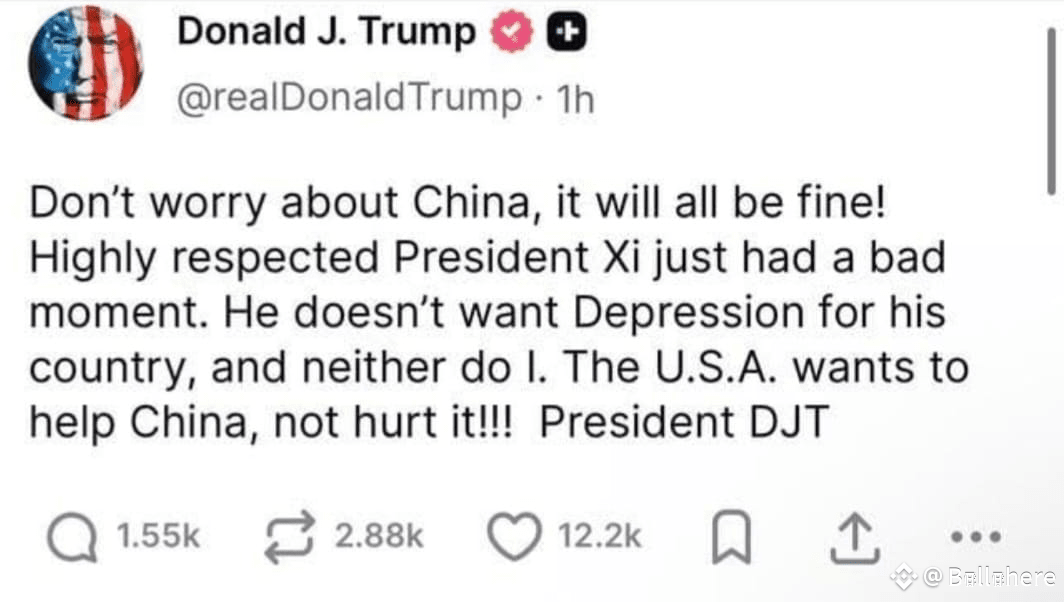
The U.S. economy is starting to look like a setup for insider trading — and the playbook is becoming obvious:
1️⃣ Announce new tariffs, trigger fear, and watch markets tumble.
2️⃣ Wait a few days as panic spreads and prices sink.
3️⃣ Suddenly reverse course — cancel or delay the tariffs — and markets rebound sharply.
It’s the same cycle playing out again and again. If the latest tariffs get rolled back, this would mark the third time the markets were crashed and revived by empty promises.
A textbook case of political pump and dump.
BUY & TRADE 👉 $XRP $DOGE $Jager
The U.S. economy is starting to look like a setup for insider trading — and the playbook is becoming obvious:
1️⃣ Announce new tariffs, trigger fear, and watch markets tumble.
2️⃣ Wait a few days as panic spreads and prices sink.
3️⃣ Suddenly reverse course — cancel or delay the tariffs — and markets rebound sharply.
It’s the same cycle playing out again and again. If the latest tariffs get rolled back, this would mark the third time the markets were crashed and revived by empty promises.
A textbook case of political pump and dump.
BUY & TRADE 👉 $XRP $DOGE $Jager
The U.S. economy is starting to look like a setup for insider trading — and the playbook is becoming obvious:
1️⃣ Announce new tariffs, trigger fear, and watch markets tumble.
2️⃣ Wait a few days as panic spreads and prices sink.
3️⃣ Suddenly reverse course — cancel or delay the tariffs — and markets rebound sharply.
It’s the same cycle playing out again and again. If the latest tariffs get rolled back, this would mark the third time the markets were crashed and revived by empty promises.
A textbook case of political pump and dump.
BUY & TRADE 👉 $XRP $DOGE $Jager
31
18
134
148.2k
·
--
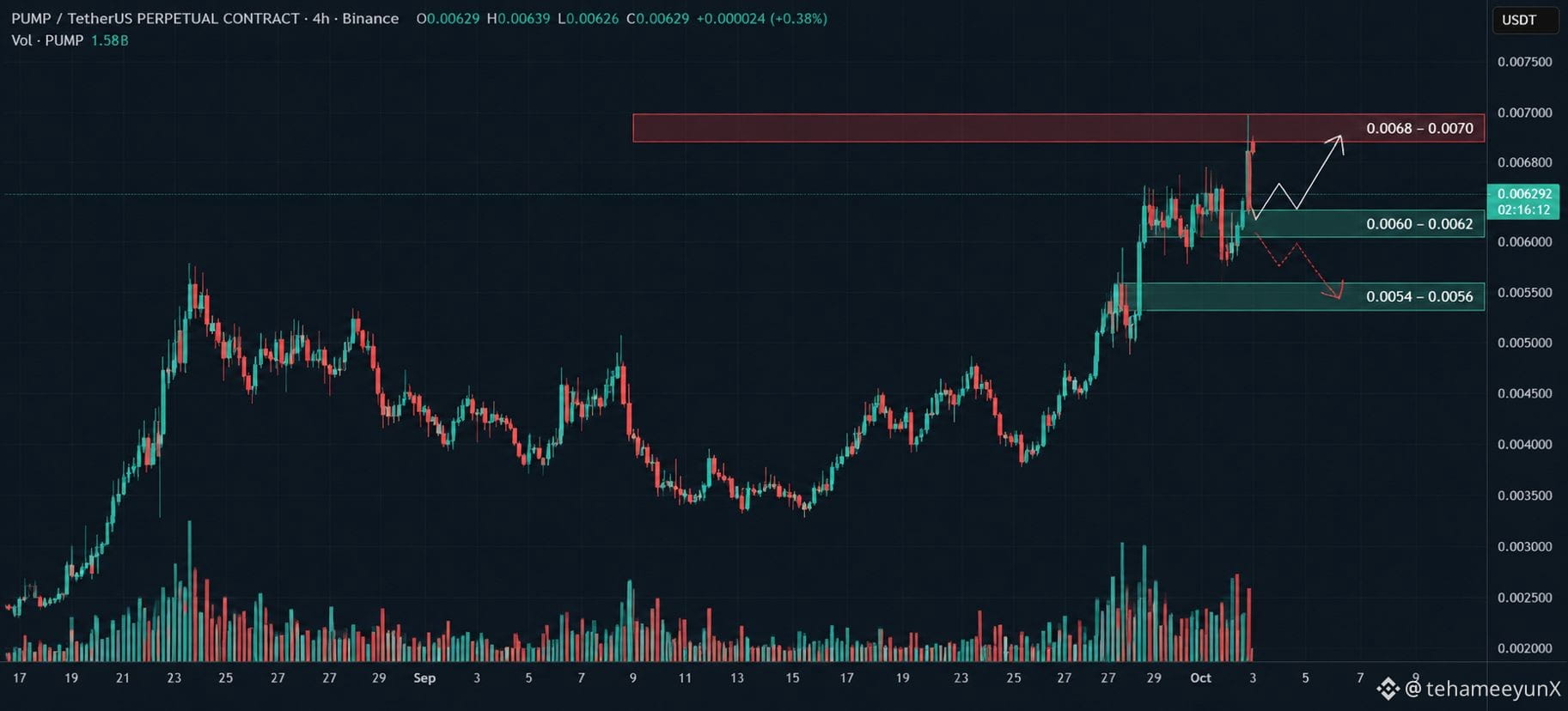
$PUMP 🎯
Target hit
The breakout and retest setup played out nicely, with PUMP pushing through the $0.0060 area and tagging $0.0065+.
Next setup: I want to see $0.0060-$0.0062 hold as support. If it does, $0.0068 and $0.0070 come into focus.
Still one of my top watchlist coins.
$PUMP 🎯
Target hit
The breakout and retest setup played out nicely, with PUMP pushing through the $0.0060 area and tagging $0.0065+.
Next setup: I want to see $0.0060-$0.0062 hold as support. If it does, $0.0068 and $0.0070 come into focus.
Still one of my top watchlist coins.
Target hit
The breakout and retest setup played out nicely, with PUMP pushing through the $0.0060 area and tagging $0.0065+.
Next setup: I want to see $0.0060-$0.0062 hold as support. If it does, $0.0068 and $0.0070 come into focus.
Still one of my top watchlist coins.
tehameeyunX
·
--
$PUMP
PUMP still looking very strong over the last few days.
This is a key area for me. PUMP led the market previously, then pulled back and consolidated.
If we get a strong second leg here, I think it could be a very good signal for the broader market.
Watching closely.
PUMP still looking very strong over the last few days.
This is a key area for me. PUMP led the market previously, then pulled back and consolidated.
If we get a strong second leg here, I think it could be a very good signal for the broader market.
Watching closely.
468
·
--
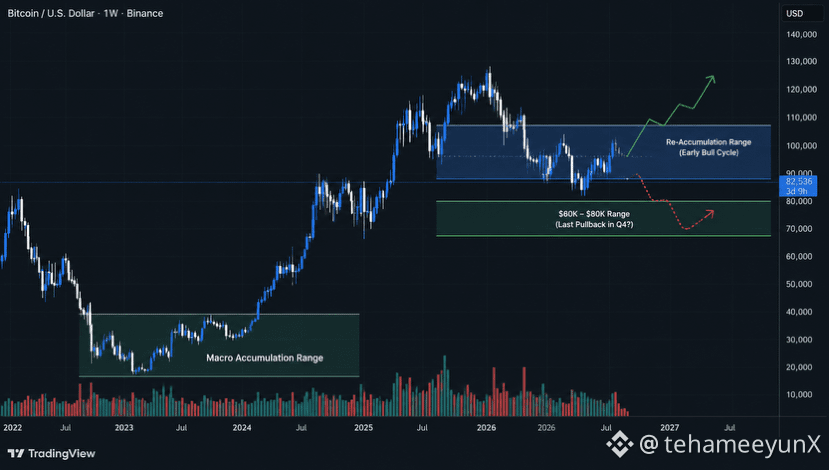
$BTC
Bitcoin is transitioning here.
BTC is holding the ~$80K-$83K re-accumulation zone and structure still looks constructive.
If $80K-$83K holds, I’m watching $100K next.
A clean break above $100K would put the ATH zone back in focus.
Lose $80K and the $60K-$70K range comes back into play.
For now, the key is simple: hold the range, then break higher.
#Bitcoin
$BTC
Bitcoin is transitioning here.
BTC is holding the ~$80K-$83K re-accumulation zone and structure still looks constructive.
If $80K-$83K holds, I’m watching $100K next.
A clean break above $100K would put the ATH zone back in focus.
Lose $80K and the $60K-$70K range comes back into play.
For now, the key is simple: hold the range, then break higher.
#Bitcoin
Bitcoin is transitioning here.
BTC is holding the ~$80K-$83K re-accumulation zone and structure still looks constructive.
If $80K-$83K holds, I’m watching $100K next.
A clean break above $100K would put the ATH zone back in focus.
Lose $80K and the $60K-$70K range comes back into play.
For now, the key is simple: hold the range, then break higher.
#Bitcoin
172
·
--
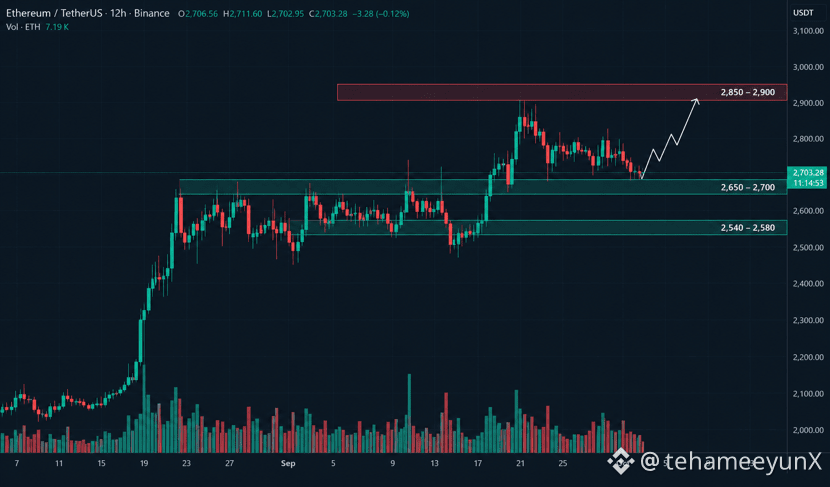
$ETH has been chopping for 1 month, had a small move, and has now continued chopping for 10 days.
I think it’s only a matter of time before this one explodes. I’m long calls.
$ETH has been chopping for 1 month, had a small move, and has now continued chopping for 10 days.
I think it’s only a matter of time before this one explodes. I’m long calls.
I think it’s only a matter of time before this one explodes. I’m long calls.
1
165
·
--
Haussier
$USELESS
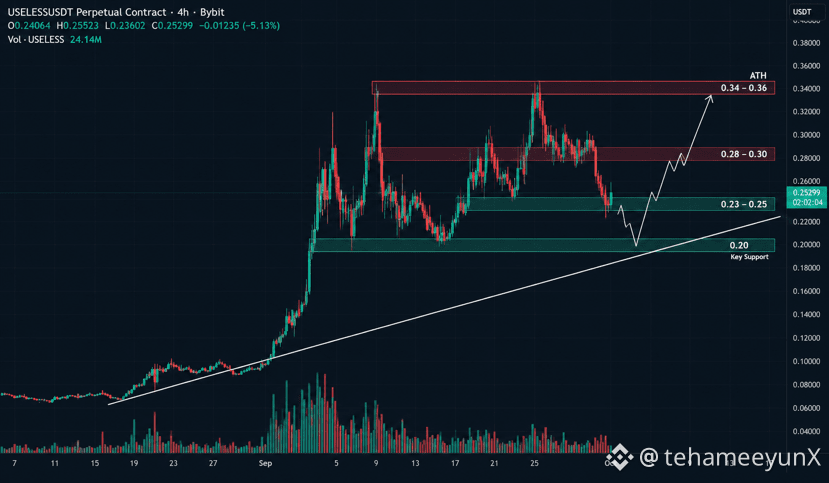
I think the $0.20 area could ultimately be the low.
Still looks like one of the leaders among Solana memes, and the bounce today is a good sign.
I still think ATHs can come back into play eventually.
Still holding a small bag.
$USELESS
I think the $0.20 area could ultimately be the low.
Still looks like one of the leaders among Solana memes, and the bounce today is a good sign.
I still think ATHs can come back into play eventually.
Still holding a small bag.
I think the $0.20 area could ultimately be the low.
Still looks like one of the leaders among Solana memes, and the bounce today is a good sign.
I still think ATHs can come back into play eventually.
Still holding a small bag.
1
762
·
--
$PUMP
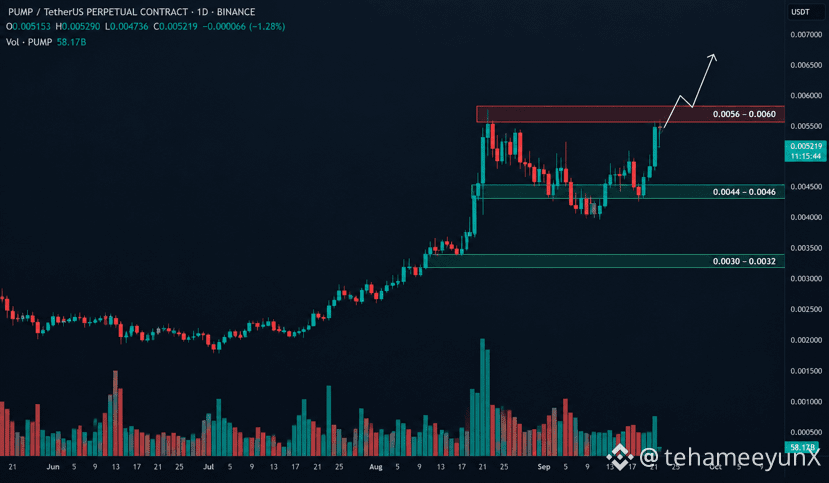
PUMP still looking very strong over the last few days.
This is a key area for me. PUMP led the market previously, then pulled back and consolidated.
If we get a strong second leg here, I think it could be a very good signal for the broader market.
Watching closely.
$PUMP
PUMP still looking very strong over the last few days.
This is a key area for me. PUMP led the market previously, then pulled back and consolidated.
If we get a strong second leg here, I think it could be a very good signal for the broader market.
Watching closely.
PUMP still looking very strong over the last few days.
This is a key area for me. PUMP led the market previously, then pulled back and consolidated.
If we get a strong second leg here, I think it could be a very good signal for the broader market.
Watching closely.
1
1
315
·
--
Coins interest list:
Momentum:
$PUMP
MARSCOIN
AZTEC
LINK
Best leaders pulling back a bit:
ENA
NEAR
VVV
$ZEC
USELESS
Coins that could potentially be decent pair trade shorts:
LIT
$ONDO
2Z
ARB
GRT
Just decent mid range coins I'm eyeing for trade potential:
GRASS
WLD
PENGU (Im in it)
ZRO
AERO
GRAM
Coins interest list:
Momentum:
$PUMP
MARSCOIN
AZTEC
LINK
Best leaders pulling back a bit:
ENA
NEAR
VVV
$ZEC
USELESS
Coins that could potentially be decent pair trade shorts:
LIT
$ONDO
2Z
ARB
GRT
Just decent mid range coins I'm eyeing for trade potential:
GRASS
WLD
PENGU (Im in it)
ZRO
AERO
GRAM
Momentum:
$PUMP
MARSCOIN
AZTEC
LINK
Best leaders pulling back a bit:
ENA
NEAR
VVV
$ZEC
USELESS
Coins that could potentially be decent pair trade shorts:
LIT
$ONDO
2Z
ARB
GRT
Just decent mid range coins I'm eyeing for trade potential:
GRASS
WLD
PENGU (Im in it)
ZRO
AERO
GRAM
1
675
·
--
$ZEC BIG PREDICTION
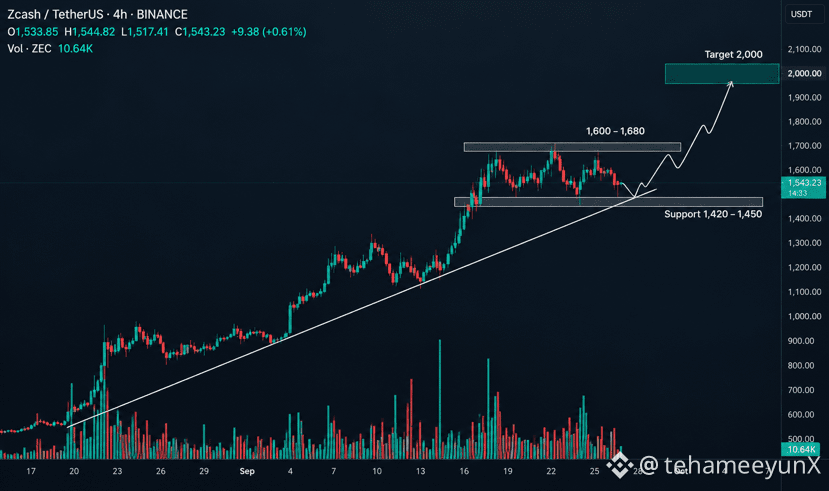
Still one of my favorite charts right now.
Sitting around $1,530 to $1,540 after tagging a new ATH at $1,676.81.
This pullback looks healthy after the recent move.
I’m expecting some consolidation here before another push toward $2,000.
Not chasing the wick. Still watching the trend.
NFA, DYOR.
$ZEC BIG PREDICTION
Still one of my favorite charts right now.
Sitting around $1,530 to $1,540 after tagging a new ATH at $1,676.81.
This pullback looks healthy after the recent move.
I’m expecting some consolidation here before another push toward $2,000.
Not chasing the wick. Still watching the trend.
NFA, DYOR.
Still one of my favorite charts right now.
Sitting around $1,530 to $1,540 after tagging a new ATH at $1,676.81.
This pullback looks healthy after the recent move.
I’m expecting some consolidation here before another push toward $2,000.
Not chasing the wick. Still watching the trend.
NFA, DYOR.
364
·
--
$LIT
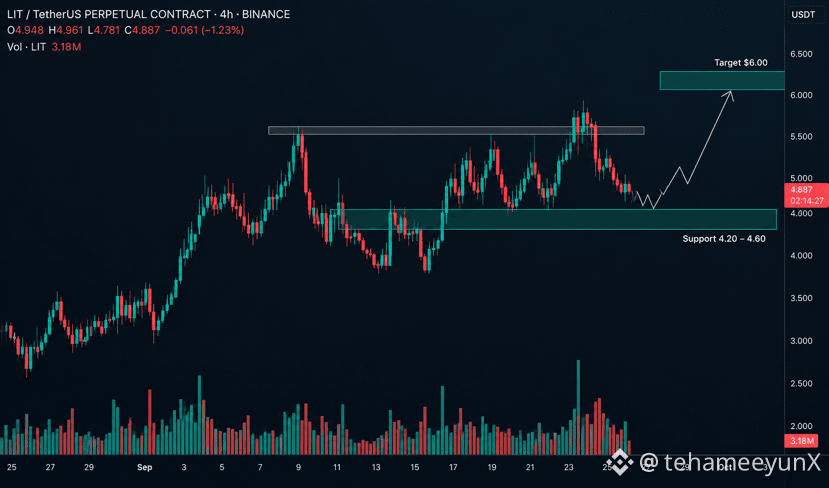
LIT is still one of the better fundamental coins on my radar.
The unlocks are coming in a few months, so that’s the main thing I’m keeping an eye on. The first major unlocks are scheduled around late December and January.
That said, I still think there’s room for another push before then.
I’m watching $6 as the next target.
Would expect some chop around here first before the next move.
Still bullish on the setup, just keeping the unlocks in mind.
NFA, DYOR.
#Write2Earn
$LIT
LIT is still one of the better fundamental coins on my radar.
The unlocks are coming in a few months, so that’s the main thing I’m keeping an eye on. The first major unlocks are scheduled around late December and January.
That said, I still think there’s room for another push before then.
I’m watching $6 as the next target.
Would expect some chop around here first before the next move.
Still bullish on the setup, just keeping the unlocks in mind.
NFA, DYOR.
#Write2Earn
LIT is still one of the better fundamental coins on my radar.
The unlocks are coming in a few months, so that’s the main thing I’m keeping an eye on. The first major unlocks are scheduled around late December and January.
That said, I still think there’s room for another push before then.
I’m watching $6 as the next target.
Would expect some chop around here first before the next move.
Still bullish on the setup, just keeping the unlocks in mind.
NFA, DYOR.
#Write2Earn
1
665
·
--
$NEAR
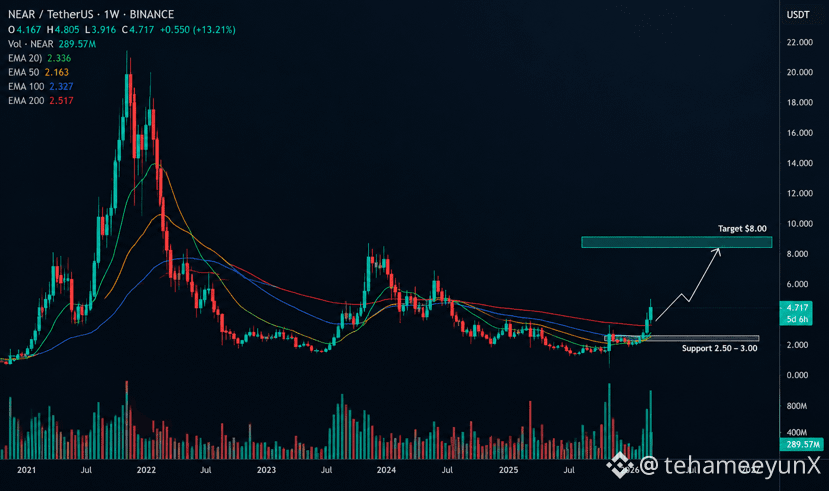
The 1W chart is still looking really solid.
All the major EMAs have flipped bullish, and the structure is getting cleaner with every move.
$8 is the next logical target I’m watching.
#Write2Earn
$NEAR
The 1W chart is still looking really solid.
All the major EMAs have flipped bullish, and the structure is getting cleaner with every move.
$8 is the next logical target I’m watching.
#Write2Earn
The 1W chart is still looking really solid.
All the major EMAs have flipped bullish, and the structure is getting cleaner with every move.
$8 is the next logical target I’m watching.
#Write2Earn
1
862
·
--
$NEAR
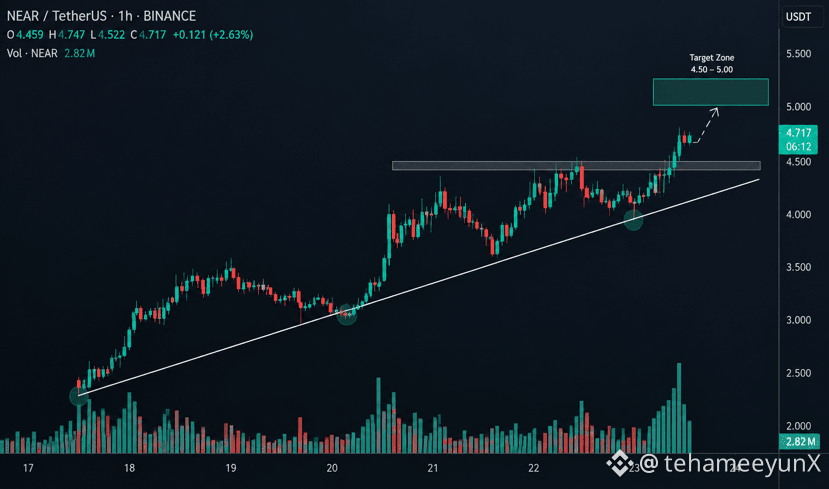
NEAR just keeps grinding higher.
Still one of the strongest coins on my radar right now. The trend is clean and momentum is holding up.
I’m watching $4.50 to $5.00 as the next target zone.
If that breaks cleanly, $6+ comes into focus.
Still watching this one closely.
$NEAR
NEAR just keeps grinding higher.
Still one of the strongest coins on my radar right now. The trend is clean and momentum is holding up.
I’m watching $4.50 to $5.00 as the next target zone.
If that breaks cleanly, $6+ comes into focus.
Still watching this one closely.
NEAR just keeps grinding higher.
Still one of the strongest coins on my radar right now. The trend is clean and momentum is holding up.
I’m watching $4.50 to $5.00 as the next target zone.
If that breaks cleanly, $6+ comes into focus.
Still watching this one closely.
tehameeyunX
·
--
$NEAR
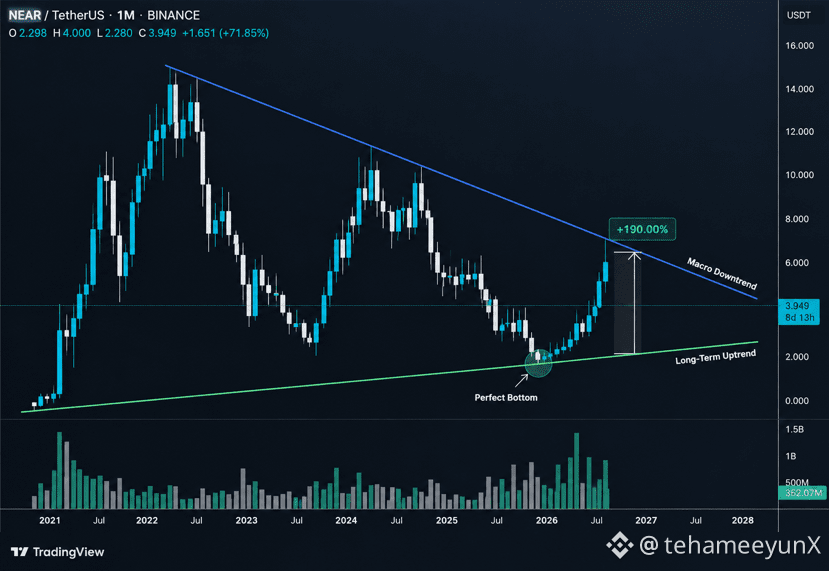
The June bearish bias played out with a deep retracement, but NEAR eventually found the perfect bottom at the long-term diagonal uptrend.
Since that low, NEAR has ripped more than 190% and is now pushing straight into the macro downtrend.
This is the level I’m watching now.
A clean breakout could completely change the bigger picture.
#Write2Earn
The June bearish bias played out with a deep retracement, but NEAR eventually found the perfect bottom at the long-term diagonal uptrend.
Since that low, NEAR has ripped more than 190% and is now pushing straight into the macro downtrend.
This is the level I’m watching now.
A clean breakout could completely change the bigger picture.
#Write2Earn
2
2.2k
·
--
$NEAR
The June bearish bias played out with a deep retracement, but NEAR eventually found the perfect bottom at the long-term diagonal uptrend.
Since that low, NEAR has ripped more than 190% and is now pushing straight into the macro downtrend.
This is the level I’m watching now.
A clean breakout could completely change the bigger picture.
#Write2Earn
$NEAR
The June bearish bias played out with a deep retracement, but NEAR eventually found the perfect bottom at the long-term diagonal uptrend.
Since that low, NEAR has ripped more than 190% and is now pushing straight into the macro downtrend.
This is the level I’m watching now.
A clean breakout could completely change the bigger picture.
#Write2Earn
The June bearish bias played out with a deep retracement, but NEAR eventually found the perfect bottom at the long-term diagonal uptrend.
Since that low, NEAR has ripped more than 190% and is now pushing straight into the macro downtrend.
This is the level I’m watching now.
A clean breakout could completely change the bigger picture.
#Write2Earn
2
1
5
1.9k
·
--
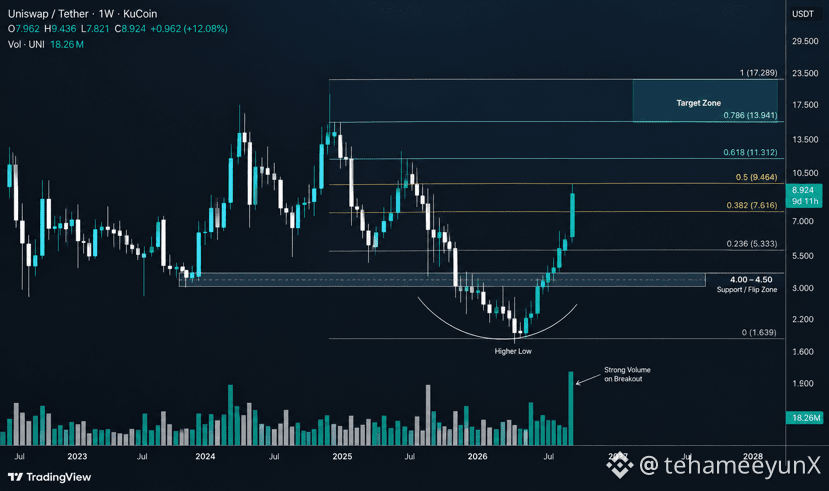
$UNI has been absolutely ripping.
Over +120%
The key was the weekly downtrend. Once UNI broke above it, the real confirmation was the retest holding as support.
That retest gave us another +60% move.
Classic breakout → retest → continuation.
Still watching $UNI closely.
#Write2Earn
$UNI has been absolutely ripping.
Over +120%
The key was the weekly downtrend. Once UNI broke above it, the real confirmation was the retest holding as support.
That retest gave us another +60% move.
Classic breakout → retest → continuation.
Still watching $UNI closely.
#Write2Earn
Over +120%
The key was the weekly downtrend. Once UNI broke above it, the real confirmation was the retest holding as support.
That retest gave us another +60% move.
Classic breakout → retest → continuation.
Still watching $UNI closely.
#Write2Earn
2
2.1k
·
--
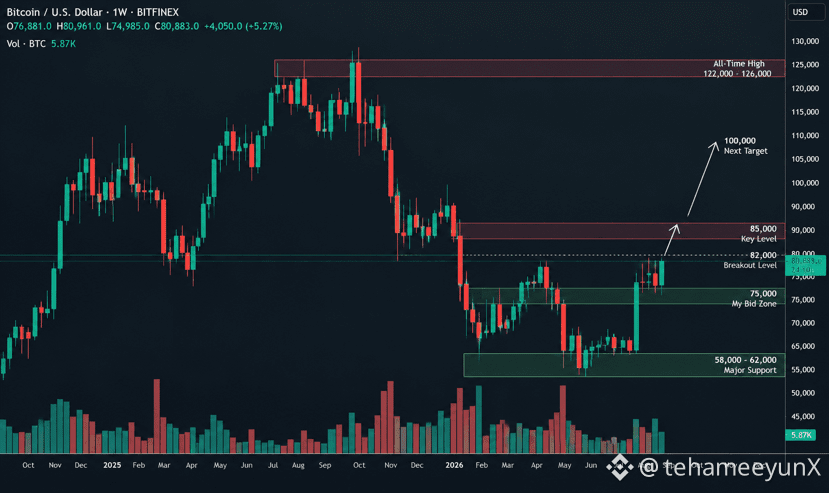
$BTC
I’m bidding around $75K
That’s right around the current support area while $80K to $82K remains the big breakout zone.
If we actually break $82K with strength and hold above it, I think $100K comes back into play.
For now, I just want to see $85K reclaimed and some stability above it. That would be good enough for me.
Cmon $BTC 🙂↕️
$BTC
I’m bidding around $75K
That’s right around the current support area while $80K to $82K remains the big breakout zone.
If we actually break $82K with strength and hold above it, I think $100K comes back into play.
For now, I just want to see $85K reclaimed and some stability above it. That would be good enough for me.
Cmon $BTC 🙂↕️
I’m bidding around $75K
That’s right around the current support area while $80K to $82K remains the big breakout zone.
If we actually break $82K with strength and hold above it, I think $100K comes back into play.
For now, I just want to see $85K reclaimed and some stability above it. That would be good enough for me.
Cmon $BTC 🙂↕️
3
1.3k
·
--
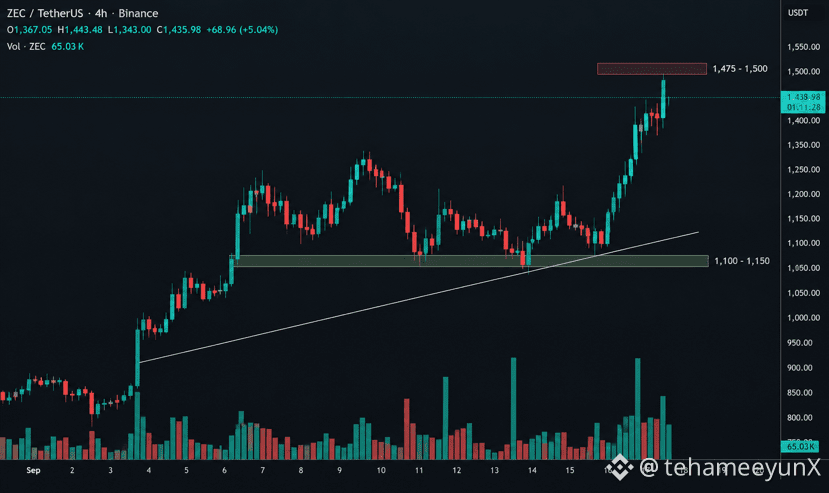
$ZEC the winners keep winning.
After this move, I’m not chasing here. I’m bidding around $1,200 and letting it come to me.
That lines up with the recent breakout/retest area and nearby technical support. ZEC just pushed to new highs around $1,385, with $1,375 to $1,500 now in focus.
Still think $2K+ is on the table if momentum stays strong.
Let’s see if the Silk Road bid gets filled.
{spot}(ZECUSDT)
#BitcoinSurpasses$77000
$ZEC the winners keep winning.
After this move, I’m not chasing here. I’m bidding around $1,200 and letting it come to me.
That lines up with the recent breakout/retest area and nearby technical support. ZEC just pushed to new highs around $1,385, with $1,375 to $1,500 now in focus.
Still think $2K+ is on the table if momentum stays strong.
Let’s see if the Silk Road bid gets filled.
#BitcoinSurpasses$77000
After this move, I’m not chasing here. I’m bidding around $1,200 and letting it come to me.
That lines up with the recent breakout/retest area and nearby technical support. ZEC just pushed to new highs around $1,385, with $1,375 to $1,500 now in focus.
Still think $2K+ is on the table if momentum stays strong.
Let’s see if the Silk Road bid gets filled.
#BitcoinSurpasses$77000
2
660
·
--
Article
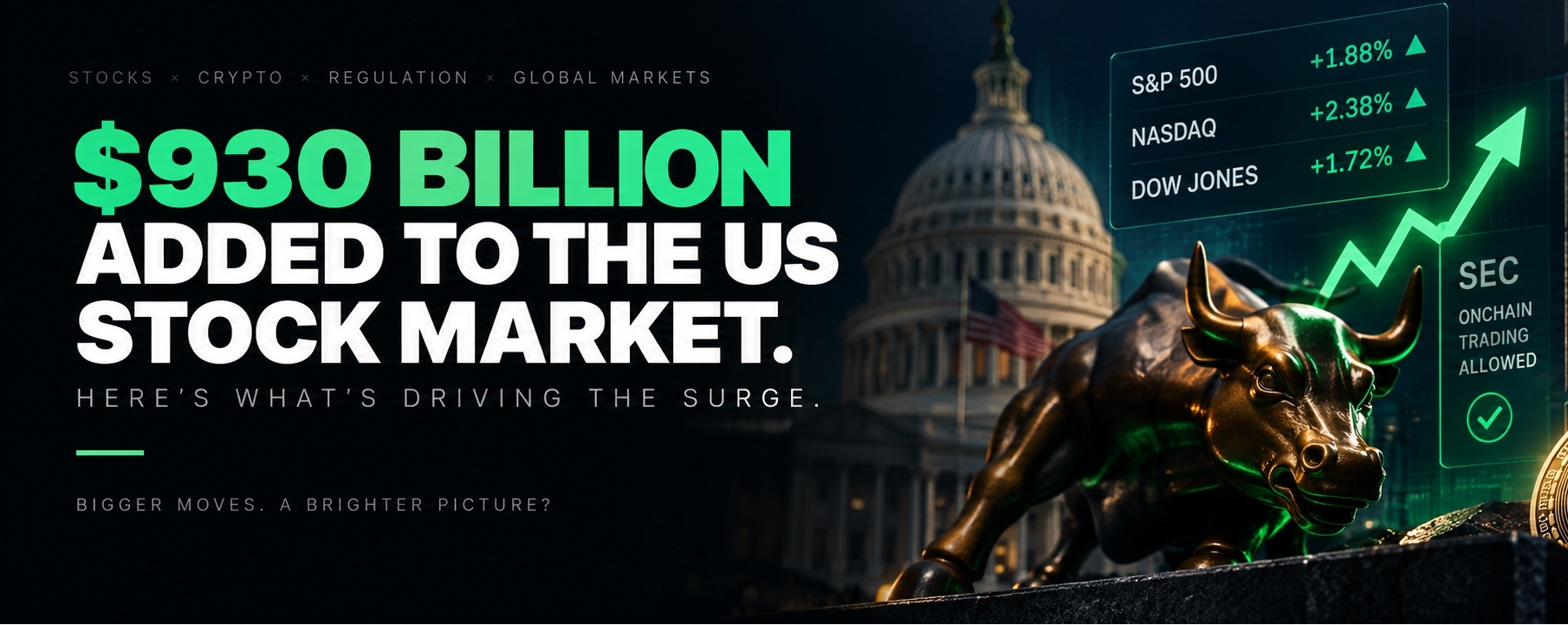
WALL STREET JUST GOT A $930B BOOST THEN THE SEC CHANGED THE GAMEThe part that caught my attention today isn’t just Bitcoin reclaiming $77K
It’s the fact that traditional markets and crypto are suddenly moving toward the same idea: putting more financial assets onchain.
U.S. stocks opened sharply higher on Thursday as oil prices cooled and Treasury yields pulled back. The S&P 500 rose about 1%, while the Nasdaq gained more than 1.5% early in the session.
But the bigger story for me is what happened underneath that move.
THE SEC JUST OPENED A NEW DOOR
The SEC introduced a five-year Innovation Exemption that allows eligible venues to facilitate trading of tokenized U.S. stocks onchain.
This is not synthetic stock exposure. Under the framework, eligible tokenized stocks must provide holders the same rights and privileges as the underlying securities, including dividends and voting rights. Issuers also get the opportunity to object to their stocks being listed.
That distinction matters.
For years, crypto has been trying to convince traditional finance that blockchain is more than a place to trade tokens.
Now the SEC is effectively giving the market room to test whether stocks themselves can move through blockchain infrastructure.
And suddenly the pitch becomes very different.
24/7 markets. Onchain settlement. Fractional ownership. Self-custody. Programmable liquidity.
That is a much bigger story than another crypto bill.
BITCOIN IS RESPONDING
Bitcoin had just been rejected below $77K, then reclaimed the level as risk sentiment improved. Ethereum also pushed back above $2,450.
I’m not reading that as a confirmed breakout yet.
The Fed just raised rates by 25 bps to 3.75%-4.00%, its first hike in more than three years, and 16 of 18 policymakers now see at least one more hike by the end of 2026.
That is still a serious macro headwind.
But Bitcoin holding the $75K-$77K zone through the CLARITY setback, the Fed hike and a very uncomfortable macro backdrop tells me something.
The market is absorbing bad news better than I expected.
And now we have the SEC pushing tokenization forward even after Congress failed to advance the CLARITY Act.
That is the part I don’t want to overlook.
Maybe the next phase of crypto adoption doesn’t start with another memecoin.
Maybe it starts when the biggest financial market in the world slowly starts moving onto the same rails crypto has been building for years.
#BitcoinSurpasses$77000
WALL STREET JUST GOT A $930B BOOST THEN THE SEC CHANGED THE GAME
The part that caught my attention today isn’t just Bitcoin reclaiming $77K
It’s the fact that traditional markets and crypto are suddenly moving toward the same idea: putting more financial assets onchain.
U.S. stocks opened sharply higher on Thursday as oil prices cooled and Treasury yields pulled back. The S&P 500 rose about 1%, while the Nasdaq gained more than 1.5% early in the session.
But the bigger story for me is what happened underneath that move.
THE SEC JUST OPENED A NEW DOOR
The SEC introduced a five-year Innovation Exemption that allows eligible venues to facilitate trading of tokenized U.S. stocks onchain.
This is not synthetic stock exposure. Under the framework, eligible tokenized stocks must provide holders the same rights and privileges as the underlying securities, including dividends and voting rights. Issuers also get the opportunity to object to their stocks being listed.
That distinction matters.
For years, crypto has been trying to convince traditional finance that blockchain is more than a place to trade tokens.
Now the SEC is effectively giving the market room to test whether stocks themselves can move through blockchain infrastructure.
And suddenly the pitch becomes very different.
24/7 markets. Onchain settlement. Fractional ownership. Self-custody. Programmable liquidity.
That is a much bigger story than another crypto bill.
BITCOIN IS RESPONDING
Bitcoin had just been rejected below $77K, then reclaimed the level as risk sentiment improved. Ethereum also pushed back above $2,450.
I’m not reading that as a confirmed breakout yet.
The Fed just raised rates by 25 bps to 3.75%-4.00%, its first hike in more than three years, and 16 of 18 policymakers now see at least one more hike by the end of 2026.
That is still a serious macro headwind.
But Bitcoin holding the $75K-$77K zone through the CLARITY setback, the Fed hike and a very uncomfortable macro backdrop tells me something.
The market is absorbing bad news better than I expected.
And now we have the SEC pushing tokenization forward even after Congress failed to advance the CLARITY Act.
That is the part I don’t want to overlook.
Maybe the next phase of crypto adoption doesn’t start with another memecoin.
Maybe it starts when the biggest financial market in the world slowly starts moving onto the same rails crypto has been building for years.
#BitcoinSurpasses$77000
It’s the fact that traditional markets and crypto are suddenly moving toward the same idea: putting more financial assets onchain.
U.S. stocks opened sharply higher on Thursday as oil prices cooled and Treasury yields pulled back. The S&P 500 rose about 1%, while the Nasdaq gained more than 1.5% early in the session.
But the bigger story for me is what happened underneath that move.
THE SEC JUST OPENED A NEW DOOR
The SEC introduced a five-year Innovation Exemption that allows eligible venues to facilitate trading of tokenized U.S. stocks onchain.
This is not synthetic stock exposure. Under the framework, eligible tokenized stocks must provide holders the same rights and privileges as the underlying securities, including dividends and voting rights. Issuers also get the opportunity to object to their stocks being listed.
That distinction matters.
For years, crypto has been trying to convince traditional finance that blockchain is more than a place to trade tokens.
Now the SEC is effectively giving the market room to test whether stocks themselves can move through blockchain infrastructure.
And suddenly the pitch becomes very different.
24/7 markets. Onchain settlement. Fractional ownership. Self-custody. Programmable liquidity.
That is a much bigger story than another crypto bill.
BITCOIN IS RESPONDING
Bitcoin had just been rejected below $77K, then reclaimed the level as risk sentiment improved. Ethereum also pushed back above $2,450.
I’m not reading that as a confirmed breakout yet.
The Fed just raised rates by 25 bps to 3.75%-4.00%, its first hike in more than three years, and 16 of 18 policymakers now see at least one more hike by the end of 2026.
That is still a serious macro headwind.
But Bitcoin holding the $75K-$77K zone through the CLARITY setback, the Fed hike and a very uncomfortable macro backdrop tells me something.
The market is absorbing bad news better than I expected.
And now we have the SEC pushing tokenization forward even after Congress failed to advance the CLARITY Act.
That is the part I don’t want to overlook.
Maybe the next phase of crypto adoption doesn’t start with another memecoin.
Maybe it starts when the biggest financial market in the world slowly starts moving onto the same rails crypto has been building for years.
#BitcoinSurpasses$77000
1
233
·
--
TermMax numbers, and here's the actual breakdown
I decided to look at actual data behind the project rather than just relying on marketing material. These are my findings based on the data available on DefiLlama and their funding history.
Starting with the money aspect:
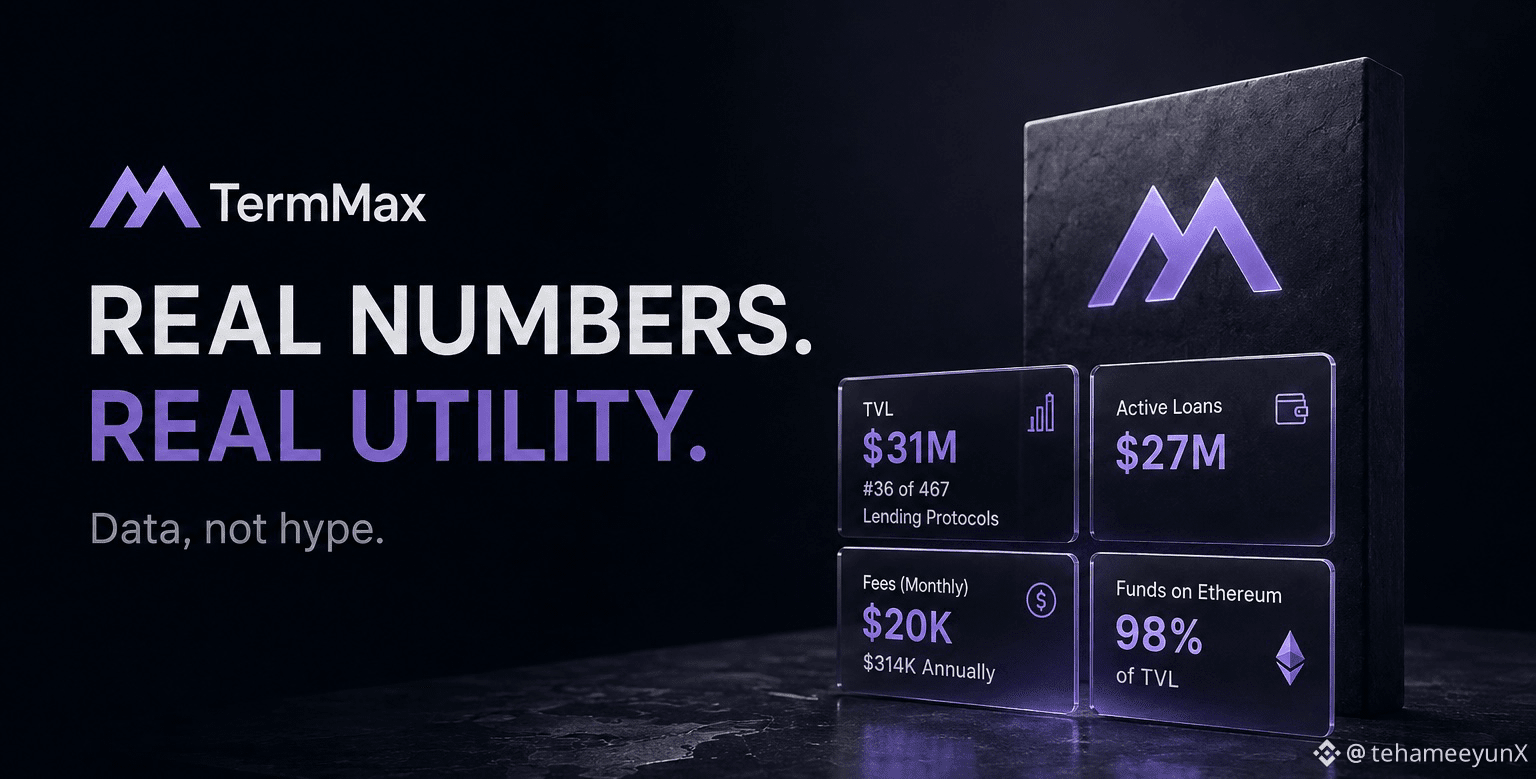
TermMax currently has around $31M TVL (total value locked). Not much when compared to industry giants like Aave, but this is the whole point it's still early days. TermMax ranks around #36 on the DefiLlama lending category chart out of 467 lending protocols tracked by the website. To put it into perspective, the total amount locked in the category is currently at around $41.7 billion.
In terms of actual utility, they have about $27M in active loans and generate around $20K in fees per month ($314K annually), so the protocol is being used and not just a way to keep your assets in a DeFi pool in order to get an airdrop later.
Funding history is quite impressive as well. The team (Term Structure) has raised $2.55M in an angel round back in late 2022 and another $4.25M seed round in November 2023, led by the industry giant Cumberland DRW one of the largest crypto trading companies. HashKey Capital, Longling Capital, MZ Web3 Fund, and Decima Fund participated in the financing. The total raised at this stage is somewhere around $8M+.
And finally, the actual mechanism, which was somewhat tricky to understand at first:
Borrowing on TermMax means that you are locking your funds in so-called Gearing Tokens (GT) and get in return a Fixed-Rate Token (FT), which represents exactly the amount you will pay at maturity. This FT is split into a principal and interest. Interest is then sold to lenders in exchange for X Token (XT), and the combination of XT plus the principal will give you the borrowed funds.
It might seem rather complex, but the idea here is to lock your obligations in tradable tokens with fixed maturity
#termmax @termmax
#TermMax
TermMax numbers, and here's the actual breakdown
I decided to look at actual data behind the project rather than just relying on marketing material. These are my findings based on the data available on DefiLlama and their funding history.
Starting with the money aspect:
TermMax currently has around $31M TVL (total value locked). Not much when compared to industry giants like Aave, but this is the whole point it's still early days. TermMax ranks around #36 on the DefiLlama lending category chart out of 467 lending protocols tracked by the website. To put it into perspective, the total amount locked in the category is currently at around $41.7 billion.
In terms of actual utility, they have about $27M in active loans and generate around $20K in fees per month ($314K annually), so the protocol is being used and not just a way to keep your assets in a DeFi pool in order to get an airdrop later.
Funding history is quite impressive as well. The team (Term Structure) has raised $2.55M in an angel round back in late 2022 and another $4.25M seed round in November 2023, led by the industry giant Cumberland DRW one of the largest crypto trading companies. HashKey Capital, Longling Capital, MZ Web3 Fund, and Decima Fund participated in the financing. The total raised at this stage is somewhere around $8M+.
And finally, the actual mechanism, which was somewhat tricky to understand at first:
Borrowing on TermMax means that you are locking your funds in so-called Gearing Tokens (GT) and get in return a Fixed-Rate Token (FT), which represents exactly the amount you will pay at maturity. This FT is split into a principal and interest. Interest is then sold to lenders in exchange for X Token (XT), and the combination of XT plus the principal will give you the borrowed funds.
It might seem rather complex, but the idea here is to lock your obligations in tradable tokens with fixed maturity
#termmax @TermMax
#TermMax
I decided to look at actual data behind the project rather than just relying on marketing material. These are my findings based on the data available on DefiLlama and their funding history.
Starting with the money aspect:
TermMax currently has around $31M TVL (total value locked). Not much when compared to industry giants like Aave, but this is the whole point it's still early days. TermMax ranks around #36 on the DefiLlama lending category chart out of 467 lending protocols tracked by the website. To put it into perspective, the total amount locked in the category is currently at around $41.7 billion.
In terms of actual utility, they have about $27M in active loans and generate around $20K in fees per month ($314K annually), so the protocol is being used and not just a way to keep your assets in a DeFi pool in order to get an airdrop later.
Funding history is quite impressive as well. The team (Term Structure) has raised $2.55M in an angel round back in late 2022 and another $4.25M seed round in November 2023, led by the industry giant Cumberland DRW one of the largest crypto trading companies. HashKey Capital, Longling Capital, MZ Web3 Fund, and Decima Fund participated in the financing. The total raised at this stage is somewhere around $8M+.
And finally, the actual mechanism, which was somewhat tricky to understand at first:
Borrowing on TermMax means that you are locking your funds in so-called Gearing Tokens (GT) and get in return a Fixed-Rate Token (FT), which represents exactly the amount you will pay at maturity. This FT is split into a principal and interest. Interest is then sold to lenders in exchange for X Token (XT), and the combination of XT plus the principal will give you the borrowed funds.
It might seem rather complex, but the idea here is to lock your obligations in tradable tokens with fixed maturity
#termmax @TermMax
#TermMax
2
323
·
--
Article
BITCOIN’S FINAL BEAR MARKET STAGE: MY FORECAST AND RATIONALEReflecting on Past Calls
I’ve spent years studying Bitcoin cycles, and one thing I’ve learned is that markets move in patterns far more often than people think.
Back in late 2022, when fear was everywhere after the FTX collapse, I was looking for a cycle bottom while most people were calling for even lower prices. Bitcoin eventually bottomed around $15,500, almost exactly where I expected the panic to end. Three years later, the same cycle pushed Bitcoin all the way to roughly $126,000.
That move from $15K to $126K reinforced something I’ve believed for a long time: Bitcoin doesn’t move in a straight line. It moves through cycles of greed, fear, euphoria, and capitulation. Most investors focus on the daily noise. I focus on where we are in the bigger picture.
I’m not claiming to predict every candle. Nobody can. But understanding liquidity, sentiment, market structure, and investor psychology has helped me identify major turning points before they became obvious to everyone else.
And right now, I believe we’re approaching another one.
Where We Are in the Cycle
Despite what many people are saying, I don’t think the four-year cycle is dead.
Bitcoin lost its one-year moving average after peaking around $126,000, which has historically been one of the clearest signs that a bear market is underway. Similar breaks have happened in previous cycles, and they usually mark the beginning of a long reset rather than the end of one.
What’s interesting is that several cycle models still suggest the final bottom has not formed yet. Some analysts expect the next major bull phase to begin in late 2026, but that doesn’t necessarily mean the lowest price is already in.
On-chain data tells a similar story
Metrics like the MVRV Z-Score, which helps identify when Bitcoin becomes deeply undervalued, have not yet reached the levels seen at previous cycle bottoms. Momentum indicators such as the monthly RSI are also approaching oversold territory but haven’t fully entered the zone that typically marks maximum pain.
To me, that suggests one thing:
The market may be close to a bottom, but it probably hasn’t experienced true capitulation yet.
Relief Rally Before Capitulation?
My roadmap remains relatively simple:
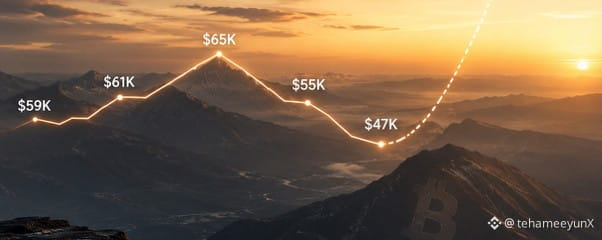
$59K → $61K → $65K → $55K → $47K → $200K
So far, the first part of that roadmap has played out as expected.
Bitcoin bounced from the low-$59K region and is now pushing into the mid-$60Ks. That’s exactly what I would expect during the later stages of a bear market. Relief rallies are normal. In fact, they’re designed to convince people the worst is over.
Technically, the $64K-$65K area is an important zone. Multiple analysts have highlighted it as a major support and reaction level. As long as buyers defend that area, Bitcoin can continue grinding higher in the short term.
But I don’t think a relief rally automatically means a new bull market has started.
The bigger question is what happens after the bounce.
If Bitcoin loses the $60K region again, the next meaningful support sits much lower. That’s where the $55K and eventually $47K levels come into play.
A move into that area would likely be accompanied by liquidations, forced selling, extreme fear, and the kind of headlines that make people swear they’re done with crypto forever.
Ironically, that’s usually where the best opportunities appear.
#BitcoinEndsSevenDayLossStreakAbove$63K
BITCOIN’S FINAL BEAR MARKET STAGE: MY FORECAST AND RATIONALE
Reflecting on Past Calls
I’ve spent years studying Bitcoin cycles, and one thing I’ve learned is that markets move in patterns far more often than people think.
Back in late 2022, when fear was everywhere after the FTX collapse, I was looking for a cycle bottom while most people were calling for even lower prices. Bitcoin eventually bottomed around $15,500, almost exactly where I expected the panic to end. Three years later, the same cycle pushed Bitcoin all the way to roughly $126,000.
That move from $15K to $126K reinforced something I’ve believed for a long time: Bitcoin doesn’t move in a straight line. It moves through cycles of greed, fear, euphoria, and capitulation. Most investors focus on the daily noise. I focus on where we are in the bigger picture.
I’m not claiming to predict every candle. Nobody can. But understanding liquidity, sentiment, market structure, and investor psychology has helped me identify major turning points before they became obvious to everyone else.
And right now, I believe we’re approaching another one.
Where We Are in the Cycle
Despite what many people are saying, I don’t think the four-year cycle is dead.
Bitcoin lost its one-year moving average after peaking around $126,000, which has historically been one of the clearest signs that a bear market is underway. Similar breaks have happened in previous cycles, and they usually mark the beginning of a long reset rather than the end of one.
What’s interesting is that several cycle models still suggest the final bottom has not formed yet. Some analysts expect the next major bull phase to begin in late 2026, but that doesn’t necessarily mean the lowest price is already in.
On-chain data tells a similar story
Metrics like the MVRV Z-Score, which helps identify when Bitcoin becomes deeply undervalued, have not yet reached the levels seen at previous cycle bottoms. Momentum indicators such as the monthly RSI are also approaching oversold territory but haven’t fully entered the zone that typically marks maximum pain.
To me, that suggests one thing:
The market may be close to a bottom, but it probably hasn’t experienced true capitulation yet.
Relief Rally Before Capitulation?
My roadmap remains relatively simple:
$59K → $61K → $65K → $55K → $47K → $200K
So far, the first part of that roadmap has played out as expected.
Bitcoin bounced from the low-$59K region and is now pushing into the mid-$60Ks. That’s exactly what I would expect during the later stages of a bear market. Relief rallies are normal. In fact, they’re designed to convince people the worst is over.
Technically, the $64K-$65K area is an important zone. Multiple analysts have highlighted it as a major support and reaction level. As long as buyers defend that area, Bitcoin can continue grinding higher in the short term.
But I don’t think a relief rally automatically means a new bull market has started.
The bigger question is what happens after the bounce.
If Bitcoin loses the $60K region again, the next meaningful support sits much lower. That’s where the $55K and eventually $47K levels come into play.
A move into that area would likely be accompanied by liquidations, forced selling, extreme fear, and the kind of headlines that make people swear they’re done with crypto forever.
Ironically, that’s usually where the best opportunities appear.
#BitcoinEndsSevenDayLossStreakAbove$63K
I’ve spent years studying Bitcoin cycles, and one thing I’ve learned is that markets move in patterns far more often than people think.
Back in late 2022, when fear was everywhere after the FTX collapse, I was looking for a cycle bottom while most people were calling for even lower prices. Bitcoin eventually bottomed around $15,500, almost exactly where I expected the panic to end. Three years later, the same cycle pushed Bitcoin all the way to roughly $126,000.
That move from $15K to $126K reinforced something I’ve believed for a long time: Bitcoin doesn’t move in a straight line. It moves through cycles of greed, fear, euphoria, and capitulation. Most investors focus on the daily noise. I focus on where we are in the bigger picture.
I’m not claiming to predict every candle. Nobody can. But understanding liquidity, sentiment, market structure, and investor psychology has helped me identify major turning points before they became obvious to everyone else.
And right now, I believe we’re approaching another one.
Where We Are in the Cycle
Despite what many people are saying, I don’t think the four-year cycle is dead.
Bitcoin lost its one-year moving average after peaking around $126,000, which has historically been one of the clearest signs that a bear market is underway. Similar breaks have happened in previous cycles, and they usually mark the beginning of a long reset rather than the end of one.
What’s interesting is that several cycle models still suggest the final bottom has not formed yet. Some analysts expect the next major bull phase to begin in late 2026, but that doesn’t necessarily mean the lowest price is already in.
On-chain data tells a similar story
Metrics like the MVRV Z-Score, which helps identify when Bitcoin becomes deeply undervalued, have not yet reached the levels seen at previous cycle bottoms. Momentum indicators such as the monthly RSI are also approaching oversold territory but haven’t fully entered the zone that typically marks maximum pain.
To me, that suggests one thing:
The market may be close to a bottom, but it probably hasn’t experienced true capitulation yet.
Relief Rally Before Capitulation?
My roadmap remains relatively simple:
$59K → $61K → $65K → $55K → $47K → $200K
So far, the first part of that roadmap has played out as expected.
Bitcoin bounced from the low-$59K region and is now pushing into the mid-$60Ks. That’s exactly what I would expect during the later stages of a bear market. Relief rallies are normal. In fact, they’re designed to convince people the worst is over.
Technically, the $64K-$65K area is an important zone. Multiple analysts have highlighted it as a major support and reaction level. As long as buyers defend that area, Bitcoin can continue grinding higher in the short term.
But I don’t think a relief rally automatically means a new bull market has started.
The bigger question is what happens after the bounce.
If Bitcoin loses the $60K region again, the next meaningful support sits much lower. That’s where the $55K and eventually $47K levels come into play.
A move into that area would likely be accompanied by liquidations, forced selling, extreme fear, and the kind of headlines that make people swear they’re done with crypto forever.
Ironically, that’s usually where the best opportunities appear.
#BitcoinEndsSevenDayLossStreakAbove$63K
5
406
·
--
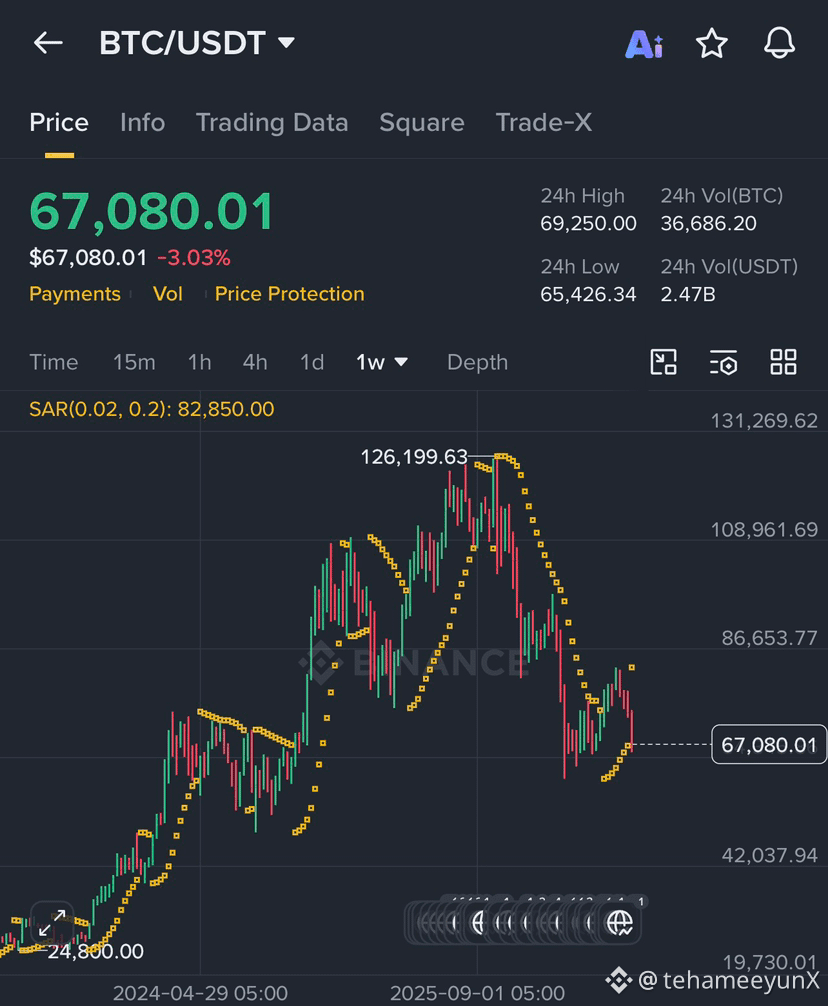
A few months ago people were drawing $150K targets on this exact chart 💀😭
Now they’re drawing $50K
Full moon lol
A few months ago people were drawing $150K targets on this exact chart 💀😭
Now they’re drawing $50K
Full moon lol
Now they’re drawing $50K
Full moon lol
5
427
Connectez-vous pour découvrir plus de contenu
Rejoignez la communauté mondiale des adeptes de cryptomonnaies sur Binance Square
⚡️ Suviez les dernières informations importantes sur les cryptomonnaies.
💬 Jugé digne de confiance par la plus grande plateforme d’échange de cryptomonnaies au monde.
👍 Découvrez les connaissances que partagent les créateurs vérifiés.
Adresse e-mail/Nº de téléphone
Sujets d’actualité
DriftHackVictimsBeginClaims
29,964 vues
478 mentions
🚨 DRIFT HACK VICTIMS CAN FINALLY START CLAIMING RECOVERY!
Victims of Drift’s April 2026 exploit are now able to claim DFX recovery tokens. The attack caused roughly $295.4M in verified losses, while the initial recovery pool held about $3.11M.
At launch, 1 DFX represented $1 of verified loss, but the initial redemption value was only around $0.0104 per DFX — roughly 1 cent recovered for every $1 lost. Users can redeem, sell, or hold DFX for potentially larger future recoveries as the pool receives additional funding.
⚠️ Important: Redeeming DFX burns the tokens, meaning users give up their share of future recovery funding for those tokens.
Could Drift victims eventually recover a much larger portion of their losses? 👇
#drifthackvictimsbeginclaims
#PEPE $PEPE
ASHFAQ NAEEM
·4 mentions J’aime
·7.8k vues
SolanaTokenizedStockVolumeTops$4.4BInSeptember
4,807 vues
56 mentions
BitcoinSpotETFsDraw$6.34BInflowsInQ3
16,119 vues
173 mentions