

ATB Cryptos
988 Publications

ATB Cryptos
Signaler
Bloquer l’utilisateur
Crypto Analyst || Alpha Content and Blockchain Enthusiast ||Do Your Own Research & always Trade at your own risk.
262 Suivis
186 Abonnés
1.6K+ J’aime
Publications
Tous
Citations
Vidéos
·
--
Bitcoin bull market still alive, but momentum is waning.
CryptoQuant reports Bitcoin closed above its 365‑day moving average, with the Bull Score Index at 90, showing most indicators still support a bullish structure.
Short‑term holders’ unrealized profit margin rose to 33% – the highest since December 2024 – and on September 22 about 25,700 BTC were cashed out, the largest single‑day profit recorded in 2026.
Altcoin exchange inflows reached 76,000 transactions from roughly 51,000 depositors, the highest since October 17, 2025; spot demand fell by about 170,000 BTC over 30 days and futures demand slipped from about 164,000 BTC on September 14 to roughly 16,000 BTC recently.
Key on‑chain support levels sit near $80,000 (365‑day MA), $71,000 (200‑day MA) and $67,000 (trader‑realized price).
A move toward these could signal consolidation, while profit taking and weaker demand raise correction risk.
Do you think buying demand can rebound enough to sustain the current bullish framework?
#Bitcoin #BullMarket #OnChain #ProfitTaking #Altcoin
Bitcoin bull market still alive, but momentum is waning.
CryptoQuant reports Bitcoin closed above its 365‑day moving average, with the Bull Score Index at 90, showing most indicators still support a bullish structure.
Short‑term holders’ unrealized profit margin rose to 33% – the highest since December 2024 – and on September 22 about 25,700 BTC were cashed out, the largest single‑day profit recorded in 2026.
Altcoin exchange inflows reached 76,000 transactions from roughly 51,000 depositors, the highest since October 17, 2025; spot demand fell by about 170,000 BTC over 30 days and futures demand slipped from about 164,000 BTC on September 14 to roughly 16,000 BTC recently.
Key on‑chain support levels sit near $80,000 (365‑day MA), $71,000 (200‑day MA) and $67,000 (trader‑realized price).
A move toward these could signal consolidation, while profit taking and weaker demand raise correction risk.
Do you think buying demand can rebound enough to sustain the current bullish framework?
#Bitcoin #BullMarket #OnChain #ProfitTaking #Altcoin
CryptoQuant reports Bitcoin closed above its 365‑day moving average, with the Bull Score Index at 90, showing most indicators still support a bullish structure.
Short‑term holders’ unrealized profit margin rose to 33% – the highest since December 2024 – and on September 22 about 25,700 BTC were cashed out, the largest single‑day profit recorded in 2026.
Altcoin exchange inflows reached 76,000 transactions from roughly 51,000 depositors, the highest since October 17, 2025; spot demand fell by about 170,000 BTC over 30 days and futures demand slipped from about 164,000 BTC on September 14 to roughly 16,000 BTC recently.
Key on‑chain support levels sit near $80,000 (365‑day MA), $71,000 (200‑day MA) and $67,000 (trader‑realized price).
A move toward these could signal consolidation, while profit taking and weaker demand raise correction risk.
Do you think buying demand can rebound enough to sustain the current bullish framework?
#Bitcoin #BullMarket #OnChain #ProfitTaking #Altcoin
56
·
--
Zcash has jumped over 1,000% in the last 12 months and is still near $1,400.
The token climbed from $60 to $1,700 in a year, raising its market share from under 0.1% of Bitcoin’s cap to roughly 1.5%.
Onchain Labs saw a whale add about 41,690 ZEC, move out 18,730 and end with a net ~22,960 ZEC worth $31.7 million, plus another 4,200 ZEC (~$5.84 million).
Zcash ETFs recorded zero net flows Sep 23‑25, then a $8.12 million outflow, yet still hold about 3.75% of ZEC supply after one month.
Grayscale’s research head said the privacy edge could let Zcash capture more market share as AI raises new privacy risks for public blockchains.
Do you think privacy‑focused assets like Zcash will outpace broader crypto ETFs as regulatory and AI pressures rise?
#Zcash #Crypto #Privacy #ETFs #MarketShare
Zcash has jumped over 1,000% in the last 12 months and is still near $1,400.
The token climbed from $60 to $1,700 in a year, raising its market share from under 0.1% of Bitcoin’s cap to roughly 1.5%.
Onchain Labs saw a whale add about 41,690 ZEC, move out 18,730 and end with a net ~22,960 ZEC worth $31.7 million, plus another 4,200 ZEC (~$5.84 million).
Zcash ETFs recorded zero net flows Sep 23‑25, then a $8.12 million outflow, yet still hold about 3.75% of ZEC supply after one month.
Grayscale’s research head said the privacy edge could let Zcash capture more market share as AI raises new privacy risks for public blockchains.
Do you think privacy‑focused assets like Zcash will outpace broader crypto ETFs as regulatory and AI pressures rise?
#Zcash #Crypto #Privacy #ETFs #MarketShare
The token climbed from $60 to $1,700 in a year, raising its market share from under 0.1% of Bitcoin’s cap to roughly 1.5%.
Onchain Labs saw a whale add about 41,690 ZEC, move out 18,730 and end with a net ~22,960 ZEC worth $31.7 million, plus another 4,200 ZEC (~$5.84 million).
Zcash ETFs recorded zero net flows Sep 23‑25, then a $8.12 million outflow, yet still hold about 3.75% of ZEC supply after one month.
Grayscale’s research head said the privacy edge could let Zcash capture more market share as AI raises new privacy risks for public blockchains.
Do you think privacy‑focused assets like Zcash will outpace broader crypto ETFs as regulatory and AI pressures rise?
#Zcash #Crypto #Privacy #ETFs #MarketShare
184
·
--
XRP holds above $1.50, defending key support.
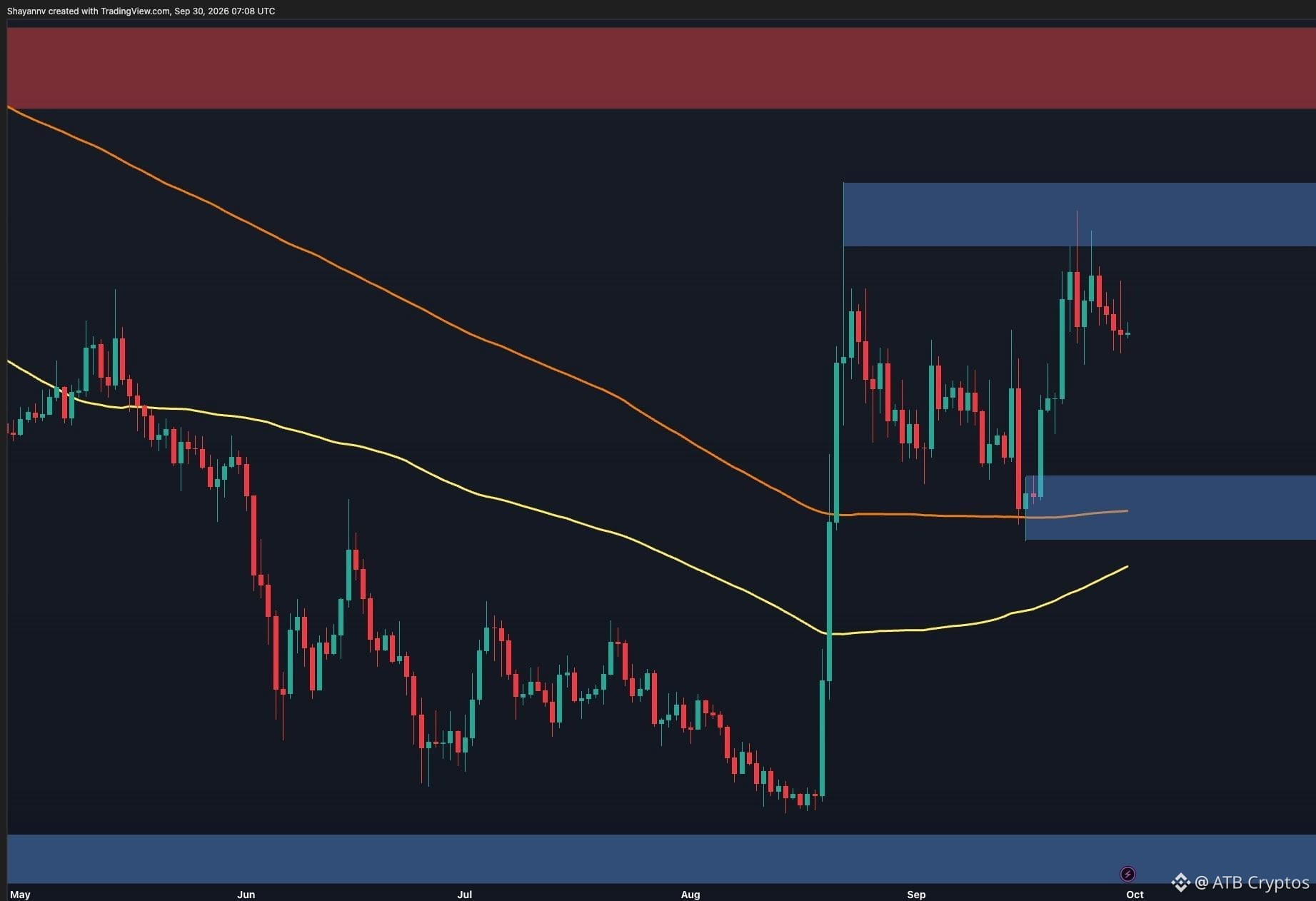
XRP is trading above $1.50 after rejecting the $1.61‑$1.70 resistance zone, keeping the broader recovery intact.
On the daily chart the price pulled back to $1.53, staying above the orange moving average at $1.28 and the yellow average near $1.22, indicating the prior downtrend has lost momentum.
A renewed advance would need to clear the recent highs of $1.56‑$1.58 before testing the $1.61‑$1.70 supply area, while a deeper correction could bring focus back to the $1.25‑$1.32 demand zone.
The 4‑hour chart shows lower highs and consolidation near $1.52, with the next support zone at $1.43‑$1.45 and lower levels at $1.38 and $1.25‑$1.32 if sellers break down.
Do you see the next breakout above $1.60 or a pullback toward $1.45 for XRP?
#XRP #Crypto #PriceAnalysis #Support #Resistance
XRP holds above $1.50, defending key support.
XRP is trading above $1.50 after rejecting the $1.61‑$1.70 resistance zone, keeping the broader recovery intact.
On the daily chart the price pulled back to $1.53, staying above the orange moving average at $1.28 and the yellow average near $1.22, indicating the prior downtrend has lost momentum.
A renewed advance would need to clear the recent highs of $1.56‑$1.58 before testing the $1.61‑$1.70 supply area, while a deeper correction could bring focus back to the $1.25‑$1.32 demand zone.
The 4‑hour chart shows lower highs and consolidation near $1.52, with the next support zone at $1.43‑$1.45 and lower levels at $1.38 and $1.25‑$1.32 if sellers break down.
Do you see the next breakout above $1.60 or a pullback toward $1.45 for XRP?
#XRP #Crypto #PriceAnalysis #Support #Resistance
XRP is trading above $1.50 after rejecting the $1.61‑$1.70 resistance zone, keeping the broader recovery intact.
On the daily chart the price pulled back to $1.53, staying above the orange moving average at $1.28 and the yellow average near $1.22, indicating the prior downtrend has lost momentum.
A renewed advance would need to clear the recent highs of $1.56‑$1.58 before testing the $1.61‑$1.70 supply area, while a deeper correction could bring focus back to the $1.25‑$1.32 demand zone.
The 4‑hour chart shows lower highs and consolidation near $1.52, with the next support zone at $1.43‑$1.45 and lower levels at $1.38 and $1.25‑$1.32 if sellers break down.
Do you see the next breakout above $1.60 or a pullback toward $1.45 for XRP?
#XRP #Crypto #PriceAnalysis #Support #Resistance
46
·
--
NEAR spikes to a 21‑month high after the first spot NEAR ETF launches.
The altcoin surged 180% in the last month and briefly broke above $5.50, its first level since early 2025.
CoinGecko lists NEAR at about $5.10, up 7% on September 30, making it one of today’s top performers.
The rally follows Bitwise’s launch of the NRR spot NEAR ETF, with Coinbase Custody as the custodian.
Analyst Nebraskangooner highlighted a double‑bottom pattern and a strong monthly candle.
Crypto Rover reported Bitwise’s base‑case price target of $155 and a bull‑case of $562 for NEAR.
Gordon warned the token’s RSI is above 70, indicating overbought conditions and a possible short opportunity.
Do you see the ETF catalyst fueling sustained growth, or will the overbought RSI trigger a correction?
#NEAR #ETF #Crypto #Altcoin
NEAR spikes to a 21‑month high after the first spot NEAR ETF launches.
The altcoin surged 180% in the last month and briefly broke above $5.50, its first level since early 2025.
CoinGecko lists NEAR at about $5.10, up 7% on September 30, making it one of today’s top performers.
The rally follows Bitwise’s launch of the NRR spot NEAR ETF, with Coinbase Custody as the custodian.
Analyst Nebraskangooner highlighted a double‑bottom pattern and a strong monthly candle.
Crypto Rover reported Bitwise’s base‑case price target of $155 and a bull‑case of $562 for NEAR.
Gordon warned the token’s RSI is above 70, indicating overbought conditions and a possible short opportunity.
Do you see the ETF catalyst fueling sustained growth, or will the overbought RSI trigger a correction?
#NEAR #ETF #Crypto #Altcoin
The altcoin surged 180% in the last month and briefly broke above $5.50, its first level since early 2025.
CoinGecko lists NEAR at about $5.10, up 7% on September 30, making it one of today’s top performers.
The rally follows Bitwise’s launch of the NRR spot NEAR ETF, with Coinbase Custody as the custodian.
Analyst Nebraskangooner highlighted a double‑bottom pattern and a strong monthly candle.
Crypto Rover reported Bitwise’s base‑case price target of $155 and a bull‑case of $562 for NEAR.
Gordon warned the token’s RSI is above 70, indicating overbought conditions and a possible short opportunity.
Do you see the ETF catalyst fueling sustained growth, or will the overbought RSI trigger a correction?
#NEAR #ETF #Crypto #Altcoin

104
·
--
AI chatbots are naming three crypto candidates to explode this October.
ChatGPT highlights Uniswap (UNI) as a top performer because CME Group plans to launch UNI futures on October 19 (pending regulatory review); the initial disclosure already sparked a double‑digit price rise.
ChatGPT’s second pick is Ondo (ONDO), citing its tokenized stocks and funds story and upcoming partnerships as potential drivers of a price pump.
Its third pick is Solana (SOL), noting spot SOL ETF inflows, growing financial use, and the Alpenglow upgrade that aims to cut transaction finality from roughly 12.8 seconds to about 150 milliseconds.
Gemini also puts Solana first, calling it “the express high‑speed train of crypto,” and adds Sui (SUI) and Ethereum (ETH) as its second and third choices, with ETH positioned as the foundation for institutional DeFi, layer‑2 networks, and tokenized real‑world assets.
Perplexity recommends Ripple (XRP), Quant (QNT), and Zcash (ZEC). It points to $1.7 billion of cumulative net inflows into spot XRP ETFs and a recent $75 million addition, while noting XRP has closed in the red 8 of 13 October sessions.
Perplexity cites Quant’s selection by The Clearing House for its On‑Chain Money Initiative, handling more than $2 trillion daily for the US banking system, and highlights Zcash’s momentum from Europe’s first ZEC ETP and Grayscale’s ETF, warning of potential correction risks.
Which of these AI‑predicted assets are you watching for an October breakout?
#Cryptocurrency #AI #FinTech #Crypto #MarketInsights
AI chatbots are naming three crypto candidates to explode this October.
ChatGPT highlights Uniswap (UNI) as a top performer because CME Group plans to launch UNI futures on October 19 (pending regulatory review); the initial disclosure already sparked a double‑digit price rise.
ChatGPT’s second pick is Ondo (ONDO), citing its tokenized stocks and funds story and upcoming partnerships as potential drivers of a price pump.
Its third pick is Solana (SOL), noting spot SOL ETF inflows, growing financial use, and the Alpenglow upgrade that aims to cut transaction finality from roughly 12.8 seconds to about 150 milliseconds.
Gemini also puts Solana first, calling it “the express high‑speed train of crypto,” and adds Sui (SUI) and Ethereum (ETH) as its second and third choices, with ETH positioned as the foundation for institutional DeFi, layer‑2 networks, and tokenized real‑world assets.
Perplexity recommends Ripple (XRP), Quant (QNT), and Zcash (ZEC). It points to $1.7 billion of cumulative net inflows into spot XRP ETFs and a recent $75 million addition, while noting XRP has closed in the red 8 of 13 October sessions.
Perplexity cites Quant’s selection by The Clearing House for its On‑Chain Money Initiative, handling more than $2 trillion daily for the US banking system, and highlights Zcash’s momentum from Europe’s first ZEC ETP and Grayscale’s ETF, warning of potential correction risks.
Which of these AI‑predicted assets are you watching for an October breakout?
#Cryptocurrency #AI #FinTech #Crypto #MarketInsights
ChatGPT highlights Uniswap (UNI) as a top performer because CME Group plans to launch UNI futures on October 19 (pending regulatory review); the initial disclosure already sparked a double‑digit price rise.
ChatGPT’s second pick is Ondo (ONDO), citing its tokenized stocks and funds story and upcoming partnerships as potential drivers of a price pump.
Its third pick is Solana (SOL), noting spot SOL ETF inflows, growing financial use, and the Alpenglow upgrade that aims to cut transaction finality from roughly 12.8 seconds to about 150 milliseconds.
Gemini also puts Solana first, calling it “the express high‑speed train of crypto,” and adds Sui (SUI) and Ethereum (ETH) as its second and third choices, with ETH positioned as the foundation for institutional DeFi, layer‑2 networks, and tokenized real‑world assets.
Perplexity recommends Ripple (XRP), Quant (QNT), and Zcash (ZEC). It points to $1.7 billion of cumulative net inflows into spot XRP ETFs and a recent $75 million addition, while noting XRP has closed in the red 8 of 13 October sessions.
Perplexity cites Quant’s selection by The Clearing House for its On‑Chain Money Initiative, handling more than $2 trillion daily for the US banking system, and highlights Zcash’s momentum from Europe’s first ZEC ETP and Grayscale’s ETF, warning of potential correction risks.
Which of these AI‑predicted assets are you watching for an October breakout?
#Cryptocurrency #AI #FinTech #Crypto #MarketInsights

1
2
1k
·
--
Coinbase hit with a $25 million loss claim from a major crypto investor.
Ari Paul, founder of BlockTower Capital, posted on September 29 that his firm’s $25 million was “lost” by Coinbase and that his investigation led him to allege “massive and repeated hacks,” referencing at least a dozen other firms and “over $1 b” covered up.
Coinbase Support said it messaged Paul to investigate. Earlier, a user named Kuno claimed Coinbase “stole” $1.2 million and demanded action within 24 hours; product head Jordan Fish replied no matching account existed.
In May 2025 Coinbase disclosed a breach affecting 69,400 users, where an attacker bribed support staff, refused a $20 million ransom, and later moved tens of millions of ETH into DAI. Additional impersonation schemes have been reported, including a $500,000 account drain in October 2025.
What standards should crypto exchanges meet when faced with unresolved loss allegations?
#Coinbase #Crypto #SecurityBreach #LegalDispute
Coinbase hit with a $25 million loss claim from a major crypto investor.
Ari Paul, founder of BlockTower Capital, posted on September 29 that his firm’s $25 million was “lost” by Coinbase and that his investigation led him to allege “massive and repeated hacks,” referencing at least a dozen other firms and “over $1 b” covered up.
Coinbase Support said it messaged Paul to investigate. Earlier, a user named Kuno claimed Coinbase “stole” $1.2 million and demanded action within 24 hours; product head Jordan Fish replied no matching account existed.
In May 2025 Coinbase disclosed a breach affecting 69,400 users, where an attacker bribed support staff, refused a $20 million ransom, and later moved tens of millions of ETH into DAI. Additional impersonation schemes have been reported, including a $500,000 account drain in October 2025.
What standards should crypto exchanges meet when faced with unresolved loss allegations?
#Coinbase #Crypto #SecurityBreach #LegalDispute
Ari Paul, founder of BlockTower Capital, posted on September 29 that his firm’s $25 million was “lost” by Coinbase and that his investigation led him to allege “massive and repeated hacks,” referencing at least a dozen other firms and “over $1 b” covered up.
Coinbase Support said it messaged Paul to investigate. Earlier, a user named Kuno claimed Coinbase “stole” $1.2 million and demanded action within 24 hours; product head Jordan Fish replied no matching account existed.
In May 2025 Coinbase disclosed a breach affecting 69,400 users, where an attacker bribed support staff, refused a $20 million ransom, and later moved tens of millions of ETH into DAI. Additional impersonation schemes have been reported, including a $500,000 account drain in October 2025.
What standards should crypto exchanges meet when faced with unresolved loss allegations?
#Coinbase #Crypto #SecurityBreach #LegalDispute

1
30
·
--
Anchorage Digital becomes day‑one custodian for Puffer UniFi
Puffer Finance announced a partnership with Anchorage Digital, home to America’s first federally regulated crypto bank, to add institutional‑grade custody, stablecoin infrastructure, and payment settlement to Puffer UniFi, an Ethereum‑aligned execution and settlement network.
Anchorage will serve as Puffer UniFi’s institutional custodian from launch and will work with Puffer on stablecoin issuance, native settlement and agentic payment rails, letting institutions hold assets, move stablecoins and settle transactions on‑chain while staying connected to Ethereum L1 liquidity.
The deal follows Puffer’s recent Google Cloud agreement, which provides enterprise‑grade gateway infrastructure, creating a high‑throughput, real‑time settlement environment for institutional participants.
Do you think integrated custody and on‑chain settlement will accelerate institutional crypto adoption?
#Crypto #FinTech #Blockchain #Payments #Institutional
Anchorage Digital becomes day‑one custodian for Puffer UniFi
Puffer Finance announced a partnership with Anchorage Digital, home to America’s first federally regulated crypto bank, to add institutional‑grade custody, stablecoin infrastructure, and payment settlement to Puffer UniFi, an Ethereum‑aligned execution and settlement network.
Anchorage will serve as Puffer UniFi’s institutional custodian from launch and will work with Puffer on stablecoin issuance, native settlement and agentic payment rails, letting institutions hold assets, move stablecoins and settle transactions on‑chain while staying connected to Ethereum L1 liquidity.
The deal follows Puffer’s recent Google Cloud agreement, which provides enterprise‑grade gateway infrastructure, creating a high‑throughput, real‑time settlement environment for institutional participants.
Do you think integrated custody and on‑chain settlement will accelerate institutional crypto adoption?
#Crypto #FinTech #Blockchain #Payments #Institutional
Puffer Finance announced a partnership with Anchorage Digital, home to America’s first federally regulated crypto bank, to add institutional‑grade custody, stablecoin infrastructure, and payment settlement to Puffer UniFi, an Ethereum‑aligned execution and settlement network.
Anchorage will serve as Puffer UniFi’s institutional custodian from launch and will work with Puffer on stablecoin issuance, native settlement and agentic payment rails, letting institutions hold assets, move stablecoins and settle transactions on‑chain while staying connected to Ethereum L1 liquidity.
The deal follows Puffer’s recent Google Cloud agreement, which provides enterprise‑grade gateway infrastructure, creating a high‑throughput, real‑time settlement environment for institutional participants.
Do you think integrated custody and on‑chain settlement will accelerate institutional crypto adoption?
#Crypto #FinTech #Blockchain #Payments #Institutional

1
52
·
--
ICP rockets 35% in a month, eyes on $10+ levels
Internet Computer (ICP) traded above $3.30 on Monday and Tuesday, marking a double‑digit rise in the last 30 days.
Analysts cite accumulation signals and a buy‑wall zone, forecasting a rebound; one projects an over 208% move back to the $10 areas, another envisions a rise to $60 — about 1,560% from the current zone.
Recent netflow data shows outflows dominating inflows for several weeks, indicating a shift to self‑custody and easing short‑term selling pressure.
Do you think ICP can sustain the upside beyond $10?
#InternetComputer #ICP #Crypto #Blockchain #MacroEconomy
ICP rockets 35% in a month, eyes on $10+ levels
Internet Computer (ICP) traded above $3.30 on Monday and Tuesday, marking a double‑digit rise in the last 30 days.
Analysts cite accumulation signals and a buy‑wall zone, forecasting a rebound; one projects an over 208% move back to the $10 areas, another envisions a rise to $60 — about 1,560% from the current zone.
Recent netflow data shows outflows dominating inflows for several weeks, indicating a shift to self‑custody and easing short‑term selling pressure.
Do you think ICP can sustain the upside beyond $10?
#InternetComputer #ICP #Crypto #Blockchain #MacroEconomy
Internet Computer (ICP) traded above $3.30 on Monday and Tuesday, marking a double‑digit rise in the last 30 days.
Analysts cite accumulation signals and a buy‑wall zone, forecasting a rebound; one projects an over 208% move back to the $10 areas, another envisions a rise to $60 — about 1,560% from the current zone.
Recent netflow data shows outflows dominating inflows for several weeks, indicating a shift to self‑custody and easing short‑term selling pressure.
Do you think ICP can sustain the upside beyond $10?
#InternetComputer #ICP #Crypto #Blockchain #MacroEconomy

1
261
·
--
THORChain under fire for processing stolen Bitget assets.
Bitget confirmed on September 25 that $387.5 million reached attacker addresses, up from $351.6 million after Zcash and Tron assets were added.
CEO Gracy Chen asked THORChain on September 26 to refuse service to those addresses, saying “decentralization is a design principle, not a shield for facilitating known stolen funds.”
THORChain replied it is decentralized and permissionless like Bitcoin, Ethereum and BNB Chain, and asked what responsibility those networks would bear.
Bitget’s public tracker lists 2,377 attacker addresses holding $378 million, with 1,497 moving funds through THORChain for cross‑chain swaps.
Security researcher Taylor Monahan debated that screening transactions is equivalent to censorship; the discussion cited a May halt after a $10.7 million exploit that paused trading for five weeks.
Bitget offered 5 % bounties on frozen and recovered funds and announced phased withdrawals, with BTC restarting on September 28 at 08:00 UTC.
Should permissionless protocols intervene when known stolen assets flow through them?
#Crypto #DeFi #CrossChain #Security
THORChain under fire for processing stolen Bitget assets.
Bitget confirmed on September 25 that $387.5 million reached attacker addresses, up from $351.6 million after Zcash and Tron assets were added.
CEO Gracy Chen asked THORChain on September 26 to refuse service to those addresses, saying “decentralization is a design principle, not a shield for facilitating known stolen funds.”
THORChain replied it is decentralized and permissionless like Bitcoin, Ethereum and BNB Chain, and asked what responsibility those networks would bear.
Bitget’s public tracker lists 2,377 attacker addresses holding $378 million, with 1,497 moving funds through THORChain for cross‑chain swaps.
Security researcher Taylor Monahan debated that screening transactions is equivalent to censorship; the discussion cited a May halt after a $10.7 million exploit that paused trading for five weeks.
Bitget offered 5 % bounties on frozen and recovered funds and announced phased withdrawals, with BTC restarting on September 28 at 08:00 UTC.
Should permissionless protocols intervene when known stolen assets flow through them?
#Crypto #DeFi #CrossChain #Security
Bitget confirmed on September 25 that $387.5 million reached attacker addresses, up from $351.6 million after Zcash and Tron assets were added.
CEO Gracy Chen asked THORChain on September 26 to refuse service to those addresses, saying “decentralization is a design principle, not a shield for facilitating known stolen funds.”
THORChain replied it is decentralized and permissionless like Bitcoin, Ethereum and BNB Chain, and asked what responsibility those networks would bear.
Bitget’s public tracker lists 2,377 attacker addresses holding $378 million, with 1,497 moving funds through THORChain for cross‑chain swaps.
Security researcher Taylor Monahan debated that screening transactions is equivalent to censorship; the discussion cited a May halt after a $10.7 million exploit that paused trading for five weeks.
Bitget offered 5 % bounties on frozen and recovered funds and announced phased withdrawals, with BTC restarting on September 28 at 08:00 UTC.
Should permissionless protocols intervene when known stolen assets flow through them?
#Crypto #DeFi #CrossChain #Security
1
545
·
--
AlgoQuant powers up with Liquid Mercury’s institutional‑grade tech.
On September 28th, 2026, AlgoQuant announced it will deploy Liquid Mercury’s institutional‑grade trading technology to scale its multi‑strategy investment platform across global digital asset markets.
The integration provides AlgoQuant with deep liquidity, advanced execution capabilities, low‑latency infrastructure and comprehensive middle‑ and back‑office tools, supporting 24/7 trading and quantitative strategies.
Liquid Mercury’s battle‑tested platform offers DMA routing, execution algorithms, multi‑dealer RFQ and integration with custodians such as Fireblocks, Gemini and BitGo, delivering speed, reliability and precision for institutional digital asset trading.
How do you see customized trading infrastructure reshaping institutional participation in crypto markets?
#DigitalAssets #FinTech #CryptoTrading #InstitutionalTech
AlgoQuant powers up with Liquid Mercury’s institutional‑grade tech.
On September 28th, 2026, AlgoQuant announced it will deploy Liquid Mercury’s institutional‑grade trading technology to scale its multi‑strategy investment platform across global digital asset markets.
The integration provides AlgoQuant with deep liquidity, advanced execution capabilities, low‑latency infrastructure and comprehensive middle‑ and back‑office tools, supporting 24/7 trading and quantitative strategies.
Liquid Mercury’s battle‑tested platform offers DMA routing, execution algorithms, multi‑dealer RFQ and integration with custodians such as Fireblocks, Gemini and BitGo, delivering speed, reliability and precision for institutional digital asset trading.
How do you see customized trading infrastructure reshaping institutional participation in crypto markets?
#DigitalAssets #FinTech #CryptoTrading #InstitutionalTech
On September 28th, 2026, AlgoQuant announced it will deploy Liquid Mercury’s institutional‑grade trading technology to scale its multi‑strategy investment platform across global digital asset markets.
The integration provides AlgoQuant with deep liquidity, advanced execution capabilities, low‑latency infrastructure and comprehensive middle‑ and back‑office tools, supporting 24/7 trading and quantitative strategies.
Liquid Mercury’s battle‑tested platform offers DMA routing, execution algorithms, multi‑dealer RFQ and integration with custodians such as Fireblocks, Gemini and BitGo, delivering speed, reliability and precision for institutional digital asset trading.
How do you see customized trading infrastructure reshaping institutional participation in crypto markets?
#DigitalAssets #FinTech #CryptoTrading #InstitutionalTech
1
28
·
--
Three AI chatbots name the altcoin most likely to 10x in the next bull cycle.
The cryptocurrency market stepped back on September 28, yet conditions appear stronger than most of the summer, prompting analysts to see a shift from bears to bulls.
ChatGPT and Google’s Gemini both singled out Bittensor (TAO) for its AI focus and a Bitcoin‑like halving that caps supply at 21 million and cuts issuance roughly every four years; ChatGPT gave it a roughly 20% probability of a 10x move and noted no large venture‑capital unlocks.
Perplexity named Solana (SOL) for its liquidity, developer activity and real‑app usage, while warning that a 10x rally would need a broad altseason and sustained capital inflow.
Which AI‑driven narrative do you think will drive the next altseason surge?
#Crypto #AI #Altcoins #FinTech
Three AI chatbots name the altcoin most likely to 10x in the next bull cycle.
The cryptocurrency market stepped back on September 28, yet conditions appear stronger than most of the summer, prompting analysts to see a shift from bears to bulls.
ChatGPT and Google’s Gemini both singled out Bittensor (TAO) for its AI focus and a Bitcoin‑like halving that caps supply at 21 million and cuts issuance roughly every four years; ChatGPT gave it a roughly 20% probability of a 10x move and noted no large venture‑capital unlocks.
Perplexity named Solana (SOL) for its liquidity, developer activity and real‑app usage, while warning that a 10x rally would need a broad altseason and sustained capital inflow.
Which AI‑driven narrative do you think will drive the next altseason surge?
#Crypto #AI #Altcoins #FinTech
The cryptocurrency market stepped back on September 28, yet conditions appear stronger than most of the summer, prompting analysts to see a shift from bears to bulls.
ChatGPT and Google’s Gemini both singled out Bittensor (TAO) for its AI focus and a Bitcoin‑like halving that caps supply at 21 million and cuts issuance roughly every four years; ChatGPT gave it a roughly 20% probability of a 10x move and noted no large venture‑capital unlocks.
Perplexity named Solana (SOL) for its liquidity, developer activity and real‑app usage, while warning that a 10x rally would need a broad altseason and sustained capital inflow.
Which AI‑driven narrative do you think will drive the next altseason surge?
#Crypto #AI #Altcoins #FinTech

1
286
·
--
Bitcoin slips below $83K while Quant’s QNT and Hedera’s HBAR surge.
Bitcoin lost the $85,000 support, fell to $82,600, and its market cap dropped to $1.65 trillion with dominance at 58.5% on CMC. The total crypto market cap shed over $70 billion in a day, settling at $2.840 trillion.
Quant’s QNT exploded 75% in 24 hours, reached $190, rebounded above $220 and is now up more than 20%. HBAR surged 18% to $207. XDC posted double‑digit gains and BTW rose to $1.40 after a 26% jump. Meanwhile, ETH fell below $2,650, BNB sits at $760, XRP slipped under $1.50 and ZEC dumped more than 7%.
Which altcoin’s performance will reshape the market narrative next?
#Bitcoin #Quant #HBAR #Crypto #MarketWatch
Bitcoin slips below $83K while Quant’s QNT and Hedera’s HBAR surge.
Bitcoin lost the $85,000 support, fell to $82,600, and its market cap dropped to $1.65 trillion with dominance at 58.5% on CMC. The total crypto market cap shed over $70 billion in a day, settling at $2.840 trillion.
Quant’s QNT exploded 75% in 24 hours, reached $190, rebounded above $220 and is now up more than 20%. HBAR surged 18% to $207. XDC posted double‑digit gains and BTW rose to $1.40 after a 26% jump. Meanwhile, ETH fell below $2,650, BNB sits at $760, XRP slipped under $1.50 and ZEC dumped more than 7%.
Which altcoin’s performance will reshape the market narrative next?
#Bitcoin #Quant #HBAR #Crypto #MarketWatch
Bitcoin lost the $85,000 support, fell to $82,600, and its market cap dropped to $1.65 trillion with dominance at 58.5% on CMC. The total crypto market cap shed over $70 billion in a day, settling at $2.840 trillion.
Quant’s QNT exploded 75% in 24 hours, reached $190, rebounded above $220 and is now up more than 20%. HBAR surged 18% to $207. XDC posted double‑digit gains and BTW rose to $1.40 after a 26% jump. Meanwhile, ETH fell below $2,650, BNB sits at $760, XRP slipped under $1.50 and ZEC dumped more than 7%.
Which altcoin’s performance will reshape the market narrative next?
#Bitcoin #Quant #HBAR #Crypto #MarketWatch

1
238
·
--
Four US data releases could shake Bitcoin and crypto this week.
Tuesday: September Consumer Confidence and August JOLTS Job Openings (release on September 29) give a view of worker demand ahead of the week‑end jobs report.
Wednesday: August PCE Inflation – the Fed’s preferred gauge – and the final Q2 US GDP estimate.
Inflation is likely to impact Bitcoin and altcoins; hotter readings could boost expectations for another rate hike, softer could ease that view.
Thursday: September ISM Manufacturing PMI.
Friday (8:30 am ET): September Jobs Report, which previously sent Bitcoin and alts lower after a stronger‑than‑expected release.
The week also features 22 Fed speaker events, adding market uncertainty.
Which of these releases do you expect to move Bitcoin the most?
#Bitcoin #Crypto #Inflation #JobsReport #Fed
Four US data releases could shake Bitcoin and crypto this week.
Tuesday: September Consumer Confidence and August JOLTS Job Openings (release on September 29) give a view of worker demand ahead of the week‑end jobs report.
Wednesday: August PCE Inflation – the Fed’s preferred gauge – and the final Q2 US GDP estimate.
Inflation is likely to impact Bitcoin and altcoins; hotter readings could boost expectations for another rate hike, softer could ease that view.
Thursday: September ISM Manufacturing PMI.
Friday (8:30 am ET): September Jobs Report, which previously sent Bitcoin and alts lower after a stronger‑than‑expected release.
The week also features 22 Fed speaker events, adding market uncertainty.
Which of these releases do you expect to move Bitcoin the most?
#Bitcoin #Crypto #Inflation #JobsReport #Fed
Tuesday: September Consumer Confidence and August JOLTS Job Openings (release on September 29) give a view of worker demand ahead of the week‑end jobs report.
Wednesday: August PCE Inflation – the Fed’s preferred gauge – and the final Q2 US GDP estimate.
Inflation is likely to impact Bitcoin and altcoins; hotter readings could boost expectations for another rate hike, softer could ease that view.
Thursday: September ISM Manufacturing PMI.
Friday (8:30 am ET): September Jobs Report, which previously sent Bitcoin and alts lower after a stronger‑than‑expected release.
The week also features 22 Fed speaker events, adding market uncertainty.
Which of these releases do you expect to move Bitcoin the most?
#Bitcoin #Crypto #Inflation #JobsReport #Fed
1
72
·
--
Spot Bitcoin ETFs pull $2.39 B in a week, flipping YTD to green.
Monday set a multi‑month inflow record with almost $1 billion in a single session.
Tuesday brought $714.75 million.
Wednesday added $346.98 million.
Thursday contributed $190.65 million.
Friday saw $134.47 million.
The week ended with $2.39 billion net inflows for spot Bitcoin ETFs, lifting cumulative YTD net inflows to $57.55 billion and turning the YTD balance from a $5.5 billion deficit to positive.
Spot Ethereum ETFs recorded $689.88 million net inflows, pushing cumulative net inflows to $13.94 billion.
Ethereum touched $2,800 during the week and now trades about $100 lower.
What does this reversal mean for institutional crypto allocation strategies?
#Bitcoin #Ethereum #ETFs #Crypto #Investing
Spot Bitcoin ETFs pull $2.39 B in a week, flipping YTD to green.
Monday set a multi‑month inflow record with almost $1 billion in a single session.
Tuesday brought $714.75 million.
Wednesday added $346.98 million.
Thursday contributed $190.65 million.
Friday saw $134.47 million.
The week ended with $2.39 billion net inflows for spot Bitcoin ETFs, lifting cumulative YTD net inflows to $57.55 billion and turning the YTD balance from a $5.5 billion deficit to positive.
Spot Ethereum ETFs recorded $689.88 million net inflows, pushing cumulative net inflows to $13.94 billion.
Ethereum touched $2,800 during the week and now trades about $100 lower.
What does this reversal mean for institutional crypto allocation strategies?
#Bitcoin #Ethereum #ETFs #Crypto #Investing
Monday set a multi‑month inflow record with almost $1 billion in a single session.
Tuesday brought $714.75 million.
Wednesday added $346.98 million.
Thursday contributed $190.65 million.
Friday saw $134.47 million.
The week ended with $2.39 billion net inflows for spot Bitcoin ETFs, lifting cumulative YTD net inflows to $57.55 billion and turning the YTD balance from a $5.5 billion deficit to positive.
Spot Ethereum ETFs recorded $689.88 million net inflows, pushing cumulative net inflows to $13.94 billion.
Ethereum touched $2,800 during the week and now trades about $100 lower.
What does this reversal mean for institutional crypto allocation strategies?
#Bitcoin #Ethereum #ETFs #Crypto #Investing
1
61
·
--
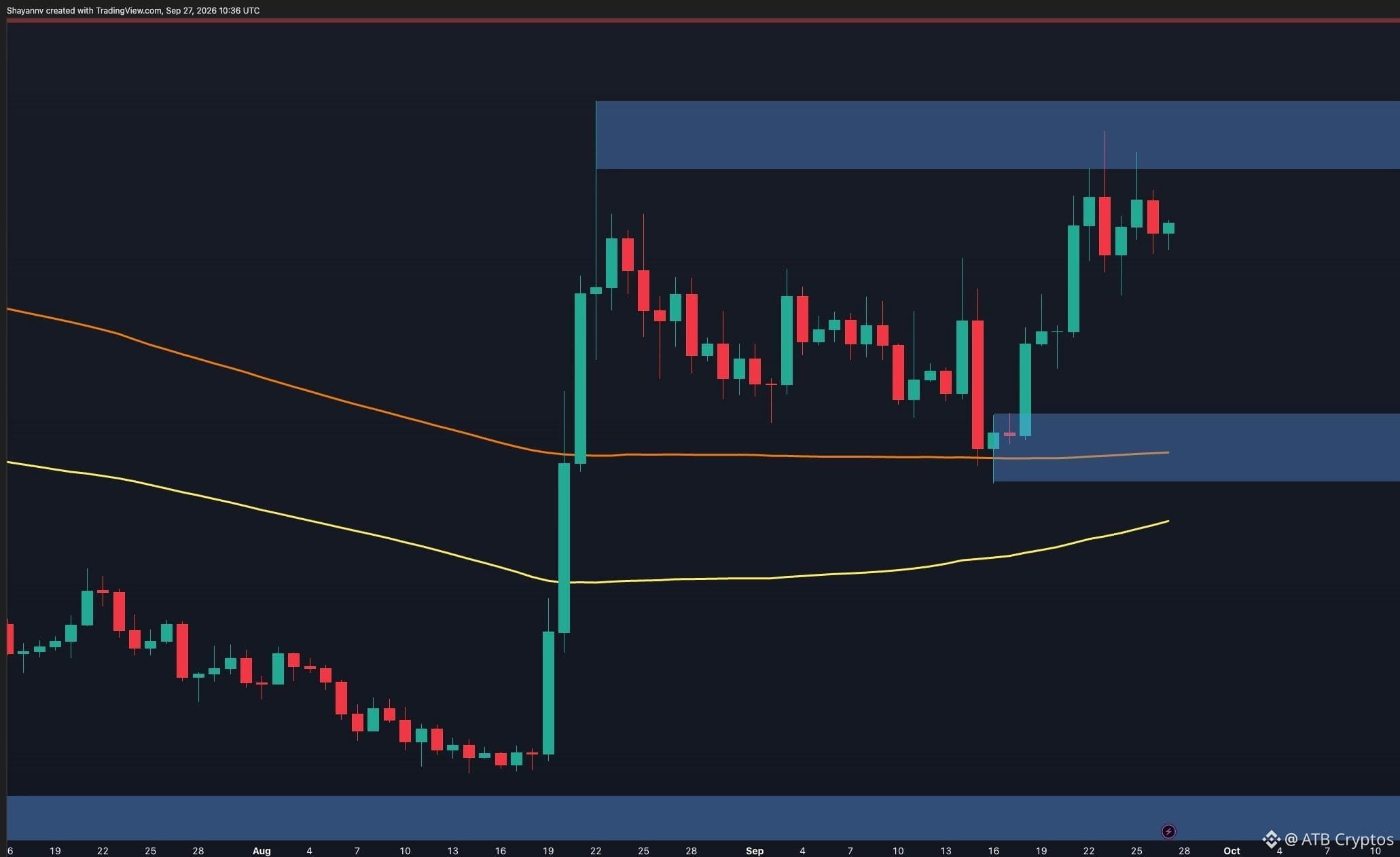
XRP eyes critical $1.60 resistance as bullish pattern holds.
- On the daily chart Ripple’s XRP trades well above moving averages and found support at $1.25‑$1.32 before rebounding toward the $1.60‑$1.70 supply zone.
- The price is consolidating near $1.54, with sellers active in the $1.60‑$1.65 range; a daily close above $1.60‑$1.70 would signal a bullish development.
- Key support remains the $1.25‑$1.32 zone; a break below could shift focus to deeper support at $0.93‑$0.97.
Do you think breaking the $1.60 resistance will sustain the rally, or will support hold the line?
#Crypto #XRP #MarketAnalysis #Trading
XRP eyes critical $1.60 resistance as bullish pattern holds.
- On the daily chart Ripple’s XRP trades well above moving averages and found support at $1.25‑$1.32 before rebounding toward the $1.60‑$1.70 supply zone.
- The price is consolidating near $1.54, with sellers active in the $1.60‑$1.65 range; a daily close above $1.60‑$1.70 would signal a bullish development.
- Key support remains the $1.25‑$1.32 zone; a break below could shift focus to deeper support at $0.93‑$0.97.
Do you think breaking the $1.60 resistance will sustain the rally, or will support hold the line?
#Crypto #XRP #MarketAnalysis #Trading
- On the daily chart Ripple’s XRP trades well above moving averages and found support at $1.25‑$1.32 before rebounding toward the $1.60‑$1.70 supply zone.
- The price is consolidating near $1.54, with sellers active in the $1.60‑$1.65 range; a daily close above $1.60‑$1.70 would signal a bullish development.
- Key support remains the $1.25‑$1.32 zone; a break below could shift focus to deeper support at $0.93‑$0.97.
Do you think breaking the $1.60 resistance will sustain the rally, or will support hold the line?
#Crypto #XRP #MarketAnalysis #Trading
1
88
·
--
Only 9 of the top 50 altcoins have outperformed Bitcoin since its October peak.
Fresh Glassnode data shows 9 of the 50 largest alts at Bitcoin’s peak last October delivered higher returns than Bitcoin.
Zcash leads with almost 14.5 times Bitcoin’s return, followed by HYPE (~2.9×), Monero (~2.6×), Near (~2.1×) and UNI, TRX, LEO, TAO also outperformed.
41 alts failed to beat Bitcoin, though many still posted positive USD gains, highlighting the opportunity cost of shifting capital from Bitcoin.
Glassnode’s newer metrics reveal that over the past week 72 % of tracked alts outperformed Bitcoin, up from a peak of 39 % in August, while altcoin perpetual open interest stayed flat.
Altcoin market‑share change remained negative at ‑0.9 % despite a 21 % month‑over‑month increase in combined market cap.
Do you think the current altcoin performance shift signals a durable trend or a short‑term anomaly?
#Altcoins #Bitcoin #CryptoAnalytics #MarketData #FinTech
Only 9 of the top 50 altcoins have outperformed Bitcoin since its October peak.
Fresh Glassnode data shows 9 of the 50 largest alts at Bitcoin’s peak last October delivered higher returns than Bitcoin.
Zcash leads with almost 14.5 times Bitcoin’s return, followed by HYPE (~2.9×), Monero (~2.6×), Near (~2.1×) and UNI, TRX, LEO, TAO also outperformed.
41 alts failed to beat Bitcoin, though many still posted positive USD gains, highlighting the opportunity cost of shifting capital from Bitcoin.
Glassnode’s newer metrics reveal that over the past week 72 % of tracked alts outperformed Bitcoin, up from a peak of 39 % in August, while altcoin perpetual open interest stayed flat.
Altcoin market‑share change remained negative at ‑0.9 % despite a 21 % month‑over‑month increase in combined market cap.
Do you think the current altcoin performance shift signals a durable trend or a short‑term anomaly?
#Altcoins #Bitcoin #CryptoAnalytics #MarketData #FinTech
Fresh Glassnode data shows 9 of the 50 largest alts at Bitcoin’s peak last October delivered higher returns than Bitcoin.
Zcash leads with almost 14.5 times Bitcoin’s return, followed by HYPE (~2.9×), Monero (~2.6×), Near (~2.1×) and UNI, TRX, LEO, TAO also outperformed.
41 alts failed to beat Bitcoin, though many still posted positive USD gains, highlighting the opportunity cost of shifting capital from Bitcoin.
Glassnode’s newer metrics reveal that over the past week 72 % of tracked alts outperformed Bitcoin, up from a peak of 39 % in August, while altcoin perpetual open interest stayed flat.
Altcoin market‑share change remained negative at ‑0.9 % despite a 21 % month‑over‑month increase in combined market cap.
Do you think the current altcoin performance shift signals a durable trend or a short‑term anomaly?
#Altcoins #Bitcoin #CryptoAnalytics #MarketData #FinTech

1
64
·
--
XRP’s latest rally puts its performance against gold back in the spotlight.
EGRAG Crypto has highlighted the XRP/gold pair, noting the chart could signal a stage where XRP gains ground relative to the precious metal.
The analyst previously used this comparison to spot periods when the token accelerated sharply against bullion.
XRP remains far below its 2025 all‑time high despite recovering from the August decline to $1.00.
The relative‑value argument suggests XRP can rise faster without gold falling, and EGRAG expects both a gold retracement and an XRP acceleration.
EGRAG also outlines a long‑term roadmap with $1.75 as a key threshold, and targets of $5‑$8 or $13.
ChartNerd identifies a multi‑year cup‑and‑handle pattern with similar Fib targets, while whales have accumulated roughly $720 million of XRP in recent days.
Which scenario do you find more convincing: a gold dump, an XRP surge, or both?
#XRP #Gold #Crypto #FinTech
XRP’s latest rally puts its performance against gold back in the spotlight.
EGRAG Crypto has highlighted the XRP/gold pair, noting the chart could signal a stage where XRP gains ground relative to the precious metal.
The analyst previously used this comparison to spot periods when the token accelerated sharply against bullion.
XRP remains far below its 2025 all‑time high despite recovering from the August decline to $1.00.
The relative‑value argument suggests XRP can rise faster without gold falling, and EGRAG expects both a gold retracement and an XRP acceleration.
EGRAG also outlines a long‑term roadmap with $1.75 as a key threshold, and targets of $5‑$8 or $13.
ChartNerd identifies a multi‑year cup‑and‑handle pattern with similar Fib targets, while whales have accumulated roughly $720 million of XRP in recent days.
Which scenario do you find more convincing: a gold dump, an XRP surge, or both?
#XRP #Gold #Crypto #FinTech
EGRAG Crypto has highlighted the XRP/gold pair, noting the chart could signal a stage where XRP gains ground relative to the precious metal.
The analyst previously used this comparison to spot periods when the token accelerated sharply against bullion.
XRP remains far below its 2025 all‑time high despite recovering from the August decline to $1.00.
The relative‑value argument suggests XRP can rise faster without gold falling, and EGRAG expects both a gold retracement and an XRP acceleration.
EGRAG also outlines a long‑term roadmap with $1.75 as a key threshold, and targets of $5‑$8 or $13.
ChartNerd identifies a multi‑year cup‑and‑handle pattern with similar Fib targets, while whales have accumulated roughly $720 million of XRP in recent days.
Which scenario do you find more convincing: a gold dump, an XRP surge, or both?
#XRP #Gold #Crypto #FinTech
1
132
·
--
Bitcoin could get Zcash‑style privacy without a soft fork.
Researchers from Alloc Init introduced “Shielded Bitcoin,” a metaprotocol that hides BTC transfer amounts and counterparties while keeping Bitcoin’s consensus unchanged.
The design uses encrypted notes and zero‑knowledge proofs on the base layer; indexers verify the proofs and track nullifiers to prevent double spends, and anyone can run an indexer.
It separates spend and view keys, allowing a read‑only key to detect incoming transfers and enabling users to share limited transaction details without exposing spending power.
Do you think a privacy layer built on Bitcoin’s base layer could become mainstream?
#Bitcoin #Privacy #ZeroKnowledge #Zcash #Crypto
Bitcoin could get Zcash‑style privacy without a soft fork.
Researchers from Alloc Init introduced “Shielded Bitcoin,” a metaprotocol that hides BTC transfer amounts and counterparties while keeping Bitcoin’s consensus unchanged.
The design uses encrypted notes and zero‑knowledge proofs on the base layer; indexers verify the proofs and track nullifiers to prevent double spends, and anyone can run an indexer.
It separates spend and view keys, allowing a read‑only key to detect incoming transfers and enabling users to share limited transaction details without exposing spending power.
Do you think a privacy layer built on Bitcoin’s base layer could become mainstream?
#Bitcoin #Privacy #ZeroKnowledge #Zcash #Crypto
Researchers from Alloc Init introduced “Shielded Bitcoin,” a metaprotocol that hides BTC transfer amounts and counterparties while keeping Bitcoin’s consensus unchanged.
The design uses encrypted notes and zero‑knowledge proofs on the base layer; indexers verify the proofs and track nullifiers to prevent double spends, and anyone can run an indexer.
It separates spend and view keys, allowing a read‑only key to detect incoming transfers and enabling users to share limited transaction details without exposing spending power.
Do you think a privacy layer built on Bitcoin’s base layer could become mainstream?
#Bitcoin #Privacy #ZeroKnowledge #Zcash #Crypto
1
6
·
--
Institutions watched Bitcoin plunge 50% and kept their exposure unchanged.
- Bitwise surveyed 15 institutional investors covering Q4 2025‑Q2 2026, a period when Bitcoin fell about 50% – none reduced their allocation.
- Crypto allocations remained modest, ranging from 0.5% to 13% of investable assets; most sit between 1% and 2%, with roughly 80% of that exposure concentrated in Bitcoin.
- Spot crypto ETFs are now a primary entry point: nearly every respondent either uses them or plans to, citing lower costs, simpler reporting and better liquidity versus private placements.
Are spot ETFs the future gateway for institutions, or will direct custody regain favor?
#Bitcoin #InstitutionalInvestors #CryptoETFs #Bitwise #FinTech
Institutions watched Bitcoin plunge 50% and kept their exposure unchanged.
- Bitwise surveyed 15 institutional investors covering Q4 2025‑Q2 2026, a period when Bitcoin fell about 50% – none reduced their allocation.
- Crypto allocations remained modest, ranging from 0.5% to 13% of investable assets; most sit between 1% and 2%, with roughly 80% of that exposure concentrated in Bitcoin.
- Spot crypto ETFs are now a primary entry point: nearly every respondent either uses them or plans to, citing lower costs, simpler reporting and better liquidity versus private placements.
Are spot ETFs the future gateway for institutions, or will direct custody regain favor?
#Bitcoin #InstitutionalInvestors #CryptoETFs #Bitwise #FinTech
- Bitwise surveyed 15 institutional investors covering Q4 2025‑Q2 2026, a period when Bitcoin fell about 50% – none reduced their allocation.
- Crypto allocations remained modest, ranging from 0.5% to 13% of investable assets; most sit between 1% and 2%, with roughly 80% of that exposure concentrated in Bitcoin.
- Spot crypto ETFs are now a primary entry point: nearly every respondent either uses them or plans to, citing lower costs, simpler reporting and better liquidity versus private placements.
Are spot ETFs the future gateway for institutions, or will direct custody regain favor?
#Bitcoin #InstitutionalInvestors #CryptoETFs #Bitwise #FinTech

1
17
·
--
SEC drops new FAQs on staking tokens and the Howey test.
Guidance follows the CLARITY Act’s Senate failure on Sep 15 and clarifies crypto regulation for tokens that may fall outside securities rules.
Staking receipt tokens tied to a digital commodity not an investment contract are digital tools; receipts from protocol‑based liquid staking providers may be digital commodities if they do not transfer ownership or let the issuer use the asset.
Continuing to secure, maintain, or improve a functional blockchain does not meet the “essential managerial efforts” the Howey test requires, and buybacks of non‑security tokens for a functional system are not such promises unless the network is not yet functional and the buyback is marketed as yield.
How will these SEC clarifications influence future token designs and project strategies?
#Crypto #FinTech #Regulation #SEC #HoweyTest
SEC drops new FAQs on staking tokens and the Howey test.
Guidance follows the CLARITY Act’s Senate failure on Sep 15 and clarifies crypto regulation for tokens that may fall outside securities rules.
Staking receipt tokens tied to a digital commodity not an investment contract are digital tools; receipts from protocol‑based liquid staking providers may be digital commodities if they do not transfer ownership or let the issuer use the asset.
Continuing to secure, maintain, or improve a functional blockchain does not meet the “essential managerial efforts” the Howey test requires, and buybacks of non‑security tokens for a functional system are not such promises unless the network is not yet functional and the buyback is marketed as yield.
How will these SEC clarifications influence future token designs and project strategies?
#Crypto #FinTech #Regulation #SEC #HoweyTest
Guidance follows the CLARITY Act’s Senate failure on Sep 15 and clarifies crypto regulation for tokens that may fall outside securities rules.
Staking receipt tokens tied to a digital commodity not an investment contract are digital tools; receipts from protocol‑based liquid staking providers may be digital commodities if they do not transfer ownership or let the issuer use the asset.
Continuing to secure, maintain, or improve a functional blockchain does not meet the “essential managerial efforts” the Howey test requires, and buybacks of non‑security tokens for a functional system are not such promises unless the network is not yet functional and the buyback is marketed as yield.
How will these SEC clarifications influence future token designs and project strategies?
#Crypto #FinTech #Regulation #SEC #HoweyTest
1
3
Connectez-vous pour découvrir plus de contenu
Rejoignez la communauté mondiale des adeptes de cryptomonnaies sur Binance Square
⚡️ Suviez les dernières informations importantes sur les cryptomonnaies.
💬 Jugé digne de confiance par la plus grande plateforme d’échange de cryptomonnaies au monde.
👍 Découvrez les connaissances que partagent les créateurs vérifiés.
Adresse e-mail/Nº de téléphone
Sujets d’actualité
BitcoinClears$85200
16,063 vues
237 mentions
We got the move, and $BTC is standing exactly where we were before the data. That’s what actual patience for a trade looks like.
The data came in mixed but with some important numbers. ADP Non-Farm Employment Change came at 90K vs 73K forecast, while Core PCE came in at 0.2% vs 0.3% expected. Final GDP was also stronger at 2.2% vs 1.5% forecast, while Personal Spending came in at 0.9% vs 0.8% expected. At the same time, Personal Income missed at 0.2% vs 0.5% forecast.
BTC initially surged to $85,600 and is now back where it needs to be. I’m still looking toward the lower ranges at $82,759 and the $80,000 liquidity, because the overhead liquidity is done and dusted.
We had a live session during the data, and during that session we saw the market at $83,800, then $85,600, and then back toward $83,000 and we still didn’t enter a trade.
That’s what patience is.
We can’t force an entry when the market has no clear direction. The same range is still in focus, and we’ll wait for the market to give us the setup.
Let me know, guys, how was the session? And should we have more regular sessions with our respected members so we can have proper discussions regarding the market?
#BitcoinClears$85200 #AltcoinSeasonIndexHoldsAbove60For5Days #USADPAdds90000JobsInSeptember #BitcoinSlipsBelow$84000 #SECToClarifyOnChainFundraisingRules
Crypto_LUX
·27 mentions J’aime
·23.2k vues
AltcoinSeasonIndexHoldsAbove60For5Days
80,360 vues
1,308 mentions
USADPAdds90000JobsInSeptember
35,288 vues
722 mentions