

Marvin Alvis
12.7k Publications

Marvin Alvis
 Binance Square Vérifié
Signaler
Bloquer l’utilisateur
Ouvert au trading
Trade régulièrement
1.8 an(s)
803 Suivis
30.7K+ Abonnés
18.6K+ J’aime
Publications
Portefeuille
Tous
Citations
Direct
·
--
Haussier
GALA: Gaming Infrastructure With Growing Pains
I've been following Gala Games since it positioned itself as a decentralized gaming ecosystem, and the ambition hasn't shrunk even if the market has.
Gala operates multiple blockchain networks supporting different functions. GalaChain handles speed-focused transactions, while other chains support Ethereum-compatible operations. The idea is that games need fast, cheap infrastructure that doesn't sacrifice ownership. Nodes form the backbone, with operators earning GALA for maintaining the network.
What's genuinely working is the variety of games. Town Star, Spider Tanks, and others have active players, not just token holders waiting for airdrops. The company has been building for years, and that persistence shows in the product range.
The challenges are real too. The ecosystem faced leadership turmoil in 2022 and 2023 that raised questions about direction and internal stability. Some promised features arrived late or changed shape. Node operators have expressed frustration about reward economics at times. These aren't fatal problems, but they're the kind of friction that tests community patience.
Gala's approach to ownership is interesting. Players can actually own in-game assets as NFTs and trade them, which changes the relationship between time invested and value received. Whether mainstream gamers care about this yet is unclear. Most still prefer convenience over custody.
I keep watching to see if the infrastructure matures faster than the market loses interest. That race is the whole story for projects like this.
$GALA
{spot}(GALAUSDT)
#USStocksCloseHigherOnWeakJobsData #ICBASuesOCCOverCryptoBankCharters #G7PlansToReleaseUpTo100MBarrelsOilDiesel #SECApproves3xLongCryptoCommodityETPs #SECProposesCryptoCustodyRules
GALA: Gaming Infrastructure With Growing Pains
I've been following Gala Games since it positioned itself as a decentralized gaming ecosystem, and the ambition hasn't shrunk even if the market has.
Gala operates multiple blockchain networks supporting different functions. GalaChain handles speed-focused transactions, while other chains support Ethereum-compatible operations. The idea is that games need fast, cheap infrastructure that doesn't sacrifice ownership. Nodes form the backbone, with operators earning GALA for maintaining the network.
What's genuinely working is the variety of games. Town Star, Spider Tanks, and others have active players, not just token holders waiting for airdrops. The company has been building for years, and that persistence shows in the product range.
The challenges are real too. The ecosystem faced leadership turmoil in 2022 and 2023 that raised questions about direction and internal stability. Some promised features arrived late or changed shape. Node operators have expressed frustration about reward economics at times. These aren't fatal problems, but they're the kind of friction that tests community patience.
Gala's approach to ownership is interesting. Players can actually own in-game assets as NFTs and trade them, which changes the relationship between time invested and value received. Whether mainstream gamers care about this yet is unclear. Most still prefer convenience over custody.
I keep watching to see if the infrastructure matures faster than the market loses interest. That race is the whole story for projects like this.
$GALA
#USStocksCloseHigherOnWeakJobsData #ICBASuesOCCOverCryptoBankCharters #G7PlansToReleaseUpTo100MBarrelsOilDiesel #SECApproves3xLongCryptoCommodityETPs #SECProposesCryptoCustodyRules
I've been following Gala Games since it positioned itself as a decentralized gaming ecosystem, and the ambition hasn't shrunk even if the market has.
Gala operates multiple blockchain networks supporting different functions. GalaChain handles speed-focused transactions, while other chains support Ethereum-compatible operations. The idea is that games need fast, cheap infrastructure that doesn't sacrifice ownership. Nodes form the backbone, with operators earning GALA for maintaining the network.
What's genuinely working is the variety of games. Town Star, Spider Tanks, and others have active players, not just token holders waiting for airdrops. The company has been building for years, and that persistence shows in the product range.
The challenges are real too. The ecosystem faced leadership turmoil in 2022 and 2023 that raised questions about direction and internal stability. Some promised features arrived late or changed shape. Node operators have expressed frustration about reward economics at times. These aren't fatal problems, but they're the kind of friction that tests community patience.
Gala's approach to ownership is interesting. Players can actually own in-game assets as NFTs and trade them, which changes the relationship between time invested and value received. Whether mainstream gamers care about this yet is unclear. Most still prefer convenience over custody.
I keep watching to see if the infrastructure matures faster than the market loses interest. That race is the whole story for projects like this.
$GALA
#USStocksCloseHigherOnWeakJobsData #ICBASuesOCCOverCryptoBankCharters #G7PlansToReleaseUpTo100MBarrelsOilDiesel #SECApproves3xLongCryptoCommodityETPs #SECProposesCryptoCustodyRules
144
·
--
Haussier
SAND: The Metaverse's Patient Builder
I've been watching Sandbox for a while now, and what strikes me isn't the hype cycles it rode through 2021 or the quiet periods that followed. It's how the project kept shipping while others faded.
The Sandbox is a virtual world where users build, own, and monetize gaming experiences using voxel-based assets. Everything runs on Ethereum, with SAND as the utility token for transactions, staking, and governance within its DAO. Land is limited to 166,464 parcels, which creates natural scarcity without needing artificial pressure.
What's actually working is the creator economy. The Game Maker tool lets people build without coding, and VoxEdit handles asset creation. I've noticed studios like Atari and Care Bears maintaining presence there, but the more interesting activity comes from independent creators who treat it as a genuine prototyping ground. The platform processes land sales and asset trades consistently, though volume has cooled from peak years.
The DAO structure gives SAND holders real voting power over grant allocations and platform decisions. It's not perfect governance, but it's functional. The team at Animoca Brands has been transparent about roadmap delays too, which matters when so many metaverse projects quietly disappeared.
What deserves caution is adoption depth. Building engaging experiences takes time, and many virtual worlds still feel empty outside events. The Sandbox isn't immune to this. Regulatory clarity around token classification remains unsettled globally, which affects every project in this space.
I keep wondering whether virtual land will hold cultural value the way physical spaces do, or if we're still too early to know. The Sandbox seems prepared to wait for that answer.
$SAND
{spot}(SANDUSDT)
#USRussiaUkraineTalksReportedlyIncludeLukoilOilDeal #CerebrasSinksNearly20%OnReportNvidiaToPowerOpenAI #SECProposesCryptoCustodyRules #SECApproves3xLongCryptoCommodityETPs #ICBASuesOCCOverCryptoBankCharters
SAND: The Metaverse's Patient Builder
I've been watching Sandbox for a while now, and what strikes me isn't the hype cycles it rode through 2021 or the quiet periods that followed. It's how the project kept shipping while others faded.
The Sandbox is a virtual world where users build, own, and monetize gaming experiences using voxel-based assets. Everything runs on Ethereum, with SAND as the utility token for transactions, staking, and governance within its DAO. Land is limited to 166,464 parcels, which creates natural scarcity without needing artificial pressure.
What's actually working is the creator economy. The Game Maker tool lets people build without coding, and VoxEdit handles asset creation. I've noticed studios like Atari and Care Bears maintaining presence there, but the more interesting activity comes from independent creators who treat it as a genuine prototyping ground. The platform processes land sales and asset trades consistently, though volume has cooled from peak years.
The DAO structure gives SAND holders real voting power over grant allocations and platform decisions. It's not perfect governance, but it's functional. The team at Animoca Brands has been transparent about roadmap delays too, which matters when so many metaverse projects quietly disappeared.
What deserves caution is adoption depth. Building engaging experiences takes time, and many virtual worlds still feel empty outside events. The Sandbox isn't immune to this. Regulatory clarity around token classification remains unsettled globally, which affects every project in this space.
I keep wondering whether virtual land will hold cultural value the way physical spaces do, or if we're still too early to know. The Sandbox seems prepared to wait for that answer.
$SAND
#USRussiaUkraineTalksReportedlyIncludeLukoilOilDeal #CerebrasSinksNearly20%OnReportNvidiaToPowerOpenAI #SECProposesCryptoCustodyRules #SECApproves3xLongCryptoCommodityETPs #ICBASuesOCCOverCryptoBankCharters
I've been watching Sandbox for a while now, and what strikes me isn't the hype cycles it rode through 2021 or the quiet periods that followed. It's how the project kept shipping while others faded.
The Sandbox is a virtual world where users build, own, and monetize gaming experiences using voxel-based assets. Everything runs on Ethereum, with SAND as the utility token for transactions, staking, and governance within its DAO. Land is limited to 166,464 parcels, which creates natural scarcity without needing artificial pressure.
What's actually working is the creator economy. The Game Maker tool lets people build without coding, and VoxEdit handles asset creation. I've noticed studios like Atari and Care Bears maintaining presence there, but the more interesting activity comes from independent creators who treat it as a genuine prototyping ground. The platform processes land sales and asset trades consistently, though volume has cooled from peak years.
The DAO structure gives SAND holders real voting power over grant allocations and platform decisions. It's not perfect governance, but it's functional. The team at Animoca Brands has been transparent about roadmap delays too, which matters when so many metaverse projects quietly disappeared.
What deserves caution is adoption depth. Building engaging experiences takes time, and many virtual worlds still feel empty outside events. The Sandbox isn't immune to this. Regulatory clarity around token classification remains unsettled globally, which affects every project in this space.
I keep wondering whether virtual land will hold cultural value the way physical spaces do, or if we're still too early to know. The Sandbox seems prepared to wait for that answer.
$SAND
#USRussiaUkraineTalksReportedlyIncludeLukoilOilDeal #CerebrasSinksNearly20%OnReportNvidiaToPowerOpenAI #SECProposesCryptoCustodyRules #SECApproves3xLongCryptoCommodityETPs #ICBASuesOCCOverCryptoBankCharters
164
·
--
Haussier
MAGMA: Early Days, Real Questions
I've been thinking about MAGMA lately, and honestly, there's not much to think about yet.
The token appeared on Binance recently, and what I've found is thin. No whitepaper I can verify. No documentation explaining what problem it solves. No team page listing who's building it. This isn't unusual for newly listed tokens, but it means everything right now rests on speculation rather than substance.
What I can observe is the trading activity. The liquidation numbers suggest volatility typical of low-liquidity assets. That's not a criticism of the project itself, just the reality of early-stage tokens finding price discovery.
Projects like this often emerge from communities rather than companies. Sometimes that works. Sometimes it doesn't. The difference usually comes down to whether developers show up publicly and start explaining what they're actually building.
I'd want to see a website with technical details. I'd want to understand tokenomics beyond what exchanges list. I'd want to hear from people involved. Until then, I'm just watching from a distance, waiting for signals that there's something real underneath the ticker.
Not every token needs to be a grand vision. But every project needs to explain itself eventually.
$MAGMA
{future}(MAGMAUSDT)
#ICBASuesOCCOverCryptoBankCharters #USStocksCloseHigherOnWeakJobsData #G7PlansToReleaseUpTo100MBarrelsOilDiesel #SECApproves3xLongCryptoCommodityETPs #SECProposesCryptoCustodyRules
MAGMA: Early Days, Real Questions
I've been thinking about MAGMA lately, and honestly, there's not much to think about yet.
The token appeared on Binance recently, and what I've found is thin. No whitepaper I can verify. No documentation explaining what problem it solves. No team page listing who's building it. This isn't unusual for newly listed tokens, but it means everything right now rests on speculation rather than substance.
What I can observe is the trading activity. The liquidation numbers suggest volatility typical of low-liquidity assets. That's not a criticism of the project itself, just the reality of early-stage tokens finding price discovery.
Projects like this often emerge from communities rather than companies. Sometimes that works. Sometimes it doesn't. The difference usually comes down to whether developers show up publicly and start explaining what they're actually building.
I'd want to see a website with technical details. I'd want to understand tokenomics beyond what exchanges list. I'd want to hear from people involved. Until then, I'm just watching from a distance, waiting for signals that there's something real underneath the ticker.
Not every token needs to be a grand vision. But every project needs to explain itself eventually.
$MAGMA
#ICBASuesOCCOverCryptoBankCharters #USStocksCloseHigherOnWeakJobsData #G7PlansToReleaseUpTo100MBarrelsOilDiesel #SECApproves3xLongCryptoCommodityETPs #SECProposesCryptoCustodyRules
I've been thinking about MAGMA lately, and honestly, there's not much to think about yet.
The token appeared on Binance recently, and what I've found is thin. No whitepaper I can verify. No documentation explaining what problem it solves. No team page listing who's building it. This isn't unusual for newly listed tokens, but it means everything right now rests on speculation rather than substance.
What I can observe is the trading activity. The liquidation numbers suggest volatility typical of low-liquidity assets. That's not a criticism of the project itself, just the reality of early-stage tokens finding price discovery.
Projects like this often emerge from communities rather than companies. Sometimes that works. Sometimes it doesn't. The difference usually comes down to whether developers show up publicly and start explaining what they're actually building.
I'd want to see a website with technical details. I'd want to understand tokenomics beyond what exchanges list. I'd want to hear from people involved. Until then, I'm just watching from a distance, waiting for signals that there's something real underneath the ticker.
Not every token needs to be a grand vision. But every project needs to explain itself eventually.
$MAGMA
#ICBASuesOCCOverCryptoBankCharters #USStocksCloseHigherOnWeakJobsData #G7PlansToReleaseUpTo100MBarrelsOilDiesel #SECApproves3xLongCryptoCommodityETPs #SECProposesCryptoCustodyRules
367
·
--
Haussier
Bitcoin — The Part I Keep Watching
I’m watching Bitcoin’s chart, but the price isn’t the part that keeps my attention.
What stands out is how the network keeps developing underneath the noise. Bitcoin remains an open, peer-to-peer system with no central operator, while full nodes independently verify blocks and transactions against the protocol’s rules.
That foundation hasn’t stopped evolving. Bitcoin Core continues to receive reviewed releases, with v31.1 including new features, fixes and performance improvements.
There are still real trade-offs: transactions are public and permanent, self-custody puts security responsibility on the user, and busy periods can affect fees and confirmation times.
Maybe that’s what makes Bitcoin interesting to me after all these years. The question isn’t simply how far it can go.
It’s whether people keep trusting the system enough to keep building on it.
$BTC
{spot}(BTCUSDT)
#USStocksCloseHigherOnWeakJobsData #AnchorageReportedlyCuts17%Workforce #ICBASuesOCCOverCryptoBankCharters #G7PlansToReleaseUpTo100MBarrelsOilDiesel #SECProposesCryptoCustodyRules
Bitcoin — The Part I Keep Watching
I’m watching Bitcoin’s chart, but the price isn’t the part that keeps my attention.
What stands out is how the network keeps developing underneath the noise. Bitcoin remains an open, peer-to-peer system with no central operator, while full nodes independently verify blocks and transactions against the protocol’s rules.
That foundation hasn’t stopped evolving. Bitcoin Core continues to receive reviewed releases, with v31.1 including new features, fixes and performance improvements.
There are still real trade-offs: transactions are public and permanent, self-custody puts security responsibility on the user, and busy periods can affect fees and confirmation times.
Maybe that’s what makes Bitcoin interesting to me after all these years. The question isn’t simply how far it can go.
It’s whether people keep trusting the system enough to keep building on it.
$BTC
#USStocksCloseHigherOnWeakJobsData #AnchorageReportedlyCuts17%Workforce #ICBASuesOCCOverCryptoBankCharters #G7PlansToReleaseUpTo100MBarrelsOilDiesel #SECProposesCryptoCustodyRules
I’m watching Bitcoin’s chart, but the price isn’t the part that keeps my attention.
What stands out is how the network keeps developing underneath the noise. Bitcoin remains an open, peer-to-peer system with no central operator, while full nodes independently verify blocks and transactions against the protocol’s rules.
That foundation hasn’t stopped evolving. Bitcoin Core continues to receive reviewed releases, with v31.1 including new features, fixes and performance improvements.
There are still real trade-offs: transactions are public and permanent, self-custody puts security responsibility on the user, and busy periods can affect fees and confirmation times.
Maybe that’s what makes Bitcoin interesting to me after all these years. The question isn’t simply how far it can go.
It’s whether people keep trusting the system enough to keep building on it.
$BTC
#USStocksCloseHigherOnWeakJobsData #AnchorageReportedlyCuts17%Workforce #ICBASuesOCCOverCryptoBankCharters #G7PlansToReleaseUpTo100MBarrelsOilDiesel #SECProposesCryptoCustodyRules
149
·
--
Haussier
Moonriver (MOVR): The Canary Network That Still Sings
I've been watching Moonriver since its early days as Kusama's parallel to Moonbeam. The idea was simple: test new code on a faster, riskier network before pushing it to Polkadot. It's a sandbox, but a live one with real value at stake. That's a smart way to de-risk development, and it's why MOVR has held attention even as the hype around Polkadot has cooled. The recent movement suggests people are still paying attention to what's happening on the canary side, not just the mainnet. It's a reminder that sometimes the testing ground is where the real innovation happens first.
$MOVR
{spot}(MOVRUSDT)
#MulticoinInvestsInGrass #SECChairWantsStockMarketsOnChain #ChainlinkLaunchesBankSWIFTLedgerFramework #ChainlinkLaunchesBankSWIFTLedgerFramework #BitgetHotWalletBreachTiedToThirdPartySecurityFlaw
Moonriver (MOVR): The Canary Network That Still Sings
I've been watching Moonriver since its early days as Kusama's parallel to Moonbeam. The idea was simple: test new code on a faster, riskier network before pushing it to Polkadot. It's a sandbox, but a live one with real value at stake. That's a smart way to de-risk development, and it's why MOVR has held attention even as the hype around Polkadot has cooled. The recent movement suggests people are still paying attention to what's happening on the canary side, not just the mainnet. It's a reminder that sometimes the testing ground is where the real innovation happens first.
$MOVR
#MulticoinInvestsInGrass #SECChairWantsStockMarketsOnChain #ChainlinkLaunchesBankSWIFTLedgerFramework #ChainlinkLaunchesBankSWIFTLedgerFramework #BitgetHotWalletBreachTiedToThirdPartySecurityFlaw
I've been watching Moonriver since its early days as Kusama's parallel to Moonbeam. The idea was simple: test new code on a faster, riskier network before pushing it to Polkadot. It's a sandbox, but a live one with real value at stake. That's a smart way to de-risk development, and it's why MOVR has held attention even as the hype around Polkadot has cooled. The recent movement suggests people are still paying attention to what's happening on the canary side, not just the mainnet. It's a reminder that sometimes the testing ground is where the real innovation happens first.
$MOVR
#MulticoinInvestsInGrass #SECChairWantsStockMarketsOnChain #ChainlinkLaunchesBankSWIFTLedgerFramework #ChainlinkLaunchesBankSWIFTLedgerFramework #BitgetHotWalletBreachTiedToThirdPartySecurityFlaw
165
·
--
Haussier
LayerZero (ZRO): Connecting the Islands
I've been thinking about how fragmented blockchains have become. Every chain is its own country with its own rules, and moving assets between them is still clunky. LayerZero is trying to fix that with a messaging protocol that lets different chains talk to each other without a central intermediary. It's not a bridge in the traditional sense; it's a communication layer. That distinction matters because bridges have been the weak point in crypto for years. LayerZero's approach is more resilient, but it's also more complex. The recent activity tells me people are starting to see the value in infrastructure that works quietly in the background rather than grabbing headlines.
$ZRO
{spot}(ZROUSDT)
#SECChairWantsStockMarketsOnChain #MulticoinInvestsInGrass #EarningsSeason #ChainlinkLaunchesBankSWIFTLedgerFramework #OpenAIUnveilsAlwaysOnAgentDots
LayerZero (ZRO): Connecting the Islands
I've been thinking about how fragmented blockchains have become. Every chain is its own country with its own rules, and moving assets between them is still clunky. LayerZero is trying to fix that with a messaging protocol that lets different chains talk to each other without a central intermediary. It's not a bridge in the traditional sense; it's a communication layer. That distinction matters because bridges have been the weak point in crypto for years. LayerZero's approach is more resilient, but it's also more complex. The recent activity tells me people are starting to see the value in infrastructure that works quietly in the background rather than grabbing headlines.
$ZRO
#SECChairWantsStockMarketsOnChain #MulticoinInvestsInGrass #EarningsSeason #ChainlinkLaunchesBankSWIFTLedgerFramework #OpenAIUnveilsAlwaysOnAgentDots
I've been thinking about how fragmented blockchains have become. Every chain is its own country with its own rules, and moving assets between them is still clunky. LayerZero is trying to fix that with a messaging protocol that lets different chains talk to each other without a central intermediary. It's not a bridge in the traditional sense; it's a communication layer. That distinction matters because bridges have been the weak point in crypto for years. LayerZero's approach is more resilient, but it's also more complex. The recent activity tells me people are starting to see the value in infrastructure that works quietly in the background rather than grabbing headlines.
$ZRO
#SECChairWantsStockMarketsOnChain #MulticoinInvestsInGrass #EarningsSeason #ChainlinkLaunchesBankSWIFTLedgerFramework #OpenAIUnveilsAlwaysOnAgentDots
101
·
--
Haussier
Berachain (BERA): Liquidity as a First-Class Citizen
I keep noticing how many Layer 1s launch with the same pitch: faster, cheaper, better. Berachain is different. Its core innovation is proof-of-liquidity, which means the network's security is tied to the liquidity providers rather than just stakers. That's a meaningful shift. It aligns incentives in a way that feels more natural for DeFi-native users. The project has a strong community culture, which is rare and valuable. The risk is that novel consensus mechanisms take time to prove themselves under real stress. It's early, but the design is worth watching, especially if the liquidity actually stays.
$BERA
{spot}(BERAUSDT)
#MulticoinInvestsInGrass #SECChairWantsStockMarketsOnChain #EarningsSeason #ChainlinkLaunchesBankSWIFTLedgerFramework #BitgetHotWalletBreachTiedToThirdPartySecurityFlaw
Berachain (BERA): Liquidity as a First-Class Citizen
I keep noticing how many Layer 1s launch with the same pitch: faster, cheaper, better. Berachain is different. Its core innovation is proof-of-liquidity, which means the network's security is tied to the liquidity providers rather than just stakers. That's a meaningful shift. It aligns incentives in a way that feels more natural for DeFi-native users. The project has a strong community culture, which is rare and valuable. The risk is that novel consensus mechanisms take time to prove themselves under real stress. It's early, but the design is worth watching, especially if the liquidity actually stays.
$BERA
#MulticoinInvestsInGrass #SECChairWantsStockMarketsOnChain #EarningsSeason #ChainlinkLaunchesBankSWIFTLedgerFramework #BitgetHotWalletBreachTiedToThirdPartySecurityFlaw
I keep noticing how many Layer 1s launch with the same pitch: faster, cheaper, better. Berachain is different. Its core innovation is proof-of-liquidity, which means the network's security is tied to the liquidity providers rather than just stakers. That's a meaningful shift. It aligns incentives in a way that feels more natural for DeFi-native users. The project has a strong community culture, which is rare and valuable. The risk is that novel consensus mechanisms take time to prove themselves under real stress. It's early, but the design is worth watching, especially if the liquidity actually stays.
$BERA
#MulticoinInvestsInGrass #SECChairWantsStockMarketsOnChain #EarningsSeason #ChainlinkLaunchesBankSWIFTLedgerFramework #BitgetHotWalletBreachTiedToThirdPartySecurityFlaw
166
·
--
Haussier
cat in a dogs world (MEW): The Meme With a Pulse
I've been watching the meme coin space for a while, and most of it is noise. But every so often, a token builds a community that feels less like a pump-and-dump and more like a genuine subculture. MEW is one of those. It's a cat meme in a dog-dominated market, which is a clever angle. But what matters is whether the community sticks around after the initial excitement fades. Meme coins are inherently volatile and speculative, so I'm cautious. Still, there's something interesting about how these tokens become social hubs. They're not just assets; they're identity markers. That's a real phenomenon, even if it's hard to value.
$MEW
{future}(MEWUSDT)
#SECChairWantsStockMarketsOnChain #MulticoinInvestsInGrass #EarningsSeason #ChainlinkLaunchesBankSWIFTLedgerFramework #OpenAIUnveilsAlwaysOnAgentDots
cat in a dogs world (MEW): The Meme With a Pulse
I've been watching the meme coin space for a while, and most of it is noise. But every so often, a token builds a community that feels less like a pump-and-dump and more like a genuine subculture. MEW is one of those. It's a cat meme in a dog-dominated market, which is a clever angle. But what matters is whether the community sticks around after the initial excitement fades. Meme coins are inherently volatile and speculative, so I'm cautious. Still, there's something interesting about how these tokens become social hubs. They're not just assets; they're identity markers. That's a real phenomenon, even if it's hard to value.
$MEW
#SECChairWantsStockMarketsOnChain #MulticoinInvestsInGrass #EarningsSeason #ChainlinkLaunchesBankSWIFTLedgerFramework #OpenAIUnveilsAlwaysOnAgentDots
I've been watching the meme coin space for a while, and most of it is noise. But every so often, a token builds a community that feels less like a pump-and-dump and more like a genuine subculture. MEW is one of those. It's a cat meme in a dog-dominated market, which is a clever angle. But what matters is whether the community sticks around after the initial excitement fades. Meme coins are inherently volatile and speculative, so I'm cautious. Still, there's something interesting about how these tokens become social hubs. They're not just assets; they're identity markers. That's a real phenomenon, even if it's hard to value.
$MEW
#SECChairWantsStockMarketsOnChain #MulticoinInvestsInGrass #EarningsSeason #ChainlinkLaunchesBankSWIFTLedgerFramework #OpenAIUnveilsAlwaysOnAgentDots
249
·
--
Haussier
Quant (QNT): The Quiet Interoperability Play
I've been thinking about how Quant has been around since 2018, quietly building in the background while newer projects grabbed the spotlight. Its focus is interoperability, specifically connecting traditional financial systems with blockchains through its Overledger platform. That's a big, unsexy problem, and it requires patience. Quant isn't trying to win a popularity contest; it's trying to get banks and enterprises to adopt its rails. The recent price movement might be a sign that people are rediscovering it, but I'm more interested in the long-term enterprise adoption. That's a slow burn, and it's not guaranteed, but it's a real use case.
$QNT
{spot}(QNTUSDT)
#SECChairWantsStockMarketsOnChain #MulticoinInvestsInGrass #EarningsSeason #ChainlinkLaunchesBankSWIFTLedgerFramework #TrumpRejectsAIRulesForVoluntaryAudits
Quant (QNT): The Quiet Interoperability Play
I've been thinking about how Quant has been around since 2018, quietly building in the background while newer projects grabbed the spotlight. Its focus is interoperability, specifically connecting traditional financial systems with blockchains through its Overledger platform. That's a big, unsexy problem, and it requires patience. Quant isn't trying to win a popularity contest; it's trying to get banks and enterprises to adopt its rails. The recent price movement might be a sign that people are rediscovering it, but I'm more interested in the long-term enterprise adoption. That's a slow burn, and it's not guaranteed, but it's a real use case.
$QNT
#SECChairWantsStockMarketsOnChain #MulticoinInvestsInGrass #EarningsSeason #ChainlinkLaunchesBankSWIFTLedgerFramework #TrumpRejectsAIRulesForVoluntaryAudits
I've been thinking about how Quant has been around since 2018, quietly building in the background while newer projects grabbed the spotlight. Its focus is interoperability, specifically connecting traditional financial systems with blockchains through its Overledger platform. That's a big, unsexy problem, and it requires patience. Quant isn't trying to win a popularity contest; it's trying to get banks and enterprises to adopt its rails. The recent price movement might be a sign that people are rediscovering it, but I'm more interested in the long-term enterprise adoption. That's a slow burn, and it's not guaranteed, but it's a real use case.
$QNT
#SECChairWantsStockMarketsOnChain #MulticoinInvestsInGrass #EarningsSeason #ChainlinkLaunchesBankSWIFTLedgerFramework #TrumpRejectsAIRulesForVoluntaryAudits
383
·
--
Haussier
Strategy's official
50%
long-term story
0%
Bitcoin strategy
50%
2 Votes • Vote fermé
1
269
·
--
Haussier
Vérifié
$ZEC is a silent killer single and very fast runner
I’ve been watching Zcash for a while, and what stands out now isn’t simply the attention around ZEC — it’s how much the protocol has had to prove under real pressure.
Zcash was built around zero-knowledge privacy, allowing transactions to be verified without publicly exposing all payment details. Its newer Ironwood shielded pool went live in July 2026 after an Orchard soundness vulnerability forced the ecosystem to rethink part of its security model.
That episode is important. Zcash didn't just patch the issue; Ironwood introduced a new pool with formal, machine-checked verification, including more than 2,700 theorems supporting its balance-integrity proofs.
There’s also a practical side. ECC has been putting more attention on Zashi and everyday shielded use, while the wider ecosystem continues developing wallets, node software and protocol upgrades.
Still, privacy technology has a difficult standard: it has to remain private and remain understandable, usable and secure when something goes wrong.
That’s what I’m watching with Zcash now. Not just how much attention it gets, but whether years of cryptographic research can translate into something ordinary people can quietly trust.
$BTC $ETH
#BitgetBreachForgedRequestsNotStolenKeys #BitcoinSpotETFsTurnNetPositiveYTD #CFTCUpdatesGuidanceOnTokenizedAssets #BinanceWillListHyperliquid(HYPE) #QNTRises39%
$ZEC is a silent killer single and very fast runner
I’ve been watching Zcash for a while, and what stands out now isn’t simply the attention around ZEC — it’s how much the protocol has had to prove under real pressure.
Zcash was built around zero-knowledge privacy, allowing transactions to be verified without publicly exposing all payment details. Its newer Ironwood shielded pool went live in July 2026 after an Orchard soundness vulnerability forced the ecosystem to rethink part of its security model.
That episode is important. Zcash didn't just patch the issue; Ironwood introduced a new pool with formal, machine-checked verification, including more than 2,700 theorems supporting its balance-integrity proofs.
There’s also a practical side. ECC has been putting more attention on Zashi and everyday shielded use, while the wider ecosystem continues developing wallets, node software and protocol upgrades.
Still, privacy technology has a difficult standard: it has to remain private and remain understandable, usable and secure when something goes wrong.
That’s what I’m watching with Zcash now. Not just how much attention it gets, but whether years of cryptographic research can translate into something ordinary people can quietly trust.
$BTC $ETH
#BitgetBreachForgedRequestsNotStolenKeys #BitcoinSpotETFsTurnNetPositiveYTD #CFTCUpdatesGuidanceOnTokenizedAssets #BinanceWillListHyperliquid(HYPE) #QNTRises39%
I’ve been watching Zcash for a while, and what stands out now isn’t simply the attention around ZEC — it’s how much the protocol has had to prove under real pressure.
Zcash was built around zero-knowledge privacy, allowing transactions to be verified without publicly exposing all payment details. Its newer Ironwood shielded pool went live in July 2026 after an Orchard soundness vulnerability forced the ecosystem to rethink part of its security model.
That episode is important. Zcash didn't just patch the issue; Ironwood introduced a new pool with formal, machine-checked verification, including more than 2,700 theorems supporting its balance-integrity proofs.
There’s also a practical side. ECC has been putting more attention on Zashi and everyday shielded use, while the wider ecosystem continues developing wallets, node software and protocol upgrades.
Still, privacy technology has a difficult standard: it has to remain private and remain understandable, usable and secure when something goes wrong.
That’s what I’m watching with Zcash now. Not just how much attention it gets, but whether years of cryptographic research can translate into something ordinary people can quietly trust.
$BTC $ETH
#BitgetBreachForgedRequestsNotStolenKeys #BitcoinSpotETFsTurnNetPositiveYTD #CFTCUpdatesGuidanceOnTokenizedAssets #BinanceWillListHyperliquid(HYPE) #QNTRises39%
Ironwood shielded pool
43%
Ironwood shielded
0%
attention on Zashi
29%
silent killer
28%
7 Votes • Vote fermé
2k
·
--
Haussier
Vérifié
Hormuz Is Becoming a Test of How Fast Risk Can Change
I’ve been watching the Strait of Hormuz closely, and the latest numbers are hard to ignore.
Only 2 commodity vessels were visibly tracked through Hormuz on September 21, compared with roughly 125 large commercial vessels a day before the conflict. Two commercial ships were also attacked around the same period.
But there’s another side to the story.
Iran has reportedly told Reuters it could reopen the strait within seven days if U.S. military pressure is reduced and the blockade on Iranian ports is lifted. Meanwhile, diplomatic contacts are intensifying around the UN General Assembly in New York.
What interests me most is the gap between physical disruption and diplomatic possibility. Shipping can almost stop overnight, but restoring confidence may take much longer.
For markets, energy, logistics and eventually crypto, that distinction matters.
Sometimes the biggest signal isn't what has already happened.
It's whether people start believing normal activity can return.
$NIL
{spot}(NILUSDT)
$NOM
{spot}(NOMUSDT)
$LSK
{spot}(LSKUSDT)
#21SharesLaunchesEuropesFirstZcashETP #DollarIndexReclaims101 #WallStreetEarningsRevisionsTurnBearish #BCHJumps28%OnCMEFuturesListing #USWeighsPromotingDollarStablecoinsAbroad
Hormuz Is Becoming a Test of How Fast Risk Can Change
I’ve been watching the Strait of Hormuz closely, and the latest numbers are hard to ignore.
Only 2 commodity vessels were visibly tracked through Hormuz on September 21, compared with roughly 125 large commercial vessels a day before the conflict. Two commercial ships were also attacked around the same period.
But there’s another side to the story.
Iran has reportedly told Reuters it could reopen the strait within seven days if U.S. military pressure is reduced and the blockade on Iranian ports is lifted. Meanwhile, diplomatic contacts are intensifying around the UN General Assembly in New York.
What interests me most is the gap between physical disruption and diplomatic possibility. Shipping can almost stop overnight, but restoring confidence may take much longer.
For markets, energy, logistics and eventually crypto, that distinction matters.
Sometimes the biggest signal isn't what has already happened.
It's whether people start believing normal activity can return.
$NIL
$NOM
$LSK
#21SharesLaunchesEuropesFirstZcashETP #DollarIndexReclaims101 #WallStreetEarningsRevisionsTurnBearish #BCHJumps28%OnCMEFuturesListing #USWeighsPromotingDollarStablecoinsAbroad
I’ve been watching the Strait of Hormuz closely, and the latest numbers are hard to ignore.
Only 2 commodity vessels were visibly tracked through Hormuz on September 21, compared with roughly 125 large commercial vessels a day before the conflict. Two commercial ships were also attacked around the same period.
But there’s another side to the story.
Iran has reportedly told Reuters it could reopen the strait within seven days if U.S. military pressure is reduced and the blockade on Iranian ports is lifted. Meanwhile, diplomatic contacts are intensifying around the UN General Assembly in New York.
What interests me most is the gap between physical disruption and diplomatic possibility. Shipping can almost stop overnight, but restoring confidence may take much longer.
For markets, energy, logistics and eventually crypto, that distinction matters.
Sometimes the biggest signal isn't what has already happened.
It's whether people start believing normal activity can return.
$NIL
$NOM
$LSK
#21SharesLaunchesEuropesFirstZcashETP #DollarIndexReclaims101 #WallStreetEarningsRevisionsTurnBearish #BCHJumps28%OnCMEFuturesListing #USWeighsPromotingDollarStablecoinsAbroad
Strait of Hormuz
29%
Two commercial ships
14%
U.S. military pressure
29%
diplomatic possibility
28%
7 Votes • Vote fermé
1.3k
·
--
Haussier
$ENA is igniting a fierce short squeeze as liquidations pile up aggressively.
The bears are getting trapped, forcing a massive wave of buying pressure.
EP
0.2130 - 0.2160
TP
0.2250
0.2350
0.2480
SL
0.2020
The short liquidation cascade is providing the fuel for a violent breakout. Momentum is shifting rapidly, and trapped sellers are scrambling to cover, driving the price higher.
Let’s go $ENA
{spot}(ENAUSDT)
#BNBMarketCapPassesBNYMellon #DogecoinRises15% #CardanoJoinsX402PaymentStandard #21SharesLaunchesEuropesFirstZcashETP #AIStocksWhatNext
$ENA is igniting a fierce short squeeze as liquidations pile up aggressively.
The bears are getting trapped, forcing a massive wave of buying pressure.
EP
0.2130 - 0.2160
TP
0.2250
0.2350
0.2480
SL
0.2020
The short liquidation cascade is providing the fuel for a violent breakout. Momentum is shifting rapidly, and trapped sellers are scrambling to cover, driving the price higher.
Let’s go $ENA
#BNBMarketCapPassesBNYMellon #DogecoinRises15% #CardanoJoinsX402PaymentStandard #21SharesLaunchesEuropesFirstZcashETP #AIStocksWhatNext
The bears are getting trapped, forcing a massive wave of buying pressure.
EP
0.2130 - 0.2160
TP
0.2250
0.2350
0.2480
SL
0.2020
The short liquidation cascade is providing the fuel for a violent breakout. Momentum is shifting rapidly, and trapped sellers are scrambling to cover, driving the price higher.
Let’s go $ENA
#BNBMarketCapPassesBNYMellon #DogecoinRises15% #CardanoJoinsX402PaymentStandard #21SharesLaunchesEuropesFirstZcashETP #AIStocksWhatNext
146
·
--
Haussier
$TAO is punishing the shorts with a massive liquidation sweep.
Price is surging as bears are forced to capitulate at a steep loss.
EP
308.00 - 311.00
TP
325.00
342.00
365.00
SL
292.00
The short squeeze is in full effect. With significant liquidations triggering, the path of least resistance is aggressively upward as trapped sellers scramble to exit their positions.
Let’s go $TAO
{spot}(TAOUSDT)
#BNBMarketCapPassesBNYMellon #DogecoinRises15% #CardanoJoinsX402PaymentStandard #21SharesLaunchesEuropesFirstZcashETP #AIStocksWhatNext
$TAO is punishing the shorts with a massive liquidation sweep.
Price is surging as bears are forced to capitulate at a steep loss.
EP
308.00 - 311.00
TP
325.00
342.00
365.00
SL
292.00
The short squeeze is in full effect. With significant liquidations triggering, the path of least resistance is aggressively upward as trapped sellers scramble to exit their positions.
Let’s go $TAO
#BNBMarketCapPassesBNYMellon #DogecoinRises15% #CardanoJoinsX402PaymentStandard #21SharesLaunchesEuropesFirstZcashETP #AIStocksWhatNext
Price is surging as bears are forced to capitulate at a steep loss.
EP
308.00 - 311.00
TP
325.00
342.00
365.00
SL
292.00
The short squeeze is in full effect. With significant liquidations triggering, the path of least resistance is aggressively upward as trapped sellers scramble to exit their positions.
Let’s go $TAO
#BNBMarketCapPassesBNYMellon #DogecoinRises15% #CardanoJoinsX402PaymentStandard #21SharesLaunchesEuropesFirstZcashETP #AIStocksWhatNext
121
·
--
Haussier
$NEAR is witnessing a sharp short liquidation, catching the bears off guard.
This sudden burst of buying pressure signals a clear shift in market control.
EP
4.78 - 4.81
TP
4.95
5.12
5.35
SL
4.55
The aggressive liquidation of shorts confirms overwhelming bullish intent. As the market reprices, the path of least resistance is firmly to the upside, leaving trapped bears in the dust.
Let’s go $NEAR
{spot}(NEARUSDT)
#DogecoinRises15% #CardanoJoinsX402PaymentStandard #21SharesLaunchesEuropesFirstZcashETP #AIStocksWhatNext #BNBMarketCapPassesBNYMellon
$NEAR is witnessing a sharp short liquidation, catching the bears off guard.
This sudden burst of buying pressure signals a clear shift in market control.
EP
4.78 - 4.81
TP
4.95
5.12
5.35
SL
4.55
The aggressive liquidation of shorts confirms overwhelming bullish intent. As the market reprices, the path of least resistance is firmly to the upside, leaving trapped bears in the dust.
Let’s go $NEAR
#DogecoinRises15% #CardanoJoinsX402PaymentStandard #21SharesLaunchesEuropesFirstZcashETP #AIStocksWhatNext #BNBMarketCapPassesBNYMellon
This sudden burst of buying pressure signals a clear shift in market control.
EP
4.78 - 4.81
TP
4.95
5.12
5.35
SL
4.55
The aggressive liquidation of shorts confirms overwhelming bullish intent. As the market reprices, the path of least resistance is firmly to the upside, leaving trapped bears in the dust.
Let’s go $NEAR
#DogecoinRises15% #CardanoJoinsX402PaymentStandard #21SharesLaunchesEuropesFirstZcashETP #AIStocksWhatNext #BNBMarketCapPassesBNYMellon
75
·
--
Haussier
$GIGGLE is triggering a rapid short liquidation event, fueling a sudden upward spike.
The bulls are stepping in aggressively, punishing over-leveraged sellers.
EP
40.50 - 40.90
TP
42.50
44.80
47.50
SL
38.50
This liquidation sweep has cleared the path for a powerful rally. The short squeeze is in full effect, and the momentum is accelerating as bears are forced to capitulate.
Let’s go $GIGGLE
{spot}(GIGGLEUSDT)
#BNBMarketCapPassesBNYMellon #DogecoinRises15% #CardanoJoinsX402PaymentStandard #21SharesLaunchesEuropesFirstZcashETP #AIStocksWhatNext
$GIGGLE is triggering a rapid short liquidation event, fueling a sudden upward spike.
The bulls are stepping in aggressively, punishing over-leveraged sellers.
EP
40.50 - 40.90
TP
42.50
44.80
47.50
SL
38.50
This liquidation sweep has cleared the path for a powerful rally. The short squeeze is in full effect, and the momentum is accelerating as bears are forced to capitulate.
Let’s go $GIGGLE
#BNBMarketCapPassesBNYMellon #DogecoinRises15% #CardanoJoinsX402PaymentStandard #21SharesLaunchesEuropesFirstZcashETP #AIStocksWhatNext
The bulls are stepping in aggressively, punishing over-leveraged sellers.
EP
40.50 - 40.90
TP
42.50
44.80
47.50
SL
38.50
This liquidation sweep has cleared the path for a powerful rally. The short squeeze is in full effect, and the momentum is accelerating as bears are forced to capitulate.
Let’s go $GIGGLE
#BNBMarketCapPassesBNYMellon #DogecoinRises15% #CardanoJoinsX402PaymentStandard #21SharesLaunchesEuropesFirstZcashETP #AIStocksWhatNext
1
310
·
--
Haussier
$AGPU is experiencing a massive short liquidation, signaling a powerful breakout.
The bears are getting obliterated as the price surges past critical resistance.
EP
13.30 - 13.45
TP
14.10
15.00
16.20
SL
12.60
This massive liquidation event confirms overwhelming bullish pressure. Shorts are trapped, and the resulting buying pressure is creating a powerful upward spiral.
Let’s go $AGPU
{future}(AGPUUSDT)
#BNBMarketCapPassesBNYMellon #DogecoinRises15% #CardanoJoinsX402PaymentStandard #21SharesLaunchesEuropesFirstZcashETP #AIStocksWhatNext
$AGPU is experiencing a massive short liquidation, signaling a powerful breakout.
The bears are getting obliterated as the price surges past critical resistance.
EP
13.30 - 13.45
TP
14.10
15.00
16.20
SL
12.60
This massive liquidation event confirms overwhelming bullish pressure. Shorts are trapped, and the resulting buying pressure is creating a powerful upward spiral.
Let’s go $AGPU
#BNBMarketCapPassesBNYMellon #DogecoinRises15% #CardanoJoinsX402PaymentStandard #21SharesLaunchesEuropesFirstZcashETP #AIStocksWhatNext
The bears are getting obliterated as the price surges past critical resistance.
EP
13.30 - 13.45
TP
14.10
15.00
16.20
SL
12.60
This massive liquidation event confirms overwhelming bullish pressure. Shorts are trapped, and the resulting buying pressure is creating a powerful upward spiral.
Let’s go $AGPU
#BNBMarketCapPassesBNYMellon #DogecoinRises15% #CardanoJoinsX402PaymentStandard #21SharesLaunchesEuropesFirstZcashETP #AIStocksWhatNext
370
·
--
Haussier
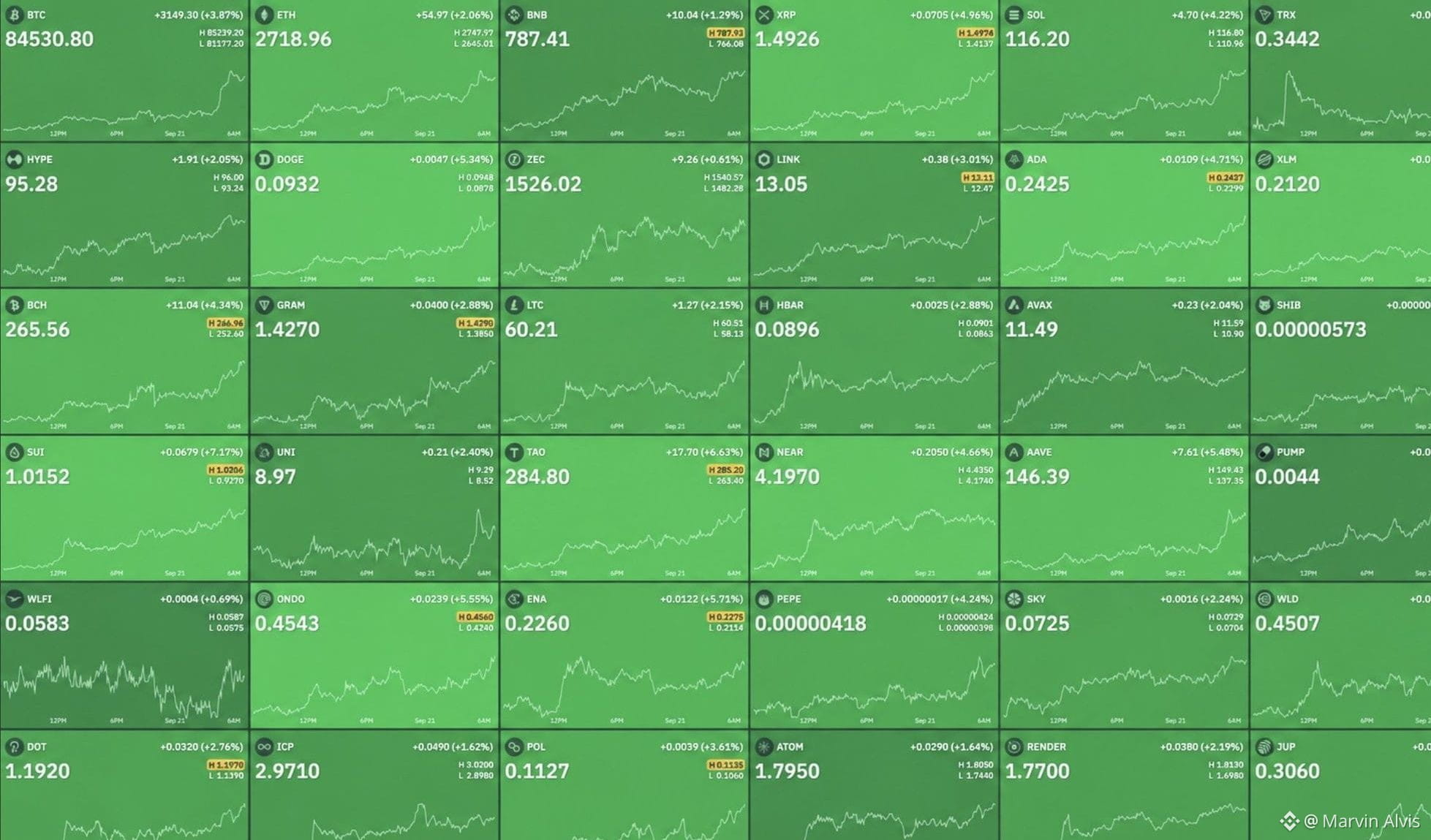
I keep watching the liquidity shift, and the last few days have been hard to ignore.
Around $300B reportedly moved back into crypto, with Bitcoin and Ethereum pushing higher and total market cap near $2.9T.
The bigger question now is whether this momentum can hold.
Crypto is waking up again. 👀
$BTC
{spot}(BTCUSDT)
#BNBMarketCapPassesBNYMellon #DogecoinRises15% #AIStocksWhatNext #21SharesLaunchesEuropesFirstZcashETP #CardanoJoinsX402PaymentStandard
I keep watching the liquidity shift, and the last few days have been hard to ignore.
Around $300B reportedly moved back into crypto, with Bitcoin and Ethereum pushing higher and total market cap near $2.9T.
The bigger question now is whether this momentum can hold.
Crypto is waking up again. 👀
$BTC
#BNBMarketCapPassesBNYMellon #DogecoinRises15% #AIStocksWhatNext #21SharesLaunchesEuropesFirstZcashETP #CardanoJoinsX402PaymentStandard
Around $300B reportedly moved back into crypto, with Bitcoin and Ethereum pushing higher and total market cap near $2.9T.
The bigger question now is whether this momentum can hold.
Crypto is waking up again. 👀
$BTC
#BNBMarketCapPassesBNYMellon #DogecoinRises15% #AIStocksWhatNext #21SharesLaunchesEuropesFirstZcashETP #CardanoJoinsX402PaymentStandard
1
122
·
--
Haussier
Vérifié
I’ve been watching OVERTAKE, and the interesting part isn’t just the sudden attention around $TAKE.
The project is building a gaming-focused ecosystem around digital-asset trading, with its marketplace using Sui and smart-contract escrow to make transactions more transparent.
What matters now is execution: Will gamers and developers actually use it at scale?
The infrastructure is taking shape, but long-term adoption will tell the real story. I’m watching the usage, integrations and ecosystem activity more than the headlines.
$TAKE
{future}(TAKEUSDT)
$ETC
{spot}(ETCUSDT)
I’ve been watching OVERTAKE, and the interesting part isn’t just the sudden attention around $TAKE .
The project is building a gaming-focused ecosystem around digital-asset trading, with its marketplace using Sui and smart-contract escrow to make transactions more transparent.
What matters now is execution: Will gamers and developers actually use it at scale?
The infrastructure is taking shape, but long-term adoption will tell the real story. I’m watching the usage, integrations and ecosystem activity more than the headlines.
$TAKE
$ETC
The project is building a gaming-focused ecosystem around digital-asset trading, with its marketplace using Sui and smart-contract escrow to make transactions more transparent.
What matters now is execution: Will gamers and developers actually use it at scale?
The infrastructure is taking shape, but long-term adoption will tell the real story. I’m watching the usage, integrations and ecosystem activity more than the headlines.
$TAKE
$ETC
OVERTAKE
78%
smart-contract
22%
integrations
0%
9 Votes • Vote fermé
1.2k
·
--
Haussier
I’ve been watching AI stocks keep pulling capital toward the same corner of the market, and it makes me wonder what’s being overlooked elsewhere.
Where the Next Opportunities May Be
AI itself isn’t the only story. The physical system behind it is becoming just as important.
Data-center demand is expected to rise sharply through 2030, while power availability, grid capacity, cooling, networking and industrial equipment are becoming real constraints. McKinsey estimates global data-center demand could approach 220 GW by 2030, up from about 82 GW in 2025.
That puts energy, utilities, grid infrastructure and industrial equipment in an interesting position.
There’s also cybersecurity. More AI means more automated systems, more data exposure and a larger attack surface. Security spending is increasingly becoming part of the infrastructure bill rather than an optional IT expense.
Then there are areas further away from the obvious AI trade: healthcare, critical materials, robotics and broader infrastructure. BlackRock's 2026 research points to these sectors as part of the expanding AI economy, while iShares highlights energy, materials and healthcare as areas investors may be paying less attention to than mega-cap technology.
But I wouldn’t treat “AI alternatives” as automatically safer.
The IMF has warned that high concentration and stretched valuations in AI-related equities can amplify market risk.
For me, the more interesting question is becoming simpler:
Who supplies the electricity, equipment, security, materials and infrastructure that AI can't function without?
Sometimes the less glamorous part of a technological boom tells you more about its staying power than the headline names do.
$NVDAB
{spot}(NVDABUSDT)
$BTC
{spot}(BTCUSDT)
$MUBARAK
{spot}(MUBARAKUSDT)
#AIStocksWhatNext
I’ve been watching AI stocks keep pulling capital toward the same corner of the market, and it makes me wonder what’s being overlooked elsewhere.
Where the Next Opportunities May Be
AI itself isn’t the only story. The physical system behind it is becoming just as important.
Data-center demand is expected to rise sharply through 2030, while power availability, grid capacity, cooling, networking and industrial equipment are becoming real constraints. McKinsey estimates global data-center demand could approach 220 GW by 2030, up from about 82 GW in 2025.
That puts energy, utilities, grid infrastructure and industrial equipment in an interesting position.
There’s also cybersecurity. More AI means more automated systems, more data exposure and a larger attack surface. Security spending is increasingly becoming part of the infrastructure bill rather than an optional IT expense.
Then there are areas further away from the obvious AI trade: healthcare, critical materials, robotics and broader infrastructure. BlackRock's 2026 research points to these sectors as part of the expanding AI economy, while iShares highlights energy, materials and healthcare as areas investors may be paying less attention to than mega-cap technology.
But I wouldn’t treat “AI alternatives” as automatically safer.
The IMF has warned that high concentration and stretched valuations in AI-related equities can amplify market risk.
For me, the more interesting question is becoming simpler:
Who supplies the electricity, equipment, security, materials and infrastructure that AI can't function without?
Sometimes the less glamorous part of a technological boom tells you more about its staying power than the headline names do.
$NVDAB
$BTC
$MUBARAK
#AIStocksWhatNext
Where the Next Opportunities May Be
AI itself isn’t the only story. The physical system behind it is becoming just as important.
Data-center demand is expected to rise sharply through 2030, while power availability, grid capacity, cooling, networking and industrial equipment are becoming real constraints. McKinsey estimates global data-center demand could approach 220 GW by 2030, up from about 82 GW in 2025.
That puts energy, utilities, grid infrastructure and industrial equipment in an interesting position.
There’s also cybersecurity. More AI means more automated systems, more data exposure and a larger attack surface. Security spending is increasingly becoming part of the infrastructure bill rather than an optional IT expense.
Then there are areas further away from the obvious AI trade: healthcare, critical materials, robotics and broader infrastructure. BlackRock's 2026 research points to these sectors as part of the expanding AI economy, while iShares highlights energy, materials and healthcare as areas investors may be paying less attention to than mega-cap technology.
But I wouldn’t treat “AI alternatives” as automatically safer.
The IMF has warned that high concentration and stretched valuations in AI-related equities can amplify market risk.
For me, the more interesting question is becoming simpler:
Who supplies the electricity, equipment, security, materials and infrastructure that AI can't function without?
Sometimes the less glamorous part of a technological boom tells you more about its staying power than the headline names do.
$NVDAB
$BTC
$MUBARAK
#AIStocksWhatNext
overlooked
25%
cybersecurity
25%
BlackRock's
25%
AI alternatives
25%
4 Votes • Vote fermé
6
2
711
Connectez-vous pour découvrir plus de contenu
Rejoignez la communauté mondiale des adeptes de cryptomonnaies sur Binance Square
⚡️ Suviez les dernières informations importantes sur les cryptomonnaies.
💬 Jugé digne de confiance par la plus grande plateforme d’échange de cryptomonnaies au monde.
👍 Découvrez les connaissances que partagent les créateurs vérifiés.
Adresse e-mail/Nº de téléphone
Sujets d’actualité
ZcashETFPostsFirstWeeklyOutflow$93.6M
30,251 vues
89 mentions
#ZcashETFPostsFirstWeeklyOutflow$93.6M
🚨🚨🚨🚨🚨🚨🚨🚨🚨🚨🚨🚨🚨🚨✅ 🚨 ZCASH ETF FLOWS TURN NEGATIVE FOR THE FIRST TIME! 📉
$ZEC is facing a notable shift in institutional fund flows, with Zcash investment products recording their first weekly net outflow since launching in August.
According to fund-flow data, around $93.6M was withdrawn from Zcash products during the latest week, while ZEC price action also cooled significantly.
📊 WHAT HAPPENED?
• Weekly Zcash ETF outflow: $93.6M
• September 30 daily outflow: $30.25M
• ZCSH previously attracted around $98.2M in one week
• ZEC is trading near $1,300
• Recent high: around $1,690
• Weekly decline: roughly 17%+
🔍 LEVELS TO WATCH
🟢 Support: $1,280–$1,300
🔴 Resistance: $1,450–$1,500
The key question now is whether the $1,300 area can hold and attract fresh buyers.
Institutional flows will also be important. A return of consistent positive inflows could signal renewed confidence, while continued outflows may keep pressure on $ZEC .
👀 Is this simply profit-taking after ZEC’s huge rally, or could we see another deeper pullback before buyers return?
Share your view below. 👇
#Zcash #ZEC #ZcashETF #Crypto
#analysis
owhggwiohsjowve
·0 mentions J’aime
·131 vues
GreekPoliceBustCryptoScamRingArrest17
53,443 vues
551 mentions
BitcoinRejectedAt$87K
111,618 vues
148 mentions