
Ansya
16.7k Publications

Ansya
Web3 creator & on-chain analyst. Tracking decentralized infrastructure, tokenomics, and market dynamics to decode crypto's next wave.
Ouvert au trading
Trade régulièrement
6.7 mois
194 Suivis
4.7K+ Abonnés
2.9K+ J’aime
Publications
Portefeuille
Tous
Citations
Direct
#sheinfalls17.5%sincehkdebut
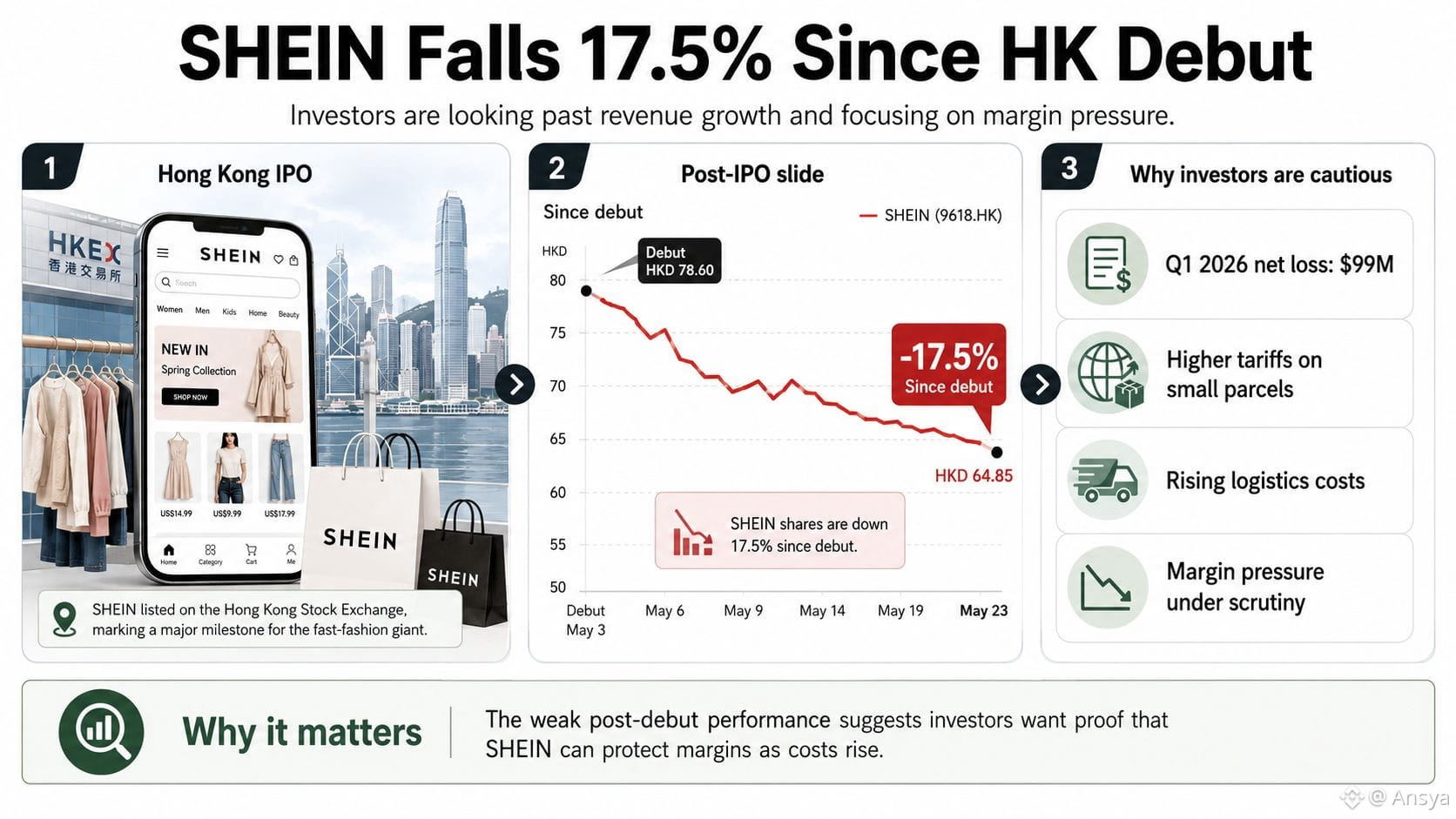
📉 SHEIN Is Down 17.5% Since Its Hong Kong Debut — The IPO Excitement Faded Fast
A major public listing doesn’t always translate into a strong start.
SHEIN shares have now fallen about 17.5% since the fast-fashion giant began trading in Hong Kong, extending losses across several sessions after an already cautious market debut.
The bigger story may be what investors are pricing in.
SHEIN generated roughly $41.8 billion in revenue in 2025, but profitability has come under pressure. The company recorded a $99 million net loss in the first quarter of 2026, compared with a profit during the same period last year.
Its low-cost model is also facing new challenges. Higher tariffs on small imported parcels, rising logistics expenses and regulatory scrutiny are making it more expensive to maintain the ultra-cheap pricing that helped SHEIN expand globally.
Why it matters:
SHEIN’s listing was one of Hong Kong’s most closely watched IPOs of the year. The post-IPO decline suggests investors are looking beyond revenue growth and asking a harder question: how resilient are margins when the cost advantages behind the business model start shrinking?
For now, the next few earnings reports may matter more than the IPO headlines.
Can SHEIN prove its growth model still works under higher costs — or is the market already demanding a reset in expectations?
$USELESS $BULLA $TRIA
📉 SHEIN Is Down 17.5% Since Its Hong Kong Debut — The IPO Excitement Faded Fast
A major public listing doesn’t always translate into a strong start.
SHEIN shares have now fallen about 17.5% since the fast-fashion giant began trading in Hong Kong, extending losses across several sessions after an already cautious market debut.
The bigger story may be what investors are pricing in.
SHEIN generated roughly $41.8 billion in revenue in 2025, but profitability has come under pressure. The company recorded a $99 million net loss in the first quarter of 2026, compared with a profit during the same period last year.
Its low-cost model is also facing new challenges. Higher tariffs on small imported parcels, rising logistics expenses and regulatory scrutiny are making it more expensive to maintain the ultra-cheap pricing that helped SHEIN expand globally.
Why it matters:
SHEIN’s listing was one of Hong Kong’s most closely watched IPOs of the year. The post-IPO decline suggests investors are looking beyond revenue growth and asking a harder question: how resilient are margins when the cost advantages behind the business model start shrinking?
For now, the next few earnings reports may matter more than the IPO headlines.
Can SHEIN prove its growth model still works under higher costs — or is the market already demanding a reset in expectations?
$USELESS $BULLA $TRIA
Vérifié
#usweeklyinitialjoblessclaimsriseto206000
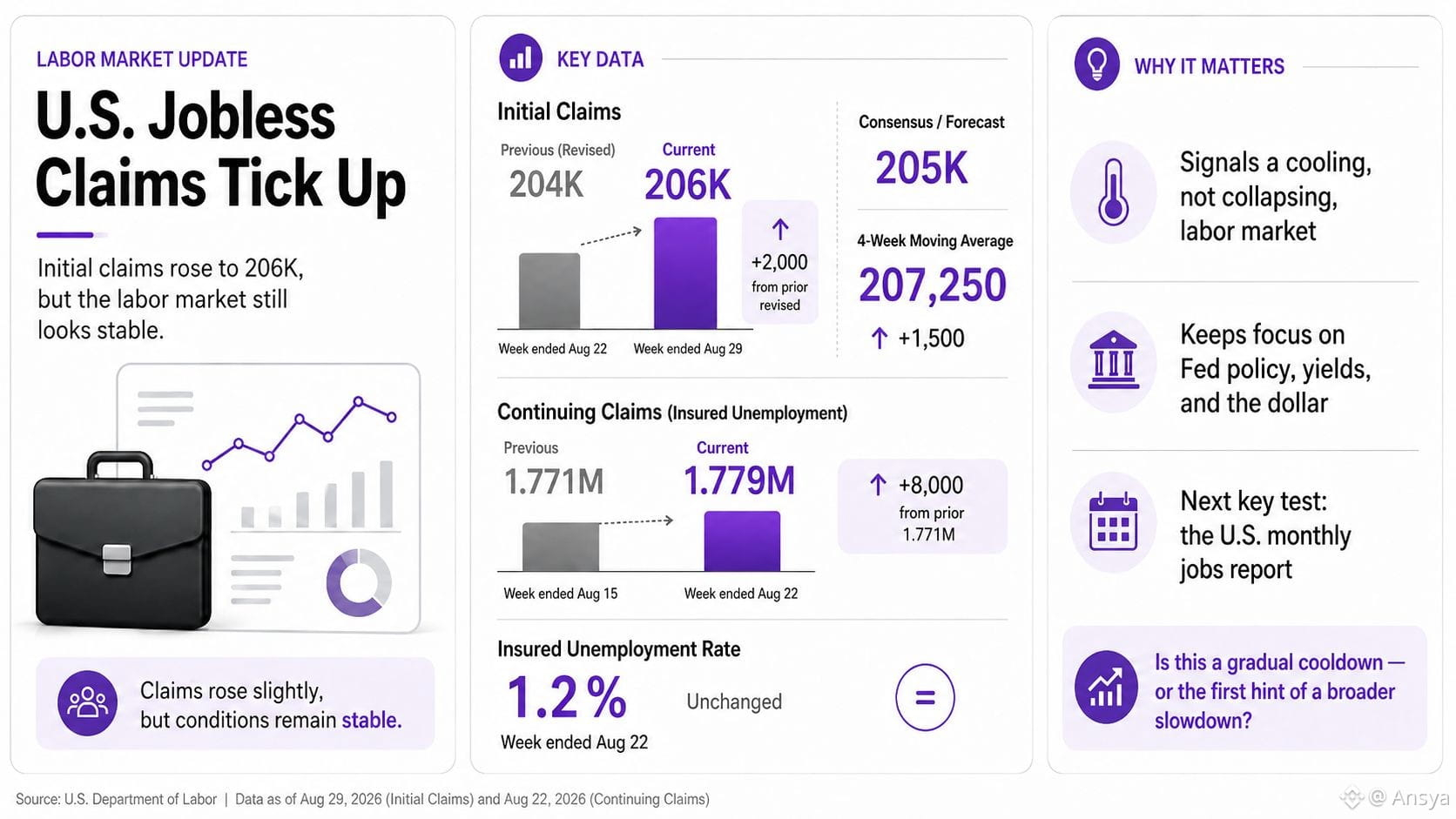
📊 U.S. Jobless Claims Rose — But the Labor Market Still Isn’t Flashing a Clear Warning
Another piece of the U.S. labor-market puzzle just landed, and the signal is more mixed than dramatic.
The breakdown:
Weekly initial jobless claims increased by 2,000 to 206,000, slightly above expectations of 205,000.
Continuing claims — a rough indication of how difficult it is for unemployed workers to find new jobs — also climbed by 8,000 to 1.779 million.
Despite the increase, claims remain relatively low, supporting the idea that the U.S. is still in a “slow-hire, slow-fire” environment: companies aren’t hiring aggressively, but widespread layoffs haven’t appeared either.
Why it matters:
For markets, this keeps attention firmly on the Federal Reserve.
A stable labor market gives policymakers more room to focus on inflation, especially as recent services data showed renewed price pressure. That matters for Treasury yields, the dollar and risk assets — including crypto — because expectations around future Fed rates can quickly shift liquidity and sentiment.
The next major test is the U.S. jobs report.
Is the labor market simply cooling gradually, or are we starting to see the first signs of a broader slowdown?
$MARSCOIN $USELESS $CHIP
📊 U.S. Jobless Claims Rose — But the Labor Market Still Isn’t Flashing a Clear Warning
Another piece of the U.S. labor-market puzzle just landed, and the signal is more mixed than dramatic.
The breakdown:
Weekly initial jobless claims increased by 2,000 to 206,000, slightly above expectations of 205,000.
Continuing claims — a rough indication of how difficult it is for unemployed workers to find new jobs — also climbed by 8,000 to 1.779 million.
Despite the increase, claims remain relatively low, supporting the idea that the U.S. is still in a “slow-hire, slow-fire” environment: companies aren’t hiring aggressively, but widespread layoffs haven’t appeared either.
Why it matters:
For markets, this keeps attention firmly on the Federal Reserve.
A stable labor market gives policymakers more room to focus on inflation, especially as recent services data showed renewed price pressure. That matters for Treasury yields, the dollar and risk assets — including crypto — because expectations around future Fed rates can quickly shift liquidity and sentiment.
The next major test is the U.S. jobs report.
Is the labor market simply cooling gradually, or are we starting to see the first signs of a broader slowdown?
$MARSCOIN $USELESS $CHIP

🚀 ARB Just Surged 30% — and Robinhood Chain Is a Big Part of the Story
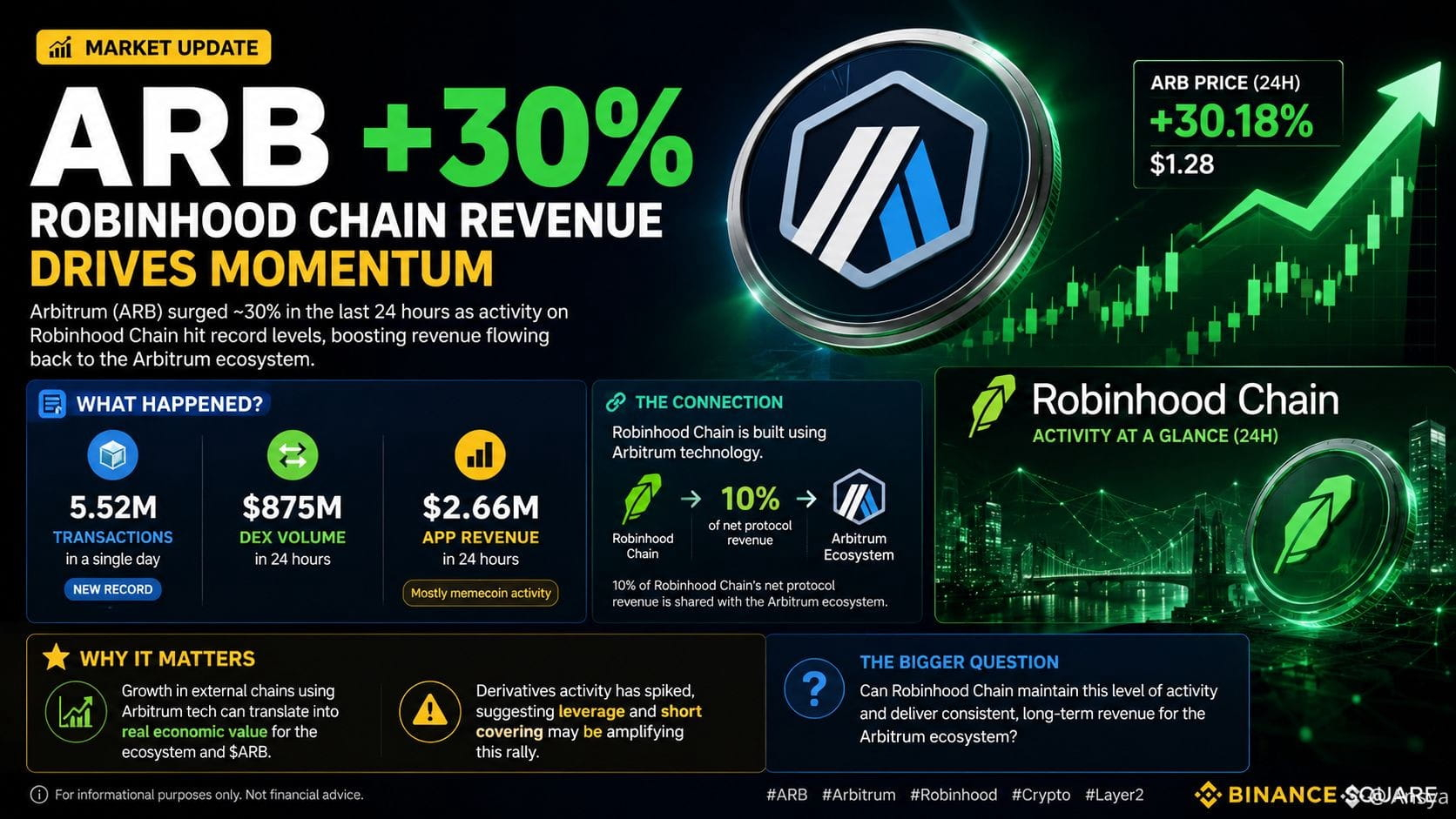
While Bitcoin has been relatively quiet, $ARB jumped roughly 30% in 24 hours, putting Arbitrum among the market’s standout movers. The move coincides with a sharp rise in activity across Robinhood Chain, which is built using Arbitrum technology.
What happened?
Robinhood Chain recently processed a record 5.52 million transactions in a single day, while decentralized exchange volume reached roughly $875 million. Applications running on the network generated about $2.66 million in 24-hour revenue, with much of that activity coming from memecoin-related platforms.
The connection to Arbitrum is important.
Under Arbitrum’s revenue-sharing model, Robinhood Chain remits 10% of its net protocol revenue back to the Arbitrum ecosystem. That gives growing activity on chains using Arbitrum technology an economic link to the broader ecosystem.
Why it matters:
ARB’s rally isn’t happening in isolation. Traders are reacting to evidence that Arbitrum’s technology can generate economic value as external chains scale.
But there’s another side to the move: derivatives activity has also increased sharply, suggesting leverage and short covering may be amplifying the price reaction. That means the sustainability of the rally may depend on whether Robinhood Chain can maintain meaningful activity after the current burst of speculation cools.
The bigger question may be less about today’s 30% move and more about whether Robinhood Chain can turn this early activity into consistent, long-term revenue for the Arbitrum ecosystem.
Is ARB starting to trade on real ecosystem economics rather than narrative alone?
#ARB #Arbitrum #Robinhood #Crypto #Layer2
#arbrises30%onrobinhoodchainrevenue
$ARB $USELESS
While Bitcoin has been relatively quiet, $ARB jumped roughly 30% in 24 hours, putting Arbitrum among the market’s standout movers. The move coincides with a sharp rise in activity across Robinhood Chain, which is built using Arbitrum technology.
What happened?
Robinhood Chain recently processed a record 5.52 million transactions in a single day, while decentralized exchange volume reached roughly $875 million. Applications running on the network generated about $2.66 million in 24-hour revenue, with much of that activity coming from memecoin-related platforms.
The connection to Arbitrum is important.
Under Arbitrum’s revenue-sharing model, Robinhood Chain remits 10% of its net protocol revenue back to the Arbitrum ecosystem. That gives growing activity on chains using Arbitrum technology an economic link to the broader ecosystem.
Why it matters:
ARB’s rally isn’t happening in isolation. Traders are reacting to evidence that Arbitrum’s technology can generate economic value as external chains scale.
But there’s another side to the move: derivatives activity has also increased sharply, suggesting leverage and short covering may be amplifying the price reaction. That means the sustainability of the rally may depend on whether Robinhood Chain can maintain meaningful activity after the current burst of speculation cools.
The bigger question may be less about today’s 30% move and more about whether Robinhood Chain can turn this early activity into consistent, long-term revenue for the Arbitrum ecosystem.
Is ARB starting to trade on real ecosystem economics rather than narrative alone?
#ARB #Arbitrum #Robinhood #Crypto #Layer2
#arbrises30%onrobinhoodchainrevenue
$ARB $USELESS
$SC just exploded from around $0.00060 to $0.00084 🚀
After days of relatively quiet price action, SC broke sharply higher with a clear surge in volume. Price is now around $0.000781, still holding well above the previous trading area despite the pullback from $0.000847.
The bullish momentum is strong, but after a move this fast, the next reaction could be important.
#SCPriceAnalysis
Where does $SC go next?
After days of relatively quiet price action, SC broke sharply higher with a clear surge in volume. Price is now around $0.000781, still holding well above the previous trading area despite the pullback from $0.000847.
The bullish momentum is strong, but after a move this fast, the next reaction could be important.
#SCPriceAnalysis
Where does $SC go next?
Above $0.00085
100%
Between $0.00070–$0.00085
0%
Below $0.00070
0%
4 Votes • Vote fermé
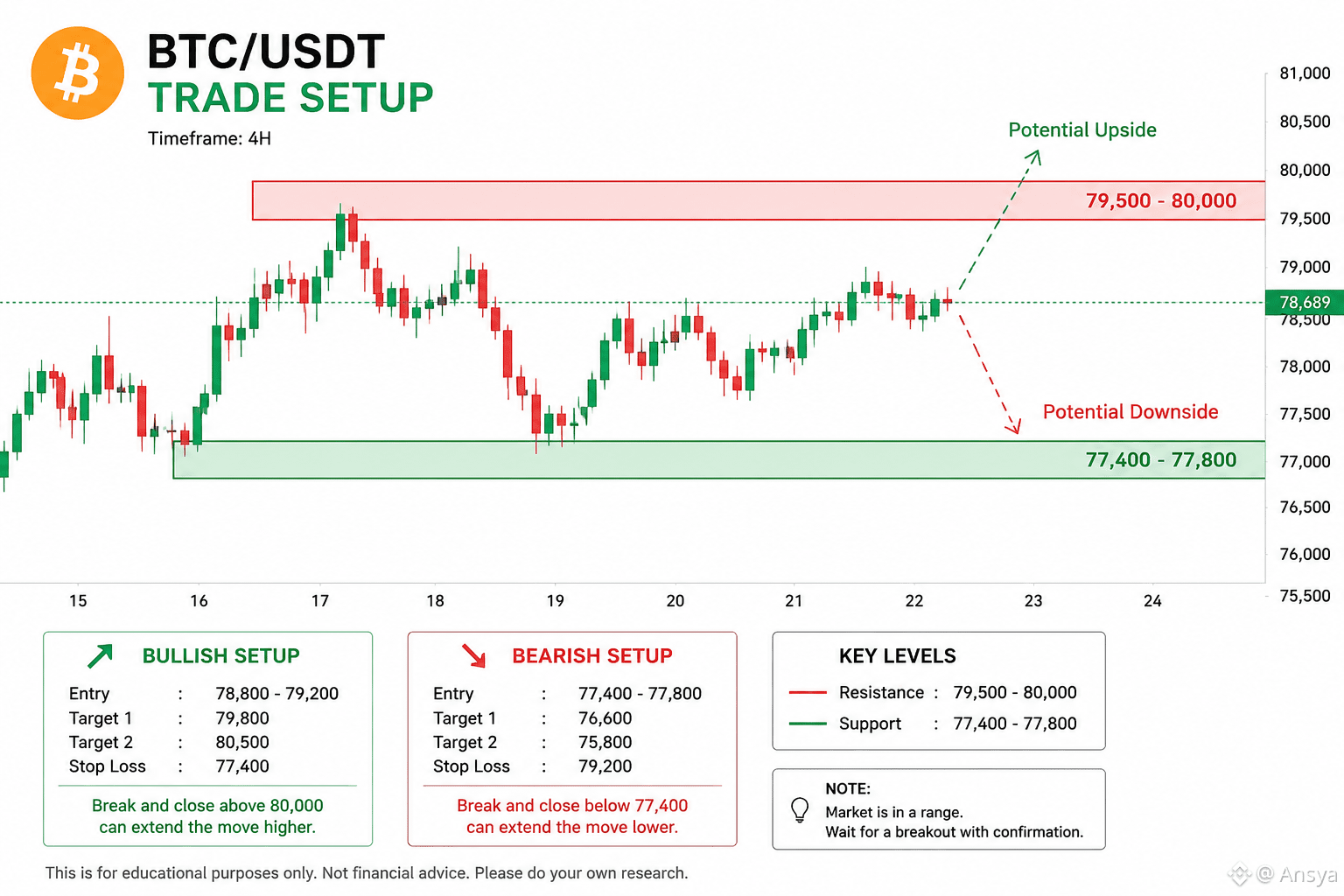
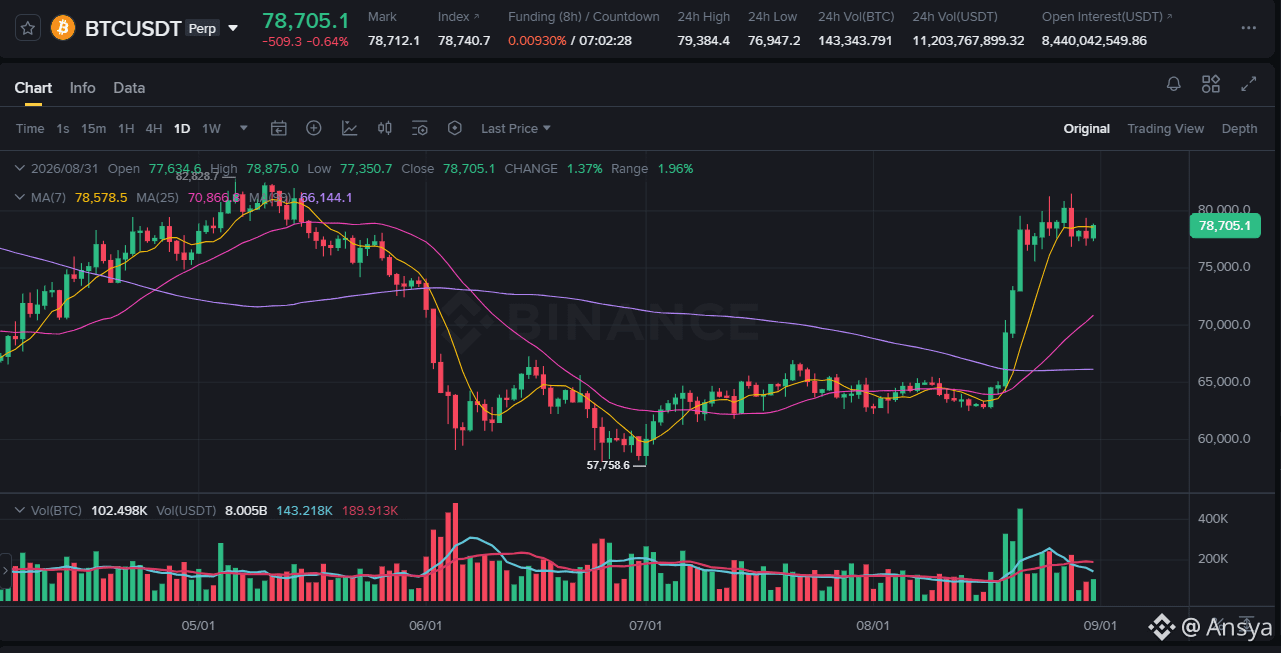
🚨 Bitcoin Is Knocking on $80K Again — This Level Matters 👀
$BTC is trading around $78.7K, after moving between roughly $77.4K and $79.2K today.
Right now, the market is sitting in an interesting spot.
🔸 $79.2K–$80K: Key area to watch on the upside
🔸 $77.4K–$77.8K: Short-term support area
🔸 Above $80K: Could strengthen the bullish structure
🔸 Below $77.4K: Could bring downside pressure back into focus
What makes this interesting is that Bitcoin is getting closer to the psychological $80,000 level, but buyers still need to prove they can hold momentum above it.
No prediction here — just watching how price reacts around these levels.
👀 What happens first: BTC breaks $80K, or retests $77K?
#bitcoin #BTC #crypto #CryptoMarket #MarketUpdate $USELESS $ARB
$BTC is trading around $78.7K, after moving between roughly $77.4K and $79.2K today.
Right now, the market is sitting in an interesting spot.
🔸 $79.2K–$80K: Key area to watch on the upside
🔸 $77.4K–$77.8K: Short-term support area
🔸 Above $80K: Could strengthen the bullish structure
🔸 Below $77.4K: Could bring downside pressure back into focus
What makes this interesting is that Bitcoin is getting closer to the psychological $80,000 level, but buyers still need to prove they can hold momentum above it.
No prediction here — just watching how price reacts around these levels.
👀 What happens first: BTC breaks $80K, or retests $77K?
#bitcoin #BTC #crypto #CryptoMarket #MarketUpdate $USELESS $ARB
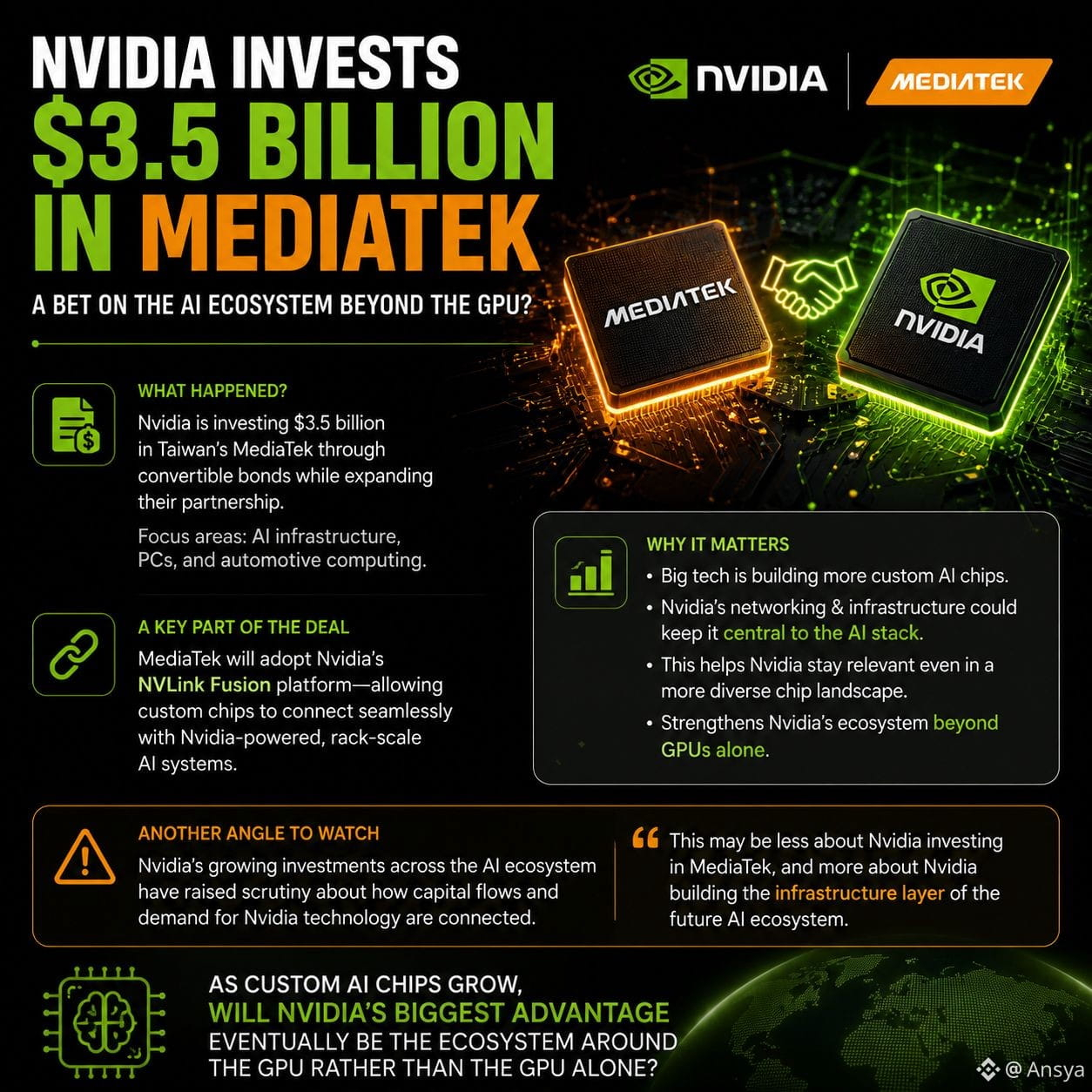
#NvidiaToInvest$3.5BInMediaTek
Nvidia just made a $3.5 billion move—and the bigger story may be what sits around the GPU.
Nvidia is investing $3.5 billion in MediaTek through convertible bonds as the two chipmakers deepen their partnership across AI infrastructure, PCs and automotive computing.
One important piece is NVLink Fusion, which could help custom AI chips connect with Nvidia’s broader data-center infrastructure.
Why does that matter?
As major tech companies develop more of their own AI silicon, Nvidia faces a changing competitive landscape. Expanding its networking and infrastructure ecosystem could give the company another way to stay deeply embedded in AI computing—even when Nvidia GPUs aren't the only chips being used.
The investment also adds to scrutiny around Nvidia’s growing financial ties across the AI ecosystem, making future demand and partnership trends worth watching.
Is Nvidia building its next advantage around the GPU rather than just inside it?
#NVIDIA #Aİ #Semiconductors #tech
$USELESS $0G $ARB
Nvidia just made a $3.5 billion move—and the bigger story may be what sits around the GPU.
Nvidia is investing $3.5 billion in MediaTek through convertible bonds as the two chipmakers deepen their partnership across AI infrastructure, PCs and automotive computing.
One important piece is NVLink Fusion, which could help custom AI chips connect with Nvidia’s broader data-center infrastructure.
Why does that matter?
As major tech companies develop more of their own AI silicon, Nvidia faces a changing competitive landscape. Expanding its networking and infrastructure ecosystem could give the company another way to stay deeply embedded in AI computing—even when Nvidia GPUs aren't the only chips being used.
The investment also adds to scrutiny around Nvidia’s growing financial ties across the AI ecosystem, making future demand and partnership trends worth watching.
Is Nvidia building its next advantage around the GPU rather than just inside it?
#NVIDIA #Aİ #Semiconductors #tech
$USELESS $0G $ARB
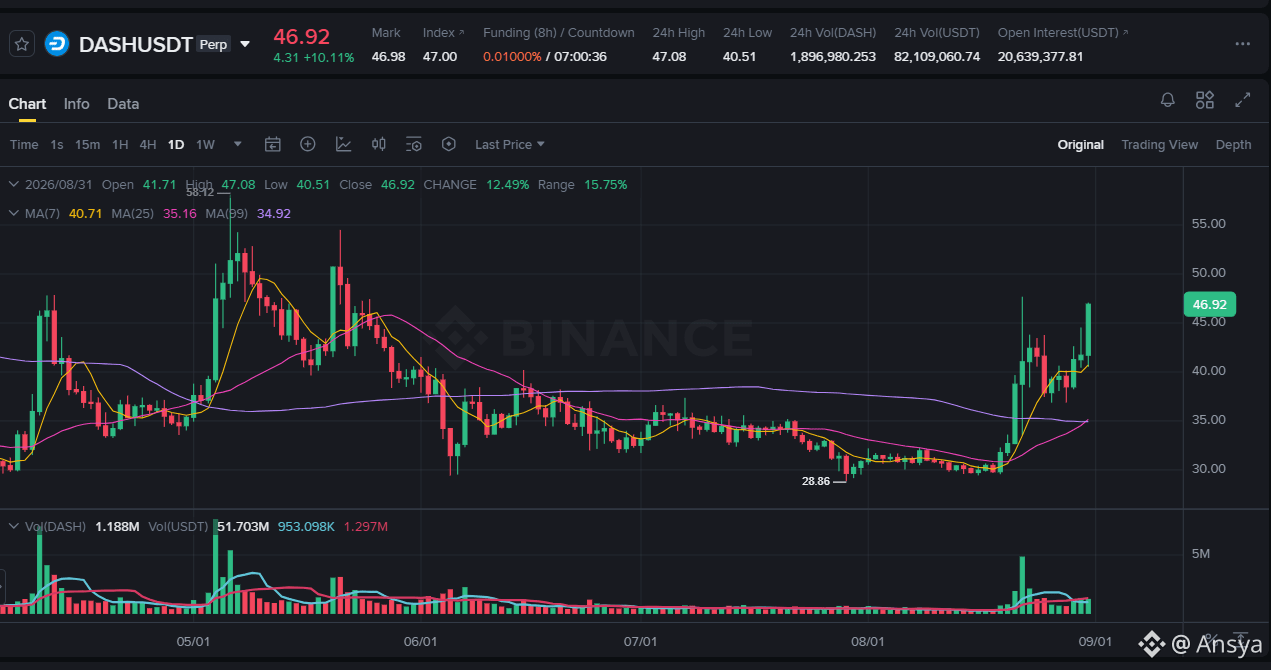
$DASH shorts just got squeezed at $47
That liquidation size can fuel another push
$DASH 🟢 LIQUIDITY ZONE HIT 🟢
Short liquidation spotted 🧨
$8.92K cleared at $47.03
Upside liquidity swept — watch reaction 👀
🎯 TP Targets:
TP1: ~$47.50
TP2: ~$48.20
TP3: ~$49.00
#DASH
That liquidation size can fuel another push
$DASH 🟢 LIQUIDITY ZONE HIT 🟢
Short liquidation spotted 🧨
$8.92K cleared at $47.03
Upside liquidity swept — watch reaction 👀
🎯 TP Targets:
TP1: ~$47.50
TP2: ~$48.20
TP3: ~$49.00
#DASH
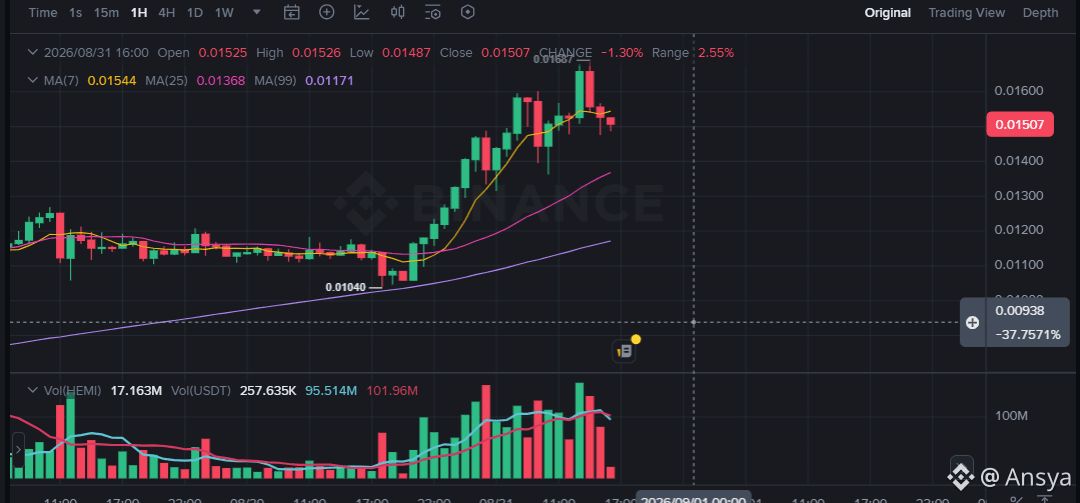
$HEMI — Bearish Setup I'm Watching 📉
$HEMI is back on my watchlist after the latest price action.
The bearish scenario I'm tracking is around the 0.01605 area, with 0.01715 acting as the level that would invalidate this view.
If downside momentum continues, the areas I'm watching are:
🎯 0.01435
🎯 0.01350
🎯 0.01270
These are levels I'm monitoring, not guaranteed targets. If price pushes above the invalidation level, the bearish setup would need to be reassessed.
Manage risk carefully and always DYOR.
Does $HEMI continue lower from here, or are sellers about to lose momentum?
#HEMI #crypto #trading #MarketAnalysis
$HEMI is back on my watchlist after the latest price action.
The bearish scenario I'm tracking is around the 0.01605 area, with 0.01715 acting as the level that would invalidate this view.
If downside momentum continues, the areas I'm watching are:
🎯 0.01435
🎯 0.01350
🎯 0.01270
These are levels I'm monitoring, not guaranteed targets. If price pushes above the invalidation level, the bearish setup would need to be reassessed.
Manage risk carefully and always DYOR.
Does $HEMI continue lower from here, or are sellers about to lose momentum?
#HEMI #crypto #trading #MarketAnalysis
#BrentRisesAbove$90
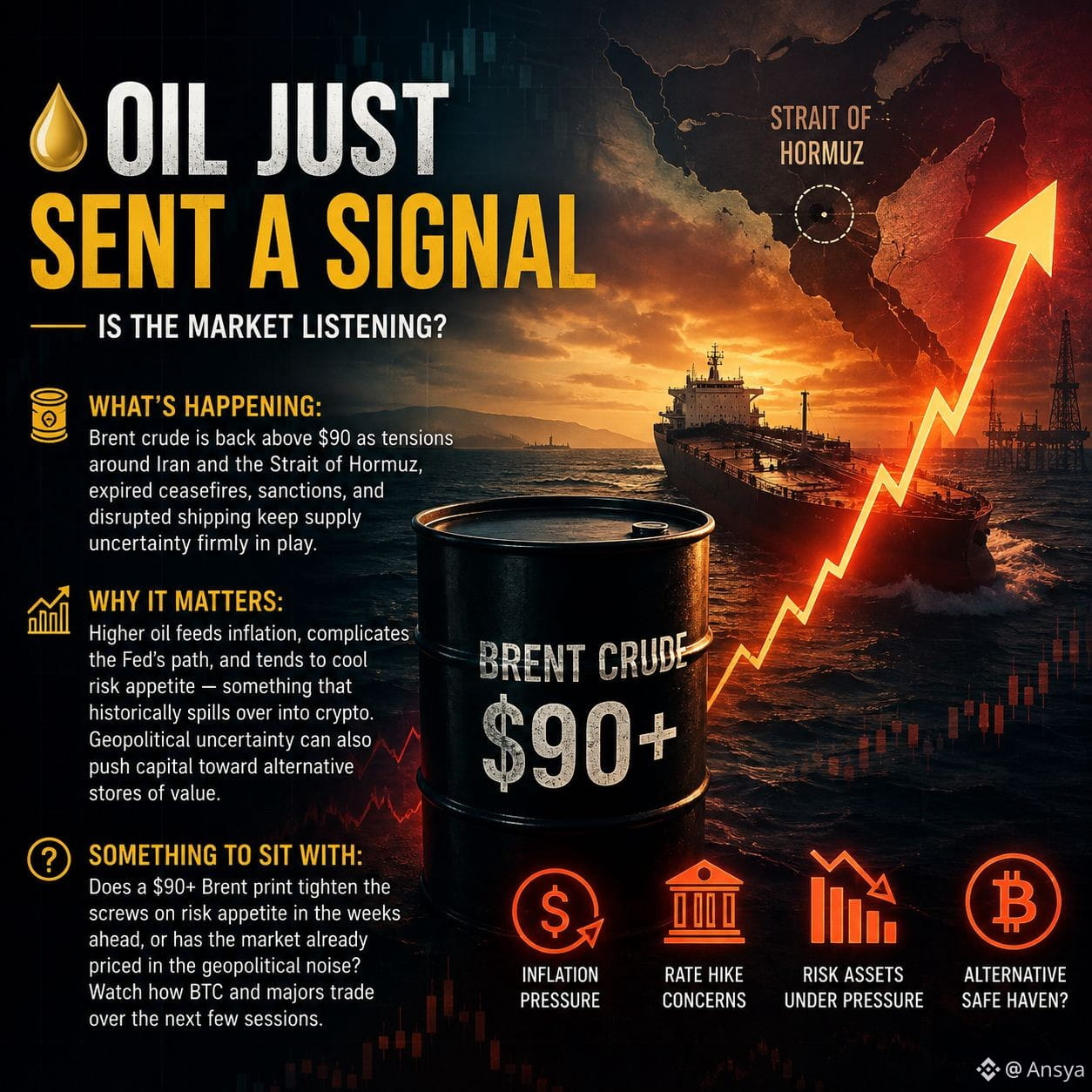
🛢️ Oil Just Sent a Signal — Is the Market Listening?
While most eyes were on charts and candles, a quieter kind of pressure has been building in the energy markets. Brent crude has pushed back above the $90 mark, and the reasons behind it are worth a closer look.
What's happening: The move ties back to renewed friction in the Middle East, centered on Iran and the Strait of Hormuz — one of the world's most critical oil transit chokepoints. Expired ceasefire arrangements, tightened sanctions, and disrupted shipping traffic through the strait have all added to supply uncertainty, keeping prices elevated even as some parts of the conflict have cooled at times.
Why it matters: Energy prices don't move in isolation. A sustained rise above $90 feeds directly into inflation expectations, which can complicate the path central banks — especially the Fed — are trying to walk on rates. Higher input costs also tend to nudge investors toward caution, and historically, that caution has spilled over into risk assets, crypto included. At the same time, geopolitical uncertainty sometimes pushes capital toward alternative stores of value — a dynamic that's far from settled.
Something to sit with: Does a $90+ Brent print tighten the screws on risk appetite in the weeks ahead, or has the market already priced in the geopolitical noise? Worth watching how BTC and majors trade over the next few sessions for a clue.
$HEMI $SKR
🛢️ Oil Just Sent a Signal — Is the Market Listening?
While most eyes were on charts and candles, a quieter kind of pressure has been building in the energy markets. Brent crude has pushed back above the $90 mark, and the reasons behind it are worth a closer look.
What's happening: The move ties back to renewed friction in the Middle East, centered on Iran and the Strait of Hormuz — one of the world's most critical oil transit chokepoints. Expired ceasefire arrangements, tightened sanctions, and disrupted shipping traffic through the strait have all added to supply uncertainty, keeping prices elevated even as some parts of the conflict have cooled at times.
Why it matters: Energy prices don't move in isolation. A sustained rise above $90 feeds directly into inflation expectations, which can complicate the path central banks — especially the Fed — are trying to walk on rates. Higher input costs also tend to nudge investors toward caution, and historically, that caution has spilled over into risk assets, crypto included. At the same time, geopolitical uncertainty sometimes pushes capital toward alternative stores of value — a dynamic that's far from settled.
Something to sit with: Does a $90+ Brent print tighten the screws on risk appetite in the weeks ahead, or has the market already priced in the geopolitical noise? Worth watching how BTC and majors trade over the next few sessions for a clue.
$HEMI $SKR
#YenFallsDespite$97BJapanSupport
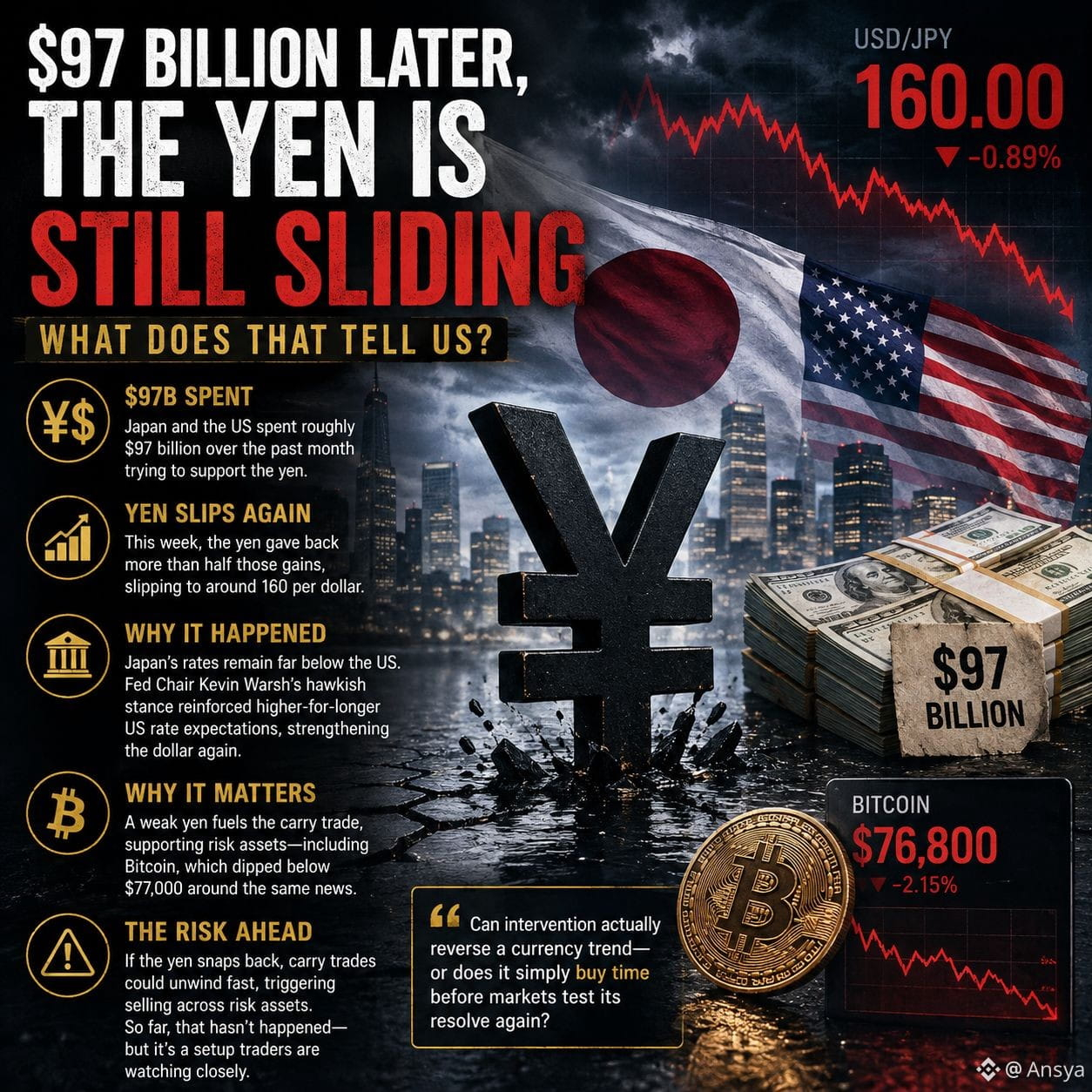
$97 Billion Later, the Yen Is Still Sliding — What Does That Tell Us?
Japan and the US spent roughly $97 billion over the past month trying to prop up the yen. This week, the currency gave back more than half those gains anyway, slipping to around 160 per dollar.
What happened: The intervention — a rare joint effort between Tokyo and Washington — briefly pushed the yen stronger after it had weakened toward multi-decade lows. But the rally faded fast. Japan's interest rates remain far below the US's, so the incentive to hold dollars over yen hasn't really changed. Adding to the pressure, Fed Chair Kevin Warsh signaled a firm commitment to bringing inflation down, which reinforced expectations of higher-for-longer US rates and gave the dollar fresh support.
Why it matters: This isn't just a currency story. A weak yen fuels the "carry trade," where investors borrow cheaply in yen to fund investments elsewhere — including risk assets like Bitcoin, which briefly dipped below $77,000 around the same news. If the yen were to snap back sharply, either through further intervention or a Bank of Japan rate hike, some of those carry trades could unwind quickly, potentially triggering broader asset sales. So far, that hasn't happened — but the setup is one traders are watching closely.
It raises an interesting question: can intervention alone hold back a currency trend, or does it just delay the moment markets test its resolve again?
$SKR $ZORA $HEMI
$97 Billion Later, the Yen Is Still Sliding — What Does That Tell Us?
Japan and the US spent roughly $97 billion over the past month trying to prop up the yen. This week, the currency gave back more than half those gains anyway, slipping to around 160 per dollar.
What happened: The intervention — a rare joint effort between Tokyo and Washington — briefly pushed the yen stronger after it had weakened toward multi-decade lows. But the rally faded fast. Japan's interest rates remain far below the US's, so the incentive to hold dollars over yen hasn't really changed. Adding to the pressure, Fed Chair Kevin Warsh signaled a firm commitment to bringing inflation down, which reinforced expectations of higher-for-longer US rates and gave the dollar fresh support.
Why it matters: This isn't just a currency story. A weak yen fuels the "carry trade," where investors borrow cheaply in yen to fund investments elsewhere — including risk assets like Bitcoin, which briefly dipped below $77,000 around the same news. If the yen were to snap back sharply, either through further intervention or a Bank of Japan rate hike, some of those carry trades could unwind quickly, potentially triggering broader asset sales. So far, that hasn't happened — but the setup is one traders are watching closely.
It raises an interesting question: can intervention alone hold back a currency trend, or does it just delay the moment markets test its resolve again?
$SKR $ZORA $HEMI
#vietnampilotscryptoassetmarket
Vietnam is moving crypto from the gray zone toward a tightly controlled market—but the launch is not here yet.
Under Resolution 05/2025, Vietnam is running a five-year pilot focused on crypto assets linked to real-world assets. Securities and fiat-backed digital forms are excluded, while initial issuance is limited to foreign investors. Trading, issuance, and settlement must be conducted in Vietnamese dong.
So far, five companies have passed the first assessment to develop crypto exchanges. But that doesn’t mean the market is live yet.
They still need to meet Vietnam’s highest information-security requirements and commit at least 10 trillion VND, or roughly $383 million, in capital. No crypto exchange has received an operating licence so far.
Another layer of enforcement is also coming.
Decree 284/2026 introduces penalties for unlicensed crypto activity, including fines of up to 50 million VND for individuals trading through unauthorised platforms. However, domestic investors will only be required to use licensed providers six months after the first provider receives a Ministry of Finance licence.
Why it matters:
Vietnam isn’t simply opening the door to crypto. It is trying to bring a large offshore market into a regulated framework while keeping tighter control over investor protection, cybersecurity, and speculation.
The high capital requirement and limited number of potential exchanges point to a cautious, institution-led rollout rather than an open-market launch.
The bigger question is whether Vietnam can build enough trust and infrastructure to bring crypto activity onshore without making the regulated market too restrictive for users and businesses.
$ZKC $SKR $ZKP
Vietnam is moving crypto from the gray zone toward a tightly controlled market—but the launch is not here yet.
Under Resolution 05/2025, Vietnam is running a five-year pilot focused on crypto assets linked to real-world assets. Securities and fiat-backed digital forms are excluded, while initial issuance is limited to foreign investors. Trading, issuance, and settlement must be conducted in Vietnamese dong.
So far, five companies have passed the first assessment to develop crypto exchanges. But that doesn’t mean the market is live yet.
They still need to meet Vietnam’s highest information-security requirements and commit at least 10 trillion VND, or roughly $383 million, in capital. No crypto exchange has received an operating licence so far.
Another layer of enforcement is also coming.
Decree 284/2026 introduces penalties for unlicensed crypto activity, including fines of up to 50 million VND for individuals trading through unauthorised platforms. However, domestic investors will only be required to use licensed providers six months after the first provider receives a Ministry of Finance licence.
Why it matters:
Vietnam isn’t simply opening the door to crypto. It is trying to bring a large offshore market into a regulated framework while keeping tighter control over investor protection, cybersecurity, and speculation.
The high capital requirement and limited number of potential exchanges point to a cautious, institution-led rollout rather than an open-market launch.
The bigger question is whether Vietnam can build enough trust and infrastructure to bring crypto activity onshore without making the regulated market too restrictive for users and businesses.
$ZKC $SKR $ZKP

#koreasinglestockleveragedetftradingfalls
South Korea’s leveraged chip-ETF frenzy is cooling rapidly — and the shift could reshape retail trading sentiment.
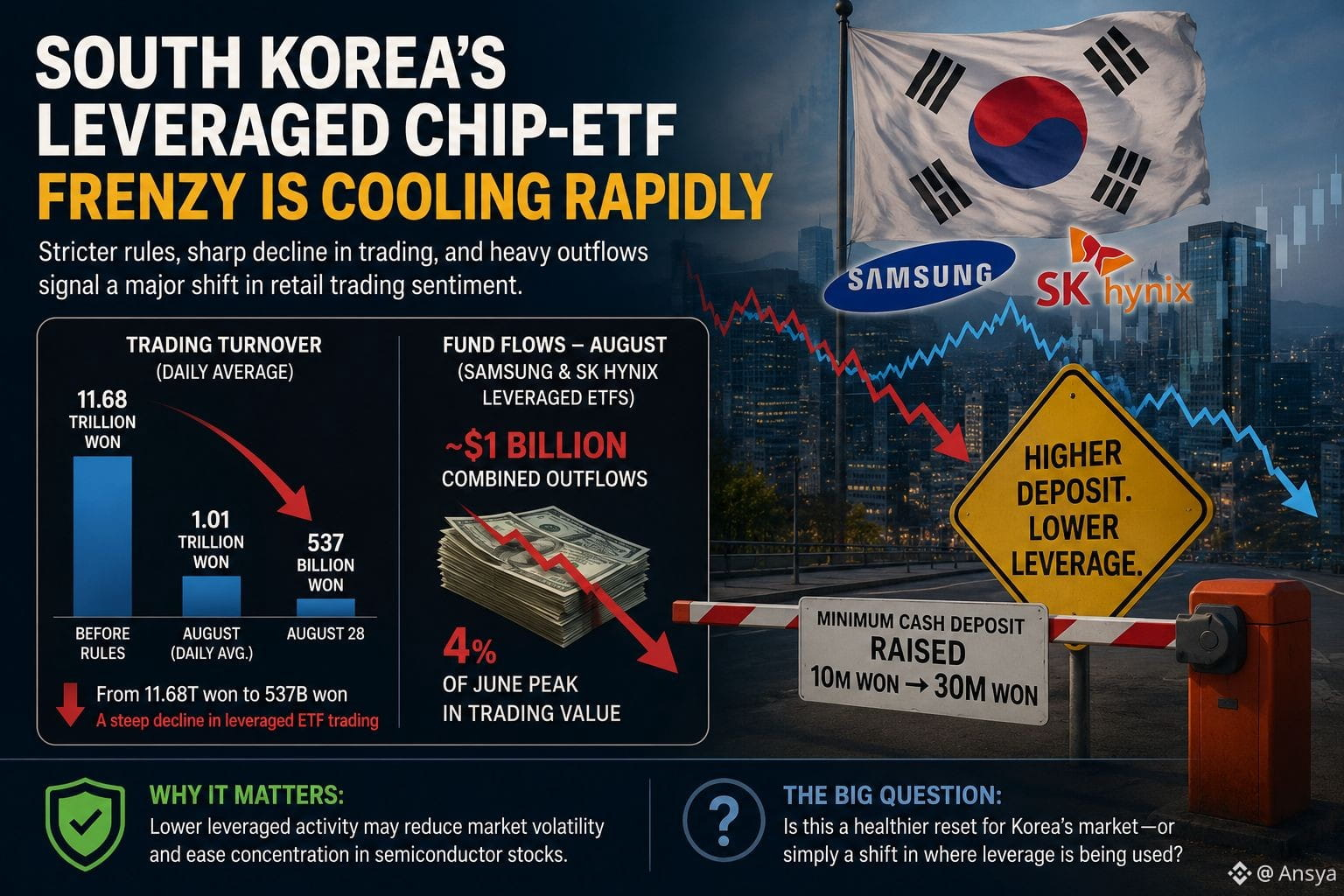
Trading in 16 single-stock leveraged and inverse ETFs linked to Samsung Electronics and SK hynix has fallen sharply since regulators raised the minimum cash deposit from 10 million to 30 million won. Average daily turnover dropped from 11.68 trillion won before the rules to about 1.01 trillion won in August, reaching just 537 billion won on August 28.
The retreat is also visible in fund flows: Samsung- and SK hynix-linked leveraged ETFs recorded roughly $1 billion in combined August outflows, while trading value reportedly fell to only 4% of its June peak.
Why it matters: lower leveraged activity may help reduce market volatility and ease the concentration of retail flows in semiconductor stocks. But some capital could be rotating into index-based or overseas leveraged products rather than leaving high-risk trading altogether.
Is this a healthier reset for Korea’s market—or simply a shift in where leverage is being used?
$PROM $SKR
South Korea’s leveraged chip-ETF frenzy is cooling rapidly — and the shift could reshape retail trading sentiment.
Trading in 16 single-stock leveraged and inverse ETFs linked to Samsung Electronics and SK hynix has fallen sharply since regulators raised the minimum cash deposit from 10 million to 30 million won. Average daily turnover dropped from 11.68 trillion won before the rules to about 1.01 trillion won in August, reaching just 537 billion won on August 28.
The retreat is also visible in fund flows: Samsung- and SK hynix-linked leveraged ETFs recorded roughly $1 billion in combined August outflows, while trading value reportedly fell to only 4% of its June peak.
Why it matters: lower leveraged activity may help reduce market volatility and ease the concentration of retail flows in semiconductor stocks. But some capital could be rotating into index-based or overseas leveraged products rather than leaving high-risk trading altogether.
Is this a healthier reset for Korea’s market—or simply a shift in where leverage is being used?
$PROM $SKR
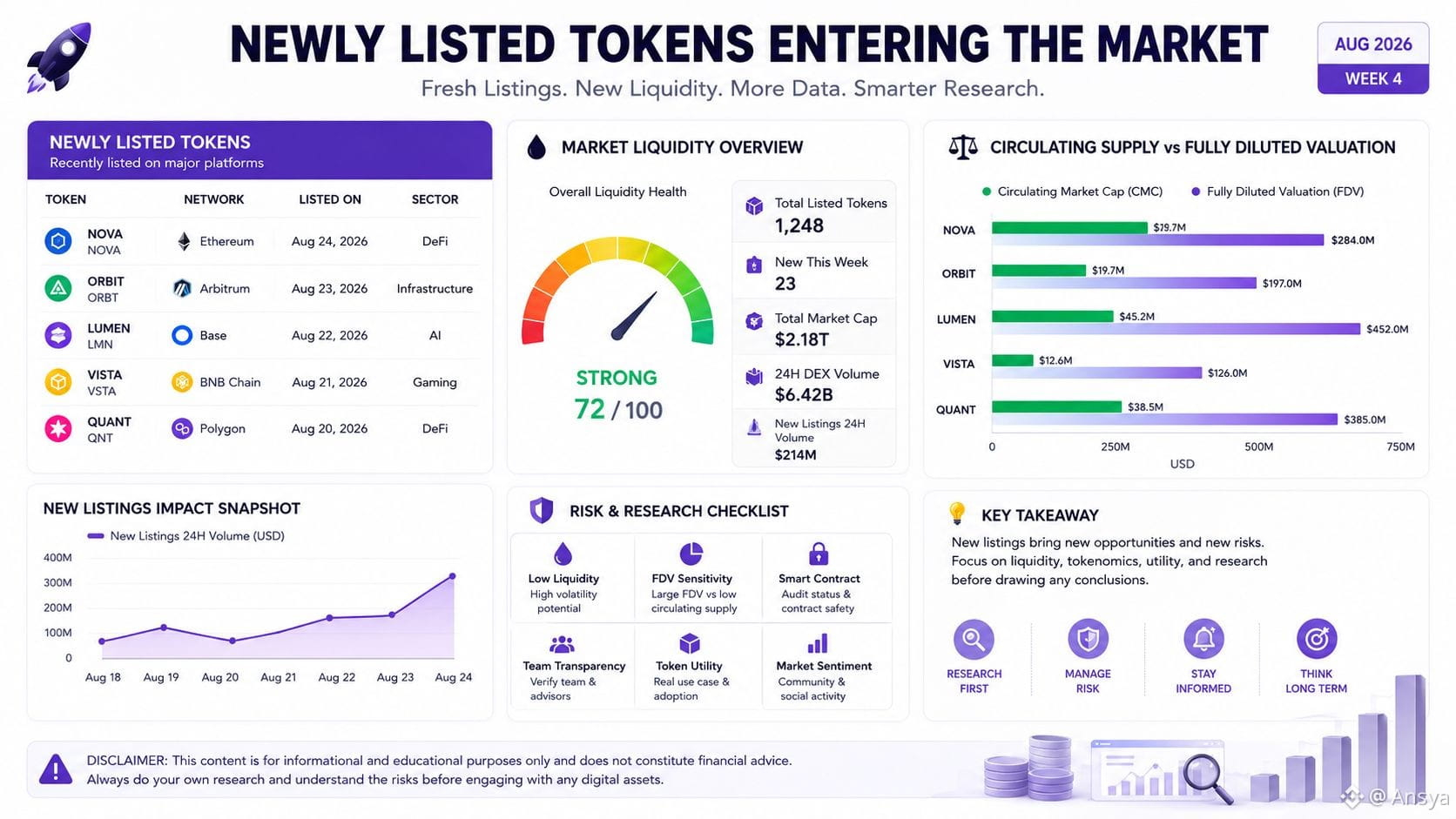
Hundreds of New Tokens Keep Appearing — But "New" Is Not the Same as "Promising"
New crypto listings are one of the fastest-moving corners of the market.
CoinGecko's latest listings show why traders should separate discovery from due diligence.
What happened
CoinGecko currently tracks more than 19,000 cryptocurrencies, and its newly listed section contains hundreds of projects added during the previous 30 days.
One recent example is MOTION, an Injective-based token that CoinGecko showed as added roughly one day ago. At the time captured by CoinGecko, its market size and trading volume were still relatively small compared with established cryptocurrencies.
CoinGecko also identified apeonfone and Goose Token among newly listed cryptocurrencies with comparatively high 24-hour trading activity.
None of that tells us whether those projects will succeed.
It simply shows where new-token activity is appearing.
Why it matters
Newly listed tokens often have limited trading history.
That means normal evaluation tools become harder to use. Liquidity can be thin, supply distribution may still be changing and a small amount of capital can create large percentage moves.
Fully diluted valuation also deserves attention.
A project can look small based on circulating market capitalization while having a much larger theoretical valuation if most tokens have not entered circulation yet.
For beginners, the safest lesson is simple: discovery and validation are two different stages.
Being early to a listing does not automatically mean being early to a useful project.
Key takeaways
CoinGecko is tracking hundreds of recently added cryptocurrencies.MOTION is among tokens added within roughly the past day.Newly listed tokens can have limited liquidity and trading history.Circulating supply and fully diluted valuation should be checked separately.A new listing should be treated as a research signal, not an endorsement.
#altcoins #cryptoeducation #Web3 #CoinGecko #Tokenomics
$PROM $4 $NIL
New crypto listings are one of the fastest-moving corners of the market.
CoinGecko's latest listings show why traders should separate discovery from due diligence.
What happened
CoinGecko currently tracks more than 19,000 cryptocurrencies, and its newly listed section contains hundreds of projects added during the previous 30 days.
One recent example is MOTION, an Injective-based token that CoinGecko showed as added roughly one day ago. At the time captured by CoinGecko, its market size and trading volume were still relatively small compared with established cryptocurrencies.
CoinGecko also identified apeonfone and Goose Token among newly listed cryptocurrencies with comparatively high 24-hour trading activity.
None of that tells us whether those projects will succeed.
It simply shows where new-token activity is appearing.
Why it matters
Newly listed tokens often have limited trading history.
That means normal evaluation tools become harder to use. Liquidity can be thin, supply distribution may still be changing and a small amount of capital can create large percentage moves.
Fully diluted valuation also deserves attention.
A project can look small based on circulating market capitalization while having a much larger theoretical valuation if most tokens have not entered circulation yet.
For beginners, the safest lesson is simple: discovery and validation are two different stages.
Being early to a listing does not automatically mean being early to a useful project.
Key takeaways
CoinGecko is tracking hundreds of recently added cryptocurrencies.MOTION is among tokens added within roughly the past day.Newly listed tokens can have limited liquidity and trading history.Circulating supply and fully diluted valuation should be checked separately.A new listing should be treated as a research signal, not an endorsement.
#altcoins #cryptoeducation #Web3 #CoinGecko #Tokenomics
$PROM $4 $NIL
Solana Just Made a Major Change to How Fast New SOL Supply Shrinks
Solana's latest governance decision is worth watching for a reason that has little to do with short-term price action.
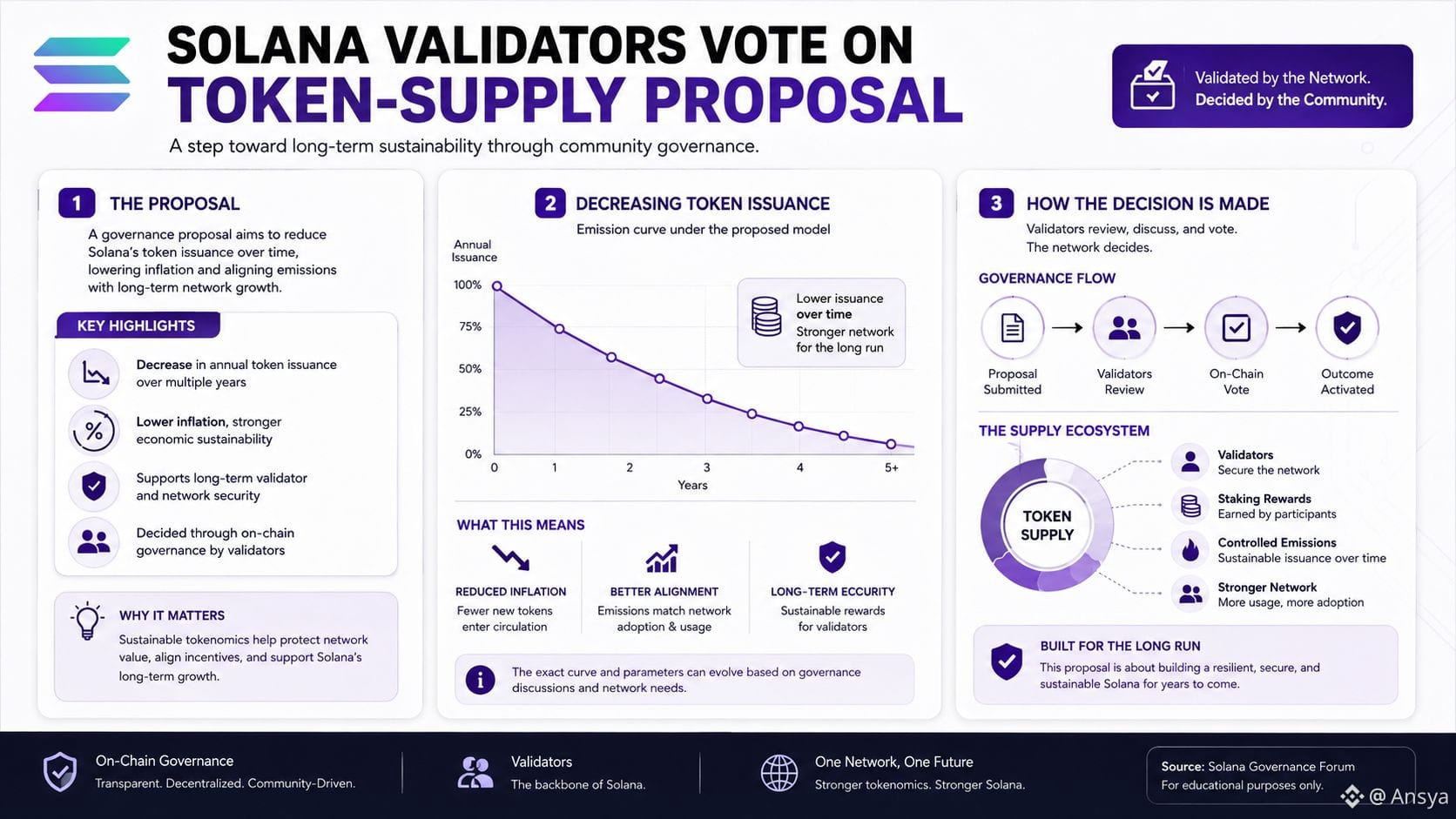
Validators narrowly approved a proposal designed to make SOL inflation decline faster over time.
What happened
Solana's network-wide vote on SGP-0002 passed with roughly 67% support, barely clearing the required two-thirds threshold. The proposal doubles the annual rate at which Solana's inflation declines from 15% to 30%.
Under the new path, Solana's annual issuance rate is expected to reach its long-term 1.5% floor around 2029 rather than 2032.
The change could result in roughly 18.9 million fewer SOL being created over the coming six years compared with the previous schedule.
SOL initially reacted positively as the vote approached approval, but broader crypto weakness later pulled the market back.
Why it matters
Token supply is one part of crypto economics that is easy to overlook.
A network can have rising usage, growing fees and active developers, but the amount of new token supply entering circulation still influences the economic picture.
Solana is not eliminating inflation. Instead, the network is accelerating the journey toward its existing long-term inflation floor.
The narrow result is also interesting from a governance perspective. Major economic changes on decentralized networks are ultimately political decisions made by participants with different incentives.
That may be just as important as the supply change itself.
Key takeaways
Solana validators narrowly approved SGP-0002.The annual inflation-reduction rate increases from 15% to 30%.The network could reach its 1.5% inflation floor around three years earlier.Approximately 18.9 million fewer SOL could be issued over six years.The vote highlights both tokenomics and decentralized governance.
#solana #sol #blockchain #Web3 #CryptoNews $SOL
Solana's latest governance decision is worth watching for a reason that has little to do with short-term price action.
Validators narrowly approved a proposal designed to make SOL inflation decline faster over time.
What happened
Solana's network-wide vote on SGP-0002 passed with roughly 67% support, barely clearing the required two-thirds threshold. The proposal doubles the annual rate at which Solana's inflation declines from 15% to 30%.
Under the new path, Solana's annual issuance rate is expected to reach its long-term 1.5% floor around 2029 rather than 2032.
The change could result in roughly 18.9 million fewer SOL being created over the coming six years compared with the previous schedule.
SOL initially reacted positively as the vote approached approval, but broader crypto weakness later pulled the market back.
Why it matters
Token supply is one part of crypto economics that is easy to overlook.
A network can have rising usage, growing fees and active developers, but the amount of new token supply entering circulation still influences the economic picture.
Solana is not eliminating inflation. Instead, the network is accelerating the journey toward its existing long-term inflation floor.
The narrow result is also interesting from a governance perspective. Major economic changes on decentralized networks are ultimately political decisions made by participants with different incentives.
That may be just as important as the supply change itself.
Key takeaways
Solana validators narrowly approved SGP-0002.The annual inflation-reduction rate increases from 15% to 30%.The network could reach its 1.5% inflation floor around three years earlier.Approximately 18.9 million fewer SOL could be issued over six years.The vote highlights both tokenomics and decentralized governance.
#solana #sol #blockchain #Web3 #CryptoNews $SOL
Vérifié
#nysilverfuturesdrop3%
Silver takes a sharp hit as rate expectations shift. 📉🥈
New York silver futures fell roughly 3.5% in the latest session, adding pressure across precious metals. The selloff came after Fed Chair Kevin Warsh’s hawkish Jackson Hole comments pushed traders to reassess the odds of a September rate hike.
The reaction makes sense: higher-rate expectations can support the U.S. dollar and Treasury yields, making non-yielding assets like silver less attractive.
But silver has another variable in the mix — industrial demand. If tighter monetary policy starts raising concerns about economic growth, that could add another layer of pressure.
So the bigger question is:
Is this just profit-taking after a strong run, or the start of a deeper precious-metals reset?
For traders, the next signal may be whether silver stabilizes after the shock — or whether sellers remain in control.
$MAGMA $CLO $XAG
Pullback = ? 👇
Silver takes a sharp hit as rate expectations shift. 📉🥈
New York silver futures fell roughly 3.5% in the latest session, adding pressure across precious metals. The selloff came after Fed Chair Kevin Warsh’s hawkish Jackson Hole comments pushed traders to reassess the odds of a September rate hike.
The reaction makes sense: higher-rate expectations can support the U.S. dollar and Treasury yields, making non-yielding assets like silver less attractive.
But silver has another variable in the mix — industrial demand. If tighter monetary policy starts raising concerns about economic growth, that could add another layer of pressure.
So the bigger question is:
Is this just profit-taking after a strong run, or the start of a deeper precious-metals reset?
For traders, the next signal may be whether silver stabilizes after the shock — or whether sellers remain in control.
$MAGMA $CLO $XAG
Pullback = ? 👇
Risk
50%
Opportunity
50%
10 Votes • Vote fermé
#schwabplanstoaddsolavaxlinktrading
A major U.S. brokerage is widening the door to crypto.
Charles Schwab plans to add Solana (SOL), Avalanche (AVAX), and Chainlink (LINK) to its Schwab Crypto platform in the coming months. The service, launched for clients in May 2026, currently offers direct trading in Bitcoin and Ethereum. Schwab also says it plans to add more digital assets over time.
Why does it matter? The move could make altcoin access more familiar for traditional investors by placing crypto trading alongside their existing investing and banking experience. But a planned listing is not the same as immediate demand or guaranteed price momentum—especially since Schwab has not announced a specific launch date and may adjust support based on regulatory, operational, market, or risk considerations.
The bigger question: will broader access bring deeper liquidity and participation, or simply make crypto exposure easier to reach?
$SOL $DEXE $BEAT
A major U.S. brokerage is widening the door to crypto.
Charles Schwab plans to add Solana (SOL), Avalanche (AVAX), and Chainlink (LINK) to its Schwab Crypto platform in the coming months. The service, launched for clients in May 2026, currently offers direct trading in Bitcoin and Ethereum. Schwab also says it plans to add more digital assets over time.
Why does it matter? The move could make altcoin access more familiar for traditional investors by placing crypto trading alongside their existing investing and banking experience. But a planned listing is not the same as immediate demand or guaranteed price momentum—especially since Schwab has not announced a specific launch date and may adjust support based on regulatory, operational, market, or risk considerations.
The bigger question: will broader access bring deeper liquidity and participation, or simply make crypto exposure easier to reach?
$SOL $DEXE $BEAT

Connectez-vous pour découvrir plus de contenu