

Sasha why NOT
2.6k Publications

Sasha why NOT
Signaler
Bloquer l’utilisateur
Founder of WhyNot Research. Independent research on crypto, macro, AI and investing.

2025 Blockchain 100 — Rising Star
28 Suivis
22.1K+ Abonnés
13.5K+ J’aime
1 Badges
Publications
Tous
Citations
Vidéos
Direct
PINNED
·
--
Haussier
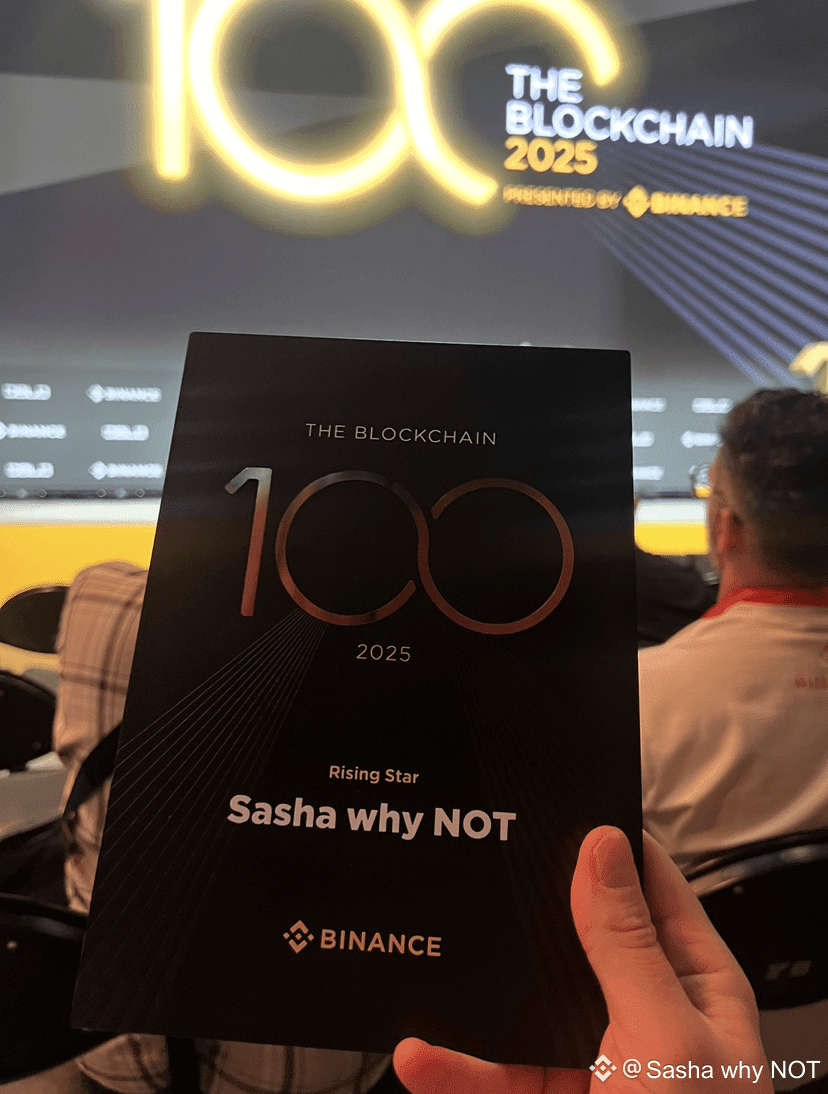
🔥 Incredible energy at Binance Blockchain Week!
Honored to be recognized in the TOP-100 at the awards ceremony standing among people who are truly pushing the industry forward.
📸 Sharing moments from the event the motivation and inspiration here go beyond words.
The industry is growing, and we are growing with it 🚀
#BBW2025 #BinanceBlockchainWeek
🔥 Incredible energy at Binance Blockchain Week!
Honored to be recognized in the TOP-100 at the awards ceremony standing among people who are truly pushing the industry forward.
📸 Sharing moments from the event the motivation and inspiration here go beyond words.
The industry is growing, and we are growing with it 🚀
#BBW2025 #BinanceBlockchainWeek
Honored to be recognized in the TOP-100 at the awards ceremony standing among people who are truly pushing the industry forward.
📸 Sharing moments from the event the motivation and inspiration here go beyond words.
The industry is growing, and we are growing with it 🚀
#BBW2025 #BinanceBlockchainWeek

13
6
59
23.7k
·
--
Baissier
$MUBARAK looks like it has gone on vacation… until the next “#Mubarak ” 😂
Trading roughly 72% below its all-time high, this BNB Chain meme coin is a reminder that community enthusiasm and price performance do not always move together.
My take: the token has gone to rest, but a lower price alone does not make it a bargain. Meme coins need fresh attention and sustained demand to regain momentum. A funny name can keep the meme alive; it cannot guarantee a recovery.
I’m watching for selling pressure to ease and for buying activity to support a sustained rebound. Until then, “waiting for the next Mubarak” is a joke, not an investment thesis.
Is $MUBARAK recharging, or has the market moved on?
$MUBARAK looks like it has gone on vacation… until the next “#Mubarak ” 😂
Trading roughly 72% below its all-time high, this BNB Chain meme coin is a reminder that community enthusiasm and price performance do not always move together.
My take: the token has gone to rest, but a lower price alone does not make it a bargain. Meme coins need fresh attention and sustained demand to regain momentum. A funny name can keep the meme alive; it cannot guarantee a recovery.
I’m watching for selling pressure to ease and for buying activity to support a sustained rebound. Until then, “waiting for the next Mubarak” is a joke, not an investment thesis.
Is $MUBARAK recharging, or has the market moved on?
Trading roughly 72% below its all-time high, this BNB Chain meme coin is a reminder that community enthusiasm and price performance do not always move together.
My take: the token has gone to rest, but a lower price alone does not make it a bargain. Meme coins need fresh attention and sustained demand to regain momentum. A funny name can keep the meme alive; it cannot guarantee a recovery.
I’m watching for selling pressure to ease and for buying activity to support a sustained rebound. Until then, “waiting for the next Mubarak” is a joke, not an investment thesis.
Is $MUBARAK recharging, or has the market moved on?

1
502
·
--
Haussier
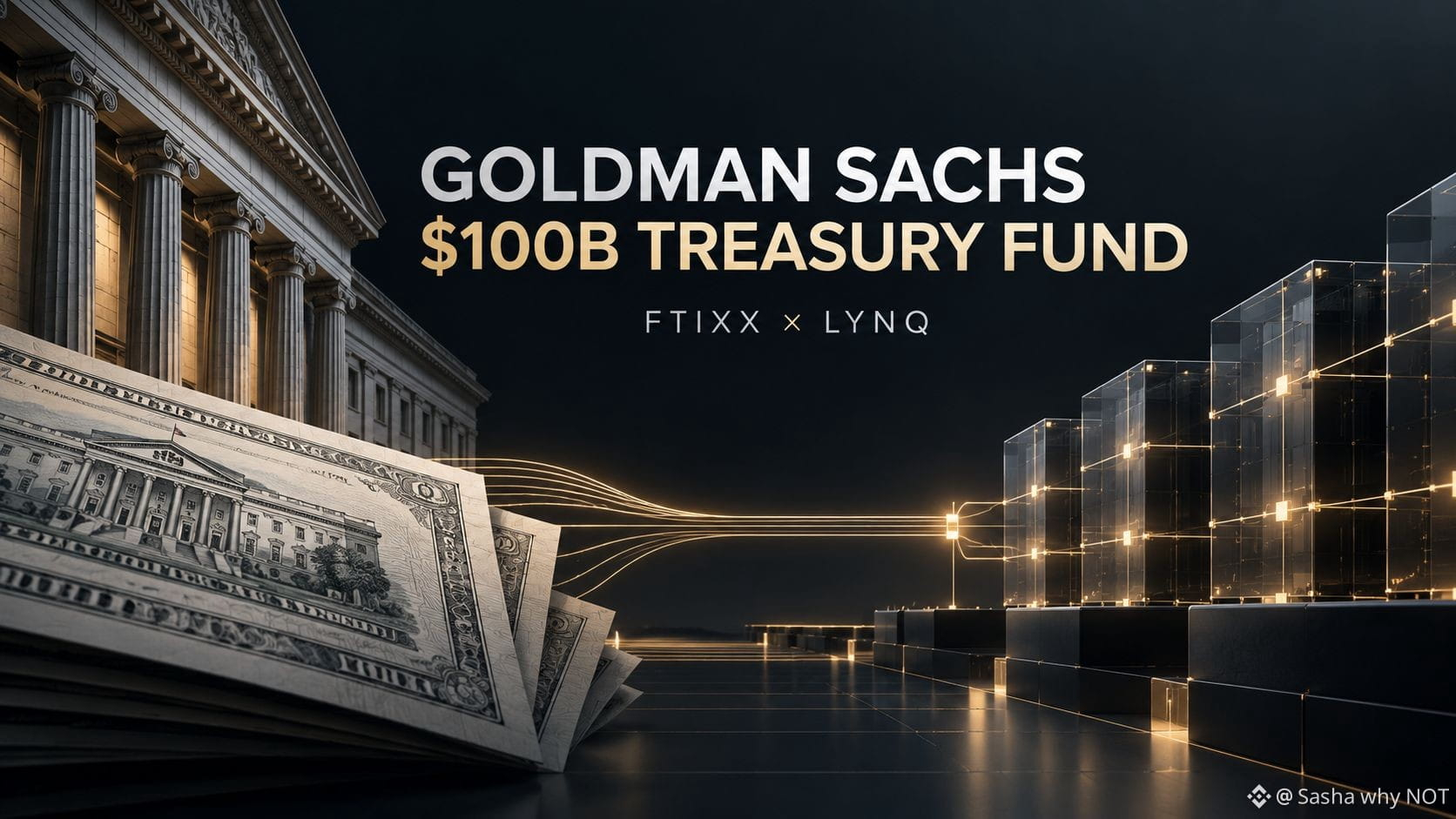
Goldman Sachs is bringing its roughly $100B Treasury fund, FTIXX, into the workflow of institutional crypto firms.
Qualified U.S. participants will be able to access the fund through Lynq, with #tZERO handling brokerage services. The practical use: put idle cash to work between trades while keeping it accessible through a settlement network.
The distinction matters: $100B is the fund’s approximate size, not new money flowing into crypto. This arrangement gives firms access to an existing fund; it does not create a new tokenized version of FTIXX for Lynq.
The bigger story may be how traditional cash management is becoming part of digital-asset market infrastructure.
$BTC
{spot}(BTCUSDT)
{spot}(NVDABUSDT)
Goldman Sachs is bringing its roughly $100B Treasury fund, FTIXX, into the workflow of institutional crypto firms.
Qualified U.S. participants will be able to access the fund through Lynq, with #tZERO handling brokerage services. The practical use: put idle cash to work between trades while keeping it accessible through a settlement network.
The distinction matters: $100B is the fund’s approximate size, not new money flowing into crypto. This arrangement gives firms access to an existing fund; it does not create a new tokenized version of FTIXX for Lynq.
The bigger story may be how traditional cash management is becoming part of digital-asset market infrastructure.
$BTC
Qualified U.S. participants will be able to access the fund through Lynq, with #tZERO handling brokerage services. The practical use: put idle cash to work between trades while keeping it accessible through a settlement network.
The distinction matters: $100B is the fund’s approximate size, not new money flowing into crypto. This arrangement gives firms access to an existing fund; it does not create a new tokenized version of FTIXX for Lynq.
The bigger story may be how traditional cash management is becoming part of digital-asset market infrastructure.
$BTC
2
397

·
--
Baissier
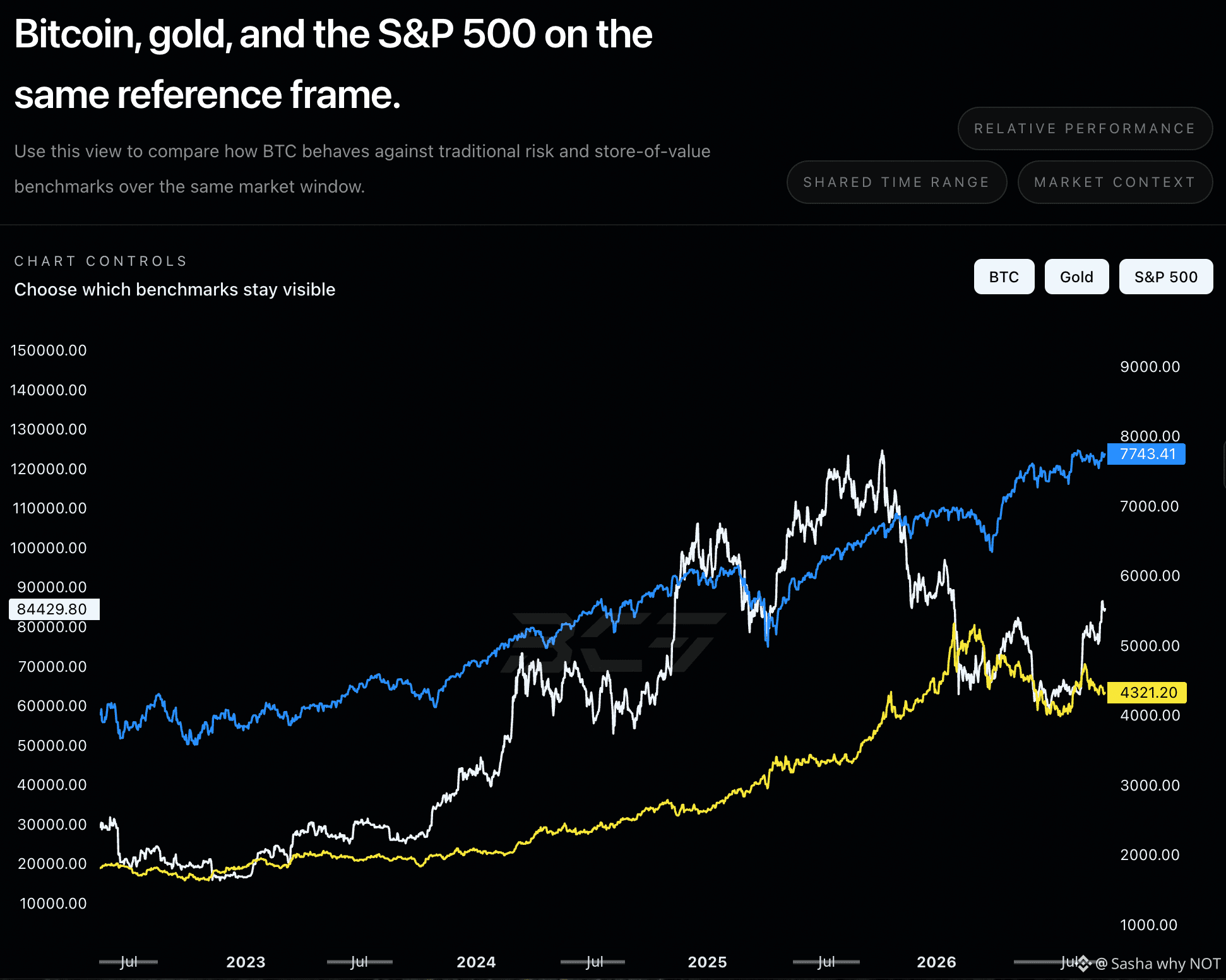
#bitcoin , gold and the S&P 500 are taking different paths. The S&P 500 is near the top of its range, gold is around $4,321, and BTC is near $83,430 still well below its previous peak. The question now: can Bitcoin close that gap?
{spot}(BTCUSDT)
#bitcoin , gold and the S&P 500 are taking different paths. The S&P 500 is near the top of its range, gold is around $4,321, and BTC is near $83,430 still well below its previous peak. The question now: can Bitcoin close that gap?
4
326
The biggest crypto story overnight is the Bitget security breach.
Bitget says unauthorized transfers from its hot wallets affected approximately $351.6 million. The exchange has temporarily suspended withdrawals while it investigates. According to Bitget, its cold wallets were not affected. The key questions now: when will withdrawals resume, and what will the final loss be?
$BTC is trading near $84.5K and ETH near $2.68K. Quarterly options expire today on Deribit, which could add volatility. Expiry alone does not tell us which way prices will move.
Beyond crypto, the US and China extended their trade truce by two months after the Trump–Xi meeting. Tariffs, rare earth supplies, technology restrictions and Taiwan remain unresolved.
Oil is back in focus. Brent closed September 24 at $106.60, up 3.4%, after an attack targeting Saudi Arabia revived supply concerns. At the same time, US and Iranian negotiators are discussing a phased path toward reopening the Strait of Hormuz.
US stocks finished Thursday nearly flat: the S&P 500 fell 0.02%, while the Nasdaq gained 0.01%. Today’s US durable goods and consumer sentiment reports may shift expectations for bond yields and Fed policy.
What matters next: Bitget’s withdrawal status, developments around Hormuz, and the market’s response to US data.
#BitgetSays$352MAffectedInHack $BTC
{spot}(BTCUSDT)
The biggest crypto story overnight is the Bitget security breach.
Bitget says unauthorized transfers from its hot wallets affected approximately $351.6 million. The exchange has temporarily suspended withdrawals while it investigates. According to Bitget, its cold wallets were not affected. The key questions now: when will withdrawals resume, and what will the final loss be?
$BTC is trading near $84.5K and ETH near $2.68K. Quarterly options expire today on Deribit, which could add volatility. Expiry alone does not tell us which way prices will move.
Beyond crypto, the US and China extended their trade truce by two months after the Trump–Xi meeting. Tariffs, rare earth supplies, technology restrictions and Taiwan remain unresolved.
Oil is back in focus. Brent closed September 24 at $106.60, up 3.4%, after an attack targeting Saudi Arabia revived supply concerns. At the same time, US and Iranian negotiators are discussing a phased path toward reopening the Strait of Hormuz.
US stocks finished Thursday nearly flat: the S&P 500 fell 0.02%, while the Nasdaq gained 0.01%. Today’s US durable goods and consumer sentiment reports may shift expectations for bond yields and Fed policy.
What matters next: Bitget’s withdrawal status, developments around Hormuz, and the market’s response to US data.
#BitgetSays$352MAffectedInHack $BTC
Bitget says unauthorized transfers from its hot wallets affected approximately $351.6 million. The exchange has temporarily suspended withdrawals while it investigates. According to Bitget, its cold wallets were not affected. The key questions now: when will withdrawals resume, and what will the final loss be?
$BTC is trading near $84.5K and ETH near $2.68K. Quarterly options expire today on Deribit, which could add volatility. Expiry alone does not tell us which way prices will move.
Beyond crypto, the US and China extended their trade truce by two months after the Trump–Xi meeting. Tariffs, rare earth supplies, technology restrictions and Taiwan remain unresolved.
Oil is back in focus. Brent closed September 24 at $106.60, up 3.4%, after an attack targeting Saudi Arabia revived supply concerns. At the same time, US and Iranian negotiators are discussing a phased path toward reopening the Strait of Hormuz.
US stocks finished Thursday nearly flat: the S&P 500 fell 0.02%, while the Nasdaq gained 0.01%. Today’s US durable goods and consumer sentiment reports may shift expectations for bond yields and Fed policy.
What matters next: Bitget’s withdrawal status, developments around Hormuz, and the market’s response to US data.
#BitgetSays$352MAffectedInHack $BTC

3
345

·
--
Haussier
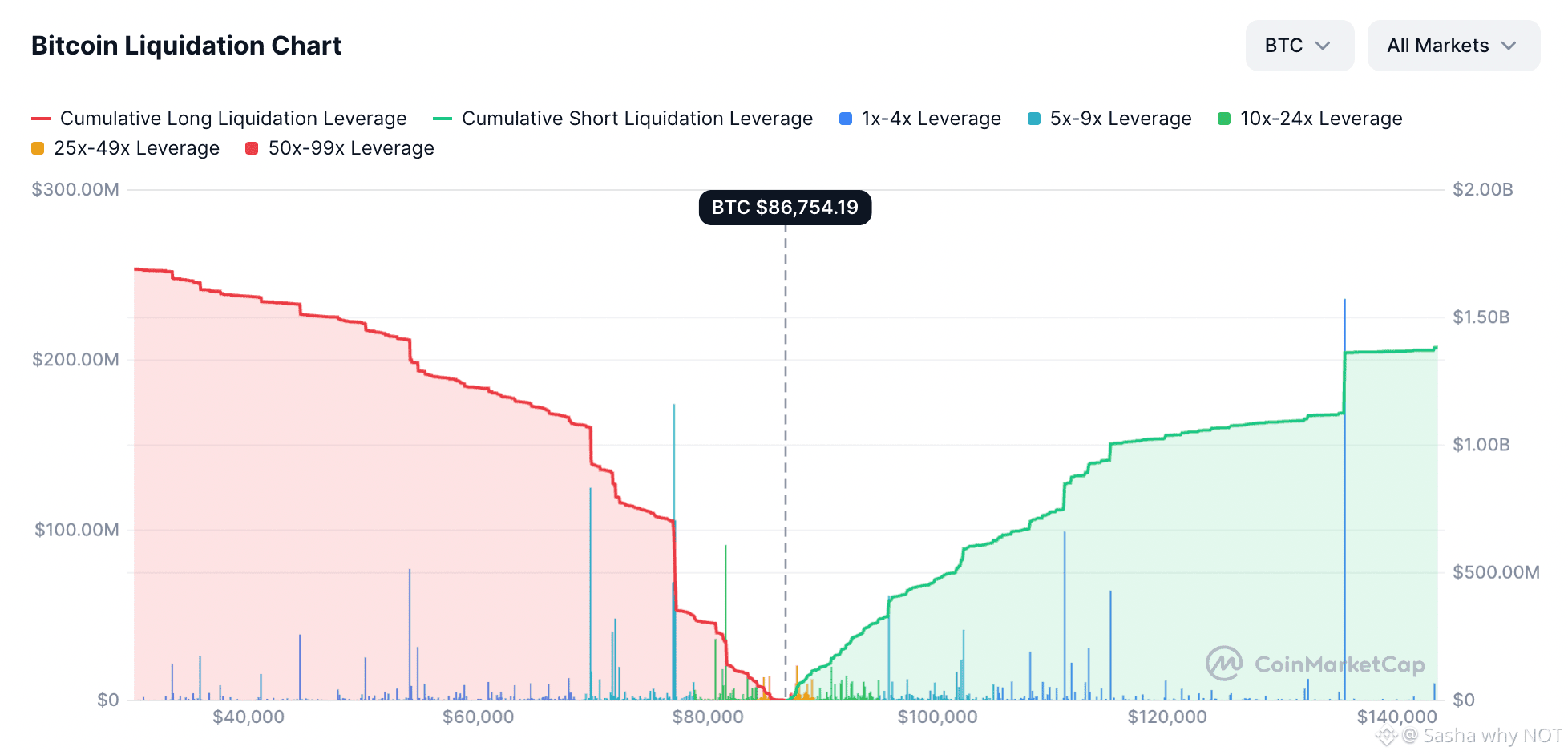
#BTC Liquidation Map: The Bigger Liquidity Pool Is Above
Bitcoin is trading around $86.8K, and the liquidation map shows a clear imbalance.
Above the current price, cumulative short liquidation leverage builds aggressively, reaching roughly $1.4B toward the $140K area.
Below BTC long liquidations are also significant, but the largest clusters sit further away.
The key takeaway: there is currently more potential liquidation liquidity above BTC than below it.
That doesn’t mean #bitcoin has to move higher — liquidation maps are not price forecasts. But if BTC continues to climb, forced short liquidations could amplify the move.
Liquidity is building above. Now the question is whether price goes looking for it.
{spot}(BTCUSDT)
#BTC Liquidation Map: The Bigger Liquidity Pool Is Above
Bitcoin is trading around $86.8K, and the liquidation map shows a clear imbalance.
Above the current price, cumulative short liquidation leverage builds aggressively, reaching roughly $1.4B toward the $140K area.
Below BTC long liquidations are also significant, but the largest clusters sit further away.
The key takeaway: there is currently more potential liquidation liquidity above BTC than below it.
That doesn’t mean #bitcoin has to move higher — liquidation maps are not price forecasts. But if BTC continues to climb, forced short liquidations could amplify the move.
Liquidity is building above. Now the question is whether price goes looking for it.
Bitcoin is trading around $86.8K, and the liquidation map shows a clear imbalance.
Above the current price, cumulative short liquidation leverage builds aggressively, reaching roughly $1.4B toward the $140K area.
Below BTC long liquidations are also significant, but the largest clusters sit further away.
The key takeaway: there is currently more potential liquidation liquidity above BTC than below it.
That doesn’t mean #bitcoin has to move higher — liquidation maps are not price forecasts. But if BTC continues to climb, forced short liquidations could amplify the move.
Liquidity is building above. Now the question is whether price goes looking for it.
1
245
·
--
Haussier
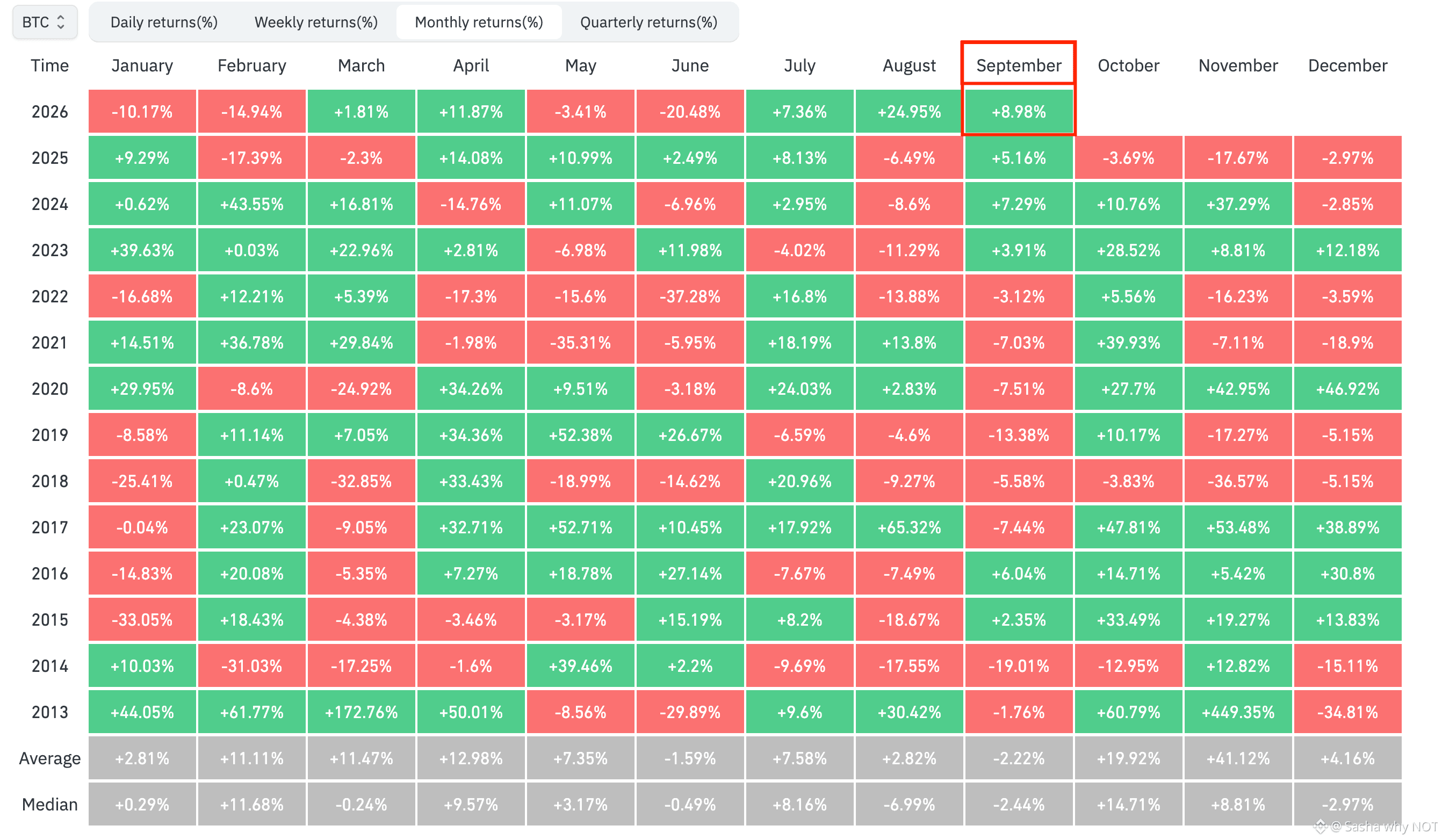
Today is September 22, and #Bitcoin is already up nearly 9% this month.
Historically, September has been a weak month for BTC, with an average return of around −2.2%. But this year, it looks like we may have already captured most of the move.
Now the key is not to chase the price, but to see whether Bitcoin can hold these gains and carry the momentum into the traditionally strong month of October.
{spot}(BTCUSDT)
Today is September 22, and #Bitcoin is already up nearly 9% this month.
Historically, September has been a weak month for BTC, with an average return of around −2.2%. But this year, it looks like we may have already captured most of the move.
Now the key is not to chase the price, but to see whether Bitcoin can hold these gains and carry the momentum into the traditionally strong month of October.
Historically, September has been a weak month for BTC, with an average return of around −2.2%. But this year, it looks like we may have already captured most of the move.
Now the key is not to chase the price, but to see whether Bitcoin can hold these gains and carry the momentum into the traditionally strong month of October.
1
2.5k
·
--
Haussier
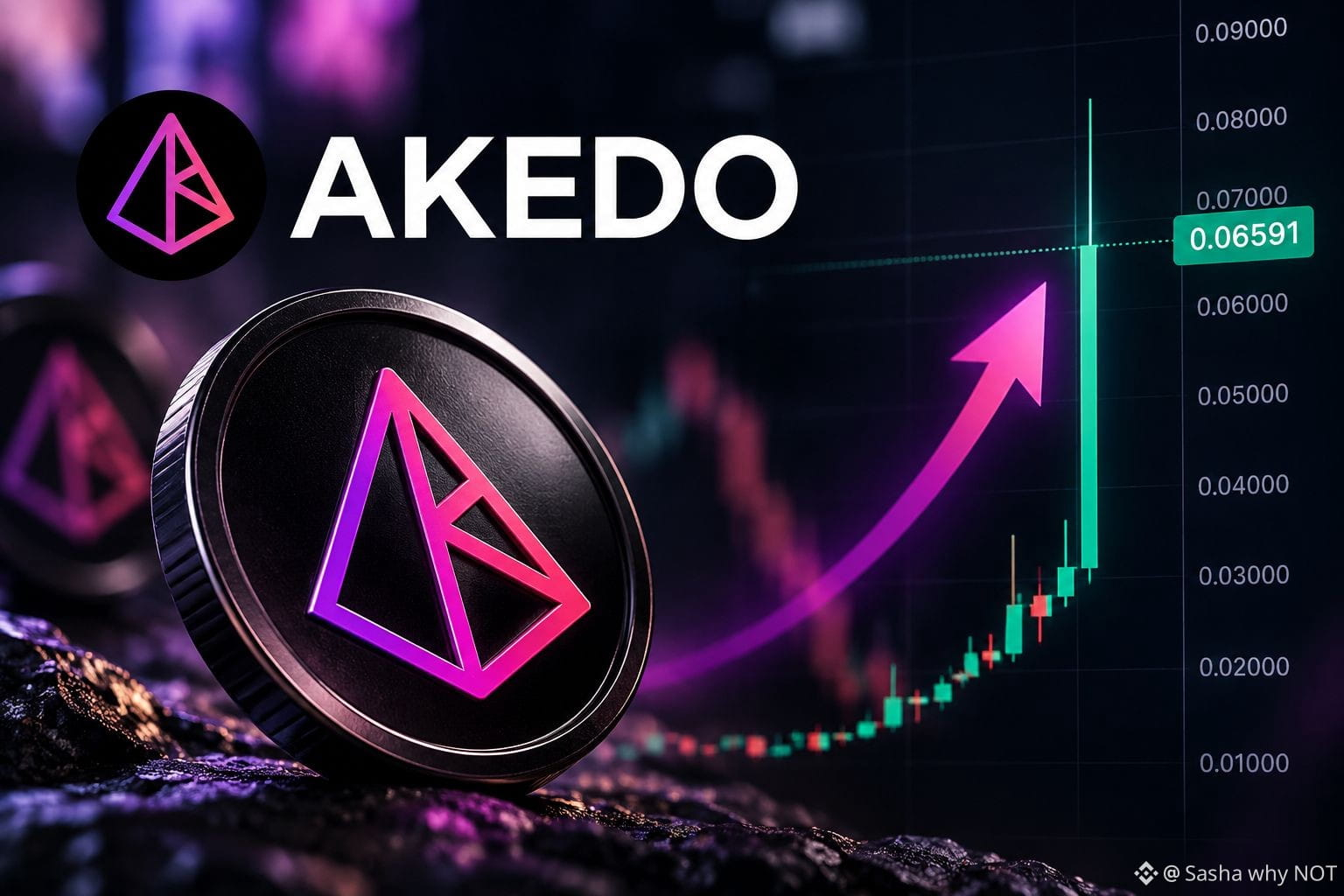
$AKE Surges 52%: What’s Behind AKEDO’s Rally?
AKEDO sits at the intersection of AI, gaming and content creation, with tools designed to turn text prompts into games and digital content.
At the September 20 research snapshot:
• Price: $0.06443 | +52.62% in 24h
• Trading volume: $229.8M | +51.34%
• Market cap: $1.47B
• FDV: $6.44B
What could be supporting the move?
1⃣ Product upgrades
#AKEDO announced a refreshed AI platform with persistent chat history, multiple AI models, game and image creation tools, and crypto payments for platform credits. However, accepting multiple cryptocurrencies does not automatically create mandatory demand for #AKE Official updates
2⃣ More access to leveraged trading
Bitget launched AKEUSDT futures on September 2 with up to 10x leverage. This expanded trading access ahead of the latest rally, but does not establish what triggered the September 19–20 surge. Bitget announcement
3⃣ Trading momentum
Rising price and volume confirm increased activity. They do not identify the buyers or prove that a short squeeze caused the move.
The risks matter: AKE was already roughly 25% below its September 19 high of $0.08626 at the snapshot. Only 22.8% of maximum supply was circulating, making future token releases relevant.
My view: product development provides a credible narrative, while speculative trading may be amplifying the rally. A fresh catalyst explaining the latest jump remains unconfirmed.
Next, watch paying users, platform revenue, AKE-specific demand and spot versus futures activity. Those will help distinguish durable adoption from short-lived momentum.
$AKE
{future}(AKEUSDT)
$AKE Surges 52%: What’s Behind AKEDO’s Rally?
AKEDO sits at the intersection of AI, gaming and content creation, with tools designed to turn text prompts into games and digital content.
At the September 20 research snapshot:
• Price: $0.06443 | +52.62% in 24h
• Trading volume: $229.8M | +51.34%
• Market cap: $1.47B
• FDV: $6.44B
What could be supporting the move?
1⃣ Product upgrades
#AKEDO announced a refreshed AI platform with persistent chat history, multiple AI models, game and image creation tools, and crypto payments for platform credits. However, accepting multiple cryptocurrencies does not automatically create mandatory demand for #AKE Official updates
2⃣ More access to leveraged trading
Bitget launched AKEUSDT futures on September 2 with up to 10x leverage. This expanded trading access ahead of the latest rally, but does not establish what triggered the September 19–20 surge. Bitget announcement
3⃣ Trading momentum
Rising price and volume confirm increased activity. They do not identify the buyers or prove that a short squeeze caused the move.
The risks matter: AKE was already roughly 25% below its September 19 high of $0.08626 at the snapshot. Only 22.8% of maximum supply was circulating, making future token releases relevant.
My view: product development provides a credible narrative, while speculative trading may be amplifying the rally. A fresh catalyst explaining the latest jump remains unconfirmed.
Next, watch paying users, platform revenue, AKE-specific demand and spot versus futures activity. Those will help distinguish durable adoption from short-lived momentum.
$AKE
AKEDO sits at the intersection of AI, gaming and content creation, with tools designed to turn text prompts into games and digital content.
At the September 20 research snapshot:
• Price: $0.06443 | +52.62% in 24h
• Trading volume: $229.8M | +51.34%
• Market cap: $1.47B
• FDV: $6.44B
What could be supporting the move?
1⃣ Product upgrades
#AKEDO announced a refreshed AI platform with persistent chat history, multiple AI models, game and image creation tools, and crypto payments for platform credits. However, accepting multiple cryptocurrencies does not automatically create mandatory demand for #AKE Official updates
2⃣ More access to leveraged trading
Bitget launched AKEUSDT futures on September 2 with up to 10x leverage. This expanded trading access ahead of the latest rally, but does not establish what triggered the September 19–20 surge. Bitget announcement
3⃣ Trading momentum
Rising price and volume confirm increased activity. They do not identify the buyers or prove that a short squeeze caused the move.
The risks matter: AKE was already roughly 25% below its September 19 high of $0.08626 at the snapshot. Only 22.8% of maximum supply was circulating, making future token releases relevant.
My view: product development provides a credible narrative, while speculative trading may be amplifying the rally. A fresh catalyst explaining the latest jump remains unconfirmed.
Next, watch paying users, platform revenue, AKE-specific demand and spot versus futures activity. Those will help distinguish durable adoption from short-lived momentum.
$AKE
2
421
·
--
Haussier
Vérifié
$STRK +28%: What’s Behind Starknet’s Rally?
At the time of checking on September 19, STRK traded near $0.0403, up 33.85% in 24 hours. Trading volume jumped almost 750% to $280.6M against a $302.5M market cap. Trading activity has accelerated sharply.
Why might the market be paying attention?
Starknet is developing three key areas:
• Bitcoin DeFi. Launched in May, strkBTC enables BTC-backed assets to be used across Starknet DeFi, including lending and liquid staking.
• Privacy. In July, developers gained access to STRK20 tools for integrating shielded balances and private transfers.
• Quantum resistance. In August, the team outlined progress on post-quantum accounts. A full network transition still requires further work.
However, these developments predate the current rally. I found no confirmed fresh announcement that explains the entire price jump.
My hypothesis: traders may be reassessing STRK through the combined BTCFi, privacy and quantum-resistance narratives. The volume spike confirms increased trading activity, but does not prove institutional buying or sustained capital inflows.
What comes next? Continued momentum depends on demand holding up after the initial surge. A fundamental revaluation needs growth in application usage, liquidity and network fees and a clear connection between those metrics and demand for STRK.
The question to watch: will interest in Starknet’s technology translate into lasting demand for its token?
WhyNot Research Labs
#STRK #Starknet
$STRK
{spot}(STRKUSDT)
$STRK +28%: What’s Behind Starknet’s Rally?
At the time of checking on September 19, STRK traded near $0.0403, up 33.85% in 24 hours. Trading volume jumped almost 750% to $280.6M against a $302.5M market cap. Trading activity has accelerated sharply.
Why might the market be paying attention?
Starknet is developing three key areas:
• Bitcoin DeFi. Launched in May, strkBTC enables BTC-backed assets to be used across Starknet DeFi, including lending and liquid staking.
• Privacy. In July, developers gained access to STRK20 tools for integrating shielded balances and private transfers.
• Quantum resistance. In August, the team outlined progress on post-quantum accounts. A full network transition still requires further work.
However, these developments predate the current rally. I found no confirmed fresh announcement that explains the entire price jump.
My hypothesis: traders may be reassessing STRK through the combined BTCFi, privacy and quantum-resistance narratives. The volume spike confirms increased trading activity, but does not prove institutional buying or sustained capital inflows.
What comes next? Continued momentum depends on demand holding up after the initial surge. A fundamental revaluation needs growth in application usage, liquidity and network fees and a clear connection between those metrics and demand for STRK.
The question to watch: will interest in Starknet’s technology translate into lasting demand for its token?
WhyNot Research Labs
#STRK #Starknet
$STRK
At the time of checking on September 19, STRK traded near $0.0403, up 33.85% in 24 hours. Trading volume jumped almost 750% to $280.6M against a $302.5M market cap. Trading activity has accelerated sharply.
Why might the market be paying attention?
Starknet is developing three key areas:
• Bitcoin DeFi. Launched in May, strkBTC enables BTC-backed assets to be used across Starknet DeFi, including lending and liquid staking.
• Privacy. In July, developers gained access to STRK20 tools for integrating shielded balances and private transfers.
• Quantum resistance. In August, the team outlined progress on post-quantum accounts. A full network transition still requires further work.
However, these developments predate the current rally. I found no confirmed fresh announcement that explains the entire price jump.
My hypothesis: traders may be reassessing STRK through the combined BTCFi, privacy and quantum-resistance narratives. The volume spike confirms increased trading activity, but does not prove institutional buying or sustained capital inflows.
What comes next? Continued momentum depends on demand holding up after the initial surge. A fundamental revaluation needs growth in application usage, liquidity and network fees and a clear connection between those metrics and demand for STRK.
The question to watch: will interest in Starknet’s technology translate into lasting demand for its token?
WhyNot Research Labs
#STRK #Starknet
$STRK
3
972
·
--
Haussier
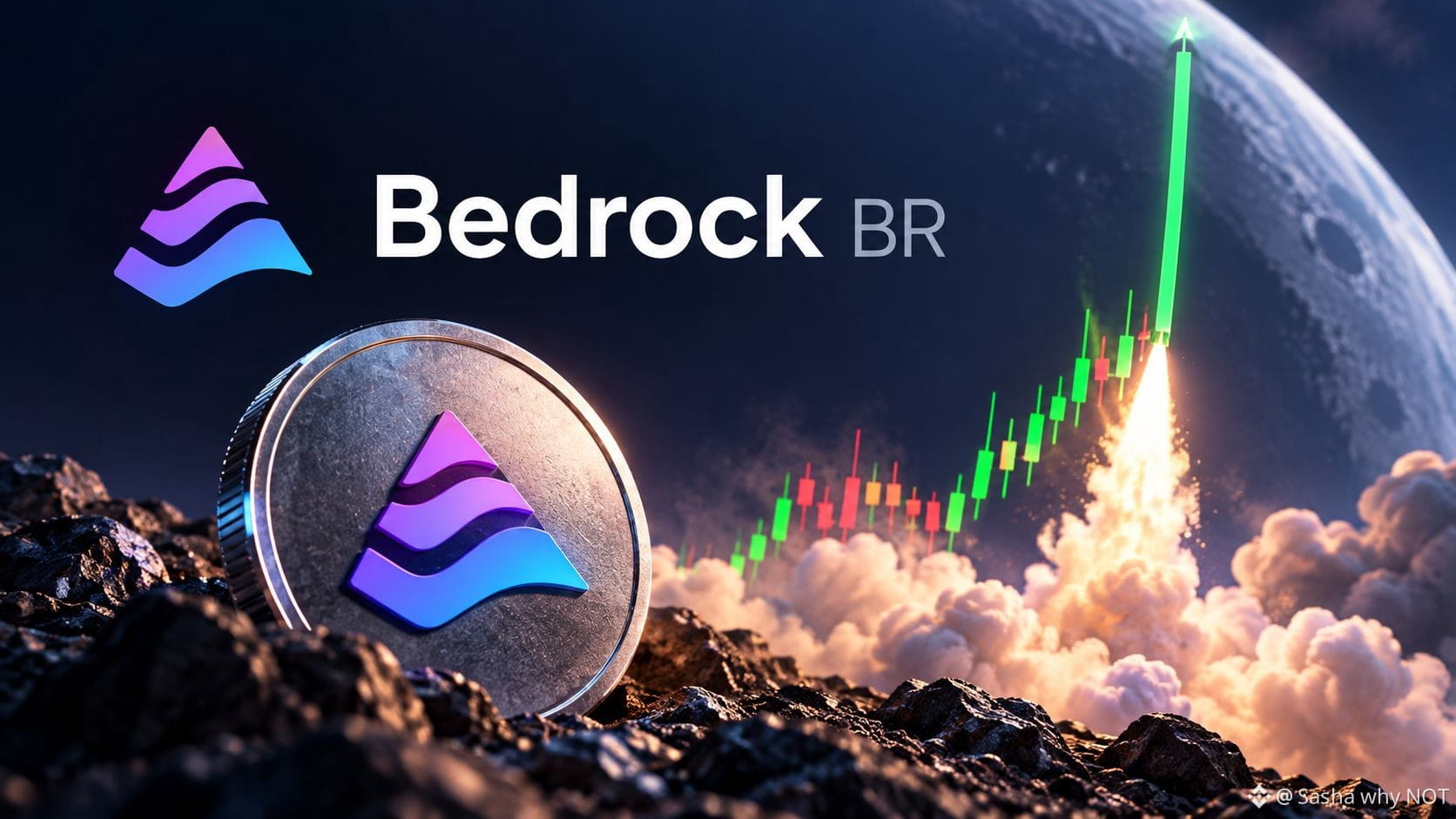
Why Did Bedrock ( $BR ) Suddenly Jump 168%?
Bedrock became one of the market’s strongest performers, rising from approximately $0.21 to $0.67 and setting a new all-time high.
• 24h gain: +168%
• Trading volume: $43.6M, up around 170%
• Market cap: $192M
But here is the important detail: I could not find a major new partnership, product launch or exchange listing that fully explains this move.
The rally appears to be driven primarily by:
A sharp increase in speculative demand
Relatively limited market liquidity
Momentum traders joining the breakout
Possible liquidations of short positions
Bedrock itself is a #Bitcoin focused liquid restaking protocol. Its products include uni $BTC , while $BR is used for governance through the vote-escrowed veBR model. However, these fundamentals are not new.
The main risk is token supply. Only about 30% of the maximum supply is currently circulating, and another unlock is reportedly scheduled for September 20. This could create additional selling pressure after the rally.
My view: this looks more like a liquidity driven repricing than a fundamentally confirmed rally. After a 168% move, the key signal will be whether volume remains elevated and #BR can hold above its previous breakout zone. Chasing the price near the new ATH carries significant risk.
WhyNot Research.
{alpha}(560xff7d6a96ae471bbcd7713af9cb1feeb16cf56b41)
Why Did Bedrock ( $BR ) Suddenly Jump 168%?
Bedrock became one of the market’s strongest performers, rising from approximately $0.21 to $0.67 and setting a new all-time high.
• 24h gain: +168%
• Trading volume: $43.6M, up around 170%
• Market cap: $192M
But here is the important detail: I could not find a major new partnership, product launch or exchange listing that fully explains this move.
The rally appears to be driven primarily by:
A sharp increase in speculative demand
Relatively limited market liquidity
Momentum traders joining the breakout
Possible liquidations of short positions
Bedrock itself is a #Bitcoin focused liquid restaking protocol. Its products include uni $BTC , while $BR is used for governance through the vote-escrowed veBR model. However, these fundamentals are not new.
The main risk is token supply. Only about 30% of the maximum supply is currently circulating, and another unlock is reportedly scheduled for September 20. This could create additional selling pressure after the rally.
My view: this looks more like a liquidity driven repricing than a fundamentally confirmed rally. After a 168% move, the key signal will be whether volume remains elevated and #BR can hold above its previous breakout zone. Chasing the price near the new ATH carries significant risk.
WhyNot Research.
Bedrock became one of the market’s strongest performers, rising from approximately $0.21 to $0.67 and setting a new all-time high.
• 24h gain: +168%
• Trading volume: $43.6M, up around 170%
• Market cap: $192M
But here is the important detail: I could not find a major new partnership, product launch or exchange listing that fully explains this move.
The rally appears to be driven primarily by:
A sharp increase in speculative demand
Relatively limited market liquidity
Momentum traders joining the breakout
Possible liquidations of short positions
Bedrock itself is a #Bitcoin focused liquid restaking protocol. Its products include uni $BTC , while $BR is used for governance through the vote-escrowed veBR model. However, these fundamentals are not new.
The main risk is token supply. Only about 30% of the maximum supply is currently circulating, and another unlock is reportedly scheduled for September 20. This could create additional selling pressure after the rally.
My view: this looks more like a liquidity driven repricing than a fundamentally confirmed rally. After a 168% move, the key signal will be whether volume remains elevated and #BR can hold above its previous breakout zone. Chasing the price near the new ATH carries significant risk.
WhyNot Research.
1
4
309
·
--
Haussier
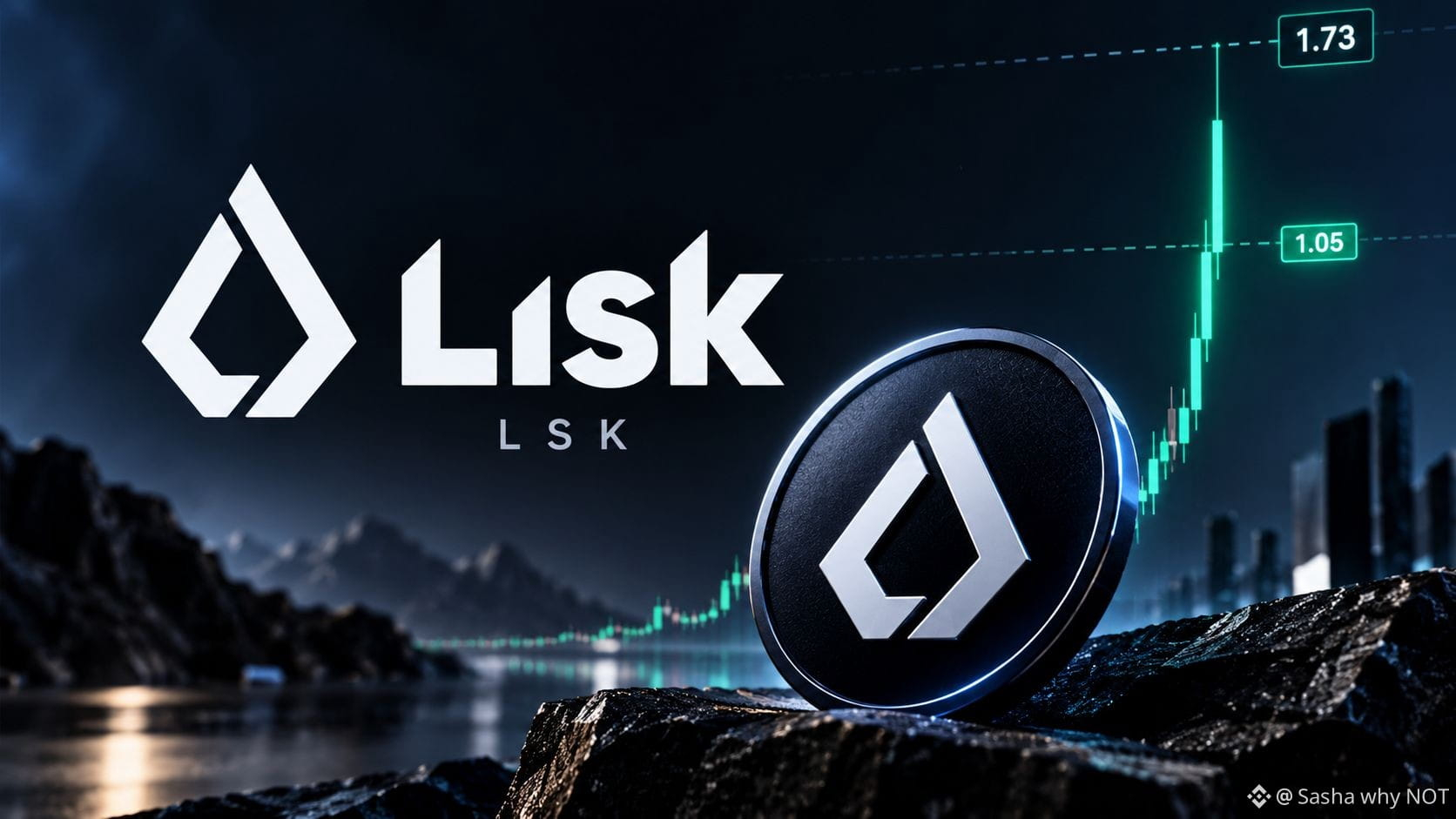
$LSK Surges Over 200%: Lisk Revival or Speculative Pump?
Lisk has existed since 2016, but the project is now effectively starting a new chapter. The team is shutting down Lisk Chain and winding down the DAO to transform Lisk into a B2B platform for corporate financial operations.
The new product combines bank transfers, stablecoin payments, accounts, and internal approvals in one interface. Its target users are international companies operating across multiple jurisdictions, currencies, and legal entities.
What changes for the token:
• Lisk Chain will shut down on October 31, 2026.
• 100 million $LSK will be burned, reducing the planned total supply from 400 million to 300 million.
• Ethereum will become the token’s primary network.
• $LSK is shifting from a governance token to a loyalty token. Businesses may earn it for using the platform and referring customers, while fee payments are expected to be introduced later.
On paper, the combination of a major token burn and new utility looks positive. However, the main question is whether the platform can generate real payment volume—and whether that activity will create sustainable demand for $LSK.
A gain of more than 200% in one day, accompanied by exceptionally high trading volume, looks like more than a fundamental revaluation. Speculation is clearly part of the move, making the risk of a sharp correction particularly high.
My conclusion: Lisk can no longer be valued as a blockchain ecosystem. It is now a bet on corporate stablecoin infrastructure. The burn reduces supply, but the long-term value of #LSK will depend on paying customers, revenue, and real token usage evidence the market has yet to see.
WhyNot Research
{spot}(LSKUSDT)
$LSK Surges Over 200%: Lisk Revival or Speculative Pump?
Lisk has existed since 2016, but the project is now effectively starting a new chapter. The team is shutting down Lisk Chain and winding down the DAO to transform Lisk into a B2B platform for corporate financial operations.
The new product combines bank transfers, stablecoin payments, accounts, and internal approvals in one interface. Its target users are international companies operating across multiple jurisdictions, currencies, and legal entities.
What changes for the token:
• Lisk Chain will shut down on October 31, 2026.
• 100 million $LSK will be burned, reducing the planned total supply from 400 million to 300 million.
• Ethereum will become the token’s primary network.
• $LSK is shifting from a governance token to a loyalty token. Businesses may earn it for using the platform and referring customers, while fee payments are expected to be introduced later.
On paper, the combination of a major token burn and new utility looks positive. However, the main question is whether the platform can generate real payment volume—and whether that activity will create sustainable demand for $LSK .
A gain of more than 200% in one day, accompanied by exceptionally high trading volume, looks like more than a fundamental revaluation. Speculation is clearly part of the move, making the risk of a sharp correction particularly high.
My conclusion: Lisk can no longer be valued as a blockchain ecosystem. It is now a bet on corporate stablecoin infrastructure. The burn reduces supply, but the long-term value of #LSK will depend on paying customers, revenue, and real token usage evidence the market has yet to see.
WhyNot Research
Lisk has existed since 2016, but the project is now effectively starting a new chapter. The team is shutting down Lisk Chain and winding down the DAO to transform Lisk into a B2B platform for corporate financial operations.
The new product combines bank transfers, stablecoin payments, accounts, and internal approvals in one interface. Its target users are international companies operating across multiple jurisdictions, currencies, and legal entities.
What changes for the token:
• Lisk Chain will shut down on October 31, 2026.
• 100 million $LSK will be burned, reducing the planned total supply from 400 million to 300 million.
• Ethereum will become the token’s primary network.
• $LSK is shifting from a governance token to a loyalty token. Businesses may earn it for using the platform and referring customers, while fee payments are expected to be introduced later.
On paper, the combination of a major token burn and new utility looks positive. However, the main question is whether the platform can generate real payment volume—and whether that activity will create sustainable demand for $LSK .
A gain of more than 200% in one day, accompanied by exceptionally high trading volume, looks like more than a fundamental revaluation. Speculation is clearly part of the move, making the risk of a sharp correction particularly high.
My conclusion: Lisk can no longer be valued as a blockchain ecosystem. It is now a bet on corporate stablecoin infrastructure. The burn reduces supply, but the long-term value of #LSK will depend on paying customers, revenue, and real token usage evidence the market has yet to see.
WhyNot Research
1
261
·
--
Haussier
When your girlfriend owns #bitcoin and you don't
{spot}(BTCUSDT)
When your girlfriend owns #bitcoin and you don't
2
327
·
--
Haussier
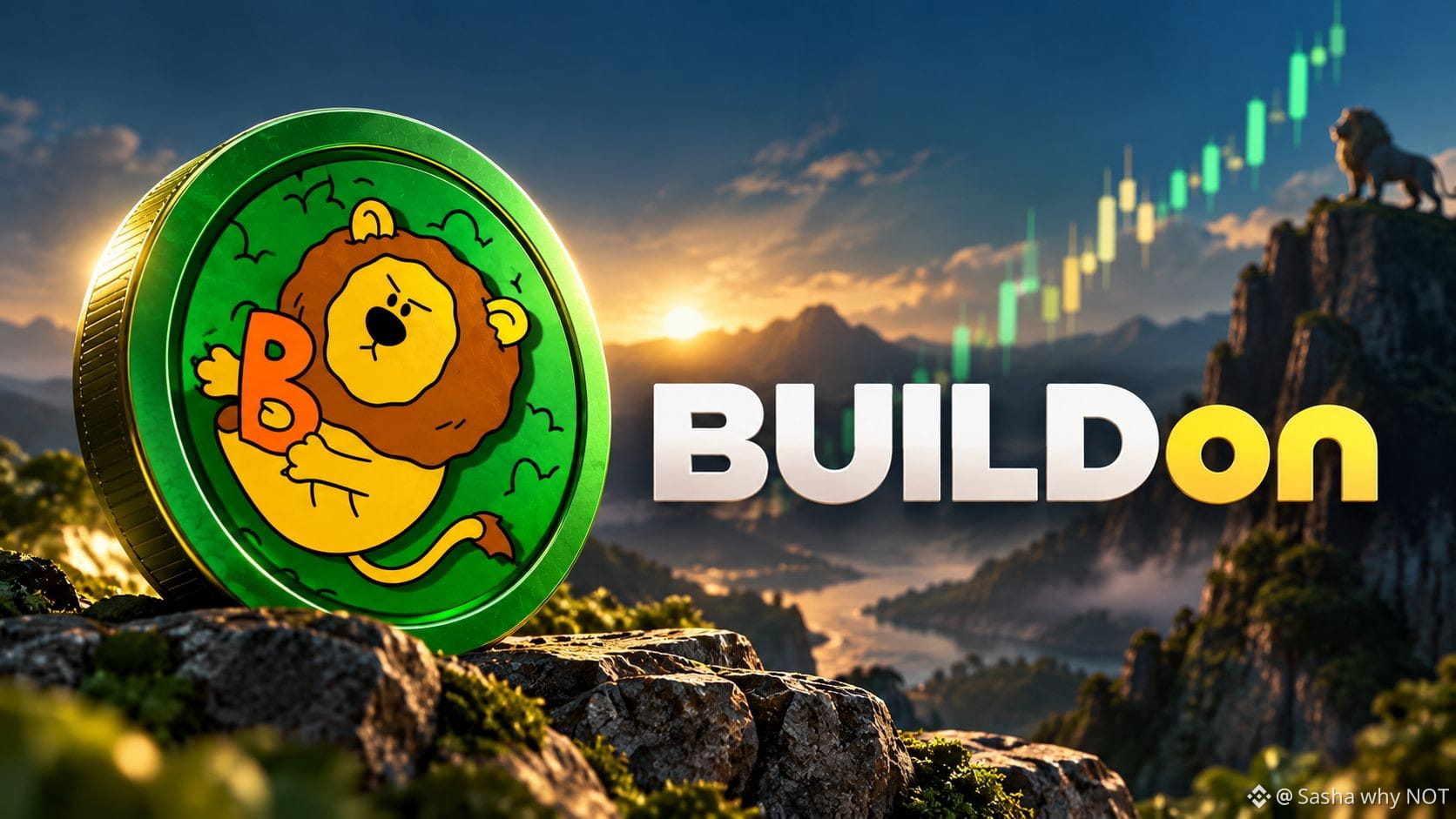
$B : Is a meme evolving into infrastructure for $USD1 ?
BUILDon started as a $BNB Chain mascot but is now attempting to move beyond the memecoin category. The project is developing B Purchase, a service that lets users buy tokens across different chains with stablecoins without manually bridging assets or holding gas on the destination chain. Its next announced product is a multichain launchpad.
The market data presents a mixed picture: $ B trades near $0.191 with a market cap of approximately $191M, while the entire 1B-token supply is already circulating. This reduces the risk of major future unlocks. However, daily volume is only around $4.8M, and the price remains roughly 75% below its ATH.
The main catalyst is BUILDon’s connection to the USD1 and World Liberty Financial ecosystem. The main risk is that $B’s valuation still depends heavily on this narrative. WLFI’s investment alone does not prove sustainable demand for the token.
The market now needs real B Purchase metrics: users, transaction volume, and revenue. Until then, $B remains a strong brand with a promising product thesis but not yet a proven token economy.
Can BUILDon truly move beyond the #MEME ?
$B : Is a meme evolving into infrastructure for $USD1 ?
BUILDon started as a $BNB Chain mascot but is now attempting to move beyond the memecoin category. The project is developing B Purchase, a service that lets users buy tokens across different chains with stablecoins without manually bridging assets or holding gas on the destination chain. Its next announced product is a multichain launchpad.
The market data presents a mixed picture: $ B trades near $0.191 with a market cap of approximately $191M, while the entire 1B-token supply is already circulating. This reduces the risk of major future unlocks. However, daily volume is only around $4.8M, and the price remains roughly 75% below its ATH.
The main catalyst is BUILDon’s connection to the USD1 and World Liberty Financial ecosystem. The main risk is that $B ’s valuation still depends heavily on this narrative. WLFI’s investment alone does not prove sustainable demand for the token.
The market now needs real B Purchase metrics: users, transaction volume, and revenue. Until then, $B remains a strong brand with a promising product thesis but not yet a proven token economy.
Can BUILDon truly move beyond the #MEME ?
BUILDon started as a $BNB Chain mascot but is now attempting to move beyond the memecoin category. The project is developing B Purchase, a service that lets users buy tokens across different chains with stablecoins without manually bridging assets or holding gas on the destination chain. Its next announced product is a multichain launchpad.
The market data presents a mixed picture: $ B trades near $0.191 with a market cap of approximately $191M, while the entire 1B-token supply is already circulating. This reduces the risk of major future unlocks. However, daily volume is only around $4.8M, and the price remains roughly 75% below its ATH.
The main catalyst is BUILDon’s connection to the USD1 and World Liberty Financial ecosystem. The main risk is that $B ’s valuation still depends heavily on this narrative. WLFI’s investment alone does not prove sustainable demand for the token.
The market now needs real B Purchase metrics: users, transaction volume, and revenue. Until then, $B remains a strong brand with a promising product thesis but not yet a proven token economy.
Can BUILDon truly move beyond the #MEME ?
2
273
·
--
Baissier
🔻 Altcoins Under Heavy Pressure
Several major tokens recorded sharp daily losses:
#IOST −35.57%
#VTHO −27.82%
#RVN −26.45%
$SAHARA −11.88%
$ZEC −11.85%
The sell-off is broad, but the deepest losses are concentrated in smaller-cap assets. High volatility and weak market breadth suggest continued caution until prices stabilize and volume confirms buyer demand.
Which token could recover first?
{spot}(RVNUSDT)
{spot}(VTHOUSDT)
{spot}(IOSTUSDT)
🔻 Altcoins Under Heavy Pressure
Several major tokens recorded sharp daily losses:
#IOST −35.57%
#VTHO −27.82%
#RVN −26.45%
$SAHARA −11.88%
$ZEC −11.85%
The sell-off is broad, but the deepest losses are concentrated in smaller-cap assets. High volatility and weak market breadth suggest continued caution until prices stabilize and volume confirms buyer demand.
Which token could recover first?
Several major tokens recorded sharp daily losses:
#IOST −35.57%
#VTHO −27.82%
#RVN −26.45%
$SAHARA −11.88%
$ZEC −11.85%
The sell-off is broad, but the deepest losses are concentrated in smaller-cap assets. High volatility and weak market breadth suggest continued caution until prices stabilize and volume confirms buyer demand.
Which token could recover first?

3
1k
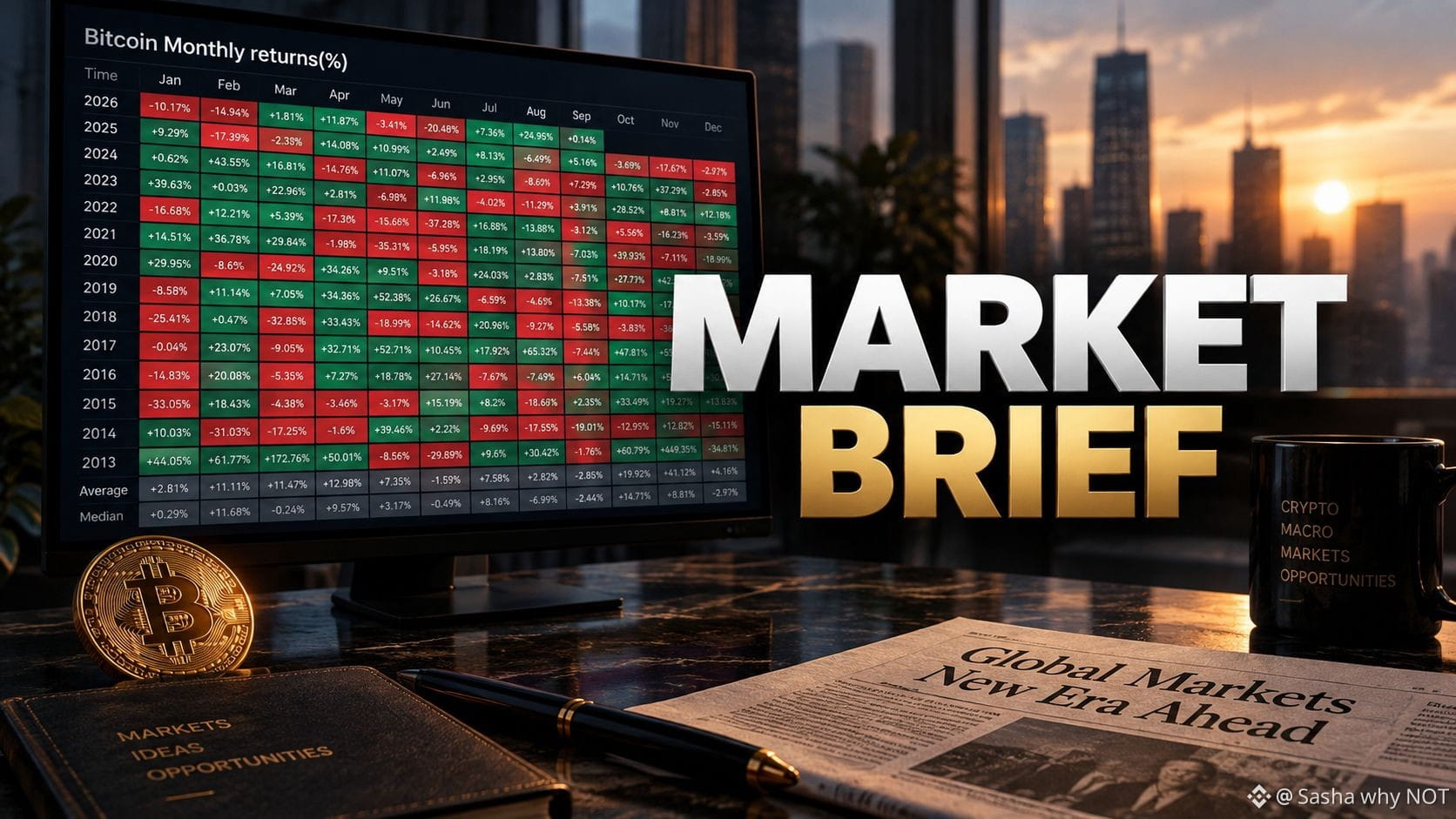
🚨 Market Brief: Oil Near $100, CPI and Fed in Focus
Markets are entering a critical 48 hours. Brent is near $98, Bitcoin remains below $80K, and investors are waiting for US PPI and CPI before the Fed meeting.
₿ Crypto: $BTC remains under $80K as rising oil adds another inflation risk.
The macro chain is clear:
Oil ↑ → Inflation ↑ → Fed hawkishness ↑ → Yields ↑ → BTC/Nasdaq pressure
🇺🇸 US Macro:
CPI: 3.4% | Core 2.5%
Core PCE: 3.3%
Payrolls: +162K | Unemployment 4.1%
GDP Q2: +1.5%
ISM Manufacturing: 54.6
ISM Services: 55.4
US 10Y: ~4.8%
The economy is slowing, but strong labor, elevated ISM prices and expensive oil keep inflation risk alive.
📈 Stocks: S&P 500 fell 0.58%, while Nasdaq lost ~0.32%. A rotation is emerging:
Semiconductors / AI infrastructure ↑ → Traditional software ↓
🏭 Business: GE Aerospace is acquiring Consolidated Precision Products for $11.75B, strengthening control over critical aerospace supply chains.
🇨🇳 China: Beijing introduced anti-dumping measures on Japanese semiconductor chemicals while Huawei continues building domestic chip-production infrastructure.
The competition is moving deeper:
Materials → Lithography → Fabs → Chips → AI
🤖 AI: autonomous agents are moving from chat to real-world actions, while investment continues expanding into inference chips, networking and security.
Models → Chips → Data Centers → Agents → Transactions → Security
🎯 My view: three levels matter now:
#BTC $80K | Brent $100 | US 10Y 5%
Soft inflation could quickly restore risk-on. But Brent >$100 + hot CPI would significantly increase pressure on equities and crypto.
📊 TrendLab Signal
BTC Trend Score: +30 🟢 | Moderate Uptrend
RSI 48.7 | ADX 26.3 | ATR 2.79%
Research by WhyNot Research Labs
{spot}(BTCUSDT)
🚨 Market Brief: Oil Near $100, CPI and Fed in Focus
Markets are entering a critical 48 hours. Brent is near $98, Bitcoin remains below $80K, and investors are waiting for US PPI and CPI before the Fed meeting.
₿ Crypto: $BTC remains under $80K as rising oil adds another inflation risk.
The macro chain is clear:
Oil ↑ → Inflation ↑ → Fed hawkishness ↑ → Yields ↑ → BTC/Nasdaq pressure
🇺🇸 US Macro:
CPI: 3.4% | Core 2.5%
Core PCE: 3.3%
Payrolls: +162K | Unemployment 4.1%
GDP Q2: +1.5%
ISM Manufacturing: 54.6
ISM Services: 55.4
US 10Y: ~4.8%
The economy is slowing, but strong labor, elevated ISM prices and expensive oil keep inflation risk alive.
📈 Stocks: S&P 500 fell 0.58%, while Nasdaq lost ~0.32%. A rotation is emerging:
Semiconductors / AI infrastructure ↑ → Traditional software ↓
🏭 Business: GE Aerospace is acquiring Consolidated Precision Products for $11.75B, strengthening control over critical aerospace supply chains.
🇨🇳 China: Beijing introduced anti-dumping measures on Japanese semiconductor chemicals while Huawei continues building domestic chip-production infrastructure.
The competition is moving deeper:
Materials → Lithography → Fabs → Chips → AI
🤖 AI: autonomous agents are moving from chat to real-world actions, while investment continues expanding into inference chips, networking and security.
Models → Chips → Data Centers → Agents → Transactions → Security
🎯 My view: three levels matter now:
#BTC $80K | Brent $100 | US 10Y 5%
Soft inflation could quickly restore risk-on. But Brent >$100 + hot CPI would significantly increase pressure on equities and crypto.
📊 TrendLab Signal
BTC Trend Score: +30 🟢 | Moderate Uptrend
RSI 48.7 | ADX 26.3 | ATR 2.79%
Research by WhyNot Research Labs
Markets are entering a critical 48 hours. Brent is near $98, Bitcoin remains below $80K, and investors are waiting for US PPI and CPI before the Fed meeting.
₿ Crypto: $BTC remains under $80K as rising oil adds another inflation risk.
The macro chain is clear:
Oil ↑ → Inflation ↑ → Fed hawkishness ↑ → Yields ↑ → BTC/Nasdaq pressure
🇺🇸 US Macro:
CPI: 3.4% | Core 2.5%
Core PCE: 3.3%
Payrolls: +162K | Unemployment 4.1%
GDP Q2: +1.5%
ISM Manufacturing: 54.6
ISM Services: 55.4
US 10Y: ~4.8%
The economy is slowing, but strong labor, elevated ISM prices and expensive oil keep inflation risk alive.
📈 Stocks: S&P 500 fell 0.58%, while Nasdaq lost ~0.32%. A rotation is emerging:
Semiconductors / AI infrastructure ↑ → Traditional software ↓
🏭 Business: GE Aerospace is acquiring Consolidated Precision Products for $11.75B, strengthening control over critical aerospace supply chains.
🇨🇳 China: Beijing introduced anti-dumping measures on Japanese semiconductor chemicals while Huawei continues building domestic chip-production infrastructure.
The competition is moving deeper:
Materials → Lithography → Fabs → Chips → AI
🤖 AI: autonomous agents are moving from chat to real-world actions, while investment continues expanding into inference chips, networking and security.
Models → Chips → Data Centers → Agents → Transactions → Security
🎯 My view: three levels matter now:
#BTC $80K | Brent $100 | US 10Y 5%
Soft inflation could quickly restore risk-on. But Brent >$100 + hot CPI would significantly increase pressure on equities and crypto.
📊 TrendLab Signal
BTC Trend Score: +30 🟢 | Moderate Uptrend
RSI 48.7 | ADX 26.3 | ATR 2.79%
Research by WhyNot Research Labs
3
236
🚨 #Bitcoin Near $80K: Oil, CPI and the Fed Are Driving the Market
The main market story today is oil and inflation risk. Brent is near $97, while Bitcoin is struggling to hold the $80K area ahead of the next US CPI report.
₿ Crypto: #BTC☀ is trading around $79.8K. Strong US labor data keeps Fed expectations hawkish, while higher oil prices add another inflation risk.
The chain remains simple:
Oil ↑ → Inflation ↑ → Fed hawkishness ↑ → Yields ↑ → $BTC /Nasdaq pressure
📈 Stocks: Wall Street returns after Labor Day with a clear divergence:
AI/Chips → Risk-on
Oil/Fed/Treasuries → Risk-off
If the US 10Y moves toward 5%, expensive growth stocks could face renewed pressure.
🏭 Business: Volkswagen’s Osnabrück plant could shift from auto production toward air-defense components another sign of Europe’s structural move:
Auto overcapacity → Defense CAPEX.
🇨🇳 China: US-China competition is expanding beyond trade into AI, semiconductors and strategic technologies. De-escalation would support Chinese equities and global supply chains; new restrictions would do the opposite.
🤖 AI: the next investment layer may be emerging:
Models → GPUs → Data Centers → Power → Agents → Security → Governance.
🎯 My view: watch three levels:
$BTC $80K | Brent $100 | US 10Y 5%
Soft CPI + stable oil could quickly restore risk-on.
Hot CPI + Brent above $100 would be a much harder setup for both equities and crypto.
📊 TrendLab Signal
BTC Trend Score: +20 🟢 | Moderate Uptrend
RSI 45.5 | ADX 27 | ATR 0.34%
{spot}(BTCUSDT)
🚨 #Bitcoin Near $80K: Oil, CPI and the Fed Are Driving the Market
The main market story today is oil and inflation risk. Brent is near $97, while Bitcoin is struggling to hold the $80K area ahead of the next US CPI report.
₿ Crypto: #BTC☀ is trading around $79.8K. Strong US labor data keeps Fed expectations hawkish, while higher oil prices add another inflation risk.
The chain remains simple:
Oil ↑ → Inflation ↑ → Fed hawkishness ↑ → Yields ↑ → $BTC /Nasdaq pressure
📈 Stocks: Wall Street returns after Labor Day with a clear divergence:
AI/Chips → Risk-on
Oil/Fed/Treasuries → Risk-off
If the US 10Y moves toward 5%, expensive growth stocks could face renewed pressure.
🏭 Business: Volkswagen’s Osnabrück plant could shift from auto production toward air-defense components another sign of Europe’s structural move:
Auto overcapacity → Defense CAPEX.
🇨🇳 China: US-China competition is expanding beyond trade into AI, semiconductors and strategic technologies. De-escalation would support Chinese equities and global supply chains; new restrictions would do the opposite.
🤖 AI: the next investment layer may be emerging:
Models → GPUs → Data Centers → Power → Agents → Security → Governance.
🎯 My view: watch three levels:
$BTC $80K | Brent $100 | US 10Y 5%
Soft CPI + stable oil could quickly restore risk-on.
Hot CPI + Brent above $100 would be a much harder setup for both equities and crypto.
📊 TrendLab Signal
BTC Trend Score: +20 🟢 | Moderate Uptrend
RSI 45.5 | ADX 27 | ATR 0.34%
The main market story today is oil and inflation risk. Brent is near $97, while Bitcoin is struggling to hold the $80K area ahead of the next US CPI report.
₿ Crypto: #BTC☀ is trading around $79.8K. Strong US labor data keeps Fed expectations hawkish, while higher oil prices add another inflation risk.
The chain remains simple:
Oil ↑ → Inflation ↑ → Fed hawkishness ↑ → Yields ↑ → $BTC /Nasdaq pressure
📈 Stocks: Wall Street returns after Labor Day with a clear divergence:
AI/Chips → Risk-on
Oil/Fed/Treasuries → Risk-off
If the US 10Y moves toward 5%, expensive growth stocks could face renewed pressure.
🏭 Business: Volkswagen’s Osnabrück plant could shift from auto production toward air-defense components another sign of Europe’s structural move:
Auto overcapacity → Defense CAPEX.
🇨🇳 China: US-China competition is expanding beyond trade into AI, semiconductors and strategic technologies. De-escalation would support Chinese equities and global supply chains; new restrictions would do the opposite.
🤖 AI: the next investment layer may be emerging:
Models → GPUs → Data Centers → Power → Agents → Security → Governance.
🎯 My view: watch three levels:
$BTC $80K | Brent $100 | US 10Y 5%
Soft CPI + stable oil could quickly restore risk-on.
Hot CPI + Brent above $100 would be a much harder setup for both equities and crypto.
📊 TrendLab Signal
BTC Trend Score: +20 🟢 | Moderate Uptrend
RSI 45.5 | ADX 27 | ATR 0.34%

3
186
·
--
Baissier
🚨 Bitcoin Holds $80K as Oil Approaches $100 CPI Is the Next Big Test
Markets enter the new week with a difficult macro setup: strong US labor data, high Treasury yields and rising geopolitical risk.
₿ Bitcoin: $BTC is holding around $80K despite pressure from higher-for-longer rate expectations.
The key macro chain remains:
Oil ↑ → Inflation ↑ → Fed pressure ↑ → Yields ↑ → Dollar ↑ → BTC/Nasdaq ↓
🛢️ Oil: Brent is near $97 as US-Iran tensions increase risks around the Strait of Hormuz. A move above $100 could become a major inflation problem.
📈 Stocks: AI and semiconductor stocks remain relatively strong, but the biggest risk is still the bond market. A move in the US 10Y toward 5% could force another repricing of growth assets.
🇨🇳 China: Beijing is injecting around $54B into major state banks and insurers to strengthen balance sheets and support lending. At the same time, US-China negotiations are expanding from trade and chips into AI security and critical minerals.
🤖 AI: the investment cycle is moving beyond models and GPUs:
Models → Chips → Data Centers → Cooling → Power → Grid
AI is increasingly becoming an infrastructure and energy story.
🎯 My view: three levels matter most right now:
$80K Bitcoin | $100 Brent | 5% US 10Y
If oil stabilizes and the next US CPI comes in softer, risk-on could return quickly.
But strong labor + hot CPI + $100 oil would create a much tougher environment for both equities and crypto.
For now, #Bitcoin holding $80K in this macro environment is a signal worth watching.
{spot}(BTCUSDT)
🚨 Bitcoin Holds $80K as Oil Approaches $100 CPI Is the Next Big Test
Markets enter the new week with a difficult macro setup: strong US labor data, high Treasury yields and rising geopolitical risk.
₿ Bitcoin: $BTC is holding around $80K despite pressure from higher-for-longer rate expectations.
The key macro chain remains:
Oil ↑ → Inflation ↑ → Fed pressure ↑ → Yields ↑ → Dollar ↑ → BTC/Nasdaq ↓
🛢️ Oil: Brent is near $97 as US-Iran tensions increase risks around the Strait of Hormuz. A move above $100 could become a major inflation problem.
📈 Stocks: AI and semiconductor stocks remain relatively strong, but the biggest risk is still the bond market. A move in the US 10Y toward 5% could force another repricing of growth assets.
🇨🇳 China: Beijing is injecting around $54B into major state banks and insurers to strengthen balance sheets and support lending. At the same time, US-China negotiations are expanding from trade and chips into AI security and critical minerals.
🤖 AI: the investment cycle is moving beyond models and GPUs:
Models → Chips → Data Centers → Cooling → Power → Grid
AI is increasingly becoming an infrastructure and energy story.
🎯 My view: three levels matter most right now:
$80K Bitcoin | $100 Brent | 5% US 10Y
If oil stabilizes and the next US CPI comes in softer, risk-on could return quickly.
But strong labor + hot CPI + $100 oil would create a much tougher environment for both equities and crypto.
For now, #Bitcoin holding $80K in this macro environment is a signal worth watching.
Markets enter the new week with a difficult macro setup: strong US labor data, high Treasury yields and rising geopolitical risk.
₿ Bitcoin: $BTC is holding around $80K despite pressure from higher-for-longer rate expectations.
The key macro chain remains:
Oil ↑ → Inflation ↑ → Fed pressure ↑ → Yields ↑ → Dollar ↑ → BTC/Nasdaq ↓
🛢️ Oil: Brent is near $97 as US-Iran tensions increase risks around the Strait of Hormuz. A move above $100 could become a major inflation problem.
📈 Stocks: AI and semiconductor stocks remain relatively strong, but the biggest risk is still the bond market. A move in the US 10Y toward 5% could force another repricing of growth assets.
🇨🇳 China: Beijing is injecting around $54B into major state banks and insurers to strengthen balance sheets and support lending. At the same time, US-China negotiations are expanding from trade and chips into AI security and critical minerals.
🤖 AI: the investment cycle is moving beyond models and GPUs:
Models → Chips → Data Centers → Cooling → Power → Grid
AI is increasingly becoming an infrastructure and energy story.
🎯 My view: three levels matter most right now:
$80K Bitcoin | $100 Brent | 5% US 10Y
If oil stabilizes and the next US CPI comes in softer, risk-on could return quickly.
But strong labor + hot CPI + $100 oil would create a much tougher environment for both equities and crypto.
For now, #Bitcoin holding $80K in this macro environment is a signal worth watching.

2
195
·
--
Haussier
🚨 Bitcoin Below $80K: Macro Is Back in Control
Markets enter the new week with a difficult setup: strong US labor data, sticky inflation, high Treasury yields and renewed geopolitical risk through oil.
₿ Bitcoin: #BTC is trading around $79.7K, struggling to reclaim $80K after strong US payrolls.
The chain is simple:
Strong labor → Fed hike odds ↑ → Yields ↑ → Dollar ↑ → BTC/Nasdaq pressure
🇺🇸 US Macro:
NFP +162K
Unemployment 4.1%
Core PCE 3.3%
ISM Services 55.4
US 10Y ~4.77%
The economy isn’t weak enough to force Fed easing, while inflation remains too high to relax policy. The next major catalyst is US CPI on September 11.
🛢️ Oil: Brent closed around $96, while renewed US-Iran tensions increase the risk of another energy shock.
Oil ↑ → CPI ↑ → Fed pressure ↑ → Yields ↑ → Risk assets ↓
🇨🇳 China: rare-earth supply is again becoming part of the US-China confrontation, affecting strategic industries from chips and EVs to robotics and defense.
🤖 AI: the investment story continues expanding:
Models → Chips → Data Centers → Power → Grid → Financing
🎯 My view: three levels matter most this week:
$80K BTC | $100 Brent | 5% US 10Y
If CPI surprises lower and oil stabilizes, risk-on could return quickly.
But strong labor + sticky inflation + $100 oil would create a much harder environment for equities and crypto.
For now:
Oil → CPI → Fed → Treasuries → Dollar → Nasdaq → #Bitcoin
{spot}(BTCUSDT)
🚨 Bitcoin Below $80K: Macro Is Back in Control
Markets enter the new week with a difficult setup: strong US labor data, sticky inflation, high Treasury yields and renewed geopolitical risk through oil.
₿ Bitcoin: #BTC is trading around $79.7K, struggling to reclaim $80K after strong US payrolls.
The chain is simple:
Strong labor → Fed hike odds ↑ → Yields ↑ → Dollar ↑ → BTC/Nasdaq pressure
🇺🇸 US Macro:
NFP +162K
Unemployment 4.1%
Core PCE 3.3%
ISM Services 55.4
US 10Y ~4.77%
The economy isn’t weak enough to force Fed easing, while inflation remains too high to relax policy. The next major catalyst is US CPI on September 11.
🛢️ Oil: Brent closed around $96, while renewed US-Iran tensions increase the risk of another energy shock.
Oil ↑ → CPI ↑ → Fed pressure ↑ → Yields ↑ → Risk assets ↓
🇨🇳 China: rare-earth supply is again becoming part of the US-China confrontation, affecting strategic industries from chips and EVs to robotics and defense.
🤖 AI: the investment story continues expanding:
Models → Chips → Data Centers → Power → Grid → Financing
🎯 My view: three levels matter most this week:
$80K BTC | $100 Brent | 5% US 10Y
If CPI surprises lower and oil stabilizes, risk-on could return quickly.
But strong labor + sticky inflation + $100 oil would create a much harder environment for equities and crypto.
For now:
Oil → CPI → Fed → Treasuries → Dollar → Nasdaq → #Bitcoin
Markets enter the new week with a difficult setup: strong US labor data, sticky inflation, high Treasury yields and renewed geopolitical risk through oil.
₿ Bitcoin: #BTC is trading around $79.7K, struggling to reclaim $80K after strong US payrolls.
The chain is simple:
Strong labor → Fed hike odds ↑ → Yields ↑ → Dollar ↑ → BTC/Nasdaq pressure
🇺🇸 US Macro:
NFP +162K
Unemployment 4.1%
Core PCE 3.3%
ISM Services 55.4
US 10Y ~4.77%
The economy isn’t weak enough to force Fed easing, while inflation remains too high to relax policy. The next major catalyst is US CPI on September 11.
🛢️ Oil: Brent closed around $96, while renewed US-Iran tensions increase the risk of another energy shock.
Oil ↑ → CPI ↑ → Fed pressure ↑ → Yields ↑ → Risk assets ↓
🇨🇳 China: rare-earth supply is again becoming part of the US-China confrontation, affecting strategic industries from chips and EVs to robotics and defense.
🤖 AI: the investment story continues expanding:
Models → Chips → Data Centers → Power → Grid → Financing
🎯 My view: three levels matter most this week:
$80K BTC | $100 Brent | 5% US 10Y
If CPI surprises lower and oil stabilizes, risk-on could return quickly.
But strong labor + sticky inflation + $100 oil would create a much harder environment for equities and crypto.
For now:
Oil → CPI → Fed → Treasuries → Dollar → Nasdaq → #Bitcoin

2
250
Connectez-vous pour découvrir plus de contenu
Rejoignez la communauté mondiale des adeptes de cryptomonnaies sur Binance Square
⚡️ Suviez les dernières informations importantes sur les cryptomonnaies.
💬 Jugé digne de confiance par la plus grande plateforme d’échange de cryptomonnaies au monde.
👍 Découvrez les connaissances que partagent les créateurs vérifiés.
Adresse e-mail/Nº de téléphone
Sujets d’actualité
KoreaProposesTokenizingStocksAndBonds
13,467 vues
268 mentions
#koreaproposestokenizingstocksandbonds 🇰🇷 South Korea Proposes Roadmap to Tokenize Stocks and Bonds by 2027
Traditional finance is meeting blockchain at a national level. South Korea has unveiled a comprehensive regulatory framework to bring traditional securities on-chain.
📌 Core News:
• The FSC announced a 3-phase plan to expand tokenized securities to include stocks, bonds, and investment funds.
• The legal framework is officially set to take effect on February 4, 2027.
• Phase 1 focuses on private funds, corporate bonds, and unlisted equities before expanding to public markets.
• For investor protection, retail participants face an annual net purchase limit of 100 million KRW (~$74K) per OTC platform.
📊 Market Impact:
• RWA Validation: This provides regulatory clarity for the Real-World Asset (RWA) narrative, proving institutional appetite for efficient on-chain settlement.
• Infrastructure Growth: Expect accelerated development in compliant blockchain infrastructure, digital custody, and identity verification solutions.
• Stablecoin Utility: Phase 3 explicitly mentions integrating on-chain payment systems, which could significantly boost the real-world utility of regulated stablecoins.
💬 Join the Discussion:
Do you think tokenized traditional securities will be the main catalyst for the next wave of institutional crypto adoption? Let’s discuss below! 👇
#RWA #Tokenization #SouthKorea #CryptoRegulation #Blockchain This is for educational purposes only. Not Financial Advice (NFA). Always Do Your Own Research (DYOR).
$NOM $MOVR $NIGHT
珍妮丝 kgf
·1 mentions J’aime
·4.6k vues
MetaMaskExitsLidoValidatorsAfterSecurityIncident
79,058 vues
993 mentions
MicronBeatsEarningsLiftsGuidance
46,377 vues
759 mentions