

Olivia_
11.3k Publications

Olivia_
 Compte Square Vérifié+
Signaler
Bloquer l’utilisateur
Built for more...
Trade occasionnellement
2.7 an(s)
204 Suivis
40.5K+ Abonnés
37.6K+ J’aime
Publications
Tous
Citations
Vidéos
Direct
·
--
$NEAR just had its strongest month ever.
September brought a massive 178% gain, taking NEAR from around $1.92 to $5.57.
Now comes the real test.
The $4.50–$4.69 zone is the level I’m watching. If buyers defend this breakout area, the next major hurdle sits around $6–$6.40.
A clean break above $6.40 could open the door toward $8.30 and eventually $10.
And with NEAR’s new ETF already seeing strong inflows, there’s a bigger question now:
Can $NEAR turn this rally into a lasting trend?
{future}(NEARUSDT)
$NEAR just had its strongest month ever.
September brought a massive 178% gain, taking NEAR from around $1.92 to $5.57.
Now comes the real test.
The $4.50–$4.69 zone is the level I’m watching. If buyers defend this breakout area, the next major hurdle sits around $6–$6.40.
A clean break above $6.40 could open the door toward $8.30 and eventually $10.
And with NEAR’s new ETF already seeing strong inflows, there’s a bigger question now:
Can $NEAR turn this rally into a lasting trend?
September brought a massive 178% gain, taking NEAR from around $1.92 to $5.57.
Now comes the real test.
The $4.50–$4.69 zone is the level I’m watching. If buyers defend this breakout area, the next major hurdle sits around $6–$6.40.
A clean break above $6.40 could open the door toward $8.30 and eventually $10.
And with NEAR’s new ETF already seeing strong inflows, there’s a bigger question now:
Can $NEAR turn this rally into a lasting trend?

311
·
--
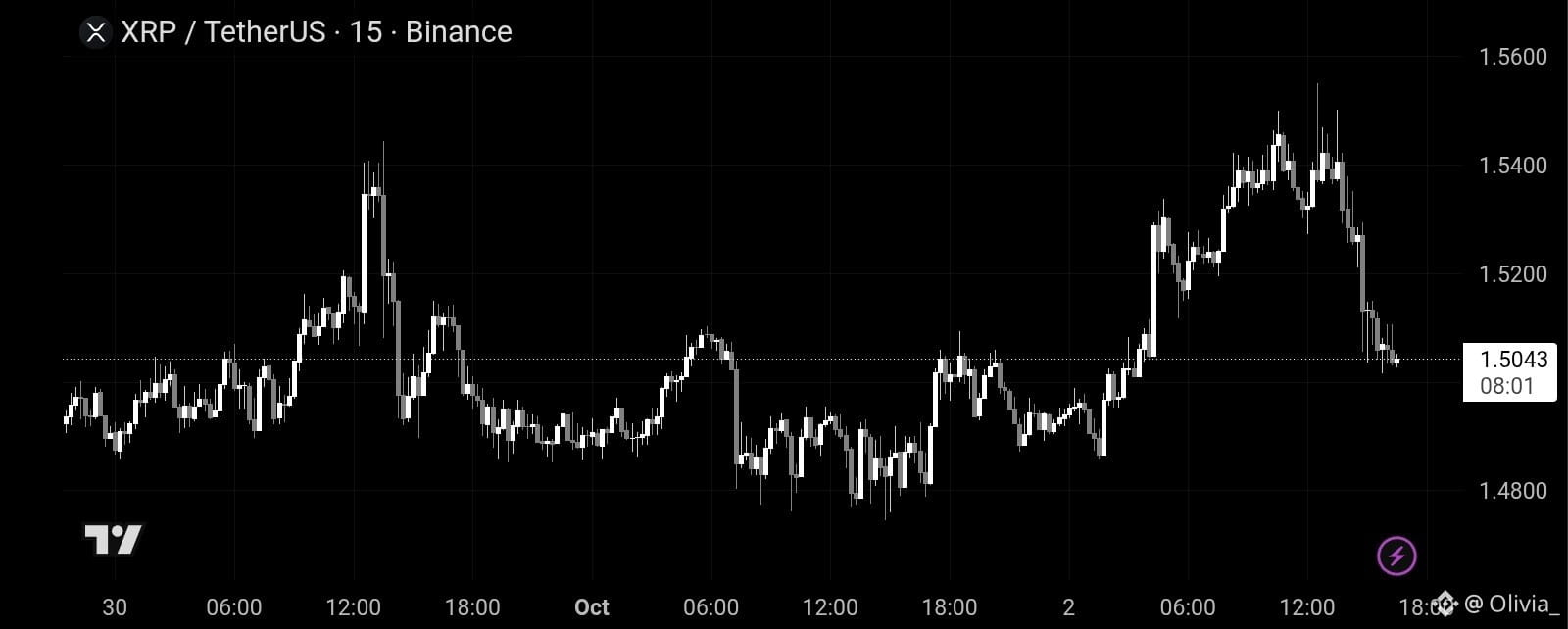
$XRP is pulling back after getting rejected around the $1.54–$1.55 area.
Price is now back near $1.50, so this is a level I’m keeping an eye on.
If buyers manage to hold here, we could see another attempt toward $1.52 and higher. If not, $1.48 could become relevant.
For now, I’m not assuming the next move. Just watching how price reacts around $1.50.
$XRP
{future}(XRPUSDT)
$XRP is pulling back after getting rejected around the $1.54–$1.55 area.
Price is now back near $1.50, so this is a level I’m keeping an eye on.
If buyers manage to hold here, we could see another attempt toward $1.52 and higher. If not, $1.48 could become relevant.
For now, I’m not assuming the next move. Just watching how price reacts around $1.50.
$XRP
Price is now back near $1.50, so this is a level I’m keeping an eye on.
If buyers manage to hold here, we could see another attempt toward $1.52 and higher. If not, $1.48 could become relevant.
For now, I’m not assuming the next move. Just watching how price reacts around $1.50.
$XRP
13
14
389
·
--
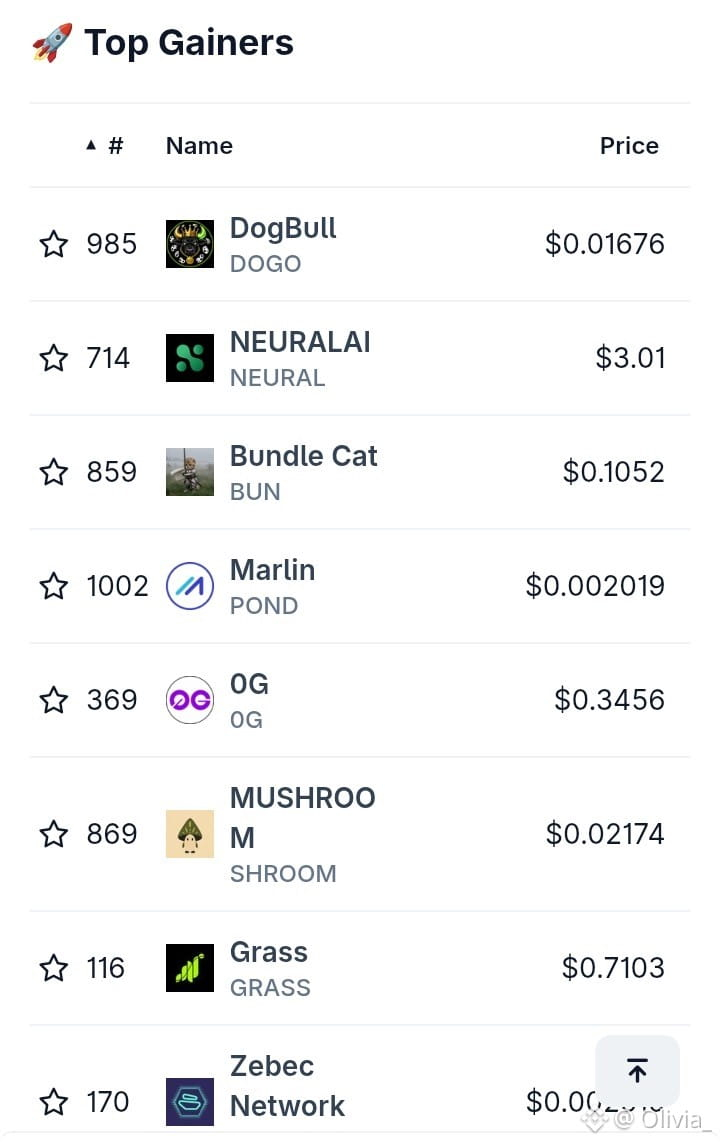
Top Gainers Are Heating Up
Several lower-cap names are showing strong momentum on the market today:
🔹 DOGO
🔹 NEURAL
🔹 BUN
🔹 POND
🔹 OG
🔹 SHROOM
🔹 GRASS
🔹 ZBCN
The next move is all about confirmation.
If volume stays strong and these breakouts hold, the momentum could continue.
But I’m not chasing the green candles here.
A clean breakout + retest is what I’d want to see before looking for the next move.
Which one are you watching?
#Crypto #altcoins
Top Gainers Are Heating Up
Several lower-cap names are showing strong momentum on the market today:
🔹 DOGO
🔹 NEURAL
🔹 BUN
🔹 POND
🔹 OG
🔹 SHROOM
🔹 GRASS
🔹 ZBCN
The next move is all about confirmation.
If volume stays strong and these breakouts hold, the momentum could continue.
But I’m not chasing the green candles here.
A clean breakout + retest is what I’d want to see before looking for the next move.
Which one are you watching?
#Crypto #altcoins
Several lower-cap names are showing strong momentum on the market today:
🔹 DOGO
🔹 NEURAL
🔹 BUN
🔹 POND
🔹 OG
🔹 SHROOM
🔹 GRASS
🔹 ZBCN
The next move is all about confirmation.
If volume stays strong and these breakouts hold, the momentum could continue.
But I’m not chasing the green candles here.
A clean breakout + retest is what I’d want to see before looking for the next move.
Which one are you watching?
#Crypto #altcoins
170
·
--
Vérifié
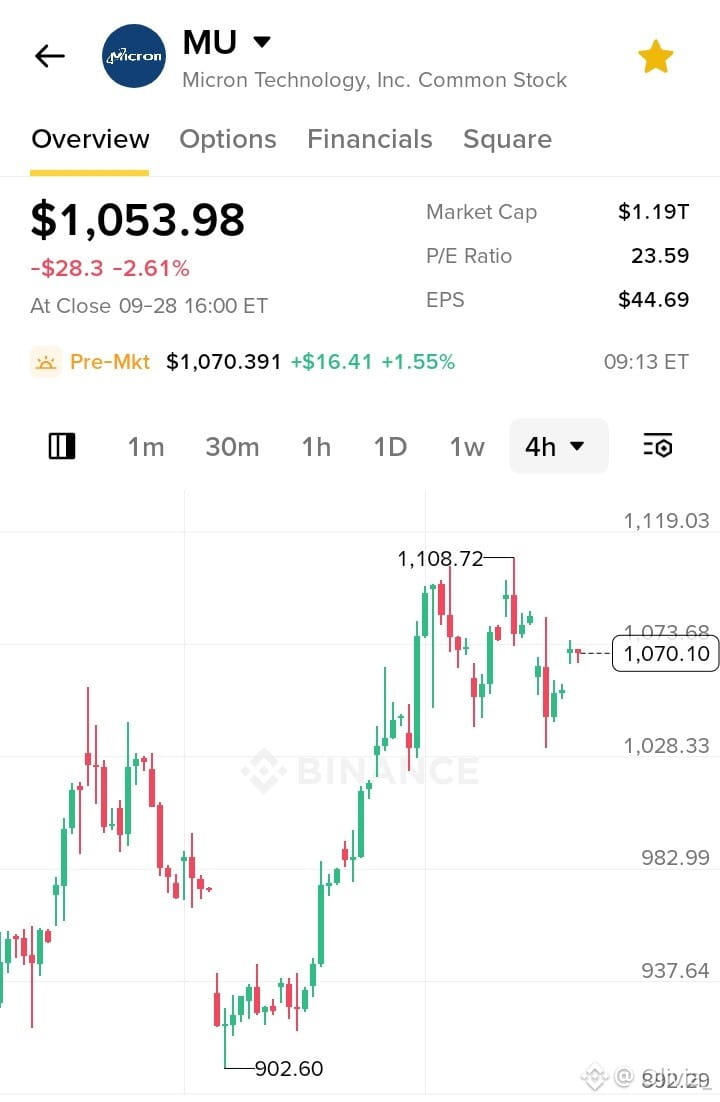
$MU earnings are about to put the memory supercycle to the test.
Micron’s FY2026 Q4 results could be more important than just the next move in $MU.
The key thing I’m watching is whether Micron can deliver the kind of margins and demand strength the market is expecting.
If earnings confirm strong AI-driven memory demand and margins push toward the 86% area, the bullish narrative could stay intact.
But if guidance or margins disappoint, the market may start questioning how much of the memory supercycle is already priced in.
I’m watching the earnings numbers, guidance and post-earnings price reaction rather than chasing the first move.
Do you think $MU can keep the memory supercycle going?
#EarningsSeason
{future}(MUUSDT)
$MU earnings are about to put the memory supercycle to the test.
Micron’s FY2026 Q4 results could be more important than just the next move in $MU .
The key thing I’m watching is whether Micron can deliver the kind of margins and demand strength the market is expecting.
If earnings confirm strong AI-driven memory demand and margins push toward the 86% area, the bullish narrative could stay intact.
But if guidance or margins disappoint, the market may start questioning how much of the memory supercycle is already priced in.
I’m watching the earnings numbers, guidance and post-earnings price reaction rather than chasing the first move.
Do you think $MU can keep the memory supercycle going?
#EarningsSeason
Micron’s FY2026 Q4 results could be more important than just the next move in $MU .
The key thing I’m watching is whether Micron can deliver the kind of margins and demand strength the market is expecting.
If earnings confirm strong AI-driven memory demand and margins push toward the 86% area, the bullish narrative could stay intact.
But if guidance or margins disappoint, the market may start questioning how much of the memory supercycle is already priced in.
I’m watching the earnings numbers, guidance and post-earnings price reaction rather than chasing the first move.
Do you think $MU can keep the memory supercycle going?
#EarningsSeason
109
·
--
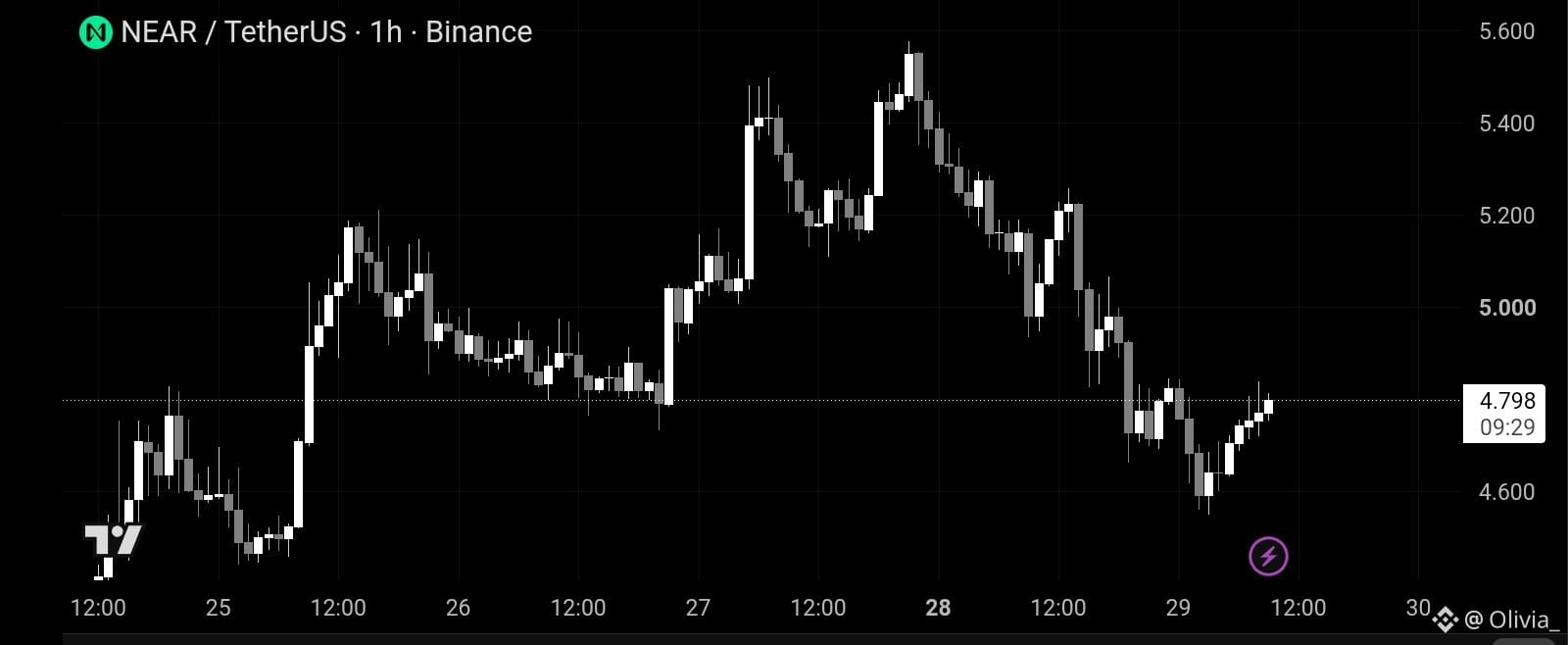
$NEAR is showing signs of a short-term recovery
After dropping toward the $4.55–$4.60 area, price has started forming a bounce and is now trading around $4.80.
🔹 Holding above $4.70 keeps the recovery structure intact
🔹 A clean break above $4.85 could push NEAR toward $5.00
🔹 Reclaiming $5.00 would bring $5.20 into focus
🔹 Losing $4.60 could put the recent bounce at risk
I’m watching for confirmation above $4.85 rather than chasing the current move.
{future}(NEARUSDT)
$NEAR is showing signs of a short-term recovery
After dropping toward the $4.55–$4.60 area, price has started forming a bounce and is now trading around $4.80.
🔹 Holding above $4.70 keeps the recovery structure intact
🔹 A clean break above $4.85 could push NEAR toward $5.00
🔹 Reclaiming $5.00 would bring $5.20 into focus
🔹 Losing $4.60 could put the recent bounce at risk
I’m watching for confirmation above $4.85 rather than chasing the current move.
After dropping toward the $4.55–$4.60 area, price has started forming a bounce and is now trading around $4.80.
🔹 Holding above $4.70 keeps the recovery structure intact
🔹 A clean break above $4.85 could push NEAR toward $5.00
🔹 Reclaiming $5.00 would bring $5.20 into focus
🔹 Losing $4.60 could put the recent bounce at risk
I’m watching for confirmation above $4.85 rather than chasing the current move.
161
·
--
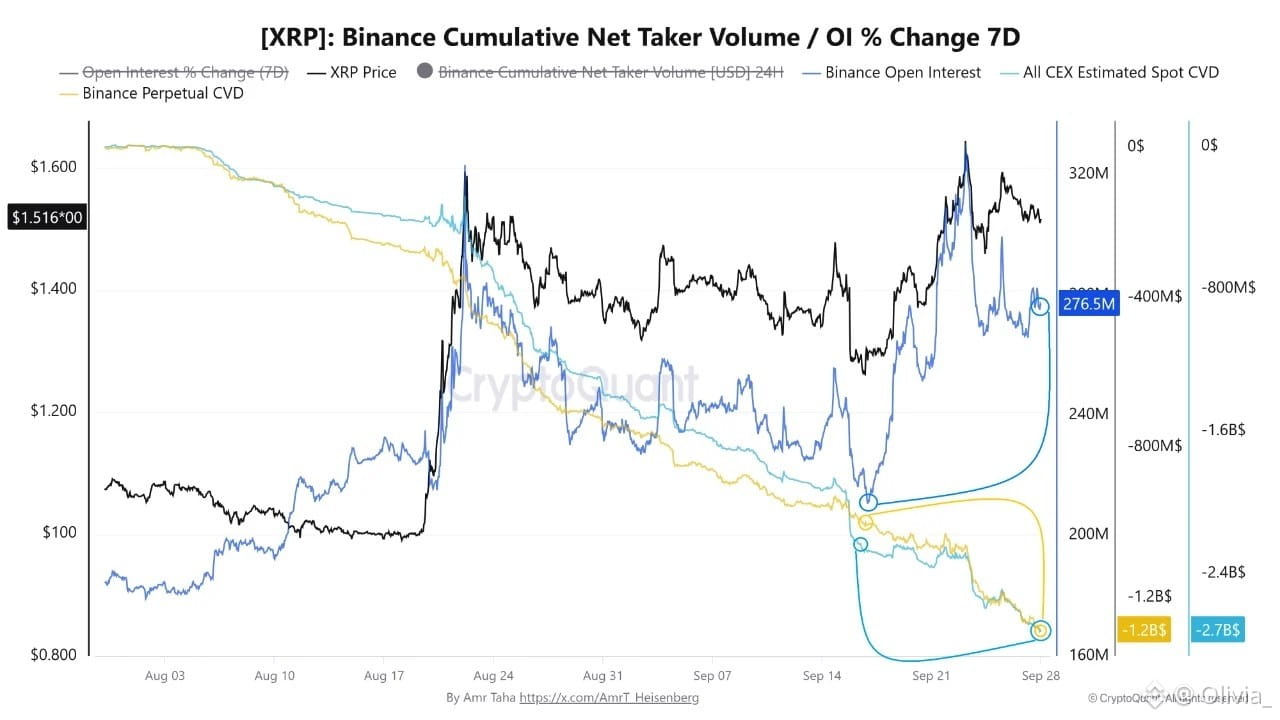
$XRP is showing a setup that’s hard to ignore 👀
While perpetual markets are showing heavy selling pressure, Spot investors appear to be absorbing it.
🔹 Spot CVD moved deeper negative, showing persistent selling
🔹 Spot netflow remains negative, pointing to continued exchange outflows
🔹 Around $60M flowed out of exchanges over the past 7 days
🔹 Funding Rate remains positive, keeping long positioning supported
The key here is the divergence.
Perp sellers are pressing, but Spot accumulation is helping $XRP hold its upward structure.
As long as Spot outflows continue and funding doesn’t become overheated, the bullish structure remains intact.
I’m watching the Spot flow closely. That could be the real signal here.
$XRP
{future}(XRPUSDT)
$XRP is showing a setup that’s hard to ignore 👀
While perpetual markets are showing heavy selling pressure, Spot investors appear to be absorbing it.
🔹 Spot CVD moved deeper negative, showing persistent selling
🔹 Spot netflow remains negative, pointing to continued exchange outflows
🔹 Around $60M flowed out of exchanges over the past 7 days
🔹 Funding Rate remains positive, keeping long positioning supported
The key here is the divergence.
Perp sellers are pressing, but Spot accumulation is helping $XRP hold its upward structure.
As long as Spot outflows continue and funding doesn’t become overheated, the bullish structure remains intact.
I’m watching the Spot flow closely. That could be the real signal here.
$XRP
While perpetual markets are showing heavy selling pressure, Spot investors appear to be absorbing it.
🔹 Spot CVD moved deeper negative, showing persistent selling
🔹 Spot netflow remains negative, pointing to continued exchange outflows
🔹 Around $60M flowed out of exchanges over the past 7 days
🔹 Funding Rate remains positive, keeping long positioning supported
The key here is the divergence.
Perp sellers are pressing, but Spot accumulation is helping $XRP hold its upward structure.
As long as Spot outflows continue and funding doesn’t become overheated, the bullish structure remains intact.
I’m watching the Spot flow closely. That could be the real signal here.
$XRP
11
13
175
·
--
$2.4B flowing into Bitcoin ETFs in one week.
The bigger question now: is institutional demand accelerating again?
$2.4B flowing into Bitcoin ETFs in one week.
The bigger question now: is institutional demand accelerating again?
The bigger question now: is institutional demand accelerating again?
3
588
·
--
Vérifié
@Pyth_Network is expanding its market data coverage
The latest Pro updates bring:
• New US ETF coverage
• Korean equity markets
• More 24/7 crypto feeds
• Additional market indices
• More agricultural commodity futures
This is bigger than just adding more feeds.
For institutional traders, having broader and more continuous access to real-time market data can make it easier to track different markets and build strategies around changing conditions.
Crypto, equities, commodities… bringing more of these markets into one data infrastructure makes $PYTH increasingly interesting to watch.
The real question now is how much adoption these expanded data offerings can attract.
Watching $PYTH closely. DYOR.
#PYTH #PythNetwork
{future}(PYTHUSDT)
@Pyth_Network is expanding its market data coverage
The latest Pro updates bring:
• New US ETF coverage
• Korean equity markets
• More 24/7 crypto feeds
• Additional market indices
• More agricultural commodity futures
This is bigger than just adding more feeds.
For institutional traders, having broader and more continuous access to real-time market data can make it easier to track different markets and build strategies around changing conditions.
Crypto, equities, commodities… bringing more of these markets into one data infrastructure makes $PYTH increasingly interesting to watch.
The real question now is how much adoption these expanded data offerings can attract.
Watching $PYTH closely. DYOR.
#PYTH #PythNetwork
The latest Pro updates bring:
• New US ETF coverage
• Korean equity markets
• More 24/7 crypto feeds
• Additional market indices
• More agricultural commodity futures
This is bigger than just adding more feeds.
For institutional traders, having broader and more continuous access to real-time market data can make it easier to track different markets and build strategies around changing conditions.
Crypto, equities, commodities… bringing more of these markets into one data infrastructure makes $PYTH increasingly interesting to watch.
The real question now is how much adoption these expanded data offerings can attract.
Watching $PYTH closely. DYOR.
#PYTH #PythNetwork

3
644
·
--
Haussier
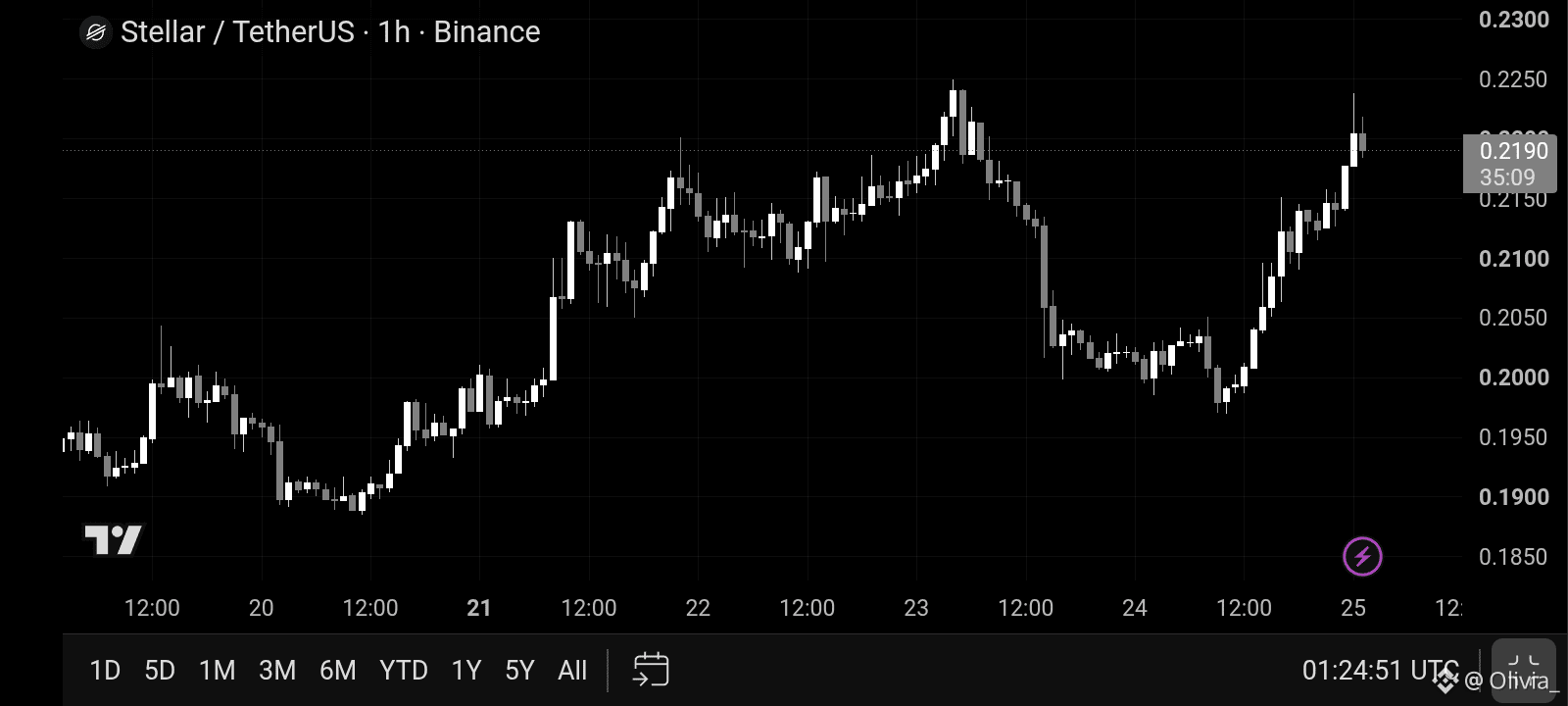
$XLM is showing strong momentum.
Price has reclaimed the $0.215 area and is now pushing toward the recent highs.
If buyers break above $0.224, I’m watching $0.230 next.
As long as $0.215 holds, the bullish structure stays intact.
Breakout → retest → continuation.
Would you take the breakout here or wait for the retest? 👀
#XLM #Stellar #Crypto
{future}(XLMUSDT)
$XLM is showing strong momentum.
Price has reclaimed the $0.215 area and is now pushing toward the recent highs.
If buyers break above $0.224, I’m watching $0.230 next.
As long as $0.215 holds, the bullish structure stays intact.
Breakout → retest → continuation.
Would you take the breakout here or wait for the retest? 👀
#XLM #Stellar #Crypto
Price has reclaimed the $0.215 area and is now pushing toward the recent highs.
If buyers break above $0.224, I’m watching $0.230 next.
As long as $0.215 holds, the bullish structure stays intact.
Breakout → retest → continuation.
Would you take the breakout here or wait for the retest? 👀
#XLM #Stellar #Crypto
14
14
393
·
--
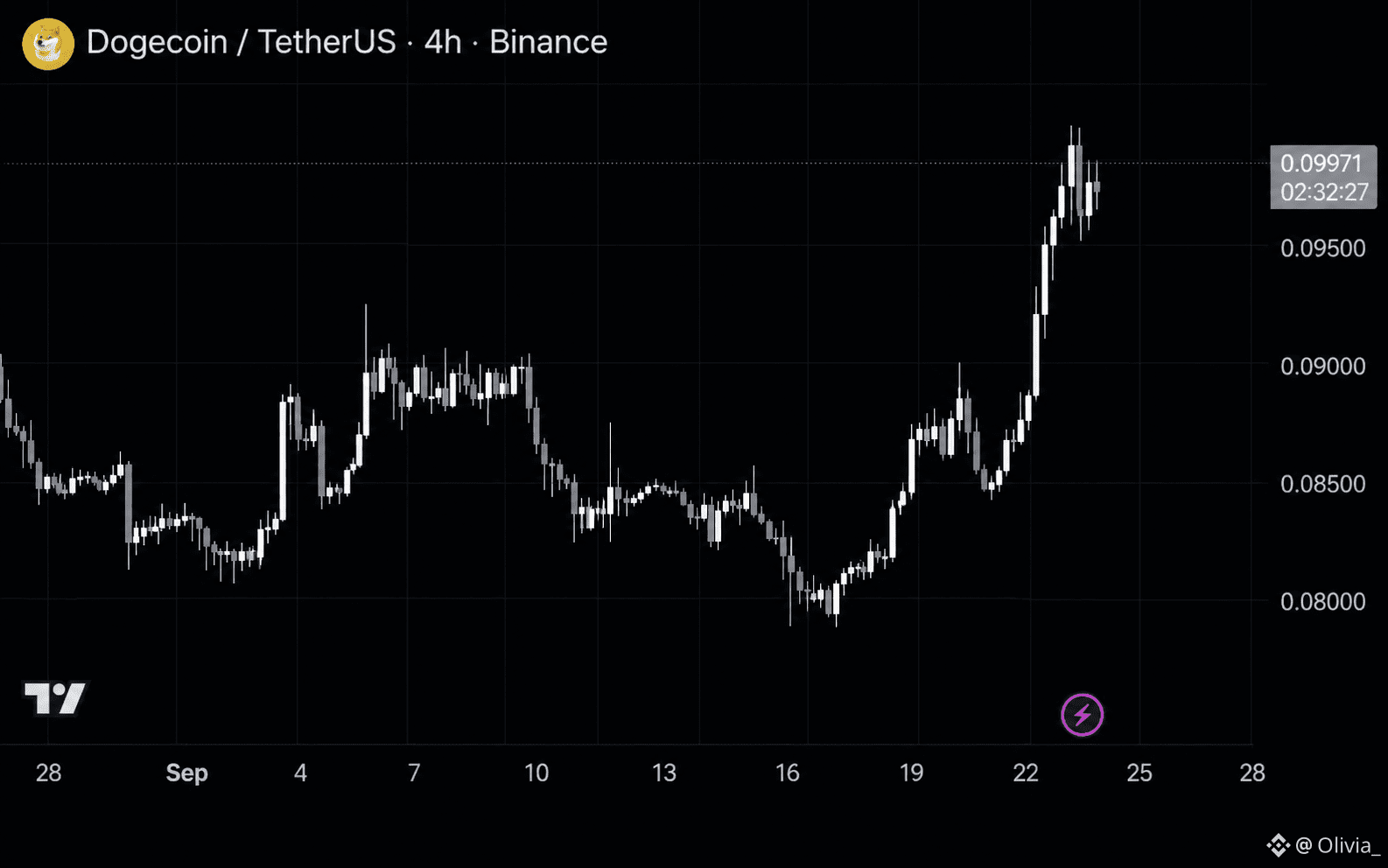
$DOGE is back around the $0.10 level.
The recent move has been pretty strong, but the interesting part now is whether DOGE can actually hold this zone instead of giving the move back.
I’m watching $0.10 closely. If momentum stays strong, DOGE could get even more attention from the market.
$DOGE #Dogecoin #crypto
{future}(DOGEUSDT)
$DOGE is back around the $0.10 level.
The recent move has been pretty strong, but the interesting part now is whether DOGE can actually hold this zone instead of giving the move back.
I’m watching $0.10 closely. If momentum stays strong, DOGE could get even more attention from the market.
$DOGE #Dogecoin #crypto
The recent move has been pretty strong, but the interesting part now is whether DOGE can actually hold this zone instead of giving the move back.
I’m watching $0.10 closely. If momentum stays strong, DOGE could get even more attention from the market.
$DOGE #Dogecoin #crypto
16
14
910
·
--
$2.2 BILLION just moved into $XRP
And it’s not the only thing changing.
Large wallets reportedly bought around 1.54B XRP in just four days, while short sellers are starting to reduce their positions.
One Hyperliquid trader alone bought back around 450K XRP, cutting their short almost in half.
But here’s the part I’m watching:
XRP is now facing the same $1.49–$1.54 resistance zone that has rejected it before.
If XRP breaks and holds above it, things could get very interesting.
If it fails again, $1.30, $1.20 and $1.10 become important levels to watch.
Big money is moving.
Now XRP needs to show whether buyers have enough strength to break the wall. 👀
{future}(XRPUSDT)
$2.2 BILLION just moved into $XRP
And it’s not the only thing changing.
Large wallets reportedly bought around 1.54B XRP in just four days, while short sellers are starting to reduce their positions.
One Hyperliquid trader alone bought back around 450K XRP, cutting their short almost in half.
But here’s the part I’m watching:
XRP is now facing the same $1.49–$1.54 resistance zone that has rejected it before.
If XRP breaks and holds above it, things could get very interesting.
If it fails again, $1.30, $1.20 and $1.10 become important levels to watch.
Big money is moving.
Now XRP needs to show whether buyers have enough strength to break the wall. 👀
And it’s not the only thing changing.
Large wallets reportedly bought around 1.54B XRP in just four days, while short sellers are starting to reduce their positions.
One Hyperliquid trader alone bought back around 450K XRP, cutting their short almost in half.
But here’s the part I’m watching:
XRP is now facing the same $1.49–$1.54 resistance zone that has rejected it before.
If XRP breaks and holds above it, things could get very interesting.
If it fails again, $1.30, $1.20 and $1.10 become important levels to watch.
Big money is moving.
Now XRP needs to show whether buyers have enough strength to break the wall. 👀

16
25
3.4k
·
--
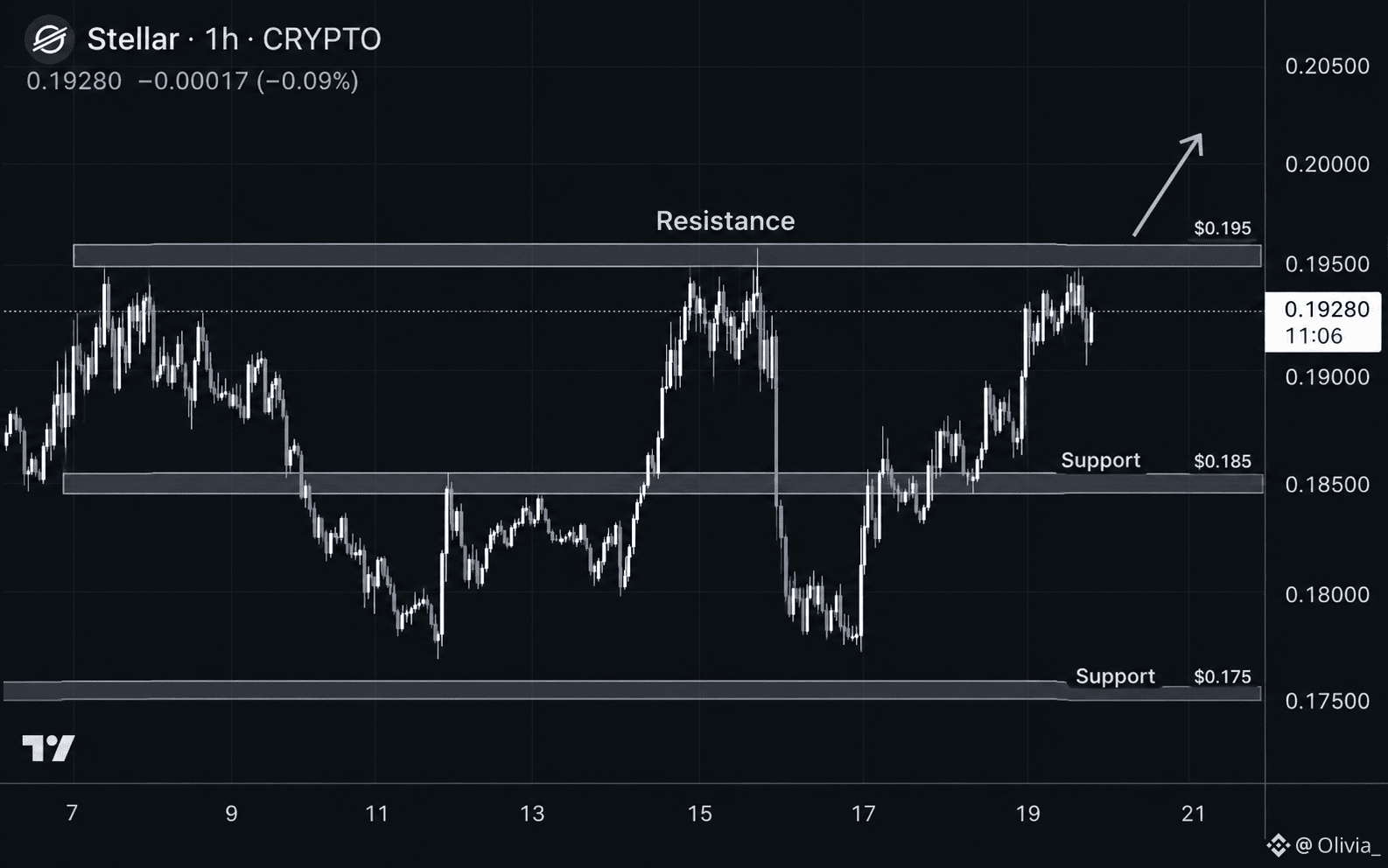
$XLM bulls have been quietly stepping in.
After reclaiming the $0.185 area, XLM pushed toward $0.195 and is now holding near the top of the range.
A clean breakout above $0.195 could put the recent highs back in focus.
No need to chase. Let the chart confirm.
{future}(XLMUSDT)
$XLM bulls have been quietly stepping in.
After reclaiming the $0.185 area, XLM pushed toward $0.195 and is now holding near the top of the range.
A clean breakout above $0.195 could put the recent highs back in focus.
No need to chase. Let the chart confirm.
After reclaiming the $0.185 area, XLM pushed toward $0.195 and is now holding near the top of the range.
A clean breakout above $0.195 could put the recent highs back in focus.
No need to chase. Let the chart confirm.
15
24
2.5k
·
--
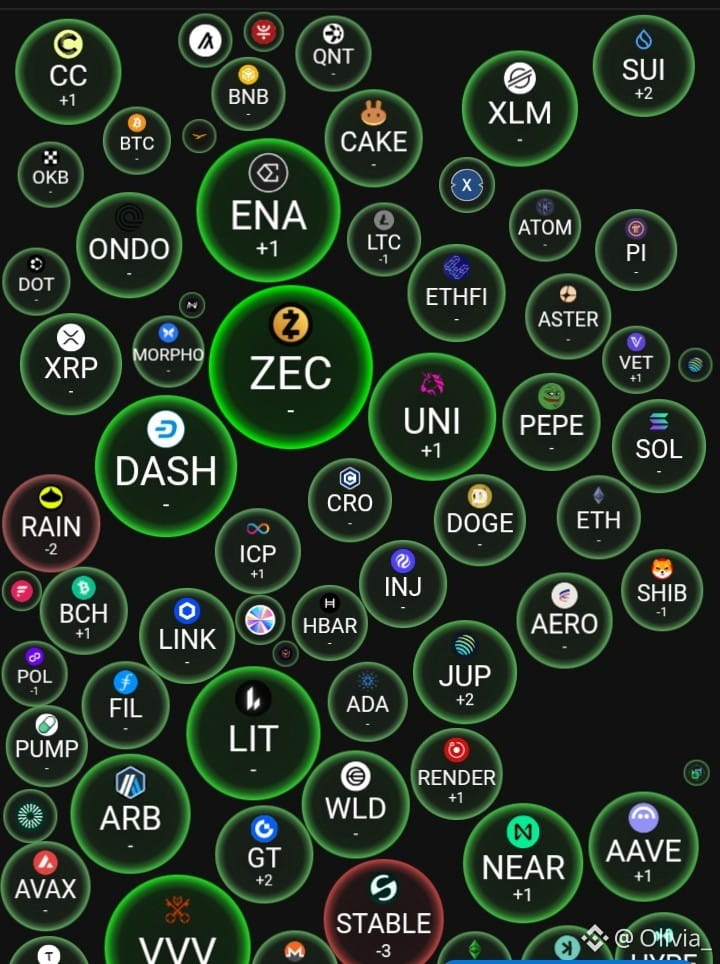
BTC is holding the spotlight, but the altcoin board is getting interesting.
SUI, OKB, CAKE, ONDO, XRP, SOL, ZEC, MORPHO, LINK, AAVE, NEAR, RENDER and others are starting to show momentum.
This is exactly the kind of market where rotation can happen fast.
🔹 BTC leads
🔹 Alts follow
🔹 Momentum decides the next move
Stay focused. The market is waking up. 👀
#bitcoin #Crypto #Altcoins #BTC
$BTC $ZEC $XRP
{future}(XRPUSDT)
{future}(ZECUSDT)
{future}(BTCUSDT)
BTC is holding the spotlight, but the altcoin board is getting interesting.
SUI, OKB, CAKE, ONDO, XRP, SOL, ZEC, MORPHO, LINK, AAVE, NEAR, RENDER and others are starting to show momentum.
This is exactly the kind of market where rotation can happen fast.
🔹 BTC leads
🔹 Alts follow
🔹 Momentum decides the next move
Stay focused. The market is waking up. 👀
#bitcoin #Crypto #Altcoins #BTC
$BTC $ZEC $XRP
SUI, OKB, CAKE, ONDO, XRP, SOL, ZEC, MORPHO, LINK, AAVE, NEAR, RENDER and others are starting to show momentum.
This is exactly the kind of market where rotation can happen fast.
🔹 BTC leads
🔹 Alts follow
🔹 Momentum decides the next move
Stay focused. The market is waking up. 👀
#bitcoin #Crypto #Altcoins #BTC
$BTC $ZEC $XRP
20
2
20
3.4k
·
--
Vérifié
FOMC September: What Could the Fed Do Next?The Federal Reserve is back in focus, and this week’s decision could have an important impact across financial markets.
August core CPI rose 0.3% month over month, keeping inflation firmly on the Fed’s radar. At the same time, expectations for a 25 basis point rate hike this week have moved close to 90%.
So the main question is not only whether the Fed will hike.
It is what comes next.
A 25bp hike by itself does not necessarily mean that the Fed is starting a long hiking cycle. The bigger signal could come from the Fed’s comments about inflation, economic growth and future interest rate decisions.
If policymakers suggest that more hikes could follow, markets may start preparing for tighter financial conditions for longer. That could create pressure across risk assets.
Bitcoin is one market I would watch closely.
BTC has become increasingly connected to the broader macro environment. When rates remain high, investors can become more cautious with riskier assets, while tighter liquidity can make it harder for markets to maintain strong momentum.
But I would not assume that a rate hike automatically means Bitcoin must fall.
Markets usually react to expectations, not just the final decision. If traders have already priced in a 25bp hike, the actual announcement may not be the biggest surprise.
The Fed’s tone could matter more.
If the message is more aggressive than expected, BTC could face selling pressure. But if the hike is already fully priced in and the Fed sounds less aggressive about future moves, the reaction could be very different.
Tech stocks could face a similar situation.
Technology and growth companies are often more sensitive to interest rates because higher rates can affect borrowing costs and the way investors value future earnings. If markets start expecting rates to remain higher for longer, some tech stocks could come under pressure.
Gold is more complicated.
Higher interest rates can make non-yielding assets such as gold less attractive compared with interest-bearing assets. However, gold can also benefit from inflation concerns, economic uncertainty and increased demand for defensive assets.
That means I would not try to predict gold’s direction from the rate decision alone.
Personally, I would rather wait for confirmation than trade the headline.
For Bitcoin, I would watch how price reacts after the decision. A sharp drop followed by strong buying and support would tell a different story from a clean breakdown with continued selling pressure.
The same idea applies to tech stocks and gold.
For me, the key is market reaction, not just the headline.
This is also a good reminder that Bitcoin does not trade in isolation. Interest rates, liquidity, inflation expectations and overall investor sentiment can all influence crypto markets.
So, is this 25bp move simply a one-off, or could it be the beginning of a longer hiking cycle?
We may not get that answer immediately. Future inflation and economic data will likely play an important role in what the Fed does next.
For now, I would stay flexible, avoid reacting emotionally to the first move and watch how BTC, tech stocks and gold respond once the market has had time to digest the decision.
The Fed may set the stage, but the market’s reaction will tell the real story.
#FedRateWatch
FOMC September: What Could the Fed Do Next?
The Federal Reserve is back in focus, and this week’s decision could have an important impact across financial markets.
August core CPI rose 0.3% month over month, keeping inflation firmly on the Fed’s radar. At the same time, expectations for a 25 basis point rate hike this week have moved close to 90%.
So the main question is not only whether the Fed will hike.
It is what comes next.
A 25bp hike by itself does not necessarily mean that the Fed is starting a long hiking cycle. The bigger signal could come from the Fed’s comments about inflation, economic growth and future interest rate decisions.
If policymakers suggest that more hikes could follow, markets may start preparing for tighter financial conditions for longer. That could create pressure across risk assets.
Bitcoin is one market I would watch closely.
BTC has become increasingly connected to the broader macro environment. When rates remain high, investors can become more cautious with riskier assets, while tighter liquidity can make it harder for markets to maintain strong momentum.
But I would not assume that a rate hike automatically means Bitcoin must fall.
Markets usually react to expectations, not just the final decision. If traders have already priced in a 25bp hike, the actual announcement may not be the biggest surprise.
The Fed’s tone could matter more.
If the message is more aggressive than expected, BTC could face selling pressure. But if the hike is already fully priced in and the Fed sounds less aggressive about future moves, the reaction could be very different.
Tech stocks could face a similar situation.
Technology and growth companies are often more sensitive to interest rates because higher rates can affect borrowing costs and the way investors value future earnings. If markets start expecting rates to remain higher for longer, some tech stocks could come under pressure.
Gold is more complicated.
Higher interest rates can make non-yielding assets such as gold less attractive compared with interest-bearing assets. However, gold can also benefit from inflation concerns, economic uncertainty and increased demand for defensive assets.
That means I would not try to predict gold’s direction from the rate decision alone.
Personally, I would rather wait for confirmation than trade the headline.
For Bitcoin, I would watch how price reacts after the decision. A sharp drop followed by strong buying and support would tell a different story from a clean breakdown with continued selling pressure.
The same idea applies to tech stocks and gold.
For me, the key is market reaction, not just the headline.
This is also a good reminder that Bitcoin does not trade in isolation. Interest rates, liquidity, inflation expectations and overall investor sentiment can all influence crypto markets.
So, is this 25bp move simply a one-off, or could it be the beginning of a longer hiking cycle?
We may not get that answer immediately. Future inflation and economic data will likely play an important role in what the Fed does next.
For now, I would stay flexible, avoid reacting emotionally to the first move and watch how BTC, tech stocks and gold respond once the market has had time to digest the decision.
The Fed may set the stage, but the market’s reaction will tell the real story.
#FedRateWatch
August core CPI rose 0.3% month over month, keeping inflation firmly on the Fed’s radar. At the same time, expectations for a 25 basis point rate hike this week have moved close to 90%.
So the main question is not only whether the Fed will hike.
It is what comes next.
A 25bp hike by itself does not necessarily mean that the Fed is starting a long hiking cycle. The bigger signal could come from the Fed’s comments about inflation, economic growth and future interest rate decisions.
If policymakers suggest that more hikes could follow, markets may start preparing for tighter financial conditions for longer. That could create pressure across risk assets.
Bitcoin is one market I would watch closely.
BTC has become increasingly connected to the broader macro environment. When rates remain high, investors can become more cautious with riskier assets, while tighter liquidity can make it harder for markets to maintain strong momentum.
But I would not assume that a rate hike automatically means Bitcoin must fall.
Markets usually react to expectations, not just the final decision. If traders have already priced in a 25bp hike, the actual announcement may not be the biggest surprise.
The Fed’s tone could matter more.
If the message is more aggressive than expected, BTC could face selling pressure. But if the hike is already fully priced in and the Fed sounds less aggressive about future moves, the reaction could be very different.
Tech stocks could face a similar situation.
Technology and growth companies are often more sensitive to interest rates because higher rates can affect borrowing costs and the way investors value future earnings. If markets start expecting rates to remain higher for longer, some tech stocks could come under pressure.
Gold is more complicated.
Higher interest rates can make non-yielding assets such as gold less attractive compared with interest-bearing assets. However, gold can also benefit from inflation concerns, economic uncertainty and increased demand for defensive assets.
That means I would not try to predict gold’s direction from the rate decision alone.
Personally, I would rather wait for confirmation than trade the headline.
For Bitcoin, I would watch how price reacts after the decision. A sharp drop followed by strong buying and support would tell a different story from a clean breakdown with continued selling pressure.
The same idea applies to tech stocks and gold.
For me, the key is market reaction, not just the headline.
This is also a good reminder that Bitcoin does not trade in isolation. Interest rates, liquidity, inflation expectations and overall investor sentiment can all influence crypto markets.
So, is this 25bp move simply a one-off, or could it be the beginning of a longer hiking cycle?
We may not get that answer immediately. Future inflation and economic data will likely play an important role in what the Fed does next.
For now, I would stay flexible, avoid reacting emotionally to the first move and watch how BTC, tech stocks and gold respond once the market has had time to digest the decision.
The Fed may set the stage, but the market’s reaction will tell the real story.
#FedRateWatch
17
1
17
762
·
--
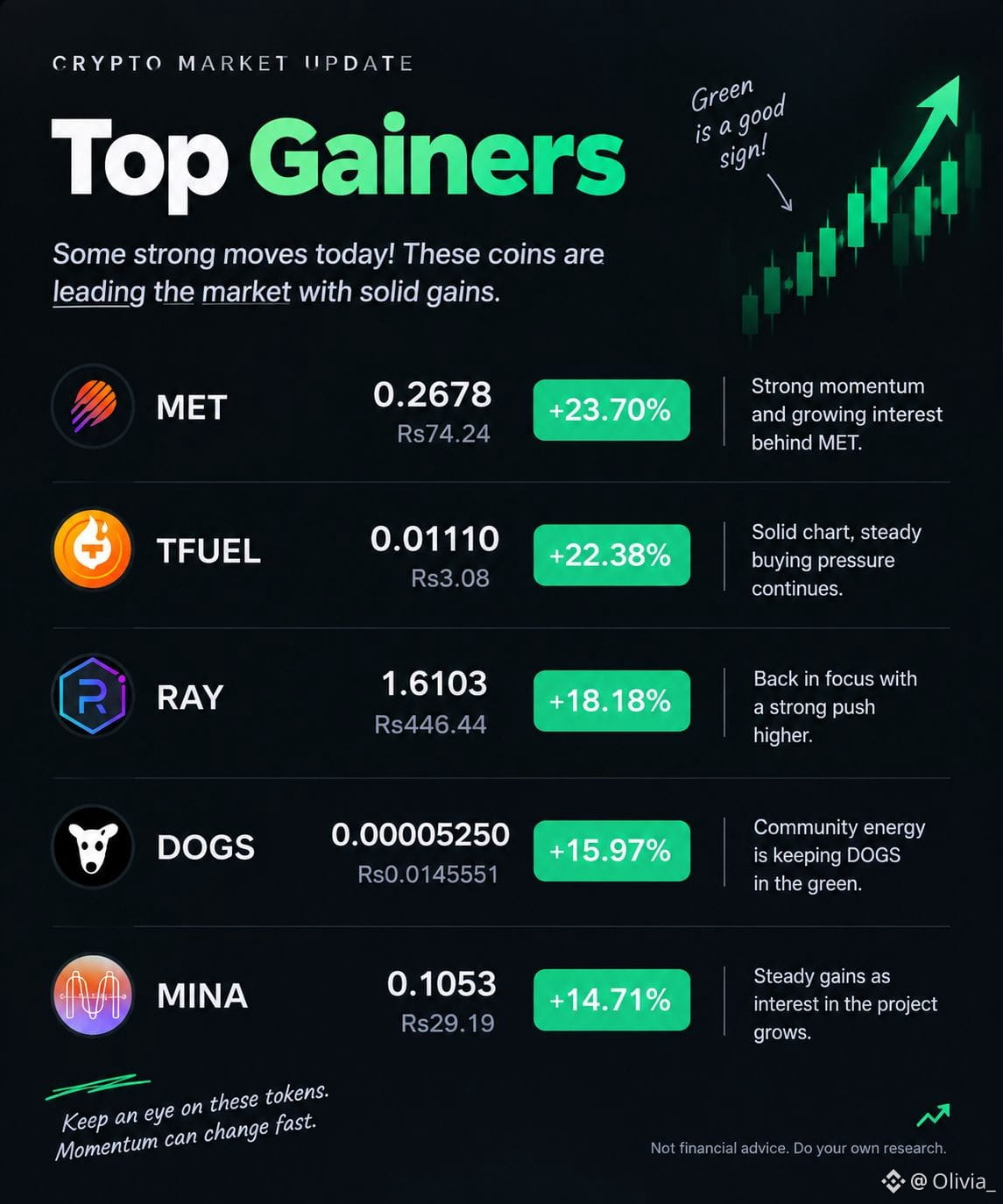
Top Crypto Gainers Right Now
The market is showing some strong moves today.
🔹 $MET → +23.70%
🔹 $TFUEL→ +22.38%
🔹 $RAY → +18.18%
🔹 $DOGS → +15.97%
🔹 $MINA → +14.71%
Strong momentum across the board, but the real question is whether these moves can hold.
Watch the volume. Watch the retests. Don’t chase green candles.
Which one are you watching?
$MET $TFUEL
{spot}(TFUELUSDT)
{future}(METUSDT)
Top Crypto Gainers Right Now
The market is showing some strong moves today.
🔹 $MET → +23.70%
🔹 $TFUEL → +22.38%
🔹 $RAY → +18.18%
🔹 $DOGS → +15.97%
🔹 $MINA → +14.71%
Strong momentum across the board, but the real question is whether these moves can hold.
Watch the volume. Watch the retests. Don’t chase green candles.
Which one are you watching?
$MET $TFUEL
The market is showing some strong moves today.
🔹 $MET → +23.70%
🔹 $TFUEL → +22.38%
🔹 $RAY → +18.18%
🔹 $DOGS → +15.97%
🔹 $MINA → +14.71%
Strong momentum across the board, but the real question is whether these moves can hold.
Watch the volume. Watch the retests. Don’t chase green candles.
Which one are you watching?
$MET $TFUEL
4
456
·
--
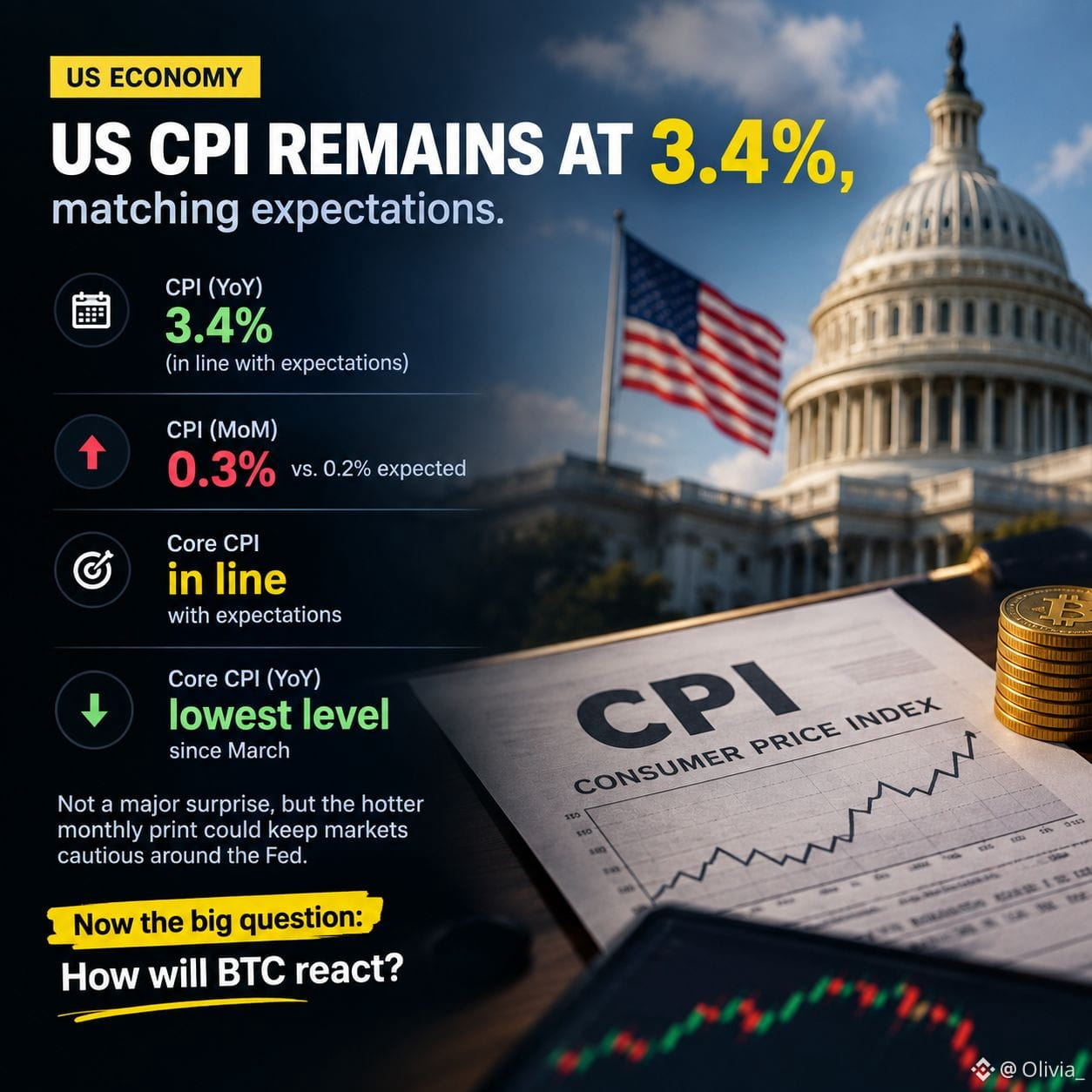
US CPI came in at 3.4%, exactly in line with expectations.
But the monthly number was a bit hotter:
📌 CPI MoM: 0.3% vs 0.2% expected
📌 Core CPI: in line with expectations
📌 Core CPI: lowest level since March
Not a major surprise, but the hotter monthly print could keep markets cautious around the Fed.
Now the big question: How will BTC react?
$BTC
{future}(BTCUSDT)
US CPI came in at 3.4%, exactly in line with expectations.
But the monthly number was a bit hotter:
📌 CPI MoM: 0.3% vs 0.2% expected
📌 Core CPI: in line with expectations
📌 Core CPI: lowest level since March
Not a major surprise, but the hotter monthly print could keep markets cautious around the Fed.
Now the big question: How will BTC react?
$BTC
But the monthly number was a bit hotter:
📌 CPI MoM: 0.3% vs 0.2% expected
📌 Core CPI: in line with expectations
📌 Core CPI: lowest level since March
Not a major surprise, but the hotter monthly print could keep markets cautious around the Fed.
Now the big question: How will BTC react?
$BTC
3
427
·
--
BNB/USDT is facing selling pressure
BNB is currently around $708.40, down 4.27% in 24H.
After reaching a local high near $780.64, price has been making lower highs and is now testing the $703–$710 support area.
If buyers defend this zone, a bounce toward $722 and then $755 could be possible.
But a clean break below $703 could put more downside pressure on the chart.
Will BNB hold support and bounce, or are we heading lower? 👀
Not financial advice. DYOR.
$BNB
{future}(BNBUSDT)
BNB/USDT is facing selling pressure
BNB is currently around $708.40, down 4.27% in 24H.
After reaching a local high near $780.64, price has been making lower highs and is now testing the $703–$710 support area.
If buyers defend this zone, a bounce toward $722 and then $755 could be possible.
But a clean break below $703 could put more downside pressure on the chart.
Will BNB hold support and bounce, or are we heading lower? 👀
Not financial advice. DYOR.
$BNB
BNB is currently around $708.40, down 4.27% in 24H.
After reaching a local high near $780.64, price has been making lower highs and is now testing the $703–$710 support area.
If buyers defend this zone, a bounce toward $722 and then $755 could be possible.
But a clean break below $703 could put more downside pressure on the chart.
Will BNB hold support and bounce, or are we heading lower? 👀
Not financial advice. DYOR.
$BNB

1
136
·
--
XRP/USDT is at a key level
XRP is currently around $1.356, down 4.43% in 24H.
The 4H chart shows a clear pullback after failing to hold the $1.43 area. Price is now approaching the $1.34 support zone.
If this support holds, XRP could attempt a recovery toward $1.43 again.
But losing $1.34 could bring more downside pressure.
Will XRP bounce from support or break lower? What’s your call? 👀
Not financial advice. DYOR.
$XRP
{future}(XRPUSDT)
XRP/USDT is at a key level
XRP is currently around $1.356, down 4.43% in 24H.
The 4H chart shows a clear pullback after failing to hold the $1.43 area. Price is now approaching the $1.34 support zone.
If this support holds, XRP could attempt a recovery toward $1.43 again.
But losing $1.34 could bring more downside pressure.
Will XRP bounce from support or break lower? What’s your call? 👀
Not financial advice. DYOR.
$XRP
XRP is currently around $1.356, down 4.43% in 24H.
The 4H chart shows a clear pullback after failing to hold the $1.43 area. Price is now approaching the $1.34 support zone.
If this support holds, XRP could attempt a recovery toward $1.43 again.
But losing $1.34 could bring more downside pressure.
Will XRP bounce from support or break lower? What’s your call? 👀
Not financial advice. DYOR.
$XRP

111
·
--
VTHO/USDT just exploded +50% 🚀
VTHO is showing massive momentum, currently around $0.000650, with a 24H high of $0.000749.
The 4H chart shows a huge breakout from the $0.00042 area, followed by some profit-taking near the highs.
Now the key levels are:
Resistance: $0.000749
Support: $0.000594–$0.000600
If VTHO reclaims $0.000749, another leg higher could be on the table.
But after a 50% move, a pullback or consolidation would not be surprising.
Can VTHO break $0.00075 next? 👀
Not financial advice. DYOR.
$VTHO
{future}(VTHOUSDT)
VTHO/USDT just exploded +50% 🚀
VTHO is showing massive momentum, currently around $0.000650, with a 24H high of $0.000749.
The 4H chart shows a huge breakout from the $0.00042 area, followed by some profit-taking near the highs.
Now the key levels are:
Resistance: $0.000749
Support: $0.000594–$0.000600
If VTHO reclaims $0.000749, another leg higher could be on the table.
But after a 50% move, a pullback or consolidation would not be surprising.
Can VTHO break $0.00075 next? 👀
Not financial advice. DYOR.
$VTHO
VTHO is showing massive momentum, currently around $0.000650, with a 24H high of $0.000749.
The 4H chart shows a huge breakout from the $0.00042 area, followed by some profit-taking near the highs.
Now the key levels are:
Resistance: $0.000749
Support: $0.000594–$0.000600
If VTHO reclaims $0.000749, another leg higher could be on the table.
But after a 50% move, a pullback or consolidation would not be surprising.
Can VTHO break $0.00075 next? 👀
Not financial advice. DYOR.
$VTHO

1
246
·
--
ETHFI/USDT is breaking out hard 🚀
ETHFI is up 14.33% in 24H and has pushed to $0.7145 on the 4H chart.
The move comes after a steady climb from the $0.52–$0.57 zone, with buyers now testing a major resistance area around $0.7145.
A clean breakout above this level could open the way toward $0.7264 next.
If rejected, $0.674–$0.68 becomes an important area to watch for a retest.
Can ETHFI break into a new high from here? 👀
Not financial advice. DYOR.
$ETHFI
{future}(ETHFIUSDT)
ETHFI/USDT is breaking out hard 🚀
ETHFI is up 14.33% in 24H and has pushed to $0.7145 on the 4H chart.
The move comes after a steady climb from the $0.52–$0.57 zone, with buyers now testing a major resistance area around $0.7145.
A clean breakout above this level could open the way toward $0.7264 next.
If rejected, $0.674–$0.68 becomes an important area to watch for a retest.
Can ETHFI break into a new high from here? 👀
Not financial advice. DYOR.
$ETHFI
ETHFI is up 14.33% in 24H and has pushed to $0.7145 on the 4H chart.
The move comes after a steady climb from the $0.52–$0.57 zone, with buyers now testing a major resistance area around $0.7145.
A clean breakout above this level could open the way toward $0.7264 next.
If rejected, $0.674–$0.68 becomes an important area to watch for a retest.
Can ETHFI break into a new high from here? 👀
Not financial advice. DYOR.
$ETHFI

1
172
Connectez-vous pour découvrir plus de contenu
Rejoignez la communauté mondiale des adeptes de cryptomonnaies sur Binance Square
⚡️ Suviez les dernières informations importantes sur les cryptomonnaies.
💬 Jugé digne de confiance par la plus grande plateforme d’échange de cryptomonnaies au monde.
👍 Découvrez les connaissances que partagent les créateurs vérifiés.
Adresse e-mail/Nº de téléphone
Sujets d’actualité
BinanceLaunchesBinanceIntelligence
65,887 vues
841 mentions
🚨 BINANCE JUST PUT AI DIRECTLY INSIDE THE EXCHANGE — AND THIS COULD CHANGE HOW RETAIL TRADES.
Binance has officially launched Binance Intelligence, a new AI layer built into the Binance ecosystem. It combines three products:
Binance AI for everyday users,
Binance AI Pro for automated trading workflows,
and Agent OS for developers building financial agents.
The part traders should care about?
Binance AI can surface market briefs, smart alerts, PnL recaps and personalized information, while AI Pro is designed to turn a plain-English trading idea into a visual strategy workflow.
That means the next phase of exchange competition may not be:
lowest fees vs deepest liquidity.
It could be:
who gives traders the best AI execution layer.
If Binance Intelligence actually drives heavier user activity, automated strategies and higher trading frequency, watch $BNB first.
AI adoption ↑
→ Binance engagement ↑
→ trading activity ↑
→ ecosystem narrative strengthens.
The catalyst I’d watch now:
global rollout + AI Pro launch + measurable user adoption.
Because once AI stops just telling you what the market is doing…
…and starts helping build the trade itself?
That’s when this gets much bigger than another chatbot. 👀
#binancelaunchesbinanceintelligence #EvernorthXRPTreasuryCompletesSPACMerger #ADAGains10%Above$0.27 #ETHUp70%InQ3ButLiquidityFalls #EthStakingExitQueueHits2026High
KimHotbae
·23 mentions J’aime
·29.4k vues
StriveBuys2000BTCFor$169M
233 vues
32 mentions
EvernorthXRPTreasuryCompletesSPACMerger
52,003 vues
601 mentions