

Digital Molvi
237 Publications

Digital Molvi
Signaler
Bloquer l’utilisateur
chart Analyst, Crypto Trader,
Ouvert au trading
Trade régulièrement
3.2 an(s)
5 Suivis
16 Abonnés
37 J’aime
Publications
Portefeuille

Come and join
[Come join and get trade](https://www.binance.com/referral/earn-together/refer2earn-usdc/claim?hl=en&ref=GRO_28502_T536B&utm_medium=web_share_copy&utm_source=referral_entrance)
[https://www.binance.com/referral/earn-together/refer2earn-usdc/claim?hl=en&ref=GRO_28502_T536B&utm_medium=web_share_copy&utm_source=referral_entrance](https://www.binance.com/referral/earn-together/refer2earn-usdc/claim?hl=en&ref=GRO_28502_T536B&utm_medium=web_share_copy&utm_source=referral_entrance)
Come and join
Come join and get trade
https://www.binance.com/referral/earn-together/refer2earn-usdc/claim?hl=en&ref=GRO_28502_T536B&utm_medium=web_share_copy&utm_source=referral_entrance
Come join and get trade
https://www.binance.com/referral/earn-together/refer2earn-usdc/claim?hl=en&ref=GRO_28502_T536B&utm_medium=web_share_copy&utm_source=referral_entrance

23
The next market narratives will likely center on AI, crypto utility, regulation, rate expectations, and sector rotation. Hype will still drive attention, but projects and assets with real use cases, strong execution, and clear growth potential should stand out more.
Watch closely: the biggest winners may come from themes that combine strong storytelling with real fundamentals.
$BTC
{spot}(BTCUSDT)
$ETH
{spot}(ETHUSDT)
The next market narratives will likely center on AI, crypto utility, regulation, rate expectations, and sector rotation. Hype will still drive attention, but projects and assets with real use cases, strong execution, and clear growth potential should stand out more.
Watch closely: the biggest winners may come from themes that combine strong storytelling with real fundamentals.
$BTC
$ETH
Watch closely: the biggest winners may come from themes that combine strong storytelling with real fundamentals.
$BTC
$ETH
37

Article
Top Predictions for the Next 6 MonthsThe next six months are likely to be defined by a mix of opportunity, volatility, and fast-changing sentiment. Markets rarely move in a clean, predictable line, especially in periods shaped by macro uncertainty, technological change, shifting liquidity, and strong narrative-driven behavior. As a result, making predictions is never about claiming certainty. It is about identifying the forces most likely to influence outcomes and understanding how they may interact.
The coming half-year will probably test investors, traders, businesses, and policymakers in equal measure. Economic data will continue to matter. Risk appetite will likely rise and fall in waves. Some sectors may extend their leadership, while others could stage recoveries after being overlooked. At the same time, innovation themes such as artificial intelligence, digital assets, automation, and platform consolidation may continue to shape capital flows and public attention.
With that in mind, here are the top predictions for the next six months and the reasoning behind them.
1. Markets will remain highly selective
One of the strongest predictions for the next six months is that broad optimism will not automatically lift every asset or sector equally. Even if headline indices perform well, performance is likely to stay uneven beneath the surface. Capital will continue to concentrate in areas with stronger earnings visibility, better liquidity, clearer narratives, or structural growth potential.
This means investors may need to work harder than they would in a broad-based rally. Simply having exposure to the market may not be enough. Selection, quality, and timing are likely to matter more than passive optimism. In practical terms, this favors investors who focus on balance sheets, revenue durability, market positioning, and relative strength rather than chasing every short-term trend.
2. Volatility will stay elevated, even in an upward-trending market
The next six months are unlikely to be calm. Even if the broader market trend remains constructive, there will probably be sharp pullbacks, sudden rotations, and exaggerated reactions to data releases, earnings surprises, and policy signals. Modern markets are increasingly shaped not only by fundamentals, but by positioning, algorithmic flows, options activity, and rapidly shifting sentiment.
That means periods of optimism may be interrupted by fast corrections that feel larger than the underlying news would justify. Traders may find opportunity in this environment, but long-term investors will need emotional discipline. The prediction here is not that markets will collapse, but that volatility will remain part of the price of participation.
3. Interest-rate expectations will continue to drive sentiment
For the next six months, central bank expectations are likely to remain one of the most important market drivers. Inflation data, labor market strength, wage growth, and economic activity will continue to shape views about whether policy will ease, hold steady, or remain restrictive for longer than expected.
Even modest changes in rate expectations can ripple through equities, bonds, currencies, real estate, and digital assets. Growth stocks may rally or weaken depending on how yields move. Financial conditions may tighten or loosen quickly based on changing policy expectations. The key prediction is that markets will remain extremely sensitive to the path of rates, even if actual policy moves are limited.
4. Artificial intelligence will remain a dominant investment theme, but with greater skepticism
Artificial intelligence is likely to stay one of the most powerful themes over the next six months. Capital, media attention, and corporate messaging will continue to flow toward companies and projects connected to AI infrastructure, software, automation, and productivity gains. However, the market is becoming more discerning.
The next phase of the AI trade is likely to separate companies with real execution and monetization from those simply using AI as a branding strategy. Investors may become less willing to reward vague claims and more interested in measurable commercial outcomes. This does not weaken the AI theme. It strengthens it by forcing a distinction between hype and business value.
5. Crypto will remain narrative-driven, but stronger projects will outperform
In digital assets, the next six months will likely continue to be shaped by narratives, liquidity flows, regulation, and community behavior. Meme coins, ecosystem rotations, token launches, and social-media-driven surges will almost certainly remain part of the landscape. But over time, projects with stronger infrastructure, real usage, better token design, and credible teams are more likely to outperform purely speculative plays.
The crypto market often moves faster than traditional markets, but it is not immune to the same forces of quality selection and risk management. The next six months may reward traders who understand momentum, but they are also likely to favor investors who can distinguish temporary hype from durable relevance.
6. Regulation will become an even bigger market factor
Across finance, technology, and digital assets, regulation is likely to become more influential over the coming six months. Governments and regulators are paying closer attention to platform behavior, AI governance, competition issues, consumer protection, digital asset frameworks, and financial transparency.
For markets, this means regulation is no longer just a background risk. It is an active variable. Certain sectors may benefit from regulatory clarity, while others may face pressure from uncertainty or compliance costs. Businesses that are well prepared for regulatory change may gain a competitive advantage over those still operating as if policy will remain passive.
7. Quality will outperform speculation if growth slows
If economic growth weakens in the next six months, investors are likely to rotate toward quality. Companies with strong cash flow, pricing power, resilient demand, and healthy balance sheets may attract more attention than businesses dependent on easy financing or optimistic assumptions. Speculative assets can still rally in bursts, but sustained leadership in a slower-growth environment often belongs to more durable names.
This prediction matters because many investors become most vulnerable when they mistake temporary momentum for structural strength. If growth becomes less certain, capital preservation and earnings durability may move back to the center of investment strategy.
8. Energy and commodities could re-enter the spotlight
The next six months may bring renewed focus on energy and commodities, particularly if geopolitical risks persist, supply constraints reappear, or global demand proves more resilient than expected. Commodity-linked sectors often regain relevance quickly when inflation concerns return or when supply-side pressures affect pricing.
This does not guarantee a commodity supercycle, but it does suggest that investors should not ignore sectors that can benefit from real-world supply-demand imbalances. In markets that have been heavily focused on technology and growth, even a modest rotation toward commodities could have an outsized effect on sentiment and portfolio performance.
9. Investors will increasingly reward profitability and execution
Over the next six months, businesses that can demonstrate real execution are likely to stand out more clearly. Revenue growth alone may not be enough if margins are weak, guidance is uncertain, or costs remain elevated. Investors are increasingly focused on how efficiently companies convert opportunity into durable results.
This trend may lead to greater differentiation between businesses in the same sector. Two companies may benefit from the same broad narrative, but the one with stronger operating discipline, better capital allocation, and more credible leadership may receive far more investor support. In other words, the market may grow less forgiving toward stories unsupported by evidence.
10. Retail participation will remain powerful, but more tactical
Retail investors are unlikely to disappear from the market. In fact, their influence may remain significant over the next six months, especially in thematic trades, social-media-driven assets, meme stocks, meme coins, and high-volatility sectors. However, retail behavior is becoming more tactical. Many participants are learning to move faster, take profits earlier, and respond more quickly to changing momentum.
This can make certain trades more explosive, but also shorter-lived. It also means institutional and retail dynamics may continue to interact in unpredictable ways. The prediction here is that retail capital will remain a force, but one that creates fast cycles rather than stable trends.
11. Cash and defensive positioning will still have strategic value
Even in a constructive market, the next six months are likely to remind investors that holding some defensive exposure is not a sign of weakness. Cash, short-duration bonds, stable reserves, and hedged positions may remain useful for managing uncertainty and taking advantage of dislocations when they appear.
This prediction reflects a broader lesson from recent years: fully committing capital at all times can reduce flexibility. Investors who preserve optionality often perform better when markets become unstable. The second half of any year tends to bring surprises, and portfolios with no room for adaptation can struggle.
12. The winners of the next six months may be those with the clearest process
Perhaps the most important prediction is not about a sector or asset class, but about behavior. Over the next six months, the investors and traders most likely to succeed will probably be those with a clear process. Markets are likely to remain noisy, emotional, and headline-driven. In such an environment, process becomes a real competitive edge.
A strong process includes:
setting risk limits,
defining entry and exit rules,
avoiding oversized positions,
reviewing assumptions regularly,
and staying flexible without becoming impulsive.
The market may still reward boldness at times, but over a six-month horizon, discipline is more likely to outperform excitement.
Conclusion
The next six months are likely to bring a mix of momentum, uncertainty, innovation, and repricing. Markets may continue to rise, but probably not smoothly. Leadership may remain narrow in some areas and broaden in others. AI will likely stay central. Crypto will remain dynamic and speculative, but increasingly differentiated by quality. Regulation will matter more. Earnings will matter more. And investor behavior will matter more than many expect.
If there is one unifying prediction, it is this: the next six months will reward selectivity, patience, and disciplined decision-making far more than blind enthusiasm.
In a fast-moving environment, the goal is not to predict every headline. It is to understand the deeper forces that shape how markets react when those headlines arrive.
Top Predictions for the Next 6 Months
The next six months are likely to be defined by a mix of opportunity, volatility, and fast-changing sentiment. Markets rarely move in a clean, predictable line, especially in periods shaped by macro uncertainty, technological change, shifting liquidity, and strong narrative-driven behavior. As a result, making predictions is never about claiming certainty. It is about identifying the forces most likely to influence outcomes and understanding how they may interact.
The coming half-year will probably test investors, traders, businesses, and policymakers in equal measure. Economic data will continue to matter. Risk appetite will likely rise and fall in waves. Some sectors may extend their leadership, while others could stage recoveries after being overlooked. At the same time, innovation themes such as artificial intelligence, digital assets, automation, and platform consolidation may continue to shape capital flows and public attention.
With that in mind, here are the top predictions for the next six months and the reasoning behind them.
1. Markets will remain highly selective
One of the strongest predictions for the next six months is that broad optimism will not automatically lift every asset or sector equally. Even if headline indices perform well, performance is likely to stay uneven beneath the surface. Capital will continue to concentrate in areas with stronger earnings visibility, better liquidity, clearer narratives, or structural growth potential.
This means investors may need to work harder than they would in a broad-based rally. Simply having exposure to the market may not be enough. Selection, quality, and timing are likely to matter more than passive optimism. In practical terms, this favors investors who focus on balance sheets, revenue durability, market positioning, and relative strength rather than chasing every short-term trend.
2. Volatility will stay elevated, even in an upward-trending market
The next six months are unlikely to be calm. Even if the broader market trend remains constructive, there will probably be sharp pullbacks, sudden rotations, and exaggerated reactions to data releases, earnings surprises, and policy signals. Modern markets are increasingly shaped not only by fundamentals, but by positioning, algorithmic flows, options activity, and rapidly shifting sentiment.
That means periods of optimism may be interrupted by fast corrections that feel larger than the underlying news would justify. Traders may find opportunity in this environment, but long-term investors will need emotional discipline. The prediction here is not that markets will collapse, but that volatility will remain part of the price of participation.
3. Interest-rate expectations will continue to drive sentiment
For the next six months, central bank expectations are likely to remain one of the most important market drivers. Inflation data, labor market strength, wage growth, and economic activity will continue to shape views about whether policy will ease, hold steady, or remain restrictive for longer than expected.
Even modest changes in rate expectations can ripple through equities, bonds, currencies, real estate, and digital assets. Growth stocks may rally or weaken depending on how yields move. Financial conditions may tighten or loosen quickly based on changing policy expectations. The key prediction is that markets will remain extremely sensitive to the path of rates, even if actual policy moves are limited.
4. Artificial intelligence will remain a dominant investment theme, but with greater skepticism
Artificial intelligence is likely to stay one of the most powerful themes over the next six months. Capital, media attention, and corporate messaging will continue to flow toward companies and projects connected to AI infrastructure, software, automation, and productivity gains. However, the market is becoming more discerning.
The next phase of the AI trade is likely to separate companies with real execution and monetization from those simply using AI as a branding strategy. Investors may become less willing to reward vague claims and more interested in measurable commercial outcomes. This does not weaken the AI theme. It strengthens it by forcing a distinction between hype and business value.
5. Crypto will remain narrative-driven, but stronger projects will outperform
In digital assets, the next six months will likely continue to be shaped by narratives, liquidity flows, regulation, and community behavior. Meme coins, ecosystem rotations, token launches, and social-media-driven surges will almost certainly remain part of the landscape. But over time, projects with stronger infrastructure, real usage, better token design, and credible teams are more likely to outperform purely speculative plays.
The crypto market often moves faster than traditional markets, but it is not immune to the same forces of quality selection and risk management. The next six months may reward traders who understand momentum, but they are also likely to favor investors who can distinguish temporary hype from durable relevance.
6. Regulation will become an even bigger market factor
Across finance, technology, and digital assets, regulation is likely to become more influential over the coming six months. Governments and regulators are paying closer attention to platform behavior, AI governance, competition issues, consumer protection, digital asset frameworks, and financial transparency.
For markets, this means regulation is no longer just a background risk. It is an active variable. Certain sectors may benefit from regulatory clarity, while others may face pressure from uncertainty or compliance costs. Businesses that are well prepared for regulatory change may gain a competitive advantage over those still operating as if policy will remain passive.
7. Quality will outperform speculation if growth slows
If economic growth weakens in the next six months, investors are likely to rotate toward quality. Companies with strong cash flow, pricing power, resilient demand, and healthy balance sheets may attract more attention than businesses dependent on easy financing or optimistic assumptions. Speculative assets can still rally in bursts, but sustained leadership in a slower-growth environment often belongs to more durable names.
This prediction matters because many investors become most vulnerable when they mistake temporary momentum for structural strength. If growth becomes less certain, capital preservation and earnings durability may move back to the center of investment strategy.
8. Energy and commodities could re-enter the spotlight
The next six months may bring renewed focus on energy and commodities, particularly if geopolitical risks persist, supply constraints reappear, or global demand proves more resilient than expected. Commodity-linked sectors often regain relevance quickly when inflation concerns return or when supply-side pressures affect pricing.
This does not guarantee a commodity supercycle, but it does suggest that investors should not ignore sectors that can benefit from real-world supply-demand imbalances. In markets that have been heavily focused on technology and growth, even a modest rotation toward commodities could have an outsized effect on sentiment and portfolio performance.
9. Investors will increasingly reward profitability and execution
Over the next six months, businesses that can demonstrate real execution are likely to stand out more clearly. Revenue growth alone may not be enough if margins are weak, guidance is uncertain, or costs remain elevated. Investors are increasingly focused on how efficiently companies convert opportunity into durable results.
This trend may lead to greater differentiation between businesses in the same sector. Two companies may benefit from the same broad narrative, but the one with stronger operating discipline, better capital allocation, and more credible leadership may receive far more investor support. In other words, the market may grow less forgiving toward stories unsupported by evidence.
10. Retail participation will remain powerful, but more tactical
Retail investors are unlikely to disappear from the market. In fact, their influence may remain significant over the next six months, especially in thematic trades, social-media-driven assets, meme stocks, meme coins, and high-volatility sectors. However, retail behavior is becoming more tactical. Many participants are learning to move faster, take profits earlier, and respond more quickly to changing momentum.
This can make certain trades more explosive, but also shorter-lived. It also means institutional and retail dynamics may continue to interact in unpredictable ways. The prediction here is that retail capital will remain a force, but one that creates fast cycles rather than stable trends.
11. Cash and defensive positioning will still have strategic value
Even in a constructive market, the next six months are likely to remind investors that holding some defensive exposure is not a sign of weakness. Cash, short-duration bonds, stable reserves, and hedged positions may remain useful for managing uncertainty and taking advantage of dislocations when they appear.
This prediction reflects a broader lesson from recent years: fully committing capital at all times can reduce flexibility. Investors who preserve optionality often perform better when markets become unstable. The second half of any year tends to bring surprises, and portfolios with no room for adaptation can struggle.
12. The winners of the next six months may be those with the clearest process
Perhaps the most important prediction is not about a sector or asset class, but about behavior. Over the next six months, the investors and traders most likely to succeed will probably be those with a clear process. Markets are likely to remain noisy, emotional, and headline-driven. In such an environment, process becomes a real competitive edge.
A strong process includes:
setting risk limits,
defining entry and exit rules,
avoiding oversized positions,
reviewing assumptions regularly,
and staying flexible without becoming impulsive.
The market may still reward boldness at times, but over a six-month horizon, discipline is more likely to outperform excitement.
Conclusion
The next six months are likely to bring a mix of momentum, uncertainty, innovation, and repricing. Markets may continue to rise, but probably not smoothly. Leadership may remain narrow in some areas and broaden in others. AI will likely stay central. Crypto will remain dynamic and speculative, but increasingly differentiated by quality. Regulation will matter more. Earnings will matter more. And investor behavior will matter more than many expect.
If there is one unifying prediction, it is this: the next six months will reward selectivity, patience, and disciplined decision-making far more than blind enthusiasm.
In a fast-moving environment, the goal is not to predict every headline. It is to understand the deeper forces that shape how markets react when those headlines arrive.
The coming half-year will probably test investors, traders, businesses, and policymakers in equal measure. Economic data will continue to matter. Risk appetite will likely rise and fall in waves. Some sectors may extend their leadership, while others could stage recoveries after being overlooked. At the same time, innovation themes such as artificial intelligence, digital assets, automation, and platform consolidation may continue to shape capital flows and public attention.
With that in mind, here are the top predictions for the next six months and the reasoning behind them.
1. Markets will remain highly selective
One of the strongest predictions for the next six months is that broad optimism will not automatically lift every asset or sector equally. Even if headline indices perform well, performance is likely to stay uneven beneath the surface. Capital will continue to concentrate in areas with stronger earnings visibility, better liquidity, clearer narratives, or structural growth potential.
This means investors may need to work harder than they would in a broad-based rally. Simply having exposure to the market may not be enough. Selection, quality, and timing are likely to matter more than passive optimism. In practical terms, this favors investors who focus on balance sheets, revenue durability, market positioning, and relative strength rather than chasing every short-term trend.
2. Volatility will stay elevated, even in an upward-trending market
The next six months are unlikely to be calm. Even if the broader market trend remains constructive, there will probably be sharp pullbacks, sudden rotations, and exaggerated reactions to data releases, earnings surprises, and policy signals. Modern markets are increasingly shaped not only by fundamentals, but by positioning, algorithmic flows, options activity, and rapidly shifting sentiment.
That means periods of optimism may be interrupted by fast corrections that feel larger than the underlying news would justify. Traders may find opportunity in this environment, but long-term investors will need emotional discipline. The prediction here is not that markets will collapse, but that volatility will remain part of the price of participation.
3. Interest-rate expectations will continue to drive sentiment
For the next six months, central bank expectations are likely to remain one of the most important market drivers. Inflation data, labor market strength, wage growth, and economic activity will continue to shape views about whether policy will ease, hold steady, or remain restrictive for longer than expected.
Even modest changes in rate expectations can ripple through equities, bonds, currencies, real estate, and digital assets. Growth stocks may rally or weaken depending on how yields move. Financial conditions may tighten or loosen quickly based on changing policy expectations. The key prediction is that markets will remain extremely sensitive to the path of rates, even if actual policy moves are limited.
4. Artificial intelligence will remain a dominant investment theme, but with greater skepticism
Artificial intelligence is likely to stay one of the most powerful themes over the next six months. Capital, media attention, and corporate messaging will continue to flow toward companies and projects connected to AI infrastructure, software, automation, and productivity gains. However, the market is becoming more discerning.
The next phase of the AI trade is likely to separate companies with real execution and monetization from those simply using AI as a branding strategy. Investors may become less willing to reward vague claims and more interested in measurable commercial outcomes. This does not weaken the AI theme. It strengthens it by forcing a distinction between hype and business value.
5. Crypto will remain narrative-driven, but stronger projects will outperform
In digital assets, the next six months will likely continue to be shaped by narratives, liquidity flows, regulation, and community behavior. Meme coins, ecosystem rotations, token launches, and social-media-driven surges will almost certainly remain part of the landscape. But over time, projects with stronger infrastructure, real usage, better token design, and credible teams are more likely to outperform purely speculative plays.
The crypto market often moves faster than traditional markets, but it is not immune to the same forces of quality selection and risk management. The next six months may reward traders who understand momentum, but they are also likely to favor investors who can distinguish temporary hype from durable relevance.
6. Regulation will become an even bigger market factor
Across finance, technology, and digital assets, regulation is likely to become more influential over the coming six months. Governments and regulators are paying closer attention to platform behavior, AI governance, competition issues, consumer protection, digital asset frameworks, and financial transparency.
For markets, this means regulation is no longer just a background risk. It is an active variable. Certain sectors may benefit from regulatory clarity, while others may face pressure from uncertainty or compliance costs. Businesses that are well prepared for regulatory change may gain a competitive advantage over those still operating as if policy will remain passive.
7. Quality will outperform speculation if growth slows
If economic growth weakens in the next six months, investors are likely to rotate toward quality. Companies with strong cash flow, pricing power, resilient demand, and healthy balance sheets may attract more attention than businesses dependent on easy financing or optimistic assumptions. Speculative assets can still rally in bursts, but sustained leadership in a slower-growth environment often belongs to more durable names.
This prediction matters because many investors become most vulnerable when they mistake temporary momentum for structural strength. If growth becomes less certain, capital preservation and earnings durability may move back to the center of investment strategy.
8. Energy and commodities could re-enter the spotlight
The next six months may bring renewed focus on energy and commodities, particularly if geopolitical risks persist, supply constraints reappear, or global demand proves more resilient than expected. Commodity-linked sectors often regain relevance quickly when inflation concerns return or when supply-side pressures affect pricing.
This does not guarantee a commodity supercycle, but it does suggest that investors should not ignore sectors that can benefit from real-world supply-demand imbalances. In markets that have been heavily focused on technology and growth, even a modest rotation toward commodities could have an outsized effect on sentiment and portfolio performance.
9. Investors will increasingly reward profitability and execution
Over the next six months, businesses that can demonstrate real execution are likely to stand out more clearly. Revenue growth alone may not be enough if margins are weak, guidance is uncertain, or costs remain elevated. Investors are increasingly focused on how efficiently companies convert opportunity into durable results.
This trend may lead to greater differentiation between businesses in the same sector. Two companies may benefit from the same broad narrative, but the one with stronger operating discipline, better capital allocation, and more credible leadership may receive far more investor support. In other words, the market may grow less forgiving toward stories unsupported by evidence.
10. Retail participation will remain powerful, but more tactical
Retail investors are unlikely to disappear from the market. In fact, their influence may remain significant over the next six months, especially in thematic trades, social-media-driven assets, meme stocks, meme coins, and high-volatility sectors. However, retail behavior is becoming more tactical. Many participants are learning to move faster, take profits earlier, and respond more quickly to changing momentum.
This can make certain trades more explosive, but also shorter-lived. It also means institutional and retail dynamics may continue to interact in unpredictable ways. The prediction here is that retail capital will remain a force, but one that creates fast cycles rather than stable trends.
11. Cash and defensive positioning will still have strategic value
Even in a constructive market, the next six months are likely to remind investors that holding some defensive exposure is not a sign of weakness. Cash, short-duration bonds, stable reserves, and hedged positions may remain useful for managing uncertainty and taking advantage of dislocations when they appear.
This prediction reflects a broader lesson from recent years: fully committing capital at all times can reduce flexibility. Investors who preserve optionality often perform better when markets become unstable. The second half of any year tends to bring surprises, and portfolios with no room for adaptation can struggle.
12. The winners of the next six months may be those with the clearest process
Perhaps the most important prediction is not about a sector or asset class, but about behavior. Over the next six months, the investors and traders most likely to succeed will probably be those with a clear process. Markets are likely to remain noisy, emotional, and headline-driven. In such an environment, process becomes a real competitive edge.
A strong process includes:
setting risk limits,
defining entry and exit rules,
avoiding oversized positions,
reviewing assumptions regularly,
and staying flexible without becoming impulsive.
The market may still reward boldness at times, but over a six-month horizon, discipline is more likely to outperform excitement.
Conclusion
The next six months are likely to bring a mix of momentum, uncertainty, innovation, and repricing. Markets may continue to rise, but probably not smoothly. Leadership may remain narrow in some areas and broaden in others. AI will likely stay central. Crypto will remain dynamic and speculative, but increasingly differentiated by quality. Regulation will matter more. Earnings will matter more. And investor behavior will matter more than many expect.
If there is one unifying prediction, it is this: the next six months will reward selectivity, patience, and disciplined decision-making far more than blind enthusiasm.
In a fast-moving environment, the goal is not to predict every headline. It is to understand the deeper forces that shape how markets react when those headlines arrive.
63
The next phase of the market will likely bring more volatility, selective leadership, and fast-changing sentiment. Stronger sectors and quality assets may keep outperforming, while hype-driven moves could fade more quickly.
Main outlook: opportunity remains strong, but success will depend on patience, risk management, and choosing quality over noise.
The next phase of the market will likely bring more volatility, selective leadership, and fast-changing sentiment. Stronger sectors and quality assets may keep outperforming, while hype-driven moves could fade more quickly.
Main outlook: opportunity remains strong, but success will depend on patience, risk management, and choosing quality over noise.
Main outlook: opportunity remains strong, but success will depend on patience, risk management, and choosing quality over noise.
64

Article
Mid-Year Market ReviewThe middle of the year is always a useful moment for investors, traders, and analysts to pause, step back, and reassess the market with clearer eyes. By mid-year, the excitement of January forecasts has usually faded, early narratives have either strengthened or collapsed, and the market has produced enough data to reveal which trends are real and which were simply noise. A mid-year market review is not just a summary of price action. It is an opportunity to evaluate sentiment, liquidity, macroeconomic influence, sector rotation, investor behavior, and the themes likely to shape the second half of the year.
This year’s market behavior has once again shown that markets rarely move in a straight line. Even when the broader trend appears obvious in hindsight, the path is usually uneven. There are rallies that feel unstoppable, pullbacks that feel catastrophic, sectors that briefly dominate attention, and assets that surprise nearly everyone. The first half of the year has been defined not only by price movement, but by how quickly narratives formed, changed, and competed for market attention.
A Market Shaped by Uncertainty and Resilience
One of the defining characteristics of the first half of the year has been the coexistence of optimism and caution. On one hand, many parts of the market showed resilience. Risk appetite returned in phases, capital rotated into higher-beta assets, and investors regained some willingness to look beyond defensive positioning. On the other hand, uncertainty never fully disappeared. Inflation concerns, interest-rate expectations, geopolitical tensions, regulatory developments, and uneven economic data all influenced sentiment at different points.
This produced an environment in which confidence was real, but fragile. Markets were willing to rally, but not without hesitation. Investors participated, but with shorter attention spans and less tolerance for disappointment. In practical terms, this meant the first half of the year was not simply bullish or bearish. It was selective. Strength appeared, but it often concentrated in specific sectors, themes, or large-cap names rather than lifting all assets equally.
Performance Dispersion Became a Major Theme
A key lesson from the first six months is that broad market direction told only part of the story. Beneath headline index performance, the gap between winners and losers widened. Some sectors benefited from favorable earnings expectations, structural growth stories, or investor enthusiasm tied to innovation and productivity. Others struggled under the weight of higher financing costs, slower demand, margin pressure, or fading momentum.
This kind of dispersion matters because it changes the nature of strategy. In a broad-based rally, simply having exposure can be enough. In a more uneven environment, selection matters much more. Investors who focused on quality, relative strength, and earnings durability were often rewarded more consistently than those relying on market averages alone.
The first half of the year reminded participants that leadership is rarely static. The companies or sectors that led one quarter did not always lead the next. That shifting leadership forced investors to stay flexible while avoiding the temptation to chase every short-term move.
Macro Conditions Continued to Set the Tone
No mid-year review is complete without examining the macro backdrop, because macro conditions continued to shape both price behavior and investor psychology. Interest-rate policy remained one of the most important drivers of market sentiment. Even small changes in expectations around central bank decisions influenced equities, bonds, currencies, commodities, and risk assets more broadly.
The market spent much of the first half trying to answer a difficult set of questions:
Is inflation cooling fast enough?
Will growth remain strong or begin to weaken?
Are central banks close to easing, or will tight policy persist longer than expected?
Can corporate earnings absorb higher costs and slower demand?
These questions affected not only asset prices, but valuations. Markets were forced to price not just current conditions, but future policy paths. That created repeated repricing events whenever new data challenged the prevailing consensus.
As a result, economic releases became major volatility catalysts. Employment reports, inflation prints, manufacturing data, retail sales, and central bank commentary all carried outsized influence. Investors were not just reacting to whether the data looked good or bad. They were reacting to what the data implied about the policy environment ahead.
Earnings and Fundamentals Reasserted Their Importance
While macro remained central, company fundamentals regained influence as the year progressed. Earnings quality, forward guidance, operating margins, and capital allocation all played larger roles in determining which stocks could sustain momentum. Markets became less willing to reward weak execution simply because a company belonged to a fashionable theme.
This was an important development. In periods dominated entirely by macro or liquidity, fundamentals can temporarily fade into the background. But in the first half of the year, the market increasingly demanded proof. Revenue growth had to be credible. Margin expansion had to be defensible. Cost control had to look sustainable. Investors looked more closely at whether management commentary aligned with actual performance.
This shift helped create a healthier, though more demanding, environment. It favored businesses with durable demand, pricing power, operational discipline, and realistic guidance. It also punished companies whose valuations had run ahead of evidence.
Sentiment Improved, but Remained Highly Reactive
Investor sentiment improved compared with more defensive periods, but it never became fully stable. The market moved through cycles of enthusiasm, caution, and renewed doubt. This highly reactive sentiment was visible in the speed of rotations, the sharpness of pullbacks, and the intensity of buying following positive surprises.
One notable feature of the first half was how quickly consensus could form around a theme and how quickly it could unwind. Whether the focus was technology leadership, rate cuts, commodities, small-cap recovery, artificial intelligence, consumer resilience, or international opportunities, the market repeatedly demonstrated that crowded narratives can be powerful but fragile.
This matters because sentiment can amplify fundamentals in both directions. When confidence rises, good news gets rewarded quickly. When sentiment weakens, even decent results may be sold if expectations had become too high. The first half of the year therefore rewarded not only strong analysis, but expectation management.
Liquidity and Positioning Played a Bigger Role Than Many Expected
Beyond economics and earnings, market behavior in the first half was also shaped by liquidity and positioning. At times, moves appeared larger than underlying news alone would justify. This often reflected positioning imbalances, systematic flows, short covering, options-related dynamics, and a broader lack of depth in certain parts of the market.
These forces can distort short-term price action, but they are increasingly important to understand. Markets do not move solely because of valuation models or macro forecasts. They also move because of where investors are already positioned and how much liquidity exists when new information arrives.
A market that is leaning heavily one way becomes vulnerable to sharp reversals. The first half offered several reminders that crowded positioning can create volatility even when the broader fundamental story has not changed dramatically. This was especially true in sectors where enthusiasm built rapidly and valuations expanded ahead of confirmation.
Sector Rotation Defined Opportunity
Sector rotation was one of the clearest drivers of opportunity during the first half of the year. Leadership rotated across growth, defensives, cyclicals, and thematic trades as investors adjusted to changing expectations. This made static positioning harder. It also created openings for disciplined investors who could identify when leadership was broadening, narrowing, or becoming exhausted.
Technology and innovation-related themes attracted significant attention, but not all companies benefited equally. Energy, financials, industrials, healthcare, and consumer-facing sectors all experienced periods of relative strength and weakness depending on the prevailing macro story. In some cases, rotation reflected improving fundamentals. In others, it reflected valuation pressure or tactical repositioning.
The broader point is that the market spent the first half reallocating confidence. Investors were not simply deciding whether to own risk. They were deciding which kind of risk best fit the environment.
International Markets and Cross-Asset Signals Matter More
Another important feature of the first half was the growing relevance of cross-asset and international signals. Currency trends, sovereign yields, commodity prices, and foreign equity performance all offered important clues about broader market conditions. Investors could not afford to look only at domestic indices in isolation.
Shifts in the U.S. dollar affected multinational earnings, emerging market conditions, and commodity flows. Bond market moves influenced equity valuations and risk appetite. Oil and industrial commodity trends shaped inflation expectations and sector leadership. International market performance helped reveal whether optimism was broadening globally or staying concentrated in a narrow group of assets.
A mid-year review therefore suggests that second-half positioning should remain informed by cross-market relationships, not just individual stock stories.
Risks for the Second Half of the Year
As the market enters the second half, several risks remain worth watching closely. First, valuation risk persists in areas where prices have risen faster than fundamentals. High expectations can be justified, but they leave less room for disappointment. Second, macro uncertainty has not disappeared. Policy shifts, inflation surprises, or growth slowdowns could still reshape sentiment quickly.
Third, earnings risk remains important. If margins compress, guidance softens, or demand slows, the market may become less forgiving. Fourth, geopolitical events remain capable of influencing energy markets, supply chains, investor confidence, and safe-haven flows. Finally, liquidity conditions may continue to create outsized short-term moves, especially in crowded trades.
These risks do not guarantee a weak second half. But they do argue for realism. Markets may continue higher, yet still become more volatile and selective along the way.
Opportunities in the Second Half
Despite these risks, the second half may also offer meaningful opportunities. If inflation continues to moderate and growth remains resilient, markets could find support from improving confidence. If earnings remain solid, leadership could broaden. If valuations reset in overheated areas without damaging the wider trend, capital may rotate into underappreciated sectors.
Investors may find opportunity in:
high-quality companies with durable earnings,
sectors benefiting from structural trends,
areas where valuations remain reasonable relative to fundamentals,
and assets that have lagged despite improving business conditions.
The first half has already shown that markets reward preparation. The best opportunities often emerge when investors can distinguish between temporary weakness and genuine deterioration.
Key Takeaways From the Mid-Year Review
Several broad conclusions stand out from the first half of the year:
The market has been more selective than broad.
Not all sectors or assets participated equally, making active judgment more important.
Macro still matters deeply.
Interest rates, inflation, and policy expectations remained central to valuations and sentiment.
Fundamentals are back in focus.
Earnings quality and guidance played a larger role in sustaining performance.
Positioning and liquidity can magnify moves.
Short-term volatility often reflected market structure as much as fundamental change.
Sector rotation created both risk and opportunity.
Leadership changed often, rewarding flexibility and discipline.
The second half will likely remain data-driven.
Markets still need confirmation that optimism is justified.
Conclusion
A mid-year market review is ultimately an exercise in perspective. It helps investors move beyond daily noise and identify the larger forces shaping performance. The first half of the year was defined by resilience, uncertainty, narrow leadership in some periods, broader participation in others, and constant reassessment of the macro and earnings outlook.
If there is one message from this review, it is that the market remains constructive but demanding. It is willing to reward quality, growth, and strong execution, but less willing to ignore valuation, policy risk, or weak fundamentals. That combination can still support opportunity in the second half of the year, but probably not without volatility.
In other words, the market has offered reasons for optimism, but not permission for complacency.
#digitalmolvi #BinanceSquare
$BTC
{spot}(BTCUSDT)
$ETH
{spot}(ETHUSDT)
$BNB
{spot}(BNBUSDT)
Mid-Year Market Review
The middle of the year is always a useful moment for investors, traders, and analysts to pause, step back, and reassess the market with clearer eyes. By mid-year, the excitement of January forecasts has usually faded, early narratives have either strengthened or collapsed, and the market has produced enough data to reveal which trends are real and which were simply noise. A mid-year market review is not just a summary of price action. It is an opportunity to evaluate sentiment, liquidity, macroeconomic influence, sector rotation, investor behavior, and the themes likely to shape the second half of the year.
This year’s market behavior has once again shown that markets rarely move in a straight line. Even when the broader trend appears obvious in hindsight, the path is usually uneven. There are rallies that feel unstoppable, pullbacks that feel catastrophic, sectors that briefly dominate attention, and assets that surprise nearly everyone. The first half of the year has been defined not only by price movement, but by how quickly narratives formed, changed, and competed for market attention.
A Market Shaped by Uncertainty and Resilience
One of the defining characteristics of the first half of the year has been the coexistence of optimism and caution. On one hand, many parts of the market showed resilience. Risk appetite returned in phases, capital rotated into higher-beta assets, and investors regained some willingness to look beyond defensive positioning. On the other hand, uncertainty never fully disappeared. Inflation concerns, interest-rate expectations, geopolitical tensions, regulatory developments, and uneven economic data all influenced sentiment at different points.
This produced an environment in which confidence was real, but fragile. Markets were willing to rally, but not without hesitation. Investors participated, but with shorter attention spans and less tolerance for disappointment. In practical terms, this meant the first half of the year was not simply bullish or bearish. It was selective. Strength appeared, but it often concentrated in specific sectors, themes, or large-cap names rather than lifting all assets equally.
Performance Dispersion Became a Major Theme
A key lesson from the first six months is that broad market direction told only part of the story. Beneath headline index performance, the gap between winners and losers widened. Some sectors benefited from favorable earnings expectations, structural growth stories, or investor enthusiasm tied to innovation and productivity. Others struggled under the weight of higher financing costs, slower demand, margin pressure, or fading momentum.
This kind of dispersion matters because it changes the nature of strategy. In a broad-based rally, simply having exposure can be enough. In a more uneven environment, selection matters much more. Investors who focused on quality, relative strength, and earnings durability were often rewarded more consistently than those relying on market averages alone.
The first half of the year reminded participants that leadership is rarely static. The companies or sectors that led one quarter did not always lead the next. That shifting leadership forced investors to stay flexible while avoiding the temptation to chase every short-term move.
Macro Conditions Continued to Set the Tone
No mid-year review is complete without examining the macro backdrop, because macro conditions continued to shape both price behavior and investor psychology. Interest-rate policy remained one of the most important drivers of market sentiment. Even small changes in expectations around central bank decisions influenced equities, bonds, currencies, commodities, and risk assets more broadly.
The market spent much of the first half trying to answer a difficult set of questions:
Is inflation cooling fast enough?
Will growth remain strong or begin to weaken?
Are central banks close to easing, or will tight policy persist longer than expected?
Can corporate earnings absorb higher costs and slower demand?
These questions affected not only asset prices, but valuations. Markets were forced to price not just current conditions, but future policy paths. That created repeated repricing events whenever new data challenged the prevailing consensus.
As a result, economic releases became major volatility catalysts. Employment reports, inflation prints, manufacturing data, retail sales, and central bank commentary all carried outsized influence. Investors were not just reacting to whether the data looked good or bad. They were reacting to what the data implied about the policy environment ahead.
Earnings and Fundamentals Reasserted Their Importance
While macro remained central, company fundamentals regained influence as the year progressed. Earnings quality, forward guidance, operating margins, and capital allocation all played larger roles in determining which stocks could sustain momentum. Markets became less willing to reward weak execution simply because a company belonged to a fashionable theme.
This was an important development. In periods dominated entirely by macro or liquidity, fundamentals can temporarily fade into the background. But in the first half of the year, the market increasingly demanded proof. Revenue growth had to be credible. Margin expansion had to be defensible. Cost control had to look sustainable. Investors looked more closely at whether management commentary aligned with actual performance.
This shift helped create a healthier, though more demanding, environment. It favored businesses with durable demand, pricing power, operational discipline, and realistic guidance. It also punished companies whose valuations had run ahead of evidence.
Sentiment Improved, but Remained Highly Reactive
Investor sentiment improved compared with more defensive periods, but it never became fully stable. The market moved through cycles of enthusiasm, caution, and renewed doubt. This highly reactive sentiment was visible in the speed of rotations, the sharpness of pullbacks, and the intensity of buying following positive surprises.
One notable feature of the first half was how quickly consensus could form around a theme and how quickly it could unwind. Whether the focus was technology leadership, rate cuts, commodities, small-cap recovery, artificial intelligence, consumer resilience, or international opportunities, the market repeatedly demonstrated that crowded narratives can be powerful but fragile.
This matters because sentiment can amplify fundamentals in both directions. When confidence rises, good news gets rewarded quickly. When sentiment weakens, even decent results may be sold if expectations had become too high. The first half of the year therefore rewarded not only strong analysis, but expectation management.
Liquidity and Positioning Played a Bigger Role Than Many Expected
Beyond economics and earnings, market behavior in the first half was also shaped by liquidity and positioning. At times, moves appeared larger than underlying news alone would justify. This often reflected positioning imbalances, systematic flows, short covering, options-related dynamics, and a broader lack of depth in certain parts of the market.
These forces can distort short-term price action, but they are increasingly important to understand. Markets do not move solely because of valuation models or macro forecasts. They also move because of where investors are already positioned and how much liquidity exists when new information arrives.
A market that is leaning heavily one way becomes vulnerable to sharp reversals. The first half offered several reminders that crowded positioning can create volatility even when the broader fundamental story has not changed dramatically. This was especially true in sectors where enthusiasm built rapidly and valuations expanded ahead of confirmation.
Sector Rotation Defined Opportunity
Sector rotation was one of the clearest drivers of opportunity during the first half of the year. Leadership rotated across growth, defensives, cyclicals, and thematic trades as investors adjusted to changing expectations. This made static positioning harder. It also created openings for disciplined investors who could identify when leadership was broadening, narrowing, or becoming exhausted.
Technology and innovation-related themes attracted significant attention, but not all companies benefited equally. Energy, financials, industrials, healthcare, and consumer-facing sectors all experienced periods of relative strength and weakness depending on the prevailing macro story. In some cases, rotation reflected improving fundamentals. In others, it reflected valuation pressure or tactical repositioning.
The broader point is that the market spent the first half reallocating confidence. Investors were not simply deciding whether to own risk. They were deciding which kind of risk best fit the environment.
International Markets and Cross-Asset Signals Matter More
Another important feature of the first half was the growing relevance of cross-asset and international signals. Currency trends, sovereign yields, commodity prices, and foreign equity performance all offered important clues about broader market conditions. Investors could not afford to look only at domestic indices in isolation.
Shifts in the U.S. dollar affected multinational earnings, emerging market conditions, and commodity flows. Bond market moves influenced equity valuations and risk appetite. Oil and industrial commodity trends shaped inflation expectations and sector leadership. International market performance helped reveal whether optimism was broadening globally or staying concentrated in a narrow group of assets.
A mid-year review therefore suggests that second-half positioning should remain informed by cross-market relationships, not just individual stock stories.
Risks for the Second Half of the Year
As the market enters the second half, several risks remain worth watching closely. First, valuation risk persists in areas where prices have risen faster than fundamentals. High expectations can be justified, but they leave less room for disappointment. Second, macro uncertainty has not disappeared. Policy shifts, inflation surprises, or growth slowdowns could still reshape sentiment quickly.
Third, earnings risk remains important. If margins compress, guidance softens, or demand slows, the market may become less forgiving. Fourth, geopolitical events remain capable of influencing energy markets, supply chains, investor confidence, and safe-haven flows. Finally, liquidity conditions may continue to create outsized short-term moves, especially in crowded trades.
These risks do not guarantee a weak second half. But they do argue for realism. Markets may continue higher, yet still become more volatile and selective along the way.
Opportunities in the Second Half
Despite these risks, the second half may also offer meaningful opportunities. If inflation continues to moderate and growth remains resilient, markets could find support from improving confidence. If earnings remain solid, leadership could broaden. If valuations reset in overheated areas without damaging the wider trend, capital may rotate into underappreciated sectors.
Investors may find opportunity in:
high-quality companies with durable earnings,
sectors benefiting from structural trends,
areas where valuations remain reasonable relative to fundamentals,
and assets that have lagged despite improving business conditions.
The first half has already shown that markets reward preparation. The best opportunities often emerge when investors can distinguish between temporary weakness and genuine deterioration.
Key Takeaways From the Mid-Year Review
Several broad conclusions stand out from the first half of the year:
The market has been more selective than broad.
Not all sectors or assets participated equally, making active judgment more important.
Macro still matters deeply.
Interest rates, inflation, and policy expectations remained central to valuations and sentiment.
Fundamentals are back in focus.
Earnings quality and guidance played a larger role in sustaining performance.
Positioning and liquidity can magnify moves.
Short-term volatility often reflected market structure as much as fundamental change.
Sector rotation created both risk and opportunity.
Leadership changed often, rewarding flexibility and discipline.
The second half will likely remain data-driven.
Markets still need confirmation that optimism is justified.
Conclusion
A mid-year market review is ultimately an exercise in perspective. It helps investors move beyond daily noise and identify the larger forces shaping performance. The first half of the year was defined by resilience, uncertainty, narrow leadership in some periods, broader participation in others, and constant reassessment of the macro and earnings outlook.
If there is one message from this review, it is that the market remains constructive but demanding. It is willing to reward quality, growth, and strong execution, but less willing to ignore valuation, policy risk, or weak fundamentals. That combination can still support opportunity in the second half of the year, but probably not without volatility.
In other words, the market has offered reasons for optimism, but not permission for complacency.
#digitalmolvi #BinanceSquare
$BTC
$ETH
$BNB
This year’s market behavior has once again shown that markets rarely move in a straight line. Even when the broader trend appears obvious in hindsight, the path is usually uneven. There are rallies that feel unstoppable, pullbacks that feel catastrophic, sectors that briefly dominate attention, and assets that surprise nearly everyone. The first half of the year has been defined not only by price movement, but by how quickly narratives formed, changed, and competed for market attention.
A Market Shaped by Uncertainty and Resilience
One of the defining characteristics of the first half of the year has been the coexistence of optimism and caution. On one hand, many parts of the market showed resilience. Risk appetite returned in phases, capital rotated into higher-beta assets, and investors regained some willingness to look beyond defensive positioning. On the other hand, uncertainty never fully disappeared. Inflation concerns, interest-rate expectations, geopolitical tensions, regulatory developments, and uneven economic data all influenced sentiment at different points.
This produced an environment in which confidence was real, but fragile. Markets were willing to rally, but not without hesitation. Investors participated, but with shorter attention spans and less tolerance for disappointment. In practical terms, this meant the first half of the year was not simply bullish or bearish. It was selective. Strength appeared, but it often concentrated in specific sectors, themes, or large-cap names rather than lifting all assets equally.
Performance Dispersion Became a Major Theme
A key lesson from the first six months is that broad market direction told only part of the story. Beneath headline index performance, the gap between winners and losers widened. Some sectors benefited from favorable earnings expectations, structural growth stories, or investor enthusiasm tied to innovation and productivity. Others struggled under the weight of higher financing costs, slower demand, margin pressure, or fading momentum.
This kind of dispersion matters because it changes the nature of strategy. In a broad-based rally, simply having exposure can be enough. In a more uneven environment, selection matters much more. Investors who focused on quality, relative strength, and earnings durability were often rewarded more consistently than those relying on market averages alone.
The first half of the year reminded participants that leadership is rarely static. The companies or sectors that led one quarter did not always lead the next. That shifting leadership forced investors to stay flexible while avoiding the temptation to chase every short-term move.
Macro Conditions Continued to Set the Tone
No mid-year review is complete without examining the macro backdrop, because macro conditions continued to shape both price behavior and investor psychology. Interest-rate policy remained one of the most important drivers of market sentiment. Even small changes in expectations around central bank decisions influenced equities, bonds, currencies, commodities, and risk assets more broadly.
The market spent much of the first half trying to answer a difficult set of questions:
Is inflation cooling fast enough?
Will growth remain strong or begin to weaken?
Are central banks close to easing, or will tight policy persist longer than expected?
Can corporate earnings absorb higher costs and slower demand?
These questions affected not only asset prices, but valuations. Markets were forced to price not just current conditions, but future policy paths. That created repeated repricing events whenever new data challenged the prevailing consensus.
As a result, economic releases became major volatility catalysts. Employment reports, inflation prints, manufacturing data, retail sales, and central bank commentary all carried outsized influence. Investors were not just reacting to whether the data looked good or bad. They were reacting to what the data implied about the policy environment ahead.
Earnings and Fundamentals Reasserted Their Importance
While macro remained central, company fundamentals regained influence as the year progressed. Earnings quality, forward guidance, operating margins, and capital allocation all played larger roles in determining which stocks could sustain momentum. Markets became less willing to reward weak execution simply because a company belonged to a fashionable theme.
This was an important development. In periods dominated entirely by macro or liquidity, fundamentals can temporarily fade into the background. But in the first half of the year, the market increasingly demanded proof. Revenue growth had to be credible. Margin expansion had to be defensible. Cost control had to look sustainable. Investors looked more closely at whether management commentary aligned with actual performance.
This shift helped create a healthier, though more demanding, environment. It favored businesses with durable demand, pricing power, operational discipline, and realistic guidance. It also punished companies whose valuations had run ahead of evidence.
Sentiment Improved, but Remained Highly Reactive
Investor sentiment improved compared with more defensive periods, but it never became fully stable. The market moved through cycles of enthusiasm, caution, and renewed doubt. This highly reactive sentiment was visible in the speed of rotations, the sharpness of pullbacks, and the intensity of buying following positive surprises.
One notable feature of the first half was how quickly consensus could form around a theme and how quickly it could unwind. Whether the focus was technology leadership, rate cuts, commodities, small-cap recovery, artificial intelligence, consumer resilience, or international opportunities, the market repeatedly demonstrated that crowded narratives can be powerful but fragile.
This matters because sentiment can amplify fundamentals in both directions. When confidence rises, good news gets rewarded quickly. When sentiment weakens, even decent results may be sold if expectations had become too high. The first half of the year therefore rewarded not only strong analysis, but expectation management.
Liquidity and Positioning Played a Bigger Role Than Many Expected
Beyond economics and earnings, market behavior in the first half was also shaped by liquidity and positioning. At times, moves appeared larger than underlying news alone would justify. This often reflected positioning imbalances, systematic flows, short covering, options-related dynamics, and a broader lack of depth in certain parts of the market.
These forces can distort short-term price action, but they are increasingly important to understand. Markets do not move solely because of valuation models or macro forecasts. They also move because of where investors are already positioned and how much liquidity exists when new information arrives.
A market that is leaning heavily one way becomes vulnerable to sharp reversals. The first half offered several reminders that crowded positioning can create volatility even when the broader fundamental story has not changed dramatically. This was especially true in sectors where enthusiasm built rapidly and valuations expanded ahead of confirmation.
Sector Rotation Defined Opportunity
Sector rotation was one of the clearest drivers of opportunity during the first half of the year. Leadership rotated across growth, defensives, cyclicals, and thematic trades as investors adjusted to changing expectations. This made static positioning harder. It also created openings for disciplined investors who could identify when leadership was broadening, narrowing, or becoming exhausted.
Technology and innovation-related themes attracted significant attention, but not all companies benefited equally. Energy, financials, industrials, healthcare, and consumer-facing sectors all experienced periods of relative strength and weakness depending on the prevailing macro story. In some cases, rotation reflected improving fundamentals. In others, it reflected valuation pressure or tactical repositioning.
The broader point is that the market spent the first half reallocating confidence. Investors were not simply deciding whether to own risk. They were deciding which kind of risk best fit the environment.
International Markets and Cross-Asset Signals Matter More
Another important feature of the first half was the growing relevance of cross-asset and international signals. Currency trends, sovereign yields, commodity prices, and foreign equity performance all offered important clues about broader market conditions. Investors could not afford to look only at domestic indices in isolation.
Shifts in the U.S. dollar affected multinational earnings, emerging market conditions, and commodity flows. Bond market moves influenced equity valuations and risk appetite. Oil and industrial commodity trends shaped inflation expectations and sector leadership. International market performance helped reveal whether optimism was broadening globally or staying concentrated in a narrow group of assets.
A mid-year review therefore suggests that second-half positioning should remain informed by cross-market relationships, not just individual stock stories.
Risks for the Second Half of the Year
As the market enters the second half, several risks remain worth watching closely. First, valuation risk persists in areas where prices have risen faster than fundamentals. High expectations can be justified, but they leave less room for disappointment. Second, macro uncertainty has not disappeared. Policy shifts, inflation surprises, or growth slowdowns could still reshape sentiment quickly.
Third, earnings risk remains important. If margins compress, guidance softens, or demand slows, the market may become less forgiving. Fourth, geopolitical events remain capable of influencing energy markets, supply chains, investor confidence, and safe-haven flows. Finally, liquidity conditions may continue to create outsized short-term moves, especially in crowded trades.
These risks do not guarantee a weak second half. But they do argue for realism. Markets may continue higher, yet still become more volatile and selective along the way.
Opportunities in the Second Half
Despite these risks, the second half may also offer meaningful opportunities. If inflation continues to moderate and growth remains resilient, markets could find support from improving confidence. If earnings remain solid, leadership could broaden. If valuations reset in overheated areas without damaging the wider trend, capital may rotate into underappreciated sectors.
Investors may find opportunity in:
high-quality companies with durable earnings,
sectors benefiting from structural trends,
areas where valuations remain reasonable relative to fundamentals,
and assets that have lagged despite improving business conditions.
The first half has already shown that markets reward preparation. The best opportunities often emerge when investors can distinguish between temporary weakness and genuine deterioration.
Key Takeaways From the Mid-Year Review
Several broad conclusions stand out from the first half of the year:
The market has been more selective than broad.
Not all sectors or assets participated equally, making active judgment more important.
Macro still matters deeply.
Interest rates, inflation, and policy expectations remained central to valuations and sentiment.
Fundamentals are back in focus.
Earnings quality and guidance played a larger role in sustaining performance.
Positioning and liquidity can magnify moves.
Short-term volatility often reflected market structure as much as fundamental change.
Sector rotation created both risk and opportunity.
Leadership changed often, rewarding flexibility and discipline.
The second half will likely remain data-driven.
Markets still need confirmation that optimism is justified.
Conclusion
A mid-year market review is ultimately an exercise in perspective. It helps investors move beyond daily noise and identify the larger forces shaping performance. The first half of the year was defined by resilience, uncertainty, narrow leadership in some periods, broader participation in others, and constant reassessment of the macro and earnings outlook.
If there is one message from this review, it is that the market remains constructive but demanding. It is willing to reward quality, growth, and strong execution, but less willing to ignore valuation, policy risk, or weak fundamentals. That combination can still support opportunity in the second half of the year, but probably not without volatility.
In other words, the market has offered reasons for optimism, but not permission for complacency.
#digitalmolvi #BinanceSquare
$BTC
$ETH
$BNB
103
Markets stayed active and selective, with investors balancing optimism against ongoing uncertainty. Price action showed resilience in key areas, but momentum remained uneven as leadership shifted between sectors and sentiment reacted quickly to macro signals, earnings updates, and liquidity changes.
The bigger picture is clear: the market is still offering opportunities, but it is rewarding discipline more than blind risk-taking. Stronger assets and themes continue to attract attention, while weaker stories struggle to hold momentum.
Key takeaway: cautious optimism remains in place, but volatility is still part of the game.
$BTC
{spot}(BTCUSDT)
Markets stayed active and selective, with investors balancing optimism against ongoing uncertainty. Price action showed resilience in key areas, but momentum remained uneven as leadership shifted between sectors and sentiment reacted quickly to macro signals, earnings updates, and liquidity changes.
The bigger picture is clear: the market is still offering opportunities, but it is rewarding discipline more than blind risk-taking. Stronger assets and themes continue to attract attention, while weaker stories struggle to hold momentum.
Key takeaway: cautious optimism remains in place, but volatility is still part of the game.
$BTC
The bigger picture is clear: the market is still offering opportunities, but it is rewarding discipline more than blind risk-taking. Stronger assets and themes continue to attract attention, while weaker stories struggle to hold momentum.
Key takeaway: cautious optimism remains in place, but volatility is still part of the game.
$BTC
82

Article
Biggest Crypto Lessons of 2026Crypto in 2026 feels more mature than the market many people first met a few years ago. The industry is still fast, emotional, and innovation-heavy, but one thing has become clearer than ever: survival and success in crypto depend less on hype and more on discipline. If there is a single theme that defines the biggest crypto lessons of 2026, it is this: the market keeps rewarding patience, risk management, and real understanding, while punishing blind speculation.
This year has reinforced truths that many investors, traders, builders, and users have heard before but often ignore when momentum gets loud. From market structure to security, from narratives to regulation, 2026 has acted like a stress test for nearly every assumption in crypto.
1. Liquidity matters more than stories
One of the biggest lessons of 2026 is that a strong narrative is not enough to sustain a token if liquidity is weak. Projects can still generate attention through social media, influencer promotion, AI-generated marketing, and community campaigns, but when market depth is thin, price discovery becomes unstable. Traders have been reminded repeatedly that it is easy to enter a fast-moving token and much harder to exit without heavy slippage.
In practical terms, this means market participants are learning to ask harder questions:
How deep is the order book?
Who provides liquidity?
Is volume organic or incentive-driven?
Can large holders move the market too easily?
In earlier cycles, many users focused almost entirely on headline price moves. In 2026, smarter participants are paying more attention to how a market trades, not just where it trades.
2. Real utility is separating itself from pure speculation
Another major lesson is that utility has become harder to fake. During speculative phases, almost any project can claim to be building infrastructure, AI integrations, DeFi primitives, gaming economies, or real-world asset rails. But 2026 has made it clearer which protocols are actually used and which ones mainly exist as marketing wrappers around a token.
Users are increasingly looking for measurable signs of life:
active users,
repeat usage,
revenue or fee generation,
integrations,
retained developers,
and credible product expansion.
This does not mean speculation is gone. Meme coins, narrative rotations, and short-term hype still dominate attention for periods of time. But 2026 has reminded the market that speculation can create momentum, while utility is what gives projects staying power.
3. Security is not optional, even for experienced users
If previous years taught beginners to fear hacks, 2026 taught veterans not to get complacent. Security failures are still happening not only through direct protocol exploits, but through wallet drainers, phishing campaigns, social engineering, fake apps, malicious approval signatures, and compromised communication channels.
A key lesson is that most users do not lose funds because blockchain technology “failed.” They lose funds because:
they trusted the wrong interface,
signed something they did not understand,
reused insecure practices,
or assumed familiarity meant safety.
The smartest crypto users in 2026 are acting more like security operators than casual investors. They separate wallets by purpose, verify URLs carefully, limit token approvals, protect seed phrases offline, and treat every urgent message as suspicious until proven otherwise.
The harsh but useful takeaway: in crypto, convenience often competes directly with safety.
4. Self-custody is powerful, but it comes with real responsibility
The phrase “not your keys, not your coins” remains relevant, but 2026 has added nuance. Self-custody is not automatically the best choice for every person in every situation. It offers independence, censorship resistance, and control, but it also transfers operational responsibility fully onto the user.
Many people discovered this year that self-custody without preparation is just unmanaged risk. Losing recovery phrases, interacting with unsafe contracts, or failing to set up inheritance and backup planning can be as damaging as trusting the wrong centralized platform.
The real lesson is not simply “self-custody good, custodians bad.” The better lesson is:
use self-custody when you understand the risks,
use trusted platforms carefully when appropriate,
and build systems rather than relying on memory or confidence.
Crypto freedom works best when paired with crypto competence.
5. Regulation is no longer a side topic
In 2026, regulation is not just background noise. It has become part of market analysis. Whether someone is trading, building, launching a token, running a stablecoin product, or investing in infrastructure, legal and regulatory frameworks now shape opportunity more directly than many expected.
This does not mean regulation has “ended crypto.” Instead, it has forced a separation between projects designed for longevity and projects designed only for short-term extraction. Teams that ignore compliance realities are finding it harder to scale, access partners, maintain banking relationships, or expand across jurisdictions.
For users and investors, the lesson is straightforward: regulatory awareness is now a practical skill, not just a political opinion. A project’s jurisdiction, disclosures, token design, and operational transparency all matter more than they once did.
6. Stablecoins have become systemically important
Stablecoins in 2026 are no longer just parking tools between trades. They are infrastructure. They power transfers, DeFi collateral, trading pairs, payments, treasury management, and cross-border value movement. As adoption has expanded, so has awareness that stablecoins carry their own types of risk.
Users have learned to think more carefully about:
reserve quality,
issuer transparency,
redemption mechanics,
chain risk,
depegging scenarios,
and concentration risk.
This year has reinforced that not all stablecoins deserve equal trust. “Stable” is a target, not a guarantee. The best users now assess stablecoins the way traditional investors assess cash-like instruments: by examining the structure behind the promise.
7. On-chain transparency is useful, but interpretation is everything
One of crypto’s greatest advantages is transparency. Wallet flows, token emissions, treasury activity, validator behavior, and smart contract interactions can all be observed far more openly than in many traditional financial systems. But 2026 has shown that access to data is not the same as access to truth.
A wallet transfer can mean accumulation, distribution, internal reshuffling, market-making, OTC settlement, treasury rotation, or nothing important at all. Large numbers attract attention, but interpretation requires context.
This has been an important lesson in an era where dashboards, AI summaries, alert bots, and on-chain analytics are everywhere. Good data tools help, but they do not replace judgment. The users who perform best are not the ones who see the most data. They are the ones who can distinguish signal from performative noise.
8. Meme coins still matter, but mostly as risk assets, not investments
2026 has not killed the meme coin phenomenon. If anything, it has proven how durable internet-native speculation can be. Meme coins still attract huge communities, rapid liquidity bursts, and dramatic short-term returns. They are culture, gambling, liquidity games, and social signaling all at once.
But the biggest lesson this year is that meme coins should usually be treated as high-risk trading instruments, not misunderstood as long-term fundamentals-driven investments by default. A small number may evolve into broader ecosystems or durable internet brands, but most remain momentum vehicles whose lifespans depend on attention.
The problem is not meme coins themselves. The problem is category confusion. Traders who treat them like volatile social assets can manage risk more rationally. Users who convince themselves that every viral token is an early-stage blue chip usually learn expensive lessons.
9. AI and crypto are not the same trade
One of the loudest themes around crypto in recent periods has been the overlap between AI narratives and token markets. In 2026, the market has learned that simply attaching AI branding to a project does not make it valuable. Tokens associated with AI themes may benefit from excitement, but long-term value still depends on execution, distribution, and genuine product relevance.
The lesson here is subtle but important: narrative correlation is not business validation. Some projects are building meaningful AI-related infrastructure, coordination layers, compute markets, data systems, or agent economies. Others are merely using the strongest buzzword available.
Crypto investors in 2026 are becoming more selective. They are starting to ask:
What exactly does the token do?
Does the protocol need a token?
Is there user demand beyond speculation?
Does AI improve the product, or just the pitch deck?
That shift toward sharper questioning is healthy.
10. The best strategy is often boring
This may be the most painful lesson of all. In a market built on speed, novelty, and extreme upside stories, the approaches that work best over time often look boring:
position sizing,
diversification,
taking profits,
keeping cash or stablecoin reserves,
avoiding overleverage,
averaging in and out,
and sticking to a repeatable framework.
In 2026, many participants once again discovered that constant action is not the same as edge. Overtrading remains one of the most expensive habits in crypto. So does emotional switching between narratives after the move has already happened.
The market continues to reward people who can do ordinary things consistently:
research before buying,
define risk before entering,
exit when the thesis changes,
and ignore the pressure to always be fully exposed.
In crypto, boring is often what survives.
11. Community is still an asset, but it must be real
Community has always been one of crypto’s defining strengths. In 2026, that remains true, but the market has gotten better at spotting the difference between authentic community and manufactured engagement. Bots, incentives, farming campaigns, and forced social activity can create the illusion of demand, but they rarely create durable loyalty.
The strongest communities this year tend to form around:
products people actually use,
cultures people genuinely identify with,
or missions people believe in beyond price action.
This matters because crypto projects often survive hard periods through community trust. When the market turns difficult, superficial engagement disappears fast. Real communities adapt, defend, build, and stay.
12. Education has become a competitive advantage
Perhaps the most optimistic lesson of 2026 is that education compounds. The users who keep learning are steadily outperforming those who rely only on instinct or social feeds. Understanding market structure, tokenomics, wallet security, macro conditions, incentives, and protocol design creates a durable advantage.
Crypto still moves fast, but the gap between informed and uninformed behavior is becoming more visible. Beginners can still succeed, but they do best when they approach the space with humility and process, not urgency and fear of missing out.
The people doing well in 2026 are not necessarily geniuses. Often, they are simply more prepared.
Conclusion
The biggest crypto lessons of 2026 are not really about predicting the next 100x coin. They are about understanding what the market keeps teaching, again and again. Liquidity matters. Security matters. Utility matters. Regulation matters. Stablecoin quality matters. Risk management matters. And above all, behavior matters.
Crypto still offers extraordinary opportunity. It remains one of the most dynamic intersections of technology, finance, and internet culture. But 2026 has made one fact harder to ignore: success in crypto is less about finding magic and more about building discipline.
Those who treat crypto like a system to understand, rather than a casino to chase, are the ones most likely to last.
#digitalmolvi #binancesquare
$BTC
{spot}(BTCUSDT)
$ETH
{spot}(ETHUSDT)
$BNB
{spot}(BNBUSDT)
Biggest Crypto Lessons of 2026
Crypto in 2026 feels more mature than the market many people first met a few years ago. The industry is still fast, emotional, and innovation-heavy, but one thing has become clearer than ever: survival and success in crypto depend less on hype and more on discipline. If there is a single theme that defines the biggest crypto lessons of 2026, it is this: the market keeps rewarding patience, risk management, and real understanding, while punishing blind speculation.
This year has reinforced truths that many investors, traders, builders, and users have heard before but often ignore when momentum gets loud. From market structure to security, from narratives to regulation, 2026 has acted like a stress test for nearly every assumption in crypto.
1. Liquidity matters more than stories
One of the biggest lessons of 2026 is that a strong narrative is not enough to sustain a token if liquidity is weak. Projects can still generate attention through social media, influencer promotion, AI-generated marketing, and community campaigns, but when market depth is thin, price discovery becomes unstable. Traders have been reminded repeatedly that it is easy to enter a fast-moving token and much harder to exit without heavy slippage.
In practical terms, this means market participants are learning to ask harder questions:
How deep is the order book?
Who provides liquidity?
Is volume organic or incentive-driven?
Can large holders move the market too easily?
In earlier cycles, many users focused almost entirely on headline price moves. In 2026, smarter participants are paying more attention to how a market trades, not just where it trades.
2. Real utility is separating itself from pure speculation
Another major lesson is that utility has become harder to fake. During speculative phases, almost any project can claim to be building infrastructure, AI integrations, DeFi primitives, gaming economies, or real-world asset rails. But 2026 has made it clearer which protocols are actually used and which ones mainly exist as marketing wrappers around a token.
Users are increasingly looking for measurable signs of life:
active users,
repeat usage,
revenue or fee generation,
integrations,
retained developers,
and credible product expansion.
This does not mean speculation is gone. Meme coins, narrative rotations, and short-term hype still dominate attention for periods of time. But 2026 has reminded the market that speculation can create momentum, while utility is what gives projects staying power.
3. Security is not optional, even for experienced users
If previous years taught beginners to fear hacks, 2026 taught veterans not to get complacent. Security failures are still happening not only through direct protocol exploits, but through wallet drainers, phishing campaigns, social engineering, fake apps, malicious approval signatures, and compromised communication channels.
A key lesson is that most users do not lose funds because blockchain technology “failed.” They lose funds because:
they trusted the wrong interface,
signed something they did not understand,
reused insecure practices,
or assumed familiarity meant safety.
The smartest crypto users in 2026 are acting more like security operators than casual investors. They separate wallets by purpose, verify URLs carefully, limit token approvals, protect seed phrases offline, and treat every urgent message as suspicious until proven otherwise.
The harsh but useful takeaway: in crypto, convenience often competes directly with safety.
4. Self-custody is powerful, but it comes with real responsibility
The phrase “not your keys, not your coins” remains relevant, but 2026 has added nuance. Self-custody is not automatically the best choice for every person in every situation. It offers independence, censorship resistance, and control, but it also transfers operational responsibility fully onto the user.
Many people discovered this year that self-custody without preparation is just unmanaged risk. Losing recovery phrases, interacting with unsafe contracts, or failing to set up inheritance and backup planning can be as damaging as trusting the wrong centralized platform.
The real lesson is not simply “self-custody good, custodians bad.” The better lesson is:
use self-custody when you understand the risks,
use trusted platforms carefully when appropriate,
and build systems rather than relying on memory or confidence.
Crypto freedom works best when paired with crypto competence.
5. Regulation is no longer a side topic
In 2026, regulation is not just background noise. It has become part of market analysis. Whether someone is trading, building, launching a token, running a stablecoin product, or investing in infrastructure, legal and regulatory frameworks now shape opportunity more directly than many expected.
This does not mean regulation has “ended crypto.” Instead, it has forced a separation between projects designed for longevity and projects designed only for short-term extraction. Teams that ignore compliance realities are finding it harder to scale, access partners, maintain banking relationships, or expand across jurisdictions.
For users and investors, the lesson is straightforward: regulatory awareness is now a practical skill, not just a political opinion. A project’s jurisdiction, disclosures, token design, and operational transparency all matter more than they once did.
6. Stablecoins have become systemically important
Stablecoins in 2026 are no longer just parking tools between trades. They are infrastructure. They power transfers, DeFi collateral, trading pairs, payments, treasury management, and cross-border value movement. As adoption has expanded, so has awareness that stablecoins carry their own types of risk.
Users have learned to think more carefully about:
reserve quality,
issuer transparency,
redemption mechanics,
chain risk,
depegging scenarios,
and concentration risk.
This year has reinforced that not all stablecoins deserve equal trust. “Stable” is a target, not a guarantee. The best users now assess stablecoins the way traditional investors assess cash-like instruments: by examining the structure behind the promise.
7. On-chain transparency is useful, but interpretation is everything
One of crypto’s greatest advantages is transparency. Wallet flows, token emissions, treasury activity, validator behavior, and smart contract interactions can all be observed far more openly than in many traditional financial systems. But 2026 has shown that access to data is not the same as access to truth.
A wallet transfer can mean accumulation, distribution, internal reshuffling, market-making, OTC settlement, treasury rotation, or nothing important at all. Large numbers attract attention, but interpretation requires context.
This has been an important lesson in an era where dashboards, AI summaries, alert bots, and on-chain analytics are everywhere. Good data tools help, but they do not replace judgment. The users who perform best are not the ones who see the most data. They are the ones who can distinguish signal from performative noise.
8. Meme coins still matter, but mostly as risk assets, not investments
2026 has not killed the meme coin phenomenon. If anything, it has proven how durable internet-native speculation can be. Meme coins still attract huge communities, rapid liquidity bursts, and dramatic short-term returns. They are culture, gambling, liquidity games, and social signaling all at once.
But the biggest lesson this year is that meme coins should usually be treated as high-risk trading instruments, not misunderstood as long-term fundamentals-driven investments by default. A small number may evolve into broader ecosystems or durable internet brands, but most remain momentum vehicles whose lifespans depend on attention.
The problem is not meme coins themselves. The problem is category confusion. Traders who treat them like volatile social assets can manage risk more rationally. Users who convince themselves that every viral token is an early-stage blue chip usually learn expensive lessons.
9. AI and crypto are not the same trade
One of the loudest themes around crypto in recent periods has been the overlap between AI narratives and token markets. In 2026, the market has learned that simply attaching AI branding to a project does not make it valuable. Tokens associated with AI themes may benefit from excitement, but long-term value still depends on execution, distribution, and genuine product relevance.
The lesson here is subtle but important: narrative correlation is not business validation. Some projects are building meaningful AI-related infrastructure, coordination layers, compute markets, data systems, or agent economies. Others are merely using the strongest buzzword available.
Crypto investors in 2026 are becoming more selective. They are starting to ask:
What exactly does the token do?
Does the protocol need a token?
Is there user demand beyond speculation?
Does AI improve the product, or just the pitch deck?
That shift toward sharper questioning is healthy.
10. The best strategy is often boring
This may be the most painful lesson of all. In a market built on speed, novelty, and extreme upside stories, the approaches that work best over time often look boring:
position sizing,
diversification,
taking profits,
keeping cash or stablecoin reserves,
avoiding overleverage,
averaging in and out,
and sticking to a repeatable framework.
In 2026, many participants once again discovered that constant action is not the same as edge. Overtrading remains one of the most expensive habits in crypto. So does emotional switching between narratives after the move has already happened.
The market continues to reward people who can do ordinary things consistently:
research before buying,
define risk before entering,
exit when the thesis changes,
and ignore the pressure to always be fully exposed.
In crypto, boring is often what survives.
11. Community is still an asset, but it must be real
Community has always been one of crypto’s defining strengths. In 2026, that remains true, but the market has gotten better at spotting the difference between authentic community and manufactured engagement. Bots, incentives, farming campaigns, and forced social activity can create the illusion of demand, but they rarely create durable loyalty.
The strongest communities this year tend to form around:
products people actually use,
cultures people genuinely identify with,
or missions people believe in beyond price action.
This matters because crypto projects often survive hard periods through community trust. When the market turns difficult, superficial engagement disappears fast. Real communities adapt, defend, build, and stay.
12. Education has become a competitive advantage
Perhaps the most optimistic lesson of 2026 is that education compounds. The users who keep learning are steadily outperforming those who rely only on instinct or social feeds. Understanding market structure, tokenomics, wallet security, macro conditions, incentives, and protocol design creates a durable advantage.
Crypto still moves fast, but the gap between informed and uninformed behavior is becoming more visible. Beginners can still succeed, but they do best when they approach the space with humility and process, not urgency and fear of missing out.
The people doing well in 2026 are not necessarily geniuses. Often, they are simply more prepared.
Conclusion
The biggest crypto lessons of 2026 are not really about predicting the next 100x coin. They are about understanding what the market keeps teaching, again and again. Liquidity matters. Security matters. Utility matters. Regulation matters. Stablecoin quality matters. Risk management matters. And above all, behavior matters.
Crypto still offers extraordinary opportunity. It remains one of the most dynamic intersections of technology, finance, and internet culture. But 2026 has made one fact harder to ignore: success in crypto is less about finding magic and more about building discipline.
Those who treat crypto like a system to understand, rather than a casino to chase, are the ones most likely to last.
#digitalmolvi #binancesquare
$BTC
$ETH
$BNB
This year has reinforced truths that many investors, traders, builders, and users have heard before but often ignore when momentum gets loud. From market structure to security, from narratives to regulation, 2026 has acted like a stress test for nearly every assumption in crypto.
1. Liquidity matters more than stories
One of the biggest lessons of 2026 is that a strong narrative is not enough to sustain a token if liquidity is weak. Projects can still generate attention through social media, influencer promotion, AI-generated marketing, and community campaigns, but when market depth is thin, price discovery becomes unstable. Traders have been reminded repeatedly that it is easy to enter a fast-moving token and much harder to exit without heavy slippage.
In practical terms, this means market participants are learning to ask harder questions:
How deep is the order book?
Who provides liquidity?
Is volume organic or incentive-driven?
Can large holders move the market too easily?
In earlier cycles, many users focused almost entirely on headline price moves. In 2026, smarter participants are paying more attention to how a market trades, not just where it trades.
2. Real utility is separating itself from pure speculation
Another major lesson is that utility has become harder to fake. During speculative phases, almost any project can claim to be building infrastructure, AI integrations, DeFi primitives, gaming economies, or real-world asset rails. But 2026 has made it clearer which protocols are actually used and which ones mainly exist as marketing wrappers around a token.
Users are increasingly looking for measurable signs of life:
active users,
repeat usage,
revenue or fee generation,
integrations,
retained developers,
and credible product expansion.
This does not mean speculation is gone. Meme coins, narrative rotations, and short-term hype still dominate attention for periods of time. But 2026 has reminded the market that speculation can create momentum, while utility is what gives projects staying power.
3. Security is not optional, even for experienced users
If previous years taught beginners to fear hacks, 2026 taught veterans not to get complacent. Security failures are still happening not only through direct protocol exploits, but through wallet drainers, phishing campaigns, social engineering, fake apps, malicious approval signatures, and compromised communication channels.
A key lesson is that most users do not lose funds because blockchain technology “failed.” They lose funds because:
they trusted the wrong interface,
signed something they did not understand,
reused insecure practices,
or assumed familiarity meant safety.
The smartest crypto users in 2026 are acting more like security operators than casual investors. They separate wallets by purpose, verify URLs carefully, limit token approvals, protect seed phrases offline, and treat every urgent message as suspicious until proven otherwise.
The harsh but useful takeaway: in crypto, convenience often competes directly with safety.
4. Self-custody is powerful, but it comes with real responsibility
The phrase “not your keys, not your coins” remains relevant, but 2026 has added nuance. Self-custody is not automatically the best choice for every person in every situation. It offers independence, censorship resistance, and control, but it also transfers operational responsibility fully onto the user.
Many people discovered this year that self-custody without preparation is just unmanaged risk. Losing recovery phrases, interacting with unsafe contracts, or failing to set up inheritance and backup planning can be as damaging as trusting the wrong centralized platform.
The real lesson is not simply “self-custody good, custodians bad.” The better lesson is:
use self-custody when you understand the risks,
use trusted platforms carefully when appropriate,
and build systems rather than relying on memory or confidence.
Crypto freedom works best when paired with crypto competence.
5. Regulation is no longer a side topic
In 2026, regulation is not just background noise. It has become part of market analysis. Whether someone is trading, building, launching a token, running a stablecoin product, or investing in infrastructure, legal and regulatory frameworks now shape opportunity more directly than many expected.
This does not mean regulation has “ended crypto.” Instead, it has forced a separation between projects designed for longevity and projects designed only for short-term extraction. Teams that ignore compliance realities are finding it harder to scale, access partners, maintain banking relationships, or expand across jurisdictions.
For users and investors, the lesson is straightforward: regulatory awareness is now a practical skill, not just a political opinion. A project’s jurisdiction, disclosures, token design, and operational transparency all matter more than they once did.
6. Stablecoins have become systemically important
Stablecoins in 2026 are no longer just parking tools between trades. They are infrastructure. They power transfers, DeFi collateral, trading pairs, payments, treasury management, and cross-border value movement. As adoption has expanded, so has awareness that stablecoins carry their own types of risk.
Users have learned to think more carefully about:
reserve quality,
issuer transparency,
redemption mechanics,
chain risk,
depegging scenarios,
and concentration risk.
This year has reinforced that not all stablecoins deserve equal trust. “Stable” is a target, not a guarantee. The best users now assess stablecoins the way traditional investors assess cash-like instruments: by examining the structure behind the promise.
7. On-chain transparency is useful, but interpretation is everything
One of crypto’s greatest advantages is transparency. Wallet flows, token emissions, treasury activity, validator behavior, and smart contract interactions can all be observed far more openly than in many traditional financial systems. But 2026 has shown that access to data is not the same as access to truth.
A wallet transfer can mean accumulation, distribution, internal reshuffling, market-making, OTC settlement, treasury rotation, or nothing important at all. Large numbers attract attention, but interpretation requires context.
This has been an important lesson in an era where dashboards, AI summaries, alert bots, and on-chain analytics are everywhere. Good data tools help, but they do not replace judgment. The users who perform best are not the ones who see the most data. They are the ones who can distinguish signal from performative noise.
8. Meme coins still matter, but mostly as risk assets, not investments
2026 has not killed the meme coin phenomenon. If anything, it has proven how durable internet-native speculation can be. Meme coins still attract huge communities, rapid liquidity bursts, and dramatic short-term returns. They are culture, gambling, liquidity games, and social signaling all at once.
But the biggest lesson this year is that meme coins should usually be treated as high-risk trading instruments, not misunderstood as long-term fundamentals-driven investments by default. A small number may evolve into broader ecosystems or durable internet brands, but most remain momentum vehicles whose lifespans depend on attention.
The problem is not meme coins themselves. The problem is category confusion. Traders who treat them like volatile social assets can manage risk more rationally. Users who convince themselves that every viral token is an early-stage blue chip usually learn expensive lessons.
9. AI and crypto are not the same trade
One of the loudest themes around crypto in recent periods has been the overlap between AI narratives and token markets. In 2026, the market has learned that simply attaching AI branding to a project does not make it valuable. Tokens associated with AI themes may benefit from excitement, but long-term value still depends on execution, distribution, and genuine product relevance.
The lesson here is subtle but important: narrative correlation is not business validation. Some projects are building meaningful AI-related infrastructure, coordination layers, compute markets, data systems, or agent economies. Others are merely using the strongest buzzword available.
Crypto investors in 2026 are becoming more selective. They are starting to ask:
What exactly does the token do?
Does the protocol need a token?
Is there user demand beyond speculation?
Does AI improve the product, or just the pitch deck?
That shift toward sharper questioning is healthy.
10. The best strategy is often boring
This may be the most painful lesson of all. In a market built on speed, novelty, and extreme upside stories, the approaches that work best over time often look boring:
position sizing,
diversification,
taking profits,
keeping cash or stablecoin reserves,
avoiding overleverage,
averaging in and out,
and sticking to a repeatable framework.
In 2026, many participants once again discovered that constant action is not the same as edge. Overtrading remains one of the most expensive habits in crypto. So does emotional switching between narratives after the move has already happened.
The market continues to reward people who can do ordinary things consistently:
research before buying,
define risk before entering,
exit when the thesis changes,
and ignore the pressure to always be fully exposed.
In crypto, boring is often what survives.
11. Community is still an asset, but it must be real
Community has always been one of crypto’s defining strengths. In 2026, that remains true, but the market has gotten better at spotting the difference between authentic community and manufactured engagement. Bots, incentives, farming campaigns, and forced social activity can create the illusion of demand, but they rarely create durable loyalty.
The strongest communities this year tend to form around:
products people actually use,
cultures people genuinely identify with,
or missions people believe in beyond price action.
This matters because crypto projects often survive hard periods through community trust. When the market turns difficult, superficial engagement disappears fast. Real communities adapt, defend, build, and stay.
12. Education has become a competitive advantage
Perhaps the most optimistic lesson of 2026 is that education compounds. The users who keep learning are steadily outperforming those who rely only on instinct or social feeds. Understanding market structure, tokenomics, wallet security, macro conditions, incentives, and protocol design creates a durable advantage.
Crypto still moves fast, but the gap between informed and uninformed behavior is becoming more visible. Beginners can still succeed, but they do best when they approach the space with humility and process, not urgency and fear of missing out.
The people doing well in 2026 are not necessarily geniuses. Often, they are simply more prepared.
Conclusion
The biggest crypto lessons of 2026 are not really about predicting the next 100x coin. They are about understanding what the market keeps teaching, again and again. Liquidity matters. Security matters. Utility matters. Regulation matters. Stablecoin quality matters. Risk management matters. And above all, behavior matters.
Crypto still offers extraordinary opportunity. It remains one of the most dynamic intersections of technology, finance, and internet culture. But 2026 has made one fact harder to ignore: success in crypto is less about finding magic and more about building discipline.
Those who treat crypto like a system to understand, rather than a casino to chase, are the ones most likely to last.
#digitalmolvi #binancesquare
$BTC
$ETH
$BNB
112
$UNI $MKR $ANT
Decentralized apps, or dApps, are changing how people use the internet by giving users more control, privacy, and ownership. Unlike traditional apps, they run on blockchain networks instead of centralized servers. This makes them more transparent and less dependent on a single company, opening the way for a more open and secure digital future.
{spot}(UNIUSDT)
$UNI $MKR $ANT
Decentralized apps, or dApps, are changing how people use the internet by giving users more control, privacy, and ownership. Unlike traditional apps, they run on blockchain networks instead of centralized servers. This makes them more transparent and less dependent on a single company, opening the way for a more open and secure digital future.
Decentralized apps, or dApps, are changing how people use the internet by giving users more control, privacy, and ownership. Unlike traditional apps, they run on blockchain networks instead of centralized servers. This makes them more transparent and less dependent on a single company, opening the way for a more open and secure digital future.
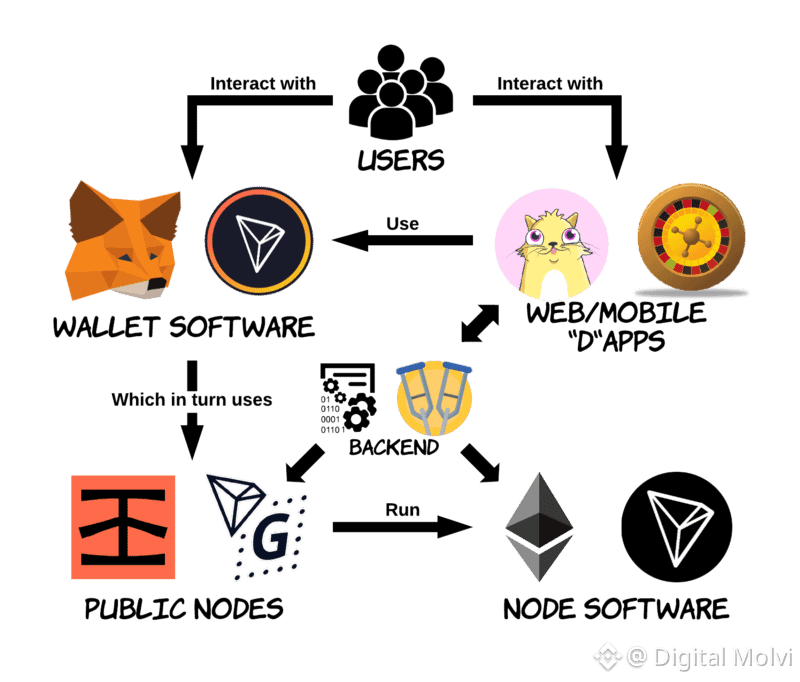
25

Article
Why Crypto Communities MatterCryptocurrency is often described in terms of technology, markets, and finance. People talk about blockchains, tokens, smart contracts, decentralized applications, price charts, and regulation. But beneath all of that lies something just as important: community. In many ways, crypto is not only a technological revolution—it is a social one. The strength of a project is often determined not just by its codebase or funding, but by the people who believe in it, build around it, defend it, and help it grow.
That is why crypto communities matter so much. They are the engine behind adoption, education, governance, innovation, and resilience. While traditional companies rely heavily on centralized leadership and marketing departments, crypto projects often depend on decentralized networks of users, developers, validators, investors, creators, and volunteers. These communities do far more than support a product. They shape the future of entire ecosystems.
Crypto Is Built on Participation
Unlike traditional financial systems, crypto invites users to become active participants rather than passive customers. People do not just use crypto networks; they often help secure them, govern them, promote them, and improve them.
A crypto community can include:
Developers writing core code
Validators or miners maintaining network operations
Token holders voting on proposals
Creators educating new users
Traders providing liquidity
Builders launching applications
Moderators supporting online forums
Enthusiasts spreading awareness on social platforms
This level of participation makes community central to a project’s success. In crypto, a network with strong community support can gain momentum quickly, while a technically solid project with weak community engagement may struggle to survive.
Community Creates Trust in a Trust-Minimized World
Crypto is often called “trustless,” but that description can be misleading. Blockchain systems may reduce the need to trust a central intermediary, yet people still need confidence in the broader ecosystem.
Users want to know:
Is the project active?
Are the developers credible?
Does the community believe in the mission?
Are questions answered openly?
Is governance transparent?
Are people building real use cases?
A healthy community helps answer these questions. It signals legitimacy, openness, and persistence. Especially in a market filled with hype, scams, abandoned tokens, and short-lived narratives, a committed community can be one of the strongest indicators that a project has real staying power.
Communities Drive Education and Onboarding
Crypto is still complex for many people. Wallets, seed phrases, gas fees, staking, bridges, tokenomics, governance, and security risks can be intimidating for newcomers. Official documentation helps, but communities often do the real work of onboarding.
In forums, Discord servers, Telegram groups, X spaces, Reddit threads, and local meetups, community members answer beginner questions, share tutorials, explain updates, and warn others about risks. This peer-to-peer education is one of the most powerful forces in crypto adoption.
Without communities, many users would never get past the first barriers of entry.
Communities Fuel Decentralization
A project cannot claim to be truly decentralized if decisions, knowledge, and initiative remain concentrated in a small inner circle. Real decentralization requires broad participation from people outside the founding team.
Communities matter because they:
Spread knowledge beyond insiders
Hold teams accountable
Contribute ideas and criticism
Participate in governance
Build independent tools and apps
Prevent ecosystems from becoming personality-driven
In other words, community is what turns a project from a company-led product into a living network.
Governance Depends on Community
Many crypto projects give token holders a voice in governance. They can vote on protocol upgrades, treasury allocations, reward structures, ecosystem funding, and strategic direction. But governance only works well when there is an informed and engaged community behind it.
If the community is inactive, governance becomes symbolic. If voting power is concentrated, decentralization weakens. If people do not understand proposals, important decisions can be made without meaningful participation.
A strong crypto community improves governance by encouraging discussion, surfacing concerns, debating trade-offs, and creating a culture of shared responsibility.
Communities Create Network Effects
The value of many crypto networks increases as more people use, support, and build on them. Community is essential to creating these network effects.
For example, a strong community can:
Attract developers to build applications
Bring users into those applications
Increase token utility and liquidity
Expand content creation and education
Generate social visibility
Encourage partnerships and integrations
This is especially important in open ecosystems where growth is not driven solely by a central company. Community becomes a distribution engine.
In Bear Markets, Community Is the Real Test
Bull markets make every project look alive. Prices rise, social channels become active, and attention flows easily. But bear markets reveal what is real.
When prices fall and speculation fades, communities become even more important. A strong community continues building, learning, supporting, and organizing even when hype disappears. It is often the difference between a project that survives and one that fades away.
This is one of the clearest reasons crypto communities matter: they provide resilience when market excitement alone is no longer enough.
Communities Shape Culture, Not Just Technology
Crypto is not only about infrastructure. It is also about identity, values, and collective imagination. Different communities often represent different beliefs about what the future should look like.
Some emphasize:
Financial freedom
Privacy
Open-source collaboration
Meme culture
Creator ownership
Global access
Decentralized governance
Resistance to censorship
These shared values create strong cultural cohesion. In many cases, people join a crypto community not just for profit, but because they feel aligned with its vision.
This cultural layer helps explain why crypto communities are often so passionate. They are not simply supporting a product; they believe they are participating in a movement.
Marketing Alone Cannot Replace Genuine Community
Many projects try to manufacture excitement through influencer campaigns, paid promotions, and artificial engagement. While marketing can bring attention, it cannot replace real community trust.
A genuine crypto community shows itself through:
Consistent participation
Honest discussion
User-generated education
Independent builders
Constructive criticism
Long-term commitment
Fake hype may lift a token temporarily, but lasting ecosystems usually depend on authentic relationships and shared conviction.
The Risks of Community Power
Although communities are powerful, they are not automatically healthy. Crypto communities can also become tribal, emotional, and resistant to criticism. In some cases, strong identity turns into blind loyalty.
This can create problems such as:
Ignoring legitimate risks
Attacking critics unfairly
Spreading misinformation
Encouraging unrealistic expectations
Prioritizing token price over product quality
So while community matters, quality matters too. The best crypto communities are not just loud—they are informed, open-minded, and capable of self-correction.
Community Is a Competitive Advantage
In crypto, code can often be copied. Features can be replicated. Incentives can be matched. But community is much harder to duplicate.
A strong community creates:
Brand loyalty
Shared mission
Volunteer energy
Organic growth
Faster feedback loops
Higher resilience
This makes community one of the most durable competitive advantages a crypto project can have.
The Future of Crypto Will Be Community-Led
As the crypto industry matures, regulation, infrastructure, and institutional adoption will all become more important. But community will remain central. In fact, it may become even more valuable as projects compete not only on technology, but on trust, culture, and long-term engagement.
The most successful crypto ecosystems of the future will likely be those that combine:
Strong technical foundations
Clear use cases
Responsible leadership
Open governance
Educated and committed communities
Technology can launch a project, but community is what sustains it.
Conclusion
Crypto communities matter because they do the work that technology alone cannot do. They educate users, create trust, support governance, spread adoption, strengthen decentralization, and sustain projects through both excitement and adversity. In a space defined by openness and participation, community is not an optional extra—it is a foundational layer.
The history of crypto shows again and again that the strongest networks are not always the ones with the most funding or the flashiest marketing. Often, they are the ones with the most committed people behind them.
In crypto, community is more than an audience. It is infrastructure.
$BTC
{spot}(BTCUSDT)
$ETH
{spot}(ETHUSDT)
$BNB
{spot}(BNBUSDT)
Why Crypto Communities Matter
Cryptocurrency is often described in terms of technology, markets, and finance. People talk about blockchains, tokens, smart contracts, decentralized applications, price charts, and regulation. But beneath all of that lies something just as important: community. In many ways, crypto is not only a technological revolution—it is a social one. The strength of a project is often determined not just by its codebase or funding, but by the people who believe in it, build around it, defend it, and help it grow.
That is why crypto communities matter so much. They are the engine behind adoption, education, governance, innovation, and resilience. While traditional companies rely heavily on centralized leadership and marketing departments, crypto projects often depend on decentralized networks of users, developers, validators, investors, creators, and volunteers. These communities do far more than support a product. They shape the future of entire ecosystems.
Crypto Is Built on Participation
Unlike traditional financial systems, crypto invites users to become active participants rather than passive customers. People do not just use crypto networks; they often help secure them, govern them, promote them, and improve them.
A crypto community can include:
Developers writing core code
Validators or miners maintaining network operations
Token holders voting on proposals
Creators educating new users
Traders providing liquidity
Builders launching applications
Moderators supporting online forums
Enthusiasts spreading awareness on social platforms
This level of participation makes community central to a project’s success. In crypto, a network with strong community support can gain momentum quickly, while a technically solid project with weak community engagement may struggle to survive.
Community Creates Trust in a Trust-Minimized World
Crypto is often called “trustless,” but that description can be misleading. Blockchain systems may reduce the need to trust a central intermediary, yet people still need confidence in the broader ecosystem.
Users want to know:
Is the project active?
Are the developers credible?
Does the community believe in the mission?
Are questions answered openly?
Is governance transparent?
Are people building real use cases?
A healthy community helps answer these questions. It signals legitimacy, openness, and persistence. Especially in a market filled with hype, scams, abandoned tokens, and short-lived narratives, a committed community can be one of the strongest indicators that a project has real staying power.
Communities Drive Education and Onboarding
Crypto is still complex for many people. Wallets, seed phrases, gas fees, staking, bridges, tokenomics, governance, and security risks can be intimidating for newcomers. Official documentation helps, but communities often do the real work of onboarding.
In forums, Discord servers, Telegram groups, X spaces, Reddit threads, and local meetups, community members answer beginner questions, share tutorials, explain updates, and warn others about risks. This peer-to-peer education is one of the most powerful forces in crypto adoption.
Without communities, many users would never get past the first barriers of entry.
Communities Fuel Decentralization
A project cannot claim to be truly decentralized if decisions, knowledge, and initiative remain concentrated in a small inner circle. Real decentralization requires broad participation from people outside the founding team.
Communities matter because they:
Spread knowledge beyond insiders
Hold teams accountable
Contribute ideas and criticism
Participate in governance
Build independent tools and apps
Prevent ecosystems from becoming personality-driven
In other words, community is what turns a project from a company-led product into a living network.
Governance Depends on Community
Many crypto projects give token holders a voice in governance. They can vote on protocol upgrades, treasury allocations, reward structures, ecosystem funding, and strategic direction. But governance only works well when there is an informed and engaged community behind it.
If the community is inactive, governance becomes symbolic. If voting power is concentrated, decentralization weakens. If people do not understand proposals, important decisions can be made without meaningful participation.
A strong crypto community improves governance by encouraging discussion, surfacing concerns, debating trade-offs, and creating a culture of shared responsibility.
Communities Create Network Effects
The value of many crypto networks increases as more people use, support, and build on them. Community is essential to creating these network effects.
For example, a strong community can:
Attract developers to build applications
Bring users into those applications
Increase token utility and liquidity
Expand content creation and education
Generate social visibility
Encourage partnerships and integrations
This is especially important in open ecosystems where growth is not driven solely by a central company. Community becomes a distribution engine.
In Bear Markets, Community Is the Real Test
Bull markets make every project look alive. Prices rise, social channels become active, and attention flows easily. But bear markets reveal what is real.
When prices fall and speculation fades, communities become even more important. A strong community continues building, learning, supporting, and organizing even when hype disappears. It is often the difference between a project that survives and one that fades away.
This is one of the clearest reasons crypto communities matter: they provide resilience when market excitement alone is no longer enough.
Communities Shape Culture, Not Just Technology
Crypto is not only about infrastructure. It is also about identity, values, and collective imagination. Different communities often represent different beliefs about what the future should look like.
Some emphasize:
Financial freedom
Privacy
Open-source collaboration
Meme culture
Creator ownership
Global access
Decentralized governance
Resistance to censorship
These shared values create strong cultural cohesion. In many cases, people join a crypto community not just for profit, but because they feel aligned with its vision.
This cultural layer helps explain why crypto communities are often so passionate. They are not simply supporting a product; they believe they are participating in a movement.
Marketing Alone Cannot Replace Genuine Community
Many projects try to manufacture excitement through influencer campaigns, paid promotions, and artificial engagement. While marketing can bring attention, it cannot replace real community trust.
A genuine crypto community shows itself through:
Consistent participation
Honest discussion
User-generated education
Independent builders
Constructive criticism
Long-term commitment
Fake hype may lift a token temporarily, but lasting ecosystems usually depend on authentic relationships and shared conviction.
The Risks of Community Power
Although communities are powerful, they are not automatically healthy. Crypto communities can also become tribal, emotional, and resistant to criticism. In some cases, strong identity turns into blind loyalty.
This can create problems such as:
Ignoring legitimate risks
Attacking critics unfairly
Spreading misinformation
Encouraging unrealistic expectations
Prioritizing token price over product quality
So while community matters, quality matters too. The best crypto communities are not just loud—they are informed, open-minded, and capable of self-correction.
Community Is a Competitive Advantage
In crypto, code can often be copied. Features can be replicated. Incentives can be matched. But community is much harder to duplicate.
A strong community creates:
Brand loyalty
Shared mission
Volunteer energy
Organic growth
Faster feedback loops
Higher resilience
This makes community one of the most durable competitive advantages a crypto project can have.
The Future of Crypto Will Be Community-Led
As the crypto industry matures, regulation, infrastructure, and institutional adoption will all become more important. But community will remain central. In fact, it may become even more valuable as projects compete not only on technology, but on trust, culture, and long-term engagement.
The most successful crypto ecosystems of the future will likely be those that combine:
Strong technical foundations
Clear use cases
Responsible leadership
Open governance
Educated and committed communities
Technology can launch a project, but community is what sustains it.
Conclusion
Crypto communities matter because they do the work that technology alone cannot do. They educate users, create trust, support governance, spread adoption, strengthen decentralization, and sustain projects through both excitement and adversity. In a space defined by openness and participation, community is not an optional extra—it is a foundational layer.
The history of crypto shows again and again that the strongest networks are not always the ones with the most funding or the flashiest marketing. Often, they are the ones with the most committed people behind them.
In crypto, community is more than an audience. It is infrastructure.
$BTC
$ETH
$BNB
That is why crypto communities matter so much. They are the engine behind adoption, education, governance, innovation, and resilience. While traditional companies rely heavily on centralized leadership and marketing departments, crypto projects often depend on decentralized networks of users, developers, validators, investors, creators, and volunteers. These communities do far more than support a product. They shape the future of entire ecosystems.
Crypto Is Built on Participation
Unlike traditional financial systems, crypto invites users to become active participants rather than passive customers. People do not just use crypto networks; they often help secure them, govern them, promote them, and improve them.
A crypto community can include:
Developers writing core code
Validators or miners maintaining network operations
Token holders voting on proposals
Creators educating new users
Traders providing liquidity
Builders launching applications
Moderators supporting online forums
Enthusiasts spreading awareness on social platforms
This level of participation makes community central to a project’s success. In crypto, a network with strong community support can gain momentum quickly, while a technically solid project with weak community engagement may struggle to survive.
Community Creates Trust in a Trust-Minimized World
Crypto is often called “trustless,” but that description can be misleading. Blockchain systems may reduce the need to trust a central intermediary, yet people still need confidence in the broader ecosystem.
Users want to know:
Is the project active?
Are the developers credible?
Does the community believe in the mission?
Are questions answered openly?
Is governance transparent?
Are people building real use cases?
A healthy community helps answer these questions. It signals legitimacy, openness, and persistence. Especially in a market filled with hype, scams, abandoned tokens, and short-lived narratives, a committed community can be one of the strongest indicators that a project has real staying power.
Communities Drive Education and Onboarding
Crypto is still complex for many people. Wallets, seed phrases, gas fees, staking, bridges, tokenomics, governance, and security risks can be intimidating for newcomers. Official documentation helps, but communities often do the real work of onboarding.
In forums, Discord servers, Telegram groups, X spaces, Reddit threads, and local meetups, community members answer beginner questions, share tutorials, explain updates, and warn others about risks. This peer-to-peer education is one of the most powerful forces in crypto adoption.
Without communities, many users would never get past the first barriers of entry.
Communities Fuel Decentralization
A project cannot claim to be truly decentralized if decisions, knowledge, and initiative remain concentrated in a small inner circle. Real decentralization requires broad participation from people outside the founding team.
Communities matter because they:
Spread knowledge beyond insiders
Hold teams accountable
Contribute ideas and criticism
Participate in governance
Build independent tools and apps
Prevent ecosystems from becoming personality-driven
In other words, community is what turns a project from a company-led product into a living network.
Governance Depends on Community
Many crypto projects give token holders a voice in governance. They can vote on protocol upgrades, treasury allocations, reward structures, ecosystem funding, and strategic direction. But governance only works well when there is an informed and engaged community behind it.
If the community is inactive, governance becomes symbolic. If voting power is concentrated, decentralization weakens. If people do not understand proposals, important decisions can be made without meaningful participation.
A strong crypto community improves governance by encouraging discussion, surfacing concerns, debating trade-offs, and creating a culture of shared responsibility.
Communities Create Network Effects
The value of many crypto networks increases as more people use, support, and build on them. Community is essential to creating these network effects.
For example, a strong community can:
Attract developers to build applications
Bring users into those applications
Increase token utility and liquidity
Expand content creation and education
Generate social visibility
Encourage partnerships and integrations
This is especially important in open ecosystems where growth is not driven solely by a central company. Community becomes a distribution engine.
In Bear Markets, Community Is the Real Test
Bull markets make every project look alive. Prices rise, social channels become active, and attention flows easily. But bear markets reveal what is real.
When prices fall and speculation fades, communities become even more important. A strong community continues building, learning, supporting, and organizing even when hype disappears. It is often the difference between a project that survives and one that fades away.
This is one of the clearest reasons crypto communities matter: they provide resilience when market excitement alone is no longer enough.
Communities Shape Culture, Not Just Technology
Crypto is not only about infrastructure. It is also about identity, values, and collective imagination. Different communities often represent different beliefs about what the future should look like.
Some emphasize:
Financial freedom
Privacy
Open-source collaboration
Meme culture
Creator ownership
Global access
Decentralized governance
Resistance to censorship
These shared values create strong cultural cohesion. In many cases, people join a crypto community not just for profit, but because they feel aligned with its vision.
This cultural layer helps explain why crypto communities are often so passionate. They are not simply supporting a product; they believe they are participating in a movement.
Marketing Alone Cannot Replace Genuine Community
Many projects try to manufacture excitement through influencer campaigns, paid promotions, and artificial engagement. While marketing can bring attention, it cannot replace real community trust.
A genuine crypto community shows itself through:
Consistent participation
Honest discussion
User-generated education
Independent builders
Constructive criticism
Long-term commitment
Fake hype may lift a token temporarily, but lasting ecosystems usually depend on authentic relationships and shared conviction.
The Risks of Community Power
Although communities are powerful, they are not automatically healthy. Crypto communities can also become tribal, emotional, and resistant to criticism. In some cases, strong identity turns into blind loyalty.
This can create problems such as:
Ignoring legitimate risks
Attacking critics unfairly
Spreading misinformation
Encouraging unrealistic expectations
Prioritizing token price over product quality
So while community matters, quality matters too. The best crypto communities are not just loud—they are informed, open-minded, and capable of self-correction.
Community Is a Competitive Advantage
In crypto, code can often be copied. Features can be replicated. Incentives can be matched. But community is much harder to duplicate.
A strong community creates:
Brand loyalty
Shared mission
Volunteer energy
Organic growth
Faster feedback loops
Higher resilience
This makes community one of the most durable competitive advantages a crypto project can have.
The Future of Crypto Will Be Community-Led
As the crypto industry matures, regulation, infrastructure, and institutional adoption will all become more important. But community will remain central. In fact, it may become even more valuable as projects compete not only on technology, but on trust, culture, and long-term engagement.
The most successful crypto ecosystems of the future will likely be those that combine:
Strong technical foundations
Clear use cases
Responsible leadership
Open governance
Educated and committed communities
Technology can launch a project, but community is what sustains it.
Conclusion
Crypto communities matter because they do the work that technology alone cannot do. They educate users, create trust, support governance, spread adoption, strengthen decentralization, and sustain projects through both excitement and adversity. In a space defined by openness and participation, community is not an optional extra—it is a foundational layer.
The history of crypto shows again and again that the strongest networks are not always the ones with the most funding or the flashiest marketing. Often, they are the ones with the most committed people behind them.
In crypto, community is more than an audience. It is infrastructure.
$BTC
$ETH
$BNB
61
$BTC
Crypto community power is one of the biggest strengths in the digital world. A strong community helps a project grow, builds trust, spreads awareness, and supports it in both good and bad times. In crypto, success is not only about technology—it is also about the people who believe in the vision and work together to make it stronger.
{spot}(BTCUSDT)
$BTC
Crypto community power is one of the biggest strengths in the digital world. A strong community helps a project grow, builds trust, spreads awareness, and supports it in both good and bad times. In crypto, success is not only about technology—it is also about the people who believe in the vision and work together to make it stronger.
Crypto community power is one of the biggest strengths in the digital world. A strong community helps a project grow, builds trust, spreads awareness, and supports it in both good and bad times. In crypto, success is not only about technology—it is also about the people who believe in the vision and work together to make it stronger.

55

Article
Can Web3 Replace Social Media?Social media has become one of the most powerful forces in modern life. It shapes communication, culture, politics, business, and identity. Platforms like Facebook, Instagram, X, TikTok, and YouTube have connected billions of people, but they have also created serious concerns around privacy, censorship, algorithmic control, data exploitation, and creator dependency. As dissatisfaction with traditional platforms grows, many people are asking a bold question: Can Web3 replace social media?
The short answer is: possibly in part, but probably not completely anytime soon. Web3 offers a different vision of the internet—one built on decentralization, user ownership, blockchain-based identity, and token-driven economies. These ideas could dramatically reshape online communities and digital interaction. However, replacing mainstream social media is far more difficult than building an alternative. Social media is not just software; it is a deeply embedded system of habits, network effects, culture, advertising, and convenience.
This article explores what Web3 social media is, why it matters, where it improves on today’s platforms, and whether it can realistically become the future of online social interaction.
What Is Web3 Social Media?
Web3 social media refers to social platforms built on decentralized technologies such as blockchains, decentralized storage, crypto wallets, smart contracts, and token-based governance. Instead of relying fully on a company-controlled server and business model, these platforms aim to give users more control over identity, content, relationships, and monetization.
In traditional social media, the platform owns the infrastructure, controls the algorithm, stores the data, defines the rules, and captures most of the economic value. Users may create the content, but they rarely own the network they build.
Web3 social media tries to change this by introducing ideas such as:
User-owned identity, often linked to wallets or decentralized credentials
Portable social graphs, allowing followers and reputation to move across apps
Token incentives, rewarding creators, curators, and community members
Decentralized governance, where communities can influence platform decisions
On-chain or distributed content storage, reducing platform dependency
Direct monetization, without relying only on ads or sponsorships
The promise is simple: instead of being the product, users become stakeholders.
Why People Want an Alternative to Traditional Social Media
Web3’s appeal grows from the weaknesses of Web2 platforms.
1. Data Exploitation
Traditional social media platforms collect massive amounts of personal data and monetize it through advertising. Users receive free access, but the true business model revolves around surveillance, targeting, and engagement optimization.
2. Platform Control
A centralized company can suspend accounts, alter visibility, change monetization rules, or redesign algorithms overnight. Creators and businesses often build audiences on platforms they do not control.
3. Lack of Ownership
Users cannot truly own their profiles, followers, posts, or reputation in a portable way. If a platform declines, changes policy, or removes an account, years of effort can disappear.
4. Uneven Monetization
Most creators earn little despite generating substantial value for platforms. The platform captures the largest share, while smaller creators struggle for visibility and revenue.
5. Trust and Authenticity Problems
Bots, fake engagement, manipulated algorithms, misinformation, and opaque moderation have weakened trust in many major social networks.
Because of these problems, Web3 social media is often framed not just as a new product category, but as a structural correction.
How Web3 Could Improve Social Media
Web3 introduces several features that could meaningfully improve the social media experience.
1. Ownership of Identity and Audience
One of the strongest ideas in Web3 is that users should own their digital identity. If your identity is tied to an open wallet or decentralized credential rather than one platform, your online presence becomes more portable.
This means a creator could potentially move from one interface to another without losing followers, reputation, or monetization history. That would reduce dependency on a single company.
2. Better Creator Monetization
Web3 can allow creators to earn directly from their communities through:
Tokens
NFTs
Membership passes
Micropayments
Tipping
Revenue-sharing smart contracts
This could create more direct and transparent relationships between creators and audiences. Instead of chasing algorithmic reach, creators might build stronger community-based economies.
3. Open Protocols Instead of Closed Platforms
In a Web3 model, the social network may function more like a public protocol than a private platform. Different apps could plug into the same social graph, much like different email clients use the same basic standards.
This would increase competition at the app layer while preserving user continuity.
4. Community Governance
Web3 platforms often experiment with governance through tokens or DAOs. In theory, this allows users to help shape rules, policies, development priorities, and moderation systems.
Though imperfect, this is an attempt to make social networks more participatory rather than purely corporate.
5. Resistance to Censorship and Platform Risk
Decentralized systems can reduce the power of one authority to remove content or deplatform users. This can be valuable for freedom of expression, especially in environments where centralized control is abused.
Why Replacing Social Media Is So Difficult
Despite these advantages, replacing mainstream social media is an enormous challenge.
1. Network Effects
Social media is dominated by network effects. People use platforms because other people are already there. Even if a Web3 platform offers better ownership and monetization, users may still prefer traditional networks where their friends, customers, and audiences already exist.
This is perhaps the biggest barrier of all.
2. Convenience Still Wins
Most people care more about ease, speed, and familiarity than ideology. Web3 tools often require wallets, private keys, token management, transaction signing, and other steps that feel complicated to average users.
Mainstream users want frictionless onboarding, not technical responsibility.
3. Speculation Can Distort the Experience
Many Web3 platforms rely heavily on tokens. While tokens can align incentives, they can also attract speculation, manipulation, and short-term behavior. Social interaction may become financialized in unhealthy ways.
If every post, follow, and reaction is tied to a token economy, authenticity can suffer.
4. Moderation Is Hard
Centralized platforms are often criticized for moderation decisions, but decentralized moderation is not automatically easier. In fact, it can be much harder.
A social network still needs to address:
Harassment
Illegal content
Spam
Misinformation
Impersonation
Coordinated abuse
If no one is clearly responsible, governance can become chaotic.
5. Scalability and Cost
Blockchains are not naturally optimized for the volume and speed of global social media activity. Posting, liking, messaging, and media sharing at internet scale requires fast, cheap, and reliable infrastructure.
Most successful Web3 social designs will likely use hybrid models rather than putting every action fully on-chain.
6. User Priorities Are Different
Many users do not strongly care about decentralization in daily life. They care about entertainment, community, status, simplicity, and attention. Unless Web3 platforms deliver a clearly superior experience, ownership alone may not be enough to drive mass migration.
What Web3 Social Media Might Replace First
Rather than replacing all social media at once, Web3 is more likely to succeed in specific niches.
Creator Communities
Independent creators, educators, artists, musicians, and niche communities may adopt Web3 social tools more quickly because direct monetization and audience ownership matter deeply to them.
Professional and Reputation Networks
Web3 identity systems may work well in spaces where reputation, proof of contribution, and digital credentials are valuable.
Tokenized Communities
Communities already organized around tokens, DAOs, gaming, or crypto-native culture may prefer social systems that align with their economic and governance models.
Censorship-Sensitive Environments
In cases where resilience and user autonomy are especially important, decentralized networks may offer meaningful advantages.
A More Realistic Future: Integration, Not Total Replacement
The most realistic scenario is not that Web3 completely replaces social media, but that it gradually changes how social media works.
We may see:
Traditional platforms adopting wallet features
Users owning portable identities across apps
Creators monetizing through tokens and memberships
Social graphs becoming more interoperable
Open protocols powering multiple front-end apps
Hybrid moderation systems with community participation
Blockchain used selectively for ownership and payments, not every interaction
In this model, Web3 becomes part of social media infrastructure rather than a total substitute for every major platform.
Can Web3 Build Better Social Incentives?
One of the biggest unanswered questions is whether Web3 can create healthier incentive systems than ad-driven platforms.
Today’s social media often rewards outrage, addiction, virality, and emotional manipulation because those behaviors increase engagement. Web3 offers a chance to design different incentives around value creation, community contribution, and ownership.
But this is not guaranteed. Tokenized systems can just as easily reward hype, tribalism, pump behavior, and speculation. The quality of Web3 social media will depend heavily on design choices:
What behaviors are rewarded?
Who has governance power?
How is reputation measured?
How are bad actors handled?
How are communities protected from financial manipulation?
Technology changes possibilities, but incentives shape outcomes.
The Role of Creators in the Transition
Creators may be the bridge between traditional social media and Web3 social platforms. If creators can earn more, own their communities, and reduce platform dependency, they have strong reasons to experiment.
A creator-led migration could begin with:
NFT memberships
Token-gated communities
Direct supporter economies
Decentralized publishing
Portable subscriber relationships
If audiences follow creators rather than platforms, this could weaken the monopoly power of major social networks over time.
Final Verdict
So, can Web3 replace social media?
Not fully in the near term. Traditional social platforms are too large, convenient, and culturally entrenched to be displaced quickly. Network effects, usability issues, moderation complexity, and infrastructure limits make full replacement unlikely in the short run.
However, Web3 can absolutely reshape social media. It can challenge the assumptions that platforms should own user identity, control monetization, and lock communities into closed ecosystems. It can introduce better models for creator ownership, open social graphs, digital identity, and community governance.
The future may not belong entirely to Web2 or Web3. More likely, it will belong to platforms and protocols that combine the usability of mainstream social apps with the ownership and openness of decentralized systems.
In that sense, Web3 may not replace social media overnight—but it could redefine what social media becomes.
$DOT
{spot}(DOTUSDT)
$LINK
{spot}(LINKUSDT)
$ICP
{spot}(ICPUSDT)
Can Web3 Replace Social Media?
Social media has become one of the most powerful forces in modern life. It shapes communication, culture, politics, business, and identity. Platforms like Facebook, Instagram, X, TikTok, and YouTube have connected billions of people, but they have also created serious concerns around privacy, censorship, algorithmic control, data exploitation, and creator dependency. As dissatisfaction with traditional platforms grows, many people are asking a bold question: Can Web3 replace social media?
The short answer is: possibly in part, but probably not completely anytime soon. Web3 offers a different vision of the internet—one built on decentralization, user ownership, blockchain-based identity, and token-driven economies. These ideas could dramatically reshape online communities and digital interaction. However, replacing mainstream social media is far more difficult than building an alternative. Social media is not just software; it is a deeply embedded system of habits, network effects, culture, advertising, and convenience.
This article explores what Web3 social media is, why it matters, where it improves on today’s platforms, and whether it can realistically become the future of online social interaction.
What Is Web3 Social Media?
Web3 social media refers to social platforms built on decentralized technologies such as blockchains, decentralized storage, crypto wallets, smart contracts, and token-based governance. Instead of relying fully on a company-controlled server and business model, these platforms aim to give users more control over identity, content, relationships, and monetization.
In traditional social media, the platform owns the infrastructure, controls the algorithm, stores the data, defines the rules, and captures most of the economic value. Users may create the content, but they rarely own the network they build.
Web3 social media tries to change this by introducing ideas such as:
User-owned identity, often linked to wallets or decentralized credentials
Portable social graphs, allowing followers and reputation to move across apps
Token incentives, rewarding creators, curators, and community members
Decentralized governance, where communities can influence platform decisions
On-chain or distributed content storage, reducing platform dependency
Direct monetization, without relying only on ads or sponsorships
The promise is simple: instead of being the product, users become stakeholders.
Why People Want an Alternative to Traditional Social Media
Web3’s appeal grows from the weaknesses of Web2 platforms.
1. Data Exploitation
Traditional social media platforms collect massive amounts of personal data and monetize it through advertising. Users receive free access, but the true business model revolves around surveillance, targeting, and engagement optimization.
2. Platform Control
A centralized company can suspend accounts, alter visibility, change monetization rules, or redesign algorithms overnight. Creators and businesses often build audiences on platforms they do not control.
3. Lack of Ownership
Users cannot truly own their profiles, followers, posts, or reputation in a portable way. If a platform declines, changes policy, or removes an account, years of effort can disappear.
4. Uneven Monetization
Most creators earn little despite generating substantial value for platforms. The platform captures the largest share, while smaller creators struggle for visibility and revenue.
5. Trust and Authenticity Problems
Bots, fake engagement, manipulated algorithms, misinformation, and opaque moderation have weakened trust in many major social networks.
Because of these problems, Web3 social media is often framed not just as a new product category, but as a structural correction.
How Web3 Could Improve Social Media
Web3 introduces several features that could meaningfully improve the social media experience.
1. Ownership of Identity and Audience
One of the strongest ideas in Web3 is that users should own their digital identity. If your identity is tied to an open wallet or decentralized credential rather than one platform, your online presence becomes more portable.
This means a creator could potentially move from one interface to another without losing followers, reputation, or monetization history. That would reduce dependency on a single company.
2. Better Creator Monetization
Web3 can allow creators to earn directly from their communities through:
Tokens
NFTs
Membership passes
Micropayments
Tipping
Revenue-sharing smart contracts
This could create more direct and transparent relationships between creators and audiences. Instead of chasing algorithmic reach, creators might build stronger community-based economies.
3. Open Protocols Instead of Closed Platforms
In a Web3 model, the social network may function more like a public protocol than a private platform. Different apps could plug into the same social graph, much like different email clients use the same basic standards.
This would increase competition at the app layer while preserving user continuity.
4. Community Governance
Web3 platforms often experiment with governance through tokens or DAOs. In theory, this allows users to help shape rules, policies, development priorities, and moderation systems.
Though imperfect, this is an attempt to make social networks more participatory rather than purely corporate.
5. Resistance to Censorship and Platform Risk
Decentralized systems can reduce the power of one authority to remove content or deplatform users. This can be valuable for freedom of expression, especially in environments where centralized control is abused.
Why Replacing Social Media Is So Difficult
Despite these advantages, replacing mainstream social media is an enormous challenge.
1. Network Effects
Social media is dominated by network effects. People use platforms because other people are already there. Even if a Web3 platform offers better ownership and monetization, users may still prefer traditional networks where their friends, customers, and audiences already exist.
This is perhaps the biggest barrier of all.
2. Convenience Still Wins
Most people care more about ease, speed, and familiarity than ideology. Web3 tools often require wallets, private keys, token management, transaction signing, and other steps that feel complicated to average users.
Mainstream users want frictionless onboarding, not technical responsibility.
3. Speculation Can Distort the Experience
Many Web3 platforms rely heavily on tokens. While tokens can align incentives, they can also attract speculation, manipulation, and short-term behavior. Social interaction may become financialized in unhealthy ways.
If every post, follow, and reaction is tied to a token economy, authenticity can suffer.
4. Moderation Is Hard
Centralized platforms are often criticized for moderation decisions, but decentralized moderation is not automatically easier. In fact, it can be much harder.
A social network still needs to address:
Harassment
Illegal content
Spam
Misinformation
Impersonation
Coordinated abuse
If no one is clearly responsible, governance can become chaotic.
5. Scalability and Cost
Blockchains are not naturally optimized for the volume and speed of global social media activity. Posting, liking, messaging, and media sharing at internet scale requires fast, cheap, and reliable infrastructure.
Most successful Web3 social designs will likely use hybrid models rather than putting every action fully on-chain.
6. User Priorities Are Different
Many users do not strongly care about decentralization in daily life. They care about entertainment, community, status, simplicity, and attention. Unless Web3 platforms deliver a clearly superior experience, ownership alone may not be enough to drive mass migration.
What Web3 Social Media Might Replace First
Rather than replacing all social media at once, Web3 is more likely to succeed in specific niches.
Creator Communities
Independent creators, educators, artists, musicians, and niche communities may adopt Web3 social tools more quickly because direct monetization and audience ownership matter deeply to them.
Professional and Reputation Networks
Web3 identity systems may work well in spaces where reputation, proof of contribution, and digital credentials are valuable.
Tokenized Communities
Communities already organized around tokens, DAOs, gaming, or crypto-native culture may prefer social systems that align with their economic and governance models.
Censorship-Sensitive Environments
In cases where resilience and user autonomy are especially important, decentralized networks may offer meaningful advantages.
A More Realistic Future: Integration, Not Total Replacement
The most realistic scenario is not that Web3 completely replaces social media, but that it gradually changes how social media works.
We may see:
Traditional platforms adopting wallet features
Users owning portable identities across apps
Creators monetizing through tokens and memberships
Social graphs becoming more interoperable
Open protocols powering multiple front-end apps
Hybrid moderation systems with community participation
Blockchain used selectively for ownership and payments, not every interaction
In this model, Web3 becomes part of social media infrastructure rather than a total substitute for every major platform.
Can Web3 Build Better Social Incentives?
One of the biggest unanswered questions is whether Web3 can create healthier incentive systems than ad-driven platforms.
Today’s social media often rewards outrage, addiction, virality, and emotional manipulation because those behaviors increase engagement. Web3 offers a chance to design different incentives around value creation, community contribution, and ownership.
But this is not guaranteed. Tokenized systems can just as easily reward hype, tribalism, pump behavior, and speculation. The quality of Web3 social media will depend heavily on design choices:
What behaviors are rewarded?
Who has governance power?
How is reputation measured?
How are bad actors handled?
How are communities protected from financial manipulation?
Technology changes possibilities, but incentives shape outcomes.
The Role of Creators in the Transition
Creators may be the bridge between traditional social media and Web3 social platforms. If creators can earn more, own their communities, and reduce platform dependency, they have strong reasons to experiment.
A creator-led migration could begin with:
NFT memberships
Token-gated communities
Direct supporter economies
Decentralized publishing
Portable subscriber relationships
If audiences follow creators rather than platforms, this could weaken the monopoly power of major social networks over time.
Final Verdict
So, can Web3 replace social media?
Not fully in the near term. Traditional social platforms are too large, convenient, and culturally entrenched to be displaced quickly. Network effects, usability issues, moderation complexity, and infrastructure limits make full replacement unlikely in the short run.
However, Web3 can absolutely reshape social media. It can challenge the assumptions that platforms should own user identity, control monetization, and lock communities into closed ecosystems. It can introduce better models for creator ownership, open social graphs, digital identity, and community governance.
The future may not belong entirely to Web2 or Web3. More likely, it will belong to platforms and protocols that combine the usability of mainstream social apps with the ownership and openness of decentralized systems.
In that sense, Web3 may not replace social media overnight—but it could redefine what social media becomes.
$DOT
$LINK
$ICP
The short answer is: possibly in part, but probably not completely anytime soon. Web3 offers a different vision of the internet—one built on decentralization, user ownership, blockchain-based identity, and token-driven economies. These ideas could dramatically reshape online communities and digital interaction. However, replacing mainstream social media is far more difficult than building an alternative. Social media is not just software; it is a deeply embedded system of habits, network effects, culture, advertising, and convenience.
This article explores what Web3 social media is, why it matters, where it improves on today’s platforms, and whether it can realistically become the future of online social interaction.
What Is Web3 Social Media?
Web3 social media refers to social platforms built on decentralized technologies such as blockchains, decentralized storage, crypto wallets, smart contracts, and token-based governance. Instead of relying fully on a company-controlled server and business model, these platforms aim to give users more control over identity, content, relationships, and monetization.
In traditional social media, the platform owns the infrastructure, controls the algorithm, stores the data, defines the rules, and captures most of the economic value. Users may create the content, but they rarely own the network they build.
Web3 social media tries to change this by introducing ideas such as:
User-owned identity, often linked to wallets or decentralized credentials
Portable social graphs, allowing followers and reputation to move across apps
Token incentives, rewarding creators, curators, and community members
Decentralized governance, where communities can influence platform decisions
On-chain or distributed content storage, reducing platform dependency
Direct monetization, without relying only on ads or sponsorships
The promise is simple: instead of being the product, users become stakeholders.
Why People Want an Alternative to Traditional Social Media
Web3’s appeal grows from the weaknesses of Web2 platforms.
1. Data Exploitation
Traditional social media platforms collect massive amounts of personal data and monetize it through advertising. Users receive free access, but the true business model revolves around surveillance, targeting, and engagement optimization.
2. Platform Control
A centralized company can suspend accounts, alter visibility, change monetization rules, or redesign algorithms overnight. Creators and businesses often build audiences on platforms they do not control.
3. Lack of Ownership
Users cannot truly own their profiles, followers, posts, or reputation in a portable way. If a platform declines, changes policy, or removes an account, years of effort can disappear.
4. Uneven Monetization
Most creators earn little despite generating substantial value for platforms. The platform captures the largest share, while smaller creators struggle for visibility and revenue.
5. Trust and Authenticity Problems
Bots, fake engagement, manipulated algorithms, misinformation, and opaque moderation have weakened trust in many major social networks.
Because of these problems, Web3 social media is often framed not just as a new product category, but as a structural correction.
How Web3 Could Improve Social Media
Web3 introduces several features that could meaningfully improve the social media experience.
1. Ownership of Identity and Audience
One of the strongest ideas in Web3 is that users should own their digital identity. If your identity is tied to an open wallet or decentralized credential rather than one platform, your online presence becomes more portable.
This means a creator could potentially move from one interface to another without losing followers, reputation, or monetization history. That would reduce dependency on a single company.
2. Better Creator Monetization
Web3 can allow creators to earn directly from their communities through:
Tokens
NFTs
Membership passes
Micropayments
Tipping
Revenue-sharing smart contracts
This could create more direct and transparent relationships between creators and audiences. Instead of chasing algorithmic reach, creators might build stronger community-based economies.
3. Open Protocols Instead of Closed Platforms
In a Web3 model, the social network may function more like a public protocol than a private platform. Different apps could plug into the same social graph, much like different email clients use the same basic standards.
This would increase competition at the app layer while preserving user continuity.
4. Community Governance
Web3 platforms often experiment with governance through tokens or DAOs. In theory, this allows users to help shape rules, policies, development priorities, and moderation systems.
Though imperfect, this is an attempt to make social networks more participatory rather than purely corporate.
5. Resistance to Censorship and Platform Risk
Decentralized systems can reduce the power of one authority to remove content or deplatform users. This can be valuable for freedom of expression, especially in environments where centralized control is abused.
Why Replacing Social Media Is So Difficult
Despite these advantages, replacing mainstream social media is an enormous challenge.
1. Network Effects
Social media is dominated by network effects. People use platforms because other people are already there. Even if a Web3 platform offers better ownership and monetization, users may still prefer traditional networks where their friends, customers, and audiences already exist.
This is perhaps the biggest barrier of all.
2. Convenience Still Wins
Most people care more about ease, speed, and familiarity than ideology. Web3 tools often require wallets, private keys, token management, transaction signing, and other steps that feel complicated to average users.
Mainstream users want frictionless onboarding, not technical responsibility.
3. Speculation Can Distort the Experience
Many Web3 platforms rely heavily on tokens. While tokens can align incentives, they can also attract speculation, manipulation, and short-term behavior. Social interaction may become financialized in unhealthy ways.
If every post, follow, and reaction is tied to a token economy, authenticity can suffer.
4. Moderation Is Hard
Centralized platforms are often criticized for moderation decisions, but decentralized moderation is not automatically easier. In fact, it can be much harder.
A social network still needs to address:
Harassment
Illegal content
Spam
Misinformation
Impersonation
Coordinated abuse
If no one is clearly responsible, governance can become chaotic.
5. Scalability and Cost
Blockchains are not naturally optimized for the volume and speed of global social media activity. Posting, liking, messaging, and media sharing at internet scale requires fast, cheap, and reliable infrastructure.
Most successful Web3 social designs will likely use hybrid models rather than putting every action fully on-chain.
6. User Priorities Are Different
Many users do not strongly care about decentralization in daily life. They care about entertainment, community, status, simplicity, and attention. Unless Web3 platforms deliver a clearly superior experience, ownership alone may not be enough to drive mass migration.
What Web3 Social Media Might Replace First
Rather than replacing all social media at once, Web3 is more likely to succeed in specific niches.
Creator Communities
Independent creators, educators, artists, musicians, and niche communities may adopt Web3 social tools more quickly because direct monetization and audience ownership matter deeply to them.
Professional and Reputation Networks
Web3 identity systems may work well in spaces where reputation, proof of contribution, and digital credentials are valuable.
Tokenized Communities
Communities already organized around tokens, DAOs, gaming, or crypto-native culture may prefer social systems that align with their economic and governance models.
Censorship-Sensitive Environments
In cases where resilience and user autonomy are especially important, decentralized networks may offer meaningful advantages.
A More Realistic Future: Integration, Not Total Replacement
The most realistic scenario is not that Web3 completely replaces social media, but that it gradually changes how social media works.
We may see:
Traditional platforms adopting wallet features
Users owning portable identities across apps
Creators monetizing through tokens and memberships
Social graphs becoming more interoperable
Open protocols powering multiple front-end apps
Hybrid moderation systems with community participation
Blockchain used selectively for ownership and payments, not every interaction
In this model, Web3 becomes part of social media infrastructure rather than a total substitute for every major platform.
Can Web3 Build Better Social Incentives?
One of the biggest unanswered questions is whether Web3 can create healthier incentive systems than ad-driven platforms.
Today’s social media often rewards outrage, addiction, virality, and emotional manipulation because those behaviors increase engagement. Web3 offers a chance to design different incentives around value creation, community contribution, and ownership.
But this is not guaranteed. Tokenized systems can just as easily reward hype, tribalism, pump behavior, and speculation. The quality of Web3 social media will depend heavily on design choices:
What behaviors are rewarded?
Who has governance power?
How is reputation measured?
How are bad actors handled?
How are communities protected from financial manipulation?
Technology changes possibilities, but incentives shape outcomes.
The Role of Creators in the Transition
Creators may be the bridge between traditional social media and Web3 social platforms. If creators can earn more, own their communities, and reduce platform dependency, they have strong reasons to experiment.
A creator-led migration could begin with:
NFT memberships
Token-gated communities
Direct supporter economies
Decentralized publishing
Portable subscriber relationships
If audiences follow creators rather than platforms, this could weaken the monopoly power of major social networks over time.
Final Verdict
So, can Web3 replace social media?
Not fully in the near term. Traditional social platforms are too large, convenient, and culturally entrenched to be displaced quickly. Network effects, usability issues, moderation complexity, and infrastructure limits make full replacement unlikely in the short run.
However, Web3 can absolutely reshape social media. It can challenge the assumptions that platforms should own user identity, control monetization, and lock communities into closed ecosystems. It can introduce better models for creator ownership, open social graphs, digital identity, and community governance.
The future may not belong entirely to Web2 or Web3. More likely, it will belong to platforms and protocols that combine the usability of mainstream social apps with the ownership and openness of decentralized systems.
In that sense, Web3 may not replace social media overnight—but it could redefine what social media becomes.
$DOT
$LINK
$ICP
187
Web3 can change social media, but it may not fully replace it soon. It offers users more control over their data, identity, and content, while also giving creators better ownership and direct ways to earn. However, traditional social media is still easier to use and has much larger audiences. The future is likely to be a mix of both, where Web3 improves social media rather than completely replacing it.
$DOT
{spot}(DOTUSDT)
$ICP
{spot}(ICPUSDT)
$LINK
{spot}(LINKUSDT)
Web3 can change social media, but it may not fully replace it soon. It offers users more control over their data, identity, and content, while also giving creators better ownership and direct ways to earn. However, traditional social media is still easier to use and has much larger audiences. The future is likely to be a mix of both, where Web3 improves social media rather than completely replacing it.
$DOT
$ICP
$LINK
$DOT
$ICP
$LINK

159

Article
The Future of the Decentralized InternetThe internet is entering a new phase. After decades dominated by a small number of platforms, cloud providers, and data gatekeepers, a growing movement is pushing toward a decentralized internet—an internet where users have more control over identity, data, money, and digital ownership.
This idea is often associated with Web3, blockchain networks, peer-to-peer systems, decentralized storage, and open protocols. But the decentralized internet is bigger than crypto alone. It represents a redesign of how online systems are built, governed, and monetized.
What Is the Decentralized Internet?
The decentralized internet is a model in which control is distributed across many participants instead of being concentrated in a few companies or centralized servers.
In today’s web, most services rely on centralized intermediaries:
Social networks control content distribution
Cloud platforms host applications and data
Payment processors control online transactions
App stores decide which apps can reach users
Large companies collect and monetize user data
A decentralized internet tries to reduce this dependence. It uses distributed technologies so that networks can run through communities, protocols, validators, node operators, and users themselves.
Examples include:
Blockchain networks for trust and ownership
Decentralized storage like peer-distributed file systems
Smart contracts for automated digital agreements
Self-sovereign identity systems for user-owned credentials
DAOs for community governance
Peer-to-peer communication protocols for censorship-resistant interaction
Why Decentralization Matters
The push toward decentralization is not only technical. It is social, economic, and political.
1. User Ownership
On centralized platforms, users create value but rarely own the underlying assets, audiences, or data. A decentralized internet could allow people to truly own:
Their digital identities
Their social graphs
Their in-game assets
Their creative work
Their financial accounts and tokens
This changes the relationship between users and platforms.
2. Censorship Resistance
Centralized systems can remove content, ban users, or block access with little transparency. A decentralized architecture can make networks harder to censor because no single actor controls all infrastructure.
This is especially important in places where access to information is politically restricted.
3. Privacy and Data Control
Today’s internet economy runs heavily on surveillance and targeted advertising. Decentralized models can give users more control over what data they share, with whom, and under what conditions.
Instead of handing data to platforms by default, users may hold and selectively grant access to it.
4. Open Innovation
When platforms control ecosystems, developers must work within their rules. Decentralized protocols can reduce gatekeeping by creating open foundations anyone can build on.
This can lead to more competition, faster experimentation, and fewer “walled gardens.”
5. Native Digital Economies
A decentralized internet can embed value transfer directly into the web. Tokens, stablecoins, and programmable payments enable users and applications to exchange value without relying entirely on banks or payment processors.
This could reshape creator monetization, gaming economies, digital work, and global commerce.
Core Technologies Shaping the Decentralized Internet
The future decentralized internet will likely be built from multiple layers.
Blockchain
Blockchains provide shared ledgers that allow many participants to agree on state without trusting one central authority. They help enable:
Digital ownership
Scarce digital assets
Transparent transaction history
Smart contracts
Governance systems
Different blockchains will likely serve different roles: settlement, computation, identity, or specialized applications.
Smart Contracts
Smart contracts are programs that run on blockchains and automatically execute rules. They can replace some functions of intermediaries in finance, marketplaces, insurance, gaming, and governance.
Their importance lies in reducing reliance on centralized enforcement.
Decentralized Storage
A truly decentralized internet cannot depend only on centralized cloud servers. Distributed storage networks let data be stored across many nodes, improving resilience and reducing single points of failure.
This is key for hosting media, archives, websites, and public records.
Decentralized Identity
Identity on the current internet is fragmented and platform-controlled. A decentralized model would let users maintain portable identities across applications.
This may include:
Wallet-based identity
Verifiable credentials
Reputation systems
Human verification without excessive data exposure
Interoperability Protocols
One of the most important goals of the decentralized internet is composability. Users should be able to move assets, identity, and social presence across services without starting over each time.
Interoperability standards will be crucial.
Edge Computing and P2P Networking
As computing becomes more distributed, more workloads may shift closer to users rather than through giant server farms. Peer-to-peer infrastructure can improve resilience and reduce dependency on centralized hosting.
Major Use Cases
1. Decentralized Finance
DeFi is one of the earliest real demonstrations of decentralized internet infrastructure. It shows that lending, trading, saving, and payments can operate through open protocols rather than traditional financial institutions.
Though still risky and evolving, DeFi proves that internet-native financial systems are possible.
2. Social Media
Decentralized social platforms aim to let users own their audiences, content history, and identity. Instead of being locked into one company’s ecosystem, creators could move across interfaces while retaining followers and reputation.
This would fundamentally shift power away from platforms.
3. Creator Economy
Artists, writers, musicians, and video creators could monetize directly through tokens, memberships, NFTs, micropayments, or community ownership models.
A decentralized internet may reduce dependence on ad-based revenue and platform algorithms.
4. Gaming and Virtual Worlds
Gamers increasingly want ownership of digital goods. In a decentralized model, items, avatars, and achievements may become portable across games or marketplaces.
This supports open digital economies and user-owned virtual experiences.
5. Digital Identity and Credentials
Education, employment, healthcare, and civic systems may use verifiable credentials that users store themselves. Instead of repeatedly uploading documents to centralized databases, users could prove facts about themselves securely and selectively.
6. Knowledge and Public Archives
Important records, journalism, research, and cultural archives can benefit from decentralized preservation. If stored across many participants, they are harder to alter, erase, or lose.
Key Challenges Ahead
Despite the promise, the decentralized internet faces serious obstacles.
Scalability
Many decentralized networks still struggle with speed, cost, and user experience. Systems that are highly distributed may sacrifice efficiency compared to centralized platforms.
Future progress will depend on better scaling solutions, improved consensus models, and layered architectures.
User Experience
Most mainstream users do not want to manage private keys, wallet security, gas fees, or complicated interfaces. The decentralized internet will not reach mass adoption until it becomes as intuitive as current apps.
Convenience remains one of centralization’s biggest advantages.
Security Risks
Decentralized systems can reduce some forms of platform risk, but they also introduce new dangers:
Smart contract bugs
Wallet theft
Phishing attacks
Governance exploits
Protocol manipulation
Security design and education will be essential.
Regulation
Governments will continue to shape how decentralized technologies evolve. Questions around identity, taxation, securities law, privacy, censorship, and consumer protection remain unresolved in many jurisdictions.
The future decentralized internet will likely emerge through negotiation between open systems and regulatory frameworks.
Governance
Decentralization is not automatic. Some systems claim to be decentralized while power remains concentrated among insiders, token whales, or infrastructure providers.
Real decentralization requires careful governance design, transparency, and accountability.
Infrastructure Concentration
Even decentralized apps sometimes rely on centralized APIs, cloud hosting, domain providers, or developer tooling. If these dependencies remain concentrated, the system is only partially decentralized.
The stack must decentralize beyond the application layer.
Will the Internet Become Fully Decentralized?
Probably not completely.
The future is more likely to be hybrid than purely decentralized. Some services benefit from central coordination, especially where speed, support, moderation, or legal accountability matter. Other areas benefit strongly from decentralization, especially where ownership, censorship resistance, and open participation are important.
So the future internet may include:
Centralized interfaces
Decentralized settlement layers
Hybrid storage models
User-owned identity systems
Open protocols underneath consumer-friendly apps
In other words, users may interact with polished applications while the underlying infrastructure becomes more open and portable.
Economic and Social Impact
If successful, the decentralized internet could change who captures value online.
Today, major platforms extract rents from network effects, user data, and ecosystem control. In a decentralized environment, more value may flow to:
Users
Creators
Developers
Communities
Liquidity providers
Infrastructure participants
This could create more participatory digital economies. But it could also introduce speculation, fragmentation, and new inequalities if token ownership becomes overly concentrated.
The social outcome will depend on design choices, not just technology.
The Role of AI in a Decentralized Internet
AI may become one of the strongest forces shaping decentralized systems.
Potential intersections include:
AI agents using crypto wallets
Decentralized data marketplaces for AI training
On-chain identity for autonomous software agents
Community-owned AI models
Cryptographic proofs to verify content authenticity
Decentralized compute markets for model inference
At the same time, AI could also push toward centralization because large-scale model training and infrastructure are expensive. The struggle between centralized AI power and decentralized network design may define the next internet era.
What Success Would Look Like
A successful decentralized internet would not simply replace every tech company with a token. It would create a better balance between:
Openness and usability
Privacy and accountability
Ownership and convenience
Innovation and safety
Community governance and effective coordination
Success would mean users can leave platforms without losing their identity or assets. It would mean creators can monetize directly. It would mean developers can build without excessive gatekeeping. It would mean digital systems are more resilient, transparent, and aligned with their participants.
Conclusion
The future of the decentralized internet is promising, but it is not guaranteed. The idea responds to real problems in today’s web: concentration of power, fragile trust, loss of privacy, and limited user ownership. Decentralized technologies offer a path toward a more open and participatory online world.
Still, decentralization is not a magic solution. It must overcome technical complexity, security flaws, governance problems, and adoption barriers. The most likely future is not a sudden revolution, but a gradual transformation in which decentralized protocols increasingly power finance, identity, media, commerce, and community life.
The question is no longer whether decentralization will influence the internet. It already is. The real question is how far it will go—and whether it can deliver an internet that is not only freer, but also more practical, inclusive, and trustworthy.
$BTC
{spot}(BTCUSDT)
The Future of the Decentralized Internet
The internet is entering a new phase. After decades dominated by a small number of platforms, cloud providers, and data gatekeepers, a growing movement is pushing toward a decentralized internet—an internet where users have more control over identity, data, money, and digital ownership.
This idea is often associated with Web3, blockchain networks, peer-to-peer systems, decentralized storage, and open protocols. But the decentralized internet is bigger than crypto alone. It represents a redesign of how online systems are built, governed, and monetized.
What Is the Decentralized Internet?
The decentralized internet is a model in which control is distributed across many participants instead of being concentrated in a few companies or centralized servers.
In today’s web, most services rely on centralized intermediaries:
Social networks control content distribution
Cloud platforms host applications and data
Payment processors control online transactions
App stores decide which apps can reach users
Large companies collect and monetize user data
A decentralized internet tries to reduce this dependence. It uses distributed technologies so that networks can run through communities, protocols, validators, node operators, and users themselves.
Examples include:
Blockchain networks for trust and ownership
Decentralized storage like peer-distributed file systems
Smart contracts for automated digital agreements
Self-sovereign identity systems for user-owned credentials
DAOs for community governance
Peer-to-peer communication protocols for censorship-resistant interaction
Why Decentralization Matters
The push toward decentralization is not only technical. It is social, economic, and political.
1. User Ownership
On centralized platforms, users create value but rarely own the underlying assets, audiences, or data. A decentralized internet could allow people to truly own:
Their digital identities
Their social graphs
Their in-game assets
Their creative work
Their financial accounts and tokens
This changes the relationship between users and platforms.
2. Censorship Resistance
Centralized systems can remove content, ban users, or block access with little transparency. A decentralized architecture can make networks harder to censor because no single actor controls all infrastructure.
This is especially important in places where access to information is politically restricted.
3. Privacy and Data Control
Today’s internet economy runs heavily on surveillance and targeted advertising. Decentralized models can give users more control over what data they share, with whom, and under what conditions.
Instead of handing data to platforms by default, users may hold and selectively grant access to it.
4. Open Innovation
When platforms control ecosystems, developers must work within their rules. Decentralized protocols can reduce gatekeeping by creating open foundations anyone can build on.
This can lead to more competition, faster experimentation, and fewer “walled gardens.”
5. Native Digital Economies
A decentralized internet can embed value transfer directly into the web. Tokens, stablecoins, and programmable payments enable users and applications to exchange value without relying entirely on banks or payment processors.
This could reshape creator monetization, gaming economies, digital work, and global commerce.
Core Technologies Shaping the Decentralized Internet
The future decentralized internet will likely be built from multiple layers.
Blockchain
Blockchains provide shared ledgers that allow many participants to agree on state without trusting one central authority. They help enable:
Digital ownership
Scarce digital assets
Transparent transaction history
Smart contracts
Governance systems
Different blockchains will likely serve different roles: settlement, computation, identity, or specialized applications.
Smart Contracts
Smart contracts are programs that run on blockchains and automatically execute rules. They can replace some functions of intermediaries in finance, marketplaces, insurance, gaming, and governance.
Their importance lies in reducing reliance on centralized enforcement.
Decentralized Storage
A truly decentralized internet cannot depend only on centralized cloud servers. Distributed storage networks let data be stored across many nodes, improving resilience and reducing single points of failure.
This is key for hosting media, archives, websites, and public records.
Decentralized Identity
Identity on the current internet is fragmented and platform-controlled. A decentralized model would let users maintain portable identities across applications.
This may include:
Wallet-based identity
Verifiable credentials
Reputation systems
Human verification without excessive data exposure
Interoperability Protocols
One of the most important goals of the decentralized internet is composability. Users should be able to move assets, identity, and social presence across services without starting over each time.
Interoperability standards will be crucial.
Edge Computing and P2P Networking
As computing becomes more distributed, more workloads may shift closer to users rather than through giant server farms. Peer-to-peer infrastructure can improve resilience and reduce dependency on centralized hosting.
Major Use Cases
1. Decentralized Finance
DeFi is one of the earliest real demonstrations of decentralized internet infrastructure. It shows that lending, trading, saving, and payments can operate through open protocols rather than traditional financial institutions.
Though still risky and evolving, DeFi proves that internet-native financial systems are possible.
2. Social Media
Decentralized social platforms aim to let users own their audiences, content history, and identity. Instead of being locked into one company’s ecosystem, creators could move across interfaces while retaining followers and reputation.
This would fundamentally shift power away from platforms.
3. Creator Economy
Artists, writers, musicians, and video creators could monetize directly through tokens, memberships, NFTs, micropayments, or community ownership models.
A decentralized internet may reduce dependence on ad-based revenue and platform algorithms.
4. Gaming and Virtual Worlds
Gamers increasingly want ownership of digital goods. In a decentralized model, items, avatars, and achievements may become portable across games or marketplaces.
This supports open digital economies and user-owned virtual experiences.
5. Digital Identity and Credentials
Education, employment, healthcare, and civic systems may use verifiable credentials that users store themselves. Instead of repeatedly uploading documents to centralized databases, users could prove facts about themselves securely and selectively.
6. Knowledge and Public Archives
Important records, journalism, research, and cultural archives can benefit from decentralized preservation. If stored across many participants, they are harder to alter, erase, or lose.
Key Challenges Ahead
Despite the promise, the decentralized internet faces serious obstacles.
Scalability
Many decentralized networks still struggle with speed, cost, and user experience. Systems that are highly distributed may sacrifice efficiency compared to centralized platforms.
Future progress will depend on better scaling solutions, improved consensus models, and layered architectures.
User Experience
Most mainstream users do not want to manage private keys, wallet security, gas fees, or complicated interfaces. The decentralized internet will not reach mass adoption until it becomes as intuitive as current apps.
Convenience remains one of centralization’s biggest advantages.
Security Risks
Decentralized systems can reduce some forms of platform risk, but they also introduce new dangers:
Smart contract bugs
Wallet theft
Phishing attacks
Governance exploits
Protocol manipulation
Security design and education will be essential.
Regulation
Governments will continue to shape how decentralized technologies evolve. Questions around identity, taxation, securities law, privacy, censorship, and consumer protection remain unresolved in many jurisdictions.
The future decentralized internet will likely emerge through negotiation between open systems and regulatory frameworks.
Governance
Decentralization is not automatic. Some systems claim to be decentralized while power remains concentrated among insiders, token whales, or infrastructure providers.
Real decentralization requires careful governance design, transparency, and accountability.
Infrastructure Concentration
Even decentralized apps sometimes rely on centralized APIs, cloud hosting, domain providers, or developer tooling. If these dependencies remain concentrated, the system is only partially decentralized.
The stack must decentralize beyond the application layer.
Will the Internet Become Fully Decentralized?
Probably not completely.
The future is more likely to be hybrid than purely decentralized. Some services benefit from central coordination, especially where speed, support, moderation, or legal accountability matter. Other areas benefit strongly from decentralization, especially where ownership, censorship resistance, and open participation are important.
So the future internet may include:
Centralized interfaces
Decentralized settlement layers
Hybrid storage models
User-owned identity systems
Open protocols underneath consumer-friendly apps
In other words, users may interact with polished applications while the underlying infrastructure becomes more open and portable.
Economic and Social Impact
If successful, the decentralized internet could change who captures value online.
Today, major platforms extract rents from network effects, user data, and ecosystem control. In a decentralized environment, more value may flow to:
Users
Creators
Developers
Communities
Liquidity providers
Infrastructure participants
This could create more participatory digital economies. But it could also introduce speculation, fragmentation, and new inequalities if token ownership becomes overly concentrated.
The social outcome will depend on design choices, not just technology.
The Role of AI in a Decentralized Internet
AI may become one of the strongest forces shaping decentralized systems.
Potential intersections include:
AI agents using crypto wallets
Decentralized data marketplaces for AI training
On-chain identity for autonomous software agents
Community-owned AI models
Cryptographic proofs to verify content authenticity
Decentralized compute markets for model inference
At the same time, AI could also push toward centralization because large-scale model training and infrastructure are expensive. The struggle between centralized AI power and decentralized network design may define the next internet era.
What Success Would Look Like
A successful decentralized internet would not simply replace every tech company with a token. It would create a better balance between:
Openness and usability
Privacy and accountability
Ownership and convenience
Innovation and safety
Community governance and effective coordination
Success would mean users can leave platforms without losing their identity or assets. It would mean creators can monetize directly. It would mean developers can build without excessive gatekeeping. It would mean digital systems are more resilient, transparent, and aligned with their participants.
Conclusion
The future of the decentralized internet is promising, but it is not guaranteed. The idea responds to real problems in today’s web: concentration of power, fragile trust, loss of privacy, and limited user ownership. Decentralized technologies offer a path toward a more open and participatory online world.
Still, decentralization is not a magic solution. It must overcome technical complexity, security flaws, governance problems, and adoption barriers. The most likely future is not a sudden revolution, but a gradual transformation in which decentralized protocols increasingly power finance, identity, media, commerce, and community life.
The question is no longer whether decentralization will influence the internet. It already is. The real question is how far it will go—and whether it can deliver an internet that is not only freer, but also more practical, inclusive, and trustworthy.
$BTC
This idea is often associated with Web3, blockchain networks, peer-to-peer systems, decentralized storage, and open protocols. But the decentralized internet is bigger than crypto alone. It represents a redesign of how online systems are built, governed, and monetized.
What Is the Decentralized Internet?
The decentralized internet is a model in which control is distributed across many participants instead of being concentrated in a few companies or centralized servers.
In today’s web, most services rely on centralized intermediaries:
Social networks control content distribution
Cloud platforms host applications and data
Payment processors control online transactions
App stores decide which apps can reach users
Large companies collect and monetize user data
A decentralized internet tries to reduce this dependence. It uses distributed technologies so that networks can run through communities, protocols, validators, node operators, and users themselves.
Examples include:
Blockchain networks for trust and ownership
Decentralized storage like peer-distributed file systems
Smart contracts for automated digital agreements
Self-sovereign identity systems for user-owned credentials
DAOs for community governance
Peer-to-peer communication protocols for censorship-resistant interaction
Why Decentralization Matters
The push toward decentralization is not only technical. It is social, economic, and political.
1. User Ownership
On centralized platforms, users create value but rarely own the underlying assets, audiences, or data. A decentralized internet could allow people to truly own:
Their digital identities
Their social graphs
Their in-game assets
Their creative work
Their financial accounts and tokens
This changes the relationship between users and platforms.
2. Censorship Resistance
Centralized systems can remove content, ban users, or block access with little transparency. A decentralized architecture can make networks harder to censor because no single actor controls all infrastructure.
This is especially important in places where access to information is politically restricted.
3. Privacy and Data Control
Today’s internet economy runs heavily on surveillance and targeted advertising. Decentralized models can give users more control over what data they share, with whom, and under what conditions.
Instead of handing data to platforms by default, users may hold and selectively grant access to it.
4. Open Innovation
When platforms control ecosystems, developers must work within their rules. Decentralized protocols can reduce gatekeeping by creating open foundations anyone can build on.
This can lead to more competition, faster experimentation, and fewer “walled gardens.”
5. Native Digital Economies
A decentralized internet can embed value transfer directly into the web. Tokens, stablecoins, and programmable payments enable users and applications to exchange value without relying entirely on banks or payment processors.
This could reshape creator monetization, gaming economies, digital work, and global commerce.
Core Technologies Shaping the Decentralized Internet
The future decentralized internet will likely be built from multiple layers.
Blockchain
Blockchains provide shared ledgers that allow many participants to agree on state without trusting one central authority. They help enable:
Digital ownership
Scarce digital assets
Transparent transaction history
Smart contracts
Governance systems
Different blockchains will likely serve different roles: settlement, computation, identity, or specialized applications.
Smart Contracts
Smart contracts are programs that run on blockchains and automatically execute rules. They can replace some functions of intermediaries in finance, marketplaces, insurance, gaming, and governance.
Their importance lies in reducing reliance on centralized enforcement.
Decentralized Storage
A truly decentralized internet cannot depend only on centralized cloud servers. Distributed storage networks let data be stored across many nodes, improving resilience and reducing single points of failure.
This is key for hosting media, archives, websites, and public records.
Decentralized Identity
Identity on the current internet is fragmented and platform-controlled. A decentralized model would let users maintain portable identities across applications.
This may include:
Wallet-based identity
Verifiable credentials
Reputation systems
Human verification without excessive data exposure
Interoperability Protocols
One of the most important goals of the decentralized internet is composability. Users should be able to move assets, identity, and social presence across services without starting over each time.
Interoperability standards will be crucial.
Edge Computing and P2P Networking
As computing becomes more distributed, more workloads may shift closer to users rather than through giant server farms. Peer-to-peer infrastructure can improve resilience and reduce dependency on centralized hosting.
Major Use Cases
1. Decentralized Finance
DeFi is one of the earliest real demonstrations of decentralized internet infrastructure. It shows that lending, trading, saving, and payments can operate through open protocols rather than traditional financial institutions.
Though still risky and evolving, DeFi proves that internet-native financial systems are possible.
2. Social Media
Decentralized social platforms aim to let users own their audiences, content history, and identity. Instead of being locked into one company’s ecosystem, creators could move across interfaces while retaining followers and reputation.
This would fundamentally shift power away from platforms.
3. Creator Economy
Artists, writers, musicians, and video creators could monetize directly through tokens, memberships, NFTs, micropayments, or community ownership models.
A decentralized internet may reduce dependence on ad-based revenue and platform algorithms.
4. Gaming and Virtual Worlds
Gamers increasingly want ownership of digital goods. In a decentralized model, items, avatars, and achievements may become portable across games or marketplaces.
This supports open digital economies and user-owned virtual experiences.
5. Digital Identity and Credentials
Education, employment, healthcare, and civic systems may use verifiable credentials that users store themselves. Instead of repeatedly uploading documents to centralized databases, users could prove facts about themselves securely and selectively.
6. Knowledge and Public Archives
Important records, journalism, research, and cultural archives can benefit from decentralized preservation. If stored across many participants, they are harder to alter, erase, or lose.
Key Challenges Ahead
Despite the promise, the decentralized internet faces serious obstacles.
Scalability
Many decentralized networks still struggle with speed, cost, and user experience. Systems that are highly distributed may sacrifice efficiency compared to centralized platforms.
Future progress will depend on better scaling solutions, improved consensus models, and layered architectures.
User Experience
Most mainstream users do not want to manage private keys, wallet security, gas fees, or complicated interfaces. The decentralized internet will not reach mass adoption until it becomes as intuitive as current apps.
Convenience remains one of centralization’s biggest advantages.
Security Risks
Decentralized systems can reduce some forms of platform risk, but they also introduce new dangers:
Smart contract bugs
Wallet theft
Phishing attacks
Governance exploits
Protocol manipulation
Security design and education will be essential.
Regulation
Governments will continue to shape how decentralized technologies evolve. Questions around identity, taxation, securities law, privacy, censorship, and consumer protection remain unresolved in many jurisdictions.
The future decentralized internet will likely emerge through negotiation between open systems and regulatory frameworks.
Governance
Decentralization is not automatic. Some systems claim to be decentralized while power remains concentrated among insiders, token whales, or infrastructure providers.
Real decentralization requires careful governance design, transparency, and accountability.
Infrastructure Concentration
Even decentralized apps sometimes rely on centralized APIs, cloud hosting, domain providers, or developer tooling. If these dependencies remain concentrated, the system is only partially decentralized.
The stack must decentralize beyond the application layer.
Will the Internet Become Fully Decentralized?
Probably not completely.
The future is more likely to be hybrid than purely decentralized. Some services benefit from central coordination, especially where speed, support, moderation, or legal accountability matter. Other areas benefit strongly from decentralization, especially where ownership, censorship resistance, and open participation are important.
So the future internet may include:
Centralized interfaces
Decentralized settlement layers
Hybrid storage models
User-owned identity systems
Open protocols underneath consumer-friendly apps
In other words, users may interact with polished applications while the underlying infrastructure becomes more open and portable.
Economic and Social Impact
If successful, the decentralized internet could change who captures value online.
Today, major platforms extract rents from network effects, user data, and ecosystem control. In a decentralized environment, more value may flow to:
Users
Creators
Developers
Communities
Liquidity providers
Infrastructure participants
This could create more participatory digital economies. But it could also introduce speculation, fragmentation, and new inequalities if token ownership becomes overly concentrated.
The social outcome will depend on design choices, not just technology.
The Role of AI in a Decentralized Internet
AI may become one of the strongest forces shaping decentralized systems.
Potential intersections include:
AI agents using crypto wallets
Decentralized data marketplaces for AI training
On-chain identity for autonomous software agents
Community-owned AI models
Cryptographic proofs to verify content authenticity
Decentralized compute markets for model inference
At the same time, AI could also push toward centralization because large-scale model training and infrastructure are expensive. The struggle between centralized AI power and decentralized network design may define the next internet era.
What Success Would Look Like
A successful decentralized internet would not simply replace every tech company with a token. It would create a better balance between:
Openness and usability
Privacy and accountability
Ownership and convenience
Innovation and safety
Community governance and effective coordination
Success would mean users can leave platforms without losing their identity or assets. It would mean creators can monetize directly. It would mean developers can build without excessive gatekeeping. It would mean digital systems are more resilient, transparent, and aligned with their participants.
Conclusion
The future of the decentralized internet is promising, but it is not guaranteed. The idea responds to real problems in today’s web: concentration of power, fragile trust, loss of privacy, and limited user ownership. Decentralized technologies offer a path toward a more open and participatory online world.
Still, decentralization is not a magic solution. It must overcome technical complexity, security flaws, governance problems, and adoption barriers. The most likely future is not a sudden revolution, but a gradual transformation in which decentralized protocols increasingly power finance, identity, media, commerce, and community life.
The question is no longer whether decentralization will influence the internet. It already is. The real question is how far it will go—and whether it can deliver an internet that is not only freer, but also more practical, inclusive, and trustworthy.
$BTC
122
caution, regulation, and rotation. Bitcoin remains the market anchor, ETF flows are still a major talking point, miners are facing margin pressure, and traders are closely watching how capital rotates into select altcoins and crypto infrastructure plays. Regulation is also back in focus, especially around EU licensing and US policy debates.
Crypto trend on June 25, 2026: the market is watching Bitcoin strength, ETF flow pressure, regulation headlines, and selective altcoin rotation. In times like this, smart traders stay focused on narrative shifts, liquidity, and risk management—not noise.
#digitalmolvi #CryptoCaution #BinanceSquare
$XRP
{spot}(XRPUSDT)
$PEPE
{spot}(PEPEUSDT)
$TRUMP
{spot}(TRUMPUSDT)
caution, regulation, and rotation. Bitcoin remains the market anchor, ETF flows are still a major talking point, miners are facing margin pressure, and traders are closely watching how capital rotates into select altcoins and crypto infrastructure plays. Regulation is also back in focus, especially around EU licensing and US policy debates.
Crypto trend on June 25, 2026: the market is watching Bitcoin strength, ETF flow pressure, regulation headlines, and selective altcoin rotation. In times like this, smart traders stay focused on narrative shifts, liquidity, and risk management—not noise.
#digitalmolvi #CryptoCaution #BinanceSquare
$XRP
$PEPE
$TRUMP
Crypto trend on June 25, 2026: the market is watching Bitcoin strength, ETF flow pressure, regulation headlines, and selective altcoin rotation. In times like this, smart traders stay focused on narrative shifts, liquidity, and risk management—not noise.
#digitalmolvi #CryptoCaution #BinanceSquare
$XRP
$PEPE
$TRUMP

208

Article
Importance of Patience in TradingPatience is one of the most underrated skills in trading, yet it is often the difference between consistent decision-making and costly emotional mistakes. Many traders spend years studying indicators, chart patterns, macro events, and strategies, only to discover that their biggest challenge is not technical knowledge but self-control. In fast-moving markets, especially in crypto, the temptation to act constantly can be overwhelming. Prices move every second, news flows nonstop, and social media creates a sense that opportunities are always slipping away. In that environment, patience becomes a real competitive advantage.
Trading is not just about finding opportunities. It is about waiting for the right opportunities, entering them at the right time, and managing them without letting emotion take control. A patient trader understands that not every market movement deserves a response. In fact, some of the best trading decisions are the ones that involve doing nothing at all.
Patience Protects Traders From Impulsive Decisions
One of the most common reasons traders lose money is impulsiveness. They jump into trades because a candle looks strong, because a coin is trending on social media, or because they fear they might miss the next big move. This behavior is usually driven by emotion rather than analysis. Fear of missing out, greed, and the desire to recover previous losses often push traders to act too quickly.
Patience acts as a filter. It gives traders the ability to pause, evaluate, and decide whether a setup truly matches their strategy. Instead of reacting to noise, patient traders wait for confirmation. They understand that entering too early or for the wrong reason can be just as damaging as having no strategy at all.
A patient trader does not chase every breakout, every rumor, or every green candle. They know that impulsive entries often lead to poor risk-reward and unnecessary stress.
Good Trades Require Time to Develop
Not every opportunity appears instantly. Strong setups often take time to form. Markets may consolidate for hours, days, or even weeks before producing a clear signal. Traders who lack patience often become bored during these quiet periods and start forcing trades where no real edge exists.
This is especially true in crypto markets, where activity is constant and the pressure to participate never fully disappears. The market can make traders feel that if they are not actively trading, they are falling behind. But this mindset is dangerous. Activity is not the same as productivity. More trades do not automatically mean better results.
Patience allows traders to wait for structure. It helps them identify better entries, clearer invalidation levels, and stronger confirmation. In many cases, a trade becomes attractive not because price has already moved, but because the trader waited long enough to let the market reveal its direction.
Patience Improves Risk Management
Risk management is not only about stop losses and position sizing. It is also about timing. A patient trader often avoids unnecessary trades, which naturally reduces exposure to low-quality setups. This alone can dramatically improve performance over time.
When traders are impatient, they may enter too early, increase size out of frustration, or abandon their plan because they want immediate results. These decisions often create avoidable losses. Patience helps traders stay aligned with their rules. It allows them to wait for favorable conditions instead of trying to make every market phase profitable.
This matters because trading is a game of probabilities. Even the best strategies have losing trades. Patience does not eliminate losses, but it can reduce the number of poor decisions that create unnecessary damage. By waiting for higher-quality opportunities, traders can improve both their risk-reward profile and their overall consistency.
Patience Helps Traders Handle Losing Streaks
Every trader experiences losses. Even highly skilled professionals go through difficult periods where setups fail, market conditions change, or confidence gets tested. During these moments, impatience becomes especially dangerous.
After a few losses, many traders feel the urge to win the money back quickly. This often leads to revenge trading, overtrading, or taking setups that do not meet their usual standards. Instead of recovering, they usually deepen the problem.
Patience helps traders slow down after losses. It reminds them that one bad day or one bad week does not define a long-term process. A patient mindset allows space for reflection, review, and adjustment. It keeps traders from turning temporary frustration into long-term damage.
Sometimes the most professional response to a losing streak is not to trade more aggressively, but to trade less until clarity returns.
Patience Is Essential After Entering a Trade
Patience in trading is not only about waiting for an entry. It is also about managing a position once it is open. Many traders enter well but exit poorly because they become nervous too quickly. They take profit too early out of fear, close trades during normal pullbacks, or interfere with a setup that has not yet played out.
A patient trader gives the trade room to work, provided the original thesis remains valid. They do not panic because of small fluctuations. They understand that markets rarely move in straight lines, and that even strong trends include retracements.
At the same time, patience is not the same as stubbornness. Good patience works together with discipline. A trader should stay patient while the setup is valid, but exit when the invalidation level is reached. The goal is not to hold endlessly. The goal is to allow a good trade enough time to develop without micromanaging it emotionally.
Patience Supports Long-Term Growth
Many beginners enter trading with unrealistic expectations. They want fast results, quick profits, and constant action. But sustainable trading is usually built slowly. It requires repetition, review, adaptation, and emotional maturity. Patience is what keeps a trader grounded during that process.
A patient trader understands that mastery does not happen overnight. They know that consistency matters more than excitement. They focus on improving decision quality instead of chasing dramatic outcomes. Over time, this mindset creates stronger habits, better discipline, and a more stable relationship with the market.
Patience also helps traders stay realistic. They stop expecting every week to be profitable or every setup to be perfect. Instead, they begin to think in terms of process and probability. That shift is often what separates gamblers from serious traders.
Why Patience Is So Difficult
If patience is so valuable, why do so many traders struggle with it?
The answer lies in human psychology. People are naturally drawn to action, especially when money is involved. Doing something feels more powerful than waiting, even if waiting is objectively the better choice. In trading, this bias can become expensive.
Modern market culture also makes patience harder. Social media highlights huge wins, fast trades, and dramatic predictions. Traders are constantly exposed to screenshots, bold claims, and success stories that make slow, disciplined progress seem boring. This creates pressure to trade more, take bigger risks, and seek immediate gratification.
But markets do not reward excitement consistently. They reward discipline. And patience is one of the clearest expressions of discipline a trader can develop.
Ways to Build Patience in Trading
Patience is not just a personality trait. It is a skill that can be strengthened through habits and structure.
Create a Clear Trading Plan
A defined plan reduces the urge to act randomly. If a setup does not meet the criteria, there is no reason to take it.
Use Alerts Instead of Constant Monitoring
Watching every tick can create anxiety and impulsiveness. Alerts help traders wait for important levels without getting trapped in noise.
Journal Every Trade
A trading journal reveals patterns in behavior. Many traders discover that their worst losses come from impatience, not bad strategy.
Limit the Number of Trades
Setting a daily or weekly trade limit can reduce overtrading and force selectivity.
Focus on Process, Not Constant Results
When traders become obsessed with immediate profit, patience collapses. Focusing on execution quality creates a healthier mindset.
Accept That Missing Trades Is Normal
No trader catches every move. Trying to do so usually leads to worse performance. Patience grows when traders accept that opportunities are endless, but capital is limited.
Patience and Confidence Go Together
Interestingly, patience often grows as confidence becomes more genuine. Inexperienced traders feel they must constantly prove themselves, so they force action. Experienced traders are more comfortable waiting because they trust their process. They know they do not need every trade. They only need the right trades.
This kind of confidence is calm, not aggressive. It is built through repetition, evidence, and self-awareness. It allows traders to stay selective without feeling insecure.
Final Thoughts
The importance of patience in trading cannot be overstated. It protects traders from emotional decisions, improves entry quality, strengthens risk management, supports better trade management, and creates the foundation for long-term consistency. In a world where markets move quickly and noise is everywhere, patience gives traders the ability to stay centered.
Trading success is rarely about constant action. More often, it comes from selective action. The ability to wait, to observe, and to act only when conditions truly align is what separates disciplined traders from reactive ones.
Patience may not feel exciting, but in trading, it is often one of the most profitable qualities a person can develop.
$BTC
#digitalmolvi #crypto #BinanceSquare
{spot}(BTCUSDT)
$ETH
{spot}(ETHUSDT)
$BNB
{spot}(BNBUSDT)
Importance of Patience in Trading
Patience is one of the most underrated skills in trading, yet it is often the difference between consistent decision-making and costly emotional mistakes. Many traders spend years studying indicators, chart patterns, macro events, and strategies, only to discover that their biggest challenge is not technical knowledge but self-control. In fast-moving markets, especially in crypto, the temptation to act constantly can be overwhelming. Prices move every second, news flows nonstop, and social media creates a sense that opportunities are always slipping away. In that environment, patience becomes a real competitive advantage.
Trading is not just about finding opportunities. It is about waiting for the right opportunities, entering them at the right time, and managing them without letting emotion take control. A patient trader understands that not every market movement deserves a response. In fact, some of the best trading decisions are the ones that involve doing nothing at all.
Patience Protects Traders From Impulsive Decisions
One of the most common reasons traders lose money is impulsiveness. They jump into trades because a candle looks strong, because a coin is trending on social media, or because they fear they might miss the next big move. This behavior is usually driven by emotion rather than analysis. Fear of missing out, greed, and the desire to recover previous losses often push traders to act too quickly.
Patience acts as a filter. It gives traders the ability to pause, evaluate, and decide whether a setup truly matches their strategy. Instead of reacting to noise, patient traders wait for confirmation. They understand that entering too early or for the wrong reason can be just as damaging as having no strategy at all.
A patient trader does not chase every breakout, every rumor, or every green candle. They know that impulsive entries often lead to poor risk-reward and unnecessary stress.
Good Trades Require Time to Develop
Not every opportunity appears instantly. Strong setups often take time to form. Markets may consolidate for hours, days, or even weeks before producing a clear signal. Traders who lack patience often become bored during these quiet periods and start forcing trades where no real edge exists.
This is especially true in crypto markets, where activity is constant and the pressure to participate never fully disappears. The market can make traders feel that if they are not actively trading, they are falling behind. But this mindset is dangerous. Activity is not the same as productivity. More trades do not automatically mean better results.
Patience allows traders to wait for structure. It helps them identify better entries, clearer invalidation levels, and stronger confirmation. In many cases, a trade becomes attractive not because price has already moved, but because the trader waited long enough to let the market reveal its direction.
Patience Improves Risk Management
Risk management is not only about stop losses and position sizing. It is also about timing. A patient trader often avoids unnecessary trades, which naturally reduces exposure to low-quality setups. This alone can dramatically improve performance over time.
When traders are impatient, they may enter too early, increase size out of frustration, or abandon their plan because they want immediate results. These decisions often create avoidable losses. Patience helps traders stay aligned with their rules. It allows them to wait for favorable conditions instead of trying to make every market phase profitable.
This matters because trading is a game of probabilities. Even the best strategies have losing trades. Patience does not eliminate losses, but it can reduce the number of poor decisions that create unnecessary damage. By waiting for higher-quality opportunities, traders can improve both their risk-reward profile and their overall consistency.
Patience Helps Traders Handle Losing Streaks
Every trader experiences losses. Even highly skilled professionals go through difficult periods where setups fail, market conditions change, or confidence gets tested. During these moments, impatience becomes especially dangerous.
After a few losses, many traders feel the urge to win the money back quickly. This often leads to revenge trading, overtrading, or taking setups that do not meet their usual standards. Instead of recovering, they usually deepen the problem.
Patience helps traders slow down after losses. It reminds them that one bad day or one bad week does not define a long-term process. A patient mindset allows space for reflection, review, and adjustment. It keeps traders from turning temporary frustration into long-term damage.
Sometimes the most professional response to a losing streak is not to trade more aggressively, but to trade less until clarity returns.
Patience Is Essential After Entering a Trade
Patience in trading is not only about waiting for an entry. It is also about managing a position once it is open. Many traders enter well but exit poorly because they become nervous too quickly. They take profit too early out of fear, close trades during normal pullbacks, or interfere with a setup that has not yet played out.
A patient trader gives the trade room to work, provided the original thesis remains valid. They do not panic because of small fluctuations. They understand that markets rarely move in straight lines, and that even strong trends include retracements.
At the same time, patience is not the same as stubbornness. Good patience works together with discipline. A trader should stay patient while the setup is valid, but exit when the invalidation level is reached. The goal is not to hold endlessly. The goal is to allow a good trade enough time to develop without micromanaging it emotionally.
Patience Supports Long-Term Growth
Many beginners enter trading with unrealistic expectations. They want fast results, quick profits, and constant action. But sustainable trading is usually built slowly. It requires repetition, review, adaptation, and emotional maturity. Patience is what keeps a trader grounded during that process.
A patient trader understands that mastery does not happen overnight. They know that consistency matters more than excitement. They focus on improving decision quality instead of chasing dramatic outcomes. Over time, this mindset creates stronger habits, better discipline, and a more stable relationship with the market.
Patience also helps traders stay realistic. They stop expecting every week to be profitable or every setup to be perfect. Instead, they begin to think in terms of process and probability. That shift is often what separates gamblers from serious traders.
Why Patience Is So Difficult
If patience is so valuable, why do so many traders struggle with it?
The answer lies in human psychology. People are naturally drawn to action, especially when money is involved. Doing something feels more powerful than waiting, even if waiting is objectively the better choice. In trading, this bias can become expensive.
Modern market culture also makes patience harder. Social media highlights huge wins, fast trades, and dramatic predictions. Traders are constantly exposed to screenshots, bold claims, and success stories that make slow, disciplined progress seem boring. This creates pressure to trade more, take bigger risks, and seek immediate gratification.
But markets do not reward excitement consistently. They reward discipline. And patience is one of the clearest expressions of discipline a trader can develop.
Ways to Build Patience in Trading
Patience is not just a personality trait. It is a skill that can be strengthened through habits and structure.
Create a Clear Trading Plan
A defined plan reduces the urge to act randomly. If a setup does not meet the criteria, there is no reason to take it.
Use Alerts Instead of Constant Monitoring
Watching every tick can create anxiety and impulsiveness. Alerts help traders wait for important levels without getting trapped in noise.
Journal Every Trade
A trading journal reveals patterns in behavior. Many traders discover that their worst losses come from impatience, not bad strategy.
Limit the Number of Trades
Setting a daily or weekly trade limit can reduce overtrading and force selectivity.
Focus on Process, Not Constant Results
When traders become obsessed with immediate profit, patience collapses. Focusing on execution quality creates a healthier mindset.
Accept That Missing Trades Is Normal
No trader catches every move. Trying to do so usually leads to worse performance. Patience grows when traders accept that opportunities are endless, but capital is limited.
Patience and Confidence Go Together
Interestingly, patience often grows as confidence becomes more genuine. Inexperienced traders feel they must constantly prove themselves, so they force action. Experienced traders are more comfortable waiting because they trust their process. They know they do not need every trade. They only need the right trades.
This kind of confidence is calm, not aggressive. It is built through repetition, evidence, and self-awareness. It allows traders to stay selective without feeling insecure.
Final Thoughts
The importance of patience in trading cannot be overstated. It protects traders from emotional decisions, improves entry quality, strengthens risk management, supports better trade management, and creates the foundation for long-term consistency. In a world where markets move quickly and noise is everywhere, patience gives traders the ability to stay centered.
Trading success is rarely about constant action. More often, it comes from selective action. The ability to wait, to observe, and to act only when conditions truly align is what separates disciplined traders from reactive ones.
Patience may not feel exciting, but in trading, it is often one of the most profitable qualities a person can develop.
$BTC
#digitalmolvi #crypto #BinanceSquare
$ETH
$BNB
Trading is not just about finding opportunities. It is about waiting for the right opportunities, entering them at the right time, and managing them without letting emotion take control. A patient trader understands that not every market movement deserves a response. In fact, some of the best trading decisions are the ones that involve doing nothing at all.
Patience Protects Traders From Impulsive Decisions
One of the most common reasons traders lose money is impulsiveness. They jump into trades because a candle looks strong, because a coin is trending on social media, or because they fear they might miss the next big move. This behavior is usually driven by emotion rather than analysis. Fear of missing out, greed, and the desire to recover previous losses often push traders to act too quickly.
Patience acts as a filter. It gives traders the ability to pause, evaluate, and decide whether a setup truly matches their strategy. Instead of reacting to noise, patient traders wait for confirmation. They understand that entering too early or for the wrong reason can be just as damaging as having no strategy at all.
A patient trader does not chase every breakout, every rumor, or every green candle. They know that impulsive entries often lead to poor risk-reward and unnecessary stress.
Good Trades Require Time to Develop
Not every opportunity appears instantly. Strong setups often take time to form. Markets may consolidate for hours, days, or even weeks before producing a clear signal. Traders who lack patience often become bored during these quiet periods and start forcing trades where no real edge exists.
This is especially true in crypto markets, where activity is constant and the pressure to participate never fully disappears. The market can make traders feel that if they are not actively trading, they are falling behind. But this mindset is dangerous. Activity is not the same as productivity. More trades do not automatically mean better results.
Patience allows traders to wait for structure. It helps them identify better entries, clearer invalidation levels, and stronger confirmation. In many cases, a trade becomes attractive not because price has already moved, but because the trader waited long enough to let the market reveal its direction.
Patience Improves Risk Management
Risk management is not only about stop losses and position sizing. It is also about timing. A patient trader often avoids unnecessary trades, which naturally reduces exposure to low-quality setups. This alone can dramatically improve performance over time.
When traders are impatient, they may enter too early, increase size out of frustration, or abandon their plan because they want immediate results. These decisions often create avoidable losses. Patience helps traders stay aligned with their rules. It allows them to wait for favorable conditions instead of trying to make every market phase profitable.
This matters because trading is a game of probabilities. Even the best strategies have losing trades. Patience does not eliminate losses, but it can reduce the number of poor decisions that create unnecessary damage. By waiting for higher-quality opportunities, traders can improve both their risk-reward profile and their overall consistency.
Patience Helps Traders Handle Losing Streaks
Every trader experiences losses. Even highly skilled professionals go through difficult periods where setups fail, market conditions change, or confidence gets tested. During these moments, impatience becomes especially dangerous.
After a few losses, many traders feel the urge to win the money back quickly. This often leads to revenge trading, overtrading, or taking setups that do not meet their usual standards. Instead of recovering, they usually deepen the problem.
Patience helps traders slow down after losses. It reminds them that one bad day or one bad week does not define a long-term process. A patient mindset allows space for reflection, review, and adjustment. It keeps traders from turning temporary frustration into long-term damage.
Sometimes the most professional response to a losing streak is not to trade more aggressively, but to trade less until clarity returns.
Patience Is Essential After Entering a Trade
Patience in trading is not only about waiting for an entry. It is also about managing a position once it is open. Many traders enter well but exit poorly because they become nervous too quickly. They take profit too early out of fear, close trades during normal pullbacks, or interfere with a setup that has not yet played out.
A patient trader gives the trade room to work, provided the original thesis remains valid. They do not panic because of small fluctuations. They understand that markets rarely move in straight lines, and that even strong trends include retracements.
At the same time, patience is not the same as stubbornness. Good patience works together with discipline. A trader should stay patient while the setup is valid, but exit when the invalidation level is reached. The goal is not to hold endlessly. The goal is to allow a good trade enough time to develop without micromanaging it emotionally.
Patience Supports Long-Term Growth
Many beginners enter trading with unrealistic expectations. They want fast results, quick profits, and constant action. But sustainable trading is usually built slowly. It requires repetition, review, adaptation, and emotional maturity. Patience is what keeps a trader grounded during that process.
A patient trader understands that mastery does not happen overnight. They know that consistency matters more than excitement. They focus on improving decision quality instead of chasing dramatic outcomes. Over time, this mindset creates stronger habits, better discipline, and a more stable relationship with the market.
Patience also helps traders stay realistic. They stop expecting every week to be profitable or every setup to be perfect. Instead, they begin to think in terms of process and probability. That shift is often what separates gamblers from serious traders.
Why Patience Is So Difficult
If patience is so valuable, why do so many traders struggle with it?
The answer lies in human psychology. People are naturally drawn to action, especially when money is involved. Doing something feels more powerful than waiting, even if waiting is objectively the better choice. In trading, this bias can become expensive.
Modern market culture also makes patience harder. Social media highlights huge wins, fast trades, and dramatic predictions. Traders are constantly exposed to screenshots, bold claims, and success stories that make slow, disciplined progress seem boring. This creates pressure to trade more, take bigger risks, and seek immediate gratification.
But markets do not reward excitement consistently. They reward discipline. And patience is one of the clearest expressions of discipline a trader can develop.
Ways to Build Patience in Trading
Patience is not just a personality trait. It is a skill that can be strengthened through habits and structure.
Create a Clear Trading Plan
A defined plan reduces the urge to act randomly. If a setup does not meet the criteria, there is no reason to take it.
Use Alerts Instead of Constant Monitoring
Watching every tick can create anxiety and impulsiveness. Alerts help traders wait for important levels without getting trapped in noise.
Journal Every Trade
A trading journal reveals patterns in behavior. Many traders discover that their worst losses come from impatience, not bad strategy.
Limit the Number of Trades
Setting a daily or weekly trade limit can reduce overtrading and force selectivity.
Focus on Process, Not Constant Results
When traders become obsessed with immediate profit, patience collapses. Focusing on execution quality creates a healthier mindset.
Accept That Missing Trades Is Normal
No trader catches every move. Trying to do so usually leads to worse performance. Patience grows when traders accept that opportunities are endless, but capital is limited.
Patience and Confidence Go Together
Interestingly, patience often grows as confidence becomes more genuine. Inexperienced traders feel they must constantly prove themselves, so they force action. Experienced traders are more comfortable waiting because they trust their process. They know they do not need every trade. They only need the right trades.
This kind of confidence is calm, not aggressive. It is built through repetition, evidence, and self-awareness. It allows traders to stay selective without feeling insecure.
Final Thoughts
The importance of patience in trading cannot be overstated. It protects traders from emotional decisions, improves entry quality, strengthens risk management, supports better trade management, and creates the foundation for long-term consistency. In a world where markets move quickly and noise is everywhere, patience gives traders the ability to stay centered.
Trading success is rarely about constant action. More often, it comes from selective action. The ability to wait, to observe, and to act only when conditions truly align is what separates disciplined traders from reactive ones.
Patience may not feel exciting, but in trading, it is often one of the most profitable qualities a person can develop.
$BTC
#digitalmolvi #crypto #BinanceSquare
$ETH
$BNB
60
Breakout watchlist: the market rewards preparation, not chasing. Build your list early, track strong setups, and be ready before the move begins.
#digitalmolvi #Breakout #BinanceSquare
$BTC
{spot}(BTCUSDT)
$ETH
{spot}(ETHUSDT)
$BNB
{spot}(BNBUSDT)
Breakout watchlist: the market rewards preparation, not chasing. Build your list early, track strong setups, and be ready before the move begins.
#digitalmolvi #Breakout #BinanceSquare
$BTC
$ETH
$BNB
#digitalmolvi #Breakout #BinanceSquare
$BTC
$ETH
$BNB
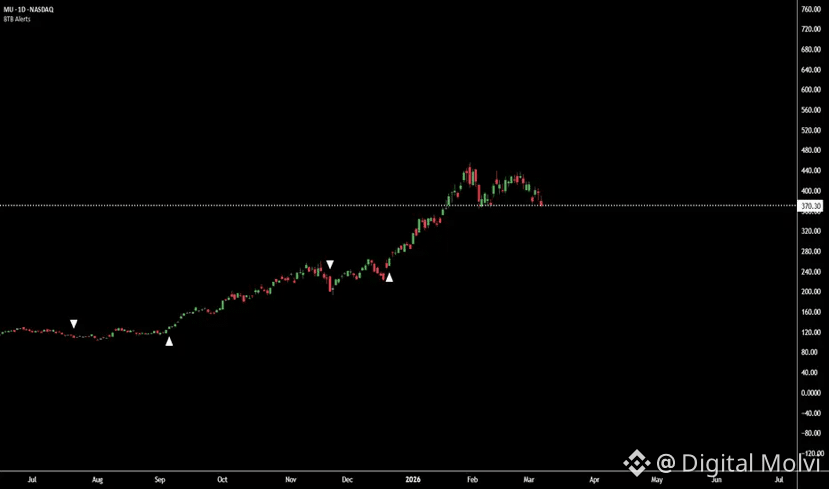
108

Article
Crypto Trading During VolatilityVolatility is one of the defining characteristics of the cryptocurrency market. Unlike traditional financial markets, which often move within relatively stable daily ranges, crypto can experience significant price swings within minutes or hours. For some traders, this creates opportunity. For others, it creates confusion, emotional stress, and costly mistakes. Understanding how to trade during volatile conditions is therefore not just a useful skill in crypto—it is essential.
This article explores what volatility means in the context of cryptocurrency, why it happens so frequently, how traders can respond to it, and what strategies and risk controls matter most when the market becomes unpredictable.
Understanding Volatility in Crypto
Volatility refers to the speed and magnitude of price movement. A highly volatile asset can rise or fall sharply in a short period of time. In crypto, this can happen for many reasons: breaking news, macroeconomic developments, exchange-related events, liquidations, regulatory announcements, or sudden shifts in trader sentiment.
Bitcoin, Ethereum, and major altcoins can all show volatility, but smaller-cap tokens often experience even more dramatic price action because they have lower liquidity and thinner order books. This means that relatively small waves of buying or selling pressure can move the market quickly.
Volatility itself is not inherently good or bad. It is simply a market condition. The challenge is that volatile environments magnify both opportunity and risk. A trader can make outsized gains if positioned correctly, but can just as easily suffer rapid losses if unprepared.
Why Crypto Markets Are So Volatile
Several structural factors make crypto more volatile than many traditional markets.
1. 24/7 Trading
Crypto markets never close. There is no overnight pause, no weekend shutdown, and no opening bell. Prices react continuously to news, sentiment, and order flow. This creates a market that can change direction while traders are asleep or away from their screens.
2. Lower Liquidity in Many Assets
Although Bitcoin and Ethereum are highly traded, many cryptocurrencies still have relatively limited liquidity compared with major stocks, bonds, or forex pairs. Lower liquidity allows large market orders to push prices more aggressively.
3. High Retail Participation
Crypto markets are heavily influenced by retail traders, who can be more emotionally reactive than institutional participants. This can intensify herd behavior, fear-driven selling, and euphoric buying.
4. Leverage and Liquidations
Leverage is widely used in crypto. When markets move sharply, leveraged positions can be forced closed. These liquidations can accelerate price movement, creating a chain reaction that drives volatility even higher.
5. Narrative-Driven Price Action
Crypto assets are often repriced based not only on fundamentals but also on narratives. Themes such as AI, DeFi, meme coins, real-world assets, and tokenization can trigger large capital rotations with little warning.
The Psychology of Trading Volatility
Many trading mistakes during volatile periods come from poor emotional control rather than weak analysis. Fear of missing out, panic selling, revenge trading, and overconfidence all become more common when candles grow larger and the market moves faster.
A volatile market places pressure on decision-making. Traders feel the urge to act immediately, even when the best move may be to wait. They may abandon their plan, increase position size, or enter trades without clear risk parameters. This emotional instability is dangerous because volatility punishes inconsistency.
The best traders are not necessarily the ones who predict every move correctly. They are often the ones who remain disciplined when others become reactive.
Key Principles for Trading During Volatility
1. Reduce Position Size
One of the simplest and most effective ways to handle volatility is to trade smaller. When price ranges expand, the amount of capital at risk on each trade should generally shrink. A position size that felt manageable in a quiet market may become far too large when daily swings double or triple.
Smaller positions help in three ways:
They reduce emotional pressure
They allow wider and more realistic stop placement
They preserve capital through turbulent periods
Trading smaller is not a sign of weakness. It is a sign of adaptation.
2. Respect Stop Losses
During volatility, prices can move quickly from manageable loss to major drawdown. A stop loss helps define risk before the trade begins. It protects the trader from turning a tactical idea into a long-term problem.
However, stop losses must be placed intelligently. If placed too tightly in a volatile market, they may be triggered by normal noise. If placed too far away, they may expose the trader to unacceptable risk. The key is to align the stop with market structure rather than emotion.
3. Avoid Overleveraging
Leverage can be tempting because volatility makes large returns look possible. But leverage also compresses the distance between a normal market fluctuation and liquidation. In fast-moving conditions, even a good idea can fail if leverage is too high.
Many traders lose not because they were directionally wrong, but because they used too much leverage to survive short-term volatility. Preserving staying power matters more than maximizing a single trade.
4. Wait for Cleaner Setups
Volatile markets often create chaotic price action. Not every move needs to be traded. In fact, some of the best decisions during extreme volatility are decisions not to trade.
Clean setups tend to have:
Defined support and resistance
A clear invalidation level
Confirmed volume
Reasonable risk-to-reward
Alignment with the broader market trend
If the chart looks random, the trader should assume the odds are worse.
5. Focus on Liquidity
During unstable periods, liquidity becomes even more important. Highly liquid pairs generally offer tighter spreads, better execution, and more reliable market structure. Illiquid tokens may look attractive because of large percentage moves, but they also carry much greater slippage and manipulation risk.
For many traders, volatility is best approached through major assets or well-traded pairs rather than thin, low-cap coins.
Strategies for Volatile Crypto Markets
Different strategies can work during volatility, depending on the trader’s experience, timeframe, and tolerance for risk.
Trend Following
If volatility appears within a strong directional move, trend-following strategies can work well. The trader waits for pullbacks, confirms continuation, and trades in the direction of the prevailing trend. This approach works best when the market is expanding, not chopping.
Breakout Trading
Volatility often emerges when price escapes a well-defined range. Breakout traders look for consolidation followed by strong movement through support or resistance, ideally supported by rising volume.
The challenge with breakout trading is avoiding false breaks. This is why confirmation and risk control matter.
Mean Reversion
Not all sharp moves continue. Some are exhaustion moves that reverse once the market stretches too far from its average range. Mean reversion traders look for oversold or overbought conditions, but this strategy is dangerous if used too early in strong trends.
Scalping
Short-term traders may use volatility to capture quick intraday moves. Scalping requires strong execution, discipline, and deep familiarity with market behavior. It is generally not ideal for inexperienced traders because speed and precision matter greatly.
Staying in Cash
This is often ignored, but it is a real strategy. When conditions become disorderly, preserving capital by reducing exposure is a valid decision. There will always be another trade.
Using Technical Analysis During Volatility
Technical analysis can remain useful during volatile periods, but traders should adapt how they use it.
Support and Resistance
These levels become especially important when the market is moving fast. Breaks and holds around key zones can help define entries and exits.
Volume
Volume helps confirm whether a move has participation behind it. Strong volume during a breakout or reversal adds credibility.
Volatility Indicators
Indicators such as ATR can help traders understand how far price is moving on average. This can improve stop placement and position sizing.
Moving Averages
Moving averages can help identify trend direction and dynamic support or resistance, although they may lag during fast conditions.
Market Structure
Higher highs, lower lows, range breaks, failed breakdowns, and retests often matter more than any single indicator.
Fundamental Awareness Still Matters
Even short-term traders should pay attention to the causes of volatility. A market move driven by liquidation alone may behave differently from one driven by major policy news, a protocol exploit, ETF headlines, or a macroeconomic surprise.
Understanding the context helps traders avoid treating every spike as technically identical. It also reduces the risk of being blindsided by event-driven continuation.
Risk Management in Volatile Markets
If there is one area that matters most during crypto volatility, it is risk management.
Key practices include:
Risking only a small percentage of capital per trade
Avoiding correlated overexposure across multiple coins
Using stops and predefined exit plans
Taking partial profits when appropriate
Tracking performance and reviewing mistakes
Recognizing when emotional state is compromised
A trader does not need to win every trade to succeed. They need to avoid catastrophic losses that destroy their ability to continue.
Common Mistakes During Volatility
Chasing Price
When the market moves fast, traders often enter late because they fear missing out. This usually leads to poor entries.
Moving Stops Emotionally
Some traders widen their stop once the trade moves against them. This turns planned risk into unplanned risk.
Trading Too Frequently
Volatile markets create the illusion of endless opportunity. In reality, overtrading often leads to exhaustion and poor judgment.
Ignoring Fees and Slippage
Fast trading in wide spreads can quietly erode profits.
Letting One Loss Trigger a Spiral
A single loss is part of trading. Revenge trading after a loss often causes more damage than the original mistake.
Building a Volatility Trading Mindset
Successful crypto trading during volatility requires more than tactics. It requires a mindset built around patience, flexibility, and self-control.
A trader must be able to accept uncertainty. No setup is guaranteed. No indicator is perfect. The goal is not to control the market, but to control responses to it.
This mindset includes:
Waiting for edge instead of forcing trades
Accepting small losses quickly
Remaining neutral rather than emotionally attached
Preserving energy and capital
Thinking in probabilities, not certainties
Conclusion
Crypto volatility is both the market’s greatest attraction and its greatest challenge. It creates the dramatic moves that bring opportunity, but it also exposes every weakness in a trader’s process. In volatile conditions, skill matters more, discipline matters more, and mistakes become more expensive.
The traders who perform best are not those who react fastest, but those who prepare best. They size appropriately, manage risk carefully, choose setups selectively, and remain emotionally stable while others panic or chase.
In the end, trading during volatility is not about predicting every move. It is about building a framework that can survive uncertainty and capitalize on opportunity without losing control.
#digitalmolvi #CryptoVolatilty #BinanceSquare
$BTC
{spot}(BTCUSDT)
$ETH
{spot}(ETHUSDT)
$BNB
{spot}(BNBUSDT)
Crypto Trading During Volatility
Volatility is one of the defining characteristics of the cryptocurrency market. Unlike traditional financial markets, which often move within relatively stable daily ranges, crypto can experience significant price swings within minutes or hours. For some traders, this creates opportunity. For others, it creates confusion, emotional stress, and costly mistakes. Understanding how to trade during volatile conditions is therefore not just a useful skill in crypto—it is essential.
This article explores what volatility means in the context of cryptocurrency, why it happens so frequently, how traders can respond to it, and what strategies and risk controls matter most when the market becomes unpredictable.
Understanding Volatility in Crypto
Volatility refers to the speed and magnitude of price movement. A highly volatile asset can rise or fall sharply in a short period of time. In crypto, this can happen for many reasons: breaking news, macroeconomic developments, exchange-related events, liquidations, regulatory announcements, or sudden shifts in trader sentiment.
Bitcoin, Ethereum, and major altcoins can all show volatility, but smaller-cap tokens often experience even more dramatic price action because they have lower liquidity and thinner order books. This means that relatively small waves of buying or selling pressure can move the market quickly.
Volatility itself is not inherently good or bad. It is simply a market condition. The challenge is that volatile environments magnify both opportunity and risk. A trader can make outsized gains if positioned correctly, but can just as easily suffer rapid losses if unprepared.
Why Crypto Markets Are So Volatile
Several structural factors make crypto more volatile than many traditional markets.
1. 24/7 Trading
Crypto markets never close. There is no overnight pause, no weekend shutdown, and no opening bell. Prices react continuously to news, sentiment, and order flow. This creates a market that can change direction while traders are asleep or away from their screens.
2. Lower Liquidity in Many Assets
Although Bitcoin and Ethereum are highly traded, many cryptocurrencies still have relatively limited liquidity compared with major stocks, bonds, or forex pairs. Lower liquidity allows large market orders to push prices more aggressively.
3. High Retail Participation
Crypto markets are heavily influenced by retail traders, who can be more emotionally reactive than institutional participants. This can intensify herd behavior, fear-driven selling, and euphoric buying.
4. Leverage and Liquidations
Leverage is widely used in crypto. When markets move sharply, leveraged positions can be forced closed. These liquidations can accelerate price movement, creating a chain reaction that drives volatility even higher.
5. Narrative-Driven Price Action
Crypto assets are often repriced based not only on fundamentals but also on narratives. Themes such as AI, DeFi, meme coins, real-world assets, and tokenization can trigger large capital rotations with little warning.
The Psychology of Trading Volatility
Many trading mistakes during volatile periods come from poor emotional control rather than weak analysis. Fear of missing out, panic selling, revenge trading, and overconfidence all become more common when candles grow larger and the market moves faster.
A volatile market places pressure on decision-making. Traders feel the urge to act immediately, even when the best move may be to wait. They may abandon their plan, increase position size, or enter trades without clear risk parameters. This emotional instability is dangerous because volatility punishes inconsistency.
The best traders are not necessarily the ones who predict every move correctly. They are often the ones who remain disciplined when others become reactive.
Key Principles for Trading During Volatility
1. Reduce Position Size
One of the simplest and most effective ways to handle volatility is to trade smaller. When price ranges expand, the amount of capital at risk on each trade should generally shrink. A position size that felt manageable in a quiet market may become far too large when daily swings double or triple.
Smaller positions help in three ways:
They reduce emotional pressure
They allow wider and more realistic stop placement
They preserve capital through turbulent periods
Trading smaller is not a sign of weakness. It is a sign of adaptation.
2. Respect Stop Losses
During volatility, prices can move quickly from manageable loss to major drawdown. A stop loss helps define risk before the trade begins. It protects the trader from turning a tactical idea into a long-term problem.
However, stop losses must be placed intelligently. If placed too tightly in a volatile market, they may be triggered by normal noise. If placed too far away, they may expose the trader to unacceptable risk. The key is to align the stop with market structure rather than emotion.
3. Avoid Overleveraging
Leverage can be tempting because volatility makes large returns look possible. But leverage also compresses the distance between a normal market fluctuation and liquidation. In fast-moving conditions, even a good idea can fail if leverage is too high.
Many traders lose not because they were directionally wrong, but because they used too much leverage to survive short-term volatility. Preserving staying power matters more than maximizing a single trade.
4. Wait for Cleaner Setups
Volatile markets often create chaotic price action. Not every move needs to be traded. In fact, some of the best decisions during extreme volatility are decisions not to trade.
Clean setups tend to have:
Defined support and resistance
A clear invalidation level
Confirmed volume
Reasonable risk-to-reward
Alignment with the broader market trend
If the chart looks random, the trader should assume the odds are worse.
5. Focus on Liquidity
During unstable periods, liquidity becomes even more important. Highly liquid pairs generally offer tighter spreads, better execution, and more reliable market structure. Illiquid tokens may look attractive because of large percentage moves, but they also carry much greater slippage and manipulation risk.
For many traders, volatility is best approached through major assets or well-traded pairs rather than thin, low-cap coins.
Strategies for Volatile Crypto Markets
Different strategies can work during volatility, depending on the trader’s experience, timeframe, and tolerance for risk.
Trend Following
If volatility appears within a strong directional move, trend-following strategies can work well. The trader waits for pullbacks, confirms continuation, and trades in the direction of the prevailing trend. This approach works best when the market is expanding, not chopping.
Breakout Trading
Volatility often emerges when price escapes a well-defined range. Breakout traders look for consolidation followed by strong movement through support or resistance, ideally supported by rising volume.
The challenge with breakout trading is avoiding false breaks. This is why confirmation and risk control matter.
Mean Reversion
Not all sharp moves continue. Some are exhaustion moves that reverse once the market stretches too far from its average range. Mean reversion traders look for oversold or overbought conditions, but this strategy is dangerous if used too early in strong trends.
Scalping
Short-term traders may use volatility to capture quick intraday moves. Scalping requires strong execution, discipline, and deep familiarity with market behavior. It is generally not ideal for inexperienced traders because speed and precision matter greatly.
Staying in Cash
This is often ignored, but it is a real strategy. When conditions become disorderly, preserving capital by reducing exposure is a valid decision. There will always be another trade.
Using Technical Analysis During Volatility
Technical analysis can remain useful during volatile periods, but traders should adapt how they use it.
Support and Resistance
These levels become especially important when the market is moving fast. Breaks and holds around key zones can help define entries and exits.
Volume
Volume helps confirm whether a move has participation behind it. Strong volume during a breakout or reversal adds credibility.
Volatility Indicators
Indicators such as ATR can help traders understand how far price is moving on average. This can improve stop placement and position sizing.
Moving Averages
Moving averages can help identify trend direction and dynamic support or resistance, although they may lag during fast conditions.
Market Structure
Higher highs, lower lows, range breaks, failed breakdowns, and retests often matter more than any single indicator.
Fundamental Awareness Still Matters
Even short-term traders should pay attention to the causes of volatility. A market move driven by liquidation alone may behave differently from one driven by major policy news, a protocol exploit, ETF headlines, or a macroeconomic surprise.
Understanding the context helps traders avoid treating every spike as technically identical. It also reduces the risk of being blindsided by event-driven continuation.
Risk Management in Volatile Markets
If there is one area that matters most during crypto volatility, it is risk management.
Key practices include:
Risking only a small percentage of capital per trade
Avoiding correlated overexposure across multiple coins
Using stops and predefined exit plans
Taking partial profits when appropriate
Tracking performance and reviewing mistakes
Recognizing when emotional state is compromised
A trader does not need to win every trade to succeed. They need to avoid catastrophic losses that destroy their ability to continue.
Common Mistakes During Volatility
Chasing Price
When the market moves fast, traders often enter late because they fear missing out. This usually leads to poor entries.
Moving Stops Emotionally
Some traders widen their stop once the trade moves against them. This turns planned risk into unplanned risk.
Trading Too Frequently
Volatile markets create the illusion of endless opportunity. In reality, overtrading often leads to exhaustion and poor judgment.
Ignoring Fees and Slippage
Fast trading in wide spreads can quietly erode profits.
Letting One Loss Trigger a Spiral
A single loss is part of trading. Revenge trading after a loss often causes more damage than the original mistake.
Building a Volatility Trading Mindset
Successful crypto trading during volatility requires more than tactics. It requires a mindset built around patience, flexibility, and self-control.
A trader must be able to accept uncertainty. No setup is guaranteed. No indicator is perfect. The goal is not to control the market, but to control responses to it.
This mindset includes:
Waiting for edge instead of forcing trades
Accepting small losses quickly
Remaining neutral rather than emotionally attached
Preserving energy and capital
Thinking in probabilities, not certainties
Conclusion
Crypto volatility is both the market’s greatest attraction and its greatest challenge. It creates the dramatic moves that bring opportunity, but it also exposes every weakness in a trader’s process. In volatile conditions, skill matters more, discipline matters more, and mistakes become more expensive.
The traders who perform best are not those who react fastest, but those who prepare best. They size appropriately, manage risk carefully, choose setups selectively, and remain emotionally stable while others panic or chase.
In the end, trading during volatility is not about predicting every move. It is about building a framework that can survive uncertainty and capitalize on opportunity without losing control.
#digitalmolvi #CryptoVolatilty #BinanceSquare
$BTC
$ETH
$BNB
This article explores what volatility means in the context of cryptocurrency, why it happens so frequently, how traders can respond to it, and what strategies and risk controls matter most when the market becomes unpredictable.
Understanding Volatility in Crypto
Volatility refers to the speed and magnitude of price movement. A highly volatile asset can rise or fall sharply in a short period of time. In crypto, this can happen for many reasons: breaking news, macroeconomic developments, exchange-related events, liquidations, regulatory announcements, or sudden shifts in trader sentiment.
Bitcoin, Ethereum, and major altcoins can all show volatility, but smaller-cap tokens often experience even more dramatic price action because they have lower liquidity and thinner order books. This means that relatively small waves of buying or selling pressure can move the market quickly.
Volatility itself is not inherently good or bad. It is simply a market condition. The challenge is that volatile environments magnify both opportunity and risk. A trader can make outsized gains if positioned correctly, but can just as easily suffer rapid losses if unprepared.
Why Crypto Markets Are So Volatile
Several structural factors make crypto more volatile than many traditional markets.
1. 24/7 Trading
Crypto markets never close. There is no overnight pause, no weekend shutdown, and no opening bell. Prices react continuously to news, sentiment, and order flow. This creates a market that can change direction while traders are asleep or away from their screens.
2. Lower Liquidity in Many Assets
Although Bitcoin and Ethereum are highly traded, many cryptocurrencies still have relatively limited liquidity compared with major stocks, bonds, or forex pairs. Lower liquidity allows large market orders to push prices more aggressively.
3. High Retail Participation
Crypto markets are heavily influenced by retail traders, who can be more emotionally reactive than institutional participants. This can intensify herd behavior, fear-driven selling, and euphoric buying.
4. Leverage and Liquidations
Leverage is widely used in crypto. When markets move sharply, leveraged positions can be forced closed. These liquidations can accelerate price movement, creating a chain reaction that drives volatility even higher.
5. Narrative-Driven Price Action
Crypto assets are often repriced based not only on fundamentals but also on narratives. Themes such as AI, DeFi, meme coins, real-world assets, and tokenization can trigger large capital rotations with little warning.
The Psychology of Trading Volatility
Many trading mistakes during volatile periods come from poor emotional control rather than weak analysis. Fear of missing out, panic selling, revenge trading, and overconfidence all become more common when candles grow larger and the market moves faster.
A volatile market places pressure on decision-making. Traders feel the urge to act immediately, even when the best move may be to wait. They may abandon their plan, increase position size, or enter trades without clear risk parameters. This emotional instability is dangerous because volatility punishes inconsistency.
The best traders are not necessarily the ones who predict every move correctly. They are often the ones who remain disciplined when others become reactive.
Key Principles for Trading During Volatility
1. Reduce Position Size
One of the simplest and most effective ways to handle volatility is to trade smaller. When price ranges expand, the amount of capital at risk on each trade should generally shrink. A position size that felt manageable in a quiet market may become far too large when daily swings double or triple.
Smaller positions help in three ways:
They reduce emotional pressure
They allow wider and more realistic stop placement
They preserve capital through turbulent periods
Trading smaller is not a sign of weakness. It is a sign of adaptation.
2. Respect Stop Losses
During volatility, prices can move quickly from manageable loss to major drawdown. A stop loss helps define risk before the trade begins. It protects the trader from turning a tactical idea into a long-term problem.
However, stop losses must be placed intelligently. If placed too tightly in a volatile market, they may be triggered by normal noise. If placed too far away, they may expose the trader to unacceptable risk. The key is to align the stop with market structure rather than emotion.
3. Avoid Overleveraging
Leverage can be tempting because volatility makes large returns look possible. But leverage also compresses the distance between a normal market fluctuation and liquidation. In fast-moving conditions, even a good idea can fail if leverage is too high.
Many traders lose not because they were directionally wrong, but because they used too much leverage to survive short-term volatility. Preserving staying power matters more than maximizing a single trade.
4. Wait for Cleaner Setups
Volatile markets often create chaotic price action. Not every move needs to be traded. In fact, some of the best decisions during extreme volatility are decisions not to trade.
Clean setups tend to have:
Defined support and resistance
A clear invalidation level
Confirmed volume
Reasonable risk-to-reward
Alignment with the broader market trend
If the chart looks random, the trader should assume the odds are worse.
5. Focus on Liquidity
During unstable periods, liquidity becomes even more important. Highly liquid pairs generally offer tighter spreads, better execution, and more reliable market structure. Illiquid tokens may look attractive because of large percentage moves, but they also carry much greater slippage and manipulation risk.
For many traders, volatility is best approached through major assets or well-traded pairs rather than thin, low-cap coins.
Strategies for Volatile Crypto Markets
Different strategies can work during volatility, depending on the trader’s experience, timeframe, and tolerance for risk.
Trend Following
If volatility appears within a strong directional move, trend-following strategies can work well. The trader waits for pullbacks, confirms continuation, and trades in the direction of the prevailing trend. This approach works best when the market is expanding, not chopping.
Breakout Trading
Volatility often emerges when price escapes a well-defined range. Breakout traders look for consolidation followed by strong movement through support or resistance, ideally supported by rising volume.
The challenge with breakout trading is avoiding false breaks. This is why confirmation and risk control matter.
Mean Reversion
Not all sharp moves continue. Some are exhaustion moves that reverse once the market stretches too far from its average range. Mean reversion traders look for oversold or overbought conditions, but this strategy is dangerous if used too early in strong trends.
Scalping
Short-term traders may use volatility to capture quick intraday moves. Scalping requires strong execution, discipline, and deep familiarity with market behavior. It is generally not ideal for inexperienced traders because speed and precision matter greatly.
Staying in Cash
This is often ignored, but it is a real strategy. When conditions become disorderly, preserving capital by reducing exposure is a valid decision. There will always be another trade.
Using Technical Analysis During Volatility
Technical analysis can remain useful during volatile periods, but traders should adapt how they use it.
Support and Resistance
These levels become especially important when the market is moving fast. Breaks and holds around key zones can help define entries and exits.
Volume
Volume helps confirm whether a move has participation behind it. Strong volume during a breakout or reversal adds credibility.
Volatility Indicators
Indicators such as ATR can help traders understand how far price is moving on average. This can improve stop placement and position sizing.
Moving Averages
Moving averages can help identify trend direction and dynamic support or resistance, although they may lag during fast conditions.
Market Structure
Higher highs, lower lows, range breaks, failed breakdowns, and retests often matter more than any single indicator.
Fundamental Awareness Still Matters
Even short-term traders should pay attention to the causes of volatility. A market move driven by liquidation alone may behave differently from one driven by major policy news, a protocol exploit, ETF headlines, or a macroeconomic surprise.
Understanding the context helps traders avoid treating every spike as technically identical. It also reduces the risk of being blindsided by event-driven continuation.
Risk Management in Volatile Markets
If there is one area that matters most during crypto volatility, it is risk management.
Key practices include:
Risking only a small percentage of capital per trade
Avoiding correlated overexposure across multiple coins
Using stops and predefined exit plans
Taking partial profits when appropriate
Tracking performance and reviewing mistakes
Recognizing when emotional state is compromised
A trader does not need to win every trade to succeed. They need to avoid catastrophic losses that destroy their ability to continue.
Common Mistakes During Volatility
Chasing Price
When the market moves fast, traders often enter late because they fear missing out. This usually leads to poor entries.
Moving Stops Emotionally
Some traders widen their stop once the trade moves against them. This turns planned risk into unplanned risk.
Trading Too Frequently
Volatile markets create the illusion of endless opportunity. In reality, overtrading often leads to exhaustion and poor judgment.
Ignoring Fees and Slippage
Fast trading in wide spreads can quietly erode profits.
Letting One Loss Trigger a Spiral
A single loss is part of trading. Revenge trading after a loss often causes more damage than the original mistake.
Building a Volatility Trading Mindset
Successful crypto trading during volatility requires more than tactics. It requires a mindset built around patience, flexibility, and self-control.
A trader must be able to accept uncertainty. No setup is guaranteed. No indicator is perfect. The goal is not to control the market, but to control responses to it.
This mindset includes:
Waiting for edge instead of forcing trades
Accepting small losses quickly
Remaining neutral rather than emotionally attached
Preserving energy and capital
Thinking in probabilities, not certainties
Conclusion
Crypto volatility is both the market’s greatest attraction and its greatest challenge. It creates the dramatic moves that bring opportunity, but it also exposes every weakness in a trader’s process. In volatile conditions, skill matters more, discipline matters more, and mistakes become more expensive.
The traders who perform best are not those who react fastest, but those who prepare best. They size appropriately, manage risk carefully, choose setups selectively, and remain emotionally stable while others panic or chase.
In the end, trading during volatility is not about predicting every move. It is about building a framework that can survive uncertainty and capitalize on opportunity without losing control.
#digitalmolvi #CryptoVolatilty #BinanceSquare
$BTC
$ETH
$BNB
123
“Patience in trading is not waiting without purpose; it is the discipline to act only when the right opportunity appears.”
$PEPE
{spot}(PEPEUSDT)
$DOGE
{spot}(DOGEUSDT)
$TRUMP
{spot}(TRUMPUSDT)
“Patience in trading is not waiting without purpose; it is the discipline to act only when the right opportunity appears.”
$PEPE
$DOGE
$TRUMP
$PEPE
$DOGE
$TRUMP

78
Meme coins move fast because attention is a market force in crypto. Hype, community, and momentum can push prices hard — but when attention fades, risk shows up just as fast.
#digitalmolvi #memecoins #BinanceSquare
$DOGE
{spot}(DOGEUSDT)
$PEPE
{spot}(PEPEUSDT)
$TRUMP
{spot}(TRUMPUSDT)
Meme coins move fast because attention is a market force in crypto. Hype, community, and momentum can push prices hard — but when attention fades, risk shows up just as fast.
#digitalmolvi #memecoins #BinanceSquare
$DOGE
$PEPE
$TRUMP
#digitalmolvi #memecoins #BinanceSquare
$DOGE
$PEPE
$TRUMP
167
Connectez-vous pour découvrir plus de contenu
Rejoignez la communauté mondiale des adeptes de cryptomonnaies sur Binance Square
⚡️ Suviez les dernières informations importantes sur les cryptomonnaies.
💬 Jugé digne de confiance par la plus grande plateforme d’échange de cryptomonnaies au monde.
👍 Découvrez les connaissances que partagent les créateurs vérifiés.
Adresse e-mail/Nº de téléphone