

miiportable_btc
79 Publications

miiportable_btc
Signaler
Bloquer l’utilisateur
Content creator // Trader || DeFi & NFT || Gems & Blockchain innovation
Ouvert au trading
Trade régulièrement
3.1 an(s)
312 Suivis
148 Abonnés
169 J’aime
Publications
Portefeuille
Should a cross-chain swap fee be something you calculate yourself, or something the interface tells you directly?
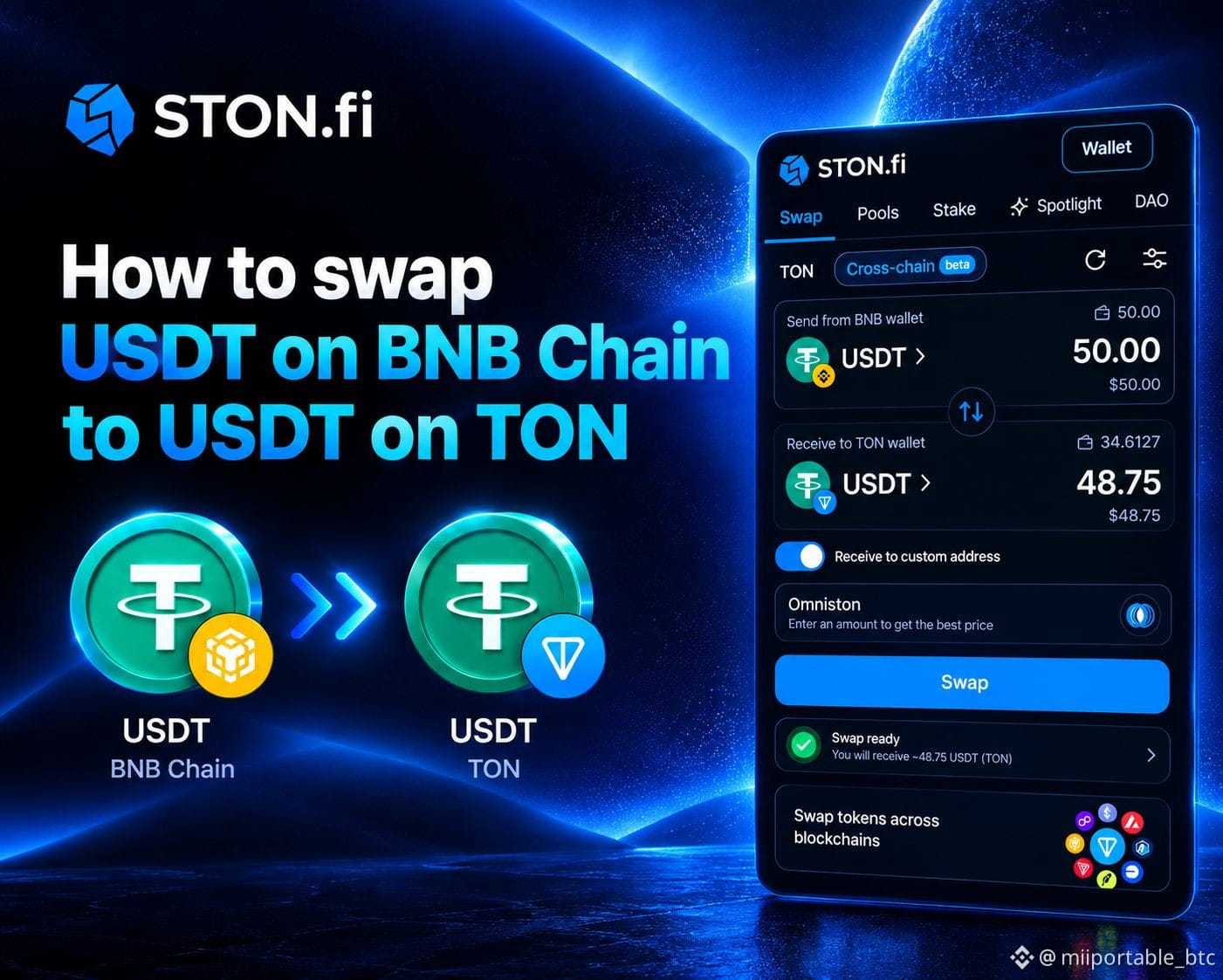
Testing BNB Chain USDT into TON USDT on STON.fi's cross-chain feature: 12.48 USDT sent, valued at $12.47, against 12.41 USDT received, valued at $12.40. Rather than leaving the actual cost implicit in the gap between those two numbers, the interface labeled this specific result best route and stated the fee outright:
0.56%. Checking that figure against the sent and received amounts confirms it lines up exactly, a small but meaningful detail, since it means the platform is showing its work rather than asking users to trust an unexplained final number.
The best route label itself is worth understanding. It implies Omniston compared available liquidity paths for this specific trade before settling on this result, rather than executing through one single fixed route regardless of conditions. That's a meaningfully different design from a simple, single-pool swap with no alternatives considered.
One caution worth stating directly. Broad network support for BNB Chain does not guarantee every specific asset pair is available and quotable at every moment. Always check the live interface for your exact route before assuming it behaves identically to any example, including this one.
$TON continues to be worth watching for cross-chain interfaces that state fees explicitly rather than leaving them for users to calculate on their own.
Ston.fi: https://ston.fi/
Cross-chain: https://app.ston.fi/swap
@stonfi @ton_blockchain
#tonecoin #DEF #Omniston
Should a cross-chain swap fee be something you calculate yourself, or something the interface tells you directly?
Testing BNB Chain USDT into TON USDT on STON.fi's cross-chain feature: 12.48 USDT sent, valued at $12.47, against 12.41 USDT received, valued at $12.40. Rather than leaving the actual cost implicit in the gap between those two numbers, the interface labeled this specific result best route and stated the fee outright:
0.56%. Checking that figure against the sent and received amounts confirms it lines up exactly, a small but meaningful detail, since it means the platform is showing its work rather than asking users to trust an unexplained final number.
The best route label itself is worth understanding. It implies Omniston compared available liquidity paths for this specific trade before settling on this result, rather than executing through one single fixed route regardless of conditions. That's a meaningfully different design from a simple, single-pool swap with no alternatives considered.
One caution worth stating directly. Broad network support for BNB Chain does not guarantee every specific asset pair is available and quotable at every moment. Always check the live interface for your exact route before assuming it behaves identically to any example, including this one.
$TON continues to be worth watching for cross-chain interfaces that state fees explicitly rather than leaving them for users to calculate on their own.
Ston.fi: https://ston.fi/
Cross-chain: https://app.ston.fi/swap
@STONfi DEX @Ton Network
#tonecoin #DEF #Omniston
Testing BNB Chain USDT into TON USDT on STON.fi's cross-chain feature: 12.48 USDT sent, valued at $12.47, against 12.41 USDT received, valued at $12.40. Rather than leaving the actual cost implicit in the gap between those two numbers, the interface labeled this specific result best route and stated the fee outright:
0.56%. Checking that figure against the sent and received amounts confirms it lines up exactly, a small but meaningful detail, since it means the platform is showing its work rather than asking users to trust an unexplained final number.
The best route label itself is worth understanding. It implies Omniston compared available liquidity paths for this specific trade before settling on this result, rather than executing through one single fixed route regardless of conditions. That's a meaningfully different design from a simple, single-pool swap with no alternatives considered.
One caution worth stating directly. Broad network support for BNB Chain does not guarantee every specific asset pair is available and quotable at every moment. Always check the live interface for your exact route before assuming it behaves identically to any example, including this one.
$TON continues to be worth watching for cross-chain interfaces that state fees explicitly rather than leaving them for users to calculate on their own.
Ston.fi: https://ston.fi/
Cross-chain: https://app.ston.fi/swap
@STONfi DEX @Ton Network
#tonecoin #DEF #Omniston
81
·
--
Haussier
Do two different stablecoins convert at an exact 1-to-1 rate just because they're both pegged to a dollar? A real cross-chain quote on STON.fi shows the answer is no.
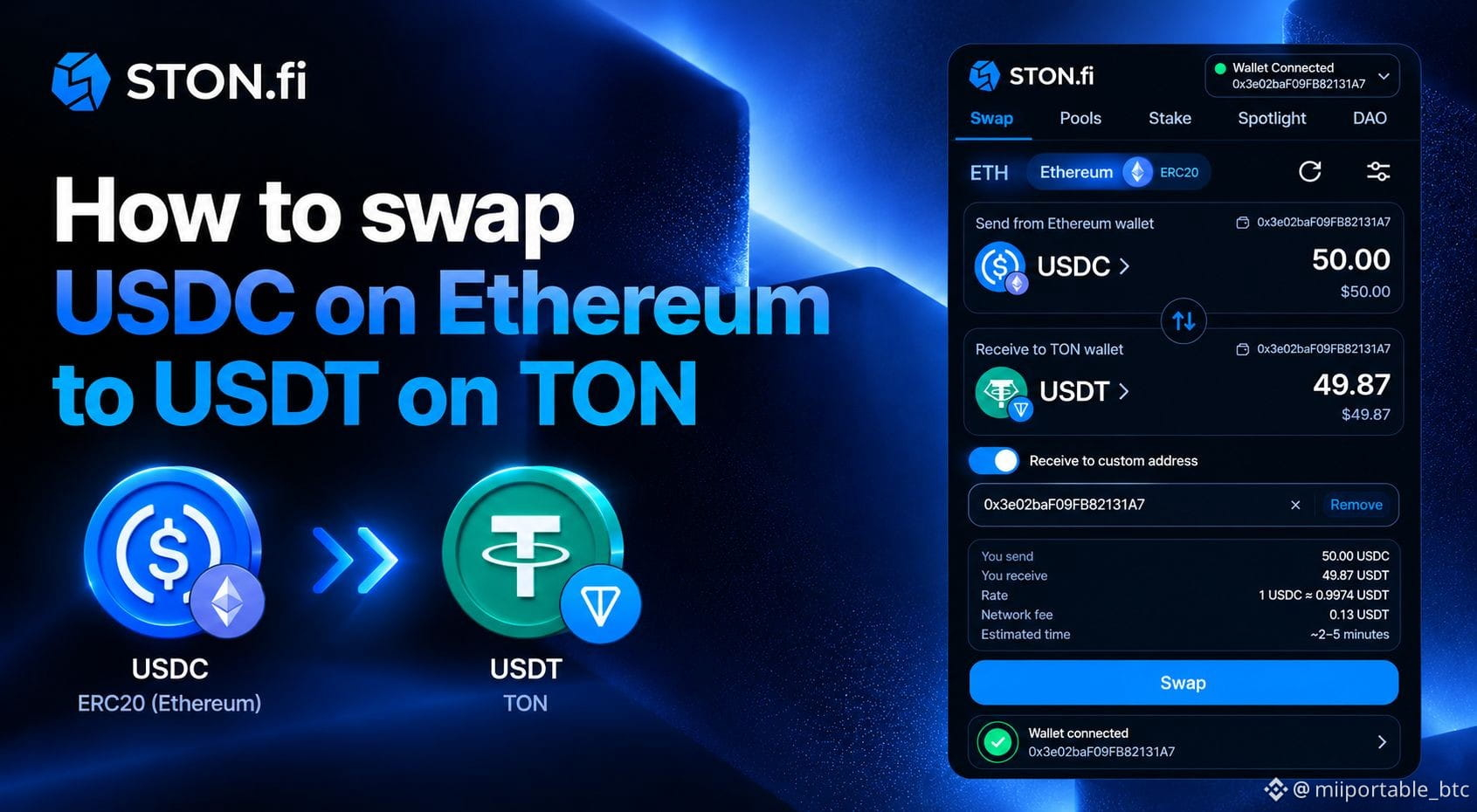
Testing a route that changes both network and asset at once, USDC on Ethereum into USDT on TON: 50 USDC sent, 49.87 USDT received, at a quoted rate of 1 USDC to approximately 0.9974 USDT. That's a small but real gap,
reflecting actual market conditions between the two stablecoins rather than a guaranteed fixed peg match. Network fee came to 0.13 USDT, and estimated settlement time showed a 2 to 5 minute window, wider than a same-network quote tested separately, consistent with this route handling both a cross-chain move and an asset conversion together.
The more important detail here is what this route avoids. The alternative approach, bridging USDC onto TON first and then performing a separate swap into USDT afterward, means holding an intermediate bridged asset you likely never wanted, plus a second transaction, a second fee, and a second wait. A single coordinated swap collapses both steps, network change and asset conversion, into one transaction with one quote to review upfront.
$TON continues to be worth watching for cross-chain infrastructure that handles multi-variable swaps like this cleanly, since the more steps a route eliminates, the fewer places a user's transaction can go wrong along the way.
Ston.fi: https://ston.fi/
Cross-chain: https://app.ston.fi/swap
@stonfi @ton_blockchain #TON #defi #Omniston
Do two different stablecoins convert at an exact 1-to-1 rate just because they're both pegged to a dollar? A real cross-chain quote on STON.fi shows the answer is no.
Testing a route that changes both network and asset at once, USDC on Ethereum into USDT on TON: 50 USDC sent, 49.87 USDT received, at a quoted rate of 1 USDC to approximately 0.9974 USDT. That's a small but real gap,
reflecting actual market conditions between the two stablecoins rather than a guaranteed fixed peg match. Network fee came to 0.13 USDT, and estimated settlement time showed a 2 to 5 minute window, wider than a same-network quote tested separately, consistent with this route handling both a cross-chain move and an asset conversion together.
The more important detail here is what this route avoids. The alternative approach, bridging USDC onto TON first and then performing a separate swap into USDT afterward, means holding an intermediate bridged asset you likely never wanted, plus a second transaction, a second fee, and a second wait. A single coordinated swap collapses both steps, network change and asset conversion, into one transaction with one quote to review upfront.
$TON continues to be worth watching for cross-chain infrastructure that handles multi-variable swaps like this cleanly, since the more steps a route eliminates, the fewer places a user's transaction can go wrong along the way.
Ston.fi: https://ston.fi/
Cross-chain: https://app.ston.fi/swap
@STONfi DEX @Ton Network #TON #defi #Omniston
Testing a route that changes both network and asset at once, USDC on Ethereum into USDT on TON: 50 USDC sent, 49.87 USDT received, at a quoted rate of 1 USDC to approximately 0.9974 USDT. That's a small but real gap,
reflecting actual market conditions between the two stablecoins rather than a guaranteed fixed peg match. Network fee came to 0.13 USDT, and estimated settlement time showed a 2 to 5 minute window, wider than a same-network quote tested separately, consistent with this route handling both a cross-chain move and an asset conversion together.
The more important detail here is what this route avoids. The alternative approach, bridging USDC onto TON first and then performing a separate swap into USDT afterward, means holding an intermediate bridged asset you likely never wanted, plus a second transaction, a second fee, and a second wait. A single coordinated swap collapses both steps, network change and asset conversion, into one transaction with one quote to review upfront.
$TON continues to be worth watching for cross-chain infrastructure that handles multi-variable swaps like this cleanly, since the more steps a route eliminates, the fewer places a user's transaction can go wrong along the way.
Ston.fi: https://ston.fi/
Cross-chain: https://app.ston.fi/swap
@STONfi DEX @Ton Network #TON #defi #Omniston
1
86
·
--
Haussier
What happens when you set up a cross.chain swap expecting USDT on both sides, but the destination turns out to be something else entirely?
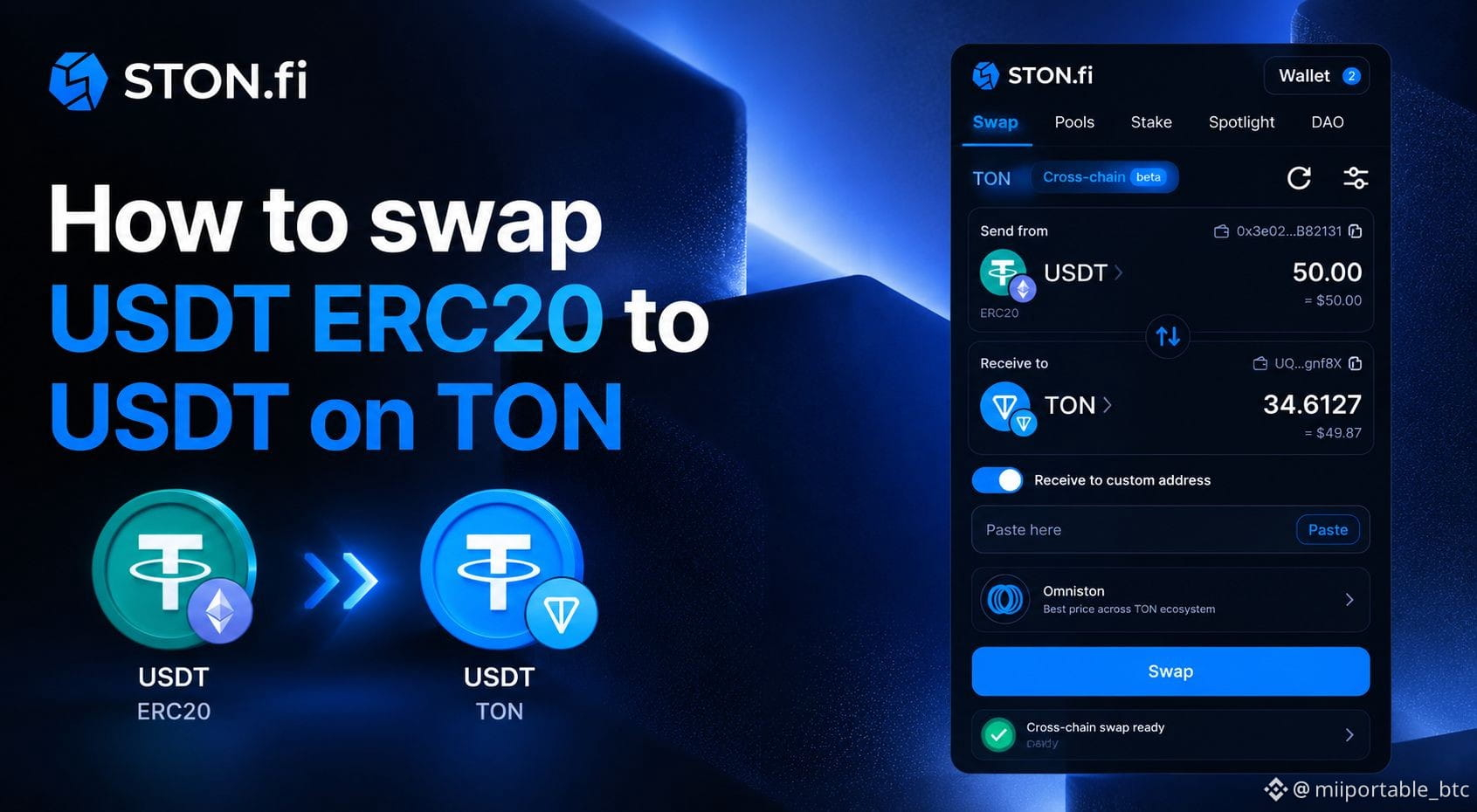
Testing an EVM to TON cross chain swap directly on STON.fi: 50 USDT sent from a connected EVM wallet, quoted against 34.6127 TON, valued at $49.87 on a $50 send. The setup began as USDT to USDT, but the actual quote settled on native TON as the destination asset rather than TON-native USDT.
This isn't a platform inconsistency, STON.fi's cross-chain interface allows either native TON or TON native USDT to be selected as the destination for an incoming EVM USDT swap, so the outcome depends entirely on which specific asset gets chosen during setup.
The Omniston line on this quote read best price across TON ecosystem, different phrasing from a live listening for updates status seen on a separate same network quote tested earlier. That distinction suggests Omniston actively compares available routes on the TON side to find the better outcome, rather than executing one fixed path regardless of conditions.
$TON continues to be worth watching for interface details like this, since assuming a like-for-like conversion without verifying the actual destination asset selected is an easy, avoidable mistake, especially for anyone newer to cross-chain swapping.
↪️Ston.fi: https://ston.fi/
↪️Cross-chain: https://app.ston.fi/swap
$GRAM
{future}(GRAMUSDT)
@stonfi @ton_blockchain
#TON #defi #Omniston
What happens when you set up a cross.chain swap expecting USDT on both sides, but the destination turns out to be something else entirely?
Testing an EVM to TON cross chain swap directly on STON.fi: 50 USDT sent from a connected EVM wallet, quoted against 34.6127 TON, valued at $49.87 on a $50 send. The setup began as USDT to USDT, but the actual quote settled on native TON as the destination asset rather than TON-native USDT.
This isn't a platform inconsistency, STON.fi's cross-chain interface allows either native TON or TON native USDT to be selected as the destination for an incoming EVM USDT swap, so the outcome depends entirely on which specific asset gets chosen during setup.
The Omniston line on this quote read best price across TON ecosystem, different phrasing from a live listening for updates status seen on a separate same network quote tested earlier. That distinction suggests Omniston actively compares available routes on the TON side to find the better outcome, rather than executing one fixed path regardless of conditions.
$TON continues to be worth watching for interface details like this, since assuming a like-for-like conversion without verifying the actual destination asset selected is an easy, avoidable mistake, especially for anyone newer to cross-chain swapping.
↪️Ston.fi: https://ston.fi/
↪️Cross-chain: https://app.ston.fi/swap
$GRAM
@STONfi DEX @Ton Network
#TON #defi #Omniston
Testing an EVM to TON cross chain swap directly on STON.fi: 50 USDT sent from a connected EVM wallet, quoted against 34.6127 TON, valued at $49.87 on a $50 send. The setup began as USDT to USDT, but the actual quote settled on native TON as the destination asset rather than TON-native USDT.
This isn't a platform inconsistency, STON.fi's cross-chain interface allows either native TON or TON native USDT to be selected as the destination for an incoming EVM USDT swap, so the outcome depends entirely on which specific asset gets chosen during setup.
The Omniston line on this quote read best price across TON ecosystem, different phrasing from a live listening for updates status seen on a separate same network quote tested earlier. That distinction suggests Omniston actively compares available routes on the TON side to find the better outcome, rather than executing one fixed path regardless of conditions.
$TON continues to be worth watching for interface details like this, since assuming a like-for-like conversion without verifying the actual destination asset selected is an easy, avoidable mistake, especially for anyone newer to cross-chain swapping.
↪️Ston.fi: https://ston.fi/
↪️Cross-chain: https://app.ston.fi/swap
$GRAM
@STONfi DEX @Ton Network
#TON #defi #Omniston
1
2
504
·
--
Haussier
draft:Does a cross.chain route work the same going both directions? Testing STON.fi TON to TRON USDT route showed a detail worth flagging before assuming yes.
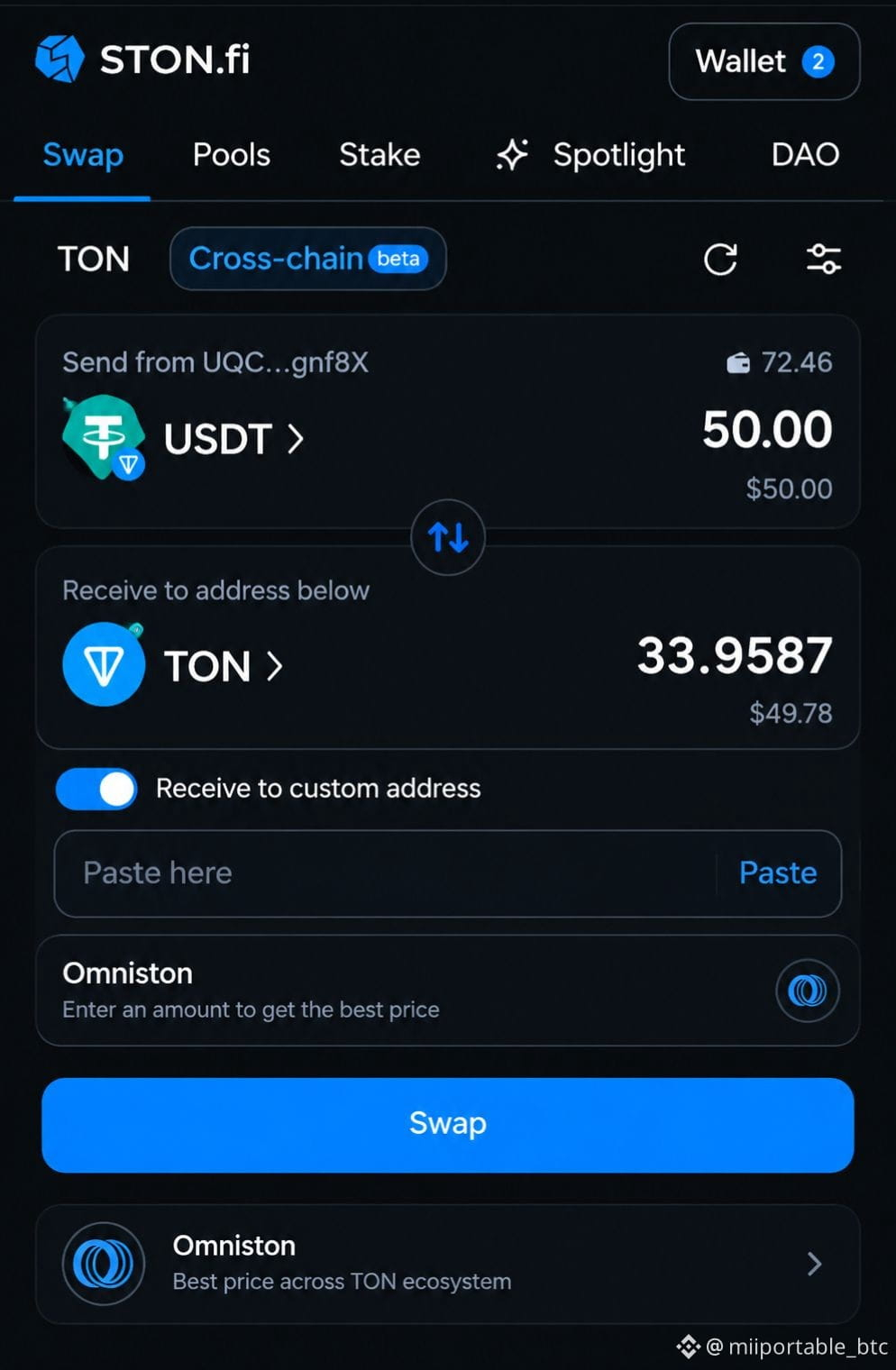
Setting up USDT on TON as the source and USDT on TRON as the destination, with a custom receiving address entered, the address field displayed a red outline rather than the usual confirmation state. That's worth paying attention to specifically because address formats differ meaningfully between TON and TRON, and a validation flag at this stage is the interface doing its job, catching a potential mismatch before funds move rather than after.
This is a useful reminder for anyone using cross chain custom address routing generally, not just on this specific route. Always confirm the destination address is validated and correctly formatted for the destination chain before confirming a swap, and treat any visual warning state in the interface as something to resolve, not skip past.
TON continues to be worth watching for interface details like this, since a validation catch at the address level is a small but meaningful part of what actually keeps cross chain swaps safe in practice.
Ston.fi: https://ston.fi/
Cross chain: https://app.ston.fi/swap
@ton_blockchain @stonfi #TON #defi #Omniston $GRAM
{future}(GRAMUSDT)
draft:Does a cross.chain route work the same going both directions? Testing STON.fi TON to TRON USDT route showed a detail worth flagging before assuming yes.
Setting up USDT on TON as the source and USDT on TRON as the destination, with a custom receiving address entered, the address field displayed a red outline rather than the usual confirmation state. That's worth paying attention to specifically because address formats differ meaningfully between TON and TRON, and a validation flag at this stage is the interface doing its job, catching a potential mismatch before funds move rather than after.
This is a useful reminder for anyone using cross chain custom address routing generally, not just on this specific route. Always confirm the destination address is validated and correctly formatted for the destination chain before confirming a swap, and treat any visual warning state in the interface as something to resolve, not skip past.
TON continues to be worth watching for interface details like this, since a validation catch at the address level is a small but meaningful part of what actually keeps cross chain swaps safe in practice.
Ston.fi: https://ston.fi/
Cross chain: https://app.ston.fi/swap
@Ton Network @STONfi DEX #TON #defi #Omniston $GRAM
Setting up USDT on TON as the source and USDT on TRON as the destination, with a custom receiving address entered, the address field displayed a red outline rather than the usual confirmation state. That's worth paying attention to specifically because address formats differ meaningfully between TON and TRON, and a validation flag at this stage is the interface doing its job, catching a potential mismatch before funds move rather than after.
This is a useful reminder for anyone using cross chain custom address routing generally, not just on this specific route. Always confirm the destination address is validated and correctly formatted for the destination chain before confirming a swap, and treat any visual warning state in the interface as something to resolve, not skip past.
TON continues to be worth watching for interface details like this, since a validation catch at the address level is a small but meaningful part of what actually keeps cross chain swaps safe in practice.
Ston.fi: https://ston.fi/
Cross chain: https://app.ston.fi/swap
@Ton Network @STONfi DEX #TON #defi #Omniston $GRAM
1
400
·
--
Haussier
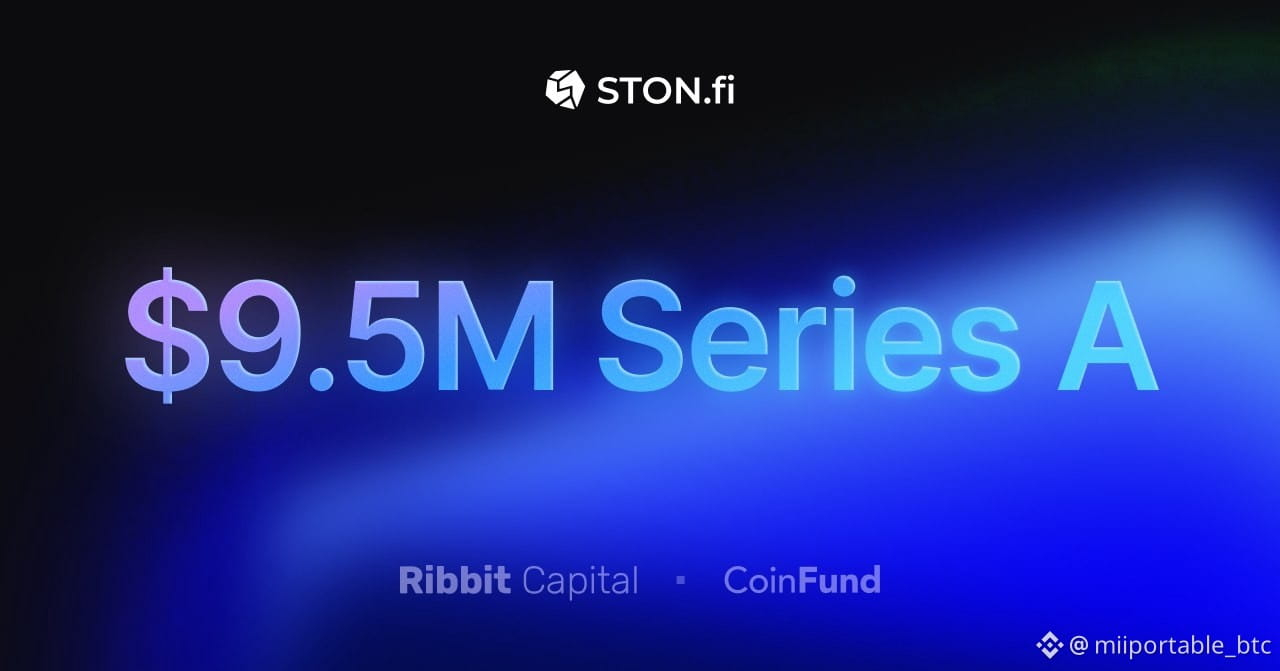
Why would a project already dominating its chain bother raising a Series A at all?
STON.fi Dev just closed a $9.5 million round, led by Ribbit Capital and CoinFund. The context matters more than the number itself: over $6 billion in total swap volume, more than 27 million transactions processed, and a reported roughly 80% share of TON users choosing STON.fi for their DeFi activity. That's not a project trying to prove its model works. That track record already exists.
Which changes what this capital is actually for. Instead of funding an attempt to reach scale, it's funding the next layer built on top of scale already achieved: concentrated liquidity pools for better capital efficiency, native limit order functionality, a community governance layer, and expanded cross-chain reach through Omniston.
Of those four, the governance layer is the one worth watching most closely. Concentrated liquidity and limit orders are fairly standard moves for a maturing DEX at this point, plenty of precedent elsewhere. A genuine governance layer is a bigger structural commitment, and how it actually gets built will say more about STON.fi's long term direction than the funding round itself.
$TON continues to be worth tracking for infrastructure stage raises like this, where the capital follows dominance rather than chasing it.
➡️Explore: https://ston.fi/
$GRAM
{future}(GRAMUSDT)
#TON #defi #STONfi @ton_blockchain @stonfi
Why would a project already dominating its chain bother raising a Series A at all?
STON.fi Dev just closed a $9.5 million round, led by Ribbit Capital and CoinFund. The context matters more than the number itself: over $6 billion in total swap volume, more than 27 million transactions processed, and a reported roughly 80% share of TON users choosing STON.fi for their DeFi activity. That's not a project trying to prove its model works. That track record already exists.
Which changes what this capital is actually for. Instead of funding an attempt to reach scale, it's funding the next layer built on top of scale already achieved: concentrated liquidity pools for better capital efficiency, native limit order functionality, a community governance layer, and expanded cross-chain reach through Omniston.
Of those four, the governance layer is the one worth watching most closely. Concentrated liquidity and limit orders are fairly standard moves for a maturing DEX at this point, plenty of precedent elsewhere. A genuine governance layer is a bigger structural commitment, and how it actually gets built will say more about STON.fi's long term direction than the funding round itself.
$TON continues to be worth tracking for infrastructure stage raises like this, where the capital follows dominance rather than chasing it.
➡️Explore: https://ston.fi/
$GRAM
#TON #defi #STONfi @Ton Network @STONfi DEX
STON.fi Dev just closed a $9.5 million round, led by Ribbit Capital and CoinFund. The context matters more than the number itself: over $6 billion in total swap volume, more than 27 million transactions processed, and a reported roughly 80% share of TON users choosing STON.fi for their DeFi activity. That's not a project trying to prove its model works. That track record already exists.
Which changes what this capital is actually for. Instead of funding an attempt to reach scale, it's funding the next layer built on top of scale already achieved: concentrated liquidity pools for better capital efficiency, native limit order functionality, a community governance layer, and expanded cross-chain reach through Omniston.
Of those four, the governance layer is the one worth watching most closely. Concentrated liquidity and limit orders are fairly standard moves for a maturing DEX at this point, plenty of precedent elsewhere. A genuine governance layer is a bigger structural commitment, and how it actually gets built will say more about STON.fi's long term direction than the funding round itself.
$TON continues to be worth tracking for infrastructure stage raises like this, where the capital follows dominance rather than chasing it.
➡️Explore: https://ston.fi/
$GRAM
#TON #defi #STONfi @Ton Network @STONfi DEX
1
260
·
--
Haussier
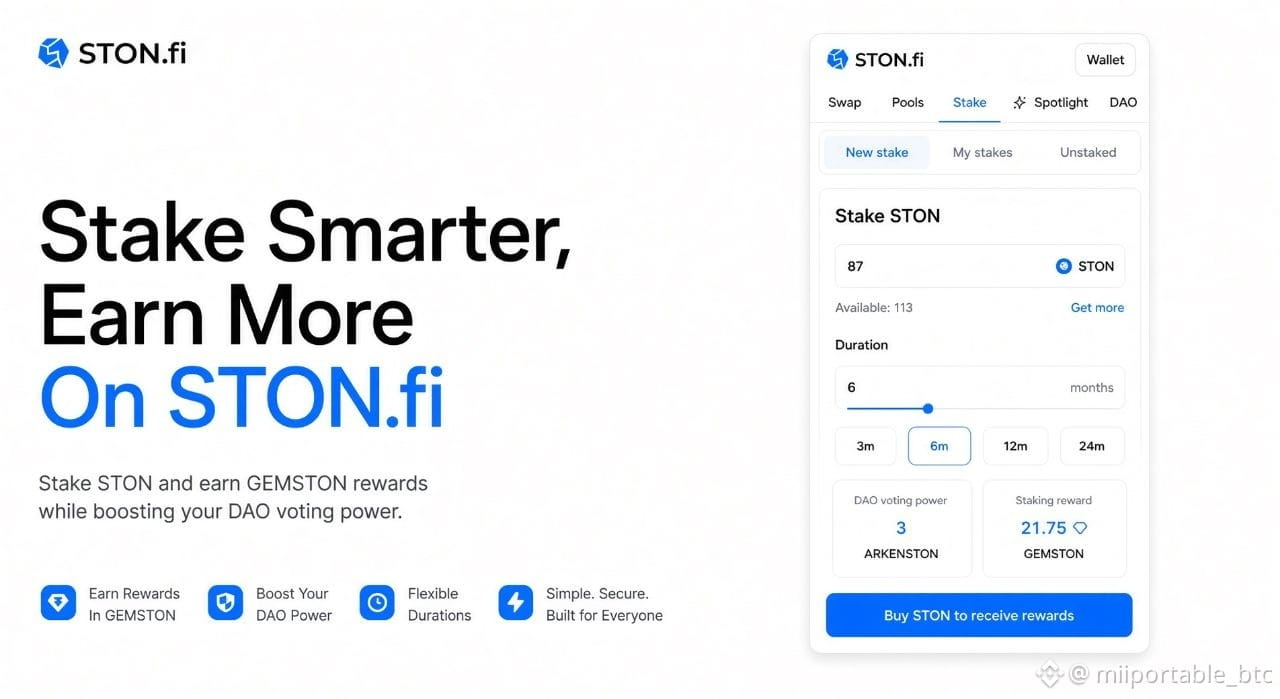
Does staking always return governance tokens on a 1:1 basis? A real number from STON.fi own interface suggests it's not that simple.
Testing the staking form directly: 87 STON staked for 6 months produced a DAO voting power reading of 3, labeled ARKENSTON, alongside a staking reward of 21.75 GEMSTON. The GEMSTON figure checks out cleanly, exactly a quarter of the staked amount at that duration tier.
The ARKENSTON number is where things get interesting. STON.fi's own written documentation describes staking as producing an equal amount of ARKENSTON to whatever STON is staked. This test shows 87 staked against a voting power figure of only 3, which is not a 1:1 relationship under any straightforward reading.
The likely explanation is that the number displayed represents a computed voting weight or percentage share rather than a literal token count matching the documentation, though that remains unconfirmed rather than something to state as fact.
$TON continues to be worth watching for mechanics like this, where a live interface and written documentation don't obviously line up, and where testing directly matters more than trusting either source at face value.
➡️Explore: https://ston.fi/
➡️Staking guide: https://guide.ston.fi/en/staking/staking-on-ston.fi
$GRAM
{future}(GRAMUSDT)
@ton_blockchain @stonfi
#TON #defi #Stonfiers
Does staking always return governance tokens on a 1:1 basis? A real number from STON.fi own interface suggests it's not that simple.
Testing the staking form directly: 87 STON staked for 6 months produced a DAO voting power reading of 3, labeled ARKENSTON, alongside a staking reward of 21.75 GEMSTON. The GEMSTON figure checks out cleanly, exactly a quarter of the staked amount at that duration tier.
The ARKENSTON number is where things get interesting. STON.fi's own written documentation describes staking as producing an equal amount of ARKENSTON to whatever STON is staked. This test shows 87 staked against a voting power figure of only 3, which is not a 1:1 relationship under any straightforward reading.
The likely explanation is that the number displayed represents a computed voting weight or percentage share rather than a literal token count matching the documentation, though that remains unconfirmed rather than something to state as fact.
$TON continues to be worth watching for mechanics like this, where a live interface and written documentation don't obviously line up, and where testing directly matters more than trusting either source at face value.
➡️Explore: https://ston.fi/
➡️Staking guide: https://guide.ston.fi/en/staking/staking-on-ston.fi
$GRAM
@Ton Network @STONfi DEX
#TON #defi #Stonfiers
Testing the staking form directly: 87 STON staked for 6 months produced a DAO voting power reading of 3, labeled ARKENSTON, alongside a staking reward of 21.75 GEMSTON. The GEMSTON figure checks out cleanly, exactly a quarter of the staked amount at that duration tier.
The ARKENSTON number is where things get interesting. STON.fi's own written documentation describes staking as producing an equal amount of ARKENSTON to whatever STON is staked. This test shows 87 staked against a voting power figure of only 3, which is not a 1:1 relationship under any straightforward reading.
The likely explanation is that the number displayed represents a computed voting weight or percentage share rather than a literal token count matching the documentation, though that remains unconfirmed rather than something to state as fact.
$TON continues to be worth watching for mechanics like this, where a live interface and written documentation don't obviously line up, and where testing directly matters more than trusting either source at face value.
➡️Explore: https://ston.fi/
➡️Staking guide: https://guide.ston.fi/en/staking/staking-on-ston.fi
$GRAM
@Ton Network @STONfi DEX
#TON #defi #Stonfiers
1
255
·
--
Haussier
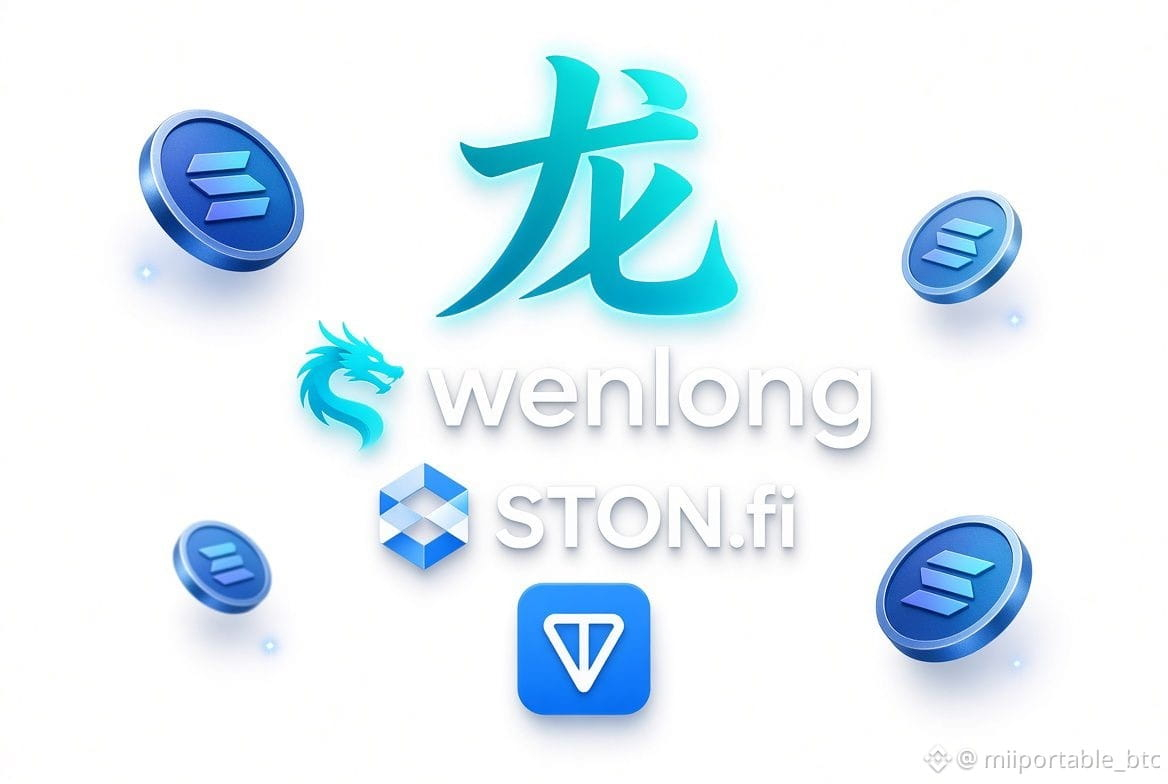
What does it actually take to open a leveraged perpetual position from inside a messaging app?
A third party team recently launched WenLong, a Telegram bot bringing Hyperliquid perpetual futures directly into Telegram, reachable from a TON wallet in a few taps. The part worth understanding is what happens behind that simple interface. A Hyperliquid position needs collateral on Arbitrum specifically, but the user is depositing GRAM or USDT on TON.
Omniston, STON.fi's cross chain infrastructure, handles that conversion automatically, swapping the TON side deposit into USDC and routing it into the Hyperliquid deposit within a single flow the user never touches directly.
This is a useful example of how cross-chain infrastructure tends to work when it's done well. Most users don't want to think about which chain their funds need to sit on before a trade executes, they just want the trade to work.
Building that routing once, as reusable infrastructure other teams can plug into, is what let a bot like this exist without its builders having to solve cross-chain settlement from scratch themselves.
Worth being direct about the risk side too. WenLong is a third party application built independently, and $TON's STON.fi has no affiliation with, endorsement of, or responsibility for it. Leveraged perpetual futures carry significant risk regardless of how frictionless the onboarding feels, and that risk doesn't change just because opening a position takes a few taps in Telegram instead of a full exchange signup.
➡️Explore: https://ston.fi/
➡️Omniston: https://omniston.ston.fi/
$GRAM
{future}(GRAMUSDT)
$HYPE
{future}(HYPEUSDT)
#Toncoin #DEFİ #Omniston @ton_blockchain @stonfi
What does it actually take to open a leveraged perpetual position from inside a messaging app?
A third party team recently launched WenLong, a Telegram bot bringing Hyperliquid perpetual futures directly into Telegram, reachable from a TON wallet in a few taps. The part worth understanding is what happens behind that simple interface. A Hyperliquid position needs collateral on Arbitrum specifically, but the user is depositing GRAM or USDT on TON.
Omniston, STON.fi's cross chain infrastructure, handles that conversion automatically, swapping the TON side deposit into USDC and routing it into the Hyperliquid deposit within a single flow the user never touches directly.
This is a useful example of how cross-chain infrastructure tends to work when it's done well. Most users don't want to think about which chain their funds need to sit on before a trade executes, they just want the trade to work.
Building that routing once, as reusable infrastructure other teams can plug into, is what let a bot like this exist without its builders having to solve cross-chain settlement from scratch themselves.
Worth being direct about the risk side too. WenLong is a third party application built independently, and $TON's STON.fi has no affiliation with, endorsement of, or responsibility for it. Leveraged perpetual futures carry significant risk regardless of how frictionless the onboarding feels, and that risk doesn't change just because opening a position takes a few taps in Telegram instead of a full exchange signup.
➡️Explore: https://ston.fi/
➡️Omniston: https://omniston.ston.fi/
$GRAM
$HYPE
#Toncoin #DEFİ #Omniston @Ton Network @STONfi DEX
A third party team recently launched WenLong, a Telegram bot bringing Hyperliquid perpetual futures directly into Telegram, reachable from a TON wallet in a few taps. The part worth understanding is what happens behind that simple interface. A Hyperliquid position needs collateral on Arbitrum specifically, but the user is depositing GRAM or USDT on TON.
Omniston, STON.fi's cross chain infrastructure, handles that conversion automatically, swapping the TON side deposit into USDC and routing it into the Hyperliquid deposit within a single flow the user never touches directly.
This is a useful example of how cross-chain infrastructure tends to work when it's done well. Most users don't want to think about which chain their funds need to sit on before a trade executes, they just want the trade to work.
Building that routing once, as reusable infrastructure other teams can plug into, is what let a bot like this exist without its builders having to solve cross-chain settlement from scratch themselves.
Worth being direct about the risk side too. WenLong is a third party application built independently, and $TON's STON.fi has no affiliation with, endorsement of, or responsibility for it. Leveraged perpetual futures carry significant risk regardless of how frictionless the onboarding feels, and that risk doesn't change just because opening a position takes a few taps in Telegram instead of a full exchange signup.
➡️Explore: https://ston.fi/
➡️Omniston: https://omniston.ston.fi/
$GRAM
$HYPE
#Toncoin #DEFİ #Omniston @Ton Network @STONfi DEX
1
263
·
--
Haussier
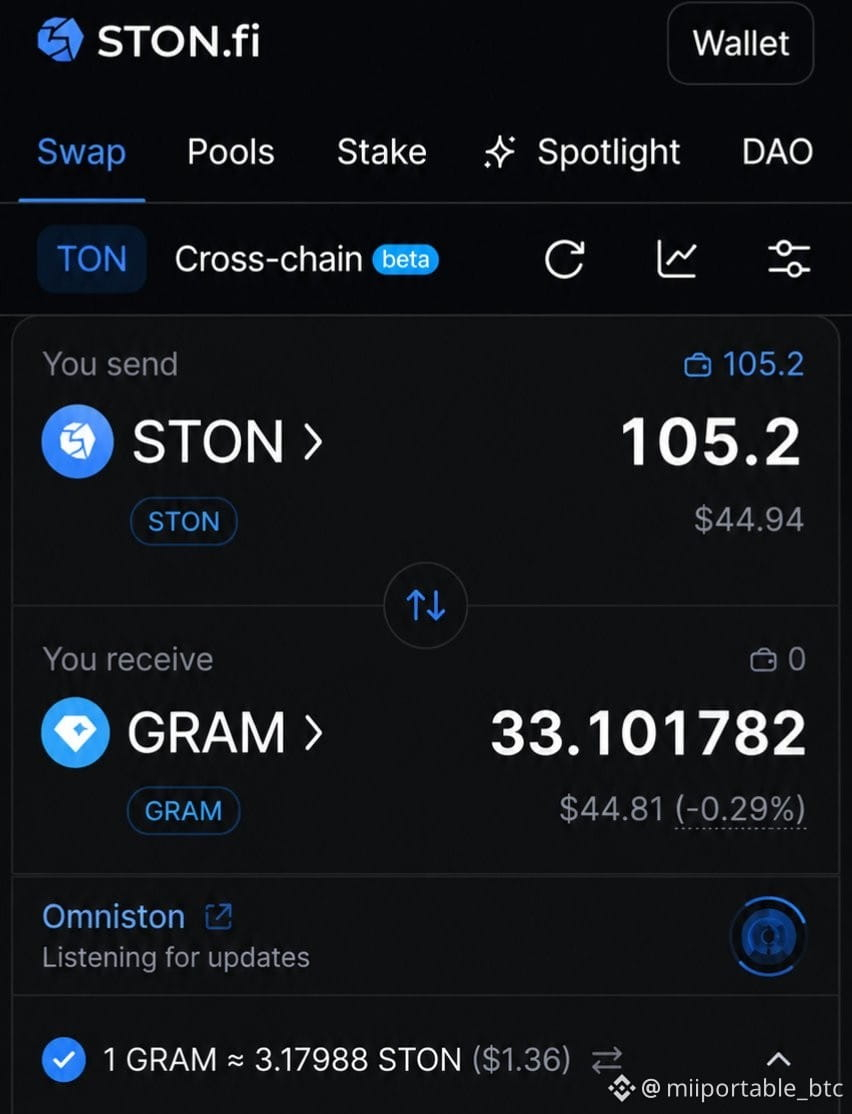
What does it actually take to access a token you have never held before?
Testing STON.fi's cross chain interface, still in beta, showed something practical. The wallet held 105.2 STON on one side and exactly 0 on the receiving asset, GRAM, before the swap. That zero balance is the actual use case for cross chain swaps in one screenshot: reaching an asset on another network you have no prior exposure to, without needing to already hold it or set up a separate account somewhere else first.
The quote itself showed 105.2 STON, valued at $44.94, against 33.101782 GRAM, valued at $44.81, a small visible gap between the two sides rather than a number rounded away. The exchange rate was shown plainly too, 1 GRAM to roughly 3.17988 STON, giving a clear reference point before confirming anything.
This is worth understanding for anyone who assumes cross chain access requires bridging tools, wrapped assets, or holding the destination token in advance. Here, none of that applied.
$GRAM continues to be a chain worth watching for interfaces like this, since removing the friction of a zero starting balance is often the actual barrier keeping users out of new ecosystems, not lack of interest.
➡️Ston.fi: https://ston.fi/
➡️Cross chain: https://app.ston.fi/swap
#TON #defi #Omniston $GRAM
{future}(GRAMUSDT)
What does it actually take to access a token you have never held before?
Testing STON.fi's cross chain interface, still in beta, showed something practical. The wallet held 105.2 STON on one side and exactly 0 on the receiving asset, GRAM, before the swap. That zero balance is the actual use case for cross chain swaps in one screenshot: reaching an asset on another network you have no prior exposure to, without needing to already hold it or set up a separate account somewhere else first.
The quote itself showed 105.2 STON, valued at $44.94, against 33.101782 GRAM, valued at $44.81, a small visible gap between the two sides rather than a number rounded away. The exchange rate was shown plainly too, 1 GRAM to roughly 3.17988 STON, giving a clear reference point before confirming anything.
This is worth understanding for anyone who assumes cross chain access requires bridging tools, wrapped assets, or holding the destination token in advance. Here, none of that applied.
$GRAM continues to be a chain worth watching for interfaces like this, since removing the friction of a zero starting balance is often the actual barrier keeping users out of new ecosystems, not lack of interest.
➡️Ston.fi: https://ston.fi/
➡️Cross chain: https://app.ston.fi/swap
#TON #defi #Omniston $GRAM
Testing STON.fi's cross chain interface, still in beta, showed something practical. The wallet held 105.2 STON on one side and exactly 0 on the receiving asset, GRAM, before the swap. That zero balance is the actual use case for cross chain swaps in one screenshot: reaching an asset on another network you have no prior exposure to, without needing to already hold it or set up a separate account somewhere else first.
The quote itself showed 105.2 STON, valued at $44.94, against 33.101782 GRAM, valued at $44.81, a small visible gap between the two sides rather than a number rounded away. The exchange rate was shown plainly too, 1 GRAM to roughly 3.17988 STON, giving a clear reference point before confirming anything.
This is worth understanding for anyone who assumes cross chain access requires bridging tools, wrapped assets, or holding the destination token in advance. Here, none of that applied.
$GRAM continues to be a chain worth watching for interfaces like this, since removing the friction of a zero starting balance is often the actual barrier keeping users out of new ecosystems, not lack of interest.
➡️Ston.fi: https://ston.fi/
➡️Cross chain: https://app.ston.fi/swap
#TON #defi #Omniston $GRAM
1
223
·
--
Haussier
What Happens When You Remove Bridges From Cross Chain Swaps?
Omniston (STON.fi's swap routing layer) just added native cross chain support
$GRAM TRON, and major EVM networks like Ethereum, Base, and Arbitrum can now swap directly with each other, without a separate bridge or wrapped assets in the middle.
Here's the mechanism, as I understand it so far: your swap gets matched with independent resolvers supplying the destination asset, and both legs settle through linked smart contract escrows so it's all or nothing, never a partial fill stuck mid transfer. Reported swap times sit around 15 to 40 seconds, which would be a notable jump from typical bridge wait times if it holds up under real volume.
I haven't run a swap through it myself yet the escrow contracts passed an audit with no critical issues, but audits and real world usage at scale are two different tests. Planning to try a small swap soon and share actual speed/fee numbers rather than just the announcement.
Anyone here already tested Omniston cross chain? Curious how it held up for you.
➡️ explore here: https://ston.fi/
#Toncoin #Stonfiers #Omniston
What Happens When You Remove Bridges From Cross Chain Swaps?
Omniston (STON.fi's swap routing layer) just added native cross chain support
$GRAM TRON, and major EVM networks like Ethereum, Base, and Arbitrum can now swap directly with each other, without a separate bridge or wrapped assets in the middle.
Here's the mechanism, as I understand it so far: your swap gets matched with independent resolvers supplying the destination asset, and both legs settle through linked smart contract escrows so it's all or nothing, never a partial fill stuck mid transfer. Reported swap times sit around 15 to 40 seconds, which would be a notable jump from typical bridge wait times if it holds up under real volume.
I haven't run a swap through it myself yet the escrow contracts passed an audit with no critical issues, but audits and real world usage at scale are two different tests. Planning to try a small swap soon and share actual speed/fee numbers rather than just the announcement.
Anyone here already tested Omniston cross chain? Curious how it held up for you.
➡️ explore here: https://ston.fi/
#Toncoin #Stonfiers #Omniston
Omniston (STON.fi's swap routing layer) just added native cross chain support
$GRAM TRON, and major EVM networks like Ethereum, Base, and Arbitrum can now swap directly with each other, without a separate bridge or wrapped assets in the middle.
Here's the mechanism, as I understand it so far: your swap gets matched with independent resolvers supplying the destination asset, and both legs settle through linked smart contract escrows so it's all or nothing, never a partial fill stuck mid transfer. Reported swap times sit around 15 to 40 seconds, which would be a notable jump from typical bridge wait times if it holds up under real volume.
I haven't run a swap through it myself yet the escrow contracts passed an audit with no critical issues, but audits and real world usage at scale are two different tests. Planning to try a small swap soon and share actual speed/fee numbers rather than just the announcement.
Anyone here already tested Omniston cross chain? Curious how it held up for you.
➡️ explore here: https://ston.fi/
#Toncoin #Stonfiers #Omniston
1
299
·
--
Haussier
What does it actually mean for a liquidity provider when a protocol calls itself an aggregation layer instead of just another pool?
Omniston, built by STON.fi, is positioning itself around exactly that distinction. Instead of asking liquidity providers to choose one pool and stay there, it aims to route and aggregate liquidity across multiple sources on TON, meaning capital that plugs in through Omniston has a shot at serving more of the total swap volume on the chain rather than just whatever passes through one isolated pool.
That framing matters more once you compare it to how most single pool DEXs work. A provider stuck in one pool only earns from trades that specifically route through that pool. An aggregation-first model changes the math on where liquidity actually gets used.
Worth understanding before assuming all TON liquidity strategies work the same way.
Ston.fi: https://ston.fi/
Omniston: https://omniston.ston.fi/
@stonfi @ton_blockchain $GRAM
#TON #defi #Omniston
What does it actually mean for a liquidity provider when a protocol calls itself an aggregation layer instead of just another pool?
Omniston, built by STON.fi, is positioning itself around exactly that distinction. Instead of asking liquidity providers to choose one pool and stay there, it aims to route and aggregate liquidity across multiple sources on TON, meaning capital that plugs in through Omniston has a shot at serving more of the total swap volume on the chain rather than just whatever passes through one isolated pool.
That framing matters more once you compare it to how most single pool DEXs work. A provider stuck in one pool only earns from trades that specifically route through that pool. An aggregation-first model changes the math on where liquidity actually gets used.
Worth understanding before assuming all TON liquidity strategies work the same way.
Ston.fi: https://ston.fi/
Omniston: https://omniston.ston.fi/
@STONfi DEX @Ton Network $GRAM
#TON #defi #Omniston
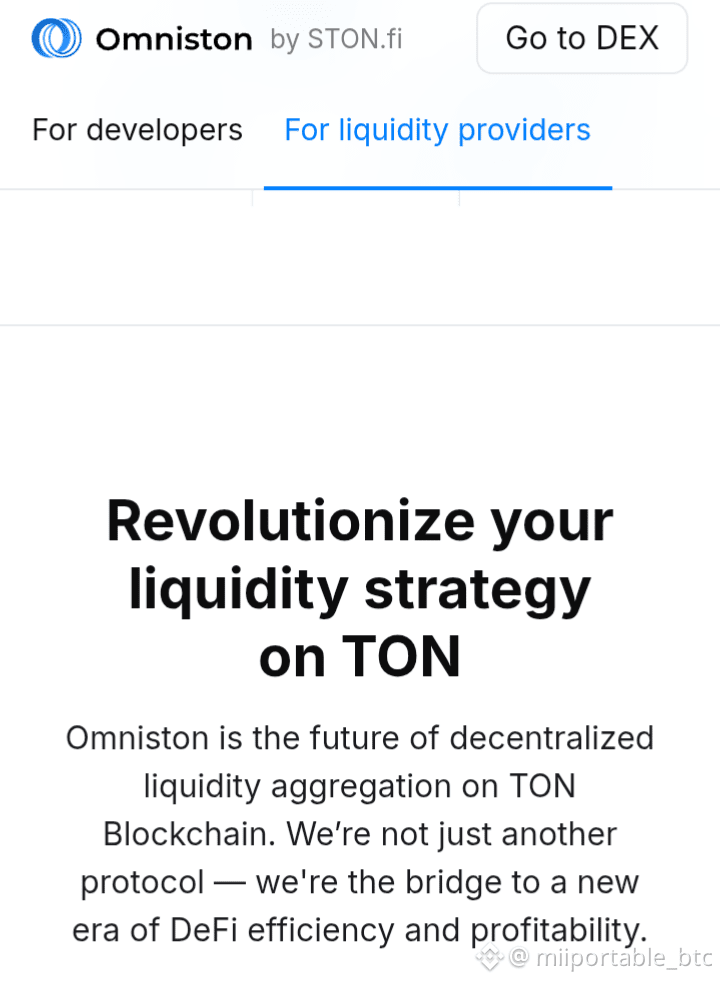
Omniston, built by STON.fi, is positioning itself around exactly that distinction. Instead of asking liquidity providers to choose one pool and stay there, it aims to route and aggregate liquidity across multiple sources on TON, meaning capital that plugs in through Omniston has a shot at serving more of the total swap volume on the chain rather than just whatever passes through one isolated pool.
That framing matters more once you compare it to how most single pool DEXs work. A provider stuck in one pool only earns from trades that specifically route through that pool. An aggregation-first model changes the math on where liquidity actually gets used.
Worth understanding before assuming all TON liquidity strategies work the same way.
Ston.fi: https://ston.fi/
Omniston: https://omniston.ston.fi/
@STONfi DEX @Ton Network $GRAM
#TON #defi #Omniston
1
310
·
--
Haussier
What does it actually take to keep a DEX's liquidity, integrations, and security running smoothly at the same time?
STON.fi just published a page introducing its key partners, the teams working alongside STON.fi across liquidity provisioning, protocol integrations, and security. A DEX handling meaningful volume on $TON does not run on one team alone. It depends on a stack of partners handling different pieces of the infrastructure, often invisibly to the end user.
Worth a look if you want to understand who is actually behind the parts of STON.fi you interact with daily without realizing it.
➡️explore: https://ston.fi/
➡️Key partners: https://ston.fi/partners
@stonfi @ton_blockchain $GRAM
{future}(GRAMUSDT)
#TON #defi #STONfi
What does it actually take to keep a DEX's liquidity, integrations, and security running smoothly at the same time?
STON.fi just published a page introducing its key partners, the teams working alongside STON.fi across liquidity provisioning, protocol integrations, and security. A DEX handling meaningful volume on $TON does not run on one team alone. It depends on a stack of partners handling different pieces of the infrastructure, often invisibly to the end user.
Worth a look if you want to understand who is actually behind the parts of STON.fi you interact with daily without realizing it.
➡️explore: https://ston.fi/
➡️Key partners: https://ston.fi/partners
@STONfi DEX @Ton Network $GRAM
#TON #defi #STONfi
STON.fi just published a page introducing its key partners, the teams working alongside STON.fi across liquidity provisioning, protocol integrations, and security. A DEX handling meaningful volume on $TON does not run on one team alone. It depends on a stack of partners handling different pieces of the infrastructure, often invisibly to the end user.
Worth a look if you want to understand who is actually behind the parts of STON.fi you interact with daily without realizing it.
➡️explore: https://ston.fi/
➡️Key partners: https://ston.fi/partners
@STONfi DEX @Ton Network $GRAM
#TON #defi #STONfi

1
1
215
·
--
Haussier
Why does moving stablecoins between chains still feel harder than it should?
STON.fi just launched cross chain swaps inside its app, connecting TON directly to TRON, Ethereum, Base, BNB Chain, Polygon, Avalanche, Arbitrum, and Robinhood Chain. All through one self custodial interface, no bridges, no wrapped assets.
The execution layer behind this is Omniston. It coordinates both sides of a swap using linked smart contract escrows on the source and destination chain, so either both sides complete together or the funds return to the user. Nothing gets stuck halfway. Most swaps settle in 15 to 40 seconds.
This matters because stablecoin liquidity is currently split across networks like TRON and Ethereum, each holding a large share of a market worth hundreds of billions combined. A direct, self custodial path between $TON and that liquidity changes what is actually reachable from inside the TON ecosystem without leaving it.
➡️Cross chain interface: https://app.ston.fi/cross-chain
@stonfi @ton_blockchain
#TON #defi #STONfi $GRAM
{future}(GRAMUSDT)
Why does moving stablecoins between chains still feel harder than it should?
STON.fi just launched cross chain swaps inside its app, connecting TON directly to TRON, Ethereum, Base, BNB Chain, Polygon, Avalanche, Arbitrum, and Robinhood Chain. All through one self custodial interface, no bridges, no wrapped assets.
The execution layer behind this is Omniston. It coordinates both sides of a swap using linked smart contract escrows on the source and destination chain, so either both sides complete together or the funds return to the user. Nothing gets stuck halfway. Most swaps settle in 15 to 40 seconds.
This matters because stablecoin liquidity is currently split across networks like TRON and Ethereum, each holding a large share of a market worth hundreds of billions combined. A direct, self custodial path between $TON and that liquidity changes what is actually reachable from inside the TON ecosystem without leaving it.
➡️Cross chain interface: https://app.ston.fi/cross-chain
@STONfi DEX @Ton Network
#TON #defi #STONfi $GRAM
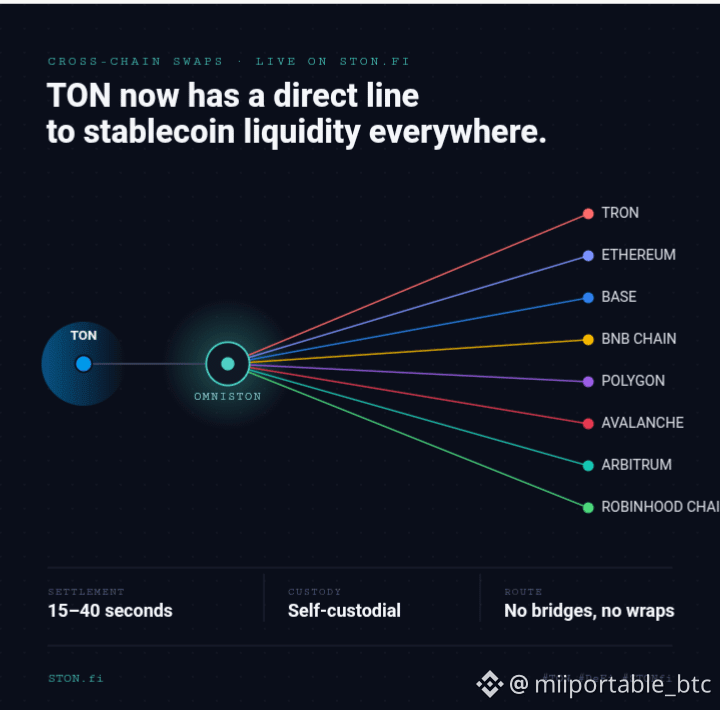
STON.fi just launched cross chain swaps inside its app, connecting TON directly to TRON, Ethereum, Base, BNB Chain, Polygon, Avalanche, Arbitrum, and Robinhood Chain. All through one self custodial interface, no bridges, no wrapped assets.
The execution layer behind this is Omniston. It coordinates both sides of a swap using linked smart contract escrows on the source and destination chain, so either both sides complete together or the funds return to the user. Nothing gets stuck halfway. Most swaps settle in 15 to 40 seconds.
This matters because stablecoin liquidity is currently split across networks like TRON and Ethereum, each holding a large share of a market worth hundreds of billions combined. A direct, self custodial path between $TON and that liquidity changes what is actually reachable from inside the TON ecosystem without leaving it.
➡️Cross chain interface: https://app.ston.fi/cross-chain
@STONfi DEX @Ton Network
#TON #defi #STONfi $GRAM
1
146
·
--
Haussier
I spent some time reading about how swaps are executed on TON, and one thing became clear: finding liquidity isn't the same as finding the best execution.
Most of us look at the final amount we receive, but we rarely think about what happens between clicking Swap and seeing the transaction complete.
That's where Omniston caught my attention.
From what I've learned, it separates liquidity discovery from the user experience. Instead of expecting users to compare pools manually, the routing happens behind the scenes to search for a better execution path.
What I found interesting isn't that it's another DEX feature. It's that it treats trade execution as an infrastructure problem rather than a user problem.
Will every swap be dramatically better? Probably not.
But if routing consistently finds even slightly better prices or reduces slippage over hundreds of swaps, that improvement compounds over time.
To me, that's the kind of innovation that's easy to overlook because users only notice the final result, not the technology working underneath.
I'm interested to see how this approach evolves as more liquidity sources connect to Omniston.
https://ston.fi
@ton_blockchain @stonfi #STONfi #TON $GRAM
{future}(GRAMUSDT)
I spent some time reading about how swaps are executed on TON, and one thing became clear: finding liquidity isn't the same as finding the best execution.
Most of us look at the final amount we receive, but we rarely think about what happens between clicking Swap and seeing the transaction complete.
That's where Omniston caught my attention.
From what I've learned, it separates liquidity discovery from the user experience. Instead of expecting users to compare pools manually, the routing happens behind the scenes to search for a better execution path.
What I found interesting isn't that it's another DEX feature. It's that it treats trade execution as an infrastructure problem rather than a user problem.
Will every swap be dramatically better? Probably not.
But if routing consistently finds even slightly better prices or reduces slippage over hundreds of swaps, that improvement compounds over time.
To me, that's the kind of innovation that's easy to overlook because users only notice the final result, not the technology working underneath.
I'm interested to see how this approach evolves as more liquidity sources connect to Omniston.
https://ston.fi
@Ton Network @STONfi DEX #STONfi #TON $GRAM
Most of us look at the final amount we receive, but we rarely think about what happens between clicking Swap and seeing the transaction complete.
That's where Omniston caught my attention.
From what I've learned, it separates liquidity discovery from the user experience. Instead of expecting users to compare pools manually, the routing happens behind the scenes to search for a better execution path.
What I found interesting isn't that it's another DEX feature. It's that it treats trade execution as an infrastructure problem rather than a user problem.
Will every swap be dramatically better? Probably not.
But if routing consistently finds even slightly better prices or reduces slippage over hundreds of swaps, that improvement compounds over time.
To me, that's the kind of innovation that's easy to overlook because users only notice the final result, not the technology working underneath.
I'm interested to see how this approach evolves as more liquidity sources connect to Omniston.
https://ston.fi
@Ton Network @STONfi DEX #STONfi #TON $GRAM

1
381
·
--
Haussier
➠ Beginner's Guide to Swapping Tokens on STON.fi
For many newcomers, making a first swap on a decentralized exchange can feel intimidating. The good news is that STON.fi makes the process straightforward, allowing users to exchange tokens directly from their wallet while maintaining full control of their assets.
➠ Step 1 Connect Your Wallet
Start by connecting a TON compatible wallet to STON.fi.
Your wallet acts as your gateway to the platform and securely authorizes every transaction.
➠ Step 2 — Choose Your Tokens
Select the token you want to swap from and the token you want to receive.
STON.fi automatically displays the estimated exchange rate before you confirm the transaction.
➠ Step 3 — Review the Swap
Before approving the transaction, check the important details:
➥ Amount you'll receive
➥ Network fee
➥ Price impact
➥ Slippage tolerance
Reviewing these details helps you understand the cost and expected outcome of your trade.
➠ Step 4 — Confirm the Transaction
Approve the swap through your wallet.
Once confirmed on the TON blockchain, the transaction is processed and the new tokens are sent directly to your wallet.
➠ How STON.fi Improves the Experience
STON.fi combines TON's fast, low cost network with Omniston, which intelligently routes trades through available liquidity sources.
This helps users benefit from:
➥ Better pricing
➥ Lower slippage
➥ Faster execution
➥ A smoother trading experience
➠ Final Thoughts
Swapping tokens is one of the core activities in DeFi, and understanding the process is the first step toward exploring the broader TON ecosystem.
With its intuitive interface, efficient liquidity infrastructure, and non custodial design, STON.fi makes token swapping accessible for beginners while providing the performance experienced users expect.
➥ https://app.ston.fi
@stonfi @ton_blockchain $GRAM #DEX #defi #STONfi
➠ Beginner's Guide to Swapping Tokens on STON.fi
For many newcomers, making a first swap on a decentralized exchange can feel intimidating. The good news is that STON.fi makes the process straightforward, allowing users to exchange tokens directly from their wallet while maintaining full control of their assets.
➠ Step 1 Connect Your Wallet
Start by connecting a TON compatible wallet to STON.fi.
Your wallet acts as your gateway to the platform and securely authorizes every transaction.
➠ Step 2 — Choose Your Tokens
Select the token you want to swap from and the token you want to receive.
STON.fi automatically displays the estimated exchange rate before you confirm the transaction.
➠ Step 3 — Review the Swap
Before approving the transaction, check the important details:
➥ Amount you'll receive
➥ Network fee
➥ Price impact
➥ Slippage tolerance
Reviewing these details helps you understand the cost and expected outcome of your trade.
➠ Step 4 — Confirm the Transaction
Approve the swap through your wallet.
Once confirmed on the TON blockchain, the transaction is processed and the new tokens are sent directly to your wallet.
➠ How STON.fi Improves the Experience
STON.fi combines TON's fast, low cost network with Omniston, which intelligently routes trades through available liquidity sources.
This helps users benefit from:
➥ Better pricing
➥ Lower slippage
➥ Faster execution
➥ A smoother trading experience
➠ Final Thoughts
Swapping tokens is one of the core activities in DeFi, and understanding the process is the first step toward exploring the broader TON ecosystem.
With its intuitive interface, efficient liquidity infrastructure, and non custodial design, STON.fi makes token swapping accessible for beginners while providing the performance experienced users expect.
➥ https://app.ston.fi
@STONfi DEX @Ton Network $GRAM #DEX #defi #STONfi
For many newcomers, making a first swap on a decentralized exchange can feel intimidating. The good news is that STON.fi makes the process straightforward, allowing users to exchange tokens directly from their wallet while maintaining full control of their assets.
➠ Step 1 Connect Your Wallet
Start by connecting a TON compatible wallet to STON.fi.
Your wallet acts as your gateway to the platform and securely authorizes every transaction.
➠ Step 2 — Choose Your Tokens
Select the token you want to swap from and the token you want to receive.
STON.fi automatically displays the estimated exchange rate before you confirm the transaction.
➠ Step 3 — Review the Swap
Before approving the transaction, check the important details:
➥ Amount you'll receive
➥ Network fee
➥ Price impact
➥ Slippage tolerance
Reviewing these details helps you understand the cost and expected outcome of your trade.
➠ Step 4 — Confirm the Transaction
Approve the swap through your wallet.
Once confirmed on the TON blockchain, the transaction is processed and the new tokens are sent directly to your wallet.
➠ How STON.fi Improves the Experience
STON.fi combines TON's fast, low cost network with Omniston, which intelligently routes trades through available liquidity sources.
This helps users benefit from:
➥ Better pricing
➥ Lower slippage
➥ Faster execution
➥ A smoother trading experience
➠ Final Thoughts
Swapping tokens is one of the core activities in DeFi, and understanding the process is the first step toward exploring the broader TON ecosystem.
With its intuitive interface, efficient liquidity infrastructure, and non custodial design, STON.fi makes token swapping accessible for beginners while providing the performance experienced users expect.
➥ https://app.ston.fi
@STONfi DEX @Ton Network $GRAM #DEX #defi #STONfi

2
180
Newton Protocol: Building the Secure Foundation for AI Powered On Chain Automation$NEWT Artificial intelligence is rapidly changing how people interact with blockchain technology. From automated trading strategies to autonomous DeFi agents, AI has the potential to make decentralized finance more efficient than ever. However, one critical challenge remains: how can AI safely execute on chain actions without introducing unnecessary risks?
This is the problem that @NewtonProtocol is solving.
Rather than acting as another blockchain, Newton Protocol introduces a decentralized authorization layer that verifies whether a transaction satisfies predefined security and policy rules before it is executed. This creates a safer environment for AI agents, automated strategies, and developers building next generation decentralized applications.
The launch of the Newton Mainnet Beta marks an important milestone, allowing developers to test and build secure AI powered applications in a live environment. Instead of relying solely on traditional transaction execution, Newton focuses on programmable authorization, enabling policies such as spending limits, compliance requirements, and custom verification rules.
This infrastructure can support a wide range of use cases, including automated portfolio management, algorithmic trading, AI powered financial assistants, institutional DeFi, and other autonomous blockchain applications. As AI continues to evolve, secure authorization will become just as important as execution itself.
The future of Web3 isn't just smarter applications it's smarter and safer infrastructure. Newton Protocol is helping build that future by giving AI agents the secure foundation they need to operate confidently on chain.
If AI is set to become a major participant in decentralized finance, protocols that prioritize security, transparency, and programmable authorization will play a vital role in the next generation of blockchain innovation.
@NewtonProtocol $NEWT #Newt
{future}(NEWTUSDT)
Newton Protocol: Building the Secure Foundation for AI Powered On Chain Automation
$NEWT Artificial intelligence is rapidly changing how people interact with blockchain technology. From automated trading strategies to autonomous DeFi agents, AI has the potential to make decentralized finance more efficient than ever. However, one critical challenge remains: how can AI safely execute on chain actions without introducing unnecessary risks?
This is the problem that @NewtonProtocol is solving.
Rather than acting as another blockchain, Newton Protocol introduces a decentralized authorization layer that verifies whether a transaction satisfies predefined security and policy rules before it is executed. This creates a safer environment for AI agents, automated strategies, and developers building next generation decentralized applications.
The launch of the Newton Mainnet Beta marks an important milestone, allowing developers to test and build secure AI powered applications in a live environment. Instead of relying solely on traditional transaction execution, Newton focuses on programmable authorization, enabling policies such as spending limits, compliance requirements, and custom verification rules.
This infrastructure can support a wide range of use cases, including automated portfolio management, algorithmic trading, AI powered financial assistants, institutional DeFi, and other autonomous blockchain applications. As AI continues to evolve, secure authorization will become just as important as execution itself.
The future of Web3 isn't just smarter applications it's smarter and safer infrastructure. Newton Protocol is helping build that future by giving AI agents the secure foundation they need to operate confidently on chain.
If AI is set to become a major participant in decentralized finance, protocols that prioritize security, transparency, and programmable authorization will play a vital role in the next generation of blockchain innovation.
@NewtonProtocol $NEWT #Newt
This is the problem that @NewtonProtocol is solving.
Rather than acting as another blockchain, Newton Protocol introduces a decentralized authorization layer that verifies whether a transaction satisfies predefined security and policy rules before it is executed. This creates a safer environment for AI agents, automated strategies, and developers building next generation decentralized applications.
The launch of the Newton Mainnet Beta marks an important milestone, allowing developers to test and build secure AI powered applications in a live environment. Instead of relying solely on traditional transaction execution, Newton focuses on programmable authorization, enabling policies such as spending limits, compliance requirements, and custom verification rules.
This infrastructure can support a wide range of use cases, including automated portfolio management, algorithmic trading, AI powered financial assistants, institutional DeFi, and other autonomous blockchain applications. As AI continues to evolve, secure authorization will become just as important as execution itself.
The future of Web3 isn't just smarter applications it's smarter and safer infrastructure. Newton Protocol is helping build that future by giving AI agents the secure foundation they need to operate confidently on chain.
If AI is set to become a major participant in decentralized finance, protocols that prioritize security, transparency, and programmable authorization will play a vital role in the next generation of blockchain innovation.
@NewtonProtocol $NEWT #Newt
1
24
·
--
Haussier
Vérifié
$NEWT AI is becoming more capable every day, but intelligent agents need secure infrastructure to operate on chain without compromising trust.
That's exactly where @NewtonProtocol is building.
Newton Protocol introduces a decentralized authorization layer that enables AI agents to execute transactions safely through programmable policies, cryptographic verification, and secure automation. Instead of simply executing transactions, every action can be validated against predefined rules before it reaches the blockchain.
With the Newton Mainnet Beta, developers can begin building AI powered trading strategies, automated DeFi workflows, and next-generation financial applications on infrastructure designed for security and scalability.
As AI and blockchain continue to converge, protocols like Newton are laying the foundation for autonomous on chain economies.
@NewtonProtocol $NEWT #Newt
{future}(NEWTUSDT)
$NEWT AI is becoming more capable every day, but intelligent agents need secure infrastructure to operate on chain without compromising trust.
That's exactly where @NewtonProtocol is building.
Newton Protocol introduces a decentralized authorization layer that enables AI agents to execute transactions safely through programmable policies, cryptographic verification, and secure automation. Instead of simply executing transactions, every action can be validated against predefined rules before it reaches the blockchain.
With the Newton Mainnet Beta, developers can begin building AI powered trading strategies, automated DeFi workflows, and next-generation financial applications on infrastructure designed for security and scalability.
As AI and blockchain continue to converge, protocols like Newton are laying the foundation for autonomous on chain economies.
@NewtonProtocol $NEWT #Newt
That's exactly where @NewtonProtocol is building.
Newton Protocol introduces a decentralized authorization layer that enables AI agents to execute transactions safely through programmable policies, cryptographic verification, and secure automation. Instead of simply executing transactions, every action can be validated against predefined rules before it reaches the blockchain.
With the Newton Mainnet Beta, developers can begin building AI powered trading strategies, automated DeFi workflows, and next-generation financial applications on infrastructure designed for security and scalability.
As AI and blockchain continue to converge, protocols like Newton are laying the foundation for autonomous on chain economies.
@NewtonProtocol $NEWT #Newt

2
1
49
·
--
Haussier
$ZAMA Current Price: ~0.03410 USDT (+11.62% today)
Trend: Strongly Bullish price is above all MAs (7, 25, 99), with the 7 above the 25 above the 99 (golden alignment).
Key Support:
· MA(7) at 0.03348 (immediate)
· MA(25) at 0.03226 (stronger)
Key Resistance:
· 24h high at 0.03429
· Next level at 0.03451 (recent peak)
Volume: 3.62M ZAMA (well below MA(5) of 7.51M) bearish divergence rally lacks strong buying pressure.
Momentum: Slowing smaller green candles near resistance.
Recommendation:
· Avoid chasing near 0.03410 0.03429.
· Wait for pullback to MA(7) at 0.03348 for entry.
· Stop loss: Below 0.03261.
· Take profit: 0.03451.
· Risk/Reward: ~1.5:1.
Critical warning: Low volume + 11% gain = possible pump. Use tight stops.
{future}(ZAMAUSDT)
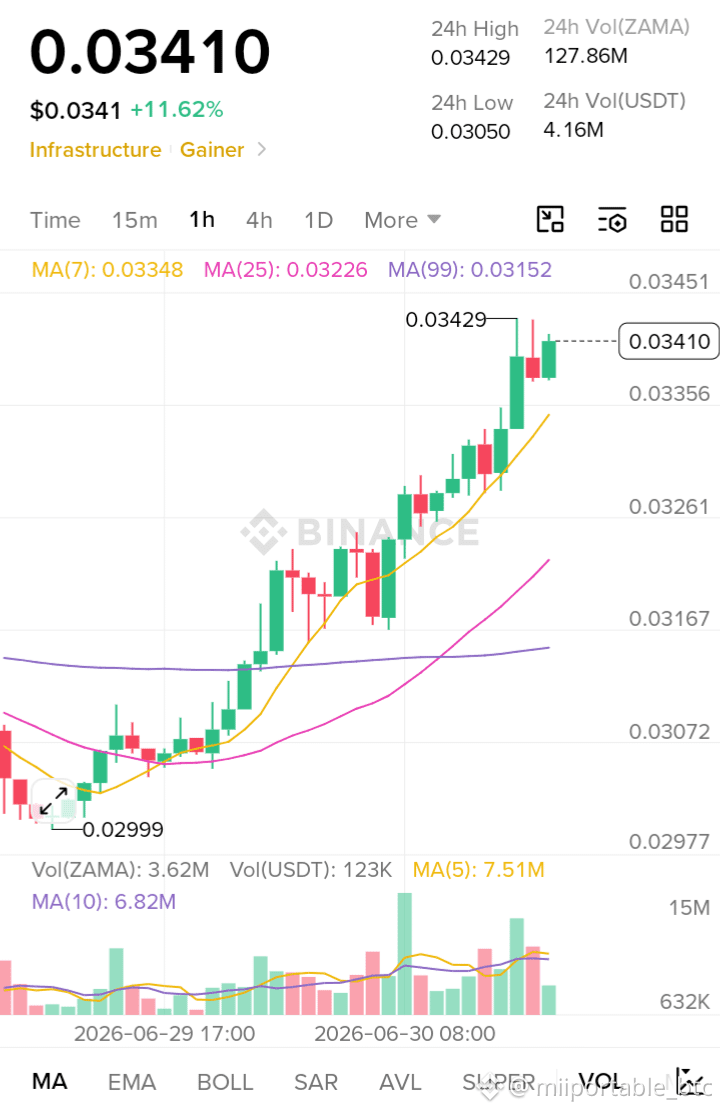
$ZAMA Current Price: ~0.03410 USDT (+11.62% today)
Trend: Strongly Bullish price is above all MAs (7, 25, 99), with the 7 above the 25 above the 99 (golden alignment).
Key Support:
· MA(7) at 0.03348 (immediate)
· MA(25) at 0.03226 (stronger)
Key Resistance:
· 24h high at 0.03429
· Next level at 0.03451 (recent peak)
Volume: 3.62M ZAMA (well below MA(5) of 7.51M) bearish divergence rally lacks strong buying pressure.
Momentum: Slowing smaller green candles near resistance.
Recommendation:
· Avoid chasing near 0.03410 0.03429.
· Wait for pullback to MA(7) at 0.03348 for entry.
· Stop loss: Below 0.03261.
· Take profit: 0.03451.
· Risk/Reward: ~1.5:1.
Critical warning: Low volume + 11% gain = possible pump. Use tight stops.
Trend: Strongly Bullish price is above all MAs (7, 25, 99), with the 7 above the 25 above the 99 (golden alignment).
Key Support:
· MA(7) at 0.03348 (immediate)
· MA(25) at 0.03226 (stronger)
Key Resistance:
· 24h high at 0.03429
· Next level at 0.03451 (recent peak)
Volume: 3.62M ZAMA (well below MA(5) of 7.51M) bearish divergence rally lacks strong buying pressure.
Momentum: Slowing smaller green candles near resistance.
Recommendation:
· Avoid chasing near 0.03410 0.03429.
· Wait for pullback to MA(7) at 0.03348 for entry.
· Stop loss: Below 0.03261.
· Take profit: 0.03451.
· Risk/Reward: ~1.5:1.
Critical warning: Low volume + 11% gain = possible pump. Use tight stops.
1
116
·
--
Haussier
$ZBT Current Price: ~0.1136 USDT
Trend: Bullish price is above all major MAs (7, 25, 99)
Short term Momentum: Strong recent green candles with higher highs
Key Support: ~0.1081 (previous consolidation zone)
Key Resistance: ~0.1212 0.1246 (recent highs)
Volume: 1.66M ZBT (below 5 period avg of 3.12M) mild bearish divergence
Indicators: MA, EMA, BOLL, SAR, AVL, SUPER, VOL all visible suggest using Bollinger Bands for overbought/oversold and SAR for trend reversal signals.
Recommendation:
· Entry: Wait for a pullback to MA(7) at 0.1106 or a break above 0.1212 with volume.
· Stop loss: Below 0.1081.
· Target: 0.1212 0.1246.
· Risk/Reward: ~1.5:1 if entering at 0.1106.
{future}(ZBTUSDT)
$ZBT Current Price: ~0.1136 USDT
Trend: Bullish price is above all major MAs (7, 25, 99)
Short term Momentum: Strong recent green candles with higher highs
Key Support: ~0.1081 (previous consolidation zone)
Key Resistance: ~0.1212 0.1246 (recent highs)
Volume: 1.66M ZBT (below 5 period avg of 3.12M) mild bearish divergence
Indicators: MA, EMA, BOLL, SAR, AVL, SUPER, VOL all visible suggest using Bollinger Bands for overbought/oversold and SAR for trend reversal signals.
Recommendation:
· Entry: Wait for a pullback to MA(7) at 0.1106 or a break above 0.1212 with volume.
· Stop loss: Below 0.1081.
· Target: 0.1212 0.1246.
· Risk/Reward: ~1.5:1 if entering at 0.1106.
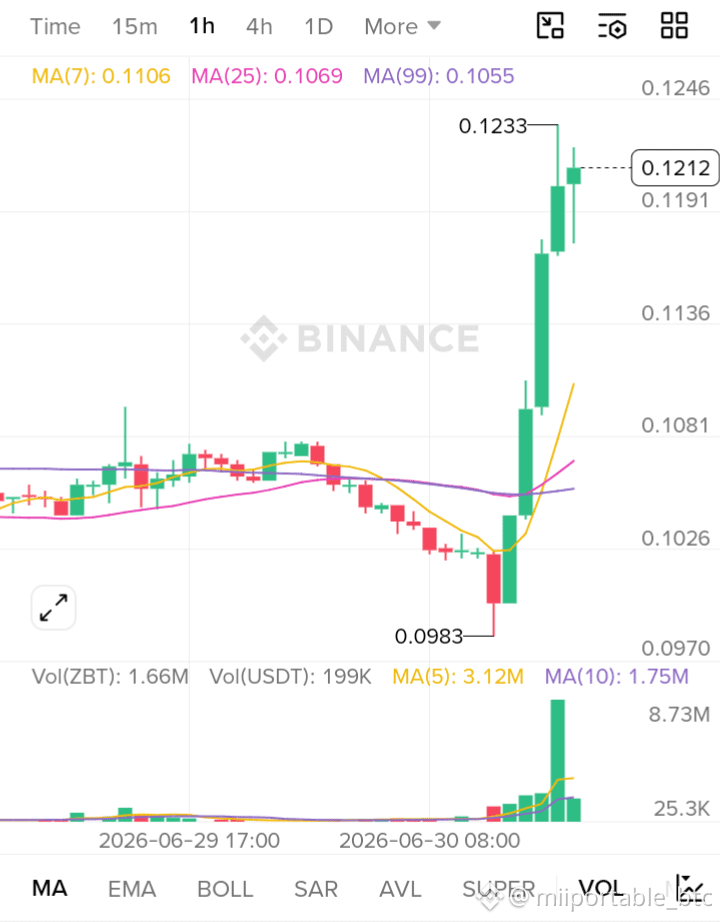
Trend: Bullish price is above all major MAs (7, 25, 99)
Short term Momentum: Strong recent green candles with higher highs
Key Support: ~0.1081 (previous consolidation zone)
Key Resistance: ~0.1212 0.1246 (recent highs)
Volume: 1.66M ZBT (below 5 period avg of 3.12M) mild bearish divergence
Indicators: MA, EMA, BOLL, SAR, AVL, SUPER, VOL all visible suggest using Bollinger Bands for overbought/oversold and SAR for trend reversal signals.
Recommendation:
· Entry: Wait for a pullback to MA(7) at 0.1106 or a break above 0.1212 with volume.
· Stop loss: Below 0.1081.
· Target: 0.1212 0.1246.
· Risk/Reward: ~1.5:1 if entering at 0.1106.
1
122
·
--
Haussier
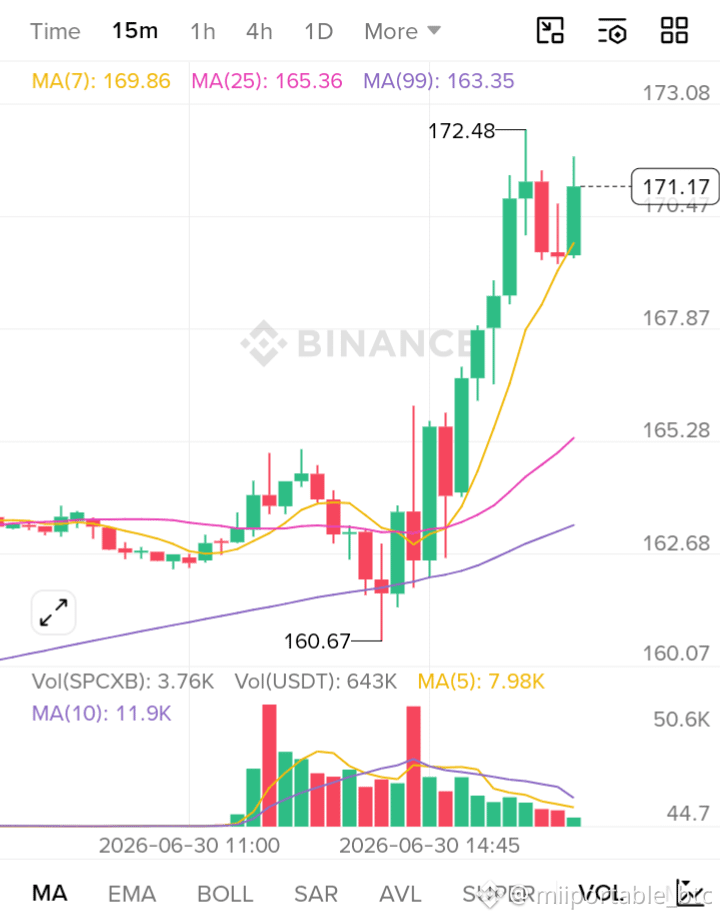
Trend & Moving Averages
· Current Price: ~167.87 (based on the visible price levels)
· MA(7): 169.86 → Bearish (price below short-term MA)
· MA(25): 165.36 → Price is above this, but caution as it’s approaching
· MA(99): 163.35 → Long term support zone
· Trend: Short-term downward (price rejected from ~172.48 and falling), but still holding above the 25 and 99 MAs.
Volume & Momentum
· Volume (USDT): 643K (low compared to recent spikes of 50.6K, indicating low participation)
· MA(5) Volume: 7.98K
· MA(10) Volume: 11.9K
· Volume is below both averages → weak buying/selling pressure; this could be a consolidation or exhaustion phase.
Key Levels
· Resistance: ~170.47 – 172.48 (recent highs)
· Immediate Support: ~165.28 (MA25 area)
· Strong Support: ~163.35 (MA99)
Timeframe Context
· The chart shows 11:00 to 14:45 on the same day → intraday pullback after a move up.
· If price holds above 165.28, a bounce toward 170 is possible.
· A break below 163.35 would signal a deeper correction.
Conclusion
· Short term bias: Neutral to bearish within a broader uptrend.
· Ideal scenario: Wait for a volume spike and a reclaim of MA(7) at 169.86 for a long entry.
· Risk management: Place stop loss below 163.00 if long.
$SPCXB
{spot}(SPCXBUSDT)
{future}(SPCXUSDT)
Trend & Moving Averages
· Current Price: ~167.87 (based on the visible price levels)
· MA(7): 169.86 → Bearish (price below short-term MA)
· MA(25): 165.36 → Price is above this, but caution as it’s approaching
· MA(99): 163.35 → Long term support zone
· Trend: Short-term downward (price rejected from ~172.48 and falling), but still holding above the 25 and 99 MAs.
Volume & Momentum
· Volume (USDT): 643K (low compared to recent spikes of 50.6K, indicating low participation)
· MA(5) Volume: 7.98K
· MA(10) Volume: 11.9K
· Volume is below both averages → weak buying/selling pressure; this could be a consolidation or exhaustion phase.
Key Levels
· Resistance: ~170.47 – 172.48 (recent highs)
· Immediate Support: ~165.28 (MA25 area)
· Strong Support: ~163.35 (MA99)
Timeframe Context
· The chart shows 11:00 to 14:45 on the same day → intraday pullback after a move up.
· If price holds above 165.28, a bounce toward 170 is possible.
· A break below 163.35 would signal a deeper correction.
Conclusion
· Short term bias: Neutral to bearish within a broader uptrend.
· Ideal scenario: Wait for a volume spike and a reclaim of MA(7) at 169.86 for a long entry.
· Risk management: Place stop loss below 163.00 if long.
$SPCXB
· Current Price: ~167.87 (based on the visible price levels)
· MA(7): 169.86 → Bearish (price below short-term MA)
· MA(25): 165.36 → Price is above this, but caution as it’s approaching
· MA(99): 163.35 → Long term support zone
· Trend: Short-term downward (price rejected from ~172.48 and falling), but still holding above the 25 and 99 MAs.
Volume & Momentum
· Volume (USDT): 643K (low compared to recent spikes of 50.6K, indicating low participation)
· MA(5) Volume: 7.98K
· MA(10) Volume: 11.9K
· Volume is below both averages → weak buying/selling pressure; this could be a consolidation or exhaustion phase.
Key Levels
· Resistance: ~170.47 – 172.48 (recent highs)
· Immediate Support: ~165.28 (MA25 area)
· Strong Support: ~163.35 (MA99)
Timeframe Context
· The chart shows 11:00 to 14:45 on the same day → intraday pullback after a move up.
· If price holds above 165.28, a bounce toward 170 is possible.
· A break below 163.35 would signal a deeper correction.
Conclusion
· Short term bias: Neutral to bearish within a broader uptrend.
· Ideal scenario: Wait for a volume spike and a reclaim of MA(7) at 169.86 for a long entry.
· Risk management: Place stop loss below 163.00 if long.
$SPCXB
1
319
·
--
Haussier
What Happens Behind the Scenes When You Complete a Swap?
Swapping tokens may look simple you choose two assets, confirm the transaction, and receive your tokens.
But behind that single click, several processes work together to ensure your trade is completed efficiently.
Here’s what happens behind the scenes:
➥ Smart Routing
Instead of using a single liquidity pool, modern DeFi platforms can analyze multiple trading routes to find a more efficient execution path.
➥ Liquidity Sourcing
Your swap requires liquidity. The platform accesses available liquidity sources to help execute the trade with competitive pricing and reduced slippage.
➥ Transaction Settlement
Once the best route is determined, the transaction is finalized on chain, ensuring your assets are exchanged securely and transparently.
Within the TON ecosystem, STON.fi leverages Omniston to optimize this entire process by intelligently routing swaps across multiple liquidity sources.
The result is a smoother trading experience with:
➥ Better pricing
➥ Lower slippage
➥ Faster execution
➥ Efficient liquidity utilization
Most users only see the final transaction but the real innovation happens behind the scenes, where infrastructure works continuously to deliver reliable and efficient DeFi experiences.
➥ https://app.ston.fi
@stonfi @ton_blockchain
What Happens Behind the Scenes When You Complete a Swap?
Swapping tokens may look simple you choose two assets, confirm the transaction, and receive your tokens.
But behind that single click, several processes work together to ensure your trade is completed efficiently.
Here’s what happens behind the scenes:
➥ Smart Routing
Instead of using a single liquidity pool, modern DeFi platforms can analyze multiple trading routes to find a more efficient execution path.
➥ Liquidity Sourcing
Your swap requires liquidity. The platform accesses available liquidity sources to help execute the trade with competitive pricing and reduced slippage.
➥ Transaction Settlement
Once the best route is determined, the transaction is finalized on chain, ensuring your assets are exchanged securely and transparently.
Within the TON ecosystem, STON.fi leverages Omniston to optimize this entire process by intelligently routing swaps across multiple liquidity sources.
The result is a smoother trading experience with:
➥ Better pricing
➥ Lower slippage
➥ Faster execution
➥ Efficient liquidity utilization
Most users only see the final transaction but the real innovation happens behind the scenes, where infrastructure works continuously to deliver reliable and efficient DeFi experiences.
➥ https://app.ston.fi
@STONfi DEX @Ton Network
Swapping tokens may look simple you choose two assets, confirm the transaction, and receive your tokens.
But behind that single click, several processes work together to ensure your trade is completed efficiently.
Here’s what happens behind the scenes:
➥ Smart Routing
Instead of using a single liquidity pool, modern DeFi platforms can analyze multiple trading routes to find a more efficient execution path.
➥ Liquidity Sourcing
Your swap requires liquidity. The platform accesses available liquidity sources to help execute the trade with competitive pricing and reduced slippage.
➥ Transaction Settlement
Once the best route is determined, the transaction is finalized on chain, ensuring your assets are exchanged securely and transparently.
Within the TON ecosystem, STON.fi leverages Omniston to optimize this entire process by intelligently routing swaps across multiple liquidity sources.
The result is a smoother trading experience with:
➥ Better pricing
➥ Lower slippage
➥ Faster execution
➥ Efficient liquidity utilization
Most users only see the final transaction but the real innovation happens behind the scenes, where infrastructure works continuously to deliver reliable and efficient DeFi experiences.
➥ https://app.ston.fi
@STONfi DEX @Ton Network

1
112
Connectez-vous pour découvrir plus de contenu
Rejoignez la communauté mondiale des adeptes de cryptomonnaies sur Binance Square
⚡️ Suviez les dernières informations importantes sur les cryptomonnaies.
💬 Jugé digne de confiance par la plus grande plateforme d’échange de cryptomonnaies au monde.
👍 Découvrez les connaissances que partagent les créateurs vérifiés.
Adresse e-mail/Nº de téléphone
Sujets d’actualité
EarningsSeason
100,077 vues
973 mentions
Earnings Season: Micron Q4 Earnings — Bullish or Bearish?
Binance Square Official
·185 mentions J’aime
·331.2k vues
ECBToTestAIAgentsInDigitalEuroPayments
2,214 vues
163 mentions
JapanFSABacksFourthStablecoinTradeSettlementPilot
3,938 vues
247 mentions