
JOSEPH DESOZE
16.7k Publications

JOSEPH DESOZE
 Binance Square Vérifié
Signaler
Bloquer l’utilisateur
Crypto Enthusiast, Market Analyst; Gem Hunter Blockchain Believer.
Ouvert au trading
Trade régulièrement
2 an(s)
196 Suivis
30.1K+ Abonnés
18.6K+ J’aime
Publications
Portefeuille
Tous
Citations
Direct
PINNED
#AIStocksWhatNext
$NVDA $AMD $AVGO $MSFT $AMZN $META
Je continue à observer le trading lié à l’IA, et ces derniers temps, je suis moins attiré par les gros titres bruyants.
Tout le monde parle de modèles, de GPUs et de qui est “le grand gagnant” de l’IA.
Moi, je regarde ce qu’il y a en dessous.
$NVDA vient de montrer à quel point la demande est devenue massive, avec 96,2 Md$ de revenus trimestriels et environ 89 Md$ provenant du Data Center.
Mais la partie la plus intéressante pour moi, c’est ce qui vient ensuite.
L’entraînement attire l’attention.
L’inférence pourrait devenir l’activité récurrente.
Et puis il y a $AVGO. Son chiffre d’affaires en semi-conducteurs IA a atteint 16,7 Md$ au T3, en hausse de 221% sur un an. Cela me dit que l’histoire devient plus grande que les GPUs. Les hyperscalers construisent de plus en plus des puces sur mesure et contrôlent davantage leur propre infrastructure.
Microsoft et Amazon dépensent eux aussi énormément pour des data centers et de la capacité de calcul.
Et c’est là que je commence à me poser des questions différentes.
Qui utilise réellement toute cette capacité ?
Avec quelle efficacité ?
Qui paie pour tout ça ?
Et à quel moment les dépenses se transforment-elles en flux de trésorerie durables ?
Même l’énergie fait désormais partie de l’histoire. Les projets de data centers se disputent la capacité du réseau dans des endroits comme le Texas.
Alors j’observe maintenant les choses plus “ennuyeuses” :
L’alimentation électrique. Le refroidissement. Le réseau. La mémoire. L’utilisation.
La course à l’IA peut sembler, de l’extérieur, une histoire de logiciels.
En dessous, cela ressemble de plus en plus à une course d’infrastructure.
C’est la partie que je surveille.
#AIStocksWhatNext
$NVDA $AMD $AVGO $MSFT $AMZN $META
Je continue à observer le trading lié à l’IA, et ces derniers temps, je suis moins attiré par les gros titres bruyants.
Tout le monde parle de modèles, de GPUs et de qui est “le grand gagnant” de l’IA.
Moi, je regarde ce qu’il y a en dessous.
$NVDA vient de montrer à quel point la demande est devenue massive, avec 96,2 Md$ de revenus trimestriels et environ 89 Md$ provenant du Data Center.
Mais la partie la plus intéressante pour moi, c’est ce qui vient ensuite.
L’entraînement attire l’attention.
L’inférence pourrait devenir l’activité récurrente.
Et puis il y a $AVGO. Son chiffre d’affaires en semi-conducteurs IA a atteint 16,7 Md$ au T3, en hausse de 221% sur un an. Cela me dit que l’histoire devient plus grande que les GPUs. Les hyperscalers construisent de plus en plus des puces sur mesure et contrôlent davantage leur propre infrastructure.
Microsoft et Amazon dépensent eux aussi énormément pour des data centers et de la capacité de calcul.
Et c’est là que je commence à me poser des questions différentes.
Qui utilise réellement toute cette capacité ?
Avec quelle efficacité ?
Qui paie pour tout ça ?
Et à quel moment les dépenses se transforment-elles en flux de trésorerie durables ?
Même l’énergie fait désormais partie de l’histoire. Les projets de data centers se disputent la capacité du réseau dans des endroits comme le Texas.
Alors j’observe maintenant les choses plus “ennuyeuses” :
L’alimentation électrique. Le refroidissement. Le réseau. La mémoire. L’utilisation.
La course à l’IA peut sembler, de l’extérieur, une histoire de logiciels.
En dessous, cela ressemble de plus en plus à une course d’infrastructure.
C’est la partie que je surveille.
$NVDA $AMD $AVGO $MSFT $AMZN $META
Je continue à observer le trading lié à l’IA, et ces derniers temps, je suis moins attiré par les gros titres bruyants.
Tout le monde parle de modèles, de GPUs et de qui est “le grand gagnant” de l’IA.
Moi, je regarde ce qu’il y a en dessous.
$NVDA vient de montrer à quel point la demande est devenue massive, avec 96,2 Md$ de revenus trimestriels et environ 89 Md$ provenant du Data Center.
Mais la partie la plus intéressante pour moi, c’est ce qui vient ensuite.
L’entraînement attire l’attention.
L’inférence pourrait devenir l’activité récurrente.
Et puis il y a $AVGO. Son chiffre d’affaires en semi-conducteurs IA a atteint 16,7 Md$ au T3, en hausse de 221% sur un an. Cela me dit que l’histoire devient plus grande que les GPUs. Les hyperscalers construisent de plus en plus des puces sur mesure et contrôlent davantage leur propre infrastructure.
Microsoft et Amazon dépensent eux aussi énormément pour des data centers et de la capacité de calcul.
Et c’est là que je commence à me poser des questions différentes.
Qui utilise réellement toute cette capacité ?
Avec quelle efficacité ?
Qui paie pour tout ça ?
Et à quel moment les dépenses se transforment-elles en flux de trésorerie durables ?
Même l’énergie fait désormais partie de l’histoire. Les projets de data centers se disputent la capacité du réseau dans des endroits comme le Texas.
Alors j’observe maintenant les choses plus “ennuyeuses” :
L’alimentation électrique. Le refroidissement. Le réseau. La mémoire. L’utilisation.
La course à l’IA peut sembler, de l’extérieur, une histoire de logiciels.
En dessous, cela ressemble de plus en plus à une course d’infrastructure.
C’est la partie que je surveille.

1
305
·
--
Haussier
Les initiés accumulent discrètement du UNI pendant que tout le monde hésite.
$UNI /USDT - LONG
Plan de trading :
Entrée : 8.70 – 8.80
SL : 8.27
TP1 : 9.11
TP2 : 9.35
TP3 : 9.71
Pourquoi ce setup ?
Pourquoi maintenant ? La tendance quotidienne est haussière et le biais 4h est long avec 95 % de confiance, signalant un setup à forte probabilité. Le prix sur 1h se situe à 8.75, ce qui correspond parfaitement à la zone d’entrée entre 8.70 et 8.80. Le RSI sur 15m à 39.17 montre que l’actif s’approche d’un territoire de survente, suggérant un rebond imminent. L’ATR sur 1h de 0.200908 indique qu’il y a suffisamment de volatilité pour pousser depuis l’entrée jusqu’au premier objectif à 9.11 et au-delà vers 9.35, tandis que le niveau d’invalidation de 7.85 agit comme la ligne de démarcation.
Débat :
Allons-nous décoller jusqu’au TP2 ou est-ce un faux signal ?
⚠️ Analyse personnelle du marché uniquement. NFA — gérez le risque et faites vos propres recherches (DYOR).
Contenu éducatif, pas un conseil d’investissement ni une recommandation d’acheter, vendre, déposer ou retirer un quelconque actif. Aucune promotion payante ou lien de parrainage/affiliation.
{future}(UNIUSDT)
Les initiés accumulent discrètement du UNI pendant que tout le monde hésite.
$UNI /USDT - LONG
Plan de trading :
Entrée : 8.70 – 8.80
SL : 8.27
TP1 : 9.11
TP2 : 9.35
TP3 : 9.71
Pourquoi ce setup ?
Pourquoi maintenant ? La tendance quotidienne est haussière et le biais 4h est long avec 95 % de confiance, signalant un setup à forte probabilité. Le prix sur 1h se situe à 8.75, ce qui correspond parfaitement à la zone d’entrée entre 8.70 et 8.80. Le RSI sur 15m à 39.17 montre que l’actif s’approche d’un territoire de survente, suggérant un rebond imminent. L’ATR sur 1h de 0.200908 indique qu’il y a suffisamment de volatilité pour pousser depuis l’entrée jusqu’au premier objectif à 9.11 et au-delà vers 9.35, tandis que le niveau d’invalidation de 7.85 agit comme la ligne de démarcation.
Débat :
Allons-nous décoller jusqu’au TP2 ou est-ce un faux signal ?
⚠️ Analyse personnelle du marché uniquement. NFA — gérez le risque et faites vos propres recherches (DYOR).
Contenu éducatif, pas un conseil d’investissement ni une recommandation d’acheter, vendre, déposer ou retirer un quelconque actif. Aucune promotion payante ou lien de parrainage/affiliation.
$UNI /USDT - LONG
Plan de trading :
Entrée : 8.70 – 8.80
SL : 8.27
TP1 : 9.11
TP2 : 9.35
TP3 : 9.71
Pourquoi ce setup ?
Pourquoi maintenant ? La tendance quotidienne est haussière et le biais 4h est long avec 95 % de confiance, signalant un setup à forte probabilité. Le prix sur 1h se situe à 8.75, ce qui correspond parfaitement à la zone d’entrée entre 8.70 et 8.80. Le RSI sur 15m à 39.17 montre que l’actif s’approche d’un territoire de survente, suggérant un rebond imminent. L’ATR sur 1h de 0.200908 indique qu’il y a suffisamment de volatilité pour pousser depuis l’entrée jusqu’au premier objectif à 9.11 et au-delà vers 9.35, tandis que le niveau d’invalidation de 7.85 agit comme la ligne de démarcation.
Débat :
Allons-nous décoller jusqu’au TP2 ou est-ce un faux signal ?
⚠️ Analyse personnelle du marché uniquement. NFA — gérez le risque et faites vos propres recherches (DYOR).
Contenu éducatif, pas un conseil d’investissement ni une recommandation d’acheter, vendre, déposer ou retirer un quelconque actif. Aucune promotion payante ou lien de parrainage/affiliation.
73
·
--
Haussier
Tout le monde dort sur HYPE, mais le ATR 1h vient de crier le contraire.
$HYPE /USDT - LONG
Plan de trading :
Entrée : 95.623 – 96.101
SL : 93.570
TP1 : 97.581
TP2 : 98.727
TP3 : 100.445
Pourquoi cette configuration ?
Pourquoi maintenant ? La tendance quotidienne est haussière et le prix en 1h se situe à 95.845, juste à l’intérieur de la zone d’entrée entre 95.623 et 96.101. Le RSI 15m à 65.64 montre que le momentum est sain, sans être excessivement étendu, laissant de la place pour un mouvement vers le TP1 à 97.581 puis vers le TP2 à 98.727. Avec l’ATR 1h à 0.95485, un seul mouvement de bougie peut couvrir la distance jusqu’au TP1, rendant le ratio risque-rendement très intéressant pour un long. La ligne de démarcation est le niveau d’invalidation à 87.665 ; si HYPE passe en dessous, la configuration entière est annulée.
Débat :
Est-ce qu’on touche proprement le TP2 à 98.727 ou est-ce que l’ATR 1h est sur le point d’inverser ce mouvement ?
⚠️ Analyse personnelle du marché uniquement. NFA — gérez le risque et faites votre propre recherche (DYOR).
Contenu éducatif, pas un conseil en investissement ni une recommandation d’acheter, vendre, déposer ou retirer un quelconque actif. Aucune promotion payante ni lien d’affiliation/parrainage.
{future}(HYPEUSDT)
Tout le monde dort sur HYPE, mais le ATR 1h vient de crier le contraire.
$HYPE /USDT - LONG
Plan de trading :
Entrée : 95.623 – 96.101
SL : 93.570
TP1 : 97.581
TP2 : 98.727
TP3 : 100.445
Pourquoi cette configuration ?
Pourquoi maintenant ? La tendance quotidienne est haussière et le prix en 1h se situe à 95.845, juste à l’intérieur de la zone d’entrée entre 95.623 et 96.101. Le RSI 15m à 65.64 montre que le momentum est sain, sans être excessivement étendu, laissant de la place pour un mouvement vers le TP1 à 97.581 puis vers le TP2 à 98.727. Avec l’ATR 1h à 0.95485, un seul mouvement de bougie peut couvrir la distance jusqu’au TP1, rendant le ratio risque-rendement très intéressant pour un long. La ligne de démarcation est le niveau d’invalidation à 87.665 ; si HYPE passe en dessous, la configuration entière est annulée.
Débat :
Est-ce qu’on touche proprement le TP2 à 98.727 ou est-ce que l’ATR 1h est sur le point d’inverser ce mouvement ?
⚠️ Analyse personnelle du marché uniquement. NFA — gérez le risque et faites votre propre recherche (DYOR).
Contenu éducatif, pas un conseil en investissement ni une recommandation d’acheter, vendre, déposer ou retirer un quelconque actif. Aucune promotion payante ni lien d’affiliation/parrainage.
$HYPE /USDT - LONG
Plan de trading :
Entrée : 95.623 – 96.101
SL : 93.570
TP1 : 97.581
TP2 : 98.727
TP3 : 100.445
Pourquoi cette configuration ?
Pourquoi maintenant ? La tendance quotidienne est haussière et le prix en 1h se situe à 95.845, juste à l’intérieur de la zone d’entrée entre 95.623 et 96.101. Le RSI 15m à 65.64 montre que le momentum est sain, sans être excessivement étendu, laissant de la place pour un mouvement vers le TP1 à 97.581 puis vers le TP2 à 98.727. Avec l’ATR 1h à 0.95485, un seul mouvement de bougie peut couvrir la distance jusqu’au TP1, rendant le ratio risque-rendement très intéressant pour un long. La ligne de démarcation est le niveau d’invalidation à 87.665 ; si HYPE passe en dessous, la configuration entière est annulée.
Débat :
Est-ce qu’on touche proprement le TP2 à 98.727 ou est-ce que l’ATR 1h est sur le point d’inverser ce mouvement ?
⚠️ Analyse personnelle du marché uniquement. NFA — gérez le risque et faites votre propre recherche (DYOR).
Contenu éducatif, pas un conseil en investissement ni une recommandation d’acheter, vendre, déposer ou retirer un quelconque actif. Aucune promotion payante ni lien d’affiliation/parrainage.
179
·
--
Baissier
Tout le monde qui regarde AVAX en étant long vient de rater le vrai mouvement en train de se former ci-dessous.
$AVAX /USDT - SHORT
Plan de trading :
Entrée : 10.643 – 10.759
SL : 11.261
TP1 : 10.281
TP2 : 10.001
TP3 : 9.580
Pourquoi ce setup ?
Pourquoi maintenant ? La tendance quotidienne est en range, ce qui comprime souvent avant une cassure directionnelle, et le ATR sur 1h de 0.233467 signale une volatilité suffisante pour alimenter une forte baisse depuis le prix actuel sur 1h de 10.701. Avec le RSI sur 15m à 30.61, l’élan à court terme est déjà épuisé à la hausse, ce qui s’aligne avec le biais SHORT avec une confiance de 55,4. La zone d’entrée entre 10.643 et 10.759 offre un déclencheur précis, tandis que TP1 à 10.281 et TP2 à 10.001 définissent les deux premiers objectifs sur la trajectoire vers 9.580. Le niveau d’invalidation à 9.406 est la ligne stricte qui sépare un short contrôlé d’un setup raté.
Débat :
Est-ce qu’on touche proprement le TP2 ou est-ce que le range est sur le point de nous retourner ?
⚠️ Analyse personnelle du marché uniquement. NFA — gérez le risque et faites votre propre recherche (DYOR).
Contenu éducatif uniquement, pas un conseil en investissement ni une recommandation d’acheter, vendre, déposer ou retirer un quelconque actif. Pas de promotion payante ni de liens de parrainage/affiliation.
{future}(AVAXUSDT)
Tout le monde qui regarde AVAX en étant long vient de rater le vrai mouvement en train de se former ci-dessous.
$AVAX /USDT - SHORT
Plan de trading :
Entrée : 10.643 – 10.759
SL : 11.261
TP1 : 10.281
TP2 : 10.001
TP3 : 9.580
Pourquoi ce setup ?
Pourquoi maintenant ? La tendance quotidienne est en range, ce qui comprime souvent avant une cassure directionnelle, et le ATR sur 1h de 0.233467 signale une volatilité suffisante pour alimenter une forte baisse depuis le prix actuel sur 1h de 10.701. Avec le RSI sur 15m à 30.61, l’élan à court terme est déjà épuisé à la hausse, ce qui s’aligne avec le biais SHORT avec une confiance de 55,4. La zone d’entrée entre 10.643 et 10.759 offre un déclencheur précis, tandis que TP1 à 10.281 et TP2 à 10.001 définissent les deux premiers objectifs sur la trajectoire vers 9.580. Le niveau d’invalidation à 9.406 est la ligne stricte qui sépare un short contrôlé d’un setup raté.
Débat :
Est-ce qu’on touche proprement le TP2 ou est-ce que le range est sur le point de nous retourner ?
⚠️ Analyse personnelle du marché uniquement. NFA — gérez le risque et faites votre propre recherche (DYOR).
Contenu éducatif uniquement, pas un conseil en investissement ni une recommandation d’acheter, vendre, déposer ou retirer un quelconque actif. Pas de promotion payante ni de liens de parrainage/affiliation.
$AVAX /USDT - SHORT
Plan de trading :
Entrée : 10.643 – 10.759
SL : 11.261
TP1 : 10.281
TP2 : 10.001
TP3 : 9.580
Pourquoi ce setup ?
Pourquoi maintenant ? La tendance quotidienne est en range, ce qui comprime souvent avant une cassure directionnelle, et le ATR sur 1h de 0.233467 signale une volatilité suffisante pour alimenter une forte baisse depuis le prix actuel sur 1h de 10.701. Avec le RSI sur 15m à 30.61, l’élan à court terme est déjà épuisé à la hausse, ce qui s’aligne avec le biais SHORT avec une confiance de 55,4. La zone d’entrée entre 10.643 et 10.759 offre un déclencheur précis, tandis que TP1 à 10.281 et TP2 à 10.001 définissent les deux premiers objectifs sur la trajectoire vers 9.580. Le niveau d’invalidation à 9.406 est la ligne stricte qui sépare un short contrôlé d’un setup raté.
Débat :
Est-ce qu’on touche proprement le TP2 ou est-ce que le range est sur le point de nous retourner ?
⚠️ Analyse personnelle du marché uniquement. NFA — gérez le risque et faites votre propre recherche (DYOR).
Contenu éducatif uniquement, pas un conseil en investissement ni une recommandation d’acheter, vendre, déposer ou retirer un quelconque actif. Pas de promotion payante ni de liens de parrainage/affiliation.
164
·
--
Haussier
L’argent intelligent charge UNI en silence pendant que tout le monde dort sur cette configuration.
$UNI /USDT - LONG
Plan de trading :
Entrée : 8.670 – 8.776
SL : 8.218
TP1 : 9.102
TP2 : 9.354
TP3 : 9.733
Pourquoi cette configuration ?
Pourquoi maintenant ? La tendance quotidienne est haussière avec 95 % de confiance, et le prix sur 1h reste collé à la référence d’entrée 8.723, ce qui signifie que le biais long est déjà en mouvement. Le RSI sur 15m est à 39,6, ce qui laisse de la place à la hausse avant d’atteindre la zone de surachat, tandis que l’ATR sur 1h à 0.210348 nous indique que la volatilité est suffisamment comprimée pour permettre une expansion nette. La zone d’entrée entre 8.670 et 8.776 correspond parfaitement à cette accumulation, offrant un long propre et défini en termes de risque, avec TP1 à 9.102 et TP2 à 9.354. Le niveau d’invalidation à 7.706 est la ligne absolue de la dernière limite qui protège cette thèse.
Débat :
Vous entrez ici ou vous attendez un repli vers le plus bas à 8.670 ?
⚠️ Analyse personnelle du marché uniquement. NFA — gérez le risque et faites votre propre recherche (DYOR).
Contenu éducatif, pas un conseil en investissement ni une recommandation d’acheter, de vendre, de déposer ou de retirer un quelconque actif. Aucune promotion payante, ni lien de parrainage/affiliation.
{future}(UNIUSDT)
#UNI
L’argent intelligent charge UNI en silence pendant que tout le monde dort sur cette configuration.
$UNI /USDT - LONG
Plan de trading :
Entrée : 8.670 – 8.776
SL : 8.218
TP1 : 9.102
TP2 : 9.354
TP3 : 9.733
Pourquoi cette configuration ?
Pourquoi maintenant ? La tendance quotidienne est haussière avec 95 % de confiance, et le prix sur 1h reste collé à la référence d’entrée 8.723, ce qui signifie que le biais long est déjà en mouvement. Le RSI sur 15m est à 39,6, ce qui laisse de la place à la hausse avant d’atteindre la zone de surachat, tandis que l’ATR sur 1h à 0.210348 nous indique que la volatilité est suffisamment comprimée pour permettre une expansion nette. La zone d’entrée entre 8.670 et 8.776 correspond parfaitement à cette accumulation, offrant un long propre et défini en termes de risque, avec TP1 à 9.102 et TP2 à 9.354. Le niveau d’invalidation à 7.706 est la ligne absolue de la dernière limite qui protège cette thèse.
Débat :
Vous entrez ici ou vous attendez un repli vers le plus bas à 8.670 ?
⚠️ Analyse personnelle du marché uniquement. NFA — gérez le risque et faites votre propre recherche (DYOR).
Contenu éducatif, pas un conseil en investissement ni une recommandation d’acheter, de vendre, de déposer ou de retirer un quelconque actif. Aucune promotion payante, ni lien de parrainage/affiliation.
#UNI
$UNI /USDT - LONG
Plan de trading :
Entrée : 8.670 – 8.776
SL : 8.218
TP1 : 9.102
TP2 : 9.354
TP3 : 9.733
Pourquoi cette configuration ?
Pourquoi maintenant ? La tendance quotidienne est haussière avec 95 % de confiance, et le prix sur 1h reste collé à la référence d’entrée 8.723, ce qui signifie que le biais long est déjà en mouvement. Le RSI sur 15m est à 39,6, ce qui laisse de la place à la hausse avant d’atteindre la zone de surachat, tandis que l’ATR sur 1h à 0.210348 nous indique que la volatilité est suffisamment comprimée pour permettre une expansion nette. La zone d’entrée entre 8.670 et 8.776 correspond parfaitement à cette accumulation, offrant un long propre et défini en termes de risque, avec TP1 à 9.102 et TP2 à 9.354. Le niveau d’invalidation à 7.706 est la ligne absolue de la dernière limite qui protège cette thèse.
Débat :
Vous entrez ici ou vous attendez un repli vers le plus bas à 8.670 ?
⚠️ Analyse personnelle du marché uniquement. NFA — gérez le risque et faites votre propre recherche (DYOR).
Contenu éducatif, pas un conseil en investissement ni une recommandation d’acheter, de vendre, de déposer ou de retirer un quelconque actif. Aucune promotion payante, ni lien de parrainage/affiliation.
#UNI
211
·
--
Baissier
Tout le monde est long en ETH, mais la structure sur 1h dit le contraire.
$ETH /USDT - SHORT
Plan de trading :
Entrée : 2742.78 – 2756.68
SL : 2836.52
TP1 : 2684.64
TP2 : 2641.25
TP3 : 2576.16
Pourquoi cette configuration ?
Pourquoi maintenant ? La tendance quotidienne reste haussière, mais le prix sur 1h est coincé à 2749.73 avec un RSI sur 15m de 58.41, signalant un élan épuisé plutôt qu’une force nouvelle. L’ATR sur 1h de 27.815956 nous indique que la volatilité actuelle est compressée, préparant un mouvement brusque une fois qu’elle s’élargit. La zone d’entrée entre 2742.78 et 2756.68 est l’endroit où le setup short s’active, visant le TP1 à 2684.64 et le TP2 à 2641.25 pour un flush rapide. Le niveau d’invalidation de 2587.80 est la ligne de démarcation qui sépare une cassure valide d’une transaction échouée.
Débat :
Est-ce qu’on touche le TP2 ou est-ce qu’on se fait piéger au-dessus de 2756.68 ?
⚠️ Analyse personnelle du marché uniquement. NFA — gérez le risque et faites votre propre recherche (DYOR).
Contenu éducatif, pas un conseil d’investissement ni une recommandation d’acheter, vendre, déposer ou retirer un quelconque actif. Aucune promotion payante ni liens d’affiliation/parrainage.
{future}(ETHUSDT)
#ETH #ETHETFsApproved #ETHETFS #Ethereum
Tout le monde est long en ETH, mais la structure sur 1h dit le contraire.
$ETH /USDT - SHORT
Plan de trading :
Entrée : 2742.78 – 2756.68
SL : 2836.52
TP1 : 2684.64
TP2 : 2641.25
TP3 : 2576.16
Pourquoi cette configuration ?
Pourquoi maintenant ? La tendance quotidienne reste haussière, mais le prix sur 1h est coincé à 2749.73 avec un RSI sur 15m de 58.41, signalant un élan épuisé plutôt qu’une force nouvelle. L’ATR sur 1h de 27.815956 nous indique que la volatilité actuelle est compressée, préparant un mouvement brusque une fois qu’elle s’élargit. La zone d’entrée entre 2742.78 et 2756.68 est l’endroit où le setup short s’active, visant le TP1 à 2684.64 et le TP2 à 2641.25 pour un flush rapide. Le niveau d’invalidation de 2587.80 est la ligne de démarcation qui sépare une cassure valide d’une transaction échouée.
Débat :
Est-ce qu’on touche le TP2 ou est-ce qu’on se fait piéger au-dessus de 2756.68 ?
⚠️ Analyse personnelle du marché uniquement. NFA — gérez le risque et faites votre propre recherche (DYOR).
Contenu éducatif, pas un conseil d’investissement ni une recommandation d’acheter, vendre, déposer ou retirer un quelconque actif. Aucune promotion payante ni liens d’affiliation/parrainage.
#ETH #ETHETFsApproved #ETHETFS #Ethereum
$ETH /USDT - SHORT
Plan de trading :
Entrée : 2742.78 – 2756.68
SL : 2836.52
TP1 : 2684.64
TP2 : 2641.25
TP3 : 2576.16
Pourquoi cette configuration ?
Pourquoi maintenant ? La tendance quotidienne reste haussière, mais le prix sur 1h est coincé à 2749.73 avec un RSI sur 15m de 58.41, signalant un élan épuisé plutôt qu’une force nouvelle. L’ATR sur 1h de 27.815956 nous indique que la volatilité actuelle est compressée, préparant un mouvement brusque une fois qu’elle s’élargit. La zone d’entrée entre 2742.78 et 2756.68 est l’endroit où le setup short s’active, visant le TP1 à 2684.64 et le TP2 à 2641.25 pour un flush rapide. Le niveau d’invalidation de 2587.80 est la ligne de démarcation qui sépare une cassure valide d’une transaction échouée.
Débat :
Est-ce qu’on touche le TP2 ou est-ce qu’on se fait piéger au-dessus de 2756.68 ?
⚠️ Analyse personnelle du marché uniquement. NFA — gérez le risque et faites votre propre recherche (DYOR).
Contenu éducatif, pas un conseil d’investissement ni une recommandation d’acheter, vendre, déposer ou retirer un quelconque actif. Aucune promotion payante ni liens d’affiliation/parrainage.
#ETH #ETHETFsApproved #ETHETFS #Ethereum
222
·
--
Baissier
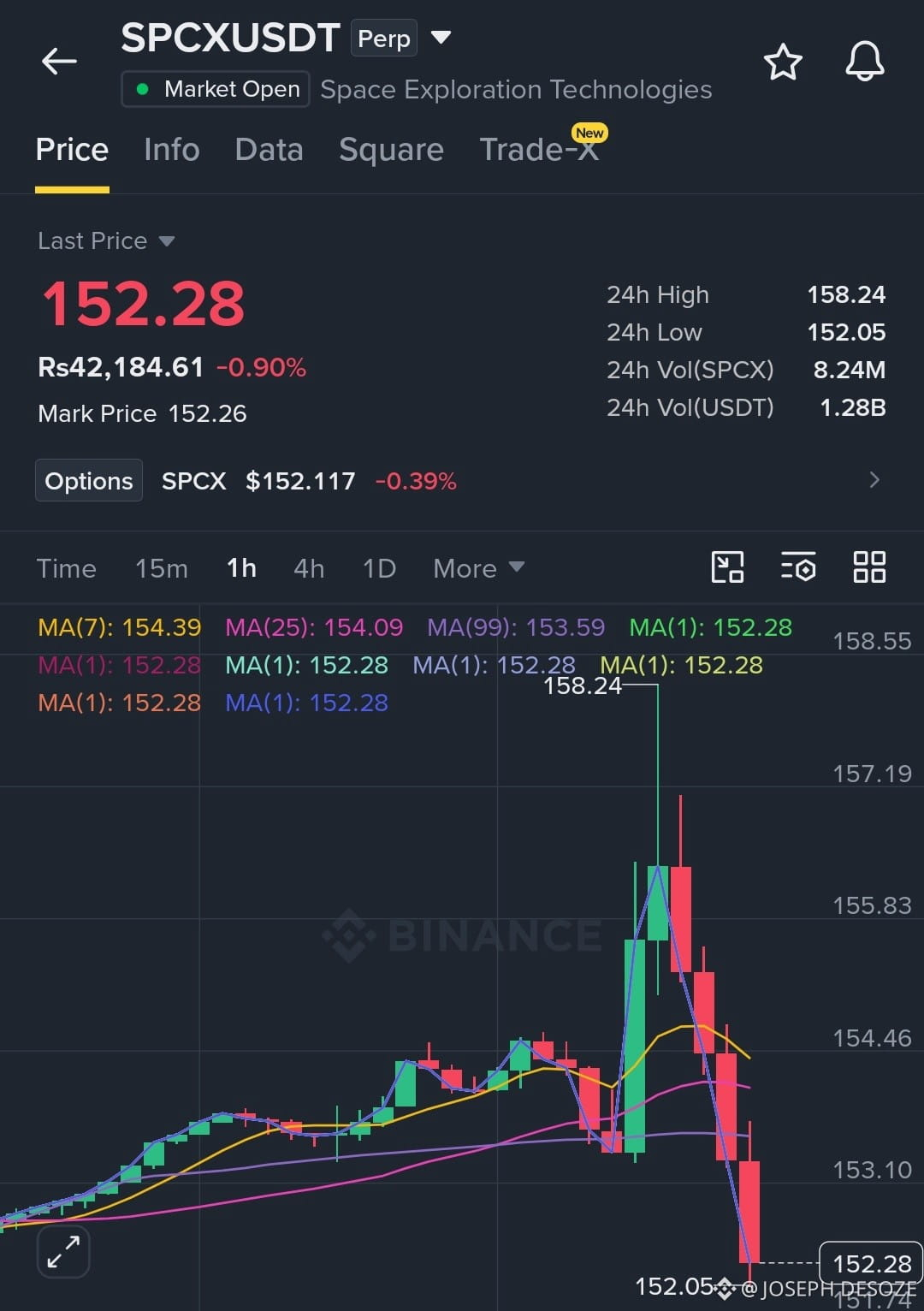
SPCX/USDT est en range sur une base quotidienne, mais le RSI en 1h laisse entendre quelque chose de dangereux.
$SPCX /USDT - SHORT
Plan de trade :
Entrée : 152.31 – 152.77
SL : 154.71
TP1 : 150.91
TP2 : 149.83
TP3 : 148.21
Pourquoi ce setup ?
Pourquoi maintenant ? La tendance quotidienne est en range, ce qui piège généralement les traders, pourtant l’ATR en 1h à 0.902997 indique une volatilité brute suffisante pour alimenter un mouvement décisif. Le RSI en 15m à 31.08 confirme que le prix en 1h est fortement survendu à l’intérieur de ce range, et la zone d’entrée entre 152.31 et 152.77 correspond parfaitement au prix en 1h de 152.54. À partir de là, le TP1 à 150.91 et le TP2 à 149.83 offrent une trajectoire mesurée à la baisse, tandis que le niveau d’invalidation de 152.55 est la ligne ferme qui prouve que le setup est erroné.
Débat :
On teste le TP2, ou bien 152.55 est sur le point de transformer ce short en piège ?
⚠️ Analyse personnelle du marché uniquement. NFA — gérez le risque et DYOR.
Contenu éducatif uniquement, pas un conseil en investissement ni une recommandation d’acheter, vendre, déposer ou retirer un quelconque actif. Aucune promotion payante ou lien de parrainage/affiliation.
{future}(SPCXUSDT)
#SPCX反弹受阻 #SPCX
SPCX/USDT est en range sur une base quotidienne, mais le RSI en 1h laisse entendre quelque chose de dangereux.
$SPCX /USDT - SHORT
Plan de trade :
Entrée : 152.31 – 152.77
SL : 154.71
TP1 : 150.91
TP2 : 149.83
TP3 : 148.21
Pourquoi ce setup ?
Pourquoi maintenant ? La tendance quotidienne est en range, ce qui piège généralement les traders, pourtant l’ATR en 1h à 0.902997 indique une volatilité brute suffisante pour alimenter un mouvement décisif. Le RSI en 15m à 31.08 confirme que le prix en 1h est fortement survendu à l’intérieur de ce range, et la zone d’entrée entre 152.31 et 152.77 correspond parfaitement au prix en 1h de 152.54. À partir de là, le TP1 à 150.91 et le TP2 à 149.83 offrent une trajectoire mesurée à la baisse, tandis que le niveau d’invalidation de 152.55 est la ligne ferme qui prouve que le setup est erroné.
Débat :
On teste le TP2, ou bien 152.55 est sur le point de transformer ce short en piège ?
⚠️ Analyse personnelle du marché uniquement. NFA — gérez le risque et DYOR.
Contenu éducatif uniquement, pas un conseil en investissement ni une recommandation d’acheter, vendre, déposer ou retirer un quelconque actif. Aucune promotion payante ou lien de parrainage/affiliation.
#SPCX反弹受阻 #SPCX
$SPCX /USDT - SHORT
Plan de trade :
Entrée : 152.31 – 152.77
SL : 154.71
TP1 : 150.91
TP2 : 149.83
TP3 : 148.21
Pourquoi ce setup ?
Pourquoi maintenant ? La tendance quotidienne est en range, ce qui piège généralement les traders, pourtant l’ATR en 1h à 0.902997 indique une volatilité brute suffisante pour alimenter un mouvement décisif. Le RSI en 15m à 31.08 confirme que le prix en 1h est fortement survendu à l’intérieur de ce range, et la zone d’entrée entre 152.31 et 152.77 correspond parfaitement au prix en 1h de 152.54. À partir de là, le TP1 à 150.91 et le TP2 à 149.83 offrent une trajectoire mesurée à la baisse, tandis que le niveau d’invalidation de 152.55 est la ligne ferme qui prouve que le setup est erroné.
Débat :
On teste le TP2, ou bien 152.55 est sur le point de transformer ce short en piège ?
⚠️ Analyse personnelle du marché uniquement. NFA — gérez le risque et DYOR.
Contenu éducatif uniquement, pas un conseil en investissement ni une recommandation d’acheter, vendre, déposer ou retirer un quelconque actif. Aucune promotion payante ou lien de parrainage/affiliation.
#SPCX反弹受阻 #SPCX
207
·
--
Baissier
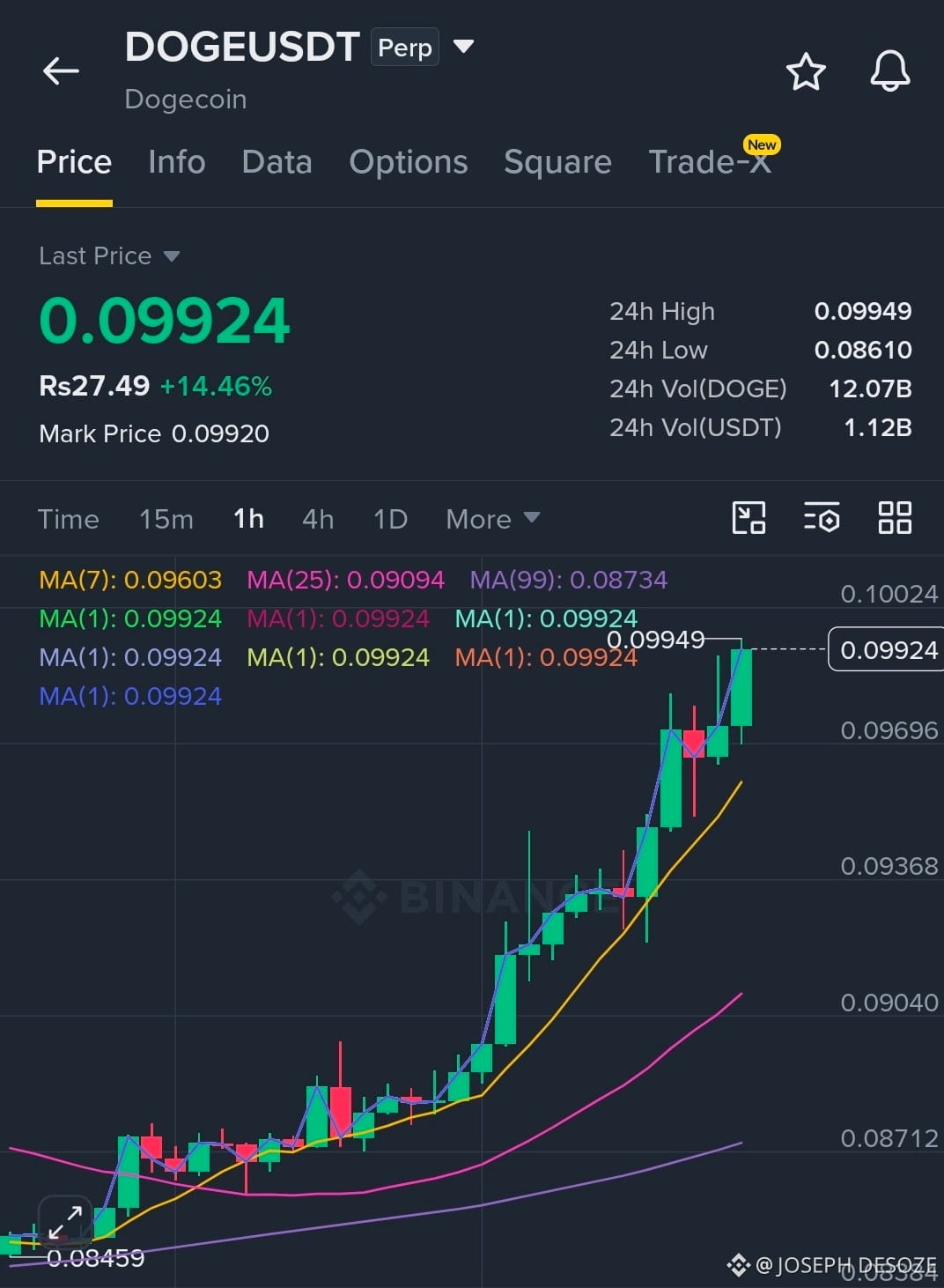
Les initiés mettent discrètement en place un short sur $DOGE/USDT pendant que le marché dort.
$DOGE /USDT - SHORT
Plan de trading :
Entrée : 0.09835 – 0.09923
SL : 0.10422
TP1 : 0.09472
TP2 : 0.09200
TP3 : 0.08793
Pourquoi cette configuration ?
Pourquoi maintenant ? La tendance quotidienne est en range, mais le prix sur 1h évolue près de 0.09878 avec un RSI sur 15m à 67.26, ce qui signale un ralentissement de l’élan. L’ATR sur 1h de 0.00174 confirme une volatilité suffisante pour justifier une zone d’entrée définie entre 0.09835 et 0.09923. Un stop loss à 0.10422 constitue la limite, et le niveau d’invalidation se situe à 0.08779. Le premier objectif à 0.09472 offre un ratio risque/rendement clair avant que l’objectif plus profond de 0.09200 ne se mette en évidence.
Débat :
Atteint-on le TP2 à 0.09200, ou est-on piégé avant le niveau d’invalidation ?
⚠️ Analyse personnelle du marché uniquement. NFA — gérez le risque et faites votre propre recherche (DYOR).
Contenu éducatif, pas un conseil en investissement ni une recommandation d’acheter, vendre, déposer ou retirer un quelconque actif. Aucune promotion payante ni lien de parrainage/affiliation.
{future}(DOGEUSDT)
#DOGE #DOGE原型柴犬KABOSU去世 #Dogecoin
Les initiés mettent discrètement en place un short sur $DOGE /USDT pendant que le marché dort.
$DOGE /USDT - SHORT
Plan de trading :
Entrée : 0.09835 – 0.09923
SL : 0.10422
TP1 : 0.09472
TP2 : 0.09200
TP3 : 0.08793
Pourquoi cette configuration ?
Pourquoi maintenant ? La tendance quotidienne est en range, mais le prix sur 1h évolue près de 0.09878 avec un RSI sur 15m à 67.26, ce qui signale un ralentissement de l’élan. L’ATR sur 1h de 0.00174 confirme une volatilité suffisante pour justifier une zone d’entrée définie entre 0.09835 et 0.09923. Un stop loss à 0.10422 constitue la limite, et le niveau d’invalidation se situe à 0.08779. Le premier objectif à 0.09472 offre un ratio risque/rendement clair avant que l’objectif plus profond de 0.09200 ne se mette en évidence.
Débat :
Atteint-on le TP2 à 0.09200, ou est-on piégé avant le niveau d’invalidation ?
⚠️ Analyse personnelle du marché uniquement. NFA — gérez le risque et faites votre propre recherche (DYOR).
Contenu éducatif, pas un conseil en investissement ni une recommandation d’acheter, vendre, déposer ou retirer un quelconque actif. Aucune promotion payante ni lien de parrainage/affiliation.
#DOGE #DOGE原型柴犬KABOSU去世 #Dogecoin
$DOGE /USDT - SHORT
Plan de trading :
Entrée : 0.09835 – 0.09923
SL : 0.10422
TP1 : 0.09472
TP2 : 0.09200
TP3 : 0.08793
Pourquoi cette configuration ?
Pourquoi maintenant ? La tendance quotidienne est en range, mais le prix sur 1h évolue près de 0.09878 avec un RSI sur 15m à 67.26, ce qui signale un ralentissement de l’élan. L’ATR sur 1h de 0.00174 confirme une volatilité suffisante pour justifier une zone d’entrée définie entre 0.09835 et 0.09923. Un stop loss à 0.10422 constitue la limite, et le niveau d’invalidation se situe à 0.08779. Le premier objectif à 0.09472 offre un ratio risque/rendement clair avant que l’objectif plus profond de 0.09200 ne se mette en évidence.
Débat :
Atteint-on le TP2 à 0.09200, ou est-on piégé avant le niveau d’invalidation ?
⚠️ Analyse personnelle du marché uniquement. NFA — gérez le risque et faites votre propre recherche (DYOR).
Contenu éducatif, pas un conseil en investissement ni une recommandation d’acheter, vendre, déposer ou retirer un quelconque actif. Aucune promotion payante ni lien de parrainage/affiliation.
#DOGE #DOGE原型柴犬KABOSU去世 #Dogecoin
139
·
--
Haussier
Tout le monde dort sur cette configuration haussière pendant que SYMBOL empile discrètement des plus bas plus élevés.
$HYPE /USDT - LONG
Plan de trade :
Entrée : 92.524 – 93.046
SL : 90.282
TP1 : 94.663
TP2 : 95.914
TP3 : 97.792
Pourquoi cette configuration ?
Pourquoi maintenant ? La tendance journalière est haussière, la structure en 4h est intacte et l’ATR 1h à 1.043078 confirme suffisamment d’élan pour pousser depuis la zone d’entrée, proche de 92.785, jusqu’au premier objectif à 94.663. Le RSI en 15m à 40.02 montre que la correction a de la marge pour respirer sans interrompre le mouvement, donc la zone entre 92.524 et 93.046 offre une entrée précise avant la prochaine impulsion. Si le prix atteint le TP2 à 95.914, l’extension mesurée vers le TP3 à 97.792 entre alors en jeu, mais le trade devient invalide dès que 86.667 est franchi, car ce niveau détruit toute la structure dont dépend cette configuration. Le niveau d’invalidation est la ligne de démarcation qui protège la position si la thèse haussière échoue.
Débat :
Est-ce que nous touchons le TP2 ou est-ce qu’on se fait piéger avant même que la tendance journalière n’ait terminé ?
⚠️ Analyse personnelle du marché uniquement. NFA — gérez le risque et DYOR.
Contenu éducatif, pas un conseil d’investissement ni une recommandation d’acheter, vendre, déposer ou retirer un quelconque actif. Aucune promotion payante ni lien de parrainage/affiliation.
{future}(HYPEUSDT)
Tout le monde dort sur cette configuration haussière pendant que SYMBOL empile discrètement des plus bas plus élevés.
$HYPE /USDT - LONG
Plan de trade :
Entrée : 92.524 – 93.046
SL : 90.282
TP1 : 94.663
TP2 : 95.914
TP3 : 97.792
Pourquoi cette configuration ?
Pourquoi maintenant ? La tendance journalière est haussière, la structure en 4h est intacte et l’ATR 1h à 1.043078 confirme suffisamment d’élan pour pousser depuis la zone d’entrée, proche de 92.785, jusqu’au premier objectif à 94.663. Le RSI en 15m à 40.02 montre que la correction a de la marge pour respirer sans interrompre le mouvement, donc la zone entre 92.524 et 93.046 offre une entrée précise avant la prochaine impulsion. Si le prix atteint le TP2 à 95.914, l’extension mesurée vers le TP3 à 97.792 entre alors en jeu, mais le trade devient invalide dès que 86.667 est franchi, car ce niveau détruit toute la structure dont dépend cette configuration. Le niveau d’invalidation est la ligne de démarcation qui protège la position si la thèse haussière échoue.
Débat :
Est-ce que nous touchons le TP2 ou est-ce qu’on se fait piéger avant même que la tendance journalière n’ait terminé ?
⚠️ Analyse personnelle du marché uniquement. NFA — gérez le risque et DYOR.
Contenu éducatif, pas un conseil d’investissement ni une recommandation d’acheter, vendre, déposer ou retirer un quelconque actif. Aucune promotion payante ni lien de parrainage/affiliation.
$HYPE /USDT - LONG
Plan de trade :
Entrée : 92.524 – 93.046
SL : 90.282
TP1 : 94.663
TP2 : 95.914
TP3 : 97.792
Pourquoi cette configuration ?
Pourquoi maintenant ? La tendance journalière est haussière, la structure en 4h est intacte et l’ATR 1h à 1.043078 confirme suffisamment d’élan pour pousser depuis la zone d’entrée, proche de 92.785, jusqu’au premier objectif à 94.663. Le RSI en 15m à 40.02 montre que la correction a de la marge pour respirer sans interrompre le mouvement, donc la zone entre 92.524 et 93.046 offre une entrée précise avant la prochaine impulsion. Si le prix atteint le TP2 à 95.914, l’extension mesurée vers le TP3 à 97.792 entre alors en jeu, mais le trade devient invalide dès que 86.667 est franchi, car ce niveau détruit toute la structure dont dépend cette configuration. Le niveau d’invalidation est la ligne de démarcation qui protège la position si la thèse haussière échoue.
Débat :
Est-ce que nous touchons le TP2 ou est-ce qu’on se fait piéger avant même que la tendance journalière n’ait terminé ?
⚠️ Analyse personnelle du marché uniquement. NFA — gérez le risque et DYOR.
Contenu éducatif, pas un conseil d’investissement ni une recommandation d’acheter, vendre, déposer ou retirer un quelconque actif. Aucune promotion payante ni lien de parrainage/affiliation.
228
Performance du marché crypto depuis l’échec de la loi CLARITY à passer au Sénat :
*$BTC * : +14%
*$ETH * : +16%
*$XRP * : +18%
*$SOL* : +22%
*$ADA* : +27%
*$LINK* : +22%
*$AVAX* : +59%
Le marché avait clairement d’autres projets. 🚀
Respectez la pompe ! 📈
Performance du marché crypto depuis l’échec de la loi CLARITY à passer au Sénat :
*$BTC * : +14%
*$ETH * : +16%
*$XRP * : +18%
*$SOL* : +22%
*$ADA* : +27%
*$LINK* : +22%
*$AVAX* : +59%
Le marché avait clairement d’autres projets. 🚀
Respectez la pompe ! 📈
*$BTC * : +14%
*$ETH * : +16%
*$XRP * : +18%
*$SOL* : +22%
*$ADA* : +27%
*$LINK* : +22%
*$AVAX* : +59%
Le marché avait clairement d’autres projets. 🚀
Respectez la pompe ! 📈
61
·
--
Baissier
Pourquoi tout le monde ignore-t-il l’évidence de la configuration en train de se former sur $WLD/USDT en ce moment ?
$WLD /USDT - SHORT
Plan de trading :
Entrée : 0.4473 – 0.4525
SL : 0.4744
TP1 : 0.4315
TP2 : 0.4192
TP3 : 0.4008
Pourquoi cette configuration ?
Débat :
Sommes-nous en train d’atteindre le TP2 à 0.4192 ou sommes-nous piégés avant l’invalidation à 0.4189 ?
⚠️ Analyse personnelle du marché uniquement. NFA — gérez le risque et faites vos propres recherches (DYOR).
Contenu éducatif, pas un conseil en investissement ni une recommandation d’acheter, de vendre, de déposer ou de retirer un quelconque actif. Aucune promotion payante ni lien de parrainage/affiliation.
{future}(WLDUSDT)
Pourquoi tout le monde ignore-t-il l’évidence de la configuration en train de se former sur $WLD /USDT en ce moment ?
$WLD /USDT - SHORT
Plan de trading :
Entrée : 0.4473 – 0.4525
SL : 0.4744
TP1 : 0.4315
TP2 : 0.4192
TP3 : 0.4008
Pourquoi cette configuration ?
Débat :
Sommes-nous en train d’atteindre le TP2 à 0.4192 ou sommes-nous piégés avant l’invalidation à 0.4189 ?
⚠️ Analyse personnelle du marché uniquement. NFA — gérez le risque et faites vos propres recherches (DYOR).
Contenu éducatif, pas un conseil en investissement ni une recommandation d’acheter, de vendre, de déposer ou de retirer un quelconque actif. Aucune promotion payante ni lien de parrainage/affiliation.
$WLD /USDT - SHORT
Plan de trading :
Entrée : 0.4473 – 0.4525
SL : 0.4744
TP1 : 0.4315
TP2 : 0.4192
TP3 : 0.4008
Pourquoi cette configuration ?
Débat :
Sommes-nous en train d’atteindre le TP2 à 0.4192 ou sommes-nous piégés avant l’invalidation à 0.4189 ?
⚠️ Analyse personnelle du marché uniquement. NFA — gérez le risque et faites vos propres recherches (DYOR).
Contenu éducatif, pas un conseil en investissement ni une recommandation d’acheter, de vendre, de déposer ou de retirer un quelconque actif. Aucune promotion payante ni lien de parrainage/affiliation.
312
·
--
Haussier
$CL /USDT se coince discrètement à 93,39 tandis que le RSI 1h murmure survente
$CL/USDT - LONG
Plan de trading :
Entrée : 93,23 – 93,55
SL : 91,34
TP1 : 94,93
TP2 : 95,95
TP3 : 97,49
Pourquoi ce setup ?
Pourquoi maintenant ? Le prix en 1h se situe à 93,38, pratiquement en contact avec la zone d’entrée de 93,23 à 93,55, et la tendance quotidienne est en range, ce qui signifie qu’une cassure directionnelle est en attente. Le RSI 15m à 39,02 montre que la baisse à court terme a de la marge pour se redresser avant d’atteindre la zone surachetée, tandis que l’ATR 1h de 0,657577 nous indique que le prochain vrai mouvement sera suffisamment ample pour balayer le TP1 à 94,93 puis mettre au défi le TP2 à 95,95. La tendance en range sur le quotidien maintient le niveau d’invalidation à 95,69 comme ligne de démarcation difficile qui doit tenir pour que le long reste valide.
Débat :
Allons-nous pousser vers le TP2 à 95,95, ou bien 95,69 est-elle la trappe pour les longs ?
⚠️ Analyse personnelle du marché uniquement. NFA — gérez le risque et faites vos propres recherches (DYOR).
Contenu éducatif, pas un conseil en investissement, ni une recommandation d’acheter, vendre, déposer ou retirer un quelconque actif. Aucune promotion rémunérée ni lien d’affiliation/référence.
{future}(CLUSDT)
$CL /USDT se coince discrètement à 93,39 tandis que le RSI 1h murmure survente
$CL /USDT - LONG
Plan de trading :
Entrée : 93,23 – 93,55
SL : 91,34
TP1 : 94,93
TP2 : 95,95
TP3 : 97,49
Pourquoi ce setup ?
Pourquoi maintenant ? Le prix en 1h se situe à 93,38, pratiquement en contact avec la zone d’entrée de 93,23 à 93,55, et la tendance quotidienne est en range, ce qui signifie qu’une cassure directionnelle est en attente. Le RSI 15m à 39,02 montre que la baisse à court terme a de la marge pour se redresser avant d’atteindre la zone surachetée, tandis que l’ATR 1h de 0,657577 nous indique que le prochain vrai mouvement sera suffisamment ample pour balayer le TP1 à 94,93 puis mettre au défi le TP2 à 95,95. La tendance en range sur le quotidien maintient le niveau d’invalidation à 95,69 comme ligne de démarcation difficile qui doit tenir pour que le long reste valide.
Débat :
Allons-nous pousser vers le TP2 à 95,95, ou bien 95,69 est-elle la trappe pour les longs ?
⚠️ Analyse personnelle du marché uniquement. NFA — gérez le risque et faites vos propres recherches (DYOR).
Contenu éducatif, pas un conseil en investissement, ni une recommandation d’acheter, vendre, déposer ou retirer un quelconque actif. Aucune promotion rémunérée ni lien d’affiliation/référence.
$CL /USDT - LONG
Plan de trading :
Entrée : 93,23 – 93,55
SL : 91,34
TP1 : 94,93
TP2 : 95,95
TP3 : 97,49
Pourquoi ce setup ?
Pourquoi maintenant ? Le prix en 1h se situe à 93,38, pratiquement en contact avec la zone d’entrée de 93,23 à 93,55, et la tendance quotidienne est en range, ce qui signifie qu’une cassure directionnelle est en attente. Le RSI 15m à 39,02 montre que la baisse à court terme a de la marge pour se redresser avant d’atteindre la zone surachetée, tandis que l’ATR 1h de 0,657577 nous indique que le prochain vrai mouvement sera suffisamment ample pour balayer le TP1 à 94,93 puis mettre au défi le TP2 à 95,95. La tendance en range sur le quotidien maintient le niveau d’invalidation à 95,69 comme ligne de démarcation difficile qui doit tenir pour que le long reste valide.
Débat :
Allons-nous pousser vers le TP2 à 95,95, ou bien 95,69 est-elle la trappe pour les longs ?
⚠️ Analyse personnelle du marché uniquement. NFA — gérez le risque et faites vos propres recherches (DYOR).
Contenu éducatif, pas un conseil en investissement, ni une recommandation d’acheter, vendre, déposer ou retirer un quelconque actif. Aucune promotion rémunérée ni lien d’affiliation/référence.
154
Le BTC franchit la barre des $BTC avec un enthousiasme du marché qui continue de monter
Le BTC a brièvement dépassé 84 000 $, progressant d’environ 4,6 % sur 24 h pour atteindre un nouveau sommet depuis la fin de janvier 🔥
Du franchissement du cours à la reprise du sentiment de trading, le BTC est une fois de plus redevenu le centre d’attention du marché.
Ensuite, il faut suivre de près si 84 K peut tenir, si 86 K peut être à nouveau franchi et si 90 K deviendra la prochaine cible.
📈 Surveillez la tendance : Après avoir dépassé 84 K, quelle marge de hausse reste-t-il ?
💰 Surveillez les flux : Les entrées des ETF peuvent-elles continuer d’apporter un soutien ?
🔥 Surveillez le sentiment : La reprise de l’activité du marché attirera-t-elle davantage de capitaux ?
🎯 Surveillez la cible : Si 86 K est franchi à nouveau, commencerez-vous à vous tourner vers 90 K ?
Vote :
Amenez #BTC突破84000美元 sur Gate Square pour partager votre vision du marché, vos idées de trading ou vos plans de détention.
✨ Un contenu de haute qualité peut aussi bénéficier d’un soutien de trafic sur Gate Square pendant 3 jours, donnant à davantage de personnes la chance de voir vos analyses précieuses.
Le BTC franchit la barre des $BTC avec un enthousiasme du marché qui continue de monter
Le BTC a brièvement dépassé 84 000 $, progressant d’environ 4,6 % sur 24 h pour atteindre un nouveau sommet depuis la fin de janvier 🔥
Du franchissement du cours à la reprise du sentiment de trading, le BTC est une fois de plus redevenu le centre d’attention du marché.
Ensuite, il faut suivre de près si 84 K peut tenir, si 86 K peut être à nouveau franchi et si 90 K deviendra la prochaine cible.
📈 Surveillez la tendance : Après avoir dépassé 84 K, quelle marge de hausse reste-t-il ?
💰 Surveillez les flux : Les entrées des ETF peuvent-elles continuer d’apporter un soutien ?
🔥 Surveillez le sentiment : La reprise de l’activité du marché attirera-t-elle davantage de capitaux ?
🎯 Surveillez la cible : Si 86 K est franchi à nouveau, commencerez-vous à vous tourner vers 90 K ?
Vote :
Amenez #BTC突破84000美元 sur Gate Square pour partager votre vision du marché, vos idées de trading ou vos plans de détention.
✨ Un contenu de haute qualité peut aussi bénéficier d’un soutien de trafic sur Gate Square pendant 3 jours, donnant à davantage de personnes la chance de voir vos analyses précieuses.
Le BTC a brièvement dépassé 84 000 $, progressant d’environ 4,6 % sur 24 h pour atteindre un nouveau sommet depuis la fin de janvier 🔥
Du franchissement du cours à la reprise du sentiment de trading, le BTC est une fois de plus redevenu le centre d’attention du marché.
Ensuite, il faut suivre de près si 84 K peut tenir, si 86 K peut être à nouveau franchi et si 90 K deviendra la prochaine cible.
📈 Surveillez la tendance : Après avoir dépassé 84 K, quelle marge de hausse reste-t-il ?
💰 Surveillez les flux : Les entrées des ETF peuvent-elles continuer d’apporter un soutien ?
🔥 Surveillez le sentiment : La reprise de l’activité du marché attirera-t-elle davantage de capitaux ?
🎯 Surveillez la cible : Si 86 K est franchi à nouveau, commencerez-vous à vous tourner vers 90 K ?
Vote :
Amenez #BTC突破84000美元 sur Gate Square pour partager votre vision du marché, vos idées de trading ou vos plans de détention.
✨ Un contenu de haute qualité peut aussi bénéficier d’un soutien de trafic sur Gate Square pendant 3 jours, donnant à davantage de personnes la chance de voir vos analyses précieuses.
24
#BitcoinHits $85K
Le Bitcoin revient près de 85 000 $ — mais il vaut la peine de dire ce que ce chiffre signifie réellement pour le moment, parce que ce n’est pas ce qu’il aurait voulu dire il y a un an.
85 000 $ encore.
Drôle de nombre pour s’y arrêter. Il y a un an, c’était le sommet du monde — le niveau que les gens capturent et gardent pour toujours. Là, ce n’est plus que le plafond d’un rebond. Le BTC est retombé vers les 70 000 $ peu de temps auparavant : sorties de fonds des ETF, peur des taux, le refrain habituel : « cette fois, c’est différent ». Et maintenant, il grignote à nouveau un prix qui signifiait autrefois de l’euphorie et qui, actuellement, veut juste dire un soulagement.
C’est le détail que personne ne met en une. Le chiffre est le même. L’ambiance en dessous ne l’est pas.
Je me souviens d’avoir regardé le graphique à 2 h du matin pendant la baisse, pas parce que j’avais une position importante, mais parce que j’ai fait ça suffisamment de fois pour savoir que le silence avant un rebond ressemble exactement au silence avant une autre jambe de baisse. Sur le moment, vous ne pouvez pas les distinguer. Vous ne savez lequel c’était qu’après coup, en regardant une bougie qui, rétrospectivement, paraît tellement évidente qu’elle en devient presque insultante.
Ce que je surveille réellement, ce n’est pas le prix. Ce sont les liquidations. Quand le BTC remonte vers un niveau comme celui-ci après avoir été mis à mal, on peut voir les positions short se faire pousser en direct — pas parce que les haussiers seraient soudain arrivés en force, mais parce qu’il n’y avait tout simplement plus assez de liquidité de l’autre côté pour absorber la pression. Des carnets fins transforment des mouvements ordinaires en exploits.
Tout le monde traite 85 000 $ comme une étape. Ce n’en est pas une. C’est un point de contrôle qui, autrefois, correspondait à un sommet.
Le marché ne se souvient pas de ses propres plus hauts comme les gens le font. Il ne fait que tester encore et encore les mêmes chiffres, dans des directions différentes, pour des raisons différentes, en appelant chacune de ces occasions une nouvelle.
#BitcoinHits $85K
Le Bitcoin revient près de 85 000 $ — mais il vaut la peine de dire ce que ce chiffre signifie réellement pour le moment, parce que ce n’est pas ce qu’il aurait voulu dire il y a un an.
85 000 $ encore.
Drôle de nombre pour s’y arrêter. Il y a un an, c’était le sommet du monde — le niveau que les gens capturent et gardent pour toujours. Là, ce n’est plus que le plafond d’un rebond. Le BTC est retombé vers les 70 000 $ peu de temps auparavant : sorties de fonds des ETF, peur des taux, le refrain habituel : « cette fois, c’est différent ». Et maintenant, il grignote à nouveau un prix qui signifiait autrefois de l’euphorie et qui, actuellement, veut juste dire un soulagement.
C’est le détail que personne ne met en une. Le chiffre est le même. L’ambiance en dessous ne l’est pas.
Je me souviens d’avoir regardé le graphique à 2 h du matin pendant la baisse, pas parce que j’avais une position importante, mais parce que j’ai fait ça suffisamment de fois pour savoir que le silence avant un rebond ressemble exactement au silence avant une autre jambe de baisse. Sur le moment, vous ne pouvez pas les distinguer. Vous ne savez lequel c’était qu’après coup, en regardant une bougie qui, rétrospectivement, paraît tellement évidente qu’elle en devient presque insultante.
Ce que je surveille réellement, ce n’est pas le prix. Ce sont les liquidations. Quand le BTC remonte vers un niveau comme celui-ci après avoir été mis à mal, on peut voir les positions short se faire pousser en direct — pas parce que les haussiers seraient soudain arrivés en force, mais parce qu’il n’y avait tout simplement plus assez de liquidité de l’autre côté pour absorber la pression. Des carnets fins transforment des mouvements ordinaires en exploits.
Tout le monde traite 85 000 $ comme une étape. Ce n’en est pas une. C’est un point de contrôle qui, autrefois, correspondait à un sommet.
Le marché ne se souvient pas de ses propres plus hauts comme les gens le font. Il ne fait que tester encore et encore les mêmes chiffres, dans des directions différentes, pour des raisons différentes, en appelant chacune de ces occasions une nouvelle.
Le Bitcoin revient près de 85 000 $ — mais il vaut la peine de dire ce que ce chiffre signifie réellement pour le moment, parce que ce n’est pas ce qu’il aurait voulu dire il y a un an.
85 000 $ encore.
Drôle de nombre pour s’y arrêter. Il y a un an, c’était le sommet du monde — le niveau que les gens capturent et gardent pour toujours. Là, ce n’est plus que le plafond d’un rebond. Le BTC est retombé vers les 70 000 $ peu de temps auparavant : sorties de fonds des ETF, peur des taux, le refrain habituel : « cette fois, c’est différent ». Et maintenant, il grignote à nouveau un prix qui signifiait autrefois de l’euphorie et qui, actuellement, veut juste dire un soulagement.
C’est le détail que personne ne met en une. Le chiffre est le même. L’ambiance en dessous ne l’est pas.
Je me souviens d’avoir regardé le graphique à 2 h du matin pendant la baisse, pas parce que j’avais une position importante, mais parce que j’ai fait ça suffisamment de fois pour savoir que le silence avant un rebond ressemble exactement au silence avant une autre jambe de baisse. Sur le moment, vous ne pouvez pas les distinguer. Vous ne savez lequel c’était qu’après coup, en regardant une bougie qui, rétrospectivement, paraît tellement évidente qu’elle en devient presque insultante.
Ce que je surveille réellement, ce n’est pas le prix. Ce sont les liquidations. Quand le BTC remonte vers un niveau comme celui-ci après avoir été mis à mal, on peut voir les positions short se faire pousser en direct — pas parce que les haussiers seraient soudain arrivés en force, mais parce qu’il n’y avait tout simplement plus assez de liquidité de l’autre côté pour absorber la pression. Des carnets fins transforment des mouvements ordinaires en exploits.
Tout le monde traite 85 000 $ comme une étape. Ce n’en est pas une. C’est un point de contrôle qui, autrefois, correspondait à un sommet.
Le marché ne se souvient pas de ses propres plus hauts comme les gens le font. Il ne fait que tester encore et encore les mêmes chiffres, dans des directions différentes, pour des raisons différentes, en appelant chacune de ces occasions une nouvelle.
116
·
--
Baissier
$ADA /USDT - COURT
Plan de trading :
Entrée : 0.2411 – 0.2431
SL : 0.2540
TP1 : 0.2332
TP2 : 0.2272
TP3 : 0.2183
Pourquoi ce setup ?
Pourquoi maintenant ? La tendance 4h est en range, avec le prix 1h situé à 0.2421, ce qui crée un setup parfait pour un mouvement baissier. Le RSI 15m à 66.65 indique que l’actif s’approche d’une zone de surachat à court terme, suggérant un essoufflement. Le ATR 1h de 0.003811 nous dit que la volatilité est comprimée, ce qui précède souvent une forte impulsion. La zone d’entrée entre 0.2411 et 0.2431 offre un short précis avec risque défini, avec TP1 à 0.2332 et TP2 à 0.2272 comme cibles réalistes. La ligne à ne pas dépasser est le niveau d’invalidation à 0.2186, où l’ensemble du setup s’effondre.
Débat :
Est-ce qu’on teste le TP2, ou est-ce que le range est sur le point de piéger les vendeurs à découvert ?
⚠️ Analyse personnelle du marché uniquement. NFA — gérez le risque et faites votre propre recherche (DYOR).
Contenu éducatif, pas un conseil en investissement ni une recommandation d’acheter, vendre, déposer ou retirer un quelconque actif. Pas de promotion payante ni de liens d’affiliation/référencement.
{future}(ADAUSDT)
$ADA /USDT - COURT
Plan de trading :
Entrée : 0.2411 – 0.2431
SL : 0.2540
TP1 : 0.2332
TP2 : 0.2272
TP3 : 0.2183
Pourquoi ce setup ?
Pourquoi maintenant ? La tendance 4h est en range, avec le prix 1h situé à 0.2421, ce qui crée un setup parfait pour un mouvement baissier. Le RSI 15m à 66.65 indique que l’actif s’approche d’une zone de surachat à court terme, suggérant un essoufflement. Le ATR 1h de 0.003811 nous dit que la volatilité est comprimée, ce qui précède souvent une forte impulsion. La zone d’entrée entre 0.2411 et 0.2431 offre un short précis avec risque défini, avec TP1 à 0.2332 et TP2 à 0.2272 comme cibles réalistes. La ligne à ne pas dépasser est le niveau d’invalidation à 0.2186, où l’ensemble du setup s’effondre.
Débat :
Est-ce qu’on teste le TP2, ou est-ce que le range est sur le point de piéger les vendeurs à découvert ?
⚠️ Analyse personnelle du marché uniquement. NFA — gérez le risque et faites votre propre recherche (DYOR).
Contenu éducatif, pas un conseil en investissement ni une recommandation d’acheter, vendre, déposer ou retirer un quelconque actif. Pas de promotion payante ni de liens d’affiliation/référencement.
Plan de trading :
Entrée : 0.2411 – 0.2431
SL : 0.2540
TP1 : 0.2332
TP2 : 0.2272
TP3 : 0.2183
Pourquoi ce setup ?
Pourquoi maintenant ? La tendance 4h est en range, avec le prix 1h situé à 0.2421, ce qui crée un setup parfait pour un mouvement baissier. Le RSI 15m à 66.65 indique que l’actif s’approche d’une zone de surachat à court terme, suggérant un essoufflement. Le ATR 1h de 0.003811 nous dit que la volatilité est comprimée, ce qui précède souvent une forte impulsion. La zone d’entrée entre 0.2411 et 0.2431 offre un short précis avec risque défini, avec TP1 à 0.2332 et TP2 à 0.2272 comme cibles réalistes. La ligne à ne pas dépasser est le niveau d’invalidation à 0.2186, où l’ensemble du setup s’effondre.
Débat :
Est-ce qu’on teste le TP2, ou est-ce que le range est sur le point de piéger les vendeurs à découvert ?
⚠️ Analyse personnelle du marché uniquement. NFA — gérez le risque et faites votre propre recherche (DYOR).
Contenu éducatif, pas un conseil en investissement ni une recommandation d’acheter, vendre, déposer ou retirer un quelconque actif. Pas de promotion payante ni de liens d’affiliation/référencement.
90
·
--
Baissier
XRP s’est enroulé pour un mouvement que la plupart des traders ne verront pas du tout
$XRP /USDT - SHORT
Plan de trading:
Entrée : 1.4899 – 1.4989
SL : 1.5510
TP1 : 1.4520
TP2 : 1.4237
TP3 : 1.3812
Pourquoi cette configuration ?
Pourquoi maintenant ? La tendance quotidienne est dans une fourchette, mais l’ATR 1h de 0.018141 se comprime avant une impulsion directionnelle. Le RSI 15m à 77.14 montre une dynamique acheteuse/achetée en surchauffe du côté short, laissant présager un retournement brutal à partir du prix 1h de 1.4944. La zone d’entrée 1.4899 à 1.4989 permet un contrôle précis du risque, visant TP1 à 1.4520 et TP2 à 1.4237 pour un potentiel maximal. Le niveau d’invalidation à 1.3905 est la ligne dure qui sépare une configuration gagnante d’une configuration perdante.
Débat :
Atteindrons-nous TP2 ou serons-nous piégés autour de 1.3905 ?
⚠️ Analyse personnelle du marché uniquement. NFA — gérez le risque et DYOR.
Contenu éducatif uniquement, pas un conseil en investissement ni une recommandation d’acheter, vendre, déposer ou retirer un quelconque actif. Aucune promotion rémunérée ni liens d’affiliation/référence.
{future}(XRPUSDT)
XRP s’est enroulé pour un mouvement que la plupart des traders ne verront pas du tout
$XRP /USDT - SHORT
Plan de trading:
Entrée : 1.4899 – 1.4989
SL : 1.5510
TP1 : 1.4520
TP2 : 1.4237
TP3 : 1.3812
Pourquoi cette configuration ?
Pourquoi maintenant ? La tendance quotidienne est dans une fourchette, mais l’ATR 1h de 0.018141 se comprime avant une impulsion directionnelle. Le RSI 15m à 77.14 montre une dynamique acheteuse/achetée en surchauffe du côté short, laissant présager un retournement brutal à partir du prix 1h de 1.4944. La zone d’entrée 1.4899 à 1.4989 permet un contrôle précis du risque, visant TP1 à 1.4520 et TP2 à 1.4237 pour un potentiel maximal. Le niveau d’invalidation à 1.3905 est la ligne dure qui sépare une configuration gagnante d’une configuration perdante.
Débat :
Atteindrons-nous TP2 ou serons-nous piégés autour de 1.3905 ?
⚠️ Analyse personnelle du marché uniquement. NFA — gérez le risque et DYOR.
Contenu éducatif uniquement, pas un conseil en investissement ni une recommandation d’acheter, vendre, déposer ou retirer un quelconque actif. Aucune promotion rémunérée ni liens d’affiliation/référence.
$XRP /USDT - SHORT
Plan de trading:
Entrée : 1.4899 – 1.4989
SL : 1.5510
TP1 : 1.4520
TP2 : 1.4237
TP3 : 1.3812
Pourquoi cette configuration ?
Pourquoi maintenant ? La tendance quotidienne est dans une fourchette, mais l’ATR 1h de 0.018141 se comprime avant une impulsion directionnelle. Le RSI 15m à 77.14 montre une dynamique acheteuse/achetée en surchauffe du côté short, laissant présager un retournement brutal à partir du prix 1h de 1.4944. La zone d’entrée 1.4899 à 1.4989 permet un contrôle précis du risque, visant TP1 à 1.4520 et TP2 à 1.4237 pour un potentiel maximal. Le niveau d’invalidation à 1.3905 est la ligne dure qui sépare une configuration gagnante d’une configuration perdante.
Débat :
Atteindrons-nous TP2 ou serons-nous piégés autour de 1.3905 ?
⚠️ Analyse personnelle du marché uniquement. NFA — gérez le risque et DYOR.
Contenu éducatif uniquement, pas un conseil en investissement ni une recommandation d’acheter, vendre, déposer ou retirer un quelconque actif. Aucune promotion rémunérée ni liens d’affiliation/référence.
542
·
--
Haussier
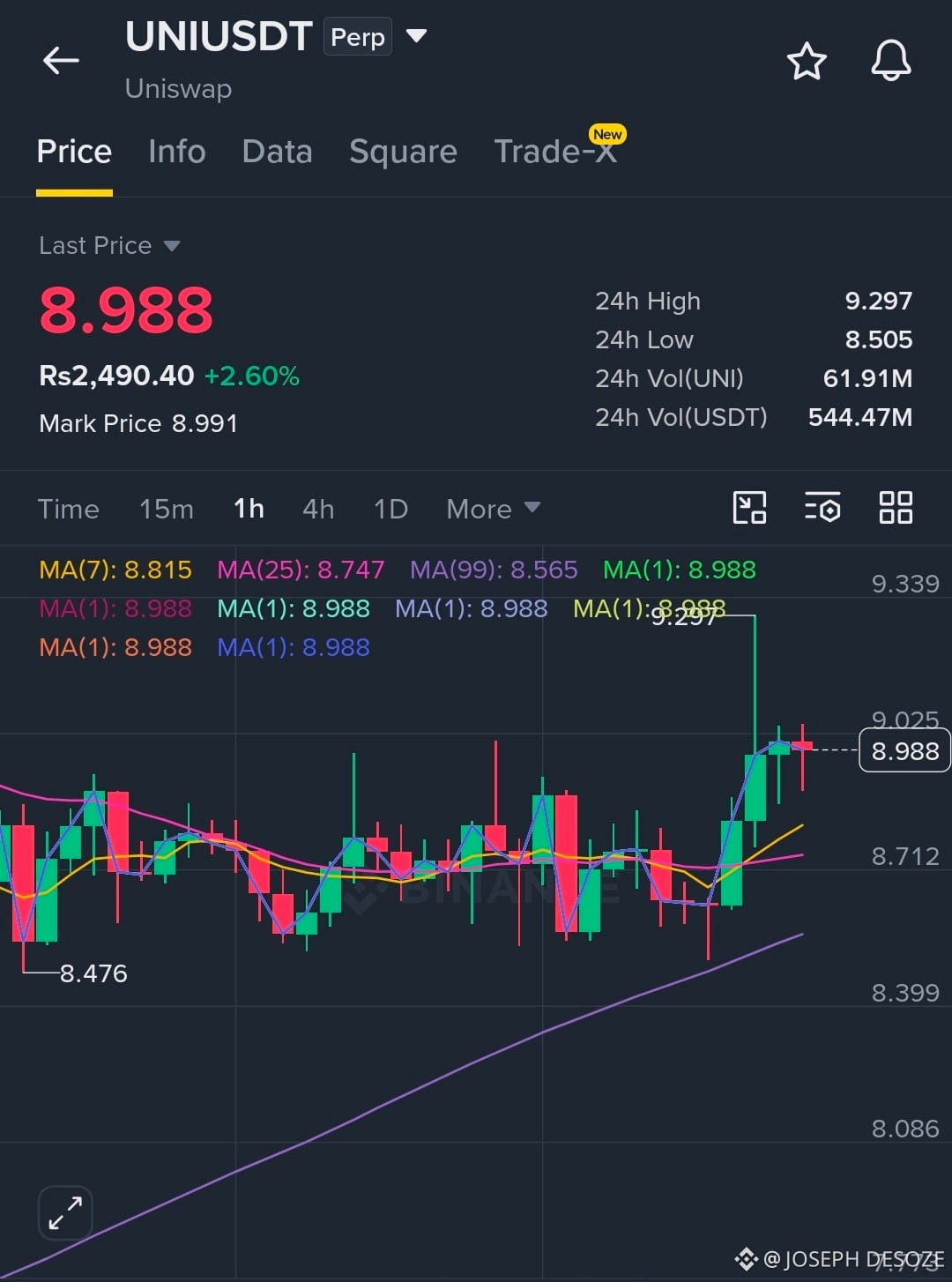
La plupart des traders ne voient pas encore une configuration haussière calme en train de se former en ce moment.
$UNI /USDT - LONG
Plan de trade :
Entrée : 8.890 – 8.994
SL : 8.444
TP1 : 9.315
TP2 : 9.564
TP3 : 9.938
Pourquoi cette configuration ?
Pourquoi maintenant ? La tendance quotidienne est haussière, et le prix sur 1h se situe à 8.944, juste au-dessus d’une zone d’entrée étroite entre 8.890 et 8.994. Le RSI sur 15m à 54.75 montre qu’il y a encore de la marge avant d’être en surachat, tandis que l’ATR sur 1h de 0.207421 confirme qu’il y a suffisamment d’élan pour atteindre le TP1 à 9.315 et s’étendre vers le TP2 à 9.564. La ligne de démarcation correspond au niveau d’invalidation à 7.586, qui doit tenir pour que cette configuration reste valide.
Débat :
Allons-nous viser le TP2 à 9.564, ou est-ce un piège avant une purge jusqu’à 7.586 ?
⚠️ Analyse personnelle du marché uniquement. NFA — gérez le risque et faites votre propre recherche (DYOR).
Contenu éducatif, pas un conseil en investissement ni une recommandation d’acheter, vendre, déposer ou retirer un quelconque actif. Aucune promotion payante ni liens de parrainage/affiliation.
{future}(UNIUSDT)
#UNI
La plupart des traders ne voient pas encore une configuration haussière calme en train de se former en ce moment.
$UNI /USDT - LONG
Plan de trade :
Entrée : 8.890 – 8.994
SL : 8.444
TP1 : 9.315
TP2 : 9.564
TP3 : 9.938
Pourquoi cette configuration ?
Pourquoi maintenant ? La tendance quotidienne est haussière, et le prix sur 1h se situe à 8.944, juste au-dessus d’une zone d’entrée étroite entre 8.890 et 8.994. Le RSI sur 15m à 54.75 montre qu’il y a encore de la marge avant d’être en surachat, tandis que l’ATR sur 1h de 0.207421 confirme qu’il y a suffisamment d’élan pour atteindre le TP1 à 9.315 et s’étendre vers le TP2 à 9.564. La ligne de démarcation correspond au niveau d’invalidation à 7.586, qui doit tenir pour que cette configuration reste valide.
Débat :
Allons-nous viser le TP2 à 9.564, ou est-ce un piège avant une purge jusqu’à 7.586 ?
⚠️ Analyse personnelle du marché uniquement. NFA — gérez le risque et faites votre propre recherche (DYOR).
Contenu éducatif, pas un conseil en investissement ni une recommandation d’acheter, vendre, déposer ou retirer un quelconque actif. Aucune promotion payante ni liens de parrainage/affiliation.
#UNI
$UNI /USDT - LONG
Plan de trade :
Entrée : 8.890 – 8.994
SL : 8.444
TP1 : 9.315
TP2 : 9.564
TP3 : 9.938
Pourquoi cette configuration ?
Pourquoi maintenant ? La tendance quotidienne est haussière, et le prix sur 1h se situe à 8.944, juste au-dessus d’une zone d’entrée étroite entre 8.890 et 8.994. Le RSI sur 15m à 54.75 montre qu’il y a encore de la marge avant d’être en surachat, tandis que l’ATR sur 1h de 0.207421 confirme qu’il y a suffisamment d’élan pour atteindre le TP1 à 9.315 et s’étendre vers le TP2 à 9.564. La ligne de démarcation correspond au niveau d’invalidation à 7.586, qui doit tenir pour que cette configuration reste valide.
Débat :
Allons-nous viser le TP2 à 9.564, ou est-ce un piège avant une purge jusqu’à 7.586 ?
⚠️ Analyse personnelle du marché uniquement. NFA — gérez le risque et faites votre propre recherche (DYOR).
Contenu éducatif, pas un conseil en investissement ni une recommandation d’acheter, vendre, déposer ou retirer un quelconque actif. Aucune promotion payante ni liens de parrainage/affiliation.
#UNI
117
·
--
Baissier
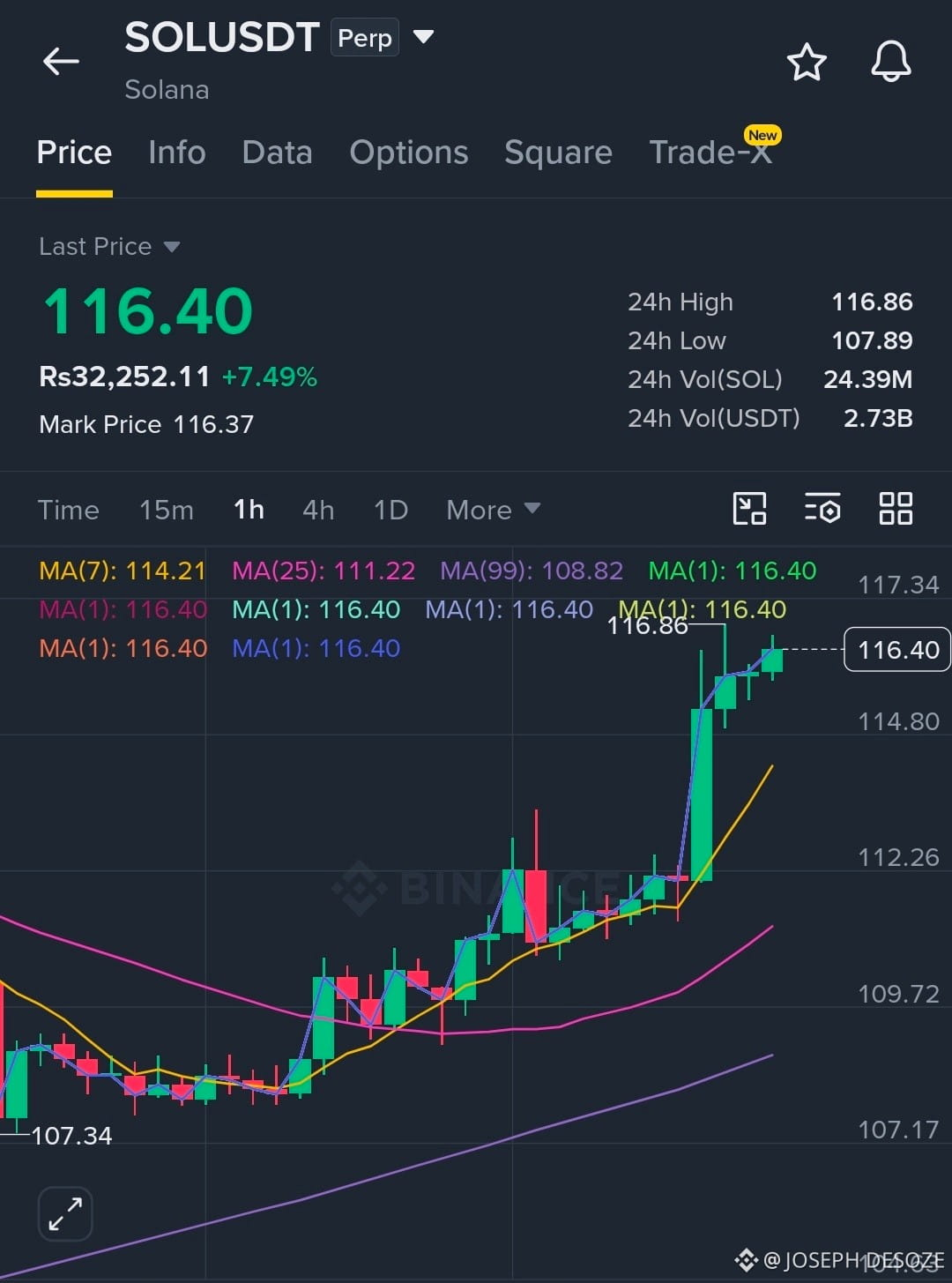
$SOL /USDT - COURT
Plan de trading :
Entrée : 116.04 – 116.70
SL : 120.52
TP1 : 113.25
TP2 : 111.18
TP3 : 108.06
Pourquoi ce setup ?
Pourquoi maintenant ? Le setup en 4h montre une tendance baissière avec une forte probabilité, même si la tendance journalière reste haussière. L’ATR 1h de 1.331257 indique que la volatilité augmente juste assez pour justifier une position courte. Le RSI 15m à 71.56 confirme que le prix 1h de 116.37 est en surachat, créant une zone de résistance près de la fourchette d’entrée de 116.04 à 116.70. Cela signifie qu’un rejet depuis cette zone pourrait envoyer $SOL/USDT vers le TP1 à 113.25, avec une baisse plus profonde vers le TP2 à 111.18 si l’élan se poursuit. Le trade devient invalide si le prix reste au-dessus de 106.90, qui est la ligne de démarcation pour ce setup.
Débat :
Allons-nous atteindre le TP2 ou être piégés ?
⚠️ Analyse personnelle du marché uniquement. NFA — gérez le risque et faites votre propre recherche (DYOR).
Contenu éducatif, pas un conseil en investissement ni une recommandation d’acheter, de vendre, de déposer ou de retirer un quelconque actif. Aucune promotion payante ni lien de parrainage/affiliation.
{future}(SOLUSDT)
#sol板块
$SOL /USDT - COURT
Plan de trading :
Entrée : 116.04 – 116.70
SL : 120.52
TP1 : 113.25
TP2 : 111.18
TP3 : 108.06
Pourquoi ce setup ?
Pourquoi maintenant ? Le setup en 4h montre une tendance baissière avec une forte probabilité, même si la tendance journalière reste haussière. L’ATR 1h de 1.331257 indique que la volatilité augmente juste assez pour justifier une position courte. Le RSI 15m à 71.56 confirme que le prix 1h de 116.37 est en surachat, créant une zone de résistance près de la fourchette d’entrée de 116.04 à 116.70. Cela signifie qu’un rejet depuis cette zone pourrait envoyer $SOL /USDT vers le TP1 à 113.25, avec une baisse plus profonde vers le TP2 à 111.18 si l’élan se poursuit. Le trade devient invalide si le prix reste au-dessus de 106.90, qui est la ligne de démarcation pour ce setup.
Débat :
Allons-nous atteindre le TP2 ou être piégés ?
⚠️ Analyse personnelle du marché uniquement. NFA — gérez le risque et faites votre propre recherche (DYOR).
Contenu éducatif, pas un conseil en investissement ni une recommandation d’acheter, de vendre, de déposer ou de retirer un quelconque actif. Aucune promotion payante ni lien de parrainage/affiliation.
#sol板块
Plan de trading :
Entrée : 116.04 – 116.70
SL : 120.52
TP1 : 113.25
TP2 : 111.18
TP3 : 108.06
Pourquoi ce setup ?
Pourquoi maintenant ? Le setup en 4h montre une tendance baissière avec une forte probabilité, même si la tendance journalière reste haussière. L’ATR 1h de 1.331257 indique que la volatilité augmente juste assez pour justifier une position courte. Le RSI 15m à 71.56 confirme que le prix 1h de 116.37 est en surachat, créant une zone de résistance près de la fourchette d’entrée de 116.04 à 116.70. Cela signifie qu’un rejet depuis cette zone pourrait envoyer $SOL /USDT vers le TP1 à 113.25, avec une baisse plus profonde vers le TP2 à 111.18 si l’élan se poursuit. Le trade devient invalide si le prix reste au-dessus de 106.90, qui est la ligne de démarcation pour ce setup.
Débat :
Allons-nous atteindre le TP2 ou être piégés ?
⚠️ Analyse personnelle du marché uniquement. NFA — gérez le risque et faites votre propre recherche (DYOR).
Contenu éducatif, pas un conseil en investissement ni une recommandation d’acheter, de vendre, de déposer ou de retirer un quelconque actif. Aucune promotion payante ni lien de parrainage/affiliation.
#sol板块
151
·
--
Baissier
Bitcoin est actuellement autour de 81 000 $, encore en baisse d’environ 40 % par rapport à son ATH d’octobre près de 126 000 $. Il consolide sur le côté avec des volumes faibles — 10 milliards de dollars par jour, c’est mince pour un actif avec une capitalisation de 1,6 T. Voici le post.
Ce matin, j’ai vérifié par habitude le nombre de pairs de mon nœud. Une vieille mémoire musculaire de 2021, quand je me souciais vraiment d’avoir 8 pairs ou 40. Maintenant, peu importe — la chaîne tourne que je la surveille ou non. C’est ça que personne ne te dit quand tu tiens sur quelques cycles : la technologie te paraît de plus en plus banale exactement au moment où elle devient moins banale pour tout le monde.
Le prix est calé autour de 81 000 $. En baisse depuis 126 000 $ l’octobre dernier. Tout le monde appelle ça une consolidation, ce qui est le mot poli pour « personne ne sait, et le volume est d’accord ». 10 milliards par jour en mouvement sur un actif de 1,6 trillion. Fais le calcul du ratio à un moment. Ce n’est pas un marché qui se prépare à exploser dans un sens ou dans l’autre — c’est un marché où les gros ont déjà pris leur décision et attendent que le retail rattrape son retard… ou qu’il abandonne.
Le détail silencieux : le mempool est vide depuis des semaines. Les frais sont pratiquement inexistants. Quand le BTC fonçait vers ses plus hauts, les blocs étaient pleins et les gens payaient 20 $ pour déplacer de l’argent. Maintenant, tu peux envoyer n’importe quoi pour quelques centimes et personne n’en parle, parce que « des frais bas » n’est pas un titre — c’est juste… mardi. Mais c’est bien là le vrai check-up : pas la bougie de prix, la couche de base qui ronronne sans contestation pendant que le marché des dérivés fait une crise trois étages plus haut.
Je me souviens quand un mouvement de 22 % sur un mois donnait l’impression que tout était en train de finir ou de commencer. D’août à septembre, le BTC est passé de 64 000 $ à 79 000 $, et ça a à peine entamé l’humeur de qui que ce soit. Voilà ce que font quatre cycles à une personne — le même pourcentage de mouvement qui te tenait éveillé ne ressemble plus qu’à de la météo.
Ce que je surveille réellement, ce n’est pas le graphique. C’est de savoir si mes propres mains me démangent. Pour le moment, ce n’est pas le cas. Et quelque part dans ce constat se trouve le seul signal qui ait jamais vraiment compté.
$BTC #BTC走势分析 #btc70k #BTC☀
{future}(BTCUSDT)
Bitcoin est actuellement autour de 81 000 $, encore en baisse d’environ 40 % par rapport à son ATH d’octobre près de 126 000 $. Il consolide sur le côté avec des volumes faibles — 10 milliards de dollars par jour, c’est mince pour un actif avec une capitalisation de 1,6 T. Voici le post.
Ce matin, j’ai vérifié par habitude le nombre de pairs de mon nœud. Une vieille mémoire musculaire de 2021, quand je me souciais vraiment d’avoir 8 pairs ou 40. Maintenant, peu importe — la chaîne tourne que je la surveille ou non. C’est ça que personne ne te dit quand tu tiens sur quelques cycles : la technologie te paraît de plus en plus banale exactement au moment où elle devient moins banale pour tout le monde.
Le prix est calé autour de 81 000 $. En baisse depuis 126 000 $ l’octobre dernier. Tout le monde appelle ça une consolidation, ce qui est le mot poli pour « personne ne sait, et le volume est d’accord ». 10 milliards par jour en mouvement sur un actif de 1,6 trillion. Fais le calcul du ratio à un moment. Ce n’est pas un marché qui se prépare à exploser dans un sens ou dans l’autre — c’est un marché où les gros ont déjà pris leur décision et attendent que le retail rattrape son retard… ou qu’il abandonne.
Le détail silencieux : le mempool est vide depuis des semaines. Les frais sont pratiquement inexistants. Quand le BTC fonçait vers ses plus hauts, les blocs étaient pleins et les gens payaient 20 $ pour déplacer de l’argent. Maintenant, tu peux envoyer n’importe quoi pour quelques centimes et personne n’en parle, parce que « des frais bas » n’est pas un titre — c’est juste… mardi. Mais c’est bien là le vrai check-up : pas la bougie de prix, la couche de base qui ronronne sans contestation pendant que le marché des dérivés fait une crise trois étages plus haut.
Je me souviens quand un mouvement de 22 % sur un mois donnait l’impression que tout était en train de finir ou de commencer. D’août à septembre, le BTC est passé de 64 000 $ à 79 000 $, et ça a à peine entamé l’humeur de qui que ce soit. Voilà ce que font quatre cycles à une personne — le même pourcentage de mouvement qui te tenait éveillé ne ressemble plus qu’à de la météo.
Ce que je surveille réellement, ce n’est pas le graphique. C’est de savoir si mes propres mains me démangent. Pour le moment, ce n’est pas le cas. Et quelque part dans ce constat se trouve le seul signal qui ait jamais vraiment compté.
$BTC #BTC走势分析 #btc70k #BTC☀
Ce matin, j’ai vérifié par habitude le nombre de pairs de mon nœud. Une vieille mémoire musculaire de 2021, quand je me souciais vraiment d’avoir 8 pairs ou 40. Maintenant, peu importe — la chaîne tourne que je la surveille ou non. C’est ça que personne ne te dit quand tu tiens sur quelques cycles : la technologie te paraît de plus en plus banale exactement au moment où elle devient moins banale pour tout le monde.
Le prix est calé autour de 81 000 $. En baisse depuis 126 000 $ l’octobre dernier. Tout le monde appelle ça une consolidation, ce qui est le mot poli pour « personne ne sait, et le volume est d’accord ». 10 milliards par jour en mouvement sur un actif de 1,6 trillion. Fais le calcul du ratio à un moment. Ce n’est pas un marché qui se prépare à exploser dans un sens ou dans l’autre — c’est un marché où les gros ont déjà pris leur décision et attendent que le retail rattrape son retard… ou qu’il abandonne.
Le détail silencieux : le mempool est vide depuis des semaines. Les frais sont pratiquement inexistants. Quand le BTC fonçait vers ses plus hauts, les blocs étaient pleins et les gens payaient 20 $ pour déplacer de l’argent. Maintenant, tu peux envoyer n’importe quoi pour quelques centimes et personne n’en parle, parce que « des frais bas » n’est pas un titre — c’est juste… mardi. Mais c’est bien là le vrai check-up : pas la bougie de prix, la couche de base qui ronronne sans contestation pendant que le marché des dérivés fait une crise trois étages plus haut.
Je me souviens quand un mouvement de 22 % sur un mois donnait l’impression que tout était en train de finir ou de commencer. D’août à septembre, le BTC est passé de 64 000 $ à 79 000 $, et ça a à peine entamé l’humeur de qui que ce soit. Voilà ce que font quatre cycles à une personne — le même pourcentage de mouvement qui te tenait éveillé ne ressemble plus qu’à de la météo.
Ce que je surveille réellement, ce n’est pas le graphique. C’est de savoir si mes propres mains me démangent. Pour le moment, ce n’est pas le cas. Et quelque part dans ce constat se trouve le seul signal qui ait jamais vraiment compté.
$BTC #BTC走势分析 #btc70k #BTC☀
135
·
--
Haussier
Personne ne parle de cette configuration ZEC discrète, cachée au vu de tous.
$ZEC /USDT - LONG
Plan de trade :
Entrée : 1453.18 – 1464.06
SL : 1406.42
TP1 : 1497.77
TP2 : 1523.86
TP3 : 1563.01
Pourquoi cette configuration ?
Pourquoi maintenant ? La tendance quotidienne est haussière, et le prix sur 1h se maintient à 1458.62, ce qui se situe dans une zone d’entrée étroite entre 1453.18 et 1464.06. Le RSI 15m à 49.3 montre que le marché n’est ni suracheté ni survendu, laissant la place à un mouvement propre à la hausse. Avec l’ATR 1h à 21.748209, la volatilité attendue soutient une progression réaliste vers le TP1 à 1497.77, avec une extension plus profonde jusqu’au TP2 à 1523.86. Le niveau d’invalidation à 1306.69 est la ligne de rupture à respecter pour protéger cette structure.
Débat :
Est-ce qu’on pousse vers le TP2, ou est-ce que 1306.69 est sur le point de casser cette configuration ?
⚠️ Analyse personnelle du marché uniquement. NFA — gérez le risque et faites vos propres recherches (DYOR).
Contenu éducatif, pas un conseil en investissement ni une recommandation d’acheter, vendre, déposer ou retirer un quelconque actif. Aucune promotion payante ni liens de parrainage/affiliation.
{future}(ZECUSDT)
#zec
Personne ne parle de cette configuration ZEC discrète, cachée au vu de tous.
$ZEC /USDT - LONG
Plan de trade :
Entrée : 1453.18 – 1464.06
SL : 1406.42
TP1 : 1497.77
TP2 : 1523.86
TP3 : 1563.01
Pourquoi cette configuration ?
Pourquoi maintenant ? La tendance quotidienne est haussière, et le prix sur 1h se maintient à 1458.62, ce qui se situe dans une zone d’entrée étroite entre 1453.18 et 1464.06. Le RSI 15m à 49.3 montre que le marché n’est ni suracheté ni survendu, laissant la place à un mouvement propre à la hausse. Avec l’ATR 1h à 21.748209, la volatilité attendue soutient une progression réaliste vers le TP1 à 1497.77, avec une extension plus profonde jusqu’au TP2 à 1523.86. Le niveau d’invalidation à 1306.69 est la ligne de rupture à respecter pour protéger cette structure.
Débat :
Est-ce qu’on pousse vers le TP2, ou est-ce que 1306.69 est sur le point de casser cette configuration ?
⚠️ Analyse personnelle du marché uniquement. NFA — gérez le risque et faites vos propres recherches (DYOR).
Contenu éducatif, pas un conseil en investissement ni une recommandation d’acheter, vendre, déposer ou retirer un quelconque actif. Aucune promotion payante ni liens de parrainage/affiliation.
#zec
$ZEC /USDT - LONG
Plan de trade :
Entrée : 1453.18 – 1464.06
SL : 1406.42
TP1 : 1497.77
TP2 : 1523.86
TP3 : 1563.01
Pourquoi cette configuration ?
Pourquoi maintenant ? La tendance quotidienne est haussière, et le prix sur 1h se maintient à 1458.62, ce qui se situe dans une zone d’entrée étroite entre 1453.18 et 1464.06. Le RSI 15m à 49.3 montre que le marché n’est ni suracheté ni survendu, laissant la place à un mouvement propre à la hausse. Avec l’ATR 1h à 21.748209, la volatilité attendue soutient une progression réaliste vers le TP1 à 1497.77, avec une extension plus profonde jusqu’au TP2 à 1523.86. Le niveau d’invalidation à 1306.69 est la ligne de rupture à respecter pour protéger cette structure.
Débat :
Est-ce qu’on pousse vers le TP2, ou est-ce que 1306.69 est sur le point de casser cette configuration ?
⚠️ Analyse personnelle du marché uniquement. NFA — gérez le risque et faites vos propres recherches (DYOR).
Contenu éducatif, pas un conseil en investissement ni une recommandation d’acheter, vendre, déposer ou retirer un quelconque actif. Aucune promotion payante ni liens de parrainage/affiliation.
#zec
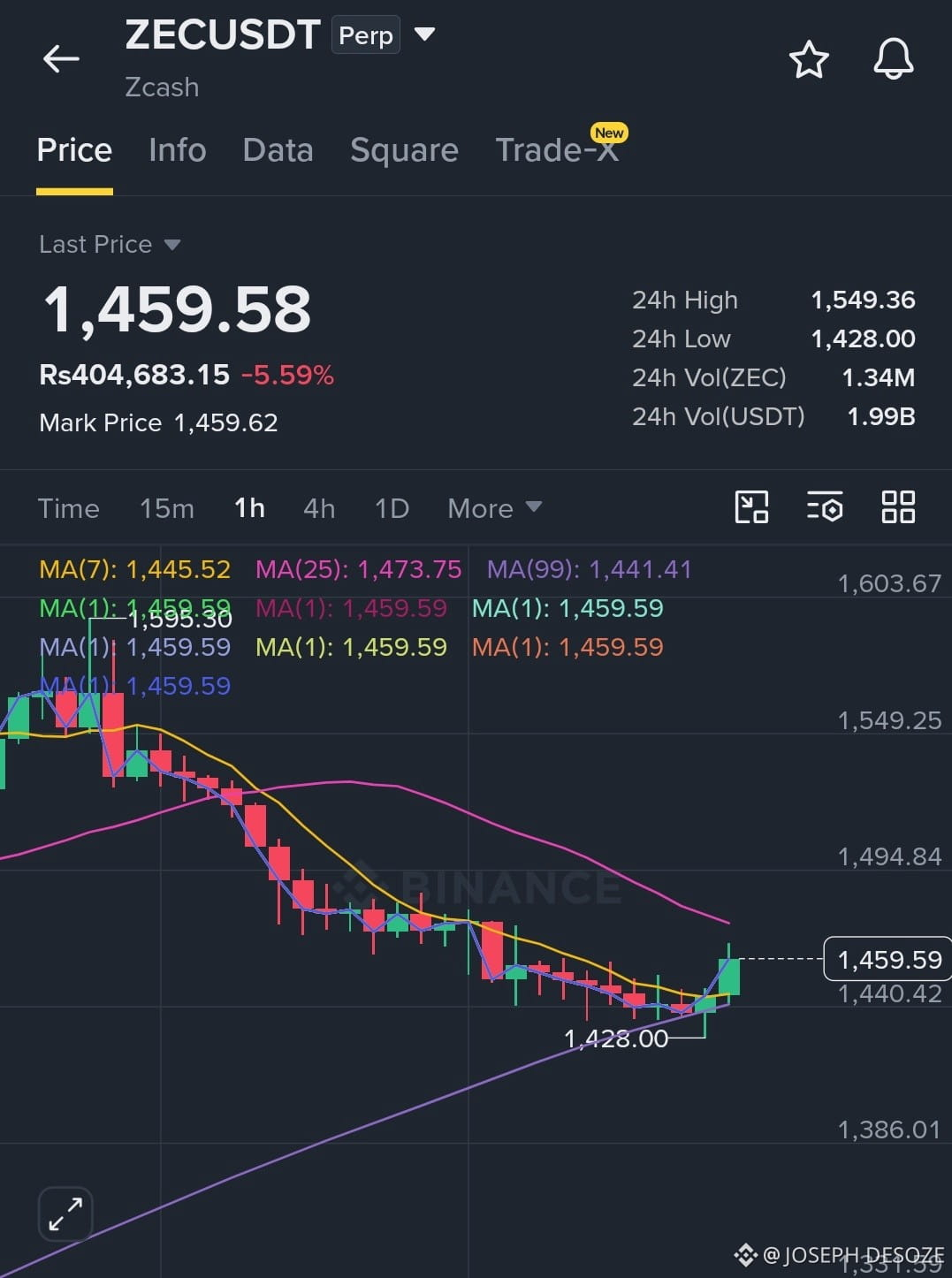
156
Connectez-vous pour découvrir plus de contenu
Rejoignez la communauté mondiale des adeptes de cryptomonnaies sur Binance Square
⚡️ Suviez les dernières informations importantes sur les cryptomonnaies.
💬 Jugé digne de confiance par la plus grande plateforme d’échange de cryptomonnaies au monde.
👍 Découvrez les connaissances que partagent les créateurs vérifiés.
Adresse e-mail/Nº de téléphone
Sujets d’actualité
AIStocksWhatNext
97,871 vues
1,254 mentions
Partagez et gagnez une récompense de trafic dans notre campagne de hashtag tendance
✨Sujet : Quelles autres opportunités d’investissement restent-elles alors que les actions liées à l’IA continuent de grimper ?
👉Comment participer :
Publiez une courte publication ou un article avec le hashtag #AIStocksWhatNext
Partagez si vous êtes plutôt haussier ou baissier, et publiez vos avoirs en actions IA ou votre transaction — utiliser le widget de trading peut améliorer votre éligibilité.
Vous pouvez aussi renforcer votre publication en partageant des données ou des graphiques, et en évitant les images générées par l’IA.
✍️Créez du contenu à partir des angles ci-dessous :
- Nvidia affirme que les ventes de puces vont doubler l’an prochain, et que les principaux acteurs de l’IA continuent d’enregistrer des revenus records ; les dépenses en calcul qui soutiennent tout cela sont tout aussi impressionnantes. La demande en IA décolle-t-elle vraiment ? Et combien de temps cela peut-il durer ? Les actions IA montent partout. Est-ce une vraie cassure, ou juste un rebond à court terme ?
- Des leaders de l’industrie appellent à ralentir le développement de l’IA, tandis que Trump prévoit de construire une « Force IA », affirmant que l’IA pourrait représenter 25 % du PIB américain à l’avenir. De quel côté êtes-vous ? Le soutien au niveau des États sera-t-il un gain de long terme pour les actions IA ?
- Achetez-vous des actions liées à l’IA ? Partagez votre transaction/position liée à l’IA avec notre widget de partage de trading.
⏰Période de la campagne :
- 2026-09-22 7:00 - 2026-09-24 4:00 UTC
🎁Récompense :
- Les publications qualifiées qui respectent les consignes ci-dessus et contiennent plus de 100 mots seront examinées et pourront recevoir un boost aléatoire de trafic de 500 à 3 000 vues. Vous recevrez une notification de la part de votre secrétaire de flux si votre publication est sélectionnée.
- Ayez une chance de voir votre article mis en avant sur Binance Square Official
Vous cherchez des idées pour votre publication ? Visitez la page du sujet #AIStocksWhatNext ou la page Square Guide on How to Post for Better Reach.
Binance Square Official
·203 mentions J’aime
·324.7k vues
BitcoinBreaksAboveMayHighNears$86K
1,488 vues
38 mentions
DogecoinRises15%
4,200 vues
201 mentions