

Trend Finder
669 Publications

Trend Finder
Signaler
Bloquer l’utilisateur
Self Dependent Trader - Growth and Alpha Tracker - Navigating Crypto Chaos - Sharing strategies and daily insights
Trade occasionnellement
5.8 mois
15 Suivis
61 Abonnés
675 J’aime
Publications
·
--
$ETH sitting at 2714.13 feels dead, but L2 metrics tell a totally different story. Dropping blob fees are driving ZK-rollup costs down to near zero while scaling throughput hits new highs. Price is ranging, but execution metrics are ramping up fast.
#Layer2 #BlockchainScaling #ETH
$ETH sitting at 2714.13 feels dead, but L2 metrics tell a totally different story. Dropping blob fees are driving ZK-rollup costs down to near zero while scaling throughput hits new highs. Price is ranging, but execution metrics are ramping up fast.
#Layer2 #BlockchainScaling #ETH
#Layer2 #BlockchainScaling #ETH
5
·
--
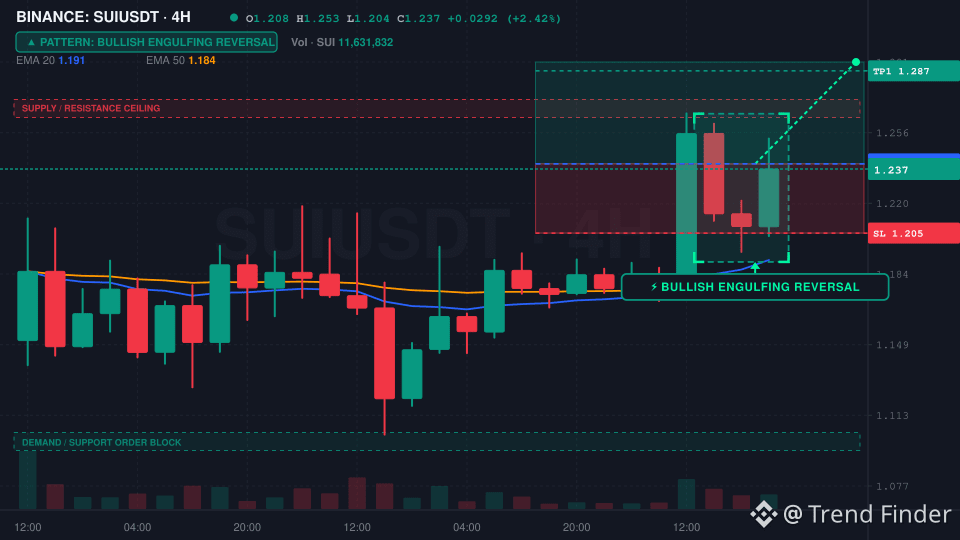
Ignore retail noise; smart money is quietly soaking up floating supply on $SUI while $BTC holds key support. That 4H Bullish Engulfing reclaim above EMA20 signals strong institutional absorption before expansion.
Entry: 1.24
SL: 1.205
TP1: 1.287
TP2: 1.318
#BinanceSquare #CryptoTrading #SUI
Ignore retail noise; smart money is quietly soaking up floating supply on $SUI while $BTC holds key support. That 4H Bullish Engulfing reclaim above EMA20 signals strong institutional absorption before expansion.
Entry: 1.24
SL: 1.205
TP1: 1.287
TP2: 1.318
#BinanceSquare #CryptoTrading #SUI
Entry: 1.24
SL: 1.205
TP1: 1.287
TP2: 1.318
#BinanceSquare #CryptoTrading #SUI
2
31
·
--
While everyone is busy tracking short-term price fluctuations, a massive structural shi...While everyone is busy tracking short-term price fluctuations, a massive structural shift is quietly playing out beneath the surface of the $BNB ecosystem. The real story isn't just about candles on a chart; it is about how capital efficiency is fundamentally transforming the way on-chain participants generate yield.
Look closely at the data and you will see BNB Chain TVL holding firm near the 6 billion dollar mark. But the composition of that capital has completely changed. Instead of sitting idle in basic wallets, liquidity is rapidly migrating into liquid staking derivatives and advanced restaking protocols. Users are actively unlocking trapped assets, routing them into high-utilization lending markets, and capturing automated market maker fee generation that rewards genuine protocol utility over inflationary token emissions.
On-chain metrics confirm this evolution. DEX volume on the chain is capturing a much larger share of activity compared to legacy spot markets, proving that traders prefer keeping capital fluid within the ecosystem to compound their returns. Whales are heavily favoring these sustainable, real-yield avenues, which is tightening the circulating float faster than many realize. When combined with disciplined tokenomics and heavy spot absorption around the 808.58 reference level, the underlying supply-demand dynamics are looking structurally tighter week by week.
As BNB deepens its role as the primary collateral layer for these burgeoning yield strategies, the depth and resilience of the entire network are scaling up nicely.
What is your take on the current shift toward liquid staking yield strategies on BNB Chain?
#DeFi #TVL
While everyone is busy tracking short-term price fluctuations, a massive structural shi...
While everyone is busy tracking short-term price fluctuations, a massive structural shift is quietly playing out beneath the surface of the $BNB ecosystem. The real story isn't just about candles on a chart; it is about how capital efficiency is fundamentally transforming the way on-chain participants generate yield.
Look closely at the data and you will see BNB Chain TVL holding firm near the 6 billion dollar mark. But the composition of that capital has completely changed. Instead of sitting idle in basic wallets, liquidity is rapidly migrating into liquid staking derivatives and advanced restaking protocols. Users are actively unlocking trapped assets, routing them into high-utilization lending markets, and capturing automated market maker fee generation that rewards genuine protocol utility over inflationary token emissions.
On-chain metrics confirm this evolution. DEX volume on the chain is capturing a much larger share of activity compared to legacy spot markets, proving that traders prefer keeping capital fluid within the ecosystem to compound their returns. Whales are heavily favoring these sustainable, real-yield avenues, which is tightening the circulating float faster than many realize. When combined with disciplined tokenomics and heavy spot absorption around the 808.58 reference level, the underlying supply-demand dynamics are looking structurally tighter week by week.
As BNB deepens its role as the primary collateral layer for these burgeoning yield strategies, the depth and resilience of the entire network are scaling up nicely.
What is your take on the current shift toward liquid staking yield strategies on BNB Chain?
#DeFi #TVL
Look closely at the data and you will see BNB Chain TVL holding firm near the 6 billion dollar mark. But the composition of that capital has completely changed. Instead of sitting idle in basic wallets, liquidity is rapidly migrating into liquid staking derivatives and advanced restaking protocols. Users are actively unlocking trapped assets, routing them into high-utilization lending markets, and capturing automated market maker fee generation that rewards genuine protocol utility over inflationary token emissions.
On-chain metrics confirm this evolution. DEX volume on the chain is capturing a much larger share of activity compared to legacy spot markets, proving that traders prefer keeping capital fluid within the ecosystem to compound their returns. Whales are heavily favoring these sustainable, real-yield avenues, which is tightening the circulating float faster than many realize. When combined with disciplined tokenomics and heavy spot absorption around the 808.58 reference level, the underlying supply-demand dynamics are looking structurally tighter week by week.
As BNB deepens its role as the primary collateral layer for these burgeoning yield strategies, the depth and resilience of the entire network are scaling up nicely.
What is your take on the current shift toward liquid staking yield strategies on BNB Chain?
#DeFi #TVL
48
·
--
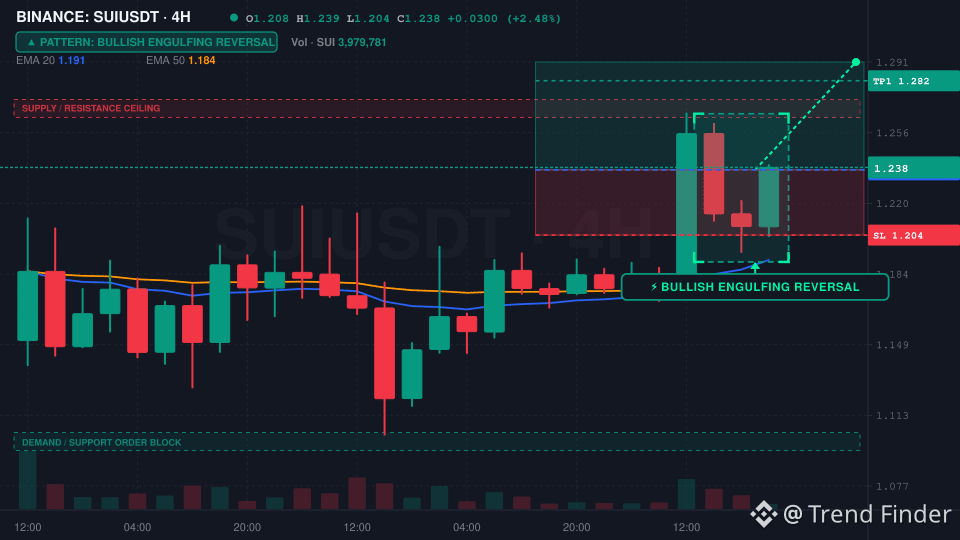
That $SUI sell-side liquidity sweep just triggered an aggressive institutional pivot. With $BTC holding the floor, spot absorption is clearing overhead sell walls via a 4H Bullish Engulfing reclaim above EMA20.
Entry: 1.237
SL: 1.204
TP1: 1.282
TP2: 1.312
#BinanceSquare #CryptoTrading #SUI
That $SUI sell-side liquidity sweep just triggered an aggressive institutional pivot. With $BTC holding the floor, spot absorption is clearing overhead sell walls via a 4H Bullish Engulfing reclaim above EMA20.
Entry: 1.237
SL: 1.204
TP1: 1.282
TP2: 1.312
#BinanceSquare #CryptoTrading #SUI
Entry: 1.237
SL: 1.204
TP1: 1.282
TP2: 1.312
#BinanceSquare #CryptoTrading #SUI
64
·
--
The Illiquid Metal Shift: On-Chain Whale Storage Meets Tokenized Silver SqueezeThe Illiquid Metal Shift: On-Chain Whale Storage Meets Tokenized Silver Squeeze
While market participants remain hyper-focused on speculative rotation across high-beta altcoins, a quiet structural reallocation into hard-asset backed tokens is creating a serious supply squeeze. Spot tokenized silver metrics are holding near 60.834 while the Gold-Silver Ratio rests at 68.5. Historically, a ratio sitting at this level highlights significant undervaluation for silver relative to underlying industrial demand and broader monetary utility.
On-chain telemetry reveals an unmistakable footprint of strategic institutional accumulation. Wallets associated with central bank tracking metrics and long-term treasury allocators have been steadily pulling tokenized gold allocations off exchange hot wallets and migrating them directly into institutional cold custody. This flow is creating a severe liquidity vacuum across order books. As physical verification on-chain replaces speculative paper contracts, the float on centralized exchanges for $SILVER is thinning out rapidly. Sell-side liquidity is drying up as participants opt for unencumbered asset-backed vault proof over leveraged derivatives.
The broader macroeconomic backdrop reinforces this structural tightness. Weakness across the Dollar Index continues to serve as an immediate catalyst for whale inflows into tokenized commodities like SILVER. Unlike traditional crypto capital flows that remain choppy and range-bound, the velocity of capital moving into asset-backed tokens is accelerating. This is a supply-side absorption play where circulating float is being permanently locked away by long-term strategic balance sheets. With minimal sell-side pressure on order books, holders are signaling zero intention to unload into current strength.
How are you balancing your portfolio between volatile crypto assets and hard tokenized commodity hedges as on-chain liquidity tightens?
#OnChainData #WhaleAlert
The Illiquid Metal Shift: On-Chain Whale Storage Meets Tokenized Silver Squeeze
The Illiquid Metal Shift: On-Chain Whale Storage Meets Tokenized Silver Squeeze
While market participants remain hyper-focused on speculative rotation across high-beta altcoins, a quiet structural reallocation into hard-asset backed tokens is creating a serious supply squeeze. Spot tokenized silver metrics are holding near 60.834 while the Gold-Silver Ratio rests at 68.5. Historically, a ratio sitting at this level highlights significant undervaluation for silver relative to underlying industrial demand and broader monetary utility.
On-chain telemetry reveals an unmistakable footprint of strategic institutional accumulation. Wallets associated with central bank tracking metrics and long-term treasury allocators have been steadily pulling tokenized gold allocations off exchange hot wallets and migrating them directly into institutional cold custody. This flow is creating a severe liquidity vacuum across order books. As physical verification on-chain replaces speculative paper contracts, the float on centralized exchanges for $SILVER is thinning out rapidly. Sell-side liquidity is drying up as participants opt for unencumbered asset-backed vault proof over leveraged derivatives.
The broader macroeconomic backdrop reinforces this structural tightness. Weakness across the Dollar Index continues to serve as an immediate catalyst for whale inflows into tokenized commodities like SILVER. Unlike traditional crypto capital flows that remain choppy and range-bound, the velocity of capital moving into asset-backed tokens is accelerating. This is a supply-side absorption play where circulating float is being permanently locked away by long-term strategic balance sheets. With minimal sell-side pressure on order books, holders are signaling zero intention to unload into current strength.
How are you balancing your portfolio between volatile crypto assets and hard tokenized commodity hedges as on-chain liquidity tightens?
#OnChainData #WhaleAlert
While market participants remain hyper-focused on speculative rotation across high-beta altcoins, a quiet structural reallocation into hard-asset backed tokens is creating a serious supply squeeze. Spot tokenized silver metrics are holding near 60.834 while the Gold-Silver Ratio rests at 68.5. Historically, a ratio sitting at this level highlights significant undervaluation for silver relative to underlying industrial demand and broader monetary utility.
On-chain telemetry reveals an unmistakable footprint of strategic institutional accumulation. Wallets associated with central bank tracking metrics and long-term treasury allocators have been steadily pulling tokenized gold allocations off exchange hot wallets and migrating them directly into institutional cold custody. This flow is creating a severe liquidity vacuum across order books. As physical verification on-chain replaces speculative paper contracts, the float on centralized exchanges for $SILVER is thinning out rapidly. Sell-side liquidity is drying up as participants opt for unencumbered asset-backed vault proof over leveraged derivatives.
The broader macroeconomic backdrop reinforces this structural tightness. Weakness across the Dollar Index continues to serve as an immediate catalyst for whale inflows into tokenized commodities like SILVER. Unlike traditional crypto capital flows that remain choppy and range-bound, the velocity of capital moving into asset-backed tokens is accelerating. This is a supply-side absorption play where circulating float is being permanently locked away by long-term strategic balance sheets. With minimal sell-side pressure on order books, holders are signaling zero intention to unload into current strength.
How are you balancing your portfolio between volatile crypto assets and hard tokenized commodity hedges as on-chain liquidity tightens?
#OnChainData #WhaleAlert

76
·
--
Macro Tension and Token Unlocks The Crucial Pivot for SuiMacro Tension and Token Unlocks The Crucial Pivot for Sui
The market is currently bracing for the 12:30 UTC release as the US labor market becomes the ultimate deciding factor for upcoming Fed policy moves. We are witnessing an intense tug-of-war between signs of a cooling economy and a central bank that recently pushed the policy rate into the 3.75-4.0 percent territory. With the previous NFP at 142k and the current consensus hovering between 145k and 150k, the room for error is incredibly thin. A significant miss would likely send the DXY lower, potentially sparking a massive volatility expansion for institutional order books as they recalibrate for the October 14 CPI report.
While macro forces provide the backdrop, $SUI is navigating its own supply-side reality after 23.4 million tokens were added to the circulating float yesterday. This unlock represents about 0.6 percent of the current market cap, a move that typically tests the resolve of spot holders. Despite this, SUI is holding steady around the 1.213 level. Binance sentiment data shows that 71 percent of accounts remain long, suggesting that the aggressive accumulation seen in the 0.80 to 1.00 range is providing a structural cushion against the new supply hitting the market.
Institutional interest is likely focused on the upcoming Sui Basecamp on October 7-8, where new finance product reveals are expected to anchor the next phase of ecosystem growth. With 41 percent of the 10 billion total supply now in circulation, the narrative is moving beyond simple vesting schedules toward actual protocol utility. The convergence of today's job data and next week's ecosystem catalysts creates a unique window for SUI. Are you expecting the macro data to overshadow the ecosystem news, or will the network growth be enough to carry the momentum for SUI?
#NFP #MacroData
Macro Tension and Token Unlocks The Crucial Pivot for Sui
Macro Tension and Token Unlocks The Crucial Pivot for Sui
The market is currently bracing for the 12:30 UTC release as the US labor market becomes the ultimate deciding factor for upcoming Fed policy moves. We are witnessing an intense tug-of-war between signs of a cooling economy and a central bank that recently pushed the policy rate into the 3.75-4.0 percent territory. With the previous NFP at 142k and the current consensus hovering between 145k and 150k, the room for error is incredibly thin. A significant miss would likely send the DXY lower, potentially sparking a massive volatility expansion for institutional order books as they recalibrate for the October 14 CPI report.
While macro forces provide the backdrop, $SUI is navigating its own supply-side reality after 23.4 million tokens were added to the circulating float yesterday. This unlock represents about 0.6 percent of the current market cap, a move that typically tests the resolve of spot holders. Despite this, SUI is holding steady around the 1.213 level. Binance sentiment data shows that 71 percent of accounts remain long, suggesting that the aggressive accumulation seen in the 0.80 to 1.00 range is providing a structural cushion against the new supply hitting the market.
Institutional interest is likely focused on the upcoming Sui Basecamp on October 7-8, where new finance product reveals are expected to anchor the next phase of ecosystem growth. With 41 percent of the 10 billion total supply now in circulation, the narrative is moving beyond simple vesting schedules toward actual protocol utility. The convergence of today's job data and next week's ecosystem catalysts creates a unique window for SUI. Are you expecting the macro data to overshadow the ecosystem news, or will the network growth be enough to carry the momentum for SUI?
#NFP #MacroData
The market is currently bracing for the 12:30 UTC release as the US labor market becomes the ultimate deciding factor for upcoming Fed policy moves. We are witnessing an intense tug-of-war between signs of a cooling economy and a central bank that recently pushed the policy rate into the 3.75-4.0 percent territory. With the previous NFP at 142k and the current consensus hovering between 145k and 150k, the room for error is incredibly thin. A significant miss would likely send the DXY lower, potentially sparking a massive volatility expansion for institutional order books as they recalibrate for the October 14 CPI report.
While macro forces provide the backdrop, $SUI is navigating its own supply-side reality after 23.4 million tokens were added to the circulating float yesterday. This unlock represents about 0.6 percent of the current market cap, a move that typically tests the resolve of spot holders. Despite this, SUI is holding steady around the 1.213 level. Binance sentiment data shows that 71 percent of accounts remain long, suggesting that the aggressive accumulation seen in the 0.80 to 1.00 range is providing a structural cushion against the new supply hitting the market.
Institutional interest is likely focused on the upcoming Sui Basecamp on October 7-8, where new finance product reveals are expected to anchor the next phase of ecosystem growth. With 41 percent of the 10 billion total supply now in circulation, the narrative is moving beyond simple vesting schedules toward actual protocol utility. The convergence of today's job data and next week's ecosystem catalysts creates a unique window for SUI. Are you expecting the macro data to overshadow the ecosystem news, or will the network growth be enough to carry the momentum for SUI?
#NFP #MacroData

52
·
--
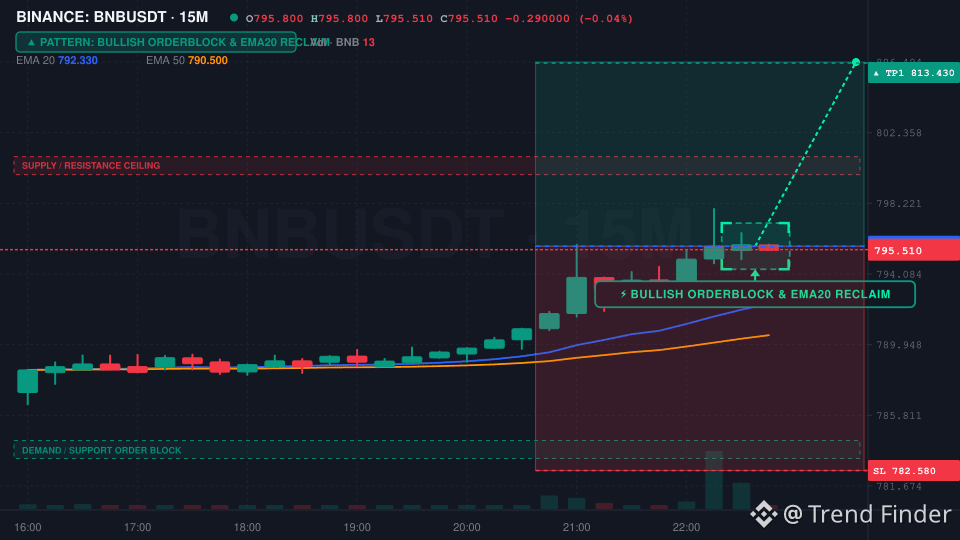
The liquidity pool is drying up on the sell-side for $BNB as aggressive spot absorption clears the path. A 15M Bullish Orderblock and EMA20 reclaim at 792.52 confirm our 55-point breakout while $BTC remains resilient. RSI 56 suggests momentum is just starting.
Entry: 795.71
SL: 782.58
TP1: 813.43
TP2: 825.25
#BinanceSquare #CryptoTrading #BNB
The liquidity pool is drying up on the sell-side for $BNB as aggressive spot absorption clears the path. A 15M Bullish Orderblock and EMA20 reclaim at 792.52 confirm our 55-point breakout while $BTC remains resilient. RSI 56 suggests momentum is just starting.
Entry: 795.71
SL: 782.58
TP1: 813.43
TP2: 825.25
#BinanceSquare #CryptoTrading #BNB
Entry: 795.71
SL: 782.58
TP1: 813.43
TP2: 825.25
#BinanceSquare #CryptoTrading #BNB
12
·
--
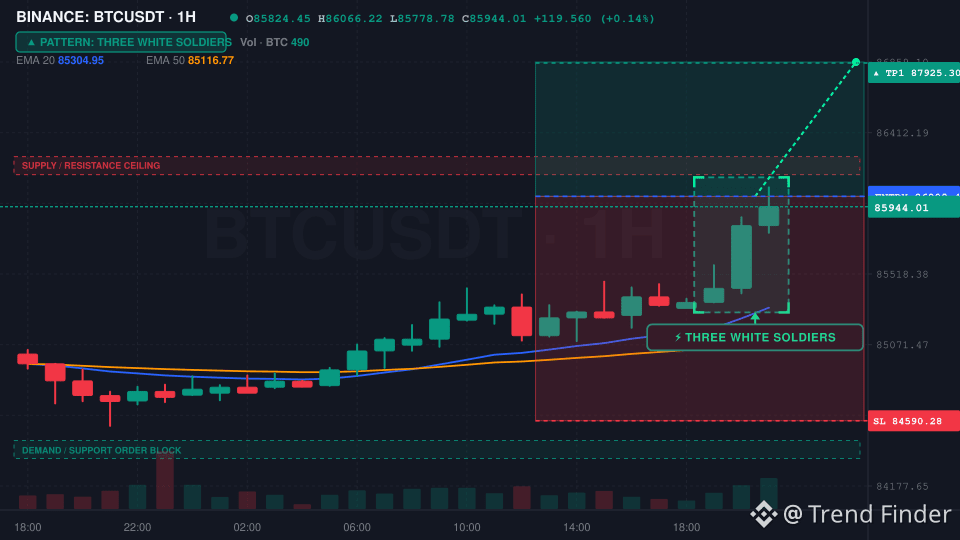
Bullish persistence is carving out a new reality. $BTC verified a 55-point LONG breakout via Three White Soldiers on the 1H, with RSI 56. Intense spot absorption is clearing sell-side liquidity as demand mirrors $ETH strength. EMA20 85665.40224.
Entry: 86009.44 | SL: 84590.28 | TP1: 87925.3 | TP2: 89202.54
_
#BinanceSquare #CryptoTrading #BTC
Bullish persistence is carving out a new reality. $BTC verified a 55-point LONG breakout via Three White Soldiers on the 1H, with RSI 56. Intense spot absorption is clearing sell-side liquidity as demand mirrors $ETH strength. EMA20 85665.40224.
Entry: 86009.44 | SL: 84590.28 | TP1: 87925.3 | TP2: 89202.54
_
#BinanceSquare #CryptoTrading #BTC
Entry: 86009.44 | SL: 84590.28 | TP1: 87925.3 | TP2: 89202.54
_
#BinanceSquare #CryptoTrading #BTC
21
·
--
Vérifié
The Hard Asset Migration: How Real-World Commodities are Reshaping the Arbitrum LedgerThe Hard Asset Migration: How Real-World Commodities are Reshaping the Arbitrum Ledger
The narrative around Layer 2 scaling is maturing into something far more tangible than just faster transactions or lower gas fees. We are witnessing a fundamental shift where the most trusted stores of value—physical gold and silver—are finding a permanent, liquid home on the blockchain. With Spot Gold holding steady around 4,140 and Silver at 60.27 per ounce, the flight to quality is undeniable. Central banks are loading up, the DXY is struggling under 102, and the Gold/Silver Ratio sitting at 68.5 suggests a very disciplined macro environment.
This is exactly why the growth of $ARB matters right now. Arbitrum One has quietly crossed the 1.03 billion threshold in tokenized real-world assets, ranging from massive 500 million solar initiatives in Australia to the deep liquidity of PAXG. By allowing users to use physical bullion as collateral for decentralized lending, Arbitrum is moving beyond the speculative loop and into the core infrastructure of global finance.
The real challenge, of course, is the supply side. We are looking at a circulating float of 6.78 billion, which is roughly 67.86 percent of the total supply. The reference price of 0.2036 puts the upcoming October 16 unlock of 92.6 million tokens into a clear perspective. That is roughly 19 million in fresh supply hitting the market every month for the DAO, team, and investors. Whale activity has historically been sensitive to these liquidity injections, so the ability for RWA demand to absorb this inflation will be the defining theme for the next several quarters.
If the ecosystem continues to attract institutional-grade commodities, the utility of the network might finally provide the necessary gravity to offset the pressure of the vesting schedule. How are you positioning your portfolio as hard assets continue to migrate on-chain?
_
#Gold #Silver
The Hard Asset Migration: How Real-World Commodities are Reshaping the Arbitrum Ledger
The Hard Asset Migration: How Real-World Commodities are Reshaping the Arbitrum Ledger
The narrative around Layer 2 scaling is maturing into something far more tangible than just faster transactions or lower gas fees. We are witnessing a fundamental shift where the most trusted stores of value—physical gold and silver—are finding a permanent, liquid home on the blockchain. With Spot Gold holding steady around 4,140 and Silver at 60.27 per ounce, the flight to quality is undeniable. Central banks are loading up, the DXY is struggling under 102, and the Gold/Silver Ratio sitting at 68.5 suggests a very disciplined macro environment.
This is exactly why the growth of $ARB matters right now. Arbitrum One has quietly crossed the 1.03 billion threshold in tokenized real-world assets, ranging from massive 500 million solar initiatives in Australia to the deep liquidity of PAXG. By allowing users to use physical bullion as collateral for decentralized lending, Arbitrum is moving beyond the speculative loop and into the core infrastructure of global finance.
The real challenge, of course, is the supply side. We are looking at a circulating float of 6.78 billion, which is roughly 67.86 percent of the total supply. The reference price of 0.2036 puts the upcoming October 16 unlock of 92.6 million tokens into a clear perspective. That is roughly 19 million in fresh supply hitting the market every month for the DAO, team, and investors. Whale activity has historically been sensitive to these liquidity injections, so the ability for RWA demand to absorb this inflation will be the defining theme for the next several quarters.
If the ecosystem continues to attract institutional-grade commodities, the utility of the network might finally provide the necessary gravity to offset the pressure of the vesting schedule. How are you positioning your portfolio as hard assets continue to migrate on-chain?
_
#Gold #Silver
The narrative around Layer 2 scaling is maturing into something far more tangible than just faster transactions or lower gas fees. We are witnessing a fundamental shift where the most trusted stores of value—physical gold and silver—are finding a permanent, liquid home on the blockchain. With Spot Gold holding steady around 4,140 and Silver at 60.27 per ounce, the flight to quality is undeniable. Central banks are loading up, the DXY is struggling under 102, and the Gold/Silver Ratio sitting at 68.5 suggests a very disciplined macro environment.
This is exactly why the growth of $ARB matters right now. Arbitrum One has quietly crossed the 1.03 billion threshold in tokenized real-world assets, ranging from massive 500 million solar initiatives in Australia to the deep liquidity of PAXG. By allowing users to use physical bullion as collateral for decentralized lending, Arbitrum is moving beyond the speculative loop and into the core infrastructure of global finance.
The real challenge, of course, is the supply side. We are looking at a circulating float of 6.78 billion, which is roughly 67.86 percent of the total supply. The reference price of 0.2036 puts the upcoming October 16 unlock of 92.6 million tokens into a clear perspective. That is roughly 19 million in fresh supply hitting the market every month for the DAO, team, and investors. Whale activity has historically been sensitive to these liquidity injections, so the ability for RWA demand to absorb this inflation will be the defining theme for the next several quarters.
If the ecosystem continues to attract institutional-grade commodities, the utility of the network might finally provide the necessary gravity to offset the pressure of the vesting schedule. How are you positioning your portfolio as hard assets continue to migrate on-chain?
_
#Gold #Silver

1
511
·
--
Focusing on supply dynamics while $FET hovers around 0.2566. Price action is fine, but the real impact comes from upcoming vesting cliffs and token unlocks. Ecosystem releases are one thing, but early investor exits shift the floor. Net inflation and staking ratios tell the true story for long-term holders. _
#TokenUnlocks #Tokenomics #FET
Focusing on supply dynamics while $FET hovers around 0.2566. Price action is fine, but the real impact comes from upcoming vesting cliffs and token unlocks. Ecosystem releases are one thing, but early investor exits shift the floor. Net inflation and staking ratios tell the true story for long-term holders. _
#TokenUnlocks #Tokenomics #FET
#TokenUnlocks #Tokenomics #FET
34
·
--
Big moves on the institutional front as BlackRock’s IBIT nears 67B AUM. With MiCA solidifying in the EU and the SEC proposing "Regulation Crypto Assets," the path for sovereign adoption is widening. $BNB is sitting at 789.01 while corporate treasuries continue to diversify. Institutional flow is the real story right now. $BTC _
#BitcoinETF #CryptoNews #BNB
Big moves on the institutional front as BlackRock’s IBIT nears 67B AUM. With MiCA solidifying in the EU and the SEC proposing "Regulation Crypto Assets," the path for sovereign adoption is widening. $BNB is sitting at 789.01 while corporate treasuries continue to diversify. Institutional flow is the real story right now. $BTC _
#BitcoinETF #CryptoNews #BNB
#BitcoinETF #CryptoNews #BNB

16
·
--
The Institutional Ledger: Deciphering the Massive XRP Whale AccumulationThe Institutional Ledger: Deciphering the Massive XRP Whale Accumulation
12:07 AM IST and the desks are still glowing because the data coming off the XRP Ledger right now is impossible to ignore. We are moving well beyond simple retail speculation and entering a phase of deep-seated institutional positioning. The undercurrents suggest a structural shift in how this asset is being held and utilized.
Whale addresses holding between 10 million and 100 million tokens have stacked over 1.6 billion XRP in just fourteen days. This brings their total collective stash to a record 13.93 billion tokens. It is not just shadow players either; spot XRP ETFs have seen roughly 1.79 billion in net inflows, with financial heavyweights like Goldman Sachs showing up on Q2 balance sheets as significant holders of these products. This level of smart money concentration often precedes a shift in macro sentiment.
Looking at the float, the total supply of 100 billion is often a point of debate, but the escrow reality is quite predictable. Ripple consistently re-locks 60 to 80 percent of the monthly releases, meaning the net monthly impact on the 63.09 billion circulating supply is usually limited to 200-400 million tokens. This transparency is a far cry from many new projects where venture capital unlocks can cause massive float shocks within the first year of listing.
October is also a critical infrastructure month. Permission Delegation goes live on October 5, followed by Batch Transaction Activation on October 9. These are utility-driven upgrades designed for institutional security and settlement efficiency. Plus, with Evernorth debuting as XRPN on Nasdaq on October 8, the bridge between legacy finance and the ledger is narrowing. Even institutional lending protocols using $XRP as collateral are slated for next year.
With the current reference point around 1.502, the network is proving it is much more than a speculative vehicle. Are these upgrades and the massive whale accumulation enough to sustain a long-term move, or is the market still waiting for more regulatory clarity?
The Institutional Ledger: Deciphering the Massive XRP Whale Accumulation
The Institutional Ledger: Deciphering the Massive XRP Whale Accumulation
12:07 AM IST and the desks are still glowing because the data coming off the XRP Ledger right now is impossible to ignore. We are moving well beyond simple retail speculation and entering a phase of deep-seated institutional positioning. The undercurrents suggest a structural shift in how this asset is being held and utilized.
Whale addresses holding between 10 million and 100 million tokens have stacked over 1.6 billion XRP in just fourteen days. This brings their total collective stash to a record 13.93 billion tokens. It is not just shadow players either; spot XRP ETFs have seen roughly 1.79 billion in net inflows, with financial heavyweights like Goldman Sachs showing up on Q2 balance sheets as significant holders of these products. This level of smart money concentration often precedes a shift in macro sentiment.
Looking at the float, the total supply of 100 billion is often a point of debate, but the escrow reality is quite predictable. Ripple consistently re-locks 60 to 80 percent of the monthly releases, meaning the net monthly impact on the 63.09 billion circulating supply is usually limited to 200-400 million tokens. This transparency is a far cry from many new projects where venture capital unlocks can cause massive float shocks within the first year of listing.
October is also a critical infrastructure month. Permission Delegation goes live on October 5, followed by Batch Transaction Activation on October 9. These are utility-driven upgrades designed for institutional security and settlement efficiency. Plus, with Evernorth debuting as XRPN on Nasdaq on October 8, the bridge between legacy finance and the ledger is narrowing. Even institutional lending protocols using $XRP as collateral are slated for next year.
With the current reference point around 1.502, the network is proving it is much more than a speculative vehicle. Are these upgrades and the massive whale accumulation enough to sustain a long-term move, or is the market still waiting for more regulatory clarity?
12:07 AM IST and the desks are still glowing because the data coming off the XRP Ledger right now is impossible to ignore. We are moving well beyond simple retail speculation and entering a phase of deep-seated institutional positioning. The undercurrents suggest a structural shift in how this asset is being held and utilized.
Whale addresses holding between 10 million and 100 million tokens have stacked over 1.6 billion XRP in just fourteen days. This brings their total collective stash to a record 13.93 billion tokens. It is not just shadow players either; spot XRP ETFs have seen roughly 1.79 billion in net inflows, with financial heavyweights like Goldman Sachs showing up on Q2 balance sheets as significant holders of these products. This level of smart money concentration often precedes a shift in macro sentiment.
Looking at the float, the total supply of 100 billion is often a point of debate, but the escrow reality is quite predictable. Ripple consistently re-locks 60 to 80 percent of the monthly releases, meaning the net monthly impact on the 63.09 billion circulating supply is usually limited to 200-400 million tokens. This transparency is a far cry from many new projects where venture capital unlocks can cause massive float shocks within the first year of listing.
October is also a critical infrastructure month. Permission Delegation goes live on October 5, followed by Batch Transaction Activation on October 9. These are utility-driven upgrades designed for institutional security and settlement efficiency. Plus, with Evernorth debuting as XRPN on Nasdaq on October 8, the bridge between legacy finance and the ledger is narrowing. Even institutional lending protocols using $XRP as collateral are slated for next year.
With the current reference point around 1.502, the network is proving it is much more than a speculative vehicle. Are these upgrades and the massive whale accumulation enough to sustain a long-term move, or is the market still waiting for more regulatory clarity?

13
·
--
The Sunday Night Liquidity Trap: Why Doing Nothing is Often the Winning TradeThe Sunday Night Liquidity Trap: Why Doing Nothing is Often the Winning Trade
There is a specific kind of silence on a Sunday night that feels like a trap for anyone staring too long at the charts. In the 24/7 crypto cycle, the lull in traditional market hours often tricks retail traders into manufactured urgency. This weekend thinness is a notorious account burner because bid-ask spreads widen and volatility becomes erratic. When liquidity is low, it takes very little capital to move the needle, creating price action that lacks the institutional conviction we see during the week.
For those monitoring $SOL, the smart play isn't found in chasing 1-minute noise but in understanding the structural flows. We have seen US spot Solana ETFs pull in roughly 1.6 billion in net inflows recently, signaling that the big players are thinking in months, not minutes. Meanwhile, ecosystem tokens like 2Z are hitting a massive 34.78% supply unlock this October. These are the fundamental weights on the scale that matter far more than a Sunday scalp.
Protecting your capital means adhering to the strict 1% risk rule without exception. If you find yourself wanting to trade just because you are bored or because you want to win back a loss from Friday, you are already in the danger zone of revenge trading. Even with whale accumulation data showing over 130 million SOL moved into strong hands lately, the market near the 121.59 spot reference requires patience rather than impulse.
Spend these final hours before the Monday open with your trade journal. Review where emotion led you astray last week and recalibrate. With a circulating supply near 588 million and an inflation rate trending toward 3.618%, the long-term math favors the disciplined. Preservation of capital is the only way to ensure you are still in the game when the real volume returns.
How are you keeping your trading discipline sharp while the markets are thin today?
#TradingPsychology #RiskManagement
The Sunday Night Liquidity Trap: Why Doing Nothing is Often the Winning Trade
The Sunday Night Liquidity Trap: Why Doing Nothing is Often the Winning Trade
There is a specific kind of silence on a Sunday night that feels like a trap for anyone staring too long at the charts. In the 24/7 crypto cycle, the lull in traditional market hours often tricks retail traders into manufactured urgency. This weekend thinness is a notorious account burner because bid-ask spreads widen and volatility becomes erratic. When liquidity is low, it takes very little capital to move the needle, creating price action that lacks the institutional conviction we see during the week.
For those monitoring $SOL , the smart play isn't found in chasing 1-minute noise but in understanding the structural flows. We have seen US spot Solana ETFs pull in roughly 1.6 billion in net inflows recently, signaling that the big players are thinking in months, not minutes. Meanwhile, ecosystem tokens like 2Z are hitting a massive 34.78% supply unlock this October. These are the fundamental weights on the scale that matter far more than a Sunday scalp.
Protecting your capital means adhering to the strict 1% risk rule without exception. If you find yourself wanting to trade just because you are bored or because you want to win back a loss from Friday, you are already in the danger zone of revenge trading. Even with whale accumulation data showing over 130 million SOL moved into strong hands lately, the market near the 121.59 spot reference requires patience rather than impulse.
Spend these final hours before the Monday open with your trade journal. Review where emotion led you astray last week and recalibrate. With a circulating supply near 588 million and an inflation rate trending toward 3.618%, the long-term math favors the disciplined. Preservation of capital is the only way to ensure you are still in the game when the real volume returns.
How are you keeping your trading discipline sharp while the markets are thin today?
#TradingPsychology #RiskManagement
There is a specific kind of silence on a Sunday night that feels like a trap for anyone staring too long at the charts. In the 24/7 crypto cycle, the lull in traditional market hours often tricks retail traders into manufactured urgency. This weekend thinness is a notorious account burner because bid-ask spreads widen and volatility becomes erratic. When liquidity is low, it takes very little capital to move the needle, creating price action that lacks the institutional conviction we see during the week.
For those monitoring $SOL , the smart play isn't found in chasing 1-minute noise but in understanding the structural flows. We have seen US spot Solana ETFs pull in roughly 1.6 billion in net inflows recently, signaling that the big players are thinking in months, not minutes. Meanwhile, ecosystem tokens like 2Z are hitting a massive 34.78% supply unlock this October. These are the fundamental weights on the scale that matter far more than a Sunday scalp.
Protecting your capital means adhering to the strict 1% risk rule without exception. If you find yourself wanting to trade just because you are bored or because you want to win back a loss from Friday, you are already in the danger zone of revenge trading. Even with whale accumulation data showing over 130 million SOL moved into strong hands lately, the market near the 121.59 spot reference requires patience rather than impulse.
Spend these final hours before the Monday open with your trade journal. Review where emotion led you astray last week and recalibrate. With a circulating supply near 588 million and an inflation rate trending toward 3.618%, the long-term math favors the disciplined. Preservation of capital is the only way to ensure you are still in the game when the real volume returns.
How are you keeping your trading discipline sharp while the markets are thin today?
#TradingPsychology #RiskManagement

6
·
--
Saturday nights are for zooming out and ignoring the 1-minute noise that usually drains...Saturday nights are for zooming out and ignoring the 1-minute noise that usually drains retail accounts. While the market stays relatively quiet, it is the perfect time to dissect the footprint left by institutional participants. Looking at the structural footprint of $ARB near the 0.2023 reference area, we see a masterclass in how structural floors are built during low-liquidity weekends.
When you look at a daily candle, the body tells you where the consensus settled, but those long wicks are the real story. They represent failed auctions and aggressive absorption by whales. In the case of ARB, the circulating float of roughly 3.6 billion tokens creates a specific kind of gravity. Large unlocks are part of the ecosystem DNA, and price action often reflects these supply dynamics through Wyckoff accumulation phases where big players slowly fill bags without spiking the price.
One of the most powerful tools in your kit should be the Fair Value Gap or FVG. This happens when price moves so fast it leaves an imbalance, essentially a hole in the chart that usually gets filled later. On the current ARB chart, these gaps act like magnets. When you combine this with Order Blocks—the zones where institutional money parked their heavy orders—you start to see a roadmap rather than just random candles.
Identifying a Break of Structure or BOS is how we confirm a trend change. If the price fails to make a higher high on the four-hour timeframe, the narrative hasn't shifted yet, regardless of how cheap a token might look. We are currently navigating a phase where understanding Market Structure Shifts is the only way to stay ahead of the curve. Instead of chasing green candles, I am watching how these structural levels hold up against the broader macro backdrop as we head toward the Monday open.
What is the one technical indicator or price action concept that completely changed the way you view the charts?
_
#TechnicalAnalysis #CandlestickPatterns
Saturday nights are for zooming out and ignoring the 1-minute noise that usually drains...
Saturday nights are for zooming out and ignoring the 1-minute noise that usually drains retail accounts. While the market stays relatively quiet, it is the perfect time to dissect the footprint left by institutional participants. Looking at the structural footprint of $ARB near the 0.2023 reference area, we see a masterclass in how structural floors are built during low-liquidity weekends.
When you look at a daily candle, the body tells you where the consensus settled, but those long wicks are the real story. They represent failed auctions and aggressive absorption by whales. In the case of ARB, the circulating float of roughly 3.6 billion tokens creates a specific kind of gravity. Large unlocks are part of the ecosystem DNA, and price action often reflects these supply dynamics through Wyckoff accumulation phases where big players slowly fill bags without spiking the price.
One of the most powerful tools in your kit should be the Fair Value Gap or FVG. This happens when price moves so fast it leaves an imbalance, essentially a hole in the chart that usually gets filled later. On the current ARB chart, these gaps act like magnets. When you combine this with Order Blocks—the zones where institutional money parked their heavy orders—you start to see a roadmap rather than just random candles.
Identifying a Break of Structure or BOS is how we confirm a trend change. If the price fails to make a higher high on the four-hour timeframe, the narrative hasn't shifted yet, regardless of how cheap a token might look. We are currently navigating a phase where understanding Market Structure Shifts is the only way to stay ahead of the curve. Instead of chasing green candles, I am watching how these structural levels hold up against the broader macro backdrop as we head toward the Monday open.
What is the one technical indicator or price action concept that completely changed the way you view the charts?
_
#TechnicalAnalysis #CandlestickPatterns
When you look at a daily candle, the body tells you where the consensus settled, but those long wicks are the real story. They represent failed auctions and aggressive absorption by whales. In the case of ARB, the circulating float of roughly 3.6 billion tokens creates a specific kind of gravity. Large unlocks are part of the ecosystem DNA, and price action often reflects these supply dynamics through Wyckoff accumulation phases where big players slowly fill bags without spiking the price.
One of the most powerful tools in your kit should be the Fair Value Gap or FVG. This happens when price moves so fast it leaves an imbalance, essentially a hole in the chart that usually gets filled later. On the current ARB chart, these gaps act like magnets. When you combine this with Order Blocks—the zones where institutional money parked their heavy orders—you start to see a roadmap rather than just random candles.
Identifying a Break of Structure or BOS is how we confirm a trend change. If the price fails to make a higher high on the four-hour timeframe, the narrative hasn't shifted yet, regardless of how cheap a token might look. We are currently navigating a phase where understanding Market Structure Shifts is the only way to stay ahead of the curve. Instead of chasing green candles, I am watching how these structural levels hold up against the broader macro backdrop as we head toward the Monday open.
What is the one technical indicator or price action concept that completely changed the way you view the charts?
_
#TechnicalAnalysis #CandlestickPatterns

12
·
--
The Macro Playbook: Navigating a High-Stakes October WeekThe Macro Playbook: Navigating a High-Stakes October Week
The weekend quiet always feels like the deep breath before a storm. With $BTC sitting right around 85285.28, the focus shifts away from retail noise and toward the institutional gears that start turning on Monday morning. We are moving into a week where macro sentiment and specific supply shocks will dictate whether this current range holds or if we see a significant volatility expansion.
The first major trigger hits Monday with the ISM Services data, giving us an early temperature check on the US economy. However, the real meat of the week arrives on October 9 with the FOMC Meeting Minutes. These minutes will reveal the Feds internal pulse following recent employment data, which could directly influence October policy expectations. Currently, the DXY is staring at 102.20 as a major resistance level. A breakout there usually puts immediate pressure on risk assets across the board.
Simultaneously, we have a heavy token unlock schedule that could create localized sell pressure. Ethena is set to release 172 million ENA tokens, and Hyperliquid brings 3.75 million HYPE to market. The most striking event is the NAME unlock on October 9, where a massive 74.12 percent of its market value becomes liquid. When you combine this with the CARV release on October 10, which represents a volume larger than its typical daily turnover, we are looking at a serious test of market depth for these specific assets.
Bitcoin is currently boxed between 85669 and 86600 on the upside, while 83500 remains the immediate floor. Gold and Silver are also at critical junctions, with Gold finding support near 4149.83 and resistance at 4225.28. This isnt the time for aggressive directional bets without seeing how traditional markets open on Monday. Capital protection is the only priority when so many moving parts align. Are you watching the macro data or the supply unlocks more closely this week?
#WeekAhead #MarketOutlook
The Macro Playbook: Navigating a High-Stakes October Week
The Macro Playbook: Navigating a High-Stakes October Week
The weekend quiet always feels like the deep breath before a storm. With $BTC sitting right around 85285.28, the focus shifts away from retail noise and toward the institutional gears that start turning on Monday morning. We are moving into a week where macro sentiment and specific supply shocks will dictate whether this current range holds or if we see a significant volatility expansion.
The first major trigger hits Monday with the ISM Services data, giving us an early temperature check on the US economy. However, the real meat of the week arrives on October 9 with the FOMC Meeting Minutes. These minutes will reveal the Feds internal pulse following recent employment data, which could directly influence October policy expectations. Currently, the DXY is staring at 102.20 as a major resistance level. A breakout there usually puts immediate pressure on risk assets across the board.
Simultaneously, we have a heavy token unlock schedule that could create localized sell pressure. Ethena is set to release 172 million ENA tokens, and Hyperliquid brings 3.75 million HYPE to market. The most striking event is the NAME unlock on October 9, where a massive 74.12 percent of its market value becomes liquid. When you combine this with the CARV release on October 10, which represents a volume larger than its typical daily turnover, we are looking at a serious test of market depth for these specific assets.
Bitcoin is currently boxed between 85669 and 86600 on the upside, while 83500 remains the immediate floor. Gold and Silver are also at critical junctions, with Gold finding support near 4149.83 and resistance at 4225.28. This isnt the time for aggressive directional bets without seeing how traditional markets open on Monday. Capital protection is the only priority when so many moving parts align. Are you watching the macro data or the supply unlocks more closely this week?
#WeekAhead #MarketOutlook
The weekend quiet always feels like the deep breath before a storm. With $BTC sitting right around 85285.28, the focus shifts away from retail noise and toward the institutional gears that start turning on Monday morning. We are moving into a week where macro sentiment and specific supply shocks will dictate whether this current range holds or if we see a significant volatility expansion.
The first major trigger hits Monday with the ISM Services data, giving us an early temperature check on the US economy. However, the real meat of the week arrives on October 9 with the FOMC Meeting Minutes. These minutes will reveal the Feds internal pulse following recent employment data, which could directly influence October policy expectations. Currently, the DXY is staring at 102.20 as a major resistance level. A breakout there usually puts immediate pressure on risk assets across the board.
Simultaneously, we have a heavy token unlock schedule that could create localized sell pressure. Ethena is set to release 172 million ENA tokens, and Hyperliquid brings 3.75 million HYPE to market. The most striking event is the NAME unlock on October 9, where a massive 74.12 percent of its market value becomes liquid. When you combine this with the CARV release on October 10, which represents a volume larger than its typical daily turnover, we are looking at a serious test of market depth for these specific assets.
Bitcoin is currently boxed between 85669 and 86600 on the upside, while 83500 remains the immediate floor. Gold and Silver are also at critical junctions, with Gold finding support near 4149.83 and resistance at 4225.28. This isnt the time for aggressive directional bets without seeing how traditional markets open on Monday. Capital protection is the only priority when so many moving parts align. Are you watching the macro data or the supply unlocks more closely this week?
#WeekAhead #MarketOutlook
13
·
--
The Sovereign Liquidity Floor: Gold’s Stealth Rally and the PAXG PulseThe Sovereign Liquidity Floor: Gold’s Stealth Rally and the PAXG Pulse
Market participants often get lost in the noise of weekend crypto volatility, but the real narrative for the coming week is being written in the central bank vaults and the quiet resilience of precious metals. As we stare down the Monday opening, Spot Gold is holding a significant line around 4140.21, while Silver remains firm at 60.27 despite a shaky seven days. This stability is not an accident. We are watching a fundamental shift where the Gold/Silver Ratio, currently at 68.5, highlights gold’s role as the ultimate macro anchor even as the Dollar Index stays elevated at 101.89.
The real alpha is in the sovereign behavior. Central banks are no longer just talking about diversifying; they are aggressively stacking over 1,000 tonnes annually. This massive sovereign bid provides a structural floor that traditional retail hasn’t fully priced in yet. This is where the RWA narrative on-chain gets interesting. Look at PAXG. With a circulating supply of roughly 435,000 tokens and a market cap hovering near 1.8 billion, it serves as the primary bridge for this trillion-dollar gold market to enter the 24/7 crypto ecosystem. The integration of PAXG onto Solana earlier this year has only deepened the liquidity potential for these tokenized bullion plays.
While most traders are hunting for the next meme breakout, the smart money is watching how institutional gold demand validates the entire Real World Asset thesis. If central banks continue to hedge against de-dollarization at this scale, the demand for liquid, 1:1 backed digital representations of $GOLD will likely outpace general market sentiment. We are no longer just looking at digital gold as a metaphor; we are looking at the literal merging of sovereign reserves with on-chain efficiency.
How do you see this central bank accumulation affecting the way we trade RWA tokens this quarter?
#Gold #Silver
The Sovereign Liquidity Floor: Gold’s Stealth Rally and the PAXG Pulse
The Sovereign Liquidity Floor: Gold’s Stealth Rally and the PAXG Pulse
Market participants often get lost in the noise of weekend crypto volatility, but the real narrative for the coming week is being written in the central bank vaults and the quiet resilience of precious metals. As we stare down the Monday opening, Spot Gold is holding a significant line around 4140.21, while Silver remains firm at 60.27 despite a shaky seven days. This stability is not an accident. We are watching a fundamental shift where the Gold/Silver Ratio, currently at 68.5, highlights gold’s role as the ultimate macro anchor even as the Dollar Index stays elevated at 101.89.
The real alpha is in the sovereign behavior. Central banks are no longer just talking about diversifying; they are aggressively stacking over 1,000 tonnes annually. This massive sovereign bid provides a structural floor that traditional retail hasn’t fully priced in yet. This is where the RWA narrative on-chain gets interesting. Look at PAXG. With a circulating supply of roughly 435,000 tokens and a market cap hovering near 1.8 billion, it serves as the primary bridge for this trillion-dollar gold market to enter the 24/7 crypto ecosystem. The integration of PAXG onto Solana earlier this year has only deepened the liquidity potential for these tokenized bullion plays.
While most traders are hunting for the next meme breakout, the smart money is watching how institutional gold demand validates the entire Real World Asset thesis. If central banks continue to hedge against de-dollarization at this scale, the demand for liquid, 1:1 backed digital representations of $GOLD will likely outpace general market sentiment. We are no longer just looking at digital gold as a metaphor; we are looking at the literal merging of sovereign reserves with on-chain efficiency.
How do you see this central bank accumulation affecting the way we trade RWA tokens this quarter?
#Gold #Silver
Market participants often get lost in the noise of weekend crypto volatility, but the real narrative for the coming week is being written in the central bank vaults and the quiet resilience of precious metals. As we stare down the Monday opening, Spot Gold is holding a significant line around 4140.21, while Silver remains firm at 60.27 despite a shaky seven days. This stability is not an accident. We are watching a fundamental shift where the Gold/Silver Ratio, currently at 68.5, highlights gold’s role as the ultimate macro anchor even as the Dollar Index stays elevated at 101.89.
The real alpha is in the sovereign behavior. Central banks are no longer just talking about diversifying; they are aggressively stacking over 1,000 tonnes annually. This massive sovereign bid provides a structural floor that traditional retail hasn’t fully priced in yet. This is where the RWA narrative on-chain gets interesting. Look at PAXG. With a circulating supply of roughly 435,000 tokens and a market cap hovering near 1.8 billion, it serves as the primary bridge for this trillion-dollar gold market to enter the 24/7 crypto ecosystem. The integration of PAXG onto Solana earlier this year has only deepened the liquidity potential for these tokenized bullion plays.
While most traders are hunting for the next meme breakout, the smart money is watching how institutional gold demand validates the entire Real World Asset thesis. If central banks continue to hedge against de-dollarization at this scale, the demand for liquid, 1:1 backed digital representations of $GOLD will likely outpace general market sentiment. We are no longer just looking at digital gold as a metaphor; we are looking at the literal merging of sovereign reserves with on-chain efficiency.
How do you see this central bank accumulation affecting the way we trade RWA tokens this quarter?
#Gold #Silver

1
341
·
--
The RWA Resilience: Unpacking Avalanche's Strength Amid the Macro ResetThe RWA Resilience: Unpacking Avalanche's Strength Amid the Macro Reset
The weekend lull often creates a false sense of security, but the underlying tape suggests we are moving into a much more complex phase of the cycle. While $AVAX has been navigating some choppiness around the 11.004 spot reference, the on-chain story is actually accelerating. Avalanche recently pulled in 266 million in new real-world asset market cap, significantly outperforming many of its peer layer-ones. This isn't just retail hype; it is structural growth that provides a real buffer when the broader market gets shaky.
Looking at the weekly performance, BTC stayed relatively flat with a marginal 0.4 percent gain while ETH saw sentiment shift toward the negative side as the month began. However, the altcoin sector had some massive outliers. Quant surged over 314 percent on interoperability news, and AAVE saw a 20 percent jump behind protocol milestones and whale accumulation. This tells us that capital is becoming much more selective. We saw a massive deleveraging event earlier in the week with 478 million in total liquidations, where longs took the brunt of the 386.5 million dollar hit.
On the macro front, the 10-year Treasury yield is currently a primary driver of risk appetite. While softer inflation prints offer some hope, the move toward 2.90 percent yields has kept a lid on any immediate breakout for risk assets. Gold and silver also felt the heat, with gold closing near 4,136 while silver dropped to roughly 61.39 as oil prices surged. For AVAX specifically, we are tracking the circulating float of 443.11 million tokens. The upcoming unlock on October 21st will release another 3.58 million tokens, representing a minor 0.7 percent of the market cap. This is a volume the market should easily absorb if the spot ETF inflows continue their recent positive streak.
As we prepare for the Monday open, I am watching how the RWA narrative holds up against these shifting yields. Are you keeping your eyes on the supply unlocks, or is the macro environment your main concern right now?
The RWA Resilience: Unpacking Avalanche's Strength Amid the Macro Reset
The RWA Resilience: Unpacking Avalanche's Strength Amid the Macro Reset
The weekend lull often creates a false sense of security, but the underlying tape suggests we are moving into a much more complex phase of the cycle. While $AVAX has been navigating some choppiness around the 11.004 spot reference, the on-chain story is actually accelerating. Avalanche recently pulled in 266 million in new real-world asset market cap, significantly outperforming many of its peer layer-ones. This isn't just retail hype; it is structural growth that provides a real buffer when the broader market gets shaky.
Looking at the weekly performance, BTC stayed relatively flat with a marginal 0.4 percent gain while ETH saw sentiment shift toward the negative side as the month began. However, the altcoin sector had some massive outliers. Quant surged over 314 percent on interoperability news, and AAVE saw a 20 percent jump behind protocol milestones and whale accumulation. This tells us that capital is becoming much more selective. We saw a massive deleveraging event earlier in the week with 478 million in total liquidations, where longs took the brunt of the 386.5 million dollar hit.
On the macro front, the 10-year Treasury yield is currently a primary driver of risk appetite. While softer inflation prints offer some hope, the move toward 2.90 percent yields has kept a lid on any immediate breakout for risk assets. Gold and silver also felt the heat, with gold closing near 4,136 while silver dropped to roughly 61.39 as oil prices surged. For AVAX specifically, we are tracking the circulating float of 443.11 million tokens. The upcoming unlock on October 21st will release another 3.58 million tokens, representing a minor 0.7 percent of the market cap. This is a volume the market should easily absorb if the spot ETF inflows continue their recent positive streak.
As we prepare for the Monday open, I am watching how the RWA narrative holds up against these shifting yields. Are you keeping your eyes on the supply unlocks, or is the macro environment your main concern right now?
The weekend lull often creates a false sense of security, but the underlying tape suggests we are moving into a much more complex phase of the cycle. While $AVAX has been navigating some choppiness around the 11.004 spot reference, the on-chain story is actually accelerating. Avalanche recently pulled in 266 million in new real-world asset market cap, significantly outperforming many of its peer layer-ones. This isn't just retail hype; it is structural growth that provides a real buffer when the broader market gets shaky.
Looking at the weekly performance, BTC stayed relatively flat with a marginal 0.4 percent gain while ETH saw sentiment shift toward the negative side as the month began. However, the altcoin sector had some massive outliers. Quant surged over 314 percent on interoperability news, and AAVE saw a 20 percent jump behind protocol milestones and whale accumulation. This tells us that capital is becoming much more selective. We saw a massive deleveraging event earlier in the week with 478 million in total liquidations, where longs took the brunt of the 386.5 million dollar hit.
On the macro front, the 10-year Treasury yield is currently a primary driver of risk appetite. While softer inflation prints offer some hope, the move toward 2.90 percent yields has kept a lid on any immediate breakout for risk assets. Gold and silver also felt the heat, with gold closing near 4,136 while silver dropped to roughly 61.39 as oil prices surged. For AVAX specifically, we are tracking the circulating float of 443.11 million tokens. The upcoming unlock on October 21st will release another 3.58 million tokens, representing a minor 0.7 percent of the market cap. This is a volume the market should easily absorb if the spot ETF inflows continue their recent positive streak.
As we prepare for the Monday open, I am watching how the RWA narrative holds up against these shifting yields. Are you keeping your eyes on the supply unlocks, or is the macro environment your main concern right now?

1
39
·
--
Beyond the Liquidity Lull: SUI and the Triple Convergence of InfrastructureBeyond the Liquidity Lull: SUI and the Triple Convergence of Infrastructure
While most traders are stepping away for the weekend, the underlying architecture of the $SUI network is signaling a massive shift in how we think about on-chain utility. We are moving past the era of pure speculation into a phase where Real World Assets, decentralized physical infrastructure, and autonomous agents are merging into a single stack. This is the structural research that separates the noise from the signal during a quiet Saturday.
The numbers in the RWA space are staggering. We have seen tokenized assets hit a 38 billion valuation, but it is the integration of institutional-grade vaults like Bitwise PPLUS on the Sui network that changes the game. By offering net yields over 10 percent through RWA collateral, SUI is no longer just a fast L1; it is becoming a primary layer for capital efficiency. This works alongside the DePIN sector, which has quietly scaled to a 20 billion industry. On-chain data shows Sui DePIN already supporting 1.5 million AI nodes, proving that physical hardware and blockchain are finally finding a stable handshake.
On the supply side, today is a pivotal moment with the October 3 unlock of approximately 23.4 million tokens. While these events typically create a temporary 5 to 14 percent price fluctuation, the demand side looks remarkably resilient. We are seeing a 21.75 percent increase in wallet transaction activity, and more importantly, significant whale accumulation has been steady in the 0.80 to 1.00 range. With about 4.118 billion tokens in circulation, or 41.18 percent of the total supply, the float is tightening just as stablecoin liquidity begins to surge near the 1.1854 spot level.
The convergence of autonomous AI agents executing tasks on this infrastructure is the final piece of the puzzle. With a 15.3 billion market cap for AI protocols, the move toward intelligent, self-managed treasuries on-chain is happening faster than anticipated.
Are you positioning for the RWA narrative to lead the market into Monday, or is the DePIN growth the real driver here?
_
#RWA #DePIN
Beyond the Liquidity Lull: SUI and the Triple Convergence of Infrastructure
Beyond the Liquidity Lull: SUI and the Triple Convergence of Infrastructure
While most traders are stepping away for the weekend, the underlying architecture of the $SUI network is signaling a massive shift in how we think about on-chain utility. We are moving past the era of pure speculation into a phase where Real World Assets, decentralized physical infrastructure, and autonomous agents are merging into a single stack. This is the structural research that separates the noise from the signal during a quiet Saturday.
The numbers in the RWA space are staggering. We have seen tokenized assets hit a 38 billion valuation, but it is the integration of institutional-grade vaults like Bitwise PPLUS on the Sui network that changes the game. By offering net yields over 10 percent through RWA collateral, SUI is no longer just a fast L1; it is becoming a primary layer for capital efficiency. This works alongside the DePIN sector, which has quietly scaled to a 20 billion industry. On-chain data shows Sui DePIN already supporting 1.5 million AI nodes, proving that physical hardware and blockchain are finally finding a stable handshake.
On the supply side, today is a pivotal moment with the October 3 unlock of approximately 23.4 million tokens. While these events typically create a temporary 5 to 14 percent price fluctuation, the demand side looks remarkably resilient. We are seeing a 21.75 percent increase in wallet transaction activity, and more importantly, significant whale accumulation has been steady in the 0.80 to 1.00 range. With about 4.118 billion tokens in circulation, or 41.18 percent of the total supply, the float is tightening just as stablecoin liquidity begins to surge near the 1.1854 spot level.
The convergence of autonomous AI agents executing tasks on this infrastructure is the final piece of the puzzle. With a 15.3 billion market cap for AI protocols, the move toward intelligent, self-managed treasuries on-chain is happening faster than anticipated.
Are you positioning for the RWA narrative to lead the market into Monday, or is the DePIN growth the real driver here?
_
#RWA #DePIN
While most traders are stepping away for the weekend, the underlying architecture of the $SUI network is signaling a massive shift in how we think about on-chain utility. We are moving past the era of pure speculation into a phase where Real World Assets, decentralized physical infrastructure, and autonomous agents are merging into a single stack. This is the structural research that separates the noise from the signal during a quiet Saturday.
The numbers in the RWA space are staggering. We have seen tokenized assets hit a 38 billion valuation, but it is the integration of institutional-grade vaults like Bitwise PPLUS on the Sui network that changes the game. By offering net yields over 10 percent through RWA collateral, SUI is no longer just a fast L1; it is becoming a primary layer for capital efficiency. This works alongside the DePIN sector, which has quietly scaled to a 20 billion industry. On-chain data shows Sui DePIN already supporting 1.5 million AI nodes, proving that physical hardware and blockchain are finally finding a stable handshake.
On the supply side, today is a pivotal moment with the October 3 unlock of approximately 23.4 million tokens. While these events typically create a temporary 5 to 14 percent price fluctuation, the demand side looks remarkably resilient. We are seeing a 21.75 percent increase in wallet transaction activity, and more importantly, significant whale accumulation has been steady in the 0.80 to 1.00 range. With about 4.118 billion tokens in circulation, or 41.18 percent of the total supply, the float is tightening just as stablecoin liquidity begins to surge near the 1.1854 spot level.
The convergence of autonomous AI agents executing tasks on this infrastructure is the final piece of the puzzle. With a 15.3 billion market cap for AI protocols, the move toward intelligent, self-managed treasuries on-chain is happening faster than anticipated.
Are you positioning for the RWA narrative to lead the market into Monday, or is the DePIN growth the real driver here?
_
#RWA #DePIN
7
·
--
Unlocking Solana's Structural Blueprint: A Masterclass for the Weekend LullUnlocking Solana's Structural Blueprint: A Masterclass for the Weekend Lull
Clocking in at 06:04:09 PM IST, it is time to step away from the dopamine hit of the 1-minute chart and look at the raw mechanics of $SOL. When the weekend volume thins out, it is the best time to study the footprints left by the heavy hitters without the distraction of volatile swings.
Everything starts with candlestick anatomy. A candle is more than just green or red; it is a visual representation of a completed auction. Long wicks on SOL at higher levels aren't just lines; they represent aggressive rejection where the sellers overwhelmed the buyers. Conversely, an engulfing candle that completely covers the previous range shows a clear shift in dominance. These are the basic building blocks of market sentiment.
Moving deeper, we look for Fair Value Gaps and Order Blocks. These are essentially the fingerprints of institutional algorithms. An FVG occurs when price moves so fast that it creates an imbalance, often seen as a gap between the first and third candle in a sequence. Price loves to revisit these areas to fill that inefficiency. With SOL currently hovering around 121.49, identifying where these gaps sit in relation to previous order blocks is how we anticipate where the next big move originates.
We also need to watch Market Structure Shifts. A Break of Structure is the first signal that the previous trend is exhausted. This usually happens during Wyckoff accumulation phases, where smart money quietly absorbs supply during sideways movement. On-chain data shows a circulating supply of roughly 588 million tokens with an annual inflation rate of 3.618%. Seeing nearly 116 million worth of SOL unstaked recently reminds us that supply dynamics are always shifting. Whether this leads to distribution or further accumulation depends on how price respects these structural levels during the next high-volume window.
How do you handle the quiet hours of the weekend to sharpen your charting skills?
#TechnicalAnalysis #CandlestickPatterns
Unlocking Solana's Structural Blueprint: A Masterclass for the Weekend Lull
Unlocking Solana's Structural Blueprint: A Masterclass for the Weekend Lull
Clocking in at 06:04:09 PM IST, it is time to step away from the dopamine hit of the 1-minute chart and look at the raw mechanics of $SOL . When the weekend volume thins out, it is the best time to study the footprints left by the heavy hitters without the distraction of volatile swings.
Everything starts with candlestick anatomy. A candle is more than just green or red; it is a visual representation of a completed auction. Long wicks on SOL at higher levels aren't just lines; they represent aggressive rejection where the sellers overwhelmed the buyers. Conversely, an engulfing candle that completely covers the previous range shows a clear shift in dominance. These are the basic building blocks of market sentiment.
Moving deeper, we look for Fair Value Gaps and Order Blocks. These are essentially the fingerprints of institutional algorithms. An FVG occurs when price moves so fast that it creates an imbalance, often seen as a gap between the first and third candle in a sequence. Price loves to revisit these areas to fill that inefficiency. With SOL currently hovering around 121.49, identifying where these gaps sit in relation to previous order blocks is how we anticipate where the next big move originates.
We also need to watch Market Structure Shifts. A Break of Structure is the first signal that the previous trend is exhausted. This usually happens during Wyckoff accumulation phases, where smart money quietly absorbs supply during sideways movement. On-chain data shows a circulating supply of roughly 588 million tokens with an annual inflation rate of 3.618%. Seeing nearly 116 million worth of SOL unstaked recently reminds us that supply dynamics are always shifting. Whether this leads to distribution or further accumulation depends on how price respects these structural levels during the next high-volume window.
How do you handle the quiet hours of the weekend to sharpen your charting skills?
#TechnicalAnalysis #CandlestickPatterns
Clocking in at 06:04:09 PM IST, it is time to step away from the dopamine hit of the 1-minute chart and look at the raw mechanics of $SOL . When the weekend volume thins out, it is the best time to study the footprints left by the heavy hitters without the distraction of volatile swings.
Everything starts with candlestick anatomy. A candle is more than just green or red; it is a visual representation of a completed auction. Long wicks on SOL at higher levels aren't just lines; they represent aggressive rejection where the sellers overwhelmed the buyers. Conversely, an engulfing candle that completely covers the previous range shows a clear shift in dominance. These are the basic building blocks of market sentiment.
Moving deeper, we look for Fair Value Gaps and Order Blocks. These are essentially the fingerprints of institutional algorithms. An FVG occurs when price moves so fast that it creates an imbalance, often seen as a gap between the first and third candle in a sequence. Price loves to revisit these areas to fill that inefficiency. With SOL currently hovering around 121.49, identifying where these gaps sit in relation to previous order blocks is how we anticipate where the next big move originates.
We also need to watch Market Structure Shifts. A Break of Structure is the first signal that the previous trend is exhausted. This usually happens during Wyckoff accumulation phases, where smart money quietly absorbs supply during sideways movement. On-chain data shows a circulating supply of roughly 588 million tokens with an annual inflation rate of 3.618%. Seeing nearly 116 million worth of SOL unstaked recently reminds us that supply dynamics are always shifting. Whether this leads to distribution or further accumulation depends on how price respects these structural levels during the next high-volume window.
How do you handle the quiet hours of the weekend to sharpen your charting skills?
#TechnicalAnalysis #CandlestickPatterns
1
8
·
--
The Silence of the Weekend is Your Most Dangerous OpponentThe Silence of the Weekend is Your Most Dangerous Opponent
The silence of a crypto weekend is often louder than the volatility of a Tuesday morning. While traditional markets are offline, $ETH order books thin out significantly, and that is exactly when most retail traders start making their most expensive mistakes. Without the institutional buffer, we are looking at a liquidity vacuum where even small orders can cause outsized slippage. If you are staring at the 2700.89 spot level right now, understand that the moves you see are often just noise created by low-volume algorithms hunting for impatient liquidity.
The math of survival is simple but brutal. Sticking to a strict 1% risk rule is not just a suggestion; it is the only way to stay in the game long enough to see a real trend. When ETH fluctuates between these thin weekend ranges, your stop-losses are more vulnerable to wicking due to wider bid-ask spreads. If you lose 50% of your stack, you need a 100% gain just to get back to zero. Most traders cannot mentally handle that climb, which is why they fall into the trap of revenge trading, trying to win back a loss in a market that currently has no depth to support a recovery.
Current on-chain data shows ETH has a circulating supply of roughly 122.1 million. While the supply is technically managed by continuous vesting, the burning mechanics and staking lockups act as a stabilizer. Interestingly, even with the quiet price action, whale flows have surged in the 2700 to 2800 region, suggesting that while retail is panicking or overtrading, larger players are quietly absorbing supply as exchange balances trend lower.
Instead of forcing a trade in these conditions, use this time to review your journal. Look at your execution from the past week and identify where your emotions took the wheel. Discipline is a muscle that you build when the market is doing nothing. Are you using this time to sharpen your edge and prepare for the Monday open, or are you just gambling because you are bored?
#TradingPsychology #RiskManagement
The Silence of the Weekend is Your Most Dangerous Opponent
The Silence of the Weekend is Your Most Dangerous Opponent
The silence of a crypto weekend is often louder than the volatility of a Tuesday morning. While traditional markets are offline, $ETH order books thin out significantly, and that is exactly when most retail traders start making their most expensive mistakes. Without the institutional buffer, we are looking at a liquidity vacuum where even small orders can cause outsized slippage. If you are staring at the 2700.89 spot level right now, understand that the moves you see are often just noise created by low-volume algorithms hunting for impatient liquidity.
The math of survival is simple but brutal. Sticking to a strict 1% risk rule is not just a suggestion; it is the only way to stay in the game long enough to see a real trend. When ETH fluctuates between these thin weekend ranges, your stop-losses are more vulnerable to wicking due to wider bid-ask spreads. If you lose 50% of your stack, you need a 100% gain just to get back to zero. Most traders cannot mentally handle that climb, which is why they fall into the trap of revenge trading, trying to win back a loss in a market that currently has no depth to support a recovery.
Current on-chain data shows ETH has a circulating supply of roughly 122.1 million. While the supply is technically managed by continuous vesting, the burning mechanics and staking lockups act as a stabilizer. Interestingly, even with the quiet price action, whale flows have surged in the 2700 to 2800 region, suggesting that while retail is panicking or overtrading, larger players are quietly absorbing supply as exchange balances trend lower.
Instead of forcing a trade in these conditions, use this time to review your journal. Look at your execution from the past week and identify where your emotions took the wheel. Discipline is a muscle that you build when the market is doing nothing. Are you using this time to sharpen your edge and prepare for the Monday open, or are you just gambling because you are bored?
#TradingPsychology #RiskManagement
The silence of a crypto weekend is often louder than the volatility of a Tuesday morning. While traditional markets are offline, $ETH order books thin out significantly, and that is exactly when most retail traders start making their most expensive mistakes. Without the institutional buffer, we are looking at a liquidity vacuum where even small orders can cause outsized slippage. If you are staring at the 2700.89 spot level right now, understand that the moves you see are often just noise created by low-volume algorithms hunting for impatient liquidity.
The math of survival is simple but brutal. Sticking to a strict 1% risk rule is not just a suggestion; it is the only way to stay in the game long enough to see a real trend. When ETH fluctuates between these thin weekend ranges, your stop-losses are more vulnerable to wicking due to wider bid-ask spreads. If you lose 50% of your stack, you need a 100% gain just to get back to zero. Most traders cannot mentally handle that climb, which is why they fall into the trap of revenge trading, trying to win back a loss in a market that currently has no depth to support a recovery.
Current on-chain data shows ETH has a circulating supply of roughly 122.1 million. While the supply is technically managed by continuous vesting, the burning mechanics and staking lockups act as a stabilizer. Interestingly, even with the quiet price action, whale flows have surged in the 2700 to 2800 region, suggesting that while retail is panicking or overtrading, larger players are quietly absorbing supply as exchange balances trend lower.
Instead of forcing a trade in these conditions, use this time to review your journal. Look at your execution from the past week and identify where your emotions took the wheel. Discipline is a muscle that you build when the market is doing nothing. Are you using this time to sharpen your edge and prepare for the Monday open, or are you just gambling because you are bored?
#TradingPsychology #RiskManagement
1
5
Connectez-vous pour découvrir plus de contenu
Rejoignez la communauté mondiale des adeptes de cryptomonnaies sur Binance Square
⚡️ Suviez les dernières informations importantes sur les cryptomonnaies.
💬 Jugé digne de confiance par la plus grande plateforme d’échange de cryptomonnaies au monde.
👍 Découvrez les connaissances que partagent les créateurs vérifiés.
Adresse e-mail/Nº de téléphone
Sujets d’actualité
DriftHackVictimsBeginClaims
81 vues
30 mentions
#drifthackvictimsbeginclaims Drift has opened claims for DFX, the recovery token for users hit by its April 1 exploit. Each verified USDT lost gets 1 DFX, which redeems for about 0.0104 USDT at launch from a pool that grows with the rebuilt exchange's revenue.$DRIFT $SKYAI $MON
Rajo C
·0 mentions J’aime
·2 vues
SolanaTokenizedStockVolumeTops$4.4BInSeptember
228 vues
13 mentions
BitcoinSpotETFsDraw$6.34BInflowsInQ3
8,184 vues
121 mentions