

Kabbo Da
2.7k Publications
Kabbo Da
superhero
Ouvert au trading
Trade occasionnellement
3.2 an(s)
4.9K+ Suivis
17.1K+ Abonnés
16.9K+ J’aime
Publications
Portefeuille
Tous
Citations
Vidéos
Direct
PINNED


will win 张
·
--
[Revoir] 🎙️ 马斯克养的小🐕🦺,🪂继续嗨翻天
03 h 29 min 29 sec · 2k auditeurs
will win 张
·
--
[Revoir] 🎙️ 主网马斯克概念火星🐕🦺,🪂活动来啦
02 h 33 min 47 sec · 2.2k auditeurs


Binance Square Official
·
--
Introducing a new layer of intelligence for everything finance.
Join the Binance Intelligence launch livestream for an early look at what we've been building.
🗓 Oct 5 | 12:00 UTC
📍 Binance Square Official
Repost this post and tag @Binance Square Official to share your vision for Binance Intelligence for a chance to be one of 5 winners selected for a 20 USDC reward.
Join the Binance Intelligence launch livestream for an early look at what we've been building.
🗓 Oct 5 | 12:00 UTC
📍 Binance Square Official
Repost this post and tag @Binance Square Official to share your vision for Binance Intelligence for a chance to be one of 5 winners selected for a 20 USDC reward.
MrStar
·
--
[Revoir] 🎙️ Bull Run Started ? | $ETH to the Moon? | Crypto Talks $Bnb | Marvin
02 h 06 min 45 sec · 5.3k auditeurs
will win 张
·
--
$DOGE 版的《西游记》,第一集来啦😄
$ETH 链马斯克概念meme币小🐕🦺为原形
能否像当初$牛来 那样🔥呢?
$ETH 链马斯克概念meme币小🐕🦺为原形
能否像当初$牛来 那样🔥呢?
will win 张
·
--
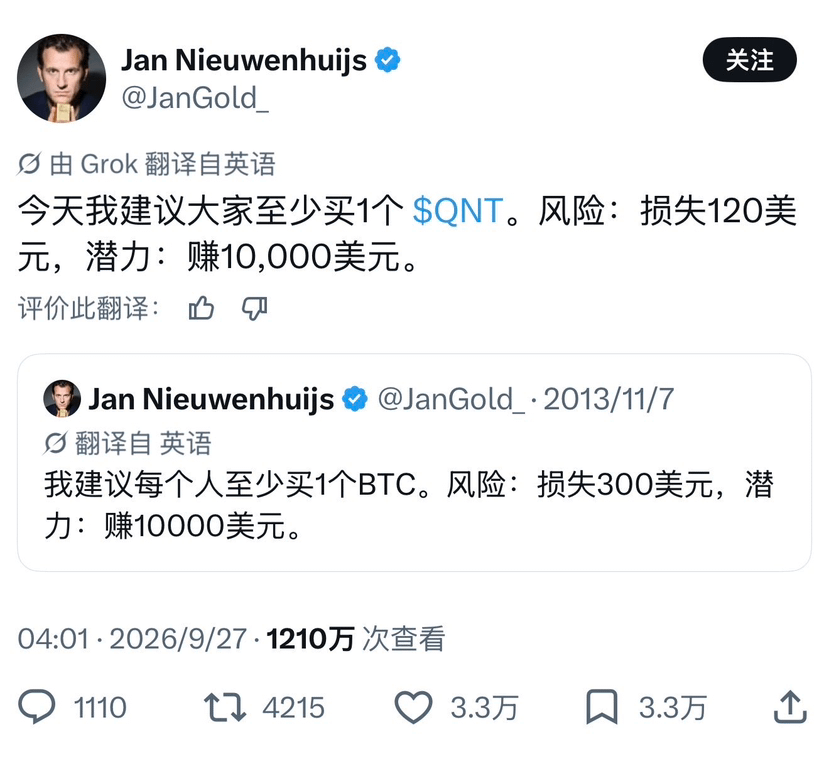
Haussier没事多喊喊单,特别一些早期的币,万一成了就一喊封神😂
比如👇🏻这位老哥,13年喊单买300美金的$BTC 封神,昨天喊单$QNT 直接翻倍😂
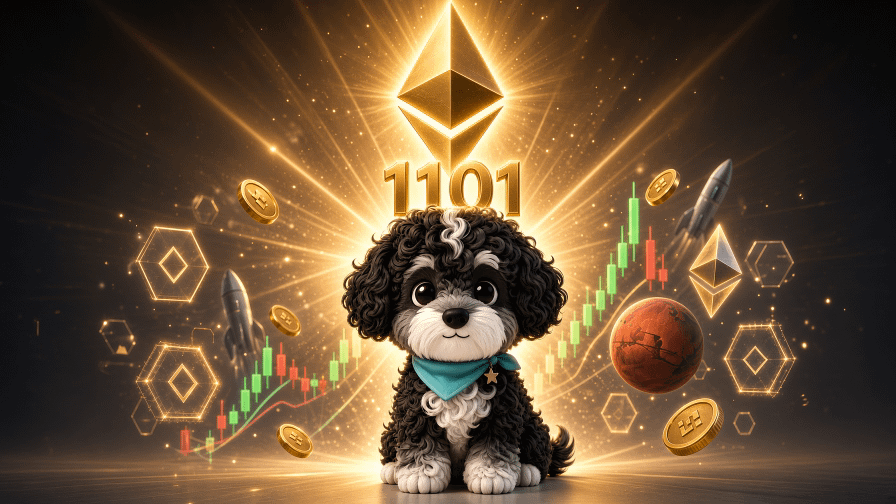
$ETH 链上有一只马斯克养的养的🐕🦺为原型的meme币,通过不断创作🐕🦺主题的音乐MTV在各平台传播,也许哪一天就🔥了呢?可以关注一下👇👇
比如👇🏻这位老哥,13年喊单买300美金的$BTC 封神,昨天喊单$QNT 直接翻倍😂
$ETH 链上有一只马斯克养的养的🐕🦺为原型的meme币,通过不断创作🐕🦺主题的音乐MTV在各平台传播,也许哪一天就🔥了呢?可以关注一下👇👇
MrStar
·
--
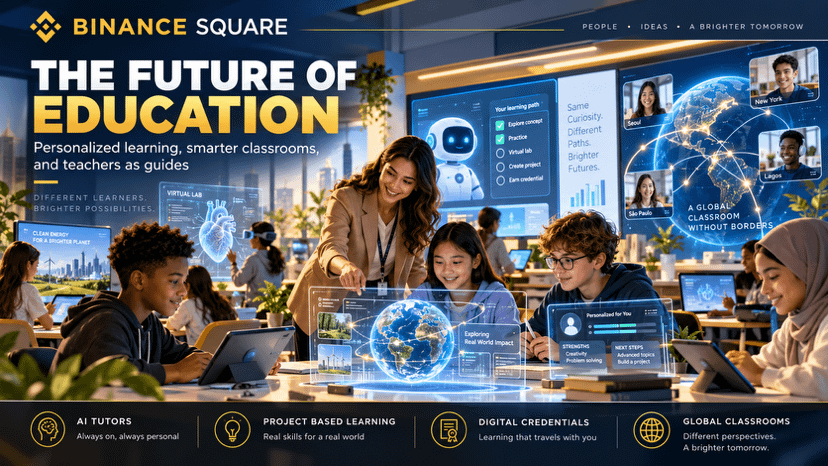
The classroom of the future may have 30 students but 30 different learning paths.
AI tutors could identify where each student struggles and adapt lessons in real time. One student may understand a concept in ten minutes while another may need an hour. Both could learn at their own pace.
Teachers will not disappear. Their role may become even more important as mentors, learning designers and human guides focused on creativity, judgment and teamwork.
Classrooms may also change. Less memorization. More projects. More virtual labs. More global collaboration.
The biggest challenge will be using #AI without allowing students to outsource their thinking.
#crypto may also play a role in this future.
$EDU : Open Campus is building a Web3 education ecosystem designed to give teachers, learners and institutions more ownership over education. Its EDU Chain is a Layer 3 blockchain focused specifically on educational applications.
The ecosystem is exploring verifiable digital credentials so diplomas, certificates and badges can be stored onchain and checked anywhere. It also includes EduFi, which can support scholarships, student financing and rewards through smart contracts.
Another important part is educational content ownership. Teachers and creators can tokenize learning materials through Publisher NFTs and potentially earn a share of the revenue generated by their content. EDU is used for payments, rewards and governance across the ecosystem.
That is why I find EDU interesting in this discussion.
The future of education may not only be about smarter classrooms.
It may also be about giving students portable credentials and giving teachers real ownership of the knowledge they create.
The real revolution may not be replacing teachers with machines. It may be giving every teacher the ability to teach every student differently.
#EducationalContent
AI tutors could identify where each student struggles and adapt lessons in real time. One student may understand a concept in ten minutes while another may need an hour. Both could learn at their own pace.
Teachers will not disappear. Their role may become even more important as mentors, learning designers and human guides focused on creativity, judgment and teamwork.
Classrooms may also change. Less memorization. More projects. More virtual labs. More global collaboration.
The biggest challenge will be using #AI without allowing students to outsource their thinking.
#crypto may also play a role in this future.
$EDU : Open Campus is building a Web3 education ecosystem designed to give teachers, learners and institutions more ownership over education. Its EDU Chain is a Layer 3 blockchain focused specifically on educational applications.
The ecosystem is exploring verifiable digital credentials so diplomas, certificates and badges can be stored onchain and checked anywhere. It also includes EduFi, which can support scholarships, student financing and rewards through smart contracts.
Another important part is educational content ownership. Teachers and creators can tokenize learning materials through Publisher NFTs and potentially earn a share of the revenue generated by their content. EDU is used for payments, rewards and governance across the ecosystem.
That is why I find EDU interesting in this discussion.
The future of education may not only be about smarter classrooms.
It may also be about giving students portable credentials and giving teachers real ownership of the knowledge they create.
The real revolution may not be replacing teachers with machines. It may be giving every teacher the ability to teach every student differently.
#EducationalContent
MrStar
·
--
[Revoir] 🎙️ Memes Ready to Fly? | Binance Rewards | Weekly Datas | Marvin
02 h 06 min 40 sec · 6.6k auditeurs
Binance TG Community
·
--
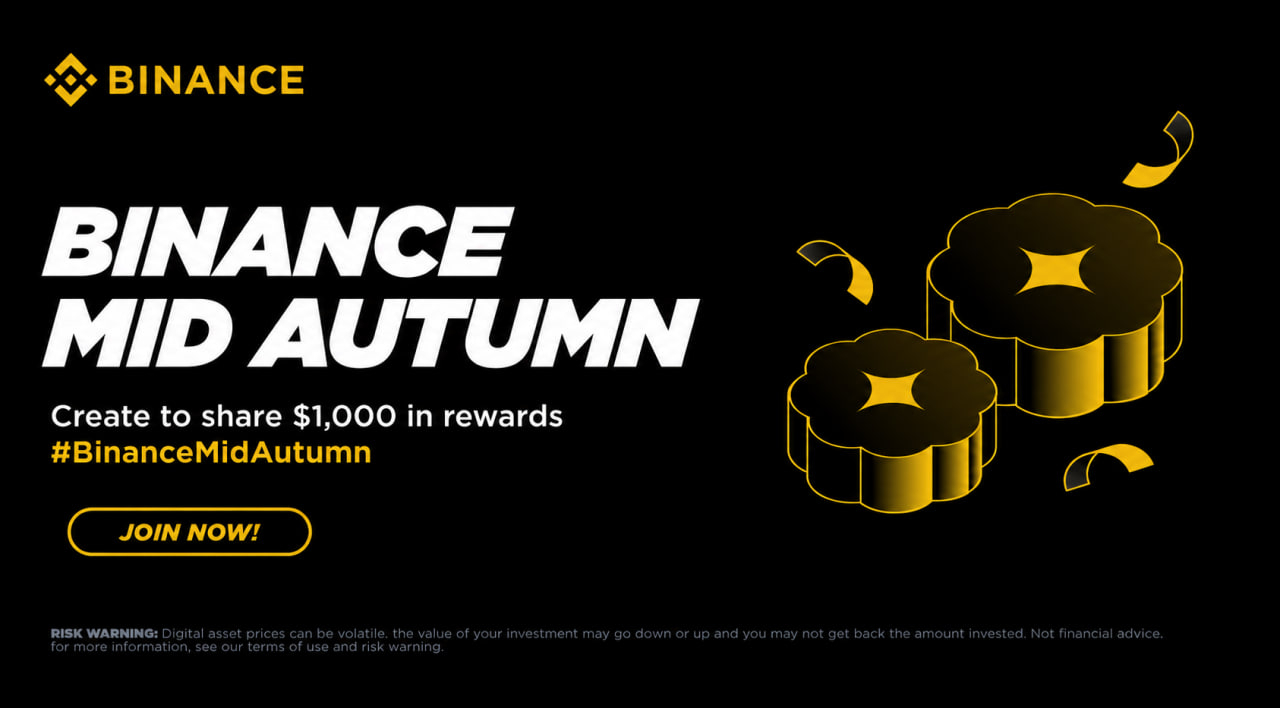
HaussierBinance Mid Autumn Moon Cake contest , and now we want to see your creativity! Design a Binance Moon cake to celebrate 💛
*update
Winners by us win a share of $1000 in USDC. ( $4 x 250)
Activity period: 24 September – 4th October, 23:59 PM UTC.
🔸 Follow @Binance TG Community ( Square )
🔸 Make your Binance Branded Moon Cake cake on Square with 💛 #BinanceMidAutumn #BinanceSquareTG
🔸 Fill out the survey: here
🔸 subscribe to our next live stream here
$BNB
*update
Winners by us win a share of $1000 in USDC. ( $4 x 250)
Activity period: 24 September – 4th October, 23:59 PM UTC.
🔸 Follow @Binance TG Community ( Square )
🔸 Make your Binance Branded Moon Cake cake on Square with 💛 #BinanceMidAutumn #BinanceSquareTG
🔸 Fill out the survey: here
🔸 subscribe to our next live stream here
$BNB
MrStar
·
--
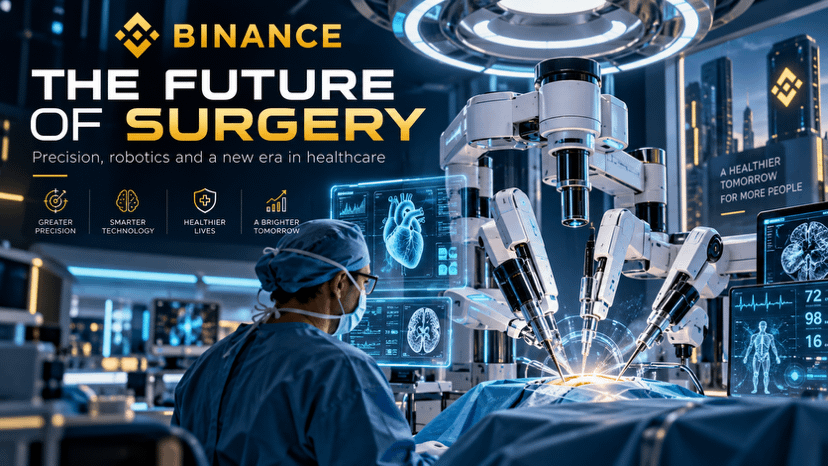
The operating room of the future may look very different from the one we know today.
Some surgeries are already limited by something very human: the precision of our hands.
Microsurgery can involve blood vessels and nerves smaller than 1 millimeter. Even the best surgeons still face natural tremor, fatigue and restricted movement in deep or difficult areas of the body. New robotic microsurgery systems are being developed to reduce those limitations through motion scaling and tremor filtration. Recent clinical research shows that these systems can already improve precision in extremely delicate procedures.
Now imagine what happens when #Robotics becomes smaller, more precise and combined with artificial intelligence.
The first major step will probably not be robots replacing surgeons.
It will be robots helping surgeons see more clearly, recognize anatomy, detect possible errors and perform movements that are difficult for the human hand. Current research suggests AI assisted surgical systems could improve perception and intraoperative guidance while keeping the surgeon in control.
Further ahead we may see microrobots operating inside parts of the body that are extremely difficult to reach today. Researchers are already studying autonomous robotic surgery and microrobotic surgery as long term directions.
For crypto there is also an interesting connection.
Projects such as $BIO are building blockchain based infrastructure around biotechnology research and decentralized scientific funding. That does not make $BIO a robotic surgery token. But it represents another part of the same future where medical research, funding and technology become more connected.
#Biotech
My view is simple:
The next revolution in healthcare may not come from one new medicine. It may come from giving doctors capabilities the human body never had before.
Will you trust a surgeon using an #AI assisted robot for a procedure that could not be performed safely by hand?
I think I will not :) This makes me so scared.
Some surgeries are already limited by something very human: the precision of our hands.
Microsurgery can involve blood vessels and nerves smaller than 1 millimeter. Even the best surgeons still face natural tremor, fatigue and restricted movement in deep or difficult areas of the body. New robotic microsurgery systems are being developed to reduce those limitations through motion scaling and tremor filtration. Recent clinical research shows that these systems can already improve precision in extremely delicate procedures.
Now imagine what happens when #Robotics becomes smaller, more precise and combined with artificial intelligence.
The first major step will probably not be robots replacing surgeons.
It will be robots helping surgeons see more clearly, recognize anatomy, detect possible errors and perform movements that are difficult for the human hand. Current research suggests AI assisted surgical systems could improve perception and intraoperative guidance while keeping the surgeon in control.
Further ahead we may see microrobots operating inside parts of the body that are extremely difficult to reach today. Researchers are already studying autonomous robotic surgery and microrobotic surgery as long term directions.
For crypto there is also an interesting connection.
Projects such as $BIO are building blockchain based infrastructure around biotechnology research and decentralized scientific funding. That does not make $BIO a robotic surgery token. But it represents another part of the same future where medical research, funding and technology become more connected.
#Biotech
My view is simple:
The next revolution in healthcare may not come from one new medicine. It may come from giving doctors capabilities the human body never had before.
Will you trust a surgeon using an #AI assisted robot for a procedure that could not be performed safely by hand?
I think I will not :) This makes me so scared.
MrStar
·
--
[Revoir] 🎙️ Crypto Talks | #Binance Rewards | Bull run started or not? | Marvin
02 h 01 min 44 sec · 4k auditeurs

Manta 甜心
·
--
悉尼的晨跑者抬腕看表的时候,迪拜的商人还没睡。
8座城市,8个时区,同一个市场。
这就是"天涯共此时"的意义。
古人用月亮丈量思念的距离,
币安用连接消灭时区的距离。
#币安中秋故事
8座城市,8个时区,同一个市场。
这就是"天涯共此时"的意义。
古人用月亮丈量思念的距离,
币安用连接消灭时区的距离。
#币安中秋故事
Connectez-vous pour découvrir plus de contenu