

M-O-N-A-R-C-H
NFA | Metals, Oil, BTC & Alts, Stocks | Multi Horizon Momentum Strategy. | Works on Every Market.
66 Suivis
535 Abonnés
857 J’aime
Publications
Tous
Citations
Vidéos
Direct
PINNED

PINNED
M-O-N-A-R-C-H
·
--
Blockchain 100 2026: Stay Alert When Faith Becomes a Vote Card
A follow-up to “The Emotional Ladder, From Friendly Shoutouts to the Religion Card.” Voting on Binance Square runs until October 28.
Let me say it plainly. Using religion as a card to get votes, while giving nothing to the community, is the lowest level anyone can get to. That’s my opinion, and I’ll stand behind it.
#giveandtake
This isn’t an attack on faith. It’s the opposite. Faith is sacred to millions of people, which is exactly why it’s so cheap to borrow it for a ranking and so costly for the people it’s borrowed from.
Faith is not a credential
Someone’s faith tells you about their beliefs. It tells you nothing about their honesty with money, their skill at trading or their generosity. Those things are shown by work, not by a blessing in a post.
When a vote request leans on faith, it borrows trust that was never earned in this arena. And borrowed trust is dangerous. Securities regulators have warned for years about “affinity fraud,” where someone uses a shared faith or community to win trust first and ask for money second. I’m not saying any nominee is doing that. I’m saying the psychology is the same, and it’s the reason you slow down, not speed up, when faith shows up next to a link.
How to stay alert
Watch for these:
Faith leads the ask. “Pray for me and vote” puts devotion first and reasons nowhere.Your identity becomes the argument. “As believers, we support our own.” A vote turns into a test of who you are.Guilt for saying no. “Don’t you believe?” If you can’t decline without being questioned, it was never a request.A blessing with a link. A warm message that ends in a vote button, a referral link or a trade widget.Silence on the give-back. No lessons, no shared spotlight, no honest losses, no word on how they earn.
One flag is a mood. Three flags are a pattern.
The harsh reality
Here’s the part nobody wants to say out loud. Emotions and friendship don’t run the expenses.
When the rent is due, nobody accepts a blessing as payment. When a trade goes wrong, a prayer doesn’t refill your account. A friendly shoutout doesn’t cover a margin call. The only thing that pays your bills is your own financial health, and nobody in a comment section is going to protect it for you.
It’s harsh, and it’s real. That’s why I keep saying a vote has a price, and free only exists in fantasy.
Better a wasted vote than a wasted wallet
Here’s the permission slip you didn’t know you had. Voting is optional. Nobody is owed your vote, least of all someone who gives nothing back.
If a nominee can’t give you anything, no lesson, no spotlight, no honesty about how they earn, you lose nothing by letting your vote go unused. The only truly wasted vote is the one handed to someone who gives nothing back.
If you do vote, ask three quick questions:
What have they taught me that I can check?What have they given without asking for anything?Would they still post this if there were no contest?
What to do when you see it
Don’t argue about anyone’s religion in the comments. Make it about the ledger, not the faith.Don’t share or boost the post.Never place a trade because of a post wrapped in faith.If a post turns into pressure or deception, use the platform’s report tools.
The fair pushback
Plenty of nominees are devout and decent, share their faith openly and also give back generously. A blessing is not a vote request, and I’m not asking you to distrust believers. I’m asking you to distrust one specific combination: faith, a vote link and nothing in return.
The bottom line
Faith should lift a community, not rank a creator. Be alert, keep your wallet first, and remember that a wasted vote costs you nothing, while wasted trust can cost you everything.
Have you seen faith used as a vote card this week? Tell me in the comments.
This is opinion, not financial advice. No nominee is named or quoted.
#Blockchain100 #BinanceSquare #CreatorEconomy #CryptoCommunity #VoteWisely #StayAlert #NoMoreFreeVotes
#BinancePick
#ArgentineCourtDismissesLIBRACaseAgainstMilei #ElectrumWalletBugLetRogueServersStealFunds #EarningsSeason
M-O-N-A-R-C-H
·
--
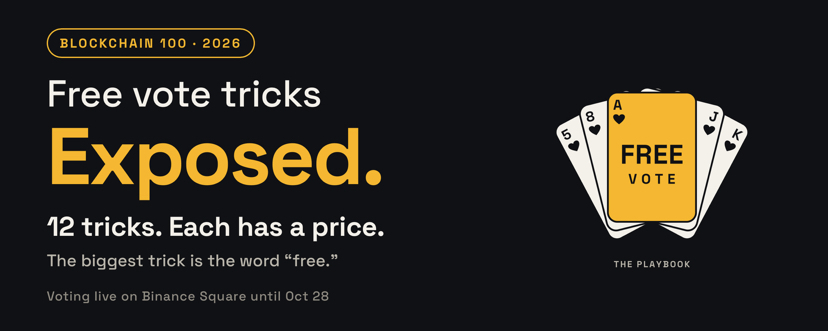
Blockchain 100 2026: Every Trick in the Vote-Getting Playbook (And Why “Free” Is the Biggest One)
The next piece in my Blockchain 100 series, after “It’s Natural, and That’s Exactly Why It’s a Trap.” Voting on Binance Square runs until October 28.
Nominee are Exploiting these 12 Codes. But Giving only Red Packets Which are A slap to the Community.
Ask for Dollars, Trades, Setups as Emotions don’t Run the Expenses.
I’m not naming names. You don’t need me to. If you’ve opened Binance Square this week, you’ve already seen most of what’s below, sometimes five times before breakfast.
So here’s the playbook in plain language, with the one thing the nominees leave out: what each trick costs you. Most of these are normal campaigning. A few cross a line. I’ll tell you which is which, and I’ll save the biggest one for its own section.
The playbook
The daily reminder. Verified users can vote once per track per day, so the ask comes back every morning. That’s fair, and it works. It turns sour when the reminder becomes a guilt trip: “Did you vote today? I’m counting on you.”The “takes ten seconds” pitch. No cost, no effort, no thinking. That’s the point. When the decision shrinks to ten seconds, nobody asks the one question that matters: why this person?The emotional story. Years of hard work, a rough year, a small creator against the giants. Some of these stories are completely true. The effect is the same either way: you stop judging the work and start protecting a feeling.The shoutout swap. “You back me, I’ll back you.” Natural, effective, and a lot less innocent when the same names post the same message in the same hour.The rank screenshot. “We’re #3, help us reach #1.” Two old tricks in one: everybody else is voting, and we’re so close.The mass tag. Twenty names under one post. A public tag is a public nudge, and ignoring it feels rude.The group blast. The same copy-and-paste message in every chat and community group, with a link. When a thousand people vote because a group told them to, the group decided, not the community.The countdown. “Two days left.” “Every vote counts.” Urgency makes you act first and think later, which is the whole idea.The thank-you wall. Public thanks to everyone who voted. It’s warm, and it’s clever: once you’ve been thanked, you’re on the team, and teammates don’t switch sides.The trade next door. A vote request sitting beside a setup, a signal or a referral link. I covered this one last time: the vote is the favor, and the trade is the bill.The freebie. Vote, screenshot, win something. This is the free-votes trick, and it gets its own section below.The shortcut. Extra accounts, bots, paid votes, fake engagement. Voting is limited to verified users, one vote per track per day, and anyone offering a way around that is offering you a risk, not a favor. If someone pitches it to you, walk away. If you’re a nominee, don’t.
Why “free” is the sharpest trick in the box
Look back at that list. “Free” runs through almost all of it, and it comes in three flavors.
Free for you. “It costs you nothing.” True, in dollars. But a vote isn’t free. It costs your attention, your trust and the next favor someone asks for.
Free for them. Asking costs a nominee nothing. They can ask again tomorrow, and the day after, for ten days straight. You can’t run out of ten seconds, so the ask never has a natural stopping point.
Free stuff. A giveaway tied to a vote turns your vote into a purchase, with a prize as the price. Whoever funds the prize is paying for rank. Whether that’s allowed is a question for the contest rules, but let’s at least call it what it is.
Now stack them. A free ask, repeated daily, wrapped in an emotional story and rewarded with nothing. Done gently, that’s just campaigning. Done with guilt attached, it starts to look a lot like taking advantage of people’s goodwill. Your goodwill is not a tap that never runs dry. It’s the one thing a creator can’t manufacture, and you’re being asked to hand it over without a receipt.
I keep saying it in this series: a vote has a price. Free only exists in fantasy.
Before you vote, ask four questions
What have they taught me in the last six months?Do they say how they earn from their audience?Would I follow their work if there were no contest?Am I voting for the work, or for the feeling, the prize or the pressure?
If you can’t answer the first three, the fourth one just answered itself.
The fair pushback
Is campaigning wrong? No. Asking for votes is part of any public contest, reminders are normal, and plenty of nominees do it with honesty and good manners. Last year’s edition even allowed self-nominations and counted audience size and engagement in its criteria, so the contest itself rewards people who can rally a crowd.
The trouble starts when the ask replaces the work, and when your goodwill gets spent as if it were free. The best campaign I can imagine is a short one: here’s my work, here’s how I earn from it, vote if it helped you.
The bottom line
No more free votes doesn’t mean no more voting. It means vote on purpose. Give yours to the person whose work earned it, and to nobody else.
Which of these tricks have you seen the most this week? Tell me in the comments.
This is opinion, not financial advice. Do your own research.
#Blockchain100 #BinanceSquare #CreatorEconomy #CryptoCommunity #VoteWisely #NoMoreFreeVotes
M-O-N-A-R-C-H
·
--
Blockchain 100 2026: Every Trick in the Vote-Getting Playbook (And Why “Free” Is the Biggest One)
The next piece in my Blockchain 100 series, after “It’s Natural, and That’s Exactly Why It’s a Trap.” Voting on Binance Square runs until October 28.
Nominee are Exploiting these 12 Codes. But Giving only Red Packets Which are A slap to the Community.
Ask for Dollars, Trades, Setups as Emotions don’t Run the Expenses.
I’m not naming names. You don’t need me to. If you’ve opened Binance Square this week, you’ve already seen most of what’s below, sometimes five times before breakfast.
So here’s the playbook in plain language, with the one thing the nominees leave out: what each trick costs you. Most of these are normal campaigning. A few cross a line. I’ll tell you which is which, and I’ll save the biggest one for its own section.
The playbook
The daily reminder. Verified users can vote once per track per day, so the ask comes back every morning. That’s fair, and it works. It turns sour when the reminder becomes a guilt trip: “Did you vote today? I’m counting on you.”The “takes ten seconds” pitch. No cost, no effort, no thinking. That’s the point. When the decision shrinks to ten seconds, nobody asks the one question that matters: why this person?The emotional story. Years of hard work, a rough year, a small creator against the giants. Some of these stories are completely true. The effect is the same either way: you stop judging the work and start protecting a feeling.The shoutout swap. “You back me, I’ll back you.” Natural, effective, and a lot less innocent when the same names post the same message in the same hour.The rank screenshot. “We’re #3, help us reach #1.” Two old tricks in one: everybody else is voting, and we’re so close.The mass tag. Twenty names under one post. A public tag is a public nudge, and ignoring it feels rude.The group blast. The same copy-and-paste message in every chat and community group, with a link. When a thousand people vote because a group told them to, the group decided, not the community.The countdown. “Two days left.” “Every vote counts.” Urgency makes you act first and think later, which is the whole idea.The thank-you wall. Public thanks to everyone who voted. It’s warm, and it’s clever: once you’ve been thanked, you’re on the team, and teammates don’t switch sides.The trade next door. A vote request sitting beside a setup, a signal or a referral link. I covered this one last time: the vote is the favor, and the trade is the bill.The freebie. Vote, screenshot, win something. This is the free-votes trick, and it gets its own section below.The shortcut. Extra accounts, bots, paid votes, fake engagement. Voting is limited to verified users, one vote per track per day, and anyone offering a way around that is offering you a risk, not a favor. If someone pitches it to you, walk away. If you’re a nominee, don’t.
Why “free” is the sharpest trick in the box
Look back at that list. “Free” runs through almost all of it, and it comes in three flavors.
Free for you. “It costs you nothing.” True, in dollars. But a vote isn’t free. It costs your attention, your trust and the next favor someone asks for.
Free for them. Asking costs a nominee nothing. They can ask again tomorrow, and the day after, for ten days straight. You can’t run out of ten seconds, so the ask never has a natural stopping point.
Free stuff. A giveaway tied to a vote turns your vote into a purchase, with a prize as the price. Whoever funds the prize is paying for rank. Whether that’s allowed is a question for the contest rules, but let’s at least call it what it is.
Now stack them. A free ask, repeated daily, wrapped in an emotional story and rewarded with nothing. Done gently, that’s just campaigning. Done with guilt attached, it starts to look a lot like taking advantage of people’s goodwill. Your goodwill is not a tap that never runs dry. It’s the one thing a creator can’t manufacture, and you’re being asked to hand it over without a receipt.
I keep saying it in this series: a vote has a price. Free only exists in fantasy.
Before you vote, ask four questions
What have they taught me in the last six months?Do they say how they earn from their audience?Would I follow their work if there were no contest?Am I voting for the work, or for the feeling, the prize or the pressure?
If you can’t answer the first three, the fourth one just answered itself.
The fair pushback
Is campaigning wrong? No. Asking for votes is part of any public contest, reminders are normal, and plenty of nominees do it with honesty and good manners. Last year’s edition even allowed self-nominations and counted audience size and engagement in its criteria, so the contest itself rewards people who can rally a crowd.
The trouble starts when the ask replaces the work, and when your goodwill gets spent as if it were free. The best campaign I can imagine is a short one: here’s my work, here’s how I earn from it, vote if it helped you.
The bottom line
No more free votes doesn’t mean no more voting. It means vote on purpose. Give yours to the person whose work earned it, and to nobody else.
Which of these tricks have you seen the most this week? Tell me in the comments.
This is opinion, not financial advice. Do your own research.
#Blockchain100 #BinanceSquare #CreatorEconomy #CryptoCommunity #VoteWisely #NoMoreFreeVotes
Nominee are Exploiting these 12 Codes. But Giving only Red Packets Which are A slap to the Community.
Ask for Dollars, Trades, Setups as Emotions don’t Run the Expenses.
I’m not naming names. You don’t need me to. If you’ve opened Binance Square this week, you’ve already seen most of what’s below, sometimes five times before breakfast.
So here’s the playbook in plain language, with the one thing the nominees leave out: what each trick costs you. Most of these are normal campaigning. A few cross a line. I’ll tell you which is which, and I’ll save the biggest one for its own section.
The playbook
The daily reminder. Verified users can vote once per track per day, so the ask comes back every morning. That’s fair, and it works. It turns sour when the reminder becomes a guilt trip: “Did you vote today? I’m counting on you.”The “takes ten seconds” pitch. No cost, no effort, no thinking. That’s the point. When the decision shrinks to ten seconds, nobody asks the one question that matters: why this person?The emotional story. Years of hard work, a rough year, a small creator against the giants. Some of these stories are completely true. The effect is the same either way: you stop judging the work and start protecting a feeling.The shoutout swap. “You back me, I’ll back you.” Natural, effective, and a lot less innocent when the same names post the same message in the same hour.The rank screenshot. “We’re #3, help us reach #1.” Two old tricks in one: everybody else is voting, and we’re so close.The mass tag. Twenty names under one post. A public tag is a public nudge, and ignoring it feels rude.The group blast. The same copy-and-paste message in every chat and community group, with a link. When a thousand people vote because a group told them to, the group decided, not the community.The countdown. “Two days left.” “Every vote counts.” Urgency makes you act first and think later, which is the whole idea.The thank-you wall. Public thanks to everyone who voted. It’s warm, and it’s clever: once you’ve been thanked, you’re on the team, and teammates don’t switch sides.The trade next door. A vote request sitting beside a setup, a signal or a referral link. I covered this one last time: the vote is the favor, and the trade is the bill.The freebie. Vote, screenshot, win something. This is the free-votes trick, and it gets its own section below.The shortcut. Extra accounts, bots, paid votes, fake engagement. Voting is limited to verified users, one vote per track per day, and anyone offering a way around that is offering you a risk, not a favor. If someone pitches it to you, walk away. If you’re a nominee, don’t.
Why “free” is the sharpest trick in the box
Look back at that list. “Free” runs through almost all of it, and it comes in three flavors.
Free for you. “It costs you nothing.” True, in dollars. But a vote isn’t free. It costs your attention, your trust and the next favor someone asks for.
Free for them. Asking costs a nominee nothing. They can ask again tomorrow, and the day after, for ten days straight. You can’t run out of ten seconds, so the ask never has a natural stopping point.
Free stuff. A giveaway tied to a vote turns your vote into a purchase, with a prize as the price. Whoever funds the prize is paying for rank. Whether that’s allowed is a question for the contest rules, but let’s at least call it what it is.
Now stack them. A free ask, repeated daily, wrapped in an emotional story and rewarded with nothing. Done gently, that’s just campaigning. Done with guilt attached, it starts to look a lot like taking advantage of people’s goodwill. Your goodwill is not a tap that never runs dry. It’s the one thing a creator can’t manufacture, and you’re being asked to hand it over without a receipt.
I keep saying it in this series: a vote has a price. Free only exists in fantasy.
Before you vote, ask four questions
What have they taught me in the last six months?Do they say how they earn from their audience?Would I follow their work if there were no contest?Am I voting for the work, or for the feeling, the prize or the pressure?
If you can’t answer the first three, the fourth one just answered itself.
The fair pushback
Is campaigning wrong? No. Asking for votes is part of any public contest, reminders are normal, and plenty of nominees do it with honesty and good manners. Last year’s edition even allowed self-nominations and counted audience size and engagement in its criteria, so the contest itself rewards people who can rally a crowd.
The trouble starts when the ask replaces the work, and when your goodwill gets spent as if it were free. The best campaign I can imagine is a short one: here’s my work, here’s how I earn from it, vote if it helped you.
The bottom line
No more free votes doesn’t mean no more voting. It means vote on purpose. Give yours to the person whose work earned it, and to nobody else.
Which of these tricks have you seen the most this week? Tell me in the comments.
This is opinion, not financial advice. Do your own research.
#Blockchain100 #BinanceSquare #CreatorEconomy #CryptoCommunity #VoteWisely #NoMoreFreeVotes
M-O-N-A-R-C-H
·
--
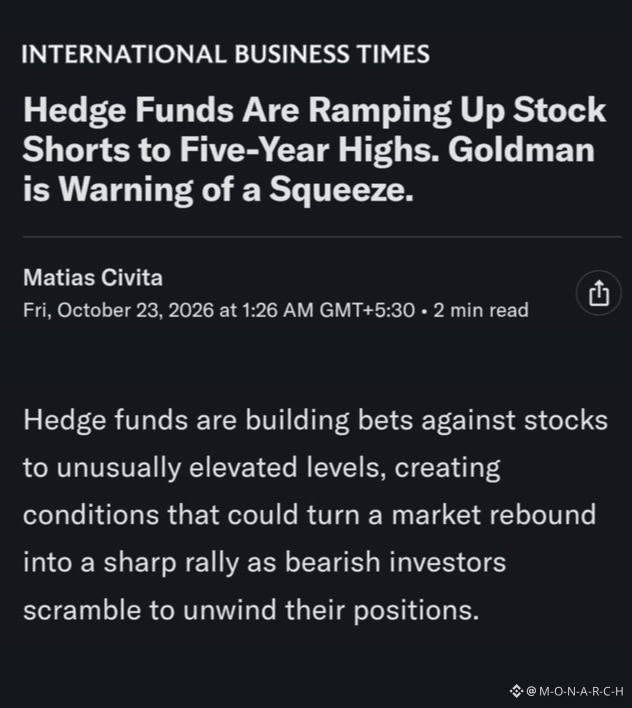
While Nominees are Saying Vote, They are Cover for the Biggest Short Opportunities Of The LifeTime
🚨 TWO MAJOR RESEARCH FIRMS ARE WARNING ABOUT A POTENTIAL MULTI TRILLION DOLLAR AI DISASTER.
#giveandtake
TS Lombard and Gartner have released some shocking estimates about what could happen if the AI spending boom collapses.
According to TS Lombard's Dario Perkins, a sharp collapse in AI spending could trigger:
• S&P 500 crashing 30%.
• Tech stocks plunging 40%.
• $125–190 BILLION in credit losses.
• Around 800,000 jobs lost.
• More than $20 TRILLION in stock market value wiped out.
And now Gartner has issued an even more disturbing warning about the money being poured into AI infrastructure.
According to Gartner:
• AI companies are expected to spend nearly $1 TRILLION on infrastructure in 2026 alone.
• Another $6 TRILLION could be spent between 2027 and 2030.
• AI data center owners would need to generate $8.5 TRILLION in revenue through 2030 to cover spending, financing costs and earn a 12% return.
• But Gartner expects no more than $3.6 TRILLION in AI revenue attributable to data centers during that period.
That's a nearly $5 TRILLION gap between the revenue needed to justify the investments and the revenue Gartner expects.
And the situation gets even worse.
Gartner warns that more than $3.5 TRILLION in AI infrastructure spending could be exposed to impairment by 2030.
By 2032, more than $4 TRILLION in asset value could be at risk of write-downs.
It also predicts that over 80% of neocloud providers could cease operating independently by 2030.
The biggest problem is that these companies are spending enormous amounts of money on GPUs and data centers that could become outdated before they generate enough revenue to recover their costs.
And the stock market is heavily exposed.
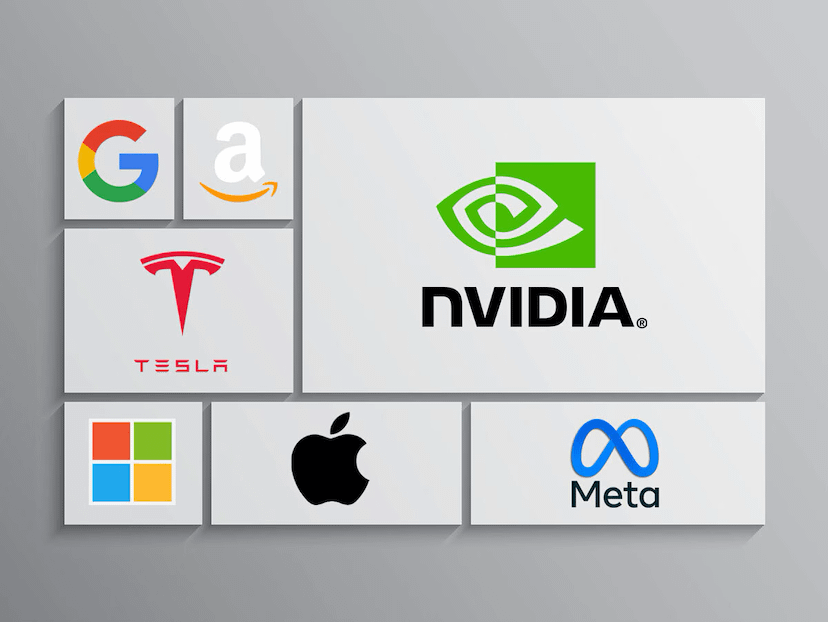
The Magnificent 7 alone account for roughly 35% of the S&P 500's market value.
All seven have significant exposure to AI through their businesses, investments or infrastructure spending.
If AI companies start cutting spending, chipmakers, cloud providers and data center operators could all take a massive hit.
With AI-related debt potentially reaching $2.9 TRILLION by 2027, the damage could spread to banks and other lenders as well.
This is no longer just about whether AI companies are overvalued.
The bigger risk is that trillions of dollars are being invested in infrastructure that may never generate enough profit to justify its cost.
And if the AI spending boom suddenly reverses, the damage could spread far beyond technology stocks.
A $20 trillion market crash is a scenario, not a certainty, but the amount of money at risk is becoming impossible to ignore.
#BinancePick
#DowDrops653Points
#EarningsSeason
#DowDrops653Points
M-O-N-A-R-C-H
·
--
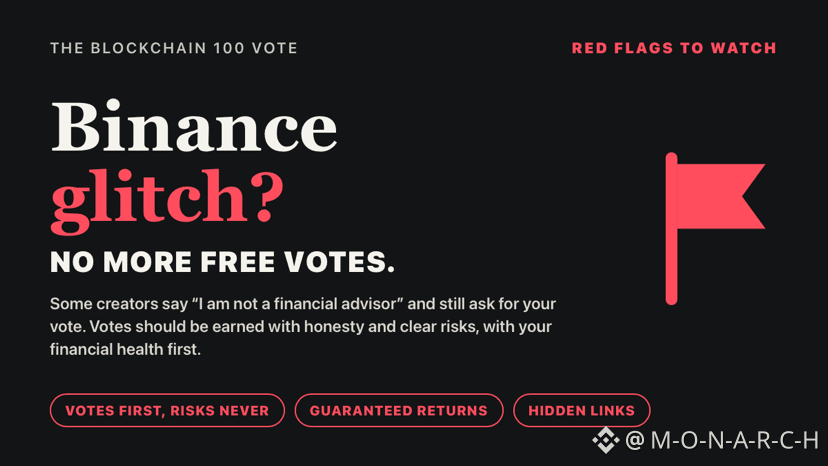
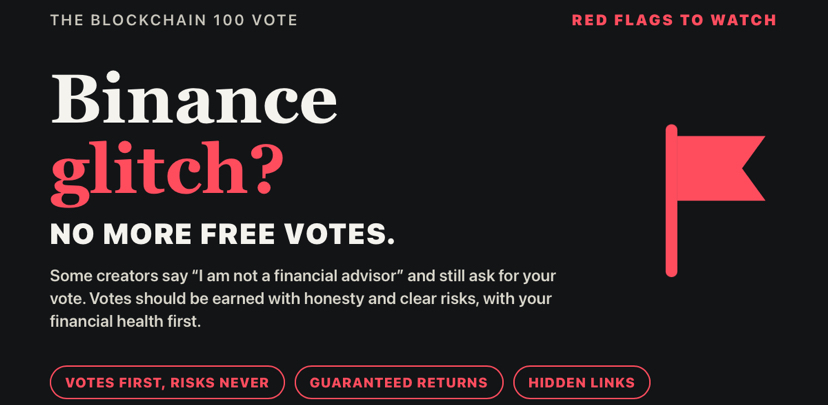
“Not a Financial Advisor” Is Not a Shield: A Community Guide to the Blockchain 100 Vote
A financial-health-first guide for voters and followers · October 23, 2026
Open the profiles of some creators in the Blockchain 100 vote and you may find the same line: “I am not a financial advisor.” Scroll their feeds and you may find two things that line does not explain: trade ideas, and requests for your vote. The gap between the disclaimer and those posts is where a community can get hurt. Many creators teach honestly and well. This guide is about behavior, not labels.
A disclaimer is not a shield
A disclaimer states a position. It does not change what a post does. In January 2026, ESMA, the EU’s securities regulator, said that telling people what to invest in or avoid can count as investment advice that needs authorization, and that a short “not investment advice” label does not protect unauthorized promotions from legal consequences. It also urged creators to label paid collaborations clearly and to disclose personal interests, such as already holding what they discuss. Rules differ by country, but the principle travels: what counts is what a post does to its audience, not what a bio says.
Why it looks like a glitch
Public coverage shows no technical malfunction in the Blockchain 100 voting. What it shows is a gap between three things that each work as designed:
• The vote is cheap. Any verified user in an eligible region can cast one vote per award track per day, and Binance has not disclosed how public votes are weighed against any internal review.
• Attention can pay. On Binance Square, verified creators in Write to Earn receive a share of the trading fees when readers click a cashtag or price widget and then trade.
• The guardrails are general. Binance Square’s disclaimer says third-party content is not an endorsement and not financial advice, and its guidelines bar steering users to outside platforms with fake screenshots or financial incentives. The guidance reviewed here does not say how asking for votes beside trade calls should be treated.
Together, votes, attention and trades can all feed one creator’s standing and income, while the follower carries the risk. That is a design gap worth naming and asking Binance to close. It is not proof that any creator broke a rule, and community votes have needed guardrails before: coverage of Binance’s 2025 Vote to List campaign reported off-site vote fraud.
Red flags
• Votes first, risks never: a request for your vote with no risk limits in sight.
• “Guaranteed” returns, “act now” pressure or targets with no stop.
• Referral or commission links with no clear disclosure.
• Wins shown, losses hidden.
• Rewards or favors offered in exchange for votes.
• Pressure to move the conversation, or your money, off the platform.
Put your financial health first
No ranking or trophy is worth skipping these steps:
1. Cover essentials: housing, food, utilities, insurance and minimum debt payments.
2. Clear expensive debt before taking market risk.
3. Build an emergency fund, commonly three to six months of essential expenses.
4. Keep money for goals within two years in stable form.
5. Only then use risk capital: money you could lose entirely without changing your life.
What you can do
1. Vote for creators who teach. Look for those who show their risks, admit losses and say how they earn.
2. Keep two decisions apart. Never trade because you voted, and never vote because of a trade call.
3. Report what looks wrong. Use Binance’s reporting tools for posts that promise guaranteed returns, hide paid ties or push you off the platform.
4. Ask Binance, respectfully, for three things. Clear rules on asking for votes beside trade calls, visible disclosure when a creator earns from readers’ trades, and a plain explanation of how public votes count.
For the community
Behind every follower is a person with bills, family and goals. Communities run on trust, and trust holds when the people we celebrate put their audience’s financial health ahead of their own ranking. Vote with your heart, and keep your wallet safe.
This article is general information, not financial, tax or legal advice. Rules differ by country. It names no individual and does not claim that any specific creator broke a rule. Crypto assets are volatile, and you can lose some or all of the money you put in.
M-O-N-A-R-C-H
·
--
Blockchain 100 2026: It’s Natural, and That’s Exactly Why It’s a Trap
A follow-up to “Yes, Nominees Are Promoting Each Other. And That’s Natural.” Voting on Binance Square runs until October 28.
Last time I said it’s natural for Blockchain 100 nominees to promote each other. I still think so. Now for the part I held back: natural is exactly what makes it a trap.
#giveandtake
Nobody walks into something that looks like a trap. You walk into something that looks like friendship.
Friends, like emotions, don’t run the expenses
Here’s the line I keep coming back to. Friends, like emotions, don’t run the expenses.
Your landlord doesn’t take good vibes. Your exchange doesn’t care how warm the comment section felt. When a group of nominees cheers for each other, it feels like a community, and it might be one. But a community doesn’t cover your bills, and neither does a shoutout. You do.
What comes first for them: wallet, fame, trade, dollars
Let’s say it plainly, because the shoutouts won’t. In a contest like this, the order of operations is simple.
A vote becomes rank. Rank becomes fame. Fame becomes followers. Followers become an audience for trade ideas. And on a platform that pays for trading activity, an audience can become dollars.
That last part isn’t a theory. Binance Square’s Write to Earn program, as it’s been published, lets verified creators earn a share of trading fees when readers click a cashtag or chart widget in their post and then trade. The base rate starts at 20%, top weekly performers can reach up to 50%, and payouts come in USDC, which is as close to dollars as crypto gets. Terms change, so check the current numbers yourself.
There’s nothing hidden about it. It’s the business model. But notice what gets paid: fees come from activity, not from whether you win. Someone can earn when your trade happens, even on the days you lose.
And one of the award tracks is literally called Trader of the Year. Trade content isn’t a side hustle in this contest. For some nominees, it’s the pitch.
Where the trap springs
It springs in the gap between a favor and a habit.
You vote. It costs you nothing, so why not. But now you’re a supporter, and supporters feel a little invested. A few days later the same person posts a setup, and it’s hard to ignore someone you just helped. Psychologists call it the foot in the door: say yes to something small, and the bigger yes comes easier. You don’t need the textbook. You’ve felt it.
I’ve said it all through this series: a vote has a price. Free voting? Free only exists in fantasy. The vote costs you seconds. The price is what comes after.
The “not a financial advisor” shield
You’ve seen the bios. “Not a financial advisor.” Then the posts: a setup, a target, a stop, and a polite reminder to vote. A line in a bio protects the person who wrote it. It does nothing for the person who trades on it.
Spotting the trap early
A vote request and a trade idea in the same post.Gratitude with strings: “vote, and I’ll share my next setup.”The same names cheering for each other, all week, in the same threads.Urgency: “last chance,” “today only.”A cashtag or widget that sits one tap from a trade screen.
None of these proves bad intent. Together, they tell you what a post is for.
My rules for keeping my wallet first
Voting and trading are two separate decisions. Never make the second because of the first.If you wouldn’t take the trade from a stranger, don’t take it from someone you like.Size every position as if the person who posted it doesn’t exist.Vote for months of work, not a week of hustle.If a post needs your vote and your money in the same breath, close it.
The fair pushback
Is every nominee in on something? No. Most are probably just building their thing and enjoying friends in the same race. Promoting a friend isn’t a crime. Earning from a legitimate program isn’t a sin. And nobody is forcing you to click.
The problem isn’t the people. It’s the setup: a contest that rewards audience, sitting on a platform that can pay for trading activity. Even good people lean the way the money leans. A nominee who says it out loud, “yes, I earn when you trade,” has already defused most of the trap.
The bottom line
It’s natural. It’s also a trap. Both can be true.
For nominees working the campaign trail, wallet, fame, trade and dollars come first, and honestly, that’s just business. For you, one thing has to come first: your own wallet. Friends and emotions don’t run your expenses. You do.
Have you ever taken a trade because you liked the person posting it? Be honest, nobody’s grading. Tell me in the comments.
This is opinion, not financial advice. Do your own research.
#Blockchain100 #BinanceSquare #CreatorEconomy #CryptoCommunity #VoteWisely #FinancialHealth
M-O-N-A-R-C-H
·
--
Your Vote Has a Price: Why Financial Health Comes Before Voting on Binance
A personal-finance guide to the give-and-take behind The Blockchain 100 · voting runs through October 28, 2026
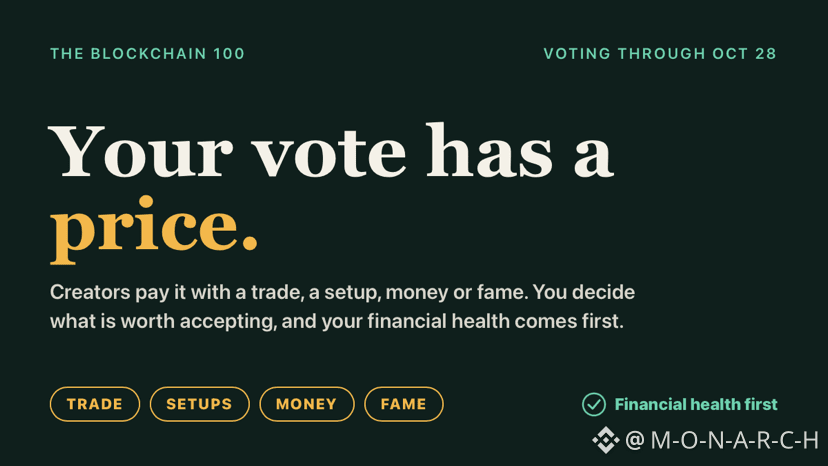
A vote has a price, and in The Blockchain 100 the creators pay it. Casting a vote costs the public almost nothing, so creators compete for it with what they give back: a trade, a setup, money or fame. This guide explains that exchange through personal finances, so you can cast the cheap part, your vote, freely and stay careful with the part that can cost you: whatever you accept in return.
The vote is cheap, so the creator pays the price
Voting in Binance’s Blockchain 100 runs from October 19 to 28, 2026, on Binance Square. You need a verified Binance account with completed KYC, and you get one vote per award track per day. Results are due October 29, and the awards ceremony is on November 29 at Binance Blockchain Week in Bangkok.
Verification is mandatory, but for anyone already verified it is a small step, and no voting fee appears in the published details. A vote costs you a tap. That is why creators compete for it with value: when the public gives a vote at almost no cost, the creator pays the price, in what they give back.
The 2026 tracks are Community Influencer of the Year, Trader of the Year, and three content-creator categories: Best Live Streamer, Best Longform Creator and Rising Star. The award is described as recognizing education, information sharing and engagement, and Binance has not disclosed how public votes are weighed against any internal review. A ranking says little about whether anyone’s trades make money.
What creators give: trade, setups, money, fame
Creators who want your vote can pay for it in four ways. Each is worth something to you, and each has its own risk.
What the creator gives
What it is worth to you
Where the risk sits
Trade: a specific call, such as buy or sell at a level
Only as much as the evidence and risk limits behind it
You carry the full loss and the fees, and the caller may earn when you trade, whatever the result
Setups: a chart pattern or framework with entry, stop and target
A useful input to your own plan, and a way to learn
Setups fail often, and acting on every one can raise fees faster than gains
Money: giveaways, rewards, referral perks
Real but small: a bonus, never income
Strings such as required deposits, trades or sign-ups; possible tax where you live; scams that copy giveaways
Fame: a shoutout, a repost, a mention
Attention, which pays no bills
Time, and pressure to post what pleases an audience rather than what protects your money
What creators get back
A vote is the visible return. Behind it sits income. On Binance Square, verified creators in the Write to Earn program receive a share of the trading fees generated when readers click a cashtag or price widget in their post and then trade. The base commission is 20%, top-ranked creators can reach 50%, and payouts arrive weekly in USDC. Creators on the platform report that, since October 19, an upgraded program also pays a weekly engagement bonus for likes, comments and follows.
Trading fees are charged on every trade, win or lose, so the income of everyone in the chain, creator and exchange alike, follows your activity, not your results. Earning from your trades is not improper in itself. What matters is whether it is disclosed, and whether the advice would change if the commission did not exist.
Financial health first: an order of priorities
Here is a widely used order of priorities for anyone who wants to take market risk without endangering their basics:
Cover essentials. Housing, food, utilities, transport, insurance and minimum debt payments for this month and the next, without selling anything.Pay down expensive debt. Clearing a balance that charges 20% interest is a certain gain equal to that rate. No crypto position offers a certain return.Build an emergency fund. A common rule of thumb is three to six months of essential expenses in stable, easy-to-reach cash. Your number depends on job stability and who relies on you.Fund near-term goals in stable form. Money you will need within a year or two, such as tuition, a deposit or a medical procedure, doesn’t belong in a volatile asset.Only then, risk capital. Money you could lose entirely without changing your life. This is the only money that should ever follow a trade call or a setup.
Everything a creator offers for your vote, whether a trade, a setup, money or fame, belongs after steps one to four. Until those are in place, the free parts are enough: reading, following and voting.
How the exchange reads in your situation
The same offer is worth different things to different people. Find the row closest to yours.
Your situation
What you can accept
What to hold off on
Month to month, little or no buffer
Free education and attention; nothing that needs money
Trade calls and setups with real money; giveaways that need a deposit
Carrying high-interest debt
Education; setups as study material on paper, with no money at risk
Moving money into positions; offers that require trades
Essentials and emergency fund covered
Setups as input to your own plan; small giveaways
Calls you cannot verify; any position above a cap you wrote down first
Already heavy in one asset
Content about allocation and risk
Calls that add to the same exposure
Saving for a goal within two years
Education and free content
Volatile positions funded with goal money
In every row the vote itself can stay. It costs no fee, and the choice of whom to back does not touch your balance. What you accept in return does.
Keep the exchange clean
Giving value to earn support, through useful analysis or education, is how recognition normally works. Paying for votes is a different matter. Traders Union’s summary of the voting rules says voters must be in an eligible region, voting is limited, and manipulative behavior is restricted. The published details do not spell out how rewards offered for a vote are treated, so read the official terms before joining anything that pays for one, because rule breaches can put your votes at risk. Never hand over account credentials, API keys or a seed phrase for any reward.
A fair-trade check before you vote or accept anything
Which of the four, trade, setup, money or fame, is this creator giving me, and can I check it?How do they earn when I act: Write to Earn commission, referral links or sponsorships? Is it disclosed?Do they show losses, position sizes and risk limits, or only wins?Does anything they ask involve a deposit, a trade, credentials or personal data?Could I lose everything I would put behind this and still cover my bills and keep my buffer?Does my vote follow the rules: eligible region, one vote per track per day?
If an answer is shaky, stick to the free parts.
Bottom line
The vote is cheap, so the price is set by what creators give for it. That is a fair exchange only if what you accept is worth its cost to your own finances. Put essentials, debt and your buffer first, use the free parts freely, and treat every trade, setup and giveaway as an offer to check, not a gift.
This article is general information, not financial, tax or legal advice. Crypto assets are volatile, and you can lose some or all of the money you put in. Eligibility, rules and tax treatment depend on where you live, and Binance’s terms can change before voting closes.
M-O-N-A-R-C-H
·
--
YOUR VOTE HAS A PRICE TAG, and influencers are helping set it
A few thousand in cash. A bag of groceries. A "sponsored" smile from a creator you've trusted for years.
That's how cheaply a four-year future is being rented. 💔
💸 The price on the street
In Kenya, observers flagged reports of voters being offered between Ksh200 and more than Ksh5,000 ahead of a by-election.
In Nigeria, the electoral commission called vote-buying the most alarming development of June's Ekiti election, citing numbered vouchers redeemable away from polling units to avoid detection, while fewer than 4 in 10 registered voters were accredited.
In Osun, media reports alleged offers of up to ₦20,000 per vote.
Do the math: spread ₦20,000 over a four-year term and it's under ₦14 a day. That's the going rate for your hospital, your school, your road.
📱 The price on your feed
Cash moves one voter at a time. A trusted creator can move thousands.
In the US, no federal rule forces creators to disclose paid political endorsements, and some say campaigns asked them to hide the payment.
A Kenyan blogger claimed creators are being offered Ksh250,000 to Ksh1 million to push politicians, and said she would refuse.
Peruvian media reported influencers were being paid $20,000 to $50,000 to join campaigns before the 2026 general election.
A South African investigation found networks of paid nano-influencers creating the look of grassroots support, with audiences kept in the dark.
They don't need to win your head. They go through your heart: your anger, your hope, your tribe, your fear. You don't feel an ad. You feel a friend telling you who to trust.
💔 This isn't about blaming the hungry
Picture a mother in a queue. She's not corrupt. She's exhausted. Someone who knows exactly where it hurts offers relief today in exchange for her child's tomorrow.
In a pilot survey of 500 voters at an Indian by-election, most felt guilty about taking cash, and some feared losing government services if they refused.
That's not free choice. That's pressure dressed as a gift. The shame belongs to those who weaponize desperation and monetize trust.
And the laws are lagging. One analysis calls enforcement of Nigeria's vote-buying ban largely symbolic, and a US Senate bill introduced in July would only now require clear "paid" labels on political influencer posts.
🧠 Crypto already learned this lesson
Undisclosed paid shills. Hidden bags. FOMO over facts. We learned to ask who's paid, who's holding, and DYOR.
Do the same with your candidate. DYOR on the ballot, not just the chart.
✅ What you can do today
Ask "who paid for this?" before you like, share or believe a political post.
A missing #ad doesn't mean it's organic. Paid endorsements often go undisclosed.
Judge records and plans, not vibes.
Talk to family and neighbors. Most voters surveyed said collective decisions could stop cash-for-votes.
Report cash-for-votes to your electoral body or local observer groups.Creators: if you're paid, say so, or walk away. Trust is worth more than one invoice.
The ballot is secret. The consequences aren't.
Your vote isn't a product. It's your voice, your child's classroom, your city's roads, your dignity. Don't let anyone, in a polling queue or in your DMs, put a price on it. 🗳️✊
💬 What would you say to a creator paid to sell you a candidate? Tell me below.
♻️ Share this with one person before the next election.
#VoteIsNotForSale #Democracy #Elections #DYOR #InfluencerEthics #BinanceSquare #CreatorEconomy #Transparency
M-O-N-A-R-C-H
·
--
Public can Make :- They can Bargain, From Influencers, They will not Agree at all on this Point. BUT IN Reality They though know how Much they Depends on Square Community Votes.
They will do Everything In Order to Win in Their Category.
#giveandtake
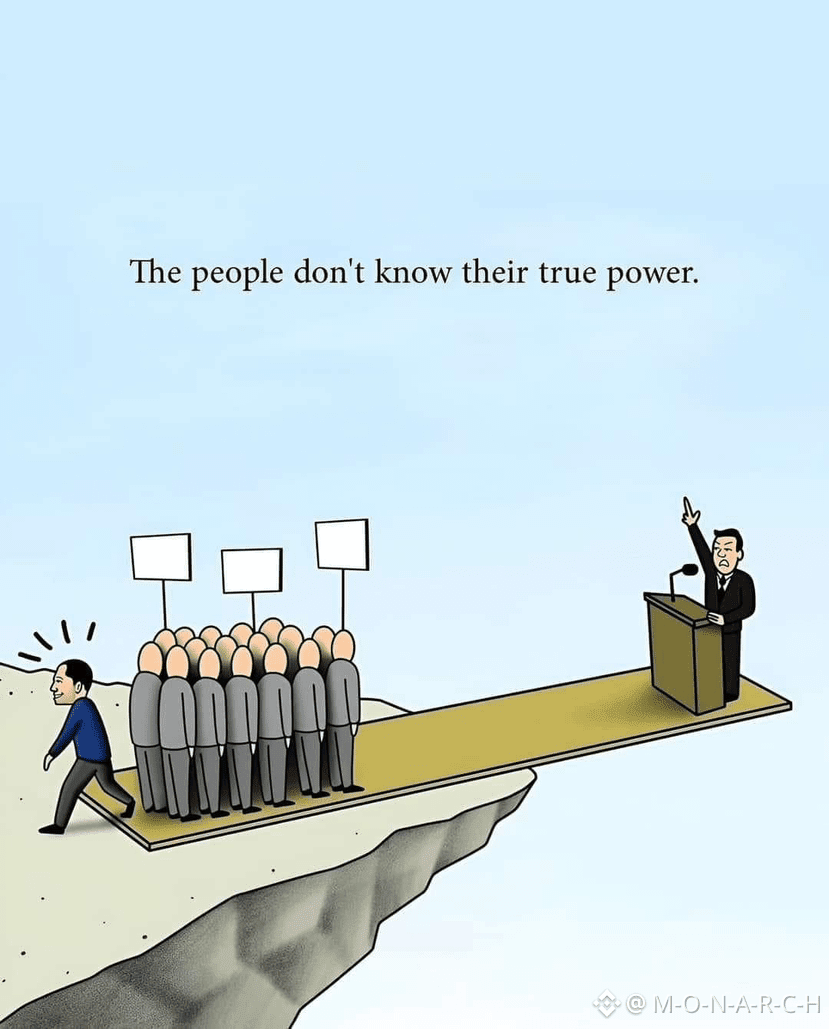
Simply :- Vote has a Price, Either Trades, Dollars, Fame, Setups Etc Etc Etc.
Influencers are in Dire State For Communities Vote So Communities Use this in Your Favour, Nothing is Free In Reality or Practical. Emotions, Friendships don’t Run the Expenses.
Connectez-vous pour découvrir plus de contenu