

#tokenization
tokenization
3.2M vues
13,892 mentions
Populaire
Récents

·
--
🚨 Brazil’s $4T fund operator is mirroring select fund ownership on XRP Ledger while retaining its core database.
This signals real-world asset tokenization gaining traction via XRPL’s regulated utility.
No price claims—just infrastructure adoption that could boost long-term demand for XRP as a settlement layer.
Watch for more institutional pilots using XRPL for fund transparency.
Could this be a blueprint for global asset on-chain migration?
#Tokenization
$XRP #TradingSignal #CryptoAnalysis
🚨 Brazil’s $4T fund operator is mirroring select fund ownership on XRP Ledger while retaining its core database.
This signals real-world asset tokenization gaining traction via XRPL’s regulated utility.
No price claims—just infrastructure adoption that could boost long-term demand for XRP as a settlement layer.
Watch for more institutional pilots using XRPL for fund transparency.
Could this be a blueprint for global asset on-chain migration?
#Tokenization
$XRP #TradingSignal #CryptoAnalysis
This signals real-world asset tokenization gaining traction via XRPL’s regulated utility.
No price claims—just infrastructure adoption that could boost long-term demand for XRP as a settlement layer.
Watch for more institutional pilots using XRPL for fund transparency.
Could this be a blueprint for global asset on-chain migration?
#Tokenization
$XRP #TradingSignal #CryptoAnalysis

25


Article
The Closing Bell Is Dying: How Tokenization Could Create a 24/7 Global MarketWhat if buying a fraction of a building, bond, private fund or public company became as easy as buying a cryptocurrency, and the market never closed?
That is the promise behind mass tokenization: transforming ownership rights in real-world assets into blockchain-based tokens that can potentially be transferred, settled and programmed digitally.
This is not simply about putting traditional investments on a blockchain. It could fundamentally change how capital moves.
What is asset tokenization?
Tokenization creates a digital representation of an asset or financial claim.
Depending on its structure and legal framework, a token could represent ownership or economic rights connected to:
🏢 Real estate
📈 Shares and investment funds
🏦 Government and corporate bonds
🪙 Commodities such as gold
💵 Money-market instruments
🎨 Collectibles and intellectual property
Instead of transactions passing through multiple disconnected intermediaries, tokenized markets could combine issuance, trading, settlement, custody and compliance within more integrated digital systems.
The IMF has highlighted that tokenized securities may compress these separate processes into connected workflows, potentially reducing counterparty risk while creating new demands for continuous liquidity. (imf.org)
Why 24/7 markets matter
Traditional markets were built around opening hours, geographic boundaries and banking schedules.
Blockchains operate differently. They do not need to close overnight, pause for weekends or wait several business days for an international transfer to settle.
A tokenized market could allow investors to trade certain eligible assets around the clock, while stablecoins or tokenized deposits provide the digital cash needed to complete transactions.
That could offer:
✅ Faster settlement
✅Greater global access
✅Fractional ownership✅
✅More efficient collateral management
✅Programmable dividends and interest
✅ Reduced dependence on market opening hours
For investors outside major financial centres, the accessibility could be transformative. Someone in South Africa, for example, would no longer need to organise every investment decision around New York or London trading hours.
But 24/7 access does not guarantee 24/7 liquidity
This is the distinction investors cannot afford to ignore.
An asset may technically be available for trading at any hour, but that does not mean enough buyers and sellers will always be present.
Overnight and weekend markets could experience:
⚠️ Thinner liquidity
⚠️Wider bid–ask spreads
⚠️Sharper price movement
⚠️ Greater exposure to automated liquidations
⚠️ More difficult price discovery
The IMF has also warned that automated redemptions and margin systems could improve efficiency in ordinary conditions while accelerating stress during market turmoil. (imf.org)
Markets that never sleep may require investors to become even more disciplined about position sizing, leverage and risk controls.
Which crypto networks could benefit?
Mass tokenization will require more than one blockchain or cryptocurrency. It will need an entire technology stack.
Potential beneficiaries may include:
🔹 Smart-contract networks used to issue and transfer assets
🔹 Stablecoins and tokenized bank deposits used for settlement
🔹 Oracle networks connecting tokens with external The Closing Bell Is Dying: How Tokenization Could Create a 24/7 Global Marketprices and data
🔷Identity and compliance infrastructure
🔷Custody platforms and institutional wallets
🔷 Interoperability systems linking different blockchains
$ETH currently has a strong position in tokenized finance and stablecoins, but networks such as $SOL , $AVAX , Stellar and the XRP Ledger are also targeting institutional payments or real-world assets.
Chainlink and similar infrastructure providers may play an important role in connecting on-chain assets with reliable data and traditional financial systems.
The eventual winners may not be the projects generating the most hype today. They may be the networks that deliver security, regulatory compatibility, reliable settlement, deep liquidity and seamless interoperability.
A token is only as valuable as the rights behind it
Tokenization does not automatically improve the quality of an asset.
A tokenized share in a poor business is still exposure to a poor business. A token representing questionable property rights does not become safer simply because it exists on a blockchain.
Before investing, users must understand:
• What does the token legally represent?
• Who holds or safeguards the underlying asset?
• Can the token be redeemed?
• Which jurisdiction governs ownership?
• Is there genuine secondary-market liquidity?
• What happens if the issuer, custodian or blockchain fails?
The Investment Company Institute has noted that securities tokenization has developed significantly and is increasingly relevant to registered funds and their investors. (ici.org) But widespread adoption will still depend on regulation, investor protection and legally enforceable ownership.
The bigger picture
Crypto may not replace traditional finance.
It may become the infrastructure underneath it.
The most important phase of blockchain adoption could arrive when users stop thinking about whether an asset is “traditional” or “crypto” because stocks, bonds, funds and cash can move through compatible digital rails.
If that transition succeeds, the future market may be global, fractional, programmable—and always open.
The closing bell might not disappear tomorrow. But its importance may already be fading.
Would you welcome 24/7 tokenized markets—or do you think investors need time away from trading?
Share your view below and follow Crypto & Capital for more analysis on the technologies reshaping global finance.
Educational content only. Not financial advice.
#Tokenization #RWA #Crypto #Investing #FinancialMarkets
The Closing Bell Is Dying: How Tokenization Could Create a 24/7 Global Market
What if buying a fraction of a building, bond, private fund or public company became as easy as buying a cryptocurrency, and the market never closed?
That is the promise behind mass tokenization: transforming ownership rights in real-world assets into blockchain-based tokens that can potentially be transferred, settled and programmed digitally.
This is not simply about putting traditional investments on a blockchain. It could fundamentally change how capital moves.
What is asset tokenization?
Tokenization creates a digital representation of an asset or financial claim.
Depending on its structure and legal framework, a token could represent ownership or economic rights connected to:
🏢 Real estate
📈 Shares and investment funds
🏦 Government and corporate bonds
🪙 Commodities such as gold
💵 Money-market instruments
🎨 Collectibles and intellectual property
Instead of transactions passing through multiple disconnected intermediaries, tokenized markets could combine issuance, trading, settlement, custody and compliance within more integrated digital systems.
The IMF has highlighted that tokenized securities may compress these separate processes into connected workflows, potentially reducing counterparty risk while creating new demands for continuous liquidity. (imf.org)
Why 24/7 markets matter
Traditional markets were built around opening hours, geographic boundaries and banking schedules.
Blockchains operate differently. They do not need to close overnight, pause for weekends or wait several business days for an international transfer to settle.
A tokenized market could allow investors to trade certain eligible assets around the clock, while stablecoins or tokenized deposits provide the digital cash needed to complete transactions.
That could offer:
✅ Faster settlement
✅Greater global access
✅Fractional ownership✅
✅More efficient collateral management
✅Programmable dividends and interest
✅ Reduced dependence on market opening hours
For investors outside major financial centres, the accessibility could be transformative. Someone in South Africa, for example, would no longer need to organise every investment decision around New York or London trading hours.
But 24/7 access does not guarantee 24/7 liquidity
This is the distinction investors cannot afford to ignore.
An asset may technically be available for trading at any hour, but that does not mean enough buyers and sellers will always be present.
Overnight and weekend markets could experience:
⚠️ Thinner liquidity
⚠️Wider bid–ask spreads
⚠️Sharper price movement
⚠️ Greater exposure to automated liquidations
⚠️ More difficult price discovery
The IMF has also warned that automated redemptions and margin systems could improve efficiency in ordinary conditions while accelerating stress during market turmoil. (imf.org)
Markets that never sleep may require investors to become even more disciplined about position sizing, leverage and risk controls.
Which crypto networks could benefit?
Mass tokenization will require more than one blockchain or cryptocurrency. It will need an entire technology stack.
Potential beneficiaries may include:
🔹 Smart-contract networks used to issue and transfer assets
🔹 Stablecoins and tokenized bank deposits used for settlement
🔹 Oracle networks connecting tokens with external The Closing Bell Is Dying: How Tokenization Could Create a 24/7 Global Marketprices and data
🔷Identity and compliance infrastructure
🔷Custody platforms and institutional wallets
🔷 Interoperability systems linking different blockchains
$ETH currently has a strong position in tokenized finance and stablecoins, but networks such as $SOL , $AVAX , Stellar and the XRP Ledger are also targeting institutional payments or real-world assets.
Chainlink and similar infrastructure providers may play an important role in connecting on-chain assets with reliable data and traditional financial systems.
The eventual winners may not be the projects generating the most hype today. They may be the networks that deliver security, regulatory compatibility, reliable settlement, deep liquidity and seamless interoperability.
A token is only as valuable as the rights behind it
Tokenization does not automatically improve the quality of an asset.
A tokenized share in a poor business is still exposure to a poor business. A token representing questionable property rights does not become safer simply because it exists on a blockchain.
Before investing, users must understand:
• What does the token legally represent?
• Who holds or safeguards the underlying asset?
• Can the token be redeemed?
• Which jurisdiction governs ownership?
• Is there genuine secondary-market liquidity?
• What happens if the issuer, custodian or blockchain fails?
The Investment Company Institute has noted that securities tokenization has developed significantly and is increasingly relevant to registered funds and their investors. (ici.org) But widespread adoption will still depend on regulation, investor protection and legally enforceable ownership.
The bigger picture
Crypto may not replace traditional finance.
It may become the infrastructure underneath it.
The most important phase of blockchain adoption could arrive when users stop thinking about whether an asset is “traditional” or “crypto” because stocks, bonds, funds and cash can move through compatible digital rails.
If that transition succeeds, the future market may be global, fractional, programmable—and always open.
The closing bell might not disappear tomorrow. But its importance may already be fading.
Would you welcome 24/7 tokenized markets—or do you think investors need time away from trading?
Share your view below and follow Crypto & Capital for more analysis on the technologies reshaping global finance.
Educational content only. Not financial advice.
#Tokenization #RWA #Crypto #Investing #FinancialMarkets
That is the promise behind mass tokenization: transforming ownership rights in real-world assets into blockchain-based tokens that can potentially be transferred, settled and programmed digitally.
This is not simply about putting traditional investments on a blockchain. It could fundamentally change how capital moves.
What is asset tokenization?
Tokenization creates a digital representation of an asset or financial claim.
Depending on its structure and legal framework, a token could represent ownership or economic rights connected to:
🏢 Real estate
📈 Shares and investment funds
🏦 Government and corporate bonds
🪙 Commodities such as gold
💵 Money-market instruments
🎨 Collectibles and intellectual property
Instead of transactions passing through multiple disconnected intermediaries, tokenized markets could combine issuance, trading, settlement, custody and compliance within more integrated digital systems.
The IMF has highlighted that tokenized securities may compress these separate processes into connected workflows, potentially reducing counterparty risk while creating new demands for continuous liquidity. (imf.org)
Why 24/7 markets matter
Traditional markets were built around opening hours, geographic boundaries and banking schedules.
Blockchains operate differently. They do not need to close overnight, pause for weekends or wait several business days for an international transfer to settle.
A tokenized market could allow investors to trade certain eligible assets around the clock, while stablecoins or tokenized deposits provide the digital cash needed to complete transactions.
That could offer:
✅ Faster settlement
✅Greater global access
✅Fractional ownership✅
✅More efficient collateral management
✅Programmable dividends and interest
✅ Reduced dependence on market opening hours
For investors outside major financial centres, the accessibility could be transformative. Someone in South Africa, for example, would no longer need to organise every investment decision around New York or London trading hours.
But 24/7 access does not guarantee 24/7 liquidity
This is the distinction investors cannot afford to ignore.
An asset may technically be available for trading at any hour, but that does not mean enough buyers and sellers will always be present.
Overnight and weekend markets could experience:
⚠️ Thinner liquidity
⚠️Wider bid–ask spreads
⚠️Sharper price movement
⚠️ Greater exposure to automated liquidations
⚠️ More difficult price discovery
The IMF has also warned that automated redemptions and margin systems could improve efficiency in ordinary conditions while accelerating stress during market turmoil. (imf.org)
Markets that never sleep may require investors to become even more disciplined about position sizing, leverage and risk controls.
Which crypto networks could benefit?
Mass tokenization will require more than one blockchain or cryptocurrency. It will need an entire technology stack.
Potential beneficiaries may include:
🔹 Smart-contract networks used to issue and transfer assets
🔹 Stablecoins and tokenized bank deposits used for settlement
🔹 Oracle networks connecting tokens with external The Closing Bell Is Dying: How Tokenization Could Create a 24/7 Global Marketprices and data
🔷Identity and compliance infrastructure
🔷Custody platforms and institutional wallets
🔷 Interoperability systems linking different blockchains
$ETH currently has a strong position in tokenized finance and stablecoins, but networks such as $SOL , $AVAX , Stellar and the XRP Ledger are also targeting institutional payments or real-world assets.
Chainlink and similar infrastructure providers may play an important role in connecting on-chain assets with reliable data and traditional financial systems.
The eventual winners may not be the projects generating the most hype today. They may be the networks that deliver security, regulatory compatibility, reliable settlement, deep liquidity and seamless interoperability.
A token is only as valuable as the rights behind it
Tokenization does not automatically improve the quality of an asset.
A tokenized share in a poor business is still exposure to a poor business. A token representing questionable property rights does not become safer simply because it exists on a blockchain.
Before investing, users must understand:
• What does the token legally represent?
• Who holds or safeguards the underlying asset?
• Can the token be redeemed?
• Which jurisdiction governs ownership?
• Is there genuine secondary-market liquidity?
• What happens if the issuer, custodian or blockchain fails?
The Investment Company Institute has noted that securities tokenization has developed significantly and is increasingly relevant to registered funds and their investors. (ici.org) But widespread adoption will still depend on regulation, investor protection and legally enforceable ownership.
The bigger picture
Crypto may not replace traditional finance.
It may become the infrastructure underneath it.
The most important phase of blockchain adoption could arrive when users stop thinking about whether an asset is “traditional” or “crypto” because stocks, bonds, funds and cash can move through compatible digital rails.
If that transition succeeds, the future market may be global, fractional, programmable—and always open.
The closing bell might not disappear tomorrow. But its importance may already be fading.
Would you welcome 24/7 tokenized markets—or do you think investors need time away from trading?
Share your view below and follow Crypto & Capital for more analysis on the technologies reshaping global finance.
Educational content only. Not financial advice.
#Tokenization #RWA #Crypto #Investing #FinancialMarkets
7

·
--
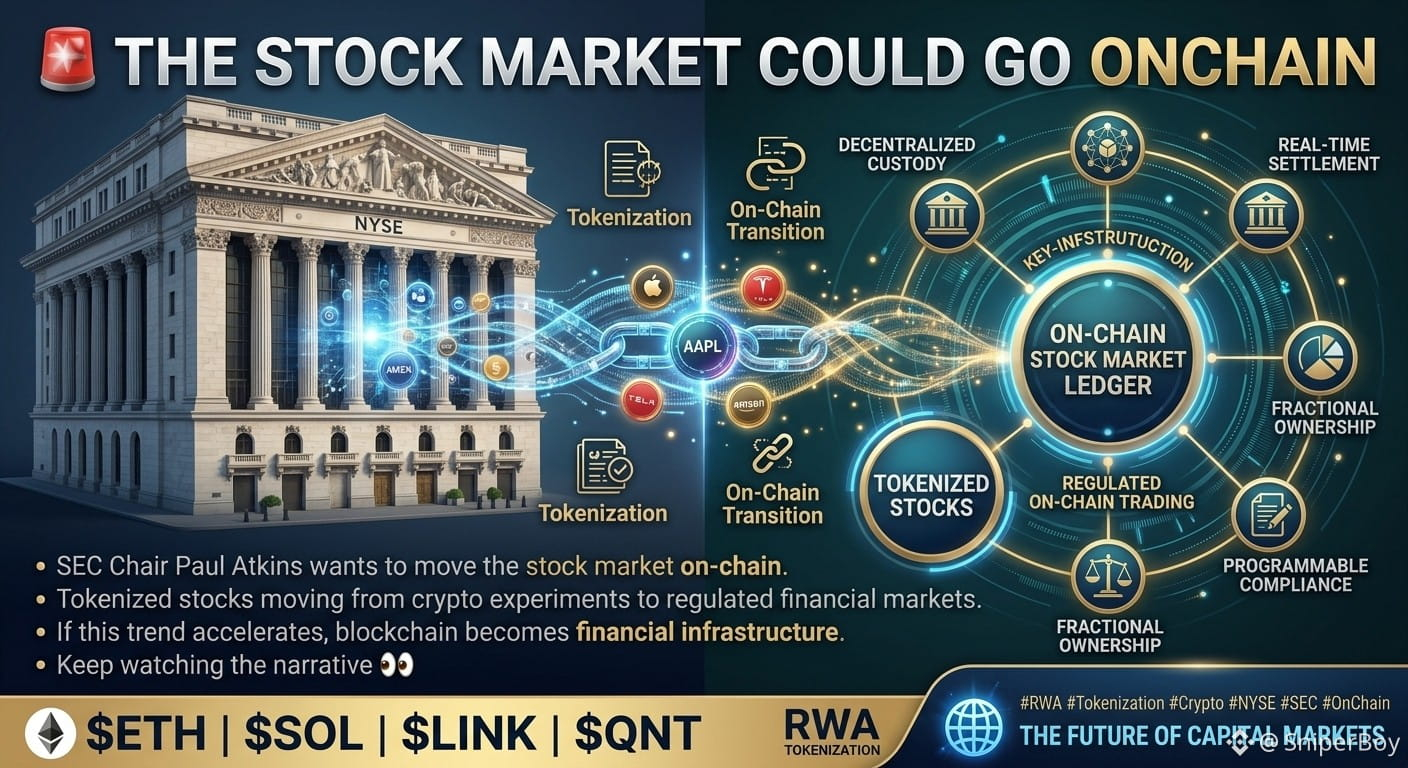
🚨 THE STOCK MARKET COULD GO ONCHAIN
SEC Chair Paul Atkins said he wants the stock market to move on-chain.
Tokenized stocks are moving from crypto experiments toward regulated financial markets.
If this trend accelerates…
Blockchain infrastructure becomes financial infrastructure. 👀
$ETH $SOL $LINK $QNT
#RWA #Tokenization #Crypto
🚨 THE STOCK MARKET COULD GO ONCHAIN
SEC Chair Paul Atkins said he wants the stock market to move on-chain.
Tokenized stocks are moving from crypto experiments toward regulated financial markets.
If this trend accelerates…
Blockchain infrastructure becomes financial infrastructure. 👀
$ETH $SOL $LINK $QNT
#RWA #Tokenization #Crypto
SEC Chair Paul Atkins said he wants the stock market to move on-chain.
Tokenized stocks are moving from crypto experiments toward regulated financial markets.
If this trend accelerates…
Blockchain infrastructure becomes financial infrastructure. 👀
$ETH $SOL $LINK $QNT
#RWA #Tokenization #Crypto
91

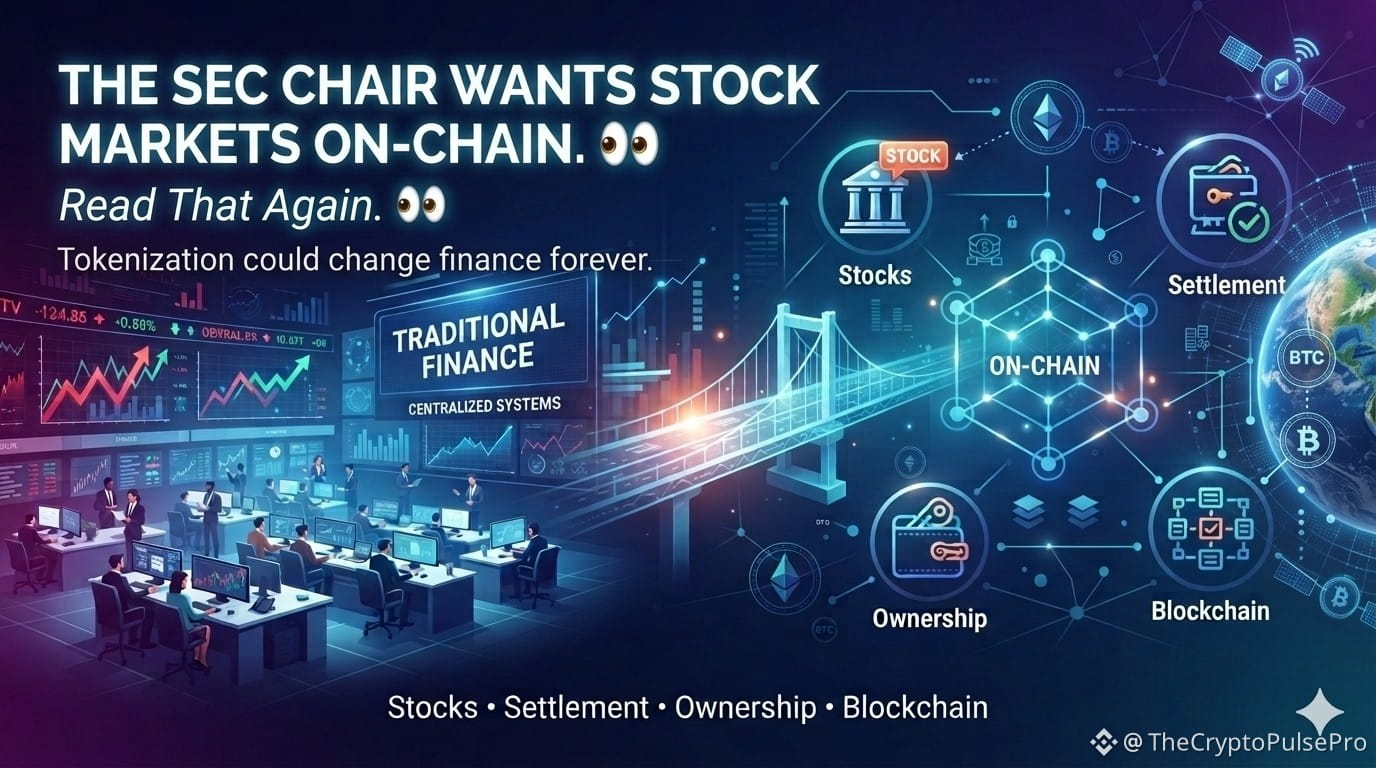
The SEC Chair Wants Stock Markets On-Chain. Read That Again. 👀
For years, blockchain was seen as a technology mainly for crypto.
Now the conversation is shifting toward something much bigger:
moving traditional financial markets on-chain.
If stocks, settlement, ownership records, and market infrastructure gradually move onto blockchain rails, tokenization may stop being just a crypto narrative—and become part of mainstream finance.
The real question is not whether this happens overnight.
It’s this:
Which blockchain ecosystems are actually ready for institutional-scale adoption?
Tokenization, stablecoins, RWA infrastructure, and compliant on-chain settlement could become major areas to watch.
Do you think on-chain stocks will become normal within the next few years—or is the market still too early? Comment below. 👇
#Tokenization #RWA #Blockchain #CryptoNews #Web3 #BinanceSquare
The SEC Chair Wants Stock Markets On-Chain. Read That Again. 👀
For years, blockchain was seen as a technology mainly for crypto.
Now the conversation is shifting toward something much bigger:
moving traditional financial markets on-chain.
If stocks, settlement, ownership records, and market infrastructure gradually move onto blockchain rails, tokenization may stop being just a crypto narrative—and become part of mainstream finance.
The real question is not whether this happens overnight.
It’s this:
Which blockchain ecosystems are actually ready for institutional-scale adoption?
Tokenization, stablecoins, RWA infrastructure, and compliant on-chain settlement could become major areas to watch.
Do you think on-chain stocks will become normal within the next few years—or is the market still too early? Comment below. 👇
#Tokenization #RWA #Blockchain #CryptoNews #Web3 #BinanceSquare
For years, blockchain was seen as a technology mainly for crypto.
Now the conversation is shifting toward something much bigger:
moving traditional financial markets on-chain.
If stocks, settlement, ownership records, and market infrastructure gradually move onto blockchain rails, tokenization may stop being just a crypto narrative—and become part of mainstream finance.
The real question is not whether this happens overnight.
It’s this:
Which blockchain ecosystems are actually ready for institutional-scale adoption?
Tokenization, stablecoins, RWA infrastructure, and compliant on-chain settlement could become major areas to watch.
Do you think on-chain stocks will become normal within the next few years—or is the market still too early? Comment below. 👇
#Tokenization #RWA #Blockchain #CryptoNews #Web3 #BinanceSquare
63

·
--
$DUSK
{spot}(DUSKUSDT)
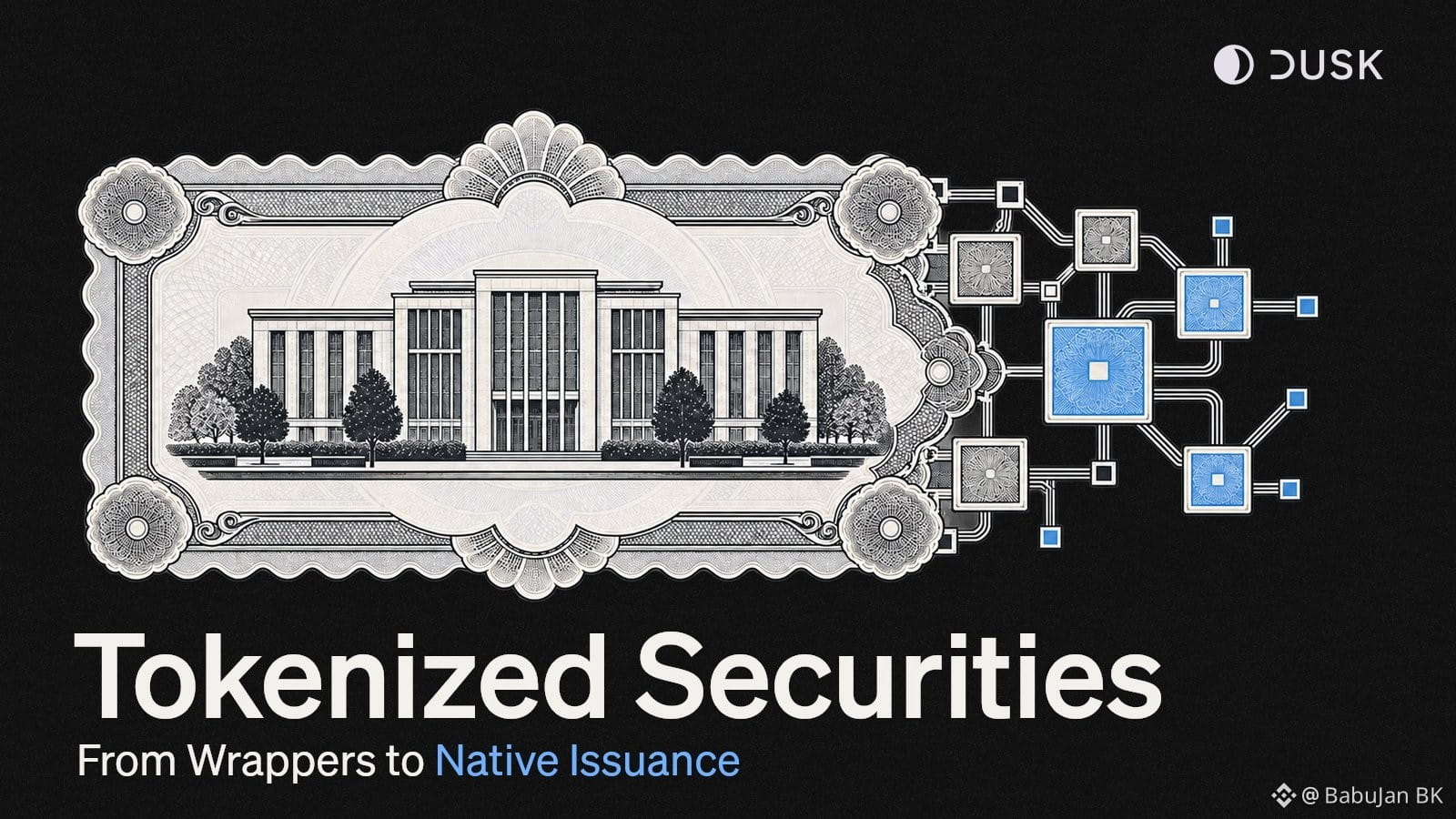
Tokenized securities are moving onchain.
DUSK is building toward native issuance for real-world assets.
#dusk #RWA #Tokenization
$DUSK
Tokenized securities are moving onchain.
DUSK is building toward native issuance for real-world assets.
#dusk #RWA #Tokenization
Tokenized securities are moving onchain.
DUSK is building toward native issuance for real-world assets.
#dusk #RWA #Tokenization
1
118

·
--
🚨 TRADFIN GIANTS S&P AND CBOE PREPARE TO BRING ON-CHAIN OPTIONS TO $ETH AND CRYPTO! 🏦
🏦 Wall Street heavyweights S&P Dow Jones and Cboe are officially laying the groundwork to bring S&P 500 options directly on-chain through tokenization. 📊 This isn't just another corporate experiment — we are witnessing the structural merger of traditional financial derivatives and decentralised settlement rails in real time.
💡 As institutional order flow seeks 24/7 liquidity and automated clearing, smart contract platforms are primed to capture massive fee generation. 🌊 The bridge between legacy equities and crypto rails is being built faster than most traders realize. 💬 Do you think tokenized TradFi assets will be the main driver for the next macro crypto cycle? 👇
⚠️ Not financial advice. Always manage your risk. 🛡️
🏷️ #ETH #Tokenization #RWA #TradFi #Crypto
🏦 ⚡
🚨 TRADFIN GIANTS S&P AND CBOE PREPARE TO BRING ON-CHAIN OPTIONS TO $ETH AND CRYPTO! 🏦
🏦 Wall Street heavyweights S&P Dow Jones and Cboe are officially laying the groundwork to bring S&P 500 options directly on-chain through tokenization. 📊 This isn't just another corporate experiment — we are witnessing the structural merger of traditional financial derivatives and decentralised settlement rails in real time.
💡 As institutional order flow seeks 24/7 liquidity and automated clearing, smart contract platforms are primed to capture massive fee generation. 🌊 The bridge between legacy equities and crypto rails is being built faster than most traders realize. 💬 Do you think tokenized TradFi assets will be the main driver for the next macro crypto cycle? 👇
⚠️ Not financial advice. Always manage your risk. 🛡️
🏷️ #ETH #Tokenization #RWA #TradFi #Crypto
🏦 ⚡
🏦 Wall Street heavyweights S&P Dow Jones and Cboe are officially laying the groundwork to bring S&P 500 options directly on-chain through tokenization. 📊 This isn't just another corporate experiment — we are witnessing the structural merger of traditional financial derivatives and decentralised settlement rails in real time.
💡 As institutional order flow seeks 24/7 liquidity and automated clearing, smart contract platforms are primed to capture massive fee generation. 🌊 The bridge between legacy equities and crypto rails is being built faster than most traders realize. 💬 Do you think tokenized TradFi assets will be the main driver for the next macro crypto cycle? 👇
⚠️ Not financial advice. Always manage your risk. 🛡️
🏷️ #ETH #Tokenization #RWA #TradFi #Crypto
🏦 ⚡
76
·
--
🚨 MORGAN STANLEY BUILDS DIGITAL ASSET LAB DRIVING DEFI AND TOKENIZATION FOR $ETH 💥
Wall Street titan Morgan Stanley has officially launched a dedicated digital asset lab, targeting stablecoins, tokenization, and decentralized finance. 🏦 This institutional sandbox allows their engineering team to stress-test smart contracts and RWA protocols in an isolated environment without threatening core banking infrastructure.
📊 Smart money positioning isn't just about immediate spot accumulation; it is about building the architectural pipes for long-term liquidity flow. 💡 As traditional finance bridges directly into on-chain rails, institutional order flow will increasingly interact with established DeFi pools. 🤔 Do you think institutional tokenization will trigger the next major structural expansion for $ETH ? 👇
⚠️ Not financial advice. Always manage your risk. 🛡️
🏷️ #ETH #DeFi #Tokenization #Crypto
🎯 🦈
🚨 MORGAN STANLEY BUILDS DIGITAL ASSET LAB DRIVING DEFI AND TOKENIZATION FOR $ETH 💥
Wall Street titan Morgan Stanley has officially launched a dedicated digital asset lab, targeting stablecoins, tokenization, and decentralized finance. 🏦 This institutional sandbox allows their engineering team to stress-test smart contracts and RWA protocols in an isolated environment without threatening core banking infrastructure.
📊 Smart money positioning isn't just about immediate spot accumulation; it is about building the architectural pipes for long-term liquidity flow. 💡 As traditional finance bridges directly into on-chain rails, institutional order flow will increasingly interact with established DeFi pools. 🤔 Do you think institutional tokenization will trigger the next major structural expansion for $ETH ? 👇
⚠️ Not financial advice. Always manage your risk. 🛡️
🏷️ #ETH #DeFi #Tokenization #Crypto
🎯 🦈
Wall Street titan Morgan Stanley has officially launched a dedicated digital asset lab, targeting stablecoins, tokenization, and decentralized finance. 🏦 This institutional sandbox allows their engineering team to stress-test smart contracts and RWA protocols in an isolated environment without threatening core banking infrastructure.
📊 Smart money positioning isn't just about immediate spot accumulation; it is about building the architectural pipes for long-term liquidity flow. 💡 As traditional finance bridges directly into on-chain rails, institutional order flow will increasingly interact with established DeFi pools. 🤔 Do you think institutional tokenization will trigger the next major structural expansion for $ETH ? 👇
⚠️ Not financial advice. Always manage your risk. 🛡️
🏷️ #ETH #DeFi #Tokenization #Crypto
🎯 🦈
1
7
CITI EXPANDS DIGITAL TOKEN SERVICES TO JAPAN AND UAE AS INSTITUTIONAL PIPELINES GROW 🚨 $BTC
Smart money moves in quiet accumulation phases, and Citi expanding its tokenized asset services across Japan and the UAE is a clear structural signal. 🔍 Institutional capital demands bank-grade infrastructure before committing liquidity at scale, bridging legacy finance directly with digital settlement rails.
This geographic expansion targets key Asian and Middle Eastern financial hubs, establishing 24/7 liquidity channels for corporate entities. 📊 As traditional banking layers integrate distributed ledger efficiency, the foundation for long-term institutional order flow strengthens significantly.
💡 The institutional footprint is expanding far beyond retail speculation into systemic financial architecture. 💬 Do you view institutional tokenization as the ultimate catalyst for macro adoption, or just legacy banks defending their territory? 👇
⚠️ Not financial advice. Always manage your risk. 🛡️
🏷️ #BTC #Institutional #Tokenization #Crypto
🔥 💎
CITI EXPANDS DIGITAL TOKEN SERVICES TO JAPAN AND UAE AS INSTITUTIONAL PIPELINES GROW 🚨 $BTC
Smart money moves in quiet accumulation phases, and Citi expanding its tokenized asset services across Japan and the UAE is a clear structural signal. 🔍 Institutional capital demands bank-grade infrastructure before committing liquidity at scale, bridging legacy finance directly with digital settlement rails.
This geographic expansion targets key Asian and Middle Eastern financial hubs, establishing 24/7 liquidity channels for corporate entities. 📊 As traditional banking layers integrate distributed ledger efficiency, the foundation for long-term institutional order flow strengthens significantly.
💡 The institutional footprint is expanding far beyond retail speculation into systemic financial architecture. 💬 Do you view institutional tokenization as the ultimate catalyst for macro adoption, or just legacy banks defending their territory? 👇
⚠️ Not financial advice. Always manage your risk. 🛡️
🏷️ #BTC #Institutional #Tokenization #Crypto
🔥 💎
Smart money moves in quiet accumulation phases, and Citi expanding its tokenized asset services across Japan and the UAE is a clear structural signal. 🔍 Institutional capital demands bank-grade infrastructure before committing liquidity at scale, bridging legacy finance directly with digital settlement rails.
This geographic expansion targets key Asian and Middle Eastern financial hubs, establishing 24/7 liquidity channels for corporate entities. 📊 As traditional banking layers integrate distributed ledger efficiency, the foundation for long-term institutional order flow strengthens significantly.
💡 The institutional footprint is expanding far beyond retail speculation into systemic financial architecture. 💬 Do you view institutional tokenization as the ultimate catalyst for macro adoption, or just legacy banks defending their territory? 👇
⚠️ Not financial advice. Always manage your risk. 🛡️
🏷️ #BTC #Institutional #Tokenization #Crypto
🔥 💎
13

·
--
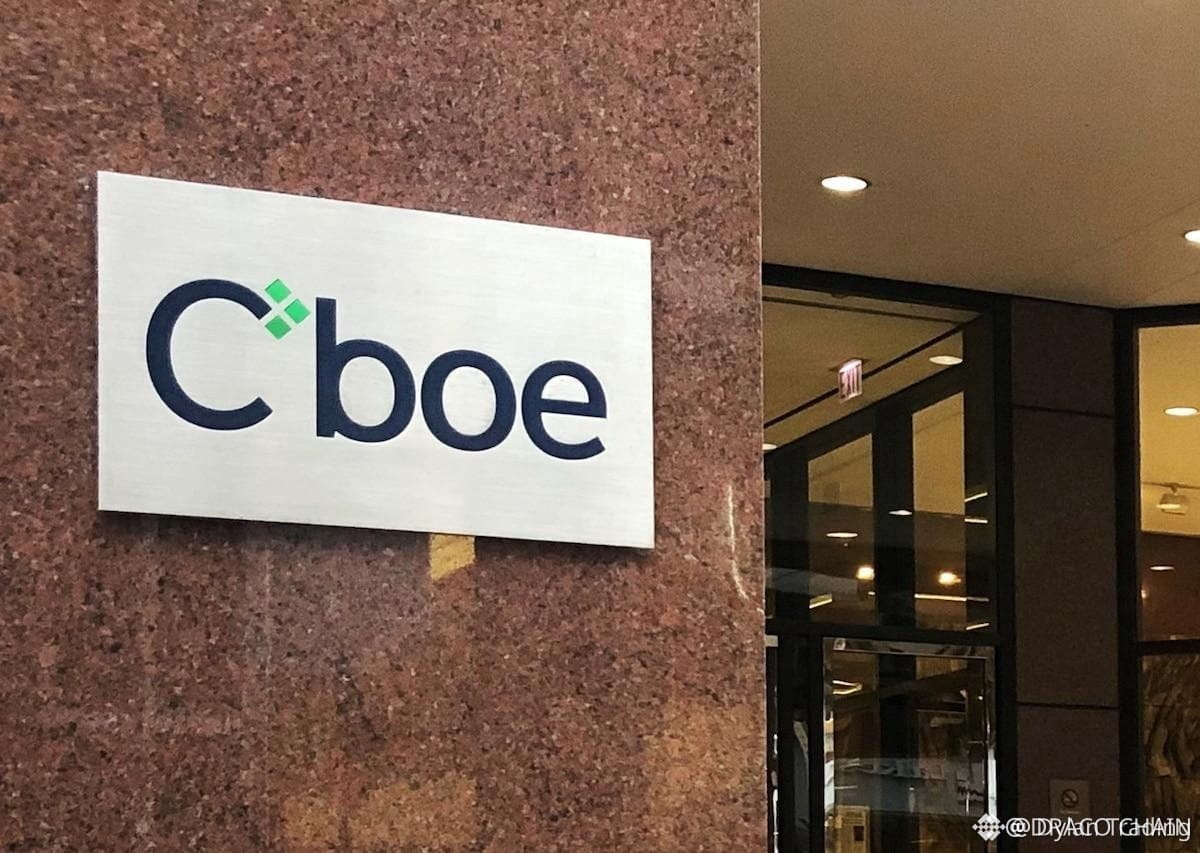
🚨 CBOE LOCKS EXCLUSIVE DEALS PAVING THE WAY FOR TOKENIZED OPTIONS SPOOLING INTO $BTC ! 💥
Cboe extended exclusive rights to S&P 500 index options through 2051, laying structural groundwork for institutional tokenized derivatives with S&P DJI. 🏦 Institutional infrastructure is quietly aligning with digital asset rails, setting up macro liquidity spillover into $BTC and $ETH futures markets. ⚡
While regulatory friction remains a factor, smart money recognizes the long-term blueprint: bringing legacy derivatives on-chain to capture structural yield and capital efficiency. 🔍 As traditional market architecture converges with crypto order flow, exposure to institutional tokenization catalysts is becoming paramount. 💡
💬 Do you see tokenized traditional options acting as the ultimate bridge for institutional capital inflows into digital assets? 👇
⚠️ Not financial advice. Always manage your risk. 🛡️
🏷️ #BTC #ETH #Tokenization #Crypto #Macro
🔥 💎
🚨 CBOE LOCKS EXCLUSIVE DEALS PAVING THE WAY FOR TOKENIZED OPTIONS SPOOLING INTO $BTC ! 💥
Cboe extended exclusive rights to S&P 500 index options through 2051, laying structural groundwork for institutional tokenized derivatives with S&P DJI. 🏦 Institutional infrastructure is quietly aligning with digital asset rails, setting up macro liquidity spillover into $BTC and $ETH futures markets. ⚡
While regulatory friction remains a factor, smart money recognizes the long-term blueprint: bringing legacy derivatives on-chain to capture structural yield and capital efficiency. 🔍 As traditional market architecture converges with crypto order flow, exposure to institutional tokenization catalysts is becoming paramount. 💡
💬 Do you see tokenized traditional options acting as the ultimate bridge for institutional capital inflows into digital assets? 👇
⚠️ Not financial advice. Always manage your risk. 🛡️
🏷️ #BTC #ETH #Tokenization #Crypto #Macro
🔥 💎
Cboe extended exclusive rights to S&P 500 index options through 2051, laying structural groundwork for institutional tokenized derivatives with S&P DJI. 🏦 Institutional infrastructure is quietly aligning with digital asset rails, setting up macro liquidity spillover into $BTC and $ETH futures markets. ⚡
While regulatory friction remains a factor, smart money recognizes the long-term blueprint: bringing legacy derivatives on-chain to capture structural yield and capital efficiency. 🔍 As traditional market architecture converges with crypto order flow, exposure to institutional tokenization catalysts is becoming paramount. 💡
💬 Do you see tokenized traditional options acting as the ultimate bridge for institutional capital inflows into digital assets? 👇
⚠️ Not financial advice. Always manage your risk. 🛡️
🏷️ #BTC #ETH #Tokenization #Crypto #Macro
🔥 💎
26

·
--
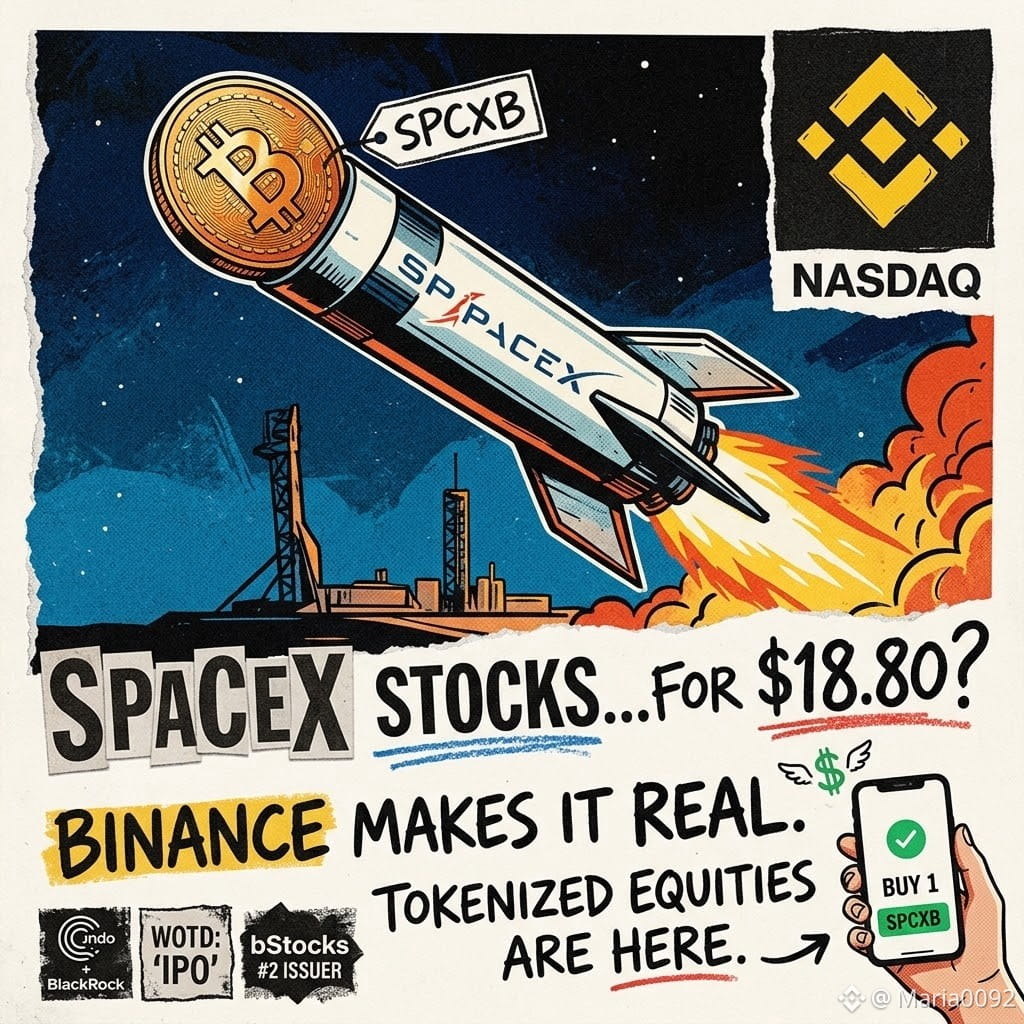
🏛️ Binance is building the on-chain NASDAQ (and this week makes it obvious)
Connect the dots:
• This week's WOTD theme: "IPOs Are Moving On-Chain" — teaching words like IPO, EQUITY, ISSUANCE, INVESTOR, CAPITAL
• Binance just confirmed support for TWO tokenized-stock airdrops: SpaceX (SPCXB) and Invesco's QQQ Trust (QQQB)
• bStocks already became the #2 tokenized-equity issuer in just 2 months — median trade size: $18.80
• And across the industry: Ondo is partnering with BLACKROCK on tokenized "smart portfolios"
Why it matters: for a century, IPO access belonged to banks and big funds. Tokenized stocks give a guy with $18.80 the same access. Binance saw it first, and it's teaching its whole user base the language before the product wave hits.
My take: when the biggest exchange on Earth starts teaching "IPO" through a word game... the announcement season is close.
Would you buy tokenized SpaceX shares? 👇
👇 Follow for daily Binance ecosystem updates
#Binance #SpaceX #Tokenization #JapanFSABacksFourthStablecoinTradeSettlementPilot $BNB
{spot}(BNBUSDT)
🏛️ Binance is building the on-chain NASDAQ (and this week makes it obvious)
Connect the dots:
• This week's WOTD theme: "IPOs Are Moving On-Chain" — teaching words like IPO, EQUITY, ISSUANCE, INVESTOR, CAPITAL
• Binance just confirmed support for TWO tokenized-stock airdrops: SpaceX (SPCXB) and Invesco's QQQ Trust (QQQB)
• bStocks already became the #2 tokenized-equity issuer in just 2 months — median trade size: $18.80
• And across the industry: Ondo is partnering with BLACKROCK on tokenized "smart portfolios"
Why it matters: for a century, IPO access belonged to banks and big funds. Tokenized stocks give a guy with $18.80 the same access. Binance saw it first, and it's teaching its whole user base the language before the product wave hits.
My take: when the biggest exchange on Earth starts teaching "IPO" through a word game... the announcement season is close.
Would you buy tokenized SpaceX shares? 👇
👇 Follow for daily Binance ecosystem updates
#Binance #SpaceX #Tokenization #JapanFSABacksFourthStablecoinTradeSettlementPilot $BNB
Connect the dots:
• This week's WOTD theme: "IPOs Are Moving On-Chain" — teaching words like IPO, EQUITY, ISSUANCE, INVESTOR, CAPITAL
• Binance just confirmed support for TWO tokenized-stock airdrops: SpaceX (SPCXB) and Invesco's QQQ Trust (QQQB)
• bStocks already became the #2 tokenized-equity issuer in just 2 months — median trade size: $18.80
• And across the industry: Ondo is partnering with BLACKROCK on tokenized "smart portfolios"
Why it matters: for a century, IPO access belonged to banks and big funds. Tokenized stocks give a guy with $18.80 the same access. Binance saw it first, and it's teaching its whole user base the language before the product wave hits.
My take: when the biggest exchange on Earth starts teaching "IPO" through a word game... the announcement season is close.
Would you buy tokenized SpaceX shares? 👇
👇 Follow for daily Binance ecosystem updates
#Binance #SpaceX #Tokenization #JapanFSABacksFourthStablecoinTradeSettlementPilot $BNB
63
·
--
🚨 CBOE AND SP DOW JONES TARGET TOKENIZED OPTIONS IN MAJOR INSTITUTIONAL EXPANSION FOR $BTC ⚡
Institutional infrastructure is laying down deep foundations. CBOE joining forces with S&P Dow Jones to explore tokenized options contracts signals a massive shift in how smart money will deploy derivative liquidity across digital assets. 🦈
This institutional bridge merges traditional index structuring with on-chain settlement efficiency, preparing the market for unprecedented capital depth. 🔍 When traditional giants tokenize institutional instruments, market volatility transitions into structured, high-volume liquidity expansion. 📊
How do you expect tokenized derivatives to impact spot liquidity structures across major assets? 👇
⚠️ Not financial advice. Always manage your risk. 🛡️
🏷️ #BTC #Tokenization #Derivatives #Institutional
🎯 🦈
🚨 CBOE AND SP DOW JONES TARGET TOKENIZED OPTIONS IN MAJOR INSTITUTIONAL EXPANSION FOR $BTC ⚡
Institutional infrastructure is laying down deep foundations. CBOE joining forces with S&P Dow Jones to explore tokenized options contracts signals a massive shift in how smart money will deploy derivative liquidity across digital assets. 🦈
This institutional bridge merges traditional index structuring with on-chain settlement efficiency, preparing the market for unprecedented capital depth. 🔍 When traditional giants tokenize institutional instruments, market volatility transitions into structured, high-volume liquidity expansion. 📊
How do you expect tokenized derivatives to impact spot liquidity structures across major assets? 👇
⚠️ Not financial advice. Always manage your risk. 🛡️
🏷️ #BTC #Tokenization #Derivatives #Institutional
🎯 🦈
Institutional infrastructure is laying down deep foundations. CBOE joining forces with S&P Dow Jones to explore tokenized options contracts signals a massive shift in how smart money will deploy derivative liquidity across digital assets. 🦈
This institutional bridge merges traditional index structuring with on-chain settlement efficiency, preparing the market for unprecedented capital depth. 🔍 When traditional giants tokenize institutional instruments, market volatility transitions into structured, high-volume liquidity expansion. 📊
How do you expect tokenized derivatives to impact spot liquidity structures across major assets? 👇
⚠️ Not financial advice. Always manage your risk. 🛡️
🏷️ #BTC #Tokenization #Derivatives #Institutional
🎯 🦈
15

CBOE AND S&P DOW JONES EXPLORE TOKENIZED OPTIONS AS INSTITUTIONAL BID ENTERS $BTC 🏦 ⚡
Wall Street heavyweights Cboe and S&P Dow Jones Indices are quietly laying the rails to explore tokenized options contracts. 🦈 Traditional financial behemoths are no longer just watching from the sidelines; they are actively preparing to bridge index derivatives directly onto blockchain infrastructure.
📌 This represents a major structural shift in how global institutions manage options risk and settle capital. 📊 As on-chain settlement speeds meet institutional liquidity, the distinction between legacy finance and crypto derivatives is rapidly evaporating.
💬 Will tokenized real-world assets drive the next mega-cycle for institutional $BTC capital, or will regulatory friction slow the rollout? 👇
⚠️ Not financial advice. Always manage your risk. 🛡️
🏷️ #BTC #ETH #Tokenization #WallStreet #Crypto
🔥 💎
CBOE AND S&P DOW JONES EXPLORE TOKENIZED OPTIONS AS INSTITUTIONAL BID ENTERS $BTC 🏦 ⚡
Wall Street heavyweights Cboe and S&P Dow Jones Indices are quietly laying the rails to explore tokenized options contracts. 🦈 Traditional financial behemoths are no longer just watching from the sidelines; they are actively preparing to bridge index derivatives directly onto blockchain infrastructure.
📌 This represents a major structural shift in how global institutions manage options risk and settle capital. 📊 As on-chain settlement speeds meet institutional liquidity, the distinction between legacy finance and crypto derivatives is rapidly evaporating.
💬 Will tokenized real-world assets drive the next mega-cycle for institutional $BTC capital, or will regulatory friction slow the rollout? 👇
⚠️ Not financial advice. Always manage your risk. 🛡️
🏷️ #BTC #ETH #Tokenization #WallStreet #Crypto
🔥 💎
Wall Street heavyweights Cboe and S&P Dow Jones Indices are quietly laying the rails to explore tokenized options contracts. 🦈 Traditional financial behemoths are no longer just watching from the sidelines; they are actively preparing to bridge index derivatives directly onto blockchain infrastructure.
📌 This represents a major structural shift in how global institutions manage options risk and settle capital. 📊 As on-chain settlement speeds meet institutional liquidity, the distinction between legacy finance and crypto derivatives is rapidly evaporating.
💬 Will tokenized real-world assets drive the next mega-cycle for institutional $BTC capital, or will regulatory friction slow the rollout? 👇
⚠️ Not financial advice. Always manage your risk. 🛡️
🏷️ #BTC #ETH #Tokenization #WallStreet #Crypto
🔥 💎
26

⚡ MORGAN STANLEY LAUNCHES DIGITAL LAB TO BRIDGE TRADFI WITH DEFI AS $CELO HEATS UP! 🏦
TradFi titan Morgan Stanley is officially building a dedicated Digital Asset Lab to pilot stablecoins, real-world asset tokenization, and DeFi infrastructure. 🏦 Wall Street isn't just watching from the sidelines anymore—they are quietly building the institutional rails to front-run the next liquidity wave.
While purists debate whether institutional entry threatens decentralization, smart money sees this as ultimate validation for ecosystems positioning around scalability like $CELO and $0G. 📊 Capital allocators are keeping a hawkish eye on the lab's initial rollout reports for clear product guidance.
💬 Does Wall Street involvement signal the ultimate bull catalyst for tokenization, or will institutional rails dilute true DeFi mechanics? 👇
⚠️ Not financial advice. Always manage your risk. 🛡️
🏷️ #CELO #0G #Tokenization #DeFi #Crypto
🔥 💎
⚡ MORGAN STANLEY LAUNCHES DIGITAL LAB TO BRIDGE TRADFI WITH DEFI AS $CELO HEATS UP! 🏦
TradFi titan Morgan Stanley is officially building a dedicated Digital Asset Lab to pilot stablecoins, real-world asset tokenization, and DeFi infrastructure. 🏦 Wall Street isn't just watching from the sidelines anymore—they are quietly building the institutional rails to front-run the next liquidity wave.
While purists debate whether institutional entry threatens decentralization, smart money sees this as ultimate validation for ecosystems positioning around scalability like $CELO and $0G. 📊 Capital allocators are keeping a hawkish eye on the lab's initial rollout reports for clear product guidance.
💬 Does Wall Street involvement signal the ultimate bull catalyst for tokenization, or will institutional rails dilute true DeFi mechanics? 👇
⚠️ Not financial advice. Always manage your risk. 🛡️
🏷️ #CELO #0G #Tokenization #DeFi #Crypto
🔥 💎
TradFi titan Morgan Stanley is officially building a dedicated Digital Asset Lab to pilot stablecoins, real-world asset tokenization, and DeFi infrastructure. 🏦 Wall Street isn't just watching from the sidelines anymore—they are quietly building the institutional rails to front-run the next liquidity wave.
While purists debate whether institutional entry threatens decentralization, smart money sees this as ultimate validation for ecosystems positioning around scalability like $CELO and $0G. 📊 Capital allocators are keeping a hawkish eye on the lab's initial rollout reports for clear product guidance.
💬 Does Wall Street involvement signal the ultimate bull catalyst for tokenization, or will institutional rails dilute true DeFi mechanics? 👇
⚠️ Not financial advice. Always manage your risk. 🛡️
🏷️ #CELO #0G #Tokenization #DeFi #Crypto
🔥 💎
136
·
--
🚨 MORGAN STANLEY LAUNCHES DIGITAL ASSET LAB FOR TOKENIZATION AND DEFI $CELO 🏛️
Institutional heavyweights are moving past passive exposure and directly engineering infrastructure. Morgan Stanley launching a dedicated Digital Asset Lab signals a structural pivot toward real-world asset tokenization and DeFi integration, building long-term tailwinds for networks like $CELO and $0G. 📊
While macro regulatory friction remains a temporary buffer, smart money positioning typically occurs during these quiet development cycles long before public sentiment shifts. 🔍 Institutional testbeds serve as key catalysts for future capital deployment into protocol liquidity pools. 🌊
💬 Do you expect institutional tokenization to trigger the next structural market expansion, or will regulatory barriers stall capital deployment? 👇
⚠️ Not financial advice. Always manage your risk. 🛡️
🏷️ #CELO #0G #Tokenization #DeFi #Institutional
🎯 🦈
🚨 MORGAN STANLEY LAUNCHES DIGITAL ASSET LAB FOR TOKENIZATION AND DEFI $CELO 🏛️
Institutional heavyweights are moving past passive exposure and directly engineering infrastructure. Morgan Stanley launching a dedicated Digital Asset Lab signals a structural pivot toward real-world asset tokenization and DeFi integration, building long-term tailwinds for networks like $CELO and $0G. 📊
While macro regulatory friction remains a temporary buffer, smart money positioning typically occurs during these quiet development cycles long before public sentiment shifts. 🔍 Institutional testbeds serve as key catalysts for future capital deployment into protocol liquidity pools. 🌊
💬 Do you expect institutional tokenization to trigger the next structural market expansion, or will regulatory barriers stall capital deployment? 👇
⚠️ Not financial advice. Always manage your risk. 🛡️
🏷️ #CELO #0G #Tokenization #DeFi #Institutional
🎯 🦈
Institutional heavyweights are moving past passive exposure and directly engineering infrastructure. Morgan Stanley launching a dedicated Digital Asset Lab signals a structural pivot toward real-world asset tokenization and DeFi integration, building long-term tailwinds for networks like $CELO and $0G. 📊
While macro regulatory friction remains a temporary buffer, smart money positioning typically occurs during these quiet development cycles long before public sentiment shifts. 🔍 Institutional testbeds serve as key catalysts for future capital deployment into protocol liquidity pools. 🌊
💬 Do you expect institutional tokenization to trigger the next structural market expansion, or will regulatory barriers stall capital deployment? 👇
⚠️ Not financial advice. Always manage your risk. 🛡️
🏷️ #CELO #0G #Tokenization #DeFi #Institutional
🎯 🦈


119

·
--
Vérifié
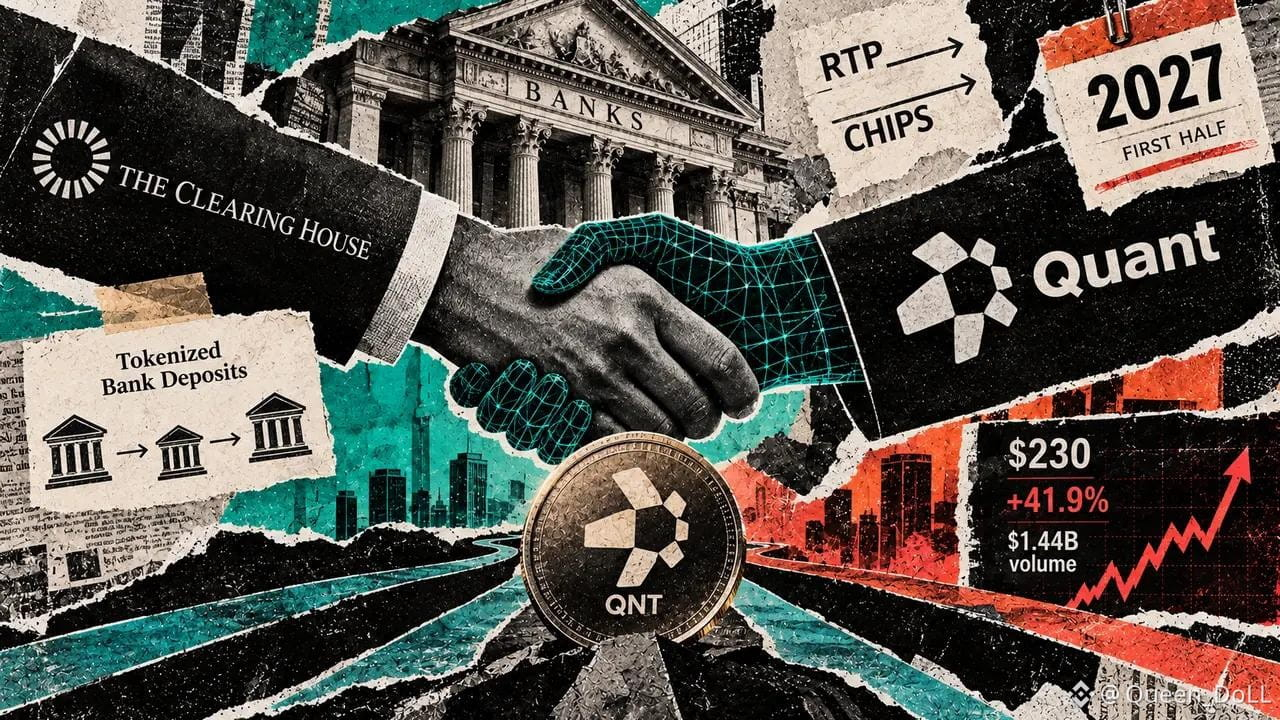
The Clearing House has selected Quant to build software for tokenized bank deposits, with the network expected to roll out in the first half of 2027.
That sounds significant for blockchain adoption, but there’s an important detail I’m watching closely: the announcement does not say that participating banks will need to buy or hold $QNT
So I’d separate two narratives here.
Quant’s technology gaining institutional adoption is one thing. Whether that translates into direct demand for $QNT is a completely different question.
For me, the real story isn’t just “banks are using Quant.” It’s how the network is structured, where $QNT fits into the ecosystem, and whether actual institutional usage creates measurable token demand.
Institutional adoption is bullish for the infrastructure narrative, but token value still needs its own mechanism.
$APR
{future}(QNTUSDT)
{future}(APRUSDT)
#Quant #QNT #RWA #Tokenization #crypto
The Clearing House has selected Quant to build software for tokenized bank deposits, with the network expected to roll out in the first half of 2027.
That sounds significant for blockchain adoption, but there’s an important detail I’m watching closely: the announcement does not say that participating banks will need to buy or hold $QNT
So I’d separate two narratives here.
Quant’s technology gaining institutional adoption is one thing. Whether that translates into direct demand for $QNT is a completely different question.
For me, the real story isn’t just “banks are using Quant.” It’s how the network is structured, where $QNT fits into the ecosystem, and whether actual institutional usage creates measurable token demand.
Institutional adoption is bullish for the infrastructure narrative, but token value still needs its own mechanism.
$APR
#Quant #QNT #RWA #Tokenization #crypto
That sounds significant for blockchain adoption, but there’s an important detail I’m watching closely: the announcement does not say that participating banks will need to buy or hold $QNT
So I’d separate two narratives here.
Quant’s technology gaining institutional adoption is one thing. Whether that translates into direct demand for $QNT is a completely different question.
For me, the real story isn’t just “banks are using Quant.” It’s how the network is structured, where $QNT fits into the ecosystem, and whether actual institutional usage creates measurable token demand.
Institutional adoption is bullish for the infrastructure narrative, but token value still needs its own mechanism.
$APR
#Quant #QNT #RWA #Tokenization #crypto
2
1k

Article
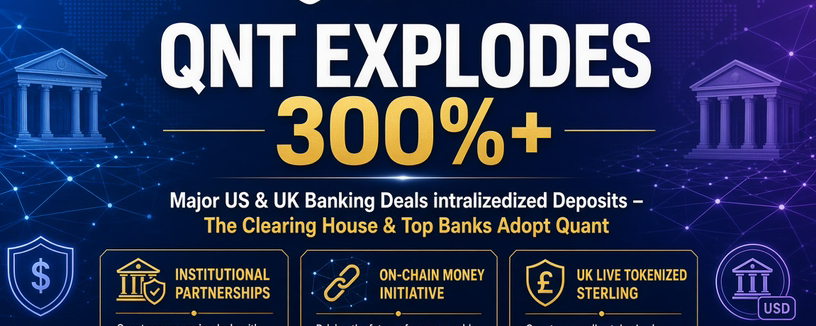
Quant (QNT) Explodes 300%+ in a Week After Major US & UK Banking Deals for Tokenized Deposits ⚡️💥📈QNT Surges Over 300% as Quant Secures Key Role in US Banks’ On-Chain Tokenized Deposit Network⚡️💥🚀
Quant’s native token QNT has delivered one of the strongest performances in the crypto market this week, climbing from the $60–$70 range to intraday peaks above $350 before a partial pullback, according to multiple market reports. The move places QNT among the top weekly gainers and has drawn significant attention amid broader market consolidation.
The primary catalyst arrived on September 24 when The Clearing House—jointly owned by 25 major US banks including JPMorgan, Bank of America, Citi, and Wells Fargo, and processing more than $2 trillion in daily volume—selected Quant to power its On-Chain Money Initiative. Quant will provide the interoperability layer, transaction management, and orchestration for a shared network designed to clear and settle tokenized bank deposits. The platform is also set to connect with existing rails such as RTP and CHIPS, with the network expected to open to participating institutions in the first half of 2027.
On the same day, several leading UK banks—including Barclays, HSBC UK, Lloyds Banking Group, Monzo, Nationwide, NatWest, and Santander—completed live customer transactions using tokenized sterling deposits on infrastructure developed by Quant under the Great British Tokenised Deposit initiative. These included real-world use cases such as remortgage and marketplace payments, moving beyond earlier simulations.
This dual US-UK banking adoption reinforces Quant’s positioning as middleware for regulated institutions seeking to bring deposits on-chain while remaining within existing regulatory frameworks. Trading volume increased sharply during the rally, and QNT remains a focal point of discussion even as Bitcoin trades near $83,000 following recent highs near $87,000.
The developments highlight growing institutional interest in programmable money and real-world asset tokenization. Market participants continue to monitor liquidity, profit-taking levels, and further updates on network timelines.
What are your thoughts on QNT’s trajectory from here—sustainable institutional demand or short-term momentum? Share your views below.
#QNT #Quant #Tokenization #QNT/USDT $QNT
{future}(QNTUSDT)
Quant (QNT) Explodes 300%+ in a Week After Major US & UK Banking Deals for Tokenized Deposits ⚡️💥📈
QNT Surges Over 300% as Quant Secures Key Role in US Banks’ On-Chain Tokenized Deposit Network⚡️💥🚀
Quant’s native token QNT has delivered one of the strongest performances in the crypto market this week, climbing from the $60–$70 range to intraday peaks above $350 before a partial pullback, according to multiple market reports. The move places QNT among the top weekly gainers and has drawn significant attention amid broader market consolidation.
The primary catalyst arrived on September 24 when The Clearing House—jointly owned by 25 major US banks including JPMorgan, Bank of America, Citi, and Wells Fargo, and processing more than $2 trillion in daily volume—selected Quant to power its On-Chain Money Initiative. Quant will provide the interoperability layer, transaction management, and orchestration for a shared network designed to clear and settle tokenized bank deposits. The platform is also set to connect with existing rails such as RTP and CHIPS, with the network expected to open to participating institutions in the first half of 2027.
On the same day, several leading UK banks—including Barclays, HSBC UK, Lloyds Banking Group, Monzo, Nationwide, NatWest, and Santander—completed live customer transactions using tokenized sterling deposits on infrastructure developed by Quant under the Great British Tokenised Deposit initiative. These included real-world use cases such as remortgage and marketplace payments, moving beyond earlier simulations.
This dual US-UK banking adoption reinforces Quant’s positioning as middleware for regulated institutions seeking to bring deposits on-chain while remaining within existing regulatory frameworks. Trading volume increased sharply during the rally, and QNT remains a focal point of discussion even as Bitcoin trades near $83,000 following recent highs near $87,000.
The developments highlight growing institutional interest in programmable money and real-world asset tokenization. Market participants continue to monitor liquidity, profit-taking levels, and further updates on network timelines.
What are your thoughts on QNT’s trajectory from here—sustainable institutional demand or short-term momentum? Share your views below.
#QNT #Quant #Tokenization #QNT/USDT $QNT
Quant’s native token QNT has delivered one of the strongest performances in the crypto market this week, climbing from the $60–$70 range to intraday peaks above $350 before a partial pullback, according to multiple market reports. The move places QNT among the top weekly gainers and has drawn significant attention amid broader market consolidation.
The primary catalyst arrived on September 24 when The Clearing House—jointly owned by 25 major US banks including JPMorgan, Bank of America, Citi, and Wells Fargo, and processing more than $2 trillion in daily volume—selected Quant to power its On-Chain Money Initiative. Quant will provide the interoperability layer, transaction management, and orchestration for a shared network designed to clear and settle tokenized bank deposits. The platform is also set to connect with existing rails such as RTP and CHIPS, with the network expected to open to participating institutions in the first half of 2027.
On the same day, several leading UK banks—including Barclays, HSBC UK, Lloyds Banking Group, Monzo, Nationwide, NatWest, and Santander—completed live customer transactions using tokenized sterling deposits on infrastructure developed by Quant under the Great British Tokenised Deposit initiative. These included real-world use cases such as remortgage and marketplace payments, moving beyond earlier simulations.
This dual US-UK banking adoption reinforces Quant’s positioning as middleware for regulated institutions seeking to bring deposits on-chain while remaining within existing regulatory frameworks. Trading volume increased sharply during the rally, and QNT remains a focal point of discussion even as Bitcoin trades near $83,000 following recent highs near $87,000.
The developments highlight growing institutional interest in programmable money and real-world asset tokenization. Market participants continue to monitor liquidity, profit-taking levels, and further updates on network timelines.
What are your thoughts on QNT’s trajectory from here—sustainable institutional demand or short-term momentum? Share your views below.
#QNT #Quant #Tokenization #QNT/USDT $QNT
3
2
424

·
--
Institutions do not care about TPS. They care about finality.
When a tokenized fund or a T-bill settles on-chain, the transfer has to be final the moment it is confirmed - not "probably final after 30 confirmations."
That single requirement quietly reshapes which chains institutional money can actually use.
Probabilistic finality - the Bitcoin style - means every settlement carries a rollback window. Fine for a reserve asset you move rarely. Unworkable for a payment leg that must settle against a counterparty in the same block.
Deterministic finality - the BFT style Ethereum uses - gives you an irreversible yes. That is why tokenized funds, RWAs and institutional settlement flows have concentrated where finality is instant and provable, not where throughput is highest.
Layer 2s add a wrinkle: they inherit Ethereum security, but finality on the L2 itself arrives with a delay - fraud proofs, batch postings, sequencer dependencies. Institutions pricing settlement risk care about that gap. "Secured by Ethereum" and "settles like Ethereum" are different products.
The pattern is simple: chains compete on speed for retail, but institutions select on finality, uptime guarantees and settlement assurance. The boring property wins the boring money.
Watch where new tokenized treasury and fund issuances actually deploy. The venue they settle on tells you which chains passed the finality test - no benchmarks needed.
$ETH $BTC $SOL
#Tokenization #RWA #InstitutionalAdoption #Ethereum #CryptoInfrastructure
Institutions do not care about TPS. They care about finality.
When a tokenized fund or a T-bill settles on-chain, the transfer has to be final the moment it is confirmed - not "probably final after 30 confirmations."
That single requirement quietly reshapes which chains institutional money can actually use.
Probabilistic finality - the Bitcoin style - means every settlement carries a rollback window. Fine for a reserve asset you move rarely. Unworkable for a payment leg that must settle against a counterparty in the same block.
Deterministic finality - the BFT style Ethereum uses - gives you an irreversible yes. That is why tokenized funds, RWAs and institutional settlement flows have concentrated where finality is instant and provable, not where throughput is highest.
Layer 2s add a wrinkle: they inherit Ethereum security, but finality on the L2 itself arrives with a delay - fraud proofs, batch postings, sequencer dependencies. Institutions pricing settlement risk care about that gap. "Secured by Ethereum" and "settles like Ethereum" are different products.
The pattern is simple: chains compete on speed for retail, but institutions select on finality, uptime guarantees and settlement assurance. The boring property wins the boring money.
Watch where new tokenized treasury and fund issuances actually deploy. The venue they settle on tells you which chains passed the finality test - no benchmarks needed.
$ETH $BTC $SOL
#Tokenization #RWA #InstitutionalAdoption #Ethereum #CryptoInfrastructure
When a tokenized fund or a T-bill settles on-chain, the transfer has to be final the moment it is confirmed - not "probably final after 30 confirmations."
That single requirement quietly reshapes which chains institutional money can actually use.
Probabilistic finality - the Bitcoin style - means every settlement carries a rollback window. Fine for a reserve asset you move rarely. Unworkable for a payment leg that must settle against a counterparty in the same block.
Deterministic finality - the BFT style Ethereum uses - gives you an irreversible yes. That is why tokenized funds, RWAs and institutional settlement flows have concentrated where finality is instant and provable, not where throughput is highest.
Layer 2s add a wrinkle: they inherit Ethereum security, but finality on the L2 itself arrives with a delay - fraud proofs, batch postings, sequencer dependencies. Institutions pricing settlement risk care about that gap. "Secured by Ethereum" and "settles like Ethereum" are different products.
The pattern is simple: chains compete on speed for retail, but institutions select on finality, uptime guarantees and settlement assurance. The boring property wins the boring money.
Watch where new tokenized treasury and fund issuances actually deploy. The venue they settle on tells you which chains passed the finality test - no benchmarks needed.
$ETH $BTC $SOL
#Tokenization #RWA #InstitutionalAdoption #Ethereum #CryptoInfrastructure
1
91

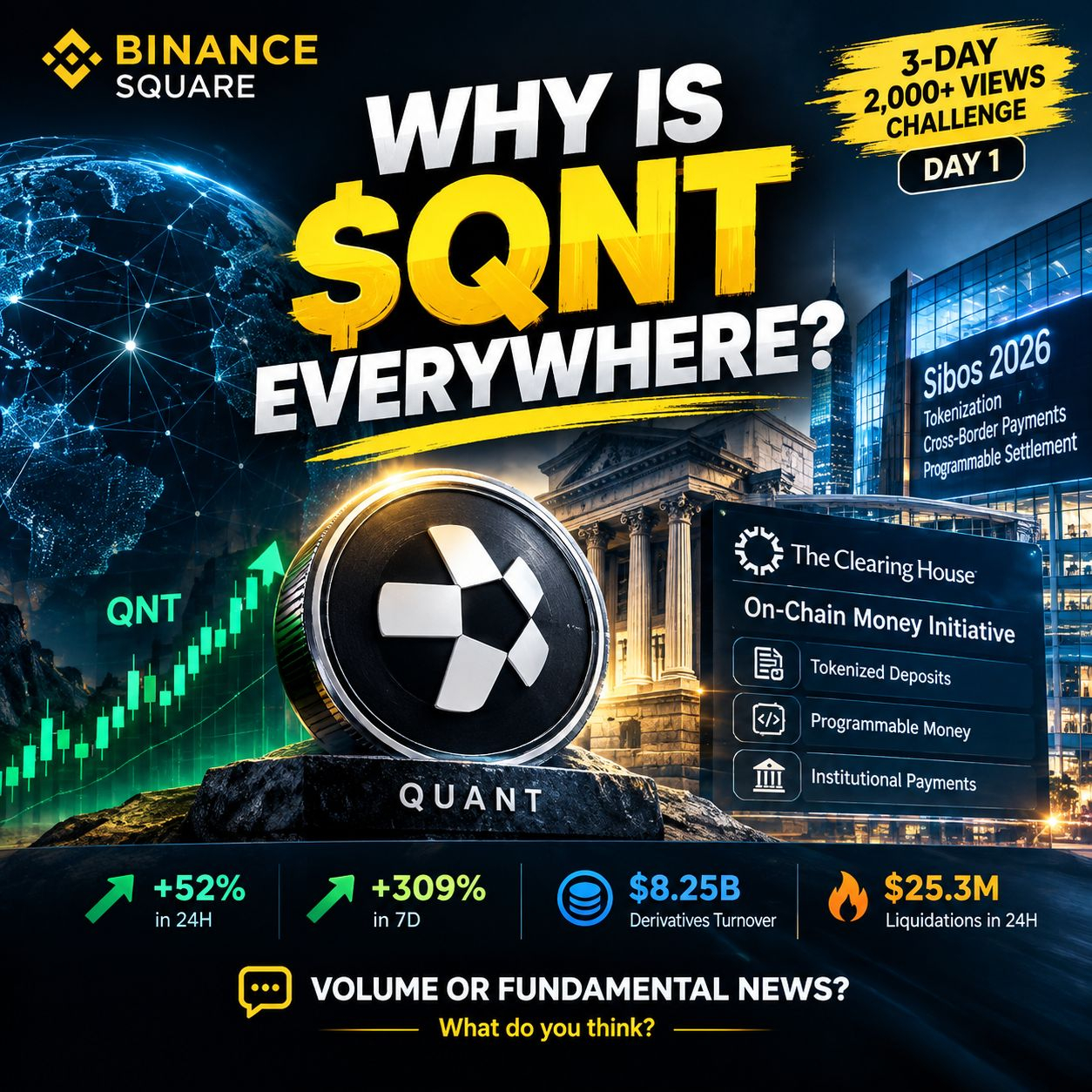
🚨 WHY IS $QNT SUDDENLY EVERYWHERE?
$QNT is getting serious attention right now. 👀
📈 +52% in the last 24H
🔥 +309% in the last 7 days
💰 ~$8.25B derivatives turnover
⚡ ~$25.3M liquidations in 24H
But here’s the interesting part…
This move isn’t only about price.
The Clearing House selected Quant for its On-Chain Money Initiative, with a focus on areas such as tokenized deposits, programmable money and institutional payments.
And with Sibos 2026 happening now, topics like tokenization, programmable settlement and cross-border payments are getting even more attention.
So the real question is:
👉 Is $QNT simply having a huge price move…
OR
👉 Are traders starting to price in the bigger institutional tokenization narrative?
I’m watching PRICE + VOLUME + FUNDAMENTAL NEWS together.
What do you think?
💬 Volume or Fundamental News — which one is driving $QNT right now?
#Altcoins #RWA #Tokenization #Blockchain #Trading
🚨 WHY IS $QNT SUDDENLY EVERYWHERE?
$QNT is getting serious attention right now. 👀
📈 +52% in the last 24H
🔥 +309% in the last 7 days
💰 ~$8.25B derivatives turnover
⚡ ~$25.3M liquidations in 24H
But here’s the interesting part…
This move isn’t only about price.
The Clearing House selected Quant for its On-Chain Money Initiative, with a focus on areas such as tokenized deposits, programmable money and institutional payments.
And with Sibos 2026 happening now, topics like tokenization, programmable settlement and cross-border payments are getting even more attention.
So the real question is:
👉 Is $QNT simply having a huge price move…
OR
👉 Are traders starting to price in the bigger institutional tokenization narrative?
I’m watching PRICE + VOLUME + FUNDAMENTAL NEWS together.
What do you think?
💬 Volume or Fundamental News — which one is driving $QNT right now?
#Altcoins #RWA #Tokenization #Blockchain #Trading
$QNT is getting serious attention right now. 👀
📈 +52% in the last 24H
🔥 +309% in the last 7 days
💰 ~$8.25B derivatives turnover
⚡ ~$25.3M liquidations in 24H
But here’s the interesting part…
This move isn’t only about price.
The Clearing House selected Quant for its On-Chain Money Initiative, with a focus on areas such as tokenized deposits, programmable money and institutional payments.
And with Sibos 2026 happening now, topics like tokenization, programmable settlement and cross-border payments are getting even more attention.
So the real question is:
👉 Is $QNT simply having a huge price move…
OR
👉 Are traders starting to price in the bigger institutional tokenization narrative?
I’m watching PRICE + VOLUME + FUNDAMENTAL NEWS together.
What do you think?
💬 Volume or Fundamental News — which one is driving $QNT right now?
#Altcoins #RWA #Tokenization #Blockchain #Trading
138

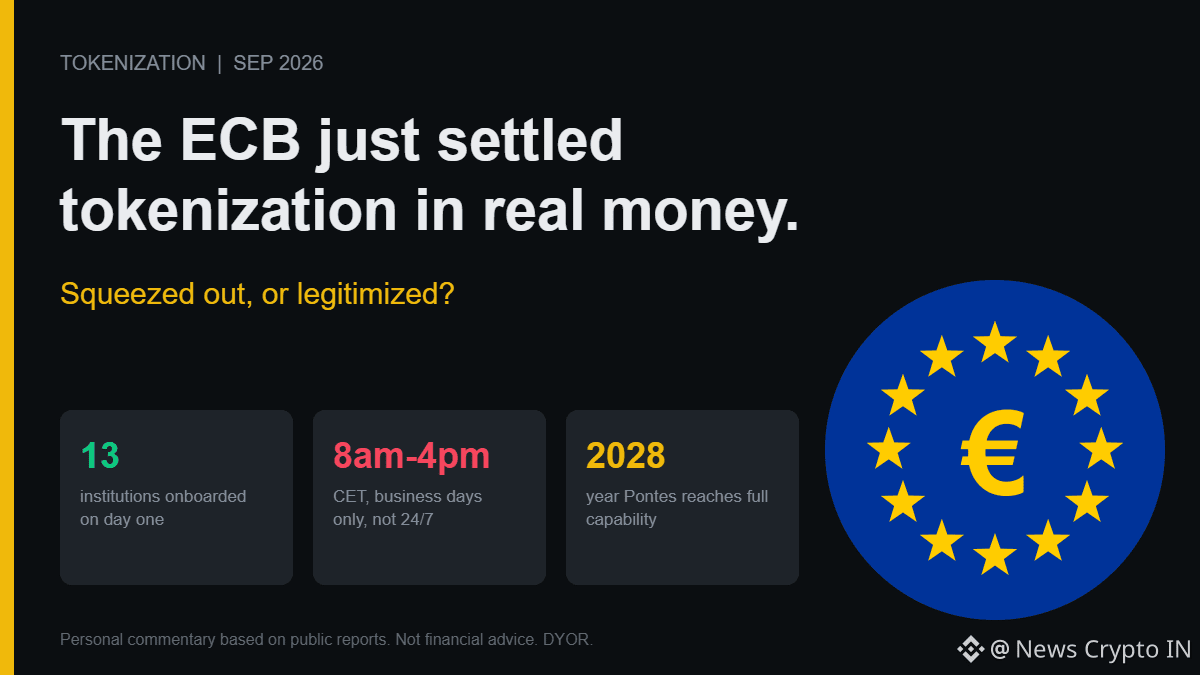
The ECB just switched on Pontes, a bridge that lets tokenized securities settle in actual central bank money. It went live Sept 21 with 13 institutions onboarded, including Deutsche Bank, Santander, Société Générale, KfW and the European Investment Bank, plus four ledger operators such as Clearstream. The ECB has also started preparing to invest a small part of its own funds in tokenized securities, settled through Pontes.
Why it matters: tokenized trades have mostly settled in commercial bank money or stablecoins, which carry credit risk big institutions dislike. A risk-free settlement asset was one of the biggest blockers. Pontes removes it, at least for wholesale players.
Now the caveats crypto Twitter will skip:
- It runs 8am to 4pm CET on business days. Not 24/7.
- Cash-leg finality is still anchored in the existing TARGET2 system.
- It's wholesale only, for banks and market infrastructure, not for retail.
- Full capability, with longer hours and more features, is targeted for 2028.
So this isn't "blockchain replaces banks." It's banks adopting blockchain on their own terms, with the central bank as the settlement layer.
The open question for stablecoins: if institutions can settle tokenized assets in central bank money, what is the wholesale use case for a private stablecoin? Retail and 24/7 still look like stablecoin territory (my read), but the institutional slice just got narrower.
Does central bank settlement squeeze stablecoins out of institutional finance, or does it legitimize the tokenization trade crypto has been selling?
#ECB #Tokenization
The ECB just switched on Pontes, a bridge that lets tokenized securities settle in actual central bank money. It went live Sept 21 with 13 institutions onboarded, including Deutsche Bank, Santander, Société Générale, KfW and the European Investment Bank, plus four ledger operators such as Clearstream. The ECB has also started preparing to invest a small part of its own funds in tokenized securities, settled through Pontes.
Why it matters: tokenized trades have mostly settled in commercial bank money or stablecoins, which carry credit risk big institutions dislike. A risk-free settlement asset was one of the biggest blockers. Pontes removes it, at least for wholesale players.
Now the caveats crypto Twitter will skip:
- It runs 8am to 4pm CET on business days. Not 24/7.
- Cash-leg finality is still anchored in the existing TARGET2 system.
- It's wholesale only, for banks and market infrastructure, not for retail.
- Full capability, with longer hours and more features, is targeted for 2028.
So this isn't "blockchain replaces banks." It's banks adopting blockchain on their own terms, with the central bank as the settlement layer.
The open question for stablecoins: if institutions can settle tokenized assets in central bank money, what is the wholesale use case for a private stablecoin? Retail and 24/7 still look like stablecoin territory (my read), but the institutional slice just got narrower.
Does central bank settlement squeeze stablecoins out of institutional finance, or does it legitimize the tokenization trade crypto has been selling?
#ECB #Tokenization
Why it matters: tokenized trades have mostly settled in commercial bank money or stablecoins, which carry credit risk big institutions dislike. A risk-free settlement asset was one of the biggest blockers. Pontes removes it, at least for wholesale players.
Now the caveats crypto Twitter will skip:
- It runs 8am to 4pm CET on business days. Not 24/7.
- Cash-leg finality is still anchored in the existing TARGET2 system.
- It's wholesale only, for banks and market infrastructure, not for retail.
- Full capability, with longer hours and more features, is targeted for 2028.
So this isn't "blockchain replaces banks." It's banks adopting blockchain on their own terms, with the central bank as the settlement layer.
The open question for stablecoins: if institutions can settle tokenized assets in central bank money, what is the wholesale use case for a private stablecoin? Retail and 24/7 still look like stablecoin territory (my read), but the institutional slice just got narrower.
Does central bank settlement squeeze stablecoins out of institutional finance, or does it legitimize the tokenization trade crypto has been selling?
#ECB #Tokenization
1
775

·
--
Haussier
$QNT The biggest opportunity for Quant may not be crypto speculation — it’s connecting traditional finance with the tokenized economy.
As banks and financial institutions increasingly need interoperability between blockchains, CBDCs, tokenized assets, and existing payment systems, infrastructure like Quant could become increasingly valuable.
More institutional adoption → more real-world utility → potentially stronger long-term demand for QNT. 🏦🌐
If this narrative plays out at global scale, the #QNT upside could be enormous.
#QNT #Quant #RWA #Tokenization
{spot}(QNTUSDT)
{spot}(BNBUSDT)
{spot}(SOLUSDT)
$QNT The biggest opportunity for Quant may not be crypto speculation — it’s connecting traditional finance with the tokenized economy.
As banks and financial institutions increasingly need interoperability between blockchains, CBDCs, tokenized assets, and existing payment systems, infrastructure like Quant could become increasingly valuable.
More institutional adoption → more real-world utility → potentially stronger long-term demand for QNT. 🏦🌐
If this narrative plays out at global scale, the #QNT upside could be enormous.
#QNT #Quant #RWA #Tokenization
As banks and financial institutions increasingly need interoperability between blockchains, CBDCs, tokenized assets, and existing payment systems, infrastructure like Quant could become increasingly valuable.
More institutional adoption → more real-world utility → potentially stronger long-term demand for QNT. 🏦🌐
If this narrative plays out at global scale, the #QNT upside could be enormous.
#QNT #Quant #RWA #Tokenization
152
Connectez-vous pour découvrir plus de contenu
Rejoignez la communauté mondiale des adeptes de cryptomonnaies sur Binance Square
⚡️ Suviez les dernières informations importantes sur les cryptomonnaies.
💬 Jugé digne de confiance par la plus grande plateforme d’échange de cryptomonnaies au monde.
👍 Découvrez les connaissances que partagent les créateurs vérifiés.
Adresse e-mail/Nº de téléphone
Sujets d’actualité
1
#QNTRises287%
1,281 vues
81 mentions
2
#TrumpRejectsAIRulesForVoluntaryAudits
5,366 vues
242 mentions
3
#BitgetHotWalletBreachTiedToThirdPartySecurityFlaw
2,730 vues
182 mentions
4
#OpenAIUnveilsAlwaysOnAgentDots
3,684 vues
217 mentions
5
#ChainlinkLaunchesBankSWIFTLedgerFramework
4,684 vues
188 mentions
6
#EarningsSeason
464,645 vues
3,500 mentions
7
#SECChairWantsStockMarketsOnChain
8,854 vues
206 mentions
8
#MulticoinInvestsInGrass
5,585 vues
143 mentions
9
#CEARenamesToBNBStandardUnderBNC
6,136 vues
145 mentions
10
#BitwiseLaunchesFirstSpotNEARETF
63,344 vues
781 mentions