Binance Square
#cryptosecurity

cryptosecurity

8.6M vues
11,826 mentions
CryptoGates_io
·
--
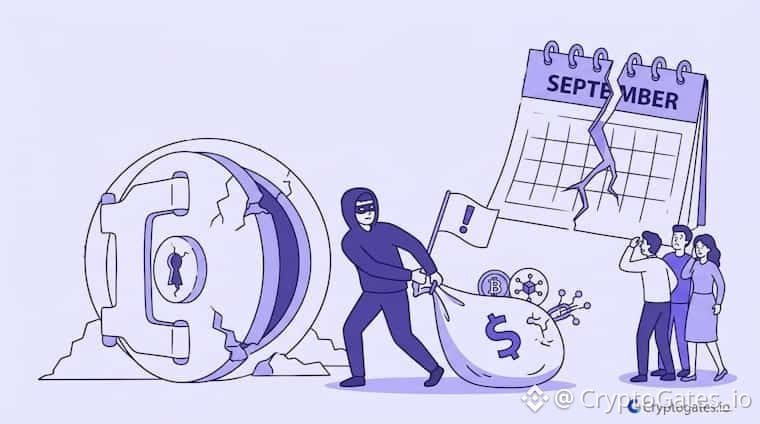
$768M stolen in September 2026. Your coins might be sitting in the same place. Bitget lost $387.5M to a breach of its wallet system. Liquid Network lost $318.7M to a code flaw that let attackers mint fake coins. The pattern: big platforms hold big piles of money, so they become the best target. Attackers need one weak spot, and defenders have to cover every single one. 3 things you can do today: 1️⃣ Move idle coins to your own wallet, so a breach can't touch what you're not actively trading 2️⃣ Split funds across more than one platform, so one failure never wipes out your stack 3️⃣ Turn on 2FA and withdrawal whitelists, so a stolen password can't send your coins anywhere An exchange is not a bank. Some funds were recovered this time, but recovery is never guaranteed. #CryptoSecurity #CryptoTrading #Bitcoin
$768M stolen in September 2026. Your coins might be sitting in the same place.

Bitget lost $387.5M to a breach of its wallet system. Liquid Network lost $318.7M to a code flaw that let attackers mint fake coins.

The pattern: big platforms hold big piles of money, so they become the best target. Attackers need one weak spot, and defenders have to cover every single one.

3 things you can do today:

1️⃣ Move idle coins to your own wallet, so a breach can't touch what you're not actively trading
2️⃣ Split funds across more than one platform, so one failure never wipes out your stack
3️⃣ Turn on 2FA and withdrawal whitelists, so a stolen password can't send your coins anywhere

An exchange is not a bank. Some funds were recovered this time, but recovery is never guaranteed.

#CryptoSecurity #CryptoTrading #Bitcoin
AI-POWERED CRYPTO CRIME SURGES 40% AS INSTITUTIONAL THREAT LEVELS REACH CRITICAL MASS $BTC 🚨 🔍 TRM Labs data reveals the AI Use Index jumped 40% year-over-year to 54/100, with illicit deepfake fraud volume exploding by 263%. 📊 While individual phishing operations become fully autonomous via agentic models, institutional security frameworks are facing unprecedented order flow friction. 🔍 Sophisticated exploiters are moving from experimental tactics into mature operational execution, quietly hunting liquidity across fragmented DeFi protocol layers. 🛡️ As automated exploits streamline systemic attack vectors, capital preservation now requires tracking smart money liquidity footprints faster than ever before. 💡 💬 How are you adjusting your liquidity risk management as automated agents reshape market security? 👇 ⚠️ Not financial advice. Always manage your risk. 🛡️ 🏷️ #BTC #CryptoSecurity #DeFi #SmartMoney #MarketInsight 🔍 🛡️
AI-POWERED CRYPTO CRIME SURGES 40% AS INSTITUTIONAL THREAT LEVELS REACH CRITICAL MASS $BTC 🚨 🔍

TRM Labs data reveals the AI Use Index jumped 40% year-over-year to 54/100, with illicit deepfake fraud volume exploding by 263%. 📊 While individual phishing operations become fully autonomous via agentic models, institutional security frameworks are facing unprecedented order flow friction. 🔍

Sophisticated exploiters are moving from experimental tactics into mature operational execution, quietly hunting liquidity across fragmented DeFi protocol layers. 🛡️ As automated exploits streamline systemic attack vectors, capital preservation now requires tracking smart money liquidity footprints faster than ever before. 💡

💬 How are you adjusting your liquidity risk management as automated agents reshape market security? 👇

⚠️ Not financial advice. Always manage your risk. 🛡️

🏷️ #BTC #CryptoSecurity #DeFi #SmartMoney #MarketInsight

🔍 🛡️
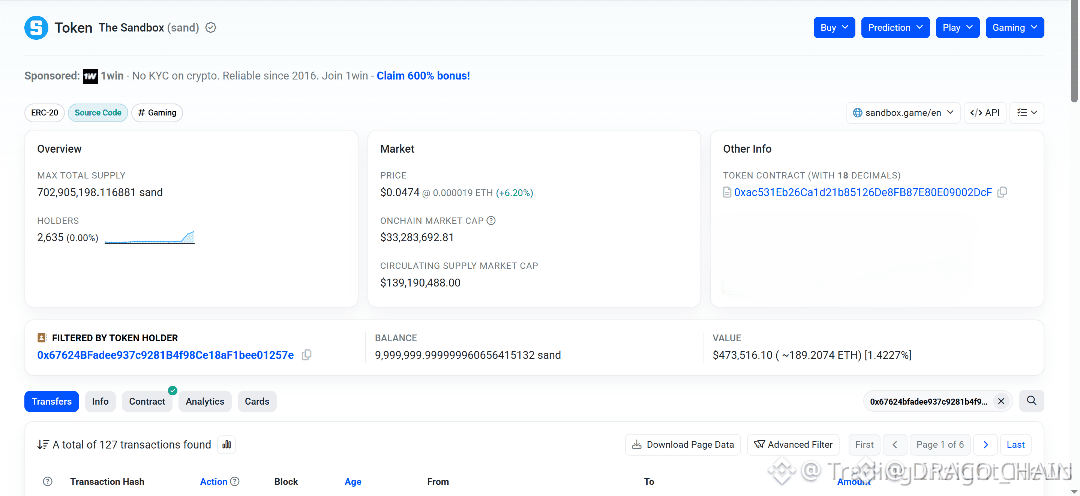
🚨 $SAND CRASHES AFTER UNLIMITED MINT EXPLOIT CREATES 500M ILLEGAL TOKENS ON BASE! 📉 A critical smart contract exploit on Base allowed an unauthorized address to illegally mint over 500 million $SAND tokens, sparking an immediate 10% structural liquidation cascade. 🚨 This massive artificial supply expansion completely disrupts the tokenomics model and introduces severe downside risk as contract integrity comes into question. 🔍 From an institutional perspective, contract-level vulnerabilities destroy structural support zones faster than standard market selling. 📊 Until official mitigation plans are confirmed, price action remains highly vulnerable to secondary liquidity dumps across multichain pools. 🤔 Will this security compromise permanently shift your long-term outlook on $SAND across cross-chain deployments? 👇 ⚠️ Not financial advice. Always manage your risk. 🛡️ 🏷️ #SAND #Altcoins #CryptoSecurity #DeFi 🚨 🛡️
🚨 $SAND CRASHES AFTER UNLIMITED MINT EXPLOIT CREATES 500M ILLEGAL TOKENS ON BASE! 📉

A critical smart contract exploit on Base allowed an unauthorized address to illegally mint over 500 million $SAND tokens, sparking an immediate 10% structural liquidation cascade. 🚨 This massive artificial supply expansion completely disrupts the tokenomics model and introduces severe downside risk as contract integrity comes into question. 🔍

From an institutional perspective, contract-level vulnerabilities destroy structural support zones faster than standard market selling. 📊 Until official mitigation plans are confirmed, price action remains highly vulnerable to secondary liquidity dumps across multichain pools.

🤔 Will this security compromise permanently shift your long-term outlook on $SAND across cross-chain deployments? 👇

⚠️ Not financial advice. Always manage your risk. 🛡️

🏷️ #SAND #Altcoins #CryptoSecurity #DeFi

🚨 🛡️
🚨 Crypto Security Reminder One mistake can cost you your assets. 🔐 Enable 2FA 🛡️ Use a strong, unique password 🔎 Always verify links and websites 🚫 Never share your password or recovery phrase 👀 Be careful with “too good to be true” offers In crypto, being proactive is better than being sorry. What’s the #1 security habit every crypto user should have? 👇 #Binance #crypto #Web3 #BinanceWOTD #CryptoSecurity
🚨 Crypto Security Reminder

One mistake can cost you your assets.

🔐 Enable 2FA
🛡️ Use a strong, unique password
🔎 Always verify links and websites
🚫 Never share your password or recovery phrase
👀 Be careful with “too good to be true” offers

In crypto, being proactive is better than being sorry.

What’s the #1 security habit every crypto user should have? 👇

#Binance #crypto #Web3 #BinanceWOTD #CryptoSecurity
Bitcoin Up or Down on October 6?

Bitcoin Up or Down on October 6?

65%Up34%Down
Volume $22,553.36
Today's theme is all about staying one step ahead In crypto, security isn't about reacting after something happens it's about being ALERT before it happens Be ALERT not anxious. Enable 2FA anti-phishing code and withdrawal whitelist BEFORE you need them Verify, then trust. Always check the official domain email and contract address. Scammers copy everything except the details Small checks equal big safety. A 10-second check on a link can save 100% of your portfolio. Whether you hold 👉$BTC for long term or trade 👉$ETH and altcoins daily, proactive security protects every coin the same way Your coins are only as safe as your habits not just the chain they are on Proactive security is the cheapest insurance in Web3 What is your #1 security habit❓ Let's share and help the community stay safe {spot}(ETHUSDT) #BinanceWOTD #CryptoSecurity #STAYSAFU #WOTD
Today's theme is all about staying one step ahead

In crypto, security isn't about reacting after something happens it's about being ALERT before it happens

Be ALERT not anxious. Enable 2FA anti-phishing code and withdrawal whitelist BEFORE you need them

Verify, then trust. Always check the official domain email and contract address. Scammers copy everything except the details

Small checks equal big safety. A 10-second check on a link can save 100% of your portfolio.

Whether you hold 👉$BTC for long term or trade 👉$ETH and altcoins daily, proactive security protects every coin the same way

Your coins are only as safe as your habits not just the chain they are on

Proactive security is the cheapest insurance in Web3

What is your #1 security habit❓ Let's share and help the community stay safe

#BinanceWOTD #CryptoSecurity #STAYSAFU #WOTD
In today’s digital world, security isn’t just about reacting to threats — it’s about staying one step ahead. 🔐 Proactive security means: Identifying vulnerabilities before they become problems Protecting your assets before an attack happens Monitoring suspicious activity in real time Using strong security practices and reliable technology Educating users to recognize potential threats The best security victory is the attack that never happens. Prevention, preparation, and continuous vigilance are the keys to building a safer digital environment. Don’t wait for a threat to knock on your door. Prevent it before it starts. 🚀🛡️ #ProactiveSecurity #CyberSecurity #Security #Prevention #Web3 #Blockchain #CryptoSecurity #StaySafe
In today’s digital world, security isn’t just about reacting to threats — it’s about staying one step ahead.
🔐 Proactive security means:
Identifying vulnerabilities before they become problems
Protecting your assets before an attack happens
Monitoring suspicious activity in real time
Using strong security practices and reliable technology
Educating users to recognize potential threats
The best security victory is the attack that never happens. Prevention, preparation, and continuous vigilance are the keys to building a safer digital environment.
Don’t wait for a threat to knock on your door. Prevent it before it starts. 🚀🛡️
#ProactiveSecurity #CyberSecurity #Security #Prevention #Web3 #Blockchain #CryptoSecurity #StaySafe
🚨 FAKE WALLET EXPLOIT DRAINS 177K $USDT VIA MALICIOUS MULTI-SIG PERMISSION HIJACK! 💣 📌 Malicious actors are capitalizing on marketplace indexing vulnerabilities to distribute spoofed non-custodial wallets. Once initiated, attackers alter address permissions to multi-signature control, effectively locking $USDT balances and executing secondary extraction schemes under fake recovery promises. 🔍 ⚠️ True risk management requires strictly validating cryptographic signatures and securing key phrases offline away from third-party app stores. Relying on marketplace search rankings introduces severe operational vulnerability and risks total liquidity exposure. 📊 💡 What protocols do you follow to verify smart contract permissions and wallet source integrity before storing assets? 👇 ⚠️ Not financial advice. Always manage your risk. 🛡️ 🏷️ #USDT #CryptoSecurity #Web3Security #RiskManagement 🛡️ 🔍
🚨 FAKE WALLET EXPLOIT DRAINS 177K $USDT VIA MALICIOUS MULTI-SIG PERMISSION HIJACK! 💣

📌 Malicious actors are capitalizing on marketplace indexing vulnerabilities to distribute spoofed non-custodial wallets. Once initiated, attackers alter address permissions to multi-signature control, effectively locking $USDT balances and executing secondary extraction schemes under fake recovery promises. 🔍

⚠️ True risk management requires strictly validating cryptographic signatures and securing key phrases offline away from third-party app stores. Relying on marketplace search rankings introduces severe operational vulnerability and risks total liquidity exposure. 📊

💡 What protocols do you follow to verify smart contract permissions and wallet source integrity before storing assets? 👇

⚠️ Not financial advice. Always manage your risk. 🛡️

🏷️ #USDT #CryptoSecurity #Web3Security #RiskManagement

🛡️ 🔍
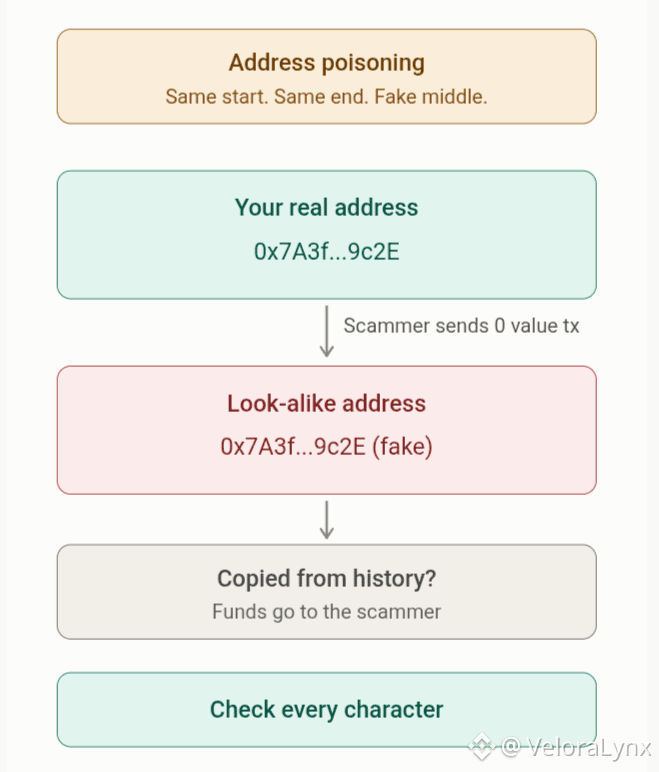
Address Poisoning: The Scam That Hides in Your Transaction History 🚨 You don't need to click a link or share a seed phrase to lose funds. You only need to copy the wrong address. How it works: 1️⃣ Scammers watch the blockchain for wallets that transact often. 2️⃣ They generate a look-alike address with the same first and last characters as yours or your contact's. 3️⃣ They send you a tiny or zero-value transaction, so the fake address appears in your history. 4️⃣ Next time you copy from history, you may grab the fake one, and the funds are gone. Blockchain transfers can't be reversed. How to protect yourself: ✅ Never copy addresses from transaction history. ✅ Compare the full address, not just the first and last characters. ✅ Save trusted addresses in your address book or whitelist. ✅ Send a small test transaction before any large transfer. ✅ Ignore and never interact with unexpected zero-value transfers. In crypto, one wrong paste can cost you everything. Slow down, verify, then send. 🔐 What's your habit before sending a transfer? Share it in the comments 👇 This is for education only, not financial advice. #BinanceSquare #writetoearn #CryptoSecurity #Web3Safety {future}(BTCUSDT) {spot}(DODOUSDT)
Address Poisoning: The Scam That Hides in Your Transaction History 🚨
You don't need to click a link or share a seed phrase to lose funds. You only need to copy the wrong address.
How it works:
1️⃣ Scammers watch the blockchain for wallets that transact often.
2️⃣ They generate a look-alike address with the same first and last characters as yours or your contact's.
3️⃣ They send you a tiny or zero-value transaction, so the fake address appears in your history.
4️⃣ Next time you copy from history, you may grab the fake one, and the funds are gone. Blockchain transfers can't be reversed.
How to protect yourself:
✅ Never copy addresses from transaction history.
✅ Compare the full address, not just the first and last characters.
✅ Save trusted addresses in your address book or whitelist.
✅ Send a small test transaction before any large transfer.
✅ Ignore and never interact with unexpected zero-value transfers.
In crypto, one wrong paste can cost you everything. Slow down, verify, then send. 🔐
What's your habit before sending a transfer? Share it in the comments 👇
This is for education only, not financial advice.
#BinanceSquare #writetoearn #CryptoSecurity #Web3Safety
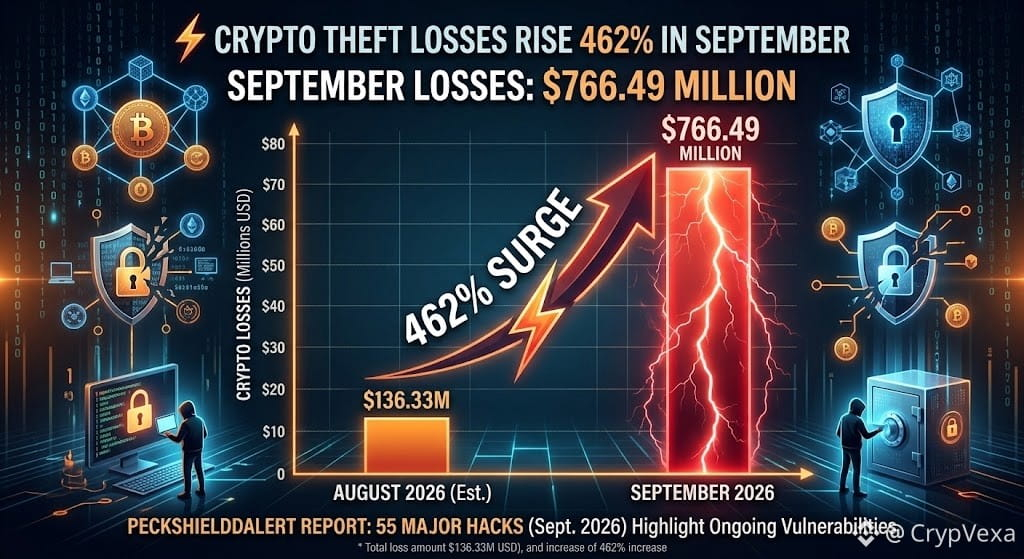
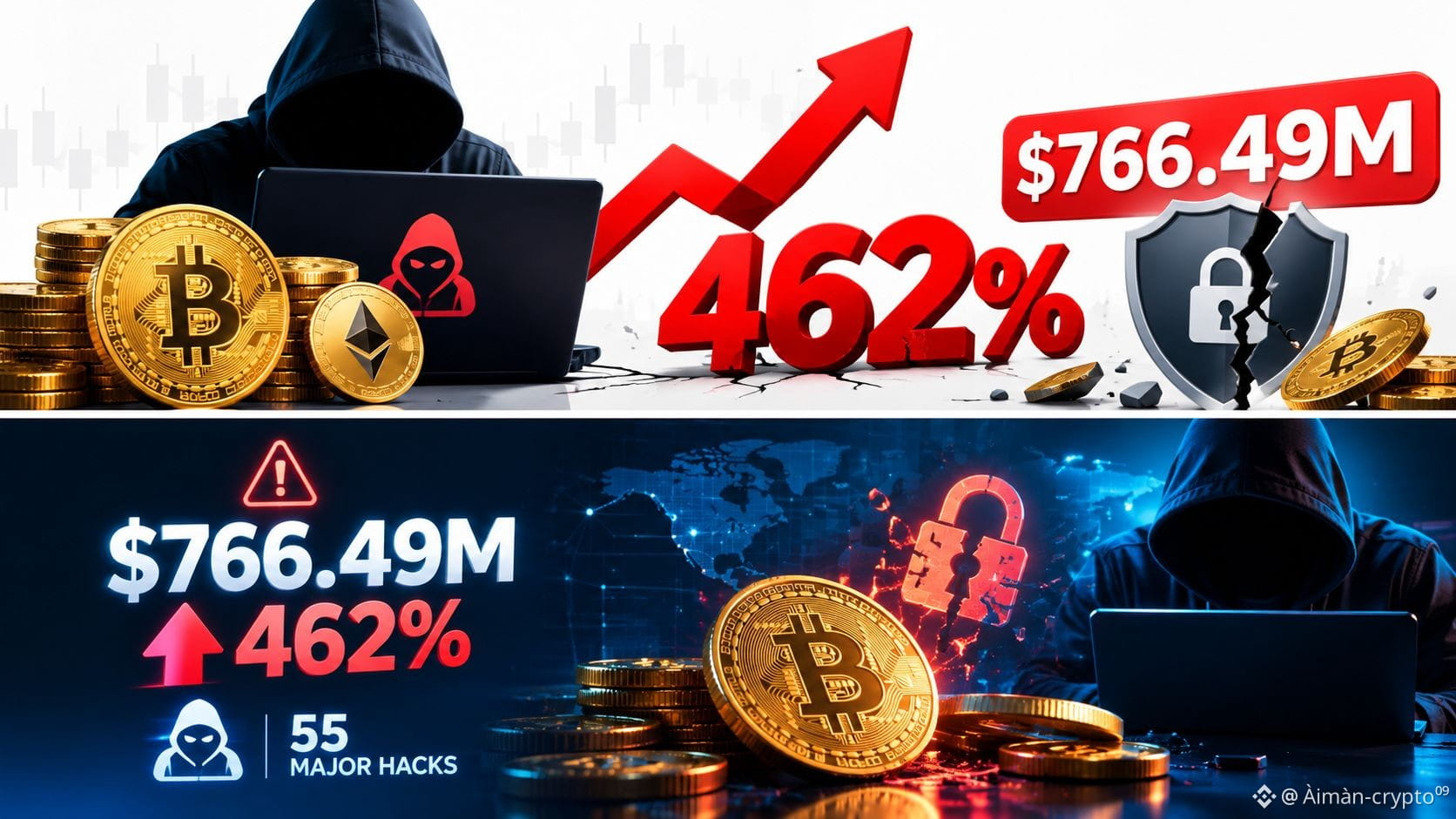
🚨 Crypto Theft Losses Surge 462% in September 💰 Crypto theft losses jumped 462% month-over-month to around $766.49M in September. 🔐 55 major hacks were reportedly recorded, highlighting continued security risks across the crypto industry. ⚠️ Another reminder that strong security practices remain critical in the digital-asset space. 👀 Can the industry reduce these losses as adoption grows? #CryptoSecurity #CryptoHacks #CryptoNews #Blockchain
🚨 Crypto Theft Losses Surge 462% in September

💰 Crypto theft losses jumped 462% month-over-month to around $766.49M in September.

🔐 55 major hacks were reportedly recorded, highlighting continued security risks across the crypto industry.

⚠️ Another reminder that strong security practices remain critical in the digital-asset space.

👀 Can the industry reduce these losses as adoption grows?

#CryptoSecurity #CryptoHacks #CryptoNews #Blockchain
🚨 Crypto Theft Losses Surge 462% in September Crypto security losses jumped sharply in September, reaching $766.49 million — a massive 462% increase month-over-month. 🛡️ Security firm PeckShieldAlert reported 55 major hacks during the month, showing that security remains one of the biggest challenges facing the crypto industry. ⚠️ As the ecosystem grows, protecting funds and using secure platforms is becoming more important than ever. #Crypto #Bitcoin #Blockchain #CryptoSecurity #Web3
🚨 Crypto Theft Losses Surge 462% in September

Crypto security losses jumped sharply in September, reaching $766.49 million — a massive 462% increase month-over-month.

🛡️ Security firm PeckShieldAlert reported 55 major hacks during the month, showing that security remains one of the biggest challenges facing the crypto industry.

⚠️ As the ecosystem grows, protecting funds and using secure platforms is becoming more important than ever.

#Crypto #Bitcoin #Blockchain #CryptoSecurity #Web3
🚨 **CRYPTO RISK IS NOT THE SAME AS TRADITIONAL FINANCE!** Think you understand crypto risk? 👀 Here are **3 structural differences every crypto user should know:** 🔐 **1. Irreversible Transactions** Once a blockchain transaction is confirmed, there may be **no central authority** to reverse it. 👤 **2. Pseudonymous Counterparties** On-chain participants can operate through wallet addresses, with **limited inherent identity or jurisdictional verification** at the protocol level. 🛡️ **3. Technical + Human Attack Surface** Crypto risks don't come only from code. Wallets, private keys, phishing, scams and human mistakes can all become attack vectors. 💡 **Bottom line:** Crypto gives users greater control—but that control also comes with **greater responsibility**. **Understand the risk before you chase the reward. DYOR.** 🚨 $BTC {spot}(BTCUSDT) #Crypto #CryptoSecurity #RiskManagement #DYOR #BinanceSquare
🚨 **CRYPTO RISK IS NOT THE SAME AS TRADITIONAL FINANCE!**

Think you understand crypto risk? 👀
Here are **3 structural differences every crypto user should know:**

🔐 **1. Irreversible Transactions**
Once a blockchain transaction is confirmed, there may be **no central authority** to reverse it.

👤 **2. Pseudonymous Counterparties**
On-chain participants can operate through wallet addresses, with **limited inherent identity or jurisdictional verification** at the protocol level.

🛡️ **3. Technical + Human Attack Surface**
Crypto risks don't come only from code. Wallets, private keys, phishing, scams and human mistakes can all become attack vectors.

💡 **Bottom line:**
Crypto gives users greater control—but that control also comes with **greater responsibility**.

**Understand the risk before you chase the reward. DYOR.** 🚨

$BTC

#Crypto #CryptoSecurity #RiskManagement #DYOR #BinanceSquare
$766M stolen in September. 92% of it came from just two incidents. PeckShield counted 55 major incidents and about $766M in losses, making September 2026 the worst month of the year. But break the number down. According to CertiK, Bitget ($387.5M) and Liquid Network ($318.7M) together account for about 92%. Every other incident combined adds up to roughly $62M. The two cases were also completely different. Per reports, Bitget's hot and warm wallets were hit. At Liquid, a code flaw allowed fake L-BTC to be created. Neither is the usual DeFi story of "TVL is growing and there's an audit." My read: risk is more concentrated than it looks. The big losses happen where a lot of assets depend on a few keys or a single mechanism. Limits: two incidents don't prove a pattern, and I haven't read the full post-mortems yet. Also, about $273M was frozen or returned, so net losses were closer to $495M. Where you keep your assets, do you know how many people or keys could move everything out? ⚠️ Not financial advice. #CryptoSecurity #CryptoHacks #Bitget #LiquidNetwork #ZeroHunter $BTC $ETH $BNB
$766M stolen in September. 92% of it came from just two incidents.

PeckShield counted 55 major incidents and about $766M in losses, making September 2026 the worst month of the year.

But break the number down. According to CertiK, Bitget ($387.5M) and Liquid Network ($318.7M) together account for about 92%. Every other incident combined adds up to roughly $62M.

The two cases were also completely different. Per reports, Bitget's hot and warm wallets were hit. At Liquid, a code flaw allowed fake L-BTC to be created.

Neither is the usual DeFi story of "TVL is growing and there's an audit."

My read: risk is more concentrated than it looks. The big losses happen where a lot of assets depend on a few keys or a single mechanism.

Limits: two incidents don't prove a pattern, and I haven't read the full post-mortems yet. Also, about $273M was frozen or returned, so net losses were closer to $495M.

Where you keep your assets, do you know how many people or keys could move everything out?

⚠️ Not financial advice.

#CryptoSecurity #CryptoHacks #Bitget #LiquidNetwork #ZeroHunter

$BTC $ETH $BNB
DeFi Security Win: Millions Recovered as Protocols Strengthen Safety Measures!In a major win for decentralized finance security, Near Intents confirmed the complete recovery of roughly $3.8 million in previously compromised user funds. This development highlights improving cross-chain security protocols and proactive recovery measures across the DeFi landscape. #DeFi #CryptoSecurity #Altcoins #Blockchain

DeFi Security Win: Millions Recovered as Protocols Strengthen Safety Measures!

In a major win for decentralized finance security, Near Intents confirmed the complete recovery of roughly $3.8 million in previously compromised user funds. This development highlights improving cross-chain security protocols and proactive recovery measures across the DeFi landscape.
#DeFi #CryptoSecurity #Altcoins #Blockchain
🚨 MALICIOUS PERMIT EXPLOIT DRAINS $USDG WALLETS IN SINGLE-TRANSACTION ATTACKS ⚠️ Security researchers just uncovered a stealth permit signature exploit draining $USDG balances in a single atomic transaction. 📊 Attackers leverage malicious approvals, immediately executing transferFrom functions to siphon funds before routing 80% to primary drainer infrastructure. 🔍 This architecture mirrors classic Drainer-as-a-Service setups, exploiting non-KYC exit channels to clear compromised capital. Protect your portfolio by auditing active off-chain signatures and revoking unverified token approvals immediately. 💬 Have you checked your active permit allowances on chain today? 👇 ⚠️ Not financial advice. Always manage your risk. 🛡️ 🏷️ #USDG #CryptoSecurity #RiskManagement #Exploit ⚠️ 🛡️
🚨 MALICIOUS PERMIT EXPLOIT DRAINS $USDG WALLETS IN SINGLE-TRANSACTION ATTACKS ⚠️

Security researchers just uncovered a stealth permit signature exploit draining $USDG balances in a single atomic transaction. 📊 Attackers leverage malicious approvals, immediately executing transferFrom functions to siphon funds before routing 80% to primary drainer infrastructure.

🔍 This architecture mirrors classic Drainer-as-a-Service setups, exploiting non-KYC exit channels to clear compromised capital. Protect your portfolio by auditing active off-chain signatures and revoking unverified token approvals immediately. 💬 Have you checked your active permit allowances on chain today? 👇

⚠️ Not financial advice. Always manage your risk. 🛡️

🏷️ #USDG #CryptoSecurity #RiskManagement #Exploit

⚠️ 🛡️
🚨 CRITICAL SECURITY ALERT: ZERO-CLICK IPHONE EXPLOIT TARGETS MOBILE CRYPTO WALLETS FOR $BTC AND $SOL 🛡️ Security researchers have uncovered an active phishing campaign mimicking official Apple pre-orders to execute the DarkSword exploit chain. 🔍 Opening the malicious link triggers an immediate payload scan designed to extract private keys and Keychain credentials from top mobile wallet apps including MetaMask and Phantom. 🛡️ Institutional security requires protecting your capital before taking any position on the chart. 🔒 Unpatched iOS devices remain vulnerable to complete data exfiltration without any user interaction required. 💬 Have you updated your iOS firmware to shield your cold storage and hot wallets today? 👇 ⚠️ Not financial advice. Always manage your risk. 🛡️ 🏷️ #BTC #CryptoSecurity #Web3 #Security #Crypto 🛡️ 🔍
🚨 CRITICAL SECURITY ALERT: ZERO-CLICK IPHONE EXPLOIT TARGETS MOBILE CRYPTO WALLETS FOR $BTC AND $SOL 🛡️

Security researchers have uncovered an active phishing campaign mimicking official Apple pre-orders to execute the DarkSword exploit chain. 🔍 Opening the malicious link triggers an immediate payload scan designed to extract private keys and Keychain credentials from top mobile wallet apps including MetaMask and Phantom. 🛡️

Institutional security requires protecting your capital before taking any position on the chart. 🔒 Unpatched iOS devices remain vulnerable to complete data exfiltration without any user interaction required. 💬 Have you updated your iOS firmware to shield your cold storage and hot wallets today? 👇

⚠️ Not financial advice. Always manage your risk. 🛡️

🏷️ #BTC #CryptoSecurity #Web3 #Security #Crypto

🛡️ 🔍
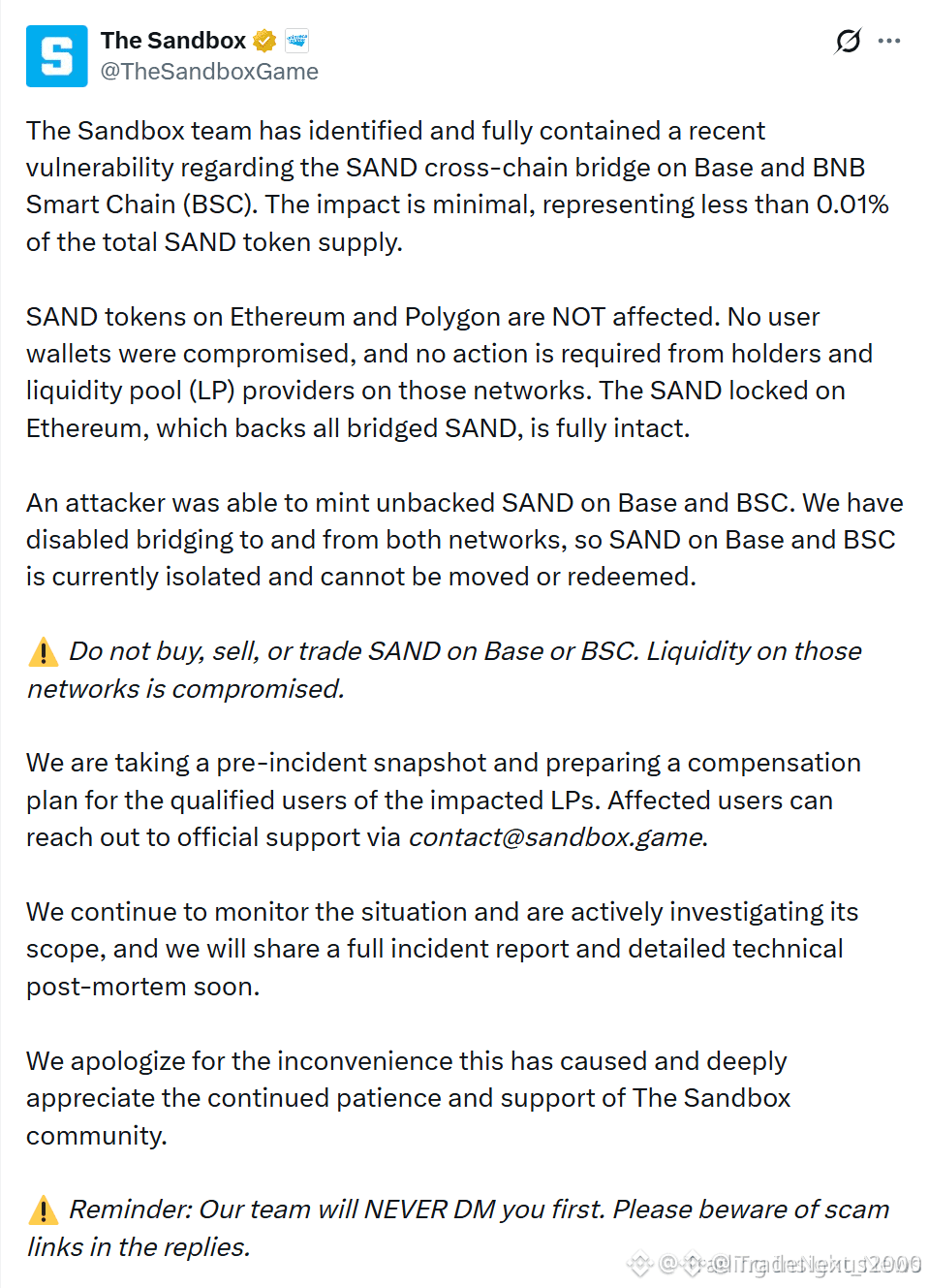
🚨 $SAND BRIDGE EXPLOIT CONTAINED AS INSTITUTIONAL LIQUIDITY REMAINS SECURE ON MAINNETS 🛡️ 📌 A cross-chain vulnerability in the $SAND bridge protocol triggered localized supply distortion on Base and BSC, yet primary institutional liquidity pools on Ethereum and Polygon remain entirely uncompromised. Structural evidence confirms user vault security with under 0.01% of total supply impacted by the unbacked mint. 🔍 💡 Rapid protocol isolation and upcoming compensation measures have neutralized systemic downside risk, locking secondary DEX volatility while mainnet order flow stabilizes. ⚖️ 💬 Are you shifting your $SAND liquidity back to native mainnet layers or waiting for complete bridge reactivation? 👇 ⚠️ Not financial advice. Always manage your risk. 🛡️ 🏷️ #SAND #Altcoins #CryptoSecurity #DeFi 🛡️ 🔍
🚨 $SAND BRIDGE EXPLOIT CONTAINED AS INSTITUTIONAL LIQUIDITY REMAINS SECURE ON MAINNETS 🛡️

📌 A cross-chain vulnerability in the $SAND bridge protocol triggered localized supply distortion on Base and BSC, yet primary institutional liquidity pools on Ethereum and Polygon remain entirely uncompromised. Structural evidence confirms user vault security with under 0.01% of total supply impacted by the unbacked mint. 🔍

💡 Rapid protocol isolation and upcoming compensation measures have neutralized systemic downside risk, locking secondary DEX volatility while mainnet order flow stabilizes. ⚖️

💬 Are you shifting your $SAND liquidity back to native mainnet layers or waiting for complete bridge reactivation? 👇

⚠️ Not financial advice. Always manage your risk. 🛡️

🏷️ #SAND #Altcoins #CryptoSecurity #DeFi

🛡️ 🔍
Smart contract bugs have cost the crypto industry over $5 billion in exploits. The irony? Most of those losses were preventable. Formal verification is the practice of mathematically proving that a smart contract behaves exactly as intended — no edge cases, no ambiguity. Unlike traditional audits that catch known patterns, formal verification exhaustively tests every possible state the contract can enter. Projects across the $ETH ecosystem including MakerDAO and Uniswap have begun integrating formal verification into their security pipelines. $BNB Chain DeFi protocols have similarly adopted it after a string of exploits exposed the limits of manual review. The convergence with AI is especially interesting. AI-assisted formal verification tools can now auto-generate mathematical proofs for routine contract logic, reducing the cost barrier that once made this approach exclusive to well-funded teams. Institutional capital will increasingly demand mathematical security guarantees — not just audited-by-X badges. $BTC itself benefits indirectly as the entire ecosystem becomes safer and more trustworthy for large capital allocators. The market has not priced in what widespread formal verification adoption means: fewer exploits, lower insurance premiums for DeFi protocols, and a direct path to institutional trust. Security infrastructure is unglamorous. It is also exactly where durable value accrues. #CryptoSecurity #DeFi #SmartContracts #Web3 #BinanceSquare
Smart contract bugs have cost the crypto industry over $5 billion in exploits. The irony? Most of those losses were preventable.

Formal verification is the practice of mathematically proving that a smart contract behaves exactly as intended — no edge cases, no ambiguity. Unlike traditional audits that catch known patterns, formal verification exhaustively tests every possible state the contract can enter.

Projects across the $ETH ecosystem including MakerDAO and Uniswap have begun integrating formal verification into their security pipelines. $BNB Chain DeFi protocols have similarly adopted it after a string of exploits exposed the limits of manual review.

The convergence with AI is especially interesting. AI-assisted formal verification tools can now auto-generate mathematical proofs for routine contract logic, reducing the cost barrier that once made this approach exclusive to well-funded teams.

Institutional capital will increasingly demand mathematical security guarantees — not just audited-by-X badges. $BTC itself benefits indirectly as the entire ecosystem becomes safer and more trustworthy for large capital allocators.

The market has not priced in what widespread formal verification adoption means: fewer exploits, lower insurance premiums for DeFi protocols, and a direct path to institutional trust.

Security infrastructure is unglamorous. It is also exactly where durable value accrues.

#CryptoSecurity #DeFi #SmartContracts #Web3 #BinanceSquare
Crypto Robbers Don't Need Your Password Anymore — They Just Need Your Address A UK businessman was beaten with hammers in his own home. His pregnant wife was held down and threatened. Three masked men did it, guided in real time by a fourth person watching through a video call — identifying which wallet to target before the attackers even knew. This isn't a hack. It's called a "wrench attack" — named after the old webcomic joke that $5 and a wrench beats any encryption. Turns out it's not a joke anymore. The numbers behind this trend are getting hard to ignore: CertiK recorded 52 home invasion attacks tied to crypto in just the first half of 2026, totaling around $124 million. Chainalysis separately tracked $30 million stolen through violent robberies in the same window, with 2026 on pace to be the worst year on record for this specific crime. Here's the uncomfortable truth this exposes: no amount of $BTC cold storage or hardware wallet security protects you if someone can physically force you to unlock it. Strong digital security was never designed to defend against a person standing in your living room. This is why security researchers increasingly recommend things like decoy wallets, not publicly discussing your holdings, and keeping visible crypto wealth signals low, alongside the usual advice about seed phrases and cold storage. Does the industry need to talk about physical security as seriously as it talks about private key security? 👇 #CryptoSecurity #BTC #WrenchAttack #CryptoNews #SelfCustody
Crypto Robbers Don't Need Your Password Anymore — They Just Need Your Address

A UK businessman was beaten with hammers in his own home. His pregnant wife was held down and threatened. Three masked men did it, guided in real time by a fourth person watching through a video call — identifying which wallet to target before the attackers even knew.

This isn't a hack. It's called a "wrench attack" — named after the old webcomic joke that $5 and a wrench beats any encryption. Turns out it's not a joke anymore.

The numbers behind this trend are getting hard to ignore:

CertiK recorded 52 home invasion attacks tied to crypto in just the first half of 2026, totaling around $124 million. Chainalysis separately tracked $30 million stolen through violent robberies in the same window, with 2026 on pace to be the worst year on record for this specific crime.

Here's the uncomfortable truth this exposes: no amount of $BTC cold storage or hardware wallet security protects you if someone can physically force you to unlock it. Strong digital security was never designed to defend against a person standing in your living room.

This is why security researchers increasingly recommend things like decoy wallets, not publicly discussing your holdings, and keeping visible crypto wealth signals low, alongside the usual advice about seed phrases and cold storage.

Does the industry need to talk about physical security as seriously as it talks about private key security? 👇

#CryptoSecurity #BTC #WrenchAttack #CryptoNews #SelfCustody
Bitcoin's long-term security model is one of the most underappreciated debates in crypto right now. Right now, miners are paid in two ways: the block subsidy (newly minted $BTC) and transaction fees. The subsidy halves roughly every four years. By 2140, it disappears entirely. That means the entire network security budget — the economic cost that makes a 51% attack prohibitively expensive — will depend solely on fees. This creates a slow-burning question: will Bitcoin's fee market be deep enough to sustain security in a low-subsidy world? The optimistic case is compelling. As Bitcoin adoption grows — through Lightning payments, ordinals/inscriptions, and layer-2 settlement — on-chain fee demand rises structurally. Each halving compresses miner margins, forcing out inefficient operators and concentrating hash toward energy-efficient fleets, paradoxically making the network more resilient per joule. $ETH offers a useful contrast. Its fee burn mechanism (EIP-1559) ties network security directly to economic activity — more usage means more ETH destroyed, tightening supply. $BNB takes a different approach to validator incentive design entirely. The honest bear case: if Bitcoin becomes primarily a store of value with low on-chain throughput, fee revenue might not scale fast enough to replace the subsidy decline. That’s not an imminent risk — we have multiple halvings ahead — but it’s a structural pressure worth modeling now. Long-term conviction means thinking 20 years out, not just the next cycle. $BTC $ETH $BNB #Bitcoin #CryptoSecurity #LongTermCrypto #BlockchainEconomics #BinanceSquare
Bitcoin's long-term security model is one of the most underappreciated debates in crypto right now.

Right now, miners are paid in two ways: the block subsidy (newly minted $BTC ) and transaction fees. The subsidy halves roughly every four years. By 2140, it disappears entirely. That means the entire network security budget — the economic cost that makes a 51% attack prohibitively expensive — will depend solely on fees.

This creates a slow-burning question: will Bitcoin's fee market be deep enough to sustain security in a low-subsidy world?

The optimistic case is compelling. As Bitcoin adoption grows — through Lightning payments, ordinals/inscriptions, and layer-2 settlement — on-chain fee demand rises structurally. Each halving compresses miner margins, forcing out inefficient operators and concentrating hash toward energy-efficient fleets, paradoxically making the network more resilient per joule.

$ETH offers a useful contrast. Its fee burn mechanism (EIP-1559) ties network security directly to economic activity — more usage means more ETH destroyed, tightening supply. $BNB takes a different approach to validator incentive design entirely.

The honest bear case: if Bitcoin becomes primarily a store of value with low on-chain throughput, fee revenue might not scale fast enough to replace the subsidy decline. That’s not an imminent risk — we have multiple halvings ahead — but it’s a structural pressure worth modeling now.

Long-term conviction means thinking 20 years out, not just the next cycle.

$BTC $ETH $BNB
#Bitcoin #CryptoSecurity #LongTermCrypto #BlockchainEconomics #BinanceSquare
Connectez-vous pour découvrir plus de contenu
Rejoignez la communauté mondiale des adeptes de cryptomonnaies sur Binance Square
⚡️ Suviez les dernières informations importantes sur les cryptomonnaies.
💬 Jugé digne de confiance par la plus grande plateforme d’échange de cryptomonnaies au monde.
👍 Découvrez les connaissances que partagent les créateurs vérifiés.
Adresse e-mail/Nº de téléphone