

#bot
bot
432,977 vues
1,240 mentions
Populaire
Récents

🚀🚀🚀 Top Stock Gainers 🚀🚀🚀
$BOT +11.42%
$TEM +10.69%
$CYPH +9.04%
#BOT #TEM #CYPH #TrendingTopic #StockMarket
🚀🚀🚀 Top Stock Gainers 🚀🚀🚀
$BOT +11.42%
$TEM +10.69%
$CYPH +9.04%
#BOT #TEM #CYPH #TrendingTopic #StockMarket
$BOT +11.42%
$TEM +10.69%
$CYPH +9.04%
#BOT #TEM #CYPH #TrendingTopic #StockMarket
260

·
--
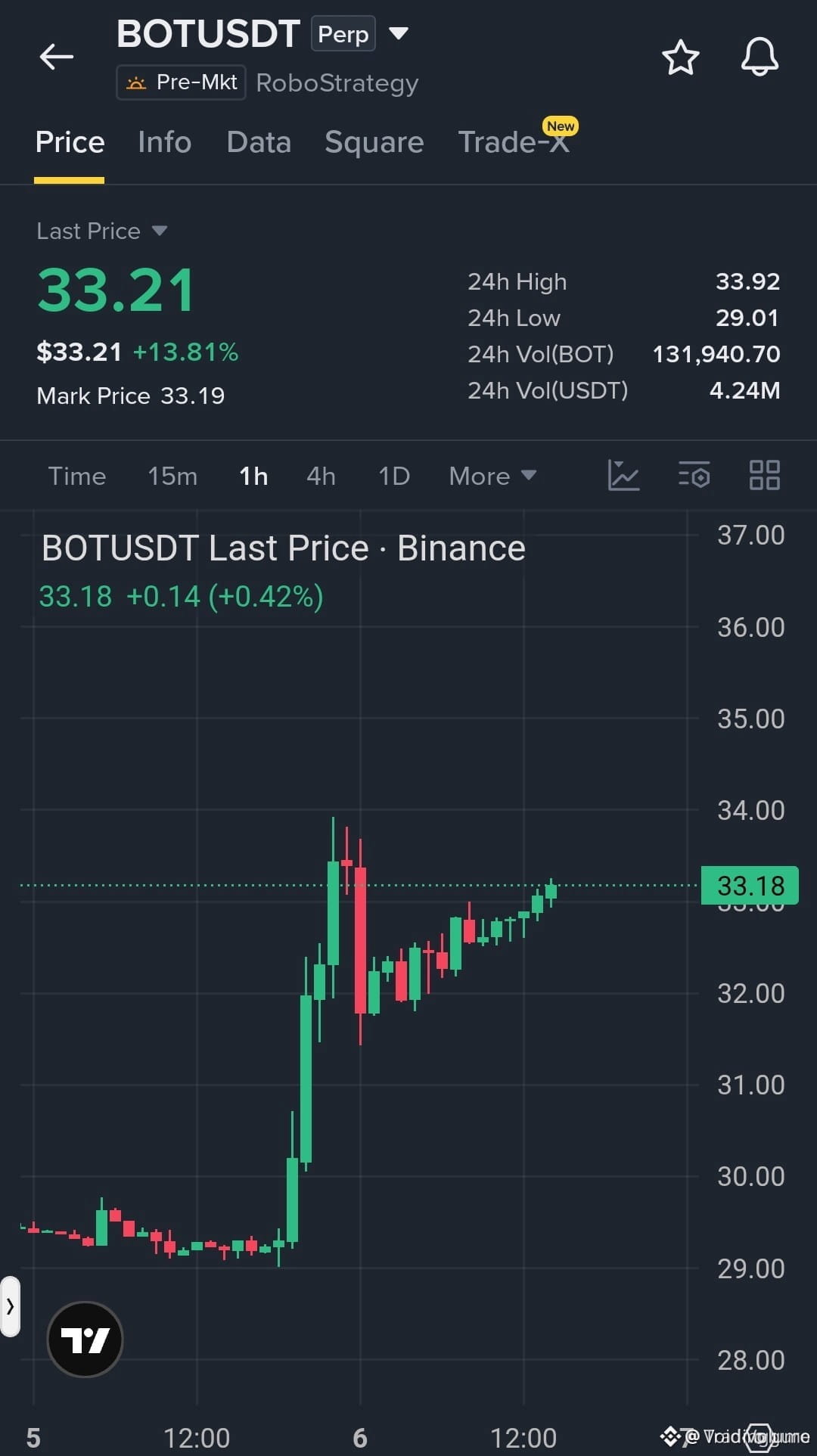
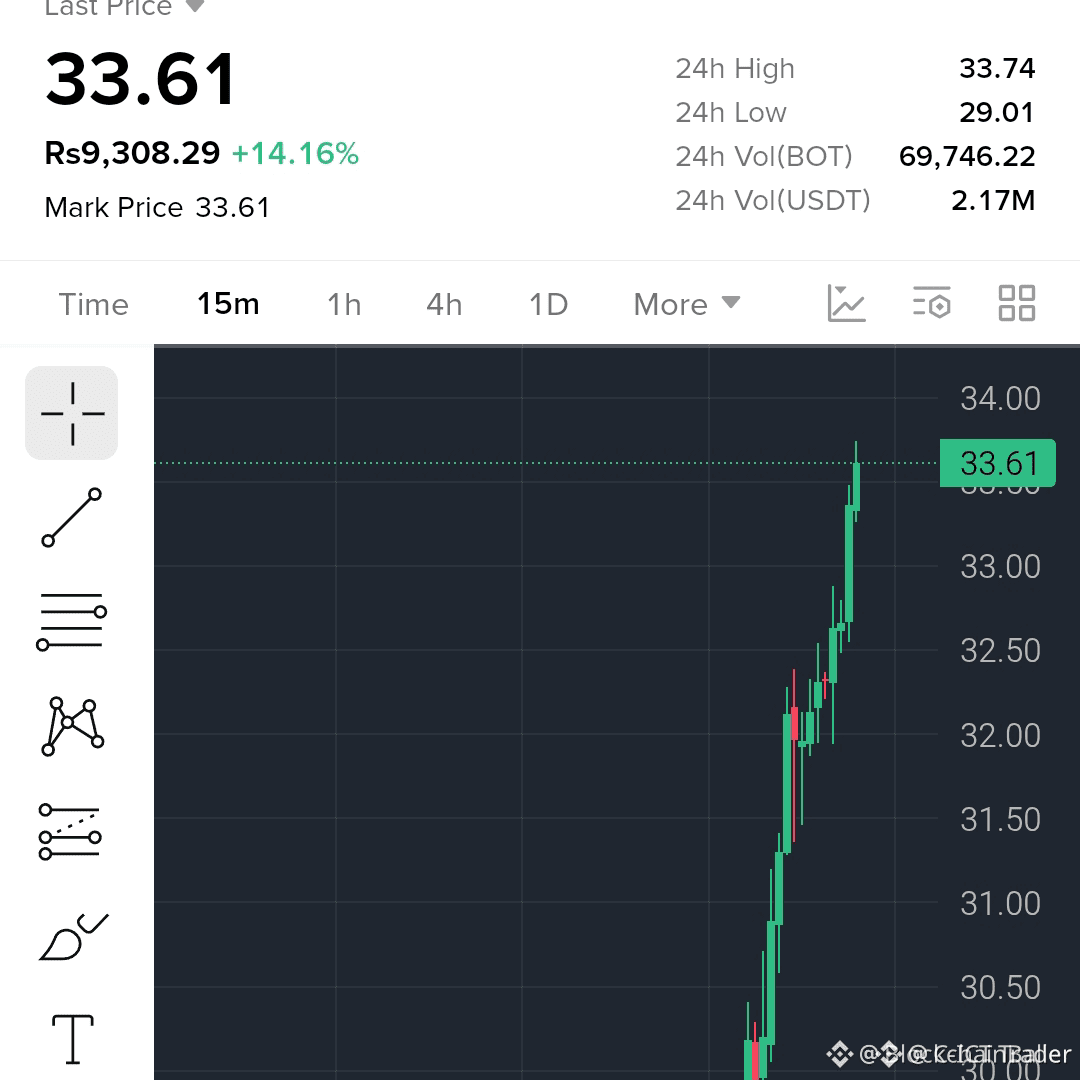
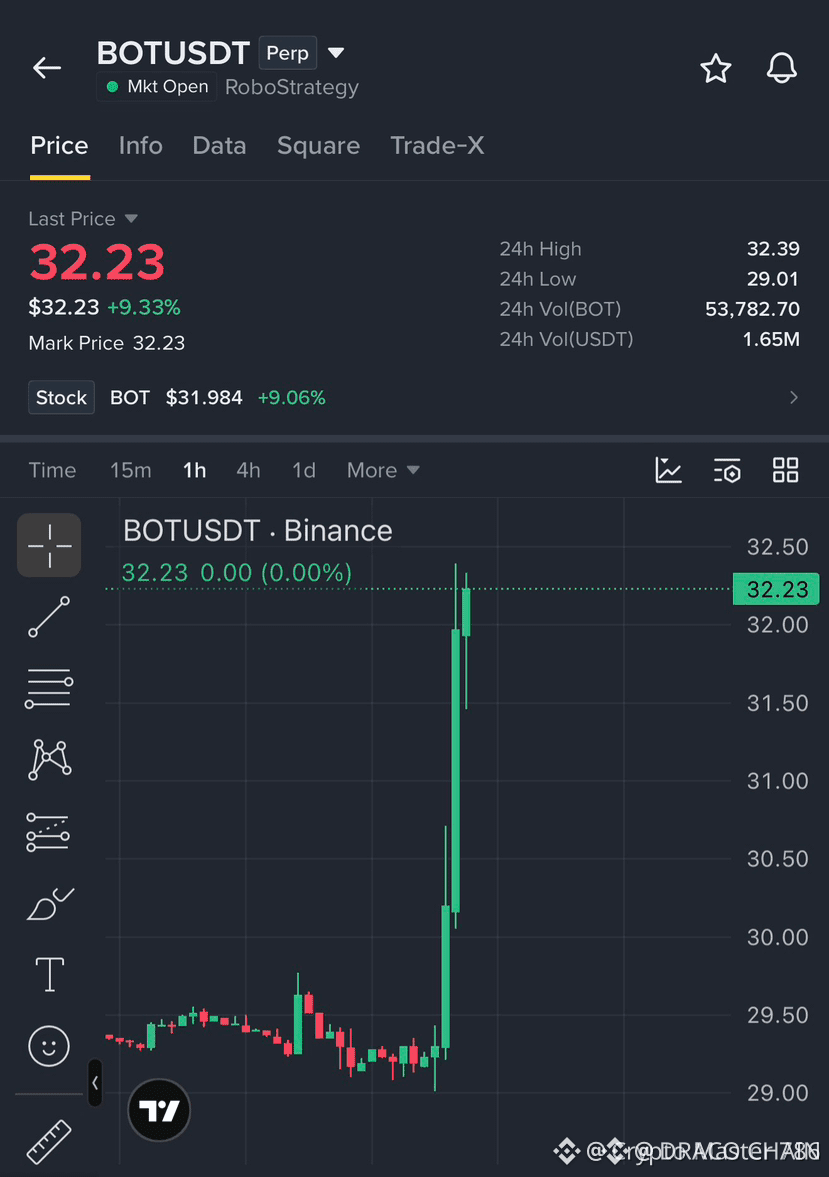
🚨 $BOT HOLDS BREAKOUT STRUCTURE ABOVE $33 WITH INSTITUTIONAL DEMAND BUILDING FOR EXPANSION! 💥
Entry: $32.90 - $33.30 ⚡
Target: $33.80 - $35.20 🚀
Stop Loss: $32.20 ⚠️
Following a violent thrust off the $29.00 structural demand base, $BOT is currently executing a textbook post-breakout consolidation above $33.00. 📊 Institutional order flow remains net-positive as smart money defends this newly reclaimed fair value gap, trapping early short sellers who stepped in during the initial runup.
📌 As long as buyers protect the $32.90 pivot, the path of least resistance points toward an aggressive expansion into upper inefficiency pools up to $35.20. 💡 Risk is strictly defined below the structural invalidation level, preserving an optimal risk-to-reward profile for disciplined position management. 💬 Are you capitalizing on this retest consolidation or waiting for a clean breakout confirmation above local highs? 👇
⚠️ Not financial advice. Always manage your risk. 🛡️
🏷️ #BOT #LongSetup #Breakout #Crypto #Altcoins
🔥 ⚡
🚨 $BOT HOLDS BREAKOUT STRUCTURE ABOVE $33 WITH INSTITUTIONAL DEMAND BUILDING FOR EXPANSION! 💥
Entry: $32.90 - $33.30 ⚡
Target: $33.80 - $35.20 🚀
Stop Loss: $32.20 ⚠️
Following a violent thrust off the $29.00 structural demand base, $BOT is currently executing a textbook post-breakout consolidation above $33.00. 📊 Institutional order flow remains net-positive as smart money defends this newly reclaimed fair value gap, trapping early short sellers who stepped in during the initial runup.
📌 As long as buyers protect the $32.90 pivot, the path of least resistance points toward an aggressive expansion into upper inefficiency pools up to $35.20. 💡 Risk is strictly defined below the structural invalidation level, preserving an optimal risk-to-reward profile for disciplined position management. 💬 Are you capitalizing on this retest consolidation or waiting for a clean breakout confirmation above local highs? 👇
⚠️ Not financial advice. Always manage your risk. 🛡️
🏷️ #BOT #LongSetup #Breakout #Crypto #Altcoins
🔥 ⚡
Entry: $32.90 - $33.30 ⚡
Target: $33.80 - $35.20 🚀
Stop Loss: $32.20 ⚠️
Following a violent thrust off the $29.00 structural demand base, $BOT is currently executing a textbook post-breakout consolidation above $33.00. 📊 Institutional order flow remains net-positive as smart money defends this newly reclaimed fair value gap, trapping early short sellers who stepped in during the initial runup.
📌 As long as buyers protect the $32.90 pivot, the path of least resistance points toward an aggressive expansion into upper inefficiency pools up to $35.20. 💡 Risk is strictly defined below the structural invalidation level, preserving an optimal risk-to-reward profile for disciplined position management. 💬 Are you capitalizing on this retest consolidation or waiting for a clean breakout confirmation above local highs? 👇
⚠️ Not financial advice. Always manage your risk. 🛡️
🏷️ #BOT #LongSetup #Breakout #Crypto #Altcoins
🔥 ⚡
1

·
--
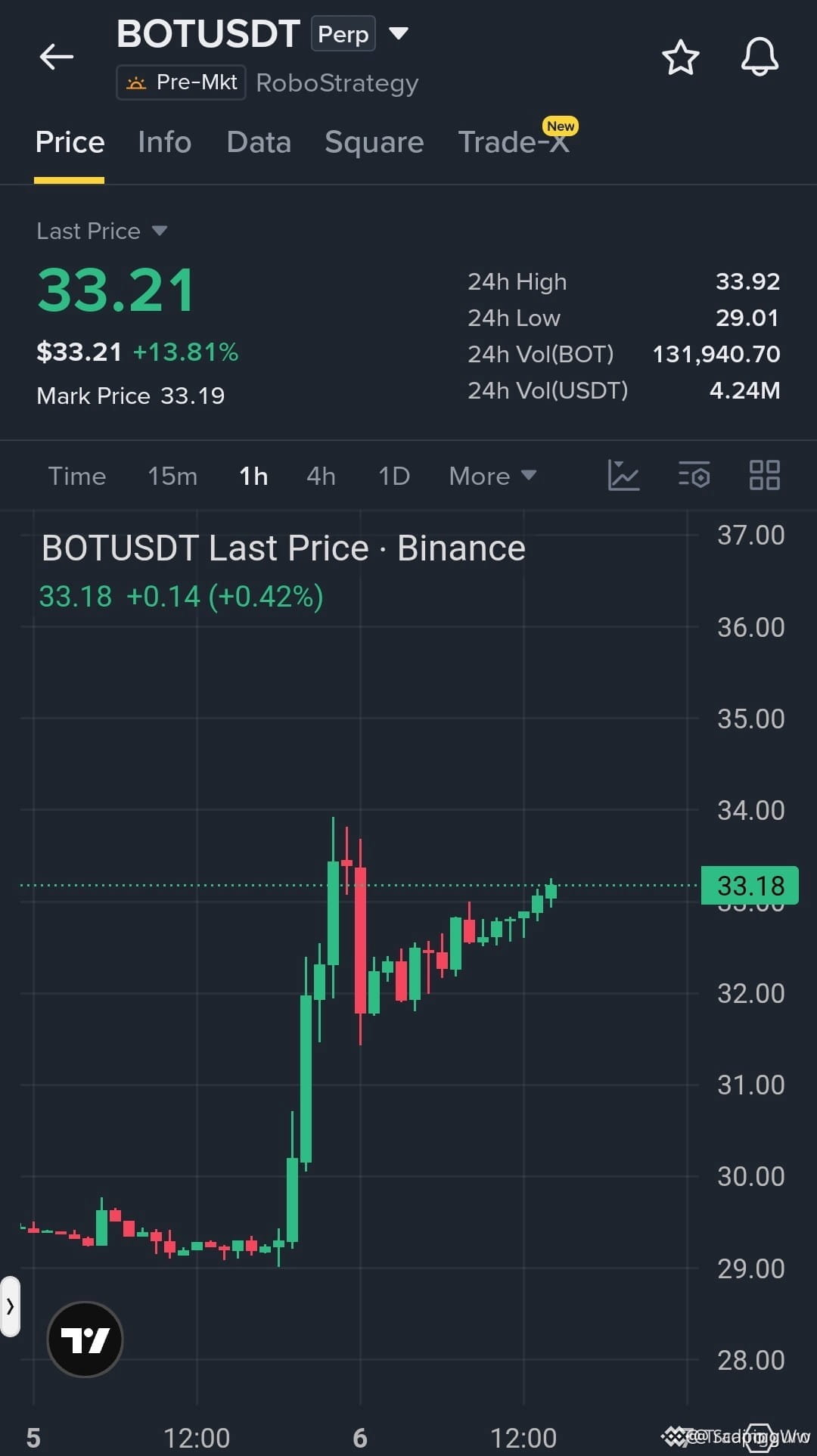
⚡ $BOT RECLAIMS KEY BREAKOUT LEVEL WITH STRONG BUYER ABSORPTION ABOVE $33! 💥
Entry: 32.90 - 33.30 ⚡
Target: 33.80 - 35.20 🚀
Stop Loss: 32.20 ⚠️
Smart money defended the $29 demand zone viciously, sparking a clean momentum expansion back over the $33 handle. 📊 Sellers tried to force a deeper pullback, but order flow reveals relentless buyer absorption right on this key pivot flip.
Holding this freshly reclaimed structure sets up a clear runway toward higher target clusters up to $35.20. 🔍 Volume profile is expanding healthily as buyers construct a solid base for the next leg upward. Keeping a close eye on correlated movers like $RLC and $API3 for broader sector momentum.
💬 Are you bidding this consolidation flip or waiting for a confirmation breakout above resistance? 👇
⚠️ Not financial advice. Always manage your risk. 🛡️
🏷️ #BOT #LongSetup #Crypto #Breakout
🔥 💎
⚡ $BOT RECLAIMS KEY BREAKOUT LEVEL WITH STRONG BUYER ABSORPTION ABOVE $33! 💥
Entry: 32.90 - 33.30 ⚡
Target: 33.80 - 35.20 🚀
Stop Loss: 32.20 ⚠️
Smart money defended the $29 demand zone viciously, sparking a clean momentum expansion back over the $33 handle. 📊 Sellers tried to force a deeper pullback, but order flow reveals relentless buyer absorption right on this key pivot flip.
Holding this freshly reclaimed structure sets up a clear runway toward higher target clusters up to $35.20. 🔍 Volume profile is expanding healthily as buyers construct a solid base for the next leg upward. Keeping a close eye on correlated movers like $RLC and $API3 for broader sector momentum.
💬 Are you bidding this consolidation flip or waiting for a confirmation breakout above resistance? 👇
⚠️ Not financial advice. Always manage your risk. 🛡️
🏷️ #BOT #LongSetup #Crypto #Breakout
🔥 💎
Entry: 32.90 - 33.30 ⚡
Target: 33.80 - 35.20 🚀
Stop Loss: 32.20 ⚠️
Smart money defended the $29 demand zone viciously, sparking a clean momentum expansion back over the $33 handle. 📊 Sellers tried to force a deeper pullback, but order flow reveals relentless buyer absorption right on this key pivot flip.
Holding this freshly reclaimed structure sets up a clear runway toward higher target clusters up to $35.20. 🔍 Volume profile is expanding healthily as buyers construct a solid base for the next leg upward. Keeping a close eye on correlated movers like $RLC and $API3 for broader sector momentum.
💬 Are you bidding this consolidation flip or waiting for a confirmation breakout above resistance? 👇
⚠️ Not financial advice. Always manage your risk. 🛡️
🏷️ #BOT #LongSetup #Crypto #Breakout
🔥 💎
31


·
--
Haussier
$BOT 📈
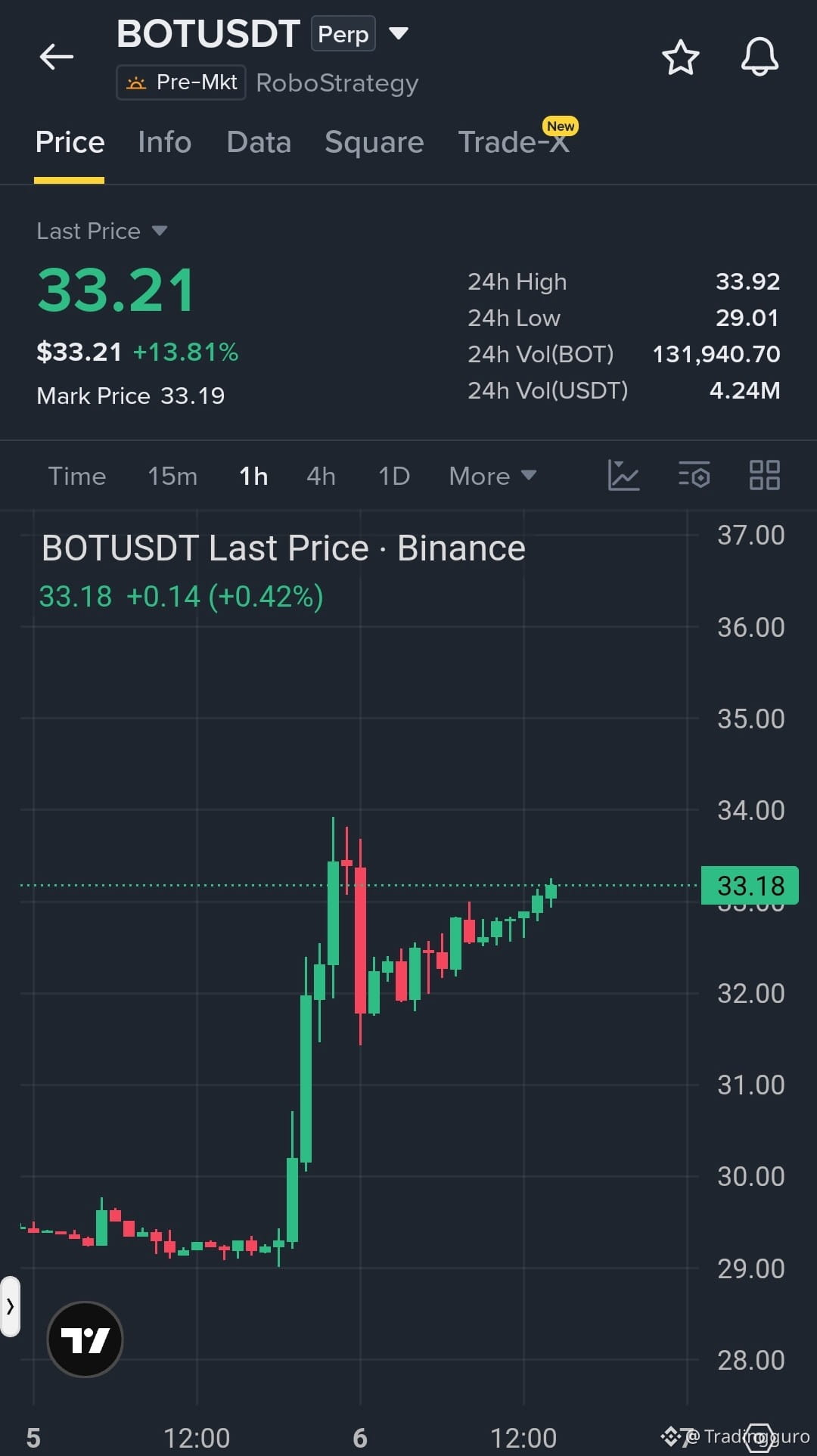
#BOT bounced strongly from the $29.00 support area and is now consolidating above $33.00 after a sharp breakout. If buyers hold this zone, the bullish move could continue toward the next resistance levels.
Buy Zone: $32.90 – $33.30
Target 1: $33.80
Target 2: $34.50
Target 3: $35.20
SL: $32.20
trade here
{future}(BOTUSDT)
$RLC
{future}(RLCUSDT)
$API3
{future}(API3USDT)
$BOT 📈
#BOT bounced strongly from the $29.00 support area and is now consolidating above $33.00 after a sharp breakout. If buyers hold this zone, the bullish move could continue toward the next resistance levels.
Buy Zone: $32.90 – $33.30
Target 1: $33.80
Target 2: $34.50
Target 3: $35.20
SL: $32.20
trade here
$RLC
$API3
#BOT bounced strongly from the $29.00 support area and is now consolidating above $33.00 after a sharp breakout. If buyers hold this zone, the bullish move could continue toward the next resistance levels.
Buy Zone: $32.90 – $33.30
Target 1: $33.80
Target 2: $34.50
Target 3: $35.20
SL: $32.20
trade here
$RLC
$API3
1
168
🚀🚀🚀 Top Stock Gainers 🚀🚀🚀
$BOT +12.16%
$TEM +10.15%
$SPCX +8.22%
#BOT #TEM #SPCX #BinanceFutures #TrendingTopic
🚀🚀🚀 Top Stock Gainers 🚀🚀🚀
$BOT +12.16%
$TEM +10.15%
$SPCX +8.22%
#BOT #TEM #SPCX #BinanceFutures #TrendingTopic
$BOT +12.16%
$TEM +10.15%
$SPCX +8.22%
#BOT #TEM #SPCX #BinanceFutures #TrendingTopic
54

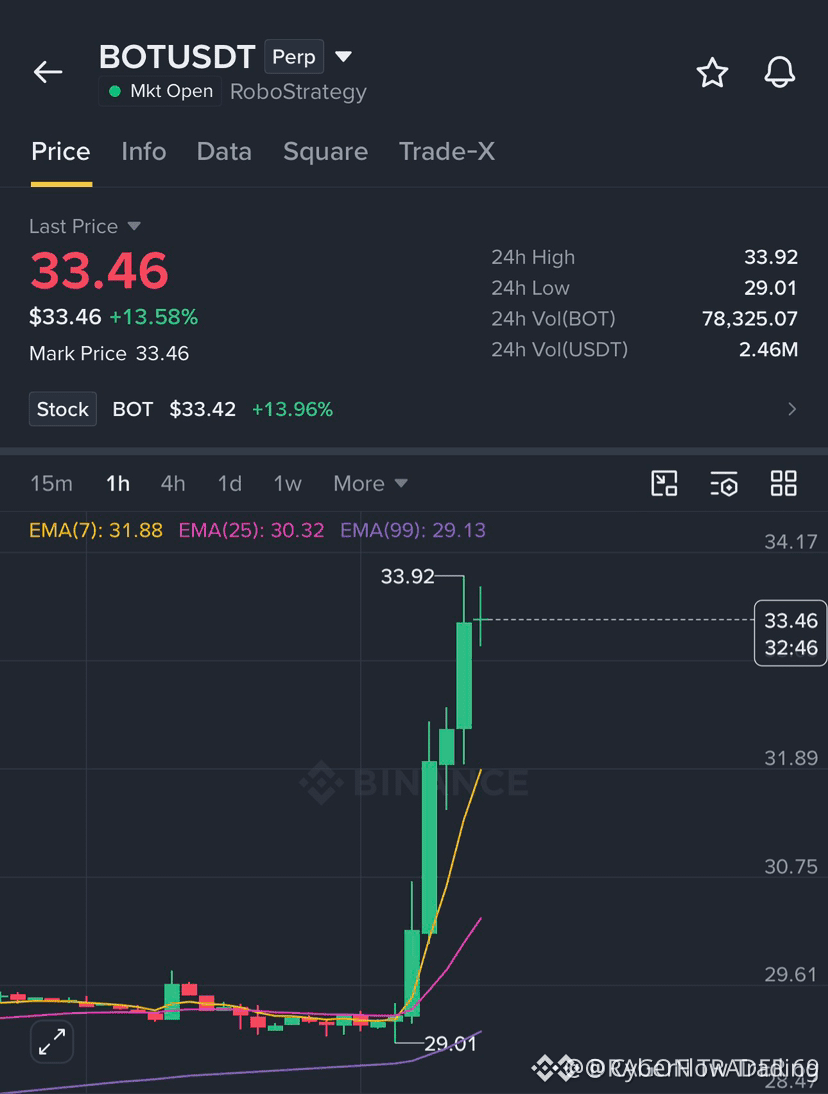
💥 $BOT DEFENDS BREAKOUT STRUCTURE FOR NEXT EXPLOSIVE CONTINUATION WAVE! 🚀
Entry: 33.20 - 33.60 ⚡
Target: 34.00 - 35.20 🚀
Stop Loss: 32.40 ⚠️
📌 Buyers are relentlessly defending the previous breakout zone, treating every dip into 33.20 as high-conviction order accumulation. 📊 Sell-side supply is evaporating fast while structural momentum favors a sharp push upward.
💡 As long as market structure holds cleanly above support, order flow remains primed for a swift expansion into upper liquidity pools. 💬 Are you bidding this breakout retest or waiting for full confirmation? 👇
⚠️ Not financial advice. Always manage your risk. 🛡️
🏷️ #BOT #LongSetup #Breakout #Altcoins #Crypto
🔥 ⚡
💥 $BOT DEFENDS BREAKOUT STRUCTURE FOR NEXT EXPLOSIVE CONTINUATION WAVE! 🚀
Entry: 33.20 - 33.60 ⚡
Target: 34.00 - 35.20 🚀
Stop Loss: 32.40 ⚠️
📌 Buyers are relentlessly defending the previous breakout zone, treating every dip into 33.20 as high-conviction order accumulation. 📊 Sell-side supply is evaporating fast while structural momentum favors a sharp push upward.
💡 As long as market structure holds cleanly above support, order flow remains primed for a swift expansion into upper liquidity pools. 💬 Are you bidding this breakout retest or waiting for full confirmation? 👇
⚠️ Not financial advice. Always manage your risk. 🛡️
🏷️ #BOT #LongSetup #Breakout #Altcoins #Crypto
🔥 ⚡
Entry: 33.20 - 33.60 ⚡
Target: 34.00 - 35.20 🚀
Stop Loss: 32.40 ⚠️
📌 Buyers are relentlessly defending the previous breakout zone, treating every dip into 33.20 as high-conviction order accumulation. 📊 Sell-side supply is evaporating fast while structural momentum favors a sharp push upward.
💡 As long as market structure holds cleanly above support, order flow remains primed for a swift expansion into upper liquidity pools. 💬 Are you bidding this breakout retest or waiting for full confirmation? 👇
⚠️ Not financial advice. Always manage your risk. 🛡️
🏷️ #BOT #LongSetup #Breakout #Altcoins #Crypto
🔥 ⚡
17

·
--
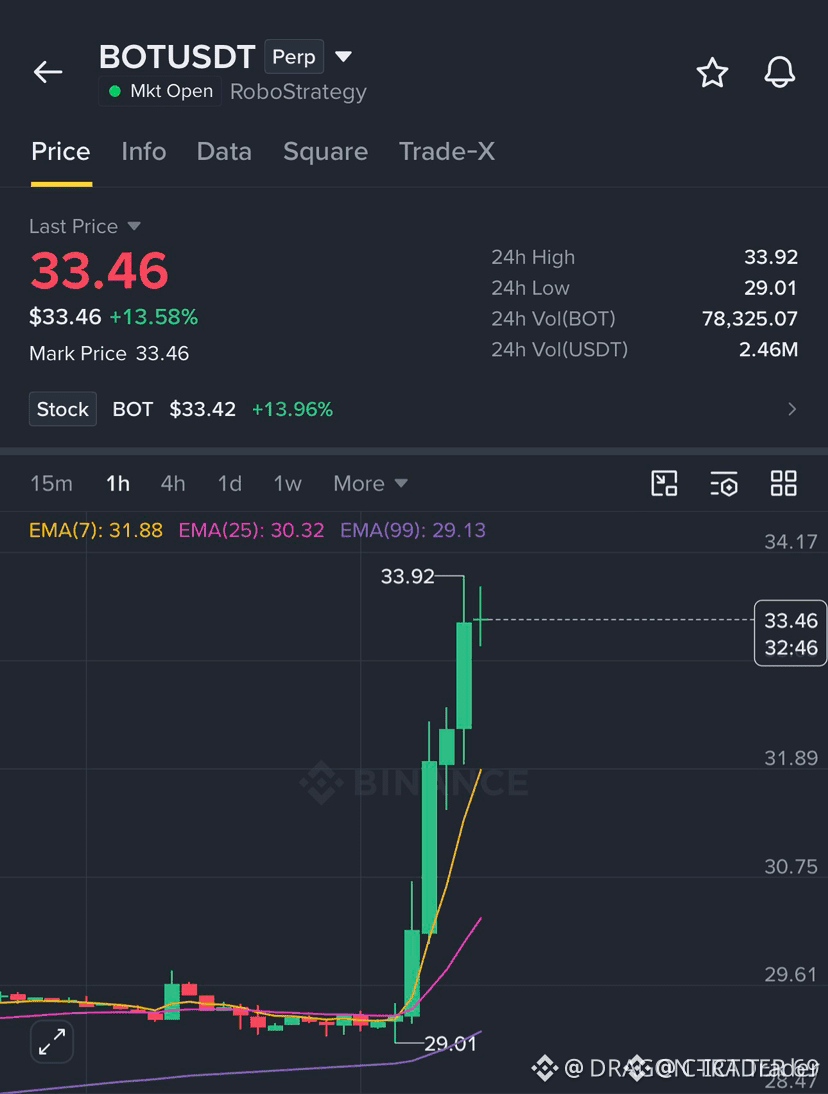
🟢 $BOT BREAKOUT RECLAIM REVEALS INSTITUTIONAL DEMAND RETEST ABOVE KEY LEVEL! 🚀
Entry: $33.20 - $33.60 ⚡
Target: $34.00 - $35.20 🚀
Stop Loss: $32.40 ⚠️
📌 Price is currently stabilizing directly above the primary breakout zone between $33.20 and $33.60, confirming smart money defend order blocks on lower timeframes. 📊 As long as structure stays intact above this pivot, order flow strongly favors a sharp momentum push toward the $35.20 liquidity pool.
💡 Risk-to-reward parameters remain sharply asymmetric while $32.40 holds as structural invalidation. 💬 Are you front-running this continuation push or waiting for another retest of the demand zone? 👇
⚠️ Not financial advice. Always manage your risk. 🛡️
🏷️ #BOT #LongSetup #Breakout #Crypto #SmartMoney
🎯 🦈
🟢 $BOT BREAKOUT RECLAIM REVEALS INSTITUTIONAL DEMAND RETEST ABOVE KEY LEVEL! 🚀
Entry: $33.20 - $33.60 ⚡
Target: $34.00 - $35.20 🚀
Stop Loss: $32.40 ⚠️
📌 Price is currently stabilizing directly above the primary breakout zone between $33.20 and $33.60, confirming smart money defend order blocks on lower timeframes. 📊 As long as structure stays intact above this pivot, order flow strongly favors a sharp momentum push toward the $35.20 liquidity pool.
💡 Risk-to-reward parameters remain sharply asymmetric while $32.40 holds as structural invalidation. 💬 Are you front-running this continuation push or waiting for another retest of the demand zone? 👇
⚠️ Not financial advice. Always manage your risk. 🛡️
🏷️ #BOT #LongSetup #Breakout #Crypto #SmartMoney
🎯 🦈
Entry: $33.20 - $33.60 ⚡
Target: $34.00 - $35.20 🚀
Stop Loss: $32.40 ⚠️
📌 Price is currently stabilizing directly above the primary breakout zone between $33.20 and $33.60, confirming smart money defend order blocks on lower timeframes. 📊 As long as structure stays intact above this pivot, order flow strongly favors a sharp momentum push toward the $35.20 liquidity pool.
💡 Risk-to-reward parameters remain sharply asymmetric while $32.40 holds as structural invalidation. 💬 Are you front-running this continuation push or waiting for another retest of the demand zone? 👇
⚠️ Not financial advice. Always manage your risk. 🛡️
🏷️ #BOT #LongSetup #Breakout #Crypto #SmartMoney
🎯 🦈
13
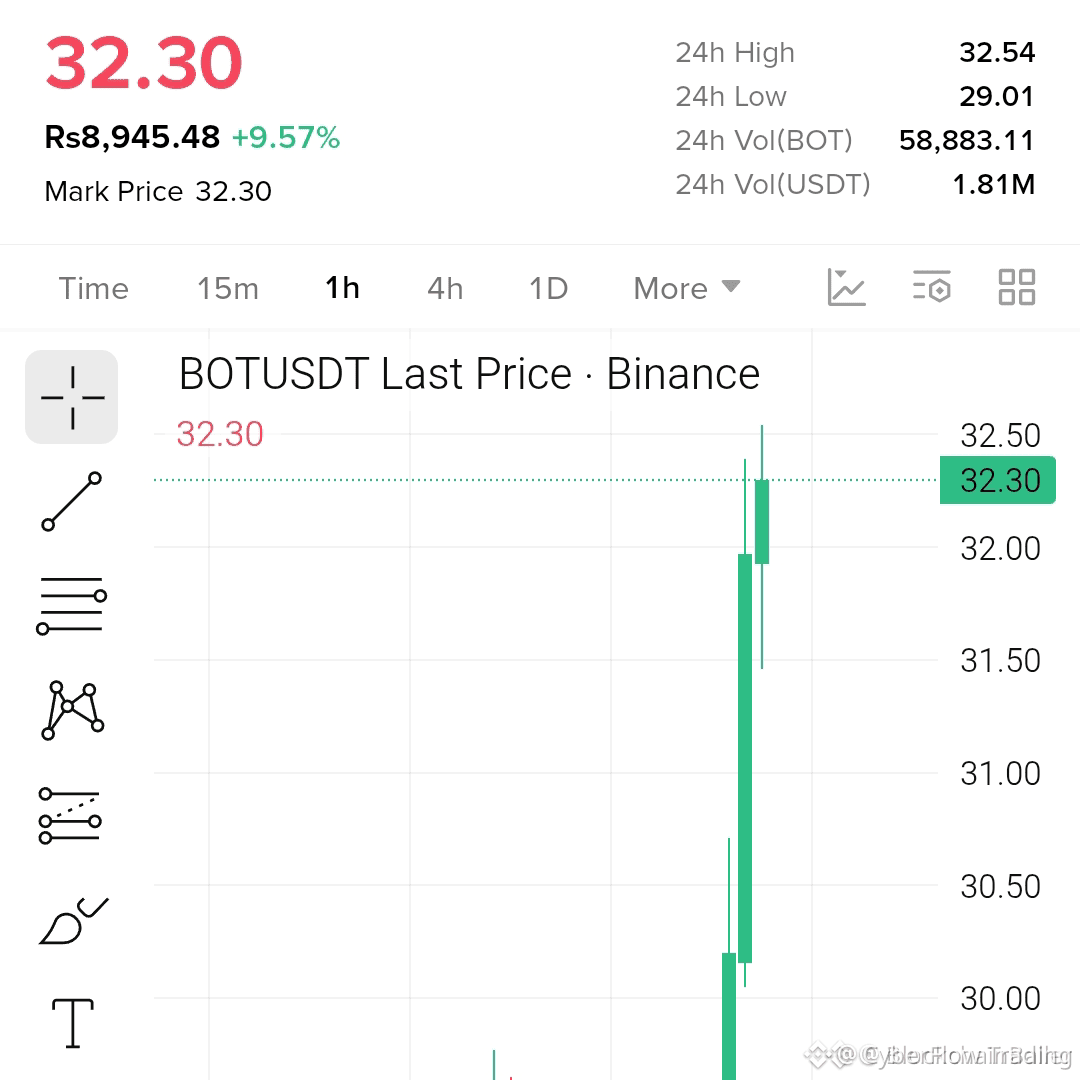
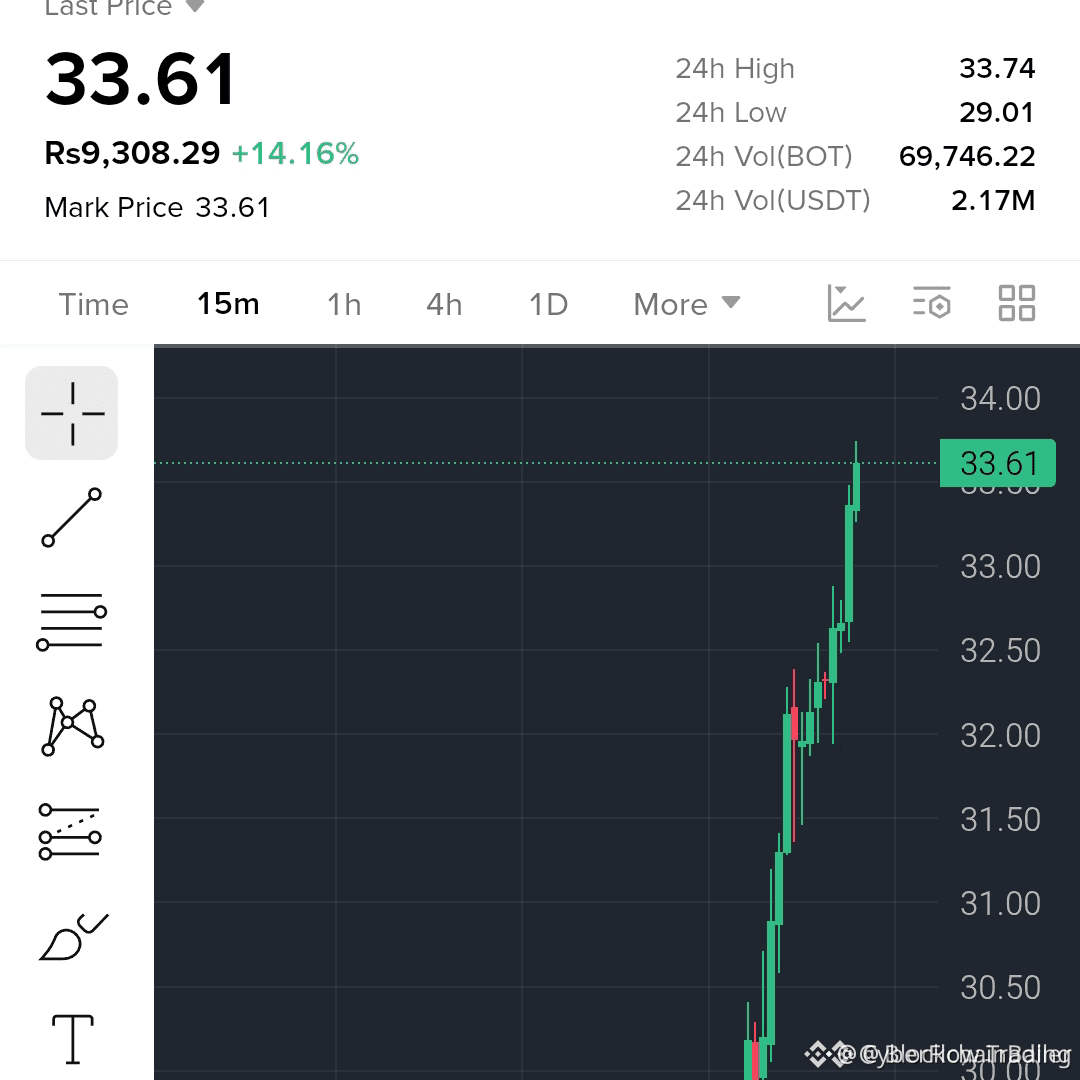
💥 $BOT RECLAIMS BREAKOUT ZONE WITH FLAWLESS MOMENTUM FOR NEXT LEG UP! 🚀
Entry: 33.20 - 33.60 ⚡
Target: 34.00 - 35.20 🚀
Stop Loss: 32.40 ⚠️
📌 The structural flip on $BOT is playing out with surgical precision, holding firm right above the breakout territory while aggressive buyers absorb all retest supply. 📊 Order flow reflects steady spot demand keeping sellers pinned back as market structure paints a clean path higher.
💡 As long as support holds, momentum favors explosive expansion straight into upper target liquidity blocks. 💬 Are you riding this trend continuation higher or sitting on the sidelines? 👇
⚠️ Not financial advice. Always manage your risk. 🛡️
🏷️ #BOT #LongSetup #Breakout #Crypto #Trading
🔥 💎
💥 $BOT RECLAIMS BREAKOUT ZONE WITH FLAWLESS MOMENTUM FOR NEXT LEG UP! 🚀
Entry: 33.20 - 33.60 ⚡
Target: 34.00 - 35.20 🚀
Stop Loss: 32.40 ⚠️
📌 The structural flip on $BOT is playing out with surgical precision, holding firm right above the breakout territory while aggressive buyers absorb all retest supply. 📊 Order flow reflects steady spot demand keeping sellers pinned back as market structure paints a clean path higher.
💡 As long as support holds, momentum favors explosive expansion straight into upper target liquidity blocks. 💬 Are you riding this trend continuation higher or sitting on the sidelines? 👇
⚠️ Not financial advice. Always manage your risk. 🛡️
🏷️ #BOT #LongSetup #Breakout #Crypto #Trading
🔥 💎
Entry: 33.20 - 33.60 ⚡
Target: 34.00 - 35.20 🚀
Stop Loss: 32.40 ⚠️
📌 The structural flip on $BOT is playing out with surgical precision, holding firm right above the breakout territory while aggressive buyers absorb all retest supply. 📊 Order flow reflects steady spot demand keeping sellers pinned back as market structure paints a clean path higher.
💡 As long as support holds, momentum favors explosive expansion straight into upper target liquidity blocks. 💬 Are you riding this trend continuation higher or sitting on the sidelines? 👇
⚠️ Not financial advice. Always manage your risk. 🛡️
🏷️ #BOT #LongSetup #Breakout #Crypto #Trading
🔥 💎
13
·
--
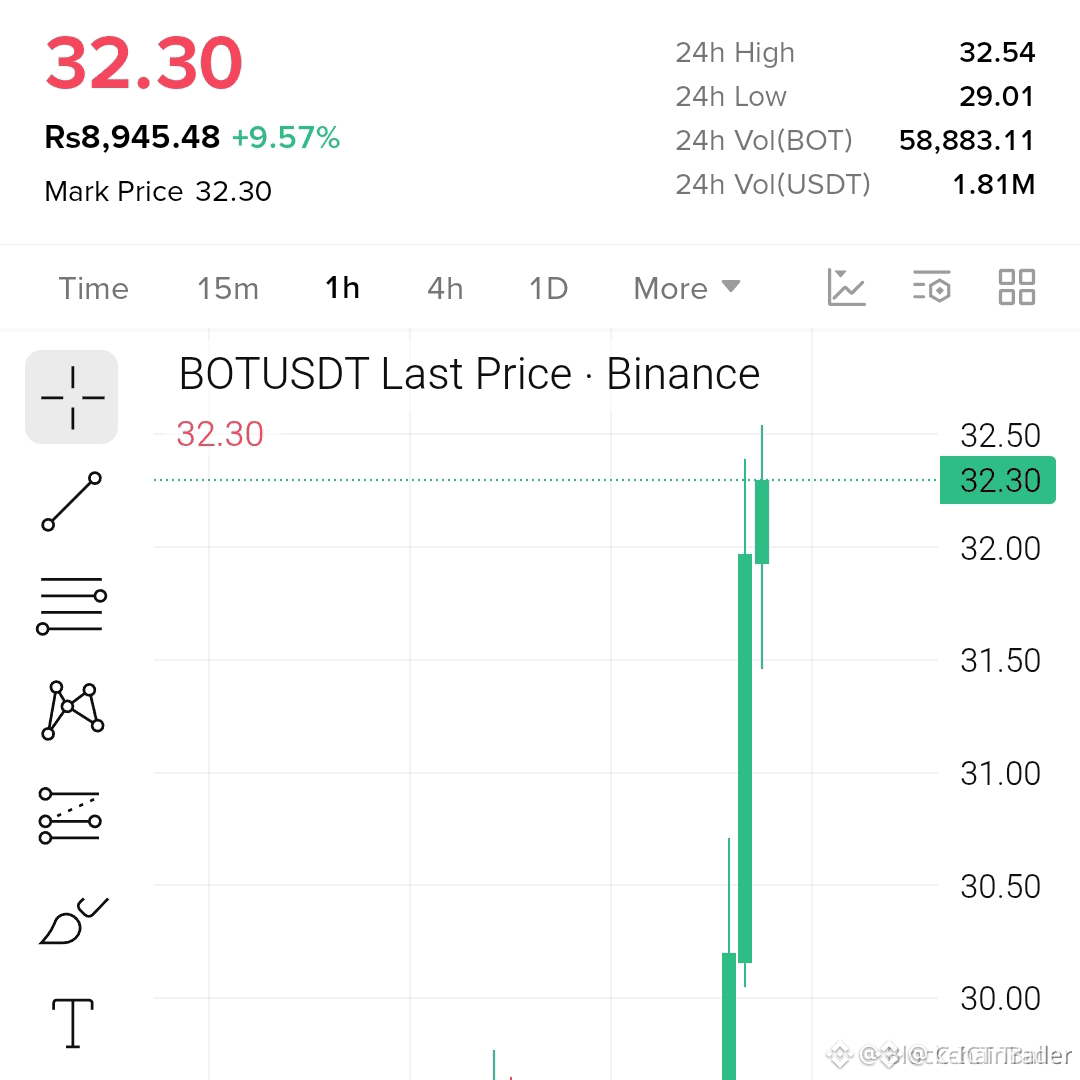
🚀 $BOT HOLDS BREAKOUT STRUCTURE AS INSTITUTIONAL CONTINUATION PREPARES FOR EXPANSION! ⚡
Entry: $33.20 - $33.60 ⚡
Target: $34.00 / $34.50 / $35.20 🚀
Stop Loss: $32.40 ⚠️
The structural retest of the former supply zone is holding with high precision as smart money absorbs sell-side liquidity above the breakout level. 🔍 Order flow dynamics indicate steady institutional accumulation, maintaining clean bullish market structure on lower timeframes. 📊
With upper inefficiencies pointing directly toward liquidity targets, the setup presents a clean risk-defined expansion pathway. 💡 Key support remains tightly guarded to ensure structural integrity stays valid. 💬 Are you taking position on this retest or waiting for a deeper liquidity sweep? 👇
⚠️ Not financial advice. Always manage your risk. 🛡️
🏷️ #BOT #Breakout #SmartMoney #Crypto
🔥 💎
🚀 $BOT HOLDS BREAKOUT STRUCTURE AS INSTITUTIONAL CONTINUATION PREPARES FOR EXPANSION! ⚡
Entry: $33.20 - $33.60 ⚡
Target: $34.00 / $34.50 / $35.20 🚀
Stop Loss: $32.40 ⚠️
The structural retest of the former supply zone is holding with high precision as smart money absorbs sell-side liquidity above the breakout level. 🔍 Order flow dynamics indicate steady institutional accumulation, maintaining clean bullish market structure on lower timeframes. 📊
With upper inefficiencies pointing directly toward liquidity targets, the setup presents a clean risk-defined expansion pathway. 💡 Key support remains tightly guarded to ensure structural integrity stays valid. 💬 Are you taking position on this retest or waiting for a deeper liquidity sweep? 👇
⚠️ Not financial advice. Always manage your risk. 🛡️
🏷️ #BOT #Breakout #SmartMoney #Crypto
🔥 💎
Entry: $33.20 - $33.60 ⚡
Target: $34.00 / $34.50 / $35.20 🚀
Stop Loss: $32.40 ⚠️
The structural retest of the former supply zone is holding with high precision as smart money absorbs sell-side liquidity above the breakout level. 🔍 Order flow dynamics indicate steady institutional accumulation, maintaining clean bullish market structure on lower timeframes. 📊
With upper inefficiencies pointing directly toward liquidity targets, the setup presents a clean risk-defined expansion pathway. 💡 Key support remains tightly guarded to ensure structural integrity stays valid. 💬 Are you taking position on this retest or waiting for a deeper liquidity sweep? 👇
⚠️ Not financial advice. Always manage your risk. 🛡️
🏷️ #BOT #Breakout #SmartMoney #Crypto
🔥 💎
11
·
--
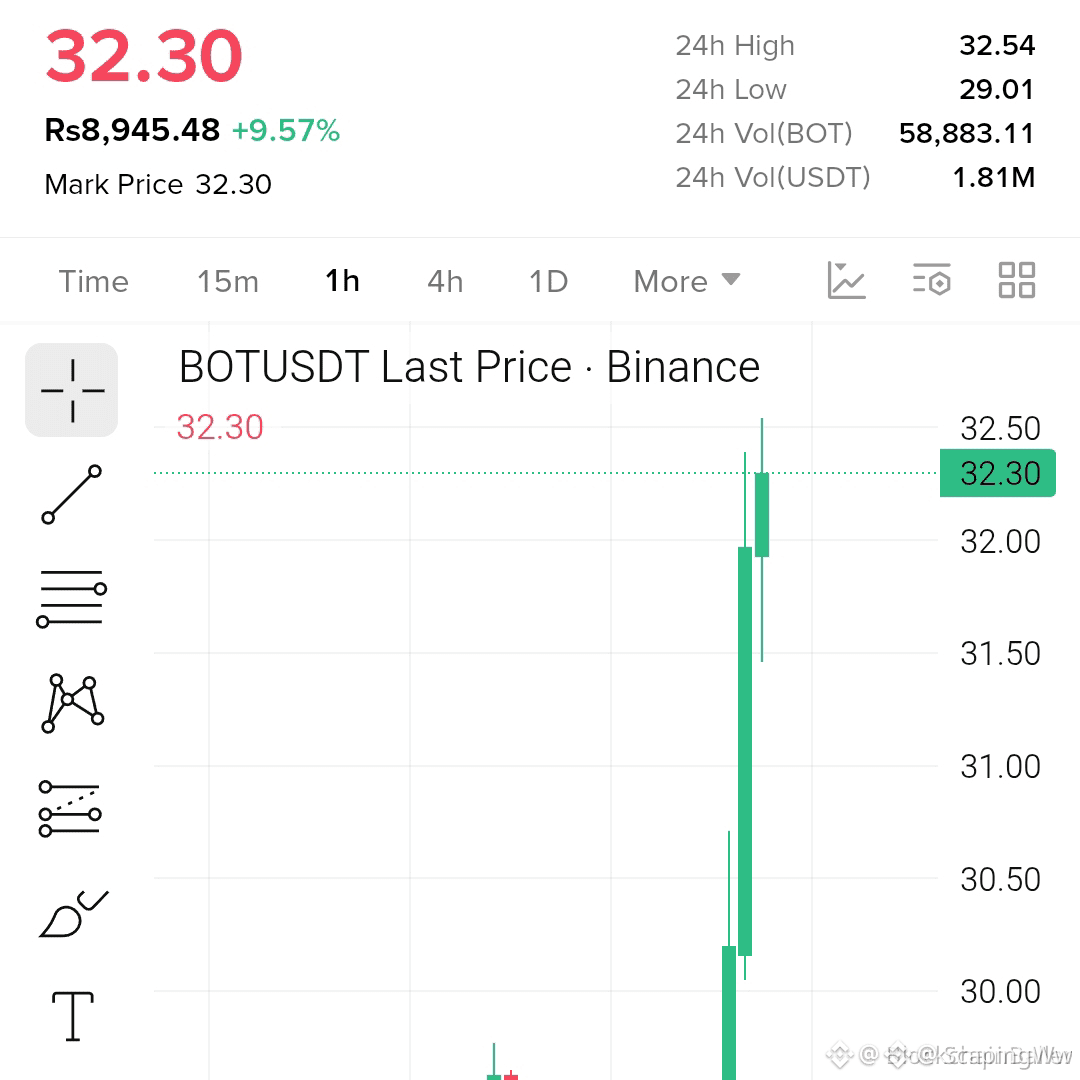
$BOT BREAKS OUT OF HEAVY CONSOLIDATION WITH SERIOUS BULLISH MOMENTUM! ⚡💥
Entry: $31.80 - $32.30 ⚡
Target: $32.80 / $33.50 / $34.20 🚀
Stop Loss: $31.20 ⚠️
$BOT just tore through its prolonged range bound structure, forcing short positions to cover as aggressive buyers took control of the order flow. 📊 The 4H timeframe prints a decisive momentum flip, backed by a strong expansion in buy volume.
💡 As long as bulls defend the primary bid zone, the upside trajectory toward upper liquidity clusters remains intact. 🌊 Any minor dip into support offers a high-conviction continuation setup for fast movers. 💬 Are you riding this breakout move or waiting to bid the retest? 👇
⚠️ Not financial advice. Always manage your risk. 🛡️
🏷️ #BOT #Breakout #Altcoins #Trading #Crypto
🔥 ⚡
$BOT BREAKS OUT OF HEAVY CONSOLIDATION WITH SERIOUS BULLISH MOMENTUM! ⚡💥
Entry: $31.80 - $32.30 ⚡
Target: $32.80 / $33.50 / $34.20 🚀
Stop Loss: $31.20 ⚠️
$BOT just tore through its prolonged range bound structure, forcing short positions to cover as aggressive buyers took control of the order flow. 📊 The 4H timeframe prints a decisive momentum flip, backed by a strong expansion in buy volume.
💡 As long as bulls defend the primary bid zone, the upside trajectory toward upper liquidity clusters remains intact. 🌊 Any minor dip into support offers a high-conviction continuation setup for fast movers. 💬 Are you riding this breakout move or waiting to bid the retest? 👇
⚠️ Not financial advice. Always manage your risk. 🛡️
🏷️ #BOT #Breakout #Altcoins #Trading #Crypto
🔥 ⚡
Entry: $31.80 - $32.30 ⚡
Target: $32.80 / $33.50 / $34.20 🚀
Stop Loss: $31.20 ⚠️
$BOT just tore through its prolonged range bound structure, forcing short positions to cover as aggressive buyers took control of the order flow. 📊 The 4H timeframe prints a decisive momentum flip, backed by a strong expansion in buy volume.
💡 As long as bulls defend the primary bid zone, the upside trajectory toward upper liquidity clusters remains intact. 🌊 Any minor dip into support offers a high-conviction continuation setup for fast movers. 💬 Are you riding this breakout move or waiting to bid the retest? 👇
⚠️ Not financial advice. Always manage your risk. 🛡️
🏷️ #BOT #Breakout #Altcoins #Trading #Crypto
🔥 ⚡
18

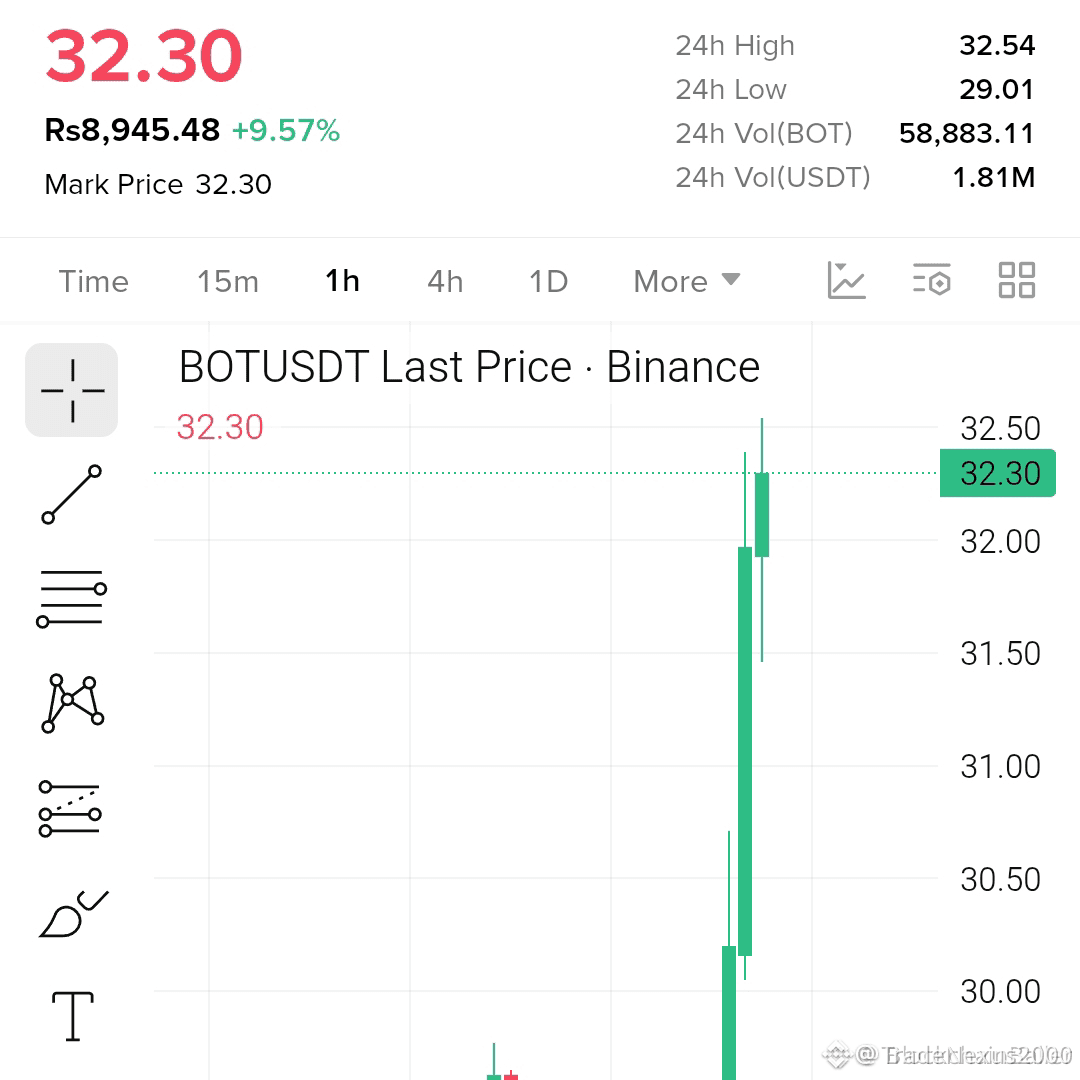
🚨 $BOT RECLAIMS CONSOLIDATION RANGE AS INSTITUTIONAL ACCUMULATION EXPANDS! 💥
Entry: 31.80 - 32.30 ⚡
Target: 34.20 🚀
Stop Loss: 31.20 ⚠️
Institutional buyers have aggressively swept overhead liquidity, forcing $BOT out of its multi-session consolidation compression. 📊 The expansion candle reflects clean order flow absorption, leaving behind a fresh bullish imbalance above the pivot zone.
📌 As long as price holds above the low-volume node near the retest region, market structure favors structured upside expansion toward liquidity pools above local highs. 🔍 Smart money appears poised to defend this retest for the next impulse leg. 💬 Are you bidding this breakout retest or waiting for a deeper liquidity sweep? 👇
⚠️ Not financial advice. Always manage your risk. 🛡️
🏷️ #BOT #Breakout #SmartMoney #Crypto #Trading
⚡ 💎
🚨 $BOT RECLAIMS CONSOLIDATION RANGE AS INSTITUTIONAL ACCUMULATION EXPANDS! 💥
Entry: 31.80 - 32.30 ⚡
Target: 34.20 🚀
Stop Loss: 31.20 ⚠️
Institutional buyers have aggressively swept overhead liquidity, forcing $BOT out of its multi-session consolidation compression. 📊 The expansion candle reflects clean order flow absorption, leaving behind a fresh bullish imbalance above the pivot zone.
📌 As long as price holds above the low-volume node near the retest region, market structure favors structured upside expansion toward liquidity pools above local highs. 🔍 Smart money appears poised to defend this retest for the next impulse leg. 💬 Are you bidding this breakout retest or waiting for a deeper liquidity sweep? 👇
⚠️ Not financial advice. Always manage your risk. 🛡️
🏷️ #BOT #Breakout #SmartMoney #Crypto #Trading
⚡ 💎
Entry: 31.80 - 32.30 ⚡
Target: 34.20 🚀
Stop Loss: 31.20 ⚠️
Institutional buyers have aggressively swept overhead liquidity, forcing $BOT out of its multi-session consolidation compression. 📊 The expansion candle reflects clean order flow absorption, leaving behind a fresh bullish imbalance above the pivot zone.
📌 As long as price holds above the low-volume node near the retest region, market structure favors structured upside expansion toward liquidity pools above local highs. 🔍 Smart money appears poised to defend this retest for the next impulse leg. 💬 Are you bidding this breakout retest or waiting for a deeper liquidity sweep? 👇
⚠️ Not financial advice. Always manage your risk. 🛡️
🏷️ #BOT #Breakout #SmartMoney #Crypto #Trading
⚡ 💎
10

·
--
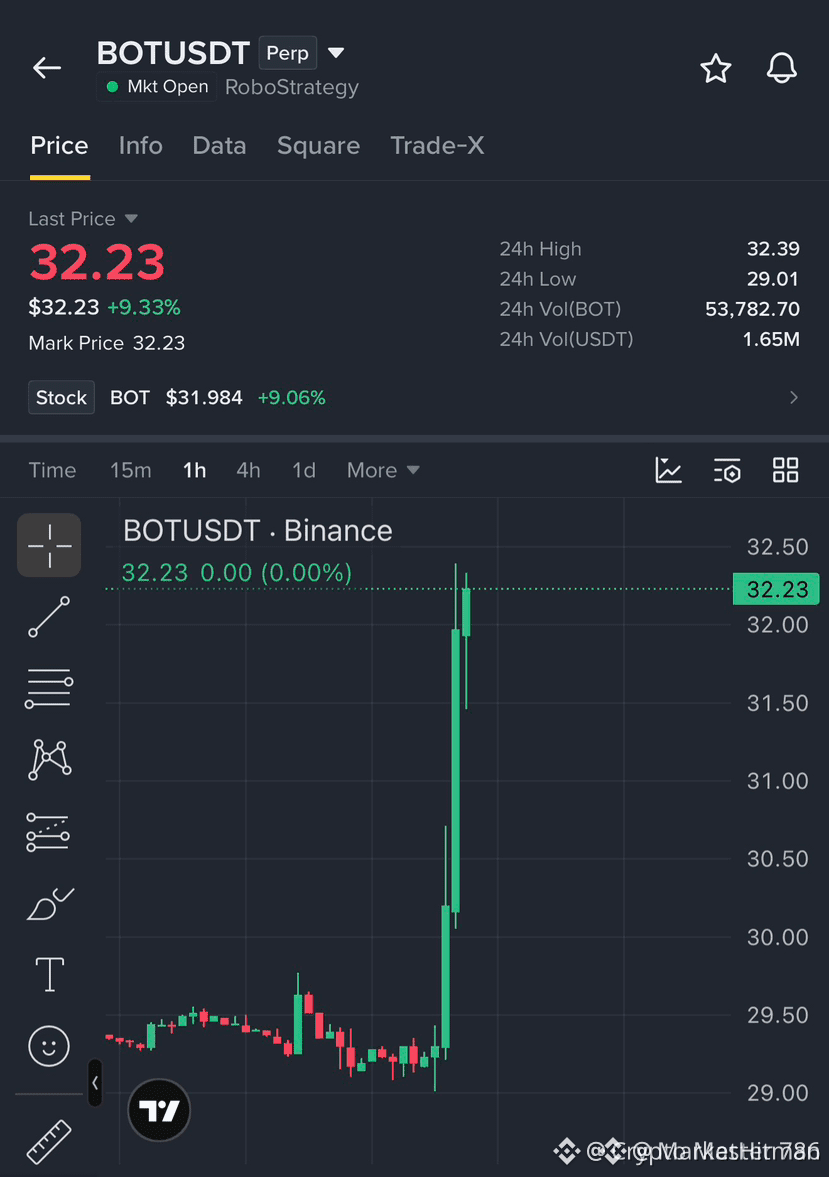
🚀 $BOT BREAKOUT IGNITES BUT REAL ALPHA LIES IN WAITING FOR THE RETEST! 💥
Entry: $31.70 - $31.95 ⚡
Target: $32.50 / $33.00 / $33.60 🚀
Stop Loss: $31.25 ⚠️
📌 Momentum buyers just triggered a violent breakout expansion on $BOT , slicing through upper resistance on heavy volume. 🌊 Chasing vertical green candles is an amateur trap, so we let price cool down into the newly reclaimed demand zone.
⚡ As long as buyers defend the $31.70 floor on the retest, order flow remains heavily skewed toward continuation targets up to $33.60. 💡 Patience on entry keeps your risk tight while maximizing upside velocity. 💬 Are you catching the retest bid at support or waiting for full confirmation? 👇
⚠️ Not financial advice. Always manage your risk. 🛡️
🏷️ #BOT #LongSetup #Breakout #Crypto #Altcoins
🔥 💎
🚀 $BOT BREAKOUT IGNITES BUT REAL ALPHA LIES IN WAITING FOR THE RETEST! 💥
Entry: $31.70 - $31.95 ⚡
Target: $32.50 / $33.00 / $33.60 🚀
Stop Loss: $31.25 ⚠️
📌 Momentum buyers just triggered a violent breakout expansion on $BOT , slicing through upper resistance on heavy volume. 🌊 Chasing vertical green candles is an amateur trap, so we let price cool down into the newly reclaimed demand zone.
⚡ As long as buyers defend the $31.70 floor on the retest, order flow remains heavily skewed toward continuation targets up to $33.60. 💡 Patience on entry keeps your risk tight while maximizing upside velocity. 💬 Are you catching the retest bid at support or waiting for full confirmation? 👇
⚠️ Not financial advice. Always manage your risk. 🛡️
🏷️ #BOT #LongSetup #Breakout #Crypto #Altcoins
🔥 💎
Entry: $31.70 - $31.95 ⚡
Target: $32.50 / $33.00 / $33.60 🚀
Stop Loss: $31.25 ⚠️
📌 Momentum buyers just triggered a violent breakout expansion on $BOT , slicing through upper resistance on heavy volume. 🌊 Chasing vertical green candles is an amateur trap, so we let price cool down into the newly reclaimed demand zone.
⚡ As long as buyers defend the $31.70 floor on the retest, order flow remains heavily skewed toward continuation targets up to $33.60. 💡 Patience on entry keeps your risk tight while maximizing upside velocity. 💬 Are you catching the retest bid at support or waiting for full confirmation? 👇
⚠️ Not financial advice. Always manage your risk. 🛡️
🏷️ #BOT #LongSetup #Breakout #Crypto #Altcoins
🔥 💎
11

·
--
🚨 $BOT BREAKOUT EXPOSES LIQUIDITY RETEST ZONE FOR OPTIMAL LONG POSITIONING 🦈
Entry: $31.70 - $31.95 ⚡
Target: $32.50 / $33.00 / $33.60 🚀
Stop Loss: $31.25 ⚠️
$BOT engineered an aggressive upside expansion, leaving behind an unfilled inefficiency across lower timeframes. Institutional flow avoids chasing late momentum into local resistance, choosing instead to bid institutional discount zones. 🔍
A controlled retest into the $31.70 - $31.95 demand block offers clean structural invalidation right below $31.25, ensuring asymmetric risk-to-reward. 📊 We are monitoring for buyer absorption inside the inefficiency zone before targeting higher liquidity pools. 💡
💬 Are you waiting for this demand block retest or looking for an early market entry? 👇
⚠️ Not financial advice. Always manage your risk. 🛡️
🏷️ #BOT #Crypto #SmartMoney #Breakout #Trading
🎯 🦈
🚨 $BOT BREAKOUT EXPOSES LIQUIDITY RETEST ZONE FOR OPTIMAL LONG POSITIONING 🦈
Entry: $31.70 - $31.95 ⚡
Target: $32.50 / $33.00 / $33.60 🚀
Stop Loss: $31.25 ⚠️
$BOT engineered an aggressive upside expansion, leaving behind an unfilled inefficiency across lower timeframes. Institutional flow avoids chasing late momentum into local resistance, choosing instead to bid institutional discount zones. 🔍
A controlled retest into the $31.70 - $31.95 demand block offers clean structural invalidation right below $31.25, ensuring asymmetric risk-to-reward. 📊 We are monitoring for buyer absorption inside the inefficiency zone before targeting higher liquidity pools. 💡
💬 Are you waiting for this demand block retest or looking for an early market entry? 👇
⚠️ Not financial advice. Always manage your risk. 🛡️
🏷️ #BOT #Crypto #SmartMoney #Breakout #Trading
🎯 🦈
Entry: $31.70 - $31.95 ⚡
Target: $32.50 / $33.00 / $33.60 🚀
Stop Loss: $31.25 ⚠️
$BOT engineered an aggressive upside expansion, leaving behind an unfilled inefficiency across lower timeframes. Institutional flow avoids chasing late momentum into local resistance, choosing instead to bid institutional discount zones. 🔍
A controlled retest into the $31.70 - $31.95 demand block offers clean structural invalidation right below $31.25, ensuring asymmetric risk-to-reward. 📊 We are monitoring for buyer absorption inside the inefficiency zone before targeting higher liquidity pools. 💡
💬 Are you waiting for this demand block retest or looking for an early market entry? 👇
⚠️ Not financial advice. Always manage your risk. 🛡️
🏷️ #BOT #Crypto #SmartMoney #Breakout #Trading
🎯 🦈
11

·
--
Haussier
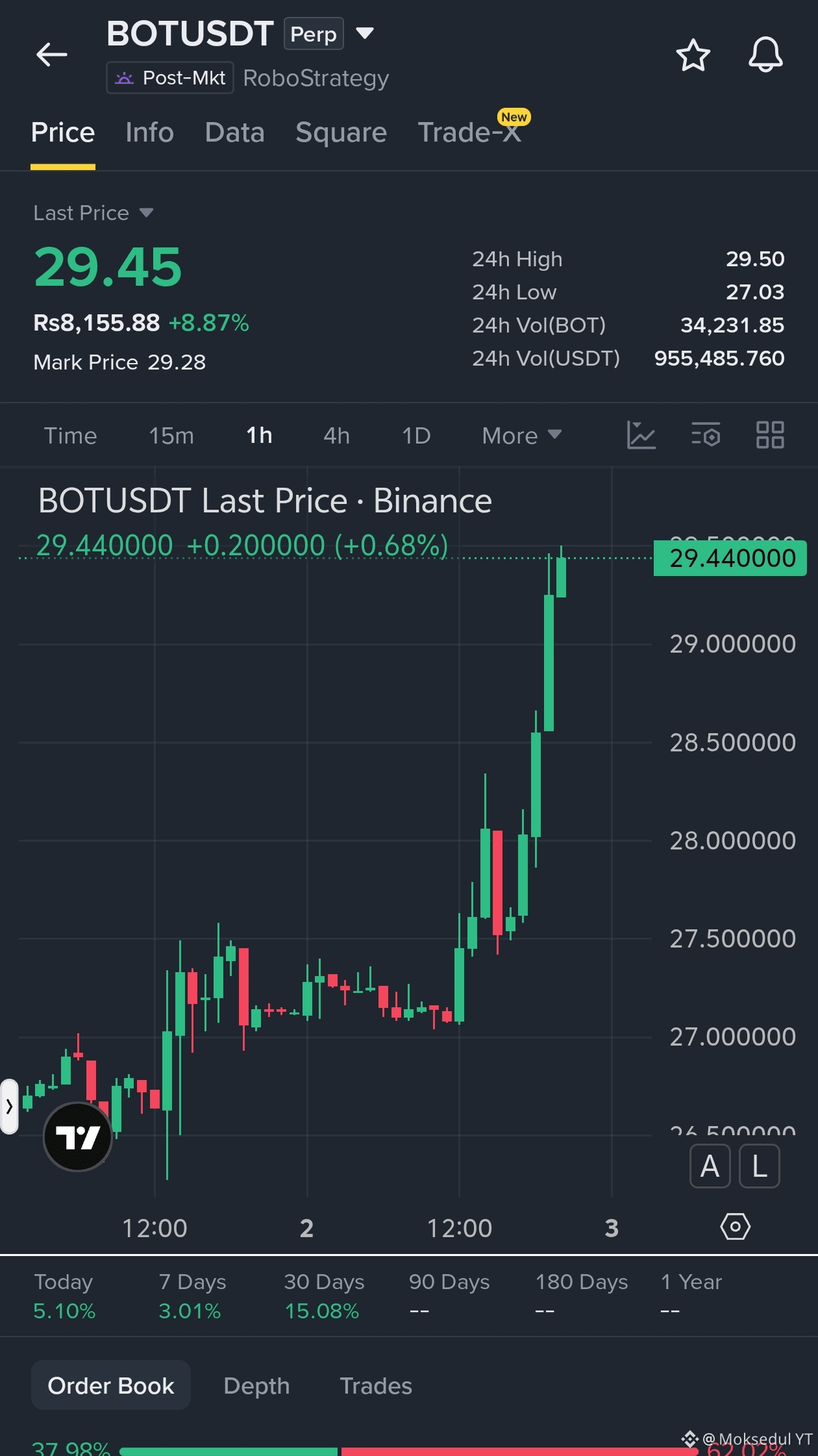
Guys, I have just opened a long position on $BOT with 20x leverage....
#BOT is printing higher lows from $27.03, with buyers defending every dip on the 1H chart.
Break $29.50 → $30.50 → $31.50. Lose $28.50 → out.
Entry: $29.20–$29.50
TP: $30.50 → $31.50 → $33.00
SL: $27.80
Buy and Trade
{future}(BOTUSDT)
$MAGMA
{future}(MAGMAUSDT)
$SAND
{future}(SANDUSDT)
Guys, I have just opened a long position on $BOT with 20x leverage....
#BOT is printing higher lows from $27.03, with buyers defending every dip on the 1H chart.
Break $29.50 → $30.50 → $31.50. Lose $28.50 → out.
Entry: $29.20–$29.50
TP: $30.50 → $31.50 → $33.00
SL: $27.80
Buy and Trade
$MAGMA
$SAND
#BOT is printing higher lows from $27.03, with buyers defending every dip on the 1H chart.
Break $29.50 → $30.50 → $31.50. Lose $28.50 → out.
Entry: $29.20–$29.50
TP: $30.50 → $31.50 → $33.00
SL: $27.80
Buy and Trade
$MAGMA
$SAND
Max_Crypto 100x:
Tipped the creator!
1
3
428

$BOT SHORT
Продавцы держат рынок под плотным контролем.
Инициатива остается за шортистами, пока котировки зажаты в текущем диапазоне с перспективой снижения к целям.
➡️Точка входа: 26.3
💰Цель 1: 26.01766828 (+1.07%)
💰Цель 2: 25.71533656 (+2.22%)
💰Цель 3: 25.26183898 (+3.95%)
⛔️Стоп: 26.77349758 (-1.80%)
⚠️ Это не финансовая рекомендация. Торгуйте на свой страх и риск. DYOR.
#BOT #XRP #BinanceFutures 📈
$BOT
$BOT SHORT
Продавцы держат рынок под плотным контролем.
Инициатива остается за шортистами, пока котировки зажаты в текущем диапазоне с перспективой снижения к целям.
➡️Точка входа: 26.3
💰Цель 1: 26.01766828 (+1.07%)
💰Цель 2: 25.71533656 (+2.22%)
💰Цель 3: 25.26183898 (+3.95%)
⛔️Стоп: 26.77349758 (-1.80%)
⚠️ Это не финансовая рекомендация. Торгуйте на свой страх и риск. DYOR.
#BOT #XRP #BinanceFutures 📈
$BOT
Продавцы держат рынок под плотным контролем.
Инициатива остается за шортистами, пока котировки зажаты в текущем диапазоне с перспективой снижения к целям.
➡️Точка входа: 26.3
💰Цель 1: 26.01766828 (+1.07%)
💰Цель 2: 25.71533656 (+2.22%)
💰Цель 3: 25.26183898 (+3.95%)
⛔️Стоп: 26.77349758 (-1.80%)
⚠️ Это не финансовая рекомендация. Торгуйте на свой страх и риск. DYOR.
#BOT #XRP #BinanceFutures 📈
$BOT
13

·
--
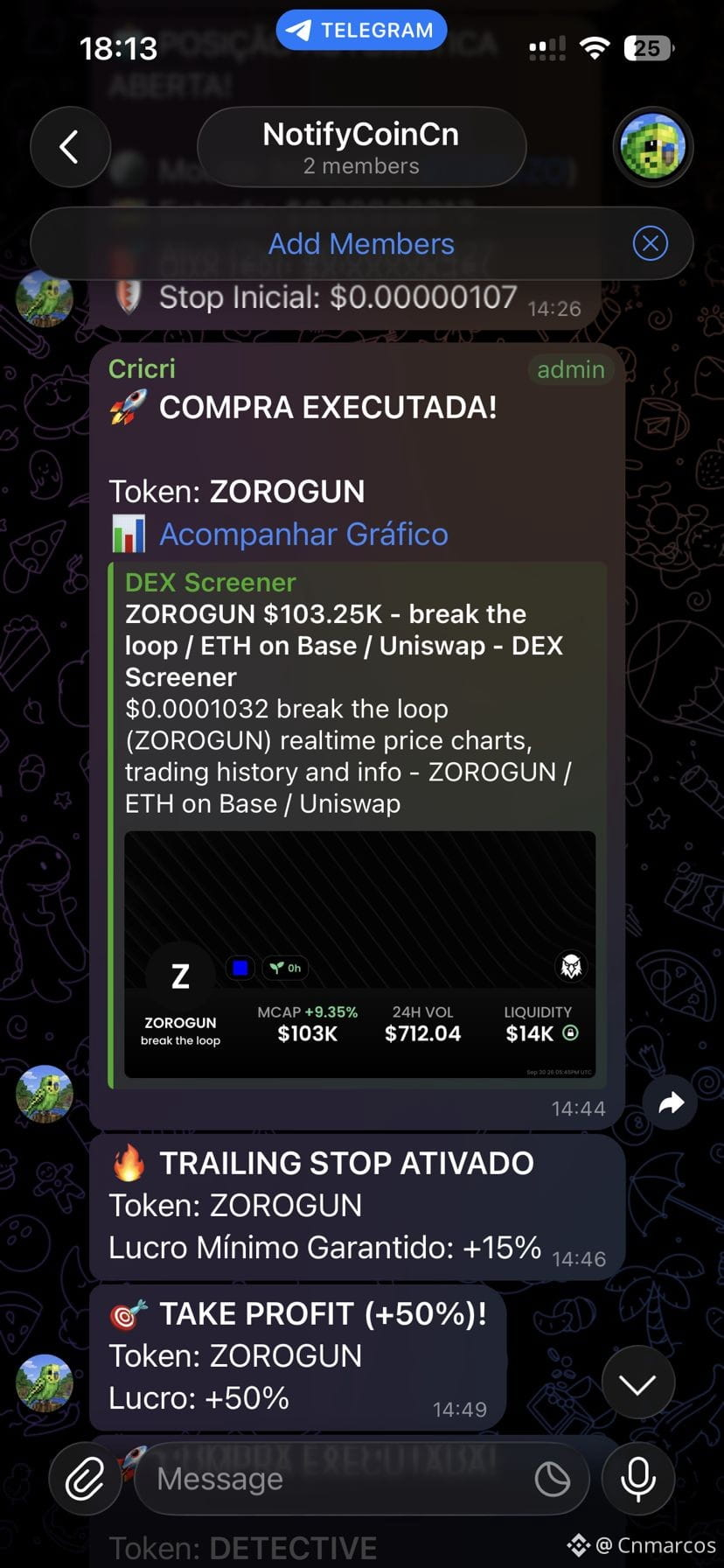
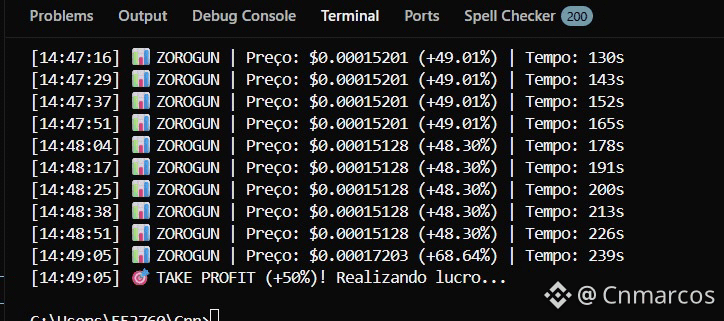
E la vamos nos voltando novamente ao mercado. Dessa fez criei um bot pra realizar as compras e saidas pra mim. Validado por paramentro de volume, liquidez e buy. Fora isso as notificações ocorre dentro do meu tegram, onde o bot tem sua autonomia e me notifica quando entra e sai e repasse de link pra eu acompanhar o grafico caso eu queira. Quem realiza esses tipo de ação, deixa sua dica aí #memecoin🚀🚀🚀 #coin #bot
E la vamos nos voltando novamente ao mercado. Dessa fez criei um bot pra realizar as compras e saidas pra mim. Validado por paramentro de volume, liquidez e buy. Fora isso as notificações ocorre dentro do meu tegram, onde o bot tem sua autonomia e me notifica quando entra e sai e repasse de link pra eu acompanhar o grafico caso eu queira. Quem realiza esses tipo de ação, deixa sua dica aí #memecoin🚀🚀🚀 #coin #bot
1
1
76


·
--
[M1_mag7]
$BOT 的24小时涨幅挂在6.265%,价格30.19,同时它的资金费率是0。这是一个少见的干净数据:价格上涨,但多空双方谁也不付谁钱。这意味着杠杆多头和空头的博弈暂时达到了一个脆弱的平衡点,任何一方的突然加注都可能打破这个局面。
我把这个数据放在链上TradFi合约的流动性池里看。$BOT属于Equity类别,挂着binance-tradfi-perp的标签,它的盘子很轻,14218.30的未平仓合约量不算大,但日内成交额超过了88万,换手率不低。这说明有资金在频繁进出做短线,但缺乏长期持仓的共识。从Mag7/大盘锚的角度切入,这类资产的beta往往极高,意味着它跟宏观叙事和SPY/QQQ的情绪绑定很深。现在它的资金费率归零,而价格在涨,这通常不是单边逼空行情的起点。如果它真是板块领涨品种,我们应该看到负费率(空头付钱给多头)来惩罚逆势空头。费率零值反而透露出一种观望,上涨可能更多由现货或低杠杆需求驱动,而非高杠杆多头的狂热推动。
老狗的判断是,$BOT这6%的涨幅在当前流动性下缺乏坚实支撑。它更像是一个短期反弹,而不是趋势确认。我的动作是观察,不追。如果价格能稳在30.19上方且资金费率转正,说明有多头开始付费入场抢筹,我会在出现第二个明确的上涨K线后轻仓试探。相反,如果价格跌破30.19而费率依然为零,我会彻底放弃,因为那表明连现货买盘都撤了,上涨只是昙花一现。
这笔交易的失效条件很明确:只要$BOT的资金费率持续维持在0附近,无论价格涨跌,都说明市场对其方向没有强烈的杠杆共识。我不会在这种混沌状态下投入仓位。最可能错在哪里?如果出现我无法提前预知的、关于$BOT的实体业务利好,直接刺激现货需求暴涨,那么我的基于杠杆情绪的判断就会失效。但在信息平静的当下,我坚持等信号清晰再动手。
交易标签:#BinanceFutures #TradFi #USDⓈM #BOT #BOTUSDT $BOT
[M1_mag7]
$BOT 的24小时涨幅挂在6.265%,价格30.19,同时它的资金费率是0。这是一个少见的干净数据:价格上涨,但多空双方谁也不付谁钱。这意味着杠杆多头和空头的博弈暂时达到了一个脆弱的平衡点,任何一方的突然加注都可能打破这个局面。
我把这个数据放在链上TradFi合约的流动性池里看。$BOT 属于Equity类别,挂着binance-tradfi-perp的标签,它的盘子很轻,14218.30的未平仓合约量不算大,但日内成交额超过了88万,换手率不低。这说明有资金在频繁进出做短线,但缺乏长期持仓的共识。从Mag7/大盘锚的角度切入,这类资产的beta往往极高,意味着它跟宏观叙事和SPY/QQQ的情绪绑定很深。现在它的资金费率归零,而价格在涨,这通常不是单边逼空行情的起点。如果它真是板块领涨品种,我们应该看到负费率(空头付钱给多头)来惩罚逆势空头。费率零值反而透露出一种观望,上涨可能更多由现货或低杠杆需求驱动,而非高杠杆多头的狂热推动。
老狗的判断是,$BOT 这6%的涨幅在当前流动性下缺乏坚实支撑。它更像是一个短期反弹,而不是趋势确认。我的动作是观察,不追。如果价格能稳在30.19上方且资金费率转正,说明有多头开始付费入场抢筹,我会在出现第二个明确的上涨K线后轻仓试探。相反,如果价格跌破30.19而费率依然为零,我会彻底放弃,因为那表明连现货买盘都撤了,上涨只是昙花一现。
这笔交易的失效条件很明确:只要$BOT 的资金费率持续维持在0附近,无论价格涨跌,都说明市场对其方向没有强烈的杠杆共识。我不会在这种混沌状态下投入仓位。最可能错在哪里?如果出现我无法提前预知的、关于$BOT 的实体业务利好,直接刺激现货需求暴涨,那么我的基于杠杆情绪的判断就会失效。但在信息平静的当下,我坚持等信号清晰再动手。
交易标签:#BinanceFutures #TradFi #USDⓈM #BOT #BOTUSDT $BOT
$BOT 的24小时涨幅挂在6.265%,价格30.19,同时它的资金费率是0。这是一个少见的干净数据:价格上涨,但多空双方谁也不付谁钱。这意味着杠杆多头和空头的博弈暂时达到了一个脆弱的平衡点,任何一方的突然加注都可能打破这个局面。
我把这个数据放在链上TradFi合约的流动性池里看。$BOT 属于Equity类别,挂着binance-tradfi-perp的标签,它的盘子很轻,14218.30的未平仓合约量不算大,但日内成交额超过了88万,换手率不低。这说明有资金在频繁进出做短线,但缺乏长期持仓的共识。从Mag7/大盘锚的角度切入,这类资产的beta往往极高,意味着它跟宏观叙事和SPY/QQQ的情绪绑定很深。现在它的资金费率归零,而价格在涨,这通常不是单边逼空行情的起点。如果它真是板块领涨品种,我们应该看到负费率(空头付钱给多头)来惩罚逆势空头。费率零值反而透露出一种观望,上涨可能更多由现货或低杠杆需求驱动,而非高杠杆多头的狂热推动。
老狗的判断是,$BOT 这6%的涨幅在当前流动性下缺乏坚实支撑。它更像是一个短期反弹,而不是趋势确认。我的动作是观察,不追。如果价格能稳在30.19上方且资金费率转正,说明有多头开始付费入场抢筹,我会在出现第二个明确的上涨K线后轻仓试探。相反,如果价格跌破30.19而费率依然为零,我会彻底放弃,因为那表明连现货买盘都撤了,上涨只是昙花一现。
这笔交易的失效条件很明确:只要$BOT 的资金费率持续维持在0附近,无论价格涨跌,都说明市场对其方向没有强烈的杠杆共识。我不会在这种混沌状态下投入仓位。最可能错在哪里?如果出现我无法提前预知的、关于$BOT 的实体业务利好,直接刺激现货需求暴涨,那么我的基于杠杆情绪的判断就会失效。但在信息平静的当下,我坚持等信号清晰再动手。
交易标签:#BinanceFutures #TradFi #USDⓈM #BOT #BOTUSDT $BOT
80

·
--
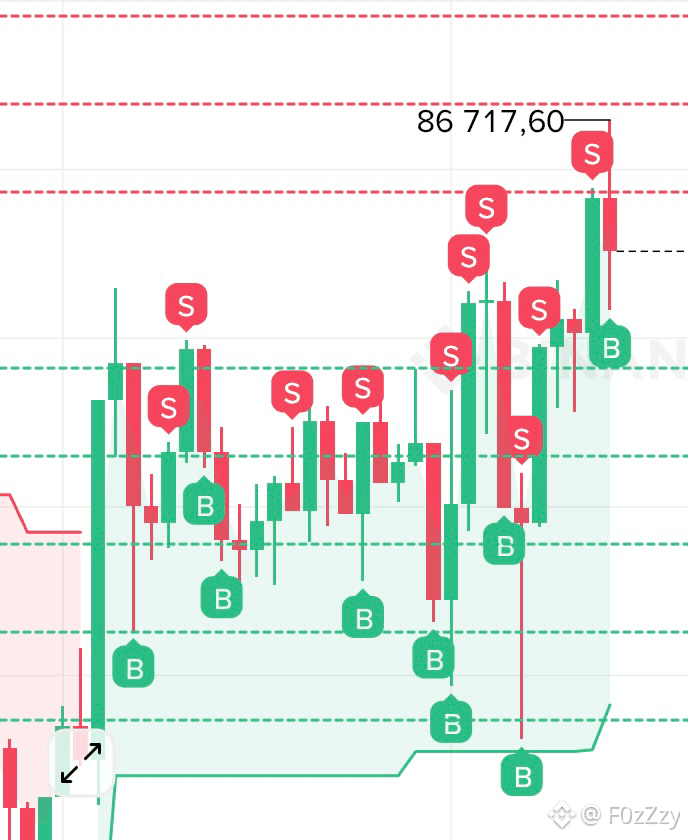
Я, здається, знайшов спосіб заробляти на BTC, поки нічого не роблю 🤯
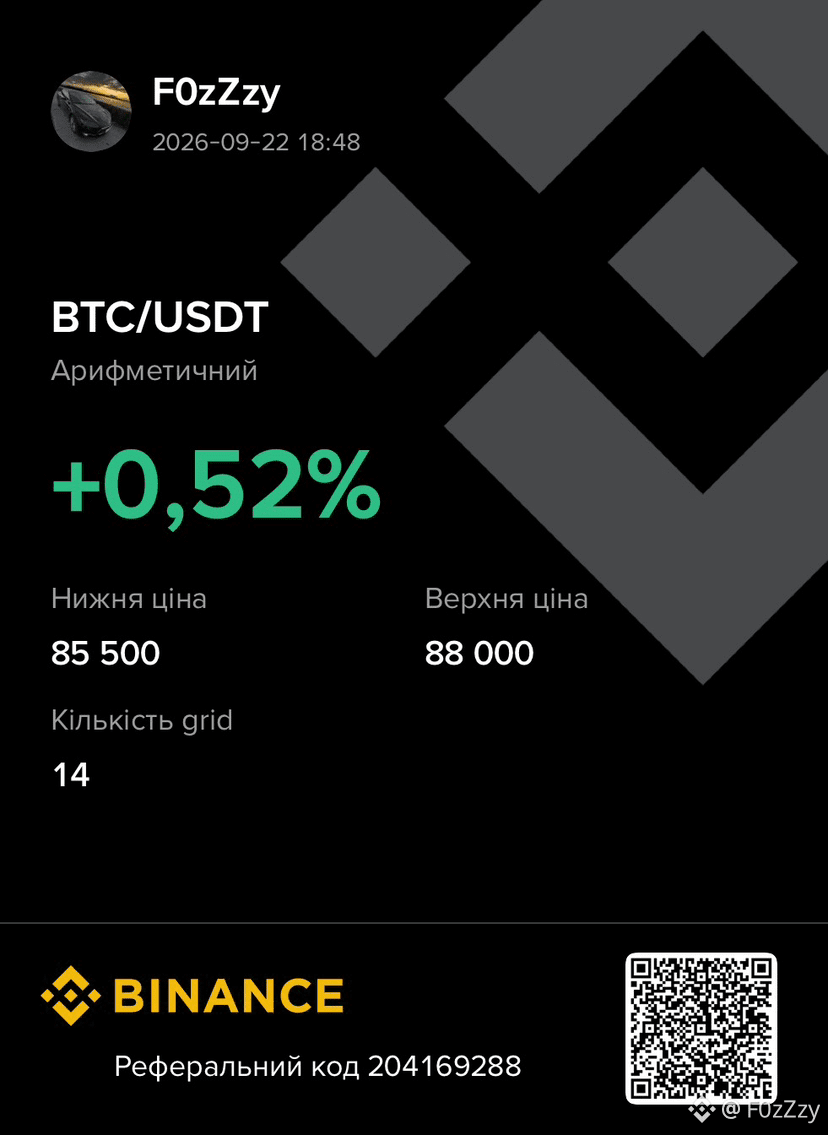
Вчора вперше запустив Grid-бота на Binance — просто закинув гроші, налаштував діапазон і залишив його працювати.
І знаєте, що мене найбільше здивувало?
Бот сам зробив 14 угод і вже приніс мені близько +$40. 😳
Я весь цей час торгував руками й навіть не думав, що можна просто дати боту працювати на коливаннях BTC.
Тепер головне питання: що буде, якщо залишити його на місяць? 👀
Хто вже тестував такі боти — скільки вам вдавалося заробити? #btc #gridbot #bot $BTC
Я, здається, знайшов спосіб заробляти на BTC, поки нічого не роблю 🤯
Вчора вперше запустив Grid-бота на Binance — просто закинув гроші, налаштував діапазон і залишив його працювати.
І знаєте, що мене найбільше здивувало?
Бот сам зробив 14 угод і вже приніс мені близько +$40. 😳
Я весь цей час торгував руками й навіть не думав, що можна просто дати боту працювати на коливаннях BTC.
Тепер головне питання: що буде, якщо залишити його на місяць? 👀
Хто вже тестував такі боти — скільки вам вдавалося заробити? #btc #gridbot #bot $BTC
Вчора вперше запустив Grid-бота на Binance — просто закинув гроші, налаштував діапазон і залишив його працювати.
І знаєте, що мене найбільше здивувало?
Бот сам зробив 14 угод і вже приніс мені близько +$40. 😳
Я весь цей час торгував руками й навіть не думав, що можна просто дати боту працювати на коливаннях BTC.
Тепер головне питання: що буде, якщо залишити його на місяць? 👀
Хто вже тестував такі боти — скільки вам вдавалося заробити? #btc #gridbot #bot $BTC
2
400
·
--
🚨 TRADITIONAL EQUITY AND LEVERAGED ASSETS LAND ON ORDER BOOKS FOR $BOT AND $RAM ! ⚡
Institutional asset expansion is accelerating as twenty-five new stock and ETF markets go live today at 21:30 UTC+8. 📊 From high-beta tech exposure like $BOT to double-leveraged momentum plays, order flow is shifting rapidly across traditional equity products. ⚡
Smart money is constantly scanning for front-running opportunities as equity liquidity integrates directly with digital asset infrastructure. 💡 Bridging these markets unlocks massive capital efficiency for traders positioning around global macroeconomic catalysts. 🔍
💬 Which of these fresh equity markets are you adding to your watchlist for the opening volatility? 👇
⚠️ Not financial advice. Always manage your risk. 🛡️
🏷️ #BOT #RAM #Equities #Trading #Markets
🔥 ⚡
🚨 TRADITIONAL EQUITY AND LEVERAGED ASSETS LAND ON ORDER BOOKS FOR $BOT AND $RAM ! ⚡
Institutional asset expansion is accelerating as twenty-five new stock and ETF markets go live today at 21:30 UTC+8. 📊 From high-beta tech exposure like $BOT to double-leveraged momentum plays, order flow is shifting rapidly across traditional equity products. ⚡
Smart money is constantly scanning for front-running opportunities as equity liquidity integrates directly with digital asset infrastructure. 💡 Bridging these markets unlocks massive capital efficiency for traders positioning around global macroeconomic catalysts. 🔍
💬 Which of these fresh equity markets are you adding to your watchlist for the opening volatility? 👇
⚠️ Not financial advice. Always manage your risk. 🛡️
🏷️ #BOT #RAM #Equities #Trading #Markets
🔥 ⚡
Institutional asset expansion is accelerating as twenty-five new stock and ETF markets go live today at 21:30 UTC+8. 📊 From high-beta tech exposure like $BOT to double-leveraged momentum plays, order flow is shifting rapidly across traditional equity products. ⚡
Smart money is constantly scanning for front-running opportunities as equity liquidity integrates directly with digital asset infrastructure. 💡 Bridging these markets unlocks massive capital efficiency for traders positioning around global macroeconomic catalysts. 🔍
💬 Which of these fresh equity markets are you adding to your watchlist for the opening volatility? 👇
⚠️ Not financial advice. Always manage your risk. 🛡️
🏷️ #BOT #RAM #Equities #Trading #Markets
🔥 ⚡
100
Connectez-vous pour découvrir plus de contenu
Rejoignez la communauté mondiale des adeptes de cryptomonnaies sur Binance Square
⚡️ Suviez les dernières informations importantes sur les cryptomonnaies.
💬 Jugé digne de confiance par la plus grande plateforme d’échange de cryptomonnaies au monde.
👍 Découvrez les connaissances que partagent les créateurs vérifiés.
Adresse e-mail/Nº de téléphone
Sujets d’actualité
1
#BinanceLaunchesBinanceIntelligence
751,364 vues
4,672 mentions
2
#BTCFallsBelow$84K
33,981 vues
115 mentions
3
#DubaiVARAIssuesReserveAssetAuditCircular
9,690 vues
378 mentions
4
#SECApproves3XBitcoinETF
8,872 vues
321 mentions
5
#WinklevossFilesSpotZcashETFApplication
18,673 vues
438 mentions
6
#SouthKoreaAITradeLiftsWorldcoinTo$7.41B
2,232 vues
39 mentions
7
#StrategyEstimates$4.1BIncomeTaxBenefit
1,454 vues
22 mentions
8
#IglooShutsDownAbstractBlockchain
7,561 vues
228 mentions
9
#StrategyMarketCapSurpassesRumble
48,468 vues
952 mentions
10
#StriveBuys2000BTCFor$169M
18,788 vues
163 mentions