

#roninnetwork
roninnetwork
116,263 vues
382 mentions
Populaire
Récents

·
--
Haussier
🎮 **Why Web3 Gaming and the Ronin Network Deserve Your Attention** 🎮
While the market goes up and down, one sector is quietly building a massive community: **Web3 Gaming**.
The paradigm is shifting from traditional "Play-to-Earn" to fun, sustainable ecosystems. Here is why this sector feels bullish for the next wave:
* **Real Retention:** Top projects on ecosystems like the Ronin Network are focusing on active, daily players rather than just speculative investors.
* **The Power of Ecosystems:** Strong gaming hubs create genuine utility for their native tokens, which can drive organic growth.
* **Community Drive:** Web3 gaming thrives on highly engaged communities that actively participate in governance and economy.
> 👀 Keep an eye on gaming projects that are launching new updates and scaling their infrastructure this season.
#Web3Gaming #RoninNetwork #CryptoTrends #GamingTokens
🎮 **Why Web3 Gaming and the Ronin Network Deserve Your Attention** 🎮
While the market goes up and down, one sector is quietly building a massive community: **Web3 Gaming**.
The paradigm is shifting from traditional "Play-to-Earn" to fun, sustainable ecosystems. Here is why this sector feels bullish for the next wave:
* **Real Retention:** Top projects on ecosystems like the Ronin Network are focusing on active, daily players rather than just speculative investors.
* **The Power of Ecosystems:** Strong gaming hubs create genuine utility for their native tokens, which can drive organic growth.
* **Community Drive:** Web3 gaming thrives on highly engaged communities that actively participate in governance and economy.
> 👀 Keep an eye on gaming projects that are launching new updates and scaling their infrastructure this season.
#Web3Gaming #RoninNetwork #CryptoTrends #GamingTokens
While the market goes up and down, one sector is quietly building a massive community: **Web3 Gaming**.
The paradigm is shifting from traditional "Play-to-Earn" to fun, sustainable ecosystems. Here is why this sector feels bullish for the next wave:
* **Real Retention:** Top projects on ecosystems like the Ronin Network are focusing on active, daily players rather than just speculative investors.
* **The Power of Ecosystems:** Strong gaming hubs create genuine utility for their native tokens, which can drive organic growth.
* **Community Drive:** Web3 gaming thrives on highly engaged communities that actively participate in governance and economy.
> 👀 Keep an eye on gaming projects that are launching new updates and scaling their infrastructure this season.
#Web3Gaming #RoninNetwork #CryptoTrends #GamingTokens

234


·
--
Article
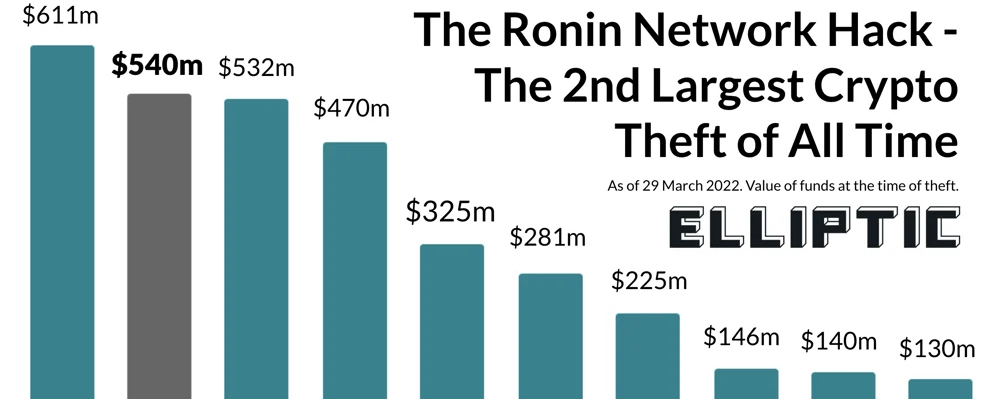
The $620 Million Fake Job Offer: Inside Crypto’s Largest Social Engineering Heist 🚨In March 2022, the decentralized finance (DeFi) space was rocked by an unprecedented disaster. Ronin Network, an Ethereum-linked sidechain built specifically for the blockchain gaming phenomenon Axie Infinity (owned by Sky Mavis), suffered a devastating breach.
A total of 173,600 Ethereum (ETH) and 25.5 million USDC were systematically drained. The total damage? A staggering $620 million, securing its place as one of the largest cryptocurrency heists in history.
However, the real shockwave wasn't just the astronomical number; it was the chilling psychological warfare and "Social Engineering" tactics used by the North Korean state-backed Lazarus Group to breach the network.
The Bait: Hunting a Senior Developer on LinkedIn 🧳
The heist did not begin with complex zero-day exploits or breaking cryptographic codes. Instead, it started with a simple interaction on the professional networking platform LinkedIn.
Lazarus Group operatives crafted highly sophisticated, premium fake profiles posing as recruiters from prestigious global tech firms and venture capital funds. They meticulously scanned the employees of Sky Mavis and locked onto their target: a Senior Software Engineer with extensive access privileges within the network.
The fake recruiters approached the developer with a "dream job opportunity," boasting a massive salary package and benefits too good to turn down. To sell the illusion, they put the developer through multiple rounds of rigorous technical interviews over several weeks. The engineer had absolutely no reason to suspect that the professional on the other side of the screen was an elite state-sponsored cyber operative.
The Payload: The Malicious "Offer Letter"
After clearing the final round of interviews, the developer was told they had officially secured the role. The "recruiters" sent over the official job offer package wrapped inside a standard PDF document.
But it was a Trojan horse. The document contained highly advanced, tailored spyware. The moment the developer downloaded and opened the file on their official company laptop, the malware infected the machine and quietly bypassed traditional endpoint security, giving the hackers deep access to the inner architecture of Sky Mavis.
Exposing the Critical Vulnerability: Subverting the Nodes
To secure transactions and asset bridges, the Ronin Network utilized a Proof of Authority (PoA) consensus mechanism relying on 9 Validator Nodes. For any withdrawal to be authorized, it required cryptographic signatures from at least 5 out of the 9 nodes (a 5/9 majority).
Once inside the developer's laptop, the Lazarus hackers successfully extracted the private keys of four validator nodes managed directly by Sky Mavis.
However, they still needed a fifth signature to authorize the multi-million dollar theft. To get it, they exploited a lingering oversight in the infrastructure. Months prior, Sky Mavis had granted an unrevoked permission to a community group called the Axie DAO to sign off on transactions to mitigate heavy network traffic. The hackers used their access to exploit this loophole, pulling the fifth signature from the Axie DAO bridge.
With a 5/9 majority secured, the hackers forged withdrawal orders and drained $620 million into their own wallets within minutes.
The Twist: A 6-Day Delayed Realization
What makes this historical heist incredibly bizarre is that the funds were drained on March 23, 2022, but Sky Mavis did not realize they had been hacked until March 29-six full days later! The breach was only discovered when a legitimate user tried to withdraw 5,000 ETH, and the transaction failed because the liquidity pools had already been completely emptied.
The Aftermath and Recovery
The FBI and the U.S. Treasury Department quickly took over the investigation, officially tying the hacker addresses directly to the Lazarus Group. The stolen funds were funneled through the popular privacy mixer Tornado Cash, which ultimately led to heavy sanctions against the protocol by the U.S. government.
Despite the devastating loss, Sky Mavis successfully raised $150 million in a funding round led by Binance and other prominent investors to fully reimburse the affected users. They completely overhauled their security protocol, expanding their validator node count to over 20 to ensure such a bottleneck could never happen again.
The Golden Takeaway: You can spend millions of dollars building un-hackable cryptographic code, but the human element remains the ultimate security threshold. A single click on a malicious file can bring down an entire financial fortress.
#RoninNetwork #Lazarus
#OnChain #DeFi #ETH
The $620 Million Fake Job Offer: Inside Crypto’s Largest Social Engineering Heist 🚨
In March 2022, the decentralized finance (DeFi) space was rocked by an unprecedented disaster. Ronin Network, an Ethereum-linked sidechain built specifically for the blockchain gaming phenomenon Axie Infinity (owned by Sky Mavis), suffered a devastating breach.
A total of 173,600 Ethereum (ETH) and 25.5 million USDC were systematically drained. The total damage? A staggering $620 million, securing its place as one of the largest cryptocurrency heists in history.
However, the real shockwave wasn't just the astronomical number; it was the chilling psychological warfare and "Social Engineering" tactics used by the North Korean state-backed Lazarus Group to breach the network.
The Bait: Hunting a Senior Developer on LinkedIn 🧳
The heist did not begin with complex zero-day exploits or breaking cryptographic codes. Instead, it started with a simple interaction on the professional networking platform LinkedIn.
Lazarus Group operatives crafted highly sophisticated, premium fake profiles posing as recruiters from prestigious global tech firms and venture capital funds. They meticulously scanned the employees of Sky Mavis and locked onto their target: a Senior Software Engineer with extensive access privileges within the network.
The fake recruiters approached the developer with a "dream job opportunity," boasting a massive salary package and benefits too good to turn down. To sell the illusion, they put the developer through multiple rounds of rigorous technical interviews over several weeks. The engineer had absolutely no reason to suspect that the professional on the other side of the screen was an elite state-sponsored cyber operative.
The Payload: The Malicious "Offer Letter"
After clearing the final round of interviews, the developer was told they had officially secured the role. The "recruiters" sent over the official job offer package wrapped inside a standard PDF document.
But it was a Trojan horse. The document contained highly advanced, tailored spyware. The moment the developer downloaded and opened the file on their official company laptop, the malware infected the machine and quietly bypassed traditional endpoint security, giving the hackers deep access to the inner architecture of Sky Mavis.
Exposing the Critical Vulnerability: Subverting the Nodes
To secure transactions and asset bridges, the Ronin Network utilized a Proof of Authority (PoA) consensus mechanism relying on 9 Validator Nodes. For any withdrawal to be authorized, it required cryptographic signatures from at least 5 out of the 9 nodes (a 5/9 majority).
Once inside the developer's laptop, the Lazarus hackers successfully extracted the private keys of four validator nodes managed directly by Sky Mavis.
However, they still needed a fifth signature to authorize the multi-million dollar theft. To get it, they exploited a lingering oversight in the infrastructure. Months prior, Sky Mavis had granted an unrevoked permission to a community group called the Axie DAO to sign off on transactions to mitigate heavy network traffic. The hackers used their access to exploit this loophole, pulling the fifth signature from the Axie DAO bridge.
With a 5/9 majority secured, the hackers forged withdrawal orders and drained $620 million into their own wallets within minutes.
The Twist: A 6-Day Delayed Realization
What makes this historical heist incredibly bizarre is that the funds were drained on March 23, 2022, but Sky Mavis did not realize they had been hacked until March 29-six full days later! The breach was only discovered when a legitimate user tried to withdraw 5,000 ETH, and the transaction failed because the liquidity pools had already been completely emptied.
The Aftermath and Recovery
The FBI and the U.S. Treasury Department quickly took over the investigation, officially tying the hacker addresses directly to the Lazarus Group. The stolen funds were funneled through the popular privacy mixer Tornado Cash, which ultimately led to heavy sanctions against the protocol by the U.S. government.
Despite the devastating loss, Sky Mavis successfully raised $150 million in a funding round led by Binance and other prominent investors to fully reimburse the affected users. They completely overhauled their security protocol, expanding their validator node count to over 20 to ensure such a bottleneck could never happen again.
The Golden Takeaway: You can spend millions of dollars building un-hackable cryptographic code, but the human element remains the ultimate security threshold. A single click on a malicious file can bring down an entire financial fortress.
#RoninNetwork #Lazarus
#OnChain #DeFi #ETH
A total of 173,600 Ethereum (ETH) and 25.5 million USDC were systematically drained. The total damage? A staggering $620 million, securing its place as one of the largest cryptocurrency heists in history.
However, the real shockwave wasn't just the astronomical number; it was the chilling psychological warfare and "Social Engineering" tactics used by the North Korean state-backed Lazarus Group to breach the network.
The Bait: Hunting a Senior Developer on LinkedIn 🧳
The heist did not begin with complex zero-day exploits or breaking cryptographic codes. Instead, it started with a simple interaction on the professional networking platform LinkedIn.
Lazarus Group operatives crafted highly sophisticated, premium fake profiles posing as recruiters from prestigious global tech firms and venture capital funds. They meticulously scanned the employees of Sky Mavis and locked onto their target: a Senior Software Engineer with extensive access privileges within the network.
The fake recruiters approached the developer with a "dream job opportunity," boasting a massive salary package and benefits too good to turn down. To sell the illusion, they put the developer through multiple rounds of rigorous technical interviews over several weeks. The engineer had absolutely no reason to suspect that the professional on the other side of the screen was an elite state-sponsored cyber operative.
The Payload: The Malicious "Offer Letter"
After clearing the final round of interviews, the developer was told they had officially secured the role. The "recruiters" sent over the official job offer package wrapped inside a standard PDF document.
But it was a Trojan horse. The document contained highly advanced, tailored spyware. The moment the developer downloaded and opened the file on their official company laptop, the malware infected the machine and quietly bypassed traditional endpoint security, giving the hackers deep access to the inner architecture of Sky Mavis.
Exposing the Critical Vulnerability: Subverting the Nodes
To secure transactions and asset bridges, the Ronin Network utilized a Proof of Authority (PoA) consensus mechanism relying on 9 Validator Nodes. For any withdrawal to be authorized, it required cryptographic signatures from at least 5 out of the 9 nodes (a 5/9 majority).
Once inside the developer's laptop, the Lazarus hackers successfully extracted the private keys of four validator nodes managed directly by Sky Mavis.
However, they still needed a fifth signature to authorize the multi-million dollar theft. To get it, they exploited a lingering oversight in the infrastructure. Months prior, Sky Mavis had granted an unrevoked permission to a community group called the Axie DAO to sign off on transactions to mitigate heavy network traffic. The hackers used their access to exploit this loophole, pulling the fifth signature from the Axie DAO bridge.
With a 5/9 majority secured, the hackers forged withdrawal orders and drained $620 million into their own wallets within minutes.
The Twist: A 6-Day Delayed Realization
What makes this historical heist incredibly bizarre is that the funds were drained on March 23, 2022, but Sky Mavis did not realize they had been hacked until March 29-six full days later! The breach was only discovered when a legitimate user tried to withdraw 5,000 ETH, and the transaction failed because the liquidity pools had already been completely emptied.
The Aftermath and Recovery
The FBI and the U.S. Treasury Department quickly took over the investigation, officially tying the hacker addresses directly to the Lazarus Group. The stolen funds were funneled through the popular privacy mixer Tornado Cash, which ultimately led to heavy sanctions against the protocol by the U.S. government.
Despite the devastating loss, Sky Mavis successfully raised $150 million in a funding round led by Binance and other prominent investors to fully reimburse the affected users. They completely overhauled their security protocol, expanding their validator node count to over 20 to ensure such a bottleneck could never happen again.
The Golden Takeaway: You can spend millions of dollars building un-hackable cryptographic code, but the human element remains the ultimate security threshold. A single click on a malicious file can bring down an entire financial fortress.
#RoninNetwork #Lazarus
#OnChain #DeFi #ETH
288

ALERT 🚨💹 Moonriver ( $MOVR ) surges as order blocks confirm bullish momentum; high volume trading and a growing DeFi ecosystem push price higher. RONIN Network ( $RONIN ) shows strong liquidity and investor optimism, with new cross chain bridges boosting adoption. The Cow Token ( $COW ) gains traction through innovative yield farming, solidifying its position. Strong buy for all three. #Moonriver #RONINNetwork #TheCowToken
ALERT 🚨💹 Moonriver ( $MOVR ) surges as order blocks confirm bullish momentum; high volume trading and a growing DeFi ecosystem push price higher. RONIN Network ( $RONIN ) shows strong liquidity and investor optimism, with new cross chain bridges boosting adoption. The Cow Token ( $COW ) gains traction through innovative yield farming, solidifying its position. Strong buy for all three. #Moonriver #RONINNetwork #TheCowToken
1
421

Order blocks on Achain (ACH) reveal a bullish breakout, volume surging as institutional traders back its scaling roadmap. Ronin Network (RONIN) continues to attract massive liquidity, fueling cross chain play and gaming adoption. Darwinia (DAR) shows strong momentum with ecosystem partnerships, signalling investor confidence. All three align for a compelling upside, time to capitalize. 🚀💹 #Achain #RoninNetwork #Darwinia
Order blocks on Achain (ACH) reveal a bullish breakout, volume surging as institutional traders back its scaling roadmap. Ronin Network (RONIN) continues to attract massive liquidity, fueling cross chain play and gaming adoption. Darwinia (DAR) shows strong momentum with ecosystem partnerships, signalling investor confidence. All three align for a compelling upside, time to capitalize. 🚀💹 #Achain #RoninNetwork #Darwinia
240

·
--
🚀 La Evolución del Play-to-Earn: Por qué Pixels marca el estándar
El panorama de los juegos Web3 está cambiando, y @pixels se mantiene a la vanguardia gracias a su enfoque en la sostenibilidad económica. Lo que hace a este proyecto único no es solo su jugabilidad adictiva, sino cómo han integrado el token $PIXEL como un recurso fundamental y no solo una recompensa especulativa.
Al utilizar la infraestructura de Stacked, el equipo ha logrado mitigar los problemas de congestión y costos que suelen afectar a otros juegos en cadena. Esta integración técnica es lo que permite que la economía interna de $PIXEL sea escalable, ofreciendo a los jugadores una experiencia real de propiedad de activos sin fricciones técnicas. ¡Sin duda, un modelo a seguir para el futuro del gaming descentralizado🔥no te quedes sin participar 🙌🏻
#pixel #Pixels #RoninNetwork #GameFi
🚀 La Evolución del Play-to-Earn: Por qué Pixels marca el estándar
El panorama de los juegos Web3 está cambiando, y @Pixels se mantiene a la vanguardia gracias a su enfoque en la sostenibilidad económica. Lo que hace a este proyecto único no es solo su jugabilidad adictiva, sino cómo han integrado el token $PIXEL como un recurso fundamental y no solo una recompensa especulativa.
Al utilizar la infraestructura de Stacked, el equipo ha logrado mitigar los problemas de congestión y costos que suelen afectar a otros juegos en cadena. Esta integración técnica es lo que permite que la economía interna de $PIXEL sea escalable, ofreciendo a los jugadores una experiencia real de propiedad de activos sin fricciones técnicas. ¡Sin duda, un modelo a seguir para el futuro del gaming descentralizado🔥no te quedes sin participar 🙌🏻
#pixel #Pixels #RoninNetwork #GameFi
El panorama de los juegos Web3 está cambiando, y @Pixels se mantiene a la vanguardia gracias a su enfoque en la sostenibilidad económica. Lo que hace a este proyecto único no es solo su jugabilidad adictiva, sino cómo han integrado el token $PIXEL como un recurso fundamental y no solo una recompensa especulativa.
Al utilizar la infraestructura de Stacked, el equipo ha logrado mitigar los problemas de congestión y costos que suelen afectar a otros juegos en cadena. Esta integración técnica es lo que permite que la economía interna de $PIXEL sea escalable, ofreciendo a los jugadores una experiencia real de propiedad de activos sin fricciones técnicas. ¡Sin duda, un modelo a seguir para el futuro del gaming descentralizado🔥no te quedes sin participar 🙌🏻
#pixel #Pixels #RoninNetwork #GameFi

1
112

·
--
Haussier
[PIXEL](https://app.binance.com/uni-qr/cpro/pixels?l=en&r=PB2RCMKV&uc=app_square_share_link&us=copylink) $PIXEL is a social casual Web3 game built on the Ronin Network that brings a unique blend of gaming and blockchain technology. It offers an immersive open-world experience where players can farm resources, explore different environments, and create their own digital journey.
{future}(PIXELUSDT)
The game focuses on creativity, community interaction, and play-to-earn mechanics, making it more than just a traditional game. Users can build, trade, and grow within the ecosystem while enjoying a relaxing yet engaging gameplay style.
With the rise of Web3 gaming, Pixels is becoming a strong example of how decentralized games can attract both gamers and crypto users worldwide. It combines fun gameplay with real digital ownership, giving players more control and rewards.
#PIXEL #Web3 #Gaming #RoninNetwork
PIXEL $PIXEL is a social casual Web3 game built on the Ronin Network that brings a unique blend of gaming and blockchain technology. It offers an immersive open-world experience where players can farm resources, explore different environments, and create their own digital journey.
The game focuses on creativity, community interaction, and play-to-earn mechanics, making it more than just a traditional game. Users can build, trade, and grow within the ecosystem while enjoying a relaxing yet engaging gameplay style.
With the rise of Web3 gaming, Pixels is becoming a strong example of how decentralized games can attract both gamers and crypto users worldwide. It combines fun gameplay with real digital ownership, giving players more control and rewards.
#PIXEL #Web3 #Gaming #RoninNetwork
The game focuses on creativity, community interaction, and play-to-earn mechanics, making it more than just a traditional game. Users can build, trade, and grow within the ecosystem while enjoying a relaxing yet engaging gameplay style.
With the rise of Web3 gaming, Pixels is becoming a strong example of how decentralized games can attract both gamers and crypto users worldwide. It combines fun gameplay with real digital ownership, giving players more control and rewards.
#PIXEL #Web3 #Gaming #RoninNetwork
23

مستقبل الألعاب القائمة على البلوكشين: رحلة في عالم @Pixels ونظام $PIXEL المتطور
تعد لعبة Pixels اليومستقبل الألعاب القائمة على البلوكشين: رحلة في عالم @Pixels ونظام $PIXEL المتطور
تعد لعبة Pixels اليوم واحدة من أبرز الأمثلة على نجاح ألعاب الويب 3 (Web3) التي استطاعت كسر حاجز "المضاربة فقط" لتنتقل إلى بناء مجتمع حقيقي ولاعبين نشطين يومياً. ومع تطور المنظومة، أصبح رمز $PIXEL ليس مجرد عملة داخل اللعبة، بل هو المحرك الأساسي لاقتصاد رقمي مستدام يعتمد على الابتكار والمشاركة.
تطور منظومة Pixels: من الترفيه إلى القيمة الرقمية
مشروع @Pixels لم يكتفِ بتقديم تجربة زراعة واستكشاف كلاسيكية بنمط "البيكسل"، بل نجح في دمج تقنية البلوكشين بطريقة تجعل اللاعب يشعر بملكية أصوله. ومع الانتقال إلى شبكة Ronin، شهدنا طفرة في سرعة المعاملات وانخفاض التكاليف، مما مهد الطريق لإطلاق ميزات اقتصادية أكثر تعقيداً وأهمية، وعلى رأسها نظام Staking أو "التخزين والمشاركة".
نظرة عميقة على نظام Staking الخاص بـ $PIXEL
يعتبر نظام الحصص (Staking) في @Pixels حجر الزاوية للمستثمرين واللاعبين الطموحين. الهدف منه ليس فقط تقليل العرض المتداول من رمز $PIXEL لتعزيز قيمته السوقية، بل لخلق نظام حوافز يكافئ المؤمنين بالمشروع على المدى الطويل.
المزايا النوعية للمخزنين: لا يقتصر العائد على النسبة المئوية السنوية (APY) فحسب، بل يمتد ليشمل الحصول على مزايا حصرية داخل اللعبة، مثل الوصول إلى مناطق خاصة، أو الحصول على أدوات نادرة تزيد من كفاءة الإنتاج داخل عالم البيكسل.
الحوكمة والتأثير: يمنح الـ Staking أصحاب الرموز صوتاً في مستقبل القرارات التي تتخذها المنصة، مما يعزز مفهوم اللامركزية الذي يسعى إليه مجتمع #pixel.
لماذا يعتبر رمز $PIXEL استثماراً استراتيجياً؟
عند تحليل أداء العملة، نجد أن الارتباط بين نجاح اللعبة وقيمة الرمز وثيق جداً. كلما زاد عدد المستخدمين النشطين (DAU)، زاد الطلب على الرمز لترقية الأراضي، شراء الموارد، والمشاركة في الفعاليات الموسمية.
ملاحظة هامة: الاستدامة في ألعاب الويب 3 تعتمد على "حرق الرموز" بقدر ما تعتمد على إصدارها، وهو ما تفعله @Pixels ببراعة عبر آليات اللعب المختلفة التي تتطلب استخدام $PIXEL بشكل مستمر.
نصائح للبدء في عالم #pixel
استكشف قبل الاستثمار: ابدأ باللعب المجاني لفهم آليات الاقتصاد وكيفية توليد القيمة.
تابع التحديثات: فريق @Pixels نشط جداً في إطلاق "الفصول" (Chapters) الجديدة، وكل فصل جديد يحمل فرصاً ربحية مختلفة.
استغل نظام Staking: إذا كنت تخطط للاحتفاظ بالعملة لفترة طويلة، فإن وضعها في نظام الحصص هو الخيار الأمثل لتعظيم أرباحك وتأمين مكانك في قائمة الرواد.
الخاتمة: رؤية نحو 2026 وما بعدها
إن نجاح مشروع @Pixels يثبت أن الألعاب هي البوابة الحقيقية لتبني العملات الرقمية على نطاق واسع. ومع استمرار تطوير نظامها البيئي، يظل رمز $PIXEL أحد أكثر الرموز إثارة للاهتمام في قطاع الـ GameFi. سواء كنت لاعباً يبحث عن المتعة أو مستثمراً يبحث عن مشروع ذو أسس قوية، فإن هذه المنظومة تقدم لك مكاناً في عالمها المتنامي.
هاشتاغات إضافية:
#pixel #Binance #GameFi i #Web3Gaming #CryptoInvestment #PixelsWorld #RoninNetwork #staking
مستقبل الألعاب القائمة على البلوكشين: رحلة في عالم @Pixels ونظام $PIXEL المتطور تعد لعبة Pixels اليو
مستقبل الألعاب القائمة على البلوكشين: رحلة في عالم @Pixels ونظام $PIXEL المتطور
تعد لعبة Pixels اليوم واحدة من أبرز الأمثلة على نجاح ألعاب الويب 3 (Web3) التي استطاعت كسر حاجز "المضاربة فقط" لتنتقل إلى بناء مجتمع حقيقي ولاعبين نشطين يومياً. ومع تطور المنظومة، أصبح رمز $PIXEL ليس مجرد عملة داخل اللعبة، بل هو المحرك الأساسي لاقتصاد رقمي مستدام يعتمد على الابتكار والمشاركة.
تطور منظومة Pixels: من الترفيه إلى القيمة الرقمية
مشروع @Pixels لم يكتفِ بتقديم تجربة زراعة واستكشاف كلاسيكية بنمط "البيكسل"، بل نجح في دمج تقنية البلوكشين بطريقة تجعل اللاعب يشعر بملكية أصوله. ومع الانتقال إلى شبكة Ronin، شهدنا طفرة في سرعة المعاملات وانخفاض التكاليف، مما مهد الطريق لإطلاق ميزات اقتصادية أكثر تعقيداً وأهمية، وعلى رأسها نظام Staking أو "التخزين والمشاركة".
نظرة عميقة على نظام Staking الخاص بـ $PIXEL
يعتبر نظام الحصص (Staking) في @Pixels حجر الزاوية للمستثمرين واللاعبين الطموحين. الهدف منه ليس فقط تقليل العرض المتداول من رمز $PIXEL لتعزيز قيمته السوقية، بل لخلق نظام حوافز يكافئ المؤمنين بالمشروع على المدى الطويل.
المزايا النوعية للمخزنين: لا يقتصر العائد على النسبة المئوية السنوية (APY) فحسب، بل يمتد ليشمل الحصول على مزايا حصرية داخل اللعبة، مثل الوصول إلى مناطق خاصة، أو الحصول على أدوات نادرة تزيد من كفاءة الإنتاج داخل عالم البيكسل.
الحوكمة والتأثير: يمنح الـ Staking أصحاب الرموز صوتاً في مستقبل القرارات التي تتخذها المنصة، مما يعزز مفهوم اللامركزية الذي يسعى إليه مجتمع #pixel.
لماذا يعتبر رمز $PIXEL استثماراً استراتيجياً؟
عند تحليل أداء العملة، نجد أن الارتباط بين نجاح اللعبة وقيمة الرمز وثيق جداً. كلما زاد عدد المستخدمين النشطين (DAU)، زاد الطلب على الرمز لترقية الأراضي، شراء الموارد، والمشاركة في الفعاليات الموسمية.
ملاحظة هامة: الاستدامة في ألعاب الويب 3 تعتمد على "حرق الرموز" بقدر ما تعتمد على إصدارها، وهو ما تفعله @Pixels ببراعة عبر آليات اللعب المختلفة التي تتطلب استخدام $PIXEL بشكل مستمر.
نصائح للبدء في عالم #pixel
استكشف قبل الاستثمار: ابدأ باللعب المجاني لفهم آليات الاقتصاد وكيفية توليد القيمة.
تابع التحديثات: فريق @Pixels نشط جداً في إطلاق "الفصول" (Chapters) الجديدة، وكل فصل جديد يحمل فرصاً ربحية مختلفة.
استغل نظام Staking: إذا كنت تخطط للاحتفاظ بالعملة لفترة طويلة، فإن وضعها في نظام الحصص هو الخيار الأمثل لتعظيم أرباحك وتأمين مكانك في قائمة الرواد.
الخاتمة: رؤية نحو 2026 وما بعدها
إن نجاح مشروع @Pixels يثبت أن الألعاب هي البوابة الحقيقية لتبني العملات الرقمية على نطاق واسع. ومع استمرار تطوير نظامها البيئي، يظل رمز $PIXEL أحد أكثر الرموز إثارة للاهتمام في قطاع الـ GameFi. سواء كنت لاعباً يبحث عن المتعة أو مستثمراً يبحث عن مشروع ذو أسس قوية، فإن هذه المنظومة تقدم لك مكاناً في عالمها المتنامي.
هاشتاغات إضافية:
#pixel #Binance #GameFi i #Web3Gaming #CryptoInvestment #PixelsWorld #RoninNetwork #staking
تعد لعبة Pixels اليوم واحدة من أبرز الأمثلة على نجاح ألعاب الويب 3 (Web3) التي استطاعت كسر حاجز "المضاربة فقط" لتنتقل إلى بناء مجتمع حقيقي ولاعبين نشطين يومياً. ومع تطور المنظومة، أصبح رمز $PIXEL ليس مجرد عملة داخل اللعبة، بل هو المحرك الأساسي لاقتصاد رقمي مستدام يعتمد على الابتكار والمشاركة.
تطور منظومة Pixels: من الترفيه إلى القيمة الرقمية
مشروع @Pixels لم يكتفِ بتقديم تجربة زراعة واستكشاف كلاسيكية بنمط "البيكسل"، بل نجح في دمج تقنية البلوكشين بطريقة تجعل اللاعب يشعر بملكية أصوله. ومع الانتقال إلى شبكة Ronin، شهدنا طفرة في سرعة المعاملات وانخفاض التكاليف، مما مهد الطريق لإطلاق ميزات اقتصادية أكثر تعقيداً وأهمية، وعلى رأسها نظام Staking أو "التخزين والمشاركة".
نظرة عميقة على نظام Staking الخاص بـ $PIXEL
يعتبر نظام الحصص (Staking) في @Pixels حجر الزاوية للمستثمرين واللاعبين الطموحين. الهدف منه ليس فقط تقليل العرض المتداول من رمز $PIXEL لتعزيز قيمته السوقية، بل لخلق نظام حوافز يكافئ المؤمنين بالمشروع على المدى الطويل.
المزايا النوعية للمخزنين: لا يقتصر العائد على النسبة المئوية السنوية (APY) فحسب، بل يمتد ليشمل الحصول على مزايا حصرية داخل اللعبة، مثل الوصول إلى مناطق خاصة، أو الحصول على أدوات نادرة تزيد من كفاءة الإنتاج داخل عالم البيكسل.
الحوكمة والتأثير: يمنح الـ Staking أصحاب الرموز صوتاً في مستقبل القرارات التي تتخذها المنصة، مما يعزز مفهوم اللامركزية الذي يسعى إليه مجتمع #pixel.
لماذا يعتبر رمز $PIXEL استثماراً استراتيجياً؟
عند تحليل أداء العملة، نجد أن الارتباط بين نجاح اللعبة وقيمة الرمز وثيق جداً. كلما زاد عدد المستخدمين النشطين (DAU)، زاد الطلب على الرمز لترقية الأراضي، شراء الموارد، والمشاركة في الفعاليات الموسمية.
ملاحظة هامة: الاستدامة في ألعاب الويب 3 تعتمد على "حرق الرموز" بقدر ما تعتمد على إصدارها، وهو ما تفعله @Pixels ببراعة عبر آليات اللعب المختلفة التي تتطلب استخدام $PIXEL بشكل مستمر.
نصائح للبدء في عالم #pixel
استكشف قبل الاستثمار: ابدأ باللعب المجاني لفهم آليات الاقتصاد وكيفية توليد القيمة.
تابع التحديثات: فريق @Pixels نشط جداً في إطلاق "الفصول" (Chapters) الجديدة، وكل فصل جديد يحمل فرصاً ربحية مختلفة.
استغل نظام Staking: إذا كنت تخطط للاحتفاظ بالعملة لفترة طويلة، فإن وضعها في نظام الحصص هو الخيار الأمثل لتعظيم أرباحك وتأمين مكانك في قائمة الرواد.
الخاتمة: رؤية نحو 2026 وما بعدها
إن نجاح مشروع @Pixels يثبت أن الألعاب هي البوابة الحقيقية لتبني العملات الرقمية على نطاق واسع. ومع استمرار تطوير نظامها البيئي، يظل رمز $PIXEL أحد أكثر الرموز إثارة للاهتمام في قطاع الـ GameFi. سواء كنت لاعباً يبحث عن المتعة أو مستثمراً يبحث عن مشروع ذو أسس قوية، فإن هذه المنظومة تقدم لك مكاناً في عالمها المتنامي.
هاشتاغات إضافية:
#pixel #Binance #GameFi i #Web3Gaming #CryptoInvestment #PixelsWorld #RoninNetwork #staking
75

·
--
Article
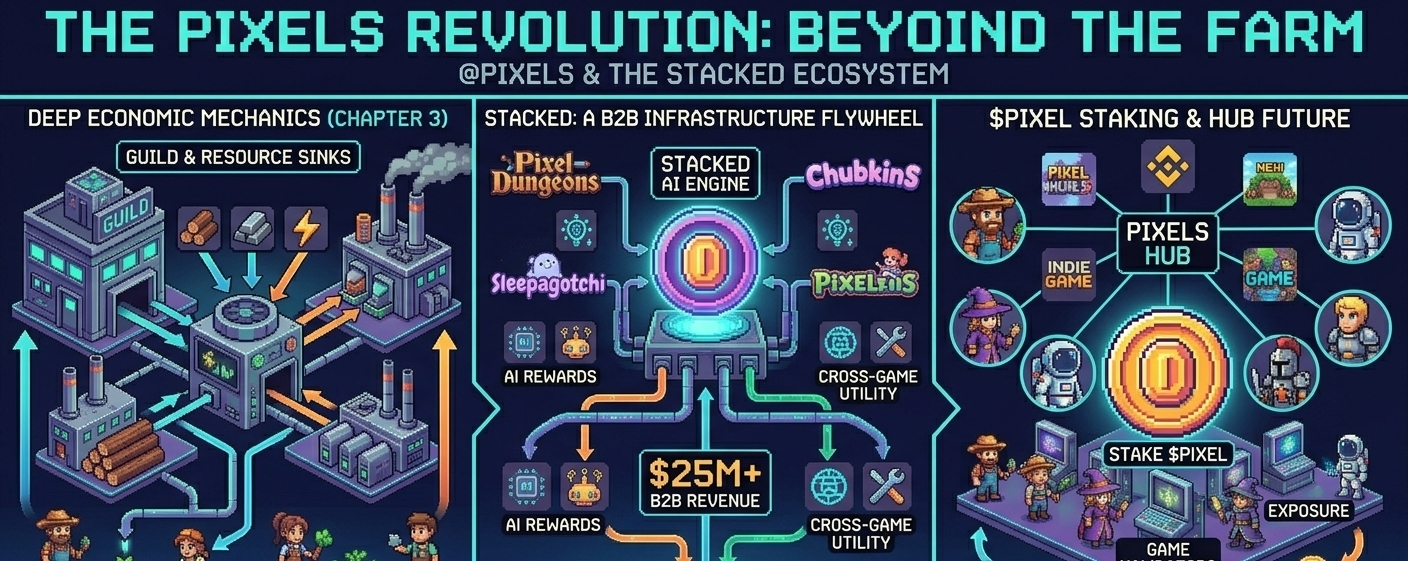
The Evolution of Web3 Gaming: How @Pixels is Redefining Infrastructure with StackedThe Web3 gaming landscape in 2026 has moved far beyond the "hype cycles" of yesteryear. Today, the focus has shifted toward sustainability, deep economic mechanics, and interoperability. At the forefront of this revolution is @Pixels, a project that has successfully transitioned from a beloved social farming RPG into a powerhouse of B2B infrastructure through its Stacked ecosystem.
Beyond the Farm: The Industrial Expansion
With the rollout of Chapter 3: Industrial Expansion, @Pixels has introduced layers of complexity that transform casual gameplay into a strategic masterclass. It’s no longer just about harvesting crops in Terra Villa; players are now managing intricate supply chains and participating in guild-led trade wars. This shift provides a massive "sink" for resources, ensuring that the economy remains balanced and rewarding for active participants.
The Power of the Stacked Ecosystem
The real "game-changer" is the Stacked engine. This AI-powered infrastructure allows external indie studios to plug into the Pixels framework, creating a multi-game flywheel. Key benefits include:
Targeted AI Rewards: Ensuring that incentives reach real players and contributors rather than bots.
Cross-Game Utility: Assets and rewards are no longer siloed. Titles like Pixel Dungeons, Sleepagotchi, and Chubkins are already leveraging this tech.
B2B Revenue: Stacked has reportedly driven over $25M in real revenue by redirecting traditional marketing budgets directly into player rewards.
The Future of $PIXEL
The utility of $PIXEL is evolving alongside the tech. While it remains the lifeblood of the game for premium content and land management, the ecosystem is moving toward a robust staking model. By staking $PIXEL, users aren't just earning rewards; they are acting as "Game Validators," deciding which new titles receive resources and exposure within the hub.
As the Ronin Network continues to provide the high-speed, low-fee foundation necessary for this scale, @Pixels is proving that Web3 games can be more than just a pastime—they can be the infrastructure for the next generation of digital entertainment.
#pixel #Web3Gaming #RoninNetwork $PIXEL
The Evolution of Web3 Gaming: How @Pixels is Redefining Infrastructure with Stacked
The Web3 gaming landscape in 2026 has moved far beyond the "hype cycles" of yesteryear. Today, the focus has shifted toward sustainability, deep economic mechanics, and interoperability. At the forefront of this revolution is @Pixels, a project that has successfully transitioned from a beloved social farming RPG into a powerhouse of B2B infrastructure through its Stacked ecosystem.
Beyond the Farm: The Industrial Expansion
With the rollout of Chapter 3: Industrial Expansion, @Pixels has introduced layers of complexity that transform casual gameplay into a strategic masterclass. It’s no longer just about harvesting crops in Terra Villa; players are now managing intricate supply chains and participating in guild-led trade wars. This shift provides a massive "sink" for resources, ensuring that the economy remains balanced and rewarding for active participants.
The Power of the Stacked Ecosystem
The real "game-changer" is the Stacked engine. This AI-powered infrastructure allows external indie studios to plug into the Pixels framework, creating a multi-game flywheel. Key benefits include:
Targeted AI Rewards: Ensuring that incentives reach real players and contributors rather than bots.
Cross-Game Utility: Assets and rewards are no longer siloed. Titles like Pixel Dungeons, Sleepagotchi, and Chubkins are already leveraging this tech.
B2B Revenue: Stacked has reportedly driven over $25M in real revenue by redirecting traditional marketing budgets directly into player rewards.
The Future of $PIXEL
The utility of $PIXEL is evolving alongside the tech. While it remains the lifeblood of the game for premium content and land management, the ecosystem is moving toward a robust staking model. By staking $PIXEL , users aren't just earning rewards; they are acting as "Game Validators," deciding which new titles receive resources and exposure within the hub.
As the Ronin Network continues to provide the high-speed, low-fee foundation necessary for this scale, @Pixels is proving that Web3 games can be more than just a pastime—they can be the infrastructure for the next generation of digital entertainment.
#pixel #Web3Gaming #RoninNetwork $PIXEL
Beyond the Farm: The Industrial Expansion
With the rollout of Chapter 3: Industrial Expansion, @Pixels has introduced layers of complexity that transform casual gameplay into a strategic masterclass. It’s no longer just about harvesting crops in Terra Villa; players are now managing intricate supply chains and participating in guild-led trade wars. This shift provides a massive "sink" for resources, ensuring that the economy remains balanced and rewarding for active participants.
The Power of the Stacked Ecosystem
The real "game-changer" is the Stacked engine. This AI-powered infrastructure allows external indie studios to plug into the Pixels framework, creating a multi-game flywheel. Key benefits include:
Targeted AI Rewards: Ensuring that incentives reach real players and contributors rather than bots.
Cross-Game Utility: Assets and rewards are no longer siloed. Titles like Pixel Dungeons, Sleepagotchi, and Chubkins are already leveraging this tech.
B2B Revenue: Stacked has reportedly driven over $25M in real revenue by redirecting traditional marketing budgets directly into player rewards.
The Future of $PIXEL
The utility of $PIXEL is evolving alongside the tech. While it remains the lifeblood of the game for premium content and land management, the ecosystem is moving toward a robust staking model. By staking $PIXEL , users aren't just earning rewards; they are acting as "Game Validators," deciding which new titles receive resources and exposure within the hub.
As the Ronin Network continues to provide the high-speed, low-fee foundation necessary for this scale, @Pixels is proving that Web3 games can be more than just a pastime—they can be the infrastructure for the next generation of digital entertainment.
#pixel #Web3Gaming #RoninNetwork $PIXEL
46

·
--
Stop selling to NPCs. Start selling to the "Lazy Whales."
i spent the morning tracking the marketplace spreads... and i’m genuinely shocked at how much $PIXEL people are leaving on the table.
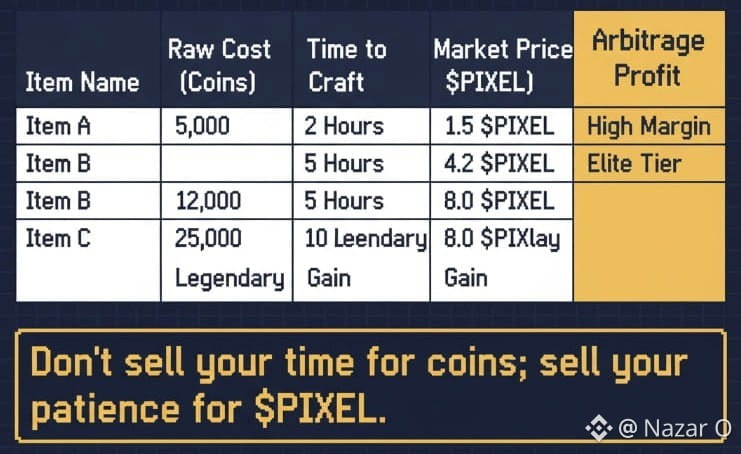
most players are stuck in the "Task Board Trap." they think the only way to get PIXEL is to wait for the system to give it to them. they are wrong. the real PIXEL is in the Arbitrage.
think about the logic:
Thousands of casual players dump raw materials because they run out of energy.
They sell cheap for Coins just to get a quick hit.
The "Refiners" (players with PIXEL-gated VIP/Land) buy those materials.
They turn them into high-tier goods and sell them back for PIXEL.
it’s a perfect loop. the casuals pay a "Lazy Tax" in time and coins, and the strategic players collect it in PIXEL.
i’ve made the mistake of "just farming" before and getting rekt by the energy cap. now, i treat my PIXEL like a merchant's bankroll. i don't plant unless the spread makes sense. i don't craft unless the "Lazy Tax" is high enough.
the $PIXEL token is the grease that makes this engine turn. it’s the bridge between "Time" and "Value."
if you’re just clicking on crops and hoping for a reward, you’re the one paying the tax. start looking at the spreads. the real game isn't in the field - it's in the market.
#RoninNetwork @pixels #pixel $PIXEL
Stop selling to NPCs. Start selling to the "Lazy Whales."
i spent the morning tracking the marketplace spreads... and i’m genuinely shocked at how much $PIXEL people are leaving on the table.
most players are stuck in the "Task Board Trap." they think the only way to get PIXEL is to wait for the system to give it to them. they are wrong. the real PIXEL is in the Arbitrage.
think about the logic:
Thousands of casual players dump raw materials because they run out of energy.
They sell cheap for Coins just to get a quick hit.
The "Refiners" (players with PIXEL-gated VIP/Land) buy those materials.
They turn them into high-tier goods and sell them back for PIXEL.
it’s a perfect loop. the casuals pay a "Lazy Tax" in time and coins, and the strategic players collect it in PIXEL.
i’ve made the mistake of "just farming" before and getting rekt by the energy cap. now, i treat my PIXEL like a merchant's bankroll. i don't plant unless the spread makes sense. i don't craft unless the "Lazy Tax" is high enough.
the $PIXEL token is the grease that makes this engine turn. it’s the bridge between "Time" and "Value."
if you’re just clicking on crops and hoping for a reward, you’re the one paying the tax. start looking at the spreads. the real game isn't in the field - it's in the market.
#RoninNetwork @Pixels #pixel $PIXEL
i spent the morning tracking the marketplace spreads... and i’m genuinely shocked at how much $PIXEL people are leaving on the table.
most players are stuck in the "Task Board Trap." they think the only way to get PIXEL is to wait for the system to give it to them. they are wrong. the real PIXEL is in the Arbitrage.
think about the logic:
Thousands of casual players dump raw materials because they run out of energy.
They sell cheap for Coins just to get a quick hit.
The "Refiners" (players with PIXEL-gated VIP/Land) buy those materials.
They turn them into high-tier goods and sell them back for PIXEL.
it’s a perfect loop. the casuals pay a "Lazy Tax" in time and coins, and the strategic players collect it in PIXEL.
i’ve made the mistake of "just farming" before and getting rekt by the energy cap. now, i treat my PIXEL like a merchant's bankroll. i don't plant unless the spread makes sense. i don't craft unless the "Lazy Tax" is high enough.
the $PIXEL token is the grease that makes this engine turn. it’s the bridge between "Time" and "Value."
if you’re just clicking on crops and hoping for a reward, you’re the one paying the tax. start looking at the spreads. the real game isn't in the field - it's in the market.
#RoninNetwork @Pixels #pixel $PIXEL
2
6
176

·
--
Pixels ($PIXEL): El futuro del Web3 Gaming en la red Ronin.
Pixels no es solo un juego, es un ecosistema social de mundo abierto donde el farming, la exploración y la creación se unen para ofrecer una experiencia única. Tras su exitoso lanzamiento en el Binance Launchpool, $PIXEL se ha consolidado como un proyecto líder en la intersección de los videojuegos y las finanzas descentralizadas.
¡No te pierdas la oportunidad de participar en el pool de 15,000,000 PIXEL a través de CreatorPad! La adopción masiva está comenzando. 🌱🎮
#pixel $PIXEL #Web3Gaming #BinanceSquare #CryptoGaming #RoninNetwork
#pixel $PIXEL
Pixels ($PIXEL ): El futuro del Web3 Gaming en la red Ronin.
Pixels no es solo un juego, es un ecosistema social de mundo abierto donde el farming, la exploración y la creación se unen para ofrecer una experiencia única. Tras su exitoso lanzamiento en el Binance Launchpool, $PIXEL se ha consolidado como un proyecto líder en la intersección de los videojuegos y las finanzas descentralizadas.
¡No te pierdas la oportunidad de participar en el pool de 15,000,000 PIXEL a través de CreatorPad! La adopción masiva está comenzando. 🌱🎮
#pixel $PIXEL #Web3Gaming #BinanceSquare #CryptoGaming #RoninNetwork
#pixel $PIXEL
Pixels no es solo un juego, es un ecosistema social de mundo abierto donde el farming, la exploración y la creación se unen para ofrecer una experiencia única. Tras su exitoso lanzamiento en el Binance Launchpool, $PIXEL se ha consolidado como un proyecto líder en la intersección de los videojuegos y las finanzas descentralizadas.
¡No te pierdas la oportunidad de participar en el pool de 15,000,000 PIXEL a través de CreatorPad! La adopción masiva está comenzando. 🌱🎮
#pixel $PIXEL #Web3Gaming #BinanceSquare #CryptoGaming #RoninNetwork
#pixel $PIXEL
243

·
--
Haussier
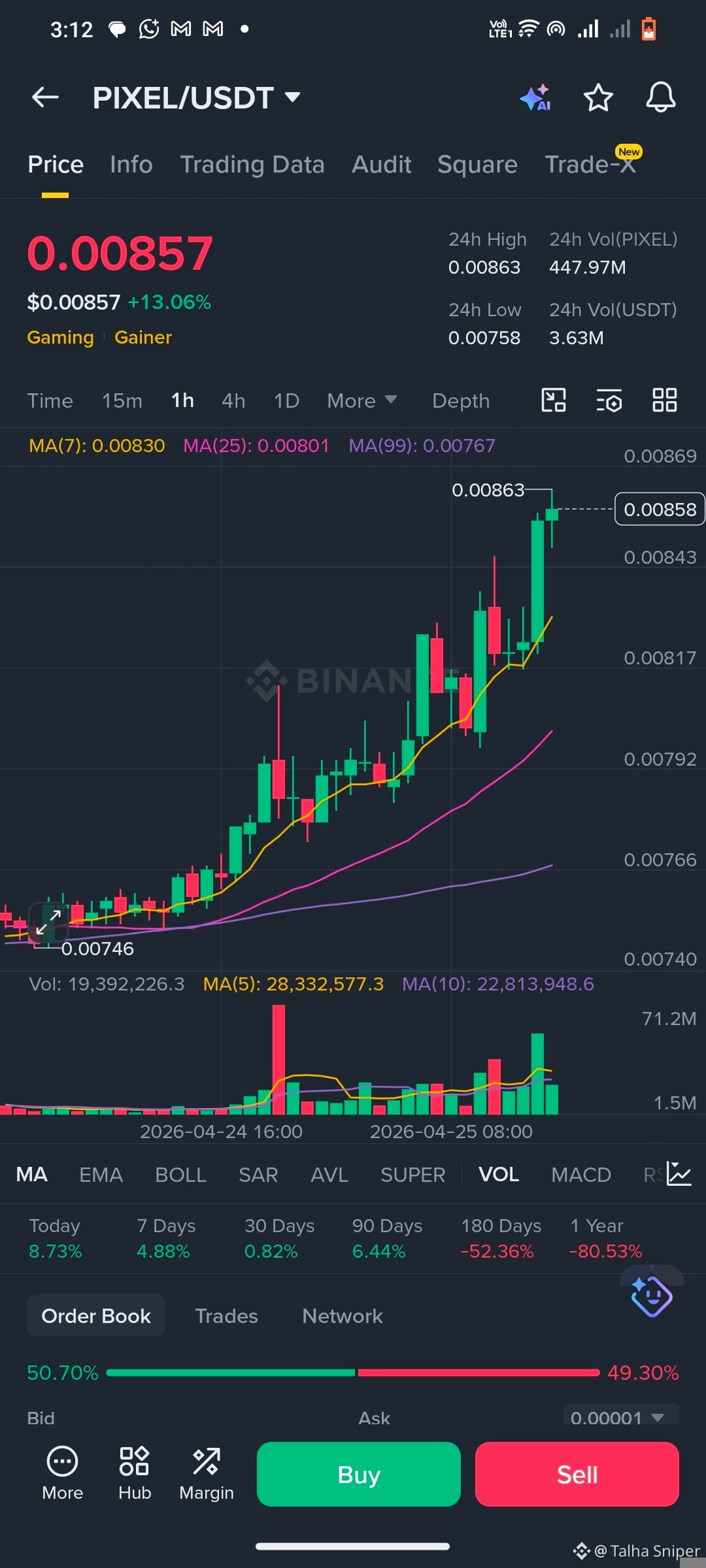
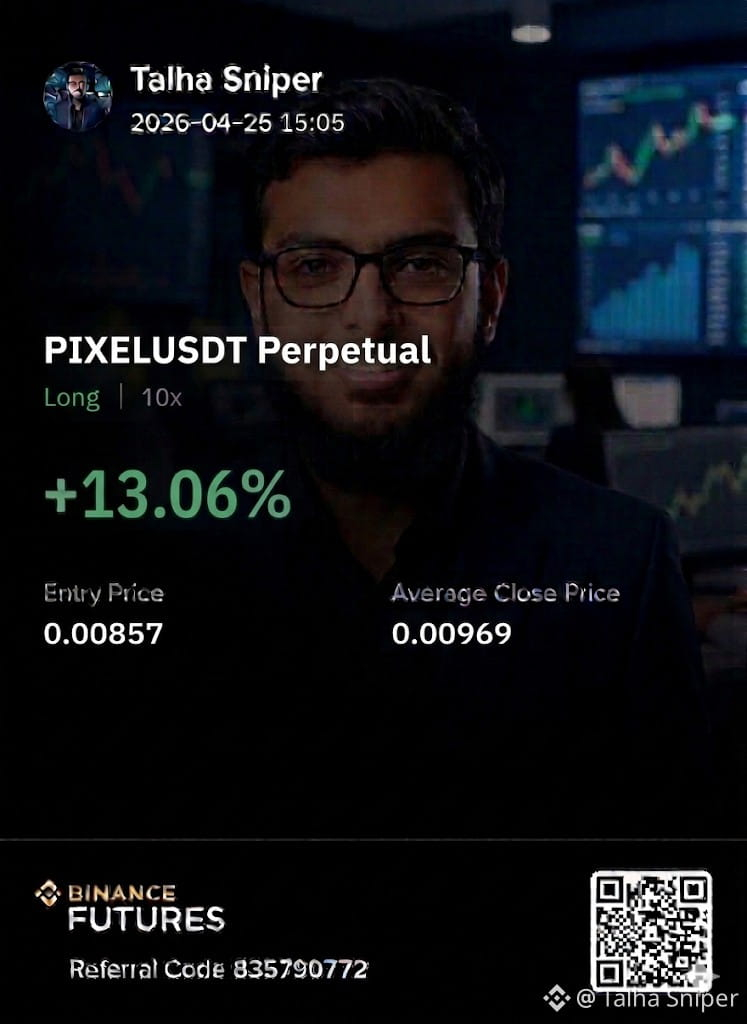
🚨 $PIXEL Sniper Long Strategy
The Chapter 2 "loading zone" is officially active. We are catching the impulsive wave as buyers overwhelm the $0.0083 resistance. With the Ronin L2 migration on the horizon, the macro narrative is shifting in our favor.
Entry Zone: 0.00830 – 0.00858 (Current Consolidation)
TP1: 0.00900 (Immediate Supply Zone)
TP2: 0.00980 (Structural Resistance)
TP3: 0.01150 (Psychological Breakout Target)
Stop Loss: 0.00790 (Invalidation below MA25)
Trade Logic:
Price is printing a textbook "higher high" structure on the 1H chart. The volume spike at the $0.0082 breakout confirms institutional interest. As long as we hold above the $0.0080 support, the "Smart Money" bias remains bullish. We are front-running the May 12 network upgrade—snipers enter before the hype peaks.
#RoninNetwork #GameFi #TalhaSniper #BinanceSquare #pixel $PIXEL
{future}(PIXELUSDT)
🚨 $PIXEL Sniper Long Strategy
The Chapter 2 "loading zone" is officially active. We are catching the impulsive wave as buyers overwhelm the $0.0083 resistance. With the Ronin L2 migration on the horizon, the macro narrative is shifting in our favor.
Entry Zone: 0.00830 – 0.00858 (Current Consolidation)
TP1: 0.00900 (Immediate Supply Zone)
TP2: 0.00980 (Structural Resistance)
TP3: 0.01150 (Psychological Breakout Target)
Stop Loss: 0.00790 (Invalidation below MA25)
Trade Logic:
Price is printing a textbook "higher high" structure on the 1H chart. The volume spike at the $0.0082 breakout confirms institutional interest. As long as we hold above the $0.0080 support, the "Smart Money" bias remains bullish. We are front-running the May 12 network upgrade—snipers enter before the hype peaks.
#RoninNetwork #GameFi #TalhaSniper #BinanceSquare #pixel $PIXEL
The Chapter 2 "loading zone" is officially active. We are catching the impulsive wave as buyers overwhelm the $0.0083 resistance. With the Ronin L2 migration on the horizon, the macro narrative is shifting in our favor.
Entry Zone: 0.00830 – 0.00858 (Current Consolidation)
TP1: 0.00900 (Immediate Supply Zone)
TP2: 0.00980 (Structural Resistance)
TP3: 0.01150 (Psychological Breakout Target)
Stop Loss: 0.00790 (Invalidation below MA25)
Trade Logic:
Price is printing a textbook "higher high" structure on the 1H chart. The volume spike at the $0.0082 breakout confirms institutional interest. As long as we hold above the $0.0080 support, the "Smart Money" bias remains bullish. We are front-running the May 12 network upgrade—snipers enter before the hype peaks.
#RoninNetwork #GameFi #TalhaSniper #BinanceSquare #pixel $PIXEL
38

·
--
مشروع عملة PIXEL: بوابة الزراعة والاستكشاف في عالم الميتافيرستُعد عملة Pixels (PIXEL) العملة الرقمية الأصلية للعبة "Pixels"، وهي لعبة زراعة اجتماعية وعالم مفتوح تعتمد على تقنية البلوكشين وتعمل حاليًا عبر شبكة رونين (Ronin Network). في عام 2026، استطاع المشروع ترسيخ مكانته كواحد من أكثر التطبيقات اللامركزية (dApps) لعباً في التاريخ، مع وصول عدد المستخدمين النشطين يومياً إلى أكثر من مليون مستخدم.
Binance
+3
أهداف المشروع واستخدامات العملة
يهدف مشروع Pixels إلى خلق اقتصاد رقمي مستدام يمزج بين الترفيه وحقوق الملكية الرقمية. وتُستخدم عملة PIXEL في عدة وظائف جوهرية داخل هذا النظام البيئي، منها:
المعاملات داخل اللعبة: شراء الموارد، الترقيات، وسك الرموز غير القابلة للاستبدال (NFTs).
العضويات والجماعات: شراء جوازات معركة (VIP Battle Passes) والانضمام إلى الجماعات الاجتماعية المالية.
الحوكمة: تمكين مجتمع اللاعبين من المشاركة في اتخاذ القرارات المتعلقة بمستقبل المشروع.
Binance
+2
التحليل الفني والتوقعات لعام 2026
من الناحية الفنية، انتقلت عملة PIXEL في عام 2026 من مرحلة "الاكتشاف المتقلب" إلى مرحلة "النمو الناضج". وتتفاوت توقعات المحللين للسعر بناءً على زخم السوق:
النطاق السعري: تشير بعض النماذج التحليلية إلى تداول العملة بمتوسط يقارب 0.2920 دولار في عام 2026، مع إمكانية الوصول إلى قمم تلامس 0.3423 دولار.
Binance
الاتجاه العام: تظهر المؤشرات الفنية مثل المتوسطات المتحركة لـ 200 يوم اتجاهاً صعودياً مدعوماً بزيادة معدلات إكمال "المهام اليومية" داخل اللعبة وتوسع النظام البيئي ليشمل ألعاباً متعددة.
CoinDCX
+1
التحديثات التقنية: ترقبت الأسواق تحديث شبكة Ronin في مايو 2026، والذي يهدف إلى خفض التضخم وتعزيز الأمان، مما قد يعطي دفعة إيجابية للسعر.
$PIXEL
$BTC
$BNB
#PIXEL📈 #RoninNetwork #Web3Gaming #Crypto2026 #pixel
مشروع عملة PIXEL: بوابة الزراعة والاستكشاف في عالم الميتافيرس
تُعد عملة Pixels (PIXEL) العملة الرقمية الأصلية للعبة "Pixels"، وهي لعبة زراعة اجتماعية وعالم مفتوح تعتمد على تقنية البلوكشين وتعمل حاليًا عبر شبكة رونين (Ronin Network). في عام 2026، استطاع المشروع ترسيخ مكانته كواحد من أكثر التطبيقات اللامركزية (dApps) لعباً في التاريخ، مع وصول عدد المستخدمين النشطين يومياً إلى أكثر من مليون مستخدم.
Binance
+3
أهداف المشروع واستخدامات العملة
يهدف مشروع Pixels إلى خلق اقتصاد رقمي مستدام يمزج بين الترفيه وحقوق الملكية الرقمية. وتُستخدم عملة PIXEL في عدة وظائف جوهرية داخل هذا النظام البيئي، منها:
المعاملات داخل اللعبة: شراء الموارد، الترقيات، وسك الرموز غير القابلة للاستبدال (NFTs).
العضويات والجماعات: شراء جوازات معركة (VIP Battle Passes) والانضمام إلى الجماعات الاجتماعية المالية.
الحوكمة: تمكين مجتمع اللاعبين من المشاركة في اتخاذ القرارات المتعلقة بمستقبل المشروع.
Binance
+2
التحليل الفني والتوقعات لعام 2026
من الناحية الفنية، انتقلت عملة PIXEL في عام 2026 من مرحلة "الاكتشاف المتقلب" إلى مرحلة "النمو الناضج". وتتفاوت توقعات المحللين للسعر بناءً على زخم السوق:
النطاق السعري: تشير بعض النماذج التحليلية إلى تداول العملة بمتوسط يقارب 0.2920 دولار في عام 2026، مع إمكانية الوصول إلى قمم تلامس 0.3423 دولار.
Binance
الاتجاه العام: تظهر المؤشرات الفنية مثل المتوسطات المتحركة لـ 200 يوم اتجاهاً صعودياً مدعوماً بزيادة معدلات إكمال "المهام اليومية" داخل اللعبة وتوسع النظام البيئي ليشمل ألعاباً متعددة.
CoinDCX
+1
التحديثات التقنية: ترقبت الأسواق تحديث شبكة Ronin في مايو 2026، والذي يهدف إلى خفض التضخم وتعزيز الأمان، مما قد يعطي دفعة إيجابية للسعر.
$PIXEL
$BTC
$BNB
#PIXEL📈 #RoninNetwork #Web3Gaming #Crypto2026 #pixel
Binance
+3
أهداف المشروع واستخدامات العملة
يهدف مشروع Pixels إلى خلق اقتصاد رقمي مستدام يمزج بين الترفيه وحقوق الملكية الرقمية. وتُستخدم عملة PIXEL في عدة وظائف جوهرية داخل هذا النظام البيئي، منها:
المعاملات داخل اللعبة: شراء الموارد، الترقيات، وسك الرموز غير القابلة للاستبدال (NFTs).
العضويات والجماعات: شراء جوازات معركة (VIP Battle Passes) والانضمام إلى الجماعات الاجتماعية المالية.
الحوكمة: تمكين مجتمع اللاعبين من المشاركة في اتخاذ القرارات المتعلقة بمستقبل المشروع.
Binance
+2
التحليل الفني والتوقعات لعام 2026
من الناحية الفنية، انتقلت عملة PIXEL في عام 2026 من مرحلة "الاكتشاف المتقلب" إلى مرحلة "النمو الناضج". وتتفاوت توقعات المحللين للسعر بناءً على زخم السوق:
النطاق السعري: تشير بعض النماذج التحليلية إلى تداول العملة بمتوسط يقارب 0.2920 دولار في عام 2026، مع إمكانية الوصول إلى قمم تلامس 0.3423 دولار.
Binance
الاتجاه العام: تظهر المؤشرات الفنية مثل المتوسطات المتحركة لـ 200 يوم اتجاهاً صعودياً مدعوماً بزيادة معدلات إكمال "المهام اليومية" داخل اللعبة وتوسع النظام البيئي ليشمل ألعاباً متعددة.
CoinDCX
+1
التحديثات التقنية: ترقبت الأسواق تحديث شبكة Ronin في مايو 2026، والذي يهدف إلى خفض التضخم وتعزيز الأمان، مما قد يعطي دفعة إيجابية للسعر.
$PIXEL
$BTC
$BNB
#PIXEL📈 #RoninNetwork #Web3Gaming #Crypto2026 #pixel
81

·
--
#pixel $PIXEL 🌱 #PIXEL📈 The Future of Social Web3 Gaming 🎮
Pixels (PIXEL) is redefining the Web3 gaming space with its unique blend of social interaction, creativity, and casual gameplay. Built on the Ronin Network, this open-world experience offers players a vibrant universe centered around farming, exploration, and resource management.
Unlike traditional games, Pixels emphasizes community-driven progress. Players can grow crops, trade resources, craft items, and expand their digital land while interacting with others in a shared ecosystem. The game’s pixel-art style gives it a nostalgic yet modern feel, making it both relaxing and engaging.
What truly sets Pixels apart is its integration of blockchain technology. Players have real ownership of in-game assets, which can be traded or utilized to generate value within the ecosystem. This creates a play-to-earn opportunity without sacrificing fun and simplicity.
As Web3 adoption continues to rise, projects like Pixels highlight how gaming can evolve beyond entertainment into a decentralized social experience. With its growing community and consistent updates, PIXEL is positioning itself as a strong contender in the GameFi space.
🚀 Keep an eye on PIXEL — it might just be the next big thing in blockchain gaming!
{spot}(PIXELUSDT)
#PIXEL/USDT #Web3GamingAssets $PIXEL
#RoninNetwork
#pixel $PIXEL 🌱 #PIXEL📈 The Future of Social Web3 Gaming 🎮
Pixels (PIXEL) is redefining the Web3 gaming space with its unique blend of social interaction, creativity, and casual gameplay. Built on the Ronin Network, this open-world experience offers players a vibrant universe centered around farming, exploration, and resource management.
Unlike traditional games, Pixels emphasizes community-driven progress. Players can grow crops, trade resources, craft items, and expand their digital land while interacting with others in a shared ecosystem. The game’s pixel-art style gives it a nostalgic yet modern feel, making it both relaxing and engaging.
What truly sets Pixels apart is its integration of blockchain technology. Players have real ownership of in-game assets, which can be traded or utilized to generate value within the ecosystem. This creates a play-to-earn opportunity without sacrificing fun and simplicity.
As Web3 adoption continues to rise, projects like Pixels highlight how gaming can evolve beyond entertainment into a decentralized social experience. With its growing community and consistent updates, PIXEL is positioning itself as a strong contender in the GameFi space.
🚀 Keep an eye on PIXEL — it might just be the next big thing in blockchain gaming!
#PIXEL/USDT #Web3GamingAssets $PIXEL
#RoninNetwork
Pixels (PIXEL) is redefining the Web3 gaming space with its unique blend of social interaction, creativity, and casual gameplay. Built on the Ronin Network, this open-world experience offers players a vibrant universe centered around farming, exploration, and resource management.
Unlike traditional games, Pixels emphasizes community-driven progress. Players can grow crops, trade resources, craft items, and expand their digital land while interacting with others in a shared ecosystem. The game’s pixel-art style gives it a nostalgic yet modern feel, making it both relaxing and engaging.
What truly sets Pixels apart is its integration of blockchain technology. Players have real ownership of in-game assets, which can be traded or utilized to generate value within the ecosystem. This creates a play-to-earn opportunity without sacrificing fun and simplicity.
As Web3 adoption continues to rise, projects like Pixels highlight how gaming can evolve beyond entertainment into a decentralized social experience. With its growing community and consistent updates, PIXEL is positioning itself as a strong contender in the GameFi space.
🚀 Keep an eye on PIXEL — it might just be the next big thing in blockchain gaming!
#PIXEL/USDT #Web3GamingAssets $PIXEL
#RoninNetwork
112

#pixel $PIXEL
@Pixels ka game Ronin par 2 din se khel raha hun!
Farming aur quests bohat interesting hain. inshallah
$PIXEL ka acha future hai mujhe lagta hai.
#pixel #RoninNetwork #PIXEL/USDT
#pixel $PIXEL
@Pixels ka game Ronin par 2 din se khel raha hun!
Farming aur quests bohat interesting hain. inshallah
$PIXEL ka acha future hai mujhe lagta hai.
#pixel #RoninNetwork #PIXEL/USDT
@Pixels ka game Ronin par 2 din se khel raha hun!
Farming aur quests bohat interesting hain. inshallah
$PIXEL ka acha future hai mujhe lagta hai.
#pixel #RoninNetwork #PIXEL/USDT
100

·
--
⚠️ Fique atento, investidor de $PIXEL!
Lembre-se: a migração da rede Ronin para L2 acontece dia 12 de maio. Não clique em links suspeitos prometendo "airdrops de migração". Use apenas os canais oficiais da @pixels_online. 🛡️
Segurança em primeiro lugar, lucro em segundo.
#CryptoSafety #Pixels #RoninNetwork
#$PIXEL
#PIXEL📈
⚠️ Fique atento, investidor de $PIXEL !
Lembre-se: a migração da rede Ronin para L2 acontece dia 12 de maio. Não clique em links suspeitos prometendo "airdrops de migração". Use apenas os canais oficiais da @pixels_online. 🛡️
Segurança em primeiro lugar, lucro em segundo.
#CryptoSafety #Pixels #RoninNetwork
#$PIXEL
#PIXEL📈
Lembre-se: a migração da rede Ronin para L2 acontece dia 12 de maio. Não clique em links suspeitos prometendo "airdrops de migração". Use apenas os canais oficiais da @pixels_online. 🛡️
Segurança em primeiro lugar, lucro em segundo.
#CryptoSafety #Pixels #RoninNetwork
#$PIXEL
#PIXEL📈
1
3
162

·
--
Haussier
🚨 IS THE $PIXEL DIP A GIFT OR A TRAP? 🚨
If you’ve been watching the charts, you know $PIXEL is currently consolidating around the $0.0075 - $0.0082 range. While some are panic selling, the smart money is looking at the bigger picture! 📊💎
Here is why April 2026 is the "Accumulation Zone" for Pixels:
Massive Active User Base: Unlike ghost-town crypto projects, Pixels is still pulling in 150,000+ daily active players. The community is alive, farming, and building! 👨🌾🔥
Eco-System Expansion: It’s not just a game anymore. Pixels has evolved into a multi-layered system with cross-game currency potential. @pixels is becoming the utility backbone for multiple titles on the Ronin Network. 🌐🎮
Market Outperformance: Even with the current volatility, PIXEL has outperformed the broader market this week with a +12% bounce. This shows strong buyer support at the current levels. ✅🚀
Chapter 3 Alpha: The integration of the "Stacked" AI infrastructure is weeding out the bots, ensuring that real rewards go to real holders and players. 🤖🚫
The current price is over 90% below the All-Time High. History tells us that during a bull run, the strongest communities recover the fastest. Is this your last chance to load up under a cent?
Are you BUYING the dip 💚 or WAITING for lower 🔴? Let’s hear your strategy in the comments! 👇
#PIXEL #PixelsGame #Web3Gaming #CryptoInvestment #RoninNetwork #BinanceSquare #altcoins #pixel $PIXEL
{spot}(PIXELUSDT)
🚨 IS THE $PIXEL DIP A GIFT OR A TRAP? 🚨
If you’ve been watching the charts, you know $PIXEL is currently consolidating around the $0.0075 - $0.0082 range. While some are panic selling, the smart money is looking at the bigger picture! 📊💎
Here is why April 2026 is the "Accumulation Zone" for Pixels:
Massive Active User Base: Unlike ghost-town crypto projects, Pixels is still pulling in 150,000+ daily active players. The community is alive, farming, and building! 👨🌾🔥
Eco-System Expansion: It’s not just a game anymore. Pixels has evolved into a multi-layered system with cross-game currency potential. @Pixels is becoming the utility backbone for multiple titles on the Ronin Network. 🌐🎮
Market Outperformance: Even with the current volatility, PIXEL has outperformed the broader market this week with a +12% bounce. This shows strong buyer support at the current levels. ✅🚀
Chapter 3 Alpha: The integration of the "Stacked" AI infrastructure is weeding out the bots, ensuring that real rewards go to real holders and players. 🤖🚫
The current price is over 90% below the All-Time High. History tells us that during a bull run, the strongest communities recover the fastest. Is this your last chance to load up under a cent?
Are you BUYING the dip 💚 or WAITING for lower 🔴? Let’s hear your strategy in the comments! 👇
#PIXEL #PixelsGame #Web3Gaming #CryptoInvestment #RoninNetwork #BinanceSquare #altcoins #pixel $PIXEL
If you’ve been watching the charts, you know $PIXEL is currently consolidating around the $0.0075 - $0.0082 range. While some are panic selling, the smart money is looking at the bigger picture! 📊💎
Here is why April 2026 is the "Accumulation Zone" for Pixels:
Massive Active User Base: Unlike ghost-town crypto projects, Pixels is still pulling in 150,000+ daily active players. The community is alive, farming, and building! 👨🌾🔥
Eco-System Expansion: It’s not just a game anymore. Pixels has evolved into a multi-layered system with cross-game currency potential. @Pixels is becoming the utility backbone for multiple titles on the Ronin Network. 🌐🎮
Market Outperformance: Even with the current volatility, PIXEL has outperformed the broader market this week with a +12% bounce. This shows strong buyer support at the current levels. ✅🚀
Chapter 3 Alpha: The integration of the "Stacked" AI infrastructure is weeding out the bots, ensuring that real rewards go to real holders and players. 🤖🚫
The current price is over 90% below the All-Time High. History tells us that during a bull run, the strongest communities recover the fastest. Is this your last chance to load up under a cent?
Are you BUYING the dip 💚 or WAITING for lower 🔴? Let’s hear your strategy in the comments! 👇
#PIXEL #PixelsGame #Web3Gaming #CryptoInvestment #RoninNetwork #BinanceSquare #altcoins #pixel $PIXEL

83

🚀 AXS Market Analysis: Axie Infinity Scales "Risk-to-Earn" Economy
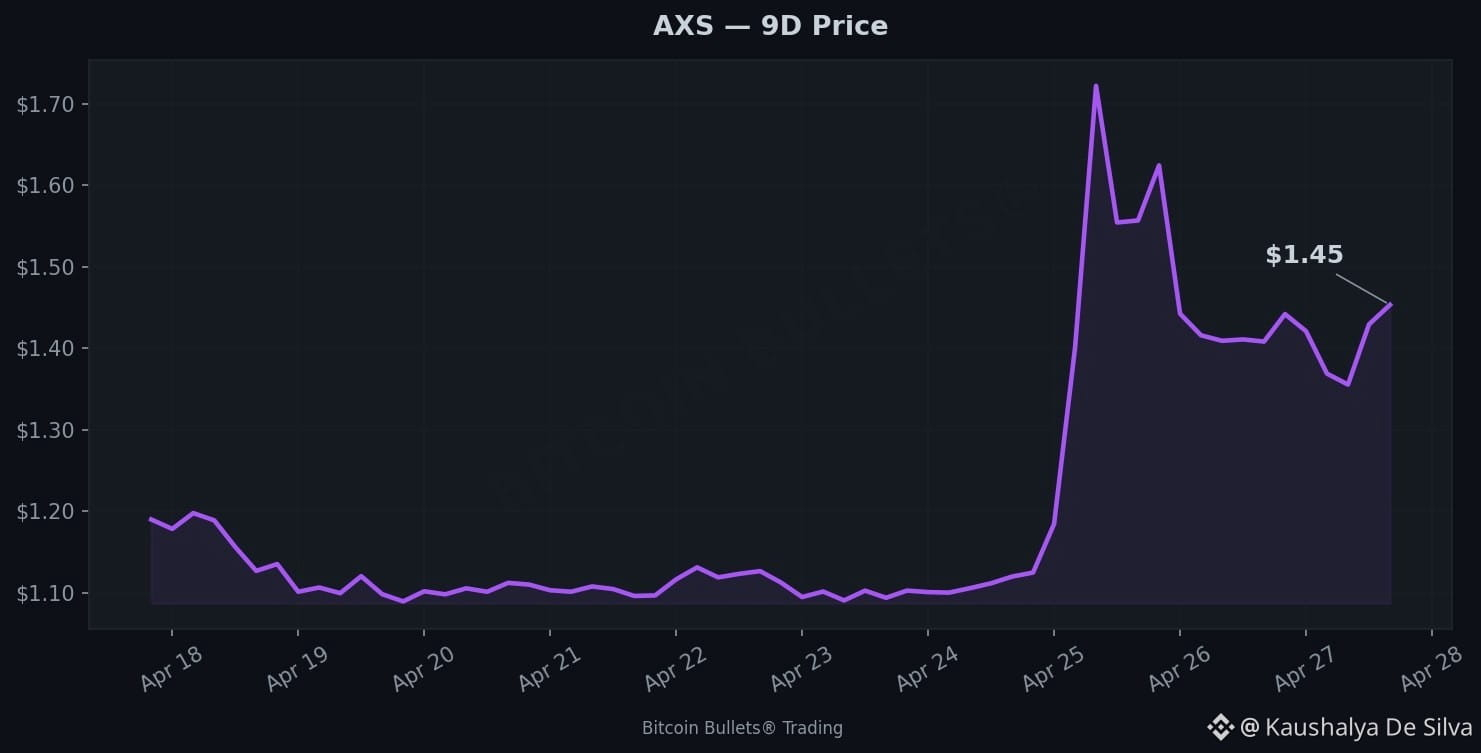
As of April 28, 2026, AXS/USDT is maintaining a firm bullish trajectory, trading near $1.37. The ecosystem has undergone a massive fundamental shift this month with the rollout of Bonded AXS (bAXS).
This new "Risk-to-Earn" framework has successfully curtailed inflation by removing SLP emissions from Origins and replacing them with non-transferable bAXS rewards for top-tier competitive play, significantly reducing immediate sell pressure. 🎮💎
⚖️ Strategic Outlook
🐂 The Bull Case: AXS is riding a steady monthly uptrend, supported by an RSI near 60 and consistent demand for bonded staking. Holding above the 1.355 structural pivot is essential to keep the momentum targeted at the $1.45 resistance. A high-volume break here could signal a shift toward the $1.60 zone as the market digests the improved tokenomics. 🎯
🐻 The Bear Case: Despite the overall strength, a bearish MACD suggests a risk of a short-term liquidity flush. A decisive break below the 1.355 floor would invalidate the current "buy-the-dip" structure, risking a deeper retracement toward the $1.09 demand zone, especially if broader market volatility impacts the gaming sector. ⚠️
📍 Critical Pivot: Watch 1.355 closely. This is the directional "line in the sand"; as long as price holds above this level, the path of least resistance remains upward. A breach, however, would indicate that the current rally requires a deeper reset before a further move. 🛡️👀
🌐 Key Ecosystem Drivers
Economic Hardening: The transition to bAXS has effectively "hardened" the Axie economy, shifting the focus from speculative farming to genuine ecosystem utility and long-term staking.
Network Stability: Daily active addresses on the Ronin network have stabilized throughout April, reflecting a mature and loyal user base that is less sensitive to short-term price fluctuations than previous cycles.
#AxieInfinity #AXS #Web3Gaming #CryptoAnalysis #RoninNetwork #TechnicalAnalysis $AXS
{spot}(AXSUSDT)
🚀 AXS Market Analysis: Axie Infinity Scales "Risk-to-Earn" Economy
As of April 28, 2026, AXS/USDT is maintaining a firm bullish trajectory, trading near $1.37. The ecosystem has undergone a massive fundamental shift this month with the rollout of Bonded AXS (bAXS).
This new "Risk-to-Earn" framework has successfully curtailed inflation by removing SLP emissions from Origins and replacing them with non-transferable bAXS rewards for top-tier competitive play, significantly reducing immediate sell pressure. 🎮💎
⚖️ Strategic Outlook
🐂 The Bull Case: AXS is riding a steady monthly uptrend, supported by an RSI near 60 and consistent demand for bonded staking. Holding above the 1.355 structural pivot is essential to keep the momentum targeted at the $1.45 resistance. A high-volume break here could signal a shift toward the $1.60 zone as the market digests the improved tokenomics. 🎯
🐻 The Bear Case: Despite the overall strength, a bearish MACD suggests a risk of a short-term liquidity flush. A decisive break below the 1.355 floor would invalidate the current "buy-the-dip" structure, risking a deeper retracement toward the $1.09 demand zone, especially if broader market volatility impacts the gaming sector. ⚠️
📍 Critical Pivot: Watch 1.355 closely. This is the directional "line in the sand"; as long as price holds above this level, the path of least resistance remains upward. A breach, however, would indicate that the current rally requires a deeper reset before a further move. 🛡️👀
🌐 Key Ecosystem Drivers
Economic Hardening: The transition to bAXS has effectively "hardened" the Axie economy, shifting the focus from speculative farming to genuine ecosystem utility and long-term staking.
Network Stability: Daily active addresses on the Ronin network have stabilized throughout April, reflecting a mature and loyal user base that is less sensitive to short-term price fluctuations than previous cycles.
#AxieInfinity #AXS #Web3Gaming #CryptoAnalysis #RoninNetwork #TechnicalAnalysis $AXS
As of April 28, 2026, AXS/USDT is maintaining a firm bullish trajectory, trading near $1.37. The ecosystem has undergone a massive fundamental shift this month with the rollout of Bonded AXS (bAXS).
This new "Risk-to-Earn" framework has successfully curtailed inflation by removing SLP emissions from Origins and replacing them with non-transferable bAXS rewards for top-tier competitive play, significantly reducing immediate sell pressure. 🎮💎
⚖️ Strategic Outlook
🐂 The Bull Case: AXS is riding a steady monthly uptrend, supported by an RSI near 60 and consistent demand for bonded staking. Holding above the 1.355 structural pivot is essential to keep the momentum targeted at the $1.45 resistance. A high-volume break here could signal a shift toward the $1.60 zone as the market digests the improved tokenomics. 🎯
🐻 The Bear Case: Despite the overall strength, a bearish MACD suggests a risk of a short-term liquidity flush. A decisive break below the 1.355 floor would invalidate the current "buy-the-dip" structure, risking a deeper retracement toward the $1.09 demand zone, especially if broader market volatility impacts the gaming sector. ⚠️
📍 Critical Pivot: Watch 1.355 closely. This is the directional "line in the sand"; as long as price holds above this level, the path of least resistance remains upward. A breach, however, would indicate that the current rally requires a deeper reset before a further move. 🛡️👀
🌐 Key Ecosystem Drivers
Economic Hardening: The transition to bAXS has effectively "hardened" the Axie economy, shifting the focus from speculative farming to genuine ecosystem utility and long-term staking.
Network Stability: Daily active addresses on the Ronin network have stabilized throughout April, reflecting a mature and loyal user base that is less sensitive to short-term price fluctuations than previous cycles.
#AxieInfinity #AXS #Web3Gaming #CryptoAnalysis #RoninNetwork #TechnicalAnalysis $AXS
202
·
--
Pixels: Why "Smoothness" is the ultimate $PIXEL price floor
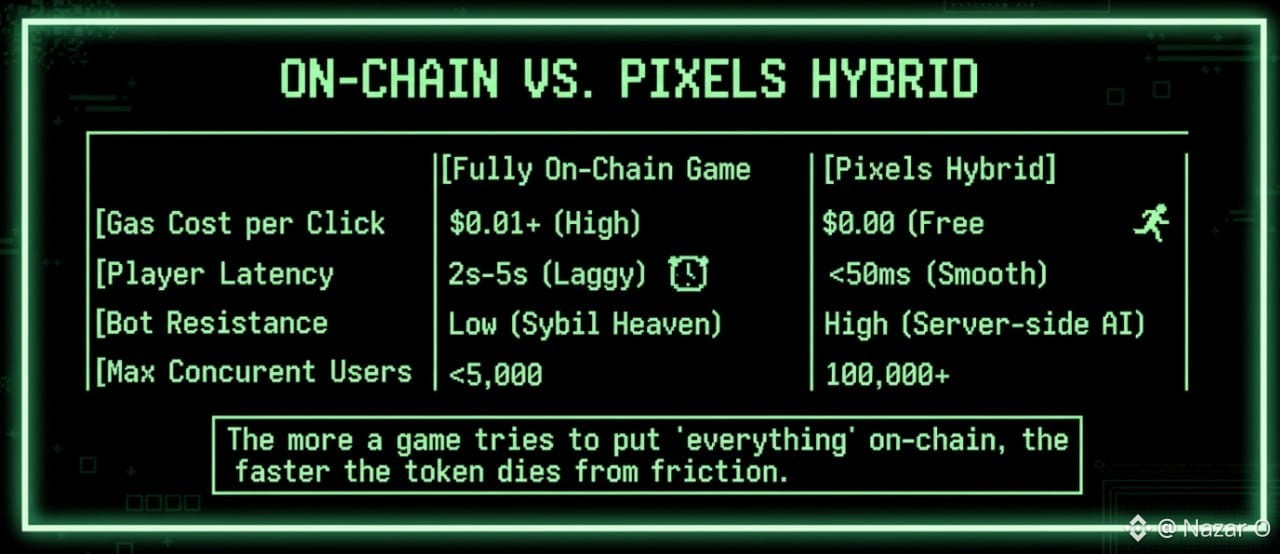
i was talking to a dev friend earlier about why most Web3 games feel like 1995 dial-up. the answer is simple: they’re trying to put too much on the blockchain.
pixels is different. it uses a Hybrid Stack.
i didn't even realize how important this was until the last big event. 100k+ people were online, and the game didn't lag once. no gas for planting, no wallet pop-ups for movement, just... gameplay.
the logic is simple but brilliant:
Off-chain: The "Busy Work" (farming, movement, NPCs).
On-chain: The "Value" ($PIXEL, NFTs, Governance).
this isn't just about making the game "fun." it’s about tokenomics. if a game is clunky, people leave. if people leave, the token dies. by making the game as smooth as a web2 app, pixels keeps the retention high. and high retention is the only thing that creates long-term demand for PIXEL.
i’ve made the mistake of betting on "pure" on-chain games before. they all die the moment the network gets busy.
PIXEL is safe from that. it’s built on an architecture that actually knows how to scale. i’m not just betting on a farm sim - i’m betting on the most efficient scaling engine in the Ronin ecosystem.
if you can't see why a smooth game is better for your bags, you’re looking at the wrong metrics.
@pixels #pixel $PIXEL #RoninNetwork
Pixels: Why "Smoothness" is the ultimate $PIXEL price floor
i was talking to a dev friend earlier about why most Web3 games feel like 1995 dial-up. the answer is simple: they’re trying to put too much on the blockchain.
pixels is different. it uses a Hybrid Stack.
i didn't even realize how important this was until the last big event. 100k+ people were online, and the game didn't lag once. no gas for planting, no wallet pop-ups for movement, just... gameplay.
the logic is simple but brilliant:
Off-chain: The "Busy Work" (farming, movement, NPCs).
On-chain: The "Value" ($PIXEL , NFTs, Governance).
this isn't just about making the game "fun." it’s about tokenomics. if a game is clunky, people leave. if people leave, the token dies. by making the game as smooth as a web2 app, pixels keeps the retention high. and high retention is the only thing that creates long-term demand for PIXEL.
i’ve made the mistake of betting on "pure" on-chain games before. they all die the moment the network gets busy.
PIXEL is safe from that. it’s built on an architecture that actually knows how to scale. i’m not just betting on a farm sim - i’m betting on the most efficient scaling engine in the Ronin ecosystem.
if you can't see why a smooth game is better for your bags, you’re looking at the wrong metrics.
@Pixels #pixel $PIXEL #RoninNetwork
i was talking to a dev friend earlier about why most Web3 games feel like 1995 dial-up. the answer is simple: they’re trying to put too much on the blockchain.
pixels is different. it uses a Hybrid Stack.
i didn't even realize how important this was until the last big event. 100k+ people were online, and the game didn't lag once. no gas for planting, no wallet pop-ups for movement, just... gameplay.
the logic is simple but brilliant:
Off-chain: The "Busy Work" (farming, movement, NPCs).
On-chain: The "Value" ($PIXEL , NFTs, Governance).
this isn't just about making the game "fun." it’s about tokenomics. if a game is clunky, people leave. if people leave, the token dies. by making the game as smooth as a web2 app, pixels keeps the retention high. and high retention is the only thing that creates long-term demand for PIXEL.
i’ve made the mistake of betting on "pure" on-chain games before. they all die the moment the network gets busy.
PIXEL is safe from that. it’s built on an architecture that actually knows how to scale. i’m not just betting on a farm sim - i’m betting on the most efficient scaling engine in the Ronin ecosystem.
if you can't see why a smooth game is better for your bags, you’re looking at the wrong metrics.
@Pixels #pixel $PIXEL #RoninNetwork
1
4
116
·
--
Why $PIXEL is actually a bet on "Verified Human Attention"
i caught myself doing a branded quest for a partner project earlier and realized: i’m literally an ad-inventory unit. but i’m okay with it.
why? because PIXEL has accidentally created the most efficient marketing engine in Web3.
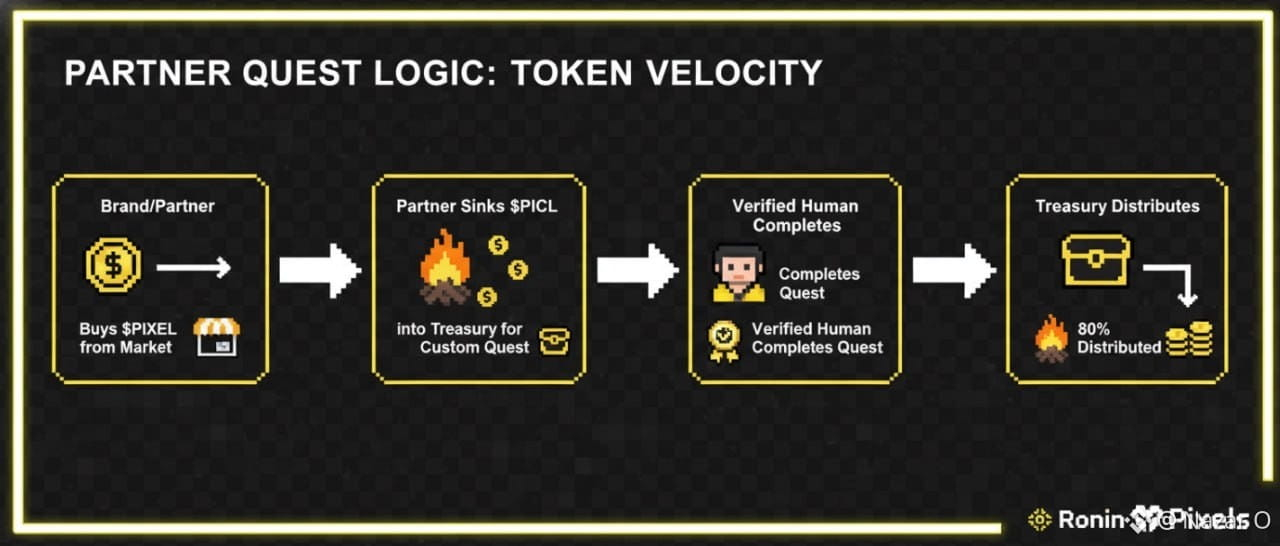
most games fail because they have no "external" income. they just shuffle money between players until the music stops. Pixels is different. Brands are actually buying PIXEL to reach you.
think about the logic:
A brand wants to launch a new NFT or game.
They can’t find real humans on X (it's 90% bots).
They go to Pixels, buy $PIXEL, and fund a "Task."
You do the task, get the tokens, and the brand gets a verified user.
it’s a perfect circle. the token isn't just a "reward"-it’s a marketing credit.
i’ve seen enough farm-and-dump tokens to know a Ponzi when i see one. but when i see real companies buying the token just to get five minutes of my attention? that’s a real business model.
your PIXEL bags aren't just tied to a game. they’re tied to the value of human attention in a world full of bots. i’ll take that bet any day.
@pixels #pixel $PIXEL #RoninNetwork
Why $PIXEL is actually a bet on "Verified Human Attention"
i caught myself doing a branded quest for a partner project earlier and realized: i’m literally an ad-inventory unit. but i’m okay with it.
why? because PIXEL has accidentally created the most efficient marketing engine in Web3.
most games fail because they have no "external" income. they just shuffle money between players until the music stops. Pixels is different. Brands are actually buying PIXEL to reach you.
think about the logic:
A brand wants to launch a new NFT or game.
They can’t find real humans on X (it's 90% bots).
They go to Pixels, buy $PIXEL , and fund a "Task."
You do the task, get the tokens, and the brand gets a verified user.
it’s a perfect circle. the token isn't just a "reward"-it’s a marketing credit.
i’ve seen enough farm-and-dump tokens to know a Ponzi when i see one. but when i see real companies buying the token just to get five minutes of my attention? that’s a real business model.
your PIXEL bags aren't just tied to a game. they’re tied to the value of human attention in a world full of bots. i’ll take that bet any day.
@Pixels #pixel $PIXEL #RoninNetwork
i caught myself doing a branded quest for a partner project earlier and realized: i’m literally an ad-inventory unit. but i’m okay with it.
why? because PIXEL has accidentally created the most efficient marketing engine in Web3.
most games fail because they have no "external" income. they just shuffle money between players until the music stops. Pixels is different. Brands are actually buying PIXEL to reach you.
think about the logic:
A brand wants to launch a new NFT or game.
They can’t find real humans on X (it's 90% bots).
They go to Pixels, buy $PIXEL , and fund a "Task."
You do the task, get the tokens, and the brand gets a verified user.
it’s a perfect circle. the token isn't just a "reward"-it’s a marketing credit.
i’ve seen enough farm-and-dump tokens to know a Ponzi when i see one. but when i see real companies buying the token just to get five minutes of my attention? that’s a real business model.
your PIXEL bags aren't just tied to a game. they’re tied to the value of human attention in a world full of bots. i’ll take that bet any day.
@Pixels #pixel $PIXEL #RoninNetwork
1
3
181
📉 AXS Market Analysis: Axie Braces for Ronin’s L2 Migration
As of April 30, 2026, AXS/USDT is showing signs of hesitation, trading near $1.37. While the token saw a 9.5% speculative surge earlier this week, momentum has cooled as the market anticipates the May 12 migration of the Ronin Network from a sidechain to an Ethereum Layer-2 using the OP Stack. 🎮⛓️
⚖️ Strategic Outlook
🚀 The Bull Case: Bulls need to hold the 1.374 support to maintain the current structure. A successful defense targets a retest of the 1.46 resistance. Long-term optimism is tied to the bAXS (Bonded AXS) economy and the Ronin L2 shift, which is expected to slash inflation and enhance ecosystem security. 🎯
🐻 The Bear Case: The MACD remains bearish and price is languishing in the lower half of the Bollinger Bands, signaling weak buying conviction. A break below the 1.355 pivot risks a deeper retracement toward the $1.093 demand zone as traders de-risk ahead of the 10-hour network downtime on May 12. ⚠️
📍 Critical Pivot: Watch 1.355 closely. This level is the current structural anchor; holding it allows for a pre-migration base to form, while a breach suggests the recent "Alpha" rally has exhausted itself. 🛡️👀
#AxieInfinity #AXS #RoninNetwork #Layer2 #GameFi #TechnicalAnalysis
$AXS
{spot}(AXSUSDT)
📉 AXS Market Analysis: Axie Braces for Ronin’s L2 Migration
As of April 30, 2026, AXS/USDT is showing signs of hesitation, trading near $1.37. While the token saw a 9.5% speculative surge earlier this week, momentum has cooled as the market anticipates the May 12 migration of the Ronin Network from a sidechain to an Ethereum Layer-2 using the OP Stack. 🎮⛓️
⚖️ Strategic Outlook
🚀 The Bull Case: Bulls need to hold the 1.374 support to maintain the current structure. A successful defense targets a retest of the 1.46 resistance. Long-term optimism is tied to the bAXS (Bonded AXS) economy and the Ronin L2 shift, which is expected to slash inflation and enhance ecosystem security. 🎯
🐻 The Bear Case: The MACD remains bearish and price is languishing in the lower half of the Bollinger Bands, signaling weak buying conviction. A break below the 1.355 pivot risks a deeper retracement toward the $1.093 demand zone as traders de-risk ahead of the 10-hour network downtime on May 12. ⚠️
📍 Critical Pivot: Watch 1.355 closely. This level is the current structural anchor; holding it allows for a pre-migration base to form, while a breach suggests the recent "Alpha" rally has exhausted itself. 🛡️👀
#AxieInfinity #AXS #RoninNetwork #Layer2 #GameFi #TechnicalAnalysis
$AXS
As of April 30, 2026, AXS/USDT is showing signs of hesitation, trading near $1.37. While the token saw a 9.5% speculative surge earlier this week, momentum has cooled as the market anticipates the May 12 migration of the Ronin Network from a sidechain to an Ethereum Layer-2 using the OP Stack. 🎮⛓️
⚖️ Strategic Outlook
🚀 The Bull Case: Bulls need to hold the 1.374 support to maintain the current structure. A successful defense targets a retest of the 1.46 resistance. Long-term optimism is tied to the bAXS (Bonded AXS) economy and the Ronin L2 shift, which is expected to slash inflation and enhance ecosystem security. 🎯
🐻 The Bear Case: The MACD remains bearish and price is languishing in the lower half of the Bollinger Bands, signaling weak buying conviction. A break below the 1.355 pivot risks a deeper retracement toward the $1.093 demand zone as traders de-risk ahead of the 10-hour network downtime on May 12. ⚠️
📍 Critical Pivot: Watch 1.355 closely. This level is the current structural anchor; holding it allows for a pre-migration base to form, while a breach suggests the recent "Alpha" rally has exhausted itself. 🛡️👀
#AxieInfinity #AXS #RoninNetwork #Layer2 #GameFi #TechnicalAnalysis
$AXS
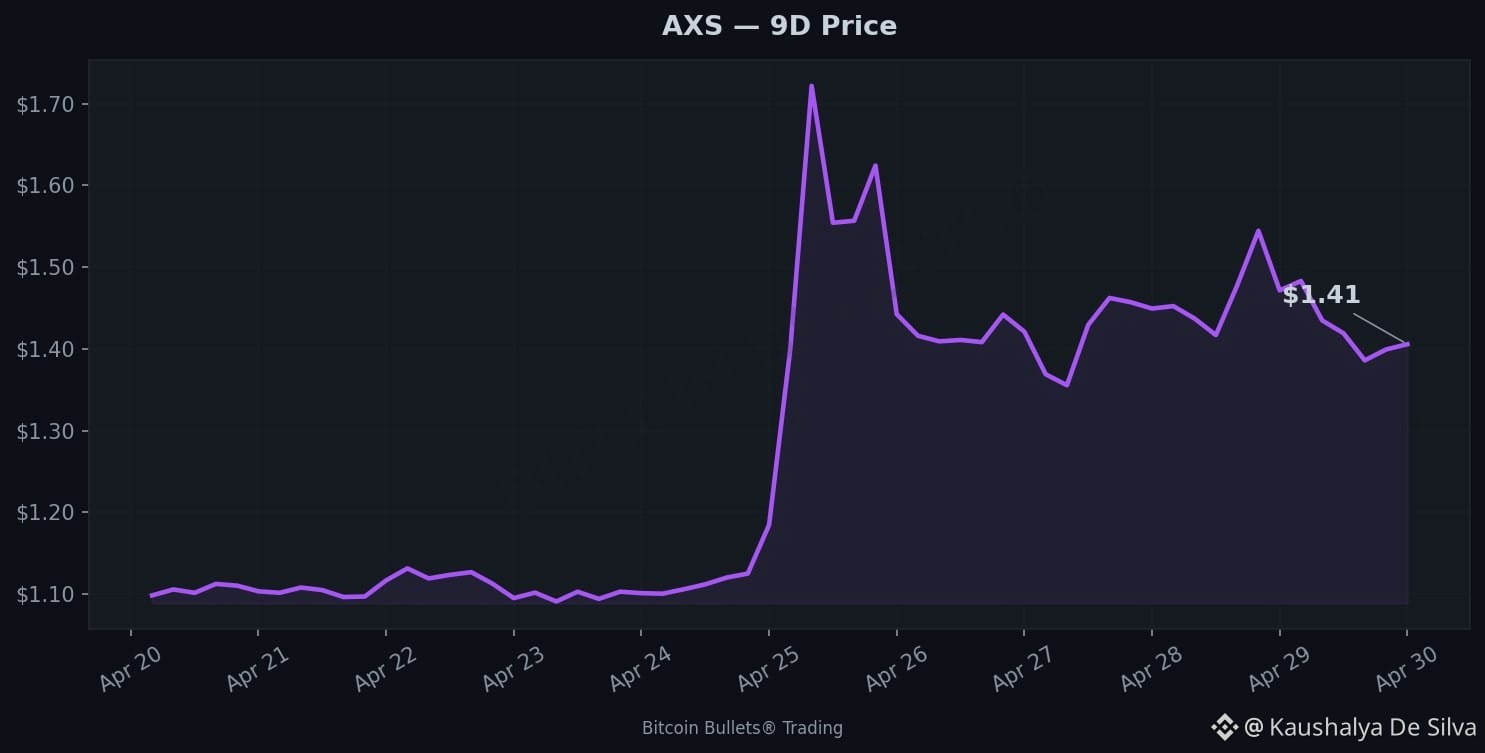
295
Connectez-vous pour découvrir plus de contenu
Rejoignez la communauté mondiale des adeptes de cryptomonnaies sur Binance Square
⚡️ Suviez les dernières informations importantes sur les cryptomonnaies.
💬 Jugé digne de confiance par la plus grande plateforme d’échange de cryptomonnaies au monde.
👍 Découvrez les connaissances que partagent les créateurs vérifiés.
Adresse e-mail/Nº de téléphone
Sujets d’actualité
1
#ADAGains10%Above$0.27
0 vues
20 mentions
2
#ETHUp70%InQ3ButLiquidityFalls
1,222 vues
90 mentions
3
#EthStakingExitQueueHits2026High
1,382 vues
156 mentions
4
#FedOctoberHoldOdds82.3%
2,143 vues
146 mentions
5
#Nikkei225Jumps2.5%ToThreeMonthHigh
34,888 vues
566 mentions
6
#CircleMints$2.75BUSDCOnSolanaIn7Days
88 vues
9 mentions
7
#DriftHackVictimsBeginClaims
110,567 vues
1,213 mentions
8
#SolanaTokenizedStockVolumeTops$4.4BInSeptember
9,782 vues
119 mentions
9
#BitcoinSpotETFsDraw$6.34BInflowsInQ3
34,963 vues
229 mentions
10
#EthereumValidatorExitQueueJumps392%
245,871 vues
2,166 mentions