

AH CHARLIE
4.5k Publications

AH CHARLIE
Signaler
Bloquer l’utilisateur
Price is what you pay. Value is what you get........... X- ahcharlie2
Trade régulièrement
2.3 an(s)
156 Suivis
21.6K+ Abonnés
13.0K+ J’aime
Publications
Tous
Citations
Direct
·
--

Article
Why Watching Only the Solana (SOL) Price Will Get You RektIf you only check the price of $SOL on your chart, you are watching the scoreboard instead of the game.
For a long time, people traded Solana for one simple reason: it was fast and cheap. High TPS was the entire marketing pitch. But speed alone does not make a blockchain valuable. A fast road with no cars is still an empty road.
Today, that trade has changed. Solana is no longer just a "fast chain" bet. It has turned into a liquidity engine. If you want to understand where SOL is heading, you have to stop staring at the daily candle and start tracking where the real money flows.
Stablecoins Are the Fuel
Price can pump on low volume simply because sellers step away. But stablecoins do not lie.
When you see fresh USDC and USDT bridging directly onto Solana, that is real capital entering the ecosystem. Stablecoins are dry powder. Nobody moves $100 million in stables onto a chain just to let it sit idle. They move it to buy dips, provide liquidity to pools, or trade pairs.
If SOL is pumping 10% in a week, but the total stablecoin supply on the network is flat or dropping, be careful. That usually means the same group of traders is just passing the same old money around. A true, sustained rally needs new cash flowing into the chain week after week.
Real Users vs. Network Noise
Solana transaction numbers can easily fool you if you do not look under the hood. Millions of transactions happen every day, but a huge portion of them are just validators voting to keep the ledger in sync.
To see real adoption, you must look at true economic activity. Are daily active wallets growing? Are real users paying priority fees to get their trades through?
Memecoins brought millions of retail traders to Solana. That was great for user onboarding. But true network strength is measured by whether those users stay. Watch DEX volume on platforms like Raydium and Orca. When trading volume turns into real protocol revenue and consistent staking yield, SOL gains genuine organic demand that does not depend on hype.
The Leverage Trap
This is where retail traders get wiped out every cycle. They see the price climbing, get greedy, and open high-leverage long positions.
Always check Open Interest and funding rates alongside the price. If the price of SOL is pushing higher, but that move is powered entirely by futures leverage rather than spot buying, you are looking at a house of cards.
When funding rates get heavily positive, long traders are paying heavy fees every eight hours just to keep their positions open. If fresh cash does not show up to support the move, a tiny dip will trigger a cascade of liquidations. Spot money builds floors. Leverage only builds spikes.
Why Deep Liquidity Wins
What does deep liquidity actually mean for Solana? It means order book depth.
Good liquidity means a large fund or whale can sell $20 million worth of SOL without crashing the market by 8%. It means tight spreads on decentralized order books and deep pools in AMMs.
Big institutional capital does not care about TPS records if they cannot enter and exit without massive slippage. When a chain proves its liquidity can absorb large trades without breaking, it stops being a speculative playground and starts behaving like a real financial hub.
Next time you open your charts, zoom out. Check the 30-day stablecoin trend. Compare spot volume against derivatives debt. Price is just the shadow on the wall. Liquidity is the real object making that shadow.
#SOL #Solana #OnChain
Why Watching Only the Solana (SOL) Price Will Get You Rekt
If you only check the price of $SOL on your chart, you are watching the scoreboard instead of the game.
For a long time, people traded Solana for one simple reason: it was fast and cheap. High TPS was the entire marketing pitch. But speed alone does not make a blockchain valuable. A fast road with no cars is still an empty road.
Today, that trade has changed. Solana is no longer just a "fast chain" bet. It has turned into a liquidity engine. If you want to understand where SOL is heading, you have to stop staring at the daily candle and start tracking where the real money flows.
Stablecoins Are the Fuel
Price can pump on low volume simply because sellers step away. But stablecoins do not lie.
When you see fresh USDC and USDT bridging directly onto Solana, that is real capital entering the ecosystem. Stablecoins are dry powder. Nobody moves $100 million in stables onto a chain just to let it sit idle. They move it to buy dips, provide liquidity to pools, or trade pairs.
If SOL is pumping 10% in a week, but the total stablecoin supply on the network is flat or dropping, be careful. That usually means the same group of traders is just passing the same old money around. A true, sustained rally needs new cash flowing into the chain week after week.
Real Users vs. Network Noise
Solana transaction numbers can easily fool you if you do not look under the hood. Millions of transactions happen every day, but a huge portion of them are just validators voting to keep the ledger in sync.
To see real adoption, you must look at true economic activity. Are daily active wallets growing? Are real users paying priority fees to get their trades through?
Memecoins brought millions of retail traders to Solana. That was great for user onboarding. But true network strength is measured by whether those users stay. Watch DEX volume on platforms like Raydium and Orca. When trading volume turns into real protocol revenue and consistent staking yield, SOL gains genuine organic demand that does not depend on hype.
The Leverage Trap
This is where retail traders get wiped out every cycle. They see the price climbing, get greedy, and open high-leverage long positions.
Always check Open Interest and funding rates alongside the price. If the price of SOL is pushing higher, but that move is powered entirely by futures leverage rather than spot buying, you are looking at a house of cards.
When funding rates get heavily positive, long traders are paying heavy fees every eight hours just to keep their positions open. If fresh cash does not show up to support the move, a tiny dip will trigger a cascade of liquidations. Spot money builds floors. Leverage only builds spikes.
Why Deep Liquidity Wins
What does deep liquidity actually mean for Solana? It means order book depth.
Good liquidity means a large fund or whale can sell $20 million worth of SOL without crashing the market by 8%. It means tight spreads on decentralized order books and deep pools in AMMs.
Big institutional capital does not care about TPS records if they cannot enter and exit without massive slippage. When a chain proves its liquidity can absorb large trades without breaking, it stops being a speculative playground and starts behaving like a real financial hub.
Next time you open your charts, zoom out. Check the 30-day stablecoin trend. Compare spot volume against derivatives debt. Price is just the shadow on the wall. Liquidity is the real object making that shadow.
#SOL #Solana #OnChain
For a long time, people traded Solana for one simple reason: it was fast and cheap. High TPS was the entire marketing pitch. But speed alone does not make a blockchain valuable. A fast road with no cars is still an empty road.
Today, that trade has changed. Solana is no longer just a "fast chain" bet. It has turned into a liquidity engine. If you want to understand where SOL is heading, you have to stop staring at the daily candle and start tracking where the real money flows.
Stablecoins Are the Fuel
Price can pump on low volume simply because sellers step away. But stablecoins do not lie.
When you see fresh USDC and USDT bridging directly onto Solana, that is real capital entering the ecosystem. Stablecoins are dry powder. Nobody moves $100 million in stables onto a chain just to let it sit idle. They move it to buy dips, provide liquidity to pools, or trade pairs.
If SOL is pumping 10% in a week, but the total stablecoin supply on the network is flat or dropping, be careful. That usually means the same group of traders is just passing the same old money around. A true, sustained rally needs new cash flowing into the chain week after week.
Real Users vs. Network Noise
Solana transaction numbers can easily fool you if you do not look under the hood. Millions of transactions happen every day, but a huge portion of them are just validators voting to keep the ledger in sync.
To see real adoption, you must look at true economic activity. Are daily active wallets growing? Are real users paying priority fees to get their trades through?
Memecoins brought millions of retail traders to Solana. That was great for user onboarding. But true network strength is measured by whether those users stay. Watch DEX volume on platforms like Raydium and Orca. When trading volume turns into real protocol revenue and consistent staking yield, SOL gains genuine organic demand that does not depend on hype.
The Leverage Trap
This is where retail traders get wiped out every cycle. They see the price climbing, get greedy, and open high-leverage long positions.
Always check Open Interest and funding rates alongside the price. If the price of SOL is pushing higher, but that move is powered entirely by futures leverage rather than spot buying, you are looking at a house of cards.
When funding rates get heavily positive, long traders are paying heavy fees every eight hours just to keep their positions open. If fresh cash does not show up to support the move, a tiny dip will trigger a cascade of liquidations. Spot money builds floors. Leverage only builds spikes.
Why Deep Liquidity Wins
What does deep liquidity actually mean for Solana? It means order book depth.
Good liquidity means a large fund or whale can sell $20 million worth of SOL without crashing the market by 8%. It means tight spreads on decentralized order books and deep pools in AMMs.
Big institutional capital does not care about TPS records if they cannot enter and exit without massive slippage. When a chain proves its liquidity can absorb large trades without breaking, it stops being a speculative playground and starts behaving like a real financial hub.
Next time you open your charts, zoom out. Check the 30-day stablecoin trend. Compare spot volume against derivatives debt. Price is just the shadow on the wall. Liquidity is the real object making that shadow.
#SOL #Solana #OnChain
2
151
·
--
🎙️ 🎉2026狂暴牛市,号角已吹响,行情尽在BSC链!!11月1号马斯克将为火星狗Marvin庆祝生日,这波链上行情一定要抓住!
Fin
02 h 26 min 39 sec
6.8k
18
39
·
--
Vérifié
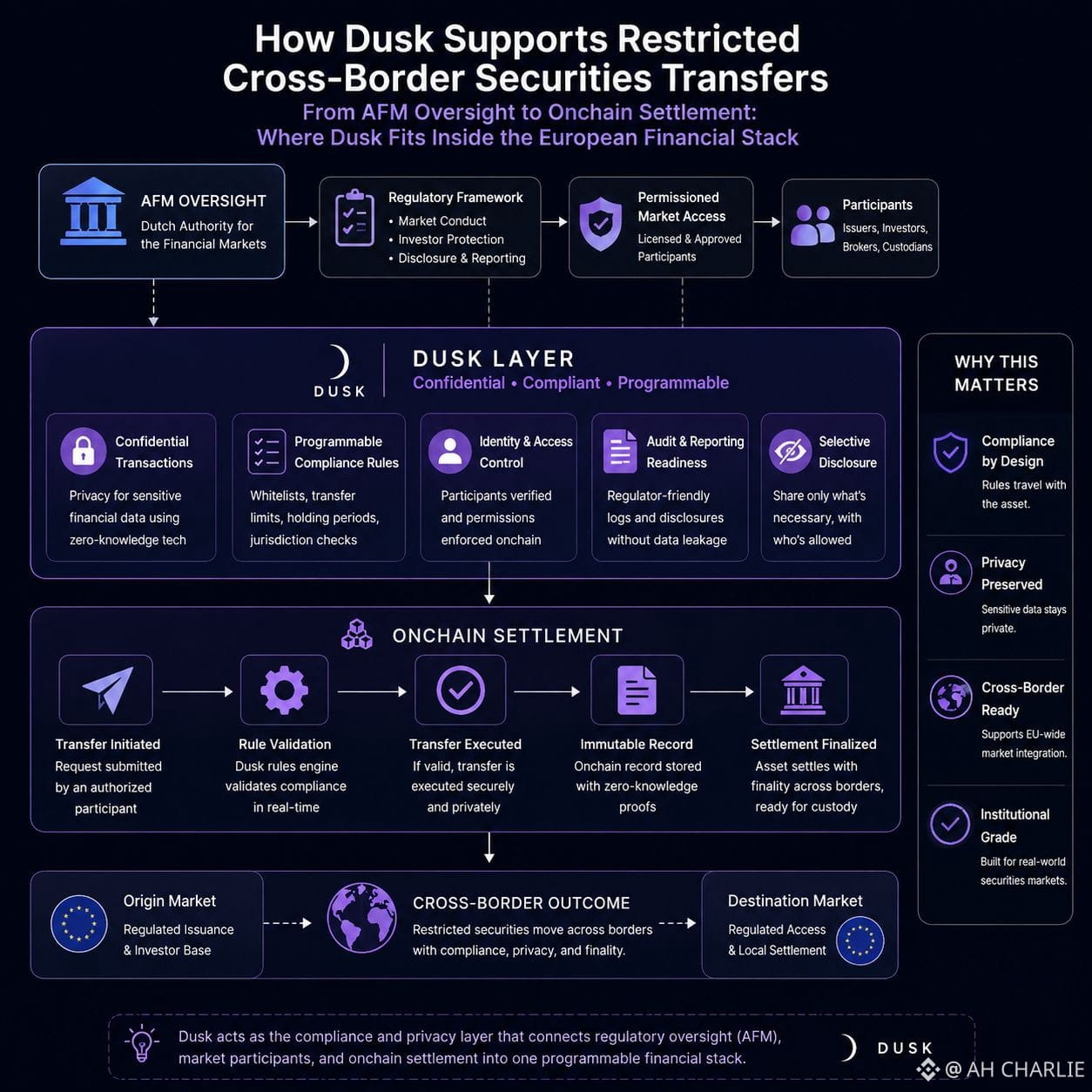
I watched $DUSK move closer to a problem most crypto traders barely notice, restricted cross-border securities transfers.
I’ve seen how European markets need rules to travel with the asset, not sit in a PDF beside it. That’s where Dusk gets interesting. AFM oversight can define who is allowed to participate, while programmable rules can enforce transfer limits, eligibility, and jurisdiction checks before settlement.
I looked at it like a controlled gate, not an open highway. When I see regulated securities move onchain, the test is whether compliance survives every transfer, not just issuance.
Dusk could fit between market access and settlement, where rules become executable. I think the bigger breakthrough is making compliance part of transaction logic, not an afterthought.
#dusk $DUSK @Dusk_Foundation #RWA
I watched $DUSK move closer to a problem most crypto traders barely notice, restricted cross-border securities transfers.
I’ve seen how European markets need rules to travel with the asset, not sit in a PDF beside it. That’s where Dusk gets interesting. AFM oversight can define who is allowed to participate, while programmable rules can enforce transfer limits, eligibility, and jurisdiction checks before settlement.
I looked at it like a controlled gate, not an open highway. When I see regulated securities move onchain, the test is whether compliance survives every transfer, not just issuance.
Dusk could fit between market access and settlement, where rules become executable. I think the bigger breakthrough is making compliance part of transaction logic, not an afterthought.
#dusk $DUSK @Dusk #RWA
I’ve seen how European markets need rules to travel with the asset, not sit in a PDF beside it. That’s where Dusk gets interesting. AFM oversight can define who is allowed to participate, while programmable rules can enforce transfer limits, eligibility, and jurisdiction checks before settlement.
I looked at it like a controlled gate, not an open highway. When I see regulated securities move onchain, the test is whether compliance survives every transfer, not just issuance.
Dusk could fit between market access and settlement, where rules become executable. I think the bigger breakthrough is making compliance part of transaction logic, not an afterthought.
#dusk $DUSK @Dusk #RWA
2
2
339

·
--
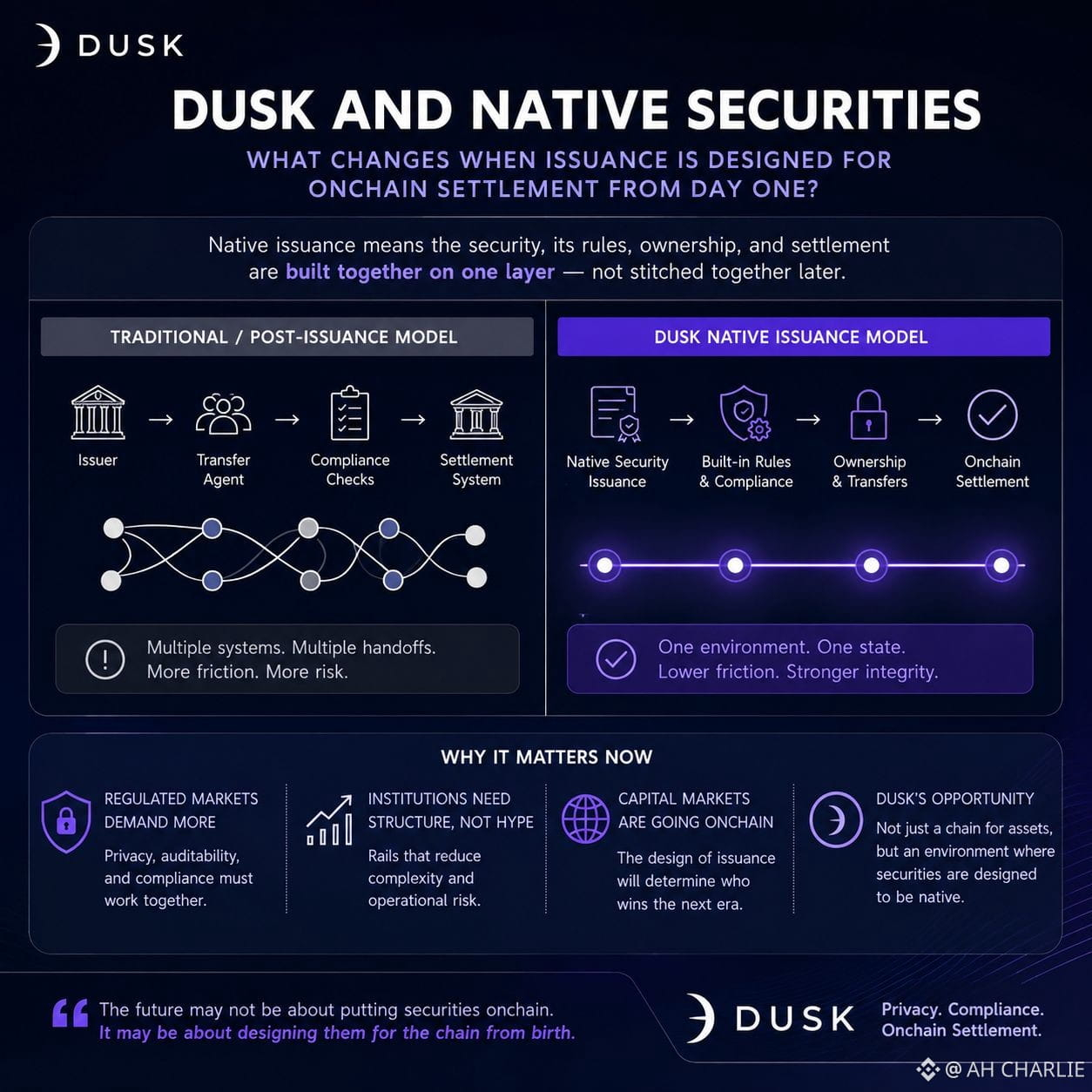
I mostly looked at $DUSK as a privacy play. Now I’m thinking native securities may be the more important angle. I've seen tokenized assets treated like old financial products wearing a new digital wrapper. The asset gets issued somewhere, then compliance, ownership, and settlement are connected through extra layers. That is where Dusk gets interesting.
If a security is issued onchain from day one, its transfer rules, ownership logic, compliance checks, and settlement can be designed together. I thought this was mainly a technical upgrade, but I was wrong. It can change how the asset itself is structured. Think of it like building a road before the city grows around it. You get to design the lanes before traffic becomes the problem.
The challenge for Dusk is execution. Regulated capital markets need reliability, privacy, auditability, and serious risk management. Those were not optional yesterday, and they are not optional now. The good side is that native issuance could give Dusk a role deeper than simply hosting tokenized assets. I still think the real question is not whether securities can move onchain, but whether future securities are designed with onchain settlement as their starting point.
#dusk @Dusk_Foundation #Privacy #RWA
I mostly looked at $DUSK as a privacy play. Now I’m thinking native securities may be the more important angle. I've seen tokenized assets treated like old financial products wearing a new digital wrapper. The asset gets issued somewhere, then compliance, ownership, and settlement are connected through extra layers. That is where Dusk gets interesting.
If a security is issued onchain from day one, its transfer rules, ownership logic, compliance checks, and settlement can be designed together. I thought this was mainly a technical upgrade, but I was wrong. It can change how the asset itself is structured. Think of it like building a road before the city grows around it. You get to design the lanes before traffic becomes the problem.
The challenge for Dusk is execution. Regulated capital markets need reliability, privacy, auditability, and serious risk management. Those were not optional yesterday, and they are not optional now. The good side is that native issuance could give Dusk a role deeper than simply hosting tokenized assets. I still think the real question is not whether securities can move onchain, but whether future securities are designed with onchain settlement as their starting point.
#dusk @Dusk #Privacy #RWA
If a security is issued onchain from day one, its transfer rules, ownership logic, compliance checks, and settlement can be designed together. I thought this was mainly a technical upgrade, but I was wrong. It can change how the asset itself is structured. Think of it like building a road before the city grows around it. You get to design the lanes before traffic becomes the problem.
The challenge for Dusk is execution. Regulated capital markets need reliability, privacy, auditability, and serious risk management. Those were not optional yesterday, and they are not optional now. The good side is that native issuance could give Dusk a role deeper than simply hosting tokenized assets. I still think the real question is not whether securities can move onchain, but whether future securities are designed with onchain settlement as their starting point.
#dusk @Dusk #Privacy #RWA
4
5
236
·
--
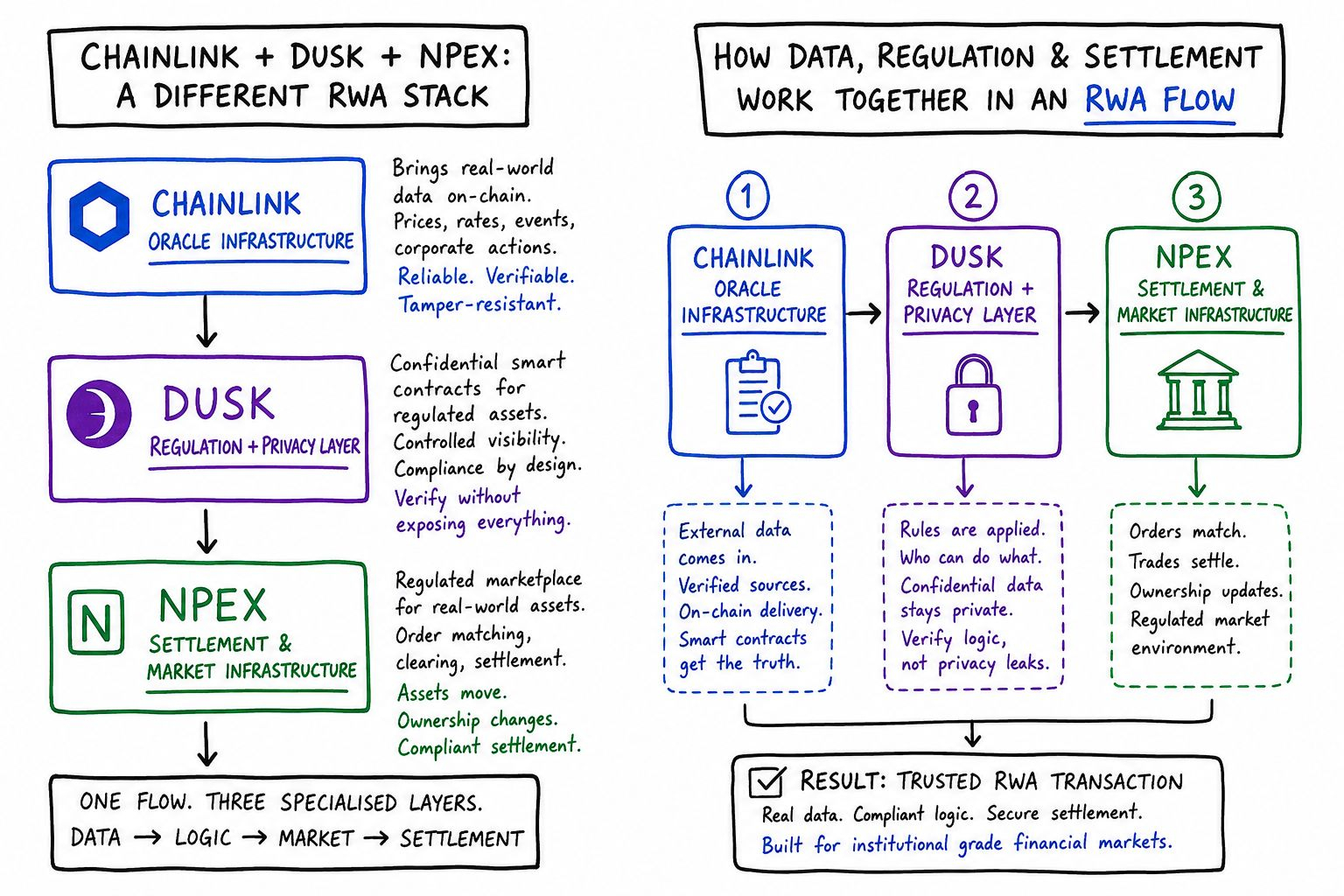
I've seen #RWA conversations focus too much on tokenization. I think the harder question is what happens after the asset becomes digital. I looked at Chainlink + Dusk + NPEX as three different layers solving three different problems.
Chainlink connects blockchain logic with the outside world. Prices, rates, events, and market data need reliable inputs. If the data feeding a contract is weak, settlement can be wrong even when the blockchain works perfectly.
Then there’s $DUSK . This challenge matters now: regulated assets need privacy and rules at the same time. A security transfer may need to prove that an investor is eligible and that the transfer follows defined conditions, but exposing every balance and transaction detail publicly can create another problem.
I thought about it like buying a regulated security in real life. The broker checks who you are, the market verifies the asset, and settlement happens correctly. You do not need your financial history displayed on a billboard.
That is where @Dusk_Foundation becomes interesting to me. Confidential smart contracts can make verification more controlled, rather than simply making transactions invisible.
NPEX adds the market infrastructure and settlement side. So the stack starts looking less like one blockchain doing everything and more like connected financial plumbing.
I make the mistake sometimes of judging RWA projects by TPS, fees, or TVL alone. Those metrics matter, but they do not tell me whether data, compliance, privacy, and settlement can work together.
The good side is specialization. Chainlink brings data. Dusk brings confidential, rule-based logic. NPEX brings regulated market infrastructure.
I practice Risk management by looking at dependencies, not headlines. If you ask me, the real RWA test is not how many assets get tokenized. It is whether the full financial process can work without forcing transparency where privacy is part of compliance.
#dusk #Tokenization #LINK
I've seen #RWA conversations focus too much on tokenization. I think the harder question is what happens after the asset becomes digital. I looked at Chainlink + Dusk + NPEX as three different layers solving three different problems.
Chainlink connects blockchain logic with the outside world. Prices, rates, events, and market data need reliable inputs. If the data feeding a contract is weak, settlement can be wrong even when the blockchain works perfectly.
Then there’s $DUSK . This challenge matters now: regulated assets need privacy and rules at the same time. A security transfer may need to prove that an investor is eligible and that the transfer follows defined conditions, but exposing every balance and transaction detail publicly can create another problem.
I thought about it like buying a regulated security in real life. The broker checks who you are, the market verifies the asset, and settlement happens correctly. You do not need your financial history displayed on a billboard.
That is where @Dusk becomes interesting to me. Confidential smart contracts can make verification more controlled, rather than simply making transactions invisible.
NPEX adds the market infrastructure and settlement side. So the stack starts looking less like one blockchain doing everything and more like connected financial plumbing.
I make the mistake sometimes of judging RWA projects by TPS, fees, or TVL alone. Those metrics matter, but they do not tell me whether data, compliance, privacy, and settlement can work together.
The good side is specialization. Chainlink brings data. Dusk brings confidential, rule-based logic. NPEX brings regulated market infrastructure.
I practice Risk management by looking at dependencies, not headlines. If you ask me, the real RWA test is not how many assets get tokenized. It is whether the full financial process can work without forcing transparency where privacy is part of compliance.
#dusk #Tokenization #LINK
Chainlink connects blockchain logic with the outside world. Prices, rates, events, and market data need reliable inputs. If the data feeding a contract is weak, settlement can be wrong even when the blockchain works perfectly.
Then there’s $DUSK . This challenge matters now: regulated assets need privacy and rules at the same time. A security transfer may need to prove that an investor is eligible and that the transfer follows defined conditions, but exposing every balance and transaction detail publicly can create another problem.
I thought about it like buying a regulated security in real life. The broker checks who you are, the market verifies the asset, and settlement happens correctly. You do not need your financial history displayed on a billboard.
That is where @Dusk becomes interesting to me. Confidential smart contracts can make verification more controlled, rather than simply making transactions invisible.
NPEX adds the market infrastructure and settlement side. So the stack starts looking less like one blockchain doing everything and more like connected financial plumbing.
I make the mistake sometimes of judging RWA projects by TPS, fees, or TVL alone. Those metrics matter, but they do not tell me whether data, compliance, privacy, and settlement can work together.
The good side is specialization. Chainlink brings data. Dusk brings confidential, rule-based logic. NPEX brings regulated market infrastructure.
I practice Risk management by looking at dependencies, not headlines. If you ask me, the real RWA test is not how many assets get tokenized. It is whether the full financial process can work without forcing transparency where privacy is part of compliance.
#dusk #Tokenization #LINK
5
3
318
·
--
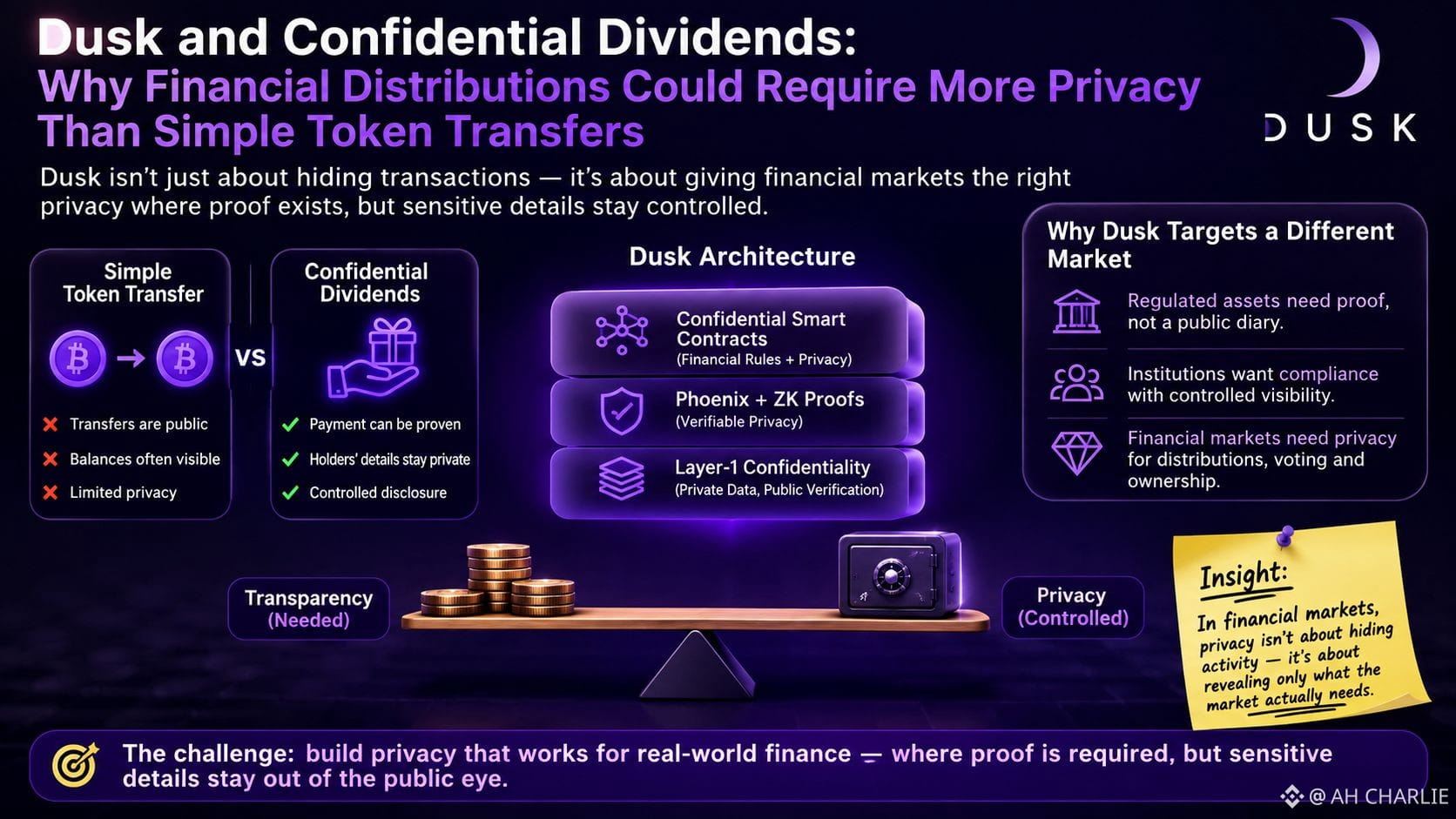
Most traders think privacy matters when you move tokens. I think the harder problem starts when money gets distributed. I’ve looked at confidential dividends on $DUSK , and the difference feels important.
Imagine a company paying investors a dividend. The payment should be provable, but publishing every holder’s balance and payout can expose more than needed. That’s where Dusk gets interesting to me. Confidential smart contracts can keep financial rules visible while limiting sensitive details.
Traditional privacy chains often focus on hiding transactions. Dusk is targeting a market where compliance, ownership, and controlled disclosure have to work together.
I am also learning that privacy is not always about hiding activity. Sometimes it is about revealing only what the market actually needs.
#dusk $DUSK @Dusk_Foundation
Most traders think privacy matters when you move tokens. I think the harder problem starts when money gets distributed. I’ve looked at confidential dividends on $DUSK , and the difference feels important.
Imagine a company paying investors a dividend. The payment should be provable, but publishing every holder’s balance and payout can expose more than needed. That’s where Dusk gets interesting to me. Confidential smart contracts can keep financial rules visible while limiting sensitive details.
Traditional privacy chains often focus on hiding transactions. Dusk is targeting a market where compliance, ownership, and controlled disclosure have to work together.
I am also learning that privacy is not always about hiding activity. Sometimes it is about revealing only what the market actually needs.
#dusk $DUSK @Dusk
Imagine a company paying investors a dividend. The payment should be provable, but publishing every holder’s balance and payout can expose more than needed. That’s where Dusk gets interesting to me. Confidential smart contracts can keep financial rules visible while limiting sensitive details.
Traditional privacy chains often focus on hiding transactions. Dusk is targeting a market where compliance, ownership, and controlled disclosure have to work together.
I am also learning that privacy is not always about hiding activity. Sometimes it is about revealing only what the market actually needs.
#dusk $DUSK @Dusk
9
3
313
·
--
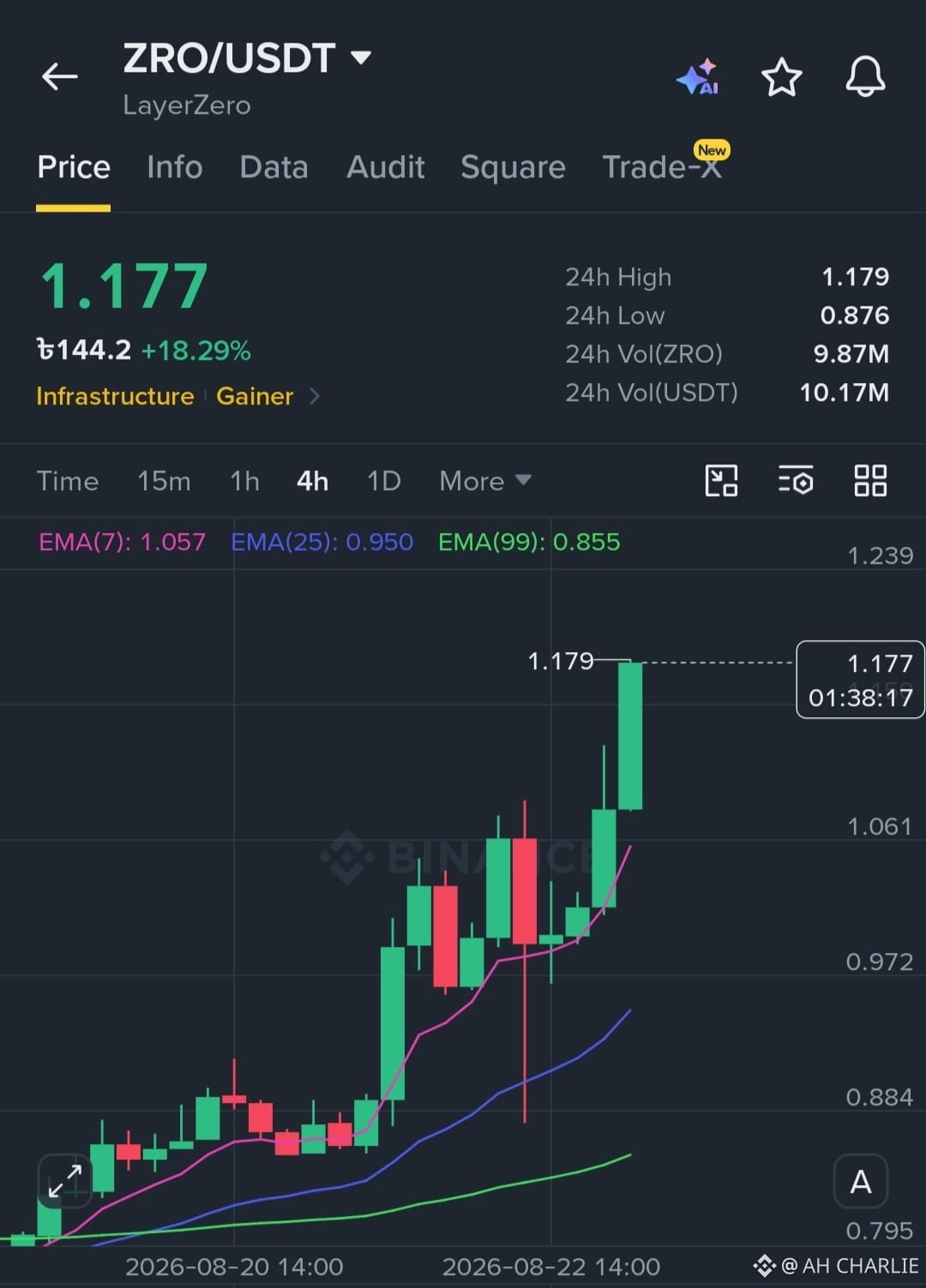
$ZRO /USDT sharp breakout, the velocity of which drove RSI past 75, but buyers who chase impulse candles need some time before 1.057 support retests...Bullish EMA expansion holds momentum, and local dips trap late sellers.. therefore, trend continuation remains probable.
Trade Plan- Long
Entry:- 1.055-1.090
SL: 0.995
TP1:- 1.180
TP2:- 1.280
TP3:- 1.380
Does this expansion mark sustainable institutional accumulation or an overextended blow-off top? Volatile market structure, protect downside strictly.
#ZRO #CryptoTrading #BinanceSquare #ahcharlie
Click Here to Trade 👉$ZRO
{future}(ZROUSDT)
$ZRO /USDT sharp breakout, the velocity of which drove RSI past 75, but buyers who chase impulse candles need some time before 1.057 support retests...Bullish EMA expansion holds momentum, and local dips trap late sellers.. therefore, trend continuation remains probable.
Trade Plan- Long
Entry:- 1.055-1.090
SL: 0.995
TP1:- 1.180
TP2:- 1.280
TP3:- 1.380
Does this expansion mark sustainable institutional accumulation or an overextended blow-off top? Volatile market structure, protect downside strictly.
#ZRO #CryptoTrading #BinanceSquare #ahcharlie
Click Here to Trade 👉$ZRO
Trade Plan- Long
Entry:- 1.055-1.090
SL: 0.995
TP1:- 1.180
TP2:- 1.280
TP3:- 1.380
Does this expansion mark sustainable institutional accumulation or an overextended blow-off top? Volatile market structure, protect downside strictly.
#ZRO #CryptoTrading #BinanceSquare #ahcharlie
Click Here to Trade 👉$ZRO
1
144
·
--
Vérifié
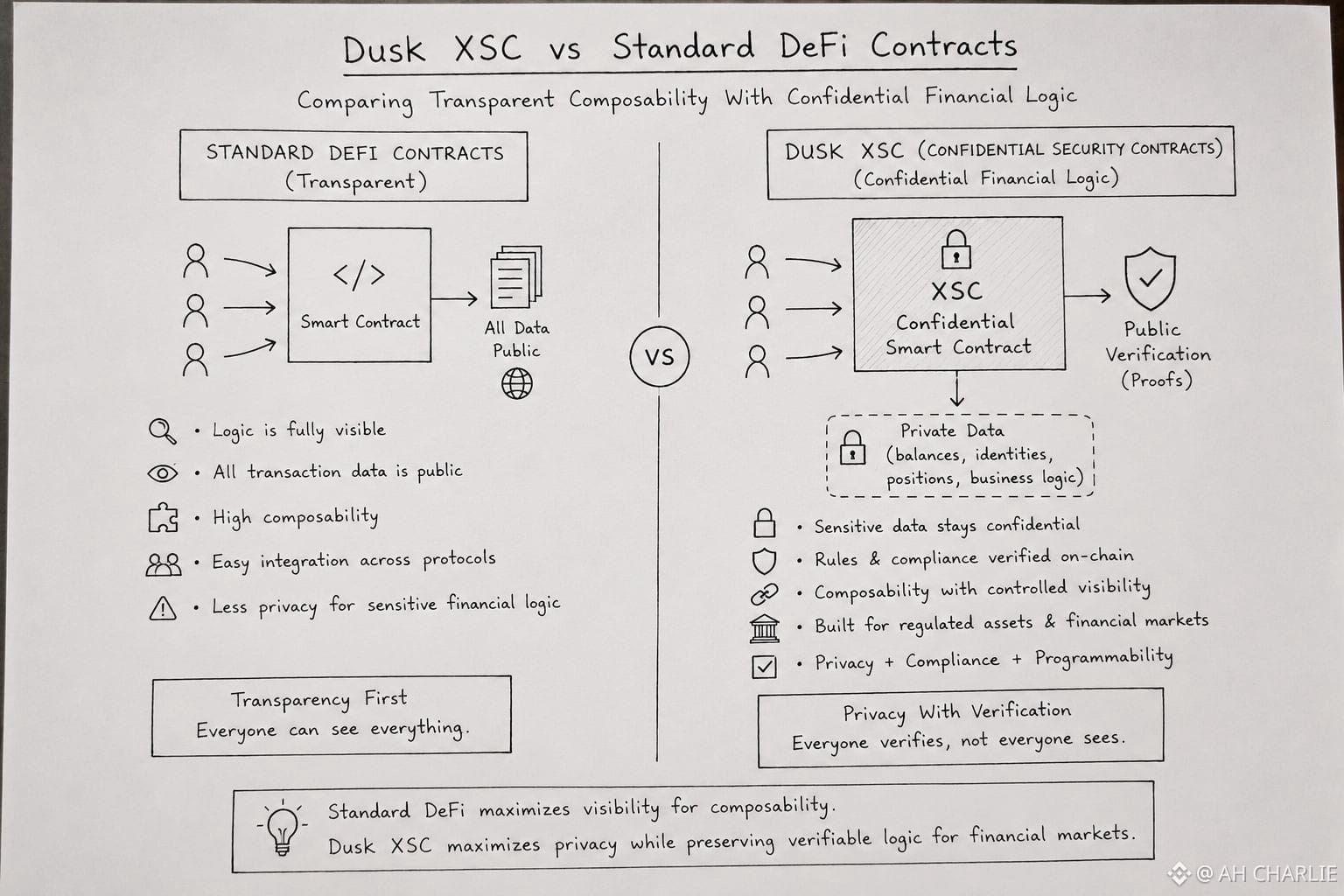
Most DeFi contracts are built around a simple trade-off, composability stays high because the logic is transparent. I’ve started looking at $DUSK from the opposite direction.
XSC, or Confidential Security Contracts, are designed for financial assets that need rules and privacy at the same time. Dusk’s model can keep sensitive transaction details confidential while still supporting contract-level rules such as whitelists, capped transfers, dividends, voting, and compliance logic.
When I see standard DeFi, I think of a glass building. Everyone can inspect what is happening, which makes composability easy, but sensitive financial logic becomes visible too.
Dusk is trying to build more like a controlled trading floor. The market can verify that the rules are followed, but not every participant needs to see every position or transaction detail. There’s a real trade-off here.
Transparent contracts are easier to inspect, integrate, and compose across open DeFi. Confidential contracts introduce stronger privacy, but they also create a harder engineering problem: how do you preserve useful programmability without exposing the data that the contract needs to protect?
I am also learning that XSC is not simply “private DeFi.” Dusk designed it around regulated securities, where ownership rules, investor eligibility, transfer limits, and compliance can become part of the contract itself.
I make mistakes when I compare chains only by TVL or transaction count. For financial infrastructure, the question is what information the system requires everyone to reveal before they can participate.
If Dusk can make confidential financial logic programmable without breaking verification, that creates a different kind of composability.
Not composability through maximum visibility. Composability through controlled visibility.
That distinction may become more important as on-chain finance moves from open speculation toward real financial assets.
#dusk $DUSK @Dusk_Foundation #Web3 #Layer1
{spot}(DUSKUSDT)
Most DeFi contracts are built around a simple trade-off, composability stays high because the logic is transparent. I’ve started looking at $DUSK from the opposite direction.
XSC, or Confidential Security Contracts, are designed for financial assets that need rules and privacy at the same time. Dusk’s model can keep sensitive transaction details confidential while still supporting contract-level rules such as whitelists, capped transfers, dividends, voting, and compliance logic.
When I see standard DeFi, I think of a glass building. Everyone can inspect what is happening, which makes composability easy, but sensitive financial logic becomes visible too.
Dusk is trying to build more like a controlled trading floor. The market can verify that the rules are followed, but not every participant needs to see every position or transaction detail. There’s a real trade-off here.
Transparent contracts are easier to inspect, integrate, and compose across open DeFi. Confidential contracts introduce stronger privacy, but they also create a harder engineering problem: how do you preserve useful programmability without exposing the data that the contract needs to protect?
I am also learning that XSC is not simply “private DeFi.” Dusk designed it around regulated securities, where ownership rules, investor eligibility, transfer limits, and compliance can become part of the contract itself.
I make mistakes when I compare chains only by TVL or transaction count. For financial infrastructure, the question is what information the system requires everyone to reveal before they can participate.
If Dusk can make confidential financial logic programmable without breaking verification, that creates a different kind of composability.
Not composability through maximum visibility. Composability through controlled visibility.
That distinction may become more important as on-chain finance moves from open speculation toward real financial assets.
#dusk $DUSK @Dusk #Web3 #Layer1
XSC, or Confidential Security Contracts, are designed for financial assets that need rules and privacy at the same time. Dusk’s model can keep sensitive transaction details confidential while still supporting contract-level rules such as whitelists, capped transfers, dividends, voting, and compliance logic.
When I see standard DeFi, I think of a glass building. Everyone can inspect what is happening, which makes composability easy, but sensitive financial logic becomes visible too.
Dusk is trying to build more like a controlled trading floor. The market can verify that the rules are followed, but not every participant needs to see every position or transaction detail. There’s a real trade-off here.
Transparent contracts are easier to inspect, integrate, and compose across open DeFi. Confidential contracts introduce stronger privacy, but they also create a harder engineering problem: how do you preserve useful programmability without exposing the data that the contract needs to protect?
I am also learning that XSC is not simply “private DeFi.” Dusk designed it around regulated securities, where ownership rules, investor eligibility, transfer limits, and compliance can become part of the contract itself.
I make mistakes when I compare chains only by TVL or transaction count. For financial infrastructure, the question is what information the system requires everyone to reveal before they can participate.
If Dusk can make confidential financial logic programmable without breaking verification, that creates a different kind of composability.
Not composability through maximum visibility. Composability through controlled visibility.
That distinction may become more important as on-chain finance moves from open speculation toward real financial assets.
#dusk $DUSK @Dusk #Web3 #Layer1
4
2
190
·
--
Baissier
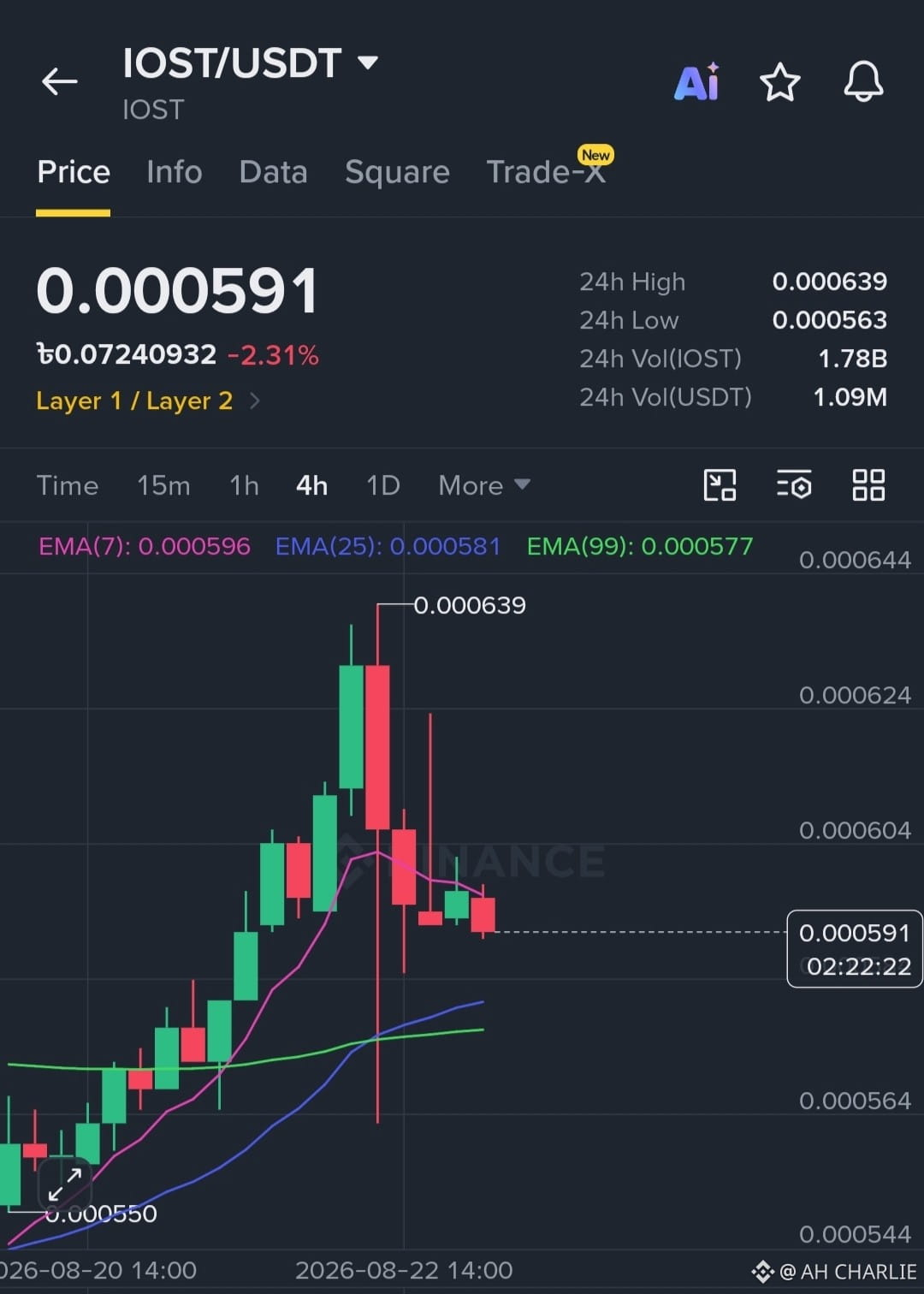
$IOST /USDT rejects 0.000639 supply, the structure of which confirms aggressive selling, but buyers who defend dynamic support need some time before 0.000563 liquidity is swept...
Trade- Short
Entry:- 0.0595-0.0615
SL: 0.0645
TP1:- 0.0575
TP2:- 0.0550
TP3:- 0.0510
Long upper wicks reject resistance, and volume dries up therefore, downside rotation toward EMA 99 remains probable. Does this heavy distribution candle signal structural breakdown or local re-accumulation?Low-cap asset volatility, protect capital strictly.
#IOST #ahcharlie #BinanceTrade $IOST
{future}(IOSTUSDT)
$IOST /USDT rejects 0.000639 supply, the structure of which confirms aggressive selling, but buyers who defend dynamic support need some time before 0.000563 liquidity is swept...
Trade- Short
Entry:- 0.0595-0.0615
SL: 0.0645
TP1:- 0.0575
TP2:- 0.0550
TP3:- 0.0510
Long upper wicks reject resistance, and volume dries up therefore, downside rotation toward EMA 99 remains probable. Does this heavy distribution candle signal structural breakdown or local re-accumulation?Low-cap asset volatility, protect capital strictly.
#IOST #ahcharlie #BinanceTrade $IOST
Trade- Short
Entry:- 0.0595-0.0615
SL: 0.0645
TP1:- 0.0575
TP2:- 0.0550
TP3:- 0.0510
Long upper wicks reject resistance, and volume dries up therefore, downside rotation toward EMA 99 remains probable. Does this heavy distribution candle signal structural breakdown or local re-accumulation?Low-cap asset volatility, protect capital strictly.
#IOST #ahcharlie #BinanceTrade $IOST
1
329
·
--
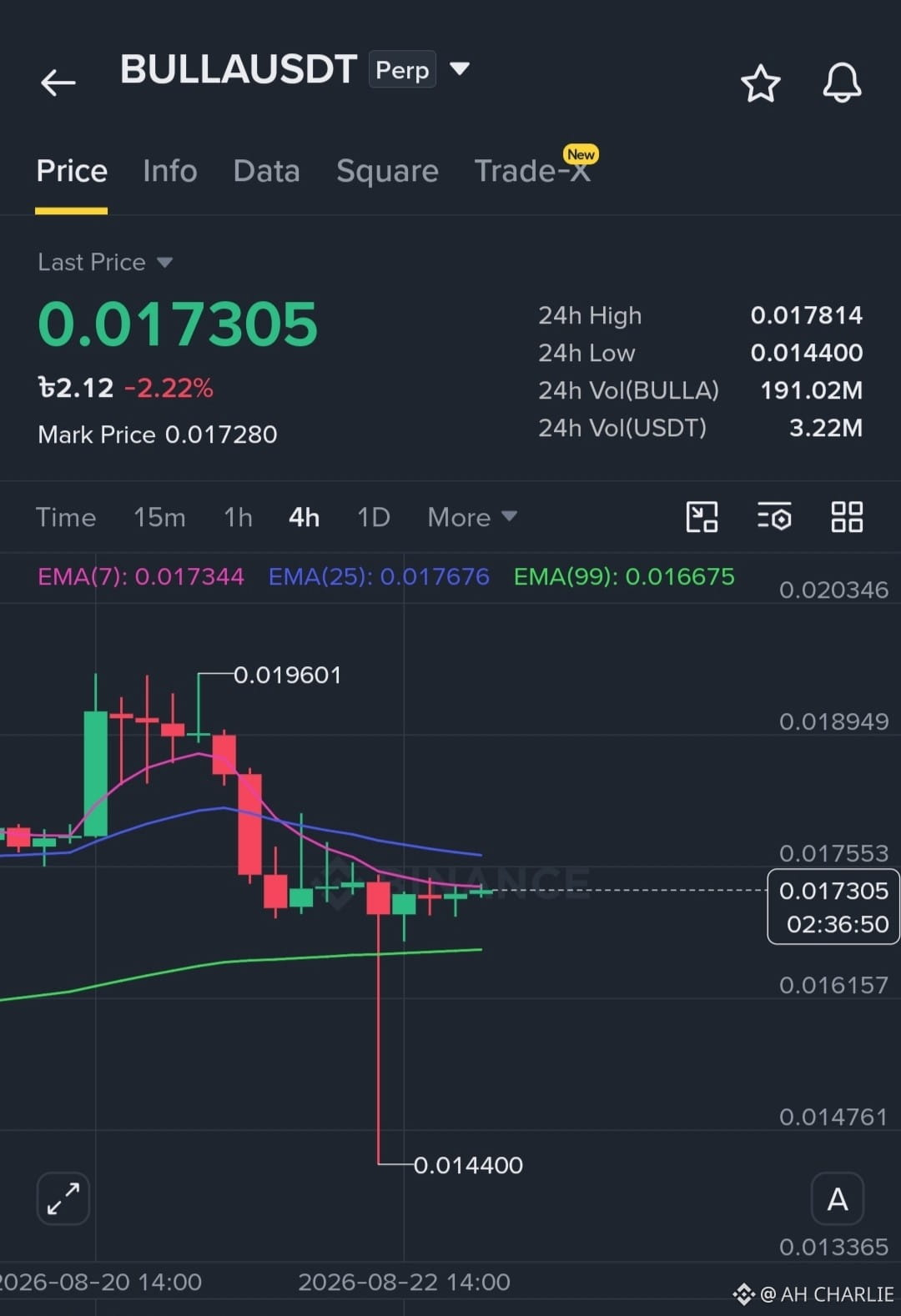
$BULLA /USDT stalls under 0.0176 resistance, the breakdown of which confirmed seller dominance, but traders who anticipate sudden relief need some time before 0.0144 liquidity is swept...
$BULLA Trade - Short
Entry:- 0.01735-0.01765
SL: 0.01815
TP1:- 0.01665
TP2:- 0.01550
TP3:- 0.01440
Lower highs stall beneath EMA 25; therefore, order flow favors downside expansion. Does this compression near EMA 99 build base accumulation or prepare deeper distribution?Highly volatile market manage downside risk strictly.
#BULLA #ahcharlie #Write2earn
{future}(BULLAUSDT)
$BULLA /USDT stalls under 0.0176 resistance, the breakdown of which confirmed seller dominance, but traders who anticipate sudden relief need some time before 0.0144 liquidity is swept...
$BULLA Trade - Short
Entry:- 0.01735-0.01765
SL: 0.01815
TP1:- 0.01665
TP2:- 0.01550
TP3:- 0.01440
Lower highs stall beneath EMA 25; therefore, order flow favors downside expansion. Does this compression near EMA 99 build base accumulation or prepare deeper distribution?Highly volatile market manage downside risk strictly.
#BULLA #ahcharlie #Write2earn
$BULLA Trade - Short
Entry:- 0.01735-0.01765
SL: 0.01815
TP1:- 0.01665
TP2:- 0.01550
TP3:- 0.01440
Lower highs stall beneath EMA 25; therefore, order flow favors downside expansion. Does this compression near EMA 99 build base accumulation or prepare deeper distribution?Highly volatile market manage downside risk strictly.
#BULLA #ahcharlie #Write2earn
1
252
·
--
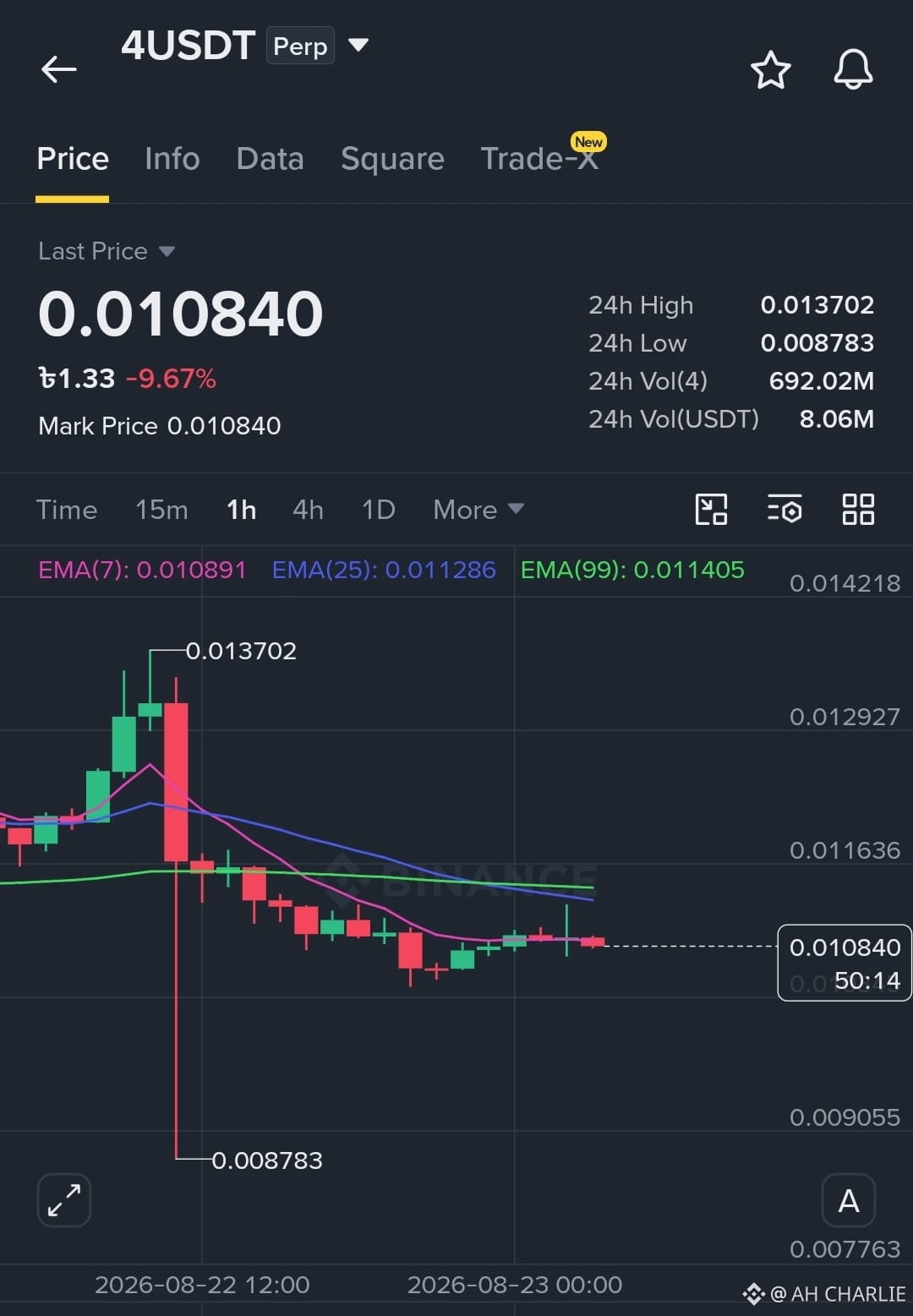
$4 /USDT trades below resistance, the weakness of which invites steady selling, but traders who want an early bounce need some time before 0.00878 is tested...
Trade Plan- SHORT
Entry:- 0.01090-0.01130
SL: 0.01165
TP1:- 0.01020
TP2:- 0.00950
TP3:- 0.00878
Price fails at dynamic moving averages; therefore, downside momentum stays in control. Are sellers building real distribution, or is this quiet bottom fishing? Markets remain volatile, manage risk carefully.
#4USDT #CryptoTrading #BinanceSquare
Click Here To Trade👉 $4
{future}(4USDT)
$4 /USDT trades below resistance, the weakness of which invites steady selling, but traders who want an early bounce need some time before 0.00878 is tested...
Trade Plan- SHORT
Entry:- 0.01090-0.01130
SL: 0.01165
TP1:- 0.01020
TP2:- 0.00950
TP3:- 0.00878
Price fails at dynamic moving averages; therefore, downside momentum stays in control. Are sellers building real distribution, or is this quiet bottom fishing? Markets remain volatile, manage risk carefully.
#4USDT #CryptoTrading #BinanceSquare
Click Here To Trade👉 $4
Trade Plan- SHORT
Entry:- 0.01090-0.01130
SL: 0.01165
TP1:- 0.01020
TP2:- 0.00950
TP3:- 0.00878
Price fails at dynamic moving averages; therefore, downside momentum stays in control. Are sellers building real distribution, or is this quiet bottom fishing? Markets remain volatile, manage risk carefully.
#4USDT #CryptoTrading #BinanceSquare
Click Here To Trade👉 $4
1
592
·
--
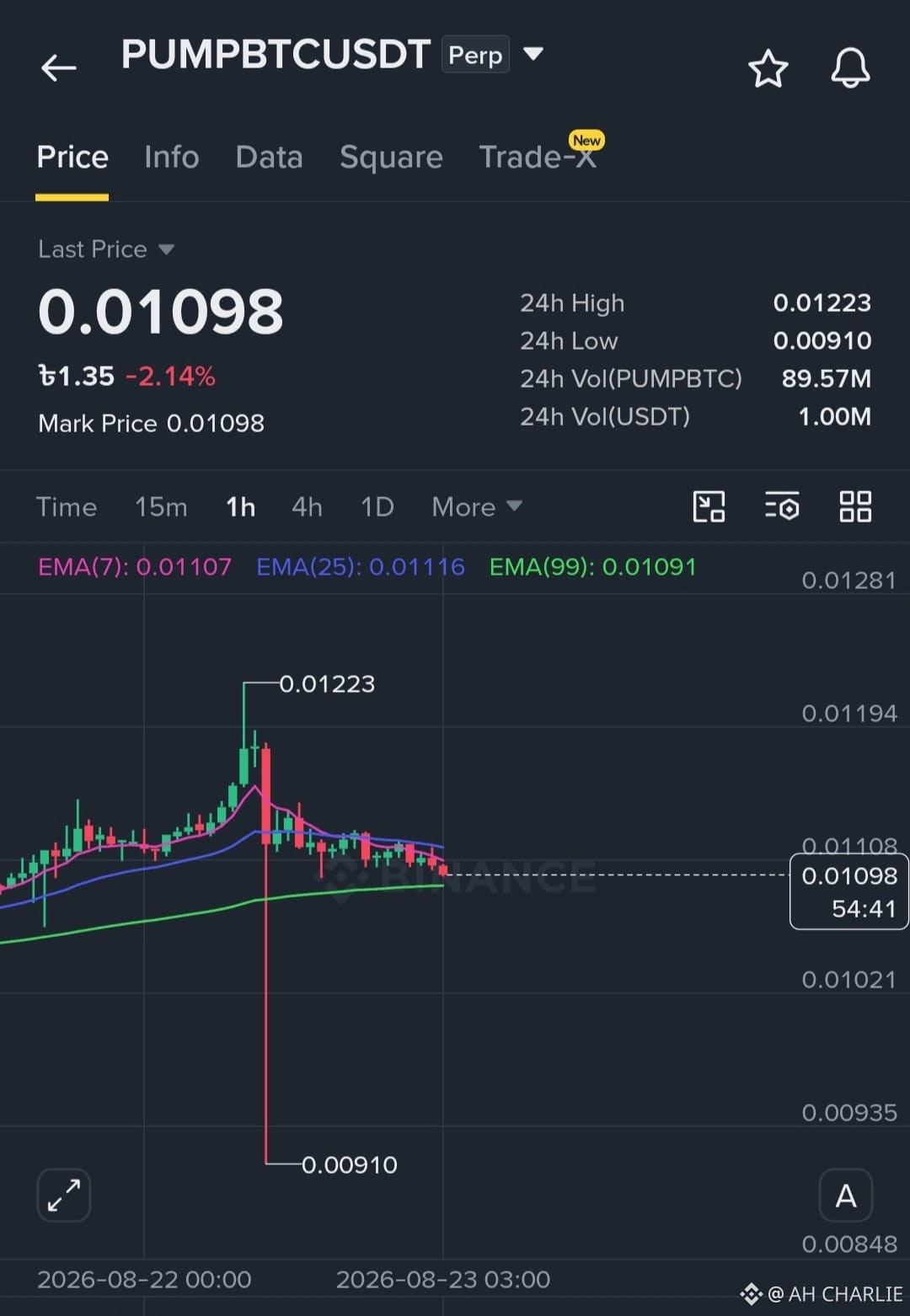
$PUMPBTC /USDT breaks key support, the rejection of which exposed an 86% retail long trap, but buyers who defend dips need some time before 0.00910 liquidity gets swept...Does an 86% long positioning trigger cascading flush-outs or a sudden short squeeze?
Trade Plan- SHORT
Entry:- 0.01110-0.01130
SL: 0.01165
TP1:- 0.01050
TP2:- 0.00980
TP3:- 0.00910
Heavy 6.3 Long/Short skew rejects EMA 25 therefore, liquidation cascade mechanics favor downside continuation. Extreme volatility, enforce strict capital preservation.
#PUMPBTC #ahcharlie #Write2earn
Click Here To Trade👇
$PUMPBTC
{future}(PUMPBTCUSDT)
$PUMPBTC /USDT breaks key support, the rejection of which exposed an 86% retail long trap, but buyers who defend dips need some time before 0.00910 liquidity gets swept...Does an 86% long positioning trigger cascading flush-outs or a sudden short squeeze?
Trade Plan- SHORT
Entry:- 0.01110-0.01130
SL: 0.01165
TP1:- 0.01050
TP2:- 0.00980
TP3:- 0.00910
Heavy 6.3 Long/Short skew rejects EMA 25 therefore, liquidation cascade mechanics favor downside continuation. Extreme volatility, enforce strict capital preservation.
#PUMPBTC #ahcharlie #Write2earn
Click Here To Trade👇
$PUMPBTC
Trade Plan- SHORT
Entry:- 0.01110-0.01130
SL: 0.01165
TP1:- 0.01050
TP2:- 0.00980
TP3:- 0.00910
Heavy 6.3 Long/Short skew rejects EMA 25 therefore, liquidation cascade mechanics favor downside continuation. Extreme volatility, enforce strict capital preservation.
#PUMPBTC #ahcharlie #Write2earn
Click Here To Trade👇
$PUMPBTC
1
300
·
--
Baissier
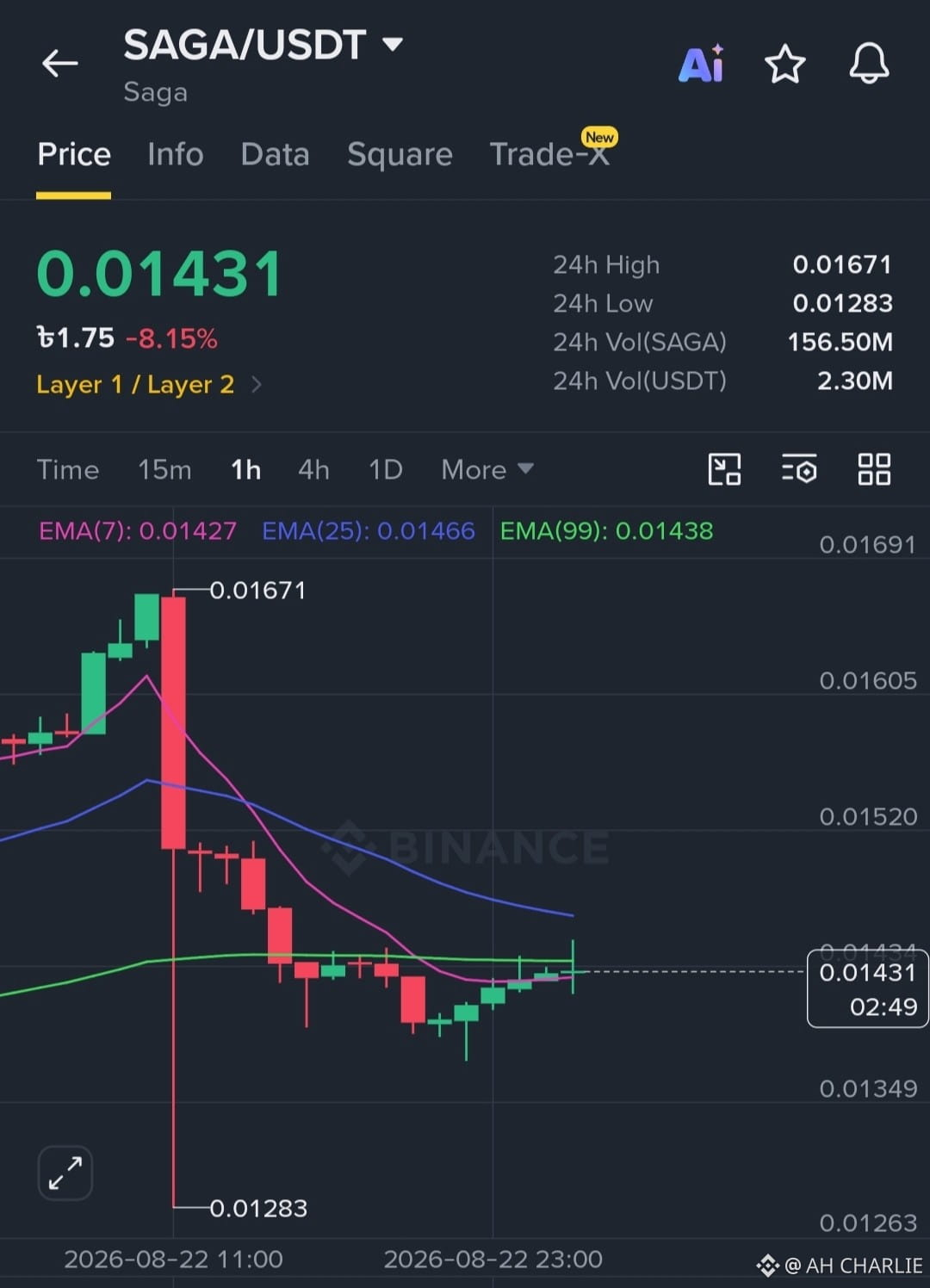
$SAGA /USDT rejects key resistance, the breakdown of which exposed spot exhaustion, but sellers who defend supply need some time before 0.0130 fails...
Trade- Short
Entry:- 0.0148-0.0154
SL: 0.0162
TP1:- 0.0138
TP2:- 0.0125
TP3:- 0.0112
Local liquidity swept into overhead resistance; therefore, volume exhaustion favors downside rotation. Is this rejection structural distribution or brief consolidation? Manage leverage strict invalidation above resistance.
#SAGA #CryptoTrading #BinanceSquare #ahcharlie
Click Here To Trade👇
{future}(SAGAUSDT)
$SAGA /USDT rejects key resistance, the breakdown of which exposed spot exhaustion, but sellers who defend supply need some time before 0.0130 fails...
Trade- Short
Entry:- 0.0148-0.0154
SL: 0.0162
TP1:- 0.0138
TP2:- 0.0125
TP3:- 0.0112
Local liquidity swept into overhead resistance; therefore, volume exhaustion favors downside rotation. Is this rejection structural distribution or brief consolidation? Manage leverage strict invalidation above resistance.
#SAGA #CryptoTrading #BinanceSquare #ahcharlie
Click Here To Trade👇
Trade- Short
Entry:- 0.0148-0.0154
SL: 0.0162
TP1:- 0.0138
TP2:- 0.0125
TP3:- 0.0112
Local liquidity swept into overhead resistance; therefore, volume exhaustion favors downside rotation. Is this rejection structural distribution or brief consolidation? Manage leverage strict invalidation above resistance.
#SAGA #CryptoTrading #BinanceSquare #ahcharlie
Click Here To Trade👇
2
387
·
--
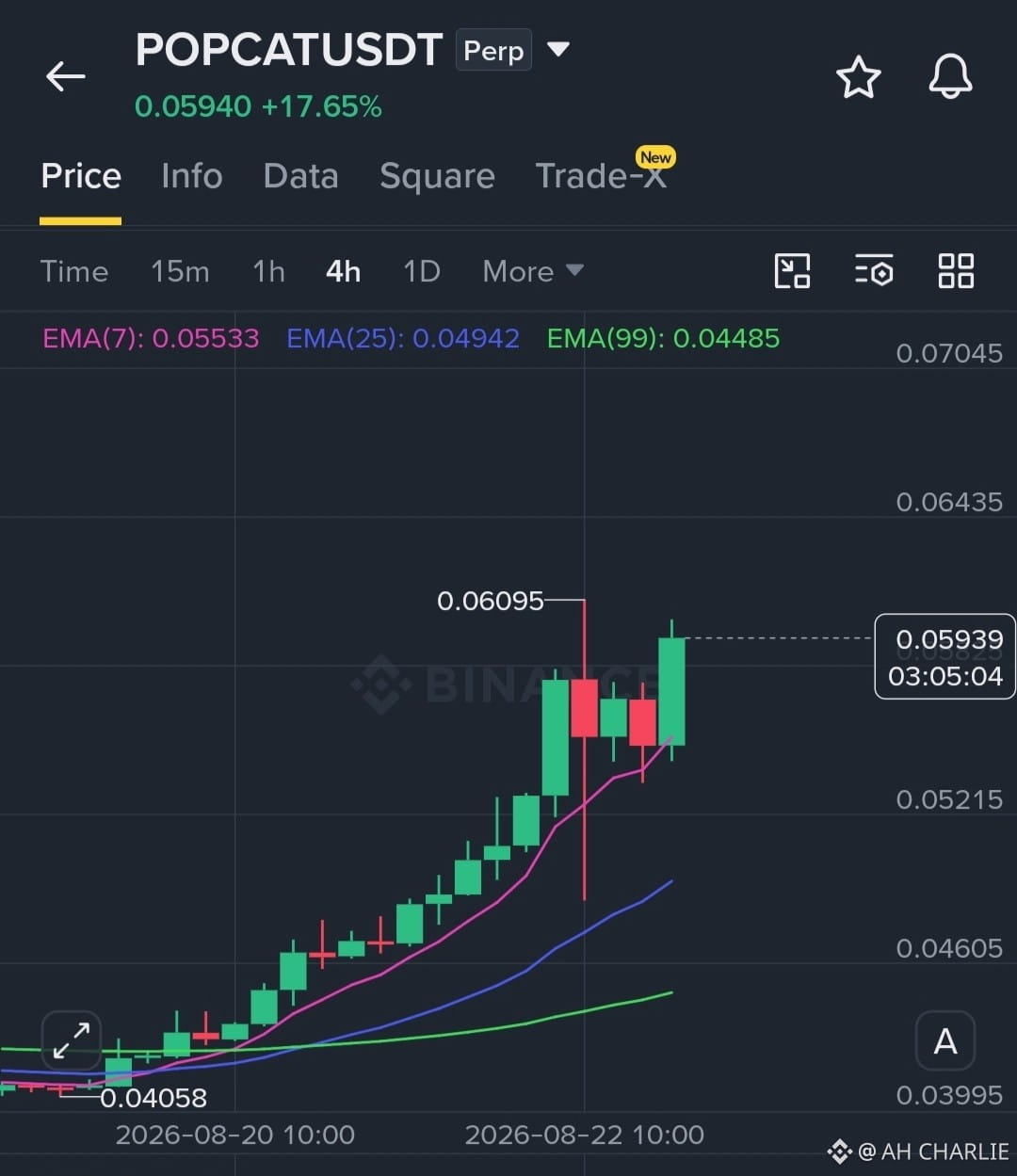
$POPCAT /USDT retests 0.06095 resistance, the momentum of which pushed RSI to 78, but aggressive buyers who chase breakouts need some time to absorb overhead supply...
Trade - Long
Entry:- 0.0545-0.0555
SL: 0.0518
TP1:- 0.0610
TP2:- 0.0655
TP3:- 0.0700
EMA 7 pullback resets overextended longs, therefore trend continuation remains intact. Does 70% retail long positioning signal a local top or continuation? High volatility asset; manage risk strictly.
#POPCAT #CryptoTrading #BinanceSquare
{future}(POPCATUSDT)
$POPCAT /USDT retests 0.06095 resistance, the momentum of which pushed RSI to 78, but aggressive buyers who chase breakouts need some time to absorb overhead supply...
Trade - Long
Entry:- 0.0545-0.0555
SL: 0.0518
TP1:- 0.0610
TP2:- 0.0655
TP3:- 0.0700
EMA 7 pullback resets overextended longs, therefore trend continuation remains intact. Does 70% retail long positioning signal a local top or continuation? High volatility asset; manage risk strictly.
#POPCAT #CryptoTrading #BinanceSquare
Trade - Long
Entry:- 0.0545-0.0555
SL: 0.0518
TP1:- 0.0610
TP2:- 0.0655
TP3:- 0.0700
EMA 7 pullback resets overextended longs, therefore trend continuation remains intact. Does 70% retail long positioning signal a local top or continuation? High volatility asset; manage risk strictly.
#POPCAT #CryptoTrading #BinanceSquare
1
146
·
--
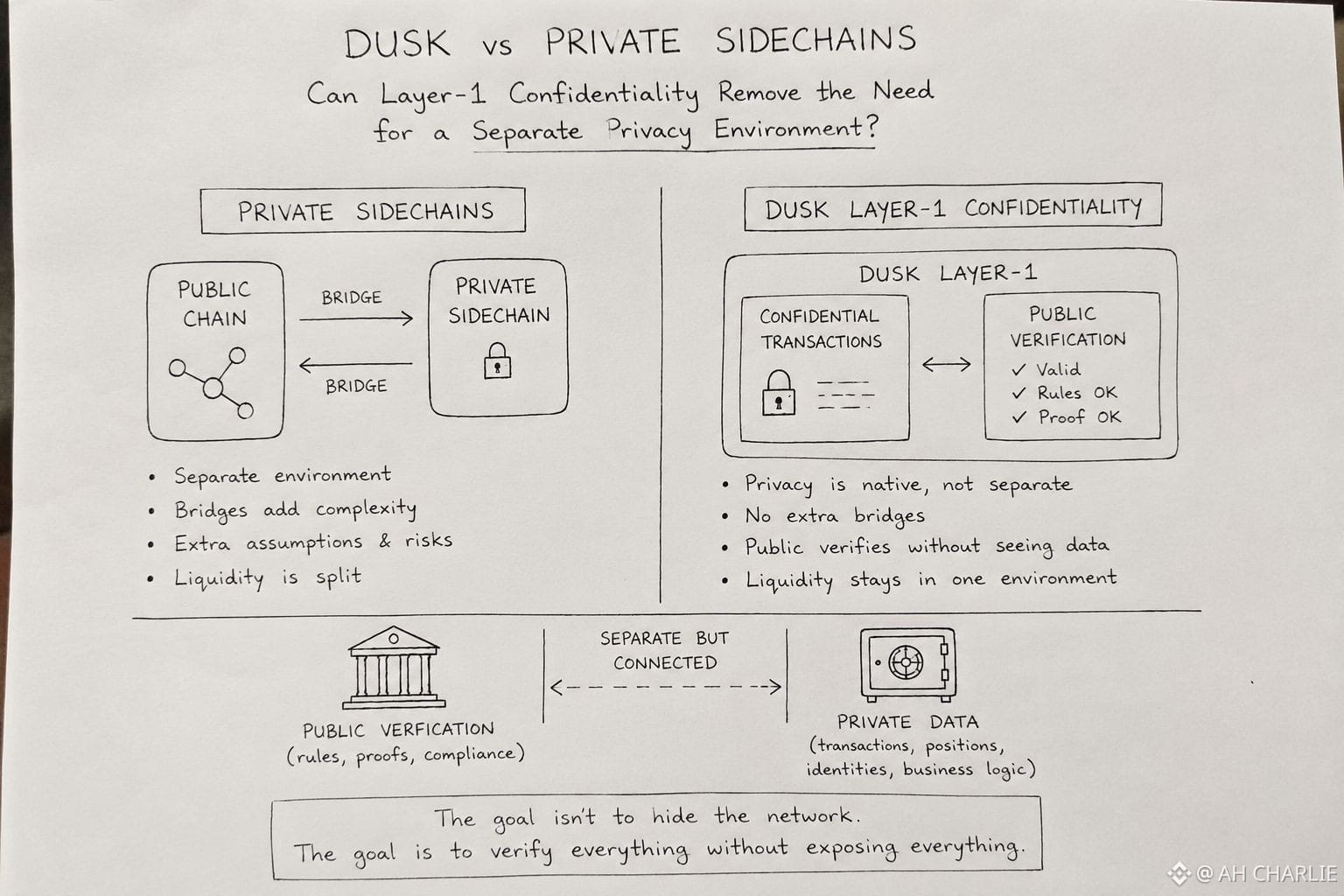
$DUSK gets interesting to me because, i’ve seen privacy discussions get stuck on one question.. “How do we hide the transaction?”
I’m thinking the harder question is.. “Why should the whole application need a separate private environment at all?”
A private sidechain can isolate sensitive activity from a public network, but it also creates another environment to manage. Users, assets, liquidity, messaging, and verification may need bridges or extra coordination between systems. More moving parts usually means more assumptions.
When I see Dusk’s approach, I look at the separation differently. The network can keep transaction data confidential while still allowing the broader system to verify that the rules were followed. It is like a bank vault with a glass lobby, people can verify that the process works, but they do not need to see every document inside.
I thought privacy always meant creating a hidden zone. I’m learning that it can also mean changing what becomes visible on the same base layer.
That matters for financial markets because privacy is not only about hiding a payment. Traders may need confidential positions, issuers may need protected deal terms, and institutions may need selective disclosure. A separate privacy chain can solve part of that, but Layer-1 confidentiality aims to make privacy part of the settlement environment itself.
I make mistakes when I judge blockchain architecture only by throughput. The real friction often sits between public verification and private information.
If Dusks can make those two coexist without forcing every sensitive application into a separate sidechain, the interesting question is no longer “Where do we put private transactions?” It becomes “Can the public settlement layer verify enough without seeing everything?”
That shift — from hiding activity somewhere else to controlling visibility at the base layer — is the part I think deserves more attention.
#dusk $DUSK @Dusk_Foundation #Layer1
{spot}(DUSKUSDT)
$DUSK gets interesting to me because, i’ve seen privacy discussions get stuck on one question.. “How do we hide the transaction?”
I’m thinking the harder question is.. “Why should the whole application need a separate private environment at all?”
A private sidechain can isolate sensitive activity from a public network, but it also creates another environment to manage. Users, assets, liquidity, messaging, and verification may need bridges or extra coordination between systems. More moving parts usually means more assumptions.
When I see Dusk’s approach, I look at the separation differently. The network can keep transaction data confidential while still allowing the broader system to verify that the rules were followed. It is like a bank vault with a glass lobby, people can verify that the process works, but they do not need to see every document inside.
I thought privacy always meant creating a hidden zone. I’m learning that it can also mean changing what becomes visible on the same base layer.
That matters for financial markets because privacy is not only about hiding a payment. Traders may need confidential positions, issuers may need protected deal terms, and institutions may need selective disclosure. A separate privacy chain can solve part of that, but Layer-1 confidentiality aims to make privacy part of the settlement environment itself.
I make mistakes when I judge blockchain architecture only by throughput. The real friction often sits between public verification and private information.
If Dusks can make those two coexist without forcing every sensitive application into a separate sidechain, the interesting question is no longer “Where do we put private transactions?” It becomes “Can the public settlement layer verify enough without seeing everything?”
That shift — from hiding activity somewhere else to controlling visibility at the base layer — is the part I think deserves more attention.
#dusk $DUSK @Dusk #Layer1
I’m thinking the harder question is.. “Why should the whole application need a separate private environment at all?”
A private sidechain can isolate sensitive activity from a public network, but it also creates another environment to manage. Users, assets, liquidity, messaging, and verification may need bridges or extra coordination between systems. More moving parts usually means more assumptions.
When I see Dusk’s approach, I look at the separation differently. The network can keep transaction data confidential while still allowing the broader system to verify that the rules were followed. It is like a bank vault with a glass lobby, people can verify that the process works, but they do not need to see every document inside.
I thought privacy always meant creating a hidden zone. I’m learning that it can also mean changing what becomes visible on the same base layer.
That matters for financial markets because privacy is not only about hiding a payment. Traders may need confidential positions, issuers may need protected deal terms, and institutions may need selective disclosure. A separate privacy chain can solve part of that, but Layer-1 confidentiality aims to make privacy part of the settlement environment itself.
I make mistakes when I judge blockchain architecture only by throughput. The real friction often sits between public verification and private information.
If Dusks can make those two coexist without forcing every sensitive application into a separate sidechain, the interesting question is no longer “Where do we put private transactions?” It becomes “Can the public settlement layer verify enough without seeing everything?”
That shift — from hiding activity somewhere else to controlling visibility at the base layer — is the part I think deserves more attention.
#dusk $DUSK @Dusk #Layer1
2
2
180
·
--
Haussier
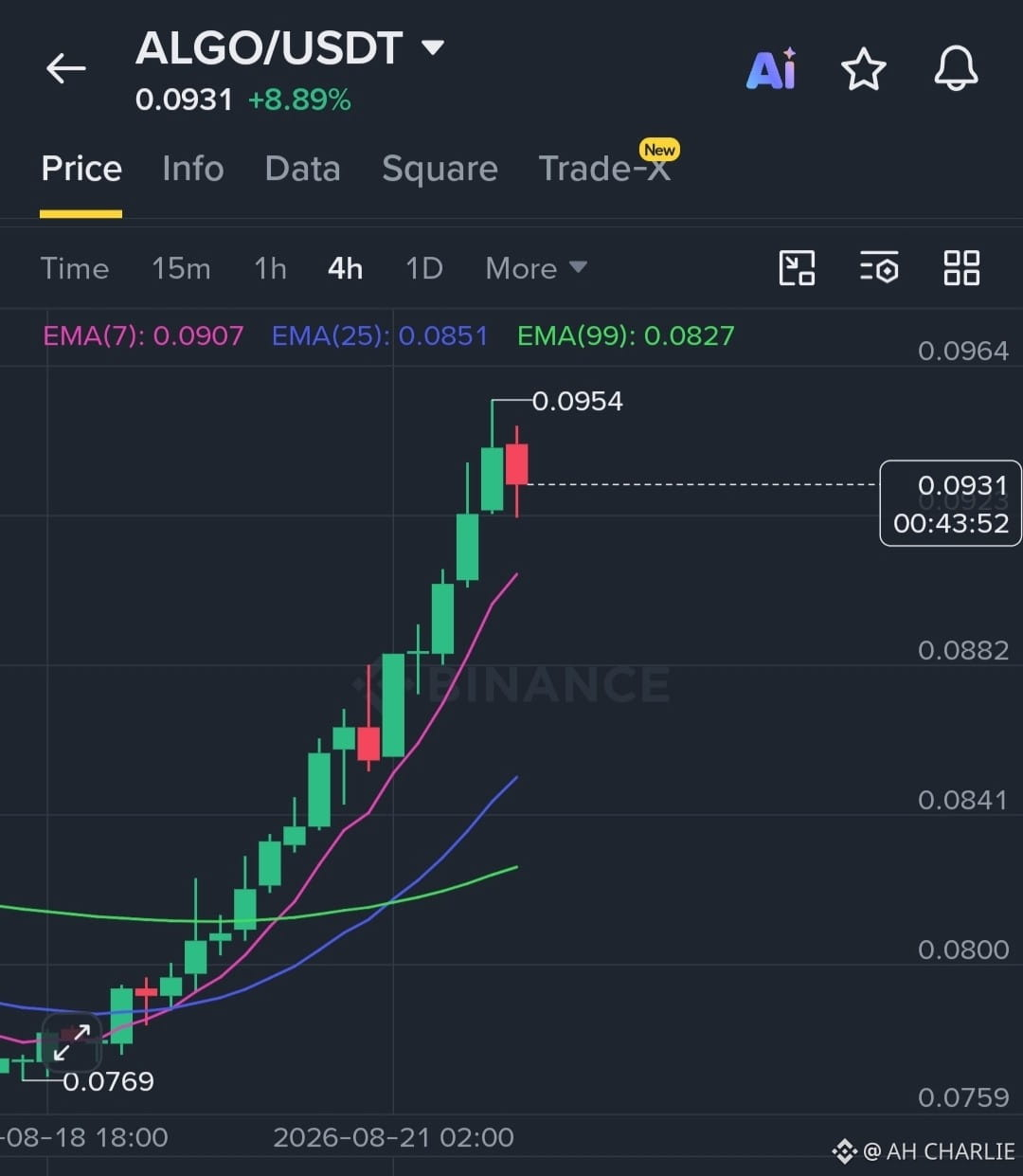
$ALGO /USDT just tapped 0.0954 resistance, the expansion of which triggered extreme RSI overheat, but traders who chase tops get trapped...Price needs some time to reset at EMA 7 therefore, pullback liquidity fuels continuation.
$ALGO Trade - Long
Entry:- 0.0890-0.0907
SL: 0.0848
TP1:- 0.0954
TP2:- 0.0990
TP3:- 0.1045
Are sellers front-running resistance or absorbing breakout liquidity? Manage capital strictly, market structure invalidates below stop.
#ALGO #Algorand #ALGOUSDT
{future}(ALGOUSDT)
$ALGO /USDT just tapped 0.0954 resistance, the expansion of which triggered extreme RSI overheat, but traders who chase tops get trapped...Price needs some time to reset at EMA 7 therefore, pullback liquidity fuels continuation.
$ALGO Trade - Long
Entry:- 0.0890-0.0907
SL: 0.0848
TP1:- 0.0954
TP2:- 0.0990
TP3:- 0.1045
Are sellers front-running resistance or absorbing breakout liquidity? Manage capital strictly, market structure invalidates below stop.
#ALGO #Algorand #ALGOUSDT
$ALGO Trade - Long
Entry:- 0.0890-0.0907
SL: 0.0848
TP1:- 0.0954
TP2:- 0.0990
TP3:- 0.1045
Are sellers front-running resistance or absorbing breakout liquidity? Manage capital strictly, market structure invalidates below stop.
#ALGO #Algorand #ALGOUSDT
1
255
·
--
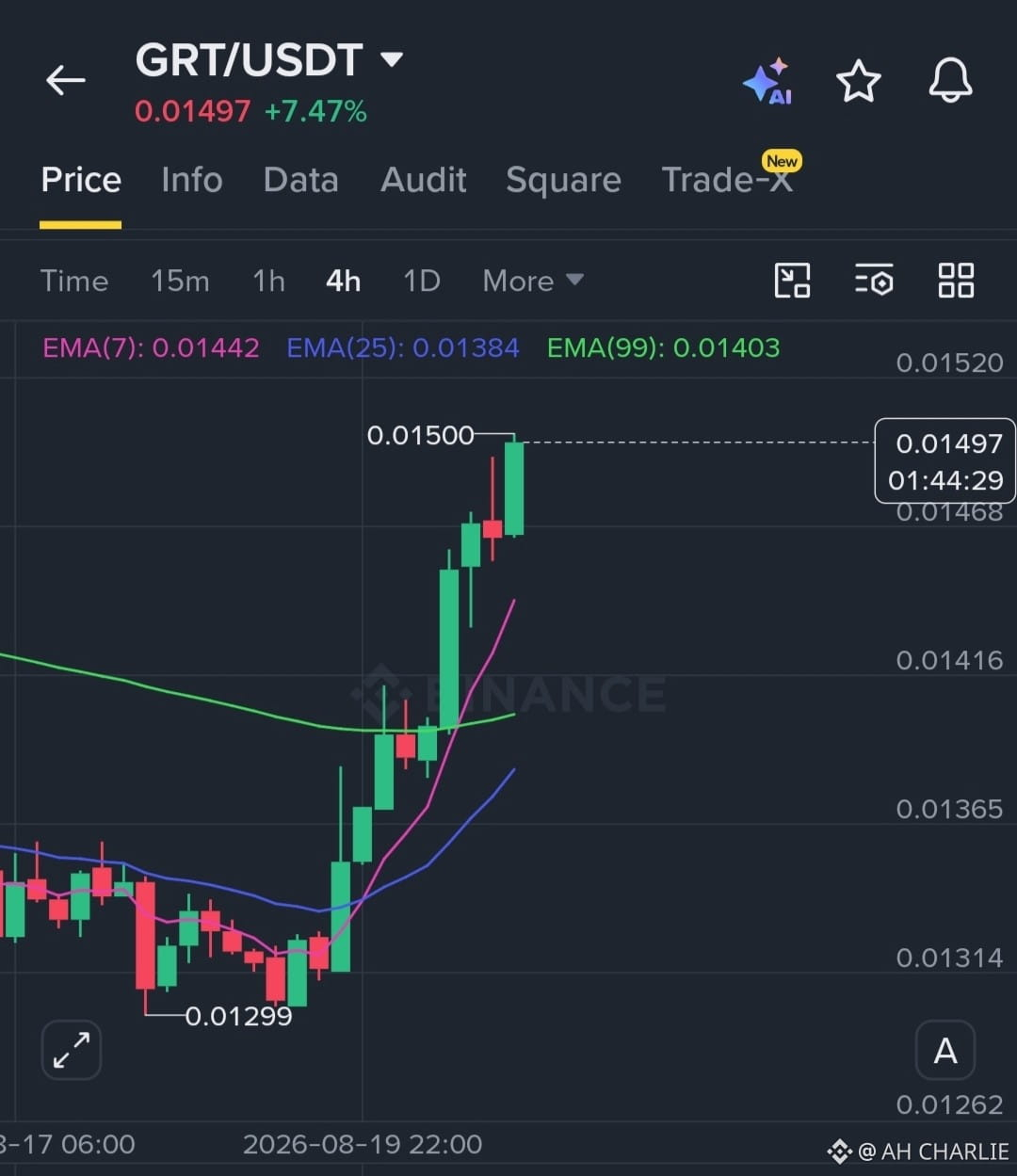
$GRT /USDT exploded above the 99 EMA, and the breakout candle the strength of which printed high volume traps sellers who anticipated a lower high.
Trade Plan- Long
Entry:- 0.01430-0.01475
SL: 0.01390
TP1:- 0.01550
TP2:- 0.01630
TP3:- 0.01750
Will buyers push expansion sometime today, or does the overbought RSI trigger an aggressive pullback? Remember, 4h close below 0.01390 invalidates structure, so preserve capital.
#GRT #TheGraph #ahcharlie
{future}(GRTUSDT)
$GRT /USDT exploded above the 99 EMA, and the breakout candle the strength of which printed high volume traps sellers who anticipated a lower high.
Trade Plan- Long
Entry:- 0.01430-0.01475
SL: 0.01390
TP1:- 0.01550
TP2:- 0.01630
TP3:- 0.01750
Will buyers push expansion sometime today, or does the overbought RSI trigger an aggressive pullback? Remember, 4h close below 0.01390 invalidates structure, so preserve capital.
#GRT #TheGraph #ahcharlie
Trade Plan- Long
Entry:- 0.01430-0.01475
SL: 0.01390
TP1:- 0.01550
TP2:- 0.01630
TP3:- 0.01750
Will buyers push expansion sometime today, or does the overbought RSI trigger an aggressive pullback? Remember, 4h close below 0.01390 invalidates structure, so preserve capital.
#GRT #TheGraph #ahcharlie
1
217
·
--
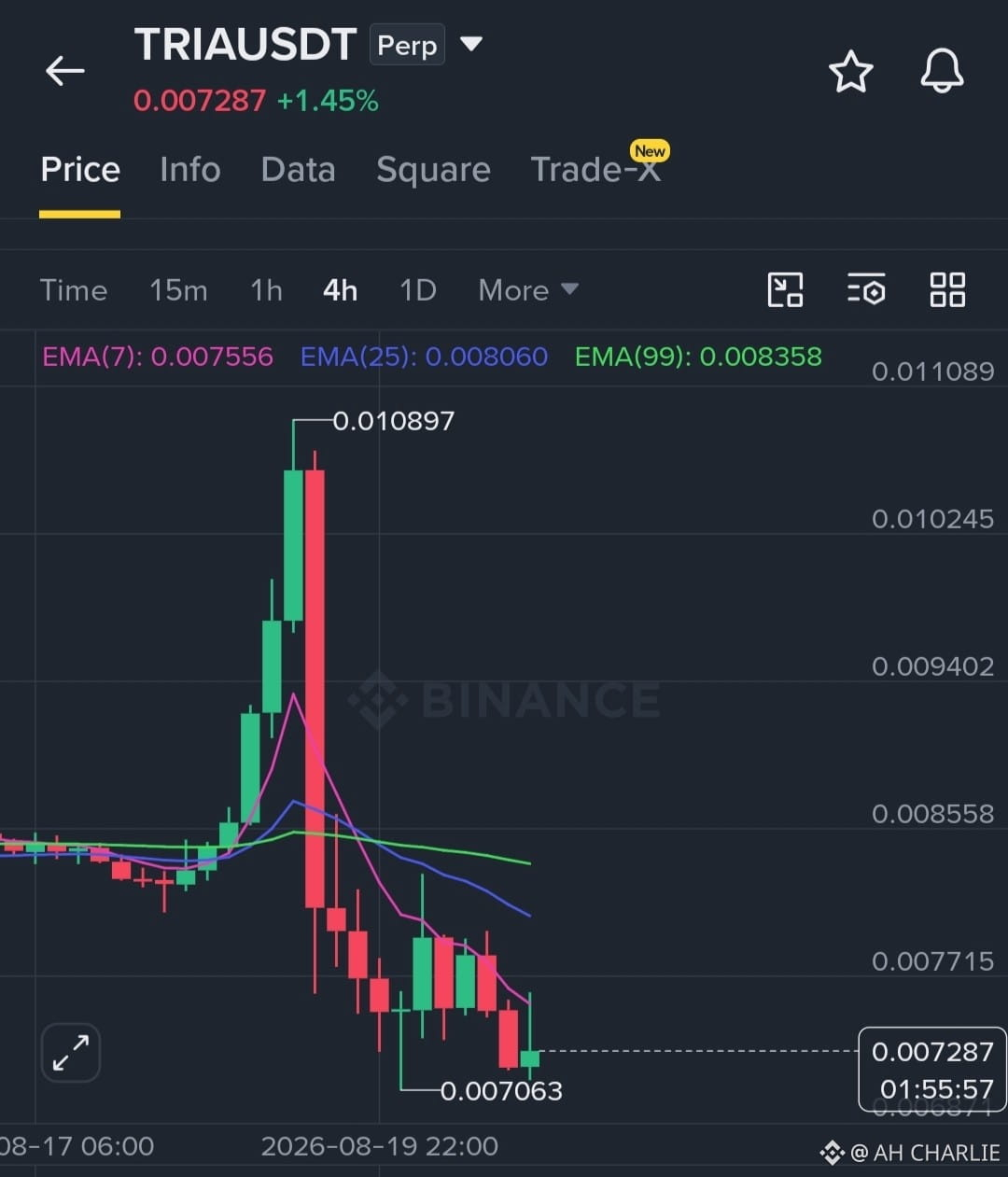
$TRIA /USDT lost key dynamic support, and the selloff the volume of which crushed the 99 EMA traps buyers who chased the pump.
$TRIA Trade → SHORT
ENTRY:- 0.007350-0.007600
SL: 0.008100
TP1:- 0.007060
TP2:- 0.006400
TP3:- 0.005600
Will sellers breach 0.007060 sometime soon, or does an oversold bounce emerge? A reclaim of 0.008100 breaks structure, so manage risk ruthlessly.
#TRIA #TRIAUSDT #ahcharlie #BinanceFuture
$TRIA /USDT lost key dynamic support, and the selloff the volume of which crushed the 99 EMA traps buyers who chased the pump.
$TRIA Trade → SHORT
ENTRY:- 0.007350-0.007600
SL: 0.008100
TP1:- 0.007060
TP2:- 0.006400
TP3:- 0.005600
Will sellers breach 0.007060 sometime soon, or does an oversold bounce emerge? A reclaim of 0.008100 breaks structure, so manage risk ruthlessly.
#TRIA #TRIAUSDT #ahcharlie #BinanceFuture
$TRIA Trade → SHORT
ENTRY:- 0.007350-0.007600
SL: 0.008100
TP1:- 0.007060
TP2:- 0.006400
TP3:- 0.005600
Will sellers breach 0.007060 sometime soon, or does an oversold bounce emerge? A reclaim of 0.008100 breaks structure, so manage risk ruthlessly.
#TRIA #TRIAUSDT #ahcharlie #BinanceFuture
2
719
·
--
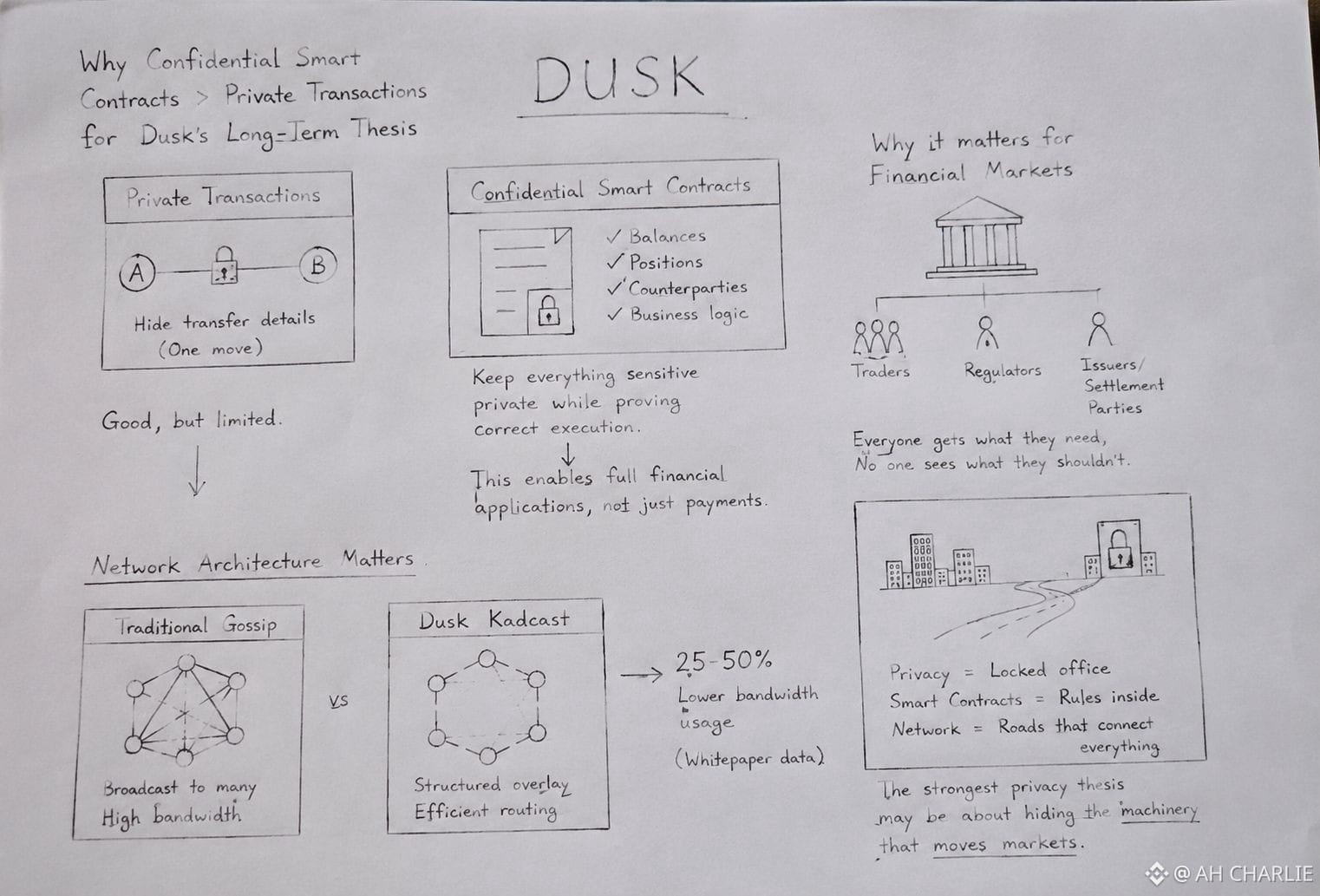
I’ve started thinking the bigger $DUSK thesis is not private payments. It is private financial logic. When I see a private transaction, I see one piece of the puzzle. Confidential smart contracts are more interesting because they can keep balances, positions, counterparties, and business rules protected while still producing verifiable execution.
That changes the question from “How do I hide this transfer?” to “How do I run an entire market without exposing every sensitive detail?” I looked at traditional settlement systems that way. A securities desk does not want every trader seeing its full position, pricing logic, or counterparties. Yet regulators, issuers, and settlement parties still need evidence. That is where Dusk’s confidential contracts make more sense than treating privacy as a wallet feature.
Dusk’s Kadcast uses a structured peer-to-peer overlay instead of broadcasting messages randomly through gossip. Dusk’s whitepaper cites studies showing roughly 25–50% lower bandwidth use than gossip-style protocols. I thought that sounded like an engineering detail, but the more I looked, the more important it became. Private financial markets still need blocks, votes, and settlement messages to move efficiently.
I make mistake when I judge a chain only by TPS. A financial network is more like a city, privacy is the locked office, smart contracts are the rules inside, and networking is the road system carrying everything between them. I am also learning that these layers cannot be judged separately. A confidential market that leaks too much metadata, or needs excessive network overhead, can still fail its purpose.
If you look at Dusk through that lens, the challenge is not simply hiding transactions. It is building a system where private execution and efficient settlement reinforce each other. That is the part I still find most interesting, the strongest privacy thesis may be less about hiding money, and more about hiding the machinery that moves markets.
#dusk $DUSK @Dusk_Foundation #Web3
{spot}(DUSKUSDT)
I’ve started thinking the bigger $DUSK thesis is not private payments. It is private financial logic. When I see a private transaction, I see one piece of the puzzle. Confidential smart contracts are more interesting because they can keep balances, positions, counterparties, and business rules protected while still producing verifiable execution.
That changes the question from “How do I hide this transfer?” to “How do I run an entire market without exposing every sensitive detail?” I looked at traditional settlement systems that way. A securities desk does not want every trader seeing its full position, pricing logic, or counterparties. Yet regulators, issuers, and settlement parties still need evidence. That is where Dusk’s confidential contracts make more sense than treating privacy as a wallet feature.
Dusk’s Kadcast uses a structured peer-to-peer overlay instead of broadcasting messages randomly through gossip. Dusk’s whitepaper cites studies showing roughly 25–50% lower bandwidth use than gossip-style protocols. I thought that sounded like an engineering detail, but the more I looked, the more important it became. Private financial markets still need blocks, votes, and settlement messages to move efficiently.
I make mistake when I judge a chain only by TPS. A financial network is more like a city, privacy is the locked office, smart contracts are the rules inside, and networking is the road system carrying everything between them. I am also learning that these layers cannot be judged separately. A confidential market that leaks too much metadata, or needs excessive network overhead, can still fail its purpose.
If you look at Dusk through that lens, the challenge is not simply hiding transactions. It is building a system where private execution and efficient settlement reinforce each other. That is the part I still find most interesting, the strongest privacy thesis may be less about hiding money, and more about hiding the machinery that moves markets.
#dusk $DUSK @Dusk #Web3
That changes the question from “How do I hide this transfer?” to “How do I run an entire market without exposing every sensitive detail?” I looked at traditional settlement systems that way. A securities desk does not want every trader seeing its full position, pricing logic, or counterparties. Yet regulators, issuers, and settlement parties still need evidence. That is where Dusk’s confidential contracts make more sense than treating privacy as a wallet feature.
Dusk’s Kadcast uses a structured peer-to-peer overlay instead of broadcasting messages randomly through gossip. Dusk’s whitepaper cites studies showing roughly 25–50% lower bandwidth use than gossip-style protocols. I thought that sounded like an engineering detail, but the more I looked, the more important it became. Private financial markets still need blocks, votes, and settlement messages to move efficiently.
I make mistake when I judge a chain only by TPS. A financial network is more like a city, privacy is the locked office, smart contracts are the rules inside, and networking is the road system carrying everything between them. I am also learning that these layers cannot be judged separately. A confidential market that leaks too much metadata, or needs excessive network overhead, can still fail its purpose.
If you look at Dusk through that lens, the challenge is not simply hiding transactions. It is building a system where private execution and efficient settlement reinforce each other. That is the part I still find most interesting, the strongest privacy thesis may be less about hiding money, and more about hiding the machinery that moves markets.
#dusk $DUSK @Dusk #Web3
3
3
212
Connectez-vous pour découvrir plus de contenu
Rejoignez la communauté mondiale des adeptes de cryptomonnaies sur Binance Square
⚡️ Suviez les dernières informations importantes sur les cryptomonnaies.
💬 Jugé digne de confiance par la plus grande plateforme d’échange de cryptomonnaies au monde.
👍 Découvrez les connaissances que partagent les créateurs vérifiés.
Adresse e-mail/Nº de téléphone
Sujets d’actualité
ZcashETFPostsFirstWeeklyOutflow$93.6M
30,251 vues
89 mentions
#ZcashETFPostsFirstWeeklyOutflow$93.6M
🚨🚨🚨🚨🚨🚨🚨🚨🚨🚨🚨🚨🚨🚨✅ 🚨 ZCASH ETF FLOWS TURN NEGATIVE FOR THE FIRST TIME! 📉
$ZEC is facing a notable shift in institutional fund flows, with Zcash investment products recording their first weekly net outflow since launching in August.
According to fund-flow data, around $93.6M was withdrawn from Zcash products during the latest week, while ZEC price action also cooled significantly.
📊 WHAT HAPPENED?
• Weekly Zcash ETF outflow: $93.6M
• September 30 daily outflow: $30.25M
• ZCSH previously attracted around $98.2M in one week
• ZEC is trading near $1,300
• Recent high: around $1,690
• Weekly decline: roughly 17%+
🔍 LEVELS TO WATCH
🟢 Support: $1,280–$1,300
🔴 Resistance: $1,450–$1,500
The key question now is whether the $1,300 area can hold and attract fresh buyers.
Institutional flows will also be important. A return of consistent positive inflows could signal renewed confidence, while continued outflows may keep pressure on $ZEC .
👀 Is this simply profit-taking after ZEC’s huge rally, or could we see another deeper pullback before buyers return?
Share your view below. 👇
#Zcash #ZEC #ZcashETF #Crypto
#analysis
owhggwiohsjowve
·0 mentions J’aime
·133 vues
GreekPoliceBustCryptoScamRingArrest17
53,443 vues
551 mentions
BitcoinRejectedAt$87K
112,588 vues
148 mentions